

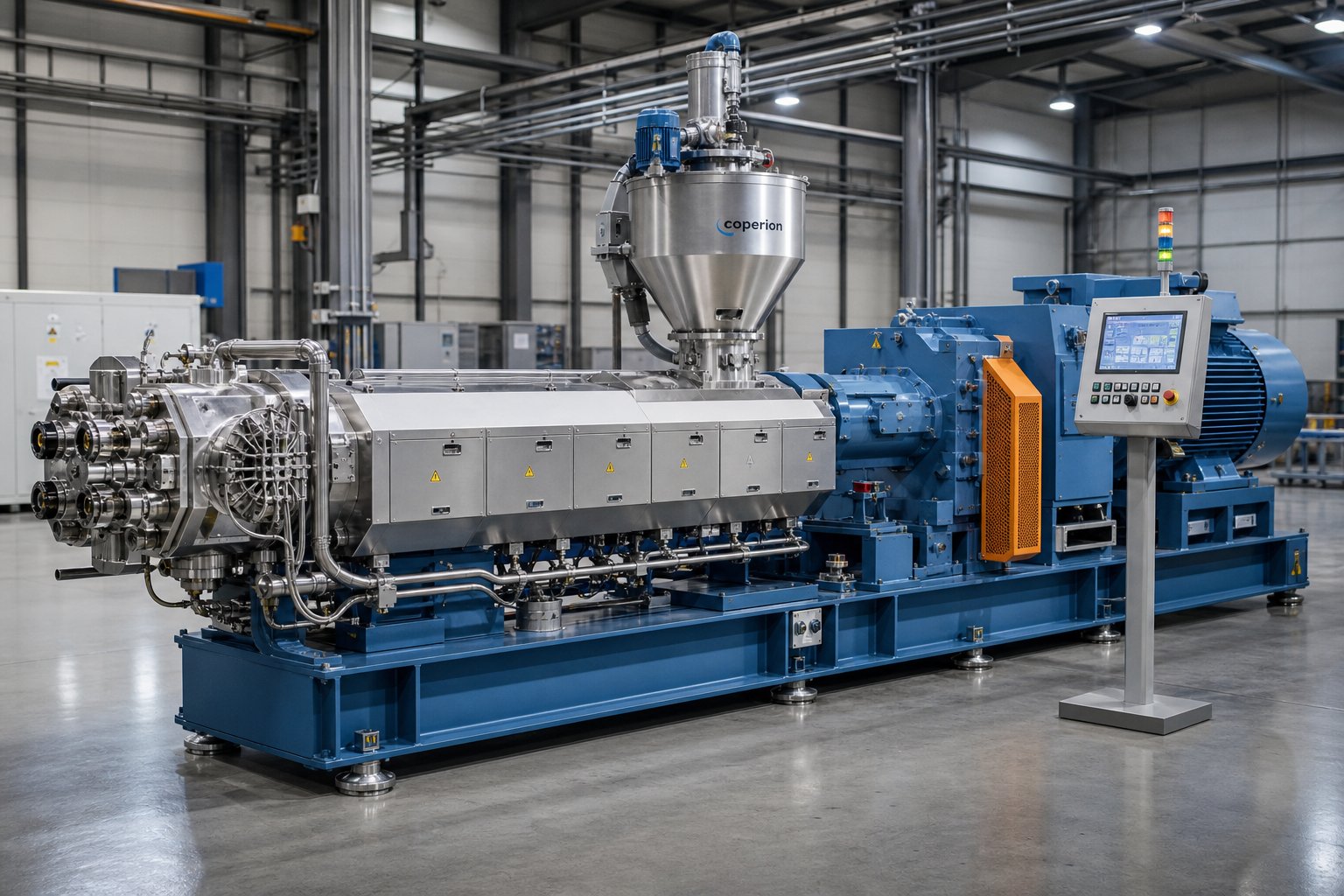
Understanding Twin Screw Extruder Cost in a Complex Market
A twin screw extruder is a machine that uses two intermeshing, co-rotating or counter-rotating screws inside a heated barrel to mix, compound, and shape polymers and other materials. If you're asking "what is an extruder machine" at its core, it's a device that melts, blends, and forces material through a die — and the twin-screw variant does this with unmatched mixing precision and process flexibility. That flexibility, however, comes with a price range so wide it often baffles first-time buyers: small lab units can start under $50,000, while fully equipped industrial production lines regularly exceed $500,000.
This guide exists for one reason — to help you understand what you should actually pay. There's no hidden sales pitch here, no buried agenda. Just a transparent breakdown of the real numbers behind twin screw extruder cost, built from an equipment buyer's perspective.
Why Twin Screw Extruder Pricing Is So Complex
Imagine shopping for a vehicle where the engine size, transmission type, frame material, paint chemistry, and onboard computer are all independently customizable. That's essentially what happens when you spec a twin-screw extruder. Unlike commodity equipment you can pull from a catalog, every screw extruder is a highly configurable system where multiple specifications interact to shape the final price tag.
The key variables driving exponential price variation include:
- Screw diameter — the single biggest determinant of throughput capacity and machine size
- L/D ratio — longer barrels mean more processing zones and higher cost
- Torque class — the gearbox alone can represent a major share of the total machine price
- Metallurgy — wear-resistant screw elements and barrel liners range from standard steel to premium carbide compositions
- Automation level — from basic PLC controls to full Industry 4.0 integration
- Brand origin — European, Chinese, and American manufacturers occupy very different price tiers
Each of these factors doesn't just add cost linearly. They compound. A larger diameter machine with a high torque gearbox, extended L/D ratio, and premium metallurgy can cost several multiples of a base-configuration unit at the same screw size.
Who This Guide Is For
This article speaks directly to equipment buyers, procurement teams, and plant engineers who are evaluating capital expenditures for compounding, pelletizing, or extrusion projects. Whether you're budgeting for your first production line or replacing aging equipment, you'll find the data frameworks here built around the questions that actually matter during purchase decisions.
The quoted machine price is often only 60-70% of the true total investment. Once you factor in installation, auxiliary equipment, commissioning, and training, the real number can look dramatically different from the figure on your initial quote.
Throughout this article, you'll find detailed coverage of total cost of ownership, geographic pricing differentials between major manufacturing regions, and a structured framework for evaluating new versus used versus refurbished machines. The goal is simple: give you the analytical tools to compare quotes on equal footing and make confident capital allocation decisions.
The first — and most practical — way to benchmark pricing starts with the specification that every industrial buyer uses as a baseline: screw diameter.
Price Ranges by Screw Diameter and Machine Class
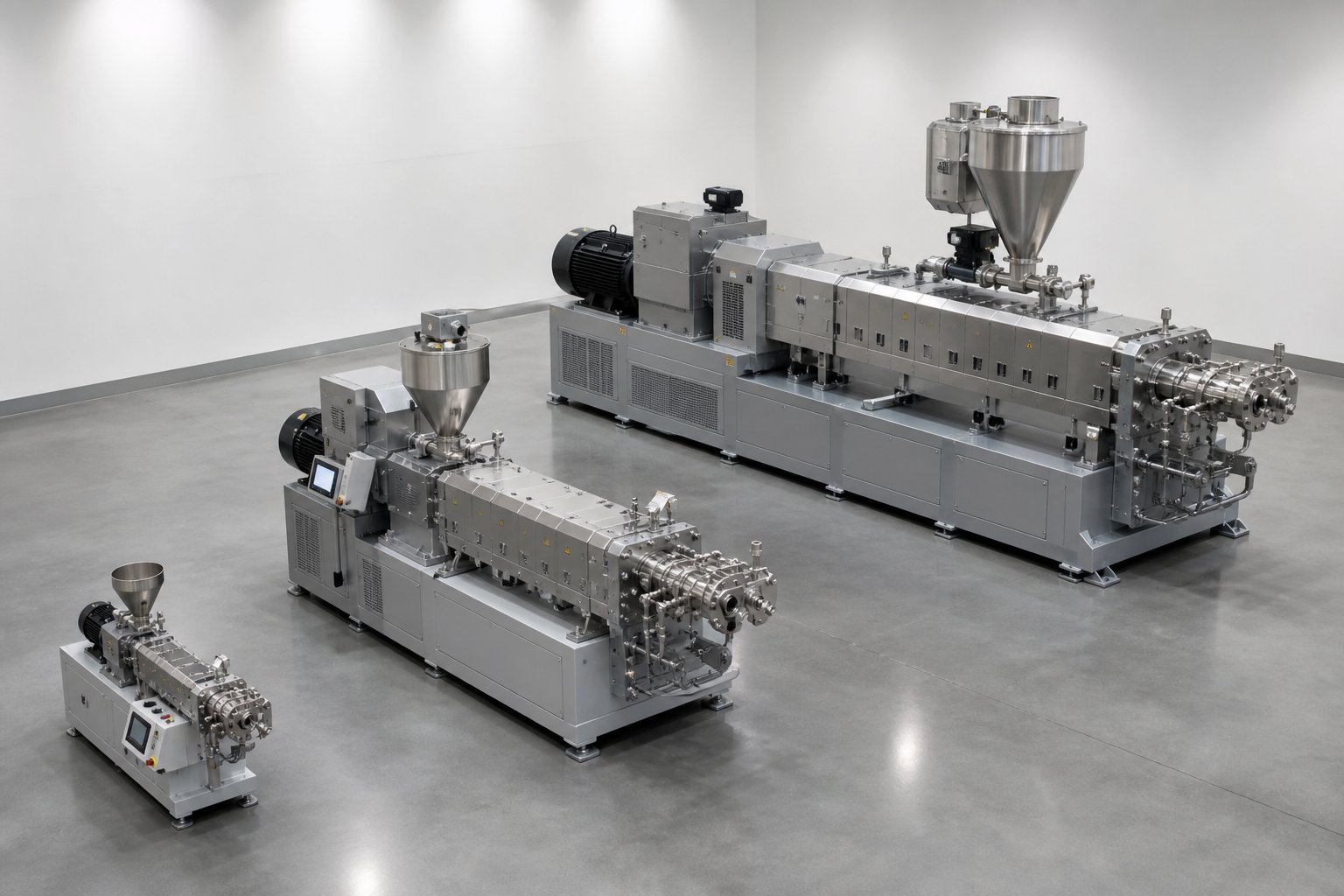
Screw diameter is the single specification that most directly determines what you'll pay for a twin screw extruder machine. It dictates throughput capacity, torque requirements, barrel size, and the overall physical scale of the equipment — all of which cascade into price. Yet surprisingly few resources organize pricing around this dimension, even though it's the first number every industrial buyer asks about when comparing machines.
Think of screw diameter as the "engine displacement" of your extruder. A 20mm machine and a 95mm machine are fundamentally different pieces of equipment serving entirely different production scales — and their price tags reflect that gulf. Here's how costs break down across the three primary diameter classes.
Lab and Benchtop Extruders From 16mm to 27mm
Small-diameter twin screw extruders in the 16mm to 27mm range serve R&D laboratories, formulation development teams, and academic research programs. A laboratory twin screw extruder in this class allows material scientists to test new compounds, validate processing parameters, and generate small sample batches before committing to production-scale equipment.
Pricing in this tier varies more dramatically than most buyers expect. A basic benchtop twin screw extruder from a Chinese manufacturer with minimal instrumentation can start in the $5,000 to $15,000 range, while a well-instrumented 20mm lab extruder with precise temperature control, data acquisition, and modular screw configurations typically lands between $20,000 and $60,000. At the top end, premium imported brands — such as high-end micro twin screw extruders designed for pharmaceutical or advanced polymer research — can push well beyond $100,000.
What drives that spread? Primarily instrumentation sophistication and build quality. A laboratory scale extruder designed for publishable research data needs tight temperature tolerances, accurate torque measurement, and repeatable screw speed control. These capabilities cost money. A simpler lab scale extruder intended for basic formulation screening can accomplish its job at a fraction of that price.
Mid-Range Production Extruders From 35mm to 65mm
This is where most commercial purchasing decisions happen. Twin screw extruder machines in the 35mm to 65mm diameter range represent the workhorse class for compounding operations, masterbatch production, color concentrate manufacturing, and a wide variety of polymer modification applications.
Throughput capacity scales aggressively with diameter. A useful rule from extrusion engineering demonstrates this relationship: output scales roughly with the cube of the screw diameter ratio. A 27mm extruder producing 100 kg/hr would scale to approximately 2,148 kg/hr on a 75mm machine under volumetric scaling — though real-world results depend on material properties and process constraints. The point is clear: even modest increases in screw diameter produce substantial jumps in output capability and, consequently, in machine cost.
You'll typically find 35mm to 45mm machines priced between $60,000 and $150,000 for Chinese-origin units, and $120,000 to $300,000 for European OEM equivalents. Moving into the 50mm to 65mm range pushes pricing higher — generally $100,000 to $250,000 from Asian manufacturers and $200,000 to $450,000 from European brands. These ranges assume moderate L/D ratios and standard configurations; premium metallurgy, extended barrels, or advanced automation packages can push costs well above these benchmarks.
Large Industrial Extruders From 75mm to 135mm and Beyond
Large-diameter industrial extruder systems represent serious capital investments. Machines in the 75mm to 135mm class handle high-volume polymer compounding, large-scale masterbatch production, reactive extrusion, and continuous devolatilization operations — often running around the clock in demanding production environments.
At this scale, everything gets more expensive simultaneously. The gearbox must transmit substantially higher torque. Barrel sections are heavier and require more sophisticated heating and cooling. Screw elements consume more raw material — particularly significant when premium metallurgies are specified. Drive motors step up in power class, and the structural frame and foundation requirements grow proportionally.
Pricing for a 75mm to 95mm twin screw extruder machine typically starts around $200,000 from established Chinese manufacturers and can range from $350,000 to $600,000 or more for European-built equivalents. Machines at 110mm and above routinely exceed $500,000, with fully configured large-scale production lines from premium OEMs reaching well beyond $800,000 when auxiliary equipment is included.
| Screw Diameter Range | Typical Throughput (kg/hr) | Common Applications | Approximate Price Range (USD) |
|---|---|---|---|
| 16mm - 27mm | 0.5 - 50 | R&D, formulation development, academic research, small-batch sampling | $5,000 - $120,000+ |
| 35mm - 50mm | 30 - 350 | Small-to-mid commercial compounding, color concentrates, specialty compounds | $60,000 - $300,000 |
| 50mm - 65mm | 150 - 800 | Mid-volume production compounding, masterbatch, filled polymer systems | $100,000 - $450,000 |
| 75mm - 95mm | 500 - 2,500 | High-volume compounding, reactive extrusion, devolatilization | $200,000 - $600,000 |
| 110mm - 135mm+ | 2,000 - 10,000+ | Large-scale polymer compounding, continuous production lines, polyolefin processing | $500,000 - $1,000,000+ |
Important note: The price ranges above represent budgeting benchmarks for the base extruder unit, not firm quotes. Actual pricing depends heavily on configuration details — L/D ratio, torque class, metallurgy, automation level, and geographic origin of the manufacturer. Two 65mm machines from different suppliers, configured for different applications, can easily differ in price by a factor of two or more.
These diameter-based benchmarks give you a solid starting framework for budget planning. But the real question most procurement teams wrestle with isn't which size — it's understanding exactly which configuration variables within a given size class are inflating or justifying the quoted price.
How Specifications and Configuration Drive Twin Screw Extruder Pricing
Two quotes land on your desk for a 50mm twin-screw extruder machine. One reads $110,000. The other reads $285,000. Same screw diameter, same general machine category — yet the price gap is enormous. What accounts for that difference? Almost always, it comes down to four configuration variables that most quotes summarize in a single line but that engineering teams know carry massive cost implications: L/D ratio, torque density, metallurgy, and automation. Understanding how each of these specifications shifts the price — and by roughly how much — is the difference between informed procurement and expensive guesswork.
L/D Ratio and Its Direct Impact on Price
The length-to-diameter ratio tells you how many bore diameters fit along the barrel's working length. A 50mm extruder with a 36:1 L/D has a barrel roughly 1,800mm long. Stretch that to 48:1 and you're looking at 2,400mm — an additional 600mm of precision-machined, heat-treated barrel housing, plus every component that comes with it.
That additional length isn't just more steel. Each extra barrel section requires its own heating elements, thermocouples, cooling circuits, and mounting hardware. The screw assembly grows proportionally, adding more conveying and kneading elements. The machine frame extends, and so does the footprint on your production floor. Industry standards have shifted considerably — where 20:1 was common in the 1960s, 30:1 to 36:1 is standard today, with some compounding extruder configurations pushing past 48:1 or even 52:1 for applications requiring extended residence time, multiple venting stages, or intensive dispersive mixing.
The pricing impact is roughly proportional, though not perfectly linear. Moving from a 36:1 to a 48:1 configuration on a mid-range twin screw extruder plastic compounding line typically adds 20-35% to the base machine cost, depending on barrel construction type and the metallurgy specified for those additional sections. For buyers processing materials that demand extensive devolatilization or multi-stage additive incorporation — think reactive extrusion or high-filler-loading compounds — the longer L/D ratio is non-negotiable. For simpler blending or color concentrate operations, paying for barrel length you don't use is pure capital waste.
Torque Density and Gearbox Engineering
If L/D ratio is the most visible cost driver, torque density is the most expensive one hiding inside the machine. The gearbox — the assembly that transfers motor power to the twin screws at the correct speed and torque — is frequently the single costliest component in the entire extruder, sometimes accounting for 25-40% of the total machine price.
Torque density, measured in Nm/cm³, describes how much rotational force the gearbox can deliver relative to the centerline distance between the two screws. Higher torque density means the machine can process more viscous, more heavily filled, or more shear-demanding materials without stalling or overloading. An extruder for polymer compounding with 40% glass fiber reinforcement, for instance, demands substantially more torque than the same diameter machine blending unfilled polyolefins.
Engineering that higher torque into the gearbox requires precision-ground, heat-treated alloy gearing, larger bearings rated for heavier radial and thrust loads, and tighter manufacturing tolerances throughout the power train. Every step up in torque class — from standard to high to ultra-high density — triggers a cascading cost increase across the gearbox, drive motor sizing, and the structural frame that supports them. Upgrading from a standard torque gearbox to a high-torque variant on the same diameter machine can add 15-30% to the overall price. Jumping to an ultra-high-torque platform — the kind used in demanding reactive extrusion or high-viscosity compounding — can nearly double the gearbox cost alone.
Metallurgy and Wear Protection
Every extrusion processing machine eventually wears. The question is how fast — and the answer lives in the metallurgy of the screw elements and barrel liners. This is where many buyers underestimate cost impact, because the price difference between metallurgy tiers is substantial, yet the consequences of choosing wrong are far more expensive than the upgrade itself.
Screw elements and barrel liner materials exist on a performance and cost spectrum that ranges from baseline to extreme. The material you process determines where on that spectrum you need to be, and stepping up or down a tier can swing the total cost of wear components by factors of two to four.
- Standard nitrided steel (e.g., 38CrMoAlA) — The baseline option with surface hardness around 65-72 HRA. Suitable for unfilled commodity resins like PE, PP, and PS. Lowest cost, but the thin nitride case layer wears through quickly when exposed to abrasive fillers or corrosive compounds. Relative cost: 1x.
- Bimetallic iron-boron alloy liners — Centrifugally cast liners achieving 58-65 HRC hardness with a 1.5-3.0mm wear-resistant layer. The go-to specification for glass-fiber-reinforced and mineral-filled compounds, delivering three to five times the service life of nitrided steel under abrasive conditions. Relative cost: 2-3x.
- Nickel-based alloy liners (Ni-Cr, Ni-Mo, Hastelloy-type) — Designed for chemical resistance rather than hardness, these liners protect against hydrochloric acid from PVC processing and hydrofluoric acid from fluoropolymer degradation. Essential for any hot melt extruder machine handling corrosive polymer chemistries. Relative cost: 2.5-3.5x.
- Tungsten carbide composite liners — The premium tier, with hardness values exceeding 1,100-1,400 HV. Specified for the most punishing applications: 40%+ glass-fiber compounds, ceramic-loaded masterbatches, and combined abrasive-corrosive environments. Relative cost: 3-5x.
Here's the critical insight for procurement teams: metallurgy is not an area where "saving" on the initial purchase order makes financial sense. A nitrided steel barrel running 30% glass-filled nylon can wear out in as few as 4,000 operating hours, while a properly specified bimetallic liner on the same machine can last 15,000-20,000 hours. Factor in unplanned downtime, screw pulls, scrap during restarts, and lost throughput — and the "cheaper" metallurgy becomes the most expensive line item on your maintenance budget.
Automation and Control Systems
The final major cost lever sits in the control cabinet. A basic twin-screw extruder machine with a standard PLC, simple HMI touchscreen, and manual setpoint entry occupies one price bracket. A fully integrated system with advanced recipe management, real-time process data logging, gravimetric feeder synchronization, and Industry 4.0 connectivity occupies a very different one.
Control system sophistication typically adds 10-25% to the total machine price, depending on the scope of integration. At the lower end, you'll find basic temperature and speed control with alarm functions. Step up, and you get recipe storage and recall, automated startup and shutdown sequences, and historical trend logging. At the premium tier, systems offer remote monitoring, predictive maintenance dashboards, MES integration, and multi-line coordination — capabilities that large-scale compounding operations increasingly treat as requirements rather than luxuries.
The ROI calculation on automation depends heavily on production context. A single-product, single-shift operation may never recoup the cost of a sophisticated control platform. A multi-product facility running 24/7 with tight quality specifications and traceability requirements will pay back the automation premium through reduced changeover time, lower operator error rates, and data-driven process optimization that compounds across thousands of production hours.
Taken together, these four specification categories — L/D ratio, torque density, metallurgy, and automation — explain why two machines sharing the same screw diameter can differ in price by a factor of two or three. But there's another fundamental specification split that reshapes the entire pricing picture: whether those twin screws rotate in the same direction or in opposite directions.
Co-Rotating vs Counter-Rotating Twin Screw Extruder Pricing
Here's a scenario that plays out more often than the industry likes to admit: a buyer receives a quote for a counter-rotating double screw extruder that comes in 30% below the co-rotating alternative — and assumes they've found a deal. Six months after installation, they discover the machine can't deliver the dispersive mixing their compound demands, and the "savings" evaporate into reprocessing costs, quality rejections, and eventually a second capital purchase. The rotation direction of those twin screws isn't a minor technical footnote. It defines the machine's fundamental processing capabilities, its application range, and — critically — its true cost profile.
Co-Rotating Intermeshing Extruders and Their Cost Profile
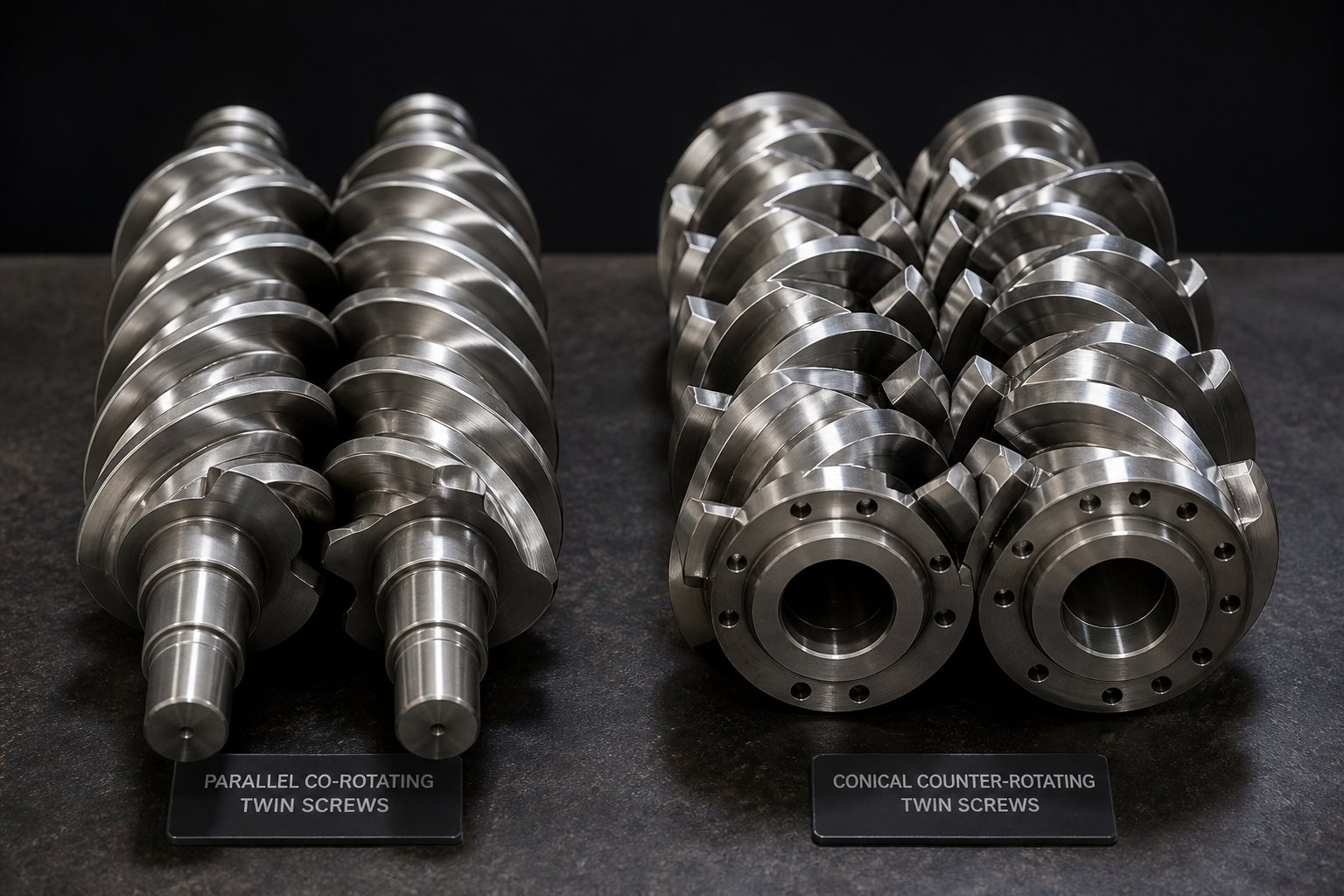
Co-rotating twin screw extruders dominate the compounding and reactive extrusion market for good reason. Both screws turn in the same direction with an intermeshing, self-wiping geometry that produces exceptional distributive and dispersive mixing. You'll find this design at the heart of nearly every engineering plastics compounding line, masterbatch operation, and polymer modification process worldwide.
What makes them versatile also makes them expensive. The modular barrel and screw element system — the hallmark of co-rotating design — allows operators to reconfigure the machine for different materials and processes by rearranging conveying elements, kneading blocks, mixing elements, and reverse-flight sections along the screw shaft. That modularity delivers tremendous process flexibility, but it comes at a premium. Each individual screw element is a precision-machined component manufactured to tight tolerances, and a fully populated screw configuration for a 65mm machine can require 40 to 60 individual elements per shaft.
The upfront cost implications are clear: co-rotating twin screw extruders at any given diameter typically price 15-30% higher than counter-rotating alternatives serving comparable throughput ranges. But the ongoing cost picture matters just as much. Screw elements are wear items. When you're running abrasive glass-fiber compounds or mineral-filled systems, individual kneading blocks and conveying elements need periodic replacement. Maintaining a spare parts inventory for a modular screw program is an operating expense that counter-rotating machines with monolithic screw designs simply don't carry to the same degree.
That said, the modular approach also creates a cost advantage that buyers sometimes overlook. When a single kneading block wears, you replace that one element — not the entire screw assembly. For operations processing multiple materials with varying abrasiveness, you can maintain different screw configurations optimized for each product, extending element life and reducing changeover time.
Counter-Rotating and Conical Twin Screw Extruders
Counter-rotating machines occupy a different segment of the market. In this design, the two screws turn in opposite directions, creating a calendering effect between them that generates high pressure with relatively low shear. This makes the extruder twin screw configuration particularly well-suited for materials that are shear-sensitive or require strong pressure buildup for profile and pipe extrusion.
The conical twin screw extruder — where the screws taper from a larger diameter at the feed end to a smaller diameter at the discharge — is the most widely recognized counter-rotating design. PVC profile extrusion, pipe production, and window frame manufacturing rely heavily on conical double screw extruder machines because the tapered geometry allows for larger feed openings, higher torque capacity at the intake, and progressive compression as material moves toward the die.
From a pricing standpoint, conical designs offer meaningful capital cost advantages in their target applications. The gearbox engineering is simpler than equivalent parallel co-rotating units because the conical screw arrangement naturally accommodates larger bearing spans and thrust load distribution. Manufacturing processes for conical machines are mature and well-established, keeping production costs lower. A conical twin screw extruder for PVC pipe production, for instance, can price 20-35% below a parallel co-rotating machine of comparable output capacity.
The trade-off? Limited flexibility. Counter-rotating machines — both parallel and conical — generally use non-modular or semi-modular screw designs. Reconfiguring for a fundamentally different material or process often isn't practical. If your production runs involve a narrow range of materials with consistent processing requirements, this limitation costs you nothing. If your operation demands frequent product changes across diverse polymer systems, it becomes a constraint that no amount of capital savings can offset.
Choosing Based on Application Economics
The most expensive extruder twin screw configuration you can buy is the wrong one for your application. A buyer who selects a counter-rotating machine for a high-intensity compounding application that demands aggressive dispersive mixing will spend more on quality issues, reprocessing, and eventual equipment replacement than the premium for the correct co-rotating machine would have cost. Conversely, specifying a fully modular co-rotating system for straightforward PVC profile extrusion is overpaying for capability you'll never use.
| Comparison Dimension | Co-Rotating Intermeshing (Parallel) | Counter-Rotating (Parallel and Conical) |
|---|---|---|
| Typical Applications | Polymer compounding, masterbatch, reactive extrusion, devolatilization, color concentrates | PVC profile and pipe extrusion, sheet production, shear-sensitive material processing |
| Relative Capital Cost | Higher (15-30% premium at comparable diameter/throughput) | Lower, especially for conical designs with simpler gearbox engineering |
| Screw Element Replaceability | Fully modular — individual elements replaceable and reconfigurable | Typically non-modular or semi-modular; full screw replacement more common |
| Throughput Flexibility | Wide operating window; speed and feed rate highly adjustable | Narrower operating range; optimized for specific throughput targets |
| Material Versatility | Broad — handles everything from unfilled resins to high-filler and reactive systems | Narrower — strongest in PVC, shear-sensitive polymers, and pressure-dependent applications |
| Ongoing Wear Parts Cost | Higher element inventory expense, but targeted replacement reduces per-incident cost | Lower ongoing parts cost, but full screw replacement when wear reaches limits is more expensive per event |
| Resale Value | Generally stronger due to broader application flexibility and wider buyer pool | More application-specific; resale market is narrower |
The right way to read this comparison isn't "which column looks cheaper" — it's "which column matches my process." A plant running diverse engineering plastics compounds across multiple product lines needs the flexibility of co-rotating twin screw extruders, and the capital premium delivers returns through reduced changeover costs and broader market capability. A dedicated PVC pipe producer achieves better economics with a conical machine purpose-built for that specific application.
Whichever direction you choose, the purchase decision doesn't end with selecting the right machine type and configuration. A parallel question with equally significant financial implications runs alongside it: should you buy that machine new, used, or refurbished?
New vs Used vs Refurbished Twin Screw Extruders for Sale
Choosing the right machine type and configuration is only half the capital equipment puzzle. The other half — and for many procurement teams, the more financially consequential half — is deciding whether to buy new, source a used twin screw extruder, or invest in a refurbished unit that splits the difference. Each path carries its own cost structure, risk profile, and strategic trade-offs. Yet structured guidance on this decision is surprisingly scarce, leaving buyers to navigate a fragmented market on instinct rather than analysis.
Buying New and What Premium Pricing Delivers
A new twin screw extruder represents the lowest-risk, highest-capital option. You're paying for certainty — and in capital-intensive manufacturing, certainty has tangible value.
What does the premium get you? Start with warranty protection, typically 12 to 24 months covering mechanical components, drive systems, and electrical controls. That warranty isn't just a safety net; it's an insurance policy against the kind of catastrophic gearbox or barrel failure that can cost tens of thousands of dollars on an unprotected machine. Beyond the warranty, new machines deliver the latest energy-efficient drive technology — modern IE3 and IE4 class motors paired with high-efficiency gearboxes that reduce electricity costs over the machine's entire service life.
Full customization is another advantage unique to new purchases. You specify the exact L/D ratio, torque class, metallurgy, barrel configuration, and automation platform your application demands. There's no compromise on screw element inventory, no adapting your process to fit someone else's old machine. OEM technical support during commissioning and early production further de-risks the startup phase, with factory engineers available to optimize screw configuration and process parameters for your specific materials.
The trade-off is straightforward: you'll pay full market price, and lead times from order to delivery typically run six to twelve months for production-class machines from major manufacturers. For operations with firm project timelines or immediate capacity needs, that wait can be a dealbreaker regardless of budget availability.
Used Twin Screw Extruders and Their True Cost
The secondary market for used extruders has grown substantially as compounders, recyclers, and contract manufacturers seek proven production capacity without the extended lead times and heavy upfront capital that new equipment demands. Used extruders for sale from established dealers typically trade at 30 to 60 percent below original new pricing — a gap large enough to fund auxiliary equipment, raw material inventory, or an entire downstream pelletizing system.
Speed is another compelling advantage. A used twin screw extruder for sale through a dealer or equipment marketplace can often ship within weeks, compressing the timeline from purchase order to first production run dramatically compared to new equipment lead times. Depreciation also favors the used buyer: new industrial machinery absorbs its steepest value loss — often 25 to 40 percent — in the first three years. Purchasing a machine that has already passed through that depreciation curve means your ownership period experiences a much flatter decline in asset value.
But here's where discipline separates smart acquisitions from expensive lessons. Evaluating used extruder equipment requires a rigorous inspection framework focused on the components that actually determine remaining service life:
- Actual run hours — Request documented operating hours, not estimates. Machines without reliable hour meters deserve deeper scrutiny.
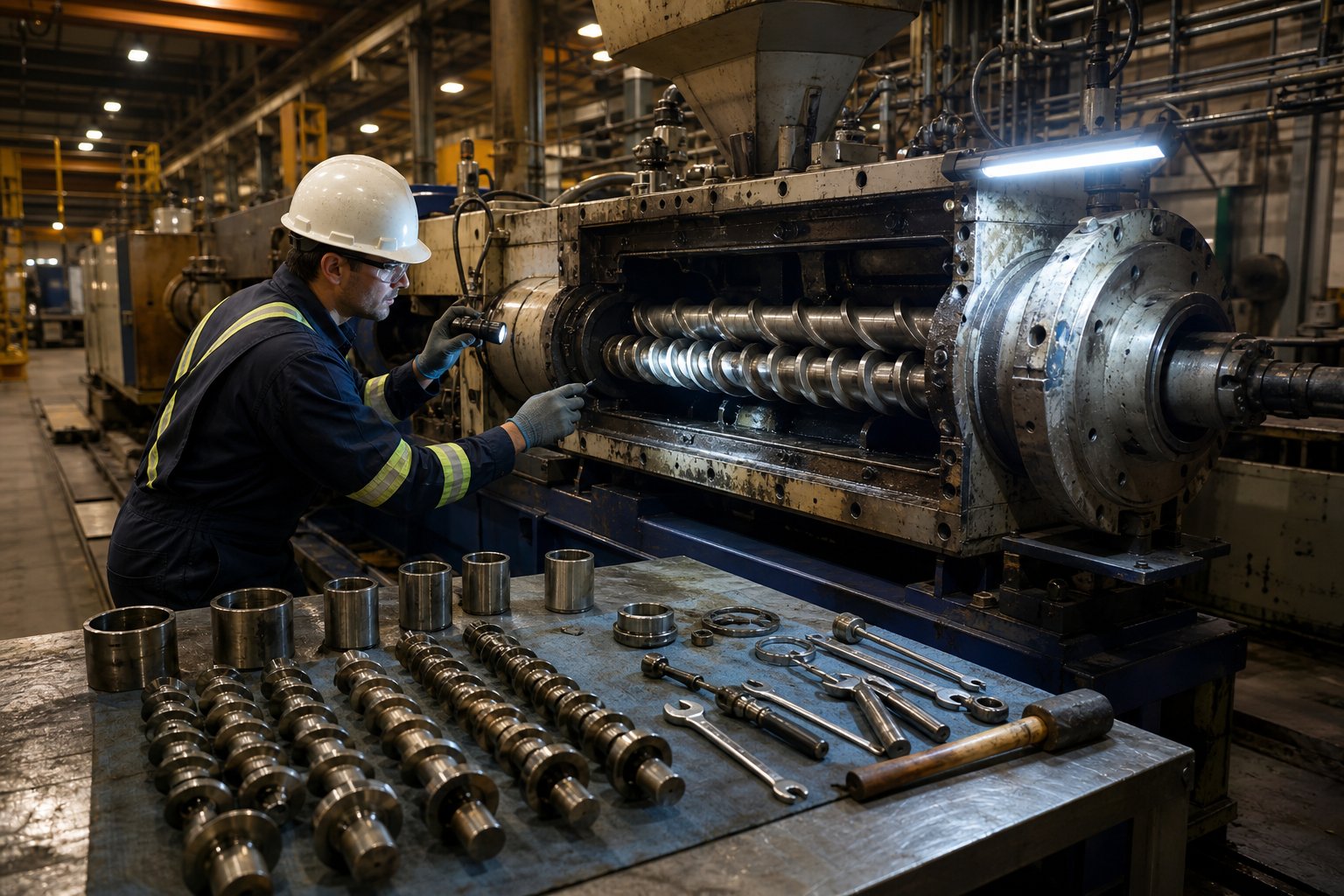
- Screw and barrel wear measurement — Compare screw flight outer diameter and barrel bore inner diameter against original OEM tolerances. As industry inspection guides emphasize, growing flight clearance directly reduces specific output rate, forces higher screw speeds, and drives discharge temperatures upward.
- Gearbox inspection records — Oil analysis reports, bearing backlash measurements, and any documented maintenance or rebuild history reveal the mechanical health of the most expensive single component in the machine.
- Control system age — Obsolete PLCs with discontinued processors or analog temperature controllers may require full replacement, adding $15,000 to $40,000 or more to your real acquisition cost.
- Available documentation — Original OEM specification sheets, wiring diagrams, maintenance records, and screw element inventories. If the seller can't provide these, treat that gap as a signal requiring additional due diligence.
Used extrusion equipment marketplaces list specific inventory with detailed specifications and photographs — but listings are curated to sell, not to protect the buyer. Verify machine history independently whenever possible. Contact the original manufacturer with the serial number to confirm build year, original configuration, and any known service bulletins. Request third-party mechanical inspection if the purchase value justifies the expense.
Refurbished Machines as the Middle Path
Refurbishment occupies the space between used-as-is and brand-new — offering a reconditioning scope that restores critical components while keeping total investment well below new equipment pricing. Think of it as buying proven mechanical DNA with renewed wear surfaces and modernized controls.
A credible refurbishment program should address the systems that most directly affect production performance and reliability:
- New wear parts — Replacement screw elements and barrel liners restoring original dimensional tolerances and metallurgical specifications
- Gearbox rebuild — New bearings, seals, thrust washers, and fresh synthetic gear oil, with gear tooth surface inspection and replacement if pitting or spalling is detected
- Updated controls — Modern PLC and HMI platform replacing obsolete or unsupported control hardware, enabling recipe management and process data logging
- Thermal system renewal — All heater bands and thermocouples replaced to eliminate dead zones and inaccurate temperature readings
- Drive system evaluation — Motor testing and, where justified, DC-to-AC drive conversion for improved energy efficiency and reduced maintenance
Typical refurbishment costs run 20 to 40 percent of the new machine price on top of the used purchase price, depending on the scope of work and the condition of the incoming machine. A well-executed reconditioning program can bring a used machine to within 5 to 10 percent of original OEM throughput and quality specifications — a compelling performance envelope at a total investment that still represents meaningful savings over new equipment.
The following table puts all three acquisition paths side by side across the dimensions that matter most to capital equipment decisions:
| Evaluation Dimension | New Machine | Used (As-Is) | Refurbished |
|---|---|---|---|
| Typical Cost (% of New Price) | 100% | 40-70% | 60-85% (purchase + reconditioning) |
| Warranty Coverage | 12-24 months full OEM warranty | Limited or none; 30-90 day dealer warranty typical | 6-12 months on refurbished components |
| Expected Remaining Service Life | 15-20+ years with proper maintenance | Highly variable; depends on wear condition and history | 10-15 years with proper maintenance |
| Customization Flexibility | Full — built to buyer's exact specifications | None — buy what's available or modify post-purchase | Moderate — controls, wear parts, and auxiliaries can be specified |
| Lead Time | 6-12 months typical from major OEMs | Weeks — immediate availability from dealer stock | 2-4 months including reconditioning work |
| Risk Level | Low — new components, full documentation, OEM support | High — unknown wear history, limited recourse | Moderate — reconditioning addresses major risk areas |
A used machine's true cost must include reconditioning expenses, potential downtime during initial commissioning, and the risk premium of limited warranty coverage. Buyers who budget only for the listing price consistently find their real investment 20 to 50 percent higher once replacement parts, installation labor, and startup troubleshooting are factored in.
The right choice among these three paths depends on your specific circumstances. A new machine makes the strongest case when you need exact specifications, have budget flexibility, and can accommodate lead time. A used twin screw extruder for sale delivers maximum capital efficiency when the machine's condition is thoroughly verified and your team has the technical capability to manage commissioning and any necessary reconditioning. Refurbishment threads the needle — lower risk than buying as-is, lower cost than buying new, with a performance envelope that satisfies most production requirements.
Regardless of which path you choose, the purchase price or total acquisition cost is just the opening chapter of your financial commitment. The expenses that accumulate over the machine's operational lifetime — energy consumption, maintenance budgets, wear part replacement cycles, and eventual resale recovery — often dwarf the initial capital outlay and can fundamentally reshape which option actually delivers the best economics.
Total Cost of Ownership Beyond the Twin Screw Extruder Price
Imagine this: you've negotiated a competitive twin screw extruder price, signed the purchase order, and celebrated a good deal. Then the invoices start arriving. Foundation engineering. Electrical upgrades. Cooling water plumbing. Crane rental. Commissioning engineers. Operator training. Suddenly the "good deal" looks 30 to 40 percent more expensive than the number your CFO approved — and you haven't processed a single kilogram of material yet.
This is the reality gap that separates the machine price from the true cost of putting that machine into production. And it's only the beginning. Over a 10 to 15 year service life, the extruder machine price you paid on day one typically represents less than half of your total financial commitment to that asset. Energy consumption, preventive maintenance, wear part replacement, unplanned downtime, and eventual disposition all compound into a total cost of ownership figure that frequently reshapes which machine — and which acquisition path — actually delivers the best economics.
Acquisition and Installation Costs Beyond the Machine Price
The purchase order closes one phase and opens another that's surprisingly expensive. Here's what happens between delivery and first production — and what each step costs.
Foundation and facility preparation starts well before the truck arrives. Twin screw extruders generate significant dynamic loads during operation, and most production-class machines above 50mm require engineered concrete foundations with vibration isolation. Depending on soil conditions and machine size, foundation work can run $5,000 to $25,000. If the building requires floor reinforcement, overhead crane access modifications, or structural steel for elevated platforms, costs climb further.
Utility connections often catch first-time buyers off guard. A mid-range twin screw extruder with a 150 to 250 kW drive motor demands serious electrical infrastructure — 480V three-phase service with appropriately sized switchgear, circuit breakers, and cable runs. Cooling water circuits for barrel temperature control need piped supply and return lines plus a chiller or cooling tower sized to handle the thermal load. Compressed air connections serve pneumatic actuators on vent ports, slide valves, and diverter systems. Collectively, utility connections typically add $10,000 to $40,000 depending on the existing facility infrastructure and the distance between connection points and the machine location.
Freight and rigging costs scale with machine weight and distance. A 65mm production extruder with gearbox, motor, and barrel assembly can weigh 5,000 to 10,000 kg. International shipments via ocean container add crating, port handling, customs clearance, and inland trucking. Domestic transport with specialized flatbed trailers and on-site rigging with mobile cranes or forklifts typically runs $3,000 to $15,000. International delivery from overseas manufacturers can push freight and rigging costs to $15,000 to $40,000 or more.
Commissioning and startup assistance bridges the gap between a machine that's physically installed and one that's producing saleable product. OEM commissioning engineers verify mechanical alignment, electrical connections, control system configuration, and safety interlock functions before overseeing initial material processing trials. Training investments typically range from $2,000 to $5,000 per operator depending on program depth and customization, while commissioning labor — especially from European OEMs sending engineers internationally — can add $5,000 to $20,000 in travel, daily rates, and expenses.
Add all of this together, and the pattern becomes clear. Installation and commissioning typically add 15 to 30 percent on top of the base machine price for domestically sourced equipment, and 20 to 40 percent for internationally sourced machines requiring ocean freight and extended commissioning support. A $200,000 extruder becomes a $240,000 to $280,000 installed asset before it processes its first pellet.
Annual Operating and Maintenance Expenses
The purchase and installation phase is a one-time event. Operating and maintenance expenses, by contrast, recur every year for the life of the machine — and they compound into totals that dwarf the original capital outlay.
Energy consumption is the largest ongoing operating cost for most compounding operations. The drive motor does the heavy lifting, and its size and efficiency class directly determine your electricity bill at production throughput. A mid-range 75mm twin screw extruder might draw 150 to 250 kW during operation. At an industrial electricity rate of $0.10 per kWh and 5,000 operating hours per year, that translates to $75,000 or more in annual energy expense — for the extruder alone, before accounting for auxiliaries, pelletizers, blowers, and cooling systems. Over a 10-year machine life, energy costs can easily exceed three to four times the original plastic extrusion machine cost.
The efficiency class of the drive motor matters more than many procurement teams realize. Upgrading from an IE2 to an IE4 premium-efficiency motor can reduce electrical losses by 15 to 25 percent at the motor shaft. On a 200 kW drive running 6,000 hours annually, that efficiency improvement saves $8,000 to $15,000 per year — a payback period measured in months rather than years.
Preventive maintenance budgets represent the second major recurring expense category. Industry practice generally allocates 3 to 5 percent of the original plastic extruder machine price annually for routine maintenance on well-designed equipment. For a $250,000 machine, that's $7,500 to $12,500 per year covering scheduled inspections, lubrication, alignment checks, and minor component replacements. Industry studies indicate that total maintenance costs range from $8,000 to $25,000 annually for mid-sized twin screw extruders, depending on design quality, application severity, and maintenance practices.
The components that consume most of your maintenance budget are the same ones that experience direct material contact and mechanical stress. Understanding their general replacement cycles helps you forecast expenses accurately:
- Screw elements — The most frequently replaced wear items. Service life ranges from 5,000 to 12,000 operating hours depending on material abrasiveness and metallurgy. Complete screw element sets for mid-sized machines can cost $20,000 to $100,000 depending on configuration.
- Barrel liners — Longer-lived than screw elements but more expensive to replace. Standard barrels achieve 10,000 to 15,000 hours; bimetallic liners extend that to 20,000 to 30,000 hours. Replacement costs typically range from $15,000 to $40,000 depending on extruder size and barrel type.
- Gearbox oil and seals — Synthetic gear oil changes at 8,000 to 15,000 hour intervals; shaft seals replaced as leakage develops, typically every 8,000 to 12,000 hours.
- Heating elements and thermocouples — Individual heater bands and temperature sensors are relatively inexpensive ($50 to $500 each) but replace frequently, especially in high-temperature applications. Budget for replacing 10 to 20 percent of heater bands annually.
- Gearbox bearings and internals — Major overhauls at 15,000 to 25,000 hour intervals represent the single most expensive maintenance event, with gearbox replacement costs ranging from $20,000 to $50,000 depending on size and rating.
Here's where the math gets revealing. A $250,000 machine running 5,000 hours per year over 10 years accumulates approximately $75,000 to $250,000 in maintenance expenses — depending heavily on the materials processed and the metallurgy originally specified. Combined with $500,000 to $750,000 in energy costs over the same period, the operating expenses alone can represent two to four times the original purchase price. The twin screw extruder price tag hanging on the machine when you bought it? It was the smaller number all along.
Lifecycle Value and Resale Considerations
Total cost of ownership isn't just about what goes out — it's also about what comes back. Every twin screw extruder has a residual value at the end of its service with your operation, and that value varies dramatically based on brand, configuration, maintenance history, and market demand for the specific machine type.
Well-maintained machines from reputable manufacturers consistently hold their value better on the secondary market. A 10-year-old co-rotating twin screw extruder from a recognized European OEM — with documented maintenance records, current-generation controls, and screw and barrel measurements within acceptable tolerances — can command 30 to 50 percent of its original new price on the resale market. The same vintage machine from a lesser-known manufacturer, without maintenance documentation or with outdated controls, might fetch only 15 to 25 percent.
This resale differential directly informs true lifecycle cost. Consider two machines with different acquisition costs but different residual values:
Machine A costs $350,000 new, operates for 12 years with $180,000 in cumulative maintenance, and resells for $120,000. Net lifecycle cost: $410,000.
Machine B costs $220,000 new, operates for 10 years with $250,000 in cumulative maintenance (due to faster wear part consumption and higher energy draw from a less efficient drive), and resells for $35,000. Net lifecycle cost: $435,000.
Machine B looked like the cheaper option on the purchase order. Over the full ownership period, it cost $25,000 more — and delivered two fewer years of service. This pattern repeats across the industry: higher-quality equipment with superior energy efficiency, better metallurgy, and stronger brand recognition creates a lifecycle cost advantage that's invisible in a side-by-side quote comparison.
Several factors strengthen resale value and should be considered as part of your original purchasing decision:
- Brand recognition — Machines from established OEMs attract a wider pool of secondary-market buyers
- Modular screw design — Co-rotating machines with standard element profiles have broader application appeal than specialized fixed-screw configurations
- Current-generation controls — Machines with modern PLCs and HMI platforms are significantly more attractive than units running obsolete controllers
- Documented maintenance history — Comprehensive service records reduce buyer risk and support premium resale pricing
- Standard utilities and footprint — Machines requiring unusual power configurations or oversized foundations are harder to resell into existing facilities
TCO analysis frequently reverses the apparent cost ranking of competing machines. The lowest quoted price often correlates with the highest total lifecycle cost when operating expenses, maintenance burden, and residual value are factored in. Informed buyers evaluate the full economic picture — not just the number on the purchase order.
This total cost of ownership framework fundamentally changes how procurement teams should evaluate competing quotes. But applying it requires knowing exactly what's included — and what's strategically excluded — in the prices manufacturers and dealers put in front of you.
What Is and Is Not Included in Twin Screw Extruder Quotes
Picture this: you receive two quotes for seemingly identical 65mm twin screw extruders. One reads $165,000. The other reads $245,000. Your instinct says the first quote wins — but when you line up the inclusions side by side, you discover the cheaper quote covers only the bare extruder while the second bundles feeders, a pelletizing system, installation support, and a spare parts kit. Suddenly the "expensive" quote is actually the better deal, and the "affordable" one needs another $120,000 in auxiliary equipment before it can produce a single pellet.
This scenario isn't hypothetical. It plays out in procurement offices every week, because there is no industry-standard definition of what a twin screw extruder quote must include. Every manufacturer and dealer draws the line differently — and that inconsistency is the single greatest source of budget overruns in extrusion equipment purchasing.
Standard Inclusions in Most Twin Screw Extruder Quotes
While no two quotes are formatted identically, most reputable manufacturers include a core set of components in their base pricing. When you're reviewing an extruder machine for sale from any supplier, you should expect to find at minimum:
- Extruder barrel and screw assembly — The complete barrel section stack with heating and cooling provisions, plus one set of screw elements configured for your primary application
- Drive motor and gearbox — The main motor, coupling, and gearbox assembly rated for the specified torque class and speed range
- Basic control panel and HMI — A PLC-based control cabinet with touchscreen interface providing temperature zone control, screw speed regulation, and standard alarm functions
- Standard safety guarding — Protective covers, emergency stop circuits, and interlock systems meeting CE or equivalent safety standards for the destination market
- Basic documentation package — General assembly drawings, electrical schematics, operation manual, and a recommended spare parts list
If any of these five items are missing from a base quote, that's a red flag worth investigating. These components represent the minimum functional unit — without any one of them, the machine cannot operate.
Common Exclusions That Inflate Your Real Budget
Here's where quotes get strategically creative. The items below are essential for a functioning production line, yet they frequently appear as optional extras, separate line items, or — in the most problematic cases — aren't mentioned at all until after the purchase order is signed. Whether you're evaluating a plastic extruder machine for sale from a major OEM or browsing extrusion equipment for sale through a dealer, scrutinize every quote for these common exclusions:
- Volumetric or gravimetric feeders — Accurate material dosing is fundamental to product quality, yet main feeders are excluded from many base quotes. Gravimetric loss-in-weight systems alone can add $8,000 to $35,000 per feeding station.
- Side feeders for downstream addition — Required for introducing glass fiber, mineral fillers, or secondary additives downstream of the melt zone. Each side feeder adds $10,000 to $30,000 depending on size and type.
- Vacuum venting systems — Necessary for devolatilization, moisture removal, and reactive extrusion applications. Vacuum pumps, vent stuffer assemblies, and condensation traps can add $5,000 to $20,000.
- Pelletizing systems — Strand pelletizers, underwater pelletizers, or water-ring pelletizers are separate capital items ranging from $15,000 for basic strand cutters to $100,000+ for underwater systems with process water filtration.
- Downstream cooling and drying equipment — Water baths, air knives, strand conveyors, vibratory screeners, and pellet classifiers. A complete downstream system can match or exceed the extruder cost itself.
- Die heads — Application-specific dies for strand, profile, sheet, or direct extrusion are almost always quoted separately, ranging from $2,000 to $25,000 depending on complexity.
- Spare parts kits — Initial spare screw elements, barrel liners, heater bands, and thermocouples. A properly stocked spare parts inventory for a mid-range machine runs $10,000 to $50,000.
- Installation and commissioning labor — Mechanical installation, electrical hookup, alignment, and startup supervision. Often quoted as a separate service contract or billed on a time-and-materials basis.
- Operator training beyond basic startup — Advanced process optimization training, screw configuration workshops, and maintenance training programs are typically extra.
- Extended warranty programs — Coverage beyond the standard 12 to 24 month period is available from most OEMs at additional cost, typically 1 to 3 percent of machine price per year of extended coverage.
When you total these exclusions, the pattern is stark. Auxiliary equipment and downstream systems routinely add 40 to 100 percent on top of the base extruder price for a complete, production-ready line. A plastic extrusion machine for sale quoted at $180,000 becomes a $280,000 to $360,000 installed production system once all necessary ancillary components are included. Procurement teams who budget only for the base machine number set themselves up for an uncomfortable conversation with finance halfway through the project.
Shipping and Landed Cost Considerations
For buyers sourcing internationally — and the twin screw extruder market is thoroughly global — the gap between the quoted FOB price and the landed cost at your facility deserves its own line in the budget. Heavy industrial equipment doesn't ship cheaply, and the logistics chain adds layers of cost that are easy to underestimate.
Freight costs depend on machine weight, dimensions, and destination. A mid-range production extruder typically requires a dedicated 40-foot ocean container or, for larger machines, flat-rack containers with out-of-gauge surcharges. Ocean freight from East Asia to North American or European ports runs $4,000 to $12,000 per container depending on routing and market conditions, with inland trucking from port to facility adding another $1,500 to $5,000. Crating and export packaging — critical for protecting precision-machined surfaces during transit — adds $1,000 to $3,000.
Customs duties and import taxes vary significantly by country of origin and destination. Industrial machinery imported into the United States typically faces tariff rates that can add a meaningful percentage to the declared value, with additional considerations for country-specific trade policies and anti-dumping duties on certain categories. VAT or GST in destination countries adds further cost in many markets, though these may be recoverable for commercial buyers depending on local tax structures.
Local rigging and crane costs cover the final mile — getting a 5,000 to 15,000 kg machine from the delivery truck into position on your production floor. Mobile crane rental, rigging crews, and millwright services for final positioning and leveling typically run $3,000 to $10,000 depending on machine weight and facility access constraints.
This is where the much-discussed price gap between Chinese and European OEM manufacturers deserves a reality check. The 40 to 60 percent price advantage that Chinese manufacturers often show on FOB quotes narrows once shipping, duties, customs brokerage, and extended lead times are factored into the landed cost equation. A $150,000 Chinese-origin machine might land at $175,000 to $195,000 after logistics and import costs — still meaningfully below a $300,000 European equivalent, but the gap is tighter than the raw quotes suggest. For buyers shopping extruders for sale across geographies, building a complete landed-cost comparison is the only honest way to evaluate the true price differential.
Knowing exactly what's included, what's excluded, and what the logistics chain adds to your real investment creates the foundation for accurate budgeting. The next question — and one that reshapes the entire cost picture — is where in the world you source that equipment, and how geographic origin affects not just the purchase price but the long-term support infrastructure behind it.
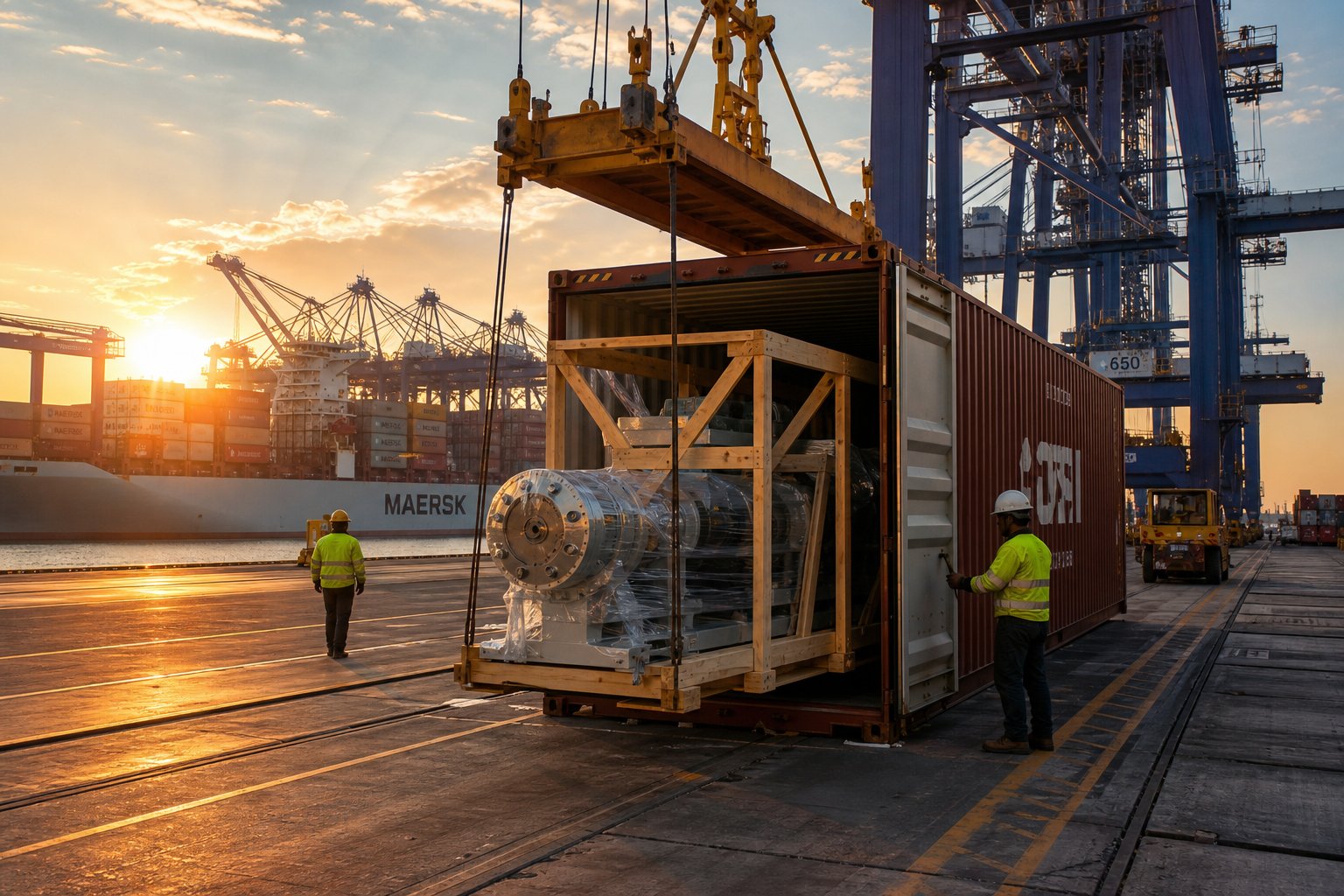
Geographic Pricing Comparison and Sourcing Strategy for Twin Screw Extruders
Where your extruder is built shapes far more than the number on the invoice. Geographic origin influences lead time, after-sales responsiveness, spare parts logistics, resale value, and — perhaps most critically — your ongoing maintenance costs for the life of the machine. The twin screw extruders market has evolved into a genuinely global arena, and buyers who evaluate sourcing options across regions rather than defaulting to a single geography consistently secure better total economics.
The price gap between manufacturing regions is real and significant. But treating it as a simple "cheap vs. expensive" binary misses the nuances that determine whether a sourcing decision pays off over 10 to 15 years of production.
Chinese Manufacturers and Value Positioning
A decade ago, sourcing a twin screw extruder from China meant accepting meaningful compromises in build quality, documentation, and technical support. That calculus has shifted dramatically. Chinese twin-screw extruder manufacturer capabilities have matured to the point where established suppliers routinely deliver machines serving demanding production environments — from engineering plastics compounding to reactive extrusion — at price points 30 to 50 percent below European equivalents at comparable screw diameters and torque classes.
The depth of this manufacturing base is substantial. China exported approximately 109,000 extruder units in a single recent reporting period while importing only about 1,000 — a trade surplus that reflects genuine manufacturing scale rather than low-cost assembly. Cities like Nanjing have become recognized global centers for extrusion extruder production, with clusters of specialized manufacturers, component suppliers, and metallurgy specialists operating within the same industrial ecosystem.
That said, buyers evaluating Chinese-origin extruders should weigh several practical trade-offs:
- Lead times — Manufacturing cycles of 8 to 16 weeks are typical, plus 4 to 6 weeks for ocean freight. Total order-to-delivery timelines of 3 to 5 months are realistic for production-class machines.
- Communication — Language differences, time zone gaps, and varying documentation standards require patience and clarity. Manufacturers with dedicated English-speaking export teams — and there are many — significantly reduce friction here.
- Spare parts logistics — Replacement screw elements, barrel liners, and gearbox components shipped from China involve transit times that can stretch to several weeks. Building an initial spare parts inventory at the time of purchase mitigates this risk substantially.
- After-sales support — On-site service response from Chinese manufacturers is improving but still lags behind European OEMs with established regional service networks. Remote technical support via video call has closed much of this gap for routine troubleshooting.
One area where factory-direct Chinese sourcing delivers an especially compelling advantage is ongoing wear parts procurement. Screw elements and barrel liners are consumables that every extrusion extruder operation replaces repeatedly over the machine's lifetime — and the price differential on these components between Chinese and European suppliers is often even wider than the gap on complete machines. Suppliers like NANHAIYA, which specializes in factory-direct screw and barrel solutions for extrusion, compounding, and pelletizing applications, exemplify this model. Establishing a procurement relationship with a dedicated screw and barrel manufacturer can reduce long-term wear parts spending by 40 to 60 percent compared to sourcing exclusively through the original equipment manufacturer — a meaningful TCO lever given that wear parts represent one of the largest recurring maintenance expenses covered in the previous section.
European OEM Premium Brands
European manufacturers occupy the premium tier of the global market — and they deliver genuine value for that premium. Names like Coperion (Germany), KraussMaffei Berstorff (Germany), and Leistritz (Germany) represent decades of engineering refinement, extensive patent portfolios, and global service infrastructure that few competitors can match.
What does the European premium buy you? Start with gearbox engineering — European OEMs consistently lead in torque density and gearbox longevity, with precision-manufactured power trains that deliver reliable performance across demanding multi-shift operations. Add comprehensive global service networks with regional offices, field engineers, and spare parts warehouses positioned to support machines within days rather than weeks. Layer in established resale value — a well-maintained Coperion or Leistritz machine holds 35 to 50 percent of its original value on the secondary market after a decade of service, compared to 15 to 30 percent for many lesser-known brands.
The trade-off is straightforward: you'll pay a substantial premium. European-built extruders at any given specification level typically cost 1.5 to 2.5 times their Chinese equivalents. For operations where uptime is mission-critical, where the machine runs 7,000+ hours annually, and where the production environment demands the highest levels of process consistency, that premium often pays for itself through lower unplanned downtime and stronger lifecycle economics. For operations with more moderate utilization rates or tighter capital constraints, the value equation tilts toward other sourcing regions.
US extruders and North American-built machines occupy a middle ground, though the domestic manufacturing base for twin screw extruders is considerably smaller than either China or Europe. Most American buyers source from European OEMs with US sales and service offices or import directly from established Chinese manufacturers.
Financing and Payment Structures
Here's a topic almost no equipment guide covers, yet it directly affects your effective cost: how you pay for a twin screw extruder matters almost as much as what you pay. For machines ranging from $50,000 to $500,000 and beyond, the financing structure can shift your effective cost by thousands of dollars annually and significantly influence cash flow during the critical startup period.
Three primary financing paths are available to most industrial buyers:
- Equipment loans — Traditional bank or SBA-backed loans with the machine itself as collateral. Typical terms run 5 to 7 years at interest rates that vary with creditworthiness and market conditions. The machine appears on your balance sheet as a depreciable asset, and you build equity with each payment.
- Equipment leasing — Operating leases or capital leases that reduce upfront cash requirements and may offer tax advantages through lease payment deductions. Monthly payments are typically lower than loan payments, but you may not own the equipment at lease end without a buyout. Leasing can be particularly attractive for operations with uncertain long-term production volumes.
- Manufacturer payment plans — Some OEMs and larger dealers offer in-house financing or milestone-based payment structures: a percentage at order, a percentage at factory acceptance testing, and the balance at commissioning. Chinese manufacturers frequently work with letters of credit or trade finance structures familiar to international procurement teams.
The interaction between financing structure and geographic sourcing creates interesting dynamics. A Chinese-origin machine financed through a 5-year equipment loan at current rates may carry monthly payments 50 to 60 percent lower than a European equivalent — a cash flow advantage that compounds over the financing period and can free working capital for raw material procurement, facility improvements, or additional downstream equipment.
| Comparison Dimension | Chinese Manufacturers | European OEMs | US / North American Sources |
|---|---|---|---|
| Price Range Positioning | 30-50% below European equivalents at comparable specs | Premium tier — highest capital cost | Mid-to-premium; most source European or Chinese builds |
| Typical Lead Times | 3-5 months (manufacturing + ocean freight) | 4-8 months (manufacturing + delivery) | Varies; 2-6 months depending on source |
| Service and Support Infrastructure | Improving; remote support strong, on-site response varies | Extensive global networks with regional offices and field engineers | Strong domestic support; often tied to European OEM partnerships |
| Spare Parts Availability | Factory-direct at competitive pricing; transit times of 2-6 weeks for international delivery | Regional warehouses enable rapid delivery; premium pricing on OEM parts | Dependent on source; domestic stock limited for most brands |
| Resale Value Retention | 15-30% after 10 years; improving as brand recognition grows | 35-50% after 10 years for well-maintained units from top brands | Mirrors the original manufacturer's brand strength |
The right sourcing strategy isn't about choosing the cheapest origin — it's about matching geographic strengths to your operational priorities. A high-utilization production facility running three shifts on demanding materials may justify the European premium for its service infrastructure and resale value. A growing compounder scaling into new product lines may achieve better returns by sourcing the machine from a competitive Chinese twin-screw extruder manufacturer and channeling the capital savings into application development, raw materials, or wear parts inventory from factory-direct suppliers like NANHAIYA that keep long-term maintenance costs in check.
Geography and financing shape the financial framework. But the final — and arguably most consequential — step is translating all of these variables into a concrete procurement decision that matches machine specifications to your actual application requirements and budget realities.
Making the Right Twin Screw Extruder Investment Decision
Every data point covered in this guide — diameter-based pricing, TCO frameworks, geographic differentials, quote dissection — converges on a single practical question: how do you turn analysis into a purchase order you'll still feel good about five years from now? The answer isn't a formula. It's a structured decision process that matches your application reality to the right machine, the right source, and the right budget — in that order.
Matching Machine Specifications to Application Requirements
Rushing to request quotes before locking down specifications is like asking for construction bids without a blueprint. You'll get numbers, but they won't mean much. Walk through these steps sequentially, and each decision narrows the field for the one that follows:
- Define throughput requirements — Establish your target production rate in kg/hr for both current needs and realistic 3- to 5-year growth projections. Oversizing by 20 to 30 percent provides headroom without the capital waste of dramatically oversized equipment.
- Identify material characteristics and processing demands — Document every polymer, filler, additive, and liquid component in your formulations. Note abrasiveness, corrosiveness, thermal sensitivity, and moisture content. These properties dictate metallurgy, screw configuration, and venting requirements.
- Determine required L/D ratio based on mixing and residence time needs — Simple blending operations work well at 32:1 to 40:1. Multi-stage compounding with devolatilization or reactive processing pushes requirements to 44:1, 48:1, or beyond. Don't pay for barrel length you won't use — but don't underspec either, because adding barrel sections after purchase is rarely practical.
- Select appropriate screw diameter range — Use the throughput-to-diameter benchmarks from the pricing section to identify which diameter class delivers your target output. This single decision sets the baseline budget range for the entire project.
- Evaluate automation and control requirements — A single-product, single-shift operation needs different control sophistication than a multi-recipe facility with traceability obligations. Match the control investment to your actual operational complexity.
- Establish budget range including TCO factors — Apply the total cost of ownership framework: base machine price plus 15 to 40 percent for installation and commissioning, plus projected annual operating and maintenance costs over your planning horizon. This is the number your finance team should approve — not the equipment quote alone.
Following this sequence prevents the most common procurement mistake: falling in love with a machine's price tag before confirming it can actually do the job. A plastic twin screw extruder that meets your throughput target but lacks the torque density for your filled formulation is a six-figure lesson in specification discipline.
When Paying More Delivers Genuine ROI
Not every premium feature is worth its price — but some absolutely are. Understanding which scenarios justify higher capital investment separates strategic procurement from penny-wise budgeting.
Pay more when:
- High utilization drives the economics — A twin screw plastic extruder running 5,000 to 7,000 hours annually amplifies every efficiency advantage. Premium drive motors, superior metallurgy, and higher torque density all deliver measurable returns through lower specific energy consumption, extended wear part intervals, and reduced unplanned downtime. Over a decade of heavy operation, a 15 percent energy efficiency advantage alone can repay a $50,000 to $100,000 price premium.
- Material demands are severe — Processing highly abrasive glass-fiber compounds, corrosive fluoropolymers, or thermally sensitive engineering plastics punishes underbuild quality relentlessly. Superior barrel metallurgy and precision-ground screw elements last three to five times longer under these conditions, drastically reducing replacement frequency and the production interruptions that accompany every screw pull.
- Product quality tolerances are tight — Applications requiring narrow color consistency, precise filler distribution, or documented process traceability benefit from advanced automation, better mixing performance, and the process stability that higher-quality twin-screw extruders deliver consistently.
- Resale value matters — If your planning horizon includes eventual equipment replacement or facility rebalancing, machines from recognized brands retain substantially more secondary-market value. That residual value is real money that offsets the original premium.
A lower-cost machine is the rational choice when:
- Production runs are limited — Pilot-scale operations, short-run contract compounding, or seasonal production that accumulates fewer than 2,000 operating hours annually simply can't generate the throughput volume needed to recoup premium equipment costs.
- Materials are non-demanding — Unfilled commodity polymers, basic color concentrates, and low-abrasion formulations don't punish standard metallurgy or stress entry-level gearboxes. Paying for extreme wear protection when processing straight LDPE is capital misallocation.
- The machine won't run at capacity — If your projected throughput occupies only 40 to 50 percent of the machine's rated capacity, you're effectively paying a premium for headroom you may never use. Budget-tier twin screw extruders for sale from established Chinese manufacturers deliver reliable performance at moderate utilization without the premium price tag.
- You're testing a new market segment — Entering a new product category or evaluating a formulation concept before committing to full-scale production is exactly the scenario where small plastic extruders for sale — whether new economy models or refurbished units — make strategic sense. Prove the economics first, then invest in premium capacity.
Building Your Procurement Shortlist
With specifications locked and budget range established, the final phase is execution. These practical steps transform your analysis into competitive, comparable quotes that support a confident decision:
- Request quotes from multiple geographic origins — Source at least one proposal each from a Chinese manufacturer, a European OEM, and — if applicable — a North American or regional supplier. Geographic diversity creates pricing leverage and reveals the true market range for your specification set.
- Insist on detailed line-item pricing — Require every supplier to separate base machine cost from feeders, pelletizers, downstream equipment, controls upgrades, installation, commissioning, training, and spare parts. Lump-sum quotes that bundle everything into a single number make meaningful comparison impossible.
- Request references from existing users processing similar materials — A supplier's claims about throughput, wear life, and energy consumption are only as credible as their reference installations. Ask for contacts at facilities running your polymer type at comparable filler loadings, and actually call them. Focus your questions on after-sales responsiveness and real-world maintenance costs — the dimensions that specification sheets can't capture.
- Evaluate total landed and lifecycle cost rather than base machine price alone — Apply the TCO framework from this guide. Add freight, duties, installation, and commissioning to every quote. Project annual energy and maintenance expenses using the operating cost benchmarks provided. Compare 10-year total economics, not invoice prices.
- Establish wear parts sourcing relationships early — Every twin screw extruder buyer will face ongoing screw element and barrel liner replacement throughout the machine's service life. Building procurement relationships with factory-direct suppliers like NANHAIYA — who specialize in screw and barrel solutions for twin screw extrusion and compounding operations — before the first set of kneading blocks shows wear gives you pre-qualified alternatives that can meaningfully reduce long-term maintenance costs compared to sourcing exclusively through OEM parts departments.
One final note on timing: don't let urgency override process. Compressing the evaluation timeline to meet an aggressive project schedule is one of the most reliable ways to overpay or, worse, select the wrong machine entirely. A well-run procurement cycle for a production-class twin screw extruder takes 8 to 16 weeks from initial RFQ to purchase order — time that protects six figures of capital investment and a decade or more of production capability.
The cheapest twin screw extruder is rarely the lowest-cost option, and the most expensive machine is not always the best investment. Informed buyers evaluate total lifecycle economics — acquisition cost, operating expenses, maintenance burden, and residual value — and select the machine that delivers the best return per kilogram processed over its full service life.
Frequently Asked Questions About Twin Screw Extruder Cost
1. How much does a twin screw extruder cost?
Twin screw extruder pricing varies widely based on screw diameter, configuration, and origin. Small lab units (16-27mm) range from $5,000 to $120,000+. Mid-range production machines (35-65mm) typically cost $60,000 to $450,000, while large industrial extruders (75-135mm+) range from $200,000 to over $1,000,000. Chinese-manufactured machines generally cost 30-50% less than European equivalents at comparable specifications. Keep in mind that the base machine price represents only 60-70% of your total investment once installation, auxiliary equipment, feeders, pelletizing systems, and commissioning are included.
2. What factors affect twin screw extruder pricing the most?
Five primary factors drive the biggest price variations. Screw diameter is the top determinant, as it dictates throughput capacity and overall machine scale. Torque density follows closely — the gearbox alone can account for 25-40% of total machine cost. L/D ratio impacts price proportionally, with moving from 36:1 to 48:1 adding 20-35% to the base cost. Barrel and screw metallurgy creates a 1x to 5x cost range depending on whether you specify standard nitrided steel or tungsten carbide composites. Finally, automation sophistication adds 10-25% depending on whether you need basic PLC controls or full Industry 4.0 integration with recipe management and remote monitoring.
3. Is it better to buy a new or used twin screw extruder?
The right choice depends on your budget, timeline, and technical capabilities. New machines offer full warranties (12-24 months), exact customization, and latest energy efficiency technology, but require 6-12 month lead times and full market pricing. Used extruders trade at 30-60% below new prices with near-immediate availability, though buyers must carefully inspect run hours, screw and barrel wear, gearbox condition, and control system age. Refurbished machines split the difference at 60-85% of new pricing with 6-12 month component warranties and 10-15 years of expected service life. Always factor in reconditioning costs, as used machine buyers typically spend 20-50% more than the listing price once replacement parts and commissioning are included.
4. What is the total cost of ownership for a twin screw extruder?
Total cost of ownership extends far beyond the purchase price and typically runs 3-5 times the original machine cost over a 10-15 year service life. Installation and commissioning add 15-40% on top of the base price. Annual energy costs for a mid-range 75mm extruder can exceed $75,000 at typical industrial electricity rates. Preventive maintenance budgets run 3-5% of the original purchase price annually, with screw element replacements costing $20,000-$100,000 per set and barrel liner replacements running $15,000-$40,000. Sourcing replacement wear parts from factory-direct suppliers rather than OEM channels can reduce long-term maintenance spending by 40-60%, making supplier relationships a critical TCO lever.
5. Should I buy a twin screw extruder from China or Europe?
Both regions offer legitimate advantages depending on your priorities. Chinese manufacturers deliver 30-50% lower pricing at comparable specifications, with a mature manufacturing base that has improved significantly in quality and capability. European OEMs like Coperion and Leistritz command premium pricing but provide superior service networks, higher resale value retention (35-50% after 10 years vs. 15-30% for Chinese brands), and industry-leading gearbox engineering. The landed cost gap narrows once you add shipping, customs duties, and logistics to Chinese FOB prices, but meaningful savings typically remain. High-utilization, mission-critical operations often justify the European premium, while growing compounders and moderate-utilization facilities frequently achieve better total economics with Chinese-origin machines supplemented by factory-direct wear parts sourcing.
Written by
Nanhaiya Technical Team
Zhoushan Nanhaiya Plastic Machinery Co., Ltd.
The Nanhaiya technical team supports screw and barrel manufacturing projects through application review, technical communication, custom manufacturing coordination, and production and quality control.
Discuss Your Application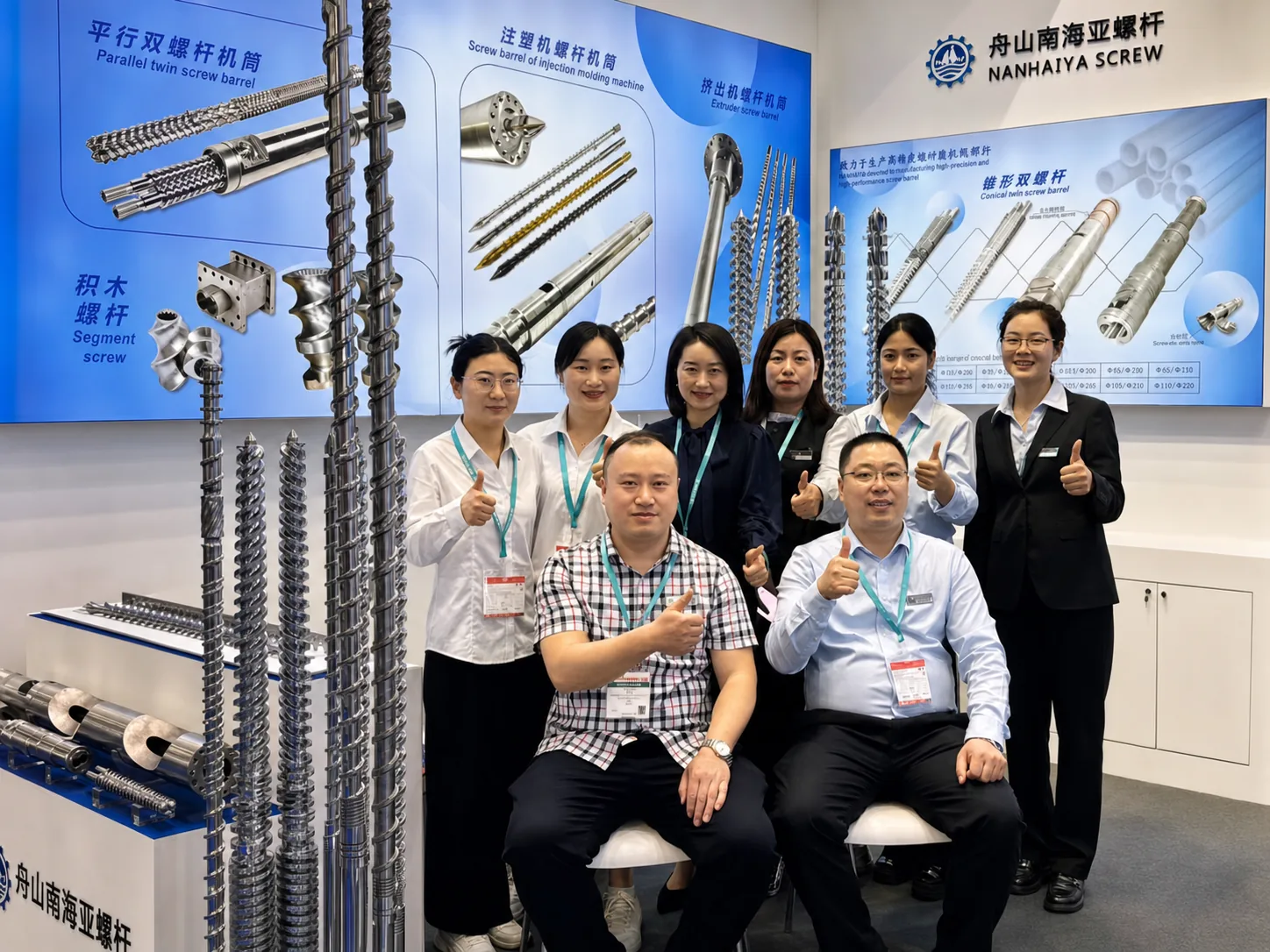
Related Articles
More insights on screw barrel technology and plastics processing.

Single Screw Extruder Supplier Red Flags You Can't Afford To Miss
Oct 22, 2026
Learn how to evaluate a single screw extruder supplier with this buyer's guide covering pricing, screw and barrel tech, new vs used trade-offs, and red flags.
Read Article
HDPE Pipe Making Machine Decoded: From Specs to Smart Purchase
Oct 15, 2026
Learn how HDPE pipe making machines work, from extruder specs and extrusion process steps to automation levels, maintenance costs, and smart buying tips.
Read Article
Pick the Wrong Plastic Pelletizing Line and You Pay Twice
Oct 14, 2026
Learn how to spec the right plastic pelletizing line for your resin, throughput, and budget. Covers strand, underwater, and air-cooled systems plus ROI planning.
Read ArticleLooking for something else?
Search by material, symptom or product and jump straight to the relevant page.
These are navigation suggestions based on keyword matching — not a quotation, not a delivery commitment, and not a substitute for engineering review. Final specification is confirmed by our engineers against your drawings and processed material.
Need help with screw barrel selection?
Share your machine model, processed material and application. Our team can help with pricing and technical support.