

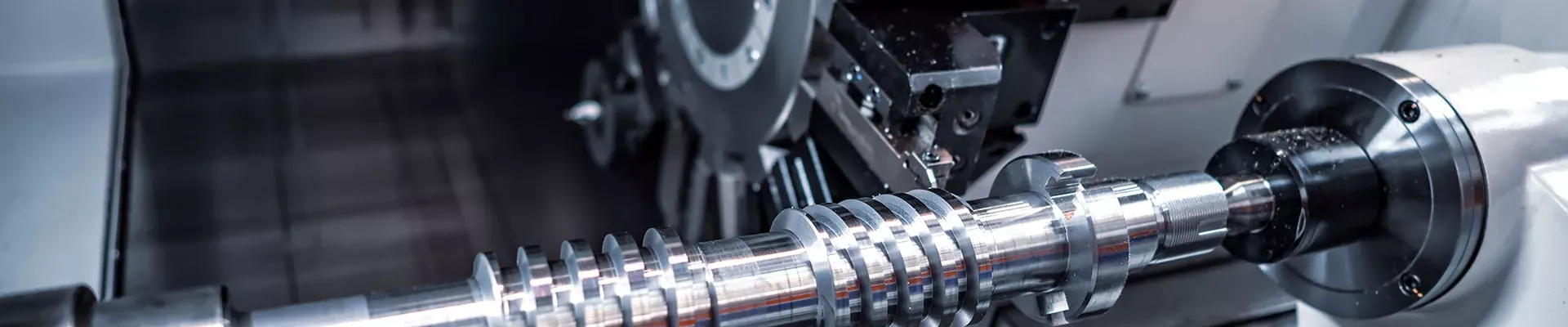
Alloy Spray Welding Service
Dual-alloy spray coating technology that can help extend the service life of screws and barrels depending on application, delivering improved wear and corrosion resistance.
Dual-alloy spray coating technology that can help extend the service life of screws and barrels depending on application, delivering improved wear and corrosion resistance.
Alloy spray welding is a thermal surface treatment process that applies a layer of high-performance alloy material onto the working surfaces of screws and barrels. Using specialized spray welding equipment, alloy powders are heated to a molten or semi-molten state and deposited onto the prepared substrate, forming a metallurgically bonded protective layer.
The dual-alloy approach uses different alloy compositions for the base layer and the working surface layer. The base layer ensures strong adhesion to the substrate, while the outer layer provides the specific wear resistance, corrosion resistance, or combination of properties required for the application.
This technology is applicable to both new screws and barrels that require enhanced surface properties from day one, and worn components that need restoration to extend their operational lifespan without the cost of full replacement.
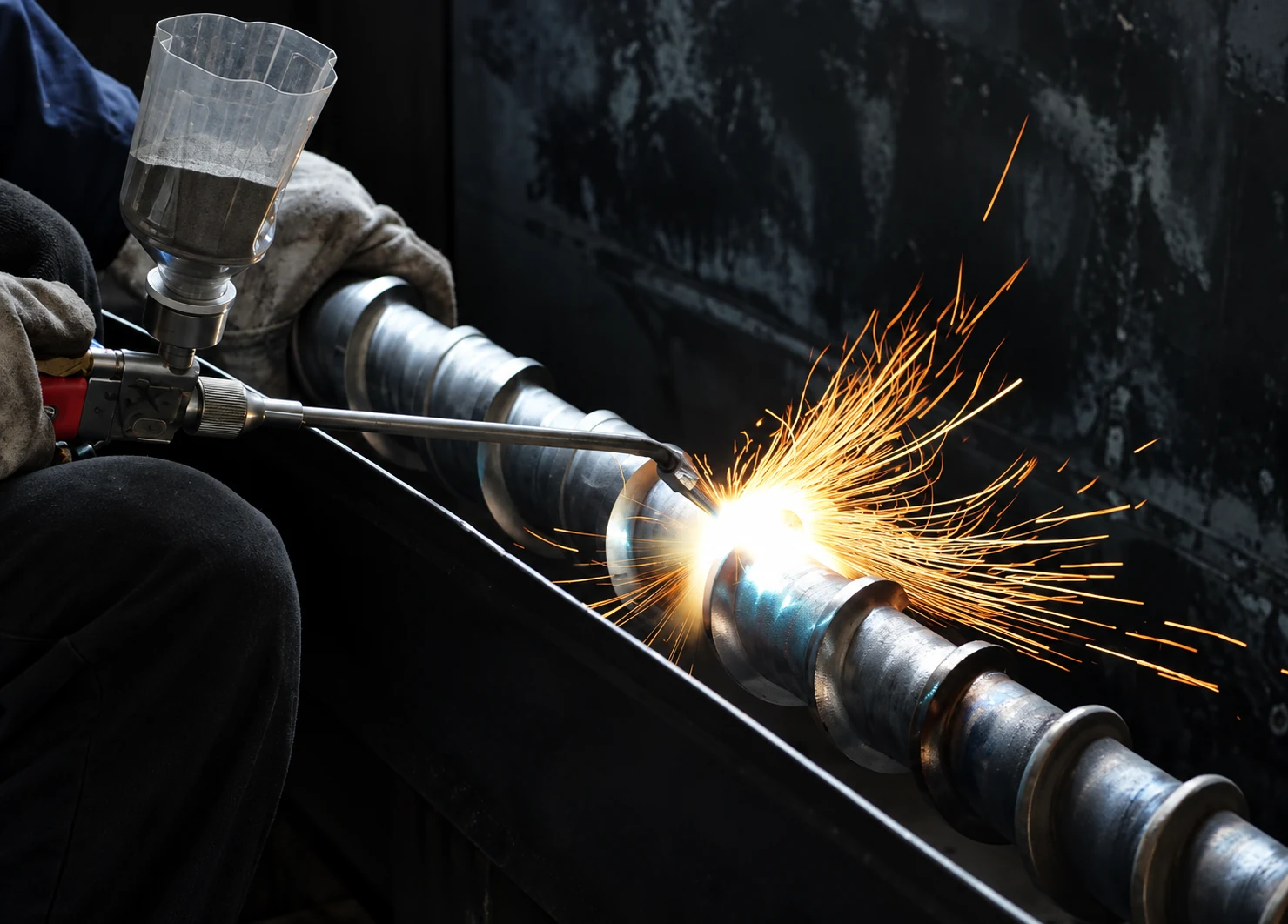
Longer Service Life
Depending on application
Our alloy spray welding service delivers measurable improvements in component performance across demanding plastics processing applications.
Dual-alloy coating can help extend the operational lifespan of screws and barrels depending on application, reducing downtime and replacement frequency.
High-hardness alloy coating withstands abrasive materials including glass fiber filled plastics, mineral fillers, and recycled compounds.
Specialized alloy formulations provide excellent chemical resistance against corrosive PVC compounds and aggressive processing environments.
Spray welding worn screws and barrels costs significantly less than full replacement while restoring performance depending on application and wear condition.
Applicable to both brand-new screws requiring enhanced protection and worn components that need restoration and upgraded surface properties.
Each step is carefully controlled to ensure consistent coating quality, optimal adhesion, and dimensional accuracy.
Thorough cleaning and roughening of the substrate surface to ensure optimal adhesion of the alloy coating.
Controlled preheating of the workpiece to the required temperature range, preventing thermal shock and improving bond strength.
Precision application of dual-alloy coating material using specialized spray welding equipment at controlled parameters.
Gradual, controlled cooling process to relieve internal stresses and ensure a uniform, crack-free coating layer.
Precision CNC grinding to achieve the required dimensional tolerances and surface finish specifications.
Comprehensive quality inspection including hardness testing, dimensional verification, and surface integrity checks.
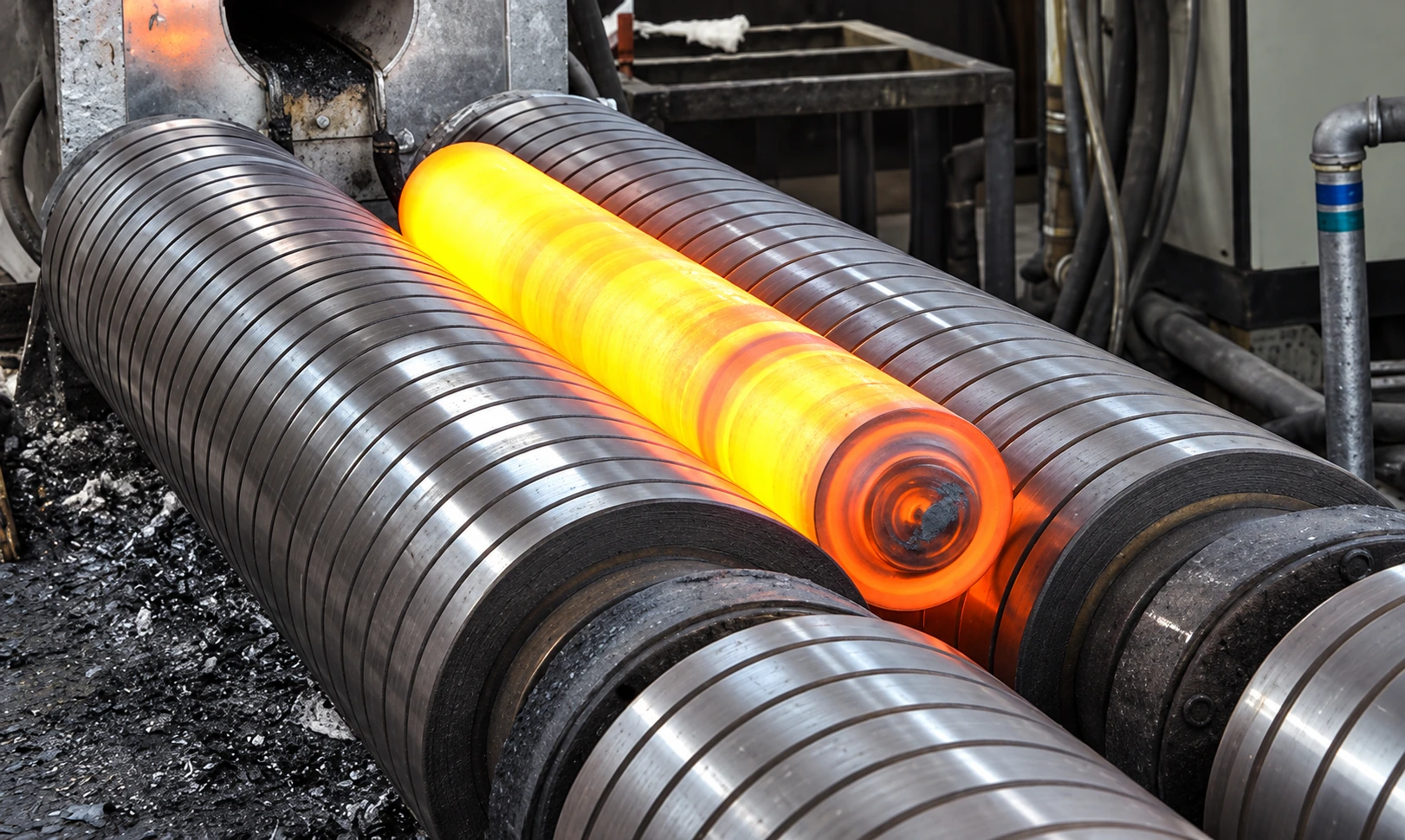
Every spray-welded component undergoes rigorous final inspection including Rockwell hardness testing, micrometer dimensional verification, and visual surface integrity assessment before shipment.
Alloy spray welding is particularly effective when processing materials that cause accelerated wear or corrosion on standard screws and barrels.
High abrasion resistance for processing GF-reinforced PA, PBT, and PC compounds.
Enhanced durability when processing contaminated or inconsistent recycled feedstock.
Protection against calcium carbonate, talc, and other abrasive mineral additives.
Chemical-resistant alloy formulations for rigid and flexible PVC processing.
Resistance to halogenated and non-halogenated flame retardant additives.
Thermal stability for PEEK, PEI, and other high-performance polymers.
See how alloy spray welding compares to full screw replacement and nitriding treatment across key performance metrics.
| Feature | Alloy Spray Welding | Full Replacement | Nitriding |
|---|---|---|---|
| Service Life Extension | Extended depending on wear condition and application | Reset to new | Improved surface hardness |
| Cost (vs. new part) | Lower cost than full replacement, based on part condition and repair scope | Full part cost | Lower-cost surface treatment |
| Wear Resistance | Excellent | Standard | Good |
| Corrosion Resistance | Excellent | Standard | Moderate |
| Applicable to Worn Parts | Yes | No (new only) | Limited |
| Coating Thickness | 0.5-3mm | N/A | 0.1-0.3mm |
| Lead Time | Confirmed based on part size, repair scope and order schedule | Longer than repair | Shorter cycle |
Values are typical ranges based on standard applications. Actual results vary depending on material processed and operating conditions.
Contact our engineering team to discuss your specific application requirements. We provide tailored alloy spray welding solutions for screws and barrels of all sizes.