

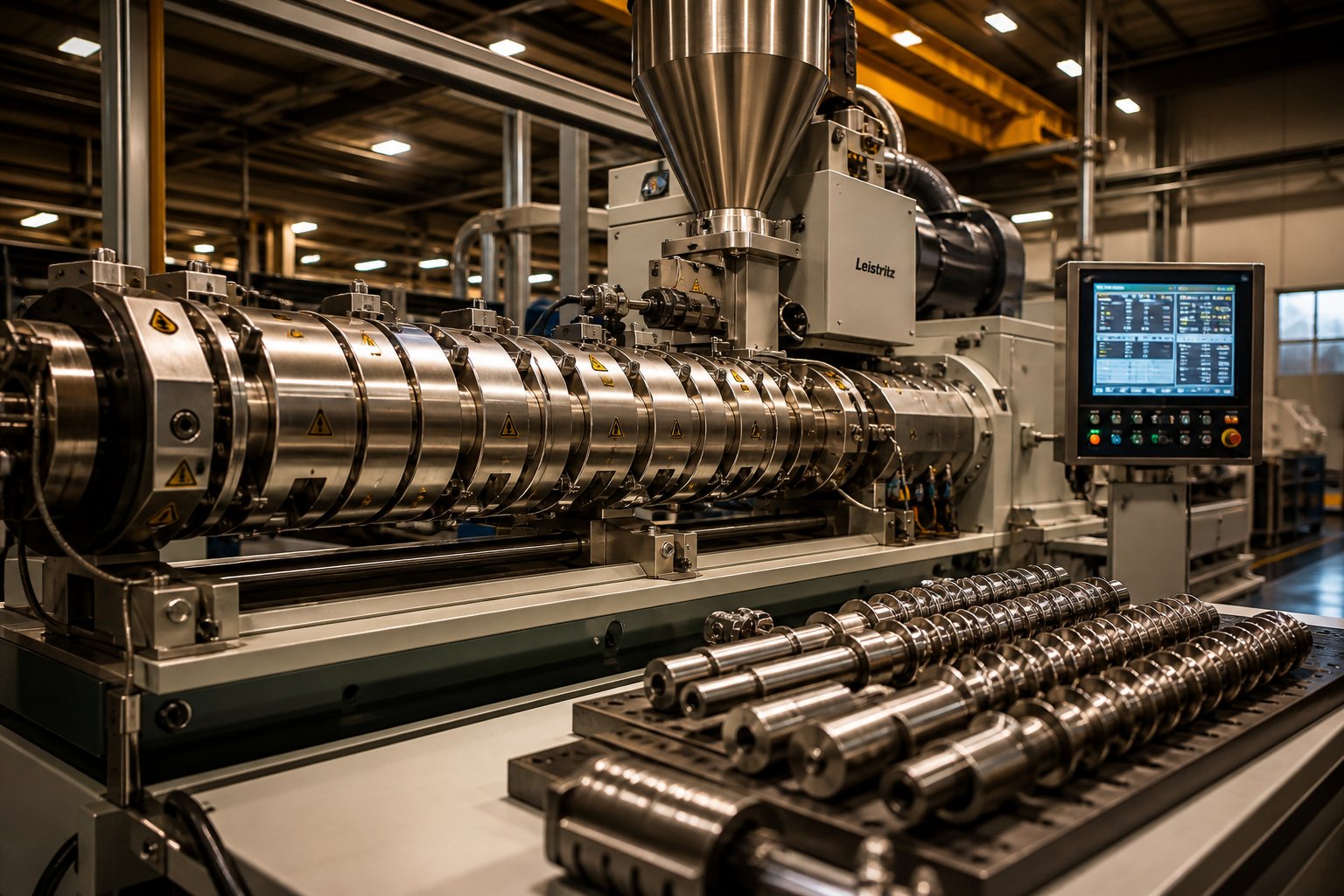
What Makes a Twin Screw Extruder Manufacturer Worth Evaluating
Imagine you're specifying a machine that will run 8,000 hours a year, processing tens of millions of kilograms of material, and directly determining whether your end product meets spec or gets rejected. That machine is a twin screw extruder, and the company that designs and builds it shapes nearly every outcome your production line delivers.
A twin screw extruder manufacturer is a company that designs, engineers, and produces twin screw extrusion systems — machines using two intermeshing screws inside a heated barrel to mix, melt, compound, and shape materials for polymer compounding, food processing, pharmaceutical production, and specialty chemical applications.
What a Twin Screw Extruder Manufacturer Actually Does
These manufacturers do far more than assemble metal parts. They engineer complete extrusion platforms — from the gearbox and drive system through modular screw elements and segmented barrels to integrated control systems and downstream equipment interfaces. The best twin screw extruder manufacturers maintain in-house metallurgical capabilities, application testing laboratories, and process engineering teams that help customers optimize screw configurations for specific formulations. Whether the end product is a glass-fiber-reinforced engineering plastic or a pharmaceutical solid dispersion, the manufacturer's depth of expertise determines how well that industrial extruder performs under real production conditions.
Why Manufacturer Selection Matters More Than Machine Price
Here's a reality many first-time buyers learn the hard way: the purchase price of a twin screw extruder typically represents only 30-40% of the total cost of ownership over a ten-year service life. Energy consumption, spare part pricing, unplanned downtime, and maintenance labor make up the rest. Choosing among twin screw extruder manufacturers based solely on the initial quote often leads to higher long-term costs through accelerated screw wear, limited process flexibility, and inadequate technical support.
So what actually separates one extruder manufacturer from another? The differentiators run deeper than brochure specs. They include machine configuration expertise across co-rotating and counter-rotating designs, screw and barrel metallurgy that resists wear from abrasive fillers, gearbox engineering robust enough to sustain high torque densities over years of continuous operation, control system sophistication for repeatable process quality, and aftermarket support infrastructure that keeps your line running when components wear.
This guide is built as an independent, education-first resource. You won't find a ranked list of brand names with affiliate links. Instead, you'll find the technical knowledge and evaluation frameworks needed to compare any twin-screw extruder manufacturer on the metrics that actually matter to your production floor. The differences between machine designs — and the companies behind them — start at the most fundamental level: screw rotation direction and geometry.
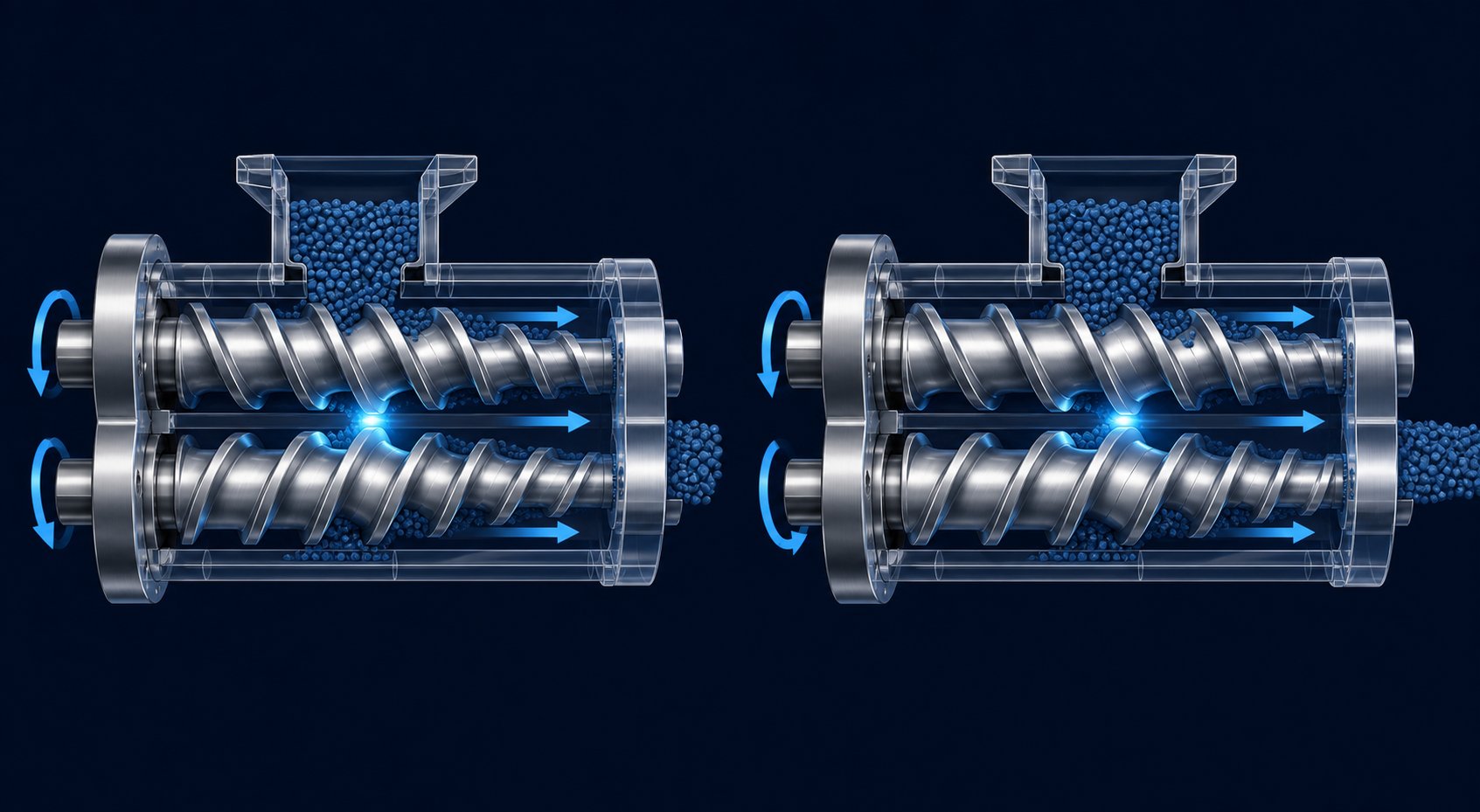
Co-Rotating vs Counter-Rotating Twin Screw Extruder Designs Explained
Before evaluating any manufacturer's build quality or service network, you need to understand the fundamental machine architecture they specialize in. Twin screw extruders split into two primary families based on rotation direction — co-rotating and counter-rotating — and each family branches further into parallel and conical screw geometries. The design a manufacturer focuses on reveals a great deal about their target applications, engineering philosophy, and where their process expertise runs deepest.
Co-Rotating Intermeshing Extruders and Their Dominant Applications
In a co-rotating twin screw extruder, both screws turn in the same direction with a fully intermeshing geometry. Picture the material being forcibly handed off from one screw flight to the next at the intermeshing zone — this creates a flow pattern with very few dead zones and delivers powerful self-wiping action that suppresses stagnation and material adhesion on the barrel wall. The result is a narrow residence time distribution, which is critical when processing thermally sensitive polymers or running reactive extrusion chemistry where seconds of extra heat exposure can degrade the product.
What makes co-rotating twin screw extruders the dominant choice for compounding? It comes down to mixing versatility. Intense shear fields develop both between the two screws and between each screw and the barrel wall. Adding kneading blocks introduces elongational flow components, creating a complex deformation history that breaks apart filler agglomerates, controls phase morphology in polymer alloys, and promotes mass transfer in reactive processes. You'll find co-rotating machines handling everything from nanocomposite dispersion with carbon nanotubes to high-throughput masterbatch production. Manufacturers specializing in this configuration typically invest heavily in modular screw element libraries and application testing labs because the real value of a co-rotating double screw extruder machine lies in how precisely the screw profile can be tailored to each formulation.
Counter-Rotating Designs for Shear-Sensitive Processing
Counter-rotating twin screw extruders flip the script — literally. The two screws rotate in opposite directions, drawing material into the intermeshing region where it advances under compression. Rather than relying on the high shear stress typical of co-rotating systems, counter-rotating designs use compressive and elongational deformation to mix materials. A calendering effect appears at the intermeshing zone, where material undergoes repeated compression and stretching under relatively gentle conditions.
Why does this matter? Consider rigid PVC. It has a low thermal decomposition temperature and poor melt flow characteristics. Subject it to the aggressive shear environment of a co-rotating extruder, and you risk degradation before the material is even fully plasticized. A counter-rotating twin-screw extruder, by contrast, operates at high fill levels and lower screw speeds, keeping extrusion temperatures down while the calendering effect provides effective dispersive mixing of additives without excessive thermal input. This is precisely why counter-rotating configurations dominate PVC pipe, sheet, and profile extrusion production worldwide. Manufacturers specializing in counter-rotating designs tend to focus on extrusion forming applications rather than compounding, and their engineering emphasis shifts toward die design, calibration systems, and downstream integration.
Conical Versus Parallel Twin Screw Configurations
Within the counter-rotating family, you'll encounter two distinct screw geometries: conical and parallel. Understanding this distinction is essential when evaluating twin screw extruders because it directly affects which manufacturers — and which machine platforms — fit your application.
Conical twin screw extruders feature screws that taper from a larger diameter at the feed end to a smaller diameter at the discharge end. This tapered geometry creates a natural compression zone as material moves forward, enhancing melting and improving pressure buildup for stable die forming. The larger feed-end diameter provides high feeding capacity relative to the machine's overall footprint, making conical designs compact and efficient for medium-capacity lines. They are the standard choice for rigid PVC processing, including window profiles and pipe extrusion, where their high torque transmission capability and gentle material handling align perfectly with process requirements.
Parallel twin screw configurations maintain a consistent screw diameter along their entire length. This uniformity offers significant advantages in flexibility — parallel screws support modular element arrangements that can be reconfigured for different formulations, and scale-up from one machine size to the next follows more predictable rules. If your operation processes multiple materials or anticipates formula changes, a parallel double screw extruder machine provides easier adaptability. Parallel counter-rotating machines also suit applications requiring extended residence time and precise dimensional control in extruded profiles.
The manufacturer landscape reflects these specializations clearly. Companies building conical counter-rotating systems often serve the PVC window profile and pipe markets with turnkey extrusion lines. Those focused on parallel co-rotating twin screw extrusion tend to be compounding specialists offering deep libraries of screw elements and process engineering support. Recognizing this alignment between machine architecture and manufacturer expertise helps you shortlist vendors whose core competence matches your processing needs.
| Parameter | Co-Rotating Parallel | Counter-Rotating Parallel | Counter-Rotating Conical |
|---|---|---|---|
| Typical Applications | Polymer compounding, masterbatch, reactive extrusion, nanocomposites | PVC profiles, pipes, sheets, shear-sensitive compounds | Rigid PVC profiles, PVC pipe, medium-capacity extrusion lines |
| Shear Level | High | Low to moderate | Low to moderate |
| Mixing Intensity | Excellent dispersive and distributive mixing | Moderate, relies on calendering effect | Moderate, compression-driven mixing |
| Throughput Range | Wide range, from lab-scale to 100+ tons/hr | Moderate, suited to continuous forming | Low to moderate, compact footprint advantage |
| Screw Flexibility | Highly modular — interchangeable elements | Moderate modularity | Limited — geometry fixed by taper design |
| Manufacturer Specialization | Compounding and process engineering specialists | Profile and pipe extrusion line builders | PVC-focused extrusion system providers |
Each of these architectures carries its own set of performance metrics — and those metrics appear on every manufacturer's specification sheet. Knowing how to read the numbers behind L/D ratio, torque density, and free volume is where the real comparison work begins.
How to Read and Compare Twin Screw Extruder Specifications
Every twin screw extruder machine comes with a specification sheet, and every manufacturer presents those numbers a little differently. Some highlight torque ratings in bold. Others lead with throughput capacity or screw speed range. The challenge isn't finding the data — it's knowing which numbers actually predict performance for your specific process and how to compare them across brands without being misled by marketing-friendly formatting.
Think of a spec sheet as a compressed story about what the machine can do. Learning to read that story fluently is one of the most valuable skills a buyer can develop. Here are the core parameters you'll encounter and what each one genuinely tells you.
L/D Ratio and What It Means for Your Process
The L/D ratio — length-to-diameter ratio — describes the working length of the screws relative to their diameter. A twin-screw extruder machine with a 40:1 L/D has a process section 40 times longer than the screw diameter. Sounds simple, but the implications are enormous.
Longer L/D ratios give you more barrel sections, which means more processing zones. Each zone can serve a different function: feeding, melting, mixing, venting, or pressure building. A machine with a 48:1 or 56:1 L/D ratio can accommodate multiple side feeding ports, several kneading zones, and two or more vacuum venting stages — all within a single extruder pass. This makes high L/D machines essential for complex compounding tasks like reactive extrusion, multi-stage devolatilization, or formulations requiring sequential addition of fillers and additives.
Shorter L/D ratios — in the 32:1 to 36:1 range — suit simpler processes: basic blending, color concentrate production, or applications where residence time needs to stay minimal. Laboratory twin screw extruder models often offer selectable L/D configurations, typically 32:1, 40:1, or 48:1, so R&D teams can match the barrel length to the complexity of the formula under development.
When comparing manufacturers, check whether the stated L/D includes the die adapter or only the process section. That distinction alone can shift the effective ratio by 2-4 diameters.
Torque Density and Specific Torque Demystified
If L/D ratio defines how much processing space you have, torque determines how much work you can do inside that space. Torque density — expressed as Nm/cm³ — normalizes torque output relative to the screw's center distance cubed, allowing direct comparison across different machine sizes and brands.
Why does this matter so much? Higher specific torque lets you process high-viscosity materials at lower screw speeds. Imagine compounding a fractional melt HDPE or a heavily filled engineering plastic. These formulations resist flow, demanding enormous rotational force to push material through kneading blocks and mixing elements. A machine with higher torque density handles this load without the operator needing to crank up the RPM — and that's critical, because higher screw speeds generate more shear heat, which raises melt temperature and risks thermal degradation.
Modern high-performance twin screw extruders achieve specific torque values of 11.3 to 18 Nm/cm³ or higher. Budget-tier machines often land in the 8 to 10 Nm/cm³ range. The difference shows up directly in your processing window: higher torque density gives you wider latitude to adjust screw speed and feed rate independently, unlocking better product quality for difficult formulations.
The screw shaft design is what ultimately limits torque transmission. As noted in Leistritz's technical literature, state-of-the-art asymmetrically splined shafts transmit power from the motor and direct a tangential force vector into the screws — shaft cross-sectional area, metallurgy, spline geometry, and hardening process all influence the maximum torque rating.
Free Volume, RPM, and Throughput Relationships
Free volume is the available open space inside the barrel around the screws, typically expressed as cc/diameter. It directly governs how much material the extruder can process at a given screw speed. Two machines with identical screw diameters can have dramatically different free volumes depending on their OD/ID ratio — the outside screw diameter divided by the inside screw diameter.
A higher OD/ID ratio means deeper screw channels and more free volume per diameter. For example, comparing a 70 mm extruder with a 1.55 OD/ID ratio (240 cc/dia free volume) against a 75 mm machine with a 1.66 OD/ID ratio (300 cc/dia free volume) reveals a roughly 30% throughput increase — all else being equal. For volume-limited processes, such as feeding low bulk density powders or incorporating high percentages of lightweight fillers, free volume becomes the primary constraint on production rate.
Screw speed, measured in RPM, interacts with free volume and screw design to determine both throughput and mixing intensity. Higher RPM increases material turnover through kneading zones, intensifying dispersive mixing but also reducing residence time and increasing shear energy input. The ratio of feed rate to screw speed effectively sets how full the screws run, and that fill level governs residence time distribution and the degree of mixing the formulation experiences.
Screw diameter ranges available across the market span from as small as 12 mm on a benchtop extruder used for early-stage R&D to 180 mm or larger on production-scale platforms. Laboratory extruders with screw diameters of 16 to 27 mm serve as formula development tools, requiring only grams to kilograms of material per trial. Production capacity scales roughly with the square of screw diameter, so stepping from a benchtop twin screw extruder to a full production machine involves careful attention to how process parameters translate across sizes. Manufacturers offering a coherent product line from lab-scale through production give buyers a significant advantage in scaling formulations predictably.
| Specification Parameter | Typical Range | What It Indicates |
|---|---|---|
| Screw Diameter | 12 mm (lab) to 180+ mm (production) | Machine size class; throughput capacity scales with diameter squared |
| L/D Ratio | 32:1 to 56:1 (up to 68:1 for specialty) | Number of available processing zones; longer ratios enable complex compounding and multi-stage venting |
| Specific Torque (Nm/cm³) | 8 to 18+ | Processing capability for high-viscosity materials; higher values allow lower-speed, lower-temperature operation |
| OD/ID Ratio | 1.22 to 1.80 | Free volume indicator; higher ratios increase throughput capacity and reduce average shear |
| Free Volume (cc/dia) | Varies by OD/ID and diameter | Directly limits maximum feed rate for volume-constrained processes |
| Maximum Screw Speed (RPM) | 300 to 1,200+ | Upper limit of mixing intensity and throughput; higher speeds increase shear input and reduce residence time |
| Motor Power (kW) | 1.5 kW (lab) to 1,500+ kW (production) | Available energy input; must match torque and speed requirements of target formulations |
| Number of Barrel Zones | 4 (lab) to 16+ (production) | Temperature control granularity; more zones allow finer thermal profiling along the process section |
Here's a practical tip for making apples-to-apples evaluations: normalize everything to the screw diameter. Torque per shaft, free volume per diameter, and throughput per RPM per unit of screw cross-section all provide dimensionless or diameter-independent metrics that reveal genuine performance differences between twin screw extruder machines of different sizes and brands. A manufacturer quoting impressive absolute throughput numbers on a large-diameter machine may actually deliver lower specific performance than a smaller platform with better engineering.
Specifications tell you what a machine can do in theory. The next question — and often the more revealing one — is how the manufacturer designs the screw elements that make those specifications matter in practice.
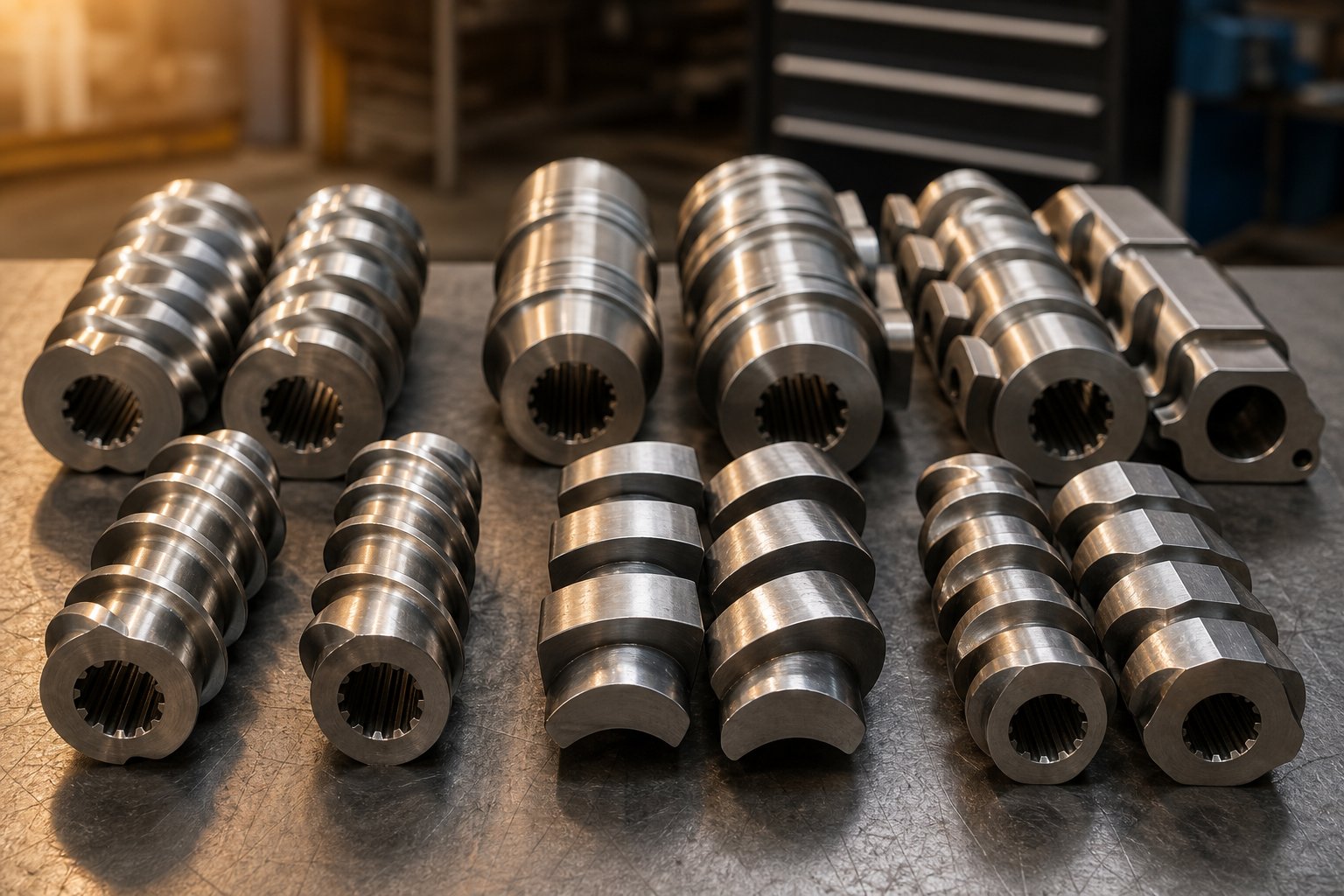
Screw Element Design and Modularity as a Manufacturer Differentiator
A spec sheet might tell you what torque a machine delivers, but it won't tell you how precisely the manufacturer engineers the components that put that torque to work. Screw elements — the interchangeable segments assembled along the extruder's splined shafts — are where a twin screw extruder manufacturer's design philosophy becomes tangible. Two companies can offer machines with identical L/D ratios and comparable torque densities, yet produce dramatically different compounding results because of differences in screw element geometry, modularity, and metallurgy. Understanding these differences gives you a powerful lens for evaluating any manufacturer's real engineering depth.
Modular vs Monolithic Screw Architecture
Picture a toolkit versus a single fixed wrench. That's the essential difference between modular and monolithic screw designs — and it shapes how flexibly you can respond to changing formulations on the production floor.
In a modular system, individual elements slide onto a splined shaft and lock into position. Each element serves a specific processing function: conveying elements transport material forward with helical flights, kneading blocks apply shear and distributive mixing through stacked elliptical discs, toothed mixing elements redistribute ingredients without aggressive particle breakdown, and reverse elements create back-pressure for melt sealing ahead of vent ports. Need to switch from a gentle melting profile for a heat-sensitive biopolymer to an aggressive dispersion layout for glass-fiber-reinforced nylon? You pull the screws, rearrange the elements, and reassemble — often within a single shift. No new screw purchase required.
This modularity is precisely why co-rotating compounding twin screw extruder platforms dominate applications that demand frequent recipe changes. A single machine can handle dozens of distinct formulations simply by reconfiguring its element sequence. Manufacturers who invest in broad element libraries — offering multiple kneading block stagger angles, varying conveying pitches, and specialty mixing geometries — give processors far more process optimization latitude than those offering a limited catalog.
Monolithic screws, by contrast, are machined as one continuous piece. The flight geometry, mixing sections, and compression zones are permanently defined during manufacturing. You can't swap in a different kneading section or add a reverse element without ordering an entirely new screw. For dedicated single-application lines — a rigid PVC pipe extruder running the same formulation year after year, for instance — monolithic designs can be cost-effective and mechanically robust. But for any operation running multiple products, investing in compounding machinery built around modular screw architecture pays for itself through reduced changeover costs and faster process development cycles.
Screw Element Geometry and Its Processing Impact
Modularity gets you flexibility. Geometry determines what that flexibility can actually achieve.
Consider kneading blocks — the elements responsible for the bulk of melting and mixing work in a twin screw compounding extruder. A kneading block consists of stacked elliptical discs, each offset from the previous disc by a specific angle called the stagger angle. That single angular value controls the balance between forward conveying and shear intensity. A 30-degree stagger keeps material moving forward with relatively gentle mixing — ideal for initial melting of shear-sensitive polymers. Widen the offset to 60 degrees and shear intensity climbs substantially while forward conveying drops. Push to 90 degrees (neutral) and forward conveying stops entirely; the element becomes a high-shear mixing dam that maximizes residence time in that zone.
Disc width adds another layer of control. Wider discs force more polymer over the tip clearance between the disc edge and the barrel wall, intensifying dispersive shear. Narrower discs slice through the melt more gently, favoring distributive blending. A five-disc kneading block at 60 degrees with wide paddles generates significantly more energy input than a seven-disc block at the same angle with narrow paddles. Experienced process engineers consider both stagger angle and disc width together when fine-tuning a profile — and the best manufacturers offer enough element variants to support that level of precision.
Conveying elements follow a parallel logic. Pitch — the axial distance one flight travels per revolution — determines how aggressively the element moves material. Large-pitch elements (1.5D to 2D) maximize intake capacity in the feed zone, while tight-pitch variants (0.4D to 0.5D) build pressure in the metering section before the die. Reverse-flight conveying elements actively oppose forward flow, creating melt seals for devolatilization zones. A manufacturer's range of available pitches directly affects how finely you can tune residence time and pressure profiles along the barrel.
Metallurgy and Wear Protection for Screws and Barrels
Even a perfectly configured screw profile degrades over time — and how fast that degradation occurs depends almost entirely on the metallurgy and surface treatment of the elements. This is an area where manufacturers and their component suppliers separate themselves most clearly.
Standard through-hardened tool steels handle general-purpose compounding of unfilled or lightly filled polymers at reasonable cost. Introduce 30% glass fiber or heavy mineral filler loadings, though, and those elements can show measurable flight erosion within months. Nitrided steels step up the performance — the nitrogen diffusion process creates a hard surface case (typically 65-70 HRC) while maintaining a tougher core, extending service life by roughly 1.5 to 2 times in moderately abrasive environments like calcium carbonate or talc compounding.
For the most demanding plastic compounding equipment applications — glass-fiber-reinforced engineering plastics, ceramic-filled compounds, or metal powder processing — powder metallurgy (PM-HIP) steels and tungsten carbide overlays represent the highest tier of wear protection. PM-HIP processing creates exceptionally uniform microstructures with fine, evenly distributed carbide particles, delivering two to three times the wear life of conventional tool steels. Tungsten carbide coatings applied via thermal spray processes provide the most extreme abrasive resistance available, though at a significant cost premium. Coperion's C-Rock coating, for example, uses a highly wear and corrosion resistant matrix with specially selected hard material components to protect barrel surfaces in the most heavily stressed process zones.
Barrel liners must complement screw element metallurgy to form a coherent wear system. Bimetallic barrel construction — a wear-resistant alloy centrifugally cast inside a structural steel shell — is the industry standard for abrasive applications. Nitrided barrels offer a cost-effective alternative for moderate wear conditions, while through-hardened barrels suit low-abrasion processing. Mismatching screw and barrel metallurgy — running premium PM-HIP screw elements inside a standard nitrided barrel, for instance — simply shifts the wear problem from one component to the other without extending overall system life.
When evaluating any twin screw extruder manufacturer or compounding machinery supplier, ask specifically which material grades and surface treatments they offer across their element range. A manufacturer who provides a single metallurgy option for all applications is likely underserving customers with abrasive formulations. The best suppliers offer tiered material solutions matched to application severity — from baseline tool steels through nitrided and PM grades to coated options — and can recommend the right combination based on your specific filler type, loading level, and production volume targets.
Metallurgy and element geometry define what a screw profile can do and how long it can do it. But these components don't operate in isolation — they function inside a broader machine system where gearbox precision, drive engineering, and build quality either amplify or undermine the screw design's potential.
Quality Indicators That Separate Premium From Budget Manufacturers
You can compare spec sheets side by side all day, and two machines from very different manufacturers might look nearly identical on paper — same screw diameter, same L/D ratio, comparable torque ratings. Yet one machine runs trouble-free for a decade while the other racks up gearbox failures, barrel alignment issues, and unplanned downtime within the first two years. The difference lives in manufacturing quality — the precision, materials, and engineering rigor that no specification table fully captures. Knowing where to look for these quality signals is what separates experienced equipment buyers from those who end up chasing warranty claims.
Gearbox Engineering as a Quality Benchmark
If any single component reveals a manufacturer's true engineering commitment, it's the gearbox. This is the heart of every screw extruder — the assembly that converts motor speed into the sustained, high-torque output both screws need to process viscous polymer melts under continuous production loads. A poorly built gearbox doesn't just fail; it fails expensively, taking weeks of production capacity with it.
What makes one gearbox better than another? Start with gear grinding quality. Premium manufacturers use precision-ground, case-hardened gears with tooth profiles optimized for load distribution across the full face width. Budget alternatives often rely on hobbed gears with looser tolerances, which generate more noise, run hotter, and wear unevenly under high-torque conditions. The distinction may seem subtle during a factory acceptance test, but after 6,000 hours of continuous operation processing glass-fiber-filled nylon, those tolerance differences translate directly into bearing life and gear mesh wear patterns.
Bearing selection is equally telling. As detailed by Gear Solutions, the thrust bearing on the gearbox output shaft accommodates all the axial load generated by barrel pressure pushing back against the screws. Higher barrel pressures mean higher extrusion throughput — but only if the thrust bearing can handle the load. Modern spherical roller thrust bearings offer significantly higher load-carrying capacity than traditional tapered roller bearings of the same size, along with lower friction, better misalignment tolerance, and improved performance under the poor lubrication conditions common at low screw speeds. A Coperion extruder gearbox or comparable premium unit specifies these advanced bearing types with substantial safety margins. Budget gearboxes may use bearings rated closer to actual operating loads, leaving little margin for the dynamic peak loads caused by material variations or imperfect melting conditions.
Lubrication systems deserve scrutiny as well. Twin screw extruder gearboxes typically operate with oil viscosities of 320 to 460 cSt, and bearing temperatures run between 50 and 60 degrees Celsius during normal operation. Premium gearboxes incorporate forced lubrication circuits with oil cooling systems that maintain consistent viscosity even during extended 24-hour production cycles. Thermal insulation between the hot barrel and the gearbox housing prevents process heat from degrading lubricant performance — a detail some budget manufacturers skip entirely. Over time, inadequate thermal management breaks down oil chemistry, accelerates bearing wear, and shortens the service interval on a component that can cost $12,000 to $18,000 to replace.
A practical rule of thumb: ask the manufacturer what torque rating margin the gearbox carries above the machine's stated maximum continuous torque. Premium builders design for 15-25% overhead. If the gearbox rating matches the motor output exactly, you're running at the engineering limit from day one.
Precision Manufacturing of Screws and Barrels
Gearbox quality determines whether the machine stays running. Screw and barrel manufacturing precision determines whether the product coming off the line actually meets spec.
Concentricity — the alignment of the barrel bore centerline with the screw rotation axis — is a foundational quality metric. Even small misalignments between the screw and barrel bore create uneven clearance gaps around the screw tips. Material migrates preferentially through the wider gap, producing inconsistent shear history, uneven melting, and hot spots that degrade thermally sensitive formulations. Pinpoint Laser Systems notes that misalignment between the extruder screw, gearbox, and barrel is a common source of poor product quality and accelerated component wear. In twin screw systems, where two intermeshing screws must maintain precise spacing to avoid contact during operation, the tolerance demands are even tighter.
Surface finish on barrel bores and screw element flights affects both processing and wear behavior. A finely honed barrel bore reduces frictional energy waste and provides a consistent boundary condition for heat transfer calculations. Rough surface finishes create micro-scale stagnation points where polymer can hang up, degrade, and eventually release as black specks or gels into the product stream — a quality defect that's particularly costly in optical-grade compounds, medical plastics, and color-critical masterbatch production.
Dimensional tolerances on screw elements — particularly the flight tip outer diameter and the bore inner diameter — control the tip clearance between each element and the barrel wall. This clearance, typically measured in tenths of a millimeter, directly governs the shear rate polymer experiences as it passes over the screw tip. Too tight, and the elements risk metal-to-metal contact during thermal expansion. Too loose, and you lose dispersive mixing efficiency and processing energy leaks through the gap. Premium manufacturers hold these tolerances to tight, consistent values across every element in the set. Inconsistent tolerances from element to element create process zones with different mixing intensities — an invisible source of product variability that's almost impossible to diagnose without pulling and measuring the screws.
Drive Systems, Build Quality, and Component Sourcing
The drive system connects the motor to the gearbox and ultimately to the screws, and its engineering quality affects everything from energy efficiency to vibration behavior. Motor sizing should provide adequate power headroom for the most demanding formulation the machine will process — not just the average case. Coupling design between the motor and gearbox must accommodate thermal expansion and minor misalignment without transmitting shock loads. Variable frequency drives (VFDs) should deliver smooth speed ramping during startup to reduce mechanical stress on gears and bearings, a detail that measurably extends gearbox life over years of daily start-stop cycles.
Beyond the drivetrain, broader build quality signals reveal how much care a manufacturer puts into the complete system. Open an electrical cabinet: are wire runs neatly organized with labeled terminals and properly rated components, or is the wiring bundled loosely with zip ties and unlabeled connectors? Inspect weldments on the machine frame — consistent, clean welds with proper penetration indicate controlled fabrication processes, while inconsistent bead profiles suggest rushed or poorly supervised assembly. Safety system integration — guard interlocking, emergency stop circuits, and thermal protection — should follow recognized industrial standards rather than being added as afterthoughts.
One quality factor buyers frequently underestimate is access to precision-manufactured replacement screws and barrels. These are wear components by nature. Every production hour erodes flight tips, barrel liners, and kneading block surfaces. When wear reaches the point of affecting product quality or throughput, you need replacements that match OEM dimensional tolerances and metallurgical specifications — and you need them without a six-month lead time that forces you to limp along on degraded components.
This is where factory-direct screw and barrel suppliers become strategically important. Rather than relying exclusively on the original equipment manufacturer's replacement part channel — which often carries premium pricing and longer delivery windows — experienced procurement teams maintain relationships with specialized component manufacturers who can produce screws and barrels to OEM-equivalent or custom specifications. NANHAIYA's screw barrel products, for example, provide extrusion plants and equipment buyers with factory-direct alternatives for extrusion, compounding, pelletizing, and replacement projects, offering shorter lead times and competitive pricing on precision wear components.
Whether you're sourcing from the OEM or an independent supplier, every replacement screw and barrel should pass the same quality verification. Here are the key checkpoints:
- Factory-direct screw and barrel solutions — Suppliers like NANHAIYA offer precision-manufactured components for twin screw extruders, injection molding machines, and compounding lines, serving as both a quality benchmark and a procurement alternative to OEM-only channels
- Dimensional inspection reports — Verify flight OD, root diameter, and bore ID against OEM tolerances; request CMM (coordinate measuring machine) data for critical dimensions
- Metallurgy and hardness certification — Confirm material grade, heat treatment process, and surface hardness (HRC) with documented test results for each batch
- Concentricity and runout measurements — Barrel bore straightness and screw element runout should fall within manufacturer-specified limits, typically under 0.02-0.05 mm depending on machine class
- Surface finish verification — Barrel bore and screw flight surface roughness (Ra values) should match or exceed OEM specifications to prevent product contamination and premature wear
- Fit and interchangeability testing — Spline bore dimensions on screw elements must match the shaft profile precisely; request trial assembly confirmation before full production orders
- Coating and treatment consistency — For nitrided, PM-HIP, or carbide-coated components, verify coating thickness uniformity and adhesion through documented quality control records
Upstream of the barrel, the extruder hopper must deliver raw material consistently into the feed zone without bridging, ratholing, or segregation — problems that cascade into feed instability and output variation. Downstream, a melt pump or extrusion pump stabilizes pressure at the die inlet, isolating the die from pressure fluctuations generated by screw rotation. Both of these auxiliary components interact with the core extruder quality: a precisely manufactured screw and barrel assembly produces more stable pressure and flow, reducing the corrective burden on the extrusion pump and improving overall line stability.
Quality indicators like these don't appear on any manufacturer's brochure. They emerge during factory visits, reference calls with existing customers, and detailed inspection of sample components. Manufacturers who welcome that level of scrutiny — and whose machines hold up under it — tend to be the same ones whose equipment runs reliably five and ten years down the road. The next logical question is how these quality differences map across the global manufacturing landscape, where European, American, and Chinese builders compete at very different price points with varying levels of engineering depth.
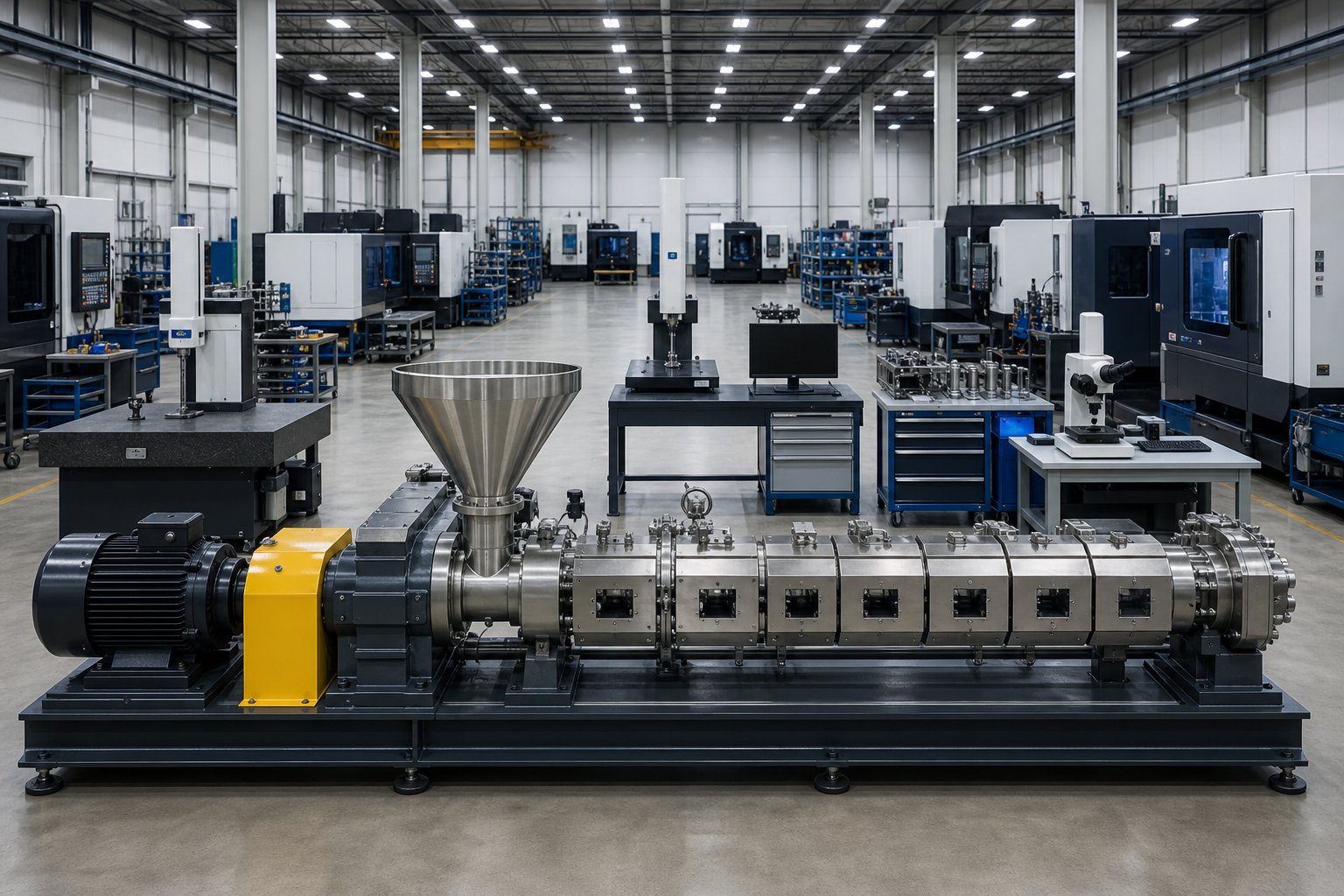
Manufacturer Tiers From Premium European OEMs to Value-Oriented Suppliers
Geographic origin alone doesn't determine machine quality — but it does correlate strongly with engineering heritage, pricing structure, service infrastructure, and the types of applications a manufacturer has optimized for over decades. Rather than sorting companies into "good" and "bad" buckets, a tier classification based on market positioning gives buyers a more useful framework for narrowing the field. Think of it as matching your project's risk tolerance, budget reality, and technical complexity to the supplier best equipped to deliver on all three.
Premium European OEMs and Their Engineering Advantages
European manufacturers essentially invented modern twin screw extrusion technology. The Werner & Pfleiderer twin screw extruder platform — first introduced in 1957 — evolved into what is now the Coperion ZSK series, which remains the global benchmark for co-rotating compounding. Coperion extruder platforms like the ZSK Mc18 deliver a specific torque of 18 Nm/cm3, and the company's ecosystem extends to loss-in-weight feeding through Coperion K-Tron — giving buyers a single-source solution from material intake through pelletization.
KraussMaffei Berstorff, Leistritz, Bausano, and Bühler round out the European premium tier. What do these companies share? Decades of accumulated R&D investment, extensive application laboratories where customers can trial formulations before purchasing, global service engineer networks with regional spare part warehouses, and the highest torque densities commercially available — typically 15 to 18 Nm/cm3 on current flagship models. Their machines are designed for mission-critical 24/7 production environments where downtime costs dwarf equipment costs.
The tradeoff is equally clear: premium pricing. A mid-size Coperion extruder or KraussMaffei ZE BluePower can cost two to three times what a comparable Chinese-built machine carries as a price tag. Lead times stretch to 8-14 months for custom configurations. For applications where those investments are justified — pharmaceutical hot-melt extrusion, automotive-grade engineering plastics, reactive extrusion with narrow process windows — European OEMs remain the safest choice. For simpler compounding tasks, however, their machines may be overspecified relative to the actual process demands.
Mid-Tier Manufacturers Balancing Performance and Value
Between premium European pricing and budget-tier offerings sits a substantial group of established manufacturers delivering proven technology at more accessible price points. This tier includes Japanese companies like JSW (whose TEX-aIII achieves a specific torque of 18.2 Nm/cm3 — among the highest in the world) and Kobe Steel, along with American builders like ENTEK and Davis-Standard, and India's Steer Engineering.
Japanese manufacturers, in particular, challenge the assumption that premium performance requires European sourcing. JSW has delivered more than 2,300 twin screw extruders globally, with screw diameters ranging from 26.5 mm to an enormous 443 mm for devolatilization applications. Their engineering precision rivals or exceeds European benchmarks in many specifications, though pricing lands in a similar range — 90 to 110% of European equivalents.
American manufacturers occupy a slightly different niche. ENTEK's HT72, built entirely in Oregon, matches the 18 Nm/cm3 torque density class while offering domestic spare-parts delivery and screw remanufacturing services that resonate with US-based compounders. Davis-Standard's strength lies in proven longevity — some of their extruders remain in active service after 50 years of continuous operation.
This tier makes strategic sense when you need near-premium technical capability with stronger regional support, when your application demands high torque density but doesn't require the full European OEM ecosystem, or when domestic manufacturing carries procurement advantages such as tariff avoidance or faster service response.
Value-Oriented Manufacturers and When They Make Sense
The fastest-changing segment of the twin screw extruder manufacturer landscape is the value tier, dominated by Chinese companies that have invested aggressively in closing the technology gap. Names like USEON, JWELL, Kerke, and Cowin represent a spectrum — from companies benchmarking against European torque densities to more basic assemblers serving price-sensitive markets.
The numbers tell an interesting story. USEON's newer U+ series reaches 15 Nm/cm3 specific torque and offers screw diameters up to 360 mm, putting its flagship platform within striking distance of mid-tier European machines on paper. JWELL delivers complete PVC pipe and profile extrusion lines with both parallel and conical configurations. Pricing across this tier typically runs 30 to 55% of European equivalents, with lead times of 3-6 months versus 8-14 months from premium OEMs.
Here's the nuance that many buyers miss: the quality range within this tier is enormous. A top-tier Chinese manufacturer with genuine in-house design capability, CNC-machined screws and barrels, and verified installations in demanding markets like Europe or North America delivers a fundamentally different product than a lower-tier assembler sourcing components from multiple subcontractors with minimal engineering integration. The country label tells you very little — the factory audit, reference customer calls, and pilot trial results tell you everything.
Value-tier manufacturers make strong strategic sense for standard compounding and masterbatch applications, large-volume polyolefin work where the process is well-understood, PVC pipe and profile production using established formulations, and projects where total installed cost must stay within tight capital budgets. They carry more risk for first-of-kind processes, applications requiring tight regulatory compliance (pharma, food-contact), or production environments where unplanned downtime costs exceed $10,000 per hour.
| Evaluation Criteria | Tier 1: Premium European OEMs | Tier 2: Mid-Tier Established (Japanese, American, Indian) | Tier 3: Value-Oriented (Chinese and Emerging Asian) |
|---|---|---|---|
| Typical Price Positioning | Highest — 100% baseline | Comparable to premium (90-110%) for Japanese; moderate for American and Indian | 30-55% of European equivalent |
| Technology Sophistication | Industry-leading torque density (16-18 Nm/cm3), deepest screw element libraries, most advanced process control | Matches or approaches premium specs (up to 18.2 Nm/cm3 for JSW); strong niche specializations | Rapidly improving (13-15 Nm/cm3 on top models); standard control platforms |
| Service Network Coverage | Global — regional offices, application labs, spare part warehouses on multiple continents | Strong in home regions; growing international presence | Developing — regional service partners, improving but less established globally |
| Best-Fit Applications | Engineering plastics, pharma HME, reactive extrusion, mission-critical 24/7 production | Polymer alloys, devolatilization, ultra-large scale, domestic-service-priority projects | Masterbatch, standard compounding, PVC, large polyolefin, emerging-market installations |
| Lead Time | 8-14 months for custom builds | 8-12 months (Japanese); shorter for American domestic | 3-6 months — significant advantage for fast-track projects |
| Long-Term Cost Considerations | Lower maintenance and downtime costs offset higher acquisition price for demanding applications | Strong total value when application matches specialization | Lowest acquisition cost; higher due-diligence investment needed; spare part availability and service response require verification |
One pattern worth noting: tier boundaries are blurring. Some Chinese manufacturers now produce machines that rival European quality for specific, well-defined applications — particularly masterbatch, general compounding, and large-scale polyolefin work. Meanwhile, specifying a premium European machine for a straightforward color concentrate line may deliver engineering capability you'll never use at a cost that erodes your project's return on investment. The real skill isn't picking the "best" tier — it's matching the tier to the application's actual demands, your facility's support infrastructure, and the total cost picture over the machine's full service life.
Tier classification provides a useful starting filter, but the most productive next step is flipping the evaluation around entirely — starting from your specific application and working backward to identify which manufacturer characteristics matter most for that particular process.
Matching Manufacturers to Your Specific Application
Tier rankings give you a starting filter, but the most effective way to evaluate a twin screw extruder manufacturer is to begin with the process itself. What material are you running? What throughput do you need? What quality constraints must the line meet? Different applications stress different machine attributes — and the manufacturer whose strengths align with your application's most demanding requirement is almost always the right choice, regardless of where they fall on a regional tier chart.
Here's a practical breakdown organized by application category. For each one, you'll find the machine characteristics that matter most and the selection criteria that should carry the heaviest weight in your evaluation.
Compounding Applications From Masterbatch to Engineering Plastics
Compounding spans an enormous range of complexity, from straightforward color concentrate blending to high-performance engineering plastic formulations loaded with abrasive reinforcements. The manufacturer attributes that matter shift dramatically across that range.
- Masterbatch and color concentrate production — Quick color changeover is the defining operational requirement. Look for manufacturers offering high free volume screw designs (OD/ID ratios of 1.55 or higher), smooth barrel bore finishes that minimize pigment hang-up between runs, and modular screw element libraries with multiple kneading block geometries for optimizing dispersive mixing intensity. The plastic compounding machine must deliver tight residence time distribution to prevent thermal degradation of heat-sensitive organic pigments. Downstream, pelletizing systems need to accommodate frequent material changes without lengthy purging — strand pelletizers with quick-access cutting heads or underwater pelletizing configurations that eliminate strand cooling baths both reduce transition time between colors.
- Engineering plastics with glass fiber or mineral fillers — High specific torque is non-negotiable. Processing glass-fiber-reinforced polyamide, polycarbonate extruder formulations, or PBT compounds at 30-50% filler loading demands machines in the 15-18 Nm/cm3 torque density class. Equally important is the manufacturer's screw and barrel metallurgy — PM-HIP screw elements and bimetallic barrel liners are mandatory for any line expected to maintain dimensional tolerances under continuous abrasive wear. Side feeding capability for downstream fiber introduction protects fiber length, preserving the mechanical properties that make these compounds valuable. Manufacturers with proven installations in automotive and electrical connector markets carry the most relevant process engineering experience.
- PVC compounding and profile extrusion — Counter-rotating conical or parallel designs dominate this space. PVC's narrow thermal processing window rewards gentle conveying action and precise temperature control over aggressive shear mixing. Prioritize manufacturers specializing in turnkey PVC extrusion lines — those integrating the extruder with calibration tables, haul-off units, and cutting systems — because die design and downstream coordination affect profile quality as much as the extruder itself. Conical twin screw platforms provide compact footprints with built-in compression for rigid PVC pipe and window profile applications.
- Polyester extruder applications and recycling — PET recycling and polyester compounding require effective devolatilization to remove moisture, acetaldehyde, and other volatiles that compromise intrinsic viscosity. Look for manufacturers offering long L/D ratios (48:1 or higher) with multiple vacuum vent ports and proven melt filtration integration. A screw extruder granulator setup downstream — whether strand-cut or underwater pelletizing — must handle the specific melt viscosity and crystallization behavior of polyester resins without producing excessive fines or irregular pellet geometry.
Specialty Applications in Food, Pharma, and Reactive Processing
Specialty applications layer regulatory and hygienic requirements on top of the core mechanical and process demands. The manufacturer's compliance infrastructure matters as much as their machine performance.
- Food and pet food extrusion — Every extruder for polymer processing needs precision, but food extrusion adds food-grade construction, hygienic design, and regulatory compliance to the list. Barrel and screw surfaces must meet food-contact material standards. Equipment used for meat extruder applications — textured vegetable proteins, high-moisture meat analogs, and pet food — requires preconditioner integration, steam injection capability, and corrosion-resistant materials that withstand the moisture and acidity of food-grade formulations. Manufacturers with dedicated food application labs and experience with USDA, FDA, or EU food-contact regulations simplify the compliance pathway considerably.
- Pharmaceutical hot-melt extrusion — cGMP compliance is the gating criterion. The extruder must be designed for cleaning validation, with polished surfaces, documented materials of construction, and full traceability of components. Hot-melt extrusion in pharmaceutical applications involves mixing active pharmaceutical ingredients with polymers to create solid dispersions that enhance bioavailability — a process demanding precise temperature control, narrow residence time distributions, and reproducible shear histories. Manufacturers offering GMP-specific platforms with IQ/OQ documentation packages, 21 CFR Part 11-compliant data systems, and dedicated pharma engineering teams reduce validation burden and regulatory risk.
- Reactive extrusion and devolatilization — These processes push twin screw extruders to their configurational limits. Reactive extrusion — polymerization, grafting, or controlled degradation inside the barrel — demands long L/D ratios (often 48:1 to 56:1), multiple injection and venting ports, and exceptionally precise temperature zoning. Devolatilization applications require high vacuum capability and barrel designs that maximize surface renewal of the polymer melt. Manufacturers with proprietary simulation tools for predicting residence time, fill level, and reaction conversion along the screw profile provide a meaningful engineering advantage over those relying solely on empirical trial-and-error.
Scaling From Laboratory to Production With the Right Manufacturer
One selection criterion cuts across every application category: scalability from lab to production. If you're developing a new formulation or entering an unfamiliar process space, the path from a small R&D trial to full-scale production is where manufacturer selection has its most lasting impact.
Manufacturers offering coherent product lines — from laboratory twin screw extruders at 16-27 mm screw diameter through pilot-scale platforms at 35-50 mm up to full production machines at 75 mm and beyond — simplify technology transfer enormously. When the lab machine and the production machine share the same screw element geometry, similar OD/ID ratios, and consistent L/D options, process parameters developed at small scale translate predictably to larger equipment. Geometric and processing similarity across scales enables direct correlation of specific mechanical energy input, residence time distribution, and thermal profiles — reducing the number of costly production-scale trials needed to lock in a robust operating window.
Manufacturers without a scalable product range force you into a fragmented equipment strategy: one vendor's lab machine, a different vendor's production line, and a painful translation gap between them where process knowledge gets lost. That gap costs time, material, and margin — and it's entirely avoidable by choosing a supplier whose equipment portfolio covers the full development pathway from bench to plant floor.
Application fit and scalability narrow the field to a manageable shortlist. The next differentiator — and one that's increasingly decisive in modern extrusion operations — is the sophistication of the control system sitting behind the machine, and how well the manufacturer has positioned its platform for the digital demands shaping the industry's future.
Control Systems and Emerging Trends in Twin Screw Extrusion
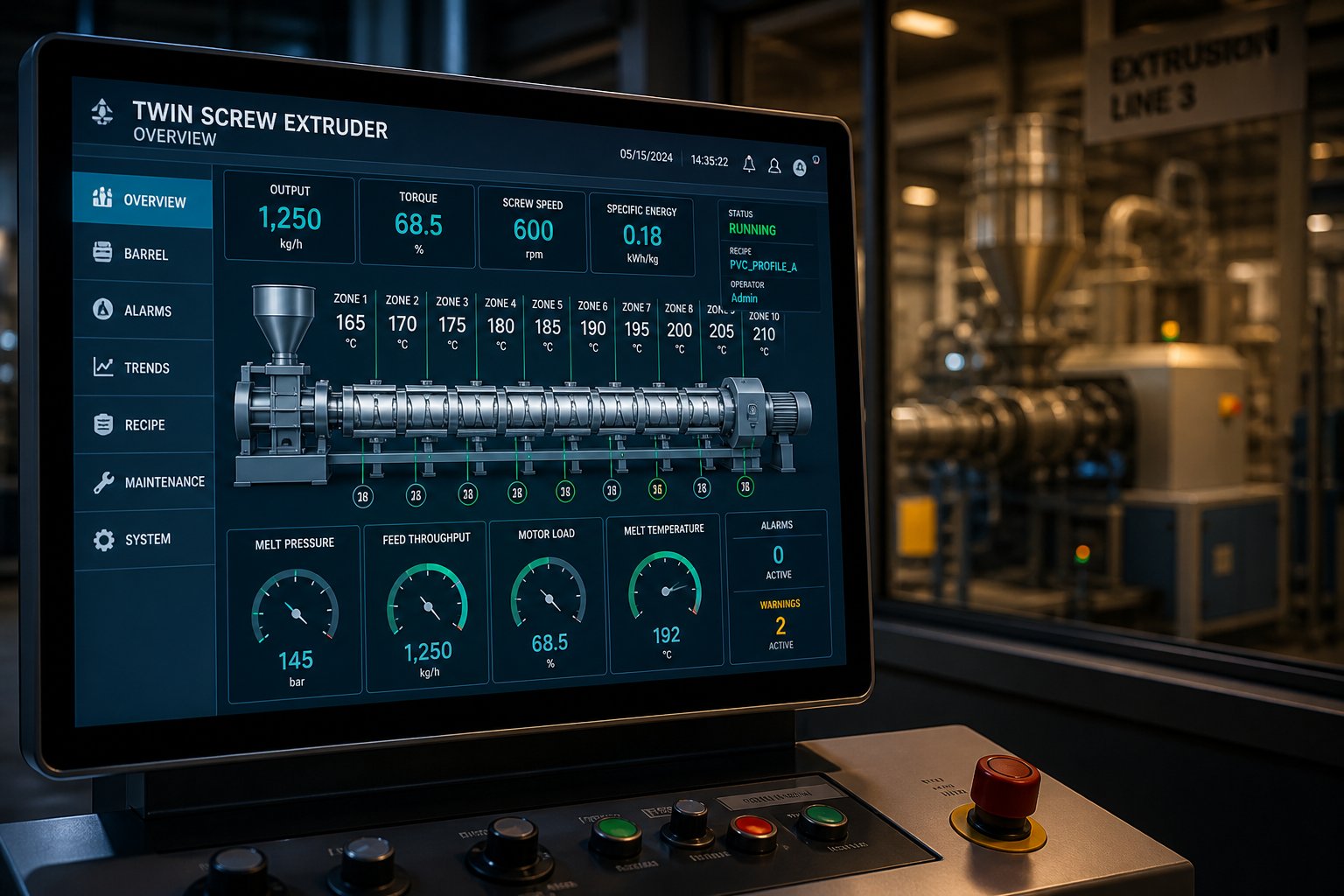
Two machines can share identical screw diameters, torque ratings, and L/D ratios — yet the one with a well-engineered extruder machine controller delivers measurably tighter product tolerances, faster changeovers, and fewer operator errors. The control system is the nervous system of every industrial extruder machine, and it varies more widely across manufacturers than almost any other subsystem. Equally important is where the manufacturer's technology roadmap points — because the twin screw extrusion landscape is shifting rapidly toward digitalization, energy efficiency, and autonomous process control.
Evaluating Control Systems and Automation Sophistication
Every modern extruder ships with a PLC and an HMI touchscreen. That much is table stakes. The real question, as industry practitioners emphasize, is what that system actually controls beyond displaying temperature setpoints on a screen.
PLC platform selection — Siemens S7-series, Allen-Bradley ControlLogix, Beckhoff TwinCAT, or competent mid-range options like Wecon — matters less as a brand badge and more as a serviceability decision. Can your maintenance team source replacement modules locally? Does the platform support the communication protocols your plant's SCADA or MES system requires? A premium PLC with weak programming logic is still a weak control system, while a practical mid-range controller with complete barrel temperature coordination, screw speed-to-haul-off synchronization, melt pressure alarm response, and recipe management can outperform it on the factory floor.
HMI interface quality goes beyond screen resolution. Evaluate how the manufacturer organizes process data: can an operator see barrel zone temperatures, screw RPM, motor torque load, melt pressure, and feeder rates in a single coherent dashboard, or must they navigate through five separate screens to diagnose a deviation? Well-designed interfaces reduce troubleshooting time from minutes to seconds.
Recipe management is arguably the most valuable daily-use feature — and the most inconsistent across manufacturers. A complete recipe system stores every parameter operators need to reproduce a product: barrel temperature profile, screw speed, feeder setpoints, vacuum levels, downstream equipment speeds, and alarm thresholds. If the recipe captures only temperatures but ignores speed ratios and alarm limits, it's a partial recipe that still leaves changeover quality dependent on one experienced operator's memory. Ask for a live HMI demonstration during evaluation and verify exactly which parameters each stored recipe includes.
Advanced control features separate sophisticated platforms from basic ones. Automatic start-up and shutdown sequences protect the machine from thermal shock and reduce the skill level required for safe operation. Predictive maintenance alerts — monitoring trends in motor current draw, gearbox oil temperature, or barrel heater resistance — flag component degradation before it causes unplanned downtime. Statistical process control (SPC) modules that track melt temperature variation, torque fluctuation, or throughput consistency over time give quality teams the data they need to hold tighter tolerances without manual sampling. Each of these capabilities reduces operator dependency and improves product consistency — and their presence or absence reveals how seriously a manufacturer invests in the complete production experience beyond the mechanical hardware.
Industry 4.0, Digital Twins, and Smart Extrusion
The twin screw extrusion industry is entering its own digital transformation, and the manufacturers positioning themselves at the forefront signal long-term viability and innovation commitment.
Industry 4.0 integration is the broadest trend. Remote monitoring platforms now allow process engineers to view real-time extruder performance from anywhere — screw torque, barrel temperatures, feeder outputs, and alarm histories streaming to cloud dashboards accessible via tablet or laptop. Predictive analytics layered on top of this data identify patterns invisible to operators: a gradual rise in specific energy consumption might indicate screw wear weeks before product quality visibly deteriorates, giving maintenance teams time to schedule replacement during planned downtime rather than reacting to an emergency.
Digital twin technology takes this further still. The global digital twin market is projected to reach USD 180.28 billion by 2030, with manufacturing as the dominant application sector. For twin screw extrusion, digital twins create virtual replicas of the extruder and process — synchronized with real-time sensor data — that allow engineers to simulate screw configuration changes, test new formulations, or optimize temperature profiles computationally before committing to physical trials. Imagine running twenty screw profile variations in software overnight rather than spending two weeks of production time on empirical trials. Manufacturers partnering with simulation software providers or developing proprietary digital twin platforms are building a capability that will redefine process development speed in the coming years.
Energy Efficiency and Sustainability in Machine Design
Energy consumption represents a substantial slice of extrusion operating costs — and the technology to reduce it is advancing rapidly. In a typical twin screw extrusion line, the drive motor consumes 50-60% of total energy, barrel heating accounts for 20-30%, and cooling systems plus auxiliaries take the remainder. Every percentage point of efficiency gain compounds over a machine's 15-year service life.
Direct-drive motor systems are among the most impactful innovations. IE4 and IE5 permanent magnet synchronous motors achieve efficiencies of 97-98.5%, compared to 90-95% for the IE2 or IE3 induction motors still common on budget platforms. These motors maintain high efficiency across varying loads — critical because extruders rarely run at 100% capacity continuously. Paired with vector-control variable frequency drives that provide precise speed regulation, the energy savings reach 15-25% compared to older drive configurations. Any energy-efficient plastic profile extruders supplier or compounding equipment builder worth evaluating should specify at minimum IE4-class motors on current-generation machines.
Thermal management innovations add further gains. Nano-insulation heater bands direct heat inward rather than radiating it into the factory environment, cutting heating energy by 30-40%. Heat recovery systems capture thermal energy from barrel cooling water — which can reach 60-80 degrees Celsius — and repurpose it for material pre-heating or facility hot water, reducing total plant energy demand by 5-10%.
CFD-optimized screw geometries contribute on the mechanical side. By refining flight depth, pitch, and kneading block angles through computational fluid dynamics simulation, manufacturers can reduce the specific mechanical energy required to melt and mix polymer by 10-15% without sacrificing mixing quality. For a 1,000 kg/h compounding line, that optimization can translate to over $50,000 in annual electricity savings.
These trends — smarter controls, digital integration, and energy-conscious design — aren't future aspirations. They're active differentiators separating forward-looking manufacturers from those still selling yesterday's technology at today's prices. The manufacturers investing in these areas are building platforms designed not just for current production demands, but for the operational and regulatory environment their machines will face five and ten years from now. That forward orientation matters profoundly when you're evaluating the total return on a capital investment — which is exactly where a structured, multi-criteria comparison framework becomes indispensable.
A Multi-Criteria Framework for Comparing Manufacturers
Gut instinct and brand familiarity have steered too many extruder purchases. When you're evaluating a capital investment that will shape production economics for 15 years or more, you need a structured scoring system that forces apples-to-apples comparisons across every dimension that matters — not just the twin screw extruder price on the quotation page. The framework below organizes the evaluation into seven weighted categories, each with specific questions you can pose to any extruder company on your shortlist.
Building a Weighted Evaluation Scorecard
Imagine you have three manufacturers bidding on the same compounding plant project. One quotes the lowest price, another boasts the highest torque density, and the third offers the fastest delivery. Which one actually delivers the best value over ten years? Without a weighted scorecard, procurement teams default to whichever criterion the loudest internal stakeholder champions — usually purchase price.
A better approach assigns relative importance to each evaluation category before any vendor presentations begin. Technical capability might carry 25% of the total weight for a complex reactive extrusion line, but only 15% for a straightforward masterbatch operation where the process is well-understood. Aftermarket support might jump from 15% to 25% if your facility operates in a region without local service engineers. The point is to calibrate the weights to your specific situation — not to adopt someone else's generic ranking.
Score each manufacturer on a 1-to-5 scale within every category, multiply by the assigned weight, and sum the results. The exercise forces you to document why one extruder company scored higher than another on each criterion, creating an auditable decision trail that survives internal debates and supplier negotiations.
| Evaluation Category | Key Evaluation Questions | Suggested Weight Range |
|---|---|---|
| Technical Capability | Does the machine range cover your required screw diameter, L/D ratio, and torque density? How deep is the screw element library? Are co-rotating, counter-rotating, and conical options available? | 15-25% |
| Manufacturing Quality | What precision standards govern screw and barrel machining? What metallurgy and surface treatments are offered? Does the manufacturer hold ISO 9001, CE, or application-specific certifications (cGMP, ATEX)? | 15-20% |
| Application Expertise | Does the manufacturer have documented installations in your specific polymer, filler system, or industry? Is process engineering support available? Can you run trials at an application lab before purchasing? | 10-20% |
| Aftermarket Support | What is the guaranteed spare parts lead time for screws, barrels, and gearbox components? Where is the nearest service engineer? Are training programs offered? Can you source precision replacement screws and barrels from alternative suppliers like NANHAIYA to reduce OEM-only dependency? | 15-25% |
| Innovation Track Record | Has the manufacturer introduced measurable improvements in torque density, energy efficiency, or process control within the last five years? Are Industry 4.0 features, digital twin integration, or predictive maintenance capabilities available or roadmapped? | 5-15% |
| Financial Stability and Longevity | How long has the extruder company operated? What is the ownership structure — independent, private equity-backed, or part of a larger industrial group? Is the installed base growing or contracting in the twin screw extruders market? | 5-10% |
| Total Cost of Ownership | What is the acquisition cost relative to competitors at equivalent specifications? What are documented energy consumption figures (kWh/kg) at your target throughput? What do replacement screws, barrels, and gearbox rebuilds cost — and how frequently will they be needed? | 15-25% |
A few practical notes: never skip the application expertise category, even when a machine looks perfect on paper. Extruders manufacturers with deep experience in your specific process — whether that's glass-fiber-reinforced nylon, PVC pipe, or pharmaceutical hot-melt extrusion — have already solved problems you haven't encountered yet. That accumulated knowledge shows up as faster commissioning, fewer recipe iterations, and fewer surprises during the first year of production.
Total Cost of Ownership Beyond the Purchase Price
The twin screw extruder price printed on a quotation captures roughly one-third of what the machine will actually cost you over its service life. The remaining two-thirds hide in energy bills, maintenance labor, spare part purchases, unplanned downtime, and product quality losses from worn components. Buyers who optimize for the lowest purchase price almost always spend more in total — a pattern confirmed repeatedly across the compounding plant operations we've examined.
Consider a concrete scenario. A mid-size 75 mm twin screw extruder for sale at $250,000 from a value-tier supplier might seem like a clear win against a $600,000 machine from a premium OEM. But if the value-tier machine consumes 15% more specific energy per kilogram of throughput, requires screw element replacement every 4,000 hours instead of every 12,000 hours, and averages two additional unplanned downtime events per year — the cost picture inverts within three to five years of operation. Industry data from Wanplas's TCO analysis estimates that operating costs account for 20-30% of total ownership cost, while downtime losses can exceed the initial purchase price over the machine's full service life.
The categories that most frequently surprise buyers in TCO calculations include:
- Energy consumption — A modern high-torque-density extruder typically consumes 0.18-0.28 kWh/kg for polyolefin compounding. Older or undersized designs can run 30-50% higher, translating to tens of thousands of dollars annually on a 24/7 production line.
- Spare part pricing and frequency — Screw elements, barrel liners, and kneading blocks are consumable components. Replacement frequency depends heavily on formulation abrasiveness, but the price differential between OEM parts and equivalent-quality alternatives from specialized manufacturers can reach 30-50%.
- Unplanned downtime — For a continuous compounding plant producing $2,000-$5,000 of product per hour, every unplanned eight-hour shutdown costs $16,000 to $40,000 in lost output alone — before scrap, restart waste, and customer penalties.
- Maintenance labor — Machines designed for easy screw extraction, barrel access, and modular component replacement reduce changeover labor from full-shift events to a few hours, compounding savings over hundreds of maintenance cycles.
Building a realistic TCO model requires honest data from the manufacturer — documented energy consumption at your target throughput, published screw and barrel service life data for comparable formulations, and transparent spare part pricing. Any extruder company reluctant to provide these numbers is likely hiding unfavorable economics.
Securing Reliable Screw and Barrel Supply Chains
Here's the TCO factor that catches the most experienced buyers off guard: screw and barrel replacement supply chain reliability. These are the highest-wear components in any twin screw extruder, and their availability — or lack of it — directly determines how quickly you recover from scheduled maintenance or unexpected wear events.
Relying exclusively on the OEM for replacement screws and barrels creates a single point of failure in your procurement chain. OEM lead times for custom screw elements can stretch to 8-16 weeks, and pricing reflects the captive customer dynamic. During that wait, your compounding plant either runs on worn components — producing off-spec material and consuming excess energy — or sits idle.
This is precisely where factory-direct component suppliers provide strategic value. Sourcing replacement screws and barrels from specialized manufacturers like NANHAIYA gives procurement teams an alternative supply chain that can reduce lead times and costs for critical wear components. NANHAIYA's factory-direct screw and barrel solutions cover extrusion, compounding, pelletizing, and replacement projects — providing the dimensional precision and metallurgical quality needed to match OEM specifications while offering the pricing flexibility and delivery speed that single-source OEM channels often cannot.
The smartest procurement strategy isn't choosing between the OEM and an independent supplier — it's qualifying both. Maintain the OEM relationship for warranty-covered components, proprietary geometries, and complex assemblies. Simultaneously qualify a factory-direct alternative for standard wear components — conveying elements, kneading blocks, barrel liners, and shaft assemblies — where the specifications are well-defined and the quality can be verified through dimensional inspection, hardness testing, and metallurgical certification.
When evaluating any twin screw extruder manufacturer, ask explicitly about their spare part availability, pricing structure, and whether they restrict customers from sourcing equivalent-quality components from third-party suppliers. Manufacturers who lock customers into exclusive part channels may be optimizing their own aftermarket revenue at the expense of your operational flexibility. Those who welcome open sourcing — and whose components are designed to standard dimensions that qualified alternatives can match — demonstrate confidence in their machine quality and respect for your total cost position.
The twin screw extruders market will continue evolving — torque densities will climb, digital integration will deepen, and sustainability requirements will tighten. The manufacturer you choose today needs to be one whose machines, support infrastructure, and component supply chains can serve your production needs not just at commissioning, but through the full decade-plus of service life ahead. Use this evaluation framework to make that choice systematically, and you'll build a procurement decision that holds up long after the spec sheets have been filed away.
Frequently Asked Questions About Choosing a Twin Screw Extruder Manufacturer
1. What is the difference between co-rotating and counter-rotating twin screw extruders?
Co-rotating twin screw extruders have both screws turning in the same direction, producing high shear and excellent self-wiping action ideal for polymer compounding, masterbatch, and reactive extrusion. Counter-rotating extruders spin screws in opposite directions, generating lower shear through a calendering effect that suits thermally sensitive materials like rigid PVC. The choice between the two depends on your material's thermal stability, target mixing intensity, and end-product requirements. Manufacturers typically specialize in one configuration, so identifying the right design first helps narrow your supplier shortlist.
2. How do I compare twin screw extruder specifications across different manufacturers?
Focus on normalized metrics rather than absolute numbers. Specific torque (Nm/cm3) reveals processing power independent of machine size — values above 15 Nm/cm3 indicate high-performance capability. L/D ratio tells you how many processing zones the barrel supports, with 48:1 or higher needed for complex compounding. Free volume (cc/diameter), determined by the OD/ID ratio, governs maximum throughput for low-bulk-density feeds. Always verify whether quoted L/D includes the die adapter, and normalize throughput claims to screw diameter to make fair cross-brand comparisons.
3. What is a good specific torque for a twin screw extruder?
Modern high-performance twin screw extruders achieve specific torque values between 15 and 18 Nm/cm3 or higher. Budget-tier machines typically fall in the 8 to 10 Nm/cm3 range. Higher specific torque lets you process high-viscosity or heavily filled materials at lower screw speeds, which reduces shear-induced thermal degradation. For engineering plastics with glass fiber or mineral fillers, targeting at least 15 Nm/cm3 is advisable. Simpler applications like basic color concentrate blending may perform adequately at lower torque ratings, so the right value depends on your formulation complexity.
4. Are Chinese twin screw extruder manufacturers reliable compared to European OEMs?
Quality varies enormously within the Chinese manufacturing tier. Top-tier Chinese manufacturers like USEON now achieve specific torque ratings of 15 Nm/cm3 and offer machines suitable for standard compounding, masterbatch, and PVC applications at 30-55% of European pricing. However, they generally have less established global service networks and shorter track records in mission-critical or regulated applications like pharmaceutical hot-melt extrusion. The key is conducting thorough due diligence — factory audits, reference customer calls, and pilot trials — rather than judging solely by country of origin.
5. How can I reduce the total cost of ownership for a twin screw extruder?
Purchase price typically represents only 30-40% of a twin screw extruder's lifetime cost. To minimize total ownership cost, prioritize energy-efficient drives (IE4 or IE5 motors), high-torque-density designs that run at lower screw speeds, and modular screw architectures that reduce changeover expense. Building a dual-source supply chain for wear components is equally important — sourcing replacement screws and barrels from specialized factory-direct suppliers like NANHAIYA (nhyscrews.com/products) alongside OEM channels can cut spare part costs by 30-50% and reduce lead times for critical wear components that directly affect uptime.
Written by
Nanhaiya Technical Team
Zhoushan Nanhaiya Plastic Machinery Co., Ltd.
The Nanhaiya technical team supports screw and barrel manufacturing projects through application review, technical communication, custom manufacturing coordination, and production and quality control.
Discuss Your Application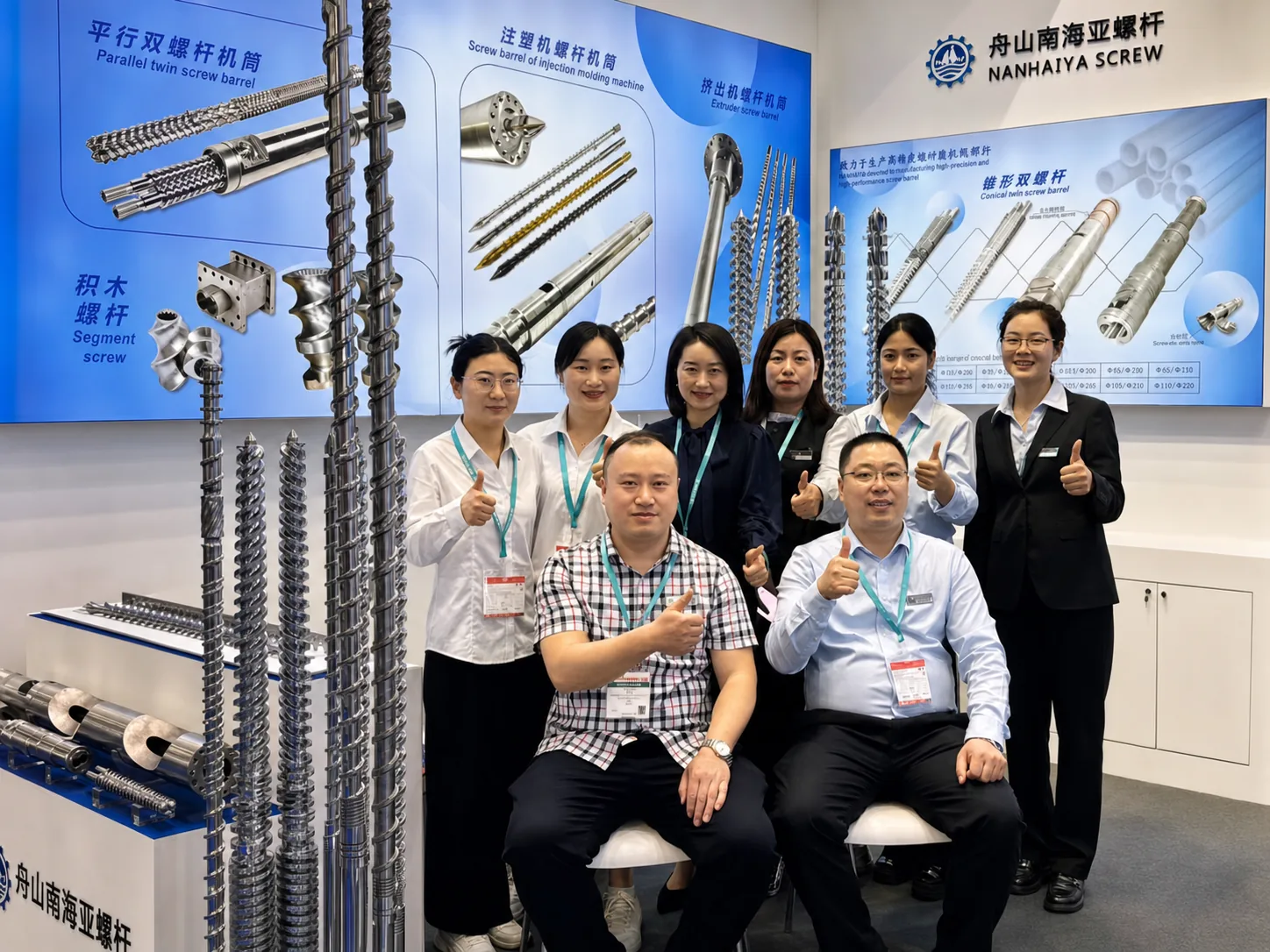
Related Articles
More insights on screw barrel technology and plastics processing.
Extruder Machine Decoded: From Raw Pellet To Finished Product
Oct 6, 2026
Learn how an extruder machine works, compare single-screw vs. twin-screw types, and get expert guidance on specs, troubleshooting, and selection.
Read Article
PE Pipe Making Machine Decoded: From Raw Resin to Flawless Pipe
Oct 4, 2026
Learn how a PE pipe making machine works, from resin to finished pipe. Covers components, material grades, automation, troubleshooting, and buyer selection tips.
Read Article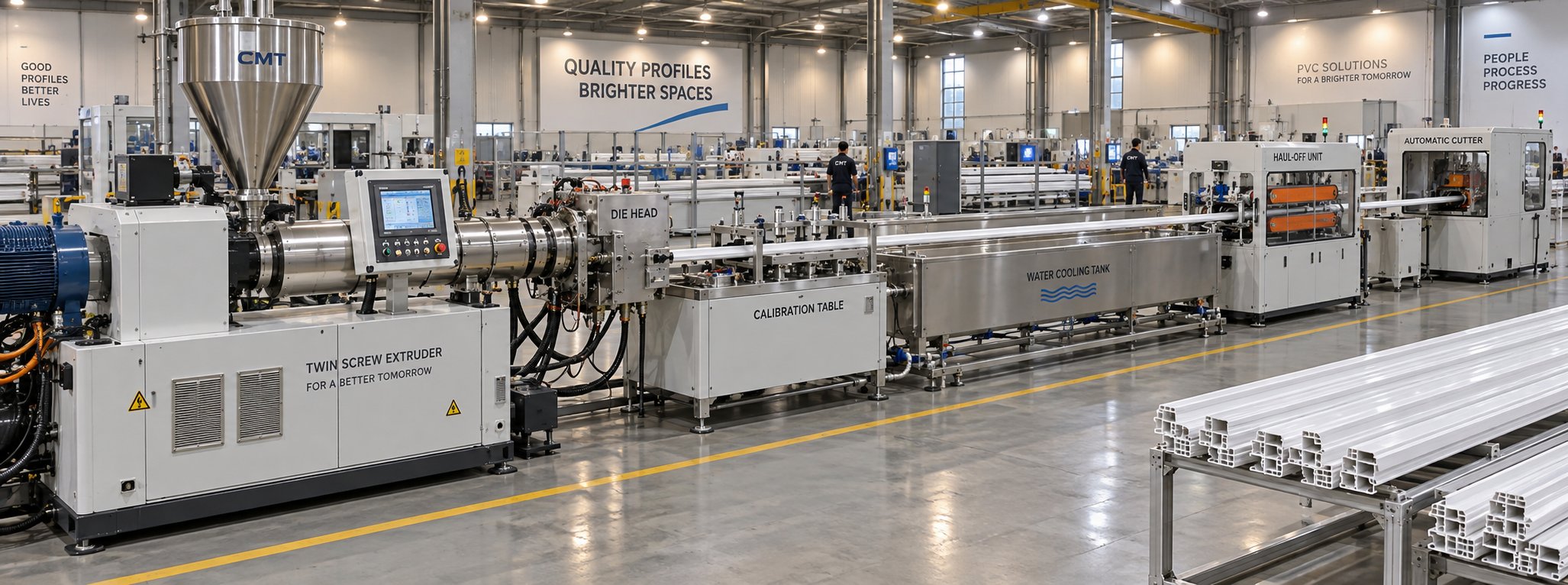
PVC Profile Making Machine Decoded: From Raw Resin To Profit
Oct 3, 2026
Learn how a PVC profile making machine works — extrusion process steps, key technical parameters, die design, calibration methods, maintenance, and total cost of ownership.
Read ArticleLooking for something else?
Search by material, symptom or product and jump straight to the relevant page.
These are navigation suggestions based on keyword matching — not a quotation, not a delivery commitment, and not a substitute for engineering review. Final specification is confirmed by our engineers against your drawings and processed material.
Need help with screw barrel selection?
Share your machine model, processed material and application. Our team can help with pricing and technical support.