

What a Twin Screw Extruder Machine Factory Actually Produces
When you start shopping for a twin screw extruder, it's tempting to compare specs side by side — screw diameter, throughput, motor power — and call it a day. But here's what experienced buyers already know: the factory behind the machine shapes everything from build quality to the support you'll receive five years after installation.
Defining the Twin Screw Extruder Machine Factory
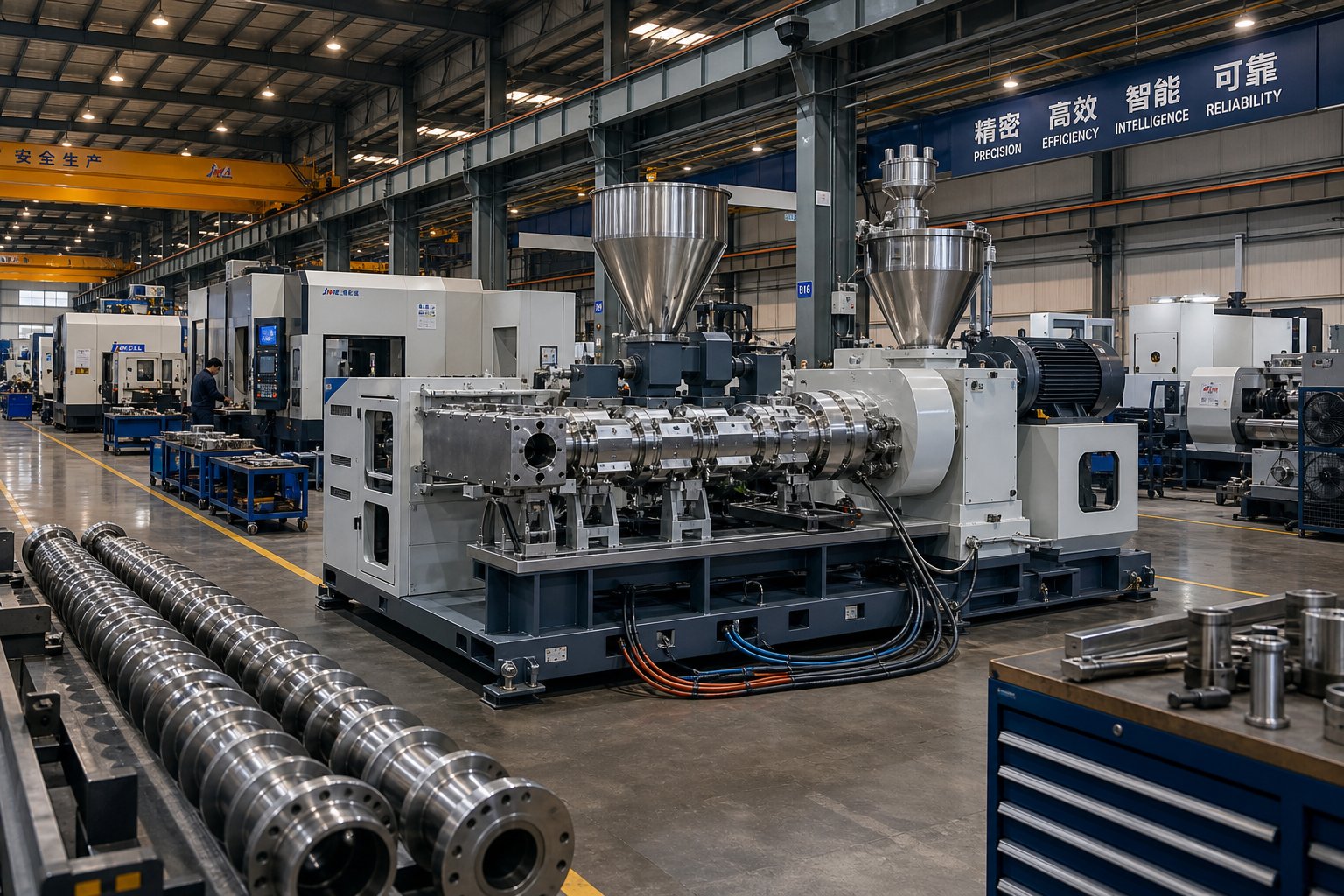
A twin screw extruder machine factory is a specialized manufacturing facility that designs, engineers, and assembles twin screw extrusion systems used for polymer processing, compounding, and pelletizing. These facilities house precision CNC machining centers, metallurgical testing labs, assembly floors, and — in more advanced operations — dedicated test extrusion lines where machines run real materials before shipment. Unlike general-purpose metalworking shops, these factories concentrate engineering expertise around one core technology: the twin-screw extruder and its supporting downstream equipment.
Why Factory Selection Matters More Than Machine Specs
Imagine two machines with identical spec sheets. One comes from a factory with in-house screw element design engineers, barrel boring and honing equipment, and a quality management system with documented inspection protocols. The other comes from a facility that assembles outsourced components with minimal engineering oversight. On paper, they look the same. In practice, they perform very differently. Factory infrastructure, engineering talent, and quality control systems directly determine dimensional tolerances, material consistency in wear components, customization flexibility, realistic lead times, and the depth of after-sales technical support available when something goes wrong.
OEM Factories vs Component Suppliers vs Trading Companies
Not every company selling a twin screw extruder machine actually builds one. You'll encounter three distinct factory types in the market, and understanding the differences saves procurement teams from costly mismatches:
- OEM Factories — Design and manufacture complete extruder lines in-house, including gearboxes, barrels, screw elements, and control systems. They offer the deepest engineering support, handle customization requests, and typically provide factory acceptance testing before shipment.
- Component Specialists — Focus on manufacturing specific parts such as screws, barrels, or gearbox assemblies. They serve OEMs and end users who need replacement components or upgrades for existing double screw extruder machines. Their strength lies in metallurgical expertise and precision machining rather than full system integration.
- Trading Companies — Source and rebrand machines from various manufacturers without owning production facilities. Pricing may appear attractive, but buyers sacrifice direct factory communication, customization depth, and reliable long-term parts sourcing.
Recognizing which type of supplier you're engaging with early in the process prevents misaligned expectations — especially around technical support and spare parts availability. The real question, though, isn't just who builds the machine. It's how the machine actually works once it reaches your production floor.
How Twin Screw Extruders Work From Feed to Discharge
Picture a raw polymer pellet dropping into the top of a machine and emerging seconds later as a perfectly blended, molten strand ready for pelletizing. What happens in between involves a tightly controlled sequence of physical transformations — and understanding that sequence is what separates confident buyers from those who rely blindly on manufacturer claims. Twin screw extrusion isn't a single event. It's a series of coordinated processing zones, each performing a specific job on the material as two intermeshing screws push it forward through a heated barrel.
The Material Processing Sequence Inside a Twin Screw Extruder
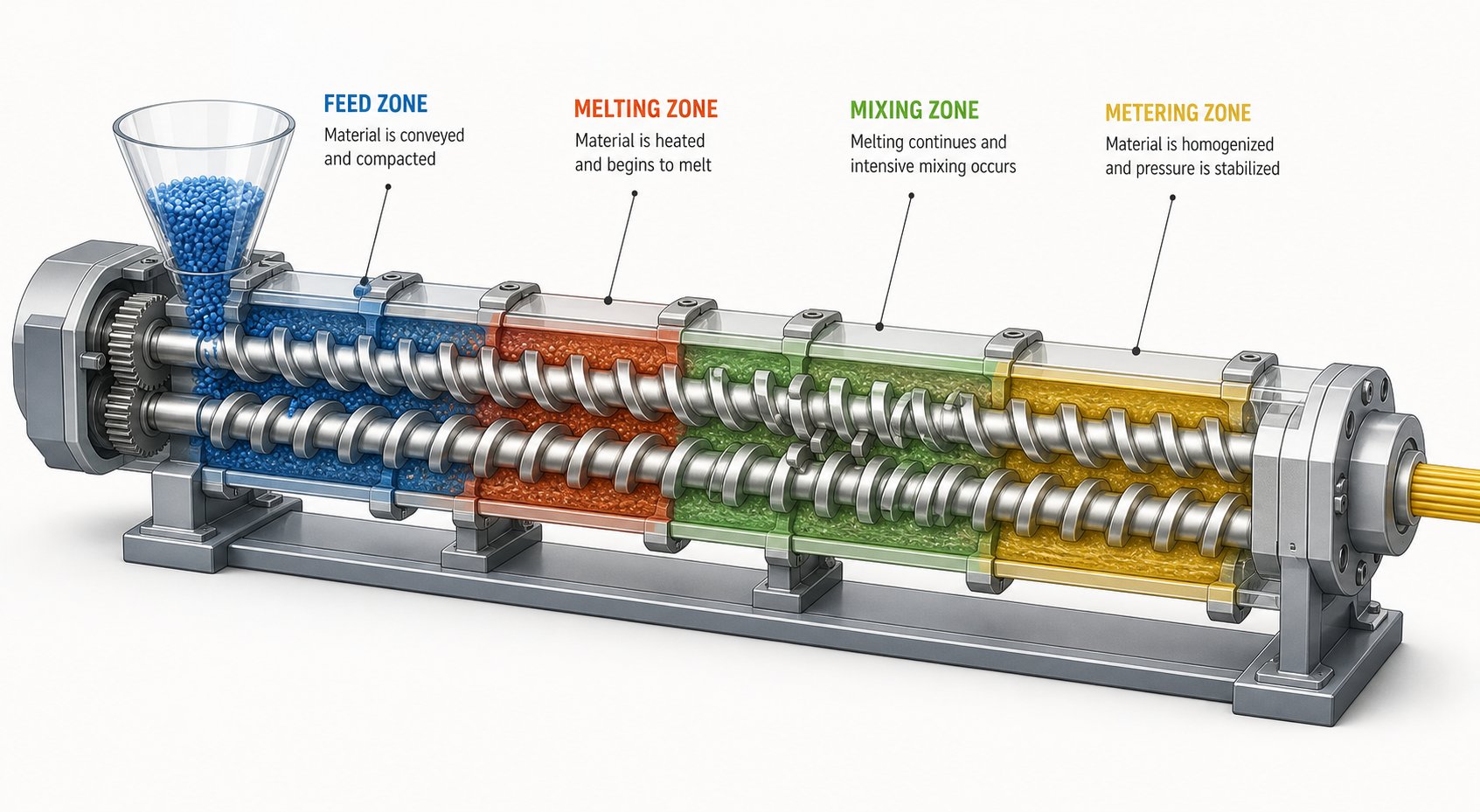
Every extruder twin screw system moves material through distinct functional zones. Think of them as stages on an assembly line, each one transforming the material a step closer to its final form:
- Feed Zone — Raw materials enter through a feed hopper and land on the screws. The extruder feed barrel in this section is typically unheated. The screws simply grab the solid pellets, powders, or granules and pull them forward. A consistent feed rate here is critical — uneven feeding causes torque spikes and inconsistent output downstream.
- Transition (Melting) Zone — As material advances into heated barrel sections, friction between the screws, barrel walls, and the material itself generates intense shear forces. Combined with external heating from barrel temperature zones, these forces rapidly melt and plasticize the solid feedstock. This is where the twin screw design proves its superiority — the intermeshing action creates far more uniform melting than a single screw ever could.
- Mixing Zone — The heart of the process. Specialized screw elements blend polymers with additives, fillers, colorants, or other polymers at a molecular level. Venting ports along the barrel can be opened here to remove trapped moisture, air, or volatile by-products through devolatilization — a step essential for producing clean, void-free material.
- Metering Zone — The fully molten, homogenized material reaches the final section, where the extruder screw geometry is designed to build consistent pressure. This pressure forces the melt uniformly through a die, which shapes it into strands, sheets, or profiles for downstream cooling and pelletizing.
Barrel temperature zones — independently controlled heating and cooling segments along the barrel's length — give operators precise command over how aggressively the material melts, mixes, and flows. A well-configured barrel might have eight to twelve independently regulated zones, each fine-tuned to the material's thermal behavior.
Why Screw Design Determines Output Quality
Here's something that surprises many first-time buyers: the screws inside a twin screw extruder aren't one solid piece. They're modular — assembled from interchangeable elements stacked onto a central shaft. Each element type serves a different purpose, and the arrangement of those elements (the "screw configuration") is what truly defines how a machine performs with your specific material.
Three element categories do the heavy lifting:
- Conveying elements — Deep-flighted spiral sections that move material forward efficiently with minimal energy input. They dominate the feed and metering zones.
- Kneading blocks — Thick, offset disc-shaped elements that create high shear. They break apart agglomerates and force dissimilar materials to blend at fine scales (dispersive mixing). Wider offsets generate more shear; narrower offsets prioritize forward movement.
- Mixing elements — Toothed or grooved sections that redistribute material across the screw channels, ensuring every particle sees the same thermal and shear history (distributive mixing). They're essential for uniform color and additive dispersion.
The interplay between these elements controls shear intensity, residence time (how long material stays in the extruder), and the balance between dispersive and distributive mixing. A factory with genuine screw extrusion design expertise will tailor the element sequence to your formulation — not hand you a generic configuration and hope for the best.
Key Technical Parameters Buyers Should Understand
When reviewing machine specifications from any twin screw extruder machine factory, you'll encounter a standard set of technical parameters. Knowing what each one means — and why it matters — lets you ask sharper questions and make fair comparisons across suppliers.
| Parameter | What It Means | Why It Matters for Buyers |
|---|---|---|
| Screw Diameter | The outer diameter of each screw, typically ranging from 16 mm (lab-scale) to 180+ mm (production-scale). | Directly determines throughput capacity. Larger diameters handle higher volumes but cost more and require more powerful drives. |
| L/D Ratio | The ratio of barrel length to screw diameter, commonly between 32:1 and 52:1. | Higher L/D ratios provide more processing length for complex formulations requiring extended mixing or multiple venting stages. |
| Torque Rating | Maximum rotational force the gearbox delivers to the screws, measured in Nm. | High-torque machines handle viscous materials and heavily filled compounds without stalling. A key differentiator between budget and premium gearboxes. |
| Max Throughput | The maximum material output rate, usually stated in kg/hr. | Must align with your production targets. Actual throughput depends on material, screw speed, and screw configuration — not just the stated maximum. |
| Motor Power | The drive motor's rated power in kW, which determines available energy for screw rotation. | Affects energy consumption and operational cost. Higher motor power enables processing of tougher materials at faster screw speeds. |
| Number of Barrel Zones | The count of independently heated and cooled barrel sections along the extruder length. | More zones provide finer temperature control. Critical for heat-sensitive materials or processes requiring precise thermal profiles. |
A useful rule of thumb: if a supplier can't explain how their torque density (torque per unit of screw center distance) compares to industry benchmarks, or why they chose a specific L/D ratio for your application, that's a gap worth probing. These parameters aren't just numbers on a datasheet — they reflect the engineering decisions a factory made when designing the machine, and those decisions ripple through every kilogram of material you'll ever run through it.
Of course, understanding how the machine works is only half the picture. The next critical decision — co-rotating or counter-rotating screws — fundamentally changes what that machine can do.
Co-Rotating vs Counter-Rotating Twin Screw Extruders Explained
Both configurations use two intermeshing screws inside a barrel — yet the direction those screws spin changes nearly everything about how material behaves inside the machine. It changes the shear profile, the mixing intensity, the pressure-building characteristics, and ultimately the range of applications each design handles well. Choosing the wrong configuration doesn't just reduce efficiency. It can degrade your material, limit throughput, or produce inconsistent output that no amount of process tuning will fix.
Co-Rotating Intermeshing Twin Screw Extruders
In a co rotating twin screw extruder, both screws spin in the same direction — typically with a fully intermeshing geometry where the flight of one screw fits closely into the channel of the other. This arrangement creates a distinctive figure-eight ("∞"-shaped) flow path as material transfers continuously between the two screws.
Why does that matter? Because this constant hand-off produces a powerful self-wiping action. Each screw flight sweeps material off the surface of the opposing screw, preventing stagnation and keeping the residence time distribution narrow. For materials sensitive to heat history — think reactive extrusion or temperature-sensitive polymers — that self-wiping behavior is essential. Dead zones mean degraded material, and co-rotating designs minimize them dramatically.
The mixing performance is equally impressive. Intense shear fields develop between the screws and between each screw and the barrel wall. Add kneading blocks and mixing elements into the modular screw configuration, and you introduce elongational flow components that break apart filler agglomerates, regulate polymer alloy morphology, and promote mass transfer during chemical reactions. You'll find co-rotating twin screw extruders dominating in:
- Polymer compounding with inorganic, organic, and nanoscale fillers
- Polymer alloy and blend production
- Reactive extrusion involving polymerization or compatibilization
- Masterbatch and color concentrate manufacturing
- High-throughput devolatilization processes
The freely configurable screw element combination lets engineers control exactly where and how much energy enters the material — a level of process precision that makes this design the workhorse of modern compounding facilities worldwide.
Counter-Rotating and Conical Twin Screw Configurations
Flip the rotation direction of one screw, and the processing physics shifts substantially. In counter-rotating twin screw extruders, the two screws turn in opposite directions, drawing material into the intermeshing region and advancing it forward through a series of separated C-shaped cavities. This creates a strong positive-displacement conveying action — material moves forward in enclosed pockets rather than flowing freely between screws.
The practical result? Lower shear stress and reduced shear-induced heat generation compared to co-rotating designs. Mixing relies on compressive and elongational deformation — a calendering effect at the intermeshing zone — rather than the aggressive shear fields of the co-rotating type. This gentler mechanism is a major advantage when processing materials like rigid PVC, which has a low thermal decomposition temperature and poor melt flow. High shear would destroy it. The counter-rotating configuration allows extrusion at lower temperatures and higher fill levels, keeping the material stable throughout processing.
Counter-rotating twin screw extruders come in two geometric variations, and the distinction matters for buyers:
- Parallel twin screw extruder — Both screws share the same diameter along their entire length. Used for PVC pipe, sheet, and profile extrusion where consistent pressure and controlled shear are priorities.
- Conical twin screw extruder — The screws taper from a larger diameter at the feed end to a smaller diameter at the discharge. This geometry offers a large feed opening for efficient intake of low-bulk-density materials while generating high compression toward the output. Conical designs are particularly popular for rigid PVC processing and window profile extrusion.
Because lateral material exchange between screws is limited in counter-rotating designs, distributive mixing is inherently weaker than in co-rotating machines. However, the dispersive mixing driven by the calendering effect handles additive dispersion effectively in formulations where moderate — not microscopic — dispersion levels are sufficient.
Choosing the Right Configuration for Your Application
The table below puts both double screw extruder configurations side by side across the criteria that matter most during machine selection. Use it as a quick-reference tool when evaluating specifications from different twin-screw extruders on the market.
| Criteria | Co-Rotating | Counter-Rotating |
|---|---|---|
| Mixing Efficiency | Excellent dispersive and distributive mixing; ideal for complex compounding formulations | Strong dispersive mixing via calendering effect; limited distributive mixing |
| Throughput Capacity | High throughput at elevated screw speeds; well-suited to large-volume compounding | Moderate throughput; excels under high-fill, low-speed conditions |
| Shear Characteristics | High shear stress; adjustable through screw element selection | Low to moderate shear; minimizes shear-induced heating |
| Self-Wiping | Strong self-wiping action; minimal dead zones and narrow residence time distribution | Weaker self-wiping; potential for material stagnation in screw root areas |
| Typical Applications | Polymer compounding, masterbatch, reactive extrusion, nanocomposites, devolatilization | PVC pipe and profile extrusion, window profiles, sheet extrusion, heat-sensitive materials |
| Maintenance Considerations | Modular screw elements simplify replacement; higher screw speeds increase wear rate on kneading sections | Lower wear rates due to reduced speeds; conical screws may require specialized replacement sourcing |
Here's the point most buyers miss until it's too late: factory expertise in a specific configuration type is just as important as the machine itself. A twin screw extruder machine factory that has spent decades refining co-rotating compounding extruders — optimizing screw element designs, building deep process knowledge for filled polymer systems — may not be the right source for a conical profile extrusion line, and vice versa. The engineering challenges, metallurgical requirements, and downstream integration needs differ significantly between configurations.
When you evaluate a factory, ask which configuration represents the majority of their production volume. Ask for reference installations that match your specific application. A factory's track record with your configuration type tells you far more than their general marketing claims — and it sets the stage for understanding which factory capabilities actually align with your processing goals.
Matching Your Application to the Right Factory Capabilities
Most factory brochures lead with their equipment list — CNC machines, assembly bays, annual production capacity. That information matters, but it answers the wrong question first. A smarter starting point is your application. What materials are you processing? What output quality do your customers demand? What downstream equipment needs to integrate with the extruder? The factory capabilities that matter shift dramatically depending on whether you're compounding glass-fiber-filled nylon, stripping residual solvents from a solution polymer, or developing a new bio-based resin formulation in a research lab.
Polymer Compounding and Masterbatch Production
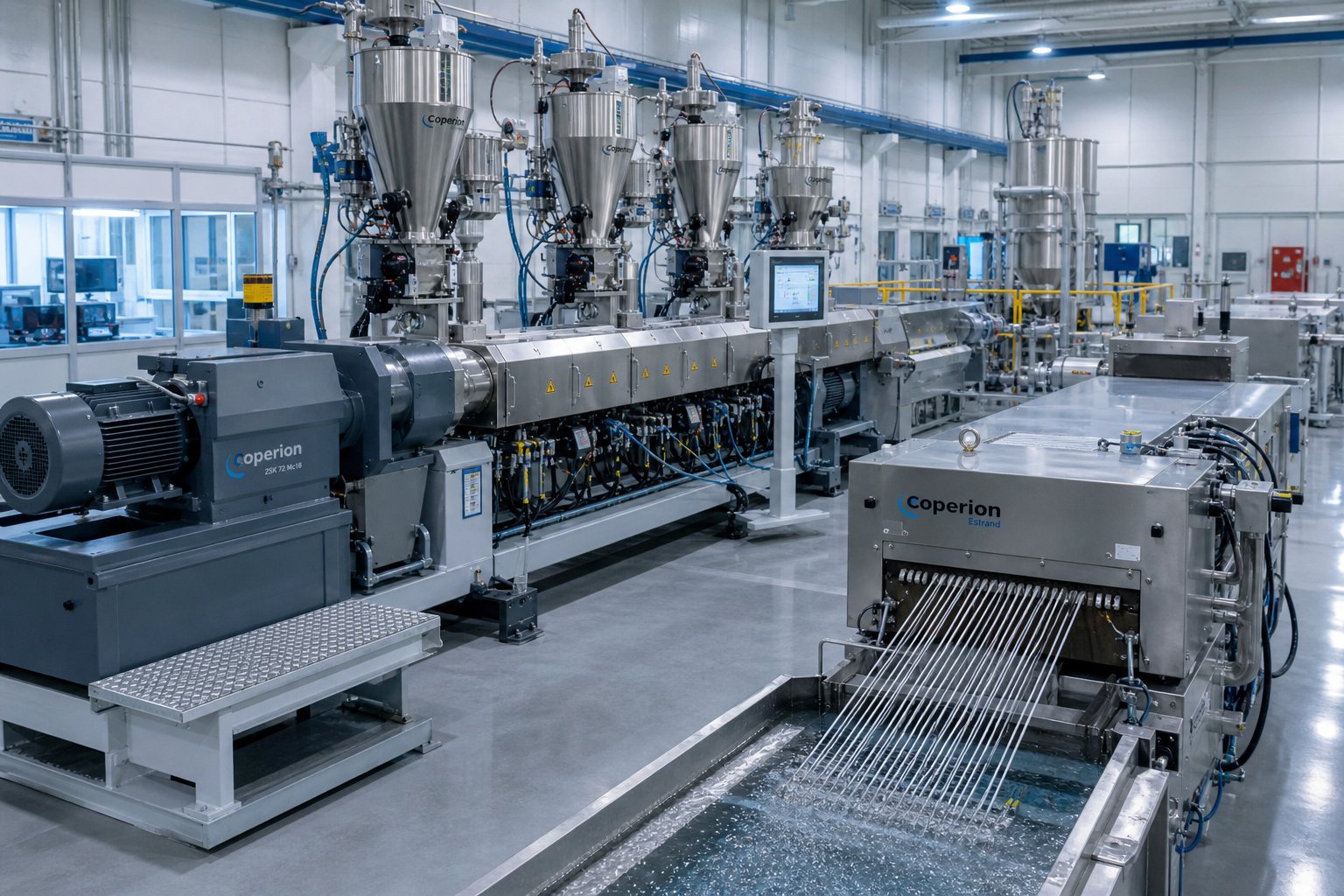
Compounding is the largest single application category for twin screw extruders — and it's also the most demanding in terms of system integration. A compounding twin screw extruder doesn't operate in isolation. It sits at the center of a complete production line that includes gravimetric feeders, side stuffers for fillers, strand die heads, water baths, air-cooling conveyors, and pelletizers. When any one of these components is poorly matched, the entire line underperforms.
Imagine you're producing a 40% glass-fiber-reinforced polyamide compound. The extruder needs a high-torque gearbox to handle the viscosity spike that comes with heavy filler loading. The screw configuration must balance aggressive kneading for fiber wetting against gentle downstream conveying to preserve fiber length. Gravimetric feeders — not volumetric ones — are essential because glass fiber's bulk density varies enough to create ±5% dosing errors with cheaper systems. And the pelletizer must handle the abrasive compound without rapid blade wear.
A factory that genuinely understands this application doesn't just sell you a twin screw compounding extruder. It engineers a system where every component upstream and downstream is sized and specified to work together. That's a very different conversation than picking a machine from a catalog.
When evaluating a factory for compounding applications, prioritize these capabilities:
- Formulation testing and process trials — Can the factory run your actual raw materials on a test line before you commit? Factories offering trial runs on their production-floor equipment demonstrate both confidence in their machines and a genuine understanding of material behavior under real processing conditions.
- Screw design engineering depth — Ask whether the factory designs screw element configurations in-house, based on your polymer system. A compounding extruder built for calcium-carbonate-filled polyethylene requires a fundamentally different screw layout than one handling carbon-black masterbatch. Generic configurations waste energy and compromise dispersion quality.
- Downstream equipment integration — Verify whether the factory manufactures or closely partners with suppliers for feeders, pelletizers, and ancillary systems. Buying these components piecemeal from unrelated vendors often leads to communication gaps, mismatched control interfaces, and finger-pointing when something malfunctions.
Reactive Extrusion and Devolatilization
Some applications push beyond simple melt blending into the realm of chemical transformation. Reactive extrusion uses the twin screw extruder as a continuous chemical reactor — performing polymerization, grafting, or compatibilization reactions directly inside the barrel. Devolatilization, a closely related process, strips residual solvents, monomers, or moisture from a polymer melt using vacuum-assisted venting zones.
Both applications demand exceptional process control. Temperature precision matters at a different level here: a few degrees of deviation can shift reaction kinetics, alter molecular weight distributions, or leave residual volatile levels above specification. An extruder for polymer devolatilization typically features multiple vacuum venting ports along the barrel, each connected to a dedicated vacuum system. The screw geometry in these venting sections uses deep-channel elements that increase free volume, allowing volatile compounds to flash and escape efficiently from the melt surface.
Residence time control is equally critical. In reactive extrusion, material needs to spend enough time in the reaction zone for chemistry to complete — but not so long that thermal degradation begins. The narrow residence time distribution inherent to co-rotating twin screw designs makes them the dominant choice for these applications, as every material element follows a predictable path with uniform thermal exposure.
Factory capabilities that separate serious reactive extrusion suppliers from the rest:
- R&D and process engineering support — Reactive extrusion isn't a plug-and-play process. It requires iterative optimization of screw configuration, temperature profiles, feed rates, and vacuum levels. Factories with dedicated process engineers who can collaborate on your specific reaction chemistry provide far more value than those offering standard machine configurations.
- Advanced venting and vacuum system design — Evaluate whether the factory designs multi-stage vacuum venting architectures, including side devolatilization ports for foam-prone or high-viscosity melts. Systems capable of achieving vacuum levels down to 1-5 mbar at the final venting stage enable ppm-level residual solvent removal.
- Instrumentation and data acquisition — Reactive processes benefit enormously from inline monitoring — melt pressure sensors, temperature probes at multiple barrel positions, and torque logging. A factory that integrates comprehensive data acquisition into its control systems helps you troubleshoot, optimize, and validate your process faster.
Laboratory and Pilot-Scale Extrusion
Not every buyer needs a production-scale machine. Material scientists, R&D teams, and university researchers often require a laboratory twin screw extruder that processes grams rather than kilograms. These compact systems serve a fundamentally different purpose: they're tools for discovery, not mass production.
A lab scale twin screw extruder allows researchers to evaluate new polymer formulations, test additive packages, or optimize processing parameters using minimal material quantities. This matters enormously when you're working with experimental polymers or high-value resins like medical-grade PEEK, which can cost hundreds of dollars per kilogram. Running initial trials on a full-size production extruder would waste several kilograms of virgin resin just to prime the barrel — thousands of dollars gone before a single usable sample appears.
Benchtop twin screw extruder systems take miniaturization even further. Some models process as little as 5 to 40 grams of material per batch, offering precise variable speed control and heating up to 400 degrees Celsius. Conical micro-compounder designs can simulate different L/D ratios through recirculation chambers, allowing researchers to explore extended mixing times without increasing barrel length. These instruments bridge the gap between bench-scale material screening and pilot-scale process validation.
The factory expertise that matters for laboratory and pilot-scale equipment is distinct from what you'd evaluate for production machinery:
- Miniaturization and precision engineering — Scaling down a twin screw extruder isn't simply making it smaller. Maintaining meaningful shear rates, temperature uniformity, and pressure profiles at reduced volumes requires sophisticated engineering. Evaluate whether the factory has a track record in small-scale equipment, not just downsized versions of their production models.
- Scale-up pathway support — The real value of lab-scale work evaporates if results don't translate to production. Factories that offer both laboratory and production-scale machines can guide you through scale-up — correlating your small-batch data with predicted full-scale behavior using matched screw geometries and processing parameters.
- Modular configurability — Research demands flexibility. Look for systems where barrel sections, screw elements, feeding configurations, and die assemblies can be quickly swapped to accommodate different material systems and experimental designs without lengthy changeover times.
Every application category reshapes what "the right factory" looks like. A world-class compounding line manufacturer might have zero experience building micro-compounders, and a laboratory equipment specialist may lack the heavy-machining infrastructure for 150 mm production extruders. Recognizing this mismatch before you sign a purchase order is far less expensive than discovering it after the machine arrives — which is exactly why understanding where a factory sits in China's broader manufacturing ecosystem becomes the next essential step in any informed evaluation.
Understanding China's Twin Screw Extruder Manufacturing Landscape
Geography shapes manufacturing quality in ways most buyers never consider. You might assume that a twin screw extruder machine factory in one Chinese province produces essentially the same equipment as a factory 1,000 kilometers away. In reality, decades of industrial evolution have created concentrated manufacturing clusters where specialized knowledge, component supply chains, and skilled labor pools converge — and knowing where those clusters sit gives procurement teams a meaningful advantage during supplier selection.
Why Nanjing and Jiangsu Dominate Twin Screw Extruder Manufacturing
If you trace the roots of China's twin screw extrusion equipment industry, virtually every path leads back to Nanjing and the surrounding Jiangsu province. This region concentrates more than 90% of the country's twin screw extruder manufacturers — a staggering level of industrial density that didn't happen by accident.
The story begins with early government-backed research institutes and state-owned enterprises in Nanjing that developed China's first twin screw extrusion technologies during the 1980s and 1990s. Engineers trained at these institutions eventually founded private companies, hired local talent, and attracted component suppliers to set up nearby operations. Over three decades, this snowball effect produced a self-reinforcing ecosystem:
- Deep engineering talent pool — Nanjing's major universities and technical colleges produce a steady pipeline of mechanical engineers and polymer processing specialists. Factories recruit locally from a workforce that already understands extrusion fundamentals before they walk through the door.
- Component supplier proximity — Gearbox manufacturers, motor suppliers, barrel metallurgy specialists, heat treatment facilities, and precision CNC machining shops all cluster within a short radius. A factory needing a custom hardened barrel liner or a replacement gearbox housing doesn't wait weeks for cross-country shipping — components arrive within days, sometimes hours.
- Knowledge spillover — When dozens of extruders manufacturers operate in the same city, process innovations spread quickly. Engineers move between companies, attend the same local industry events, and share supply chain intelligence. This competitive proximity pushes the entire cluster upward in capability over time.
The twin screw extruders market in China reflects this concentration in hard numbers. Industry data indicates the sector's market size surpassed 15 billion yuan in 2023, with projections reaching 25 billion yuan by 2030. Growth drivers include expanding downstream demand from plastics, food processing, and pharmaceutical industries, alongside government policies favoring green manufacturing and intelligent automation. Overseas market share has climbed to approximately 15%, signaling increasing international acceptance of Chinese-made extrusion equipment.
Other Regional Manufacturing Hubs Worth Knowing
Jiangsu's dominance doesn't mean it's the only game in town. Several other regions have developed specialized niches within the broader extrusion equipment landscape:
- Zhangjiagang (Jiangsu) — Located roughly 200 kilometers east of Nanjing, Zhangjiagang has carved out a reputation for extrusion-related components and complete extrusion line assembly, particularly for pipe, profile, and sheet applications. The city's dense cluster of screw and barrel manufacturers makes it a valuable sourcing destination for replacement wear components.
- Guangdong Province — Southern China's manufacturing powerhouse hosts several Chinese extruder manufacturers focusing on both injection molding and extrusion equipment. Proximity to major plastics processing hubs in the Pearl River Delta gives Guangdong-based factories close customer contact for applications in packaging, consumer goods, and electronics materials.
- Sichuan and other inland regions — A smaller but growing number of manufacturers have established operations in western and central China, often focusing on cost-competitive equipment for domestic markets or specialized applications tied to local industries.
For international buyers planning factory visits, this geographic awareness is practical intelligence. A procurement trip to Nanjing can include visits to five or six competing factories within a single city — a level of efficiency impossible when manufacturers are scattered across thousands of kilometers.
What Regional Clustering Means for Buyers
Why should a procurement professional in Germany, Turkey, or Brazil care about where Chinese factories cluster? Because geographic concentration translates directly into tangible buyer benefits:
- Efficient factory visit logistics — When multiple factories sit within the same metropolitan area, you can evaluate three to four manufacturers in a single trip. Side-by-side comparisons become possible in days rather than weeks, and your impressions stay fresh enough for meaningful benchmarking.
- Denser parts supply chains — A factory surrounded by component specialists means faster replacement part sourcing throughout your machine's lifetime. If your extruder manufacturer experiences delays, alternative suppliers for screws, barrels, heating elements, and gearbox components are geographically close and familiar with the same equipment standards.
- Competitive pricing pressure — Dozens of factories competing for the same customer base in the same city creates natural price discipline. Buyers benefit from market transparency that simply doesn't exist in regions with only one or two manufacturers.
- Access to a skilled labor pool — Factories in dense clusters recruit from a workforce already trained by competing companies. Assembly technicians, CNC operators, and quality inspectors carry cross-company experience that elevates manufacturing consistency across the region.
- Established export infrastructure — Jiangsu's proximity to Shanghai's ports and international logistics networks streamlines shipping. Factories in the Nanjing cluster have decades of export experience, meaning they understand Incoterms, container loading optimization, and international documentation requirements that newer or more remote manufacturers may fumble.
Still, geographic clustering doesn't guarantee uniform quality. Within any manufacturing hub — Nanjing included — you'll find a wide spectrum of capabilities. Premium-tier factories invest heavily in in-house metallurgical testing, employ dedicated R&D teams, maintain ISO-certified quality systems, and offer factory acceptance testing as standard practice. They produce machines with tight dimensional tolerances, high-grade screw and barrel metallurgy, and well-integrated control systems. Mid-tier manufacturers deliver functional equipment at lower price points but may cut corners on component sourcing, heat treatment processes, or post-assembly inspection rigor. Budget-tier operations prioritize cost above everything — sometimes assembling machines from the cheapest available components with minimal engineering oversight.
The existence of all three tiers in the same city is precisely why a structured evaluation framework — not just a factory address — determines whether you end up with a machine that runs reliably for a decade or one that generates expensive headaches within its first year of operation.
A Structured Framework for Evaluating Twin Screw Extruder Factories
Knowing where factories cluster and what quality tiers exist is useful background — but it doesn't tell you what to look for once you're actually standing on a factory floor or conducting a virtual audit. Most buyers arrive at a twin screw extruder machine factory with a general sense of what they want, yet lack a systematic method for separating genuine manufacturing capability from polished showrooms and rehearsed sales presentations. What follows is a concrete evaluation framework you can carry into any factory visit, physical or virtual, and walk out with a clear, defensible assessment.
Production Capacity and Manufacturing Infrastructure
Start with the machines that make the machines. A factory's internal manufacturing infrastructure reveals more about build quality than any brochure ever will. When you tour the production floor, you're looking for specific categories of equipment — and more importantly, for signs that this equipment is actively used rather than decoratively placed.
Here's what matters most:
- CNC machining centers — These are the backbone of precision barrel and screw manufacturing. Look for multi-axis CNC lathes and milling machines capable of holding tight tolerances on hardened tool steels. If a factory outsources all its machining, it loses direct quality control over the most critical wear components in the entire extruder system.
- Deep-hole boring and honing equipment — Barrel bores must be straight, round, and finished to mirror-smooth surface quality across their full length. Dedicated barrel boring machines and honing stations indicate a factory that controls this critical dimension in-house. Ask about bore straightness tolerances — premium factories hold 0.02 mm per meter or better.
- Heat treatment facilities — Nitriding furnaces, vacuum hardening ovens, and induction hardening equipment tell you whether the factory controls its own metallurgical processes. Screw elements and barrel liners that undergo in-house heat treatment can be verified and documented at every step. Factories relying entirely on outsourced heat treatment introduce a quality variable they cannot directly monitor.
- Assembly and testing areas — Clean, well-organized assembly floors with overhead cranes, alignment fixtures, and dedicated testing rigs suggest a production culture that values precision. Cluttered assembly areas with parts stacked on the floor often correlate with dimensional errors and inconsistent builds.
Production capacity also directly affects your lead time and order flexibility. A factory running a single shift with limited CNC capacity may quote attractive prices but struggle to meet delivery dates during peak demand. Ask about annual production volume, current order backlog, and average lead times for machines similar to yours. Factories producing 50 to 100 complete twin-screw extruder machine lines per year typically maintain enough workflow stability to deliver on schedule without quality shortcuts.
Quality Control Systems and Certifications
Certifications tell you what systems a factory has documented. Inspection practices tell you what they actually do. You need to evaluate both.
ISO 9001 certification is a baseline expectation for any serious screw extruder manufacturer, but the certificate alone says little about day-to-day quality culture. Dig deeper. Ask to see the factory's quality inspection records — not sanitized summaries, but actual inspection sheets from recent production runs. Look for documented evidence of:
- Incoming material inspection — Does the factory test raw steel, alloy bar stock, and purchased components when they arrive? Or do they simply accept supplier certificates at face value?
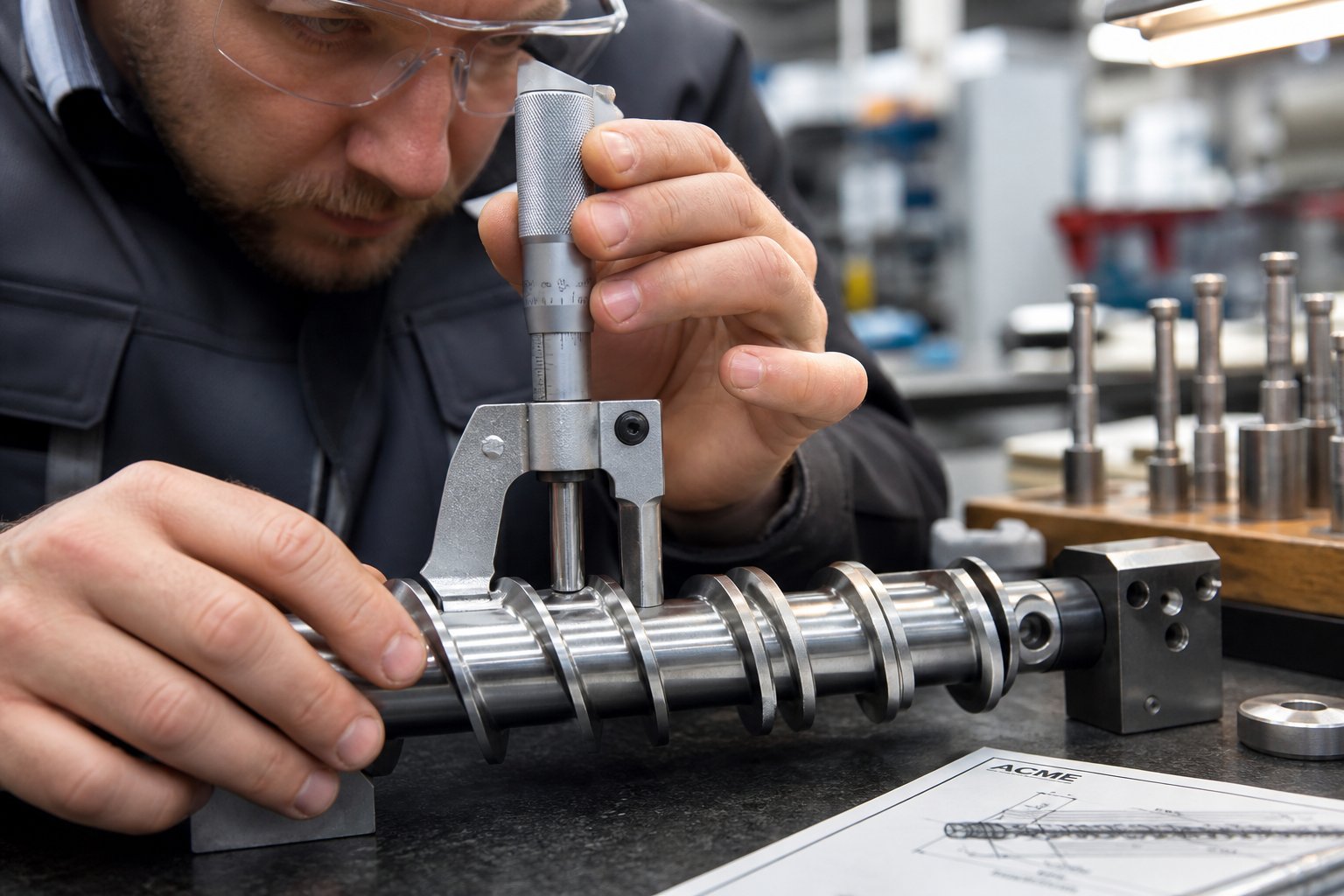
- In-process dimensional checks — Are measuring instruments (micrometers, bore gauges, coordinate measuring machines) present at each workstation? Do calibration stickers show current dates?
- Metallurgical testing — For screw elements and barrel liners, hardness testing, microstructure analysis, and nitriding depth verification are non-negotiable quality gates. Factories that skip these steps are gambling with the service life of the components most directly responsible for your machine's long-term performance.
- Final assembly and run-off testing — A properly evaluated extruder system runs under load before it ships. This means the factory powers up the complete machine, verifies motor and gearbox performance, checks barrel alignment, confirms temperature zone accuracy, and documents the results. Factories that ship machines untested are transferring their quality assurance burden to your installation team.
The difference between factories that perform incoming material inspection versus those that rely solely on supplier certificates reveals the true depth of a factory's quality culture — and predicts the consistency you'll see in your finished machine.
Beyond ISO 9001, look for industry-relevant certifications. CE marking matters for European markets. UL and CSA certifications are critical for North American buyers — OSHA enforces UL and CSA standards for industrial machinery under 29 CFR 1910.303, and non-compliant equipment can be held at customs or trigger workplace safety violations. Ask for certification report copies, not just sticker photos. Legitimate manufacturers share these openly.
R&D Capabilities and Test Run Availability
Here's where evaluation gets genuinely revealing. Any factory can assemble a machine. Far fewer can engineer one specifically for your material and process requirements — and then prove it works before you pay the balance.
Access to a factory's extrusion lab or test line is arguably the single most powerful evaluation tool available to buyers. It lets you run your actual raw materials — your specific polymer, your filler package, your additive system — through the proposed machine configuration under realistic processing conditions. You'll see real throughput numbers, actual melt temperatures, torque consumption under load, and pellet quality from the downstream equipment. No amount of catalog data or simulation software replaces this hands-on validation.
When assessing R&D depth, pay attention to these signals:
- Dedicated engineering team size — Ask how many engineers work on screw design, process simulation, and application development versus how many work on general manufacturing. A factory with 30 assembly workers but only one engineer handling all customer applications likely lacks the bandwidth for meaningful technical support on complex projects.
- Screw design software and simulation tools — Modern screw element design involves computational fluid dynamics, finite element analysis for torque and stress, and residence time distribution modeling. Factories using these tools can predict machine performance before cutting steel. Factories that configure screws purely by experience and trial-and-error may get the job done for common applications, but they'll struggle with unusual materials or demanding specifications.
- Willingness to customize — A factory confident in its engineering depth welcomes non-standard requests. It adapts barrel lengths, modifies venting configurations, adds specialized feeding ports, or engineers custom screw elements for your application. Factories that resist any deviation from their standard product lineup may lack the design flexibility you'll eventually need — especially as your product portfolio evolves.
- Test run documentation — After a trial in the extrusion lab, does the factory provide a detailed report? You should receive data on processing parameters, torque curves, throughput measurements, energy consumption, and sample quality analysis. This documentation becomes your technical baseline for machine acceptance and future process optimization.
For specialized applications like hot melt extruder configurations for adhesive or sealant processing, or reactive compounding systems requiring precise residence time control, R&D capability isn't a nice-to-have — it's the differentiator between a machine that works and one that never quite reaches specification.
Essential Questions to Ask During a Factory Evaluation
Preparation separates productive factory visits from tourism. Walk in with specific questions — written down, prioritized, and directed at the engineering and quality teams rather than just the sales department. The answers (and the way they're answered) will tell you more than any product catalog.
- Can you provide reference contacts from three to five customers processing similar materials to ours? — Willingness to share references indicates confidence. Reluctance suggests either limited experience in your application or unresolved customer issues.
- What are your standard warranty terms, and what components does the warranty specifically exclude? — Wear components like screw elements and barrel liners are often excluded from standard warranties. Understanding exclusions upfront prevents unpleasant surprises.
- What spare parts do you keep in stock, and what are typical lead times for replacement screws, barrel sections, and gearbox components? — A factory that maintains a parts inventory signals long-term customer commitment. One that manufactures replacement parts only on demand adds weeks or months of downtime to your future maintenance schedule.
- How large is your engineering team, and how many engineers focus specifically on screw configuration design and process optimization? — This reveals the technical depth available to support your application both during initial machine design and after commissioning.
- What is your annual production volume, and what percentage of output goes to export markets? — Export experience correlates with familiarity in handling international documentation, shipping logistics, voltage and safety standard requirements, and cross-cultural technical communication.
- Can we run a test batch using our own materials in your extrusion lab before confirming the order? — Factories that agree to material trials demonstrate engineering confidence and customer orientation. Factories that refuse may be hiding performance limitations.
- What metallurgy do you use for screw elements and barrel liners, and what hardness and nitriding depth specifications do you guarantee? — Vague answers here — such as "high-quality steel" without specific grades — are a warning sign. Expect to hear specific alloy designations, Rockwell hardness ranges, and nitriding layer depths.
- Do you perform factory acceptance testing, and can we or our representative attend? — Factory acceptance testing (FAT) under load conditions is standard practice among reputable manufacturers. If a factory doesn't offer FAT, ask why.
- What training and commissioning support do you provide at the buyer's facility? — Installation, alignment, initial startup, and operator training are critical for first-time equipment buyers. Clarify whether these services are included, optional, or outsourced to third parties.
- How do you handle technical support requests after the warranty period expires? — Long-term support availability — remote troubleshooting, engineering consultation, software updates for control systems — reflects whether a factory views the sale as a transaction or a relationship.
Record the answers. Compare them across multiple factories. Pay as much attention to hesitation, deflection, and vagueness as you do to the actual content of the responses. A factory that answers every question directly, provides documentation to back up claims, and invites you to verify their capabilities on the production floor has little to hide — and that transparency is worth more than a discount on the purchase price.
Of course, even the most thorough factory evaluation can miss problems that only surface after you've committed. Some warning signs are subtle, visible only to buyers who know exactly what red flags look like — and recognizing them before the purchase order is signed can save far more than any negotiation ever will.
Red Flags When Evaluating a Twin Screw Extruder Factory
A polished sales presentation, a competitive quote, and a friendly factory tour can all feel reassuring — right up until the machine arrives and problems start surfacing. The most expensive mistakes in equipment procurement rarely happen because a buyer skipped the evaluation entirely. They happen because warning signs were present but went unrecognized. Knowing what to look for before you sign a purchase order is the difference between a decade of reliable production and a six-figure lesson in supplier vetting.
These red flags apply whether you're evaluating plastic twin screw extruder manufacturers in Nanjing, sourcing screw extruders from Guangdong, or reviewing quotes from any region. The patterns are remarkably consistent across geographies.
Communication and Documentation Warning Signs
Long before you set foot on a factory floor, the quality of pre-sale communication reveals more than most buyers realize. Pay attention to how a factory responds — not just what they say, but how they say it.
Reluctance to provide detailed technical specifications is the first and most telling signal. When you ask for screw element metallurgy and the answer comes back as "high-quality alloy steel" with no specific grade designation, no hardness value, and no nitriding depth specification — that vagueness isn't modesty. It's either a lack of engineering knowledge or a deliberate attempt to avoid accountability. A credible twin screw extruder machine factory will readily share alloy designations (such as 38CrMoAlA or W6Mo5Cr4V2), guaranteed Rockwell hardness ranges, and documented nitriding layer depths without hesitation.
Vague answers about materials of construction extend beyond screws and barrels. Ask about gearbox bearing brands, motor manufacturers, electrical component suppliers, and control system platforms. Factories that dodge these questions may be substituting lower-grade components to protect thin margins — a practice you'll only discover when something fails prematurely.
Two more communication-level warnings deserve your attention:
- Inability to supply reference customer contacts — Every manufacturer with a reasonable track record should be able to connect you with three to five customers processing materials similar to yours. A factory that claims "confidentiality" across its entire customer base is likely hiding a thin or troubled reference history. As supplier evaluation experts note, a complete absence of references should raise immediate concerns — reputable suppliers have documented partnerships they're willing to share.
- Pressure tactics around pricing timelines — "This price is only valid for 48 hours" or "We have another buyer interested in this exact configuration" are classic high-pressure techniques designed to short-circuit your due diligence process. Legitimate capital equipment transactions involve weeks of technical review, not impulse decisions. A factory pressuring you to commit before you've completed your evaluation likely knows that a thorough review wouldn't work in their favor.
Watch for a subtler variation too: factories that over-promise capabilities without specifics. Phrases like "we can process any material you need" or "our machines handle all applications" without presenting a clear technical basis should trigger skepticism. This pattern — common enough that quality auditors flag it as a top-tier warning sign — often indicates a factory more focused on winning the contract than on delivering results.
Factory Visit and Production Red Flags
Emails and video calls can only reveal so much. The factory floor tells the real story — if you know where to look. Here's what experienced equipment buyers watch for during on-site or virtual factory evaluations.
Disorganized production floors signal deeper management problems. When you see screw elements stored in unmarked bins, barrel sections stacked haphazardly against walls, and work-in-progress inventory blocking aisles, you're looking at a facility where process discipline is weak. Manufacturing precision requires organized workflows — a twin screw extruder plastic processing machine built in chaos rarely performs with the consistency your production demands. Factory organization methodology like 5S (Sort, Set in order, Shine, Standardize, Sustain) may seem like a basic concept, but its absence on a production floor correlates reliably with dimensional errors and inconsistent assembly quality.
Lack of measuring instruments at workstations is a particularly damning sign. Precision machining without in-process measurement isn't precision machining — it's guesswork. Every CNC station, every assembly bench, and every inspection point should have appropriate gauges, micrometers, bore gauges, or coordinate measuring equipment within arm's reach. If operators are walking across the shop floor to access a single shared micrometer, dimensional verification is an afterthought rather than a production standard.
Three additional on-site observations that experienced buyers flag immediately:
- Missing or outdated calibration stickers on equipment — Calibration dates on measuring instruments and CNC machines should be current. Expired stickers — or no stickers at all — indicate that the factory's measurement systems cannot be trusted. As quality inspection professionals emphasize, tools that aren't maintained or recalibrated periodically lead to product defects and inconsistent production runs.
- No visible quality control checkpoints — A well-run facility has clearly marked inspection stations between major production stages: after machining, after heat treatment, after assembly, and during final testing. If parts flow from raw material to finished machine without documented pause points, defects pass undetected from one stage to the next.
- Machines assembled entirely from outsourced components without in-house machining — There's a meaningful difference between a factory that machines its own barrels and screw elements versus one that purchases every component externally and simply bolts them together. The latter is closer to a trading company than a manufacturer, regardless of the sign on the building. Ask to see the machining area — if the CNC shop is either empty or suspiciously clean, those machines may exist for show rather than production.
Virtual factory tours add another layer of risk. When a factory controls the camera angle during a video walkthrough, they control your perception. If certain production areas are conveniently "under maintenance" or "not available for viewing today," treat that as a data point, not an excuse. Genuine manufacturers are typically proud to show their capabilities, not selective about it.
Specification and Pricing Red Flags
Specification sheets and price quotes are where subtle deception becomes most consequential. A twin screw extruder price that looks too good to be true almost always is — but the specific ways that pricing and specifications mislead buyers are worth spelling out explicitly.
Watch for these warning signs when reviewing quotes and technical documentation:
- Pricing significantly below market range — When a quote comes in 40% or more below competitors for the same screw diameter and L/D ratio, something is being sacrificed. Common cost-cutting tactics include using inferior barrel metallurgy that wears out in a fraction of the expected service life, substituting no-name electrical components for branded industrial-grade parts, or specifying lower-torque gearboxes that struggle under real production loads. A nitrided steel barrel running abrasive glass-filled compounds can wear out in as few as 4,000 operating hours, while a properly specified bimetallic liner on the same machine lasts 15,000 to 20,000 hours — meaning the "cheaper" machine generates far higher lifecycle costs through accelerated replacement cycles.
- Specifications that exactly match another manufacturer's catalog — If the spec sheet looks suspiciously identical to a well-known brand's published data — same torque values, same throughput figures, same L/D options, even similar formatting — you may be looking at a rebranded machine rather than an independently engineered product. Request the factory's own engineering drawings and ask pointed questions about design decisions. A genuine manufacturer can explain why they chose specific parameters, not just recite them.
- No mention of torque density or specific energy ratings — These are fundamental performance metrics for any serious screw extruder. Torque density (Nm/cm³) tells you how much force the gearbox delivers relative to screw center distance. Specific energy (kWh/kg) indicates how efficiently the machine converts electrical power into material processing work. A factory that omits these figures from its specifications either doesn't understand their importance or is hiding unfavorable numbers.
- Unwillingness to arrange test runs — A factory confident in its equipment welcomes the opportunity to demonstrate performance with your actual materials. A factory that deflects test run requests — citing scheduling constraints, material handling limitations, or confidentiality concerns — may be avoiding a situation where its machine's real-world performance falls short of catalog claims.
- Inconsistent details between sales documents and technical drawings — Cross-reference the motor power stated in the quotation against what appears on the electrical schematic. Compare the barrel zone count in the specification sheet with what's shown in the general arrangement drawing. Discrepancies suggest sloppy documentation at best and deliberate misrepresentation at worst.
If a factory cannot clearly explain how their screw element design serves your specific application — why certain kneading blocks are positioned where they are, why a particular mixing element was selected over alternatives — they likely lack the engineering depth to deliver a well-configured machine that performs reliably with your material system.
None of these red flags, taken individually, guarantees a bad outcome. But when multiple warning signs cluster together — vague metallurgy answers combined with below-market pricing, resistance to test runs, and an inability to provide customer references — the pattern becomes unmistakable. Walking away at this stage costs you nothing. Proceeding costs you the full purchase price plus months of lost production when the machine underperforms.
Spotting these problems before they become your problems is essential — but so is understanding what happens financially after the machine arrives. The purchase price, it turns out, is only the opening chapter of what a twin screw extruder actually costs over its operational lifetime.
Total Cost of Ownership Beyond the Machine Price Tag
Ask any buyer who's operated a twin screw extruder for five years what they wish they'd understood before signing the purchase order, and the answer is almost always the same: the machine price was the smallest financial surprise. Shipping, import duties, installation, energy consumption, screw replacements, unplanned downtime — these costs accumulate quietly and relentlessly, often exceeding the original equipment investment within the first few years of operation. Yet almost no factory sales team voluntarily walks you through this math. That's precisely why building your own total cost of ownership (TCO) framework before committing to a supplier isn't optional — it's essential.
Beyond the Purchase Price — Understanding True Machine Cost
The quoted price for a twin screw extruder machine represents only the starting point of your actual financial commitment. Between the factory gate and your production floor, several cost categories add up fast — and overlooking any of them distorts your budget projections.
Shipping heavy capital equipment internationally involves more than booking a container. Freight costs for a production-scale barrel extruder system — including the main extruder, gearbox, control cabinet, and downstream pelletizing line — can range from several thousand to tens of thousands of dollars depending on destination, shipping mode, and equipment dimensions. Oversized components that won't fit standard containers require flat rack or open-top configurations at premium rates.
Then come import duties and customs clearance. Tariff classifications for extrusion machinery vary by country, and the applicable duty rate directly impacts your landed cost. Incoterms — the internationally recognized trade rules published by the International Chamber of Commerce — define exactly where cost and risk responsibility transfers between seller and buyer. Agreeing to EXW (Ex Works) terms means you're responsible for everything from the factory door onward: inland transport, export clearance, ocean freight, insurance, import duties, and last-mile delivery. Choosing CIF or DDP shifts more of that burden to the seller, but at a higher quoted price. Misunderstanding your obligations under the agreed Incoterms has led buyers into unexpected expenses that erased the cost advantage they thought they'd negotiated.
Installation and commissioning add another layer. Foundation preparation, electrical connections to local power specifications, cooling water plumbing, compressed air supply, and initial machine alignment all require skilled labor and time. If the factory provides commissioning engineers — which premium manufacturers typically do — their travel, accommodation, and per diem costs may or may not be included in the purchase agreement. Clarify this before signing.
Ongoing Operational and Maintenance Costs
Once the machine is running, a different set of costs takes over — and these are the ones that ultimately determine whether your investment was sound.
Energy consumption is the largest ongoing expense for most extrusion operations. The main drive motor, barrel zone heaters, cooling fans, vacuum pumps, and downstream equipment all draw power continuously during production. Motor efficiency matters significantly here: a high-efficiency IE3 or IE4 rated motor running at 75% load for 6,000 hours per year consumes measurably less electricity than a standard-efficiency motor at the same output. Over a machine's 10 to 15 year lifespan, that efficiency gap translates into thousands of dollars in cumulative energy savings. Ask your factory what motor efficiency class they specify — it's a question surprisingly few buyers raise.
Preventive maintenance follows a predictable schedule, but the costs vary dramatically depending on machine quality and component sourcing strategy. Gearbox oil changes, bearing inspections, heater band replacements, thermocouple verification, and control system updates all recur at defined intervals. Factories that provide clear maintenance schedules with parts lists and recommended service intervals make lifecycle budgeting straightforward. Factories that don't leave you guessing — and guessing usually means deferring maintenance until something breaks.
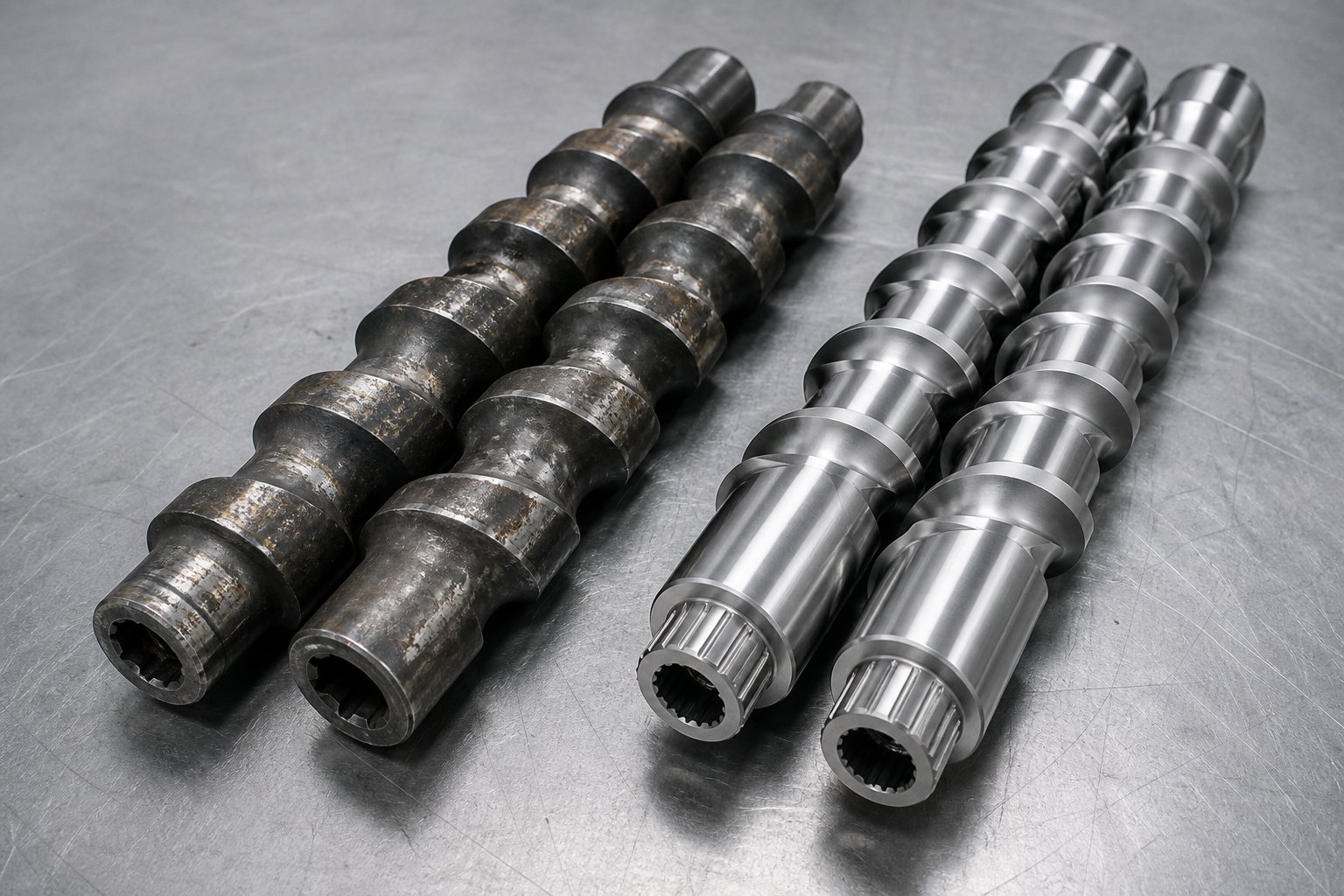
Twin screw and barrel replacement represents the single most consequential maintenance cost category. Every operating hour wears material from the screw flight lands, kneading block surfaces, and barrel bore lining. The rate of wear depends on what you're processing — abrasive mineral fillers accelerate wear exponentially compared to neat polymer — and on the metallurgical quality of the wear components themselves. As predictive maintenance research demonstrates, screw wear follows a trackable degradation curve: output at rated RPM declining below 85%, melt temperature rising more than 15 degrees Fahrenheit above setpoint, and motor amperage climbing more than 10% above baseline all signal that replacement is overdue. A high-quality nitrided or bimetallic extrusion barrel might last 15,000 to 20,000 operating hours processing glass-fiber compounds, while an inferior one fails in as few as 4,000 hours — making the "cheaper" machine dramatically more expensive to operate.
Here's the full picture of what TCO actually includes, laid out so your procurement team can build a realistic lifecycle budget:
- Machine acquisition cost — Purchase price, factory acceptance testing fees, and any pre-shipment modifications
- Logistics and import costs — Freight, insurance, customs duties, port handling, and inland transport to your facility
- Installation and training — Foundation work, utility connections, commissioning engineering, and operator training programs
- Energy consumption — Motor drive, barrel heating and cooling, vacuum systems, and downstream equipment power draw over the machine's operational lifespan
- Scheduled maintenance — Gearbox service, bearing replacement, heater bands, thermocouples, and control system upkeep at defined intervals
- Screw and barrel replacements — The highest-value wear components, with replacement frequency determined by material abrasiveness and component metallurgy
- Unplanned downtime — Lost production revenue during unexpected failures, emergency repair labor, and expedited parts shipping
- Spare parts inventory — Capital tied up in stocking critical replacement components to minimize future downtime duration
When you model these costs over a realistic 10-year horizon, the machine purchase price often represents only 30% to 40% of the total investment. As capital equipment analysts consistently observe, buyers who focus exclusively on the upfront number frequently regret choosing the lowest-priced option within two to three years — once accelerated spare parts costs, increased downtime, and output quality penalties erode whatever savings the lower purchase price delivered.
How Factory-Direct Component Sourcing Reduces Lifecycle Costs
One of the most effective strategies for controlling the ongoing portion of TCO — particularly the screw and barrel replacement line item — is diversifying your component supply chain beyond the original equipment manufacturer.
OEM replacement channels often carry significant markups. When your screw plastic extruder components wear out and the only sourcing option is the original factory, you're paying not just for the part but for the manufacturer's captive pricing position. Lead times through OEM-only channels can stretch to weeks or months, especially for international buyers dealing with cross-border logistics. Every day your barrel extruder sits idle waiting for a replacement screw set translates directly into lost production revenue.
Specialized component manufacturers offer a compelling alternative. These are factories that focus exclusively on manufacturing screws, barrels, and related wear components — investing their engineering resources entirely in metallurgical quality, dimensional precision, and application-specific design rather than building complete extrusion lines. Because their business model centers on component manufacturing at scale, they typically deliver shorter lead times, competitive pricing, and a breadth of compatibility across multiple extruder brands and configurations.
For procurement teams looking to establish this kind of supply chain resilience, factory-direct suppliers like NANHAIYA's screw and barrel product line represent exactly this approach — providing screw barrel solutions for extrusion, compounding, pelletizing, and replacement projects with the dimensional accuracy and metallurgical specifications that production environments demand. The practical advantage is straightforward: when you can source a replacement plastic extruder screw or barrel section from a dedicated component manufacturer without waiting for the original machine builder's production schedule, your unplanned downtime window shrinks from weeks to days.
Building this alternative sourcing relationship before you need it — ideally during the initial machine procurement phase — is a sound procurement strategy. Request dimensional drawings and material specifications from your machine factory at the time of purchase. These documents enable component specialists to manufacture compatible replacement parts that meet or exceed original specifications, giving you options when wear components eventually reach end of life.
The TCO framework transforms how you evaluate competing factory quotes. A machine priced 20% higher than a competitor's offer might actually cost less over its operational lifetime if it specifies superior screw and barrel metallurgy, includes a comprehensive spare parts package, and comes from a factory with a documented preventive maintenance program. Conversely, the lowest-priced machine on your shortlist could become the most expensive one you've ever owned — one replacement cycle at a time. Understanding this financial reality is what separates strategic procurement from transactional purchasing, and it directly shapes how you navigate the complete procurement lifecycle from initial requirements through long-term operation.
Navigating the Complete Procurement Lifecycle Successfully
Knowing what a machine costs over its lifetime is powerful — but that knowledge only delivers value when it's embedded into a structured buying process from day one. Too many procurement teams jump straight from initial research to requesting quotes, skipping the internal groundwork that makes fair supplier comparisons possible and contract negotiations productive. The result? Vague RFQs that generate incomparable proposals, payment structures that leave buyers exposed, and machines that arrive without a plan for the spare parts they'll inevitably need.
What follows is a complete procurement roadmap — from the moment you define your requirements through commissioning and long-term supply chain setup — designed to prevent the gaps that experienced buyers consistently wish they'd closed earlier.
From Requirements Definition to RFQ
Before you contact a single twin screw extruder manufacturer, your internal specification document needs to be airtight. Sounds obvious? You'd be surprised how many RFQs go out with critical details missing — forcing factories to guess at your needs and making it nearly impossible to compare their proposals on equal terms.
A well-built requirements specification covers four categories:
- Target throughput and material system — Define your production rate in kg/hr, your primary resin type, filler loadings by percentage, and any additives or reinforcements. Specify whether you're running a single formulation or need flexibility across multiple material systems. A factory quoting a machine for neat polypropylene will size the gearbox, motor, and screw configuration very differently than one designed for 60% calcium carbonate-filled polyethylene.
- Downstream integration needs — Will the extruder feed a strand pelletizer, an underwater pelletizing system, a sheet die, or a co extrusion machine for multi-layer applications? Downstream equipment compatibility dictates die head design, melt pump requirements, and control system communication protocols. Specify these upfront so the factory can design a cohesive line rather than an isolated machine.
- Customization requirements — Document any non-standard features: additional venting ports for devolatilization, side stuffers for downstream filler feeding, specialized barrel metallurgy for corrosive materials, or extended L/D ratios for reactive processing. These details directly affect pricing, lead time, and which factories can realistically deliver.
- Site and regulatory constraints — Electrical supply specifications (voltage, frequency, phase), available floor space dimensions, ceiling height for installation, ambient temperature ranges, and applicable safety certifications (CE, UL, CSA) all belong in the requirements document. Factories that discover these constraints after quoting often issue change orders that inflate the final price.
With your specification complete, approach three to five factories — enough to generate competitive tension and expose meaningful differences in engineering approach, but not so many that evaluation becomes unmanageable. Include your full requirements document with every RFQ, and insist that each factory respond using a standardized format. When proposals arrive in different structures with different assumptions, comparing them fairly becomes an exercise in frustration rather than analysis.
Structure your evaluation criteria before the proposals arrive, not after. Weight each criterion — technical compliance, price, lead time, warranty terms, spare parts availability, reference customer quality, and test run willingness — according to your priorities. This prevents the common trap of defaulting to lowest price simply because it's the easiest number to compare.
Order Negotiation Through Commissioning
Selecting a factory is the halfway point, not the finish line. The negotiation, production, and delivery phases contain their own set of decisions that directly impact whether the machine you specified is the machine you receive.
Payment terms for capital equipment like twin screw extruders for sale internationally follow milestone-based structures designed to align financial risk between buyer and seller. A typical arrangement might look like 30% upon order confirmation, 30% at a defined production milestone (such as main components completion), 30% before shipment after factory acceptance testing, and a final 10% retention payable after successful on-site commissioning. This structure gives you financial leverage at every critical stage — particularly the retention amount, which incentivizes the factory to support installation and startup rather than walking away once the crate leaves their dock.
Here's the complete procurement lifecycle, sequenced from requirements through operational readiness:
- Develop a detailed requirements specification covering throughput targets, materials, downstream equipment, site constraints, and regulatory certifications.
- Issue RFQs to three to five qualified factories with standardized response formats and clear evaluation criteria.
- Evaluate proposals technically and commercially — verify screw configuration rationale, component metallurgy, motor and gearbox specifications, and total landed cost including logistics.
- Conduct factory visits or virtual audits for the top two to three candidates, using the structured evaluation framework to assess manufacturing capability, quality systems, and engineering depth.
- Request and evaluate material trial runs at the factory's test line using your actual raw materials, documenting throughput, torque, energy consumption, and output quality.
- Negotiate contract terms including milestone-based payment, warranty scope and duration, performance guarantees tied to specific throughput and quality metrics, and penalties for delivery delays.
- Monitor production progress through scheduled updates, photographic documentation, and — for high-value orders — third-party inspection at key manufacturing stages.
- Attend or arrange factory acceptance testing (FAT) where the assembled machine runs under load conditions simulating your production requirements, with all parameters documented.
- Manage shipping logistics including Incoterms compliance, marine insurance, customs documentation, and coordination with your receiving facility for crane access, rigging, and foundation readiness.
- Oversee installation and commissioning with factory-provided engineers on-site for mechanical alignment, electrical integration, control system configuration, and initial production runs with your materials.
- Complete operator and maintenance training before the commissioning team departs, ensuring your production and maintenance staff can run the machine independently and perform routine preventive maintenance.
- Execute final acceptance and release retention payment only after the machine demonstrates sustained performance at the agreed specifications over a defined trial period.
Two stages in this sequence deserve extra emphasis. Factory acceptance testing is your last opportunity to identify problems before the machine ships — and problems are dramatically easier (and cheaper) to fix on the factory floor than on your production floor 8,000 kilometers away. Insist on attending FAT in person or through a qualified representative. Second, production monitoring during manufacturing isn't micromanagement — it's risk management. A monthly photo update showing machined barrels, assembled gearboxes, and wired control cabinets gives you early visibility into potential delays or deviations from specification.
For buyers sourcing twin screw extruders for sale from international suppliers, one additional consideration applies to co extrusion machine configurations and other multi-component lines: verify that all subsystems — extruders, melt pumps, feedblocks, dies, and downstream equipment — undergo integrated testing at the factory before shipment. Testing individual components in isolation doesn't reveal the interface problems that only surface when everything runs together.
Building a Reliable Supply Chain for Spare Parts and Components
Here's what catches most first-time buyers off guard: the machine arrives, commissioning goes smoothly, production ramps up — and then, eighteen months later, a worn screw set needs replacement. The original factory quotes a six-week lead time. Your production schedule can't absorb six weeks of downtime. And you have no backup supplier because you never established one.
This scenario plays out constantly, and it's entirely preventable. The time to build your spare parts supply chain is during the procurement phase — not after the first component fails.
Start by requesting complete dimensional drawings and material specifications for all wear components at the time of purchase. Screw element profiles, barrel bore diameters, liner specifications, shaft dimensions, and spline geometries — this documentation enables any qualified component manufacturer to produce compatible replacements without reverse-engineering your parts from scratch. Factories that resist sharing this information are effectively locking you into their supply chain permanently, a dependency that costs you leverage and money for the life of the machine.
Identify factory-direct suppliers for high-wear components early. Specialized screw and barrel manufacturers — companies whose entire business model revolves around producing these precision components — typically offer shorter lead times and more competitive pricing than OEM replacement channels. They maintain dedicated metallurgical expertise, CNC capacity sized for component production, and compatibility databases spanning multiple extruder brands and configurations.
NANHAIYA, for example, operates as exactly this type of specialized supply chain partner — manufacturing replacement screws and barrels across multiple extruder platforms for extrusion, injection molding, compounding, and pelletizing applications. For procurement teams managing fleets of equipment from different twin screw extruder manufacturers, having a single component supplier capable of serving multiple machine brands simplifies vendor management and consolidates purchasing volume for better pricing.
A practical spare parts strategy includes three elements:
- Critical spares on hand at commissioning — Stock at least one complete set of the screw elements most susceptible to wear (kneading blocks, mixing elements in the high-shear zone) plus essential electrical components like thermocouples, heater bands, and motor contactors. The cost of carrying this inventory is trivial compared to the production loss from waiting weeks for an emergency shipment.
- Qualified alternative suppliers vetted before the machine ships — Share your dimensional drawings with two or three component specialists, confirm they can manufacture to specification, and obtain budgetary pricing. When a replacement need arises, you'll have sourcing options ready rather than starting a supplier search under pressure.
- Documented wear monitoring protocol — Track screw flight diameter, barrel bore diameter, and output performance at regular intervals. Predictable wear trends let you order replacement components in advance, scheduling installations during planned shutdowns rather than emergency stops.
This approach transforms spare parts management from a reactive scramble into a planned operation — reducing both downtime duration and expedited shipping costs that eat into your margins.
Thorough factory evaluation and lifecycle planning transform twin screw extruder procurement from a transactional purchase into a strategic investment — one where every dollar spent is informed by a clear understanding of engineering quality, operational cost, and long-term supply chain resilience.
Frequently Asked Questions About Twin Screw Extruder Machine Factories
1. What is the difference between an OEM twin screw extruder factory and a trading company?
An OEM factory designs and manufactures complete extruder lines in-house, including gearboxes, barrels, screw elements, and control systems. They employ dedicated engineering teams, operate CNC machining centers, and offer factory acceptance testing. A trading company, by contrast, owns no production facilities. It sources machines from various manufacturers and rebrands them for resale. While trading companies may offer lower upfront pricing, buyers sacrifice direct factory communication, meaningful customization options, and dependable long-term spare parts sourcing. Verifying whether your supplier actually machines critical components like screws and barrels on-site is one of the fastest ways to distinguish genuine manufacturers from resellers.
2. How do I choose between a co-rotating and counter-rotating twin screw extruder?
The choice depends primarily on your application. Co-rotating twin screw extruders excel in polymer compounding, masterbatch production, reactive extrusion, and devolatilization because their self-wiping action delivers excellent dispersive and distributive mixing at high throughput. Counter-rotating designs — available in both parallel and conical configurations — suit PVC pipe and profile extrusion and heat-sensitive materials because they generate lower shear and reduced thermal stress. A practical decision-making step is to ask each factory which configuration accounts for the majority of their production volume and request reference installations matching your specific material system and processing goals.
3. What are the most important red flags when evaluating a twin screw extruder factory?
Key warning signs include pricing significantly below market range for comparable specifications, reluctance to share specific screw and barrel metallurgy grades, inability to provide reference customer contacts, and resistance to running test batches with your actual materials. On-site red flags include disorganized production floors, missing calibration stickers on measuring instruments, absence of quality inspection checkpoints between production stages, and machines assembled entirely from outsourced components without in-house machining capability. When multiple warning signs appear together — such as vague technical answers combined with below-market pricing — the pattern strongly suggests quality or integrity issues that will surface after purchase.
4. What does total cost of ownership include for a twin screw extruder?
Total cost of ownership extends well beyond the machine purchase price. It encompasses logistics and import duties, installation and commissioning expenses, operator training, ongoing energy consumption from drive motors and barrel heaters, scheduled preventive maintenance, screw and barrel replacement costs driven by wear, unplanned downtime losses, and spare parts inventory carrying costs. Over a ten-year horizon, the purchase price often represents only 30-40% of total investment. Sourcing replacement wear components from specialized factory-direct suppliers like NANHAIYA (nhyscrews.com/products) rather than relying solely on OEM channels can meaningfully reduce the screw and barrel replacement portion of lifecycle costs.
5. Why is Nanjing considered the hub for twin screw extruder manufacturing in China?
Nanjing and the surrounding Jiangsu province concentrate over 90% of China's twin screw extruder manufacturers — a density rooted in decades of industrial evolution. Government-backed research institutes developed China's first twin screw extrusion technologies in the 1980s and 1990s, and engineers from those institutions later founded private companies nearby. This created a self-reinforcing ecosystem featuring a deep pool of trained mechanical and polymer engineers, proximity to gearbox, motor, and barrel metallurgy suppliers, and competitive pressure among dozens of factories that drives continuous improvement. For international buyers, this clustering enables efficient multi-factory visit trips and ensures denser spare parts supply chains throughout the machine's operational life.
Written by
Nanhaiya Technical Team
Zhoushan Nanhaiya Plastic Machinery Co., Ltd.
The Nanhaiya technical team supports screw and barrel manufacturing projects through application review, technical communication, custom manufacturing coordination, and production and quality control.
Discuss Your Application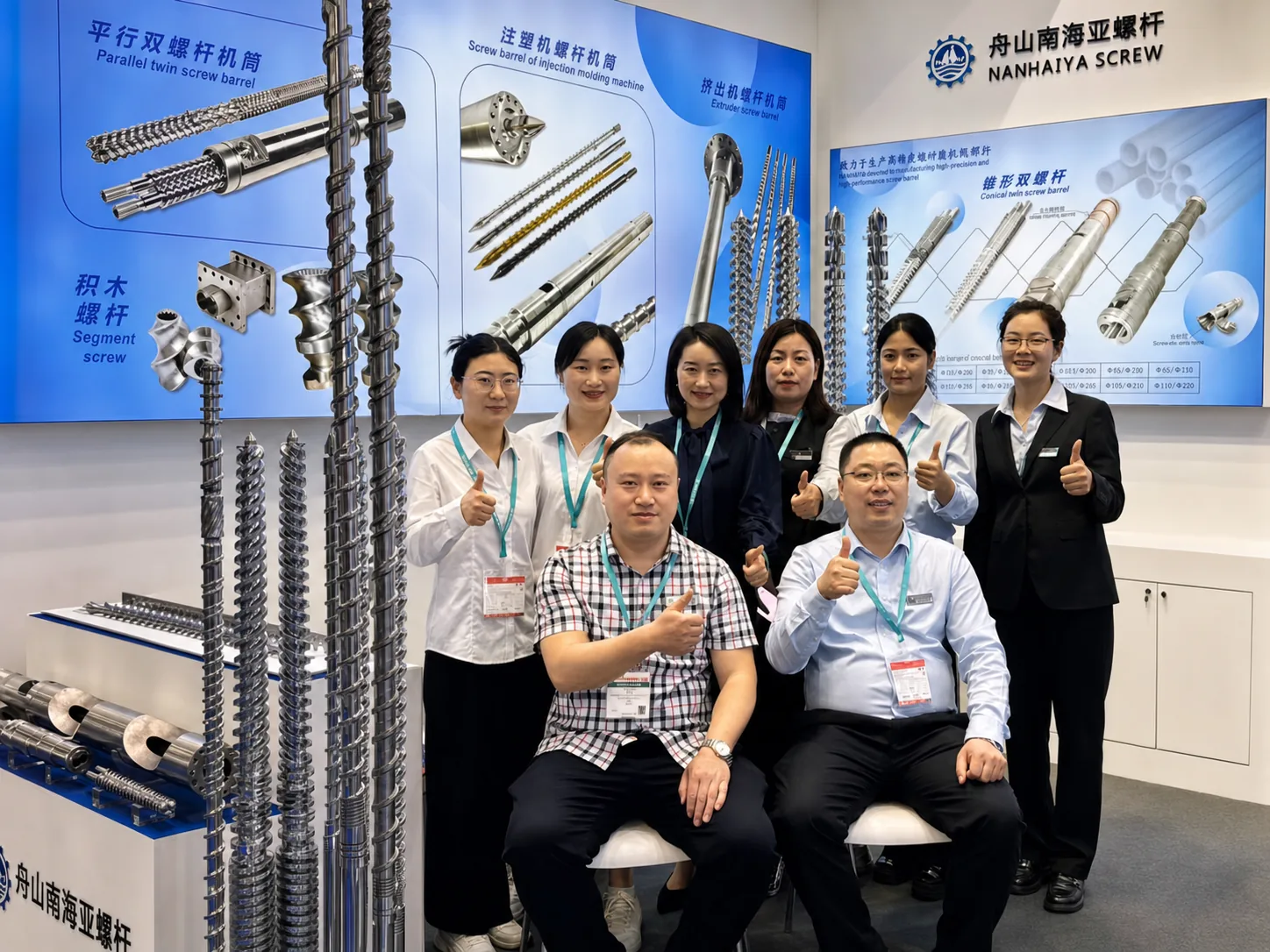
Related Articles
More insights on screw barrel technology and plastics processing.
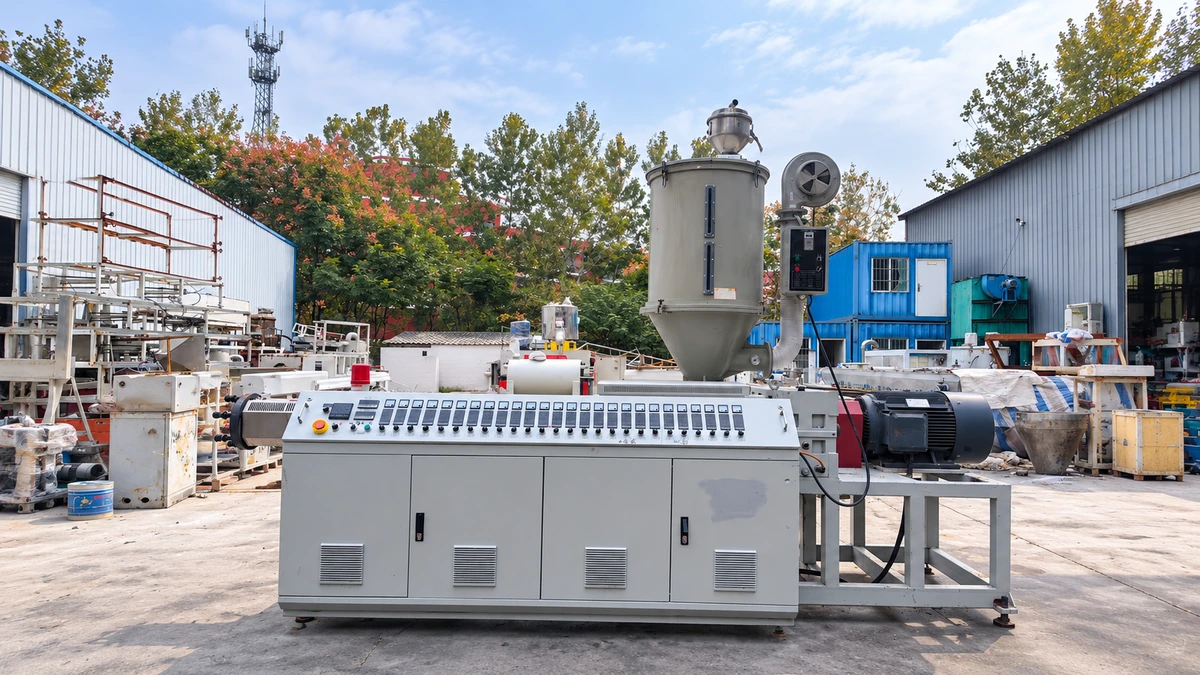
Single Screw Extruder Supplier Red Flags You Can't Afford To Miss
Oct 22, 2026
Learn how to evaluate a single screw extruder supplier with this buyer's guide covering pricing, screw and barrel tech, new vs used trade-offs, and red flags.
Read Article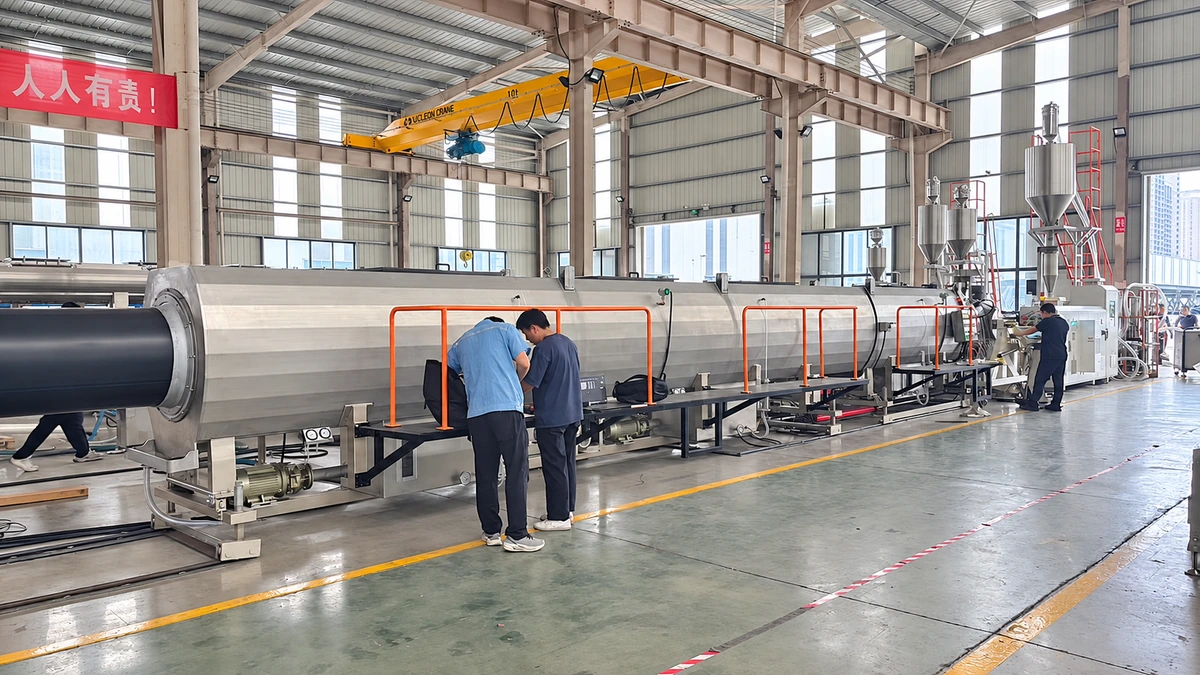
HDPE Pipe Making Machine Decoded: From Specs to Smart Purchase
Oct 15, 2026
Learn how HDPE pipe making machines work, from extruder specs and extrusion process steps to automation levels, maintenance costs, and smart buying tips.
Read Article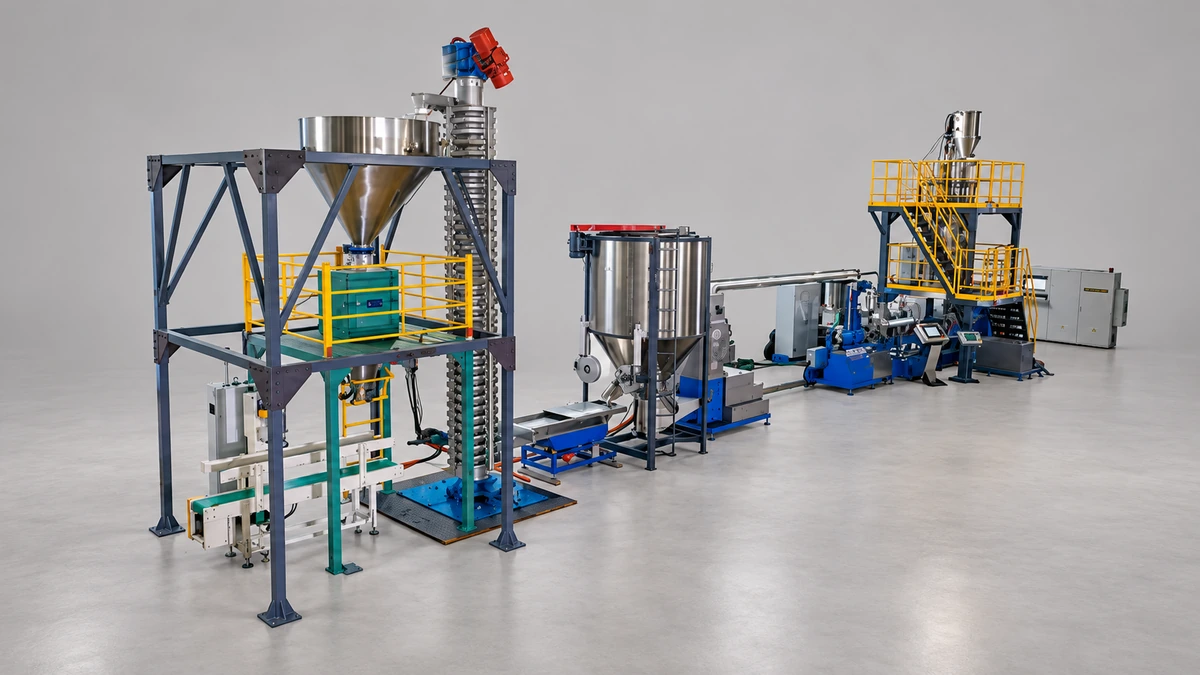
Pick the Wrong Plastic Pelletizing Line and You Pay Twice
Oct 14, 2026
Learn how to spec the right plastic pelletizing line for your resin, throughput, and budget. Covers strand, underwater, and air-cooled systems plus ROI planning.
Read ArticleLooking for something else?
Search by material, symptom or product and jump straight to the relevant page.
These are navigation suggestions based on keyword matching — not a quotation, not a delivery commitment, and not a substitute for engineering review. Final specification is confirmed by our engineers against your drawings and processed material.
Need help with screw barrel selection?
Share your machine model, processed material and application. Our team can help with pricing and technical support.