

塑料挤出机螺杆供应商真正能提供什么
订购塑料挤出机螺杆时,您并非在购买现成的现货。您是在与供应商建立合作关系,其制造精度、冶金知识和质量控制体系将直接影响您的设备正常运行时间、零件质量和长期加工成本。这种区别的重要性远超大多数买家的想象。
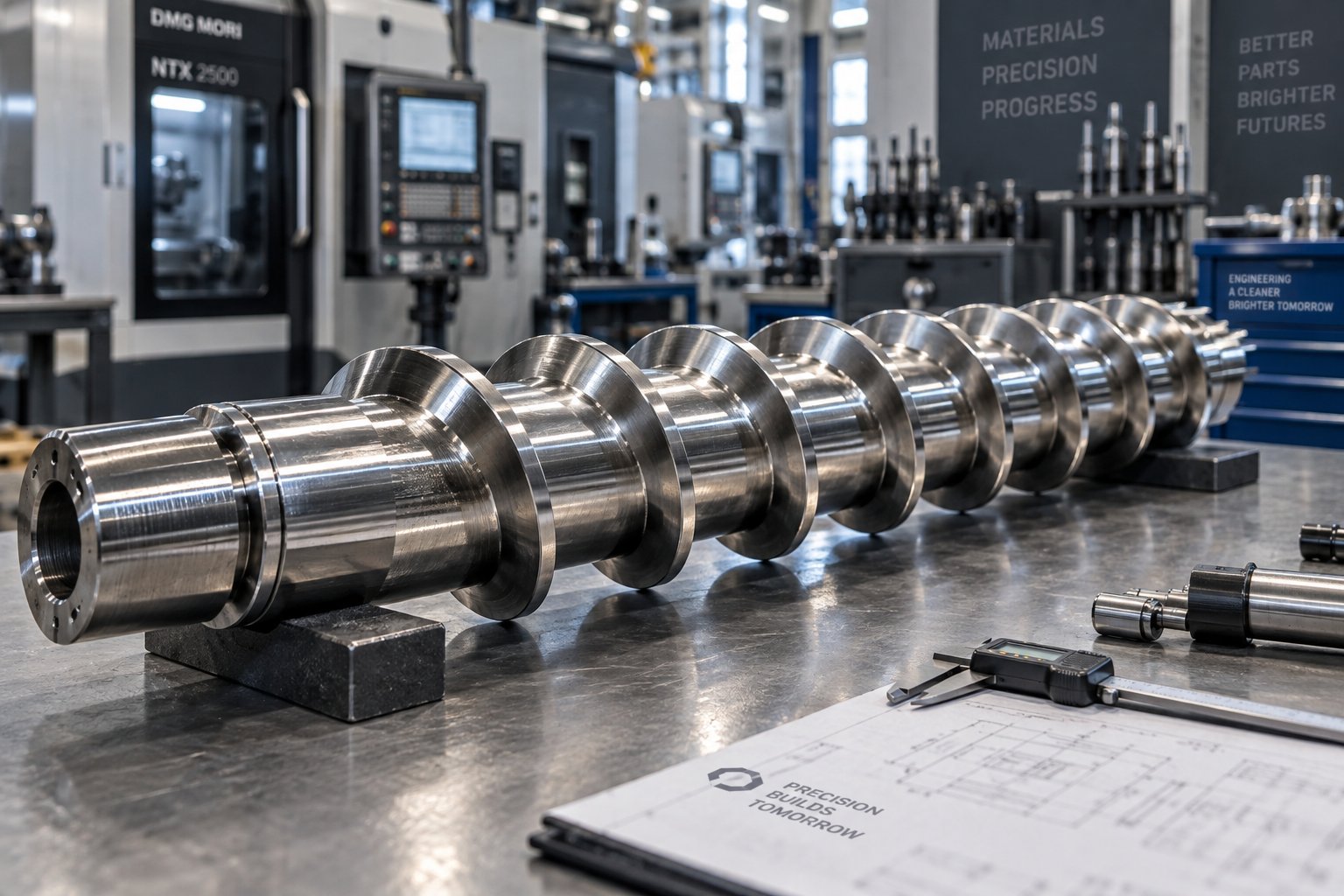
挤出机螺杆和料筒是精密设计的易损件。诸如螺旋间隙、表面硬度和尺寸公差等参数必须严格控制——通常精确到千分之一英寸以内。从合金钢到双金属衬里等各种材料都必须根据每种应用的具体树脂、填料含量和工作温度进行选择。挤出机系统所依赖的螺杆远不止是一个带螺纹的金属圆筒——它是一种精密工具,即使制造公差出现轻微偏差,其性能也会显著下降。
正因如此,供应商的选择比产品的选择更为重要。
为什么供应商选择比产品选择更重要
想象一下两个几何形状完全相同的螺杆——长径比、压缩比和螺纹深度都相同。其中一个由一家拥有内部数控加工、硬度测试和金相认证的供应商制造;另一个则来自一家将生产外包给最低报价供应商的经销商。从纸面上看,它们似乎完全一样。但在你的挤出机中,它们的性能却截然不同。区别在于制造商、验证方式以及出现问题时他们是否负责。
大多数加工商只关注螺杆几何形状,而忽略了供应商确保几何形状得到一致和精确制造的能力。
螺杆料筒供应商的四大类
并非所有供应商的运作方式都相同,了解你所处的品类可以避免代价高昂的错配:
- OEM制造商——生产专为自家设备设计的原装挤出机螺杆的机械制造商。价格通常较高,交货周期也可能较长。
- 售后市场专家——独立制造商,他们进行逆向工程并生产替换螺丝,通常以具有竞争力的价格达到或超过 OEM 规格。
- 商品转售商——这些经纪人从第三方工厂采购螺丝,对生产质量的把关有限。他们主要依靠价格竞争。
- 全方位工程合作伙伴——将定制设计咨询、内部制造、冶金测试和持续技术支持整合到单一合作关系中的供应商。
每种类型的供应商都有其用途,但风险和收益却截然不同。从商品经销商处购买产品或许能帮你省下前期成本,但却可能因过早磨损、计划外停机和重复订购而付出更高的代价。而提供全方位服务的合作伙伴报价可能更高,但能显著延长螺丝的使用寿命并提高加工稳定性。
本指南涵盖的内容
本文并非产品目录,而是一个实用的决策框架,旨在帮助您自信地评估任何塑料挤出机螺杆供应商——从理解您需要沟通的技术规格,到识别表明供应商不可靠的危险信号,再到计算除初始购买价格之外的真实拥有成本。每个章节都围绕一个共同的目标展开:帮助您做出能够保障生产线未来数年而非仅仅维持一个季度的采购决策。
这段旅程始于你需要流利使用的专业知识——核心螺丝设计参数,它将一位精明的买家与一位仅仅提供零件编号然后听天由命的买家区分开来。
每位买家必须指定的关键螺钉设计参数
你不需要拥有聚合物工程学位才能明智地选购挤出机螺杆。但你确实需要对一些设计参数有足够的了解,以便清楚地表达你的需求,并判断供应商是否真的了解他们的产品。不妨这样想:一个合格的供应商会在报价前详细询问你的工艺流程。而一个不可靠的供应商只会简单地索要零件编号和收货地址。了解这些参数能让你立即分辨出其中的区别。
长径比及其对加工性能的影响
长径比(L/D,即长度除以直径)是任何严肃的挤出螺杆讨论中首先要考虑的参数之一。它决定了树脂在进料区、压缩区和计量区内的流动距离。较高的长径比能使聚合物在料筒内停留更长时间,这通常能提高熔融效率、混合均匀性和产量稳定性。单螺杆挤出机的常用长径比范围为20:1至36:1,较高的长径比通常适用于需要更缓慢熔融或更充分混合的树脂。
为什么这对采购至关重要?因为如果供应商在报价时没有确认长径比(L/D),则其挤出螺杆的各区域比例可能与您的机器不匹配,从而导致熔体质量差、压力不稳定或产量降低。忽略这个问题的供应商在生产开始前就已经在偷工减料了。
压缩比和树脂相容性
Compression ratio is the relationship between the feed channel depth and the metering channel depth. In simple terms, it controls how aggressively the screw compacts and melts the polymer as it moves forward. Research conducted on a 2.5-inch diameter extruder processing LLDPE demonstrated that screws with a compression ratio near 2.8 delivered optimal performance for pellet feedstocks, while ratios above 2.8 caused elevated flight wear at the transition section and higher discharge temperatures — sometimes 5 to 10 degrees Celsius hotter at high screw speeds. Ratios below 2.4, on the other hand, failed to maintain adequate channel pressure, leading to reduced specific rates and inconsistent output.
The critical takeaway here is that compression ratio must match your resin type and feedstock form. A screw extruder designed for HDPE pellets demands a different ratio than one processing recycled film flake with lower bulk density. When you engage a supplier, they should ask what resins you're running and whether your feedstock includes regrind or recycle — because these factors directly change the compression ratio needed.
Flight Geometry Specifications Buyers Should Prepare
Beyond the big-picture ratios, the finer details of flight geometry — pitch, flight depth, channel width, and flight thickness — play a significant role in how material moves through the barrel. NC State Extension research on screw profile design highlights that increasing the pitch increases shear input, while decreasing channel depth or width also raises shear levels. For shear-sensitive materials, getting these dimensions wrong can degrade the polymer before it ever reaches the die.
Pitch determines the distance between subsequent flights and influences conveying speed. Channel depth decreases progressively from the feed zone through compression to metering, governing how pressure builds along the screw. Flight thickness affects structural strength and the clearance between flight tip and barrel wall — a critical wear indicator. You'll notice that knowledgeable suppliers will reference these parameters when recommending materials and coatings, because wear patterns differ depending on where the highest pressures and shear forces concentrate along the screw.
Before you ever pick up the phone or submit a quote request, prepare these five specifications as your minimum starting point:
- Machine make and model — This tells the supplier the barrel bore, drive configuration, and mounting interface they need to match.
- Screw diameter — The foundational dimension that determines all downstream geometry calculations.
- L/D ratio — Confirms the overall screw length and zone proportioning your machine requires.
- Target resin(s) — Drives compression ratio, flight geometry, and material or coating recommendations.
- Current processing issues — Unmelted particles, surging, excessive melt temperature, or premature wear patterns all signal what the new screw design must correct.
Having these details ready accomplishes two things. First, it accelerates the quoting process dramatically. Second — and more importantly — it reveals supplier competence. A vendor who receives this information and responds with targeted technical questions about your throughput targets, barrel condition, and downstream equipment is operating as an engineering partner. One who ignores it and simply returns a price is treating your precision wear component like a commodity. That distinction, more than any catalog specification, tells you what kind of supplier relationship you're entering.
Of course, speaking the right technical language only gets you partway there. The real complexity emerges when you match these parameters to specific screw types and applications — because a single-screw design for sheet extrusion, a twin screw barrel for compounding, and an injection molding screw each demand fundamentally different engineering priorities from the supplier building them.
Extruder Screw and Barrel Types by Application
Here's a reality that catches many buyers off guard: a supplier who builds excellent general-purpose extrusion screws may have zero expertise in compounding or injection molding components. Extruder screws and barrels are not interchangeable commodities — they're application-specific tools, and the engineering priorities behind each category differ in ways that directly affect who you should be buying from. Understanding these categories helps you match your application to the right supplier tier, rather than assuming any vendor with a CNC lathe can deliver what you need.
Single-Screw Configurations for Profile and Sheet Extrusion
Single-screw extruders remain the workhorse of general-purpose plastic processing. If you're producing pipe, profiles, sheet, or film, chances are you're running a single-screw system — and the screw design inside that barrel determines everything from melt uniformity to surface finish quality.
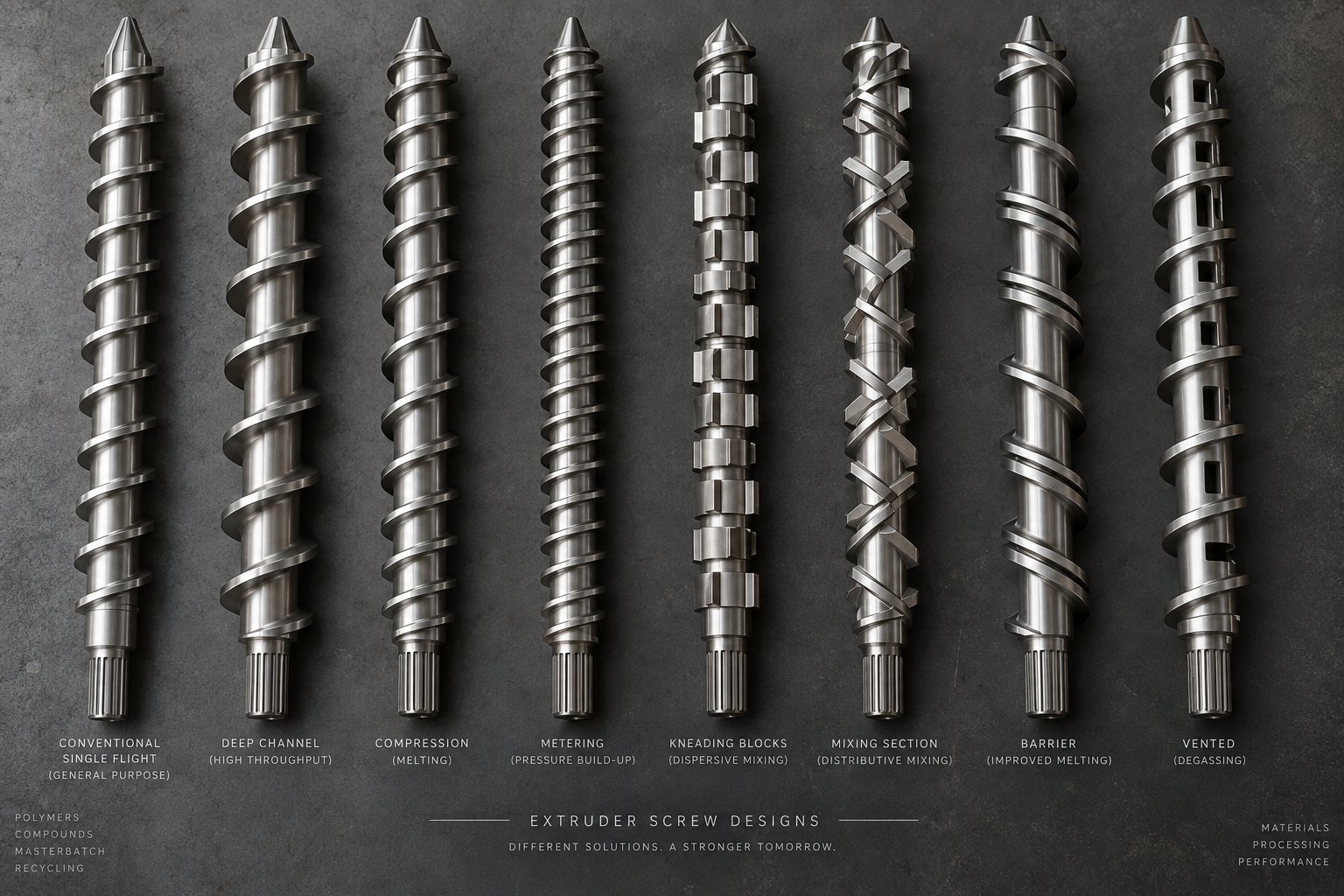
The most basic version is the single-flighted (standard) screw, which uses one continuous helical flight to convey, compress, and meter material through three progressive zones. It's economical, predictable, and relatively easy to maintain or refurbish. For many PE, PP, and PVC pipe or profile applications, this straightforward design delivers exactly the output consistency you need.
But "standard" doesn't always mean "sufficient." When you're running semi-crystalline polymers or pushing for higher throughput, a barrier screw often becomes the better choice. This design introduces a secondary flight that splits the main channel into two parallel paths — one shallow channel for molten polymer and one deeper channel for unmelted solids. The result is more efficient melting, reduced unmelted particles reaching the die, and improved temperature stability across the melt stream. For sheet extrusion where surface defects from unmelted gels are unacceptable, barrier screws can make the difference between sellable product and scrap.
Then there are mixing screws, which integrate specialized elements — Maddock sections, pin mixers, or dispersive mixing heads — into the screw profile. These sections introduce controlled shear to homogenize colorants, additives, or fillers within the melt. Imagine you're running a pigmented HDPE profile and noticing color streaks in the final product. That's a mixing deficiency the screw geometry must solve, and a supplier who understands distributive versus dispersive mixing will recommend the right element configuration for your specific additive package.
The key supplier consideration here? Single-screw components for pipe, profile, and sheet extrusion are the most commonly manufactured category. Most suppliers can handle these designs. However, the gap between a competent supplier and an excellent one shows up in tighter tolerances, better metallurgical choices for the specific resin family, and willingness to consult on screw geometry optimization — not just replicate a worn part.
Twin Screw Barrel Systems for Compounding
Step into the compounding world and the engineering demands escalate sharply. Twin screw barrel systems — particularly co-rotating intermeshing designs — are the standard for blending, reactive extrusion, devolatilization, and high-filler-content masterbatch production. These systems process everything from glass-fiber-reinforced engineering plastics to calcium carbonate-loaded filler masterbatches at concentrations as high as 75%.
What makes twin-screw systems fundamentally different from single-screw designs? The modular, segmented screw architecture. Rather than one continuous screw, a twin-screw system uses interchangeable elements — conveying elements, kneading blocks, mixing discs, and reverse-flight elements — assembled on a common shaft to create a customized screw profile for each application. This modularity means the supplier must understand not just individual element geometry, but how the entire screw configuration interacts with barrel zone temperatures, feed rates, and downstream equipment.
Counter-rotating twin screws serve a different niche. They excel in PVC pipe and profile extrusion, where the gentle, calendering-like action between intermeshing flights prevents thermal degradation of this heat-sensitive polymer. A supplier specializing in co-rotating compounding elements may lack the specific expertise needed for counter-rotating PVC processing screws — and vice versa.
The metallurgical demands in compounding are also significantly higher. Glass fibers, mineral fillers, and flame-retardant additives are abrasive. Screw elements and barrel liners need wear-resistant materials — powder metallurgy tool steels, tungsten carbide coatings, or bimetallic barrel liners — to withstand the accelerated erosion these materials cause. A supplier strong in general-purpose extrusion barrel components may simply not have the metallurgical expertise for these demanding compounding applications. When you're sourcing twin screw barrel components, asking about material options and wear-life data for abrasive formulations is one of the fastest ways to gauge whether the supplier truly operates in this space.
Injection Molding Screws and Barrels — Different Demands
Injection molding screws and barrels operate under a completely different set of mechanical and process demands compared to their extrusion counterparts. While an extrusion screw runs continuously — maintaining a steady flow of melt toward the die — injection molding screws must handle a cyclical process: plasticating the resin, building a shot in front of the screw, and then acting as a hydraulic ram to inject that shot into the mold at high speed and pressure.
This dual role imposes unique requirements. Injection molding screws need to provide rapid and precise control over melt homogenization, injection speed, and packing pressure. The screw must recover quickly between shots to maintain cycle time, yet deliver a melt free of temperature gradients and unmixed regions that would cause defects in molded parts. Flight geometries, check ring designs, and tip assemblies all differ substantially from extrusion screws.
The wear profile differs too. Injection molding screws experience high axial loads during injection that extrusion screws never see. The check valve or non-return valve at the screw tip is a critical wear component unique to injection molding — and a supplier who doesn't stock or manufacture these to precise tolerances is immediately signaling a gap in their injection molding capability.
For buyers running injection molding operations, this distinction matters enormously when evaluating suppliers. A vendor with deep extrusion expertise may produce dimensionally accurate injection molding screws but miss the nuances of check ring clearance, shot-to-shot consistency, and the metallurgical demands of cyclic high-pressure loading. When sourcing injection molding screws and barrels, look for suppliers who can discuss recovery time optimization, non-return valve options, and screw tip geometry — not just diameter and length.
The table below maps these screw types to their applications, key design features, and the level of supplier specialization each one demands:
| Screw Type | Typical Application | Key Design Feature | Supplier Specialization Required |
|---|---|---|---|
| Single-Flighted (Standard) | General pipe, profile, and sheet extrusion | One continuous helical flight with progressive compression | Standard — most suppliers can manufacture competently |
| Barrier Screw | High-output sheet and film extrusion | Secondary barrier flight separating melt from solids | Moderate — requires precise flight tolerance control |
| Mixing Screw | Pigmented or additive-laden profiles and sheet | Maddock, pin, or kneading mixing sections | Moderate — demands understanding of shear and distributive mixing |
| Vented (Two-Stage) Screw | Hygroscopic resins, devolatilization applications | Low-pressure vent zone for moisture and volatile removal | High — requires barrel port alignment and precise pressure control design |
| Co-Rotating Twin Screw | Compounding, reactive extrusion, masterbatch | Modular segmented elements on intermeshing shafts | High — needs metallurgical expertise for abrasive formulations |
| Counter-Rotating Twin Screw | PVC pipe and profile extrusion | Gentle calendering action for heat-sensitive polymers | High — specialized PVC processing knowledge required |
| Injection Molding Screw | Molded parts across all resin families | Reciprocating design with check ring and high axial load capacity | High — requires injection-specific design and non-return valve expertise |
One more screw type deserves mention: the vented or two-stage screw. These designs feature a pressure-controlled melting stage followed by a low-pressure zone — typically connected to a vacuum port — that removes moisture, trapped gases, and volatiles before the melt reaches the die. They're essential for processing hygroscopic polymers like nylon or PET without a separate pre-drying step, and for solvent-bearing blends where trapped volatiles would cause bubbles, porosity, or poor surface finish. Proper vacuum port placement and downstream pumping are critical design details, and suppliers who build vented screws must coordinate closely with barrel specifications to ensure alignment.
The pattern across all these categories is consistent: the more specialized your application, the more carefully you need to vet whether a supplier has genuine depth in that specific area. A vendor listing every screw type on their website isn't necessarily competent in all of them. Asking for reference customers running your specific application — and following up on those references — is the most reliable way to verify real capability behind a broad product catalog.
That verification process leads directly into another critical decision most buyers face: whether to source OEM replacement parts or work with an aftermarket supplier — and how to evaluate equivalence when the stakes are your production line's performance.
OEM Replacement vs Aftermarket Screw Suppliers
Every processor eventually faces this crossroads: your screw is worn, output is dropping, and you need a replacement. Do you go back to the original equipment manufacturer, or do you source from an aftermarket supplier? The answer isn't as simple as "OEM equals quality" or "aftermarket equals cheap." Both paths can deliver excellent results — and both can burn you — depending on the supplier's engineering rigor and verification processes.
OEM Replacement Screws and Their Premium Pricing
OEM manufacturers like Davis-Standard design screws specifically for their own extruder platforms. These proprietary designs are optimized for the drive torque, barrel bore, and thermal profile of each machine model. When you order a replacement screw through the OEM channel, you're getting a component built from the original engineering data — matched tolerances, specified metallurgy, and guaranteed fitment.
The trade-off? Premium pricing and often longer lead times. OEM parts carry the cost of the brand's engineering infrastructure, support network, and warranty obligations. For processors running a Davis-Standard extruder or similar branded equipment, OEM replacement can feel like the safest choice. But "safest" and "only viable option" are not the same thing. Many qualified aftermarket manufacturers produce replacement screws that meet — and in some cases exceed — OEM specifications at significantly lower cost and shorter delivery windows.
How Aftermarket Suppliers Reverse Engineer OEM Components
Reverse engineering sounds vague until you understand what a competent aftermarket supplier actually does. It's not guesswork. It's a structured, measurement-driven process designed to reconstruct the original screw geometry without access to proprietary CAD drawings.
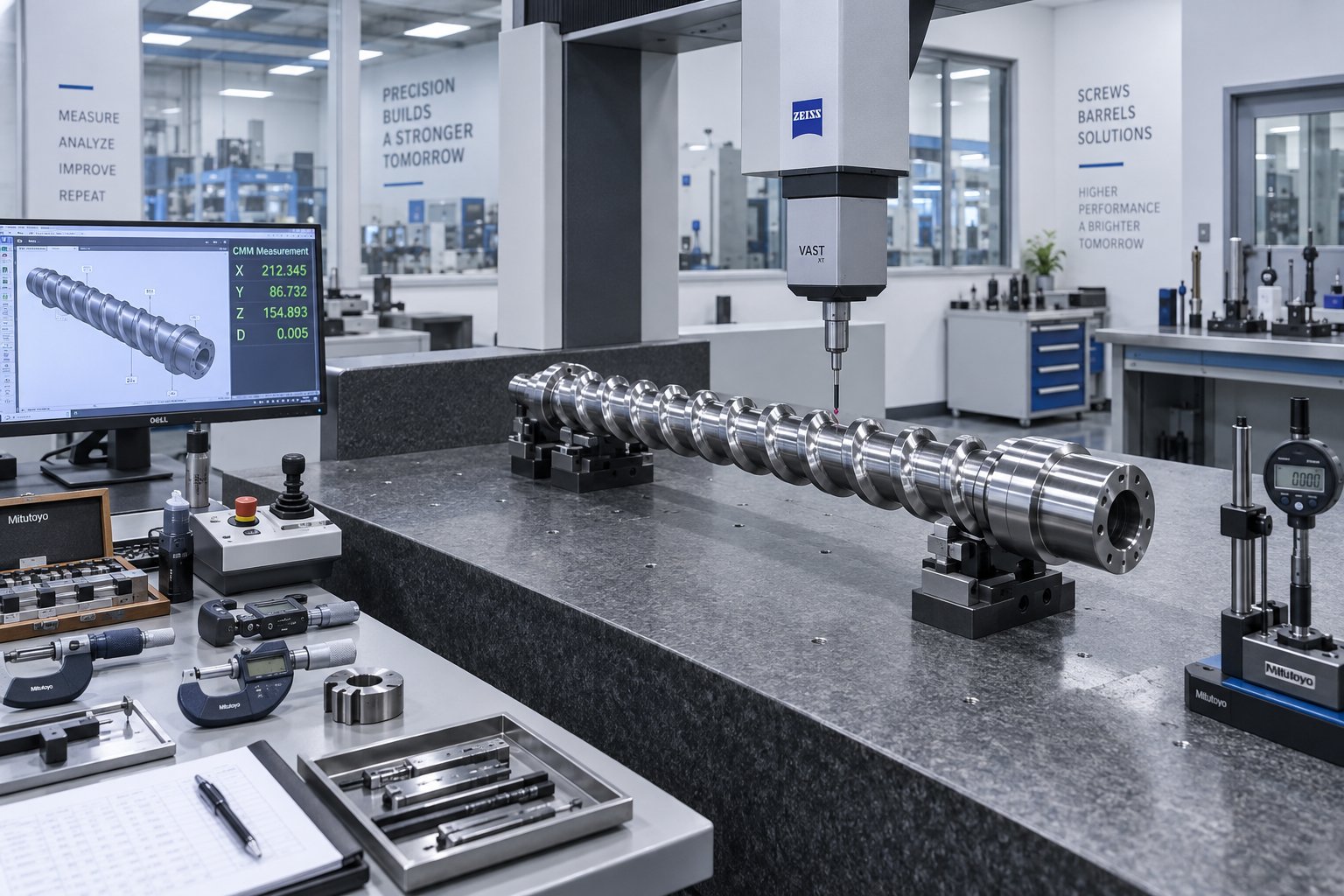
A documented OEM replacement case study illustrates the typical workflow: engineers begin by performing a complete physical inspection of the worn component, documenting external geometry, bore dimensions, mounting interfaces, and surface conditions. Critical measurements are taken using a Coordinate Measuring Machine (CMM) to capture bore concentricity, center distances, and interface tolerances with high accuracy.
Here's where the real engineering discipline shows up. Worn screws cannot simply be copied dimension-for-dimension — because the dimensions you measure on a used screw reflect years of wear, not the original design intent. Reputable aftermarket suppliers identify stable, unworn reference surfaces and use engineering analysis to reconstruct what the original geometry must have been. They then build a complete 3D CAD model, validate it against assembly interfaces and adjacent components, and only release manufacturing drawings after engineering review confirms full compatibility.
The Davis-Standard maintenance guidelines reinforce why this distinction matters: screw flight diameters decrease with wear while barrel bores increase, and monitoring the clearance between them is critical. A supplier who simply measures a worn screw and reproduces those dimensions is handing you a part that's already out of spec on day one. The reverse engineering must account for wear patterns, not replicate them.
Ensuring Equivalence Without Sacrificing Quality
So how do you verify that an aftermarket replacement actually matches OEM performance? You ask for proof — and you pay attention to whether the supplier resists or welcomes the request. Legitimate aftermarket suppliers build trust through transparency, not marketing claims.
Before committing to any aftermarket supplier claiming OEM equivalence, request the following documentation:
- Dimensional inspection reports — CMM data showing that critical dimensions (bore diameter, flight OD, concentricity, mounting interfaces) fall within specified tolerances
- Metallurgical certifications — Material test reports confirming the steel grade, alloy composition, and heat treatment process used in production
- Hardness testing data — Rockwell or Vickers hardness values at multiple points along the screw, verifying that surface treatments like nitriding or bimetallic coatings meet specification
- Reference customers running the same machine platform — Verifiable contacts who have installed that supplier's replacement screws in the same Davis-Standard extruder model (or whatever OEM platform you operate) and can speak to fitment, wear life, and processing performance
If a supplier can't — or won't — provide this documentation, that silence tells you more than any sales pitch. It doesn't necessarily mean the parts are bad, but it means you have no way to verify they're good. And when the component in question determines your extruder's output quality, melt consistency, and wear cycle, "trust me" isn't an acceptable quality assurance program.
Choosing aftermarket does not mean choosing inferior. It means choosing a supplier whose engineering verification process is transparent enough that you can independently confirm equivalence. A Davis-Standard extruder for sale on the secondary market, for example, may come without spare screw documentation — making a qualified aftermarket partner essential for keeping that equipment productive over its full service life.
Whether you source OEM or aftermarket, the underlying question is the same: can this supplier prove that what they deliver matches what they promise? That question leads naturally into a broader evaluation framework — a structured way to score and compare any potential vendor across the capabilities that actually determine long-term reliability.
How to Evaluate and Score Potential Screw Barrel Suppliers
You've confirmed your screw design parameters. You understand the application categories. You know whether OEM or aftermarket sourcing fits your operation. The next challenge is deceptively simple: how do you actually compare one extruder screw barrel supplier against another when every vendor claims quality, precision, and reliability?
Without a structured evaluation method, most procurement teams default to comparing quotes on price alone — or worse, choosing based on who responds fastest. Neither approach tells you anything meaningful about whether that supplier can consistently manufacture a screw barrel to the metallurgical and dimensional tolerances your extruder demands. What you need is a capability scorecard — a repeatable framework that separates genuine manufacturing expertise from polished sales presentations.
Certifications That Matter and Why They Are Not Enough
Let's start with the question buyers ask most often: "Are they ISO certified?" It's the right instinct, but it's only the beginning of the conversation.
ISO 9001:2015 is the baseline quality management certification. It confirms that a supplier has documented processes for production, inspection, and corrective action — essentially, that they have a quality system in place and follow it. For any serious extruder barrel or screw manufacturer, this should be non-negotiable. If a supplier can't show ISO 9001, you're dealing with either a very small shop or a reseller who doesn't control their own production.
ISO 14001 addresses environmental management — relevant if your company has sustainability requirements in its vendor qualification program, but it tells you nothing about manufacturing precision or metallurgical competence.
IATF 16949 is the automotive-specific quality standard built on top of ISO 9001. Suppliers serving automotive molding or compounding operations should hold this certification, as it requires more rigorous process control documentation, measurement system analysis, and failure mode prevention than standard ISO 9001.
Here's the critical nuance most buyers miss: certifications verify that a management system exists. They do not verify that the system produces metallurgically sound extruder barrels or dimensionally precise screws for your specific application. A supplier may hold ISO 9001 and still lack the in-house capability to perform gas nitriding, centrifugal bimetallic casting, or hardness testing on the components they sell you. The certificate hangs on the wall; the capability lives on the shop floor. You have to verify both.
An ISO certificate confirms a supplier has a quality system — it does not confirm they have the metallurgical expertise your extruder barrel actually requires.
Manufacturing Capability Indicators to Verify
Beyond certifications, the real differentiators between suppliers show up in measurable manufacturing capabilities. When you're evaluating a potential vendor for screw barrel components, these are the indicators that predict whether the parts you receive will perform consistently over thousands of operating hours.
In-House CNC Machining Precision. Extruder screws require multi-axis CNC turning and grinding to achieve the flight tolerances, concentricity, and surface finish that determine processing performance. A supplier using advanced multi-axis CNC machining centers — such as the DMG MORI 5-axis machines referenced by Tan Star Industries — can complete precision processing in a single clamping operation, minimizing cumulative setup errors. Ask whether final grinding is done in-house or outsourced. Outsourced grinding introduces a process control gap that often shows up as inconsistent flight-to-barrel clearance.
Metallurgical Testing and Material Traceability. Can the supplier test hardness at multiple points along the screw and barrel? Do they perform metallographic cross-section analysis on bimetallic and hardfaced components? A supplier with an on-site metallurgical lab can verify overlay thickness, bond quality, carbide distribution, and the absence of porosity — all before the part ships. A supplier without this capability is relying on their raw material supplier's claims without independent verification. Industry best practice calls for EN 10204 3.1 material certificates for every alloy used in the assembly, including base material, hardfacing powder, and bimetallic liner casting.
Heat Treatment Control. Heat treatment determines the final hardness, microstructure, and dimensional stability of every screw barrel assembly. Suppliers who operate their own furnaces control atmosphere, temperature ramp, hold time, quench rate, and tempering cycles for each alloy specification. Those who outsource heat treatment to shared commercial furnaces accept whatever standard cycle the contractor runs — adequate for commodity work, insufficient for premium tool steels and bimetallic constructions where precise thermal profiles prevent residual stress and distortion.
Surface Treatment and Coating Capability. Does the supplier perform nitriding, PTA hardfacing, HVOF thermal spray, or centrifugal bimetallic casting in-house? Each of these processes requires specialized equipment and operator expertise. A supplier who performs centrifugal casting internally — controlling alloy chemistry, pour temperature, mold preheat, and post-cast heat treatment as one continuous process — delivers far more consistent barrel liners than one who purchases pre-cast barrels and only machines them to final dimensions.
Quality Control Documentation. Every finished screw barrel should ship with a documentation package that includes dimensional inspection records (ideally CMM data), hardness maps at multiple measurement points, material certifications, and — for hardfaced or bimetallic components — metallographic cross-section verification. If a supplier can't describe exactly what documentation accompanies each shipment, that's a gap you'll feel the first time a part arrives out of spec.
Building a Supplier Capability Scorecard
Pulling these indicators together into a practical scoring tool gives your procurement team a consistent, objective way to rank potential vendors. Rather than evaluating suppliers on a vague sense of "they seem professional," you're comparing them against specific, verifiable capabilities that directly correlate with part quality and service reliability.
The Supplier Capability Matrix below organizes vendors into three tiers based on their actual manufacturing and engineering depth. Use it as a starting template — adjust the weightings based on your application severity and quality requirements.
| Capability | Tier 1 — Commodity Reseller | Tier 2 — Standard Manufacturer | Tier 3 — Engineering Partner |
|---|---|---|---|
| In-House Manufacturing | None — sources from third-party factories | In-house CNC machining and basic finishing | Full vertical integration: casting, machining, heat treatment, hardfacing, final grinding |
| Metallurgical Testing | Relies on supplier-provided certificates only | Basic hardness testing (Rockwell/Vickers) | On-site metallurgical lab with hardness mapping, metallographic cross-sections, and alloy verification |
| Quality Certifications | May claim ISO but cannot provide audit evidence | ISO 9001 certified with documented QC procedures | ISO 9001 minimum; IATF 16949 for automotive; documented process control at every production stage |
| Material Traceability | Limited — part numbers only, no mill certs | EN 10204 3.1 certificates for base material | Full EN 10204 3.1 traceability for all alloys including hardfacing powders and liner castings |
| Engineering Support | None — takes orders, no design consultation | Can modify existing designs per buyer specifications | Dedicated engineering team for custom design, wear analysis, alloy selection, and process optimization |
| Surface Treatment Capability | None in-house; purchases pre-treated components | Outsources nitriding or coating; basic in-house finishing | In-house nitriding, PTA hardfacing, HVOF spray, and/or centrifugal bimetallic casting |
| Shipping Documentation | Invoice and packing list only | Dimensional report and material certificate | Complete package: CMM inspection, hardness maps, metallography, material certs, and wear-test references |
| Post-Sale Technical Support | Minimal — warranty claims only | Basic troubleshooting guidance | Ongoing wear monitoring consultation, screw design iteration, and process optimization support |
How do you use this matrix in practice? Score each potential supplier against every row. A vendor doesn't need to be Tier 3 across the board to earn your business — but you should understand exactly where they fall short and what risk that creates for your specific application. A processor running unfilled polyethylene on a standard single-screw line may operate perfectly well with a Tier 2 manufacturer. A compounder processing 40% glass-filled nylon through a twin-screw system needs Tier 3 metallurgical and engineering depth, because the abrasive wear environment will expose every shortcut in material selection and process control.
There's one more layer to consider: ask which production steps are performed in-house versus outsourced. A supplier who controls casting, heat treatment, hardfacing, and final machining under one roof delivers what industry sources describe as single-source accountability — meaning the metallurgy that determines your screw's field life isn't fragmented across multiple subcontractors with varying process controls. Each outsourced step is a potential quality gap that you, the buyer, ultimately absorb as inconsistent wear life or unexpected failures.
Equipped with this scorecard, you're positioned to compare vendors objectively. But the evaluation doesn't end at manufacturing capability — it extends into a question that shapes both pricing and risk in equally significant ways: whether to source domestically or internationally, and how to mitigate the distinct challenges each path presents.
Domestic vs International Screw Supplier Sourcing
Your capability scorecard tells you what a supplier can do. Geography tells you how fast, how affordably, and under what risk conditions they can do it. Choosing between a domestic and an international plastic extruder screw supplier isn't simply a pricing decision — it's a supply chain architecture decision that affects lead time predictability, communication quality, intellectual property exposure, and total landed cost. Both paths offer genuine advantages, and both carry risks that uninformed buyers routinely underestimate.
Let's break down both sides honestly, then look at a sourcing model that attempts to capture the best of each.
Domestic Supplier Advantages and Limitations
If you operate US extruders and need a replacement screw fast, domestic sourcing is hard to beat on responsiveness. A qualified domestic manufacturer with stock blanks or semi-finished inventory can often ship standard-diameter screws within days rather than weeks. Communication happens in the same time zone, in the same language, and typically with direct access to the engineering team that built your part. When a specification question comes up mid-production, a quick phone call resolves it before it becomes a dimensional error.
There are additional structural advantages. Domestic suppliers operate under familiar legal frameworks for contract enforcement, warranty claims, and intellectual property protection. If you've developed a proprietary screw geometry optimized for your specific process, sourcing domestically reduces the risk of that design circulating in markets where IP enforcement is less predictable. Shipping logistics are straightforward — no ocean freight, no customs brokerage fees, no fumigation certificates, and no container booking delays.
The limitation? Cost and capacity. Domestic manufacturers typically carry higher overhead — labor costs, facility expenses, regulatory compliance — all of which flow through to your quote. For standard extrusion barrels and general-purpose single screws, domestic pricing can run 30-50% higher than equivalent parts from qualified international manufacturers. Some domestic shops also have limited capacity for high-volume or specialty orders, particularly bimetallic barrel extruder components that require centrifugal casting equipment not every US facility operates.
International Sourcing Risks and Mitigation Strategies
China's screw and barrel manufacturing sector has matured significantly. Major production clusters — particularly in Zhoushan, Zhangjiagang, and the broader Yangtze River Delta region — house hundreds of manufacturers producing components that serve global extrusion and injection molding markets. Industry data suggests that sourcing from qualified Chinese manufacturers can reduce component costs by 30-50% compared to premium European or North American brands, without sacrificing compliance with ISO 9001 and CE standards.
Those savings are real — but so are the risks that come with cross-border procurement. Here's what to watch for:
Lead time variability. Standard parts for common 45-200mm extruder models average 7-10 working days production time from specialized Chinese manufacturers, while fully custom assemblies take 15-20 working days. Add ocean freight — typically 3-5 weeks depending on port and routing — and your total lead time stretches to 6-8 weeks for custom orders. Air freight can compress shipping to days, but at a cost that erodes much of the pricing advantage. Planning procurement cycles around scheduled maintenance windows, rather than emergency breakdowns, is the single most effective mitigation strategy.
Communication gaps. Time zone differences of 12-13 hours between the US and China mean real-time conversations require early morning or late evening scheduling. Language barriers can introduce specification misunderstandings — particularly around metallurgical terminology, tolerance conventions, and surface finish callouts. The fix is straightforward but non-negotiable: submit complete extruder model numbers and original part drawings upfront, confirm all specifications in writing, and insist on dimensional inspection reports before shipment.
Quality verification. Research from the Global Manufacturing Institute found that 60% of companies reported quality issues when sourcing overseas — but the root cause was typically inadequate supplier vetting, not inherent manufacturing deficiency. The mitigation is systematic: request scanned copies of ISO 9001 and CE documentation that specifically covers screw and barrel products, ask for 2-3 reference customers operating the same extruder model you run, and confirm written warranty coverage of at least 12 months for all orders. Third-party inspection services can add a verification layer before shipment leaves the factory.
IP protection. If your screw design incorporates proprietary geometry developed through years of process optimization, sharing those drawings internationally introduces exposure. Non-disclosure agreements provide a legal framework, but enforcement across jurisdictions is complex. For standard replacement parts and common screw profiles, this risk is minimal. For genuinely proprietary designs, weigh the cost savings against the IP exposure carefully — and consider working only with suppliers who have verifiable long-term relationships with major OEM customers, as these suppliers have the most to lose from IP mishandling.
Tariffs and duties. Import duties on Chinese-manufactured steel components can add 5-25% to the landed cost depending on the specific tariff classification and any active trade remedy orders. Factor these into every cost comparison, and confirm the correct HTS code with your customs broker before assuming the quoted price represents your total cost.
The table below provides a side-by-side comparison across the factors that most directly impact your sourcing decision:
| Factor | Domestic Supplier | International Supplier |
|---|---|---|
| Lead Time | Days to 2-3 weeks for standard items; faster emergency response | 1-3 weeks production + 3-5 weeks ocean freight; air freight available at premium cost |
| Communication | Same time zone, same language, direct engineering access | 12-13 hour time zone gap; potential language barriers; written specification confirmation essential |
| Pricing | 30-50% higher for equivalent components; higher labor and overhead costs | 30-50% lower base pricing; add duties, freight, and inspection costs for true landed comparison |
| IP Protection | Strong domestic legal framework; easier contract enforcement | NDA-dependent; cross-border enforcement is complex; risk proportional to design uniqueness |
| Quality Verification | Factory visits practical; same regulatory environment; easier audit scheduling | Requires systematic vetting: ISO/CE documentation, reference checks, third-party inspection |
| Shipping Logistics | Ground freight; no customs clearance; predictable transit times | Ocean or air freight; customs brokerage required; container booking and port congestion variables |
How Factory-Direct Models Bridge the Gap
Here's where the sourcing landscape has shifted in ways many buyers haven't caught up with yet. The traditional trade model — buyer contacts trading company, trading company sources from anonymous factory, buyer has zero visibility into who actually made the part — is exactly what created the reliability problems international sourcing is known for. But a growing number of manufacturers now operate as factory-direct suppliers, eliminating the middleman and giving buyers direct access to the engineering and production teams responsible for their components.
A factory-direct model addresses the core objections to international sourcing point by point. Communication goes directly to the people machining your screw, not a sales office relaying messages. Quality documentation comes from the production floor, not a trader's filing cabinet. Custom engineering for extrusion and injection molding screw barrels happens with the designers who understand the metallurgy and geometry — not intermediaries parroting specifications they can't evaluate.
NANHAIYA operates exactly this way — as a factory-direct source for custom-engineered and replacement screw barrels serving plastic processors, equipment builders, and maintenance teams across both extrusion and injection molding applications. Their model provides direct communication with engineering staff, custom screw and barrel design tailored to specific machine platforms and resin requirements, and transparent quality documentation that ships with every order. For buyers who want international pricing without the opacity of the trading company model, this factory-direct structure offers a practical middle path worth evaluating.
Whether you ultimately source domestically, internationally, or through a hybrid approach, the geography question eventually folds into a bigger one: what does this part actually cost you — not just the invoice price, but the total expense across its entire service life? That calculation reveals why the lowest quote almost never delivers the lowest cost.
Total Cost of Ownership Beyond the Purchase Price
Two quotes land on your desk. One prices an extruder feed barrel and screw set at $4,800. The other quotes $7,200 for what appears to be the same thing — same diameter, same L/D ratio, same application. The temptation to choose the lower number is almost gravitational. But here's what that $4,800 quote isn't telling you: the base steel is a commodity grade with limited wear resistance, the nitriding depth is shallow, the tolerances are wider than what your barrel bore demands, and the supplier offers zero engineering support when you call three months later because output has dropped 12% and melt temperature is climbing.
Total cost of ownership is the concept that separates experienced procurement teams from ones that chase invoice prices. It accounts for everything — the purchase price, yes, but also the wear life, the downtime, the freight, the rework, and the production hours lost when a cheap part fails ahead of schedule. When you measure cost across a full service cycle rather than a single purchase order, the lowest quote almost never delivers the lowest cost.
What Drives the Purchase Price of Extruder Screws
Before you can evaluate whether a price is fair, you need to understand what's actually built into it. Four factors account for most of the variation you'll see across supplier quotes — and each one directly affects how long that screw or extrusion barrel performs before it needs replacement.
Base material selection. The steel that forms the core of your screw determines its structural strength, machinability, and response to heat treatment. Through-hardened tool steels like 4140 or 4340 offer good baseline performance for standard resins at moderate throughput. But for abrasive formulations — glass-filled nylon, mineral-loaded masterbatch, recycled streams with contaminants — through-hardened steel wears too quickly. Bimetallic construction, which bonds a wear-resistant alloy liner to the barrel bore or applies hardfacing to the screw flights, dramatically extends service life. Bimetallic barrels achieve surface hardness of 62-70 HRC compared to 55-60 HRC for standard nitrided construction — and that hardness gap translates directly into thousands of additional operating hours before replacement. The material choice alone can account for a 40-60% swing in the quoted price.
Surface treatments and coatings. Even when the base material is identical between two suppliers, the surface treatment process creates enormous performance differences. Gas nitriding — the most common treatment for standard extruder barrels — creates a hardened case layer that resists abrasive and adhesive wear. Chrome plating provides corrosion resistance for PVC and chemically aggressive polymers. Tungsten carbide coatings and PTA hardfacing deliver the highest wear protection for severely abrasive applications. Each treatment adds cost, but each also extends the service interval. A nitrided screw running unfilled polypropylene might last 8,000-15,000 hours. The same geometry with tungsten carbide hardfacing on the flight lands, processing 30% glass-filled PA6, could extend useful life from a few thousand hours to well beyond 10,000. The coating didn't just add cost — it fundamentally changed the replacement frequency.
Manufacturing tolerances. Tighter tolerances require more machining time, better equipment, and more rigorous inspection — all of which cost money. A screw with flight-to-barrel clearance held to 0.002-0.004 inches performs fundamentally differently from one machined to 0.006-0.008 inches. The tighter clearance reduces backflow over the flights, improves pumping efficiency, and delivers more consistent melt pressure. Wider clearances — the kind that show up in rock-bottom quotes — accelerate wear progression and degrade output quality from day one. You're essentially buying a part that starts its life closer to the wear limit other screws reach after thousands of hours of operation.
Batch size economics. A supplier quoting a single replacement screw absorbs full setup costs — CNC programming, fixture changes, tool selection — across one unit. Order five identical screws and the per-unit cost drops meaningfully because setup amortizes across the batch. If your operation runs multiple extruders with the same screw specification, or if you maintain spare inventory, batch ordering reduces per-unit cost without any compromise in quality. Ask your supplier for tiered pricing at quantities of one, three, and five — the savings often surprise buyers who've only ever ordered singles.
Hidden Costs That Inflate Total Ownership Expense
The purchase price is the number you negotiate. The hidden costs are the ones you absorb — often without ever connecting them back to the sourcing decision that created them. These costs accumulate quietly across months and years, and they frequently exceed the original purchase price by multiples.
Shipping and import duties. For internationally sourced extruder barrels, the quoted FOB price is only the beginning. Ocean freight, customs brokerage, import duties (which can add 5-25% depending on tariff classification), port handling fees, and inland trucking all stack on top. Air freight — often necessary when a production line is down and waiting — can cost 5-10 times what ocean shipping costs, instantly erasing the pricing advantage that motivated the international purchase in the first place.
Lead time costs. Imagine your extrusion line is down because a screw failed and the replacement is six weeks out on a container ship. What does that idle line cost per day? Industry data from predictive maintenance research suggests that unplanned extrusion line downtime runs $5,000-$20,000 or more per day depending on the product and line capacity. A two-week wait for a replacement part at the low end of that range costs $70,000 in lost production — far exceeding any savings on the screw itself. Suppliers who maintain safety stock, offer expedited manufacturing, or carry semi-finished inventory for common sizes provide lead time insurance that directly protects revenue.
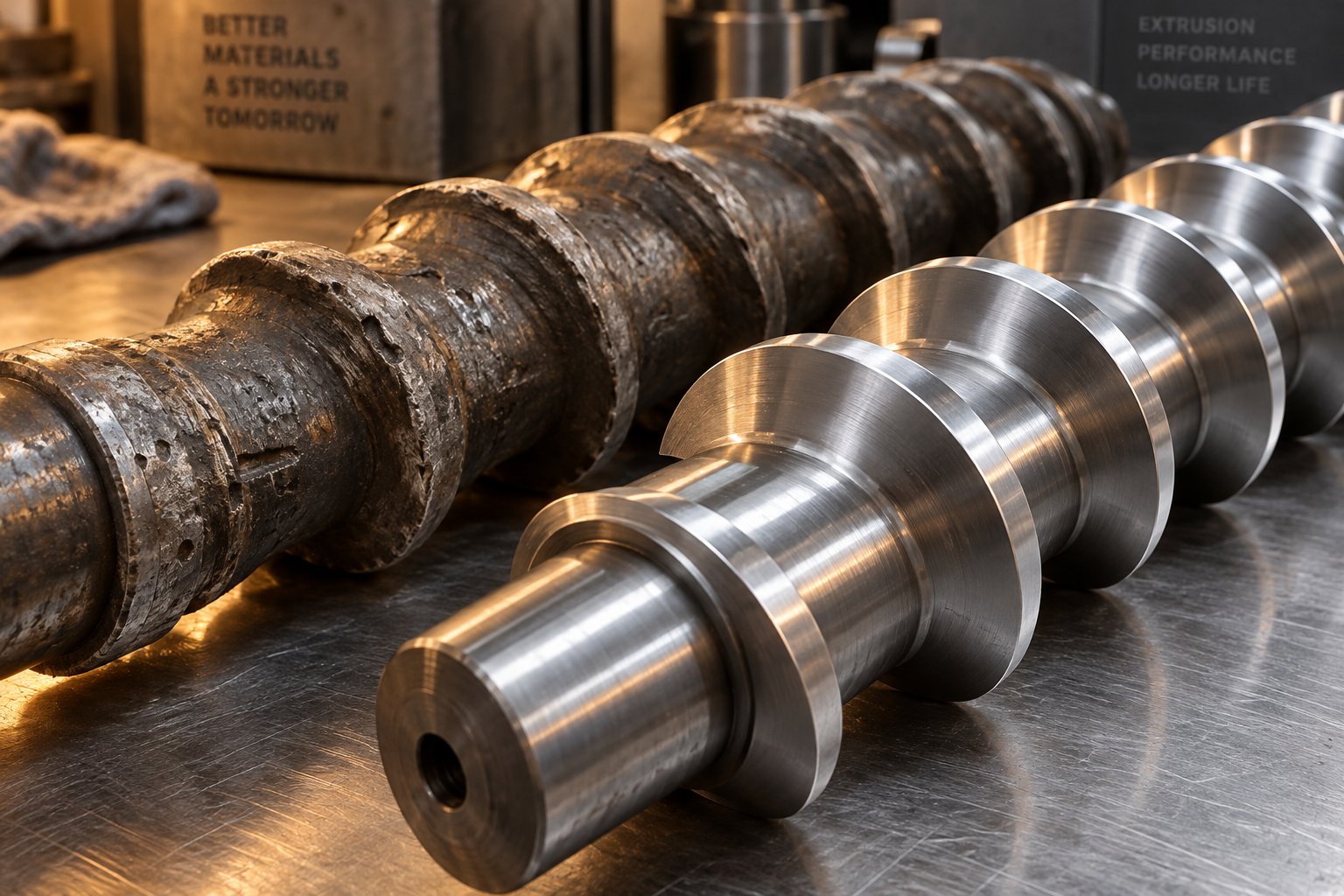
Wear life differential. This is the hidden cost that dwarfs all others. A cheap screw made from commodity steel with shallow nitriding might last 4,000-6,000 operating hours before clearance exceeds acceptable limits. A premium screw built from through-hardened tool steel with proper nitriding depth — or bimetallic construction for abrasive applications — can deliver 10,000-15,000 hours or more. You're not buying one screw; you're buying a replacement cycle. If the cheap option requires replacement 2-3 times within the lifespan of one premium screw, the total material cost plus repeated changeover downtime makes the "budget" option the most expensive choice you could have made.
Downtime during changeovers. Every screw replacement takes the line down for hours — sometimes a full shift depending on machine size and accessibility. Each changeover involves cooling the barrel, pulling the screw, cleaning, installing the replacement, reheating, and running startup material until the process stabilizes. Multiply those changeover hours by your hourly production value, and each replacement event carries a real cost that should be attributed to the screw's total cost of ownership.
Engineering support value. A supplier who reviews your processing data, identifies premature wear patterns, and recommends geometry or material changes that extend screw life is delivering value that never appears on an invoice. That consultation might prevent a $15,000 premature failure or eliminate a recurring quality issue that's been generating scrap for months. Suppliers without technical depth can't provide this — and their lower price reflects the absence of a capability you'll eventually need.
How to Compare Supplier Pricing Meaningfully
Meaningful price comparison requires normalizing every quote to the same unit of measure — and that unit isn't dollars per screw. It's dollars per operating hour, or dollars per kilogram of acceptable output. When you reframe cost this way, the arithmetic shifts dramatically.
A $7,200 screw that runs 12,000 hours costs $0.60 per operating hour. A $4,800 screw that wears out after 5,000 hours costs $0.96 per hour — 60% more expensive on a per-hour basis, before you even factor in the second changeover and the production lost during each swap.
Before your next sourcing decision, tally up these frequently overlooked cost factors that inflate total ownership expense well beyond the quoted price:
- Emergency freight charges — Air shipping a replacement screw or extrusion barrel from overseas can cost $1,500-$5,000 or more, turning a "budget" international order into a premium-priced rush job
- Re-machining costs from out-of-spec parts — A screw that arrives with flight dimensions outside tolerance may need rework before installation, adding $500-$2,000 in machine shop time plus the delay
- Lost production from extended lead times — Every day a line sits idle waiting for a replacement part costs $5,000-$20,000 in lost output — costs that never appear on the screw supplier's invoice but absolutely belong in your total cost calculation
- Repeat orders caused by premature wear — Ordering the same cheap screw twice within the service life of one premium screw doubles your procurement effort, doubles your changeover downtime, and still costs more in total dollars spent
The lowest-quoted extruder feed barrel or screw is almost never the lowest-cost option when measured across a full service cycle. Experienced processors understand this intuitively — they've lived through the emergency phone calls, the weekend changeovers, and the quality complaints that follow a procurement decision made on price alone. The smarter approach is straightforward: calculate cost per operating hour, factor in changeover frequency and downtime risk, and choose the supplier whose total cost equation — not just whose quote — delivers the best value over the component's entire working life.
Of course, even the most rigorous cost analysis depends on one assumption: that the supplier you've chosen actually delivers what they promised. When that assumption fails — when material certifications are missing, tolerances aren't verified, or technical support evaporates after the invoice is paid — the real cost isn't just financial. It's operational disruption. Recognizing those warning signs before you commit is what separates a sound procurement decision from an expensive lesson.
Red Flags That Expose Unreliable Screw Suppliers
A supplier can say all the right things during the quoting process — fast turnaround, competitive pricing, ISO-certified quality — and still deliver a screw and barrel set that fails within months. The warning signs are almost always visible before you place the order, but only if you know where to look. What follows is a practical checklist of red flags drawn from the patterns that consistently precede supplier failures, whether you're sourcing a single-screw replacement, a twin screw and barrel set for compounding, or even evaluating components from a used twin screw extruder rebuild.
Think of these warning signs as filters. No single red flag guarantees a bad outcome. But when two or three cluster together in the same vendor interaction, the pattern becomes unmistakable — and walking away at that point costs you nothing compared to what staying costs later.
Documentation Red Flags to Watch For
The paperwork a supplier provides — or refuses to provide — tells you more about their manufacturing capability than any sales call ever will. Legitimate manufacturers measure what they build and document what they measure. When that documentation is missing, vague, or unverifiable, you're looking at either a capability gap or a deliberate attempt to avoid accountability.
Here's what to watch for:
- No metallurgical test reports or material certifications. Every screw and barrel should ship with material certificates — ideally EN 10204 3.1 reports — confirming the steel grade, alloy composition, and heat treatment applied. A supplier who responds to material questions with "high-quality alloy steel" instead of a specific designation like 38CrMoAlA or W6Mo5Cr4V2 is either unaware of what their subcontractor used or unwilling to disclose it. As factory evaluation research consistently highlights, vague metallurgy answers rank among the most telling early warning signs of quality risk.
- No documented tolerance guarantees. If a quote doesn't specify dimensional tolerances for flight OD, root diameter, concentricity, and flight-to-barrel clearance, you have no contractual basis for rejecting an out-of-spec part. A proper acceptance inspection checks these dimensions against a confirmed drawing — but that drawing needs to exist and include tolerance callouts before manufacturing starts.
- Missing or unverifiable manufacturing certifications. ISO 9001 is the baseline expectation. But a certificate number on a website isn't proof. Ask for a copy of the actual certificate, note the certifying body, and verify it independently. Suppliers who dodge this request — or whose certificate covers a different product scope than screws and barrels — are not what they claim to be.
- No hardness testing data. Hardness is where cheap screws hide. A nitrided screw should show surface hardness values in the range of HV 900-1,100; hardfaced flights with Colmonoy-type overlays should read 50-64 HRC depending on the grade. Without hardness reports, you cannot confirm whether the surface treatment was actually performed — or performed correctly. A screw that looks identical to a properly treated one but has soft flights will wear out several times faster than its documented counterpart.
- No straightness or TIR records. A bent screw destroys itself and the barrel. Reputable manufacturers measure total indicator reading (TIR) and include the results in the shipping documentation. Typical specifications fall around 0.05-0.1 mm TIR per meter of screw length. A supplier who doesn't measure — or won't share the results — is gambling with your barrel's bore integrity.
Communication and Process Warning Signs
Red flags don't only live in paperwork. Pay close attention to how a supplier communicates during the pre-sale process — the responsiveness, the depth of technical engagement, and the willingness to explain rather than deflect.
- No technical consultation or design review. A credible supplier asks questions before quoting: What resin are you running? What's your current barrel bore measurement? Are you experiencing specific processing issues? A vendor who accepts an order without asking a single technical question is filling a part number, not engineering a solution. For twin screw and barrel systems especially — where screw element configuration directly determines mixing performance — this absence of design review is a serious deficiency.
- Inability to provide reference customers. If a supplier has been building screws for your machine type and application, they should have customers willing to confirm that. Reluctance to share references — or providing only generic testimonials without verifiable contact information — suggests either a thin track record or dissatisfied buyers they don't want you talking to.
- Resistance to sample inspection before large orders. Ordering a single screw as a trial run before committing to a multi-unit purchase is standard risk management. Suppliers who push back against trial orders, insist on large minimum quantities upfront, or refuse to allow inspection of a first article are prioritizing their order book over your confidence. An honest manufacturer welcomes this scrutiny because transparency builds trust.
- No clear production timeline. When you ask "how long will this take?" the answer should be specific — production days, shipping method, estimated delivery window. A vague response like "a few weeks" or "depends on the schedule" often signals a broker coordinating between you and an unknown factory, rather than a manufacturer with direct control over their production queue.
- No stated minimum order quantities. This one surprises many buyers. A real manufacturer knows their setup costs, batch economics, and production minimums — and communicates them clearly. A company that accepts any quantity at any time with no stated MOQ is likely a trading company sourcing from whoever has capacity at the moment, with no consistent quality baseline across orders.
A supplier who cannot explain their steel sourcing, heat treatment process, or QC inspection steps is either lacking capability or hiding deficiencies — either way, your production line absorbs the consequence.
Pricing Red Flags That Signal Hidden Risks
Price is the most seductive red flag because it disguises risk as savings. When a quote comes in dramatically below every competitor, there's always a reason — and that reason almost always lives in the material, the process, or the things the supplier chose not to do.
- Unusually low pricing with no explanation of material or process differences. If one supplier quotes 40% below three others for the same screw specification, ask directly: What steel grade are you using? What is the nitriding case depth? What surface hardness do you guarantee? A legitimate low-cost manufacturer can explain exactly where their pricing advantage comes from — volume economics, lower regional labor costs, or streamlined production processes. A supplier who can't explain the gap is cutting corners you'll discover through premature wear, not through their quote.
- Quotes that lack detailed specifications. A professional quote for a screw and barrel set should itemize the base material, surface treatment, dimensional tolerances, and what documentation ships with the finished part. A quote that lists only "extruder screw" with a price and delivery date gives you nothing to hold the supplier accountable against. If the quote doesn't specify it, the supplier isn't committing to it.
- No breakdown between material, treatment, and manufacturing costs. While suppliers aren't obligated to open their cost books, a willingness to explain what drives the price — for example, "bimetallic barrel liner adds X to the base cost" or "tungsten carbide hardfacing on the metering zone flights accounts for Y" — demonstrates engineering fluency and pricing integrity. Suppliers who treat the entire quote as a single opaque number make it impossible for you to evaluate whether you're comparing equivalent specifications across vendors.
The pattern across all three categories — documentation, communication, and pricing — is consistent. Legitimate suppliers welcome scrutiny. They provide documentation because they have it. They answer technical questions because they understand the engineering. They explain their pricing because they're confident in what they build. When a vendor resists transparency at any stage of the quoting or evaluation process, that resistance is information — and it's telling you something about what your experience will look like after the purchase order is signed.
Recognizing these red flags protects you from the worst outcomes. But avoiding bad suppliers is only half the equation. The other half is understanding what a genuinely good procurement process looks like from start to finish — from the initial design consultation through production, inspection, delivery, and the ongoing relationship that keeps your line running long after that first screw is installed.
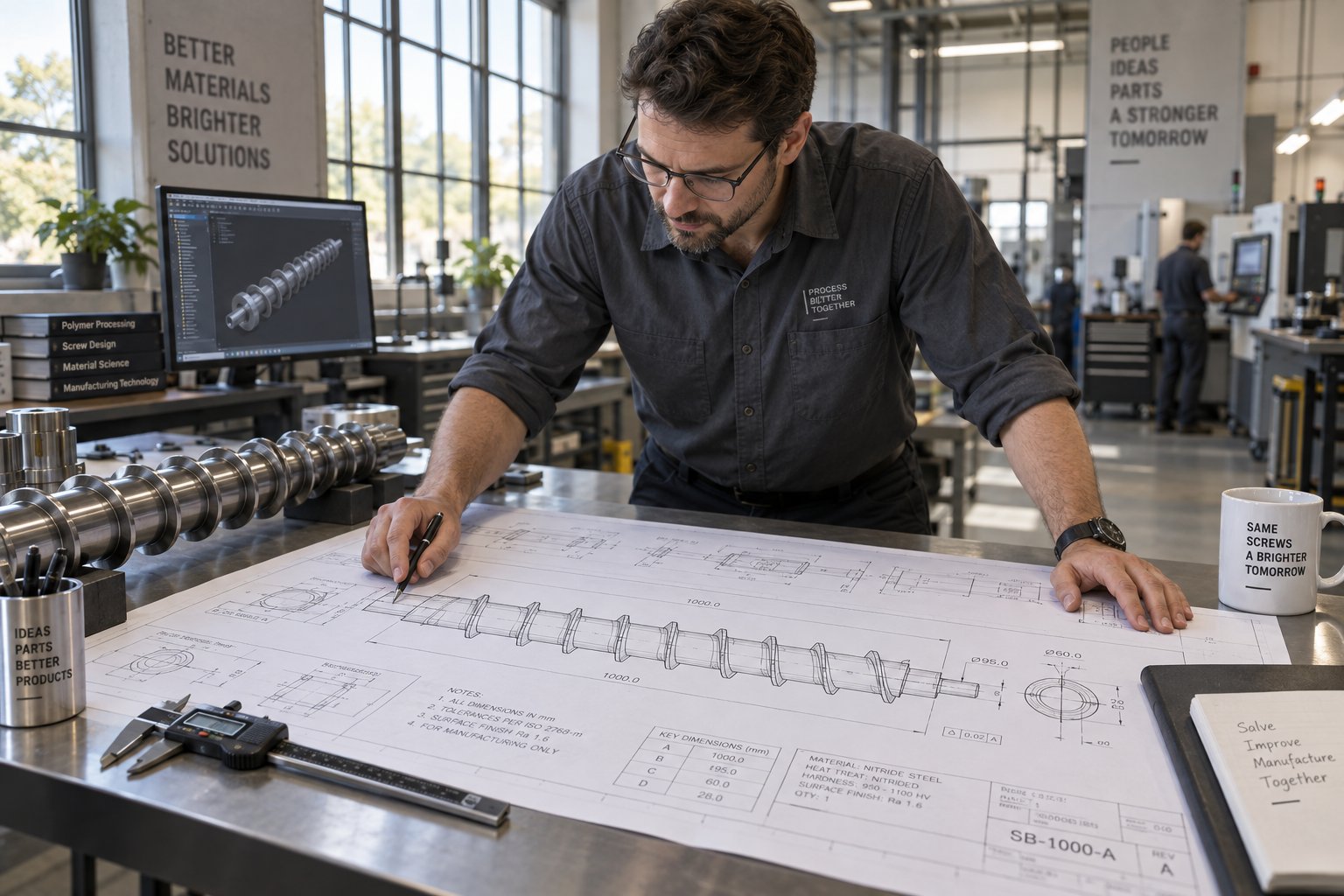
The Custom Screw Design and Procurement Journey
Knowing what red flags to avoid keeps you out of trouble. But what does a genuinely excellent procurement experience look like when everything goes right? The difference between ordering a commodity part and commissioning a custom-engineered extrusion screw barrel or injection screw isn't just price or lead time — it's the depth of the process itself. A qualified supplier doesn't simply take your dimensions and start machining. They guide you through a structured engineering conversation that connects your processing challenges to a screw design built to solve them.
Whether you're replacing a worn component, upgrading screw geometry for a new resin, or equipping a rebuilt machine, the journey follows a predictable sequence. Understanding each stage helps you evaluate whether a potential supplier is truly operating as an engineering partner — or just filling a purchase order.
The Design Consultation and Specification Phase
Every well-executed custom screw project starts with a conversation — not a catalog. A capable supplier will want to understand your operation before they ever propose a geometry, because the right screw design depends entirely on the processing context it's entering.
During this initial consultation, expect the supplier's engineering team to ask about your current processing data: melt temperature readings, throughput rates, screw speed ranges, and barrel zone temperature profiles. They'll want to know your target resins and whether you're running virgin pellets, regrind, recycled flake, or blends with fillers and additives. Throughput goals matter — are you trying to maintain current output with better melt quality, or push for higher rates without degrading the polymer? And critically, they'll ask about your pain points: surging, unmelted particles, excessive discharge temperature, premature wear patterns, or color streaking.
This diagnostic phase mirrors what polymer engineering experts describe as a consultative approach — one in which every parameter of the process is evaluated to create a customized solution that fits the application. As Shayan Moin of UniSol explained in an industry interview, "When coupled with a replacement screw supplier with an extensive knowledge base of designs and an intimate understanding of extrusion processes, screw replacement morphs from a task into an opportunity for extruders to refine their process, resolve quality issues and even ensure the next replacement is further in the future."
If a supplier skips this phase — if they accept your order based on a part number alone without asking about your resin, your barrel condition, or your processing goals — they're treating your precision wear component like a commodity purchase. That shortcut may save a day during quoting, but it costs you months of suboptimal performance after installation.
Production, Inspection, and Delivery Expectations
With consultation complete and a screw geometry proposal in hand, the procurement journey moves through a series of concrete, verifiable steps. Here's what that sequence looks like when a supplier is doing it right:
- Design consultation and process review. The supplier collects your machine specifications, current processing data, target resins, and known issues. They review your existing screw geometry — either from drawings or by measuring a worn screw — and document baseline conditions.
- Screw geometry proposal with technical rationale. The engineering team presents a recommended screw design — including L/D ratio, compression ratio, flight geometry, and any mixing or barrier sections — along with a written explanation of why each design choice addresses your specific processing requirements. You should be able to trace every design feature back to a processing objective.
- Material and coating recommendations. Based on your resin family, filler content, and throughput demands, the supplier recommends the base steel, surface treatment (nitriding, hardfacing, bimetallic construction), and any additional coatings. This recommendation should include expected wear life ranges for your specific application.
- Manufacturing and first-article production. The screw is machined, heat-treated, and surface-treated according to the approved design. For first-time orders or critical applications, a first article inspection (FAI) verifies that the manufacturing process produces a part meeting all dimensional, metallurgical, and surface treatment specifications before full production proceeds. FAI catches process errors — dimensional drift, incorrect hardness, material nonconformance — before they become field failures.
- Dimensional inspection and documentation. Every finished screw should ship with a documentation package: CMM inspection data confirming flight OD, root diameter, concentricity, and total indicator reading; hardness test results at multiple points; material certifications (EN 10204 3.1); and metallographic verification for hardfaced or bimetallic components. This package isn't a bonus — it's your evidence that the specification was met.
- Shipping, installation, and trial run. The supplier coordinates delivery to your schedule, ideally timed to a planned maintenance window rather than an emergency shutdown. After installation, you run your standard process and collect baseline data: melt temperature, output rate, motor amperage, and product quality metrics.
- Feedback and iteration. A genuine engineering partner follows up after installation. They want to know whether the screw delivered the expected performance improvement. If melt temperature is still high, or if throughput didn't reach the target, the supplier reviews your trial data and proposes adjustments — perhaps modifying flight depth in the compression zone or adding a distributive mixing section. This iterative loop is what transforms a one-time purchase into a continuous improvement relationship.
That seventh step — the follow-up — is where most commodity suppliers and resellers disappear. Their involvement ends when the invoice is paid. An engineering partner's involvement continues because they recognize that screw extruders perform in real operating conditions, not on a spec sheet, and that real-world feedback is what drives the next design improvement.
The real-world benefits of this structured approach can be substantial. Industry case studies document outcomes ranging from production throughput doubling after an optimized replacement screw was installed, to additive consumption dropping by 30% — savings that paid for the replacement in under a year. One manufacturer eliminated a vent port from their screw design after the supplier accounted for local humidity conditions, boosting output by 35%. These aren't theoretical gains. They're the measurable results of a procurement process where the supplier understood the full application context before cutting steel.
Selecting a Supplier Built for Custom and Replacement Work
The procurement journey described above only works when you're partnering with a supplier whose entire operation is structured to support it. Not every vendor has the engineering depth for design consultation, the manufacturing capability for first-article verification, or the post-sale commitment for performance follow-up. Identifying suppliers who do — and who operate as factory-direct engineering partners rather than middlemen — is the final filter in your evaluation process.
The ideal supplier for custom and replacement extrusion screw barrel and injection screw work combines several capabilities under one roof: in-house design engineering that understands both extrusion and injection molding process demands, CNC machining and heat treatment performed on-site for full process control, metallurgical testing that verifies every component before shipment, and a direct communication channel between you and the people actually building your parts.
NANHAIYA is structured specifically to serve this role — providing plastic processors, equipment builders, and maintenance teams with a factory-direct source for custom-engineered and replacement screw barrels across both extrusion and injection molding applications. Their model delivers direct access to engineering staff for design consultation, custom screw and barrel manufacturing tailored to specific machine platforms and resin requirements, and the transparent quality documentation that every section of this guide has emphasized as non-negotiable. For buyers who need a supplier capable of handling the full procurement journey outlined above — from initial design review through post-installation follow-up — this factory-direct engineering partner model is worth including on your evaluation shortlist.
The best procurement decision isn't the one that finds the lowest price — it's the one that finds the supplier whose engineering depth, manufacturing discipline, and post-sale commitment match the demands of your specific application.
This entire article has built toward one practical outcome: giving you a repeatable framework for evaluating any plastic extruder screw supplier with confidence. Start with the technical parameters from Chapter 2 — if you can't communicate your specifications clearly, no supplier can serve you well. Match your application to the right supplier tier using the screw type analysis from Chapter 3. Decide whether OEM or aftermarket sourcing fits your operation, then score potential vendors against the capability matrix from Chapter 5. Factor in geographic sourcing trade-offs and calculate total cost of ownership — not just purchase price. Screen every candidate against the red flag checklist from Chapter 8. And finally, evaluate whether the supplier's process matches the structured procurement journey described here.
Build a shortlist of two to three suppliers who pass these filters. Request quotes with identical specifications from each. Compare not just the price, but the quality of the technical conversation, the depth of the documentation offered, and the willingness to answer hard questions about materials, processes, and references. The supplier who welcomes that scrutiny — who treats your evaluation process as an opportunity to demonstrate capability rather than an obstacle to closing a sale — is the one most likely to protect your production line for the years ahead.
Frequently Asked Questions About Plastic Extruder Screw Suppliers
1. What should I look for when choosing a plastic extruder screw supplier?
Focus on verifiable manufacturing capabilities rather than marketing claims. Key indicators include ISO 9001 certification with auditable evidence, in-house CNC machining and heat treatment, on-site metallurgical testing such as hardness mapping and metallographic cross-sections, and full material traceability with EN 10204 3.1 certificates. A reliable supplier also offers design consultation before quoting, asks detailed questions about your resin, throughput, and processing issues, and provides comprehensive shipping documentation including CMM inspection data. Factory-direct partners like NANHAIYA (nhyscrews.com/products) combine custom engineering, in-house production, and transparent quality documentation under one roof, giving buyers direct access to the teams building their components.
2. What is the difference between OEM and aftermarket extruder screw suppliers?
OEM suppliers are original machine builders who manufacture screws designed for their specific equipment platforms, offering guaranteed fitment but typically at premium pricing and longer lead times. Aftermarket suppliers independently reverse engineer replacement screws using CMM measurement, 3D modeling, and metallurgical analysis to match or exceed OEM specifications at lower cost. The key distinction is verification rigor: a qualified aftermarket supplier provides dimensional inspection reports, hardness testing data, metallurgical certifications, and verifiable reference customers running the same machine model. Both paths can deliver excellent results when the supplier's engineering process is transparent and well-documented.
3. How do I calculate the total cost of ownership for an extruder screw?
Total cost of ownership goes far beyond the purchase price. Calculate cost per operating hour by dividing the screw price by its expected wear life in hours. A $7,200 screw lasting 12,000 hours costs $0.60 per hour, while a $4,800 screw lasting only 5,000 hours costs $0.96 per hour — 60% more. Then factor in hidden costs: emergency air freight ($1,500-$5,000), re-machining out-of-spec parts ($500-$2,000), lost production during downtime ($5,000-$20,000 per day), changeover labor for each replacement, and repeat purchase cycles caused by premature wear. Material selection, surface treatment quality, and manufacturing tolerances all directly determine how long the screw lasts and how often you absorb these additional expenses.
4. What are the red flags of an unreliable extruder screw supplier?
警示信号分为三类。文件方面的警示信号包括:缺少冶金测试报告、未明确尺寸公差、ISO认证无法核实以及缺乏硬度测试数据。沟通方面的警示信号包括:报价前未提供技术咨询、无法提供参考客户、拒绝样品检验或试订单、生产时间表模糊不清以及未明确最低订购量——这通常表明对方是中间商而非制造商。价格方面的警示信号包括:报价远低于竞争对手且未作任何解释、报价单缺少材料或处理规格说明,以及定价完全不透明,未细分材料、涂层和制造成本。
5. 我应该从国内供应商还是国际供应商采购挤出机螺杆?
两种选择各有优势。国内供应商交货周期更短(几天到几周),沟通顺畅,知识产权保护更便捷,物流也更简单——但通常成本高出30%到50%。国际供应商,尤其是资质优良的中国制造商,可以显著降低成本,但需要仔细筛选,交货周期更长(定制订单含海运需6到8周),并且需要通过ISO认证文件、参考资料核查和第三方检验等系统性的质量验证。工厂直销的国际模式——即直接与生产团队沟通,而非通过贸易公司——弥补了上述诸多不足。南海亚(nhyscrews.com/products)正是这种模式的典范,它提供直接的工程技术支持、定制螺杆筒制造以及透明的质量文件,避免了传统进口采购的不透明性。
Written by
Nanhaiya Technical Team
Zhoushan Nanhaiya Plastic Machinery Co., Ltd.
The Nanhaiya technical team supports screw and barrel manufacturing projects through application review, technical communication, custom manufacturing coordination, and production and quality control.
Discuss Your Application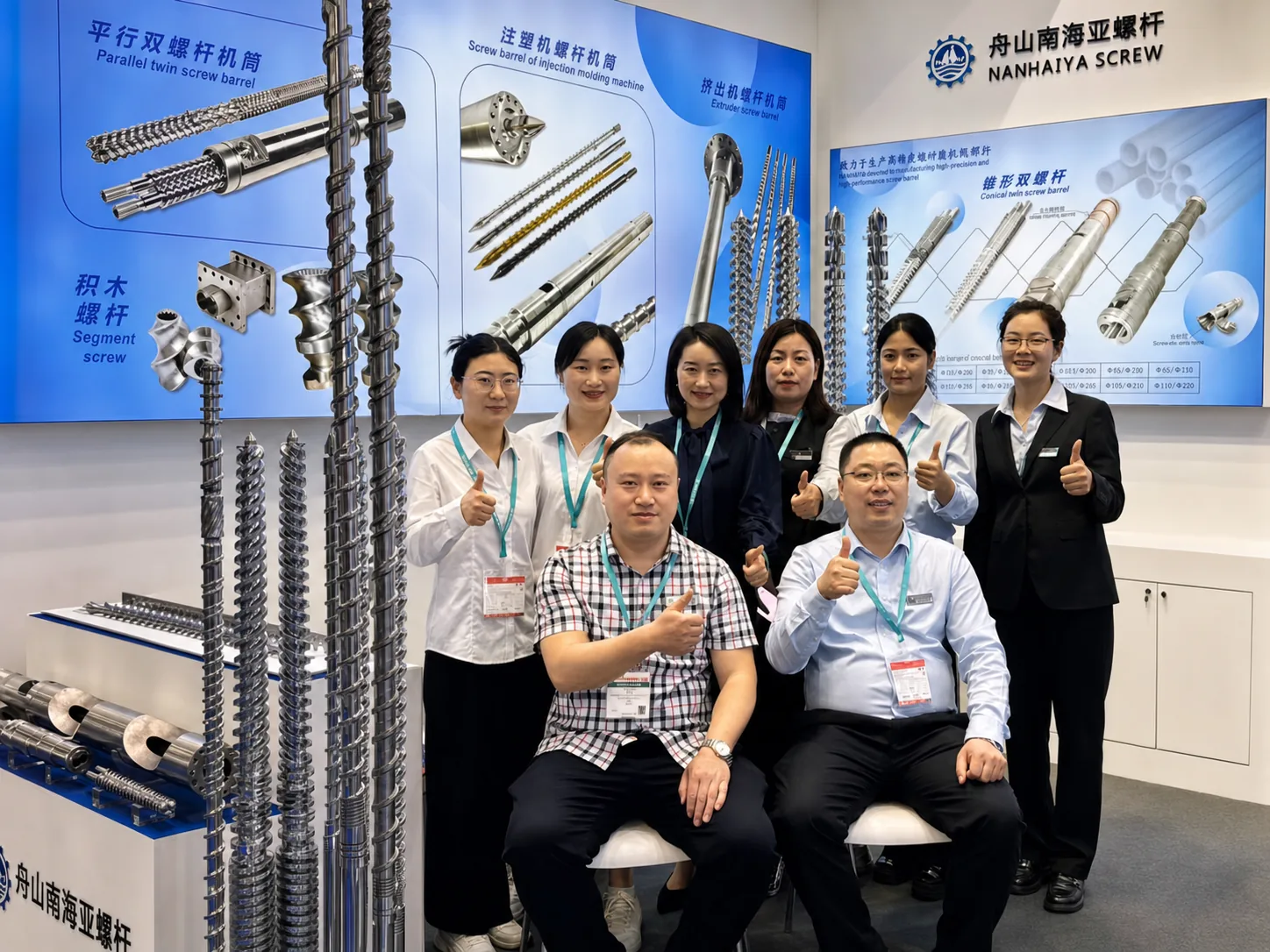
Related Articles
More insights on screw barrel technology and plastics processing.
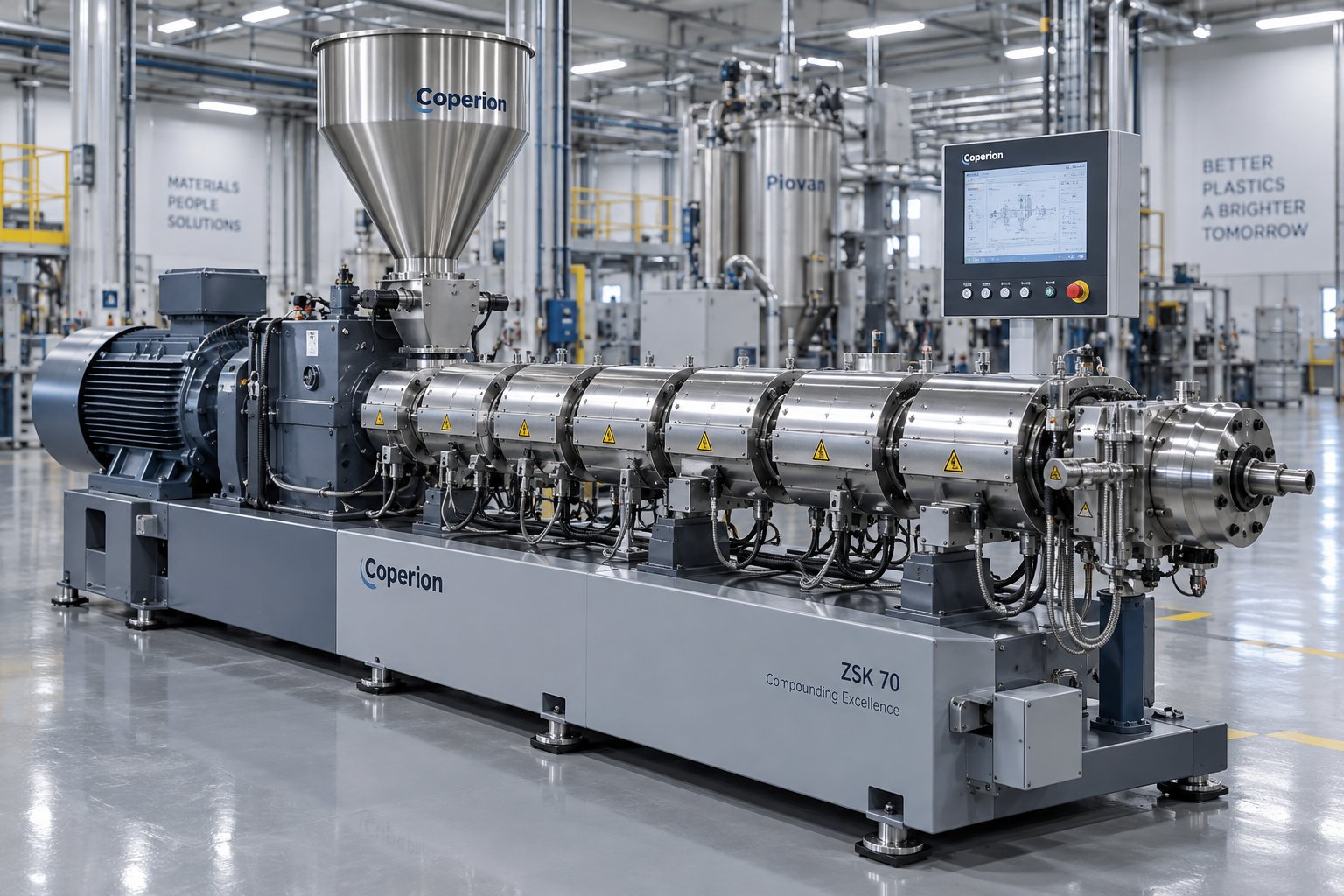
What Your Single Screw Extruder Manufacturer Won't Tell You
Oct 10, 2026
Learn how to evaluate single screw extruder manufacturers with this buyer-focused guide covering specs, configurations, material matching, and a ready-to-use selection checklist.
Read Article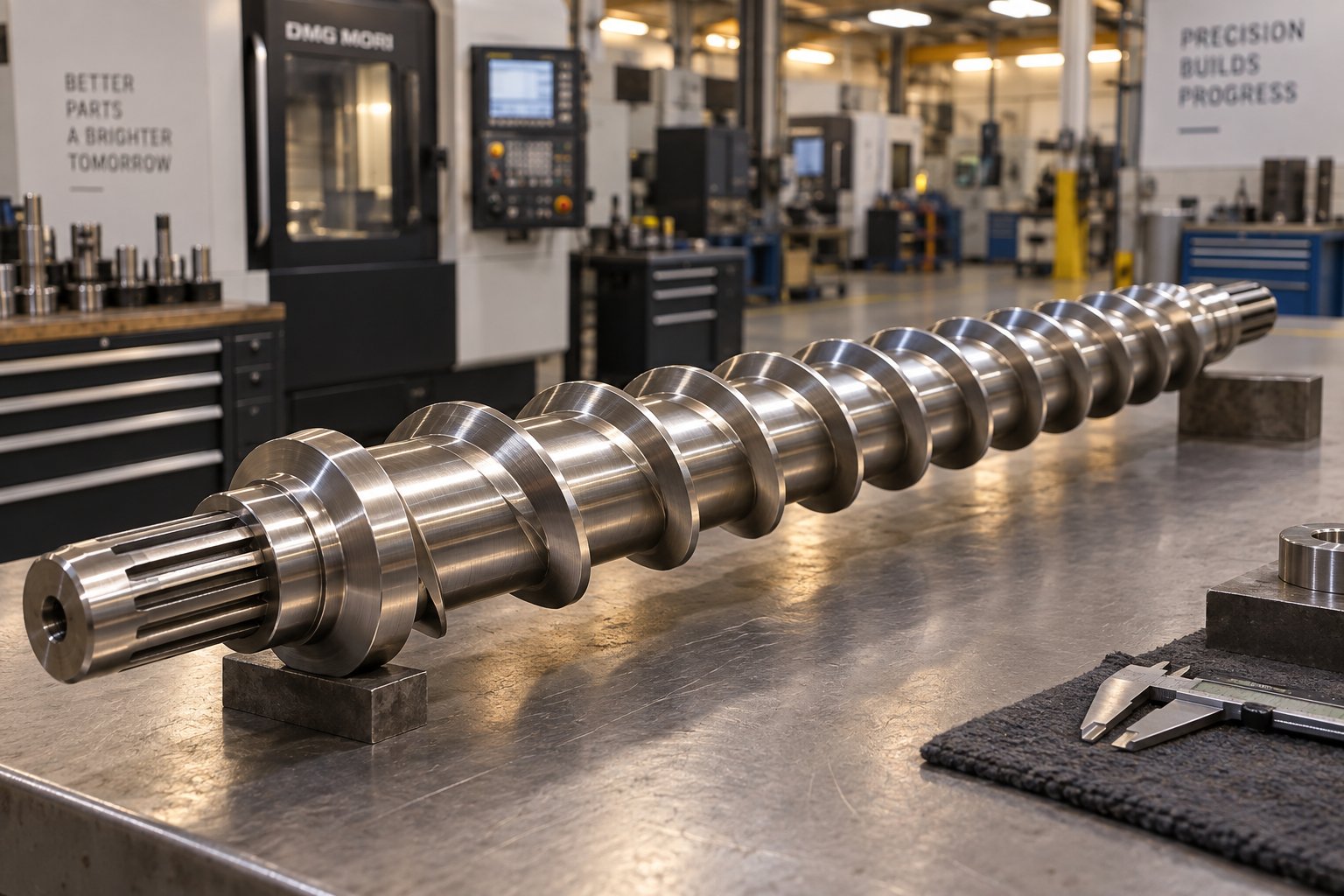
Plastic Extruder Screw Price Demystified: From Steel To Sticker
Oct 10, 2026
What drives plastic extruder screw price? This independent guide breaks down diameter, L/D ratio, metallurgy, order volume, and total cost of ownership factors.
Read Article
What No Supplier Tells You About WPC Decking Making Machines
Oct 6, 2026
Learn how a WPC decking making machine works, compare extruder types, formulations, and production methods, plus get a buyer checklist to evaluate any supplier.
Read ArticleLooking for something else?
Search by material, symptom or product and jump straight to the relevant page.
These are navigation suggestions based on keyword matching — not a quotation, not a delivery commitment, and not a substitute for engineering review. Final specification is confirmed by our engineers against your drawings and processed material.
Need help with screw barrel selection?
Share your machine model, processed material and application. Our team can help with pricing and technical support.