

Why Parallel Twin Screw Extruder Pricing Is So Hard to Pin Down
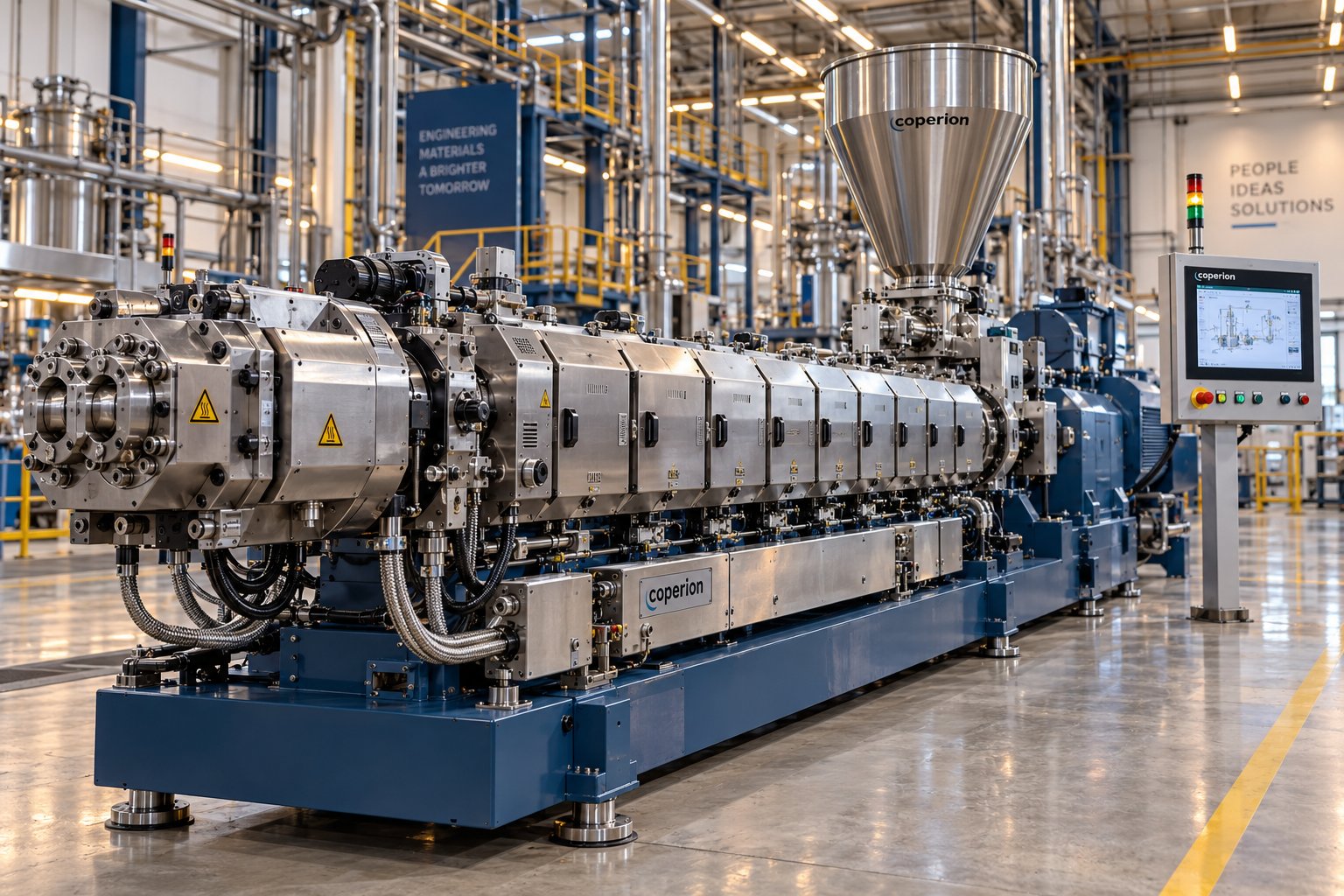
A parallel twin screw extruder is a processing machine built around two intermeshing, co-rotating or counter-rotating screws housed inside a closely fitted barrel. Unlike single screw systems, this twin-screw extruder machine delivers superior mixing, precise temperature control, and the flexibility to handle everything from polymer compounding to pharmaceutical granulation. It is one of the most versatile workhorses in plastics, food, and chemical processing.
So why is finding a straightforward parallel twin screw extruder price so frustrating?
The short answer: these are not off-the-shelf commodities. Every machine is a highly configurable system. Screw diameter, barrel length, metallurgy, motor power, gearbox torque rating, control system sophistication, and downstream equipment all interact to shape the final cost. Change one variable and several others shift with it. That complexity makes a single "list price" almost meaningless without context.
If you have searched for twin screw extruder price information online, you have likely hit one of three dead ends: thin product catalog pages showing a photo and a "Contact Us" button, marketplace listings quoting wildly different numbers with no explanation, or manufacturer websites that funnel every inquiry into an RFQ form. None of these give you the framework to understand why prices land where they do — or how to tell whether a quote is fair.
This article is built to close that gap. Think of it as a buyer's pricing education resource, not a sales pitch. Every section ahead breaks down a specific factor that moves the price dial on a parallel twin screw extruder, so you can walk into any negotiation with clarity.
What Makes Parallel Twin Screw Extruder Pricing Complex
The single biggest reason pricing feels opaque is the sheer range involved. Consider this:
The same broad category — "parallel twin screw extruder" — can span from under $10,000 for a compact desktop unit designed for academic research to well over $1,000,000 for a fully integrated production-scale compounding line. Without understanding the variables that separate those two extremes, any price you encounter is just a number without meaning.
Screw diameter alone can range from 12 mm on a benchtop lab machine to 200 mm or more on a high-volume industrial line. Layer on choices like L/D ratio, torque density, barrel metallurgy, automation level, and downstream pelletizing equipment, and you begin to see why two quotes for a "twin screw extruder" can differ by a factor of ten — and both be perfectly legitimate.
Who This Pricing Guide Is For
This guide is designed for anyone who needs to translate a twin-screw extruder machine specification sheet into a realistic budget number. That includes:
- Process engineers evaluating capital expenditure for a new compounding or extrusion line
- Procurement managers comparing multiple supplier quotes and trying to ensure apples-to-apples comparisons
- Startup founders building their first equipment budget and unsure where reasonable pricing begins
- R&D teams scoping lab-scale or pilot-scale machines for formulation development
In the sections ahead, you will find detailed breakdowns of how technical specs drive cost, real price ranges organized by machine scale, the impact of screw and barrel metallurgy, configuration trade-offs between co-rotating and counter-rotating designs, manufacturer tier comparisons, total cost of ownership analysis, application-specific pricing guidance, and a practical framework for evaluating supplier quotes. Each section builds on the last, giving you a complete lens through which to read any parallel twin screw extruder price you encounter.
Technical Specifications That Directly Drive Extruder Cost
Every parallel twin screw extruder price you encounter is, at its core, a reflection of engineering specifications. Strip away the brand name, the paint color, and the sales pitch, and what remains is a set of measurable parameters that determine how much steel, machining, motor capacity, and control technology goes into the machine. Understanding which specs carry the most pricing weight gives you the ability to decode any quote — and to spot where costs can be trimmed or where corners should never be cut.
Three specification categories dominate the cost equation: screw geometry, torque and motor sizing, and throughput capacity. Each one influences the others, and together they account for the majority of the base machine price before you even consider metallurgy, automation, or downstream equipment.
Screw Diameter and L/D Ratio as Primary Price Drivers
If you remember only one thing about what sets the price of a twin screw extruder machine, make it this: screw diameter is the single largest cost determinant. It establishes the baseline for nearly everything else — barrel size, gearbox rating, motor frame, and structural footprint.
Screw diameters on parallel twin screw extruders typically range from around 12 mm on compact lab-scale units all the way to 200 mm or more on large industrial extruder systems built for high-volume production. The relationship between diameter and cost is not linear. As Tanhon's engineering analysis explains, the torque requirement follows a cube law — doubling the screw diameter roughly octuples the torque demand. That means the gearbox, motor, and supporting structure all scale aggressively with diameter, and the price follows.
Imagine two machines sitting side by side: one with a 26 mm screw diameter and another with a 52 mm diameter. The larger machine does not cost twice as much. It may cost five to eight times more, because every load-bearing component must be engineered to handle exponentially greater forces.
The L/D ratio — the length of the screw divided by its diameter — adds a second layer of cost. A machine with a 32:1 L/D ratio has a shorter barrel than one with a 48:1 ratio at the same screw diameter, and the price difference is significant. Longer L/D ratios mean more barrel sections, more individually controlled heating and cooling zones, more screw elements, and a higher torque capacity requirement to drive the longer screw assembly. Each additional barrel segment adds material cost, machining cost, and instrumentation cost.
When is a longer L/D ratio worth the investment? It depends entirely on process complexity. As outlined in a twin screw extruder selection guide from Prime Sector Intel, straightforward compounding tasks may only need a moderate L/D of 25:1 to 36:1, while processes involving multi-point feeding, staged mixing, vacuum devolatilization, or reactive extrusion may demand ratios of 40:1 to 52:1. The extra barrel length creates room for those additional process steps — but if your application does not require them, you are paying for capability you will never use.
Torque Density and Motor Power
Torque is the rotational force the screws exert on the material being processed. In the world of twin screw extrusion, torque rating is commonly expressed as torque density in Nm/cm³ — a metric that relates the gearbox's torque capacity to the cross-sectional area of the screws it drives. This number tells you how much processing force the machine can deliver relative to its screw size, and it has a direct impact on price.
Why does torque matter so much? Because the screws are not just spinning freely — they are working against the viscous resistance of the polymer melt. High-viscosity materials, heavily filled compounds, and engineering plastics all demand significantly more torque to process effectively. Modern high-performance extruder machines achieve torque densities of 18 Nm/cm³, representing a roughly 30% increase over previous-generation equipment. Reaching those densities requires precision-engineered gearboxes — often planetary configurations — along with larger servo or AC motors and more robust cooling systems to dissipate the heat generated by efficiency losses through the gear train.
Here is how this plays out in pricing terms:
- Standard torque density (5–10 Nm/cm³): Suitable for many commodity polymer blends and less demanding formulations. These machines use simpler gearbox designs and smaller motors, keeping the price moderate.
- High torque density (10–15 Nm/cm³): Required for more demanding compounding, mineral-filled systems, and engineering plastics. Gearbox and motor costs increase substantially.
- Ultra-high torque density (15–18+ Nm/cm³): Necessary for the most challenging applications — glass-fiber-reinforced polyamides, highly filled concentrates, and reactive processing. These machines sit at the premium end of the price spectrum because every drivetrain component must handle extreme loads continuously.
Motor power scales alongside torque requirements. A lab-scale unit might run on a 1–3 kW motor, while a production-scale industrial extruder can require 200 kW or more. The motor alone can represent a significant percentage of the total machine cost at larger scales — and it must be matched to a gearbox capable of converting that power into usable screw torque without overheating or premature wear. A practical guideline from gearbox engineering literature: plan to operate at 80% of continuous torque rating and 80% of maximum speed to preserve gearbox longevity, which means you are buying capacity above your target operating point.
Throughput Capacity and Its Cost Relationship
Throughput — the volume of material a machine can process per unit of time — is typically the first number a buyer focuses on. You need X kilograms per hour, so you look for a machine rated at X or above. Sounds straightforward, but throughput is really a downstream result of screw diameter, L/D ratio, torque, screw speed, and material properties all working together.
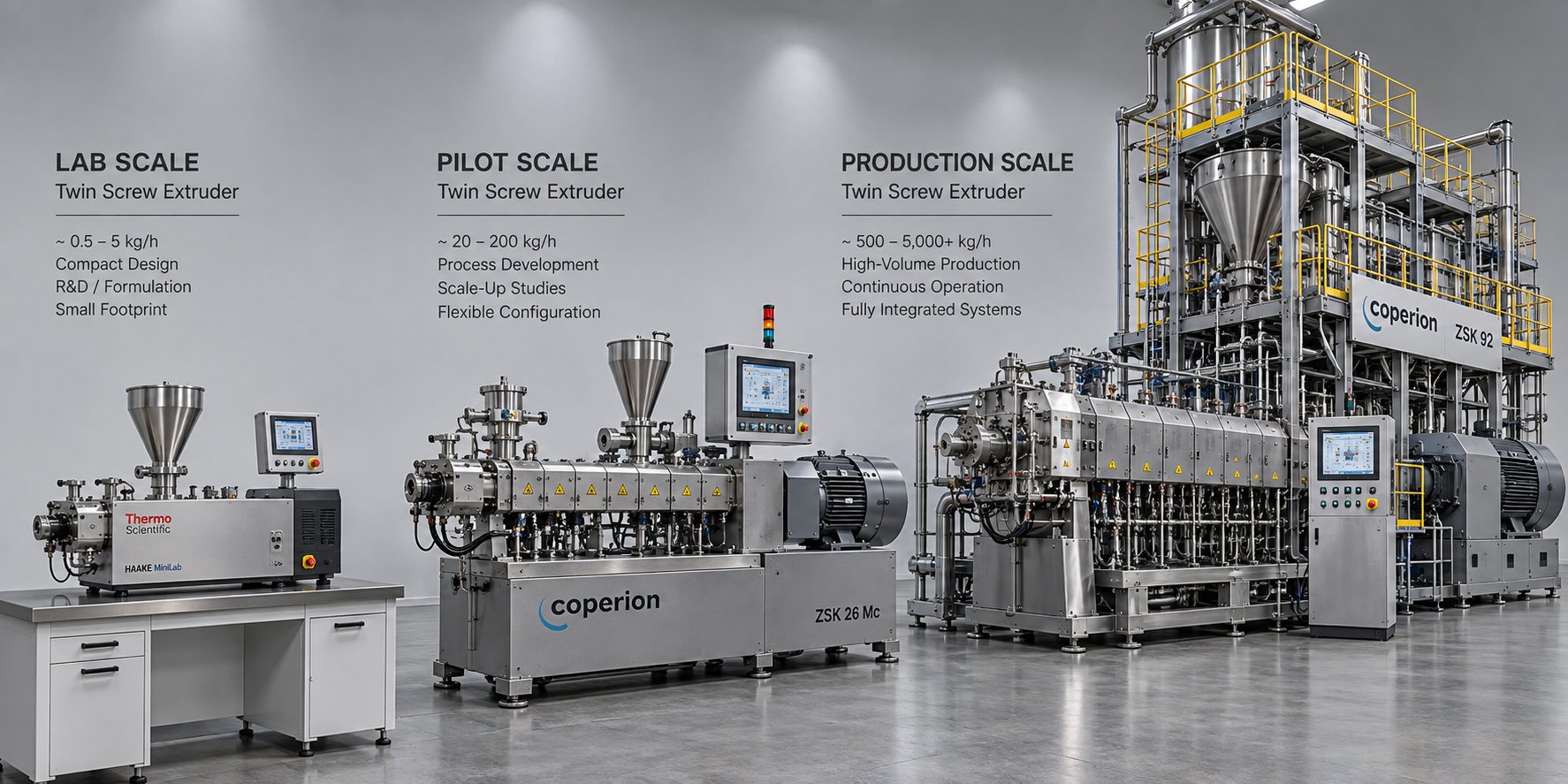
At the lab-scale end, you will find machines producing grams per hour — ideal for formulation screening and small-batch R&D. Pilot-scale systems push into tens to hundreds of kilograms per hour, bridging the gap between development and commercial validation. Full production-scale twin screw extrusion lines can process multiple tons per hour for continuous manufacturing operations.
The cost relationship is not proportional. Doubling throughput does not simply double the price — it often multiplies it by a much larger factor, because the screw diameter must increase (triggering the cube-law torque escalation), the gearbox must grow, the motor must scale, and the barrel, heating, cooling, and control systems all expand in tandem.
The table below maps these relationships in a practical reference format:
| Screw Diameter Range | Typical L/D Ratio | Approximate Throughput | Relative Price Impact |
|---|---|---|---|
| 10–20 mm | 25:1 – 40:1 | 20 g/hr – 5 kg/hr | Low |
| 20–35 mm | 32:1 – 44:1 | 5 – 50 kg/hr | Low to Medium |
| 35–50 mm | 36:1 – 48:1 | 50 – 300 kg/hr | Medium to High |
| 50–75 mm | 36:1 – 48:1 | 300 – 1,500 kg/hr | High |
| 75–135 mm | 40:1 – 52:1 | 1,500 – 5,000+ kg/hr | Very High |
| 135–200+ mm | 40:1 – 52:1 | 5,000 – 20,000+ kg/hr | Very High (custom-engineered) |
Notice the pattern: as you move down the table, each step up in screw diameter pulls L/D ratio, throughput, and cost along with it. A machine in the 10–20 mm range — similar to benchtop research units — delivers tiny throughputs but at accessible price points. Jump to the 75 mm and above range, and you are looking at serious capital expenditure driven by the physics of torque, material flow, and mechanical engineering at scale.
One critical takeaway: nominal throughput figures on a spec sheet represent ideal conditions. Real-world output depends on material bulk density, viscosity, filler loading, and downstream pressure. A machine rated for 500 kg/hr on neat polyethylene pellets might only achieve 350 kg/hr when processing a 40% calcium carbonate-filled compound. Always verify throughput ratings against your specific material and formulation, not just headline numbers.
The interplay between these three specification categories — screw geometry, torque, and throughput — forms the structural backbone of any parallel twin screw extruder price. But the cost story does not end with the machine's mechanical core. The materials used to manufacture the screws and barrels themselves introduce another layer of pricing complexity that most buyers overlook until it shows up in their maintenance budget.
Price Ranges by Machine Scale: From Lab to Production
Specifications tell you why a machine costs what it does. But at some point, you need real numbers. Whether you are building a capital expenditure proposal, benchmarking a supplier quote, or simply trying to figure out if your budget is realistic, you need a practical pricing framework organized by machine category. That is exactly what this section delivers.
Keep in mind that the extruder machine price at every scale is shaped by the spec interactions covered in the previous section — screw diameter, L/D ratio, torque, and throughput all compound together. The ranges below reflect typical market pricing across multiple manufacturers and configurations, giving you a working baseline rather than a single fixed number.
Desktop and Lab-Scale Extruder Price Ranges
Machines in this category feature screw diameters roughly between 10 mm and 27 mm. A compact benchtop extruder designed for academic research or initial formulation screening represents the most affordable entry point into twin screw technology. At the lowest end, basic desktop units with minimal automation and limited throughput can start under $10,000 — though these are often simplified designs better suited for educational demonstrations than serious process development.
Step up to a properly engineered laboratory twin screw extruder, and prices climb into a different range. Units equipped with segmented barrel designs, interchangeable screw elements, precise temperature control, and data acquisition systems typically fall between $30,000 and $150,000. Brand reputation and country of origin drive significant variance within this bracket — a well-known Western OEM lab extruder with validated process documentation and global service support commands considerably more than a functionally similar unit from an emerging manufacturer. Marketplace listings on platforms like LabX and RobotDigg illustrate this spread clearly, with comparable-looking benchtop twin screw extruder units carrying price tags that differ by a factor of three or more depending on the supplier.
For R&D teams, the key question is not just purchase price but whether the lab scale twin screw extruder can generate data that translates reliably to production conditions. Cheaper units sometimes lack the barrel modularity or screw element variety needed for meaningful scale-up work, which can turn an apparent bargain into a costly dead end.
Pilot-Scale Extruder Price Ranges
Pilot-scale machines — roughly 27 mm to 50 mm screw diameter — occupy the gap between R&D and full commercial production. These systems are built to validate formulations at meaningful throughput rates, typically 50 to 300 kg/hr, while still offering the flexibility to test multiple configurations.
Why do they cost so much more than laboratory extruder units? The jump is driven by substantially heavier mechanical construction. Gearboxes must handle real production-level torques. Barrels are longer, motors are bigger, and cooling systems must dissipate considerably more heat. Automation and safety systems also step up significantly at this scale, as pilot machines often run in environments with production-floor safety requirements.
Expect pilot-scale parallel twin screw extruder pricing to range from roughly $150,000 to $400,000, with the wide spread reflecting differences in L/D ratio, torque density, control system sophistication, and whether downstream equipment like pelletizers or die heads are included. A bare-bones 30 mm machine with a basic control panel sits at one end; a fully instrumented 50 mm system with recipe management software and integrated gravimetric feeders sits at the other.
Production-Scale Extruder Price Ranges
Production machines start at roughly 50 mm screw diameter and scale upward to 135 mm, 200 mm, or beyond for the highest-volume operations. This is where the exponential cost relationship described earlier becomes impossible to ignore.
A small production-scale co-rotating twin screw extruder — say, 50 to 75 mm diameter — commonly falls in the $300,000 to $800,000 range for the extruder unit itself. Large production systems with screw diameters above 75 mm push well past $800,000 and can exceed $1,500,000 for high-performance industrial configurations with advanced compound and formulation capabilities. Factor in downstream pelletizing lines, gravimetric feeding systems, melt filtration, automation, and plant integration — and total installed system costs can reach several million dollars.
At this scale, machine pricing becomes heavily project-specific. Two quotes for a "90 mm twin screw extruder" can differ by hundreds of thousands of dollars because one includes premium barrel metallurgy, redundant cooling circuits, a sophisticated PLC with SCADA integration, and a comprehensive spare parts package, while the other quotes a bare machine with standard steel and minimal instrumentation.
The table below consolidates these ranges into a single reference framework:
| Category | Typical Screw Diameter | Throughput Range | Indicative Price Range | Common Applications |
|---|---|---|---|---|
| Desktop / Lab | 10 – 27 mm | 20 g/hr – 20 kg/hr | $8,000 – $150,000 | Academic research, formulation screening, small-batch R&D |
| Pilot | 27 – 50 mm | 20 – 300 kg/hr | $150,000 – $400,000 | Scale-up validation, process development, small-volume production |
| Small Production | 50 – 75 mm | 300 – 1,500 kg/hr | $300,000 – $800,000 | Compounding, masterbatch, recycling, commercial manufacturing |
| Large Production | 75 – 200+ mm | 1,500 – 20,000+ kg/hr | $800,000 – $1,500,000+ | High-volume compounding, large-scale pelletizing, commodity blends |
All price ranges shown are indicative and vary significantly based on machine configuration, barrel and screw metallurgy, control system complexity, manufacturer, geographic origin, and current market conditions. Always request detailed, specification-matched quotes for accurate budgeting.
A pattern worth highlighting: the gap between the lowest and highest price within each category is often two to five times or more. That variance is not random — it maps directly to the specification, metallurgy, and manufacturer tier differences explored in the surrounding sections of this guide. A $50,000 lab extruder and a $150,000 one may share a similar screw diameter, but the premium unit likely offers higher torque density, better barrel materials, more flexible screw configurations, and stronger after-sales support.
These price brackets give you a realistic starting point for budget planning. Yet the numbers on the quote sheet only tell part of the story. The metals inside the barrel and on the screw flights — choices that most buyers never think to question — can quietly shift the final price by tens of thousands of dollars while dramatically altering how long those components last in service.
How Screw and Barrel Materials Impact the Price Tag
You have seen the price tables. You have compared screw diameters and throughput ranges. But here is a cost factor that rarely appears on a spec sheet and almost never shows up in marketplace listings: the metallurgy of the screws and barrels themselves. Two machines with identical screw diameters, identical L/D ratios, and identical motor power can carry price tags that differ by tens of thousands of dollars — and the difference often traces back to what those barrels and screw elements are actually made of.
Think of it this way. The barrel bore and screw flights are where your polymer meets metal, hour after hour, under intense heat, pressure, and shear. The alloy chosen for that contact surface determines not just the initial parallel twin screw extruder price but how much you will spend on replacements, downtime, and scrap over the next several years. Overlooking this variable is one of the most expensive mistakes a buyer can make.
Metallurgy Options from Standard to Premium
Screw and barrel materials form a clear hierarchy, and each step up the ladder brings better performance at a higher cost. Here is how the tiers break down in practice:
Standard nitrided steel sits at the base. The process starts with a medium-carbon alloy steel — typically AISI 4140 or 4340 — which is then gas-nitrided to form a hard case layer on the bore surface. This is the most affordable option, and for good reason: it provides moderate wear resistance that handles non-abrasive, non-corrosive commodity resins like neat polyethylene or polypropylene without issue. If your screw extruder will only ever process unfilled polyolefins, nitrided steel delivers acceptable service life at the lowest upfront cost.
Through-hardened tool steels represent the next tier. Alloys like D2 tool steel, with 12% chromium and 1% vanadium, form hard carbides throughout their cross-section and offer mild corrosion resistance. For processors running moderate concentrations of glass or mineral fillers, this mid-range metallurgy strikes a balance between durability and cost. More advanced options like CPM 10V push the performance envelope further, using the particle metallurgy process to incorporate 9.75% vanadium for some of the hardest carbides available in tool steel.
Tungsten carbide overlays and inlays enter the picture when standard bimetallic linings are not enough. These premium linings use a high tungsten-carbide-content alloy within a chromium-boron-nickel matrix, with over 80% of the alloy volume consisting of tungsten carbides and chromium borides. Macro hardness reaches HRC 62-68, and micro hardness exceeds DPH 4000. This is the territory of highly abrasive compounds — glass-fiber-filled, mineral-filled, or ceramic-filled plastics that chew through lesser materials in months. Choosing tungsten carbide can easily add a significant premium to the barrel package alone, but for demanding formulations, it is often the only metallurgy that delivers acceptable service life.
Powder metallurgy (PM) alloys sit at the top of the cost ladder. Alloys like CPM 10V, CPM 15V, and CPM 420V are produced under tightly controlled conditions that create a finer, more uniform grain structure with minimal segregation of critical alloying elements like nickel, chromium, and molybdenum. The result is superior wear and corrosion resistance along with higher mechanical strength. PM alloys are specified for extreme conditions — continuous processing of heavily filled engineering plastics, corrosive chemistries, or applications demanding the absolute longest interval between replacements. The price reflects that capability.
To visualize how steeply costs escalate across these tiers, consider a simplified cost relationship. If a nitrided steel barrel set costs 1x, an iron-boron bimetallic lining typically runs 2-3x, tungsten carbide pushes to 4-5x, and a full PM alloy specification can reach 4-6x or higher depending on the alloy grade and barrel size. On a production-scale machine, those multipliers translate into thousands or tens of thousands of dollars in difference — and that is just for the barrel and screw element package, not the entire machine.
How Your Application Determines Material Requirements
Here is the critical point that connects metallurgy to your budget: you do not choose barrel materials based on preference. Your compound dictates the choice. The resin, fillers, additives, and processing conditions flowing through the extruder for polymer compounding impose specific types of wear — abrasive, corrosive, or both — and each wear mechanism demands a metallurgical response matched to its severity.
Processing neat PE or PP? Basic nitrided steel handles the job. Compounding 30% glass-fiber-reinforced nylon? Those glass fibers act like continuous abrasive jets against the barrel wall, and anything less than tungsten carbide or a high-vanadium PM alloy will wear through at an unacceptable rate. Running PVC? Hydrochloric acid released during processing corrodes iron-rich linings, so you need cobalt-nickel bimetallic alloys specifically engineered to resist acid attack.
The following list maps common processing scenarios to their recommended metallurgy tier:
- Unfilled commodity polymers (PE, PP, PS): Nitrided steel — lowest cost, adequate wear life for non-aggressive materials
- Lightly filled compounds (10-20% mineral fillers like talc or CaCO3): Iron-boron bimetallic lining — meaningful step up in abrasion resistance at moderate cost
- Heavily filled or glass-fiber-reinforced compounds (30%+ glass fiber, ceramic fillers): Tungsten carbide lined or CPM 10V PM alloy — ultra-hard carbides needed to survive continuous abrasive contact
- PVC and CPVC formulations: Cobalt-nickel bimetallic alloys — corrosion resistance against HCl is the primary requirement
- Fluoropolymers (PTFE, FEP, PFA): Nickel-rich alloys (Inconel/Hastelloy families) — the only alloys that reliably resist hydrofluoric acid
- Recycled plastics with unknown contaminants: Hybrid tungsten carbide/nickel-matrix liners — dual-threat protection against unpredictable abrasion and corrosion
- High-temperature engineering plastics (PEEK, PPS): Cobalt-based bimetallic or high-temperature nickel alloys — must maintain hardness and stability above 300 degrees C continuously
Matching the wrong metallurgy to your application does not just reduce barrel life — it cascades into production problems. As the bore wears and screw-to-barrel clearance increases, melt leaks backward over screw flights instead of moving toward the die. Operators compensate by raising screw speed or melt temperature, both of which consume more energy and degrade product quality. What started as a metallurgy savings on the purchase order becomes an ongoing drain on your operating budget.
Why Barrel and Screw Element Cost Matters Beyond Purchase
The plastic extruder machine price on an invoice is a one-time number. Barrel and screw element replacements, on the other hand, are recurring expenses that accumulate over the entire life of the machine. And the frequency of those replacements is determined almost entirely by the metallurgy you selected at the outset.
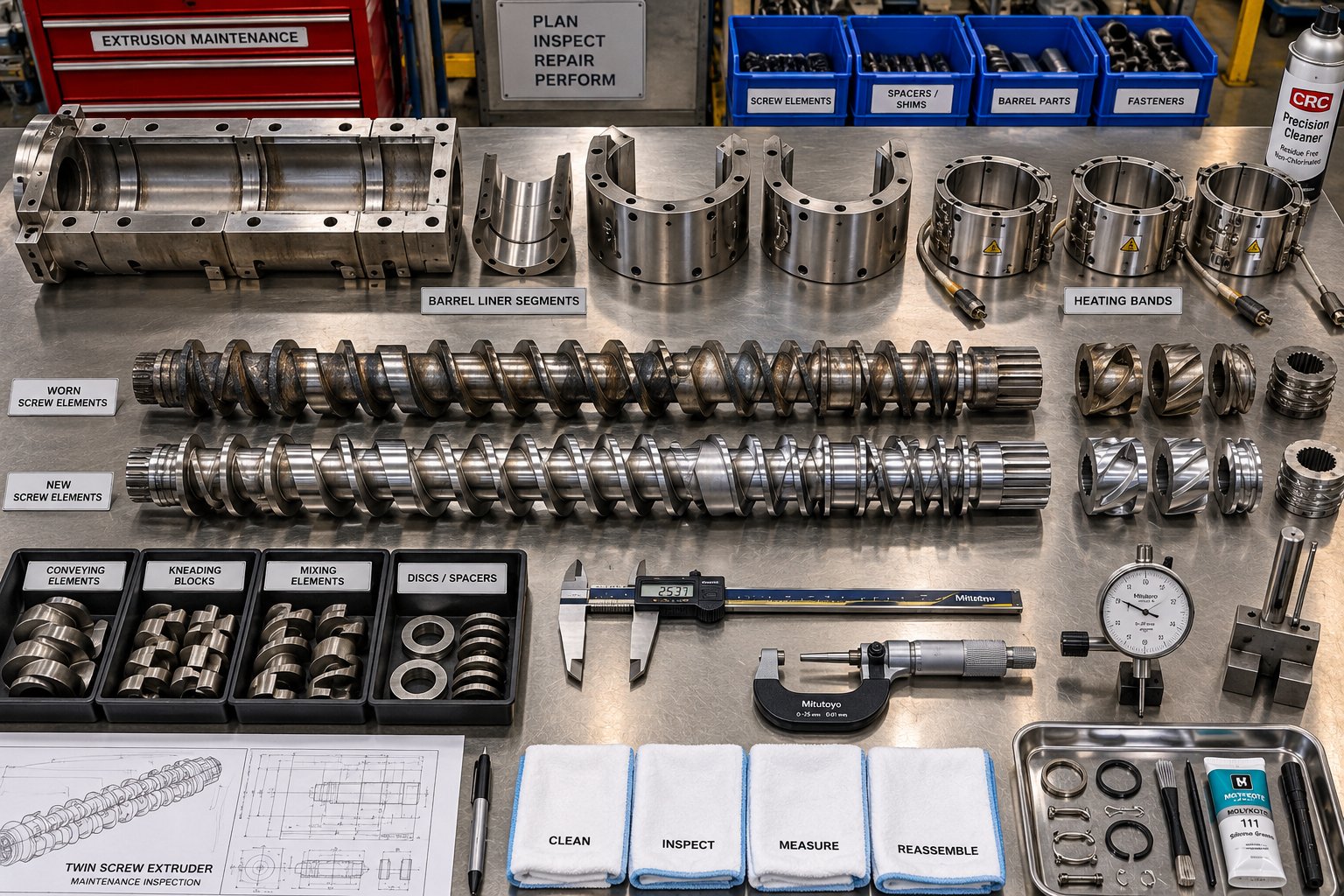
Screw elements and barrel liners are consumable items. Every hour of operation wears the bore surface and flight tips incrementally, and that wear rate varies dramatically by material. A nitrided steel barrel processing a 40% calcium carbonate-filled compound might need replacement after a fraction of the hours that a tungsten carbide-lined barrel would last in the same application. Industry maintenance guidance suggests that inspections should be scheduled approximately every 3,000 to 5,000 operating hours, with actual replacement intervals adjusted based on material abrasiveness and observed bore condition.
Twin-screw extruders have an inherent advantage here: their segmented barrel construction allows individual sections to be replaced independently. A feed zone barrel segment running under heavy abrasive load can be specified in tungsten carbide, while downstream segments processing fully molten polymer can use a more economical lining. This zone-by-zone approach lets you invest premium metallurgy only where the process demands it, keeping total screw extruders barrel costs manageable without sacrificing performance where it counts.
Beyond replacement frequency, consider the indirect costs of wear: unplanned downtime for emergency barrel changes, elevated scrap rates from inconsistent melt quality, and the energy penalty of processing through a worn bore. Research on manufacturing equipment total cost of ownership consistently shows that acquisition cost represents only 25-35% of lifecycle cost, while operational expenses — maintenance, energy, downtime, and quality losses — account for the remaining 60-75%.
The bottom line? A cheaper barrel that needs replacing twice as often is not cheaper at all. When evaluating any parallel twin screw extruder price, ask the supplier exactly what metallurgy is included in the quote — and then calculate whether that metallurgy matches the real demands of the compounds you plan to process. Spending more on the right barrel material upfront almost always costs less than spending less on the wrong one repeatedly.
Metallurgy is one hidden price variable. But it is not the only configuration choice that separates one machine quote from another. The fundamental mechanical arrangement of the screws themselves — whether they co-rotate or counter-rotate, run parallel or taper from feed to discharge — creates another set of pricing and performance trade-offs that most buyers encounter without fully understanding.
Co-Rotating vs Counter-Rotating and Parallel vs Conical Pricing
Two machines can both be labeled a "twin-screw extruder" and still differ fundamentally in how their screws interact. The direction of screw rotation and the physical geometry of the screw shafts create distinct machine categories — each with different engineering demands, application sweet spots, and price implications. Misunderstanding these distinctions is one of the fastest ways to either overspend on capability you do not need or underspend on a configuration that cannot do the job.
Co-Rotating vs Counter-Rotating Parallel Configurations
In a co-rotating parallel twin screw extruder, both screws turn in the same direction. This arrangement produces a self-wiping action — the flight of one screw continuously sweeps material off the other — which delivers excellent dispersive and distributive mixing, minimal dead zones, and consistent residence time distribution. These characteristics make co-rotating machines the dominant choice for polymer compounding, masterbatch production, reactive extrusion, and devolatilization.
Counter-rotating parallel machines spin the screws in opposite directions. Material is trapped and conveyed forward in closed C-shaped chambers between intermeshing flights, generating high pressure with less aggressive shear. This makes them well suited for pressure-sensitive processing like PVC profile extrusion and pipe production, where excessive shear heat could degrade the material.
How does this split affect pricing? Co-rotating designs generally command higher prices. The self-wiping geometry demands tighter manufacturing tolerances on the screw elements and barrel bore. The gearbox engineering is more complex because both output shafts must rotate in the same direction at precisely synchronized speeds while transmitting high torque through a compact housing. Market demand also plays a role — co-rotating machines serve a far broader range of applications, which supports premium positioning. A counter-rotating double screw extruder of equivalent screw diameter will often carry a lower price tag, but its narrower application range means fewer buyers consider it a viable alternative.
Parallel vs Conical Twin Screw Extruders
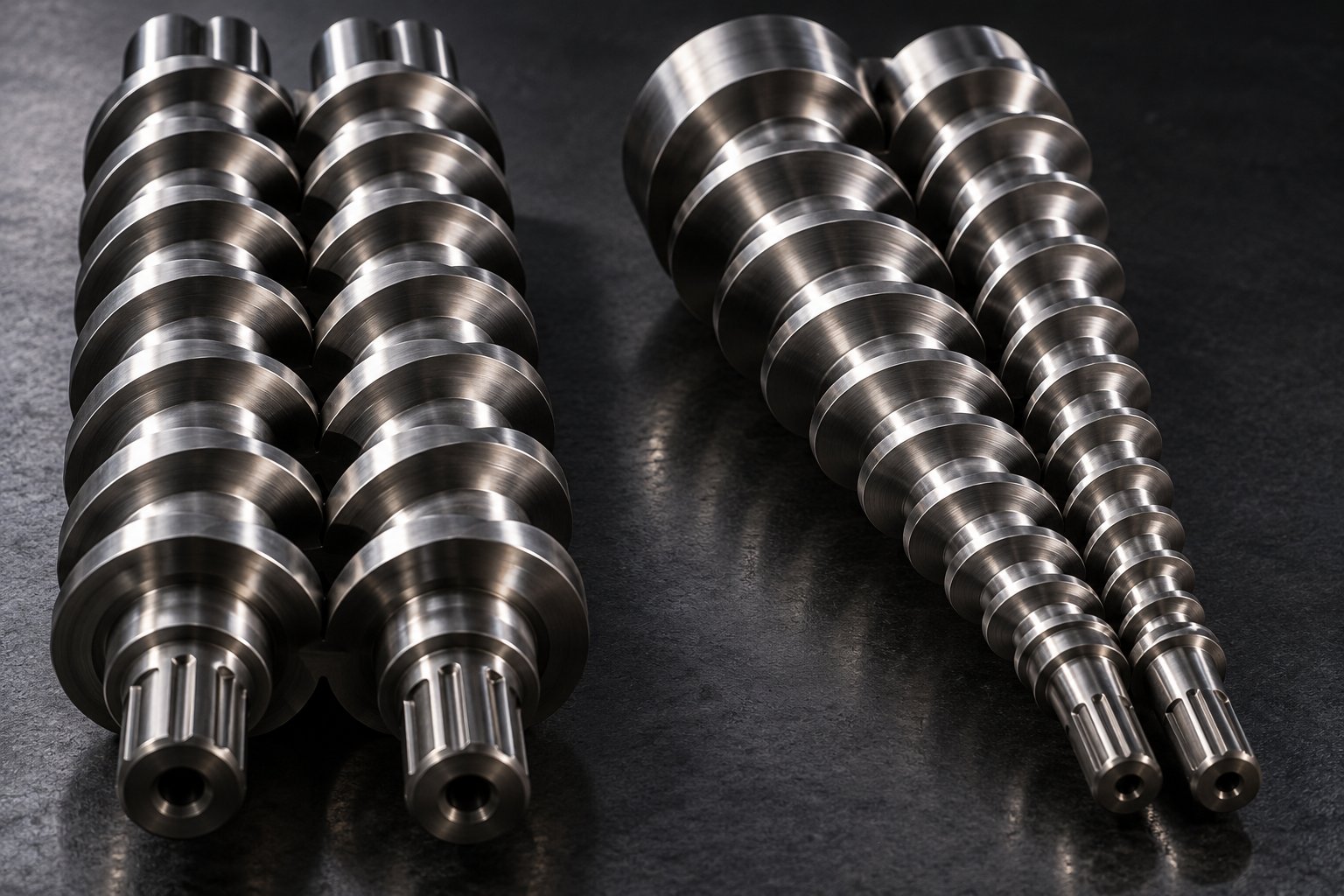
A parallel configuration uses two screws of uniform diameter along their entire length. A conical twin screw extruder, by contrast, features screws that taper from a large diameter at the feed end to a smaller diameter at the discharge. As Cowell Extrusion explains, the conical design naturally compresses material as it moves from the larger inlet toward the smaller outlet, generating high pressure and improved melting without requiring the extreme torque densities of a parallel machine.
Conical twin-screw extruders are typically counter-rotating and find their primary home in PVC compounding, PVC profile direct extrusion, and high-filler-loading applications. Their compact footprint and simpler gearbox requirements often translate to a lower purchase price for equivalent throughput in those specific use cases.
The trade-off? Versatility. A conical double screw extruder machine uses an integrated, fixed-profile screw — once designed and manufactured, the screw geometry cannot be reconfigured. Parallel machines, by contrast, use a modular design where individual screw elements slide onto splined shafts. You can rearrange kneading blocks, conveying elements, and mixing zones to optimize the configuration for entirely different formulations without purchasing a new screw. As Cowell notes, this Lego-like modularity is a major reason compounders who process multiple materials invest in parallel twin-screw extruders despite the higher upfront cost. Screw speeds on parallel machines can reach up to 1,200 rpm, and Do/Di ratios up to 1.8 provide larger free volume for higher throughput — capabilities that conical designs simply cannot match.
Matching Configuration to Application and Budget
Choosing the wrong configuration is not just a pricing mistake — it is an operational one. The table below maps each major configuration type to its best-fit applications, relative cost, and key trade-offs so you can align your technical requirements with a realistic budget expectation.
| Configuration Type | Typical Applications | Relative Price Level | Key Advantages | Key Limitations |
|---|---|---|---|---|
| Co-Rotating Parallel | Polymer compounding, masterbatch, reactive extrusion, devolatilization, food and pharma processing | Highest | Superior mixing, self-wiping, modular screw design, high throughput, broadest application flexibility | Higher initial cost, more complex gearbox, potential for excessive shear on heat-sensitive materials |
| Counter-Rotating Parallel | PVC profile and pipe extrusion, pressure-sensitive formulations | Moderate | High pressure generation, gentle conveying with low shear, good for heat-sensitive polymers | Narrower application range, limited mixing intensity, less modularity |
| Counter-Rotating Conical | PVC compounding, PVC direct extrusion, high-filler compounds | Lower | Compact design, natural compression, simpler gearbox, lower cost for PVC-specific operations | Fixed screw profile limits reformulation flexibility, lower throughput ceiling, restricted to niche applications |
A few practical takeaways from this comparison. If your operation processes multiple formulations across different polymer families, a co-rotating parallel machine almost certainly justifies its premium — the modular screw design pays for itself in flexibility and reduced changeover cost. If your sole focus is PVC extrusion with stable, well-defined formulations, a conical or counter-rotating parallel system can deliver equivalent output at a meaningfully lower capital outlay. And if you are comparing quotes across configuration types, make sure the comparison accounts for long-term versatility. A conical machine purchased for PVC today cannot pivot to engineering plastics tomorrow; a parallel machine often can.
Configuration determines the machine's mechanical architecture. But the name on the machine — and the country where it was built — introduces yet another pricing variable that can shift the same specification by 30% to 60% in either direction.
Manufacturer Tiers and How Geographic Origin Affects Price
Imagine two parallel twin screw extruders sitting side by side on a factory floor — identical screw diameter, identical L/D ratio, identical motor power rating. One carries a price tag 40% to 60% higher than the other. The difference? The name on the nameplate and the country where it was assembled. Geographic origin and brand positioning form one of the most influential — and least discussed — variables in any parallel twin screw extruder price conversation.
The global twin screw extruder manufacturer landscape breaks into three broadly recognizable tiers. Each tier delivers a different mix of engineering pedigree, build consistency, after-sales infrastructure, and upfront cost. Understanding where a supplier sits in this hierarchy helps you interpret quotes with far more precision than spec sheets alone can provide.
Premium European and US OEM Pricing Tier
Established Western OEMs represent the highest price tier in the market. Companies like Coperion (Germany, founded 1879), Leistritz (Germany, 1937), and KraussMaffei (Germany, 1838) bring decades — in some cases over a century — of continuous engineering refinement to their machines. On the US extruders side, Milacron (established 1860) and CPM Extrusion Group (1883) carry similarly deep industrial roots. For lab-scale applications, brands like Thermo Fisher offer specialized research-grade equipment frequently listed on scientific resale platforms like LabX, reinforcing the premium positioning of Western-manufactured instruments.
What exactly does the premium buy you? Proven process recipes validated across thousands of installations worldwide. Tight manufacturing tolerances backed by rigorous quality management systems. Comprehensive documentation — from full engineering drawings to validated operating procedures. Global service networks with field engineers reachable within 24 to 48 hours in most regions. And critically, service contracts typically running 2-5% of machine value annually that include scheduled preventive maintenance, priority spare parts access, and remote diagnostic capabilities.
The trade-off is straightforward: you pay the highest upfront cost but receive the lowest risk profile. For regulated industries like pharmaceuticals and food processing, or for operations where unplanned downtime costs tens of thousands of dollars per hour, that risk reduction often justifies every dollar of premium.
Mid-Tier and Emerging Manufacturers
A growing segment of twin-screw extruder manufacturers has carved out competitive positions between the legacy Western OEMs and the lowest-cost Asian suppliers. This tier includes established companies from Japan, India, Italy, and select Chinese manufacturers who have invested heavily in engineering capability and international credibility.
JSW (Japan, 1907), STEER World (India, 1993), Bausano (Italy, 1946), and ICMA San Giorgio (Italy, 1945) exemplify this category. Their machines often feature competitive specifications — high torque densities, modular screw designs, and modern control systems — at price points meaningfully below the top European tier. Some mid-tier manufacturers have developed genuine technical specializations: STEER, for instance, focuses on high-torque compounding and pharmaceutical applications, while Bausano has deep expertise in PVC processing.
The variability within this tier, however, is significant. After-sales support infrastructure ranges from robust regional service centers to limited distributor networks. Spare parts availability can be excellent from one supplier and inconsistent from another. Documentation standards and process validation depth tend to vary more than in the premium tier. Buyers working with mid-tier manufacturers benefit from asking pointed questions about local service coverage, guaranteed spare parts lead times, and reference installations in their specific application area.
Chinese and Asian Manufacturer Pricing Tier
Platforms like Made-in-China.com and Alibaba feature a large number of twin screw extruder suppliers offering machines at significantly lower price points — often 30% to 60% below comparable Western OEM specifications. Chinese manufacturers like KYmach (founded 1993), which now exports to over 60 countries, represent the more established end of this tier, with decades of production experience and proven track records in compounding, recycling, and masterbatch applications.
The honest trade-offs deserve transparent discussion. Lower upfront cost is real and substantial — for budget-constrained operations, it can mean the difference between acquiring equipment and not. At the same time, buyers should evaluate several factors carefully. Build quality consistency can vary between manufacturers and even between production batches from the same supplier. Control system sophistication may rely on third-party components with different support ecosystems. Technical documentation sometimes lacks the depth that Western OEMs provide as standard. And long-term technical support — field service response times, application engineering guidance, process troubleshooting — may depend heavily on the specific supplier's investment in after-sales infrastructure rather than on broad regional networks.
None of this means Chinese-manufactured machines are inherently inferior. Many operations run them successfully for years. It does mean the buyer carries more responsibility for due diligence: visiting factories, inspecting reference machines in operation, verifying component sourcing, and negotiating clear service-level agreements before signing a purchase order.
The following table summarizes how these tiers compare across the factors that matter most to buyers:
| Tier | Typical Price Range (Relative to Premium) | Build Quality | After-Sales Support | Best Suited For |
|---|---|---|---|---|
| Premium (European / US OEMs) | 100% (baseline) | Highest consistency, tightest tolerances, rigorous QC | Global service networks, 24/7 remote support, preventive maintenance contracts, guaranteed spare parts lead times | Regulated industries (pharma, food), high-uptime-critical operations, buyers requiring validated process documentation |
| Mid-Tier (Japan, India, Italy, select Chinese) | 60% – 85% of premium | Competitive, with some variability between manufacturers | Regional service centers, responsive but less globally standardized, spare parts availability varies | Cost-conscious operations with specific application expertise needs, mid-volume production, specialty niches |
| Value (Chinese and broader Asian) | 40% – 65% of premium | Ranges from very good (established exporters) to inconsistent (newer entrants) | Varies widely — strong from established suppliers, limited from smaller manufacturers | Budget-constrained projects, commodity compounding, operations with in-house technical expertise for self-support |
One nuance the table cannot fully capture: the tier a manufacturer occupies is not permanent. Several mid-tier and value-tier companies have invested aggressively in engineering talent, quality systems, and global service infrastructure over the past decade. A twin screw extruder manufacturer that sat firmly in the value tier five years ago may now compete credibly at the mid-tier level. Smart buyers revisit their assumptions and evaluate each supplier on current capability rather than historical reputation alone.
Where a machine was built and who built it shapes the purchase price. But the invoice total on delivery day is only the beginning of what you will spend. The costs that accumulate after the machine arrives — installation, training, spare parts, energy, maintenance, and the option of buying used — often dwarf the original capital outlay in ways that catch unprepared buyers off guard.
Total Cost of Ownership Beyond the Purchase Price
Here is a number that should reshape how you think about any parallel twin screw extruder price: the purchase invoice typically represents only 25% to 35% of what you will actually spend over the machine's operating life. The remaining 65% to 75% flows out through installation, training, spare parts, energy bills, maintenance, and unplanned downtime. Ignore these downstream costs during the buying phase, and you are budgeting with one eye closed.
Total cost of ownership (TCO) is the only honest lens through which to compare two quotes — or to decide whether that lower-priced machine is genuinely the better deal.
Installation, Commissioning, and Training Costs
The extruder arrives on a flatbed truck. Then what? Before a single pellet runs through the barrel, you need to invest in everything that makes the machine operational in your facility.
Site preparation alone can carry meaningful costs. A production-scale twin screw extruder demands reinforced concrete foundations engineered to absorb vibration, dedicated electrical feeds sized for motors that may draw 200 kW or more, compressed air lines, cooling water circuits, and ventilation or exhaust systems for fume extraction. Depending on facility age and existing infrastructure, these utility connections can range from a few thousand dollars for a lab unit to $30,000 or more for a full production installation.
Commissioning — the process of having the manufacturer's engineers start up the machine, verify performance against spec, and optimize initial process parameters — typically adds another layer. Premium OEMs often include basic commissioning in the purchase price, but extended commissioning, process recipe development, and application-specific optimization are usually billable. Budget one to two weeks of on-site engineering time, including travel and accommodation, which can run $5,000 to $15,000 or higher depending on the manufacturer's location and the complexity of your application.
Operator training rounds out the startup investment. Training programs typically range from $2,000 to $5,000 per operator depending on depth and customization. Twin screw extrusion demands operators with more advanced technical knowledge than single screw systems, because multiple processing zones and complex parameter interactions require a deeper understanding of material behavior and screw configuration. Skimping on training does not save money — it costs money through suboptimal processing, excessive scrap, and avoidable wear.
Spare Parts, Wear Components, and Maintenance
Screw elements and barrel liners are consumable items. This is a point worth emphasizing because many first-time buyers treat them as permanent components. They are not. Every operating hour wears the bore surface and flight tips, and the rate depends directly on the abrasiveness of the compounds being processed and the metallurgy selected — a relationship explored in depth earlier in this guide.
How much do replacements actually cost? Data from Kerke Extrusion's spare parts analysis provides useful benchmarks. A common nitrided steel screw and barrel set runs approximately $828 to $2,760 per unit, while bimetallic sets — needed for abrasive or corrosive materials — range from $4,350 to $4,500 or higher. Individual modular screw elements cost roughly $1.10 to $2.00 per millimeter, with bulk discounts available above 500 mm orders. For a complete production-scale screw element set, replacement costs can range from $20,000 to $100,000 depending on configuration and material specification.
Service life varies dramatically by application. Ordinary nitrided steel screws and barrels last roughly 6 to 12 months when processing non-abrasive polymers like PP and PE. Introduce glass fiber or mineral fillers, and that window shrinks to 3 to 6 months. Bimetallic components extend service life to 12 to 24 months under high-filler conditions — two to three times longer than standard nitrided steel. The industry replacement guideline calls for screw replacement when radial unilateral wear reaches 2 mm, per standard JB/T 11686-2013.
Beyond screws and barrels, your maintenance budget needs to account for:
- Gearbox servicing: Overall replacement runs $1,800 to $3,800, with internal bearings ($16 to $21 each) and gears ($25 to $28 each) on a roughly 15,000-hour replacement cycle
- Heating elements: Cast aluminum heating coils cost $7 to $14 each, with a 6- to 12-month lifespan that shortens under high-temperature conditions
- Feeding system components: Hollow feeding screws run $41 to $83 each, while a complete side feeder set costs approximately $1,791
- Seals and O-rings: Low individual cost ($3 to $7 per oil seal) but 6- to 12-month replacement intervals add up over years of operation
- Die plates and screen changers: $28 to $69 per die plate, with 200- to 400-hour service life depending on material abrasiveness
Annual routine maintenance costs for twin screw extruders typically run $8,000 to $25,000, with major overhauls — including bearing replacement and complete screw inspection — occurring every 25,000 to 40,000 operating hours at costs of $40,000 to $150,000. Over a typical 10-year equipment lifespan, total maintenance expenses commonly reach $195,000 to $350,000.
Energy Consumption and Operational Efficiency
Your electric bill does not care what you paid for the machine. It only cares how efficiently that machine converts electricity into useful work on your polymer melt — and the differences between machines can be substantial.
Twin screw extruders typically achieve specific energy consumption rates of 0.12 to 0.22 kWh per kilogram of processed material for compounding applications. At first glance, that range looks narrow. But multiply it across thousands of operating hours and hundreds of tons of throughput, and the gap between the low end and the high end becomes enormous. A production-scale machine consuming 150 kW during continuous operation at 5,000 hours per year generates roughly $75,000 in annual energy costs at $0.10 per kWh. Shave 15% off that consumption through a more efficient drive system and better thermal management, and you save over $11,000 per year — every year.
Higher-priced machines often feature energy-saving technologies that cheaper alternatives skip: high-efficiency servo motors instead of standard AC induction drives, optimized barrel heating and cooling zone designs that reduce thermal overshoot and wasted energy, and advanced control algorithms that automatically adjust screw speed and temperature setpoints to minimize specific energy consumption for a given throughput target. These features cost more upfront but pay for themselves over the machine's operating life.
The Used Equipment Market as a Budget Alternative
For buyers facing tight capital budgets, the used extruder equipment market offers an alternative worth considering — with appropriate caution. Platforms like LabX list used extrusion equipment from laboratory-scale to production-scale, and specialized industrial equipment brokers handle larger machines from well-known OEMs.
A used twin screw extruder can offer 40% to 60% savings versus new equipment pricing, which makes the secondary market especially attractive for startup operations, pilot programs, or facilities that need backup capacity without the full investment of a new line. When you see a used twin screw extruder for sale from a reputable dealer, you may find machines with thousands of productive hours still available at a fraction of the original cost.
The risks, however, are real. Used extruders require careful evaluation of barrel and screw element wear condition, gearbox health, electrical system integrity, and control system obsolescence. Spare parts availability becomes a critical question — if the machine is an older model or from a manufacturer that has exited the market, sourcing replacement screw elements, barrel liners, or electronic components can be difficult and expensive. Remaining service life is inherently uncertain, and without detailed maintenance records, you are estimating rather than knowing.
Before purchasing any used twin screw extruder, insist on a thorough mechanical inspection — ideally with bore measurements documented at multiple points along the barrel — and verify that the manufacturer still supports the model with spare parts and technical documentation. A great deal on used extruders for sale becomes a poor investment if the first barrel replacement costs half the purchase price and takes three months to source.
Hidden Costs Buyers Frequently Overlook
Even experienced procurement teams miss line items that quietly inflate the true project cost. Here is a checklist of expenses that frequently fall outside the initial budget but show up after the purchase order is signed:
- Freight, rigging, and crane rental for equipment delivery and positioning inside the facility
- Electrical panel upgrades to accommodate the motor's power draw and control system requirements
- Cooling water system installation — chiller units, piping, and pumps for barrel and gearbox cooling
- Initial spare parts inventory — a recommended startup kit of replacement screw elements, heating bands, thermocouples, seals, and filters
- Process development time — labor hours spent optimizing screw configurations and process parameters before stable production begins
- Regulatory compliance costs — safety guarding, noise abatement, environmental permits, and documentation for regulated industries
- Software licenses — SCADA systems, recipe management software, or OPC connectivity modules often sold separately from the base machine
- Extended warranty or service contracts — typically 2% to 5% of machine value annually, often negotiable at time of purchase but expensive to add later
- Downtime during installation — lost production revenue if the new machine replaces existing capacity during the changeover period
- Insurance premium increases reflecting the added asset value on your facility's equipment schedule
Add these items together, and they can easily represent 15% to 30% of the base machine cost — enough to blow a carefully constructed budget if they are not anticipated from the start.
Total cost of ownership reframes the entire pricing conversation. A machine that looks expensive on the invoice but delivers lower energy consumption, longer component life, and minimal unplanned downtime may cost far less over ten years than a bargain purchase that drains your maintenance budget month after month. With that lifecycle perspective in place, the next question becomes: what does the total system actually cost for your specific application? The answer shifts dramatically depending on whether you are compounding masterbatch, recycling post-consumer waste, or extruding pharmaceutical granules — and each application brings its own configuration demands and price expectations.
Typical Pricing by Application and Industry
Your application does not just influence which machine you buy — it dictates the entire cost structure surrounding it. A plastic twin screw extruder configured for commodity masterbatch production and an identically sized machine built for pharmaceutical granulation can differ in total system price by a factor of three or more, even though the base platform looks similar on a spec sheet. Understanding how specific industries shape configuration requirements — and therefore pricing — lets you build a budget grounded in reality rather than averages.
Polymer Compounding and Masterbatch Production
Compounding is the heartland of the co-rotating parallel twin screw extruder, and it is where the majority of production-scale machines end up working. A typical compounding extruder for color masterbatch, additive concentrates, or filled polymer compounds demands high torque density, tight temperature control across multiple barrel zones, and robust wear protection on every surface that contacts the melt.
What does that translate to in terms of cost? A mid-range production setup — say, a 65 mm twin screw plastic extruder with a 40:1 L/D ratio, high-torque gearbox, bimetallic barrel liners, gravimetric feeders, strand pelletizer, and modern PLC — commonly lands in the $400,000 to $900,000 range depending on manufacturer tier and metallurgy grade. Scale up to a 90 mm or 110 mm machine for high-volume commodity compounding, and the system cost pushes past $1,000,000 once downstream equipment, cooling baths, classifiers, and bagging systems are included.
Barrel and screw element quality is especially critical here. Compounding operations cycle through abrasive fillers, pigments, and reinforcing fibers that punish inferior metallurgy. The difference between a nitrided steel barrel that needs replacement every six months and a tungsten carbide-lined barrel lasting two years directly impacts your plastic extrusion machine cost over the equipment's lifecycle — a point covered in detail in the metallurgy section earlier.
Recycling and Pelletizing Operations
Recycling applications place unique demands on extruder design. Post-consumer and post-industrial waste streams are inherently inconsistent — varying in contamination levels, moisture content, bulk density, and polymer composition from batch to batch. The machine must tolerate these fluctuations without constant operator intervention, which means robust feed throat designs, aggressive venting or vacuum devolatilization ports, melt filtration systems, and barrel metallurgy selected to handle unpredictable abrasive contaminants.
A recycling-grade parallel twin screw extruder typically requires a longer L/D ratio (often 44:1 to 52:1) to accommodate extended degassing zones and multiple side-feed or vent positions. The plastic extruder price for a complete recycling and pelletizing line — including the extruder, screen changer, underwater or strand pelletizer, dryer, and classifier — generally starts around $350,000 for smaller throughput systems and can exceed $1,200,000 for high-capacity lines processing several tons per hour.
One strategic consideration when evaluating total system cost for compounding, recycling, or pelletizing applications: sourcing custom parallel twin screw barrels from specialized manufacturers like NANHAIYA can be an effective way to optimize barrel and screw element costs without compromising performance. NANHAIYA designs barrels specifically for demanding mixing and conveying applications across compounding, recycling, pelletizing, granulation, and masterbatch production — which means you can match metallurgy precisely to your process requirements rather than accepting a one-size-fits-all specification bundled into a machine quote.
Pharmaceutical and Food-Grade Applications
If compounding and recycling represent the volume end of the market, pharmaceutical and food-grade extrusion represent the premium end. A hot melt extruder machine used for pharmaceutical solid dispersion or continuous granulation must meet stringent GMP compliance requirements that touch every aspect of the system — from material contact surfaces to documentation to cleanability.
What drives the price premium? Stainless steel or nickel-alloy contact surfaces throughout the barrel, screws, and die. Electropolished finishes to prevent product adhesion and facilitate validated cleaning. FDA-compliant lubricants in all seals and bearings. Full IQ/OQ/PQ documentation packages. 21 CFR Part 11-compliant control systems with electronic batch records, audit trails, and user access management. Enclosed, climate-controlled processing environments with HEPA-filtered air handling.
Each of these requirements adds cost independently, and together they can double or triple the system price compared to an equivalent-throughput industrial compounding extruder. A lab-scale pharmaceutical twin screw extruder with a 16 mm to 27 mm screw diameter, full GMP documentation, and validated cleaning protocols can cost $120,000 to $250,000 — several times the price of a general-purpose lab unit with the same screw diameter. At production scale, food and pharma-grade systems routinely exceed $1,500,000 as a complete installed line.
The table below maps each major application category to its typical machine configuration, critical requirements, and relative system pricing:
| Application | Typical Configuration | Key Requirements | Relative System Price Level |
|---|---|---|---|
| Color Masterbatch / Additive Concentrates | Co-rotating, 50–90 mm, 36:1–44:1 L/D | High dispersive mixing, precise color consistency, moderate wear protection | Medium to High |
| Filled Polymer Compounding (glass fiber, mineral fillers) | Co-rotating, 50–135 mm, 40:1–48:1 L/D | High torque density, premium barrel metallurgy, side feeders for fiber introduction | High to Very High |
| Plastic Recycling and Pelletizing | Co-rotating, 50–100 mm, 44:1–52:1 L/D | Extended degassing, melt filtration, contamination-tolerant barrel liners | Medium to High |
| PVC Compounding / Direct Extrusion | Counter-rotating parallel or conical, 50–90 mm | Low-shear conveying, corrosion-resistant barrel liners, precise thermal control | Medium |
| Pharmaceutical Hot Melt Extrusion | Co-rotating, 16–27 mm (lab/clinical), 27–40 mm (production) | GMP compliance, 21 CFR Part 11 controls, validated cleaning, full IQ/OQ/PQ documentation | Very High |
| Food-Grade Extrusion (snacks, protein texturization) | Co-rotating, 40–90 mm, 25:1–40:1 L/D | FDA-compliant contact surfaces, sanitary design, easy disassembly for cleaning | High to Very High |
| Reactive Extrusion / Devolatilization | Co-rotating, 27–75 mm, 48:1–52:1 L/D | Extended residence time, multiple vacuum ports, corrosion-resistant metallurgy | High |
Notice the pattern: applications that involve regulatory compliance, specialized metallurgy, or extended barrel configurations consistently sit at the higher end of the pricing spectrum, regardless of throughput. A small pharmaceutical extruder processing a few kilograms per hour can cost more than a mid-size industrial compounding extruder producing hundreds of kilograms per hour — because compliance infrastructure, not mechanical scale, drives the price.
This application-level perspective brings the full pricing picture into focus. You now understand how specs, metallurgy, configuration type, manufacturer tier, total cost of ownership, and application demands each contribute to the final number on a quote. The remaining challenge is practical: when multiple supplier quotes land on your desk, how do you compare them fairly, spot the red flags, and build a budget that holds up under real-world conditions?

How to Evaluate Quotes and Make a Confident Buying Decision
Supplier quotes are now arriving in your inbox. Each one presents a different total, a different scope, and a different set of assumptions buried in the fine print. The challenge is no longer understanding what drives a parallel twin screw extruder price — you have that framework. The challenge is applying it to real documents from real suppliers and extracting a fair, apples-to-apples comparison that protects your budget and your operation.
This final section gives you the tools to do exactly that: a structured RFQ template, a list of red flags that signal trouble, and a practical approach to building a defensible budget from the ground up.
What to Include in Your RFQ for Accurate Comparisons
A vague RFQ produces vague quotes — and vague quotes are impossible to compare. When every supplier interprets your requirements differently, the resulting price spread tells you more about their assumptions than about their actual value. The fix is straightforward: specify enough detail that every bidder responds against the same technical and commercial baseline.
Your RFQ should include these essential items, in this order:
- Target throughput — specify the required output in kg/hr for your primary formulation, including the material's bulk density and any known processing constraints
- Materials to be processed — list every polymer, filler, additive, and reinforcement you plan to run, including concentrations and any abrasive or corrosive components
- Required screw diameter and L/D ratio — if you have a specific size requirement based on scale-up data or facility constraints, state it; otherwise, ask suppliers to recommend and justify their selection
- Preferred barrel and screw metallurgy — specify the wear protection level needed based on your compound's abrasiveness, or request the supplier's recommendation with supporting rationale
- Automation and control system level — define whether you need basic PLC control, full SCADA integration, recipe management, data logging, or regulatory-compliant systems (e.g., 21 CFR Part 11)
- Downstream equipment needs — clearly state whether pelletizers, die heads, cooling baths, dryers, classifiers, feeders, or other auxiliary equipment should be included in the quote or quoted separately
- Spare parts package — request a priced startup spare parts kit and a separate price list for ongoing consumables including screw elements, barrel segments, heating bands, thermocouples, and seals
- Installation, commissioning, and training requirements — specify whether on-site commissioning is expected, how many days of engineering support you require, and how many operators need training
- Delivery terms and timeline — state your required delivery date, preferred Incoterm, and any site-specific logistics constraints like maximum crate dimensions or crane availability
- Warranty scope and service-level expectations — ask each supplier to define warranty duration, coverage exclusions, response time guarantees, and remote diagnostic capabilities
When every bidder marks each scope item as Included, Optional, By Buyer, or Not Applicable — a normalization technique recommended in Jinxin's supplier evaluation guide — you eliminate the false price gaps created by inconsistent scope assumptions. A quote that looks $80,000 cheaper may simply have excluded the pelletizer, the spare parts kit, and on-site commissioning. Without normalized scope, you are comparing illusions.
Red Flags and Key Questions When Comparing Quotes
Even with a well-structured RFQ, some quotes will raise concerns. Knowing what to watch for separates experienced buyers from those who learn expensive lessons after the purchase order is signed.
Watch for these warning signs:
- Vague or missing specifications — a quote that says "high-quality barrel" without specifying the alloy grade, hardness, or liner type is hiding information you need
- No mention of barrel or screw metallurgy — if wear protection details are absent entirely, the supplier may be quoting the cheapest option without disclosing it
- Spare parts pricing not provided — a low machine price paired with expensive or unavailable replacement screw elements and barrel liners creates a total cost of ownership trap
- Unclear delivery and commissioning terms — "commissioning included" means nothing without specifying how many days, how many engineers, who pays travel expenses, and what constitutes successful completion
- No factory acceptance test (FAT) protocol — as industry best practice emphasizes, a supplier who cannot define a pre-shipment test plan tied to your actual product and material is a significant risk
- Generic performance claims — statements like "suitable for all polymers" or "high output" without material-specific throughput data verified under documented test conditions
- Refusal to provide reference contacts — a reputable twin screw extruder for sale should come backed by verifiable installations; unwillingness to share even anonymized project evidence is a concern
- Unusually short lead times on custom configurations — a complex production-scale machine quoted for delivery in four weeks likely is not being built to your specification
Beyond spotting red flags, actively ask these questions of every shortlisted supplier: What is the exact gearbox manufacturer and model? What is the guaranteed torque density at the quoted screw speed? Can you provide bore measurement data from a reference machine after 5,000 hours of operation? What is the lead time for replacement barrel segments? Will you run a factory acceptance test using my actual material and formulation?
Always request a detailed bill of materials. If a supplier resists providing one, ask yourself why. Transparency about components — motor brand, inverter model, PLC platform, barrel alloy specification — is a baseline expectation for capital equipment purchases, not a special favor.
Building Your Budget and Next Steps
You now have a complete framework for interpreting any parallel twin screw extruder price. Here is how to translate that knowledge into a working budget:
Start with the base machine cost, anchored to the price-range tables and specification relationships covered throughout this guide. Layer on barrel and screw metallurgy appropriate to your compound — not the cheapest option, but the one that matches your material's wear profile. Add downstream equipment, automation, and control system costs. Then build in the total cost of ownership factors: installation, commissioning, training, startup spare parts inventory, first-year maintenance reserves, and energy projections. Finally, apply a 10% to 15% contingency for the hidden costs that invariably surface — freight, rigging, electrical upgrades, and process development time.
For buyers browsing the market for an extruder for sale or evaluating extrusion equipment for sale from multiple sources, this layered approach prevents the most common budgeting mistake: anchoring on the machine invoice and being blindsided by everything else.
One area where informed sourcing can meaningfully reduce costs without sacrificing quality is barrel and screw element procurement. Rather than accepting bundled pricing from the machine OEM — which often carries significant markup — buyers exploring cost-effective barrel and screw element sourcing should consider requesting a quote from NANHAIYA, which specializes in custom parallel twin screw barrels for compounding, recycling, pelletizing, granulation, and masterbatch applications. Purpose-built barrels matched precisely to your process demands can deliver equivalent or superior performance at a fraction of OEM replacement cost — a distinction that compounds dramatically over years of operation.
Whether you are evaluating twin screw extruders for sale from premium European OEMs, mid-tier specialists, or value-tier manufacturers, the principles remain the same. Normalize scope before comparing price. Verify metallurgy against your actual material requirements. Calculate total cost of ownership over a realistic operating horizon — not just the number on page one of the quote. And always, always request documented evidence rather than accepting claims at face value.
The cheapest machine is rarely the most economical. True value must be evaluated across four dimensions: purchase price, component quality, operational efficiency, and long-term supplier support. A disciplined buyer who invests time in this evaluation will spend less over ten years than one who simply signs the lowest quote.
Frequently Asked Questions About Parallel Twin Screw Extruder Pricing
1. How much does a parallel twin screw extruder cost?
Pricing spans a wide range depending on scale and configuration. Desktop and lab-scale units (10-27 mm screw diameter) typically cost $8,000 to $150,000, pilot-scale machines (27-50 mm) run $150,000 to $400,000, small production systems (50-75 mm) fall between $300,000 and $800,000, and large production lines (75 mm and above) start at $800,000 and can exceed $1,500,000. These figures cover the extruder unit itself — adding downstream pelletizing equipment, gravimetric feeders, advanced automation, and premium barrel metallurgy can push total installed system costs significantly higher. Sourcing wear components like barrels and screw elements from specialized manufacturers such as NANHAIYA can help optimize ongoing costs without sacrificing quality.
2. What is the biggest factor that determines twin screw extruder price?
Screw diameter is the single largest cost determinant. Because torque requirements follow a cube law relative to diameter, doubling the screw size roughly octuples the torque demand, which forces the gearbox, motor, barrel, and supporting structure to scale aggressively. A 52 mm machine can cost five to eight times more than a 26 mm unit, not simply twice as much. The L/D ratio adds a second layer — longer ratios (40:1 to 52:1) require additional barrel sections, more heating and cooling zones, and greater torque capacity, all of which compound the cost increase beyond what screw diameter alone dictates.
3. Are Chinese twin screw extruders worth buying compared to European brands?
Chinese-manufactured twin screw extruders can offer 30% to 60% savings compared to premium European OEMs, making them a viable option for budget-constrained projects, commodity compounding, or operations with strong in-house technical expertise. Established Chinese exporters with decades of production experience deliver reliable machines used successfully worldwide. However, buyers should carefully evaluate build quality consistency, control system sophistication, documentation depth, and long-term service support. Factory visits, reference machine inspections, and clear service-level agreements are essential before purchasing. The right choice depends on your risk tolerance, application complexity, and whether you need validated process documentation or regulatory compliance.
4. What hidden costs should I budget for beyond the extruder purchase price?
The purchase invoice typically represents only 25% to 35% of total lifetime cost. Key hidden expenses include site preparation and utility connections ($5,000 to $30,000+), commissioning by manufacturer engineers ($5,000 to $15,000), operator training ($2,000 to $5,000 per person), startup spare parts inventory, freight and rigging, electrical panel upgrades, and cooling water system installation. Ongoing costs include replacement screw elements ($20,000 to $100,000 per set), annual routine maintenance ($8,000 to $25,000), energy consumption (roughly $50,000 to $75,000+ annually for production-scale machines), and major overhauls every 25,000 to 40,000 hours ($40,000 to $150,000). Over a 10-year lifespan, total maintenance alone commonly reaches $195,000 to $350,000.
5. How does barrel and screw metallurgy affect twin screw extruder pricing and operating costs?
Barrel metallurgy creates a cost hierarchy that significantly impacts both purchase price and long-term expenses. Standard nitrided steel is the most affordable option (1x baseline cost) but only suits non-abrasive polymers like neat PE or PP. Iron-boron bimetallic linings cost 2-3x more and handle moderate filler loads. Tungsten carbide linings at 4-5x are essential for glass-fiber or mineral-filled compounds. Powder metallurgy alloys at 4-6x or higher provide extreme wear and corrosion resistance. Choosing cheaper metallurgy for abrasive applications backfires — a nitrided barrel processing filled compounds may need replacement every 3 to 6 months, while a tungsten carbide barrel can last 12 to 24 months. Custom barrel sourcing from specialists like NANHAIYA allows processors to match metallurgy precisely to each barrel zone, investing premium materials only where the process demands them.
Written by
Nanhaiya Technical Team
Zhoushan Nanhaiya Plastic Machinery Co., Ltd.
The Nanhaiya technical team supports screw and barrel manufacturing projects through application review, technical communication, custom manufacturing coordination, and production and quality control.
Discuss Your Application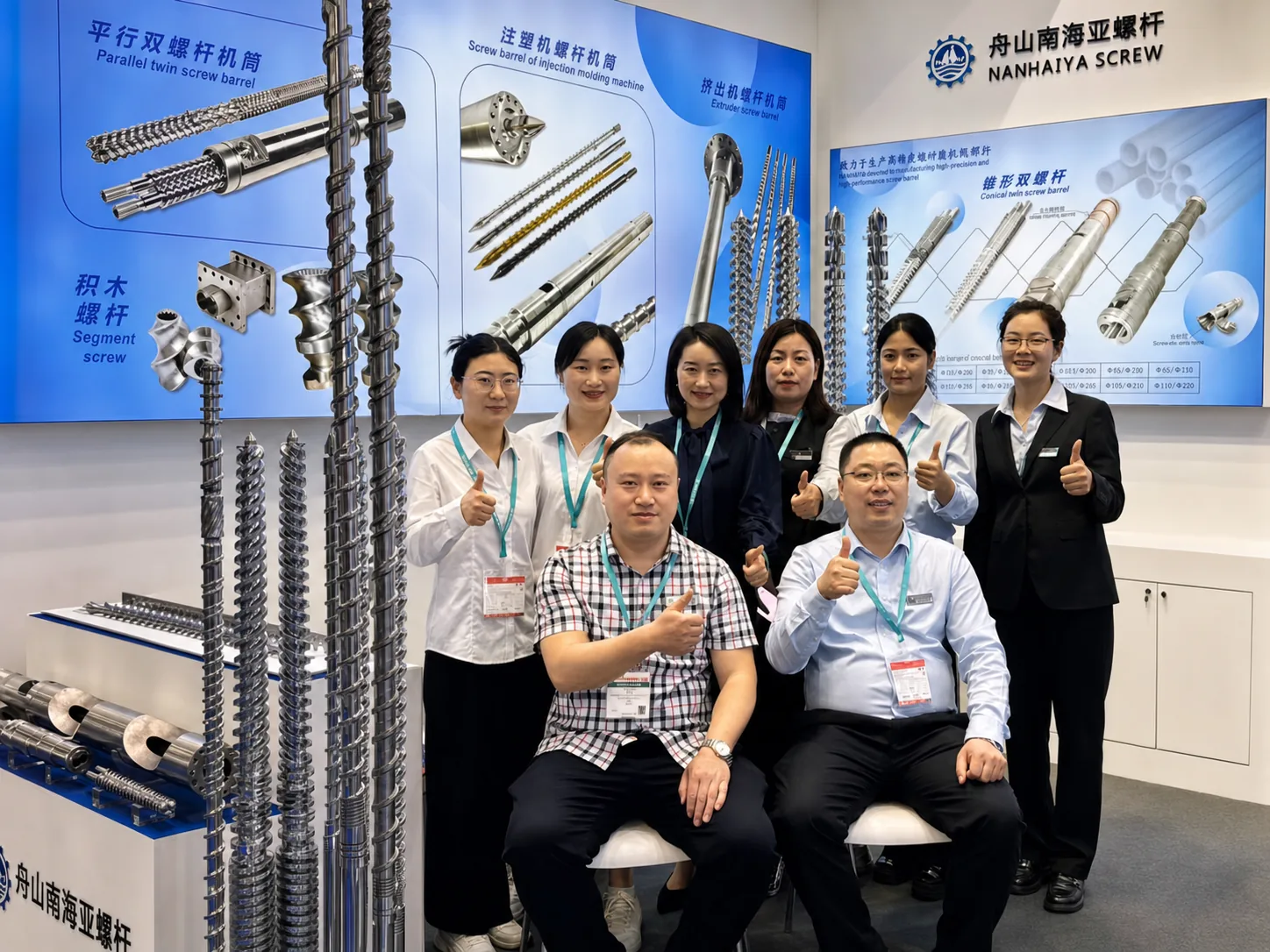
Related Articles
More insights on screw barrel technology and plastics processing.
Co Rotating Twin Screw Extruder Manufacturer: Beyond The Brochure
Oct 13, 2026
Learn how to evaluate a co rotating twin screw extruder manufacturer using specs, TCO analysis, red flags, and a step-by-step buyer framework.
Read Article
What Nobody Tells You Before Buying A PP Pipe Extruder Machine
Oct 12, 2026
Learn how a PP pipe extruder machine works, key components, material grades, quality standards, and a practical buyer selection framework for long-term ROI.
Read Article
What Your Single Screw Extruder Manufacturer Won't Tell You
Oct 10, 2026
Learn how to evaluate single screw extruder manufacturers with this buyer-focused guide covering specs, configurations, material matching, and a ready-to-use selection checklist.
Read ArticleLooking for something else?
Search by material, symptom or product and jump straight to the relevant page.
These are navigation suggestions based on keyword matching — not a quotation, not a delivery commitment, and not a substitute for engineering review. Final specification is confirmed by our engineers against your drawings and processed material.
Need help with screw barrel selection?
Share your machine model, processed material and application. Our team can help with pricing and technical support.