

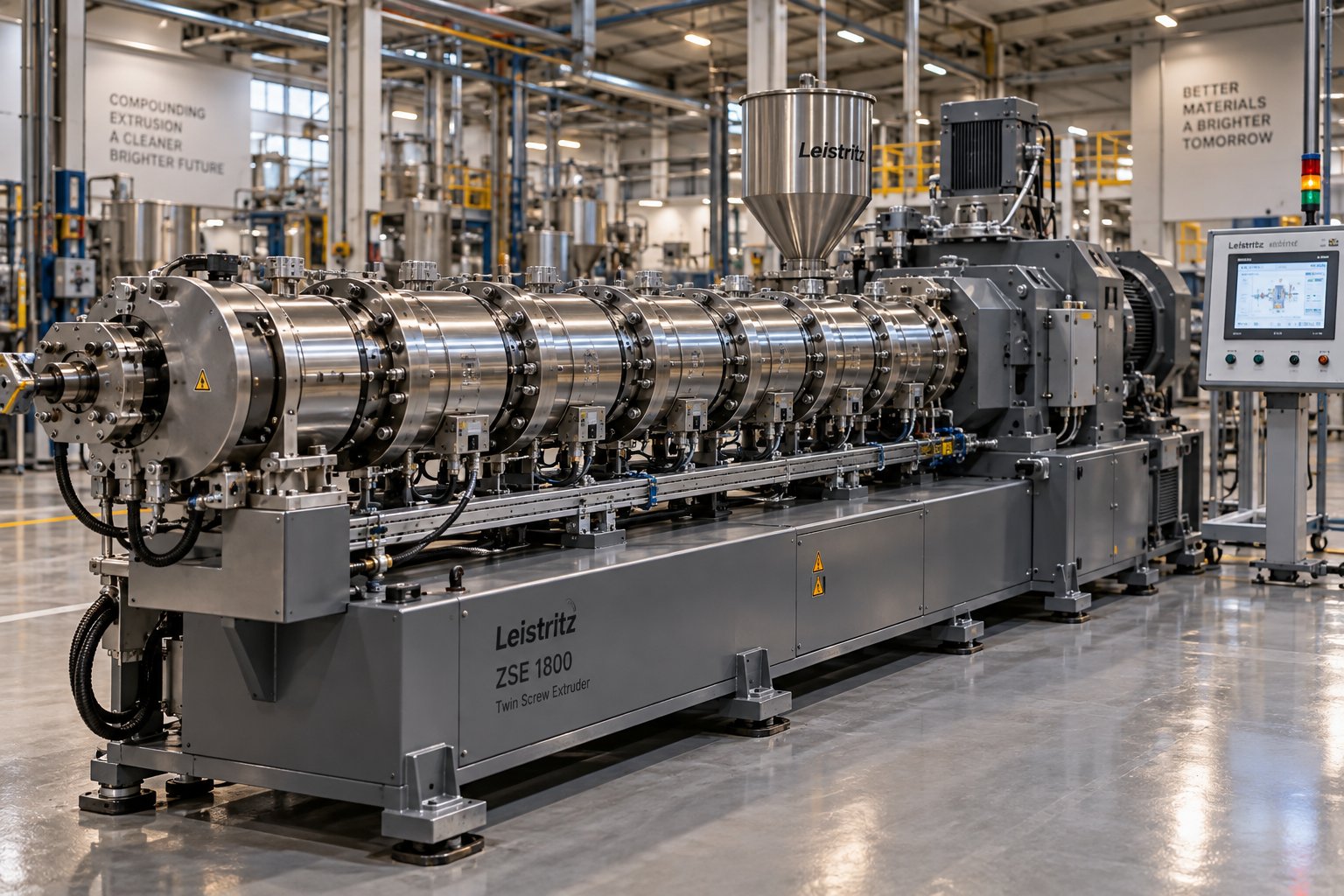
What a Co-Rotating Twin Screw Extruder Is and Why the Manufacturer Matters
Picture committing six or seven figures to a single piece of equipment that will shape your product quality, uptime, and profitability for the next decade. That is the reality when selecting a co rotating twin screw extruder manufacturer — and yet many buyers reduce this decision to a price comparison or a quick spec-sheet scan. This guide exists to change that approach. It is not a ranked brand list or a disguised sales pitch. It is a structured, educational resource built to help compounders, processors, and engineering teams evaluate manufacturers on the factors that genuinely determine long-term success.
What Is a Co-Rotating Twin Screw Extruder
A co-rotating twin screw extruder is a processing machine featuring two intermeshing screws that rotate in the same direction inside a modular, heated barrel. Its self-wiping geometry prevents material stagnation, delivers intensive distributive and dispersive mixing, and enables precise control over residence time — making it the dominant platform for polymer compounding, masterbatch production, reactive extrusion, recycling, food processing, and pharmaceutical manufacturing.
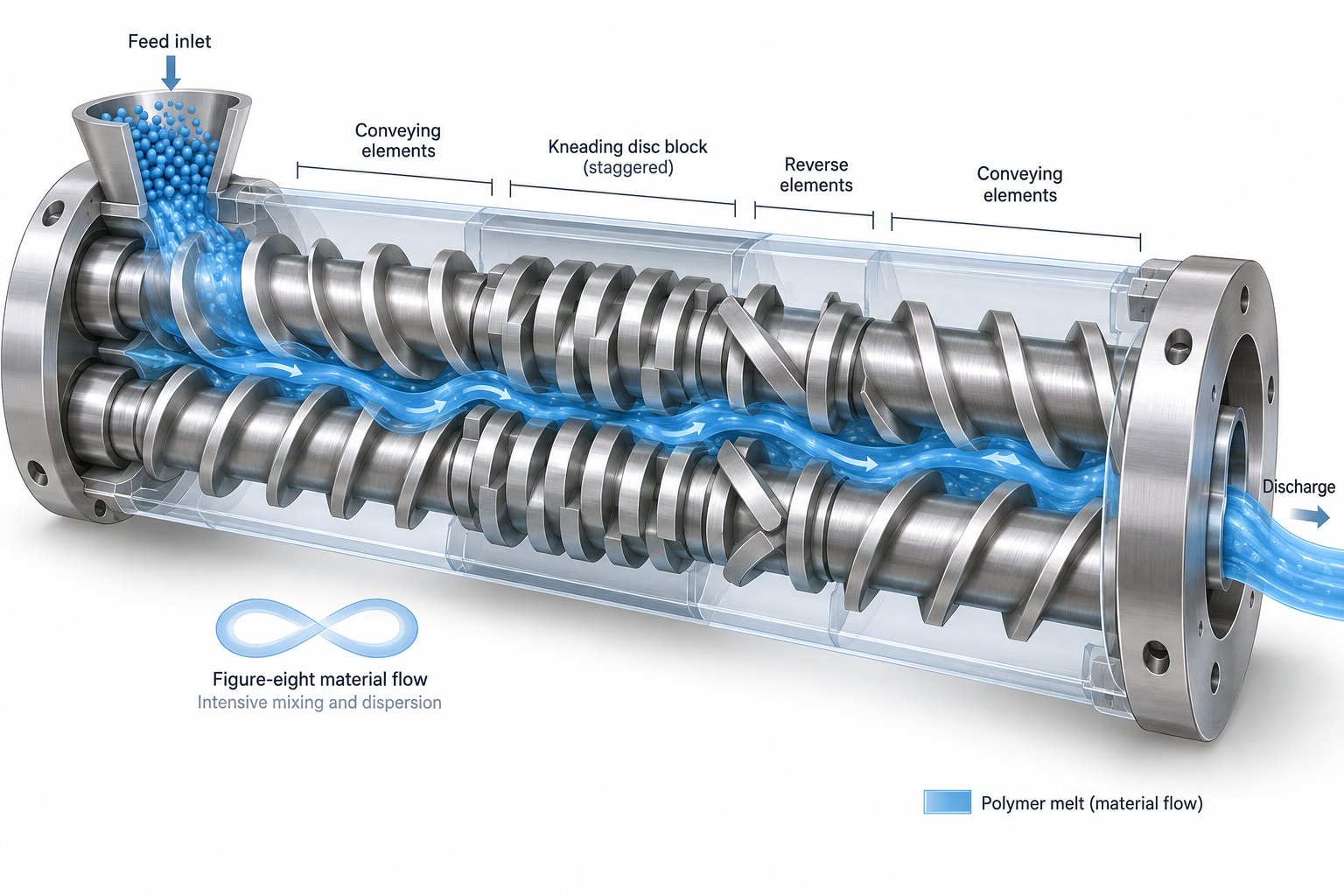
How does it actually work? As raw material enters the barrel — typically polymer pellets, powders, or granules — the co-rotating screws convey, compress, melt, and intensively mix it before forcing the homogeneous melt through a die. The intermeshing design creates what engineers describe as an "infinity-shaped" flow path, continuously handing material from one screw flight to the next. This self-wiping action eliminates dead zones and ensures every particle receives consistent thermal and mechanical treatment.
That stands in sharp contrast to a single-screw extruder, which relies primarily on drag flow along one helical channel and offers far less mixing intensity. Counter-rotating twin screw designs, where the screws spin in opposite directions, generate lower shear and suit heat-sensitive materials like rigid PVC — but they lack the aggressive mixing capability that makes co-rotating machines so versatile. With the global twin screw extruders market projected to reach USD 4.7 billion by 2033, the co-rotating twin screw extruder sits at the core of multiple high-growth industries.
Why Manufacturer Selection Is a Critical Decision
Here is the challenge most first-time buyers encounter: two co-rotating twin screw extruders can look nearly identical on paper — same screw diameter, similar torque ratings, comparable L/D ratio — and still deliver wildly different results on the production floor. Spec sheets do not capture barrel liner metallurgy, screw element precision tolerances, the depth of process engineering support, or the responsiveness of an aftermarket service network.
The market itself amplifies this complexity. Dozens of twin screw extruder manufacturers compete globally, from premium European OEMs with decades of engineering heritage to rapidly maturing Asian producers offering compelling price points. No two deliver the same combination of build quality, application expertise, spare-parts availability, and technology roadmap. A buyer evaluating only the machine is seeing half the picture. The smarter approach is evaluating the manufacturer's entire ecosystem — their R&D investment, training programs, regional service infrastructure, and willingness to co-develop solutions tailored to your specific process.
That distinction between purchasing hardware and choosing a long-term partner is the thread running through every section ahead — starting with exactly how co-rotating twin screw extrusion works at the mechanical level, and why those engineering details should shape your evaluation criteria from day one.
How Co-Rotating Twin Screw Extrusion Works
When you evaluate any twin screw extruder machine, the conversation inevitably circles back to specifications — torque figures, screw speeds, throughput claims. But those numbers are meaningless without a solid grasp of what is actually happening inside the barrel. Understanding the mechanics of co-rotating twin screw extrusion turns you from a buyer reading spec sheets into an evaluator who can distinguish genuine engineering quality from marketing gloss. So let's open the barrel and look at the process from the inside out.
Intermeshing Geometry and Self-Wiping Action
Imagine two helical screws positioned side by side, their flights overlapping so that the crest of one screw fits snugly into the channel of the other. In a co-rotating configuration, both screws turn in the same direction — typically clockwise when viewed from the drive end. As they rotate, the flight of each screw continuously sweeps the surface of its partner. This is what engineers call self-wiping action, and it is the single most important characteristic separating co-rotating twin screw extruders from nearly every other plasticating machine.
Why does self-wiping matter so much? Because it prevents material from sitting in dead zones. In any heated barrel, stagnant polymer degrades — it discolors, crosslinks, or forms carbonized specks that contaminate your product. The tight intermeshing geometry of a co-rotating design eliminates those pockets. Material is continuously transferred from one screw to the other in what's often described as a figure-eight flow path, ensuring every particle sees a consistent thermal and shear history.
This is a fundamental difference when comparing co rotating and counter rotating twin screw extruder designs. In a counter-rotating machine, the screws turn in opposite directions. Material at the nip point between the screws is squeezed and pushed outward, creating strong positive conveying but lower mixing intensity. Counter-rotating systems excel for heat-sensitive materials like rigid PVC, where gentle shear and stable pumping are priorities. Co-rotating machines, by contrast, generate far more aggressive mixing and surface renewal — which is exactly why they dominate polymer compounding, masterbatch production, and reactive extrusion.
One technical detail worth understanding here is the Do/Di ratio — the ratio of the outer screw diameter (Do) to the inner screw diameter (Di). This ratio determines the free volume inside the barrel, meaning the available space for material processing. A higher Do/Di ratio provides more free volume per unit of barrel length, enabling higher throughput capacity and better accommodation of bulky or low-density feed materials. When manufacturers advertise improved free volume in a new machine generation, they are typically referencing an optimized Do/Di ratio. It is a specification that directly affects how much material the twin extruder can process per revolution — a detail that separates high-capacity machines from their predecessors.
Modular Screw and Barrel Design Principles
Here is where co-rotating twin screw extruders become truly versatile: modularity. Unlike a single-screw extruder, where the screw is typically one continuous piece machined for a specific purpose, modern co-rotating machines use interchangeable screw elements that slide onto splined shafts. Each element is designed for a particular function, and rearranging them transforms the machine's processing behavior entirely.
You'll encounter four primary element types across virtually all twin screw extruders:
- Conveying elements — helical flights that transport material forward through the barrel, controlling fill level and residence time.
- Kneading elements (kneading blocks) — staggered disc-shaped segments that apply intensive shear and dispersive mixing, breaking agglomerates and wetting fillers into the polymer matrix.
- Mixing elements — specialized geometries designed for distributive mixing, spreading additives uniformly through the melt without excessive shear stress.
- Reverse elements — flights that push material backward, creating local pressure buildup and melt seals necessary for venting zones or increasing residence time in a specific section.
The barrel follows the same modular philosophy. Instead of one continuous tube, it consists of individual barrel segments bolted together. Each segment can be configured with specific features: a solid closed section for melting and pressure buildup, an open port for feeding raw materials or fillers, a vent opening for atmospheric or vacuum devolatilization, or a port for liquid injection. This segmented approach means a single machine can be reconfigured for entirely different applications — switching from a glass-fiber-reinforced polypropylene compound one week to a calcium carbonate-filled masterbatch the next — simply by rearranging elements and barrel sections.
This modularity is not just a convenience feature. It is the reason co-rotating twin screw extruders have become the dominant platform for multi-product compounding operations. And it is also why the precision of element manufacturing — tight tolerances, consistent metallurgy, accurate flight geometries — matters enormously when evaluating the manufacturer behind the machine.
Functional Zones Along the Extruder
Sounds complex? It becomes much clearer when you think of the extruder as a series of sequential processing zones, each performing a specific job on the material as it travels from hopper to die. Every zone's engineering quality contributes to final product consistency, and weaknesses in any single section can undermine the entire process.
- Feeding zone — Raw materials enter the barrel through one or more feed ports. Most co-rotating machines operate in a starve-fed mode, meaning external gravimetric or volumetric feeders control the feed rate rather than the screws pulling material at maximum capacity. This gives processors precise control over throughput, formulation accuracy, and residence time. Side feeders downstream introduce fillers, fibers, or additives at exactly the right point in the process.
- Melting zone — As conveying elements push material forward into heated barrel sections, the polymer begins to soften. Melting occurs through a combination of external barrel heat and viscous dissipation — the mechanical energy generated by shear between the screws and the polymer mass. A well-designed melting zone ensures the resin is fully molten before it reaches intensive mixing sections, preventing unmelted particles from disrupting dispersion quality downstream.
- Mixing and kneading zone — This is the heart of a compounding extruder. Kneading blocks and mixing elements apply the dispersive and distributive work that breaks agglomerates, wets fillers, blends polymers, and homogenizes the melt. The element configuration here — stagger angles, disc widths, and the number of kneading blocks in sequence — determines mixing intensity and directly shapes final product properties.
- Venting and devolatilization zone — After mixing, the melt passes through a section where barrel pressure is intentionally reduced. Atmospheric or vacuum vents allow moisture, trapped air, residual solvents, and volatiles to escape. Effective venting prevents bubbles, porosity, odor issues, and hydrolytic degradation in the finished product. Reverse screw elements upstream of the vent create a melt seal that prevents material from flooding the vent opening.
- Pressure buildup and metering zone — In the final section, closely pitched conveying elements compress and stabilize the melt, building the pressure required to push it through the die at a consistent rate. Any fluctuation here translates directly into dimensional inconsistency, surging, or poor pellet quality at the downstream end of the line.
Each of these zones demands specific engineering attention — barrel heating uniformity in the melting section, element wear resistance in the kneading zone, vacuum integrity in the venting section, and tight clearance control in the metering zone. When a manufacturer cuts corners on any one area, the entire process chain suffers.
This zone-by-zone perspective also helps clarify when a co-rotating design is the right choice versus when counter-rotating machines earn their place. If your application demands intensive mixing, flexible multi-point feeding, strong devolatilization, and the ability to reconfigure for different formulations, co-rotating twin screw extruders are almost always the answer. If the priority is gentle positive conveying with controlled shear for heat-sensitive profiles — rigid PVC pipe and window profiles being the classic example — counter-rotating systems remain the established solution.
With the mechanics now in focus, the natural next question becomes: how do you read the technical specifications that manufacturers use to describe these machines, and what do those numbers actually tell you about real-world capability?
Key Technical Specifications Every Buyer Should Understand
Every manufacturer's brochure features impressive-looking tables packed with numbers — torque ratings, L/D ratios, screw speed ranges, and free volume figures. Yet surprisingly few buyers truly understand what those numbers mean, how they interact, or which ones deserve the most weight for a given application. The result? Purchasing decisions driven by whichever datasheet looks the most impressive, rather than by which machine genuinely fits the process. Let's break each critical specification down into plain language so you can compare any compounding twin screw extruder on equal footing.
Specific Torque and Why It Defines Machine Capability
If you remember only one specification from this entire article, make it specific torque. Expressed in Nm/cm3, specific torque measures the torque available per unit of center-distance cubed — essentially, how much twisting force the machine can deliver relative to the size of its screw geometry. Why does this matter? Because torque is the bottleneck that limits how much energy you can transfer into the polymer melt.
When you process highly filled compounds, engineering resins with high melt viscosity, or demanding reactive formulations, the screws must push through enormous resistance. A machine with low specific torque will hit its limit before reaching target throughput, forcing you to reduce feed rates or lower screw speeds. Higher specific torque values — modern high-performance machines commonly reach 11.3 Nm/cm3 or above — allow processors to run tougher materials at production-level rates without exceeding drive limits.
Manufacturers treat specific torque as a headline differentiator, and for good reason: it directly reflects the sophistication of the gearbox, shaft design, and overall mechanical engineering. As documented in peer-reviewed literature, shaft technology has evolved from keyway designs (1950s) through hexagonal and splined shafts to today's asymmetrical splined configurations, each generation enabling higher torque at the same screw diameter. When a manufacturer advertises a new torque class, you're seeing the cumulative result of gearbox metallurgy, shaft geometry, and bearing design improvements — not just a bigger motor bolted onto the frame.
L/D Ratio and Screw Diameter Ranges
The L/D ratio — screw length divided by screw diameter — is one of the most frequently quoted specs, yet its implications are often overlooked. Think of it this way: a longer barrel gives material more time and more processing zones to pass through. A typical L/D range for co-rotating twin screw extruders spans from 20:1 to 48:1, with most compounding applications falling between 32:1 and 44:1.
Shorter ratios — 20:1 to 28:1 — suit processes that need high-shear mixing but minimal residence time, such as color masterbatch production or thermally sensitive blends. Medium ratios of 28:1 to 36:1 cover the majority of general-purpose polymer compounding, offering a practical balance between mixing intensity and processing length. Long ratios from 36:1 to 48:1 are reserved for complex operations requiring extended residence time: multi-stage devolatilization, reactive extrusion, or heavily filled compounds needing thorough wetting and dispersion.
Screw diameter, meanwhile, determines throughput class. A benchtop twin screw extruder with a 16-mm screw diameter is designed for R&D trials and formulation screening, processing kilograms per hour at most. Mid-range machines in the 35 to 65-mm class handle pilot and medium-production volumes. Large-scale production extruders for polymer compounding typically run 90-mm screws and above, capable of pushing several tons per hour. Understanding where your throughput requirement falls on this scale is the first filter when narrowing down manufacturers, since not all builders offer the full diameter range from lab to production.
Screw Speed, Specific Energy, and Free Volume
Maximum screw RPM often headlines a spec sheet, and for good reason — screw speed directly governs shear rate. Modern co-rotating machines commonly offer maximum speeds between 600 and 1,200+ RPM. Higher speeds increase mixing intensity and throughput potential but also raise melt temperature through viscous dissipation. The right speed depends on your formulation: a shear-sensitive extruder for polymer blends may run well at 300 RPM, while an aggressive dispersion of nano-fillers might demand 900 RPM or more. Manufacturers that offer wide speed ranges with stable torque delivery across the entire window give you the most process flexibility.
Specific energy input, expressed as kWh/kg, quantifies how much energy the process consumes per kilogram of output. It is calculated from motor power, torque utilization, screw speed, and feed rate. Tracking specific energy is essential because it serves as a fingerprint for your process — any shift signals a change in material properties, screw wear, or operating conditions. In a production setting, consistent specific energy correlates directly with consistent product quality. When comparing machines from different manufacturers, ask for application-specific energy data, not just theoretical motor ratings.
Free volume is the available processing space inside the barrel, governed by the OD/ID ratio (outer-to-inner screw diameter ratio). As noted in twin screw extrusion research, typical OD/ID ratios for co-rotating machines fall between 1.4/1 and 1.8/1. A higher ratio means deeper screw channels, more free volume, and greater capacity for bulk materials — but at the cost of reduced shaft cross-section and therefore lower torque transmittal. Manufacturers must strike an optimized balance between volume and torque, and the OD/ID ratio they choose reflects their engineering philosophy.
For R&D teams evaluating small-scale equipment, it is worth noting that some benchtop extruder platforms and lab dispersion mixers use specialized OD/ID ratios — as low as 1.2/1 — to enable small batch testing with less than 20 grams of material. This kind of detail rarely appears in standard marketing literature but can be critical when expensive APIs or experimental formulations are involved.
| Specification | Definition | What It Affects | Typical Range |
|---|---|---|---|
| Specific Torque (Nm/cm3) | Torque per unit of center-distance cubed | Maximum processable viscosity and throughput ceiling | 8 – 18 Nm/cm3 |
| L/D Ratio | Screw length divided by screw diameter | Residence time, number of processing zones, mixing thoroughness | 20:1 – 48:1 |
| Screw Diameter (mm) | Outer diameter of each screw | Throughput class — lab, pilot, or production scale | 12 – 400+ mm |
| Max Screw Speed (RPM) | Maximum rotational speed of screws | Shear rate, mixing intensity, throughput potential | 300 – 1,200+ RPM |
| Specific Energy (kWh/kg) | Energy consumed per kilogram of output | Process efficiency, product consistency, energy cost | 0.10 – 0.40 kWh/kg (application-dependent) |
| OD/ID Ratio | Outer screw diameter to inner screw diameter | Free volume vs. torque capacity trade-off | 1.4/1 – 1.8/1 |
Specifications on paper give you a starting point — they tell you what a compounding extruder could do under ideal conditions. The real question is how the physical components behind those numbers are engineered, built, and assembled. That brings the focus squarely onto the anatomy of the machine itself — the gearbox, drive system, barrel metallurgy, and screw elements — where the true differences between manufacturers become impossible to hide.
Anatomy of a Co-Rotating Twin Screw Extruder
Spec sheets condense an entire machine into a handful of numbers. The components behind those numbers — how they are designed, what materials they are made from, and how precisely they are assembled — are what separate a co-rotating twin screw extruder that runs reliably for fifteen years from one that becomes a maintenance headache within three. Think of this section as your X-ray into the machine itself: gearbox, drive, barrels, and screws, examined one by one through the lens of what signals genuine manufacturer quality versus corner-cutting.
Gearbox Engineering as a Manufacturer Differentiator
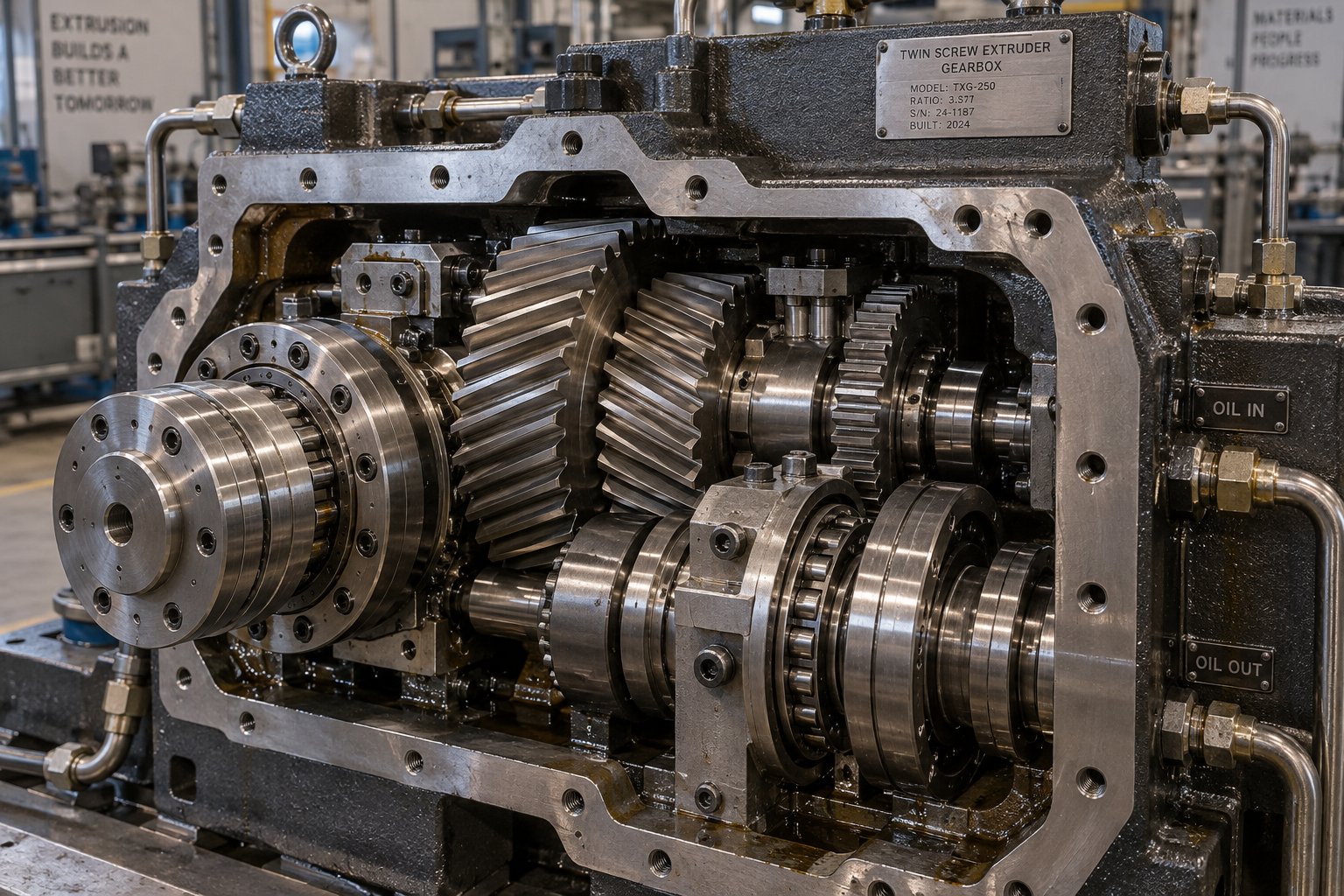
The gearbox is arguably the most revealing component when assessing a co rotating twin screw extruder manufacturer. It sits between the motor and the screw shafts, performing three simultaneous jobs: reducing speed, multiplying torque, and absorbing the axial thrust that back-pressure generates as melt pushes against the die. Get the gearbox wrong, and the entire production line suffers.
What makes twin screw gearbox engineering so demanding? Unlike a single-screw extruder gearbox that transmits torque through one shaft, a co-rotating design must split torque across two parallel output shafts while maintaining precise angular synchronization between them. Even a fraction of a degree of timing error under load causes screw interference — damaging both the screws and the gearbox internals. This synchronization challenge, layered on top of raw torque transmission, explains why the gearbox often accounts for a significant share of the machine's total cost.
Modern high-performance gearboxes deliver torque densities reaching 18 Nm/cm3, a roughly 30% increase over previous-generation designs. That leap doesn't come from simply scaling up — it reflects advances in gear tooth profiles, bearing systems, and thermal management. When you look at a Coperion extruder gearbox rated at 18 Nm/cm3, for instance, you are seeing the result of precision gear grinding, high-capacity thrust bearings designed for a theoretical life of approximately 12,000 hours under full load, and integrated cooling systems that prevent lubricant degradation from efficiency losses. A three-stage gearbox operating at 97% efficiency per stage still generates roughly 9% total heat loss that must be dissipated — undersized cooling accelerates oil oxidation, which in turn shortens bearing life.
Here are the gearbox attributes you should interrogate with any manufacturer:
- Continuous vs. peak torque rating — Always compare continuous-duty capacity. A unit rated at 12,000 Nm peak but only 8,000 Nm continuous will spend its life at 100% of its real capacity if you size the screw to that peak figure.
- Thrust bearing design and rated life — Ask for the L10 bearing life calculation at your expected operating conditions, not just a generic catalog number.
- Thermal management system — Does the gearbox include active oil cooling, temperature monitoring, and flow sensors? Or does it rely on passive convection?
- Digital monitoring integration — Leading manufacturers now embed vibration, temperature, and oil quality sensors that feed real-time data to process control systems. This is not a luxury — it is the foundation of predictive maintenance. Some manufacturers reference patented gearbox designs with digital monitoring as a core differentiator.
- Gear accuracy class — Higher accuracy grades improve load distribution across bearings and gear faces, directly extending service life.
A reliable operating guideline, well established across the industry: run the gearbox at no more than 80% of continuous torque and 80% of maximum speed. That margin accommodates cold-start torque spikes — which can exceed steady-state loads by 20-40% — without risking premature fatigue. If a manufacturer's gearbox only provides sufficient headroom when sized against peak ratings, consider it a red flag.
Drive System and Motor Configuration
The motor and its control electronics define the upper boundary of what your extruder can do. No matter how robust the gearbox or how clever the screw design, throughput potential is ultimately limited by the kilowatts available at the drive shaft. Yet motor selection is one of the most frequently oversimplified aspects of machine specification.
Most co-rotating twin screw extruders use AC induction motors or, increasingly, permanent magnet synchronous motors paired with variable frequency drives (VFDs). The VFD allows stepless speed adjustment across the full operating range while maintaining constant torque — essential for process flexibility. When evaluating manufacturers, look beyond the headline motor power in kilowatts and examine the following:
- Motor efficiency class — IE3 (premium efficiency) is the current standard in most markets, but IE4 (super premium) motors reduce energy losses by an additional 15-20% and are becoming standard on machines from forward-thinking builders. Over a machine's 15-to-20-year operational life, that efficiency difference compounds into substantial energy cost savings.
- Torque-speed curve — A motor that delivers rated torque smoothly from low RPM through maximum speed provides much greater process flexibility than one that only achieves full torque in a narrow speed window.
- Oversizing vs. right-sizing — An oversized motor wastes capital and operates inefficiently at partial load. An undersized motor, however, forces the extruder to run at or near its limits continuously, reducing service life and eliminating headroom for future formulation changes. The ideal motor is sized 10-20% above the calculated maximum continuous power demand for the most torque-intensive formulation in your production mix.
VFD quality also matters more than many buyers realize. A poorly tuned drive can introduce torque ripple, generate electrical harmonics that stress motor windings, and lack the dynamic response needed for precise speed control during load changes. Manufacturers who specify name-brand drives and commission them with application-specific parameters — rather than using generic factory settings — demonstrate a level of system-level engineering that translates directly into smoother, more consistent operation on the production floor.
The extruder pump section of the line, where the melt must be pushed through the die at stable pressure, is particularly sensitive to drive dynamics. Any speed fluctuation at the motor translates into pressure surging at the die, which in turn creates inconsistency in pellet weight, strand diameter, or sheet thickness. A well-matched motor and VFD eliminate this variability at the source.
Barrel Segments and Screw Elements
If the gearbox is the heart of the extruder, the barrel and screw elements are its working muscles. These are the components that directly contact the process material, endure extreme temperatures, absorb abrasive wear from fillers and reinforcements, and resist chemical attack from corrosive polymers. Their metallurgy and manufacturing precision determine not just performance on day one, but how that performance holds up over thousands of operating hours.
Barrel metallurgy reflects the manufacturer's understanding of application demands. The options span a wide range:
- Nitrided steel — The baseline offering, where the barrel's inner bore is gas-nitrided to create a hard surface layer. Suitable for non-abrasive, non-corrosive polymer processing, but limited when fillers or aggressive resins enter the picture.
- Bimetallic linings — A wear-resistant alloy (typically 1-2 mm thick) bonded to the barrel's inner bore via centrifugal casting or thermal spray. Industry data shows bimetallic barrels can deliver 3-7x higher abrasion resistance than standard nitrided barrels, making them the preferred choice for glass-fiber-filled compounds, mineral-loaded masterbatches, and recycled plastics containing contaminants.
- Tungsten carbide coatings — Applied to the highest-wear zones for maximum abrasion protection. These coatings are typically reserved for extreme applications processing highly abrasive materials at high throughput rates.
- Nickel-alloy or chromium-nickel linings — Designed for a chemical resistant extrusion machine processing corrosive polymers such as PVC, fluoropolymers, or resins that release acids during thermal processing. These linings combat chemical attack that would rapidly degrade standard or even bimetallic surfaces.
The choice between these options — and whether a manufacturer offers all of them or only a subset — tells you a great deal about their application range and engineering depth. A manufacturer that only provides nitrided barrels, for instance, may not be equipped to support demanding compounding operations.
Screw element quality is equally critical. As modular components that slide onto splined shafts, screw elements must be manufactured to exacting tolerances for both their outer flight geometry and their internal spline bore. The surface hardness after nitriding commonly reaches HV 900-1,100, and advanced treatments including vacuum hardening and tungsten carbide overlays further extend service life in abrasive applications.
Here is a checklist of barrel and screw quality indicators to verify with any co rotating twin screw extruder manufacturer before making a purchasing commitment:
- Documented metallurgy specifications — The manufacturer should provide material certifications for barrel liners and screw elements, not just generic alloy names.
- Bore tolerance and roundness data — The gap between screw and barrel is typically on the order of 1/1000 of the diameter. Ask for actual measurement reports, not just claimed tolerances.
- Surface treatment processes — Nitriding depth, hardness verification, and coating adhesion testing should be documented and available for review.
- Thermal expansion compatibility — The coefficient of thermal expansion between barrel core steel, liner material, and screw elements must be matched to prevent differential strain, seizure, or delamination at operating temperatures.
- Availability of multiple metallurgy options — A manufacturer offering only one barrel treatment forces you into a one-size-fits-all solution. Capable builders provide application-specific recommendations backed by wear data from comparable installations.
- Element interchangeability and sourcing flexibility — Confirm whether the screw element spline geometry follows industry-standard profiles or is proprietary. Proprietary designs lock you into a single source for replacement elements, which affects both cost and lead time over the machine's lifetime.
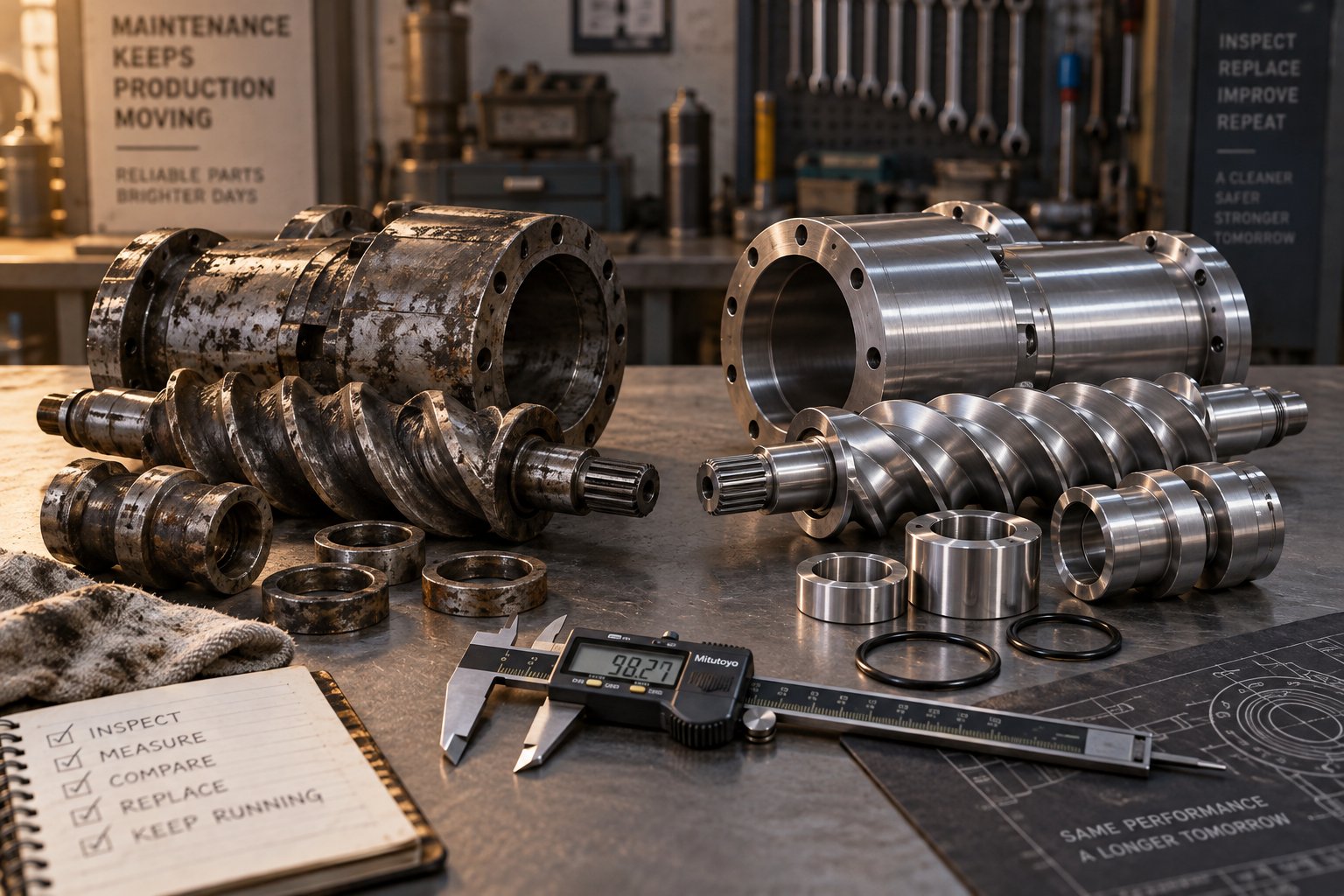
The barrel and screw elements are also the components you will replace most frequently during the machine's operational life. Glass fiber compounds, for example, can wear a set of kneading elements significantly within months of aggressive production. This makes the availability, pricing, and lead time for replacement components a practical concern that extends well beyond the initial purchase — and connects directly to how the broader manufacturer landscape is structured across different regions of the world.

Global Twin Screw Extruders Market: Manufacturer Landscape and Regional Specializations
Replacement barrels and screw elements inevitably lead buyers to a broader question: who actually builds these machines, where are they located, and does geography still matter in a globally connected supply chain? The answer is nuanced. The twin screw extruders market is projected to reach approximately USD 7.01 billion by 2036, expanding at a 3.5% CAGR — and the extrusion equipment manufacturers competing for that revenue span at least four continents, each region bringing a distinct engineering philosophy, pricing structure, and service model to the table. Understanding this landscape is essential before you ever request a quote.
European Manufacturers and Technology Origins
The co-rotating twin screw extruder was essentially born in Germany. Beginning in the 1950s, German engineers developed the closely intermeshing, self-wiping screw geometry that remains the foundation of every modern machine. That head start gave European manufacturers — particularly those based in Germany and Italy — decades of accumulated process knowledge, installed-base data, and iterative design refinement that newer market entrants are still working to match.
What does this heritage look like in practice? European OEMs typically position themselves at the premium tier, emphasizing engineering precision, advanced automation, and comprehensive process guarantees. Their machines often feature the highest specific torque ratings, tightest manufacturing tolerances, and most sophisticated control system integration available in the market. They also tend to invest heavily in application development labs staffed with process engineers who can help customers optimize screw configurations, validate formulations, and troubleshoot production issues before a machine ships.
Coperion, headquartered in Stuttgart, is perhaps the most recognized name in this segment. With more than 15,000 compounding systems installed globally and over 30 locations worldwide, the Coperion extruder platform has become a reference standard across plastics compounding, chemical processing, food, and pharmaceutical industries. The company's reach extends deep into North America as well — facilities in locations like Coperion Sabetha KS and Coperion Whitewater WI support manufacturing, testing, and aftermarket service for the Americas region. And through its Coperion food equipment division, the company serves a growing segment of food and pet food processors who rely on twin screw technology for texturized protein, snack extrusion, and ingredient processing.
Leistritz, also German, has carved a strong position in pharmaceutical hot-melt extrusion and specialty compounding, offering both co-rotating and counter-rotating platforms. KraussMaffei Berstorff brings a wide application footprint spanning automotive, packaging, construction, and recycling. In Italy, Bausano offers both co-rotating and counter-rotating designs with patented drive technologies, while France-based Clextral specializes in food and feed extrusion lines.
The trade-off with European machines is straightforward: you pay a premium for that engineering depth. Capital costs can run significantly higher than equivalent-diameter machines from Asian producers. For buyers processing high-value materials, running 24/7 operations, or requiring validated pharmaceutical or food-grade systems, that premium often pays for itself through higher uptime, better energy efficiency, and stronger resale value. For price-sensitive operations running commodity compounds, the calculus shifts.
Chinese Manufacturers and the Value Tier
If European manufacturers represent the technology origins, Chinese producers represent the fastest-moving segment of the twin screw extruders market. China's extruder export value reached approximately USD 925 million in 2024, accounting for roughly 25% of global plastic extruder exports by value and an estimated 58% by unit volume. Those numbers alone signal that Chinese machines are not a fringe alternative — they are a dominant force in global equipment supply.
Nanjing, often called China's twin screw extruder manufacturing base, is home to dozens of builders ranging from small workshops to sophisticated operations delivering turnkey compounding lines. The city's concentration of talent, supply chains, and competitive pressure has driven rapid quality improvements over the past decade. Companies like Nanjing GS-Mach and Cowin Extrusion now offer high-torque co-rotating platforms with Internet-based diagnostics, modular barrel systems, and process engineering support — capabilities that would have been exclusive to European OEMs just fifteen years ago.
So how should you evaluate Chinese manufacturers honestly? Start by separating perception from evidence. The stereotype that "Chinese machines are cheap but unreliable" was partially earned in the early 2000s but is increasingly outdated for the established, export-oriented builders. The key is applying the same objective criteria you would to any manufacturer:
- Documented torque density and gearbox specifications — Can the manufacturer provide independently verified torque ratings, bearing life calculations, and gearbox test data?
- Barrel and screw metallurgy certifications — Are material certificates available for barrel liners and screw elements, or are alloy names used without supporting documentation?
- Application references — Can the manufacturer connect you with existing customers running similar materials and formulations?
- After-sales infrastructure outside China — Do they maintain spare parts inventory, field service engineers, or authorized distributors in your region?
- Longevity and track record — Established companies with ten or more years of export experience have survived fierce domestic competition and understand the service expectations of international buyers. That survival itself is a quality indicator.
Chinese manufacturers' primary advantage is cost-effectiveness — savings of 30-50% compared to European equivalents are common — combined with increasingly fast delivery times. Their primary risk area remains after-sales service infrastructure outside Asia. A machine that saves $200,000 upfront but leaves you waiting six weeks for a replacement barrel liner during an unplanned shutdown can erase that savings quickly. The best Chinese builders recognize this and are actively investing in overseas warehousing and service partnerships to close the gap.
North American and Other Regional Players
The North American landscape includes both domestic manufacturers and the regional operations of global companies. ENTEK Extruders, based in Oregon, focuses exclusively on co-rotating twin screw machines and has built a strong reputation for reliability, ease of use, and responsive service within the U.S. market. CPM Century Extrusion — now part of CPM Extrusion Group — offers co-rotating extruders alongside their RingExtruder technology and a full spare parts program for self-cleaning intermeshing machines. Milacron, a well-known American industrial brand, provides both conical and parallel twin screw extruder configurations, though their primary strength has traditionally been in injection molding rather than compounding.
Japan contributes JSW (Japan Steel Works), a manufacturer with over a century of industrial engineering history, offering twin screw platforms known for durability, precision, and a wide diameter range — from micro-scale laboratory units to large-production machines. India's Steer Engineering has emerged as an innovative player, particularly in screw element design and functionally specialized extruders for pharmaceuticals, food, and biomaterials.
The United Kingdom's Xtrutech serves as an independent supplier of both complete extruders and OEM-compatible spare parts, primarily serving the powder coatings and specialty chemicals markets — a reminder that not every manufacturer targets high-volume polymer compounding.
Emerging manufacturing hubs in Turkey, Southeast Asia, and parts of South America are also gaining traction, particularly in cost-sensitive regional markets. The Fact.MR market analysis identifies China at 4.0% CAGR, South Korea at 3.3%, and the USA at 3.2% as the fastest-growing country markets through 2036, reflecting the geographic diversification of both demand and supply.
| Region | Typical Price Tier | Common Specializations | Key Strengths | Considerations for Buyers |
|---|---|---|---|---|
| Germany / Western Europe | Premium | High-torque compounding, pharmaceutical HME, food extrusion, reactive extrusion | Deepest engineering heritage, highest torque densities, extensive process labs, global service networks | Higher capital cost; long lead times on custom configurations; premium spare parts pricing |
| China (Nanjing hub) | Value to Mid-Range | General-purpose compounding, masterbatch, recycling, filled compounds | Competitive pricing (30-50% savings), fast delivery, rapidly improving quality, turnkey line capability | Variable quality across manufacturers; after-sales service infrastructure outside Asia still developing; verify metallurgy and torque certifications independently |
| United States | Mid-Range to Premium | Compounding, battery materials, recycled plastics processing | Domestic service and support, strong application engineering, regulatory familiarity (FDA, UL) | Smaller selection of domestic OEMs; some rely on imported components; evaluate whether local presence translates to faster support |
| Japan | Premium | High-precision compounding, film production, advanced materials | Exceptional build quality, durability, wide screw diameter range | Higher cost; service networks concentrated in Asia-Pacific; language and communication barriers for some buyers |
| India | Value to Mid-Range | Pharmaceutical extrusion, biomaterials, food processing | Innovative screw element designs, growing application expertise, competitive pricing | Relatively newer entrant in global export markets; verify installed base and reference customers in your application |
| Italy / France / UK | Mid-Range to Premium | Food extrusion, PVC processing, powder coatings, specialty chemicals | Strong niche expertise, established export presence, patented technologies | Often specialized in narrow application segments; may not cover full range of compounding needs |
One critical takeaway from this landscape: geography alone does not determine quality. A well-established Chinese manufacturer with ISO-certified processes, documented metallurgy, and a proven track record in your application can outperform a poorly supported European machine that arrives with premium branding but thin aftermarket coverage in your region. Conversely, a European or Japanese OEM with deep process expertise and local service infrastructure may deliver far superior total value despite a higher purchase price.
The smarter approach is to evaluate every extruder company based on documented specifications, verifiable application references, spare parts availability in your geography, and the depth of after-sales infrastructure — regardless of the flag on the factory roof. That evaluation process itself deserves a structured framework, one that moves beyond gut feeling and brand recognition into objective, criteria-based decision-making.
A Structured Framework for Evaluating Extruder Manufacturers
Gut instinct and brand familiarity might get you to a shortlist, but they won't protect you from a six-figure mistake. When you're comparing extruder manufacturers across different regions, price tiers, and engineering philosophies, you need a repeatable method — one that forces every candidate to prove their claims against the same criteria. The framework below does exactly that. It breaks the evaluation into three layers: technical capability, service infrastructure, and red flags that signal hidden risk. Apply it consistently, and the strongest extruder machine manufacturer for your specific application will surface on its own.
Technical Capability Assessment Criteria
Start where the machine starts — with the engineering. These are the criteria that reveal whether a manufacturer can actually build a machine suited to your process, or whether they are selling standard hardware wrapped in application-specific language.
- Torque density range — Does the manufacturer offer gearbox classes spanning from standard (8-10 Nm/cm3) through high-performance (11-18 Nm/cm3)? A single torque class limits your future flexibility. Manufacturers investing in multiple gearbox tiers signal genuine depth across application demands.
- Available screw diameter sizes — Can the extruder company provide a progression from lab-scale (16-27 mm) through pilot (35-50 mm) to full production (65-180+ mm)? A complete range means they understand scale-up challenges, not just individual machine builds.
- Maximum screw speed with stable torque delivery — High RPM headlines are meaningless if torque drops off at elevated speeds. Ask for the torque-speed curve, not just the peak number. Machines rated for 1,200 RPM but delivering full torque only below 600 RPM are not truly high-speed platforms.
- Barrel metallurgy options — As covered in the anatomy section, barrel liner material determines wear life. Manufacturers offering nitrided, bimetallic, and tungsten carbide options — with documented application recommendations for each — demonstrate that they engineer for your process rather than selling one standard build to everyone.
- Modularity of screw and barrel configurations — How extensive is the screw element library? Do they offer kneading blocks at multiple stagger angles (30, 45, 60, 90 degrees), specialized fiber-conveying elements, and distributive mixing geometries? A supplier with a limited range of elements limits your future product development capacity.
- Control system sophistication — Evaluate the PLC/HMI platform, recipe management capability, data logging depth, and remote monitoring options. The difference between a basic analog control panel and a fully integrated Siemens or Schneider-based system can mean the difference between one operator per shift and three — a gap that justifies $10,000 to $15,000 in additional investment within the first year through reduced operator error and scrap rates.
How should you weight these criteria? That depends entirely on your application. A compounder running 40% glass-fiber-reinforced nylon should prioritize torque density and barrel metallurgy above all else. A masterbatch producer handling dozens of color changes per week should weight modularity and control system flexibility highest. A startup scaling a novel reactive formulation from lab to production should emphasize diameter range and process engineering support. There is no universal weighting — the discipline lies in defining your priorities before you open the first brochure, not after a persuasive sales demo reshapes your thinking.
Service Infrastructure and After-Sales Support
Here is a truth that experienced buyers learn — sometimes the hard way: the extruders manufacturers you evaluate during the purchasing phase are the same companies you will depend on for the next 15 to 20 years. And in that long relationship, the quality of after-sales support often matters more than the quality of the initial machine.
Why? Because every twin screw extruder will eventually need replacement screw elements, new barrel liners, gearbox servicing, control system updates, and troubleshooting assistance for new formulations. How quickly and competently your manufacturer responds to those needs directly impacts your uptime, your product quality, and your total cost of ownership.
Evaluate these service factors with the same rigor you apply to technical specifications:
- Spare parts inventory and lead times — Can the manufacturer ship standard wear components within 48 hours from regional stock, or are you facing six-to-eight-week manufacturing lead times for every replacement order? Industry maintenance data shows that maintenance expenses typically represent 10 to 20 percent of total ownership costs, with preventive maintenance alone accounting for 40 to 50 percent of that total. Fast parts availability transforms a potential multi-week shutdown into a scheduled weekend changeover.
- Field service engineer availability — Does the manufacturer maintain trained service engineers in your region, or does every service call require international travel scheduling? Response time measured in hours versus weeks can mean the difference between a minor production hiccup and a catastrophic delivery failure to your customers.
- Process development lab access — Can you run trials with your actual material on the manufacturer's equipment before committing to a purchase? This "try before you buy" capability de-risks the investment significantly and reveals whether the manufacturer has genuine process expertise or is simply shipping hardware.
- Training programs — Does the manufacturer offer structured operator and maintenance training — both at commissioning and on an ongoing basis? Untrained operators running complex equipment generate scrap, cause premature wear, and miss early warning signs of mechanical issues.
- Warranty terms and scope — Compare not just the warranty duration (12 months is standard; 18-24 months signals confidence) but what is actually covered. A warranty that excludes wear components, electrical systems, or process-related issues provides far less protection than its headline duration suggests.
Imagine two quotes sitting on your desk. One is $80,000 lower but comes from a manufacturer with no regional spare parts stock, no process lab, and a 12-month warranty limited to mechanical defects. The other includes 18-month comprehensive coverage, 48-hour parts delivery from a regional warehouse, and an application engineering team you can call when a new formulation refuses to cooperate. Over a 15-year equipment life, which investment actually costs less? The math almost always favors the stronger service infrastructure.
Red Flags When Evaluating Manufacturers
Beyond scoring what manufacturers offer, you need to watch for warning signs that reveal what they cannot or will not deliver. These red flags have surfaced repeatedly in buyer experiences across the industry, and spotting them early can save you from a commitment that looks good on paper but falls apart in production.
- Vague or missing specification sheets — If an extruder machine manufacturer cannot provide a detailed, itemized spec sheet covering torque ratings, barrel metallurgy, screw element library, motor efficiency class, and control system architecture, they either don't engineer their own machines or don't want you comparing their specs against competitors. Either way, it is a disqualifying signal.
- Inability to provide application-specific references — Every credible manufacturer has customers willing to take a reference call. If the company offers only generic testimonials or deflects reference requests with confidentiality claims, treat it as a serious concern. Supplier reliability research consistently identifies a pattern of missing verifiable references as one of the strongest indicators that something is wrong.
- No spare parts inventory — A manufacturer that builds machines to order but stocks zero replacement components is betting that you will never have an unplanned shutdown. You should not share that bet.
- Reluctance to allow factory visits — Whether in person or via structured virtual tours, factory access lets you verify machining capability, assembly processes, and quality control systems firsthand. A manufacturer that discourages or delays visits may be concealing a gap between their marketing materials and their production reality.
- Missing quality certifications — ISO 9001:2015 and CE marking are baseline requirements, not competitive advantages. Expired certificates, name mismatches across documents, or the inability to produce current documentation should immediately remove a supplier from consideration.
- Unwillingness to define process performance guarantees — A confident manufacturer will agree to throughput targets, specific energy limits, or product quality benchmarks tied to defined operating conditions. A manufacturer that refuses to commit to any measurable performance outcome is transferring all process risk to you.
- Pressure tactics and artificial urgency — Discount deadlines, claims of limited production slots, or pricing that expires next week are designed to short-circuit your evaluation process. Genuine manufacturers with real demand welcome thorough vetting because scrutiny confirms their capabilities.
The best co-rotating twin screw extruder manufacturer is not always the cheapest or the most expensive — it is the one whose engineering depth, service infrastructure, and application expertise best match your specific requirements, materials, and long-term production goals.
A disciplined framework keeps the evaluation objective, but even the highest-scoring manufacturer delivers only the extruder itself. The machine does not operate alone — it sits at the center of a complete processing line where feeding systems, pelletizing equipment, and downstream components either amplify or undermine the extruder's performance. That ancillary ecosystem is the next critical layer every buyer must factor into the decision.
Ancillary Equipment and Downstream Systems for Complete Extrusion Lines
Even the highest-scoring extruder on your evaluation matrix cannot produce a single sellable pellet by itself. A co-rotating twin screw extruder is the processing core of a much larger system — one that begins at the feed hopper and ends only when finished pellets are dried, classified, and packaged for shipment. The performance of every upstream and downstream component either amplifies or constrains what the extruder can deliver. Yet many first-time buyers focus almost exclusively on the extruder itself, discovering too late that an undersized feeder, a mismatched pelletizer, or a slow supply chain for replacement barrels can quietly erode the throughput, consistency, and profitability their machine was supposed to guarantee.
Feeding Systems and Material Handling
The material entering the extruder sets the ceiling for everything that happens inside it. If the feed rate fluctuates, if the polymer-to-additive ratio drifts, or if fillers arrive unevenly, no amount of screw optimization can compensate. That is why feeding accuracy deserves the same scrutiny you give the extruder itself.
Two primary feeder technologies dominate twin screw extrusion lines: volumetric feeders and gravimetric feeders. A volumetric feeder dispenses material based on the volume delivered per revolution of its auger or disc, estimating mass from an assumed bulk density. It is simpler, less expensive, and well suited for applications where slight variations in weight are acceptable and material characteristics remain relatively consistent. Gravimetric feeders, by contrast, continuously weigh the material as it is dispensed and dynamically adjust the feed mechanism to maintain a constant mass flow rate. This real-time correction makes gravimetric systems the standard for high-precision compounding — particularly when processing expensive polymers, pharmaceutical-grade materials, or formulations with tight additive tolerances where even a 1-2% deviation affects product quality.
Beyond the main feeder, most compounding lines integrate additional feeding equipment:
- Side feeders — co-rotating twin screw augers that push fillers, glass fibers, or heat-sensitive additives into the melt stream downstream of the primary melting zone, avoiding the high-shear region and reducing thermal exposure. As documented in twin screw extrusion literature, side stuffing allows sequential feeding that can eliminate the need for premixing prior to extrusion.
- Liquid injection systems — piston or gear pumps that meter oils, plasticizers, or liquid additives into the barrel at precise locations and flow rates, enabling reactive extrusion and liquid-phase blending.
- Crammer feeders — designed for low-bulk-density materials like recycled film flake or fluffy powders that standard feeders cannot convey reliably into the extruder's feed throat.
Some co-rotating twin screw extruder manufacturers offer fully integrated feeding solutions — control systems that synchronize every feeder on the line with the extruder's screw speed and throughput setpoints. Others supply only the extruder, leaving feeder specification and integration to the buyer or a third-party systems integrator. When evaluating manufacturers, ask explicitly: do they provide a complete feeding solution, recommend proven feeder partners, or leave the upstream entirely to you? The answer reveals how much of the line they are willing to stand behind.
Pelletizing and Downstream Systems
The melt exits the extruder die as a continuous stream of hot polymer. Transforming that stream into uniform, free-flowing pellets is the job of the pelletizing system — and the choice among pelletizing systems affects pellet shape, size distribution, throughput ceiling, and the range of resins your line can handle.
Three primary methods dominate:
- Strand pelletizing — Molten polymer is extruded through a multi-hole die into continuous strands, cooled in a water bath, then chopped by a rotary cutter into cylindrical pellets. It is the lowest capital cost option. Published data from Nordson Corp puts strand system throughput at up to approximately 20,000 kg/h. Strand works well for engineering plastics like ABS, PS, and PC, but requires operator attention — stringing up dozens of strands at every startup and managing dropped strands during a run are recurring labor demands.
- Water-ring pelletizers — A die-face cutter shears molten polymer as it exits the die, and an annular ring of cooling water carries the still-soft pellets into a centrifugal dryer. The result is a lens or oval-shaped pellet. Water-ring systems are particularly well suited to polyolefins and polystyrene, topping out at roughly 5,000 kg/h. They are generally unsuited for high-heat or sticky materials like PET, polyamides, or TPEs.
- Underwater pelletizing systems — The entire cutting chamber is submerged in pressurized process water. Knives shear the melt at the die face, and surface tension pulls each droplet into a near-perfect sphere before solidification. An underwater pelletizer produces the highest-quality pellets — spherical, densely packed, with the tightest size distribution — and handles virtually any polymer, including PET, masterbatch, and micropellets. Throughput can reach approximately 31,750 kg/h. The trade-off is capital cost: underwater pelletizing carries the highest equipment investment of the three methods, driven by the pressurized water box, diverter valves, process water temperature control, and PLC-driven automation.
| Pelletizing Method | Pellet Shape | Throughput Ceiling | Best-Fit Resins | Relative Capital Cost |
|---|---|---|---|---|
| Strand | Cylindrical | ~20,000 kg/h | ABS, PS, PC, engineering plastics, short-run compounding | Lowest |
| Water Ring | Lens / oval | ~5,000 kg/h | PE, PP, polystyrene, film recycling | Mid-range |
| Underwater | Spherical | ~31,750 kg/h | PET, PA, masterbatch, micropellets, virtually any polymer | Highest |
Choosing the right extruder pelletizer configuration is downstream-driven, not upstream-driven. Your resin chemistry, target pellet geometry, throughput requirement, and downstream customer specifications should dictate the method — not the extruder manufacturer's standard offering. Buyers processing PET destined for solid-state polymerization, for example, have essentially one option: underwater pelletizing, because the spherical pellet shape ensures uniform heat transfer and gas diffusion inside the SSP reactor. Masterbatch producers requiring sub-millimeter micropellets face the same constraint — underwater is the only method that reliably produces those dimensions.
Beyond the pelletizers themselves, the downstream train also includes cooling conveyors, vibrating screen classifiers for removing fines and oversize particles, centrifugal dryers, and pneumatic conveying systems that transport finished pellets to storage silos. A melt pump — a positive displacement gear pump installed between the extruder discharge and the die — stabilizes melt pressure and temperature, reducing die-pressure fluctuations that cause pellet weight variation and surging. Melt pumps are particularly valuable for film, sheet, and profile extrusion, and for any pelletizing application where tight dimensional tolerances demand rock-steady die pressure.
The Critical Role of Barrel and Screw Supply Partners
Here is a reality that every production compounder knows but few equipment brochures mention: barrel liners and screw elements are consumables. They wear. Processing glass-fiber-reinforced compounds can erode a set of kneading elements within months. Mineral-filled masterbatch wears barrel bores. Recycled plastics containing metallic contaminants accelerate abrasion across every contact surface. The difference between a 200-hour and a 2,000-hour element life comes down to metallurgy, surface treatment, and manufacturing precision — and the difference between a two-day and a six-week replacement lead time comes down to your supply chain.
Most extruder OEMs sell replacement barrels and screws, but they are not your only option — and sometimes not your best one. Specialized barrel and screw suppliers exist specifically to support twin screw extruder operators with replacement components that match or exceed OEM specifications. These suppliers often provide advantages that the original equipment manufacturer cannot: faster lead times because they hold stock inventory rather than manufacturing to order, application-specific metallurgy consultation, and competitive pricing driven by focused manufacturing efficiency.
NANHAIYA, for example, specializes in custom parallel twin screw barrels engineered for compounding, recycling, pelletizing, granulation, and masterbatch applications. Rather than offering generic replacement parts, they work with processors to match barrel metallurgy and dimensional specifications to the exact demands of the application — whether that is a corrosion-resistant liner for PVC processing or a bimetallic barrel designed to withstand thousands of hours of highly abrasive calcium carbonate compounding. This kind of third-party barrel specialist can extend extruder life and optimize performance in ways that go beyond simply replacing like-for-like components.
When evaluating any co-rotating twin screw extruder manufacturer, ask these questions about the wear-component supply chain:
- Does the OEM stock replacement barrels and screw elements, or are they built to order with lead times measured in weeks?
- Are the screw element spline profiles and barrel bore dimensions standard enough to accept components from third-party suppliers, or does a proprietary design lock you into a single source?
- What metallurgy options are available for replacement components — and can the OEM or a specialist supplier upgrade metallurgy beyond the original specification to extend service life?
- Does the manufacturer offer wear monitoring programs or bore measurement services to help you plan replacements proactively rather than reactively?
Building a reliable supply chain for these high-wear parts is not an afterthought — it is a strategic decision that directly impacts your uptime, maintenance budget, and long-term cost of ownership. Processors who establish relationships with both their OEM and one or more specialized suppliers like NANHAIYA create redundancy and negotiating leverage that pay dividends for the entire life of the machine.
And that concept of total cost — encompassing not just the purchase price but energy consumption, wear-part replacement, maintenance labor, and the long-term value of emerging technologies — is precisely where the conversation needs to turn next. Because the cheapest machine on the quote sheet and the cheapest machine to own over fifteen years are almost never the same one.
Total Cost of Ownership Beyond the Purchase Price
Two quotes arrive on your desk. One reads $150,000. The other reads $85,000. Same screw diameter, similar torque ratings, comparable throughput claims. The instinct is obvious — save $65,000 and move on. But here is the question that separates experienced buyers from first-timers: what does each machine cost to run for the next fifteen years? Because the purchase price of plastic compounding equipment typically represents only 30 to 50 percent of what you will actually spend over the machine's operational life. The rest — energy, wear parts, maintenance labor, downtime losses, and technology obsolescence — accumulates silently, month after month, until the "cheaper" machine becomes the most expensive decision on your balance sheet.
Energy Consumption and Operational Efficiency
Imagine your compounding machine runs 8 hours per day, 250 days per year, processing 500 kg/h. That is 1,000,000 kg of material annually. If Machine A consumes 0.25 kWh/kg (specific energy) and Machine B consumes 0.15 kWh/kg, the annual energy difference is 100,000 kWh. At an industrial electricity rate of $0.10/kWh, that gap translates to $10,000 per year — or $150,000 over a 15-year machine life. Suddenly, the $65,000 you "saved" on the purchase price has been erased twice over by a single operating cost category.
Where does that energy actually go? Four primary sinks drive consumption on a co-rotating twin screw extruder:
- Motor and drive losses — The main drive motor accounts for 60-80% of total machine energy consumption. An IE4 super-premium efficiency motor loses roughly 3-5% of input energy as heat, while an older IE2 motor may lose 8-12%. That difference compounds with every operating hour. Variable frequency drives add another efficiency layer — a well-commissioned VFD optimizes motor speed to actual load demand rather than running at fixed speed, reducing consumption by 10-25% during partial-load conditions that are common in real production.
- Gearbox efficiency losses — A three-stage gearbox operating at 97% efficiency per stage still dissipates roughly 9% of input power as heat. Poorly engineered gearboxes with lower efficiency ratings generate more waste heat, require more aggressive cooling, and accelerate lubricant degradation — creating a cascade of secondary costs.
- Barrel heating and cooling — Maintaining precise temperature profiles across multiple barrel zones requires continuous energy input. Barrel segments with poor thermal insulation waste heating energy to the ambient environment. Cooling systems that overshoot and then reheat waste energy in both directions. Manufacturers who engineer tight-tolerance heating and cooling loops with ceramic band heaters and proportional cooling valves deliver measurably lower barrel energy consumption than those using basic on/off controls.
- Auxiliary systems — Vacuum pumps for devolatilization, pelletizing water circuits, cooling conveyors, and pneumatic conveying all draw power. These are rarely itemized on the extruder quote but can add 15-25% to the line's total energy footprint.
Industry TCO analyses illustrate the scale of this gap starkly. A lower-cost compounding machine consuming 2.5 kWh/kg can accumulate $150,000 in energy costs over five years at the same throughput where a premium machine consuming 1.5 kWh/kg spends just $90,000 — a $60,000 differential from energy alone. Multiply that across 15 years, and the premium machine's energy savings alone may exceed its entire purchase price advantage.
The takeaway is straightforward: always request application-specific energy data, not just motor nameplate power. Ask the manufacturer for specific energy consumption figures (kWh/kg) measured on your target material at your target throughput. If they cannot provide this, it signals either a lack of process data or an unwillingness to be held accountable for efficiency claims.
Wear Parts Replacement and Maintenance Costs
Screw elements, barrel liners, and gearbox bearings do not last forever — and how quickly they wear depends on a complex interaction between the materials you process, your operating conditions, and the metallurgical quality of the components themselves. This is where the consequences of manufacturer selection play out most visibly on the production floor.
Consider a real-world scenario: a compounder processing 40% calcium carbonate-filled polypropylene. On a machine with standard nitrided screw elements, kneading blocks may show measurable wear within 1,500-2,000 operating hours. The same formulation running through bimetallic or tungsten carbide-coated elements might deliver 6,000-8,000 hours before replacement — a 3-4x lifespan extension. If a set of kneading elements costs $3,000-$8,000 depending on the manufacturer and metallurgy, the annual wear-part cost difference between cheap and premium components can reach $15,000-$25,000 on a single machine.
Barrel bore wear follows the same pattern. Predictive maintenance data shows that screw and barrel wear changes the relationship between screw speed and output rate — a gradual degradation that reduces throughput by 5-15% before operators even notice it. That hidden capacity loss is itself a cost: you are producing less saleable product per operating hour while consuming the same energy and labor.
Gearbox maintenance introduces another cost variable. Manufacturers who integrate oil quality sensors, vibration monitoring, and temperature tracking into their gearbox designs enable predictive maintenance — catching bearing degradation or lubrication issues weeks before they become catastrophic failures. Without monitoring, a gearbox bearing failure can cascade into gear damage, shaft scoring, and a repair bill that exceeds $50,000, plus weeks of unplanned downtime. With continuous monitoring, the same bearing gets replaced during a scheduled shutdown for a fraction of the cost.
The critical purchasing insight here is that spare parts pricing and availability vary enormously among manufacturers — and this variation should be evaluated before you sign the purchase order, not after your first emergency. Key questions to ask:
- What is the delivered cost for a complete set of screw elements in standard and premium metallurgy?
- What is the lead time for replacement barrels — stock items shipped in days, or custom-manufactured parts requiring 6-8 weeks?
- Are barrel bore dimensions and screw element spline profiles compatible with third-party component suppliers, or does a proprietary design lock you into a single source?
- Does the manufacturer offer wear-monitoring services or bore measurement programs to help you schedule replacements proactively?
A manufacturer whose compounding machinery uses standard-profile spline geometries gives you supply chain flexibility. One whose designs require proprietary elements from a single factory on another continent gives you vulnerability. Over 15 years of operation, the cumulative cost difference can rival the original machine price.
Emerging Trends Affecting Long-Term Value
A co-rotating twin screw extruder purchased today will likely still be running in 2040. That timeline means the technology trends shaping the industry right now will directly influence whether your investment ages gracefully or becomes a competitive disadvantage. Three developments deserve particular attention.
Industry 4.0 and predictive maintenance integration stand at the top of the list. The shift from reactive to predictive maintenance is not theoretical — it is already delivering measurable results for compounding operations willing to invest in sensor infrastructure and data analytics. Documented implementations show that predictive maintenance on extrusion lines typically delivers a 35-50% reduction in unplanned downtime within the first six months. The technology works because extrusion is a continuous process that generates steady-state data streams — barrel zone temperatures, melt pressures, motor loads, and die pressures — that make deviation detection straightforward once baselines are established.
What does this mean for manufacturer selection? Compounding machines built with IIoT-ready control architectures — open communication protocols, sufficient sensor points, data logging capacity, and cloud connectivity options — can integrate into predictive maintenance platforms without costly retrofits. Machines built with closed, proprietary control systems or minimal sensor packages will require expensive aftermarket modifications to access the same capability. Ask any manufacturer you are evaluating: does the control system support OPC-UA or MQTT communication? Are vibration, temperature, and pressure sensors included at the gearbox, barrel zones, and die? Can process data be exported to third-party analytics platforms? The answers will tell you whether the machine is built for how compounding operations will be managed in 2030 — or only for how they were managed in 2010.
Energy-efficient drive technologies are advancing rapidly. Permanent magnet synchronous motors paired with regenerative drives are replacing conventional AC induction motors in new machine designs, offering 5-10% additional energy savings at partial load — the condition where most extruders actually operate during production. Some manufacturers are already shipping these as standard; others offer them as options; still others are a generation behind. Since the drive system accounts for the majority of machine energy consumption, this is not a minor detail — it is a long-term operating cost multiplier.
Advances in wear-resistant metallurgy are extending component life and reducing replacement frequency. Powder metallurgy (PM) tool steels, advanced thermal spray coatings, and ceramic-reinforced composites are enabling barrel liners and screw elements that last 2-3x longer than conventional materials in abrasive applications. Manufacturers who invest in materials science R&D — or who partner with metallurgical specialists — pass these advancements through to their customers as lower lifecycle costs. Those who continue shipping standard nitrided components for demanding applications are effectively passing a hidden surcharge to their buyers in the form of more frequent replacements.
| Cost Category | What Drives This Cost | How to Evaluate Manufacturer Offerings |
|---|---|---|
| Initial Purchase Price | Machine size, torque class, barrel metallurgy, control system, customization level | Compare fully specified quotes — same screw diameter, same metallurgy, same control platform. Reject headline prices that exclude essential options. |
| Energy Consumption | Motor efficiency class, gearbox efficiency, barrel insulation, cooling system design, specific energy (kWh/kg) | Request application-specific energy data at your target throughput. Compare IE3 vs. IE4 motor options. Calculate annual energy cost at your electricity rate and multiply over 15 years. |
| Wear Parts Replacement | Materials processed (abrasiveness, corrosiveness), operating hours, barrel and screw metallurgy quality, component precision | Get delivered pricing for a complete set of screw elements and a replacement barrel segment. Confirm lead times. Verify whether third-party components are compatible. |
| Maintenance Labor and Downtime | Machine accessibility, diagnostic capability, control system sophistication, predictive maintenance readiness | Assess whether the machine includes IIoT-ready sensors and open data protocols. Ask for documented MTBF (mean time between failures) data from comparable installations. |
| Spare Parts Availability | Regional inventory, manufacturing lead times, proprietary vs. standard component designs | Confirm regional spare parts stock locations and standard delivery times. Ask whether spline profiles and bore dimensions accept components from independent suppliers. |
| Training and Technical Support | Manufacturer's service infrastructure, proximity of field engineers, availability of process labs and ongoing training | Verify the number and location of field service engineers in your region. Confirm process lab access for trials and troubleshooting. Request the training program curriculum. |
| Technology Obsolescence | Control system architecture, sensor infrastructure, software update policy, drive technology generation | Evaluate whether the control platform supports future software updates, open communication protocols, and integration with plant-wide data systems. Ask about the manufacturer's technology roadmap. |
The table above gives you a framework for comparing any two manufacturer proposals on total cost of ownership rather than sticker price. Fill in the numbers for your specific operation — your electricity rate, your annual operating hours, the abrasiveness of your formulations, your tolerance for downtime — and the true cost picture emerges. In nearly every analysis, the machine with the lowest purchase price and the machine with the lowest total cost of ownership are different machines from different manufacturers.
This cost-conscious perspective naturally reshapes how you approach the final purchasing decision. It shifts the question from "which extruder is cheapest?" to "which manufacturer's total offering — machine, components, service, and technology — delivers the most value over the full lifecycle of the investment?" Answering that question requires a practical, step-by-step selection process that pulls together every insight from this guide into an actionable checklist.
Practical Selection Checklist and Building Your Supply Ecosystem
Every insight explored so far — the mechanics of self-wiping intermeshing geometry, the specifications that define machine capability, the anatomy of critical components, the global manufacturer landscape, the evaluation framework, ancillary equipment, and the true cost of ownership — converges on a single practical question: how do you actually move from research to a confident purchasing decision? What follows is a step-by-step selection process you can start applying today, followed by a perspective that most buyers only discover after years of production experience: that choosing an extruder manufacturer is only half the equation. Building a reliable supply ecosystem around that machine is what determines whether your investment delivers returns for five years or fifteen.
Matching Application Requirements to Manufacturer Strengths
Think of this as your decision-making roadmap. Each step builds on the previous one, narrowing the field from dozens of potential suppliers down to the one or two that genuinely fit your operation. Skip a step, and you risk discovering the gap at the worst possible time — during commissioning, during a production crisis, or when your first set of screw elements wears out and the replacement lead time is measured in months.
- Define your application requirements with specificity. List every material you plan to process — polymer type, filler content, fiber loading, additive chemistry. Document target throughput in kg/h for each formulation. Specify finished product requirements: pellet geometry, mechanical property targets, color consistency tolerances, and any regulatory compliance needs (FDA, EU food contact, pharmaceutical GMP). A twin screw compounding extruder selected for 30% glass-fiber-reinforced PA6 faces entirely different engineering demands than one processing a polyester extruder line running recycled PET at high throughput. If you cannot articulate these requirements in writing before contacting suppliers, you are not ready to buy.
- Identify the required technical specifications. Translate your application requirements into machine parameters. What specific torque class does your most demanding formulation require? What L/D ratio provides sufficient residence time for your mixing and devolatilization needs? What screw diameter matches your throughput target? What barrel metallurgy will survive your most abrasive compound? This translation step — from process need to machine spec — is where the technical education in earlier sections pays off. Use the specification table from the key specs chapter as your reference framework.
- Research manufacturers by region and specialization. Cross-reference your specification requirements against the global manufacturer landscape. If you need a high-torque platform for engineering plastics with validated pharmaceutical processing capability, your shortlist will look very different than if you need a cost-effective plastic compounding machine for commodity masterbatch. Filter by diameter range, torque class, and application references — not by brand recognition or geography alone.
- Request and compare detailed quotations on equal footing. Send identical specification documents to every shortlisted manufacturer. Insist on fully itemized quotes covering the same screw diameter, barrel metallurgy, control system platform, and scope of supply. Reject headline prices that exclude essential items like feeders, control software licenses, or installation supervision. A quote that omits these creates an illusion of savings that evaporates the moment you add them back in.
- Arrange process trials with your actual materials. Any credible extruder manufacturer will offer access to a process development lab where you can run your specific formulations on the proposed machine configuration. This step is non-negotiable for high-value investments. Material trials de-risk the investment by validating throughput, energy consumption, product quality, and screw wear behavior before a purchase order is signed. A manufacturer who refuses to run trials — or who has no lab facility — is asking you to accept all process risk yourself.
- Evaluate after-sales infrastructure with the same rigor as technical specs. Confirm spare parts stocking locations and standard delivery times for your region. Verify the number and proximity of field service engineers. Ask for the training program curriculum and whether ongoing refresher training is available. Request warranty terms in writing — duration, scope, exclusions — and compare them side by side. Over a 15-to-20-year equipment lifespan, these factors often outweigh the initial price difference between competing offers.
- Verify quality certifications and request factory access. ISO 9001:2015 and CE marking are baselines, not differentiators. Confirm that certificates are current, that the legal entity on the certificate matches the company quoting you, and that the scope covers the specific equipment you are purchasing. Visit the factory — physically or through a structured virtual tour — to see machining capability, assembly processes, and quality control systems firsthand.
Follow this sequence disciplinally, and the strongest candidate will distinguish itself through evidence rather than persuasion. You will have compared real specifications against real requirements, validated performance with real materials, and verified that the manufacturer's service infrastructure can actually support you in your geography. That is a fundamentally different — and far more reliable — basis for a capital investment decision than brand reputation or the lowest number on a quote sheet.
Building a Reliable Supply Chain for Long-Term Success
Here is the insight that separates first-time buyers from seasoned production managers: selecting an extruder manufacturer is the beginning of a relationship, not the conclusion of a project. The machine will run for 15 to 20 years. During that time, you will need replacement screw elements, barrel liners, gearbox service, control system updates, process engineering support for new formulations, and — increasingly — integration with plant-wide digital monitoring platforms. No single supplier, no matter how capable, can optimally serve every one of those needs across two decades of operation.
Smart buyers build supplier ecosystems, not just purchase machines. That means establishing relationships with multiple partners who each contribute specialized capability to your operation's long-term performance:
- The extruder OEM — Your primary partner for machine-level engineering, gearbox service, control system software, and warranty support. This relationship anchors the ecosystem.
- Specialized barrel and screw component suppliers — Third-party specialists who manufacture replacement barrels and screw elements to OEM-compatible specifications, often with faster lead times, competitive pricing, and application-specific metallurgy expertise that the original manufacturer may not prioritize. NANHAIYA, for instance, engineers custom parallel twin screw barrels for compounding, recycling, pelletizing, granulation, and masterbatch applications — matching barrel metallurgy to specific process demands and maintaining stock inventory that reduces replacement lead times from weeks to days. Having a qualified second source for your highest-wear components creates both supply security and cost leverage.
- Feeding and downstream equipment partners — Whether your pelletizing system, gravimetric feeders, or material handling equipment comes from the extruder OEM or independent specialists, each partner should provide responsive service, spare parts access, and technical support for their portion of the line.
- Process consultants and testing labs — Independent experts who can help optimize screw configurations, troubleshoot quality issues, and validate new formulations without relying solely on the equipment manufacturer's perspective.
This ecosystem approach is especially critical for wear components. Whether you are running a polyester extruder processing recycled PET with abrasive contaminants or a compounding line handling 50% mineral-filled polyolefins, barrel and screw elements will need periodic replacement. Processors who source these components exclusively from a single OEM accept longer lead times, higher prices, and a single point of supply chain failure. Those who qualify one or more specialized suppliers — verifying dimensional compatibility, metallurgy certifications, and delivery reliability — gain flexibility that pays dividends with every replacement cycle.
The financial logic is compelling. A complete set of screw elements can cost $3,000 to $8,000, and a replacement barrel segment may run considerably more. Over 15 years, a compounder processing abrasive materials might cycle through five to ten sets of kneading elements and two to three barrel replacements. The cumulative spend on wear components alone can approach or exceed the original machine purchase price. Having competitive sourcing options for these components — from qualified specialists like NANHAIYA alongside the OEM — turns a fixed cost into a managed one.
The most successful compounding operations evaluate both the extruder manufacturer and the component supply partners who will support long-term operations — because the machine you buy today is only as reliable as the ecosystem you build around it over the next fifteen years.
This is the fundamental shift in thinking that separates buyers who make good purchasing decisions from those who build genuinely resilient, profitable production operations. A co-rotating twin screw extruder is a powerful, versatile, and long-lived piece of industrial equipment. Choosing the right manufacturer — through the structured, evidence-based process outlined in this guide — ensures you start with a strong foundation. Building a diversified supply ecosystem around that machine, with qualified partners for components, service, and process expertise, ensures that foundation holds for the full life of the investment. The brochure gets you interested. The engineering gets you started. The ecosystem keeps you running.
Frequently Asked Questions About Co-Rotating Twin Screw Extruder Manufacturers
1. What is the difference between co-rotating and counter-rotating twin screw extruders?
Co-rotating twin screw extruders feature two intermeshing screws spinning in the same direction, producing aggressive self-wiping action that prevents material stagnation and delivers intensive dispersive and distributive mixing. This makes them ideal for polymer compounding, masterbatch, reactive extrusion, and recycling. Counter-rotating designs spin screws in opposite directions, creating gentler positive conveying with lower shear — best suited for heat-sensitive materials like rigid PVC pipe and window profiles. The choice depends on whether your application prioritizes mixing intensity and flexibility (co-rotating) or controlled, low-shear conveying (counter-rotating).
2. What specifications matter most when comparing twin screw extruder manufacturers?
Specific torque (Nm/cm3) is the single most critical specification because it defines the maximum processable viscosity and throughput ceiling of the machine. Beyond torque, evaluate the L/D ratio (which determines residence time and the number of processing zones), screw diameter (which sets the throughput class from lab to production scale), maximum screw speed with stable torque delivery across the full RPM range, OD/ID ratio (governing free volume versus torque trade-off), and specific energy consumption (kWh/kg) measured on your target material. Always compare these specifications side by side using identical screw diameters and barrel metallurgy to ensure a fair evaluation.
3. How much does a co-rotating twin screw extruder cost over its lifetime?
The purchase price typically represents only 30 to 50 percent of total lifetime expenditure. The remaining costs include energy consumption (driven by motor efficiency class and specific energy in kWh/kg), wear parts replacement for screw elements and barrel liners, maintenance labor, unplanned downtime losses, spare parts lead times, and eventual technology upgrades. For example, a difference of just 0.10 kWh/kg in specific energy can translate to $10,000 or more per year in electricity costs at moderate throughput. Over a 15-year machine life, cumulative wear-part spending on abrasive formulations can approach or exceed the original machine price. Evaluating total cost of ownership rather than sticker price consistently reveals different winners than headline price comparisons.
4. Are Chinese twin screw extruder manufacturers reliable compared to European brands?
The quality gap between established Chinese manufacturers and European OEMs has narrowed significantly over the past decade. Leading Chinese builders — particularly those based in the Nanjing manufacturing hub with 10+ years of export experience — now offer high-torque co-rotating platforms with modular barrel systems, digital diagnostics, and process engineering support. The primary advantage is cost savings of 30 to 50 percent versus European equivalents. The primary risk area remains after-sales service infrastructure outside Asia, including spare parts inventory and field service engineer availability in your region. Evaluate any Chinese manufacturer using the same objective criteria you would apply to a European brand: documented torque certifications, barrel metallurgy specifications, verifiable application references, and confirmed regional service support.
5. Why is sourcing replacement barrels and screw elements from specialized suppliers important?
Barrel liners and screw elements are high-wear consumables that require periodic replacement — especially when processing abrasive compounds like glass-fiber or mineral-filled formulations. Relying exclusively on the original equipment manufacturer for replacements often means longer lead times, higher prices, and a single point of supply chain failure. Specialized third-party suppliers such as NANHAIYA engineer custom parallel twin screw barrels matched to specific process demands, often with faster delivery from stock inventory and application-specific metallurgy consulting. Qualifying at least one independent barrel and screw supplier alongside the OEM creates supply security, cost leverage, and the flexibility to upgrade metallurgy beyond original specifications — extending component life and reducing unplanned downtime over the machine's operational lifespan.
Written by
Nanhaiya Technical Team
Zhoushan Nanhaiya Plastic Machinery Co., Ltd.
The Nanhaiya technical team supports screw and barrel manufacturing projects through application review, technical communication, custom manufacturing coordination, and production and quality control.
Discuss Your Application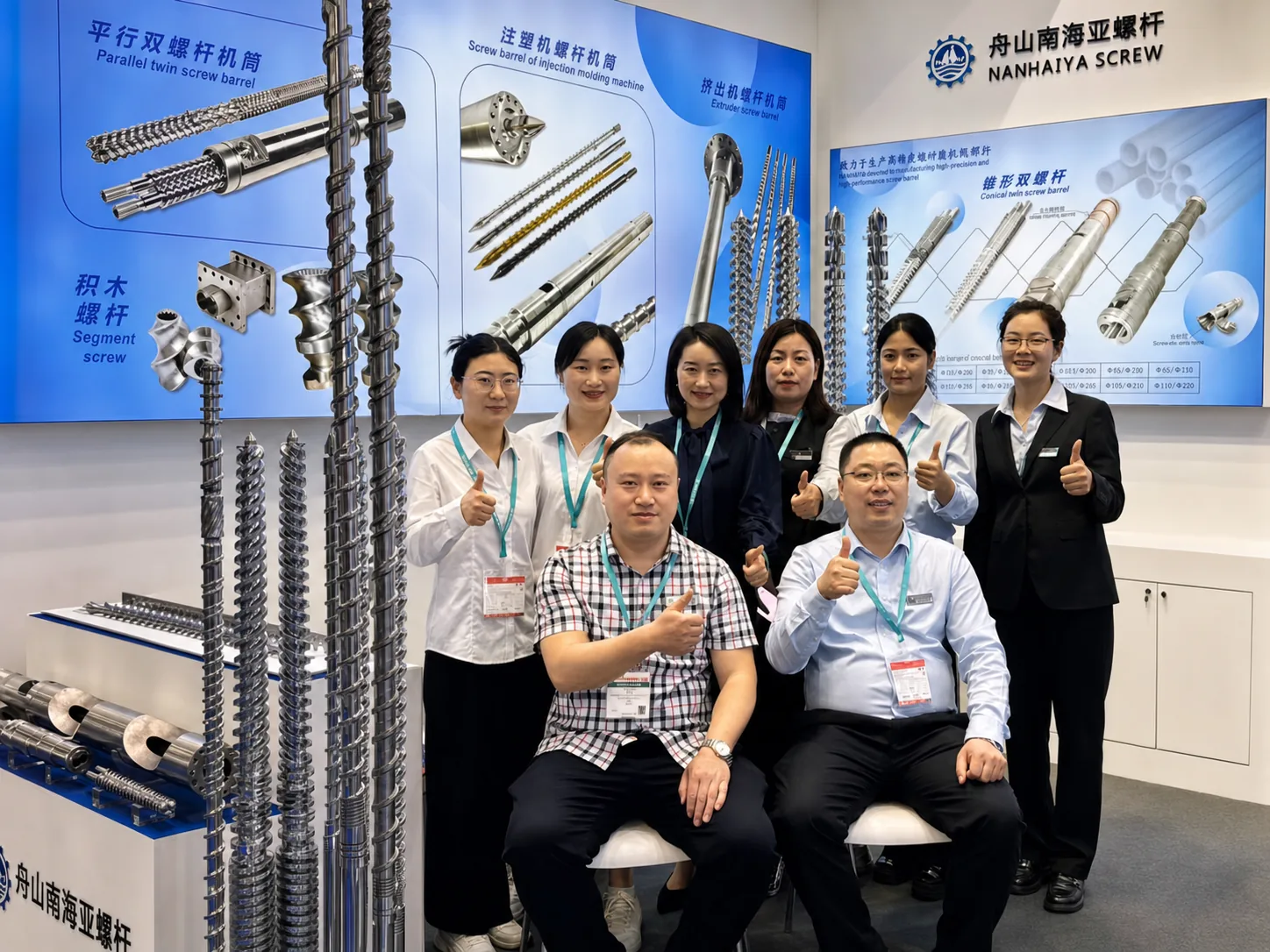
Related Articles
More insights on screw barrel technology and plastics processing.
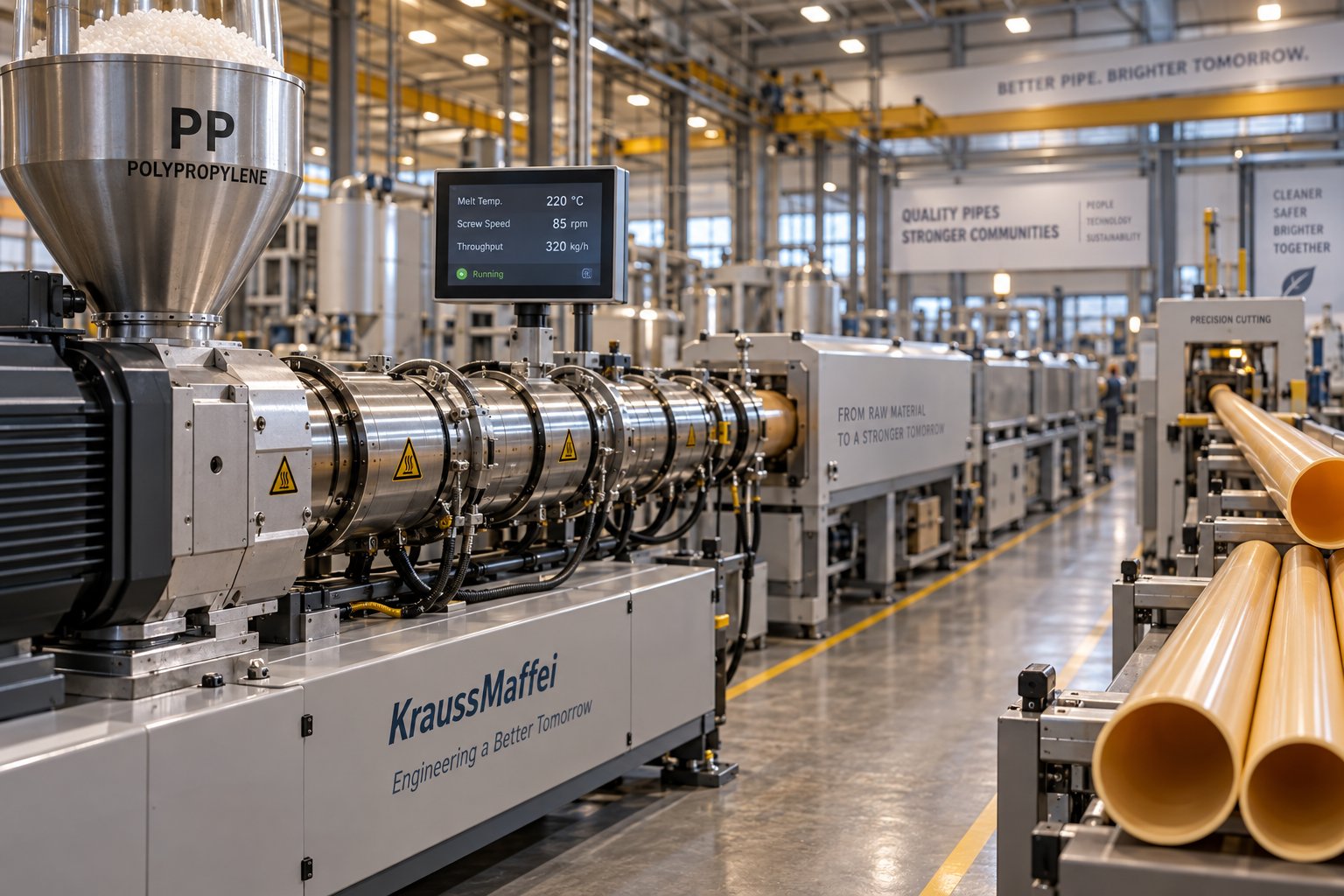
What Nobody Tells You Before Buying A PP Pipe Extruder Machine
Oct 12, 2026
Learn how a PP pipe extruder machine works, key components, material grades, quality standards, and a practical buyer selection framework for long-term ROI.
Read Article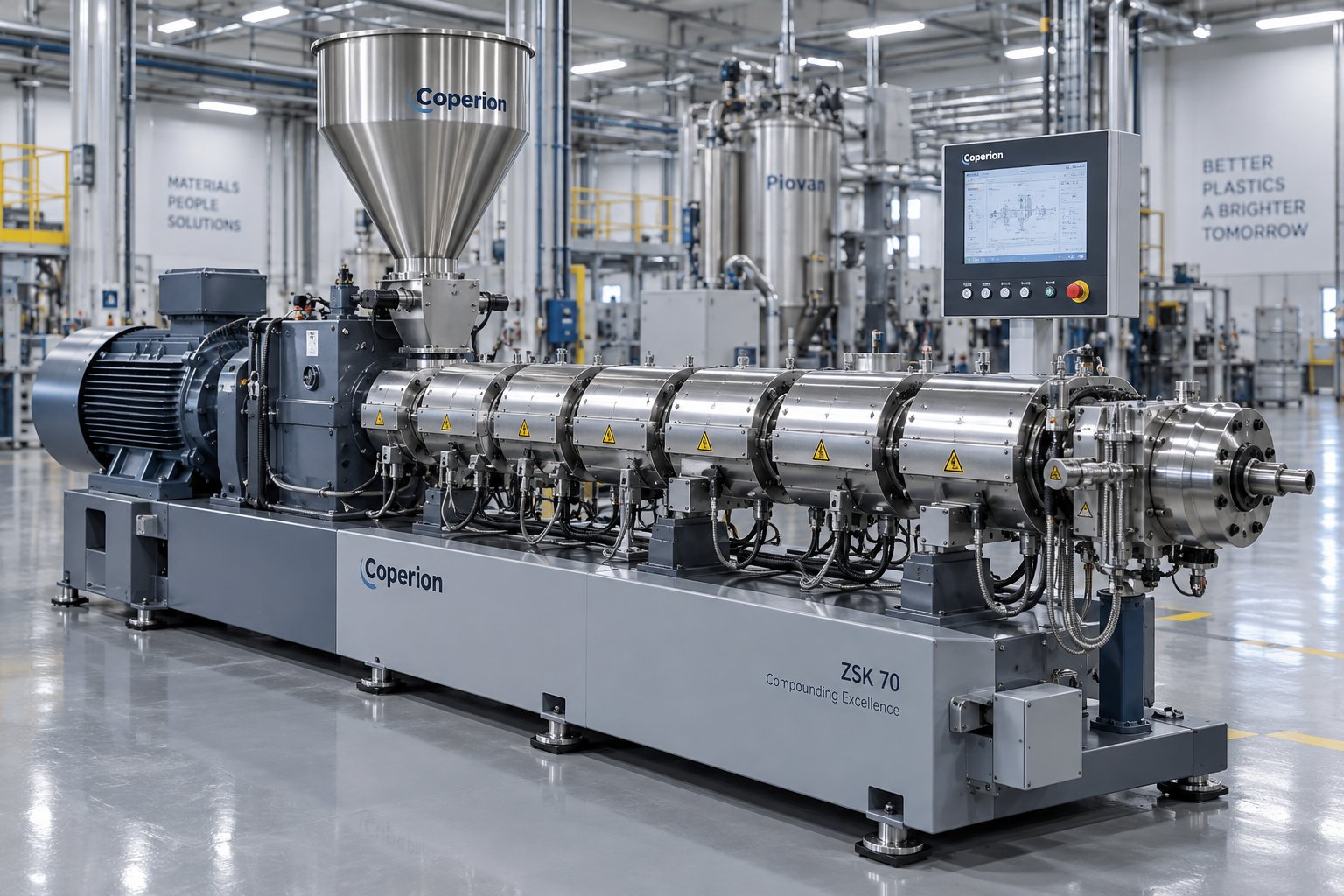
What Your Single Screw Extruder Manufacturer Won't Tell You
Oct 10, 2026
Learn how to evaluate single screw extruder manufacturers with this buyer-focused guide covering specs, configurations, material matching, and a ready-to-use selection checklist.
Read Article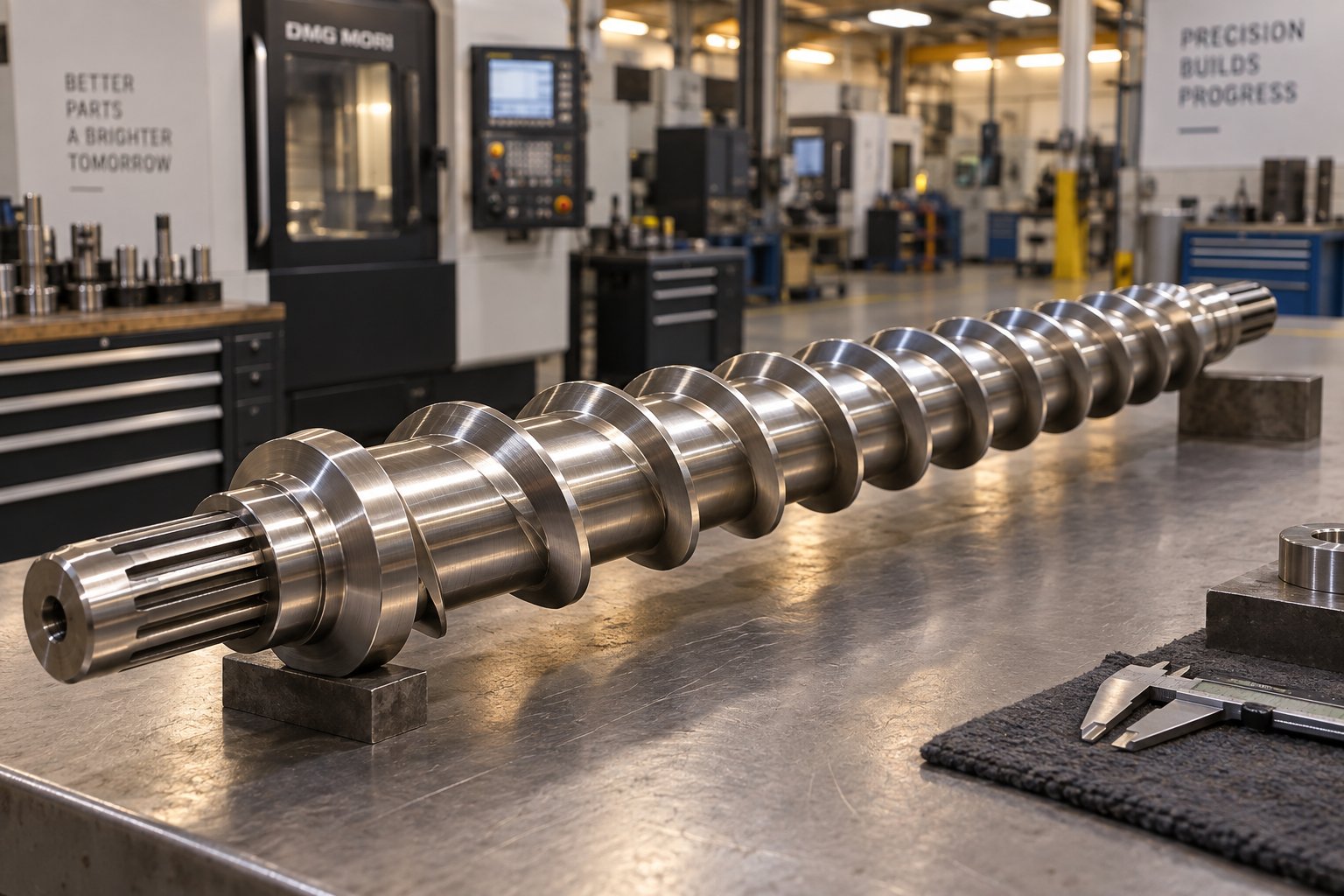
Plastic Extruder Screw Price Demystified: From Steel To Sticker
Oct 10, 2026
What drives plastic extruder screw price? This independent guide breaks down diameter, L/D ratio, metallurgy, order volume, and total cost of ownership factors.
Read ArticleLooking for something else?
Search by material, symptom or product and jump straight to the relevant page.
These are navigation suggestions based on keyword matching — not a quotation, not a delivery commitment, and not a substitute for engineering review. Final specification is confirmed by our engineers against your drawings and processed material.
Need help with screw barrel selection?
Share your machine model, processed material and application. Our team can help with pricing and technical support.