

What Is a PP Pipe Extruder Machine and Why It Matters
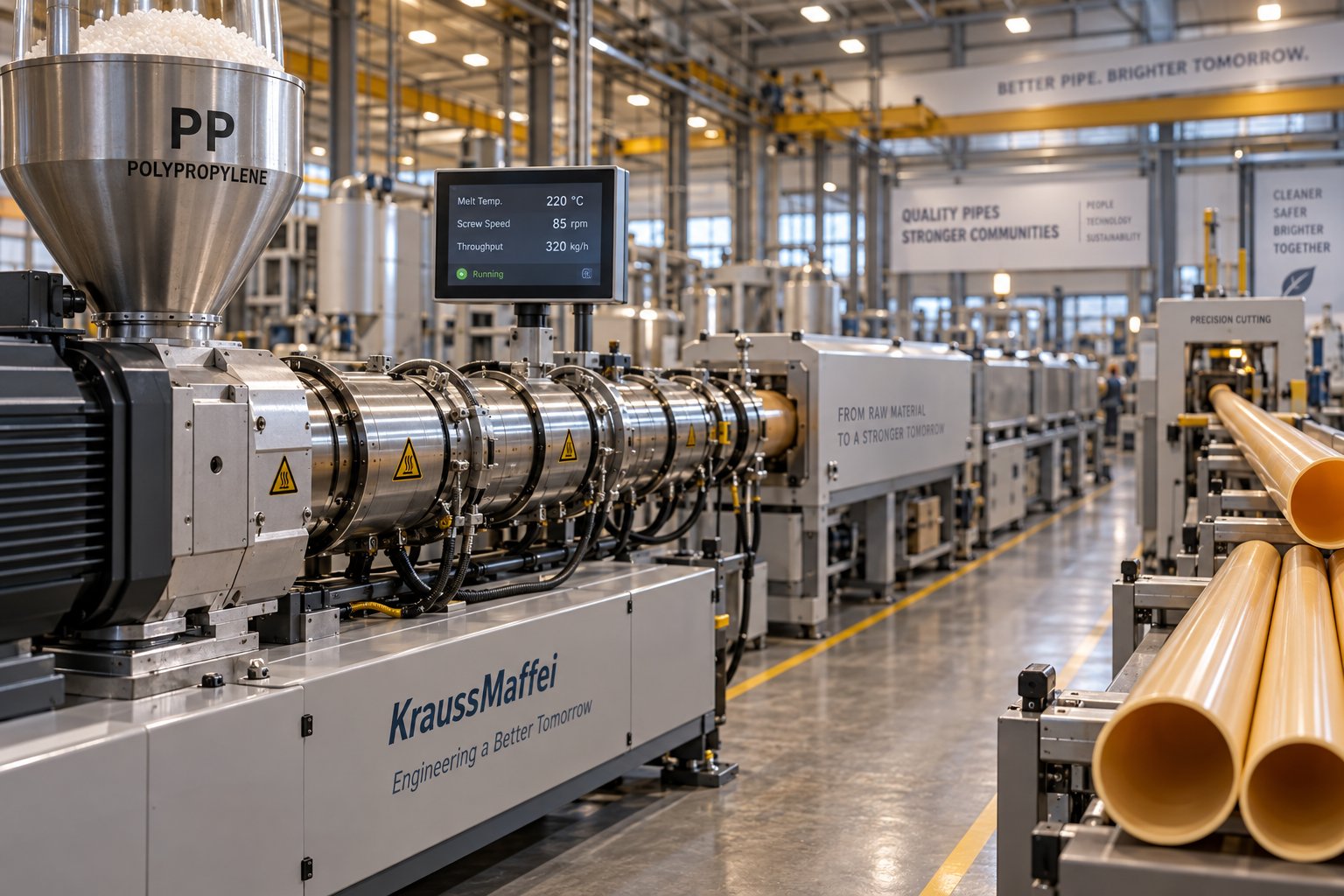
A PP pipe extruder machine is a thermoplastic processing system that melts polypropylene resin and shapes it into continuous hollow pipes through a forming die. It combines a feeding mechanism, a heated barrel with a rotating screw, an annular die head, and downstream sizing and cooling equipment into a single coordinated production line. If you've encountered catalogs listing specs without context, you're not alone — most resources skip the "why" behind the numbers. This guide takes a different approach. It's a vendor-neutral, educational resource designed to explain how these machines work, which components actually matter, and how to evaluate them before spending a dollar.
Defining the PP Pipe Extruder Machine
At its core, this plastic pipe extrusion machine converts raw polypropylene pellets into finished pipes through a sequence of melting, shaping, calibrating, and cooling stages. The pipe extruder at the heart of the line uses a single screw — not the twin-screw design common in PVC processing — to generate the intense heat energy polypropylene demands. The range of PP pipes produced on these lines is surprisingly broad: PP-R random copolymer pipes for hot and cold water plumbing, PP-H homopolymer pipes for chemical drainage, PP-B block copolymer pipes rated for higher-pressure service, and PP corrugated pipes for underground infrastructure. Each application calls for a different machine configuration, from screw geometry and die design to cooling tank length and haul-off speed.
Why PP Extrusion Differs From Other Polymer Pipe Systems
Imagine running a PVC pipe extrusion machine and then switching to polypropylene with the same settings. The results would be disastrous. The reason comes down to molecular behavior. Polypropylene is a semi-crystalline polymer, and its crystallization process is extraordinarily sensitive to how fast and evenly it cools. Research on isotactic polypropylene crystallization demonstrates that varying the cooling rate alone can shift the internal crystal structure from a stable monoclinic alpha-phase to a mesomorphic phase or even a nearly amorphous state — each producing vastly different mechanical properties in the finished product. A pvc extrusion machine, by contrast, processes a material that behaves more like a rubber-like solid under extrusion conditions and doesn't undergo true melt crystallization. PO pipe extrusion — covering both PE and PP — also requires roughly three times the specific energy input of PVC processing and uses single screw extruders rather than the twin-screw designs typical for PVC dry blend. PP's volume shrinkage during cooling sits around 3%, compared to just 0.7% for PVC, making dimensional control far more challenging across the pipe extrusion machinery.
PP pipe extrusion requires tighter process control than PVC or HDPE extrusion because polypropylene's semi-crystalline structure makes it sensitive to temperature variations and shear history — even small changes in cooling rate can alter crystal morphology and compromise pipe performance.
This sensitivity is exactly what makes the machine behind the pipe so critical. Every component, from the barrel's temperature zones to the cooling tank's water circulation rate, plays a direct role in managing crystallization. The chapters ahead break down each of those components, the materials they process, and the specifications that separate a well-matched line from an expensive mistake.
PP Material Grades and How They Influence Machine Selection
Polypropylene isn't a single material — it's a family. And the specific family member you choose to process dictates nearly everything about the pp extrusion machine you'll need. Screw geometry, barrel temperature profiles, cooling tank lengths, and even haul-off speeds all shift depending on which PP grade runs through the line. Overlook this connection and you'll end up with a machine that technically works but consistently underperforms.
PP-R, PP-H, PP-B, and PP-RCT Grade Properties
Four PP grades dominate the pipe industry, each engineered at the molecular level for a distinct set of demands. Here's what separates them:
PP-R (Random Copolymer) incorporates small amounts of ethylene randomly distributed along the polypropylene chain. This disrupts the crystalline structure just enough to improve flexibility, long-term pressure resistance, and weldability — making it the standard for hot and cold water plumbing systems governed by ISO 15874. PP-R's moderate crystallization rate gives processors a relatively forgiving cooling window, but its sensitivity to shear history means screw design still matters enormously.
PP-H (Homopolymer) is pure polypropylene with no comonomer. The result is a higher degree of crystallinity, greater stiffness, and superior chemical resistance — ideal for industrial drainage, chemical waste lines, and ventilation ducting. The tradeoff? PP-H crystallizes faster and at higher temperatures, which narrows the processing window and demands precise barrel temperature control.
PP-B (Block Copolymer) arranges ethylene into distinct blocks rather than scattering it randomly. This creates a two-phase structure with rubbery ethylene-propylene segments embedded in a rigid PP matrix, delivering significantly better impact resistance — especially at low temperatures. Pressure piping applications favor PP-B when the system needs to handle mechanical shock or freeze-thaw cycles.
PP-RCT (Raised Crystalline Temperature) represents the newest evolution. By optimizing the beta-crystal nucleation within a random copolymer base, PP-RCT achieves higher long-term hydrostatic strength at elevated temperatures. This allows thinner pipe walls at the same pressure rating, reducing material cost per meter. However, the controlled beta-crystallization behavior requires particularly stable melt temperatures and carefully managed cooling profiles — making it the most demanding grade from a plastic pipe extrusion standpoint.
| Grade | Typical MFI Range (g/10 min, 230°C/2.16 kg) | Max Service Temperature | Primary Pipe Application | Key Processing Consideration |
|---|---|---|---|---|
| PP-R (Random Copolymer) | 0.2 – 0.5 | 70°C (continuous), 95°C (short-term) | Hot and cold water plumbing (ISO 15874) | Moderate crystallization rate; sensitive to shear — requires uniform melt temperature |
| PP-H (Homopolymer) | 0.3 – 1.5 | 100°C (chemical service dependent) | Chemical drainage, industrial waste, ventilation | Fastest crystallization; narrow processing window — needs precise barrel zone control |
| PP-B (Block Copolymer) | 0.2 – 0.8 | 70°C (continuous) | Pressure piping with impact resistance needs | Two-phase structure requires optimized screw compression to ensure homogeneous melt |
| PP-RCT (Raised Crystalline Temperature) | 0.2 – 0.4 | 80°C (continuous), 100°C (short-term) | High-pressure hot water, underfloor heating | Beta-crystallization demands stable melt and controlled cooling rates |
How Resin Properties Dictate Machine Parameters
Why does this molecular detail matter to someone shopping for a plastic pipe extruder? Because the resin's properties translate directly into hardware requirements. Consider a few critical connections:
Melt Flow Index (MFI) tells you how easily a resin flows under standardized heat and pressure. PP pipe grades tend to have low MFI values — typically well under 1.0 g/10 min — indicating high melt viscosity. Processing these stiff melts demands extruder screws with higher compression ratios (generally 2.5:1 to 3.5:1) and robust drive motors capable of generating sufficient torque without overheating the polymer through excessive shear.
Crystallization rate determines how aggressively you need to manage cooling. PP-H, with its rapid crystallization, can develop internal stresses and warpage if cooling tanks are too short or water temperatures too cold. PP-RCT's beta-crystal formation can be disrupted entirely by uncontrolled quenching, degrading the pipe's long-term pressure performance. This is why the cooling system downstream isn't optional equipment — it's an integral part of the plastic pipe extrusion process.
Thermal stability governs how long the resin can remain at processing temperature before degradation begins. As research on polypropylene extrusion grades highlights, isotactic semi-crystalline polypropylene is processed at elevated temperatures and its molecular structure — including molecular weight distribution and branching — directly impacts how it responds to prolonged heat exposure. For pipe extrusion, this means barrel temperature profiles must be set precisely, often spanning five to seven independently controlled PID zones, to bring the resin to processing temperature without exceeding its degradation threshold.
One point worth emphasizing: generic temperature settings pulled from a textbook or borrowed from another production floor are unreliable. Each resin supplier publishes detailed datasheets specifying the exact processing window — melt temperature range, recommended screw speed, and maximum residence time — for their specific grade. Machine operators who skip these datasheets and rely on assumptions risk producing pipe that looks acceptable on the surface but fails hydrostatic testing weeks later.
With a clear picture of how raw material properties shape equipment decisions, the next logical question becomes: what exactly are those equipment components, and how does each one contribute to turning a demanding polymer into a dimensionally precise pipe?
Essential Components Inside a PP Pipe Extruder Machine
Every pipe extruder machine is really a chain of specialized stations, each one handing off to the next. Weakness at any link — a poorly designed screw, an undersized die, a sluggish vacuum pump — shows up in the finished pipe as wall-thickness variation, surface defects, or dimensional drift. Understanding what each component does, and why it matters specifically for polypropylene, puts you in a much stronger position when evaluating equipment.
Here's a quick-reference list of the major components, ordered from raw material input to formed pipe output:
- Hopper and gravimetric feeding system — delivers a precisely metered, consistent flow of PP resin pellets (and any masterbatch additives) into the extruder barrel.
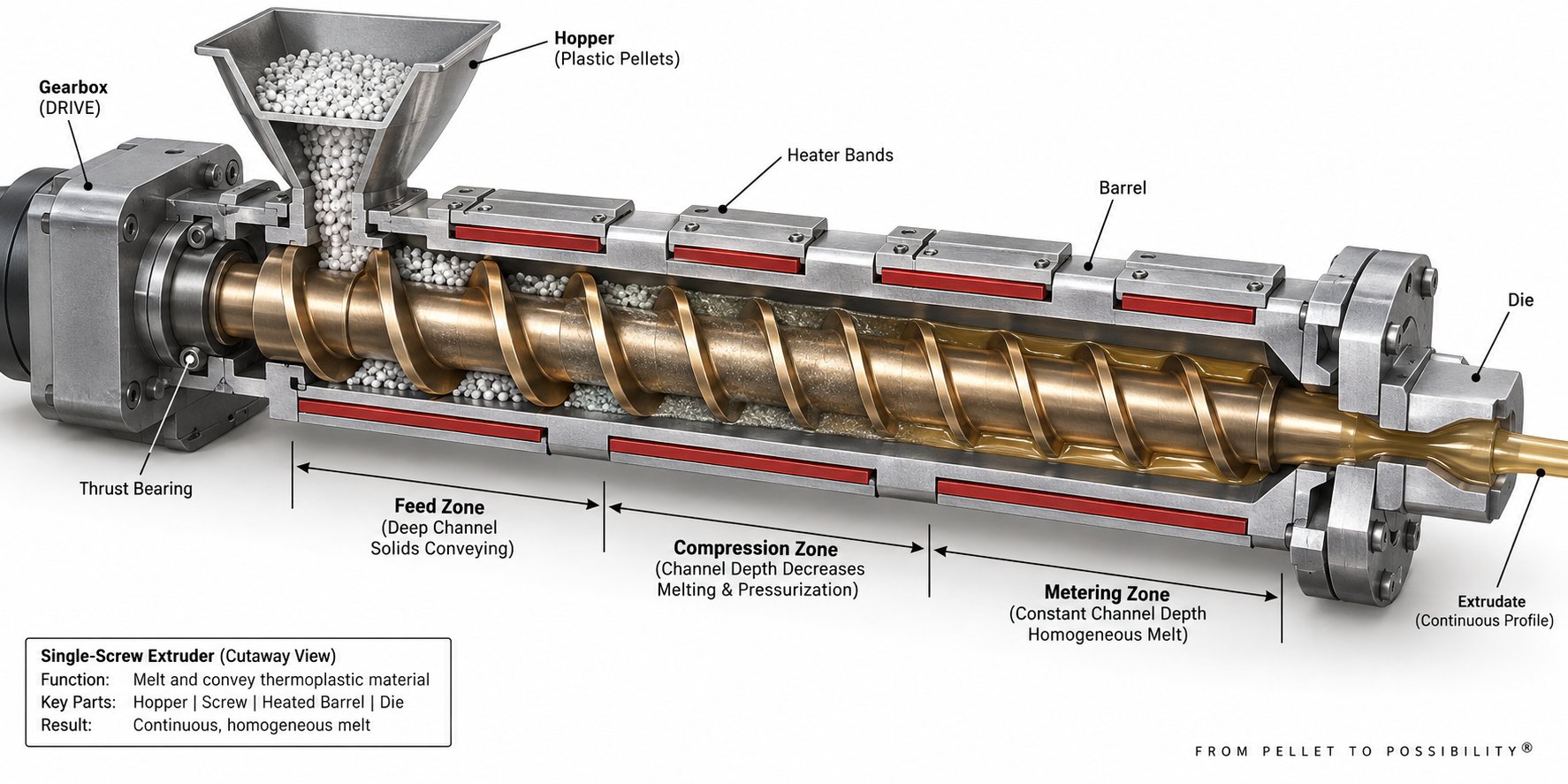
- Single screw extruder — the main processing unit that conveys, compresses, melts, and homogenizes the polypropylene through controlled rotation inside a heated barrel.
- Barrel and heating/cooling zones — a segmented, temperature-controlled cylinder surrounding the screw, using multi-zone PID heaters and optional cooling fans to maintain the precise melt-temperature profile PP demands.
- Screen changer and melt pump — filters contaminants from the melt stream and stabilizes pressure before the polymer reaches the die.
- Die head — the annular tooling that shapes the molten PP into a hollow tube with controlled wall thickness.
- Vacuum sizing tank — uses vacuum pressure and precision-machined calibration sleeves to lock the soft, freshly extruded pipe to its final outer diameter and roundness.
The Extruder Unit and Screw Design for Polypropylene
Imagine trying to turn hard plastic pellets into a perfectly uniform, bubble-free melt — all inside a steel tube no longer than a few meters. That's the job of the single screw extruder, and the screw geometry determines how well it succeeds.
A standard extrusion screw has three functional zones. The feed zone features deep channels that accept incoming pellets and begin conveying them forward. The compression zone gradually reduces channel depth, squeezing out trapped air and building the pressure needed to force pellets against the heated barrel wall where melting begins. Finally, the metering zone — with its shallowest channel depth — homogenizes the melt, ensuring uniform temperature and pressure before the polymer exits toward the die.
For PP processing, a plain three-zone screw often falls short. Polypropylene's semi-crystalline nature means its viscosity drops sharply once it melts, creating a situation where fully melted polymer and unmelted pellet fragments can coexist in the same channel. This is where barrier screws make a significant difference. As extrusion specialist Allan Griff explains, a barrier screw introduces an extra flight that creates two parallel channels — one for melt and one for unmelted pellets. The barrier clearance allows molten material to flow into the melt channel while blocking solid pellets, so the remaining solids generate more frictional heat as they rub against each other. The result is more efficient melting per revolution. Combining a barrier section with a Maddock mixing section in the metering zone — where large flutes force melt over a clearance ridge of roughly 0.020 to 0.030 inches — further improves thermal uniformity. For a pipe extrusion machine processing PP, that uniformity directly translates into consistent wall thickness and fewer defects downstream.
The barrel surrounding the screw is just as critical. PP pipe lines typically use multi-zone PID temperature control — often five to seven independently regulated zones — to create a precise temperature ramp from feed throat to barrel tip. Each zone uses resistance heater bands for heating and air-blown or water-circulated systems for cooling, and the PID controller continuously adjusts output to hold each zone within a tight setpoint window. Why so many zones? Because polypropylene's narrow melt-temperature range leaves little room for error: too cool and the resin stays partially unmelted, too hot and thermal degradation begins.
Barrel construction materials also matter for long-term performance. Most quality barrels use a bimetallic lining — a wear-resistant alloy bonded to the inner bore — to withstand the abrasive and corrosive forces that accumulate over thousands of operating hours. The clearance between screw flights and the barrel bore on new equipment typically falls between 0.005 and 0.010 inches (0.125 to 0.25 mm). As that clearance grows through wear, output efficiency drops, energy consumption rises, and melt quality degrades — a topic covered in detail later in this article.
The screw and barrel are the heart of any extruder machine — their condition directly determines melt quality, output consistency, and energy efficiency. Every other component in the line can only work with the melt these two parts produce.
Die Heads and Melt Delivery Systems
Between the extruder and the die sit two components that often get overlooked: the screen changer and the melt pump. The screen changer filters foreign particles, degraded polymer, and unmixed additive clumps from the melt stream using wire mesh screens held in a breaker plate. Hydraulic slide-plate or continuous-belt screen changers allow filter changes without stopping the extrusion pipe machine, which is essential for maintaining uninterrupted production. The melt pump — a precision gear pump mounted between the screen changer and the die — takes over a different job: pressure stabilization. By decoupling the extruder's inherent pressure fluctuations from the die, a melt pump delivers a steady, pulse-free flow that significantly improves wall-thickness consistency.
The die head itself is where molten PP takes the shape of a pipe. Two die designs dominate in pipe and profile extrusion equipment: spider dies and spiral mandrel dies.
A spider die uses rigid support legs to hold the central mandrel (which forms the pipe's hollow core) in place. Melt flows around these legs and rejoins on the other side. The design is mechanically simple, less expensive, and easier to change over — but each support leg creates a weld line where the melt streams recombine. Detailed wall-scan comparisons show that these weld lines can produce 1-3% local wall-thickness drift on smaller-diameter pipe if leg balance is not carefully controlled.
A spiral mandrel die takes a different approach. It splits the melt into multiple channels that wrap helically around the mandrel, gradually building pressure and recombining the flow streams before the polymer reaches the die land. Because pressure rises progressively along the spiral length, the melt distribution is more uniform and visible weld lines are essentially eliminated. For PP pipe production — particularly pressure-rated PP-R pipe in the 16 to 160 mm range — spiral mandrel dies are generally the preferred choice because they deliver lower circumferential wall variation.
That said, the die is only the first place where wall uniformity is decided. What happens in the next few meters — inside the vacuum sizing tank — determines whether the die's good work survives to the finished product.
Why Screw and Barrel Quality Defines Machine Performance
The vacuum sizing tank is the component that locks in the pipe's final dimensions. When the soft, still-molten tube exits the die, it enters a precision-machined calibration sleeve inside the tank. Vacuum pumps draw air from the tank, creating negative pressure that pulls the pipe's outer surface firmly against the sleeve wall. Simultaneously, water circulation cools the pipe, solidifying it at the target outer diameter.
The sizing process is especially demanding for polypropylene because of PP's roughly 3% volume shrinkage during crystallization. If the vacuum level is too low, the pipe pulls away from the sleeve and loses roundness. Too high, and the pipe can collapse or develop surface marks. Temperature of the circulating water also plays a critical role — PP-R pipes in particular require multi-stage vacuum calibration systems with powerful pumps and efficient cooling to maintain shape and dimensional accuracy throughout the crystallization process. Ovality, one of the most common rejection criteria for extruded pipe, traces back to this stage more often than any other.
Each of these components — from the gravimetric feeder at the start to the vacuum tank at the end — depends on the others. A perfectly designed die can't compensate for an inconsistent melt from a worn screw, and the best vacuum system in the world can't fix a pipe that left the die with uneven wall thickness. Recognizing these interdependencies is what separates a well-planned production line from a collection of mismatched parts. The question that follows naturally: how does the material actually flow through all of these stations, step by step, from raw pellet to finished pipe?
The PP Pipe Extrusion Process Explained Step by Step
Knowing what each component does is one thing. Watching how raw polypropylene pellets actually transform into a finished, cut-to-length pipe — and understanding what's happening inside the machine at every stage — is where real operational knowledge begins. Most equipment catalogs skip this walkthrough entirely, jumping from a spec sheet to a price tag. Here, you'll follow the complete journey through a plastic pipe extrusion line, from the moment resin enters the hopper to the second a planetary saw trims the finished product.
From Resin Pellet to Molten Polymer
The first three stages of the extrusion production line are all about turning solid pellets into a perfectly uniform, bubble-free melt — and doing it without degrading the polymer in the process. Each step builds on the one before it.
- Raw material preparation. Before a single pellet enters the extruder, the resin must be ready. While polypropylene is far less hygroscopic than nylon or PET, some PP grades — especially those stored in humid environments — benefit from pre-drying at roughly 80-90°C for two to four hours to eliminate surface moisture that could cause bubbles or voids in the pipe wall. This stage is also where masterbatch colorants, UV stabilizers, and antioxidant packages are measured and prepared for blending. For PP-R hot water pipe, UV stabilization is critical because the pipe may be exposed to sunlight during storage and installation. The ratios must be precise: too little stabilizer shortens service life, too much can alter the resin's crystallization behavior.
- Gravimetric feeding. The prepared resin and any additives enter the extruder through a gravimetric dosing system mounted above the hopper. Unlike volumetric feeders that simply measure volume (and can be fooled by changes in pellet size or bulk density), gravimetric feeders continuously weigh the material flow and adjust the feed rate in real time. Why does this matter? Because even a 2-3% fluctuation in feed rate shows up directly as wall-thickness variation in the finished pipe. Consistent feeding is the first prerequisite for consistent pipe dimensions — and it's a detail that separates a well-configured pipe extruder from a basic setup.
- Melting and plasticizing. This is where the real transformation happens. As the screw rotates inside the heated barrel, pellets are conveyed forward from the deep-channeled feed zone into the progressively shallower compression zone. Two forces work together to melt the polymer: conductive heat from the barrel wall (supplied by those multi-zone PID-controlled heater bands) and frictional shear heat generated by the screw's mechanical action against the resin. For PP pipe grades, processing temperatures generally range between 200 and 240°C depending on the specific grade — though you should always verify exact ranges from your resin supplier's datasheet rather than relying on generic guidelines. The barrel's five to seven independent heating zones create a carefully ramped temperature profile that brings the resin to its melt point gradually, avoiding localized overheating that could trigger oxidative degradation.
- Metering and homogenization. The screw's metering zone — its shallowest section — serves as the final quality gate before the melt leaves the extruder. Here, the already-molten PP is subjected to consistent shear that homogenizes both temperature and pressure throughout the melt cross-section. A well-designed metering zone eliminates the thermal gradients that cause one side of a pipe wall to crystallize differently from the other. If a barrier screw with a Maddock mixing section is installed, the melt is forced over a clearance ridge that breaks up any remaining unmixed regions and produces a thoroughly uniform polymer stream. The melt pressure at the end of this zone — typically monitored by a transducer — becomes one of the most important real-time indicators of process stability.
Shaping, Sizing, and Cooling the PP Pipe
The molten polymer is now a pressurized, homogeneous mass. Over the next three stages, it takes the shape of a pipe and solidifies — and how these steps are managed determines whether the crystallization process produces a strong, dimensionally accurate product or a stressed, out-of-spec reject.
- Die shaping. Pressurized melt flows from the extruder barrel through a screen changer (which filters out any contaminants or degraded particles) and into the annular die head. Inside the die, the melt is distributed around a central mandrel to form a hollow tube. In a spiral mandrel die — the preferred design for PP pipe — multiple helical channels gradually build pressure and merge the melt streams before the polymer reaches the die land, producing a tube with uniform circumferential wall thickness. The gap between the mandrel and the outer die ring determines the initial wall thickness, while the die's internal geometry ensures the melt velocity is even across the entire annular cross-section. Any imbalance here will echo through every downstream station.
- Vacuum sizing. The soft, still-molten tube exits the die and immediately enters a vacuum calibration tank. Inside, precision-machined sizing sleeves surround the pipe while vacuum pumps draw air from the tank, creating negative pressure that pulls the pipe's outer surface firmly against the sleeve wall. This is the moment the pipe's final outer diameter and roundness are locked in. For polypropylene — with its approximately 3% volume shrinkage during crystallization — getting the vacuum level right is a balancing act. Too little vacuum and the pipe pulls away from the sleeve, losing roundness. Too much and the surface develops marks or the pipe risks partial collapse. Circulating water inside the tank simultaneously begins cooling the outer surface, initiating crystallization from the outside in.
- Spray cooling. After initial sizing, the pipe passes through one or more spray cooling tanks where water nozzles deliver a controlled, high-intensity spray onto the pipe surface. This is not just about bringing the temperature down — it's about managing how fast the temperature drops. PP's semi-crystalline structure means the cooling rate directly influences the crystal morphology inside the pipe wall. Cool too aggressively and you create internal stresses that can lead to warping or long-term creep failure. Cool too slowly and production speed suffers. Modern spray cooling systems use evaporative heat transfer — where water droplets capture heat from the pipe surface and carry it away through evaporation — achieving roughly 20% greater heat-transfer efficiency than full-immersion tanks of similar size. Multiple tanks arranged in series allow progressive temperature reduction, which is especially important for thicker-walled PP pipe where the core takes significantly longer to solidify than the outer skin.
Haul-Off and Precision Cutting
The pipe is now cooled, dimensionally stable, and continuously moving forward. The final two stages control the product's linear speed and cut it to the lengths your customers need.
- Haul-off. A caterpillar-type or belt-type haul-off unit grips the cooled pipe and pulls it through the entire downstream section at a constant, precisely controlled speed. This is where synchronization becomes critical. As technical analysis of extrusion line dynamics makes clear, the relationship between extruder output and haul-off speed determines how much material is deposited into each meter of pipe. If haul-off speed increases while extruder output stays constant, the pipe wall gets thinner and meter weight drops. If the haul-off runs too slowly relative to output, excess material packs into each meter, producing thicker walls, potential sagging, and dimensional instability. Even when both the screw RPM and haul-off speed readings appear stable on the control panel, the actual material delivery can shift due to changes in melt temperature, screen loading, or material batch variation — which is why experienced operators monitor meter weight as their primary diagnostic rather than relying on speed settings alone.
- Cutting. The final station in the plastic pipe extrusion line is the cutting system. For PP pipe, planetary saws are the most common choice — a rotating blade orbits around the pipe while traveling at the same linear speed, producing clean, chip-free cuts without stopping the line. Smaller-diameter pipe extruders may use guillotine cutters, which are mechanically simpler but limited to thinner pipe walls. Either way, the cutter receives length commands from a measuring encoder that tracks exactly how much pipe has passed through the haul-off. Programmable cut lengths allow a single production run to fill multiple order specifications, and the best systems maintain cut-length tolerances within a few millimeters across an entire shift.
Each of these nine stages influences the next. A feed-rate fluctuation in step two shows up as a wall-thickness variation in step six. An aggressive cooling rate in step seven can create residual stresses that only reveal themselves weeks later during a pressure test. This interconnectedness is exactly why evaluating a pp pipe extruder machine in isolation — without understanding the full process chain — leads to costly mismatches. The extruder may be the star of the line, but it performs on a stage built by everything downstream.
Downstream Equipment That Completes the Pipe Production Line
Here's a mistake that catches more first-time buyers than any other: pouring the entire budget into a high-quality extruder while treating everything after the die head as an afterthought. The extruder melts and shapes the polymer, yes — but it's the downstream equipment that determines whether your finished PP pipe actually meets dimensional tolerances, passes certification testing, and arrives at your customer in a sellable form. Under-specifying even a single downstream station can bottleneck an otherwise capable pp pipe extrusion line, turning an investment in premium extrusion hardware into an expensive source of rejected product.
Think of it this way: a perfectly homogeneous melt exiting the die is still a soft, shapeless tube. Without the right calibration, cooling, pulling, cutting, and socketing equipment working in precise coordination, that melt never becomes a pipe anyone can install. Let's walk through each station.
Vacuum Calibration and Cooling Systems
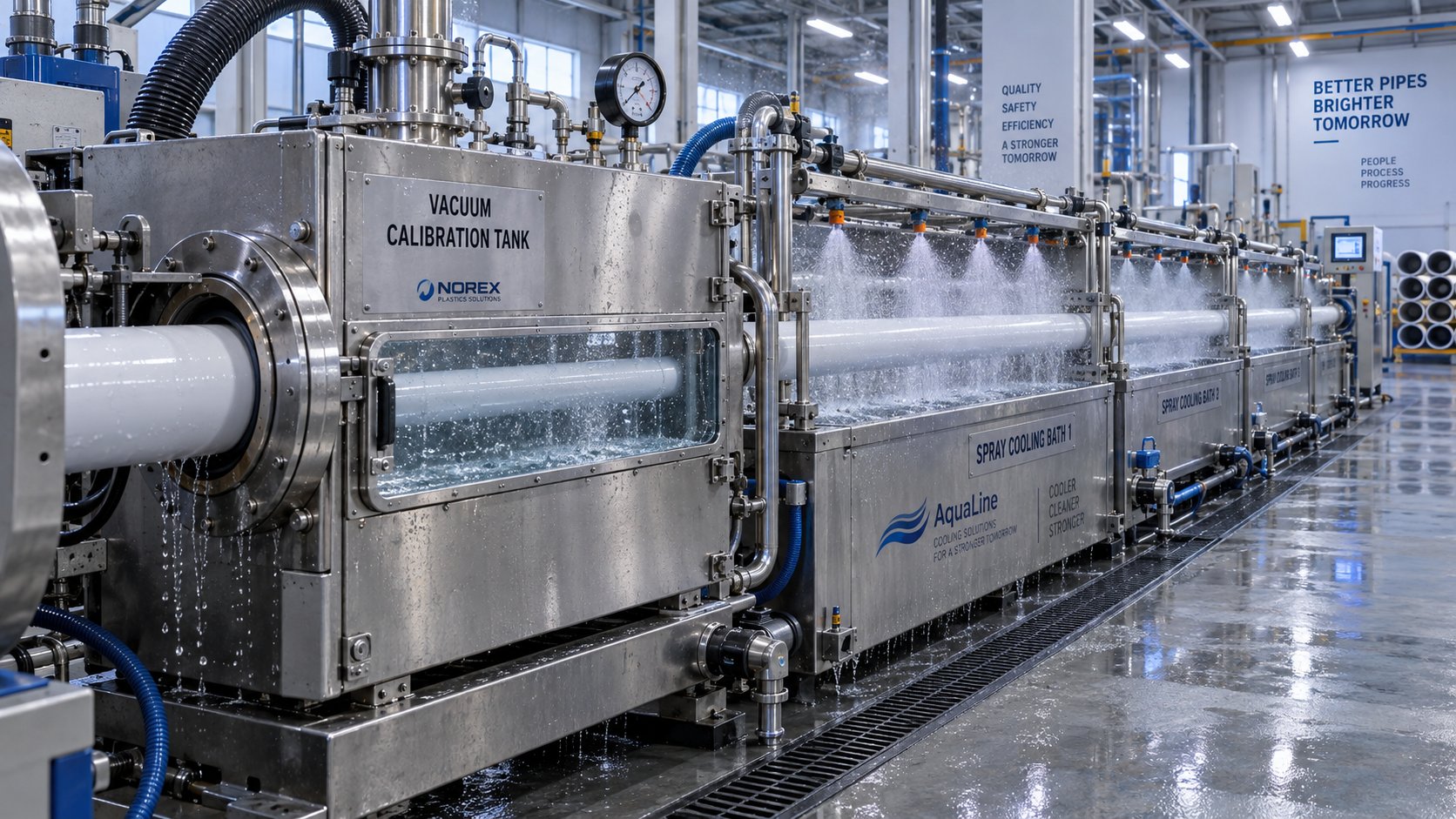
The vacuum calibration tank is where your pipe's outer diameter and roundness get locked in permanently. Inside the tank, a precision-machined sizing sleeve — typically chrome-plated with tolerances within ±0.02 mm — surrounds the soft extrudate as it exits the die. Vacuum pumps draw air from the sealed chamber, creating a negative pressure range of roughly 0.02 to 0.06 MPa that pushes the pipe's outer wall firmly against the sleeve. Simultaneously, water spray manifolds inside the tank begin extracting heat from the pipe surface, initiating crystallization from the outside in.
Why is this stage so critical for polypropylene specifically? Because PP shrinks approximately 3% by volume as it crystallizes. If the vacuum level is even slightly off, the pipe either pulls away from the sleeve — producing ovality — or gets pressed too aggressively against it, leaving surface marks. Water temperature inside the tank matters just as much: too cold and internal stresses freeze into the pipe wall, too warm and the polymer skin stays soft enough to deform under downstream pulling forces. Advanced systems use automated vacuum regulation valves that respond dynamically to pressure fluctuations, correcting deviations as small as 0.002 MPa in real time.
After the initial calibration tank, the pipe enters spray cooling baths — typically two or more tanks arranged in series with progressively lower water temperatures. This graduated approach manages PP's crystallization rate carefully, preventing the kind of rapid quenching that creates residual stress and long-term creep vulnerability. For thicker-walled PP-H drainage pipe, the cooling section may stretch several meters longer than what you'd see on a comparable PVC or PE line, simply because polypropylene's crystallization kinetics demand more controlled thermal transitions.
Haul-Off, Cutting, and Socketing Equipment
The haul-off unit is where speed synchronization either preserves or destroys everything the upstream equipment has achieved. Caterpillar-type haul-offs — using two opposing rubber-padded tracks — grip the cooled pipe and pull it through the entire downstream section at a constant, precisely controlled linear speed. Belt-type units serve the same function for larger-diameter pipes where distributed grip pressure prevents deformation. The relationship is straightforward but unforgiving: if haul-off speed drifts even slightly faster than the extruder's output rate, the pipe wall thins. Too slow, and excess material packs in, producing dimensional instability and potential sagging. This speed must stay synchronized across every meter of every shift.
At the end of the plastic pipe production line, the cutting system trims continuous pipe into programmed lengths. Planetary saws are the standard for PP pipe — a rotating blade orbits around the pipe while traveling at the same linear speed as the product, producing clean, chip-free cuts without stopping the line or generating debris that could contaminate the next length. For smaller-diameter PP-R pipe (typically under 63 mm), guillotine cutters offer a simpler, lower-cost alternative, though they're limited to thinner wall thicknesses.
One station that often gets omitted from buyer research entirely is the belling or socketing machine. For PP-R plumbing pipe destined for fusion welding connections, one end of each pipe length needs a formed socket — a slightly enlarged bell shape created by heating the pipe end to its softening point and expanding it over a mandrel. Without an integrated socketing station, every pipe length requires a separate coupling fitting, adding material cost and installation time for the end user. Heated forming stations on the production line create these sockets automatically, matching them to standardized fusion-joint dimensions.
Finally, stacking and bundling systems automate the packaging stage — collecting cut pipe lengths, arranging them into organized bundles, and strapping or wrapping them for transport. On high-output lines producing small-diameter PP-R pipe, manual handling at this stage becomes a bottleneck almost immediately.
| Equipment | Function | Key Specification to Evaluate | Impact on Pipe Quality |
|---|---|---|---|
| Vacuum Calibration Tank | Locks outer diameter and roundness using vacuum pressure against a precision sizing sleeve | Vacuum range (0.02–0.06 MPa), sleeve tolerance (±0.02 mm), water temperature control | Directly determines OD accuracy, ovality, and surface finish |
| Spray Cooling Baths | Gradually reduces pipe temperature through multi-stage water spray to manage crystallization | Number of tanks, total cooling length, water temperature per stage, spray pressure | Controls internal stress, crystalline structure, and long-term pressure performance |
| Haul-Off Unit | Pulls pipe at constant speed, synchronized with extruder output | Speed range, grip force, speed stability (±0.1%), caterpillar vs. belt type | Speed fluctuations directly cause wall-thickness variation |
| Cutting System | Trims continuous pipe to programmed lengths without stopping the line | Planetary saw vs. guillotine, max pipe diameter, cut-length tolerance | Ensures clean, chip-free ends and accurate lengths for installation |
| Belling/Socketing Machine | Heats and expands pipe ends to create socket joints for fusion welding | Socket depth, heating temperature control, cycle time, compatible diameter range | Determines joint integrity and compatibility with standard fittings |
| Stacking and Bundling System | Collects, arranges, and straps finished pipe into transport-ready bundles | Automation level, bundle size, strapping method, throughput capacity | Prevents handling damage and maintains pipe straightness during storage |
Every one of these downstream stations interacts with the others — and with the extruder upstream. A perfectly sized pipe can still fail if an unstable haul-off introduces periodic wall-thickness waves. A flawless extrusion and cooling sequence means nothing if the socketing machine overheats the pipe end and weakens the joint zone. This is why experienced buyers evaluate a pipe production line as a complete, integrated system rather than a collection of individual machines purchased from separate catalogs. The real question isn't just which extruder to buy — it's which combination of diameter range, output speed, and downstream capability matches your target market and pipe specifications.
Machine Types and Specifications by Pipe Diameter Range
So you've mapped out your target pipe application, studied the PP grade you'll process, and understand the downstream equipment a complete line requires. The pivotal question remains: which size and class of pp pipe extruder machine actually fits your production plan? The answer depends almost entirely on the pipe diameter range you intend to manufacture — and the specifications shift dramatically between a 20 mm PP-R plumbing tube and an 800 mm corrugated drainage conduit. Yet most buyer resources lump all pipe extruders into one generic category, leaving you to guess how screw diameter, motor power, and output capacity should scale to your needs.
Let's fix that by breaking the market into the three main machine categories buyers actually encounter — organized by the pipe sizes they produce — and explaining the technical specifications that define each one.
Small-Diameter PP-R Pipe Machines
If your market is residential or commercial plumbing — hot and cold water systems using PP-R random copolymer — you're looking at pipe diameters from 16 to 63 mm. These are the bread-and-butter dimensions for PP-R plumbing pipe produced under ISO 15874, and the machines that make them are built for speed, precision, and multi-pipe output.
Typical configurations use single-screw extruders with screw diameters of 45 to 65 mm. The smaller screw sizes keep melt residence time short — an advantage for PP-R, where prolonged heat exposure can shift the crystallization behavior of the random copolymer structure. What makes these lines distinctive is their use of multi-cavity dies, which produce two, four, or even six pipes simultaneously from a single extruder. Each cavity receives a split portion of the melt stream and shapes it through its own annular die channel, dramatically multiplying output per machine hour. A four-cavity die producing 20 mm PP-R pipe, for instance, can deliver four times the linear meters of a single-cavity setup running at the same screw speed.
Motor power on these machines typically ranges from 15 to 55 kW, and total output falls in the range of approximately 60 to 200 kg/hr depending on screw size, die configuration, and pipe wall thickness. The smaller screw diameters also mean these lines occupy less floor space and draw less energy per kilogram of output — an important consideration for operations running multiple parallel lines to cover a broad PP-R product catalog.
Medium and Large-Diameter PP Pipe Extruders
Medium-diameter machines cover the 75 to 250 mm range, serving PP-H chemical drainage, PP-B pressure piping, and larger-diameter PP-R systems for commercial buildings. The jump from small-diameter production isn't just a matter of using a bigger die — the extruder itself scales up substantially.
Screw diameters in this category run from 65 to 90 mm, and single-cavity spiral mandrel dies replace the multi-cavity setups used for smaller pipe. Why? Because at these diameters, wall thickness increases and the volume of melt needed per meter of pipe rises sharply. A single-cavity spiral mandrel die gives the machine's full melt output to one pipe, ensuring the uniform wall distribution that pressure-rated PP-B pipe and industrial-grade PP-H drainage demand. Motor power steps up to the 55–160 kW range, with output capacities typically between 150 and 400 kg/hr.
Interestingly, buyers evaluating a medium-diameter PP pipe extrusion line often compare it against a pe pipe extrusion machine in the same size class. The frame and downstream equipment may look similar, but the screw geometry, barrel temperature profile, and cooling section design differ meaningfully between PP and PE processing — a point that matters if you're considering a dual-purpose line. While a pe extrusion line optimized for HDPE can sometimes be adapted for PP-B with screw and die changes, the reverse is less straightforward because polypropylene's narrower melt-temperature window demands tighter thermal control than most hdpe pipe extrusion machine configurations provide by default.
Large-diameter machines target the 315 to 800+ mm range — solid-wall PP-H pipe for industrial chemical transport or PP corrugated pipe for underground stormwater and sewer infrastructure. These are heavy-duty systems. Screw diameters jump to 90–120 mm or larger, driven by high-torque gearboxes and motors in the 160–400+ kW class. Output rates can reach 400 to 800+ kg/hr, and the downstream equipment — vacuum tanks, cooling baths, haul-off units — scales proportionally in both size and cost.
At this scale, everything gets more demanding. The sheer volume of melt flowing through the die means even minor temperature or pressure inconsistencies produce measurable wall-thickness variation. Barrel heating systems often include eight or more independently controlled PID zones, and high-precision melt pumps become standard rather than optional. As engineering analysis of screw L/D ratios confirms, single-screw extruders in this range face increasing torsional stress as screw length grows — a design constraint that limits practical L/D ratios and makes gearbox and shaft engineering just as important as screw geometry.
Reading and Comparing Technical Specifications
When you sit down with spec sheets from multiple equipment suppliers, a few numbers deserve your closest attention. Understanding what they mean — and what they don't tell you — prevents the kind of apples-to-oranges comparisons that lead to purchasing mistakes.
Screw L/D ratio (length-to-diameter ratio) is the single most-discussed specification, and for PP pipe extrusion it typically falls in the 30:1 to 36:1 range. A higher L/D gives the screw more working length for melting, mixing, and homogenizing the polypropylene melt. But longer isn't automatically better — as the reference data in the table below shows, the right L/D depends on your specific pipe diameter, output target, and PP grade. Over-specifying L/D increases machine cost, energy consumption, and residence time, which can push heat-sensitive PP-R grades toward degradation.
Barrel heating zone count indicates how finely you can control the temperature profile from feed throat to die. Small-diameter machines typically use five to six zones. Medium and large machines may feature seven to nine or more. Each zone adds precision — and cost.
Motor power is listed in kilowatts and determines the extruder's ability to generate the torque needed to process high-viscosity PP melt at target screw speeds. Under-powered motors force operators to reduce screw speed, limiting output. Oversized motors waste capital but provide headroom for processing tougher PP-H grades or running higher-output die configurations in the future.
Output capacity, usually stated in kg/hr, is the headline number — but treat it carefully. Quoted output figures represent optimal conditions with a specific resin grade, screw design, and die configuration. Your actual production rate will depend on wall thickness, pipe diameter, PP grade viscosity, and the cooling capacity of your downstream section.
| Pipe Diameter Range | Typical Screw Diameter | L/D Ratio | Motor Power Range | Approximate Output | Primary Application |
|---|---|---|---|---|---|
| 16 – 63 mm | 45 – 65 mm | 30:1 – 33:1 | 15 – 55 kW | 60 – 200 kg/hr | PP-R hot/cold water plumbing (multi-cavity dies common) |
| 75 – 250 mm | 65 – 90 mm | 30:1 – 36:1 | 55 – 160 kW | 150 – 400 kg/hr | PP-H drainage, PP-B pressure pipe, commercial PP-R systems |
| 315 – 800+ mm | 90 – 120+ mm | 30:1 – 36:1 | 160 – 400+ kW | 400 – 800+ kg/hr | PP solid-wall industrial pipe, PP corrugated stormwater/sewer pipe |
Note: These specifications represent typical industry ranges and can vary between manufacturers. Specific values — including output capacity and motor sizing — should always be confirmed with equipment suppliers based on your exact resin grade, pipe dimensions, and production requirements.
Matching these numbers to your production goals is only half the equation. A machine that produces pipe at the right diameter and output rate still needs to produce pipe that passes certification testing — and that depends on quality control parameters and industry standards that many buyers overlook entirely during the selection process.
Quality Control Parameters and Industry Standards for PP Pipes
A pp pipe extruder machine can produce pipe at the right diameter all day long — and still churn out product that fails certification testing. The gap between "looks good on the line" and "passes every lab test" comes down to quality control parameters that many buyers never think to ask about during the purchasing process. These parameters are not just operator concerns. They are directly shaped by the machine's mechanical condition, thermal stability, and downstream precision. If you don't understand what gets measured and why pipes get rejected, you can't evaluate whether a given machine is capable of producing pipe that sells.
Critical Dimensions and Surface Quality Metrics
Three measurable characteristics determine whether a PP pipe meets specification: wall thickness uniformity, ovality, and surface finish. Each one traces back to specific machine behaviors — and each one can drift without obvious warning if you're not monitoring the right variables.
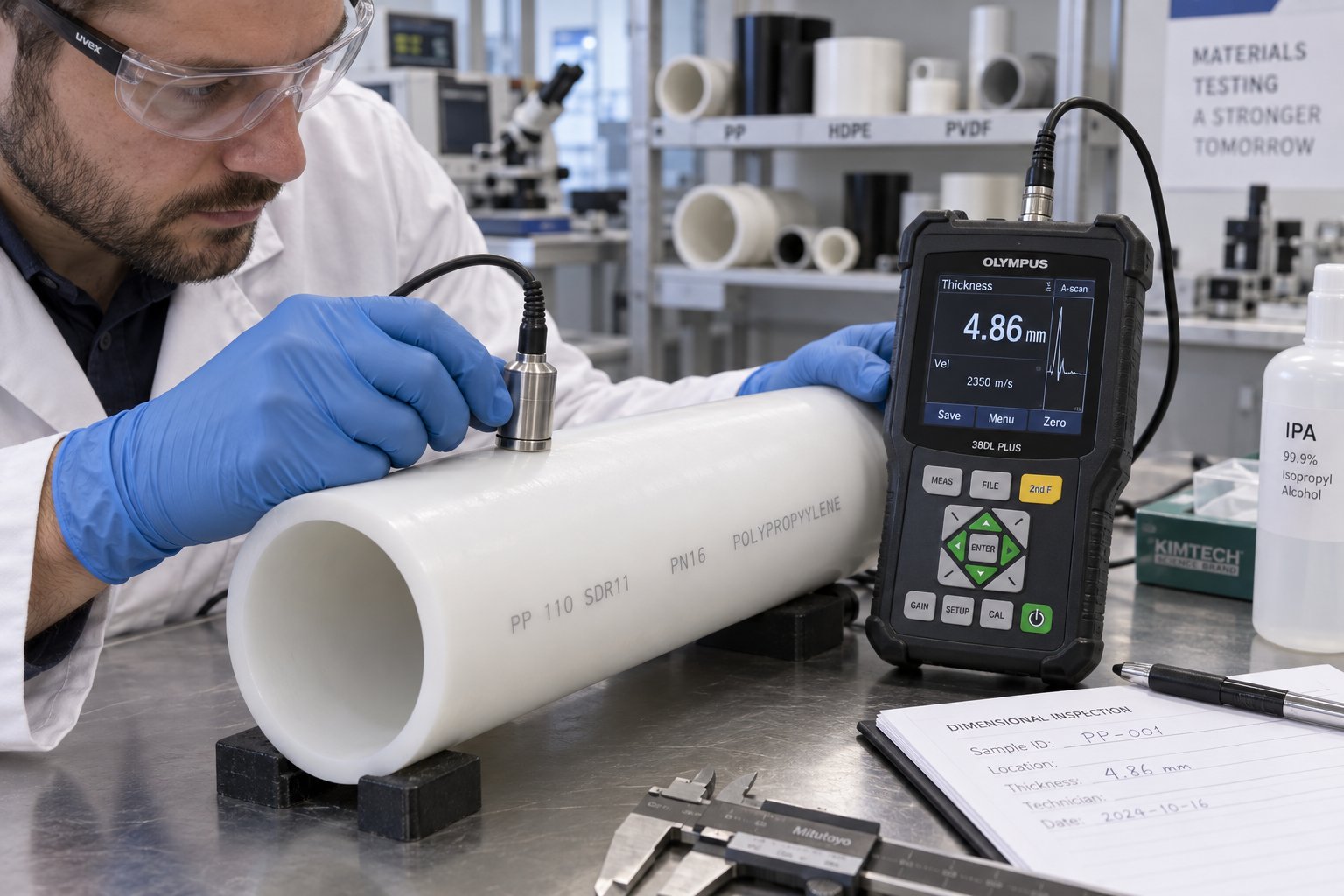
Wall thickness uniformity is arguably the most consequential quality metric. A pipe with uneven walls — thicker on one side, thinner on the other — cannot deliver the rated pressure performance its design class promises. The thin side becomes the failure point. What causes it? The root causes almost always originate somewhere in the extrusion equipment. A worn screw with increased flight-to-barrel clearance delivers inconsistent melt volume per revolution. A die head with off-center mandrel alignment pushes more material to one side of the annular gap. And as detailed analysis of pipe extrusion dimensional control confirms, haul-off speed fluctuations change the draw balance between melt output and take-off rate, producing periodic thick-thin variations along the pipe's length that are invisible to the naked eye but immediately visible on an ultrasonic wall scanner.
Ovality — the degree to which a pipe's cross-section deviates from a perfect circle — is the second critical dimension. Out-of-round pipe creates problems at every joint: fusion welds don't seal properly, mechanical fittings leak, and installation torque concentrates unevenly. Ovality originates primarily in the vacuum sizing stage. If the vacuum level fluctuates — even by small amounts — the soft pipe experiences inconsistent forming force while it's still pliable enough to deform. Uneven cooling amplifies the problem: when one side of the pipe solidifies faster than the other, differential shrinkage pulls the cross-section out of round. Mechanical issues like worn or misaligned calibration sleeves introduce a persistent, repeatable ovality that shows up identically in every pipe length until the tooling is corrected.
Surface finish defects are the most visually obvious quality failures, and they often signal deeper processing problems. Three defect types dominate PP pipe production:
- Shark skin — a fine, rough texture on the pipe surface caused by excessive shear stress at the die exit. The melt tears microscopically as it exits the die land faster than the polymer chains can relax, producing a matte, textured finish. Root cause: die exit geometry too restrictive, melt temperature too low, or extrusion speed too high for the die's flow capacity.
- Melt fracture — a more severe version of surface distortion, appearing as irregular waves, ripples, or spiral patterns on the pipe wall. This happens when the melt's elastic behavior overwhelms the die's ability to deliver smooth flow. Root cause: melt temperature outside the optimal window, screw design generating excessive shear, or contaminated resin creating flow disruptions.
- Die lines — fine longitudinal streaks running along the pipe length, caused by imperfections on the die land surface. Scratches, material buildup, or machining marks on the die transfer directly onto the molten polymer as it exits. Root cause: die maintenance neglected, die land damaged or not polished, or degraded material accumulating at the die exit over extended runs.
Each of these defects points back to the extrusion equipment and its operating condition. Surface quality isn't cosmetic — it's diagnostic. A pipe with shark skin tells you the die is being pushed past its flow limits. Melt fracture signals a fundamental mismatch between processing parameters and resin behavior. Die lines mean it's time to pull and clean the tooling. Operators who treat surface defects as nuisances rather than warning signals miss the opportunity to catch machine issues before they escalate into dimensional failures.
Industry Standards That Shape Machine Requirements
Quality parameters don't exist in a vacuum — they're defined by international standards that specify exactly how much deviation is acceptable and how pipes must perform under testing. Two standards dominate the PP pipe industry, and both set requirements that directly influence what your extrusion equipment must be capable of delivering.
ISO 15874 governs plastics piping systems for hot and cold water installations using polypropylene. Part 2 of the standard specifies pipe requirements — including dimensional tolerances for wall thickness, ovality limits, and hydrostatic pressure test performance across multiple application classes. It covers service conditions ranging from cold water distribution to hot water heating systems, with design pressures and pipe dimension classes tailored to each application. The standard also defines long-term hydrostatic strength testing, where pipe samples are held under constant internal pressure at elevated temperatures for thousands of hours to verify they won't fail in service. A machine that cannot hold melt temperature within a tight window produces pipe with inconsistent crystalline structure — and inconsistent crystalline structure means inconsistent long-term pressure resistance, which shows up as premature failure during these extended hydrostatic tests.
EN 1852 covers PP drainage and sewerage piping systems — the PP-H territory. While pressure resistance is less critical for gravity drainage, this standard enforces strict requirements for ring stiffness, impact resistance at low temperatures, and dimensional accuracy. Meeting ring stiffness requirements depends on wall thickness uniformity, which circles back to screw and barrel condition, die centering, and haul-off synchronization.
The relationship between machine capability and standard compliance is worth stating plainly: the extruder's ability to maintain stable melt temperature and pressure is what determines whether finished pipes pass or fail certification. A pvc pipe extruder machine operating in a PVC production facility faces a different compliance landscape — PVC pipe standards like EN 1401 and ASTM D1785 address different material behaviors — but the underlying principle is identical. Whether you're running a pvc extruder machine for drainage pipe or a PP extrusion line for pressure-rated plumbing, the machine's process stability directly maps to the product's ability to meet its governing standard.
This is also why experienced buyers don't just look at output capacity and price. They ask: can this machine hold melt temperature within ±2°C across all barrel zones for an entire production shift? Can the vacuum system maintain sizing pressure within ±0.002 MPa? Can the haul-off hold speed within ±0.1% of setpoint? These aren't abstract specifications — they're the mechanical prerequisites for producing pipe that consistently passes the dimensional and hydrostatic tests defined by ISO 15874 and EN 1852. Any machine that can't deliver that level of stability will produce pipe that occasionally passes and occasionally fails, which is worse than consistently failing because it creates unpredictable quality escapes into your supply chain.
Understanding what gets measured and what the standards demand puts you in a position to ask the right questions during machine evaluation. It also highlights a reality that becomes increasingly important once a line is running: maintaining these quality parameters over months and years of production requires a proactive approach to machine maintenance, troubleshooting, and component replacement — particularly for the screw and barrel that define melt quality from the very first revolution.
Maintenance, Troubleshooting, and Screw Barrel Optimization
Passing certification testing on day one is encouraging. Passing it consistently on day three hundred — after thousands of operating hours, dozens of resin batch changes, and the inevitable accumulation of mechanical wear — is where real profitability lives. A pp pipe extruder machine doesn't degrade all at once. It drifts. Melt temperature creeps upward by a degree. Wall-thickness variation widens by a fraction of a millimeter. Energy consumption per kilogram ticks higher. These changes happen so gradually that operators compensate without realizing the underlying cause, until one day the reject rate spikes and production grinds to a halt for emergency repairs.
Preventing that scenario requires three disciplines: scheduled preventive maintenance, systematic troubleshooting when defects appear, and timely replacement of wear components — especially the screw and barrel — before they silently erode your output quality and efficiency.
Preventive Maintenance Schedules for Extruder Longevity
Think of preventive maintenance as an insurance policy you pay in small, regular installments. Skip it, and the eventual payout — unplanned downtime, scrapped product, emergency parts — costs far more. The goal isn't to wait for something to break. It's to catch wear trends early enough to schedule repairs during planned shutdowns.
Here's a practical maintenance checklist organized by frequency. Adapt intervals based on your specific operating hours, resin abrasiveness, and manufacturer recommendations:
- Every shift: Check barrel zone temperatures against setpoints. Verify melt pressure readings are stable. Inspect the hopper and feed throat for bridging or contamination. Confirm haul-off speed synchronization with extruder output.
- Weekly: Test heater band resistance on each barrel zone — a heater drawing abnormal current is failing before it visibly burns out. Inspect screen changer for excessive pressure differential, which indicates screen loading. Check drive motor current draw and compare against baseline values.
- Monthly: Inspect gearbox oil level and condition. Cloudy or dark oil indicates moisture intrusion or metal particle contamination. Examine cooling water lines and spray nozzles in the vacuum calibration and cooling tanks for mineral buildup or blockages. Lubricate all bearings and moving components on haul-off, cutter, and belling equipment per manufacturer schedules.
- Quarterly: Measure screw and barrel clearance at defined axial positions using calibrated instruments. As detailed inspection protocols explain, you should measure screw outside diameter and barrel inside diameter at corresponding feed, compression, and metering zone locations, then compare diametral clearance against the OEM's documented new-condition baseline. Record every measurement — trending this data over time reveals wear rates and predicts when replacement becomes necessary, rather than reacting to symptoms after quality has already suffered.
- Annually (or per manufacturer interval): Full gearbox oil analysis and replacement. Inspect thrust bearings and drive coupling. Verify barrel alignment between gearbox, barrel supports, and die adapter. Conduct a borescope inspection of the barrel bore for scoring, pitting, or corrosion — especially in vented zones where PP degradation gases can attack the metal surface.
This checklist applies to any single-screw pipe extrusion line, but PP processing adds a specific wrinkle: polypropylene's relatively high processing temperatures — typically 200 to 240°C — and its sensitivity to shear history mean that even modest screw wear changes the melt quality in ways that directly affect crystallization behavior in the pipe wall. An hdpe pipe extruder machine processing polyethylene at similar temperatures might tolerate slightly more clearance growth before quality suffers, because HDPE's broader processing window and different crystallization kinetics are less sensitive to minor melt-temperature variations. PP's narrower window gives you less margin before wear-related drift turns into reject-worthy pipe.
Troubleshooting Common PP Extrusion Defects
Even with a solid maintenance program, defects happen. When they do, the instinct to adjust process settings immediately — bumping temperature up a few degrees, tweaking screw speed — usually treats the symptom while the root cause continues to worsen. Effective troubleshooting starts by connecting the visible defect to its most probable machine-related origin.
Here are the three most common PP extrusion problems and the diagnostic logic behind each one:
Inconsistent wall thickness. You notice the ultrasonic wall scanner showing increasing variation — the thin spot keeps moving or the eccentricity gets worse over time. Where do you look first? Start with the screw and barrel. As engineering analysis of extrusion root causes confirms, worn screw flight tips increase the clearance that allows melt to leak backward over the flights, reducing pumping consistency and creating pressure pulsations that translate into wall-thickness waves. Next, check die alignment — if the mandrel has shifted even slightly off-center, more material flows to one side of the annular gap. Finally, examine the haul-off unit for speed fluctuations that periodically stretch the pipe wall thinner.
Output surging. The extruder seems to pulse — output rises and falls rhythmically, and the pipe surface may show periodic marks or thickness changes. This cycling pattern usually traces to one of three sources. Feed throat bridging — where pellets momentarily arch across the feed opening and then collapse — creates intermittent starvation. A worn screw metering zone loses its ability to deliver consistent pressure, causing the melt pump (if installed) or the die itself to see fluctuating inlet conditions. Contaminated or degraded resin can also cause flow instability by introducing inconsistent melt viscosity. Sorting these apart requires monitoring: if the surge correlates with feed rate measurements, the problem is upstream. If feed is stable but head pressure oscillates, focus on the screw's metering section and its clearance condition.
Discoloration or black specks. Brown streaks, yellowing, or dark particles in the pipe signal thermal degradation somewhere in the melt path. Investigate dead spots — areas where polymer stagnates and overheats — in the barrel, screen changer, adapter, or die. These stagnation zones develop at joints between components where gasket surfaces are worn, at bolt connections with slight misalignment, or inside die channels with poor flow geometry. Extended residence time at elevated temperatures breaks down the PP molecular chains, producing oxidized and charred material that periodically breaks free and contaminates the melt stream. The fix involves disassembling, cleaning, and inspecting every component between the screw tip and the die exit — and addressing any mechanical condition that creates a low-flow zone where polymer can hang up.
When and How to Replace Worn Screw and Barrel Components
Of all the maintenance issues on a pipe extrusion line, screw and barrel wear has the largest cumulative impact on production quality and operating cost. It doesn't announce itself with alarms or sudden failures. Instead, it manifests as a slow, compounding loss of efficiency — more energy consumed per kilogram of output, wider process variability, increasing reject rates — that operators often attribute to resin changes, ambient temperature shifts, or "just how the machine runs now."
The mechanism is straightforward. The designed clearance between screw flight tips and the barrel bore — typically 0.125 to 0.25 mm on new equipment — allows rotation without metal-to-metal contact. As that clearance widens through abrasive wear, corrosive attack, or metal fatigue, more molten polymer leaks backward over the flights instead of being pumped forward. This backflow reduces effective output, increases the energy needed to maintain throughput, raises actual melt temperature (because the polymer undergoes additional shear cycles), and degrades the melt homogeneity that PP pipe production depends on.
The decision to continue running, rebuild, or replace should be measurement-based rather than calendar-based. A screw and barrel set processing unfilled PP-R might run for years before clearance exceeds acceptable limits, while the same components processing mineral-filled PP-H compound could wear to replacement thresholds in a fraction of that time. As detailed wear assessment guidelines emphasize, you should not replace expensive components on suspicion — and you should not wait for catastrophic damage either. The correct approach is to compare measured diametral clearance at each zone against the OEM's specified limits and your own trended performance data.
When replacement is justified, two factors determine whether you get a component that restores original performance or one that merely fills the machine. First, geometry must match the original design specification — or be intentionally re-engineered for your specific application. A replacement screw with slightly different compression ratio, flight depth, or barrier geometry will change the melt behavior in ways that cascade through every downstream station. Second, metallurgy must suit your processing environment. A high-performance extrusion machine running abrasive compounds needs bimetallic or nitrided barrel linings and hardened screw coatings that resist the specific wear mechanism present in your operation. Generic replacement parts manufactured to approximate dimensions without regard for material-specific wear resistance will repeat the failure cycle faster.
This is where sourcing matters. Specialized manufacturers like NANHAIYA produce custom and replacement single screw barrels engineered for specific extrusion applications — including pipe production lines processing PP grades. Their ability to match barrel bore dimensions, liner metallurgy, and surface treatments to the exact processing demands of polypropylene means the replacement component doesn't just fit the machine — it's optimized for the thermal profile, melt viscosity, and wear environment your PP pipe line actually operates in. For operations running an hdpe extruder machine alongside a PP pipe line, this kind of application-specific barrel manufacturing also means you can source replacement components tailored to each polymer's distinct processing requirements from a single supplier, rather than relying on one-size-fits-all parts that compromise performance on both lines.
One final point worth emphasizing: always evaluate the screw and barrel as a matched pair. Installing a new screw into a severely worn barrel — or a new barrel around a badly worn screw — leaves excessive clearance that shortens the life of the new component and fails to restore the melt quality you're paying to recover. Measure both, decide on both, and replace or rebuild them together when the combined clearance exceeds your process tolerance.
Keeping the screw and barrel in specification is the single highest-return maintenance investment on any extrusion line. It protects melt quality, holds energy consumption in check, and ensures that the dimensional precision built into the rest of the line — the die, the vacuum sizing, the haul-off — actually reaches the finished pipe. With maintenance and troubleshooting protocols in place, the remaining challenge is strategic: selecting the right machine in the first place, and understanding the total cost of owning it over its full productive life.
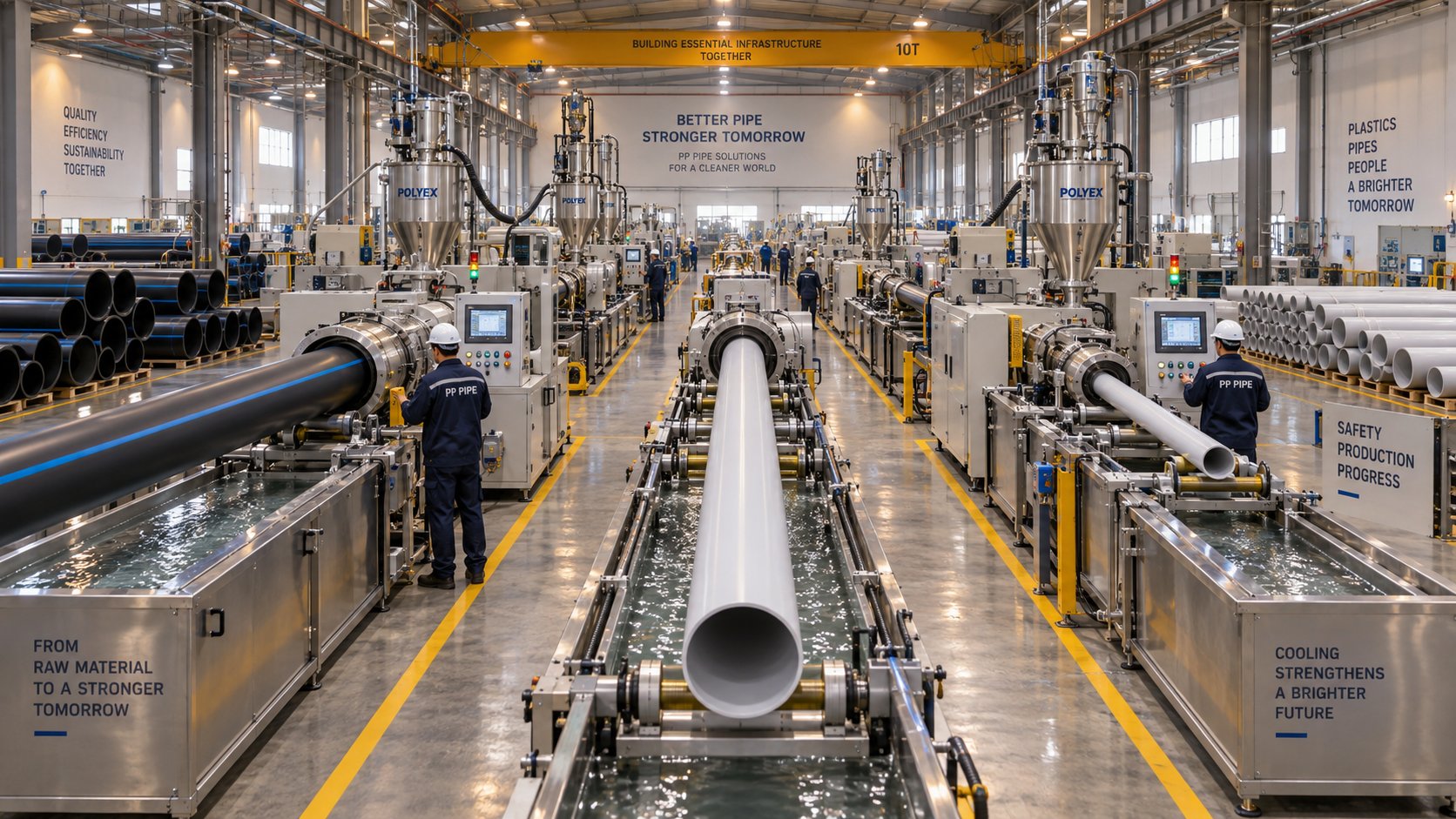
How to Select the Right PP Pipe Extruder Machine
Everything covered in this guide — material science, component engineering, process control, quality standards, maintenance protocols — converges on a single practical question: which machine should you actually buy? The answer isn't hiding in a spec sheet or a supplier's sales presentation. It emerges from a disciplined matching process between your specific production requirements and the equipment's verified capabilities. Too many buyers start by comparing prices across catalogs. The smarter approach starts with your pipe, works backward to the resin, and lets the resin dictate the machine.
A Practical Selection Framework for Buyers
Rather than evaluating machines by brand reputation or sticker price, follow this prioritized decision sequence. Each step narrows the field before you ever request a quote — saving time, preventing mismatches, and ensuring your shortlist contains only machines genuinely suited to what you need to produce.
- Define your pipe application and PP grade first. Are you producing PP-R hot and cold water plumbing pipe to ISO 15874? PP-H chemical drainage pipe to EN 1852? PP-B pressure piping for impact-prone environments? This single decision determines the resin grade, which in turn dictates the processing temperature window, crystallization management strategy, and screw compression ratio the extruder must deliver. A machine perfectly configured for PP-R random copolymer may struggle with PP-H homopolymer's faster crystallization and narrower processing tolerance. Start here, and every subsequent decision becomes clearer.
- Match screw diameter and L/D ratio to your target pipe diameter range and output. Small-diameter PP-R pipe (16–63 mm) pairs with 45–65 mm screws at 30:1 to 33:1 L/D ratios. Medium-diameter pipe (75–250 mm) demands 65–90 mm screws with L/D ratios reaching 36:1. Large-diameter production (315–800+ mm) requires 90–120+ mm screws with high-torque drive systems. Over-specifying wastes capital and increases residence time — risky for heat-sensitive PP-R. Under-specifying limits output and forces the motor to strain at capacity, accelerating wear.
- Evaluate die head design for wall-thickness uniformity. For pressure-rated PP pipe, spiral mandrel dies deliver superior circumferential wall distribution compared to spider dies. Multi-cavity dies multiply output on small-diameter PP-R lines but require balanced melt distribution to avoid cavity-to-cavity variation. Ask suppliers for documented wall-scan data — not just design claims — showing actual thickness uniformity on pipe produced with the proposed die configuration.
- Assess downstream equipment compatibility. The extruder doesn't operate in isolation. Vacuum calibration tanks, spray cooling baths, haul-off units, cutting systems, and belling machines must all synchronize with the extruder's output rate, pipe diameter range, and PP grade-specific cooling requirements. A high-output extruder paired with an undersized cooling section forces you to reduce line speed — negating the throughput you paid for. Verify that every downstream station is rated to handle the extruder's maximum capacity, not just its average operating point.
- Consider long-term total cost of ownership. The purchase price is the beginning, not the end, of what a pp pipe extruder machine costs. Energy consumption per kilogram of output, spare parts availability, screw and barrel replacement cycles, and the supplier's technical support infrastructure all compound over the equipment's productive lifespan. A machine that costs 15% less upfront but consumes 20% more energy per kilogram and requires barrel replacement twice as often is the more expensive option by year three.
Total Cost of Ownership Beyond the Purchase Price
Buyers focused on capital expenditure alone miss the cost categories that actually determine long-term profitability. Industry data from complete extrusion line economics consistently shows that the extruder itself represents roughly 40–50% of total line cost, with downstream equipment accounting for 30–35%, control systems 10–15%, and die tooling 5–10%. But beyond that initial investment, three ongoing cost drivers deserve serious attention during the selection process.
Energy consumption is the largest recurring operating expense on most pipe extrusion lines. Servo-driven extruder motors can reduce energy use by 10–15% compared to conventional AC drives, and electromagnetic barrel heaters push thermal efficiency from roughly 50% to as high as 90%. These upgrades add to the purchase price but pay for themselves within one to two years on a line running two or three shifts daily. When comparing machines from different extruder machine manufacturers, request energy consumption data in kilowatt-hours per kilogram of output under your specific production conditions — not theoretical minimums.
Spare parts availability determines how quickly you recover from unplanned downtime. A machine with excellent specifications but limited parts distribution in your region can leave your line idle for weeks waiting for a replacement heater band, thermocouple, or gearbox component. Before committing, confirm lead times for critical spares — and consider stocking the items that cause the longest delays.
Screw and barrel replacement cycles represent the single highest-impact maintenance cost over a machine's lifetime, as the previous chapter established. This is where sourcing strategy makes a measurable difference. Sourcing high-quality replacement screw barrels from specialized manufacturers like NANHAIYA ensures consistent extrusion performance over time. Their custom-engineered barrels — optimized for PP processing parameters including melt temperature profiles, polymer viscosity ranges, and the specific wear mechanisms polypropylene creates — can improve output quality and reduce energy costs compared to generic replacements that approximate dimensions without addressing application-specific metallurgy. For operations evaluating machines from any pp pvc pipe extrusion line supplier, factoring in the availability of precision-matched replacement components turns an abstract maintenance cost into a concrete, plannable budget line.
One additional factor often overlooked: the supplier's willingness and ability to provide technical support after the sale. Remote diagnostics, process optimization assistance, and access to experienced field engineers become invaluable when you're commissioning a new resin grade or troubleshooting a defect pattern that doesn't match the textbook. A high-speed extrusion machine supplier offering robust lifecycle support delivers more value over a ten-year ownership horizon than one offering the lowest quote with minimal post-sale engagement.
The best PP pipe extruder machine is the one precisely matched to your resin, pipe specification, and production volume — not necessarily the most expensive option. A disciplined selection process that starts with your application and evaluates total cost of ownership will outperform a purchase decision driven by catalog specifications or price alone.
Every section of this guide has pointed toward the same conclusion: PP pipe extrusion is a system-level discipline. The resin's molecular behavior shapes the machine requirements. The machine's mechanical precision shapes the pipe's quality. And the quality standards shape what "good enough" actually means for your market. Buyers who internalize these connections — and use them to drive their equipment decisions — end up with production lines that don't just run, but run profitably for years.
Frequently Asked Questions About PP Pipe Extruder Machines
1. What is the difference between a PP pipe extruder machine and a PVC pipe extrusion machine?
A PP pipe extruder machine uses a single-screw design to process polypropylene at higher temperatures (typically 200-240°C), while a PVC pipe extrusion machine commonly uses a twin-screw extruder for processing PVC dry blend at lower temperatures. PP extrusion also requires roughly three times the specific energy input of PVC processing and demands tighter thermal control because polypropylene is a semi-crystalline polymer sensitive to cooling rate and shear history. Additionally, PP shrinks about 3% during crystallization versus only 0.7% for PVC, making downstream sizing and cooling significantly more challenging.
2. What PP material grades are used in pipe production and how do they affect machine selection?
Four main grades are used: PP-R (random copolymer) for hot and cold water plumbing, PP-H (homopolymer) for chemical drainage, PP-B (block copolymer) for impact-resistant pressure piping, and PP-RCT (raised crystalline temperature) for high-pressure hot water systems. Each grade has a different melt flow index, crystallization rate, and thermal stability, which directly dictate screw compression ratio, barrel temperature profiles, and cooling system requirements. For example, PP-H crystallizes faster and needs precise barrel zone control, while PP-RCT demands carefully managed cooling to preserve its beta-crystal structure.
3. How do I choose the right screw diameter and L/D ratio for my PP pipe production?
Screw selection depends on your target pipe diameter range and output volume. For small-diameter PP-R pipes (16-63 mm), screw diameters of 45-65 mm with L/D ratios of 30:1 to 33:1 are typical. Medium-diameter pipes (75-250 mm) require 65-90 mm screws at up to 36:1 L/D. Large-diameter production (315-800+ mm) needs 90-120+ mm screws with high-torque drives. Over-specifying L/D increases residence time and risks degrading heat-sensitive PP-R, while under-specifying limits output and accelerates motor wear. Always match these specs to your specific PP grade and wall-thickness requirements.
4. What are the most common quality defects in PP pipe extrusion and their causes?
The three most frequent defects are inconsistent wall thickness, ovality, and surface finish issues like shark skin or melt fracture. Uneven walls typically result from worn screw flights, off-center die mandrels, or haul-off speed fluctuations. Ovality stems from unstable vacuum levels or uneven cooling in the calibration tank. Shark skin occurs when shear stress at the die exit is too high, while melt fracture signals a mismatch between melt temperature and die flow capacity. Suppliers like NANHAIYA offer custom-engineered replacement screw barrels that help restore melt consistency and reduce these defects when wear is the root cause.
5. How often should I replace the screw and barrel on a PP pipe extruder machine?
Replacement timing should be measurement-based, not calendar-based. Conduct quarterly clearance checks by measuring screw outside diameter and barrel inside diameter at feed, compression, and metering zone locations, then compare results against OEM baselines. PP-R processing with unfilled resin may allow years of service, while mineral-filled PP-H compounds accelerate wear significantly. Signs that replacement is overdue include rising energy consumption per kilogram, increasing wall-thickness variation, and declining output at the same screw speed. When replacing, treat the screw and barrel as a matched pair and source application-specific components from specialized manufacturers like NANHAIYA to ensure optimized metallurgy and geometry for your PP processing conditions.
Written by
Nanhaiya Technical Team
Zhoushan Nanhaiya Plastic Machinery Co., Ltd.
The Nanhaiya technical team supports screw and barrel manufacturing projects through application review, technical communication, custom manufacturing coordination, and production and quality control.
Discuss Your Application
Related Articles
More insights on screw barrel technology and plastics processing.
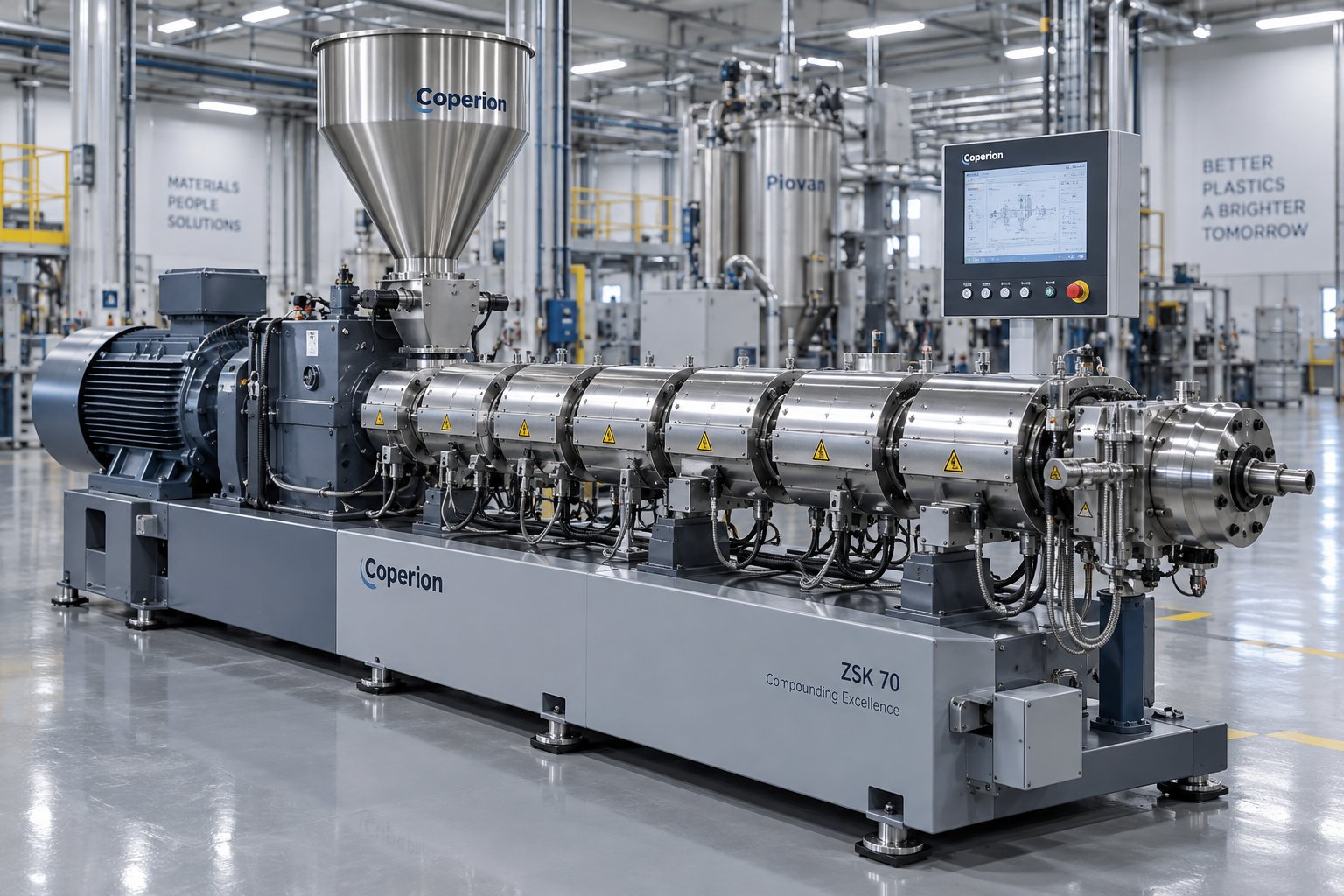
What Your Single Screw Extruder Manufacturer Won't Tell You
Oct 10, 2026
Learn how to evaluate single screw extruder manufacturers with this buyer-focused guide covering specs, configurations, material matching, and a ready-to-use selection checklist.
Read Article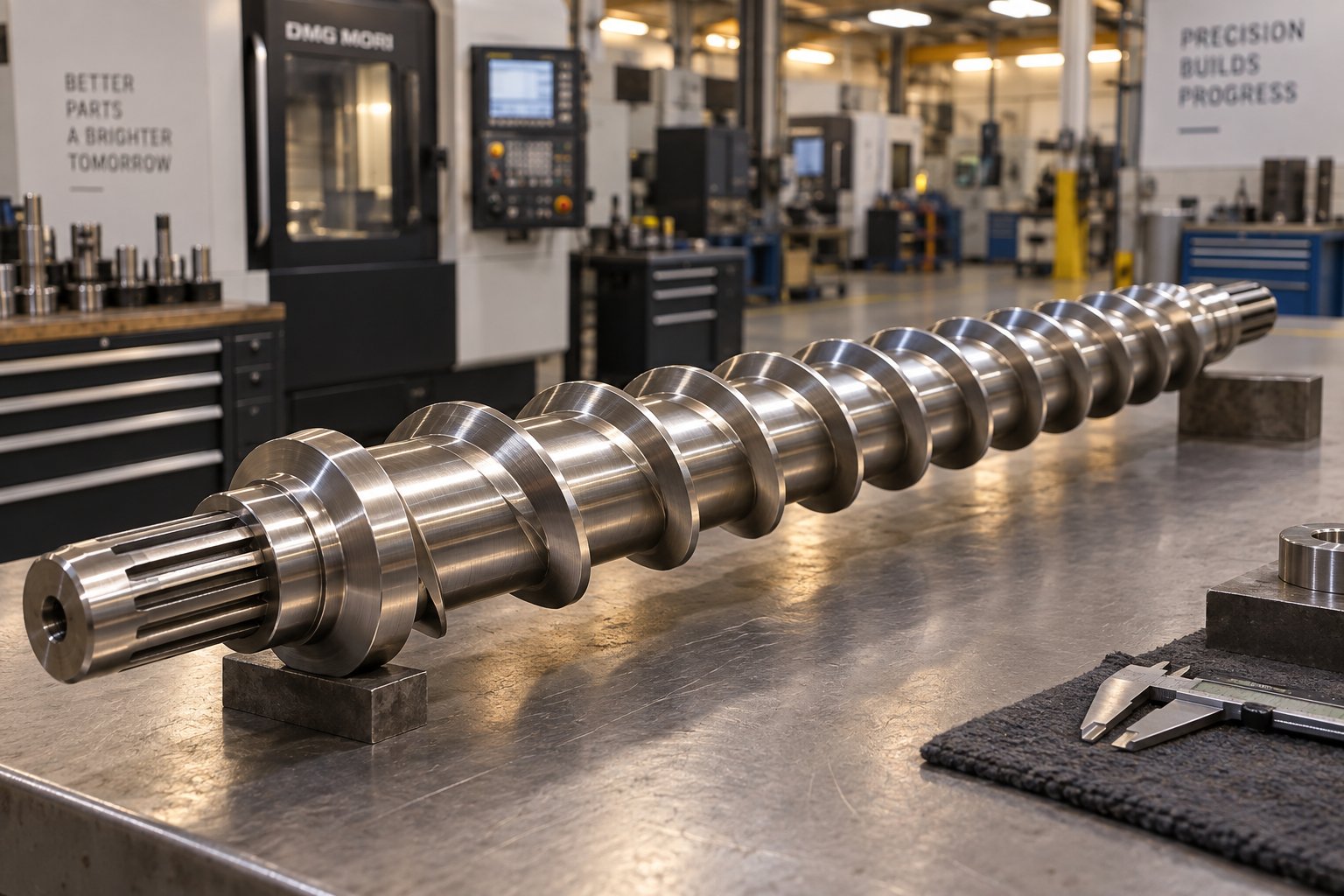
Plastic Extruder Screw Price Demystified: From Steel To Sticker
Oct 10, 2026
What drives plastic extruder screw price? This independent guide breaks down diameter, L/D ratio, metallurgy, order volume, and total cost of ownership factors.
Read Article
What No Supplier Tells You About WPC Decking Making Machines
Oct 6, 2026
Learn how a WPC decking making machine works, compare extruder types, formulations, and production methods, plus get a buyer checklist to evaluate any supplier.
Read ArticleLooking for something else?
Search by material, symptom or product and jump straight to the relevant page.
These are navigation suggestions based on keyword matching — not a quotation, not a delivery commitment, and not a substitute for engineering review. Final specification is confirmed by our engineers against your drawings and processed material.
Need help with screw barrel selection?
Share your machine model, processed material and application. Our team can help with pricing and technical support.