

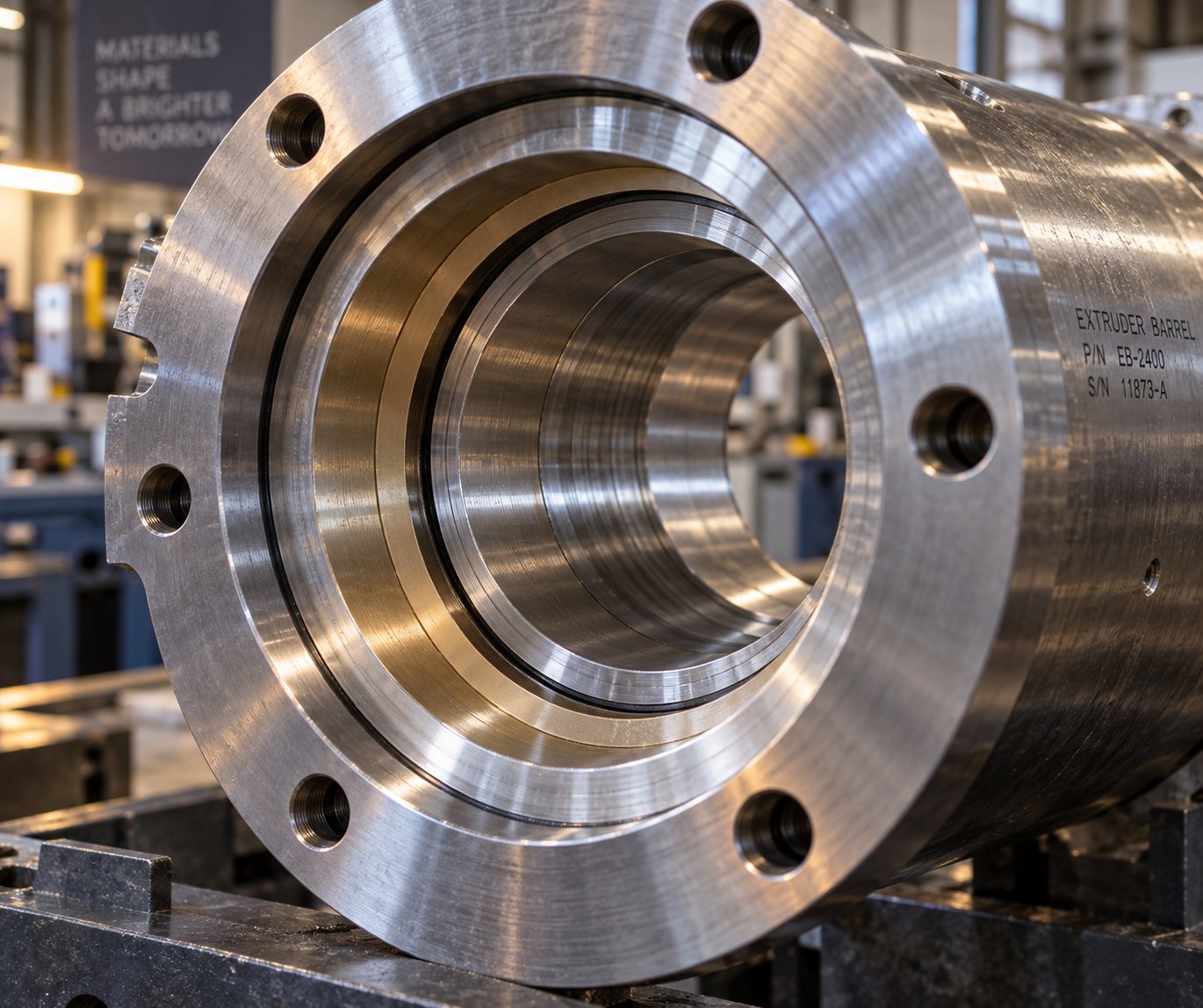
What Extruder Barrel Material Is and Why It Matters
Imagine running your extrusion line for months, maybe years, without questioning a single component buried inside the machine — only to discover that the metallurgy of your barrel has been quietly stealing throughput, inflating scrap rates, and shortening equipment life. That scenario plays out more often than most processors realize, and it starts with one overlooked specification: the extruder barrel material.
What Extruder Barrel Material Means in Polymer Processing
Extruder barrel material refers to the metallurgical composition and surface treatment of the cylindrical housing through which a rotating screw conveys, melts, mixes, and pressurizes polymer.
The extruder barrel is not a passive shell. It is an active participant in every stage of polymer processing. Inside this cylindrical bore, solid pellets enter the extruder feed barrel, encounter progressively higher temperatures and shear forces, and emerge as a homogeneous melt ready for shaping. Research from Paderborn University confirms that the interaction between the barrel wall and the polymer melt directly governs thermal homogeneity, pressure stability, and overall melt quality — factors that ultimately determine whether your end product meets specification or ends up as regrind.
The barrel's inner surface is where the real action happens. Friction between the stationary barrel wall and the polymer granules generates the driving force that pushes material forward along the extruder screw barrel. That same surface must simultaneously resist mechanical abrasion from fillers, chemical attack from corrosive off-gases, and sustained high temperatures — all while maintaining the dimensional precision needed for tight screw-to-barrel clearances.
Why Barrel Material Choice Is a Critical Process Variable
Here is where many processing teams get caught off guard. Most plants inherit their barrel metallurgy from the original equipment manufacturer. The OEM selects a barrel material based on a general-purpose assumption about what you will run. But your actual production mix — the specific resins, filler loadings, additives, and throughput targets — may demand something entirely different.
When the barrel material does not match your process, the consequences compound quickly:
- Temperature uniformity suffers. The wrong metallurgy can create thermal lag across heating and cooling zones, producing hot spots that degrade sensitive polymers and cold spots that leave unmelted particles in the melt stream.
- Abrasive fillers accelerate bore wear. Glass fibers, mineral fillers, and recycled-resin contaminants grind through an underspecified barrel lining far faster than expected, opening up clearances that let melt slip backward instead of moving forward.
- Corrosive by-products attack from within. Resins like PVC release hydrochloric acid during processing. Without corrosion-resistant barrel metallurgy, the bore surface deteriorates — sometimes invisibly — until output quality drops off a cliff.
- Cost of ownership escalates. Premature barrel replacement, unplanned downtime, and elevated scrap rates all trace back to a material mismatch that could have been avoided at the specification stage.
Industry maintenance guidance consistently highlights that as the screw-to-barrel gap grows from wear, processors compensate by running hotter and faster — which only accelerates further degradation. It is a vicious cycle rooted in a single upstream decision.
This guide breaks that cycle. In the sections ahead, you will find a complete taxonomy of barrel material categories, the wear science behind each one, a property-by-property comparison table, a polymer-to-material matching matrix, and a practical decision framework for choosing the right specification. Whether you are quoting a new extruder barrel or evaluating a reline on existing equipment, the goal is the same: match your barrel metallurgy to the real demands of your process — and stop paying the hidden cost of getting it wrong.
Major Extruder Barrel Material Categories Explained
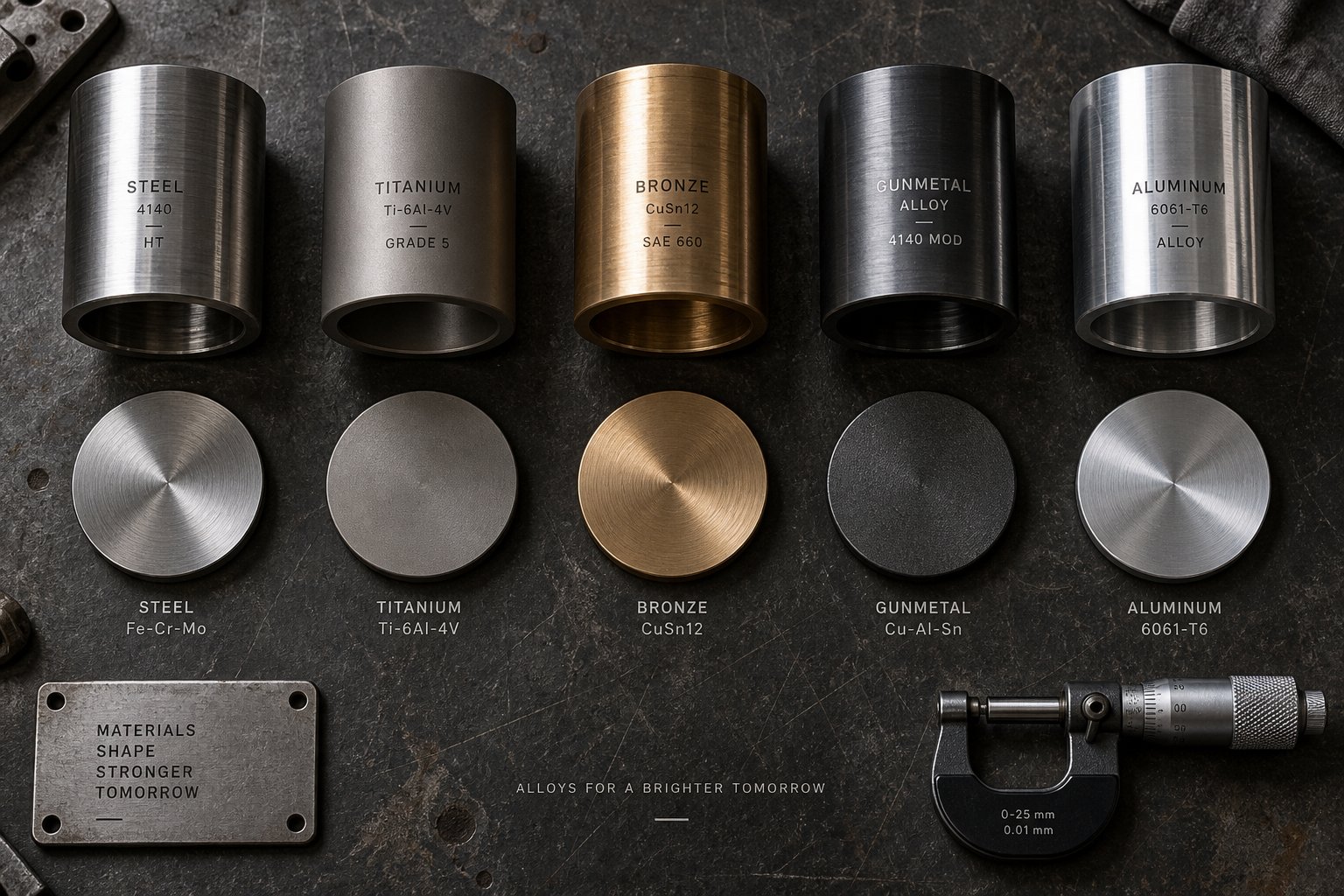
Every extrusion barrel on the market falls into one of a handful of metallurgical families — yet finding all of them described in a single reference is surprisingly difficult. Some processors know nitrided steel. Others have heard of bimetallic linings. Very few have a clear picture of how tungsten carbide, ceramic, or powder metallurgy options fit into the landscape. Here is the complete taxonomy, organized by base metallurgy and the processing niche each category serves.
Nitrided Steel and Through-Hardened Tool Steel Barrels
Nitrided steel barrels represent the most common — and most economical — starting point for extruder barrels. The process begins with a medium-carbon alloy steel base, typically AISI 4140 or 4340, which is then gas-nitrided to form a hard case layer on the bore surface. That case provides moderate wear resistance suitable for processing non-abrasive, non-corrosive commodity resins. When you are running neat polyolefins or general-purpose polystyrene at standard throughput rates, a nitrided barrel often delivers acceptable service life at the lowest upfront cost.
Through-hardened tool steel barrels step up significantly in wear performance. D2 tool steel, alloyed with 12% chromium and 1% vanadium, forms very hard carbides throughout its cross-section and offers mild corrosion resistance in the hardened condition. It handles moderate concentrations of glass or mineral fillers reliably. For more demanding applications — continuous runs of glass-filled, mineral-filled, ceramic-filled, or metal-filled plastics — Crucible's CPM 10V uses the particle metallurgy process to incorporate 9.75% vanadium, producing some of the hardest tool steel carbides available. Its sibling, CPM 15V, pushes vanadium carbide content even higher to 14.5% for situations where CPM 10V already performs well but longer service life is needed.
Bimetallic Centrifugally Cast Barrel Linings
Bimetallic construction is the workhorse solution for most demanding screw barrel applications. The concept is straightforward: a tough, machinable outer barrel body made of conventional steel is lined with a centrifugally cast alloy that provides the wear and corrosion resistance at the bore surface — right where it matters.
Three main alloy families dominate the bimetallic lining category:
- Iron-boron (nickel-boron-based iron): A martensitic structure in a cementite matrix with excellent abrasion resistance and a remarkably low friction coefficient of 0.07, which helps prevent screw galling. Industry data confirms a typical hardness range of HRC 58-65 and at least four times the service life of nitrided barrels. This is the go-to lining when abrasive fillers are the primary threat.
- Cobalt-nickel with high chromium and boron: Engineered specifically for corrosion resistance against hydrochloric acid and other aggressive by-products. Its dual-phase microstructure with complex borides delivers over 10 times the service life of nitrided barrels in severely corrosive environments, with a typical hardness range of HRC 50-55.
- Nickel-cobalt-chromium alloys: These bridge the gap between pure wear resistance and pure corrosion resistance, offering balanced performance for processors running mixed material portfolios or switching frequently between corrosive and abrasive resins.
One key advantage of bimetallic barrels is their fast response to heating and cooling commands and uniform zone-temperature control — a direct result of optimized energy transfer between the backing material and bore lining.
Tungsten Carbide, Ceramic, and Powder Metallurgy Options
When standard bimetallic linings are not enough, processors turn to the extreme end of the hardness spectrum. Tungsten carbide bimetallic inlays use a high tungsten-carbide-content alloy within a chromium-boron-nickel matrix. Over 80% of the alloy volume consists of tungsten carbides and chromium borides, reaching a macro hardness of HRC 62-68 and a micro hardness exceeding DPH 4000. This is the highest wear- and corrosion-resistant option available for bimetallic extruder barrels — ideal for extremely abrasive formulations or custom shops that switch between several demanding material types on a single machine.
Ceramic-lined barrels take a fundamentally different approach. Rather than relying on metallic hardness, they bond a ceramic sleeve — often alumina or zirconia-based — to the barrel bore. Ceramics excel in chemical inertness and can handle temperatures that push past the limits of conventional alloy linings. Their brittleness and difficulty in field modification, however, restrict them to specialized applications.
Powder metallurgy (PM) alloys like CPM 10V and CPM 15V blur the line between tool steel and specialty lining. The PM process enables alloy designers to pack in vanadium percentages that would be impossible through conventional casting, resulting in a dense, uniform distribution of ultra-hard carbides. Corrosion-resistant PM options like CPM 420V — with 9% vanadium and significantly improved corrosion resistance — serve processors who need both chemical and abrasive protection from their barrel metallurgy.
| Material Category | Typical Alloys / Grades | Hardness Range | Primary Strength | Best-Fit Application |
|---|---|---|---|---|
| Nitrided Steel | 4140, 4340 (gas-nitrided) | Moderate (case-hardened surface) | Low cost, adequate baseline wear resistance | Non-abrasive, non-corrosive commodity resins |
| Through-Hardened Tool Steel | D2, H13 | High (thru-hardened) | Good carbide hardness, mild corrosion resistance | Moderate glass- or mineral-filled materials |
| Bimetallic — Iron/Nickel-Boron | Nickel-boron-based iron alloys | HRC 58-65 | Excellent abrasion resistance, low friction | Abrasive filler compounds, general high-wear applications |
| Bimetallic — Cobalt-Nickel | Cobalt-nickel-chromium-boron alloys | HRC 50-55 | Superior corrosion resistance (HCl, acids) | PVC, CPVC, flame-retardant formulations |
| Tungsten Carbide Bimetallic | WC in Cr-B-Ni matrix | HRC 62-68 (macro); DPH 4000+ (micro) | Highest combined wear and corrosion resistance | Extreme abrasion, multi-material custom shops |
| Ceramic-Lined | Alumina, zirconia-based ceramics | Very high (material-dependent) | Chemical inertness, high-temperature stability | Specialty corrosive or ultra-high-temperature processes |
| Powder Metallurgy | CPM 10V, CPM 15V, CPM 420V, CPM S90V | High to very high (vanadium carbide dependent) | Extreme abrasion resistance with uniform carbide distribution | Continuous glass/mineral/ceramic-filled processing |
Each of these categories exists because no single metallurgy solves every processing challenge. A barrel that shrugs off abrasion may surrender to corrosion. One that resists chemical attack may lack the hardness to survive high-filler loads. The real question is not which material is "best" — it is which wear mechanism your process actually imposes on the barrel bore, and which alloy is engineered to resist it.
How Wear Mechanisms Drive Barrel Material Selection
Knowing every alloy category on the market means very little if you cannot connect it to the specific type of destruction happening inside your barrel bore. Wear is not a single phenomenon — it is four distinct mechanisms, each triggered by different processing conditions, each leaving a different fingerprint on the bore surface, and each demanding a different metallurgical response. Misidentify the mechanism, and even an expensive lining becomes a short-lived one.
Abrasive Wear from Fillers, Fibers, and Contaminants
Picture glass fibers, calcium carbonate particles, or metallic grit from recycled feedstock being dragged along the barrel wall under high pressure with every rotation of the extruder screw. This is three-body abrasion — hard particles trapped between two softer surfaces, grinding material away from both. The bore enlarges uniformly, the surface takes on a smooth, almost polished appearance, and screw-to-barrel clearance grows steadily wider.
Abrasive wear is the most common form of degradation in plastics machinery, and its severity scales directly with filler hardness and loading percentage. Glass fibers above 30% by weight create a continuous abrasive jet that overwhelms nitrided steel linings in months. Even moderate mineral loads — talc, wollastonite, titanium dioxide — accelerate bore growth well beyond what unfilled resins produce.
The material countermeasure is straightforward: hardness wins. Tungsten carbide composite liners, with embedded carbide particles exceeding HRC 65, physically outlast the abrasive particles trying to remove them. Powder metallurgy alloys like CPM 10V pack ultra-hard vanadium carbides throughout their structure, offering a similar defense. Standard nitrided steel, with its relatively thin hardened case, simply cannot compete when a plastic extruder screw is driving heavily filled compounds against the bore wall hour after hour.
Corrosive and Chemical Attack Mechanisms
Corrosion plays by entirely different rules. Hardness is almost irrelevant here — what matters is chemical resistance at the molecular level. Certain polymers release aggressive by-products during melting that attack the barrel bore from the inside out:
- PVC and CPVC release hydrochloric acid (HCl) gas as they process, which aggressively attacks components with a high iron matrix.
- Fluoropolymers such as PTFE, FEP, and PFA generate hydrofluoric acid (HF) — one of the most corrosive substances encountered in polymer processing.
- Halogenated flame retardants produce reactive acidic vapors that compound the problem, especially in compounds that also carry abrasive mineral fillers.
Corrosive wear does not enlarge the bore smoothly. Instead, it creates pitting, rough etched textures, and localized material loss — damage that concentrates in the metering zone and die adapter area where melt temperatures peak. A bore scope inspection reveals a surface that looks chemically eaten rather than mechanically worn.
The defense lies in alloy chemistry, not alloy hardness. Nickel-based bimetallic liners form a passive oxide layer that shields the underlying metal from acid penetration. Cobalt-based alloys add high-temperature stability to that chemical resistance — critical for engineering plastics processed above 350 degrees C. For extreme fluoropolymer environments, alloys in the Inconel and Hastelloy families provide the deepest corrosion protection available, thanks to their high nickel and molybdenum content that resists both HCl and HF attack.
Adhesive Wear and Erosion-Corrosion Synergy
Adhesive wear is the most mechanically violent of the four mechanisms — and the most preventable. It occurs when the extrusion screw flight lands physically contact the barrel wall. At those brief contact points, microscopic welds form under extreme pressure, then immediately fracture and tear metal from one surface to the other. The evidence is unmistakable: scoring lines along the bore, galled patches, and rolled or missing hardfacing on screw flights.
Cold starts without adequate soak time, misaligned screws, worn gearbox bearings, and poor screw design that causes solids wedging all force metal-to-metal contact. The fix starts with operations — proper warm-up protocols, alignment checks, and compatible screw geometry. On the metallurgical side, maintaining a hardness differential of at least 5-8 HRC between the barrel liner and the screw surface, with the barrel being the harder component, dramatically reduces galling risk.
The most destructive scenario, however, is when these mechanisms combine. Erosion-corrosion is the synergistic interaction where chemical attack roughens the bore surface, and those roughened areas become anchor points where abrasive particles dig in more effectively. Glass-filled PVC is a textbook example: HCl corrodes the bore, and glass fibers simultaneously grind through the weakened surface. The resulting damage rate far exceeds what either mechanism would produce alone.
Addressing erosion-corrosion requires a balanced alloy approach — a liner that handles both threats simultaneously. Tungsten carbide particles dispersed within a nickel-based matrix deliver abrasion resistance from the carbides and corrosion resistance from the surrounding nickel alloy. These hybrid liners cost more than single-function alternatives, but they prevent the cascading failure that single-mechanism solutions cannot stop.
For quick reference, here is each wear type mapped to its material countermeasure:
- Abrasive wear → Tungsten carbide composite liners, CPM 10V / CPM 15V powder metallurgy alloys, or iron-boron bimetallic linings for moderate filler loads
- Corrosive wear → Nickel-based bimetallic liners (Ni-Cr-B, Ni-Mo), cobalt-based alloys for high-temperature corrosion, Inconel / Hastelloy grades for fluoropolymers
- Adhesive wear → Differential hardness pairing between barrel liner and screw surface (barrel harder by 5-8 HRC minimum), cross-family alloy pairing to prevent galling, plus operational corrections
- Erosion-corrosion (combined) → Hybrid liners with tungsten carbide particles in a nickel-based matrix, engineered for simultaneous abrasion and chemical resistance
Identifying which mechanism dominates your process is the single most important step in specifying the right barrel metallurgy. Without that diagnosis, material selection becomes guesswork — and guesswork is exactly how processors end up replacing barrels twice as often as they should. The next logical question is how these material categories stack up against each other across every property that matters on the production floor.
Comparing Barrel Material Properties Side by Side
Diagnosing a wear mechanism tells you what your barrel needs to resist. But when you sit down with a supplier's catalog, you are not choosing between "abrasion resistance" and "corrosion resistance" in isolation. You are weighing six or seven properties simultaneously — wear life, chemical durability, thermal behavior, temperature ceiling, ease of modification, and cost — trying to find the alloy that delivers the best balance for your specific line. That comparison, laid out in one place across every major material family, is what most extrusion barrels buyers have never been given.
Property-by-Property Barrel Material Comparison
The table below organizes the seven primary barrel extruder material categories against the properties that matter most on the production floor. Rather than relying on a single metric, you will notice that each alloy family trades strength in one area for compromise in another. That tradeoff is the whole point — no material wins every column.
| Property | Nitrided Steel | Iron-Boron Bimetallic | Nickel-Boron Bimetallic | Cobalt-Based Bimetallic | Tungsten Carbide Lined | Ceramic-Lined | CPM 10V / PM Alloy |
|---|---|---|---|---|---|---|---|
| Wear Resistance | Low | High | Medium | Medium | Very High | Very High | Very High |
| Corrosion Resistance | Low | Low to Medium | High | Very High | High | Very High | Medium (High with CPM 420V) |
| Thermal Conductivity | High | Moderate to High | Moderate | Moderate | Moderate to Low | Low | Moderate to High |
| Max Service Temperature | Moderate | Moderate to High | High | Very High | High | Very High | Moderate to High |
| Machinability (Ports, Vents) | Excellent | Difficult (hard lining) | Moderate | Moderate | Very Difficult | Very Difficult | Difficult |
| Relative Cost | $ | $$ | $$$ | $$$ | $$$$ | $$$$ | $$$-$$$$ |
A few patterns jump out immediately. Nitrided steel costs the least but also delivers the least protection — acceptable for undemanding commodity resins, inadequate for anything filled or corrosive. Iron-boron bimetallic linings offer a dramatic leap in abrasion resistance at a moderate price premium, which is exactly why they dominate general-purpose extrusion screw barrel configurations in plants running filled compounds. Move into nickel-boron or cobalt-based alloys and you gain serious chemical resistance, but you give back some of the raw hardness that fights abrasive fillers. Tungsten carbide and ceramic linings sit at the extreme end of both performance and cost — justified only when the severity of wear or corrosion makes every other option a short-term fix.
Pay close attention to the machinability row. If your process requires barrel venting ports, side feeders, or injection nozzles, the barrel lining must be machinable enough to allow those modifications without cracking or chipping. Tungsten carbide and ceramic linings are notoriously difficult to machine after installation. Processors who plan to add downstream vents or ports should factor this in before specifying the lining, not after the barrel arrives.
How Thermal Conductivity Affects Temperature Control
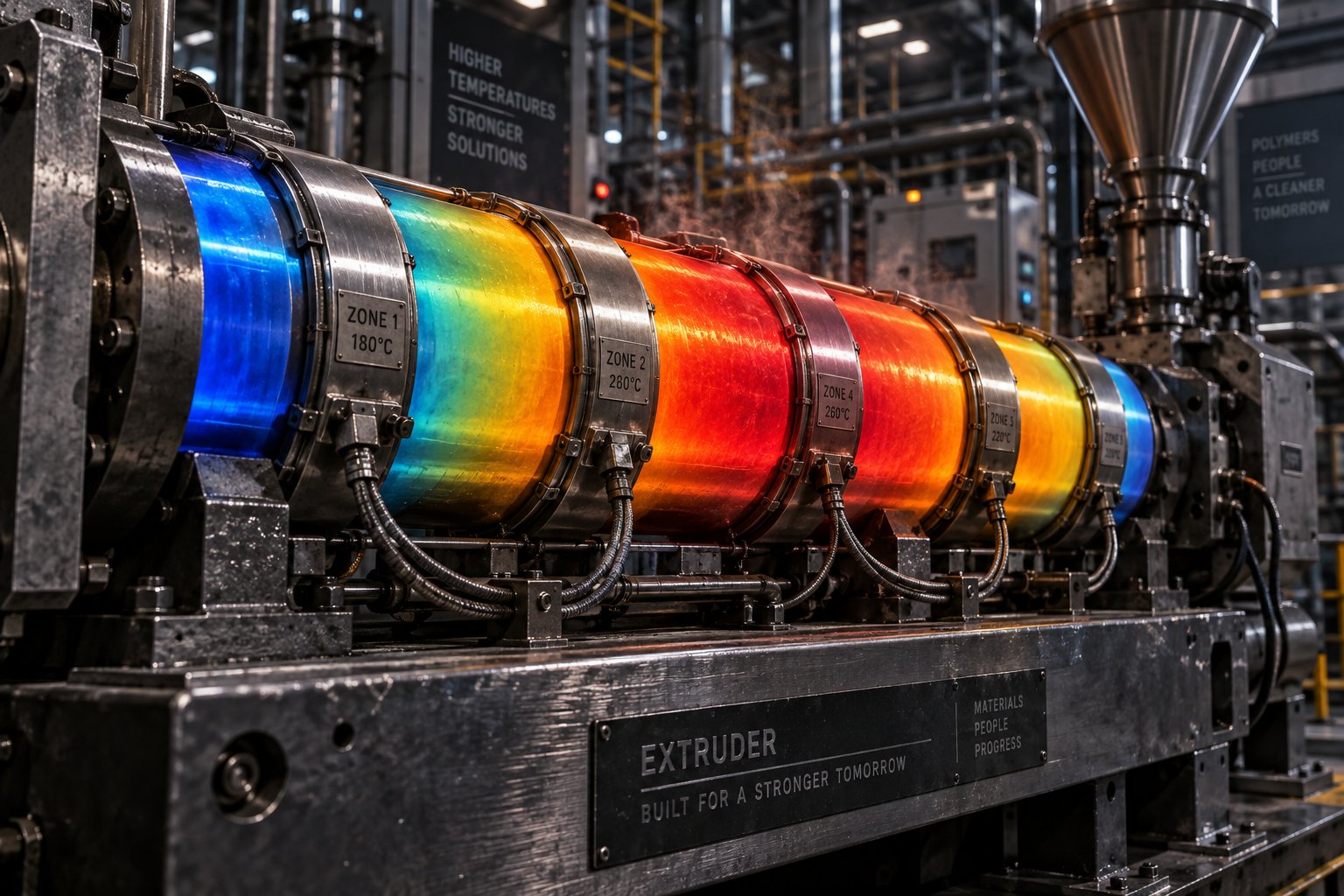
Here is a property that rarely shows up in supplier brochures but directly shapes your melt quality every shift: thermal conductivity. This single characteristic determines how quickly your barrel responds to heater inputs and cooling-channel adjustments — and how precisely you can hold setpoint temperatures across individual zones.
Think of thermal conductivity as the speed of the conversation between your temperature controller and the polymer melt. A high-conductivity barrel material — like a nitrided steel or a PM alloy with a steel-dominant matrix — transfers heat rapidly from the external heater bands through the barrel wall and into the melt. It also pulls heat away quickly when cooling water flows through jacket channels. The result is responsive, tight zone control with minimal overshoot.
Lower-conductivity materials tell a different story. Ceramic linings, for example, act as partial thermal insulators. Heat from external heater bands takes longer to reach the bore surface, and cooling inputs take longer to draw excess energy out. This thermal lag creates two practical problems on the production floor:
- Hot spots develop between heater bands. Because heat disperses slowly through a low-conductivity lining, the area directly beneath a heater band can run significantly warmer than the zone midpoint. Sensitive polymers like POM or PEEK degrade at localized temperatures well before the average zone reading triggers an alarm.
- Cooling response slows. When you need to pull heat from a zone — either to compensate for shear heating or to create a deliberate temperature drop before venting — a low-conductivity barrel wall delays that correction. The melt runs hotter than intended for longer, widening your temperature variance and reducing dimensional consistency in the final product.
For processors running tight tolerance profiles — thin-wall tubing, optical-grade sheet, or precision medical extrusions — this matters enormously. A barrel lining chosen purely for wear resistance, without accounting for its thermal behavior, can undermine the very melt homogeneity you are trying to protect. The ideal approach weighs thermal conductivity alongside hardness and chemical resistance, treating it as a processing variable rather than an afterthought.
Matching properties to alloy families clarifies what each material can do. The more actionable question is what each material should do — and that answer changes depending on the polymer family flowing through the bore.
Matching Barrel Materials to Specific Polymers and Additives
A barrel's property ratings only become useful when you connect them to the actual resin flowing through your screw extruder. You might know that cobalt-based alloys resist corrosion and that tungsten carbide fights abrasion — but which one does your specific polymer demand? The answer depends on the chemical behavior, filler system, and processing temperature of the material you are running. What follows is the polymer-to-barrel matching matrix that most equipment suppliers leave out of the conversation.
Barrel Materials for Commodity and Engineering Polymers
Commodity resins like polyethylene and polypropylene are the gentlest materials a screw plastic extruder will ever process. They melt at relatively low temperatures, contain no corrosive by-products, and — in their neat, unfilled form — impose almost no abrasive load on the barrel bore. A standard nitrided steel barrel handles these resins economically, often lasting years before bore measurements show meaningful wear.
Engineering plastics shift the equation. Nylon (PA6 and PA66), POM, PBT, and polycarbonate all process at higher temperatures and can generate mildly corrosive off-gases — particularly nylon, which releases moisture vapor and trace acids during plasticization. Iron-boron or nickel-boron bimetallic linings provide the step-up in both hardness and chemical protection that these resins require. When those same engineering polymers carry glass-fiber reinforcement at 30% or higher, the abrasive load overwhelms standard bimetallic linings and pushes the specification toward tungsten carbide or CPM 10V powder metallurgy alloys.
The barrel material that handles neat polyethylene economically will fail catastrophically when you switch to 40% glass-filled nylon — matching barrel metallurgy to your specific polymer and filler system is not optional.
Barrel Materials for Corrosive, Abrasive, and High-Temperature Resins
PVC and CPVC processing is where corrosion dominates the conversation. Hydrochloric acid released during melting eats through iron-rich barrel linings with alarming speed. Cobalt-nickel bimetallic alloys — engineered specifically to resist HCl attack — are the standard recommendation here, and the investment pays for itself many times over in extended barrel life. This applies equally to injection molding screws and barrels handling rigid PVC compounds.
Fluoropolymers represent the harshest chemical environment in polymer processing. PTFE, FEP, and PFA all release hydrofluoric acid at processing temperatures, a substance aggressive enough to dissolve glass. Only nickel-rich alloys with high molybdenum content — in the Inconel and Hastelloy families — provide reliable protection against HF attack.
High-temperature polymers like PEEK push barrel metallurgy in yet another direction. With a melting point around 343 degrees C, PEEK demands sustained barrel temperatures that can degrade lower-specification alloys over time. Cobalt-based bimetallic linings with high-temperature stability, or nickel-based alloys rated for continuous service above 370 degrees C, are the practical choices for dedicated PEEK extrusion lines.
Recycled plastics present a unique wildcard. Unknown contaminant profiles — metal fragments, mixed polymer residues, residual moisture, and variable filler loadings — create unpredictable combinations of abrasive and corrosive wear. Processors running post-consumer recyclate benefit from hybrid liners that address both threats simultaneously, such as tungsten carbide particles dispersed in a nickel-based matrix.
| Polymer Family | Key Challenge | Recommended Barrel Material | Reasoning |
|---|---|---|---|
| Polyolefins (PE, PP) — neat | Minimal wear, low temperature | Nitrided steel | Lowest cost for a non-aggressive, non-corrosive resin |
| PVC / CPVC | HCl corrosion | Cobalt-nickel bimetallic | Corrosion-resistant alloy resists acid attack from chlorine off-gases |
| Engineering plastics (PA, POM, PBT, PC) — neat | Moderate temperature, mild corrosion | Iron-boron or nickel-boron bimetallic | Balanced hardness and chemical resistance for higher processing temperatures |
| Glass-filled / mineral-filled compounds | Severe abrasion | Tungsten carbide lined or CPM 10V PM alloy | Ultra-hard carbides physically outlast abrasive filler particles |
| Fluoropolymers (PTFE, FEP, PFA) | HF corrosion (extreme) | Nickel-rich alloys (Inconel / Hastelloy families) | High nickel and molybdenum content resists hydrofluoric acid penetration |
| PEEK / high-temperature polymers | Sustained high temperature (343 degrees C+) | Cobalt-based bimetallic or high-temp nickel alloys | Maintains hardness and chemical stability above 350 degrees C continuously |
| Recycled plastics (mixed / unknown) | Unpredictable abrasion + corrosion | Hybrid WC / nickel-matrix liner | Dual-threat protection against unknown contaminant profiles |
| Rubber / elastomers | Adhesive wear, chemical attack from curatives | Nickel-boron bimetallic or chrome-plated bore | Resists sticking and chemical degradation from sulfur and peroxide cure systems |
Keep in mind that the optimal match is never just about the barrel alone. Screw geometry, screw base material, and surface treatment must complement the barrel lining to create a unified wear system. A perfectly specified barrel paired with the wrong screw metallurgy still leaves performance on the table — which is why the extruder type itself, and the mechanical stresses it introduces, plays an equally important role in the material decision.
Barrel Material Differences for Single-Screw and Twin-Screw Extruders
The same resin compound running through two different extruder types can destroy their barrels at completely different rates, in completely different locations, and through completely different mechanisms. Yet barrel material is almost always discussed as if the extruder architecture does not matter. It does — profoundly. The stress profiles, wear patterns, and formulation demands imposed by single-screw and twin-screw machines diverge enough that a lining specification perfectly suited for one can be badly underspecified for the other.
Single-Screw Barrel Material Considerations
Single-screw extruders present a relatively predictable wear environment. One helical screw rotates inside a smooth cylindrical bore, and the forces acting on the barrel wall distribute fairly evenly around the circumference. You will notice wear developing gradually and symmetrically along the bore, with one important exception: the feed section.
In the feed zone, solid pellets and granules have not yet softened. They behave more like tiny rocks than like polymer — tumbling, sliding, and grinding against the barrel wall under the compressive force of the screw flight. This solid-conveying action creates the highest abrasive load anywhere in a single-screw barrel. The metering section, by contrast, handles a fully molten polymer stream that exerts far less mechanical abrasion on the bore surface.
For non-aggressive commodity polymers, this means a nitrided steel barrel or a standard iron-boron bimetallic lining handles the job effectively. The feed section wears faster than downstream zones, but the rate remains manageable — and some processors address the imbalance by specifying a harder lining only in the feed zone while using a more economical material downstream. This zoned approach works well when the polymer itself does not introduce corrosive or heavily abrasive conditions.
Gravity also plays a minor role in single-screw wear. The weight of the screw causes it to sag slightly toward the bottom of the barrel, concentrating contact along the six o'clock position. In small-diameter machines this effect is negligible, but in large-diameter screw extruders with long L/D ratios, it produces a measurable wear bias along the bottom of the bore — a predictable pattern that factors into maintenance scheduling rather than material selection.
Twin-Screw Barrel Segment Material Requirements
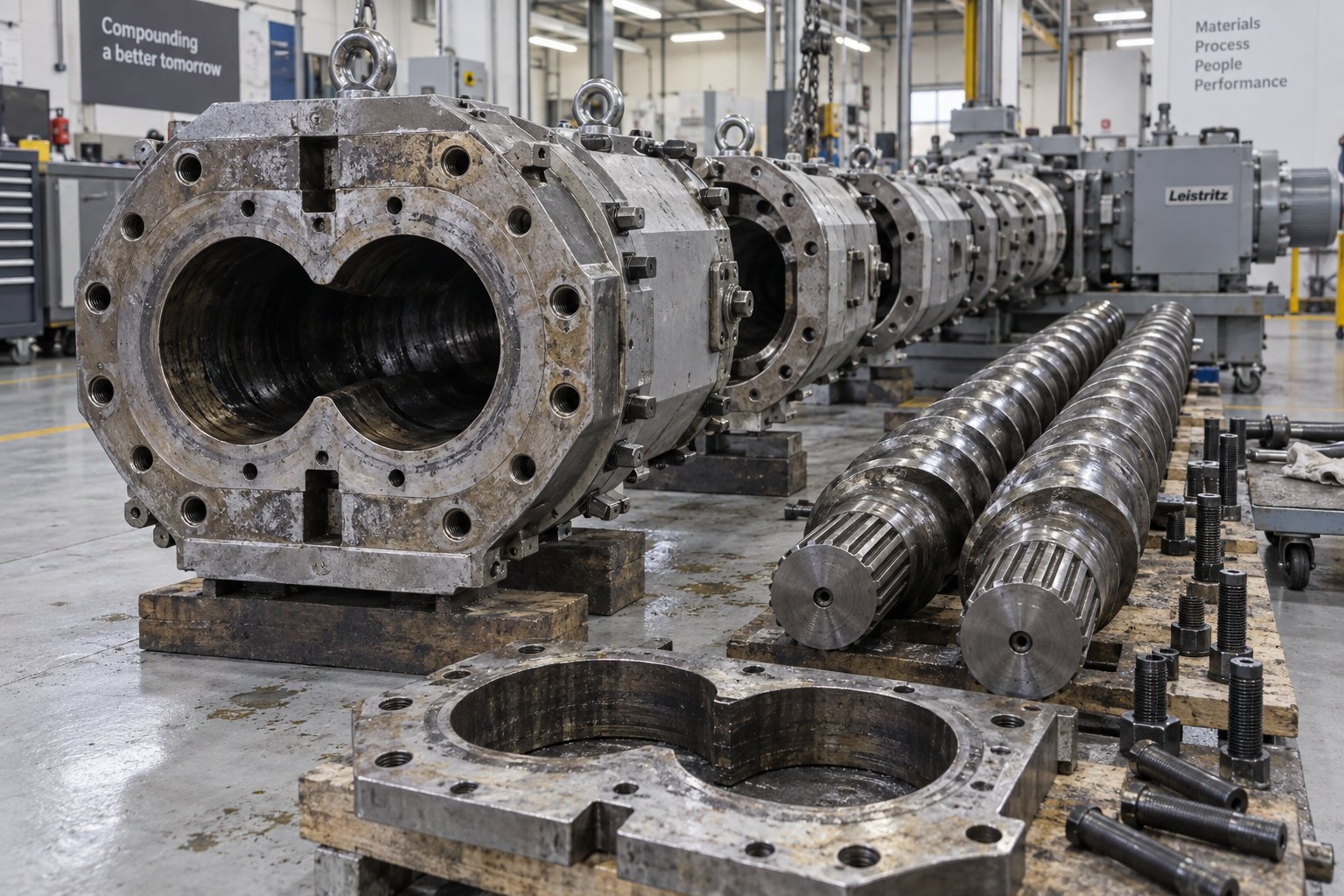
Twin-screw extruders — both co-rotating and counter-rotating — rewrite nearly every assumption from the single-screw playbook. The barrel bore itself is different: a figure-eight cross-section rather than a simple cylinder, with two overlapping bores connected at an intermeshing zone. That geometry alone creates stress concentrations that single-screw barrels never experience.
In closely intermeshing counter-rotating twin screw extruders, the calender gap between a screw core and the opposing screw flight generates enormous separating forces. Research from Yildiz Technical University and McMaster University measured these forces experimentally and found that the resultant force pushes the screws toward the barrel wall at approximately 30 degrees from the vertical — concentrating wear in a narrow band between the 30-degree and 60-degree positions. A nitrided parallel twin screw barrel running highly filled PVC for over 10,000 hours showed its most severe degradation precisely in this zone, confirming that wear in a twin screw barrel is directional, intense, and localized rather than uniform.
These separating forces are substantial. The same study calculated forces exceeding one metric ton on the screw core in the metering zone of a 55 mm diameter extruder. Imagine the magnitude in production-scale machines with 90 mm or larger bores, where both screw weight and calender pressure increase dramatically. Large-diameter counter-rotating extruders are typically limited to less than 50 RPM specifically to keep these forces from overwhelming the barrel lining.
Co-rotating twin-screw extruders face their own set of challenges. They run at much higher speeds — often several hundred RPM — and process the most demanding formulations in the industry: high-filler-load compounding, reactive extrusion with corrosive intermediates, and devolatilization that expels aggressive volatiles directly against the barrel bore. Every mixing element, kneading block, and screw configuration change along the barrel length alters the local shear intensity and pressure profile.
This is where segmented barrel construction becomes a critical advantage. Unlike single-screw barrels, which are typically one continuous piece, twin-screw barrels are built from individual segments bolted together. Each segment can receive a different lining material matched to the conditions in that specific zone:
- The feed segment handles solid pellets and aggressive initial compaction — a high-hardness iron-boron or tungsten carbide lining protects against early abrasive damage.
- Mixing and kneading zones experience peak shear and temperature — bimetallic linings with balanced wear and corrosion resistance serve these segments well.
- Venting zones, where corrosive volatiles escape from the melt, benefit from nickel-rich or cobalt-based alloys that resist chemical attack from the concentrated off-gases.
- The metering and discharge segment faces high pressure against a fully molten polymer — the lining choice here depends on whether the dominant remaining threat is abrasive, corrosive, or thermal.
This zone-by-zone approach lets processors invest in premium metallurgy only where the process demands it, keeping the total twin screw and barrel cost manageable while maximizing service life across the full machine length.
To summarize the core differences at a glance:
- Wear pattern: Single-screw barrels wear relatively uniformly around the bore; twin-screw barrels concentrate wear at the figure-eight intersection zone, typically between 30 and 60 degrees from vertical in counter-rotating designs.
- Force magnitude: Calender gap separating forces in twin-screw extruders can exceed one metric ton even in small-diameter machines — forces that single-screw barrels simply do not encounter.
- Barrel construction: Single-screw barrels use a monolithic bore; twin-screw barrels use segmented construction, enabling zone-specific lining material selection.
- Formulation severity: Twin-screw extruders routinely handle the most abrasive and corrosive formulations in polymer processing (compounding, reactive extrusion, devolatilization), requiring higher-specification linings than single-screw counterparts running the same base resin.
- Speed constraints: Counter-rotating twin-screw designs must limit RPM to manage separating forces, making barrel lining durability even more critical since throughput depends on maximizing every available operating hour.
Selecting the right metallurgy for each zone in a twin-screw barrel — or choosing the correct single-piece lining for a single-screw machine — still leaves one question unanswered: how do you know whether the premium material actually pays for itself? That calculation demands looking beyond the purchase price and into the full lifecycle cost of each option.
Total Cost of Ownership and Barrel Lifecycle Planning
A tungsten carbide lined barrel can cost four times more than a nitrided steel one. On a procurement spreadsheet, that price gap looks like a clear reason to go with the cheaper option. But procurement spreadsheets only capture one line item — and that line item typically represents just a fraction of what a barrel actually costs your operation over its full service life. The barrel that saves money on the purchase order can quietly drain far more through premature wear, unplanned shutdowns, rising scrap rates, and the invisible energy penalty of processing through a worn bore.
Manufacturing equipment TCO research consistently shows that acquisition cost represents only 25-35% of total lifecycle cost for industrial equipment, while operational expenses — maintenance, energy, downtime, and quality losses — account for the remaining 60-75%. Extruder barrels follow the same pattern. A rigorous cost-of-ownership approach reframes the barrel material decision from "which is cheapest to buy" to "which delivers the lowest cost per ton of acceptable product."
Beyond Purchase Price — A Total Cost of Ownership Framework
Most processors have never run a structured TCO comparison on their barrel material options. The framework itself is not complicated — it simply requires pulling costs out of separate budget silos and aggregating them against each material choice. Here is how to build that comparison step by step:
- Establish baseline barrel cost for each material option. Get quotes for your specific bore diameter and length in nitrided steel, bimetallic (iron-boron, nickel-boron, or cobalt-based as appropriate), and any premium lining under consideration. Include freight, installation labor, and machine downtime during the barrel swap. This is the only step most purchasing decisions ever complete.
- Estimate service life under your specific processing conditions. Service life is not a universal number — it depends on the resin, filler type and loading, throughput rate, screw speed, and melt temperature. A nitrided steel barrel running neat polyethylene may last several years. The same barrel running 40% glass-filled nylon on a used twin screw extruder might reach its wear limit in a matter of months. Request wear-life estimates from your barrel supplier based on your actual material profile, or use your own historical bore-gauge data if available.
- Calculate downtime cost per barrel change. Every barrel replacement takes your line offline. Factor in the hours needed for cooldown, screw pull, barrel removal, new barrel installation, heatup, and process restabilization. Then multiply those hours by your line's revenue rate or contribution margin per hour. For a Davis-Standard extruder or any production-critical line running around the clock, this number alone can exceed the barrel's purchase price.
- Factor in scrap-rate changes as the barrel wears. A fresh barrel with tight screw-to-bore clearance delivers consistent melt quality and dimensional control. As wear opens that clearance, melt leaks backward over the screw flights — a phenomenon called backflow or pressure leakage — degrading mixing efficiency and melt homogeneity. The result shows up as dimensional variation, surface defects, and off-spec product. Track your scrap rate over the barrel's life and assign a dollar value to the incremental waste generated in the final months before replacement.
- Compare annualized or per-ton-processed cost across options. Divide the total cost for each material — purchase, installation, downtime, scrap, and energy — by the number of acceptable production hours or tons of sellable product that barrel delivers. The option with the lowest cost per ton is the true winner, regardless of where it sits on the initial price tag.
An often-overlooked variable in step five is energy efficiency. As bore clearance increases from wear, the extruder screw loses pumping efficiency. Operators compensate by increasing screw speed or raising melt temperature — both of which consume more energy per pound of output. Extrusion monitoring data shows that specific energy consumption (kWh per pound) can climb significantly as screw-to-barrel clearance grows beyond acceptable limits. Over thousands of operating hours, that energy penalty compounds into a meaningful cost that never appears on the barrel's invoice but is entirely attributable to the material decision that determined its wear rate.
Another consideration that the TCO framework accommodates: relining versus full replacement. Bimetallic barrels can often be relined — the worn bore is honed out and a new centrifugally cast alloy lining is applied to the existing barrel body. Relining typically costs less than a brand-new barrel and reuses the outer shell, reducing waste and lead time. Not every barrel qualifies for relining, though. If the outer body has been thermally fatigued, warped, or if bore enlargement has exceeded the reline tolerance, full replacement becomes the only option. Including the reline pathway in your TCO model can shift the cost-per-ton calculation decisively toward bimetallic construction, since the same barrel body may support two or three linings over its structural lifetime.
Barrel Wear Assessment and Replacement Timing
A TCO model is only as good as the wear data feeding it. Without regular bore measurements, you are estimating service life instead of measuring it — and estimates tend to be optimistic right up until the moment product quality collapses.
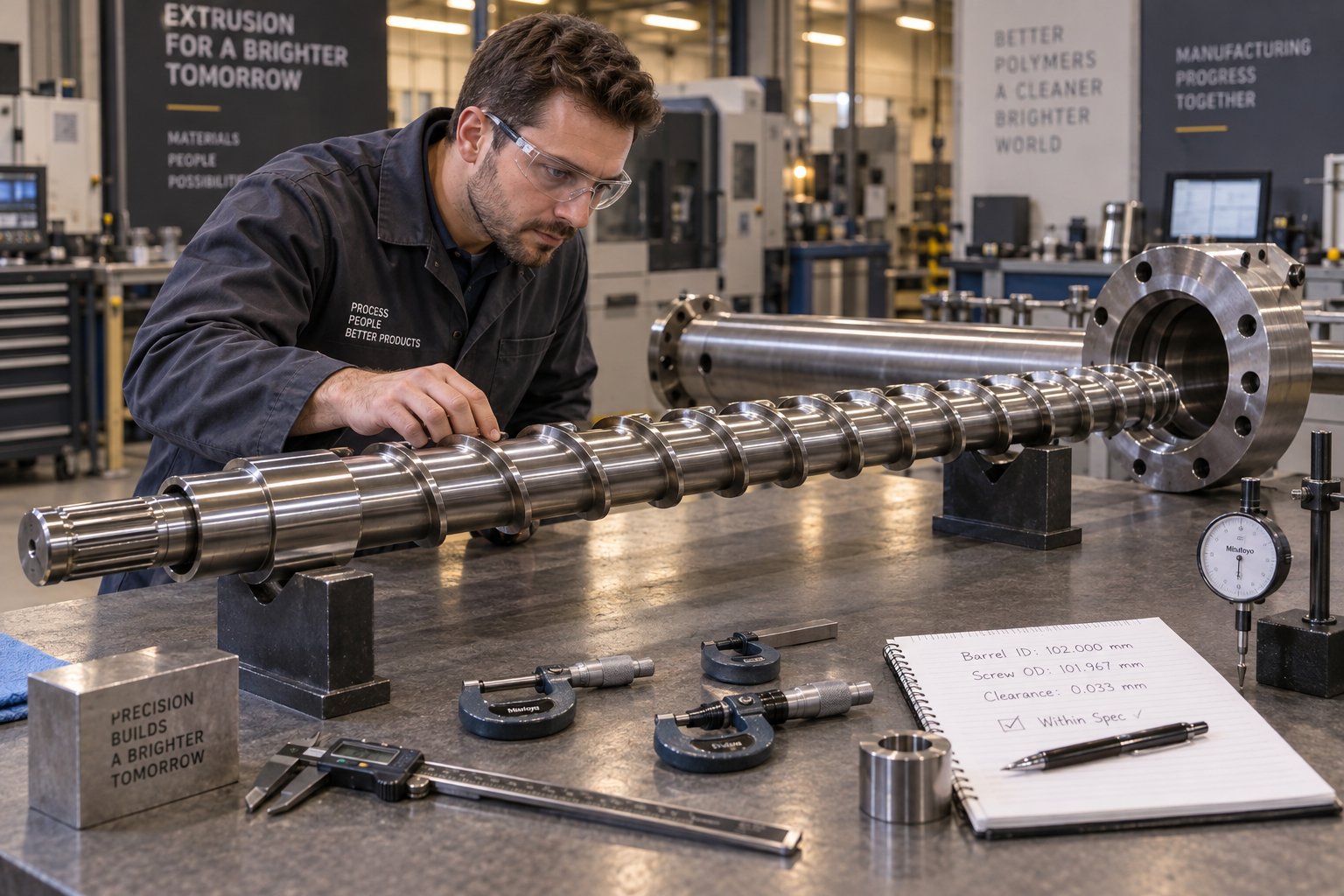
The standard method is bore gauging: inserting a calibrated bore gauge at regular intervals along the barrel length and recording the inside diameter at multiple clock positions. Comparing these readings against the barrel's original bore specification tells you exactly how much material has been lost and where the worst wear is concentrated. For a Davis-Standard extruder or any high-utilization line, scheduling bore checks during planned maintenance windows — every six months or after a defined tonnage throughput — builds the historical dataset your TCO model needs.
Between scheduled measurements, the extruder itself broadcasts wear signals through its operating data. Recognizing these early warnings prevents the kind of catastrophic quality failures that force emergency shutdowns:
- Declining output at constant screw speed. As clearance grows, more melt slips backward over the flights instead of moving toward the die. Industry benchmarks suggest that output dropping below 85% of rated capacity at a given RPM signals a screw or barrel nearing its replacement threshold.
- Rising melt temperature above setpoint. Increased backflow generates additional shear heating. When melt temperature consistently runs 8-15 degrees F above the target — and heater duty cycles have not changed — wear-related clearance is a likely cause.
- Increasing motor amperage. A worn barrel forces the drive motor to work harder to maintain throughput. Motor amps climbing 5-10% above the established baseline warrant a bore inspection.
- Visible quality defects. Streaks, gels, unmelted particles, or dimensional instability in the extrudate often appear in the final stage of barrel wear — by which point significant production value has already been lost to marginal-quality output that slipped past inspection.
The replacement decision itself boils down to a comparison: does the cost of continued operation on a worn barrel — including elevated scrap, energy waste, and risk of unplanned failure — exceed the cost of a planned barrel change? Processors who track bore dimensions and operating parameters over time can plot a wear curve specific to their screw-barrel-material combination. After two or three replacement cycles with complete data, that curve becomes remarkably predictive, enabling you to schedule replacements during planned downtime weeks or months in advance rather than reacting to a quality crisis at two in the morning.
Equipment that fails on your schedule costs a fraction of equipment that fails on its own — barrel lifecycle data turns reactive expense into planned investment.
Building this kind of data-driven maintenance culture around your barrels transforms the TCO framework from a one-time purchasing exercise into a continuous optimization loop. Each barrel replacement generates new wear-rate data that refines the next service-life estimate, tightens the next cost comparison, and builds confidence in the material specification for the next order. Over time, you stop guessing and start engineering your barrel material decisions around hard evidence — which is exactly the foundation you need when it is time to specify a new barrel and select the material that fits your process, your extruder type, and your budget simultaneously.
How to Choose the Right Extruder Barrel Material
You have the wear mechanisms mapped. You have the property comparisons. You have the polymer-to-material matrix and the TCO framework. What you need now is a way to pull all of those inputs into a single decision sequence that takes you from "I know what I'm running" to "here's the barrel material I should be quoting." That sequence matters because barrel material selection is not a single-variable problem — it is a chain of interdependent choices, and skipping a link produces an answer that looks right on paper but fails on the production floor.
A Step-by-Step Decision Framework for Barrel Material Selection
Think of this framework as a funnel. Each step narrows the field of candidate materials until you arrive at a shortlist of one or two alloys that genuinely fit your process. Rushing straight to step five — the budget question — without working through the technical filters first is the single most common mistake processors make when specifying extruder screws and barrels.
- Start with the polymer and its additive package. Identify every resin your line will process, including any planned future grades. List the filler type, filler loading percentage, flame-retardant chemistry, and any volatile by-products released at melt temperature. A neat polypropylene line and a 40% glass-filled nylon line demand fundamentally different metallurgy — and if you plan to switch between them, the barrel must handle the more aggressive material.
- Identify the dominant wear mechanism. Use your filler and chemical profile to classify the primary threat: abrasive wear (glass fiber, mineral fillers, recycled contaminants), corrosive wear (HCl from PVC, HF from fluoropolymers, acids from flame retardants), adhesive wear (metal-to-metal contact from misalignment or cold starts), or erosion-corrosion (the combination of abrasive and corrosive attack acting simultaneously). Most processes have one dominant mechanism, but some — glass-filled PVC being the classic example — combine two. If you are unsure, inspect your current barrel bore: smooth, polished enlargement points to abrasion; pitting and etched textures point to corrosion; scoring lines indicate adhesive contact.
- Factor in processing temperature. High-performance polymers like PEEK, PEI, and certain fluoropolymers demand sustained barrel temperatures above 350 degrees C. At these temperatures, lower-specification alloys lose hardness and accelerate wear. Cobalt-based bimetallic linings and nickel-rich alloys rated for continuous high-temperature service belong on the shortlist for any screw and barrel system operating in this range. For commodity resins processed below 280 degrees C, temperature alone rarely drives the material decision.
- Consider your extruder type and barrel construction. A single-screw machine with a monolithic barrel needs one lining that covers the full bore length — so the material must address the worst-case zone (usually the feed section for abrasion). A twin-screw extruder with segmented barrel construction lets you assign different alloys to different zones, optimizing cost and performance simultaneously. Factor in the higher mechanical stresses at the figure-eight bore intersection in twin-screw machines, which often require a harder or tougher lining than the same resin would need in a single-screw configuration.
- Apply the TCO framework to your shortlisted materials. By this step, the technical filters have typically narrowed the field to two or three candidates. Run each through the total cost of ownership calculation: purchase price plus installation downtime, multiplied across the expected number of replacements within your planning horizon, plus scrap-rate and energy-efficiency impacts. The material with the lowest cost per ton of sellable product wins — and it is frequently not the one with the lowest line-item price.
- Verify the screw-barrel material pairing. This step is where many specifications go wrong. The barrel lining and the extruder screw surface treatment must form a complementary tribological system. A hardness differential of at least 5-8 HRC between the barrel (harder) and the screw flight tips (softer) reduces galling risk. Cross-family alloy pairing — for example, a nickel-based barrel lining with a cobalt-based screw hardfacing — further minimizes adhesive wear at the screw-flight-to-barrel-wall interface. Specifying the barrel in isolation, without considering what the screw metallurgy and surface coating will be, leaves half the wear equation unresolved.
- Account for machinability and future modifications. If your process may require additional barrel vents, side-feed ports, or injection nozzles down the road, confirm that the selected lining material can be machined after installation. Tungsten carbide and ceramic linings are extremely difficult to modify in the field — a constraint that can force an expensive barrel replacement if your process evolves after the initial specification.
Notice that budget enters at step five, not step one. This is deliberate. Letting price drive the initial selection guarantees that the cheapest material gets chosen regardless of whether it can survive your actual process conditions. Working through the technical filters first ensures that cost comparisons happen only among materials that are genuinely capable of doing the job — and the TCO lens ensures that "capable" includes the full lifecycle, not just the invoice.
One critical principle runs through every step: barrel material cannot be selected in isolation. The screw geometry — channel depth, compression ratio, flight pitch, and mixing section design — shapes how much mechanical energy the polymer absorbs and where shear intensity peaks inside the bore. The screw's base material and surface treatment determine how the flight tips interact with the barrel wall over millions of rotations. Even the best barrel lining will underperform if it is paired with a screw metallurgy that promotes galling, or a screw geometry that creates excessive localized pressure against the bore. The barrel and screw work as a matched system, and the material specification for each must be developed together.
The right barrel material is only half the equation — pairing it with the correct screw metallurgy and geometry is what delivers the full performance gain.
When Expert Support Makes the Difference
For straightforward applications — neat polyolefins on a single-screw line, standard PVC on a counter-rotating twin — the decision framework above leads to a clear answer with minimal ambiguity. The polymer dictates the wear mechanism, the wear mechanism points to a material family, and the TCO calculation confirms the choice.
Complex applications are a different story. Imagine you are compounding a 35% glass-filled, flame-retardant nylon on a co-rotating twin-screw extruder. The glass fibers impose severe abrasive wear. The flame retardant releases corrosive by-products. The processing temperature hovers above 300 degrees C. Each barrel segment sees different shear conditions. And the extruder screws themselves need compatible metallurgy, optimized element configuration, and surface treatment matched to the lining in every zone. In scenarios like this, getting the barrel and screw material pairing wrong does not just shorten component life — it compromises melt quality, output stability, and product consistency from day one.
This is where engineering support earns its value. NANHAIYA's Custom Screw Design Services help plastic processing companies match screw geometry, barrel design, material selection, and surface treatment to specific polymers, output targets, and production requirements. Rather than specifying barrel and screw independently — and hoping the pairing works — their approach integrates the full system: lining alloy, screw base steel, hardfacing or coating, flight geometry, and compression ratio are developed as a coordinated package tuned to your exact process conditions.
That integrated approach is especially valuable for processors who have already identified their dominant wear mechanism and polymer requirements through the framework above but need engineering depth to finalize the specification. Selecting a cobalt-based bimetallic barrel for PVC is a sound starting point, for example — but optimizing the screw's compression ratio, flight clearance, and surface finish to complement that specific lining is the step that transforms a good material choice into a high-performing production system.
Not every barrel decision requires outside expertise. Simple, single-resin operations with well-understood wear histories can often be specified in-house using historical bore-gauge data and the decision sequence outlined here. But for multi-material lines, high-filler compounds, corrosive chemistries, or any application where the extruder screws and barrels interact under complex and competing stress conditions, working with a supplier that engineers the barrel and screw as a unified system eliminates the trial-and-error that costs processors months of suboptimal production.
Wherever you fall on that spectrum — straightforward commodity extrusion or demanding multi-threat compounding — the principle remains the same. Start with the polymer. Diagnose the wear mechanism. Filter by temperature and extruder type. Compare on total cost of ownership. And never specify the barrel without specifying the screw that will rotate inside it. Follow that sequence, and the barrel material stops being a hidden cost and starts being a competitive advantage.
Frequently Asked Questions About Extruder Barrel Material
1. What is the best extruder barrel material for processing PVC?
PVC releases hydrochloric acid (HCl) during processing, which rapidly attacks iron-rich barrel linings. Cobalt-nickel bimetallic alloys with high chromium and boron content are the standard recommendation for PVC and CPVC extrusion. These alloys form a corrosion-resistant microstructure that delivers over 10 times the service life of nitrided steel barrels in acidic environments. Running PVC through an underspecified barrel leads to pitting, bore degradation, and costly unplanned replacements.
2. How do I know when my extruder barrel needs to be replaced?
Several measurable warning signs indicate a barrel approaching end-of-life. Watch for declining output at constant screw speed (below 85% of rated capacity suggests excessive clearance), melt temperature running 8-15 degrees F above setpoint without heater changes, motor amperage climbing 5-10% above baseline, and visible quality defects like streaks or unmelted particles. Regular bore gauging at scheduled intervals provides the most reliable data. Comparing measured bore diameter against original specifications reveals exactly how much material has been lost and where wear concentrates, enabling planned replacement before quality collapses.
3. What is the difference between nitrided and bimetallic extruder barrels?
Nitrided barrels start with a medium-carbon alloy steel base (typically 4140 or 4340) and undergo gas nitriding to create a hard case layer on the bore surface. They offer moderate wear resistance at the lowest upfront cost, suitable for non-abrasive commodity resins. Bimetallic barrels use a tough outer steel body lined with a centrifugally cast specialty alloy - such as iron-boron, nickel-boron, or cobalt-based alloys - that provides significantly higher wear and corrosion resistance at the bore surface. Iron-boron bimetallic linings, for example, deliver at least four times the service life of nitrided barrels in abrasive applications, making them the preferred choice for filled or corrosive polymers.
4. Do single-screw and twin-screw extruders need different barrel materials?
Yes, the mechanical demands differ substantially. Single-screw barrels experience relatively uniform wear around the bore, and standard bimetallic or nitrided linings often suffice for non-aggressive resins. Twin-screw extruders impose concentrated forces at the figure-eight bore intersection - research has measured separating forces exceeding one metric ton even in 55 mm machines. Twin-screw barrels also benefit from segmented construction, allowing zone-specific lining materials: harder alloys for feed zones, corrosion-resistant alloys for venting zones, and balanced linings for mixing zones. This targeted approach optimizes both performance and cost across the full barrel length.
5. How does barrel material affect extrusion energy efficiency?
As barrel bore wear increases screw-to-barrel clearance, melt leaks backward over the screw flights instead of moving toward the die. Operators compensate by raising screw speed or melt temperature, both of which increase specific energy consumption (kWh per pound). Additionally, the thermal conductivity of the barrel material directly affects how efficiently heater and cooling inputs reach the polymer melt. High-conductivity materials like nitrided steel or PM alloys respond quickly to temperature adjustments, while low-conductivity options like ceramic linings create thermal lag and potential hot spots. Choosing the right barrel material and replacing it before wear becomes excessive helps maintain both energy efficiency and melt quality.
Written by
Nanhaiya Technical Team
Zhoushan Nanhaiya Plastic Machinery Co., Ltd.
The Nanhaiya technical team supports screw and barrel manufacturing projects through application review, technical communication, custom manufacturing coordination, and production and quality control.
Discuss Your Application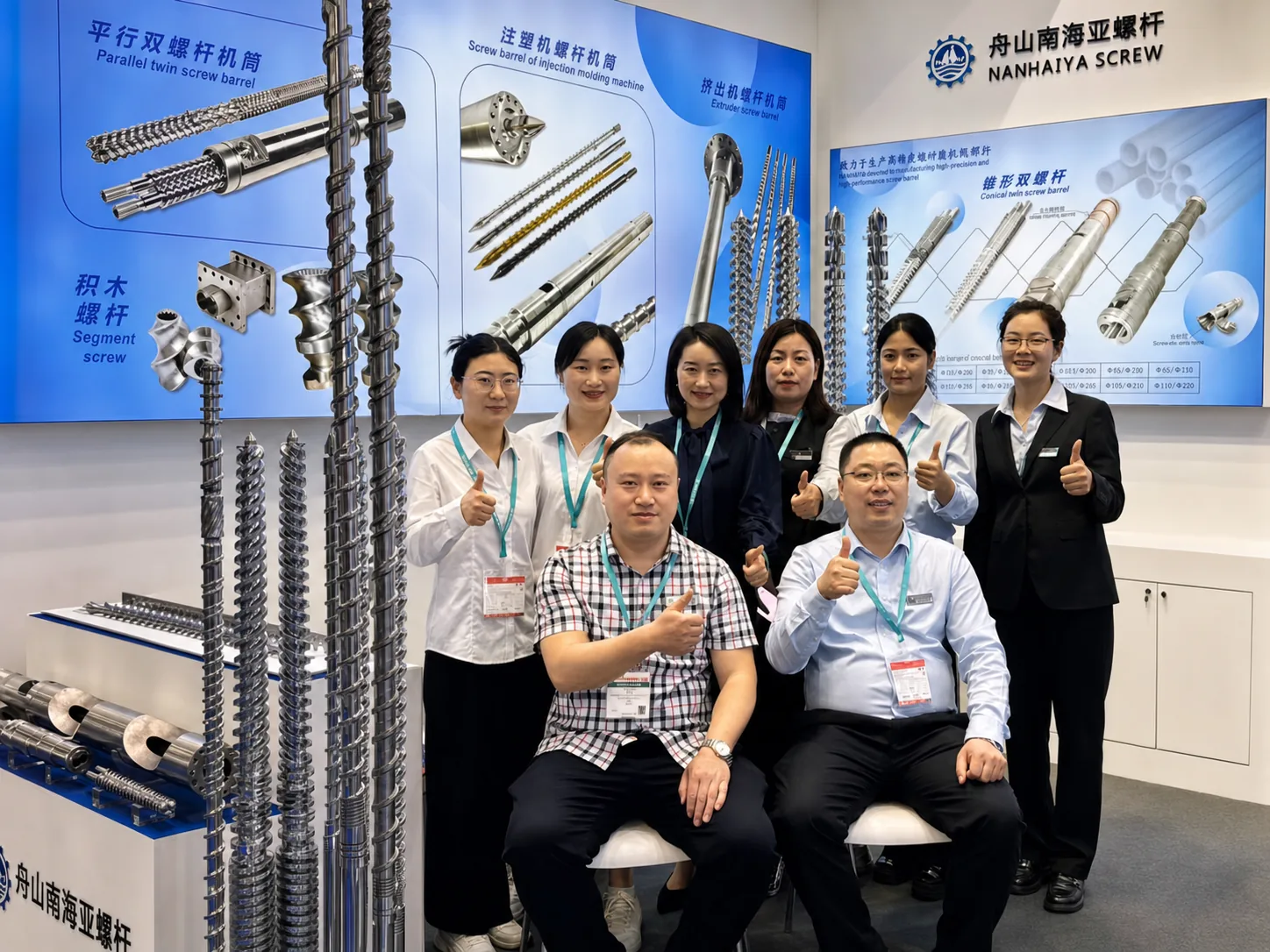
Related Articles
More insights on screw barrel technology and plastics processing.
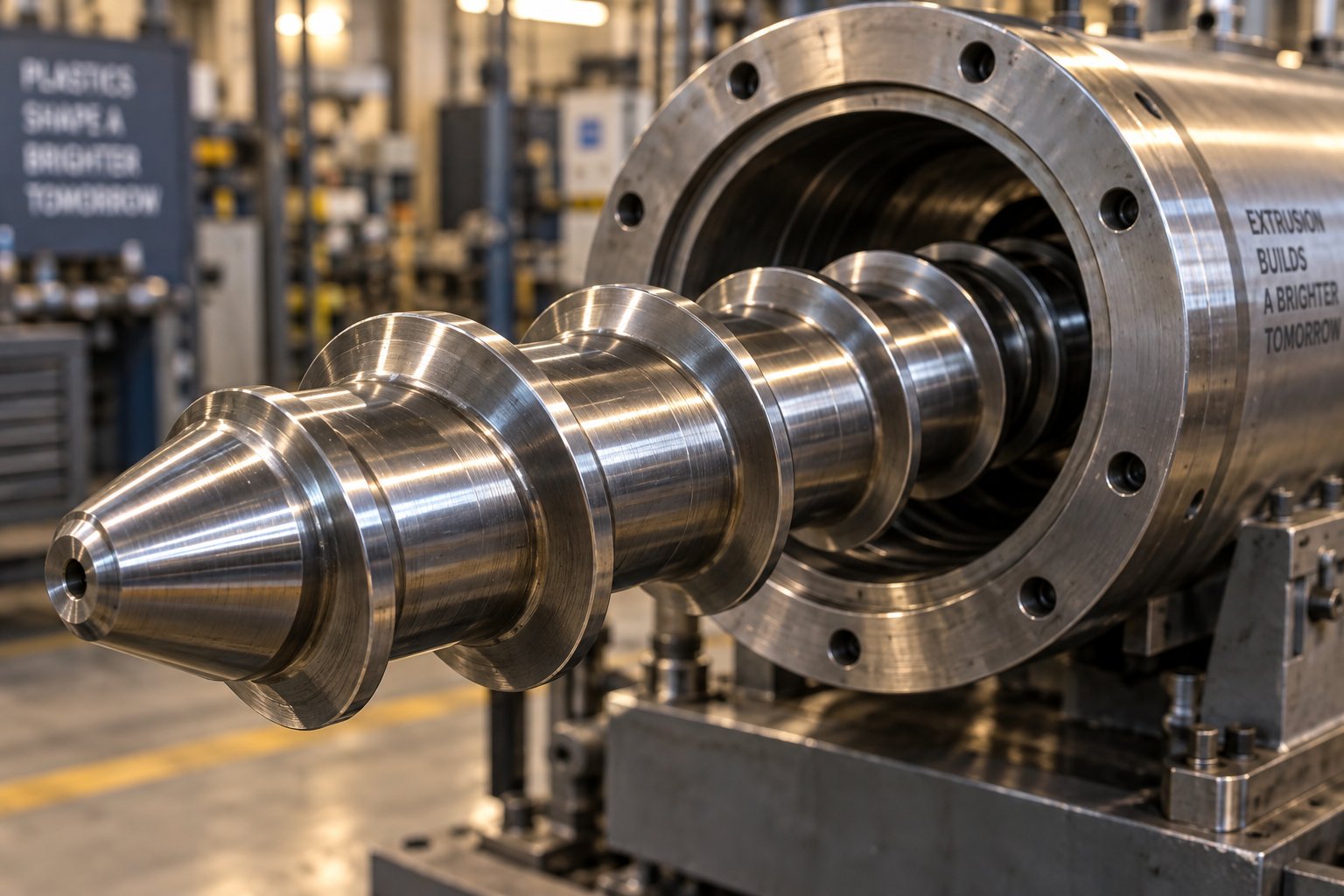
What Nobody Tells You About Screw Barrel For Plastic Machine Design
Oct 10, 2026
Learn how screw barrel for plastic machine design affects melt quality, throughput, and wear life. Covers geometry, resin matching, troubleshooting, and sourcing.
Read Article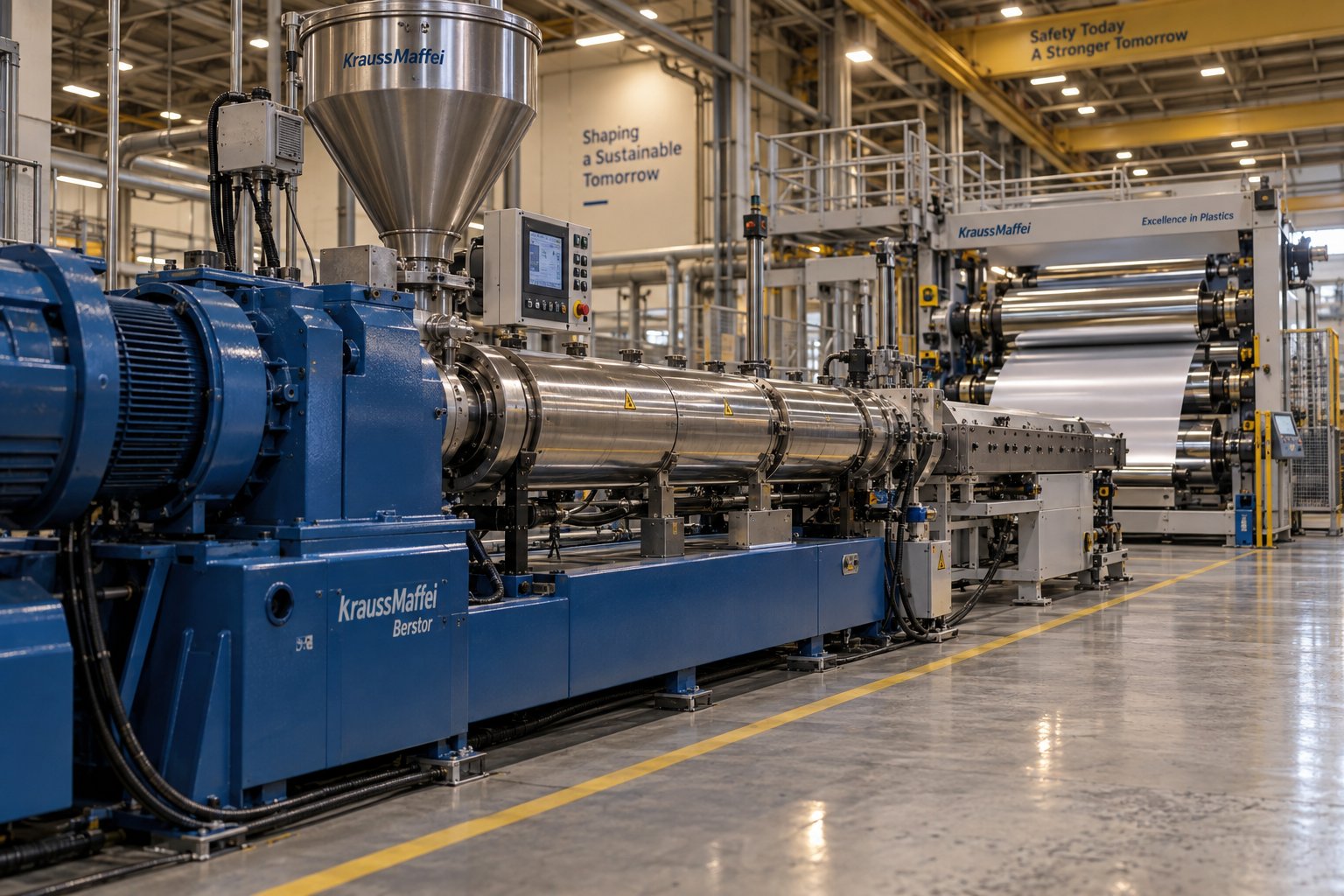
Single Screw Extruder for Sheet: Stop Guessing, Start Specifying
Oct 9, 2026
Learn how to specify a single screw extruder for sheet production. Covers screw geometry, resin-specific processing, troubleshooting, and maintenance best practices.
Read Article
PE Pipe Extruder Machine: What Datasheets Won't Tell You
Oct 9, 2026
Learn how a PE pipe extruder machine works, key specs explained, material grade selection, maintenance tips, and buyer guidance beyond the datasheet.
Read ArticleLooking for something else?
Search by material, symptom or product and jump straight to the relevant page.
These are navigation suggestions based on keyword matching — not a quotation, not a delivery commitment, and not a substitute for engineering review. Final specification is confirmed by our engineers against your drawings and processed material.
Need help with screw barrel selection?
Share your machine model, processed material and application. Our team can help with pricing and technical support.