

What Is a Bimetallic Barrel and How Does It Work
Imagine running your extrusion or injection molding line at full capacity, only to discover that your barrel bore has worn well past tolerance — and your last replacement was less than a year ago. For processors handling glass-fiber-reinforced polymers, mineral-filled compounds, or corrosive resins like PVC, this scenario is painfully familiar. The solution most high-performance operations turn to is a bimetallic barrel, yet surprisingly few resources explain what it actually is or why it works so well.
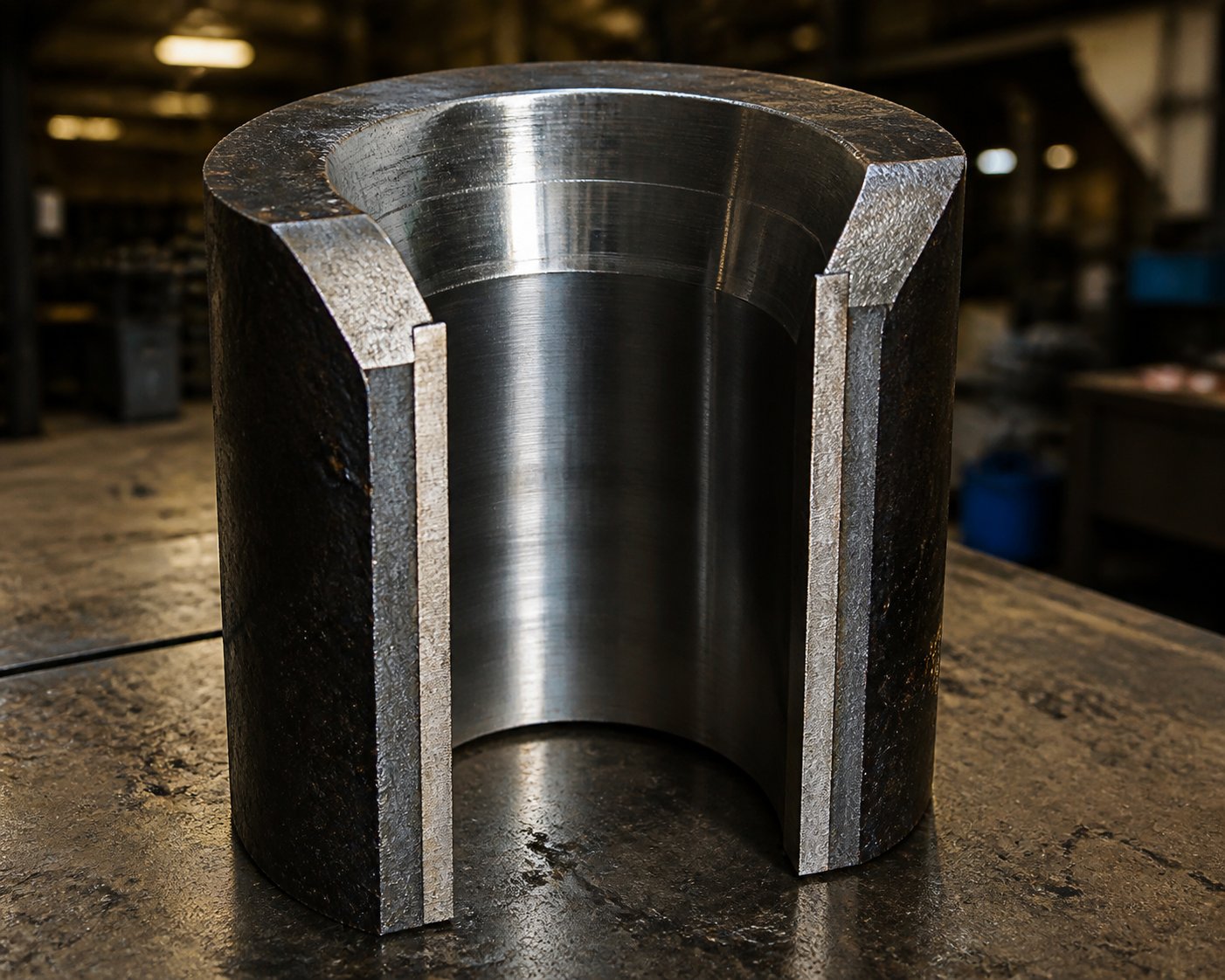
At its core, a bimetallic barrel is a dual-layer cylinder built from two distinct metals. The outer shell is a high-strength steel tube — typically 4140 or a comparable alloy steel — that provides the structural backbone needed to withstand injection pressures and mechanical loads. Bonded to the inside of that steel shell is a centrifugally cast alloy liner, usually 1 mm to 2 mm thick, specifically formulated to resist abrasion, corrosion, or both. This inner lining is metallurgically fused to the bore surface, creating an inseparable bond between the two materials.
A bimetallic barrel is a steel cylinder lined with a centrifugally cast wear-resistant alloy, engineered to withstand the abrasive, corrosive, and thermal demands of plastics processing.
Layered Construction of a Bimetallic Barrel
Think of the two-material architecture as a division of labor. The carbon or alloy steel outer shell handles mechanical stress — clamping force, internal melt pressure, and the weight of the barrel assembly itself. It doesn't need to be exceptionally hard; it needs to be tough and fatigue-resistant. The centrifugally cast bimetallic barrel liner, on the other hand, exists for one purpose: protecting the bore from the destructive forces passing through it every processing cycle.
This layered design stands in sharp contrast to nitrided barrels, where a single piece of alloy steel (commonly 38CrMoAlA) undergoes a nitriding heat treatment to harden just the surface. Nitriding creates a wear-resistant layer, but that hardened zone is relatively thin and cannot be tailored to specific wear or corrosion challenges. Once the nitrided layer wears through, you're left with bare steel that degrades rapidly.
Bimetallic barrels solve this limitation by allowing engineers to select liner alloys purpose-built for the exact conditions inside the bore. Need extreme abrasion resistance for a 40% glass-fiber compound? There's a tungsten-carbide-rich liner for that. Processing corrosive fluoropolymers? A nickel-based alloy liner handles the chemical attack. This flexibility simply isn't possible with a single-material, surface-treated barrel.
Why the Plastics Industry Relies on Bimetallic Technology
The operational environment inside an extruder or injection molding machine is relentless. Abrasive fillers like glass fiber, calcium carbonate, and talc act like sandpaper against the bore wall with every screw rotation. Corrosive off-gases from resins such as PVC and certain engineering plastics chemically erode unprotected steel surfaces. Processing temperatures frequently exceed 300 °C (572 °F), accelerating both mechanical wear and chemical degradation simultaneously.
Standard nitrided barrels perform adequately when running unfilled or lightly filled commodity plastics — polyethylene, polypropylene, or general-purpose polystyrene. But the moment you introduce recycled materials with unknown contaminants, reinforced plastics with high glass-fiber loads, or chemically aggressive polymers, a nitrided surface becomes a consumable rather than a durable component. Downtime for barrel replacement, lost production output, and scrap from inconsistent melt quality add up to thousands of dollars per incident.
This is precisely why bimetallic barrels have become the standard in demanding plastics processing. Their alloy liners deliver significantly longer service life, better dimensional stability of the bore, and more consistent part quality over extended production runs. The upfront cost is higher than a nitrided alternative, but the total cost of ownership — factoring in replacement frequency, downtime, and reject rates — tilts decisively in favor of the bimetallic approach.
Of course, the performance of any bimetallic barrel depends heavily on how that alloy liner is applied — and that brings us to the centrifugal casting process that makes the entire technology possible.
How Bimetallic Barrels Are Manufactured
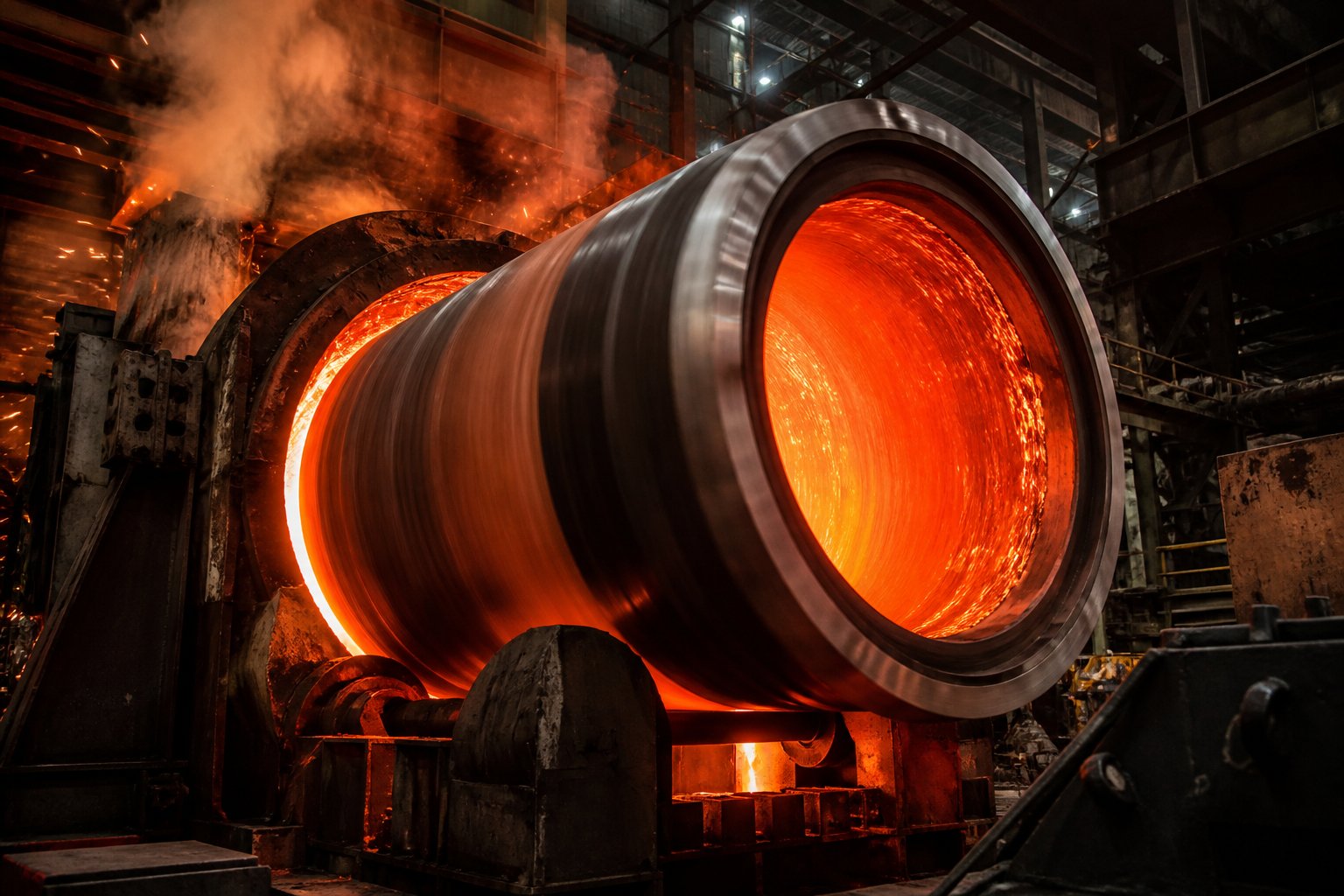
The alloy liner doesn't simply slide into the steel shell like a sleeve. It's formed inside the barrel through centrifugal casting — a process that uses rotational force and extreme heat to create a permanent metallurgical bond between two distinct metals. Every reputable bimetallic screw barrel manufacturer relies on this technique because it produces a dense, pore-free lining that won't delaminate under harsh processing conditions.
So how does a raw steel tube become a finished bimetallic barrel? The sequence involves precise coordination of heat, motion, and metallurgy.
The Centrifugal Casting Process Step by Step
- Base tube preparation: A seamless, pre-machined steel tube — commonly 4140 or a comparable alloy steel — is inspected for dimensional accuracy and bore cleanliness. Any surface contamination at this stage compromises the bond quality downstream.
- Alloy introduction: The selected lining alloy, in powdered or rod form, is loaded into the bore. The specific alloy depends on the intended application — iron-boron blends for general abrasion resistance, nickel-based compositions for corrosion protection, or tungsten carbide composites for extreme wear environments.
- Heating and melting: The barrel is placed inside a furnace and heated until the alloy material reaches its melting point. The steel tube itself softens at the bore surface just enough to enable atomic-level bonding with the molten alloy.
- Centrifugal spinning: While the alloy is molten, the barrel rotates at high RPM. Centrifugal force drives the liquid alloy outward against the bore wall, distributing it evenly and expelling trapped gases. This step is what makes the resulting liner compact, uniform, and free of internal porosity.
- Controlled cooling and metallurgical bonding: The assembly cools gradually under controlled conditions. During this phase, the alloy and steel matrix fuse into an inseparable metallurgical bond — not a mechanical fit, but an actual fusion at the molecular interface.
- Heat treatment: Post-casting heat treatment relieves internal stresses created during the thermal cycle, stabilizing the barrel's dimensional integrity and reducing the risk of warping or cracking during service.
- Final honing and machining: The bore is precision-honed to its target diameter, achieving the tight tolerances and smooth surface finish required for consistent melt conveyance and screw clearance.
The entire process yields a liner typically 1 mm to 2 mm thick that's metallurgically bonded to the steel shell — unlike mechanical liners or spray-applied coatings, which can separate under thermal cycling. This is the fundamental reason centrifugally cast barrels resist peeling and cracking even after years of continuous high-temperature operation.
How Manufacturing Quality Affects Performance
Here's something that often gets overlooked when evaluating any bimetallic screw barrel factory: the casting process itself is only as good as the precision controls governing it. Two barrels built with the identical alloy can deliver dramatically different service lives depending on manufacturing tolerances.
Consider these critical quality variables:
- Bore diameter tolerance: Tighter tolerances mean more consistent clearance between the screw flights and the barrel wall. Excessive clearance allows melt to leak backward, reducing output efficiency and causing uneven pressure distribution.
- Concentricity: If the alloy liner isn't perfectly centered within the steel shell, one side of the bore wears faster than the other. The barrel may meet nominal diameter specs on paper yet fail prematurely because localized thin spots in the liner expose bare steel far earlier than expected.
- Liner thickness uniformity: Centrifugal force should distribute the alloy evenly, but inconsistent RPM control or furnace temperature fluctuations can create thicker deposits on one end of the barrel than the other. Thin zones become the weak link in the entire component's service life.
- Surface finish: The final honed surface directly affects melt flow behavior. A rough bore increases shear heating and accelerates wear on both the barrel and screw, while an overly polished surface in the feed zone can cause resin slippage and throughput loss.
These factors explain why pricing differences between suppliers — whether sourcing a china bimetallic screw barrel or a domestically produced unit — aren't always about profit margins. They often reflect real differences in process control, inspection rigor, and machining precision that translate directly into how long the barrel performs on your production floor.
The quality of the casting process determines the physical foundation, but the alloy composition within that liner is what defines the barrel's resistance to specific types of degradation — abrasion, corrosion, or high-temperature chemical attack.
Understanding Bimetallic Barrel Alloy Types and Properties
Alloy selection is where the real engineering happens. You could have a flawlessly centrifugally cast barrel, yet if the liner material isn't matched to your processing conditions, premature failure is virtually guaranteed. The challenge? Most technical resources list proprietary alloy trade names — T10, X-800, BO55 — without explaining what those designations actually mean in metallurgical terms. That leaves processors comparing marketing labels instead of material science.
Strip away the brand-specific nomenclature and every bimetallic screw barrel material falls into one of four universal alloy categories: iron-based, nickel-based, cobalt-based, or tungsten carbide composite. Each category delivers a distinct protective function, and understanding those functions is the key to choosing the right bimetallic extruder barrel for your specific application.
Iron-Based and Nickel-Based Alloy Liners
Iron-based alloys — typically iron-boron or iron-boron-chromium compositions — represent the workhorse category. They provide solid abrasion resistance at a moderate cost, making them the go-to choice for general-purpose processing. If you're running commodity resins with light filler loads (under 15% mineral content), an iron-based liner handles the job without overengineering the solution. These alloys achieve hardness levels in the 58-65 HRC range, enough to resist steady particulate wear without the premium price of more exotic compositions.
Nickel-based alloys shift the priority from abrasion resistance to corrosion protection. When processing PVC, fluoropolymers, acetals, or any resin that releases acidic off-gases during melting, those acids attack unprotected metal surfaces aggressively. A bimetallic PVC extrusion screw barrel lined with a high-nickel alloy resists this chemical assault because nickel forms a passive oxide layer that shields the underlying material from acidic degradation. Some formulations reduce iron content to near zero — maximizing corrosion resistance for the most chemically hostile environments, such as PVDF or PTFE processing.
Here's a practical way to think about the distinction: iron-based liners fight particles, nickel-based liners fight chemistry. Many processing environments involve both challenges simultaneously, which is why some alloy formulations blend nickel bases with dispersed carbide particles — creating hybrid liners that handle moderate abrasion and moderate corrosion in a single layer.
Tungsten Carbide and Cobalt-Based Liners for Extreme Conditions
When filler loads climb above 30% — imagine glass-fiber-reinforced nylon, heavily mineral-filled polyolefins, or bimetallic rubber screw and barrel components processing abrasive elastomer compounds — general-purpose alloys simply can't keep up. This is the territory of tungsten carbide composite liners.
These liners embed extremely hard tungsten carbide particles within a nickel or cobalt matrix. The carbide particles, which can reach hardness values above 70 HRC, bear the brunt of abrasive contact while the surrounding metal matrix holds them firmly in place. Nordson's Xaloy X-800 barrel inlay, for example, uses a nickel alloy with tungsten carbide specifically designed for compounds with glass-fiber loadings up to 60%. The result is a liner that resists severe abrasive wear several times longer than standard iron-based alternatives.
Cobalt-based alloys occupy a specialized niche where high-temperature stability meets corrosion resistance. Unlike nickel alloys that soften at elevated temperatures, cobalt-based compositions retain their hardness and structural integrity well above 600 °C. This makes them ideal for processing environments that combine corrosive off-gassing with sustained high barrel temperatures — think high-temperature engineering plastics like PPS, PEEK, or certain fluoropolymer grades that demand barrel zones above 350 °C.
The following table maps these four alloy categories across the properties that matter most when selecting a bimetallic barrel liner:
| Alloy Category | Hardness Range (HRC) | Corrosion Resistance | Thermal Stability | Best-Suited Applications |
|---|---|---|---|---|
| Iron-Based (Fe-B, Fe-B-Cr) | 58-65 | Low to Moderate | Moderate (up to ~400 °C) | General-purpose extrusion and molding with light fillers |
| Nickel-Based (Ni-Cr, Ni-Mo) | 45-60 | High to Very High | Good (up to ~500 °C) | PVC, fluoropolymers, acetals, and other corrosive resins |
| Tungsten Carbide Composite (WC in Ni or Co matrix) | 60-72 | Moderate to High | Good (up to ~550 °C) | Glass-fiber-reinforced compounds, mineral-filled resins above 30% |
| Cobalt-Based (Co-Cr-W) | 50-62 | High | Excellent (above 600 °C) | High-temperature engineering plastics (PPS, PEEK) with corrosive conditions |
Notice how no single alloy category excels at everything. Iron-based liners trade corrosion resistance for affordable abrasion protection. Nickel-based liners sacrifice peak hardness to gain chemical durability. Tungsten carbide composites deliver extreme abrasion resistance but at a higher cost. And cobalt-based alloys specialize in the narrow but critical overlap of heat and chemical attack.
This is exactly why understanding the underlying metallurgy matters more than memorizing trade names. Two suppliers might both offer a "high-performance" liner, but one could be an iron-boron composition while the other is a nickel-carbide hybrid — and those two materials will behave completely differently inside your barrel. Knowing which alloy category you actually need prevents costly mismatches that shorten component life.
Yet alloy selection doesn't happen in isolation. The liner inside your barrel interacts directly with another alloy-coated surface rotating against it thousands of times per minute — the screw. Choosing the right barrel alloy without considering what the screw is made of can create an entirely different set of wear problems.
Matching Bimetallic Barrels with Bimetallic Screws
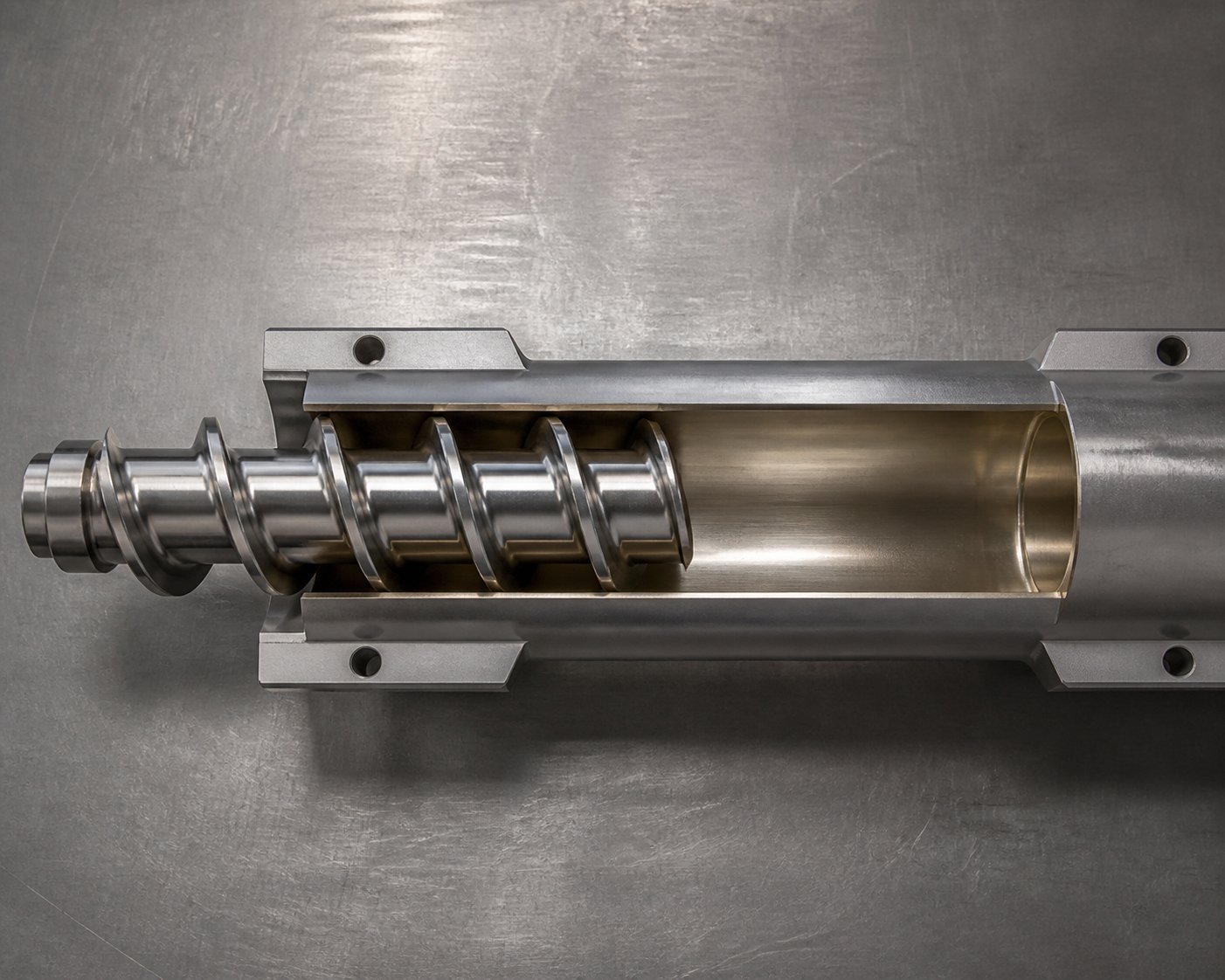
A bimetallic barrel doesn't operate alone. Every second your line is running, the screw's flight surfaces are sweeping against the barrel's alloy liner at high speed, under pressure, and in the presence of abrasive or corrosive melt. Selecting the perfect barrel liner alloy while ignoring what the screw is coated with is like choosing the ideal brake pad material without considering the rotor — you've optimized half a system.
This is why experienced processors treat the bimetallic screw and barrel as a matched pair rather than two independent purchase decisions. The metallurgy of one directly influences the wear behavior of the other, and getting that interaction wrong can actually accelerate damage faster than running uncoated components.
Why Barrel and Screw Alloys Must Work Together
The core principle is straightforward: your barrel liner should be harder than the screw's flight surface. Why? Because screws are geometrically complex but require less raw material removal to manufacture, making them less expensive to replace than barrels. If the screw wears preferentially, you replace the cheaper component while the barrel — with its cooling passages, thermocouple wells, injection ports, and machined flanges — continues serving for another cycle. This concept is called differential or complementary hardness, and it's the foundation of every intelligent bimetallic screw barrel pairing strategy.
What happens if you ignore this principle? Imagine installing a barrel liner and screw coating from the same alloy family at similar hardness levels. When two surfaces of equal hardness rub against each other under pressure, a phenomenon called galling occurs. Microscopic high points on each surface weld together momentarily, then tear apart — transferring material from one surface to the other. You'll see scoring, rough patches, and metal buildup on the screw flights. This is adhesive wear, and it's entirely preventable with proper alloy pairing.
The practical guideline? Maintain a hardness gap of at least 5-8 HRC points between the barrel liner and the screw surface, with the barrel being the harder of the two. A tungsten carbide composite barrel liner (60-72 HRC) paired with a tool steel or iron-based screw surface (55-62 HRC) is a classic example of this differential in action.
Pairing Strategies for Single and Twin Screw Systems
The principles are universal, but the application differs depending on whether you're running a bimetallic single screw barrel setup or a twin screw configuration. Here are the pairing fundamentals that apply across both systems:
- Maintain differential hardness: Always select a barrel liner alloy that is harder than the screw's wear-resistant surface. This ensures the screw — the less expensive, more easily replaced component — wears first.
- Match thermal expansion coefficients: The barrel liner and screw alloy should expand at compatible rates as processing temperatures climb. A large mismatch can cause clearances to tighten unpredictably at operating temperature, increasing metal-to-metal contact and triggering adhesive wear.
- Avoid alloy combinations prone to adhesive wear: Two nickel-based surfaces or two cobalt-based surfaces running against each other are particularly vulnerable to galling. Cross-family pairing — for example, a tungsten carbide barrel liner against a nitrided or tool steel screw — significantly reduces this risk.
- Align corrosion resistance across both components: There's little value in specifying a high-nickel, corrosion-resistant barrel liner if the screw flights corrode and shed material into the melt stream. Both components should resist the chemical environment, even if the specific alloys differ.
For a bimetallic extrusion barrel screw system in single screw applications, the pairing decision is relatively straightforward: one screw, one barrel bore, one set of contact surfaces. You choose the barrel liner to resist the dominant wear mechanism (abrasion or corrosion), then select a screw metallurgy that's slightly softer and from a compatible — but different — alloy family.
Twin screw configurations introduce additional complexity. The screws intermesh with each other, not just the barrel wall, creating screw-to-screw contact zones where adhesive wear is a significant concern. In these systems, the screw elements themselves need careful metallurgical planning. Many twin screw operations use bi-metallic screw construction — a tough steel core to resist torque overloads, with a hard, wear-resistant alloy on the outer surfaces that still remains softer than the barrel liner. This layered screw approach mirrors the barrel's own dual-material philosophy, creating a system where every contact interface has been deliberately engineered.
Getting the barrel-screw pairing right prevents a category of failure that no amount of barrel alloy optimization can solve on its own. But even a perfectly matched system will eventually show wear — and knowing how to read the specific type of wear pattern your barrel develops is what separates reactive maintenance from proactive, cost-saving decision-making.
Diagnosing Barrel Wear Types and Choosing the Right Solution
Your barrel is telling you exactly what's destroying it — if you know how to interpret the evidence. Every wear mechanism leaves a distinct fingerprint on the bore surface, and reading that fingerprint correctly is the difference between selecting a liner that solves the problem and one that simply delays the next failure. Too many operators pull a worn barrel, order the same replacement they bought last time, and watch it degrade at the same rate. Breaking that cycle starts with a simple question: what kind of damage am I actually looking at?
Identifying Abrasive, Corrosive, and Adhesive Wear Patterns
Grab a bore scope or pull the screw and examine the bore surface under good lighting. What you see — and where you see it — points directly to the dominant wear mechanism at work.
Abrasive wear presents as uniform bore enlargement with a smooth, sometimes polished interior surface. The bore diameter grows gradually and evenly, particularly through the transition and metering zones where melt pressure forces filler particles hard against the wall. You won't see pits or rough patches — just a bore that's slowly become oversized. This is the signature of glass fiber, calcium carbonate, talc, titanium dioxide, or contaminated recycled feedstock grinding steadily against the liner.
Corrosive wear looks entirely different. Instead of a smooth, enlarged bore, you'll find pitting, dimpled surfaces, and rough bore texture — almost like the metal has been chemically etched from the inside. This damage typically concentrates in the metering zone and die adapter area, where melt temperatures peak and chemical degradation accelerates. PVC releasing hydrochloric acid, fluoropolymers generating hydrofluoric acid, and halogenated flame retardants producing reactive off-gases are the usual culprits.
Adhesive wear produces the most dramatic visual evidence: scoring lines running along the barrel's length, material transfer marks, and smeared or galled patches on the bore wall. These marks often appear in the feed zone — before a full melt film develops to lubricate the screw-to-barrel interface — or wherever the screw deflects and contacts the bore directly. Cold starts without adequate soak time, dry running, misaligned screws, and worn gearbox bearings are the primary triggers.
Here's the critical insight: these mechanisms rarely operate in isolation. A plastic machine bimetallic screw barrel processing glass-filled PVC faces abrasion and corrosion simultaneously. Corrosion roughens the bore surface, creating anchor points where abrasive particles dig in more effectively — a synergistic combination that accelerates damage far beyond what either mechanism would cause alone. Accurate diagnosis means identifying the dominant mechanism, then checking for secondary contributors.
The following diagnostic matrix maps each wear type to its visual indicators, common causes, and recommended alloy response:
| Wear Type | Visual Indicators | Common Causes | Recommended Alloy Response |
|---|---|---|---|
| Abrasive | Uniform bore enlargement; smooth, polished bore surface; gradual loss of original machining marks | Glass fiber, mineral fillers (CaCO3, talc, wollastonite), titanium dioxide, recycled plastics with grit or metal contaminants | Tungsten carbide composite liner (severe); iron-based bimetallic liner (moderate filler loads under 30%) |
| Corrosive | Pitting and dimpling on bore surface; rough, etched texture; localized material loss without uniform enlargement | PVC and CPVC (HCl off-gassing), fluoropolymers (HF release), halogenated flame retardants, degraded or stagnant polymer accumulation | Nickel-based bimetallic liner (Ni-Cr-Co-B); ceramic lining for extreme chemical environments (fluoropolymers) |
| Adhesive | Scoring lines along bore length; material transfer and galling marks; smeared metal deposits on bore wall | Cold starts without proper warm-up, dry running (no polymer lubrication), screw deflection or misalignment, worn bearings or gearbox | High-hardness liner with proper differential hardness versus screw; operational procedure corrections to eliminate metal-to-metal contact |
| Combined (Abrasive + Corrosive) | Pitted surface with enlarged bore diameter; rough texture with measurable bore growth beyond tolerance | Glass-filled PVC, mineral-filled flame-retardant compounds, corrosive resins with high filler loads | Tungsten carbide in nickel-based matrix; hybrid liners engineered for dual abrasion-corrosion resistance |
Mapping Wear Diagnosis to Alloy Selection
Identifying the dominant wear mechanism is only useful if it drives a concrete material decision. Here's how that mapping works in practice.
When bore measurements reveal uniform enlargement and the surface looks polished or smoothly worn, abrasion is your primary enemy. For bimetallic extrusion barrels processing heavily filled compounds — 30% glass fiber and above — tungsten carbide composite liners are the clear choice. Their embedded carbide particles, which exceed 70 HRC individually, bear the brunt of filler-particle contact while the nickel or cobalt matrix holds them in place. For lighter filler loads or customized bimetallic rubber screw and barrel applications with moderately abrasive elastomer compounds, iron-based liners in the 58-65 HRC range deliver adequate protection at a lower cost tier.
Pitted, rough bore surfaces point to corrosive attack, and the solution shifts entirely. Hardness matters far less here than chemical resistance. A nickel-based liner — even though its bulk hardness (45-60 HRC) is lower than iron-based alternatives — forms a passive oxide layer that resists acid penetration. For PVC lines, this is non-negotiable. Iron-based liners corrode rapidly under hydrochloric acid exposure, no matter how hard they are.
Adhesive wear demands a different response altogether. Scoring and galling are symptoms of metal-to-metal contact — a mechanical problem, not a material chemistry problem. The first corrective step is operational: verify proper warm-up soak times, eliminate dry running, and inspect screw alignment and bearing condition. On the metallurgical side, ensure the barrel liner is at least 5-8 HRC points harder than the screw surface and that the two alloys come from different families to prevent galling. A bimetallic normal screw barrel pairing with cross-family alloys — tungsten carbide barrel against tool steel screw, for instance — dramatically reduces adhesive wear risk.
For combined wear environments, the alloy selection requires a compromise — or rather, a hybrid solution. Tungsten carbide particles dispersed within a nickel-based matrix deliver both abrasion resistance from the carbides and corrosion resistance from the surrounding nickel alloy. These dual-purpose liners cost more than single-function alternatives, but they're far cheaper than replacing a mismatched barrel every six months.
The diagnostic approach outlined here shifts barrel selection from guesswork to evidence-based decision-making. Yet even the most precisely matched alloy liner has a finite service life — and catching degradation before it impacts production requires a structured inspection and maintenance protocol that most processors haven't formalized.
Maintenance, Inspection, and Preventing Barrel Failure
Here's a costly pattern that plays out in processing plants every day: a barrel runs until output drops noticeably, someone finally measures the bore, and the readings come back well past any recoverable tolerance. The barrel is scrapped, production halts for a replacement, and thousands of dollars disappear — not because the alloy liner failed prematurely, but because nobody checked it on a schedule. Diagnosing the type of wear your barrel faces is essential, yet that diagnosis only has value when it's part of a structured inspection routine that catches degradation early enough to act on it.
Bimetallic barrels are tougher than nitrided alternatives, but they aren't invincible. They also carry unique failure risks tied directly to their dual-layer construction — risks that standard single-material maintenance practices don't account for. Understanding how to measure, when to measure, and what failure modes to watch for can extend your barrel's productive life by months or even years.
Bore Measurement and Wear Tolerance Guidelines
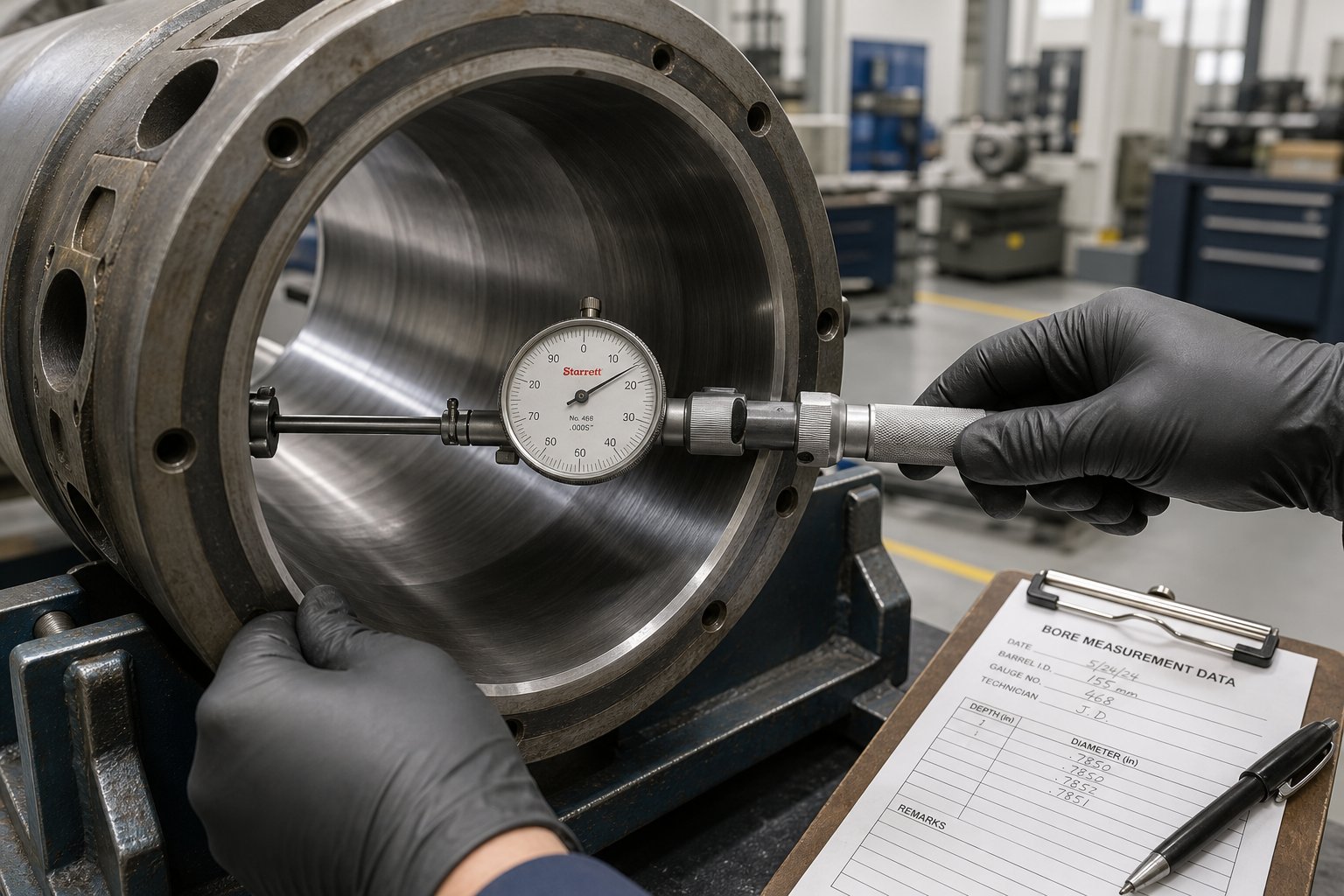
Measuring bore diameter sounds simple, but doing it correctly requires consistency, the right tools, and a systematic approach. A single measurement at one point along the barrel tells you almost nothing. Wear rarely distributes evenly — it concentrates in the transition and metering zones where melt pressure and filler abrasion peak, while the feed zone may remain nearly pristine.
The standard tool is a telescoping bore gauge paired with an outside micrometer, or a dedicated dial bore gauge calibrated to the barrel's nominal diameter. You'll want readings at multiple positions along the barrel's length — at minimum, every 4 to 6 inches (100-150 mm) — and at two orientations (0° and 90°) at each position to detect ovality. Recording both the location and orientation of each measurement creates a wear profile that reveals not just how much the bore has enlarged, but where the degradation concentrates.
Industry guidelines from the SPI (now Plastics Industry Association) Dimensional Guidelines provide reference values for when a component is too worn to continue using. As a general rule, most processors consider a single bimetallic screw barrel ready for replacement or repair when the bore diameter exceeds the nominal specification by 0.08 mm to 0.10 mm (approximately 0.003" to 0.004") per side — meaning total bore enlargement of roughly 0.15 mm to 0.20 mm in diameter. For precision applications like medical device molding or optical-grade extrusion, tolerances tighten significantly, and even 0.05 mm of enlargement can affect part quality.
Here's the part most operators miss: a single set of measurements has limited value. The real power comes from tracking measurements over time at consistent intervals. Creating a wear profile across multiple inspection cycles reveals the rate of bore enlargement, which lets you predict when the barrel will reach its tolerance limit and schedule replacement before production quality suffers.
A practical inspection protocol should follow these steps:
- Remove the screw and purge residual polymer thoroughly. Residual resin left in the bore obscures surface conditions and distorts gauge readings.
- Visually inspect the bore under strong lighting or with a bore scope. Look for pitting, scoring, discoloration, or any signs of liner separation before taking measurements.
- Measure bore diameter at intervals of 4-6 inches along the entire barrel length, recording readings at two perpendicular orientations per location.
- Compare readings to both the original specification and the most recent previous inspection data. Flag any location where enlargement exceeds 50% of the maximum allowable wear tolerance — this is your early warning threshold.
- Document everything: date, machine hours since last inspection, resin and filler types processed, and any operational anomalies (cold starts, material changes, temperature excursions).
- Establish inspection frequency based on your specific application severity. Processing unfilled commodity plastics? Annual inspections may suffice. Running 40% glass-fiber-reinforced nylon? Quarterly measurements are more appropriate. A single bimetallic screw barrel factory may provide baseline recommendations, but your wear profile data should ultimately dictate the schedule.
Consistent measurement also reveals something subtler but equally important: it tells you whether your alloy liner selection was correct in the first place. If bore enlargement is rapid and concentrated in the metering zone with a smooth, polished wear surface, you're likely underspecified on abrasion resistance. If pitting appears within the first few months, corrosion resistance is inadequate for the resin chemistry you're running. The inspection data feeds back directly into smarter barrel selection next time.
Failure Modes and How to Prevent Them
Standard barrel wear — gradual bore enlargement from abrasion or corrosion — is predictable and manageable. The failure modes unique to bimetallic construction, however, can be sudden, expensive, and entirely preventable. These aren't widely discussed because they stem from the dual-layer architecture itself, and most maintenance guides treat barrels as single-material components.
Liner delamination is the most serious bimetallic-specific failure. The centrifugally cast alloy liner is metallurgically bonded to the steel shell, but that bond exists at the interface of two materials with different thermal expansion rates. Repeated thermal cycling — heating the barrel to operating temperature, cooling it down for maintenance, then reheating — stresses the bond zone. Over hundreds of cycles, micro-cracks can propagate along the interface, eventually allowing sections of the liner to separate from the steel substrate. When delamination occurs, liner fragments can break free and jam between the screw and bore, causing catastrophic scoring or even screw seizure.
Prevention strategy: minimize unnecessary thermal cycling. Avoid full shutdowns when partial temperature setbacks accomplish the same goal. When cold starts are unavoidable, use a slow, staged heat-up protocol — raise barrel temperatures in increments of 25-50 °C with dwell periods at each stage, rather than jumping directly to processing temperature. This allows both layers to expand at their respective rates without generating dangerous shear stress at the bond interface.
Liner cracking from thermal shock is a related but distinct failure. This occurs when cold polymer or purge material contacts a fully heated bore — or when a barrel at operating temperature is exposed to rapid cooling (such as water leaking from a cracked cooling passage). The alloy liner, which is harder and more brittle than the ductile steel shell, cannot absorb rapid thermal strain. The result is circumferential or longitudinal cracking through the liner itself, not at the bond line. These cracks may not be visible from the bore surface initially, but they propagate under continued thermal cycling and eventually reach the bore, creating pathways for melt to penetrate behind the liner.
Prevention strategy: never introduce cold material into a hot barrel without first reaching adequate soak temperature throughout the full barrel length. Ensure cooling circuits are leak-free — even minor water intrusion against a 300+ °C bore wall generates localized thermal shock sufficient to initiate cracks. When performing temperature changes, limit ramp rates to manufacturer-recommended values, typically no more than 3-5 °C per minute for barrels over 60 mm bore diameter.
Premature wear from mismatched alloy selection isn't a structural failure, but it mimics one. Operators who source a china bimetallic single screw barrel without specifying the correct liner grade for their application may receive a perfectly manufactured barrel that simply contains the wrong alloy. An iron-based liner running aggressive PVC compounds corrodes rapidly. A nickel-based liner processing 50% glass-filled nylon abrades far faster than expected. In both cases, the barrel appears to have "failed" prematurely when, in reality, the alloy was never engineered for that wear mechanism.
Prevention strategy: always specify the liner alloy category — not just "bimetallic" — when ordering. Define the primary resin, filler type and percentage, and processing temperature range so the manufacturer or supplier can match the correct alloy composition. If your wear profile data from previous barrels shows unexpected degradation patterns, revisit the diagnostic framework to confirm you're addressing the right wear mechanism before reordering the same specification.
Each of these failure modes is preventable through a combination of correct specification, proper operational procedures, and consistent inspection. The common thread? None of them are solved by simply buying a higher-grade alloy. They require discipline in how the barrel is selected, how it's brought up to temperature, and how frequently it's measured — a lifecycle management mindset that starts well before installation and continues long after the first good part comes off the line.
Of course, knowing how to maintain a barrel is only half the equation. Knowing which barrel to specify in the first place — based on your exact resin, filler, temperature range, and production demands — requires a structured selection framework that accounts for all these variables simultaneously.
How to Select the Right Bimetallic Barrel for Your Application
You understand the alloy categories, you can diagnose wear patterns, and you know how to inspect a bore. But when a purchase order needs to go out, all of that knowledge has to converge into a single decision: which barrel, with which liner, at what specification? The difference between a barrel that lasts four years and one that fails in eight months often comes down to how systematically the selection was made — not how much was spent.
Whether you're sourcing locally or evaluating a bimetallic screw barrel for sale from an overseas supplier, the variables that drive a smart selection are the same. What changes is how carefully you walk through them before committing.
Key Variables That Drive Barrel Selection
Barrel selection isn't a single decision — it's a sequence. Skip a step or evaluate the variables out of order, and you'll either overspend on a liner you don't need or underspecify and pay for it in downtime. Here's the logical progression:
- Identify your primary resin type. Is it a commodity polyolefin, an engineering plastic, PVC, or a chemically aggressive fluoropolymer? The base resin determines whether corrosion resistance is a factor at all.
- Assess filler content and type. Glass fiber, calcium carbonate, talc, wood flour, titanium dioxide — each has a different abrasion intensity. Equally important is the filler percentage by weight. A compound with 10% talc creates a fundamentally different wear profile than one with 40% glass fiber.
- Determine the processing temperature range. Barrel zones running below 250 °C place different thermal demands on the liner than zones consistently above 350 °C. High-temperature processing narrows the list of alloys that maintain their hardness and structural integrity without softening or oxidizing.
- Evaluate production volume and uptime requirements. A line running 8,000 hours per year on a single formulation justifies a purpose-built liner optimized for that exact wear mode. A job shop running diverse materials intermittently may benefit more from a general-purpose alloy that handles a broader range of conditions adequately.
- Factor in budget constraints — but think in total cost, not invoice price. A barrel that costs 2.5 times more upfront but runs three to five times longer is the cheaper option. Industry data from real-world compounding operations consistently shows that bimetallic barrels reduce annualized barrel costs by 30-50% compared to nitrided alternatives in abrasive or corrosive applications — even though the purchase price is significantly higher.
Running through these five variables in sequence narrows the field dramatically. By the time you reach step five, you're typically choosing between two or three alloy categories at most — not trying to evaluate every option on the market simultaneously.
Decision Tree for Barrel Type and Alloy Grade
Imagine you're standing at a fork in the road. Each branch leads to a different barrel specification based on what your process actually demands. The following decision tree walks through those branches:
- Unfilled or lightly filled commodity polymers (virgin PE, PP, PS with filler content below 10%)
- Dominant wear mode: adhesive, mild abrasive
- A properly manufactured nitrided barrel is likely sufficient. Its 0.4-0.6 mm hardened case handles the modest wear load, and field data shows 5-10 year service life in these clean processing environments. Specifying bimetallic here typically provides no measurable payback.
- Lightly to moderately filled compounds (10-30% CaCO3, talc, or low-percentage mineral fillers)
- Dominant wear mode: moderate abrasive
- An iron-based bimetallic liner (Fe-B or Fe-B-Cr, 58-65 HRC) delivers the wear depth and hardness needed without the cost premium of tungsten carbide. This is the sweet spot for many general-purpose extrusion and injection molding operations.
- Heavily filled or glass-fiber-reinforced materials (above 30% glass fiber, high mineral loading, wood-plastic composites)
- Dominant wear mode: severe abrasive
- Tungsten carbide composite liners are the minimum responsible specification. The embedded WC particles (65-72 HRC) resist the continuous abrasive jet that high-fiber compounds create against the bore wall. Anyone looking to buy bimetallic twin screw barrel extruder components for compounding lines running glass-reinforced PA or PBT should default to this category — iron-based liners simply cannot survive the wear intensity at these filler levels.
- Corrosive resins (PVC, CPVC, fluoropolymers, halogenated flame retardant compounds)
- Dominant wear mode: corrosive, often combined with moderate abrasive
- Nickel-based bimetallic liners (Ni-Cr-B or Ni-Mo alloys) are essential. Their passive oxide layer resists acid attack from HCl and HF off-gassing. If the formulation also includes significant abrasive filler — as in CaCO3-filled PVC — a hybrid liner with tungsten carbide particles in a nickel matrix addresses both mechanisms.
- High-temperature engineering plastics (PPS, PEEK, PEI processed above 350 °C)
- Dominant wear mode: thermal degradation combined with chemical attack
- Cobalt-based alloys or specialty nickel alloys with high thermal stability are required. Standard iron-based liners lose hardness at these temperatures, accelerating wear even if the resin carries minimal filler.
Notice how each branch maps directly back to the alloy categories and wear diagnostics covered earlier. The decision tree isn't introducing new information — it's organizing everything into a sequence that a buyer or operator can follow without guessing.
Total Cost of Ownership: The Number That Actually Matters
Price comparisons at the purchase order level are misleading. A nitrided barrel for a 65 mm twin screw extruder might cost around $12,000, while a bimetallic alternative runs $28,000. On an invoice, the nitrided option wins. Over five years of processing CaCO3-filled PVC at 6,000 hours annually, however, the math flips entirely. The nitrided barrel requires roughly three replacements in that period — each one carrying not just hardware cost, but 18 hours of production downtime, scrap from startup waste, and screw realignment labor. One documented TCO analysis of this exact scenario calculated a five-year total of approximately $101,000 for the nitrided path versus $36,000 for bimetallic — a nearly 3:1 cost advantage for the higher-priced barrel.
This is the calculation that any bimetallic screw barrel importer or procurement team should run before finalizing a specification. The inputs are straightforward: barrel purchase price, expected service life under your specific conditions, downtime cost per hour, replacement labor, and scrap costs during startup. Even rough estimates produce directionally clear answers in most cases.
For international procurement, it's also worth noting that bimetallic screw barrel HS code classifications (typically under harmonized code 8477.90 for parts of plastics processing machinery) affect import duties and landed cost. Factoring tariff rates into your TCO model prevents surprises that erode the cost advantage you projected.
Two practical rules of thumb close out the framework. First, if your filler content exceeds 20% by weight or your line runs more than 6,000 hours per year, bimetallic almost always wins on total cost — even at 2-3 times the initial price. Second, if you're processing clean, unfilled commodity resins at moderate throughput, resist the temptation to buy bimetallic twin screw barrel or single screw components "just in case." Overspecifying wastes capital with no operational return.
Selecting the right barrel upfront is the highest-leverage decision you can make. But even the best-specified barrel will eventually reach its wear limit — and when it does, full replacement isn't always the most economical or practical next step.
Extending Barrel Life Through Surface Treatment and Repair
A bore gauge reading that exceeds tolerance doesn't automatically mean you need a new barrel. That's the assumption many processors default to — and it's an expensive one. The reality? A significant percentage of worn bimetallic barrels can be restored to functional specifications through surface treatment and repair techniques, at a fraction of the cost and lead time of full replacement. For operators managing tight budgets or facing long procurement timelines — especially when sourcing a single bimetallic screw and barrel near me isn't a quick option — repair can be the smartest path forward.
The key is understanding exactly when repair makes economic and technical sense, and when it doesn't. Not every barrel qualifies, and attempting to restore a component that's too far gone wastes time and money. But dismissing repair without evaluating it first wastes even more.
When Repair Makes More Sense Than Replacement
Imagine this scenario: your 90 mm extruder barrel shows 0.12 mm of bore enlargement concentrated in the metering zone, while the feed section and transition zone remain within tolerance. The steel shell is structurally sound — no warping, no cracking in the cooling passages, no damage to the flanges or thermocouple wells. Does it make sense to scrap the entire barrel because 30% of the bore surface is worn?
In many cases, the answer is clearly no. Here's where repair typically wins over replacement:
- Localized wear: When bore enlargement is concentrated in specific zones rather than distributed uniformly across the full barrel length, targeted surface restoration can address the degraded areas without touching the sections that still perform.
- Cost differential: A full bimetallic barrel replacement can cost two to five times more than a professional repair, depending on barrel size and alloy grade. For large-diameter barrels (100 mm and above), the savings become especially dramatic because raw material and machining costs scale steeply with bore size.
- Lead time pressure: New bimetallic barrels — particularly those with specialized alloy liners or non-standard dimensions — can carry lead times of 8 to 16 weeks. A well-executed repair can return a barrel to service in a fraction of that time, keeping your production line running instead of sitting idle while you wait for delivery.
- Sustainability: Repairing a barrel reuses the steel shell, cooling system, and mounting hardware that consumed significant energy and material to manufacture originally. It's a straightforward waste-reduction decision with tangible environmental benefit.
On the other hand, repair is not the right call when the bore shows widespread damage beyond the liner thickness, when the steel shell exhibits structural issues like warping or stress cracking, or when the liner has delaminated from the substrate in multiple locations. In those situations, no surface treatment can restore the barrel's structural integrity — replacement is the only responsible option.
The decision framework is simple: if the shell is sound and the wear is addressable within the liner's remaining thickness, evaluate repair first. If structural integrity is compromised, replace. That evaluation alone — which experienced refurbishment providers can typically perform quickly — saves processors from reflexively ordering new components they may not need.
Alloy Spray Welding as a Barrel Restoration Method
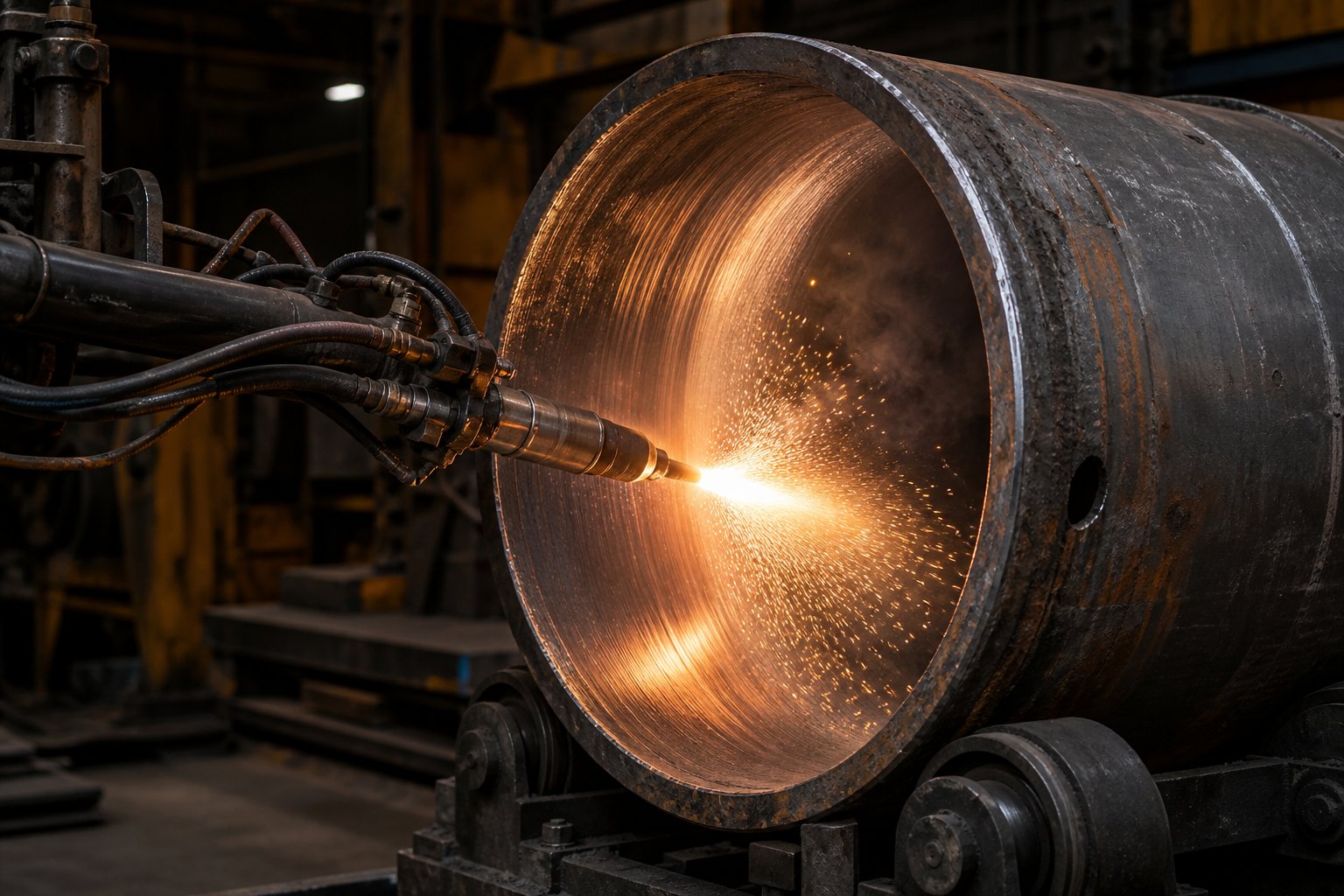
Among the repair techniques available, alloy spray welding has emerged as one of the most effective approaches for restoring worn barrel bores. The process deposits wear-resistant alloy material directly onto degraded bore surfaces, rebuilding the diameter to its original specification while adding a protective layer engineered for the specific operating conditions.
Here's how it works in practice: a specialized welding system applies molten alloy — typically nickel-based, cobalt-based, or carbide-reinforced compositions — onto the worn bore interior. The deposited material metallurgically bonds to the existing surface, creating a new wear-resistant layer that functions much like the original centrifugally cast liner. After deposition, the bore is precision-honed back to its nominal diameter and surface finish.
The types of damage alloy spray welding addresses map directly to the wear problems operators encounter daily:
- Bore enlargement from abrasive wear — restoring oversized bore sections caused by glass fiber, mineral fillers, or contaminated recycled feedstock grinding against the barrel wall.
- Corrosion damage — rebuilding pitted and chemically eroded bore surfaces degraded by acidic off-gassing from PVC, fluoropolymers, or halogenated compounds.
- Surface scoring — filling and resurfacing galled or scored bore areas created by adhesive wear, foreign metal contamination, or screw-to-barrel contact.
- Worn feed zones causing slippage — rebuilding feed section bore surfaces where material grip has degraded, restoring proper solids conveying and eliminating throughput loss from resin slippage.
For operators searching for a bimetallic rubber screw and barrel for sale near me or exploring options for worn extrusion and injection molding components, repair-oriented services can be a practical alternative worth investigating before committing to full replacement. NANHAIYA's alloy spray welding service, for example, is built specifically for plastics processing operators dealing with abrasive material damage, corrosion, barrel wear, and the slippage issues that come with degraded feed zones. Their approach focuses on restoring barrel performance to extend component life — helping processors avoid unnecessary replacement costs while getting worn equipment back into production.
The economics are straightforward. If a new bimetallic barrel costs $25,000 and a professional spray weld restoration runs $8,000-$12,000 while delivering 60-80% of the original liner's service life, the cost-per-hour-of-operation drops significantly. Even if the restored barrel eventually needs a second restoration or final replacement, the total investment over the barrel's extended lifecycle is substantially lower than replacing outright at the first sign of wear.
One important caveat: repair quality depends entirely on the provider's metallurgical expertise, equipment precision, and understanding of plastics processing wear mechanisms. A generic welding shop applying standard hardfacing material to a barrel bore won't deliver the same result as a service specifically engineered for extrusion and injection molding components. The alloy composition, deposition technique, bonding integrity, and final bore tolerances all need to match the demands of your specific application — just as they would for a new barrel.
Whether you ultimately choose repair or replacement, the decision should be based on a clear-eyed assessment of the barrel's condition, the economics of each path, and your production timeline. What matters is that repair enters the conversation as a legitimate option — not an afterthought — every time a barrel reaches its wear threshold.
Key Takeaways for Operators and Buyers
Every dollar lost to premature barrel failure traces back to one of four root causes: wrong alloy, ignored screw compatibility, absent inspection data, or a reflexive replacement decision made without evaluating alternatives. Whether you're sourcing a bimetallic screw barrel in India, working with a bimetallic screw barrel manufacturer in Ahmedabad, or evaluating a china bimetallic twin screw barrel supplier, the principles that separate costly guesswork from smart barrel management remain identical.
Essential Principles for Barrel Performance
- Diagnose before you specify. Identify whether your dominant wear mechanism is abrasive, corrosive, or adhesive — then select the alloy category engineered for that specific challenge. A tungsten carbide liner on a corrosion-dominant line wastes money. A nickel-based liner in a heavily glass-filled application wears out prematurely. Evidence drives the decision, not habit.
- Treat the barrel and screw as a single system. Maintain a hardness differential of at least 5-8 HRC points, with the barrel liner harder than the screw surface. Pair alloys from different families to prevent galling. This one principle alone eliminates an entire category of preventable adhesive wear.
- Establish a regular inspection protocol. Measure bore diameter at consistent intervals, track wear rates over time, and use that data to predict replacement timing rather than reacting to production failures. Even quarterly bore checks on high-wear lines pay for themselves many times over in avoided emergency downtime.
- Evaluate repair before committing to full replacement. A structurally sound barrel with localized bore enlargement is a restoration candidate — not scrap. Surface treatment techniques like alloy spray welding can restore 60-80% of original liner life at a fraction of new-barrel cost and lead time.
Building a Long-Term Barrel Management Strategy
The processors who spend the least on barrels over a five-year window aren't the ones buying the cheapest components — they're the ones managing barrel lifecycle deliberately. That means selecting the right alloy based on diagnostic evidence, pairing it with a compatible screw metallurgy, inspecting on a schedule driven by actual wear data, and making repair-versus-replace decisions based on economics rather than convenience.
The most cost-effective barrel strategy combines correct initial alloy selection with proactive inspection and timely surface restoration — avoiding both premature replacement and catastrophic failure.
This lifecycle approach applies equally whether you're running a china single bimetallic screw barrel on a commodity PE line or operating a fleet of twin screw compounding extruders processing aggressive glass-filled engineering resins. The scale changes; the logic doesn't.
Operators exploring surface restoration as part of that lifecycle strategy can consult specialized service providers like NANHAIYA, whose alloy spray welding services address the specific wear, corrosion, and slippage challenges covered throughout this guide. Pairing that kind of repair capability with disciplined alloy selection and regular bore monitoring creates a barrel management system that protects both your equipment and your bottom line — year after year.
Frequently Asked Questions About Bimetallic Barrels
1. What is the difference between a bimetallic barrel and a nitrided barrel?
A nitrided barrel is a single-piece alloy steel tube with a thin surface-hardened layer (typically 0.4-0.6 mm) created through heat treatment. Once that layer wears through, bare steel is exposed and degrades rapidly. A bimetallic barrel features a 1-2 mm thick centrifugally cast alloy liner metallurgically bonded to a steel shell, offering a much thicker protective layer that can be formulated from different alloy families — iron-based, nickel-based, tungsten carbide, or cobalt-based — to target specific wear challenges like abrasion or corrosion. While nitrided barrels work well for unfilled commodity plastics, bimetallic barrels deliver significantly longer service life in demanding environments with abrasive fillers or corrosive resins, often reducing annualized barrel costs by 30-50% despite higher upfront pricing.
2. How long does a bimetallic barrel last compared to a standard barrel?
Service life depends heavily on the resin, filler type and percentage, processing temperatures, and whether the correct alloy liner was specified. In clean commodity processing (unfilled PE or PP), a nitrided barrel may last 5-10 years, making bimetallic unnecessary. However, in abrasive or corrosive applications — such as glass-fiber-reinforced nylon or PVC compounds — a properly specified bimetallic barrel can last three to five times longer than a nitrided equivalent. For example, documented total-cost-of-ownership analyses show that a nitrided barrel processing CaCO3-filled PVC may need three replacements in five years, while a single bimetallic barrel covers the same period. Tracking bore measurements over time and establishing wear rate trends is the most reliable way to predict actual service life for your specific operation.
3. How do you choose the right bimetallic barrel alloy for your application?
Start by diagnosing the dominant wear mechanism in your process. If bore measurements show uniform enlargement with smooth surfaces, abrasion is the primary threat — iron-based liners suit moderate filler loads under 30%, while tungsten carbide composites are necessary for heavy glass-fiber or mineral-filled compounds. If the bore shows pitting and rough texture, corrosion is dominant, and nickel-based liners that resist acidic off-gassing from PVC or fluoropolymers are essential. For combined abrasion and corrosion (like glass-filled PVC), hybrid liners with tungsten carbide in a nickel matrix address both mechanisms. Also consider processing temperature — cobalt-based alloys maintain hardness above 600 degrees C for high-temperature engineering plastics like PEEK or PPS.
4. Can a worn bimetallic barrel be repaired instead of replaced?
Yes, in many cases. If the steel shell is structurally sound — no warping, cracking, or widespread liner delamination — and bore enlargement is localized rather than uniform across the full length, repair through alloy spray welding can restore the bore to original specifications. This process deposits wear-resistant alloy onto degraded bore surfaces, rebuilding diameter and adding a protective layer matched to the operating conditions. Repair typically costs 30-50% of a new barrel and delivers 60-80% of original liner service life. Providers like NANHAIYA (nhyscrew.com/services/alloy-spray-welding) specialize in this approach for extrusion and injection molding barrels, addressing abrasive wear, corrosion damage, surface scoring, and feed zone slippage. Repair is not appropriate when the shell is warped, cooling passages are compromised, or the liner has delaminated in multiple locations.
5. Why is barrel and screw alloy pairing important in bimetallic systems?
The barrel liner and screw flight surfaces are in constant contact under pressure, and their metallurgical interaction determines how both components wear. The key principle is differential hardness: the barrel liner should be at least 5-8 HRC points harder than the screw surface. This ensures the screw — the less expensive, more easily replaced component — wears preferentially. Using identical or similar-hardness alloys from the same family on both barrel and screw causes galling, a form of adhesive wear where microscopic welds form and tear apart at the contact surfaces. Cross-family pairing, such as a tungsten carbide barrel liner against a tool steel screw, dramatically reduces this risk while ensuring both components resist the corrosive and abrasive conditions of the process.
Written by
Nanhaiya Technical Team
Zhoushan Nanhaiya Plastic Machinery Co., Ltd.
The Nanhaiya technical team supports screw and barrel manufacturing projects through application review, technical communication, custom manufacturing coordination, and production and quality control.
Discuss Your Application
Related Articles
More insights on screw barrel technology and plastics processing.
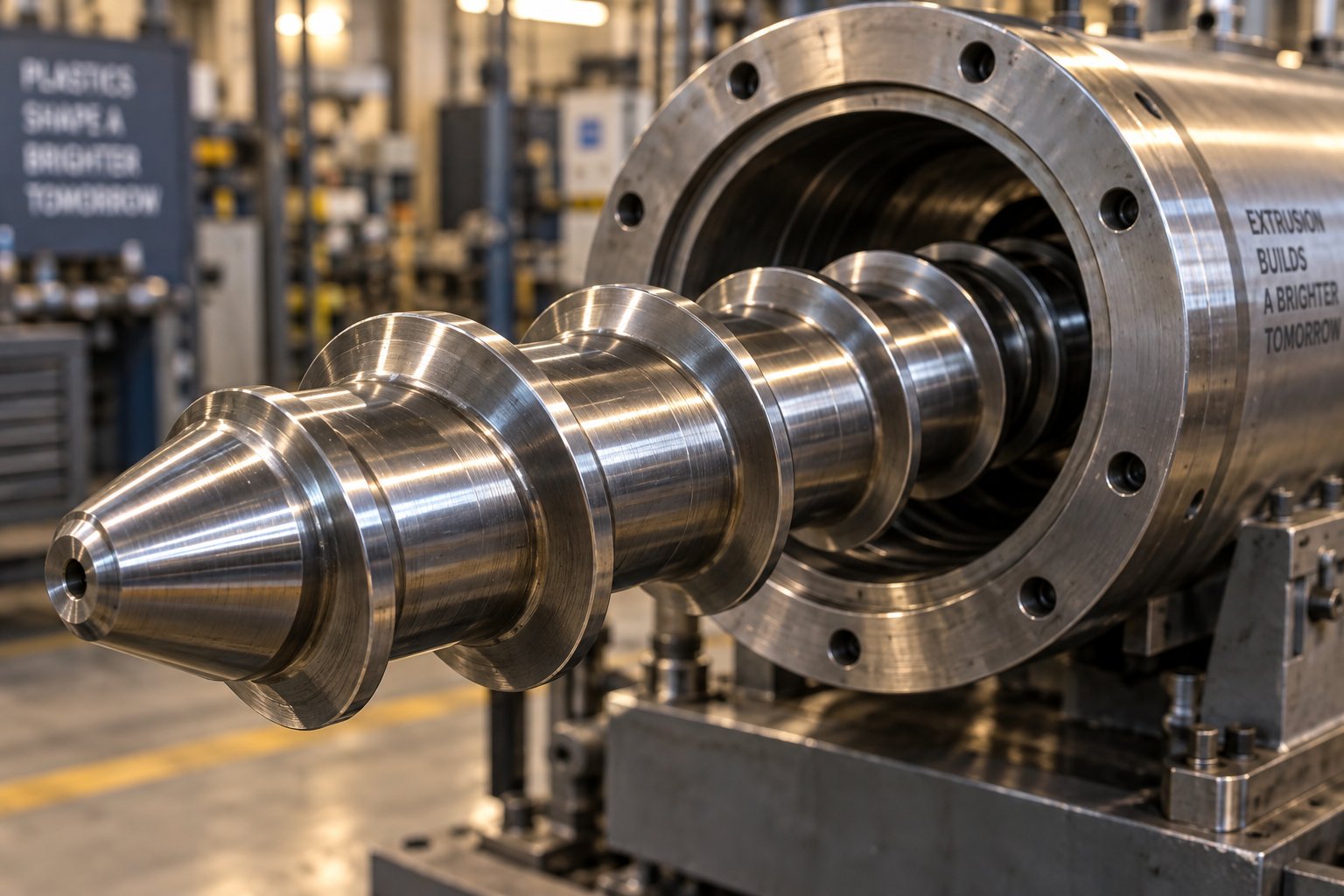
What Nobody Tells You About Screw Barrel For Plastic Machine Design
Oct 10, 2026
Learn how screw barrel for plastic machine design affects melt quality, throughput, and wear life. Covers geometry, resin matching, troubleshooting, and sourcing.
Read Article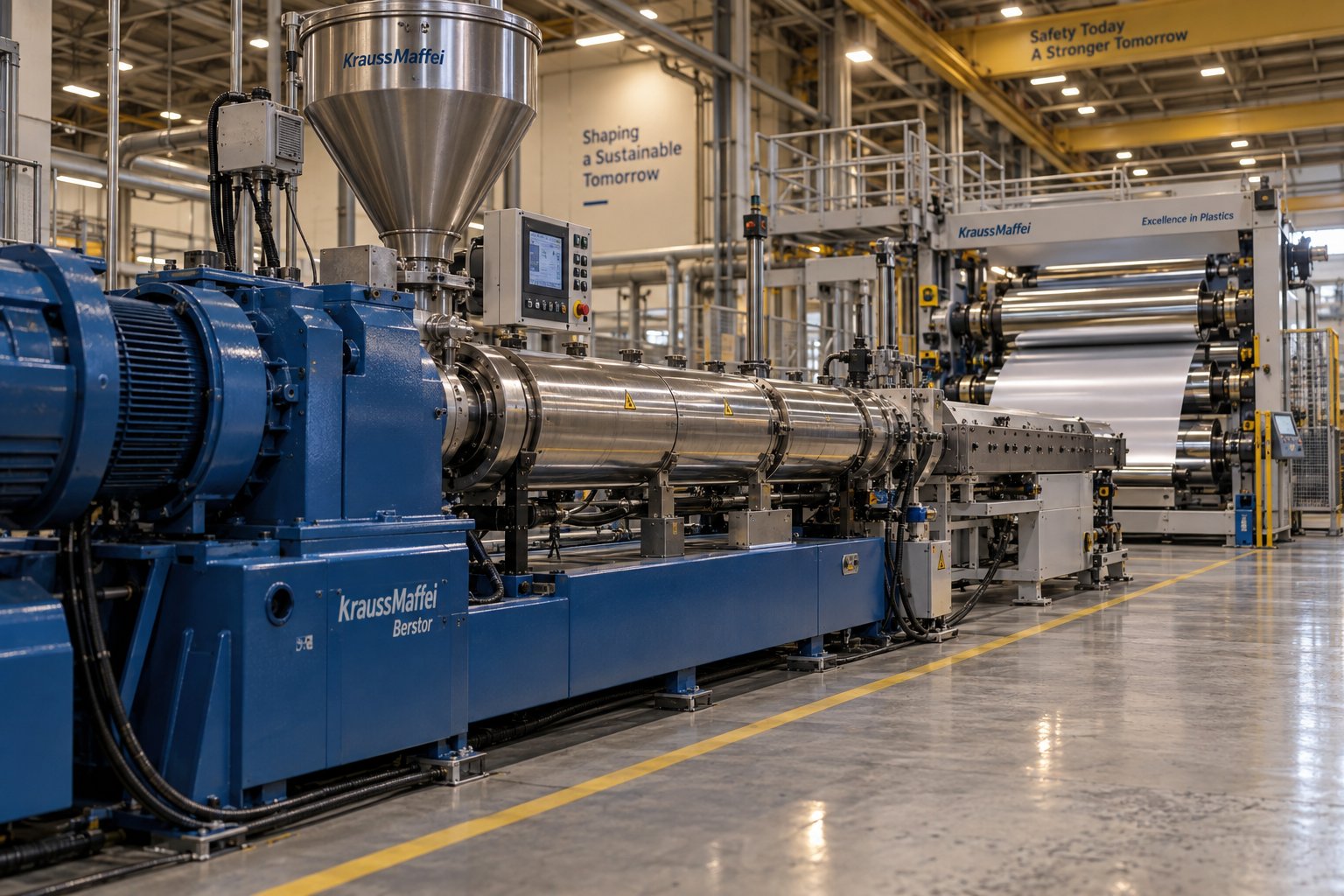
Single Screw Extruder for Sheet: Stop Guessing, Start Specifying
Oct 9, 2026
Learn how to specify a single screw extruder for sheet production. Covers screw geometry, resin-specific processing, troubleshooting, and maintenance best practices.
Read Article
PE Pipe Extruder Machine: What Datasheets Won't Tell You
Oct 9, 2026
Learn how a PE pipe extruder machine works, key specs explained, material grade selection, maintenance tips, and buyer guidance beyond the datasheet.
Read ArticleLooking for something else?
Search by material, symptom or product and jump straight to the relevant page.
These are navigation suggestions based on keyword matching — not a quotation, not a delivery commitment, and not a substitute for engineering review. Final specification is confirmed by our engineers against your drawings and processed material.
Need help with screw barrel selection?
Share your machine model, processed material and application. Our team can help with pricing and technical support.