

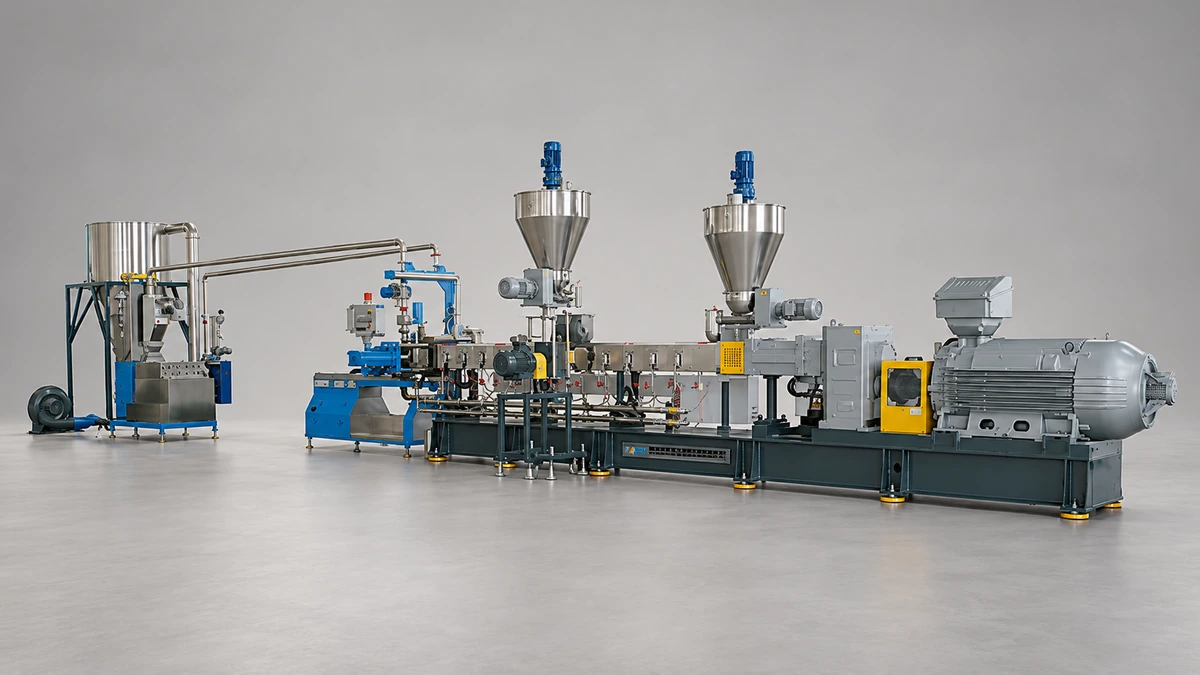
What Is a Parallel Twin Screw Extruder and Why Does Manufacturer Selection Matter
Imagine you're comparing two machines side by side. Same screw diameter. Same rated throughput. Same L/D ratio printed neatly on the spec sheet. They look identical on paper, yet one will run reliably for fifteen years while the other starts failing within five. The difference? It almost always traces back to the manufacturer behind the machine.
Before diving into how to spot those hidden differences, let's get the fundamentals straight.
Defining the Parallel Twin Screw Extruder
A parallel twin screw extruder is a specialized polymer processing machine, but the term gets tossed around loosely enough to cause real confusion. Here's what it actually means in precise engineering terms:
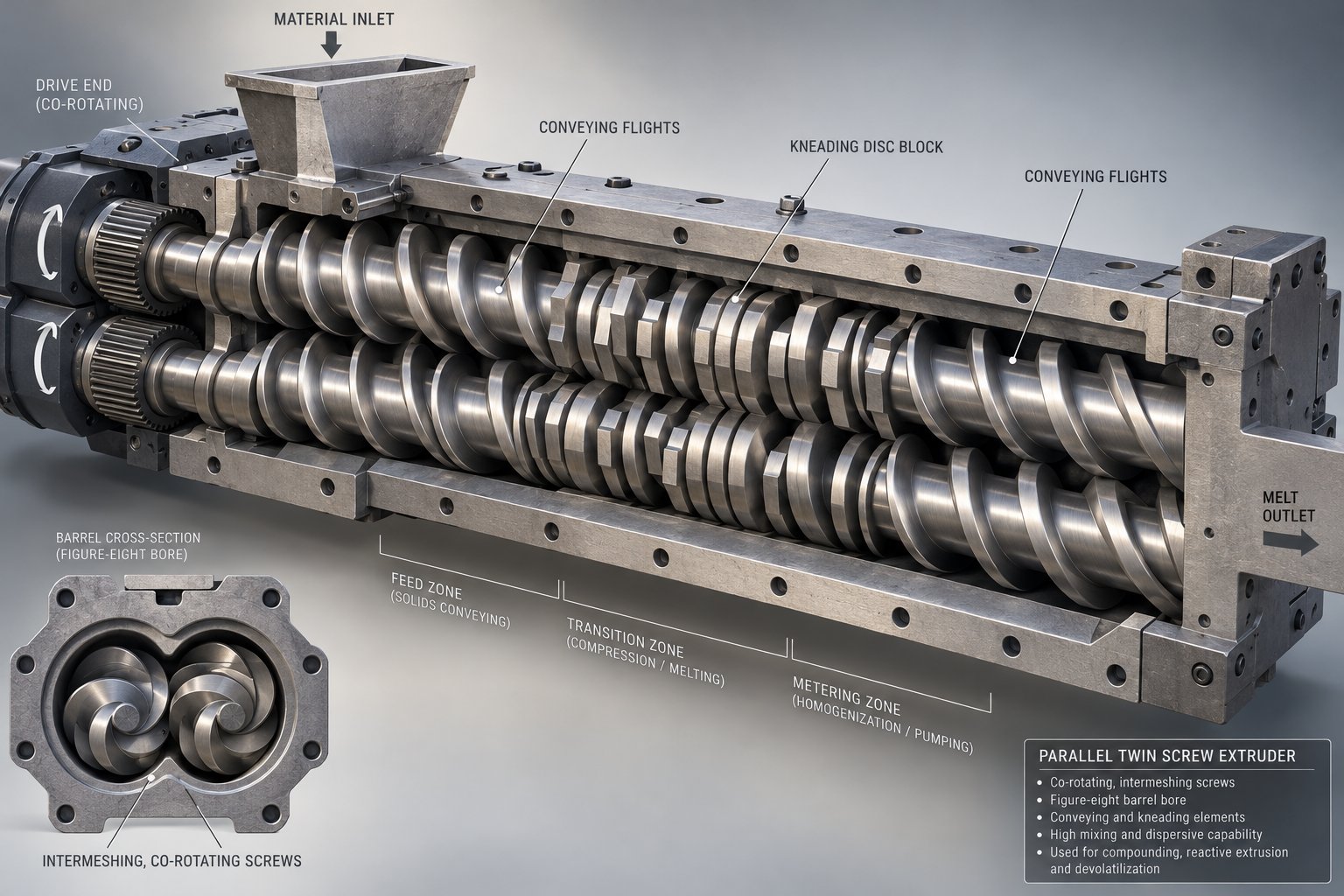
A parallel twin screw extruder uses two screws of equal diameter mounted on parallel shafts within a figure-eight barrel bore. The screws feature modular, intermeshing elements - including conveying, kneading, and mixing segments - arranged along individually heated and cooled barrel zones to melt, mix, and pressurize polymeric materials in a continuous process.
That modular design is the key distinction. Unlike a single screw extruder, which relies on one rotating shaft and drag-flow mechanics, the twin screw design creates intermeshing action between both screws. This generates far superior mixing and self-wiping behavior. And unlike a conical twin screw extruder - where the screws taper from a larger diameter at the extruder feed barrel to a smaller diameter at the discharge end - the parallel configuration maintains a consistent screw diameter along the entire barrel length. That uniformity enables flexible screw profile configurations, allowing processors to rearrange elements like building blocks for different formulations and applications.
Conical designs do have their place, particularly for PVC compounding and profile extrusion where their natural compression zone and compact footprint offer advantages. However, parallel twin screw machines dominate when versatility, high throughput, and the ability to handle multiple material types on a single line are priorities. Whether you're running a full-scale production line or testing formulations on a laboratory extruder or benchtop extruder, the parallel architecture offers unmatched adaptability.
Why Manufacturer Choice Matters More Than Machine Specs Alone
Here's what most buyer guides won't tell you: spec sheets lie. Well, they don't lie exactly - but they hide enormous differences behind identical-looking numbers.
Two manufacturers can both list a 300 RPM maximum screw speed. One achieves it with a precision-engineered gearbox using premium 18CrNiMo7-6 case-hardened gears ground to DIN class 5, designed for a 15-to-20-year service life. The other uses lower-grade alloy steel gears finished to class 7 or worse - a gearbox that may start showing accelerated wear within three to five years. Both machines hit 300 RPM on day one. The difference reveals itself in year three, when one gearbox needs a costly rebuild and the other is barely mid-life.
The same pattern repeats across every critical component. Barrel metallurgy determines how quickly abrasive fillers eat through your processing sections. Screw element steel grade controls whether you're replacing kneading blocks every six months or every three years. Motor and drive quality dictates your energy cost per kilogram of output. And after-sales support infrastructure - spare parts availability, technical service response times, training programs - shapes your total operating cost long after the purchase order is signed.
This guide is built to bridge a gap. Most online resources about choosing a parallel twin screw extruder manufacturer fall into two categories: shallow listicles that rank companies without explaining evaluation criteria, or dense academic texts that lose practical buyers in the theory. Neither helps you make a confident purchasing decision. What follows is a structured, buyer-focused framework that teaches you how to evaluate manufacturers on the factors that actually determine your long-term profitability - from gearbox engineering and screw element metallurgy to total cost of ownership and after-sales ecosystems.
The goal is simple: by the end of this article, you'll know exactly which questions to ask, which red flags to watch for, and which specifications truly separate a premium machine from an expensive disappointment.
How Parallel Twin Screw Extruders Work From Feed to Die
Knowing what a parallel twin screw extruder is only gets you halfway. To evaluate any manufacturer's engineering claims with confidence, you need to understand what actually happens to your material once it enters the barrel. The mechanics inside those figure-eight bores determine everything from melt homogeneity to final product consistency - and a manufacturer's mastery of these mechanics is what separates truly engineered machines from assembled commodity hardware.
Intermeshing Mechanics and Self-Wiping Action
Picture two helical screws rotating inside a tightly toleranced barrel bore. In a co-rotating design, both screws turn in the same direction. As they spin, the flight of one screw sweeps through the channel of the other. This intermeshing geometry creates what engineers call a self-wiping effect - the flight tip of each screw continuously scrapes material off the opposing screw's surface and the barrel wall, preventing stagnant pockets where polymer could degrade.
Why does this matter to you as a buyer? Stagnant material means thermal degradation, black specks, and inconsistent product quality. The self-wiping action inherent in properly designed intermeshing profiles virtually eliminates dead zones, making parallel twin screw machines among the best extruders for thermoplastics that are sensitive to residence time variations.
The relationship between screw speed, channel depth, and shear rate drives the entire process. Research published in Polymers demonstrates that the average shear rate in screw elements depends not only on the drag flow from screw rotation but also significantly on local pressure gradients - a factor often overlooked in simplified calculations. As screw speed increases, shear rate rises proportionally, generating more viscous heating and faster melting. Deeper channels reduce shear intensity but increase throughput capacity. Shallower channels do the opposite. This interplay means that the geometric precision of every screw element directly influences your process window - and that precision is a function of who manufactured those elements and to what tolerances.
Functional Zones Along the Barrel
A parallel twin screw extruder doesn't do one thing along its entire length. Instead, each extrusion barrel section serves a distinct purpose, defined by the combination of screw elements installed and the barrel temperature set for that zone. Think of it as a series of specialized processing stations arranged in sequence.
Whether you're running a full production line or a laboratory scale extruder for formulation development, these functional zones follow the same fundamental sequence. Here's a zone-by-zone breakdown of what happens from feed throat to die face:
| Processing Zone | Primary Function | Typical Screw Element Types | Key Process Parameters |
|---|---|---|---|
| Solid Conveying | Grips and transports raw pellets or powder into the barrel | Large-pitch conveying elements | Feed rate, screw speed, barrel cooling (to prevent premature melting) |
| Melting / Plasticizing | Converts solid feedstock into a continuous melt through shear and barrel heat | Transitional conveying elements, mild kneading blocks | Barrel temperature, screw speed, channel depth transition |
| Mixing (Distributive) | Evenly spreads additives, fillers, and pigments throughout the melt matrix | Low-stagger kneading blocks, distributive mixing elements | Shear rate, residence time, fill level |
| Mixing (Dispersive) | Breaks apart agglomerates and reduces particle or droplet size | High-stagger kneading blocks, narrow-disc elements, reverse kneading blocks | Shear stress intensity, tip clearance, pressure gradients |
| Devolatilization | Removes moisture, trapped air, and volatile contaminants from the melt | Conveying elements with open channels, reverse elements for melt sealing | Vacuum level, melt surface renewal, fill level (kept low for gas escape) |
| Pressure Buildup / Metering | Generates stable, consistent melt pressure for uniform die output | Tight-pitch conveying elements | Die resistance, melt viscosity, screw speed |
Each zone requires a carefully selected combination of screw elements and barrel temperature settings. As CPM's engineering guide explains, the same extruder hardware can behave very differently depending on how screw elements are configured - conveying elements set the fill level and pressure profile, while kneading blocks control mixing intensity through variables like disc width, stagger angle, and forward or reverse orientation. A century twin screw extruder from the 1990s and a modern machine share these same fundamental zone concepts, but today's designs offer far more granular control through tighter element tolerances and expanded modular options.
Why These Principles Affect Manufacturer Evaluation
Here's where the technical knowledge pays dividends in the buying process. Every zone in that table above represents a design decision the manufacturer made - or, in some cases, failed to make thoughtfully.
A manufacturer with genuine engineering depth doesn't just sell you a machine with generic screw elements. They analyze your specific material system: Is your compound abrasive? Is it heat-sensitive? Does it require aggressive devolatilization? Each answer changes which screw profile, barrel metallurgy, and temperature control design will deliver optimal results. Manufacturers who truly understand the interplay between continuous mixing principles and screw element design can recommend configurations that balance shear, residence time, and temperature rise for your exact formulation.
Manufacturers who lack that depth tend to offer one-size-fits-all screw configurations and deflect detailed questions about element geometry, tip clearances, or kneading block stagger angles. When you understand the functional zones and the mechanics driving them, you can ask sharper questions: What stagger angles do you use in your dispersive mixing zone? How do you handle melt seal design for devolatilization? What barrel liner metallurgy do you specify for abrasive compounds?
These aren't academic questions. They directly predict whether your extruder will produce consistent, high-quality output - or become a source of chronic processing headaches. The configuration question, however, runs even deeper than screw element design. It starts with a fundamental choice that every buyer must settle before reaching out to a single vendor.
Co-Rotating vs Counter-Rotating Parallel Configurations Compared
That fundamental choice is rotation direction. Every twin screw extruder falls into one of two camps - co-rotating or counter-rotating - and the distinction reshapes almost everything about how the machine processes material. Screw geometry changes. Flow patterns change. Shear behavior changes. Yet many buyers skip straight to comparing vendor quotes without first answering this question, and that sequence error can lock you into the wrong manufacturer entirely.
Let's break down what actually happens inside each configuration so you can make this decision with clarity.
Co-Rotating Parallel Twin Screw Design
In a co-rotating twin screw extruder, both screws turn in the same direction. Imagine two gears spinning clockwise in parallel. At the intermeshing zone - where the flight of one screw meets the channel of the other - material is forcibly transferred from one screw to the next in a figure-eight flow pattern. This handoff mechanism produces several powerful effects simultaneously.
First, the self-wiping capability is exceptionally strong. Because each screw flight continuously sweeps the surface of its neighbor, virtually no material can stagnate and degrade. Technovel's extrusion specialists note that this self-wiping behavior keeps the residence time distribution narrow - a critical advantage when processing thermally sensitive polymers or running reactive extrusion where even small pockets of stagnant material can ruin a batch.
Second, co-rotating designs generate intense shear fields both between the screws and between each screw and the barrel wall. Combined with kneading blocks that add elongational flow components, this creates a complex deformation history ideal for breaking apart filler agglomerates, controlling phase morphology in polymer alloys, and promoting mass transfer during chemical reactions. The ability to freely configure screw element combinations means processors can place energy input exactly where it's needed along the barrel.
These characteristics explain why co-rotating machines dominate compounding, masterbatch production, nanocomposite processing, and reactive extrusion. When you need aggressive mixing, tight process control, and the flexibility to handle diverse formulations on a single platform, co-rotating is almost always the answer. It's the configuration you'll find in the vast majority of top twin screw systems for extrusion plants focused on compounding operations.
Counter-Rotating Parallel Twin Screw Design
Flip one screw's rotation direction, and the physics change dramatically. In a counter-rotating configuration, the two screws turn in opposite directions. At the intermeshing region, material isn't handed off in a sweeping figure-eight motion. Instead, it gets drawn into the nip between the screws and advances forward under compression - a mechanism that behaves much like the gap between two calender rolls.
This calendering effect is the defining feature. Material undergoes repeated compressive and elongational deformation as it passes through the nip region, producing dispersion under relatively gentle conditions. Shear stress stays lower than in a co-rotating design, and the associated shear-induced heating is significantly reduced. As Technovel explains, the counter-rotating machine allows extrusion temperature to remain low through operation at high fill levels and lower rotational speeds - a crucial advantage for thermally unstable materials.
Counter-rotating parallel designs also provide more positive conveying. Material transport depends strongly on screw rotation itself rather than on drag flow and pressure gradients. This means stable extrusion output even at comparatively low RPMs, with the process running under a high degree of fill as a basic operating premise.
Where does this configuration shine? Rigid PVC is the classic example - a material with a low thermal decomposition temperature and poor melt flow that simply can't tolerate the high shear conditions of a co-rotating machine. Counter-rotating extruders enable stable production of PVC pipes, sheets, and profile extrusion products where gentle plasticizing preserves material integrity. You'll also find this configuration serving other shear-sensitive formulations and applications where a high-efficiency extrusion wire machine supplier might prioritize low-shear processing over aggressive mixing.
Choosing a Configuration Before Choosing a Manufacturer
Here's the critical insight most buyers miss: many manufacturers specialize heavily in one configuration. Some build exclusively co-rotating machines for compounding markets. Others focus on counter-rotating lines for PVC profile and pipe production. A few offer both, but even those vendors typically have deeper engineering expertise in one type.
If you haven't locked down which configuration your application requires, you risk choosing a vendor based on price or brand reputation - only to discover their core competency doesn't match your processing needs. That mismatch leads to suboptimal screw designs, poor application support, and a twin screw extruder for sale that never quite delivers the performance you expected.
The table below maps the key performance differences to help you settle this question decisively:
| Criteria | Co-Rotating | Counter-Rotating |
|---|---|---|
| Shear Intensity | High - intense shear fields between screws and barrel | Low to moderate - gentler compressive and elongational deformation |
| Mixing Efficiency | Excellent dispersive and distributive mixing via kneading blocks and elongational flow | Good distributive mixing; dispersive mixing relies on calendering effect at nip |
| Conveying Mechanism | Drag flow and pressure-driven; degree of fill controlled by screw design | Positive displacement; material transport driven directly by screw rotation at high fill |
| Self-Wiping Capability | Strong - continuous flight sweeping minimizes dead zones and stagnation | Limited - geometry does not produce the same sweeping action |
| Typical Applications | Polymer compounding, masterbatch, reactive extrusion, nanocomposites, filled systems | PVC pipes, profiles, sheets, shear-sensitive formulations, profile extrusion |
| Throughput Range | Wide - from laboratory-scale units to high-volume production lines exceeding several tons per hour | Moderate - typically matched to medium-capacity extrusion lines with lower screw speeds |
Use this comparison as a decision filter. If your primary operation involves compounding engineering plastics, dispersing pigments, or running reactive processes, co-rotating is almost certainly your configuration - and your manufacturer shortlist should reflect vendors with proven depth in that space. If you're extruding PVC profiles, processing heat-sensitive materials, or need gentle plasticizing at low temperatures, counter-rotating is the path - and you need a manufacturer whose gearbox design, screw geometry, and application experience are optimized for that operating envelope.
Settling the rotation question first eliminates a surprising number of vendors who simply aren't built to serve your needs - and sharpens every subsequent conversation about the technical specifications that truly differentiate one machine from the next.
Critical Technical Specifications Every Buyer Must Evaluate
Those subsequent conversations tend to start - and often end - with spec sheets. Screw diameter, L/D ratio, torque rating, RPM, throughput capacity. Vendors hand you these numbers confidently, expecting you to compare columns and pick the winner. The problem? Without understanding what each specification actually controls and where manufacturers quietly cut corners, you're comparing apples to oranges while thinking they're all Granny Smiths.
Let's unpack the specifications that genuinely separate a well-engineered machine from a dressed-up disappointment.
Screw Diameter and L/D Ratio Explained
Every extruder screw starts with a diameter, and that single number sets the baseline for almost everything else. Larger diameters process more material per revolution, generate higher torque demands, and cost more. Standard twin screw machines range from around 20 mm for a lab scale twin screw extruder used in formulation development all the way up to 180 mm or more for high-volume production compounding lines.
But diameter alone tells only part of the story. The L/D ratio - barrel length divided by screw diameter - defines how much processing real estate your material gets as it travels from feed throat to die. Modern co-rotating machines typically offer L/D ratios between 32:1 and 52:1, though specialized designs can stretch to 68:1 for demanding applications. A higher L/D ratio means more barrel zones, longer residence time, and greater opportunity for melting, mixing, and devolatilization. A lower ratio shortens the processing window, which may suit simpler formulations that don't need aggressive mixing or multiple functional zones.
Here's the practical takeaway: a 40:1 L/D ratio works well for standard polymer compounding. Reactive extrusion or heavy devolatilization often demands 48:1 or higher. If you're running a laboratory extruder for screening new formulations before scaling up, a moderate L/D ratio with flexible barrel zone configurations gives you the versatility to simulate multiple production scenarios.
Different manufacturers offer different L/D options on the same screw diameter platform. Some provide only one or two ratios. Others let you add or remove barrel segments to adjust the L/D ratio as your application needs evolve - a flexibility worth asking about, because buying a new extruder every time your process requirements change is nobody's idea of a good investment.
Torque Density and Gearbox Quality
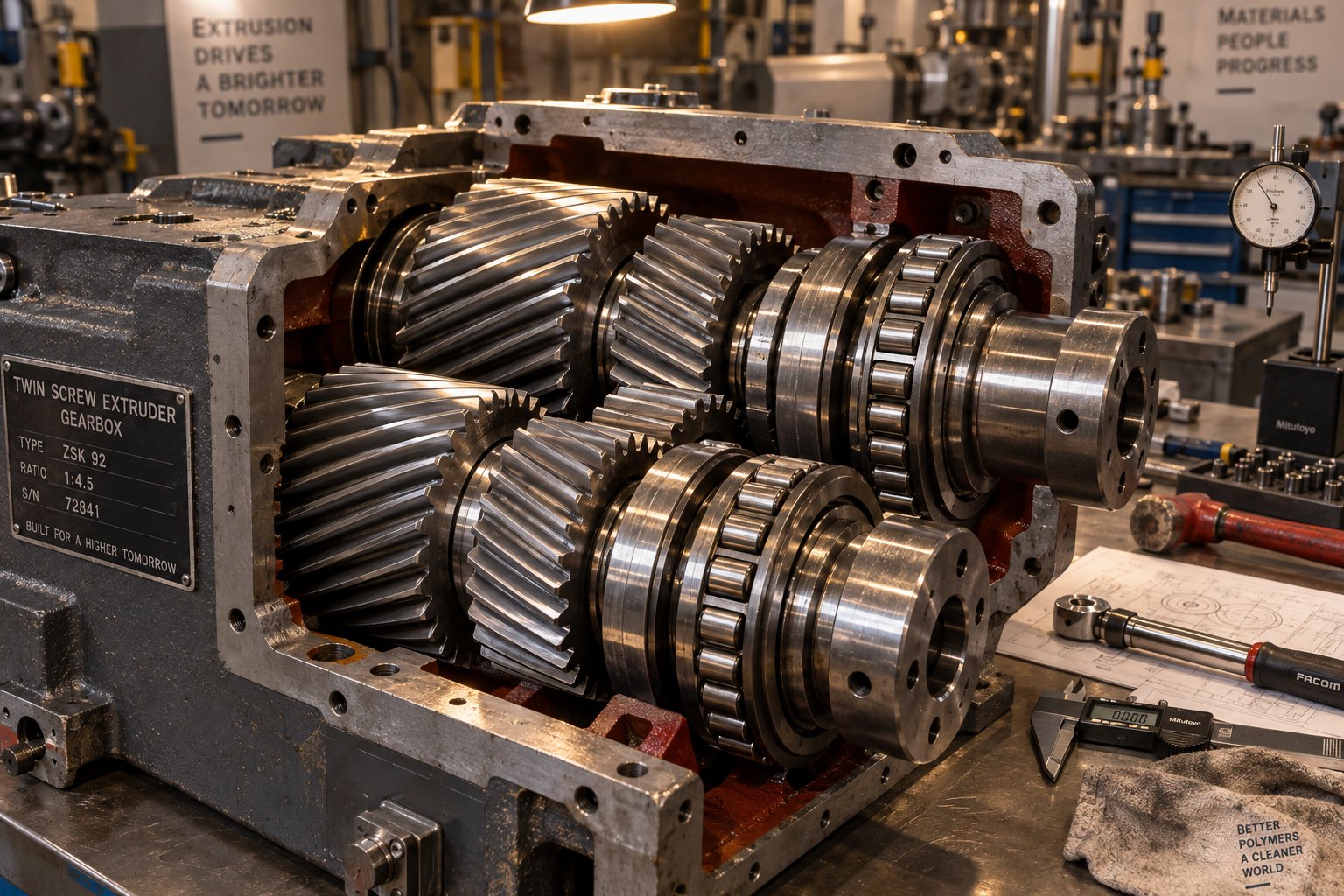
If screw diameter is the skeleton, the gearbox is the heart. And gearbox engineering is precisely where economy-tier manufacturers tend to cut corners - because buyers rarely know enough to catch it.
The metric to watch is specific torque density, measured in Nm/cm3. This figure relates the gearbox's torque output to the cross-sectional area of the screws it drives. Premium machines from top-tier manufacturers deliver torque densities up to 18 Nm/cm3 - a 30% leap over previous-generation designs. Standard machines operate in the 5 to 10 Nm/cm3 range. That gap isn't just a number on paper. Higher torque density means the ability to process highly filled compounds, glass-reinforced polyamides, and other materials that push screw shafts to their mechanical limits without risking gearbox failure.
Why does this matter so much? Because torque demand isn't constant. Cold-start conditions with solidified material in the barrel can spike torque 20 to 40% above steady-state levels. If your gearbox is rated at its absolute ceiling for normal operation, those startup spikes push it into dangerous territory. Experienced engineers recommend running at roughly 80% of continuous torque capacity and 80% of maximum speed - a practical margin that absorbs process variability without shortening gearbox life.
Watch out for a common spec-sheet trick: some vendors highlight peak torque ratings rather than continuous-duty ratings. A gearbox rated at 12,000 Nm peak but only 8,000 Nm continuous will spend its operational life at 100% of real capacity if your process was sized to that peak figure. The thrust bearing - not the gear train - typically fails first in this scenario, and thrust bearing replacement is neither cheap nor quick. Always ask whether the quoted torque figure represents continuous or peak capacity, and size your expectations accordingly.
The gearbox also absorbs axial thrust from die back-pressure pushing the screws rearward. In twin screw extruders, that thrust can range from 2.5 kN for small machines to 3,400 kN for large production units. An undersized thrust bearing fails through fatigue long before the gears themselves show wear. Conical twin screw extruder designs handle thrust loads somewhat differently due to their tapered geometry, but for parallel machines, thrust bearing capacity is a critical gearbox parameter that deserves scrutiny equal to torque ratings.
Maximum Screw Speed and Throughput Capacity
Screw speed, measured in RPM, directly governs how much material you can push through the machine per hour. Higher RPM means more throughput - but also more shear heating, faster wear on screw elements and barrel liners, and greater stress on the gearbox. The relationship isn't simply "faster is better." It's a balancing act between production volume and process quality.
Most modern co-rotating machines offer maximum speeds between 300 and 1,200 RPM, depending on screw diameter and application. Smaller-diameter machines can safely spin faster; larger ones generate enormous torque loads at high RPM and are typically limited to lower speeds. A 26 mm laboratory extruder might run comfortably at 1,000 RPM for research throughput, while a 92 mm production machine processing glass-filled polyamide may operate optimally between 300 and 600 RPM.
Throughput capacity follows screw diameter on a roughly squared relationship - doubling the screw diameter roughly quadruples output capacity, all else being equal. But "all else" is never equal across manufacturers. Drive motor power, gearbox torque capacity, barrel cooling efficiency, and screw element design all constrain actual achievable throughput. A vendor quoting 2,000 kg/hr on a spec sheet may be describing a theoretical maximum that their cooling system or gearbox can't sustain for an eight-hour shift.
The framework below gives you a structured way to compare vendors on the specifications that truly matter. Print it out, fill it in for every machine on your shortlist, and the real differences will surface fast:
| Specification | What It Measures | Why It Matters | What to Ask the Manufacturer |
|---|---|---|---|
| Screw Diameter Range | Available shaft diameters across the product line (mm) | Determines baseline throughput capacity and torque requirements; must match your production scale | What diameter platforms do you offer, and can I scale up within your product line without changing vendors? |
| L/D Ratio Options | Barrel length relative to screw diameter (e.g., 32:1 to 52:1) | Controls residence time, mixing intensity, and number of functional processing zones available | Can I add or remove barrel segments to adjust L/D ratio for different applications on the same machine? |
| Specific Torque Density | Continuous-duty torque per unit screw cross-section (Nm/cm3) | Indicates gearbox capability for demanding compounds; higher values handle filled and high-viscosity materials | Is your quoted torque rating continuous-duty or peak? What is the Do/Di ratio of your screw shafts? |
| Maximum Screw Speed | Highest RPM the drive and gearbox can sustain (RPM) | Sets the upper limit for throughput and shear input; must be balanced against wear and heat generation | What is the recommended operating speed range for my specific material, and at what percentage of max RPM do you suggest running? |
| Throughput Capacity | Maximum material output rate (kg/hr) | Defines production volume potential; must reflect realistic sustained operation, not theoretical peaks | Is the quoted throughput for a specific material and formulation, or a generic maximum? Can you share validated production data from a reference customer running similar compounds? |
| Number of Barrel Zones | Count of individually heated and cooled barrel segments | More zones enable finer temperature profiling, additional side feeding ports, and vacuum venting positions | How many zones are standard, and what is the maximum number supported? What type of heating and cooling does each zone use? |
You'll notice this framework forces a conversation that goes beyond surface numbers. Instead of simply comparing one vendor's "500 RPM" against another's "600 RPM," you're asking about operating context, material-specific recommendations, and validated real-world performance. That shift - from comparing published specs to interrogating the engineering rationale behind them - is what separates buyers who end up satisfied from those who end up rebuilding gearboxes ahead of schedule.
Specifications, however, only reveal what a machine can do on paper. They say nothing about who actually built it - whether the vendor engineered and machined the core components in-house, assembled them from third-party suppliers, or simply brokered someone else's equipment under a different label. That distinction carries consequences far beyond the spec sheet.
Understanding OEMs vs Assemblers vs Resellers in the Twin Screw Extruder Market
That distinction - who actually built your machine - might be the single most consequential factor hiding in plain sight during any equipment purchase. Two vendors can hand you nearly identical brochures, quote the same screw diameter range, reference similar throughput claims, and display comparable control panel interfaces. On paper, they look interchangeable. In reality, one engineered every critical component from raw steel to finished assembly, while the other purchased a gearbox from one supplier, barrels from another, screw elements from a third, and bolted everything together under a private-label nameplate.
The difference rarely surfaces in a spec sheet. It surfaces three years later, when you need a replacement kneading block and discover the original supplier has changed alloy grades - or gone out of business entirely.
OEM Manufacturers vs Assemblers vs Trading Companies
The parallel twin screw extruder manufacturer landscape contains three fundamentally different business models, and confusing them leads to purchasing decisions that unravel over time.
True OEM manufacturers engineer, design, and fabricate their machines from the ground up. They own the intellectual property behind each subsystem - screw element geometry, barrel extruder configurations, gearbox architecture, and process control software. In-house metallurgy labs develop and test the alloys used in wear components. CNC machining centers cut screw profiles to proprietary specifications. R&D teams design gearboxes as matched systems with drive motors and shaft assemblies, optimizing torque transfer efficiency at the component level. When a process issue arises during commissioning - poor dispersion, surging output, excessive melt temperature - the OEM's support team can diagnose root causes because they designed the system from first principles.
Assemblers take a different approach. They source major components from multiple third-party suppliers - a gearbox from one foundry, barrel segments from another, screw elements from a third - and integrate them into a frame under their own brand. Many assemblers are transparent about this model, and some deliver functional machines at competitive price points. The risk isn't deception; it's structural. When independent suppliers contribute critical subsystems, tolerances stack up across mating surfaces. Metallurgical compatibility between a barrel liner from one vendor and screw elements from another isn't guaranteed. And when something fails, the assembler's engineering team often lacks the design-level understanding needed to trace the fault to its root cause.
Trading companies and resellers occupy the third tier. These entities don't manufacture or assemble anything. They broker another company's machine - sometimes relabeling it with their own logo, sometimes simply acting as intermediaries who add a margin. The machine itself may be perfectly adequate, but the trading company sits between you and the actual builder, creating layers of communication delay, potential documentation gaps, and uncertainty about who stands behind the warranty when something goes wrong five years after installation.
How do you tell them apart? Here are the red flags that reveal a trading company posing as a manufacturer:
- No factory tour available - or a factory visit reveals a small assembly area rather than CNC machining centers, heat treatment furnaces, and metallurgy testing equipment
- Vague answers about component origins - when asked where their gearbox or screw elements are manufactured, responses shift to marketing language rather than naming specific in-house capabilities
- No proprietary screw element designs - they offer only standard catalog profiles rather than application-engineered geometries backed by simulation data or trial results
- Inconsistent branding on components - open the electrical panel or examine the gearbox nameplate and you find third-party logos that don't match the machine's brand
- Limited technical depth during pre-sales discussions - questions about kneading block stagger angles, barrel liner alloy compositions, or gearbox thrust bearing specifications are deflected or met with generic answers
As NANHAIYA's buyer guide emphasizes, this distinction exists across every region - from Nanjing to Stuttgart - and has nothing to do with country of origin. A Chinese OEM with in-house R&D, patented screw designs, and ISO-certified production is fundamentally different from a Chinese trading company repackaging commodity components, just as a German assembler sourcing generic gearboxes differs from a German OEM engineering proprietary drive systems.
Understanding the Manufacturer Tier System
Beyond the OEM-assembler-reseller distinction, the market organizes itself into recognizable performance and price tiers. Understanding where a vendor sits in this hierarchy prevents the painful surprise of expecting premium performance from an economy machine - or overpaying for engineering depth your application doesn't require.
Premium-tier manufacturers are the names that have shaped twin screw extrusion technology over decades. These are predominantly European OEMs - companies with proprietary metallurgy programs, in-house gearbox design, torque densities pushing 13 to 18 Nm/cm3, and global service networks spanning dozens of countries. They command the highest price points but also hold strong residual value on the secondary market. Their machines target high-performance compounding, regulated industries, and applications where failure is not an option. Expect lead times of 16 to 30 weeks and pricing that reflects deep engineering investment at every subsystem level.
Established mid-range manufacturers offer a compelling balance of engineering capability and commercial value. This tier includes advanced OEMs from China, Japan, and other regions that have built decades of continuous development history, hold multiple invention patents, and operate ISO-certified facilities with genuine in-house design capability. Their machines deliver strong performance-to-cost ratios, shorter lead times (often 8 to 14 weeks), and increasingly comprehensive turnkey integration. The key for buyers is separating the genuine OEMs in this tier from assemblers competing at similar price points but without equivalent engineering depth.
Economy-tier producers compete primarily on price. Their machines can work adequately for straightforward compounding tasks, standard formulations, and applications with moderate performance requirements. However, they typically sacrifice torque density, metallurgical sophistication, control system capability, and long-term parts continuity to hit their price targets. The upfront savings - sometimes 20 to 40% below mid-range competitors - can evaporate quickly through higher energy consumption, shorter wear part life, and limited technical support when process challenges arise.
When evaluating a manufacturer within any tier, focus your assessment on these criteria:
- Engineering capability - Does the company design its own screw element profiles, or source standard catalog geometries? Can they simulate screw configurations for your specific material system?
- Metallurgy standards - What alloys are used for screw elements and barrel liners? Are EN 10204 3.1 material certificates provided for every wear component?
- Gearbox origin - Is the gearbox designed and manufactured in-house, sourced from a premium third-party specialist, or a generic commodity unit? What continuous-duty torque density does it deliver?
- Installed base size - How many machines has the company deployed in your specific application area? Can they provide verifiable reference customers you can contact directly?
- After-sales infrastructure - Where are spare parts stocked? What are documented response times for critical component delivery? Do they offer field service engineers within reasonable proximity to your facility?
A manufacturer that scores well across all five criteria in the mid-range tier may deliver better long-term value than a premium-tier vendor whose after-sales network doesn't extend to your region - or an economy-tier producer whose impressive price tag masks a hollow support ecosystem.
Regional Manufacturer Landscape
Geography shapes engineering philosophy, pricing structure, and service reach. Each major manufacturing region brings distinct strengths - and limitations - that affect your total ownership experience.
European manufacturers carry a precision engineering heritage stretching back over a century. The original co-rotating intermeshing technology emerged from Germany in the late 19th century, and that legacy continues through companies whose ZSK-series and ZSE-series platforms have defined industry benchmarks for torque density, metallurgical refinement, and system-level integration. European machines command premium pricing but deliver conservative, incremental refinement backed by comprehensive global service networks. If your operation demands the highest performance standards, processes regulated materials, or requires immediate service availability across North America and Europe, this tier deserves serious consideration.
Chinese manufacturers represent the largest production base by volume, and the landscape is far more nuanced than a single "budget" label suggests. Nanjing alone hosts dozens of producers ranging from small workshop assemblers to advanced OEMs with 30-plus years of continuous development, multiple invention patents, and export footprints spanning 70 countries. Lead times are notably shorter - typically 8 to 14 weeks versus 16 to 30 for European equivalents. Turnkey line integration, from feeding through extrusion to pelletizing and packaging, is increasingly offered as a single-source package. The critical buyer discipline here is rigorous due diligence: factory visits, material certificate verification, reference customer calls, and honest assessment of whether a specific vendor is a genuine OEM or a polyester extruder assembler repackaging commodity components.
Japanese manufacturers bring a materials-science-first mentality. Companies like JSW, with TEX-series platforms rooted in a 1969 technical collaboration with Germany's Werner & Pfleiderer, emphasize ultra-precise machining tolerances, advanced automation, and deep expertise in specialty polymer processing - fiber-reinforced composites, reaction extrusion, and devolatilization applications. Service networks concentrate in Asia-Pacific, which may create logistical challenges for buyers in other regions.
American manufacturers focus on application-driven innovation and rapid regional service. Companies in this space have delivered thousands of extrusion systems globally, with some achieving torque densities up to 18 Nm/cm3 and offering quick-change systems designed for small-to-medium lot compounding. The trade-off? North American service excellence rarely extends overseas with equivalent depth, making these vendors strongest for operations located within the Americas.
Italian builders carve out a focused niche. With nearly eight decades of expertise concentrated around counter-rotating designs for PVC pipe and profile extrusion, plus co-rotating platforms for masterbatch, recycling, and wood-plastic composite applications, Italian manufacturers often deliver a compelling mid-range value proposition - strong engineering at price points below German competitors, with particular depth in PVC and WPC processing segments.
Regional origin, however, tells only part of the story. Two manufacturers from the same city can differ dramatically in engineering depth, gearbox quality, and after-sales responsiveness. That's why the application-specific match - pairing what you actually produce with a manufacturer whose proven specialization aligns with your material systems and production demands - matters far more than a country name on the nameplate.
Matching Your Application to the Right Manufacturer Capability
Application-specific expertise is where manufacturer selection either clicks into place or quietly falls apart. You can verify gearbox torque density, confirm ISO certifications, and validate barrel metallurgy grades - but none of that matters if the vendor you choose has never successfully configured a twin screw extrusion line for the exact type of processing you need. A manufacturer that excels at high-filler mineral compounding may stumble when asked to optimize a reactive extrusion profile. A vendor with deep masterbatch experience may lack the devolatilization know-how your recycling operation demands.
The question isn't just "which machine?" It's "which machine, configured by whom, for what?" Let's walk through the major application categories and map each one to the configuration choices, specification priorities, and manufacturer capabilities that determine success or failure on the production floor.
Polymer Compounding and Filled Systems
Compounding engineering plastics - glass-fiber-reinforced polyamides, mineral-filled polypropylenes, polymer alloys like PC/ABS or PA/ABS - is the most demanding mainstream application for any parallel twin screw extruder. These formulations push every subsystem simultaneously: high torque loads from viscous melts and abrasive fillers, intense mixing requirements for uniform filler distribution, and precise thermal management to avoid degrading heat-sensitive additives or the polymer matrix itself.
Why does this application favor co-rotating designs with longer L/D ratios? Because the process demands multiple staged operations along the barrel. Imagine a typical glass-fiber-reinforced PA66 compound. The base resin enters the main feed, melts in the early barrel zones, and reaches the first mixing section where impact modifiers and coupling agents get dispersed into the melt. Several zones downstream, a side feeder introduces chopped glass fiber - deliberately after the polymer has fully melted to minimize fiber breakage. Additional kneading and mixing zones distribute the fiber uniformly. Finally, vacuum devolatilization removes moisture that would otherwise cause hydrolytic degradation in the finished pellets.
Each of those steps requires dedicated barrel zones and carefully selected screw elements. An L/D ratio of 40:1 to 48:1 is standard for these formulations; highly filled compounds with multiple side-feeding stages may push to 52:1. As the KYmach compounding guide emphasizes, screw configuration should balance mixing intensity, residence time, material temperature, and conveying requirements rather than simply maximizing shear. Aggressive kneading blocks break filler agglomerates, but excessive shear overheats the melt and degrades polymer chains.
This is precisely where manufacturer expertise separates good machines from great outcomes. A vendor with deep compounding experience doesn't hand you a generic screw profile and wish you luck. They ask about your filler type, loading percentage, particle morphology, and target mechanical properties - then design a screw configuration around those specifics. For highly filled compounds reaching 70-80% mineral content by weight, even the stagger angle of the first kneading block after a side feeder becomes a critical variable. A 30-degree stagger conveys filler faster downstream, preventing vent flooding. A 60-degree stagger slows conveying to increase residence time for stubborn incorporation. Getting that detail right requires engineering judgment born from years of application-specific trial data - not catalog selection.
Torque density matters enormously here too. High-filler formulations generate severe mechanical loads on screw shafts and gearbox internals. Manufacturers with specific torque ratings above 10 Nm/cm3 can handle these demanding compounds comfortably, while economy-tier machines operating near their torque ceiling will struggle with startup surges and risk premature gearbox failure.
Masterbatch and Color Concentrate Production
Masterbatch production looks deceptively simple on the surface - just disperse pigments or additives into a carrier resin and pelletize. In practice, it's one of the most quality-sensitive twin screw applications, where even minor processing inconsistencies show up as visible color variation, specks, or poor downstream letdown performance.
The central challenge is dispersive mixing. Pigment powders arrive as agglomerates - clusters of primary particles held together by surface forces that must be broken apart and wetted by the polymer matrix. Insufficient dispersion leaves visible specks in the final product. Over-dispersion through excessive shear overheats the carrier resin and can thermally degrade organic pigments, shifting the color shade. You're threading a needle between not enough energy and too much.
Co-rotating extruders handle this balancing act well because their modular screw design allows processors to place intense dispersive elements exactly where pigment agglomerates need breaking, followed by gentler distributive mixing elements that spread the dispersed pigment uniformly without adding unnecessary thermal energy. Temperature control precision across barrel zones is critical - some pigments are sensitive to even 5-10 degrees Celsius of overshoot, which can cause irreversible color shifts.
Masterbatch producers also need something that rarely appears on spec sheets: quick color changeover capability. Switching from a deep carbon black to a bright titanium white requires thorough purging of every melt contact surface. The self-wiping action inherent in co-rotating intermeshing designs minimizes material holdup and dead zones, dramatically reducing purge time and material waste between color changes. Manufacturers who understand masterbatch operations design barrel and screw geometries that further minimize transition volumes - a feature that directly affects production economics when you're running dozens of color changes per week.
When evaluating plastic extruder manufacturers for masterbatch applications, ask specifically about their experience with pigment dispersion optimization. Can they recommend kneading block configurations for different pigment chemistries? Do they offer barrel zone designs optimized for rapid thermal response? Have they validated changeover protocols on their equipment for high-contrast color transitions?
Recycling, Pelletizing, and Reactive Extrusion
These three applications share a common thread: the extruder must do more than melt and mix. It must handle unpredictable feedstock variability, remove contaminants the process didn't put there, or facilitate chemical transformations that demand tight residence time control.
Recycling lines face feedstock that varies from batch to batch - different moisture levels, contamination profiles, mixed polymer types, and inconsistent melt flow indices. Robust devolatilization capability becomes non-negotiable. Vacuum venting sections must efficiently remove moisture, trapped air, residual odor compounds, and low-molecular-weight degradation products without flooding the vent ports. A lab scale extruder can help validate processing parameters for specific recycled streams before committing to production-scale equipment, saving enormous amounts of wasted material and downtime during commissioning.
The reference material from Jwell's technical overview highlights that poor devolatilization causes bubbles, porosity, odor, inconsistent density, and downstream die instability - all problems that plague recycling operations running without adequate vent design. Effective venting requires not only a vacuum system but also a screw layout that creates the correct fill pattern before and after the vent so material doesn't flood the opening.
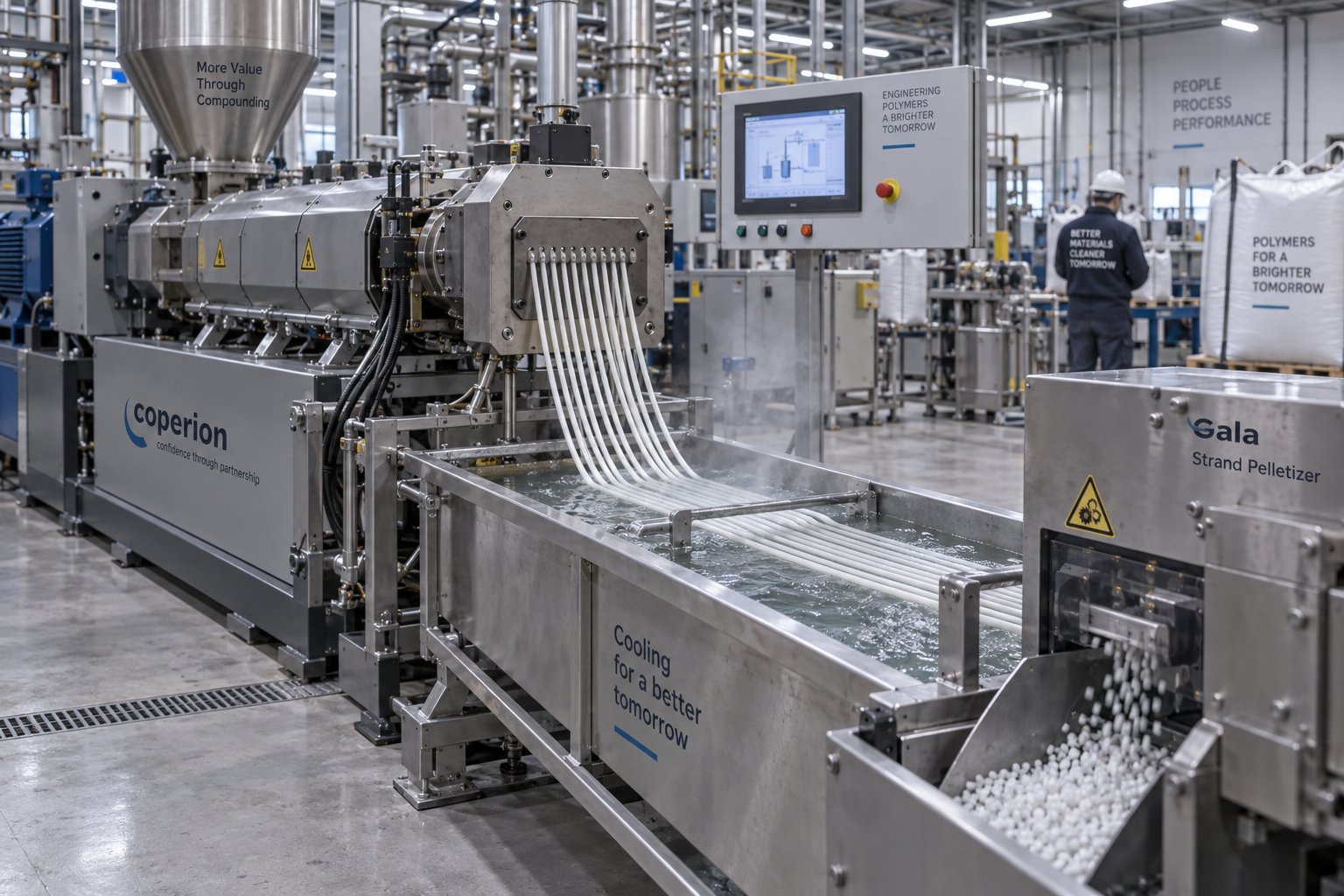
Pelletizing operations demand consistent melt quality above all else. Whether the downstream system uses strand cutting, water-ring, or underwater pelletizing, any variation in melt temperature, pressure, or viscosity translates directly into inconsistent pellet geometry, stringing, or poor cut quality. The metering zone at the end of the extruder must deliver rock-steady pressure to the die face. Manufacturers with pelletizing expertise design pressure-buildup sections that isolate downstream fluctuations from upstream process zones - often incorporating melt pumps for highly filled or highly viscous compounds.
Reactive extrusion sits at the most technically demanding end of the spectrum. Here, the extruder functions as a continuous chemical reactor - facilitating graft modifications, controlled degradation, dynamic vulcanization, or chain extension reactions while simultaneously melting, mixing, and conveying. Residence time distribution becomes a process-critical variable. Too broad a distribution means some material over-reacts while other material under-reacts, producing inconsistent conversion and unpredictable product properties.
As the KYmach guide notes, reactive extrusion generally requires tighter control of material metering, temperature, mixing, residence conditions, and devolatilization compared to conventional physical compounding. Manufacturers serving this space need deep process engineering capability - the ability to model residence time distribution for specific screw configurations, recommend element sequences that balance reaction completion with thermal stability, and provide precise temperature control systems capable of maintaining narrow barrel zone tolerances.
The decision-tree table below pulls these application requirements together into a single reference that connects your production needs to the configuration, specifications, and manufacturer capabilities you should prioritize:
| Application Type | Recommended Configuration | Critical Specifications to Prioritize | Manufacturer Capability That Matters Most |
|---|---|---|---|
| Polymer Compounding (glass fiber, minerals, alloys) | Co-rotating, L/D 40:1 to 52:1 | High specific torque density, multiple side-feeding positions, aggressive kneading elements, wear-resistant metallurgy | Application-specific screw profile design for target compound formulations; proven experience with high-filler processing |
| Masterbatch and Color Concentrates | Co-rotating, L/D 36:1 to 44:1 | Precise barrel zone temperature control, strong dispersive mixing elements, low-holdup screw and barrel geometry for fast changeovers | Pigment dispersion optimization expertise; validated changeover protocols; barrel thermal response speed |
| Plastics Recycling | Co-rotating, L/D 40:1 to 52:1 | Robust vacuum devolatilization (multiple vent stages), melt filtration compatibility, wide processing window for variable feedstock | Devolatilization zone engineering; experience handling contaminated and mixed-polymer streams |
| Pelletizing Lines | Co-rotating or counter-rotating depending on material | Stable metering zone pressure, melt pump integration capability, consistent melt temperature control | Downstream integration expertise; die and pelletizer matching for target pellet geometry |
| Reactive Extrusion | Co-rotating, L/D 48:1 to 60:1+ | Precise residence time control, narrow residence time distribution, accurate temperature zoning, devolatilization for reaction by-products | Process engineering depth for reactor-style extrusion; ability to model and optimize residence time distribution for specific chemistries |
Use this table as a filtering tool. If you're a compounder running 60% calcium carbonate-filled polyolefins, your manufacturer shortlist should include vendors who can discuss kneading block stagger angles and vent flooding mitigation strategies from direct production experience - not vendors whose primary expertise lies in PVC profile extrusion. If you're building a recycling line, prioritize manufacturers who can demonstrate multi-stage devolatilization designs validated with real-world contaminated feedstock, not those who bolt on a single vacuum port as an afterthought.
The application match narrows your vendor list dramatically. But even among manufacturers with the right application expertise, the machines they quote will carry very different price tags - and the cheapest option almost never represents the lowest total cost. Understanding why requires looking well beyond the purchase order.
Total Cost of Ownership Beyond the Purchase Price
Here's an uncomfortable truth most buyers learn too late: the purchase price of a parallel twin screw extruder typically represents only 15 to 25% of what that machine will actually cost you over its operational lifetime. The remaining 75 to 85% accumulates silently - in electricity bills, replacement screw elements, unscheduled shutdowns, spare parts freight charges, and maintenance labor hours that nobody budgeted for during the procurement phase.
Two machines with a $100,000 gap in purchase price can easily reverse their cost positions within five years once operating expenses enter the equation. A cheaper machine with inferior metallurgy, an energy-hungry drive system, and slow spare parts delivery from an overseas trading company will bleed money month after month. Meanwhile, a higher-priced machine engineered for efficiency and durability quietly pays back its premium through lower per-kilogram processing costs and fewer production interruptions.
Shifting your evaluation framework from "what does it cost to buy?" to "what does it cost to own?" fundamentally changes which manufacturer looks like the best investment.
Energy Efficiency and Operating Costs
Imagine running your extruder 5,000 hours per year - a standard two-shift operation. At that utilization, even small differences in energy efficiency compound into significant cost gaps over a machine's 10-to-15-year service life.
Three design factors drive energy consumption per kilogram of output, and they vary dramatically between manufacturers:
Motor and drive technology. Modern high-efficiency IE3 or IE4 class motors paired with precision-matched AC inverter drives consume meaningfully less power than older motor classes running on basic drive systems. Industry cost analyses indicate that twin screw extruders typically achieve specific energy consumption of 0.12 to 0.22 kWh per kilogram of processed material for compounding applications. That range isn't trivial. On a line producing 500 kg/hr over 5,000 annual hours at an electricity rate of $0.10/kWh, the difference between 0.12 and 0.22 kWh/kg translates to $25,000 per year - or $250,000 over a decade. Same throughput. Same product. Vastly different electricity costs, driven entirely by motor efficiency and drive quality.
Barrel heating and cooling design. Every barrel zone needs precise temperature control, and how a manufacturer implements heating and cooling directly affects energy waste. Cast aluminum heaters with integral cooling channels respond faster and lose less heat to the environment than band heaters loosely clamped around barrel segments. Manufacturers who engineer barrel thermal management as a system - rather than bolting on commodity heaters as an afterthought - deliver tighter temperature control with lower energy input. You'll notice this difference most clearly when processing temperature-sensitive materials where barrel zones need frequent adjustment.
Gearbox mechanical efficiency. A precision-ground gearbox transmitting 97% of motor energy to the screw shafts wastes far less power as heat than a loosely toleranced gearbox operating at 90% efficiency. That 7-point gap means the inefficient gearbox converts roughly three times as much input energy into waste heat - energy you paid for but never used productively. Over thousands of operating hours, gearbox efficiency quietly separates cost-effective machines from energy hogs.
Wear Parts Replacement Frequency and Cost
If energy is the slow drip, wear parts are the periodic flood. Every plastic extruder screw element, every kneading block, and every barrel liner segment is a consumable - and the replacement intervals vary enormously based on the metallurgy your manufacturer specified.
Consider the range of materials used in twin screw and barrel components:
Standard tool steel (e.g., DIN 1.2344 / AISI H13) represents the baseline. These elements handle non-abrasive polymers adequately, with typical service lives of 3,000 to 8,000 hours depending on processing conditions. For unfilled thermoplastics, they're cost-effective.
Powder metallurgy steels (PM-HIP grades) offer significantly higher wear resistance through carbide-rich microstructures. These materials extend service life two to three times beyond conventional tool steels when processing mildly abrasive compounds - glass-fiber-filled polyamides, for instance - and justify their higher per-element cost through dramatically reduced replacement frequency.
Tungsten carbide coatings and fully hardened inserts sit at the top of the wear-resistance hierarchy. For highly abrasive formulations - mineral-filled compounds at 60%+ loading, recycled streams with metal contamination, or ceramic-filled specialty compounds - these premium metallurgies can extend element life five to ten times beyond standard tool steel. The per-element cost is substantially higher, but one set of tungsten carbide elements outlasting five sets of tool steel elements changes the lifetime cost equation completely.
Barrel liners follow the same logic. A nitrided steel liner on a machine processing 40% glass-fiber-reinforced PA6 might last 4,000 hours before bore clearances exceed tolerance. A bimetallic liner with a nickel-boron alloy inlay on the same application could reach 12,000 to 15,000 hours. The economy machine saved money at purchase. The premium machine saves money every single year of operation.
This is one of the most persistent durable twin screw systems challenges buyers face: the machine with the lowest sticker price often has the highest wear part costs, because economy-tier manufacturers use standard metallurgies across the board rather than matching alloy selection to application severity. You end up replacing screw elements three or four times as often - each replacement costing thousands of dollars in parts, plus production downtime during the swap.
Detailed cost projections show that complete screw element sets for twin screw systems can range from $20,000 to $100,000 depending on configuration and metallurgy, with major overhauls including bearing replacement reaching $40,000 to $150,000 over 25,000 to 40,000 operating hours. These aren't hypothetical numbers - they're the real-world costs that separate an informed purchase from a regrettable one.
To evaluate total cost of ownership accurately, you need to account for every cost category - not just the obvious ones. Here's the complete picture:
- Initial purchase price - the invoice amount including machine, standard tooling, and control system
- Installation and commissioning - site preparation, rigging, utility connections, startup supervision, and initial operator training
- Energy consumption - electricity costs for motor, barrel heating, cooling systems, and auxiliaries over the machine's full service life
- Wear part replacement - screw elements, kneading blocks, barrel liners, and die components on a recurring schedule determined by material abrasiveness and metallurgy grade
- Unscheduled downtime - lost production revenue from unexpected failures, typically costing $500 to $2,000+ per hour depending on your product margins and delivery commitments
- Spare parts lead times - expedited shipping costs when critical components aren't stocked locally, plus the extended downtime while waiting for delivery
- Preventive maintenance labor - routine inspections, lubrication, alignment checks, and calibration performed by in-house technicians or contracted service providers
- Eventual rebuild or upgrade costs - major gearbox overhauls, control system modernization, and barrel replacement that extend machine life beyond the initial design horizon
When you map these costs across a 10-year horizon, patterns emerge that purchase price alone could never reveal. An economy-tier machine priced at $300,000 with annual wear part costs of $35,000, energy overhead 20% above average, and two unscheduled downtime events per year can easily exceed the lifetime cost of a mid-range machine priced at $450,000 with superior metallurgy, efficient drives, and reliable components that rarely fail unexpectedly.
Warranty Terms and After-Sales Service as Cost Factors
Warranties and after-sales support aren't "nice to have" extras. They're financial instruments that directly affect your operating cost curve - especially in years two through ten, when the initial warranty expires and you're relying on the manufacturer's service ecosystem to keep your line running.
Start by examining warranty scope. Some manufacturers offer 12-month warranties covering only manufacturing defects in the main machine frame and control system - excluding wear components, gearbox internals, and barrel liners. Others provide 18- to 24-month coverage that includes gearbox bearings, motor windings, and even a defined quantity of replacement screw elements. The difference in post-warranty repair exposure between these two approaches can reach tens of thousands of dollars in the first five years alone.
Spare parts availability is where many buyers get burned. As equipment sourcing guides emphasize, machinery downtime directly hurts production schedules and delivery commitments - and procuring replacement parts from overseas suppliers without local stocking points turns a two-day repair into a two-week production halt. Ask your manufacturer where they stock spare parts, which components they keep on the shelf, and what their documented delivery times are for critical items like screw elements, barrel segments, gearbox bearings, and heating elements. A manufacturer who can ship a replacement kneading block set within 48 hours from a regional warehouse is worth more than one offering a 5% discount but requiring six-week lead times from a distant factory.
Technical support responsiveness matters most when something goes wrong at 2 AM on a Friday and your production deadline is Monday morning. Does the manufacturer offer 24/7 phone support? Remote diagnostics through connected control systems? Field service engineers within a day's travel of your facility? Or does their "support" consist of an email address that generates a ticket reviewed during business hours in a different time zone?
Practical evaluation steps you can take during the buying process include:
- Request the manufacturer's spare parts catalog with pricing - companies that can't produce one likely don't have organized parts logistics
- Ask for three to five reference customer contacts in your region and your application area, then actually call them and ask about service responsiveness and parts delivery times
- Request documented service response time commitments in writing - not marketing promises, but contractual service level agreements with defined escalation procedures
- Inquire about training programs for your operators and maintenance staff - manufacturers who invest in customer training reduce their own warranty claims and demonstrate confidence in knowledge transfer
- Ask whether remote diagnostics capability exists on the control system, allowing the manufacturer's engineers to troubleshoot process issues without dispatching a field technician
These conversations reveal more about a manufacturer's long-term commitment to your success than any spec sheet or sales presentation ever could. A vendor who readily provides reference contacts, shares parts catalogs with transparent pricing, and offers concrete service level commitments is telling you something important about how they view the relationship. A vendor who deflects these requests is telling you something equally important.
Total cost of ownership reframes the entire purchasing conversation. It moves you from asking "how much?" to asking "how much per kilogram, per year, over the life of this machine?" That shift in perspective naturally leads to a deeper question about the components themselves - specifically, how the design and material quality of screw elements and barrel segments determine whether those lifetime costs trend upward or stay under control.
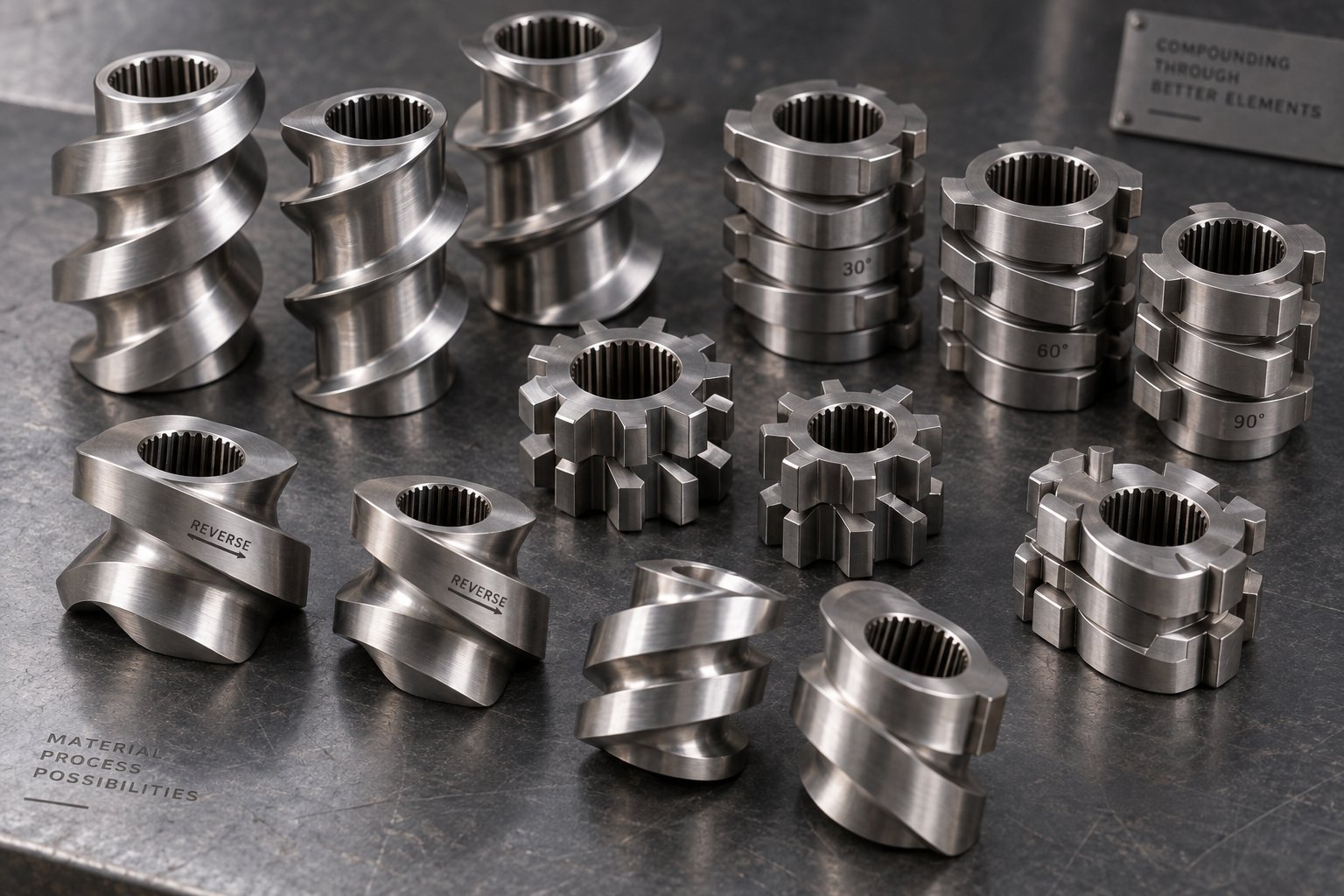
Screw Element Design and Barrel Modularity Explained
Screw elements and barrel segments are the components that actually touch your polymer. They shape every shear field, control every temperature gradient, and endure every abrasive particle your formulation throws at them. Yet most buyers spend weeks debating gearbox torque ratings and screw speed while treating the elements themselves as interchangeable commodity parts. That's a costly oversight - because the geometry, metallurgy, and modularity of these components determine whether your twin screw extruders deliver consistent quality for years or become a revolving door of replacement parts and process headaches.
Let's get into the details that actually matter.
Why Modular Screw Elements Are a Game-Changer
Imagine buying one machine that can run glass-fiber-reinforced nylon on Monday, switch to a carbon black masterbatch on Wednesday, and process a recycled polyolefin blend on Friday - without purchasing three separate extruders. That's the power of modular screw architecture, and it's the reason parallel twin screw designs dominate modern polymer processing.
Instead of a single monolithic screw machined from one piece of steel, a modular twin extruder uses a splined shaft onto which individual screw segments slide and lock in sequence. Each segment performs a specific function - conveying, kneading, mixing, or restricting flow - and the processor can rearrange them like building blocks to create a screw profile tailored to any given formulation. Change the application? Slide the elements off the shaft, reconfigure the sequence, and you've essentially built a new processing line without buying a new machine.
The four primary element categories each bring distinct capabilities to the profile:
- Conveying elements - These helical-flighted segments transport material forward through the barrel. As NC State Extension's screw design research explains, deeper channels and larger pitch values move greater material volumes, while tighter pitch elements compress and build pressure. A large-pitch SK 40/40 element moves bulk material aggressively at the feed throat; a tight-pitch SE 10/20 element builds the die pressure needed for stable output at the discharge end.
- Kneading elements - These disc-shaped blocks are the workhorses of mixing. Each block consists of multiple lobed discs stacked at offset angles along the shaft. The disc width, number of discs, and stagger angle between them collectively control whether the element favors distributive mixing (spreading ingredients evenly) or dispersive mixing (breaking apart agglomerates through high shear stress). Wider discs with full-width geometry (KBW types) generate stronger dispersive shear, while narrower half-disc elements (KP types) emphasize distribution with gentler energy input.
- Reverse elements - Also called re-conveying elements, these push material backward against the forward flow. That sounds counterproductive until you realize the restriction creates a melt seal - a fully filled zone that builds pressure upstream, increases residence time, and prevents vacuum from pulling material into vent ports. Reverse elements placed before and after kneading sections intensify shear by forcing material to spend more time in the high-energy zone.
- Toothed mixing elements - These specialized segments feature rows of teeth rather than continuous flights, creating channels that split and recombine the melt stream repeatedly. They deliver strong distributive mixing with minimal pressure drop, making them ideal for blending liquid additives or homogenizing solid and liquid ingredients before the compression zone.
Here's where geometry gets genuinely interesting - and where a manufacturer's engineering depth becomes visible. The stagger angle between adjacent kneading discs fundamentally changes element behavior. A 30-degree forward stagger conveys material downstream while mixing gently. A 60-degree stagger slows conveying and increases energy input. A 90-degree (neutral) stagger stops forward conveying entirely, trapping material in the kneading zone for maximum shear and residence time. And reverse-staggered kneading blocks push material backward, creating the most aggressive restriction and highest shear intensity of any element type.
The tip angle - the geometry of the disc's leading edge as it sweeps past the barrel wall and the opposing screw - controls the balance between elongational and shear deformation in the melt. Sharper tip angles create stronger extensional flow fields that are particularly effective at breaking apart filler agglomerates. Blunter profiles generate more simple shear, suitable for polymer blending where particle size reduction isn't the goal.
Why does all of this matter for manufacturer evaluation? Because a vendor who simply hands you a catalog of standard screw elements and tells you to "pick a configuration" is offering fundamentally less value than one who analyzes your material system - your specific resin matrix, filler type, additive package, and target properties - and then engineers a screw profile where every element position, disc width, and stagger angle serves a deliberate purpose. The difference between those two approaches is the difference between a machine that works and a machine that excels.
Barrel Segment Design and Material Selection
The barrel isn't just a housing. It's an active participant in every processing zone - delivering heat, removing heat, feeding material, venting volatiles, and resisting the relentless abrasion of filled polymer melts pushing against its inner walls at pressures that can exceed 100 bar.
Modern parallel twin screw barrels use a modular segmented design that mirrors the modularity of the screw elements inside them. Each barrel segment - typically one to two screw diameters in length - functions as an independently controlled thermal zone with its own heating elements and cooling channels. This segmentation enables processors to create precise temperature profiles along the barrel: aggressive heating in the melting zone, moderate temperatures through mixing sections, and carefully controlled cooling in the metering zone to prevent melt overheating before it reaches the die.
Individual barrel segments also serve specialized functional roles beyond temperature control:
- Solid feed barrels feature open ports sized to accept gravimetric feeders, delivering pellets, powders, or fibers into the screw channel
- Side-feed barrels include flanged openings positioned downstream of the melting zone, allowing fillers like glass fiber or minerals to enter after the polymer matrix has fully melted - protecting fiber length and preventing premature degradation
- Vent barrels incorporate open ports or vacuum connections that allow moisture, trapped air, and volatile by-products to escape the melt stream
- Closed barrels provide continuous thermal zones for melting, mixing, and pressure buildup without material entry or exit points
The metallurgy of barrel liners is where long-term cost performance lives or dies. Consider the five primary wear mechanisms acting on barrel interiors simultaneously: mechanical abrasion from fillers grinding against the bore wall, corrosive attack from reactive additives and degradation by-products, localized high-intensity wear at feeding zones and deflection points, thermal weakening of metal properties at sustained high temperatures, and oxidation driven by moisture and trapped gases under pressure. Each mechanism demands a metallurgical response, and no single material addresses all five equally well.
The barrel liner options available from different manufacturers span a wide performance - and price - range:
| Barrel Liner Type | Key Properties | Best Suited For | Relative Cost |
|---|---|---|---|
| Nitrided steel | Moderate hardness, good corrosion resistance, limited abrasion life | Unfilled thermoplastics, low-abrasion compounds | Low |
| Bimetallic (iron-based alloy inlay) | High hardness, strong abrasion resistance, moderate corrosion resistance | Mineral-filled compounds, standard glass fiber formulations | Medium |
| Bimetallic (nickel-boron alloy inlay) | Excellent combined abrasion and corrosion resistance | Highly filled systems, corrosive additives, recycling applications with contaminated feedstock | Medium-High |
| Powder metallurgy (PM-HIP) liner | Superior wear resistance, fine uniform carbide structure, longest service life | Extremely abrasive formulations (60%+ filler loading, ceramic-filled compounds) | High |
The right liner choice depends entirely on what you're processing. Running unfilled polypropylene through a PM-HIP barrel wastes money on metallurgy you don't need. Running 65% calcium carbonate-filled polyethylene through a nitrided steel barrel wastes money on replacements you'll need every few thousand hours. Matching liner metallurgy to application severity is one of the clearest indicators of whether a parallel twin screw extruder manufacturer genuinely understands process engineering - or simply sells hardware and leaves the material science to you.
How Custom Screw and Barrel Solutions Enhance Processing
Here's a reality most equipment buyers discover only after commissioning: the screw elements and barrel liners that ship with your new extruder are starting points, not endpoints. As your formulations evolve, filler loadings increase, production speeds ramp up, or you diversify into new material systems, the original components may no longer deliver optimal performance. Wear patterns shift. Mixing requirements change. Temperature profiles need adjustment that standard barrel configurations can't accommodate.
This is where specialized component suppliers become genuinely valuable partners in your processing operation. Rather than relying solely on the original machine OEM for replacement barrels - which may offer limited metallurgy options or long lead times for custom configurations - experienced barrel specialists engineer solutions around your specific application demands.
NANHAIYA, for example, supports compounding, recycling, pelletizing, granulation, and masterbatch producers with custom-engineered parallel twin screw barrels designed for demanding mixing and conveying applications. Purpose-built barrel solutions from specialists like NANHAIYA offer several advantages that generic replacement parts simply can't match:
- Application-matched metallurgy - Liner alloy selection optimized for your specific filler type, loading percentage, and processing temperature rather than a one-size-fits-all standard
- Extended wear life - Properly matched barrel metallurgy can double or triple service intervals compared to generic replacements, directly reducing your per-kilogram processing cost
- Improved mixing performance - Barrel bore tolerances and surface finishes engineered to maintain optimal screw-to-barrel clearances throughout the component's service life, preserving the self-wiping efficiency that degrades as generic barrels wear unevenly
- Reduced unplanned downtime - Components designed for your specific operating conditions fail less often and more predictably, allowing planned maintenance windows rather than emergency shutdowns
For processors running an extruder for polymer compounding with abrasive fillers or managing high-volume masterbatch production with frequent color changes, the barrel is the component that determines how long your machine runs between maintenance events. Investing in a barrel engineered for your exact application - rather than accepting whatever standard component ships with the machine - is one of the highest-ROI decisions available in extrusion operations.
Processors evaluating custom barrel options can explore NANHAIYA's parallel twin screw barrel solutions as a starting point for understanding what application-specific barrel engineering looks like in practice.
Screw element geometry and barrel metallurgy represent the molecular level of your equipment investment - the granular details that accumulate into massive performance and cost differences over a machine's lifetime. Yet even perfect components can't compensate for a flawed evaluation process. The manufacturers on your shortlist, the questions you ask, the red flags you catch or miss - these procedural decisions shape everything that follows. Building a systematic framework for that evaluation is what separates confident buyers from hopeful ones.
A Structured Framework for Selecting the Right Twin Screw Extruder Manufacturers
Confident buyers don't rely on gut instinct or flashy trade show demos. They follow a repeatable process - one that forces every vendor through the same rigorous evaluation criteria, surfaces hidden weaknesses before the purchase order is signed, and builds a supply chain capable of supporting production for a decade or more. Everything covered in this guide - from intermeshing mechanics and configuration selection to torque density analysis and barrel metallurgy matching - converges into a practical methodology you can start applying today.
Think of it as a funnel. You're starting with a broad universe of potential vendors and systematically narrowing it until only the manufacturers genuinely equipped to serve your specific needs remain. Here's how to build that funnel, step by step.
The Five-Stage Manufacturer Evaluation Process
Whether you're sourcing a full-scale production screw extruder or a compact lab extruder for formulation development, the evaluation logic stays the same. Only the specification details change. Follow these five stages in sequence - skipping any one of them opens the door to exactly the kind of costly mistakes this guide was written to prevent.
- Define your application requirements and configuration type. Before contacting a single vendor, document your material system (resin type, filler content, additive package), target throughput, product form (pellets, sheet, profile), and any special processing needs like devolatilization or reactive extrusion. Settle the co-rotating vs. counter-rotating question based on the comparison framework in earlier sections. This step alone eliminates manufacturers whose core expertise doesn't align with your processing reality.
- Create a technical specification comparison matrix. Use the specification table from the technical evaluation section - screw diameter range, L/D ratio options, specific torque density (continuous-duty, not peak), maximum screw speed, throughput capacity, and number of barrel zones. Fill in identical columns for every vendor on your shortlist. Insist on apples-to-apples data: continuous torque ratings, material-specific throughput figures, and validated operating parameters rather than theoretical maximums. Vendors who can't provide this level of detail are telling you something important about their engineering depth.
- Assess manufacturing capability and quality certifications. Verify whether each vendor is a true OEM, an assembler, or a trading company. Request a factory tour - virtual or in-person - and look for CNC machining centers, heat treatment furnaces, metallurgy testing equipment, and quality management systems certified to ISO 9001 at minimum. For machines destined for regulated industries, confirm CE marking, UL compliance for electrical systems, and any application-specific certifications your market requires. A manufacturer operating in an extrusion lab environment for R&D validation of screw configurations demonstrates a level of commitment to process engineering that pure assemblers rarely match.
- Evaluate the after-sales ecosystem and reference customers. Request three to five reference contacts operating in your application area and your geographic region. Call them. Ask specific questions: How quickly does the manufacturer deliver replacement screw elements? Have they experienced gearbox issues, and how was the resolution handled? Does the vendor provide ongoing process optimization support or disappear after commissioning? Simultaneously, request the spare parts catalog with pricing and documented delivery lead times for critical components. These conversations reveal the real-world service experience that no brochure can replicate.
- Calculate total cost of ownership across your shortlist. Build a 10-year cost model for each remaining vendor. Include purchase price, installation, energy consumption (using each manufacturer's specific energy data per kilogram), wear part replacement costs at their recommended intervals and metallurgy grades, estimated unscheduled downtime based on reference customer feedback, spare parts logistics costs, and preventive maintenance labor. The machine with the lowest purchase price and the machine with the lowest total cost of ownership are rarely the same machine. This analysis makes that gap visible and quantifiable.
Following this sequence forces discipline into a process that too often devolves into price-driven impulse decisions. Each stage builds on the previous one, creating a progressively refined shortlist where the surviving vendors have earned their position through verifiable capability rather than persuasive sales presentations.
Red Flags and Common Buyer Mistakes to Avoid
Even with a structured process, certain traps catch experienced buyers off guard. These red flags have cost processors hundreds of thousands of dollars in misguided purchases, premature failures, and lost production capacity. Recognizing them before you commit saves you from learning the hard way.
- Selecting solely on price. The most persistent mistake in the industry. A $150,000 savings on a $500,000 machine means nothing when inferior metallurgy, weak gearbox internals, and slow spare parts logistics add $40,000 to $60,000 in annual operating cost overruns. Price should be evaluated only within the context of total cost of ownership - never in isolation.
- Ignoring gearbox specifications. Many buyers scrutinize screw speed and throughput but never ask whether the quoted torque is continuous-duty or peak, what alloy the gear teeth are made from, or how the thrust bearing is sized relative to maximum die back-pressure. Gearbox failure is one of the most expensive and disruptive events in twin screw extrusion - and it's almost always preventable through proper specification at the buying stage.
- Failing to verify actual manufacturing capability. A polished website and a well-designed brochure don't prove that a company machines its own screws, heat-treats its own barrel liners, or designs its own gearboxes. As discussed earlier, trading companies posing as manufacturers can be difficult to distinguish without a factory visit or deep questioning about component origins. Always verify.
- Overlooking screw element quality and metallurgy. Generic tool steel elements on a machine processing 50% glass-fiber-filled polyamide will wear out three to four times faster than powder metallurgy alternatives. If the vendor doesn't discuss metallurgy options proactively during the sales process, they either don't understand your application or are hoping you won't notice the accelerated replacement cycle until after the warranty expires.
- Skipping reference customer calls. This is the single easiest due diligence step - and the one most frequently omitted. Five minutes on the phone with someone running the same manufacturer's machine on a similar compound will teach you more about real-world reliability, service quality, and hidden costs than hours of reviewing spec sheets. If a vendor hesitates to provide references, that hesitation is your answer.
- Not evaluating spare parts lead times. A critical kneading block set with a six-week delivery lead time from an overseas factory turns a routine maintenance event into a production crisis. Confirm where spare parts are stocked, what the documented delivery timeline is for your region, and whether emergency expediting options exist. Field experience across U.S. manufacturing facilities consistently shows that downtime from delayed parts delivery costs $1,000 to $5,000 per hour for mid-sized operations - far exceeding whatever savings prompted the original vendor choice.
Each of these mistakes shares a common root: prioritizing what's visible and immediate (purchase price, headline specs, delivery timeline) over what's invisible but consequential (metallurgy quality, gearbox engineering depth, service infrastructure, long-term component costs). The structured evaluation process outlined above is specifically designed to force the invisible factors into the light before you commit.
Building Your Ideal Supply Chain With Trusted Partners
Here's one final insight that sophisticated processors understand but many first-time buyers miss entirely: your extrusion supply chain doesn't begin and end with the machine OEM. A complete, resilient supply chain includes specialized component partners who complement the original equipment manufacturer's capabilities - particularly for the wear components that determine your day-to-day processing performance and long-term operating costs.
The machine OEM designs and builds the platform. They engineer the gearbox, control system, frame, and drive package. But the screw elements and barrel segments that actually contact your polymer - the parts that wear, that get replaced, that must be matched precisely to your evolving formulations - often benefit from the focused expertise of dedicated component specialists.
This is where building relationships with trusted barrel and screw suppliers pays dividends that extend far beyond the initial equipment purchase. NANHAIYA, for instance, has built its reputation specifically around custom parallel twin screw barrels designed for demanding mixing and conveying applications. Their focus on compounding, recycling, pelletizing, granulation, and masterbatch production means they understand the wear patterns, thermal demands, and metallurgical requirements unique to each application type - knowledge that translates into barrel solutions engineered for your specific processing conditions rather than generic replacements sized only to fit the bore.
When your formulations evolve, filler loadings increase, or you diversify into new material systems, a specialized barrel partner like NANHAIYA can respond with application-matched metallurgy and optimized bore tolerances - often faster and with more targeted engineering input than the original machine OEM's standard replacement parts program. That responsiveness keeps your line running efficiently and your per-kilogram costs under control as your business grows.
Processors building or refining their component supply chain should explore NANHAIYA's parallel twin screw barrel solutions as a practical resource for understanding what application-specific barrel engineering can deliver for their operations.
The broader principle applies beyond any single supplier: treat your extrusion equipment investment as a system that includes the machine, the component partners, and the service relationships connecting them. The strongest processors don't rely on a single vendor for everything. They build networks of specialists - each contributing focused expertise to a supply chain that's greater than the sum of its parts.
The best equipment decisions follow three principles: educate yourself thoroughly so no specification or sales claim goes unquestioned, evaluate systematically using a repeatable framework that forces every vendor through identical scrutiny, and partner with specialists who understand your specific processing challenges deeply enough to engineer solutions rather than simply sell hardware.
Frequently Asked Questions About Parallel Twin Screw Extruder Manufacturers
1. What is the difference between a co-rotating and counter-rotating parallel twin screw extruder?
Co-rotating extruders have both screws spinning in the same direction, producing high shear, excellent self-wiping action, and strong dispersive and distributive mixing. They dominate compounding, masterbatch, and reactive extrusion applications. Counter-rotating extruders spin the screws in opposite directions, creating a calendering effect at the nip region that delivers lower shear and more positive displacement conveying. This gentler processing is ideal for heat-sensitive materials like rigid PVC and profile extrusion. Buyers should settle the rotation configuration question before evaluating manufacturers, since many vendors specialize heavily in only one type.
2. How do I tell if a twin screw extruder company is a real OEM or just a trading company?
True OEM manufacturers design and fabricate core components - screws, barrels, and gearboxes - in-house, backed by proprietary IP and metallurgy labs. Trading companies simply broker another builder's machine under a different label. Key red flags include the inability to arrange a factory tour showing CNC machining and heat treatment facilities, vague answers about where gearboxes and screw elements are manufactured, no proprietary screw element designs, inconsistent third-party branding visible on internal components, and shallow technical knowledge during pre-sales discussions. Always request a factory visit and ask pointed questions about component origins before committing.
3. What specifications matter most when comparing parallel twin screw extruder manufacturers?
Six specifications deserve close scrutiny: screw diameter range (sets throughput scale), L/D ratio options (controls residence time and mixing intensity), specific torque density in Nm/cm3 on a continuous-duty basis (reveals gearbox capability for demanding compounds), maximum screw speed (defines throughput ceiling), validated throughput capacity for your specific material, and number of independently controlled barrel zones (enables precise temperature profiling). Critically, always confirm whether torque figures represent continuous-duty or peak ratings, and request material-specific throughput data validated by reference customers rather than theoretical maximums.
4. Why is total cost of ownership more important than purchase price for a twin screw extruder?
The purchase price typically represents only 15-25% of lifetime machine costs. The remaining 75-85% accumulates through energy consumption, wear part replacements, unscheduled downtime, spare parts logistics, and maintenance labor. For example, the difference between 0.12 and 0.22 kWh/kg specific energy consumption on a 500 kg/hr line running 5,000 hours annually translates to roughly $25,000 per year in electricity alone. Similarly, inferior screw element metallurgy can triple replacement frequency, adding tens of thousands in annual parts costs. Specialized barrel suppliers like NANHAIYA help control these ongoing costs by engineering application-matched barrel metallurgy that extends service intervals.
5. What role do custom screw and barrel solutions play in extruder performance?
Custom screw and barrel solutions allow processors to optimize performance beyond what standard OEM components deliver. As formulations evolve - higher filler loadings, new resin systems, or increased production speeds - original components may no longer perform optimally. Specialized suppliers like NANHAIYA engineer custom parallel twin screw barrels with application-matched liner metallurgy, optimized bore tolerances, and thermal management tuned to specific processing conditions. This targeted approach can double or triple barrel service life compared to generic replacements, improve mixing consistency, and reduce unplanned downtime, delivering measurable ROI across compounding, recycling, pelletizing, and masterbatch operations.
Written by
Nanhaiya Technical Team
Zhoushan Nanhaiya Plastic Machinery Co., Ltd.
The Nanhaiya technical team supports screw and barrel manufacturing projects through application review, technical communication, custom manufacturing coordination, and production and quality control.
Discuss Your Application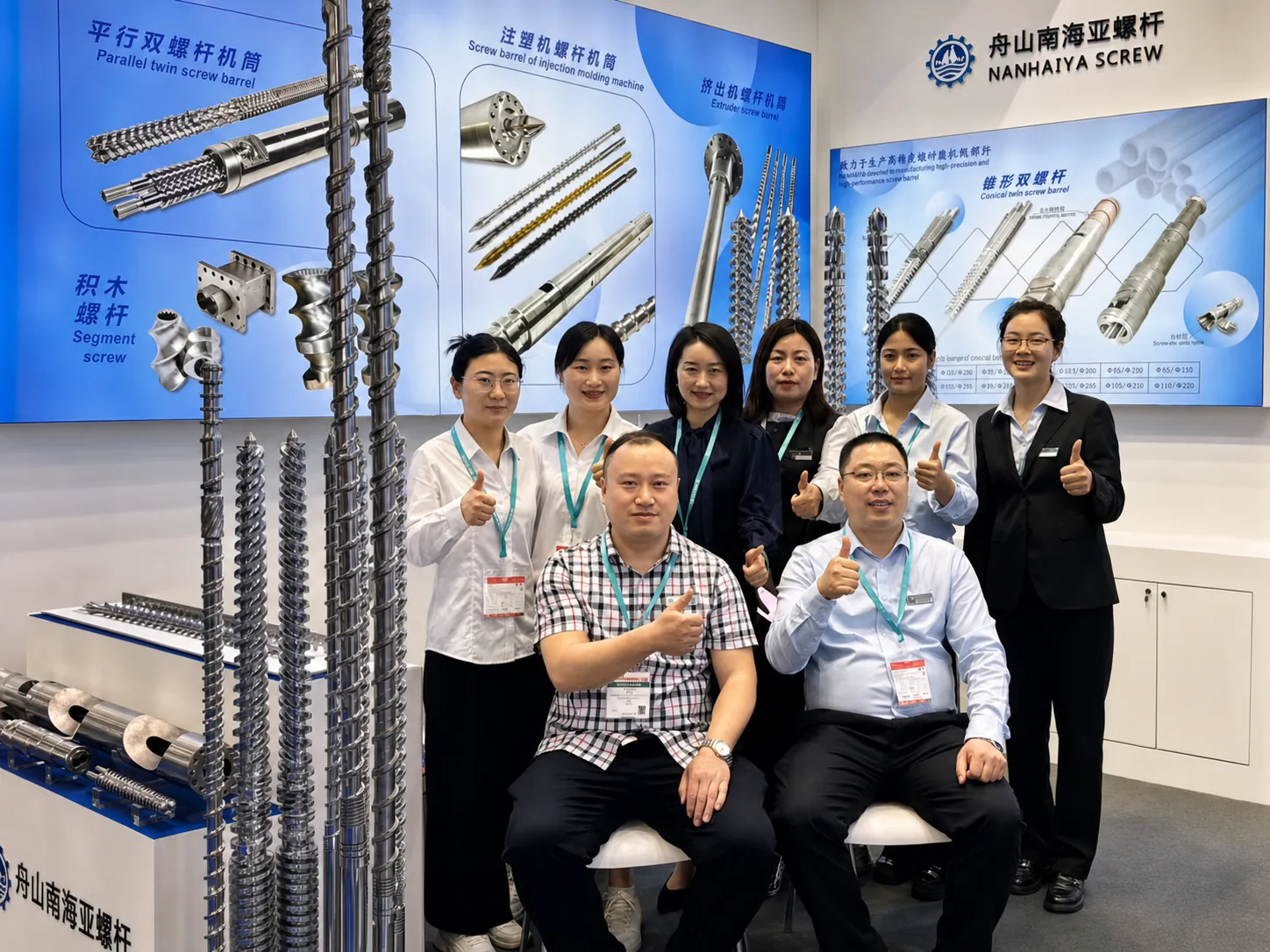
Related Articles
More insights on screw barrel technology and plastics processing.
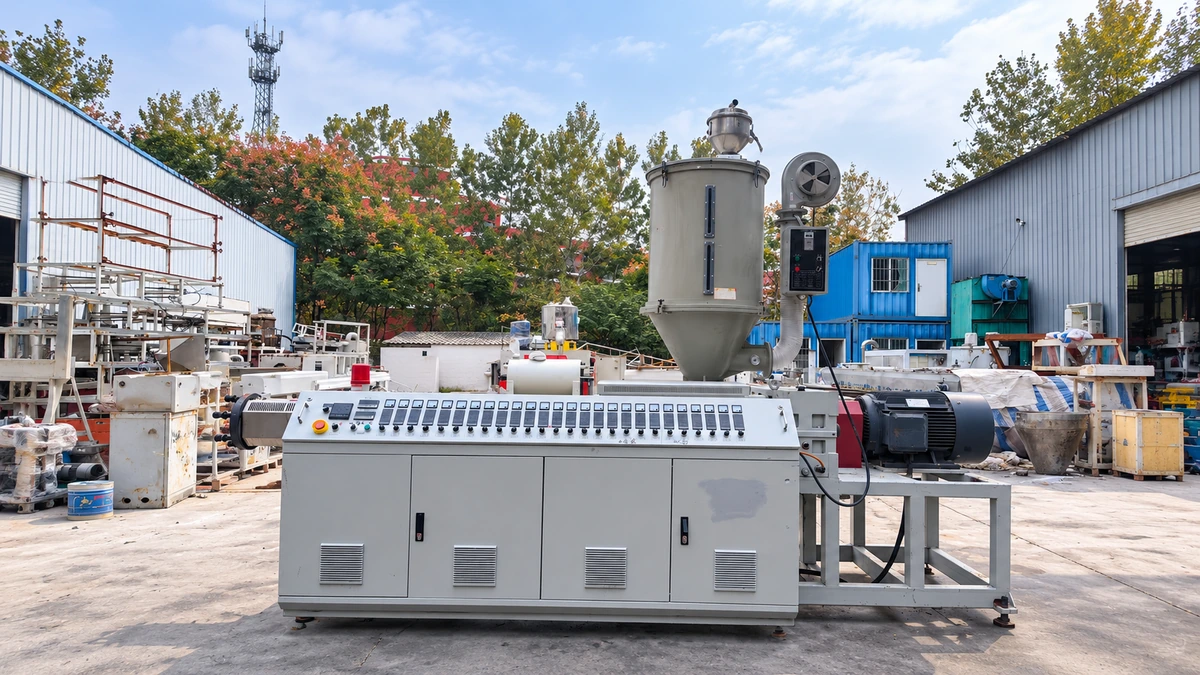
Single Screw Extruder Supplier Red Flags You Can't Afford To Miss
Oct 22, 2026
Learn how to evaluate a single screw extruder supplier with this buyer's guide covering pricing, screw and barrel tech, new vs used trade-offs, and red flags.
Read Article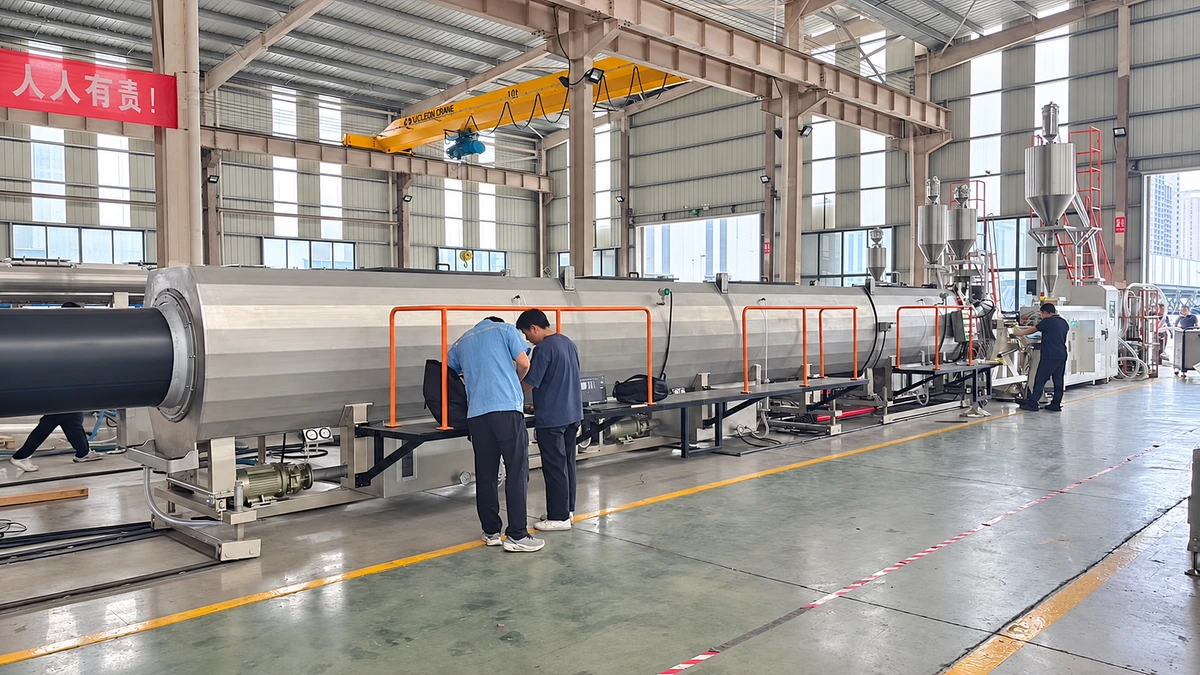
HDPE Pipe Making Machine Decoded: From Specs to Smart Purchase
Oct 15, 2026
Learn how HDPE pipe making machines work, from extruder specs and extrusion process steps to automation levels, maintenance costs, and smart buying tips.
Read Article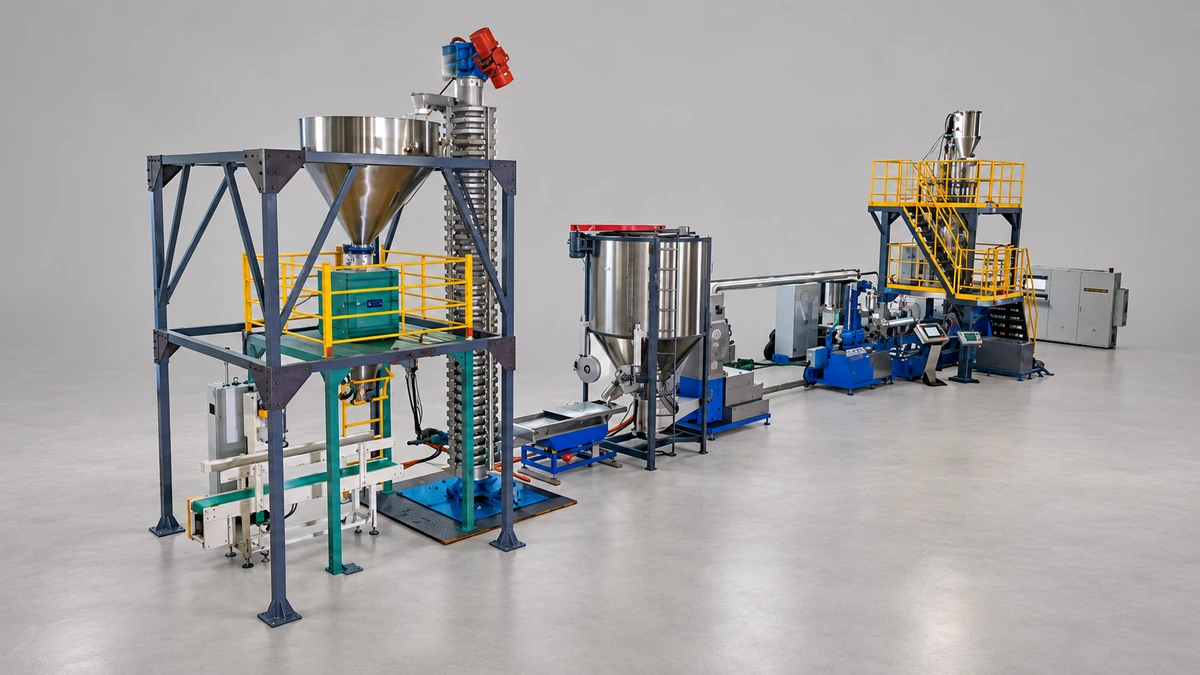
Pick the Wrong Plastic Pelletizing Line and You Pay Twice
Oct 14, 2026
Learn how to spec the right plastic pelletizing line for your resin, throughput, and budget. Covers strand, underwater, and air-cooled systems plus ROI planning.
Read ArticleLooking for something else?
Search by material, symptom or product and jump straight to the relevant page.
These are navigation suggestions based on keyword matching — not a quotation, not a delivery commitment, and not a substitute for engineering review. Final specification is confirmed by our engineers against your drawings and processed material.
Need help with screw barrel selection?
Share your machine model, processed material and application. Our team can help with pricing and technical support.