

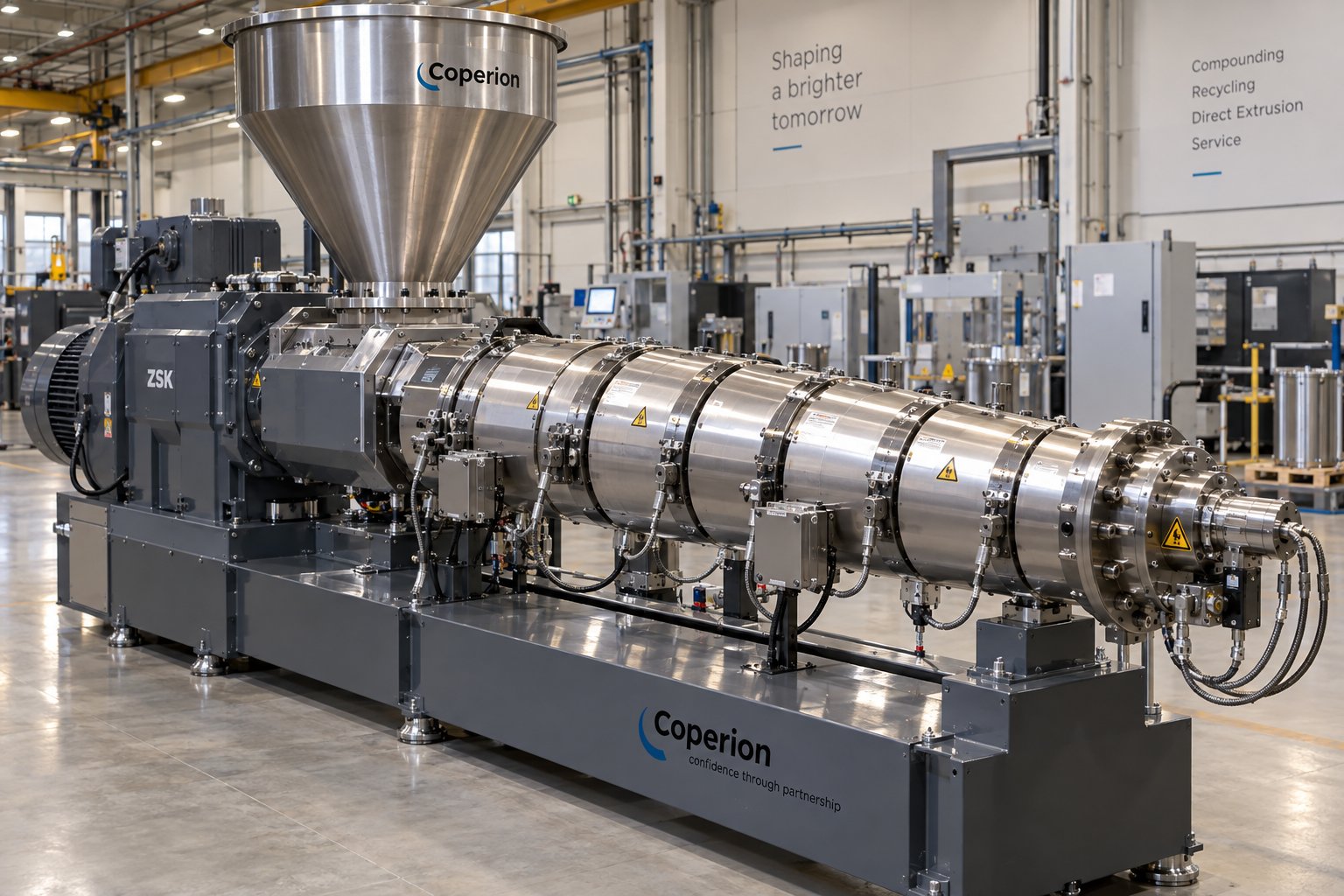
What Is a Conical Twin Screw Extruder Machine
If you work with PVC, you've almost certainly encountered this machine on the production floor, even if you didn't stop to think about why its screws look different from every other extruder in the building. The tapered shape isn't just a quirky design choice. It's the engineering answer to a very specific set of problems that PVC presents, and understanding what happens inside that narrowing barrel is the key to getting the most out of the technology.
Definition and Core Function
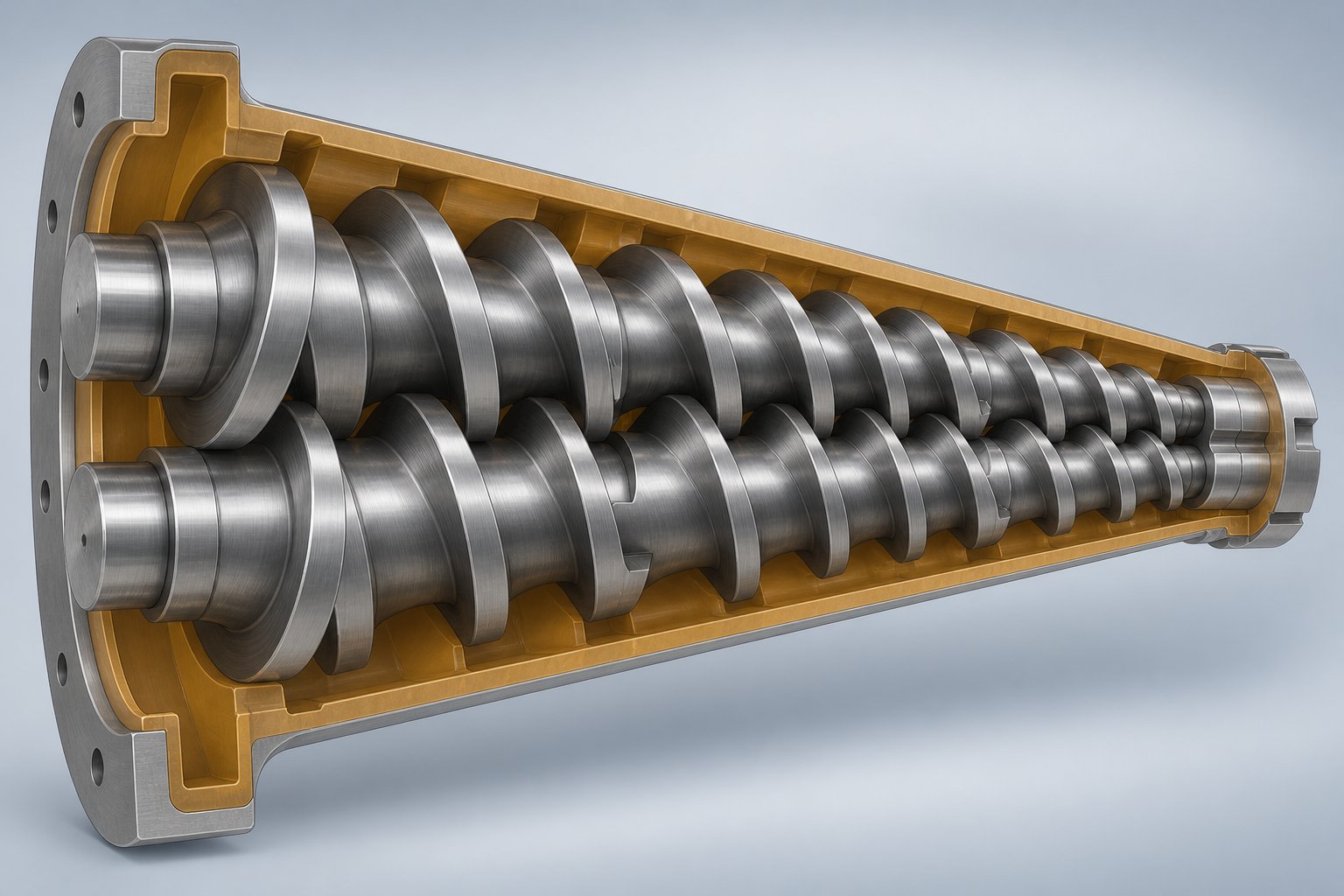
A conical twin screw extruder machine uses two tapered, intermeshing screws housed inside a matching tapered barrel to melt, mix, and convey thermoplastic materials. The screws are wider at the feed end and gradually narrow toward the discharge end, creating a natural compression that builds pressure progressively. This design is optimized primarily for processing PVC compounds, where gentle, controlled plasticization is essential to prevent thermal degradation.
Picture two large cones placed side by side, their wider ends facing the hopper and their tips pointing toward the die. As PVC powder enters at the wide feed end, those counter-rotating screws pull material inward, compress it steadily along the narrowing channel, and push a uniform, fully plasticized melt out the other side. The twin screw extruder machine accomplishes three tasks simultaneously: it conveys raw material forward, melts and mixes it thoroughly, and generates the pressure needed to force the melt through a shaping die.
What makes the conical screw extruder distinct from its parallel cousin is this built-in compression gradient. There's no need to rely solely on screw element geometry to create pressure. The taper itself does much of the heavy lifting, which keeps shear forces low and residence time short, both critical factors when processing a polymer as thermally sensitive as PVC.
A Brief History of Conical Twin Screw Extrusion
The roots of this technology stretch back to the 1960s. German company Battenfeld is widely credited with introducing the first conical twin screw extruder, designed to overcome the poor mixing and homogenization that single screw machines delivered at the time. Engineers faced a stubborn problem: PVC begins to decompose at temperatures not far above its processing range, releasing hydrochloric acid that damages equipment and ruins product quality. The twin-screw extruder needed to plasticize PVC thoroughly at lower temperatures and with less shear heat than existing designs allowed.
The tapered geometry solved two challenges at once. By placing larger-diameter bearings and gears at the wide feed end, designers could transmit significantly more torque without increasing the machine's overall size. Simultaneously, the natural compression along the barrel's taper reduced the need for aggressive screw profiles, meaning less frictional heat and gentler material handling. Through the following decades, refinements in metallurgy, drive systems, and control technology turned these early machines into the reliable, high-precision platforms used across thousands of production lines today.
Why PVC Dominates Conical Extruder Applications
Why does nearly every conical twin screw extruder you'll find in operation run PVC? The answer lies in a unique match between material behavior and machine design. PVC is processed from dry-blend powder rather than pre-compounded pellets, so the screw extruder must accept a low-bulk-density feed, compact it, fuse it into a homogeneous melt, and build enough pressure to push it through a die, all without overheating a polymer that starts degrading around 200 degrees Celsius.
The conical configuration handles every one of those demands elegantly. Its wide feed section accepts bulky powder efficiently. The progressive taper compresses and densifies the material gradually. Counter-rotating, intermeshing screws provide thorough distributive mixing at low shear rates, ensuring stabilizers and fillers are evenly dispersed. And the compact barrel length keeps total residence time short, minimizing the window for thermal degradation. This is why rigid PVC pipes, window profiles, siding, foam boards, and flexible PVC products are overwhelmingly produced on conical platforms.
Yet the very features that make this machine ideal for PVC also define its boundaries. The tapered geometry that delivers gentle, efficient PVC processing carries inherent trade-offs in throughput scalability and material versatility, factors that become important when you compare it head-to-head with parallel and single screw alternatives.
Why the Conical Design Works for Thermoplastic Processing
What makes two tapered screws more effective than two straight ones for processing heat-sensitive thermoplastics? The answer isn't found in a single advantage but rather in how several engineering benefits reinforce each other inside the same compact geometry. Every angle, every millimeter of taper, and every degree of screw convergence serves a purpose rooted in physics. Let's break down the three core principles that make this double screw extruder machine a dominant platform for PVC and similar materials.
Torque Distribution and Bearing Design
Imagine trying to fit two heavy-duty gearbox shafts, complete with radial and thrust bearings, into a housing where the shafts sit close together. In a parallel twin screw extruder, the center-to-center distance between the two screws remains constant along the entire barrel length. That fixed spacing severely limits how large the bearings and drive gears can be, which in turn caps the maximum torque the machine can transmit.
The conical layout solves this constraint elegantly. Because the screws taper from a larger diameter at the feed end to a smaller diameter at the discharge end, the axes of the two screws are set at an angle rather than running perfectly parallel. At the wide end, where the gearbox connects, the distance between shaft centers is substantially greater. This extra space accommodates larger radial and thrust bearings, bigger gear modules, and shafts with greater cross-sectional area, all of which translate directly into higher torque capacity.
Why does torque matter so much? Processing PVC dry-blend powder requires significant mechanical energy to compact and fuse the material. The twin screw extruder must push a progressively denser mass forward against rising pressure near the die. Higher available torque means the machine can handle heavier filler loadings, stiffer formulations, and higher output rates without overloading the drive system. In practical terms, conical machines routinely deliver working torques that parallel designs of similar screw diameter simply cannot match.
Natural Compression and Pressure Buildup
Here's where the taper earns its keep in the plasticizing process. As material travels from the wide feed section toward the narrower discharge end, the channel volume between the screw flights decreases progressively. This shrinking volume creates a built-in compression ratio, meaning pressure builds steadily without requiring aggressive screw profiles or tight mechanical clearances.
Think of it like squeezing toothpaste through a funnel. The narrowing passage does most of the compression work, so the screw geometry itself can remain relatively gentle. For a double screw extruder processing rigid PVC, this is critical. Aggressive compression would generate excessive frictional shear heat, pushing the material dangerously close to its degradation threshold. The conical barrel's geometry achieves the same end pressure with lower peak shear rates, producing a more thermally uniform melt with less risk of localized overheating.
This progressive pressure profile also benefits melt homogeneity. Rather than experiencing a sudden pressure spike at a single compression zone, the material undergoes a gradual, continuous squeeze along the full length of the taper. Fillers like calcium carbonate, stabilizers, and processing aids are distributed more evenly throughout the melt, resulting in a final product with consistent mechanical properties and surface finish.
Self-Wiping Geometry and Reduced Residence Time
Stagnation is the enemy of heat-sensitive polymers. Any pocket where material sits motionless against a hot barrel wall becomes a potential degradation site, producing black specks, discoloration, or weakened product. The intermeshing, counter-rotating screws in a conical twin screw extruder machine are designed to prevent exactly that.
As the screws rotate in opposite directions, the flight of one screw continuously sweeps material from the channel of the other. This self-wiping action ensures that virtually no material lingers in dead zones. Every particle is kept in motion, cycled through the melt pool, and advanced steadily toward the die. Research on twin screw extruder systems confirms that this intermeshing counter-rotating configuration delivers a narrower residence time distribution compared to many co-rotating designs, meaning every portion of the batch receives a nearly identical thermal and mechanical history.
For PVC, shorter and more uniform residence time translates directly into product quality. Less time at elevated temperatures means less thermal degradation, less HCl release, and less wear on barrel and screw surfaces. It also means faster color changes and reduced purging waste during product transitions.
Beyond these three core principles, the converging screw geometry delivers a practical bonus that production managers appreciate: a significantly smaller machine footprint. Because the screws taper inward rather than running parallel over their full length, the barrel is shorter and the overall machine is more compact. A conical unit can often fit into floor space that would be too tight for a parallel twin screw extruder of equivalent output capacity.
To summarize, the key engineering advantages of the tapered geometry include:
- Superior torque transmission — the wider feed end creates space for larger bearings, gears, and shafts, enabling the drive system to deliver higher working torque than comparably sized parallel machines.
- Progressive, low-shear compression — the naturally decreasing channel volume builds pressure gradually, reducing frictional heat generation and protecting thermally sensitive materials from degradation.
- Effective self-wiping action — counter-rotating, intermeshing screws prevent material stagnation and deliver a narrow residence time distribution for consistent melt quality.
- Compact footprint — converging screws shorten the overall barrel length, allowing the machine to occupy less floor space without sacrificing processing performance.
- Efficient powder intake — the large-diameter feed zone accepts low-bulk-density powders easily, eliminating the need for pre-compaction or force-feeding in most PVC applications.
These engineering fundamentals explain why the conical platform excels at what it does. But understanding the "why" behind the taper raises an equally important practical question: how does this design stack up against parallel twin screw and single screw alternatives when you're choosing equipment for a specific application?
Conical vs Parallel Twin Screw Extruder Decision Framework
Knowing why the taper works is one thing. Deciding whether that tapered design is actually the right choice for your production line is something else entirely. Many manufacturers default to whatever extruder type they've always used, or whatever a sales engineer recommends first. A more deliberate approach starts with understanding the fundamental differences between the three main extruder architectures and matching those differences to the specific demands of your product, your material, and your production volume.
Conical vs Parallel vs Single Screw Side-by-Side
The table below puts the three most common extruder types next to each other across the criteria that matter most on the factory floor. You'll notice that no single design wins everywhere. Each architecture carries trade-offs, and recognizing those trade-offs is what separates a smart equipment decision from an expensive one.
| Criteria | Conical Twin Screw Extruder | Parallel Twin Screw Extruder | Single Screw Extruder |
|---|---|---|---|
| Screw Geometry | Two tapered, intermeshing screws converging from a larger feed diameter to a smaller discharge diameter | Two straight, intermeshing screws with constant diameter along the full barrel length; modular screw elements | One straight screw with constant root diameter (or progressive root increase for compression); fixed geometry |
| Torque Capacity | High — wider feed end allows larger bearings and gears, delivering strong torque relative to machine size | Moderate to high — limited by fixed center distance between parallel shafts; high-torque gearboxes available on premium models | Lower — single shaft carries all load; torque constrained by screw root diameter |
| Throughput Range | Low to moderate (typically 50–800+ kg/h depending on screw diameter); limited scalability | Moderate to very high (100–10,000+ kg/h); easily scaled by increasing L/D and screw diameter | Low to moderate (varies widely with screw size); output depends heavily on material viscosity and screw design |
| Energy Efficiency | Excellent for PVC processing — low shear design minimizes wasted frictional energy | Good overall — modular design can be optimized, but higher screw speeds increase energy input | Good for simple extrusion of pre-compounded pellets; less efficient for powder processing |
| Machine Footprint | Compact — converging screws shorten barrel length significantly | Larger — full-length parallel barrel plus auxiliary side feeders and venting ports | Moderate — single barrel, but longer L/D ratios increase overall length |
| Mixing Intensity | Good distributive mixing; moderate dispersive mixing; well-suited for pre-blended dry-blend powders | Excellent — modular screw elements (kneading blocks, mixing elements) allow precise mixing intensity control | Limited — relies on screw barrier flights or mixing sections; generally weakest mixing of the three types |
| Shear Levels | Low to moderate — ideal for heat-sensitive polymers | Moderate to high — adjustable via screw profile and speed; co-rotating designs generate higher shear | Low to moderate — depends on compression ratio and screw speed |
| Primary Material Suitability | PVC dry-blend (rigid and flexible), WPC, highly filled PVC compounds | Engineering plastics, masterbatch, filled compounds, recycled polymers, bioplastics, and multi-material blends | Pre-compounded pellets of PE, PP, PS, PET, and other thermoplastics |
| Typical Applications | PVC pipes, window profiles, foam boards, PVC sheet, WPC decking | Compounding, masterbatch production, reactive extrusion, devolatilization, recycling | Film blowing, sheet extrusion, pipe extrusion (for polyolefins), wire coating |
| Relative Cost | Moderate — lower initial investment than comparable parallel twin screw systems | Higher — modular design and high-torque gearboxes increase upfront cost; greater versatility offsets cost over time | Lowest — simplest mechanical design with fewest components |
A few patterns jump out immediately. The conical design concentrates its advantages in torque, compactness, and gentle processing, exactly the features PVC demands. The parallel twin screw extruder dominates when versatility and high throughput are the priorities, especially in compounding applications where operators switch between different polymers and formulations regularly. The single screw extruder remains the cost-effective workhorse for straightforward extrusion of materials that arrive as ready-to-melt pellets.
Counter-Rotating vs Co-Rotating in Conical Designs
Within the twin screw category itself, there's another critical distinction: screw rotation direction. Twin-screw extruders come in two fundamental configurations. Co-rotating designs spin both screws in the same direction, generating higher shear and more aggressive mixing. Counter-rotating designs spin the screws in opposite directions, creating a gentler, more positively conveying action.
So which one do conical machines use? Almost universally, counter-rotating. There's a practical reason for this. When conical screws rotate in opposite directions, material is pulled inward between the screws in a calender-like nip action. This provides a strong, positive conveying force that pushes material forward with minimal backflow. The result is a very tight residence time distribution, meaning every particle spends nearly the same amount of time at elevated temperatures.
For PVC, this distinction is not academic — it's the difference between a clear, defect-free product and one riddled with degradation marks. Co-rotating configurations, while excellent for aggressive compounding tasks on a parallel twin screw compounding extruder, would subject PVC to unnecessarily high shear stress and longer melt exposure. The low-shear, positive-conveying nature of counter-rotation aligns perfectly with PVC's narrow processing window.
You'll occasionally encounter references to co-rotating conical twin screw extruders in academic literature, but in commercial PVC production, they are exceptionally rare. The counter-rotating conical platform has proven itself so thoroughly over decades of industrial use that it remains the de facto standard.
Matching Extruder Type to Your Application
With all of this data in front of you, how do you actually make the decision? It comes down to three practical questions:
What material are you processing? If your primary feedstock is PVC dry-blend powder — whether for rigid pipe, flexible profile, foam board, or WPC — a conical twin screw extruder machine is purpose-built for the job. Its tapered geometry, counter-rotating screws, and gentle shear profile are specifically engineered around PVC's thermal sensitivity. If you're running multiple polymer types, switching formulations frequently, or producing compounding extruder outputs like masterbatch and filled compounds, a parallel twin screw system offers the modular flexibility you need. And if your raw material arrives as pre-compounded pellets of polyolefins or similar thermoplastics, a single screw extruder handles the job with the simplest mechanics and lowest capital investment.
What throughput do you need? Conical twin screw extruders perform exceptionally within their output range, but scaling beyond that range typically means purchasing a physically larger machine. You can't simply add barrel sections or extend the screws as you can with modular parallel designs. If your growth plan calls for dramatic output increases or frequent capacity adjustments, a parallel system's scalability becomes a significant advantage.
What's your total cost picture? Initial price alone is misleading. A conical machine may have a lower purchase cost than a comparably rated parallel system, but the real comparison involves energy consumption per kilogram of output, wear part replacement frequency, formulation flexibility, and floor space utilization over the machine's full service life. For dedicated PVC production lines running consistent formulations, the conical platform's lower energy use and compact footprint typically deliver a stronger long-term return. For operations requiring material versatility, the parallel system's ability to handle dozens of different polymers on a single platform can justify its higher entry cost.
The right extruder isn't the one with the most impressive specifications on a data sheet. It's the one whose strengths align most closely with what your specific product, material, and production strategy actually demand. And whichever architecture you choose, the real performance gains come from understanding how to optimize the processing parameters that govern output quality, a topic that rewards careful attention.
Key Processing Parameters and How to Optimize Them
Selecting the right extruder architecture gets you to the starting line. Crossing the finish line with consistent, high-quality product depends entirely on how well you control what happens inside that tapered barrel. Every conical twin screw extruder machine gives operators a handful of critical variables to manage, and the interaction between those variables determines everything from surface finish to mechanical strength to whether the line runs profitably or burns through energy and material.
If you've ever watched an experienced operator dial in a new product run, you'll notice they don't adjust one parameter in isolation. They work through a sequence, tuning temperature, speed, pressure, and feed rate as an interconnected system. Here's how each parameter works and why it matters.
Temperature Zone Strategy for PVC Processing
The barrel of a conical twin screw extruder is divided into distinct heating and cooling zones, each serving a specific role in the plasticizing process. Getting the temperature profile wrong doesn't just degrade product quality — with PVC, it can trigger decomposition that releases corrosive hydrochloric acid and damages your barrel and screws.
Think of the temperature profile as a carefully choreographed ramp, not a flat line:
- Feed zone (Zone 1): Set relatively low, typically 140–160 degrees Celsius for rigid PVC. The goal here is gentle preheating. Too much heat too early causes premature fusion that blocks powder flow and creates feed instabilities. The material should compact and begin softening without fully melting.
- Compression zone (Zones 2–3): Temperatures rise progressively, usually reaching 165–175 degrees Celsius. This is where the taper's natural compression works alongside increasing barrel heat to fuse the PVC dry-blend into a continuous, homogeneous melt. The twin screw extruder plastic processing action here is critical — uneven fusion in this zone shows up as rough surfaces, poor weld lines, or inconsistent wall thickness downstream.
- Metering zone (Zone 4): Temperature stabilizes or drops slightly (165–170 degrees Celsius). The fully plasticized melt needs consistent thermal conditions to maintain uniform viscosity as it approaches the die. Overheating in this zone is particularly dangerous since the material has already absorbed significant mechanical energy from shear.
- Die zone: Adjusted based on the specific product geometry, typically 170–185 degrees Celsius for rigid PVC pipe and lower for flexible profiles. The die temperature directly affects melt flow behavior, surface gloss, and dimensional accuracy.
Flexible PVC formulations, which contain significant plasticizer content, typically run 10–20 degrees lower across all zones. Foamed PVC board formulations require even more precise control because the blowing agent's activation temperature must be matched carefully to the melt temperature at a specific point in the barrel.
Screw Speed and Output Rate Optimization
Screw speed is the most immediately visible dial an operator controls, and it carries a direct but nuanced relationship with both output and quality. Increasing RPM pushes more material through the barrel per unit of time, but it also increases the shear energy imparted to the melt. For a screw plastic extruder processing heat-sensitive PVC, that trade-off demands respect.
At low screw speeds, residence time increases — the material spends more time exposed to barrel temperatures, raising degradation risk. At excessively high speeds, frictional shear generates internal heat faster than the barrel's cooling system can extract it, again pushing toward decomposition. The optimal speed sits in a window where throughput is maximized without compromising melt temperature stability.
Typical operating speeds for conical twin screw extruders processing rigid PVC fall between 15 and 35 RPM, substantially lower than the hundreds of RPM common in parallel co-rotating compounding machines. This reflects the fundamental difference in processing philosophy: a conical extruder for polymer plasticization relies more on thermal energy from the barrel heaters and less on mechanical shear to achieve fusion.
Back pressure — the resistance the melt encounters at the die and screen pack — plays a supporting role in optimization. Higher back pressure improves melt homogeneity by forcing material through tighter flow paths, which enhances mixing. But excessive back pressure raises melt temperature and increases energy consumption. Operators adjust back pressure by changing screen pack mesh size, modifying die gap, or tuning the screw speed relative to feed rate.
Feed rate optimization closes the loop. On most modern conical lines, material is metered into the feed hopper at a controlled rate rather than flood-fed. Matching feed rate to screw speed ensures the screws are neither starved (which causes erratic pressure) nor overfed (which can back material up into the feed throat and cause blockages).
When setting up a new product run, experienced operators follow a logical sequence that accounts for these interdependencies:
- Set the temperature profile according to the formulation's known processing window, starting conservatively (lower end of the recommended range) and allowing the barrel to stabilize fully before introducing material.
- Start at a low screw speed (roughly 50–60% of the target production speed) and initiate feeding at a proportionally reduced rate to establish a stable melt without stressing the drive system during cold startup.
- Monitor melt pressure and motor current as material begins flowing through the die. Stable readings indicate consistent plasticization; fluctuating values point to uneven fusion or feed inconsistencies.
- Incrementally increase screw speed and feed rate together, pausing at each step to verify melt temperature, pressure stability, and product dimensions. Avoid jumping directly to full production speed.
- Fine-tune individual zone temperatures based on observed melt quality. If the extrudate shows rough surfaces or lacks gloss, the compression zone may need a slight temperature increase. If discoloration appears, reduce temperatures or lower screw speed to decrease shear input.
- Adjust back pressure via the screen pack or die restriction to achieve target melt homogeneity. Verify that motor load remains within safe operating limits.
- Lock in the recipe once all parameters deliver stable, on-specification product. Record every setting — zone temperatures, screw RPM, feed rate, melt pressure, motor amperage, and line speed — for reproducibility on future runs.
Energy Efficiency and Power Consumption Factors
Energy cost per kilogram of output is a metric that separates profitable extrusion operations from marginal ones, yet many manufacturers overlook it when evaluating equipment. Modern conical twin screw extruder machines have made meaningful strides in efficiency through several design improvements.
High-efficiency AC servo motors and direct-drive gearbox configurations reduce transmission losses compared to older belt-driven or multi-stage gear systems. Operating at energy-optimal screw speeds — the point where specific energy consumption (measured in kWh per kilogram of output) reaches its minimum — can reduce power costs by 15–25% compared to poorly tuned conditions. Optimized screw profiles tailored to specific PVC formulations also contribute: a screw geometry that achieves full fusion efficiently converts more of the input energy into useful plasticizing work rather than wasted frictional heat that must then be removed by barrel cooling systems.
For rigid PVC pipe extrusion, well-optimized conical lines typically achieve specific energy consumption in the range of 0.15–0.25 kWh/kg, which compares favorably to parallel twin screw alternatives processing the same material. Barrel zone heating systems using infrared ceramic heaters or cast-aluminum heaters with precise PID control further reduce energy waste by delivering heat only where and when the process needs it, rather than maintaining uniformly high temperatures across all zones.
Tracking energy consumption per kilogram as a routine production KPI — not just overall power draw — gives operators and plant managers the data they need to identify drift, catch worn components that are sapping efficiency, and justify investments in upgraded drive systems or screw replacements that pay for themselves through reduced electricity bills.
Dialing in these processing parameters transforms a conical twin screw extruder from a piece of hardware into a finely tuned production system. But the extruder itself is only one station in a much larger chain — and its output quality means nothing if the equipment upstream and downstream isn't properly matched to it.
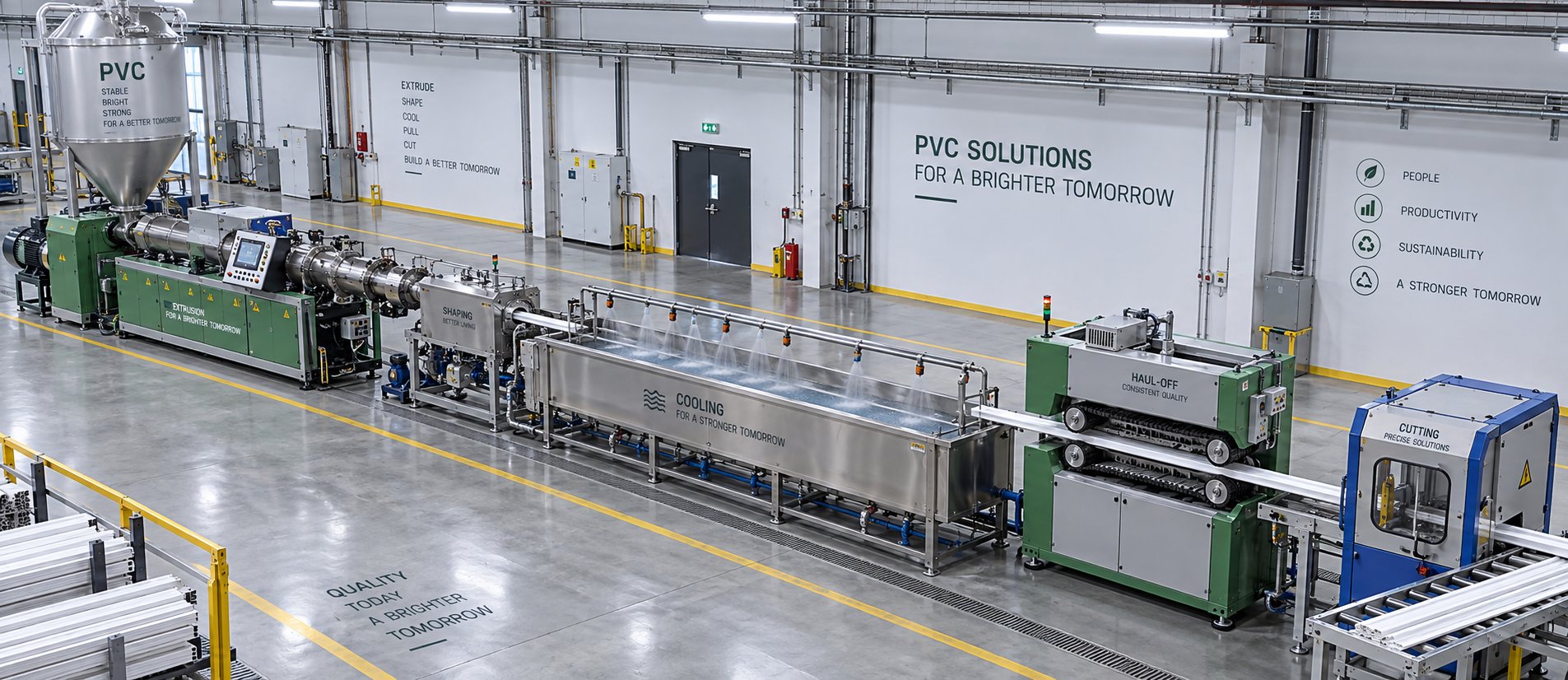
How a Conical Twin Screw Extruder Fits Into a Complete Production Line
A perfectly tuned extruder pushing out a flawless melt means nothing if the raw material feeding it is inconsistent, or if the cooling system downstream can't hold the product's shape. Every extrusion line is a chain, and every chain is only as strong as its weakest link. The conical twin screw extruder machine sits at the center of that chain — it's the heart that drives the process — but it depends on every station upstream and downstream to deliver a finished product worth selling.
Understanding how each component connects to the extruder's output helps you diagnose quality problems faster, plan new lines more effectively, and avoid bottlenecks that silently drain your throughput. Here's a walk through a complete production line, from the raw material silo to the finished product stacker.
Upstream Equipment and Material Preparation
Before a single gram of PVC powder reaches the extruder's feed throat, it passes through a series of preparation steps that directly influence melt quality and product consistency. Skimp on upstream equipment, and even the best twin-screw extruder machine can't compensate for what it receives.
A typical upstream setup includes these components:
- Raw material storage silos: PVC resin, calcium carbonate filler, stabilizers, lubricants, pigments, and other additives are stored in dedicated silos or bins. Proper storage prevents moisture absorption and contamination — two issues that cause bubbles, discoloration, and inconsistent fusion inside the barrel.
- High-speed hot/cold mixer (blending system): PVC is rarely processed as pure resin. A high-speed mixer combines PVC powder with stabilizers, lubricants, impact modifiers, fillers, and pigments at elevated temperatures (typically 110–120°C), then transfers the blend to a cooling mixer that brings it back down below 40°C. This step produces a free-flowing, homogeneous dry-blend that the extruder can feed reliably. The quality of this blend — how uniformly additives are distributed — directly determines how evenly the twin screw plastic extruder can plasticize the material.
- Gravimetric or volumetric feeders: These dosing systems meter the dry-blend into the extruder's hopper at a controlled, consistent rate. Gravimetric feeders, which measure material by weight in real time, deliver superior accuracy compared to volumetric feeders that rely on volume alone. Consistent feed rate keeps screw loading stable, which maintains steady melt pressure and uniform product dimensions. Any fluctuation here ripples through the entire downstream line.
Imagine pouring sand into a funnel at varying speeds — sometimes a trickle, sometimes a flood. The flow out the bottom would be equally erratic. That's exactly what happens when feed rate varies into a conical extruder. Uniform input produces uniform output, and uniform output is what every downstream station needs to do its job.
The Extruder as the Heart of the Line
The conical twin screw extruder machine occupies the central position in the line, receiving prepared dry-blend from upstream and delivering a homogeneous, pressurized melt to the shaping die. As discussed in earlier sections, it handles conveying, compressing, plasticizing, and metering the PVC melt — all within its tapered barrel. But from a production line perspective, the extruder's role has an additional dimension: it sets the tempo for everything else.
Every downstream component — the die, calibrator, cooling bath, haul-off, and cutter — operates at speeds and capacities that are synchronized to the extruder's output rate. If the extruder delivers 300 kg/h of melt, the cooling system must extract enough heat to solidify that volume within its available length. The haul-off must pull the product at a speed that matches the extruder's volumetric output to avoid stretching or buckling. The cutter must cycle at intervals that produce the correct product length. Change the extruder's output, and every downstream setting must follow.
This is why melt consistency matters so much. A stable, uniform melt stream from the extruder machine for plastic processing produces predictable behavior at every downstream station. An inconsistent melt — caused by temperature fluctuations, feed rate variations, or worn screws — creates cascading problems: dimensional drift in the calibrator, warping in the cooling bath, slippage at the haul-off, and off-spec cuts at the saw.
Attached directly to the extruder's discharge flange is the extrusion die, a precision-machined tool that shapes the melt into its final cross-sectional form. Different products require different dies:
- Pipe die (annular die): Creates a hollow, cylindrical melt tube for PVC pipes and conduits. Internal mandrels and spider legs support the core, and die lip adjustment controls wall thickness uniformity.
- Profile die: Produces complex, non-circular cross-sections for window frames, door profiles, cable trunking, and decorative trim. These dies require intricate flow channels to ensure the melt fills every corner of the profile evenly.
- Sheet or flat die (T-die): Delivers a wide, flat melt curtain for PVC sheet and board production. Adjustable lip bolts across the die width fine-tune thickness uniformity.
The die is where the extruder's output becomes a recognizable product shape. Its design must match the extruder's pressure and flow rate precisely — a mismatch results in uneven flow, melt fracture, or excessive back pressure that compromises plasticizing quality.
Downstream Equipment for Different PVC Products
Here is where production lines diverge. The same conical twin screw extruder platform can anchor lines producing very different end products, but the downstream equipment configuration changes dramatically depending on what you're making. Each station after the die serves a specific function, and the sequence is carefully designed to handle the product's geometry, cooling requirements, and handling characteristics.
The core downstream components include:
- Vacuum calibration tank (or sizing system): Immediately after the die, the still-soft extrudate enters a vacuum calibrator that uses a combination of external vacuum pressure and water cooling to hold the product to its exact dimensional specifications as it solidifies. For pipes, a vacuum sizing sleeve controls outside diameter. For profiles, a series of calibration plates define the complex cross-section. Foam board lines use calibrator plates that control thickness and surface flatness.
- Spray or immersion cooling baths: After initial calibration, the product passes through one or more cooling tanks where water sprays or full immersion extract remaining heat. The number and length of cooling baths depends on the product's wall thickness, material, and line speed. Thick-walled PVC pipes require significantly more cooling length than thin profiles.
- Haul-off (puller) unit: A motorized caterpillar or belt puller grips the solidified product and draws it through the cooling section at a precisely controlled speed. The haul-off speed, synchronized with the extruder's output rate, determines the product's final dimensions — pulling faster stretches the product thinner, pulling slower allows it to thicken. Consistent haul-off tension is essential for dimensional accuracy.
- Cutting equipment: Planetary saws, flying cutters, or guillotine-style cutters separate the continuous extrudate into finished lengths. Pipe lines use chip-free planetary saws that orbit the pipe circumference for clean cuts without deforming the round profile. Profile and board lines typically use flying saws that travel with the product during cutting to avoid stopping the line.
- Stacking, winding, or collection systems: Finished pieces are transferred to automatic stackers (for boards and profiles), tipping/bundling tables (for pipes), or winding units (for flexible tubing or thin sheet). These systems organize finished product for packaging and shipment with minimal manual handling.
The differences between product-specific line configurations are significant, even when the same extruder sits at the center. Consider how these end products change the downstream layout:
- PVC pipe lines require long vacuum calibration tanks (often 6–12 meters), multiple spray cooling baths extending 10 meters or more, and belling machines that expand pipe ends into socket joints for connection.
- PVC profile lines use multi-stage calibration tables with numerous precision calibration plates, shorter cooling sections, and protective film application units that laminate a peel-off film onto visible surfaces.
- PVC foam board lines need carefully controlled calibrator plates that allow the foaming core to expand to target density, three-roll polishing calenders for surface finish, and edge trimming saws before final length cutting.
- WPC (wood-plastic composite) lines demand extended cooling sections because WPC retains heat longer than unfilled PVC, plus brushing or embossing stations that create a wood-grain surface texture before final cutting.
In every case, the downstream equipment is sized and configured to match the extruder's throughput. An undersized cooling section creates a bottleneck that forces you to slow the extruder below its capacity. An oversized haul-off that outpaces the extruder's output stretches and weakens the product. The entire line operates as an integrated system, not as a collection of independent machines.
This interconnected reality carries a practical implication that goes beyond equipment selection. Because every station's performance ultimately depends on the extruder's melt consistency — and the extruder's melt consistency depends on the condition of its screws and barrel — wear in those core components doesn't just affect the extruder. It degrades the performance of the entire production line, a consequence that becomes clearer when you examine where the technology truly excels and where its inherent design trade-offs set boundaries.
Advantages and Limitations of Conical Twin Screw Extruders
Every piece of extrusion equipment carries trade-offs. The problem with most technical literature on conical twin screw extruder machines is that it reads like a sales brochure — all strengths, zero candor about where the design falls short. That's not useful when you're making a capital investment that will shape your production capability for a decade or more. Here's an honest look at both sides of the ledger, followed by the safety framework you should expect from any reputable machine.
Proven Strengths of Conical Twin Screw Technology
The advantages below aren't theoretical. They reflect decades of real-world production experience across thousands of PVC extrusion lines worldwide. When the application fits, these strengths are genuinely difficult for other screw extruders to match:
- Compact footprint: The converging screw geometry shortens overall barrel length significantly. A conical machine delivering 400 kg/h of rigid PVC melt can occupy 30–40% less floor space than a parallel twin screw extruder rated for the same output. For plants with limited real estate, that difference translates directly into more efficient facility layouts.
- Excellent torque-to-size ratio: The wide feed end accommodates oversized bearings and drive gears, giving these machines a torque capacity that punches well above their physical weight class. This means reliable operation with heavily filled formulations containing 40% or more calcium carbonate without overloading the drive.
- Gentle, low-shear processing: Counter-rotating screws combined with the taper's natural compression minimize frictional heat generation. For PVC — a polymer that begins degrading dangerously close to its processing temperature — this low-shear environment is not just an advantage, it's a necessity.
- Strong self-wiping and mixing capability: Intermeshing flights continuously sweep material from each screw's channel, preventing dead zones and ensuring uniform additive distribution. You get consistent melt quality without aggressive kneading elements that would overheat the compound.
- Proven reliability in rigid PVC applications: These machines have been the backbone of PVC pipe and profile production for over fifty years. The technology is mature, well-understood, and backed by deep operational knowledge across the industry.
- Lower energy consumption per kilogram for PVC: Because the taper handles much of the compression work geometrically, less mechanical energy is wasted as excess shear heat. Well-tuned conical lines routinely achieve specific energy figures of 0.15–0.25 kWh/kg for rigid PVC, a range that directly impacts the plastic extrusion machine cost of ownership over the long term.
Honest Limitations to Consider
Here's where most product literature goes silent. Acknowledging these constraints doesn't diminish the technology — it helps you deploy it where it genuinely belongs and avoid costly mismatches:
- Limited throughput ceiling: Conical machines top out at lower maximum output rates compared to large parallel twin screw extruders. When production demands exceed roughly 800–1,000 kg/h, you'll typically need to invest in a physically larger conical machine or shift to a parallel platform. You can't simply bolt on extra barrel sections to scale up, the way modular parallel designs allow.
- Narrow material versatility: The fixed, integrated screw geometry is optimized for PVC and similar heat-sensitive compounds. Switching to polyolefins, engineering plastics, or reactive extrusion tasks isn't practical — the screw profile, compression ratio, and shear characteristics are designed around a specific processing window. If your business plan involves running multiple polymer families, this specialization becomes a constraint.
- Specialized, precision-manufactured components: Conical barrels and screws require tighter manufacturing tolerances than their parallel counterparts. The tapered geometry means every replacement barrel must match the exact taper angle, bore dimensions, and surface finish of the original. This raises replacement part costs and limits sourcing options, making the choice of a reliable twin-screw extruder manufacturer critical for long-term support.
- Scaling requires new machines, not modifications: Unlike parallel twin screw extruders where you can increase L/D ratio by adding barrel segments, conical designs are fixed in their geometry at the time of manufacture. Needing 50% more output typically means purchasing an entirely new, larger-diameter machine rather than upgrading what you have.
None of these limitations make the conical platform a poor choice. They make it a specific choice — one that delivers outstanding results when matched to the right material, application, and production volume. The danger lies not in the limitations themselves, but in ignoring them during the purchasing decision.
Safety Standards and Regulatory Considerations
Any machine that operates at temperatures above 170°C, drives heavy rotating components, and processes materials capable of releasing toxic decomposition gases demands rigorous safety engineering. When evaluating twin screw extruder manufacturers, the safety features and compliance certifications they build into their machines should carry real weight in your decision.
Key safety and regulatory frameworks that govern conical twin screw extruder operation include:
- Machine safety standards (ISO 12100 and EN 1114): These international and European standards specify risk assessment procedures and safety requirements for plastics and rubber extrusion machinery, covering guarding of rotating parts, emergency stop systems, thermal protection, and interlock mechanisms that prevent access to hazardous zones during operation.
- Electrical safety (IEC 60204-1): Governs the design and installation of electrical systems on industrial machinery, including motor protection, grounding, and control panel construction.
- Product-specific regulations: PVC pipes for potable water, medical tubing, food packaging film, and building products must meet end-use standards (such as NSF/ANSI 61 for drinking water contact, EN 1401 for underground drainage pipe, or ASTM D1784 for rigid PVC compounds) that dictate material composition, testing protocols, and traceability requirements. The extruder itself must be capable of producing product that consistently meets these standards.
- Ventilation and fume extraction: Because PVC processing can release trace amounts of HCl and other volatiles — especially during startup, shutdown, or if temperatures exceed safe limits — proper exhaust ventilation around the die area and barrel vents is both an operator safety measure and often a regulatory requirement.
Responsible twin-screw extruder manufacturer operations also incorporate overload protection for the drive system, barrel pressure relief devices that prevent catastrophic overpressure, and temperature monitoring alarms that automatically shut down barrel heaters if readings exceed preset limits. These aren't optional extras — they're baseline expectations for any machine operating in a modern production environment.
Understanding where conical technology excels and where it reaches its boundaries gives you a clear framework for the purchase decision. But there's a practical dimension that even experienced buyers sometimes overlook: the ongoing cost and effort of keeping that tapered barrel and those precision screws in condition to deliver the performance you paid for.
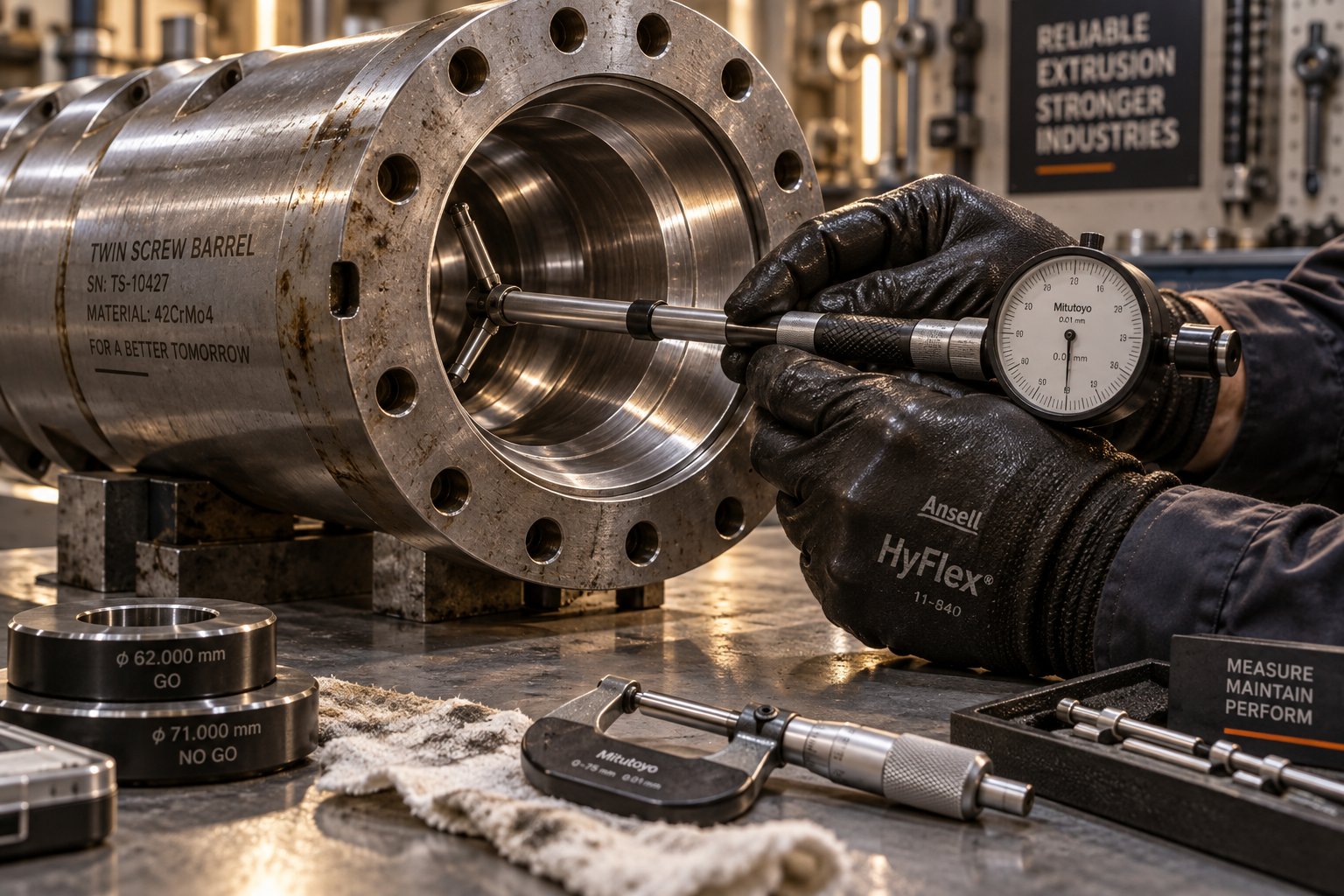
Maintenance and Wear Management for Long Machine Life
A conical twin screw extruder machine doesn't fail all at once. It degrades quietly — a fraction of a millimeter of barrel bore wear here, a slightly rounded screw flight edge there — until one day your output drops, your reject rate climbs, and your energy bills no longer make sense. The screws and barrel are the heart of the plasticizing process, and they're also the components taking the most punishment on every production shift. Understanding how they wear, what the warning signs look like, and when to act is the difference between planned maintenance that keeps you running and an emergency shutdown that costs far more.
Common Wear Patterns in Screws and Barrels
Two destructive forces work simultaneously inside the barrel of every conical twin screw extruder processing PVC compounds: abrasive wear and corrosive wear. Each attacks different surfaces in different ways, and together they account for the vast majority of component degradation.
Abrasive wear is driven primarily by mineral fillers. Calcium carbonate (CaCO3) is present in most rigid PVC formulations at loadings of 5–40% or higher, and every particle acts like microscopic sandpaper grinding against the screw flights and barrel bore. The highest abrasion occurs in the compression and metering zones, where material density and pressure are greatest. Over time, screw flight crests lose height, the barrel bore enlarges, and the critical clearance between screw and barrel widens. That widening gap allows material to leak backward over the flights instead of being conveyed forward, directly reducing output efficiency.
Corrosive wear comes from PVC itself. When polyvinyl chloride experiences localized overheating — even briefly — it releases hydrochloric acid (HCl) gas. This acidic byproduct attacks metal surfaces chemically, creating pitting and surface roughness that accelerates further abrasive damage. The combination is especially destructive: abrasion strips away protective nitrided or bimetallic layers, and corrosion attacks the freshly exposed base metal underneath. Industry data suggests that under normal high-filler PVC extrusion conditions, typical screw and barrel service life ranges from 1 to 5 years, depending on filler loading, processing temperatures, and the quality of wear-resistant treatments applied during manufacture.
Additional wear patterns you'll encounter include adhesive wear at contact points between the two screws' intermeshing zones and fatigue cracking from repeated thermal cycling during startups and shutdowns. These are less common than abrasion and corrosion but can accelerate failure if ignored.
When and How to Replace Worn Components
Wear doesn't announce itself with a single dramatic event. It reveals itself through a cluster of gradual symptoms that experienced operators learn to read before they become costly problems. Watch for these indicators:
- Declining output at the same screw speed: When the clearance between screw flights and barrel bore increases, more material leaks backward ("back-leakage") instead of being pushed forward. You'll notice throughput dropping even though RPM and feed rate haven't changed.
- Inconsistent melt quality: Uneven fusion, rough surface finish, visible unmelted particles in the extrudate, or fluctuating melt pressure readings all point to worn screws that can no longer build uniform compression.
- Increased energy consumption: A worn screw-barrel system works harder to achieve the same output. Motor amperage creeps upward as the drive compensates for lost conveying efficiency. Tracking specific energy consumption (kWh/kg) over time creates a clear trend line that reveals wear long before product quality visibly suffers.
- Visible scoring or pitting: During scheduled shutdowns, inspect screw flights and barrel bore surfaces for grooves, scratches, pitting, or discoloration. Any visible surface damage in the compression or metering zones indicates significant wear that's already affecting performance.
So how should you stay ahead of these issues? The following maintenance checklist provides a practical sequence operators and maintenance teams should follow to maximize the working life of their screws and barrels:
- Record baseline measurements of screw flight diameter and barrel bore diameter when new components are installed. These reference dimensions are essential for tracking wear progression over time.
- Measure screw and barrel dimensions quarterly using precision micrometers and bore gauges. Compare each measurement against baseline values and the manufacturer's maximum allowable wear tolerance, typically 0.1–0.2 mm of diametric clearance increase depending on machine size.
- Track specific energy consumption (kWh/kg) and motor amperage on a weekly basis. A steady upward trend at constant output indicates increasing wear that's reducing processing efficiency.
- Purge thoroughly before every shutdown. Residual PVC left sitting at elevated temperatures decomposes and releases HCl, which corrodes barrel and screw surfaces during idle periods. A complete purge with a non-corrosive cleaning compound protects internal surfaces between runs.
- Inspect barrel heating and cooling systems monthly. Faulty heaters or blocked cooling channels cause localized hot spots that accelerate both thermal degradation of PVC and corrosive attack on barrel surfaces.
- Lubricate gearbox and thrust bearing assemblies according to the manufacturer's schedule. Bearing wear at the feed end affects screw alignment, which in turn accelerates uneven wear along the barrel length.
- Plan replacement proactively. When measurements show clearance has increased to 70–80% of the maximum allowable wear limit, begin sourcing replacement components. Waiting until the barrel is fully out of tolerance means running with degraded output and quality for weeks or months while parts are manufactured and delivered.
Whether you're maintaining a brand-new line or managing used extrusion equipment acquired on the secondary market, this checklist applies equally. In fact, used extruder equipment demands even closer attention to wear measurement during the first weeks of operation, since the previous owner's maintenance history may be incomplete or unavailable. Any used extruder should undergo a thorough screw and barrel inspection — with dimensional measurements, not just visual checks — before being put into production.
Sourcing Quality Replacement Barrels
Here's a reality that catches many manufacturers off guard: replacing conical twin screw barrels is not the same as replacing standard parallel components. The tapered geometry demands extremely precise manufacturing tolerances. The taper angle, bore diameter at both the feed and discharge ends, surface finish, and concentricity must all match the original specifications exactly. A barrel that's even slightly out of spec creates uneven clearance along the screw length, which causes inconsistent compression, localized overheating, accelerated wear on the new screws, and ultimately the same output problems you were trying to solve.
This precision requirement means sourcing matters. You need a supplier that specializes in conical twin screw barrels and understands the tight tolerances PVC extrusion demands. For manufacturers running PVC pipe, profile, board, foam board, or WPC extrusion lines, NANHAIYA provides custom-engineered and replacement conical twin screw barrels designed for stable plasticizing performance and production continuity. Their barrels are built to match the precise taper geometry and surface specifications that these applications require, making them a practical resource when your wear measurements tell you it's time for new components.
When evaluating any replacement barrel supplier, verify these critical factors:
- Material and surface treatment options: The barrel should be available in appropriate steel grades (38CrMoAl, 42CrMo, or equivalent) with nitrided case depths of at least 0.4–0.7 mm and surface hardness in the HV850–1000 range. For high-filler CaCO3 formulations, a bimetallic lining with a centrifugally cast wear-resistant alloy layer provides substantially longer service life than nitriding alone.
- Dimensional precision: Request documentation of bore straightness (typically 0.015 mm or better), surface roughness (Ra 0.4 or finer), and taper angle tolerance. These aren't optional quality extras — they're the parameters that determine whether your new barrel actually restores the extruder's original processing performance.
- Compatibility verification: Ensure the supplier can match barrels to your specific extruder make and model. A reputable manufacturer will request your machine's technical drawings or original barrel specifications before production to guarantee fit.
Investing in quality replacement barrels and screws isn't just maintenance — it's protecting your entire production line's output capacity, energy efficiency, and product quality. Every downstream station, from the calibrator to the haul-off to the cutter, depends on the melt consistency that only a properly functioning screw-barrel system can deliver. Cut corners on replacement components, and those savings evaporate quickly in scrap, downtime, and energy waste.
With wear management under control, the longer-term question shifts to what's changing in the technology itself — how advances in drive systems, materials science, and digital controls are reshaping what these machines can achieve and expanding the range of products they produce.
Modern Advancements Shaping Conical Extrusion Technology
The fundamental taper hasn't changed, but nearly everything surrounding it has. Drive electronics, metallurgy, temperature control hardware, and digital intelligence have all evolved dramatically, and those advances are pushing conical twin screw extruder machines into applications and performance levels that would have been unthinkable even fifteen years ago. If you're running equipment from the early 2000s — or evaluating a new purchase — understanding what's changed helps you identify where real gains are available.
Advanced Drive and Temperature Control Systems
The gearbox and motor were once the least exciting parts of an extrusion line. Not anymore. Direct-drive motor configurations, which eliminate intermediate belt or chain transmissions, reduce mechanical losses and deliver smoother torque curves across the full RPM range. High-efficiency permanent magnet synchronous motors paired with precision gear reducers are replacing older AC induction setups, cutting energy consumption by 10–20% while improving speed regulation accuracy to within fractions of an RPM.
On the thermal side, traditional resistance band heaters are giving way to infrared ceramic heating elements and precision cast-aluminum heater assemblies with embedded cooling channels. These systems respond faster to PID controller commands, tightening temperature uniformity within each barrel zone to plus or minus one degree Celsius — a level of control that directly reduces thermal degradation risk and improves melt consistency. Liquid cooling circuits integrated into the barrel wall offer faster heat extraction than air cooling alone, which matters during high-output runs where frictional shear heat can outpace conventional cooling.
Together, these drive and thermal improvements mean today's conical extruders run quieter, consume less electricity per kilogram of output, and hold tighter processing windows than their predecessors — all without any change to the core tapered screw geometry.
Wear-Resistant Materials and Coatings
Chapter seven highlighted how abrasion and corrosion attack barrel and screw surfaces. The materials science response has been substantial. Bimetallic barrel linings — centrifugally cast alloy layers bonded to the barrel's inner bore — have become the standard for high-filler PVC formulations. These linings use iron-boron or nickel-based alloys with hardness values exceeding HRC 60, dramatically extending barrel service life compared to simple nitriding treatments.
Screw surfaces benefit from similar advances. Hard-facing alloys applied via plasma transfer arc (PTA) welding protect flight crests and flanks from abrasive calcium carbonate particles. Newer tungsten carbide coatings deposited through high-velocity oxygen fuel (HVOF) spraying create an even harder, more uniform surface layer. The result is measurable: barrels and screws treated with modern wear-resistant technologies routinely last two to three times longer than conventionally hardened components under identical processing conditions, reducing both replacement costs and unplanned downtime.
Automation and Industry 4.0 in Extrusion
Perhaps the most transformative shift is happening in how conical twin screw extruder machines are monitored, controlled, and optimized. The integration of Industry 4.0 principles into plastics extrusion is turning traditionally manual processes into data-driven, self-correcting systems.
Real-time monitoring platforms now collect data from dozens of sensors along the extrusion line — melt pressure transducers, barrel zone thermocouples, motor current meters, haul-off speed encoders, and product dimension gauges — feeding everything into centralized dashboards that operators can access from a control room screen or even a mobile device. This continuous data stream doesn't just record what's happening; it enables pattern recognition that human observation alone would miss.
Predictive maintenance algorithms analyze trends in motor load, melt pressure variability, and specific energy consumption to forecast when screws or barrels will reach their wear limits, weeks or months before output quality visibly deteriorates. Instead of running components to failure or replacing them on a rigid calendar schedule, maintenance teams intervene at the optimal moment — maximizing component life while minimizing unplanned stops.
Digital twin technology takes this further. Virtual replicas of the extruder and its process conditions allow engineers to simulate the effects of parameter changes — a new temperature profile, a different screw speed, an alternative formulation — without interrupting production. These simulations accelerate process development cycles and reduce trial-and-error waste. Much of this digital twin modeling work begins at the research stage, where a lab scale twin screw extruder or benchtop twin screw extruder generates the foundational process data that feeds into the simulation models. Laboratory twin screw extruder platforms and lab scale extruder setups allow R&D teams to test formulations and validate digital twin accuracy at small batch sizes before committing to full production trials.
Intelligent control systems represent the integration point. Modern PLCs and HMIs incorporate auto-tuning algorithms that adjust barrel zone temperatures, screw speed, and feed rate in real time based on sensor feedback. If melt pressure drifts outside the target window, the controller doesn't wait for an operator to notice — it corrects automatically, holding product quality steady even as ambient conditions, material batch properties, or equipment wear introduce variability.
These technological threads — better drives, tougher materials, smarter controls — converge with several market trends that are expanding the conical platform's role beyond traditional PVC pipe and profile:
- Wood-plastic composite (WPC) extrusion: Growing demand for WPC decking, fencing, and cladding is driving adoption of conical twin screw extruder machines equipped with specialized screw profiles and venting systems optimized for the moisture and volatile content inherent in wood-fiber feedstocks.
- Lightweight foamed PVC products: Chemical foaming agents enable the production of low-density PVC boards and profiles that reduce material consumption by 30–50%. These formulations demand extremely precise temperature control and consistent melt pressure — exactly the strengths that modern drive and thermal management upgrades deliver.
- Recycled PVC processing: As circular economy regulations tighten globally, processors are incorporating higher percentages of recycled PVC into their feedstocks. Recycled material introduces variability in melt viscosity and contaminant levels that benefit from the adaptive, sensor-driven process controls now available on advanced conical platforms.
- Energy-efficient drive systems: Direct-drive motors and high-efficiency gear reducers reduce specific energy consumption, aligning with both cost reduction targets and sustainability mandates that manufacturers increasingly face. The broader twin screw extruders market, valued at approximately $2.54 billion in 2025 and projected to reach $4.33 billion by 2035 at a 5.48% CAGR, reflects this industry-wide push toward more efficient and capable equipment.
- Bimetallic and coated wear components: Advanced barrel linings and screw coatings extend maintenance intervals, reduce lifecycle costs, and support processing of abrasive, high-filler formulations that were previously impractical at high output rates.
- Digital integration and predictive analytics: IoT-connected sensors, predictive maintenance algorithms, and digital twin simulations transform reactive maintenance into proactive asset management, reducing downtime and scrap rates across the production line.
These advancements aren't just making conical extruders better at what they already do — they're broadening the range of products and materials the platform can handle competitively. Yet even the most advanced machine is only a good investment if you select the right one for your specific application, output requirements, and budget. That selection process involves its own set of critical decisions that deserve careful, structured attention.
How to Select the Right Conical Twin Screw Extruder
Technology advances, wear management strategies, and market trends all feed into the same practical question every manufacturer eventually faces: which machine should I actually buy? Whether you're launching a new PVC production line, replacing aging equipment, or expanding capacity, the selection process demands more rigor than browsing an extruder machine for sale listing and comparing headline specifications. The wrong choice locks you into years of suboptimal output, excessive energy costs, and maintenance headaches that no amount of operator skill can overcome.
Here's a structured approach to evaluating your options — covering the criteria that matter, the realities of the used equipment market, and the often-underestimated total cost picture that separates a smart investment from an expensive regret.
Critical Selection Criteria for Your Application
Before you request a single quote or visit a showroom, define what you actually need the machine to do. Sounds obvious, but a surprising number of buyers start with the twin screw extruder price instead of starting with their production requirements. Price matters — but it only matters in context. A machine that costs 30% less but can't hit your target output rate or handle your formulation's filler loading isn't a bargain. It's a liability.
Work through these evaluation criteria systematically:
- Output capacity requirements: What throughput (kg/h) does your production plan demand — not just today, but over the next five to seven years? Size the extruder to your projected peak requirement, not your current baseline. Running a machine at 90% of its rated capacity leaves headroom for growth and reduces mechanical stress compared to operating at 100% continuously.
- Screw diameter and L/D ratio: These two specifications define the machine's processing envelope. Common conical screw diameters range from 51/105 mm to 80/156 mm (discharge/feed diameters). Larger diameters handle higher throughput but come with proportionally higher capital and energy costs. The L/D ratio — typically between 22:1 and 28:1 for conical designs — determines how much processing length is available for plasticization. Shorter L/D ratios suit simpler formulations; longer ratios provide more residence time for heavily filled or foamed compounds that need thorough fusion.
- Drive power: The installed motor rating (kW) must match both the screw diameter and your target formulation's viscosity. A 55 kW motor paired with large-diameter screws processing a heavily filled rigid PVC compound will run at its torque limit constantly, shortening gearbox and motor life. Verify that the motor and gearbox combination delivers adequate specific torque (Nm/cm3) for your most demanding formulation, not just your easiest one.
- Material compatibility: Are you exclusively processing PVC dry-blend, or do you also plan to run WPC, foamed PVC, or other thermoplastics? A conical twin screw extruder machine excels within its design window, but that window has boundaries. If your production plan includes significant non-PVC work, a parallel twin screw platform may offer the flexibility a conical design cannot.
- Available floor space: Measure your actual facility footprint, including clearance for barrel removal, screw extraction, electrical panels, and operator access. Conical machines are compact relative to their output, but a complete line — extruder, die, calibrator, cooling baths, haul-off, and cutter — can still stretch 20–40 meters depending on the product. Verify that your building can accommodate the full line, not just the extruder alone.
- Automation and control level: Do you need basic PID temperature control and manual speed adjustment, or does your operation require touchscreen HMI, recipe storage, real-time data logging, and remote monitoring capability? Higher automation levels increase the purchase price but reduce operator dependency and improve process consistency — a trade-off worth quantifying based on your labor costs and quality requirements.
- Manufacturer reputation and support infrastructure: Can the manufacturer or dealer provide technical support, spare parts, and service in your region? A machine with superior specifications but no accessible service network becomes a risk the moment something breaks. Prioritize suppliers with proven track records in PVC extrusion and established parts supply chains.
Documenting your answers to each of these criteria before engaging with any seller transforms the buying process from a reactive negotiation into a structured evaluation. You'll know exactly what you need, and you'll recognize immediately when a machine doesn't fit — regardless of how attractive the price looks.
New vs Used Equipment Considerations
Every manufacturer weighing a capital equipment purchase hits the same crossroads: buy new, or look for a used twin screw extruder for sale on the secondary market? Both paths offer legitimate value, but neither is universally the right answer.
A new conical twin screw extruder machine delivers current-generation drive efficiency, the latest control systems, a full manufacturer's warranty, and components at zero hours of wear. You specify exactly the screw diameter, motor size, automation level, and barrel metallurgy your application demands. The trade-off is straightforward: higher upfront cost and longer lead times, often stretching several months from order to delivery depending on the manufacturer's backlog.
Used extruders, by contrast, already exist. A plastic extruder machine for sale on the secondary market can often be inspected, purchased, and installed in weeks rather than months — a significant advantage when production timelines are tight. Heavy industrial equipment experiences its steepest depreciation in its first few years, so a lightly used conical extruder three to five years old may retain most of its mechanical capability at a substantially lower price than a new equivalent.
The critical caveat? Used extruders carry condition risk that new machines don't. Screw and barrel wear is the primary concern — and it's invisible from the outside. Before committing to any used conical extruder, insist on:
- Bore gauge measurements of the barrel at multiple positions along its taper to verify bore diameter hasn't exceeded the manufacturer's wear tolerance
- Screw flight diameter measurements at the feed, compression, and metering zones
- Gearbox oil analysis to check for metal particles indicating internal wear
- Motor insulation resistance testing
- A production trial under load, running your target formulation or a comparable one, for a minimum of four hours
- Complete maintenance logs and production hour records from the previous owner
A seller who resists this level of inspection is asking you to absorb all the condition risk — and that should be reflected either in a significantly lower price or in your decision to walk away entirely. Used extruders for sale can deliver genuine value, but only when their actual mechanical condition — not their cosmetic appearance — has been verified against your performance requirements.
Total Cost of Ownership and Long-Term Value
Here's the factor that separates experienced equipment buyers from first-timers: the extruder machine price on the invoice is not the cost of the machine. It's the down payment on a multi-year operating commitment that includes energy, maintenance, wear parts, downtime, and eventual component replacement. Total cost of ownership (TCO) over a machine's productive life — typically 10 to 20 years for a well-maintained conical extruder — dwarfs the initial purchase price.
Several variables drive TCO, and each deserves scrutiny during the selection process:
- Energy cost: Specific energy consumption (kWh/kg) varies meaningfully between machine generations, drive technologies, and screw profiles. A modern direct-drive conical extruder consuming 0.16 kWh/kg versus an older belt-driven unit at 0.24 kWh/kg represents a 33% energy cost difference — compounded over thousands of production hours annually, that gap adds up to a substantial sum. Request verified energy consumption data for the specific machine and formulation you plan to run.
- Wear part replacement: Conical twin screw barrels and screws are the highest-cost consumable components on the machine. Replacement frequency depends on your formulation's abrasiveness (filler type and loading), processing temperatures, and the quality of wear-resistant treatments (nitriding, bimetallic lining, or hard-facing) applied to the original and replacement components. Budget for barrel and screw replacement every one to five years depending on these factors. Sourcing quality replacements at competitive cost and lead times directly impacts your TCO and production uptime.
- Downtime costs: Every hour the extruder sits idle — whether for scheduled maintenance, unplanned repairs, or waiting for replacement parts — costs you the revenue that hour of production would have generated. Machines with readily available spare parts and accessible service support minimize downtime. Machines with limited parts sourcing options carry hidden downtime risk that rarely appears in the purchase price comparison.
- Automation savings: Higher automation levels increase the purchase price but can reduce labor costs, scrap rates, and energy waste over the machine's life. Quantify these savings based on your actual labor rates and reject percentages before dismissing a more automated (and more expensive) option.
The pricing itself — whether for new or used equipment — varies widely based on screw diameter, output capacity, drive power, manufacturer, automation level, and geographic market. Rather than relying on published twin screw extruder price figures that quickly become outdated, request detailed quotations from multiple suppliers for your specific configuration. Compare those quotes not just on sticker price, but on the full TCO calculation described above. A machine that costs 20% more upfront but delivers 15% lower energy consumption and 50% longer barrel life may be the genuinely cheaper option over a ten-year horizon.
For manufacturers focused on maintaining stable plasticizing performance and minimizing unplanned downtime across their machine's full service life, the availability of precision replacement components is a critical TCO factor. NANHAIYA serves PVC pipe, profile, board, foam board, and WPC extrusion manufacturers with custom-engineered and replacement conical twin screw barrels built to the precise taper geometry and metallurgical specifications these applications demand. Having a reliable source for these high-precision components means you can plan replacement cycles proactively rather than scrambling when wear measurements hit their limits — and that planning discipline is what keeps TCO under control and production lines running.
Ultimately, the right conical twin screw extruder isn't the one with the lowest price tag or the longest spec sheet. It's the one whose screw diameter, drive power, automation level, and support infrastructure align precisely with your material, your product, your throughput target, and your long-term cost reality. Define those requirements first, evaluate options against them honestly, and the decision makes itself.
Frequently Asked Questions About Conical Twin Screw Extruder Machines
1. What is the main advantage of a conical twin screw extruder over a parallel twin screw extruder?
The conical design places larger bearings and gears at the wider feed end, delivering superior torque capacity relative to machine size. Its tapered barrel creates a natural compression ratio that builds pressure progressively with lower shear forces, making it ideal for heat-sensitive PVC. Additionally, the converging screws produce a significantly more compact machine footprint — often 30-40% smaller than a parallel unit with equivalent output — which benefits space-constrained facilities.
2. Why are conical twin screw extruders primarily used for PVC processing?
PVC begins degrading dangerously close to its processing temperature. The conical extruder's counter-rotating, intermeshing screws combined with its tapered geometry deliver low-shear, short-residence-time processing that prevents thermal decomposition. The wide feed section efficiently accepts low-bulk-density PVC powder, while progressive compression along the taper fuses the dry-blend gently. These characteristics match PVC's narrow processing window far better than high-shear parallel or single screw alternatives.
3. How often should conical twin screw barrels and screws be replaced?
Replacement intervals typically range from one to five years, depending on the PVC formulation's calcium carbonate filler loading, processing temperatures, and the quality of wear-resistant treatments like nitriding or bimetallic linings. Operators should measure screw flight diameter and barrel bore quarterly, track specific energy consumption trends weekly, and plan replacement proactively when clearance reaches 70-80% of maximum allowable wear. Suppliers like NANHAIYA (nhyscrews.com) offer custom-engineered replacement conical twin screw barrels built to the precise taper tolerances PVC extrusion demands.
4. What processing temperature should I set for rigid PVC on a conical twin screw extruder?
A typical rigid PVC temperature profile starts at 140-160 degrees Celsius in the feed zone for gentle preheating, rises to 165-175 degrees in the compression zones for material fusion, stabilizes around 165-170 degrees in the metering zone to maintain uniform viscosity, and reaches 170-185 degrees at the die depending on product geometry. Flexible PVC runs approximately 10-20 degrees lower across all zones. Always start conservatively and adjust based on observed melt quality, pressure stability, and motor load readings.
5. Should I buy a new or used conical twin screw extruder?
Both options offer legitimate value depending on your situation. New machines provide current-generation efficiency, full warranties, and zero wear — but cost more and require longer lead times. Used extruders can save significantly on upfront cost and arrive faster, since heavy equipment depreciates steeply in its first few years. However, always insist on bore gauge measurements, screw flight inspections, gearbox oil analysis, and a loaded production trial before purchasing used equipment. Evaluate total cost of ownership — including energy, wear parts, and downtime risk — rather than purchase price alone.
Written by
Nanhaiya Technical Team
Zhoushan Nanhaiya Plastic Machinery Co., Ltd.
The Nanhaiya technical team supports screw and barrel manufacturing projects through application review, technical communication, custom manufacturing coordination, and production and quality control.
Discuss Your Application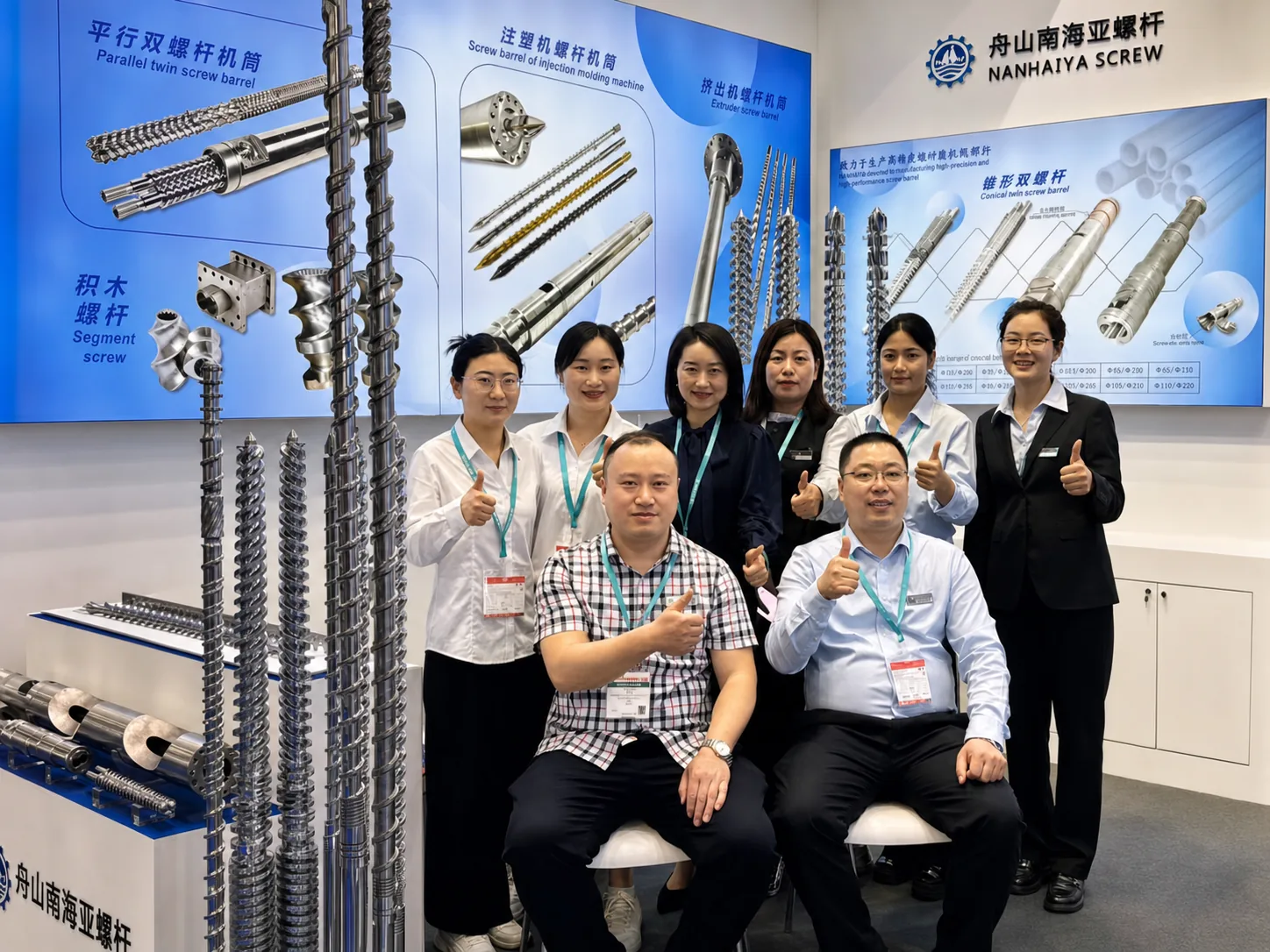
Related Articles
More insights on screw barrel technology and plastics processing.
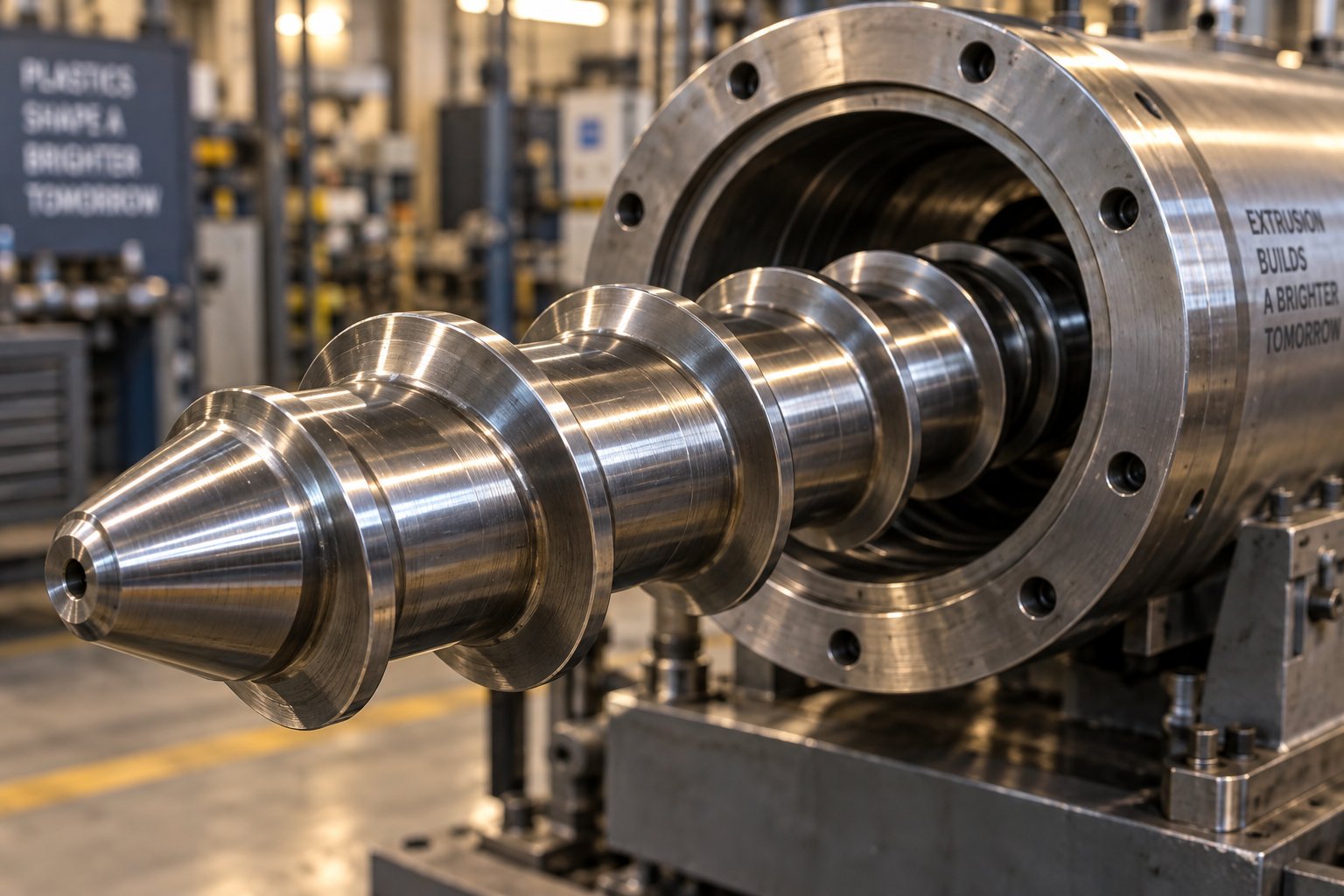
What Nobody Tells You About Screw Barrel For Plastic Machine Design
Oct 10, 2026
Learn how screw barrel for plastic machine design affects melt quality, throughput, and wear life. Covers geometry, resin matching, troubleshooting, and sourcing.
Read Article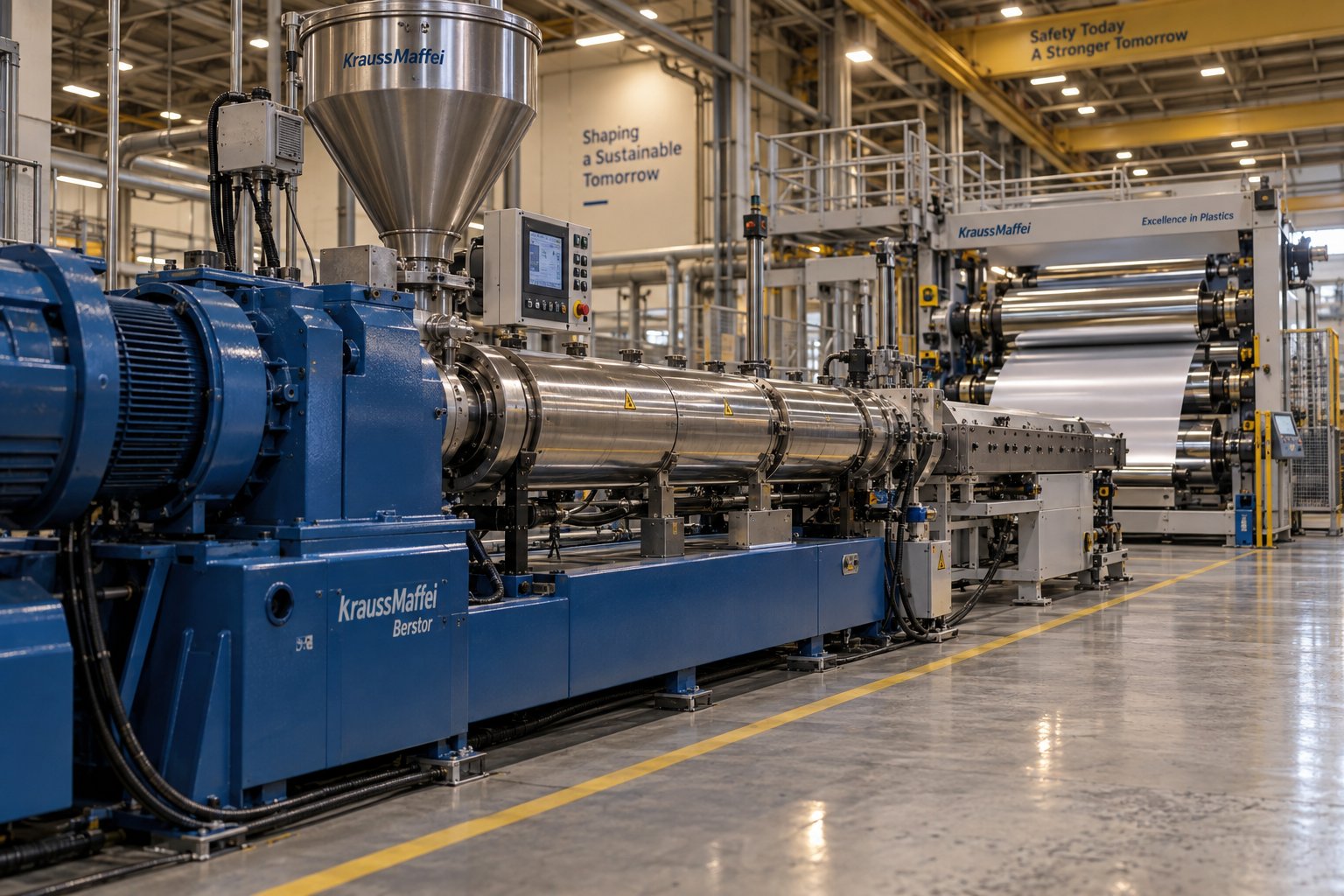
Single Screw Extruder for Sheet: Stop Guessing, Start Specifying
Oct 9, 2026
Learn how to specify a single screw extruder for sheet production. Covers screw geometry, resin-specific processing, troubleshooting, and maintenance best practices.
Read Article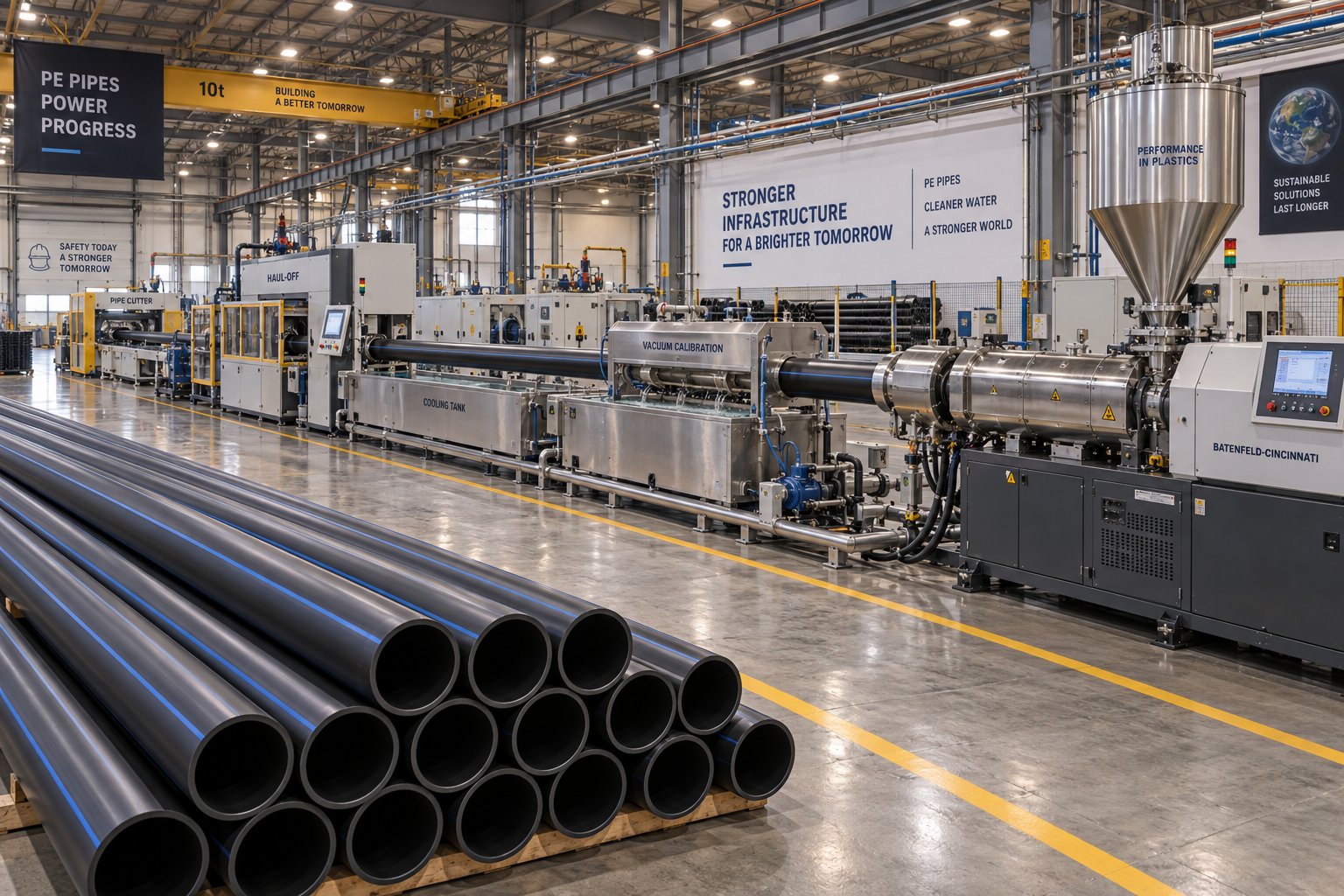
PE Pipe Extruder Machine: What Datasheets Won't Tell You
Oct 9, 2026
Learn how a PE pipe extruder machine works, key specs explained, material grade selection, maintenance tips, and buyer guidance beyond the datasheet.
Read ArticleLooking for something else?
Search by material, symptom or product and jump straight to the relevant page.
These are navigation suggestions based on keyword matching — not a quotation, not a delivery commitment, and not a substitute for engineering review. Final specification is confirmed by our engineers against your drawings and processed material.
Need help with screw barrel selection?
Share your machine model, processed material and application. Our team can help with pricing and technical support.