

What Is a Wenger Single Screw Extruder
If you're evaluating extrusion equipment for food or feed production, one name surfaces repeatedly in industry conversations: Wenger. But what exactly is a Wenger single screw extruder, and why does it command such attention among processing professionals? Let's break it down clearly before diving into the engineering details that make this platform unique.
Defining the Wenger Single Screw Extruder
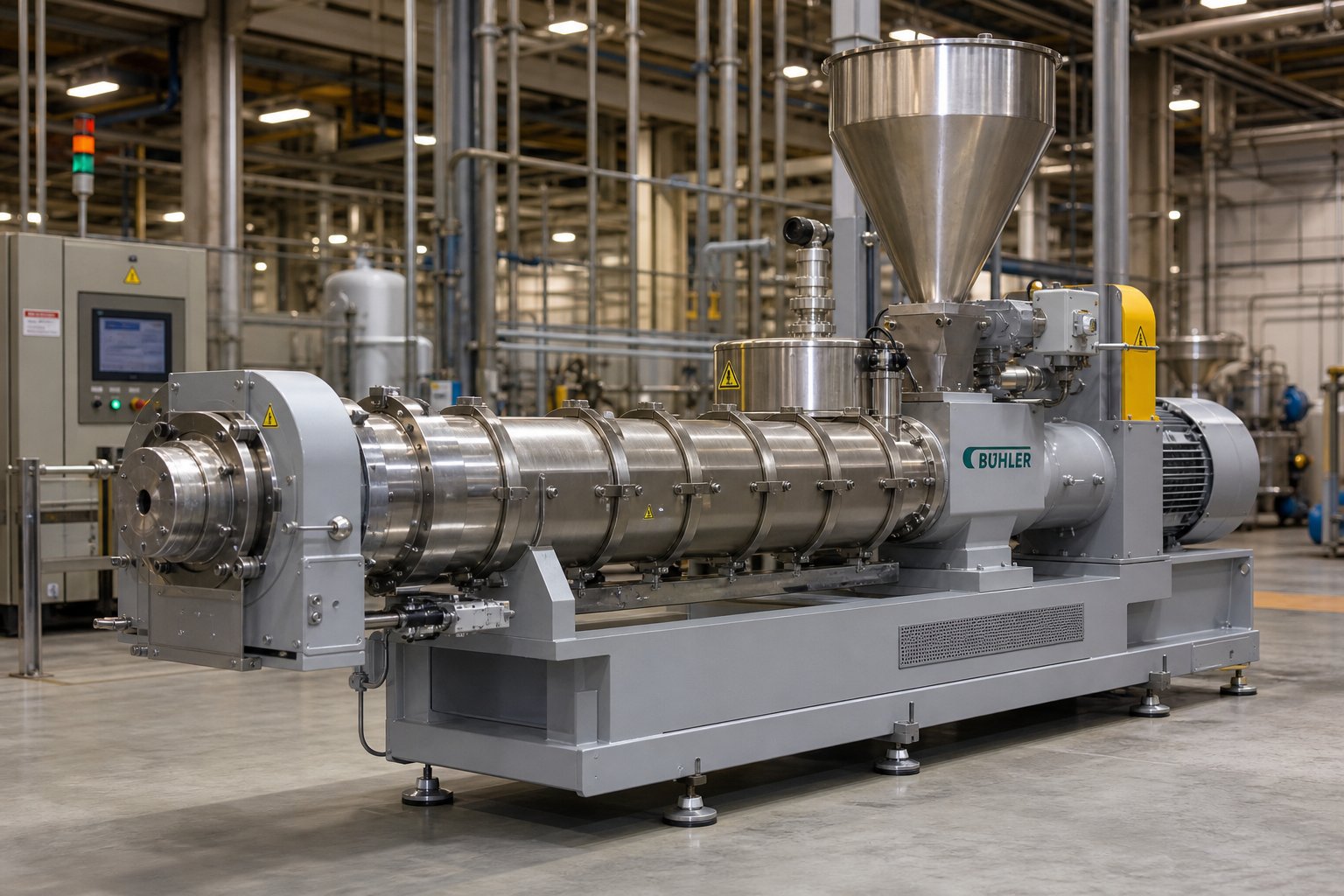
A Wenger single screw extruder is an industrial extrusion system that uses a single rotating screw inside a cylindrical barrel to convey, compress, cook, and shape raw ingredients into finished food or feed products. The Optima is Wenger's flagship single screw platform, purpose-built for high-volume production of pet food kibble, animal feeds, aquatic feeds, snacks, and cereals. Backed by more than 40 years of refinement, the Optima line represents decades of iterative engineering focused on maximizing production potential and available energy through advanced screw flighting and barrel ribbing designs.
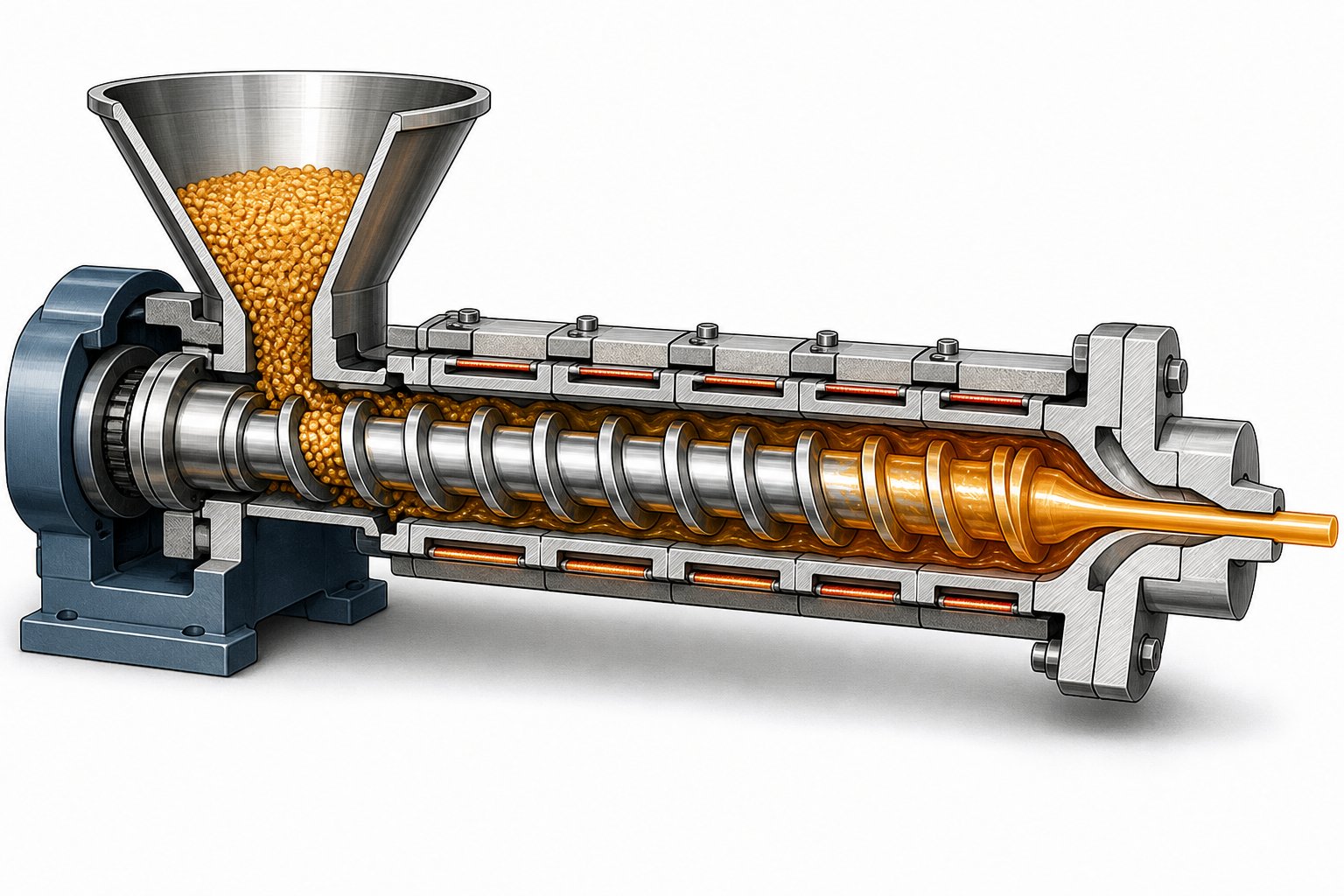
At its core, a single screw extruder works by feeding raw material - typically powders, meals, or doughs - into a hopper, then using the helical flight of a rotating screw to push that material through a heated barrel and out through a shaped die. The material undergoes thermal and mechanical transformation along the way, emerging as a cooked, expanded, or densified product ready for drying and packaging. What separates the Optima from generic single screw extruders is not just the barrel and screw - it's the entire system architecture surrounding them.
Why Understanding This Technology Matters
Imagine you're a plant manager tasked with selecting extrusion equipment for a new pet food line. You'll encounter a dizzying range of options: single screw extruders, twin screw systems, varying barrel lengths, different energy delivery mechanisms. Making the wrong choice means years of suboptimal throughput, excessive operating costs, or products that miss quality targets. That's exactly why a deeper understanding of what specific platforms offer - and where their limits lie - is so valuable.
For engineers, procurement professionals, and operations directors, the question "what is single screw extruder technology, and when is it the right fit?" deserves a thorough answer. Single screw extruders remain the workhorse of the food and feed extrusion industry precisely because they offer a compelling balance of simplicity, reliability, and cost-effectiveness for a wide range of formulations. They feature fewer moving parts than twin screw alternatives, which translates directly into lower capital investment, reduced maintenance complexity, and straightforward operation.
What sets Wenger's approach apart from many single-screw extruder manufacturers is system-level integration. Rather than treating the extruder barrel as an isolated machine, Wenger designs the Optima as part of a complete processing system - including upstream preconditioning that partially hydrates and heats ingredients before they ever reach the screw. This system-level thinking shifts part of the cooking workload away from the barrel, improving product uniformity and reducing mechanical stress on the extruder itself.
This article serves as a comprehensive educational resource covering every dimension you'll need to evaluate: how the extrusion process actually works step by step, the specific design features that distinguish the Optima platform, what Specific Mechanical Energy really means and why it matters, an honest comparison between single screw and twin screw systems, application-specific guidance, and practical advice on maintenance, replacement parts, and total cost of ownership.
The journey starts with the fundamentals - understanding exactly what happens to raw material as it travels from the feed hopper through each zone of the barrel and out through the die.
How Single Screw Extrusion Works Step by Step
Picture a raw blend of grain meals, protein powders, and vitamin premixes sitting in a hopper. Within seconds, that loose, dry mixture will be transformed into a fully cooked, shaped product - kibble, a snack puff, or an aquatic feed pellet. The single screw extruder process responsible for this transformation is elegantly mechanical, yet the physics happening inside the barrel are anything but simple. Understanding each stage gives you the ability to troubleshoot problems, optimize recipes, and make smarter equipment decisions.
Feed, Compression, and Metering Zones Explained
Every single screw extruder barrel is divided into three classical zones, each performing a distinct job on the raw material. Think of them as chapters in a very short, very intense story - the material enters loose and cool, and exits as a pressurized, molten mass ready to be shaped.
The single screw extruder working principle hinges on screw geometry. As the helical flight rotates inside the barrel, it drags material forward through friction between the material, the barrel wall, and the screw root. What changes from zone to zone is the depth of the screw channel - and that changing depth is what drives the entire cooking and forming process.
| Zone | Function | What Happens to Material |
|---|---|---|
| Feed (Conveying) | Accepts and transports raw material into the barrel | Loose, particulate ingredients enter from the hopper or preconditioner. Channel depth is at its deepest here, allowing maximum intake volume. Material begins to compact as it moves forward, and frictional heat starts building at the barrel wall. Air trapped between particles is pushed backward and vented. |
| Compression (Transition) | Builds pressure and initiates cooking through mechanical shear | Channel depth gradually decreases - the walls are effectively "closing in" on the material. This compression squeezes out remaining air pockets, increases density, and dramatically raises shear forces. Temperatures climb as mechanical energy converts to heat. Starch granules begin to gelatinize, proteins start to denature, and the material transitions from a granular mass into a viscous, dough-like melt. |
| Metering | Homogenizes the melt and generates consistent die pressure | Channel depth is constant but much shallower than the feed zone. The now-molten material is mixed to uniform temperature and viscosity. Pressure builds steadily toward the die end of the barrel. This zone determines the final degree of cook and the consistency of flow rate exiting the extruder. |
You'll notice that the transition from deep to shallow channel depth is the engine driving everything. That geometric change - often described by the compression ratio (the volume of the first flight divided by the volume of the last) - controls how aggressively the material is worked. A higher compression ratio means more shear and faster pressure buildup; a lower ratio treats the material more gently.
Two other screw geometry parameters deserve attention. Pitch - the distance from one flight to the next - governs how quickly material advances per revolution. Many industrial screws use a "square pitch" design where the pitch equals the barrel diameter, making it easy to calculate the L/D ratio (length-to-diameter ratio) simply by counting screw turns. Typical L/D ratios for food and feed single screw extruders range from roughly 12:1 to over 20:1. A longer barrel provides more residence time for cooking and mixing, while a shorter barrel limits energy input - the right choice depends entirely on the product being made.
The Role of Preconditioning Before the Barrel
Here's where the Wenger approach diverges from many conventional extrusion setups. Before raw ingredients ever touch the screw, they pass through a preconditioner - an upstream vessel with rotating paddles that blends the dry mix with steam and water. This step typically raises the material's moisture content and temperature significantly before it enters the feed zone.
Why does this matter so much? Preconditioning essentially gives the cooking process a head start. When material arrives at the barrel already partially hydrated and heated, the extruder screw doesn't have to do all the heavy lifting alone. The practical benefits cascade through the entire system:
- Lower mechanical energy demand - The screw needs less torque to achieve the target degree of cook, reducing motor load and energy consumption.
- Improved product uniformity - Ingredients that enter the barrel at consistent moisture and temperature produce more predictable expansion, density, and texture at the die.
- Reduced barrel and screw wear - Less mechanical work inside the barrel means less abrasive contact between raw particles and metal surfaces, extending component life.
- Greater formulation flexibility - Operators can process higher-fat or higher-moisture recipes more reliably because some of the thermal work has already been accomplished before the compression zone.
In Wenger's system design philosophy, the preconditioner and the Optima barrel function as a unified processing system rather than separate machines bolted together. This integration is a key reason the platform delivers consistent results across a broad range of food and feed formulations - the barrel itself doesn't have to compensate for raw material variability that could have been addressed upstream.
From Barrel to Die
At the metering zone's exit, the fully cooked, pressurized material reaches the die plate - a perforated metal plate with precisely shaped openings that define the product's cross-sectional profile. Imagine squeezing toothpaste through a nozzle; the principle is similar, but here the "toothpaste" is a superheated, pressurized dough at well above 100 degrees Celsius.
As the extrudate passes through the die orifices, pressure drops instantly to atmospheric levels. In direct-expanded products like pet food kibble or puffed snacks, this sudden pressure release causes moisture trapped in the matrix to flash into steam, creating the characteristic cellular, expanded structure. For denser products like sinking aquatic feeds, die geometry and upstream process conditions are tuned to minimize expansion.
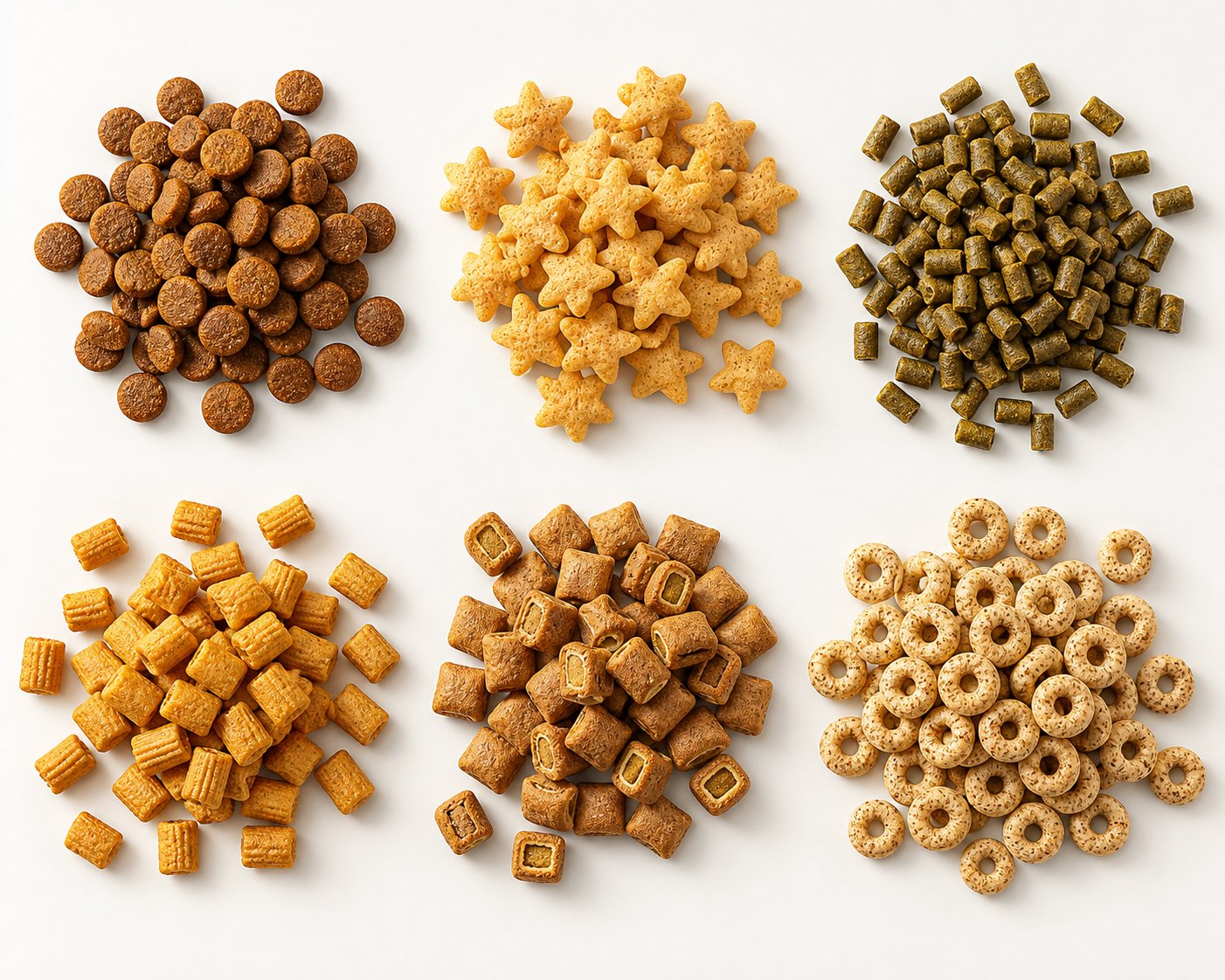
A rotating knife assembly mounted against the die face cuts the continuous ropes of extrudate into individual pieces. Knife speed relative to extrudate flow rate determines piece length, while the die opening shape sets the cross-section - round, star-shaped, bone-shaped, or virtually any profile a product designer envisions.
The freshly cut pieces are still soft and high in moisture at this stage. They'll move immediately into a dryer and then a cooler to reach their final moisture content and firmness - but the fundamental transformation happened inside the barrel and die in a matter of seconds. That speed and intensity are precisely what make the screw's geometry, the barrel's energy delivery, and the die's design so critical to final product quality. Each of those elements is engineered for fine-tuning on the Optima platform, starting with one of its most distinctive features: the Mid-Barrel Valve.
Key Design Features of the Wenger Optima
The Mid-Barrel Valve teased at the end of the previous section isn't just an incremental add-on - it's arguably the single most impactful single screw extruder design innovation Wenger brings to the table. But it doesn't work in isolation. The Optima platform pairs the MBV with a modular screw and barrel architecture that lets operators reshape the machine's processing characteristics without replacing the entire extruder. Together, these features explain why the Optima consistently appears on shortlists when processors evaluate the best single screw extruder for high-volume food and feed production.
Mid-Barrel Valve and Energy Control
Imagine you're running a standard single screw extruder machine at a fixed screw speed. You want more cook - more starch gelatinization, more protein texturization - but increasing screw RPM would also increase throughput and potentially overshoot your dryer's capacity. What do you do? In a conventional setup, your options are limited. The Mid-Barrel Valve changes that equation entirely.
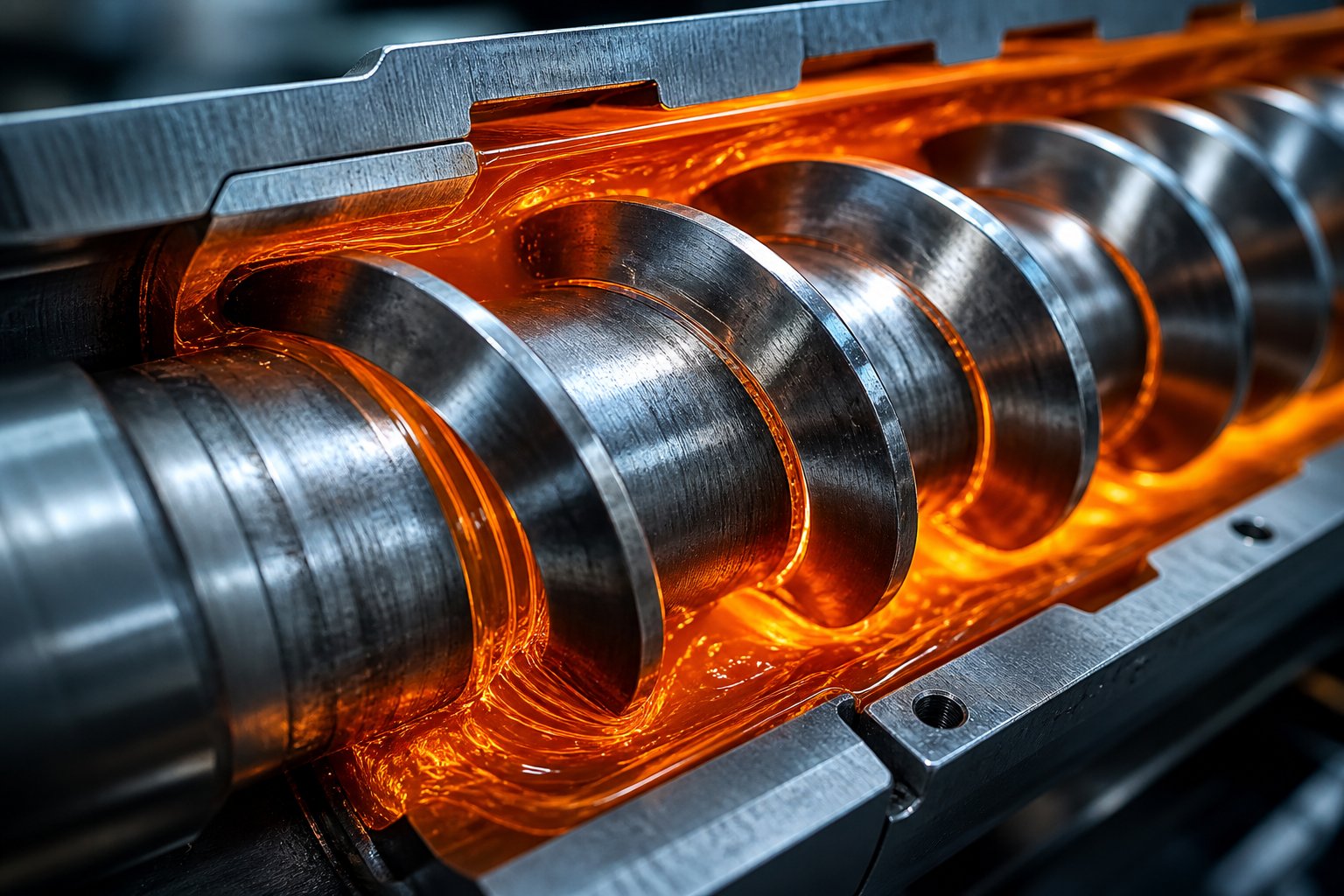
The MBV is a mechanically adjustable restriction element positioned partway along the barrel's length. When engaged, it narrows the flow channel at that point, forcing material to fill the barrel completely upstream of the valve. This filled zone creates a "plug" of material that must be worked harder by the screw flights before it can pass through the restriction. The result is a significant increase in residence time and mechanical energy input within that section of the barrel - without changing screw speed or throughput rate.
The practical impact is substantial. According to published Wenger data, the MBV can deliver up to 50% more Specific Mechanical Energy compared to the same barrel running without the valve engaged. That's a massive lever for operators to pull when they need to shift between products of different densities, textures, or degrees of cook on the same production line.
Consider a pet food plant producing both a dense, low-expansion training treat and a highly expanded, light-textured kibble. With the MBV, the operator can adjust the valve position to modulate how much mechanical energy the material absorbs - dialing up energy for the expanded product and backing it off for the dense one - all while keeping the screw turning at the same speed. This decoupling of energy input from screw RPM is what makes the MBV so valuable. It gives the Optima a degree of process flexibility that generic single screw platforms simply cannot match through screw speed adjustments alone.
Screw and Barrel Configuration Options
The MBV is the headline feature, but the Optima's modularity runs deeper. Wenger engineered the platform so that key wear components and geometry-defining elements can be swapped independently, giving processors the ability to fine-tune shear intensity, mixing efficiency, and conveying behavior for different formulations. Think of it like a configurable toolbox rather than a fixed machine.
Here are the primary configurable elements that quality single screw extruder platforms like the Optima make accessible:
- Screw flighting style - Different helical flight profiles alter how aggressively material is sheared and compressed. Options may include single-flight, double-flight, or cut-flight configurations, each affecting mixing intensity and forward conveyance differently.
- Barrel ribbing pattern - Internal grooves machined into barrel liners increase friction between the barrel wall and the material. By changing the ribbing geometry - depth, angle, and spacing - operators influence how effectively the barrel "grips" the material, which directly governs conveying efficiency and shear generation.
- L/D ratio selection - Barrel sections can be added or removed to change the overall length-to-diameter ratio, effectively lengthening or shortening the cook time. A longer L/D delivers more residence time and energy input; a shorter configuration suits products requiring less cook or gentler processing.
- Die plate options - Interchangeable die plates with different orifice counts, sizes, and shapes allow the same extruder to produce round kibble, star-shaped snack puffs, or cylindrical aquatic feed pellets on different production runs.
This modularity matters because no two formulations behave identically inside a barrel. A high-starch cereal base responds to shear and heat very differently than a high-protein, high-fat pet food recipe. Rather than forcing operators to run every recipe through the same fixed geometry, the Optima's interchangeable components let the machine adapt to the product - not the other way around. Among single screw extruder manufacturers, this level of configurability is a distinguishing characteristic of premium platforms designed for multi-product facilities.
Build Quality and Longevity
Sounds like a lot of swappable parts - so how do they hold up under the punishing conditions inside an extrusion barrel? At the temperatures, pressures, and abrasive particle loads typical of food and feed extrusion, component longevity isn't a luxury. It's an operational necessity.
Industrial single screw extruders at this tier are expected to feature wear-resistant metallurgy throughout all product-contact surfaces. Screw flights endure constant abrasive friction from raw ingredients like bone meal, mineral premixes, and fibrous plant materials. Barrel liners face the same punishment on their inner surfaces. The material science behind wear protection is highly specialized - manufacturers select from extensive portfolios of hardened alloys, coatings, and surface treatments tailored to the specific abrasion and corrosion profile of each application.
Precision machining is equally critical. The clearance between screw flight tips and the barrel wall is measured in fractions of a millimeter. When that clearance is tight and consistent, the extruder conveys efficiently, builds pressure predictably, and delivers uniform product. As wear gradually opens that gap, performance degrades - throughput drops, motor load increases, and product density becomes inconsistent. This reality makes the quality of initial machining and the hardness of wear surfaces direct predictors of how long the machine performs to specification before components need replacement.
OEM-grade replacement parts play a crucial role in sustaining that performance over years of production. Using components manufactured to original tolerances and metallurgical standards ensures that a rebuilt barrel section performs identically to the one it replaced. Cutting corners with substandard replacement parts might save money upfront, but the downstream costs - inconsistent product, shortened replacement intervals, and potential unplanned downtime - almost always outweigh the savings.
Yet even the best-built components are consumables in an extrusion environment. Screws wear, barrels erode, and die plates fatigue. Understanding the wear mechanisms at work - and knowing when to inspect, measure, and replace - is what separates well-run extrusion lines from those that slowly drift out of specification without anyone noticing until product quality complaints arrive.
Understanding Specific Mechanical Energy in Extrusion
Equipment brochures love to reference Specific Mechanical Energy. They'll tell you a feature "increases SME by 50%" or "delivers greater SME range" - and then move on without ever explaining what SME actually is, how it's measured, or why you should care. That gap leaves engineers and plant managers nodding along to marketing language they can't fully evaluate. Let's fix that.
What Is SME and How Is It Measured
Specific Mechanical Energy is the mechanical work input per unit mass of material passing through the extruder. It's typically expressed in kilojoules per kilogram (kJ/kg) or watt-hours per kilogram (Wh/kg). In plain terms, SME quantifies how hard the screw "works" each kilogram of raw material as it travels from the feed zone to the die.
The calculation itself is straightforward. SME is a function of three measurable variables:
- Screw speed (RPM) - Higher rotational speed increases mechanical energy input.
- Torque (or motor load) - Greater resistance from the material inside the barrel means the motor works harder, delivering more energy per revolution.
- Throughput rate (kg/h) - The mass of material flowing through the system dilutes or concentrates the energy each kilogram receives.
Research published in the Journal of Food Science and Technology confirms that SME can be determined from the electric current and voltage of the extruder motor, divided by the mass flow rate of raw material. In that study on extruded mushroom-rice snacks, SME values ranged from approximately 199 to 416 kJ/kg depending on process conditions - a range that dramatically influenced final product characteristics.
Why does this number matter so much? Because SME directly governs the degree of transformation your raw ingredients undergo. It influences starch gelatinization, protein texturization, cellular expansion, and the overall "degree of cook." Two batches of identical ingredients processed at different SME levels will produce noticeably different products - different densities, different textures, different nutritional profiles. SME is the invisible hand shaping everything that exits the die.
Why SME Control Matters for Product Quality
Think of SME as a volume dial for cooking intensity. Too low, and you get undercooked, dense, poorly expanded products with incomplete starch gelatinization - essentially raw dough compressed into pellet form. Too high, and you risk degrading heat-sensitive nutrients like vitamins and amino acids, destroying desirable textures, or creating excessively hard, glassy structures that consumers reject.
The sweet spot sits somewhere in between, and it's different for every product. A highly expanded breakfast cereal puff demands significantly higher SME than a dense, sinking aquatic feed pellet. A high-protein pet food treat requires a different energy profile than a starch-heavy snack curl. Research consistently shows that feed moisture is the single most influential process parameter affecting SME - higher moisture acts as a lubricant, reducing viscosity and friction, which lowers the energy the screw can impart to the material. The same study referenced above found that the squared term of feed moisture demonstrated a statistically significant effect on SME, highlighting the nonlinear relationship between moisture content and energy input.
This is precisely where the Wenger Mid-Barrel Valve concept earns its engineering credibility. On a conventional single screw extruder, your primary lever for adjusting SME is screw speed - but changing screw speed simultaneously alters throughput, residence time, and shear rate. Everything moves together, making it extremely difficult to isolate one variable. The MBV gives operators an independent mechanical lever: by adjusting the restriction point partway along the barrel, they can increase residence time and fill ratio in the upstream section, raising SME without touching the screw speed dial. This decoupling enables finer control over texture and density, letting the same extruder produce a wider range of finished products.
SME is arguably the single most important process variable in extrusion cooking, yet it is rarely explained in equipment marketing literature. Understanding what drives SME - and having mechanical tools to control it independently of screw speed - separates precision extrusion from guesswork.
SME in Single Screw vs Twin Screw Systems
If SME is so critical, how do single screw extruder and twin screw extruder platforms compare in their ability to deliver and control it? The honest answer: twin screw systems inherently offer a wider SME range. Their intermeshing, co-rotating screw geometry creates positive displacement conveying and intensive distributive mixing that a single screw's friction-driven mechanism simply cannot replicate. The intermeshing zone generates high localized shear, and operators can rearrange modular screw elements - kneading blocks, reverse-flight elements, mixing paddles - to sculpt the energy profile with surgical precision.
This broader SME window is one of the key advantages of twin screw extruder over single screw extruder designs. It's why twin screw platforms dominate applications requiring extreme formulation flexibility, very high or very low SME targets, or rapid changeovers between radically different products.
Yet the performance gap is narrower than you might expect for many mainstream food and feed applications. Features like the MBV effectively extend the single screw's usable SME range upward by creating filled-barrel conditions that mimic some of the energy intensification twin screws achieve through intermeshing geometry. For standard kibble, direct-expanded snacks, and conventional aquatic feeds - products that occupy a moderate band of the SME spectrum - a well-configured single screw extruder vs twin screw extruder comparison often favors the single screw on total cost of ownership while still meeting quality targets.
The real question isn't which architecture delivers "more" SME. It's whether your target products fall within the SME range a single screw system can practically reach - and whether the capital and operating cost advantages of single screw technology justify that choice. Answering that question requires a broader comparison of the two platforms across multiple dimensions, from mixing capability to maintenance complexity.
Single Screw vs Twin Screw Extruder: An Honest Comparison
SME range, mixing capability, maintenance complexity, capital cost - the previous section ended with a promise to compare single screw and twin screw platforms across every dimension that actually matters to a buying decision. Let's deliver on that promise with a balanced, engineering-grounded analysis rather than a sales pitch for either side.
Fundamental Mechanical Differences
The core difference between single screw and twin screw extruder designs comes down to how material moves through the barrel. A single screw extruder relies on one rotating screw inside a smooth or grooved barrel. Material advances because friction between the barrel wall and the ingredient mass drags it forward along the screw channel. This friction-driven conveying mechanism is simple, reliable, and effective - but it means the machine depends heavily on the material's own frictional properties to generate forward flow.
Twin screw extruders take a fundamentally different approach. Two screws - either co-rotating (turning in the same direction) or counter-rotating - intermesh inside a figure-eight barrel bore. That intermeshing geometry creates positive displacement conveying: material is physically trapped between the flights of the two screws and pushed forward mechanically, regardless of its frictional characteristics. Imagine two interlocking gears moving product between their teeth - that's the basic principle.
This mechanical distinction cascades into several practical differences:
- Mixing efficiency - The intermeshing zone in twin screw systems generates intensive distributive and dispersive mixing. Single screw platforms produce comparatively limited cross-channel mixing, relying on barrel ribbing and screw geometry modifications to improve it.
- Self-wiping capability - Co-rotating twin screws continuously wipe each other's surfaces, preventing material buildup and enabling cleaner product changeovers. Single screw barrels can accumulate stagnant material in low-flow zones, requiring more thorough cleaning between runs.
- Process flexibility - Twin screw systems accept modular screw elements - kneading blocks, reverse flights, mixing paddles - that can be rearranged along the shaft to reshape the energy and mixing profile for each formulation. Single screw configurations are adjustable but within a narrower window.
Does that make twin screw technology universally superior? Not at all. Greater mechanical complexity introduces its own costs and trade-offs, which brings us to the question that actually drives purchasing decisions.
When to Choose Single Screw Over Twin Screw
When comparing single vs twin screw extruders, it's tempting to default to the more capable platform. But "more capable" doesn't always mean "more appropriate." Several scenarios strongly favor a single screw solution:
- Simpler, stable formulations - Products built around well-characterized starch and protein blends - standard pet food kibble, livestock feed, direct-expanded corn snacks - don't typically demand the intensive mixing a twin screw provides. A single screw handles these formulations with ease.
- High-volume, steady-state production - When you're running the same product around the clock with minimal changeovers, the single screw's simplicity translates directly into higher uptime and lower operating cost per ton.
- Capital budget constraints - A single screw extruder typically costs significantly less to purchase than a comparable-capacity twin screw system. For operations where the product range falls within single screw capability, that capital savings compounds over the equipment's lifetime.
- Maintenance simplicity - Fewer wear parts, simpler gearbox design, and more straightforward screw removal mean lower maintenance labor and faster turnaround during scheduled service.
Within Wenger's own product lineup, this logic plays out clearly. The Optima single screw platform targets established product lines where formulations are proven and throughput volume is the priority. For processors needing to handle more complex recipes - high meat inclusion, novel protein sources, or products requiring extreme SME flexibility - Wenger offers twin screw platforms like the Magnum ST and Thermal Twin. Neither replaces the other; they serve different operational realities.
The honest takeaway when evaluating the twin screw vs single screw extruder debate? Match the machine's capability profile to your actual product requirements rather than buying capability you won't use.
Side-by-Side Comparison Table
To make the difference between single and twin screw extruder platforms easier to evaluate at a glance, the following table consolidates the key decision dimensions into a single reference. Keep in mind that these are general characterizations - specific models from any manufacturer may shift individual parameters.
| Dimension | Single Screw Extruder | Twin Screw Extruder |
|---|---|---|
| Capital Cost | Lower - simpler construction with one screw, standard gearbox, and less complex barrel | Higher - dual screws, specialized gearbox, figure-eight barrel bore, and modular element inventory |
| Operating Cost | Generally lower energy consumption per ton for suitable products; fewer wear components to replace | Higher energy and parts costs, partially offset by greater formulation flexibility and reduced waste during changeovers |
| Mixing Capability | Moderate - limited cross-channel mixing improved by barrel ribbing and cut-flight screw designs | Excellent - intermeshing geometry provides intensive distributive and dispersive mixing |
| Throughput Range | High-capacity steady-state production; well suited to dedicated lines | Broad range from pilot scale to full production; handles both low and high volumes effectively |
| Formulation Flexibility | Best with stable, well-characterized recipes; limited tolerance for high-fat or highly variable inputs | Handles wide ingredient variability, high fat levels, and novel protein sources with fewer adjustments |
| Maintenance Complexity | Straightforward - single screw removal, simpler gearbox, fewer parts inventory | More involved - dual screw extraction, modular element management, specialized gearbox service |
| SME Range | Moderate range, extendable with features like Wenger's Mid-Barrel Valve | Wider inherent range due to intermeshing geometry and modular screw element configurations |
| Best-Suited Applications | Standard pet food kibble, livestock feed, direct-expanded snacks, cereals, conventional aquatic feeds | High-meat pet foods, textured plant proteins, specialty aquafeeds, co-extruded products, R&D and pilot operations |
One pattern emerges clearly from this comparison: the difference between single screw extruder and twin screw extruder technology isn't about one being "better" - it's about alignment between machine capability and production need. A single screw and twin screw extruder each occupy a distinct performance envelope, and the smartest equipment decisions come from understanding exactly where your products sit within those envelopes.
That understanding becomes especially sharp when you move from abstract comparisons to specific applications. Which products genuinely thrive on a single screw platform, and where does the Wenger Optima fit into real-world production scenarios across pet food, snacks, aquafeed, and beyond?
Best Applications for Wenger Single Screw Extrusion
Abstract comparisons only get you so far. The real question is: what specific products roll off a single screw food extruder day after day, shift after shift, with the consistency and economics that justify the platform? The answer spans a surprisingly broad range of industries - from pet food plants running thousands of tons per month to specialty aquafeed operations fine-tuning pellet density for a single fish species.
Pet Food and Animal Feed Production
This is the heartland of single screw extruder food processing. Standard dry kibble for dogs and cats, poultry feed crumbles, swine rations, and ruminant feed pellets all share a common profile: relatively straightforward starch-and-protein formulations processed at high volume with minimal changeovers. The predictable shear profile of a single screw system suits these recipes perfectly because the ingredients behave consistently batch after batch.
Imagine a pet food facility producing 10 tons per hour of a standard chicken-and-rice kibble formula. The recipe has been validated, the moisture targets are well understood, and the production schedule calls for the same SKU running five days straight. A single screw platform like the Optima thrives in exactly this scenario - delivering steady throughput, repeatable expansion, and uniform cook with lower operating cost per ton than a twin screw alternative would require. Wenger's dedicated PetFLEX platform builds on this core single screw technology with application-specific optimizations for the pet food segment.
Snack Food and Cereal Processing
Direct-expanded snacks - corn curls, puffed rice cakes, cheese puffs - represent another sweet spot for single screw extruder applications. These products rely on high-starch formulations that gelatinize readily under moderate shear, producing the light, crispy cellular structure consumers expect. Breakfast cereals, crouton-style pieces, and breadcrumb coatings follow a similar processing logic: push a well-characterized dough through a shaped die at controlled SME, cut to size, and dry.
The key advantage here is consistency at speed. When your product's quality depends on hitting the same expansion ratio and bulk density every run, the single screw's simpler conveying mechanism actually works in your favor - fewer variables to drift means fewer surprises at the dryer exit.
Aquafeed and Specialty Applications
Aquatic feeds add an interesting wrinkle: pellet density must be precisely controlled to determine whether the feed floats, slowly sinks, or drops rapidly. A floating tilapia feed and a fast-sinking shrimp pellet demand very different processing conditions despite potentially similar raw ingredients. This is where SME control via the Mid-Barrel Valve proves especially valuable - operators can shift pellet density by adjusting the valve position rather than reformulating the recipe or swapping die plates.
Wenger's AquaFLEX platform targets this market specifically, combining core single screw and twin screw extrusion technologies with die and cutting configurations optimized for aquatic feed geometry and water stability requirements.
Industrial and Non-Food Uses
Single screw extrusion technology extends well beyond the food and feed world. In plastics processing, the plastic single screw extruder remains the dominant platform for continuous production of pipes, profiles, films, and sheets - a PVC single screw extruder producing window profiles, for example, operates on the same fundamental conveying principles discussed throughout this article. A single screw filament extruder serves 3D printing supply chains by converting polymer pellets into precision-diameter filament spools. While these industrial applications fall outside Wenger's food-and-feed focus, they illustrate the versatility of the underlying technology.
Here's a scannable overview of the primary application categories where single screw extrusion delivers its strongest value proposition:
- Standard pet food kibble - High-volume, stable formulations with predictable expansion and cook requirements.
- Livestock and poultry feed - Cost-sensitive, high-throughput production where simplicity and uptime matter most.
- Direct-expanded snacks - Starch-based puffs and curls requiring consistent cellular structure at high line speeds.
- Breakfast cereals and croutons - Moderate-shear cooking with precise shape control through interchangeable die plates.
- Floating and sinking aquatic feeds - Density-controlled pellets where MBV-driven SME adjustment replaces recipe reformulation.
- Plastic pipe, film, and sheet extrusion - Continuous thermoplastic processing leveraging friction-driven conveying.
- Filament and profile extrusion - Precision continuous products for industrial and additive manufacturing supply chains.
The common thread across all these applications? Each involves a well-defined formulation processed at steady state, where the single screw's inherent simplicity translates directly into reliability and lower per-unit cost. When formulations grow more complex - high meat inclusion, novel proteins, multi-phase textures - the calculus shifts toward twin screw platforms. But for the vast middle ground of extruded products consumed globally every day, single screw technology remains the production backbone.
Of course, knowing which applications fit the platform is only half the equation. The technical vocabulary surrounding extrusion equipment - L/D ratios, screw flighting, barrel ribbing, gelatinization - can be a barrier for procurement managers and operations directors encountering these terms for the first time. A clear glossary bridges that gap.
Single Screw Extrusion Glossary of Key Terms
Ever read an equipment spec sheet and feel like half the words belong to a different language? You're not alone. Extrusion terminology trips up even experienced operations directors when they move from general food processing into the specialized world of single-screw extruders. The terms below appear repeatedly in Wenger literature, supplier proposals, and the earlier sections of this article - so here they are, stripped of jargon and explained in plain language.
Extrusion Hardware Terms
These terms describe the physical components you'll see on any single extruder screw system, from the barrel assembly to the shaping hardware at the discharge end. Understanding what each part does makes equipment comparisons - and maintenance conversations with your engineering team - far more productive.
| Term | Definition |
|---|---|
| L/D Ratio | The length-to-diameter ratio of the screw and barrel assembly. A barrel that is 20 times as long as its internal diameter has a 20:1 L/D ratio. Higher ratios provide more residence time and energy input for thorough cooking; lower ratios suit products needing gentler, shorter processing. Typical food and feed extruders range from roughly 12:1 to over 20:1. |
| Screw Flighting | The helical ridge (or "flight") that spirals along the screw shaft like a corkscrew. Flight geometry - depth, pitch, number of starts, and whether flights are continuous or interrupted ("cut flights") - determines how aggressively the screw conveys, compresses, and shears the raw material. Different flighting styles are swapped in or out to match specific formulations. |
| Barrel Ribbing | Internal grooves machined into the barrel liner's inner surface. These grooves increase friction between the barrel wall and the material being processed, improving the barrel's ability to "grip" the product and drive it forward. Ribbing pattern - groove depth, angle, and spacing - is a key configurable variable on platforms like the Wenger Optima. |
| Die Plate | The perforated exit component bolted to the discharge end of the barrel. Each opening in the die plate shapes the extrudate's cross-section as it exits under pressure - round holes produce cylindrical pellets, shaped openings create stars, bones, or rings. Die geometry also influences expansion, back-pressure, and product density. |
| Preconditioner | An upstream mixing and hydration vessel positioned before the extruder barrel. Rotating paddles blend dry ingredients with injected steam and water, raising moisture content and temperature before the material reaches the screw. Preconditioning reduces mechanical energy demand inside the barrel, improves cook uniformity, and extends wear part life. |
| Single Screw Extruder Gearbox | The speed-reduction and torque-multiplication unit connecting the drive motor to the screw shaft. It converts high-speed, low-torque motor output into the low-speed, high-torque rotation the screw requires to convey and compress material under heavy load. Gearbox durability and precision directly affect long-term extruder reliability. |
| Vented Single Screw Extruder | A barrel configuration that includes one or more vent ports along its length, allowing steam, air, or volatile compounds to escape during processing. Venting is especially useful when processing high-moisture ingredients or when degassing is needed to achieve a denser, void-free extrudate. While more common in plastics extrusion, vented designs also appear in certain food and feed applications. |
Process and Performance Terms
These terms describe what's happening inside the barrel during operation and how the finished product's quality is measured. You'll encounter them in process control discussions, quality lab reports, and virtually every technical conversation about extrusion performance.
| Term | Definition |
|---|---|
| Specific Mechanical Energy (SME) | The mechanical work input per unit mass of material, typically expressed in kJ/kg or Wh/kg. SME is calculated from screw speed, motor torque, and throughput rate. It directly governs starch gelatinization, protein texturization, and product expansion. As research on extruded flour properties confirms, SME is one of the most frequently documented system parameters because it quantifies the energy responsible for transforming raw materials. |
| Residence Time | The duration material spends inside the barrel from feed intake to die exit. Longer residence time means more exposure to heat and shear, increasing the degree of cook. Residence time is influenced by screw speed, barrel length (L/D ratio), fill level, and any flow restrictions such as a Mid-Barrel Valve. Adjusting residence time without changing throughput is one of the key advantages of valve-equipped single screw platforms. |
| Gelatinization | The irreversible transformation of raw starch granules under heat and moisture. During gelatinization, starch granules absorb water, swell, and lose their crystalline structure, converting from an opaque, gritty powder into a translucent, viscous gel. The degree of gelatinization directly affects product digestibility, texture, and expansion. Research shows that increased extrusion temperature and moisture promote greater gelatinization, while low moisture intensifies mechanical shear effects on starch structure. |
| Bulk Density | The mass per unit volume of the finished extruded product, expressed in g/cm3 or kg/m3. A highly expanded puff has low bulk density; a dense sinking aquatic feed pellet has high bulk density. Temperature, moisture, and screw speed during extrusion all influence bulk density - higher temperatures and screw speeds generally reduce it by promoting greater expansion at the die exit. |
| Throughput | The mass of product processed per hour, typically expressed in kg/h or metric tons per hour (MT/h). Throughput is governed by screw speed, screw geometry, material properties, and die resistance. It is one of the primary variables used to calculate SME and is a core metric for production planning and cost-per-ton analysis. |
Keep this glossary bookmarked. These twelve terms form the shared vocabulary of every extrusion discussion - whether you're reviewing a Wenger proposal, comparing single-screw extruders from different manufacturers, or diagnosing a production issue with your maintenance team. Speaking the same language as your engineers and suppliers eliminates costly misunderstandings and sharpens your ability to evaluate equipment performance claims on their technical merits.
And speaking of performance - even the best-understood equipment eventually faces the physical reality of wear. Screws erode, barrel liners thin out, and product consistency starts drifting. Recognizing the warning signs early, and knowing your options for replacement components, is what keeps a well-specified extrusion line running at peak output year after year.
Maintaining and Replacing Single Screw Extruder Components
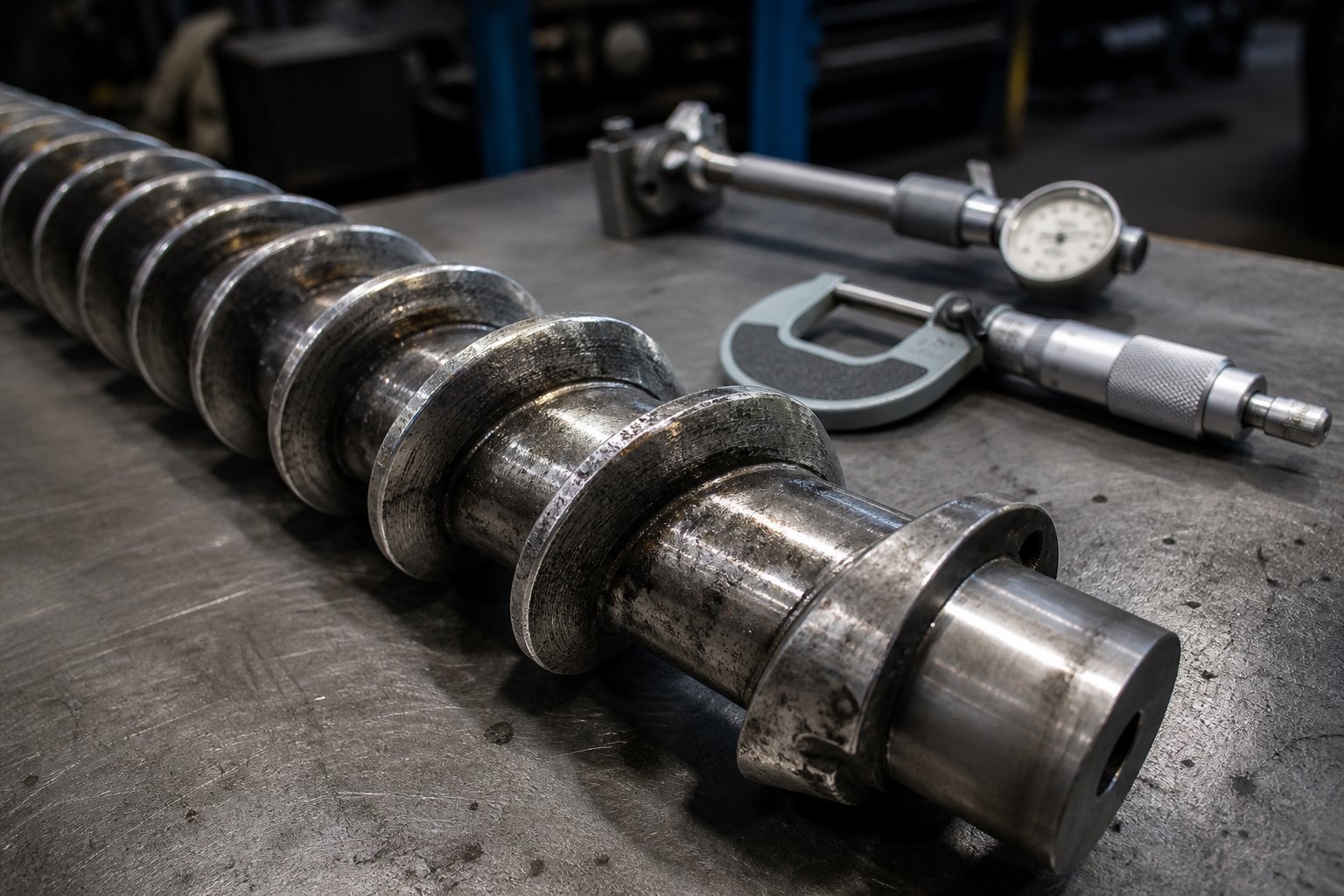
Every screw flight that contacts raw material is slowly losing metal. Every barrel liner absorbing the friction of high-speed conveying is gradually widening its bore. This isn't a defect - it's physics. The single screw extruder screw and barrel are precision wear parts operating in one of the harshest environments in food and feed processing: high temperatures, extreme pressures, and constant abrasive contact with mineral-laden ingredients. Recognizing when that wear crosses the line from "acceptable" to "costly" is a skill that separates proactive operations from reactive ones.
How Screw and Barrel Wear Affects Performance
Imagine pouring water through a garden hose with a tiny pinhole leak. At first, you barely notice the difference. But as that hole widens, more water escapes sideways and less reaches the end of the hose. The same principle governs what happens inside a worn extruder barrel.
The critical dimension is the flight clearance - the gap between the outer edge of the screw flight and the inner wall of the barrel. When new, this clearance is remarkably tight. Industry guidelines from experts like Mark Spalding and Tim Womer place the typical as-new clearance at roughly the nominal screw diameter divided by 1,000 per side. For a 100 mm screw, that's only about 0.1 mm on each side - barely the thickness of a sheet of paper.
Abrasive raw materials are the primary culprits behind clearance growth. Bone meal, mineral premixes, calcium carbonate, fibrous plant materials, and glass-filled compounds all act like fine sandpaper grinding against the screw flight tips and barrel liner surfaces with every revolution. Corrosive ingredients and acidic process conditions accelerate the damage by chemically pitting exposed metal surfaces, weakening them against further abrasive attack.
As that clearance widens, three things happen simultaneously - and none of them are good:
- Conveying efficiency drops. Material that should be pushed forward by the screw flights instead leaks backward over the worn flight tips. The screw spins, but less product moves toward the die per revolution.
- Pressure generation decreases. The worn clearance acts as a bypass path, bleeding off the pressure the metering zone needs to force material through the die consistently.
- Product consistency degrades. Uneven pressure and reduced mechanical energy input lead to variable expansion, inconsistent density, and fluctuating cook levels - the kind of subtle drift that may not trigger an alarm but will eventually show up as customer complaints or quality holds.
The economic impact compounds quietly. Spalding and Womer's analysis of a 100 mm extruder running polyethylene demonstrated that significant wear forced operators to increase screw speed just to maintain the same throughput - driving discharge temperatures up by roughly 10 degrees Celsius. When temperatures climbed too high for the downstream process, the only option was reducing production rate by up to 13%, directly cutting the line's profitability and capacity. The same dynamics apply to food and feed extrusion: worn single screw extruder parts silently erode your bottom line long before the screw visibly fails.
Inspection and Replacement Intervals
So how do you catch wear before it becomes expensive? The short answer: measure early, measure regularly, and don't rely on gut feel.
The gold standard is pulling the screw at scheduled intervals - at minimum annually for lines running abrasive formulations - and physically measuring flight outside diameter with a micrometer while gauging the barrel's inside diameter with a bore gauge. Comparing these measurements against the as-new dimensions reveals exactly how much clearance has opened up. A barrel with an iron-based bimetallic liner will typically outlast three screw service lives, according to established maintenance guidelines, so screw inspection usually takes priority.
Common rules of thumb for replacement thresholds include changing the screw when the flight clearance reaches four times (4x) the as-new clearance, or when the hard-facing material on the flight tips has been completely worn through. The most economically sound approach, however, is replacing or refurbishing when the performance degradation - reduced throughput, higher motor load, inconsistent product - costs more than the replacement part itself.
Between scheduled pull-and-measure inspections, watch for these operational warning signs that excessive wear may already be affecting your line:
- Reduced throughput at constant screw speed - If you're running the same RPM but seeing fewer kilograms per hour at the die exit, material is leaking backward over worn flights.
- Increased motor amperage - The drive motor works harder to compensate for lost conveying efficiency, showing up as higher current draw on your process control display.
- Inconsistent product density or expansion - Variable die pressure caused by worn clearances produces pieces that alternate between over-expanded and under-expanded, even within the same production run.
- Visible scoring or grooves on screw flights - When you do pull the screw, physical damage to flight surfaces confirms that abrasive wear has progressed beyond the hard-faced layer into the base metal.
- Higher discharge temperatures at the same operating conditions - As clearance grows, the thicker material film on the barrel wall reduces heat transfer efficiency, pushing melt temperatures upward.
Analyzing and troubleshooting single-screw extruders becomes far more systematic when you track these metrics over time rather than reacting to sudden failures. A simple logbook recording specific rate (throughput divided by screw speed), motor amps, and product density at each shift change creates a wear trend line that makes the replacement decision obvious months before the screw reaches catastrophic condition.
One important caution on refurbishment: a worn screw can typically be rebuilt by welding new hard-facing material onto the flight tips, but this process has limits. Each welding cycle degrades the base metal's metallurgical properties, increasing the risk of delamination between the hard-facing layer and the screw body. Industry best practice recommends limiting refurbishment to no more than three cycles before replacing the screw entirely.
Sourcing Replacement Barrels and Screws
When measurement confirms that replacement is needed, operators face a sourcing decision with real long-term consequences. Three primary channels exist for obtaining single screw extruder barrel and screw replacements:
OEM replacements are the most straightforward option. Ordering directly from the original equipment manufacturer - Wenger, in the case of an Optima line - guarantees dimensional accuracy, metallurgical specification, and compatibility with your specific machine model. The trade-off is typically higher cost and potentially longer lead times, especially for older or discontinued configurations.
Aftermarket suppliers offer components manufactured to match OEM specifications, often at lower price points and faster delivery. Quality varies significantly across this segment, however. The critical question with any aftermarket source is whether they can verify material composition, hardness, dimensional tolerances, and surface treatment specifications to the same standard the OEM holds.
Custom-manufactured components represent a third path - one that becomes especially relevant for operators running older extruder lines, modified barrel configurations, or machines where OEM parts are no longer readily available. A customized single screw extruder barrel can be manufactured based on the original machine model specifications, OEM drawings, physical samples of the worn part, or even measured dimensions taken directly from the machine. This flexibility ensures compatibility even when standard catalog parts don't exist for your specific setup.
For processors exploring this custom route, specialized manufacturers like NANHAIYA produce replacement single screw barrel solutions covering a range of applications including pipe, film, sheet, pelletizing, and recycling extrusion lines. Their capability to work from machine model numbers, drawings, samples, or field measurements makes them a practical sourcing option for operations that need dimensionally matched components without the lead time or cost premium of OEM channels - particularly valuable for facilities running used single screw extruders where original documentation may be incomplete.
Regardless of which channel you choose, the economics favor keeping a spare screw in storage so that worn components can be swapped during a planned shutdown rather than an emergency. The cost of a spare screw is almost always less than the production lost during an unplanned multi-day line stoppage waiting for a replacement to arrive. For used single screw extruder installations purchased on the secondary market, confirming the availability of compatible replacement barrels and screws before committing to the purchase avoids the painful discovery that critical wear parts have been discontinued.
The wear-and-replace cycle is an unavoidable cost of extrusion operations - but it doesn't have to be an unpredictable one. With systematic inspection, clear replacement thresholds, and a reliable sourcing strategy for single screw extruder parts, maintenance becomes a budgeted line item rather than a crisis. That predictability feeds directly into the broader question every equipment buyer must ultimately answer: what does this machine truly cost to own and operate over its full production life?
How to Choose the Right Single Screw Extruder
Total cost of ownership - those four words quietly determine whether an extrusion investment pays for itself or bleeds money for a decade. Purchase price gets all the attention during procurement, but it represents only a fraction of what you'll actually spend over the machine's productive life. The maintenance realities covered in the previous section make that clear: screw replacements, barrel refurbishments, energy consumption, and unplanned downtime all stack up relentlessly. Choosing the right single screw extruder means looking past the invoice and into the years of daily operation that follow.
Matching Extruder Type to Production Goals
Before you request a single quote, before you search for a single screw extruder for sale, run your operation through a structured decision checklist. Every variable below shapes which platform - and which configuration of that platform - actually fits your facility. Skipping any one of them risks a mismatch that no amount of post-installation tweaking can fully resolve.
- Define your product portfolio and formulation complexity. Are you producing standard kibble, direct-expanded snacks, or conventional aquatic feeds with well-characterized starch-and-protein blends? Single screw platforms like the Wenger Optima excel here. If your roadmap includes high-meat inclusion recipes, textured plant proteins, or frequent radical reformulations, a twin screw system deserves serious consideration.
- Quantify your throughput requirements. Calculate your target output in metric tons per hour and map it against available extruder capacities. Oversizing wastes capital; undersizing creates bottlenecks that cascade through drying, coating, and packaging.
- Establish your capital budget - honestly. Single screw extruder price points sit meaningfully below comparable twin screw systems. If your product portfolio falls within single screw capability, that cost difference compounds over the equipment's lifetime. But buying a cheaper machine that can't make your products is the most expensive mistake of all.
- Model your operating cost targets. Energy cost per ton, wear part consumption rate, labor hours for maintenance and changeovers - these recurring expenses dwarf the purchase price over a 10- to 15-year equipment life. A single screw extruder cost analysis should include all of them.
- Assess your team's technical expertise. Single screw systems are more forgiving operationally - fewer configurable elements, simpler screw extraction, more straightforward troubleshooting. If your facility relies on operators with moderate extrusion experience, this simplicity translates directly into fewer costly mistakes.
- Evaluate your changeover frequency. Running one product continuously? Single screw wins on uptime. Switching between five SKUs per week with radically different formulations? The self-wiping, modular flexibility of twin screw platforms may justify the premium.
- Confirm replacement part availability. Whether you're buying new from a single screw extruder manufacturer or acquiring used equipment on the secondary market, verify that compatible screws, barrel liners, and die plates can be sourced reliably - from OEM channels, aftermarket suppliers, or custom manufacturers - before signing the purchase order.
This checklist isn't theoretical. Walk through it with your engineering, operations, and finance teams before engaging any single screw extruder company or equipment supplier. The answers shape not just which machine you buy, but how you configure it, what spare parts inventory you carry, and what operational training your team needs before day one of production.
Total Cost of Ownership Considerations
Here's a scenario that plays out more often than any equipment buyer wants to admit. A plant selects the lowest single screw extruder price on the bid table, installs the machine, and runs it successfully for 18 months. Then the first screw replacement is needed. The OEM quotes a six-week lead time and a price that feels disproportionate to the original machine cost. Production can't wait six weeks, so the team scrambles for alternatives - and discovers that no aftermarket supplier stocks components for that specific model.
That scenario is entirely avoidable with upfront total cost of ownership planning. Beyond the purchase price, factor in these recurring and contingent costs:
- Energy consumption - Motor size, drive efficiency, and whether the system includes preconditioning (which reduces barrel energy demand) all affect your electricity bill per ton of finished product. Over a decade, energy can represent the single largest operating expense category.
- Wear part replacement frequency and cost - Screw flights and barrel liners are consumables. Abrasive formulations accelerate wear. Budget for replacements at intervals appropriate to your raw material profile, and price those parts from confirmed supply sources.
- Maintenance labor and downtime - Scheduled maintenance on single screw systems is inherently simpler than on twin screw platforms, but it still requires planned shutdowns, skilled technicians, and available spare components. Unplanned downtime - caused by deferred maintenance or unavailable replacement parts - costs far more per hour than any planned service window.
- Aftermarket barrel and screw availability - This is the variable most buyers underestimate. Access to reliable, dimensionally matched replacement parts from multiple sourcing channels - OEM, aftermarket, and custom - provides a competitive advantage in both cost and uptime. Specialized suppliers like NANHAIYA can produce replacement single screw barrels matched to specific machine models, original drawings, physical samples, or measured dimensions. Having this kind of custom manufacturing capability available in your supply chain reduces dependency on any single source and avoids the extended lead times that turn routine maintenance into production emergencies.
Processors running wholesale single screw extruder production lines - high volume, continuous operation, tight margins per ton - feel these ownership costs most acutely. A one-percent improvement in energy efficiency or a two-week reduction in part lead time compounds into significant annual savings when your facility runs around the clock.
Final Recommendations for Buyers and Engineers
If you've followed this article from the Optima's operating principles through SME science, honest single-versus-twin comparisons, application mapping, and maintenance realities, one central truth should be clear by now:
Choosing between single screw and twin screw extrusion is not about which technology is better overall - it is about which is better matched to a specific production requirement. The smartest equipment decisions start with the product and work backward to the machine, not the other way around.
For engineers evaluating a Wenger single screw extruder or any comparable platform, here are the key takeaways to carry into your next procurement discussion:
- Single screw extruders remain the cost-effective workhorse for standard pet food, animal feed, direct-expanded snacks, cereals, and conventional aquatic feeds. Their simplicity is a feature, not a limitation, for well-characterized formulations at steady-state production volumes.
- Features like Wenger's Mid-Barrel Valve extend the single screw's usable SME range, closing much of the performance gap with twin screw systems for mainstream applications.
- System-level integration - particularly upstream preconditioning - matters as much as barrel and screw design. Evaluate the complete processing system, not just the extruder in isolation.
- Total cost of ownership, not purchase price, determines whether your investment delivers returns. Energy efficiency, wear part longevity, maintenance simplicity, and the availability of replacement components from reliable single screw extruder suppliers all feed into that calculation.
- Confirm your replacement part supply chain before you buy the machine. Whether sourcing from the OEM or from custom manufacturers like NANHAIYA who can work from machine specifications, drawings, or physical samples, knowing you can get dimensionally accurate barrels and screws on a reasonable timeline protects your production continuity for years to come.
The extrusion equipment market offers more choices than ever - new machines, used single screw extruders on the secondary market, and platforms spanning every price point and capability level. That abundance makes disciplined evaluation more important, not less. Use the decision framework, comparison data, and maintenance insights from this guide to cut through the noise and match your production reality to the machine that will serve it best.
Frequently Asked Questions About Wenger Single Screw Extruders
1. What makes the Wenger Optima different from a standard single screw extruder?
The Wenger Optima stands apart through its system-level integration and proprietary Mid-Barrel Valve (MBV). While most single screw extruders rely solely on screw speed to adjust processing intensity, the MBV creates an adjustable restriction point inside the barrel that can boost Specific Mechanical Energy by up to 50% independently of screw RPM. Combined with upstream preconditioning that partially cooks ingredients before they reach the barrel, the Optima delivers a wider processing window, improved product uniformity, and reduced wear compared to conventional single screw platforms.
2. How do I know when my single screw extruder barrel and screw need replacing?
Key indicators include reduced throughput at consistent screw speed, rising motor amperage, inconsistent product density or expansion, and visible scoring on screw flight surfaces. The standard replacement threshold is when flight-to-barrel clearance reaches roughly four times its original as-new dimension. Regular measurement using a micrometer and bore gauge during scheduled shutdowns catches wear trends early. When OEM parts carry long lead times, custom-manufactured replacement barrels from specialists like NANHAIYA (nhyscrews.com) can be produced from machine model specs, drawings, or physical samples to minimize production downtime.
3. When should I choose a single screw extruder over a twin screw extruder?
A single screw extruder is the stronger choice when your operation runs stable, well-characterized formulations at high volume with minimal changeovers. Standard pet food kibble, livestock feed, direct-expanded corn snacks, and conventional aquatic feeds all fall into this category. Single screw systems offer lower capital cost, simpler maintenance, fewer wear components, and reduced operating cost per ton. Twin screw systems justify their premium when formulations demand intensive mixing, extreme SME flexibility, or frequent product changeovers between radically different recipes.
4. What is Specific Mechanical Energy (SME) and why does it matter in extrusion?
SME measures the mechanical work a screw imparts per kilogram of material, expressed in kJ/kg or Wh/kg. It is calculated from screw speed, motor torque, and throughput rate. SME directly controls the degree of starch gelatinization, protein texturization, and product expansion. Too little SME yields dense, undercooked products, while excessive SME degrades nutrients and creates undesirable textures. Features like Wenger's Mid-Barrel Valve allow operators to adjust SME without changing screw speed, providing finer control over texture and density on a single production line.
5. Can I get custom replacement barrels for older or modified single screw extruder models?
Yes. When OEM parts are unavailable or carry long lead times, custom-manufactured barrels can be produced to match your specific machine. Specialized manufacturers such as NANHAIYA (nhyscrews.com/products/single-screw-barrel) build replacement single screw barrels for pipe, film, sheet, pelletizing, and recycling extrusion lines based on original machine model numbers, OEM drawings, physical samples of worn parts, or field-measured dimensions. This flexibility ensures dimensional compatibility even for discontinued or heavily modified extruder configurations.
Written by
Nanhaiya Technical Team
Zhoushan Nanhaiya Plastic Machinery Co., Ltd.
The Nanhaiya technical team supports screw and barrel manufacturing projects through application review, technical communication, custom manufacturing coordination, and production and quality control.
Discuss Your Application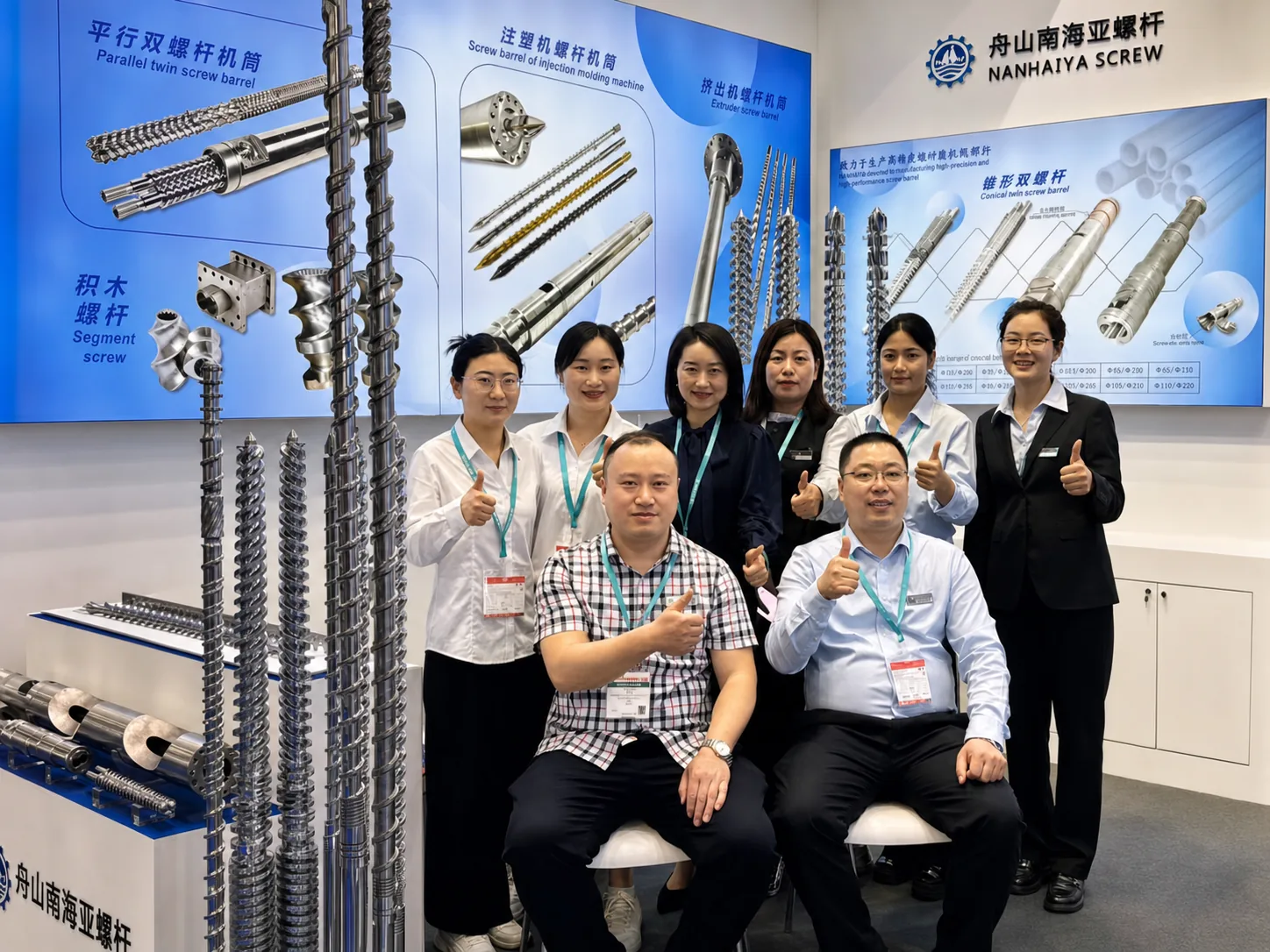
Related Articles
More insights on screw barrel technology and plastics processing.
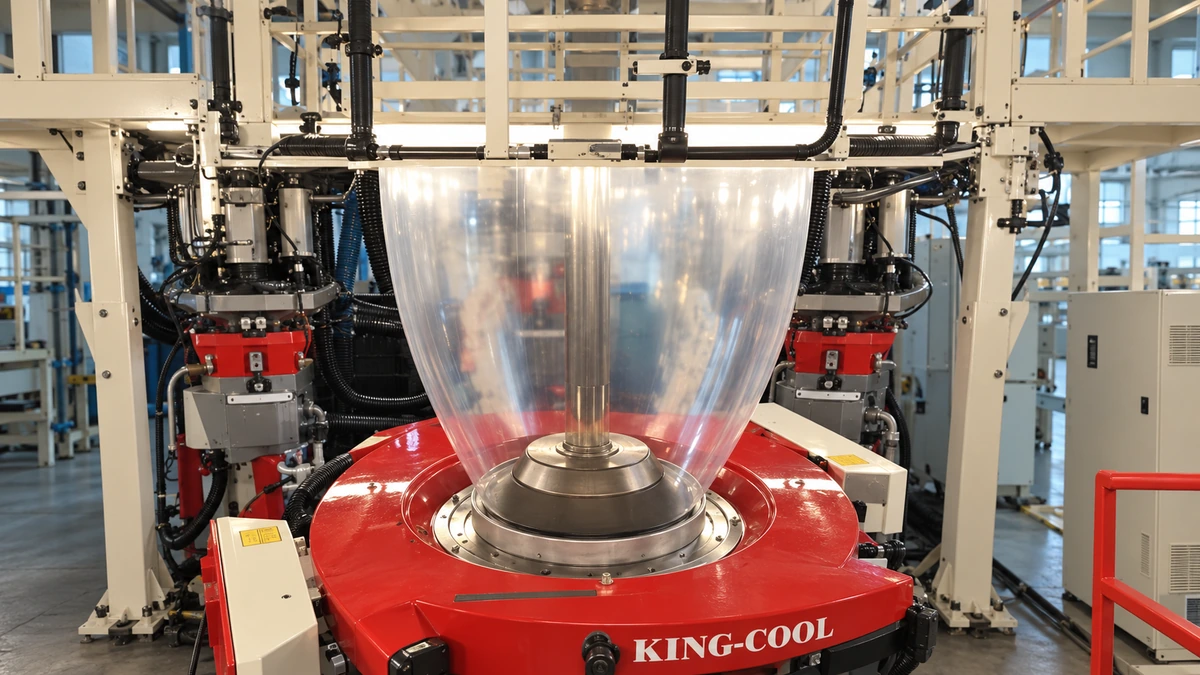
Blown Film Problems Decoded: What Your Bubble Is Telling You
Oct 23, 2026
Solve blown film problems from resin to roll. Learn to identify gels, gauge variation, bubble instability, die defects, and downstream failures with actionable fixes.
Read Article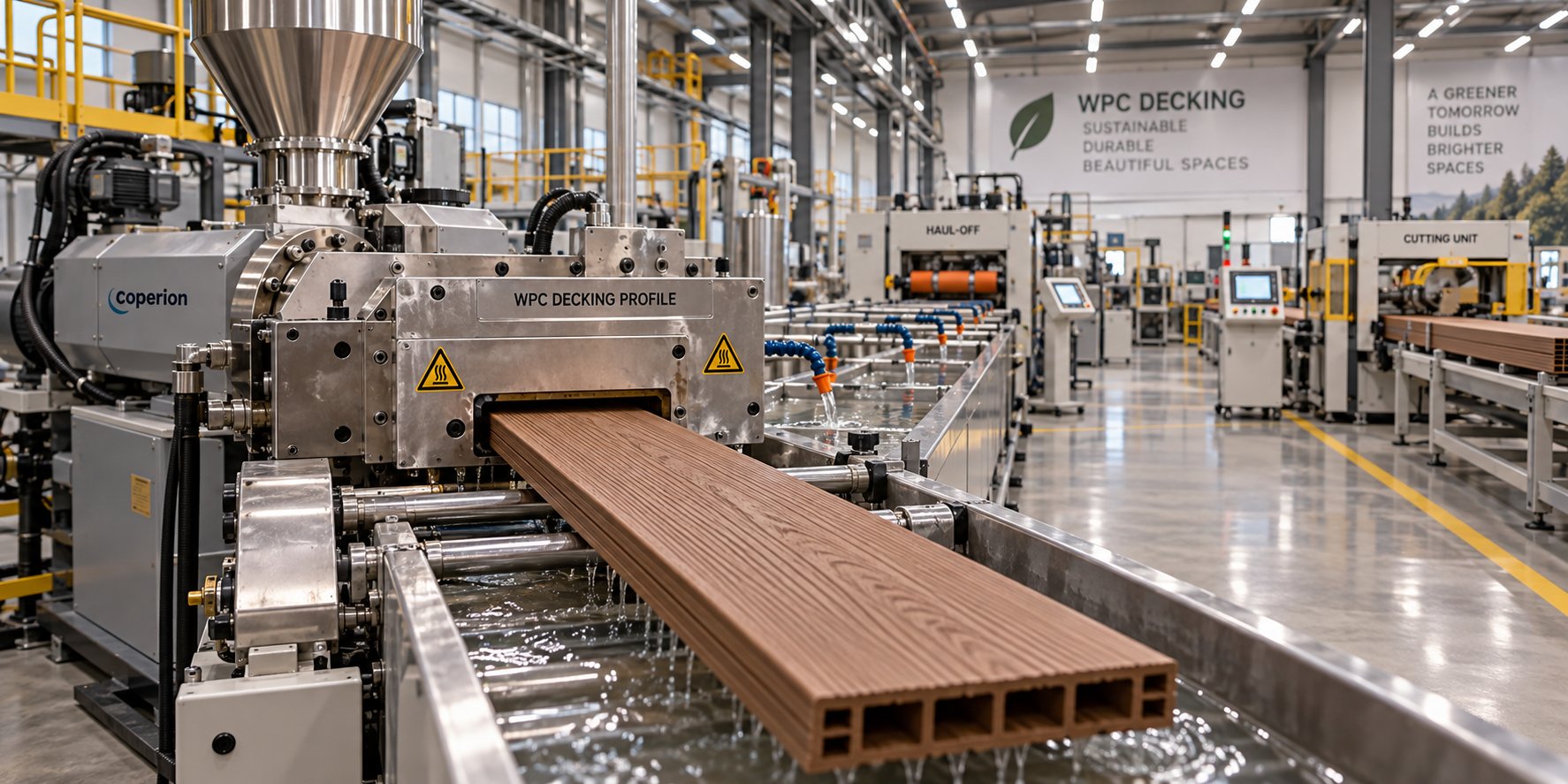
WPC Decking Extrusion Line Decoded: From Raw Resin To Finished Board
Oct 23, 2026
Learn how a WPC decking extrusion line works — from raw material compounding and extruder selection to process parameters, troubleshooting defects, and line layout planning.
Read Article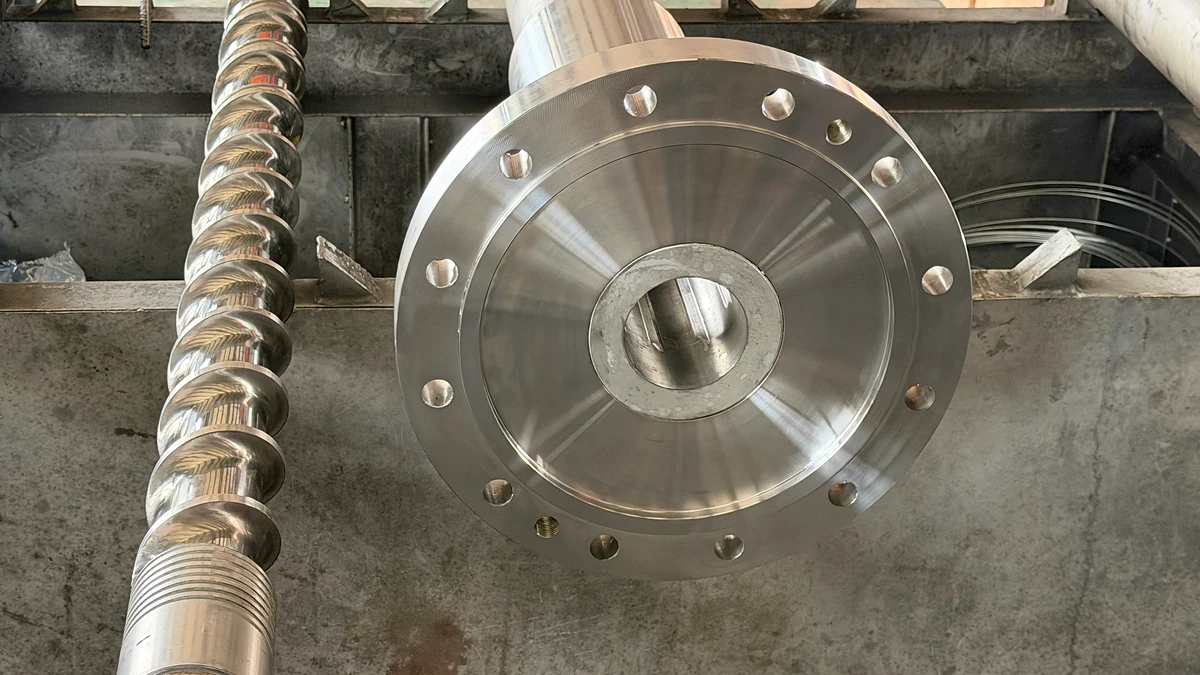
Single Screw Extruder Barrel Wear: Spot It, Measure It, Stop It
Oct 23, 2026
Learn how to spot, measure, and stop single screw extruder barrel wear. Zone-by-zone analysis, wear mechanisms, diagnostic symptoms, and repair vs. replace guidance.
Read ArticleLooking for something else?
Search by material, symptom or product and jump straight to the relevant page.
These are navigation suggestions based on keyword matching — not a quotation, not a delivery commitment, and not a substitute for engineering review. Final specification is confirmed by our engineers against your drawings and processed material.
Need help with screw barrel selection?
Share your machine model, processed material and application. Our team can help with pricing and technical support.