

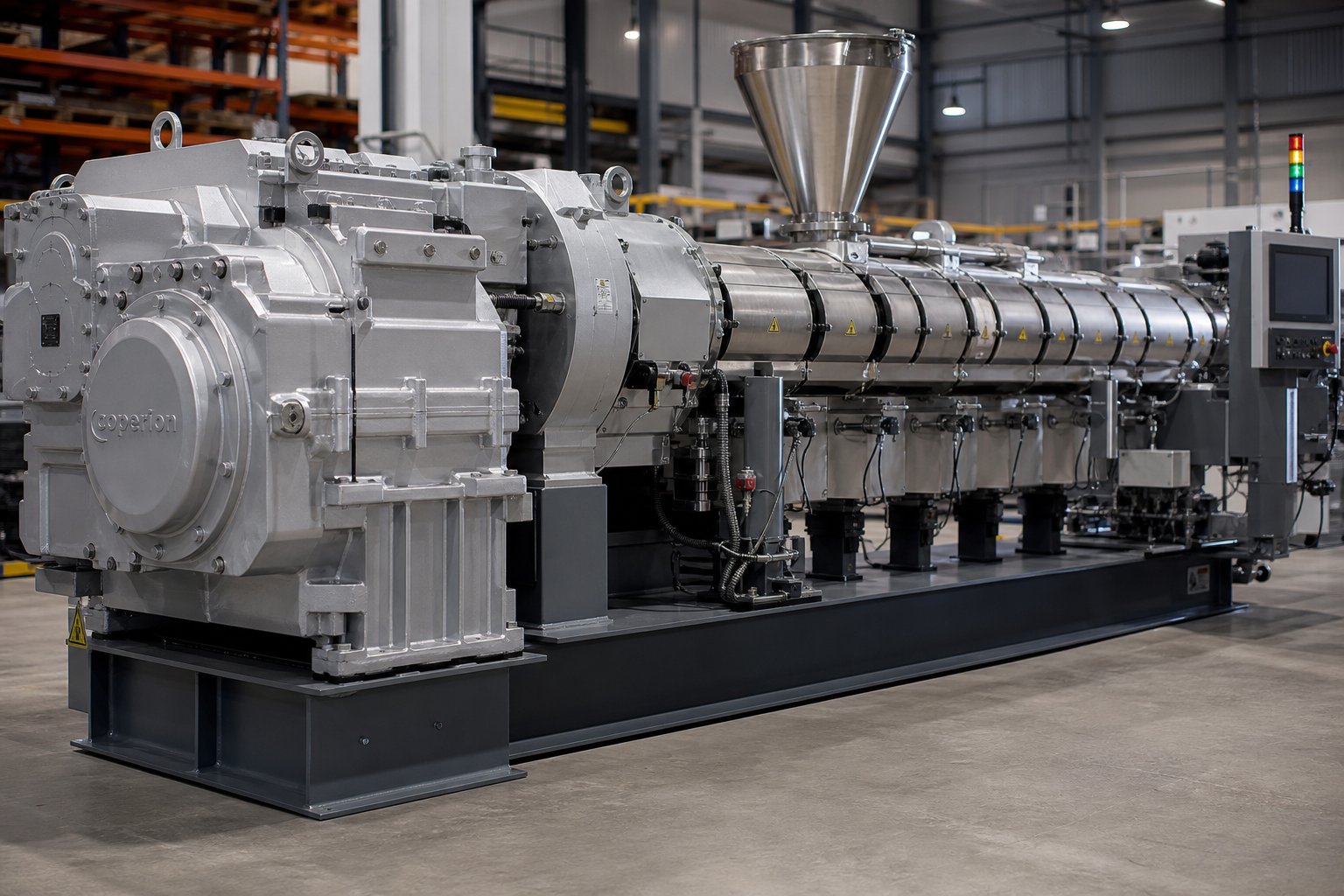
Why Used Twin Screw Extruders Deserve a Serious Look
A twin screw extruder is one of the most versatile pieces of equipment in plastics processing — and one of the most expensive to buy new. Before you commit six figures or more to a factory-fresh machine, it's worth asking whether a used twin screw extruder for sale could deliver the same results at a fraction of the cost. In many cases, the answer is a confident yes.
What Is a Twin Screw Extruder and How Does It Work
A twin screw extruder is an extruder machine built around two intermeshing screws that rotate inside a heated barrel. As raw material — typically polymer pellets, powder, or granules — enters through a feed hopper, those screws convey, compress, melt, and intensively mix it under precisely controlled temperature and shear conditions. The result is a homogeneous molten stream forced through a die to create pellets, profiles, sheets, or other finished forms.
What makes this type of plastic extruder indispensable is its range. A single twin screw extruder handles compounding filled and reinforced thermoplastics, reactive extrusion where chemical modification happens inside the barrel, devolatilization to strip moisture or solvents from sensitive polymers, and direct extrusion of finished products. That versatility is exactly why these machines hold their value so well on the secondary market.
When Buying Used Makes Strategic Sense
New twin screw extruders typically carry lead times of 8 to 20 weeks and price tags that start around $50,000 for small-diameter lab units and climb past $500,000 for production-scale machines. Used extruders compress both of those numbers dramatically. A well-maintained used machine can ship in days rather than months, and buyers routinely save 40 to 60 percent compared to equivalent new equipment.
Imagine you're a startup compounding specialty masterbatch — sinking half a million dollars into a new line before you've secured your first contract is a hard sell to investors. Or picture an established plant that just landed a new contract and needs capacity online in six weeks, not six months. R&D teams looking for an affordable pilot-scale extruder and companies testing uncertain markets face the same calculus. In each scenario, used extruders for sale represent a faster, lower-risk path to production.
A used twin screw extruder that originally sold for $300,000 can often be acquired for $120,000 to $180,000 with years of productive life remaining — delivering the same throughput and process capability at a capital cost that fundamentally changes the project's financial math.
The key is knowing what to look for and what to avoid. Not every deal on the secondary market is a good one, and the difference between a smart acquisition and an expensive headache comes down to understanding the machine you're evaluating — starting with the fundamental distinction between co-rotating and counter-rotating designs.
Co-Rotating vs Counter-Rotating Twin Screw Extruders Explained
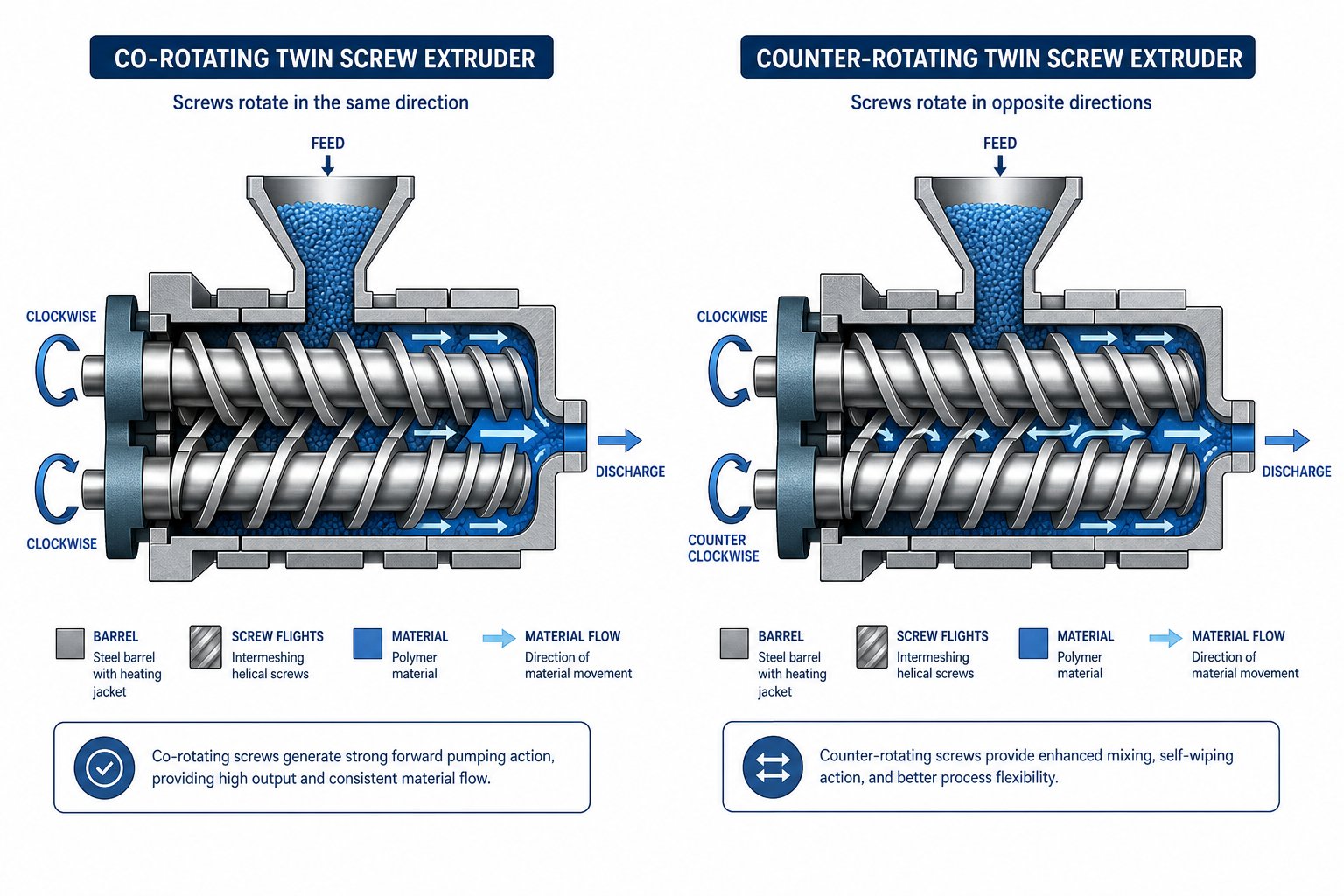
Every used twin-screw extruder listing you'll encounter falls into one of two fundamental categories — co-rotating or counter-rotating. Misunderstanding which one you need is the fastest way to waste your capital budget. These aren't interchangeable designs with minor cosmetic differences. They produce entirely different flow patterns, shear profiles, and processing outcomes, and the distinction should drive your purchase decision from the very first search.
How Co-Rotating Twin Screw Extruders Differ Mechanically
In a co-rotating twin screw extruder, both screws turn in the same direction — either both clockwise or both counterclockwise. This synchronized rotation creates a figure-eight material flow pattern where the polymer continuously transfers from one screw to the other through the intermeshing zone. The result is a self-wiping action that keeps barrel surfaces clean, minimizes dead zones, and produces a narrow residence time distribution.
Why does that matter? Self-wiping means less material degradation, fewer color-change headaches, and faster transitions between product runs. The intense shear fields that develop between the screws — and between each screw and the barrel wall — deliver exceptional distributive mixing. Add kneading block elements into the modular screw configuration, and you get the kind of dispersive mixing needed to break down filler agglomerates in nanocomposites or achieve uniform pigment distribution in masterbatch.
Co-rotating designs dominate polymer compounding, reactive extrusion, and devolatilization applications. They also dominate the used market. Brands like Coperion (with its iconic ZSK series) and legacy Werner & Pfleiderer machines appear frequently in dealer inventories, giving buyers a wide selection of extruder twin screw configurations at various price points and throughput capacities.
Counter-Rotating Designs and Their Niche Applications
Counter-rotating twin screw extruders flip the script — literally. The screws rotate in opposite directions, drawing material into discrete, nearly sealed "C-shaped" chambers that function like a gear pump. This positive displacement conveying mechanism delivers exceptionally stable output and generates higher pressures at lower screw speeds.
The critical advantage here is gentler processing. Because counter-rotating designs produce significantly less shear heat, they're the industry standard for rigid PVC — a material with a notoriously low thermal decomposition temperature and poor melt flow. A calendering effect at the intermeshing region disperses additives under mild conditions while keeping barrel temperatures low enough to prevent degradation.
If you're shopping for a pvc extrusion machine to produce pipes, profiles, or sheets, counter-rotating is almost certainly the configuration you need. These machines also find homes in cable coating and applications where shear-sensitive formulations demand controlled, low-energy processing. You'll see fewer counter-rotating units on the secondary market compared to co-rotating models, but manufacturers like Cincinnati Milacron, Bausano, and Battenfeld remain well represented in used listings for PVC-focused operations.
How This Distinction Affects Your Purchase Decision
Choosing the wrong configuration isn't a minor inconvenience — it's a fundamental mismatch between machine capability and process requirement. A counter-rotating pvc extruder machine won't deliver the mixing intensity needed for high-filler-loading compounding work. Conversely, running rigid PVC through a high-speed co-rotating extruder risks thermal degradation that destroys product quality. The table below maps both configurations against the criteria that matter most when evaluating twin screw extruders on the secondary market.
| Dimension | Co-Rotating Twin Screw Extruder | Counter-Rotating Twin Screw Extruder |
|---|---|---|
| Typical Applications | Polymer compounding, masterbatch, reactive extrusion, nanocomposites, devolatilization | PVC pipe/profile/sheet extrusion, cable coating, shear-sensitive formulations |
| Mixing Intensity | High — excellent distributive and dispersive mixing via kneading elements | Moderate — gentle calendering-based dispersion with lower shear |
| Throughput Range | Wide range; scalable from lab (16 mm) to production (180+ mm) diameters | Optimized for medium-to-high output in direct extrusion; often 1.5-2x output per diameter vs. co-rotating in profile work |
| Self-Wiping Capability | Yes — fully intermeshing geometry minimizes dead zones and stagnation | Limited — tighter clearances aid conveying but do not fully self-wipe |
| Common Brands on Used Market | Coperion (ZSK), Werner & Pfleiderer, Leistritz, JSW, Berstorff | Cincinnati Milacron, Bausano, Battenfeld, Krauss-Maffei |
| Relative Secondary-Market Price | Higher — strong demand across multiple industries keeps resale values elevated | Lower — narrower application range typically reduces resale premiums |
Sounds straightforward on paper, but here's where the real-world complexity kicks in: a co-rotating and counter-rotating twin screw extruder from the same era and similar screw diameter can differ in price by 30 percent or more on the used market, purely because demand for co-rotating compounding machines outstrips supply. That pricing dynamic means counter-rotating units can represent exceptional value — provided your application actually calls for one.
Matching configuration to process need is the non-negotiable first step. The second step is equally important — understanding which brands built the machine you're considering and what that heritage means for parts availability, build quality, and long-term cost of ownership.
Brand-by-Brand Breakdown for Used Twin Screw Extruder Buyers
Not all used twin screw extruders carry equal risk — or equal upside. The brand stamped on the nameplate tells you a lot about how the machine was engineered, how easy (or painful) it will be to source replacement parts, and how much resale value it will retain if your needs change. Think of it this way: two machines with identical screw diameters and similar operating hours can differ dramatically in long-term ownership cost depending on who built them.
Here's what you should know about each major manufacturer before you start writing offers.
Coperion and Werner Pfleiderer Legacy Machines
If you've spent any time browsing used equipment listings, you've noticed one brand appearing more than any other: Coperion. There's a reason. The Coperion extruder lineage traces directly back to Werner und Pfleiderer, the company that delivered the first co-rotating, closely intermeshing ZSK twin screw extruder in 1957. That heritage makes the ZSK series the literal forefather of modern co-rotating compounding technology — and it means thousands of these machines are working worldwide, with a steady stream entering the secondary market as plants upgrade to newer generations.
Why do Coperion machines command premium pricing on the used market? Three reasons. First, the ZSK platform has been continuously refined for over six decades, meaning even older units were solidly engineered for their era. Second, the installed base is enormous — screw diameters range from 18 mm lab-scale units all the way up to 420 mm production monsters. Third, and most practically important for a used buyer, ZSK-series spare parts are widely available from both Coperion's own service network and a deep aftermarket ecosystem.
The generational differences matter, though. Older Werner & Pfleiderer twin screw extruder models — pre-rebrand units from the 1980s and 1990s — often feature lower specific torque ratings (as low as 3.7 Nm/cm³ on early ZSKs) compared to the 11.3 Nm/cm³ or even 18 Nm/cm³ on current-generation ZSK Mc18 machines. That gap directly affects throughput capacity and the range of materials you can process. A werner & pfleiderer extruder from 1995 might look like a bargain at its asking price, but you'll need to verify whether its torque and speed ratings — early machines topped out around 150 rpm versus 1,200+ rpm today — actually meet your processing requirements.
Bottom line: a used Coperion extruder is often the safest bet on the secondary market thanks to parts availability and proven reliability, but don't assume every ZSK-badged machine delivers the same performance. Generation matters.
Berstorff and KraussMaffei Twin Screw Extruders
Berstorff built its reputation on robust, overbuilt German engineering — machines designed to run hard for decades with minimal fuss. If you encounter a used berstorff extruder in good mechanical condition, you're typically looking at a piece of equipment with generous safety margins in its gearbox, barrel, and drive components.
The complication for today's buyer is corporate history. KraussMaffei acquired Berstorff, and the integration changed the parts sourcing landscape. Older Berstorff units may use proprietary barrel geometries or gearbox configurations that no longer align with KraussMaffei's current catalog. That doesn't make them bad machines — far from it — but it does mean you should confirm parts availability before committing. Ask specific questions: Can you get replacement screw elements for a Berstorff ZE 60A? What's the lead time on a barrel segment? If the dealer or seller can't answer those questions, factor aftermarket sourcing costs into your total budget.
KraussMaffei's own ZE BluePower series shows up occasionally on the used market as well, typically at price points reflecting newer technology including digital process controls. These machines integrate well with modern plant-floor systems, but their electronics can be more expensive to repair or replace than purely mechanical components on older berstorff units.
Other Brands Worth Considering on the Used Market
Coperion and Berstorff aren't the only names worth your attention. Several other manufacturers produce twin screw extruders that appear regularly in dealer inventories and auction listings, each with distinct buyer considerations.
- Leistritz — Known for versatile ZSE-series co-rotating extruders favored in pharmaceutical, food, and specialty compounding applications. Typically priced in the mid-range on the used market. Parts availability is solid, especially for standard screw elements and barrel sections. A strong choice for buyers needing a reliable mid-diameter machine (27 mm to 50 mm range) for R&D or specialty production.
- JSW (Japan Steel Works) — The TEX series is well regarded for precision engineering and durability. JSW machines serve polymer compounding and masterbatch production extensively across Asia and increasingly in North America and Europe. Used pricing tends to be moderate, though sourcing certain proprietary components can take longer due to fewer aftermarket suppliers outside Japan.
- Toshiba (TEM Series) — Compact footprint machines with excellent mixing homogeneity, commonly used in plastics, food, and pharmaceutical processing. Lower resale premiums compared to Coperion make them attractive for budget-conscious buyers, but verify the control system generation — older Toshiba PLCs may require modernization.
- Battenfeld-Cincinnati — Primarily appears in used listings for counter-rotating PVC extrusion applications. Machines are built for high throughput and long service life. Parts support remains strong through the combined Battenfeld-Cincinnati service organization. Ideal for buyers focused on pipe, profile, or sheet production.
Each of these brands has earned its place through decades of field-proven performance. The deciding factors for any used purchase come down to whether the specific machine's specifications — screw diameter, L/D ratio, torque class, and barrel configuration — actually match your processing needs. Those specifications deserve their own deep dive.
Decoding Technical Specifications That Matter Most
Spec sheets for used twin screw extruders read like alphabet soup — L/D 40:1, 92 mm, 11.3 Nm/cm³ — and every dealer filter system expects you to know which numbers to punch in. If you can't translate those figures into real processing capability, you'll either overspend on capacity you don't need or underbuy and hit a wall the first time you run a demanding formulation. Here's how to read the numbers that actually determine whether a double screw extruder machine fits your application.
Screw Diameter and L/D Ratio — What the Numbers Mean
Screw diameter is the single most important sizing metric on any industrial extruder. It's measured across the outermost thread crests, and it directly governs throughput capacity. The relationship isn't linear, either — extrusion volume is roughly proportional to the square of the screw diameter. Bump a 50 mm screw up to a 70 mm screw, and you're not looking at a 40 percent output increase. You're looking at nearly double.
Common diameter classes on the used market break down roughly like this:
- 16–27 mm — Laboratory extruder and pilot-scale machines. Ideal for formulation development, university research, and pharmaceutical hot-melt extrusion trials where throughput requirements sit below 50 kg/h.
- 30–50 mm — Pilot-to-small-production range. A lab scale twin screw extruder in the 35–40 mm class bridges the gap between R&D and commercial output, handling 50–300 kg/h depending on material and screw speed.
- 58–92 mm — The production sweet spot for most compounding extruder operations. Throughputs from 300 to 2,000 kg/h cover the majority of masterbatch, filled compound, and reactive extrusion work.
- 100 mm and above — High-volume production. These large-diameter machines handle 2,000–8,000+ kg/h and appear less frequently on the secondary market, commanding premium prices when they do.
The L/D ratio — the screw's effective working length divided by its diameter — tells you something equally important: how much processing the machine can accomplish in a single pass. A screw extruder with a 32:1 L/D provides adequate residence time for simple blending. Push that ratio to 48:1 or 52:1, and the machine can accommodate additional mixing zones, multiple feed ports, and vacuum venting sections for devolatilization. As reference data from GS Extruder's screw parameter analysis notes, higher L/D ratios enable increased rotational speeds and superior polymer blending — but they also demand more torque and introduce greater risk of shaft deflection on poorly maintained machines.
For thermally sensitive materials like PVC, shorter L/D ratios (20:1 to 25:1) prevent degradation from excessive residence time. An extruder for polymer compounding with glass fiber or mineral fillers, by contrast, typically benefits from ratios of 40:1 or higher, providing enough barrel length for proper filler wetting and dispersion.
Torque Ratings and Gearbox Specifications
You'll see torque expressed two ways in used equipment listings: total torque in Newton-meters (Nm) and specific torque density in Nm/cm³. The second number matters more. Torque density normalizes the gearbox output against screw geometry, giving you a true apples-to-apples comparison across different double screw extruder sizes and generations.
Here's the practical context. Older-generation machines from the 1990s commonly deliver specific torque values around 5–8 Nm/cm³. Current high-performance designs — like the Coperion ZSK Mc18 at 18 Nm/cm³ — represent a 30 percent or greater improvement over their predecessors. That gap translates directly into throughput capability. A machine with higher torque density can process more viscous materials, handle higher filler loadings, and run at faster screw speeds without tripping overload protections.
When evaluating a used machine's gearbox, pay attention to these specifics:
- Continuous vs. peak torque rating — A gearbox rated at 12,000 Nm peak but only 8,000 Nm continuous will spend its life at 100 percent of real capacity if the screw is sized to that peak figure. Always base your decision on the continuous-duty number.
- Operating headroom — Industry best practice is to run at no more than 80 percent of continuous-rated torque and 80 percent of maximum speed. If your target process pushes a machine past those thresholds, the gearbox will be the first major failure point.
- Thrust bearing capacity — Back pressure from the die pushes the screw rearward into the gearbox. Thrust bearing fatigue often limits gearbox life before gear wear does. Ask for the calculated bearing life (L10 hours) and compare it against the machine's recorded operating hours.
A quick sizing check you can do yourself: Torque (Nm) = 9,550 × Power (kW) ÷ Screw Speed (RPM). If a listing shows a 150 kW motor and a max speed of 600 RPM, each shaft receives roughly 2,388 Nm. Compare that against the torque demand of your target process to see if the machine has adequate margin.
Matching Specifications to Your Application
Individual specs don't tell the full story. A machine with an impressive 48:1 L/D ratio but a low-torque gearbox from the late 1990s may struggle with filled compounds that a shorter but higher-torque machine handles easily. The table below maps common processing applications against the specification ranges that experienced operators and compounding engineers look for when evaluating a used compounding extruder or any other twin screw configuration.
| Application | Recommended Screw Diameter | L/D Ratio Range | Torque Class (Nm/cm³) |
|---|---|---|---|
| Polymer Compounding (filled/reinforced) | 58–133 mm | 40:1 – 52:1 | 11–18 (high torque critical for glass fiber and mineral fillers) |
| Masterbatch / Color Concentrate | 40–92 mm | 36:1 – 48:1 | 8–15 (moderate; pigment dispersion is shear-driven more than torque-driven) |
| Reactive Extrusion | 27–70 mm | 40:1 – 56:1 | 10–18 (long barrel for reaction time; sufficient torque for viscosity changes) |
| PVC Processing (pipe/profile) | 50–92 mm (often conical) | 20:1 – 25:1 | 5–10 (low-speed, high-pressure counter-rotating) |
| Food / Pharmaceutical | 16–40 mm | 25:1 – 40:1 | 8–15 (precision control; GMP compliance often more limiting than torque) |
Specifications must be evaluated as a system, not in isolation. A machine with a high L/D ratio but inadequate torque density will underperform on filled compounds despite looking impressive on paper — and a high-torque gearbox paired with excessive barrel length on a thermally sensitive polymer risks degradation before the material reaches the die.
With the right specification match confirmed, there's one more technical dimension that quietly determines whether a used machine will cost you $5,000 or $50,000 in wear-part replacements over its next five years of service — and that's the barrel design itself.
Modular vs One-Piece Barrel Designs and Long-Term Value
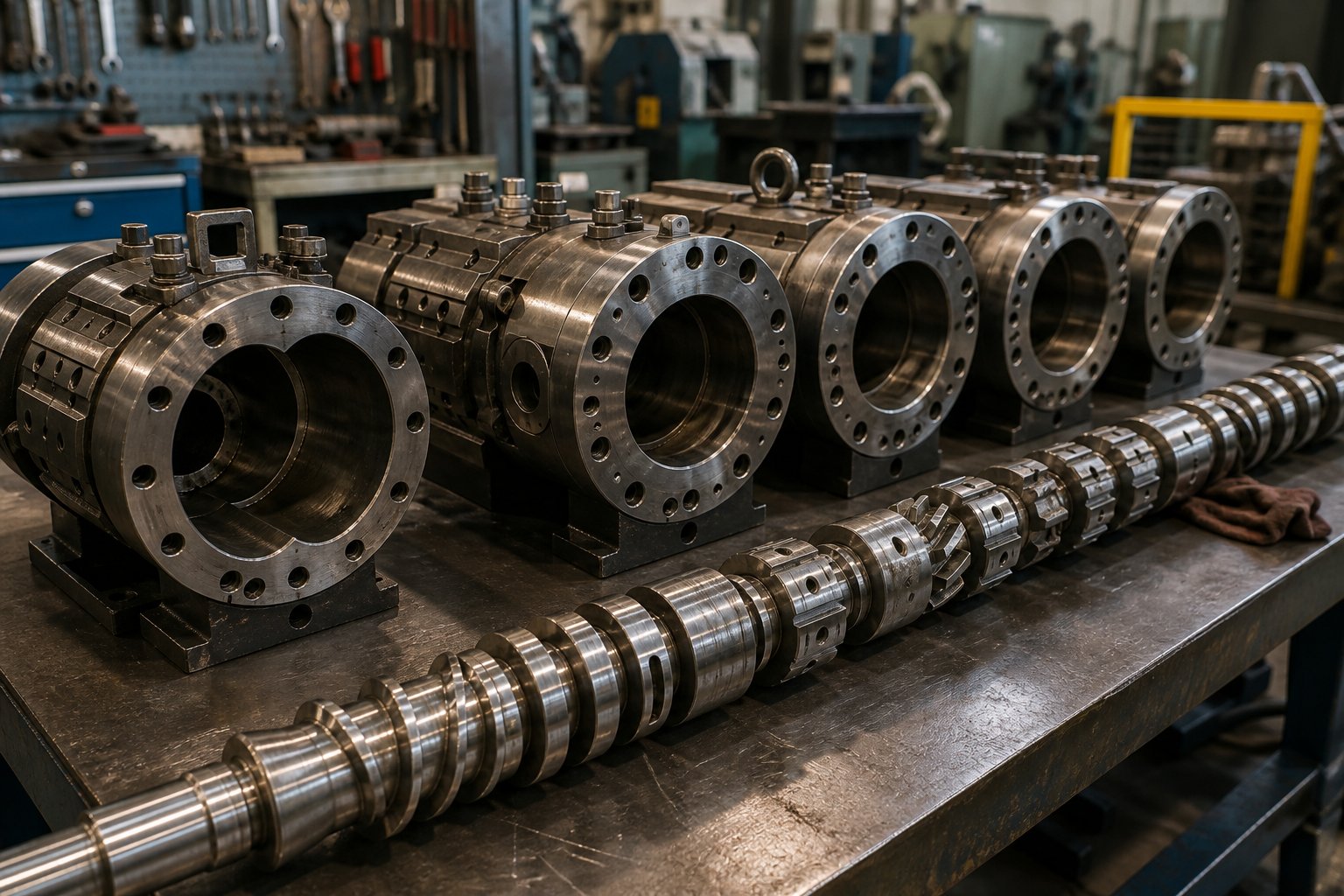
Two used twin screw extruders sitting side by side at a dealer's warehouse might share the same screw diameter, the same motor horsepower, and similar operating hours — yet one could cost you three times more to maintain over the next five years. The hidden variable? Barrel construction. Whether the machine uses a modular segmented barrel or a one-piece monolithic design shapes every maintenance decision you'll face as an owner, from routine wear-part swaps to catastrophic failure recovery.
Modular Segmented Barrels and Their Advantages
Most modern plastic extrusion equipment — particularly co-rotating twin screw extruders built after the mid-1980s — uses a segmented barrel architecture. Instead of a single continuous tube, the barrel consists of individual segments (typically 4D to 5D in length) bolted together in series. Each segment can incorporate its own heating and cooling channels, side-feed openings, or vacuum vent ports.
The maintenance implications are enormous. When abrasive fillers like glass fiber or calcium carbonate grind through the bore lining in one zone — say, the high-shear kneading section — you replace only that worn segment rather than scrapping the entire barrel assembly. As Leistritz's engineering documentation points out, single screw extruders typically rely on barrels and screws machined from a single piece of steel, meaning any localized damage mandates replacement of the complete item. Twin screw extruders with segmented construction sidestep that penalty entirely.
The same modular logic extends to the screws themselves. Segmented screw elements — conveying elements, kneading blocks, mixing discs, reverse-flight elements — slide onto splined shafts and can be rearranged to optimize the processing profile for different materials. Buying a used machine with modular plastic profile extruders-style segmented construction means you're not locked into a single process configuration. Shift from compounding glass-filled nylon to processing a mineral-filled masterbatch, and you reconfigure the screw layout in a few hours rather than ordering an entirely new screw.
One-Piece Barrels and Legacy Design Considerations
Older machines — and some counter-rotating designs built for specific applications — use monolithic one-piece barrels. These are simpler in construction: fewer bolted joints, fewer potential leak paths, and a lower initial manufacturing cost for the extruder manufacturer. For decades, that simplicity served PVC processors and other dedicated production lines perfectly well.
The problem emerges when wear occurs, and in plastic extrusion machinery, wear always occurs. Industry data on twin screw wear patterns shows that abrasive wear alone accounts for roughly 80 percent of all barrel and screw component degradation. In a monolithic barrel, localized bore wear in one section means replacing or re-boring the entire unit — a process that can cost $10,000 to $50,000 depending on diameter and material, plus weeks of lead time if the barrel must be custom-manufactured.
For a buyer evaluating used plastic compounding equipment, this distinction directly impacts the true cost of ownership. A one-piece barrel machine listed at an attractively low price may actually represent a ticking clock: once the bore exceeds wear tolerances, you're facing a single large expense rather than a series of manageable segment replacements. Factor that replacement cost into your purchase analysis, and the "bargain" can evaporate quickly.
Why Barrel Design Impacts Your Total Cost of Ownership
When you're comparing two used machines and one features modular construction while the other uses a monolithic barrel, weigh these factors carefully:
- Replacement part costs — A single barrel segment typically runs $1,000 to $3,000, while a complete one-piece barrel replacement can exceed $20,000 to $50,000 depending on the machine size and construction material. Over a five-year ownership period processing abrasive compounds, segmented designs can reduce barrel maintenance costs by 50 percent or more.
- Turnaround time for wear-part replacement — Swapping a worn barrel segment or a set of screw elements takes hours, not weeks. With a monolithic barrel, you're waiting on custom manufacturing or re-boring — and every day the machine sits idle costs you production revenue.
- Aftermarket component sourcing — Segmented designs open the door to aftermarket suppliers who can manufacture replacement screw elements and barrel liners based on drawings or physical samples. Suppliers like NANHAIYA specialize in exactly this — producing aftermarket extruder spare parts including screw elements, barrel segments, and other wear components without requiring buyers to rely solely on OEM pricing. That competition drives costs down and delivery times shorter, making modular-design used machines especially cost-effective to operate long term.
- Process flexibility — A segmented screw and barrel system lets you reconfigure for new materials or products. Add a side-feed barrel for downstream filler introduction, swap kneading blocks for gentler mixing elements, or insert a vacuum-vent section for devolatilization — all without purchasing a new machine.
- Resale value preservation — Machines with modular construction and readily available spare parts hold their value better on the secondary market. Future buyers face the same maintenance math you're doing right now, and they'll pay more for a machine they know they can maintain affordably.
The bottom line is straightforward: a used machine with a modular segmented design and access to aftermarket spare parts can deliver dramatically lower long-term operating costs than a monolithic-barrel alternative — even if the segmented machine carries a higher sticker price at purchase. Every extruder manufacturer that has shifted to modular construction over the past three decades did so for exactly this reason. When you're shopping used, that design philosophy becomes your financial advantage.
Of course, knowing a machine's barrel design is modular doesn't tell you whether the bore is still within tolerance or whether the screw elements are worn past their useful life. Answering those questions requires a hands-on inspection — and knowing exactly what to measure, what to listen for, and what to demand from the seller before you commit.
The Complete Inspection Checklist Before You Buy
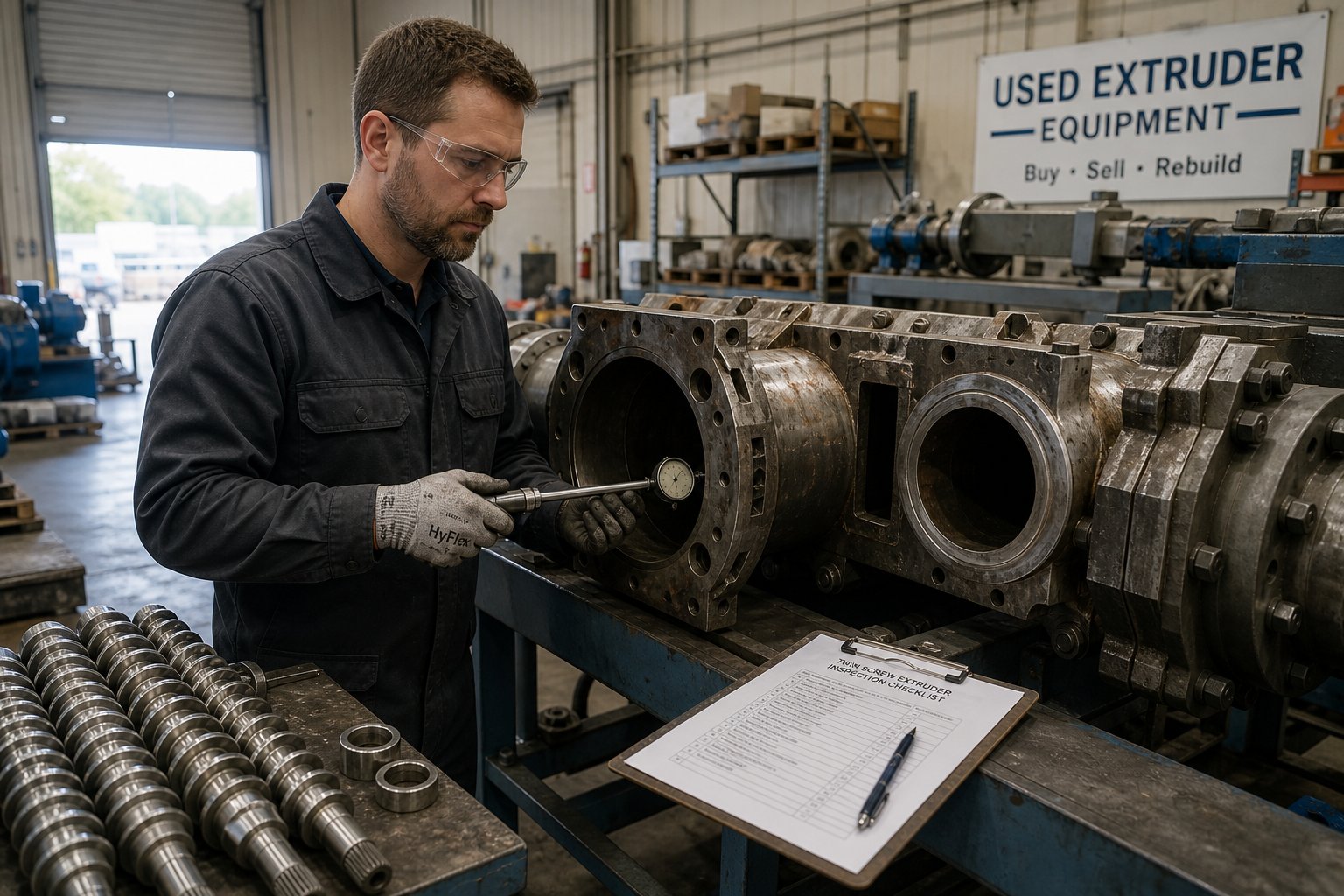
A good spec sheet and a modular barrel design can put a machine on your shortlist — but they can't tell you whether the bore is egg-shaped, the gearbox bearings are six months from failure, or the PLC hasn't been supported since 2011. That gap between paper specs and physical reality is where most bad purchases happen. The only way to close it is a structured, hands-on inspection before any money changes hands.
Whether you're flying across the country to evaluate used extrusion equipment at a dealer's warehouse or walking through a plant closure down the road, the process below turns a subjective gut feeling into an objective, data-driven assessment. Print it, bring it with you, and don't skip steps.
Barrel and Screw Element Wear Assessment
Start with the components that wear fastest and cost the most to ignore. Remove the screw assembly and place it on a clean, flat surface — a granite inspection table is ideal, but any level workbench works for a preliminary check.
For the screw elements, you're looking for three things: erosion, corrosion, and cracking. Run your fingers along the flight crests. Healthy flights feel uniformly sharp; worn flights feel rounded or show visible material loss on the leading edges. Use a micrometer with a parallel test bar spanning two flights to measure outer diameter at multiple points along the screw length. Compare each measurement against the original nominal diameter — the difference reveals exactly how much material has been lost.
For the barrel bore, use a bore gauge inserted from each end, recording inner diameter measurements at several positions along the length. SPI dimensional guidelines provide reference values for when clearance growth between screw OD and barrel ID has exceeded acceptable limits — typically a diametral clearance increase of 50 percent or more over nominal signals the need for replacement.
Pay close attention to wear patterns. Uniform wear across the barrel length suggests normal service on moderately abrasive materials. Uneven wear — excessive erosion in the kneading zone but minimal wear in the conveying sections — indicates the machine processed highly abrasive compounds like glass-filled polymers or mineral-loaded masterbatch. Concentrated bottom-side wear in the feed zone can point to previous alignment issues or improper screw element configuration. These patterns don't automatically disqualify a machine, but they do tell you what replacement parts you'll need sooner rather than later.
Gearbox Health and Motor Condition
The gearbox is the single most expensive component to replace on any twin screw extruder — often accounting for 30 to 40 percent of the machine's total value. A gearbox failure six months after purchase can erase every dollar you saved by buying used. This is where your inspection needs to be ruthless.
Start with the oil. Drain a small sample into a clear container while the gearbox is still warm. Healthy gear oil looks clean and translucent. Dark, burnt-smelling oil suggests thermal degradation from chronic overloading. Metallic flakes or gray discoloration indicate active internal wear — metal particles from gear teeth or bearing races circulating through the system. If a formal oil analysis report is available from the seller, review it for iron, copper, and chromium content. Elevated levels of any of those metals confirm component degradation is underway.
Next, listen. If you can run the machine — even unloaded — use an automotive mechanic's stethoscope with a metal contact probe pressed against the gearbox housing at each bearing location. A healthy gearbox produces a uniform, low-level hum. Here's what each abnormal sound means:
- Whining or howling — Gear misalignment or tooth profile wear. Medium severity, but indicates the gears are no longer meshing optimally.
- Rhythmic knocking or clunking — Broken gear tooth or severe backlash. This is a critical, walk-away-level finding.
- Low-frequency rumbling — Worn or failing bearings. High severity — bearing replacement is required soon.
- Grinding or harsh scraping — Metal-to-metal contact from oil film failure or bearing race damage. Critical — the gearbox is actively destroying itself.
Check backlash by locking one screw shaft and gently rocking the other. Excessive play beyond manufacturer specifications indicates worn gear teeth or bearing clearances that have widened past tolerance. Also record the motor hour meter. Gearbox bearings have calculable service lives (L10 ratings), and comparing logged hours against that theoretical limit tells you roughly how much operational life remains.
Control Systems and Electrical Integrity
Buyers scrutinize barrels and gearboxes closely — and then overlook the control cabinet entirely. That's a mistake. An obsolete control system can add $15,000 to $40,000 in retrofit costs to what initially looked like a great deal on used extruder equipment.
Open the electrical panel and identify the PLC platform. Is it a current-generation controller with readily available spare modules and software support? Or is it a discontinued model whose programming software only runs on Windows XP? The HMI (operator interface) deserves the same question — if the touchscreen fails, can you source a replacement or a compatible upgrade without reverse-engineering the entire control architecture?
Inspect the heater bands on every barrel zone. Cracked ceramic insulation, discolored terminals, and loose mounting straps are signs of neglected maintenance. Test each zone's heating and cooling response — zones that heat sluggishly or overshoot their setpoints indicate failing heating elements or clogged cooling passages. Check thermocouple connections for corrosion and verify that temperature readings respond logically when you change setpoints.
Examine wiring condition throughout the cabinet and along the barrel. Brittle, heat-damaged insulation near the barrel zones is common on heavily used plastics machinery and creates both safety hazards and nuisance shutdowns. Test every emergency stop button and safety interlock — guards, hopper covers, die clamps — to confirm they actually halt the machine. Non-functional safety interlocks aren't just a red flag; they're a liability that could shut down your operation during an insurance audit.
Pulling all of these inspection points together into a single, repeatable process protects you from the most expensive surprises. Here's the step-by-step protocol you can print and carry to any equipment viewing:
- Visual exterior scan — Walk around the entire machine. Note any visible damage, weld repairs on structural components, fluid leaks, missing guards, or signs of fire or water damage.
- Request and review documentation — Collect maintenance logs, oil analysis history, motor hour records, and the original equipment manual. Missing documentation is itself a data point.
- Pull and inspect screw elements — Measure flight OD at multiple positions with a micrometer. Look for erosion, cracking, corrosion, and uneven wear patterns. Record all values.
- Measure barrel bore — Use a bore gauge at multiple axial positions and orientations. Compare to nominal bore diameter. Calculate diametral clearance between screw OD and barrel ID.
- Drain and inspect gearbox oil — Check color, smell, and particulate content. Request formal oil analysis reports if available.
- Listen to the gearbox under power — Use a stethoscope at each bearing location. Document any whining, knocking, rumbling, or grinding. Note whether noise changes with load.
- Check gearbox backlash — Lock one shaft, rock the other. Compare play against manufacturer tolerance specifications.
- Inspect motor and drive system — Verify motor nameplate data, check bearing cap temperatures with an infrared thermometer, confirm cooling fan operation, and record hour meter reading.
- Test all barrel heating and cooling zones — Set temperatures, observe heat-up rates, check for overshoot. Inspect heater band condition, thermocouple connections, and cooling water flow.
- Evaluate the control system — Identify PLC and HMI hardware. Confirm software support status. Test all operator interface functions and verify data logging capability.
- Test every safety device — Activate each E-stop, door interlock, and guard switch. Confirm each one halts the machine immediately and completely.
- Run the machine if possible — Even a brief unloaded run reveals vibration, noise, temperature anomalies, and control response issues that static inspection cannot.
Skipping any one of these steps is how buyers end up discovering a $25,000 gearbox problem three months after installation. A thorough inspection of used plastics machinery takes half a day. A catastrophic failure on equipment you didn't properly vet takes half a year to recover from — financially and operationally.
Still, even the most rigorous inspection can only tell you so much. Some problems hide behind cosmetic cleanup or emerge only under sustained production loads. The next critical skill is recognizing the warning signs — both mechanical and transactional — that should make you walk away from a deal entirely, no matter how attractive the price looks.
Red Flags and Deal-Breakers Every Buyer Must Recognize
A detailed inspection tells you what a machine is. Red flags tell you what it's about to become — and sometimes the smartest move when looking at a used extruder for sale is to close your notebook, shake the seller's hand, and leave. The secondary market rewards patience. Overpaying for a lemon punishes impatience in ways that linger for years. Here's how to tell the difference between a machine worth saving and one that will drain your budget dry.
Mechanical Red Flags That Signal Trouble
Some findings during an inspection are fixable. A worn kneading block or a cracked heater band costs hundreds to replace — not thousands. The red flags below are different. They point to damage that's either irreversible, prohibitively expensive to repair, or symptomatic of deeper problems you can't fully assess on-site.
Barrel bore wear beyond reworkable limits. Every barrel wears over time, but there's a threshold past which re-lining or honing can't restore dimensional accuracy. When bore measurements show diametral clearance growth exceeding 100 percent of the original specification — or when wear is so severe that the nitrided or bimetallic liner has been penetrated entirely — you're looking at full barrel replacement costs rather than a routine maintenance expense.
Cracked or deeply pitted screw elements. Surface erosion on flight crests is normal wear. Cracks propagating across kneading block faces or deep corrosion pits in conveying elements are not. Cracked screw elements can fragment during operation, sending hardened steel shards through the barrel and into the gearbox thrust bearings. The replacement cost of the screw elements themselves is minor compared to the cascade of damage a fragmented element triggers downstream.
Gearbox whine, knocking, or excessive backlash. As detailed in Zeal Gears' gearbox failure analysis, a rhythmic knocking sound at gear mesh frequency indicates a broken or severely damaged gear tooth — a critical finding that warrants immediate walk-away. Low-frequency rumbling points to bearing raceway spalling, while excessive backlash when rocking the output shaft signals worn gear teeth or widened bearing clearances. Gearbox rebuilds or replacements routinely cost $30,000 to $80,000 or more depending on machine size, and the direct replacement cost represents only 15 to 25 percent of the total failure impact once you factor in downtime, emergency procurement premiums, and potential secondary damage to screws and barrels.
Signs of overheating or thermal damage. Discoloration on barrel surfaces — blue or straw-colored heat tinting on steel — indicates the machine was subjected to temperatures well beyond its design envelope. Thermal damage compromises the metallurgical properties of the barrel and can warp alignment surfaces that are impossible to correct without complete remanufacturing.
Evidence of weld repairs on structural components. Weld patches on the barrel support frame, gearbox housing, or feed section are a serious concern. A cracked gearbox housing, for example, compromises shaft alignment across every gear mesh inside the unit. A weld repair might hold temporarily, but it introduces residual stresses and distortion that accelerate future failures. If you see weld repairs on load-bearing or precision-alignment surfaces, treat the machine as structurally compromised.
Documentation Gaps and Seller Behavior Warnings
Mechanical red flags are objective — you can measure them, photograph them, and quantify them. Transactional red flags are subtler but equally telling. A seller's behavior during the buying process reveals a lot about what they know (or suspect) about the machine's condition.
Missing maintenance records. A well-run operation logs oil changes, barrel measurements, screw element replacements, and motor hours. When those records don't exist — or when the seller claims they "weren't kept" — you lose the ability to assess how the machine was treated over its service life. Was the gearbox oil changed every 3,000 to 5,000 hours as recommended, or was it neglected until the oil turned black? Without records, you're guessing.
Reluctance to allow independent inspection. Any reputable seller of extruders for sale — whether a dealer, an auction house, or a plant disposing of surplus equipment — should welcome a buyer's independent technical evaluation. Resistance to that request, vague excuses about scheduling, or insistence that "our technicians already checked everything" should set off alarms. If a seller won't let your engineer spend a day with the machine, ask yourself what they're hoping you won't find.
Vague or contradictory operational history. "It ran great" isn't an operational history. You need specifics: what materials were processed, at what throughput rates, for how many hours, and why the machine was taken out of service. A used extruder pulled from a clean-running masterbatch line after an equipment upgrade is a fundamentally different proposition than one that processed 40 percent glass-fiber-filled nylon for a decade before being parked in a corner. Sellers who can't — or won't — provide those details are either uninformed or evasive, and neither scenario works in your favor.
Pressure to close quickly. "We have another buyer interested" and "this price is only good until Friday" are classic high-pressure tactics designed to short-circuit your due diligence. Legitimate deals on used equipment don't evaporate overnight. A seller pushing urgency is usually trying to prevent you from discovering something that would change your offer — or kill the deal entirely.
"As-is, where-is" without any operational demonstration. Selling equipment as-is is common and not inherently problematic — many plant closures and auctions operate this way. The red flag appears when a seller insists on as-is terms and refuses to power up the machine or allow any form of operational test. A machine that can't be demonstrated running may not be capable of running.
Combine these mechanical and transactional warning signs into a single checklist you can reference during any evaluation:
- Barrel bore clearance exceeding double the original specification
- Visible cracks in screw elements, kneading blocks, or barrel segments
- Gearbox producing knocking, grinding, or harsh rumbling sounds
- Output shaft backlash exceeding manufacturer tolerances
- Heat discoloration (blue or straw tinting) on barrel or housing surfaces
- Weld repairs visible on structural or precision-alignment components
- Dark, metallic-flecked, or burnt-smelling gearbox oil
- No maintenance records, oil analysis history, or motor hour logs available
- Seller refuses or delays independent technical inspection
- Operational history is vague, contradictory, or unverifiable
- High-pressure closing tactics or artificial urgency
- Machine cannot be powered up or demonstrated under any conditions
Any single item on this list justifies deeper scrutiny. Two or more appearing together — especially a mechanical red flag paired with a documentation gap — should make your decision straightforward.
The cost of a bad used extruder purchase almost always exceeds the savings that motivated it. A thorough pre-purchase inspection costs a few thousand dollars and a day of your engineer's time. A catastrophic gearbox failure six months after installation costs tens of thousands in parts, weeks of lost production, and the credibility hit of explaining to your management team why the "great deal" just became a budget crisis.
Walking away from a flawed machine isn't a loss — it's capital preserved for the right one. And finding the right one depends just as much on where you look as on what you're evaluating. The buying channel you choose shapes everything from pricing and risk exposure to the level of technical vetting included before a plastic extruder for sale ever reaches your shortlist.
Where to Find and Source Used Twin Screw Extruders
The buying channel you choose isn't a minor logistical detail — it fundamentally shapes your pricing, your risk exposure, and how much technical homework the seller has already done for you. A twin screw extruder for sale through a specialized dealer, an online marketplace listing, and a plant-closure auction might all feature the same machine model at three very different price points with three very different levels of buyer protection. Understanding those trade-offs before you start shopping prevents the kind of surprises that turn a promising acquisition into an expensive education.
Specialized Used Equipment Dealers
Working with an established dealer is the closest thing to a safety net the secondary market offers. Reputable dealers in the plastics equipment space — firms like Arlington Plastics Machinery, for example — maintain real physical inventories with specific machine details, reference numbers, and often photographs or video of each unit. They don't just list what's available; they curate it. Machines are typically inspected on arrival, cataloged with accurate specifications, and in many cases powered up and run before being offered for sale.
What does that vetting cost you? Price. Dealer markups reflect the work they've done — cleaning, inspecting, sometimes reconditioning wear components — plus the overhead of maintaining a warehouse, employing technical staff, and carrying inventory risk. You'll generally pay 15 to 30 percent more through a dealer than you would buying the same machine directly from a closing plant. But that premium buys real value:
- Technical vetting — Dealers who specialize in extruders understand barrel wear tolerances, gearbox condition indicators, and control system obsolescence. Their assessment filters out the worst machines before you ever see a listing.
- Operational guarantees — Many established dealers offer some form of performance warranty, ranging from a basic power-up guarantee to a full operational test at their facility. That's buyer protection you won't find in a private sale.
- Financing and logistics support — Dealers routinely arrange rigging, freight, and even equipment financing, streamlining the transaction for buyers who don't have in-house logistics teams.
- Accountability — A dealer with a decades-long reputation and a physical address has far more incentive to stand behind a sale than an anonymous seller on an online listing board. If a problem surfaces post-delivery, you have a real person to call.
The trade-off is selection. Dealer inventories are, by definition, limited to what they've acquired and chosen to stock. If you need a very specific screw diameter, L/D ratio, or brand configuration, the right machine may not be sitting in any dealer's warehouse when you need it. That's when broader sourcing channels become necessary.
Online Industrial Marketplaces and Direct Sales
Beyond the dealer channel, twin screw extruders for sale surface across a range of less curated — but often less expensive — platforms. Each carries its own risk profile.
Online industrial marketplaces aggregate listings from dealers, brokers, and private sellers into searchable databases. Platforms in this space let you filter by machine type, brand, screw diameter, and location, making it easy to scan a broad market quickly. The convenience is genuine, but so is the variability. Some listings come from the same reputable dealers described above, while others are posted by brokers who've never physically seen the machine or by plant managers clearing floor space with minimal documentation. Revelation Machinery notes that seller reputation varies dramatically across marketplace platforms — and on sites like eBay, a seller with no transaction history could leave your plastic extruder machine for sale listing sitting for weeks precisely because buyers lack trust signals.
Plant-closure and surplus sales represent some of the best pricing available on the secondary market. When a facility shuts down or a company liquidates a production line, the motivation to sell is high and the timeline is short. Prices at plant closures can run 30 to 50 percent below dealer pricing for equivalent equipment. The catch? You're almost always buying as-is, where-is. There's typically no operational guarantee, limited or no maintenance documentation, and a narrow window to inspect the equipment before the sale closes. Buyers with strong in-house technical teams thrive in this environment. First-time buyers can get hurt.
Industrial auction houses sit between these two extremes. Specialized auctioneers who focus on plastics equipment create custom marketing plans, attract qualified bidders, and often allow pre-auction inspections. The competitive bidding format can drive prices up on desirable machines — a well-maintained Coperion ZSK-40 at auction might exceed the price you'd pay through a quiet dealer negotiation — but it can also deliver genuine bargains on less glamorous models that don't attract multiple bidders. The key is setting a firm maximum bid based on your pre-inspection findings and not getting swept up in auction psychology.
Regardless of which channel you explore, the principle from our inspection discussion holds: never buy a used extruder sight unseen. As Maschinenkanzlei's analysis of used industrial machinery risks emphasizes, purchasing without a thorough prior inspection is a risky undertaking that frequently leads to significant technical and legal problems discovered only after delivery. The initial price advantage can evaporate the moment you identify a defect that the seller's listing conveniently omitted.
Evaluating Industry-Specific Buying Considerations
Your industry shapes which channel makes the most sense — because different sectors carry different risk tolerances and regulatory requirements. A polymer compounder evaluating extruders cares primarily about barrel condition, torque capacity, and throughput flexibility. A food processor or pharmaceutical manufacturer buying the same class of machine faces an entirely different checklist: GMP documentation, material-contact surface certifications, and traceability records that prove the machine never processed incompatible materials. A machine that's perfectly acceptable for industrial compounding may be disqualified for pharma use simply because its history can't be documented to the required standard.
That regulatory dimension changes the value equation for each buying channel. A specialized dealer who understands food-grade or pharmaceutical requirements can pre-screen machines and provide documentation support that justifies their premium pricing. A plant-closure bargain, by contrast, may offer a mechanically excellent machine at a great price — but without the provenance documentation that your quality team or regulatory auditor will demand before it enters your production floor.
The table below maps each major buying channel against the criteria that matter most, so you can match your sourcing strategy to your actual buyer profile.
| Dimension | Specialized Dealer | Online Marketplace | Plant Closure / Direct Sale | Auction House |
|---|---|---|---|---|
| Typical Price Premium vs. Lowest Available | +15% to +30% | Varies widely (+5% to +25%) | Lowest (baseline) | Unpredictable; competitive bidding can exceed dealer pricing on popular models |
| Buyer Protection Level | Highest — operational guarantees common | Low to moderate — platform-dependent return policies | Minimal — as-is, where-is standard | Low — terms of sale typically final |
| Technical Vetting Included | Yes — inspection, testing, and spec verification standard | Rarely — buyer must verify independently | No — buyer responsible for all due diligence | Limited — preview inspection window, but no guarantees |
| Inspection Access | Full access; powered demonstration often available | Must be arranged directly with seller | Possible but time-limited; machine may still be installed | Pre-auction preview days scheduled |
| Best Suited For | First-time buyers, regulated industries, risk-averse organizations | Experienced buyers comfortable verifying condition independently | Technically confident buyers with in-house inspection capability | Opportunistic buyers with firm budget limits and inspection experience |
A compounder expanding capacity on a proven material system and confident in their engineering team's ability to assess barrel wear and gearbox health might gravitate toward plant closures and auctions — accepting higher personal risk for lower acquisition cost. A pharmaceutical company entering hot-melt extrusion for the first time, with limited internal plastics processing expertise, gets far more value from a dealer who can provide machine history, compliance documentation, and post-sale support. Neither approach is universally "right." The correct channel is the one that matches your technical confidence, your regulatory environment, and your tolerance for post-purchase surprises.
Finding the right machine through the right channel is only half the equation, though. The moment you sign the purchase agreement, a new set of challenges begins — getting that machine installed, commissioned, and running productively — and the decisions you make in those first weeks determine whether your acquisition delivers on its financial promise or quietly bleeds value through avoidable missteps.
After the Purchase — Commissioning and Spare Parts Strategy
Signing the purchase agreement feels like the finish line, but for a used plastic extruder machine, it's really the starting gun. The gap between "machine delivered" and "machine producing saleable product" can stretch from days to months depending on how well you plan the commissioning, parts sourcing, and operator training that follow. Every dollar of savings you captured by buying used evaporates if a poorly executed startup leads to damaged components, extended downtime, or off-spec production runs. Here's how to protect your investment from day one.
Commissioning and Installation Planning
A used extrusion machine arriving on a flatbed truck is not a plug-and-play asset. Treat the installation with the same rigor you'd apply to a brand-new line — because the consequences of shortcuts are identical.
Site preparation comes first. Verify that your floor can handle the static and dynamic loads. A production-scale twin screw extruder with gearbox, motor, and barrel assembly easily exceeds 5,000 kg, and vibration during operation demands a level concrete pad with adequate thickness and reinforcement. Confirm utility connections before the machine arrives: electrical supply (voltage, phase, amperage), cooling water capacity and pressure, compressed air, and ventilation or fume extraction for the die area.
As Plastics Technology's installation guide emphasizes, a fully operational and documented system doesn't happen by chance — an efficient, well-designed installation plan prepared well in advance is what keeps you on timeline and on budget. Their recommendation to use the general-arrangement drawing to mark the floor with a chalk outline of each major component before anything gets unbolted from the truck is simple advice that prevents expensive repositioning later.
Alignment is critical and easily overlooked on used equipment. Shaft alignment between the motor, gearbox, and barrel must be verified after installation — not assumed based on how it left the seller's facility. Transit vibration and rigging stresses can shift alignment enough to accelerate bearing wear or cause seal failures within weeks of startup. Use laser alignment tools and document the results as your baseline reference.
Integration with existing downstream equipment — strand pelletizers, underwater pelletizing systems, cooling conveyors, or profile dies — introduces its own complexity. Height mismatches, throughput incompatibilities, and control system communication gaps between a used plastic extrusion machine and your existing line need to be resolved before the first polymer pellet enters the feed hopper, not during the first production run.
Follow a proper startup protocol: check all gearbox oil levels, confirm motor rotation direction, verify every heating zone and cooling circuit individually, and run the machine unloaded at low speed before introducing material. Leistritz engineers recommend running all machines below 50 percent load initially while checking for abnormal sounds, vibration, and fluid leaks before increasing to production rates.
Building a Spare Parts Strategy from Day One
Here's a mistake that catches nearly every first-time buyer of used plastic extruder machines: they commission the machine, start production, and only think about spare parts when something breaks. By then, you're facing emergency lead times — two to four weeks from overseas suppliers, premium freight charges, and every day of downtime costing thousands in lost production.
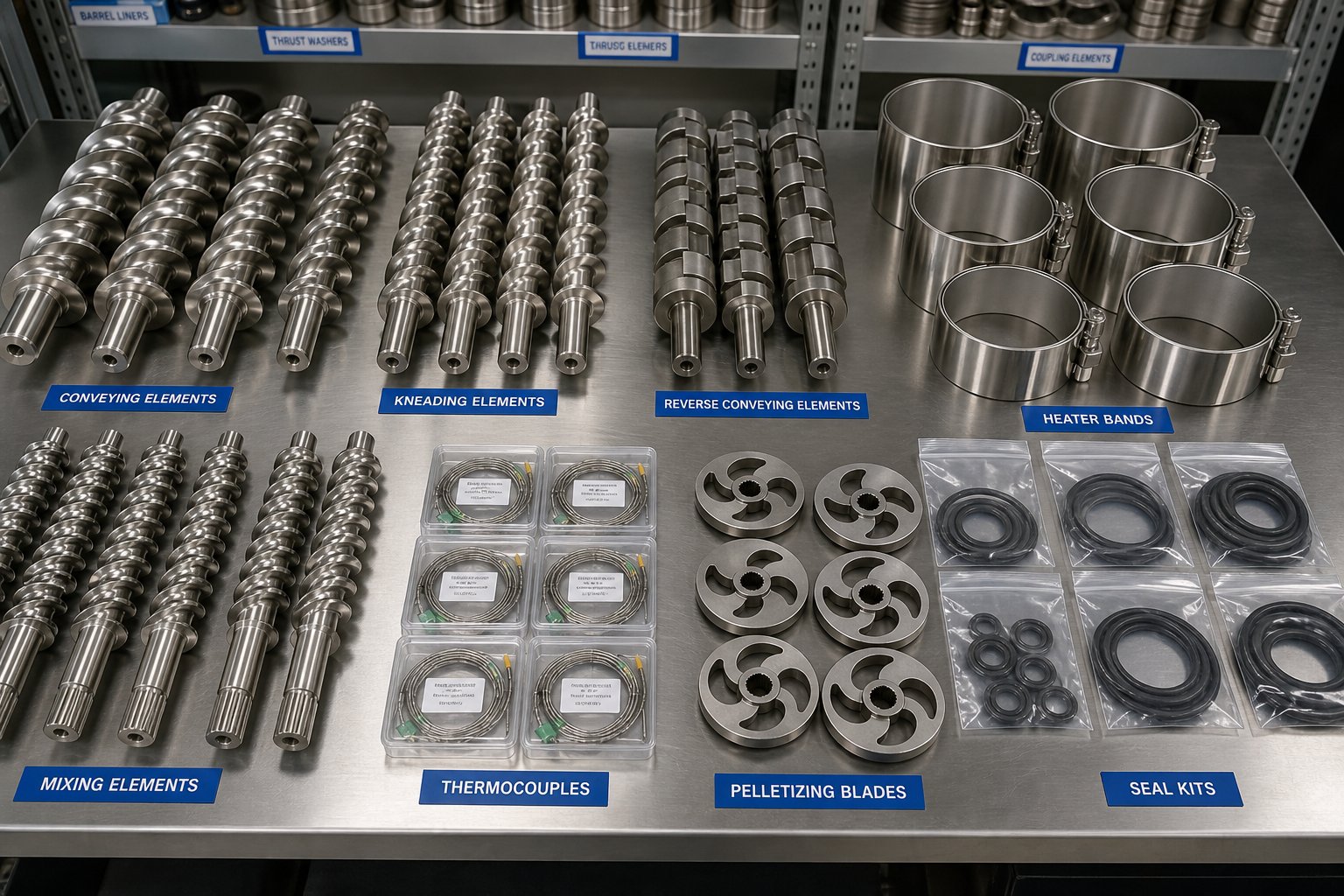
Build your spare parts pipeline before the machine goes into production. The critical spares list for any twin screw extruder starts with the components that wear fastest and cost the most downtime when they fail:
- Screw elements — Kneading blocks and conveying elements in the high-shear zones wear first. Stock at least one complete set for your most aggressive processing zone.
- Barrel liners or segments — If your machine uses modular construction (and after reading this guide, you know why it should), keep spare segments for the zones that see the heaviest wear.
- Heater bands — Ceramic or cast-aluminum heaters fail unpredictably. A single dead zone disrupts the entire temperature profile. Stock one spare per barrel zone at minimum.
- Thermocouples — Inexpensive individually, but a failed thermocouple feeding bad data to the PLC can cause overheating or underheating that ruins product quality or degrades polymer.
- Die heads and wear inserts — If you're running abrasive compounds, die wear is a constant. Having a spare die ready eliminates the production gap during refurbishment.
- Pelletizing blades — Whether strand-cut or underwater, pelletizer knives are consumables with predictable replacement intervals.
- Rear seal kits — A failed barrel seal leaks molten polymer, creating safety hazards and contamination. Industry maintenance guides recommend keeping a complete spare seal kit on hand at all times.
The plastic extrusion machine cost you paid at purchase is only the acquisition number. The real total cost of ownership includes every replacement part over the machine's operational life — and that's where aftermarket sourcing becomes your most powerful cost-management tool. OEM replacement parts carry premium pricing and sometimes lengthy lead times, especially for older or discontinued models. Aftermarket suppliers who can manufacture replacement components from your drawings or physical samples close that gap at significantly lower cost.
Suppliers like NANHAIYA specialize in exactly this space — producing extruder spare parts including screw-related components, heater bands, thermocouples, die heads, pelletizing blades, and custom parts based on drawings or samples. For maintenance teams and machine rebuilders managing used equipment, this kind of aftermarket resource transforms the plastic extrusion cost equation. Instead of paying OEM list prices or waiting weeks for factory-direct shipments, you source what you need based on specifications and receive parts manufactured to match your machine's requirements. That flexibility is especially valuable when you're running a legacy model where the original extruder manufacturer may no longer stock every component.
A good rule of thumb from industry maintenance data: budget 2 to 3 percent of the machine's value annually for maintenance and spare parts. For a $150,000 used twin screw extruder, that translates to $3,000 to $4,500 per year — a modest investment that prevents the kind of unplanned downtime that costs $10,000 or more per day in lost production.
Operator Training and Process Optimization
Your operators may have years of extrusion experience — but not necessarily on this machine. Every plastic extrusion machine has its own quirks: different control system interfaces, different barrel zone layouts, different screw configurations, and different responses to parameter changes. Assuming that experience on one brand transfers seamlessly to another is how you end up with stripped screw elements, overloaded gearboxes, and off-spec product filling your reject bins.
Start training after commissioning is complete and the machine is running stably — not during commissioning. As the installation experts at Plastics Technology note, it is very difficult to troubleshoot equipment issues while training people at the same time. Separate the two activities and you'll do both better.
Training should cover three areas. First, the control system — HMI navigation, recipe management, alarm response, and data logging. If the machine uses a PLC platform your team hasn't seen before, invest in platform-specific training from the controls vendor. Second, mechanical operation — proper screw element installation sequences, barrel bolt torque specifications, die change procedures, and purge protocols. Third, process development — building temperature profiles, screw speed maps, and feed rate recipes optimized for this specific machine's characteristics rather than copying settings from a different extruder and hoping they work.
The plastic extruder machine price you negotiated only delivers ROI when the machine is producing saleable product at target rates. Getting there requires a structured ramp-up plan, not a hope-and-run approach. Use this post-purchase action plan as your roadmap:
- Week 1-2: Site preparation — Complete floor preparation, utility installation, and equipment positioning. Verify all connections and alignment.
- Week 2-3: Mechanical commissioning — Fill gearbox oil, verify motor rotation, pressure-test cooling circuits, and calibrate all heating zones. Conduct unloaded run tests at low speed.
- Week 3-4: Loaded commissioning — Introduce material at reduced rates. Verify melt temperature, pressure stability, and throughput accuracy. Document baseline operating parameters.
- Week 3-4 (parallel): Spare parts inventory — Receive and catalog critical spares. Establish aftermarket supplier relationships. Create a reorder schedule based on anticipated wear rates.
- Week 4-5: Operator training — Conduct structured training sessions covering controls, mechanical procedures, and safety protocols. Qualify operators on standard operating procedures.
- Week 5-6: Process optimization — Develop and validate production recipes. Fine-tune temperature profiles, screw speed, and feed rates for each product. Run qualification batches.
- Week 6-8: Production ramp-up — Scale to target throughput rates incrementally. Monitor machine performance metrics daily. Address any emerging wear patterns or calibration drift.
- Ongoing: Preventive maintenance program — Implement scheduled oil analysis, barrel bore measurements, screw element inspections, and control system backups on a documented calendar.
Buying a used twin screw extruder is a capital decision. Everything that follows — commissioning discipline, spare parts foresight, and operator competence — determines whether that decision pays dividends or drains them. The machines covered in this guide have decades of productive life in them when they're properly selected, thoroughly inspected, and intelligently maintained. Your job is to separate the ones worth writing a check for from the ones worth walking away from — and then give the right machine the operational support it needs to perform.
Frequently Asked Questions About Buying Used Twin Screw Extruders
1. How much can I save buying a used twin screw extruder instead of new?
Buyers typically save 40 to 60 percent compared to equivalent new equipment. A machine that originally sold for $300,000 can often be acquired for $120,000 to $180,000 with years of productive life remaining. Beyond the sticker price, used machines also eliminate the 8-to-20-week lead times common with new orders, letting you start production in days rather than months. However, you should budget an additional 2 to 3 percent of the machine's value annually for maintenance and spare parts. Aftermarket suppliers like NANHAIYA (nhyscrews.com) can help keep those ongoing costs manageable by producing replacement screw elements, barrel segments, heater bands, and other wear components from drawings or samples at prices well below OEM list.
2. What is the difference between co-rotating and counter-rotating twin screw extruders?
Co-rotating twin screw extruders have both screws turning in the same direction, creating a self-wiping figure-eight material flow that delivers intense distributive and dispersive mixing. They dominate polymer compounding, masterbatch production, reactive extrusion, and devolatilization. Counter-rotating extruders spin the screws in opposite directions, forming sealed C-shaped chambers that function like a gear pump. This generates higher pressure at lower speeds with significantly less shear heat, making them the industry standard for rigid PVC pipe, profile, and sheet extrusion. On the used market, co-rotating machines typically carry higher resale values due to stronger demand across multiple industries, while counter-rotating units can represent exceptional value for buyers whose applications specifically require gentler, low-shear processing.
3. Which brands of used twin screw extruders are the safest to buy?
Coperion ZSK-series machines are widely considered the safest bet due to their enormous installed base, six decades of engineering refinement, and the broadest aftermarket parts ecosystem on the market. Leistritz ZSE-series extruders offer solid mid-range value with strong parts availability, especially in pharmaceutical and specialty compounding. Berstorff units are known for overbuilt German engineering and generous safety margins, though the KraussMaffei acquisition has complicated parts sourcing for older models. JSW TEX-series machines deliver precision and durability but may require longer lead times for proprietary components outside Japan. Regardless of brand, always verify that replacement screw elements and barrel segments are readily available — either through the OEM or aftermarket suppliers — before committing to a purchase.
4. How do I inspect a used twin screw extruder before buying?
A thorough inspection covers three critical systems. First, pull the screws and measure flight outer diameters with a micrometer while checking barrel bore dimensions with a bore gauge — diametral clearance growth exceeding 50 percent of the original spec signals replacement is needed. Second, evaluate the gearbox by draining an oil sample to check for metallic particles, listening with a stethoscope for whining or knocking at each bearing location, and testing shaft backlash against manufacturer tolerances. Third, open the electrical cabinet to identify the PLC platform and verify it is still supported, test every heating and cooling zone for proper response, and activate all emergency stops and safety interlocks. Plan for a full day on-site. The cost of a proper inspection is negligible compared to a catastrophic gearbox failure discovered months after installation.
5. Why does modular barrel design matter when buying a used extruder?
Modular segmented barrels let you replace only the worn section rather than the entire barrel assembly — a single segment costs $1,000 to $3,000 versus $20,000 to $50,000 for a full one-piece barrel replacement. This design also enables process flexibility since you can reconfigure barrel zones by adding side-feed ports or vacuum vents without purchasing a new machine. Critically for used equipment owners, segmented construction opens the door to aftermarket parts sourcing. Suppliers like NANHAIYA manufacture replacement barrel segments, screw elements, and other wear components from drawings or samples, often at significant savings over OEM pricing. A used machine with modular construction and accessible aftermarket support can deliver dramatically lower total cost of ownership than a monolithic-barrel alternative, even if the initial purchase price is higher.
Written by
Nanhaiya Technical Team
Zhoushan Nanhaiya Plastic Machinery Co., Ltd.
The Nanhaiya technical team supports screw and barrel manufacturing projects through application review, technical communication, custom manufacturing coordination, and production and quality control.
Discuss Your Application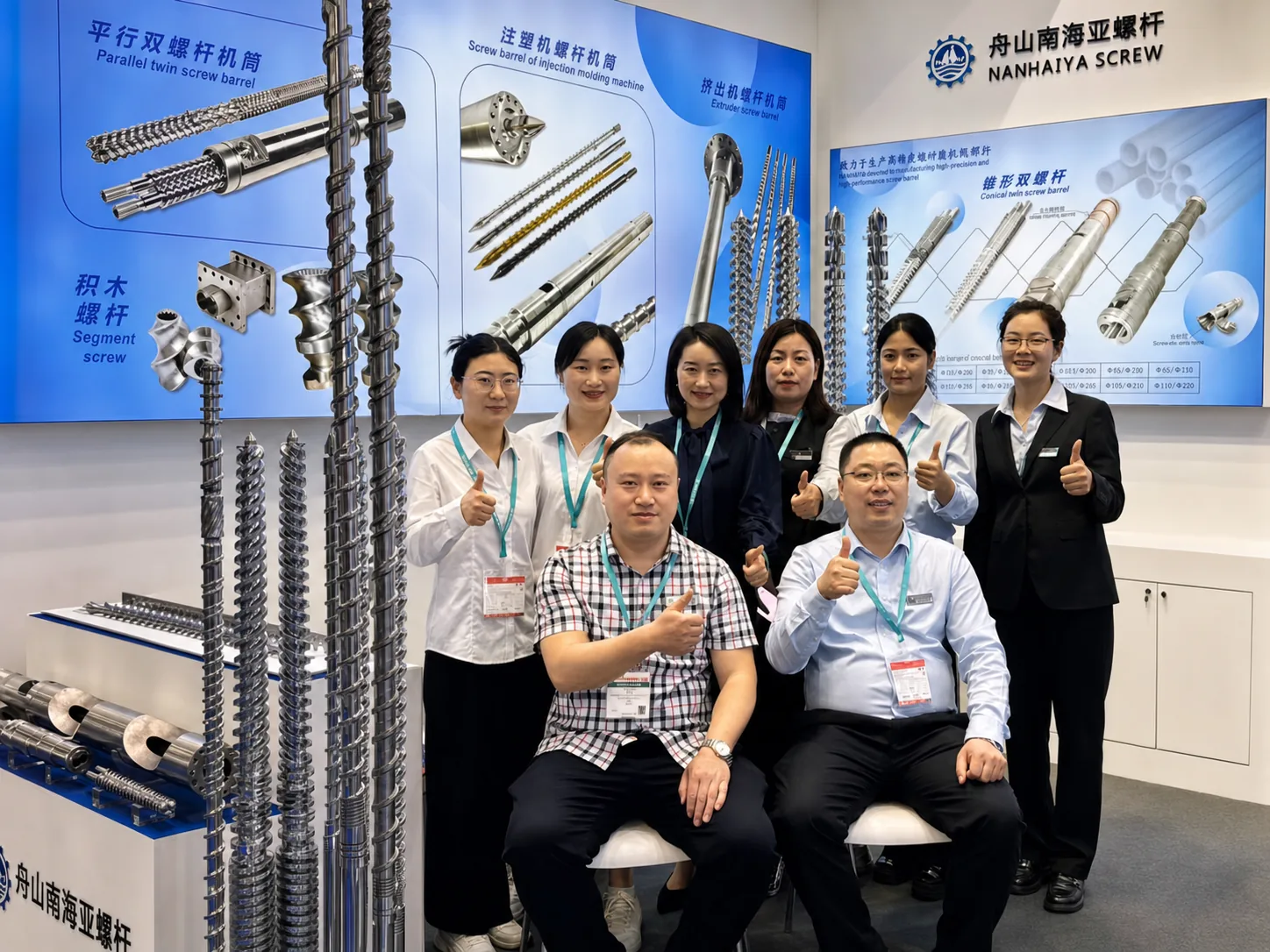
Related Articles
More insights on screw barrel technology and plastics processing.
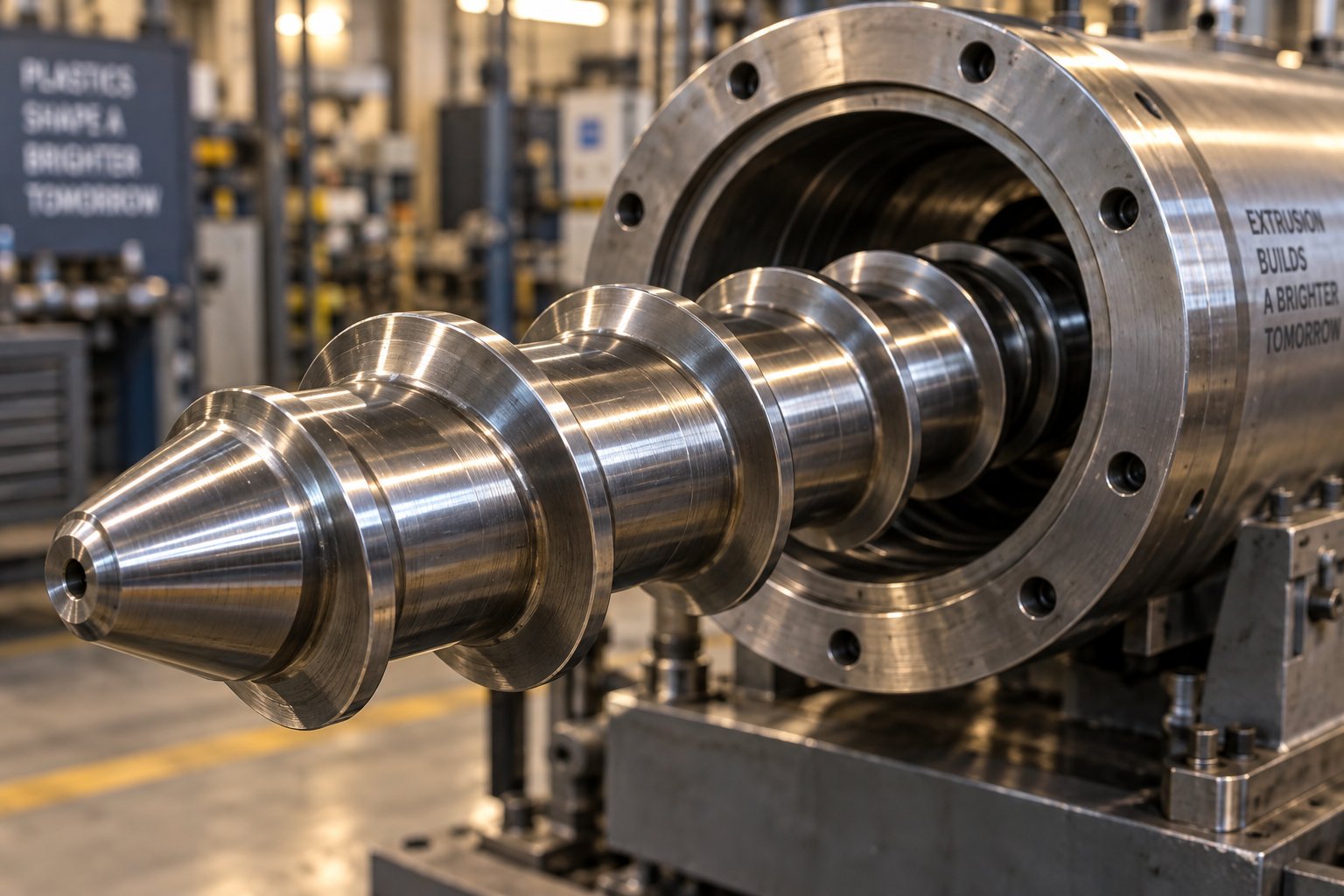
What Nobody Tells You About Screw Barrel For Plastic Machine Design
Oct 10, 2026
Learn how screw barrel for plastic machine design affects melt quality, throughput, and wear life. Covers geometry, resin matching, troubleshooting, and sourcing.
Read Article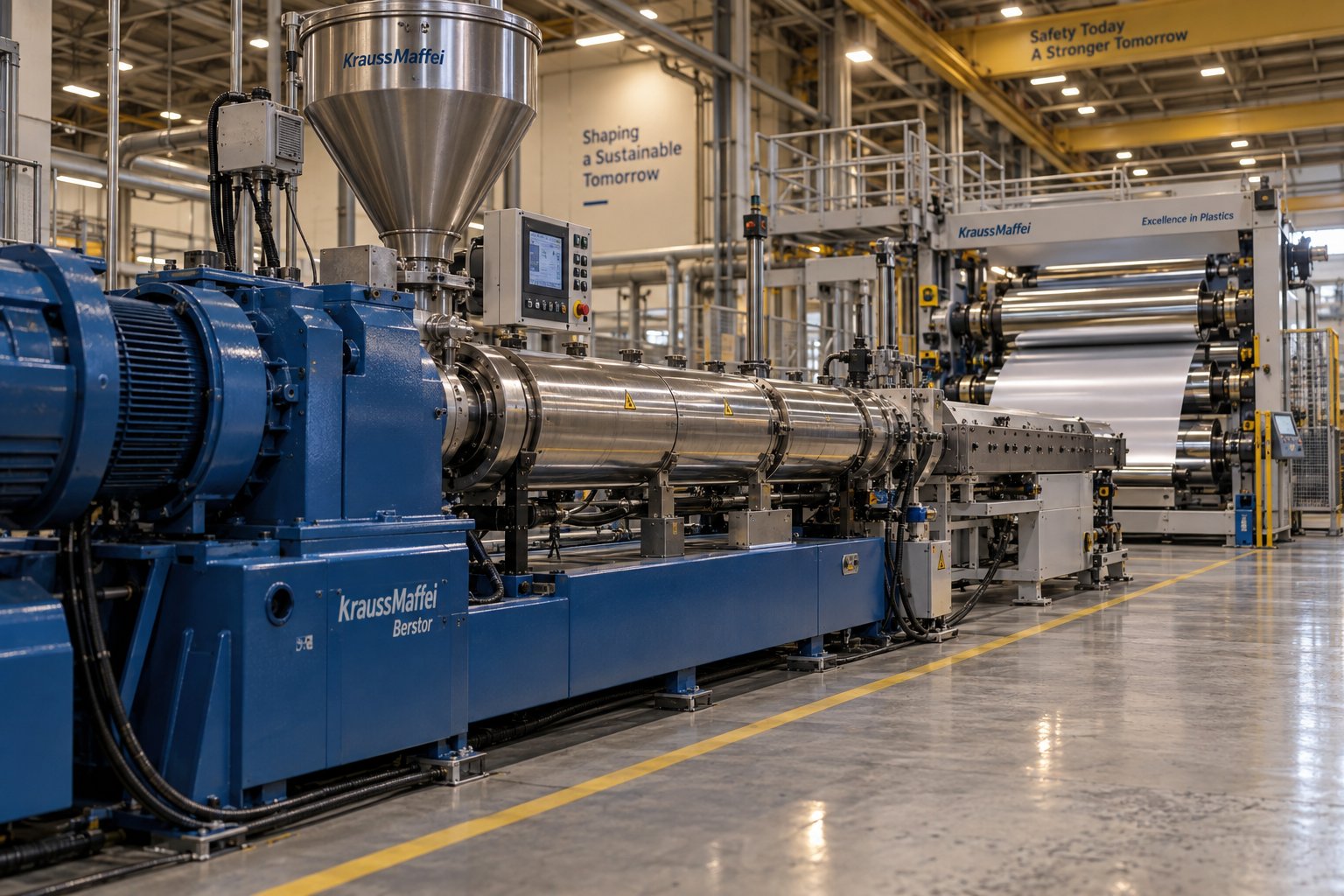
Single Screw Extruder for Sheet: Stop Guessing, Start Specifying
Oct 9, 2026
Learn how to specify a single screw extruder for sheet production. Covers screw geometry, resin-specific processing, troubleshooting, and maintenance best practices.
Read Article
PE Pipe Extruder Machine: What Datasheets Won't Tell You
Oct 9, 2026
Learn how a PE pipe extruder machine works, key specs explained, material grade selection, maintenance tips, and buyer guidance beyond the datasheet.
Read ArticleLooking for something else?
Search by material, symptom or product and jump straight to the relevant page.
These are navigation suggestions based on keyword matching — not a quotation, not a delivery commitment, and not a substitute for engineering review. Final specification is confirmed by our engineers against your drawings and processed material.
Need help with screw barrel selection?
Share your machine model, processed material and application. Our team can help with pricing and technical support.