

What Are Counter-Rotating Twin Screw Extruders and Why They Matter
Imagine two screws sitting side by side inside a heated barrel, each spinning in the opposite direction from the other. One turns clockwise while its partner turns counterclockwise. That simple difference in rotation creates an entirely distinct processing behavior compared to the co-rotating twin screw extruders that dominate most compounding discussions.
Defining the Counter-Rotating Twin Screw Extruder
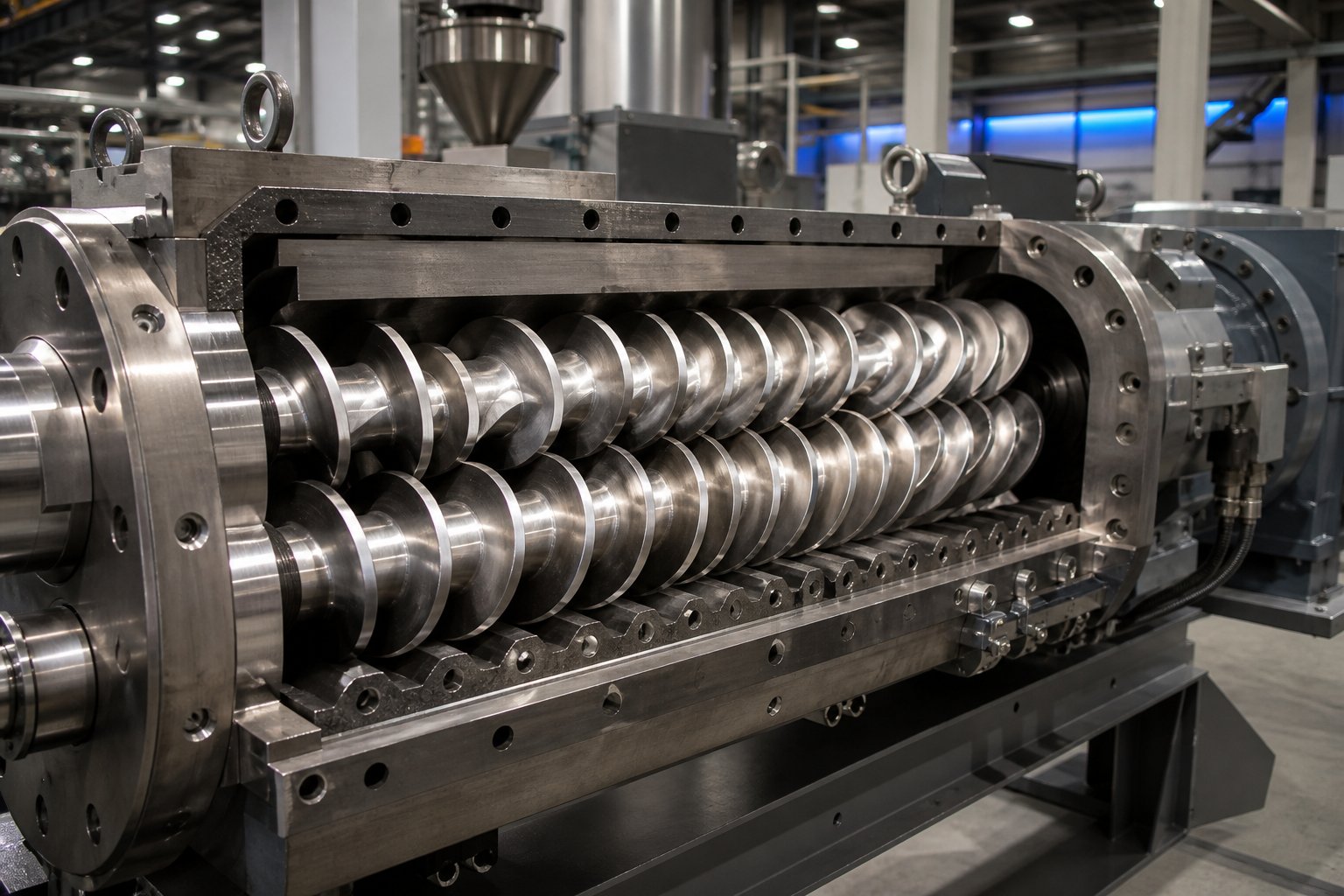
A counter-rotating twin screw extruder uses two intermeshing screws that rotate in opposite directions, drawing material into the nip region between them in a calender-like action. This design produces gentle, low-shear mixing with positive displacement conveying, making it the preferred choice for processing thermally sensitive and shear-sensitive materials such as rigid PVC.
In a co-rotating twin screw extruder, both screws spin the same way, generating intense shear fields and strong self-wiping behavior ideal for high-energy compounding tasks. The counter-rotating configuration takes a fundamentally different approach. As Technovel explains, mixing in a counter-rotating design relies primarily on compressive and elongational deformation rather than the high shear stress typical of co-rotating machines. Material is squeezed between the screws much like a calender roll, dispersed under relatively gentle conditions, and conveyed forward with predictable, positive displacement characteristics.
This matters because certain polymers simply cannot tolerate aggressive mechanical energy input. Rigid PVC, for example, has a narrow window between its processing temperature and its decomposition temperature. Push too hard with shear, and the material degrades. Counter-rotating twin screw extruders solve that problem by keeping shear stress and the associated heat generation low.
Why Understanding This Design Matters for Equipment Buyers
The used market for these machines is substantial, and for good reason. Well-maintained twin screw extruders from established OEMs routinely deliver decades of reliable service. A properly cared-for unit built in the early 2000s can still be a strong production asset today. That longevity means a steady supply of used extruders entering the secondary market as plants upgrade capacity, shift product lines, or consolidate operations.
Yet buying a used twin screw extruder without understanding the technology behind it is a recipe for expensive regret. Counter-rotating and co-rotating machines are not interchangeable. Choosing the wrong configuration for your application wastes capital and production time.
This article serves as an unbiased educational resource, not a sales page. Whether you are a buyer sourcing your first machine, a plant engineer evaluating an acquisition, or a maintenance team assessing remaining service life, you will find practical guidance grounded in how these machines actually work and where they fit in real-world production.
The mechanical principles behind that opposite rotation unlock everything else, from application suitability to inspection priorities when evaluating used equipment.
How Counter-Rotating Twin Screw Extruders Work
Two screws spinning in opposite directions sounds straightforward enough. But the real story lies in what happens to the material trapped between them. The mechanical behavior of a counter-rotating twin-screw extruder depends heavily on whether the screws physically overlap each other and how tightly they engage. That single design variable, the degree of intermeshing, determines whether the machine acts as a positive displacement pump or something closer to an open-channel conveyor.
Intermeshing vs Non-Intermeshing Counter-Rotating Configurations
Picture two gears meshing together. In an intermeshing counter-rotating screw extruder, the flight of one screw fits into the channel of the other, creating enclosed or semi-enclosed pockets of material between the screws and the barrel wall. These pockets, often called C-shaped chambers, trap a fixed volume of material and push it forward with each rotation. The result is positive displacement conveying, where a specific volume of material advances with every screw revolution regardless of the material's viscosity or flow resistance.
Where the two screws meet, something distinctive happens. Material gets squeezed between the intermeshing flights in a calendering-like nip action, similar to what occurs between two counter-rotating rolls in a calender machine. This nip region generates a separation force on the screws and creates localized pressure, which is why intermeshing counter-rotating designs typically run at lower speeds than their co-rotating counterparts. Running too fast amplifies that separation force, accelerates barrel wear, and undermines the gentle processing advantage the design is built around.
Non-intermeshing counter-rotating configurations take a completely different approach. Here, the center distance between the two screw axes is large enough that the screws do not overlap at all. Without that physical engagement, the machine cannot form closed chambers and loses its positive displacement conveying capability. Material transport in a non-intermeshing double screw extruder relies more on frictional drag, similar to a single-screw machine. The trade-off? Material can transfer freely from one screw channel to the other, which enhances back-mixing and can be useful for certain compounding and plasticizing operations. However, non-intermeshing counter-rotating designs are far less common in industry than the intermeshing variety.
Conveying Mechanics and Shear Characteristics
The way material moves through counter-rotating screw extruders is fundamentally different from co-rotating designs. In a co-rotating machine, material follows a figure-eight or spiral path as it transfers between screws, experiencing intense shear in the intermeshing zone. In a counter-rotating machine, material stays largely confined within its C-shaped chamber and advances axially along the barrel in a more orderly, plug-flow manner.
This distinction produces several key mechanical characteristics that define the counter-rotating design:
- Positive displacement conveying: Enclosed chambers between intermeshing flights push a defined volume of material forward per revolution, delivering predictable and consistent output rates.
- Low shear mixing: The calendering nip action produces compressive and elongational forces rather than the high rotational shear typical of co-rotating machines, protecting heat-sensitive polymers from degradation.
- Calendering nip action: Material is squeezed between the counter-rotating flights much like polymer passing through calender rolls, creating controlled dispersive mixing without excessive energy input.
- Controlled pressure buildup: The positive conveying mechanism generates stable, predictable pressure profiles along the barrel length, which is critical for consistent die feeding in pipe and profile extrusion.
Self-wiping behavior is another area where counter-rotating machines differ significantly. Co-rotating intermeshing screws continuously wipe each other's surfaces clean because the relative motion of the flights scrapes material off the opposing screw. Counter-rotating intermeshing screws have limited self-wiping capability. The geometry of opposite rotation means the flights approach each other head-on at the nip point rather than sliding past one another. This results in longer material residence times in certain zones and makes thorough cleaning between material changes more challenging. For buyers evaluating used equipment, this characteristic also means you should pay closer attention to material buildup and potential degradation residue inside the barrel and screw channels.
How Barrel Zones and Screw Geometry Interact
No extruder twin screw system operates on screw mechanics alone. The barrel surrounding those screws is divided into individually controlled heating and cooling zones, each set to a specific temperature to guide the material through distinct processing stages: feeding, melting, mixing, and metering.
In the feed zone, barrel temperatures are kept relatively low to prevent premature melting that could block incoming material. As material advances into the compression and melting zones, barrel heaters raise the temperature while the screw geometry simultaneously reduces channel depth, compressing the material against the heated barrel wall. The combination of external heat from the barrel and internal frictional heat from the screw action gradually converts solid pellets or powder into a homogeneous melt.
Screw speed plays a balancing role in this process. Higher screw speeds increase throughput but also raise shear rates and the associated frictional heat generation. For shear-sensitive materials like rigid PVC, operators typically run counter-rotating machines at modest speeds, often well below the maximum RPM the drive can deliver, relying more on barrel heater energy than mechanical shear energy for melting. Screw geometry, including flight pitch, channel depth progression, and the number of flights, is carefully designed so that each zone performs its intended function without overworking the material.
Temperature control precision matters enormously. Each barrel zone uses a combination of electric heater bands for heating and liquid-cooled channels or air blowers for cooling. The ability to independently fine-tune each zone allows processors to maintain the narrow thermal windows that sensitive materials demand. When you are evaluating used screw extruders, the condition and responsiveness of these heating and cooling systems directly affects whether the machine can still deliver the process control its original design intended.
These mechanical realities, from intermeshing geometry to barrel zone interaction, create a machine with very specific strengths. The natural question becomes: does that strength come in one shape, or does it look different depending on whether the screws are tapered or parallel?
Conical vs Parallel Counter-Rotating Extruder Designs
The answer is both. Counter-rotating twin screw extruders come in two fundamentally different physical shapes, and confusing one for the other when shopping for used equipment can send your project sideways before it ever reaches the production floor. The distinction between conical and parallel screw geometry is not a minor engineering footnote. It determines feed capacity, torque transmission, pressure generation, and which applications the machine can realistically handle.
Conical Counter-Rotating Extruder Design and Advantages
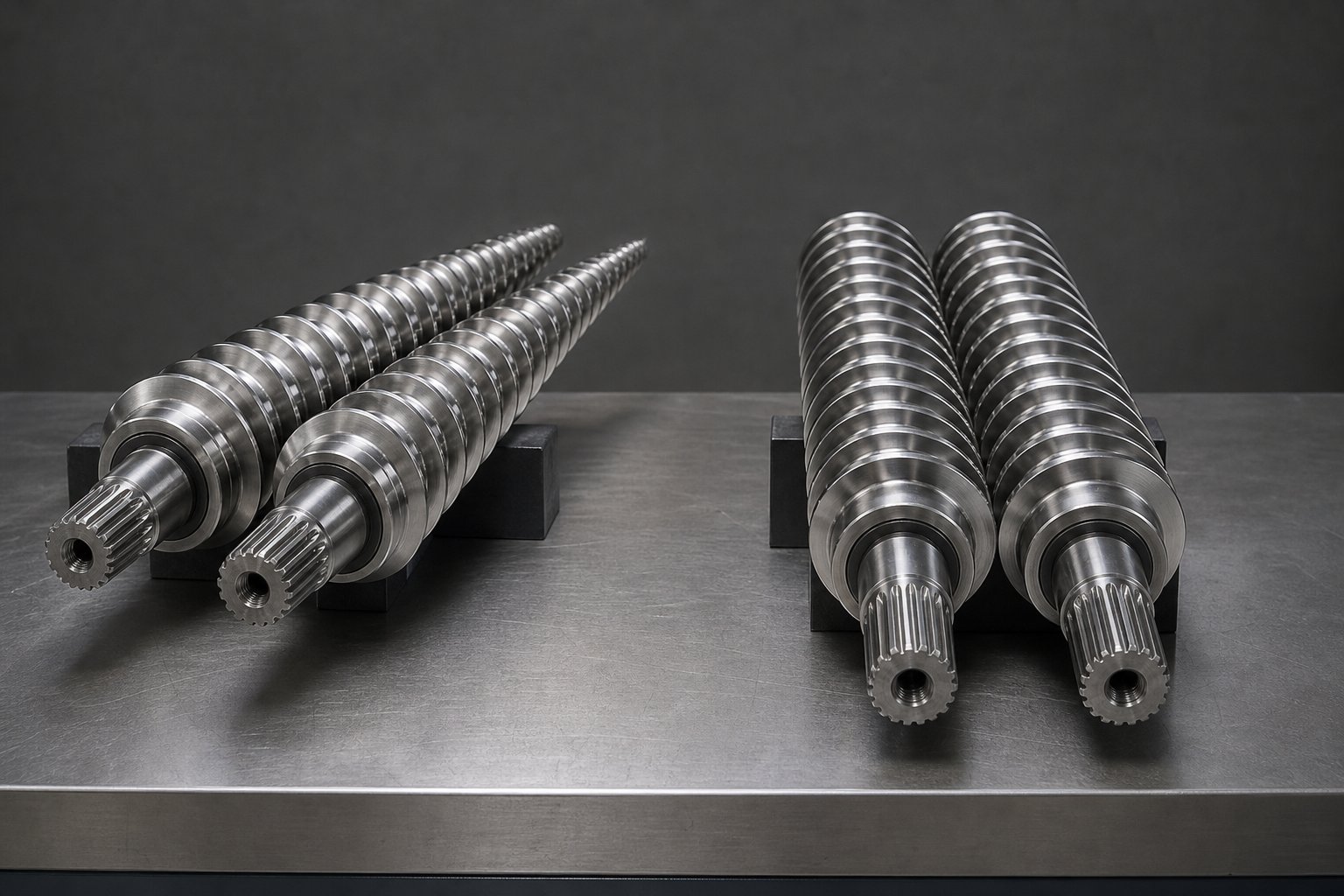
Imagine two ice cream cones placed side by side, wide ends facing the hopper and tips pointing toward the die. That is essentially the screw geometry inside a conical twin screw extruder. The screws taper from a larger diameter at the feed end to a smaller diameter at the discharge end, and the barrel surrounding them follows the same taper.
This shape delivers several natural mechanical advantages. The large diameter at the feed section creates a generous opening that can accept high volumes of low-bulk-density powders, which is exactly what you encounter with dry-blend PVC formulations. At the same time, the bigger root diameter at the feed end allows for larger bearings and greater torque transmission through the gearbox. You get strong rotational force where the material is hardest to move, right at the intake.
As material travels toward the discharge, the decreasing screw diameter naturally compresses it. This built-in compression ratio means the screw geometry itself helps build melt pressure without relying heavily on restrictive screw element designs. At the smaller discharge end, the reduced cross-section maintains high pressure for pushing melt through the die. The result is a compact, mechanically efficient twin screw extruder machine that excels at converting PVC dry blends into finished pipe and profile products.
Conical counter-rotating extruders dominate PVC pipe and profile extrusion worldwide. Names like Cincinnati Milacron (now Battenfeld Cincinnati), Krauss Maffei, and Bausano have built their reputations largely on conical designs. If you are searching the used market for a PVC pipe or window profile extrusion line, the odds are strong that the extruder at the heart of it will be conical.
Parallel Counter-Rotating Extruder Design and Use Cases
Parallel counter-rotating extruders take the opposite geometric approach. Both screws maintain a uniform, cylindrical diameter from feed end to discharge end. There is no taper and no built-in compression from the screw shape itself. Instead, compression and pressure generation depend entirely on screw element design, flight geometry changes, and barrel configuration along the machine's length.
What you gain with a parallel double screw extruder machine is design flexibility. Because the screw diameter stays constant, engineers have more freedom to configure longer processing sections. As Rollepaal notes, parallel designs can be extended in length more easily to increase output, simply by stretching pitches, while conical machines would require a diameter increase to achieve the same result. This also translates into a wider processing window, with better venting flexibility that allows features like early vent placement to be incorporated more readily.
Parallel counter-rotating machines are increasingly preferred for larger extruder sizes. Advances in gearbox technology, particularly through finite element method (FEM) optimization, have overcome the historical mechanical advantage conical designs held in gear packaging. The result is that for high-output PVC pipe lines and specialty compounding applications, parallel counter-rotating twin-screw extruder machines have gained significant ground.
Leistritz, Berstorff, and Weber are among the OEM names you will encounter on parallel counter-rotating units in the used market. These machines tend to appear in applications ranging from PVC compounding to specialty processing where longer residence times or greater screw design modularity is required.
Choosing Between Conical and Parallel for Your Application
For buyers evaluating used equipment, the conical-versus-parallel question is not about which design is universally better. It is about which design matches your specific production requirements. A conical machine built for PVC window profiles will not easily adapt to a high-throughput large-diameter pipe line that demands the extended processing length of a parallel unit. Conversely, buying a parallel machine for a small-to-midsize PVC profile operation may mean paying for capability you do not need.
The following table summarizes how these two designs compare across the parameters that matter most when evaluating used twin screw counter rotating extruders:
| Parameter | Conical Design | Parallel Design |
|---|---|---|
| Screw Geometry | Tapered screws, larger feed diameter narrowing to smaller discharge diameter | Cylindrical screws with uniform diameter along full length |
| Feed Capacity | Large feed opening accommodates low-bulk-density powders easily | Smaller relative feed opening; may require optimized feeding systems |
| Pressure Generation | Natural compression from taper builds pressure efficiently | Pressure depends on screw element design and flight geometry changes |
| Screw Design Freedom | More limited by tapered mechanics | Greater flexibility; easier to extend length for higher output |
| Processing Window | Can be relatively narrow, especially for gelation-sensitive PVC | Wider processing window with better venting flexibility |
| Typical Applications | PVC pipe, PVC profile (window frames, siding), rigid PVC sheet | Large-diameter PVC pipe, PVC compounding, specialty and WPC applications |
| Common OEM Brands | Cincinnati Milacron / Battenfeld Cincinnati, Krauss Maffei, Bausano | Leistritz, Berstorff, Weber, Rollepaal |
| Used Market Availability | Very high; decades of PVC installations generate steady supply | Moderate; growing presence as older parallel lines are upgraded |
Keep in mind that the processing window difference highlighted by industry specialists is especially relevant for used equipment buyers. A conical machine with worn screws or imprecise temperature control may struggle to stay within that narrower window, while a parallel machine in similar condition might still offer enough operating margin to remain productive. That wear-tolerance factor is worth weighing alongside purchase price when you are comparing listings.
Screw shape tells you what the machine was built to do. But geometry alone does not explain why a buyer should choose counter-rotating over co-rotating in the first place. That comparison reveals even sharper contrasts in performance, mixing behavior, and the industries each configuration serves best.
Counter-Rotating vs Co-Rotating Twin Screw Extruders Compared
Here is where buying decisions get made or broken. The difference between co rotating and counter rotating twin screw extruder designs is not subtle. It is fundamental. Each configuration produces a completely different mechanical environment inside the barrel, which means choosing the wrong one for your application is not a minor inconvenience. It is a production failure waiting to happen. Before you browse a single listing for used equipment, you need absolute clarity on which rotation direction your process demands.
Core Mechanical Differences Between Rotation Directions
In a co rotating twin screw extruder, both screws spin the same way. Material follows a figure-eight path as it transfers from one screw to the other, passing through intense shear fields at the intermeshing zone and between the screw tips and the barrel wall. As Technovel describes, kneading blocks add elongational flow components on top of that rotational shear, imposing a complex deformation history on the polymer. The result is exceptional dispersive and distributive mixing, perfect for breaking apart filler agglomerates, controlling phase morphology in polymer blends, and driving chemical reactions in reactive extrusion.
The counter-rotating design operates on an entirely different principle. Material stays largely confined within closed C-shaped chambers and advances forward through positive displacement rather than being dragged along by frictional shear. At the intermeshing zone, the calendering effect subjects material to compressive and elongational deformation under relatively gentle conditions. Shear stress stays low, and so does the associated heat generation.
Self-cleaning ability separates the two configurations sharply. In a co-rotating machine, the opposing velocity directions of adjacent flights in the intermeshing region create a scraping action that continuously wipes material off the screw surfaces. As Cowell Extrusion explains, this high relative speed produces a very effective self-cleaning effect, keeping residence times short and preventing localized degradation. Counter-rotating twin-screw extruders lack this aggressive wiping action because their flights approach each other head-on at the nip rather than sliding past. Material can linger longer in certain zones, which is manageable for PVC processing but makes product changeovers slower and cleaning more labor-intensive.
Conveying behavior flips in the opposite direction. Counter-rotating machines deliver superior positive displacement, functioning almost like a gear pump. Every screw revolution moves a defined volume of material forward, producing stable and predictable output rates even with difficult-to-feed powders. Co-rotating designs rely more on drag flow, which means output can vary more with changes in material properties, screw speed, or die resistance.
Application Suitability Comparison
These mechanical differences translate directly into industry applications. The twin screw compounding extruder you see in a color masterbatch plant or an engineering plastics facility is almost certainly co-rotating. Compounding demands intense energy input to disperse fillers, blend immiscible polymers, and achieve uniform additive distribution. Co-rotating machines handle glass fiber reinforcement, carbon nanotube dispersion, polymer alloying, and devolatilization tasks where aggressive mixing is not just acceptable but required.
Counter-rotating machines dominate a completely different world. Rigid PVC has a decomposition temperature dangerously close to its processing temperature, and it lacks the melt flow characteristics of most thermoplastics. As extrusion specialists note, the high shear conditions of a co-rotating machine can work against PVC processing entirely. Counter-rotating designs solve this by operating at high fill ratios and low screw speeds, holding extrusion temperatures down through the calendering effect rather than fighting thermal degradation caused by excessive mechanical energy. PVC pipe lines, window profile systems, siding extrusion, and rigid PVC sheet production rely almost exclusively on counter-rotating twin-screw extruders.
Wood-plastic composite extrusion and certain specialty formulations involving thermally sensitive additives also lean toward counter-rotating configurations, where the gentle processing environment prevents premature decomposition of organic fibers or heat-labile ingredients.
The following table lays out the comparison across every parameter that matters when deciding between these two types of twin-screw extruders:
| Parameter | Co-Rotating | Counter-Rotating |
|---|---|---|
| Shear Intensity | High; intense shear fields at intermeshing zone and barrel wall | Low; relies on compressive and elongational deformation |
| Mixing Type | Strong dispersive and distributive mixing via kneading elements | Gentle calendering-based dispersive mixing; limited distributive mixing |
| Self-Cleaning Ability | Excellent; continuous self-wiping action keeps surfaces clean | Limited; flights approach head-on rather than wiping past each other |
| Conveying Mechanism | Drag flow dominant; output influenced by material and die resistance | Positive displacement; gear-pump-like conveying with stable output |
| Typical Throughput Range | Wide range; high speeds enable high throughput in compounding | Moderate; lower screw speeds limit maximum throughput per screw diameter |
| Material Suitability | Engineering thermoplastics, polymer blends, filled compounds, reactive systems | Shear-sensitive and heat-sensitive materials: rigid PVC, WPC, thermally labile formulations |
| Primary Industries | Compounding, masterbatch, polymer alloying, reactive extrusion, devolatilization | PVC pipe and profile extrusion, rigid PVC sheet, wood-plastic composites |
| Common OEM Brands | Coperion (Werner & Pfleiderer), Leistritz, KraussMaffei Berstorff, Technovel | Battenfeld Cincinnati, Krauss Maffei, Bausano, Leistritz, Weber |
For anyone evaluating used twin screw counter rotating extruders, this table is not academic. It is your first filter. If your process involves compounding nylon with glass fiber or blending two incompatible polymers, you need a co-rotating machine regardless of how attractive the price looks on a counter-rotating listing. If you are running PVC dry blend into pipe or profile, a co-rotating design will fight you at every step.
Knowing which rotation direction fits your process is the essential first step. The next question is equally practical: exactly which applications make counter-rotating machines the clear, uncontested choice, and where should you steer away from them entirely?
Primary Applications for Counter-Rotating Twin Screw Extruders
Understanding the mechanical differences between rotation directions is one thing. Seeing where those differences play out on actual production floors is what separates a smart equipment purchase from a costly mismatch. Counter-rotating twin screw extruders do not try to be everything to everyone. They dominate a specific set of applications, and in those niches, no other machine type comes close.
PVC Pipe and Profile Extrusion Applications
Rigid PVC is the single biggest reason counter-rotating machines exist in such large numbers. Think about what PVC demands from a processor: the gap between its melting range and its decomposition temperature is razor-thin. Apply too much shear energy, and the material releases hydrochloric acid, discolors, and loses mechanical strength. A twin screw extruder plastic processing line built around a co-rotating design would simply overwhelm rigid PVC with excessive mechanical energy input.
Counter-rotating designs solve this by relying on their gentle calendering nip action and low screw speeds, typically in the range of 10 to 60 RPM, to melt and convey PVC dry blend without triggering degradation. As industry sources confirm, barrel pressures can reach upward of 40 MPa while keeping shear rates low to moderate, which is exactly the combination rigid PVC needs for dense, well-formed extrudates.
The practical result? Counter-rotating machines are the backbone of rigid PVC production worldwide. You will find them running:
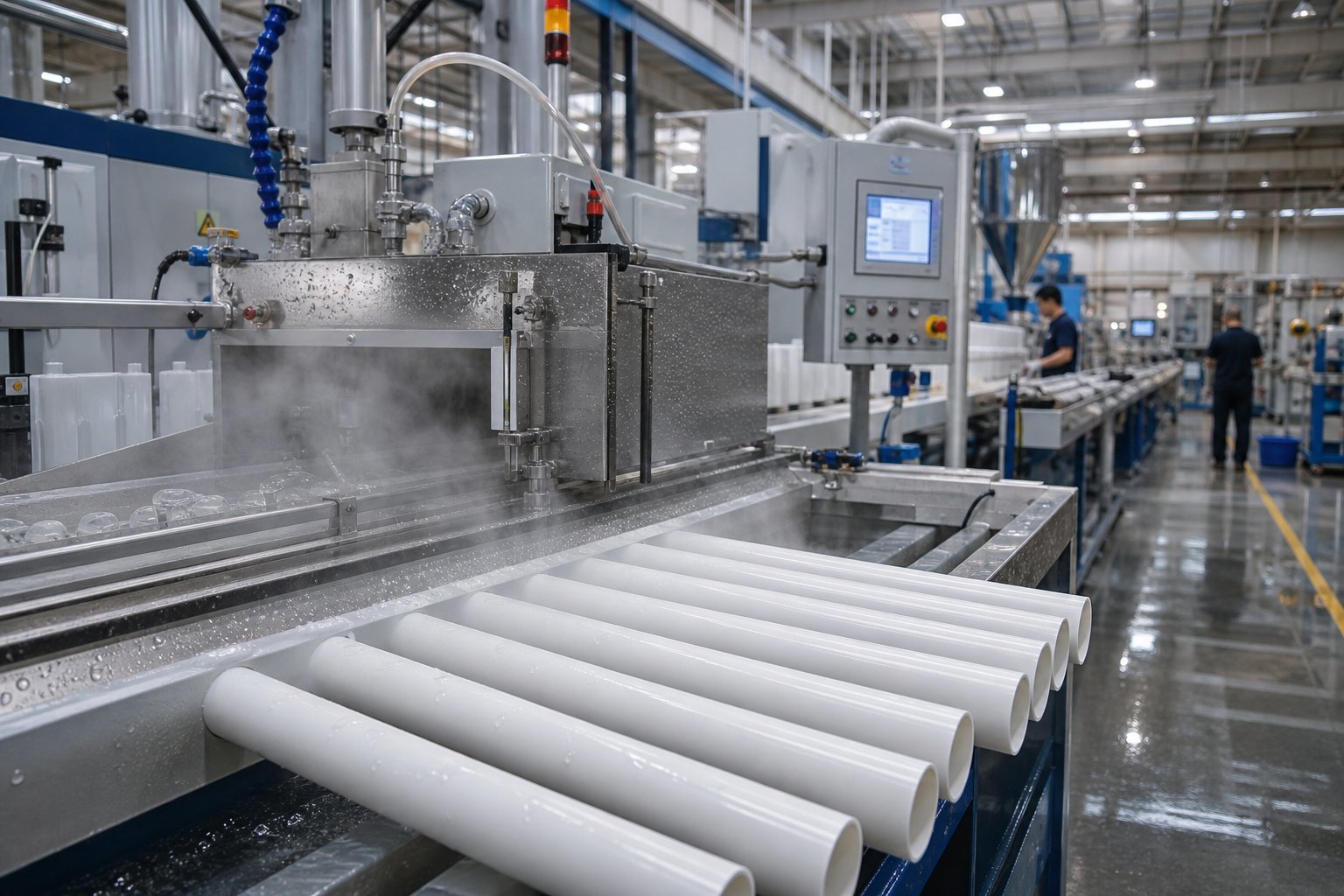
- Water and sewer pipe: Municipal infrastructure relies heavily on rigid PVC pipe extruded on counter-rotating lines, where dimensional consistency and material integrity are non-negotiable.
- Electrical conduit: Uniform wall thickness and smooth bore finish require the stable, positive-displacement conveying that counter-rotating screws deliver.
- Window frames and door profiles: Complex multi-cavity profile dies demand consistent melt pressure and homogeneity, both strengths of the counter-rotating plastic twin screw extruder design.
- Siding and decking profiles: Weather-exposed products need excellent surface finish and freedom from internal voids, which depend on the controlled, low-shear melt preparation these machines provide.
- Rigid and flexible PVC compounding: Blending stabilizers, fillers, plasticizers, and pigments into PVC base resin benefits from the gentle yet thorough mixing action without risking thermal degradation.
If you are browsing the used market and see a counter-rotating extruder from Battenfeld Cincinnati, Krauss Maffei, or Bausano, chances are high it spent its working life on one of these PVC applications.
Wood-Plastic Composites and Specialty Materials
PVC is not the only material that punishes aggressive processing. Wood-plastic composite extrusion combines thermoplastic resins, typically polyethylene or PVC, with wood flour or natural fibers. Those organic fillers begin to degrade and discolor at temperatures above roughly 200 degrees Celsius and are sensitive to prolonged exposure to high shear fields. A screw plastic extruder that generates excessive frictional heat will scorch the wood fibers, produce surface defects, and release volatiles that create porosity in the finished product.
Counter-rotating machines handle WPC formulations effectively because their low-shear environment and controlled conveying minimize fiber damage. Multiple venting zones, both atmospheric and vacuum, can be incorporated along the barrel to remove moisture and volatiles released by the wood component during processing. The positive displacement conveying mechanism also helps manage the inconsistent bulk density that wood-fiber-filled materials tend to have.
Beyond WPC, you will find counter-rotating twin screw plastic extruder configurations used in:
- Calcium carbonate filled compounds: High filler loading applications where gentle dispersion without particle fracture preserves the filler's reinforcing effect.
- Devolatilization of moisture-sensitive formulations: The controlled conveying and sealed chamber design allow efficient removal of volatiles under vacuum without surging or vent flooding.
- Certain pharmaceutical and nutraceutical extrusions: Where precise temperature control and gentle handling protect active ingredients from thermal degradation.
- Pet treat and dental chew production: Specialty food applications involving heat-sensitive protein blends, starch, and bone meal benefit from the low-shear, high-pressure environment these machines create.
When a Counter-Rotating Design Is Not the Right Choice
Knowing where a machine excels is only half the equation. Knowing where it falls short saves you from buying the wrong used equipment entirely. Counter-rotating twin screw extruders are not well-suited for applications that demand high-intensity dispersive mixing or rapid material throughput at elevated screw speeds.
If your process involves any of the following, you should be looking at co-rotating machines instead:
- Compounding engineering thermoplastics: Materials like nylon, polycarbonate, or PEEK require aggressive shear to achieve adequate melt homogeneity and filler dispersion. Counter-rotating designs cannot deliver the mixing intensity these resins need.
- Reactive extrusion: Chemical reactions that depend on precise residence time distribution and intense mixing, such as grafting, polymerization, or controlled degradation, need the self-wiping, high-shear environment of a co-rotating machine.
- High-throughput masterbatch production: Dispersing pigments or additive concentrates into carrier resins at production-scale speeds demands the aggressive kneading and distributive mixing that co-rotating screws provide.
- Glass fiber or mineral reinforcement compounding: Achieving uniform fiber distribution without excessive fiber breakage requires the specific mixing element configurations available on co-rotating twin screw compounding extruders.
As Thermo Fisher Scientific notes, co-rotating twin screw extruders usually have modular screw configurations that make them highly adaptable to changing applications and material properties, a flexibility that counter-rotating machines typically lack.
If your application does not involve PVC, WPC, or another shear-sensitive material, a counter-rotating extruder is probably not the right machine for you, no matter how attractive the price.
Being honest about application fit before you start shopping prevents the most expensive mistake in the used equipment market: buying a perfectly functional machine that simply cannot do what your process requires. With the right application confirmed, the next challenge is understanding the technical specifications that separate a strong used machine from one that will drain your maintenance budget within months.
Key Technical Specifications and OEM Brands Buyers Must Know
A used counter-rotating twin screw extruder listing might look like a wall of numbers: screw diameter, L/D ratio, motor kilowatts, maximum RPM. If you do not know what each specification actually tells you about the machine's capability and condition, those numbers are just noise. Worse, they become a smokescreen that lets a seller move a worn-out machine to someone who does not know what to look for.
Every spec on the data sheet connects directly to a processing outcome. Understanding that connection is what separates a buyer who negotiates from a position of knowledge from one who gets burned.
Understanding Screw Diameter and L/D Ratio
Screw diameter is the single most important sizing parameter on any twin screw extruder. It refers to the outer diameter of the screw flights, expressed in millimeters. For conical counter-rotating machines, you will see two numbers listed, such as 55/110 mm, where the smaller number is the discharge-end diameter and the larger is the feed-end diameter. For parallel counter-rotating machines, only one diameter is listed because it stays constant along the full screw length.
Why does diameter matter so much? It directly determines throughput capacity. A larger screw diameter means a bigger channel volume per revolution, which translates into higher material output. It also affects torque capacity, since larger shafts can transmit more rotational force. When you are comparing used machines, matching screw diameter to your required production rate is the first filter. A machine that is too small will bottleneck your line, while one that is oversized wastes energy and floor space.
The L/D ratio, or length-to-diameter ratio, tells you how long the processing section is relative to the screw diameter. A counter-rotating machine with a 65 mm parallel screw diameter and a 1,625 mm working length has an L/D of 25:1. According to Granuwel's parameter guide, conical twin screw extruders typically have L/D ratios in the range of 16:1 to 18:1, while parallel designs run longer, often reaching 22:1 to 28:1 or even higher.
A longer L/D ratio gives material more time inside the barrel, which means more opportunity for melting, mixing, venting, and pressure buildup. For PVC processing, where thorough gelation is critical to final product strength, a sufficient L/D ratio ensures the material reaches proper melt quality before it hits the die. Short L/D machines can be limiting if your formulation requires extended residence time or multiple venting zones. When evaluating a used machine's L/D ratio, match it against the requirements of your specific process rather than assuming bigger is always better.
Torque, Drive Power, and Throughput Specifications
Specific torque, measured in Nm/cm cubed, indicates how much rotational force the gearbox can deliver relative to the screw's volumetric capacity. Think of it as the machine's muscle-to-size ratio. Higher specific torque means the extruder can process higher-viscosity materials or heavily filled formulations without overloading the drive system. For counter-rotating machines handling rigid PVC dry blends with significant filler content, adequate torque reserves prevent motor trips, gearbox damage, and inconsistent output.
Maximum screw speed, expressed in RPM, defines the upper throughput limit and the maximum shear rate the machine can impose. Counter-rotating extruders run at significantly lower speeds than co-rotating designs. Industry data shows typical operating speeds of 10 to 60 RPM for counter-rotating machines, compared to several hundred RPM for co-rotating compounders. This low speed is by design, not a limitation. It preserves the gentle processing environment that shear-sensitive materials require. When reviewing a used machine's listed maximum RPM, verify whether the gearbox and drive system can still reliably deliver that speed under load. Worn thrust bearings or a fatigued gearbox may limit practical operating speed well below the nameplate rating.
Drive motor power, listed in kilowatts or horsepower, must be sufficient to supply the energy your process demands. Motor sizing ties directly to screw diameter, speed, and the viscosity of the material being processed. An undersized motor will current-limit before you reach target throughput. An oversized motor wastes capital and operating costs. Used machine listings should specify the installed motor power, and you should cross-reference this against the energy requirements of your target formulation and output rate.
The number of barrel heating and cooling zones determines how precisely you can control temperature along the processing length. Counter-rotating extruders typically feature 3 to 7 independently controlled zones, each with electric heater bands for heating and liquid-cooled or air-cooled channels for cooling. More zones mean finer thermal control, which is essential for materials like rigid PVC that have very narrow processing temperature windows. On a used machine, check whether all zones are fully functional. A dead heater band or a plugged cooling channel in a critical zone can make the machine incapable of running your process within spec.
Volumetric throughput capacity, measured in kg/hr, is the headline production number most buyers focus on first. Typical counter-rotating machines deliver throughputs ranging from roughly 100 to 500 kg/h depending on screw diameter, speed, and material properties. Keep in mind that the throughput listed on a used machine's spec sheet reflects ideal conditions with the original screws and barrels. Wear reduces effective throughput because worn flights leak material backward rather than conveying it forward.
The following table consolidates these specifications into a quick-reference format for evaluating any used counter-rotating extruder listing:
| Specification | Unit | Typical Range (Counter-Rotating) | Why It Matters to the Buyer |
|---|---|---|---|
| Screw Diameter | mm | 35-130 mm (parallel); 35/70 to 80/156 mm (conical) | Primary sizing parameter; determines throughput capacity and torque requirements |
| L/D Ratio | Dimensionless | 16:1-18:1 (conical); 22:1-28:1+ (parallel) | Affects residence time, melting capacity, venting options, and mixing intensity |
| Specific Torque | Nm/cm³ | Varies by OEM and model | Indicates ability to process high-viscosity or heavily filled materials without drive overload |
| Max Screw Speed | RPM | 10-60 RPM | Defines upper throughput limit and maximum shear rate; verify gearbox can sustain it |
| Barrel Heating/Cooling Zones | Count | 3-7 independent zones | More zones = finer temperature control; critical for narrow processing windows |
| Drive Motor Power | kW or HP | 15-250+ kW (application dependent) | Must match process energy demands; undersized motors limit throughput |
| Throughput Capacity | kg/hr | 100-500+ kg/hr | Nameplate capacity assumes new screws/barrels; wear reduces effective output |
Major OEM Brands in Counter-Rotating Extruders
The name on the machine matters, and not just for bragging rights. When you buy a used counter-rotating extruder from a well-established manufacturer, you gain access to a support ecosystem that includes spare parts availability, technical documentation, service networks, and communities of experienced operators who know the equipment intimately.
Several twin screw extruder manufacturers have built their reputations specifically around counter-rotating technology:
- Cincinnati Milacron / Battenfeld Cincinnati: Arguably the most recognized name in conical counter-rotating PVC extrusion. Their machines are workhorses with deep market penetration in pipe and profile applications. Parts availability for Cincinnati units is generally excellent, even for older models, because so many are in active service worldwide.
- Krauss Maffei: A major player in both conical and parallel counter-rotating extruders, particularly strong in European PVC pipe and profile markets. Their machines are engineered for durability, and their service network supports used equipment buyers with technical documentation and replacement components.
- Bausano: An Italian manufacturer with decades of experience in conical counter-rotating designs for PVC processing. Bausano machines appear frequently on the used market, especially from European and South American installations.
- Leistritz: Known primarily for co-rotating compounders, Leistritz also produces parallel counter-rotating extruders used in specialty applications. Their modular screw and barrel designs simplify refurbishment and parts sourcing.
- Berstorff (now KraussMaffei Berstorff): A Berstorff extruder carries a legacy of German precision engineering. These machines are commonly found in both counter-rotating and co-rotating configurations, and the KraussMaffei acquisition has maintained parts and service continuity for older Berstorff units.
- Werner & Pfleiderer (now Coperion): While the Coperion extruder brand is most closely associated with co-rotating compounding (the ZSK series is an industry standard), the Werner Pfleiderer extruder heritage also includes counter-rotating technology. Used units bearing the Werner & Pfleiderer nameplate still circulate in the secondary market, though parts sourcing for very old models can require aftermarket suppliers.
Brand reputation directly affects the practical economics of buying used. A machine from a well-known manufacturer is easier to get serviced, documented, and re-equipped with wear parts. An obscure or discontinued brand may offer a lower purchase price, but if you cannot source replacement screws, barrel liners, or gearbox components, that initial savings evaporates the moment something wears out.
When comparing used listings, treat the OEM name as a proxy for long-term supportability. Ask yourself: can I get parts for this machine in two years? Five years? If the answer is uncertain, factor the cost and lead time of custom-manufactured replacement components into your total acquisition budget.
Specifications tell you what the machine was designed to do. Brand history tells you how well it was built and how easy it will be to maintain. But neither replaces hands-on inspection, which is where most used equipment purchases are truly won or lost.
How to Inspect and Evaluate Used Counter-Rotating Extruders
A spec sheet can tell you what a machine was built to do. Only a thorough physical inspection can tell you what it can still do today. This is where the real money is made or lost when purchasing a used extruder. A machine that looks clean and presents well on a dealer's floor might be hiding worn barrels, fatigued gearbox bearings, or obsolete controls that will cost more to fix than the purchase price itself. Conversely, a unit that appears rough around the edges might turn out to be mechanically sound underneath the cosmetic wear.
The key is knowing exactly where to look, what to measure, and which findings are deal-breakers versus negotiating leverage. Treat every inspection like a detective investigation: the machine will tell you its history if you ask the right questions.
Inspecting Barrels, Screws, and Gearboxes
The barrel and screws are where value lives or dies on any used extruder equipment. These components endure the most direct abuse from abrasive fillers, corrosive additives, and relentless mechanical stress. Damage or wear here directly reduces throughput, increases energy consumption, and compromises product quality. As Arlington Machinery puts it, there is simply no way to accurately determine the condition or value of an extruder without measuring the screw and barrel wear.
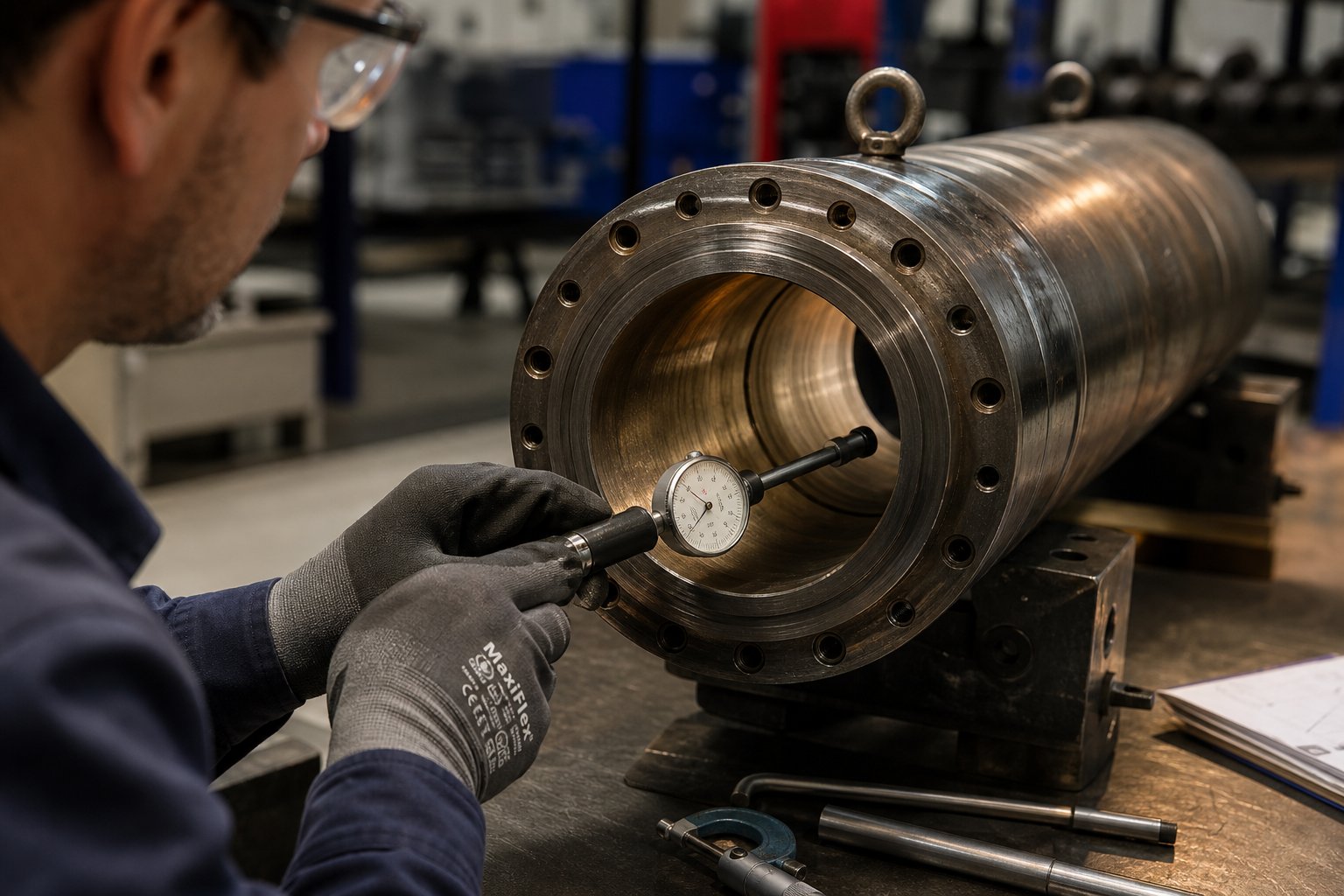
Barrel bore assessment starts with a thorough cleaning. The barrel should be purged, then the inner diameter cleaned with brass gauze while the barrel cools to room temperature. Using a dial bore gauge and micrometer, take measurements every two to three inches along the full length. Compare each reading against the original manufacturer's bore specification. The difference tells you the wear percentage. Most wear concentrates near the middle of the barrel, where polymer melting generates the highest mechanical forces between the screw flights and the barrel wall. Industry best practice recommends measuring barrel bore and screw flight diameter every 500 to 1,000 operating hours to track clearance growth over time. If the seller cannot provide these trending records, you are buying blind.
Also inspect the feed hole area carefully for cracks, washout spots, and bending. These defects indicate either material bridging problems or improper installation history. A barrel with localized cracking near the feed zone is a replacement candidate, not a repair candidate.
Screw element condition requires equally precise measurement. Clean each screw while still warm, using brass gauze as it cools. Avoid aggressive cooling methods, as rapid temperature changes can introduce warpage that masks the true geometry. Measure the flight outer diameter at every other flight and the root diameter between every other flight through both the feed and metering sections. Worn flight tips reduce positive displacement efficiency because material leaks backward over the flights rather than being conveyed forward. In a counter-rotating machine where positive conveying is the entire value proposition, flight tip wear directly undermines the design's core advantage.
Look beyond dimensional wear. Surface pitting, corrosion streaks, and hard-facing erosion on the flight lands all indicate the type of materials previously processed and how aggressively the machine was run. A screw that processed heavily filled PVC with calcium carbonate at high speeds will show very different wear patterns than one that ran unfilled rigid PVC at conservative RPMs.
Gearbox health is the third pillar of mechanical inspection. The gearbox on a counter-rotating extruder absorbs substantial thrust loads from the opposing screw rotation and must transmit torque reliably to both screws simultaneously. Start with a simple listening test: run the machine at low speed and listen for grinding, whining, or rhythmic clicking sounds that indicate damaged gears or worn bearings. These are red flags that often signal an expensive rebuild.
Request oil analysis records if they exist. Metal particle content in the gearbox oil reveals internal wear before it becomes audible. Check the oil level, color, and smell. Dark, burnt-smelling oil that has not been changed on schedule suggests deferred maintenance, which raises questions about the rest of the machine's care history. Inspect all external seals for leakage and check the thrust bearing area specifically, as thrust bearing failure is one of the most catastrophic and costly gearbox problems on twin screw extruders.
Evaluating Electrical Systems and Controls
A mechanically sound extruder with outdated or failing electrical systems can become a money pit just as quickly as one with worn screws. Evaluate the control system age and architecture first. A machine running on a PLC platform from the 1990s may still function, but sourcing replacement modules, finding technicians who can program it, and integrating it with modern plant networks all add hidden costs. HMI touchscreens and operator panels have finite lifespans, and replacement screens for discontinued platforms can be surprisingly expensive or simply unavailable.
Check the drive system carefully. The main motor drive, whether a DC motor with an SCR controller or an AC motor with a variable frequency drive, should operate smoothly across its speed range without hunting, surging, or tripping on overload at normal operating conditions. Record the motor's nameplate data and verify it matches the original equipment specifications. A replaced motor that does not match the original power rating may indicate past drive system failures.
Heater bands and thermocouples are consumable items, but their condition tells a story. Test each barrel heating zone individually. Every zone should reach its set temperature within a reasonable timeframe and hold it without excessive overshoot or oscillation. Dead zones, slow-responding heaters, or thermocouples that read erratically all require replacement. According to the maintenance standards, all temperature zones should be monitored for consistency, and heating and cooling responsiveness should be tested systematically. A machine with three out of six working zones is not a bargain at any price.
Safety systems deserve their own focused check. Confirm that every emergency stop button functions correctly and that all safety interlocks, including barrel guard switches, hopper grates, and drive coupling covers, engage properly. A used machine with bypassed or missing safety interlocks raises both compliance concerns and serious questions about how carefully it was operated and maintained.
Essential Questions to Ask Before Purchasing
Physical inspection reveals current condition. Asking the right questions reveals history, context, and risk. Before committing to any piece of used extrusion equipment, work through this list systematically with the seller:
- What materials were processed on this machine, and at what throughput rates? This tells you the type of wear to expect and whether the machine was pushed beyond its intended duty cycle.
- Why is the machine being sold? Plant closures, capacity upgrades, and product line changes are neutral reasons. Frequent breakdowns or persistent quality issues are not.
- Are complete maintenance records available? A machine with documented service history, including oil changes, heater replacements, and bearing inspections, is dramatically less risky than one with no paperwork.
- Has the barrel been re-bored or relined, and have the screws been rebuilt or re-hardfaced? Previous rebuilds are not necessarily negative. They indicate a machine that was valuable enough to invest in. But you need to know the scope of that work and how many operating hours have accumulated since.
- How many total operating hours are on the machine, and on the current barrel and screw set? Hours since the last rebuild matter more than total machine age.
- Can you provide barrel bore measurements and screw flight diameter readings? As experienced dealers emphasize, any seller who will not provide or allow these measurements is a seller you should walk away from.
- What is the gearbox service history, including the most recent oil analysis and bearing inspection? Gearbox rebuilds are expensive. Knowing the last service date and any known issues helps you price the risk accurately.
- Is ancillary equipment included? Feeders, die heads, calibration tables, haul-offs, and cutters are often sold separately. A complete extrusion line is significantly more valuable than a standalone extruder, but only if the ancillary equipment is in matching condition.
- Can the machine be observed running under power before purchase? A live test run or at minimum a powered demonstration confirms motor operation, drive response, heater functionality, and control system behavior in ways that no static inspection can replicate.
- What is the voltage, phase, and frequency of the existing electrical supply? Matching your plant's power infrastructure avoids costly transformer or panel modifications after delivery.
Here is the practical reality of buying used extrusion equipment for sale on the secondary market: the purchase price is only the starting point. What truly determines value is the gap between what you pay and what you will spend to bring the machine to full production readiness. A machine priced at 40% of new equipment cost that needs 30% of new cost in reconditioning is still a reasonable deal. A machine priced at 25% of new cost that needs 50% in rebuilds is not. Every inspection finding and every answered question feeds into that equation.
The best used extruder is not the cheapest one. It is the one where the total of purchase price plus reconditioning costs plus downtime risk delivers the lowest cost per kilogram of quality product over the machine's remaining service life.
Armed with inspection data and honest seller answers, you will have a clear picture of what the machine needs before it can run production. That naturally leads to the next critical step: understanding which components are most commonly refurbished, how replacement parts are sourced, and what that reconditioning scope means for the machine's true value and remaining useful life.
Refurbishment and Replacement Parts for Used Extruders
Inspection data tells you where a machine stands today. Refurbishment planning tells you what it will take to get it where you need it to be. Every used counter-rotating twin screw extruder, no matter how well maintained, will eventually need components rebuilt, replaced, or upgraded. The question is never whether reconditioning will be necessary. It is how much, how soon, and how reliably you can source what you need.
Understanding which components wear first, what a proper rebuild involves, and where to find quality replacement parts transforms refurbishment from an unpredictable expense into a manageable, budgetable investment.
Components Most Commonly Rebuilt on Used Extruders
Not every part of an extruder wears at the same rate. Some components are designed to be consumable, replaced on a predictable schedule. Others are built to last the life of the machine but can degrade under abusive conditions or deferred maintenance. Here are the components you will most frequently need to address when reconditioning a used counter-rotating machine:
- Screws and screw elements (flight re-welding and hard-facing): Flight tips bear the brunt of abrasive wear from filled PVC compounds and mineral-loaded formulations. A proper screw rebuild involves stripping the old surface, welding new nickel- or cobalt-based hardfacing alloy (such as Colmonoy or Stellite) onto the flight tips via PTA welding, controlled slow cooling to prevent cracking, straightening, and precision grinding back to dimensional specification. As rebuild specialists note, this process typically costs 50 to 75 percent of a new screw, and a screw with sound base steel can be rebuilt 3 to 5 times over its service life. The key decision point is whether wear is confined to the flight outer diameter or has reached the root. Flight-only wear on healthy base steel is the classic rebuild candidate. Root corrosion, cracking, or bending means the screw should be replaced entirely.
- Barrels (re-boring, relining, or full replacement): Barrel bores wear gradually as abrasive materials erode the inner surface. When wear is moderate and the liner is structurally sound, the barrel can be re-bored to a slightly larger diameter. In that case, screws can be rebuilt oversize to match the measured bore, restoring as-new running clearance without replacing the barrel itself. This oversize rebuild approach is especially economical for older counter-rotating lines where a full barrel replacement is difficult to justify. When bore wear exceeds practical limits, the barrel needs a new liner pressed in or must be replaced outright.
- Gearbox rebuilds (bearings, gears, seals): Counter-rotating gearboxes endure significant thrust loads because the opposing screw rotation creates axial forces that press outward against the thrust bearings. A gearbox rebuild typically includes replacing thrust and radial bearings, inspecting gear tooth surfaces for pitting or spalling, replacing worn seals, and flushing and refilling with fresh lubricant. Gearbox work is among the most expensive refurbishment items, but catching deterioration early through oil analysis and vibration monitoring prevents catastrophic failures that can sideline a machine for weeks.
- Heater bands and thermocouples: These are true consumables. Ceramic or mica heater bands fatigue and lose output over time, especially if they have been cycled through thousands of heating and cooling events. Thermocouples drift, corrode at the tip, or develop wiring faults that introduce temperature reading errors. On a used machine with original heater bands and thermocouples, assume you will replace most or all of them as part of commissioning. The cost per unit is relatively low, but a full set across 5 to 7 barrel zones adds up quickly.
- Control system upgrades: A machine from the early 2000s running a Werner & Pfleiderer twin screw extruder control platform or a legacy PLC system from that era may still function, but sourcing replacement modules, finding qualified programmers, and integrating the machine into a modern plant network can be impractical. Upgrading to a current-generation PLC and HMI is a common refurbishment step that improves reliability, enables data logging, and extends the machine's useful life by another decade or more. Budget for this if the existing controls use discontinued hardware.
- Die heads, adapter flanges, and downstream tooling: These components often get overlooked in refurbishment planning. A worn or mismatched die head undermines everything the extruder does right. Check die land surfaces for scoring, verify adapter bolt patterns match your tooling, and inspect heating elements within the die assembly.
A practical rule of thumb from experienced used equipment evaluators: if one critical wear layer is weak, service life estimates become optimistic on paper and disappointing in operation. Evaluate all major components together, because reconditioning only the screws while ignoring a worn barrel or failing gearbox gives you a machine that looks rebuilt but still underperforms.
Sourcing Replacement Parts for Older Equipment
Here is where many used equipment buyers hit an unexpected wall. You have found a mechanically solid machine, the inspection numbers check out, and the purchase price is right. Then you discover that the OEM discontinued the screw design eight years ago, the original barrel liner supplier exited the market, or the Werner & Pfleiderer extruder you bought now falls under the Coperion umbrella and legacy spare parts carry premium pricing and extended lead times.
Sourcing quality replacement parts is one of the single biggest challenges in owning older used twin screw counter rotating extruders. Established OEMs like Battenfeld Cincinnati and Krauss Maffei maintain relatively strong parts pipelines for their recent models, but go back far enough and availability shrinks. For machines from manufacturers that have been acquired, merged, or shut down entirely, like certain Brabender extruder models or older Bausano lines, original parts may simply no longer exist in any catalog.
This is where aftermarket manufacturers become essential. Suppliers like NANHAIYA address exactly this gap by producing replacement screw components, heater bands, thermocouples, die heads, pelletizing blades, and other custom parts manufactured from drawings or samples. The ability to reverse-engineer a worn component and manufacture a replacement to original specifications, or even upgrade it with improved materials, is particularly valuable when OEM parts are no longer available for older used machines. Rather than scrapping an otherwise functional twin-screw extruder manufacturer's legacy equipment because one critical component failed, aftermarket sourcing keeps the machine in production.
When evaluating any aftermarket parts supplier, ask these questions: Can they work from your existing worn parts as samples, or do they require original engineering drawings? What base materials and hardfacing alloys do they offer? Do they provide dimensional inspection reports with finished parts? Can they match or exceed the original OEM material specifications? A capable aftermarket supplier becomes a long-term partner, not just a one-time vendor.
How Refurbishment Scope Affects Machine Value
Refurbishment is not binary. A machine can be lightly reconditioned with new heater bands and fresh thermocouples for a few thousand dollars, or it can undergo a comprehensive rebuild involving new screws, a re-bored barrel, a gearbox overhaul, and a full controls upgrade that approaches 40 to 60 percent of new equipment cost. Where you land on that spectrum depends on the machine's current condition, your production requirements, and your budget horizon.
Think of refurbishment scope as a value multiplier. A used machine purchased at 30 percent of new cost and refurbished with another 20 percent invested still delivers a fully production-ready extruder at roughly half the cost of new. That is a strong economic proposition, especially when delivery timelines for new equipment from major twin-screw extruder manufacturers can stretch six months or longer.
But the math only works if the refurbishment addresses every weak link. Consider a scenario where you invest heavily in new screws and barrel relining but skip the gearbox inspection to save money. Six months into production, a thrust bearing failure shuts the line down for weeks and costs more than the gearbox rebuild would have. The total value equation only holds when cost, risk, and remaining lifespan are judged together.
Document every refurbishment action thoroughly. Machines with verifiable rebuild histories, including bore measurements before and after re-boring, screw dimensional reports, gearbox service records, and heater zone test results, carry significantly higher resale value if you ever decide to sell or upgrade again. A well-documented refurbishment transforms a used machine from a question mark into a known quantity.
The smartest refurbishment investment is the one that matches reconditioning depth to your planned operating life, addressing every critical wear component rather than just the most visible ones.
Refurbishment planning gives you a clear picture of what it costs to bring a used machine to production readiness. That figure feeds directly into the broader buying decision: how does total acquisition cost, including purchase, reconditioning, installation, and ongoing parts supply, compare against buying new? The answer depends on factors that go well beyond the machine itself.
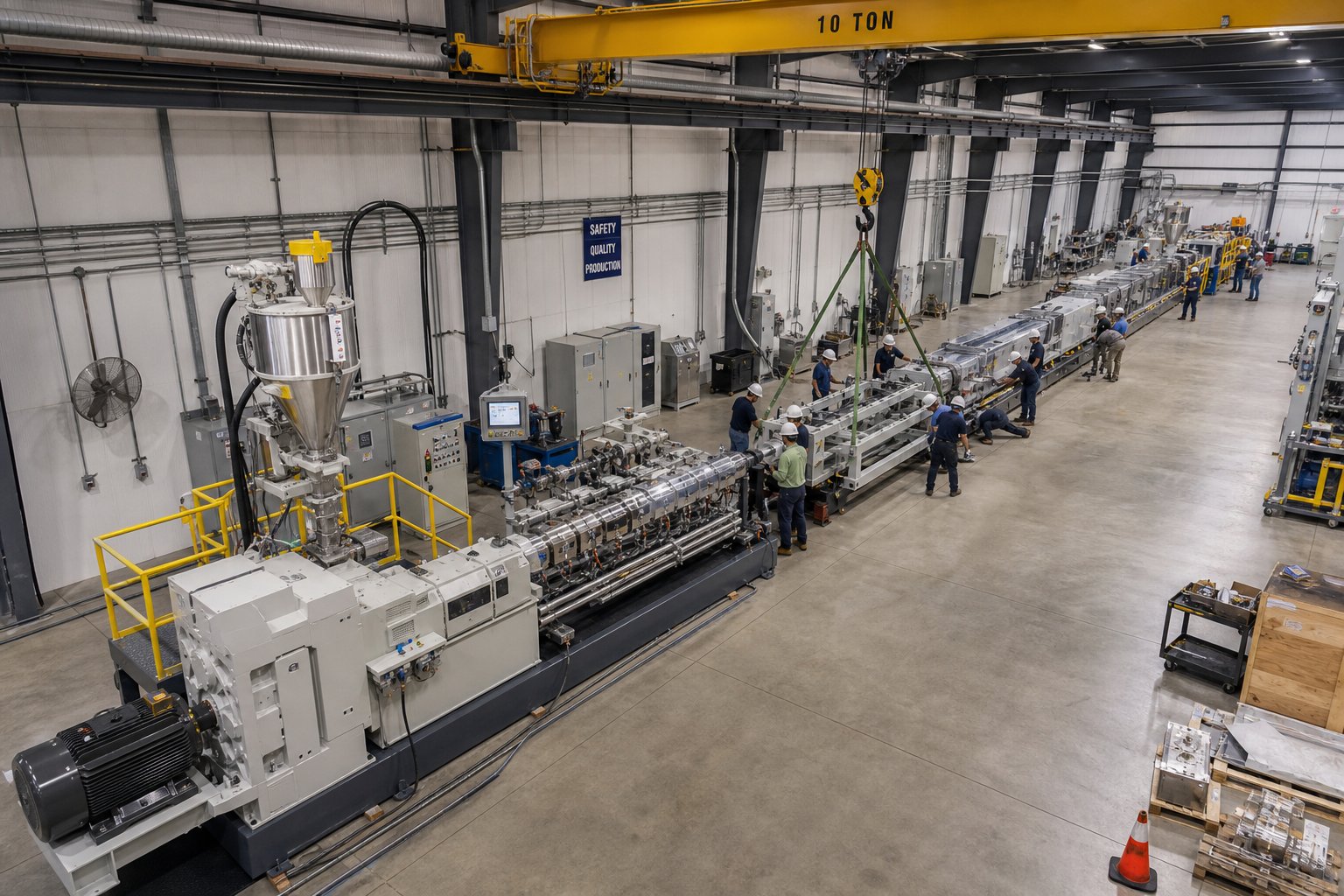
Smart Buying Strategies for Used Counter-Rotating Extruders
You have identified your application, confirmed that counter-rotating is the correct configuration, inspected the machine, and mapped out the refurbishment scope. All of that work means nothing if the final acquisition decision ignores the full financial picture. A used twin screw extruder for sale at an attractive headline price can quickly become an expensive headache when shipping, reconditioning, installation, and ongoing parts costs pile up without planning. Equally, a listing that looks pricey at first glance might represent exceptional value when you account for everything included.
Buying smart means treating every cost as part of one interconnected equation, not a series of isolated surprises.
Factors That Drive Used Extruder Pricing
If you have browsed listings for used extruders for sale, you have probably noticed wild price variation for machines with seemingly similar specifications. A 65 mm parallel counter-rotating extruder from one seller might be listed at twice the price of an apparently identical unit from another. That gap almost always comes down to condition, provenance, and what is included in the sale.
Here are the primary variables that influence the twin screw extruder price on the secondary market:
| Pricing Factor | Higher Value Indicators | Lower Value Indicators |
|---|---|---|
| Machine Age | Built within the last 10-15 years; current-generation design | 20+ years old; legacy platform with discontinued components |
| Overall Condition | Low operating hours; clean cosmetic appearance; documented care | Heavy wear; visible corrosion; evidence of deferred maintenance |
| Brand Reputation | Established OEMs (Battenfeld Cincinnati, Krauss Maffei, Bausano) | Obscure or discontinued manufacturers with limited parts support |
| Screw and Barrel Wear | Recent rebuild or low measured wear within acceptable tolerances | Excessive clearance; no bore measurements available from seller |
| Control System | Modern PLC/HMI with current-generation hardware and software | Obsolete controllers; discontinued touchscreens or drive platforms |
| Gearbox Status | Recent service; clean oil analysis; no abnormal noise or vibration | Unknown service history; dark oil; audible bearing noise |
| Ancillary Equipment | Complete line including feeders, die heads, calibration table, haul-off, cutter | Standalone extruder only; no downstream equipment included |
A complete extrusion line, where the extruder ships with matched downstream equipment, commands a significant premium over a bare machine. That premium is usually justified because assembling a line piecemeal from different sellers introduces compatibility risks. Die adapter flanges may not match, haul-off speeds may not sync properly with extruder output, and calibration tooling from one OEM may not align with another manufacturer's die geometry. When you find a used twin screw extruder for sale as part of a full line, the integration headaches you avoid can easily outweigh the higher asking price.
Used equipment typically sells for 30 to 50 percent less than comparable new models. However, that range stretches considerably depending on the factors above. A well-documented, recently refurbished machine from a top-tier OEM might command 60 to 70 percent of new replacement cost, while a neglected unit from a lesser-known manufacturer with no maintenance records might sell for 15 to 20 percent. The price you see on a listing is a starting point for negotiation, not a final answer. Your inspection findings and refurbishment estimates give you the leverage to negotiate from a position of knowledge.
Installation and Integration Planning
Imagine this scenario: you have negotiated a great deal, arranged shipping, and the machine arrives at your plant. Then you discover that your electrical supply does not match the motor requirements, the floor cannot support the weight, or your cooling water system lacks the capacity the extruder demands. These are not hypothetical problems. They happen regularly when buyers focus entirely on the machine and forget about the environment it needs to operate in.
Installation planning for a used counter-rotating extruder involves several categories of preparation that should be budgeted before you commit to a purchase:
- Power supply: Verify the machine's voltage, phase configuration, and amperage requirements against your plant's electrical infrastructure. As installation guides note, a typical twin screw extrusion line requires a 380V three-phase power supply with a minimum of 80A for the main drive alone, plus additional capacity for heater bands, cooling pumps, and ancillary equipment. Upgrading your electrical panel to meet these requirements can add $800 to $1,500 or more, depending on the scope of work. If the used machine was previously wired for 50 Hz power and your plant runs 60 Hz, or vice versa, the motor and drive system may need modification or replacement.
- Cooling water capacity: Counter-rotating extruders need cooling water for barrel temperature zones, gearbox cooling, and often for downstream calibration and cooling tanks. Flow rates of 15 to 20 liters per minute at controlled temperatures between 15 and 25 degrees Celsius are common requirements. If your facility lacks a dedicated chilled water loop, installing a cooling tower or chiller adds both cost and lead time. A water supply shortfall directly limits your ability to maintain the tight thermal control that PVC and other shear-sensitive materials demand.
- Compressed air: Pneumatic actuators on feeders, screen changers, die clamps, and other peripherals require clean, dry compressed air at consistent pressure. Verify your existing compressor capacity and air treatment system against the machine's specifications before delivery day.
- Floor space and foundation: A counter-rotating extrusion line, including the extruder, feeder, die head, calibration table, haul-off, and cutter, can occupy 8 to 12 meters in length and 3 to 4 meters in width. The workshop floor must support at least 5,000 kg per square meter to prevent structural settling. Misalignment caused by an inadequate foundation introduces uneven wear on screws and barrels, undermining the reconditioning investment you just made. A laser-leveled foundation pad with vibration-dampening mounts is a worthwhile investment that protects the machine's precision over its entire remaining service life.
- Upstream and downstream compatibility: Your feeding system must match the extruder's intake requirements. Gravimetric feeders, volumetric feeders, and material drying systems all need to be sized and configured for the specific throughput and material characteristics of your process. Downstream, verify that your calibration tooling, cooling bath length, haul-off pull force, and cutter speed range can handle the output rate and product dimensions the extruder will produce. A mismatch anywhere along the line creates a bottleneck that limits the entire system.
Each of these items carries a cost. Add them together and you have your installation budget, a number that belongs right next to the purchase price and reconditioning estimate in your financial analysis.
Total Cost of Ownership and the Final Decision
Here is where every thread in this article comes together. The decision to buy a used counter-rotating twin screw extruder versus ordering new equipment is ultimately a total cost of ownership calculation. Purchase price is only one input. The complete equation looks like this:
Total Cost of Ownership = Purchase Price + Reconditioning Costs + Installation and Integration Costs + Ongoing Replacement Parts + Downtime Risk
Run this calculation honestly, with real numbers from your inspection, refurbishment quotes, and installation estimates. A used machine purchased at 35 percent of new equipment cost, refurbished with another 15 to 20 percent invested, and installed with 5 to 10 percent allocated to site preparation, delivers a production-ready line at roughly 55 to 65 percent of the new equipment price. Factor in that delivery of a new machine from a major OEM can take six months or longer, and the used route also buys you time, often getting you into production months ahead of a new-equipment timeline.
The ongoing replacement parts variable deserves special attention. A machine is only as viable long-term as your ability to keep it running. Having a dependable spare parts pipeline, whether through the original OEM or through aftermarket suppliers like NANHAIYA who can produce custom components from drawings or worn samples, fundamentally reduces the long-term maintenance risk. When you can source replacement screws, heater bands, thermocouples, die heads, and other wear components reliably and cost-effectively, the economic case for buying used equipment strengthens considerably. You are not just saving on the initial purchase. You are building a sustainable cost advantage over the machine's remaining service life.
The smartest used equipment purchase is not the one with the lowest price tag. It is the one where purchase price, reconditioning, installation, and long-term parts supply add up to the lowest cost per kilogram of quality product over the machine's remaining useful life.
Conversely, if total cost of ownership approaches 80 percent or more of new equipment cost, the math tips in favor of buying new. A new machine comes with full warranty coverage, current-generation controls, zero wear on all components, and OEM commissioning support. The premium you pay buys certainty and typically a longer runway before major maintenance expenses appear.
For most buyers operating in the practical middle ground, the used market offers genuine value when approached with discipline. Confirm your application fit. Understand the specifications. Inspect rigorously. Budget for refurbishment honestly. Plan your installation thoroughly. And secure a reliable parts supply chain before you need it, not after a breakdown forces your hand.
The extrusion equipment for sale on the secondary market includes machines capable of running production for another decade or more. The difference between a smart purchase and a regrettable one is not luck. It is preparation. Every section of this guide has been designed to give you the tools to tell the difference between a used extruder for sale that will earn its keep and one that will drain your budget. Use them, and you will buy smart rather than get burned.
Frequently Asked Questions About Used Counter-Rotating Twin Screw Extruders
1. What is the difference between counter-rotating and co-rotating twin screw extruders?
Counter-rotating twin screw extruders have screws that spin in opposite directions, producing a gentle calendering nip action with low shear and positive displacement conveying. Co-rotating extruders spin both screws the same way, generating intense shear fields ideal for aggressive compounding. Counter-rotating machines dominate PVC pipe and profile extrusion because PVC degrades under high shear, while co-rotating machines are preferred for engineering thermoplastic compounding, masterbatch production, and reactive extrusion. Buyers shopping for used equipment must confirm which rotation direction their process requires before evaluating any listing.
2. How do you inspect a used twin screw extruder before buying?
A thorough inspection covers three critical areas. First, measure barrel bore diameter at regular intervals along the full length using a dial bore gauge and compare readings to original OEM specifications to quantify wear percentage. Second, measure screw flight outer diameter and root diameter to assess flight tip erosion and conveying efficiency loss. Third, evaluate gearbox health through oil analysis records, listening for abnormal noise, and checking thrust bearing condition. Additionally, test every barrel heating and cooling zone individually, verify the control system hardware is still supported, and confirm all safety interlocks function properly. Always request a powered test run before committing to purchase.
3. What is the difference between conical and parallel counter-rotating twin screw extruders?
Conical counter-rotating extruders use tapered screws that are wider at the feed end and narrower at the discharge, providing a natural compression ratio, large feed opening for low-bulk-density powders, and high torque transmission. They dominate PVC pipe and window profile extrusion. Parallel counter-rotating extruders use uniform-diameter cylindrical screws, offering greater design flexibility, easier length extension for higher output, and a wider processing window. Parallel machines are increasingly preferred for large-diameter PVC pipe lines and specialty compounding. When sourcing used equipment, match the geometry to your specific production requirements rather than assuming one design is universally superior.
4. How much do used twin screw counter rotating extruders cost compared to new?
Used counter-rotating twin screw extruders typically sell for 30 to 50 percent less than comparable new models, though pricing varies widely based on machine age, brand reputation, screw and barrel wear status, control system modernity, and whether ancillary equipment like feeders, die heads, and downstream lines are included. A well-maintained, recently refurbished unit from a top-tier OEM like Battenfeld Cincinnati or Krauss Maffei may command 60 to 70 percent of new replacement cost, while a neglected machine with no maintenance records might sell for as low as 15 to 20 percent. Total cost of ownership, including reconditioning, installation, and ongoing spare parts sourcing from suppliers like NANHAIYA, should always be calculated before making a final buying decision.
5. Where can you find replacement parts for older used counter-rotating extruders?
Replacement parts can be sourced through three channels: the original OEM, authorized distributors, or aftermarket manufacturers. For current-generation machines from established brands like Battenfeld Cincinnati and Krauss Maffei, OEM parts availability is generally strong. For older, discontinued, or acquired brands such as legacy Werner and Pfleiderer or certain Bausano models, OEM parts may no longer be cataloged. Aftermarket suppliers like NANHAIYA fill this gap by manufacturing replacement screw components, heater bands, thermocouples, die heads, pelletizing blades, and custom parts from drawings or worn samples. This capability is especially valuable for keeping older machines in production when original components are unavailable, reducing downtime risk and supporting the long-term economics of used equipment ownership.
Written by
Nanhaiya Technical Team
Zhoushan Nanhaiya Plastic Machinery Co., Ltd.
The Nanhaiya technical team supports screw and barrel manufacturing projects through application review, technical communication, custom manufacturing coordination, and production and quality control.
Discuss Your Application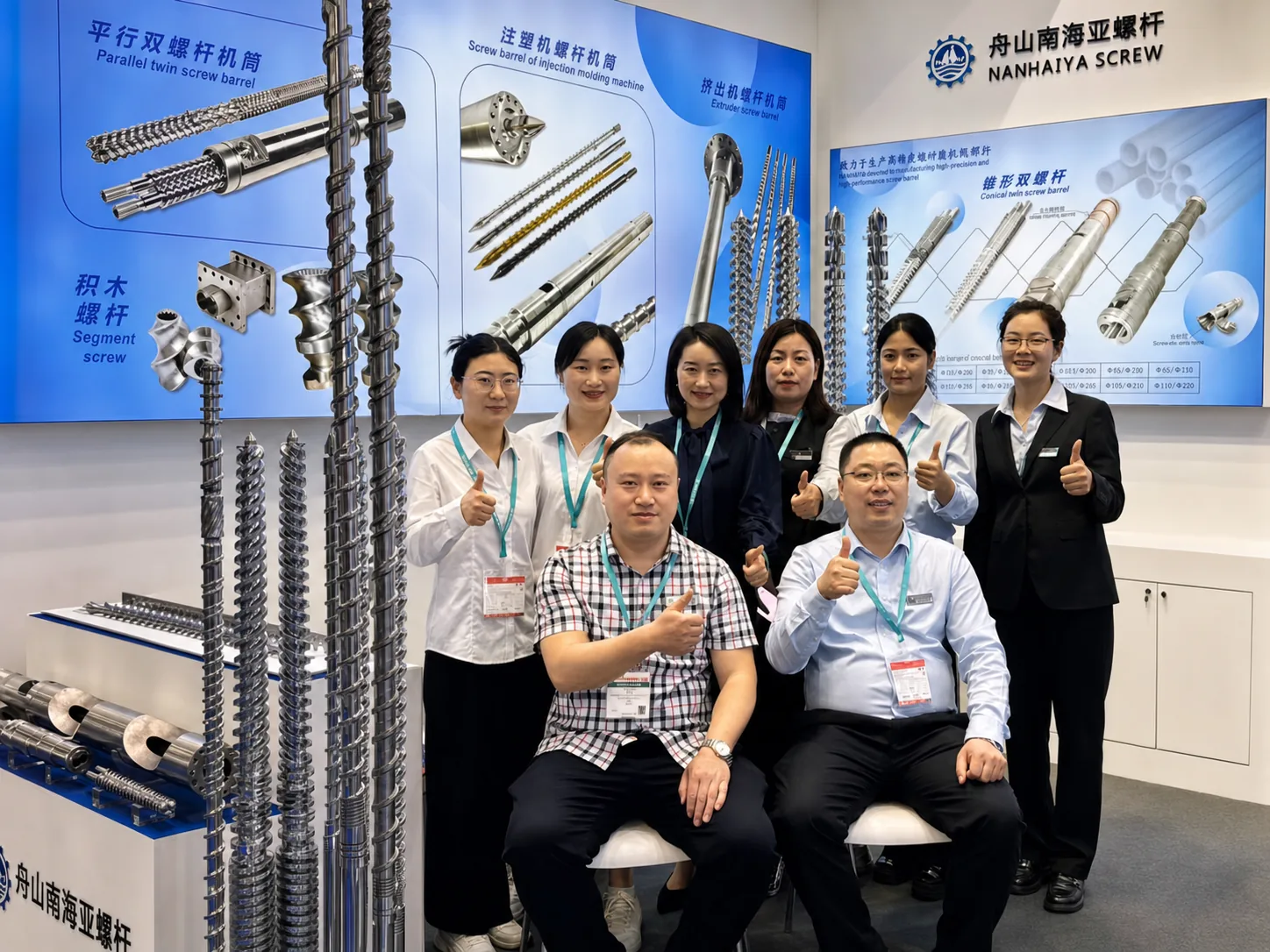
Related Articles
More insights on screw barrel technology and plastics processing.
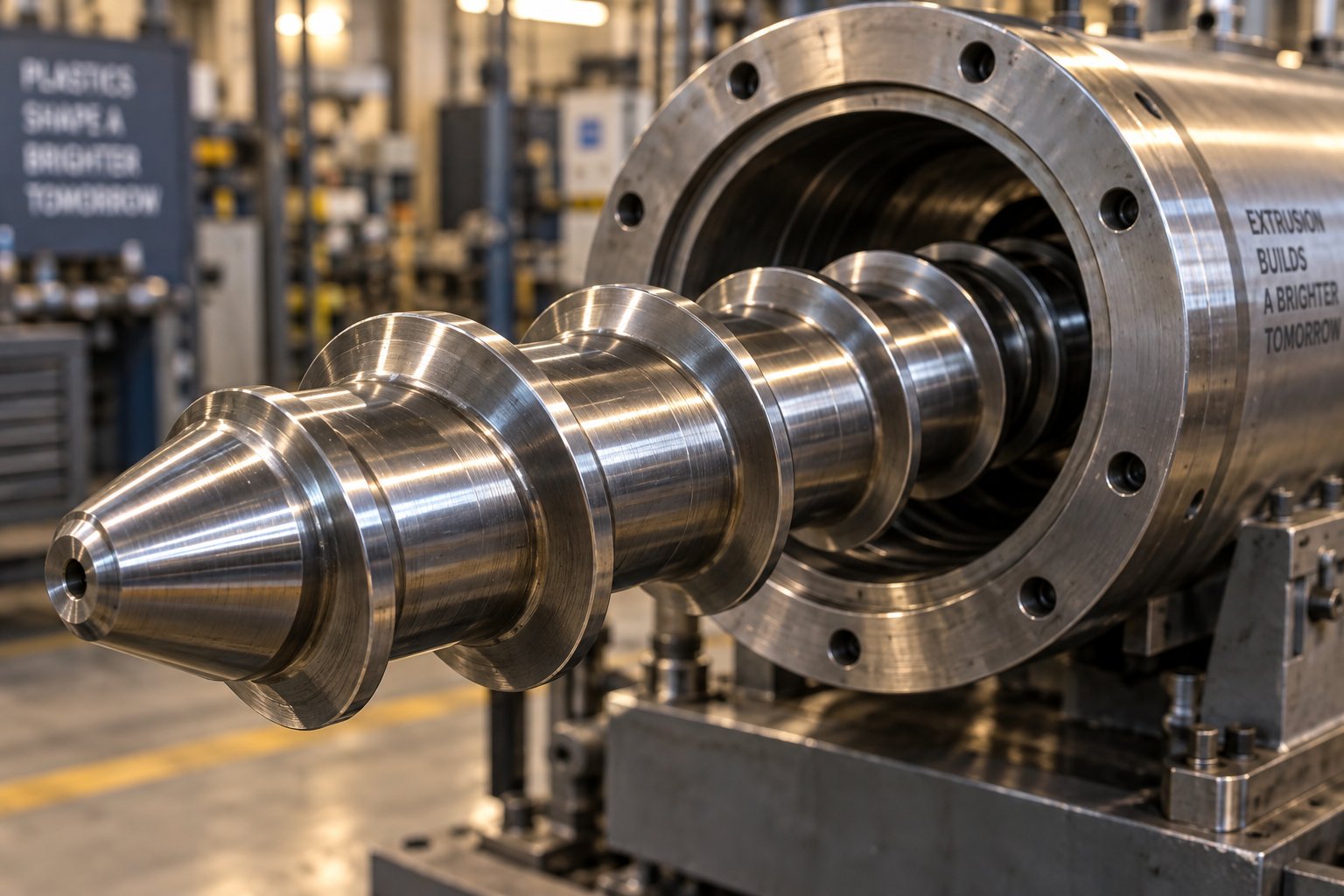
What Nobody Tells You About Screw Barrel For Plastic Machine Design
Oct 10, 2026
Learn how screw barrel for plastic machine design affects melt quality, throughput, and wear life. Covers geometry, resin matching, troubleshooting, and sourcing.
Read Article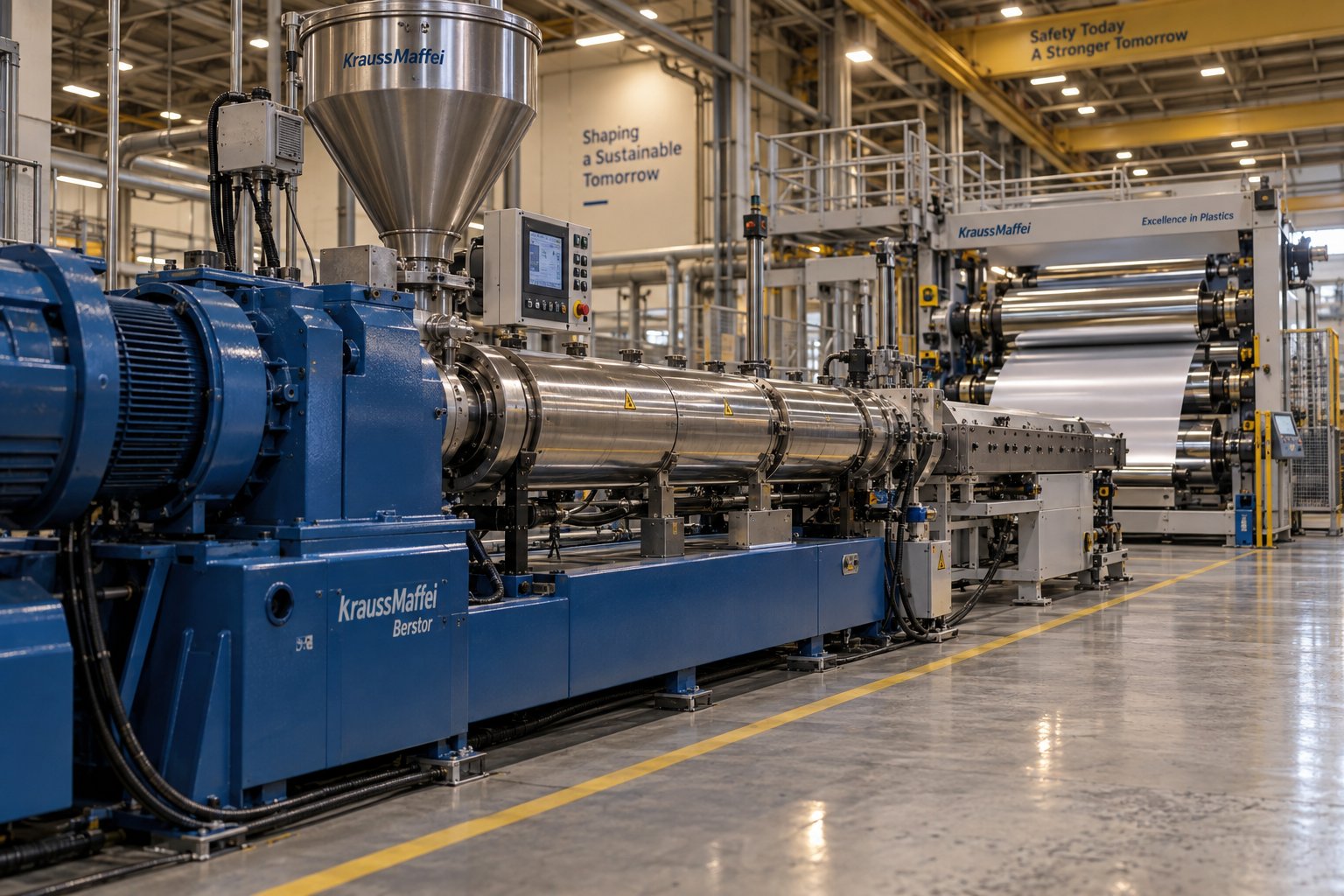
Single Screw Extruder for Sheet: Stop Guessing, Start Specifying
Oct 9, 2026
Learn how to specify a single screw extruder for sheet production. Covers screw geometry, resin-specific processing, troubleshooting, and maintenance best practices.
Read Article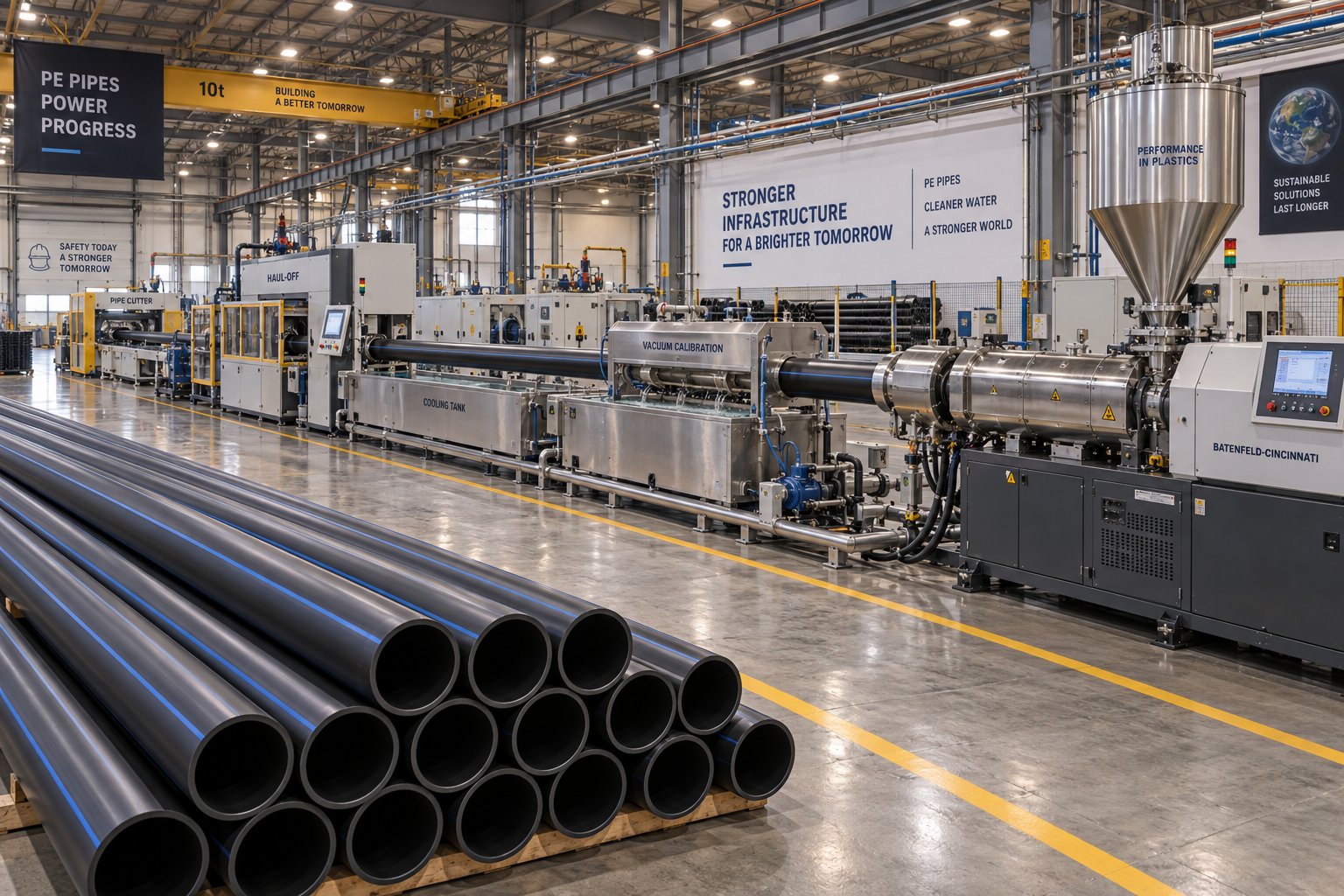
PE Pipe Extruder Machine: What Datasheets Won't Tell You
Oct 9, 2026
Learn how a PE pipe extruder machine works, key specs explained, material grade selection, maintenance tips, and buyer guidance beyond the datasheet.
Read ArticleLooking for something else?
Search by material, symptom or product and jump straight to the relevant page.
These are navigation suggestions based on keyword matching — not a quotation, not a delivery commitment, and not a substitute for engineering review. Final specification is confirmed by our engineers against your drawings and processed material.
Need help with screw barrel selection?
Share your machine model, processed material and application. Our team can help with pricing and technical support.