

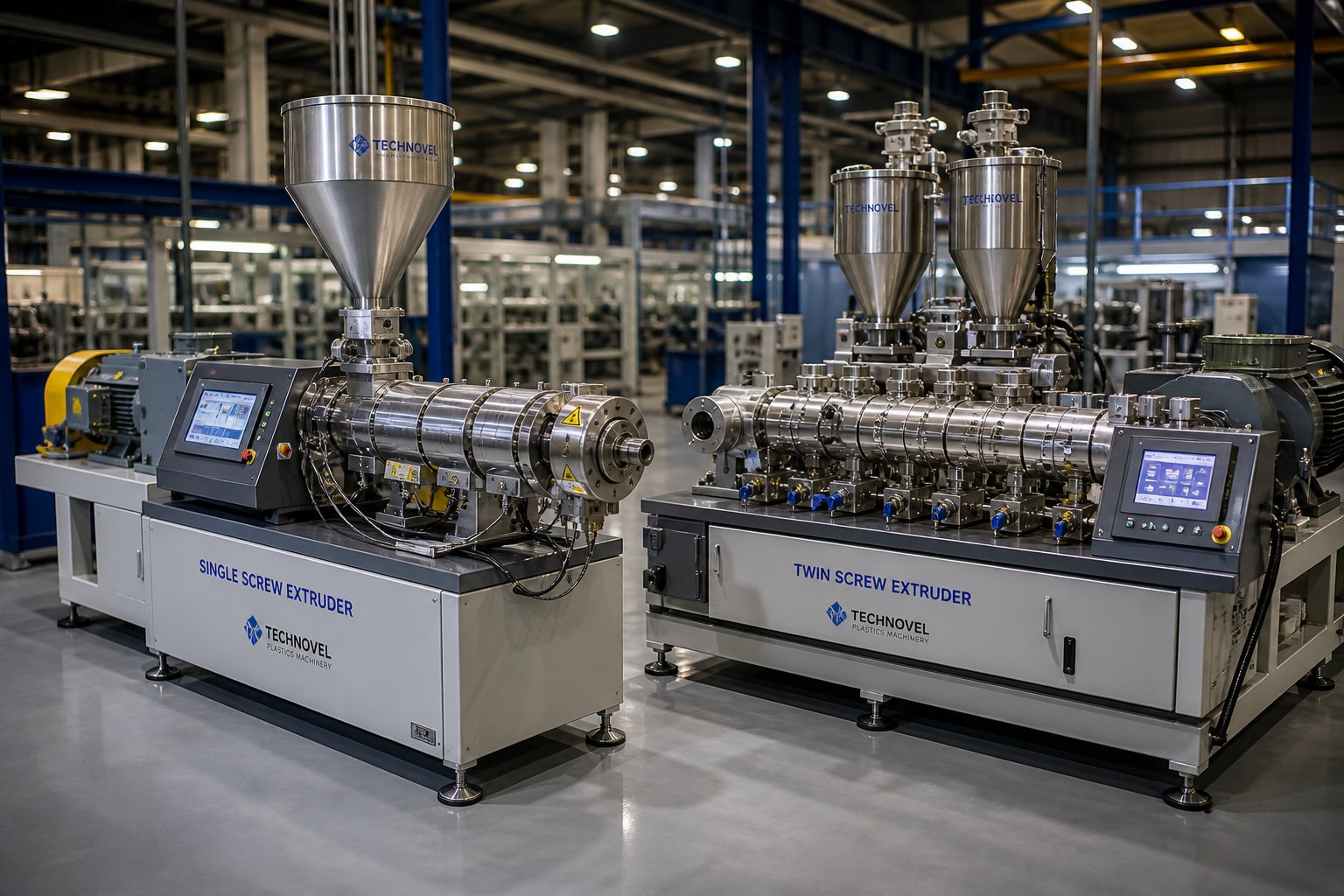
Twin Screw vs Single Screw Extruder — What Every Engineer Needs to Know
Imagine signing off on a six-figure capital purchase only to discover, three months into production, that your extruder can't handle the feedstock sitting in your warehouse. It happens more often than the industry likes to admit. The twin screw vs single screw extruder decision is one of those choices that looks straightforward on paper yet carries outsized consequences for throughput, product quality, and long-term operating costs.
Here's the reality: neither machine is universally superior. A twin screw extruder dominates in compounding, reactive processing, and multi-additive formulations. A single screw extruder excels at high-volume, steady-state production of pipes, profiles, films, and sheets. The trouble starts when engineers apply the wrong tool to the wrong job — and that mismatch ripples through every line item on the P&L.
This article ranks the six key differences between these two extruder types by real-world operational impact, giving you a clear framework for matching machine capability to your specific material, process, and throughput demands.
Why This Comparison Matters for Your Production Line
Choosing the wrong extruder type doesn't just waste capital — it creates a cascade of hidden costs. An undersized mixing capability forces you to add a secondary compounding step downstream. Poor feed flexibility leads to inconsistent melt quality and higher scrap rates. And energy inefficiency? That compounds quietly, year after year, eating into margins you thought were locked in.
Consider the numbers: industry cost analyses show that the 10-year total cost of ownership for a mid-range single screw system can range from $1.68 million to $2.4 million, while a comparable twin screw system may run between $1.99 million and $2.9 million. The gap narrows — or even reverses — when the twin screw eliminates secondary processing steps or reduces material waste on high-value formulations. The point isn't which number is smaller. It's which number is right for your application.
How Twin Screw and Single Screw Extruders Fundamentally Differ
So what's an extruder actually doing inside that barrel? At its core, every screw extruder performs the same job: it conveys raw material forward, melts or plasticizes it through heat and mechanical shear, and pushes the resulting melt through a die to form a product. The difference lies in how each design accomplishes that job.
A single screw extruder uses one rotating screw inside a heated barrel. Material moves forward primarily through drag flow — friction between the polymer, the screw flights, and the barrel wall drives the melt toward the die. This mechanism is elegant in its simplicity: fewer moving parts, straightforward operation, and highly predictable output for single-resin processing.
A twin screw extruder places two screws side by side inside a figure-eight barrel bore. These screws can be intermeshing or non-intermeshing, and they rotate in either the same direction (co-rotating) or opposite directions (counter-rotating). Co-rotating designs generate intense shear and self-wiping action, making them the workhorse for compounding and reactive extrusion. Counter-rotating configurations produce gentler calendering forces — ideal for thermally sensitive materials like rigid PVC, where excessive shear would trigger degradation.
Choosing an extruder is not about picking the "best" machine — it is about matching the machine to the material, process, and throughput demands of your specific operation.
That principle drives everything that follows. In the next sections, you'll see exactly how these two architectures stack up across six critical performance dimensions — starting with the one that creates the widest gap between them: mixing and compounding capability.
How We Ranked These Key Differences Between Screw Extruders
Not all differences between these two machine types carry equal weight on the production floor. A slight edge in energy efficiency, for example, rarely matters as much as a fundamental mismatch in mixing capability. So rather than presenting a flat feature list and leaving you to guess what matters most, we applied a structured evaluation that ranks each difference by how directly it affects daily operations, product quality, and profitability.
Evaluation Criteria and Scoring Approach
Each of the six key differences was assessed against multiple real-world parameters that engineers and plant managers deal with every production cycle. Think of these as the practical lenses through which every screw extruder specification becomes either a competitive advantage or an operational headache:
- Shear control — Can the machine deliver precise dispersive and distributive forces without degrading sensitive polymers?
- Residence time distribution — How tightly can you control how long material stays inside the barrel, and what does that mean for thermal stability?
- Venting capability — Does the design support effective devolatilization for moisture-laden or solvent-heavy feedstocks?
- Self-cleaning ability — How quickly can the system purge residual material during formulation changeovers?
- Feed flexibility — Can it reliably convey powders, flakes, and fibers, or does it demand uniform pellets?
- Scale-up ease — Does the process translate predictably from a lab-scale screw extruder to a full production line?
- Automation compatibility — How well does the machine integrate with gravimetric feeders, inline analyzers, and Industry 4.0 control architectures?
Rankings in this article reflect practical operational impact rather than theoretical superiority. A feature that sounds impressive on a specification sheet but rarely determines success or failure in real production received a lower priority. A feature that routinely drives purchasing regret — or delight — moved to the top.
Industries and Applications Considered
Screw extrusion spans far more industries than most comparison guides acknowledge. A ranking that only considers plastics compounding would look very different from one that also weighs food processing, pharmaceutical manufacturing, and recycling. To keep the analysis broadly applicable, we evaluated both extruder types across these sectors:
- Plastics compounding and masterbatch production
- Pipe, profile, and window-frame extrusion
- Film, sheet, and coating extrusion
- Food processing (snacks, cereals, pet food, meat analogs)
- Pharmaceutical hot-melt extrusion
- Recycling and reprocessing of post-consumer plastics
- Rubber and elastomer processing
- 3D printing filament production
Each of these industries weighs the six differences differently. A pharmaceutical manufacturer, for instance, cares deeply about residence time control and devolatilization but may have modest throughput targets. A pipe producer running polyethylene around the clock prioritizes steady-state output and energy efficiency above all else. You'll find these industry-specific nuances flagged throughout the article so you can zero in on what matters for your operation.
With that framework in place, here are the six key differences ranked from highest to lowest operational impact:
- #1 — Mixing and compounding performance
- #2 — Throughput and production efficiency
- #3 — Material versatility and feed flexibility
- #4 — Screw configuration and geometry options
- #5 — Energy efficiency and total cost of ownership
- #6 — Venting and devolatilization capabilities
The ranking begins with mixing for a reason. Among all the parameters separating these two screw extruders, nothing creates a wider performance gap — or generates more costly surprises — than the ability to blend, disperse, and homogenize complex formulations inside a single barrel pass.
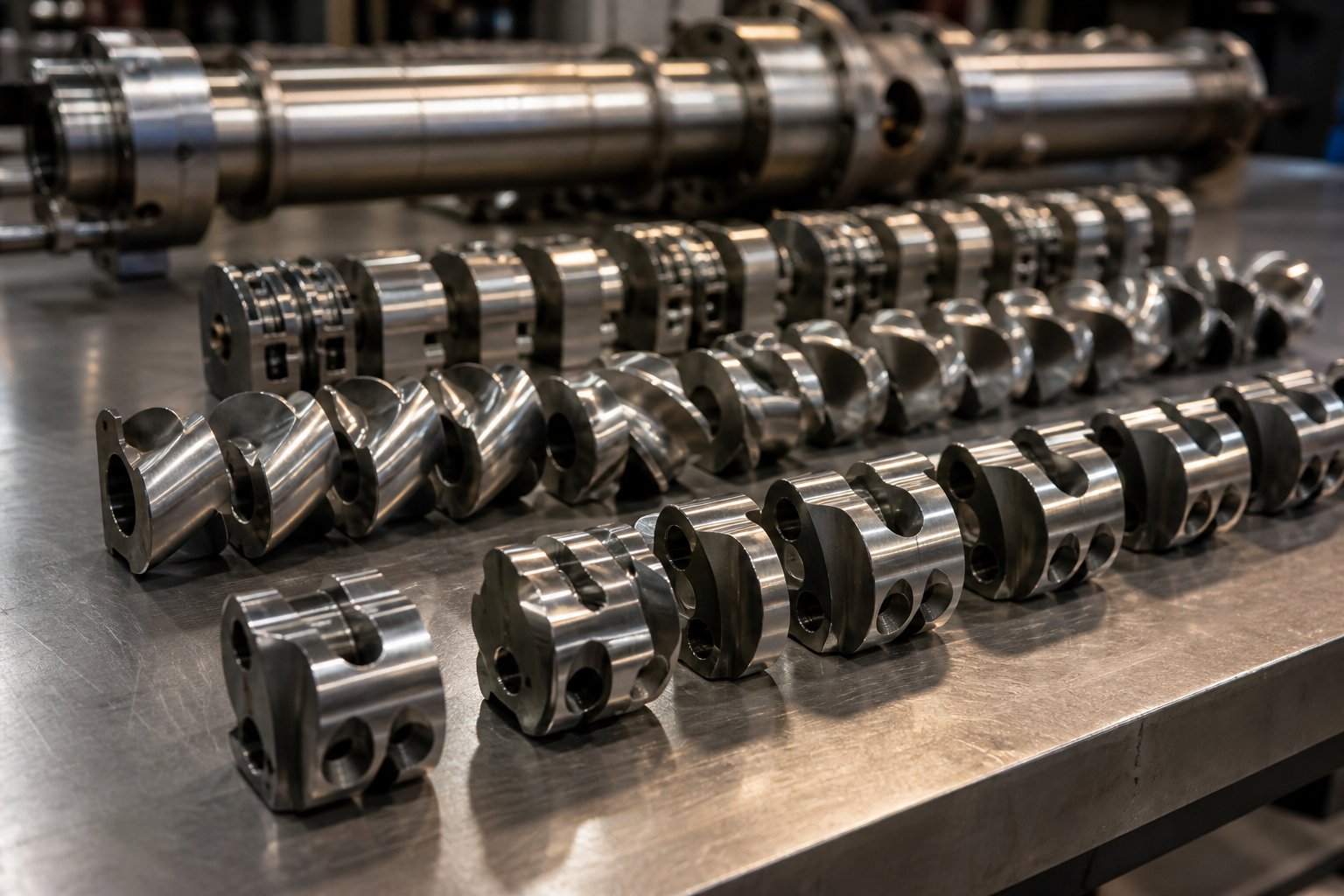
Mixing and Compounding Performance
Mixing is where the twin screw vs single screw extruder debate gets decisive. Every other performance difference — throughput, feed flexibility, energy consumption — can often be engineered around with auxiliary equipment or process adjustments. Mixing capability, though, is baked into the machine's DNA. Get it wrong, and no amount of downstream blending will rescue a poorly dispersed compound.
Why Twin Screw Dominates Distributive and Dispersive Mixing
Picture two intermeshing screws rotating in the same direction inside a figure-eight barrel. Material doesn't just slide forward — it's forced through narrow intermeshing gaps, folded over kneading blocks, and stretched through extensional flow zones. That combination of shear and elongation is exactly what breaks down pigment agglomerates, wets out glass fibers, and disperses nano-fillers into a polymer matrix.
What makes a twin screw compounding extruder truly powerful is its modularity. As NC State Extension research explains, co-rotating twin screw profiles are assembled from interchangeable segmented elements — conveying elements for transport, forward kneading blocks for moderate mixing, neutral kneading blocks that halt forward flow to maximize energy input, and reverse kneading blocks that push material backward to create the highest shear restriction. Wider kneading discs promote dispersive mixing (breaking apart clumps), while narrower discs favor distributive mixing (spreading components evenly). Toothed mixing elements add yet another tool, delivering distributive blending with minimal shear — ideal for heat-sensitive additives.
Engineers can rearrange these elements on the same shaft to optimize a new formulation without purchasing an entirely new screw. Running a color masterbatch that demands aggressive pigment dispersion in the morning and a lightly filled TPE compound in the afternoon? Swap a few kneading blocks, adjust the stagger angle, and the same twin screw extrusion line handles both.
When Single Screw Mixing Is Genuinely Sufficient
Here's the myth that needs debunking: single screw extruders can mix. They just do it differently — and within a narrower window.
A well-designed single screw uses barrier flights to separate solid and melt channels, Maddock mixers or pin-mixing sections near the screw tip to homogenize the final melt, and sometimes static mixers inline before the die. For pre-compounded pellets headed into a pipe die, a single-resin blown film line, or a sheet extrusion operation running one grade of HDPE all week, these features deliver perfectly adequate melt homogeneity. You'll notice consistent temperature profiles, stable melt pressure, and uniform output — all at a lower equipment cost.
The limitation surfaces when you need multi-phase blending, reactive processing, or high additive loadings above 30-40% by weight. Single screw drag-flow mechanics simply can't generate the controlled extensional forces or the repeated material folding that intensive compounding requires.
Screw and Barrel Quality — The Hidden Variable
Regardless of whether you run one screw or two, the metallurgy and dimensional precision of the screw and barrel assembly directly determine how long your mixing performance holds up. Industry analysis from Plastics Technology highlights that screw-to-barrel clearances are typically minimal — around 0.001 inch per side per inch of diameter — to maintain optimal shear rates and heat transfer. As wear opens those clearances, melting efficiency drops, melt homogeneity deteriorates, and operators start chasing the problem with higher screw speeds or backpressure — fixes that consume more energy and accelerate further wear.
Three wear mechanisms drive this degradation: adhesive wear from metal-to-metal contact, abrasive wear from fillers like glass fiber and mineral additives, and corrosive wear from chemically aggressive polymers such as PVC and fluoropolymers. Specifying the right barrel liner material — whether nitrided steel, centrifugally cast bimetallic alloys, or high tungsten-carbide-content linings — and pairing it with compatible screw hardfacing is not optional. It's the difference between a barrel assembly that holds tolerance for years and one that needs replacement in months.
For engineers sourcing replacement or upgraded components, suppliers like NANHAIYA offer both single screw and parallel twin screw extruder barrel assemblies engineered for specific mixing demands. Their product collection lets you compare single screw, parallel twin screw, and conical twin screw specifications side by side — a practical shortcut when you need to match barrel metallurgy and dimensional tolerances to your compounding requirements.
Twin Screw Extruder — Mixing Pros and Cons
- Pro: Configurable kneading blocks and mixing elements deliver both dispersive and distributive blending in a single pass
- Pro: Modular screw design allows rapid profile changes for different formulations
- Pro: Self-wiping intermeshing geometry minimizes dead zones and material hang-up
- Pro: Handles high filler loadings, reactive extrusion, and multi-additive compounds
- Con: Higher capital cost for the machine and replacement screw elements
- Con: Intermeshing zones experience accelerated localized wear with abrasive fillers
- Con: Requires more operator expertise to optimize screw configurations
Single Screw Extruder — Mixing Pros and Cons
- Pro: Lower equipment and operating cost for applications with modest mixing needs
- Pro: Simpler operation — fewer variables to optimize, faster operator training
- Pro: Adequate melt homogeneity for pre-compounded pellets and single-resin processing
- Pro: Barrier screws and Maddock mixers provide effective final-stage blending
- Con: Limited ability to handle multi-phase systems or high additive concentrations
- Con: Fixed screw geometry means a new formulation may require a new screw
- Con: Poor self-cleaning leads to longer purge times during material changeovers
Mixing capability sets the ceiling on what your extruder can produce. But even the best-mixed compound means nothing if the machine can't push it out at the rate your business demands — which is exactly where throughput and production efficiency enter the equation.
Throughput and Production Efficiency: Single Screw Extrusion vs Twin Screw Output
A perfectly mixed compound stuck behind a production bottleneck is still a missed delivery. Throughput — measured in kilograms per hour actually leaving the die — is what converts mixing quality into revenue. And this is where the twin screw vs single screw extruder comparison takes a surprising turn, because the machine with simpler internals often wins the raw output race.
Single Screw Throughput Advantages in Steady-State Processing
When your production plan calls for one material, one die, and 24/7 uptime, the single screw extruder machine is hard to beat. The reason is drag flow — the fundamental conveying mechanism that makes single screw operation so predictable.
Imagine a stream of pellets dropping from the hopper into a fully flood-fed screw channel. Friction between the barrel wall, the rotating screw flights, and the polymer mass pushes material forward in a continuous, pressure-stable stream. There's no external feeder setting the pace; the screw itself determines throughput based on its geometry and rotational speed. That simplicity translates directly into steady melt pressure at the die, which is exactly what pipe, profile, sheet, and film extrusion lines demand for dimensional consistency.
Barrel length plays a critical role here. Single screw extruders typically operate at L/D ratios ranging from 24:1 to 36:1, with some high-performance designs pushing beyond 38:1. Longer barrels give the polymer more residence time for complete melting, allowing operators to push screw speeds higher without sending unmelted particles toward the die. A 36:1 L/D single screw running PE pipe resin, for example, can sustain higher throughput with better melt quality than a 24:1 machine of the same diameter — the extra barrel length does the thermal work that would otherwise require slowing down.
Research from Warsaw University of Technology reinforces this principle. Their computational optimization studies on single screw extrusion demonstrated that even the choice between flood feeding and starve feeding significantly affects throughput and specific energy consumption — with optimal process parameters yielding notably higher output at lower energy cost per kilogram. For plants running commodity resins around the clock, that kind of optimization pays for itself within months.
Twin Screw Throughput in Compounding and Multi-Step Processes
Twin screw extruders approach throughput from a fundamentally different angle. Rather than letting the screw geometry dictate output, twin screw extruders decouple feed rate from screw speed entirely.
Here's how: virtually all twin screw compounding lines run starve-fed, meaning gravimetric feeders meter material into the barrel at a precisely controlled rate. The screw speed is then set independently to optimize mixing intensity, shear input, and residence time. As industry reports on twin screw compounding explain, in a starve-fed twin screw system the feeders set the throughput rate, while the extruder screw speed is used to optimize compounding efficiency. This decoupling is what gives engineers such granular process control — you can increase mixing without reducing output, or boost throughput without sacrificing dispersion quality, within the machine's torque and thermal limits.
The real throughput advantage, though, isn't about raw kilograms per hour at the die. It's about what happens before and after the extruder in the total process chain. A twin screw extruder combines feeding, melting, mixing, devolatilization, and pressure generation into one continuous pass. Consider a glass-fiber-reinforced nylon compound: a single screw line would need a separate premixing step, a dedicated compounding extruder, pelletizing, drying, and then a second single screw extruder to form the final product. A twin screw line handles the entire compounding operation — from raw resin and chopped fiber to finished pellet — in a single machine. Those eliminated steps represent hours of labor, floor space, energy consumption, and material handling losses that never appear on the twin screw's throughput spec sheet but absolutely affect your cost per kilogram.
Downstream feeding capability amplifies this efficiency further. Twin screw barrel designs accommodate side stuffers for fibers and fillers, liquid injection ports for plasticizers or reactive agents, and atmospheric or vacuum vent ports — all positioned at specific barrel zones along the process length. Filler loadings as high as 80% can be introduced downstream, which reduces wear in the melting zone and often improves compound quality compared to premixing everything at the feed throat.
Changeover Time and Production Flexibility
Throughput isn't just about peak output on a single product. Plants running multiple formulations — color changes, resin switches, additive adjustments — lose productive hours to every changeover. This is where single screw extrusion lines face a structural disadvantage.
Single screw channels don't self-wipe. Residual polymer clings to the root of the screw, inside compression zones, and along dead spots near the barrel wall. Purging requires running transition material through the entire barrel length, often consuming 15-30 minutes and several kilograms of purge compound per changeover. For plants running five or more product changes per shift, that downtime adds up fast.
Twin screw extruders with co-rotating, intermeshing geometry are inherently self-wiping — the flight of one screw continuously sweeps the channel of the other, leaving minimal residual material behind. Changeovers that take 20+ minutes on a single screw machine can drop to 5-10 minutes on a comparable twin screw, with significantly less purge material consumed. For operations producing color masterbatch, custom compounds, or short-run specialty formulations, this flexibility often matters more than peak throughput.
| Parameter | Single Screw Extruder | Twin Screw Extruder |
|---|---|---|
| Typical L/D Ratio | 24:1 to 36:1 (up to 40:1) | 32:1 to 52:1 (modular, adjustable) |
| Feeding Method | Flood-fed (gravity); screw sets throughput | Starve-fed via gravimetric feeders; feeders set throughput |
| Throughput Control | Screw speed directly determines output | Feed rate and screw speed independently adjustable |
| Steady-State Output Stability | Excellent — consistent drag flow and melt pressure | Good — requires well-tuned feeder control loops |
| Multi-Step Process Integration | Limited — primarily melting and pumping | Excellent — feeding, mixing, venting, and pumping in one pass |
| Downstream Feeding Capability | Minimal — limited to feed throat or simple side ports | Extensive — side stuffers, liquid injection, multi-zone feeding |
| Typical Changeover Time | 15-30 minutes (product-dependent) | 5-10 minutes (self-wiping geometry) |
| Purge Material Consumption | Higher — residual material in compression and metering zones | Lower — self-wiping screws minimize residual buildup |
| Best Throughput Scenario | High-volume, single-resin, continuous production | Multi-component compounding, frequent formulation changes |
The takeaway? If your line runs one resin into one die around the clock, a single screw extruder machine delivers unmatched output stability at lower cost. If your operation juggles multiple formulations, demands downstream additive feeding, or needs to combine compounding and shaping in one pass, twin screw extruders recover their higher capital cost through eliminated process steps and shorter changeovers. The throughput winner depends entirely on what your production schedule actually looks like.
Output rate, however, only tells half the story. The type of material you can feed into that barrel — pellets, powders, flakes, fibers, or sticky liquids — determines whether your throughput number is even achievable in the first place.
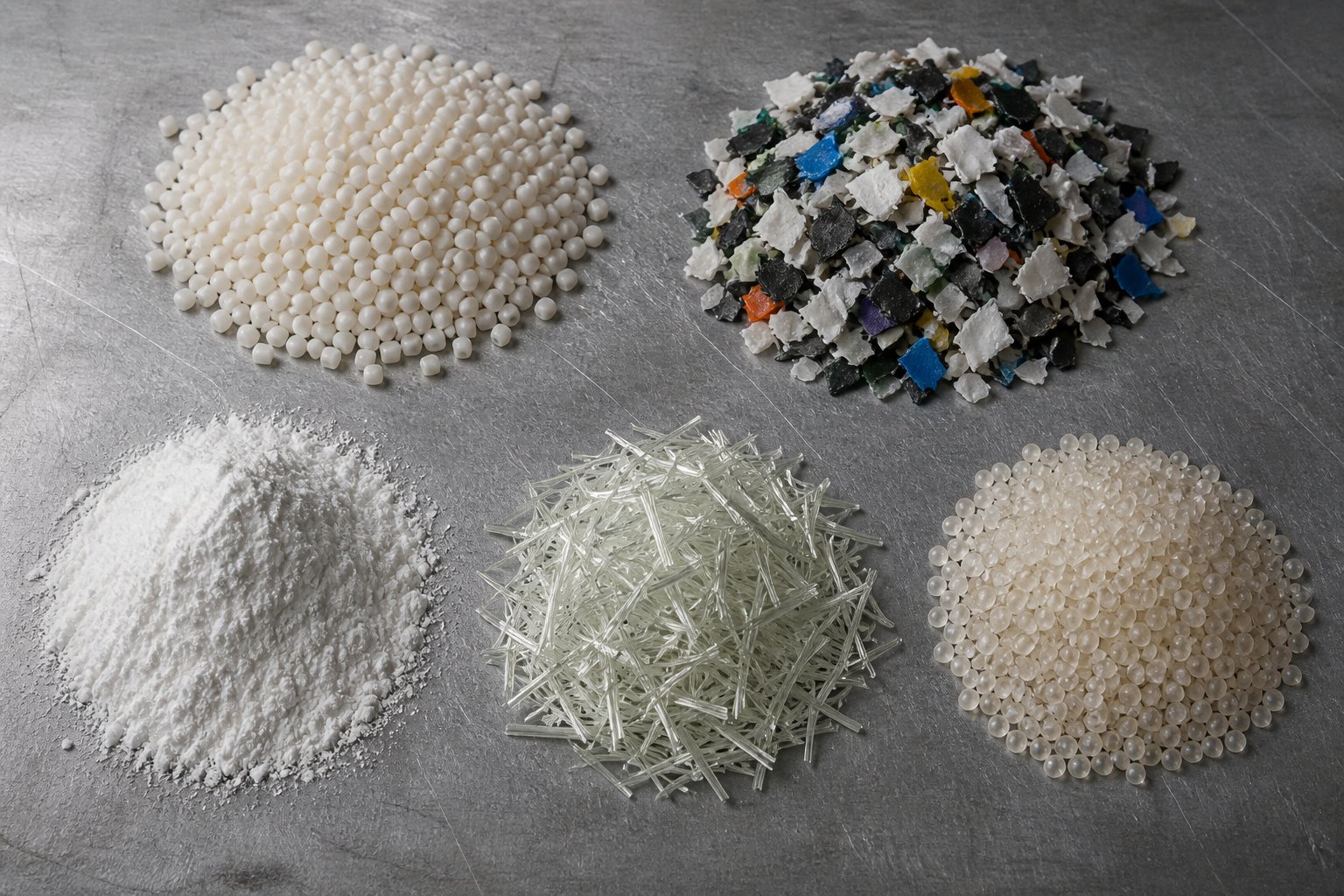
Material Versatility and Feed Flexibility: Which Extruder Handles Your Feedstock?
You've optimized your screw speed, dialed in your barrel temperatures, and confirmed your throughput targets — but none of it matters if the extruder chokes on the material you're actually trying to process. Feed flexibility is the third most impactful difference in the twin screw vs single screw extruder comparison, and it's the one that catches the most engineers off guard during commissioning.
Why? Because feedstock in the real world rarely arrives as uniform, free-flowing pellets. You're dealing with powders that bridge in the hopper, recycled flake with wildly inconsistent bulk density, chopped glass fibers that tangle and clump, and liquid additives that need precise injection mid-barrel. The machine that handles this diversity without constant babysitting wins a permanent operational advantage.
Why Twin Screw Handles Difficult Feedstocks Better
Imagine dropping a handful of talc powder into a single screw feed throat. The powder sits loosely between screw flights, compresses unevenly, and may even blow back out of the hopper vent as entrapped air escapes. A twin screw extruder plastic processing line handles that same talc powder with barely a shrug — and the reason comes down to one mechanical principle: positive displacement conveying.
In an intermeshing co-rotating twin screw, the flight of one screw meshes into the channel of the other, creating enclosed C-shaped pockets that physically push material forward. This geometry forces feedstock downstream regardless of whether it's a free-flowing pellet, a fluffy powder, a tangled mass of chopped fiber, or a low-bulk-density recycled flake. The material doesn't need to "grip" the barrel wall through friction the way it does in a single screw — it simply gets carried forward by the intermeshing action.
This positive conveying mechanism is why twin screw technology dominates in applications that involve difficult or non-standard feedstocks. Industry specialists at Plastics Technology note that twin screw feed systems accommodate pellets, powders, regrind, liquids, fibers, and even "fluff" — with crammer feeders pushing low-bulk-density materials into the feed throat when gravity alone isn't sufficient. The starve-fed operation means screw rpm stays independent of feed rate, so engineers can slow the feed to accommodate tricky materials without sacrificing mixing intensity.
Consider some of the feedstocks that would be nearly impossible to process reliably on a single screw line: bales of reclaimed nylon fiber that must be shredded and crammer-fed into the barrel, post-consumer HDPE flake contaminated with trace polymers, wood flour for WPC decking, or pharmaceutical API powders blended with polymer carriers. In each case, the twin screw plastic extruder accepts what the feeder delivers and moves it forward with predictable consistency.
Single Screw Limitations with Non-Standard Feedstocks
A single screw plastic extruder relies on drag flow for conveying, which means the feedstock must develop sufficient friction against the barrel wall to be dragged forward by the rotating screw flights. Uniform, free-flowing pellets do this beautifully. Powders, flakes, and fibers often do not.
When bulk density drops or particle shape becomes irregular, single screw feed zones struggle. The screw channel may only partially fill, leading to output surging and inconsistent melt pressure at the die. Slippery resins — think UHMWPE or certain fluoropolymers — compound the problem because they can't generate enough wall friction to maintain stable solids conveying.
Grooved feed sections offer a partial solution. As detailed analysis from Plastics Technology explains, grooved feed zones lock pellets against the barrel wall using machined longitudinal grooves, dramatically increasing solids conveying force. For polyolefins, grooved feeds can boost output 20-40% per rpm compared to smooth-bore designs. But grooves come with trade-offs: they require intensive water cooling to prevent premature melting, they demand shallower screw channels for proper pressure balance, and they perform best with one or two dedicated resins rather than a rotating menu of materials.
Critically, grooved feeds still can't match twin screw versatility for irregular feedstocks. The same Plastics Technology analysis notes that smooth-feed extruders are generally better when you need to process a variety of polymers, use low-bulk-density regrind, or vary regrind particle size and percentage. And for materials with high melting points or high crystallinity — nylon, PET, polycarbonate — grooved feeds must be heated to prevent dangerous pressure buildup, which partially negates their conveying advantage.
The bottom line: single screw technology handles pelletized, pre-compounded feedstocks with excellent efficiency and simplicity. Step outside that comfort zone, and you're fighting the machine's fundamental conveying physics.
Material-Specific Recommendations
Rather than speaking in generalities, here's a practical mapping of common material categories to the extruder type best suited for each — along with the reasoning that drives each recommendation:
- PP/PE compounding with additives or fillers — Twin screw. Positive conveying handles mineral fillers and masterbatch concentrates; modular screw profiles optimize dispersion for each formulation.
- PVC dry blend (rigid profiles, window frames) — Counter-rotating twin screw (conical or parallel). PVC powder requires positive conveying that a single screw can't reliably provide, and the narrower residence time distribution of twin screw designs reduces thermal degradation risk for this notoriously heat-sensitive polymer.
- Engineering plastics with glass fiber (PA, PBT, PPS) — Twin screw. Chopped glass fiber must be side-stuffed downstream after the polymer melts; the twin screw's modular barrel design accommodates side stuffers, and its mixing action wets out fibers without excessive breakage.
- Simple PE/PP pipe, film, or sheet from pre-compounded pellets — Single screw. Steady-state drag flow delivers consistent melt pressure and dimensional stability at lower cost. No complex compounding is needed, so the twin screw's mixing advantage goes unused.
- Food starch and protein extrusion (snacks, cereals, pet food) — Twin screw. The high shear and precise temperature control of twin screw designs allow efficient cooking, gelatinization, and protein texturization — processes that demand tight residence time management.
- Recycled mixed plastics (post-consumer flake) — Depends on contamination level. Twin screw excels when devolatilization and additive compounding are required, but single screw is often preferred for heavily contaminated streams requiring high-pressure filtration — since TSEs are low-pressure devices rated for operation below 1,500 psi in most cases, while single screw machines handle 3,000+ psi needed for fine-mesh screen changers.
- Pharmaceutical APIs via hot-melt extrusion — Twin screw. Precise residence time distribution, low-volume batch capability, and the ability to starve-feed small quantities of expensive active ingredients make twin screw the standard in pharmaceutical processing.
- 3D printing filament (PLA, ABS, PETG) — Single screw for production from pre-compounded pellets; twin screw if custom color or additive blending is needed upstream.
One category deserves special emphasis: heat-sensitive materials. PVC, biopolymers like PLA, and reactive formulations all suffer when residence time varies too widely within the barrel. A twin screw extruder's narrower residence time distribution — a direct consequence of its positive displacement conveying and partially filled screw channels — means fewer polymer chains spend excessive time at elevated temperatures. For PVC in particular, where degradation releases corrosive hydrochloric acid that damages both the product and the barrel, this tighter thermal control is not a luxury. It's a processing requirement.
Material versatility determines which feedstocks your line can accept. But feedstock is only half of the equation — the screw and barrel geometry that processes that material is what ultimately shapes compound quality, and the configurability gap between these two machine types is wider than most buyers realize.
Screw Configuration and Geometry: Why Your Twin-Screw Extruder or Single Screw Design Shapes Every Product
Most twin screw vs single screw extruder comparisons stop at broad performance categories — mixing, throughput, material handling — without ever opening the hood to examine the screw geometry that actually creates those differences. That's a costly oversight. Two extruders with identical barrel diameters, motor ratings, and brand names can produce dramatically different results based solely on how their screw elements are configured. Screw geometry is the fourth most impactful difference in this comparison, and it's the one that determines how adaptable — or how locked in — your production line really is.
Modular Twin Screw Elements — Unlimited Process Customization
When you hear engineers describe a twin-screw extruder as "configurable," they're talking about something far more specific than adjustable process settings. They mean the screw itself is assembled from dozens of individual elements, each with a distinct geometry and function, all slid onto a common splined shaft and locked in place. Change the arrangement, and you fundamentally change how the machine processes material — without buying a new screw.
This modular architecture traces back to the Erdmenger self-wiping profile, first patented in 1957, which remains the foundation of modern co-rotating twin screw element design. Every element on the shaft serves one of four primary functions:
- Conveying elements — Deep-flighted screw segments that transport material forward with minimal shear input. Think of these as the highway lanes of the screw profile: they move bulk material efficiently from one processing zone to the next. Tighter pitch conveys more slowly but builds more pressure; wider pitch moves material faster with less resistance.
- Kneading blocks — Stacks of offset lobed discs that generate the shear and elongational forces responsible for mixing. NC State Extension research details how the disc width, stagger angle, and rotation direction all determine mixing intensity. Wide kneading discs at 90-degree offsets deliver aggressive dispersive mixing for breaking pigment agglomerates. Narrow discs at 30- or 45-degree forward stagger provide gentler distributive blending for heat-sensitive formulations. Reverse-staggered kneading blocks push material backward, creating maximum restriction and shear — the heaviest mixing tool in the toolbox.
- Toothed (gear) mixing elements — Specialized segments with protruding teeth that repeatedly split and recombine the melt stream. These elements excel at distributive mixing with very low shear, making them ideal for blending liquid additives or dispersing delicate reinforcements without thermal degradation.
- Reverse (reconveying) elements — Left-handed screw segments that push material backward against the forward flow, building pressure and creating melt seals. These elements are essential for establishing vent zones (where volatile gases escape) and for increasing local residence time in specific barrel sections.
The practical payoff? Imagine you're running a calcium carbonate-filled polypropylene compound on Monday and switching to a glass-fiber-reinforced nylon on Wednesday. Rather than purchasing two separate screws, your team pulls the shaft, swaps out a few kneading blocks for conveying elements in the fiber-wetting zone, repositions a reverse element to adjust the melt seal before the vent port, and reassembles. Total downtime: a few hours. The same double screw extruder platform handles both products with screw profiles tailored to each formulation's specific shear tolerance and mixing demands.
It's also important to distinguish between the two major twin screw subtypes, because their geometry serves different purposes:
- Co-rotating (parallel) — Both screws turn in the same direction, generating intense intermeshing shear and self-wiping action. This is the dominant configuration for compounding, reactive extrusion, masterbatch production, and pharmaceutical hot-melt extrusion. L/D ratios commonly reach 40:1 to 52:1, giving engineers long barrel lengths to stage multiple processing zones.
- Counter-rotating (parallel or conical) — Screws turn in opposite directions, producing a calendering effect with gentler shear. Conical counter-rotating designs are the standard for PVC profile and pipe extrusion, where thermal sensitivity demands low shear and precise residence time control. Parallel counter-rotating configurations serve calender feeding and certain specialty compounding applications where controlled pressure generation matters more than aggressive mixing.
This configurability isn't just a convenience — it's a competitive moat. Plants running diverse product portfolios on a single twin-screw extruder platform can respond to new customer formulations in days rather than the weeks or months required to design, manufacture, and install a new single-piece screw.
Single Screw Geometry — Purpose-Built Simplicity
A single extruder screw takes the opposite design philosophy: optimize one geometry for one processing window, and execute it with maximum repeatability. Where the twin screw achieves versatility through modularity, the single screw achieves consistency through fixed, purpose-built design.
As detailed analysis from extrusion engineering specialists explains, most single screw applications are covered by three screw types — and understanding what each one does is the key to specifying correctly:
- Conventional (three-zone) screws — The workhorse design, featuring a deep-channel feed zone for solids conveying, a tapered compression zone for melting, and a shallow metering zone for pressure generation. Compression ratio — the ratio of feed-zone depth to metering-zone depth — is the critical specification. High-compression screws (3.5:1 to 4:1) suit easy-melting, shear-tolerant polyolefins. Low-compression screws (2:1 to 2.5:1) protect heat-sensitive materials like rigid PVC from degradation. The most common specification error? Copying a compression ratio from one material and applying it to another.
- Barrier screws — A secondary flight in the compression zone creates separate solids and melt channels, forcing complete melting before the metering zone. No unmelted particles can cross the barrier flight. The result is dramatically improved melt consistency and output stability, particularly for high-throughput lines processing semicrystalline polymers like HDPE and PP. Peer-reviewed research on barrier screw design confirms that the secondary flight promotes and stabilizes polymer melting — exactly why barrier designs became widespread for melting-limited applications.
- Mixing screws — A dedicated mixing section added near the screw tip improves dispersion of colorants, fillers, and additives. The geometry of the mixing section determines its character: Maddock (fluted) mixers apply high shear for dispersive breaking of agglomerates, pin mixers offer gentle distributive blending for shear-sensitive materials, and pineapple mixers provide a moderate middle ground. A high-performance single screw might combine barrier melting with a mixing section — the most capable single screw configuration available, though also the most application-specific.
These designs are typically manufactured as one-piece or two-piece constructions. That's their strength and their limitation. A conventional screw optimized for HDPE pipe extrusion will deliver outstanding repeatability shift after shift, year after year, with minimal operator intervention. But ask that same screw to handle a glass-fiber-filled nylon compound, and you'll face incomplete melting, poor fiber dispersion, or both. Changing the application usually means changing the screw — and that means lead time for design, manufacturing, and installation.
Sounds like a disadvantage? Not necessarily. For plants dedicated to one product family — PE pipe producers, PP sheet lines, LDPE blown film operations — that fixed geometry is exactly the point. There's no risk of an operator misarranging elements, no inventory of spare kneading blocks to manage, and no screw profile optimization required for every new batch. You bolt it in, set your temperatures, and run.
How Barrel Design Complements Screw Geometry
Even a perfectly configured screw profile underperforms inside a barrel that can't hold dimensional tolerance or resist the abrasive and corrosive forces of the materials being processed. The barrel isn't just a housing — it's the other half of the shear gap, the primary heat-transfer surface, and often the first component to show wear.
Three barrel liner technologies dominate the industry, and selecting the right one depends on both the extruder type and the materials you're processing:
- Nitrided steel — The baseline specification for general-purpose processing of unfilled or lightly filled polymers. Surface hardening through gas nitriding creates a wear-resistant layer approximately 0.3-0.5 mm deep. Cost-effective, but not suitable for highly abrasive or corrosive applications.
- Bimetallic linings — A centrifugally cast alloy liner (typically iron-boron or nickel-cobalt based) bonded inside a structural steel barrel shell. Bimetallic liners offer substantially better abrasion and corrosion resistance than nitrided steel, with typical liner thicknesses around 1.5 mm (approximately 0.060 inches). This is the standard specification for processing glass-fiber-reinforced compounds, mineral-filled formulations, and moderately corrosive polymers.
- Tungsten carbide and specialty alloys — For the most demanding applications — high glass-fiber loadings, ceramic-filled compounds, or fluoropolymer processing that generates hydrofluoric acid — tungsten-carbide-based or high-chromium alloy liners provide maximum service life. The cost premium is significant, but for a barrel that might otherwise need replacement every 6-12 months, the investment pays for itself quickly.
Research published in Plastics Technology by Mark Spalding and Tim Womer highlights exactly how critical barrel-screw clearance is to performance. For a new plasticating extruder, flight clearance is typically the nominal screw diameter divided by 1000 — meaning a 3.5-inch extruder runs just 0.004 inches of clearance per side. As wear opens that gap, melt leaks back over the flights, reducing specific output rate and raising discharge temperatures. Their analysis shows that a 100 mm screw processing 1 MI polyethylene at 150 kg/hr may require a rate reduction of up to 13% once clearance reaches critical levels — a direct hit to line profitability.
This wear dynamic plays out differently in each extruder type. In a twin-screw extruder, the intermeshing zone concentrates wear in localized areas — the tips of kneading blocks and the barrel bore at the apex of the figure-eight. The advantage of modular design is that worn kneading elements can be replaced individually without discarding the entire screw shaft. In a single screw system, wear tends to distribute more evenly along the barrel length, particularly in the compression and metering zones where melt pressure is highest. Replacement, however, means pulling the full screw and potentially relining or replacing the entire barrel — a more disruptive and costly event when it finally comes due.
| Parameter | Twin Screw Extruder (Co-Rotating) | Single Extruder Screw |
|---|---|---|
| Screw Construction | Modular — segmented elements on splined shafts | Fixed — one-piece or two-piece, purpose-built geometry |
| Available Element Types | Conveying, kneading blocks (multiple stagger angles), toothed mixers, reverse elements, spacers | Conventional three-zone, barrier flights, Maddock mixer, pin mixer, pineapple mixer |
| Profile Reconfigurability | Excellent — rearrange elements on the same shaft for new formulations | Limited — new application typically requires a new screw |
| Mixing Intensity Control | Highly tunable via kneading block width, stagger angle, and position | Set by mixer type selection (Maddock vs. pin vs. pineapple) |
| Compression Ratio Relevance | Less critical — mixing and pressure managed by element arrangement | Critical specification — must match material's melting and shear tolerance |
| Co-Rotating vs Counter-Rotating | Co-rotating for compounding/reactive extrusion; counter-rotating for PVC, calender feed | N/A — single screw only rotates in one direction |
| Wear Pattern | Localized at intermeshing zones and kneading tips; modular replacement possible | Distributed along barrel length; full screw replacement typical |
| Barrel Liner Options | Nitrided, bimetallic, tungsten carbide — segmented barrels allow zone-specific liners | Nitrided, bimetallic, tungsten carbide — full-length liner specification |
| Operator Expertise Required | High — screw profile design is "a blend of art and science" per NC State research | Moderate — fewer variables, but compression ratio and mixer selection still matter |
| Best Application Fit | Multi-product plants, compounding, reactive extrusion, R&D and pilot operations | Dedicated single-product lines: pipe, profile, film, sheet, blow molding feed |
As NC State Extension's research on screw functionality concludes, "no gold standard is available for designing a screw profile because every material exhibits unique flow properties." That statement applies equally to both extruder types. The difference is how each platform lets you respond to that reality. A twin-screw extruder gives you a toolbox of interchangeable elements to iterate quickly. A single extruder screw gives you a precision instrument tuned for one job — and it does that one job exceptionally well.
Geometry shapes what goes on inside the barrel. But the energy required to drive those screws — and the total cost of owning the machine over its lifetime — is what ultimately shows up on the balance sheet. That financial picture looks very different depending on which extruder type you chose.
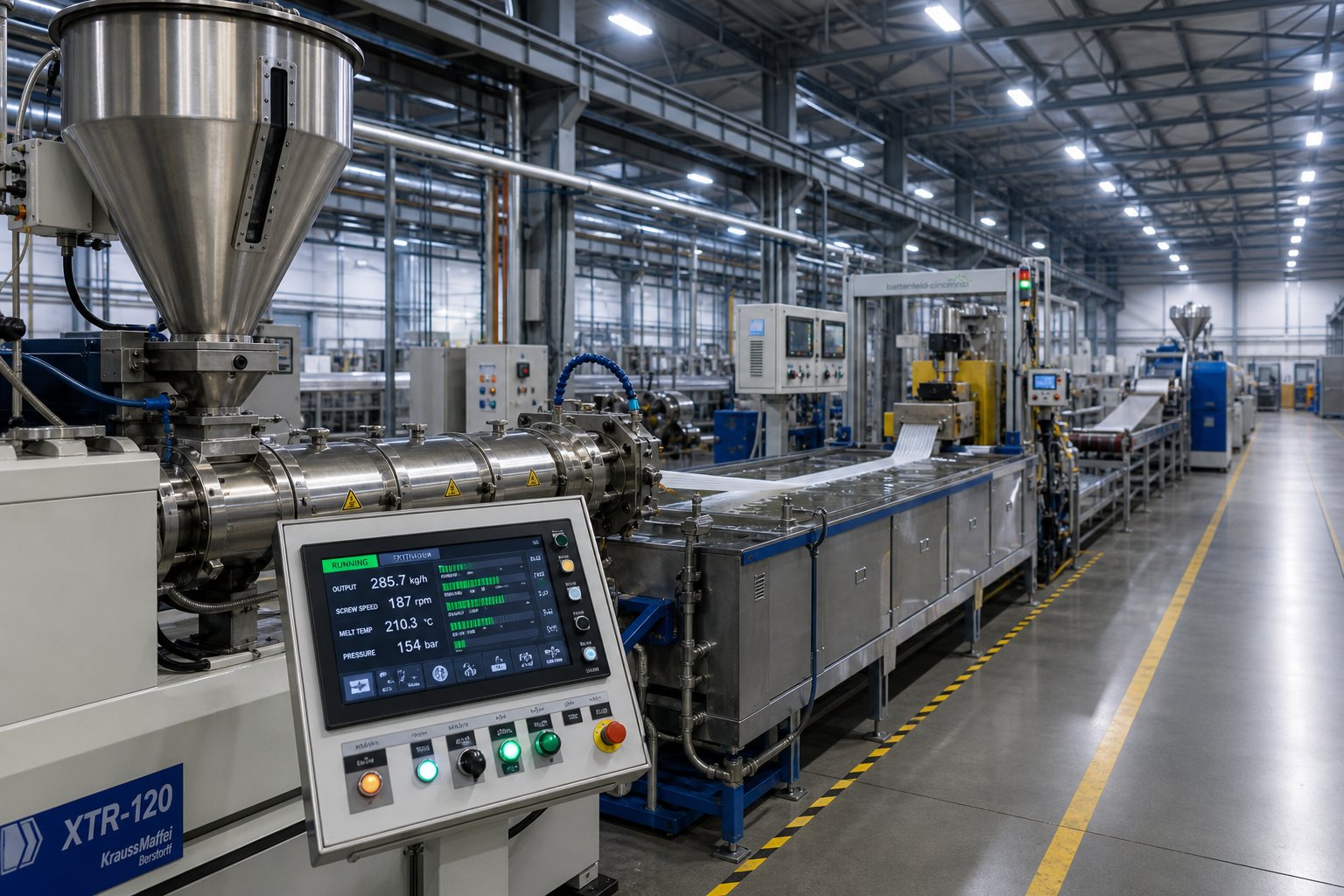
Energy Efficiency and Total Cost of Ownership: Twin Screw Extruder Machine vs Single Screw Extrusion Machine
Every extruder purchase starts with a price tag. It shouldn't end there. The acquisition cost of a twin screw extruder machine or a single screw extrusion machine represents just the opening chapter of a financial story that unfolds over 10 to 15 years of daily operation. Energy bills, wear-part replacements, unplanned downtime, labor demands, and the hidden cost of secondary processing steps all accumulate — and they often dwarf the original equipment invoice. This fifth key difference in the twin screw vs single screw extruder comparison is the one that separates smart capital allocation from expensive regret.
Capital Cost Comparison — Acquisition Is Only the Beginning
Single screw extruders carry lower sticker prices for a straightforward reason: simpler mechanics. One screw, one barrel bore, a standard gearbox, and a conventional thrust bearing assembly. Fewer precision-machined components mean shorter manufacturing cycles and more competitive supply chains. Industry cost analyses place entry-level single screw machines in the $30,000-$80,000 range, mid-range commercial units between $80,000 and $200,000, and industrial-scale systems from $200,000 up to $500,000 or more for specialized configurations.
Twin screw machines command substantially higher upfront investment. Co-rotating twin screw extruders start around $150,000 for smaller laboratory-scale units, with production-scale systems commonly falling between $300,000 and $800,000. High-performance industrial lines — large-diameter, high-torque platforms for compounding engineering plastics or running reactive extrusion — can exceed $1,500,000. The price differential between comparable production capacities often ranges from two to five times.
Where does that premium go? Precision. Twin screw intermeshing elements must maintain extremely tight clearances across dozens of individual screw segments and barrel bore sections. The gearbox — which must split torque evenly between two parallel shafts while handling higher radial loads than any single screw drive — is a precision-engineered component in its own right. And the modular barrel construction, with individually heated and cooled segments, adds both manufacturing complexity and functional capability.
But here's where the conversation needs to shift. That purchase price is a one-time event. Energy, maintenance, and operational costs repeat every single day your line runs. And the machine that costs less to buy doesn't always cost less to own.
Operating Energy and Specific Energy Consumption
The only honest way to compare energy costs across extruder types is specific energy consumption (SEC) — measured in kilowatt-hours per kilogram of output (kWh/kg). Not kWh per hour, which tells you how fast the meter spins but says nothing about how efficiently you're converting electricity into saleable product.
For simple melting and conveying tasks, single screw extruders tend to be more energy-efficient. Drag flow — the fundamental single screw conveying mechanism — requires less mechanical input than the intensive intermeshing action of a twin screw. Real-world audit data from production lines shows single screw SEC values typically landing between 0.25 and 0.45 kWh/kg depending on polymer type and line configuration. A virgin LDPE film line, for instance, commonly runs around 0.32 kWh/kg, while a rigid PVC pipe line on a conical twin screw sits at roughly 0.35 kWh/kg.
Co-rotating twin screw compounding lines generally consume more energy per kilogram — typically 0.30 to 0.55 kWh/kg. Processing glass-filled PP masterbatch, for example, can push SEC toward 0.48 kWh/kg. The higher figure reflects the mechanical work required for intensive dispersive and distributive mixing, the energy input for multiple heating and cooling zones along a longer barrel, and the parasitic loads from gravimetric feeders, side stuffers, and vacuum vent systems that most twin screw lines incorporate.
Sounds like a clear win for the single screw? Not so fast.
The SEC number at the extruder itself only tells part of the story. Consider the total process chain. A double screw extruder machine performing compounding, devolatilization, and pelletizing in a single pass eliminates the energy consumed by a separate Banbury mixer, a cooling conveyor, a reheating step, and a second extrusion pass — all of which a single screw line might require when processing the same formulation. When the alternative is a single screw plus one or more secondary processing steps, the twin screw frequently wins on total line energy even though its per-machine SEC is higher.
A concrete example puts this in perspective. Suppose a compounding operation processes 500 kg/hr of a 40% mineral-filled PP compound. A twin screw line running at 0.45 kWh/kg consumes 225 kWh per hour at the extruder. A single screw melting line at 0.30 kWh/kg consumes only 150 kWh per hour — but the upstream high-intensity mixer running for batch preparation adds another 50-75 kWh per batch cycle, and the additional material handling, reheating, and reprocessing steps push the combined system energy above the twin screw's standalone figure. Meanwhile, the twin screw delivers a more homogeneous compound in fewer steps with less floor space.
The myth that twin screw is always more expensive to run collapses under this kind of whole-system analysis. For simple, single-resin melting and shaping, the single screw's lower SEC is real and meaningful. For any process requiring compounding, additive incorporation, or reactive chemistry, the twin screw's ability to consolidate multiple operations into one machine often delivers lower total energy cost per kilogram of finished product.
Maintenance, Wear Parts, and Lifecycle Costs
Wear is inevitable in any extrusion process. Polymer melt, mineral fillers, glass fibers, and corrosive additives all attack screw flights and barrel surfaces shift after shift. What differs between extruder types is how wear progresses and what it costs to address.
Twin screw intermeshing zones concentrate wear in localized areas — kneading block tips, the apex of the figure-eight barrel bore, and any screw elements positioned in high-shear processing zones. The wear rate can be aggressive, particularly when processing abrasive fillers like glass fiber or calcium carbonate at high loadings. However, the modular screw design allows targeted replacement. A worn kneading block set might cost $2,000-$5,000 to replace, and a skilled technician can swap elements in a matter of hours. You don't discard the entire screw shaft — just the segments that have reached their wear limit.
Industry maintenance benchmarks place annual routine maintenance costs for twin screw systems at roughly $8,000 to $25,000, with major overhauls — including bearing replacement and complete screw inspection — occurring every 25,000 to 40,000 operating hours at costs ranging from $40,000 to $150,000. Complete screw element sets can range from $20,000 to $100,000 depending on configuration and metallurgy.
Single screw extruders wear more gradually and more evenly. The entire barrel length participates in the wear process, with compression and metering zones typically showing the most material loss over time. Factory audit data reveals that worn screw-to-barrel clearances don't just degrade product quality — they silently inflate energy consumption by as much as 15% before operators notice any visible symptoms. One documented case showed an ABS compounding line where barrel liner wear of just 0.8 mm beyond tolerance pushed motor amperage up 22%, adding roughly 0.09 kWh/kg to specific energy consumption.
The financial profile of single screw maintenance looks friendlier on an annual basis — typically $3,000 to $15,000 for routine service, with screw replacement costs ranging from $3,000 to $15,000 and barrel relining or replacement between $5,000 and $30,000. But when that full-length replacement finally comes due, it's a bigger event: more downtime, higher single-transaction cost, and no option to replace just the worn section. Hard chrome-plated single screws typically last 8,000 to 15,000 operating hours before requiring refurbishment, though abrasive-filled compounds can cut that figure significantly.
There's a subtlety here that many buyers miss. Twin screw maintenance costs are higher but more predictable — modular elements allow condition-based replacement on a rolling schedule. Single screw maintenance costs are lower but lumpier — everything runs fine until it doesn't, and then you're facing a major overhaul with substantial downtime. Plants that budget only for the annual average often get caught off guard by the single screw's periodic replacement events.
Before signing a purchase order for either machine type, quantify these cost factors explicitly:
- Specific energy consumption (kWh/kg) for your actual material and formulation, not just the machine's nameplate power rating
- Total line energy including all upstream and downstream processing steps the extruder eliminates or requires
- Screw and barrel replacement cycle — expected operating hours before wear demands intervention, based on your filler type and loading percentage
- Wear-part unit costs — individual kneading elements or mixing sections for twin screw; full-length screw and barrel for single screw
- Downtime cost per hour — lost production revenue during scheduled maintenance and unplanned repairs
- Material waste during startup and changeover — twin screw self-wiping geometry reduces purge material; single screw generates more waste per changeover cycle
- Labor skill premium — twin screw operators typically require deeper technical training, which may command higher wages
- Spare parts lead time and inventory cost — modular twin screw elements require a broader inventory; single screw needs fewer SKUs but longer lead times for custom replacements
- Residual equipment value — both machine types typically support 10-15 year lifespans with proper maintenance, but resale value varies by condition and market demand
When all of these factors are stacked into a 10-year total cost of ownership model, the picture that emerges is nuanced rather than binary. A mid-range single screw system processing standard resins may accumulate $1.68-$2.4 million in total lifecycle costs. A comparable-capacity twin screw system may reach $1.99-$2.9 million. But if that twin screw eliminates a secondary compounding step, reduces material waste by even 2% on a 5,000 metric-ton annual volume, or enables a premium product that commands 5% higher pricing — the math tilts in its favor. The right answer depends entirely on what's flowing through that barrel and what comes out the other end.
Cost, however, isn't the only factor that's hard to see from the outside. One of the most technically critical capabilities separating these two machine types — devolatilization — operates invisibly inside the barrel but determines whether entire product categories are even possible on your line.
Venting and Devolatilization Capabilities: Extruder Twin Screw vs Single Screw
Moisture, trapped air, unreacted monomers, residual solvents — every one of these volatiles degrades product quality if it reaches the die. Devolatilization is the process of removing them, and it's the sixth key difference separating these two extruder architectures. Most comparison guides mention venting in passing. Few explain why the gap between twin-screw extruders and single screw machines is so wide here, or why it determines feasibility for entire product categories.
How Twin Screw Venting Works and Why It Outperforms
Effective devolatilization requires two conditions: a partially filled zone inside the barrel where pressure drops to zero (or below, under vacuum), and reliable melt seals on both sides of that zone to prevent the vacuum from pulling air through the feed throat or destabilizing the discharge.
An extruder twin screw setup creates both conditions with elegant precision. Starve feeding keeps the screw channels only partially full during normal operation — a ready-made low-pressure zone wherever engineers need it. Reverse conveying elements or neutral kneading blocks positioned upstream and downstream of the vent port force the screw completely full at those points, building melt seals that isolate the vacuum zone from the rest of the barrel. Atmospheric or vacuum vent ports placed over these partially filled sections then draw volatiles out through the barrel opening and into a vapor takeoff system.
The real power lies in staging. Because twin-screw extruders can position multiple melt seals along their full barrel length, engineers can install two, three, or even four vent ports in series — each one progressively stripping volatiles to lower concentrations. Devolatilization expert Rob Jerman, who has developed twin screw devolatilization systems for over 30 years, offers a practical rule of thumb: each vent can reduce volatile concentration by roughly an order of magnitude. A triple-vented machine, for example, can take a 50%-solids polymer feed down to less than 0.1% residuals.
Another critical advantage? The screw continually and evenly reheats the polymer melt between each devolatilization zone. This reheating re-superheats dissolved volatiles, driving them back toward their vapor phase before the next vent strip. Without this reheat between stages, later vents lose efficiency because the melt has cooled and trapped volatiles have less thermodynamic driving force to escape.
Screw speed adjustments in twin-screw extruders do require careful attention, however. Increasing rpm shortens the filled length behind both the upstream and downstream melt seals, making them more susceptible to failure. Decreasing rpm lengthens the filled zones — which sounds safer until the downstream seal backs polymer up into the vent opening, eventually flooding the port and blocking the vapor takeoff piping. Operators need to understand these dynamics to maintain stable venting across different throughput conditions.
Single Screw Venting Limitations
Single screw extruders can vent — but the mechanism is fundamentally more constrained. Venting on a single screw requires a two-stage screw design with a decompression zone between stages. The first stage melts and meters the polymer normally. When the melt enters the deep channels of the second stage, pressure drops to zero and volatiles escape through a vent port positioned over those channels. The second-stage metering section then re-compresses the melt and pumps it through the die.
Functional? Yes. But several structural limitations restrict what this design can achieve:
- One or two vent locations maximum. The two-stage screw geometry accommodates only a single decompression zone in most practical configurations. Adding a second vent requires extending the barrel substantially and complicates screw design. Compare that to the three- or four-vent staging available on a typical twin screw compounding line.
- Vent flow instability. If the second-stage metering section cannot pump resin fast enough — because of excessive discharge pressure, an incorrect pump ratio, or a worn screw — pressure builds underneath the vent opening and molten polymer flows out onto the floor. Extrusion specialist Mark Spalding documented a case where a styrenic resin extruder discharged 950 lb/hr through the die while simultaneously losing 150 lb/hr out of the vent port — a massive productivity loss and housekeeping nightmare.
- Vent diverter dependency. Single screw vented extruders rely on a small mechanical device called a vent-flow diverter inserted into the vent opening. As the screw rotates, polymer elasticity can push melt upward into the vent area; the diverter deflects it back into the barrel. If the diverter is missing, damaged, or installed backward — all common real-world scenarios — vent flow problems follow immediately.
- No self-wiping action. Material can hang up inside the vent area and degrade over time, eventually creating streaks, specks, or contamination in the final product. Twin screw self-wiping geometry inherently prevents this kind of buildup.
The pump ratio — the channel depth of the second-stage meter divided by the first-stage meter — is the critical design parameter for single screw vented operation. It typically ranges from about 1.3 to 2, meaning the second stage's pumping capacity is only 30% to 100% greater than the first stage's output. That narrow margin leaves little room for process variation. Increase discharge pressure by installing finer screens, and you may push the vent zone into pressure — triggering vent flow. A twinscrew platform handles these pressure variations far more gracefully because melt seals are independently adjustable through screw element arrangement.
Application Spotlight — When Venting Determines Your Extruder Choice
For many extrusion applications — standard pipe, single-resin film, pre-dried pellet processing — devolatilization isn't a factor. But for certain product categories, venting capability alone dictates which machine you need. If your application falls into any of the following categories, devolatilization performance should be weighted heavily in your extruder selection:
- Recycled polymer processing — Post-consumer recycled plastics carry moisture, residual inks, adhesives, and trapped volatiles from prior life-cycle use. Aggressive multi-stage vacuum venting on a twin screw line removes these contaminants and produces clean pellets suitable for demanding downstream applications. A single-vent single screw often can't strip residuals below acceptable thresholds, especially for food-contact or automotive-grade recycled compounds.
- Reactive extrusion with byproduct removal — When the extruder serves as a chemical reactor — performing grafting, chain extension, or polymerization — the reaction itself generates volatiles that must be continuously extracted. Reactive extrusion (REX) is carried out predominantly on co-rotating twin screw extruders precisely because their multi-zone devolatilization capability strips unreacted monomers and reaction byproducts while the synthesis proceeds. Single screw platforms lack the zone flexibility to combine reaction, mixing, and staged volatile removal in one pass.
- Moisture-sensitive engineering plastics — Nylon (PA6, PA66), PET, and polycarbonate absorb atmospheric moisture that causes hydrolytic degradation during melt processing. While pre-drying is standard practice, a vented extruder provides a critical safety net — removing residual moisture that slipped past the dryer. Twin screw multi-vent designs offer deeper stripping than the single-vent single screw alternative, which is particularly important for nylon recycling where moisture levels can be unpredictable.
- Pharmaceutical hot-melt extrusion requiring residual solvent removal — Active pharmaceutical ingredients (APIs) are often dissolved in solvents during formulation preparation. Regulatory requirements demand that residual solvent levels in the final dosage form fall below strict pharmacopeial limits. Multi-stage vacuum devolatilization on a twin screw line is the standard method for meeting these specifications — each vent stage driving residuals down by another order of magnitude, as the rule of thumb predicts.
- Polymer isolation from solution — For chain polymerizations (acrylics, styrenics) conducted in solvent or monomer, devolatilization serves as the primary means of isolating the finished polymer. These operations typically use multi-vent twin screw extruders with two to four vent ports, progressively reducing solvent concentration from as high as 40-60% down to fractions of a percent. No single screw configuration can match this staged stripping performance.
One nuance worth flagging: pushing devolatilization too aggressively carries its own risks. Excessive melt temperature and residence time aimed at maximizing volatile removal can trigger depolymerization in certain polymer families — particularly acrylics and styrenics — where chains "unzip" at elevated temperatures. The result is counterintuitive: residual volatile levels actually increase because degradation products form faster than the vent can remove them. Skilled process engineers balance stripping efficiency against thermal history to find the sweet spot, and that balance is easier to achieve on a twin screw platform where each zone's temperature, shear, and residence time can be independently tuned.
Devolatilization rounds out the six critical differences that separate these two extruder architectures. Each difference — from mixing performance at the top to venting capability here — carries a different weight depending on your specific industry, material, and production demands. Pulling all six into a single, scannable reference makes the decision framework concrete rather than abstract.
Complete Side-by-Side Comparison: Twin Screw vs Single Screw Extruder Summary
Six differences. Dozens of technical details. Multiple industries pulling the decision in different directions. Before all of that information blurs together, you need one place to see the full picture at a glance. The tables and myth corrections below consolidate everything covered so far into a definitive quick-reference you can share with your engineering team, hand to procurement, or pin above your desk the next time a capital equipment decision lands on your plate.
Complete Feature-by-Feature Comparison Table
This table compares the twin screw and plastic single screw extruder across 15 parameters ranked by practical relevance. Ratings reflect real-world performance rather than theoretical capability — because what matters is what happens on the production floor, not what looks good in a brochure.
| Parameter | Single Screw Extruder | Twin Screw Extruder (Co-Rotating) |
|---|---|---|
| Mixing Capability | Limited — barrier screws and Maddock mixers for basic homogenization | Excellent — configurable kneading blocks deliver dispersive and distributive mixing |
| Throughput Stability | Excellent — consistent drag flow and melt pressure in steady-state operation | Good — requires well-tuned gravimetric feeder control loops |
| Material Versatility | Limited — performs best with uniform pellets and pre-compounded resins | Excellent — handles powders, flakes, fibers, liquids, and variable-density feedstocks |
| Feed Flexibility | Limited — flood-fed; grooved sections help but narrow the material range | Excellent — starve-fed with side stuffers, liquid injection, crammer feeders |
| Screw Configurability | Limited — fixed one-piece geometry; new material often requires a new screw | Excellent — modular segmented elements rearranged on the same shaft |
| Venting Capability | Limited — one or two vent locations via two-stage screw; prone to vent flow instability | Excellent — multi-stage atmospheric and vacuum venting with independent melt seals |
| Residence Time Distribution | Moderate — broader distribution inherent to drag-flow conveying | Narrow — positive displacement and partially filled channels tighten control |
| Self-Cleaning Ability | None — residual material clings to screw root and barrel wall | Excellent — intermeshing geometry continuously wipes both screw channels |
| Energy Consumption (SEC) | Lower — typically 0.25-0.45 kWh/kg for simple melting and conveying | Higher — typically 0.30-0.55 kWh/kg, but may lower total line energy |
| Capital Cost | Lower — $30,000-$500,000 depending on scale | Higher — $150,000-$1,500,000+; roughly 2-5x comparable single screw |
| Maintenance Cost | Lower annual spend ($3,000-$15,000/yr), but lumpier replacement events | Higher annual spend ($8,000-$25,000/yr), but modular targeted replacement |
| Changeover Time | 15-30 minutes; higher purge material consumption | 5-10 minutes; self-wiping screws minimize residual buildup |
| Scale-Up Ease | Good — well-established geometric scaling rules for single-resin processes | Excellent — volumetric scale-up ratios predictable; modular profiles transfer across sizes |
| Automation Compatibility | Good — integrates with standard PLCs, temperature controllers, and line speed controls | Excellent — gravimetric feeder integration, inline analyzers, Industry 4.0 platforms |
| Footprint | Compact — single barrel, simpler drive train, smaller overall line footprint | Larger — longer barrel at higher L/D, plus feeder stations, vent systems, and side stuffers |
Industry Application Matrix
Different industries weight these 15 parameters differently. A pharmaceutical manufacturer cares most about residence time control and devolatilization. A pipe producer prioritizes steady-state output above all else. This matrix maps eight major application sectors to the recommended screw plastic extruder type, with a one-line justification for each.
| Industry / Application | Recommended Extruder Type | Primary Justification |
|---|---|---|
| Plastics Compounding | Twin Screw (Co-Rotating) | Modular mixing, multi-additive dispersion, and downstream feeding in a single pass |
| Pipe and Profile Extrusion | Single Screw (PE/PP pellets); Counter-Rotating Twin Screw (PVC powder) | Pellet-based lines need stable drag flow; PVC powder demands positive conveying and low shear |
| Film and Sheet Extrusion | Single Screw | Consistent melt pressure and output stability critical for gauge uniformity on continuous lines |
| Masterbatch Production | Twin Screw (Co-Rotating) | High pigment and additive loadings require aggressive dispersive mixing unavailable on single screw |
| Food Processing | Twin Screw (Co-Rotating) | Cooking, gelatinization, and texturization demand precise shear, temperature, and residence time control |
| Pharmaceutical Hot-Melt Extrusion | Twin Screw (Co-Rotating) | Low-volume precision, narrow residence time distribution, and multi-stage devolatilization for API formulations |
| Recycling and Reprocessing | Twin Screw for compounding/devolatilization; Single Screw for high-pressure filtration of contaminated streams | Twin screw excels at mixing and volatile removal; single screw handles 3,000+ psi filtration pressures better |
| 3D Printing Filament | Single Screw (pre-compounded pellets); Twin Screw (custom blending upstream) | Standard filament from pellets suits single screw simplicity; custom color or additive blends need twin screw mixing |
Common Myths Debunked
Three misconceptions cloud the twin screw vs single screw extruder decision more than any others. Each one leads to either overspending on capability you don't need or underspecifying a machine that can't do the job. Here's what the data actually shows:
Myth: "Twin screw is always the better choice." Reality: For steady-state, single-resin processing of pre-compounded pellets — pipe, film, sheet, profiles — a single screw extruder delivers equal or superior output stability at 50-80% lower capital cost and simpler operation. Twin screw capability is wasted when the process doesn't demand intensive mixing, powder handling, or devolatilization.
Myth: "Single screw extruders cannot mix." Reality: Barrier screws, Maddock mixers, pin-mixing sections, and inline static mixers provide effective melt homogenization for pre-compounded materials. The limitation is multi-phase blending and high additive loadings — not all mixing. Many billions of kilograms of quality pipe, film, and sheet leave single screw lines every year with perfectly adequate melt uniformity.
Myth: "Twin screw always costs more to operate." Reality: When total line energy is measured — including upstream premixing, separate compounding passes, drying steps, and reprocessing that a twin screw eliminates — the consolidated twin screw process frequently achieves lower cost per kilogram of finished product. The per-machine SEC is higher, but the per-system SEC can be lower.
These tables and corrections give you the reference framework. The remaining question is the most practical one: given your specific material, throughput targets, and budget constraints, which machine do you actually buy — and what should you ask your supplier before committing?
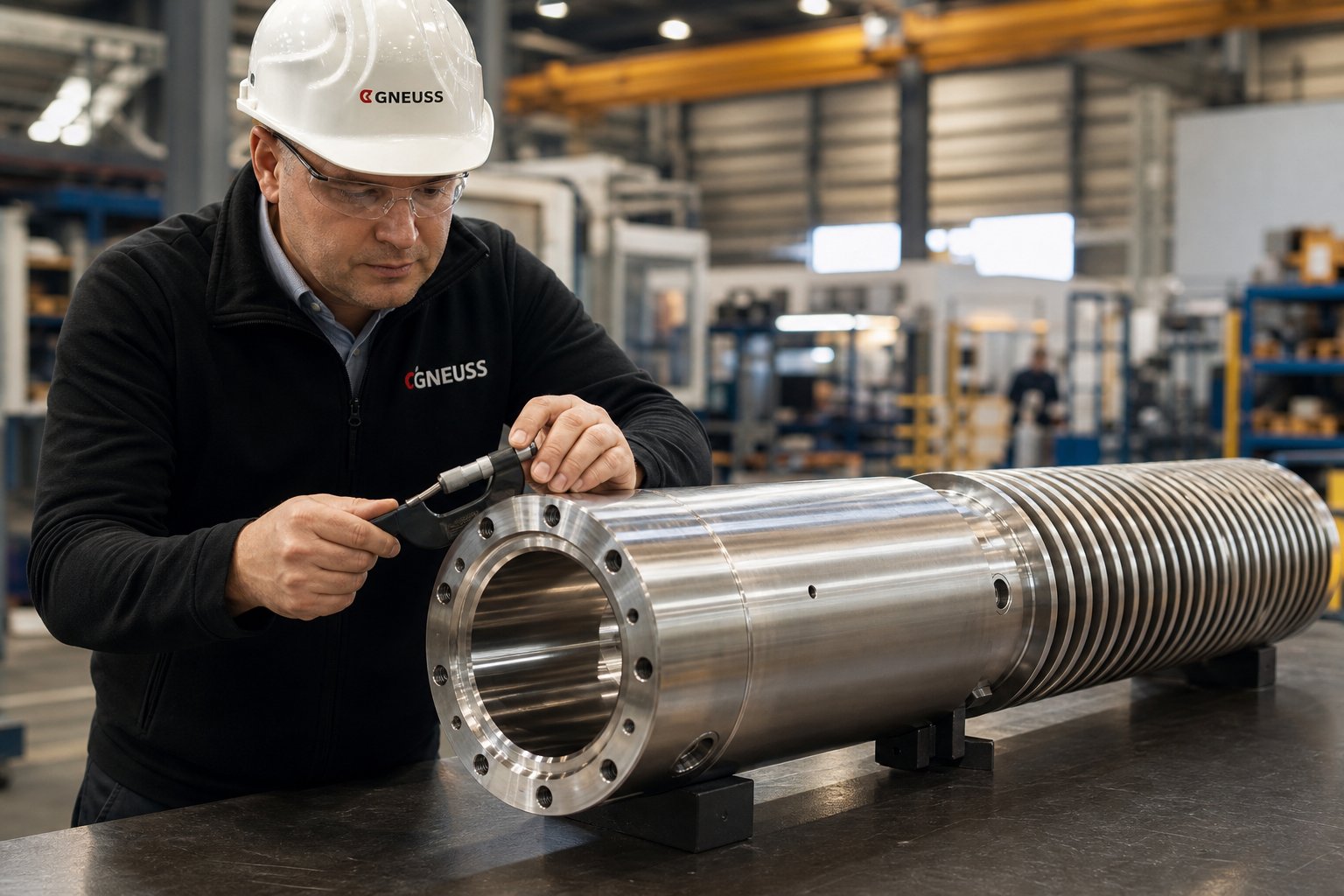
Final Recommendation and Buyer Action Plan: Your Twin-Screw Extruder Machine or Single Screw Decision Framework
You've seen the data. You've walked through six ranked differences, scanned the comparison tables, and watched three industry myths collapse under scrutiny. The question that remains is deceptively simple: which extruder do you buy?
Simple question, but the wrong answer is expensive. A twin-screw extruder machine purchased for a job a single screw handles better wastes capital on capability that sits idle. A single screw forced into a compounding role it wasn't designed for generates scrap, rework, and downstream quality complaints that erode margins for years. The framework below turns the decision into a structured process rather than a gut call — and gives you the supplier questions that separate a confident purchase from a costly gamble.
Decision Flowchart — Which Extruder Type Fits Your Operation
Rather than weighing all 15 parameters simultaneously, walk through this sequence. Each step narrows the field based on the factor most likely to eliminate one extruder type from contention. By step four, your answer should be clear.
- Define your primary application. Are you melting and shaping a single pre-compounded resin into a finished product (pipe, film, sheet, profile)? Or are you compounding — blending polymers with fillers, pigments, fibers, or reactive additives to create a new formulation? Simple melting and shaping points toward a single screw. Compounding, reactive processing, or multi-additive incorporation points toward a twin screw. If you're doing both — compounding upstream and shaping downstream — you likely need one of each, or a twin screw for compounding followed by a single screw for the forming step.
- Identify your feedstock. Will the extruder receive uniform, free-flowing pellets? A single screw handles that beautifully. Will it need to process powders (PVC dry blend, pharmaceutical excipients), recycled flake with variable bulk density, chopped fibers, or liquid additives injected mid-barrel? Those irregular feedstocks demand the positive displacement conveying of a twin screw. As a practical guide from Far East Network puts it, if the resin type is singular and doesn't require intensive mixing, the complex structure of a twin screw is unnecessary — but the moment you need thorough blending of multiple resins, additives, or pigments, the twin screw becomes essential.
- Assess your throughput and changeover requirements. Running one product 24/7 at maximum output? The single screw's steady-state drag flow delivers unmatched stability. Running five or more formulation changes per shift? The twin screw's self-wiping geometry cuts changeover time by 50-70% and slashes purge waste. Plants producing masterbatch, custom compounds, or short-run specialty products almost always recoup the twin screw premium through reduced downtime alone.
- Evaluate devolatilization needs. Does your process generate moisture, volatiles, or reaction byproducts that must be removed inside the barrel? If the answer is yes — recycled plastics, reactive extrusion, pharmaceutical solvent removal, moisture-sensitive engineering polymers — a twin screw with multi-stage venting is likely non-negotiable. Single screw vented designs handle light devolatilization adequately but cannot match multi-vent staging.
- Quantify your budget against total cost of ownership. A single screw costs 50-80% less to purchase. But if your process requires a separate premixing step, a dedicated compounding pass, or generates excessive scrap due to inadequate mixing, the "cheaper" machine may deliver the higher 10-year cost. Run the full lifecycle calculation — acquisition, energy, wear parts, downtime, secondary processing — before the sticker price makes the decision for you.
Most buyers find their answer crystallizes by step two or three. If every step points the same direction, you can proceed with high confidence. If steps conflict — say, your feedstock demands a twin screw but your budget only supports a single screw — that tension signals a conversation your engineering team needs to have before any purchase order gets signed.
Questions to Ask Your Extruder and Component Supplier
Selecting the right extruder type is only half the decision. Selecting the right supplier determines whether that machine performs as promised for 15 years or becomes a maintenance headache within 15 months. Industry sourcing guides consistently emphasize that a plastic extrusion machine is a long-term capital investment — not a commodity purchase — and the due diligence you conduct before signing matters more than the discount you negotiate during signing.
Before committing to any single screw extruder manufacturer or twin screw supplier, work through this checklist. The quality of the answers you receive will tell you as much about the supplier as the specifications tell you about the machine.
- What barrel metallurgy options do you offer for my specific material and filler type? A supplier who asks about your resin, filler loading, and corrosion risk before recommending nitrided, bimetallic, or tungsten carbide liners is demonstrating genuine technical competence. One who quotes a standard specification without asking is guessing.
- What screw element configurations are available, and can you support screw profile optimization for my formulation? For twin screw buyers, this separates component sellers from process partners. For single screw buyers, ask whether they offer barrier, mixing, and variable-pitch designs — and whether they can recommend the right compression ratio for your polymer.
- What are your spare parts lead times for critical wear components? A worn kneading block or a scored barrel liner demands replacement in days, not months. Ask for specific lead times on your most likely wear items, and whether the supplier stocks them or manufactures to order.
- Are you a direct manufacturer or a trading company? This question alone can save you from layers of markup and disconnected technical support. A direct manufacturer controls quality from raw material through final assembly. A trading company adds cost without adding engineering capability. Ask for factory photos, business licenses, or a virtual walkthrough — reputable suppliers welcome verification rather than deflecting it.
- Can you provide reference customers processing similar materials on similar equipment? Verified case studies and customer references separate credible manufacturers from catalog resellers. If a supplier hesitates here, that hesitation is your answer.
- What technical support do you provide for screw profile design and process troubleshooting? The best component suppliers don't just ship parts — they help you configure those parts for your specific application. Ask whether the supplier offers process engineering guidance, trial runs, or formulation-specific recommendations.
- What is your quality control process for screw and barrel dimensional tolerances? Flight clearances measured in thousandths of an inch determine mixing efficiency, energy consumption, and wear life. Ask how the supplier verifies concentricity, surface hardness, and bore diameter — and whether inspection reports ship with the parts.
- What warranty terms and after-sales support structure do you maintain? Industry data suggests that roughly 25% of extrusion failures trace back to premature barrel wear. Warranty coverage, response time commitments, and remote diagnostic capability all affect your real cost of ownership. A supplier with no clear after-sales structure — as sourcing experts consistently warn — is a liability, not a partner.
- What certifications does your equipment or component manufacturing facility hold? ISO 9001 quality management, CE marking for European markets, and material test certifications for barrel alloys are baseline expectations for serious capital equipment purchases. Ask to see actual certificates, not just logos on a website.
- Can you supply a complete screw and barrel assembly matched to my extruder OEM's specifications? Aftermarket screw and barrel suppliers must match not just diameter and length, but also mounting interfaces, heating zone locations, and cooling channel configurations. Confirm dimensional compatibility before assuming interchangeability.
The pattern running through these questions is straightforward: you're testing whether the supplier understands your process, not just your purchase order. Any vendor can quote a price. The one who asks about your material, your throughput targets, your wear history, and your quality requirements before quoting — that's the one worth talking to.
Start with the Right Screw and Barrel Assembly
Here's the insight that experienced plant managers learn the hard way and new buyers often overlook: regardless of whether you run a single screw or twin screw platform, the screw and barrel assembly is the heart of the entire process. The motor provides torque. The control system manages temperature. The die shapes the output. But the screw and barrel are where polymer actually transforms — where solid pellets become homogeneous melt, where fillers disperse, where volatiles escape, and where product quality is either created or compromised.
Material selection for these components isn't a line item to minimize. Industry analyses consistently find that the right screw barrel can boost output by 15% to 30% while reducing waste — and that choosing the right barrel alloy can extend service life by up to 25%. Conversely, a bargain-priced barrel with inadequate wear resistance may need replacement in under a year when processing glass-fiber compounds, wiping out any savings and then some through unplanned downtime and emergency procurement.
Whether you're specifying components for a new machine or sourcing replacements for an existing line, the decision framework from this article gives you a clear starting point. You know whether your application demands single screw simplicity or twin screw versatility. You know which feedstock characteristics matter and which barrel metallurgy matches your filler and corrosion profile. You know the throughput, mixing, and venting requirements that your screw profile must satisfy.
The next step is matching that knowledge to specific component specifications. Engineers and procurement teams looking to compare options across extruder types can explore NANHAIYA's screw barrel product collection, which organizes single screw, parallel twin screw, conical twin screw, and injection molding screw barrel assemblies side by side. It's a practical resource for translating the extruder-type decision you've made through this article into concrete barrel specifications — comparing metallurgy options, dimensional configurations, and application-matched designs in one place rather than chasing separate quotes from multiple vendors.
The twin screw vs single screw extruder decision will always depend on your material, your process, and your production economics. No article can make that choice for you. But armed with the six ranked differences, the comparison tables, the myth corrections, and the supplier checklist above, you're no longer guessing. You're engineering the right answer — and that's the difference between a capital investment that pays for itself and one that makes you pay twice.
Twin Screw vs Single Screw Extruder — Frequently Asked Questions
1. What is the main difference between a twin screw and a single screw extruder?
The core difference lies in conveying and mixing mechanics. A single screw extruder uses one rotating screw that moves material forward through drag flow — friction between the polymer, screw flights, and barrel wall. A twin screw extruder uses two intermeshing screws inside a figure-eight barrel bore, creating positive displacement conveying and intense shear through configurable kneading blocks. This gives twin screw machines superior mixing, feed flexibility, and devolatilization capability, while single screw designs deliver simpler operation and more stable output for single-resin processing like pipe, film, and sheet extrusion.
2. When should I choose a single screw extruder over a twin screw?
A single screw extruder is the better choice when your operation processes one pre-compounded resin into a finished product on a continuous basis — think PE pipe lines, LDPE blown film, PP sheet extrusion, or profile runs using pelletized feedstock. These applications benefit from the single screw's consistent drag-flow output, lower capital cost (typically 50-80% less than a comparable twin screw), and simpler operation with fewer variables to manage. If your process does not require intensive multi-phase mixing, powder handling, or volatile removal, the twin screw's added capability goes unused and only adds unnecessary expense.
3. Is a twin screw extruder always more expensive to operate than a single screw?
Not necessarily. While the per-machine specific energy consumption (SEC) of a twin screw is typically higher — around 0.30 to 0.55 kWh/kg versus 0.25 to 0.45 kWh/kg for a single screw — the total line energy can actually be lower. A twin screw extruder combines feeding, melting, compounding, devolatilization, and pelletizing in one pass, eliminating separate premixing, compounding, and reprocessing steps that a single screw line may require. When you factor in reduced material waste, shorter changeover times through self-wiping geometry, and eliminated secondary processing equipment, many twin screw operations achieve a lower overall cost per kilogram of finished product.
4. Can a single screw extruder handle recycled plastic materials?
It depends on the contamination level and processing requirements. Single screw extruders work well for clean, pre-sorted recycled pellets or uniformly sized regrind, particularly when high-pressure melt filtration (3,000+ psi) is needed to push the melt through fine screen changers. However, for post-consumer recycled flake with variable bulk density, residual moisture, trapped volatiles, or mixed polymer contamination, a twin screw extruder is typically essential. Its positive displacement conveying handles irregular feedstocks reliably, and multi-stage vacuum venting strips moisture and volatiles that single screw two-stage venting cannot adequately remove.
5. How do I select the right screw and barrel specifications for my extruder?
Start by matching barrel metallurgy to your material and filler profile. Nitrided steel suits unfilled or lightly filled polymers. Bimetallic linings handle glass fiber and mineral fillers. Tungsten carbide alloys are necessary for highly abrasive or corrosive compounds. Next, choose the screw configuration based on your mixing demands — modular segmented elements for twin screw compounding, or barrier and Maddock mixer designs for single screw melting applications. Suppliers like NANHAIYA offer single screw, parallel twin screw, and conical twin screw barrel assemblies organized for side-by-side comparison at https://www.nhyscrews.com/products, allowing engineers to match specifications to their specific processing requirements before committing to a purchase.
Written by
Nanhaiya Technical Team
Zhoushan Nanhaiya Plastic Machinery Co., Ltd.
The Nanhaiya technical team supports screw and barrel manufacturing projects through application review, technical communication, custom manufacturing coordination, and production and quality control.
Discuss Your Application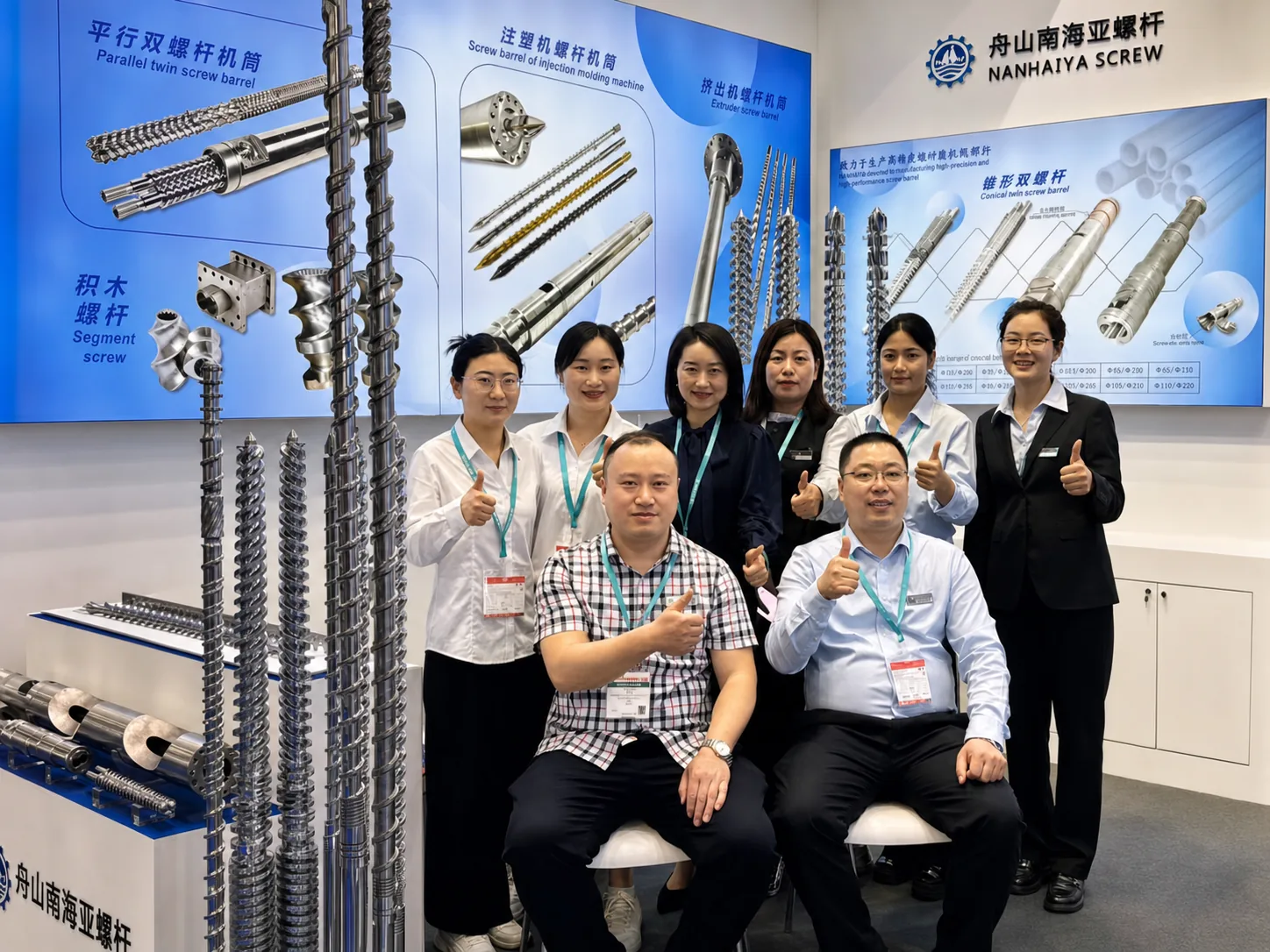
Related Articles
More insights on screw barrel technology and plastics processing.
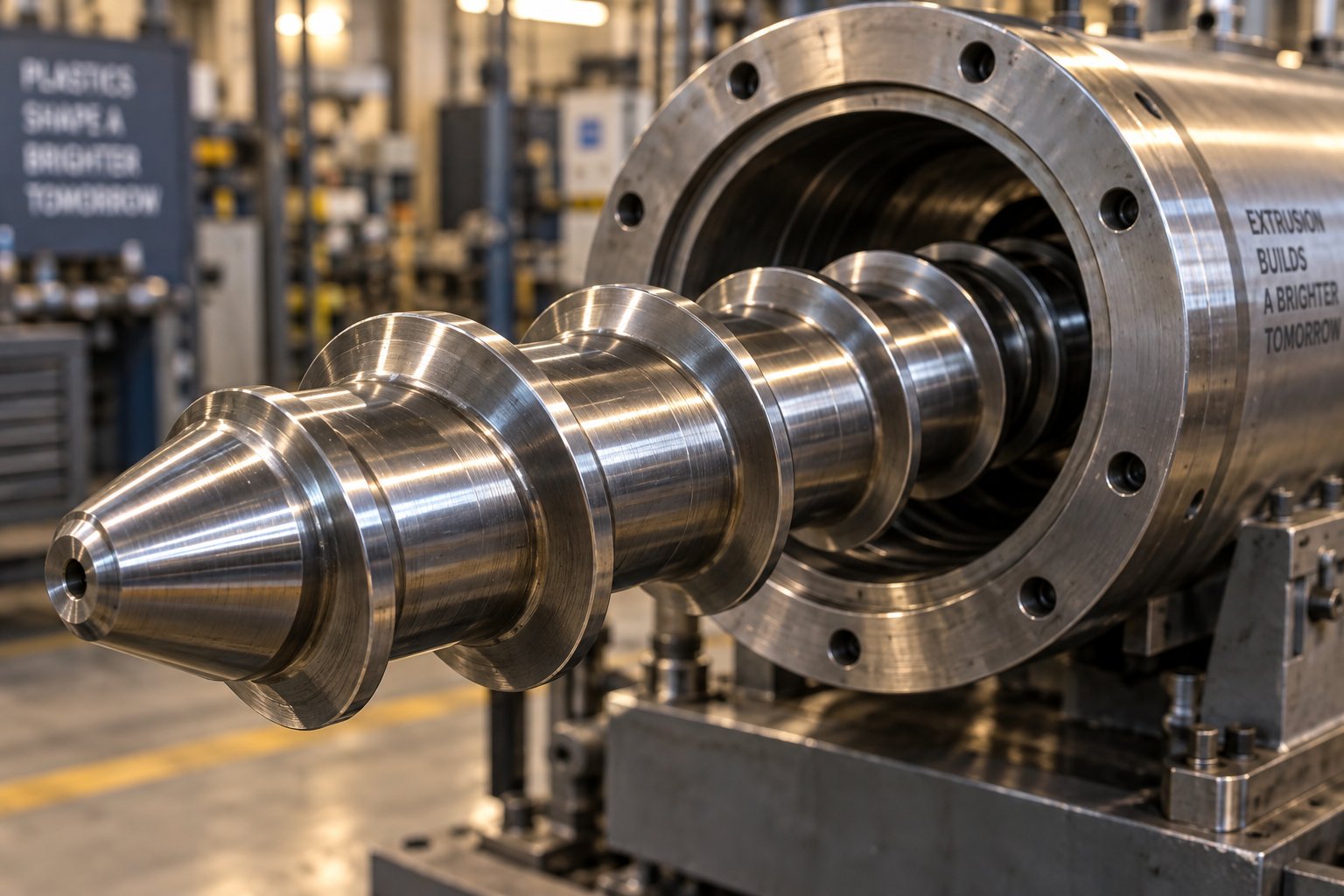
What Nobody Tells You About Screw Barrel For Plastic Machine Design
Oct 10, 2026
Learn how screw barrel for plastic machine design affects melt quality, throughput, and wear life. Covers geometry, resin matching, troubleshooting, and sourcing.
Read Article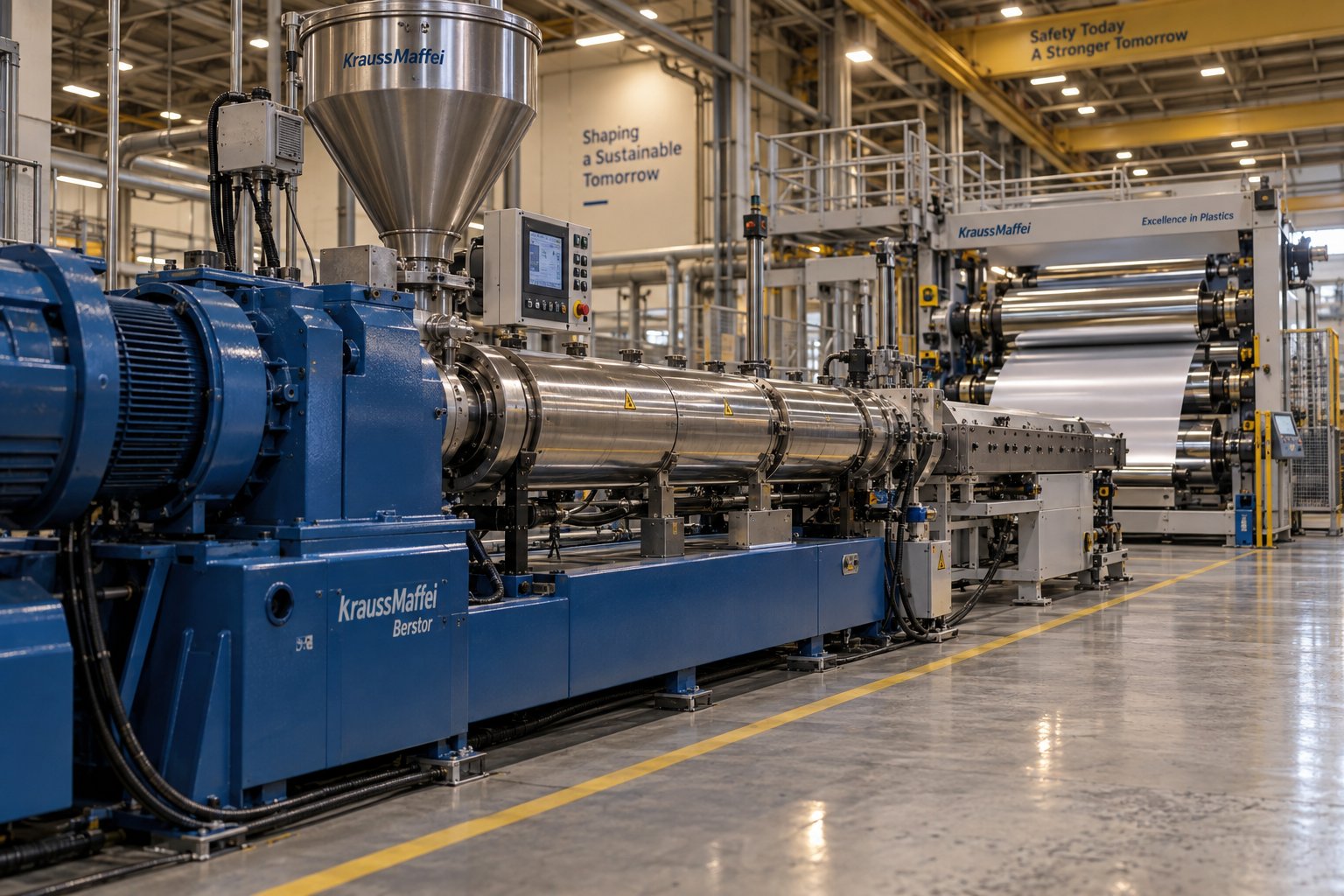
Single Screw Extruder for Sheet: Stop Guessing, Start Specifying
Oct 9, 2026
Learn how to specify a single screw extruder for sheet production. Covers screw geometry, resin-specific processing, troubleshooting, and maintenance best practices.
Read Article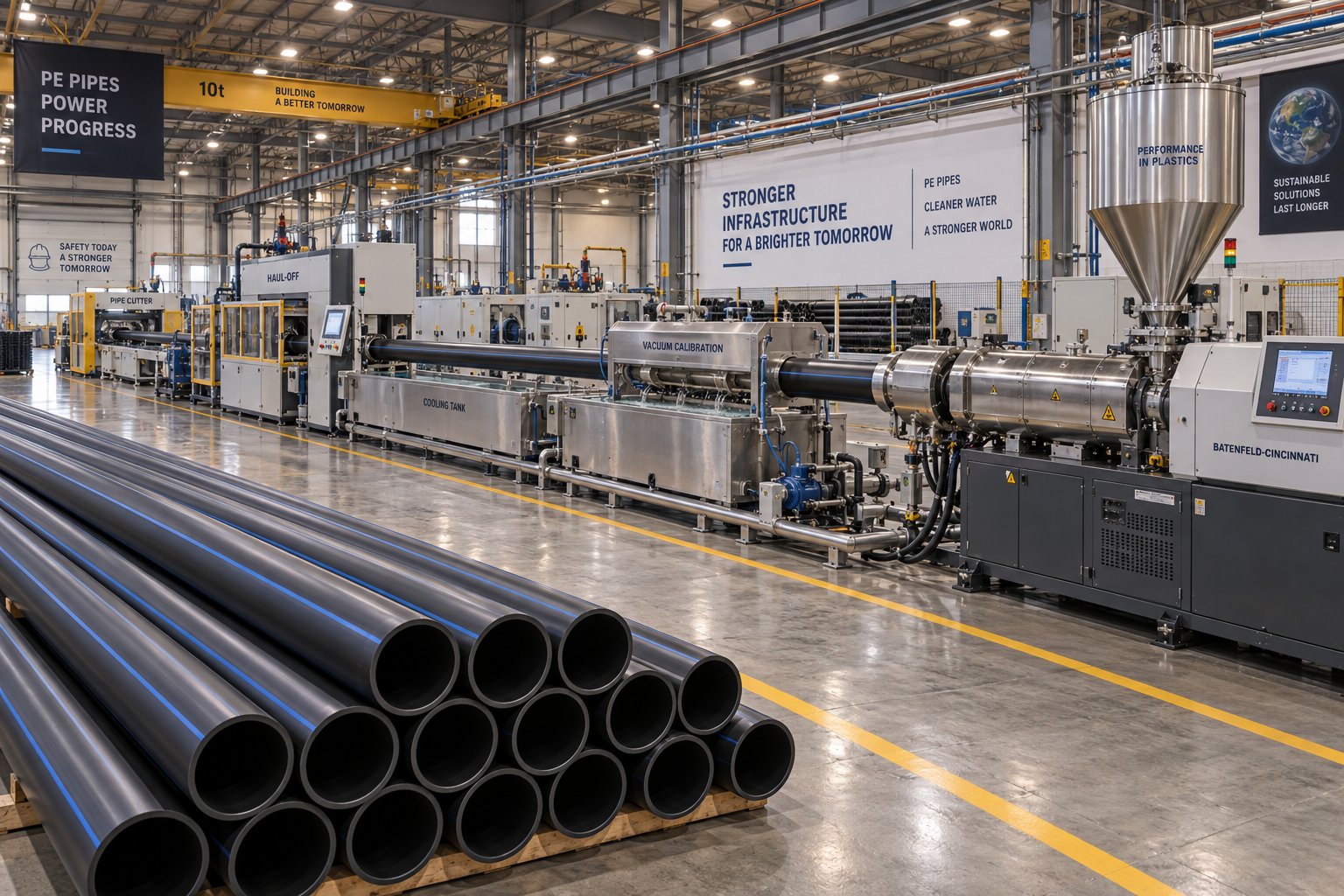
PE Pipe Extruder Machine: What Datasheets Won't Tell You
Oct 9, 2026
Learn how a PE pipe extruder machine works, key specs explained, material grade selection, maintenance tips, and buyer guidance beyond the datasheet.
Read ArticleLooking for something else?
Search by material, symptom or product and jump straight to the relevant page.
These are navigation suggestions based on keyword matching — not a quotation, not a delivery commitment, and not a substitute for engineering review. Final specification is confirmed by our engineers against your drawings and processed material.
Need help with screw barrel selection?
Share your machine model, processed material and application. Our team can help with pricing and technical support.