

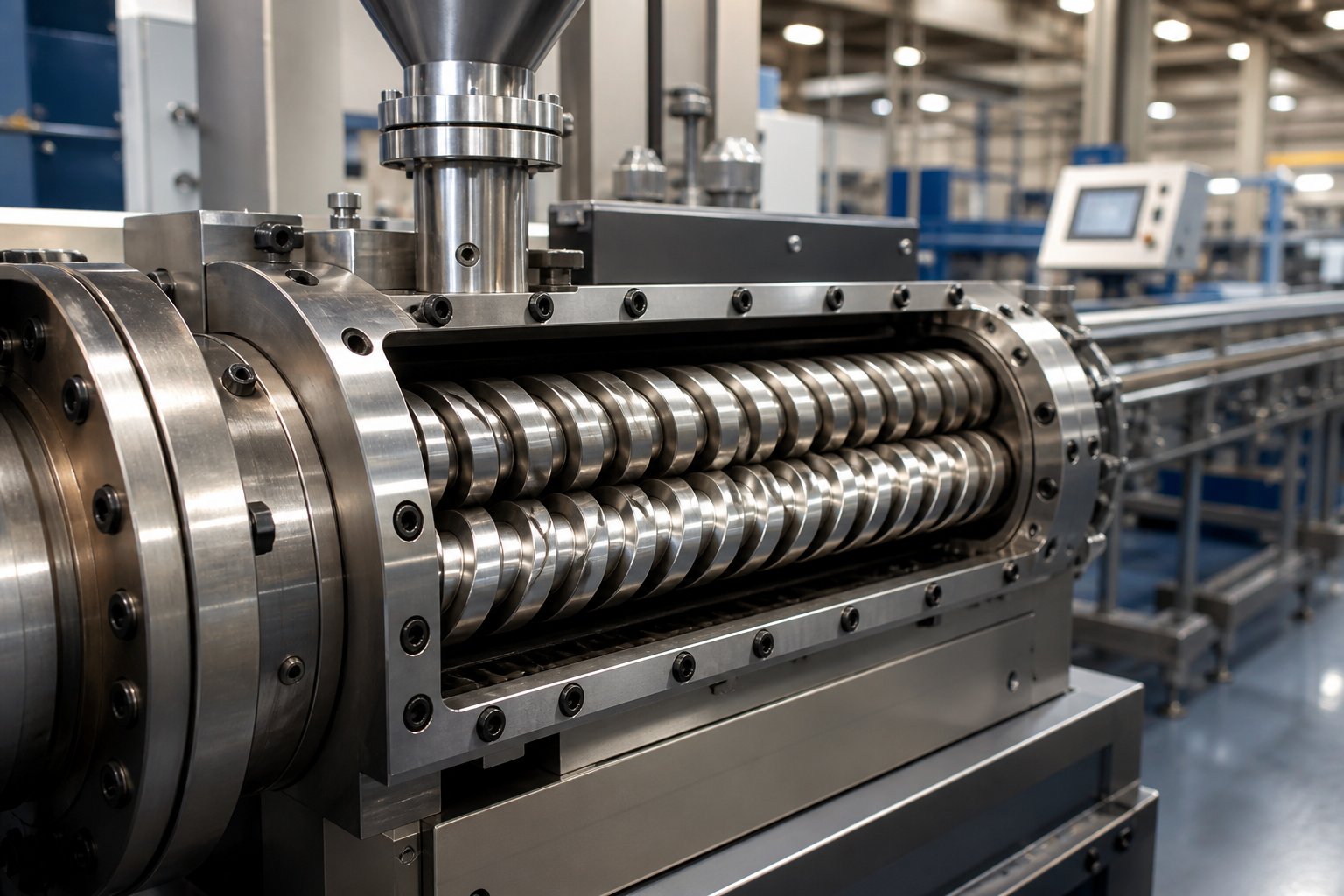
Understanding Twin Screw Extruders and Their Market Significance
Imagine a machine capable of mixing, melting, and shaping dozens of different materials—from plastics and pharmaceuticals to snack foods and battery components—all within a single, continuous process. That machine exists, and it sits at the center of a rapidly expanding industrial market.
Defining the Twin Screw Extruder
So, what is twin screw extruder technology, and why does it matter? At its core, the concept is surprisingly straightforward.
A twin screw extruder is a processing machine that uses two intermeshing screws rotating inside a heated barrel to continuously mix, compound, melt, and shape raw materials into finished or semi-finished products.
Think of it as a highly controlled blending and forming system. Raw materials—pellets, powders, or liquids—enter one end of the barrel. As the twin screws rotate, they convey, compress, and shear those materials through precisely managed temperature zones. By the time the material exits through a die at the other end, it has been transformed into a uniform, homogeneous output ready for downstream processing.
What separates a twin-screw extruder from simpler single-screw designs is the intermeshing action between those two screws. This creates a self-wiping effect that prevents material buildup, delivers superior mixing intensity, and offers far greater control over how ingredients are blended and processed. The result is consistent product quality that single-screw machines simply cannot match for complex formulations.
Why the Twin Screw Extruders Market Demands Attention
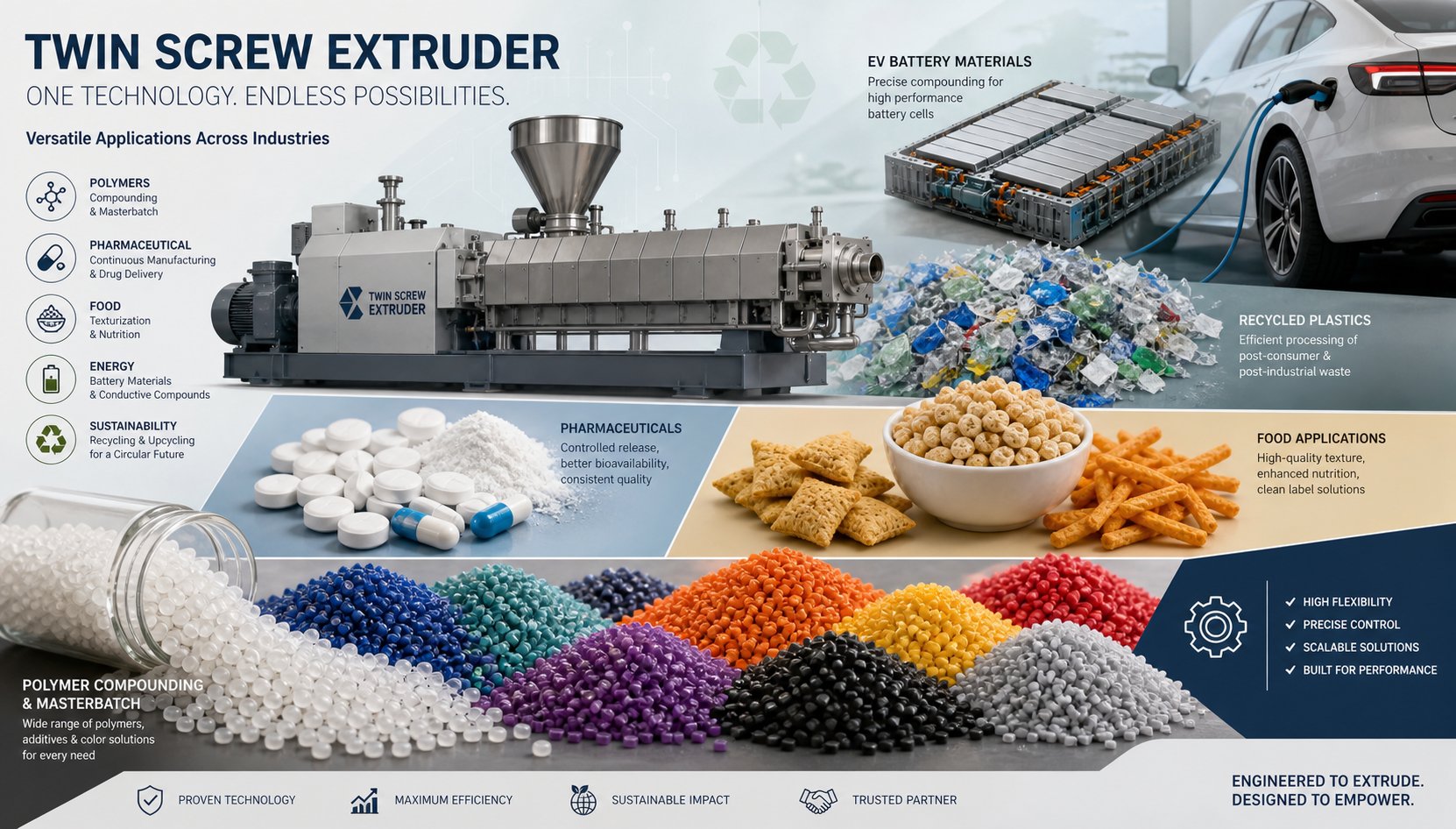
Few equipment categories touch as many industries simultaneously. Twin screw extruders serve as the backbone of plastics compounding, where they blend polymers with additives and fillers to engineer high-performance materials. They drive continuous pharmaceutical manufacturing through hot-melt extrusion for advanced drug delivery systems. In the food industry, they produce everything from breakfast cereals to plant-based protein snacks. Chemical processors rely on them for reactive extrusion and specialty compound production.
This cross-industry versatility is exactly what makes the twin screw extruders market such a compelling segment to watch. The global industry reached a valuation of US$1.25 billion in 2023, and demand continues climbing as manufacturers across sectors seek equipment that can handle increasingly complex materials, tighter quality tolerances, and sustainability-driven processing requirements. Each of these industries relies on twin screw extruders for different reasons—yet they all benefit from the same core advantages: modularity, precision, and processing flexibility.
The real question, though, is not whether this market is growing. It is how the technology actually works, what truly drives adoption across such different sectors, and what the real costs look like beneath the headline figures.
How Twin Screw Extruders Work and Key Configurations
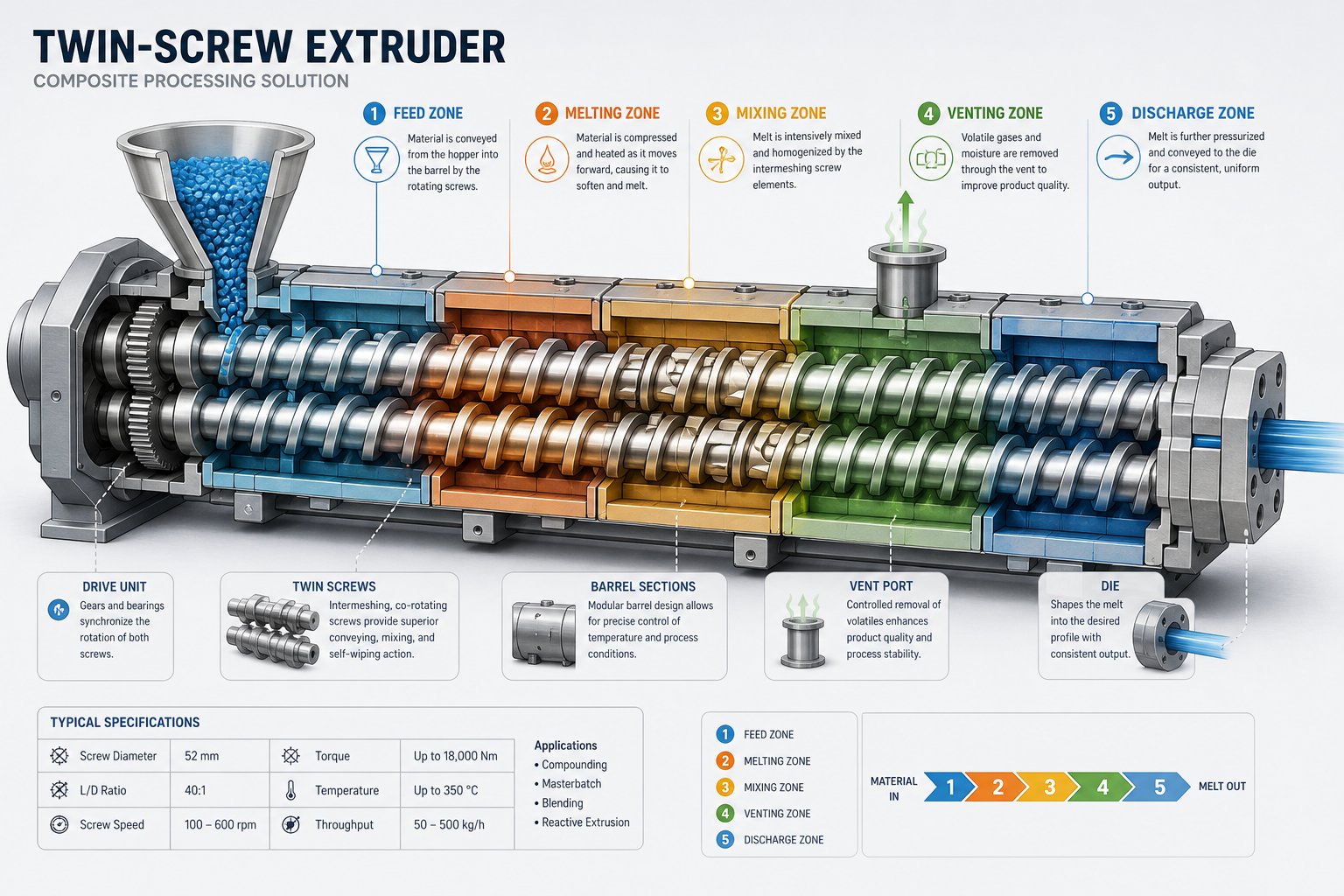
Understanding the market significance of this equipment is one thing. Grasping how does a twin screw extruder work—mechanically and thermally—is what separates informed buyers from those making expensive guesses. The elegance of the twin screw design lies in its modularity: every section of the barrel and screw can be reconfigured to handle different materials and processing demands.
Core Operating Principles of Twin Screw Extrusion
Picture two helical screws, tightly intermeshing, rotating inside a segmented barrel. As they turn, the screw flights hand off material from one screw to the other, creating a complex flow pattern that simultaneously conveys, compresses, shears, and blends the feedstock. This intermeshing action generates a self-wiping effect—each screw scrapes material off the other's surface, preventing stagnation and ensuring narrow residence time distribution.
The real power of the system comes from its modular screw and barrel architecture. Rather than a single, fixed-geometry screw, processors assemble individual screw elements onto a splined shaft like building blocks. Conveying elements move material forward. Kneading blocks apply shear and dispersive mixing. Reverse elements create backflow to enhance filling and longitudinal blending. By rearranging these elements, operators can fine-tune a configuration for anything from gentle blending of heat-sensitive polymers to aggressive shear for breaking down filler agglomerates.
Material passes through a series of distinct functional zones as it travels from feed throat to die face. Each zone serves a specific purpose in the transformation process:
- Feed Zone: Raw materials—pellets, powders, liquids, or combinations—enter through a hopper and gravimetric feeders. Precise metering at this stage prevents throughput fluctuations and ensures consistent formulation ratios.
- Melting/Plasticizing Zone: Controlled barrel heating combined with mechanical shear from the intermeshing screws converts solid feedstock into a viscous melt. Temperature profiles are managed independently across multiple barrel segments.
- Mixing Zone: Kneading blocks and specialized mixing elements apply intense dispersive and distributive forces, breaking down additive agglomerates and achieving uniform distribution of fillers, pigments, and reinforcements throughout the polymer matrix.
- Venting Zone: Open barrel sections—often connected to vacuum systems—allow trapped moisture, air, and volatile compounds to escape from the melt. This degassing step is critical for producing bubble-free, high-purity output, particularly in recycling and pharmaceutical applications.
- Metering/Discharge Zone: The fully compounded and degassed melt is pressurized and pushed through a die head, forming strands, sheets, or profiles. Screw speed, back pressure, and temperature at this stage directly influence dimensional stability and surface quality.
Throughout the entire process, the balance between screw speed, torque, barrel temperature, and throughput rate determines product quality. Modern systems integrate real-time sensors and automatic feedback loops to maintain these parameters within tight tolerances.
Co-Rotating vs Counter-Rotating Configurations
Not all twin screw extruders operate the same way. The distinction between co rotating and counter rotating twin screw extruder configurations is fundamental—it shapes everything from mixing intensity to the types of materials a machine can process effectively.
In a co-rotating twin screw extruder, both screws turn in the same direction. Material is forcibly transferred from one screw to the other at the intermeshing region, creating a figure-eight flow path that maximizes mixing intensity. The high shear fields that develop between the screws—and between screw and barrel wall—make this configuration the workhorse of compounding operations. A parallel twin screw extruder in co-rotating mode excels at dispersing nanofillers, producing polymer alloys, and running reactive extrusion processes where precise energy input control is essential.
A counter rotating twin screw extruder takes the opposite approach. The screws rotate in opposing directions, drawing material inward at the intermeshing zone and advancing it under compression. This generates a calendering effect—repeated compressive and elongational deformation—that disperses additives under relatively gentle conditions. Because shear stress and the associated heat generation remain low, counter-rotating designs are the preferred choice for thermally sensitive materials like rigid PVC, which decomposes at temperatures not far above its processing window. Conical twin screw extruder configurations, where the screws taper from a larger diameter at the feed end to a smaller one at the discharge, are a common counter-rotating variant. Their tapered geometry creates a natural compression zone while delivering high torque transmission in a compact footprint—ideal for medium-capacity PVC pipe and profile extrusion lines.
The table below breaks down the practical differences to help you evaluate which configuration fits a specific processing need:
| Parameter | Co-Rotating (Parallel) | Counter-Rotating (Parallel or Conical) |
|---|---|---|
| Rotation Direction | Both screws rotate in the same direction | Screws rotate in opposite directions |
| Mixing Intensity | High—intense shear and elongational mixing | Moderate—gentle compressive and calendering action |
| Throughput Capacity | High; scalable to large production volumes | Low to medium; optimized for controlled output |
| Typical Applications | Polymer compounding, masterbatch, reactive extrusion, nanocomposites | Rigid PVC pipes and profiles, sheet extrusion, heat-sensitive formulations |
| Self-Wiping Capability | Excellent—minimal dead zones and fast material changeovers | Limited—some stagnation zones possible |
| Common Industries | Automotive, packaging, pharmaceuticals, advanced materials | Construction (PVC), building products, specialty chemicals |
| Shear Heat Generation | Higher—requires careful thermal management | Lower—well suited to temperature-sensitive processing |
You'll notice the choice between configurations is never purely technical—it is driven by the material being processed and the end-product requirements. A compounder blending glass fiber into nylon needs the aggressive dispersive mixing of a co rotating twin screw extruder. A PVC pipe manufacturer needs the low-shear, low-temperature stability that only a counter-rotating or conical design can deliver.
This configuration flexibility is one of the reasons the broader market continues to expand across such different industries. Yet understanding how the machines work is only half the equation—the real growth signals emerge when you examine the specific market forces and economic drivers pushing demand higher.
Twin Screw Extruders Market Size and Growth Drivers
Market size figures sound authoritative—until you compare two reports side by side and realize they disagree by billions of dollars. The twin screw extruder machine market is a prime example. Multiple respected research firms publish projections for this segment, yet their headline numbers tell very different stories. Understanding why is just as important as knowing the figures themselves.
Global Market Size and Projected Growth
Depending on which research firm you consult, the global twin screw extruders market looks dramatically different in scale. Grand View Research valued the market at USD 2.9 billion in 2024 and projects it to reach USD 4.7 billion by 2033, growing at a CAGR of 5.3%. Meanwhile, Fact.MR places the 2025 valuation at approximately USD 4.8 billion, forecasting growth to USD 7.01 billion by 2036 at a 3.5% CAGR. That is roughly a USD 2 billion gap in baseline estimates for what appears to be the same equipment category.
Why the discrepancy? It comes down to scope. Each firm defines the twin-screw extruder machine segment differently—some include only the core extruder hardware, while others bundle control systems, downstream equipment, and commissioning services into the total. Geographic coverage varies as well; one study may track 30-plus countries while another focuses on a dozen key markets. Inclusion criteria for laboratory-scale versus industrial-scale equipment, aftermarket replacement parts, and refurbished machines all shift the baseline. Future Market Insights, for instance, sizes the broader extruder and compounding machines category at USD 82.3 billion in 2026—a figure that encompasses single screw extruders, compounding machines, and internal mixers alongside twin screw systems.
When evaluating twin screw extruder market projections, always examine the methodology and scope behind the numbers—not just the headline figure. Differences in product inclusion, geographic coverage, and revenue definitions routinely produce billion-dollar variations between equally credible research firms.
The consistent signal across all major sources, however, is directional growth. Every projection points to steady mid-single-digit CAGR expansion through the mid-2030s, with the twin screw extruder machine segment outpacing many other industrial equipment categories. The consensus growth trajectory matters more than any single valuation.
Primary Growth Drivers Fueling Market Expansion
Behind those growth projections are five interconnected forces, each creating its own demand pathway for twin screw extrusion equipment. Here is a look at the top drivers ranked by their current impact on equipment procurement:
- Rising demand for engineered plastics and polymer compounding: Plastics and polymers processing accounts for the largest application of twin screw extruder equipment—roughly 63% of market revenue by one estimate. Automotive lightweighting, miniaturized electronics, and high-performance packaging all require precisely compounded polymer blends with specific additive loadings. Each new formulation often demands a dedicated extrusion recipe, which keeps equipment utilization high and drives capacity expansion.
- Expansion of pharmaceutical continuous manufacturing: Hot-melt extrusion for drug delivery systems is the fastest-growing premium application, with the pharmaceutical segment projected to grow at a 6.6% CAGR through 2033. Regulatory bodies increasingly favor continuous over batch manufacturing for solid oral dosage forms because it improves process consistency and reduces quality variability. Twin screw extruders enable precise temperature and residence time control required for processing sensitive active pharmaceutical ingredients.
- Growth in food processing applications: From snack food production and pet food manufacturing to texturized vegetable protein processing, food extrusion represents the second-largest application vertical. Plant-based protein products, in particular, rely on twin screw technology to create the fibrous, meat-like textures that consumers expect—a segment growing rapidly as global dietary preferences shift.
- Sustainability-driven recycling initiatives: The global push toward circular economy practices is creating fast-growing demand for extrusion equipment capable of handling recycled and bio-based feedstocks. Recycled plastics are inherently inconsistent—contaminated, moisture-laden, and variable in melt behavior. Twin screw extruders, with their superior venting, degassing, and mixing capabilities, are uniquely equipped to process these challenging materials into usable compounds. European Union packaging regulations requiring recyclable packaging by 2030 are accelerating this investment cycle.
- Increasing adoption in emerging economies: China and India are projected to record the highest country-level growth rates for the twin screw extruder machine market, with China growing at 4.0% CAGR and South Korea at 3.3% through 2036. Rapid industrialization, expanding plastics compounding capacity, and government manufacturing incentives in these regions are driving volume demand for new installations. Domestic manufacturers with improving technical capability are also capturing growing share in mid-range segments, which broadens market access for cost-sensitive processors.
Each of these drivers connects to a specific application of twin screw extruder technology—and each application demands different equipment configurations, different screw designs, and different processing parameters. That diversity of end-use requirements is precisely what fuels demand across so many sectors simultaneously.
Key Applications Driving Twin Screw Extruder Demand
Growth drivers tell you where money is flowing. Applications tell you why. The twin screw extruders market spans an unusually wide range of industries, but each sector relies on this technology for fundamentally different reasons—and understanding those differences reveals which segments are poised to accelerate demand fastest.
Plastics Compounding and Polymer Processing
Plastics compounding remains the largest single application for twin screw extruder plastic processing, accounting for the majority of installed equipment worldwide. At its core, a compounding twin screw extruder blends raw polymer resins with additives, fillers, reinforcements, and colorants to produce engineered materials with specific performance characteristics. Think of it as industrial-scale recipe creation—except the ingredients are glass fibers, flame retardants, UV stabilizers, and mineral fillers rather than flour and sugar.
Several sub-applications dominate this segment:
- Color masterbatch production: Achieving streak-free, uniform pigment dispersion at concentrations up to 50% requires the intensive dispersive and distributive mixing that only intermeshing co-rotating screws deliver. Carbon black and titanium dioxide—notoriously difficult to disperse—demand the high shear fields generated by specialized kneading block configurations.
- Filler masterbatch compounding: A filler masterbatch twin screw extruder handles inorganic fillers like calcium carbonate, talc, and barium sulfate at loadings reaching up to 80% by weight. At these extreme filler concentrations, the kneading blocks must generate enough shear to coat every particle with polymer while maintaining acceptable impact strength in the final compound.
- Reactive extrusion and engineering plastics: Glass-fiber-reinforced nylon, polycarbonate alloys, and grafted polymer systems all require a twin screw compounding extruder capable of managing reactive chemistry in-line. The challenge with glass fiber compounding, for example, is preserving fiber length—too much shear breaks fibers down and compromises mechanical strength, while too little leaves them poorly wetted.
- PVC pipe and profile extrusion: Rigid PVC degrades at temperatures dangerously close to its processing window, making it a poor candidate for high-shear co-rotating systems. This is where the conical twin screw extruder PVC configuration earns its place. The tapered, counter-rotating screw geometry provides gentle compression and low-shear mixing that keeps PVC stable, making it the standard for construction-grade pipe and window profile lines. The pvc twin screw extruder segment remains a steady, high-volume market driven by infrastructure spending globally.
Emerging High-Growth Applications
Here is where the market narrative gets genuinely interesting. Several frontier applications are creating entirely new demand categories for twin screw extrusion technology—sectors that barely registered five years ago but are projected to become significant revenue contributors within the decade.
EV battery electrode manufacturing is perhaps the most transformative. Conventional lithium-ion electrode production relies on planetary mixers operating in batch mode, a process that typically takes four to eight hours per batch and consumes large quantities of toxic NMP solvent. Twin screw extruders offer a continuous alternative. The intermeshing screws disperse cathode or anode active materials, binders, and conductive additives into a homogeneous slurry in minutes rather than hours. The advantages are striking: improved dispersion quality from higher shear forces, elimination of batch-to-batch variability, reduced solvent consumption, a smaller production footprint, and minimal material loss thanks to the self-wiping screw geometry. As global EV production scales, battery manufacturers are actively evaluating continuous twin screw compounding to replace batch mixing in electrode paste production.
3D printing filament production represents another emerging demand stream. Consistent filament diameter and homogeneous additive distribution are non-negotiable for reliable 3D printing. Small-diameter co-rotating twin screw extruders produce specialty filaments—carbon-fiber-filled PETG, TPU, nylon composites—with the tight dimensional tolerances and uniform material properties that desktop and industrial FDM printers require.
Continuous pharmaceutical manufacturing through hot-melt extrusion continues its rapid adoption curve. Twin screw extruders process active pharmaceutical ingredients (APIs) into amorphous solid dispersions, improving the bioavailability of poorly water-soluble drugs. Regulatory agencies favor continuous processing for its inherent consistency and traceability, which reduces quality risk compared to traditional batch methods.
Bio-based and biodegradable polymer processing is gaining momentum as sustainability mandates tighten. Materials like PLA and PBAT are sensitive to heat and shear history, requiring precisely controlled residence times and gentle thermal profiles. Twin screw extruders handle the wide viscosity differences inherent in bio-polymer blends—such as PLA compounded with starch—while their self-cleaning capability prevents degradation and cross-contamination during material changeovers.
Advanced plastics recycling for circular economy initiatives is rapidly expanding the addressable market. Recycled feedstocks arrive contaminated, moisture-laden, and highly variable in composition. Twin screw systems excel here because their vacuum devolatilization capability efficiently removes water and volatile contaminants, while intensive mixing homogenizes inconsistent melt streams into usable recycled compounds.
The table below maps these applications to their typical equipment configurations and growth trajectories:
| Industry Sector | Specific Use Case | Extruder Type Typically Used | Growth Outlook |
|---|---|---|---|
| Plastics Compounding | Color and filler masterbatch, polymer alloys | Co-rotating parallel | High (established, steady growth) |
| Construction / PVC | Rigid PVC pipe, window profiles, siding | Counter-rotating conical | Medium (infrastructure-driven) |
| Automotive / E-Mobility | EV battery electrode slurry mixing | Co-rotating parallel (lab to production scale) | Emerging (rapid scale-up phase) |
| Additive Manufacturing | 3D printing filament production | Small-diameter co-rotating parallel | Emerging (niche but expanding) |
| Pharmaceuticals | Hot-melt extrusion for drug delivery | Co-rotating parallel (pharma-grade) | High (regulatory tailwinds) |
| Bioplastics | PLA, PBAT, starch-blend compounding | Co-rotating parallel | High (sustainability mandates) |
| Recycling / Circular Economy | Post-consumer plastic reprocessing | Co-rotating parallel with enhanced venting | High (regulatory-driven acceleration) |
| Cable and Wire | Halogen-free flame retardant compounds | Co-rotating parallel (high torque) | Medium (safety standards-driven) |
What this application map reveals is a market that is diversifying, not just growing. The traditional plastics compounding base provides a stable revenue foundation, while emerging sectors like battery manufacturing, pharmaceutical processing, and sustainability-driven recycling are layering new demand on top. Each new application requires specialized configurations—different screw geometries, barrel metallurgies, and process control capabilities—which raises an important question: how do these twin screw designs actually differ from their single-screw counterparts, and what specific advantages justify their higher cost?
Single Screw vs Twin Screw Extruder: Key Differences and Advantages
Every application discussed so far—from masterbatch compounding to EV battery slurry mixing—relies on twin screw technology for a reason. But those reasons only come into focus when you hold these machines up against their simpler, less expensive single-screw counterparts. The single screw extruder vs twin screw extruder comparison is one of the most searched questions in the extrusion industry, and for good reason: choosing the wrong architecture can cost a processor hundreds of thousands of dollars in lost productivity or wasted capital.
Single Screw vs Twin Screw Extruder Differences
The difference between single and twin screw extruder systems goes far deeper than screw count. It extends to mixing mechanisms, feeding behavior, process control precision, and ultimately the range of materials each machine can handle effectively. A single screw extruder relies primarily on pressure buildup and barrel friction to convey and melt material. A twin screw extruder, by contrast, uses the intermeshing action between two screws to generate shear, create positive displacement conveying, and deliver intensive mixing that a single screw simply cannot replicate.
That said, balance matters here. Single screw extruders remain the dominant choice for straightforward melting and forming operations—pipe extrusion, blown film, sheet production—where their lower cost, simpler operation, and reliable throughput make them the smarter investment. You would not install a twin screw system to extrude standard HDPE pipe any more than you would use a single screw to compound glass-fiber-reinforced nylon.
The table below lays out the practical comparison across the parameters that matter most to processors evaluating capital equipment:
| Parameter | Single Screw Extruder | Twin Screw Extruder |
|---|---|---|
| Mixing Capability | Limited—relies on barrel friction and screw geometry for mixing; poor dispersive action | Superior—intermeshing screws deliver both dispersive and distributive mixing through controlled shear and elongational flow |
| Self-Wiping Action | None—material can stagnate in screw channels, causing degradation | Excellent in co-rotating designs—screws continuously scrape each other, preventing buildup and enabling fast material changeovers |
| Feed Flexibility | Flood-fed only—relies on gravity and barrel friction to convey material forward | Starve-fed or flood-fed—gravimetric feeders precisely meter input, allowing independent control of throughput and screw speed |
| Residence Time Distribution | Broad and difficult to control—material moves at varying speeds through the channel | Narrow and controllable—positive displacement conveying ensures consistent processing history for every particle |
| Throughput Control | Throughput is coupled to screw speed—changing one changes the other | Throughput is independent of screw speed, enabling fine-tuned process optimization |
| Capital Cost | Lower—simpler drive, gearbox, and barrel construction | Higher—complex gearbox, modular barrel segments, and precision-machined screw elements increase investment |
| Maintenance Complexity | Lower—fewer wear components, simpler screw replacement | Higher—modular screw elements, barrel liners, and tighter tolerances require more specialized maintenance |
| Ideal Applications | Pipe, profile, film, and sheet extrusion; simple melting and conveying; plastic recycling pelletizing | Compounding, masterbatch, reactive extrusion, pharmaceutical HME, food processing, devolatilization, recycling of contaminated feedstocks |
You'll notice the trade-off pattern immediately: twin screw systems cost more and demand more technical expertise, but they unlock processing capabilities that single screw machines cannot approach. For processors handling complex formulations, multiple additive streams, or thermally sensitive materials, the advantages of twin screw extruder technology far outweigh the higher upfront investment.
Advantages That Drive Twin Screw Extruder Adoption
So what specifically tips the scale toward twin screw equipment—even at a significant cost premium? The advantages cluster around processing control, flexibility, and output consistency:
- Superior dispersive and distributive mixing: The intermeshing screw geometry creates high-shear zones that break down agglomerates (dispersive mixing) while simultaneously spreading additives uniformly throughout the polymer matrix (distributive mixing). This dual-action capability is essential for color consistency, filler dispersion, and reactive blending.
- Modular screw design flexibility: Individual screw elements—conveying, kneading, mixing, and reverse—can be rearranged on the shaft to create virtually unlimited configurations. A single machine can be reconfigured for different materials without purchasing new equipment.
- Self-wiping capability for faster material changes: In co-rotating designs, each screw flight continuously scrapes its counterpart, clearing residual material from the barrel. This reduces downtime between product changeovers and minimizes cross-contamination—a critical advantage in pharmaceutical and food-grade applications.
- Precise control of residence time and shear: Because throughput rate can be adjusted independently of screw speed, processors fine-tune shear input without altering production volume. This decoupling is what makes twin screw systems viable for heat-sensitive polymers, bio-based materials, and pharmaceutical APIs.
- Ability to handle diverse feedstocks: Twin screw extruders accept powders, pellets, fibers, liquids, and slurries—often simultaneously through multiple feed ports and side stuffers. Single screw machines struggle with low-bulk-density powders and cannot efficiently incorporate liquid additives mid-barrel.
- Higher output consistency: Narrow residence time distribution and positive displacement conveying produce a more uniform melt, which translates directly into tighter dimensional tolerances, fewer rejects, and more consistent mechanical properties in the final product.
These advantages explain why the twin screw extruders market continues expanding into sectors that were historically dominated by batch processing or single screw systems. Each advantage addresses a specific processing limitation—and for manufacturers producing engineered materials with demanding specifications, those limitations represent real costs in waste, downtime, and quality failures.
Screw Design and Modular Configuration Flexibility
If mixing capability is the engine of twin screw superiority, modular screw design is the steering wheel. This is where twin extruder screw design truly separates from single screw architecture, and it is the technological feature most directly responsible for the equipment's cross-industry versatility.
Imagine a splined shaft onto which you slide individual elements like pieces of a puzzle. Each element type performs a specific function:
- Conveying elements have deep, open flights that transport material forward with minimal shear. They dominate the feed zone and discharge zone, where the goal is efficient material movement rather than mixing.
- Kneading blocks are the primary mixing workhorses. They consist of stacked elliptical discs offset at angles—typically 30, 45, 60, or 90 degrees. Wider discs and steeper offset angles generate more dispersive mixing through higher shear stress, while narrower discs at lower angles favor distributive mixing. Forward-staggered kneading blocks convey material while mixing; neutral (90-degree) blocks halt forward flow to maximize residence time and energy input.
- Reverse elements push material backward against the flow direction, creating a dynamic seal that increases filling, extends residence time, and enhances mixing intensity upstream. They also serve as melt seals ahead of venting sections, preventing atmospheric or vacuum ports from drawing in unmelted material.
- Toothed mixing elements deliver gentle distributive mixing without the aggressive shear of kneading blocks—ideal for incorporating heat-sensitive additives or achieving low-shear blending after the primary mixing zone.
As NC State Extension research notes, designing a screw profile is a blend of art and science—no universal configuration works for all materials because every compound exhibits unique flow behavior under different temperature and shear conditions. A glass-fiber-reinforced nylon compound might use aggressive kneading blocks early in the profile to wet out fibers, followed by gentle conveying elements downstream to preserve fiber length. A calcium carbonate masterbatch at 80% loading needs maximum dispersive energy to break agglomerates, so the twin extruder screw design would feature multiple kneading zones with reverse elements between them to maximize shear exposure.
This configurability means a single twin screw extruder platform can serve dozens of different products simply by swapping screw element arrangements—a flexibility that directly reduces capital expenditure for multi-product operations. It also explains why the aftermarket for screw elements and barrel segments is a substantial and growing revenue stream within the broader market, a dynamic that connects directly to how technology trends are reshaping the equipment and its economics.
Technology Trends Reshaping Twin Screw Extrusion
Modular screw design gave processors the ability to tailor configurations for different materials. But the machines themselves have also evolved—dramatically—over the past two decades. The twin screw extruders market is being reshaped not just by what these machines process, but by how intelligently they operate. From mechanical upgrades that redefined throughput limits to digital systems that predict failures before they happen, the technology trajectory tells a story of relentless engineering refinement.
Technology Evolution From Basic Compounding to Smart Systems
Early twin screw extruders were straightforward compounding machines—fixed barrels, limited screw options, and manual process control. Operators relied heavily on experience and trial-and-error to dial in processing parameters. The first major leap came with the introduction of modular barrel and screw element systems, which transformed a rigid machine into a reconfigurable platform capable of handling dozens of different formulations.
The second transformative shift was engineering-driven: the development of high-torque-density gearboxes. Modern twin screw extruders deliver torque densities of 18 Nm/cm3, representing a 30% increase over previous generations. What does that mean in practical terms? Higher torque density allows processors to achieve significantly greater throughput from a physically smaller machine. A compact extruder running at 18 Nm/cm3 can handle materials—like glass-filled polyamide and reinforced polypropylene—that would have torque-limited an older, larger unit. The optimal Do/Di ratio (outer to inner screw diameter) of 1.55 provides the geometric balance necessary for these high-torque applications, and planetary gearbox configurations have become essential to meet both the torque demands and precise angular synchronization that twin screw systems require.
This engineering achievement directly impacts the economics of the market. Smaller footprint machines with equivalent or superior output reduce floor space requirements, lower energy consumption per kilogram of throughput, and make twin screw technology accessible to processors who previously lacked the physical plant for larger systems. It also opened the door for laboratory twin screw extruder platforms and mini twin screw extruder configurations designed specifically for R&D and small-batch production.
Industry 4.0 and Digital Integration in Extrusion
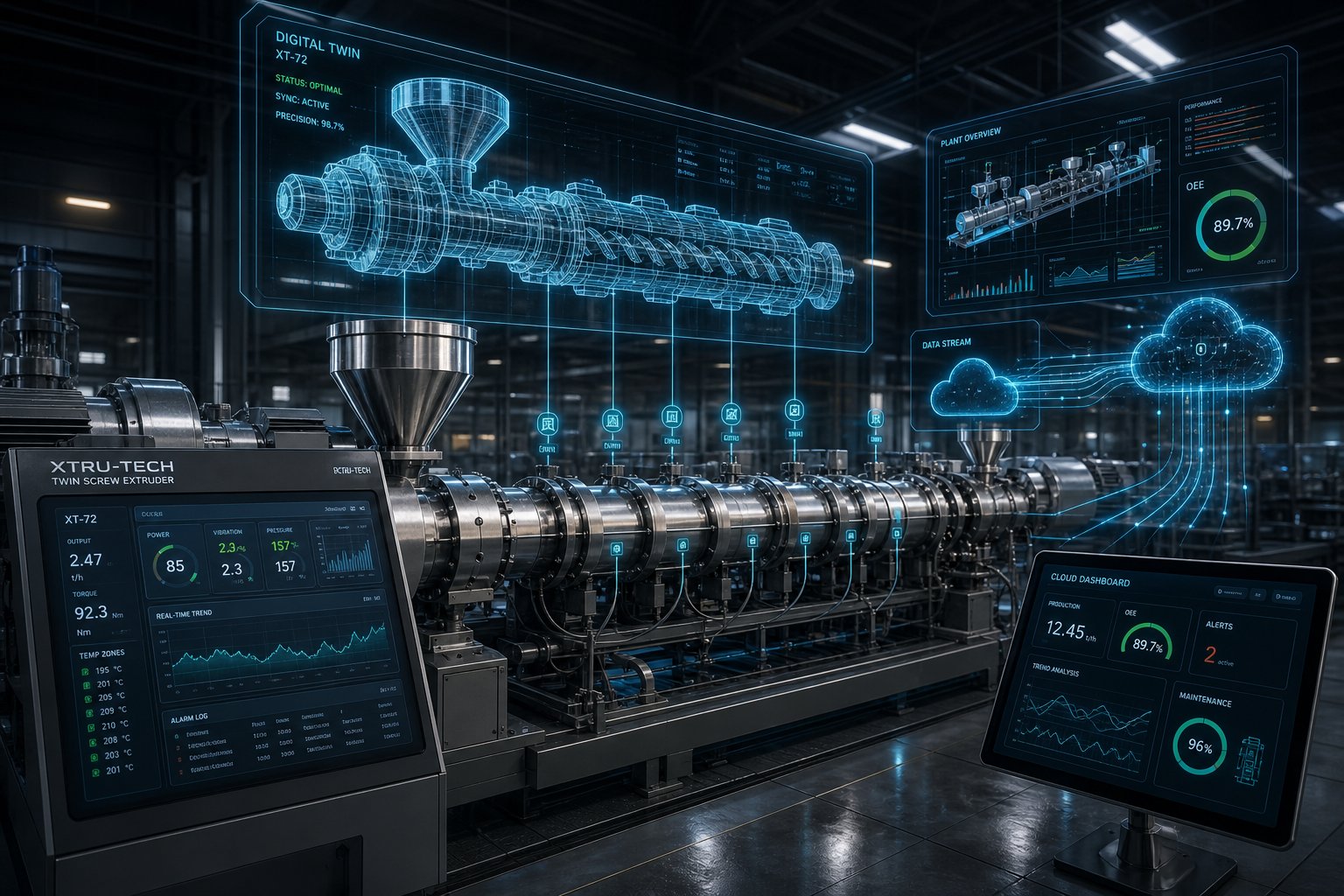
The current generation of twin screw extruders represents something fundamentally different from their predecessors: they are data-generating systems, not just material-processing ones. Industry 4.0 integration is transforming extrusion lines from manually monitored equipment into intelligent, self-optimizing production cells.
Consider what happens when you embed IoT-enabled sensors throughout a twin screw extrusion line. Barrel temperatures, melt pressure, screw torque, motor load, and throughput rates are captured continuously and streamed to centralized analytics platforms. Instead of an operator checking gauges every thirty minutes, algorithms detect deviations from optimal process windows in real time and either alert operators or adjust parameters automatically.
Digital twin technology takes this further. A digital twin is not just a static 3D model—it is a dynamic virtual replica that mirrors the physical extruder's behavior in real time using live sensor data. Manufacturers can simulate screw configuration changes, test new material formulations, and predict the impact of process adjustments before committing to physical trials. The result is faster development cycles, fewer wasted material runs, and optimized screw profiles validated digitally rather than through costly trial-and-error on the production floor.
Predictive maintenance represents perhaps the most immediately valuable application. Twin screw extruders operate under demanding conditions—high torque loads, abrasive fillers wearing screw elements and barrel liners, and thermal cycling that fatigues components over time. Sensors tracking vibration signatures, torque trends, and temperature anomalies can flag developing wear patterns weeks before a failure occurs. This shifts maintenance from reactive—fix it when it breaks—to proactive, reducing unplanned downtime and extending component life.
Here are the key smart extrusion capabilities driving next-generation demand in this market:
- Real-time process analytics: Continuous monitoring of melt quality, pressure stability, and torque consumption enables immediate detection of process drift and automated correction.
- Digital twin simulation: Virtual testing of screw configurations and process parameters eliminates the need for physical trial runs, cutting development time and raw material waste significantly.
- Predictive maintenance systems: Machine learning algorithms analyze sensor data patterns to forecast component wear and schedule maintenance before unplanned shutdowns occur.
- Automated recipe management: Integrated control systems store and recall optimized process parameters for each product, ensuring repeatable quality across shifts and reducing operator dependency.
- Energy consumption optimization: Real-time energy monitoring per kilogram of output identifies inefficiencies and enables data-driven adjustments to screw speed, temperature profiles, and throughput rates.
- Remote monitoring and diagnostics: Cloud-connected systems allow equipment manufacturers and process engineers to monitor extrusion lines remotely, providing technical support and troubleshooting without on-site visits.
The R&D segment of the market has benefited enormously from these trends. A benchtop twin screw extruder equipped with modern sensors and control software can generate the same quality of process data as a full-scale production line—at a fraction of the material cost. Pharmaceutical companies, materials science labs, and polymer research centers increasingly rely on lab scale twin screw extruder platforms to develop formulations, validate process windows, and generate scale-up data before committing to production-scale equipment. The mini twin screw extruder category, in particular, has become indispensable for startups and academic institutions working on novel bio-based polymers, experimental drug delivery systems, and advanced composite formulations where raw materials are expensive and available only in small quantities.
These lab twin screw extruder systems also serve a commercial function beyond pure research. Contract development organizations use them to produce clinical trial batches for pharmaceutical clients, while specialty compounders use them to validate customer formulations before quoting production runs. The data generated during these small-scale trials—torque curves, specific energy input, melt temperature profiles—feeds directly into digital twin models that predict how the process will behave at full production scale.
Technology evolution, however, does not happen in a vacuum. The machines themselves are getting smarter, but the competitive landscape and regional dynamics shaping who builds, sells, and buys this equipment are shifting just as rapidly.
Regional Analysis and Competitive Landscape of Twin Screw Extruder Manufacturers
Smarter machines only matter if someone is buying them—and where that purchasing activity concentrates reveals as much about the twin screw extruders market as any technology roadmap. Regional demand patterns are shaped by industrial policy, raw material processing capacity, and the maturity of local manufacturing ecosystems. Meanwhile, the competitive landscape among twin screw extruder manufacturers is shifting as established European and Japanese OEMs face growing pressure from Asian suppliers with improving quality and aggressive pricing.
Regional Market Dynamics and Growth Hotspots
Which region leads this market? That depends on which research firm you ask—and how they define "leading." Market Research Future places North America at roughly 40% of global market share, driven by its established food processing and plastics compounding infrastructure. Future Market Insights, by contrast, identifies Asia Pacific as the fastest-growing region, with China projected to expand at a 7.1% CAGR through 2035—the highest country-level growth rate in the study. Fact.MR confirms China's leadership in growth velocity at 4.0% CAGR through 2036, followed by South Korea at 3.3%.
The discrepancy in regional share figures comes back to scope differences discussed earlier. But the causal story behind each region's position is consistent across all sources:
Asia Pacific is expanding fastest because of converging structural forces. China's massive plastics compounding capacity—built to serve both domestic consumption and global export manufacturing—creates enormous volume demand for new equipment. Government incentives encouraging domestic manufacturing, rapid industrialization in India and Southeast Asia, and lower production costs attracting foreign investment all compound the effect. Critically, the china twin screw extruder manufacturing base is no longer limited to entry-level equipment. Domestic twin screw extruder suppliers like Nanjing Jieya and other specialized manufacturers are steadily moving into mid-range segments with improving technical capability, which broadens market access for cost-sensitive processors across the region. South Korea's growth, meanwhile, is fueled by advanced materials compounding and battery materials processing—directly tied to the country's dominant position in EV battery production.
North America draws its demand from a different set of drivers. Plastics compounding and food processing sustain core equipment procurement, but the highest-growth segments are pharmaceutical hot-melt extrusion and recycled plastics processing. The USA is projected to grow at a 3.2% CAGR through 2036, with sustainability mandates and corporate recycling commitments accelerating investment in advanced extrusion lines capable of handling contaminated post-consumer feedstocks. Reshoring trends in specialty chemicals and advanced materials are also creating new equipment demand that previously would have gone to Asian facilities.
Europe occupies a unique dual position—it is both a primary demand market and the global center of twin screw extruder technology development. Germany and Italy lead the world in extruder engineering and manufacturing. Germany's growth, projected at 3.1% CAGR, is shaped by automotive plastics compounding, pharmaceutical extrusion investment, and aggressive recycling system deployment driven by EU packaging regulations. Italian twin screw extruder machine manufacturers compete effectively in both domestic and export markets through application-specific engineering expertise, particularly in food processing and packaging materials. Stringent European quality standards and energy efficiency regulations push twin-screw extruder manufacturer innovation toward premium, digitally integrated systems—the kind of high-margin equipment that sustains technology leadership.
Emerging growth hotspots are also forming in Southeast Asia, the Middle East, and Latin America. ASEAN countries benefit from manufacturing investment diversification away from China, while Gulf states are investing in plastics processing and food manufacturing as part of economic diversification strategies. Brazil's market is growing at approximately 4.0% CAGR, driven by industrial modernization and expanding polymer processing capacity.
Competitive Landscape and Leading Manufacturers
The competitive structure among twin screw extruder machine manufacturers reflects these regional dynamics. A handful of established European and Japanese OEMs dominate the technology-intensive premium segment, while a growing number of Chinese manufacturers compete aggressively in mid-range and value-oriented categories.
On the premium end, a Coperion twin screw extruder represents the benchmark for high-performance compounding. The German company recently launched an IoT-enabled platform with integrated process monitoring, AI-based recipe optimization, and cloud-connected analytics—targeting compounding and recycling applications that demand real-time process control. A Leistritz twin screw extruder, meanwhile, has carved out a strong position in pharmaceutical extrusion, expanding its GMP-compliant portfolio for continuous manufacturing of solid oral dosage forms. JSW (Japan Steel Works) has been scaling production capacity for high-torque twin screw extruder series to meet surging demand from plastics compounding and recycling applications across Asia Pacific and North America.
Other key twin screw extruder suppliers shaping the competitive landscape include KraussMaffei (Berstorff), Buhler Group, Thermo Fisher Scientific, Steer Engineering, and Battenfeld-Cincinnati—each differentiating through specialized application focus, regional manufacturing strength, or specific technology capabilities.
Several competitive dynamics are reshaping how these companies compete and how buyers source equipment:
- Consolidation trends: Mergers and acquisitions continue to concentrate technology portfolios. Larger groups are acquiring niche players to expand application coverage—particularly in pharmaceutical, food, and recycling segments where certification requirements create barriers to entry.
- Technology licensing and partnerships: Strategic alliances between equipment OEMs and materials companies are becoming more common, enabling co-development of application-specific extrusion solutions rather than generic hardware sales.
- Growing role of Chinese manufacturers: Chinese twin screw extruder suppliers are no longer competing solely on price. Companies like Nanjing Jieya are improving screw and barrel engineering, digital control integration, and service networks—capturing growing share in the mid-range segment where quality-to-cost ratio matters most to volume processors.
- Aftermarket screw and barrel replacement as a revenue stream: Screw elements and barrel liners are wear items that require periodic replacement, especially in abrasive compounding applications. This creates a recurring revenue stream that can equal or exceed the initial equipment sale value over a machine's lifetime. OEMs and independent suppliers compete intensely for this aftermarket business.
- Digital platform differentiation: Vendors offering integrated digital platforms—combining process monitoring, recipe management, predictive maintenance, and remote diagnostics—are achieving higher equipment values and stronger customer retention. This capability is transitioning from a competitive advantage to a baseline expectation among sophisticated buyers.
The analyst perspective from Fact.MR captures this competitive shift clearly: the market is moving from a pure equipment sales model toward integrated processing solutions where hardware, process engineering, digital monitoring, and application support are delivered as a combined capability. Manufacturers limited to standard hardware face growing price competition from Asian suppliers, while those investing in digital process control, GMP certification, and application-specific engineering are capturing premium segments with higher margins.
This competitive pressure—combined with the regional demand patterns driving growth—raises a practical question that most market reports ignore entirely: what does all of this actually cost? Capital investment, ongoing maintenance, skilled labor, and total cost of ownership are the factors that ultimately determine whether a twin screw extruder purchase delivers returns or drains budgets.
Total Cost of Ownership and Market Challenges for Twin Screw Extruders
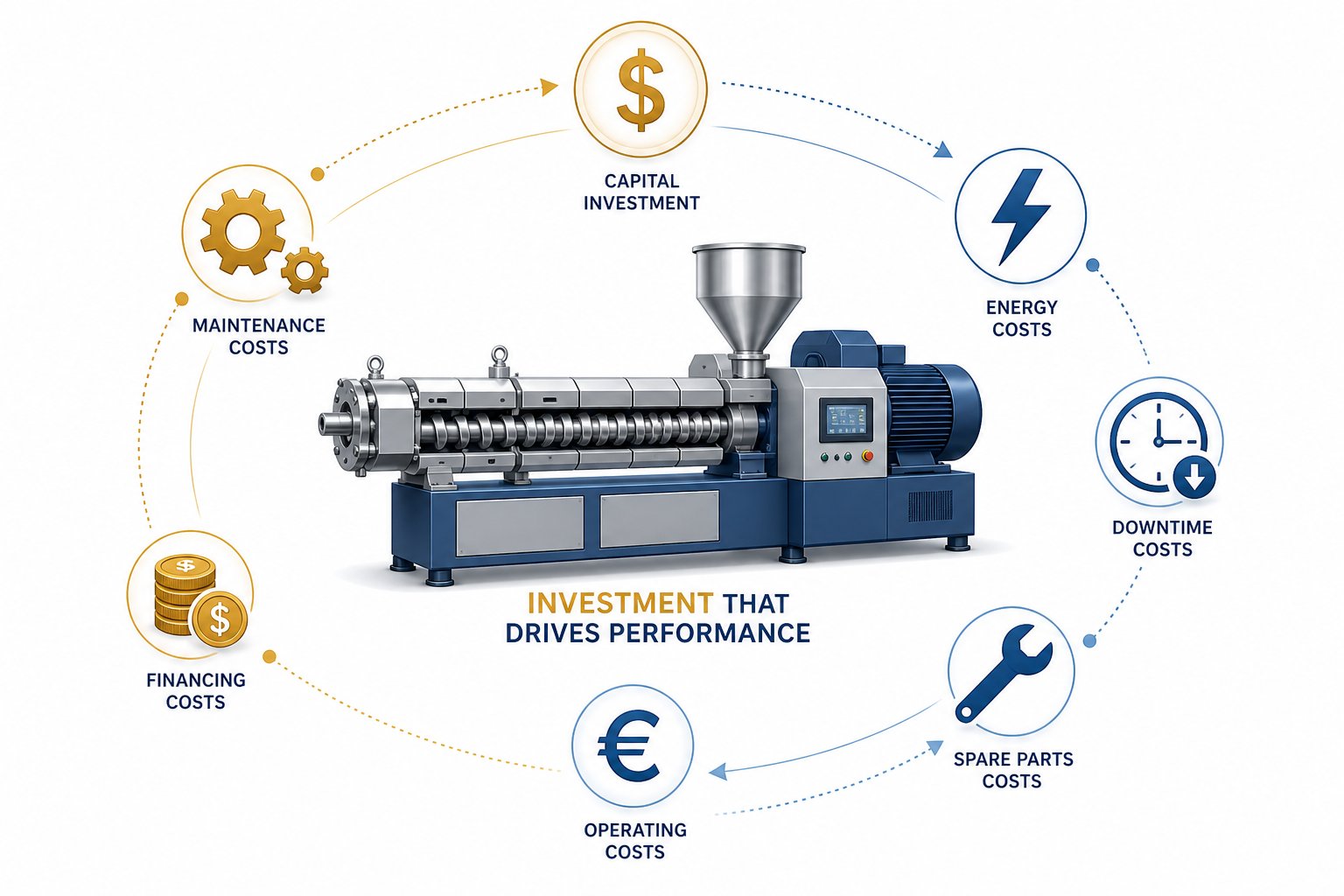
Here is the uncomfortable truth most market reports skip entirely: the purchase price on a twin screw extruder quote sheet represents only 30 to 50 percent of what that machine will actually cost you over its operational life. Energy consumption, maintenance cycles, screw and barrel replacement, skilled labor, and unplanned downtime collectively dwarf the initial capital outlay. For business decision-makers evaluating this market, understanding total cost of ownership is not optional—it is the difference between a profitable investment and a financial drain.
Capital Costs and Pricing Considerations
What determines the twin screw extruder price you will see on a quotation? Several interrelated factors drive the number, and knowing which ones matter most helps you evaluate whether a quote is competitive or inflated.
Screw diameter and L/D ratio set the baseline. A small laboratory unit with a 20 to 27 mm screw diameter starts around $20,000, while production-scale machines with 75 to 95 mm screws and L/D ratios of 40:1 to 52:1 typically fall in the $80,000 to $300,000 range. Large industrial systems exceeding 120 mm can climb past $800,000 for custom configurations with extended barrel lengths and specialized processing sections.
Torque and throughput capacity directly influence gearbox complexity—and the gearbox is one of the most expensive components in any twin screw extruder. High-torque-density designs capable of handling glass-fiber-reinforced polymers or heavily filled masterbatch compounds require premium gear systems, planetary configurations, and hardened components that add significantly to the price.
Material of construction is where costs diverge sharply based on application. Standard nitrided steel barrels and screws serve general-purpose compounding adequately. But processors running highly abrasive formulations—calcium carbonate at 80% loading, glass fiber, or ceramic-filled compounds—need bimetallic barrel liners and tungsten carbide-coated screw elements that can double the cost of wear components. Supply chain dynamics for these specialty steels and wear-resistant alloys directly impact both manufacturing costs and lead times, particularly during periods of raw material price volatility.
Automation level creates another pricing tier. A basic PLC-controlled system with standard temperature management costs considerably less than a fully integrated Industry 4.0 platform with touchscreen HMI, real-time process analytics, recipe management, and remote monitoring capability. The premium for advanced controls typically adds 15 to 25 percent to the base machine cost—but often pays for itself through reduced scrap, faster changeovers, and lower operator dependency.
Manufacturer origin remains one of the most significant pricing variables. European OEMs like Coperion, Leistritz, and KraussMaffei command premium pricing that reflects decades of engineering refinement, global service networks, and regulatory certifications. Chinese manufacturers offer factory-direct pricing at substantially lower levels—often 40 to 60 percent less than European equivalents for comparable screw diameters—though differences in gearbox quality, metallurgy consistency, and long-term support availability mean the comparison is rarely apples-to-apples.
For smaller processors or companies entering new markets, the used twin screw extruder segment offers a legitimate pathway into the technology. A used twin screw extruder for sale from a reputable dealer—properly inspected, with documented maintenance history and refurbished wear components—can reduce initial capital requirements by 40 to 60 percent compared to new equipment. The market for refurbished machines is particularly active in North America and Europe, where equipment brokers inspect, rebuild, and warranty pre-owned systems. When you buy twin screw extruder equipment on the secondary market, the key due diligence items are gearbox condition, screw and barrel wear measurements, control system vintage, and availability of replacement parts for that specific model.
Market Challenges and Barriers to Adoption
Pricing is only one piece of the challenge. The twin screw extruders market faces several structural barriers that slow adoption—particularly among small and mid-sized processors who stand to benefit most from the technology's processing advantages. These are the challenges that no competitor report meaningfully addresses:
- High initial capital investment compared to single screw alternatives: A production-scale twin screw system costs two to five times more than a single screw extruder of comparable throughput capacity. For processors whose applications do not require intensive mixing or multi-component blending, this cost differential is difficult to justify—even when long-term operational savings favor twin screw technology.
- Technical complexity requiring skilled operators and process engineers: Twin screw extrusion involves managing multiple interacting variables—screw speed, barrel temperature profiles across a dozen or more zones, feed rates for multiple ingredient streams, vacuum levels, and die pressure. Programming and optimizing these systems demands deeper understanding of polymer science and processing dynamics than single screw operation. This specialized knowledge commands premium wages and is not easily replaced when experienced operators leave.
- Maintenance demands including screw and barrel wear management: Modular screw elements and segmented barrels are wear items, not permanent fixtures. Complete screw element sets for twin screw systems can range from $20,000 to $100,000 depending on configuration and metallurgy. Annual maintenance costs typically run $8,000 to $25,000 for routine service, with major overhauls every 25,000 to 40,000 operating hours costing $40,000 to $150,000. Processors running abrasive compounds face accelerated wear cycles that compress these intervals further.
- Shortage of qualified extrusion technicians: The global manufacturing sector faces a well-documented skills gap, and twin screw extrusion is no exception. Training a competent operator typically requires $2,000 to $5,000 in direct training costs plus months of supervised production experience. Finding experienced process engineers with twin screw expertise—especially for pharmaceutical or food-grade applications—remains a persistent hiring challenge across all major regions.
- Regulatory compliance costs for pharmaceutical and food-contact applications: GMP certification, FDA compliance documentation, food-contact-grade materials of construction, and validation protocols add substantial cost and lead time to equipment procurement in regulated industries. A pharma-grade twin screw extruder for sale carries a significant premium over an identical machine built for industrial compounding—not because the mechanical design differs dramatically, but because the documentation, traceability, and material certification requirements multiply engineering and quality assurance costs.
Calculating Return on Investment
Given these costs and challenges, how should a processor evaluate whether a twin screw extruder investment actually pays off? The answer lies in a framework that accounts for both direct savings and indirect value creation—not just the sticker price versus production volume.
Throughput gains are the most immediately quantifiable benefit. Twin screw extruders achieve higher output rates than single screw machines of comparable diameter for compounding applications, and their ability to run starve-fed at optimized screw speeds means processors can fine-tune output without sacrificing quality. A facility moving from batch mixing to continuous twin screw compounding typically sees throughput increases of 30 to 50 percent for the same floor space.
Material waste reduction delivers surprisingly large savings over time. Industry data suggests twin screw systems reduce startup waste from 3 to 10 percent versus 5 to 15 percent for single screw, with ongoing production scrap rates of 2 to 5 percent compared to 3 to 8 percent. For a facility processing 5,000 metric tons annually at an average material cost of $2 per kilogram, even a 2 percent improvement in material efficiency saves approximately $200,000 per year.
Energy efficiency improvements compound over the equipment's lifespan. Modern twin screw extruders achieve specific energy consumption of 0.12 to 0.22 kWh per kilogram for intensive compounding applications—often lower than single screw systems processing similar materials because shorter processing cycles offset higher instantaneous power draw. Over five years of continuous operation, energy savings alone can reach $60,000 compared to less efficient alternatives.
Reduced changeover times matter enormously for multi-product operations. The self-wiping action of co-rotating screws clears residual material far faster than single screw channels, which trap degraded polymer in dead zones. Facilities running ten or more product changeovers per week can recover hundreds of production hours annually—time that translates directly into additional saleable output.
Processing flexibility is the hardest value to quantify but often the most strategically important. A single twin screw platform that can handle polymer compounding, masterbatch production, and recycled material reprocessing through screw configuration changes eliminates the need for multiple dedicated machines. This flexibility reduces total capital deployed, simplifies spare parts inventory, and allows processors to pivot toward higher-margin products as market conditions shift.
One illustrative TCO comparison makes the ROI case clearly. A five-year analysis comparing a $60,000 budget extruder against a $150,000 quality machine found total ownership costs of $490,000 versus $270,000 respectively—the lower-priced machine cost 45 percent more over five years due to higher energy consumption, frequent screw replacements, gearbox repairs, and 10 percent production downtime compared to just 1 percent for the premium unit. The ROI timeline for quality equipment typically falls in the 12 to 18 month range when total cost of ownership is calculated honestly.
The bottom line for decision-makers? Twin screw extruder pricing is not a purchase decision—it is an operational economics calculation. The cheapest machine on the market and the most expensive one can both be the wrong choice if the selection is based on sticker price rather than throughput economics, maintenance trajectory, and processing flexibility over the equipment's full working life. And that calculation extends beyond the machine itself—sourcing the right replacement components, wear parts, and aftermarket support is what ultimately determines whether a twin screw investment delivers sustained returns or spiraling maintenance costs.
Sourcing Screw and Barrel Solutions for Twin Screw Extruders
Sustained returns on a twin screw extruder hinge on one operational reality that many buyers underestimate: screw elements and twin screw extruder barrels are consumables, not permanent fixtures. Abrasive fillers grind away flight surfaces. Corrosive compounds attack barrel bore liners. Even gentle processing eventually degrades clearance tolerances. The relationship you build with your component supplier matters as much as the original machine purchase—because you will be placing replacement orders for the life of that equipment.
Evaluating Screw and Barrel Suppliers
Choosing the right source for an extruder twin screw barrel or a set of replacement screw elements is not as simple as comparing unit prices on a spreadsheet. The metallurgy inside that barrel liner determines whether it lasts 12 months or three years. The dimensional precision of each screw element dictates whether your intermeshing clearances hold tight—or whether leakage flow erodes output quality within weeks of installation. Sidefeeders for twin screw extruders, kneading blocks, and conveying elements all demand the same attention to alloy chemistry and machining tolerances as the primary screw and barrel assembly.
When qualifying a supplier for twin screw extruder barrels and screw elements, prioritize these criteria in order of impact on your operational economics:
- Metallurgy and wear resistance: Verify the specific alloy grades offered—nitrided steel for general-purpose applications, bimetallic linings with iron-based or nickel-based centrifugal castings for abrasive or corrosive service, and tungsten carbide coatings for severe wear conditions. Industry data shows 54% of newly installed extruders now use bimetallic barrel construction, and approximately 48% specify tungsten carbide or nickel-based alloy coatings. Demand EN 10204 3.1 material certificates for every alloy used.
- Dimensional precision for intermeshing tolerances: Twin screw extruder barrel bore tolerances and screw element outer diameter accuracy directly govern leakage flow and mixing efficiency. When the clearance between screw and barrel exceeds 0.1 to 0.4 mm (depending on screw diameter), material seal integrity degrades, pressure becomes unstable, and plasticization quality drops. Confirm that your supplier uses CMM-verified final machining and can document dimensional inspection results for each assembly.
- Lead time reliability: Unplanned screw or barrel replacement during production means every day of lead time is a day of lost output. Suppliers with in-house casting, heat treatment, and grinding capabilities typically deliver faster than those who outsource critical steps—because they control the entire production sequence rather than waiting on third-party schedules.
- Technical support capability: Can the supplier's engineering team recommend the correct alloy for your specific polymer, filler loading, and operating temperature? A co rotating twin screw extruder supplier who understands the difference between specifying Stellite overlay for PVC versus CPM 10V for glass-fiber-reinforced nylon adds value that a commodity vendor cannot match.
- Refurbishment and repair services: Screw refurbishment typically costs 40% to 60% of new-screw price and restores 85% to 95% of original service life when the base material remains structurally sound. Suppliers offering rebuild services—grinding, re-hardfacing, and re-machining worn components—extend your capital investment and reduce replacement frequency.
Factory-Direct Sourcing as a Market Trend
A significant shift is reshaping how processors source replacement components. Rather than purchasing exclusively through the original equipment manufacturer's aftermarket channels, a growing number of compounders and extrusion plants are sourcing twin screw extruder barrels, screw elements, and wear components directly from specialized manufacturers. The drivers are straightforward: factory-direct pricing eliminates distributor markups, lead times shrink when you deal with the production facility itself, and dedicated component manufacturers often offer broader metallurgy options than OEM catalogs provide.
This trend is particularly visible in the twin screw extruders market's aftermarket segment, where the global feed screw and barrel market reached $1.86 billion in 2025 and is projected to grow to $1.98 billion in 2026. As equipment installed bases expand, the recurring demand for replacement wear parts grows proportionally—creating a substantial market that specialized manufacturers are well-positioned to serve.
Companies like NANHAIYA exemplify this factory-direct approach, offering twin screw extruder barrels, screw elements, and replacement components for extrusion, compounding, and pelletizing applications directly to plastic extrusion plants and procurement teams. For equipment buyers evaluating factory-direct options alongside traditional OEM channels, this model provides a practical way to reduce per-component costs while maintaining the metallurgical quality and dimensional precision that twin screw systems demand.
Regardless of whether you source through OEM channels or factory-direct manufacturers, the evaluation framework remains the same: verify alloy certifications, confirm dimensional inspection documentation, assess in-house manufacturing capability, and calculate total cost of ownership over a realistic service horizon—not just the unit price on the purchase order. The cheapest barrel that wears out in six months costs far more than the premium liner that runs for three years.
Frequently Asked Questions About the Twin Screw Extruders Market
1. What is the current size of the global twin screw extruders market?
Global twin screw extruders market valuations vary significantly depending on the research firm and their scope definitions. Grand View Research valued the market at USD 2.9 billion in 2024, projecting USD 4.7 billion by 2033 at a 5.3% CAGR. Fact.MR estimates the 2025 value at approximately USD 4.8 billion, forecasting USD 7.01 billion by 2036 at a 3.5% CAGR. These discrepancies arise from differences in product inclusion criteria, geographic coverage, and whether aftermarket parts, control systems, or commissioning services are bundled into total revenue figures. The consistent takeaway across all major sources is steady mid-single-digit CAGR growth through the mid-2030s.
2. What is the difference between co-rotating and counter-rotating twin screw extruders?
Co-rotating twin screw extruders have both screws turning in the same direction, generating high shear and intensive mixing through a figure-eight material flow path. They excel at polymer compounding, masterbatch production, reactive extrusion, and pharmaceutical hot-melt extrusion. Counter-rotating designs feature screws turning in opposite directions, producing a gentler calendering action with lower shear and heat generation. This makes them ideal for thermally sensitive materials like rigid PVC, which degrades near its processing temperature. Conical counter-rotating variants, with tapered screw geometries, are the standard choice for PVC pipe and profile extrusion lines in the construction industry.
3. How much does a twin screw extruder cost?
Twin screw extruder pricing depends on screw diameter, L/D ratio, torque capacity, barrel metallurgy, automation level, and manufacturer origin. Laboratory units with 20-27 mm screws start around $20,000. Production-scale machines with 75-95 mm screws typically range from $80,000 to $300,000, while large industrial systems above 120 mm can exceed $800,000. European OEMs command premium pricing, while Chinese manufacturers often offer 40-60% lower prices for comparable screw diameters. Used and refurbished equipment can reduce initial capital by 40-60%. Critically, the purchase price represents only 30-50% of total cost of ownership when factoring in energy, maintenance, screw and barrel replacements, and skilled labor over the machine's operational life.
4. What industries use twin screw extruders the most?
Plastics compounding and polymer processing is the largest application, accounting for roughly 63% of market revenue, covering color masterbatch, filler masterbatch, engineering plastics, and PVC processing. Food processing is the second-largest vertical, producing snacks, cereals, pet food, and plant-based protein products. Pharmaceuticals represent the fastest-growing premium segment, with hot-melt extrusion for drug delivery systems projected to grow at 6.6% CAGR. Emerging high-growth applications include EV battery electrode manufacturing, 3D printing filament production, biodegradable polymer compounding, and advanced plastics recycling for circular economy initiatives. Suppliers like NANHAIYA (nhyscrews.com/products) provide factory-direct screw and barrel components serving these diverse processing applications.
5. Why choose a twin screw extruder over a single screw extruder?
Twin screw extruders offer six key advantages over single screw designs: superior dispersive and distributive mixing from intermeshing screw geometry, modular screw design allowing reconfiguration for different materials, self-wiping capability that reduces changeover time and prevents material degradation, independent control of throughput and screw speed for precise process optimization, ability to handle diverse feedstocks including powders, fibers, and liquids simultaneously, and narrower residence time distribution for consistent output quality. However, single screw extruders remain the better choice for simple melting and forming operations like standard pipe, film, and sheet extrusion where their lower cost and simpler operation provide adequate performance at significantly reduced capital investment.
Written by
Nanhaiya Technical Team
Zhoushan Nanhaiya Plastic Machinery Co., Ltd.
The Nanhaiya technical team supports screw and barrel manufacturing projects through application review, technical communication, custom manufacturing coordination, and production and quality control.
Discuss Your Application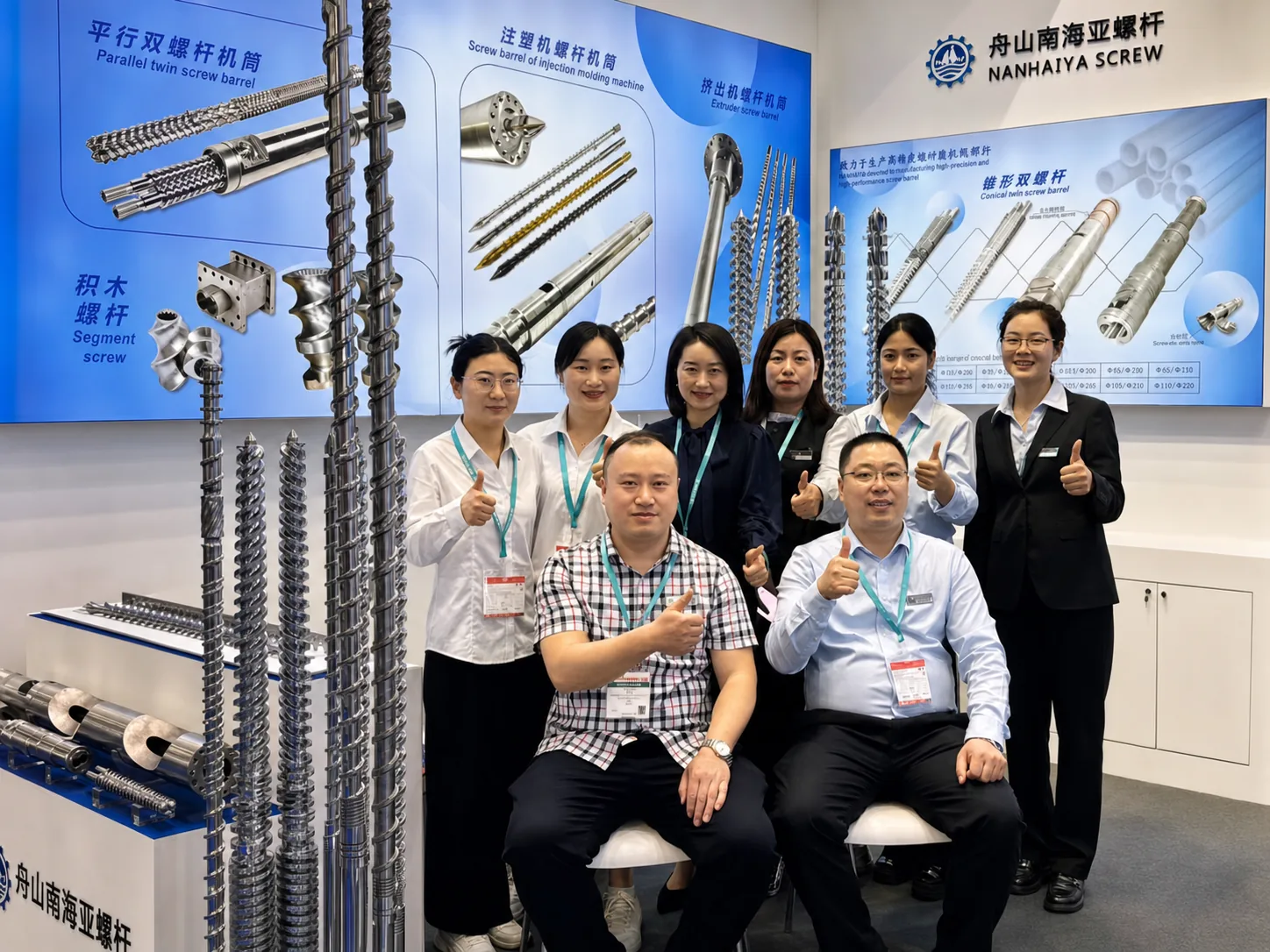
Related Articles
More insights on screw barrel technology and plastics processing.
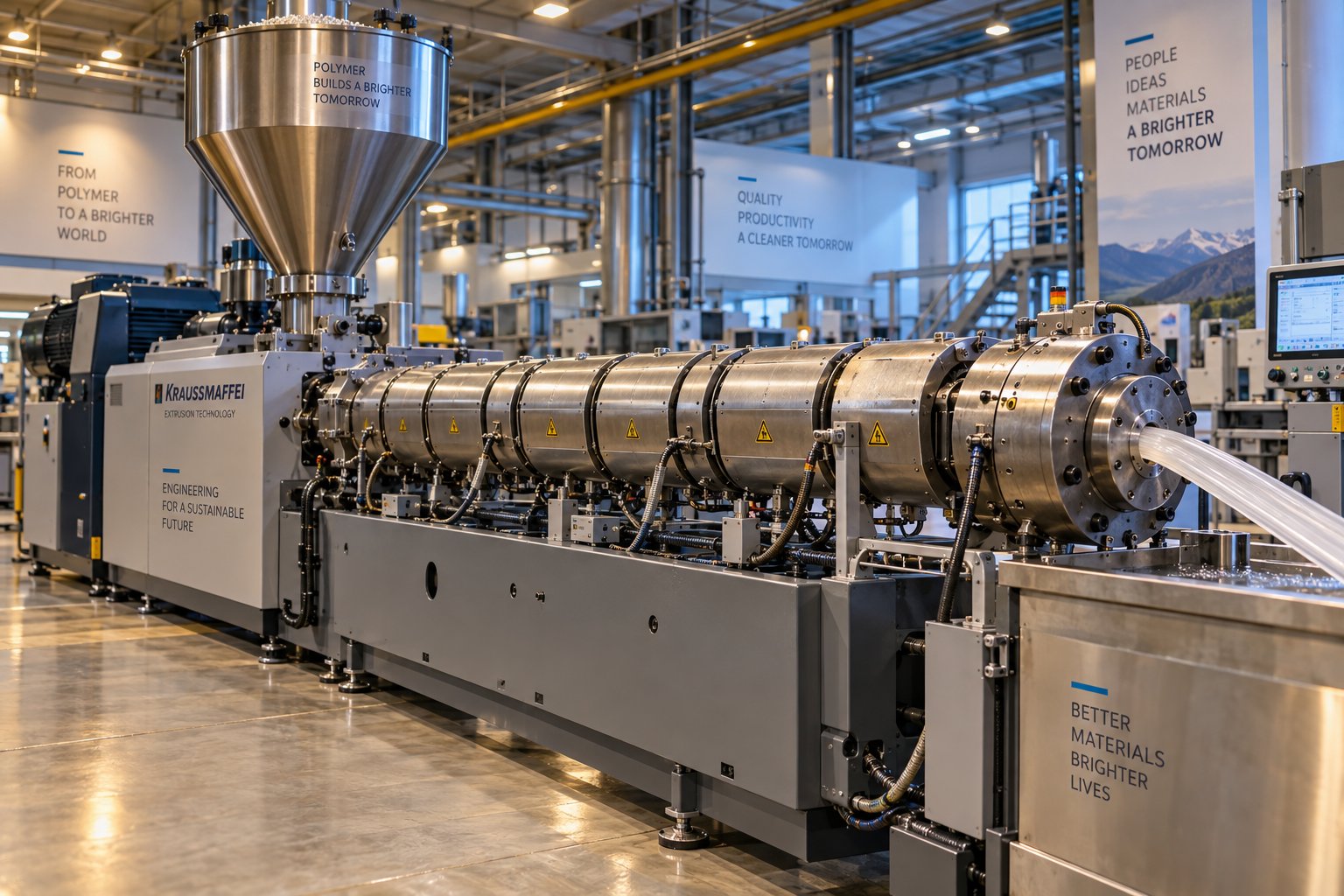
Extruder Machine Decoded: From Raw Pellet To Finished Product
Oct 6, 2026
Learn how an extruder machine works, compare single-screw vs. twin-screw types, and get expert guidance on specs, troubleshooting, and selection.
Read Article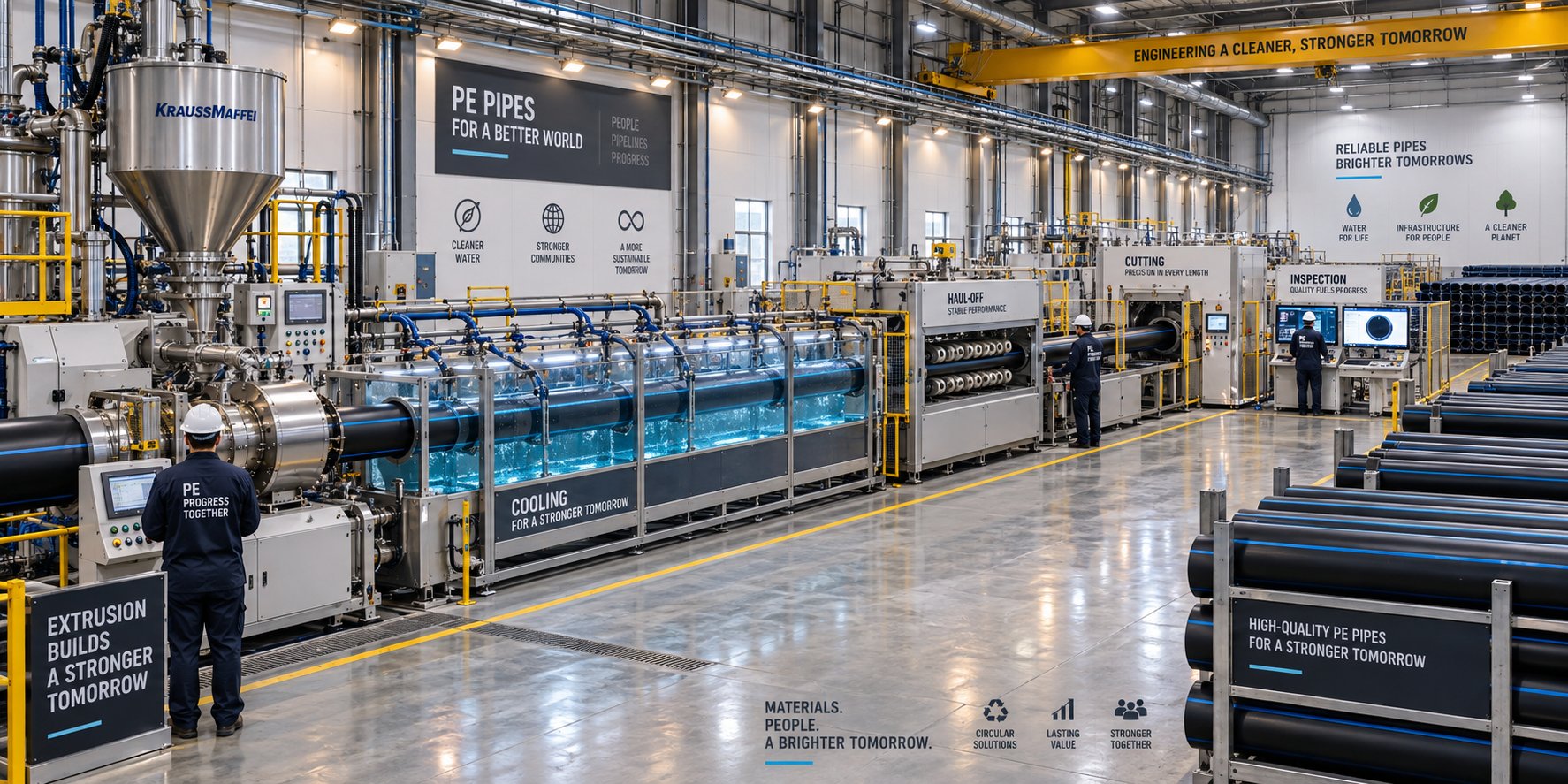
PE Pipe Making Machine Decoded: From Raw Resin to Flawless Pipe
Oct 4, 2026
Learn how a PE pipe making machine works, from resin to finished pipe. Covers components, material grades, automation, troubleshooting, and buyer selection tips.
Read Article
PVC Profile Making Machine Decoded: From Raw Resin To Profit
Oct 3, 2026
Learn how a PVC profile making machine works — extrusion process steps, key technical parameters, die design, calibration methods, maintenance, and total cost of ownership.
Read ArticleLooking for something else?
Search by material, symptom or product and jump straight to the relevant page.
These are navigation suggestions based on keyword matching — not a quotation, not a delivery commitment, and not a substitute for engineering review. Final specification is confirmed by our engineers against your drawings and processed material.
Need help with screw barrel selection?
Share your machine model, processed material and application. Our team can help with pricing and technical support.