

What Twin Screw Extruders Are and Why They Matter
Before you start browsing twin screw extruders for sale, you need a clear picture of what you're actually buying and why the wrong choice can quietly drain your budget for years. The sticker price is just the beginning. Understanding the machine itself is what separates a smart investment from an expensive headache.
What Is a Twin Screw Extruder and How Does It Work
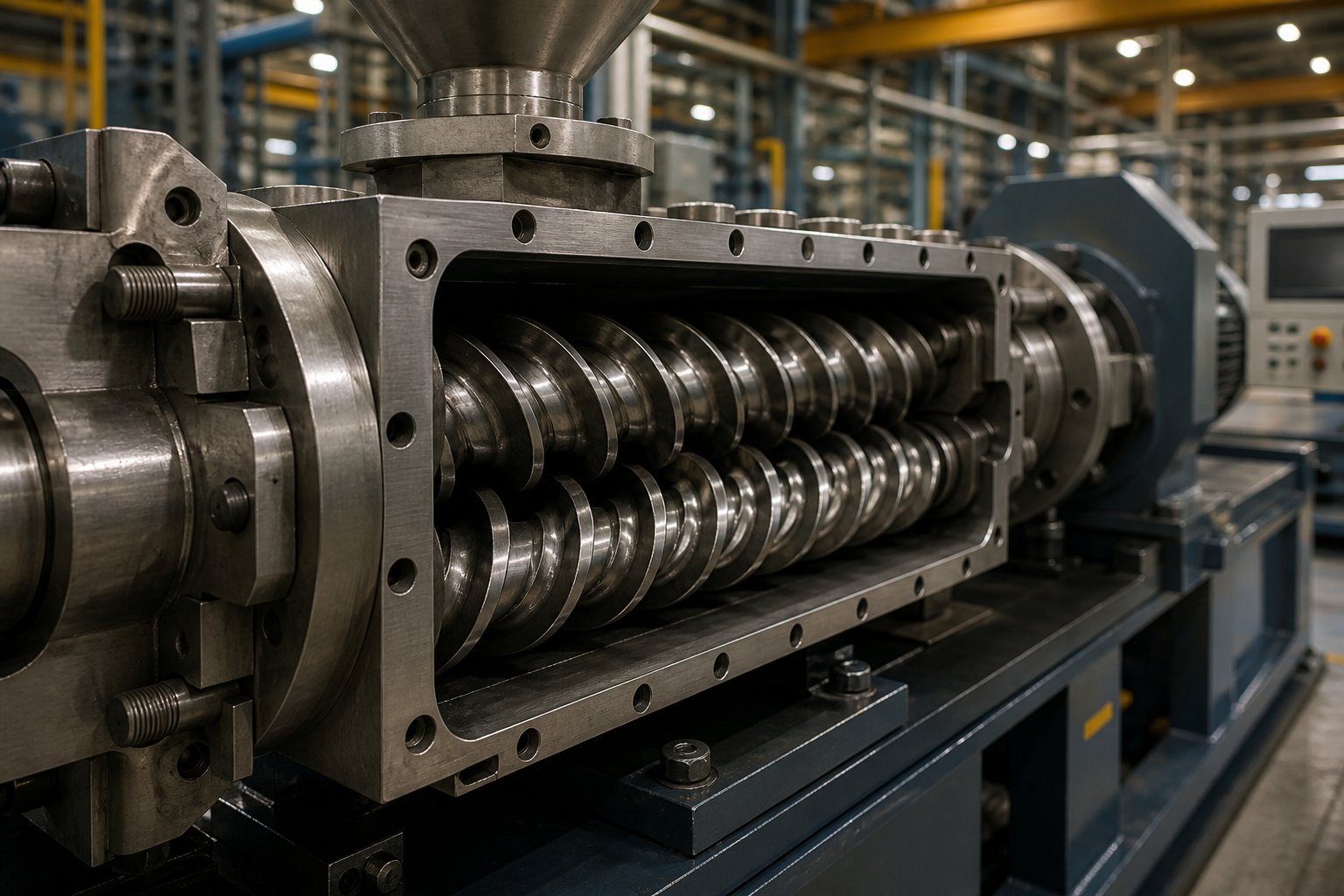
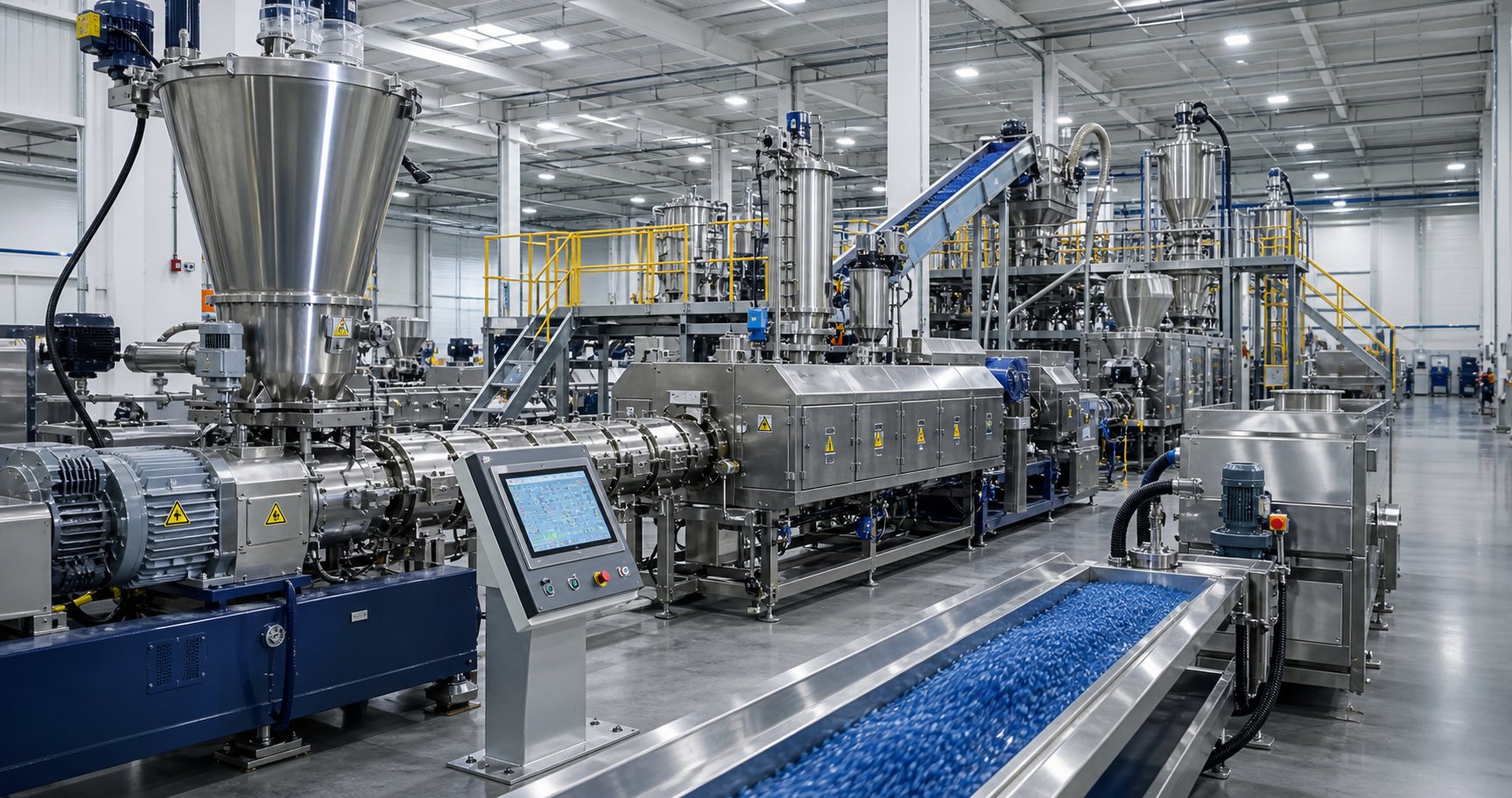
A twin screw extruder is a processing machine that uses two intermeshing screws rotating inside a heated barrel to continuously mix, melt, compound, and shape materials. Picture two tightly fitted helical screws sitting side by side within a figure-eight-shaped barrel. As they rotate, raw materials — typically fed in as pellets, powders, or granules — are conveyed forward through a series of carefully controlled zones where heat, shear, and pressure transform them into a homogeneous molten output.
So what is an extrusion machine at its core? It is essentially a system that forces material through a controlled process to produce a continuous, uniform product. Twin screw extruders take this concept further by adding an intermeshing action between the two screws that dramatically improves mixing and material handling compared to simpler designs.
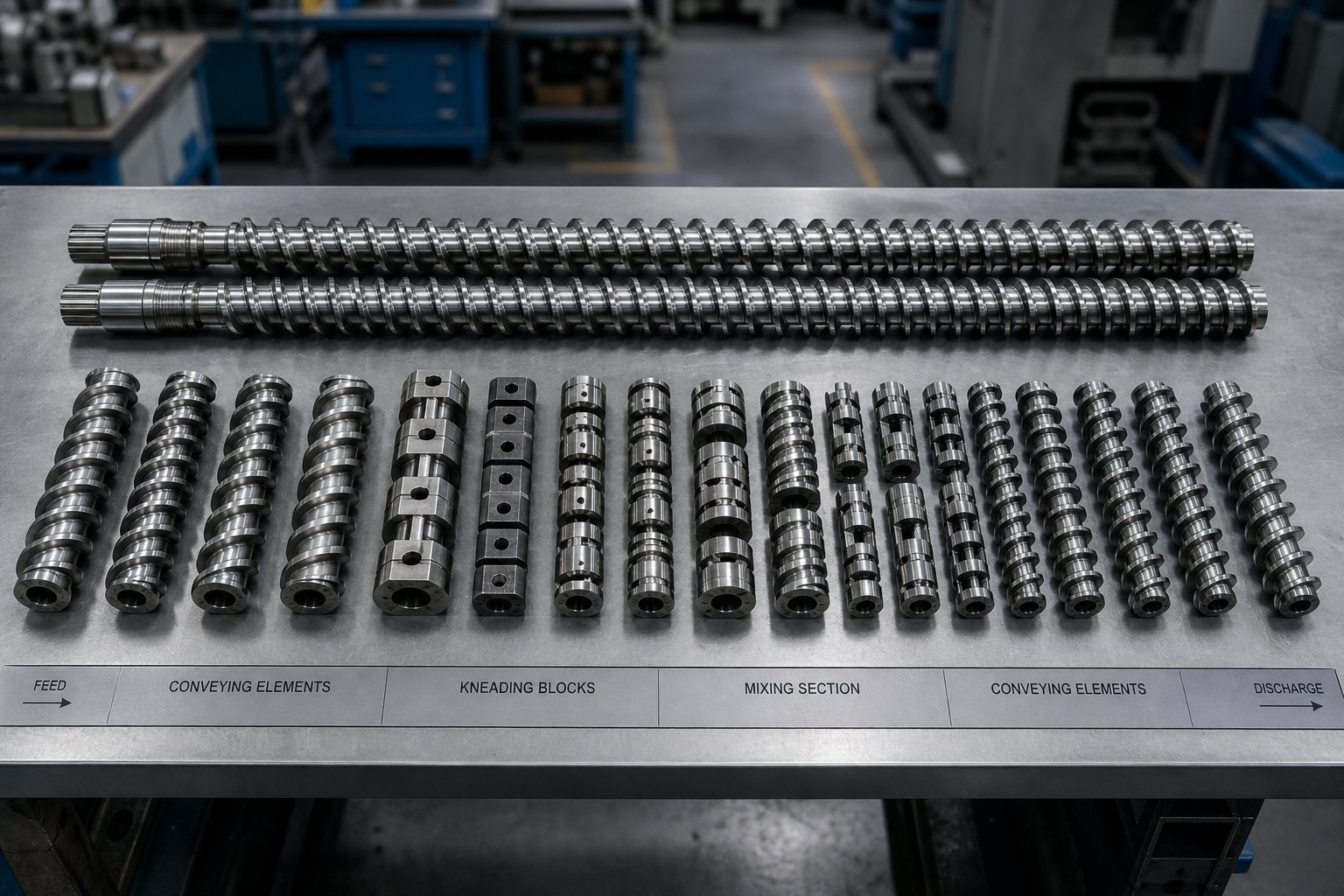
What makes twin screw extruders especially powerful is their modular architecture. The screws are not single solid pieces. Instead, they are assembled from interchangeable screw elements — conveying elements, kneading blocks, and mixing sections — mounted on splined shafts. Barrel sections are similarly modular, with independent temperature zones, side feeder ports, venting locations, and liquid injection points that can be rearranged to suit different processes. This flexibility means a single extruder can be reconfigured for entirely different tasks by swapping screw and barrel configurations, a feature that directly impacts long-term ROI for buyers evaluating twin screw extruders for sale.
Why Twin Screw Extruders Dominate Compounding Operations
If you're asking what is an extruder machine best suited for complex material processing, the answer almost always points to twin screw designs. Their dominance in compounding operations comes down to three core advantages that single-screw alternatives simply cannot match:
- Superior mixing capability: The intermeshing screw design generates both dispersive and distributive mixing forces, ensuring additives, fillers, and reinforcements are uniformly distributed throughout the melt.
- Self-wiping action: As the screws rotate, they continuously sweep material off each other's surfaces and the barrel walls. This prevents material buildup, reduces degradation from excessive residence time, and makes product changeovers faster and cleaner.
- Wider feedstock tolerance: Twin screw extruders handle everything from free-flowing pellets to sticky powders, high-viscosity melts, and even liquid additives — often within the same process. This versatility is critical for operations running multiple formulations.
Twin screw extruders are the recognized industry standard for polymer compounding, reactive extrusion, and any process requiring thorough mixing of multi-component formulations. Their combination of modular design, self-wiping geometry, and precise process control makes them indispensable where product consistency and formulation complexity intersect.
These advantages explain why twin screw extruders appear across such a broad range of industries — from plastics compounding and masterbatch production to pharmaceutical hot-melt extrusion and food texturization. Yet the very versatility that makes these machines so valuable also makes the buying decision more complex. Not all twin screw extruders are created equal, and the configuration differences between them can dramatically affect whether a machine fits your process — or becomes a costly mismatch.
Co-Rotating vs Counter-Rotating Twin Screw Extruders
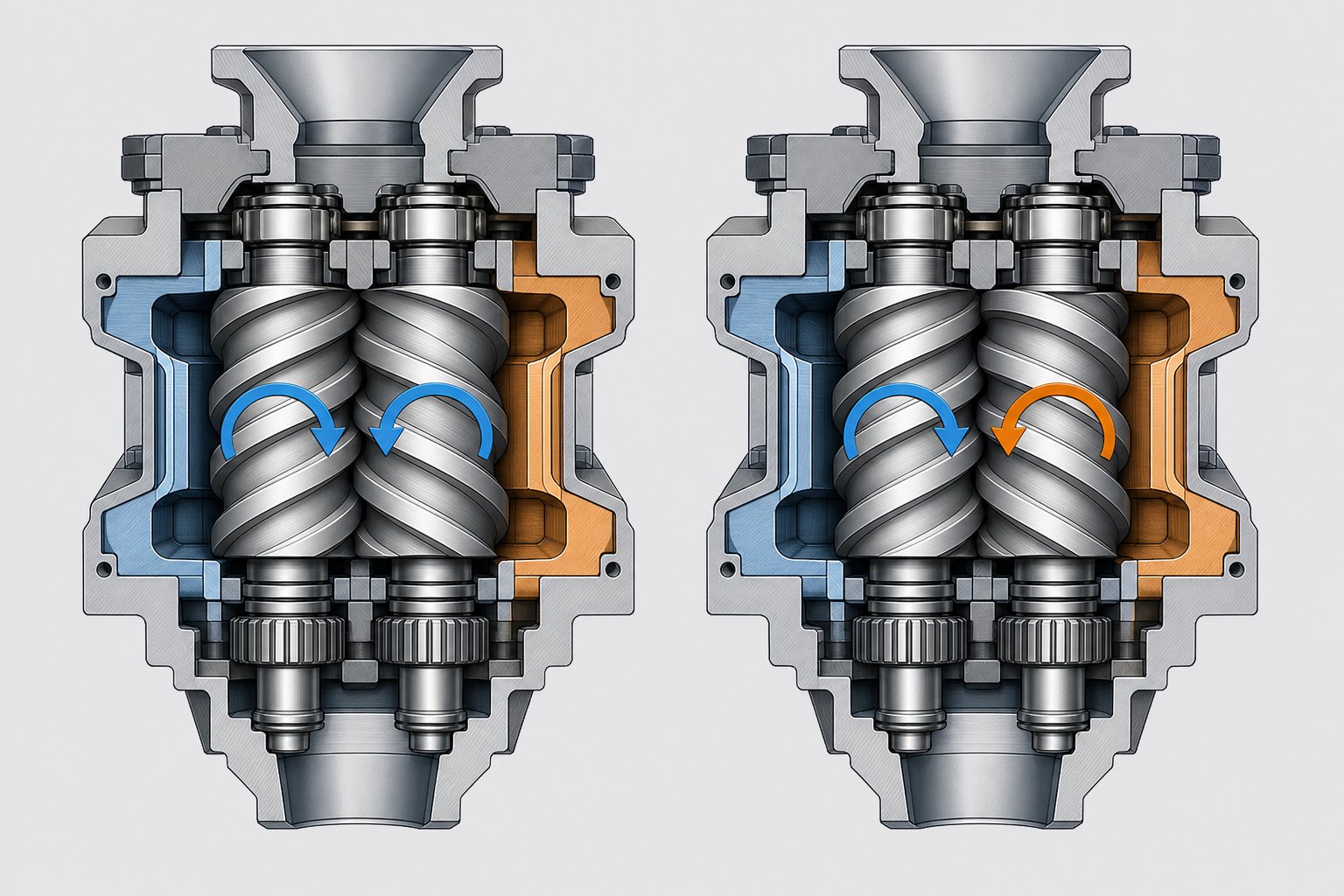
That configuration difference? It starts with a deceptively simple question: which direction do the screws spin? Every twin screw extruder falls into one of two categories — co-rotating or counter-rotating — and this single design choice shapes mixing intensity, throughput potential, shear behavior, and the range of materials you can process. When evaluating twin screw extruders for sale, confusing these two configurations is one of the most expensive mistakes a buyer can make.
Co-Rotating Twin Screw Extruders Explained
In a co-rotating twin screw extruder, both screws turn in the same direction. They typically use a fully intermeshing geometry, meaning the flight of one screw fits snugly into the channel of the other. As the screws rotate together, material is forcibly handed off from one screw to the next at the intermeshing region, creating a complex figure-eight flow path that maximizes exposure to shear and elongational forces.
This geometry delivers several performance advantages that explain why co-rotating designs dominate compounding operations worldwide:
- Intense distributive and dispersive mixing: High shear fields develop both between the screws and between each screw and the barrel wall. Kneading block elements add elongational flow, imposing a complex deformation history that breaks down filler agglomerates and homogenizes polymer blends at a molecular level.
- Self-wiping action: The intermeshing screws continuously scrape material from each other's surfaces. This eliminates dead zones, suppresses stagnation, and keeps the residence time distribution narrow — a critical factor during reactive extrusion or when processing thermally sensitive materials.
- Higher speed capability: Co-rotating extruders can run at significantly higher screw speeds than their counter-rotating counterparts, translating directly into greater throughput capacity for a given screw diameter.
- Modular flexibility: Screw element combinations can be designed freely, allowing engineers to control precisely where and how much energy is delivered to the material along the barrel length.
You'll find co-rotating twin-screw extruders at the heart of polymer compounding lines, masterbatch production, filler dispersion (including nanoscale fillers like carbon nanotubes and cellulose nanofibers), polymer alloy development, and reactive extrusion processes involving polymerization or compatibilization. If a process demands thorough, high-intensity mixing with tight control over material history, the co-rotating configuration is almost always the right call.
Counter-Rotating Twin Screw Extruders and Their Applications
Flip one of those screws around, and the machine behaves very differently. In a counter-rotating twin screw extruder, the two screws turn in opposite directions. Instead of handing material off in a sweeping flow, the screws draw material inward at the intermeshing zone and compress it between them — producing what engineers call a calendering effect.
Imagine two rollers pressing material between them. That compressive and elongational deformation disperses additives under relatively gentle conditions, keeping shear stress and the associated shear-induced heat generation significantly lower than in co-rotating designs. Material transport depends strongly on screw rotation itself, and stable extrusion can be achieved even at comparatively low rotational speeds under a high degree of fill.
Why does this matter? Consider rigid PVC — a material with a low thermal decomposition temperature and poor melt flow. Subject it to the aggressive shear of a co-rotating extruder, and you risk degradation before the material is even properly formed. A counter-rotating design allows the extrusion temperature to stay low through operation at high fill and low screw speed, making it the standard choice for any dedicated pvc extrusion machine line. This is why pvc extruders across the pipe, sheet, and profile extrusion industries overwhelmingly use counter-rotating configurations.
Beyond PVC processing, counter-rotating twin-screw extruders also serve applications where gentle mixing, high pressure generation, and precise material conveyance outweigh the need for aggressive homogenization — including certain specialty compounding tasks and direct extrusion forming operations.
Choosing the Right Configuration for Your Process
The table below puts the key differences side by side. Use it to match your processing goals to the configuration that actually fits — before you commit to a purchase.
| Factor | Co-Rotating | Counter-Rotating |
|---|---|---|
| Mixing Intensity | High — strong dispersive and distributive mixing through shear and elongational flow | Moderate — gentler mixing via calendering effect and compressive deformation |
| Shear Level | High shear stress between screws and barrel | Low to moderate shear; minimal shear-induced heat generation |
| Throughput Range | Wide range; supports high throughput at elevated screw speeds | More limited; typically operates at lower screw speeds with high fill |
| Screw Speed Range | High (often 300-1,200+ RPM on modern machines) | Low to moderate (typically under 200 RPM) |
| Pressure Generation | Moderate; often requires a gear pump for high-pressure downstream operations | High; positive displacement conveyance builds substantial die pressure |
| Self-Wiping Capability | Excellent — fully intermeshing geometry eliminates dead zones | Limited — geometry is less conducive to complete self-wiping |
| Typical Applications | Polymer compounding, masterbatch, reactive extrusion, filler dispersion, polymer alloys | PVC pipe and profile extrusion, sheet forming, low-shear specialty compounding |
Here's the practical takeaway: if your operation centers on compounding, blending, or reactive processing, a co-rotating twin screw extruder is likely the configuration you need. If you're running a pvc extruder machine for profile or pipe production — or processing any thermally sensitive material that demands low shear — counter-rotating is the proven path.
Getting this distinction right before you start shopping prevents a scenario that plays out more often than you'd expect: buyers acquiring a machine at an attractive price, only to discover the configuration fundamentally mismatches their process requirements. Configuration compatibility is non-negotiable. But it's only the first layer of the decision. The next question many buyers face is whether they even need a twin screw design at all — or whether a single screw extruder could handle the job at a fraction of the investment.
Twin Screw vs Single Screw Extruders and When to Choose Each
That question — twin screw or single screw — deserves more than a gut feeling or a sales pitch. A plastic twin screw extruder can cost significantly more than its single screw counterpart, but the cheaper machine isn't always the smarter buy. Conversely, investing in twin screw capability you'll never fully use is money that could be working harder somewhere else in your operation. The difference comes down to mechanics, and those mechanics directly determine which processes each machine can realistically handle.
How Single Screw and Twin Screw Extruders Differ Mechanically
A plastic single screw extruder relies on a fundamentally different material transport mechanism than a twin screw design. Inside a single screw machine, one helical screw rotates within a smooth cylindrical barrel. Material movement depends almost entirely on drag flow — friction between the polymer and the barrel wall pushes material forward along the screw channel. There is no intermeshing action, no positive displacement, and limited ability to independently control throughput and screw speed.
Imagine pushing peanut butter through a tube using a corkscrew. The material moves forward only because it grips the tube walls. If the material slips, flow drops. If the material melts unevenly, you get inconsistent output. That's essentially how a single screw extruder conveys material — simple and effective for straightforward melting and pumping tasks, but inherently limited in mixing capability.
A twin screw extruder changes the physics entirely. Two intermeshing screws create positive displacement, actively grabbing and pushing material forward regardless of friction conditions. As noted in a technical overview from MD+DI, single-screw extruders possess channel, overflight, and lobal mixing regions, but they lack the intermesh and apex high-shear zones that make twin screws so effective at dispersive mixing. Those two additional shear regions are what allow a plastic extruder with twin screws to break down filler agglomerates, homogenize immiscible polymer blends, and perform devolatilization in ways that single screw machines simply cannot replicate.
The practical differences cascade from there:
- Mixing quality: Twin screws deliver both dispersive and distributive mixing across five distinct shear regions. Single screws provide primarily distributive mixing in three.
- Feed flexibility: Twin screw extruders are starve-fed, meaning feeders control throughput independently from screw speed. Single screw machines are typically flood-fed, with the screw speed itself dictating output rate.
- Process adaptability: Modular screw and barrel designs on twin screw machines allow reconfiguration for different tasks. Single screw extruders offer far less flexibility in this regard.
When a Twin Screw Extruder Is the Right Investment
Not every extrusion application requires the complexity and cost of a twin screw machine. But certain process demands make the investment unavoidable. You'll want a twin screw extruder when your operation involves any of the following:
- Compounding filled or reinforced polymers: Glass fiber reinforcement, mineral fillers like calcium carbonate or talc, and flame retardant packages all require intense dispersive mixing that single screw designs cannot deliver.
- Blending immiscible materials: Polymer alloys and blends — such as PC/ABS or PA/PP — need the high-shear kneading and elongational flow that only intermeshing twin screws provide.
- Devolatilization requirements: Removing moisture, solvents, or reaction byproducts from the melt is far more effective in a starve-fed twin screw extruder, where zero-pressure zones and vent ports can be precisely positioned along the barrel.
- Reactive extrusion processes: Grafting, polymerization, and compatibilization reactions demand precise control over residence time, temperature, and shear history — all strengths of the twin screw platform.
- Frequent product changeovers: The self-wiping geometry and modular design of twin screw extruders enable faster cleanouts and easier reconfiguration between product runs, reducing downtime and cross-contamination risk.
- Multi-component formulations: When multiple additives, fillers, or liquids need to be introduced at different points along the barrel, the sequential feeding capability of a twin screw extruder is essential.
When a Single Screw Extruder May Be Sufficient
Single screw machines aren't inferior — they're purpose-built for a different set of tasks. For many downstream forming operations, they remain the practical and economical choice. A single screw extruder is likely sufficient when your application involves:
- Profile extrusion of pre-compounded materials: When you're forming pipes, window profiles, or tubing from pellets that have already been compounded to specification, the primary job is melting and pumping — exactly what a single screw does best.
- Blown film production: Standard polyethylene blown film lines rely on single screw extruders for their consistent melt delivery and pumping stability.
- Sheet extrusion with consistent feedstock: Running PP, PS, or PET sheet from uniform pellet feedstock doesn't require the intense mixing of a twin screw machine.
- Lower capital investment priority: When budgets are tight and the application doesn't demand complex compounding, used single screw extruders can offer a highly cost-effective entry point with lower maintenance demands and simpler operator training.
- Minimizing energy input: Single screw machines are designed to minimize energy input into the melt and maximize pumping uniformity — ideal when thermal sensitivity or energy costs are key concerns in simple forming operations.
As one industry perspective puts it, single-screw plasticating extruders are designed to minimize energy input and maximize pumping uniformity, making them generally inadequate for highly dispersive compounding but well-suited to their intended forming applications. Even in the used equipment market, used single screw extruders retain strong demand precisely because so many production lines only need reliable melting and pressure generation — nothing more.
The table below provides a concise side-by-side comparison to help you determine which screw extruder type aligns with your operation.
| Factor | Twin Screw Extruder | Single Screw Extruder |
|---|---|---|
| Capital Cost | Higher — more complex gearbox, dual screws, modular design | Lower — simpler mechanical design and construction |
| Mixing Quality | Excellent — five shear regions provide intensive dispersive and distributive mixing | Limited — adequate for distributive mixing only; lacks intermesh and apex shear zones |
| Throughput Flexibility | High — feed rate and screw speed are independently controllable | Limited — screw speed directly determines throughput rate |
| Maintenance Complexity | Higher — modular screw elements and dual-shaft gearboxes require more attention | Lower — fewer moving parts and simpler screw replacement |
| Application Range | Broad — compounding, reactive extrusion, devolatilization, blending, masterbatch | Focused — profile extrusion, film, sheet, pipe from pre-compounded materials |
| Feedstock Versatility | Handles powders, pellets, fibers, liquids, and multi-stream feeding | Best with uniform pellet feedstock; limited with powders and multi-component feeds |
| Energy Input | Higher specific energy — designed for intensive compounding | Lower specific energy — designed for efficient melting and pumping |
The decision between plastic extruders ultimately comes down to this: what does your process actually demand? If you're compounding, blending, or reacting, a twin screw extruder is the only machine that can do the job properly. If you're forming finished products from already-compounded materials, a single screw machine delivers what you need at lower cost and complexity. Many operations, of course, run both — using twin screw lines for compounding and single screw machines for downstream forming.
Whichever direction you choose, the machine's specifications are what turn a general category into a specific performance guarantee. And those specifications — screw diameter, L/D ratio, torque density, throughput ratings — are precisely where most buyers get overwhelmed and where listing pages offer the least help.
Critical Specifications Every Twin Screw Extruder Buyer Must Understand
Listing pages throw numbers at you — 75mm, 40:1, 600 RPM, 800 kg/hr — as though every buyer already knows what those figures mean in practice. Most don't, and that knowledge gap is where costly mismatches happen. Understanding what each specification actually controls in your process is the difference between buying an extruder machine that performs from day one and buying one that never quite delivers the throughput, mixing quality, or efficiency you expected.
Screw Diameter and L/D Ratio Decoded
Two numbers define the physical envelope of any twin screw extruder: screw diameter and the length-to-diameter (L/D) ratio. They sound simple, but each drives a different aspect of performance.
Screw diameter is the primary indicator of throughput capacity. A small 20mm lab-scale extrusion machine processes a few kilograms per hour for formulation trials. A mid-range 50mm to 65mm plastic extrusion machine handles hundreds of kilograms per hour for commercial production. Scale up to a 135mm or 300mm+ industrial extruder, and you're looking at continuous manufacturing throughput measured in tons per hour. Larger diameters mean bigger screw channels, higher volumetric capacity, and — critically — larger gearboxes and motors to drive them. Diameter is the single biggest driver of both output potential and capital cost.
L/D ratio tells you how much processing length is available relative to the screw diameter. Think of it as the number of "workstations" you can fit along the barrel. A typical twin screw L/D ratio ranges from 20:1 to 48:1, with most modern compounding extruder machines falling between 32:1 and 44:1. A shorter ratio — say 24:1 to 28:1 — suits applications like color masterbatch that need intensive mixing over a brief residence time. A longer ratio of 36:1 to 48:1 provides room for multiple processing zones: initial conveying, melting, high-shear kneading, side feeding of fillers, devolatilization through vacuum vents, and pressure building for die extrusion — all within a single machine.
Here's the practical implication: a higher L/D ratio allows more unit operations within one plastic extruder machine, reducing the need for secondary processing steps. However, longer barrels also mean greater floor space requirements, higher capital cost, and longer residence time that can be detrimental for thermally sensitive materials. The right ratio depends entirely on the complexity of your process, not on which number looks more impressive in a listing.
Torque Rating and Motor Power as Performance Indicators
If screw diameter determines how much material you can push through, torque determines how hard the machine can work that material. For modern twin screw extruders, torque density — defined as the torque delivered per unit of screw centerline distance cubed (Nm/cm³) — is widely regarded as the single most important performance metric.
Why does this matter to buyers? Because torque density sets the ceiling on how much mechanical energy the extruder can deliver to the polymer melt. Processing high-viscosity engineering plastics, dispersing abrasive mineral fillers, or running heavily glass-fiber-reinforced compounds all demand substantial torque. An extruder with insufficient torque density will either stall under load, force you to reduce throughput, or require you to increase barrel temperatures excessively — degrading material quality and driving up energy costs.
Motor horsepower must be matched to both the torque and speed requirements of your target application. As one industry resource notes, undersized motors can overheat or fail under pressure, while oversized ones add unnecessary cost without real benefit. The key is matching the motor to the expected torque demands of your specific formulation and throughput goal. For context, engineering plastic compounding typically requires specific energy consumption of 0.30 to 0.50 kWh per kilogram of throughput — a useful benchmark when evaluating whether a given motor and gearbox combination can deliver the energy your process demands.
Throughput Capacity and How to Match It to Production Needs
Rated throughput on a spec sheet tells you the maximum output the machine achieved under specific test conditions — usually with an easy-to-process material at optimal screw speed. Your actual production throughput will almost certainly be lower, sometimes significantly so. Abrasive fillers, high-viscosity melts, extensive devolatilization requirements, and multiple side-feeding operations all reduce effective throughput from the rated maximum.
A practical rule: size your extruder so that your target production rate falls at roughly 60 to 80 percent of rated capacity. This leaves headroom for process optimization, production growth, and the inevitable throughput reductions that come with more demanding formulations. Buying an industrial extruder that runs constantly at 100 percent of its rated output is a recipe for accelerated wear, control instability, and maintenance headaches.
When requesting quotes or reviewing listings for twin screw extruders for sale, make sure you collect all of the following specifications — not just one or two headline numbers:
- Screw diameter (mm)
- L/D ratio
- Specific torque (Nm/cm³)
- Maximum screw speed (RPM)
- Maximum rated throughput (kg/hr) and the material used for that rating
- Number of barrel zones and their individual heating/cooling capacity
- Feed port configurations — main hopper location, side feeder positions, and liquid injection ports
- Drive motor power (kW) and drive type (AC vector, DC, etc.)
Specifications must be evaluated as a system, not in isolation. A high torque rating means nothing if the motor can't deliver adequate speed, or if the L/D ratio is too short to complete your process. Every specification interacts with every other — and a machine that looks strong on one metric but weak on another will underperform in real production.
Collecting these details upfront also gives you leverage during negotiations. Sellers who can provide complete, verified specifications demonstrate transparency and confidence in their equipment. Incomplete data — especially missing torque ratings or vague throughput claims — should raise a red flag and prompt deeper investigation before any commitment.
Specifications tell you what a machine can do. But there's another layer that affects long-term value, parts availability, and resale potential in ways that pure performance numbers never capture: the brand behind the machine.
Major Twin Screw Extruder Brands and What They Are Known For
A spec sheet tells you what a machine can do on paper. The brand name on the nameplate tells you something equally important: how easy it will be to find replacement parts five years from now, how deep the service network runs when something breaks on a Friday afternoon, and how much the machine will be worth when you eventually sell it. When browsing twin screw extruders for sale, you'll encounter a handful of names repeatedly — and understanding what each one brings to the table (and where each falls short) can save you from surprises that no specification sheet will ever reveal.
Established European and American Twin Screw Extruder Brands
European extruder manufacturers have shaped twin screw technology for decades, and their names carry significant weight in both the new and used equipment markets.
Coperion sits at the top of most conversations about high-performance compounding. Originally founded as Werner & Pfleiderer in 1879, the company introduced the first ZSK co-rotating twin screw extruder in 1957. The werner & pfleiderer twin screw extruder lineage lives on in today's ZSK Mc18 series, which delivers a specific torque density of 18 Nm/cm³ — among the highest in the industry. A Coperion extruder is widely considered the benchmark for engineering plastics, polyolefin compounding, and pharmaceutical continuous manufacturing. That reputation comes at a price: Coperion machines command premium pricing both new and on the secondary market, but they also retain resale value better than almost any competitor.
Leistritz, another German manufacturer with roots dating back to 1905, has carved out a strong position in pharmaceutical hot-melt extrusion, laboratory-scale R&D platforms, and specialty polymer compounding. Their ZSE iMAXX series offers specific torque up to 15 Nm/cm³ with an OD/ID ratio of 1.66, making it a go-to choice for buyers who need deep customization rather than catalog standardization. If your operation involves GMP-regulated processes or frequent formulation development at pilot scale, Leistritz is a name you'll encounter often.
KraussMaffei Berstorff brings a unique breadth to the market. The Berstorff extruder legacy — Berstorff GmbH joined the KraussMaffei group in 2006-2007 — means the company offers both co-rotating and counter-rotating designs under a single brand. The ZE BluePower series features an unusually high Da/Di ratio of 1.65 with torque density up to 16 Nm/cm³, while the KMD counter-rotating series serves PVC pipe and profile processors. For buyers evaluating a berstorff extruder on the used market, this dual capability means you'll find both compounding and PVC processing machines under the same brand umbrella — but you need to verify which configuration you're actually looking at.
On the North American side, Davis-Standard offers one of the broadest extrusion equipment portfolios in the region. Headquartered in Pawcatuck, Connecticut, the company has been building extruders since 1848. Some Davis-Standard machines are still running after 50 years of continuous operation — a durability claim few competitors can match. If you're searching for a davis standard extruder for sale on the used market, that longevity works in your favor: parts support is well-established, and the machines hold up remarkably well over decades. Their Gemini conical twin screw line is widely used for PVC and rigid sheet in North American operations where local service access matters more than peak torque density.
Asian Manufacturers and Their Market Position
The conversation about plastic extrusion machine manufacturers has shifted significantly over the past two decades, and ignoring Asian brands means overlooking some of the most compelling options on the market.
JSW (The Japan Steel Works) stands alongside Coperion at the very top of the performance ladder. The company has delivered more than 2,300 twin screw extruders under its TEX brand since entering the plastics machinery sector in the 1950s. Their flagship TEX-alphaIII achieves a specific torque of 18.2 Nm/cm³ — the highest published figure among major extruder manufacturers — with screw diameters ranging from 26.5 mm all the way up to 443 mm for massive devolatilization applications. JSW's proprietary TEX-FAN simulation software even allows virtual extrusion trials before commissioning, reflecting the precision engineering culture that Japanese manufacturers are known for.
Chinese manufacturers have undergone a transformation that catches many Western buyers off guard. A decade ago, "Chinese twin screw extruder" often implied a budget copy with questionable longevity. That perception is outdated. Established Chinese manufacturers like USEON now deliver machines with specific torque densities reaching 15 Nm/cm³ on their newer platforms, competing directly with mid-range European specifications at 30 to 55 percent of the total installed cost. Lead times of three to six months — compared to eight to fourteen months from European peers — add another practical advantage. Companies like JWELL and Nanjing Kerke have built substantial export track records across dozens of countries.
The honest assessment? Top-tier Chinese manufacturers have closed most of the technology gap for mainstream compounding, masterbatch, PVC, and large polyolefin applications. For mission-critical processes running 24/7 with zero tolerance for downtime — pharmaceutical HME, automotive-grade engineering plastics — European and Japanese machines still carry an edge in long-term reliability and service depth. But the gap narrows every year, and blanket dismissals based on country of origin no longer reflect reality.
What Brand Reputation Means for Resale Value and Parts Availability
Here's where brand selection connects directly to the financial themes running through this article. The machine you buy today will eventually need wear parts, service, or resale — and the brand on the nameplate dramatically influences all three.
A werner pfleiderer extruder or Coperion ZSK listed on the used market commands premium pricing because buyers know exactly what they're getting: proven performance, deep documentation, and a global parts network. A lesser-known brand might offer identical specifications on paper but sell for significantly less on the secondary market simply because the next buyer can't easily source replacement screw elements or barrel liners.
When evaluating any brand — whether shopping new or browsing twin screw extruders for sale on the used market — run through these criteria before committing:
- Parts availability: Can you source OEM or high-quality aftermarket screw elements, barrel liners, and gearbox components without excessive lead times? Brands with established aftermarket ecosystems protect you against production downtime.
- Service network: Does the manufacturer maintain regional service engineers, or will you wait weeks for technical support? Local service access matters most during commissioning and unexpected breakdowns.
- Model documentation: Are screw configuration drawings, barrel section layouts, and maintenance records readily available for the specific model? Machines with complete documentation are easier to optimize, troubleshoot, and resell.
- Market resale demand: How frequently does this brand and model appear in used equipment listings, and how quickly do units sell? High turnover on the secondary market indicates strong buyer confidence and protects your investment's residual value.
Brand recognition isn't everything — a well-maintained machine from a lesser-known manufacturer can outperform a neglected unit from a premium brand. But all else being equal, buying a recognized name provides an insurance policy against parts scarcity, service gaps, and depreciation that no warranty card can match.
Brand and specifications narrow the field. The next decision — and often the most agonizing one — is whether to buy that machine new or used, and what the true financial implications of each path look like over five years of ownership.
New vs Used Twin Screw Extruders and Making the Right Choice
That agonizing decision is where more capital gets wasted — or saved — than at any other point in the buying process. Browse any listing for twin screw extruders for sale and you'll notice the used market dominates page one. The pricing looks attractive. Delivery timelines seem unbeatable. But a used twin screw extruder that saves you 50 percent upfront can quietly cost you double in unplanned downtime, worn components, and obsolete controls if you don't know what you're walking into. Equally, a brand-new machine with a pristine warranty can bleed your cash flow dry if the application didn't actually require the latest technology.
Neither option is universally right. The smart move depends entirely on your process requirements, production criticality, and how honestly you account for total ownership costs — not just the twin screw extruder price on the invoice.
Advantages and Risks of Buying Used Twin Screw Extruders
The financial case for buying used equipment is real and well-documented. According to a 2026 cost-benefit analysis from Meadoworks, used manufacturing equipment typically sells for 40 to 70 percent below new pricing, with delivery timelines of two to four weeks compared to three to eighteen-plus months for new machines. Those numbers shift the economics dramatically — particularly for companies needing to add capacity quickly or test a new product line without committing seven-figure capital.
Advantages of Used Twin Screw Extruders
- Significant cost savings: A used twin screw extruder for sale typically trades at 40 to 70 percent below new pricing, freeing capital for tooling, downstream equipment, or facility improvements.
- Faster time to production: Used machines sitting in dealer inventory or at the seller's facility can be rigged, shipped, and installed within weeks — not quarters. When you've already won a contract or need to replace a failed line, speed matters more than anything on a spec sheet.
- Proven production history: A machine that has been running successfully for five or ten years has already demonstrated its reliability under real-world conditions. Industrial extrusion equipment is engineered to last 20 to 30-plus years, making well-maintained used extruders a legitimate long-term asset.
- Slower future depreciation: The previous owner absorbed the steepest part of the depreciation curve during the first three to five years, when new equipment can lose 30 to 50 percent of its value. Your used purchase depreciates much more slowly going forward, protecting resale value.
- Equal tax treatment: Section 179 and bonus depreciation apply equally to used and new equipment — there is no tax penalty for buying pre-owned machinery.
Those advantages are compelling. But they come packaged with risks that listing pages rarely spell out.
Risks of Used Twin Screw Extruders
- Unknown wear on screw elements and barrels: Screw elements and barrel liners are wear items. A used extruder that processed glass-fiber-reinforced compounds or abrasive mineral fillers may have significant wear that's invisible without gap measurements — and replacement costs can be substantial.
- Outdated control systems: A machine built ten or fifteen years ago may run on a PLC platform that no longer receives manufacturer support. Upgrading the controls to a modern system with recipe management, data logging, and network connectivity can add tens of thousands of dollars to the effective purchase price.
- Potential hidden mechanical issues: Gearbox wear, barrel misalignment, heating zone failures, and compromised seals don't always show up during a brief inspection. Without thorough evaluation under load, you're accepting risk that may not surface until production begins.
- Limited or no warranty: Most used extruders sell as-is or with only a short warranty period covering basic functionality. If a gearbox fails six months after purchase, the repair bill is yours.
When Buying New Makes Better Financial Sense
The used market dominates casual browsing, but there are real scenarios where a new twin screw extruder delivers better financial returns over the machine's productive life — even at two to three times the upfront cost.
Production demanding the latest torque densities and throughput capabilities. If your compounding process requires specific torque above 15 Nm/cm³ or screw speeds exceeding 900 RPM, the machines that deliver those numbers are recent-generation designs. You simply won't find them on the used market in meaningful quantities yet.
Applications requiring tight tolerances and process consistency. Pharmaceutical continuous manufacturing, automotive-grade engineering plastics, and medical-device polymers often mandate equipment that meets current GMP or OEM specifications. Customer audits may explicitly require new or recent-vintage machinery — making the used extruder option a non-starter regardless of condition.
Operations where energy efficiency directly impacts margins. Modern drive technologies, optimized screw geometries, and advanced thermal management systems reduce specific energy consumption (kWh per kilogram of throughput) compared to machines built a decade ago. For high-volume operations running 24/7, that efficiency gap compounds into significant annual savings that offset the higher purchase price.
Buyers who need full OEM warranty and support packages. A comprehensive one-to-two-year warranty covering parts, labor, and on-site service eliminates the financial uncertainty that comes with used equipment. OEM application engineering and operator training — typically included with new purchases — reduce ramp-up time and minimize costly startup errors.
A Practical Framework for the New vs Used Decision
Staring at a twin screw extruder price on a new machine quote and comparing it to a used listing feels like an apples-to-oranges exercise. The table below reframes the comparison around factors that actually determine five-year financial outcomes — not just day-one sticker shock.
| Decision Factor | New Twin Screw Extruder | Used Twin Screw Extruder |
|---|---|---|
| Upfront Cost | Full OEM pricing — typically the highest capital outlay option | 40-70% below new pricing; savings can be redirected to ancillary equipment or facility upgrades |
| Lead Time | 3-6 months for stock configurations; 12-18+ months for custom builds from European or Japanese OEMs | 2-4 weeks from dealer inventory; immediate availability in many cases |
| Warranty Coverage | 1-2 years comprehensive OEM warranty, often including on-site service and application support | Limited or no warranty; typically sold as-is or with short functional guarantee |
| Energy Efficiency | Latest drive technology, optimized screw designs, and thermal management reduce specific energy consumption | Older drives and motors may consume 10-20% more energy per kilogram of throughput |
| Parts Condition Certainty | All components are new with known zero-hour condition; full documentation provided | Uncertain — screw element and barrel liner wear may require near-term replacement depending on processing history |
| Control System Technology | Current-generation PLC, HMI, data logging, recipe management, and Industry 4.0 connectivity | May run on legacy platforms with limited support; control upgrades can cost $15,000-$50,000+ |
| Total 5-Year Cost of Ownership | Higher initial investment but lower maintenance and energy costs in early years; longer ROI timeline | Lower entry point but potentially higher maintenance, energy, and parts replacement costs; 10-year TCO still 25-45% lower than new in most scenarios |
Here's the takeaway that most listing pages will never tell you: the right choice isn't about finding the lowest price. It's about matching the equipment's condition, capability, and support ecosystem to your specific production requirements. A used twin screw extruder for sale at a fraction of new cost can deliver outstanding ROI for mainstream compounding with well-understood materials. A new machine justifies its premium when your process demands cutting-edge performance, regulatory compliance, or the peace of mind that comes with a full OEM support package.
Whichever path you choose, the purchase price — whether discounted or premium — is only the first line item in a much longer financial story. The costs that accumulate after the machine hits your production floor are the ones that ultimately determine whether your investment thrives or quietly erodes your margins year after year.
Total Cost of Ownership Beyond the Purchase Price
The costs that quietly erode your margins don't appear on any invoice or listing page. They show up in your monthly energy bills, in the frequency of screw element replacements, in the gearbox oil analyses that reveal bearing wear, and in the control system upgrades you didn't budget for. Whether you paid top dollar for a new twin screw compounding extruder or found a deal on a used machine, the purchase price is just the down payment on a much longer financial commitment. Understanding what comes next — and planning for it — is what separates operations that thrive from those that slowly bleed cash.
Screw Element and Barrel Wear as Ongoing Expenses
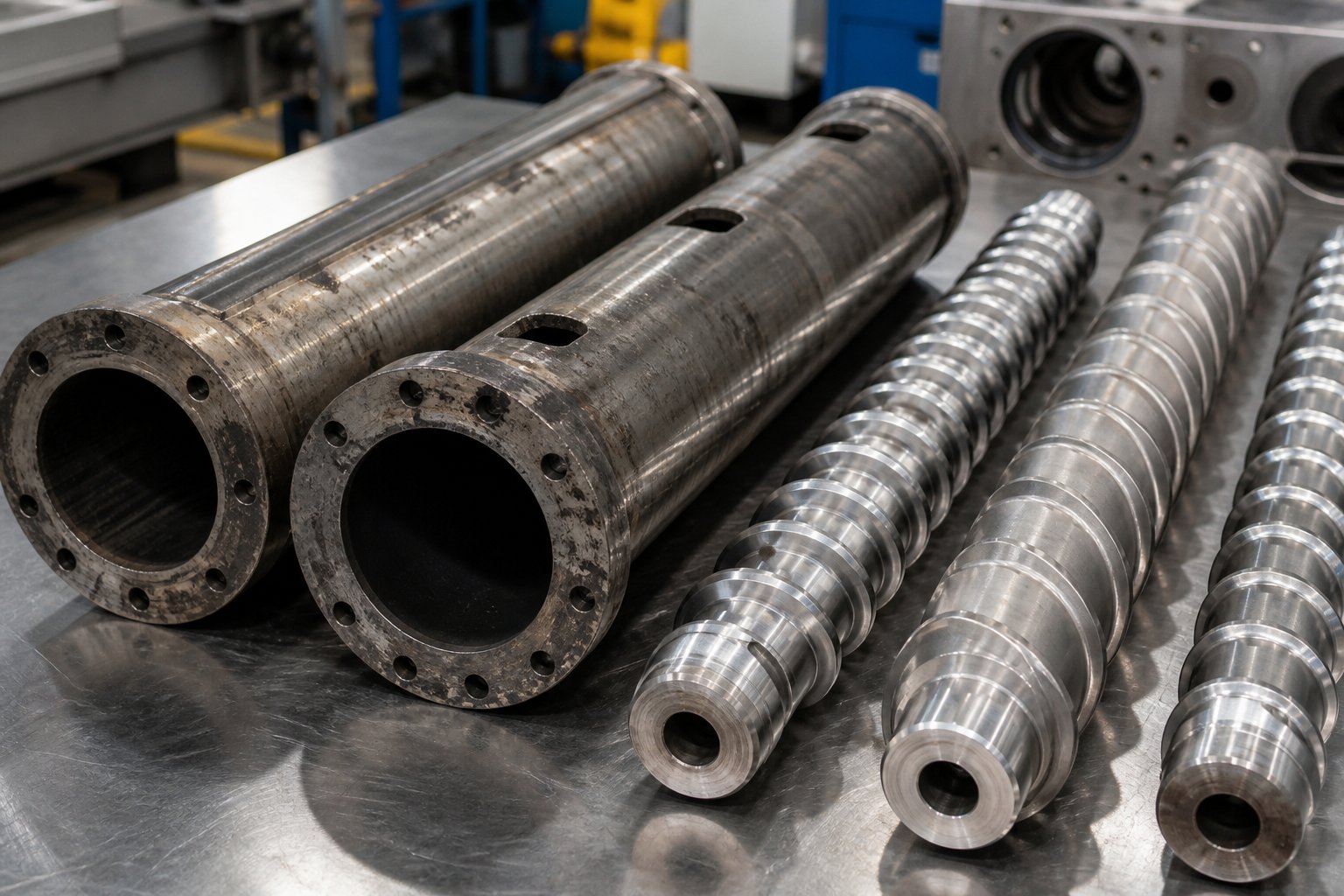
Here's a reality that listing pages never mention: screws and barrels are consumables. They wear every time the machine runs. The original tight clearances between screw flight lands and barrel wall — typically just 0.001 inches per side per inch of diameter — begin opening the moment rotation starts. As those clearances widen, melting efficiency drops, mixing quality degrades, and operators start compensating with higher speeds, elevated temperatures, or increased backpressure. Those compensating adjustments are usually incremental and go unnoticed until they dramatically impact product quality or productivity.
What accelerates this wear? The materials you process. Running unfilled PP or PE through a compounding extruder produces relatively gentle abrasive wear — standard nitrided steel (38CrMoAlA) screw elements and barrels may last 6 to 12 months under normal conditions. Switch to glass-fiber-reinforced nylon or calcium-carbonate-filled polyolefins, and that timeline shrinks to 3 to 6 months. Some of the most aggressive mineral fillers can reduce useful screw and barrel life by 50 percent or more.
The metallurgy you select for replacement parts directly determines how often you'll be placing orders — and how much each cycle costs:
- Nitrided steel (38CrMoAlA): The most economical option. Adequate for processing unfilled or lightly filled polymers, but wears rapidly under abrasive conditions. Expect replacement every 6 to 12 months for standard applications.
- PM-HIP tool steels (powder metallurgy, hot isostatic pressed): Offer significantly higher hardness and abrasion resistance. Ideal for glass-fiber and mineral-filled compounds. Higher upfront cost, but service life often reaches 12 to 24 months even with demanding feedstocks.
- Tungsten carbide coatings and bimetallic alloys: The premium tier. Centrifugally cast wear-resistant alloys and tungsten carbide hardfacing deliver the longest intervals between replacements — two to three times the lifespan of standard nitrided steel. The per-unit cost is substantially higher, but the cost-per-operating-hour frequently ends up lower when you factor in reduced changeover downtime and sustained process consistency.
The financial math is straightforward: a nitrided steel screw-and-barrel set for a mid-range polymer extruder might cost $800 to $2,800, while a bimetallic equivalent for the same machine runs $4,000 to $5,000 or more. But if the bimetallic set lasts three times as long while processing abrasive fillers, the per-month cost of ownership is actually lower — and you avoid three additional unplanned production stoppages for changeovers.
This is precisely why sourcing reliable, cost-effective replacement components matters as much as the original machine purchase. Suppliers like NANHAIYA offer factory-direct screw and barrel solutions for compounding, pelletizing, and extrusion operations, giving procurement teams a way to control long-term wear part costs without compromising on metallurgical quality or lead times.
Energy Consumption and Its Impact on Operating Margins
Imagine running a 75 kW compounding extruder 24 hours a day, 300 days a year. That single machine consumes roughly 540,000 kWh annually. At $0.10 per kWh, you're looking at $54,000 in electricity for just the main drive — before you add barrel heating, cooling systems, and auxiliaries. The drive motor alone typically accounts for 50 to 60 percent of total energy consumption, with barrel heating adding another 20 to 30 percent and cooling and auxiliary systems consuming the remaining 10 to 20 percent.
Specific energy consumption — measured in kWh per kilogram of throughput — is the metric that ties energy cost directly to your production economics. For twin screw plastic extrusion equipment, this figure typically ranges from 0.25 to 0.45 kWh/kg depending on the application, material viscosity, and machine generation. That spread matters: for a line producing 1,000 kg/hr, the difference between 0.25 and 0.45 kWh/kg represents 200 kW of additional power draw, translating to over $140,000 per year in extra electricity costs at typical industrial rates.
Newer drive technologies offer meaningful savings. Modern IE4 and IE5 permanent magnet synchronous motors achieve efficiencies of 97 to 98.5 percent, compared to 90 to 95 percent for the IE2 and IE3 induction motors found in older plastic compounding equipment. CFD-optimized screw geometries can reduce torque requirements by 10 to 15 percent without sacrificing mixing quality. One documented case showed a compounding operation reducing specific energy from 0.38 to 0.29 kWh/kg after upgrading to a modern drive and optimized screw design — saving over $62,000 annually on a single production line.
If you're evaluating older extrusion equipment on the used market, factor in the energy penalty. A machine priced 50 percent below a new equivalent but consuming 20 percent more energy per kilogram will burn through that upfront savings within a few years of continuous operation. Energy cost is not a footnote — it is a core operating expense that compounds relentlessly over the machine's lifetime.
Maintenance Planning and Spare Parts Strategy
Beyond wear parts and electricity, a polymer extruder accumulates maintenance costs across every major subsystem. The expenses are predictable if you plan for them — and devastating if you don't. Key maintenance cost categories to budget for include:
- Gearbox service intervals: The gearbox is a precision assembly with a typical overall service life of 5 to 8 years. Internal bearings and gears may need replacement every 15,000 operating hours (roughly 1.7 years under continuous production). Oil analysis every 1,000 to 2,000 hours catches early signs of bearing fatigue or gear damage before a catastrophic failure halts production.
- Heating and cooling system maintenance: Cast aluminum heater bands and heating rods last 6 to 12 months under normal conditions and degrade faster in high-temperature applications. Cooling channels can scale or corrode over time, reducing heat removal efficiency and forcing operators to slow throughput or risk overheating. Budget for annual descaling and periodic heater replacement.
- Barrel liner replacement: Barrel sections eventually wear beyond tolerance, particularly in the high-shear kneading zones and downstream of side feeders where abrasive fillers are introduced. Bimetallic barrel liners last longer but cost more to replace — planning for this expense up front prevents emergency shutdowns.
- Screw element inventories: Maintaining a modest inventory of commonly worn elements — kneading blocks, conveying elements in the feed and discharge zones — allows planned changeovers during scheduled maintenance windows rather than panic orders with expedited shipping fees.
- Control system upgrades: PLC platforms, solid-state relays, and temperature controllers have finite lifespans (typically 2 to 3 years for relays, longer for PLCs). Legacy control systems that lose manufacturer support create both operational risk and spare parts sourcing challenges that compound over time.
Spare parts availability — especially for screw elements and barrel liners — should be a top consideration when evaluating any twin screw extruder purchase, whether new or used. A machine with no reliable supply chain for its wear components is a machine with an expiration date you can't predict.
A disciplined spare parts strategy doesn't just prevent downtime — it gives you negotiating leverage with suppliers and allows bulk purchasing at lower per-unit costs. Establishing relationships with factory-direct component suppliers early in the ownership cycle ensures you have replacement screw elements, barrel liners, and gearbox components available on reasonable lead times, regardless of the original equipment manufacturer's current production schedule.
These ongoing costs — wear parts, energy, and planned maintenance — are the hidden line items that listing pages and sales brochures never discuss. But they're also the costs that separate buyers who achieve a five-year ROI from those who spend five years wondering where their margins went. And while budgeting for these expenses is essential, knowing how to evaluate a machine's actual condition before purchase is what prevents you from inheriting someone else's deferred maintenance bill.
The Buyer's Inspection Checklist for Twin Screw Extruders
Inheriting someone else's deferred maintenance bill is exactly what happens when buyers skip a structured inspection and rely on a seller's verbal assurance that the machine "ran great last time it was on." Whether you're evaluating used extrusion equipment at a dealer's warehouse or commissioning a new machine at the factory, a systematic inspection protects your investment in ways that no warranty clause can replicate. The checklist below gives you a concrete, step-by-step framework to assess any twin screw extruder before money changes hands.
Mechanical Inspection Points for Twin Screw Extruders
A twin screw extruder's mechanical condition determines everything — throughput consistency, energy efficiency, product quality, and your near-term maintenance budget. Walk through these inspection steps in order, and don't skip any of them because a seller seems trustworthy or a price seems too good to pass up.
- Check the gearbox for noise and oil condition. Run the gearbox at operating speed and listen carefully for knocking, grinding, or cyclic whining. Pull an oil sample and examine it for metallic particles, discoloration, or milky appearance indicating moisture contamination. Oil analysis every 1,000 to 2,000 operating hours is standard practice — ask for the most recent report. A gearbox that sounds rough or shows contaminated oil is signaling bearing or gear wear that could cost five figures to repair.
- Measure screw element and barrel liner wear. This is the single most revealing step. Using a dial bore gauge and micrometer, take measurements every two to three inches along the barrel bore. Compare flight diameters and root diameters against original specifications. As industry experts emphasize, there is no way to accurately determine the condition or value of an extruder without measuring screw and barrel wear — damage or wear on these components leads to increased energy use, reduced throughput, and potential for further equipment damage.
- Inspect barrel heating zones and cooling channels. Verify that each barrel zone heats to its setpoint within the expected timeframe and that cooling channels flow freely without blockage. Scaled or corroded cooling passages reduce thermal control precision and force operators to compensate with slower throughput or higher temperatures.
- Evaluate feed throat condition. Examine the feed opening for cracks, washout spots, and deformation. A damaged feed throat creates inconsistent material intake that disrupts the entire process downstream.
- Check all seals and connections for leaks. Inspect barrel flange connections, vent port seals, and water cooling fittings. Polymer leakage at barrel joints suggests misalignment or worn sealing surfaces. Water leaks near the barrel indicate compromised cooling integrity that can cause corrosion and uneven thermal profiles.
- Verify motor amperage draw under load. If possible, run the extruder under process conditions and monitor motor amperage relative to rated capacity. An extruder drawing excessive amperage at moderate throughput may have internal wear creating abnormal resistance — or a motor nearing the end of its service life.
Pay special attention to the high-wear zones: the area just downstream of the feed opening, the kneading block sections where shear forces peak, and any barrel zone immediately following a side feeder port where abrasive fillers enter. These sections wear fastest and often reveal the true processing history that a seller's description omits.
Control System and Electrical Evaluation
You could buy used extruder equipment with a mechanically sound barrel and perfect screw elements, and still face a $30,000 to $50,000 surprise if the control system is a generation behind. The PLC platform, HMI interface, and electrical infrastructure are easy to overlook during a physical inspection — but they directly affect how efficiently you can run the machine, how quickly operators adapt, and whether the system integrates with your existing production environment.
As one detailed technical evaluation guide puts it, two offers can look similar on a specification sheet and behave very differently on the factory floor — one system may only collect temperature settings on a screen, while another coordinates barrel temperature, screw speed, pressure alarms, recipe storage, and downstream response as one unified production logic.
When evaluating the control system on any used plastics machinery, focus on these critical questions:
- PLC platform currency: Is the PLC still actively supported by the manufacturer? Siemens S5 series, Allen-Bradley PLC-5, and other legacy platforms have reached end-of-life status. Replacement parts become scarce and expensive, and finding programmers who can modify ladder logic on discontinued platforms gets harder every year.
- HMI usability and completeness: Does the HMI display all critical process parameters — zone temperatures, screw speed, motor load, melt pressure, and alarm history — in a clear, operator-friendly layout? Or is it a bare-bones screen showing only basic temperature readings?
- Recipe management capability: Can the system store and recall complete product setups — including temperature profiles, speed ratios, feed rates, and alarm thresholds? A recipe system that covers only temperature zones but ignores downstream settings is, as control system engineers note, only a partial recipe. This capability alone can save hours of startup time and reduce scrap during product changeovers.
- Data logging and connectivity: Does the system support production data logging, trend analysis, and network connectivity for remote monitoring? Modern quality management and traceability requirements increasingly demand these capabilities — and retrofitting them onto a legacy control architecture is rarely straightforward.
- Alarm logic vs. alarm display: There's a crucial difference between a system that displays an alarm message and one that actually triggers protective action — speed reduction, interlock, or controlled shutdown — when a parameter goes out of range. Ask specifically what happens when melt pressure spikes or motor load exceeds safe limits.
If you're evaluating used extrusion lines that include downstream equipment — haul-offs, cutters, cooling tanks — verify that the control system coordinates the entire line, not just the extruder. A line where each station runs independently requires constant operator intervention and produces far more scrap than one with integrated speed synchronization and centralized recipe management.
Documentation and History Buyers Should Demand
The paperwork that comes with a machine tells you almost as much as the physical inspection. Complete documentation transforms a used purchase from a gamble into a calculated investment. Incomplete documentation should do two things: reduce your offer price and increase the rigor of your mechanical and electrical inspection.
Before committing to any purchase — whether browsing extrusion equipment for sale online or visiting a seller's facility — request the following:
- Original equipment specifications: The OEM data sheet confirming screw diameter, L/D ratio, torque rating, maximum screw speed, barrel zone count, and motor power. Without this baseline, you cannot assess wear or verify performance claims.
- Maintenance records: Gearbox oil change history, bearing replacements, heater band replacements, and any major repair work. Gaps in maintenance records don't necessarily mean neglect — but they remove your ability to predict near-term maintenance costs.
- Screw element configuration drawings: The specific arrangement of conveying elements, kneading blocks, mixing elements, and spacers along the screw shaft. This is essential for understanding what processes the machine was optimized for and whether your application requires reconfiguration.
- Barrel section layout: A diagram showing which barrel zones are solid, which have side feeder ports, which have vent openings, and which have liquid injection points. This layout determines whether the machine can physically accommodate your process without barrel section changes.
- Process history: What materials were processed, at what throughput rates, and for how long? A machine that spent its life running unfilled PP has a vastly different wear profile than one that processed 40 percent glass-fiber-reinforced nylon. This single piece of information can predict your first-year maintenance costs with surprising accuracy.
- Rebuild or refurbishment records: Any barrel re-lining, screw element replacement, gearbox overhaul, or control system upgrade that has been performed. These records help you understand what's been refreshed and what's still running on original components nearing end-of-life.
Sellers offering used extrusion equipment for sale who can produce complete documentation demonstrate transparency and typically maintain their machines to a higher standard. Sellers who can't — or won't — produce these records are asking you to accept unknown risk. Adjust your offer accordingly, and consider engaging a third-party appraiser or inspection service to fill the information gaps before signing.
A thorough inspection and complete documentation give you clarity on what a machine is today. The final step is connecting that reality to what your operation actually needs — matching application requirements, extruder configuration, and sourcing strategy into a coherent plan that delivers long-term value rather than short-term savings.
Finding the Right Twin Screw Extruder for Your Application
Clarity on what your operation needs turns the entire buying process from a guessing game into a targeted search. Every specification, brand evaluation, and inspection technique covered in the preceding sections funnels into two practical decisions: which extruder configuration fits your application, and how do you structure a sourcing strategy that protects your ROI over the machine's full productive life?
Matching Your Application to the Right Extruder Configuration
The table below maps common application types to their recommended configurations, typical screw diameter ranges, and the specifications that matter most for each process. Use it as your starting filter when evaluating any plastic extruder for sale — whether new, used, or refurbished.
| Application Type | Recommended Configuration | Typical Screw Diameter Range | Key Specifications to Prioritize |
|---|---|---|---|
| Polymer Compounding (engineering plastics, filled polyolefins) | Co-rotating parallel | 50 mm - 135 mm | Specific torque (13-18 Nm/cm³), L/D 36:1-48:1, high screw speed capability, multiple side feeder ports |
| Masterbatch Production (color concentrates, additive batches) | Co-rotating parallel | 35 mm - 95 mm | Dispersive mixing quality, L/D 32:1-44:1, rapid changeover design, barrel venting for moisture-sensitive pigments |
| PVC Pipe and Profile Extrusion | Counter-rotating parallel or conical | 50 mm - 130 mm (parallel); tapered designs common | Low shear capability, high pressure generation, corrosion-resistant barrel liners (nickel-alloy bimetallic), precise thermal control within PVC's narrow processing window |
| Reactive Extrusion (grafting, polymerization, compatibilization) | Co-rotating parallel | 26 mm - 75 mm | Narrow residence time distribution, L/D 40:1-52:1 for extended reaction zones, precise temperature zoning, vacuum vent capability for byproduct removal |
| Laboratory / Pilot-Scale R&D | Co-rotating parallel (micro or lab scale) | 12 mm - 27 mm | Throughput as low as 0.5-5 kg/hr, quick-disconnect barrel design for screw access, full data logging, scalable geometry to production-size machines |
Notice the pattern: co-rotating configurations dominate wherever intensive mixing, high throughput flexibility, or process complexity is the priority. Counter-rotating designs earn their place specifically where low shear and high die pressure matter most — predominantly PVC processing. When scanning listings for plastic extruders for sale, confirming configuration compatibility with your target application is the first filter that eliminates machines you should never waste time inspecting.
Building Your Sourcing Strategy for Twin Screw Extruders
Finding the right extruder machine for sale isn't about stumbling onto the cheapest listing. It's about following a disciplined process that connects your production requirements to the right machine at the right total cost. Here's the sequence that experienced buyers follow:
- Define process requirements and throughput targets. Document exactly what materials you'll process, at what filler loadings, at what production rates, and with what quality standards. This becomes your specification brief — the non-negotiable foundation for every subsequent step.
- Determine new vs used preference. Based on your application criticality, budget constraints, and timeline, decide whether new, used, or refurbished equipment best fits your situation. Review the decision framework from the earlier section if you're uncertain.
- Identify candidate machines by specification match. Whether browsing extrusion machines for sale online, contacting dealers, or requesting OEM quotes, filter candidates against your specification brief. Eliminate anything that doesn't match on configuration, screw diameter, L/D ratio, and torque capacity.
- Request detailed documentation. For every serious candidate, obtain original OEM specifications, maintenance records, screw configuration drawings, barrel layout diagrams, and processing history. Incomplete documentation should lower your offer and raise your inspection intensity.
- Perform physical inspection or arrange third-party appraisal. Follow the mechanical, electrical, and control system inspection checklist. Measure screw and barrel wear. Evaluate the control system's currency and capability. For remote purchases or high-value transactions, hire an independent equipment appraiser.
- Negotiate with full lifecycle cost in mind. Factor in wear part replacement timelines, energy consumption differences, control system upgrade costs, and spare parts availability. A plastic extrusion machine for sale at a low sticker price can still be expensive if its five-year ownership cost exceeds a higher-priced alternative with better efficiency and newer components.
One thread connects every step of this process: whether you buy new, used, or refurbished, the long-term success of your investment depends on reliable access to wear parts — particularly screw elements and barrel liners. A machine without a dependable supply chain for its consumable components is a machine with an unpredictable expiration date. Establishing a parts sourcing relationship before production begins — not after the first set of kneading blocks wears out — is what separates proactive operations from reactive ones.
For procurement teams sourcing screw and barrel components for twin screw extruders — whether for new installations, scheduled replacements, or complete rebuilds — factory-direct solutions from NANHAIYA serve extrusion, injection molding, compounding, and pelletizing applications, providing a reliable channel to control long-term wear part costs without compromising on quality or lead times.
The plastic extruder machine for sale that delivers the best ROI isn't necessarily the newest, the cheapest, or the most heavily marketed. It's the one whose configuration matches your process, whose specifications meet your throughput and quality demands, whose condition is verified through rigorous inspection, and whose ongoing ownership costs you've planned for from day one. Get those four elements right, and the extruder you choose will earn back its investment many times over.
Frequently Asked Questions About Twin Screw Extruders
1. What is the difference between co-rotating and counter-rotating twin screw extruders?
Co-rotating twin screw extruders have both screws turning in the same direction, producing high-shear dispersive and distributive mixing ideal for polymer compounding, masterbatch, and reactive extrusion. Counter-rotating designs spin the screws in opposite directions, creating a gentler calendering effect with lower shear and higher pressure generation — making them the standard for PVC pipe and profile extrusion. Choosing the wrong configuration for your process is one of the costliest mistakes buyers make, so matching rotation type to your material and application requirements should be the first filter when evaluating any listing.
2. How much does a twin screw extruder cost new vs used?
Used twin screw extruders typically sell for 40 to 70 percent below new equipment pricing, with delivery timelines of two to four weeks compared to three to eighteen-plus months for new machines. However, the purchase price only tells part of the story. Used machines may need screw element and barrel liner replacements, control system upgrades costing $15,000 to $50,000 or more, and can consume 10 to 20 percent more energy per kilogram of throughput than modern equivalents. Evaluating total five-year cost of ownership — including wear parts, energy, and maintenance — gives a far more accurate financial picture than comparing sticker prices alone.
3. What specifications should I check before buying a twin screw extruder?
Every buyer should collect and evaluate these key specs as an interconnected system: screw diameter (determines throughput capacity), L/D ratio (typically 32:1 to 48:1 for compounding — dictates available processing length), specific torque in Nm/cm3 (the most important performance metric for modern machines), maximum screw speed, rated throughput with the test material specified, number of barrel zones with heating and cooling capacity, feed port configurations, and drive motor power. Requesting complete specifications upfront also serves as a transparency test — sellers who cannot provide verified data should prompt deeper inspection before any commitment.
4. How do I inspect a used twin screw extruder before purchasing?
A thorough inspection follows a structured sequence: check gearbox oil condition and listen for abnormal noise, measure screw element and barrel liner wear using dial bore gauges against original OEM dimensions, test each barrel heating zone and verify cooling channel flow, examine the feed throat for cracks or erosion, inspect all seals and flange connections for polymer or water leaks, and monitor motor amperage under load. Equally important is evaluating the control system — confirm the PLC platform is still supported, the HMI displays all critical process parameters, and recipe management and data logging are functional. Always request maintenance records, screw configuration drawings, and processing history before finalizing any deal.
5. How often do twin screw extruder screws and barrels need replacement?
Replacement frequency depends heavily on the materials processed. Running unfilled polyolefins, standard nitrided steel screw elements and barrels may last 6 to 12 months. Processing glass-fiber-reinforced compounds or abrasive mineral fillers can shorten that to 3 to 6 months. Upgrading to PM-HIP tool steels or tungsten carbide coatings extends service life to 12 to 24 months even under demanding conditions, often delivering lower cost-per-operating-hour despite higher upfront pricing. Building a reliable supply chain for replacement components — through suppliers like NANHAIYA (nhyscrews.com/products) offering factory-direct screw and barrel solutions — is essential for controlling long-term ownership costs and avoiding unplanned production stoppages.
Written by
Nanhaiya Technical Team
Zhoushan Nanhaiya Plastic Machinery Co., Ltd.
The Nanhaiya technical team supports screw and barrel manufacturing projects through application review, technical communication, custom manufacturing coordination, and production and quality control.
Discuss Your Application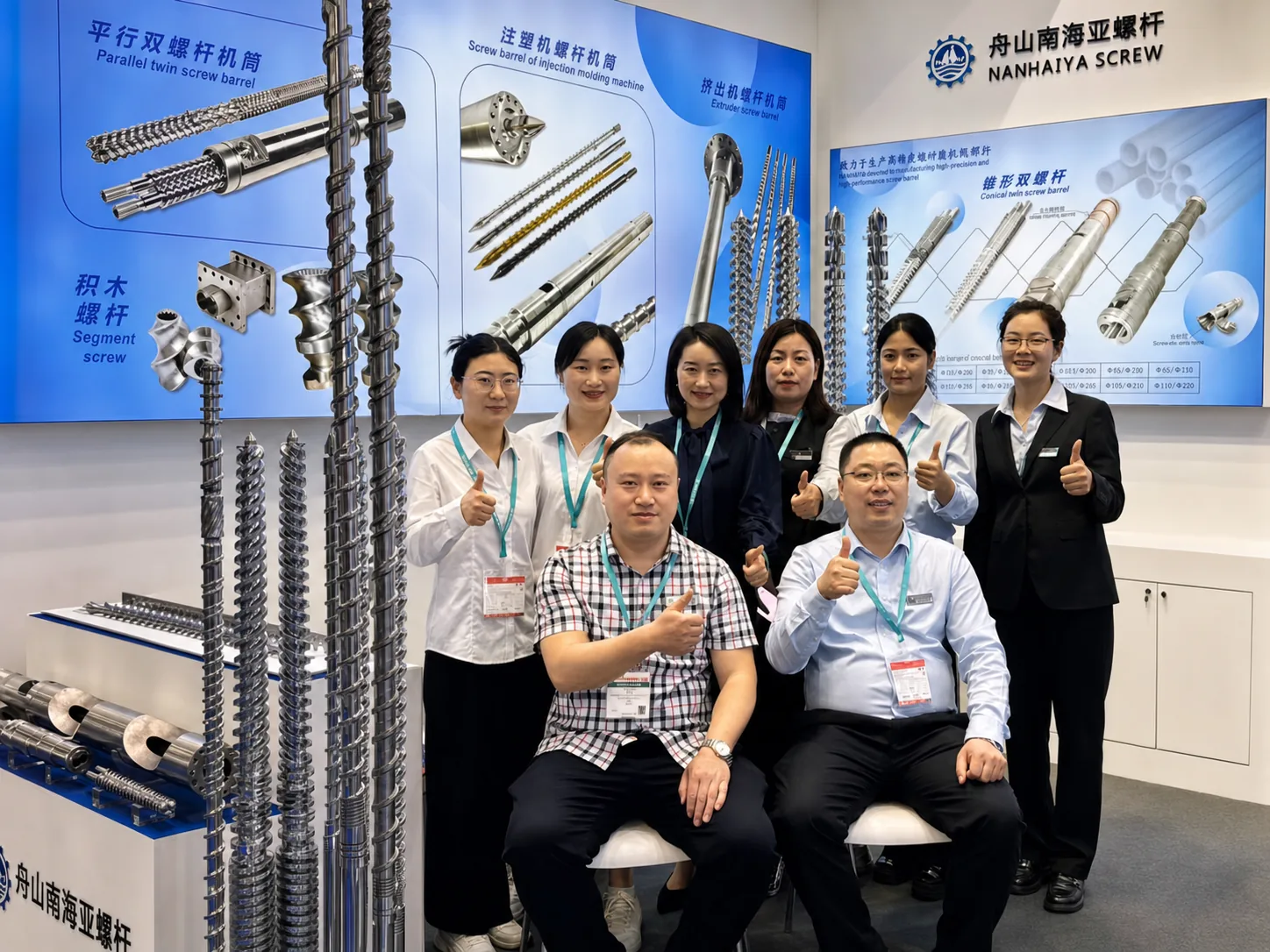
Related Articles
More insights on screw barrel technology and plastics processing.
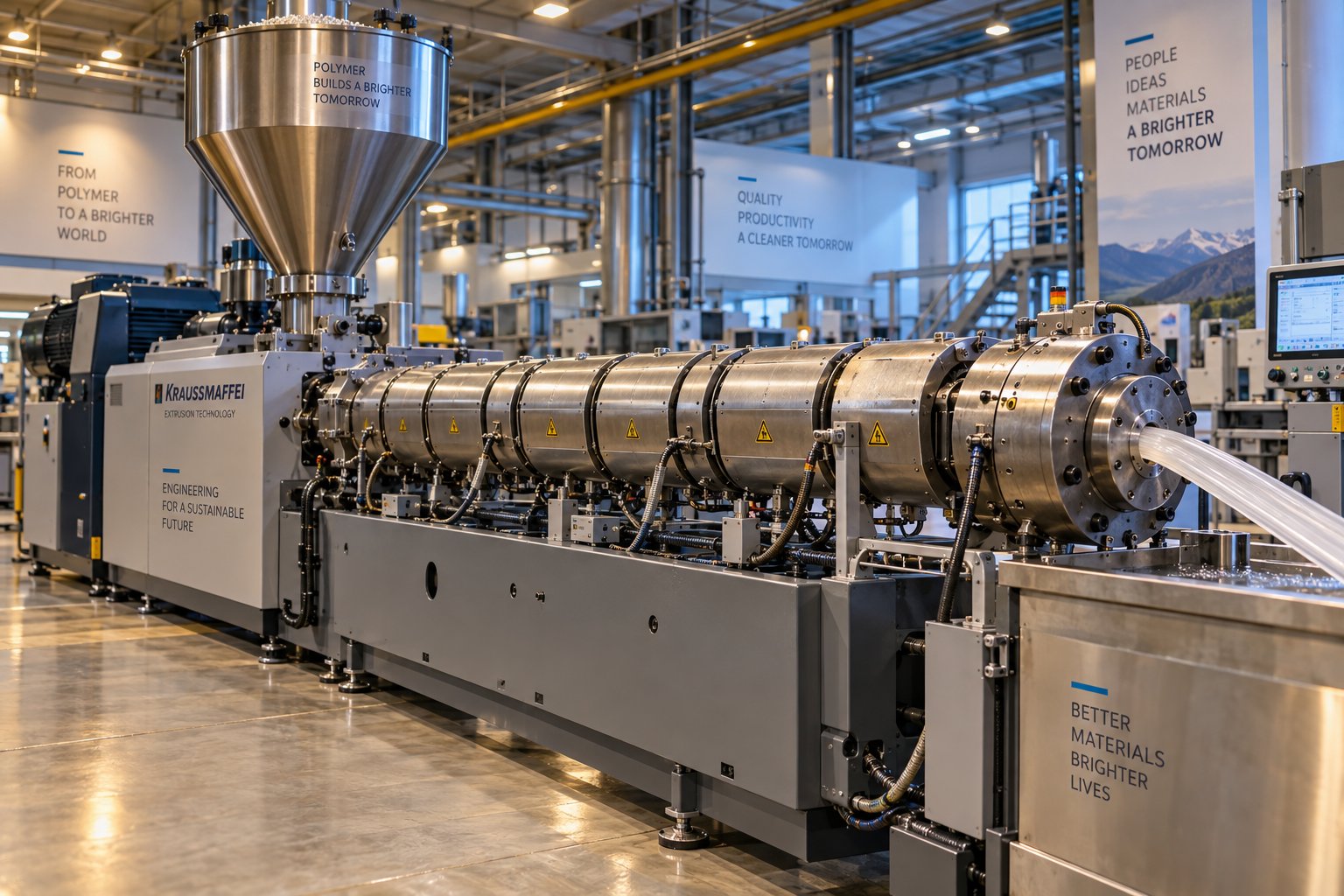
Extruder Machine Decoded: From Raw Pellet To Finished Product
Oct 6, 2026
Learn how an extruder machine works, compare single-screw vs. twin-screw types, and get expert guidance on specs, troubleshooting, and selection.
Read Article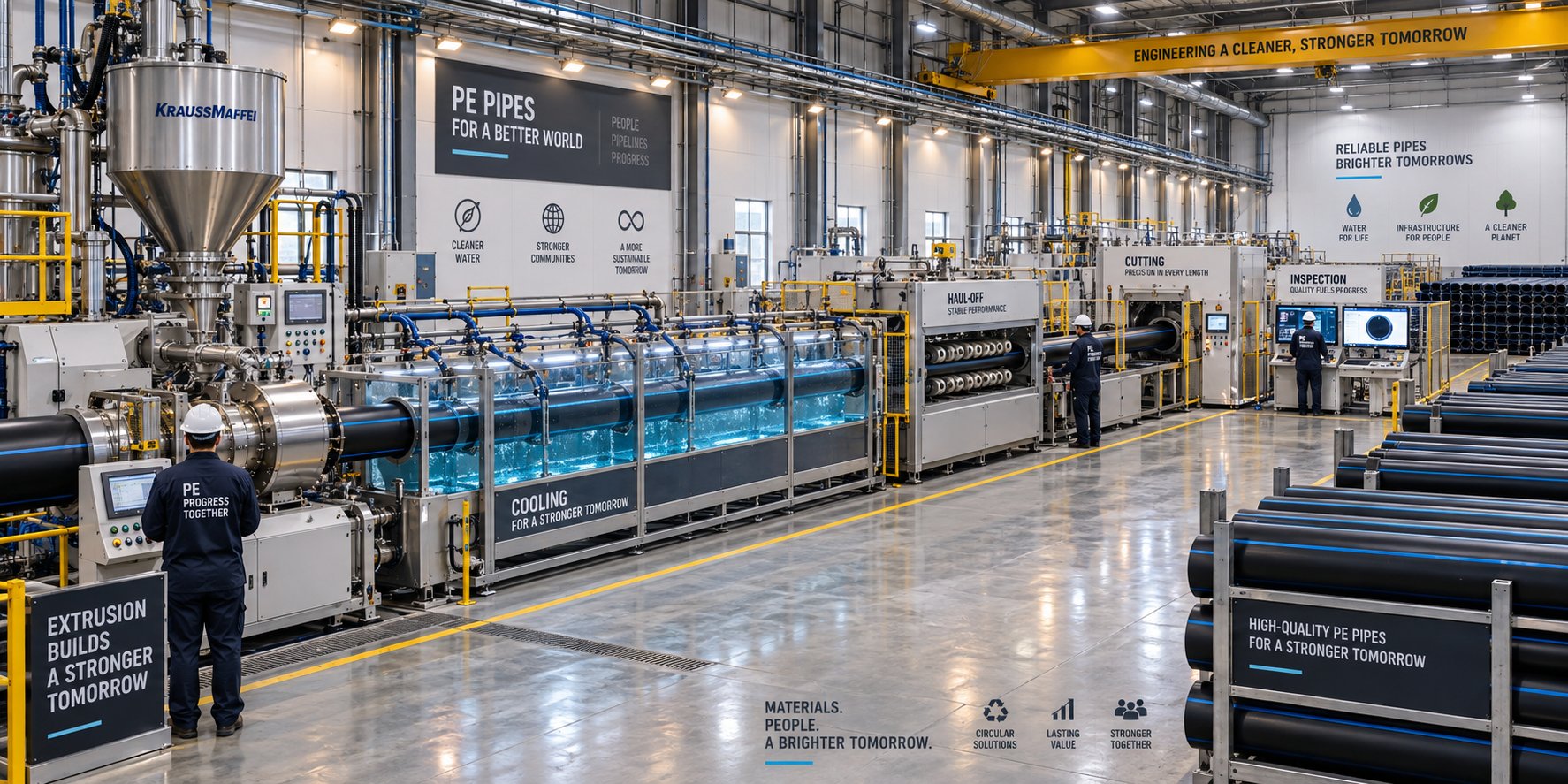
PE Pipe Making Machine Decoded: From Raw Resin to Flawless Pipe
Oct 4, 2026
Learn how a PE pipe making machine works, from resin to finished pipe. Covers components, material grades, automation, troubleshooting, and buyer selection tips.
Read Article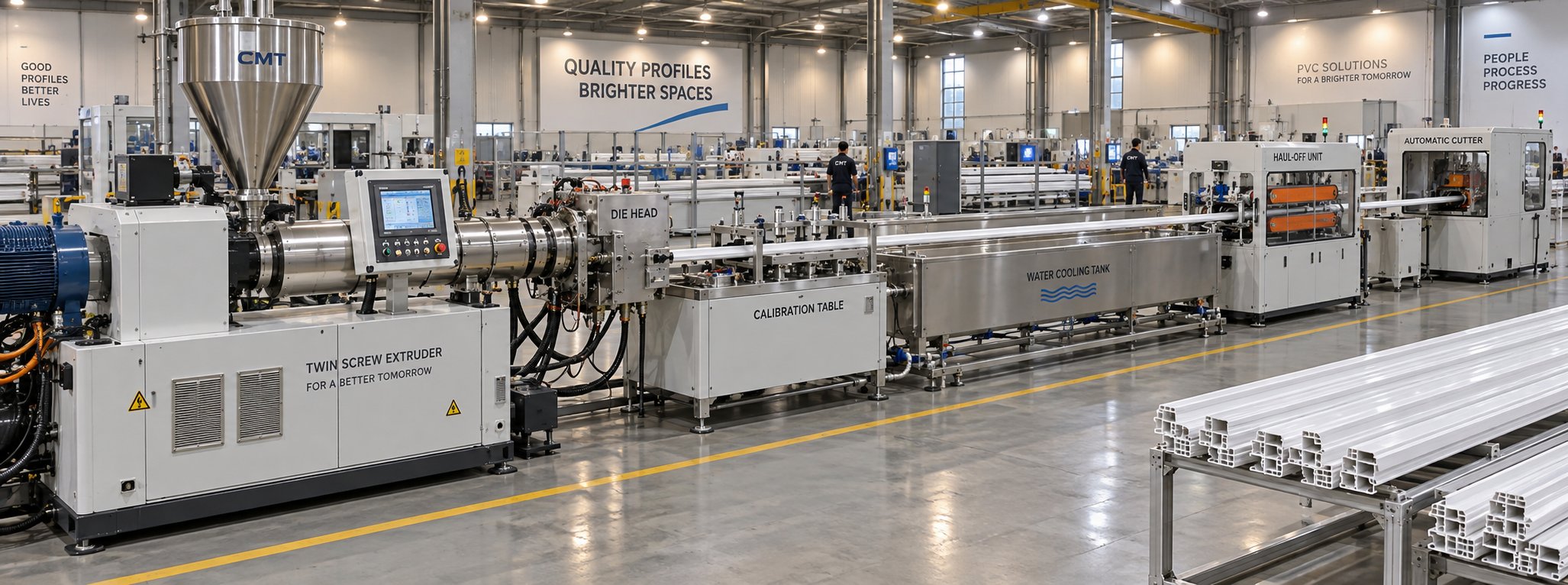
PVC Profile Making Machine Decoded: From Raw Resin To Profit
Oct 3, 2026
Learn how a PVC profile making machine works — extrusion process steps, key technical parameters, die design, calibration methods, maintenance, and total cost of ownership.
Read ArticleLooking for something else?
Search by material, symptom or product and jump straight to the relevant page.
These are navigation suggestions based on keyword matching — not a quotation, not a delivery commitment, and not a substitute for engineering review. Final specification is confirmed by our engineers against your drawings and processed material.
Need help with screw barrel selection?
Share your machine model, processed material and application. Our team can help with pricing and technical support.