

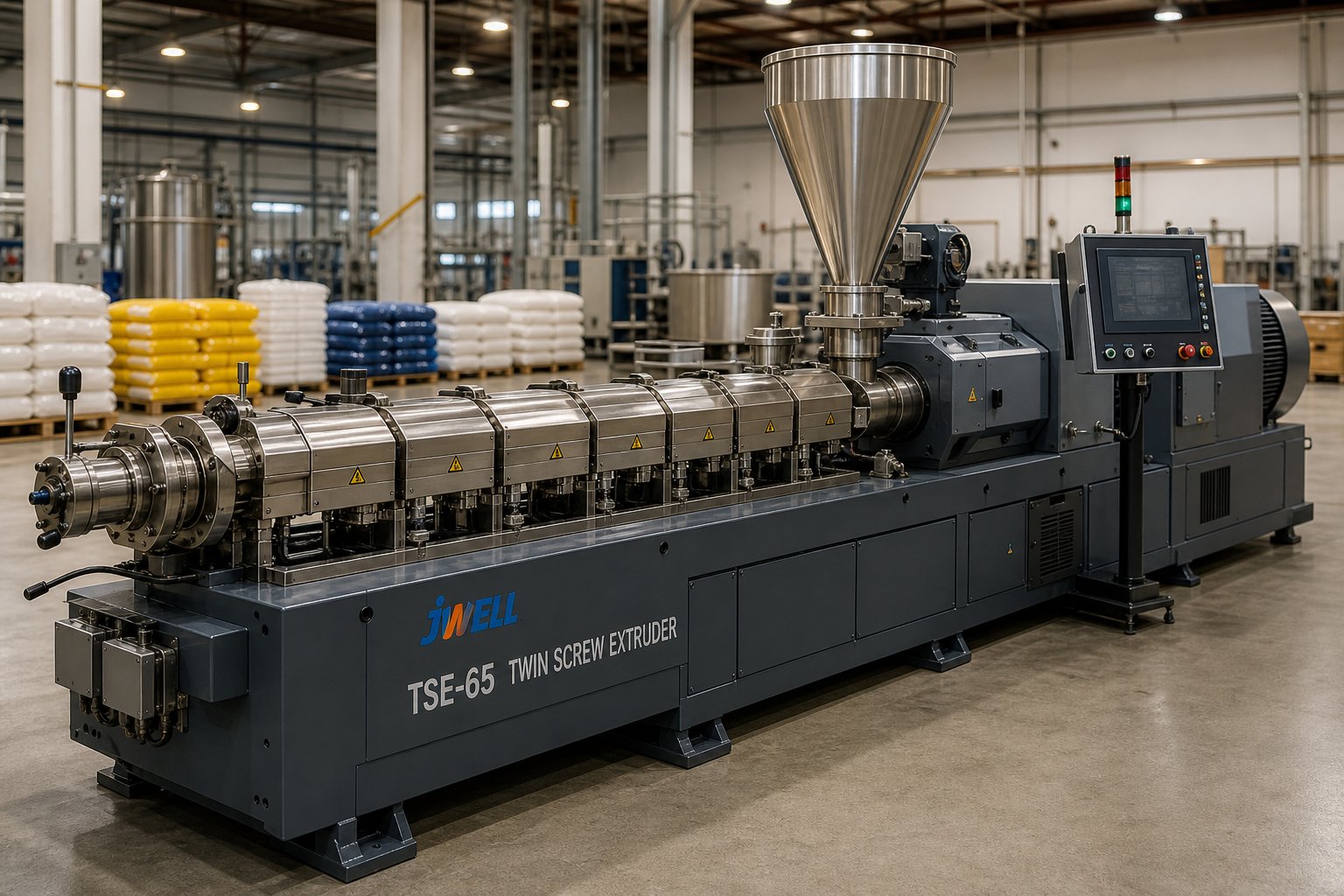
What Twin Screw Extruder Suppliers Deliver Beyond the Machine
Twin screw extruder suppliers are far more than equipment vendors. They are solution providers offering complete extrusion machinery, process engineering support, spare parts supply chains, operator training, and ongoing after-sales service. The right supplier shapes your throughput, product quality, uptime, and total cost of ownership for years, sometimes decades, after the purchase order is signed.
With the global twin screw extruder market projected to reach USD 6.8 billion by 2035, according to Fact.MR's industry analysis, the number of companies claiming to sell these machines has exploded. Yet fewer than 20 deliver the engineering depth and reliability that industrial buyers actually need. This guide cuts through the noise. It walks procurement teams from understanding extruder configurations through supplier evaluation criteria to final selection, without favoring any single brand or region.
What Twin Screw Extruder Suppliers Really Provide
Imagine you're purchasing not just a machine but an entire production capability. A credible twin screw extruder supplier typically delivers:
- Complete extrusion lines, including feeders, the extruder itself, and downstream pelletizing or die equipment
- Modular screw elements and barrel assemblies tailored to your specific polymer or formulation
- Installation, commissioning, and operator training at your facility
- Ongoing technical support, remote diagnostics, and process optimization consulting
- Spare parts inventory and replacement component manufacturing
In practice, a well-matched industrial extruder supplier functions as an extension of your engineering team. They help configure the extruder system for your exact recipe, troubleshoot production issues remotely, and provide replacement wear parts before unplanned downtime eats into your margins.
Why Supplier Selection Matters More Than Machine Specs
Here's something most buyers learn too late: two twin screw extruders with identical specifications on paper can produce vastly different returns on investment. The difference comes down to the supplier behind the machine. One vendor might offer a robust service network with 48-hour spare parts delivery and dedicated process engineers. Another might sell the same screw diameter and torque rating but leave you stranded when a barrel liner wears out mid-campaign, with replacement lead times stretching into months.
Service response times, customization depth, and the availability of application labs for trial runs all separate a genuine engineering partner from a hardware reseller. A screw extruder is a 15- to 25-year asset. The supplier relationship lasts just as long.
Choosing a twin screw extruder supplier is choosing a long-term engineering partner, not just purchasing hardware. The extruder system on your floor is only as reliable as the service network standing behind it.
So how do you tell the difference between a true partner and a catalog seller? It starts with understanding the technical configurations these suppliers specialize in, and matching them to your specific application.
Co-Rotating vs Counter-Rotating Configurations and Supplier Specializations
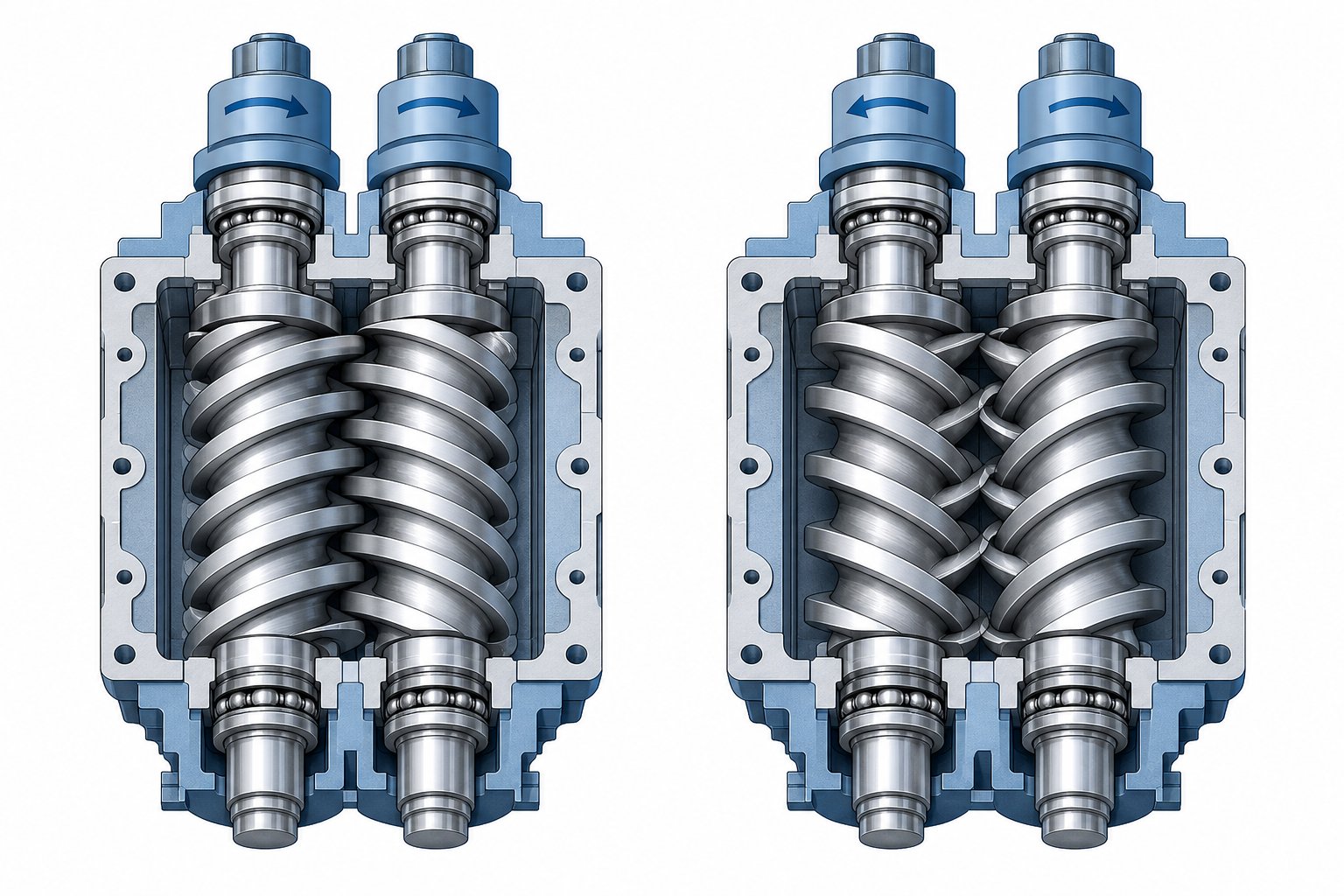
Not every twin-screw extruder is built for the same job, and not every supplier covers both sides of the design spectrum. The two fundamental configurations — co-rotating and counter-rotating — differ so sharply in screw geometry, shear behavior, and target applications that most manufacturers specialize heavily in one or the other. Understanding this split is the first step toward narrowing your supplier shortlist to companies that actually have deep expertise in your process.
Co-Rotating Twin Screw Extruders and Their Supplier Landscape
A co rotating twin screw extruder uses two screws that turn in the same direction inside a fully intermeshing geometry. Material is forcibly handed from one flight to the next at the intermeshing zone, creating intense shear fields between the screws and between the screw and barrel wall. The result? A self-wiping action that virtually eliminates dead zones and keeps residence time distribution narrow — a critical advantage for thermally sensitive formulations and reactive extrusion.
This design dominates compounding, masterbatch production, and polymer alloying because it delivers superior dispersive mixing. Kneading block elements add elongational flow, enabling structural control through filler agglomerate breakup and phase morphology regulation. You'll find the widest selection of co-rotating double screw extruder models from major European OEMs and a growing number of Chinese manufacturers who have invested heavily in this configuration over the past decade.
Counter-Rotating and Conical Configurations
When the screws rotate in opposite directions, the machine behaves more like a positive displacement pump. Material is drawn in at the intermeshing region, compressed, and conveyed forward at comparatively low rotational speeds. Shear stress and the associated heat buildup stay low — exactly what materials like rigid PVC demand. As Bausano's processing analysis highlights, counter-rotating extruders also produce a calendering effect between the screws that disperses additives under gentle conditions, making them ideal for PVC pipe, profile, and sheet extrusion.
Within this family, buyers encounter two sub-types. A conical twin screw extruder features tapered screws — larger at the feed end, smaller at the discharge — creating a natural compression zone in a compact footprint. These machines are workhorses in medium-capacity PVC lines. A parallel twin screw extruder, by contrast, maintains a consistent screw diameter along its full length. The longer barrel offers extended residence time, better plasticization, and higher corrosion resistance when processing PVC formulations loaded with calcium carbonate at 100 phr or more.
Suppliers specializing in counter-rotating machines tend to be a different group from the compounding-focused OEMs. Many are Italian or Taiwanese manufacturers with decades of PVC-specific process know-how.
Matching Your Application to the Right Supplier Type
Sounds complex? A simple decision framework clears the fog. If your application requires high-shear compounding, dispersive mixing of nanofillers, or reactive extrusion, prioritize suppliers whose engineering teams live and breathe co-rotating designs. If you're producing PVC pipes, profiles, or ceiling panels, seek out conical or parallel counter-rotating specialists with proven reference installations in your specific end product.
The table below lays out the core differences side by side:
| Dimension | Co-Rotating (Intermeshing) | Counter-Rotating (Parallel) | Counter-Rotating (Conical) |
|---|---|---|---|
| Typical Applications | Compounding, masterbatch, polymer alloys, reactive extrusion | PVC pipe, profiles, sheets, high-filler formulations | Medium-capacity PVC pipe and profile lines |
| Mixing Quality | Excellent dispersive and distributive mixing | Gentle calendering-based dispersion, lower shear | Good dispersion with natural compression zone |
| Throughput Range | Lab-scale (few kg/h) to several tons/h | Medium to high production volumes | Low to medium production volumes |
| Shear and Heat Generation | High shear, requires careful thermal management | Low shear, minimal heat buildup | Low shear, compact thermal profile |
| Supplier Availability | Widest selection — major European and Chinese OEMs | Specialized Italian, Taiwanese, and Chinese manufacturers | Niche specialists, predominantly European and Asian |
Picking the wrong configuration isn't just a technical mismatch — it means you've also picked a supplier whose engineering depth doesn't align with your process. And that misalignment shows up fast in the specifications they quote, the torque ratings they offer, and the metallurgy options available for your barrels and screws.
Critical Technical Specifications Every Buyer Should Compare
Supplier quotes are filled with numbers — screw diameters, torque ratings, L/D ratios, RPM limits. Most procurement teams glance at these figures, compare price columns, and move on. That's a costly mistake. These specifications aren't just catalog details. They're evaluation criteria that reveal how well a twin screw extruder machine will actually perform in your specific application, and how much engineering depth the supplier brings to the table.
The challenge? Two quotes can list nearly identical headline specs while hiding dramatic differences in metallurgy, drive architecture, and barrel design. Knowing which numbers truly matter — and how to interpret them — gives you leverage to ask sharper questions and spot suppliers who cut corners where it counts.
Screw Diameter and L/D Ratio Explained
Every twin-screw extruder machine is defined first by its screw diameter. This single dimension sets the ceiling for production capacity because throughput scales roughly with the square of the diameter. A jump from a 50 mm to a 75 mm screw doesn't deliver 50% more output — it can deliver more than double. That proportional relationship makes screw diameter the most critical sizing parameter when matching an industrial extruder machine to your target volume.
The L/D ratio — length-to-diameter ratio — determines how much processing work the extruder can accomplish along its barrel length. Think of it as the available "runway" for melting, mixing, devolatilizing, and pressure buildup. Most co-rotating designs fall within a 32:1 to 52:1 range, though some specialized configurations extend up to 68:1 for demanding reactive extrusion or multi-stage devolatilization processes.
Here's where supplier evaluation gets interesting. A shorter L/D, say 32:1, works well for simple color masterbatch where the polymer melts quickly and filler dispersion is straightforward. A longer L/D of 48:1 or beyond becomes necessary when you're compounding glass-fiber-reinforced engineering plastics or running reactive processes that demand extended residence time. Suppliers who offer a wider range of L/D configurations demonstrate greater engineering flexibility — they can tailor the barrel layout to your process rather than forcing your process to fit a fixed machine geometry.
When you see a supplier quoting only one or two L/D options, ask why. Limited configurations may signal limited application experience.
Torque Ratings and Throughput Benchmarks
Torque is the muscle behind every twin screw extruder machine, and it becomes especially critical when processing high-viscosity polymers or heavily filled compounds. The metric to focus on is specific torque density, expressed in Nm/cm³. This normalizes torque against the screw's volumetric capacity, making it possible to compare machines of different diameters on equal footing.
Why does this matter? Imagine you're compounding a 60% calcium carbonate-filled polypropylene. The melt viscosity is far higher than neat PP, and the screws must push that thick, abrasive mixture through kneading blocks and pressure buildup zones without stalling. A double screw extruder machine with insufficient torque density will hit its drive limit before reaching your target throughput — forcing you to either slow down or reduce filler loading, both of which hurt your economics.
Modern high-performance gearboxes deliver specific torque densities in the range of 11.3 to 18 Nm/cm³. Higher values provide headroom for processing demanding formulations without running the drive at its thermal or mechanical limit. When comparing quotes, don't just look at total torque — divide by the screw's free volume to get the density figure, then compare that across suppliers.
Throughput ranges span an enormous window. Laboratory-scale units may process just 2 to 5 kg/h for formulation development, while full-production industrial extruder machines can handle 5, 10, or even 20+ tons per hour depending on screw diameter and application. Ensure each supplier's quoted throughput is specified for your particular material and formulation, not a generic figure based on low-viscosity LDPE. A throughput number without a material reference is essentially meaningless.
Barrel and Screw Metallurgy as Differentiators
This is where many buyers leave money on the table. Two suppliers can quote the same screw diameter and torque, yet one machine's barrels and screw elements might last three times longer under identical processing conditions. The difference? Metallurgy.
Barrel liner materials range from standard nitrided steels — adequate for unfilled polymers — to advanced bimetallic alloys and specialized wear coatings designed for aggressive applications. Coperion's C-Rock technology, for example, uses a completely homogeneous, closed-surface coating with specially selected hard material components to protect barrel interiors against both abrasion and corrosion. This level of protection matters enormously when processing glass fiber, ceramic fillers, or chemically aggressive polymers like fluoropolymers and chlorinated compounds.
Screw elements face similar challenges. Kneading blocks in the melting and mixing zones endure continuous abrasive contact with partially molten polymer and hard filler particles. Coatings such as tungsten carbide, Stellite overlays, or powder metallurgy tool steels extend service intervals and reduce unplanned downtime. Suppliers with in-house barrel and screw manufacturing capability hold a distinct advantage here — they control raw material selection, heat treatment, and dimensional tolerances, which translates to tighter quality control, better part-to-part consistency, and faster replacement lead times when wear parts eventually need swapping.
Ask every supplier on your shortlist: Do you manufacture barrels and screw elements in-house, or do you outsource them? The answer tells you a great deal about their vertical integration and their ability to support you quickly when components wear out mid-production.
Your RFQ Specification Checklist
Every request for quotation you send should demand clear answers on the following specifications. Missing data points make quotes impossible to compare accurately:
- Screw diameter — matched to your target production volume
- L/D ratio — appropriate for your process complexity and residence time requirements
- Specific torque density (Nm/cm³) — not just total torque, but normalized to screw volume
- Maximum screw RPM — with clarification on whether rated torque is available across the full speed range
- Throughput range — specified for your exact material and formulation, not generic polymer
- Barrel metallurgy options — standard nitrided, bimetallic, or advanced coatings like powder metallurgy liners
- Screw element metallurgy and coating options — including available wear-resistant treatments
- Drive motor power (kW) — with efficiency class and cooling method
Suppliers who respond to this checklist with complete, detailed data are demonstrating transparency and technical confidence. Those who dodge specific metallurgy questions or quote throughput without material references are waving a subtle red flag — and the implications extend well beyond specifications into how they handle pricing, service commitments, and regional support infrastructure.

Regional Supplier Landscape and Geographic Trade-Offs
Specifications tell you what a machine can do. Geography tells you what the buying experience — and the ownership experience — will actually feel like. Where a twin screw extruder supplier is headquartered shapes everything from the price on the quote to how fast a replacement barrel shows up when one wears out at 2 a.m. on a Friday. Yet most buyers evaluate suppliers without ever stepping back to consider how regional manufacturing traditions, cost structures, and service network densities create fundamentally different value propositions.
The honest reality is that no single region dominates across every dimension. European manufacturers lead in engineering heritage and certification depth. Chinese suppliers have closed the performance gap while holding a decisive cost advantage. North American companies offer proximity benefits that matter enormously when production uptime is non-negotiable. Understanding these trade-offs — without the marketing spin — gives procurement teams the clarity to match their priorities to the right regional supplier profile.
European Suppliers and the Premium Engineering Tradition
Europe, and Germany in particular, is where modern twin screw extrusion technology was born. The Coperion extruder lineage traces directly back to Werner & Pfleiderer, the German firm that pioneered co-rotating twin screw technology over a century ago. That Werner & Pfleiderer extruder heritage — now part of Coperion, which was acquired by Hillenbrand Inc. — produced the ZSK series that has become the global benchmark for high-performance compounding. With over 15,000 installed compounding systems worldwide and torque densities reaching 18 Nm/cm³, the ZSK Mc18 platform sets the standard that competitors measure themselves against.
Other German heavyweights reinforce this premium tier. Leistritz brings over a century of screw technology expertise with its ZSE iMAXX series, delivering up to 15 Nm/cm³ specific torque and strong positioning in pharmaceutical hot-melt extrusion. KraussMaffei's ZE BluePower series pushes the OD/ID ratio to 1.65, enabling high free volume for low-bulk-density fillers while maintaining torque densities around 16 Nm/cm³. Italian manufacturers like Bausano add depth in counter-rotating PVC applications, with energy-saving electromagnetic induction heating that cuts consumption by up to 35%.
The trade-off? Premium pricing and timelines to match. Lead times from European OEMs commonly stretch to 8 to 14 months, and the total installed cost of a Coperion extruder or comparable German machine can be two to three times what a top-tier Chinese alternative costs for similar screw diameters. European suppliers also tend to sell extruders as standalone equipment rather than complete production lines, leaving buyers to manage multi-vendor integration for feeders, pelletizers, and downstream systems.
Beyond compounding, Coperion's reach extends into adjacent markets. The company's operations at Coperion Whitewater WI serve as a key North American hub for material handling and feeding technology, while Coperion food equipment lines address the growing demand for twin screw processing in snack, cereal, and textured protein applications. Their feeding division, Coperion K-Tron, has become the industry reference for gravimetric and volumetric dosing systems — components that frequently appear on quotes from competing extruder suppliers who integrate third-party feeders into their lines.
For applications where certification depth, maximum torque density, and a global service footprint with engineers in 30+ countries are non-negotiable — think automotive structural compounds, pharmaceutical GMP production, or mission-critical 24/7 lines — European suppliers remain the safest choice. The question is whether your specific application truly demands that level of investment.
Chinese Manufacturers and the Value Proposition
If your mental image of Chinese twin screw extruders is stuck in the early 2000s — basic machines with inconsistent quality — it's time for an update. The top tier of Chinese manufacturers has invested heavily in CNC machining, automated assembly, and in-house metallurgy, narrowing the technology gap to a point where the conversation has shifted from "Are they good enough?" to "For which applications are they the smartest choice?"
The cost advantage remains substantial. Industry comparisons consistently show Chinese manufacturers pricing complete extruder systems at 40 to 60% below European equivalents — not by cutting corners, but by leveraging advanced CNC machining, lean manufacturing, and lower labor costs. Lead times typically run 3 to 6 months, roughly half the European timeline. And some of the more established players now offer vertically integrated solutions: in-house screw element and barrel production, proprietary gearbox designs, and complete turnkey lines with feeders, pelletizers, and control systems from a single source.
The strongest Chinese suppliers are concentrated in the Nanjing-Jiangsu region, where a cluster of extrusion technology companies has developed over the past two decades. Companies like USEON have delivered over 2,500 production lines across 70+ countries, with their newer U+ series reaching 15 Nm/cm³ specific torque — putting them within striking distance of European flagship platforms. Others focus on mid-market compounding and masterbatch where peak torque density isn't required but reliable 24/7 production absolutely is.
That said, buyer due diligence matters more with Chinese suppliers than it does with established European brands. The quality gap between top-tier and lower-tier Chinese manufacturers is enormous — far wider than the gap between, say, two German OEMs. Some lower-tier shops are essentially screw-and-barrel assemblers without genuine in-house design capability. Red flags include suppliers who cannot provide reference installations for your specific application, who quote dramatically below even the Chinese market average, or who resist factory visit requests.
Practical steps that experienced procurement teams take include conducting on-site factory audits, requesting verifiable customer references in similar applications, running pilot trials on the supplier's own equipment before committing, and securing contractual performance guarantees tied to specific throughput and quality metrics. Communication can also present challenges — ensure your supplier has English-speaking engineers, not just sales representatives, involved in the technical specification process.
North American and Other Regional Suppliers
For buyers operating in the United States, Canada, or Mexico, proximity carries real operational value. North American extruder manufacturers like ENTEK and Davis-Standard offer something no overseas supplier can match: same-day or next-day service response from locally based field engineers. When a gearbox issue threatens to shut down a 24/7 production line, having a service technician within driving distance — rather than a 14-hour flight away — can save hundreds of thousands of dollars in lost production.
ENTEK's HT72 series delivers a torque density of 18 Nm/cm³, matching the top European benchmarks, while their QC3 platform is purpose-built for compounders who run small lots with frequent changeovers. Davis-Standard emphasizes long-term durability — some of their extruders have been in continuous service for over 50 years. Both companies build entirely within the United States, simplifying logistics, import documentation, and after-sales parts supply for North American operations.
Beyond North America, Japanese manufacturers like JSW and Kobe Steel bring a precision-engineering tradition that rivals Germany's. JSW's TEX-alphaIII achieves a specific torque of 18.2 Nm/cm³ — among the highest in the world — with screw diameters scaling up to 443 mm for mega-scale devolatilization. Indian supplier Steer Engineering has carved out a niche with its OMEGA platform, featuring a patented OD/ID ratio of 1.71 and fractional-lobe screw elements designed for pharmaceutical hot-melt extrusion and shear-sensitive masterbatch formulations.
The table below provides a side-by-side comparison of what each major region typically delivers across the dimensions that matter most during procurement:
| Dimension | European (Germany, Italy) | Chinese (Nanjing/Jiangsu Hub) | North American (USA) | Japanese |
|---|---|---|---|---|
| Pricing Tier | Premium (baseline 100%) | Value (30-55% of European) | Mid-Premium (70-90% of European) | Premium (90-110% of European) |
| Typical Lead Times | 8-14 months | 3-6 months | 4-8 months | 8-12 months |
| Spare Parts Availability | Excellent globally; regional warehouses in 30+ countries | Good from top-tier suppliers; improving regional stocking | Excellent domestically; limited international stocking | Excellent in Asia-Pacific; limited Western stocking |
| Service Network Density | Most extensive global footprint | Growing; stronger in Asia, Middle East, and Africa | Very strong in North America; limited internationally | Strong in Asia-Pacific; selective Western presence |
| Turnkey Line Integration | Typically extruder-only; multi-vendor integration needed | Full turnkey solutions from top suppliers | Selective integration; often extruder-focused | Extruder-focused with selective downstream options |
| Common Buyer Concerns | High cost, long lead times, multi-vendor complexity | Quality variance across tiers, IP considerations, communication gaps | Limited product range, higher pricing than Chinese options | Premium pricing, longer lead times, limited customization speed |
| Strongest Application Fit | GMP pharma, automotive engineering plastics, mission-critical 24/7 | Masterbatch, mid-volume compounding, PVC, large polyolefin | North American operations needing rapid local service | Ultra-large devolatilization, polymer alloys, high-precision compounding |
Notice a pattern? Every region excels in some dimensions and concedes ground in others. The smartest procurement strategy doesn't ask "Which region is best?" — it asks "Which region's strengths align with our operational priorities?" A compounder in Ohio running 24/7 glass-fiber-reinforced nylon has very different regional priorities than a masterbatch producer in Vietnam scaling up a new calcium carbonate line.
Geography shapes the buying experience, but it doesn't end the evaluation. The purchasing model you choose — buying from an OEM, going through a distributor, or sourcing directly from a manufacturer — introduces another layer of strategic trade-offs that most buyers don't consider until they're already deep into the procurement cycle.
OEM vs Distributor vs Direct Manufacturer Purchasing Models
Most buyers jump straight into comparing extruder brands without first deciding how they want to buy. That's like choosing a restaurant before deciding whether you want dine-in, delivery, or meal-kit ingredients. The purchasing model you select — OEM, distributor, or direct-from-manufacturer — shapes your pricing, your access to technical support, and your flexibility when sourcing replacement components like gearboxes, melt pump assemblies, and wear parts years down the road.
Each model carries distinct trade-offs, and the right choice often depends on what you're buying, how complex your application is, and how much engineering handholding you need during specification and commissioning.
Buying from an OEM vs a Distributor
When you purchase directly from an original equipment manufacturer, you're going to the source. The OEM designed the machine, built the gearbox, configured the screw layout, and — critically — understands every engineering decision behind the final product. That depth of knowledge is irreplaceable when your application involves unusual polymers, aggressive fillers, or process conditions that push equipment limits.
OEMs also ensure that every replacement part, from a Coperion extruder gearbox to a barrel segment, is genuine and carries a manufacturer's warranty. Their service technicians are factory-certified on every model they've shipped. For complex compounding applications requiring custom screw configurations or specialized barrel metallurgy, OEM engineers can model, simulate, and optimize before any metal gets cut.
The downside? OEMs typically sell only their own brand. Ask a Coperion gearbox specialist whether a competitor's drive architecture might suit your application better, and you'll get exactly the answer you'd expect. Industry analyses confirm that OEM sales representatives are naturally biased toward their own product line, regardless of whether it's the optimal fit. Minimum order requirements, longer sales cycles, and premium pricing further limit flexibility for smaller operations.
Distributors offer a different value proposition entirely. They carry multiple brands, giving you the ability to compare options from several twin screw extruder suppliers in a single conversation. A good distributor provides honest, brand-neutral feedback — they have no reason to hide one manufacturer's weaknesses when they can pivot you to another offering in their portfolio. They also tend to stock a broader range of consumables and accessories, including items like extruder pump components and downstream equipment that OEMs may not cover.
The trade-off is depth. Distributors rarely match the OEM's granular knowledge of a specific machine's internal engineering. Their technicians may not hold certifications for every brand they represent, and in some cases, service work gets subcontracted to third parties — adding a middleman that can slow response times and complicate warranty claims. There's also a markup: any time you introduce an intermediary, the cost of goods typically increases to cover the distributor's margin.
Direct-from-Manufacturer Purchasing
Here's a trend that has accelerated dramatically in the past five years: buyers sourcing components directly from specialized manufacturers rather than routing everything through the original extruder supplier. This approach is most common — and most impactful — for replacement components like screws, barrels, liners, and other wear parts that need periodic replacement regardless of how premium the original machine was.
Why go direct? Factory-direct purchasing eliminates the distributor's margin and often the OEM's parts-department markup as well. For standardized components — a set of kneading blocks for a 65 mm co-rotating extruder, for instance — a specialized manufacturer can deliver equivalent or superior metallurgy at a lower price point with faster lead times. Many of these manufacturers invest in advanced capabilities like centrifugal casting, PTA hardfacing, and HVOF thermal spray coatings, giving them metallurgical expertise that rivals or exceeds what some OEMs maintain in-house. As industry sourcing data shows, vertically integrated direct manufacturers who control casting, heat treatment, hardfacing, and final grinding under one roof deliver more consistent quality than suppliers who outsource critical production steps.
The risk is on the buyer to verify quality. Without the OEM's brand guarantee, you need to demand material certifications (EN 10204 3.1 minimum), hardness test reports, and dimensional inspection records. For a melt pump or other precision component, ask for metallographic cross-sections that confirm overlay thickness and bond quality. Direct purchasing works best for experienced procurement teams who know exactly what they need and can evaluate supplier documentation critically.
Hybrid Sourcing Strategies
Experienced buyers rarely commit to a single purchasing model. The most cost-effective approach is typically a hybrid strategy that matches each purchasing channel to the type of component being sourced.
Imagine you're building a new compounding line. You purchase the complete extrusion system — extruder, gearbox, drive, and controls — from an established OEM. Their engineering team specifies the screw configuration, barrel layout, and process parameters. The machine arrives with full warranty coverage, factory commissioning, and operator training. That's where OEM purchasing excels.
Eighteen months later, the first set of kneading blocks shows measurable wear. Instead of ordering replacements through the OEM's parts department at a significant markup with a 10-week lead time, you source them from a specialized direct manufacturer who offers equivalent CPM 10V metallurgy at 40% lower cost with a 4-week turnaround. The quality is verified through the same material certifications and hardness testing standards. Your lifecycle cost drops meaningfully — without sacrificing the original equipment's performance envelope.
This is exactly how seasoned procurement teams optimize their total cost of ownership: OEM relationships for capital equipment and complex engineering, direct manufacturer relationships for consumable wear parts and replacement components.
Comparing the Three Models
The table below summarizes where each purchasing model delivers the strongest value — and where it falls short:
| Criterion | OEM (Direct) | Distributor | Direct-from-Manufacturer |
|---|---|---|---|
| Technical Expertise | Deepest knowledge of their own machines | Broad but shallower across multiple brands | Deep in specific component categories (screws, barrels, pumps) |
| Brand Selection | Single brand only | Multiple brands and configurations | Component-focused; brand-agnostic compatibility |
| Pricing | Premium; includes R&D and brand margin | Mid-range; includes distributor margin | Most competitive for replacement parts |
| Warranty Coverage | Full manufacturer warranty with genuine parts | Varies; may include service contracts | Manufacturer warranty on components; buyer manages integration |
| Service and Repairs | Factory-certified technicians globally | Local techs; certification varies | Limited to component supply; no field service |
| Lead Times | Longer for custom; moderate for standard parts | Faster from local inventory | Often fastest for standardized wear components |
| Best For | Complete extrusion lines, complex applications, GMP environments | Buyers comparing multiple brands, needing local support | Replacement screws, barrels, wear parts, and extruder pump components |
No single model wins across every row. The buyers who achieve the lowest total cost of ownership are those who consciously select the right channel for each purchase type — capital equipment through OEMs, comparative shopping through distributors, and lifecycle wear parts through qualified direct manufacturers.
Choosing a purchasing model is one thing. Knowing how to evaluate the suppliers within that model — their certifications, engineering depth, after-sales infrastructure, and customization capabilities — requires a structured framework that most procurement teams never formalize. That's where the evaluation becomes genuinely strategic.

A Structured Framework for Evaluating Compounding Machine Suppliers
You've narrowed the field by region and purchasing model. Three to five suppliers have responded to your RFQ with glossy proposals, competitive pricing, and confident claims about throughput and uptime. How do you actually separate the best long-term partner from the best sales presentation?
Most procurement teams default to a side-by-side price comparison, maybe supplemented by a quick glance at certifications and delivery timelines. That approach fails because it treats a 15- to 25-year capital equipment decision like a commodity purchase. What you need instead is a weighted scoring framework — a structured method that forces explicit evaluation across every dimension that will affect your total cost of ownership, production reliability, and process flexibility for the life of the machine.
The framework below is built specifically for evaluating twin screw extruder suppliers, drawing on established procurement scoring methodologies and adapted for the realities of plastic compounding equipment purchasing. Apply it consistently across every supplier on your shortlist, and the right choice becomes remarkably clear.
Certifications and Quality Management Systems
Certifications are the first pass/fail gate in any serious evaluation. They don't guarantee quality, but their absence — or worse, their fabrication — signals risks that no amount of competitive pricing can justify.
ISO 9001 certifies that the supplier operates a documented quality management system covering design, production, and support processes. Unlike a product-level mark, ISO 9001 is verified through third-party audits by accredited registrars like DNV, BSI, or Bureau Veritas. It tells you the supplier follows consistent processes across every machine they build. Can a supplier hold ISO 9001 and still produce a mediocre compounding extruder? Yes — ISO certifies the process, not the outcome. But a supplier without ISO 9001 has no systematic mechanism to prevent production quality from drifting between machines.
CE marking is a product-level declaration that specific equipment meets EU safety, health, and environmental directives — primarily the Machinery Directive 2006/42/EC. Here's the critical detail most buyers miss: for most compounding machinery categories, CE marking is a self-declaration. The manufacturer assesses compliance and affixes the mark. No government body tests or approves the product. That makes verification your responsibility.
Industry-specific certifications add further differentiation. For pharmaceutical hot-melt extrusion, look for GMP compliance documentation. For food-contact applications, FDA compliance and GRAS material certifications become relevant. Suppliers serving the compounding plant market for automotive engineering plastics should demonstrate IATF 16949 awareness, even if full certification isn't always required.
How do you verify these claims? Three practical steps that take less than a day:
- ISO certificates: Search the registrar's public directory or use the IAF CertSearch global register. Confirm the certificate covers the actual facility producing your equipment — a certificate for Plant A doesn't automatically apply to Plant B.
- CE compliance: Request the Declaration of Conformity (DoC). Legitimate suppliers provide this without hesitation. If the DoC doesn't reference specific EU directives and harmonized standards, treat it as a red flag.
- Expired or suspended certificates: Always check dates. An ISO certificate from three years ago may have lapsed, and a supplier presenting an expired credential either doesn't know or doesn't care — both are concerning.
Engineering and Customization Capabilities
Certifications tell you a supplier meets baseline standards. Engineering capability tells you whether they can solve your specific problem. This distinction matters enormously because no two compounding applications are identical — even small differences in filler loading, polymer viscosity, or target pellet geometry can demand meaningful changes to screw configuration, barrel layout, and downstream integration.
When evaluating a supplier's engineering depth, look for these concrete indicators:
- Screw design simulation: Can the supplier model your screw configuration using FEM or CFD tools before cutting metal? Suppliers who offer simulation-based screw design reduce the risk of costly trial-and-error on your production floor. Ask to see example simulation outputs — fill factor analysis, temperature distribution maps, or residence time predictions — from comparable applications.
- Application laboratory access: Does the supplier operate a fully equipped trial lab where you can test your formulation on a representative machine before committing to a full-scale purchase? Trial runs on actual equipment reveal mixing quality, energy consumption, and throughput constraints that no specification sheet can predict.
- Modular barrel configuration: Evaluate whether the supplier offers a broad selection of barrel types — closed barrels, open-vent barrels, side-feeder barrels, liquid-injection barrels — and whether they can engineer custom barrel sequences for multi-stage processes like reactive extrusion with downstream devolatilization.
- Downstream integration: A supplier who can specify and integrate strand pelletizers, underwater pelletizing systems, screen changers, and melt pumps into a cohesive line delivers faster commissioning and single-source accountability. Those who only sell the extruder itself leave you managing multi-vendor integration — a process that frequently creates finger-pointing when performance targets aren't met.
The depth of these capabilities varies wildly across the market. Some suppliers maintain full R&D teams with PhD-level polymer scientists. Others essentially assemble components from subcontractors and can't meaningfully customize beyond selecting from a fixed menu of standard screw profiles. Ask pointed questions during your evaluation: "Show me a project where you engineered a non-standard screw configuration for a customer. What was the problem, and how did your design solve it?" Suppliers with genuine engineering depth will answer with specifics. Those without it will pivot to brochures.
After-Sales Support and Service Network Evaluation
Here's where the real separation happens — and where many buyers only begin to pay attention after the purchase order is signed and the first unplanned shutdown hits. After-sales support encompasses warranty coverage, spare parts logistics, field service technician availability, remote diagnostics, and ongoing operator training. It's the dimension that most directly affects your uptime, your maintenance costs, and your confidence that the production line will perform at spec for years, not just months.
After-sales support consistently becomes the single most important factor within the first two years of ownership — yet it receives the least scrutiny during the procurement process.
Evaluate each supplier's after-sales infrastructure with these specific questions:
- Warranty terms: What's covered, for how long, and what exclusions apply? Some suppliers offer 12-month warranties; others extend to 24 months with optional extensions. Pay special attention to what voids the warranty — running non-approved materials, exceeding rated RPM, or using third-party replacement parts are common exclusion clauses.
- Spare parts stocking policy: Does the supplier maintain regional warehouses with critical wear parts pre-stocked, or do all replacements ship from the factory with 8- to 12-week lead times? For a compounding extruder running 24/7, the difference between a 48-hour and 10-week barrel replacement can represent hundreds of thousands of dollars in lost production.
- Field service availability: How many service technicians does the supplier employ in your region? What is the guaranteed response time for emergency calls? Are technicians factory-certified on your specific model?
- Remote diagnostics: Does the machine's control system support remote access so the supplier's engineers can troubleshoot process issues without waiting for a site visit? This capability has become increasingly standard among top-tier suppliers and can resolve many issues within hours rather than days.
- Training programs: Does the supplier offer structured operator training — both during commissioning and on an ongoing basis? Refresher courses for new operators joining your team months or years after installation prevent the gradual erosion of process knowledge that leads to suboptimal machine utilization.
The Supplier Evaluation Scorecard
Pulling these dimensions together into a single weighted scorecard forces your evaluation team to explicitly discuss what matters most before scoring begins. The weighting conversation itself is where the real strategic alignment happens — as procurement research demonstrates, shifting weights by even 5% between categories can flip the outcome between two closely ranked suppliers.
The scorecard below assigns weights based on what experienced buyers of plastic compounding equipment consistently report as most impactful over the full machine lifecycle. Use a 1-to-5 scoring scale for each criterion: 5 = exceptional, 4 = strong, 3 = adequate, 2 = weak, 1 = poor.
| Evaluation Criterion | Weight | What to Assess | Supplier A Score | Supplier B Score | Supplier C Score |
|---|---|---|---|---|---|
| Technical Capability | 25% | Screw design expertise, simulation tools, application lab, range of L/D configurations, barrel metallurgy options | |||
| Pricing Competitiveness | 20% | Equipment price, total cost of ownership projection, spare parts pricing transparency, financing options | |||
| After-Sales Support | 20% | Warranty terms, spare parts lead times, regional service technicians, remote diagnostics, training programs | |||
| Reference Installations | 15% | Number and relevance of installed machines in your specific application, customer references willing to speak | |||
| Lead Time Reliability | 10% | Quoted delivery timeline, historical on-time delivery rate, penalty clauses for delays | |||
| Customization Flexibility | 10% | Ability to engineer non-standard screw profiles, custom barrel layouts, and integrated downstream solutions | |||
| Total Weighted Score | 100% |
To calculate each supplier's total, multiply their score (1-5) by the criterion weight for each row, then sum the results. A maximum possible score is 5.0; anything above 4.0 typically signals a strong candidate. More importantly, look at where each supplier scores highest and lowest. A supplier who earns a 5 on technical capability but a 2 on after-sales support is signaling that you'll get a brilliantly engineered machine — and then be largely on your own when something goes wrong at month 14.
You'll want to adjust these weights to reflect your operational reality. A compounding plant running a single production line with no redundancy should increase the after-sales support weight to 25% or higher, because every hour of unplanned downtime directly hits revenue. A buyer with in-house engineering resources and a well-equipped maintenance shop might shift weight from after-sales toward pricing competitiveness, since they're less dependent on the supplier for ongoing support.
The key discipline is to finalize your weights before you begin scoring. Adjusting weights after seeing preliminary results introduces exactly the kind of bias the framework is designed to eliminate. Have each evaluation team member score independently first, then calibrate as a group, focusing discussion on large discrepancies where one evaluator scored a supplier significantly differently from colleagues.
A rigorous scorecard reveals which supplier delivers the best overall value — but value without realistic pricing context is still incomplete. Understanding what actually drives twin screw extruder pricing, and where the hidden costs live, requires an equally structured look at the cost side of the equation.
Pricing Factors and Realistic Twin Screw Extruder Price Guidance
Here's the uncomfortable truth about twin screw extruder pricing: most suppliers won't give you a straight answer until you've invested weeks in technical discussions, factory visits, and formal RFQ submissions. And even then, the numbers you receive are nearly impossible to compare because different vendors include — or exclude — wildly different items in their quoted prices. One supplier's "complete line" quote covers feeders, pelletizers, and commissioning. Another's covers only the extruder itself, leaving you to discover the real total months later.
This opacity isn't accidental. Pricing in capital equipment is inherently complex because the final cost depends on dozens of interacting variables. But understanding which factors carry the most weight gives you the leverage to ask better questions, set realistic budgets, and avoid the trap of comparing headline prices that represent fundamentally different scopes of supply.
Factors That Drive Twin Screw Extruder Pricing
What separates a $25,000 lab scale twin screw extruder from a $800,000 production line? It's not just size. Multiple technical and commercial variables stack on top of each other, and their combined effect determines the final twin screw extruder price more than any single specification does.
Screw diameter is the single largest cost driver. Manufacturing costs scale geometrically with diameter — a 92 mm machine doesn't cost twice as much as a 46 mm unit; it can cost four to five times more because of the exponentially larger gearbox, heavier barrel segments, and more powerful drive motor required. The L/D ratio compounds this effect: stretching a 65 mm extruder from 40:1 to 52:1 adds three additional barrel sections, each requiring precision boring, heat treatment, and individual temperature control zones.
Metallurgy is the second most impactful variable, yet it's the one buyers most often overlook during early-stage budgeting. Standard nitrided barrels and tool-steel screw elements might suit unfilled polyolefin compounding, but processing 40% glass-fiber-reinforced nylon demands bimetallic barrel liners and tungsten-carbide-coated kneading blocks that can add 15 to 30% to the base equipment cost. The upfront premium, however, often pays for itself within the first year through extended service life and reduced downtime.
Automation level creates another significant cost tier. A basic PLC with manual setpoint entry occupies an entirely different price bracket than a fully integrated control system with recipe management, real-time SPC monitoring, and Industry 4.0 connectivity. Industry pricing data shows that most industrial twin screw extruders for sale fall between $80,000 and $300,000 for medium-capacity production models, while lab scale extruder units for R&D and pilot work start around $20,000 and laboratory extruder configurations with advanced instrumentation can reach $60,000 or more.
The following list ranks the primary cost-influencing factors by their typical impact on the final quoted price, from highest to lowest:
- Screw diameter and number of barrel sections — sets the baseline equipment size and directly determines gearbox, motor, and structural frame costs
- Barrel and screw element metallurgy — bimetallic liners, powder metallurgy tool steels, and specialized coatings can add 15-30% over standard options
- Drive system and gearbox torque rating — high specific torque gearboxes (11+ Nm/cm³) require precision gear grinding and premium bearing packages
- Automation and control system sophistication — from basic PLC to fully integrated SCADA with recipe management and remote diagnostics
- Downstream equipment inclusion — strand pelletizers, underwater pelletizing systems, screen changers, and cooling conveyors can equal or exceed the extruder's own cost
- L/D ratio — longer barrels add material cost, temperature control zones, and overall machine footprint
- Supplier region and brand positioning — European premium brands may quote 2-3x higher than top-tier Chinese manufacturers for comparable screw diameters
- Customization scope — non-standard barrel ports, specialized feeding configurations, or application-specific screw element geometries all carry engineering surcharges
Budget Planning and Total Cost of Ownership
If you're building a budget around the purchase price alone, you're looking at roughly 30 to 50% of what you'll actually spend over the machine's productive life. The remaining costs — installation, commissioning, energy consumption, maintenance, and spare parts — accumulate relentlessly and, for cheaper machines, can dwarf the original capital outlay within five years.
Consider what a TCO comparison reveals: a budget extruder purchased at $60,000 can generate a five-year total cost approaching $490,000 when you factor in higher energy consumption (roughly 2.5 kWh/kg versus 1.5 kWh/kg for a premium unit), accelerated screw wear requiring replacement at 12 to 18 months rather than 8 to 10 years, and unplanned downtime consuming 10 to 15% of production hours. A higher-quality machine at $150,000 might reach only $270,000 over the same period — a 45% saving in real lifecycle cost despite costing 2.5 times more on day one.
Energy consumption deserves special attention because it's the largest ongoing expense and varies more widely between suppliers than most buyers realize. Specific energy consumption for twin screw compounding typically falls between 0.12 and 0.25 kWh per kilogram of processed material. At 500 kg/h throughput running 5,000 hours annually with electricity at $0.10/kWh, the difference between a 0.15 kWh/kg machine and a 0.25 kWh/kg machine is $25,000 per year — $125,000 over five years, from energy alone.
Spare parts pricing is another hidden budget item that separates genuine partners from hardware sellers. Some suppliers price replacement screw elements and barrel segments at near-cost to maintain long-term customer relationships. Others treat parts as a profit center, marking them up 200 to 400% because they know you're locked into their proprietary geometry. During the evaluation phase, request a complete spare parts price list and estimated replacement intervals for your specific application. This single document reveals more about your projected lifecycle cost than any line item on the equipment quote itself.
The Used and Refurbished Equipment Market
Budget constraints are real, and not every buyer needs — or can justify — a brand-new production line. The used twin screw extruder market offers a legitimate path to lower capital outlay, particularly for applications where proven technology matters more than the latest gearbox generation.
A well-maintained used twin screw extruder for sale from a reputable dealer can cost 30 to 60% less than equivalent new equipment. For buyers entering a new market segment or testing a product concept before committing to full-scale production, this price reduction can make the difference between a feasible project and one that stays on the whiteboard. Some food additive developers and research institutions specifically target refurbished systems under $150,000 as a pragmatic way to access twin screw capability without the capital burden of new equipment.
The trade-offs are real, though. Used equipment typically carries limited or no warranty — 90 days is common, compared to 12 to 24 months for new machines. Remaining service life on barrels and screw elements may be difficult to assess without disassembly and measurement. Control systems on older machines may run outdated software that lacks modern remote diagnostics and recipe management capabilities. And perhaps most importantly, after-sales support from the original manufacturer may be unavailable if the machine has passed through multiple owners or if the model has been discontinued.
For buyers considering the used market, practical risk mitigation includes requesting the machine's maintenance records and total operating hours, commissioning an independent inspection by a qualified technician before purchase, budgeting an additional 10 to 20% for immediate refurbishment of wear components, and confirming that replacement screws and barrel segments are still available — either from the OEM or from compatible aftermarket manufacturers.
Whether you're pricing a new lab scale twin screw extruder for formulation development or budgeting a multi-million-dollar production line, the numbers only tell half the story. The other half lives in how you structure your RFQ, what questions you ask during supplier evaluation, and which warning signs you learn to recognize before the purchase order is signed.
RFQ Best Practices and Supplier Red Flags to Watch
A twin screw extruder price means nothing if the quotes you're comparing don't describe the same scope. And yet, that's exactly what happens in most procurement cycles. One supplier includes installation and commissioning. Another doesn't. One quotes throughput based on your actual formulation. Another uses neat LDPE as the benchmark, making their number look impressive on paper while telling you nothing about real-world performance. The result? You think you're comparing three machines. You're actually comparing three different definitions of what "a twin screw extruder" includes.
The fix isn't complicated, but it demands discipline upfront. A well-structured RFQ forces every supplier to respond against the same parameters, turning apples-to-oranges guesswork into a genuine side-by-side comparison. And once comparable quotes are in hand, knowing which warning signs to watch for separates experienced procurement teams from those about to learn an expensive lesson.
RFQ Best Practices for Twin Screw Extruder Procurement
Think of your RFQ as the blueprint for every quote you'll receive. If it's vague, you'll get vague responses. If it's detailed and specific, suppliers have no room to hide behind ambiguous language or flattering assumptions. Here's what every effective RFQ for a plastic twin screw extruder should include:
- Target polymer types and grades — specify the exact resins you'll process (e.g., PA6, PP copolymer, HDPE), including melt flow index ranges and any moisture sensitivity considerations
- Filler and additive loadings — detail every ingredient beyond the base polymer: glass fiber at 30%, calcium carbonate at 50%, carbon black masterbatch at 3%, liquid additives at 1.5%. Each filler changes the wear profile, torque requirement, and screw design
- Desired throughput — state your target in kg/h for the specific formulation described, not a generic polymer. Include minimum acceptable throughput and desired maximum capacity
- Product form — pellets, sheet, profile, film? The downstream equipment required varies dramatically, and this single detail can shift the total quote by 30% or more
- Available utilities — electrical supply (voltage, phase, available amperage), cooling water capacity and temperature, compressed air volume and pressure, and any facility limitations on noise, vibration, or exhaust
- Installation constraints — floor space dimensions, ceiling height, door widths for equipment delivery, floor loading capacity, and any environmental controls already in place
- Quality and regulatory requirements — FDA compliance, GMP standards, automotive IATF 16949, or food-contact certifications that the equipment or its materials of construction must meet
Why does this level of detail matter? Because an incomplete RFQ produces non-comparable quotes. When you leave out filler loading information, one supplier assumes unfilled polymer and quotes standard nitrided barrels. Another assumes your worst-case abrasive formulation and quotes bimetallic liners. Their prices diverge by 25%, but the gap reflects assumptions — not actual value differences. As procurement best-practice research confirms, providing all bidders with the same detailed scope and clear deliverables is the single most effective way to produce level, comparable proposals.
One more practical tip: include a standardized response template. Ask every supplier to break down their quote into the same line items — extruder, gearbox, motor, barrel segments, screw elements, control system, downstream equipment, installation, commissioning, training, and spare parts kit. When responses follow the same format, the comparison work shrinks from days to hours.
Warning Signs When Evaluating Supplier Proposals
Even a perfectly structured RFQ can't protect you if you don't know what to look for in the responses. Some red flags are obvious. Others are subtle — the kind of signals that only experienced buyers of polymer extruder equipment recognize because they've been burned before.
The following list ranks the most critical warning signs in order of severity, from those that should immediately disqualify a supplier to those that warrant deeper investigation:
- No verifiable reference installations for your application — If a supplier cannot name at least two or three customers processing similar materials at similar throughputs, you're their test case. That's a role you should be compensated for, not one you should pay a premium to fill. Ask for references and actually call them. A twin screw plastic extruder supplier with genuine experience will connect you to satisfied customers without hesitation.
- Vague or missing technical specifications — Quotes that list "high torque" without specifying Nm/cm³, or "high throughput" without tying the number to your formulation, are concealing limitations. A credible extruder for polymer processing will come with precise specifications backed by test data or simulation results. Ambiguity at the proposal stage only gets worse after the purchase order.
- Unwillingness to accommodate factory visits — Every reputable manufacturer welcomes buyer visits. They want you to see their machining centers, assembly floors, and quality inspection stations. A supplier who deflects visit requests, offers excuses about timing, or steers you toward a showroom rather than the production floor may be hiding subcontracted manufacturing, poor working conditions, or a facility that doesn't match the image presented in their marketing materials. Supply chain risk analysts identify this lack of transparency as one of the strongest early indicators of deeper operational problems.
- Pricing dramatically below market range without clear justification — A quote that undercuts every competitor by 40% or more deserves skepticism, not celebration. In capital equipment, dramatically low pricing almost always means something has been excluded from the scope, inferior materials are being substituted, or the supplier is buying market share with an unsustainable price that will be recouped through inflated spare parts costs and service charges later.
- No local service representation or after-sales plan — A machine without a service network is a machine waiting to become an expensive paperweight. If the supplier has no technicians, no spare parts warehouse, and no service partners within reasonable travel distance of your facility, every unplanned shutdown becomes a logistics nightmare.
- Absence of key certifications — As industry risk assessments emphasize, manufacturers that haven't invested in fundamental certifications like ISO 9001 are signaling a lack of commitment to consistent quality standards — or worse, may be avoiding third-party audits because they know their operations wouldn't pass.
- Pressure to skip pilot trials — Reliable suppliers of twin screw plastic extruder systems actively encourage you to run your materials on their equipment before committing. Those who push for a signed contract without offering trial runs may lack the application lab infrastructure — or the confidence — to demonstrate real-world performance.
In capital equipment procurement, the cheapest quote is rarely the best value. The real cost of a bad supplier decision doesn't appear on the purchase order — it shows up in downtime, rework, and emergency spare parts shipments over the next decade.
Pay special attention to how suppliers respond under pressure. Ask a tough question about barrel metallurgy options or gearbox failure rates. A genuine engineering partner answers with data and context. A supplier operating beyond their depth deflects, generalizes, or changes the subject. That behavioral signal often reveals more about long-term partnership quality than any specification on the proposal ever could.
Your RFQ and red-flag awareness protect you during the buying process. But the procurement story doesn't end when the machine arrives. One category of components — screws and barrels — will demand repeated purchasing decisions throughout the extruder's entire service life, making wear-parts sourcing a strategic concern that deserves its own evaluation framework.
Screw and Barrel Components as a Strategic Sourcing Decision
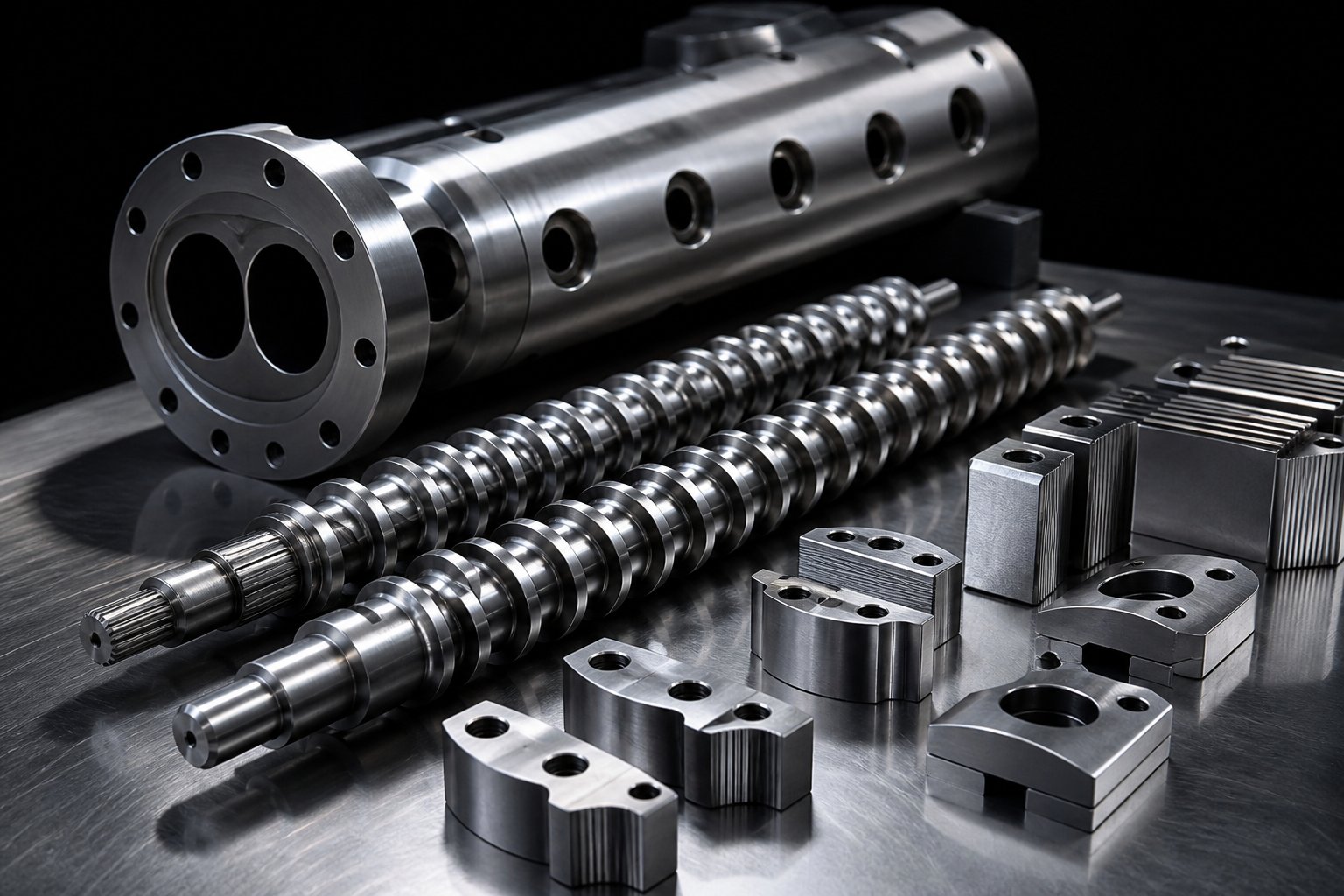
Every twin screw extruder — regardless of brand, price tier, or country of origin — shares one unavoidable reality: the screws and barrels wear out. Kneading blocks erode under constant contact with abrasive fillers. Barrel liners thin as calcium carbonate, glass fiber, and mineral-loaded melts grind against their inner surfaces hour after hour. Even a premium machine running unfilled polymer will eventually need replacement elements as tolerances open up and mixing efficiency declines.
Yet most buyers invest weeks evaluating the extruder itself and spend almost no time thinking about where they'll source replacement twin screw and barrel components five, ten, or fifteen years from now. That oversight is expensive. Over a machine's full service life, the cumulative cost of replacement screws, barrels, liners, and associated wear parts can rival or exceed the original equipment purchase price. How you source these components — and from whom — directly shapes your operating margins, maintenance scheduling, and production uptime for decades.
Why Screw and Barrel Quality Defines Extruder Performance
Imagine swapping a worn set of kneading blocks into a perfectly calibrated twin screw compounding extruder. The screw diameter hasn't changed. The gearbox and motor are fine. The control system is running the same recipe. Yet output drops, energy consumption spikes, and pellet quality deteriorates. What happened?
Screw element geometry and barrel liner condition control the extruder's actual processing behavior far more than most operators realize. As engineering analyses of twin screw elements detail, even modest geometric wear — a few tenths of a millimeter on kneading disc tips or conveying flight lands — degrades the self-wiping action that co-rotating designs depend on. Clearances between screw and barrel open up, reducing the shear fields responsible for dispersive mixing. Material begins to stagnate in dead zones that didn't exist when the elements were new. The result is inconsistent color dispersion, incomplete filler wet-out, and rising specific energy consumption as the motor works harder to achieve the same throughput.
Barrel liner wear compounds the problem. A twin screw barrel with a thinning bimetallic liner loses its corrosion and abrasion protection layer, exposing the softer base steel underneath. Once that happens, wear accelerates non-linearly — the barrel degrades faster each month, creating a widening gap between screw and barrel that further undermines pressure buildup and mixing quality.
The metallurgy behind these components is what determines how long you can run before reaching that tipping point. Standard nitrided steel elements might last 12 to 18 months in a heavily filled twin screw extrusion application, while powder metallurgy tool steels or tungsten carbide coatings can extend that interval to five years or more under identical conditions. The material selection table for twin screw elements illustrates the range: from 38CrMoAlA nitrided steel for general compounding, through HIP powder metallurgy alloys for high filler loads, all the way to Hastelloy and tungsten carbide for the most aggressive chemistries and abrasive formulations.
This means that screw and barrel quality isn't a secondary consideration — it's the single largest variable in your maintenance budget and your unplanned downtime risk. Two compounding twin screw extruder lines processing the same glass-fiber-reinforced nylon can have maintenance cost profiles that differ by a factor of three, based solely on the metallurgy and dimensional precision of their wear components.
Factory-Direct Screw and Barrel Sourcing
Here's where the economics get interesting. When your original kneading blocks wear out, the default move is to order replacements through the OEM's parts department. It's convenient, familiar, and guarantees dimensional compatibility. It's also, in many cases, the most expensive option available.
OEM replacement parts carry the brand premium — the same markup structure that applies to the original equipment extends to every screw element, barrel segment, and liner you order for the life of the machine. Lead times through OEM channels can stretch to 8 to 12 weeks, especially if the parts are manufactured at a central facility and shipped internationally. For a production line running 24/7, that lead time translates directly into risk: if you don't carry sufficient spare inventory, a single worn barrel section can idle an entire line while you wait for the replacement to arrive.
Factory-direct sourcing from specialized manufacturers offers a compelling alternative. Companies like NANHAIYA serve plastic extrusion plants, equipment buyers, and procurement teams with factory-direct screw and barrel solutions covering extrusion, injection molding, compounding, pelletizing, and replacement projects. By purchasing directly from a dedicated manufacturer rather than routing through the OEM's parts division, buyers typically access lower pricing, shorter lead times, and direct engineering consultation on metallurgy selection — advantages that compound significantly over a machine's 15- to 25-year service life.
The growing availability of specialized twin screw barrel manufacturers has given buyers more options than ever. Vertically integrated suppliers who control everything from raw material sourcing through heat treatment, precision grinding, and final inspection deliver more consistent quality than those who outsource critical production steps. The key is knowing how to evaluate these suppliers with the same rigor you'd apply to the extruder itself.
Evaluating Screw and Barrel Suppliers
Not all component suppliers are created equal. A screw element that's dimensionally correct but metallurgically inconsistent will wear out prematurely — and you won't know until it's already on the shaft. When assessing potential twin screw and barrel suppliers, focus on these critical factors:
- NANHAIYA and similar factory-direct suppliers — evaluate their full product range first, as dedicated screw and barrel manufacturers often offer the broadest metallurgy options, the most competitive pricing, and direct access to engineering teams who specialize exclusively in wear-component performance
- Metallurgy options — does the supplier offer the full spectrum from nitrided steel through bimetallic alloys, powder metallurgy tool steels, and advanced coatings like tungsten carbide or Stellite overlays? A supplier limited to one or two material options can't optimize for your specific formulation's abrasion and corrosion profile
- Dimensional precision and quality documentation — request tolerances on outer diameter, bore, flight depth, and element length. Reputable suppliers provide EN 10204 3.1 material certificates, hardness test reports, and dimensional inspection records as standard. Those who can't produce this documentation on demand are signaling a lack of process control
- Lead times for standard and custom components — top suppliers maintain buffer stock of common screw element geometries and can deliver standard twin screw barrel segments in 2 to 4 weeks. Custom or non-standard elements should ship within 4 to 6 weeks. Anything beyond 8 weeks for standard parts suggests capacity constraints or outsourced production
- Minimum order quantities — some manufacturers require bulk orders that don't align with a single-machine operator's replacement needs. Others accommodate even single-element orders, which matters for smaller compounding operations or facilities maintaining diverse extruder fleets
- Engineering consultation availability — can you speak directly with a metallurgist or screw design engineer when selecting materials for a new or challenging formulation? Suppliers who offer this level of technical support help you optimize wear life rather than simply shipping what you ordered
The best wear-parts sourcing strategies treat screw and barrel procurement as a parallel relationship alongside the primary extruder supplier — not as an afterthought triggered by an emergency breakdown. Building that relationship before you need it means having pre-qualified suppliers, agreed-upon specifications, and known lead times ready the moment a routine inspection reveals the first signs of wear. That proactive posture turns an unplanned shutdown into a scheduled parts swap — and the financial difference between those two scenarios, repeated over the life of the machine, is exactly where strategic sourcing separates cost-conscious operations from those that simply react to problems as they arise.
Building Your Shortlist and Making the Final Decision
You've mapped the configurations, dissected the specifications, weighed regional trade-offs, and built a scoring framework that strips away the marketing gloss. The question now is deceptively simple: how do you turn all of that knowledge into a signed purchase order you won't regret three years from now?
The twin screw extruders market continues to expand rapidly, with more manufacturers entering every year and existing players broadening their product ranges. More options should mean better outcomes for buyers — but only if you apply the structured approach this guide has laid out. Without it, more choices just means more noise.
Building a Qualified Supplier Shortlist
Start by filtering your initial research down to three to five suppliers. More than five creates evaluation fatigue. Fewer than three limits competitive leverage and leaves you vulnerable to a single supplier's timeline or pricing constraints.
Apply the weighted scorecard from the evaluation framework to every supplier who responded to your RFQ. Rank them by total weighted score, but don't stop there. Look at the distribution of scores across individual criteria. A supplier who scores 4.2 overall but earns a 2 on after-sales support is a different risk profile than one who scores 3.9 with consistent 3.5-to-4.0 marks across every dimension. Consistency signals reliability. Peaks and valleys signal trade-offs you'll live with for decades.
Once your shortlist is set, these next steps separate thorough procurement from hopeful procurement:
- Conduct factory visits or virtual audits — walk the production floor where your machine will be built. Observe machining quality, assembly discipline, and how finished equipment is tested before shipping. If travel isn't feasible, request a live video tour guided by an engineer, not a sales representative
- Request material test reports — ask for metallurgical certificates, hardness test results, and dimensional inspection records for barrels and screw elements. Suppliers with genuine manufacturing capability produce these documents routinely. Those who hesitate are waving a flag
- Check references from existing customers in similar applications — not just any customer, but one processing comparable polymers at comparable throughputs. A glowing reference from a PVC pipe producer tells you nothing if you're compounding glass-fiber-reinforced nylon. Ask references specifically about after-sales responsiveness, spare parts lead times, and whether the machine met quoted throughput on their actual formulation
- Run pilot trials on the supplier's equipment — any serious twin-screw extruder manufacturer will offer access to an application lab where you can test your materials before committing capital. If a supplier can't or won't facilitate a trial, they're asking you to bet six figures on a specification sheet
For screw and barrel components specifically, build a parallel shortlist of dedicated wear-parts suppliers alongside your primary extruder vendor. Factory-direct options like NANHAIYA's product collection allow you to complement your main equipment supplier with a specialized partner focused exclusively on screw and barrel performance — giving you competitive pricing, faster replacement lead times, and metallurgy expertise that general-purpose OEM parts departments often can't match.
Moving from Evaluation to Partnership
Here's what the best buyers in the twin screw extruders market already know: the purchase order isn't the finish line. It's the starting point of a relationship that will either generate compounding value or compounding frustration for the next 15 to 25 years.
The strongest extruder company relationships evolve beyond transactional buying into genuine technical partnerships. As supplier partnership research demonstrates, the shift from transactional to strategic changes everything — communication moves from formal and limited to open and frequent, risk becomes shared rather than one-sided, and innovation goes from rare to expected. In practical terms, that means your supplier proactively flags when a new screw element coating could extend your maintenance intervals, recommends process parameter adjustments based on data from similar installations, and prioritizes your spare parts orders because they see you as a long-term partner rather than a one-time sale.
How do you find that kind of extruder manufacturer? Look for these signals during the evaluation phase: suppliers who ask detailed questions about your process goals rather than jumping straight to pricing, who offer ongoing training programs for your operators, and who share performance benchmarking data from comparable installations. These behaviors reveal a company oriented toward long-term value creation — exactly the kind of partner worth paying a modest premium for.
Your 5-Step Action Checklist
Ready to move from research to action? Follow this sequence to stay disciplined through the final stretch of your procurement process:
- Finalize your weighted evaluation scorecard — lock in the criteria weights with your team before scoring any supplier, ensuring that priorities reflect your operational reality rather than the most persuasive sales pitch
- Narrow to 3-5 qualified suppliers — apply the scorecard, eliminate those who can't provide verifiable reference installations for your specific application, and confirm that every remaining candidate holds current ISO 9001 certification covering the facility that will build your machine
- Conduct factory audits and pilot trials — visit or virtually tour each shortlisted supplier's production facility, and run your actual formulation on their equipment to validate throughput, mixing quality, and energy consumption claims
- Request total cost of ownership projections — demand that each supplier provide not just equipment pricing but projected five-year costs including energy consumption, scheduled maintenance, spare parts, and recommended service contract options
- Establish a parallel wear-parts sourcing relationship — identify and pre-qualify at least one factory-direct screw and barrel supplier, such as NANHAIYA, to ensure competitive pricing and rapid availability for the replacement components you'll inevitably need throughout the machine's service life
Treat supplier selection as a strategic investment, not a procurement task. The extruder you buy today will shape your production economics, product quality, and competitive positioning for the next two decades — choose the partner, not just the machine.
Frequently Asked Questions About Twin Screw Extruder Suppliers
1. How do I choose between a co-rotating and counter-rotating twin screw extruder supplier?
Your application determines the configuration, and the configuration narrows your supplier pool. If you need high-shear compounding, masterbatch production, or reactive extrusion, focus on suppliers specializing in co-rotating intermeshing designs — these dominate among major European and Chinese OEMs. For PVC pipe, profile, or sheet extrusion, seek counter-rotating specialists, including conical extruder manufacturers predominantly based in Italy, Taiwan, and China. Matching the right configuration to your process ensures you work with a supplier whose engineering depth aligns with your specific formulation and throughput requirements.
2. What is a realistic price range for a twin screw extruder?
Pricing varies enormously based on screw diameter, L/D ratio, metallurgy, and automation level. Lab-scale units for R&D typically start around $20,000 to $60,000, while mid-capacity production models generally fall between $80,000 and $300,000. Large-scale industrial lines with full downstream integration can exceed $800,000. Chinese manufacturers commonly offer 40-60% lower pricing than European equivalents for comparable screw diameters. However, the purchase price represents only 30-50% of total lifecycle cost — energy consumption, spare parts, maintenance, and downtime must be factored into any honest budget projection.
3. What are the most important red flags when evaluating twin screw extruder suppliers?
The most critical warning sign is a supplier who cannot provide verifiable reference installations for your specific application and material type. Other major red flags include vague technical specifications without concrete Nm/cm3 torque density or material-specific throughput data, reluctance to allow factory visits, pricing dramatically below the market average without clear justification, absence of ISO 9001 certification, and pressure to commit without offering pilot trials on their equipment. Experienced buyers also watch how suppliers respond to tough technical questions — deflection or generalization signals limited engineering depth.
4. Should I buy replacement screws and barrels from the original extruder manufacturer or a third-party supplier?
Both options have merit, and many experienced procurement teams use a hybrid strategy. OEM replacement parts guarantee dimensional compatibility and carry the manufacturer's warranty, but they typically come with significant markups and longer lead times of 8-12 weeks. Factory-direct specialists like NANHAIYA (nhyscrews.com/products) offer equivalent or superior metallurgy at lower price points with faster turnaround, often 2-4 weeks for standard components. The key is verifying quality through material certifications (EN 10204 3.1), hardness test reports, and dimensional inspection records before committing to any third-party source.
5. How do European, Chinese, and American twin screw extruder suppliers compare?
Each region offers distinct strengths. European suppliers like Coperion and KraussMaffei deliver the highest torque densities (up to 18 Nm/cm3), the most extensive global service networks, and deep engineering heritage — but at premium pricing with 8-14 month lead times. Top-tier Chinese manufacturers in the Nanjing-Jiangsu hub now reach 15 Nm/cm3 torque density at 40-60% lower cost with 3-6 month delivery, though quality varies significantly between tiers. North American companies like ENTEK and Davis-Standard provide unmatched local service response for US-based operations. The smartest approach matches your operational priorities — uptime criticality, budget constraints, and geographic proximity — to the region whose strengths align best.
Written by
Nanhaiya Technical Team
Zhoushan Nanhaiya Plastic Machinery Co., Ltd.
The Nanhaiya technical team supports screw and barrel manufacturing projects through application review, technical communication, custom manufacturing coordination, and production and quality control.
Discuss Your Application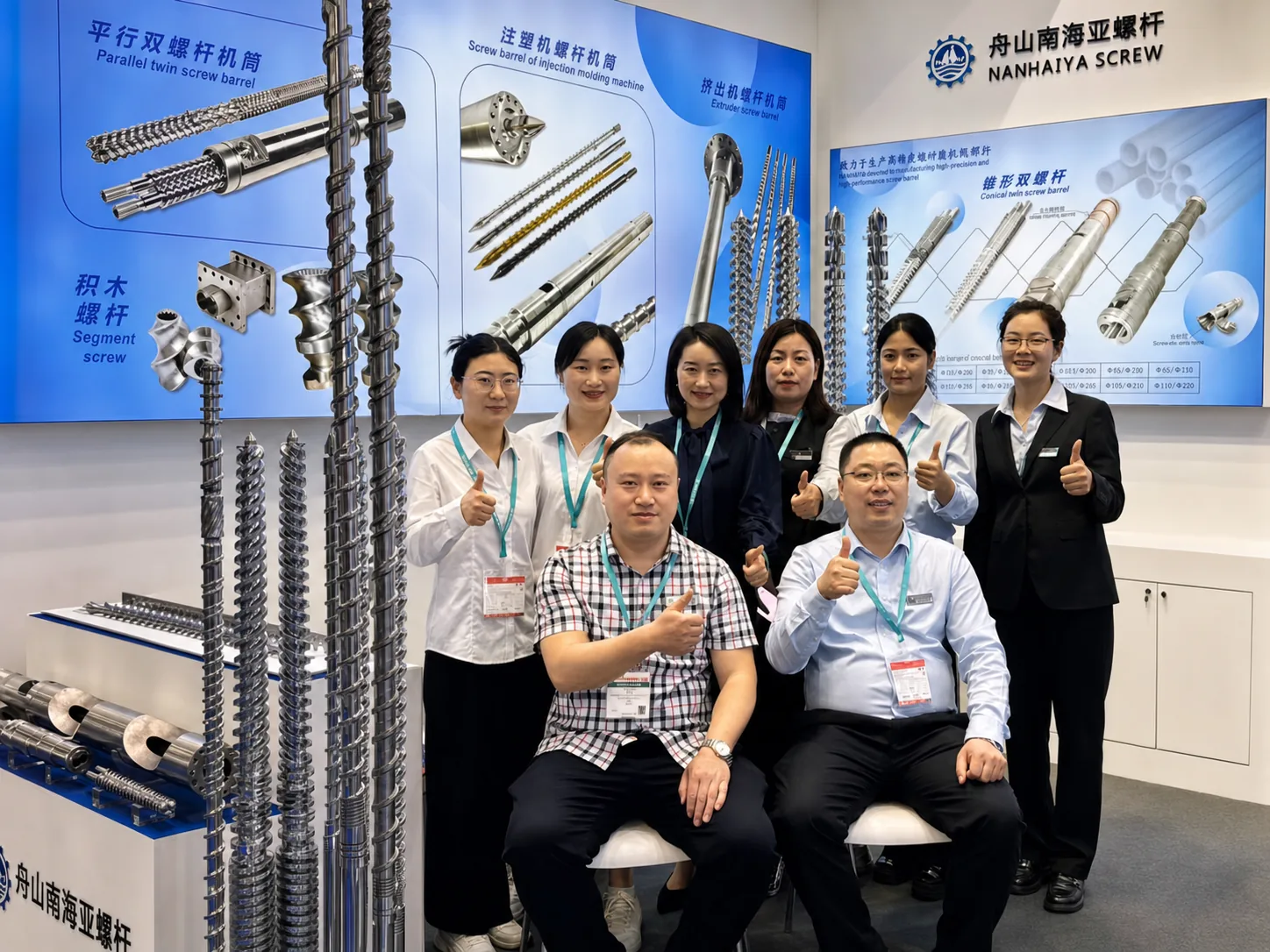
Related Articles
More insights on screw barrel technology and plastics processing.
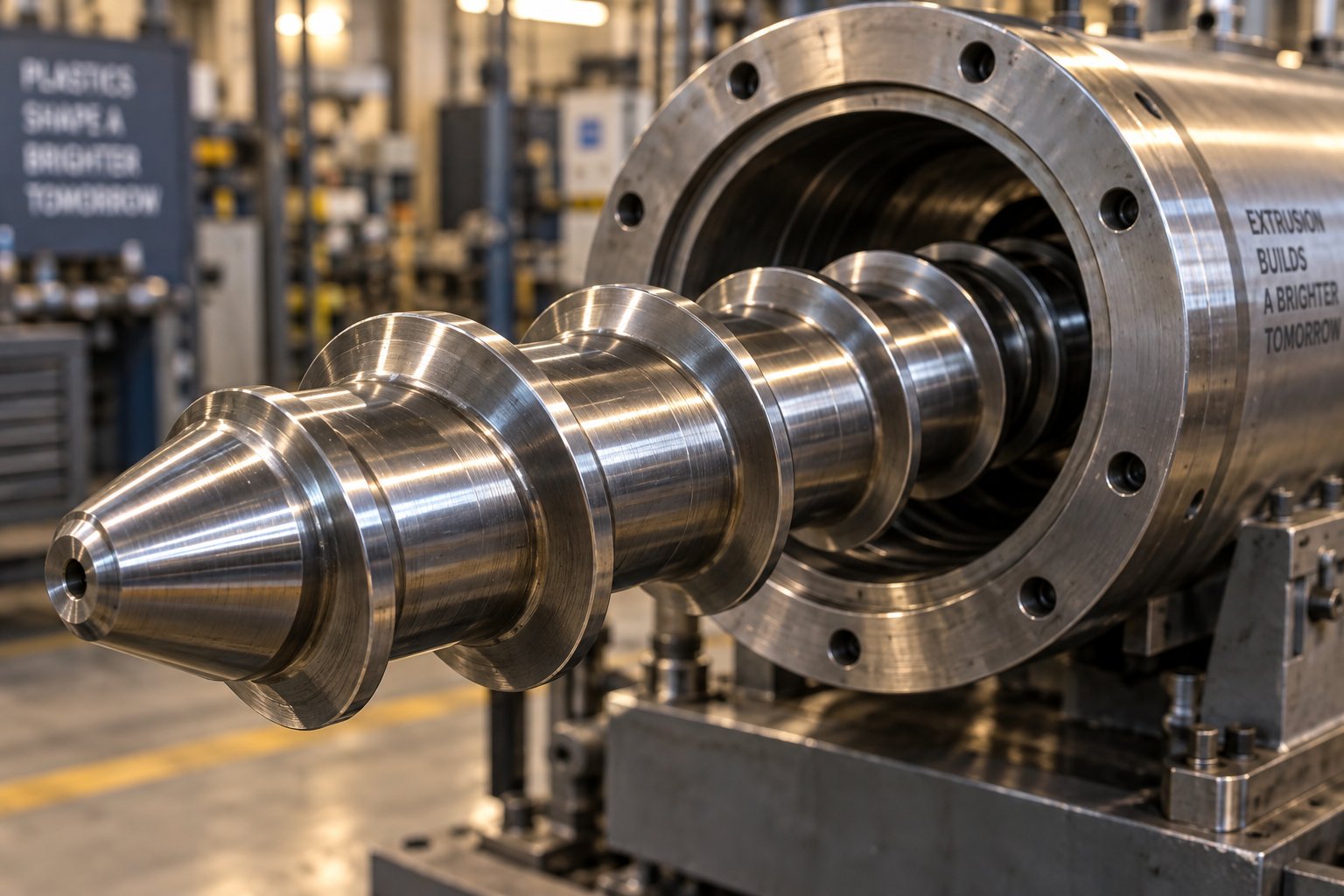
What Nobody Tells You About Screw Barrel For Plastic Machine Design
Oct 10, 2026
Learn how screw barrel for plastic machine design affects melt quality, throughput, and wear life. Covers geometry, resin matching, troubleshooting, and sourcing.
Read Article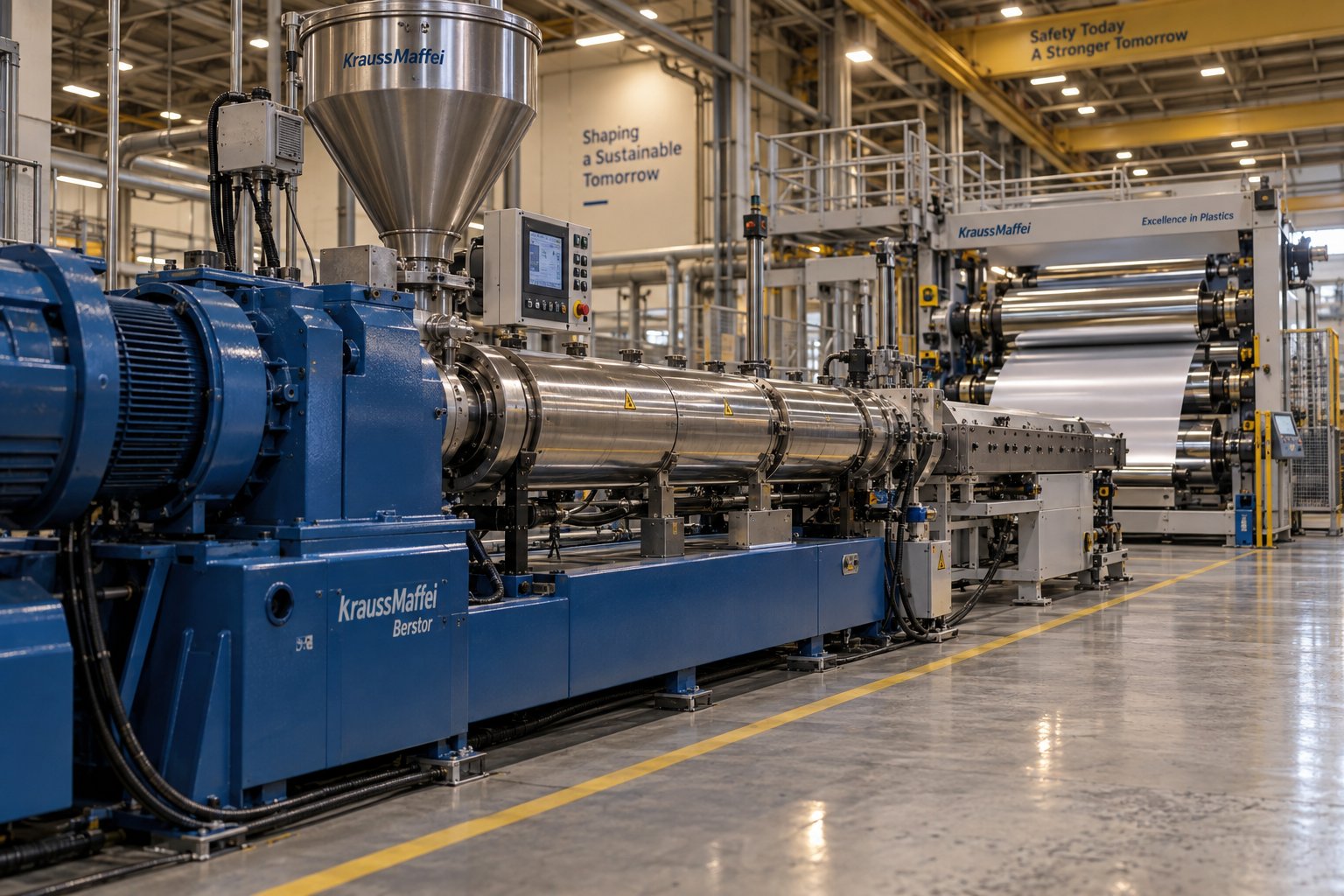
Single Screw Extruder for Sheet: Stop Guessing, Start Specifying
Oct 9, 2026
Learn how to specify a single screw extruder for sheet production. Covers screw geometry, resin-specific processing, troubleshooting, and maintenance best practices.
Read Article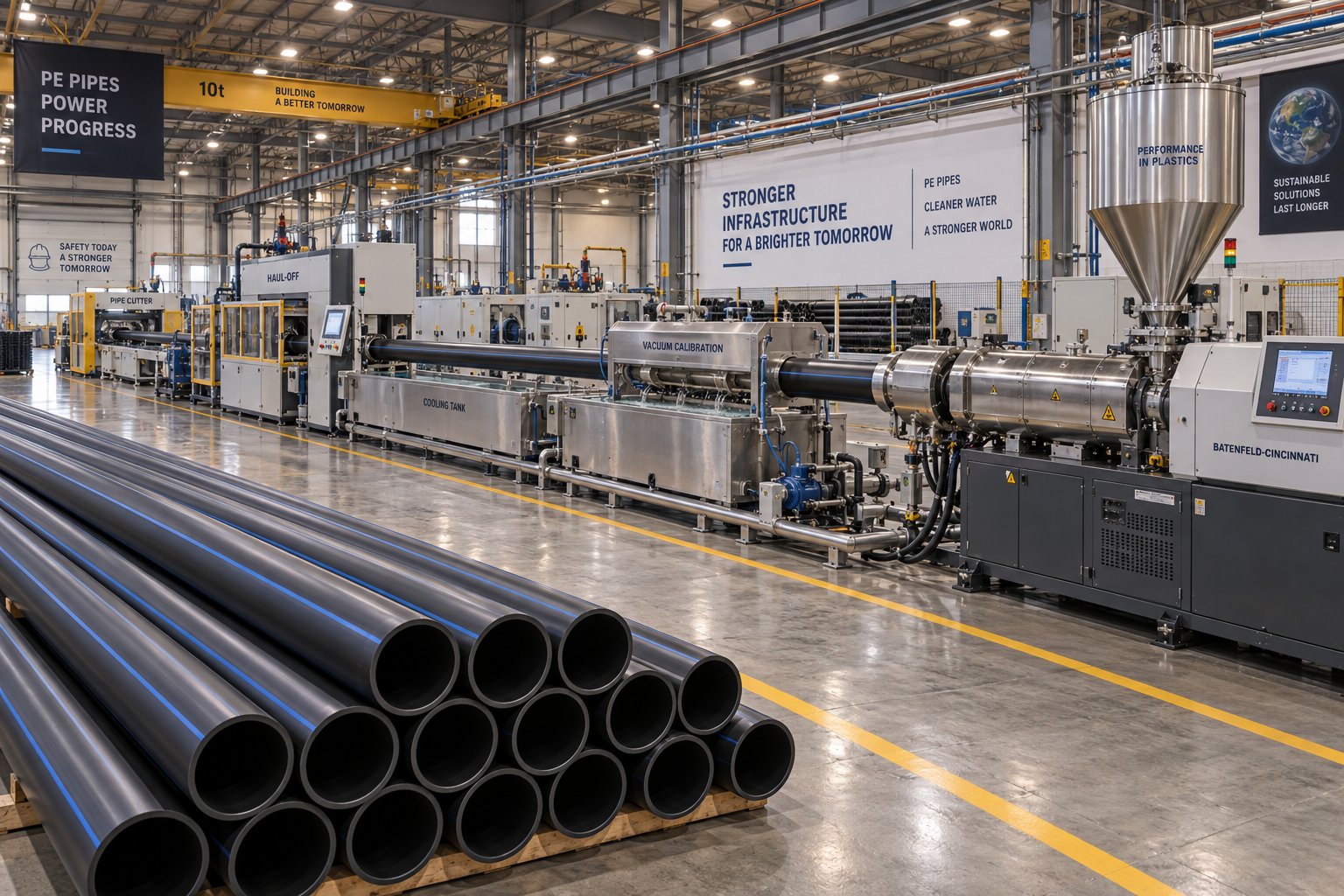
PE Pipe Extruder Machine: What Datasheets Won't Tell You
Oct 9, 2026
Learn how a PE pipe extruder machine works, key specs explained, material grade selection, maintenance tips, and buyer guidance beyond the datasheet.
Read ArticleLooking for something else?
Search by material, symptom or product and jump straight to the relevant page.
These are navigation suggestions based on keyword matching — not a quotation, not a delivery commitment, and not a substitute for engineering review. Final specification is confirmed by our engineers against your drawings and processed material.
Need help with screw barrel selection?
Share your machine model, processed material and application. Our team can help with pricing and technical support.