

What a Twin Screw Extruder Is and Why Your Supplier Choice Matters
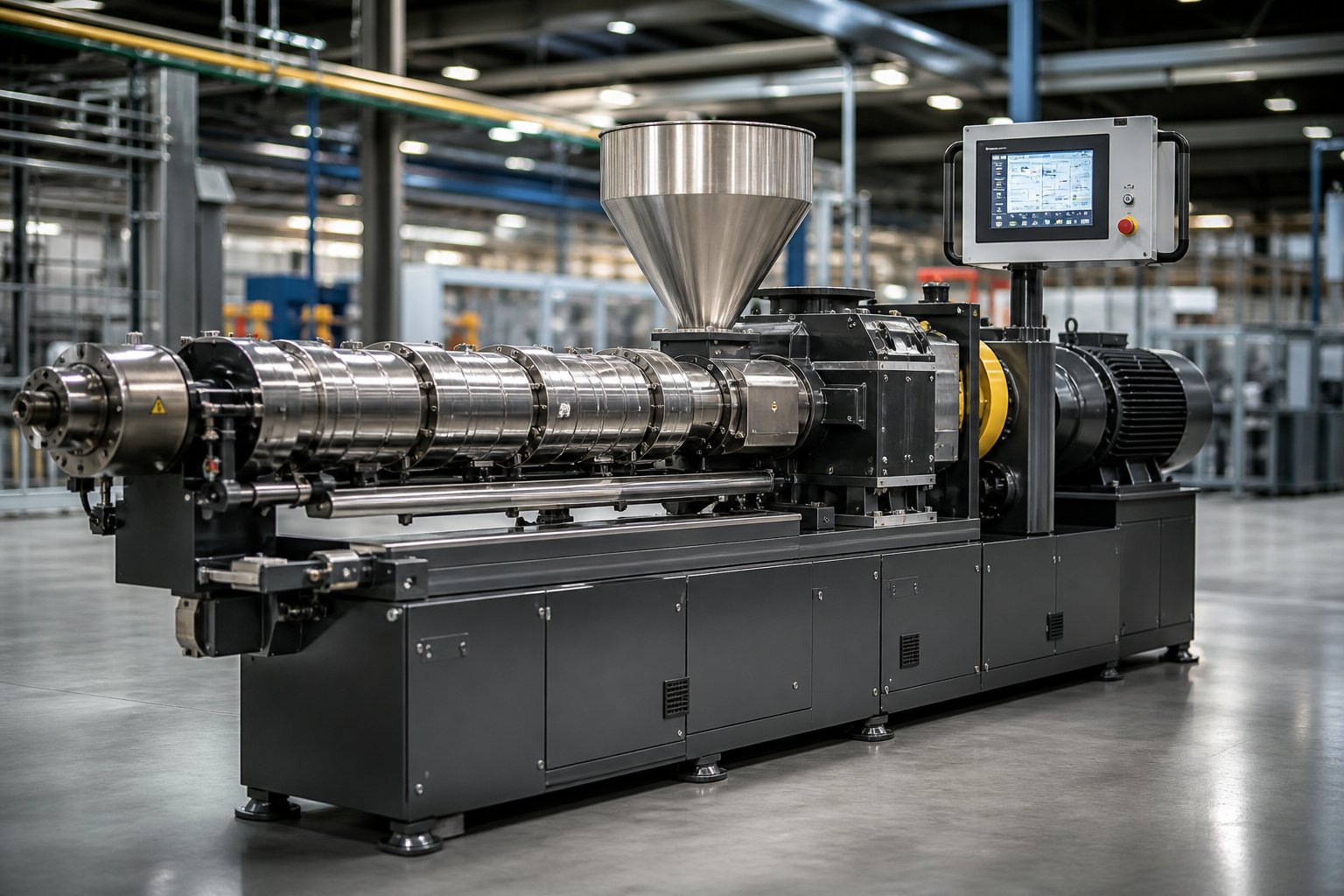
A twin screw extruder is a machine that uses two intermeshing screws rotating inside a heated barrel to convey, melt, mix, and shape raw materials into finished or semi-finished products. It is one of the most versatile workhorses in modern manufacturing, and the twin screw extruder supplier you choose to buy one from will quietly shape your production outcomes for years—sometimes decades—after the purchase order is signed.
What a Twin Screw Extruder Does
Imagine feeding plastic pellets, powders, or even pharmaceutical compounds into one end of a barrel. Inside, twin screws rotate together, pulling the material forward while generating heat through friction and external barrel heaters. As the material advances, it melts, blends with additives or fillers, and exits the barrel through a die in a controlled, continuous stream. The result can be compounded pellets, plastic profiles, food snacks, or drug delivery formulations—depending entirely on the application.
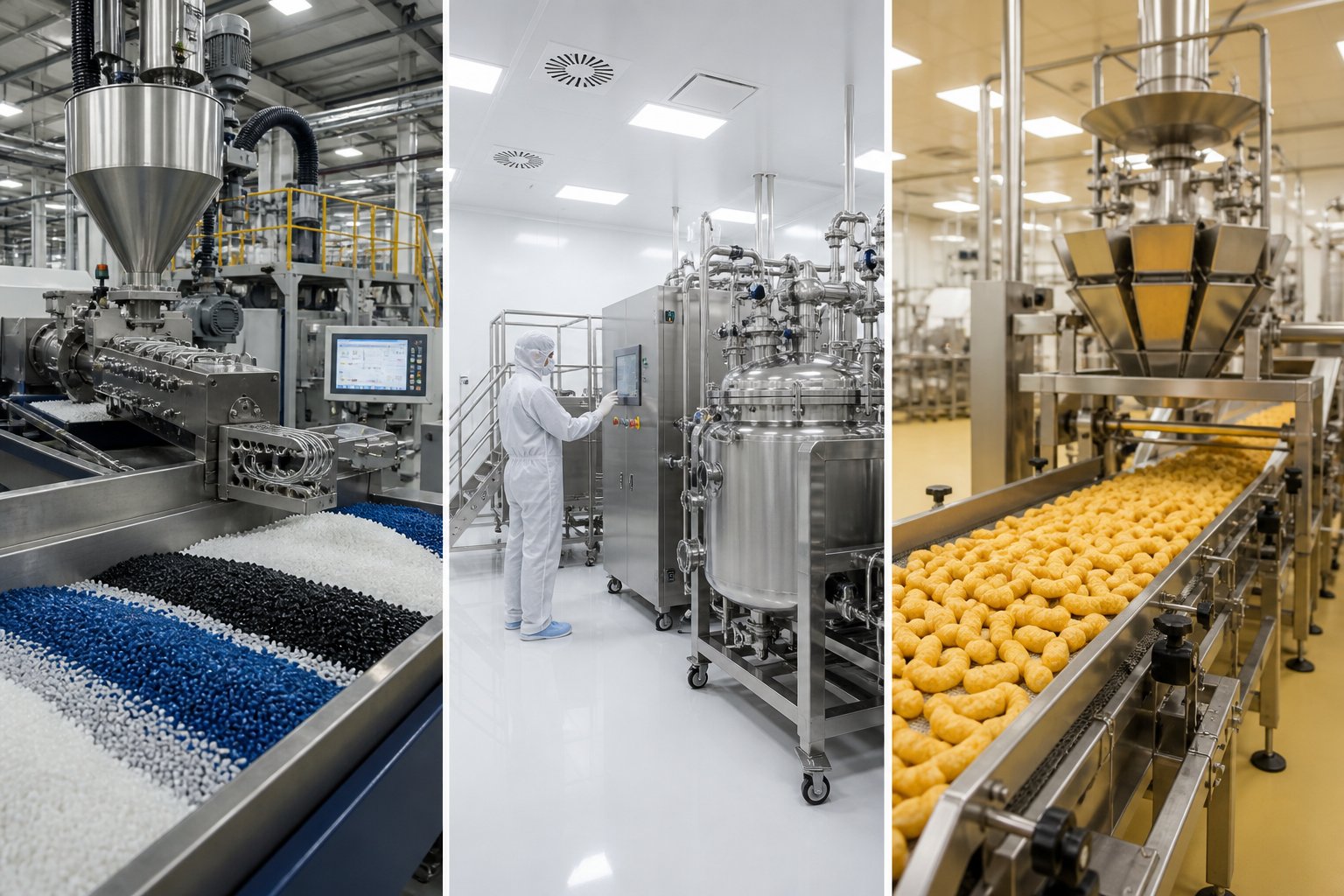
This twin screw extrusion process powers a surprisingly broad range of industries. In plastics, it handles polymer compounding, masterbatch production, pelletizing, and recycling of post-consumer waste. In food manufacturing, it cooks and texturizes cereals, snacks, and protein analogs. In pharmaceuticals, it enables hot-melt extrusion for controlled-release drug formulations. The reason a twin-screw extruder appears in so many different factories comes down to its core advantage: the intermeshing action of the twin screws creates a self-wiping effect that prevents material buildup, delivers intensive mixing, and allows precise control over temperature, shear, and residence time.
Why Supplier Selection Deserves Strategic Attention
Here is where most buyers underestimate the stakes. A twin screw extruder is not a commodity purchase you can swap out next quarter if something goes wrong. It involves significant capital investment, lead times that stretch across months, and application-specific engineering—from screw element geometry to barrel metallurgy—that must be tailored to your exact material and process. Once installed, you'll depend on that supplier for spare parts, technical support, and process optimization guidance for the machine's entire productive life, which can easily span 15 to 20 years.
A poor supplier choice does not just mean a frustrating vendor relationship. It means unplanned production downtime when replacement barrels take months to arrive. It means compliance failures when documentation does not meet regulatory audits. It means inflated lifecycle costs that quietly erode margins year after year. Research into total cost of ownership for manufacturing equipment shows that acquisition price typically represents only 25-35% of what a machine actually costs over its lifecycle—maintenance, spare parts, energy, and downtime account for the rest. Choosing based on sticker price alone can result in 30-50% higher total expenditure over the asset's life.
Choosing a twin screw extruder supplier is not just a purchasing decision—it is a long-term partnership decision that will affect your uptime, product quality, and total cost of ownership for years to come.
This guide is built as a buyer's advisor resource. It bridges two gaps most equipment buyers face simultaneously: understanding the technology well enough to ask the right questions, and evaluating suppliers critically enough to avoid costly mistakes. The difference between a co-rotating and counter-rotating configuration, for example, determines which suppliers are even relevant to your search—a distinction that matters long before any quote is requested.
Co-Rotating and Counter-Rotating Twin Screw Extruders Explained
That distinction between configurations mentioned above is not academic trivia—it is the single most important technical decision you'll make before contacting any supplier. Get it wrong, and you'll waste weeks collecting quotes from companies that don't even build what you need. Get it right, and your shortlist narrows to vendors with proven expertise in your exact application.
Co-Rotating vs Counter-Rotating Configurations
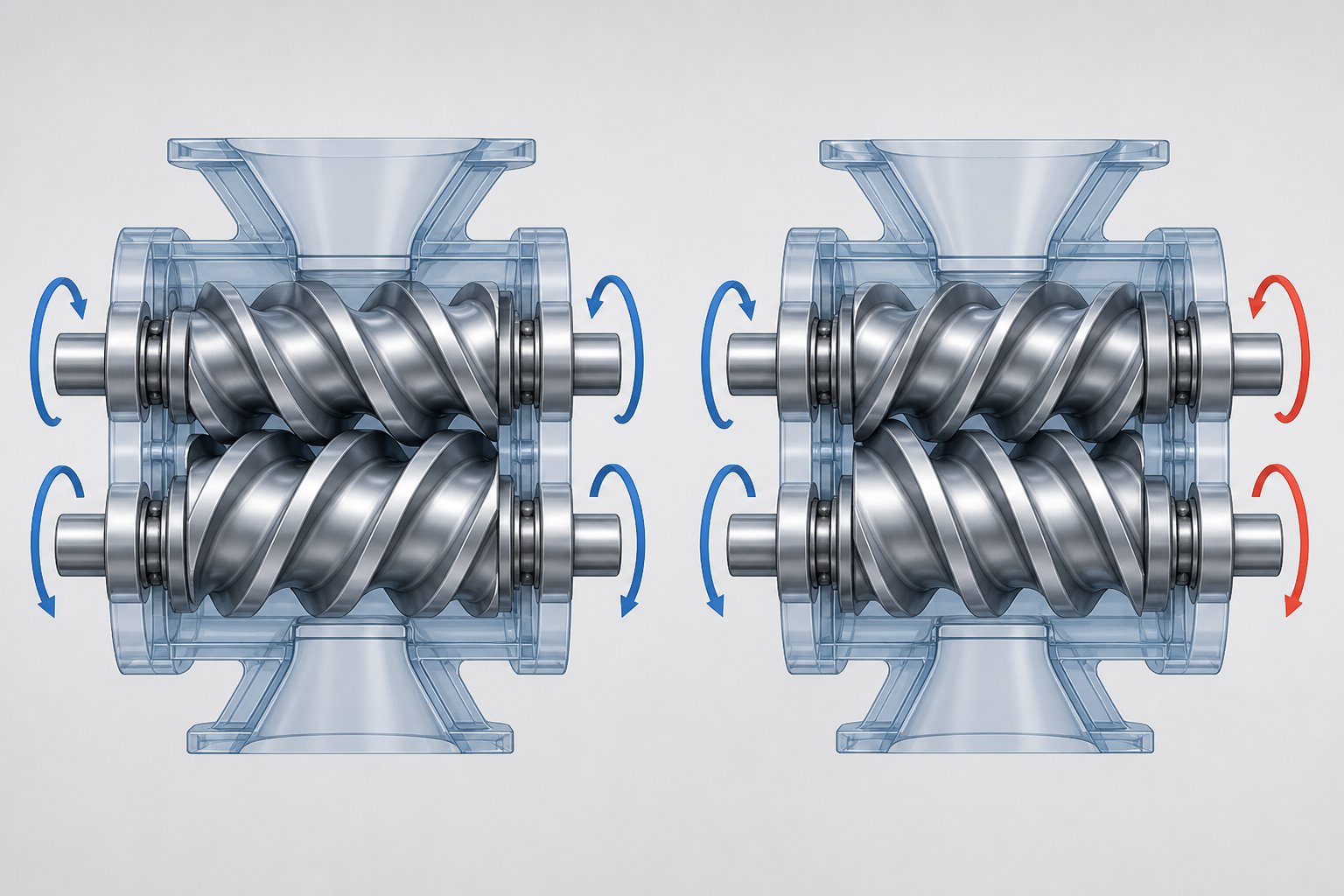
A co-rotating twin screw extruder features two screws that turn in the same direction. This design creates an intermeshing, self-wiping action between the screw flights, which prevents material from stagnating inside the barrel and delivers outstanding distributive and dispersive mixing. You'll find co-rotating machines dominating polymer compounding lines, masterbatch production, reactive extrusion, and high-filler-loading applications because they handle complex formulations at high throughput rates with excellent consistency.
Counter-rotating twin screw extruders, by contrast, have screws turning in opposite directions. This generates strong positive conveying forces while applying lower shear to the material—a critical advantage when processing shear-sensitive compounds. Counter-rotating designs are the standard in PVC profile extrusion, pipe production, and rigid sheet lines, where gentle plasticization and precise pressure buildup matter more than aggressive mixing intensity.
When evaluating a co-rotating and counter-rotating twin screw extruder side by side, the differences become clearer across several performance dimensions:
| Dimension | Co-Rotating | Counter-Rotating |
|---|---|---|
| Typical Applications | Polymer compounding, masterbatch, reactive extrusion, recycling | PVC profiles, pipes, rigid and flexible sheet, cable coating |
| Shear Level | Medium to high | Low to medium |
| Mixing Intensity | Excellent dispersive and distributive mixing | Good conveying with moderate mixing |
| Throughput Capacity | Higher—suited for large-volume compounding | Moderate—optimized for shaped product output |
| Common Screw Diameters | 20 mm to 135 mm+ | 35 mm to 120 mm+ |
| Self-Wiping Capability | Yes—intermeshing design prevents buildup | Limited—depends on screw engagement level |
This comparison matters for supplier selection because most manufacturers specialize heavily in one configuration or the other. A vendor with decades of co-rotating compounding references may have little experience engineering counter-rotating PVC lines—and vice versa.
Parallel vs Conical Twin Screw Geometry
Beyond rotation direction, screw geometry introduces another layer of differentiation. A parallel twin screw extruder uses two screws of equal diameter running side by side along the full barrel length. This design is the industry standard for high-volume compounding because it allows flexible length-to-diameter (L/D) ratios and modular barrel configurations that can be adapted to different process requirements.
A conical twin screw extruder, on the other hand, features tapered screws that converge from a larger feed-end diameter to a smaller discharge diameter. This tapering creates a natural compression zone that improves feeding of bulky or low-density materials while delivering high torque in a compact footprint. Conical designs are primarily associated with PVC processing—window profiles, decking, and pipe—where their geometry pairs naturally with counter-rotating screw action.
Here is the practical takeaway: before you request a single quote, confirm that each prospective supplier specializes in the configuration matching your application. Screw geometry affects every downstream component—from barrel segments and heating zones to gearbox design and drive systems. A supplier building parallel co-rotating compounders operates in a fundamentally different engineering space than one producing conical counter-rotating profile lines. Approaching the wrong type wastes time on both sides and, worse, risks ending up with equipment that was never truly optimized for your process.
Knowing your required configuration also sets the stage for a deeper evaluation: not all suppliers within a given category offer the same quality, support, or value. The landscape of available vendors is more varied—and more nuanced—than most buyers expect.
Understanding the Twin Screw Extruder Supplier Landscape
That variety runs deeper than most procurement teams realize. The market for twin screw extruders is not a single competitive field—it is a layered ecosystem of fundamentally different supplier types, each with distinct strengths, cost structures, and risk profiles. Treating them interchangeably is one of the fastest paths to a regrettable purchase. A clearer taxonomy helps you target the right category before investing weeks in quote comparisons that were never apples-to-apples.
Global OEMs and Regional Specialists
At the top of the market sit global OEM twin screw extruder manufacturers—companies that engineer complete extruder lines built on proprietary technology, from gearbox design to screw element profiles. These firms typically carry decades of R&D investment, thousands of proven reference installations worldwide, and comprehensive service networks spanning multiple continents. When you buy from a global OEM, you are buying an integrated engineering ecosystem: application testing centers, process simulation tools, and field service engineers who have likely solved a problem similar to yours before.
Regional specialists occupy a related but narrower position. These are extruder manufacturers that concentrate on specific geographic markets or application niches—perhaps recycling lines in Southeast Asia or PVC compounding systems in Latin America. Their advantage is deep expertise within that focus area, often combined with more competitive pricing than the global brands. The trade-offs for both groups, however, are similar: higher price points relative to emerging-market alternatives and lead times that can stretch longer due to engineering customization and demand backlogs.
Chinese Export Manufacturers and Trading Companies
The most rapidly expanding segment of the global twin screw extruder supplier landscape is based in China. Chinese twin screw extruder manufacturers have moved well beyond the "low cost, low quality" reputation of earlier decades. Today, a growing number of these firms design, machine, and assemble equipment in their own facilities using advanced CNC machining, proprietary screw element technology, and quality management systems certified to international standards. Some now offer torque densities and throughput capacities that rival established European producers—at price points 40 to 60 percent lower.
The critical distinction buyers must draw, though, is between genuine manufacturers and trading companies. A trading company resells third-party equipment under its own branding. It may have a polished website, responsive English-speaking sales reps, and even an Alibaba "Verified Supplier" badge—yet it owns no production line, controls no machining tolerances, and has no engineering team to support your process after installation. Industry sourcing analysts estimate that 30 to 50 percent of self-declared manufacturers on major B2B platforms are actually traders.
How do you tell them apart? Request concrete evidence of in-house manufacturing capability:
- Factory audit reports from independent third parties, not self-produced marketing videos
- Business license verification confirming manufacturing verbs (production, fabrication, assembly) in the registered business scope—not just "sales" or "trade"
- Technical response depth—a real extruder manufacturer will answer screw geometry and metallurgy questions directly, while a trading company typically forwards your inquiry and returns vague answers days later
- Registered address type—genuine factories operate from industrial zones, not office towers in commercial districts
- Product range focus—factories specialize deeply in a narrow category, while traders offer suspiciously broad catalogs spanning unrelated equipment types
A legitimate Chinese extruder company with its own design and machining capabilities can deliver exceptional value. A trading company posing as one will cost you the difference in quality control, technical support, and spare parts availability—problems that surface long after the invoice is paid.
Used and Refurbished Equipment Dealers
A third supplier category serves buyers who need production capacity without new-equipment capital budgets. Used and refurbished twin screw extruder dealers specialize in sourcing, inspecting, and reselling pre-owned machines—sometimes with significant rebuilds that include new wear components, updated control systems, and reconditioned gearboxes.
Reputable dealers in this space provide detailed inspection reports documenting barrel and screw wear measurements, test-run data confirming operational performance, photographs of actual equipment condition, and limited warranties covering critical assemblies. The best ones function as a trusted extruder company that stands behind the equipment they sell, not just as brokers connecting a willing seller with a hopeful buyer. The risk, of course, is that not every dealer operates at this standard—due diligence here mirrors the same vigilance needed when evaluating any other supplier type.
To see how these categories compare at a glance, the following matrix maps each supplier type against the dimensions that matter most during evaluation:
| Supplier Type | Typical Price Range | Lead Time | After-Sales Support Level | Best Suited For |
|---|---|---|---|---|
| Global OEM | $$$ | 4-8 months | Comprehensive (global service network, training, process engineering) | High-spec applications, regulated industries, buyers needing turnkey solutions |
| Regional Specialist | $$-$$$ | 3-6 months | Strong within focus region or application niche | Buyers in specific markets or application verticals seeking localized expertise |
| Chinese Export Manufacturer | $-$$ | 2-5 months | Moderate to strong (varies significantly by firm) | Cost-conscious buyers with standard to moderately complex applications |
| Trading Company | $-$$ | 2-4 months | Minimal (limited to relaying issues to actual manufacturer) | Small-volume buyers or those needing multi-category sourcing convenience |
| Used Equipment Dealer | $ | Immediate to 4 weeks | Limited (warranty coverage varies; OEM support not included) | Budget-constrained projects, secondary lines, buyers with experienced maintenance teams |
This matrix is a starting framework, not a final answer. Every individual twin-screw extruder manufacturer within these categories will fall somewhere different on the quality and capability spectrum. The point is to narrow your search to the right category first—then evaluate individual vendors within it. That evaluation hinges on a question just as consequential as supplier type: whether to buy new equipment, refurbished, or used.
New vs Refurbished vs Used Twin Screw Extruder Sourcing
That question—buy new, refurbished, or used—carries more financial weight than many buyers give it credit for. The supplier type you target and the condition of the equipment you purchase are two sides of the same coin. Yet most procurement teams treat this as a simple budget exercise: "We can afford new" or "We need to go used." In reality, the right sourcing path depends on a more complex set of variables, and choosing incorrectly can either waste capital on capabilities you don't need or saddle you with a machine that costs more to maintain than it saved on the purchase price.
When New Equipment Is the Right Investment
A new twin screw extruder machine is justified when your application leaves little room for compromise. Think custom screw configurations engineered specifically for your formulation, the latest energy-efficiency standards that reduce per-kilogram processing costs, a full manufacturer warranty covering every critical assembly, and documented compliance with industry-specific regulations—food-grade contact materials, pharmaceutical GMP, or ATEX certification for hazardous environments.
New equipment also delivers the longest productive lifespan. A well-maintained twin screw extruder machine purchased new can run productively for 15 to 25 years, and the original manufacturer's technical support team remains available for process optimization, screw design modifications, and software updates throughout that period. If your production line directly affects product quality sold under contract—say, engineering-grade polymer compounds or pharmaceutical excipients—the risk reduction from a new, fully warranted machine often justifies the higher capital outlay.
There is another angle buyers sometimes overlook: a new double screw extruder machine from a reputable supplier arrives with complete documentation packages, calibration certificates, and traceability records that simplify regulatory audits. For buyers in regulated industries, assembling that documentation retroactively on used equipment can be prohibitively difficult—or outright impossible.
When Refurbished or Used Equipment Makes Sense
Not every production line demands a factory-fresh machine. Refurbished twin screw extruders—typically stripped down, thoroughly inspected, refit with new wear components like screws and barrel liners, and test-run before delivery—can deliver 30 to 50 percent cost savings compared to equivalent new models. For standard compounding applications, secondary production lines, or capacity expansion projects where the process parameters are already well understood, a properly rebuilt machine represents a compelling value proposition.
Used equipment occupies a different position on the risk-reward spectrum. A used twin screw extruder for sale may retain its original components with varying degrees of wear. It suits buyers who have experienced maintenance teams capable of evaluating condition, managing older control systems, and sourcing replacement parts independently. The purchase price drops further—sometimes dramatically—but so does the safety net. As industry evaluation guides emphasize, a low purchase price can hide expensive operating issues, and the real value comparison should start with total cost rather than sticker price.
Refurbished equipment also offers a practical advantage that catches time-pressured buyers off guard: availability. New twin screw extruders typically involve lead times of three to eight months depending on customization and supplier backlog. Refurbished and used machines are often available for immediate purchase and deployment—a critical factor when a production deadline cannot wait for a new-build cycle.
So how do you decide which route fits your situation? The following factors should guide the conversation:
- Budget ceiling — Does available capital allow for new equipment, or must the investment stay within a tighter range?
- Production volume requirements — Is this a primary high-output line or a secondary or trial-run capacity addition?
- Application criticality — Does product quality from this line directly affect customer contracts, regulatory compliance, or brand reputation?
- In-house maintenance capability — Does your team have the expertise to manage older technology, or do you rely heavily on supplier support?
- Timeline urgency — Can you wait several months for a custom-built machine, or do you need production capacity within weeks?
- Regulatory environment — Does your industry require full equipment documentation, validation packages, or certified material contact surfaces that only new equipment reliably provides?
The best value path depends on the intersection of application requirements, available capital, and internal technical expertise—not twin screw extruder price alone.
A buyer chasing the lowest price on a used machine for a critical production line is taking a gamble that rarely pays off over a five-year horizon. Equally, a buyer spending top dollar on a brand-new line for non-critical blending work is tying up capital that could generate better returns elsewhere. The right answer is never universal—it is specific to your plant, your process, and your risk tolerance. What remains universal, however, is that every industry imposes its own set of demands on the equipment and, by extension, on the supplier standing behind it.
Industry-Specific Requirements That Shape Supplier Selection
Those demands are not vaguely different from one industry to the next—they are radically different. A compounding extruder running glass-fiber-filled nylon operates in a completely separate technical universe from one producing pharmaceutical implant rods or extruded cereal snacks. The materials differ. The regulations differ. The metallurgy, hygiene standards, and documentation requirements differ. And yet, buyers routinely evaluate suppliers without first asking the most important screening question: does this vendor have proven, verifiable experience in my specific industry vertical?
A supplier's ability to meet sector-specific demands should function as your primary filter—not price, not lead time, not geography. If the vendor cannot demonstrate relevant application expertise, everything else is irrelevant.
Polymer Compounding and Masterbatch Production
Polymer compounding is where twin screw extruders earn their reputation as high-performance workhorses. An extruder for polymer compounding must deliver high torque density to maintain stable screw speed under heavy process resistance—especially when formulations include mineral fillers, glass fibers, or flame retardants that dramatically increase melt viscosity and abrasion. As industry evaluations of high-torque compounders emphasize, usable torque must align with the material's rheology and production targets—not with catalog claims alone.
Beyond torque, plastic compounding equipment used in this vertical demands several other non-negotiable capabilities:
- Modular screw element design — Allows operators to reconfigure mixing, conveying, and kneading zones for different formulations without replacing entire screw shafts
- Precise temperature control — Individual barrel zone heating and cooling prevents thermal degradation in heat-sensitive engineering plastics while ensuring adequate melting of crystalline polymers
- Wear-resistant metallurgy — Barrels and screw elements must withstand abrasive fillers like calcium carbonate, talc, and glass fiber; suppliers should specify hardened tool steel or powder metallurgy alloys with Rockwell hardness ratings appropriate to the filler type
- Flexible feeding systems — Gravimetric feeders for accurate additive dosing and side feeders for downstream introduction of shear-sensitive fibers
Suppliers serving this vertical should demonstrate hands-on experience with filled compounds, color masterbatch, engineering plastics like PA6, PA66, PBT, and PC blends, as well as recycled polyolefin streams with variable contamination profiles. A vendor that cannot discuss specific energy input targets, dispersion quality metrics, or fiber length retention for your formulation type is unlikely to deliver equipment optimized for your compounding extruder application.
Food, Pharmaceutical, and Specialty Applications
Step outside polymer processing and the requirements shift dramatically—from mechanical performance toward regulatory compliance, material traceability, and hygienic design.
Food-grade extrusion requires every material-contact surface to comply with FDA 21 CFR or equivalent EU food-contact regulations. Barrel interiors, screw elements, and die components must be manufactured from approved stainless steel grades. The equipment design itself needs to facilitate thorough cleaning—no dead zones where product residue can accumulate, harbor bacteria, or cause cross-contamination between production runs. Suppliers should provide documented cleaning validation protocols and, ideally, equipment designed for quick disassembly.
Pharmaceutical hot-melt extrusion (HME) raises the bar even higher. Twin screw extruders used in drug manufacturing dissolve poorly water-soluble APIs in hydrophilic polymer excipients to create amorphous solid dispersions with enhanced bioavailability—a process that demands extraordinary precision and repeatability. As Pharmaceutical Technology has documented, this technology has expanded from solubility enhancement into multifunctional dosage forms including drug-eluting implants, transdermal films, and controlled-release devices. Suppliers serving pharmaceutical buyers must provide full GMP compliance, documented process validation support, and IQ/OQ/PQ (Installation Qualification/Operational Qualification/Performance Qualification) packages that satisfy regulatory auditors. Contained feeding systems for high-potency APIs, cleanable designs certified to cGMP standards, and complete material traceability documentation are baseline expectations—not premium add-ons.
Recycling applications introduce yet another set of demands. Contaminated feedstock—post-consumer waste with moisture, labels, ink residues, and mixed polymer fractions—requires suppliers experienced with multi-stage degassing configurations, melt filtration integration, and robust barrel designs that tolerate foreign-object ingestion without catastrophic damage. A vendor without specific recycling references is experimenting on your production floor.
Laboratory and Pilot-Scale Requirements
R&D laboratories and pilot plants operate under fundamentally different constraints than production facilities. Here, flexibility and data trump throughput. A laboratory twin screw extruder must accommodate rapid screw reconfiguration so researchers can test multiple screw profiles in a single day. It must handle small batch sizes—sometimes just a few hundred grams—without sacrificing process representativeness. And it must integrate comprehensive data acquisition: real-time monitoring of melt temperature, pressure, torque, and specific energy input at every barrel zone.
Suppliers offering a lab scale extruder for R&D applications should provide modular barrel systems with interchangeable segments, multiple die options, and control software capable of logging and exporting process data for statistical analysis. Scalability matters too—pilot-scale results are only useful if the supplier can demonstrate a validated scale-up path from their laboratory platform to a production-size compounding extruder. Without that bridge, your development work stays trapped in the lab.
The following table maps these industry verticals to the specific supplier capabilities and certifications you should verify during screening:
| Industry | Key Equipment Features | Required Certifications | Supplier Capability to Verify |
|---|---|---|---|
| Polymer Compounding / Masterbatch | High torque density, modular screw elements, wear-resistant barrel metallurgy, side feeding, multi-zone temperature control | ISO 9001, CE marking | Reference installations for specific compound types (filled, reinforced, masterbatch); screw design engineering support; trial/test-run capability |
| Food Extrusion | FDA-compliant contact materials, hygienic barrel design, quick-disassembly capability, stainless steel construction | ISO 9001, CE marking, FDA 21 CFR / EU 1935/2004 compliance | Documented cleaning protocols; food-industry reference customers; material certificates for all contact surfaces |
| Pharmaceutical HME | cGMP-compliant construction, contained feeding for potent APIs, precise residence time control, validated process monitoring | ISO 9001, CE marking, GMP compliance, IQ/OQ/PQ documentation | Pharmaceutical reference installations; process validation support capability; regulatory documentation packages |
| Plastics Recycling | Multi-stage degassing, contamination-tolerant barrel design, melt filtration integration, high L/D ratio | ISO 9001, CE marking | Experience with post-consumer feedstock; degassing configuration expertise; downstream pelletizing integration |
| Laboratory / Pilot Scale | Modular barrel and screw systems, small batch capability, comprehensive data acquisition, scalable platform design | ISO 9001, CE marking (GMP if pharma R&D) | Range of laboratory scale extruder models; validated scale-up methodology; software and data export capability |
Use this matrix as a screening tool, not a formality. Request specific evidence for every capability claim—reference customer contacts, certification copies, and process trial data. A supplier that checks every box on paper but cannot produce verifiable proof under scrutiny deserves the same skepticism as one that fails to check them at all. Industry fit is the foundation; what you build on top of it is a rigorous, structured evaluation framework that separates qualified partners from polished sales presentations.
A Structured Framework for Evaluating Twin Screw Extruder Suppliers
Separating qualified partners from polished sales presentations requires more than gut instinct—it demands a repeatable evaluation framework with specific, scorable criteria. Most procurement teams rely on informal assessments: a factory visit here, a reference call there, a general sense that "these guys seem competent." That approach works until it doesn't—usually when a critical barrel extruder component fails at 2 a.m. on a Friday and the supplier's phone goes to voicemail.
The framework below gives your team a structured scoring system that works across every supplier type in the market—from global OEMs to Chinese export manufacturers to used equipment dealers. Apply it consistently, and the differences between genuinely capable vendors and well-marketed ones become impossible to ignore.
Certifications and Quality Standards to Verify
Certifications are decision inputs, not guarantees—but they remain the most efficient first-pass filter for manufacturing discipline. Here are the critical ones to check and what each actually tells you:
ISO 9001 (Quality Management System) — This is an organization-level certification, verified by third-party auditors from accredited registrars like DNV, BSI, or Bureau Veritas. It confirms that the supplier has a documented quality management system covering design, production, and support processes. A key nuance many buyers miss: ISO 9001 certifies the process, not the product outcome. A factory with excellent documentation can still produce mediocre machines if their design specifications are mediocre. But the absence of ISO 9001 is a clear red flag—it means no independent body has verified that the supplier follows consistent internal processes. You can verify any ISO certificate independently through IAF CertSearch, the International Accreditation Forum's global register.
CE Marking (European Compliance) — CE marking is a product-level declaration that a specific machine meets EU safety, health, and environmental directives—primarily the Machinery Directive 2006/42/EC for industrial equipment. The detail most buyers miss: for most machinery categories, CE marking is a self-declaration. The manufacturer assesses compliance and affixes the mark. No government body tests or approves the product. That self-declaration model means you need to request the Declaration of Conformity (DoC)—the legal document behind the mark—and verify it references specific EU directives and harmonized standards. Vague references are a warning sign.
UL/CSA/NRTL Listing (North American Markets) — CE has no legal standing in the United States or Canada. If your extruder twin screw system is destined for a North American facility, you need UL, CSA, or NRTL certification for electrical safety. Requiring CE alone for North American installations is insufficient and can create liability exposure.
Industry-Specific Certifications — FDA compliance for food-contact equipment, GMP certification for pharmaceutical applications, and ATEX certification for machinery operating in potentially explosive atmospheres. Each of these signals that the supplier has invested in engineering and documentation well beyond baseline manufacturing standards.
One critical verification step that takes less time than most buyers expect: confirm the certification scope matches the actual facility producing your equipment. A supplier certified at Plant A is not automatically certified at Plant B. If your machines ship from a different location than the one listed on the certificate, the certification may not apply to your order.
Technical Depth and Application Engineering Support
Certifications tell you how a supplier manages their processes. Technical depth tells you whether they can actually solve your process challenges. This is where the gap between engineers and resellers becomes unmistakable.
A credible twin screw extruder supplier should demonstrate the ability to provide:
- Application-specific screw design recommendations — As detailed in twin screw extrusion engineering literature, screw design is the primary lever for translating motor power and barrel temperature into controlled material transformation. A supplier who cannot discuss the trade-offs between narrow kneading discs for dispersive mixing versus wider discs for gentler distributive action—or explain how stagger angle affects shear intensity and melt temperature—likely does not design their own screws.
- Process parameter guidance — Recommended barrel temperature profiles, screw speed ranges, feed rate targets, and specific energy input benchmarks for your material system. Generic answers like "we'll set it up during commissioning" suggest the supplier lacks application engineering depth.
- Material-specific barrel metallurgy advice — Different compounds impose different wear patterns. Glass-fiber-filled engineering plastics demand hardened tool steel or powder metallurgy barrel liners. Corrosive fluoropolymers require nickel-based alloy protection. A supplier who offers the same barrel material for every application is either cutting costs or lacks the expertise to differentiate.
- Trial or test-run capabilities — The ability to run your actual material on a comparable extruder in the supplier's facility before you commit capital. This is one of the strongest indicators of genuine manufacturing capability—trading companies and resellers cannot offer it because they do not have production extruders available for customer trials.
Here is a practical test you can apply immediately: during early technical conversations, ask the supplier to recommend an L/D ratio and a preliminary screw element configuration for your specific application. Ask them to explain why they chose particular kneading block arrangements and what torque utilization percentage you should expect at your target throughput. Suppliers who can answer fluently and specifically are engineers. Those who deflect, generalize, or promise to "check with the factory" are intermediaries.
Spare Parts Accessibility and Component Quality
This is the evaluation criterion that separates buyers who plan ahead from those who learn expensive lessons after installation. Twin screw barrels and screw elements are high-wear components. Depending on the abrasiveness of your formulation, barrel liners may need replacement every 2,000 to 8,000 operating hours, and individual screw elements—kneading blocks and conveying elements exposed to filled compounds—wear even faster. If replacement parts take months to arrive, every week of waiting translates directly into lost production revenue.
When evaluating any twin screw extruder supplier, confirm these specifics:
- Does the supplier manufacture twin screw and barrel components in-house, or source them from third-party subcontractors?
- What are typical delivery timelines for replacement screw elements and barrel segments—days, weeks, or months?
- Are spare parts interchangeable with standard industry dimensions, or are they proprietary designs that lock you into a single source?
- Does the supplier stock common wear parts, or is every order manufactured to order?
Smart procurement teams recognize that sole-source dependency on the original equipment manufacturer for every replacement twin screw barrel and screw element creates supply chain vulnerability. Establishing a secondary sourcing relationship with a specialized component manufacturer can dramatically shorten lead times and reduce costs for routine wear parts. For example, NANHAIYA's factory-direct screw and barrel solutions serve as the type of dedicated component supplier that helps extrusion, compounding, and pelletizing operations secure replacement twin screw barrels and screw elements without waiting on OEM production queues—keeping extruder uptime high and maintenance budgets predictable.
The key principle: evaluate the spare parts ecosystem with the same rigor you apply to the extruder itself. A machine is only as reliable as the supply chain supporting its wear components.
Your Supplier Evaluation Scoring Checklist
Pull these criteria together into a scoring tool your procurement team can apply consistently across every vendor under consideration:
- Certifications held — ISO 9001, CE marking, UL/CSA, and any industry-specific certifications relevant to your application. Verify independently; do not accept unverified PDF copies.
- Years in operation — Longevity alone does not guarantee quality, but a track record spanning a decade or more provides a verifiable performance history and suggests financial stability.
- Reference installations provided — Request contact information for existing customers running similar applications. A supplier confident in their equipment welcomes reference checks; one that resists them is hiding something.
- In-house engineering capability — Confirmed by screw design discussions, process trial availability, and the ability to provide application-specific metallurgy recommendations.
- Spare parts availability — Documented lead times for critical wear components, in-house manufacturing versus third-party sourcing, and stock availability for common items.
- Technical support responsiveness — Evaluate during the pre-sales process. Response time and depth during the quoting phase reliably predicts post-sale support quality.
- Training offerings — Operator training, maintenance training, and process optimization workshops indicate a supplier invested in your long-term success, not just the initial sale.
Score each criterion on a 1-to-5 scale for every supplier under evaluation. Weight the criteria according to your priorities—a pharmaceutical buyer might weight certifications and documentation at 3x, while a recycling operator might weight spare parts availability and pricing more heavily. The total weighted score provides an objective basis for comparison that protects your team from the very human tendency to choose the supplier with the best sales presentation rather than the best engineering capability.
A rigorous evaluation framework, however, only works when the information feeding it is equally rigorous. The quality of your supplier assessment depends entirely on the quality of your Request for Quotation—and most RFQs leave critical information on the table.
How to Prepare Your RFQ and Manage Supplier Communications
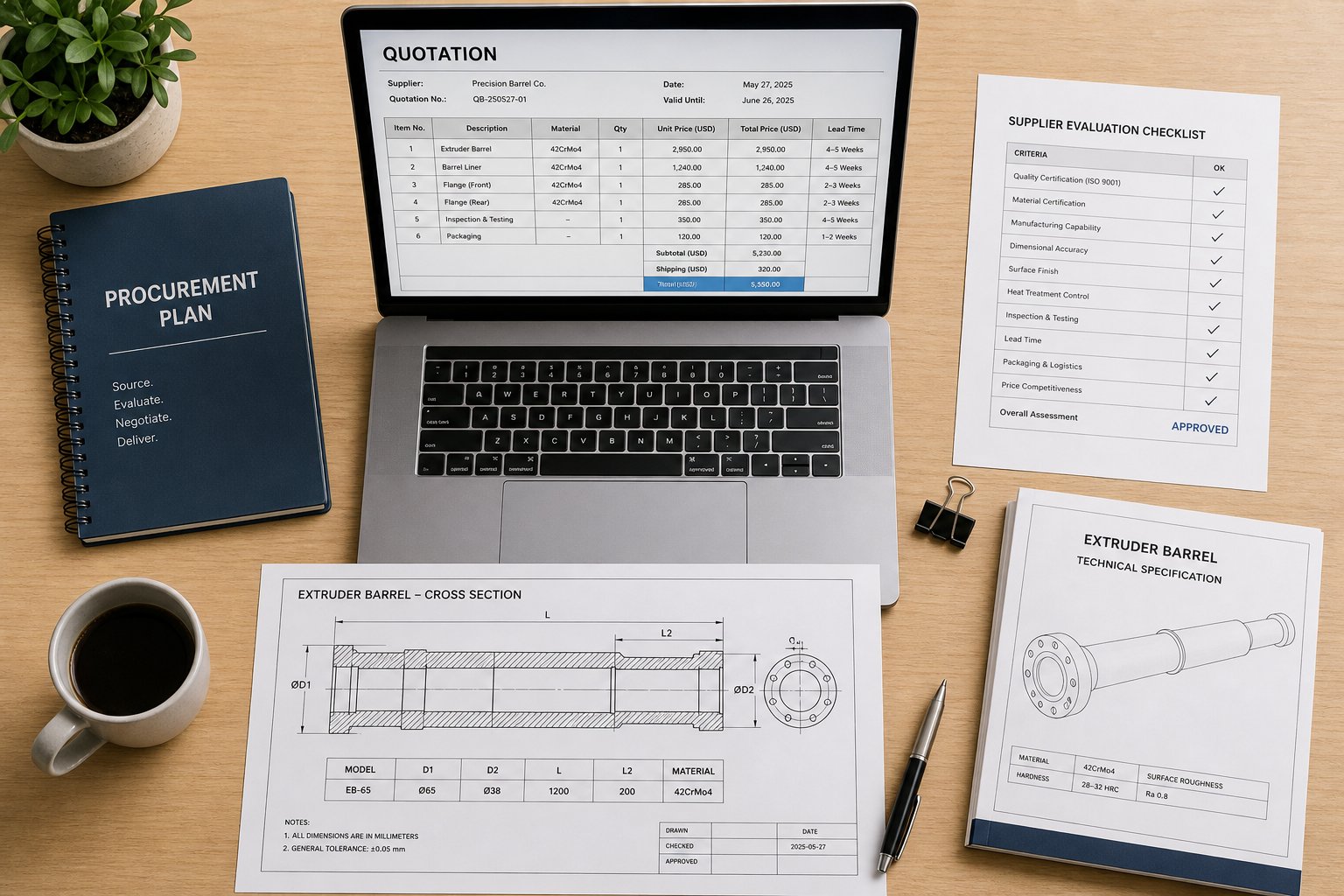
A vague RFQ produces vague proposals—and vague proposals make it nearly impossible to compare suppliers on equal terms. The difference between a quote you can act on and one that raises more questions than it answers almost always traces back to what the buyer included (or failed to include) in the original request. Suppliers are not mind readers. The more precisely you define your twin screw extrusion process requirements upfront, the faster and more accurately every vendor on your shortlist can respond.
Preparing a Complete Technical RFQ Package
Think of your RFQ as the technical blueprint for the entire supplier relationship. An incomplete one forces vendors to guess—and their guesses will differ, making proposal comparisons meaningless. Every RFQ you send should include the following details:
- Target throughput rate — State your required output in kg/hr or lb/hr, along with any minimum and maximum range the extruder system must handle across different product grades
- Polymer or material type — Specify the base resin(s), their melt flow index or viscosity range, and any sensitivity to shear or temperature degradation
- Filler and additive loading percentages — Include the type, particle size, and concentration of every filler (glass fiber, calcium carbonate, talc, carbon black) and functional additive (flame retardant, stabilizer, coupling agent) in your formulation
- Desired output format — Pellets, profiles, sheet, or strand? Specify pellet dimensions, shape tolerances, or profile cross-sections if applicable
- Required screw diameter and L/D ratio — If your process engineering team has determined these parameters, include them. If not, state the application requirements and ask the supplier to recommend specifications—this alone reveals their engineering depth
- Available utilities — Electrical power supply (voltage, phase, frequency, available amperage), cooling water capacity and temperature, compressed air availability, and any plant-specific constraints
- Installation footprint constraints — Ceiling height, floor loading limits, available floor area, and access clearances for maintenance and barrel removal
- Downstream equipment requirements — Indicate whether you need the supplier to quote an integrated line including strand pelletizer, underwater pelletizing system, cooling bath, vibrating screen, or other downstream equipment—or whether you are sourcing these separately
Here is a practical reality most first-time buyers learn the hard way: when your RFQ omits critical parameters, each supplier fills the gaps with their own assumptions. One vendor assumes a 40 L/D ratio while another quotes a 48. One includes a gravimetric feeder; another provides only a volumetric hopper. The resulting proposals look superficially comparable on price but describe fundamentally different double screw extruder configurations. You end up comparing apples to engine blocks—and the lowest-priced quote may simply be the most stripped-down one.
A technically complete RFQ also signals seriousness. Suppliers allocate their best application engineers to well-prepared inquiries because detailed RFQs indicate a buyer who is ready to purchase, not just browsing. Vague requests, by contrast, tend to land at the bottom of the response queue.
Supply Chain and Commercial Terms to Negotiate
Technical specifications get the engineering right. Commercial terms determine whether the deal structure protects you through delivery, installation, and beyond.
Lead times deserve realistic expectations. New twin screw extruders generally require three to eight months from order confirmation to shipment, depending on the level of customization, screw extrusion configuration complexity, and the supplier's current production backlog. Highly customized systems with non-standard barrel metallurgy or specialized gearbox specifications can push beyond that range. Request a detailed milestone schedule—not just a single delivery date—so you can track progress and identify delays before they cascade into your production timeline.
Payment term structures in this industry typically follow a milestone pattern: an initial deposit (commonly 30%) upon order confirmation, a second payment at a defined manufacturing milestone (such as completion of major machining), and a final balance before or upon shipment. Some suppliers offer alternative structures tied to acceptance testing or commissioning milestones. Negotiate terms that align payment releases with verifiable progress—never pay 100% upfront, regardless of how attractive the discount appears.
Incoterms for international purchases are a detail that trips up domestic buyers sourcing from overseas suppliers for the first time. Incoterms are standardized three-letter trade terms defined by the International Chamber of Commerce that allocate responsibilities for freight, insurance, import/export duties, customs clearance, and risk of loss between buyer and seller. Over 90% of international trade contracts incorporate these terms, yet many buyers accept a quoted price without confirming which Incoterm applies. An EXW (Ex Works) quote, for example, means the buyer bears all freight, customs, and insurance costs from the supplier's factory door—making the landed cost substantially higher than the quoted figure. A DDP (Delivered Duty Paid) quote, by contrast, includes virtually all costs through delivery to your facility. Critically, Incoterms do not cover payment terms, delivery timelines, title transfer, or liability for defective goods—those must be addressed separately in your purchase agreement.
Import duties and regulatory compliance add another cost layer for cross-border purchases. Tariff classifications for industrial extruders vary by country, and duty rates can shift with trade policy changes. Factor these costs into your total cost of ownership analysis rather than treating them as unpleasant surprises at customs.
Commissioning and training should be quoted as separate line items. Request that the supplier itemize the full quotation into distinct components: the extruder system itself, downstream equipment, initial spare parts packages, installation supervision, commissioning support, operator training, and process optimization assistance. Bundled lump-sum quotes obscure what you are actually paying for each element—and make it difficult to compare competing proposals on a like-for-like basis.
To keep the entire process organized and prevent critical steps from falling through the cracks, follow this sequence:
- Define application parameters — Document every technical requirement listed above, including material specifications, throughput targets, and facility constraints
- Identify target supplier types — Use the supplier category matrix from your earlier evaluation to determine which types of vendors align with your application, budget, and support requirements
- Prepare complete technical documentation — Compile material data sheets, formulation details, production goals, and any regulatory requirements into a standardized RFQ package
- Issue parallel RFQs to multiple qualified suppliers — Send identical technical packages to at least three to five shortlisted vendors to ensure a meaningful comparison basis
- Compare proposals on technical merit and total cost of ownership — Evaluate not just purchase price but freight, duties, installation, training, spare parts, energy consumption, and projected maintenance costs over the equipment's productive life
- Shortlist finalists and request reference contacts — Narrow to two or three candidates and verify their claims through direct conversations with existing customers running comparable applications
This structured approach does more than organize your procurement workflow—it creates a documented decision trail that protects your team if the chosen supplier underperforms and leadership asks why they were selected. Every step produces evidence: technical comparisons, TCO models, reference feedback, and negotiation records.
Yet even the most rigorous RFQ process cannot protect you if you overlook the warning signs that a supplier is not what they claim to be. Some red flags are subtle; others are practically waving at you from the first conversation.
Red Flags That Signal an Unreliable Supplier
Some of those warning signs show up in technical conversations. Others hide in the fine print—or in what is conspicuously missing from it. The challenge is that unreliable screw extruder vendors rarely look unreliable at first glance. Websites are polished. Sales responses are prompt. Pricing is attractive. The problems surface months later, after the deposit clears and the commissioning deadline passes without a working machine on your floor.
Knowing what to look for before you commit capital is worth far more than any recovery effort after the fact. As supplier verification research consistently confirms, the buyers who get burned are almost always those who skipped independent due diligence and relied solely on supplier-provided information.
Technical and Documentation Warning Signs
The fastest way to test a supplier's legitimacy is to ask technical questions that only a genuine manufacturer can answer. A real screw extruder engineering team will discuss barrel metallurgy options—nitrided steel versus bimetallic liners versus powder metallurgy alloys—and explain which grades suit your specific filler type and loading percentage. A reseller or trading company will dodge those questions, offer vague generalizations, or promise to "confirm with the factory" and return days later with answers that still lack specifics.
Watch for these technical red flags during your evaluation:
Inability to provide screw and barrel metallurgy specifications. If a supplier cannot tell you the alloy grade, hardness rating, or wear-resistance properties of their barrel liners and screw elements, they either do not manufacture those components or do not understand their own product. Either scenario disqualifies them from serious consideration.
Vague or generic datasheets. Credible twin-screw extruders come with detailed performance documentation—torque curves, throughput-versus-screw-speed data, specific energy consumption figures, and barrel pressure ratings. A datasheet listing only physical dimensions and motor power without performance curves is a marketing brochure, not engineering documentation.
Refusal to share reference customer contacts. Every established manufacturer has customers willing to speak on their behalf. Supplier reliability assessments consistently identify this as a critical transparency indicator—suppliers who are proud of their track record will connect you with existing clients without hesitation. Those who deflect reference requests with confidentiality excuses are hiding poor performance, not protecting customer privacy.
Missing or unverifiable certifications. An ISO 9001 certificate that cannot be confirmed through the IAF CertSearch database, a CE Declaration of Conformity that references no specific EU directives, or industry certifications with expired validity dates all indicate a supplier willing to fabricate credibility rather than earn it.
Stock photographs instead of actual factory images. Reverse-image-search any factory or equipment photos a supplier provides. If the same images appear on multiple unrelated company websites, you are looking at a trading company borrowing someone else's production facility to build a false impression of manufacturing capability.
Commercial and Communication Red Flags
Technical red flags reveal capability gaps. Commercial red flags reveal integrity gaps—and integrity gaps are harder to fix.
Unusually low pricing without technical justification. When one quote comes in 40 to 50 percent below every other proposal for ostensibly comparable twin-screw extruders, something has been removed from the equation. It could be inferior metallurgy, undersized drive components, missing safety features, or simply a bait-and-switch strategy where the delivered machine bears little resemblance to what was quoted. Competitive pricing backed by a clear explanation of cost advantages—such as regional labor rates or vertical integration—is legitimate. Pricing that defies the market without explanation is a trap.
Pressure to commit without a trial or factory visit. Legitimate manufacturers welcome scrutiny. They invite buyers to witness test runs, tour production floors, and inspect machining operations. A supplier that discourages visits—or insists on rapid commitment before you have verified their capabilities—is operating on a timeline designed to outrun your due diligence.
Lack of a documented warranty policy. Every serious screw extruder manufacturer provides a written warranty specifying coverage duration, included components, exclusions, and the claims process. Verbal assurances without written documentation have zero enforceability. If the supplier cannot produce a standard warranty document, assume there is no warranty.
No clear after-sales or spare parts support structure. Ask specifically: who handles technical support calls after commissioning? What are the response time commitments? Where are spare parts sourced, and what are typical delivery timelines? Suppliers who cannot articulate a concrete support structure are selling a transaction, not a relationship.
Inability to answer application-specific technical questions. This point bears repeating because it is the single most reliable litmus test. Ask about recommended L/D ratios for your material. Ask about expected specific energy consumption. Ask about degassing port placement for your moisture level. A genuine manufacturer answers from experience. A middleman stalls.
Pull these warning signs together into a single screening checklist you can reference during every supplier interaction:
- Cannot specify barrel or screw element metallurgy grades and hardness ratings
- Provides datasheets without torque curves, throughput data, or performance benchmarks
- Refuses or delays sharing verifiable reference customer contacts
- Holds certifications that cannot be independently confirmed through official registries
- Uses stock or borrowed imagery instead of authenticated factory photographs
- Quotes pricing dramatically below market without transparent cost justification
- Discourages factory visits or pressures rapid commitment before due diligence is complete
- Lacks a written warranty policy with defined scope, duration, and claims process
- Has no documented after-sales support structure or spare parts supply chain
- Cannot discuss screw design, process parameters, or application-specific engineering in detail
The cheapest quote is rarely the most economical choice when total cost of ownership—including downtime, spare parts, and technical support—is factored in. A low purchase price that leads to unreliable production, delayed replacement components, and absent engineering support will cost multiples of the savings over a five-year horizon.
Every item on this checklist is something you can evaluate before signing a purchase order. None of them require specialized expertise—just disciplined questioning and a willingness to walk away when the answers do not add up. The suppliers who pass this screening are the ones worth advancing into final negotiations and partnership decisions.

Making Your Final Twin Screw Extruder Supplier Decision
The suppliers who survive that red-flag screening represent your real shortlist—the vendors genuinely worth your time, your capital, and your trust. But having a qualified shortlist and making a confident final decision are two different challenges. The first requires elimination. The second requires alignment—matching what each remaining supplier offers against what your specific operation actually needs, not just today but across the productive life of the equipment.
This is the stage where many procurement teams stall. The remaining candidates all look credible. Proposals are technically sound. Pricing falls within a reasonable band. How do you choose? The answer lies in stepping back from individual spec sheets and evaluating each supplier through the lens of your complete requirements profile—application type, budget reality, support expectations, and industry compliance obligations—mapped against the supplier categories and evaluation criteria explored throughout this guide.
Matching Your Requirements to the Right Supplier Profile
Recall the supplier type matrix introduced earlier: global OEMs, regional specialists, Chinese export manufacturers, trading companies, and used equipment dealers. Each category carries distinct strengths and trade-offs in pricing, lead time, after-sales depth, and application engineering capability. Your final decision should reflect a deliberate match between your operational profile and the supplier category best positioned to serve it—not a default toward whichever vendor quoted the lowest number.
Consider how the alignment works in practice. A buyer sourcing a plastic twin screw extruder for a primary compounding line producing engineering-grade automotive compounds under OEM quality agreements needs deep application engineering support, proven reference installations in filled polymer systems, and responsive spare parts infrastructure. That profile points toward a global OEM or a strong regional specialist—even if the capital outlay is higher—because the cost of production failures on a contracted automotive supply line dwarfs any savings from a budget purchase.
Contrast that with a plastics recycler adding a secondary line for post-consumer polyolefin pelletizing. The process parameters are well understood, regulatory requirements are lighter, and the buyer's maintenance team has years of hands-on extruder experience. Here, a reputable Chinese export manufacturer or even a carefully vetted refurbished machine may deliver the best return on capital—provided the buyer has confirmed genuine manufacturing capability and adequate spare parts access.
A laboratory running a twin screw compounding extruder for formulation development faces yet another set of priorities: modular screw configurations, small-batch flexibility, and comprehensive data acquisition matter far more than raw throughput or price-per-kilogram economics. The right supplier here is one with a proven lab-scale platform and a validated scale-up path to production equipment—regardless of geography or brand prestige.
The common thread across every scenario is that long-term partnership value consistently outweighs initial purchase price. A plastic compounding machine that runs reliably for fifteen years with responsive technical support and accessible wear parts will generate far more cumulative value than a cheaper alternative that requires constant firefighting. Strategic supplier relationships—built on trust, transparency, and shared objectives—deliver performance that transactional purchasing simply cannot replicate.
Building a Reliable Parts and Service Ecosystem
Here is a reality that even experienced buyers sometimes overlook: selecting the right primary extruder supplier does not eliminate your supply chain risk. It concentrates it. If your only source for replacement screw elements and barrel liners is the original equipment manufacturer, you are one production backlog, one shipping disruption, or one pricing dispute away from an extended line shutdown while you wait for parts.
Smart procurement teams treat parts sourcing as a parallel strategy, not an afterthought. They establish secondary sourcing relationships for critical wear components—particularly twin screw barrels and screw elements—before those components are needed. This is not disloyalty to the OEM. It is basic supply chain resilience. Strategic spare parts planning research highlights that manufacturers relying on a single source for critical components often face a painful choice between carrying expensive excess inventory and risking catastrophic delays when parts are suddenly unavailable. Neither option is sustainable.
The alternative is to identify and qualify factory-direct component suppliers who specialize in manufacturing screws, barrels, and related wear parts to OEM-equivalent specifications. These suppliers exist specifically to fill the gap between OEM delivery timelines and production-floor urgency. For twin screw compounding extruder operations running abrasive formulations—high-filler-loading masterbatch, glass-fiber-reinforced engineering plastics, mineral-filled compounds—barrel and screw element replacement is not a question of if but when, and lead time on those replacements directly determines how many production hours you lose per incident.
A resource worth evaluating in this context is NANHAIYA's screw and barrel product collection, which provides factory-direct replacement screw and barrel solutions for twin screw extruders across extrusion, compounding, pelletizing, and injection molding applications. For plastic extrusion plants and procurement teams managing multi-supplier equipment fleets, having a dedicated component manufacturer as a secondary source reduces sole-source dependency on the original equipment maker—keeping maintenance timelines shorter and cost structures more predictable.
When qualifying any component supplier for your parts ecosystem, verify the same fundamentals you would for a primary equipment vendor: in-house manufacturing capability confirmed through factory evidence, metallurgy specifications matched to your wear requirements, dimensional compatibility with your screw plastic extruder platform, and delivery timelines that align with your maintenance planning cycles.
Your Final Action Checklist
Bringing every layer of this guide together—from configuration selection and supplier taxonomy through evaluation frameworks, RFQ preparation, and red-flag screening—the path from research to confident decision follows a clear sequence. Use this checklist to keep your team on track:
- Shortlist suppliers by type — Match your application profile, budget range, and support requirements to the appropriate supplier category. Eliminate categories that do not fit before investing time in individual vendor evaluation.
- Verify certifications and references — Independently confirm ISO 9001 status, CE or UL compliance, and any industry-specific certifications through official registries. Request and contact reference customers running applications comparable to yours.
- Submit structured RFQs — Issue technically complete, identical RFQ packages to at least three qualified suppliers. Include all material specifications, throughput targets, utility constraints, and downstream equipment requirements so proposals can be compared on equal terms.
- Evaluate total cost of ownership — Look beyond the purchase price. Model the full lifecycle cost including freight, import duties, installation, commissioning, training, energy consumption, projected spare parts spend, and estimated maintenance labor over the equipment's productive lifespan.
- Negotiate commercial terms — Structure payment milestones tied to verifiable manufacturing progress. Confirm applicable Incoterms, warranty scope, commissioning support, and training deliverables as separately itemized line items—not buried in a lump-sum quote.
- Establish spare parts sourcing — Before the machine ships, identify and qualify at least one secondary source for high-wear components—twin screw barrels, screw elements, and barrel liners—so your maintenance team is never waiting on a single supplier during an unplanned replacement event.
Every step in this sequence produces documentation: technical comparisons, TCO models, certification verification records, reference call notes, and negotiation correspondence. That documentation does more than support the immediate purchase decision. It creates an auditable trail that justifies your selection to leadership, protects your team if performance issues arise post-installation, and serves as a template for future capital equipment purchases.
Choosing the right twin screw extruder supplier is not a single moment—it is the cumulative result of disciplined evaluation across every dimension covered in this guide. The buyers who invest in that discipline upfront avoid the far more expensive education of learning from a bad supplier choice over years of production headaches. The machinery will run for decades. Make sure the partnership behind it is built to last just as long.
Twin Screw Extruder Supplier FAQs
1. What is the difference between a co-rotating and counter-rotating twin screw extruder?
Co-rotating twin screw extruders have screws turning in the same direction, delivering superior self-wiping action, high mixing intensity, and greater throughput—ideal for polymer compounding, masterbatch, and reactive extrusion. Counter-rotating designs feature screws turning in opposite directions, generating lower shear and strong positive conveying, making them the standard choice for PVC profile and pipe production. Because most suppliers specialize in one configuration, identifying the right type for your application is essential before requesting any quotes.
2. How do I tell the difference between a real twin screw extruder manufacturer and a trading company?
Request independent factory audit reports rather than self-produced marketing videos. Verify the business license confirms manufacturing activities in its registered scope, not just trade or sales. Ask detailed technical questions about screw geometry and barrel metallurgy—genuine manufacturers answer confidently and specifically, while trading companies stall or give vague responses. Also check whether the company address is in an industrial zone rather than a commercial office tower, and whether their product range is narrowly focused rather than spanning unrelated equipment categories.
3. What should I include in an RFQ when sourcing a twin screw extruder?
A complete RFQ should specify your target throughput rate in kg/hr, base polymer or material type with melt flow data, filler types and loading percentages, desired output format such as pellets or profiles, preferred screw diameter and L/D ratio, available utilities including power supply and cooling water, installation footprint constraints, and downstream equipment needs. Providing this detail ensures every supplier quotes against the same technical baseline, enabling meaningful proposal comparisons and faster, more accurate responses.
4. Is it better to buy a new or used twin screw extruder?
The best choice depends on your application criticality, budget, timeline, and in-house maintenance capability. New machines suit applications demanding custom screw designs, full warranties, regulatory compliance documentation, and the latest energy efficiency. Refurbished extruders offer 30-50% savings for standard compounding or secondary lines, and they are often available much faster than new builds. Used equipment fits experienced teams comfortable managing older technology. Evaluate total cost of ownership—including downtime risk, spare parts, and support—rather than purchase price alone.
5. Why is spare parts sourcing important when choosing a twin screw extruder supplier?
Twin screw barrels and screw elements are high-wear components that may need replacement every 2,000 to 8,000 operating hours depending on formulation abrasiveness. Relying solely on the original equipment manufacturer for every replacement part creates supply chain vulnerability—production backlogs or shipping delays can cause extended line shutdowns. Establishing a secondary sourcing relationship with a factory-direct component supplier, such as NANHAIYA (nhyscrews.com/products), shortens lead times on replacement barrels and screw elements and keeps maintenance budgets predictable.
Written by
Nanhaiya Technical Team
Zhoushan Nanhaiya Plastic Machinery Co., Ltd.
The Nanhaiya technical team supports screw and barrel manufacturing projects through application review, technical communication, custom manufacturing coordination, and production and quality control.
Discuss Your Application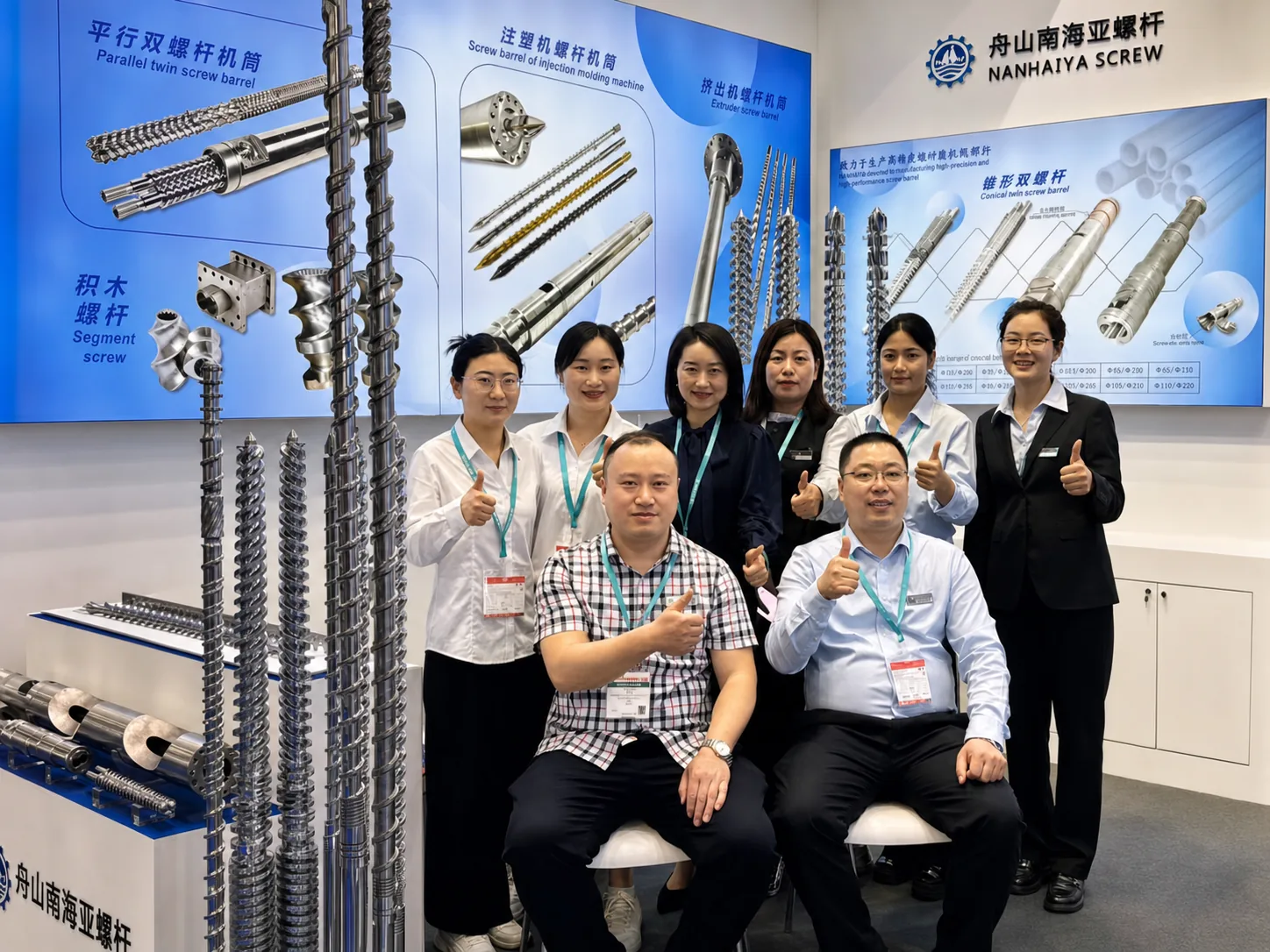
Related Articles
More insights on screw barrel technology and plastics processing.
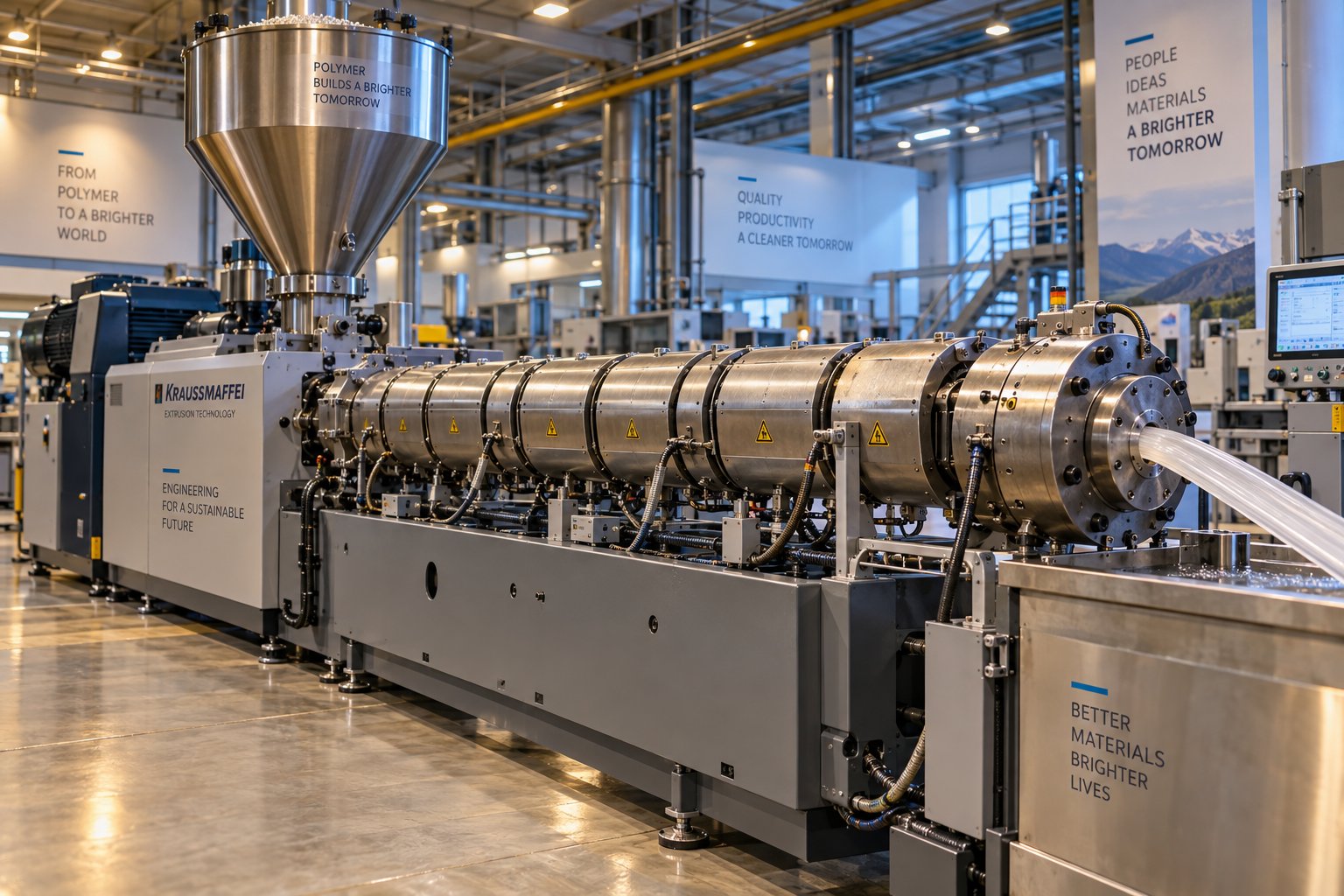
Extruder Machine Decoded: From Raw Pellet To Finished Product
Oct 6, 2026
Learn how an extruder machine works, compare single-screw vs. twin-screw types, and get expert guidance on specs, troubleshooting, and selection.
Read Article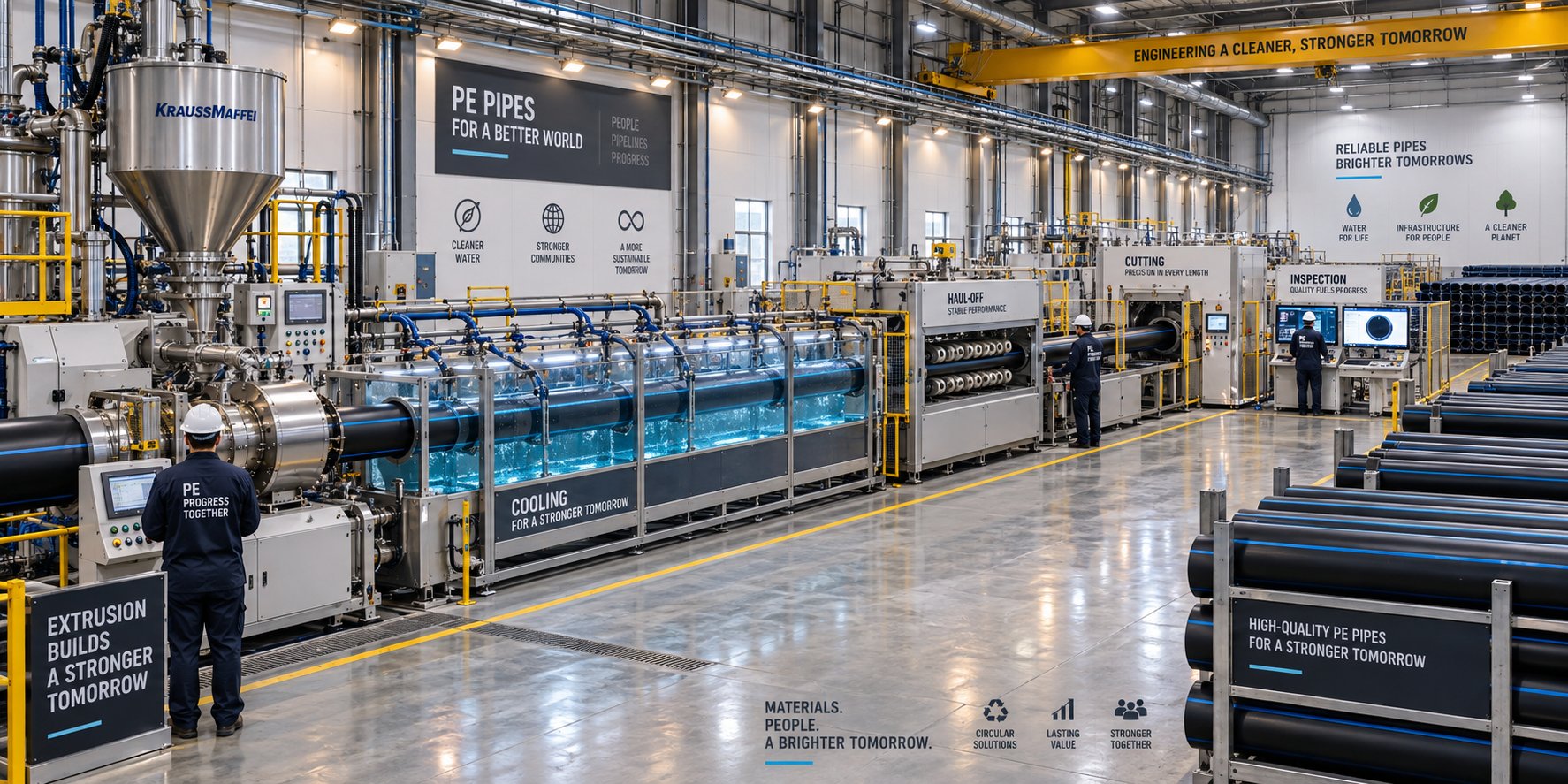
PE Pipe Making Machine Decoded: From Raw Resin to Flawless Pipe
Oct 4, 2026
Learn how a PE pipe making machine works, from resin to finished pipe. Covers components, material grades, automation, troubleshooting, and buyer selection tips.
Read Article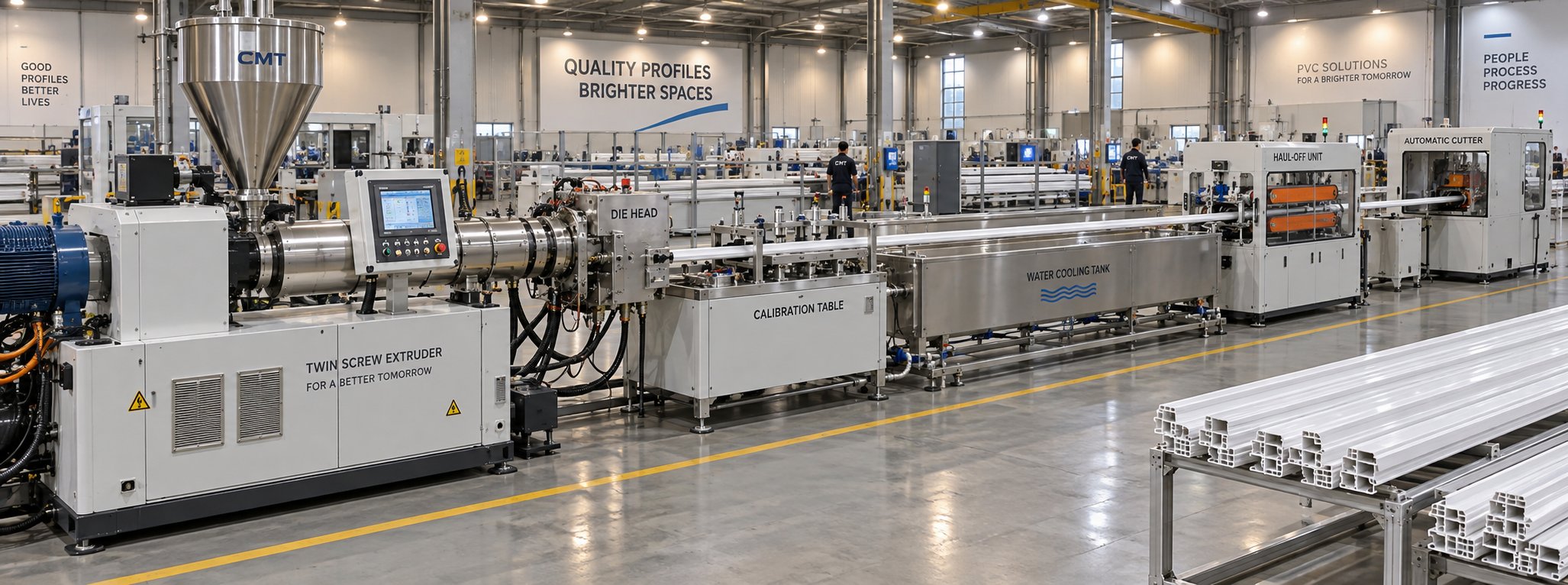
PVC Profile Making Machine Decoded: From Raw Resin To Profit
Oct 3, 2026
Learn how a PVC profile making machine works — extrusion process steps, key technical parameters, die design, calibration methods, maintenance, and total cost of ownership.
Read ArticleLooking for something else?
Search by material, symptom or product and jump straight to the relevant page.
These are navigation suggestions based on keyword matching — not a quotation, not a delivery commitment, and not a substitute for engineering review. Final specification is confirmed by our engineers against your drawings and processed material.
Need help with screw barrel selection?
Share your machine model, processed material and application. Our team can help with pricing and technical support.