

What Determines Twin Screw Extruder Price
You're comparing supplier quotes and the numbers don't make sense. One vendor offers a twin screw extruder for $45,000. Another quotes $750,000 for what appears to be the same type of machine. Neither is necessarily wrong — and that's exactly why pricing for this category of equipment frustrates buyers more than almost any other capital purchase in the plastics industry.
This guide exists to fix that. It's not a sales pitch from a machinery brand. It's a vendor-neutral pricing breakdown built for people who sign purchase orders and approve capital budgets — giving you the context to evaluate every quote that lands on your desk.
What Is a Twin Screw Extruder and Why Does Price Vary So Widely
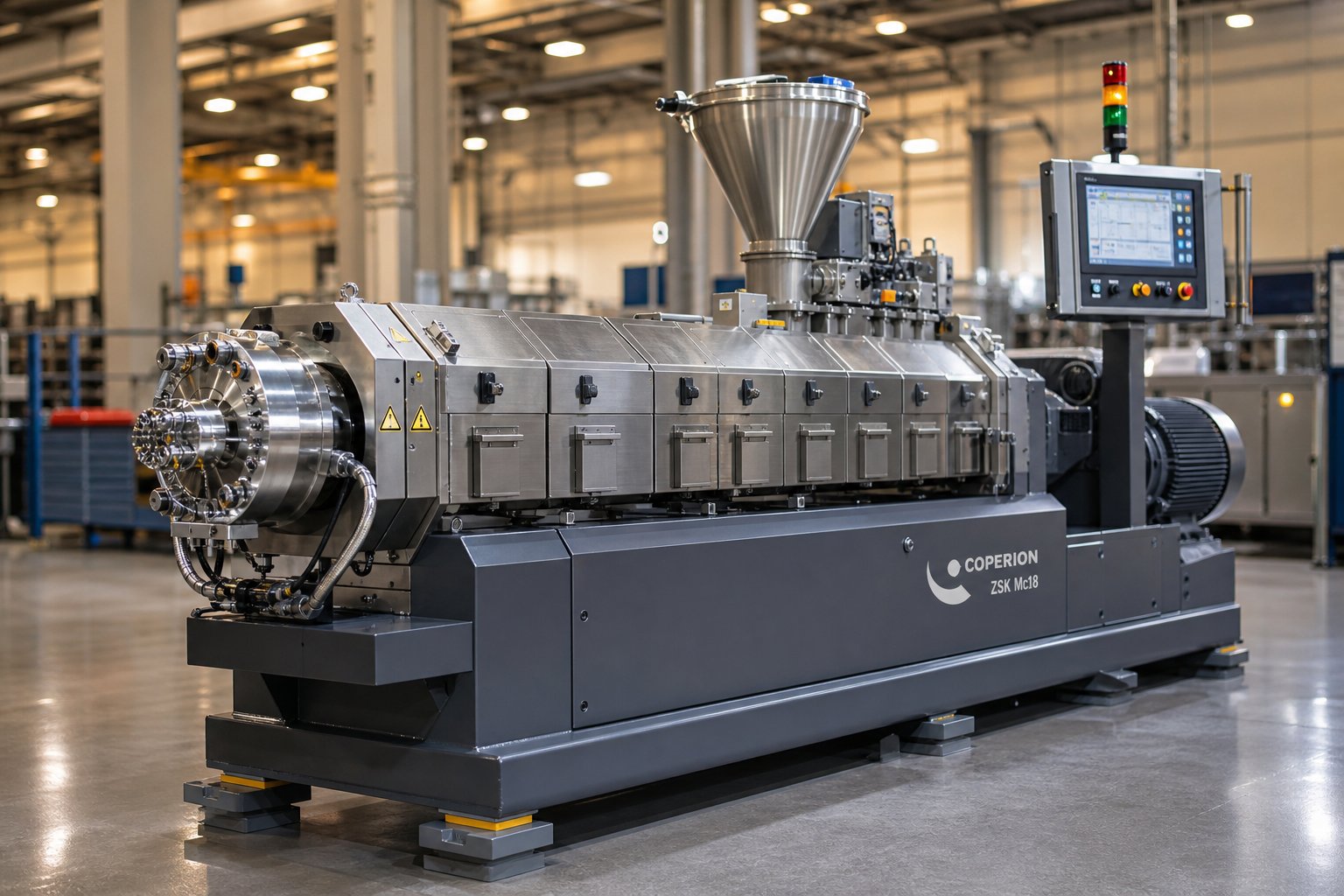
So what is an extruder machine of this type, exactly? A twin screw extruder uses two intermeshing screws rotating inside a heated, segmented barrel. Those screws convey, melt, mix, and homogenize raw materials — performing compounding, reactive extrusion, devolatilization, or a combination of all three in a single continuous process. Screw diameters typically range from 20 mm for laboratory units up to 200 mm or more for high-volume production lines, with L/D ratios spanning 32:1 to 52:1 and beyond.
This mechanical complexity is precisely what makes a twin-screw extruder so much harder to price than a single screw machine. A single screw extruder uses one fixed-geometry screw — relatively straightforward to manufacture and cost. Twin screw extruders, by contrast, feature modular screw elements (conveying flights, kneading blocks, mixing elements), independently heated barrel zones, high-torque gearboxes engineered to transmit power across two shafts simultaneously, and sophisticated control systems. Every one of those subsystems carries its own cost curve, and the way they interact creates an enormous pricing spectrum.
Configuration matters enormously, too. Co-rotating designs built for high-speed compounding demand precision-machined components and robust gearboxes that drive prices upward. Counter-rotating conical models designed for PVC profile extrusion operate at far lower speeds and carry fundamentally different cost structures. Add in the country of manufacture, the brand tier, and the level of automation, and you'll find that the same general category of equipment spans a range that can surprise even experienced buyers.
Who This Pricing Guide Is For
Whether you're a plant manager evaluating a capacity expansion, a procurement team normalizing bids from suppliers across three continents, a startup budgeting for your first compounding line, or an equipment buyer trying to figure out if a quote is fair — this guide gives you a structured framework to decode what you're actually paying for.
The same "twin screw extruder" search can represent a $15,000 lab-scale unit or a $1.5 million production line. Industrial-scale machines alone range from roughly $50,000 to several million dollars depending on size, features, and origin. Understanding what drives that spread is the first step to smart purchasing.
Every section ahead breaks down a specific pricing dimension — from manufacturer tiers and machine configurations to automation levels and total cost of ownership — so you can stop comparing apples to oranges and start evaluating quotes on equal footing. The differences between tiers are real, measurable, and worth understanding before you commit a single dollar.
Twin Screw Extruder Price Ranges by Manufacturer Tier
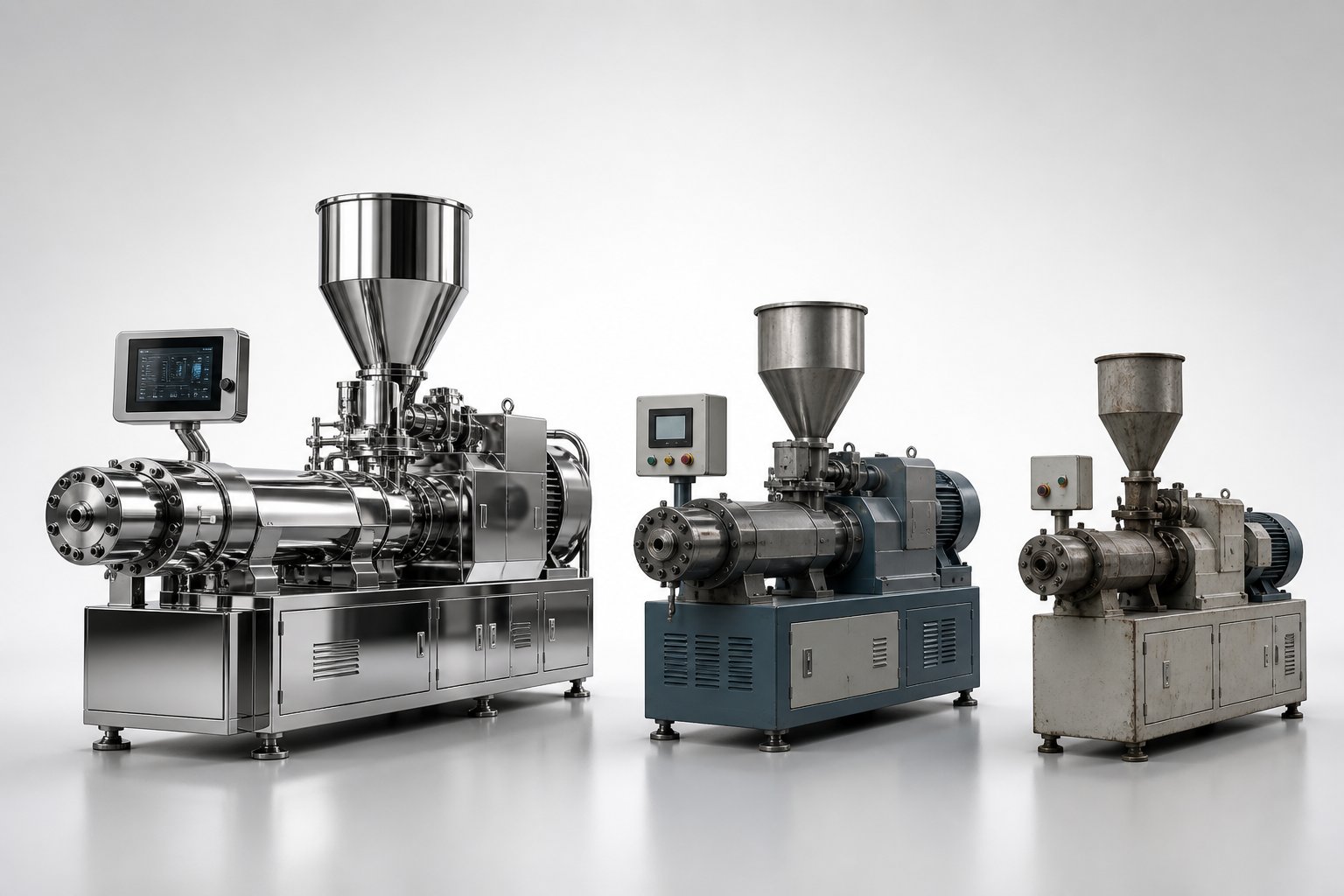
That pricing spectrum from the tens of thousands into the millions isn't random. It maps directly to a three-tier manufacturer landscape that the industry rarely explains clearly. Once you understand where a supplier sits within this framework, every quote you receive starts to make a lot more sense — and you can evaluate whether the premium (or the discount) is justified for your specific application.
Premium European OEM Tier
At the top of the pricing pyramid sit established Western manufacturers — primarily German engineering houses — that have defined twin screw extruder technology for decades. Think brands with 80 to 130+ years of accumulated extrusion expertise, flagship machines delivering specific torque densities of 16 to 18 Nm/cm3, and gearboxes engineered to run 24/7 in the most demanding compounding environments. These industrial extruder platforms feature premium metallurgy throughout — HIP-clad bimetallic barrels, powder metallurgy screw elements, and precision-ground spline shafts — all backed by global service networks with regional spare parts warehouses.
The investment reflects that engineering depth. A mid-size production-class co-rotating double screw extruder (50-75 mm screw diameter) from a premium European twin-screw extruder manufacturer typically falls between $500,000 and $1,500,000, depending on configuration. Larger platforms above 150 mm routinely exceed $2 million for the extruder alone. Lead times stretch to 8-14 months, and customization follows rigorous engineering review processes that add time but reduce commissioning risk.
These machines are typically justified when you're processing demanding formulations — highly filled engineering plastics, glass-fiber-reinforced compounds, pharmaceutical-grade materials — where maximum torque density, tight process tolerances, and certified quality systems aren't optional. For high-output production environments running three shifts, the premium often pays for itself through uptime, energy efficiency, and extended wear-part life.
Mid-Tier Established Brands
The middle tier includes well-established manufacturers from Japan, the United States, India, and select European brands outside the top-three German names. These twin screw extruders offer proven reliability, solid torque density (often in the 11-15 Nm/cm3 range), and — critically — strong after-sales support networks in their home regions.
Pricing for a comparable mid-size co-rotating machine generally lands between $250,000 and $800,000. Japanese manufacturers, for instance, price at roughly 90-110% of European equivalents but bring exceptional machining precision and simulation tools. American-built extruders command similar ranges and offer the fastest service response for North American operations. Mid-tier brands represent an attractive balance for buyers who need dependable performance and accessible technical support but don't require the absolute maximum specifications that premium European platforms deliver.
Economy-Tier Manufacturers and the 40-60 Percent Cost Advantage
Here's the number that reshapes every procurement conversation: top-tier Chinese-manufactured twin screw extruders typically cost 30-55% of their European counterparts. That's not a typo, and it's not a quality shortcut — at least not from the best suppliers in this tier. A 65 mm production extruder from a reputable Chinese manufacturer often falls in the $80,000-$120,000 range, while a 95 mm model runs $180,000-$280,000. Compare that to $500,000+ for a European equivalent, and you'll understand why procurement teams take notice.
What enables this gap? Three structural advantages compound to create the pricing differential: significantly lower labor costs across engineering and manufacturing, domestic sourcing of steel and raw materials at scale, and high-volume production across standardized platforms that spread tooling and R&D costs over far more units. The leading Chinese manufacturers have invested heavily in CNC machining centers, precision quality control, and ISO 9001 certified processes — they're not assembling machines from scrap parts in a garage.
That said, the quality-price tradeoff is real and must be evaluated honestly. At the economy tier, you may encounter differences in barrel hardness (standard nitrided steel rather than bimetallic HIP linings), slightly looser screw element tolerances, gearboxes with lower continuous-duty torque ratings, and after-sales support networks that are still developing outside of Asia. For standard compounding, masterbatch production, and mid-volume operations processing non-abrasive materials, these tradeoffs may be perfectly acceptable — even smart. For highly abrasive formulations or mission-critical 24/7 production where unplanned downtime costs thousands per hour, they deserve careful scrutiny.
| Comparison Factor | Premium European OEM | Mid-Tier Established Brands | Economy-Tier (Top Chinese) |
|---|---|---|---|
| Typical Price Range (50-75 mm) | $500,000 - $1,500,000 | $250,000 - $800,000 | $80,000 - $280,000 |
| Build Quality Indicators | HIP-clad barrels, powder metallurgy elements, premium gearbox | Bimetallic barrels, high-grade tool steel elements, reliable gearbox | Nitrided or bimetallic barrels, tool steel elements, standard gearbox |
| Best Suited For | High-output 24/7 production, demanding formulations, GMP/pharma | Steady production, regional operations, engineering plastics | Masterbatch, mid-volume compounding, standard materials, startups |
| Gearbox Quality | Highest torque density (16-18 Nm/cm3), 15-25 year design life | Strong torque density (11-15 Nm/cm3), proven longevity | Moderate torque density (9-13 Nm/cm3), improving rapidly |
| After-Sales Support | Global service network, regional warehouses, rapid response | Strong in home region, established distributor channels | Improving; regional service partners, responsive remote support |
| Lead Time | 8 - 14 months | 6 - 12 months | 3 - 6 months |
Tier selection should be driven by your application requirements, production volume, and total cost of ownership — not by purchase price alone. The most expensive machine isn't automatically the best investment, and the least expensive one isn't automatically a compromise.
The critical takeaway? Every tier has a legitimate place in the market. A startup launching a masterbatch line processing standard polyolefins doesn't need the same gearbox as a Tier 1 automotive compounder running 40% glass-fiber-loaded nylon at full speed around the clock. Matching the tier to the application is where the real savings — or the real costs — are found. And that matching process starts with understanding which configuration of extruders best fits your specific material and output requirements.
Co-Rotating vs Counter-Rotating Twin Screw Extruder Price Differences
Configuration choice is one of the biggest pricing levers you'll pull — yet it's rarely explained in terms of dollars. Most buyers know that co-rotating and counter-rotating twin-screw extruders exist. Far fewer understand why one consistently costs more than the other, or how choosing the wrong type can quietly drain budgets for years after installation.
Co-Rotating Intermeshing Extruders and Their Pricing Premium
If you're shopping for a twin screw compounding extruder, chances are you're looking at a co-rotating intermeshing parallel design. These machines dominate compounding, masterbatch production, reactive extrusion, and virtually any application where intensive distributive and dispersive mixing is required. The two screws rotate in the same direction, creating a figure-eight material flow pattern that delivers excellent self-cleaning capability and thorough homogenization in a single pass.
That performance advantage comes with real engineering costs baked into every quote. Co-rotating extruders typically operate at 400 to 900 rpm — some high-performance models push past 1,200 rpm. Running two intermeshing screws at those speeds demands precision-machined screw elements with extremely tight tolerances, high-torque-density gearboxes capable of transmitting power reliably across two closely spaced shafts, and drive motors sized to match. The gearbox alone can represent 20-30% of the total machine cost, and its complexity scales steeply with speed and torque requirements.
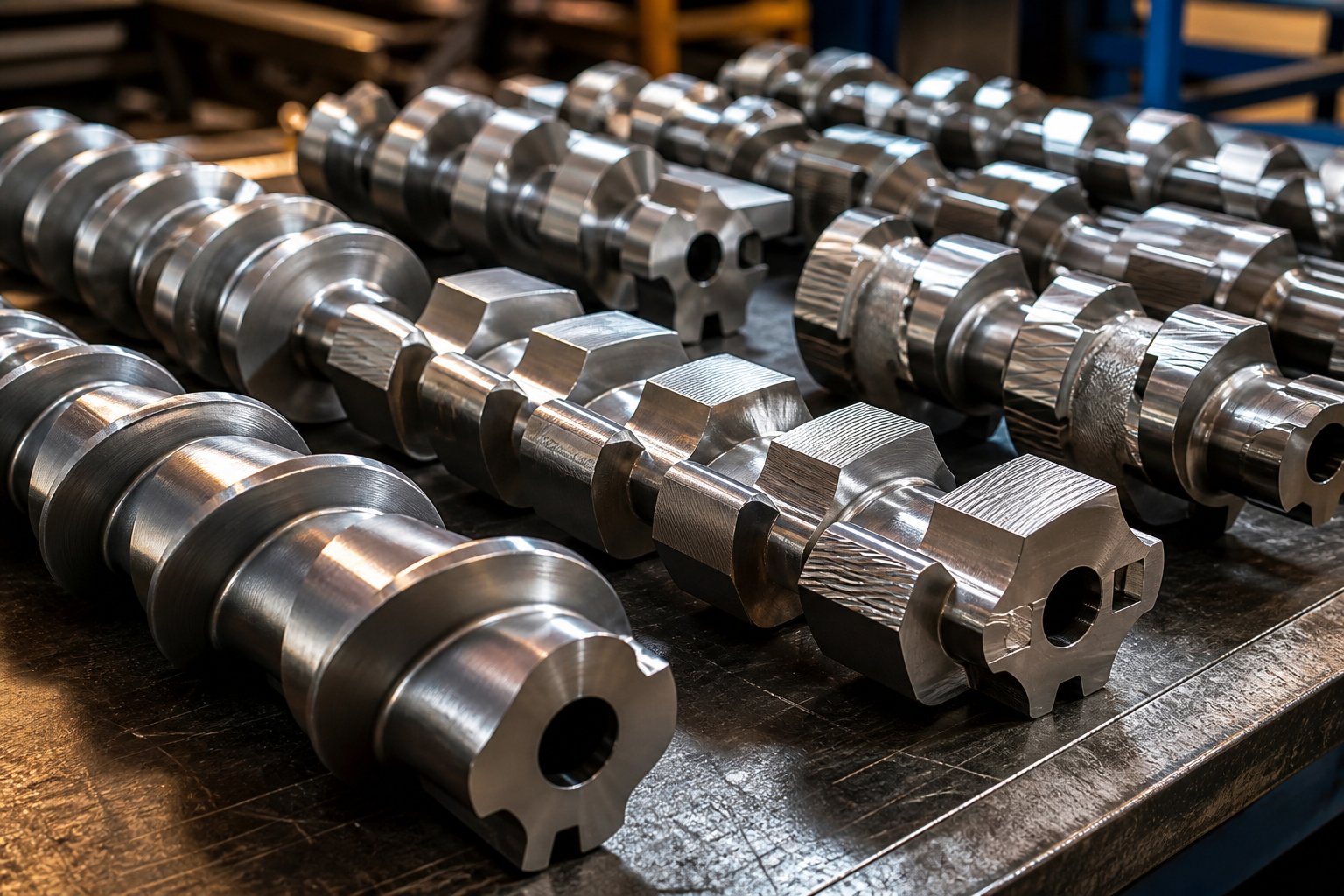
Modular screw design adds another layer. A fully configured extruder twin screw element set — conveying elements, kneading blocks, mixing elements, and reverse flight sections — often includes 40 to 80+ individual pieces per shaft, each precision-ground from hardened tool steel or powder metallurgy alloys. That modularity gives you enormous process flexibility, but it also means you're paying for a sophisticated engineering system rather than a simple mechanical component.
Counter-Rotating Extruders and Where They Save Money
Counter-rotating twin-screw extruders flip the equation. Their screws rotate in opposite directions — one clockwise, the other counterclockwise — at substantially lower speeds, typically 30 to 150 rpm. This fundamentally different operating profile translates to simpler, less expensive gearbox designs and lower-powered drive motors.
The most common variant is the conical twin screw extruder, where tapered screws narrow from the feed end to the discharge. That conical geometry naturally compresses material as it moves forward, generating high die pressure without needing the extreme rotational speeds and torque of a co-rotating platform. Conical designs also allow larger root diameters at the feed zone — improving intake of bulky powders — while maintaining a compact overall footprint.
Where does this matter most financially? PVC pipe and profile extrusion, wood-plastic composite processing, and certain sheet applications. These are the sweet spots for counter-rotating machines, where gentle processing at lower shear rates is actually an advantage. PVC is heat-sensitive; the lower screw speeds and reduced shear heating of counter-rotating designs protect the material from degradation without requiring expensive cooling systems or narrow process windows. For these applications, choosing a counter-rotating extruder isn't a compromise — it's the technically correct and financially smarter solution.
Parallel counter-rotating designs also exist, offering the lowest shear forces of any twin screw configuration. They're ideal for high-level devolatilization and processing of extremely heat-sensitive compounds, though they represent a smaller market segment.
| Specification | Co-Rotating Intermeshing | Counter-Rotating (Conical & Parallel) |
|---|---|---|
| Typical Price Premium | Baseline to 30-50% higher than counter-rotating at comparable output | 20-40% lower than co-rotating equivalents |
| Speed Range | 400 - 900+ rpm (some models exceed 1,200 rpm) | 30 - 150 rpm (conical); up to 300 rpm (parallel) |
| Primary Applications | Compounding, masterbatch, reactive extrusion, engineering plastics | PVC pipe/profile, WPC, heat-sensitive polymers, devolatilization |
| Gearbox Complexity | High — precision gears, tight shaft spacing, high torque density required | Moderate — lower speed reduces engineering demands significantly |
| Throughput Capacity | Highest — production capacity scales with screw speed and diameter | Moderate — optimized for pressure generation over volume |
Matching Configuration to Application for Best Value
Here's where procurement mistakes get expensive. Imagine specifying a high-speed co-rotating twin screw extruder for a rigid PVC pipe line. You'd overpay by tens of thousands of dollars on the gearbox and drive system alone, then struggle with thermal degradation because the machine generates more shear heat than your material can tolerate. The reverse is equally costly — installing a conical counter-rotating machine and expecting it to compound 30% glass-fiber-reinforced nylon at 500 kg/hr will leave you with inadequate mixing, poor fiber dispersion, and throughput that falls far short of your targets.
The right question isn't "which type is better?" It's "which type matches my material, my output targets, and my budget?" For color masterbatch, engineering plastics compounding, and high-filler applications requiring intensive mixing, co-rotating is almost always the correct choice — and its pricing premium is justified by performance. For PVC-focused operations, WPC lines, and gentle processing of thermally sensitive materials, counter-rotating configurations deliver equal or better results at meaningfully lower cost.
Getting this decision right at the start saves far more than any negotiation tactic ever will. And once the configuration is locked in, the next variable that moves your quote up or down most dramatically is the set of technical specifications you choose within that configuration — starting with screw diameter.
Technical Specifications That Drive Twin Screw Extruder Machine Pricing
Every supplier quote you receive is built on a stack of technical specifications — and each spec carries its own cost multiplier. The challenge? Most buyers see these numbers listed on a data sheet without understanding which ones move the price the most, or how they interact. A 10 mm increase in screw diameter doesn't just cost 10% more. It can double or triple the total machine cost because every subsystem connected to that diameter has to scale up with it.
Let's break down the specifications that actually drive what you pay for a twin screw extruder machine, ranked by their real-world pricing impact.
Screw Diameter and L/D Ratio as Primary Price Drivers
If you remember only one pricing rule, make it this: screw diameter is the single most powerful variable determining what a screw extruder costs. It's not a linear relationship, either. Doubling the screw diameter roughly octuples the torque requirement because the relationship follows a cube law. That means the gearbox, the drive motor, the barrel segments, the screw shafts, and even the machine frame all scale exponentially — not proportionally — as diameter increases.
Picture the practical impact. A 35 mm lab-to-pilot scale twin-screw extruder machine might run $25,000 to $60,000. Step up to a 50 mm production unit and you're looking at $80,000 to $200,000. Jump to a 75 mm platform and the range climbs to $150,000 to $500,000 or more, depending on the manufacturer tier. Reach a 95 mm machine and you've easily crossed into the $250,000-$800,000 territory. Each diameter jump carries with it a fundamentally larger gearbox housing, heavier barrel sections, bigger heating and cooling systems, and a more substantial foundation to support the increased weight.
The L/D ratio (length-to-diameter ratio) compounds this effect. A standard industrial extruder machine with a 36:1 L/D ratio uses, say, nine barrel sections. Stepping up to 48:1 adds three more barrel zones — each one a precision-bored, individually heated and cooled steel segment — plus the corresponding screw elements to fill them. Enhanced L/D ratios facilitate superior polymer blending and plasticization by extending residence time, but every additional barrel section adds thousands of dollars in hardware, additional thermocouple sensors, and more complex temperature control logic.
For context, typical production twin screw extruders range from 32:1 to 52:1 L/D. Moving from a 40:1 to a 48:1 ratio on a 65 mm machine might add $15,000 to $40,000 to the price tag — purely in barrel sections and screw elements, before considering the proportional increase in motor power needed to drive a longer screw assembly.
Torque Density and Gearbox Engineering Costs
The gearbox is often the most expensive single component inside a twin screw extruder — and torque density is the specification that determines how expensive it gets. Measured in Nm/cm3, torque density quantifies how much rotational force the gearbox can transmit relative to the cross-sectional area of the screws it drives. Higher torque density means you can process tougher, higher-viscosity materials — glass-filled polyamides, mineral-loaded compounds, reactive blends — without hitting the gearbox's limits.
Modern high-performance twin screw extruders deliver torque densities up to 18 Nm/cm3, representing roughly a 30% increase over previous-generation designs. That engineering leap doesn't come cheap. Achieving these densities requires precision-ground gear sets, advanced bearing configurations capable of handling enormous axial thrust loads (ranging from 2.5 kN on small machines to 3,400 kN on large production units), and tight manufacturing tolerances that push into aerospace-grade territory.
Here's why this matters for your budget. A gearbox rated at 11 Nm/cm3 might serve a mid-range compounding application perfectly well. Specifying 18 Nm/cm3 on the same screw diameter can add 25-50% to the gearbox cost alone — and since the gearbox typically represents 20-30% of the total machine price, that upgrade ripples through the entire quote. The smart question isn't "what's the highest torque density available?" It's "what torque density does my material and process actually require?"
And don't overlook a critical nuance in spec sheets: verify whether the quoted torque rating reflects continuous-duty capacity or peak intermittent capacity. A reliable operating practice is to run at 80% of maximum continuous torque and 80% of maximum speed, giving you headroom for startup surges and process variations. Buying based on peak torque numbers — then running the machine at what's actually its continuous limit — accelerates bearing fatigue and shortens gearbox life dramatically.
Screw Element Configuration and Modularity
Here's the line item that surprises first-time buyers: the screw elements themselves. On a modular co-rotating twin screw extruder, you don't purchase a single, fixed-geometry screw. You purchase a complete screw program — dozens of individual elements that slide onto splined shafts and can be rearranged to customize the process profile for different materials and formulations.
A typical production screw configuration includes 40 to 80+ individual pieces per shaft: conveying elements with various pitch angles to control material transport speed, kneading blocks in different stagger angles (30, 60, and 90 degrees) for dispersive and distributive mixing, reverse-flight elements to create pressure seals and back-mixing zones, and specialized mixing elements like gear-type or turbine designs. Each element is precision-ground to maintain tight clearances with its intermeshing partner and the barrel wall.
The metallurgy of these elements is where costs escalate further. Standard nitrided steel works for non-abrasive formulations. Processing mineral-filled compounds or glass-fiber-reinforced plastics? You'll need tool steel elements — or at the premium end, powder metallurgy (PM) alloys like tungsten carbide-based compositions that resist abrasion far longer but cost several times more per piece. A full set of PM screw elements for a 75 mm extruder can easily exceed $30,000 to $60,000, representing 10-15% of the total machine cost.
Barrel metallurgy follows the same logic. Standard through-hardened steel barrels suit general-purpose processing. Bimetallic barrel linings — where a wear-resistant alloy is centrifugally cast inside each barrel segment — provide dramatically longer life when processing abrasive fillers but add significant cost per section. The choice between standard and bimetallic barrels can shift the total machine price by 10-20%, and it directly determines how often you'll be ordering replacement barrel sections down the road.
To put these variables in perspective, here are the key specifications ranked by their impact on the total price of an industrial extruder machine:
- Screw diameter — the primary cost driver; determines the scale of every other component
- Motor power — directly tied to diameter and throughput targets; larger motors require larger drives and electrical infrastructure
- Torque density — governs gearbox engineering complexity and cost; higher density means heavier investment in precision gear trains and bearings
- L/D ratio — each additional barrel section adds hardware, heating/cooling zones, and screw elements
- Free volume — the open channel area available for material processing; larger free volume at a given diameter requires deeper screw channels and wider barrel bores
- Barrel metallurgy — standard nitrided, bimetallic, or specialty alloy linings create a wide cost range per barrel segment
- Screw element sets — number of elements, metallurgy grade, and the breadth of the modular program all compound into a substantial portion of the total investment
These specifications don't exist in isolation — they interact. A larger screw diameter paired with a high L/D ratio and premium barrel metallurgy doesn't just add costs linearly. It multiplies them, because every barrel segment is bigger, every screw element is heavier and more expensive to machine, and the gearbox has to handle proportionally greater forces across a longer assembly. Understanding which specs your application truly requires — versus which ones a supplier might upsell — is where informed buyers separate themselves from everyone else at the negotiating table. And increasingly, the next major cost variable isn't mechanical at all: it's the level of automation and digital intelligence built into the control system.
How Automation and Control Systems Affect Extruder Machine Price
You've selected your screw diameter, settled on a configuration type, and chosen a barrel metallurgy that fits your material. The mechanical heart of the machine is defined. Yet the quote you receive can still swing by 15-30% depending on a variable that never touches the polymer: the automation and control system wrapping around it.
Control technology is the fastest-evolving cost factor in extrusion processing machines — and it's the one most frequently glossed over in supplier discussions. A basic push-button panel and a fully integrated Industry 4.0 control platform both "run the extruder." The difference in what they cost, what they deliver, and how they affect your operation over five or ten years is enormous.
PLC Brands and HMI Sophistication
Imagine two identical twin screw extruders sitting side by side on a factory floor — same screw diameter, same gearbox, same barrel metallurgy. One is equipped with a Siemens S7-1500 PLC paired with a 15-inch color touchscreen HMI running a custom SCADA interface. The other uses a domestic Chinese-brand PLC with a 7-inch basic touchscreen. The mechanical performance may be comparable, but the plastic extruder machine price gap between these two control packages alone can reach $8,000 to $25,000 or more, depending on the I/O count and software licensing.
Why does the brand matter beyond the logo? Integration capability is the short answer. A Siemens, Allen-Bradley (Rockwell), or Mitsubishi PLC platform communicates natively with most plant-level MES and ERP systems, supports standardized fieldbus protocols like PROFINET or EtherNet/IP, and offers global technical support with decades of firmware continuity. For plants running multiple production lines or integrating extruder data into centralized quality and production tracking systems, that interoperability isn't a luxury — it's a functional requirement.
The spectrum of control sophistication runs wide. At the entry level, you'll find relay-logic panels with manual temperature controllers and analog gauges — functional for simple, single-product operations but offering no data logging, recipe storage, or remote diagnostics. Mid-range systems introduce PLC-based control with touchscreen HMIs, zone-by-zone temperature management, alarm logging, and basic recipe storage for multiple products. At the top end, fully integrated SCADA systems deliver real-time process visualization, historical trending, automated batch reporting, multi-user access levels, and direct connectivity to plant networks.
Each step up the ladder adds cost, but it also adds capability that directly influences product consistency, changeover speed, and operator efficiency. For buyers evaluating the plastic extrusion machine cost of different quotes, asking "what PLC brand and model is included?" is just as important as asking about screw metallurgy — yet far fewer procurement teams think to do it.
Industry 4.0 Features and Smart Extruder Pricing
The manufacturing world's push toward Smart Factory 4.0 hasn't bypassed the extrusion floor. Modern twin screw extruders increasingly ship with digital capabilities that would have been unthinkable a decade ago — and each feature carries a price tag that shows up (or should show up) as a distinct line item in your quote.
Remote monitoring is the most common entry point. A cellular or Ethernet gateway installed on the control panel allows the supplier's engineering team — or your own off-site personnel — to view live process parameters, diagnose alarm conditions, and in some cases adjust setpoints without traveling to the machine. The hardware and annual connectivity subscription typically add $3,000 to $8,000 to the initial package, but a single prevented emergency service call can recoup that investment immediately.
Predictive maintenance sensors represent the next tier. Vibration monitors on the gearbox, current-draw analytics on the main motor, and barrel thermocouple drift detection all feed data into algorithms designed to flag developing problems before they cause unplanned shutdowns. This aligns with the broader Industry 4.0 principle that preventive action consistently outperforms reactive repair — and manufacturing data supports it. Facilities implementing predictive maintenance tools report meaningful reductions in unplanned downtime and maintenance costs compared to run-to-failure approaches.
Beyond monitoring, advanced systems now offer automated recipe management (storing and recalling complete process profiles — screw speed, temperature setpoints, feeder rates, and vacuum levels — for instant changeover between products), cloud-based data logging for regulatory compliance and quality auditing, and emerging AI-driven process optimization that adjusts parameters in real time to minimize specific energy consumption while maintaining output quality.
Here's the honest pricing reality: a fully loaded Industry 4.0 package can add 10-20% to the extruder machine price. For a $200,000 machine, that's $20,000 to $40,000 in digital capability layered on top of the mechanical platform. Whether that investment makes sense depends entirely on your operation. A single-product line running one formulation 24/7 may extract limited value from automated recipe management. A contract compounder switching formulations three times per shift could see payback within the first year through faster changeovers and reduced scrap during transitions.
Downstream Equipment and Turnkey Line Pricing
This is where quotes become genuinely confusing — and where less experienced buyers frequently misjudge what they're actually comparing. A twin screw extruder by itself is only the processing core. It doesn't pelletize, cool, classify, or package your product. The downstream equipment required to turn molten compound into finished pellets often equals or exceeds the cost of the extruder itself.
When a supplier quotes a "complete compounding line" at $350,000, you need to know exactly what's included versus what's priced separately. A turnkey pelletizing line typically bundles the extruder with gravimetric feeders, a strand die or underwater pelletizing system, a water bath or air-cooling conveyor, a pellet classifier or vibrating screen, a storage silo, and all interconnecting controls. Each of those components carries its own pricing curve — an underwater pelletizing system alone can run $40,000 to $120,000 depending on throughput and cutter design.
The most common automation add-ons and their relative impact on total system price include:
- Gravimetric feeding systems — $15,000 to $60,000 per feeder; critical for accurate dosing of additives and fillers, and often required in multiples for multi-component formulations
- Underwater pelletizing system — $40,000 to $120,000; produces uniform, dust-free pellets ideal for engineering plastics and high-throughput operations
- Strand pelletizing with water bath — $20,000 to $50,000; a more economical alternative suited for lower-throughput or less demanding applications
- Side feeders for downstream addition — $10,000 to $35,000 each; necessary for adding glass fiber, minerals, or heat-sensitive additives partway along the barrel
- Vacuum venting systems — $8,000 to $25,000; essential for devolatilization of moisture or reaction byproducts
- Melt filtration (screen changers) — $12,000 to $45,000; required for recycling applications or contamination-sensitive products
- Advanced PLC/SCADA control integration — $8,000 to $30,000 beyond the base control panel; ties all downstream equipment into a single operator interface
- Remote monitoring and predictive maintenance package — $3,000 to $15,000; provides connectivity and diagnostic intelligence across the entire line
Add these components together and you'll quickly see how a $120,000 extruder becomes a $300,000 production line — or how a $500,000 extruder anchors a $1.2 million turnkey system. The most important step you can take when comparing supplier quotes is requesting a clear itemization: the extruder unit price separated from every downstream component, accessory, and automation package. Without that breakdown, you're comparing apples to entire orchards.
Always ask suppliers to itemize the extruder separately from the complete line. A quote that bundles everything into a single number makes it impossible to evaluate whether you're paying a fair price for the machine — or subsidizing overpriced accessories.
Automation decisions ripple far beyond the initial purchase order. The control system you choose, the digital features you invest in, and the downstream equipment you pair with the extruder all shape your daily operating costs — energy consumption, spare parts frequency, changeover time, and unplanned downtime risk. Those ongoing costs, accumulated over years of production, often dwarf the original capital expenditure. And that's exactly the dimension most pricing discussions fail to address.
Total Cost of Ownership Beyond the Twin Screw Extruder Purchase Price
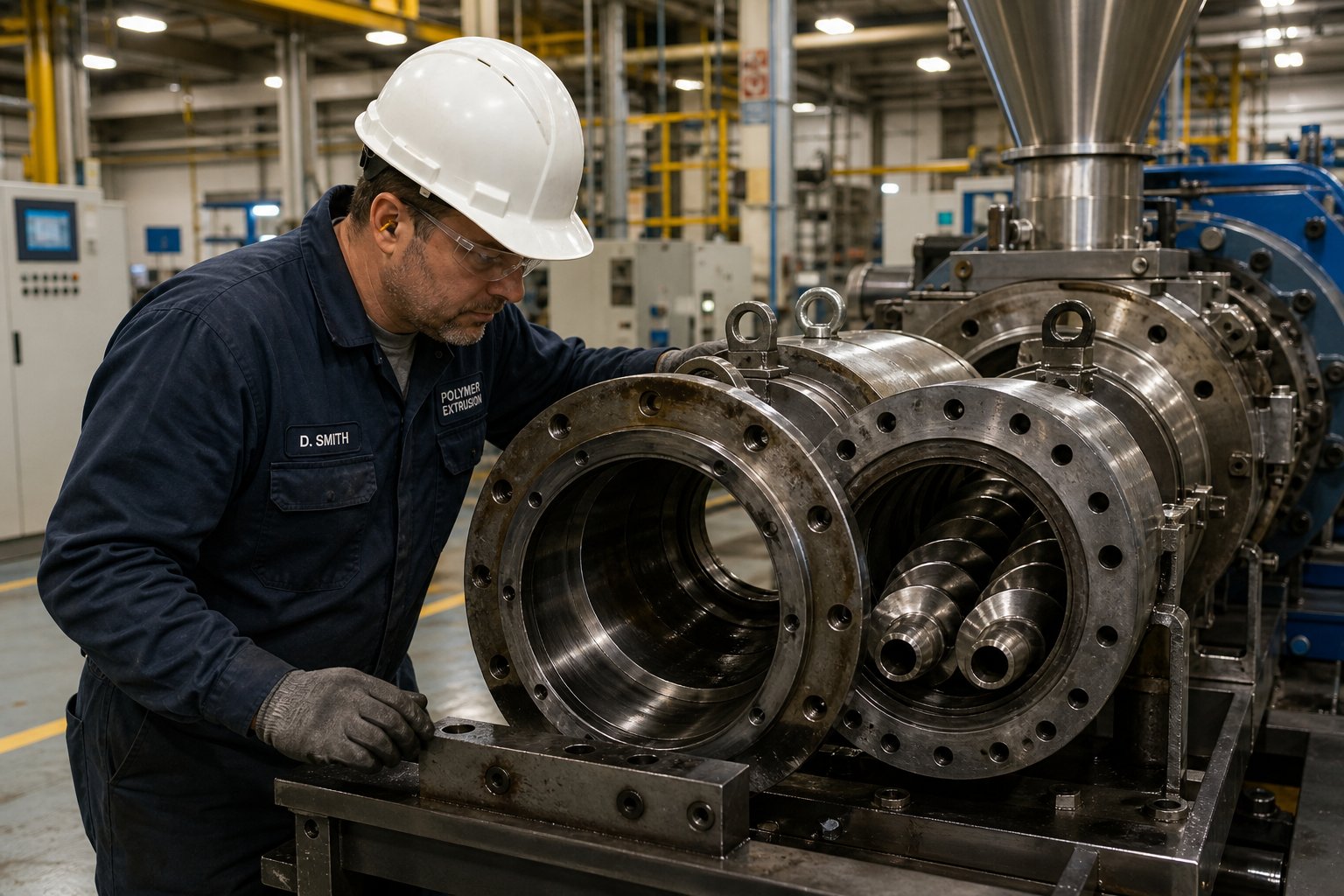
Operating costs don't appear on the purchase order — but they absolutely appear on your P&L statement, year after year, for the entire life of the machine. A plastic twin screw extruder that costs 40% less upfront can quietly become the most expensive machine in your plant if it consumes more energy, chews through wear parts faster, and creates unplanned downtime that disrupts production schedules. This is the dimension of twin screw extruder price that almost no supplier wants to discuss in detail, because it shifts the conversation away from sticker price and toward value — and value comparisons don't always favor the cheapest option.
Energy Consumption and Operating Costs
Your extruder runs on electricity — a lot of it. The main drive motor, barrel heaters, cooling fans or water pumps, feeders, and downstream equipment all draw power continuously during production. For a mid-size twin screw extruder plastic compounding line, annual energy costs typically range from $15,000 to $50,000 depending on screw diameter, motor size, operating hours, and local electricity rates. Over a 10-year machine life, energy alone can exceed the original purchase price.
What separates a high-efficiency machine from a costly one? Three things matter most. First, motor efficiency class: an IE4 premium-efficiency motor wastes significantly less energy as heat compared to an IE2 standard motor, translating to measurable savings on every shift. Second, barrel heating method — modern electric ceramic band heaters deliver faster response times and lower thermal losses than older cast-aluminum designs, while oil-heated barrels (still used in some counter-rotating systems) introduce pump energy and heat exchanger maintenance into the equation. Third, cooling system design: well-engineered cooling channels with turbulent flow promoters maintain tighter temperature control while consuming less water and pump energy than basic straight-bore designs.
Imagine two machines on your shortlist. Machine A costs $100,000 with a standard IE2 motor and conventional heaters. Machine B costs $130,000 but includes an IE4 drive and optimized thermal management. If Machine B saves $6,000 per year in energy, it pays back the premium in five years — and keeps saving for the remaining decade-plus of its operating life. The less expensive machine was never actually cheaper. You just couldn't see the full cost on the quote.
Spare Parts Pricing and Replacement Frequency
Screw elements and barrel liners are consumables. They wear. The only question is how fast — and how much each replacement cycle costs. This is where the initial metallurgy decisions you made during purchasing directly determine your ongoing operating budget for every year the machine runs.
The data is clear. Standard steel screw and barrel components (hardness around 35-40 HRC) typically last 2-3 years under normal conditions but wear dramatically faster with abrasive compounds like mineral-filled or glass-reinforced polymers. Nitrided steel (50-55 HRC) extends life to 4-5 years at a moderate cost premium. Bimetallic barrel linings (55-62 HRC) push replacement intervals out to 6-8 years and offer five times the wear resistance of standard steel — a substantial advantage for any twin screw plastic extruder processing filled materials regularly.
The financial math is straightforward. A standard steel screw and barrel set for a 75mm extruder for polymer compounding might cost $8,000 to $15,000 and need replacement every 2-3 years. A bimetallic set might cost $18,000 to $28,000 but last 6-8 years. Over a decade, the "cheap" option requires three to four replacement cycles ($24,000-$60,000 in parts alone), while the premium option requires one or two ($18,000-$56,000). Factor in the production downtime for each swap — typically a full day of lost output per replacement — and the bimetallic option frequently wins on total spend.
There's another cost lever that experienced buyers use: sourcing replacement screw and barrel components from factory-direct specialists rather than purchasing OEM-branded parts at marked-up prices. Specialized manufacturers like NANHAIYA produce screw and barrel components for extrusion, compounding, and pelletizing applications, offering plastic extrusion plants and equipment buyers a cost-effective alternative that can significantly reduce replacement costs without sacrificing quality. When your OEM quotes $12,000 for a barrel segment and a factory-direct specialist delivers equivalent metallurgy at 40-60% of that price, the TCO impact compounds over every replacement cycle.
Maintenance Schedules and Downtime Implications
Planned maintenance is predictable and budgetable. Unplanned downtime is neither — and it's where the real financial damage happens. A single day of unplanned downtime on a high-output compounding line can cost $10,000 or more in lost production, not including emergency repair labor, expedited parts shipping, and the downstream impact on customer deliveries.
The routine maintenance calendar for a twin screw extruder includes gearbox oil changes every 2,000 to 3,000 operating hours (approximately $500-$800 per change including filters and labor), coupling inspections and alignment verification quarterly, barrel bore measurements monthly to track wear progression, thermocouple calibration annually, and cooling channel descaling every six months. None of these tasks are expensive individually — budgeting 2-3% of the machine's value annually covers routine maintenance comfortably. For a $150,000 machine, that's $3,000 to $4,500 per year.
The difference between machine tiers shows up in how maintenance costs escalate over time. A premium gearbox with proper oil analysis can last 10 years or more. A lower-cost gearbox with the same neglected oil schedule might fail in five — and gearbox replacement runs $15,000 to $25,000. Machines with better-engineered cooling channels resist scaling longer. Heater bands from quality suppliers last years instead of months. These differences are invisible at the quoting stage but very visible on your maintenance ledger.
| TCO Component | Low-Price Machine | Mid-Price Machine | Premium Machine |
|---|---|---|---|
| Purchase Price (65-75 mm) | $80,000 - $150,000 | $250,000 - $500,000 | $500,000 - $1,200,000 |
| Annual Energy Cost | $25,000 - $45,000 (IE2 motors, standard heaters) | $18,000 - $35,000 (IE3 motors, improved thermal design) | $15,000 - $28,000 (IE4 motors, optimized cooling) |
| Spare Parts Replacement Frequency | Every 1.5 - 3 years (standard steel elements) | Every 3 - 5 years (nitrided/bimetallic options) | Every 5 - 8 years (premium bimetallic/PM alloys) |
| Average Unplanned Downtime | 5 - 10 days/year | 2 - 4 days/year | 0.5 - 2 days/year |
| Estimated 5-Year TCO | $280,000 - $500,000 | $400,000 - $700,000 | $600,000 - $1,450,000 |
Look at those numbers carefully. The low-price machine's 5-year TCO can reach $500,000 — more than triple its purchase price — once energy, spare parts, and downtime are included. The premium machine's TCO is higher in absolute terms, but its ratio of operating cost to purchase price is significantly tighter, and its output reliability is substantially better. The mid-price tier often represents the most efficient balance for operations that don't require the absolute maximum specifications but can't afford the downtime risk of the lowest tier.
The lowest purchase price rarely equals the lowest total cost of ownership. A twin screw extruder that saves you $100,000 upfront but costs $30,000 more per year to operate erases that "savings" before the end of year four.
Total cost of ownership reframes every purchasing conversation. It turns a $150,000 machine into a $400,000 commitment and a $500,000 machine into perhaps a $700,000 one — but with better uptime, lower scrap rates, and longer intervals between wear-part orders. For procurement teams building capital expenditure proposals, presenting TCO alongside purchase price is the most effective way to justify the right machine rather than simply the cheapest one. And for buyers exploring every avenue to optimize that total cost, the equipment market offers another powerful lever: choosing between new, used, and refurbished machines — each with its own risk profile and financial equation.
New vs Used vs Refurbished Twin Screw Extruder Pricing Compared
A brand-new machine isn't always the smartest purchase — and a used one isn't always the riskiest. The secondary market for twin screw extruders is substantial, active, and filled with legitimate opportunities for buyers who know what to look for. It's also filled with pitfalls for those who don't. Whether you're evaluating a used twin screw extruder for sale on an equipment marketplace or weighing the premium for a factory-fresh build, the decision hinges on your specific application, risk tolerance, timeline, and budget.
Each acquisition path — new, used, or refurbished — serves a different buyer profile. Understanding which one aligns with your situation can save tens of thousands of dollars or prevent a costly mistake that disrupts production for months.
Buying New and When It Makes Financial Sense
New equipment carries the highest upfront cost, but it also delivers something no other option can: complete customization and full manufacturer backing. When you order a new twin screw extruder, every specification — screw diameter, L/D ratio, barrel metallurgy, gearbox torque class, control system, and screw element configuration — is built to your exact process requirements. Nothing is a compromise inherited from a previous owner's application.
There are scenarios where buying new is the only defensible choice. If you're processing novel or highly demanding materials — reactive extrusion of specialty polymers, pharmaceutical-grade compounds requiring GMP documentation, or heavily glass-filled engineering plastics that demand the latest barrel and screw metallurgy — a new machine ensures you get current-generation wear protection and process capability. Custom screw geometries, specific free-volume requirements, or non-standard L/D ratios simply aren't available on the secondary market.
Warranty protection is another clear advantage. New machines typically ship with 12 to 24 months of coverage on major components, including the gearbox and drive system. Some premium manufacturers extend gearbox warranties to 36 months or longer. That coverage eliminates the single biggest financial risk in equipment ownership — an early catastrophic failure — and provides access to factory engineering support during commissioning and the critical first months of production.
The tradeoffs are real, though. Lead times for new builds range from 3 months at economy-tier manufacturers to 14 months or more for premium European OEMs. Deposit structures typically require 30-40% at order confirmation, with milestone payments at key manufacturing stages and a final balance before or upon shipment. For a buyer who needs capacity online within 60 days, that timeline simply doesn't work — which is precisely where the used and refurbished markets step in.
Used Twin Screw Extruders and Fair Market Valuation
The market for used extruders is robust and global. Equipment dealers, online industrial marketplaces, plant closures, and direct resales from manufacturers upgrading their fleets all feed a steady supply of pre-owned machines. A common rule of thumb is that used extrusion equipment sells for roughly 40-60% of comparable new pricing, though the actual figure depends heavily on age, condition, brand, and provenance.
Why consider used extruders at all? Two compelling reasons dominate. First, availability — used machines are often ready for immediate shipment, eliminating the months-long lead times of new builds. For a plant replacing a failed machine or seizing a sudden market opportunity, that speed-to-production advantage can outweigh almost every other factor. Second, reduced depreciation. A new machine loses a significant portion of its value the moment it's installed. A well-maintained used machine purchased at 50% of new cost depreciates far less in both percentage and absolute dollar terms, preserving more of your capital investment if circumstances change.
Fair market valuation for a used twin screw extruder depends on several intersecting factors. Brand reputation sits at the top — premium European machines hold their value far better than economy-tier equipment, sometimes retaining 50-60% of new pricing even after a decade of service. Machines from manufacturers no longer in business, by contrast, carry a discount because ongoing support and parts availability become uncertain. Operating hours, the type of materials processed (abrasive compounds accelerate wear dramatically), and the completeness of maintenance records all shift valuation up or down.
The control system's age deserves special attention. A mechanically sound extruder equipped with an obsolete PLC and outdated HMI may need a $15,000-$30,000 control system upgrade before it can integrate with your plant's infrastructure — a cost that should be subtracted from the perceived savings. Similarly, machines originally configured for a very different application may require a complete screw element set replacement to suit your materials, adding thousands to the effective purchase price.
When evaluating any used twin screw extruder for sale, a structured inspection protocol separates informed buyers from hopeful ones. Here are the critical checkpoints, ranked by their impact on risk:
- Barrel bore diameter measurement — Use precision bore gauges to measure each barrel section at multiple points. Compare readings to the original manufacturing specifications. Wear beyond 0.1-0.2 mm of nominal diameter signals that barrel segments need re-lining or replacement, a cost that should be reflected in the purchase price.
- Screw element condition — Inspect flight tips, kneading block lobes, and mixing element surfaces for wear, chipping, or corrosion. Measure outer diameters against OEM specifications. Worn elements reduce mixing efficiency and throughput before they cause obvious failures.
- Gearbox inspection report — Request oil analysis history, vibration data if available, and ideally a gear-tooth inspection. A gearbox nearing end-of-life can cost $15,000-$50,000 to rebuild — a deal-breaker if not factored into the price.
- Motor hours and drive condition — Check the hour meter (if equipped), motor insulation resistance, and drive inverter status. Motors with excessive hours or marginal insulation values may need rewinding or replacement within a year of purchase.
- Control system age and compatibility — Identify the PLC model, HMI software version, and communication protocols. Discontinued PLC platforms or unsupported software versions create integration headaches and may require full control panel replacement.
- Material processing history — Machines that spent years processing glass-fiber-reinforced compounds or mineral-filled formulations will show significantly more wear than those used for unfilled polyolefins. Ask for production records or at minimum confirm the types of materials previously run.
- Machine provenance and maintenance records — A complete service logbook, original purchase documentation, and clear ownership chain provide confidence that the machine was properly maintained. Missing records aren't automatically disqualifying, but they increase risk and should lower the price you're willing to pay.
- Safety compliance — Verify that guards, interlocks, emergency stops, and electrical systems meet current safety standards in your jurisdiction. Bringing an older machine up to code can add unexpected costs, particularly for machines originally manufactured under different regional standards.
Refurbished Equipment as the Middle Ground
There's an important distinction that many buyers miss: "used" and "refurbished" are not the same thing. A used twin screw extruder is sold in its current condition — whatever state the previous owner left it in. A refurbished machine has undergone a systematic restoration process that typically includes barrel re-lining or replacement of worn barrel sections, installation of new screw elements, gearbox disassembly and rebuild with new bearings and seals, motor inspection or rewinding, and control system upgrades to current-generation PLC and HMI platforms.
The result is a machine that performs close to new specifications but costs meaningfully less. Refurbished used extrusion equipment typically sells for 50-70% of equivalent new pricing — a narrower discount than raw "as-is" used equipment, but with substantially lower risk. Many refurbishment specialists also provide limited warranties — commonly 6 to 12 months on rebuilt components — offering a layer of protection that straight used purchases almost never include.
When does the refurbished path make the most financial sense? Three buyer profiles benefit most. Established plants scaling capacity for a proven product line — you already know the machine configuration works, and you need a second or third unit quickly without the lead time or full cost of a new build. Buyers who need faster availability than new orders allow — refurbished machines are typically ready in 4 to 8 weeks, compared to 3 to 14 months for new equipment. And operations processing standard, non-abrasive materials like unfilled polyolefins or color concentrates, where the mechanical demands are moderate and newly rebuilt components will deliver long service life.
Refurbished equipment does carry limitations. Customization options are constrained by the original machine's platform — you can change screw elements and control systems, but you can't change screw diameter, gearbox torque class, or fundamental barrel geometry. Availability depends on what's currently in the refurbishment pipeline, so you may not find the exact size or brand you prefer at any given moment. And for highly abrasive or cutting-edge applications, new equipment with the latest metallurgy and engineering updates remains the safer choice.
| Comparison Factor | New | Used (As-Is) | Refurbished |
|---|---|---|---|
| Price Range (% of New) | 100% | 30 - 55% | 50 - 70% |
| Warranty Typical | 12 - 24 months (some extend to 36) | None, or limited right-of-return period | 6 - 12 months on rebuilt components |
| Lead Time | 3 - 14 months depending on tier | Immediate to 2 weeks | 4 - 8 weeks typical |
| Customization Options | Full — built to buyer specifications | None — sold as configured | Limited — screw elements, controls, wear parts |
| Risk Level | Low — factory warranty, new components | High — condition dependent, no warranty typical | Moderate — rebuilt to spec, partial warranty |
| Best For (Buyer Profile) | Custom applications, demanding materials, GMP/pharma, maximum uptime requirements | Budget-constrained startups, backup capacity, standard materials, experienced buyers who can inspect thoroughly | Established plants scaling capacity, proven processes, buyers needing faster delivery than new builds |
The right choice depends on where you sit in your business lifecycle and what you're asking the machine to do. A startup with limited capital and a forgiving application can extract tremendous value from used extruders for sale — provided they invest the time and expertise to inspect properly. A growing compounder adding a third line for a proven product saves both money and time by going refurbished. And a manufacturer launching a new engineered-plastics program with tight tolerances and demanding materials should buy new without hesitation — the warranty, customization, and latest technology justify every dollar of the premium.
Regardless of which path you choose, every purchase shares one thing in common: a supplier quote that needs to be read carefully, compared accurately, and evaluated for completeness. The way quotes are structured — what they include, what they omit, and how they frame costs — determines whether you're making a well-informed decision or walking into hidden expenses that surface months after the machine arrives.

How to Read and Compare Twin Screw Extruder Quotes for Sale
Three quotes are sitting on your desk. One is two pages long with a single line-item price. Another runs eight pages with detailed breakdowns. The third falls somewhere in between but uses terminology you've never seen before. All three claim to offer a twin screw extruder for sale that meets your specifications. How do you compare them fairly — and how do you spot the one that's going to cost you an extra $30,000 six months after delivery?
This is where purchasing decisions are won or lost. The mechanical specifications and tier comparisons covered earlier give you the technical foundation to evaluate a machine's capabilities. Quote evaluation is the skill that protects your budget from the gaps, omissions, and assumptions that turn a "great deal" into an expensive lesson.
Standard Line Items Every Quote Should Include
A transparent, professional quote from any reputable supplier — whether you're reviewing extruders for sale domestically or evaluating international manufacturers — should itemize every major cost component individually. When line items are missing, they aren't savings. They're costs that will surface later, usually at the worst possible time and with zero negotiating leverage.
Here's what a complete quote should break out:
- Extruder unit price — the base machine including barrel, screws on shafts, gearbox, motor, drive system, and machine frame, specified as a distinct line item separate from all downstream equipment
- Screw element set — the complete modular screw program included with the machine, with metallurgy grade clearly stated (nitrided steel, tool steel, powder metallurgy)
- Die head — strand die, underwater pelletizing die, or application-specific die, with material of construction and number of holes or geometry specified
- Control panel — PLC brand and model, HMI screen size and type, software package, and any included communication protocols (PROFINET, EtherNet/IP, Modbus)
- Motor and gearbox specifications — motor power (kW), efficiency class (IE2/IE3/IE4), gearbox torque rating (Nm), torque density (Nm/cm3), and whether the gearbox is manufactured in-house or sourced from a third party
- Spare parts package — what's included at delivery (commonly a set of replacement heater bands, thermocouples, barrel bolts, and sometimes one or two spare screw elements), with pricing for additional recommended spares listed separately
- Installation supervision — whether the supplier provides an engineer on-site for installation, how many days are included, and who covers travel and accommodation expenses
- Operator training — number of training days, location (at the factory or your plant), number of operators covered, and whether training materials or manuals are included in the language you need
- Warranty terms — duration, what components are covered, what's excluded, response time commitments, and whether warranty service is performed by the manufacturer directly or through a local agent
- Shipping and delivery terms — clearly stated Incoterm (FOB, CIF, EXW, or DDP) with the named port or delivery point, estimated transit time, and responsibility for cargo insurance
If any of these items are absent from a quote, ask for them explicitly before comparing prices. A quote missing the screw element metallurgy specification, for example, might be pricing standard nitrided steel while a competitor includes premium tool steel — making the "cheaper" quote an apples-to-oranges comparison that misleads your procurement team.
Hidden Costs and Red Flags in Supplier Quotes
Even a well-itemized quote can omit expenses that hit your budget after the purchase order is signed. Some of these costs are genuinely easy to overlook. Others are conveniently left out by suppliers who know that a lower headline number wins more orders.
Freight and logistics for heavy machinery is the most commonly underestimated expense. A production-class twin screw extruder can weigh anywhere from 3 to 15 tons depending on size and configuration. Shipping a 6-ton machine from China to the U.S. Gulf Coast, for instance, involves ocean freight ($2,000 to $6,000+ per container depending on route and market conditions), port handling at both origin and destination, inland trucking from the destination port to your facility, and potentially rigging or crane services for unloading at your plant. These logistics costs can add 5-10% of the purchase price on top of the quoted equipment cost.
For international purchases, customs duties and import taxes are another layer entirely. Industrial machinery tariff classifications vary by country and product type, and Section 301 tariffs on Chinese-manufactured equipment can add an additional 7.5-25% to the landed cost. If your supplier quotes FOB Shanghai and you budget based on that number alone, you're understating your true cost by potentially 15-35% once freight, duties, insurance, and customs brokerage fees are included.
On-site preparation costs catch many first-time buyers off guard. Your facility needs a level concrete foundation engineered to support the machine's weight and vibration profile, adequate electrical infrastructure (a 75 mm extruder might require a 150-200 kW power supply with appropriate switchgear), cooling water supply at specified flow rates and temperatures, and compressed air for pneumatic actuators. None of these appear on the supplier's quote, but they can collectively add $10,000 to $50,000 or more to your project budget depending on your plant's existing infrastructure.
Commissioning and startup supervision costs are sometimes included in the base quote — but often they're not. A supplier who includes "installation supervision" might mean one engineer for three days, with all travel expenses billed separately. Clarify exactly what's covered. Startup of a complex compounding line can take one to three weeks of engineering support, and daily rates for factory-trained technicians typically run $500 to $1,200 per day plus expenses.
Beyond hidden costs, certain patterns in a quote should trigger immediate caution:
- No itemization — a single lump-sum price with no component breakdown makes it impossible to verify what you're actually getting or to compare against other offers
- Unusually short warranty — anything less than 12 months on a new machine suggests the manufacturer lacks confidence in their own components, particularly the gearbox and drive system
- No spare parts pricing — if the supplier won't quote replacement screw elements, barrel sections, and wear parts at the time of sale, you have no visibility into your future operating costs and no leverage to negotiate those prices later
- Vague delivery terms — "delivery in approximately 3-4 months" without a specified Incoterm, named port, or contractual penalty for delays leaves you exposed to schedule slippage with no recourse
- Reluctance to provide references — any established manufacturer should willingly connect you with two or three customers running similar machines on similar materials; refusal is a significant warning sign
Normalizing Quotes for Apples-to-Apples Comparison
You've gathered three quotes. One is FOB Ningbo. Another is CIF Houston. The third is EXW from a European factory. Comparing the bottom-line numbers directly is meaningless — each price includes a different scope of delivery, and the costs to get each machine running in your plant will differ substantially.
The solution is normalization: converting every quote to a common basis that reflects your true landed-and-running cost. Here's a practical framework that procurement teams can implement immediately:
Start by creating a standardized comparison spreadsheet with every cost category listed as a row and each supplier as a column. Request identical specifications from all suppliers — same screw diameter, same L/D ratio, same barrel metallurgy, same motor efficiency class, and same control system tier. If one supplier quotes a 65 mm machine and another quotes a 71 mm, you're not comparing machines — you're comparing categories. Insist on spec parity before the pricing conversation begins.
Convert all pricing to the same Incoterm basis. If Supplier A quotes FOB Shanghai and Supplier B quotes CIF Los Angeles, you need to either add your own freight and insurance costs to Supplier A's FOB price, or subtract the estimated freight markup from Supplier B's CIF price to get a comparable FOB figure. CIF quotes from suppliers often include a 5-10% markup on freight rates compared to booking ocean transport independently through your own freight forwarder — so a lower CIF number isn't necessarily a lower actual cost.
Layer in all post-delivery expenses: import duties based on the correct HS code classification, customs brokerage fees, inland freight from port to plant, foundation and utility preparation, rigging and installation labor, commissioning supervision, and operator training. Add these to each supplier's converted equipment price to arrive at a true "landed-and-running" figure — the total investment required to have the machine producing saleable product on your factory floor.
Finally, extend the comparison beyond Day One. Include first-year spare parts estimates, projected annual energy costs based on each machine's motor rating and efficiency class, and the supplier's quoted pricing for the three most common replacement items (screw elements, barrel segments, and heater bands). A machine that costs $20,000 less to purchase but $8,000 more per year to operate and maintain erases its advantage before the end of year three.
The best quote is not the cheapest quote — it is the most complete and transparent one. A supplier who itemizes everything, provides clear Incoterms, includes spare parts pricing, and welcomes specification-level comparison is telling you they compete on value. A supplier who obscures line items and resists detail is telling you something too.
Mastering quote evaluation gives you the clarity to negotiate from strength rather than guesswork. Every dollar you identify in hidden costs, every line item you force into the open, and every normalization step you apply moves you closer to a purchasing decision grounded in real numbers — not supplier assumptions about what you won't ask. That analytical rigor sets the stage for the final and most consequential step: assembling everything into a structured buying framework that turns information into action.
Making a Smart Twin Screw Extruder Purchase Decision
You've mapped the manufacturer tiers, understood the configuration tradeoffs, decoded the technical specifications that move pricing, evaluated automation costs, calculated total cost of ownership, weighed new against used and refurbished, and learned how to normalize supplier quotes. That's a lot of ground — and it's exactly the foundation you need to make a purchasing decision you won't regret three years from now.
The final step is converting all of that knowledge into a structured process. Not a checklist you glance at once, but a repeatable framework that guides you from initial budgeting through final negotiation — whether you're sourcing a $20,000 benchtop twin screw extruder for R&D trials or a $1.2 million production line for high-volume compounding.
A Step-by-Step Budgeting Framework
Purchasing capital equipment without a structured process is how plants end up with machines that are wrong for their application, priced above market, or missing critical components that surface as surprise costs after delivery. Follow this sequence to stay disciplined from the first internal conversation through the signed purchase order:
- Define your application requirements and throughput targets — Start with the material, not the machine. What polymer, filler system, and additive package will you process? What's your target output in kg/hr? What pellet quality standards must you meet? These answers dictate every downstream decision. A laboratory twin screw extruder running small batches for formulation development has fundamentally different requirements than a production platform running 2,000 kg/hr of mineral-filled polyolefin around the clock.
- Select the correct configuration type — Co-rotating for compounding, masterbatch, and reactive extrusion. Counter-rotating for PVC pipe and profile, WPC, and heat-sensitive processing. Getting this wrong is the most expensive mistake you can make — more costly than overpaying by 20% on the right machine.
- Determine the required screw diameter and L/D ratio — Your throughput target and material characteristics narrow the diameter range. Your mixing complexity and residence time needs set the L/D ratio. Don't let a supplier upsell you to a larger diameter than your application requires — the cost multiplier is exponential.
- Establish the automation level needed — Match control system sophistication to your operational reality. A lab scale twin screw extruder for product development might need precise data logging but not SCADA integration. A multi-line production facility needs standardized PLC platforms that communicate with plant-level systems.
- Request quotes from at least three supplier tiers — Get pricing from a premium manufacturer, a mid-tier brand, and an economy-tier supplier. Even if you already know which tier fits your budget, the comparison provides negotiating context and validates whether the price gap reflects genuine value differences or simply brand positioning.
- Normalize all quotes to landed-and-running cost — Convert every quote to the same Incoterm basis. Add freight, duties, site preparation, commissioning, and training. Compare identical specifications across suppliers. Never compare a FOB quote against a DDP quote at face value.
- Evaluate TCO over a five-year horizon — Layer in projected energy costs, spare parts replacement schedules, planned maintenance budgets, and estimated downtime risk. Present this analysis alongside purchase price in your capital expenditure request — it's the most persuasive tool for justifying the right machine rather than simply the cheapest one.
- Negotiate based on total value rather than sticker price alone — The best negotiation outcomes come from understanding what each dollar in the quote buys you, and where flexibility exists without compromising machine capability or long-term reliability.
This framework scales across every budget level. A startup purchasing its first lab extruder for formulation trials follows the same logic as a multinational adding its tenth production line — only the numbers and specifications change. The discipline of the process remains constant.
Negotiation Leverage Points and Common Mistakes
Not every line item in a supplier quote carries the same margin. Knowing where flexibility exists — and where pushing too hard can backfire — gives you practical leverage without damaging the supplier relationship you'll depend on for years of after-sales support.
Spare parts packages are often the most negotiable line item. Suppliers know that once you're running their machine, you'll buy replacement screw elements, barrel segments, and heater bands from them for years. Offering to purchase a larger upfront spare parts package in exchange for a discount on the initial order is a win-win: you secure lower per-unit pricing on parts you'll eventually need anyway, and the supplier locks in a higher total order value. A 15-25% discount on spare parts bundled with the machine order is a reasonable target in most negotiations.
Bundling downstream equipment unlocks volume discounts. If you're purchasing the extruder, pelletizing system, feeders, and control integration from the same supplier, you have significant leverage. Turnkey line orders represent larger revenue and simpler logistics for the manufacturer. Use that to negotiate a package discount of 5-10% on the combined system — or request value-added inclusions like extended warranty coverage, additional operator training days, or a second set of screw elements for a different formulation.
Request references from buyers processing similar materials. This isn't just due diligence — it's a negotiation tool. Speaking with existing customers who run comparable formulations on the same machine model gives you real-world validation of throughput claims, wear-part life, energy consumption, and service responsiveness. It also signals to the supplier that you're a serious, informed buyer — which tends to produce more honest pricing and better support commitments.
The most common negotiation mistakes? Three patterns destroy value consistently:
- Choosing based solely on the lowest initial price — ignoring TCO, spare parts costs, and downtime risk in favor of the smallest number on the quote. This is how plants end up replacing gearboxes in year three and screw elements every 18 months.
- Negotiating the machine price aggressively while ignoring spare parts pricing — a supplier who drops $15,000 from the machine cost but charges 200% markup on replacement barrel segments will recover that concession within the first two replacement cycles.
- Skipping the site visit or factory inspection — whether you're buying from a premium European OEM or an economy-tier manufacturer, visiting the factory (or sending a representative) reveals manufacturing quality, organizational capability, and customer service culture in ways that no brochure or video call can replicate.
Finding Reliable Suppliers for Extruders and Components
A smart purchasing strategy doesn't rely on a single supplier for everything. The most cost-effective approach builds relationships across two distinct categories: equipment OEMs who design and manufacture the extruder itself, and independent component suppliers who specialize in the wear parts and replacement components you'll need throughout the machine's operating life.
Equipment OEMs excel at system integration, process engineering support, and warranty-backed new machine sales. They're your primary partner for the capital purchase, commissioning, and initial technical support. Independent component specialists, on the other hand, often deliver significant cost advantages on the consumable items that drive your ongoing operating budget — screw elements, barrel segments, barrel liners, shafts, and maintenance kits.
For screw and barrel replacements specifically, factory-direct specialists like NANHAIYA serve plastic extrusion plants and equipment buyers with solutions spanning extrusion, injection molding, compounding, and pelletizing applications. By sourcing replacement components directly from a dedicated manufacturer rather than purchasing OEM-branded parts at marked-up prices, buyers routinely reduce per-component costs by 40-60% — a difference that compounds meaningfully across every replacement cycle over the machine's operating life. For operations running abrasive formulations that accelerate wear, or facilities managing multiple extruder lines that consume screw and barrel components at scale, this sourcing strategy can reduce long-term TCO by thousands of dollars annually without compromising component quality or performance.
Whether you're budgeting for a compact benchtop twin screw extruder for your R&D lab or planning the procurement of a full-scale production compounding line, the supplier ecosystem you build around the machine matters as much as the machine itself. OEMs provide the platform. Component specialists keep it running efficiently. And your purchasing framework — grounded in application knowledge, specification discipline, and total cost analysis — ensures every dollar you spend delivers measurable value.
Smart twin screw extruder purchasing is about matching the right machine to the right application at the right total cost — not finding the lowest price tag. The buyers who get this right don't just save money. They build production capability that performs reliably, scales predictably, and generates returns for years beyond the payback period.
Twin Screw Extruder Price: Frequently Asked Questions
1. How much does a twin screw extruder cost?
Twin screw extruder pricing spans a wide range depending on size, manufacturer tier, and configuration. Lab-scale units start around $15,000-$60,000, while mid-size production machines (50-75 mm screw diameter) range from $80,000 for economy-tier Chinese manufacturers to over $1,500,000 for premium European OEMs. Large-scale platforms above 150 mm can exceed $2 million for the extruder alone. The final price depends on screw diameter, L/D ratio, torque density, barrel metallurgy, automation level, and whether you're purchasing the extruder standalone or as part of a turnkey compounding line with downstream pelletizing equipment.
2. Why are co-rotating twin screw extruders more expensive than counter-rotating models?
Co-rotating twin screw extruders typically carry a 30-50% price premium over counter-rotating equivalents at comparable output capacity. This premium stems from their high-speed operation (400-1,200+ rpm), which demands precision-machined modular screw elements with tight tolerances, high-torque-density gearboxes engineered for two closely spaced shafts, and larger drive motors. The gearbox alone can represent 20-30% of the total machine cost. Counter-rotating designs operate at much lower speeds (30-150 rpm), requiring simpler gearbox engineering and lower-powered motors. However, choosing counter-rotating for PVC, WPC, or heat-sensitive applications is often the technically correct and more cost-effective decision rather than a compromise.
3. Are Chinese-made twin screw extruders worth buying?
Top-tier Chinese twin screw extruders offer a legitimate 40-60% cost advantage over European equivalents, driven by lower labor costs, domestic steel sourcing, and high-volume production. Leading Chinese manufacturers use CNC machining centers and ISO 9001 certified processes, producing reliable machines well-suited for masterbatch production, mid-volume compounding, and standard polymer processing. However, buyers should evaluate potential tradeoffs including standard nitrided barrels instead of HIP-clad bimetallic linings, slightly lower gearbox torque density ratings, and developing after-sales networks outside Asia. For abrasive formulations or 24/7 mission-critical production, scrutinize these differences carefully. For standard materials at moderate volumes, the value proposition is strong.
4. What hidden costs should I watch for when buying a twin screw extruder?
Beyond the quoted machine price, several costs frequently surprise buyers. Freight and logistics for machines weighing 3-15 tons can add 5-10% of the purchase price. International buyers face customs duties and tariffs that may add 7.5-25% depending on country of origin. Site preparation including foundations, electrical infrastructure, and cooling water supply can cost $10,000-$50,000. Commissioning supervision typically runs $500-$1,200 per day for factory technicians. Downstream equipment like pelletizers, feeders, and strand baths can equal or exceed the extruder cost. Always request itemized quotes, verify Incoterms, and budget for landed-and-running cost rather than the FOB equipment price alone.
5. How can I reduce the long-term operating cost of a twin screw extruder?
Long-term operating cost reduction starts at the purchasing stage by selecting appropriate barrel metallurgy and motor efficiency class. Bimetallic barrel linings last 6-8 years versus 2-3 years for standard steel, reducing replacement frequency significantly. IE4 premium-efficiency motors save thousands annually in energy costs compared to IE2 standard motors. Beyond initial specification, sourcing replacement screw and barrel components from factory-direct specialists like NANHAIYA (nhyscrews.com/products) instead of OEM-branded parts can reduce per-component costs by 40-60% without sacrificing quality. Implementing predictive maintenance sensors and following structured maintenance schedules further reduces unplanned downtime, which can cost $10,000 or more per day on high-output compounding lines.
Written by
Nanhaiya Technical Team
Zhoushan Nanhaiya Plastic Machinery Co., Ltd.
The Nanhaiya technical team supports screw and barrel manufacturing projects through application review, technical communication, custom manufacturing coordination, and production and quality control.
Discuss Your Application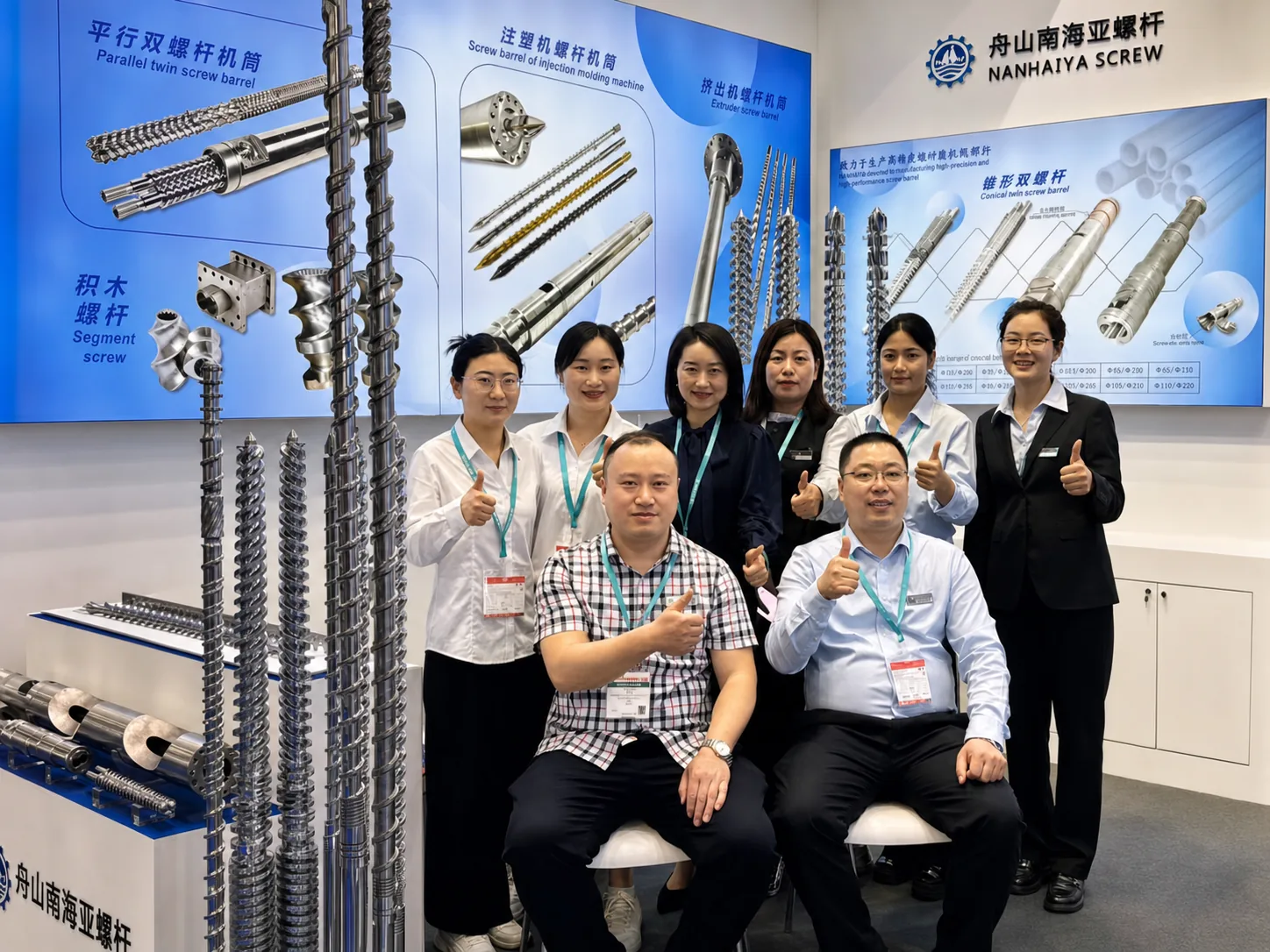
Related Articles
More insights on screw barrel technology and plastics processing.
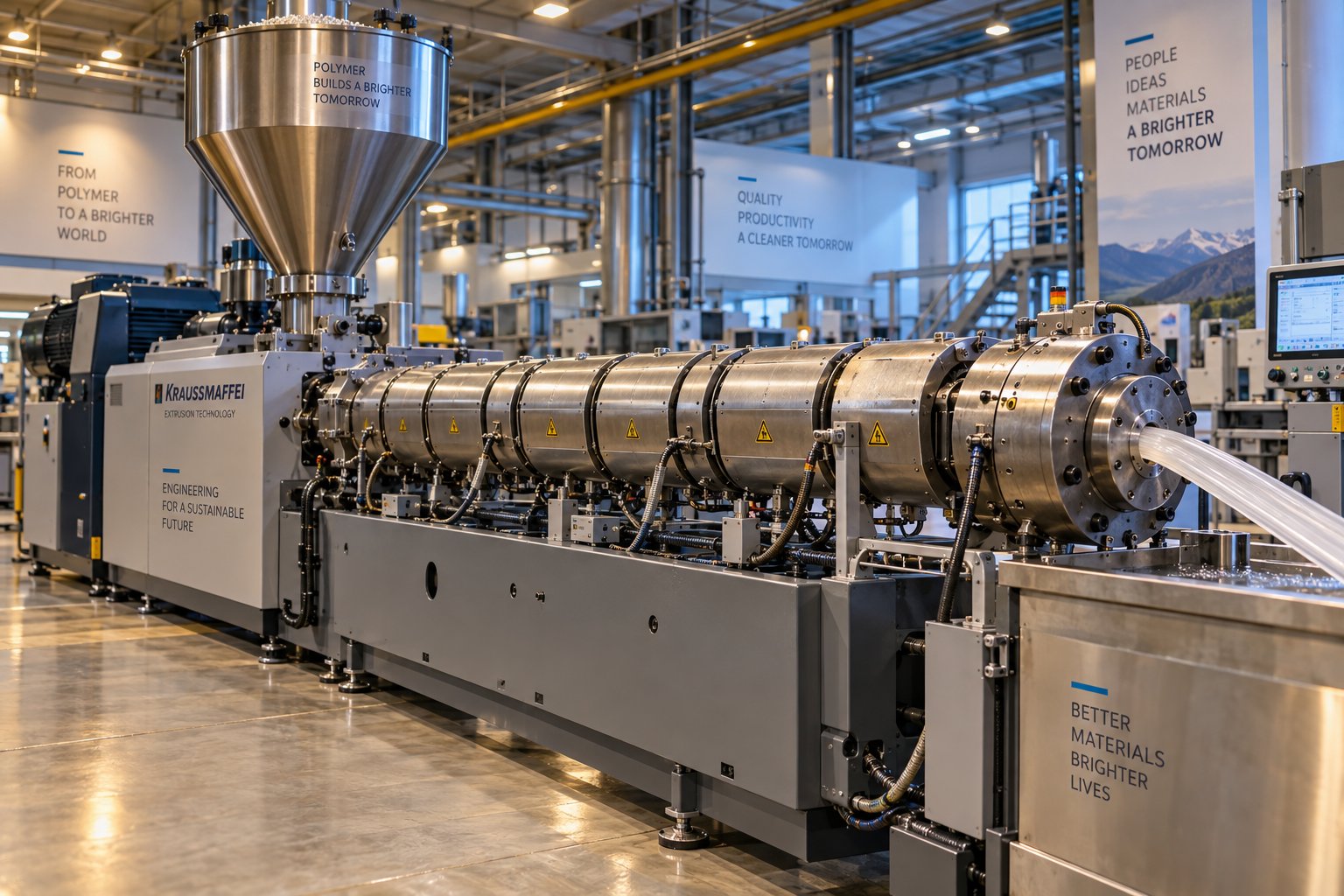
Extruder Machine Decoded: From Raw Pellet To Finished Product
Oct 6, 2026
Learn how an extruder machine works, compare single-screw vs. twin-screw types, and get expert guidance on specs, troubleshooting, and selection.
Read Article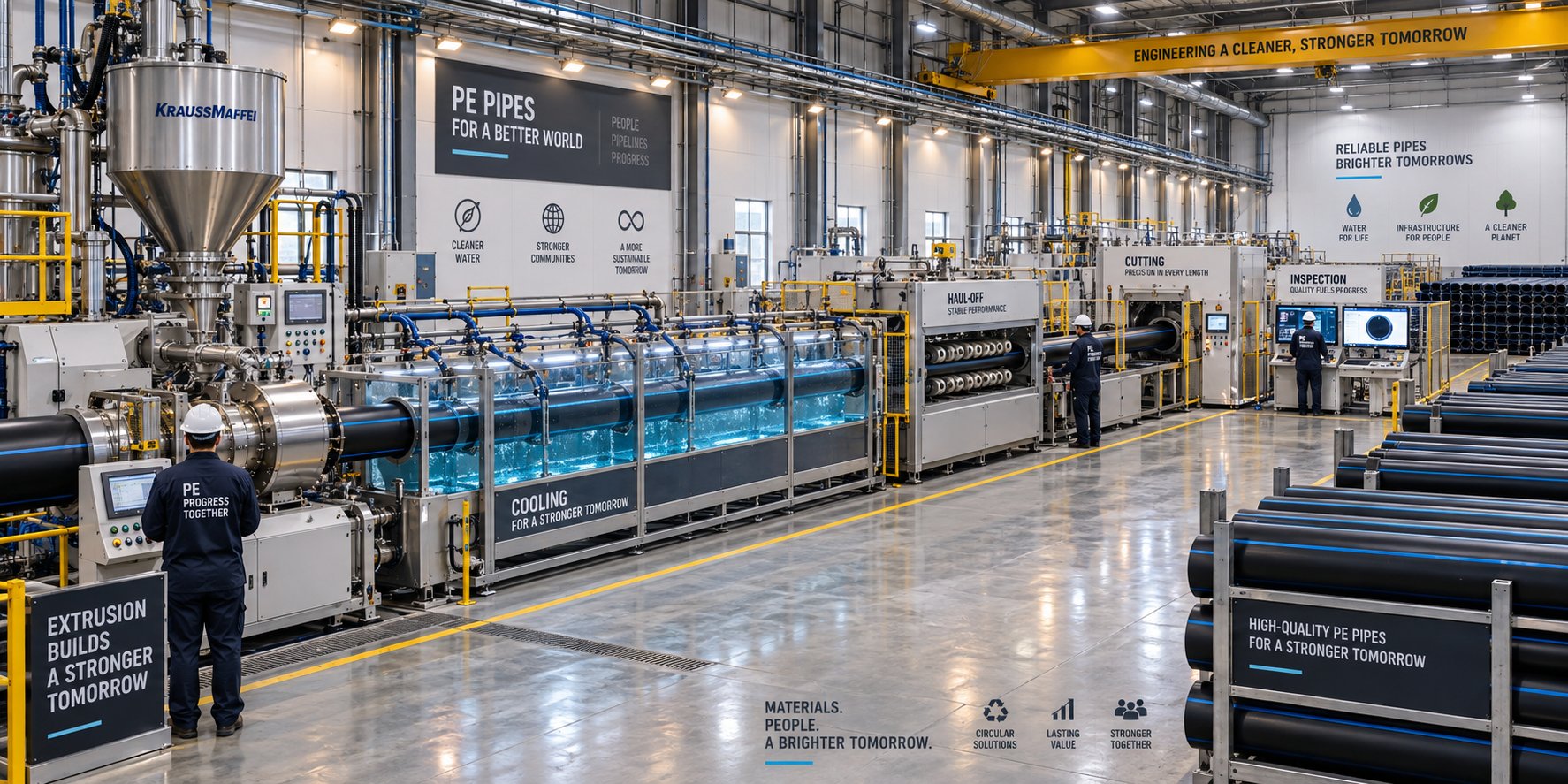
PE Pipe Making Machine Decoded: From Raw Resin to Flawless Pipe
Oct 4, 2026
Learn how a PE pipe making machine works, from resin to finished pipe. Covers components, material grades, automation, troubleshooting, and buyer selection tips.
Read Article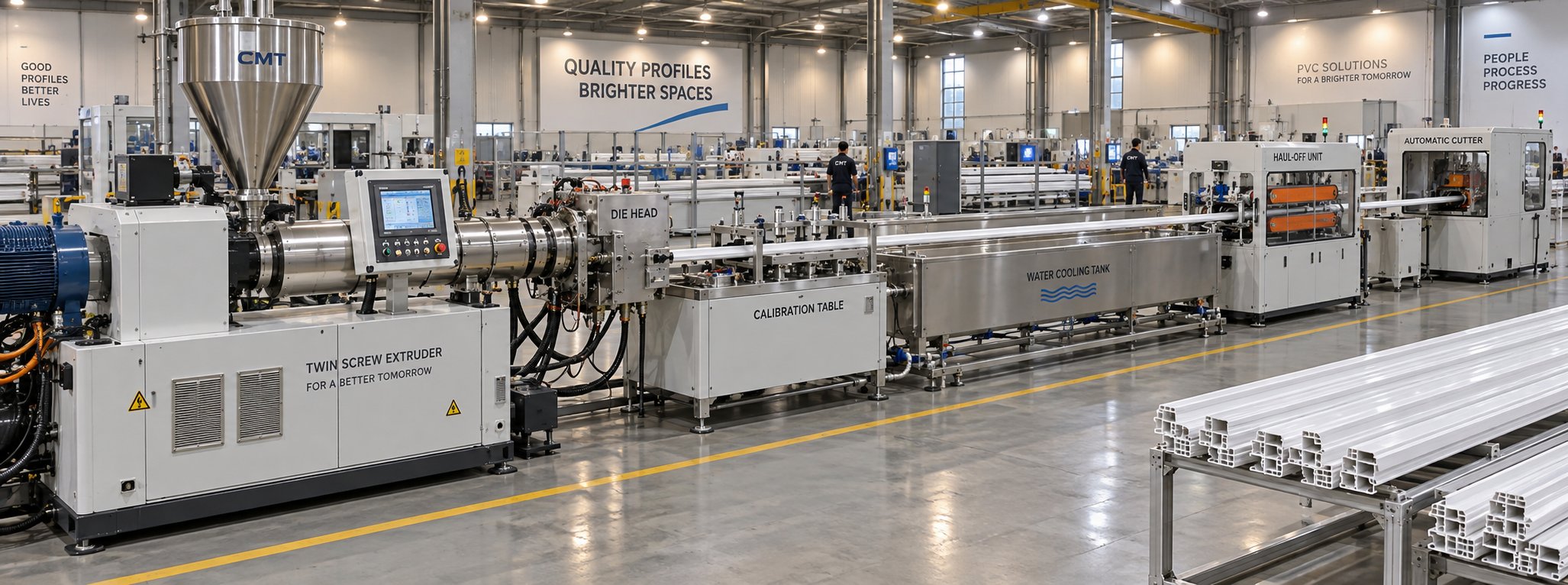
PVC Profile Making Machine Decoded: From Raw Resin To Profit
Oct 3, 2026
Learn how a PVC profile making machine works — extrusion process steps, key technical parameters, die design, calibration methods, maintenance, and total cost of ownership.
Read ArticleLooking for something else?
Search by material, symptom or product and jump straight to the relevant page.
These are navigation suggestions based on keyword matching — not a quotation, not a delivery commitment, and not a substitute for engineering review. Final specification is confirmed by our engineers against your drawings and processed material.
Need help with screw barrel selection?
Share your machine model, processed material and application. Our team can help with pricing and technical support.