

Understanding Twin Screw Extruder Machine Pricing
Imagine requesting quotes for what appears to be the same machine from five different suppliers — and receiving prices that range from $50,000 to over $500,000. That is the reality buyers face when shopping for a twin screw extruder machine. The pricing landscape is notoriously opaque, and without a clear understanding of what drives cost, even experienced procurement teams risk overpaying or, worse, underspending on the wrong equipment.
What Is a Twin Screw Extruder and Why Does Price Vary So Much
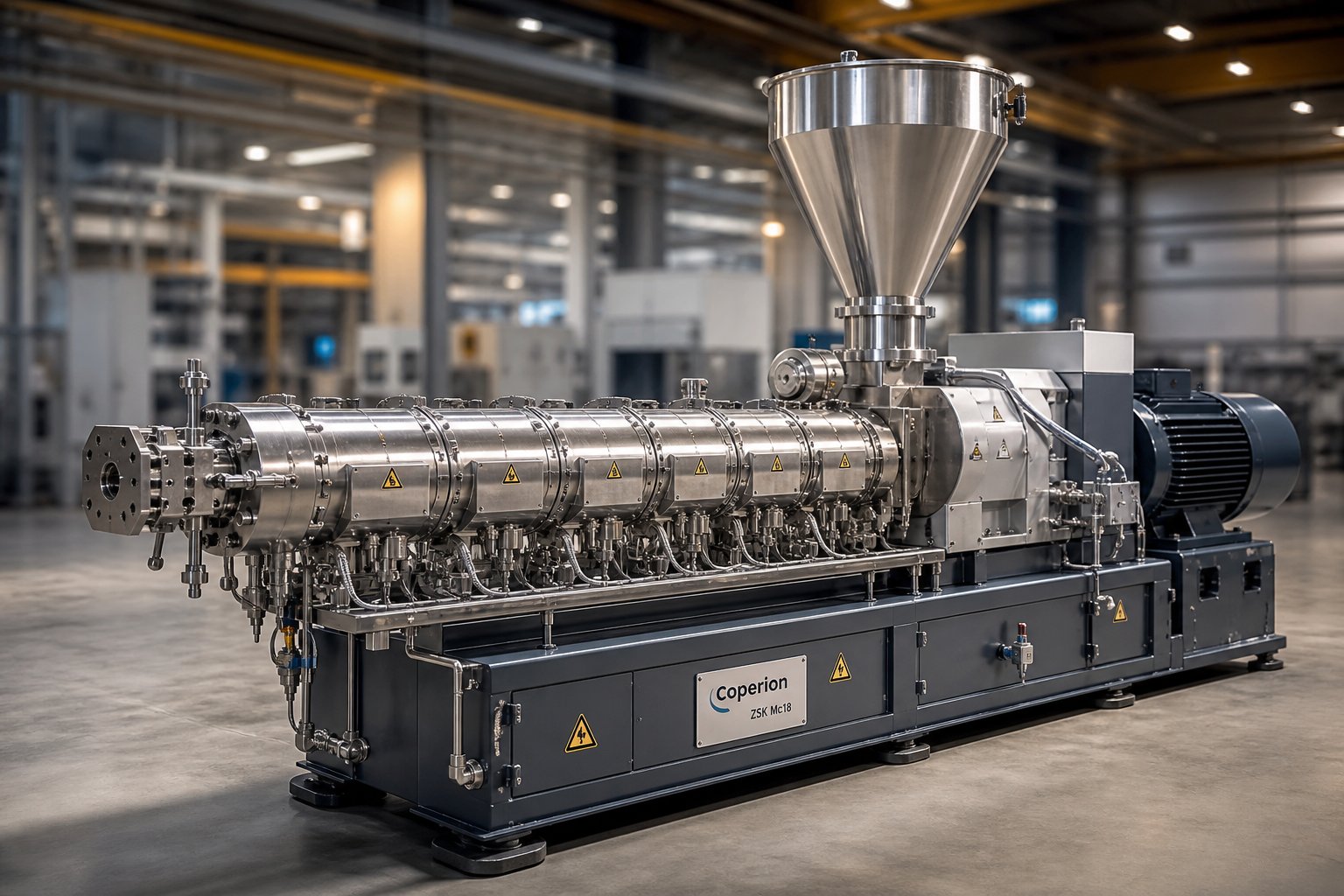
A twin screw extruder is a machine built around two intermeshing screws housed inside a heated barrel. These screws rotate — either in the same direction (co-rotating) or opposite directions (counter-rotating) — to mix, melt, compound, and shape materials like plastics, food ingredients, pharmaceuticals, and specialty chemicals. Unlike single-screw designs that rely on friction and viscous drag to move material, a twin-screw extruder uses positive displacement conveying, giving operators far greater control over mixing intensity, residence time, and output consistency.
So why does the twin screw extruder price swing so dramatically? Several factors collide at once. Machine scale is the most obvious: a compact benchtop unit designed for laboratory research can start under $15,000, while a high-capacity industrial line engineered for 24/7 production can exceed $1 million. But scale alone does not explain the full picture. Two extruders with identical screw diameters can carry wildly different price tags depending on their L/D ratio, torque class, barrel zone count, control system sophistication, and the manufacturer's country of origin. Construction materials, motor power, customization requirements, and after-sales support packages pile additional variables onto every quote.
Most twin screw extruder quotes vary by 300-500% for seemingly similar machines. Understanding the drivers behind that variation is the single most important step toward smart purchasing.
Who This Pricing Guide Helps
This article is not a manufacturer's sales page. It is an independent pricing resource written from the buyer's perspective. Whether you are a plant engineer evaluating your first twin screw extruder machine purchase, a procurement specialist comparing quotes across global suppliers, or an R&D manager budgeting for pilot-scale extruders, you will find actionable data here.
Throughout this guide, we break down the full pricing landscape across the dimensions that matter most:
- Machine scale — from laboratory benchtop units to high-throughput industrial lines
- Design configuration — co-rotating versus counter-rotating and how each affects cost
- Technical specifications — why identical-diameter machines can differ by hundreds of thousands of dollars
- Manufacturer brand tiers — what premium, mid-tier, and economy suppliers actually deliver for their asking price
- Equipment condition — the real economics of buying new, used, or refurbished
- Hidden costs — shipping, installation, training, wear parts, and the ongoing expenses that reshape total cost of ownership
The goal is straightforward: arm you with enough pricing intelligence so that when quotes land on your desk, you can read between the lines and negotiate from a position of knowledge rather than guesswork. The differences start at the most fundamental level — how big of a machine you actually need.
Price Ranges from Lab Scale to Industrial Capacity
Machine scale is the first filter every buyer applies — and for good reason. A benchtop twin screw extruder designed for formulation trials occupies a different pricing universe than a full-production line running around the clock. Yet the relationship between size and cost is not linear, and that nonlinearity is exactly where savvy buyers find value.
Laboratory and Benchtop Twin Screw Extruder Pricing
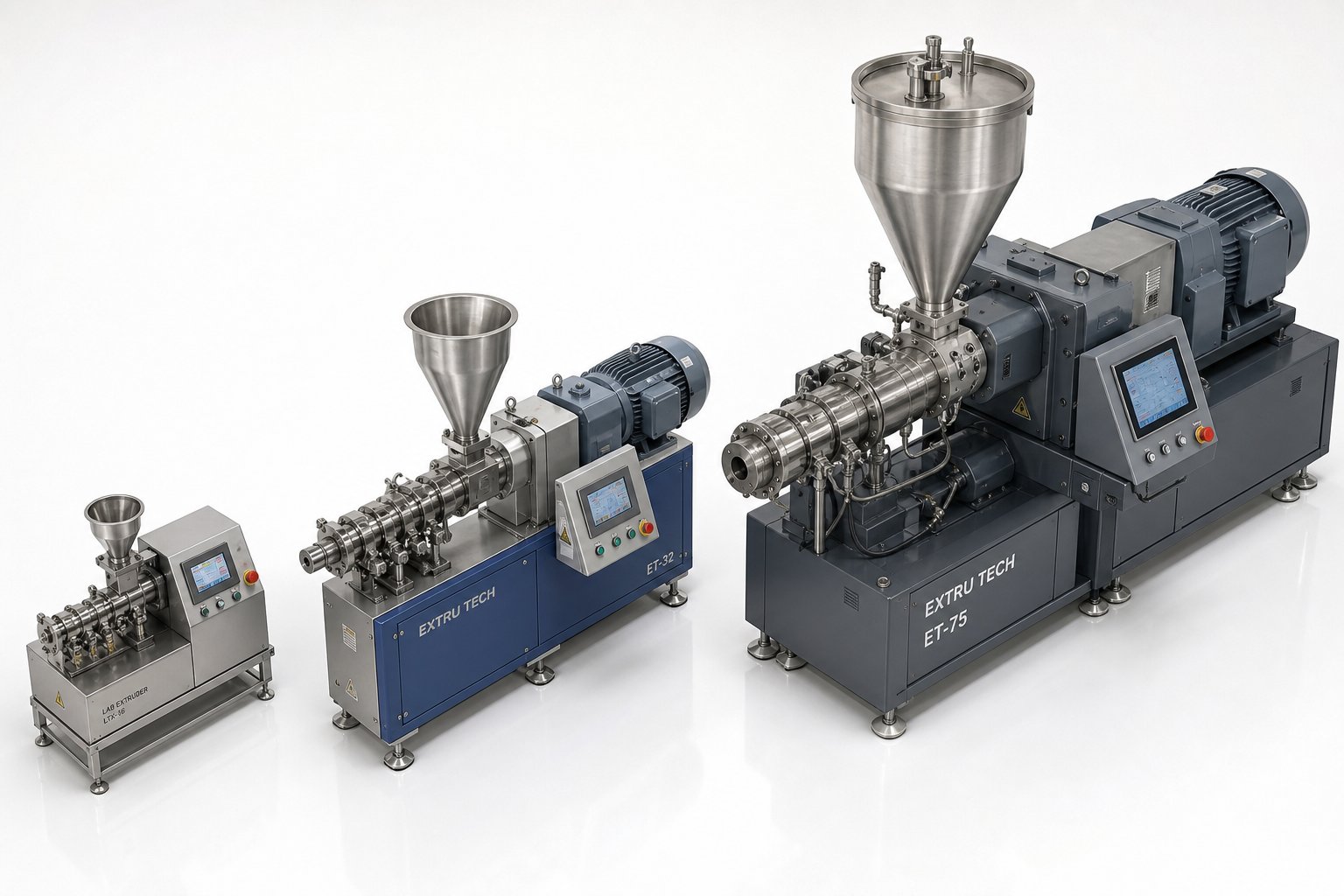
If you are equipping an R&D facility or university research lab, a lab scale twin screw extruder is typically where the search begins. These compact machines feature screw diameters in the 12 mm to 27 mm range, produce anywhere from 0.5 to 40 kg/hr, and are built for recipe development rather than commercial output. Pricing for a laboratory twin screw extruder generally falls between $15,000 and $40,000 for economy-tier models from Chinese or Indian manufacturers. Premium lab extruders from established European or Japanese brands — think Leistritz's ZSE 18 MAXX or comparable Thermo Fisher Scientific units — can push well past $100,000 once advanced HMI controls and pharma-grade documentation are included. A laboratory scale extruder at this tier is essentially a precision instrument, and the price reflects that.
Mid-Range Production Machine Price Ranges
Step up to screw diameters between 35 mm and 75 mm, and you enter the production-ready zone. These machines handle throughputs of roughly 50 to 500 kg/hr and serve the broadest range of buyers — from small compounding operations to mid-volume specialty producers. Pricing here typically spans $40,000 to $300,000 depending on screw diameter, L/D ratio, torque class, and control system sophistication. A 50 mm lab extruder configured for pilot-to-production bridging sits at the lower end, while a fully featured 75 mm twin screw extruder with side feeders, vacuum venting, and PLC-based process controls approaches the upper boundary.
High-Capacity Industrial Extruder Costs
Large-scale industrial extruder lines — screw diameters from 90 mm to 300 mm and beyond — are engineered for continuous, high-volume compounding and reactive extrusion. Throughput at this scale can exceed 2,000 kg/hr. Prices for these machines start around $300,000 for economy-tier manufacturers and climb past $800,000 to $1,500,000 for premium European platforms like the Coperion ZSK series or KraussMaffei ZE BluePower. At this level, you are not just buying a machine — you are buying an engineered system with gearboxes, drive trains, and barrel assemblies that demand extreme precision in manufacturing.
| Machine Category | Typical Screw Diameter Range | Approximate Throughput | General Price Range (USD) |
|---|---|---|---|
| Laboratory / Benchtop | 12 mm – 27 mm | 0.5 – 40 kg/hr | $15,000 – $150,000+ |
| Mid-Range Production | 35 mm – 75 mm | 50 – 500 kg/hr | $40,000 – $300,000 |
| High-Capacity Industrial | 90 mm – 300 mm+ | 500 – 2,500+ kg/hr | $300,000 – $1,500,000+ |
One pattern jumps out of this data: doubling throughput capacity rarely doubles the price. A benchtop twin screw extruder producing 20 kg/hr might cost $30,000, while a mid-range machine delivering 200 kg/hr — ten times the output — might cost $150,000, or only five times as much. This economy of scale intensifies at the industrial tier. A machine producing 2,000 kg/hr does not cost 100 times more than that benchtop unit. It might cost 30 to 40 times more. For high-volume operations, the math strongly favors investing in larger equipment because the cost-per-kilogram of installed capacity drops significantly as you scale up.
This is precisely why understanding your true throughput requirements matters before you ever request a quote. Oversizing gives you room to grow at a lower incremental cost, while undersizing often leads to purchasing a second machine later — a far more expensive path. Yet throughput alone does not explain why two machines with identical screw diameters can carry price tags that differ by $200,000 or more. That gap comes down to design configuration and the engineering choices embedded in every quote.
Co-Rotating vs Counter-Rotating Design and Price Impact
Two machines, identical screw diameters, similar throughput ratings — yet one quote comes in 40% higher than the other. What gives? In many cases, the answer is hiding in a detail buyers often gloss over: whether the extruder twin screw configuration is co-rotating or counter-rotating. This single design choice reshapes the machine's internal engineering, manufacturing complexity, and ultimately, the number on the invoice.
Co-Rotating Intermeshing Twin Screw Extruder Pricing
Co-rotating twin screw extruders — where both screws spin in the same direction — dominate the world of polymer compounding, masterbatch production, and reactive extrusion. You will find them wherever intensive dispersive and distributive mixing matters most. The material follows a characteristic spiral "infinity"-shaped flow path between the two screws, creating thorough and uniform blending that is difficult to achieve any other way.
What drives the higher price tag? Modularity and precision. A twin screw compounding extruder in this category features segmented screw elements and barrel sections that can be rearranged, swapped, and customized for different formulations. That modular architecture sounds convenient — and it is — but it demands exceptionally tight manufacturing tolerances. Every screw element must slide onto a splined shaft and mesh perfectly with its partner. The gearbox must handle high rotational speeds (often 300 to 900 rpm) while distributing massive torque loads evenly across both shafts. These engineering requirements push prices upward across every component.
For mid-range co-rotating machines in the 50 mm to 75 mm diameter class, expect quotes to start around $80,000 from economy-tier manufacturers and climb well past $300,000 for premium European builds. Industrial-scale co-rotating extruders routinely exceed $500,000 to $1,500,000 depending on torque class and auxiliary equipment.
Counter-Rotating and Conical Twin Screw Extruder Pricing
Counter-rotating designs flip the script. The screws turn in opposite directions, creating a C-shaped chamber effect that generates excellent pressure buildup with lower shear intensity. This makes them ideal for processing heat-sensitive materials — PVC above all — where excessive shear would cause degradation. Counter-rotating extruders also deliver roughly twice the output per diameter compared to co-rotating designs, according to industry comparisons, thanks to their positive displacement conveying mechanism.
The conical twin screw extruder takes this concept further. Its screws taper from a larger diameter at the feed end to a smaller one at the discharge, creating natural compression without requiring as many barrel zones or complex screw element configurations. This geometric simplicity translates directly into lower manufacturing costs. Fewer precision-machined modular elements, simpler gearbox requirements (lower speeds, typically under 50 rpm), and a more compact footprint all contribute to a lower base price.
For a counter-rotating parallel or conical machine in a comparable size class, pricing often falls 20-40% below an equivalent co-rotating unit. A mid-range conical twin screw extruder suited for PVC pipe or profile production might quote between $40,000 and $150,000 from Chinese or Taiwanese manufacturers, while European equivalents push toward $200,000 to $400,000. The trade-off is application range — these machines excel in their niche but lack the formulation flexibility that co-rotating designs offer.
Which Design Costs More and Why
The pricing gap between these two design families is not arbitrary. It reflects real differences in engineering complexity, material versatility, and manufacturing precision. Here is how they compare side by side:
| Comparison Factor | Co-Rotating Intermeshing | Counter-Rotating / Conical |
|---|---|---|
| Relative Price Level | Higher (baseline reference) | 20-40% lower for comparable size |
| Primary Applications | Compounding, masterbatch, reactive extrusion, filled polymers | PVC pipe, profile extrusion, heat-sensitive materials |
| Screw/Barrel Modularity | Highly modular — interchangeable segmented elements | Limited — typically fixed or semi-modular screw geometry |
| Typical Screw Speed | 300 – 900 rpm | 5 – 50 rpm (conical); up to 200 rpm (parallel counter-rotating) |
| Shear Intensity | High — intensive mixing | Low to moderate — gentler on materials |
| Pressure Generation | Moderate — may need gear pump assist | Excellent — direct extrusion capable |
| Typical Buyer Profile | Compounders, masterbatch producers, R&D labs, specialty chemical processors | PVC pipe/profile manufacturers, processors of heat-sensitive formulations |
One critical nuance trips up buyers regularly: the term "double screw extruder" — or "double screw extruder machine" — appears frequently in supplier listings and can refer to either configuration. A procurement team searching for a double screw extruder online may encounter quotes for both co-rotating compounding machines and counter-rotating PVC lines without realizing these are fundamentally different pieces of equipment at fundamentally different price points. Always confirm the rotation direction and screw geometry before comparing any two quotes. A $60,000 counter-rotating conical unit and a $180,000 co-rotating parallel machine are not competing products — they serve entirely different processing missions.
Design configuration establishes the pricing baseline, but it is only one layer of the cost equation. Within each design family, the specific technical specifications you select — L/D ratio, torque rating, drive power, barrel zone count — can shift the final quote by tens or even hundreds of thousands of dollars.
How Technical Specifications Drive Price Variation
Here is a scenario that frustrates buyers constantly: you receive two quotes for a 65 mm twin screw extruder, both from reputable manufacturers, and one costs $90,000 while the other costs $240,000. Same screw diameter. Same general machine category. Yet the price gap is staggering. The explanation lies entirely in the technical specifications hiding behind that diameter number — and most suppliers are not eager to walk you through why each spec adds cost.
Every screw extruder is a sum of interdependent engineering decisions. Change one variable, and it cascades through the entire machine. The following breakdown illustrates how each major specification pushes the final quoted price higher — or keeps it in check.
How L/D Ratio and Torque Rating Affect Cost
The length-to-diameter ratio (L/D) defines how long the processing section is relative to the screw diameter. A typical L/D for co-rotating twin screw extruders ranges from 32:1 to 48:1, with specialty configurations stretching to 60:1 or beyond. Think of it this way: a longer process section means more barrel segments, more heating and cooling zones, a heavier structural frame to prevent deflection, and longer screw shafts that demand higher metallurgical precision. Moving from a 36:1 to a 48:1 L/D on the same diameter machine can add 25-35% to the base price simply because you are buying more engineered hardware per unit of barrel length.
Torque class amplifies this effect. Higher torque ratings require beefier gearboxes, reinforced screw shafts with larger cross-sectional spline areas, and more robust bearing assemblies. A high-torque twin screw extruder plastic compounding line — the kind designed for heavily filled polymers like 60% glass-fiber-reinforced nylon — needs a gearbox that can transfer enormous rotational force without fatigue. That gearbox alone can represent 15-25% of the total machine cost on premium builds.
Drive Systems and Motor Specifications as Price Drivers
The motor and drive system are the heartbeat of any plastic twin screw extruder, and they carry significant pricing weight. Key variables include motor power (kW), maximum screw speed (rpm), and whether the drive uses a standard AC motor or a higher-efficiency servo-driven system with variable frequency drive (VFD) controls.
Consider the relationship between torque and speed. As industry experts have documented, a machine rated at 2,800 N-m of torque needs a 200 kW motor if geared for 600 rpm — but would require a 400 kW motor to deliver the same torque at 1,200 rpm. That larger motor, combined with a gearbox capable of higher speeds, can add $30,000 to $80,000 to the machine cost depending on size class. If your process runs comfortably below 600 rpm, specifying the higher-speed configuration is simply paying for capability you will never use.
Barrel Zone Count and Feeding Configuration Costs
Beyond the core drivetrain, auxiliary specifications layer additional cost onto every quote. Here is where seemingly minor line items add up fast:
- Number of barrel zones: Each barrel segment requires its own heating elements, cooling channels, thermocouples, and independent temperature controllers. A machine with 12 zones costs meaningfully more than one with 8 zones — both in hardware and in the control system that manages them.
- Side feeding systems: Downstream side stuffers — used to introduce fillers, fibers, or additives after the initial melt zone — add a secondary twin-screw feeding mechanism, its own motor, and a dedicated barrel opening. A single side feeder can add $10,000 to $25,000 to the price.
- Vacuum venting ports: Adding a vacuum devolatilization system requires a vent port machined into the barrel, a vacuum pump, condenser, knockout pot, and associated controls. A single-stage vacuum system adds roughly 10-15% to the extruder price, while multi-stage systems for demanding applications like engineering plastics or recycled PET can add 30-50%.
- Screw and barrel metallurgy: Standard nitrided steel barrels and screws suit general-purpose compounding. Processing abrasive fillers or corrosive additives demands bimetallic barrel liners and tool-steel or tungsten-carbide screw elements — upgrades that can double the cost of the screw and barrel set.
- Control system tier: A basic PLC with touchscreen HMI is standard on most twin screw extruders. Upgrading to recipe management, data logging, SCADA integration, or Industry 4.0-ready connectivity packages can add $15,000 to $50,000 or more, particularly on machines configured for regulated industries like pharmaceuticals or food-grade twin screw extruder plastic processing.
This is precisely why a 65 mm extruder for polymer compounding with a simple formulation — say, color concentrate in polyethylene at a 36:1 L/D with basic controls — is a fundamentally different machine than a 65 mm unit configured for reactive extrusion with a 48:1 L/D, high-torque gearbox, dual side feeders, dual vacuum vents, bimetallic wear components, and full-featured automation. Same diameter. Vastly different engineering. Vastly different price.
Understanding these specification-level cost drivers puts you in a stronger negotiating position, but it also raises a natural follow-up question: does the manufacturer behind the machine change the price as much as the specs themselves? The answer, as it turns out, is yes — and the differences between brand tiers can be just as dramatic.
Manufacturer Brand Tiers and What They Cost
A 75 mm co-rotating extruder with identical specs on paper — same L/D ratio, similar torque class, comparable throughput — can carry a price tag of $95,000 from one twin-screw extruder manufacturer and $450,000 from another. The spec sheet looks the same. The invoice does not. What accounts for that gap? In large part, it comes down to which tier of the global manufacturer landscape the supplier occupies — and what that tier genuinely delivers beyond the hardware itself.
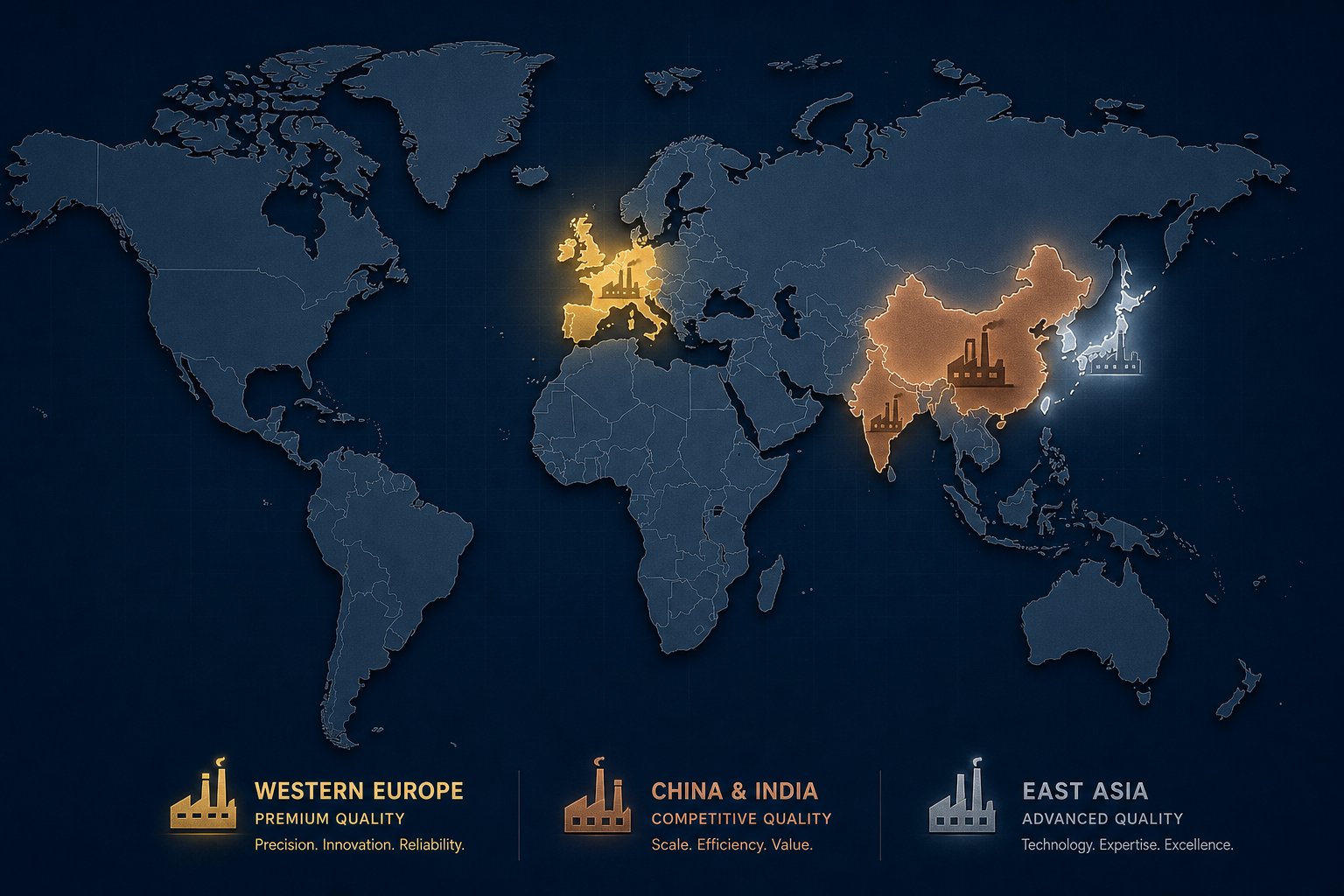
Twin screw extruder manufacturers generally fall into three broad pricing tiers, each shaped by geography, engineering heritage, manufacturing infrastructure, and service philosophy. No single tier is universally "best." The right choice depends on your application, risk tolerance, in-house engineering capability, and budget reality.
Premium European OEM Pricing Tier
At the top of the pricing pyramid sit established European brands with decades — sometimes over a century — of engineering heritage. Names like Coperion (which absorbed the legendary Werner & Pfleiderer twin screw extruder lineage), KraussMaffei (formerly Berstorff), and Leistritz define this tier. These companies built the foundational technology that the rest of the industry follows.
What do you get for premium pricing? Coperion alone has over 15,000 installed compounding systems worldwide and more than 130 years of combined experience. Leistritz offers specific torque ratings up to 15 Nm/cm3 on their ZSE MAXX series, while KraussMaffei's ZE BluePower line pushes screw speeds to 1,200 rpm across diameters from 42 mm to 166 mm. Beyond raw specs, you are paying for exhaustive documentation packages, global after-sales networks with rapid spare parts fulfillment, sophisticated PLC/SCADA control architectures, and the kind of process engineering support that can troubleshoot a reactive extrusion challenge over the phone.
The trade-off is straightforward: premium performance and support at premium cost. European OEMs typically quote two to three times higher than economy-tier alternatives for equivalent screw diameters. They also tend to supply the extruder itself rather than complete production lines, meaning buyers often manage multi-vendor integration for downstream equipment like pelletizers, cooling baths, and conveyors.
Mid-Tier Taiwanese and South Korean Manufacturers
Occupying the middle ground, manufacturers from Taiwan, South Korea, and select Japanese builders offer what many procurement teams consider the sweet spot of price and performance. Companies in this tier have built strong reputations through decades of reliable equipment supply to compounders across Asia, South America, and increasingly, North America and Europe.
You will typically find pricing 30-50% below European OEMs for comparable machine specifications. The engineering is proven — many mid-tier manufacturers have refined their designs over 20 to 40 years of continuous production — and build quality is generally consistent. Control systems often pair Japanese servo drives with reputable PLC platforms from Siemens or Allen-Bradley, delivering process control that satisfies most industrial compounding requirements.
Where this tier sometimes falls short is at the extremes: ultra-high-torque applications, very large diameters above 130 mm, or niche processes like pharmaceutical extrusion that demand specific regulatory documentation. After-sales response times can also vary depending on the manufacturer's regional service infrastructure outside Asia. For mainstream compounding and masterbatch production, though, mid-tier machines routinely deliver excellent value.
Economy-Tier Chinese and Indian Manufacturers
The economy tier has undergone a dramatic transformation over the past decade. Chinese twin screw extruder manufacturers, in particular, now represent a wide spectrum — from basic, no-frills machines to increasingly sophisticated platforms that rival mid-tier competitors on specifications. Leading Chinese manufacturers claim 40-60% cost reductions versus European OEMs, achieved through advanced CNC machining, automated assembly lines, and lean manufacturing — not simply cheaper materials.
Indian manufacturers occupy a similar price bracket, often with particular strength in counter-rotating and conical designs for PVC processing.
The value proposition is real, but buyers should evaluate potential trade-offs with clear eyes:
- Build quality consistency: Top-tier Chinese manufacturers deliver excellent machines, but quality can vary significantly between manufacturers. Factory audits and reference checks matter more in this tier than any other.
- Control system sophistication: Some economy-tier machines ship with basic HMI/PLC setups that may lack recipe management, data logging, or integration-ready architectures. Clarify exactly what control hardware is included in every quote.
- After-sales support reach: Warranty claims and technical support become more complex when the manufacturer is 8,000 miles away. Ask about local service partners, spare parts stocking locations, and remote diagnostic capabilities before signing.
- Documentation quality: Detailed operation manuals, electrical schematics, and CE/UL certification documentation may not match the thoroughness of European or mid-tier suppliers. For regulated industries, this gap can create compliance headaches.
None of these trade-offs are deal-breakers for every buyer. An experienced compounder with strong in-house engineering can extract tremendous value from economy-tier equipment. A first-time buyer processing medical-grade polymers with no local technicians, however, faces a very different risk profile.
How the Three Tiers Compare at a Glance
| Tier | Typical Origin | Relative Price Level | Strengths | Potential Trade-Offs |
|---|---|---|---|---|
| Premium | Germany, Italy, USA | Highest (baseline reference) | Engineering heritage, maximum torque/speed specs, global service networks, regulatory documentation, sophisticated controls | Highest upfront cost, longer lead times, often extruder-only (no turnkey lines) |
| Mid-Tier | Taiwan, South Korea, Japan | 30-50% below premium | Proven reliability, strong price-to-performance ratio, reputable drive/control components, established export track record | Limited availability at extreme sizes or niche applications, variable regional service coverage |
| Economy | China, India | 40-60% below premium | Lowest upfront cost, fast lead times, increasingly competitive specs, some offer complete turnkey lines | Quality consistency varies between manufacturers, control system gaps, after-sales reach, documentation depth |
A few additional names worth noting for buyers conducting research: in the premium laboratory and analytical space, Thermo Fisher extruder platforms (particularly their Pharma and Process 11/16 series) cater specifically to pharmaceutical and food R&D — a niche where regulatory compliance justifies premium pricing. American manufacturers like ENTEK and Davis-Standard also compete at the premium-to-mid tier boundary, particularly for buyers who value North American service infrastructure.
The brand tier you select sets the baseline price range, but it does not lock in your final cost. A premium machine purchased used at auction, or an economy-tier extruder bought new with upgraded European gearbox and controls, can blur these tier boundaries in interesting ways. That interplay between machine condition and original brand tier is exactly where the next layer of pricing intelligence lives.
New vs Used vs Refurbished Twin Screw Extruder Price Comparison
A brand-new premium twin screw extruder might quote at $350,000 — but what if a three-year-old machine with the same specs is sitting in a dealer's warehouse for $140,000? That price difference changes the entire ROI calculation. Yet surprisingly few buyers systematically evaluate whether new, used, or refurbished equipment best fits their situation. Each path carries distinct pricing advantages and hidden risks that deserve honest examination.
New Twin Screw Extruder Pricing Advantages and Risks
Buying new is the default assumption for most procurement teams, and it does offer clear benefits. You get full manufacturer warranty coverage, the latest control system technology, complete customization to your exact process requirements, and a clean maintenance history starting at zero hours. Every screw element, barrel liner, and gearbox bearing arrives in factory-fresh condition with documented metallurgical certifications.
The downsides? Cost and time. New industrial-scale machines represent the highest upfront investment in any tier. Lead times compound the challenge — ordering new equipment can mean waiting 12 to 18 months for delivery, depending on the manufacturer's backlog and the complexity of your configuration. For a business chasing a contract deadline or responding to a sudden market opportunity, that timeline can be a dealbreaker. New machines also suffer the steepest depreciation: once installed and commissioned, their market value can drop by 30% or more, even in perfect operating condition.
Used and Refurbished Machine Pricing Realities
The used extrusion equipment market has matured significantly. Reputable dealers now stock inspected, tested, and documented machines from premium and mid-tier manufacturers — equipment that still has years of productive life ahead of it. A used twin screw extruder from a quality-conscious dealer typically costs 50% to 70% less than a comparable new machine, though more conservative estimates for well-maintained late-model units fall in the 30-60% discount range.
That savings comes with genuine trade-offs. When you search for a used twin screw extruder for sale, you are inheriting an unknown processing history. Were abrasive mineral fillers run through those barrels for 15,000 hours? Has the gearbox ever been overhauled? Are the control electronics still supported by the PLC manufacturer, or are they two generations obsolete? These are not hypothetical concerns — they are the variables that separate a smart used-equipment purchase from an expensive mistake.
Refurbished machines occupy a practical middle ground. A refurbished unit has been partially or fully reconditioned by a dealer or the original manufacturer — worn screws and barrels replaced, gearbox inspected and resealed, motor insulation tested, control system updated or replaced. Pricing for refurbished twin screw extruders for sale typically falls between 40% and 70% of new-machine cost, depending on the extent of reconditioning. You get reduced risk compared to an as-is used extruder, plus faster availability than ordering new, though customization options remain limited to whatever the original machine configuration allows.
One advantage of buying used extruders that often gets overlooked is proven reliability. As industry analysts point out, these machines have already operated for years in real industrial environments, allowing buyers to evaluate actual performance data rather than relying solely on catalog specifications. A used extruder with documented maintenance records and verifiable output history can actually carry less performance uncertainty than an untested new machine from an unfamiliar manufacturer.
Decision Framework for New vs Used Purchasing
The comparison below lays out the key dimensions every buyer should weigh before committing to a purchasing path:
| Factor | New | Used (As-Is) | Refurbished |
|---|---|---|---|
| Typical Price Relative to New | 100% (baseline) | 30-50% of new | 40-70% of new |
| Warranty Availability | Full manufacturer warranty (1-2 years typical) | Limited or none; dealer-dependent | Partial warranty on reconditioned components |
| Lead Time | 3-18 months depending on complexity | Immediate to 4 weeks | 2-8 weeks after reconditioning |
| Customization Options | Full — built to buyer specifications | None — buy as configured | Limited — minor modifications possible |
| Risk Factors | Unproven in your specific application; steep initial depreciation | Unknown wear history; potential control system obsolescence; spare parts uncertainty | Residual wear on non-reconditioned components; limited process customization |
| Best Suited For | Custom applications, 24/7 production, regulated industries, buyers needing latest technology | Budget-constrained projects, experienced operators, non-critical applications, fast-turnaround needs | Buyers seeking premium brands at reduced cost, moderate-risk applications, bridge capacity |
If you are considering used extruders for sale or refurbished options, thorough pre-purchase inspection is non-negotiable. Industry experts recommend demanding detailed machine history, running video documentation, and clear written disclosure of any non-functional components before committing. Beyond those basics, the following technical inspection points separate informed buyers from those taking unnecessary gambles:
- Barrel bore measurements: Precision bore gauging at multiple points along each barrel section reveals internal wear. Even 0.1 mm of bore enlargement beyond spec indicates significant service life consumed — and barrel replacement can cost thousands per section.
- Screw flight condition: Measure flight tip clearance, check for chipped or worn kneading elements, and inspect spline shaft wear. Worn screw elements directly impact mixing performance and energy efficiency.
- Gearbox inspection reports: Request vibration analysis, oil sample analysis, and bearing clearance measurements. A gearbox overhaul on a mid-range machine can run $15,000 to $40,000 — a cost that erases much of the used-equipment discount if undetected before purchase.
- Motor insulation testing: Megohm resistance testing reveals whether motor windings have degraded. A motor rewind or replacement is a significant unplanned expense that should be factored into any used extruder equipment evaluation.
- Control system upgradeability: Identify the PLC platform, HMI software version, and available I/O capacity. Discontinued PLC models with no migration path create long-term obsolescence risk that may require a full controls retrofit costing $20,000 to $60,000.
One pattern emerges consistently across used equipment transactions: replacement screws and barrels are almost always the first components needing attention. These are high-wear items by design, and previous owners rarely replace them before selling. This makes parts sourcing a critical factor in the used-machine purchase decision. Before you sign, verify that screw elements, barrel liners, and barrel segments are still available from the OEM or from aftermarket suppliers — and price those components into your total acquisition cost.
Whether you buy new at full price, find a used twin screw extruder for sale at 40% of retail, or land a refurbished unit somewhere in between, the purchase invoice only tells part of the financial story. The costs that arrive after the machine hits your production floor — shipping, installation, energy consumption, wear parts, and maintenance — often reshape which option truly delivers the best value over time.
Hidden Costs and Total Cost of Ownership Analysis
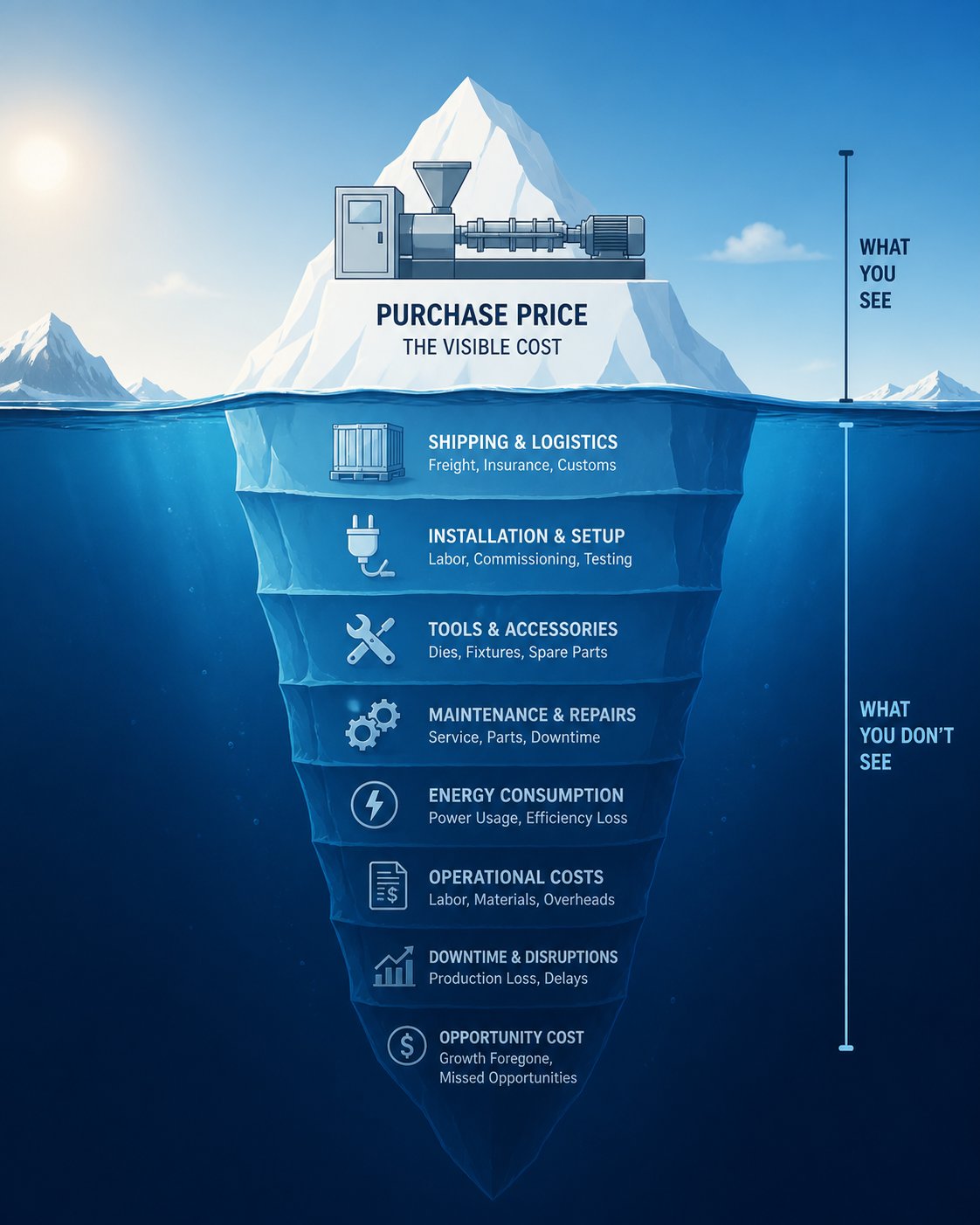
The purchase invoice — whether for a brand-new industrial extruder machine or a refurbished unit bought at half price — captures only a fraction of what you will actually spend. Suppliers quote the extruder machine price. They rarely volunteer the cascade of additional expenses that follow the moment you commit to a purchase order. These hidden and ongoing costs can add an estimated 20-40% beyond the sticker price, and in some cases, they completely rewrite the math on which quote truly delivers the best value.
Hidden Purchase Costs Most Buyers Overlook
Before the machine ever processes its first kilogram of material, a long list of expenses accumulates around it. Many buyers budget exclusively for the FOB price and discover these line items only after the contract is signed:
- International shipping and freight: Ocean freight for a mid-range twin screw extruder can run $3,000 to $15,000 depending on origin, destination, and whether the machine ships in a standard container or requires flat-rack loading. Heavy industrial units often need specialized heavy-lift logistics.
- Customs duties and import taxes: Depending on your country, import tariffs on extrusion processing machines can add 5-15% on top of the declared value. VAT or GST applies in many jurisdictions as well.
- Voltage and frequency conversion: A machine built for 380V/50Hz does not simply plug into a 480V/60Hz facility. Transformer and electrical adaptation costs range from a few hundred dollars for small machines to $5,000 or more for large industrial systems.
- Facility preparation: Foundations capable of supporting machine weight and vibration, utilities (water, compressed air, electrical service upgrades), ventilation for heat and fumes — these site-preparation costs routinely surprise first-time buyers.
- Downstream equipment: The extruder alone does not make product. Pelletizers, strand cooling baths, water-ring cutters, conveyors, and storage silos are separate purchases that can rival or exceed the extruder cost itself. A complete production line's plastic extrusion machine cost is always higher than the extruder-only quote.
- Installation and commissioning: Factory technicians traveling internationally for on-site installation and startup typically charge $200-$500 per day plus airfare and lodging. Commissioning a complex compounding line can take one to three weeks.
- Operator training: Whether provided by the OEM or arranged independently, training costs include both the direct fees and the productivity lost while operators learn the new system. Cost analysis frameworks consistently list training as a line item that buyers underestimate.
Ongoing Operational and Maintenance Costs
The spending does not stop once the machine is running. Ongoing total cost of ownership components accumulate month after month, year after year — and they vary dramatically between machines at different plastic extruder machine price points:
- Energy consumption: Motor efficiency directly shapes operating cost. Industry TCO comparisons show that a less efficient machine consuming 2.5 kWh per kilogram of output versus 1.5 kWh per kilogram can generate $60,000 in excess energy costs over five years on a single production line running 250 days annually.
- Preventive maintenance schedules: Oil changes, thermocouple calibration, heater band inspections, and electrical panel cleaning require regular labor and materials. Budgeting 2-3% of the machine's value annually for routine maintenance is a widely accepted benchmark — meaning a $150,000 extruder should carry $3,000 to $4,500 per year in maintenance budget before any major repairs.
- Screw and barrel replacement cycles: These are the primary wear components in any twin screw extruder. For a 75 mm machine processing filled compounds, a new set of screws and barrel segments can cost $8,000 to $15,000, with replacement intervals of two to three years depending on material abrasiveness and operating conditions.
- Spare parts inventory: Keeping critical spares on hand — kneading elements, rear seal kits, thermocouples, heater bands — requires a $3,000 to $5,000 initial investment. The alternative is waiting two to four weeks for international shipment while the machine sits idle.
- Unplanned downtime: This is the silent budget killer. A single day of unplanned downtime on a high-output line can cost $10,000 or more in lost production alone. Budget-tier extrusion processing machines with higher failure rates can accumulate 10-15% downtime versus 1-2% for well-built alternatives — a gap that translates to hundreds of thousands of dollars over a five-year operating window.
When all of these factors are stacked together, the total five-year cost picture can look radically different from the initial quotes. One published TCO analysis modeled a $60,000 budget extruder against a $150,000 higher-quality machine. The budget machine accumulated roughly $490,000 in total five-year costs — energy, maintenance, repairs, and downtime — while the pricier machine totaled approximately $270,000. The "cheap" machine cost nearly twice as much to own.
The cheapest machine on paper is rarely the cheapest machine to own. Initial purchase price is only 30-50% of total cost of ownership over a five-year horizon.
Calculating True Cost Per Kilogram of Output
So how do you compare quotes in a way that accounts for all of this? The most useful reframing shifts focus from "what does the machine cost" to "what does each kilogram of output actually cost me." This price-versus-value calculation incorporates four components that together reveal the real plastic extrusion machine cost of any option:
- Cost per kilogram of output: Divide total annual costs (amortized purchase price plus energy, labor, maintenance, and materials waste) by total annual output in kilograms. A machine that costs more upfront but runs more efficiently and reliably can deliver a significantly lower cost per kilogram.
- Expected machine lifespan: A well-maintained industrial extruder machine from a reputable manufacturer can operate reliably for 15 to 20 years. A budget machine that requires major overhauls at year five effectively compresses its useful life — or demands capital reinvestment that a higher-quality machine would not need.
- Downtime risk profile: Estimate realistic downtime percentages for each option and multiply by your hourly production value. Even a 5% difference in uptime can dwarf the initial price gap between competing quotes.
- Resale value: Premium-brand machines with documented maintenance histories retain significantly more value on the secondary market. A documented maintenance history alone can increase resale value by 10-15% — on a $200,000 machine, that represents $20,000 to $30,000 in recovered capital at end of life.
When buyers run this full calculation, the quote that looked most attractive at the RFQ stage sometimes lands at the bottom of the value ranking — and the quote that seemed expensive reveals itself as the more disciplined investment. This does not mean every buyer should automatically purchase the most expensive option. It means the purchasing decision itself needs a framework that goes beyond comparing line-item prices. Knowing when to accept a budget machine's trade-offs — and when the math demands a larger investment — is the difference between strategic procurement and simply chasing the lowest number on the page.
When to Buy Budget vs When to Invest in a Premium Twin Screw Extruder
The total cost of ownership math makes one thing clear: lowest purchase price and lowest total cost are two very different things. But that does not mean the most expensive machine is always the right answer, either. Plenty of buyers overspend on capability they never use — a twin screw plastic extruder loaded with high-torque gearboxes and advanced automation sitting in a facility that runs simple color concentrates three shifts a week. The real question is not "how much should I spend?" but rather "what does this specific application actually demand?"
When a Budget Twin Screw Extruder Makes Sense
There are legitimate scenarios where an economy-tier machine delivers exactly the right balance of capability and cost. Spending more in these situations does not protect profitability — it erodes it. Consider a budget-friendly option when your operation fits any of these profiles:
- R&D and pilot testing: A lab scale extruder or small production unit used for formulation development, material screening, or proof-of-concept trials does not need the same build quality as a 24/7 production workhorse. Laboratory extruders in this category may run only a few hundred hours per year — nowhere near enough to expose the durability gaps between tiers. A $25,000 economy-tier machine that validates a recipe before you commit to a $300,000 production line is money well spent.
- Low-volume specialty production: If your annual output is measured in tens of thousands of kilograms rather than millions, the economics shift. The energy efficiency advantages and reduced downtime of premium equipment generate smaller absolute savings at low volumes, making the payback period on a premium investment uncomfortably long.
- Non-critical applications with flexible quality tolerances: Processing commodity-grade compounds where slight batch-to-batch variation is acceptable — filler masterbatches for non-visible applications, recycled material reprocessing, or basic industrial compounds — does not justify premium precision.
- Markets where labor costs compensate for automation gaps: In regions with lower labor costs, having an experienced operator manually adjust process parameters can offset the lack of sophisticated closed-loop controls. A skilled technician monitoring a screw plastic extruder with a basic HMI can often achieve acceptable results that an automated system handles on premium machines without intervention.
When Investing More Pays for Itself
On the other end of the spectrum, certain operating conditions make premium or mid-tier investment not just advisable but financially necessary. Cutting corners in these scenarios almost always costs more in the long run:
- 24/7 continuous production: Machines running 6,000 to 8,000 hours annually expose every build-quality shortcoming — gearbox fatigue, inconsistent barrel heating, control system instability. The downtime cost difference between 98% uptime and 90% uptime on a high-volume line can exceed the entire purchase price gap within the first year.
- Tight-tolerance compounding for automotive or medical markets: When your customer specifications demand property consistency within narrow windows — tensile strength, impact resistance, color uniformity — the precision of temperature control, feeding accuracy, and mixing intensity that premium machines deliver becomes a quality requirement, not a luxury.
- Reactive extrusion or high-torque applications: Processing engineering polymers with high glass-fiber loadings, running devolatilization of recycled PET, or performing reactive grafting all push machines to their mechanical limits. A gearbox failure during a reactive extrusion run does not just cause downtime — it can ruin an entire batch of expensive specialty resin.
- Operations where downtime costs exceed the machine price differential within months: Imagine a compounding line generating $5,000 per hour in margin. At that rate, just 20 additional hours of unplanned downtime — easily possible with unreliable equipment — wipes out a $100,000 savings on the initial purchase.
Match the machine to the mission, not just the budget. A $60,000 extruder running a $60,000 application is smart procurement. A $60,000 extruder running a $600,000 production contract is a liability.
Regardless of which price tier you select, one practical reality applies universally: screw and barrel quality directly impacts output consistency, energy efficiency, and maintenance intervals across every machine class. A budget extruder fitted with precision-ground, properly hardened screw elements will outperform a premium frame running on worn or poorly matched components. This is where component sourcing becomes an independent cost-optimization lever — separate from the machine purchase decision itself.
Factory-direct screw and barrel suppliers like NANHAIYA offer replacement and upgrade solutions compatible with both new and existing twin screw extruder installations. Whether you are extending the life of a used machine, upgrading wear components on a budget platform, or sourcing replacement elements for a premium line without paying OEM markup, independent component suppliers give buyers at every price tier a way to optimize performance without full machine replacement. For laboratory extruders running abrasive test formulations or high-volume production lines cycling through multiple compounds, having a reliable parts source directly affects how long your investment keeps delivering returns.
The budget-versus-premium decision frames what you buy. The next critical skill is knowing how to buy it — structuring RFQs that force transparency, comparing quotes on dimensions that actually matter, and negotiating terms that protect your total cost of ownership long after the purchase order is signed.

Preparing RFQs and Evaluating Twin Screw Extruder Quotes
A well-structured RFQ does something that browsing catalogs and emailing suppliers never can — it forces every vendor to answer the same questions, in the same format, on the same terms. That levels the playing field. Without it, you end up comparing apples to oranges: one supplier quotes the bare machine, another bundles in a pelletizer, a third includes two years of spare parts but buries a shorter warranty in the fine print. The result? Confusion dressed up as competitive bidding. Whether you are evaluating a twin-screw extruder machine for a new compounding line or sourcing extrusion equipment for sale through a dealer network, a disciplined RFQ process transforms pricing chaos into a decision you can defend.
How to Write an Effective Twin Screw Extruder RFQ
Think of your RFQ as a blueprint for the quotes you want to receive. The more precisely you define your requirements, the less room suppliers have to substitute vague promises for hard numbers. Follow this sequence to build an RFQ that eliminates ambiguity:
- Define the application and material requirements: Specify the polymer or compound you will process, including filler types, filler loading percentages, moisture sensitivity, and any reactive or corrosive characteristics. A supplier cannot recommend the right screw configuration or barrel metallurgy without this foundation.
- Specify minimum throughput and quality parameters: State your target output in kg/hr, acceptable pellet size range, and any mechanical or physical property tolerances your end customer requires. Avoid asking for "maximum capacity" — ask for guaranteed stable throughput under your actual operating conditions.
- List required technical specifications: Include your minimum acceptable L/D ratio, torque class, number of barrel zones, screw speed range, and any auxiliary requirements like side feeding, vacuum venting, or liquid injection. Reference the specification-to-cost relationships covered earlier in this guide to understand what each line item adds to the quote.
- State electrical and utility requirements: Specify your facility's voltage, frequency, compressed air availability, cooling water capacity, and any local electrical code standards (CE, UL, CSA). Machines built to the wrong electrical standard create costly conversion expenses after delivery.
- Request itemized pricing: This is the single most important instruction in the entire RFQ. Demand separate line items for the extruder, control system, tooling and dies, downstream equipment, installation and commissioning, operator training, initial spare parts package, and any optional upgrades. Lump-sum quotes hide cost — itemization reveals it.
- Set delivery timeline expectations: State your required delivery window and ask suppliers to confirm realistic lead times. If you are comparing a plastic extrusion machine for sale from existing inventory against a built-to-order unit, the lead time difference alone may influence your decision.
One detail that separates experienced procurement teams from first-time buyers: always request a separate quote for the first set of replacement screws and barrels within the RFQ itself. This accomplishes two things — it reveals the OEM's wear-parts pricing before you are locked into the relationship, and it gives you a baseline for comparison if you later choose to source components independently.
Comparing Quotes Beyond the Bottom Line
Quotes arrive. Numbers fill the screen. The temptation is to sort by total price and shortlist the lowest two or three. Resist that impulse. The bottom-line number on a twin screw extruder quote conceals as much as it reveals. A structured comparison matrix forces you to evaluate every supplier across the dimensions that actually drive long-term value.
| Evaluation Criteria | Supplier A | Supplier B | Supplier C |
|---|---|---|---|
| Base machine price | $___ | $___ | $___ |
| Control system specification (PLC brand, HMI size, recipe management, data logging) | |||
| Warranty terms (duration, coverage scope, exclusions) | |||
| Spare parts pricing (screw elements, barrel segments, heater bands, thermocouples) | |||
| Installation and commissioning (included or extra? technician days, travel costs) | |||
| Training provisions (on-site days, operator count, manuals, language) | |||
| Lead time (weeks from order confirmation to delivery) | |||
| Payment terms (deposit %, milestone payments, retention) | |||
| After-sales support (local service partners, remote diagnostics, response time guarantee) |
Fill this matrix for every supplier responding to your RFQ, and patterns emerge quickly. You might discover that the lowest-priced extruder machine for sale excludes commissioning entirely — adding $8,000 to $15,000 in travel and labor costs that the second-lowest bidder already baked in. Or you might find that one supplier's spare parts pricing runs 60% higher than the others, signaling long-term cost exposure that dwarfs their attractive upfront number. When buyers shopping for twin screw extruders for sale compare quotes this way, the "cheapest" option often migrates to second or third place.
Pay particular attention to the control system line item. A supplier quoting a no-name PLC with a basic text display versus one offering Siemens or Allen-Bradley with touchscreen HMI, recipe storage, and trend logging is not offering the same machine — even if the mechanical specifications look identical. Control system upgrades after purchase routinely cost $20,000 to $50,000 and require significant downtime for integration.
Negotiation Strategies That Work
Negotiating a twin screw extruder purchase is not about squeezing every dollar out of the base price. Aggressive price-only negotiation often backfires — suppliers compensate by thinning warranty coverage, substituting lower-grade components, or reducing commissioning support. Smarter negotiation targets total value, not just unit cost. Here are the approaches that consistently deliver better outcomes:
- Bundle spare parts into the initial order: Replacement screws, barrel segments, and wear components purchased alongside the machine almost always carry better pricing than ordering them separately six months later. Suppliers are motivated to close a larger deal at the quotation stage. A spare parts package that costs $12,000 bundled might run $18,000 when ordered piecemeal after installation.
- Negotiate commissioning and training inclusion: These services have high perceived value to the buyer but relatively low marginal cost to the supplier — the technician is often already scheduled. Framing commissioning as a deal-closing condition rather than a line item to be priced separately frequently yields concessions.
- Use lead time as leverage: If your timeline is flexible, offering to accept a later delivery slot — filling gaps in the manufacturer's production schedule — can unlock 3-5% price concessions. Conversely, if a supplier has a plastic extruder for sale from existing inventory or a cancelled order, the urgency to move that machine works in your favor.
- Request extended warranty on critical components: Rather than negotiating the machine price down by $5,000, negotiate a gearbox and drive motor warranty extension from 12 months to 24 months. The cost to the supplier is minimal if they trust their own build quality, but the risk mitigation to you is substantial.
- Leverage competitive quotes transparently: Sharing that you have received quotes from multiple qualified suppliers — without necessarily revealing exact numbers — creates natural pricing pressure. Suppliers respond more constructively when they know their quote is being evaluated systematically rather than accepted or rejected in isolation.
For buyers evaluating plastic extruders for sale across multiple brand tiers and geographies, one often-overlooked negotiation lever deserves special emphasis: independent wear-parts sourcing. OEM markup on consumable components like screw elements and barrel liners typically runs 40-100% above what specialized manufacturers charge for equivalent or superior metallurgy. Procurement teams that source screws, barrels, and wear components independently from factory-direct suppliers like NANHAIYA can control ongoing replacement costs regardless of the original machine supplier. This strategy works across all brand tiers — whether you are maintaining a premium European platform or extending the productive life of an economy-tier machine. Building this independent sourcing relationship before the first set of wear parts needs replacing gives you pricing leverage with the OEM and supply chain resilience if their parts lead times stretch beyond your production tolerance.
The plastic extruder machine for sale market rewards buyers who treat the purchase as a process, not an event. A disciplined RFQ, a structured comparison matrix, and negotiation tactics aimed at total value rather than headline price will consistently deliver better outcomes than chasing the lowest number on a spreadsheet. Your twin screw extruder is a 15-to-20-year investment. The few extra weeks spent on rigorous procurement pay dividends every year that machine runs.
Twin Screw Extruder Machine Price: Frequently Asked Questions
1. How much does a twin screw extruder machine cost?
Twin screw extruder pricing spans a wide range depending on scale, specifications, and manufacturer origin. Laboratory and benchtop units start around $15,000 for economy-tier models and can exceed $150,000 for premium brands. Mid-range production machines (35-75 mm screw diameter) typically fall between $40,000 and $300,000, while high-capacity industrial extruders with screw diameters above 90 mm range from $300,000 to over $1,500,000. Beyond the sticker price, buyers should budget an additional 20-40% for hidden costs including shipping, installation, commissioning, downstream equipment, and initial spare parts. Sourcing wear components like screws and barrels from factory-direct suppliers such as NANHAIYA (nhyscrews.com/products) can help control long-term replacement costs across all price tiers.
2. Why do twin screw extruder quotes vary by 300-500% for similar machines?
Seemingly identical twin screw extruders can carry dramatically different price tags due to several compounding factors. First, design configuration matters — co-rotating intermeshing extruders cost 20-40% more than counter-rotating or conical designs of comparable size due to higher manufacturing precision requirements. Second, technical specifications like L/D ratio, torque class, barrel zone count, and control system sophistication create enormous variation within the same screw diameter class. Third, manufacturer origin plays a major role: premium European OEMs typically charge two to three times more than economy-tier Chinese manufacturers for equivalent diameters. Finally, what is included in the quote — controls, tooling, commissioning, training, spare parts — varies widely between suppliers. Requesting itemized pricing in your RFQ is the most effective way to understand where each dollar goes.
3. Is it worth buying a used twin screw extruder instead of new?
Used twin screw extruders can offer 30-60% savings over new equipment and are available for immediate delivery, making them attractive for budget-constrained projects or fast-turnaround production needs. However, buyers inherit unknown processing histories and potential wear on critical components like screws, barrels, and gearboxes. A thorough pre-purchase inspection — including barrel bore measurements, screw flight condition assessment, gearbox vibration analysis, and motor insulation testing — is essential. Refurbished machines offer a middle ground at 40-70% of new cost with partial reconditioning and reduced risk. Regardless of condition, verifying spare parts availability is critical, since replacement screws and barrels are typically the first components needing attention on used machines. Independent suppliers like NANHAIYA provide compatible replacement screw and barrel solutions that help extend the productive life of used equipment.
4. What is the difference between co-rotating and counter-rotating twin screw extruders in terms of price?
Co-rotating twin screw extruders generally cost 20-40% more than counter-rotating or conical models of comparable size. This premium reflects higher manufacturing precision requirements — co-rotating designs feature modular segmented screw elements and barrel sections with tight tolerances, plus gearboxes engineered for high speeds (300-900 rpm) and heavy torque loads. Counter-rotating and conical extruders use simpler screw geometries, lower operating speeds (often under 50 rpm for conical designs), and less complex gearboxes, which translates to lower base pricing. The trade-off is application versatility: co-rotating machines handle compounding, reactive extrusion, and filled polymers across diverse formulations, while counter-rotating designs excel primarily in PVC pipe and profile extrusion and heat-sensitive material processing.
5. How can I reduce the total cost of ownership of a twin screw extruder?
Reducing total cost of ownership starts with right-sizing the machine to your actual application requirements — avoid paying for torque, speed, or automation features you will never use. During procurement, bundle spare parts (especially screws and barrels) into the initial purchase for better pricing. After installation, implement a disciplined preventive maintenance schedule budgeting 2-3% of machine value annually to avoid costly unplanned downtime. Energy efficiency is another major lever: motor efficiency differences can generate $60,000 or more in excess energy costs over five years on a single production line. For ongoing wear-part replacement, sourcing screws and barrels from factory-direct manufacturers like NANHAIYA (nhyscrews.com/products) rather than relying solely on OEM pricing can reduce component costs by 40-50%, significantly lowering long-term operating expenses across all machine brand tiers.
Written by
Nanhaiya Technical Team
Zhoushan Nanhaiya Plastic Machinery Co., Ltd.
The Nanhaiya technical team supports screw and barrel manufacturing projects through application review, technical communication, custom manufacturing coordination, and production and quality control.
Discuss Your Application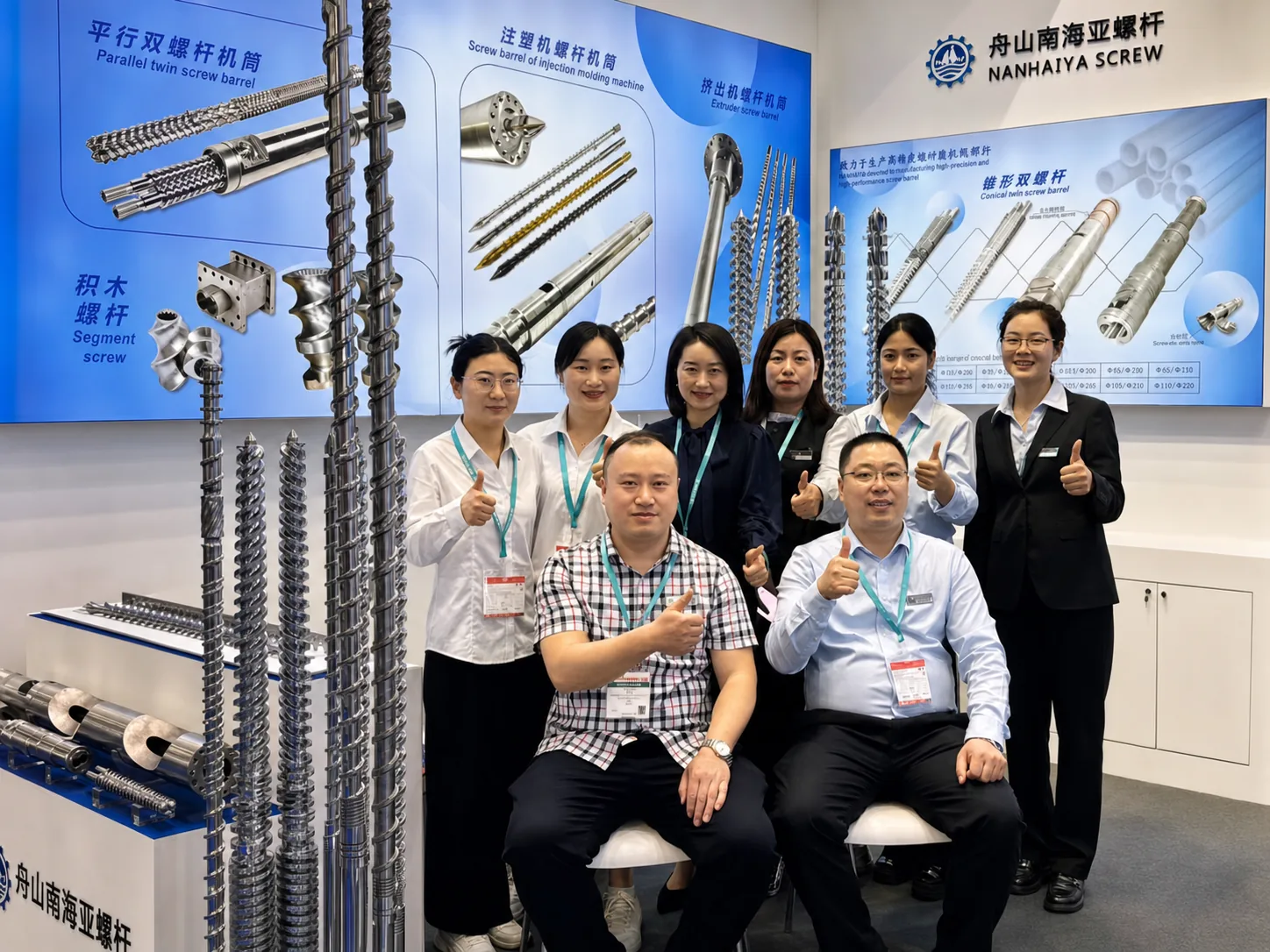
Related Articles
More insights on screw barrel technology and plastics processing.
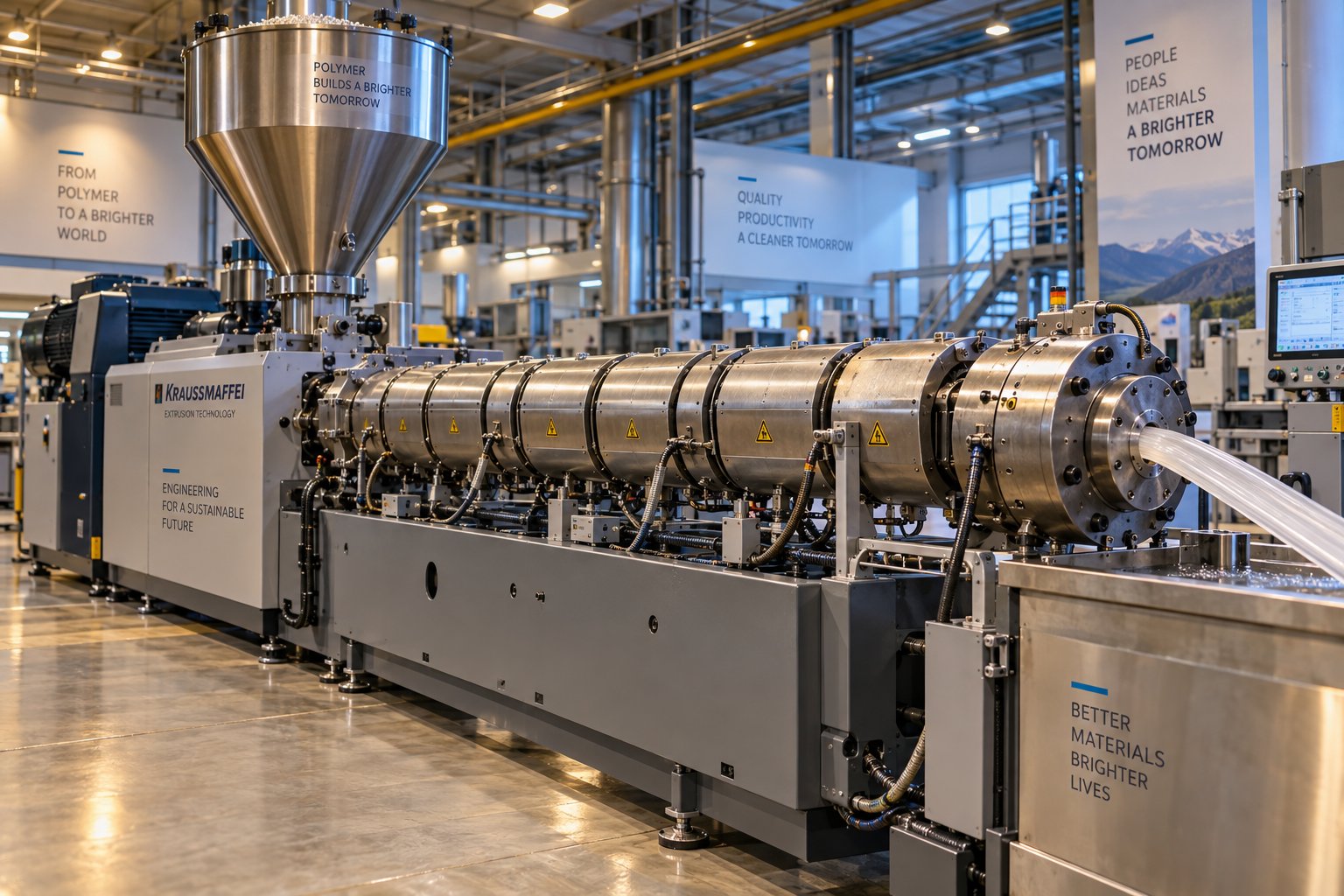
Extruder Machine Decoded: From Raw Pellet To Finished Product
Oct 6, 2026
Learn how an extruder machine works, compare single-screw vs. twin-screw types, and get expert guidance on specs, troubleshooting, and selection.
Read Article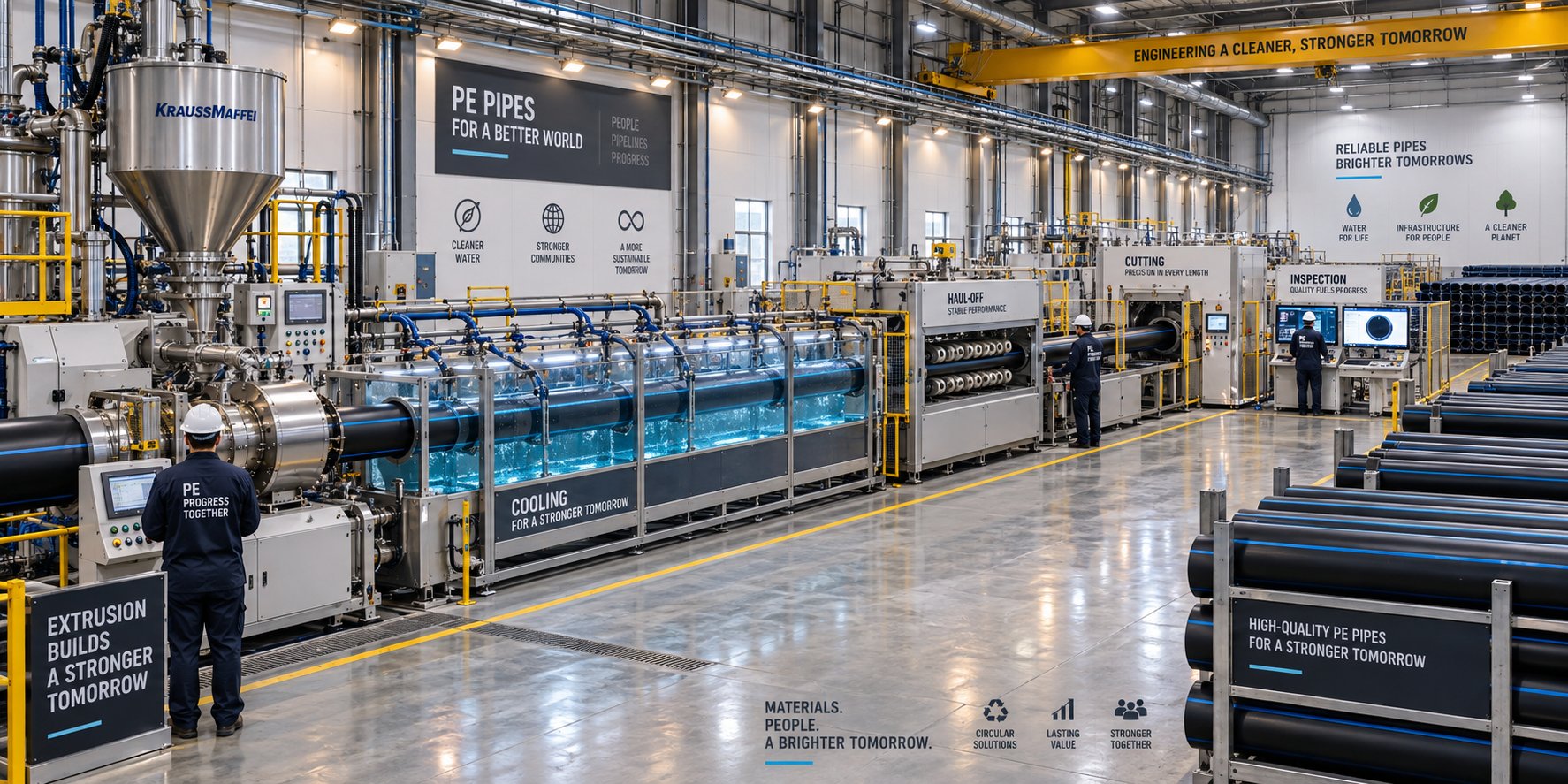
PE Pipe Making Machine Decoded: From Raw Resin to Flawless Pipe
Oct 4, 2026
Learn how a PE pipe making machine works, from resin to finished pipe. Covers components, material grades, automation, troubleshooting, and buyer selection tips.
Read Article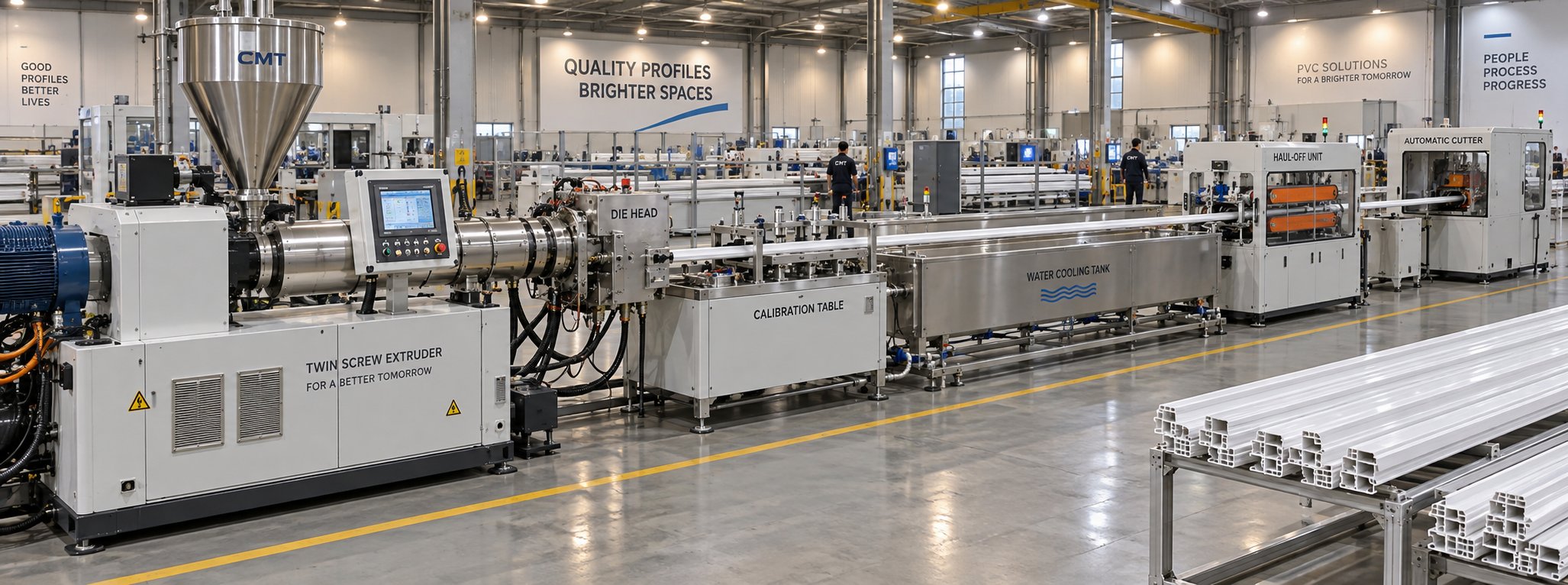
PVC Profile Making Machine Decoded: From Raw Resin To Profit
Oct 3, 2026
Learn how a PVC profile making machine works — extrusion process steps, key technical parameters, die design, calibration methods, maintenance, and total cost of ownership.
Read ArticleLooking for something else?
Search by material, symptom or product and jump straight to the relevant page.
These are navigation suggestions based on keyword matching — not a quotation, not a delivery commitment, and not a substitute for engineering review. Final specification is confirmed by our engineers against your drawings and processed material.
Need help with screw barrel selection?
Share your machine model, processed material and application. Our team can help with pricing and technical support.