

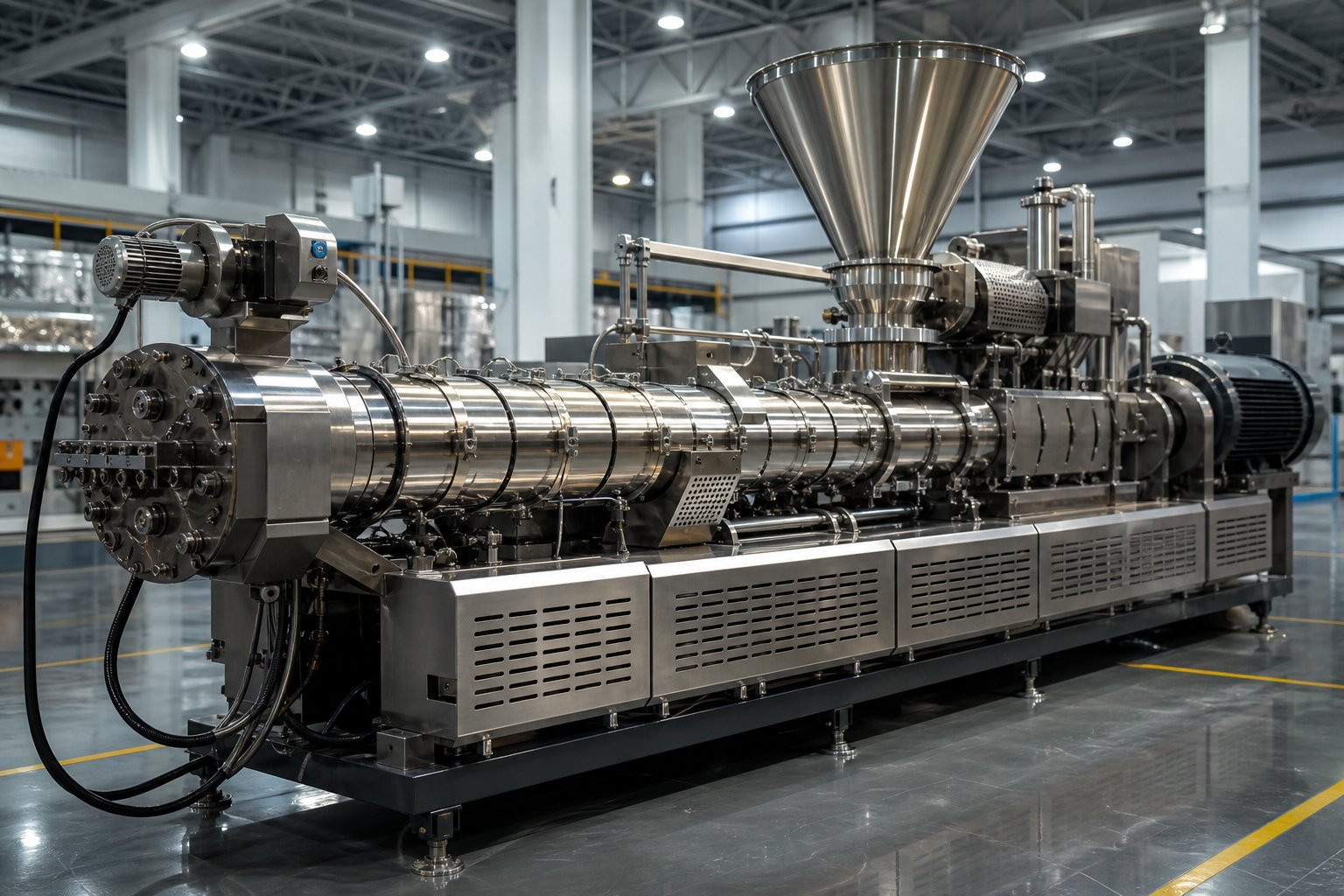
What a Twin Screw Extruder Granulator Is and Why It Matters
Imagine a machine that takes raw powders, polymers, or wet masses and transforms them into perfectly uniform granules - continuously, with no batch-to-batch variation. That is exactly what a twin screw extruder granulator does, and yet most engineers only understand it within the narrow context of their own industry.
What Is a Twin Screw Extruder Granulator
A twin screw extruder granulator is a continuous processing machine that uses two intermeshing, parallel screws rotating inside a temperature-controlled barrel to mix, convey, and granulate raw materials into uniform granules with precise control over size, density, and composition.
What separates this equipment from a single-screw system? Three things stand out. First, the intermeshing screw geometry creates a self-wiping action that prevents material from stagnating on barrel walls - a critical advantage when processing sticky binders or heat-sensitive formulations. Second, the dual-screw design delivers far superior mixing intensity, generating the shear forces needed to thoroughly disperse additives, fillers, or liquid binders throughout the material bed. Third, a modular barrel-and-screw architecture lets you reconfigure individual screw elements - swapping conveying sections for kneading blocks, for instance - to fine-tune performance for each specific application.
These characteristics make the machine remarkably versatile. A plastic granules twin screw extruder might compound glass-fiber-filled nylon on Monday, while a nearly identical platform supports continuous granulation with a twin-screw extruder in a pharmaceutical cleanroom on Tuesday. Food processors, chemical blenders, and fertilizer producers rely on the same fundamental technology, adapted with application-specific materials of construction and process parameters.
Why Cross-Industry Understanding Matters
Here is the problem: most technical resources treat this equipment as if it belongs to a single industry. Plastics engineers read plastics-focused literature. Pharma scientists consult pharma-specific journals. The result is a fragmented knowledge landscape where proven design strategies from one sector rarely reach practitioners in another.
This article bridges that gap. It synthesizes insights from academic research, patent literature, and hands-on industry practice into one practitioner-accessible resource. You will find actionable guidance on screw configuration, granulation modes, scale-up methodology, and component selection - all written to serve professionals regardless of whether they are granulating PVC compounds or pharmaceutical excipients.
The twin screw extruder granulator's versatility, though, starts with its mechanics - the step-by-step journey raw material takes from hopper to finished granule.
How a Twin Screw Extruder Granulator Works Step by Step
Picture raw powder sitting in a hopper. Within seconds, it will travel through a precisely engineered sequence of zones - each one applying specific forces, temperatures, and pressures - and emerge as dense, uniform granules ready for downstream processing. Understanding this journey is the key to mastering continuous granulation with a twin-screw extruder, yet surprisingly few resources walk through the full process in plain language.
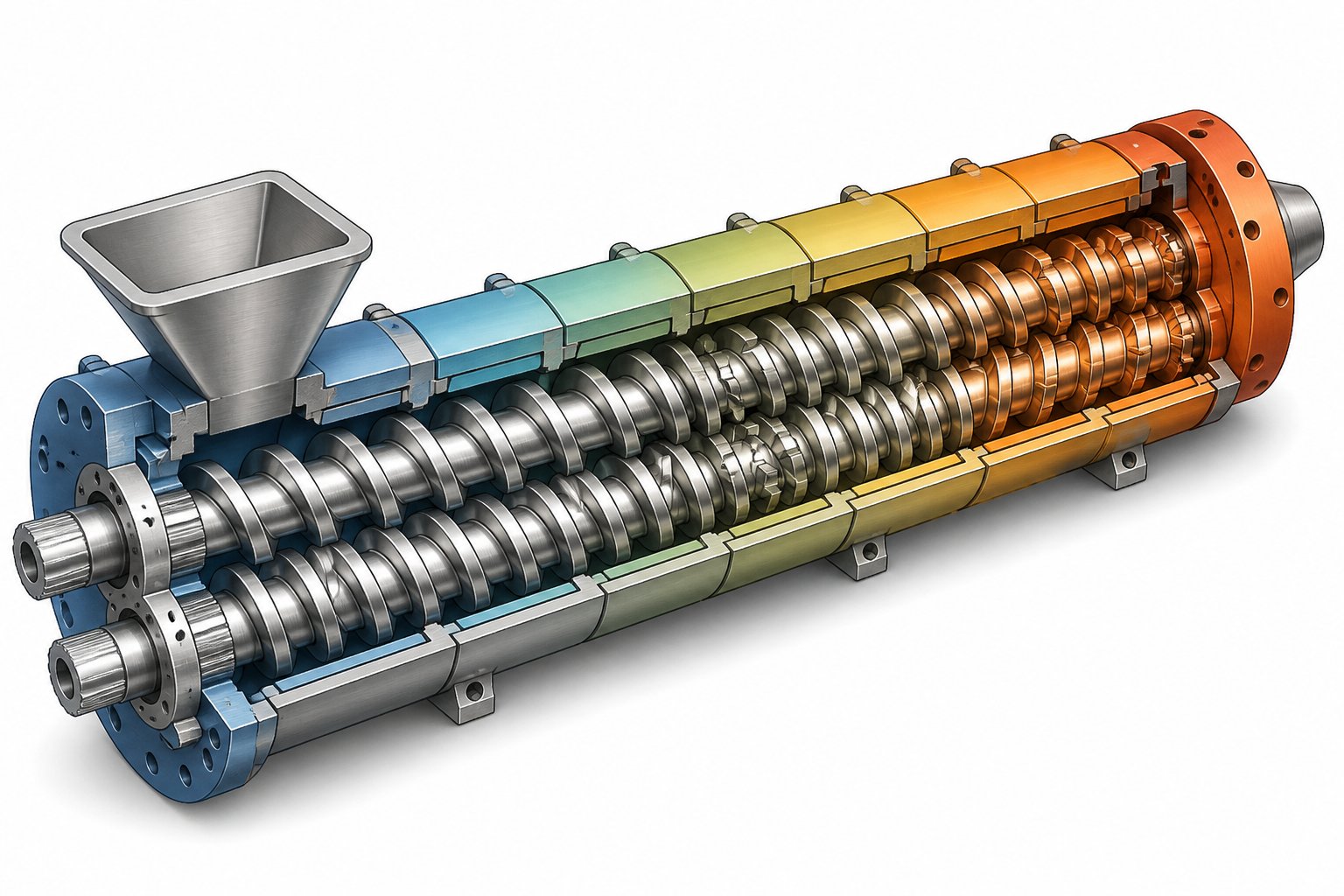
Every twin screw extruder granulator organizes its barrel into distinct functional zones. While exact configurations vary by application, the core sequence follows the same logic:
- Feeding zone - Material intake and initial transport
- Conveying zone - Forward transport with pressure development
- Mixing/kneading zone - High-shear blending and granule formation
- Venting zone - Removal of trapped air, moisture, or volatiles
- Discharge zone - Final conveying and product exit
Each zone plays a specific role, and the transitions between them determine everything from granule size distribution to product density. Let's follow the material through each stage.
Feed Zone and Material Intake
The process begins at the feed throat, where raw materials enter the barrel and meet the rotating screws for the first time. In a starve-fed system - the standard approach for twin screw granulation - the feed rate is set independently from screw speed. This means dedicated feeders control exactly how much material enters the process, while screw RPM is adjusted separately to optimize mixing and residence time.
You'll typically encounter two types of feeding systems. Gravimetric (loss-in-weight) feeders continuously weigh the hopper and adjust the feed mechanism to maintain a precise mass flow rate, which is essential when formulation accuracy matters - think pharmaceutical blends where API content must stay within tight specifications. Volumetric feeders, on the other hand, deliver material based on volume rather than weight and suit applications where cost or simplicity takes priority over absolute precision.
At this stage, deep-flighted conveying screw elements with a high pitch pick up the incoming solids efficiently. Research published in AAPS PharmSciTech highlights that these large-pitch elements keep the screw channels partially filled, creating a zero-pressure zone beneath the feed opening. This starved condition is critical - it prevents material from backing up into the hopper and allows downstream feeding ports to function properly.
What about liquids and additional solids? For high shear wet granulation in a twin screw extruder, liquid binder is introduced through injection ports positioned along the barrel - typically just upstream of a kneading zone where the binder will be thoroughly distributed. Side stuffers, which are essentially small co-rotating twin screw augers mounted on the barrel flank, push fillers, reinforcements, or heat-sensitive additives directly into the melt or powder stream at a controlled downstream location. This staged feeding approach prevents fragile materials from experiencing unnecessary shear exposure early in the process.
Conveying and Mixing Zones
Once material clears the feed zone, forward-conveying screw elements take over. These flighted elements act like an Archimedean screw - their helical geometry pushes material steadily downstream as the screws rotate. The pitch of these elements matters: a higher pitch moves material faster, reducing local fill level and residence time, while a lower pitch slows transport and increases the degree of fill.
Sounds straightforward? Here is where the process gets interesting. Strategically placed along the screw length, kneading blocks interrupt the smooth conveying flow and create high-shear mixing zones. These disk-shaped elements are staggered at specific offset angles - commonly 30, 60, or 90 degrees - and each angle produces a different mixing effect. Narrow offset angles (30 degrees) favor distributive mixing, splitting and recombining the material stream to achieve uniform spatial distribution of components. Wider angles (60 or 90 degrees) generate more intense dispersive mixing, applying the shear forces necessary to break down agglomerates, disperse binder fluid into a powder bed, or melt polymer particles.
In a co-rotating intermeshing configuration, five distinct shear regions exist within the screw cross-section: the screw channel, the overflight gap between screw tip and barrel wall, the lobal pool, the apex zones at the top and bottom of the screws, and the intermesh region where the two screws wipe each other. Four of these five regions operate at high shear intensity regardless of how full the screws are - which explains why even at low throughput rates, the equipment delivers effective mixing.
The interplay between conveying and kneading elements creates alternating filled and partially filled zones along the barrel length. Fully filled zones - typically located at kneading blocks and reverse elements - build localized pressure and force material through the high-shear regions. Partially filled conveying sections downstream provide the zero-pressure zones needed for venting or additional feeding. This pressure profile, as described in research on twin-screw granulation processing, gives the equipment its remarkable flexibility to perform multiple unit operations in a single continuous pass.
Granulation and Discharge
The transformation from loose powder or molten blend into cohesive granules happens primarily within and just after the kneading zones. The exact mechanism depends on the granulation mode being used.
In wet granulation, liquid binder injected upstream reaches the kneading blocks and is distributed through the powder bed under intense mechanical action. Capillary and viscous forces bind primary particles into agglomerates. This is the same principle behind the extrusion of effervescent granulation with a twin screw extruder, where precise liquid dosing and short residence times prevent premature reaction of acid-base effervescent couples during processing.
In melt granulation, the combination of barrel heat and mechanical shear energy from the screws softens or melts a thermoplastic binder, which coats and bridges surrounding particles. No liquid solvent is needed, so the downstream drying step that wet granulation requires can be eliminated entirely. Residence times in a twin screw extruder are remarkably short - often between 20 and 60 seconds for most processes, and as brief as 5 seconds in some high-speed configurations. This tight, first-in-first-out residence time distribution helps protect heat-sensitive ingredients from degradation.
After the granulation zone, the material may pass through a venting section where trapped air, residual moisture, or volatile byproducts are removed - sometimes under vacuum. Reverse-pitch screw elements positioned just upstream of the vent create a pressure seal, preventing the process melt from escaping through the vent port while allowing gases to escape freely.
Finally, forward-conveying elements in the discharge zone push the formed granules toward the barrel exit. Depending on the application, the material may be extruded through a die plate that shapes it into strands for pelletizing, or it may exit directly without a die for downstream milling or fluid bed drying. In pharmaceutical continuous manufacturing lines, wet granules are often pneumatically transferred to a fluidized bed dryer immediately after discharge for moisture removal before tableting.
Each of these zones can be reconfigured by swapping screw elements along the shaft - a modularity that makes the same base machine adaptable to vastly different materials and products. Yet the choice between co-rotating and counter-rotating screw configurations fundamentally shapes how all of these zones behave, an engineering distinction with consequences that reach far beyond simple rotation direction.
Co-Rotating vs Counter-Rotating Twin Screw Configurations
Rotation direction might sound like a minor engineering detail. In practice, it reshapes every zone described above - altering shear fields, mixing mechanisms, material transport behavior, and ultimately which applications the machine can handle well. Choosing between co-rotating and counter-rotating configurations is one of the most consequential decisions in twin screw extruder granulator design, yet many resources gloss over the distinction or treat it as a footnote.
Co-Rotating Intermeshing Screws
In a co-rotating configuration, both screws turn in the same direction - typically at identical speeds. This seemingly simple arrangement creates a powerful effect: material is forcibly handed off from one screw flight to the next at the intermeshing region, producing a figure-eight flow path as it travels downstream. The geometry leaves virtually no dead zones inside the barrel, and the continuous self-wiping action prevents material from stagnating or adhering to screw surfaces.
Why does that matter for granulation? Self-wiping keeps the residence time distribution tight and predictable - every particle spends roughly the same amount of time in each processing zone. For pharmaceutical wet granulation, this consistency translates directly into uniform granule size and drug content. For plastics compounding, it prevents thermal degradation caused by material sitting too long in a hot barrel.
Co-rotating designs also generate intense shear fields both between the screws and between screw tips and the barrel wall. Kneading blocks amplify this further with elongational flow components. The result is superior dispersive and distributive mixing that breaks down filler agglomerates, distributes binder fluid uniformly through powder beds, and homogenizes polymer blends at the molecular level. A co-rotation twin screw extruder for PVC granules, for example, can efficiently incorporate high loadings of calcium carbonate or other mineral fillers while maintaining consistent pellet quality.
These characteristics explain why co-rotating intermeshing parallel configurations dominate compounding lines, masterbatch production, and continuous granulation platforms worldwide. They handle the widest range of materials, offer the most modular screw design flexibility, and can operate at speeds from 200 to over 1,000 RPM for high-throughput production.
Counter-Rotating Intermeshing Screws
Counter-rotating screws turn in opposite directions, drawing material inward at the intermeshing region rather than handing it off. This creates a fundamentally different flow field - one characterized by compressive and elongational deformation rather than the high-shear wiping action of co-rotating designs.
Imagine two calendar rolls pressing material between them. That is essentially what happens at the intermeshing zone of a counter-rotating extruder. This calendering effect disperses additives under relatively gentle conditions, keeping shear stress and the associated frictional heat generation low. For materials like rigid PVC - which has a narrow window between processing temperature and thermal decomposition - this gentleness is not a luxury but a necessity.
Counter-rotating machines typically operate at much lower screw speeds (often 30 to 150 RPM) and under high fill conditions. Material transport depends strongly on screw rotation itself, enabling stable extrusion even with poorly flowing powders. However, the trade-off is real: lower throughput capacity, reduced self-wiping capability compared to co-rotating designs, and less flexibility for reconfiguring screw elements across different applications.
You'll find counter-rotating extruders most commonly in PVC pipe, sheet, and profile extrusion lines - applications where controlled pressure build-up and low-temperature processing outweigh the need for intensive mixing or high-speed granulation.
The table below captures these differences at a glance:
| Dimension | Co-Rotating Intermeshing | Counter-Rotating Intermeshing |
|---|---|---|
| Shear Intensity | High - intense shear fields between screws and barrel | Low to moderate - calendering-style compressive shear |
| Self-Wiping Capability | Excellent - continuous self-wiping eliminates dead zones | Limited - some stagnation zones possible at lower speeds |
| Mixing Quality | Superior dispersive and distributive mixing | Good distributive mixing under gentle conditions |
| Throughput Capacity | High - operates at 200 to 1,800+ RPM | Lower - typically 30 to 150 RPM |
| Typical Applications | Compounding, masterbatch, continuous granulation, reactive extrusion | PVC pipe and profile extrusion, shear-sensitive forming |
| Material Suitability | Broad - polymers, fillers, pharma powders, food ingredients | Narrow - best for thermally sensitive and low-melt-flow materials |
For anyone evaluating a corotation twin screw extruder for PVC granules or other filled compounds, the co-rotating platform offers unmatched versatility and mixing performance. Counter-rotating configurations earn their place when thermal sensitivity dictates gentle processing above all else. Neither design is universally superior - the right choice depends entirely on what you are processing and why.
Configuration selection, however, only sets the stage. The real precision instrument inside any twin screw extruder granulator is the screw profile itself - the specific arrangement of conveying elements, kneading blocks, and mixing segments that determines exactly how material is transformed along the barrel length.
Screw Configuration Design Principles for Optimal Granulation
Every screw element on a twin screw extruder granulator shaft is a deliberate choice. Swap a 30-degree kneading block for a 90-degree one, and you might shift from gentle distributive blending to aggressive dispersive breakup. Replace a high-pitch conveying element with a low-pitch version, and you fundamentally change how long material spends in the processing zone. This is what makes twin screw extruder screw element design simultaneously powerful and intimidating - small changes in element selection cascade through the entire process, affecting granule density, size distribution, throughput, and even product stability.
The challenge? Academic papers describe screw geometry in mathematical notation most practitioners never use. Product brochures show glossy element photos but skip the reasoning behind each placement. What's missing is a practical bridge - the kind of guidance that tells you which element to use, where to put it, and why it matters for your specific granulating line.
Understanding Screw Element Types
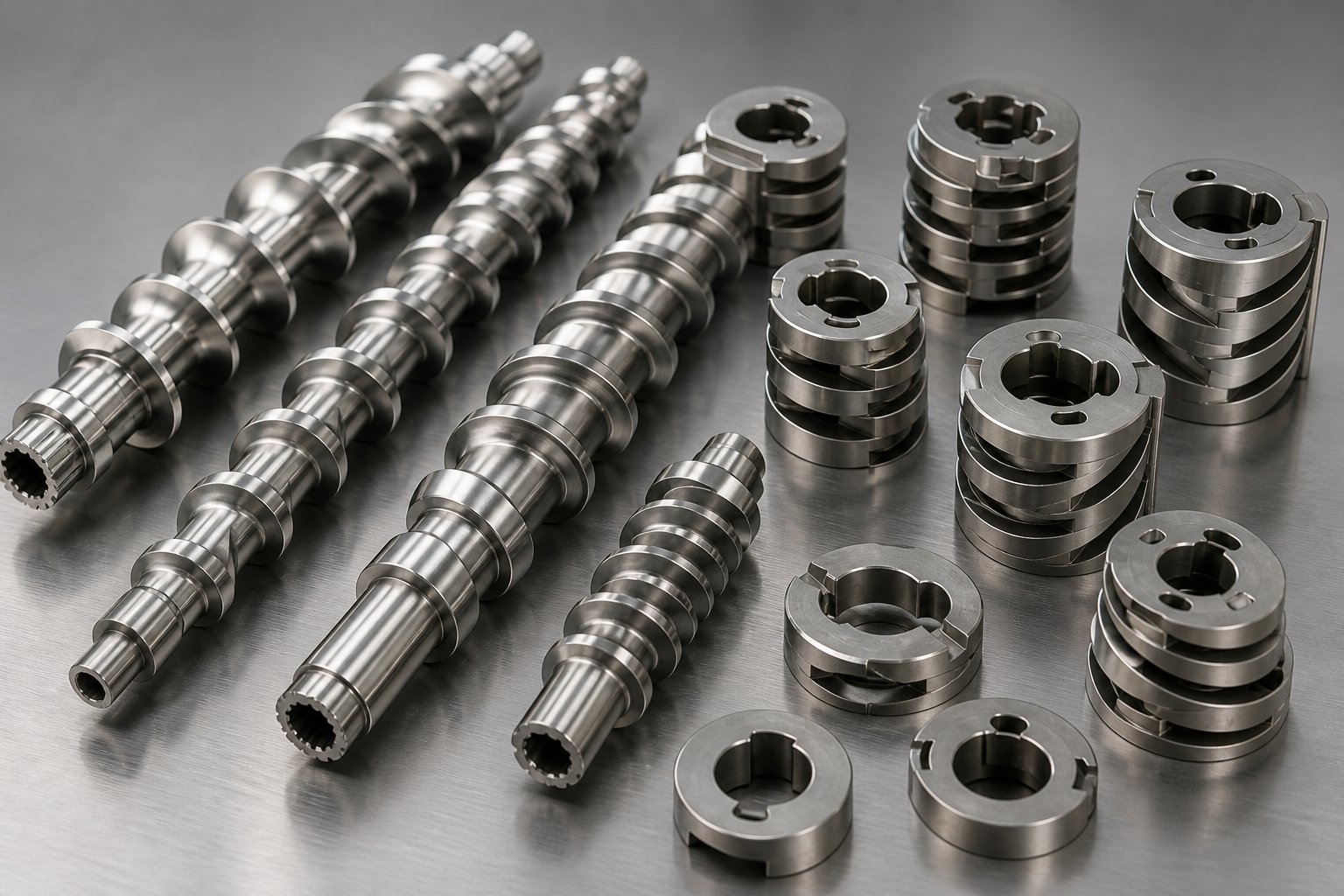
Twin screw extruder screw elements fall into three primary families, each engineered for a distinct purpose. Think of them as a toolkit: conveying elements are your transport workhorses, kneading blocks are your mixers and shear generators, and combing mixer elements serve as versatile hybrids that blend both functions. Selecting the right combination - and arranging them in the right sequence - is what separates a well-tuned process from one that produces oversized lumps, excessive fines, or inconsistent product quality.
- Conveying elements (forward and reverse pitch) - Helical-flighted elements that transport material downstream (forward pitch) or push it backward to create pressure seals and increase residence time (reverse pitch). Select forward conveying elements for feed zones, vent sections, and discharge areas where material needs to move efficiently without excessive shear. Use reverse elements upstream of vents or between processing zones to build backpressure and ensure complete filling of mixing regions.
- Kneading blocks (varying stagger angles) - Series of thick or thin disc-shaped elements offset from one another at specific angles, typically 30, 45, 60, or 90 degrees. A 30-degree forward offset provides moderate distributive mixing with good conveying, while a 90-degree (neutral) configuration stops all forward conveying and delivers maximum shear energy to the material. Reverse-staggered kneading blocks push material backward, creating the most aggressive restriction and highest shear. Select narrow disc kneading blocks for distributive mixing and wider discs for dispersive breakup of agglomerates.
- Combing mixer elements (toothed/distributive mixing elements) - Elements with lengthwise slits or tooth-like features that combine conveying action with splitting and recombining of the material stream. These deliver distributive mixing without the intense dispersive shear of kneading blocks, making them ideal for applications requiring thorough binder distribution without breaking down granule structure. Research documented in AAPS PharmSciTech shows that reverse-oriented distributive mixing elements produce granules with superior size uniformity while eliminating the need for a downstream milling step.
Here is a nuance many resources miss: individual screw elements often exhibit more than one functional characteristic. A forward kneading block conveys and mixes simultaneously. A toothed mixing element provides both distributive blending and gentle forward transport. The classification into three families reflects the dominant function, not the only one.
How Element Geometry Controls Mixing Behavior
When you look at a kneading block configuration on a twin screw extruder, two geometric factors determine its processing behavior more than anything else: the stagger angle between adjacent discs and the disc width.
The stagger angle dictates the balance between conveying and mixing. Forward kneading elements with small offset angles (30 degrees) move material downstream while gently folding and redistributing it - useful for initial binder incorporation during wet granulation. As the stagger angle increases toward 60 degrees, forward conveying weakens and shearing intensifies. At 90 degrees, the kneading block becomes a neutral element with zero net conveying capability. All the energy input goes directly into mixing, which dramatically increases both shear stress and local residence time. Reverse kneading elements flip the conveying direction, actively pushing material backward and creating maximum restriction against forward flow.
Disc width adds a second layer of control. Wider kneading discs force material into the narrow gap between the disc tip and the barrel wall, increasing the dispersive mixing effect - perfect for breaking down hard agglomerates or achieving intimate polymer-filler contact. Narrower discs create more splitting planes along the block length, favoring distributive mixing that evenly spreads components without aggressive breakup. This relationship between disc width and mixing type, as documented by NC State Extension research, is one of the most useful practical rules for configuring a granulation screw profile.
Conveying element pitch follows a parallel logic. A large-pitch (high-lead) element moves material quickly, creating a low fill level and short local residence time - exactly what you want beneath a feed port or a vent opening. A small-pitch element slows transport, compresses the material, and builds pressure. Gradually reducing pitch along the barrel length is a standard technique for transitioning from open feeding into pressurized processing zones.
Building a Screw Configuration for Your Application
Imagine you are starting with an empty screw shaft and a box of elements. Where does each one go? While no universal recipe exists - as NC State Extension research emphasizes, every material has unique flow properties that respond differently to heat and shear - a set of reliable principles guides every successful twin screw extruder granulator configuration.
Start at the feed zone with deep-pitch (large-lead) conveying elements. These high-volume screw flights accept incoming material smoothly from gravimetric or volumetric feeders. The goal here is maximum free volume in the screw channels to accommodate powder, pellets, or fibers without creating a choke point. A screw pitch of 1.5 to 2 times the outer diameter is considered ideal for reliable material intake. If a downstream side-feeder introduces additional solids, the same large-pitch strategy applies at that location - you need unused screw volume to absorb the new material stream.
Transition to the processing zones with progressively smaller-pitch conveying elements. Reducing the pitch compresses material and builds the pressure needed to push it into the first kneading section. This gradual compression also preheats the material through frictional energy, preparing it for efficient mixing without abrupt temperature spikes.
Position kneading blocks at binder addition or melt zones. For wet granulation, kneading blocks should begin just downstream of the liquid injection port. The liquid binder needs intense mechanical action to distribute it through the powder bed, and kneading elements provide exactly that. For melt granulation or polymer compounding, kneading blocks go where the barrel temperature program reaches the softening point of the binder or polymer matrix. A practical approach backed by industry experience: start kneading blocks from the middle of the melting section and space them with short conveying element segments between clusters. This prevents excessive shear buildup while maintaining effective energy input.
Use reverse elements to create pressure seals before venting. Reverse-pitch screw elements or reverse kneading blocks positioned upstream of a vent port create a melt or material plug. This seal prevents process material from escaping through the vent while allowing trapped air, moisture, or volatile compounds to evacuate. Downstream of the vent, switch back to large-pitch conveying elements to reduce fill level and expose maximum material surface area for efficient degassing.
Finish with conveying elements for discharge. The final barrel section uses forward-conveying elements with gradually decreasing pitch to rebuild pressure toward the die plate or open discharge. Some configurations employ single-flight or wide-flight elements in this zone to maximize pumping capacity and prevent material overflow at the exit.
Throughout this entire layout, one overarching principle applies: configuration directly controls granule size distribution, density, and throughput. Adding an extra kneading block section increases shear energy input, which typically produces finer, denser granules but raises torque demand and mechanical stress on the equipment. Removing kneading elements yields coarser, more porous granules with lower energy consumption. Every adjustment is a trade-off, and the screw profile must be validated against target product specifications through systematic trial work.
Material-of-construction considerations add another layer. Screw and barrel components must withstand the abrasion and corrosion demands of each specific application. Processing glass-fiber-filled engineering plastics at high speed accelerates wear on screw flight tips and barrel liner surfaces far more aggressively than granulating lactose-based pharmaceutical blends. Corrosive formulations - reactive chemical blends or certain acidic food ingredients - demand alloys with superior chemical resistance. Choosing the wrong metallurgy shortens component life, introduces metallic contamination, and gradually degrades the very mixing and conveying performance the configuration was designed to deliver.
These screw design principles apply across every granulation mode the equipment supports. Yet the choice of granulation mode itself - wet, melt, or dry - introduces an entirely different set of process variables that shape how material behaves within whatever configuration you build.
Wet, Melt, and Dry Granulation Modes Explained
A single twin screw extruder granulator platform can produce granules through fundamentally different mechanisms - and the mode you select determines everything from binder chemistry to downstream equipment needs. Most resources cover one mode in isolation, leaving practitioners unaware that the same machine capable of a twin screw extruder wet granulation process can also run solvent-free melt granulation or mechanical dry compaction with a simple screw and process parameter change.
Understanding all three modes side by side reveals the full versatility of this equipment - and helps you choose the right approach before committing to a process design.
Wet Granulation in a Twin Screw Extruder
Wet granulation is the most widely studied and commercially adopted mode for pharmaceutical twin screw processing. The principle is straightforward: liquid binder - typically water, an aqueous polymer solution, or an organic solvent - is injected through barrel ports directly into a moving powder bed. As the material reaches the kneading zone, intense mechanical action distributes the liquid across particle surfaces. Granule formation then occurs through capillary and viscous forces that draw primary particles together into cohesive agglomerates.
What makes this different from traditional high-shear batch granulation? Residence time. In a conventional mixer granulator, material might spend 5 to 15 minutes inside the bowl. In a twin screw extruder, published research shows total residence times often fall between 20 and 60 seconds. This brevity is a double-edged sword. Short exposure minimizes over-wetting and thermal degradation, but it also means binder distribution must happen fast - which is why kneading block design and liquid injection port placement are so critical.
The liquid-to-solid (L/S) ratio is the dominant process variable. Increase it, and granule size grows as stronger liquid bridges form between particles. Push it too high, and you get paste rather than discrete granules. Research by Dhenge et al. demonstrated that at an L/S ratio of 0.4, granules showed a monomodal size distribution peaking around 1,000 micrometers - the sweet spot where particles are large enough for good flow but small enough for uniform tablet compression.
Pharmaceutical applications showcase this mode particularly well. The extrusion of effervescent granulation with a twin screw extruder, first explored by Lindberg in the late 1980s, remains a practical example of how short residence times prevent premature acid-base reactions that would ruin an effervescent formulation in a slower batch process. Regulatory frameworks from the FDA actively encourage this type of continuous processing, and twin screw wet granulation supports Quality by Design (QbD) principles by offering tighter control over critical process parameters like screw speed, feed rate, and barrel temperature.
The trade-off? Wet granules exit the barrel with residual moisture and require downstream drying - typically in a fluidized bed dryer integrated into the continuous line. That additional equipment adds capital cost and footprint, but the overall process time still compresses dramatically compared to batch alternatives.
Melt Granulation and Hot-Melt Applications
What if you could eliminate the drying step entirely? Melt granulation does exactly that. Instead of a liquid solvent, a thermoplastic binder - such as polyethylene glycol, a wax, or a cellulose derivative - softens or melts under barrel heat and screw-generated shear. The molten binder coats surrounding particles, and as the material cools downstream, solidified bridges lock the agglomerates into stable granules.
This solvent-free approach delivers several practical advantages. No granulating liquid means no drying phase, which cuts process time, energy consumption, and equipment complexity. It also makes melt granulation twin screw extruder pharmaceutical applications attractive for moisture-sensitive APIs that degrade during wet processing. Published studies on twin screw melt granulation (TSMG) confirm that thermal energy generated from both barrel heaters and friction between particles, screws, and barrel surfaces distributes heat more uniformly than batch methods - reducing the risk of localized degradation even for thermolabile compounds.
Binder selection is the critical formulation variable here. You need a material with a glass transition temperature (Tg) or melting point lower than other ingredients in the blend so it flows and distributes before the API or fillers are thermally compromised. Lakshman et al. demonstrated this by melt-granulating high-dose metformin hydrochloride (melting point: 224 degrees Celsius) with a cellulosic binder having a Tg of just 130 degrees Celsius - keeping overall processing temperatures safely below the drug's degradation threshold while achieving consistent tablets with hardness between 150 and 400 N.
Beyond pharmaceuticals, melt granulation is the foundation of plastics pelletizing. Every polymer compounding line that produces pellets through strand cutting or underwater pelletizing is performing a variation of melt granulation, where the polymer itself serves as both the matrix and the binder. The same twin screw platform handles both worlds - pharma taste-masking granules and engineering polymer pellets - separated primarily by material-of-construction choices and regulatory requirements.
Dry Granulation and Compaction Approaches
Dry granulation twin screw extruder compaction occupies a smaller but increasingly important niche. Here, neither liquid binder nor molten polymer drives agglomeration. Instead, the twin screws apply mechanical compaction forces - through combinations of kneading elements, controlled barrel temperature, and screw speed - that press and consolidate primary particles into granules through particle deformation and interlocking.
Sounds simple, but the mechanism is nuanced. Industry experts at Catalent note that twin screw dry granulation (TSDG) is particularly effective for moisture-sensitive materials and APIs with needle-shaped crystal habits that cause poor flow and low bulk density. The kneading action within the extruder enhances powder consolidation in ways that conventional roller compaction struggles to match, especially for formulations requiring higher shear for adequate mixing and agglomeration.
How does this compare to roller compaction - the traditional dry granulation workhorse? Roller compactors press powder between two counter-rotating rolls to form ribbons, which are then milled into granules. The process is proven and straightforward, but it offers limited mixing capability and produces granules with variable density and sometimes poor compressibility. Twin screw dry granulation, by contrast, combines conveying, mixing, and compaction in a single continuous pass with far greater screw design flexibility. Research by Ye et al. showed that TSDG could improve flow properties of moisture-sensitive sustained-release formulations while eliminating the milling step entirely, since granule sizing occurs within the barrel itself.
The limitation is that dry granulation generally produces weaker inter-particle bonds than wet or melt modes, resulting in lower granule strength and potentially higher friability. For many applications, though, this trade-off is acceptable - especially when avoiding heat and moisture exposure is the top priority.
The following table compares these three granulation modes across the dimensions that matter most for process selection:
| Dimension | Wet Granulation | Melt Granulation | Dry Granulation |
|---|---|---|---|
| Binder Type | Liquid (water, aqueous polymer solution, or organic solvent) | Thermoplastic polymer or wax (PEG, cellulose ethers, lipids) | None - relies on mechanical compaction forces |
| Downstream Drying Required | Yes - fluidized bed or continuous dryer needed | No - granules solidify upon cooling | No - no moisture introduced |
| Granule Porosity | Higher porosity with better dissolution characteristics | Lower porosity, denser matrix structure | Variable - depends on compaction pressure and element design |
| Typical Applications | Pharmaceutical tablets, effervescent granules, nutraceuticals | Taste-masked pharma formulations, plastics pelletizing, controlled release | Moisture-sensitive APIs, sustained-release formulations, needle-shaped crystal APIs |
| Process Complexity | Moderate - requires liquid dosing system, drying integration, and moisture PAT | Moderate - requires precise barrel temperature control and binder Tg matching | Lower - fewer auxiliary systems, but requires careful screw design optimization |
Each mode leverages the same modular screw platform and continuous conveying principle - but the formulation chemistry, downstream equipment train, and critical process parameters differ substantially. The real power of a twin screw extruder granulator lies in this flexibility: a single machine platform that adapts to wet, melt, or dry processing depending on the material science challenge at hand.
This versatility also explains why the equipment has crossed industry boundaries so effectively. The same granulation principles that serve pharmaceutical continuous manufacturing lines apply - with material-specific adaptations - to plastics compounding, food ingredient processing, and chemical blending operations around the world.
Cross-Industry Applications From Plastics to Pharmaceuticals
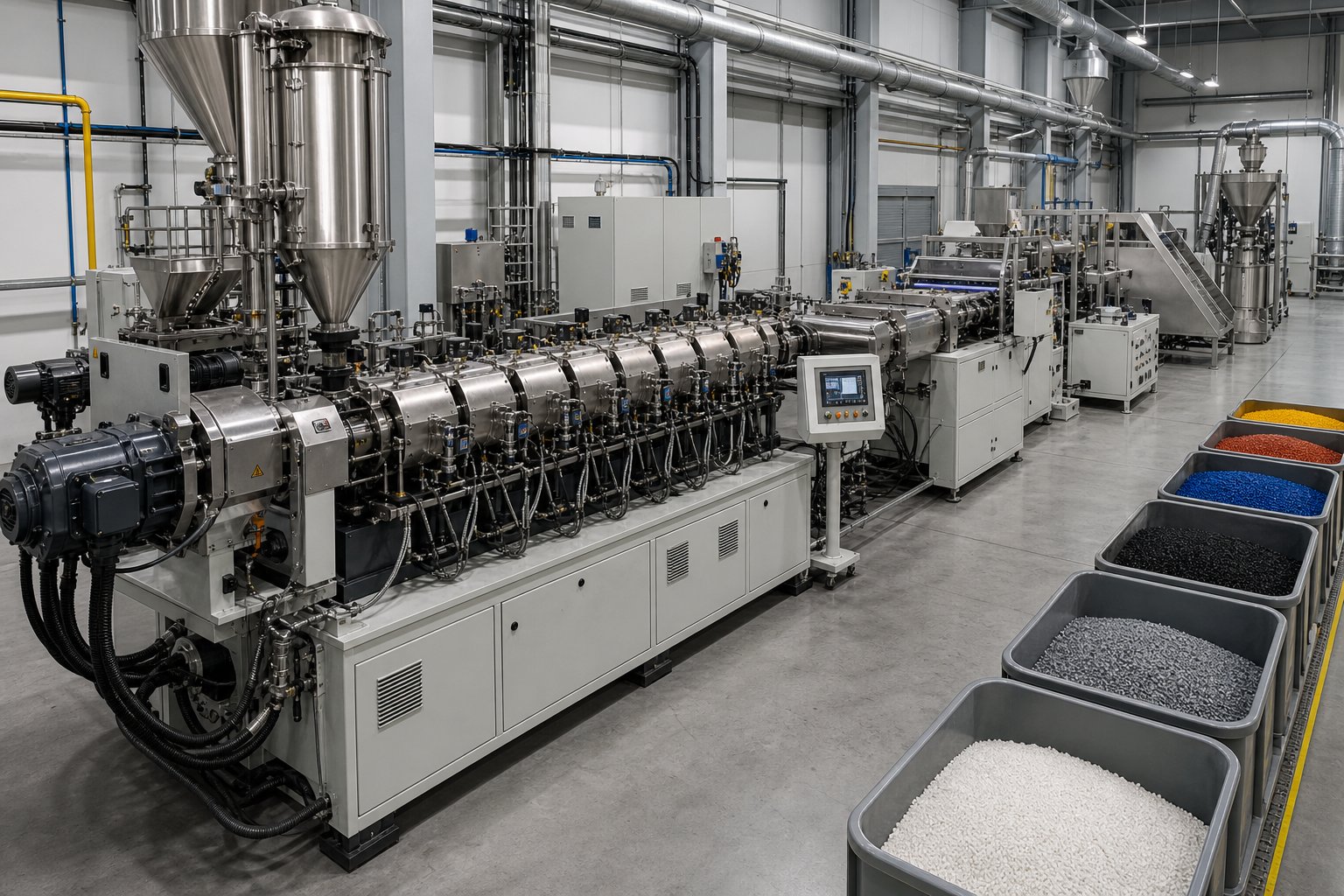
A plastics compounder in Guangdong, a pharmaceutical scientist in New Jersey, and a fertilizer engineer in Sao Paulo probably never read the same technical literature. Yet all three rely on the same fundamental machine platform to granulate their products. The twin screw extruder granulator does not belong to any single industry - it belongs to every industry that needs continuous, controllable size enlargement. What changes from one factory floor to the next is not the underlying principle but the formulation chemistry, the regulatory framework, and critically, the materials used to build the screws and barrels.
Breaking down these application silos reveals something valuable: solutions proven in one sector often solve persistent headaches in another. A screw configuration trick developed for abrasive mineral-filled plastics might improve throughput stability in a catalytic chemical granulation line. A PAT integration strategy perfected under FDA continuous manufacturing guidelines could streamline quality control for a food ingredient processor. Here is what each major industry is doing with this technology - and where the crossover opportunities live.
Plastics Compounding and Polymer Pelletizing
Plastics processing remains the largest single market for twin screw extruder granulator technology, and for good reason. The demands of modern polymer compounding - incorporating high loadings of fillers, reinforcements, pigments, and functional additives into base resins - align perfectly with the equipment's high-shear mixing and continuous throughput capabilities.
Consider masterbatch production. A color masterbatch line must disperse pigment agglomerates uniformly into a carrier resin like LDPE or PP, achieving particle breakup at shear rates of 500 to 1,500 per second within the kneading zone. The co-rotating twin screw configuration handles this with its self-wiping geometry and modular screw elements, producing pellets with consistent color strength batch after batch. Filler masterbatch follows the same logic but introduces abrasive minerals - calcium carbonate, talc, barium sulfate - at loadings that can exceed 80 percent by weight. Functional masterbatch adds another layer of complexity, embedding UV stabilizers, flame retardants, or antistatic agents that must be distributed at precise concentrations without thermal degradation.
Beyond masterbatch, the applications fan out rapidly:
- Glass-fiber-reinforced compound granulation - Engineering polymers like PA6, PA66, and PBT are compounded with 20 to 60 percent chopped glass fiber for automotive and electronic housings. Side-stuffing feeds the fiber downstream of the polymer melt zone to preserve fiber length while achieving uniform dispersion.
- Recycled plastics pelletizing - Post-consumer and post-industrial waste streams are reprocessed into clean pellets through twin screw extrusion, where the equipment's venting capability removes volatiles, moisture, and contaminants from degraded feedstock.
- Engineering polymer compounding - High-performance resins such as polycarbonate, PPS, and PEEK are blended with carbon black, carbon fiber, or nano-fillers for demanding aerospace and medical device applications.
- PVC granule production - Both rigid and flexible PVC compounds are granulated for downstream injection molding or extrusion, with the twin screw platform offering the precise temperature control these thermally sensitive formulations demand.
- Thermoplastic elastomer (TPE) compounding - Soft-touch overmolding grades and sealing compounds require intimate blending of elastomeric and thermoplastic phases at controlled shear levels.
China has emerged as a dominant manufacturing ecosystem for plastic granules twin screw extruder equipment. Factories clustered in regions like Guangdong, Jiangsu, and Zhejiang supply both domestic processors and export markets, offering machines across the full range from laboratory 20-millimeter units to production-scale 135-millimeter platforms. This concentration of plastic granules twin screw extruder manufacturers has driven equipment costs down while expanding the technology's accessibility to small and mid-sized compounders globally. Whether sourced from a plastic granules twin screw extruder factory in Nanjing or a European OEM, the core engineering principles remain identical - what varies is build quality, metallurgical specifications, and after-sales support infrastructure.
The defining material-of-construction challenge in plastics applications is abrasive wear. Glass fiber, mineral fillers, and even carbon black act like sandpaper against screw flights and barrel liners. Hardened tool steels, bimetallic barrel linings with tungsten carbide or boron-based alloys, and nitrided screw surfaces are standard countermeasures. Without them, processing efficiency degrades within weeks as worn clearances reduce mixing intensity and increase energy consumption.
Pharmaceutical Continuous Granulation
The pharmaceutical industry's relationship with twin screw granulation represents one of the most significant manufacturing shifts in recent decades. Traditional batch processes - where powders are granulated in high-shear mixers, dried in fluid beds, milled, and blended in sequential standalone operations - are giving way to integrated continuous lines where a twin screw granulator serves as the central processing unit.
What is driving this shift? Regulatory encouragement, primarily. The FDA has actively promoted continuous manufacturing as a pathway to improved product quality, citing advantages like reduced batch-to-batch variability, smaller equipment footprint, and real-time quality assurance through Process Analytical Technology (PAT). Published research in AAPS PharmSciTech frames this transformation clearly: continuous manufacturing eliminates key gaps through the integration of various processes while preserving quality attributes via real-time monitoring of critical process parameters and critical quality attributes.
Twin screw granulation supports Quality by Design (QbD) principles in several concrete ways. The equipment's short, well-defined residence time distribution gives every particle essentially the same processing history - unlike a batch granulator where material near the impeller tip experiences vastly different shear than material near the bowl wall. Doctoral research at Purdue University demonstrated that twin screw granulation is more robust with respect to formulation changes compared to high-shear wet granulation, because granule breakage mechanisms within distributive mixing elements depend primarily on screw element geometry rather than powder properties. This geometric dependence makes process outcomes more predictable across different API formulations - a significant advantage for scale-up and technology transfer.
PAT integration amplifies these benefits. NIR spectroscopy monitors moisture content and API concentration in-line. Raman spectroscopy verifies drug substance content uniformity in real time. Focused beam reflectance measurement (FBRM) tracks granule size distribution as it exits the barrel. These tools transform the granulator from a black box into a transparent, controllable process stage where deviations are detected and corrected within seconds rather than discovered after an entire batch has been completed.
Major continuous granulation platforms - such as the GEA ConsiGma and Bohle BCG systems - integrate twin screw granulators with fluid bed dryers and inline mills into a single production line. Screw diameters typically range from 16 millimeters for laboratory development to 25 or 27 millimeters for commercial production, with L/D ratios between 25 and 40.
Food, Chemical, and Fertilizer Applications
Beyond plastics and pharmaceuticals, the twin screw extruder granulator serves a surprisingly broad range of industries - often with less visibility in technical literature but with equally demanding process requirements.
- Food ingredient granulation - Flavoring powders, vitamin premixes, protein concentrates, and sweetener blends are granulated for improved flowability, reduced dust, and controlled dissolution. TSE-based encapsulation protects volatile flavors, heat-sensitive bioactives, and readily oxidizable compounds like ascorbic acid within protective carbohydrate or lipid matrices.
- Nutraceutical processing - Polyphenol taste-masking through hot melt extrusion, probiotic encapsulation in starch matrices at low temperature and low shear, and controlled-release nutrient delivery systems all leverage twin screw technology. Published research confirms successful encapsulation of Lactobacillus acidophilus and the enzyme phytase into non-gelatinized wheat starch using a twin screw extruder, with the encapsulated components remaining biologically active and shelf-stable.
- Catalyst granulation - Catalytic support materials are granulated to achieve target porosity, crush strength, and surface area for chemical reactor applications.
- Detergent manufacturing - Surfactant powders, builders, and enzymes are agglomerated into free-flowing granules with controlled dissolution rates for both consumer and industrial cleaning products.
- Fertilizer production - Nitrogen, phosphate, and potash blends along with micronutrient additives are granulated for uniform field application, controlled nutrient release, and reduced dust during handling and spreading.
- Chemical blending - Specialty chemical compounds, pigment preparations, and reactive intermediates are processed into granular form for safer handling, accurate dosing, and improved storage stability.
The fundamental machine platform across all these applications shares the same co-rotating intermeshing screw architecture, the same modular barrel construction, and the same process control philosophy. What differs - and this cannot be overstated - is the material-of-construction specification. Food-grade applications require AISI 304 or 316L stainless steel with electropolished surfaces that meet hygienic design standards and prevent microbial harboring. Pharmaceutical equipment demands equivalent or higher surface finish quality (often Ra less than 0.8 micrometers), validated cleaning protocols, and documentation traceability for every product-contact component. Plastics compounding applications prioritize hardened, wear-resistant alloys - bimetallic barrels, nitrided or coated screws, and tungsten carbide protective layers - because abrasive fillers destroy softer metallurgies within hours of operation.
Choosing the wrong material of construction does not just shorten equipment life. In food or pharmaceutical processing, it introduces contamination risk. In plastics compounding, it degrades product quality as worn screw clearances reduce mixing efficiency. The machine may look the same on the outside across these industries, but the metallurgical engineering inside is application-specific and directly impacts both product safety and total cost of ownership.
This cross-industry versatility raises an inevitable question: if a twin screw extruder granulator can handle so many different applications, when is it actually the best choice compared to other granulation methods? The answer requires an honest, structured comparison against the alternatives - high-shear batch mixers, fluid bed granulators, and roller compactors - each of which still holds genuine advantages in specific scenarios.
Twin Screw Granulation vs Alternative Methods Compared
Every granulation technology has a sweet spot - a set of conditions where it outperforms the alternatives on quality, cost, or practicality. The twin screw extruder granulator is no exception. It excels in many scenarios, but treating it as a universal solution leads to expensive disappointment. The real question is not whether the technology is good, but whether it is the right fit for your specific material, throughput, and quality requirements.
Most practitioners already have experience with at least one traditional granulation method. What they lack is a structured framework for evaluating twin screw granulation against those familiar alternatives - a side-by-side analysis that weighs practical trade-offs rather than simply listing features. That framework starts with the most common comparison point: high-shear batch granulation.
Twin Screw Granulation vs High Shear Batch Granulation
High-shear wet granulation in a bowl mixer has been the pharmaceutical industry's default for decades. A powerful impeller rotates inside a closed vessel, blending powder with liquid binder under intense mechanical action. The process works, and it works well for many formulations. So why consider switching to a continuous twin screw platform?
The differences become clear when you examine five critical dimensions:
Throughput consistency. A batch granulator processes discrete lots. Each batch experiences a unique shear history depending on fill level, impeller speed ramp, and granulating liquid addition rate. Twin screw granulation, by contrast, operates at steady state - material flows continuously through identical processing zones, and every particle receives essentially the same mechanical energy input. Research published in Pharmaceutics confirms that this first-in-first-out residence time distribution gives twin screw processing a tighter, more predictable granule size distribution compared to batch methods, where particles near the impeller tip experience dramatically different shear than those near the bowl wall.
Batch size flexibility. Here is where the comparison gets interesting. A high-shear granulator is designed for a specific batch volume - run it half full, and the shear profile changes. Scale up to a larger bowl, and you face well-documented challenges matching impeller tip speed, power density, and liquid addition dynamics. Twin screw granulation sidesteps this entirely. You scale by running longer, not bigger. A 25-millimeter pharmaceutical twin screw granulator can produce 500 grams for a clinical trial or run continuously for hours to manufacture commercial quantities, using the same screw configuration and process parameters throughout.
Granule uniformity. Batch granulators often produce a bimodal particle size distribution - fines that escaped the impeller zone and over-granulated lumps from regions of excessive binder concentration. Wet milling downstream partially corrects this, but the variability originates in the fundamentally uneven shear field of a batch vessel. Twin screw extruder granulators, with their modular kneading block arrangements and controlled liquid injection, produce a narrower distribution at the point of formation. Comparative studies at the University of Eastern Finland have specifically investigated the effect of filler and active pharmaceutical ingredients on granule and tablet properties across both platforms, highlighting how formulation sensitivity differs between these two processing approaches.
Equipment footprint. A batch granulation suite requires a granulator bowl, a wet mill, a fluid bed dryer, a dry mill, and a blender - each occupying floor space and requiring validated connections. A continuous twin screw line integrates granulation, and sometimes drying and milling, into a compact modular system. The footprint reduction can reach 50 percent or more, freeing cleanroom space that carries significant cost in regulated manufacturing environments.
Process control capability. Batch granulators rely on endpoint detection - measuring impeller power consumption or torque to decide when granulation is "done." Twin screw platforms enable real-time control of every parameter: screw speed, feed rate, liquid-to-solid ratio, and barrel temperature are all continuously adjustable. Coupled with inline PAT tools like NIR moisture probes and particle size analyzers, the continuous process delivers a level of control that batch systems simply cannot match.
Does this mean high-shear batch granulation is obsolete? Not at all. For small-volume, high-potency compounds where containment in a sealed vessel matters, or for formulations where extended granulation time improves binder distribution in ways short residence times cannot replicate, the batch approach still earns its place. The advantage of twin screw granulation vs high shear granulation is most pronounced when you need throughput consistency, scale flexibility, and tight process control - the hallmarks of modern continuous manufacturing.
Twin Screw Granulation vs Fluid Bed and Roller Compaction
High-shear mixers are not the only alternative. Two other technologies compete directly with twin screw granulation in specific application niches, and understanding where each one excels prevents costly mismatches between equipment and process requirements.
Fluid bed granulation works by suspending powder particles in an upward air stream while spraying liquid binder from a nozzle - typically positioned at the top, bottom, or tangentially. Particles collide, liquid bridges form, and granules grow progressively over a residence time measured in minutes rather than seconds. This extended processing time produces highly porous, rapidly dissolving granules - an advantage for immediate-release pharmaceutical formulations where fast disintegration matters. GEA's technical comparison of granulation technologies notes that modern fluid beds with tangential spray systems now process formulations that previously required high-shear mixers, and fully automatic CIP cleaning has narrowed the containment gap with single-pot processors.
The trade-offs, however, are real. Fluid bed granulation consumes significantly more energy per kilogram of product because large volumes of heated air must be generated, filtered, and exhausted. The equipment footprint is substantial. Batch-to-batch variability in spray rate, droplet size, and air flow patterns can introduce inconsistencies that continuous twin screw processing inherently avoids. And scale-up remains notoriously challenging - matching fluidization dynamics across different bed depths and chamber geometries requires extensive empirical validation.
Roller compaction occupies the opposite end of the spectrum. Powder is compressed between two counter-rotating rolls to form a dense ribbon, which is then milled into granules. No liquid, no heat, no drying step. For moisture-sensitive and heat-labile active ingredients, this simplicity is genuinely attractive. Industry documentation highlights roller compaction as an ideal method for compounds that are physically or chemically unstable when exposed to moisture, making it an energy-efficient alternative to wet granulation.
Where roller compaction falls short is granule quality. The ribbons produced under high compressive force often contain density gradients - harder at the center, softer at the edges - which translate into variable granule hardness after milling. Fine generation during the milling step is a persistent problem, with some formulations losing 20 to 40 percent of material to undersized particles that must be recycled or discarded. Mixing capability is minimal; what enters the rolls as a blend exits largely unchanged in composition distribution. Twin screw dry granulation, as discussed earlier, addresses several of these limitations by combining mixing, compaction, and sizing within a single continuous pass - though it introduces its own complexity in screw design optimization.
The continuous granulation vs batch granulation comparison ultimately comes down to production philosophy. Batch methods (high shear and fluid bed) process defined lots with clear start and end points, which simplifies quality release but limits throughput flexibility. Continuous methods (twin screw granulation) run at steady state, producing material that is monitored and released in real time - a paradigm that demands more sophisticated inline analytics but rewards investment with superior consistency and operational efficiency.
Twin screw granulation uniquely combines continuous operation, tight residence time distribution, and modular screw design flexibility - but it is not universally superior to every alternative. It requires careful process development, and practitioners should evaluate it against high-shear, fluid bed, and roller compaction methods based on their specific material properties, throughput requirements, and quality targets.
The following table consolidates these comparisons across the dimensions that matter most for equipment selection:
| Dimension | Twin Screw Granulation | High-Shear Wet Granulation | Fluid Bed Granulation | Roller Compaction |
|---|---|---|---|---|
| Process Continuity | Continuous - steady-state operation | Batch - discrete lot processing | Batch (continuous variants emerging) | Semi-continuous - ribbon production is continuous, milling is batch |
| Granule Size Control | Tight - modular screw elements and inline PAT enable precise control | Moderate - endpoint detection guides impeller timing | Moderate - depends on spray rate, droplet size, and fluidization | Limited - density gradients in ribbons cause variable milling output |
| Throughput Range | Flexible - scale by runtime, not equipment size; grams to hundreds of kg/h | Fixed per batch size - 5 to 600 L bowls | Fixed per chamber size - 1 to 1,500 kg batch capacity | Moderate - typically 5 to 400 kg/h depending on roll width |
| Equipment Footprint | Compact - integrated granulation in a small modular platform | Moderate - requires separate dryer and mill | Large - requires air handling, filtration, and exhaust infrastructure | Small to moderate - compactor and mill only, no dryer needed |
| Capital Cost | Moderate to high - includes feeders, granulator, and PAT integration | Moderate - well-established, widely available | High - air handling systems add significant cost | Low to moderate - simpler mechanical systems |
| PAT Integration | Excellent - designed for inline NIR, Raman, and particle sizing | Limited - mostly endpoint power consumption monitoring | Moderate - moisture and temperature probes common | Limited - ribbon density and force monitoring only |
| Ideal Applications | Continuous pharma manufacturing, plastics compounding, multi-mode granulation | Small-volume high-potency APIs, containment-critical formulations | Porous fast-dissolving granules, coating, and layering applications | Moisture-sensitive APIs, simple dry formulations, cost-sensitive production |
Notice a pattern? Each technology occupies a distinct position along the trade-off curve between process flexibility, granule quality, and operational complexity. Twin screw extruder granulator advantages and disadvantages only become meaningful in context - against a specific alternative, for a specific material, at a specific production scale. The practitioner who understands all four options makes better equipment decisions than one who knows only their own.
Selecting the right method, though, is only half the battle. Translating a proven lab-scale twin screw process into reliable production - and keeping it running efficiently over months and years - demands a different kind of knowledge: scale-up methodology, preventive maintenance strategy, and systematic troubleshooting when things inevitably go sideways.
Scale-Up, Maintenance, and Troubleshooting Best Practices
Getting a twin screw extruder granulator to produce perfect granules on a 26-millimeter lab machine is satisfying. Getting it to do the same thing on a 92-millimeter production platform - at twelve times the throughput, with abrasive fillers chewing through screw flights - is an entirely different challenge. And keeping it running consistently over months of continuous operation? That requires disciplined maintenance practices and a troubleshooting instinct most operators only develop through painful experience.
This is the operational knowledge gap that separates experimental success from commercial reliability. Lab results prove a concept; scale-up, maintenance planning, and systematic troubleshooting turn that concept into profit.
Scaling Up From Lab to Production
Imagine you have optimized a granulation process on a laboratory twin screw extruder. The screw configuration works, granule size distribution hits your target, and torque stays stable. You transfer those exact settings to a pilot-scale machine - and the process falls apart. Pressure fluctuates wildly. Granule quality degrades. Material exits the barrel unmixed.
This scenario is not hypothetical. A case study published by Plastics Technology documented exactly this progression during masterbatch scale-up across 26-, 40-, and 92-millimeter co-rotating extruders. The root cause? Specific mechanical energy (SME) - the energy per unit mass transferred from the motor through the screws into the material - dropped by 34 percent when moving from the 26-millimeter to the 40-millimeter machine using identical process parameters. At the 92-millimeter production scale, SME plummeted by 69 percent, producing solid unmolten pellets instead of a homogeneous melt.
The lesson is clear: you cannot simply copy process settings from one extruder size to another. Successful scale-up depends on maintaining equivalent SME, not equivalent RPM or temperature setpoints. Here are the practical considerations that matter most:
- Maintain specific mechanical energy input. Calculate SME at the lab scale using motor power draw, screw speed, and throughput rate. Use this value as your target benchmark at every subsequent scale. If SME drops during scale-up, increase screw speed, modify the screw design to add more kneading intensity, or adjust the temperature profile to change melt viscosity - whatever restores the energy balance.
- Preserve geometric similarity of screw profiles. Extruders used for scale-up should share the same length-to-diameter (L/D) ratio and outer-diameter-to-inner-diameter (OD/ID) ratio. The Dow case study used geometrically similar machines with an L/D of 44 and OD/ID of 1.55 across all three scales, which kept the relative screw element positions and functional zone proportions consistent.
- Scale feed rates using volumetric ratios. When power and volume limit the process, maximum throughput scales with the cube of the diameter ratio between extruders. When heat transfer through the barrel wall is the limiting factor, throughput scales with the square of the diameter ratio. Choosing the wrong scaling rule leads to either underfeeding (wasted capacity) or overfeeding (process instability).
- Validate granule quality at each scale. Do not assume that matching SME guarantees identical product. The area-to-volume ratio of the barrel decreases dramatically with increasing diameter, which reduces heat transfer control. A high quality plastic granules twin screw extruder running at production scale may need a cooler temperature profile or modified feeding configuration to compensate for thermal effects that simply did not exist on the lab machine.
One factor that often gets overlooked during scale-up is barrel and screw component quality. At laboratory throughputs, even mediocre metallurgy survives - wear rates are low and clearances stay tight for hundreds of hours. Scale up to production rates with abrasive fillers like glass fiber or calcium carbonate, and component wear accelerates dramatically. If screw flight tips erode or barrel bore dimensions shift during scale-up trials, you are chasing a moving target - process conditions that worked with fresh components degrade as wear progresses, making it impossible to isolate true scale-up effects from equipment deterioration.
Maintenance and Barrel-Screw Wear Management
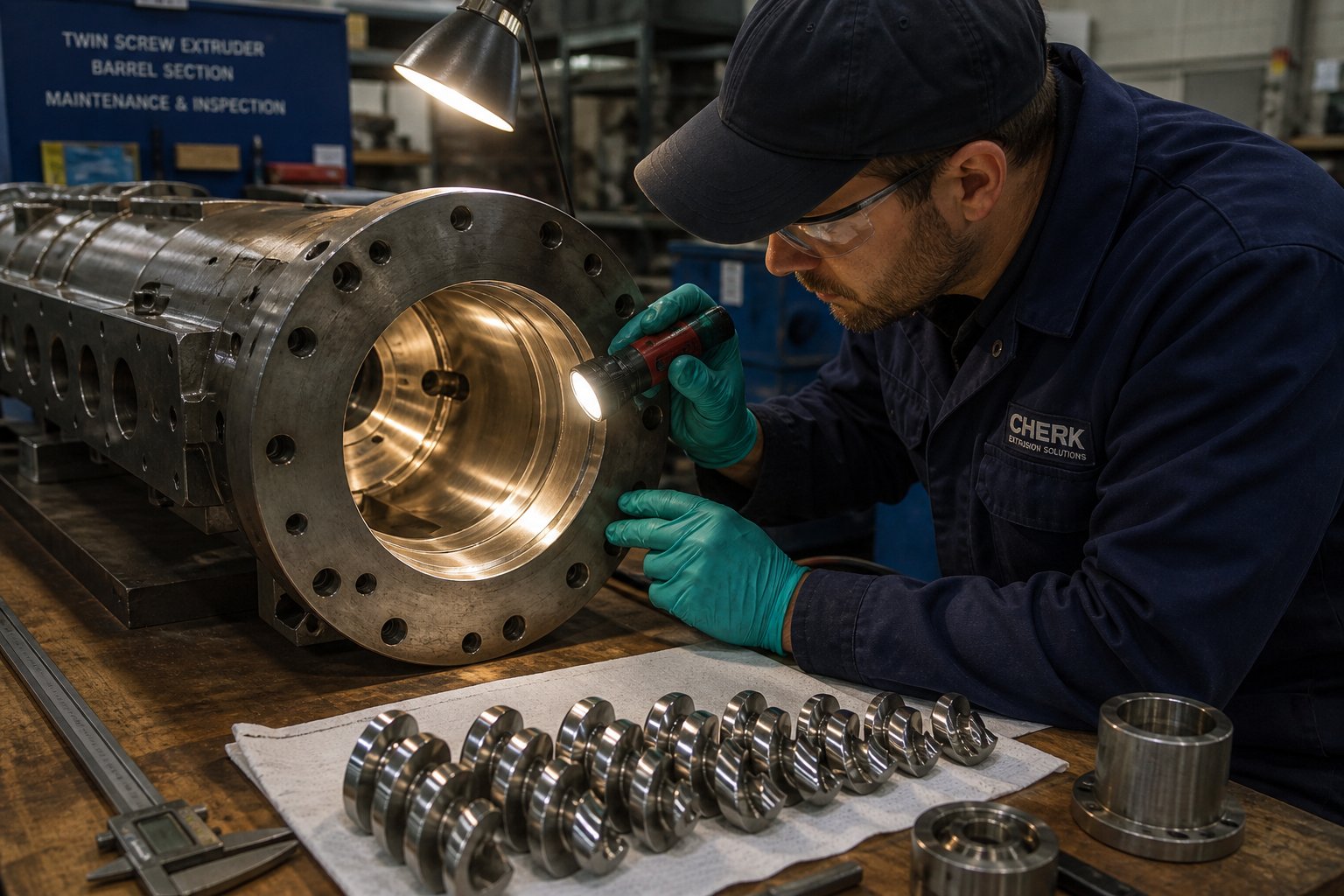
A twin screw extruder granulator is a precision machine operating under brutal conditions - high temperatures, high pressures, and constant contact with materials that may be abrasive, corrosive, or both. Without a disciplined maintenance program, performance degrades gradually and often invisibly until product quality drops below specification or a catastrophic failure forces an unplanned shutdown.
Inspection schedules form the foundation of any maintenance program. Industry maintenance guidelines recommend inspecting screw elements and barrel bore surfaces after every production campaign - or at fixed intervals for continuous operations. Key indicators include:
- Visible wear on screw flight tips, particularly on kneading block disc edges where abrasive contact is most intense
- Increased clearance between screw tips and barrel wall, measurable with feeler gauges or bore micrometers
- Scratches, scoring, or corrosion pitting on barrel liner surfaces
- Changes in screw element outer diameter, indicating progressive material loss
Why does wear matter so much? Because mixing efficiency in a co-rotating twin screw extruder depends directly on the tight clearances between screw and barrel surfaces. As those clearances open up, material leaks over screw flight tips instead of being pushed forward. Shear intensity in the overflight gap drops. Kneading blocks lose their dispersive mixing effectiveness. The practical consequences are measurable: energy consumption rises to compensate for reduced mechanical efficiency, granule size distribution widens, and throughput capacity decreases.
Cleaning validation adds another layer of complexity for regulated industries. Pharmaceutical and food-grade operations require documented proof that product-contact surfaces are free of residual material between production campaigns. Twin screw extruders present unique cleaning challenges because of their complex geometry - screw element transitions, kneading block surfaces, and barrel bore corners all trap material differently. Establishing validated cleaning procedures with defined acceptance criteria (swab testing, rinse analysis, or visual inspection) is not optional in these environments; it is a regulatory requirement that directly impacts equipment design decisions like surface finish quality and material compatibility.
Barrel and screw replacement is the maintenance task with the highest impact on long-term processing stability. Worn components do not just reduce efficiency - they compromise the entire granulation process. A plastic granules twin screw extruder factory running glass-fiber-filled compounds at high throughput may need screw element replacement every 2,000 to 4,000 operating hours, depending on filler loading and abrasiveness. Barrel liners typically last longer but eventually require reboring or complete replacement when dimensional tolerances drift beyond acceptable limits.
Sourcing reliable replacement parallel twin screw barrels from specialized manufacturers ensures that new components match the original dimensional accuracy and metallurgical specifications. Poor-quality replacements with inconsistent bore tolerances or inferior alloy composition introduce new problems - uneven wear patterns, hot spots from poor thermal conductivity, and premature failure that disrupts production schedules. For compounding producers, masterbatch manufacturers, recycling plants, and pelletizing operations processing abrasive or corrosive formulations, NANHAIYA's parallel twin screw barrels offer replacement and custom solutions engineered specifically for high-wear processing applications. Their barrels support stable conveying and mixing performance across the demanding throughput ranges these operations require, helping processors maintain the tight clearances and metallurgical consistency that granule quality depends on.
Changeover procedures between product runs also deserve attention. Purging the extruder with a cleaning compound or transition resin removes residual material from screw channels and barrel walls. Incomplete purging leads to cross-contamination - color specks in white masterbatch, off-spec granule composition in pharmaceutical production, or degraded material causing gel formation in film-grade compounds. Documenting purge quantities, times, and verification methods for each product transition creates a repeatable protocol that minimizes waste while ensuring clean changeovers.
Troubleshooting Common Granulation Problems
Even well-maintained equipment encounters process upsets. The difference between an experienced operator and a novice is not that one avoids problems - it is that one diagnoses and corrects them systematically rather than reacting to symptoms. The table below maps the most common twin screw granulation issues to their likely root causes and corrective actions:
| Problem | Likely Root Causes | Corrective Actions |
|---|---|---|
| Torque surges or spikes | Feed rate fluctuations; bridging in hopper; over-granulation creating dense plugs in kneading zone; worn screw elements reducing conveying efficiency | Verify feeder calibration and hopper flow; reduce liquid-to-solid ratio; check screw elements for wear; add conveying elements between kneading blocks to relieve pressure buildup |
| Inconsistent granule size distribution | Variable feed rate from volumetric feeders; liquid binder pump pulsation; worn kneading block disc edges reducing shear intensity; barrel temperature drift | Switch to gravimetric feeding for tighter mass flow control; inspect and replace binder pump components; measure kneading block dimensions against OEM specifications; recalibrate barrel zone heaters and thermocouples |
| Over-granulation or paste formation | Excessive liquid-to-solid ratio; liquid injection port positioned too close to kneading zone; too many kneading blocks creating excessive residence time in wet zone | Reduce binder flow rate incrementally; relocate liquid injection upstream to allow pre-distribution before kneading; replace one kneading block section with conveying elements to shorten wet processing time |
| Material build-up on screws or barrel | Sticky formulation adhering to metal surfaces; insufficient self-wiping from worn screw clearances; barrel temperature too low causing incomplete melting or premature binder activation | Increase barrel temperature in affected zones; inspect and replace worn screw elements to restore self-wiping clearances; apply surface coatings to screw elements if formulation adhesion persists |
| Barrel temperature deviations | Faulty heater bands or cartridge heaters; thermocouple drift or failure; cooling water flow obstruction; excessive shear heating from aggressive screw configuration | Test heater resistance and replace failed units; recalibrate or replace thermocouples; flush cooling channels and verify water flow rates; reduce kneading intensity or increase screw speed to reduce fill level |
| Excessive fines in product | Insufficient binder distribution; low liquid-to-solid ratio; kneading block stagger angle too aggressive causing granule breakage rather than agglomeration | Increase binder flow rate; switch to narrower stagger angle kneading blocks (30 degrees instead of 60 or 90); add distributive mixing elements downstream to consolidate loosely bound particles |
| Vent port flooding or material escape | Inadequate pressure seal upstream of vent; excessive fill level in vent zone; vent port blockage from dried material | Add or lengthen reverse element upstream of vent to strengthen pressure seal; reduce overall feed rate; clean vent port and install vent stuffer if material tends to accumulate at the opening |
A pattern emerges across these issues: many root causes trace back to either feed system inconsistency or component wear. Investing in high-quality gravimetric feeders and maintaining tight screw-to-barrel clearances eliminates the two most common sources of process variability. Monitoring torque trends over time is particularly valuable - a gradual upward drift in baseline torque often signals progressive wear or material accumulation long before product quality visibly deteriorates.
Addressing process problems reactively is expensive. Addressing them proactively - through SME-guided scale-up, scheduled component inspection, and data-driven troubleshooting - is what separates a twin screw extruder for PC granule production in Guangzhou from one that delivers consistent output year after year regardless of location. The equipment platform is capable of remarkable performance, but only when operational discipline matches engineering sophistication.
Reliable operation, though, starts well before the first production run. It begins with selecting the right equipment configuration and component specifications for your specific application - decisions that determine not just initial performance but total cost of ownership over the machine's lifetime.
Choosing the Right Twin Screw Extruder Granulator and Components
You have worked through granulation modes, screw element design, scale-up methodology, and maintenance strategy. Each of those topics feeds into one final decision: which specific equipment configuration and component specifications will deliver the performance, longevity, and total cost of ownership your application demands? Getting this decision right saves years of frustration. Getting it wrong means chasing process instability, premature wear, and granule quality problems that no amount of parameter optimization can fix.
Matching Equipment to Your Application Requirements
Selecting a twin screw extruder granulator is not about finding the cheapest option or the most impressive specification sheet. It is about matching a specific set of design parameters to your material, your throughput target, and your quality requirements. Searching for the best plastic granules twin screw extruder price without first defining these parameters is like shopping for shoes by price alone - you might save money, but you will not enjoy the walk.
Here are the evaluation criteria that matter most, ranked by their impact on processing outcomes:
- Co-rotating vs. counter-rotating configuration - Co-rotating intermeshing designs suit the vast majority of granulation and compounding applications due to superior self-wiping, high shear capability, and modular flexibility. Counter-rotating configurations earn consideration only when processing thermally sensitive materials like rigid PVC that demand low-shear, high-pressure conditions.
- L/D ratio (length-to-diameter) - Determines how many functional zones fit along the barrel. Pharmaceutical granulation typically uses L/D ratios of 25:1 to 40:1. Plastics compounding with multiple additive feeding points, venting stages, and intensive mixing zones often requires 40:1 to 52:1. Reactive extrusion or devolatilization-heavy processes may push beyond 56:1.
- Barrel diameter - Directly controls throughput capacity. Production capacity scales approximately with the square of the screw diameter, making this the single most important sizing parameter. A 35-millimeter machine suits pilot work and small-volume production; a 92-millimeter platform handles industrial-scale compounding at hundreds of kilograms per hour.
- Screw speed range - Wider ranges provide flexibility across different materials and formulations. Co-rotating extruders typically operate between 200 and 1,200 RPM, though some high-speed designs exceed 1,800 RPM. Ensure the drive system delivers adequate torque across the full speed range, not just at peak RPM.
- Torque density - Measured in Newton-meters per cubic centimeter of screw cross-section, torque density determines how much energy the machine can transfer into the material. High-viscosity polymers and heavily filled compounds demand higher torque density. Modern high-performance extruders target 11.3 to 18 Nm/cm3, a substantial improvement over older platforms.
- Material-of-construction requirements - Pharma-grade applications need electropolished stainless steel with surface finishes below Ra 0.8 micrometers, full traceability documentation, and validated cleaning compatibility. Food-grade equipment requires AISI 304 or 316L stainless steel meeting hygienic design standards. Plastics compounding demands wear-resistant alloys - bimetallic barrel liners and nitrided or coated screws - to survive contact with abrasive fillers.
- Temperature control capability - Engineering plastic compounding requires barrel heating up to 350 to 400 degrees Celsius with zone-by-zone accuracy better than plus or minus 2 degrees Celsius. Pharmaceutical wet granulation operates at much lower temperatures but still benefits from precise thermal management to prevent premature binder activation.
- Venting and feeding flexibility - Count the number of barrel ports available for liquid injection, side feeding, and vacuum venting. Complex formulations with multiple additive streams and devolatilization stages need more ports than simple two-component blends.
A common pitfall, especially among processors evaluating a twin screw extruder for PC granule production or similar engineering polymer applications, is prioritizing upfront equipment cost over lifetime processing economics. A cheap plastic granules twin screw extruder price may look attractive on a purchase order, but if the machine lacks adequate torque density for polycarbonate's high melt viscosity or uses inferior barrel metallurgy that wears out within months of glass-fiber processing, the real cost - in downtime, scrap, and replacement parts - far exceeds the initial savings.
Selecting Quality Barrel and Screw Components
The barrel and screw are the heart of any twin screw extruder granulator. Every granule your machine produces is shaped by the interaction between material and metal inside these components. Their dimensional accuracy determines mixing efficiency. Their metallurgy determines service life. Their surface condition determines product purity. No other component has a greater influence on processing stability, granule consistency, and total cost of ownership.
Metallurgical selection follows a straightforward logic tied to application severity:
- Nitrided steel - The baseline choice for general-purpose processing. Gas nitriding creates a hard surface layer (typically 900 to 1,100 HV) that resists moderate abrasion from unfilled polymers and standard pharmaceutical excipients. Suitable for applications without highly abrasive fillers or corrosive chemistries.
- Bimetallic barrel liners - For abrasive applications like glass-fiber-filled compounds, mineral-loaded masterbatch, and recycled plastics containing contaminants. A nickel-rich boron alloy liner with tungsten carbide or molybdenum-boride hard phases provides wear resistance several times greater than nitrided steel. Industry case studies demonstrate that upgrading to bimetallic construction can extend equipment lifespan by 30 percent or more while improving production efficiency by 20 percent - a return on investment that pays for itself within the first year of operation.
- Corrosion-resistant alloys - Essential for reactive formulations, PVC processing (which releases hydrochloric acid), fluoropolymer handling (hydrofluoric acid exposure), and certain chemical blending operations. Materials like Colmonoy 56 or Colmonoy 83 applied to screw surfaces, combined with corrosion-resistant barrel liners, prevent the rapid metal deterioration that standard steels suffer under acid attack.
Beyond metallurgy, dimensional precision matters enormously. Engineering plastic compounding guidelines emphasize that parallelism of screw shafts directly affects processing quality and component wear. Barrel bore straightness, concentricity, and surface finish all contribute to consistent screw-to-barrel clearance - and that clearance determines whether material flows predictably through each processing zone or leaks backward over screw flights, degrading mixing efficiency.
Thermal expansion compatibility is another factor that deserves more attention than it typically receives. During high-temperature processing, mismatched coefficients of thermal expansion between barrel and screw materials can cause gap variations that lead to metal-on-metal contact, thread damage, and even seizure. Matching CTE values between barrel liners and screw base materials, and maintaining clearances around 1/1000 of the screw diameter, prevents these costly failures.
For processors running demanding plastics compounding operations - whether producing glass-fiber-reinforced PA6 pellets, calcium carbonate masterbatch, or recycled HDPE granules - component sourcing decisions have outsized impact on operational uptime. NANHAIYA's parallel twin screw barrels are engineered specifically for these high-wear applications, offering replacement and custom barrel solutions with the dimensional accuracy and metallurgical consistency that stable conveying and mixing performance require. For compounding producers, masterbatch manufacturers, recycling plants, and pelletizing operations evaluating barrel replacements or custom configurations, their product line provides a practical starting point for matching barrel specifications to specific processing demands.
Successful twin screw granulation depends on matching three things to your specific material and application: the right machine configuration, precisely controlled process parameters, and barrel and screw components built with the metallurgical quality and dimensional accuracy your process demands. Get any one of these wrong, and neither the other two nor the best process engineering in the world can fully compensate.
Whether you are granulating pharmaceutical excipients under FDA continuous manufacturing guidelines, compounding engineering polymers with 50 percent glass fiber loading, or pelletizing recycled plastics for a circular economy supply chain, the selection framework remains the same. Define your material requirements first. Match equipment configuration and component metallurgy to those requirements second. Validate performance through systematic scale-up trials third. And maintain component quality over the machine's lifetime through disciplined inspection, timely replacement, and sourcing from suppliers whose engineering standards match your processing ambitions.
The twin screw extruder granulator is not just a machine - it is a platform whose performance ceiling is set by the quality of the decisions made before it ever turns on.
Frequently Asked Questions About Twin Screw Extruder Granulators
1. What is the difference between a single screw and twin screw extruder granulator?
A twin screw extruder granulator uses two intermeshing screws that create a self-wiping action, preventing material stagnation and delivering far superior mixing intensity compared to single-screw systems. The dual-screw design generates higher shear forces for thorough dispersion of additives, fillers, or liquid binders. Additionally, twin screw systems feature a modular barrel-and-screw architecture, allowing operators to swap individual screw elements - such as replacing conveying sections with kneading blocks - to fine-tune performance for each specific application. Single-screw extruders lack this self-wiping geometry and modular flexibility, making them less suitable for complex granulation tasks requiring precise control over granule size, density, and composition.
2. What are the main granulation modes in a twin screw extruder?
Twin screw extruders support three distinct granulation modes: wet, melt, and dry. Wet granulation injects liquid binder into a powder bed within the kneading zone, forming agglomerates through capillary and viscous forces - widely used in pharmaceutical tablet manufacturing. Melt granulation uses thermoplastic binders that soften under barrel heat and screw shear, eliminating the need for downstream drying equipment. Dry granulation relies purely on mechanical compaction forces from the screw elements, making it ideal for moisture-sensitive or heat-labile materials. Each mode uses the same modular screw platform but requires different binder chemistries, downstream equipment, and process parameter optimization.
3. How do you choose between co-rotating and counter-rotating twin screw extruders?
Co-rotating twin screw extruders are the preferred choice for most granulation and compounding applications because they deliver excellent self-wiping action, high shear mixing, and broad modular flexibility at screw speeds from 200 to over 1,800 RPM. They handle everything from pharmaceutical continuous granulation to glass-fiber-filled engineering plastic compounding. Counter-rotating extruders generate lower shear through a calendering-style compression at the intermesh zone, operating at 30 to 150 RPM. They are best suited for thermally sensitive materials like rigid PVC, where gentle processing prevents degradation. Your decision should be guided primarily by the thermal sensitivity and shear tolerance of your material.
4. Why is specific mechanical energy (SME) important during twin screw extruder scale-up?
Specific mechanical energy measures the energy per unit mass transferred from the motor through the screws into the material, and it is the most reliable parameter for maintaining equivalent processing conditions across different extruder sizes. Industry case studies have shown that simply copying RPM and temperature settings from a lab-scale machine to a production extruder can cause SME to drop by as much as 69 percent, resulting in unmixed or under-processed product. Successful scale-up requires calculating SME at the lab scale and using that value as a benchmark target at each subsequent scale. If SME drops during scale-up, adjustments to screw speed, kneading block configuration, or barrel temperature profile are needed to restore the energy balance and maintain granule quality.
5. How often should twin screw extruder barrel and screw components be replaced?
Replacement frequency depends heavily on the abrasiveness of materials being processed. For highly abrasive applications like glass-fiber-filled compounds, screw elements may need replacement every 2,000 to 4,000 operating hours. Barrel liners typically last longer but must be rebored or replaced when dimensional tolerances drift beyond specification. Regular inspection after each production campaign - checking screw flight tip wear, barrel bore clearance, and surface scoring - is essential for catching degradation early. Sourcing replacement barrels from specialized manufacturers like NANHAIYA (https://www.nhyscrews.com/products/parallel-twin-screw-barrel) ensures dimensional accuracy and metallurgical consistency, which are critical for maintaining mixing efficiency and granule quality over time.
Written by
Nanhaiya Technical Team
Zhoushan Nanhaiya Plastic Machinery Co., Ltd.
The Nanhaiya technical team supports screw and barrel manufacturing projects through application review, technical communication, custom manufacturing coordination, and production and quality control.
Discuss Your Application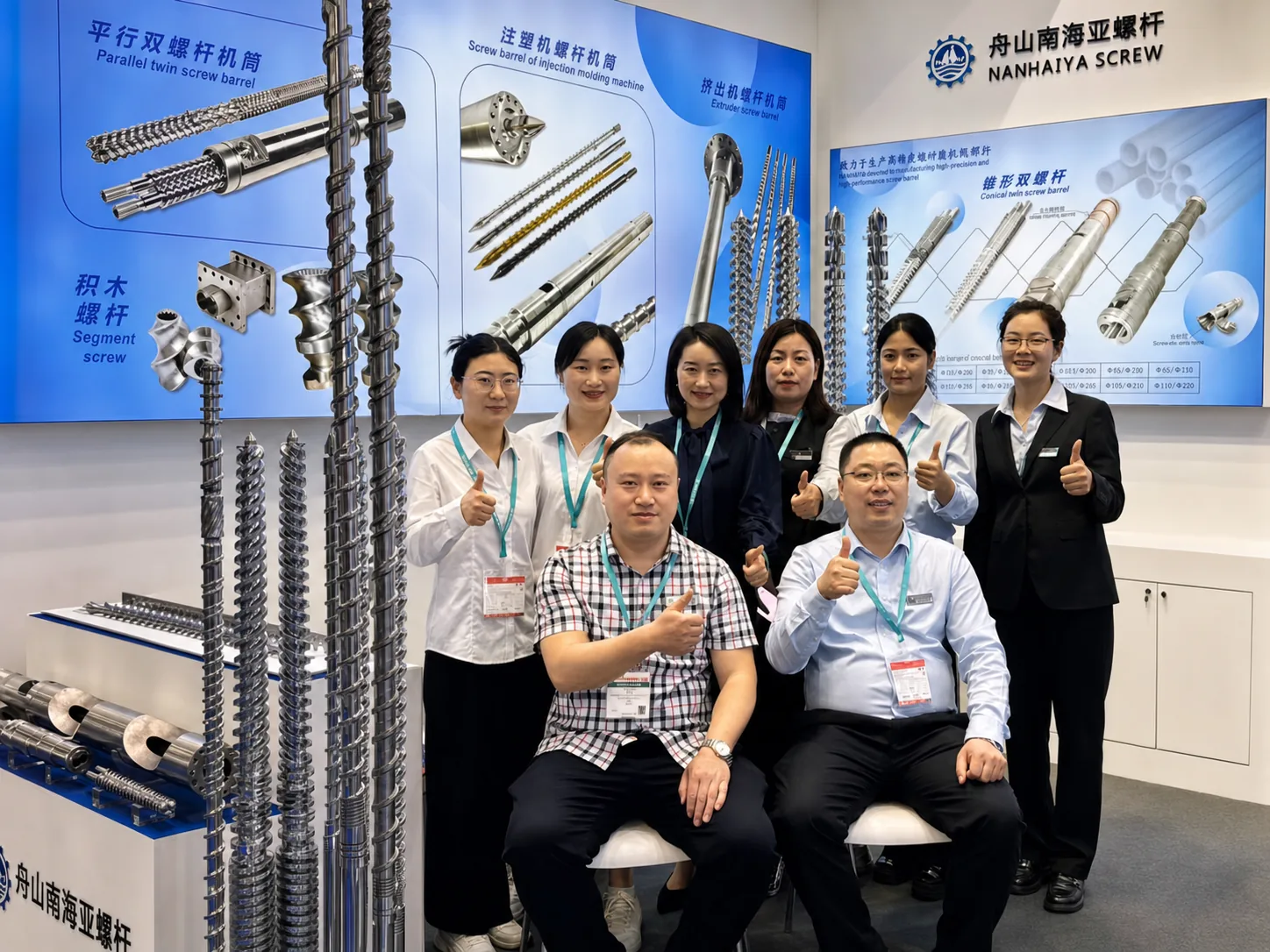
Related Articles
More insights on screw barrel technology and plastics processing.
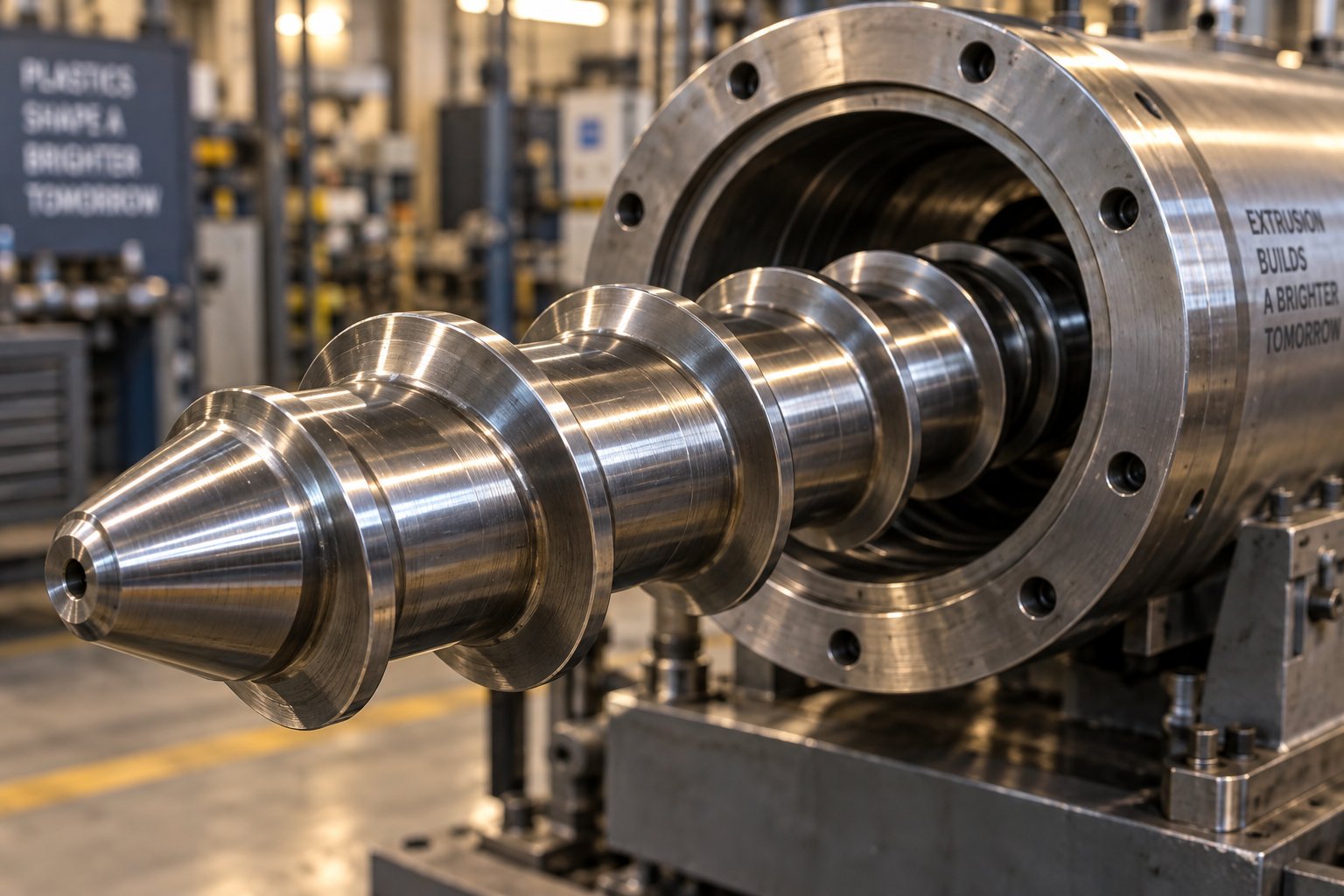
What Nobody Tells You About Screw Barrel For Plastic Machine Design
Oct 10, 2026
Learn how screw barrel for plastic machine design affects melt quality, throughput, and wear life. Covers geometry, resin matching, troubleshooting, and sourcing.
Read Article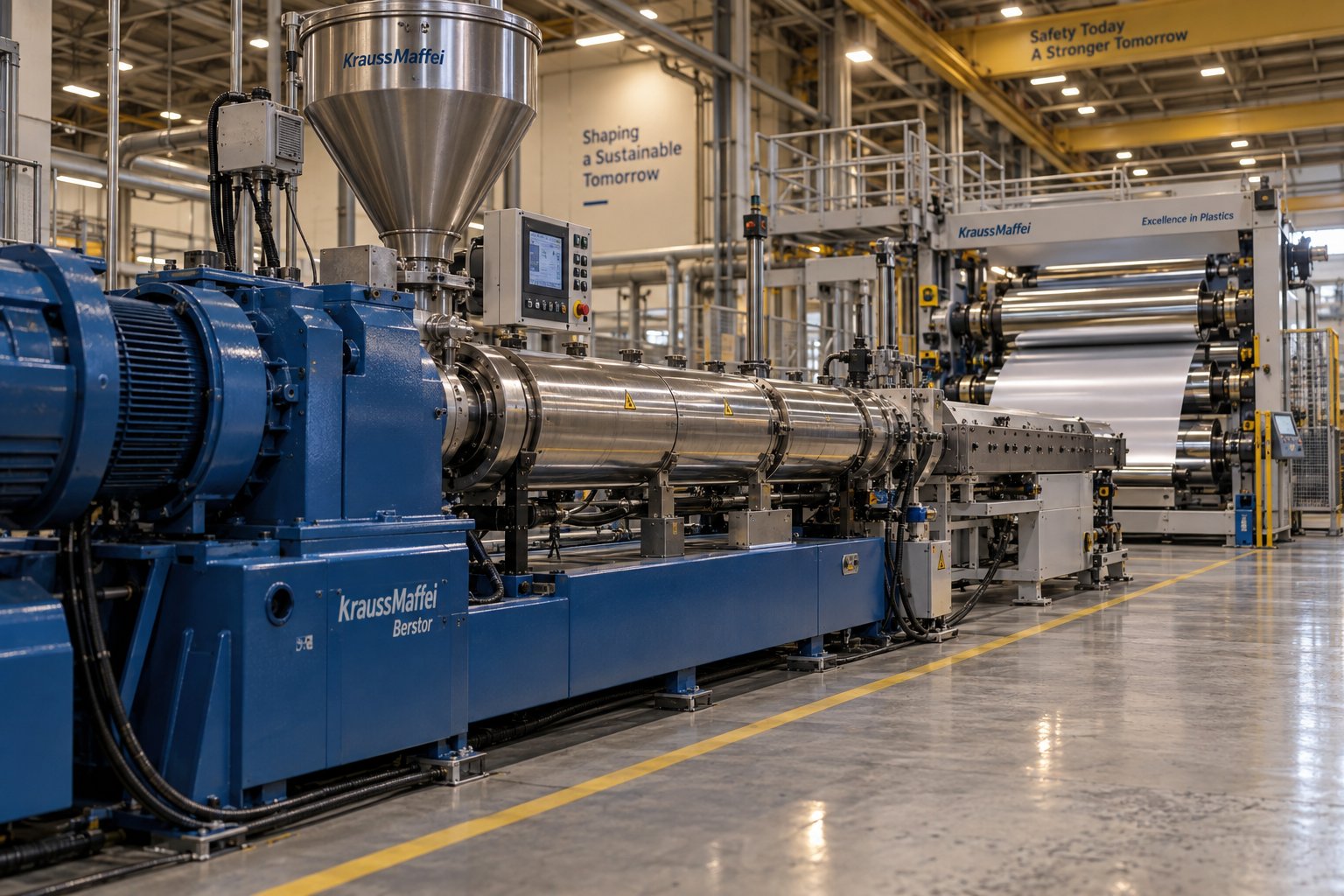
Single Screw Extruder for Sheet: Stop Guessing, Start Specifying
Oct 9, 2026
Learn how to specify a single screw extruder for sheet production. Covers screw geometry, resin-specific processing, troubleshooting, and maintenance best practices.
Read Article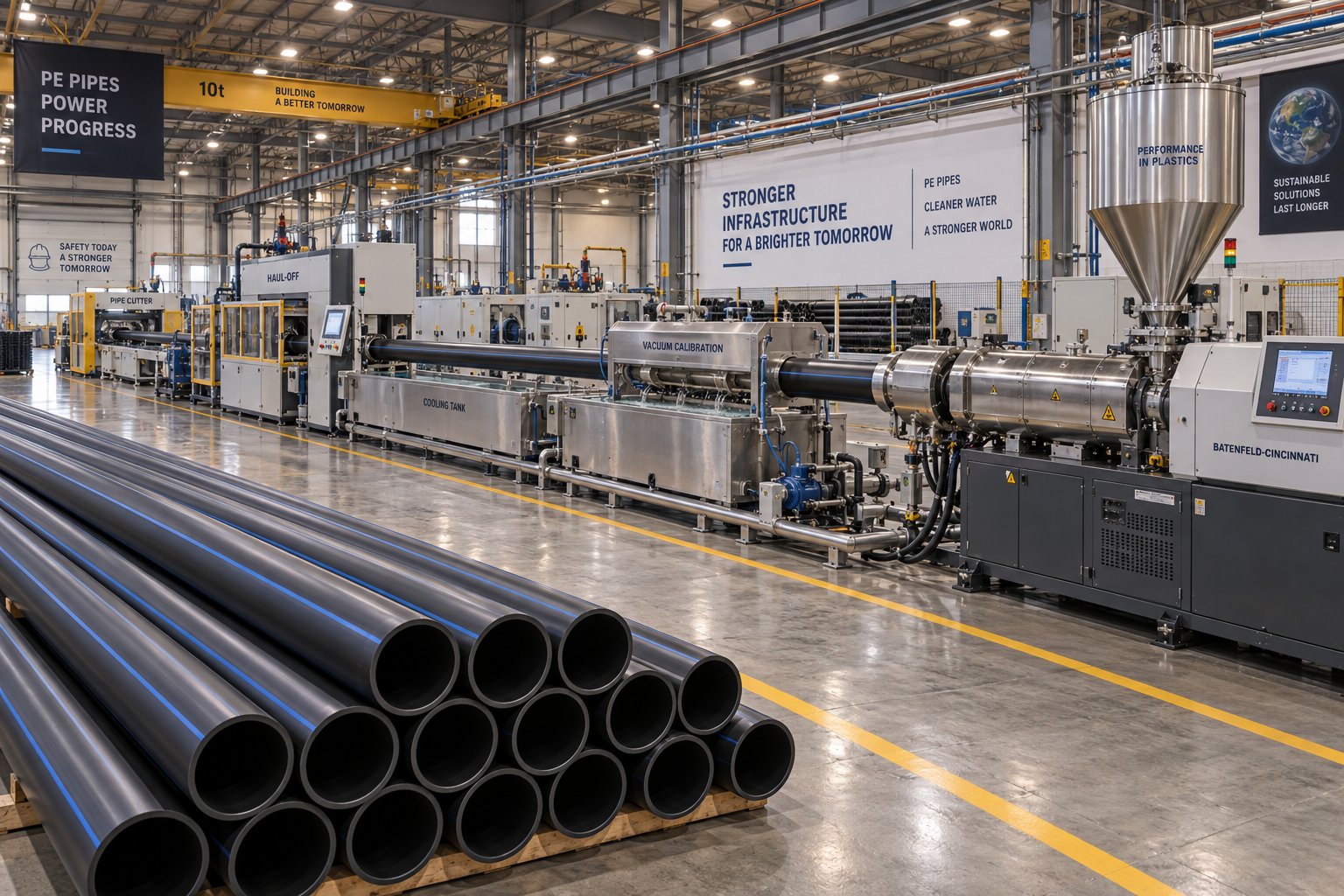
PE Pipe Extruder Machine: What Datasheets Won't Tell You
Oct 9, 2026
Learn how a PE pipe extruder machine works, key specs explained, material grade selection, maintenance tips, and buyer guidance beyond the datasheet.
Read ArticleLooking for something else?
Search by material, symptom or product and jump straight to the relevant page.
These are navigation suggestions based on keyword matching — not a quotation, not a delivery commitment, and not a substitute for engineering review. Final specification is confirmed by our engineers against your drawings and processed material.
Need help with screw barrel selection?
Share your machine model, processed material and application. Our team can help with pricing and technical support.