

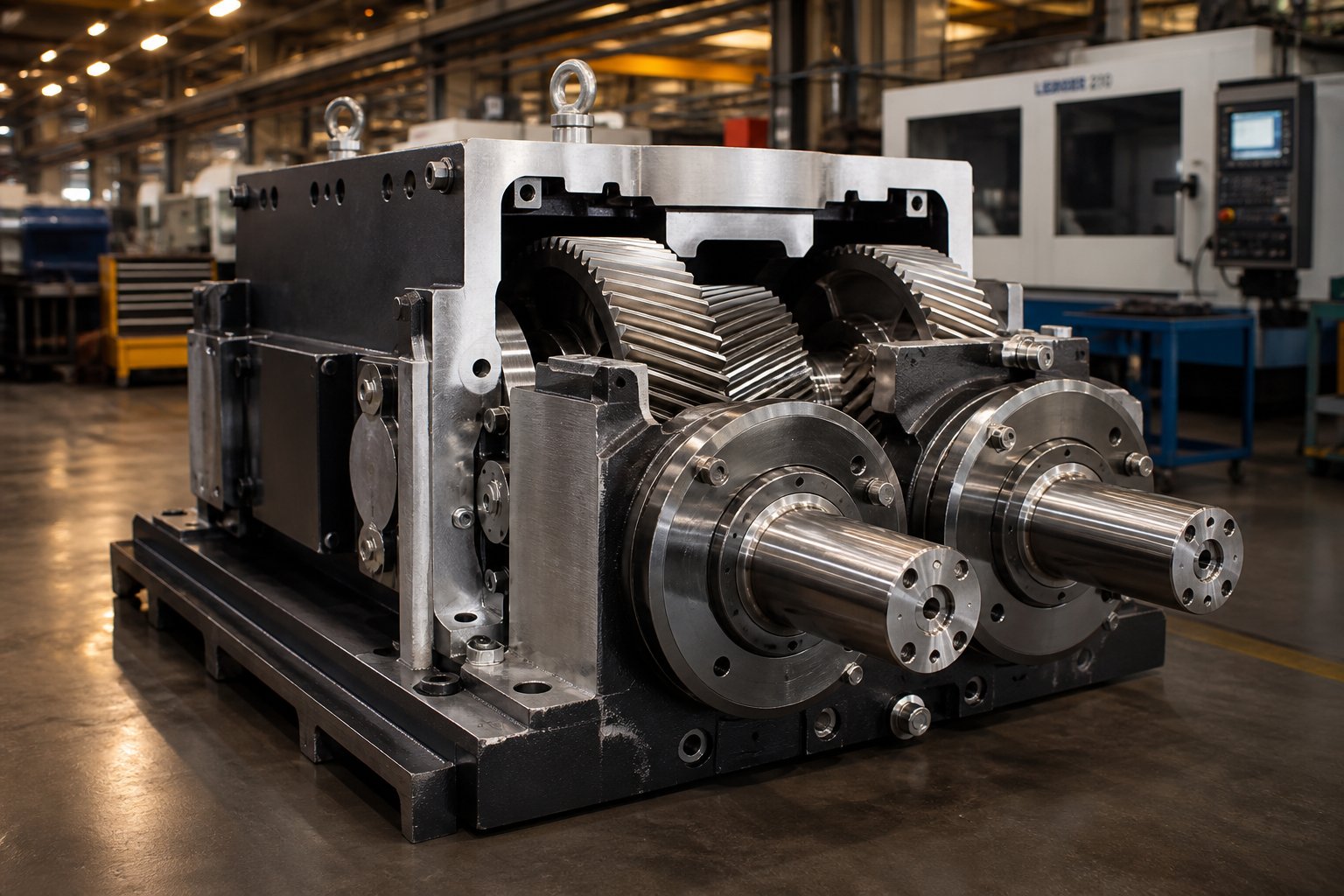
What a Twin Screw Extruder Gearbox Does and Why the Manufacturer Matters
Imagine a single electric motor spinning at high speed. Your twin screw extruder needs that energy split evenly across two parallel shafts, slowed down dramatically, and amplified into massive torque — all while keeping both screws perfectly synchronized down to a fraction of a degree. That is exactly what a twin screw extruder gearbox does. It is a precision-engineered power transmission unit that takes one motor input and converts it into two synchronized, parallel output shafts driving intermeshing screws at controlled speed and torque. Without it, the entire extrusion line is dead in the water.
This article is built as a technical buyer's advisor — the kind of practical guide a seasoned procurement engineer would hand a colleague who is evaluating twin screw extruder gearbox manufacturers for the first time. No fluff, no brand hype. Just the engineering fundamentals, evaluation frameworks, and sourcing insights you need to make a decision you won't regret.
Defining the Twin Screw Extruder Gearbox
A gearbox for twin screw extruder applications performs four essential functions simultaneously. First, it provides speed reduction — converting a motor's high-speed, low-torque output into the low-speed, high-torque rotation the screws demand. Second, it handles torque splitting, dividing the incoming power into two output shafts that must carry equal loads. Third, it maintains shaft synchronization, ensuring co-rotating or counter-rotating screws stay in precise angular alignment. Even a small timing error under load can cause screw interference, leading to catastrophic damage to both the screws and the gearbox itself. Fourth, it integrates thrust bearing systems that absorb the enormous axial forces generated as material pressurizes against the die. In twin screw extruders, these back pressure forces can range from 2.5 kN for small machines to 3,400 kN for large production units — loads that the gearbox must handle continuously without fatigue.
Modern high-performance twin screw extruder gearboxes deliver torque densities reaching 18 Nm/cm³, a figure that represents a 30% leap over previous generations. This higher torque density enables processors to run materials — like glass-filled polyamide and reinforced polypropylene — that were previously torque-limited.
Why Manufacturer Selection Is a Strategic Decision
Here is what makes choosing among twin screw extruder gearbox manufacturers so consequential: gearbox quality directly controls line uptime, energy consumption, maintenance burden, and total extrusion output. A poorly designed or undersized gearbox doesn't just fail — it triggers a cascade of secondary damage. Thrust bearing collapse can push the screw axially into the barrel, destroying components far more expensive than the bearing itself. Gear tooth pitting contaminates lubricating oil, which accelerates bearing wear, which generates more debris, which degrades seals — until the entire unit requires replacement. Field data consistently shows that this kind of failure cascade can transform a minor, repairable issue into a total gearbox loss within 6 to 18 months.
The gearbox typically represents only a small fraction of total extrusion line cost — yet it accounts for a disproportionate share of unplanned downtime when it fails. Industry analysis shows the direct cost of a replacement gearbox represents just 15 to 25 percent of the total cost impact; the remaining 75 to 85 percent comes from lost production, emergency procurement premiums, labor, and downstream disruption.
That economic reality turns manufacturer selection from a routine procurement transaction into a strategic decision. The difference between a well-engineered gearbox and a marginal one isn't visible on a spec sheet at first glance — it reveals itself over years of operation, in maintenance logs, energy bills, and production records. The chapters ahead will give you the technical knowledge and evaluation tools to tell the two apart before you sign a purchase order.
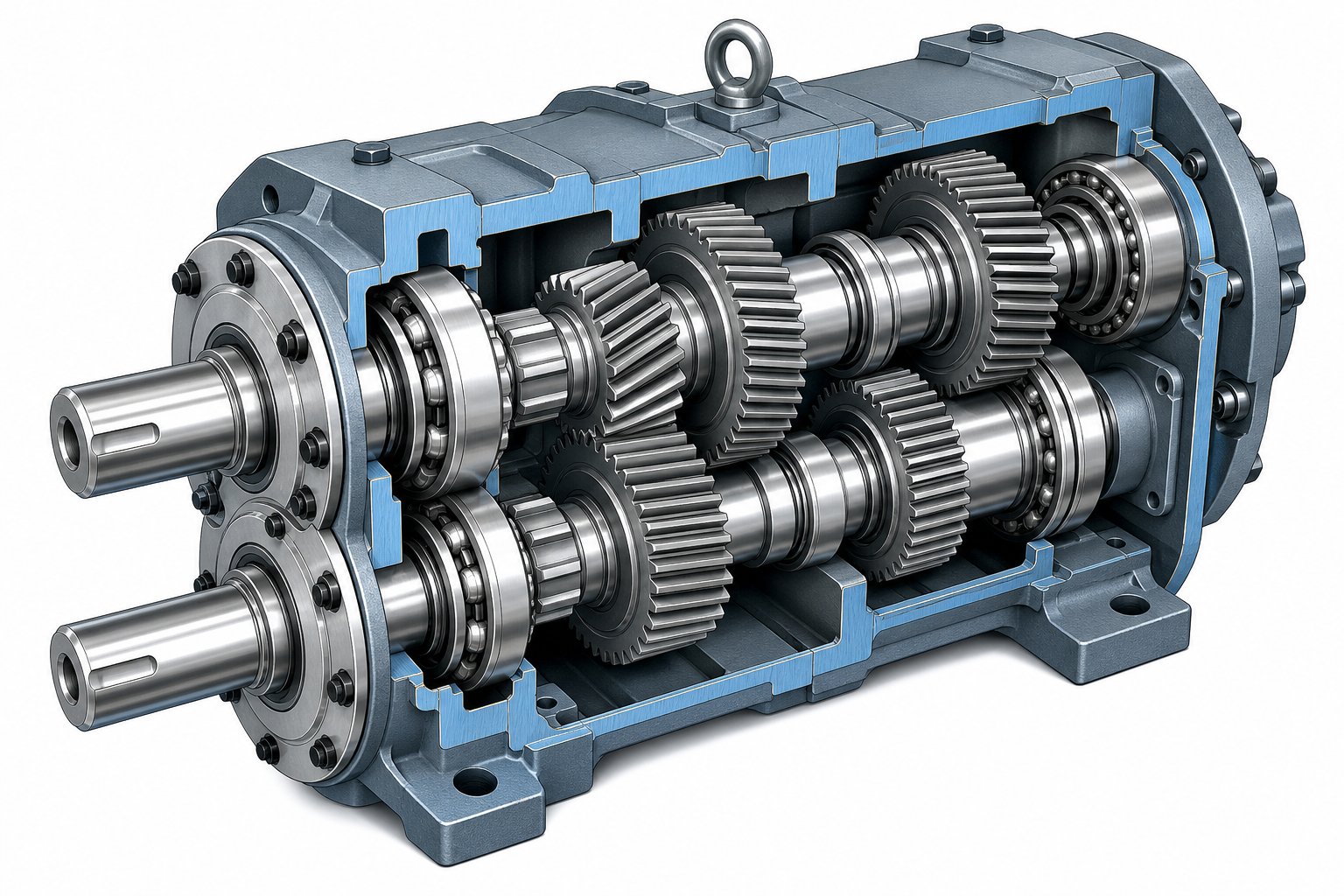
Co-Rotating vs Counter-Rotating Gearbox Configurations Explained
Every twin screw extruder gearbox splits torque across two output shafts — but the direction those shafts rotate, and the geometry connecting them, creates fundamentally different engineering challenges inside the gearbox housing. Buyers who treat all configurations as interchangeable risk selecting a manufacturer whose real expertise doesn't match their application. The mechanical distinctions matter, and they directly shape which suppliers belong on your shortlist.
Co-Rotating Gearbox Architecture
In a co-rotating twin screw extruder gearbox, both output shafts spin in the same direction. Sounds simple enough — until you consider what that demands from the gear train. The two shafts sit extremely close together, separated by a center distance dictated by the screw diameter. That tight spacing forces the gearbox designer to fit synchronized gear pairs, radial bearings, thrust bearings, and lubrication channels into a very compact envelope. Manufacturing tolerances for center distance and gear mesh timing become critical: even minor deviations create uneven load sharing between the two shafts, accelerating wear on one side and shortening overall gearbox life.
This is the configuration you'll encounter most frequently. The co-rotating, fully intermeshing design dominates applications in polymer compounding, reactive extrusion, and masterbatch production because of its excellent self-wiping behavior and intense distributive mixing. Co-rotating screws forcibly hand material from one flight to the next at the intermeshing zone, producing narrow residence time distributions that are essential for thermally sensitive formulations. The gearbox parallel twin screw extruder arrangement — where both shafts run parallel at equal diameters — is the standard layout for these machines, making it the most common configuration buyers will evaluate when sourcing from manufacturers.
From the gearbox manufacturer's perspective, the challenge is clear: deliver maximum torque density within minimal shaft spacing. That is why co-rotating gearboxes push the limits of gear material quality, bearing selection, and housing rigidity more aggressively than almost any other industrial gearbox application.
Counter-Rotating and Conical Gearbox Configurations
Counter-rotating gearboxes reverse the problem. Here, the two output shafts spin in opposite directions, which changes the force vectors acting on the gear train and bearings entirely. The opposing rotation creates a calendering effect at the screw intermeshing zone — material is drawn inward and compressed between the screws rather than handed off in a spiral path. This gentler processing action makes counter-rotating designs the preferred choice for materials with low thermal stability, most notably rigid PVC.
The conical twin screw extruder gearbox introduces yet another layer of mechanical complexity. Instead of parallel shafts, the output shafts converge at an angle, matching tapered screws that have a larger diameter at the feed end and a smaller diameter at the discharge. This geometry creates a natural compression gradient along the screw length. From the gearbox side, converging shafts generate different axial and radial force vectors on the bearings compared to parallel configurations. The upside? The wider spacing at the large end of the taper gives more room for robust bearings and larger gear modules, enabling higher torque transmission in a more forgiving mechanical layout.
You'll find counter-rotating and conical gearboxes anchoring PVC pipe lines, profile extrusion systems, and sheet production where low-shear, high-fill processing at controlled temperatures is essential. The gearbox design philosophy here prioritizes stable torque delivery at lower speeds over the extreme torque density demanded by co-rotating compounding gearboxes.
How Configuration Affects Manufacturer Selection
Here's the practical takeaway: not all twin screw extruder gearbox manufacturers offer both co-rotating and counter-rotating configurations, and even fewer have deep expertise in conical designs. Some companies have built their reputation engineering high torque-density co-rotating gearboxes for compounding lines, while others specialize in robust counter-rotating and conical units for rigid PVC processing. The engineering challenges, tolerances, bearing arrangements, and gear geometries differ enough that specialization matters.
Before engaging any manufacturer, verify that they have specific experience — and ideally, reference installations — in your required configuration. A supplier with an impressive track record in co-rotating compounding gearboxes may not have the design heritage to deliver a reliable conical unit, and vice versa. Ask for application-specific references, not just general gearbox credentials.
| Dimension | Co-Rotating (Parallel) | Counter-Rotating (Parallel) | Conical |
|---|---|---|---|
| Typical Applications | Compounding, reactive extrusion, masterbatch, polymer alloys | PVC pipe, sheet, profile extrusion | PVC pipe, profile extrusion, medium-capacity lines |
| Shaft Arrangement | Parallel, same-direction rotation, tight center distance | Parallel, opposing rotation | Converging axes at an angle, opposing rotation |
| Torque Distribution | Equal split across closely spaced shafts; high torque density required | Equal split; lower speed, higher fill operation | Equal split; wider spacing at feed end allows larger bearings and gear modules |
| Manufacturing Complexity | Highest — tight tolerances for center distance, gear mesh timing, and compact bearing arrangements | Moderate — opposing rotation simplifies some gear mesh requirements | Moderate to high — angled bores and tapered geometry add machining complexity |
| Key Gearbox Design Challenge | Maximizing torque density within minimal shaft spacing | Stable low-speed torque delivery with robust thrust bearing support | Accommodating converging shaft angles and asymmetric force vectors |
Configuration isn't just a technical detail — it's a filter that narrows your manufacturer search from the start. Matching a supplier's proven design heritage to your specific shaft arrangement and application requirements eliminates one of the most common sourcing mistakes: choosing a manufacturer based on price or brand recognition alone, only to discover their engineering strength lies in a configuration you don't need. The real differentiator, though, goes deeper than configuration — it sits in the materials those gears are made from and the quality standards the manufacturer holds itself to.
Gear Material Selection and Quality Standards That Separate Top Manufacturers
Two gearboxes can look identical on a spec sheet — same torque rating, same center distance, same reduction ratio — and yet deliver radically different service lives. The gap almost always traces back to two factors buyers rarely dig into: what the gears are actually made of, and how precisely they were manufactured. These details reveal a manufacturer's engineering philosophy more honestly than any sales brochure or twin screw extruder gearbox PDF ever will.
Gear Material Grades and Their Impact on Performance
The gears inside a twin screw extruder gearbox endure punishing conditions — continuous high-torque loading, cyclic stress reversals, and elevated operating temperatures from process heat and gear mesh friction. The material chosen for those gears determines how long they survive.
Three main approaches dominate twin screw extruder gearbox design:
Case-hardened alloy steel is the gold standard for high-performance gearboxes. Alloys like 20MnCr5 — a chromium-manganese case-hardening steel widely referenced in gear research — undergo a carburizing process that infuses carbon into the surface layer, creating an extremely hard case (typically 58-63 HRC) over a tough, ductile core. This combination resists surface pitting while absorbing shock loads without brittle fracture. Research at the Technical University of Munich has demonstrated that optimized case-hardening processes using this alloy can achieve surface hardness values exceeding 720 HV, with case-hardening depths carefully tuned to balance bending strength and contact fatigue resistance.
Carburized and carbonitrided steel takes this approach further by introducing both carbon and nitrogen into the surface layer during heat treatment. The addition of nitrogen stabilizes retained austenite in the case, which — counterintuitively — can improve pitting resistance. The same FZG research showed that carbonitrided variants with finely distributed precipitations achieved up to 36% higher tooth root bending strength and nearly 50% longer pitting life compared to conventionally carburized reference gears. Forward-thinking gearbox manufacturers leveraging these advanced heat-treatment routes produce gears with measurably superior fatigue performance.
Nitrided steel offers a different trade-off. Nitriding diffuses nitrogen into the gear surface at lower temperatures, producing a hard surface layer without the dimensional distortion associated with carburizing. The resulting surface hardness is excellent, but the hardened case depth is typically shallower — making nitrided gears better suited for moderate-load gearboxes where dimensional precision after heat treatment is paramount and extreme contact pressures are not the primary concern.
Here's why this matters for buyer evaluation: a twin screw extruder gearbox factory that specifies premium case-hardening alloys and invests in controlled atmosphere or low-pressure carburizing furnaces is making a fundamentally different bet on product longevity than one sourcing commodity-grade steel and outsourcing heat treatment to the lowest bidder. The material grade selection reflects whether a manufacturer designs for minimum acceptable performance or for extended service life under the most demanding process conditions you'll encounter.
Certification and Gear Quality Standards to Verify
Material is only half the story. A perfectly chosen alloy, improperly machined, still produces a gear that runs loud, vibrates excessively, and wears out prematurely. That's where gear quality standards come in — and understanding them gives procurement engineers a powerful lens for evaluating manufacturers.
Three major standards systems govern gear accuracy worldwide: AGMA, DIN, and ISO. Each measures essentially the same physical characteristics — tooth profile accuracy, pitch variation, lead deviation, runout, and surface finish — but uses different grading scales. AGMA quality classes run from Q3 to Q15, with higher numbers indicating greater precision. DIN 3962/3963 and ISO 1328 both use grades 1 through 12, where lower numbers mean tighter tolerances. This inverted scale catches buyers off guard: a DIN Grade 5 gear is significantly more precise than a DIN Grade 8.
Why do these grades matter for your extrusion line? Higher gear quality grades translate directly into:
Quieter operation — precise tooth profiles mesh smoothly, reducing transmission error that drives noise. Lower vibration — tighter pitch and profile tolerances minimize the periodic excitation forces that shake bearings and housings. Reduced heat generation — better surface finish and more accurate tooth contact patterns distribute load evenly, cutting friction losses. Longer bearing life — lower vibration and more consistent load transmission reduce the dynamic loads that bearings must absorb, extending their fatigue life significantly.
When evaluating twin screw extruder gearbox manufacturers, you should request specific documentation that proves — rather than just claims — their quality level. Here's what to ask for:
- ISO 9001 quality management certification — verifies systematic quality control across the manufacturing process
- AGMA gear quality class documentation — confirms the actual measured accuracy class of finished gears, not just the target
- DIN 3962/3963 gear accuracy reports — provides detailed inspection data on tooth profile, pitch, and helix deviations
- Material test certificates (EN 10204 3.1 or equivalent) — traces the steel grade, chemical composition, and mechanical properties back to the mill
- Heat treatment records — documents carburizing or nitriding parameters, case depth measurements, and surface hardness verification
Requesting gear quality documentation and material traceability certificates is one of the fastest ways to distinguish serious manufacturers from assemblers who source gears from third parties without full quality traceability. A manufacturer confident in their process will provide this data readily; one who deflects or delays is telling you something important.
These certifications and inspection reports aren't just paperwork exercises. They form the quality backbone that separates a gearbox engineered for a decade of reliable service from one that starts showing wear patterns within its first two years. And when wear does appear — as it eventually will in any mechanical system — the specific form it takes tells an equally revealing story about the manufacturer that built the unit.
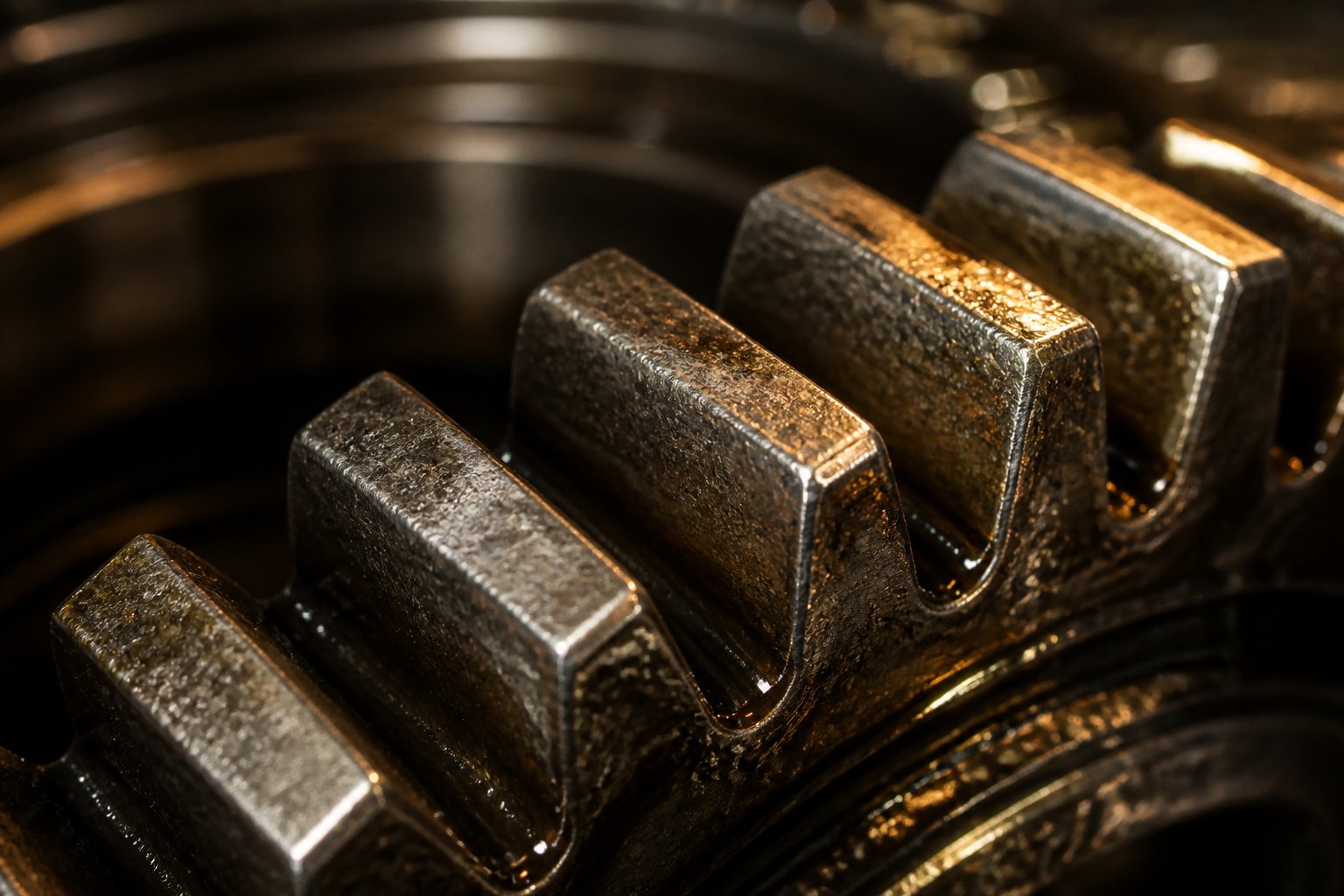
Common Gearbox Failure Modes and What They Reveal About Manufacturer Quality
A twin screw gearbox for extruder applications doesn't just fail randomly. It fails in predictable patterns — patterns that trace directly back to design decisions made by the manufacturer long before the unit reached your plant floor. Understanding the most common failure modes gives you something more valuable than troubleshooting knowledge: it gives you an evaluation tool. When you know how gearboxes break, you know exactly what questions to ask the companies building them.
The three failure categories below account for the overwhelming majority of premature gearbox shutdowns in twin screw extrusion. Each one reveals specific engineering choices — good or bad — embedded in the gearbox design.
Gear Tooth Wear and Pitting Failures
Picture the gear mesh zone inside a running gearbox. Every time two teeth engage, an intense Hertzian contact pressure concentrates across a narrow strip on the tooth flank. In a well-designed unit, a full elastohydrodynamic oil film separates those surfaces, distributing stress and preventing metal-to-metal contact. Over millions of cycles, even under ideal conditions, cyclic subsurface shear stress initiates tiny fatigue cracks just below the tooth surface. These cracks eventually connect to the surface, and small metal particles detach — leaving behind shallow, hemispherical pits. This is micropitting, and in its early stages it appears as a matte, grey-frosted texture on the tooth flanks.
Left unchecked, micropitting progresses into destructive pitting or spalling — where pits coalesce, significant tooth material is lost, and the gear pair rapidly deteriorates. The metallic debris shed during this process contaminates the lubricating oil, accelerating wear across every other component in the gearbox. What started as a surface fatigue issue on one gear pair becomes a system-wide contamination problem within months.
So what separates a manufacturer whose gearboxes resist pitting from one whose units develop it prematurely? Three design decisions matter most:
Tooth profile modifications. Better manufacturers apply calculated tip relief and crowning to their gear teeth. These micro-geometry corrections — sometimes measured in single-digit microns — redistribute the contact stress away from the vulnerable tooth tip and edges, concentrating load in the center of the flank where the oil film is most stable. A manufacturer running CNC gear grinding capable of achieving AGMA 12-13 quality levels can execute these modifications with the precision required. A manufacturer relying on hobbed-only gears without post-heat-treatment grinding simply cannot achieve the same surface finish or profile accuracy — and the pitting performance of their gearboxes will reflect that gap.
Gear contact area optimization. Insufficient contact area means the same transmitted torque concentrates over a smaller zone, pushing surface stress above the material's fatigue limit far sooner. Manufacturers who invest in contact pattern verification during assembly — checking the actual load-bearing footprint of each gear pair — catch this before the unit ships. Those who don't leave you to discover the problem through premature wear.
Lubrication system design. A splash-lubricated gearbox relies on gears dipping into an oil bath and flinging lubricant to other components. At sustained high loads and speeds typical of twin screw extruder gearboxes and motors running compounding lines, splash lubrication often cannot maintain adequate film thickness at every mesh point. Forced lubrication systems — with dedicated pumps, filtration circuits, and oil cooling — deliver clean, temperature-controlled oil directly to each gear mesh and bearing. The manufacturer's choice between these two approaches tells you volumes about how they expect the gearbox to perform under real production conditions.
Bearing Failure and Thermal Degradation
If gear tooth pitting is the slow-burn failure that develops over many months, thrust bearing failure is the sudden, catastrophic event that can destroy far more than just the gearbox itself. The thrust bearings in a twin parallel screw extruder gearbox carry an extraordinary burden: they must absorb the entire axial reaction force generated by screw pressure against the die — continuously, for thousands of operating hours. In large extruders, these axial loads can reach several hundred kilonewtons without letup.
When a thrust bearing fails, the consequences escalate fast. The output shaft loses its axial position, and the extruder screw begins migrating toward the barrel under the full force of process pressure. Screw flights contact the barrel bore. Both components — often far more expensive than the bearing itself — are destroyed. Industry data shows that the direct replacement cost of a failed gearbox accounts for only 15 to 25 percent of the total cost impact; lost production, emergency procurement premiums, secondary component damage, and recovery labor make up the rest.
What causes thrust bearings to fail prematurely? Three manufacturer-driven factors dominate:
Undersized bearing arrangements. Some manufacturers select thrust bearings based on nominal load ratings without adequate safety factors for the dynamic, surge-prone loading that twin screw extrusion generates. Process upsets, cold starts with solidified material in the barrel, and running high-viscosity formulations all create axial load spikes that exceed steady-state calculations. Manufacturers who specify oversized thrust bearing arrangements with generous load margins build in resilience against these real-world conditions. Those who size to the theoretical minimum leave no margin for the unpredictable.
Inadequate oil cooling capacity. Sustained high-torque operation generates significant heat through gear mesh friction and bearing rolling contact. Oil temperature climbs. As temperature rises, oil viscosity drops, the lubricating film thins, and the very bearings and gears that depend on that film begin operating in a boundary lubrication regime — metal-to-metal contact becomes increasingly likely. This thermal degradation is progressive and self-reinforcing: higher friction generates more heat, which further degrades the oil, which increases friction further. A manufacturer who integrates properly sized oil coolers — whether water-cooled heat exchangers or air-blast coolers — into the gearbox design acknowledges this reality. One who leaves cooling as an afterthought or optional accessory is betting that your process will never push the gearbox hard enough to matter. That's a bet you don't want taken on your behalf.
Bearing quality and sourcing. The brand and specification of the bearings inside the gearbox matter enormously. Premium bearing manufacturers control steel cleanliness — minimizing non-metallic inclusions that act as fatigue crack initiation sites in raceways. A gearbox built with bearings from a recognized precision manufacturer will statistically outlast one assembled with unbranded alternatives, even if the catalog load rating looks identical on paper.
Misalignment and Vibration Issues
Vibration is the silent destroyer in any gearbox. You might not hear it clearly over production floor noise, but accelerometers don't lie — and elevated vibration levels shorten the life of every component inside the housing. In twin screw extruder gearboxes, vibration originates from three sources that are largely determined by the manufacturer's design and machining capability.
Housing rigidity. The gearbox housing is the structural backbone that maintains shaft alignment under load. A housing that flexes — even slightly — under the combined weight and torque of loaded gear trains allows shaft centerlines to shift relative to each other. That shift changes gear mesh geometry dynamically during operation, creating periodic load variations that manifest as vibration. Manufacturers who design heavy, ribbed cast iron or fabricated steel housings with generous wall sections produce inherently stiffer platforms. Lightweight housings designed to minimize material cost sacrifice this rigidity.
Bore alignment precision. The bearing bores machined into the housing determine where each shaft sits — and therefore how accurately the gears mesh. Manufacturers with in-house CNC boring capabilities can machine all critical bores in a single setup on a large horizontal boring mill, ensuring that bore centerlines maintain their designed relationship to within microns. Manufacturers who outsource housing machining, or who perform bore operations across multiple setups, introduce cumulative positioning errors that show up as gear mesh misalignment, uneven tooth loading, and elevated vibration from the first day of operation.
Output shaft concentricity. The output shafts must run true — any eccentricity translates directly into once-per-revolution vibration that loads bearings cyclically and fatigues shaft seals. CNC gear grinding after heat treatment corrects the dimensional distortion introduced by hardening, restoring shaft and gear geometry to drawing tolerances. Manufacturers who skip this step — shipping gears in their as-hardened condition — accept the distortion as-is, and the vibration signature of their gearboxes reflects that compromise.
Taken together, these three factors explain why manufacturers with comprehensive in-house machining — CNC boring, gear cutting, heat treatment, and finish grinding under one roof — consistently produce gearboxes with lower vibration levels and longer service lives than those assembling outsourced components into a housing.
When evaluating any twin screw extruder gearbox manufacturer, use the following checklist of design features as a litmus test for their approach to failure prevention. The presence or absence of these features tells you whether the manufacturer engineered for long-term reliability or optimized for the lowest possible production cost:
- Forced lubrication system with a dedicated pump, pressure gauge, and oil distribution to each gear mesh and bearing — not just splash lubrication from an oil bath
- Integrated oil cooler (water-cooled heat exchanger or air-blast cooler) sized for sustained full-load operation, not offered as an optional extra
- Oversized thrust bearing arrangement with load ratings that provide meaningful safety margin above the calculated maximum axial force from screw pressure
- Inspection ports or covers that allow visual assessment of gear tooth condition without full gearbox disassembly — a simple feature that enables early detection of pitting or wear
- Vibration monitoring provisions — machined, flat sensor mounting pads on the housing at defined positions, enabling consistent accelerometer placement for trending vibration data over time
- Oil sampling ports positioned for clean, representative sampling to support periodic spectrometric oil analysis — the single most powerful early-warning tool for detecting gear and bearing wear
- Magnetic drain plug to capture ferrous wear particles between oil changes, providing a quick visual indicator of internal component condition
A manufacturer who builds all of these features into their standard gearbox design has already answered the most important question a buyer can ask: did they design this unit expecting it to be monitored, maintained, and kept running for a decade or more? Or did they design it to be as inexpensive as possible at the point of sale, leaving the true cost to reveal itself in your maintenance budget over the years ahead? The answer to that question should shape not just which manufacturer you select, but how you structure the entire evaluation process — a framework the next section lays out step by step.
How to Select a Twin Screw Extruder Gearbox Manufacturer: A Step-by-Step Framework
Knowing what makes a gearbox fail — and what design features prevent those failures — puts you ahead of most buyers. But knowledge alone doesn't close the gap between a shortlist of potential suppliers and a confident purchase decision. You need a repeatable, structured process that evaluates each manufacturer against the same criteria, in the right sequence, so you're comparing apples to apples rather than reacting to whoever sends the slickest proposal first.
The framework below is built for procurement engineers and plant managers evaluating twin screw extruder gearbox manufacturers for the first time — or for the second time, after a previous selection didn't work out. It moves from internal preparation through technical vetting to the after-sales factors that determine whether a supplier relationship holds up over years of operation.
Step One — Define Technical Requirements Before Contacting Manufacturers
This sounds obvious. It isn't. A surprising number of gearbox inquiries go out with vague specifications — "we need a gearbox for a 65mm twin screw extruder" — leaving the manufacturer to guess at torque, speed, shaft configuration, and a dozen other variables. The result? You receive quotes that aren't comparable because each supplier filled in the blanks differently. Worse, you risk being quoted a solution that doesn't actually fit your application, and you won't realize it until commissioning.
Before you contact a single supplier, document the following specifications clearly:
- Required torque per shaft — not just the nominal value, but the peak torque your process may demand during startup, cold material processing, or high-viscosity formulations
- Screw speed range — minimum, maximum, and the typical operating speed for your primary product
- Center distance — dictated by your screw diameter and determines the entire internal geometry of the gearbox
- Shaft configuration — co-rotating or counter-rotating, parallel or conical, and the direction of output shaft rotation relative to the motor input
- Axial thrust load — calculated from your die pressure and screw geometry, since this defines the thrust bearing sizing requirement
- Mounting arrangement and dimensional envelope — especially critical for retrofit projects where the gearbox must fit an existing machine footprint
- Any non-standard requirements — unusual gear ratios, special output shaft interfaces, atypical ambient temperatures, or integration with specific monitoring systems
A complete specification document accomplishes two things simultaneously. It forces your team to articulate exactly what the application demands before price negotiations cloud the picture. And it gives every supplier the same baseline, so you can evaluate responses on equal footing. As experienced sourcing teams consistently note, approaching manufacturers without clear specifications leads to misquoted solutions and weeks of back-and-forth that could have been avoided entirely. Investing a few days in rigorous spec development saves months downstream.
One additional tip: include your service factor calculation in the specification package. A customized twin screw extruder gearbox inquiry that shows the buyer understands service factors immediately changes the dynamic — the manufacturer knows they're dealing with a technically informed customer, which tends to produce more honest and detailed responses.
Step Two — Assess Manufacturing Capability and Design Engineering Depth
Specs in hand, you're ready to engage suppliers. This is where twin screw extruder gearbox supplier evaluation gets real — and where most buyers don't dig deep enough. The central question at this stage isn't "can this company sell me a gearbox?" It's "does this company actually design and build gearboxes, or do they assemble purchased components and put their name on the housing?"
The distinction matters enormously. A manufacturer with genuine in-house capability controls the entire quality chain: gear cutting, gear grinding, heat treatment, housing machining, bearing fitting, and final assembly. Each of these steps feeds into the next. When one company owns the full process, they can optimize across boundaries — adjusting heat treatment parameters to complement their specific gear steel, tuning grinding processes to achieve the exact surface finish their tooth profile modification requires, and machining all housing bores in a single setup for perfect alignment.
An assembler, by contrast, sources gears from one supplier, housings from another, and bearings from a distributor. Each component may meet its individual specification, but the system-level integration — the precise fit between gear, bearing, and housing that determines vibration, noise, and longevity — is never fully controlled.
Here's how to evaluate this during the selection process:
- Request a manufacturing capability overview — ask specifically about in-house gear cutting equipment (hobbing machines, shaping machines), gear grinding machines (profile or generating grinders), heat treatment furnaces (carburizing, nitriding), and CNC boring/milling for housings
- Ask whether the company employs gear design engineers — not just sales engineers or application engineers, but specialists who can perform tooth contact analysis, FEA on gear teeth and housing structures, and bearing life calculations using actual process load data
- Verify custom engineering capability — can the manufacturer design a gearbox around your specific center distance, torque requirement, and mounting constraints? Or do they only offer fixed catalog models where you must adapt your machine to their dimensions?
- Request gear inspection reports from recent production — actual AGMA or DIN gear quality measurements, not just a statement that they "meet" a certain quality class. A factory that controls its quality process will share CMM data, gear inspection charts, and material certificates without hesitation
If a manufacturer resists sharing production details or deflects technical questions to a sales team that can't answer them, that reluctance is itself a data point. Companies confident in their engineering depth welcome technical scrutiny — it's precisely what differentiates them from competitors who can only compete on price.
For retrofit or non-standard applications, the ability to deliver a customized twin screw extruder gearbox becomes a hard requirement rather than a nice-to-have. Verify that the manufacturer has completed similar custom projects before, and ask for reference contacts from those specific installations.
Step Three — Evaluate After-Sales Support and Spare Parts Programs
This is where many procurement evaluations fall short. You've confirmed the technical specs. You've verified manufacturing capability. The quotes look competitive. So you sign the purchase order — and discover eighteen months later, when a seal needs replacing or a bearing shows early wear, that the manufacturer's after-sales support is slow, expensive, or effectively nonexistent.
A twin screw extruder gearbox is a long-life capital component. You're not buying a consumable — you're entering a relationship that will span a decade or more of operation, maintenance, and eventual overhaul. The manufacturer's willingness and ability to support the gearbox through its full service life is just as important as the initial build quality.
Evaluate these after-sales factors explicitly during the selection process:
- Field service availability — does the manufacturer have service engineers who can visit your plant for commissioning support, alignment checks, or failure analysis? What is the typical response time for urgent service requests?
- Spare parts lead times — how quickly can critical components like thrust bearings, gear sets, seals, and shafts be delivered? Are common spare parts held in stock, or manufactured to order with multi-month lead times?
- Gearbox rebuild capability — can the manufacturer perform a full teardown, inspection, and rebuild of their gearboxes? Do they offer exchange or refurbishment programs that minimize your downtime during a major overhaul?
- Technical documentation quality — do they provide comprehensive installation, operation, and maintenance manuals with clear lubrication specifications, recommended maintenance intervals, and troubleshooting guidance?
- Long-term parts availability commitment — will spare parts remain available for 10, 15, or 20 years after purchase? Or does the manufacturer discontinue support for older models, leaving you stranded?
Request references specifically from customers who have needed after-sales support — not just from those who bought a gearbox and never had an issue. How a manufacturer responds when something goes wrong tells you far more about the partnership than how they behave during the sales process.
The Complete Evaluation Framework
The table below consolidates this three-step methodology into a single evaluation matrix you can use to score and compare manufacturers side by side. For each criterion, it identifies what to request from the supplier and the red flags that should trigger caution or disqualification.
| Evaluation Criterion | What to Request from the Manufacturer | Red Flags to Watch For |
|---|---|---|
| Technical Capability | Detailed torque, speed, and thrust bearing calculations for your specific application; FEA or tooth contact analysis results; evidence of custom design engineering | Only offers catalog models with no willingness to adapt; sales team cannot answer technical questions; no in-house design engineering staff |
| Manufacturing Depth | List of in-house equipment (gear cutting, grinding, heat treatment, CNC boring); factory tour or video walkthrough; sample gear inspection reports | Cannot identify specific machines used for gear grinding or heat treatment; outsources critical processes without full quality oversight; refuses factory access |
| Quality Systems and Certifications | ISO 9001 certificate; AGMA or DIN gear quality class documentation from actual production; material test certificates (EN 10204 3.1); heat treatment records | Certifications expired or pending renewal; cannot provide gear inspection data for recent production; no material traceability system |
| Reference Installations | Customer contacts operating gearboxes in your specific configuration and application; installed base data showing units with multiple years of service | Provides only generic testimonials; no references in your required configuration (co-rotating vs. counter-rotating); all references are from recent installations with no long-term track record |
| After-Sales and Spare Parts | Spare parts list with pricing and lead times; field service response time commitments; rebuild and overhaul program details; long-term parts availability policy | No published spare parts program; lead times exceeding 8-12 weeks for critical components; no field service capability; unwillingness to commit to long-term parts support |
| Delivery Performance | Standard lead times for catalog and custom models; on-time delivery rate data from existing customers; penalty or escalation mechanisms for delays | Vague delivery commitments; no willingness to include delivery milestones in the purchase agreement; history of delays reported by references |
| Pricing Transparency | Itemized quotation showing gearbox, accessories (coolers, filters, monitoring), documentation, and shipping separately; clear warranty terms and inclusions | Lump-sum pricing with no breakdown; warranty terms buried in fine print or unusually short; hidden costs for items that should be standard (installation manual, test report) |
Score each manufacturer against these criteria using a consistent rating scale — a simple 1-to-5 system works well — and weight the criteria according to your application's priorities. A critical production line running 24/7 on high-value compounding might weight after-sales support and reference installations heavily. A cost-sensitive project with standard specifications might give more weight to delivery performance and pricing transparency. The framework stays the same; the weighting adjusts to your reality.
One final note on how to select a twin screw extruder gearbox manufacturer effectively: resist the temptation to shortlist based on price before completing the technical and after-sales evaluation. A quote that looks attractive loses its appeal quickly when you discover the manufacturer can't support the unit in the field or doesn't stock the bearings your gearbox will eventually need. Price matters — but it only means something when the technical and support foundations are solid. And as it turns out, price itself varies dramatically depending on where in the world a manufacturer operates, which is exactly the landscape the next section maps out.
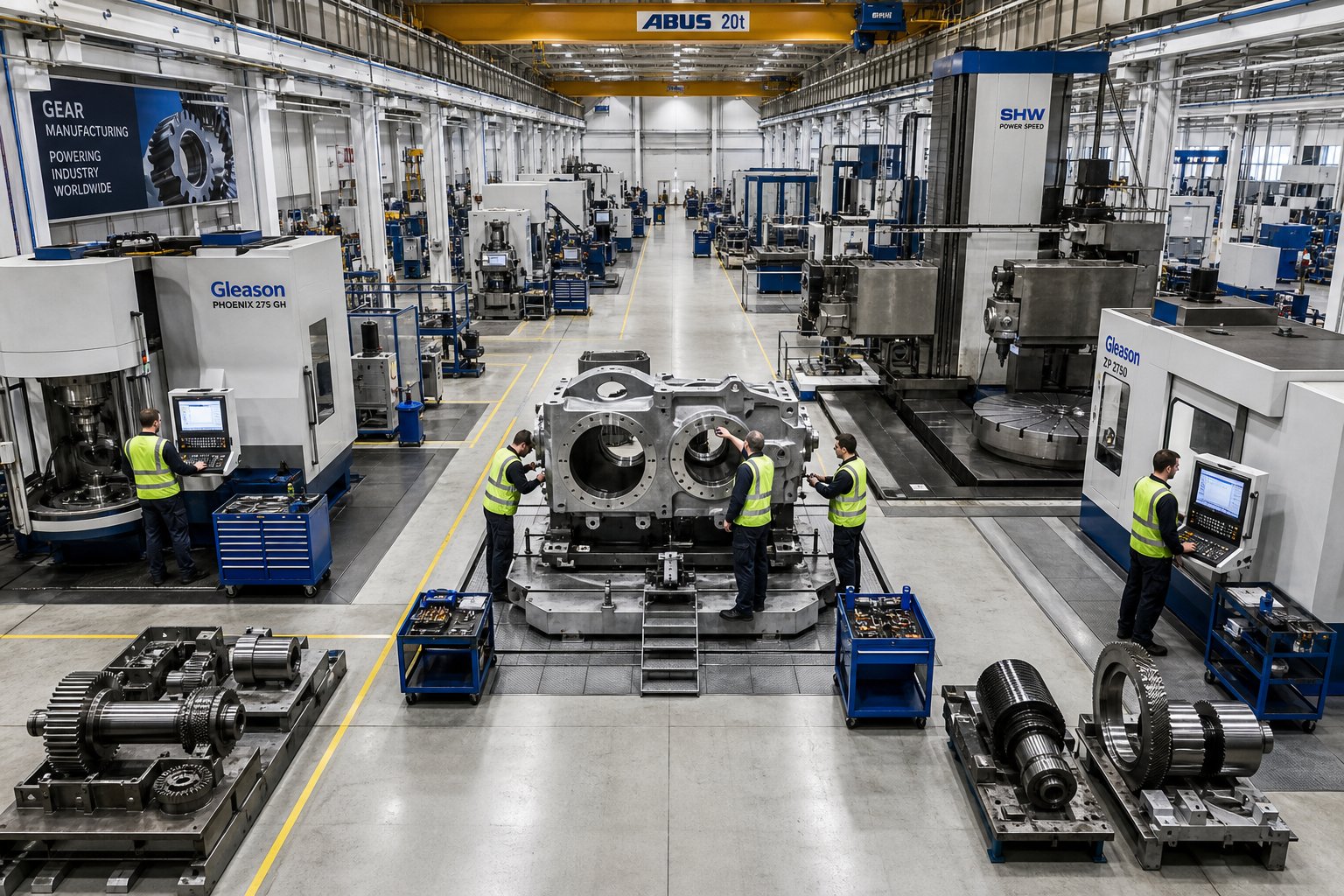
Global Manufacturing Landscape and Regional Sourcing Considerations
Geography shapes gearbox pricing — but it also shapes engineering philosophy, quality culture, lead times, and after-sales infrastructure. Two manufacturers quoting the same torque class can deliver fundamentally different products depending on whether the gearbox was designed in Stuttgart, machined in Jiangsu, or assembled in Pune. Understanding these regional differences isn't about declaring one country "better" than another. It's about matching a region's manufacturing strengths to the specific demands of your application, your budget, and your tolerance for risk.
The twin screw extruder gearbox manufacturing sector concentrates in three major regions, each with distinct capabilities and trade-offs that every procurement team should understand before issuing an RFQ.
European Manufacturers and Engineering Heritage
Germany and Italy remain the traditional epicenters of high-precision gearbox engineering. German manufacturers in particular — concentrated in industrial regions like Rhineland-Palatinate and North Rhine-Westphalia — bring decades of accumulated design heritage in power transmission technology. Companies like Flender (a Siemens company) have built global recognition in industrial drive systems, and their engineering DNA permeates the broader German gearbox manufacturing ecosystem. Italian manufacturers complement this landscape with strong capabilities in compact, high-torque-density designs, often serving the extrusion and converting machinery sectors.
What do European manufacturers typically bring to the table? Deep engineering resources — the kind of in-house gear design teams that perform finite element analysis on individual tooth profiles, optimize micro-geometry corrections for specific load cases, and specify case-hardening parameters tailored to each gear set. You'll find higher AGMA or DIN gear quality grades as standard, premium bearing brands specified by default, and extensive documentation packages that include full material traceability. Track records measured in decades of field service — not just a handful of installations — give buyers verifiable performance data for demanding applications.
The trade-offs are equally real. European gearboxes typically carry higher price points that reflect elevated labor costs, premium material sourcing, and rigorous quality overhead. Lead times can stretch to 12-16 weeks for standard models and longer for custom-engineered configurations. One representative case study from a mid-sized German manufacturer showed that direct import lead times to the US reached 16 weeks — a gap the company narrowed to 4-6 weeks only after establishing a dedicated US-based technical service center with local inventory. For buyers running critical, high-uptime production lines where a gearbox failure carries six-figure consequences, that premium pricing often represents the lowest-risk investment. For standard applications with tighter budgets, it may not.
Asian Manufacturing Hubs and Their Growing Capabilities
The landscape has shifted substantially over the past decade. China and India have moved well beyond their earlier reputations as sources of basic, price-driven gearbox production — though wide quality variation across suppliers in both countries means careful vetting remains essential.
China has emerged as the world's largest volume producer of industrial gearboxes, and the twin screw extruder segment has followed that trajectory. Chinese manufacturers — particularly those clustered in Jiangsu, Zhejiang, and Guangdong provinces — have invested heavily in modern CNC gear grinding equipment, controlled-atmosphere heat treatment furnaces, and quality management systems aligned with ISO 9001. A China twin screw extruder gearbox supplier operating at the top end of this market now delivers products that compete credibly on quality with mid-range European offerings, at significantly lower price points. The best Chinese manufacturers have recognized that price alone isn't enough to win and retain international customers. As documented in trade analysis of the sector, leading Jiangsu-based factories have invested in ISO 9001 and ISO 14001 certifications, implemented production tracking systems accessible to overseas buyers, and engaged third-party metallurgical testing with certificates provided to customers. One such manufacturer grew export revenue by 140% within three years, with EU and US markets accounting for 45% of total sales — a trajectory that reflects genuine capability, not just competitive pricing.
The challenge when sourcing a China twin screw extruder gearbox lies in the enormous quality spread across suppliers. The same province that houses a world-class manufacturer also hosts dozens of smaller operations assembling commodity components with minimal quality oversight. Without on-site audits or verified reference installations, distinguishing the two from a catalog or website is nearly impossible.
India occupies a different but equally interesting position. Twin screw extruder gearbox manufacturers in India — particularly those based in Pune, Ahmedabad, and the NCR industrial belt — serve a large and growing domestic plastics processing market while building export capability. Indian manufacturers tend to offer strong value in the mid-range segment. One illustrative example: a Pune-based gearbox manufacturer entered the European market offering units at 30-40% below European-manufactured equivalents while maintaining AGMA Class 10-11 gear quality — and established a European warehouse in Antwerp, Belgium for 2-3 week stock delivery of standard configurations. Indian suppliers often bring English-language engineering teams, familiarity with Western quality standards, and a flexibility in custom orders that some larger European or Chinese factories lack.
Practical sourcing considerations differ by region. Pricing structures from Asian manufacturers are typically more negotiable on volume commitments than European quotes. Engineering support accessibility varies — top-tier Chinese and Indian suppliers now offer English-speaking technical sales teams and sometimes even overseas application engineers, while smaller operations may communicate primarily through trading companies with limited technical depth. Warranty terms and their enforceability require scrutiny: a two-year warranty from a manufacturer with no local presence means little if claiming against it requires shipping a multi-ton gearbox back to the factory of origin.
Matching Regional Strengths to Your Application Requirements
The right sourcing decision isn't "which region is best" — it's "which region is best for this specific project." Consider the application's risk profile. A gearbox destined for a 24/7 compounding line producing specialty engineering polymers, where unplanned downtime costs tens of thousands of dollars per hour, justifies the premium of a European manufacturer with a proven track record in that exact application and local field service. The total cost of ownership math clearly favors reliability and support infrastructure over purchase price savings.
A gearbox for a standard twin screw extrusion line running commodity compounds at moderate speeds, where the buyer maintains multiple production lines and can tolerate occasional scheduled maintenance, is a different equation entirely. Here, a well-vetted Chinese or Indian supplier offering the right balance of quality, price, and delivery can make strong economic sense — especially if the buyer has the technical staff to manage commissioning and routine maintenance internally.
Retrofit projects and spare gearbox procurement for existing lines fall somewhere in between. If the original manufacturer's pricing or lead time is prohibitive, a qualified Asian manufacturer capable of reverse-engineering to your center distance, torque, and mounting dimensions offers a practical alternative — provided you verify their custom engineering capability and insist on gear quality documentation equivalent to the original unit.
The table below summarizes the key regional sourcing considerations across these three manufacturing hubs to help you align your supplier search with your project's priorities.
| Consideration | European Manufacturers (Germany, Italy) | Chinese Manufacturers | Indian Manufacturers |
|---|---|---|---|
| Typical Strengths | Deep engineering heritage; highest gear quality grades; extensive field reference base; local service in EU/US markets | Competitive pricing; high-volume production capacity; rapidly improving quality at top-tier suppliers; strong in standard and mid-range configurations | Strong mid-range value; English-language engineering teams; flexibility on custom orders; growing export track record |
| Common Trade-Offs | Higher price points; longer lead times (12-16+ weeks); less flexibility on small-volume or price-sensitive projects | Wide quality variation across suppliers; after-sales support may be limited outside China; warranty enforcement can be challenging at distance | Smaller installed base in some export markets; lead times can be variable; fewer manufacturers at the top quality tier compared to Germany or China's best |
| Best-Fit Application Scenarios | Critical high-uptime lines; demanding applications (reactive extrusion, high-fill compounds); buyers requiring local field service and long-term parts guarantee | Standard compounding and extrusion lines; cost-sensitive projects with technically informed buyers; volume procurement across multiple lines | Mid-range extrusion applications; buyers seeking value with Western-compatible quality standards; projects requiring responsive custom engineering |
| Lead Time Expectations | 12-16 weeks standard; 16-24 weeks custom; shorter if local stock/service center exists | 6-10 weeks standard; 10-16 weeks custom; ocean freight adds 4-6 weeks to destination | 8-12 weeks standard; 12-18 weeks custom; some suppliers maintain European/Middle East warehouse stock |
| After-Sales Infrastructure | Established global service networks; local spare parts stocking in major markets; field service engineers available in-region | Growing but uneven; top suppliers investing in overseas service points; most still require return-to-factory for major service | Developing; stronger in Middle East and Africa; EU/US presence limited to select manufacturers with warehouse arrangements |
Keep one thing in mind as you weigh these regional options: the purchase price printed on a quotation is just the most visible number in a much larger equation. Freight, import duties, commissioning support, spare parts accessibility, and the cost of downtime if something goes wrong all factor into what the gearbox actually costs you over its operating life. That full-lifecycle calculation — the total cost of ownership — deserves its own rigorous analysis, which is exactly where the pricing discussion needs to go next.
Pricing Factors and Total Cost of Ownership for Gearbox Buyers
You've mapped the global supplier landscape. You've seen how geography shifts pricing, lead times, and engineering depth. But here's the uncomfortable truth most procurement conversations skip over: the number on a gearbox quotation tells you almost nothing by itself. Two quotes for the "same" torque class can differ by 40% or more — and the cheaper one might actually cost you more over five years of operation. Understanding why prices vary, and building a framework that captures the full financial picture, is what separates smart purchasing from expensive guesswork.
What Drives Twin Screw Extruder Gearbox Pricing
When you line up three or four quotations for what appears to be the same gearbox, the price spread can be startling. That variation isn't random — it reflects a handful of specific engineering and commercial decisions baked into each manufacturer's offering. Knowing which variables drive the gap lets you interpret quotes intelligently instead of defaulting to the lowest number.
Torque class and gearbox size are the most obvious drivers. A gearbox rated for 1,200 Nm per shaft costs fundamentally more to produce than one rated for 400 Nm — larger gears, heavier housings, bigger bearings, more material at every level. Within the same torque class, though, prices still diverge because of everything that follows.
Gear material grade and heat treatment process create significant cost differences. A manufacturer specifying premium case-hardening alloy steel processed through controlled-atmosphere carburizing furnaces invests substantially more per gear set than one using commodity steel with outsourced batch heat treatment. As discussed in the gear material chapter, that investment translates directly into fatigue resistance and service life — but it also translates into a higher line item on the quote.
Bearing brand and specification matter more than most buyers realize. A gearbox assembled with premium bearings from a manufacturer known for ultra-clean steel and tight tolerance raceways carries measurably higher component costs than one using unbranded alternatives with identical catalog load ratings. The price difference between bearing tiers for a single twin screw extruder gearbox can reach 15-25% of the total bearing cost — a gap that compounds when the gearbox contains six, eight, or more bearings including oversized thrust arrangements.
Level of customization versus catalog models adds another layer. Standard catalog configurations that a manufacturer produces in volume benefit from amortized tooling costs and streamlined production workflows. A customized twin screw extruder gearbox — engineered around a specific center distance, non-standard ratio, or unusual mounting footprint — requires dedicated design engineering time, unique fixture setups, and often custom gear blanks. As PEM explains, a custom gearbox starts from a blank slate where every parameter is engineered around the specific application, which naturally commands a higher unit price than selecting from existing designs.
Regional cost base and brand positioning round out the picture. A German manufacturer operating in a high-labor-cost environment with premium overhead structures will price differently than a Jiangsu-based factory with lower labor and facility costs producing comparable specifications. Brand positioning adds another dimension — some established names command pricing premiums that reflect market reputation as much as measurable engineering advantages.
Here's the critical takeaway: meaningful twin screw extruder gearbox cost comparison requires equivalent technical specifications. Comparing a quote that includes forced lubrication, an integrated oil cooler, premium bearings, and full gear inspection documentation against a quote for a splash-lubricated unit with unspecified bearings and no quality data isn't a comparison — it's a mismatch disguised as a price advantage. Normalize the specifications first. Then compare.
Building a Total Cost of Ownership Model
Purchase price is the number everyone focuses on. It's also the number that matters least over the gearbox's operational life. Think about it this way: if a gearbox runs for ten years at 6,000 hours annually, the purchase price gets amortized across 60,000 operating hours. Every other cost — energy, maintenance, downtime — accumulates continuously across that same period and almost always dwarfs the initial expenditure.
Cross-industry data on industrial equipment confirms this pattern. TCO research across manufacturing sectors shows that the purchase price typically represents only about 20% of total lifecycle costs, while maintenance accounts for roughly 35%, energy consumption for 25%, and downtime losses for approximately 15%. For twin screw extruder gearboxes — which operate under sustained high loads, generate substantial heat through gear mesh friction, and cause catastrophic production interruption when they fail — the downtime component can skew even higher.
A gearbox with a lower purchase price but shorter service life or higher maintenance burden often costs significantly more over a typical 8-to-12-year operational period. The initial price premium of a properly specified unit is typically recovered within the first replacement cycle of a cheaper alternative that fails prematurely.
Building a rigorous TCO model for twin screw extruder gearbox prices requires quantifying each cost component individually — then summing them across your planned operational horizon. Here's how each element works:
Energy efficiency losses. Every gear mesh inside the gearbox converts a small percentage of transmitted power into heat through friction. A gearbox with precisely ground, high-quality-grade gears and optimized tooth profiles runs with measurably lower mesh losses than one with rougher tooth surfaces and less accurate geometry. The difference might be 1-2% in overall efficiency — a number that sounds trivial until you calculate it across a 200 kW motor running 6,000+ hours per year. That 1-2% translates to 12,000-24,000 kWh of additional electricity consumption annually. Over a decade, you're looking at a meaningful energy cost delta that never appears on the purchase order but shows up relentlessly on utility bills.
Maintenance costs and intervals. A well-engineered gearbox with forced lubrication, proper filtration, and quality sealing might require nothing more than periodic oil analysis, filter changes, and an annual inspection for its first five to seven years. A lower-quality unit may need its first bearing replacement within 18-24 months, followed by seal replacements, oil cooler service, and eventually gear set inspection as pitting progresses. Each maintenance event carries labor cost, parts cost, and — critically — production interruption cost even when the maintenance is planned.
Spare parts availability and pricing. This is the hidden cost that bites hardest at the worst time. When a thrust bearing needs emergency replacement, what matters is whether the manufacturer stocks that bearing and can ship it within days — or whether it's a custom-sourced component with a 12-week lead time. Manufacturers who design around standard, readily available bearing sizes and maintain spare parts inventories offer structural cost advantages that only become visible during an unplanned maintenance event.
Projected service life before major overhaul. The interval between installation and the first major overhaul — where the gearbox is pulled from service for complete teardown, inspection, and component replacement — defines how frequently you'll incur rebuild costs. A gearbox engineered with optimized gear geometry and material selection that compounds small gains across every component can achieve order-of-magnitude improvements in service life compared to a minimum-spec alternative. Since gear tooth fatigue life follows a power law relationship with contact stress, even a modest stress reduction from better design yields disproportionately longer intervals between overhauls.
Unplanned downtime risk. This is the variable that swings TCO calculations the most violently — and the hardest to predict from a quote alone. A manufacturer's reliability track record, measured through field reference data and customer feedback, is the closest proxy you have. Industry case studies illustrate the pattern clearly: in one equipment comparison, a unit with a 60% higher purchase price delivered 28.6% lower total cost of ownership over ten years because superior reliability eliminated costly production interruptions. The same principle applies directly to gearbox procurement.
When comparing manufacturer quotes, quantify each of these TCO components explicitly rather than allowing the conversation to collapse into a purchase price shootout. The following list provides the framework:
- Initial purchase price — normalized to equivalent technical specifications across all quotes
- Freight, import duties, and installation costs — especially significant for overseas suppliers
- Annual energy cost differential — calculated from quoted or measured efficiency differences at your operating conditions
- Projected annual maintenance cost — based on manufacturer's recommended intervals, labor rates, and consumable pricing
- Spare parts cost and lead time risk — priced from the manufacturer's spare parts list, with a risk premium for long-lead or single-source components
- Expected years to first major overhaul — estimated from manufacturer data and reference customer experience
- Overhaul or replacement cost — including removal, rebuild or new unit, reinstallation, and recommissioning
- Unplanned downtime cost exposure — your hourly production loss value multiplied by estimated downtime hours per failure event, weighted by the probability of failure over the evaluation period
Run this calculation across a consistent time horizon — typically 10 years for gearbox investments — and the picture that emerges will look very different from a simple quote comparison. The manufacturer whose purchase price sits 20-30% higher may deliver the lowest total cost when maintenance, energy, and downtime risks are factored in. Conversely, the lowest bidder's quote may reveal itself as the most expensive option you could choose.
That distinction between apparent savings and actual cost carries over directly into another decision most buyers face but few analyze rigorously: whether to specify a standard catalog gearbox or invest in a custom-engineered solution — and how the spare parts strategy you adopt will shape operating costs for years after the purchase order closes.
Custom vs Standard Gearboxes and the Spare Parts Strategy
The total cost of ownership framework makes one thing clear: the money you spend up front matters far less than the operating costs that accumulate across a decade of production. But there's a decision embedded in the procurement process that directly shapes both the initial price and nearly every downstream cost: should you specify a standard catalog gearbox or invest in a custom-engineered solution? And whichever path you choose, how does your spare parts strategy need to adapt?
These two questions are deeply interlinked — yet most buyers treat them as separate concerns, addressing gearbox selection during the capital procurement phase and thinking about spare parts only after something breaks. That disconnect costs real money. The smartest approach treats the gearbox specification and the long-term maintenance plan as a single, integrated decision.
When Standard Catalog Gearboxes Are the Right Choice
For the majority of twin screw plastic extruder gearbox applications, a standard catalog model is not only adequate — it's actually the lower-risk option. Catalog gearboxes are designed around the most common screw diameters (typically ranging from 20mm to 135mm), established torque classes, and industry-standard center distances. They represent proven designs that have accumulated thousands of operating hours across multiple installations, which means their failure modes and maintenance requirements are well-documented and predictable.
The practical advantages are straightforward. Delivery times are significantly shorter — often 6 to 10 weeks compared to 12 to 24 weeks for a custom unit — because the manufacturer has optimized their production workflow around these configurations. Pricing benefits from scale: tooling is amortized across hundreds or thousands of units rather than a single build. And critically for long-term operations, established spare parts availability means bearings, seals, gear sets, and shafts for catalog models are typically stocked or available on short lead times, because other customers running identical units generate consistent demand for those same components.
Imagine you're specifying a gearbox for a standard 65mm co-rotating twin screw compounding line running polyolefin-based masterbatch at moderate throughput. The torque requirement falls comfortably within a manufacturer's catalog range. The center distance matches a standard screw configuration. The mounting dimensions align with the machine frame. In this scenario, choosing a catalog model gives you a field-proven design, faster delivery, lower cost, and a parts ecosystem that will support the gearbox for its entire service life. Engineering a custom solution here adds cost and lead time without adding value.
When Custom-Engineered Gearboxes Become Necessary
Standard designs work — until they don't. Several real-world scenarios push buyers beyond catalog boundaries, and recognizing these situations early prevents the costly mistake of forcing a standard gearbox into an application it wasn't designed for.
Unusual center distances are one of the most common triggers. When a twin screw extruder uses a non-standard screw diameter or a proprietary barrel design, the required shaft spacing may not match any catalog offering. Forcing a mismatch means either modifying the machine frame — expensive and risky — or running the gearbox with an adapter arrangement that introduces alignment concerns. A custom-engineered unit eliminates this compromise at the source.
Extreme torque demands beyond catalog ranges arise in high-performance compounding applications. Processing heavily filled engineering polymers — 60% glass-filled polyamide, for instance — pushes torque requirements to levels that standard gearboxes simply aren't rated for. Operating a catalog unit near or beyond its rated capacity accelerates every failure mode discussed earlier: gear tooth pitting, bearing fatigue, and thermal degradation all intensify as loads approach design limits.
Retrofit applications present perhaps the most compelling case for customization. When replacing a failed or obsolete gearbox on an existing extrusion line, the new unit must match the existing machine footprint — shaft heights, mounting bolt patterns, coupling interfaces, and often the motor flange dimensions. As SGR Heavy Industry explains, custom gearboxes are engineered to fit constrained installation spaces on retrofit projects where a standard frame simply won't clear surrounding equipment. Trying to adapt a catalog gearbox to these constraints usually means external bracket modifications, spacer plates, and coupling changes — each one adding a potential vibration or alignment issue.
Non-standard shaft orientations or output configurations round out the list. Some extrusion lines require specific rotational directions, unusual gear ratios for specialized process speeds, or output shaft interfaces that differ from catalog standards.
Here's the critical point: custom gearbox projects demand manufacturers with genuine in-house design engineering capability. A company that only sells catalog models — or one that "customizes" by modifying standard housings without recalculating gear loads, bearing life, and thermal capacity — isn't engineering a solution. They're improvising. Verify that any manufacturer you engage for a customized twin screw extruder gearbox employs gear design engineers who can perform tooth contact analysis, bearing life calculations under your actual load profile, and FEA on modified housing structures. Request examples of previous custom projects with comparable scope. If they can't provide them, they're learning on your project — and you're paying for the tuition.
Spare Parts Strategy as a Manufacturer Selection Criterion
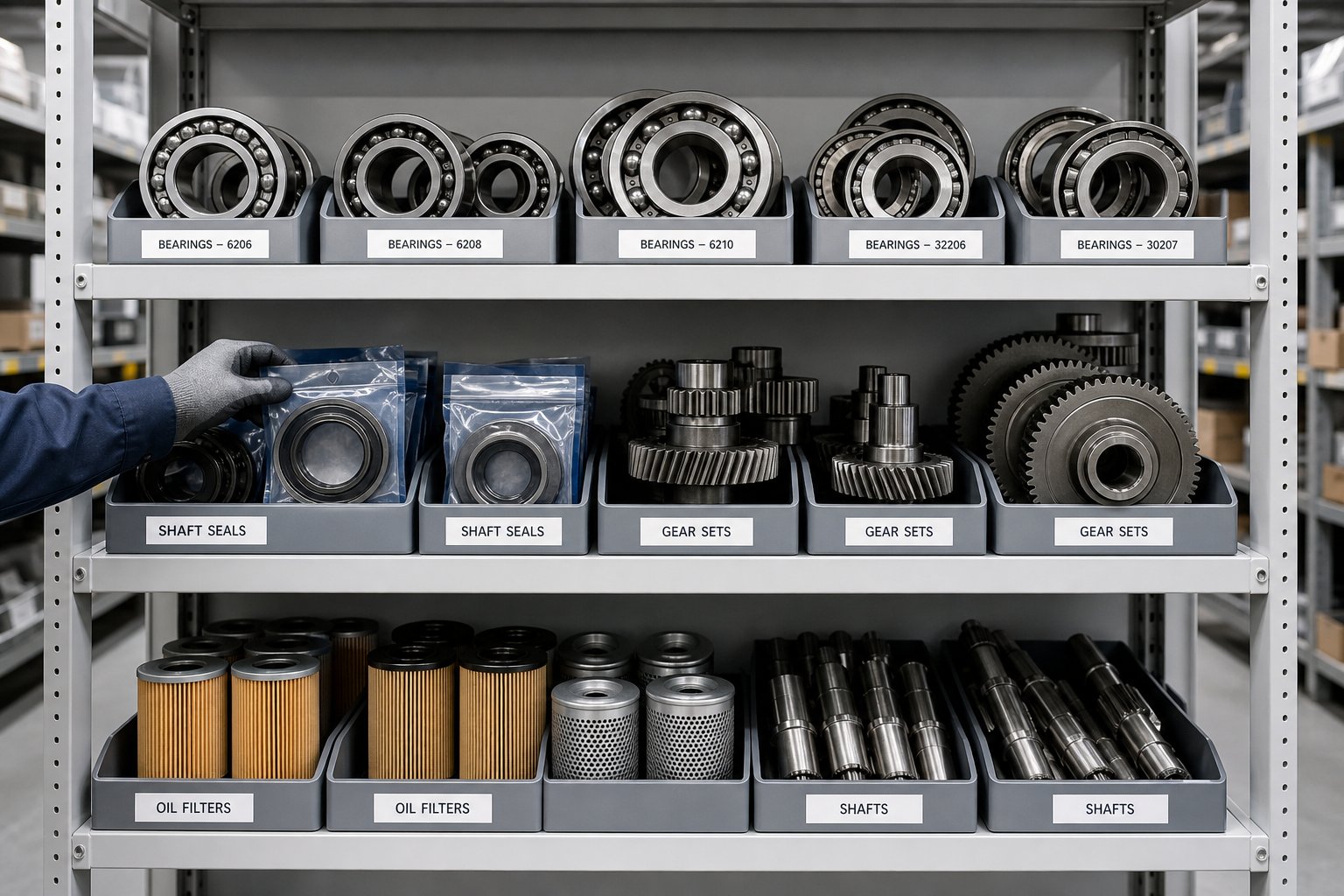
A gearbox that runs flawlessly for five years still needs maintenance. Seals wear. Oil degrades. Bearings eventually reach their calculated fatigue life. The question isn't whether you'll need twin screw extruder gearbox spare parts — it's whether you can get them fast enough to prevent a maintenance event from becoming a production crisis.
This is where gearbox design decisions made at the factory directly affect your plant's uptime years later. Consider three design choices that determine serviceability:
Oil seal accessibility. Can the output shaft seals be replaced without pulling the gearbox off the machine? Some manufacturers design their seal housings with external retaining arrangements that allow field replacement. Others bury the seals behind bearing carriers that require full shaft extraction — turning a two-hour job into a two-day teardown.
Bearing accessibility and standardization. Does the manufacturer use standard bearing designations from recognized suppliers, or proprietary sizes that can only be sourced through them? A gearbox built around standard SKF, FAG, or Timken bearing sizes gives you multiple sourcing channels for replacements. One using non-standard bore or width dimensions locks you into a single supply chain — and that chain's lead time becomes your downtime.
Inspection ports and monitoring provisions. As detailed in the failure modes chapter, gearboxes with inspection covers allow maintenance teams to assess gear tooth condition without full disassembly. This capability transforms spare parts planning from reactive guessing into informed forecasting: you can see pitting developing and order replacement gears before the current set fails, rather than discovering the damage only after a catastrophic shutdown.
Effective spare parts inventory management is a cornerstone of corrective maintenance readiness. Industry best practices recommend maintaining a well-organized inventory of critical replacement components — bearings, seals, and gear sets — with usage tracking that ensures necessary parts are always available when needed. For twin screw extruder gearbox replacement scenarios, having the right parts on hand can reduce downtime from weeks to days.
The practical reality of extrusion line maintenance extends beyond the gearbox itself. A production shutdown rarely involves just one component. When you're servicing a gearbox, you'll often discover worn screw elements, degraded barrel liners, leaking heater bands, or failed thermocouples that need simultaneous attention. Working with suppliers who can provide replacement parts based on drawings or samples — rather than requiring original manufacturer part numbers that may be discontinued — significantly reduces the time and risk involved in getting a line back into production.
For maintenance teams managing this broader component sourcing challenge, NANHAIYA's extruder spare parts catalog offers a practical resource. Their inventory covers screw-related components, heater bands, thermocouples, die heads, pelletizing blades, and other custom parts for plastic extrusion and injection molding equipment — the kind of ancillary components you often need alongside gearbox maintenance but struggle to source quickly from a single supplier. The ability to provide custom-manufactured parts from drawings or samples is particularly valuable for older or non-standard extrusion lines where original equipment manufacturer parts are no longer available.
| Decision Factor | Standard Catalog Gearbox | Custom-Engineered Gearbox |
|---|---|---|
| Best Suited For | Common screw diameters, established torque classes, standard center distances, new machine builds with conventional specifications | Non-standard center distances, extreme torque demands, retrofit applications, proprietary shaft configurations |
| Typical Lead Time | 6-10 weeks | 12-24 weeks |
| Relative Cost | Lower — benefits from production scale and amortized tooling | Higher — dedicated engineering, custom fixtures, and unique gear blanks add cost |
| Spare Parts Availability | Strong — standard components stocked by manufacturer and often available from multiple bearing/seal suppliers | Variable — may require manufacturer-specific sourcing for non-standard components; verify parts commitment before purchase |
| Design Risk | Low — proven across multiple installations with documented performance history | Moderate — depends on manufacturer's custom engineering track record and validation process |
| Manufacturer Capability Required | Standard production and assembly competence | Genuine in-house gear design engineering, custom machining capability, and application-specific experience |
Whether you choose a catalog gearbox or commission a custom build, the spare parts strategy you put in place at the time of purchase — not after the first failure — determines how resilient your extrusion line will be over the long term. Request the full spare parts list and pricing during the quotation phase. Negotiate stocking agreements for critical components. And document every bearing designation, seal specification, and gear set detail in your maintenance records so that future sourcing — whether from the original manufacturer or an alternative parts supplier — can proceed without delay.
These decisions about standardization, customization, and spare parts infrastructure don't exist in a vacuum. They're shaped by broader shifts in gearbox technology and manufacturing capability that are actively redefining what buyers should expect from the next generation of suppliers — trends worth understanding before you finalize any shortlist.
Industry Trends and Your Twin Screw Extruder Gearbox Selection Guide
Standardization choices, spare parts infrastructure, and total cost of ownership analysis all shape how well a gearbox serves your operation over the next decade. But the gearbox market itself isn't standing still. Manufacturers who invest in emerging technologies are pulling ahead of those recycling legacy designs — and buyers who understand these shifts will make sharper choices when evaluating their next supplier.
The trends reshaping twin screw extruder gearbox technology aren't theoretical. They're already showing up in product catalogs, factory floor upgrades, and RFQ specifications from forward-thinking processors. Here's what you should be watching — and how to fold it all into a concrete action plan.
Emerging Trends Reshaping Gearbox Manufacturing
Higher torque density from compact envelopes. This is the trend with the most immediate practical impact. Processors want more throughput from the same machine footprint — and that means gearboxes must deliver more torque per unit of volume without growing physically larger. Leading manufacturers are achieving this through a combination of advanced gear tooth profile engineering, higher-grade case-hardening alloys that tolerate greater contact stress, and optimized bearing arrangements that handle increased loads within existing housing dimensions. Coperion's ZSK series, for example, already advertises torque densities up to 16 Nm/cm³, and the competitive pressure to push beyond that figure is driving R&D investment across the industry. For buyers, this means newer gearbox generations can unlock processing capabilities — running more aggressive formulations, higher filler loadings, or faster screw speeds — that previous torque limits wouldn't allow. When evaluating the best twin screw extruder gearbox manufacturers, ask whether their current product line reflects these density improvements or whether they're still offering designs from the previous decade.
Improved energy efficiency through gear tooth optimization. Every percentage point of gear mesh efficiency loss translates into heat and wasted electricity — costs that accumulate relentlessly over tens of thousands of operating hours. Manufacturers investing in CNC profile grinding, precision tooth flank finishing, and computational optimization of micro-geometry corrections (tip relief, root relief, crowning) are producing gear sets that run with measurably lower friction losses. The gains might seem incremental — a 1-2% improvement in transmission efficiency — but across a 200 kW drive running 6,000 hours annually, that's 12,000 to 24,000 kWh saved every year. Over a decade, the cumulative energy savings can approach or exceed the gearbox's original purchase price. Suppliers who can demonstrate independently verified efficiency data — not just marketing claims — are worth prioritizing.
Modular gearbox platforms with field-upgradable torque configurations. Imagine purchasing a gearbox sized for your current process requirements, with the built-in ability to upgrade its torque capacity later by swapping gear sets and bearings — without replacing the entire housing or modifying the machine frame. Several innovative manufacturers are moving toward modular platform architectures that make this practical. The housing, lubrication system, and mounting interfaces remain constant across a torque range, while the internal power train components define the specific rating. For processors whose product mix evolves over time, or who anticipate future capacity increases, this modularity protects the initial investment while preserving upgrade flexibility. It's a design philosophy that reflects genuine engineering foresight rather than the disposable approach of selling a new gearbox every time requirements change.
Integration of condition monitoring sensors for predictive maintenance. The days of waiting for a gearbox to announce its failure through noise, vibration you can feel through the floor, or a catastrophic shutdown are ending. As Machinefabriek Krimpen details in their analysis of industrial gear management, smart sensors continuously monitoring vibration signatures, oil temperature, bearing temperature, and even acoustic emission patterns are transforming gearbox maintenance from reactive fire-fighting into data-driven planning. Modern vibration sensors detect subtle changes in frequency patterns — early-stage bearing defects, developing gear tooth pitting, or emerging misalignment — long before visible damage occurs. AI-powered analytics layered on top of this sensor data can identify degradation trends that human operators might miss entirely.
For gearbox buyers, the practical question is whether a manufacturer designs their units to accommodate this technology. Does the housing include machined sensor mounting pads at specified locations? Are there provisions for inline oil condition monitoring? Can the gearbox integrate with your plant's existing SCADA or IoT infrastructure? Manufacturers who build these provisions into their standard designs — rather than treating them as expensive aftermarket additions — are positioning their products for the reality of modern plant operations. Those still shipping gearboxes with no monitoring capability are offering yesterday's technology at today's prices.
These four trends collectively separate innovative manufacturers from those coasting on established but aging product lines. Over the next several years, the gap between these two groups will widen — making it increasingly costly for buyers to select a supplier whose engineering investment has stalled.
Your Manufacturer Shortlisting Action Plan
You've covered a lot of ground across this guide — from gearbox fundamentals and configuration differences through gear materials, failure modes, evaluation frameworks, regional sourcing, total cost of ownership, and customization decisions. Distilling all of that into a practical, prioritized action plan gives you a repeatable process you can execute the next time a gearbox procurement lands on your desk.
Follow these steps in order. Each one builds on the previous, and skipping ahead — especially jumping to price comparison before completing the technical evaluation — is precisely the mistake that leads to the "pick wrong, pay twice" outcome this article's title warns against.
- Lock down your technical specifications. Document required torque per shaft (including peak loads), screw speed range, center distance, shaft configuration (co-rotating or counter-rotating), axial thrust load, mounting dimensions, and any non-standard requirements. Include your service factor calculation. A complete spec package ensures every supplier quotes against the same baseline — and signals to manufacturers that they're dealing with a technically informed buyer.
- Verify in-house manufacturing capability. Determine whether each candidate manufacturer performs gear cutting, gear grinding, heat treatment, and housing machining under their own roof — or assembles outsourced components. Request equipment lists, factory tour access (even virtual), and sample gear inspection reports from recent production. Genuine manufacturers welcome this scrutiny; assemblers deflect it.
- Request gear quality documentation and certifications. Ask for ISO 9001 certification, AGMA or DIN gear quality class reports from actual production runs, material test certificates with full traceability, and heat treatment records. These documents are the fastest filter for distinguishing serious manufacturers from those who cannot demonstrate quality control of their own product.
- Evaluate after-sales support and spare parts programs. Request spare parts lists with pricing and lead times for critical components. Verify field service availability, rebuild capability, and the manufacturer's commitment to long-term parts supply. Contact references who have actually needed after-sales support — not just those who purchased a gearbox without incident.
- Build a total cost of ownership comparison. Expand the analysis beyond purchase price to include energy efficiency differentials, projected maintenance costs and intervals, spare parts accessibility, expected service life before major overhaul, and unplanned downtime risk weighted by your hourly production loss value. Run the calculation across a consistent 10-year horizon for all candidates.
- Request reference installations in your specific application. Insist on references from customers operating gearboxes in your required configuration (co-rotating vs. counter-rotating), at comparable torque levels, and in similar process applications. Long-term references — units with three or more years of service — carry far more weight than recent installations with no operational track record.
- Assess technology trajectory and monitoring readiness. Evaluate whether the manufacturer's current product line reflects emerging twin screw extruder gearbox technology trends — higher torque density, modular platforms, sensor integration provisions — or relies on static, legacy designs. A manufacturer investing in next-generation capability is more likely to support your gearbox with evolving technology over its full service life.
Score each manufacturer against these steps using a weighted evaluation matrix — adjusting the weighting to match your application's risk profile. A 24/7 critical compounding line warrants heavy weighting on after-sales support, reference installations, and TCO analysis. A cost-sensitive project with standard specifications might emphasize delivery performance and pricing transparency more strongly. The framework stays consistent; the priorities flex to fit your reality.
A holistic approach to manufacturer evaluation — one that considers technical capability, quality systems, serviceability, spare parts ecosystem, and total lifecycle cost as interconnected factors rather than isolated checkboxes — is what protects buyers from the expensive selection mistakes that haunt extrusion operations for years. The gearbox you install today will be running — or failing — long after the purchase order is forgotten. Make the evaluation process worthy of that timeline.
For procurement and maintenance teams managing broader extrusion line sourcing alongside gearbox procurement, consolidating component supply chains wherever practical reduces both administrative overhead and downtime risk. Suppliers like NANHAIYA offer comprehensive spare parts sourcing for screw elements, die heads, pelletizing blades, heater bands, thermocouples, and other custom extrusion components — including parts manufactured from drawings or samples for older or non-standard equipment. When your gearbox overhaul coincides with barrel relining, screw element replacement, or die maintenance, having a single sourcing channel for those ancillary components simplifies multi-component procurement and helps plant teams get production lines back online faster.
Frequently Asked Questions About Twin Screw Extruder Gearbox Manufacturers
1. What is the main function of a twin screw extruder gearbox?
A twin screw extruder gearbox converts a single motor's high-speed, low-torque output into two synchronized, low-speed, high-torque output shafts that drive intermeshing screws. It performs four simultaneous functions: speed reduction, torque splitting between two shafts, precise angular synchronization of co-rotating or counter-rotating screws, and absorption of massive axial thrust loads generated by screw pressure against the die. These thrust loads can range from 2.5 kN on small machines to over 3,400 kN on large production extruders, making the gearbox the most mechanically stressed component in the entire extrusion line.
2. How do I choose between co-rotating and counter-rotating twin screw extruder gearbox configurations?
Your application determines the configuration. Co-rotating parallel gearboxes dominate polymer compounding, reactive extrusion, and masterbatch production because their self-wiping screw action delivers intense distributive mixing. Counter-rotating and conical gearboxes suit PVC pipe, profile, and sheet extrusion where low-shear, temperature-controlled processing is critical. From a sourcing perspective, not all manufacturers excel at both configurations — some specialize in high torque-density co-rotating designs while others focus on robust conical units for rigid PVC. Always verify that a manufacturer has specific reference installations in your required configuration before shortlisting them.
3. What certifications and quality documents should I request from a twin screw extruder gearbox manufacturer?
Request ISO 9001 quality management certification, AGMA or DIN 3962/3963 gear quality class reports from actual production measurements (not just claimed targets), material test certificates per EN 10204 3.1 tracing steel grade and composition to the mill, and heat treatment records showing carburizing or nitriding parameters with verified case depth and surface hardness. These documents quickly separate manufacturers who control their full quality chain from assemblers sourcing gears from third parties. A confident manufacturer shares this data readily; reluctance or delays are a significant warning sign.
4. What is the total cost of ownership for a twin screw extruder gearbox and why does it matter?
Total cost of ownership (TCO) captures every expense across a gearbox's full operational life — typically 10 years or more. Industry research shows that the purchase price represents roughly 20% of lifecycle costs, while maintenance accounts for about 35%, energy consumption for 25%, and downtime losses for approximately 15%. A gearbox with a lower purchase price but shorter bearing life, higher gear mesh friction losses, or limited spare parts availability often costs significantly more over a decade than a premium unit. Quantifying energy efficiency differentials, projected maintenance intervals, spare parts lead times, and unplanned downtime risk at your hourly production loss value reveals the true cost picture that a simple quote comparison hides.
5. When should I choose a custom-engineered gearbox over a standard catalog model?
Standard catalog gearboxes suit the majority of applications with common screw diameters, established torque classes, and industry-standard center distances — offering faster delivery, lower cost, and proven spare parts availability. Custom-engineered gearboxes become necessary when your application involves non-standard center distances, extreme torque demands beyond catalog ranges, retrofit projects where the gearbox must match an existing machine footprint, or proprietary shaft configurations. Custom projects require manufacturers with genuine in-house design capability — including tooth contact analysis, FEA, and bearing life calculations — so always verify prior custom project references before committing. For ongoing maintenance needs, working with suppliers like NANHAIYA (nhyscrews.com) who can manufacture replacement parts from drawings or samples helps keep both standard and custom extrusion equipment running without extended downtime.
Written by
Nanhaiya Technical Team
Zhoushan Nanhaiya Plastic Machinery Co., Ltd.
The Nanhaiya technical team supports screw and barrel manufacturing projects through application review, technical communication, custom manufacturing coordination, and production and quality control.
Discuss Your Application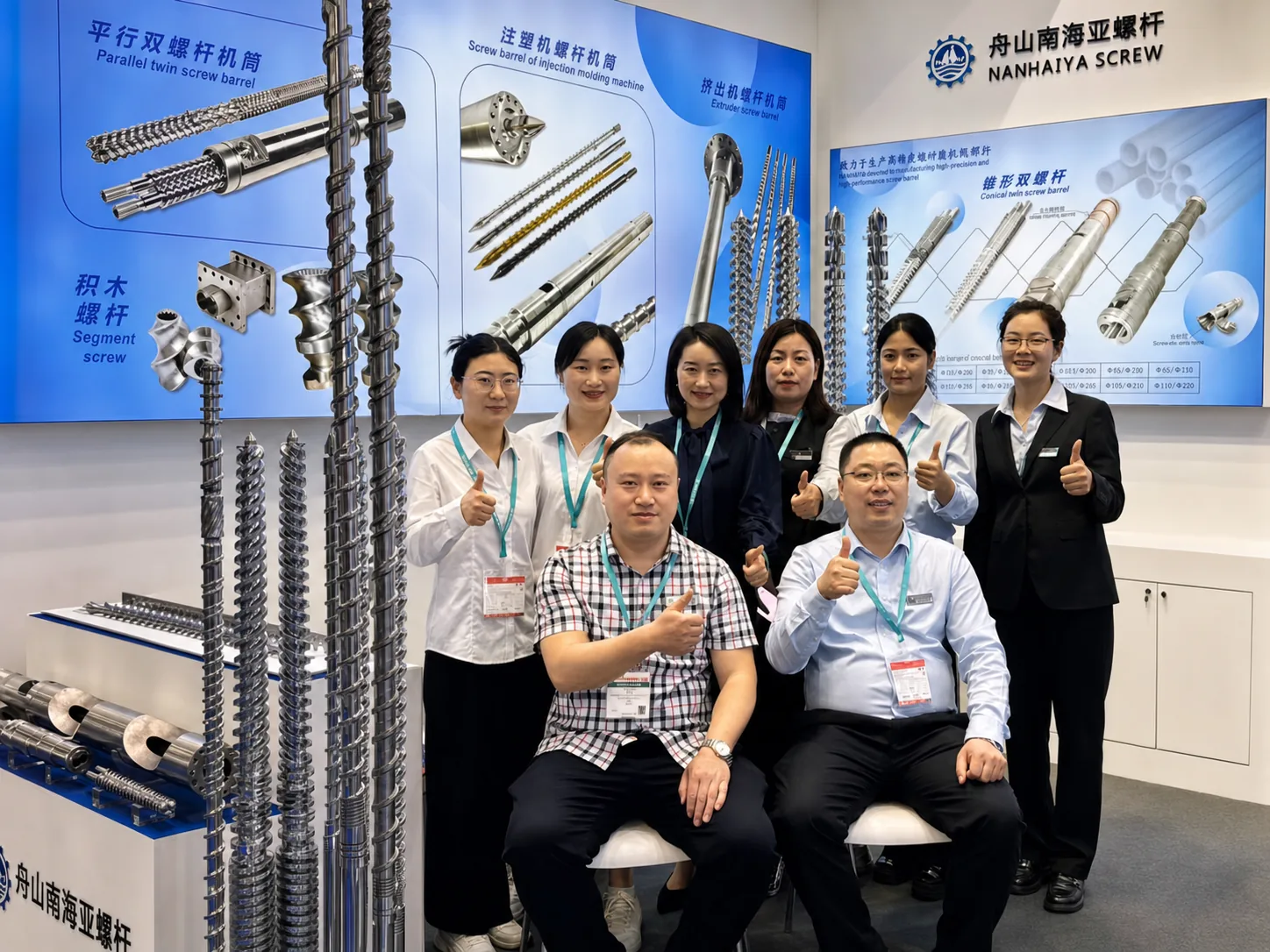
Related Articles
More insights on screw barrel technology and plastics processing.
What Nobody Tells You About Screw Barrel For Plastic Machine Design
Oct 10, 2026
Learn how screw barrel for plastic machine design affects melt quality, throughput, and wear life. Covers geometry, resin matching, troubleshooting, and sourcing.
Read Article
Single Screw Extruder for Sheet: Stop Guessing, Start Specifying
Oct 9, 2026
Learn how to specify a single screw extruder for sheet production. Covers screw geometry, resin-specific processing, troubleshooting, and maintenance best practices.
Read Article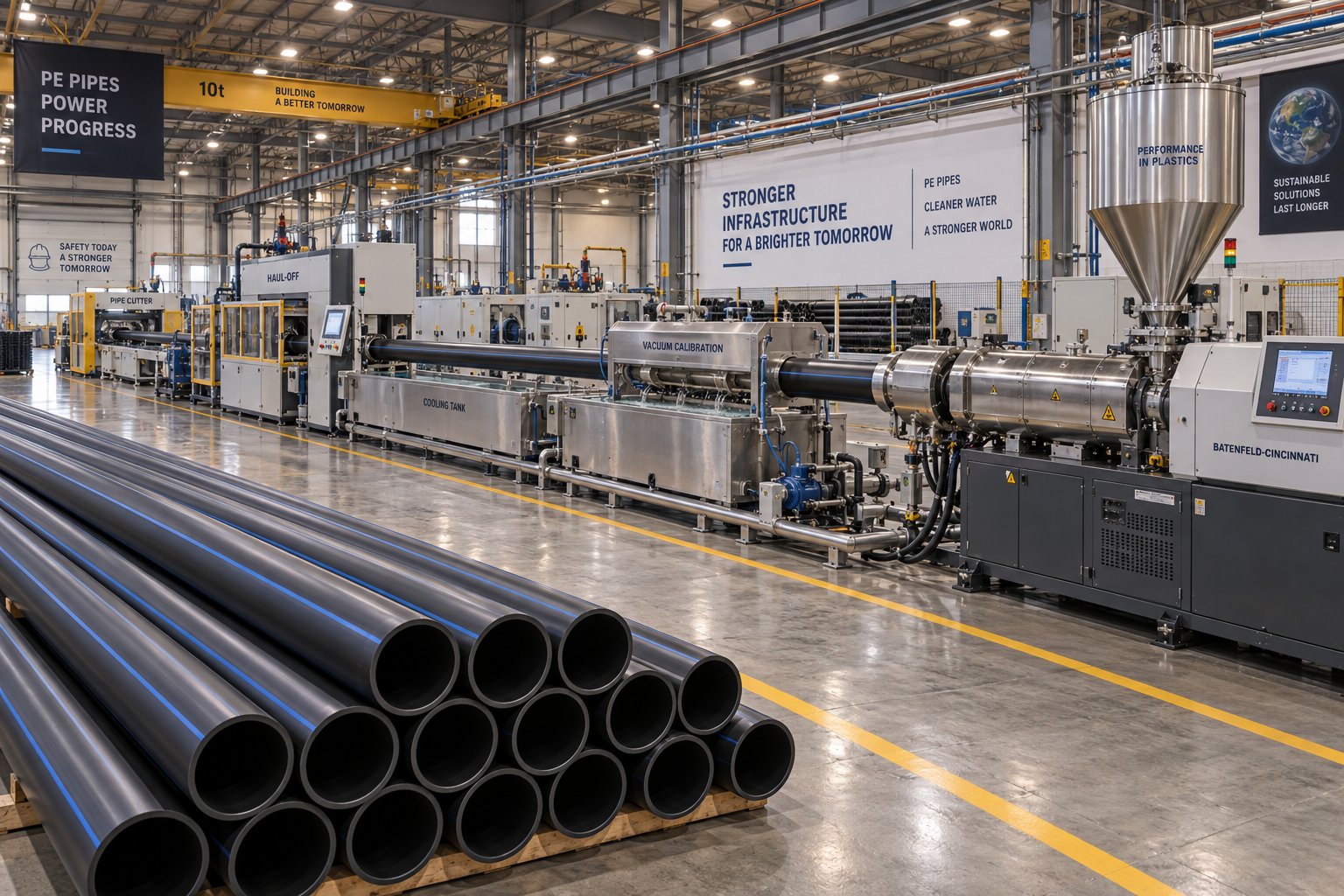
PE Pipe Extruder Machine: What Datasheets Won't Tell You
Oct 9, 2026
Learn how a PE pipe extruder machine works, key specs explained, material grade selection, maintenance tips, and buyer guidance beyond the datasheet.
Read ArticleLooking for something else?
Search by material, symptom or product and jump straight to the relevant page.
These are navigation suggestions based on keyword matching — not a quotation, not a delivery commitment, and not a substitute for engineering review. Final specification is confirmed by our engineers against your drawings and processed material.
Need help with screw barrel selection?
Share your machine model, processed material and application. Our team can help with pricing and technical support.