

What Is a Twin Screw Extruder and Why It Matters
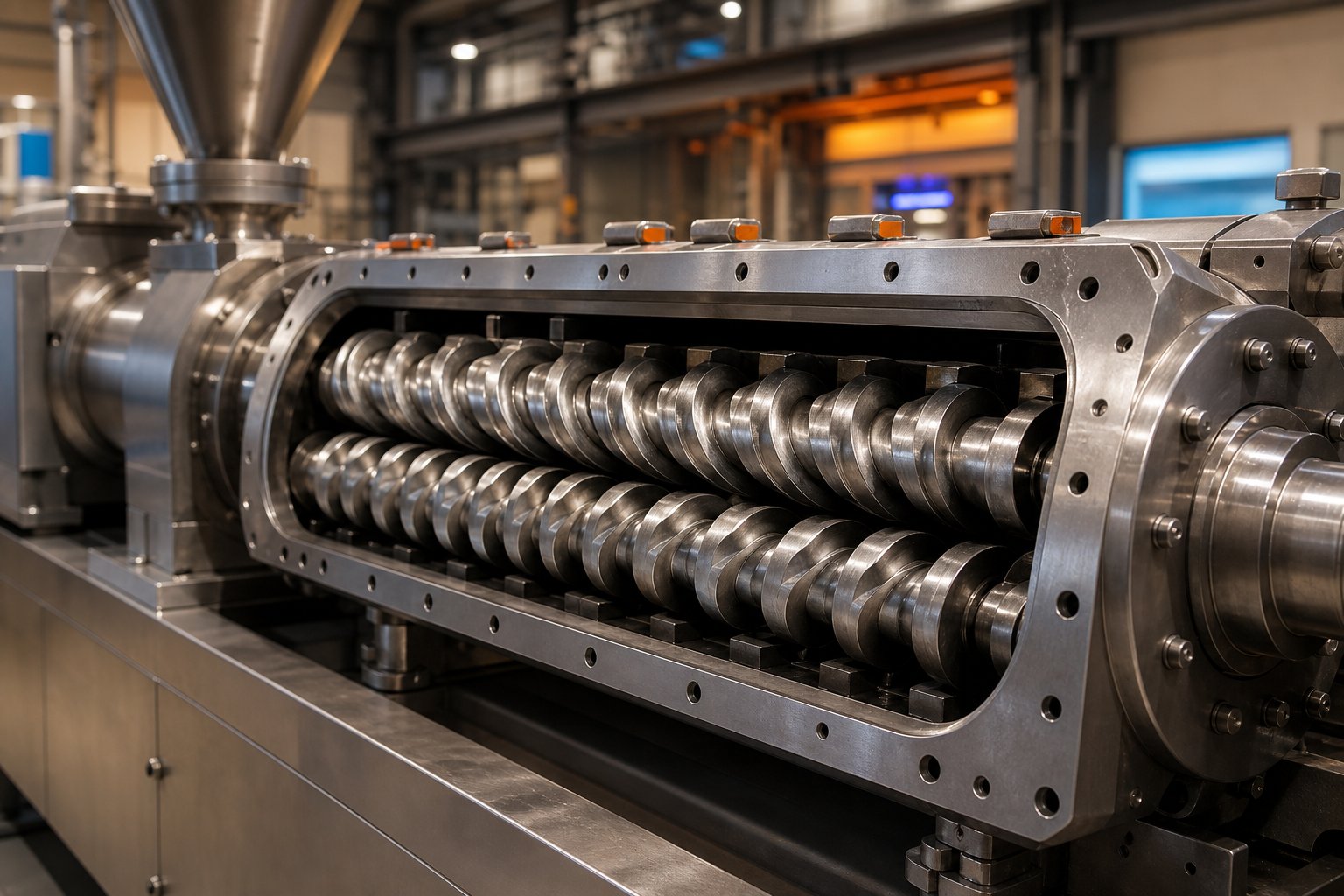
A twin screw extruder is a machine that uses two intermeshing screws rotating inside a heated barrel to mix, melt, compound, and shape polymers and other materials. Unlike a single screw extruder, which relies on one rotating screw for conveying and melting, the twin screw design delivers superior mixing, a self-wiping geometry that prevents material buildup, and far greater process flexibility.
Why does this matter when you're browsing every twin screw extruder for sale online? Because the machine's fundamental design determines what it can — and can't — do for your production line. Understanding how twin screw extruders work is the fastest way to separate a smart investment from a costly mistake.
These machines serve an impressively wide range of industries. Plastics compounding and masterbatch production rely on them daily. Food processors use them to texturize proteins and cook snack products. Pharmaceutical manufacturers depend on them for hot-melt extrusion of controlled-release drug formulations. Rubber, recycling, and chemical processing round out the list. That versatility is exactly what makes a twin-screw extruder such a valuable — and complex — piece of equipment to buy.
How a Twin Screw Extruder Works
Imagine dropping plastic pellets into a hopper. From that moment, the material passes through a series of distinct functional zones inside the barrel:
- Feed zone: Raw material enters the barrel through the hopper and lands on the rotating screws. The screw geometry here is designed for smooth, consistent intake without bridging or starving.
- Melting and mixing zone: As the screws convey material forward, heat from the barrel walls and shear forces generated by the intermeshing screw flights gradually melt and plasticize the material. Kneading blocks in this section break down clumps and disperse additives or fillers evenly throughout the melt.
- Metering zone: The now-homogeneous melt is stabilized under consistent pressure and temperature, ensuring uniform flow toward the exit.
- Die: The molten material is forced through a shaped orifice — the die — to form a continuous strand, profile, sheet, or other product geometry.
Venting or vacuum zones are often placed between the mixing and metering sections, allowing volatile gases or moisture to escape. This step is critical for producing clean, void-free products.
Twin Screw vs Single Screw at a Glance
When you're evaluating any screw extruder listing, you'll notice that single screw and twin screw machines show up side by side. The differences between them are significant and directly affect what you can produce. Here's a quick comparison:
| Feature | Twin Screw Extruder | Single Screw Extruder |
|---|---|---|
| Mixing Efficiency | Excellent — intermeshing screws deliver high distributive and dispersive mixing | Limited — relies on drag flow with minimal mixing action |
| Throughput Control | Highly flexible — screw speed and feed rate can be adjusted independently | Less flexible — output is closely tied to screw speed |
| Self-Cleaning Ability | Self-wiping geometry prevents material stagnation and degradation | No self-wiping action — dead spots can develop |
| Material Versatility | Handles filled, reinforced, reactive, and heat-sensitive formulations | Best suited for straightforward, single-polymer processing |
| Typical Applications | Compounding, masterbatch, reactive extrusion, devolatilization, food and pharma processing | Pipe, profile, and film extrusion of standard polymers |
| Relative Cost | Higher initial investment | Lower initial investment |
The bottom line: twin screw extruders earn their higher price tag through capabilities that single screw machines simply can't match. Yet that extra capability also means more variables to evaluate — starting with the rotation direction of those two screws and the dramatically different processing behavior each configuration produces.
Co-Rotating vs Counter-Rotating Twin Screw Extruders Explained
Two screws spinning inside a barrel — sounds straightforward, right? The reality is that the direction those screws turn changes everything about how material moves, melts, and mixes. This single design choice — co-rotating or counter-rotating — determines shear intensity, residence time, temperature control, and ultimately which products you can make. It's also where one of the most expensive purchasing mistakes happens: buyers pick the wrong rotation type and end up with a machine that fights their process instead of enabling it.
Every listing for a twin screw extruder for sale will identify the machine as either co-rotating or counter-rotating. Understanding the practical difference between these two configurations is essential before you spend a dollar evaluating any specific listing. A double screw extruder that excels at compounding engineering plastics may be completely wrong for PVC pipe extrusion — and vice versa.
Co-Rotating Twin Screw Extruders and Their Strengths
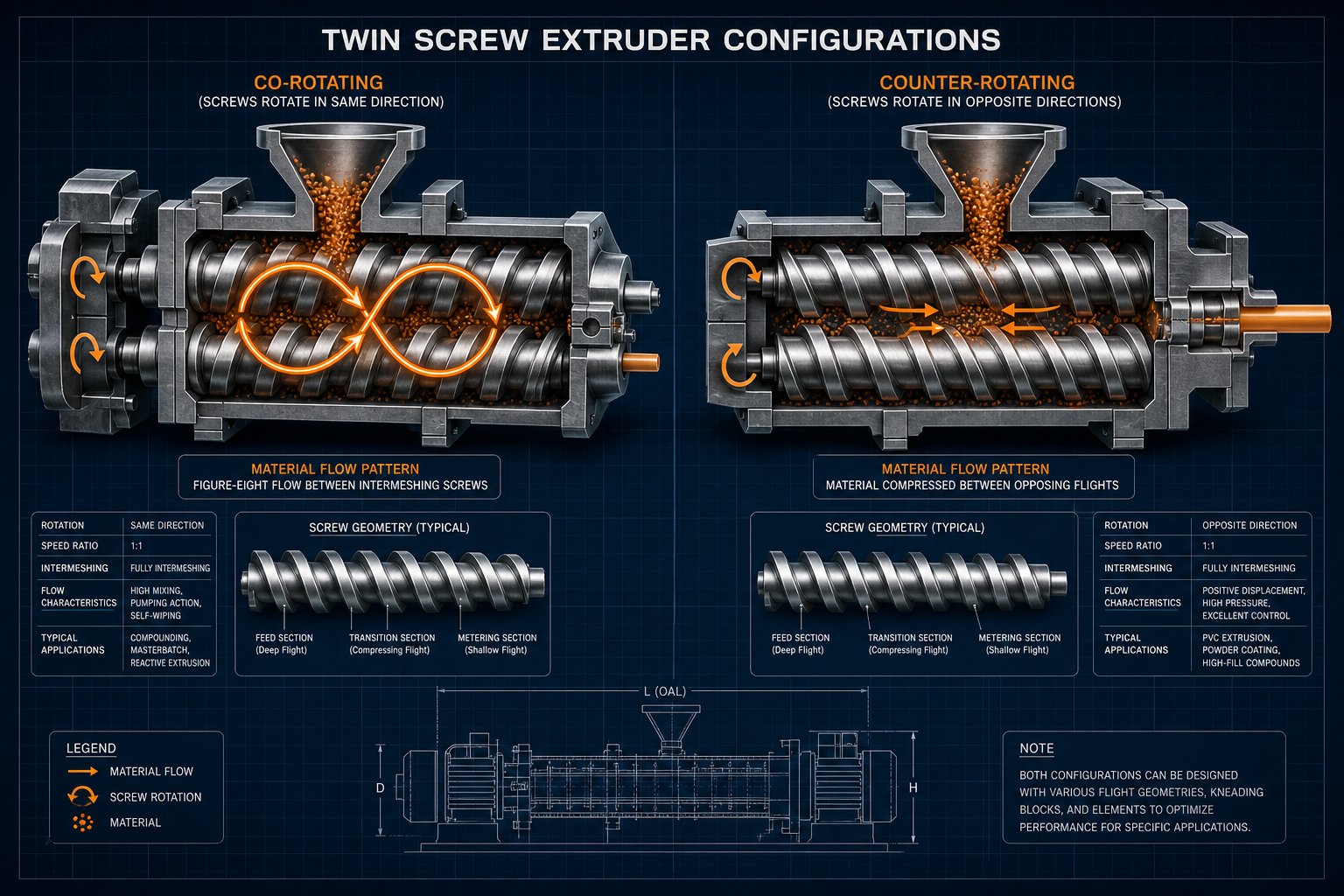
In a co-rotating twin screw extruder, both screws turn in the same direction — typically at identical speeds. This configuration almost always uses a fully intermeshing geometry, meaning the flight of one screw reaches deep into the channel of the other. The result? Material is forcibly handed off from one screw to the next at the intermeshing zone, creating a figure-eight flow path that subjects every particle to repeated, intense mixing.
You'll notice several performance advantages that flow directly from this geometry:
- Self-wiping action: Because the screws continuously scrape each other's surfaces, stagnant material zones are virtually eliminated. This keeps residence time distribution narrow — a critical factor for processing thermally sensitive materials and for reactive extrusion where precise control of thermal history is essential.
- High-speed capability: Co-rotating machines commonly operate between 400 and 900 rpm, with some high-performance models reaching beyond 1,200 rpm. Higher speeds translate to greater throughput and more intense shear energy input.
- Exceptional distributive and dispersive mixing: The combination of intermeshing zones, kneading blocks, and barrel-wall shear fields creates a complex deformation history. Filler agglomerates get broken down, polymer alloy phase morphology can be finely tuned, and additives distribute uniformly throughout the melt.
- Modular flexibility: Screw elements can be freely arranged along the shaft, giving processors the ability to tailor energy input location and magnitude for each specific formulation.
These strengths make the co-rotating configuration the dominant choice for compounding, masterbatch production, polymer alloy development, reactive extrusion, and devolatilization. If your application demands intense, thorough mixing and high throughput, this is almost certainly the right design.
Counter-Rotating and Conical Designs Explained
Counter-rotating twin screw extruders flip the script. One screw turns clockwise while the other turns counterclockwise. At the intermeshing region, material gets drawn in and compressed between the opposing flights, creating a strong positive-displacement conveying mechanism. Think of it like two gears meshing — material has no choice but to move forward.
This design trades mixing intensity for gentle, controlled material transport:
- Lower shear stress: Because the intermeshing zone compresses rather than shears, heat generation stays significantly lower than in co-rotating machines. Materials like rigid PVC — which has a low thermal decomposition temperature and poor melt flow — can be processed without degradation.
- Calendering effect: The intermeshing region behaves much like a calender roll, subjecting material to repeated compressive and elongational deformation under relatively mild conditions. This mechanism provides effective dispersive mixing of additives without the aggressive shear that could damage the polymer.
- Stable, low-speed operation: Counter-rotating machines typically run between 30 and 150 rpm, maintaining a high degree of fill. The slower speeds and positive conveying allow stable extrusion even with difficult-to-process formulations.
A conical twin screw extruder is a specialized counter-rotating variant that deserves specific attention. Instead of parallel screws with a constant diameter, conical designs use tapered screws that are wider at the feed end and narrower at the discharge end. This geometry offers a few distinct advantages: the large feed opening accepts bulky, low-density materials easily, the natural taper creates progressive compression without requiring complex screw element configurations, and the compact overall footprint saves floor space. Conical twin screw extruders are widely used for rigid PVC pipe, profile, and sheet extrusion — as well as for wood-plastic composites and highly filled compounds.
Parallel counter-rotating double screw extruder configurations also exist and are favored for specialty applications like high-level devolatilization and pharmaceutical processing, where their independent screw operation provides superior distributive mixing with minimal mechanical shear.
Choosing the Right Rotation Type for Your Process
Imagine purchasing a high-shear co-rotating machine for a PVC profile line. The excessive shear would generate heat faster than the cooling system can remove it, degrading the polymer and producing reject after reject. Or picture buying a low-speed counter-rotating extruder for a high-volume compounding operation requiring 2,000 kg/hr throughput — the machine simply can't deliver that capacity. Both scenarios waste capital and production time.
The table below lays out the key differences to guide your decision:
| Dimension | Co-Rotating Twin Screw Extruder | Counter-Rotating Twin Screw Extruder |
|---|---|---|
| Shear Intensity | High — strong shear fields between screws and between screw and barrel | Low to moderate — compressive and elongational deformation dominates |
| Mixing Quality | Excellent distributive and dispersive mixing; ideal for breaking down agglomerates | Good dispersive mixing via calendering effect; gentler on polymer structure |
| Conveying Mechanism | Drag flow with figure-eight material transfer between screws | Positive displacement — material trapped between flights and pushed forward |
| Residence Time Distribution | Narrow and controllable — self-wiping minimizes stagnation | Broader — high fill operation can create localized variations |
| Typical Screw Speed | 400 - 900+ rpm | 30 - 150 rpm |
| Typical Applications | Compounding, masterbatch, reactive extrusion, polymer alloys, devolatilization | PVC pipe and profile, WPC, thermally sensitive polymers, conical configurations |
| Throughput Flexibility | High — screw speed and feed rate independently adjustable for wide output range | More limited — optimized for steady-state operation at defined output levels |
| Self-Cleaning | Excellent — fully intermeshing geometry continuously wipes screw surfaces | Moderate — some stagnation zones possible, especially at lower speeds |
Selecting the wrong rotation type is one of the most common and costly mistakes buyers make. A machine that doesn't match your material and process requirements will underperform regardless of its brand, condition, or price.
The takeaway is clear: before you evaluate any listing, define your material, your target output, and your process requirements. Those answers point directly to the rotation type — and that choice narrows your search dramatically. With the rotation question settled, the next challenge is making sense of the technical specifications attached to every machine listing — numbers like screw diameter, L/D ratio, and torque density that reveal whether a specific extruder can actually deliver the performance your application demands.
Key Technical Specifications Every Buyer Must Understand
Every twin screw extruder machine listing comes loaded with numbers — screw diameter, L/D ratio, motor kilowatts, torque ratings, throughput capacity. They're presented as if buyers already know what they mean. Most don't. And that knowledge gap is exactly where costly purchasing mistakes take root. A machine with impressive-sounding specs can still be completely wrong for your process if you don't understand what those numbers translate to on the production floor.
Let's break down each critical specification so you can read any listing — new or used — and immediately judge whether the machine fits your requirements.
Screw Diameter and What It Tells You
Screw diameter is the single most defining specification of any twin-screw extruder machine. It's measured across the outermost part of the screw flights, and it dictates throughput capacity, investment cost, and the scale of production the machine can support.
Here's the practical breakdown across the diameter ranges you'll encounter in marketplace listings:
- Small diameter (20-35 mm): These are lab-scale and pilot machines. They're built for material development, formulation trials, and small-batch testing — not production. Throughputs typically range from 5 to 50 kg/hr, depending on the material and screw speed. Expect lower capital costs but understand these machines aren't designed to scale.
- Mid-range diameter (40-75 mm): This is the specialty compounding sweet spot. A double screw extruder machine in this range handles masterbatch production, niche polymer blends, reactive extrusion runs, and moderate-volume compounding. Throughput capacity generally falls between 100 and 1,000 kg/hr, making these machines versatile workhorses for operations that need flexibility without full-scale production investment.
- Large diameter (90 mm and above): High-volume production territory. Machines with 90 mm to 135 mm screw diameters — and beyond — serve continuous compounding lines running multiple shifts, often producing 2,000 to 4,000+ kg/hr. The capital investment climbs steeply, but so does the per-kilogram processing efficiency.
Why does diameter matter so much? Because extrusion volume is roughly proportional to the square of the screw diameter. Even a modest increase in diameter delivers a substantial jump in output — an effect often more significant than simply raising screw speed. Buyers browsing listings will encounter diameter ranges from roughly 20 mm to well over 100 mm, and the right choice depends entirely on your target production volume.
L/D Ratio, Torque, and Motor Power Decoded
The L/D ratio — length-to-diameter ratio — tells you how long the processing section is relative to the screw diameter. A twin screw extruder machine with a 50 mm screw diameter and a 2,400 mm barrel length has a 48:1 L/D ratio. Simple math, but the implications for your process are anything but simple.
Higher L/D ratios — typically in the 40:1 to 52:1 range, with some configurations reaching 60:1 or beyond — provide more barrel zones for feeding, melting, mixing, venting, and metering. That extra length means longer residence time, more opportunity for thorough blending of complex formulations, and additional positions for side-feeding fillers or pulling vacuum for devolatilization. Shorter ratios (32:1 to 36:1) work well for straightforward compounding tasks where extended mixing isn't necessary.
The trade-off? Excessive L/D ratios increase power consumption, demand tighter manufacturing tolerances, and raise the risk of shaft deflection — especially on smaller-diameter screws. For thermally sensitive materials like PVC, shorter L/D ratios are often preferred to minimize residence time and prevent degradation.
Motor power and torque density are equally critical. The motor drives the screws, and its kilowatt rating combined with the gearbox ratio determines how much rotational force — torque — reaches the material. The relationship is straightforward: Torque (Nm) = 9,550 x Power (kW) / Screw Speed (RPM). A 200 kW motor geared for 600 rpm produces approximately 3,183 Nm of total shaft torque. That same motor geared for 1,200 rpm delivers only half the torque per revolution — but at double the speed.
Torque density, expressed in Nm/cm³, reflects how much force the screw shafts can transmit relative to their cross-sectional area. Modern co-rotating designs achieve torque densities around 18 Nm/cm³, roughly 30% higher than previous-generation machines. Higher torque density means the machine can process more demanding formulations — heavily filled compounds, high-viscosity polymers, reactive systems — without overloading the drive.
When comparing two listings side by side, don't just look at the motor horsepower number. Check the torque rating at the operating speed you need. A machine with a larger motor geared too high may actually deliver less usable torque than a smaller motor geared for lower speeds.
Matching Specifications to Production Requirements
Specifications only become meaningful when measured against your actual process needs. Before evaluating any twin screw extruder for sale, answer these questions first:
- What is your target output volume in kg/hr — and do you need room to grow?
- What materials will you process, and how do they behave under shear and heat (e.g., abrasive fillers, thermally sensitive polymers, reactive additives)?
- How many processing steps does your formulation require — simple melting and mixing, or multiple feeding points, venting stages, and reactive zones?
- What downstream equipment will the extruder feed into — and do those systems impose pressure, temperature, or flow rate constraints?
- Do you need the flexibility to switch between multiple formulations, or will the machine run a single product continuously?
- What is your available floor space, utilities capacity (electrical power, cooling water), and budget for both purchase and ongoing operation?
Throughput capacity — the kg/hr figure listed for every machine — ties directly back to screw diameter, screw speed, and the specific gravity of the material being processed. A 50 mm extruder running a mineral-filled polypropylene at 400 rpm will produce a very different output than the same machine running unfilled polyethylene at 600 rpm. Catalog throughput numbers are always optimistic estimates, not guarantees. Always ask for data on materials similar to yours.
Matching specs to requirements prevents two equally expensive mistakes: overspending on a machine with capability you'll never use, and underbuying a machine that chokes on your actual production demands. Those specs, however, only describe the machine's frame and motor. The real processing magic — and the real versatility — lives in the modular screw elements and barrel configurations that can be rearranged to transform a single machine into dozens of different process setups.
Screw Element Configurations and Modular Barrel Design
Here's something most equipment listings won't tell you: two twin screw extruders with identical frame specs — same diameter, same L/D ratio, same motor — can perform completely differently on the production floor. The difference comes down to what's assembled on the screw shafts and how the barrel sections are arranged. This modular architecture is arguably the greatest advantage of any plastic twin screw extruder, and it's the feature buyers most often overlook when evaluating a purchase.
Think of it this way. The extruder frame, motor, and gearbox are the platform. The screw elements and barrel segments are the process. Change the elements, and you fundamentally change what the machine does — without buying a new one. As extrusion engineers at Technovel put it, the screw configuration shapes the character of the process more strongly than the extruder itself.
Types of Screw Elements and Their Functions
A twin screw plastic extruder's shaft doesn't feature one continuous flight from feed to die. Instead, individual elements — each typically 20 to 60 mm long — slide onto a splined shaft and lock together. Each element type has a specific geometry designed for a specific job. Rearranging them is how engineers tune conveying, mixing intensity, residence time, and pressure buildup along the entire length of the barrel.
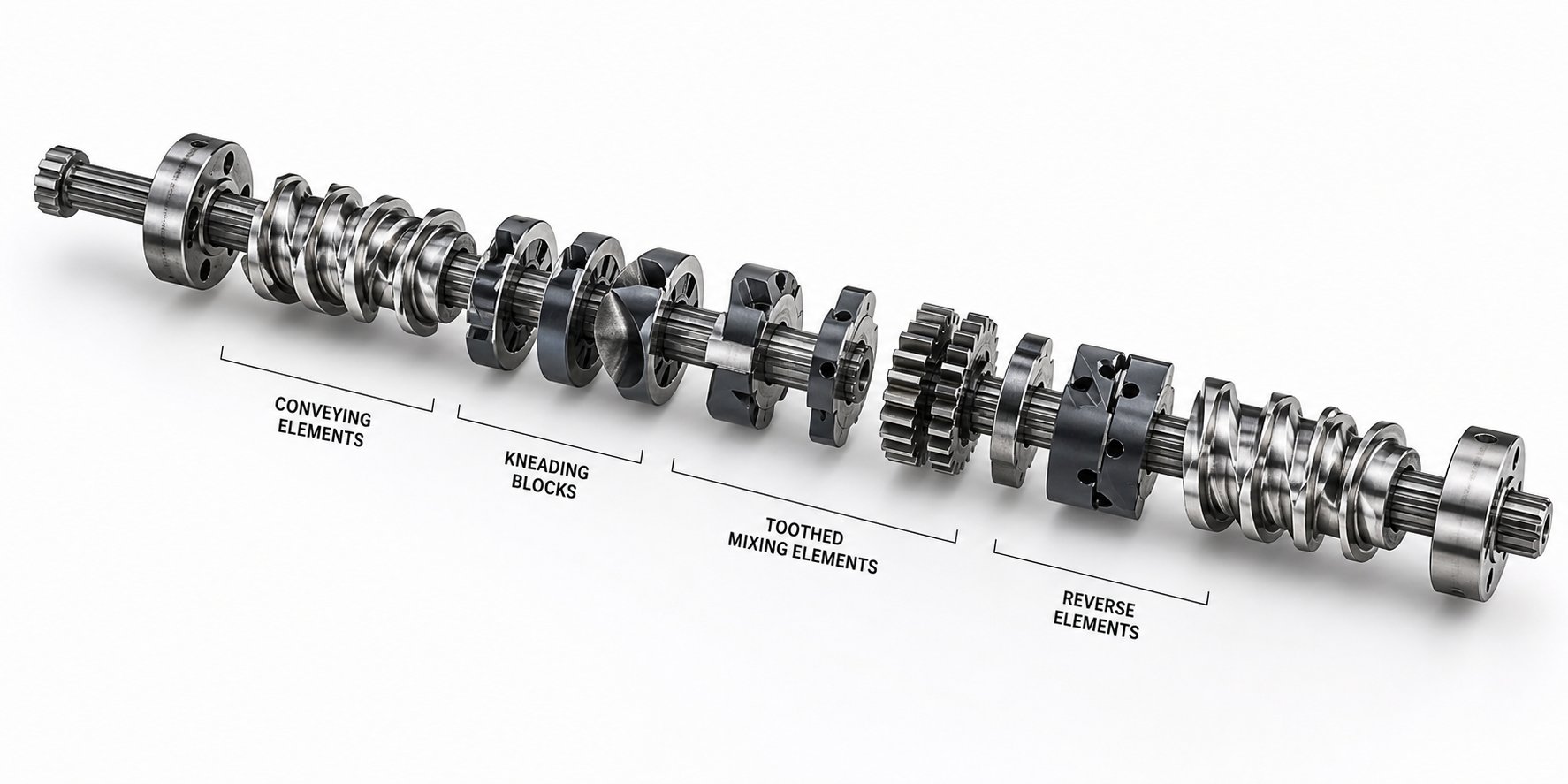
Here are the four primary element categories and what they do:
| Element Type | Geometry Description | Function | Typical Placement |
|---|---|---|---|
| Conveying Elements | Helical flights with varying pitch; deeper channels provide greater free volume | Transport material forward along the barrel without applying significant shear; higher pitch = faster conveying, lower fill | Feed zone, transitions between mixing sections, downstream of side-feed ports |
| Kneading Blocks | Series of elliptical discs stacked at offset angles (commonly 30, 45, 60, or 90 degrees) | Provide dispersive mixing (breaking agglomerates via shear) and distributive mixing (spreading additives uniformly); wider discs intensify dispersive action, narrower discs favor distribution | Melting zone, primary mixing zones, wherever intensive blending or filler dispersion is required |
| Toothed Mixing Elements | Cylindrical elements with multiple rows of teeth machined into the surface | Deliver distributive mixing with minimal shear input; split and recombine melt streams to homogenize additives gently | Secondary mixing zones, color blending sections, heat-sensitive formulation areas |
| Reverse (Left-Hand) Elements | Helical flights or kneading discs oriented opposite to the conveying direction | Push material backward, creating backpressure that increases fill, residence time, and mixing intensity upstream; form melt seals ahead of vent zones | Immediately before vent openings, at the end of high-shear mixing sections, wherever a pressure seal is needed |
The arrangement of kneading discs deserves extra attention because it directly determines mixing aggressiveness. Research from NC State University explains the differences clearly: forward-offset kneading elements are the least aggressive, neutral (90-degree) elements apply the most energy because they add residence time without conveying, and reverse kneading blocks create maximum flow restriction and shear. Disc thickness also matters — wider kneading discs promote stronger dispersive mixing, while narrower discs favor distributive blending.
What does this mean practically? A single screw plastic extruder forces you to live with one fixed screw geometry. A modular twin screw design lets you reconfigure the processing profile in a matter of hours. Running a glass-fiber-reinforced nylon compound today? Use aggressive kneading blocks for fiber wetting and dispersion. Switching to a heat-sensitive TPE blend tomorrow? Swap in gentler toothed mixing elements and reduce the number of kneading zones. Same machine, dramatically different process behavior.
Modular Barrel Configurations for Process Flexibility
The barrel isn't a single continuous tube, either. It's built from individual segments — each one corresponding to a section of the screw — that bolt together in sequence. Different barrel types serve different process functions:
- Solid (closed) barrels: Standard segments with no openings. They contain material under pressure and provide heating and cooling through jacket channels or cartridge heaters. These make up the majority of any barrel configuration.
- Vented barrels: Feature open ports that allow moisture, trapped air, or volatile gases to escape during processing. Often paired with vacuum pumps for devolatilization. Positioned downstream of reverse elements that create a melt seal, preventing vent flooding.
- Side-feed barrels: Include lateral openings designed for downstream addition of fillers, fibers, or secondary polymers via a side stuffer. This placement protects fragile additives like glass fibers from excessive shear by introducing them after the polymer is already melted.
- Liquid-injection barrels: Equipped with ports for injecting liquid additives — plasticizers, peroxides, silane coupling agents — directly into the melt stream at controlled positions along the barrel.
Rearranging barrel sections lets you reposition vent ports, add or remove side-feed locations, and change the overall processing length — all without purchasing an entirely new machine. Imagine you've been running a 40:1 L/D configuration for simple compounding. A new customer requires devolatilization of a recycled resin. By inserting a vented barrel segment and reconfiguring the screw elements to include a melt seal upstream of that vent, you adapt the existing machine to handle the new process.
This modularity is precisely why evaluating a twin screw extruder for sale demands more than checking the frame specifications. You need to know exactly which screw elements and barrel sections are included with the machine. A generous inventory of conveying elements, multiple kneading block configurations, reverse elements, and various barrel types dramatically expands what the machine can do over its lifetime. A listing that includes only a single screw configuration and no spare elements is a machine with limited versatility — and limited resale value.
There's one more critical factor that ties directly into long-term planning: every screw element and barrel liner is a wear part. Abrasive fillers grind down flight tips. Corrosive additives attack barrel surfaces. Over time, the clearance between screws and barrel increases, mixing efficiency drops, and throughput consistency suffers. Knowing the condition of these components at the time of purchase — and having a reliable source for precision replacements — isn't a minor detail. It's a major cost driver that deserves its own careful examination.
New vs Used Twin Screw Extruders and the Trade-Offs Involved
Wear parts, replacement costs, and long-term component sourcing all feed into a bigger question every buyer eventually confronts: should you buy new or used? The twin screw extruder price gap between these two paths can be enormous — often 40% to 60% or more — but the sticker price alone tells only a fraction of the story. Each route carries distinct advantages, risks, and hidden costs that play out over years of production.
Getting this decision right requires honest self-assessment about your production goals, risk tolerance, and operational capabilities. Let's walk through both sides so you can make a clear-eyed choice.
When Buying a Used Twin Screw Extruder Makes Sense
A used twin screw extruder is not a compromise — it's a strategy, and a smart one in the right circumstances. You'll find used extruders for sale across dealer networks, online industrial marketplaces, and auction platforms, often from well-known European and American manufacturers like Coperion, Leistritz, Berstorff, and American Leistritz. These machines were engineered for decades of service, and many still have substantial productive life remaining.
Scenarios where buying used makes strong economic sense include:
- Proven, stable production environments: If your process, formulation, and output requirements are well-defined and unlikely to change, a used extruder that matches those specs delivers immediate value without the premium of custom engineering.
- Budget-constrained startups: A startup entering the compounding business can acquire a quality used twin screw extruder for a fraction of the new-machine cost, preserving capital for raw materials, downstream equipment, and working capital.
- Pilot and trial operations: Before committing to a full production line, running trials on a used machine reduces financial exposure while generating real-world process data.
- Redundancy and backup capacity: Adding a backup machine to cover maintenance downtime or demand surges rarely justifies new-equipment pricing. A well-inspected used extruder fills this role perfectly.
- Faster deployment: New industrial extruders can carry lead times of 16 to 30 weeks or longer. A used machine sitting in a dealer's warehouse can ship within days, getting your line running months sooner.
The cost savings are real. A used extruder typically sells at 30% to 60% of the original new-equipment price, depending on age, condition, and included accessories. Combined with faster delivery, the financial case is compelling — as long as the mechanical condition checks out.
When New Equipment Is the Better Investment
New equipment earns its higher twin screw extruder price in situations where the used market simply can't deliver what you need. Here's when paying the premium makes sense:
- Cutting-edge process requirements: Latest-generation gearboxes with higher torque densities, advanced screw element metallurgies, and precision barrel-bore tolerances push processing performance beyond what older machines can achieve. If your formulations demand these capabilities, new is the only realistic path.
- High-utilization production lines: A machine running 24/7 across three shifts amplifies every efficiency difference. Modern drive systems can deliver energy consumption as low as 1.5 kWh/kg compared to 2.5 kWh/kg on older models — a gap that translates to tens of thousands of dollars per year in electricity costs alone.
- Applications demanding tight tolerances: Pharmaceutical extrusion, medical-grade compounding, and high-precision masterbatch production require machines built to current dimensional standards with full documentation and traceability.
- Full warranty and OEM support: New machines typically include comprehensive warranties — often two years on the complete system and up to five years on core components like gearboxes. For operations without deep in-house maintenance expertise, this safety net is invaluable.
- Custom configurations: Need a non-standard L/D ratio, a specific barrel metallurgy, or integration with an automated downstream system? New-build orders allow full customization that the used market can rarely match.
Modern control systems also deserve attention. New machines feature touchscreen HMIs with recipe storage, real-time torque monitoring, data logging, and remote diagnostics — capabilities that may be absent or outdated on older used extruders. These aren't luxuries; they're tools that reduce scrap, speed changeovers, and document process consistency for quality audits.
Key Trade-Offs to Evaluate
The decision between new and used isn't binary — it's a multivariable trade-off. This comparison lays out the critical dimensions side by side:
| Factor | New Twin Screw Extruder | Used Twin Screw Extruder |
|---|---|---|
| Purchase Price | Higher — typically $80,000 to $800,000+ depending on size and configuration | Lower — often 30% to 60% of new-machine pricing |
| Lead Time | 16 to 30+ weeks for build and delivery | Immediate to 4 weeks from dealer inventory |
| Warranty | Full OEM warranty (commonly 1-2 years, with extended core-part coverage) | Limited or none — some dealers offer 30- to 90-day mechanical warranties |
| Customization | Fully configurable — barrel length, screw design, controls, metallurgy | Limited to what's available or what can be retrofit |
| Technology Generation | Current — latest drive efficiency, torque density, and control systems | Previous generation — may lack modern controls, energy efficiency, or torque capacity |
| Energy Efficiency | Optimized — modern drives and thermal management reduce per-kg processing cost | Variable — older motors and heating systems typically consume more energy |
| Risk Factors | Low — new components, full documentation, OEM backing | Moderate to high — depends on inspection rigor, maintenance history, and component condition |
The total cost of ownership — not just the purchase price — should drive the decision. A cheaper used extruder with worn screws, an inefficient motor, and no spare elements can easily cost more over five years than a new machine with modern efficiency and full warranty coverage.
Industry data reinforces this point. A TCO analysis comparing budget and high-quality extruders found that initial purchase price accounted for only 30% to 50% of the five-year total cost, with energy, maintenance, and downtime making up the rest. A $60,000 machine with frequent screw replacements, gearbox repairs, and 10% unplanned downtime accumulated nearly $490,000 in total costs over five years — compared to $270,000 for a $150,000 machine that ran reliably with minimal intervention.
The lesson? Whether you're evaluating used extruders or configuring a new build, run the numbers beyond day one. Factor in energy consumption at your planned operating hours, expected screw and barrel replacement intervals based on your materials, and the revenue impact of downtime. That five-year view frequently reverses what initially looked like the "obvious" choice.
Of course, these cost projections are only as reliable as the condition assessment behind them. For buyers leaning toward the used market, the critical next step is knowing exactly what to inspect — and what red flags to walk away from — before signing a purchase agreement.
Application-Specific Twin Screw Extruder Selection
Condition assessments and cost projections only matter if you're inspecting the right type of machine in the first place. And that's where a surprising number of buyers stumble. They fixate on price, brand, or availability — then discover the extruder they purchased doesn't match the demands of their actual application. A machine perfectly suited for masterbatch production can be a poor performer in pharmaceutical extrusion, and a lab-scale unit will never satisfy a high-volume compounding line, no matter how well-maintained it is.
Matching the extruder to the application is the step that prevents two equally painful outcomes: overspending on capability you'll never use, and underbuying a machine that chokes on your real-world requirements.
Compounding, Masterbatch, and Pelletizing Applications
Plastics compounding and masterbatch production represent the largest market for twin screw extruders — and for good reason. These processes demand exactly what co-rotating designs deliver best: high torque, intense dispersive mixing, and the flexibility to handle a wide variety of formulations on a single platform.
A twin screw compounding extruder for these applications typically features mid-to-large screw diameters (40 mm to 135 mm), L/D ratios of 40:1 or higher to accommodate multiple feeding and venting zones, and high-torque gearboxes capable of processing heavily filled systems. Imagine dispersing 60% calcium carbonate into a polyethylene matrix, or breaking down pigment agglomerates to achieve perfectly uniform color in a masterbatch. These tasks require aggressive kneading block configurations and substantial energy input — specs that co-rotating machines handle routinely.
When evaluating any twin screw extruder for sale in this category, prioritize these specifications:
- Torque density: Look for machines delivering 11 Nm/cm³ or higher for demanding filled compounds. Modern designs reach 18 Nm/cm³, allowing processing of formulations that would stall older gearboxes.
- Side-feed capability: Downstream addition of glass fibers, minerals, or secondary polymers protects fragile additives from excessive shear and allows precise control over filler incorporation.
- Vacuum venting: Multiple vent ports handle moisture removal and devolatilization — essential for recycled resins and hygroscopic engineering plastics like nylon.
- Pelletizing compatibility: Ensure the extruder's output characteristics — melt pressure, temperature, and flow rate — match your downstream strand pelletizer or underwater pelletizing system.
Laboratory and Benchtop Extruders for R&D
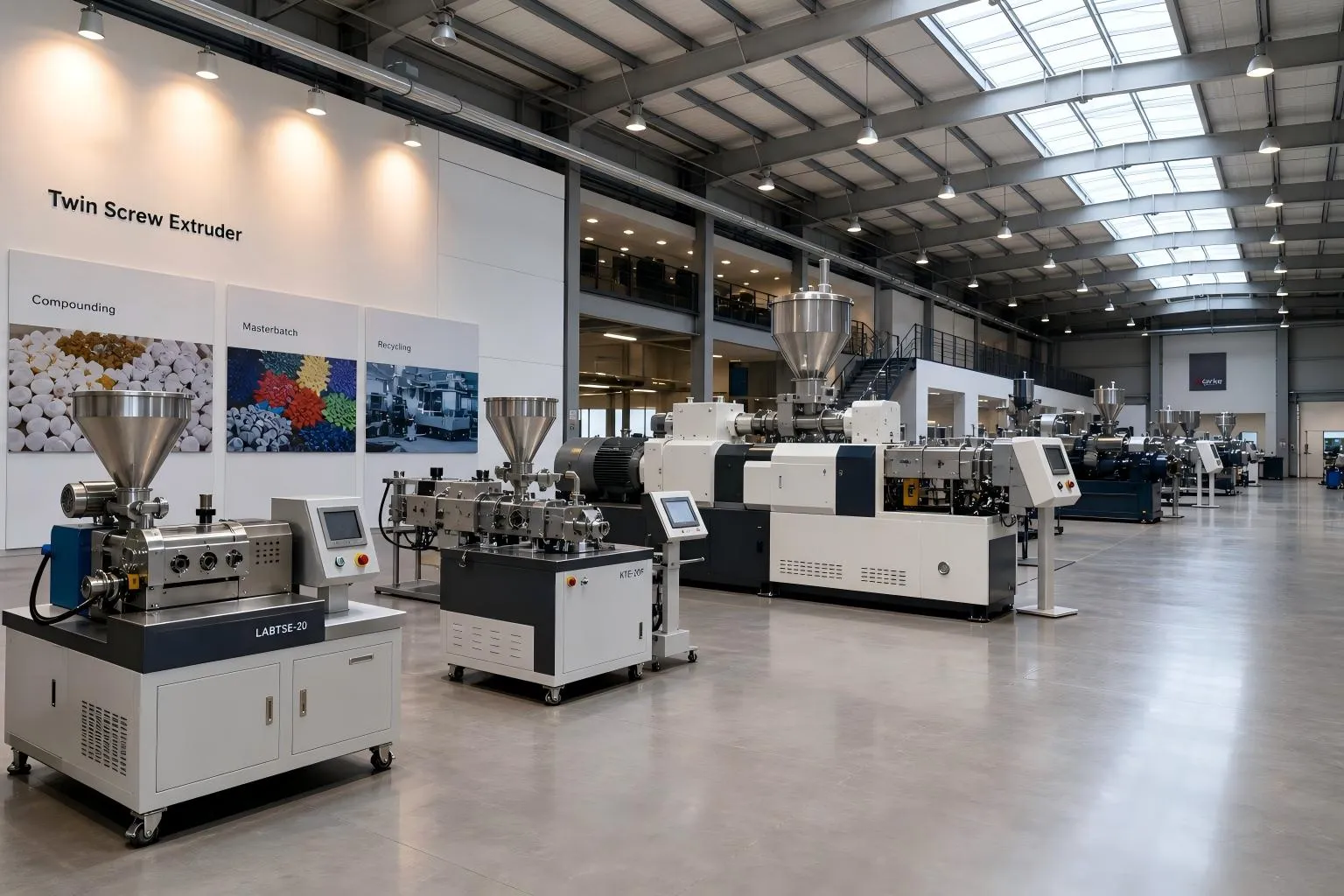
What if you need to test a new formulation before committing to a production-scale machine? That's where a laboratory twin screw extruder earns its place. These compact systems — typically featuring screw diameters between 16 mm and 26 mm — replicate the processing principles of their industrial counterparts while consuming only grams to a few kilograms of material per run.
A lab twin screw extruder lets R&D teams screen formulations rapidly, validate processing parameters, and generate sample pellets for mechanical testing — all without tying up a production line or consuming expensive raw materials in large quantities. Industry data shows that standard lab-scale twin screw extruder models offer L/D ratios of 32:1 to 48:1 and minimum batch sizes as low as 500 grams, making them practical for early-stage formula screening and academic research alike.
A benchtop twin screw extruder goes even further in space efficiency. These units fit on a standard laboratory bench and include full process capability — independent temperature zones, modular screw elements, vacuum venting, and PLC-based controls. For universities, pharmaceutical R&D centers, and material development labs, they provide authentic extrusion behavior at a fraction of the cost and footprint of production equipment.
The key advantage for buyers? A lab scale twin screw extruder generates process data that scales directly to production machines. Formulations validated at the bench level translate to industrial settings with predictable results, cutting trial-and-error time and reducing the risk of costly surprises during scale-up.
Specialty Applications in Food, Pharma, and Recycling
Beyond plastics compounding and R&D, twin screw extruders serve industries with highly specialized — and often non-negotiable — requirements. Selecting the wrong machine for these applications doesn't just hurt efficiency; it can create regulatory violations, product safety issues, or complete process failure.
Each specialty sector brings its own set of demands:
- Food extrusion: Sanitary design with food-grade contact surfaces, easy disassembly for thorough cleaning between recipes, precise temperature control for starch gelatinization and protein texturization, and moisture management capability for snack pellets and pet food products.
- Pharmaceutical hot-melt extrusion: GMP-compliant construction, tight residence time control for consistent drug-polymer dispersions, small-diameter screws (often 16 to 26 mm) for low-volume batch processing, and full data logging to meet validation and traceability requirements.
- Plastics recycling: Robust degassing systems to handle volatile contaminants in post-consumer feedstock, wear-resistant barrel and screw metallurgy to withstand abrasive impurities, and high-torque drives to process inconsistent, variable-quality input streams without stalling.
- PVC profile and pipe extrusion: Counter-rotating or conical twin screw designs for low-shear, positive-displacement conveying that prevents thermal degradation within PVC's narrow processing window of roughly 165 to 185 degrees Celsius.
- Wood-plastic composites (WPC): High-torque gearboxes, specialty screw elements designed for fibrous materials, and barrel configurations that manage the significant moisture released during processing of natural fiber fillers.
The pattern is clear: every application places different stresses on the machine and demands different design features. A twin screw extruder optimized for food processing will have sanitary barrel clamps and polished surfaces that are irrelevant — and unnecessarily expensive — for a recycling operation. Conversely, a recycling-grade machine lacks the documentation, surface finishes, and control precision that pharmaceutical regulators require.
Choosing based on application first, then narrowing by specs, condition, and price, consistently leads to better outcomes than the reverse approach. Yet even with the perfect application match, every machine — new or used — will eventually face wear, degradation, and component failure. How you plan for those inevitable costs before signing a purchase agreement separates buyers who get reliable, long-term value from those who end up trapped in an escalating cycle of reactive repairs.
Maintenance, Wear, and Lifecycle Cost Considerations
The purchase price of any twin screw extruder — new or used — is just the opening act. The real financial story unfolds over years of operation, driven by wear rates, replacement part costs, energy consumption, and unplanned downtime. Ignore these factors during the buying process, and that attractively priced machine quietly becomes the most expensive piece of equipment on your floor.
Here's the uncomfortable truth: from the moment the screws start turning, wear begins. Every rotation grinds screw flight surfaces against the barrel wall, and every kilogram of abrasive filler accelerates that process. Understanding how wear develops, where it hits hardest, and what it costs to manage is essential for calculating the true plastic extrusion machine cost — not just the invoice price, but the ongoing expense of keeping the machine productive.
Common Wear Points and How to Monitor Them
The screw elements and barrel liners absorb the worst punishment. In a co-rotating twin screw extruder, the clearance between the screw flight outside diameter and the barrel bore inner surface is typically minimal — around 0.001 inches per side, per inch of diameter — to maintain efficient shear and heat transfer. As that clearance grows, everything degrades: mixing intensity drops, melt temperature becomes inconsistent, and throughput fluctuates.
Three distinct wear mechanisms attack these components simultaneously:
- Abrasive wear: The most common culprit. Fillers like calcium carbonate, glass fiber, titanium dioxide, and mineral additives act like sandpaper against screw flights and barrel walls. Hard materials remove material from softer surfaces, steadily widening clearances. Some aggressive fillers can reduce screw and barrel useful life by 50% or more compared to unfilled polymers.
- Adhesive wear: Occurs when screw flight lands physically contact the barrel surface — metal touching metal under extreme pressure. The surfaces briefly weld and then fracture, leaving burrs, galling marks, and scored barrel bores. Misalignment, improper screw design, or solids wedging can all trigger this damaging mechanism.
- Corrosive wear: Chemical attack gradually destroys metal surfaces, making them vulnerable to accelerated mechanical wear. PVC processing and fluoropolymer extrusion are particularly aggressive, attacking components with high iron content.
How do you catch wear before it cripples production? Monitor these warning signs:
- Increased melt temperature: As clearances widen, more material leaks backward over flight tips instead of moving forward. The recirculating material absorbs additional shear energy, raising melt temperature even when barrel heater setpoints haven't changed.
- Reduced output at the same screw speed: Wider clearances reduce conveying efficiency. Operators compensate by increasing screw speed — which accelerates wear further, creating a vicious cycle.
- Inconsistent product quality: Uneven mixing, visible gels, poor filler dispersion, and fluctuating pellet dimensions all point to degraded screw and barrel geometry.
- Rising motor amperage: A gradual upward drift in torque demand at constant speed can indicate wear-induced processing inefficiencies or material buildup on damaged surfaces.
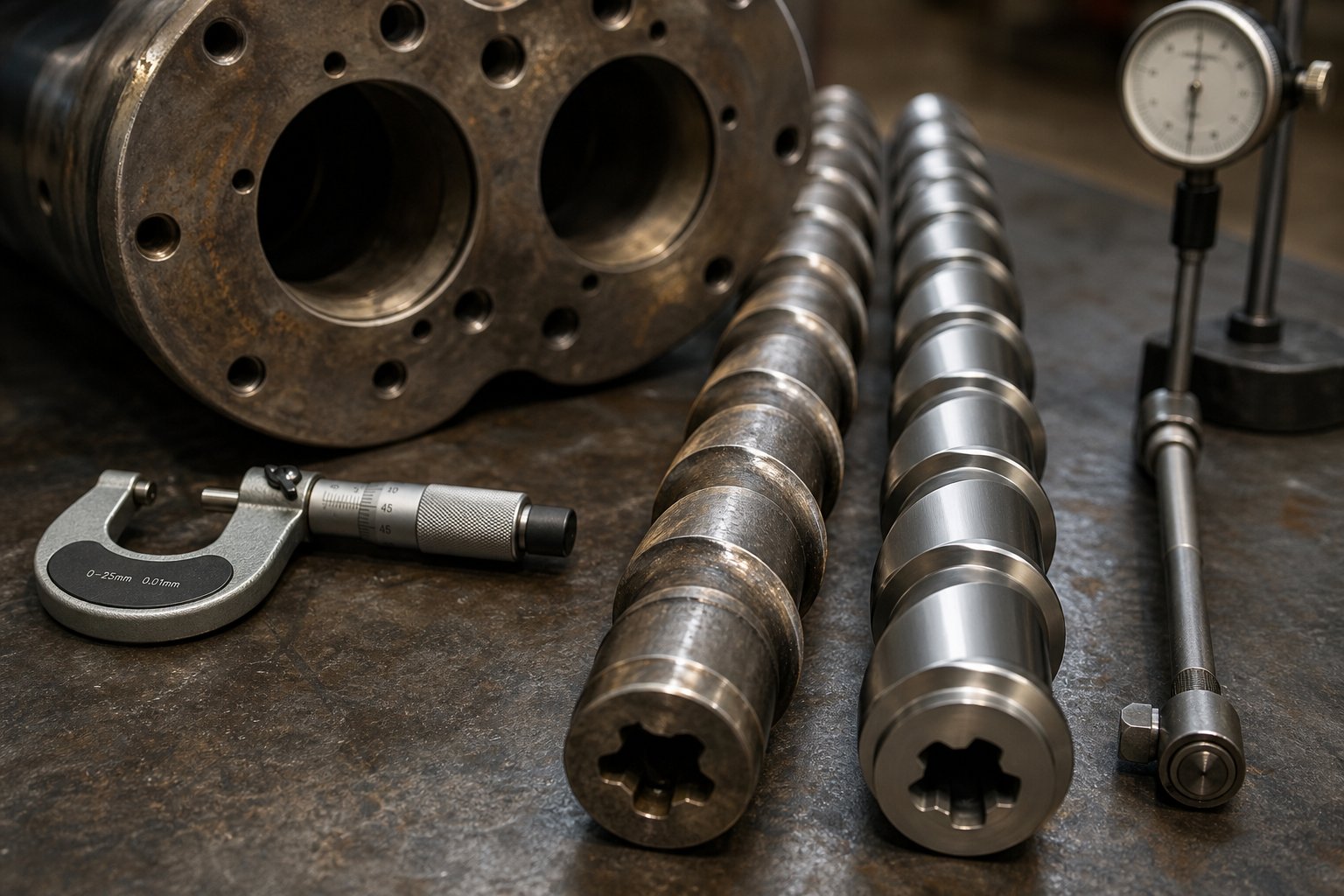
The most reliable measurement technique is direct dimensional inspection. Using calibrated bore gauges at multiple points along the barrel length reveals localized wear patterns — kneading zones typically wear fastest. For screw elements, measuring the outer diameter of flight tips with a micrometer and comparing to original specifications exposes remaining usable life. Industry guidelines suggest that once the gap between screw flight and barrel wall exceeds 0.3 to 0.5 mm (depending on screw size), efficiency drops significantly, and replacement should be planned.
For a 75 mm extruder processing filled compounds, screw and barrel components may need replacement or refurbishment every two to three years. Running the same machine on unfilled polymers could extend that interval substantially. The material you process dictates your maintenance calendar more than anything else.
Lifecycle Costs Beyond the Purchase Price
When buyers focus solely on the extruder machine price, they miss the recurring expenses that accumulate year after year. A realistic lifecycle budget accounts for every category below:
- Replacement screw elements: Kneading blocks wear fastest and need the most frequent replacement. A new set of screw elements for a 75 mm machine can range from $8,000 to $15,000 depending on metallurgy and element count. Bimetallic elements cost more upfront but last two to three times longer than standard nitrided steel when processing abrasive fillers.
- Barrel liner refurbishment or replacement: Modular barrel designs — where individual segments can be swapped independently — save 30% to 40% compared to replacing an entire monolithic barrel. Budget for segment replacement based on the wear intensity of each processing zone.
- Gearbox maintenance: Oil changes every 2,000 to 3,000 operating hours, annual oil analysis to detect wear metals, and bearing inspections are non-negotiable. A single oil change with filter and labor runs $500 to $800 — but neglecting it can lead to a gearbox replacement costing $15,000 to $25,000.
- Heater band replacement: Cast aluminum or ceramic band heaters degrade over time, with typical service life of six to twelve months per zone. Individual zone replacement costs $100 to $300, but a failed heater that goes undetected can overheat polymer, warp the barrel, and trigger far more expensive repairs.
- Energy consumption: Often the largest single operating cost over a machine's lifetime. Older drives and heating systems can consume 2.5 kWh/kg or more, while modern systems achieve 1.5 kWh/kg — a difference that compounds dramatically across thousands of operating hours per year.
- Unplanned downtime: The hidden killer. A single day of unplanned stoppage on a high-output compounding line can cost $10,000 or more in lost production, not counting emergency repair labor and expedited parts shipping.
A practical budget benchmark? Plan for 2% to 3% of the machine's value annually for routine maintenance and spare parts. For a $150,000 extruder, that translates to $3,000 to $4,500 per year — covering oil, filters, seals, calibration, and minor repairs. Major overhauls like full screw and barrel replacement should be budgeted separately and amortized over a five-year cycle to smooth out the financial impact.
Sourcing high-quality replacement screw and barrel components is where the real leverage lies. Bimetallic barrel liners with high tungsten carbide content resist abrasive wear dramatically better than standard nitrided steel. Industry data shows bimetallic screws and barrels lasting 12 to 24 months processing high-filler materials — compared to just 3 to 6 months for ordinary nitrided steel. The initial cost premium is higher, but the per-kilogram processing cost drops substantially when you're replacing components half as often.
Maintenance planning should begin before the purchase, not after the first failure. Every twin screw extruder buyer should know the expected wear rate for their specific materials, the cost and lead time of replacement components, and the maintenance infrastructure needed to keep the machine running at peak efficiency.
A documented maintenance history also pays dividends beyond day-to-day operations. Used extrusion equipment with complete service records and verified component measurements commands 10% to 15% higher resale value — a meaningful difference on a six-figure asset. Whether you're buying or eventually selling, maintenance discipline protects your investment at both ends of the ownership cycle.
Knowing what wears and what it costs to maintain is essential preparation. But for buyers evaluating used equipment specifically, these general principles need to become a concrete, step-by-step inspection checklist — one that reveals the true mechanical condition hiding behind a polished exterior and an attractive asking price.
Pre-Purchase Inspection and Evaluation Checklist
A fresh coat of paint and a competitive asking price can make any used extruder for sale look like a bargain. But surface appearance tells you almost nothing about the mechanical reality inside the barrel, gearbox, and drive system. Without a structured inspection, you're essentially gambling — and the stakes are five or six figures.
The checklist below transforms that gamble into a data-driven decision. Whether you're examining used extrusion equipment for sale at a dealer's warehouse or reviewing inspection reports remotely, these steps expose the hidden condition issues that determine whether a machine is a genuine value or a money pit waiting to happen.
Mechanical and Electrical Inspection Points
Work through the machine systematically, starting at the power source and moving forward through the barrel to the die. Skipping steps — or inspecting out of sequence — risks missing problems that only reveal themselves in context. Here's the sequence experienced evaluators follow:
- Gearbox assessment: Listen for unusual grinding, whining, or knocking sounds during operation. Request oil analysis results showing wear metal concentrations — elevated iron, copper, or chromium particles signal internal gear or bearing degradation. Check for oil leaks around shaft seals and housing joints. Measure gear backlash if access permits; excessive play indicates worn teeth or bearing races.
- Drive motor evaluation: Record amperage draw under load and compare it to the motor's rated specifications. A motor consistently pulling near its maximum rating at moderate screw speeds suggests either internal motor issues or excessive downstream resistance from worn components. Verify cooling fan operation and check bearing cap temperatures with an infrared thermometer — temperatures above 80 degrees Celsius warrant deeper investigation.
- Barrel bore measurements: This is the single most critical step. Using a calibrated dial bore gauge, take readings every two to three inches along the entire barrel length. Compare measurements against the original OEM bore specification. Pay special attention to the zones beneath kneading blocks — these areas experience the heaviest wear. Any section where bore diameter exceeds the original spec by more than 0.3 to 0.5 mm (depending on screw size) is approaching the end of its useful life.
- Screw element inspection: Measure the outer diameter of each screw element's flight tips with a micrometer. Compare to original specifications. Look for chipped flights, scored surfaces, and uneven wear patterns that indicate misalignment or crash damage. Assess the overall element inventory — are spare kneading blocks and conveying elements included, or is the machine sold with only the currently installed configuration?
- Heating and cooling zone testing: Power up every barrel zone individually. Each zone should reach its setpoint within a reasonable time and hold temperature within plus or minus two degrees Celsius. Test cooling responsiveness by commanding a temperature drop and measuring how quickly each zone responds. Sluggish cooling indicates blocked water passages, failed solenoid valves, or corroded cooling channels.
- Control system verification: Inspect the PLC or HMI for error logs, alarm history, and software version. Confirm that all temperature controllers, pressure transducers, and screw speed feedback signals read accurately. Outdated or non-functional controls can cost $5,000 to $20,000 to replace — a hidden expense that rarely appears in the listing description.
- Die and adapter inspection: Check die bolt torque and look for evidence of polymer leakage around flanges. Examine flow channels for scoring, corrosion, or buildup. A damaged die is a safety hazard and a replacement cost that should factor into your offer price.
The barrel and screw element condition is, without question, the single most important variable in used extruder equipment value. As industry specialists emphasize, there is no way to accurately determine the condition or value of an extruder without measuring screw and barrel wear — all other parts aside, these components reveal the machine's true worth.
Documentation and History Red Flags
Mechanical measurements tell you where the machine is today. Documentation tells you how it got there — and where it's headed. Gaps in the paper trail should raise immediate concern. Watch for these warning signs:
- Missing or incomplete maintenance records: A machine with no documented service history may have been neglected, over-maintained in some areas and ignored in others, or simply operated until failure. Any of these scenarios increases your risk.
- Mismatched serial numbers: If the serial numbers on the gearbox, motor, barrel segments, or control panel don't match the original OEM documentation, components have been swapped. That's not necessarily a problem — but undocumented replacements raise questions about what failed and why.
- Non-OEM modifications without documentation: Custom barrel ports, rewired control panels, or aftermarket drive components can be perfectly functional — or they can mask underlying problems. Without engineering documentation explaining the modification, you're accepting unknown risk.
- Evidence of crash damage or overheating: Discoloration on barrel segments, warped or bent screw elements, and gouging marks inside the barrel bore all indicate severe operational incidents. Machines that have experienced screw-to-barrel contact events often suffer hidden damage to gearbox thrust bearings as well.
- Absent OEM manuals and spare parts lists: Without original documentation, identifying correct replacement parts becomes a time-consuming guessing game. Manuals also contain critical torque specifications, clearance tolerances, and maintenance intervals that generic knowledge can't replace.
- No process history: Knowing what materials the machine processed reveals its likely wear profile. A machine that ran 70% calcium carbonate filler for five years has a very different remaining life than one that processed unfilled polyethylene.
Having a trusted screw and barrel supplier in your corner during the evaluation process is not optional — it's essential. A specialist manufacturer can interpret bore measurements, assess remaining element life against your specific material requirements, and quote precision replacements before you finalize the purchase. This transforms the inspection from a pass-fail exercise into a total cost calculation: purchase price plus any component replacements needed to bring the machine to full operating specification.
Specialized manufacturers like NANHAIYA offer factory-direct screw and barrel solutions for twin screw extruders, combining expert knowledge of wear metallurgy and dimensional standards with the ability to supply replacement components directly. Having this kind of resource available during the evaluation stage — not just after the purchase — helps buyers make confident, data-backed decisions on used extrusion equipment for sale.
A thorough inspection protects you from buying someone else's problem. But knowing what to inspect is only half the equation. Knowing where to find quality machines — and which sourcing channels carry the least risk for the best value — completes the picture and positions you for long-term success.
Where to Find Twin Screw Extruders and Build a Reliable Supply Chain
You know what to inspect and which red flags to walk away from. The next question is practical: where do you actually find quality machines? The sourcing landscape for twin screw extruders for sale is broader than most buyers realize — and each channel carries a distinct combination of pricing, risk, and convenience. Choosing the wrong channel doesn't just affect the purchase price. It shapes your warranty options, delivery timeline, and long-term access to support and components.
Five primary sourcing channels serve today's market. Some buyers default to whichever channel they encounter first — typically an online marketplace listing or a dealer advertisement. That's a mistake. Each channel suits different buyer profiles, budgets, and risk tolerances. Understanding the full landscape before committing gives you leverage and options that reactive buyers never discover.
Sourcing Channels and Their Pros and Cons
One option that experienced buyers gravitate toward — but newcomers frequently overlook — is rebuilding an existing extruder with factory-direct screw and barrel components. Instead of purchasing a completely new machine or accepting the wear condition of a used one as-is, a rebuild restores critical processing components to like-new tolerances at a fraction of the full replacement cost. It's an approach worth evaluating before any other channel, especially when budget discipline matters.
Here's how the five main sourcing channels compare across the factors that matter most:
| Sourcing Channel | Typical Price Range | Lead Time | Warranty Availability | Risk Level | Customization Options |
|---|---|---|---|---|---|
| Rebuild / Rebarrel (Factory-Direct Components) | 20% to 40% of new machine cost | 4 to 10 weeks for component manufacturing and installation | Component warranty from the screw and barrel manufacturer | Low — you control the scope and quality of the rebuild | High — screw elements and barrel segments can be specified to match current process needs |
| OEM New Purchase | $80,000 to $800,000+ | 16 to 30+ weeks | Full OEM warranty (1 to 5 years depending on component) | Low | Fully configurable — barrel length, metallurgy, controls, drive system |
| Specialized Used Equipment Dealer | 30% to 60% of new pricing | Immediate to 4 weeks | Limited — typically 30 to 90 days mechanical | Low to moderate — dealers inspect and often recondition machines | Limited to available inventory and retrofit options |
| Online Industrial Marketplace | Varies widely — bargains and overpriced listings coexist | Immediate to 2 weeks (shipping not included) | Rarely offered — most sales are as-is | Moderate to high — condition descriptions may be incomplete or optimistic | None — you buy what's listed |
| Auction House | Lowest potential prices — 15% to 40% of new | Immediate upon winning bid | None — all sales final, as-is, where-is | High — limited or no pre-sale inspection, no returns | None |
Each channel serves a purpose. A buyer commissioning a brand-new production line with unique process requirements will naturally work with a twin-screw extruder manufacturer to specify every detail from scratch. A startup looking for a reliable extruder for sale to launch pilot production may find the best value at a reputable used equipment dealer who has already vetted and reconditioned inventory. An experienced operator looking to add backup capacity might hunt for a deal at auction — provided they have the inspection expertise and mechanical resources to handle whatever condition the machine arrives in.
Online industrial marketplaces offer the broadest selection of extruders for sale, ranging from compact benchtop units to full production lines. You'll find everything from a plastic extruder machine for sale listed by a closing factory to a late-model machine offered by a dealer expanding online. The sheer volume of listings makes comparison shopping efficient — but it also demands sharp buyer diligence. Condition descriptions are often vague, photographs may not show critical details, and there's no substitute for the hands-on inspection outlined in the previous section.
Auction houses present the highest risk but occasionally yield remarkable deals on extrusion equipment for sale, particularly when entire plants liquidate. The catch? All sales are final, pre-sale inspection windows are short, and you're competing against experienced dealers who know exactly what they're bidding on. Without a confident understanding of component condition and rebuild costs, auction purchases can turn into expensive projects rather than bargains.
The rebuild and rebarrel path deserves special emphasis because it occupies a strategic middle ground. Imagine you already own — or can acquire inexpensively — a twin screw extruder with a sound gearbox, motor, and frame, but worn screws and barrels. Rather than replacing the entire machine, sourcing precision-manufactured screw elements and barrel liners from a factory-direct supplier restores processing capability to original or even improved specifications. You keep the capital investment manageable, tailor the new components to your current formulations (perhaps upgrading metallurgy for abrasive-resistant bimetallic construction), and get back into production in weeks rather than months. For buyers browsing any plastic extruder for sale listing and hesitating over component condition, this path turns a concern into an opportunity.
Building a Reliable Supply Chain for Long-Term Success
Regardless of which sourcing channel you choose, one relationship matters more than any other for long-term operational success: your screw and barrel component supplier. This isn't a one-time transaction. It's an ongoing partnership that affects replacement lead times, component quality, wear-part optimization, and ultimately your per-kilogram processing cost for as long as you operate the machine.
Why is this relationship so critical? Consider the math. Over a typical ten-year ownership period, a mid-size compounding extruder may cycle through three or four complete sets of screw elements and two or more barrel liner replacements. The cumulative cost of those components can approach — or exceed — the original extruder machine for sale price. A supplier who delivers precision-manufactured components with optimized metallurgy, competitive pricing, and fast turnaround directly impacts your profitability every year.
Here's what to look for in a screw and barrel partner:
- Manufacturing expertise: The supplier should produce components in-house using CNC machining, precision grinding, and controlled heat treatment — not simply resell third-party parts with a markup.
- Material science knowledge: Different applications demand different metallurgies. Nitrided steel, bimetallic alloys with tungsten carbide or boron content, powder metallurgy tool steels — your supplier should recommend the right material for your specific wear profile, not just offer whatever is in stock.
- Dimensional accuracy: Screw elements and barrel bores must meet OEM tolerances to maintain processing efficiency. A supplier who can match or exceed original specifications ensures that replacement components perform like new — not like approximations.
- Breadth of application coverage: Your needs may evolve. A supplier who supports extrusion, injection molding, compounding, pelletizing, and custom replacement projects gives you a single source that grows with your operation.
NANHAIYA's factory-direct screw and barrel product line exemplifies this approach, serving extrusion plants, equipment buyers, and procurement teams with solutions spanning compounding, pelletizing, injection molding, and replacement projects. Their direct manufacturing model eliminates intermediary markups while providing the technical depth needed to match components precisely to your machine and your materials. For buyers evaluating any twin screw extruder for sale — new, used, or slated for a rebuild — having a resource like this in your supply chain transforms component sourcing from a recurring headache into a competitive advantage.
Building this supply chain relationship early pays dividends immediately. During the pre-purchase evaluation, your component supplier can interpret barrel bore measurements and estimate remaining element life. After the purchase, they supply replacement parts on a planned schedule rather than emergency orders. And when you eventually sell or upgrade the machine, documented component history and a proven maintenance program protect resale value.
The buyers who consistently achieve the best outcomes in this market share three traits. They understand their process requirements deeply enough to match machine type, rotation direction, and specifications to their actual application. They inspect equipment with disciplined rigor — measuring what matters, demanding documentation, and walking away from machines that don't survive scrutiny. And they secure reliable component suppliers who deliver precision parts, expert guidance, and responsive service for the entire lifecycle of the equipment.
Skip any one of those three steps, and the cost traps hidden in every listing will find you. Follow all three, and you turn a complex, high-stakes purchase into a calculated investment that delivers returns for years to come.
Frequently Asked Questions About Buying a Twin Screw Extruder
1. How much does a twin screw extruder cost new vs used?
A new twin screw extruder typically ranges from $80,000 to over $800,000 depending on screw diameter, L/D ratio, and configuration. Used machines generally sell at 30% to 60% of the new price. However, purchase price alone can be misleading — total cost of ownership over five years, including energy, screw and barrel replacements, gearbox maintenance, and downtime, often accounts for 50% to 70% of cumulative expenses. A lower-priced used machine with worn components may ultimately cost more than a higher-priced new unit with modern efficiency and full warranty coverage.
2. What is the difference between co-rotating and counter-rotating twin screw extruders?
Co-rotating extruders spin both screws in the same direction at high speeds (400 to 900+ rpm), generating intense shear and excellent distributive and dispersive mixing. They dominate in compounding, masterbatch, and reactive extrusion. Counter-rotating extruders turn screws in opposite directions at lower speeds (30 to 150 rpm), producing gentle positive-displacement conveying with minimal shear — ideal for thermally sensitive materials like PVC. Conical counter-rotating designs use tapered screws for compact footprints and progressive compression. Choosing the wrong rotation type for your material is one of the costliest purchasing mistakes buyers make.
3. How do I inspect a used twin screw extruder before buying?
Start with the gearbox — listen for unusual noise and request oil analysis results showing wear metal levels. Measure the barrel bore at multiple points using a calibrated dial bore gauge, comparing readings to OEM specs. Inspect screw element flight-tip diameters with a micrometer. Test every heating and cooling zone individually. Verify control system functionality and check for error logs. Review documentation for maintenance records, matching serial numbers, and evidence of crash damage. Partnering with a specialized screw and barrel manufacturer like NANHAIYA (nhyscrews.com/products) during evaluation helps interpret wear measurements and estimate rebuild costs before you commit.
4. What screw diameter and L/D ratio do I need for my application?
Screw diameter determines throughput scale: 20-35 mm suits lab and pilot work (5-50 kg/hr), 40-75 mm handles specialty compounding (100-1,000 kg/hr), and 90 mm and above serves high-volume production (2,000-4,000+ kg/hr). L/D ratio controls processing length — ratios of 40:1 to 52:1 accommodate multiple feeding, mixing, and venting zones for complex formulations, while 32:1 to 36:1 works for simpler tasks. Match both specs to your target output, material complexity, and downstream equipment constraints rather than selecting based on availability or price alone.
5. How often do twin screw extruder screws and barrels need replacement?
Replacement frequency depends heavily on processed materials. Abrasive fillers like glass fiber, calcium carbonate, and titanium dioxide can wear screw elements and barrel liners in as little as 3 to 6 months with standard nitrided steel. Bimetallic components with tungsten carbide content extend service life to 12 to 24 months under similar conditions. For a 75 mm extruder processing filled compounds, plan for full screw and barrel replacement every two to three years. Budget roughly 2% to 3% of machine value annually for routine maintenance, and source high-quality factory-direct replacements from specialists like NANHAIYA to minimize per-kilogram processing costs.
Written by
Nanhaiya Technical Team
Zhoushan Nanhaiya Plastic Machinery Co., Ltd.
The Nanhaiya technical team supports screw and barrel manufacturing projects through application review, technical communication, custom manufacturing coordination, and production and quality control.
Discuss Your Application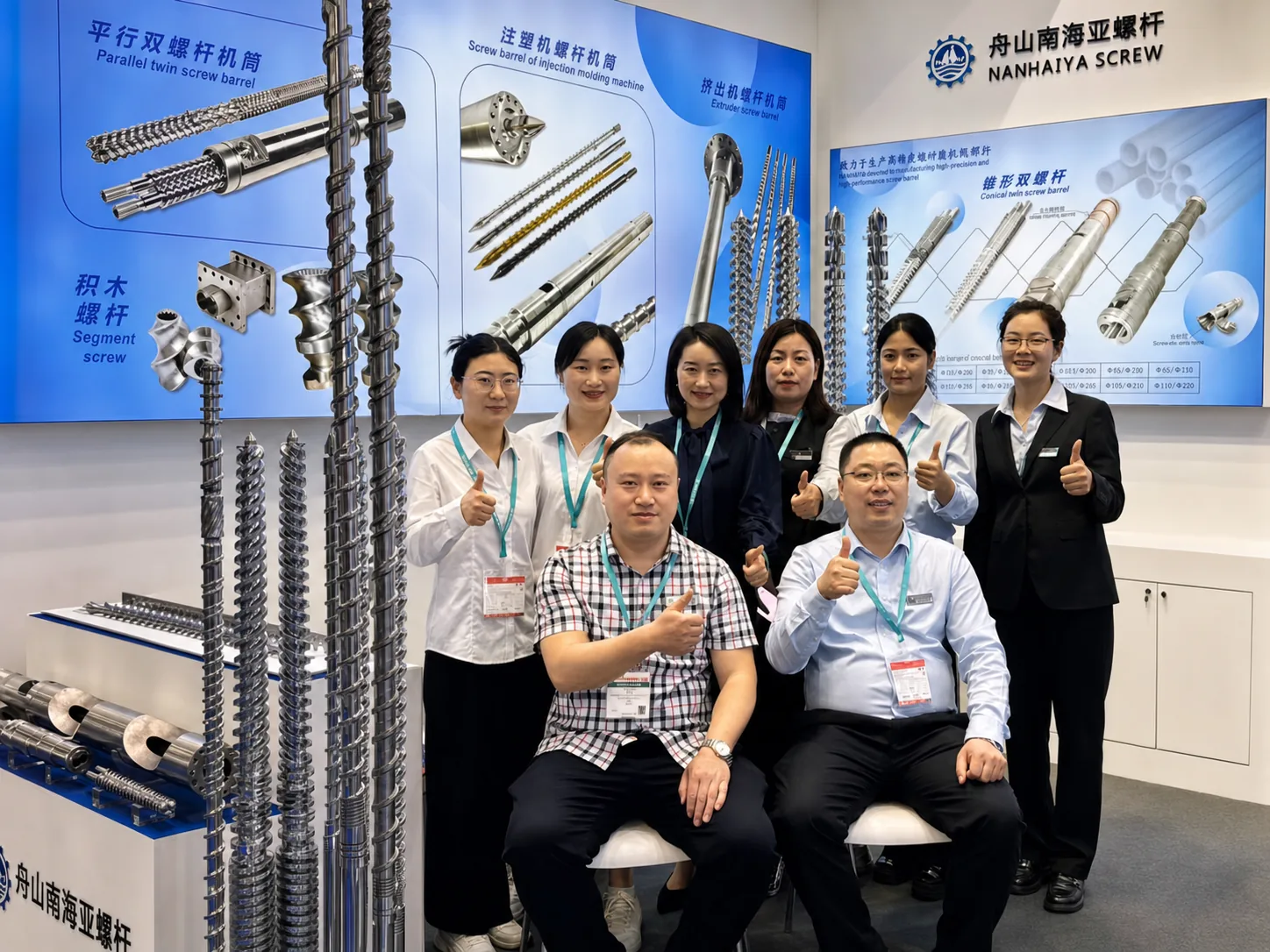
Related Articles
More insights on screw barrel technology and plastics processing.
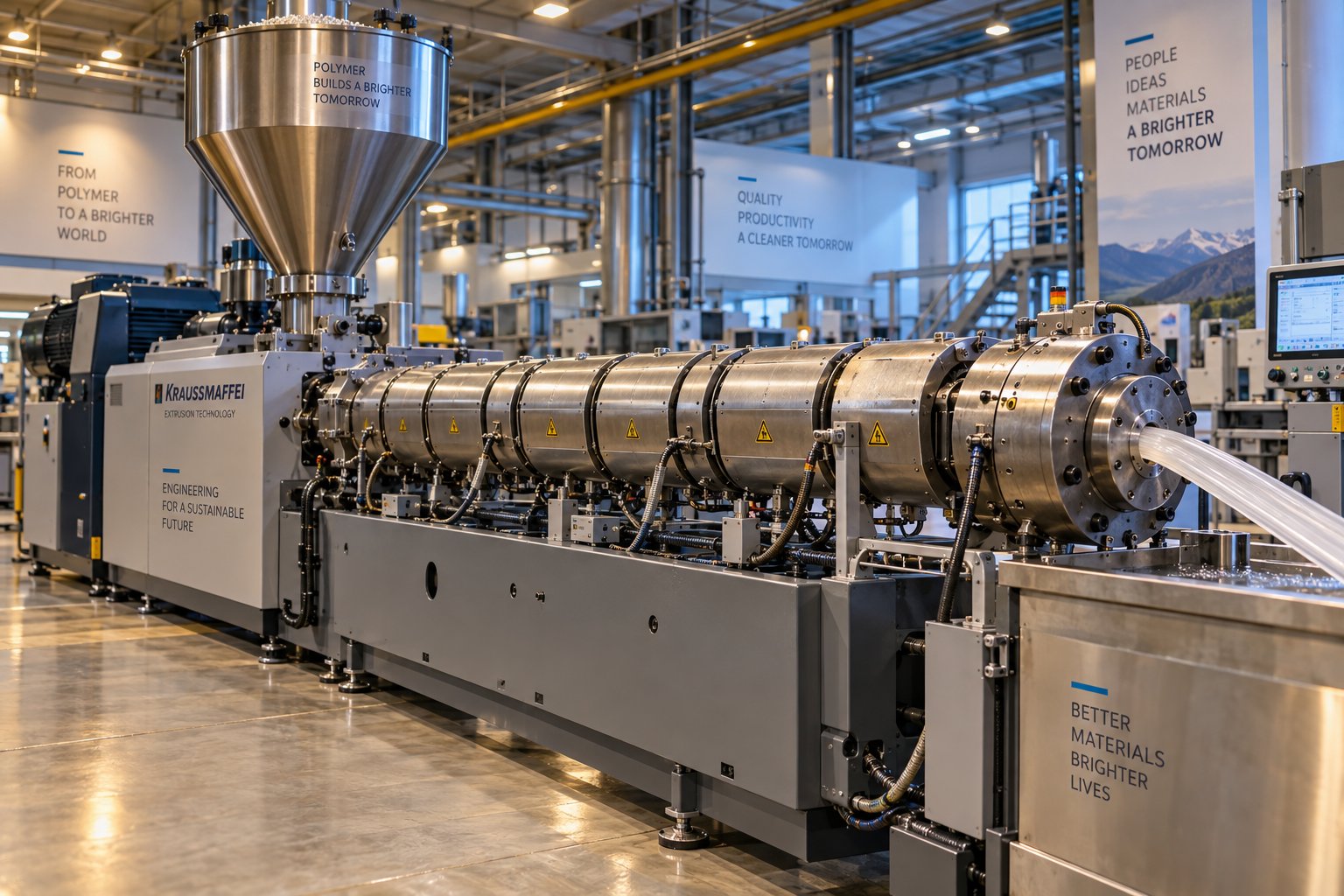
Extruder Machine Decoded: From Raw Pellet To Finished Product
Oct 6, 2026
Learn how an extruder machine works, compare single-screw vs. twin-screw types, and get expert guidance on specs, troubleshooting, and selection.
Read Article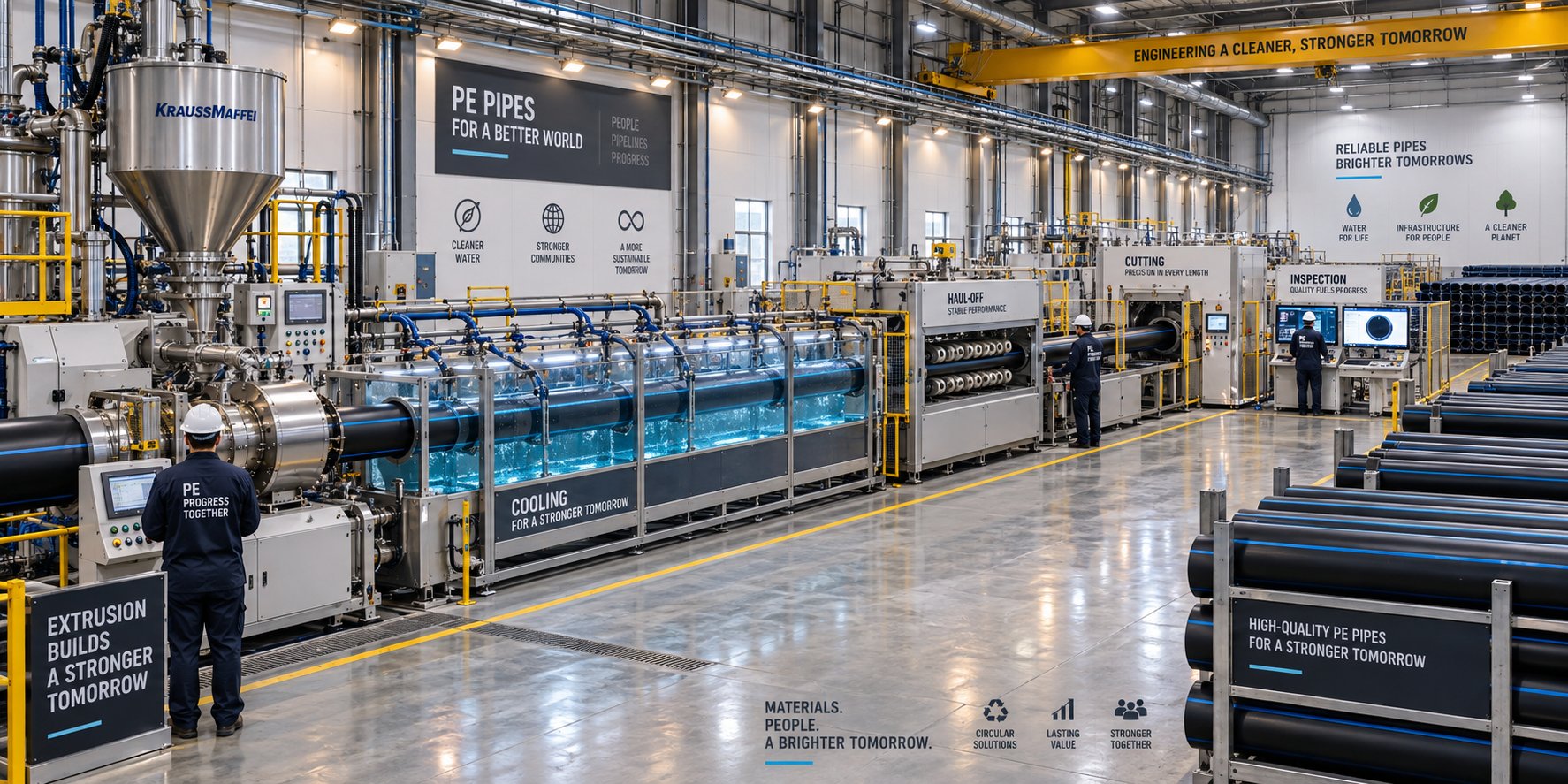
PE Pipe Making Machine Decoded: From Raw Resin to Flawless Pipe
Oct 4, 2026
Learn how a PE pipe making machine works, from resin to finished pipe. Covers components, material grades, automation, troubleshooting, and buyer selection tips.
Read Article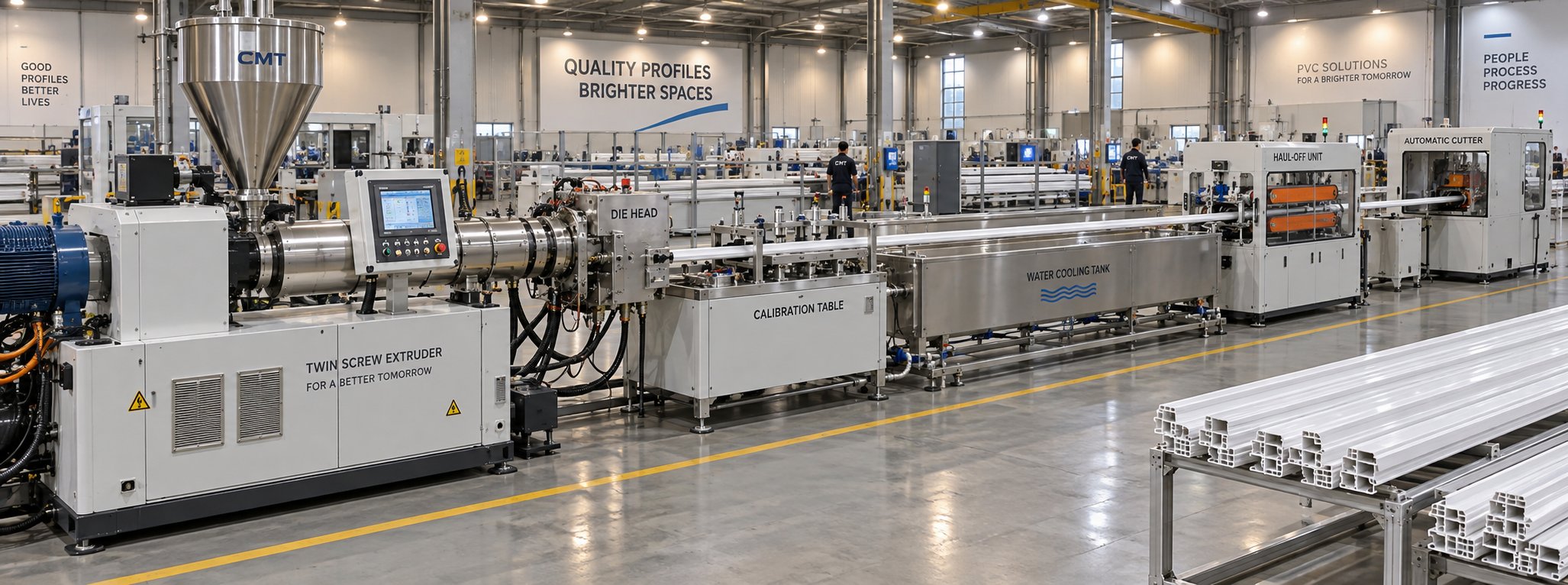
PVC Profile Making Machine Decoded: From Raw Resin To Profit
Oct 3, 2026
Learn how a PVC profile making machine works — extrusion process steps, key technical parameters, die design, calibration methods, maintenance, and total cost of ownership.
Read ArticleLooking for something else?
Search by material, symptom or product and jump straight to the relevant page.
These are navigation suggestions based on keyword matching — not a quotation, not a delivery commitment, and not a substitute for engineering review. Final specification is confirmed by our engineers against your drawings and processed material.
Need help with screw barrel selection?
Share your machine model, processed material and application. Our team can help with pricing and technical support.