

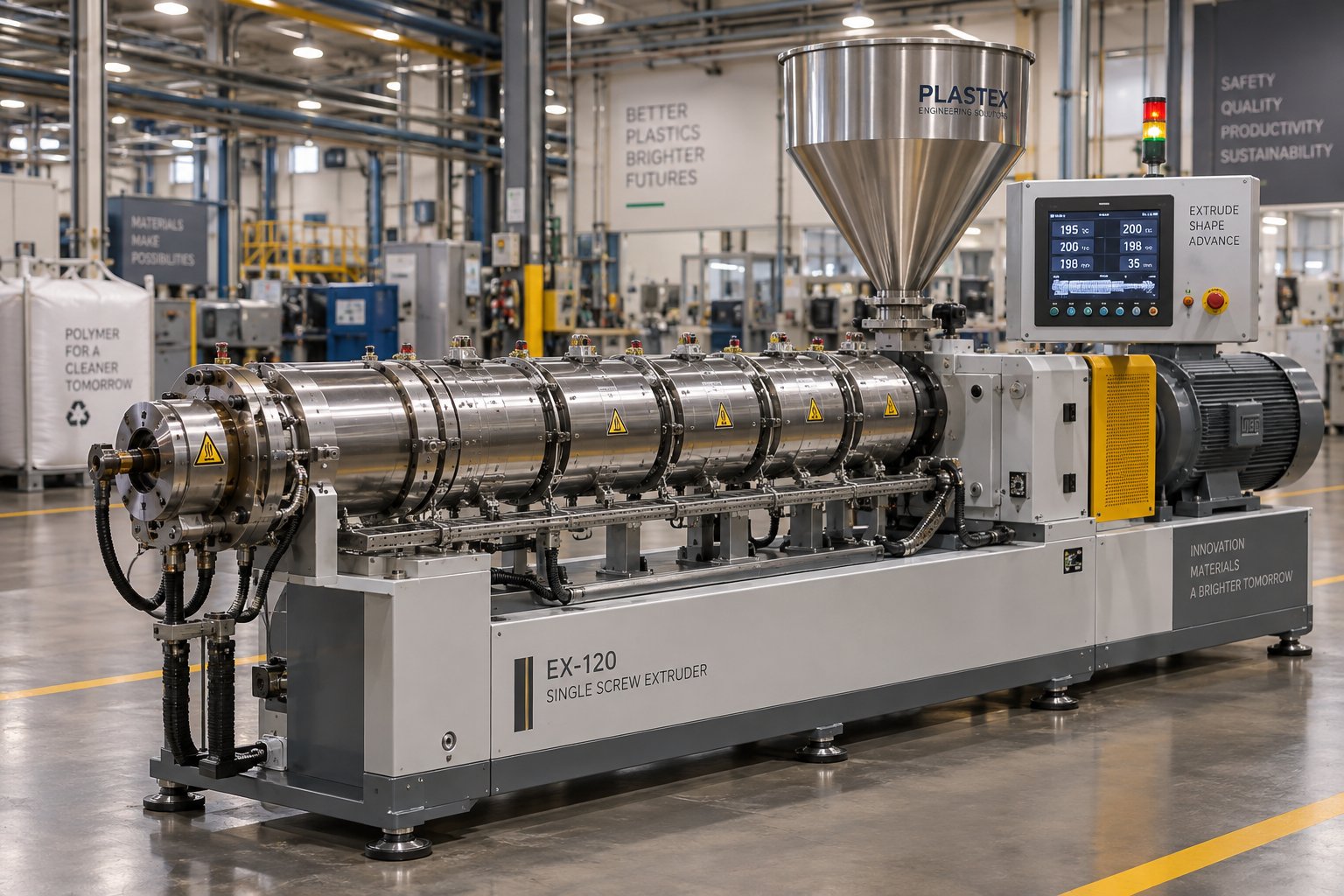
What Is a Single Screw Extruder and Why Pricing Matters
A single screw extruder is a continuous processing machine that melts, mixes, and shapes polymer materials by forcing them through a die using a single rotating screw housed inside a heated barrel. It is the workhorse of the plastics industry — and yet, finding a straightforward single screw extruder price online is nearly impossible. Every major manufacturer hides pricing behind inquiry forms, leaving buyers to navigate a frustrating maze of quote requests before they can even benchmark costs.
This article exists to close that gap. Whether you are shopping for your first plastic extruder machine or replacing aging equipment in a production facility, the goal here is simple: give you the pricing knowledge that manufacturers prefer to keep behind closed doors.
Before diving into dollars and cost traps, though, you need a clear picture of what you are actually buying. The core components of a single screw extruder machine — and the engineering behind each one — directly determine what you will pay.
How a Single Screw Extruder Works
Imagine a long, precision-machined screw spinning inside a tightly fitted barrel. Raw plastic pellets drop from a hopper into one end, and a finished, molten stream of polymer exits the other through a shaped die. That is the basic concept. The details, however, are where cost starts to build.
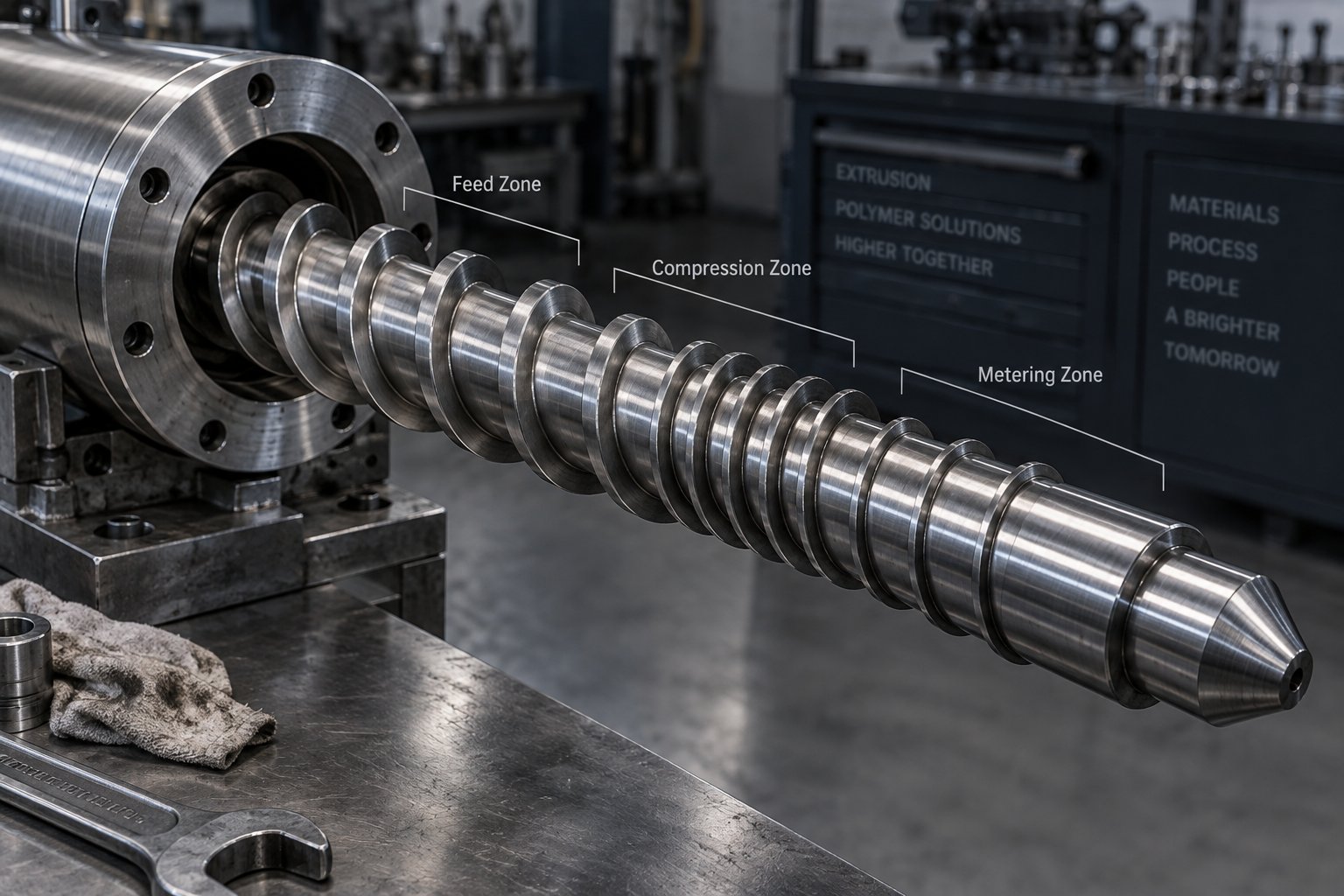
The screw itself is divided into three functional zones:
- Feed zone: Pellets enter here and are conveyed forward by the screw's deep channel flights. The hopper design and feed-throat cooling affect how consistently material enters — and inconsistency means waste.
- Compression zone: The screw channel gradually becomes shallower, compacting the plastic and generating shear heat alongside the barrel's external heaters. This is where melting actually happens, and the precision of this taper is a major cost driver in screw manufacturing.
- Metering zone: The now-molten polymer is homogenized and pushed at consistent pressure toward the die. Uniform output here depends on tight machining tolerances in both the screw and barrel.
Surrounding these zones are heating and cooling elements — typically three to eight independently controlled zones using PID temperature controllers — along with a drive motor and gearbox that deliver the torque needed to rotate the screw at precise speeds. Each of these components carries its own price tag, and the quality tier you select for any one of them shifts the total cost significantly.
As an extrusion extruder category, the single screw design is valued for its mechanical simplicity relative to twin-screw alternatives. Fewer moving parts mean lower upfront costs and easier maintenance — which is exactly why this machine type dominates the market.
Why Single Screw Extruder Pricing Is Hard to Find
Try searching for a plastic extruder price and you will quickly notice a pattern: product pages with detailed specifications, glossy photos, and a conspicuous "Request a Quote" button where the price should be. This is not accidental. The extrusion extruder industry operates almost entirely on quote-based selling because pricing varies dramatically based on configuration, order volume, and geographic market.
Manufacturers argue — with some justification — that a single number would be misleading. A lab-scale single screw extruder and a high-throughput industrial line are fundamentally different investments. But the result for buyers is an information vacuum that makes it extremely difficult to know whether a quote is competitive or inflated by thousands of dollars.
Single screw machines are the most popular type of extruder in plastics processing — nearly 65% of all plastics pass through an extruder, and the single screw design dominates that figure due to its simplicity and cost efficiency.
That massive installed base means pricing decisions around single screw extruder machines affect more buyers than any other extrusion equipment category. Yet transparent pricing guidance remains almost nonexistent online. The sections ahead break down exactly what drives costs up, what keeps them down, and where buyers routinely lose thousands by overlooking the details that matter most.
Technical Specifications That Drive Extruder Machine Price
Every line item on a single screw extruder quote traces back to a handful of engineering decisions. The problem is that most buyers evaluate quotes by comparing bottom-line totals without understanding which specifications actually move the number — and which ones a supplier might quietly downgrade to win on price. Knowing the relationship between specs and cost is the single best defense against overpaying or, worse, underpaying for a machine that cannot handle your application.
Three specification categories carry the most pricing weight: screw geometry, drive system, and construction materials paired with control electronics. Let's break each one down.
Screw Diameter and L/D Ratio
If you had to predict a screw extruder's price from just one number, screw diameter would be your best bet. It is the primary sizing parameter that determines throughput capacity, and everything else — barrel weight, motor size, gearbox torque, frame footprint — scales with it.
Small-diameter screws (roughly 20 mm to 45 mm) are found in lab-scale and pilot units. Mid-range production machines typically run 50 mm to 90 mm diameters, covering the bulk of pipe, profile, and film applications. Large industrial extruders push beyond 100 mm and can reach 150 mm or more for high-volume sheet and pelletizing lines. The jump between each tier is not linear — a machine with double the screw diameter can cost three to five times as much because barrel machining, screw manufacturing, and gearbox requirements all escalate steeply.
Then there is the L/D ratio, which represents the screw's length divided by its diameter. A single screw extrusion machine with a 30:1 L/D ratio has a screw thirty times longer than it is wide. Typical ratios range from 20:1 on compact units up to 36:1 or even 40:1 on machines designed for demanding mixing or devolatilization tasks. Higher L/D ratios require longer barrels, more heating zones, heavier support frames, and precision machining along a greater length — all of which push the price upward. The payoff is better melt homogeneity, longer residence time, and the ability to process more complex formulations, but buyers processing straightforward materials on a tight budget should question whether they truly need a 36:1 ratio when a 24:1 would perform adequately.
Motor Power and Drive System
The drive system is typically the second-largest cost component after the barrel-and-screw assembly. Motor power ratings for a single extruder screw range from fractional horsepower on benchtop units to several hundred horsepower on large industrial extruders. More horsepower means more torque at the screw, which translates to higher throughput rates and the ability to process stiffer, higher-viscosity materials.
Beyond raw horsepower, the type of drive matters enormously for price:
- Standard AC induction motors are the most economical option. They handle steady-state processing well but offer limited precision at low speeds and consume more energy under partial loads.
- AC vector drives add variable-frequency control for better speed regulation, improving output consistency at a moderate cost increase.
- AC servo drives represent the premium tier. They deliver precise torque control across the full speed range, respond faster to load changes, and can reduce energy consumption by 15–30% compared to standard motors. That efficiency gain matters when you calculate years of electricity costs — but the upfront premium is significant.
Gearbox quality compounds these differences. An industrial extruder operating at high torque demands a hardened, precision-ground gearbox with thrust bearings rated for continuous axial loads. Cheaper gearboxes save money at purchase but introduce risk of premature failure — and a gearbox rebuild on a production machine can cost nearly as much as the original motor assembly.
Materials of Construction and Control Systems
The barrel and screw are consumable components — they wear. How fast they wear, and how much it costs when they do, depends heavily on the materials used in their construction:
- Nitrided steel screws are standard on entry-level machines. They provide adequate hardness for processing non-abrasive polymers like polyethylene or polypropylene at a low cost.
- Bimetallic barrels feature a wear-resistant alloy liner centrifugally cast inside a structural steel shell. They cost more upfront but dramatically extend service life when processing glass-filled, mineral-filled, or otherwise abrasive compounds.
- Tool-steel and tungsten-carbide-coated screws occupy the high end, offering extreme wear resistance for the most demanding applications. Their pricing reflects the specialized metallurgy involved.
Control systems introduce another pricing layer. A basic single screw extrusion machine might ship with standalone PID temperature controllers and a simple analog speed dial. Mid-range machines integrate PLC (Programmable Logic Controller) automation with touchscreen HMI (Human-Machine Interface) panels, enabling recipe storage, alarm logging, and remote diagnostics. Top-tier configurations add SCADA connectivity, data trending, and integration with upstream and downstream equipment — features that improve process consistency and reduce scrap but carry a noticeable premium.
The table below maps how each specification category scales across equipment tiers and its relative impact on the overall extruder machine price:
| Specification | Entry-Level Range | Mid-Range | Industrial-Grade | Impact on Price |
|---|---|---|---|---|
| Screw Diameter | 20–45 mm | 50–90 mm | 100–150+ mm | High |
| L/D Ratio | 20:1 – 24:1 | 25:1 – 30:1 | 32:1 – 40:1 | Medium–High |
| Motor Power | 1–15 HP | 20–75 HP | 100–500+ HP | High |
| Drive Type | Standard AC motor | AC vector drive | AC servo drive | Medium |
| Barrel Construction | Nitrided steel | Bimetallic lined | Bimetallic with specialty alloy | Medium |
| Screw Metallurgy | Nitrided 4140 steel | D2 tool steel / chrome plated | Tungsten-carbide coated | Medium |
| Control System | Standalone PID controllers | PLC with touchscreen HMI | PLC/HMI + SCADA + data logging | Low–Medium |
| Gearbox | Standard duty | Hardened, precision-ground | Heavy-duty thrust-rated | Medium |
Notice how screw diameter and motor power carry a "High" impact rating while control systems rank lower in relative terms. That does not mean controls are unimportant — a poorly calibrated temperature system can ruin product quality regardless of how premium the barrel is. It simply means that when two quotes differ by tens of thousands of dollars, the explanation almost always lives in the mechanical hardware, not the electronics.
These specifications do not exist in isolation, though. How they combine with machine size determines which general price tier a buyer lands in — a subject worth examining category by category.
Single Screw Extruder Price Ranges by Size Category
Specifications tell you what drives cost. Size categories tell you where cost actually lands. Yet finding concrete single screw extruder price references online feels like searching for a price tag in a store where every item says "ask at the register." The ranges below are drawn from publicly available market data and industry benchmarks — they are not manufacturer quotes, and your final number will depend on configuration, brand tier, and negotiation. But they give you something far more useful than a blank page: a realistic starting framework for budgeting and quote evaluation.
Market data suggests that extruder pricing overall can span from roughly $3,000 for small, used models to well over $200,000 for large, new industrial units. Within the single screw category specifically, three size tiers capture the vast majority of buyer activity.
Lab-Scale and Benchtop Extruder Pricing
If you are a university researcher, a product development team testing new polymer formulations, or a startup validating a concept before committing to production equipment, a laboratory extruder is likely your entry point. These machines typically feature screw diameters between 16 mm and 30 mm, produce modest throughput measured in grams or kilograms per hour, and occupy a benchtop or small floor footprint.
A benchtop extruder in this range prioritizes precision over volume. You will find simplified drive systems, fewer heating zones, and compact frames — all of which keep the plastic extruder machine price significantly lower than production-grade equipment. New lab scale extruder units from reputable manufacturers generally fall into the lower thousands to low tens of thousands of dollars, depending on materials of construction, number of heating zones, and whether the unit includes data acquisition capability. Used or refurbished models in good condition can drop the entry cost further, sometimes to as little as a few thousand dollars for basic configurations.
The tradeoff? These machines are not designed for continuous, high-volume operation. Pushing a lab-scale unit into pilot-production duty often leads to accelerated wear and inconsistent output — a hidden cost that erodes whatever you saved on the purchase.
Mid-Range Production Extruder Pricing
This is where most buyers land. Mid-range single screw extruders — screw diameters roughly 45 mm to 90 mm — handle the bread-and-butter applications of the plastics industry: pipe, film, sheet, profile extrusion, and wire coating. They run continuously across multiple shifts and need the mechanical robustness to do so reliably.
Pricing in this tier reflects that durability requirement. You are paying for hardened gearboxes, bimetallic barrels, industrial-grade motors, and PLC-based control systems. A new mid-range machine typically represents a significant capital investment — often ranging from the mid-five-figure to low-six-figure territory depending on configuration. Machines configured for abrasive materials like PVC compounds or glass-filled resins push toward the higher end of this band, which is why the pvc extrusion machine price often surprises buyers who benchmarked against simpler polyethylene setups.
Used mid-range extruders offer meaningful savings, frequently pricing 30–50% below comparable new equipment. However, the value of that discount depends entirely on the condition of wear components — screw, barrel, and gearbox — which chapter four covers in detail.
Large Industrial Extruder Pricing
At screw diameters of 100 mm and above, you are entering territory reserved for high-throughput manufacturing operations: large-diameter pipe, heavy-gauge sheet, and high-capacity pelletizing lines. These machines demand everything at scale — massive drive motors (often exceeding 200 HP), multi-zone barrel assemblies stretching several meters in length, and heavy-duty frames requiring engineered foundations.
New large industrial extruders routinely cross the six-figure threshold and can exceed $200,000 for fully configured systems with premium drive trains and advanced automation. Lead times are longer, customization is more common, and installation costs represent a larger percentage of the total investment. At this level, the purchase price itself is only part of the financial picture — a theme explored later in this article.
| Size Category | Typical Screw Diameter Range | Common Applications | Approximate New Price Tier | Key Cost Drivers |
|---|---|---|---|---|
| Lab-Scale / Benchtop | 16–30 mm | R&D, formulation testing, academic research | Lower-End (low thousands to low tens of thousands) | Precision instrumentation, data acquisition, small-batch flexibility |
| Mid-Range Production | 45–90 mm | Pipe, film, sheet, profile, wire coating | Mid-Tier (mid-five-figures to low six-figures) | Barrel metallurgy, motor HP, gearbox rating, control system complexity |
| Large Industrial | 100–150+ mm | High-capacity pipe, heavy sheet, pelletizing | Premium (six figures and above, often exceeding $200,000) | Drive system scale, barrel length, custom engineering, installation requirements |
Important note: These tiers represent general market positioning based on publicly available information and should be treated as directional guidance, not firm quotes. Actual pricing should always be confirmed through direct manufacturer or dealer quotes tailored to your specific application, throughput requirements, and configuration preferences.
Price tiers give you a map, but the map shifts dramatically depending on one critical decision that many buyers face early in the process: whether to buy new equipment at all — or whether used and refurbished machines offer a smarter financial path.
New vs. Used vs. Refurbished Single Screw Extruders: A Price Comparison
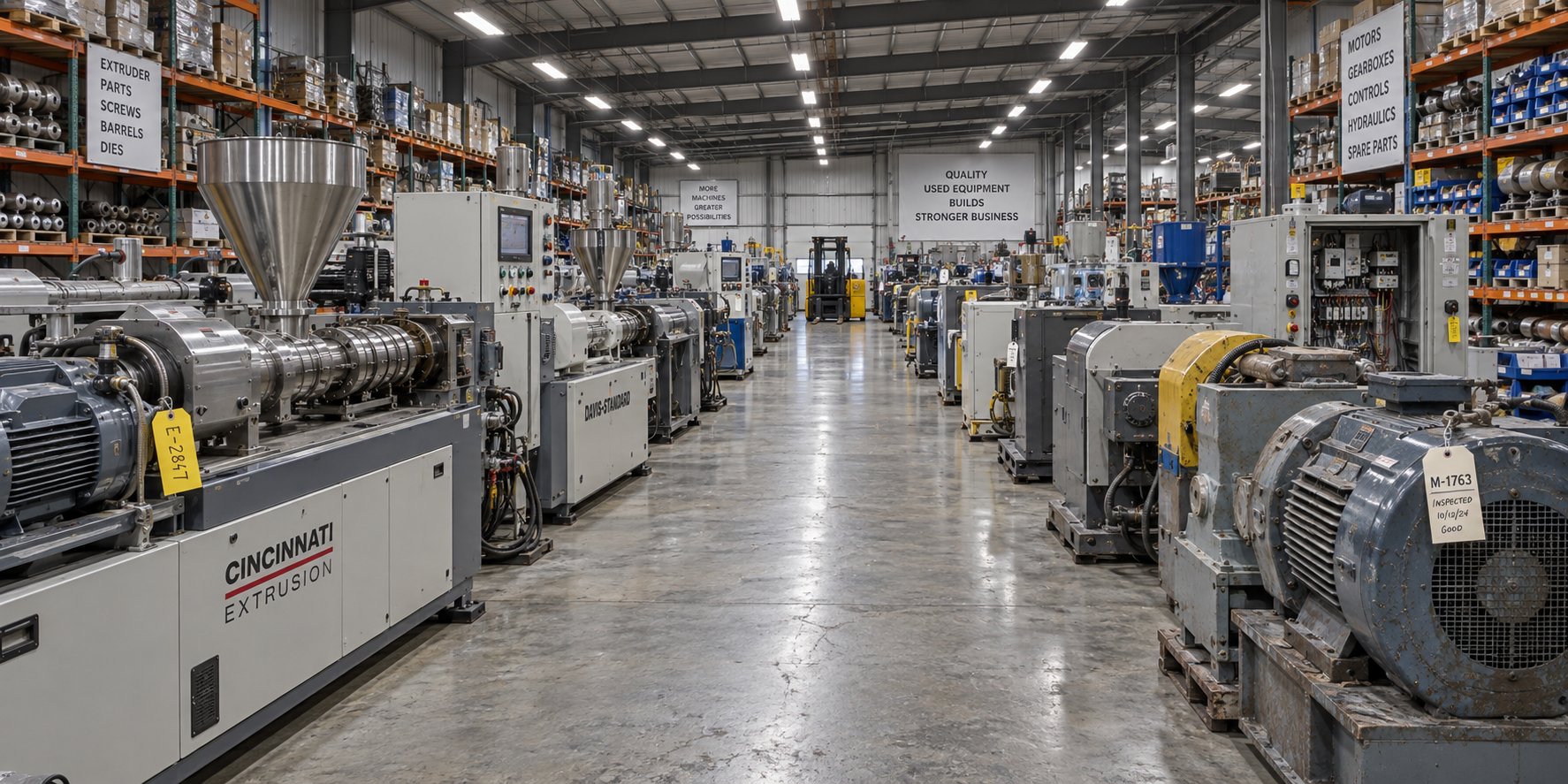
The sticker price on a brand-new machine is easy to understand. What is harder — and where buyers routinely leave money on the table or take on unnecessary risk — is knowing when that new-equipment premium is justified, and when used or refurbished alternatives deliver better value per dollar. Surprisingly, none of the major dealers who list used extruders for sale provide a structured framework for making this decision. They show inventory, serial numbers, and photos, but leave buyers to figure out the financial logic on their own.
Here is that missing framework.
When Buying New Makes Financial Sense
Not every buyer should chase the lowest upfront number. New equipment earns its premium in specific situations:
- Production-critical applications: If your extrusion line feeds a downstream process with zero tolerance for unplanned downtime — medical tubing, automotive fuel lines, food-grade film — the full manufacturer warranty and guaranteed performance specs of a new machine reduce financial risk that far exceeds the price difference.
- Custom configurations: Need a non-standard L/D ratio, a specialty alloy barrel for processing fluoropolymers, or integration with an existing plant-wide SCADA system? Custom engineering is only available on new orders. Used single screw extruders are sold as-configured, and retrofitting them to match unusual requirements can eliminate the savings.
- Energy efficiency mandates: Modern servo-driven extruders consume significantly less power than machines built even a decade ago. For high-utilization operations running three shifts, the energy savings over five to seven years can offset a substantial portion of the new-equipment premium.
In short, buying new makes sense when the cost of failure, customization needs, or long-term operating expenses outweigh the upfront savings available elsewhere.
Used and Refurbished Extruder Pricing Advantages
The used extrusion equipment market is mature, well-supplied, and capable of delivering serious savings. Buyers shopping for used extruders can typically expect to pay 30% to 60% less than comparable new machines, depending on age, condition, and brand. That discount makes the financial math compelling — especially for applications where the equipment does not need to represent the latest technology.
There is an important distinction between "used" and "refurbished" that many buyers overlook:
- Used (as-is): The machine is sold in its current condition. You might get a test run, but there is no meaningful rebuild. Price reflects the lowest tier, but risk sits squarely on the buyer.
- Refurbished: A reputable dealer disassembles, inspects, and restores the machine to documented performance standards. Typical refurbishment includes a rebuilt gearbox, new heater bands, re-chromed or replaced screw, verified barrel bore dimensions, and updated electrical components. This process adds cost over an as-is purchase but dramatically reduces the uncertainty.
Dealers like Arlington Machinery maintain inventories where every piece of used extruder equipment carries stock numbers, serial numbers, and documented inspection records — authenticity markers that give buyers traceable provenance. Their professional inspection teams measure barrel and screw wear using precision tools, providing objective data rather than vague assurances about condition. These practices represent the standard that serious buyers should expect from any dealer.
The refurbished middle ground is where many experienced buyers find the sweet spot: meaningfully cheaper than new, yet far less risky than an uninspected as-is purchase.
Decision Framework for Different Buyer Profiles
Your ideal choice depends less on the equipment itself and more on your operational context. Consider which profile fits your situation:
- Startup operations entering the market: Cash preservation is critical, and production volumes are uncertain. A refurbished machine offers the best balance — lower capital outlay with enough reliability to establish consistent output. Buying new ties up capital you may need for raw materials, tooling, and market development. Buying untested as-is equipment gambles your launch timeline on an unknown machine history.
- Expanding facilities adding capacity: You already understand your process and know exactly what specifications you need. This is the scenario where shopping for used single screw extruders makes the most strategic sense, because you have the in-house expertise to evaluate condition and the existing production lines to absorb short-term downtime if adjustments are needed. If the right used extruder equipment appears at the right price, move quickly — quality used machines in popular sizes sell fast.
- Replacing failed or aging equipment on an active production line: Speed and reliability dominate the decision. If a suitable refurbished unit is available immediately, it may be the fastest path to restored production. If not, a new machine with a guaranteed delivery date and full warranty justifies the premium because every day of downtime costs more than the price gap between new and used.
The table below puts these trade-offs side by side so you can compare across the dimensions that matter most:
| Dimension | New | Used (As-Is) | Refurbished |
|---|---|---|---|
| Upfront Cost Level | Highest | Lowest | Moderate |
| Warranty Expectations | Full manufacturer warranty (typically 1–2 years) | Minimal or none | Limited dealer warranty (typically 30–90 days on rebuilt components) |
| Lead Time | Longest (weeks to months for custom builds) | Shortest (ships from dealer inventory) | Moderate (depends on refurbishment scope) |
| Customization Options | Fully customizable to application | None — sold as-configured | Limited — cosmetic and component-level upgrades |
| Risk Level | Low (backed by OEM standards) | Highest (unknown wear history possible) | Moderate (professional inspection reduces unknowns) |
Notice the pattern: no single option wins across every dimension. The buyer who assumes "cheapest is best" ends up absorbing risk that can dwarf the initial savings. The buyer who defaults to "new only" may overinvest when a well-documented refurbished machine would perform identically at half the capital cost.
The smartest approach is matching your purchase type to your operational reality — and then scrutinizing the quote with equal rigor regardless of whether the machine is fresh off a factory floor or pulled from a dealer's warehouse. But the purchase type is only one variable in the pricing equation. Where a machine was manufactured, and whose name is on the nameplate, introduce another layer of cost variation that most buyers underestimate.
How Geography and Brand Tier Affect Single Screw Extruder Pricing
Two machines with nearly identical spec sheets can carry wildly different price tags — and the gap often has less to do with engineering quality than with where the factory sits and whose logo is stamped on the nameplate. Geography and brand reputation are the invisible multipliers in every single screw extruder price, yet most buyers treat them as background noise rather than negotiable variables worth thousands of dollars.
Understanding these dynamics does not mean defaulting to the cheapest option. It means knowing exactly what you are paying for — and what you are not — when a quote from a Chinese supplier comes in at half the price of a European competitor.
Regional Manufacturing and Price Tiers
The global market for single screw extruder manufacturers splits into three broad pricing tiers, driven primarily by labor costs, raw material sourcing, and the overhead structures of the companies building the machines.
Chinese and Indian manufacturers occupy the most price-competitive tier. Lower labor rates, domestic steel supply chains, and intense regional competition combine to produce machines at significantly lower price points than Western equivalents. Platforms like IndiaMART list dozens of Indian suppliers offering single screw extruders across a range of sizes, and Chinese manufacturers have built substantial cross-border trade operations with installations spanning Southeast Asia, Africa, the Middle East, and Latin America.
How big is the gap? Industry data from cross-border procurement projects suggests that top Chinese extruder manufacturers deliver 30–50% lower upfront pricing compared to equivalent European lines — while using identical core control components such as Siemens PLCs and Delta VFDs. That is not a rounding error. On a mid-range production extruder, a 40% price difference can represent tens of thousands of dollars in capital savings.
European and American OEMs command the premium tier. Brands from Germany, Italy, Austria, and the United States price their equipment higher based on engineering heritage, tighter manufacturing tolerances on non-critical components, and — critically — the depth of their after-sales support infrastructure. A European plastic profile extruders supplier can typically dispatch a field service engineer to a North American or Western European plant within days, backed by regional spare parts warehouses and decades of application engineering expertise.
The middle ground is occupied by manufacturers from Turkey, Taiwan, and South Korea, who blend competitive pricing with quality reputations that sit between Chinese volume producers and European premium brands.
Here is the nuance most buyers miss: the upfront price gap between regions has narrowed on core performance. Side-by-side testing on standard applications in the 500–2,000 kg/h range shows output variance between equivalent Chinese and European lines of under 2%. The gap that remains is concentrated in three areas — component finishing quality on non-critical parts, documentation depth, and the speed and availability of field support in your specific geography.
How Brand Reputation Correlates with Price
Brand names function as pricing anchors in both new and used markets. Consider the Davis-Standard name, which appears repeatedly in used equipment dealer inventories. A Davis-Standard extruder commands a higher resale price than a comparable-spec machine from an obscure manufacturer — and that resale premium directly reflects the initial purchase premium the original buyer paid. If you have ever browsed listings for a Davis Standard extruder for sale, you have probably noticed that even decades-old units hold their value remarkably well compared to lesser-known brands of similar vintage and condition.
This resale resilience is not irrational. Established brands earn their pricing power through documented performance histories, readily available spare parts, and a global installed base that makes it easy to find technicians familiar with the equipment. When you buy a recognized brand, you are also buying future liquidity — the ability to recover a meaningful portion of your investment if you sell or trade the machine later.
But brand premium can also mask diminishing returns. A machine from a top-tier single screw extruder manufacturer may cost 40–60% more than an equivalent Chinese-built unit while delivering nearly identical day-to-day output. The premium buys you peace of mind, faster support response times, and higher resale value — genuine benefits, but ones that not every operation needs to the same degree.
Before defaulting to the most recognized name or the lowest quote, weigh these factors that sit beyond the price tag itself:
- Local service availability: Can the manufacturer or an authorized dealer dispatch a technician to your facility within 48–72 hours? Leading Chinese suppliers now offer on-site response in most emerging market regions, while some European brands rely on distributors with longer lead times outside their home markets.
- Spare parts supply chain: How quickly can you get a replacement heater band, thermocouple, or drive belt? Annual spare part costs for European-brand lines can run two to three times higher than equivalent Chinese-built machines — a gap that compounds year after year.
- Training and commissioning support: Some manufacturers include free on-site installation and operator training in the base price; others charge $8,000–$15,000 extra for engineer dispatch. This line item alone can shift the true cost comparison dramatically.
- Documentation quality: Complete mechanical drawings, wiring schematics, maintenance schedules, and spare parts catalogs with part numbers simplify troubleshooting and reduce dependence on the original manufacturer for support.
The lowest upfront single screw extruder price rarely equals the lowest total cost of ownership. Geography and brand tier shape both sides of that equation — and buyers who evaluate only the purchase number consistently overspend over the life of the machine.
This is precisely why the financial analysis cannot stop at the purchase order. Installation, energy consumption, maintenance cycles, and component replacement costs layer on top of the sticker price — and for many operations, those ongoing expenses ultimately dwarf the original capital outlay.
Total Cost of Ownership Beyond the Purchase Price
Here is a scenario that plays out constantly in plastics manufacturing: a buyer spends weeks negotiating the best possible deal on a single screw extruder, signs the purchase order feeling great about the number, and then watches the true cost quietly balloon over the following months and years. The plastic extrusion machine cost that appeared on the invoice? That was just the opening chapter. Installation, electricity, worn screws, barrel replacements, and unplanned downtime write the rest of the story — and they often add 50% or more to the original investment within the first few years of operation.
No major equipment dealer or manufacturer lays out these downstream expenses in a way that lets you budget accurately before you buy. That information gap is where the most expensive surprises hide.
Installation and Commissioning Costs
A new extruder does not produce anything the day it arrives at your facility. Between uncrating and first saleable output lies a gauntlet of preparation work that carries real costs — costs rarely itemized in the equipment quote itself.
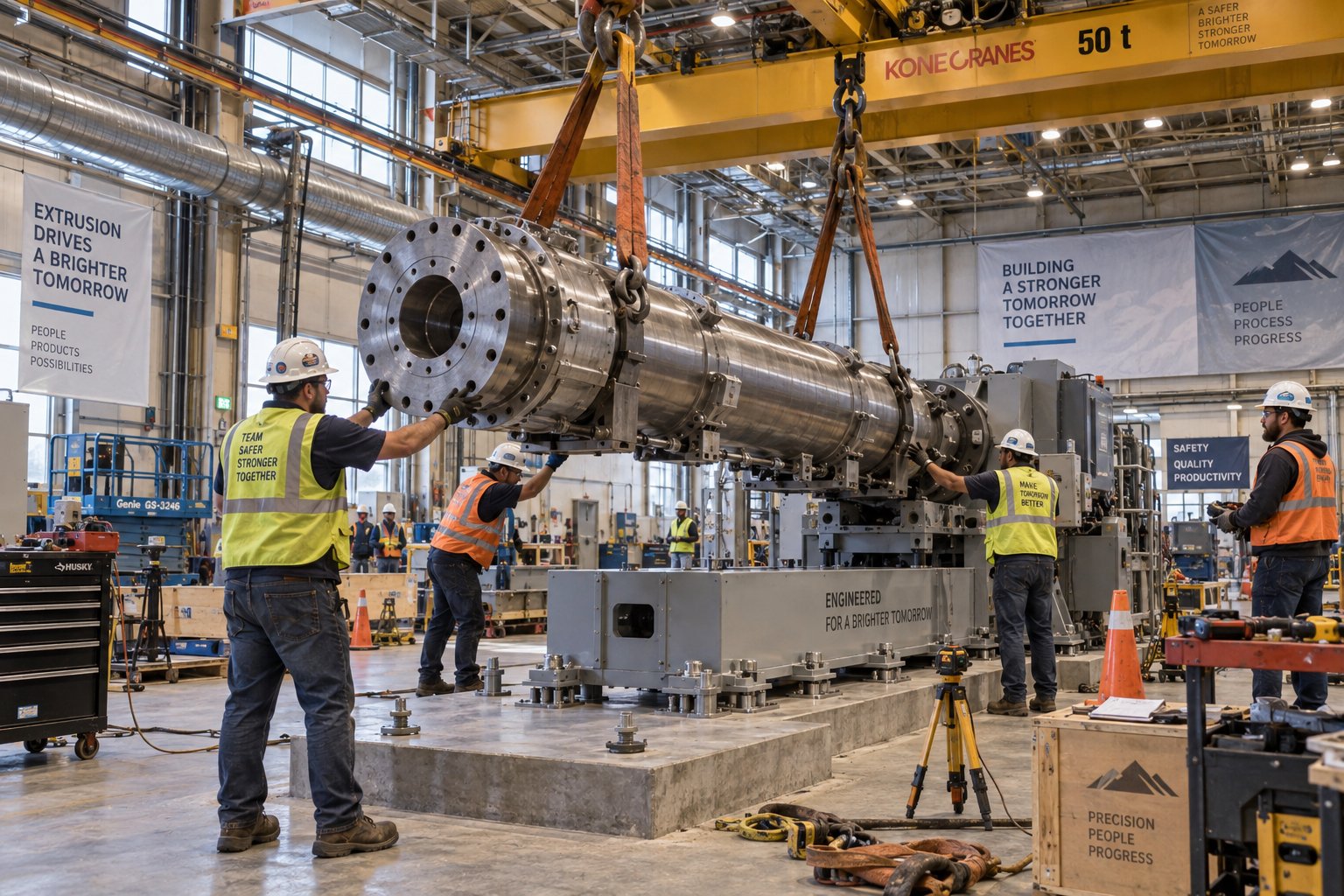
Facility preparation starts with the foundation. A polymer extruder generates significant vibration during operation, and anything larger than a benchtop unit needs a reinforced concrete pad — typically 300 mm to 500 mm thick — with vibration isolation to protect both the machine's alignment and surrounding equipment. Depending on local construction costs and whether excavation is needed, foundation work alone can run $2,000 to $5,000. Skipping this step or bolting a production extruder to a standard factory floor invites chronic misalignment, loosened fasteners, and premature bearing failure — repairs that cost far more than the concrete.
Electrical infrastructure is often the single largest hidden expense. A mid-range production extruder might require 165 kW to 200 kW of installed power when you add the main motor, barrel heaters, feeders, and downstream equipment together. That typically means a dedicated transformer, switchgear, and properly sized cabling to handle inrush currents that can spike five to seven times the running amperage. Industry data suggests that electrical infrastructure costs frequently range from $10,000 to $30,000 for a new line — sometimes rivaling the machine price itself on smaller installations.
Add cooling water systems (a process water chiller can add $5,000 to $12,000), compressed air connections, and cable trenching, and you begin to see why experienced buyers budget 15–25% on top of the equipment quote for installation-related expenses.
Commissioning and training round out the initial investment. Cold runs to verify mechanical integrity, hot runs to tune temperature PID loops, and material trials to dial in process parameters typically consume three to five days of engineer time. Some manufacturers include commissioning support in the purchase price; others charge $8,000 to $15,000 for on-site engineer dispatch. Operator training during this window is critical — a well-trained team reduces scrap, avoids warranty-voiding misuse, and handles minor issues without waiting for external support, all of which translate directly into lower ongoing costs.
Energy Consumption as an Ongoing Cost Driver
Imagine running a machine 6,000 hours per year. Even modest differences in energy efficiency compound into dramatic cost gaps over a five- to ten-year ownership period. For a polymer extruder, three variables control your monthly power bill:
- Motor efficiency: As covered earlier, AC servo drives consume 15–30% less energy than standard AC induction motors under typical processing loads. On a 100 HP extruder running three shifts, that gap can represent thousands of dollars annually in electricity savings.
- Heating system design: Modern ceramic band heaters and infrared heaters transfer energy to the barrel more efficiently than older mica-insulated designs. Insulation jackets over barrel heaters — a relatively inexpensive retrofit — can reduce radiant heat loss by 20–40%, cutting both energy consumption and HVAC costs in warm-climate facilities.
- Throughput optimization: An extruder running at 70% of its rated capacity to compensate for worn components or poor temperature control wastes energy on every kilogram produced. Matching machine size to actual production needs — rather than oversizing "just in case" — keeps the specific energy consumption (kWh per kg of output) in an efficient range.
Some manufacturers market claims of doubling output capacity while halving energy costs through advanced screw designs and drive upgrades. While these figures should be treated as marketing claims rather than independently verified data, they point to a real and measurable trend: modern extruders are substantially more energy-efficient than machines built a decade or two ago. The plastic extrusion cost per kilogram on a new servo-driven machine with optimized screw geometry can be meaningfully lower than on an older, less efficient unit — even if the older machine was "free."
This is precisely why evaluating the single screw extruder price in isolation leads buyers astray. A machine that costs 20% more upfront but runs on 25% less electricity pays for its premium within a few years and then keeps saving money for the remainder of its operational life.
Maintenance and Spare Parts Expenses
Every extruder is a wear machine. The screw rotates inside the barrel under intense heat, pressure, and abrasion — particularly when processing filled compounds containing glass fiber, calcium carbonate, or mineral reinforcements. Over time, the screw diameter gradually decreases and the barrel inner diameter gradually increases, widening the clearance gap between them. That growing gap allows more material to leak backward (called "leakage flow"), which reduces throughput, increases residence time, and can trigger polymer degradation — a cascade of problems that simultaneously raises costs and lowers product quality.
Routine maintenance follows a predictable schedule that you should factor into your ownership budget from day one:
- Lubrication and oil changes: Gearbox oil should be replaced approximately every 4,000 operating hours. The oil itself is a modest expense, but neglecting this schedule accelerates gear and bearing wear that leads to catastrophic — and very expensive — gearbox failure.
- Quarterly inspections: Screw and barrel wear should be measured and recorded every quarter using precision bore gauges. Catching wear trends early lets you plan replacement during scheduled downtime rather than reacting to a sudden quality crisis.
- Annual gearbox and bearing checks: Gears, bearings, and oil seals should be professionally inspected at least once per year, with findings documented to track deterioration rates.
When screw and barrel replacement becomes necessary, the cost can be substantial — and the decision between repair and replacement requires careful economic analysis. Worn screws can be restored through thermal spray coatings, hard-chrome plating, or hardfacing with wear-resistant alloys, but the repaired component's service life must be weighed against the cost of a brand-new replacement. The same logic applies to barrels: boring and re-lining with a new alloy layer is possible but only economical if the remaining barrel structure is sound.
Beyond screw and barrel wear, here are the major ongoing cost categories every buyer should model before committing to a purchase:
- Energy consumption: Typically the largest single operating expense, influenced by motor type, heating efficiency, and throughput optimization
- Wear parts (screw and barrel replacement): The highest-cost maintenance items, with replacement intervals driven by material abrasiveness and processing hours
- Preventive maintenance: Oil changes, filter replacements, heater band inspections, and calibration checks that prevent small problems from becoming expensive failures
- Downtime losses: Every hour the extruder sits idle costs you in lost production revenue — a figure that often exceeds the repair cost that caused the stoppage
- Raw material waste from suboptimal processing: Worn components, poorly tuned temperature controls, and degraded screw geometry all increase scrap rates, wasting both material and the energy used to process it
The buyers who consistently make the best extruder investments are the ones who model these categories before they sign a purchase order — not after the invoices start arriving. But building that model requires knowing what to look for when evaluating quotes, and knowing how to spot the red flags that signal an unfair price. That evaluation skill set separates informed buyers from easy targets.
How to Evaluate Quotes and Avoid Pricing Pitfalls
A quote is not a fact — it is a proposal, and proposals reward the prepared. Whether you are reviewing a listing for an extruder machine for sale from a dealer or a factory-direct quotation on a brand-new line, the difference between a fair deal and a costly mistake often comes down to what you verified before signing and what you assumed would be fine. The evaluation skills below turn that assumption gap into a structured process.
Key Specifications to Verify Before Committing
Think of this as your pre-purchase inspection checklist. Every item below has caught experienced buyers off guard at least once — skip any of them and you are gambling with your capital.
- Screw and barrel condition and measurements: Request bore-gauge readings for the barrel inner diameter and micrometer measurements for the screw outer diameter at multiple points along the length. Wear beyond manufacturer tolerances means reduced output and higher energy use from day one. On used equipment, this single data set tells you more about remaining value than any photo gallery.
- Gearbox inspection records: Ask for oil analysis reports, bearing condition logs, and documented service history. A gearbox rebuild on a mid-range extruder can cost $10,000 to $25,000 — a figure that erases most of the discount on a used machine if the issue surfaces after purchase.
- Motor amperage tests: Running the motor under load and recording amperage draw at multiple speeds reveals whether the motor is operating within its rated capacity. Consistently high amperage suggests internal issues — worn windings, bearing drag, or an undersized motor that was swapped as a cost-cutting measure.
- Heater zone functionality: Every barrel heater zone should reach its setpoint within the expected timeframe and hold temperature within ±2°C. Dead zones or erratic temperature swings indicate failed heater bands, burned-out thermocouples, or degraded PID controllers — all fixable, but at a cost that should be reflected in the price.
- Control system age and compatibility: Older PLC platforms may no longer receive manufacturer support, making future software updates or troubleshooting difficult. Verify that the control hardware is still in active production and that replacement components are readily available.
- Documented throughput rates: Insist on seeing actual production data — kilograms per hour at specified screw speed, material type, and melt temperature. Claimed throughput without supporting data is marketing, not specification.
Red Flags That Signal an Unfair Price
Not every deal that looks good is good. When browsing a plastic extruder machine for sale — whether from a private seller, an auction, or a dealer — watch for these warning signs that the price does not reflect reality:
- Pricing dramatically below market without explanation: If a machine is listed at 60–70% below comparable extrusion equipment for sale, there is almost always a reason. It might be severe internal wear, an impending gearbox failure, or flood damage that is not visible in listing photos. Demand to know why the price is low, and verify the answer independently.
- Missing serial numbers or documentation: Reputable sellers provide traceable provenance — serial numbers, maintenance logs, and original manufacturer records. Missing documentation is not just inconvenient; it can indicate stolen equipment, undisclosed repairs, or a machine assembled from mismatched salvage components.
- Reluctance to allow inspection: Any seller who discourages on-site inspection, test runs, or third-party evaluation is hiding something. Period. Walk away or insist on full access as a condition of continuing negotiations.
- No warranty or return period on used equipment: Even used machinery should come with at minimum a short operational warranty — typically 30 to 90 days — covering catastrophic defects discovered during startup. A seller offering zero protection is signaling zero confidence in the machine's condition.
- Vague technical specifications: Listings that describe a plastic extrusion machine for sale as simply "single screw extruder, good condition" without specifying screw diameter, L/D ratio, motor horsepower, barrel metallurgy, and control system details are not providing enough information to make a rational buying decision. Vagueness is a pricing trap — it prevents you from comparing the listing against market benchmarks.
How to Request and Compare Quotes Effectively
Here is the problem with most quote-comparison exercises: the buyer sends a general inquiry to five suppliers, receives five quotes structured differently with different inclusions, and then tries to compare bottom-line numbers that are not actually measuring the same thing. As industry checklists make clear, the lowest quoted price is often simply the narrowest scope — not the best deal.
Standardize your requests to make every response directly comparable. Send each supplier the identical specification sheet covering:
- Exact screw diameter, L/D ratio, and material processing requirements
- Required throughput rate at specified material type and melt temperature
- Motor type and minimum power rating
- Barrel metallurgy and screw construction requirements
- Control system specifications (PLC brand, HMI size, recipe and alarm functions)
- Included accessories: hopper, screen changer, die adapter, spare parts kit
- Shipping terms: FOB, CIF, or DDP — and packing standards (seaworthy crating vs. shrink wrap)
- Commissioning support: number of on-site engineer days included, and who covers travel expenses
Then require every supplier to respond using the same format — marking each item as Included, Not Included, Optional at Additional Cost, or By Buyer. This removes the guessing. If Supplier A includes commissioning and Supplier B lists it as a $12,000 add-on, the headline prices are not comparable until you normalize the scope.
One final discipline: calculate the true landed cost for every quote. Add the quoted machine price, any excluded items you will need to source separately, freight, customs duties, installation labor, and a risk allowance for unclear warranty terms or missing scope items. You will often find that the apparent price gap between two suppliers shrinks dramatically — or even reverses — once every cost is on the table.
Smart quote evaluation protects you at the point of purchase. But the financial story does not end when the machine starts running. The components that wear fastest — screws and barrels — represent an ongoing cost stream that savvy buyers plan for before they ever place the equipment order.
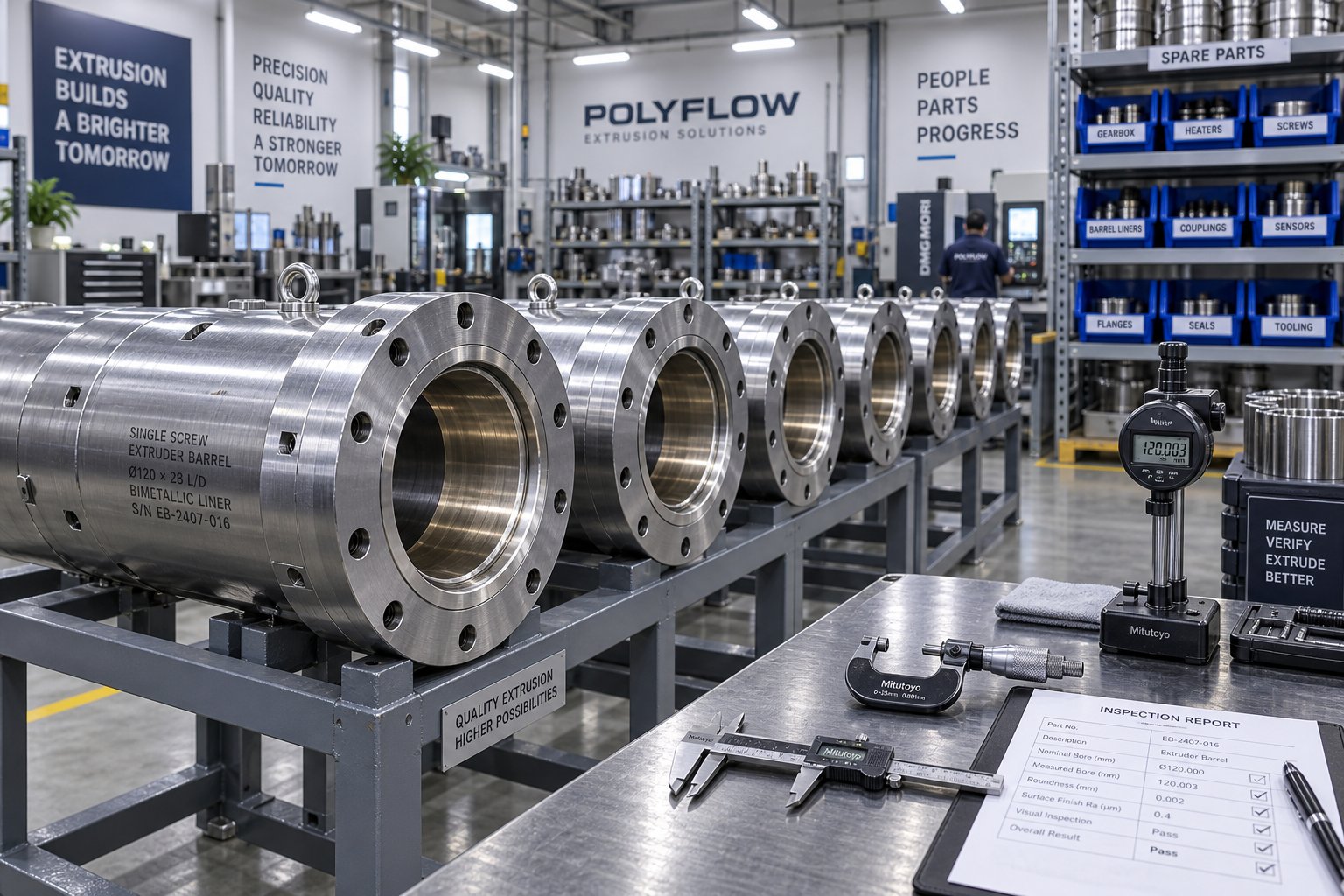
Reducing Long-Term Costs with Quality Replacement Components
Screws and barrels do not last forever. No matter how carefully you maintain a single screw plastic extruder, the grinding reality of processing molten polymer under high pressure and temperature guarantees that these components will wear — and eventually need replacement. The question is not whether you will face this expense, but how much it will cost you when it arrives and how frequently it recurs. That calculation depends almost entirely on the quality of the replacement components you source.
Many buyers obsess over the initial single screw extruder price and treat replacement parts as an afterthought. That is a costly mistake. Over a ten-year ownership period, a plastic single screw extruder may go through two to four sets of screws and barrels depending on the materials being processed. The cumulative cost of those replacements — plus the downtime incurred during each swap — can rival or exceed the original machine purchase price. Getting this part of the equation right is not optional. It is the difference between an extruder that remains profitable and one that quietly bleeds money year after year.
Why Screw and Barrel Quality Affects Long-Term Value
Imagine replacing your screw and barrel with the cheapest option available. The parts fit, the machine runs, and the price felt like a win. Six months later, throughput has dropped, melt temperature is drifting, and your scrap rate is climbing. What happened?
Low-quality replacement components wear faster because their base metallurgy, heat treatment, and dimensional tolerances do not match the demands of the application. The consequences cascade through the entire process:
- Processing consistency degrades: As the clearance between screw and barrel widens prematurely, leakage flow increases. Material that should move forward instead slips backward, creating pressure fluctuations that show up as dimensional variation in your finished product.
- Energy efficiency drops: A worn screw plastic extruder assembly forces the motor to work harder to maintain the same throughput. Industry experts note that symptoms of screw wear include reduced throughput, increased reliance on electric heat, and the need for more additives — all of which drive up operating costs.
- Replacement frequency accelerates: A premium barrel liner made from a properly specified bimetallic alloy might last three to five years in an abrasive PVC application. A budget alternative in the same application might wear through in 12 to 18 months. The "savings" on each purchase evaporate when you are buying replacements twice as often — and absorbing twice as many production stoppages to install them.
There is also a less obvious cost: additive waste. When screw geometry deteriorates, processors often compensate by increasing stabilizer, colorant, or lubricant dosages to maintain product quality. Given that formulation costs represent roughly 80% of total production expenses in many extrusion operations, even a fractional increase in additive use adds up fast. One case study documented a 30% reduction in additive consumption simply by replacing worn screws and barrels with properly engineered components — savings that paid for the replacement in under a year.
The takeaway is straightforward: replacement screw and barrel quality is not a maintenance line item. It is a strategic cost lever that directly controls your per-kilogram production economics for years at a time.
Sourcing Custom and Replacement Screw Barrels
Finding a replacement barrel that physically fits your machine is the easy part. Finding one that matches the metallurgical specifications, dimensional tolerances, and application demands of your specific process is where many buyers stumble — and where the long-term cost differences emerge.
Several factors make precision matching critical:
- Application-specific demands: A barrel designed for processing neat polyethylene faces a fundamentally different wear environment than one running glass-filled nylon or calcium-carbonate-loaded PVC. The alloy liner composition, hardness profile, and bore finish must align with the material being processed, not just the machine model.
- OEM compatibility: Replacement barrels need to interface correctly with existing feed throats, heater band configurations, die adapters, and support clamps. Even small dimensional deviations create alignment issues that accelerate wear on the very components you just replaced.
- Screw-barrel pairing: A new barrel paired with a worn screw — or vice versa — creates an uneven wear pattern that shortens the service life of both components. Ideally, screw and barrel should be evaluated and, when necessary, replaced as a matched set.
This is where working with a dedicated screw and barrel manufacturer — rather than relying solely on the original equipment maker — can deliver both cost savings and faster turnaround. OEM replacement parts carry brand premiums and often involve longer lead times, especially for older machine models. Specialized manufacturers who focus exclusively on screw and barrel production can typically deliver precision-matched components at competitive pricing with shorter delivery windows.
NANHAIYA, for example, specializes in custom and replacement single screw barrels engineered for a wide range of plastic extrusion applications. Rather than offering generic one-size-fits-all components, they manufacture barrels matched to specific extrusion processes — an approach that directly addresses the compatibility and wear-life concerns outlined above. Their product line covers the most common application categories in the industry:
- Pipe extrusion
- Film extrusion
- Sheet extrusion
- Pelletizing
- Recycling
- General-purpose extrusion lines
That breadth matters because a plastic tube extruder barrel faces different thermal and abrasive loads than a film line barrel, even if both mount on similar-sized machines. Sourcing from a manufacturer who understands those application-specific differences — and engineers their components accordingly — reduces the risk of premature wear and the costly downtime that follows.
The financial logic is clear: precision-matched replacement barrels from a dedicated manufacturer lower your total cost of extruder ownership by extending component service life, reducing unplanned downtime, and maintaining the processing consistency that keeps scrap rates low. When you factor in that screw and barrel replacement is the single largest recurring maintenance expense on any single screw extruder, the supplier you choose for these components has an outsized impact on your long-term profitability.
Building a reliable replacement component supply chain before you need it — not during an emergency shutdown — is one of the smartest moves a buyer can make. And that kind of forward planning is exactly what separates a reactive purchase from a strategic investment, which brings us to the final step: assembling everything covered in this article into a practical buying roadmap you can follow from first inquiry to confident purchase decision.
Your Action Plan for Buying at the Right Single Screw Extruder
Every section of this article has peeled back a different layer of the single screw extruder price puzzle — from technical specs and size-based tiers to geographic premiums, total cost of ownership, quote evaluation tactics, and replacement component strategy. Individually, each insight saves you money. Combined into a disciplined buying process, they form a shield against the pricing traps that cost uninformed buyers thousands of dollars every year.
The roadmap below distills everything into a step-by-step sequence you can follow whether you are browsing plastic extruders for sale online, fielding factory-direct quotations, or evaluating a used machine sitting in a dealer's warehouse.
Your Single Screw Extruder Pricing Checklist
Treat this as your buying playbook. Each step builds on the one before it, and skipping any of them opens a gap where overspending — or under-specifying — quietly creeps in.
- Define throughput and application requirements first: Lock down the polymer type, target output rate in kilograms per hour, and end product (pipe, film, sheet, profile, pellets). These parameters dictate screw diameter, L/D ratio, barrel metallurgy, and motor power — the four specifications that carry the heaviest pricing weight. Without them, every quote you receive is a guess.
- Determine your new vs. used preference: Match your operational profile to the decision framework. Startups benefit from refurbished equipment that preserves capital. Expanding facilities with in-house expertise can extract exceptional value from the used market. Production-critical applications with zero downtime tolerance often justify the new-equipment premium and full OEM warranty.
- Research regional pricing tiers: Understand that a Chinese-manufactured extruder may cost 30-50% less than a European equivalent with similar core specifications. Decide whether the premium for a Western OEM — driven by local service infrastructure, documentation depth, and resale value — aligns with your actual operational needs and geography.
- Request standardized quotes from at least three to five suppliers: Send every supplier the identical specification sheet. Require responses in a uniform format that marks each line item as included, excluded, or optional at additional cost. This eliminates the scope-difference illusion that makes the narrowest quote appear cheapest.
- Evaluate total cost of ownership, not just purchase price: Model the five-year cost picture. Add installation and commissioning expenses (often 15-25% of the machine price), projected energy consumption based on motor type and annual operating hours, and anticipated maintenance cycles. A machine priced $15,000 lower upfront can easily cost $40,000 more over five years in energy and spare parts alone.
- Verify all technical specifications independently: On used equipment, insist on barrel bore-gauge readings, screw diameter measurements, gearbox oil analysis, motor amperage tests under load, and documented heater zone performance. On new equipment, confirm component brands (motor, gearbox, PLC, VFD) against the quote — substitutions are common and rarely disclosed unless you ask.
- Factor in ongoing maintenance and component replacement costs: Screw and barrel replacement is the single largest recurring expense on any single screw extruder. Budget for it from the start, identify your preferred replacement component supplier before the machine arrives, and build a spare parts inventory for critical wear items so that unplanned downtime does not force you into emergency purchases at premium prices.
Print this list. Tape it above your desk. Reference it at every stage of the buying process. The buyers who follow a structured sequence like this do not get surprised by hidden costs — because nothing is hidden when you have already accounted for it.
Making a Confident Purchase Decision
Confidence in an equipment purchase does not come from finding the single lowest number on a spreadsheet. It comes from knowing that the number you agreed to reflects the full financial reality — machine cost, landed cost, installation cost, operating cost, and the long-term replacement component cost that accumulates quietly over years of production.
That last category deserves special emphasis because it is the one most buyers defer until it becomes urgent. Establishing a reliable source for replacement screw and barrel components during your purchase planning — not during a production emergency — gives you pricing leverage, faster turnaround, and components engineered for your specific application rather than generic off-the-shelf substitutes.
For buyers sourcing single screw barrel replacements across pipe, film, sheet, pelletizing, recycling, or general-purpose extrusion lines, NANHAIYA's single screw barrel catalog provides a practical starting point. Their application-specific manufacturing approach — matching barrel metallurgy, bore tolerances, and liner composition to the demands of each extrusion process — directly supports the total-cost-of-ownership strategy outlined throughout this article. Bookmarking a resource like this during your equipment search, rather than scrambling for it later, is exactly the kind of forward planning that separates strategic buyers from reactive ones.
Whether you are evaluating your first plastic extruder for sale or replacing a machine that has run reliably for two decades, the principles remain the same. Define your requirements precisely. Compare quotes on equal terms. Model the full cost picture. Verify everything independently. And plan for the components that will need replacing long before those replacements become urgent.
The smartest extruder investment accounts for both the machine purchase price and the long-term component supply chain — because the buyers who plan for both consistently spend less over the life of the equipment than those who optimize for only one.
The single screw extruder market rewards preparation and punishes assumptions. You now have the framework to land on the right side of that equation.
Frequently Asked Questions About Single Screw Extruder Pricing
1. How much does a single screw extruder cost?
Single screw extruder pricing varies widely based on size, specifications, and condition. Lab-scale benchtop units with 16-30 mm screw diameters typically start in the low thousands of dollars. Mid-range production extruders (45-90 mm) generally fall in the mid-five-figure to low-six-figure range. Large industrial machines with screw diameters of 100 mm and above routinely exceed $200,000 for fully configured new systems. Used and refurbished machines can reduce these figures by 30-60%, though the actual savings depend on component wear, brand reputation, and included accessories. Always request standardized quotes from multiple suppliers and calculate the total landed cost, including installation, commissioning, and shipping, before comparing prices.
2. What is the difference between buying a new vs. used single screw extruder?
New extruders offer full manufacturer warranties (typically 1-2 years), complete customization options, the latest energy-efficient drive systems, and guaranteed performance specs. They carry the highest upfront cost and longest lead times. Used extruders cost 30-60% less but come with higher risk if wear components like screws, barrels, and gearboxes have not been professionally inspected. Refurbished machines occupy a practical middle ground: dealers rebuild critical components such as gearboxes, heater bands, and screws to documented standards, then offer limited warranties of 30-90 days. The best choice depends on your operational profile - startups often benefit from refurbished units, expanding facilities can extract value from used machines, and production-critical lines frequently justify new-equipment premiums.
3. What specifications have the biggest impact on extruder pricing?
Screw diameter and motor power are the two highest-impact pricing variables. A machine with double the screw diameter can cost three to five times as much because barrel machining, gearbox torque requirements, and frame size all scale steeply. L/D ratio also carries medium-to-high impact since longer ratios require more heating zones, heavier frames, and precision machining over greater lengths. Drive system type matters as well: AC servo drives cost significantly more than standard AC motors upfront but can reduce energy consumption by 15-30%. Barrel construction (nitrided steel vs. bimetallic lining) and control system complexity (standalone PID vs. PLC/HMI with SCADA) add moderate cost increments. When two quotes differ by tens of thousands of dollars, the explanation almost always lives in mechanical hardware differences rather than electronics.
4. Why are Chinese extruders cheaper than European or American brands?
Chinese and Indian manufacturers benefit from lower labor rates, domestic steel supply chains, and intense regional competition, enabling them to offer 30-50% lower upfront pricing compared to European equivalents - often while using identical core control components like Siemens PLCs and Delta VFDs. However, the lowest purchase price does not automatically mean the lowest total cost. European and American OEMs command premiums tied to faster local service response, deeper spare parts supply chains, more comprehensive documentation, and higher resale values on the used market. Buyers should weigh factors like geographic service availability, annual spare parts costs (which can run two to three times higher for European brands), and whether included training and commissioning support closes the apparent price gap.
5. How do screw and barrel replacement costs affect the total cost of extruder ownership?
Screw and barrel replacement is the single largest recurring maintenance expense on any single screw extruder. Over a ten-year ownership period, an extruder may require two to four sets of replacement screws and barrels depending on material abrasiveness, and the cumulative cost can rival the original machine purchase price. Low-quality replacement components wear faster, degrade processing consistency, increase energy consumption, and raise additive usage - one documented case showed a 30% reduction in additive costs simply by installing properly engineered replacement components. Sourcing precision-matched barrels from a dedicated manufacturer like NANHAIYA, which builds application-specific single screw barrels for pipe, film, sheet, pelletizing, recycling, and general-purpose lines, helps extend component life and reduce unplanned downtime, directly lowering per-kilogram production costs over the equipment's lifespan.
Written by
Nanhaiya Technical Team
Zhoushan Nanhaiya Plastic Machinery Co., Ltd.
The Nanhaiya technical team supports screw and barrel manufacturing projects through application review, technical communication, custom manufacturing coordination, and production and quality control.
Discuss Your Application
Related Articles
More insights on screw barrel technology and plastics processing.
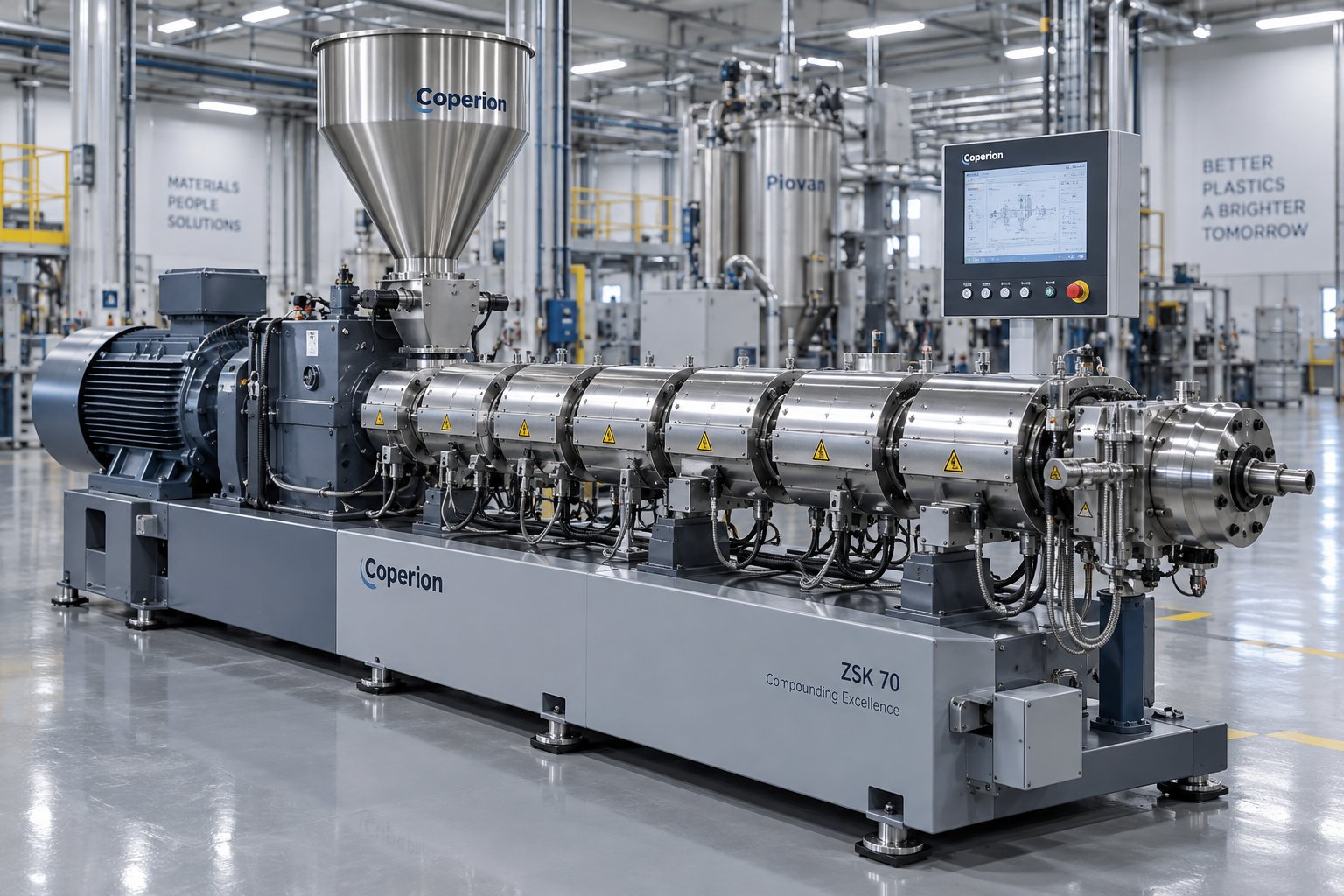
What Your Single Screw Extruder Manufacturer Won't Tell You
Oct 10, 2026
Learn how to evaluate single screw extruder manufacturers with this buyer-focused guide covering specs, configurations, material matching, and a ready-to-use selection checklist.
Read Article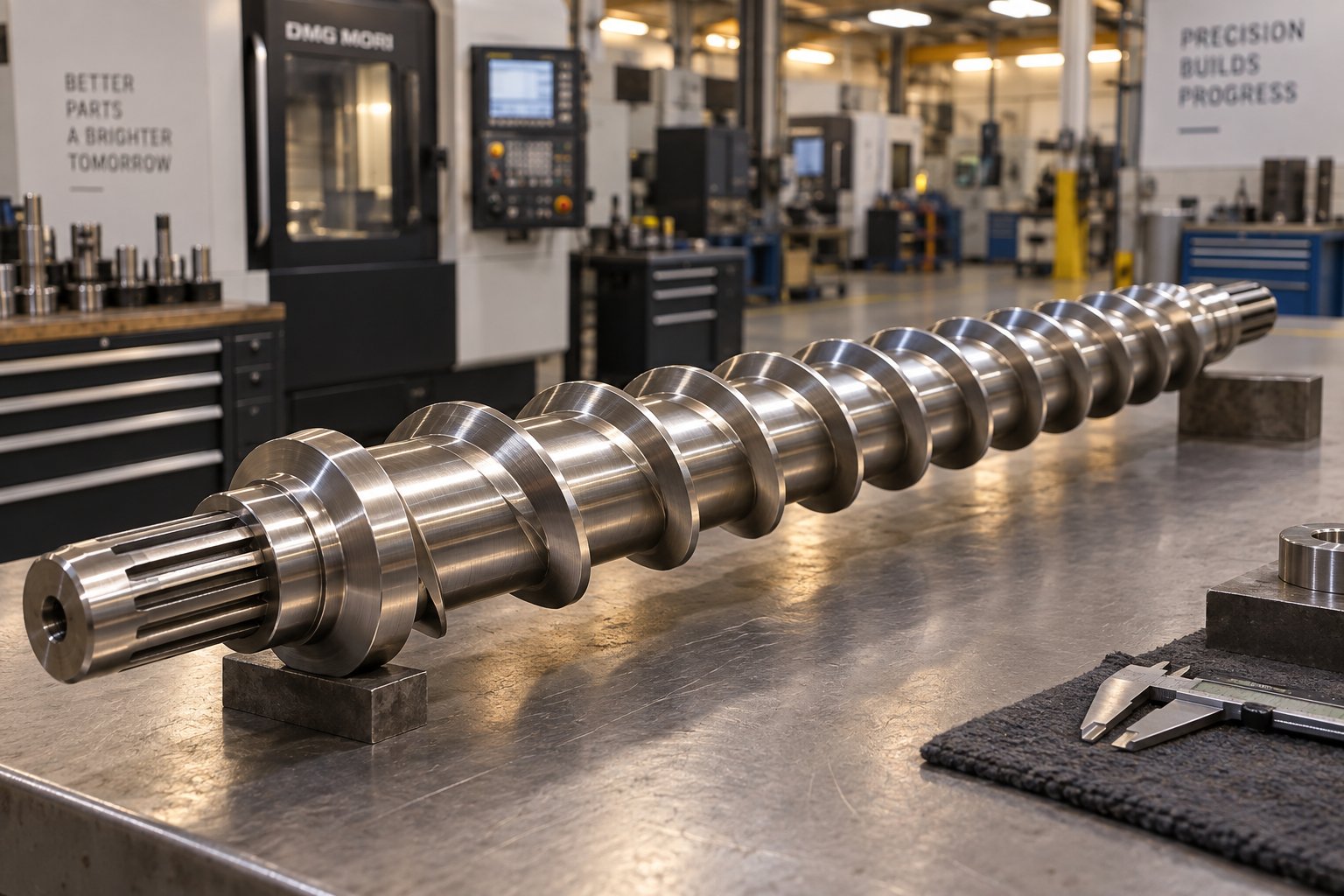
Plastic Extruder Screw Price Demystified: From Steel To Sticker
Oct 10, 2026
What drives plastic extruder screw price? This independent guide breaks down diameter, L/D ratio, metallurgy, order volume, and total cost of ownership factors.
Read Article
What No Supplier Tells You About WPC Decking Making Machines
Oct 6, 2026
Learn how a WPC decking making machine works, compare extruder types, formulations, and production methods, plus get a buyer checklist to evaluate any supplier.
Read ArticleLooking for something else?
Search by material, symptom or product and jump straight to the relevant page.
These are navigation suggestions based on keyword matching — not a quotation, not a delivery commitment, and not a substitute for engineering review. Final specification is confirmed by our engineers against your drawings and processed material.
Need help with screw barrel selection?
Share your machine model, processed material and application. Our team can help with pricing and technical support.