

What Is a Single Screw Extruder for Plastic
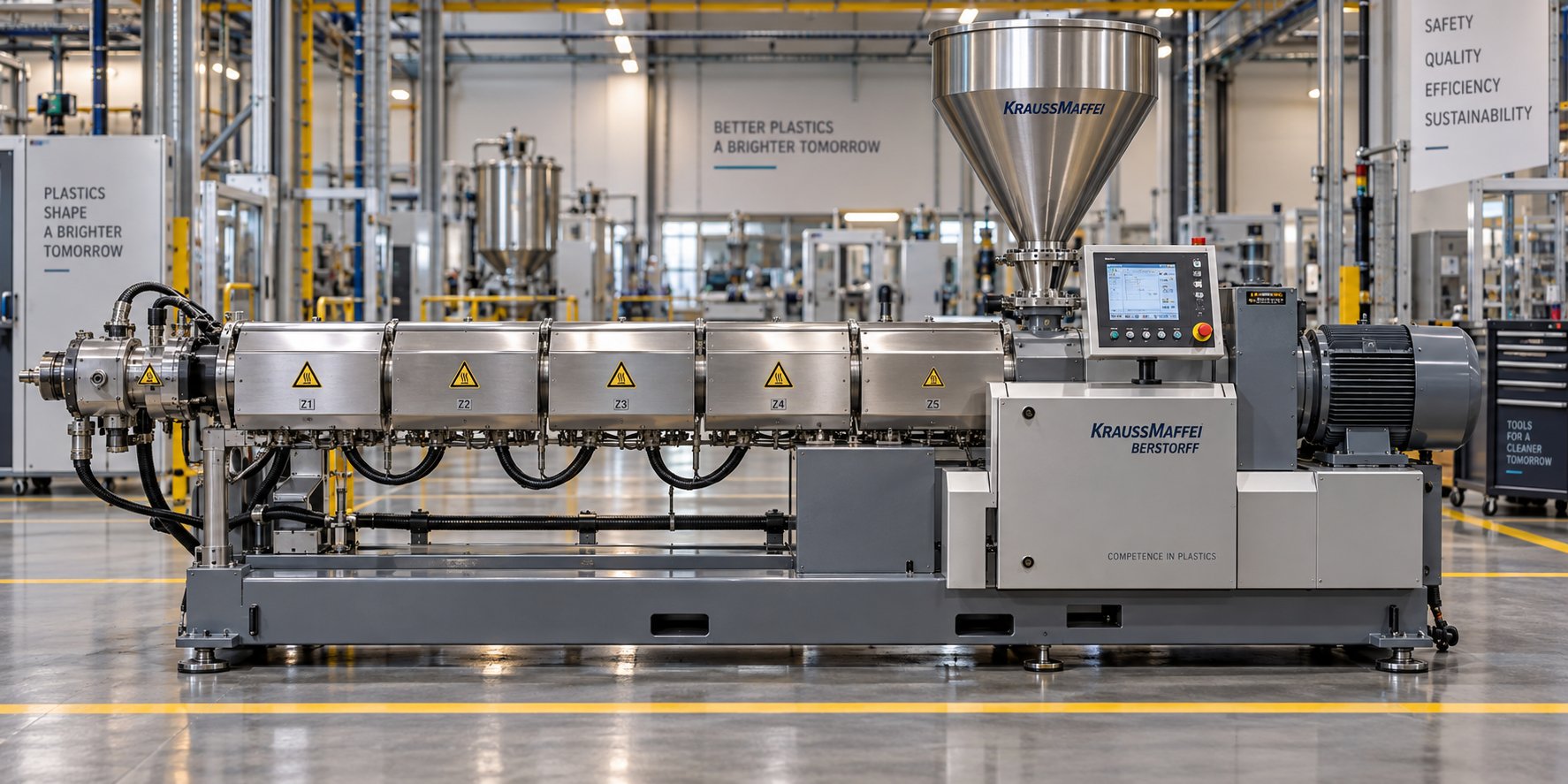
A single screw extruder for plastic is a continuous processing machine that uses one rotating Archimedean screw inside a heated barrel to melt, mix, and push thermoplastic material through a shaped die. The result is a uniform, continuous profile — whether that's a pipe, a sheet, a film, or an insulated wire. It is the most widely installed type of plastic extrusion equipment in the world, favored for its mechanical simplicity, proven reliability, and lower capital cost compared to multi-screw alternatives.
This article is built for a wide audience. If you're a newcomer trying to understand what this machine actually does, an engineer looking to optimize an existing line, or a buyer comparing equipment options, you'll find practical, honest information here — including details most sellers leave out of the conversation.
What a Single Screw Extruder Actually Does
Imagine pouring a bag of small plastic pellets into a funnel. That funnel — the hopper — sits at one end of the single screw extruder machine. Gravity feeds those pellets down into a long, cylindrical barrel, where a helical screw rotates steadily.
As the screw turns, it conveys the solid pellets forward and compresses them against the barrel wall. The barrel is wrapped in precisely controlled heaters, and the combination of conducted heat from those heaters and frictional heat from the screw's mechanical action gradually melts the plastic. By the time the material reaches the far end of the barrel, it's a fully molten, homogeneous polymer stream under significant pressure.
That pressurized melt is then forced through a die — a specially shaped steel opening that determines the cross-sectional geometry of the final product. Once the molten plastic exits the die, it's cooled by air or water baths and pulled downstream by take-up equipment to maintain consistent dimensions. The entire process is continuous, running for hours or even days without interruption.
In essence, every single screw plastic extruder performs three critical jobs simultaneously: it conveys, it melts, and it pumps. The elegance of the design is that one rotating component — the screw — handles all three.
Why Single Screw Extruders Remain the Industry Standard
Twin screw technology has advanced significantly, and it earns its place in compounding, reactive processing, and complex formulations. Yet the single screw extruder continues to dominate installed capacity across the global plastics industry. Why?
The reasons are straightforward. A screw plastic extruder built around a single-screw design costs substantially less to purchase, install, and maintain. It has fewer moving parts, which translates to simpler spare parts inventories and shorter downtime during service. For the most common extrusion tasks — melting a pre-compounded resin and forming it into a finished shape — this machine delivers excellent energy efficiency and output consistency without the mechanical complexity of twin screw systems.
Material compatibility is another strength. Commodity thermoplastics like PE, PP, PVC, and PS, along with many engineering resins, process reliably on a well-designed single screw setup. That broad applicability means one machine platform can serve multiple product lines with relatively simple screw and die changes.
The single screw extruder is the workhorse of the plastics industry — not because it does everything, but because it does the most common tasks exceptionally well.
That said, understanding what this machine does well is only half the picture. Knowing exactly how it transforms solid pellets into finished products — zone by zone, from feed throat to die lip — is what separates confident operators and informed buyers from everyone else.
How the Single Screw Extrusion Process Works Zone by Zone
Most equipment brochures describe the extrusion process in a single paragraph and move on to specifications. That glosses over the part that actually matters — what's happening to the plastic inside the barrel at every point along the screw. Understanding these transformations is what helps operators troubleshoot problems, engineers optimize output, and buyers ask sharper questions when evaluating a single screw extrusion machine.
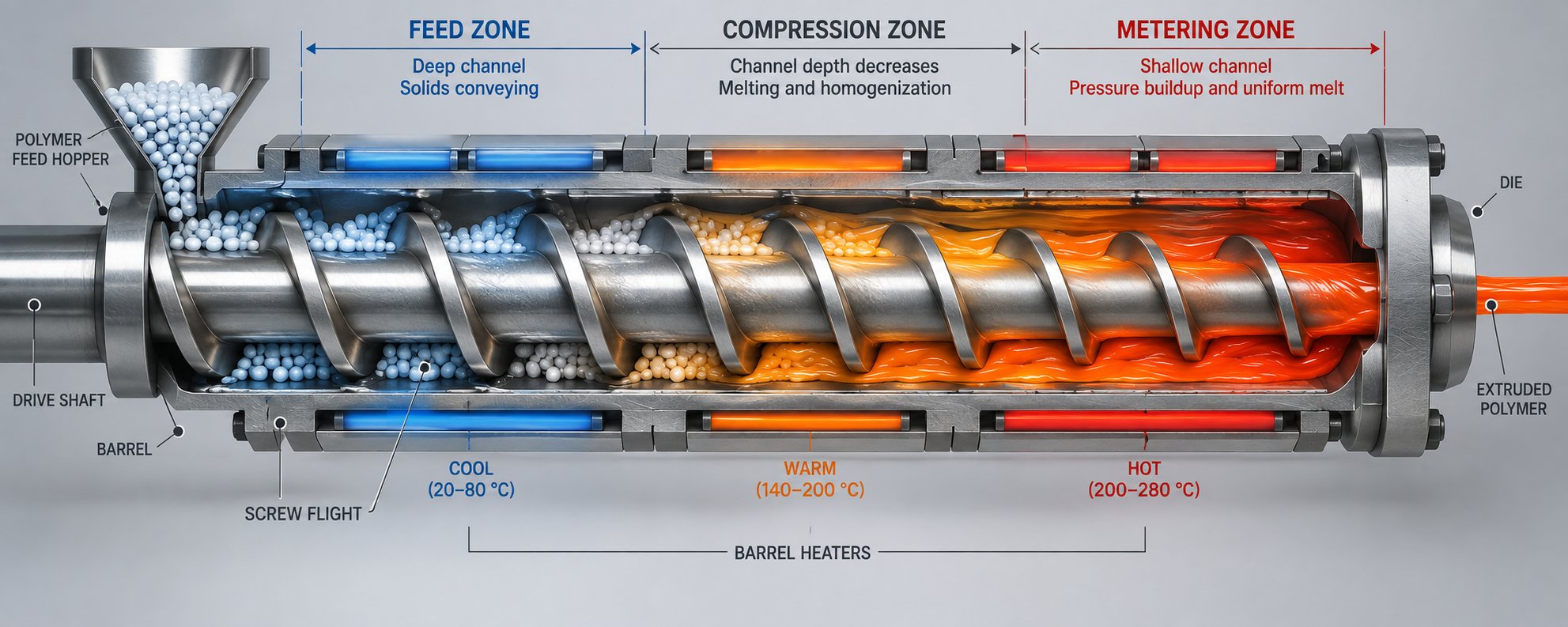
The screw inside the barrel isn't uniform from end to end. It's deliberately designed with three distinct functional zones — feed, compression, and metering — each engineered to handle a specific stage of the material's transformation from solid pellet to pressurized melt. After the metering zone, the polymer exits through the die. Let's walk through each stage.
Feed Zone and How Solids Enter the Barrel
The feed zone is where everything begins. Pellets or powder drop from the hopper through the feed throat and land on the rotating screw. In this zone, the screw's channel depth — the distance between the flight tip and the root — is at its deepest. That deep channel is intentional: it provides maximum volume to accept the incoming solid material, which has a much lower bulk density than molten plastic.
Gravity alone doesn't push material forward. The friction between the pellets and the barrel wall is what drives solids conveying. As the screw rotates, the flights act like a conveyor, dragging the pellets along the barrel's inner surface and advancing them downstream. The flight pitch — the distance from one flight to the next — is typically equal to the screw diameter (known as "square pitch"), which provides a reliable balance between forward conveying speed and residence time.
You'll notice that the feed throat area is usually water-cooled. This isn't an afterthought. If the barrel gets too hot near the feed opening, pellets begin to soften and stick to the screw root instead of sliding forward. That sticking disrupts the steady flow of solids into the barrel, causing output fluctuations and inconsistent downstream melt quality. Keeping the feed throat cool ensures pellets remain solid and free-flowing as they enter the screw channel.
A detail worth noting: all the air trapped between the pellets needs to escape backward through the hopper during this stage. If it doesn't — due to premature melting or poor compaction — that trapped air can travel forward into the melt and show up as bubbles or voids in the finished product.
Compression Zone and the Melting Mechanism
As pellets advance past the feed zone, they enter the compression zone — sometimes called the transition zone. Here, the screw channel depth gradually decreases, which means the available volume shrinks progressively. The solid material is squeezed tighter and tighter against the heated barrel wall.
This is where the real melting action takes place, and it involves two simultaneous heat sources. First, the barrel heaters conduct thermal energy through the steel wall and into the compressed plastic. Second, the intense friction between the compacted solid bed and the barrel surface generates significant mechanical heat. In many single screw extrusion operations, this frictional energy actually contributes the majority of the heat needed for melting — the barrel heaters are often more about fine-tuning temperature than providing the primary energy input.
Sounds complex? Here's a practical way to picture what's happening inside. As the solid pellets press against the hot barrel wall, a thin film of melted polymer forms on that surface. The rotating screw scrapes this melt film off the barrel and collects it into a growing pool of liquid polymer on the pushing side of the screw channel. Meanwhile, the remaining solid material — called the "solid bed" — continues to shrink in width as more and more melt is generated. This is the concept behind what polymer engineers call the solid-bed-width model: the melt pool grows while the solid bed narrows until, ideally, all the polymer is fully melted by the end of this zone.
The pressure within the compression zone is enormous — easily reaching 400 bar (roughly 6,000 psi) in production-scale machines. This pressure is essential for eliminating any remaining air between pellets and ensuring a dense, void-free melt. The compression ratio of the screw — the ratio of the feed zone channel depth to the metering zone channel depth — typically falls between 2:1 and 4:1, depending on the polymer being processed.
Metering Zone and Melt Delivery to the Die
By the time material reaches the metering zone, it should be almost entirely molten. This final screw section has a constant, shallow channel depth — much shallower than the feed zone. Its job is precision, not transformation.
The shallow, uniform channel serves two critical purposes. First, it homogenizes the melt by applying consistent shear across the polymer, evening out temperature variations that developed during the chaotic melting process upstream. Second, it builds and maintains the pressure required to push the melt through any downstream resistance — including the screen pack, breaker plate, and die.
Think of the metering zone as the quality-control section of the screw. Uniform channel depth means uniform flow rate, uniform melt temperature, and uniform pressure delivery. Any inconsistencies that survive this zone will show up directly in the finished product as gauge variation, surface defects, or dimensional instability.
Many modern screws include a mixing section within or near the end of the metering zone — such as a Maddock mixing section — to catch any remaining unmelted particles and further improve thermal uniformity before the melt exits the screw. These elements force the polymer to flow over a narrow barrier, shearing any surviving solid fragments while allowing fully molten material to pass through.
After leaving the metering zone, the pressurized melt passes through a screen pack supported by a breaker plate. The screen pack filters out contaminants and unmelted particles, while the breaker plate eliminates the rotational (spiraling) motion imparted by the screw — converting it into straight-line flow headed into the die. At the die, the polymer takes the shape of the die opening. Immediately after exiting, the extrudate is cooled — by water bath, air ring, or chill rolls, depending on the product — and solidifies into its final form.
Here's a concise summary of the entire screw extrusion sequence from hopper to finished product:
- Feed Zone — Solid pellets are received, compacted, and conveyed forward by screw friction against the barrel wall; air is expelled backward through the hopper.
- Compression Zone — Decreasing channel depth compresses solids against the heated barrel; frictional and conducted heat melt the polymer progressively as the solid bed narrows and the melt pool grows.
- Metering Zone — Constant shallow channel homogenizes melt temperature and pressure; mixing elements catch remaining solids; the screw builds final pressure for downstream delivery.
- Die Section — Pressurized melt is filtered through screen packs, straightened by the breaker plate, shaped by the die opening, and immediately cooled to lock in the final product geometry.
Each zone depends on the one before it performing correctly. A poorly fed screw starves the compression zone, an under-performing compression zone sends unmelted material into the metering section, and an inconsistent metering zone delivers uneven pressure to the die. That chain of dependencies is exactly why screw design specifications — diameter, L/D ratio, compression ratio, and channel depths — matter so much when selecting or evaluating equipment.
Key Specifications Every Operator and Buyer Should Know
Equipment listings and supplier catalogs are filled with numbers — screw diameters, L/D ratios, motor horsepower, RPM ranges, and throughput claims. The problem isn't a lack of data. It's that most of these numbers are presented without context, leaving buyers to compare figures they don't fully understand and operators to work with parameters they've never been taught to interpret.
That chain of dependencies running from feed zone through die — discussed in the previous section — is directly shaped by the specifications below. Each metric defines how well the screw can convey, melt, and pump a specific polymer at a target output rate. Understanding what these numbers actually mean is the difference between reading a spec sheet and knowing whether a plastic extruder machine will perform the way you need it to.
Screw Diameter and L/D Ratio Explained
Screw diameter is the single most important sizing metric for any single screw extruder. It refers to the outer diameter of the screw flights and directly determines the machine's output capacity, torque requirements, and physical footprint. Common industrial screw diameters follow a serialized range — typically 30 mm, 45 mm, 65 mm, 90 mm, 120 mm, 150 mm, and 200 mm — with 65 mm to 150 mm being the most widely used range for production applications. Smaller diameters (16 mm to 45 mm) serve lab-scale and pilot work, while diameters above 150 mm handle high-volume commodity resin processing.
When you see a machine described as a "90 mm extruder," that's its screw diameter — and it immediately tells an experienced reader roughly what output range, motor size, and product scale to expect.
The L/D ratio — length-to-diameter ratio — is the second specification you'll encounter on every equipment listing. It expresses the effective working length of the screw as a multiple of its diameter. A 90 mm screw with an L/D of 30:1 has an effective length of 2,700 mm (about 8.9 feet). A 90 mm screw with an L/D of 24:1 is only 2,160 mm long.
Why does this matter? A longer screw gives the polymer more residence time inside the barrel, which translates to more thorough melting, better mixing, and more uniform melt temperature at the die. Standard L/D ratios for production extruders typically fall between 24:1 and 36:1, with some specialized designs reaching 40:1 or higher. Shorter ratios like 20:1 work for simple, thermally easy polymers like polyolefins, while longer ratios (30:1 and above) are preferred for engineering resins, barrier screw configurations, or applications demanding tight melt quality tolerances.
Here's the practical takeaway for buyers: when comparing two plastic extruder machines with the same screw diameter but different L/D ratios, the longer unit will generally deliver better melt quality — but it will also cost more, take up more floor space, and impose higher torque demands on the drive system. The goal is to select the shortest L/D ratio that still achieves the melt quality your product requires.
Drive Power and Screw Speed Considerations
The motor driving the screw is sized in horsepower (HP) or kilowatts (kW), and its rating must match the torque demands of the target polymer at the intended screw speed. This relationship is more nuanced than it appears on a spec sheet.
Screw speed, measured in RPM, controls how quickly material moves through the barrel. Higher RPM generally means higher output — up to a point. Beyond that point, you run into trouble. Excessive screw speed generates more frictional (shear) heat than the barrel cooling system can manage, raising melt temperature beyond the polymer's safe processing window. For heat-sensitive materials like PVC or certain engineering resins, this causes thermal degradation: discoloration, loss of mechanical properties, or outright burning.
Experienced operators consistently run lower screw speeds than newcomers expect. The reason is simple — output rate lost to a purge-and-restart after overheating costs far more than the marginal throughput gained by pushing RPM too aggressively. A stable process at moderate speed will outproduce an unstable process at high speed every single shift.
Drive power must also account for the melt viscosity of the polymer being processed. High-viscosity polymers like HDPE or polycarbonate require significantly more torque to convey and pump than low-viscosity materials like LDPE. If the motor is undersized for the application, the drive system will overload at the RPM needed to hit target output — a problem that no amount of operator skill can solve. When evaluating a plastic extruder machine price, keep in mind that the motor and gearbox together typically represent 25-35% of the total machine cost, and skimping on drive capacity is one of the most expensive mistakes a buyer can make.
Output Capacity and How to Estimate It
Throughput ratings — stated in kilograms per hour (kg/hr) or pounds per hour (lb/hr) — are the specification buyers focus on most. They're also the most misleading number on any spec sheet if taken at face value.
Why? Because actual output depends on at least four variables beyond the extruder itself: the specific polymer being processed, the screw design (compression ratio, barrier flights, mixing elements), the die restriction (how much back-pressure the die creates), and the downstream line speed. A 90 mm extruder might produce 250 kg/hr of LDPE but only 180 kg/hr of rigid PVC on the same screw — and significantly less with a restrictive multi-strand die versus an open pipe die.
Supplier output claims are typically based on optimal conditions with an easy-flowing polymer like LDPE or LLDPE. Treat these as ceiling values, not guarantees. When evaluating plastic extrusion machine cost against projected revenue, base your calculations on realistic output for your specific resin and die configuration — not the headline number from the brochure.
A practical approach: ask the supplier to quote output specifically for your target polymer at your intended screw speed, and request references from installations running a similar material and product. If they can't provide that level of specificity, consider it a warning sign.
The following reference table summarizes typical specification ranges across three common extruder scales. Use it as a starting framework — not as a substitute for application-specific engineering from your equipment supplier.
| Specification | Small (Lab/Pilot) | Medium (Production) | Large (High-Volume Production) |
|---|---|---|---|
| Screw Diameter | 16 - 45 mm | 45 - 120 mm | 120 - 200+ mm |
| L/D Ratio | 20:1 - 30:1 | 24:1 - 34:1 | 26:1 - 36:1 |
| Motor Power | 1 - 15 kW (1.5 - 20 HP) | 15 - 150 kW (20 - 200 HP) | 150 - 600+ kW (200 - 800+ HP) |
| Screw Speed Range | 10 - 150 RPM | 20 - 150 RPM | 20 - 120 RPM |
| Approximate Output | 0.5 - 30 kg/hr | 30 - 500 kg/hr | 500 - 2,000+ kg/hr |
| Typical Applications | R&D, formulation testing, small-batch specialty products | Pipe, profile, sheet, film, wire coating | High-volume commodity pipe, thick sheet, large-diameter film |
Note: Values represent general industry ranges and vary by polymer type, screw geometry, and die configuration. Specific output and power requirements should always be confirmed with equipment suppliers for each application. Price ranges for production single-screw extruders in the U.S. market typically span $20,000 to $80,000 for standalone units, with full extrusion lines running considerably higher depending on downstream equipment scope.
These specifications don't exist in isolation — they interact constantly. A large-diameter screw with insufficient motor power can't reach its rated output. A high L/D ratio paired with excessive RPM generates more shear heat than some polymers can tolerate. The art of selecting the right machine lies in matching all of these parameters to a specific polymer and product, which is exactly why the next critical question is: which plastics actually run well on a single screw extruder, and what does each one demand from the screw design?
Which Plastics Are Best Suited for Single Screw Extrusion
Specification numbers tell you what a machine can deliver mechanically. But a perfectly sized extruder paired with the wrong screw geometry for your polymer will produce nothing but headaches — poor melt quality, degradation, surging output, and scrap. The missing piece in most equipment discussions is material-specific guidance: which resins run well on a plastic single screw extruder, what screw design each one prefers, and where trouble tends to hide.
Every thermoplastic melts, flows, and degrades differently. A screw designed to process polyethylene beautifully may destroy PVC or leave nylon riddled with moisture-induced defects. Understanding these differences before selecting equipment — or before accepting a supplier's "one screw fits all" recommendation — is what separates productive lines from constant firefighting.
Commodity Plastics and Their Extrusion Behavior
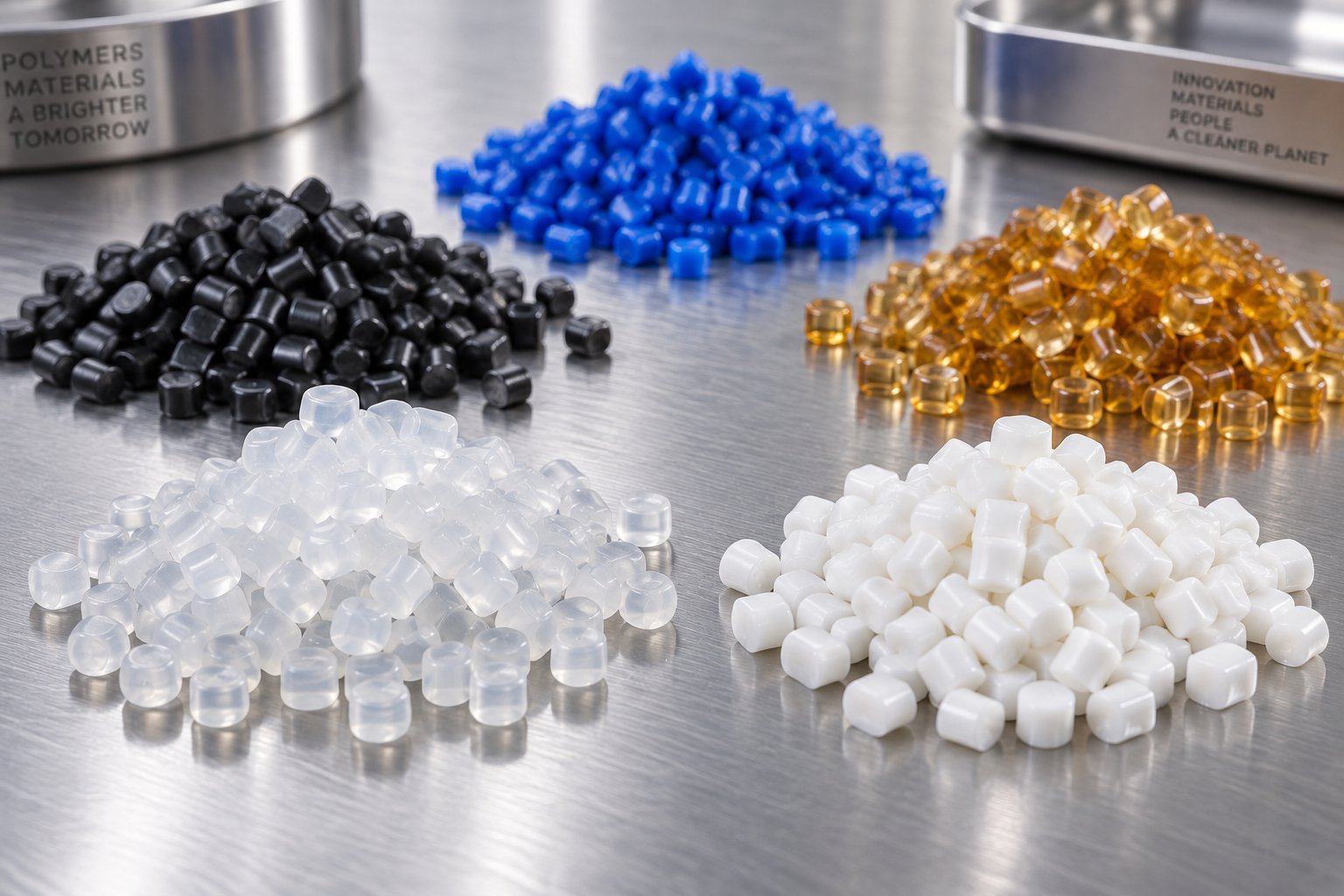
Commodity thermoplastics account for the vast majority of material processed through plastic extruders worldwide. They're relatively forgiving, widely available, and well-matched to standard single screw configurations — but each has its quirks.
Polyethylene (PE) — HDPE, LDPE, LLDPE: Polyethylene is the most commonly extruded polymer on the planet, and for good reason. It has a wide processing window, good thermal stability, and flows easily once melted. LDPE and LLDPE — used extensively in blown film and flexible packaging — process well on standard metering screws with moderate compression ratios (around 3:1). HDPE, being stiffer and higher in viscosity, benefits from a barrier screw design that separates the solid and melt phases more efficiently. One common mistake: running HDPE at too-high screw speeds, which generates excessive shear heat and can cause melt fracture — a rough, shark-skin texture on the extrudate surface.
Polypropylene (PP): PP behaves similarly to HDPE in the extruder but has a narrower melting range and lower melt strength. Standard metering screws work for most PP extrusion tasks, though barrier screws with mixing tips improve melt homogeneity for sheet and thermoforming applications. PP's relatively low melt strength demands careful die design and downstream cooling — problems that sometimes get blamed on the extruder but actually originate at the die lip or calibration tank.
Polyvinyl Chloride (PVC): PVC is the outlier in the commodity group, and it requires the most attention. It is thermally sensitive, meaning the gap between its processing temperature and its degradation temperature is uncomfortably narrow. Excessive shear or localized hot spots will release hydrochloric acid gas — corrosive to both equipment and operators. PVC extrusion demands low-compression screws (compression ratios around 2:1 to 2.5:1), gentle shear conditions, and precise barrel temperature profiles that ramp gradually from rear to front. Equally important, the barrel and screw metallurgy must resist chloride-driven corrosion. Bimetallic barrels with nickel-based alloy linings and nitrided screws are standard practice for any extruder for plastic PVC applications.
Polystyrene (PS): General-purpose PS is one of the easiest materials to extrude. It's amorphous, meaning it softens gradually rather than melting sharply, and it has relatively low melt viscosity. Standard metering screws with moderate L/D ratios (24:1 to 28:1) handle PS without issue. High-impact polystyrene (HIPS), which contains a dispersed rubber phase, benefits from gentle mixing elements to avoid degrading the impact-modifier particles — a concern that mirrors some of the processing sensitivity found in engineering resins.
Engineering Plastics and Shear-Sensitive Polymers
Engineering thermoplastics deliver superior mechanical performance, chemical resistance, and heat tolerance compared to commodity resins. They also demand more from the extruder — tighter temperature control, better mixing, and often specialized screw elements to achieve acceptable melt quality on a single screw platform.
PET (Polyethylene Terephthalate): PET is hygroscopic — it absorbs moisture from the air. Even 0.02% residual moisture at processing temperatures triggers hydrolysis, breaking polymer chains and reducing intrinsic viscosity. The result is a brittle, hazy product with poor mechanical properties. Thorough drying to below 50 ppm moisture content in a desiccant dryer is non-negotiable before PET enters the hopper. On the screw side, PET benefits from barrier designs with distributive mixing sections to ensure thermal uniformity without excessive shear. Processing temperatures are high (typically 260-280°C for extrusion grades), and residence time must be minimized to prevent thermal degradation.
ABS (Acrylonitrile Butadiene Styrene): ABS contains a rubber phase (butadiene) that is sensitive to excessive shear. Push the screw speed too high or use overly aggressive mixing elements, and you'll degrade the rubber particles, reducing impact strength and causing yellowing. Moderate screw speeds, gentle mixing geometries, and precise temperature control keep ABS processing stable. Good barrel venting is also important — the rubber phase can release volatile compounds that cause surface defects or odor in finished products.
Nylon (PA — PA6 and PA66): Like PET, nylon is highly hygroscopic and must be dried thoroughly before extrusion. Even 0.1% moisture can cause molecular weight reduction through hydrolysis, resulting in brittle parts and poor surface finish. Nylon processes at high barrel temperatures (240-290°C depending on grade) and can release corrosive byproducts, so corrosion-resistant barrel linings are essential for sustained production. Barrier screws with mixing elements help achieve the melt homogeneity that nylon applications — often structural parts with tight mechanical specifications — require.
Polycarbonate (PC): PC has very high melt viscosity, which translates to high torque demands on the drive system and significant back-pressure at the die. Processing temperatures are elevated (280-320°C), and the material is sensitive to both moisture and excessive residence time. Undersized motors and inadequate drying are the two most common causes of PC extrusion failures on single screw platforms. Barrier screws paired with high-torque gearboxes and robust vacuum drying systems make PC processing viable — though very complex PC formulations with multiple additives may push the limits of what a single screw can mix effectively.
Recycled and Filled Materials
The rapid growth in recycled plastic processing is reshaping how manufacturers think about screw design. Post-consumer and post-industrial recycled resins don't behave like virgin pellets — and treating them as interchangeable is a fast path to production problems.
Recycled materials arrive with inconsistent bulk density, variable particle sizes (flakes versus pellets versus regrind), and contamination ranging from residual labels and adhesives to mixed polymer content. These inconsistencies directly affect the feed zone: irregular particle shapes don't compact as uniformly as virgin pellets, causing feed surging and uneven output. Deeper-channel feed sections and grooved feed throats help maintain consistent solids conveyance when processing recycled feedstock.
A critical concern flagged by extrusion experts at Plastics Technology is thermal incompatibility in co-extruded or multi-material recyclate. When recycling products composed of multiple semi-crystalline polymer layers — such as HDPE containers with a PET barrier layer — the melting points may be hundreds of degrees apart. The HDPE melts at around 130°C, while PET requires above 250°C. Running at HDPE processing temperatures leaves PET particles completely unmelted, and these solid fragments can plug barrier flights and restrictive mixing sections. For such mixed-material streams, screws without tight barrier clearances — allowing the higher-melting polymer to pass through like an inert filler — are often the practical solution, even though this limits achievable mixing quality.
Filled materials present a different challenge: abrasion. Mineral fillers like calcium carbonate, talc, and especially glass fibers accelerate screw and barrel wear dramatically. Processing glass-filled nylon or mineral-filled PP on standard steel screws will consume flight edges and widen barrel clearances far faster than unfilled resins. Hardened tool-steel or bimetallic wear surfaces become essential — not optional — for any sustained filled-material production on plastic extruders.
The following reference table maps common polymer types to their general screw design recommendations, processing temperature categories, and typical end products. Use it as a starting guide — exact temperatures and screw specifications should always be verified against the resin supplier's datasheet for the specific grade you're processing.
| Polymer Type | Recommended Screw Design | Temperature Range | Special Considerations | Common End Products |
|---|---|---|---|---|
| LDPE / LLDPE | Standard metering screw, 3:1 compression ratio | Low-Medium (150-220°C) | Wide processing window; watch for melt fracture at high rates | Blown film, bags, stretch wrap |
| HDPE | Barrier screw recommended | Medium (180-240°C) | Higher viscosity; shear-sensitive at excessive RPM | Pipe, blow molding preforms, sheet |
| PP | Standard metering or barrier screw; mixing tip beneficial | Medium (190-250°C) | Low melt strength; careful die and cooling design needed | Sheet, thermoforming, fibers, pipe |
| PVC (Rigid) | Low-compression screw (2:1-2.5:1); no aggressive mixing | Low-Medium (150-200°C) | Thermally sensitive; corrosion-resistant barrel/screw required | Pipe, profiles, window frames, siding |
| PS / HIPS | Standard metering screw; gentle mixing for HIPS | Medium (180-240°C) | Amorphous — gradual softening; HIPS rubber phase is shear-sensitive | Sheet, thermoforming, packaging |
| PET | Barrier screw with distributive mixing | High (250-280°C) | Must be dried to <50 ppm moisture; minimize residence time | Sheet, thermoforming, strapping, filament |
| ABS | Standard metering with gentle mixing section | Medium (220-250°C) | Shear-sensitive rubber phase; venting recommended | Sheet, profiles, appliance housings |
| Nylon (PA6/PA66) | Barrier screw with mixing elements | High (240-290°C) | Must be dried; corrosion-resistant metallurgy needed | Monofilament, tubing, profiles |
| PC | Barrier screw; high-torque drive required | High (280-320°C) | Very high viscosity; moisture-sensitive; long residence time causes degradation | Sheet, film, optical media, profiles |
| Recycled PE/PP | Deep-channel feed; avoid tight barrier clearances for mixed streams | Varies by base resin | Inconsistent bulk density; possible multi-polymer contamination | Lumber, pipe, containers, pellets |
| Filled/Reinforced Grades | Wear-resistant (bimetallic) screw and barrel; adjusted compression | Varies by base resin | Accelerated abrasive wear; glass fibers demand hardened metallurgy | Structural profiles, automotive parts, industrial components |
Note: Temperature ranges and screw recommendations represent general industry practice. Always verify processing parameters against the specific resin grade datasheet provided by your material supplier. Screw geometries should be specified or validated by experienced screw designers for each application.
Material selection doesn't just determine screw design — it also influences the broader question of whether a single screw extruder is even the right machine for the job. Some polymers and formulations sit right at the boundary between what a well-designed single screw can handle and what genuinely requires twin screw technology. Drawing that line clearly — with honest trade-offs on both sides — is exactly the comparison most equipment sellers avoid making.
Single Screw vs Twin Screw Extruder: An Honest Comparison
Here's a conversation that plays out in nearly every purchasing meeting: someone suggests a twin screw extruder, arguing it's the more advanced technology. Someone else pushes back on the price. And the discussion stalls because neither side has a clear framework for deciding which machine actually fits the application. Equipment sellers rarely help — single screw manufacturers undersell twin screw capabilities, and twin screw suppliers overstate the limitations of singles. The truth, as usual, lives in between.
Both machine types are excellent tools. Neither is universally superior. The right choice depends entirely on what you're asking the extruder to do — and understanding the specific dimensions where each technology wins or loses is the fastest way to cut through marketing noise and land on the correct decision.
Side-by-Side Performance Comparison
Rather than listing vague advantages, let's lay out the comparison across the metrics that actually drive purchasing and operational decisions. The following table covers nine performance dimensions that matter most when evaluating a single screw extruder against a twin screw extruder for plastic processing applications.
| Performance Dimension | Single Screw Extruder | Twin Screw Extruder |
|---|---|---|
| Capital Cost | Lower — typically 40-60% less than a comparable-output twin screw system | Higher — complex gearbox, dual screws, segmented barrel design increase cost |
| Throughput Range | Moderate to high for melting and forming tasks; output tied directly to screw speed | Moderate to very high; output can be adjusted independently of screw speed through starved feeding |
| Mixing Capability | Moderate — improved with barrier screws and mixing sections, but limited by single-channel flow | Excellent — screw-to-screw polymer transfer enables intensive distributive and dispersive mixing |
| Shear Sensitivity Handling | Good — lower overall shear input suits thermally sensitive polymers like PVC | Variable — co-rotating designs generate high shear; counter-rotating designs offer gentler processing |
| Energy Efficiency (per kg output) | Superior for straightforward melting tasks — less mechanical complexity means less parasitic energy loss | Higher total energy input per kg, though justified by the additional mixing and compounding work performed |
| Maintenance Complexity and Cost | Lower — single screw, single barrel bore, simpler gearbox, fewer wear components | Higher — two screws, segmented barrel elements, complex gearbox with higher torque demands |
| Material Suitability Range | Broad for pre-compounded resins — PE, PP, PVC, PS, PET, ABS, PC, nylon, and recycled grades | Broader — handles powders, high-filler loadings, low-bulk-density materials, and difficult-feeding stocks |
| Compounding Ability | Limited — can incorporate low levels of color or additives, but not suited for intensive multi-component blending | Excellent — designed for blending polymers, dispersing fillers, and incorporating high additive loadings |
| Typical Applications | Pipe, profile, film, sheet, wire coating, pelletizing of pre-compounded resins | Compounding, masterbatch production, reactive extrusion, devolatilization, filled/reinforced formulations |
Note: These comparisons represent general industry patterns. Specific performance depends on machine design, screw configuration, polymer type, and operating conditions. Always evaluate against your particular application requirements.
The pattern is clear. For melting a single pre-compounded resin and forming it into a product shape, the single screw extruder delivers better economics and simpler operation. For blending multiple ingredients, dispersing difficult additives, or performing chemical reactions inside the barrel, twin screw extrusion provides capabilities that a single screw fundamentally cannot match — regardless of how well the screw is designed.
Common Misconceptions About Single vs Twin Screw
Two myths dominate this conversation, and both lead to expensive mistakes.
Myth #1: Twin screw is always the superior technology. This is the most pervasive misconception in the industry. It sounds logical — two screws must be better than one, right? In reality, for the most common extrusion task — taking a bag of pre-compounded resin pellets and converting them into a pipe, film, sheet, or profile — a single screw extruder often delivers better energy efficiency, lower total cost of ownership, and equal or superior output consistency compared to a twin screw running the same job. The twin-screw extruder's strengths in mixing intensity and feed flexibility simply aren't needed when the material arrives pre-formulated and in uniform pellet form. Running a twin screw for a job a single screw handles perfectly is like using a commercial kitchen to make toast — it works, but you're paying for capability you'll never use.
Myth #2: Single screw extruders can't mix adequately. This was more true thirty years ago than it is today. Modern barrier screw designs — which physically separate the solid and melt phases in the compression zone — paired with advanced mixing elements like Maddock sections, pin mixers, and distributive mixing tips have dramatically improved single screw mixing performance. As extrusion consultant Jim Frankland notes, the Maddock mixer was specifically designed to replicate key twin screw mixing principles — full polymer turnover and short-duration high shear — within a single screw channel. These elements won't match the compounding intensity of a co-rotating twin screw, but for homogenizing melt temperature, eliminating unmelts, and incorporating low levels of color concentrates, they're highly effective.
The critical distinction is between homogenizing a single-component melt (which modern single screws do well) and compounding multiple components into a uniform blend (which inherently requires the screw-to-screw transfer and starved-feed operation that only twin screw systems provide). Confusing these two tasks is where most wrong-machine decisions originate.
Choosing Based on Your Application
Strip away the marketing language, and the decision framework is remarkably straightforward. Ask yourself one question: what is the extruder's primary job?
If the answer is melting a single pre-compounded resin and forming it into a continuous shape — pipe, profile, film, sheet, wire coating, or pelletizing — a single screw extruder is typically the right choice. It will cost less to buy, less to maintain, less to operate per kilogram of output, and it will deliver the melt consistency these applications demand.
If the answer involves blending multiple polymers, dispersing high loadings of fillers or additives, performing reactive extrusion, or removing volatiles — a twin screw extruder is usually required. The intensive, repeated mixing action created by intermeshing screws running in a starved-feed condition is something a single screw geometry physically cannot replicate, no matter how sophisticated the mixing elements. Attempting to force these tasks onto a single screw leads to inconsistent dispersion, quality rejects, and frustrated operators.
There's also a middle ground worth acknowledging. Some applications — like incorporating moderate levels of calcium carbonate filler into polyethylene, or blending a color masterbatch into a base resin — can be handled by either platform. In these cases, the decision comes down to economics: if you already own a well-designed single screw with appropriate mixing elements and the blend quality meets your product spec, there's no reason to invest in twin screw capacity. If blend quality is marginal or filler loadings are increasing, the twin screw's mixing superiority becomes worth the investment.
The honest takeaway? Neither machine type deserves loyalty — only your application does. Matching the right extruder to the actual task is what protects your capital, your product quality, and your sanity on the production floor. And once that match is clear, the next practical question becomes: what specific products do single screw extruders actually make, and what equipment configuration does each application require?
End-Product Applications and Screw Extruder Configurations
Knowing that a single screw extruder is the right tool for melting and forming pre-compounded resins is a solid starting point. But it raises an immediate follow-up question that most equipment guides skip entirely: what specific products does this machine actually make, and what does the complete production line look like for each one?
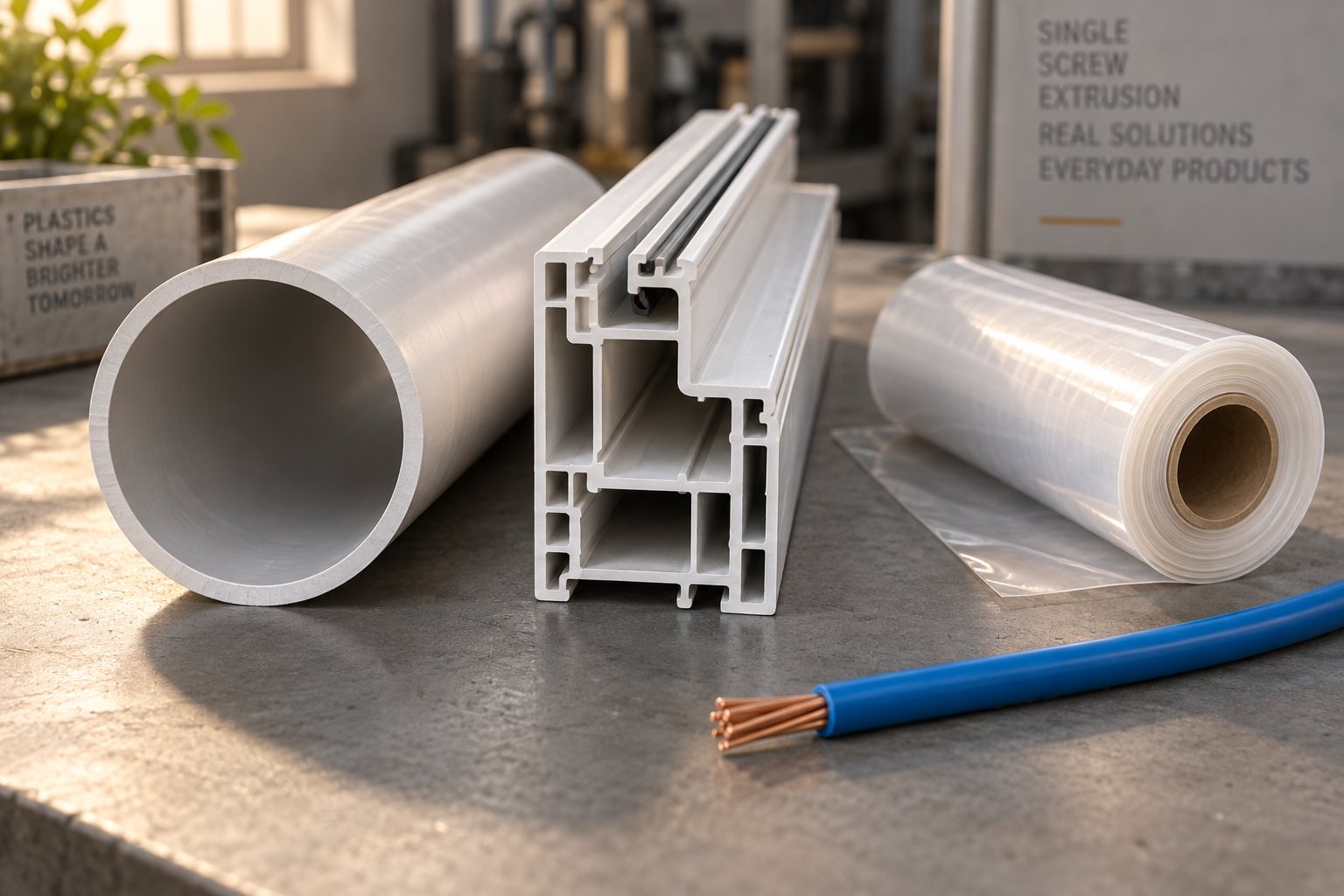
The answer isn't a single configuration. A screw extruder producing PVC drainage pipe looks nothing like one blowing LDPE packaging film or coating copper wire with insulation — even though all three rely on the same basic principle of a rotating screw melting polymer and pushing it through a die. The differences live in the screw geometry, the die design, and especially the downstream equipment that cools, sizes, and handles the extrudate after it leaves the die.
Understanding these application-specific configurations is what separates a productive installation from an expensive mismatch. Let's map the most common end products to the polymer extruder machine setups that produce them.
Pipe and Profile Extrusion
Pipe extrusion is one of the highest-volume applications for single screw extruders worldwide. PVC pressure and drainage pipe, HDPE water and gas distribution pipe, and PP piping systems are all produced on single screw platforms — and for good reason. These applications demand exactly what a well-designed single screw delivers best: steady melt pressure, uniform melt temperature, and consistent volumetric output over extended production runs.
The extruder feeds molten polymer into an annular pipe die, which shapes the melt into a hollow tube. Immediately downstream, the soft extrudate enters a vacuum sizing tank — a water-filled chamber under slight vacuum that pulls the pipe's outer surface against a precision-machined sizing sleeve, locking in the correct outside diameter while cooling the wall. After sizing, the pipe passes through additional spray or immersion cooling tanks before reaching a haul-off (puller) and automatic cutter or coiler.
Profile extrusion follows a similar logic but with far more complex die geometry. Window frames, weatherstripping, trim pieces, decking planks, and decorative moldings are all produced by forcing melt through profile dies that shape the polymer into non-circular cross-sections. These dies require careful flow balancing — ensuring every section of the profile, whether thick or thin, receives adequate melt flow — and the single screw extruder's steady pressure output is critical for maintaining dimensional consistency across the profile.
Both pipe and profile lines favor screws in the 45 mm to 120 mm diameter range for standard production, with L/D ratios of 24:1 to 30:1. PVC pipe and profile lines specifically require the low-compression, corrosion-resistant screw designs discussed in the material section. HDPE pipe lines, especially for larger diameters, typically use barrier screws with mixing elements to achieve the melt homogeneity needed for pressure-rated pipe that must pass long-term hydrostatic testing.
Film and Sheet Extrusion
Imagine pulling a plastic grocery bag from a dispenser. That bag started as a bubble — a continuous tube of molten LDPE or LLDPE inflated with air immediately after exiting an annular blown film die. This is the blown film process, and single screw extruders are its backbone.
In a blown film line, the extruder feeds melt upward through an annular die. Compressed air inflates the emerging tube into a large bubble, stretching the film both circumferentially and longitudinally. An air ring cools the bubble as it rises through a collapsing frame, which flattens it into a double-layered sheet before winding it onto rolls. The entire process demands extraordinarily tight control of melt temperature and flow uniformity. Even small melt-temperature variations across the die circumference show up as gauge bands — visible thickness differences that cause print registration problems and weakened seams in finished bags.
Flat-die sheet extrusion takes a different approach. Here, the screw extruder pushes melt through a wide, flat die (often called a T-die or coat-hanger die) to produce rigid or semi-rigid sheet in materials like PP, PS, PET, and ABS. The sheet exits the die and immediately passes through a set of temperature-controlled polishing rolls (a roll stack or calendar stack) that set surface finish, thickness, and flatness. Sheet extrusion lines for thermoforming applications — think disposable cups, food containers, and blister packaging — are particularly demanding about gauge uniformity, because thickness variations translate directly into inconsistent part wall thickness after thermoforming.
Film and sheet lines typically run screws in the 50 mm to 150 mm diameter range, with L/D ratios of 28:1 to 34:1 — the higher ratios provide the additional mixing and thermal homogenization that these gauge-sensitive products require. Barrier screws with mixing tips are common, particularly for LLDPE blown film where achieving uniform melt temperature across the die width is critical to film quality.
Wire Coating and Specialty Applications
Wire and cable insulation coating uses a specialized die arrangement called a crosshead die. Instead of the polymer exiting straight out the end of the barrel, a crosshead redirects the melt 90 degrees so it flows around a conductor wire passing perpendicularly through the die. The result is a continuous, concentric polymer coating applied directly onto the moving wire at high line speeds.
As described in industry technical references, common insulation materials include PVC, polyethylene (PE and XLPE), fluoropolymers, and nylon, each requiring specific screw designs, temperature profiles, and crosshead tooling. Single screw extruders excel in this application because the task is pure melt-and-deliver: the compound arrives pre-formulated, and the extruder's job is to produce a perfectly uniform melt stream at a constant pressure and flow rate while the wire races through the crosshead at speeds that can exceed hundreds of meters per minute.
Beyond wire coating, single screw platforms serve several other important specialty roles. Pelletizing lines — sometimes called granulation lines — use a screw extruder granulator setup to melt recycled plastic flakes or virgin resin and push the melt through a multi-hole die plate, where rotating knives cut the emerging strands into uniform pellets. These pellets then become feedstock for downstream injection molding or extrusion operations. Recycling lines frequently pair screw extruders with aggressive screen changers and melt filters to remove contaminants from post-consumer waste streams.
Filament extrusion — producing monofilament for applications ranging from 3D printing to brush bristles and tennis racket strings — uses small-diameter single screw extruders (often 16 mm to 45 mm) with precision die heads and carefully controlled downstream stretching and cooling to achieve consistent filament diameter and mechanical properties.
Here's a scannable mapping of the most common end products to their typical single screw extruder configurations:
- PVC/PE/PP Pipe — Standard or barrier screw (45-120 mm diameter); L/D 24:1-30:1; annular pipe die, vacuum sizing tank, spray cooling, haul-off, and automatic cutter or coiler
- Window Profiles and Trim — Low-compression screw for PVC (typically 45-90 mm); L/D 24:1-28:1; precision profile die with flow balancing, vacuum calibration table, cooling tank, haul-off, and cut-to-length saw
- Blown Film (LDPE/LLDPE) — Barrier screw with mixing tip (50-150 mm); L/D 28:1-34:1; spiral mandrel blown film die, air ring, collapsing frame, nip rolls, surface treatment, and winder
- Flat Sheet (PP/PS/PET/ABS) — Barrier screw with mixing section (65-150 mm); L/D 30:1-34:1; flat T-die or coat-hanger die, three-roll polishing stack, cooling conveyor, edge trim, and sheet cutter or winder
- Wire and Cable Insulation — Application-matched screw (30-90 mm); L/D 24:1-30:1; crosshead die with wire guiding tooling, cooling trough, diameter gauge, spark tester, and high-speed take-up
- Pelletizing/Granulation — Standard or barrier screw (45-120 mm); L/D 26:1-34:1; screen changer, multi-hole die plate, strand pelletizer or underwater pelletizer, pellet cooling, and classifier
- Monofilament and 3D Printing Filament — Precision metering screw (16-45 mm); L/D 24:1-30:1; small-bore filament die, water bath cooling, laser diameter gauge, stretching godet rolls, and precision winder
One theme runs through every application on this list: the screw and barrel must be matched precisely to the polymer being processed and the throughput the line demands. A screw geometry optimized for PVC pipe will underperform dramatically on an HDPE blown film line — and vice versa. The die, the downstream cooling, and the take-up equipment all matter enormously, but the extruder remains the heart of the line. If it can't deliver a consistent, properly conditioned melt, nothing downstream can compensate.
That raises an uncomfortable but important question. For all its versatility, every machine has boundaries. Certain tasks consistently push a single screw extruder past what it can reasonably deliver — and recognizing those limits before committing capital is worth far more than learning them on the production floor.
When NOT to Use a Single Screw Extruder
No equipment seller volunteers this section. Manufacturers want to sell machines, not talk you out of buying one. But ignoring the boundaries of any tool — no matter how versatile — leads directly to wasted capital, frustrated operators, and products that never quite meet spec. A single screw extruder for plastic handles the majority of extrusion tasks brilliantly. It does not, however, handle all of them.
Recognizing where this machine stops being the right answer is just as valuable as understanding where it excels. It saves money. It saves months of troubleshooting. And it earns the kind of credibility that comes from telling the whole truth, not just the convenient parts.
Applications That Require Twin Screw Technology
The core limitation comes back to mixing. As extrusion consultant Jim Frankland explains, a twin screw compounding extruder can transfer the entire channel of polymer from one screw to the other — multiple times — enabling full-channel mixing with precise shear control. A single screw simply cannot replicate that mechanism. The polymer in a single screw channel stays in roughly the same radial position due to shear-thinning behavior, and any mixing device added to the screw creates flow resistance that reduces output and raises melt temperature.
That fundamental difference makes twin screw systems the only viable choice for several categories of work:
Multi-component compounding. When the job involves blending two or more polymers together, or incorporating high percentages of fillers, reinforcing fibers, flame retardants, or other additives into a base resin, the intensive distributive and dispersive mixing of a parallel twin screw extruder is required. A single screw can stir — but it cannot compound.
Reactive extrusion. Processes that involve chemical reactions inside the barrel — such as grafting, crosslinking, or polymerization — demand the precise residence-time control and intensive mixing that twin screw systems provide. The starved-feed operation of a twin screw lets engineers control fill level and residence time independently of screw speed, a level of process flexibility that single screws lack entirely.
Devolatilization. Removing moisture, solvents, or reaction byproducts from the melt requires venting zones where the barrel is open to atmosphere or vacuum. While vented single screw designs exist, a double screw extruder machine with multiple vent ports along segmented barrels offers far superior devolatilization efficiency, especially for polymers carrying high volatile loads.
Extremely narrow processing windows. Some specialty polymers degrade within a temperature range of just a few degrees. The co-rotating twin screw's ability to apply high shear in small, controlled increments — rather than the continuous shear gradient of a single screw channel — provides the thermal precision these materials demand.
Signs Your Process Has Outgrown a Single Screw
Sometimes the limitation isn't obvious from the start. You bought the right machine for the original job, but production demands evolved — new materials, higher filler loadings, tighter color specifications — and the single screw is quietly struggling to keep up. Here's what that struggle looks like on the production floor:
Inconsistent color dispersion. You're adding masterbatch at the recommended letdown ratio, but finished parts show streaks, swirls, or shade variation from one run to the next. The single screw's limited mixing intensity isn't fully dispersing the pigment particles.
Gels and unmelted particles. Small hard specks or translucent spots appear in film, sheet, or profiles — even though barrel temperatures look correct. These are unmelted polymer fragments that the metering zone and mixing section couldn't catch. Increasing barrel heat or screw speed to compensate risks degrading the rest of the melt.
Filler distribution failures. Mineral fillers or glass fibers clump in certain areas of the cross-section or wash out inconsistently, causing mechanical property variation in the finished product. The single screw can convey and melt filled compounds, but it cannot redistribute high filler loadings with the intensity required for uniform dispersion.
Multiple-pass processing. If you find yourself running material through the extruder twice — or pre-blending in a separate mixer before extrusion — to achieve acceptable homogeneity, you're paying double the energy cost and double the thermal history for a result that a twin screw would deliver in a single pass.
Here's a quick self-assessment. If any of these scenarios describe your operation, a single screw extruder is likely not the right tool:
- You need to blend two or more polymers into a homogeneous alloy or blend
- Your formulation requires dispersing more than 20-30% filler or reinforcing fiber by weight
- Color matching demands are tight, and masterbatch dispersion is inconsistent run-to-run
- Your process involves chemical reactions (grafting, crosslinking, chain extension) inside the barrel
- Volatile removal (solvent stripping, moisture devolatilization) is a required process step
- You're running material through the extruder more than once to achieve adequate blending
- Product quality rejects related to dispersion or homogeneity exceed acceptable levels despite process optimization
None of these points diminish what a single screw extruder does well. They define where its design physics — one channel, one screw, one continuous shear field — hits a ceiling that no amount of screw optimization or operator skill can raise. Accepting that boundary early protects your budget and your product quality far more effectively than pushing the wrong machine past its limits.
For every application that falls comfortably within those boundaries, though, the challenge shifts from choosing the right extruder type to choosing the right specific machine — and that's a purchasing decision with its own set of traps, trade-offs, and overlooked details.
How to Select the Right Single Screw Extruder for Your Application
Choosing the right extruder type is only half the battle. Once you've confirmed that a single screw platform fits your polymer, your product, and your mixing requirements, a second — and equally consequential — decision follows: which specific machine, at what size, from which supplier, and at what price point? This is where many buyers stumble, because the evaluation shifts from engineering principles to purchasing judgment, and the two require very different skill sets.
A structured approach cuts through the noise. Rather than reacting to whatever plastic extruder machine for sale catches your attention first, start by defining your production requirements clearly — then let those requirements eliminate options that don't fit.
Define Your Production Requirements First
Five questions anchor every sound equipment decision:
What polymer will you process? This determines screw geometry, barrel metallurgy, and temperature control requirements. A PVC pipe screw and a HDPE blown film screw are entirely different tools, even if they share the same diameter.
What end product are you making? Pipe, sheet, film, profile, wire coating, and pelletizing each demand specific die types and downstream equipment. The extruder must be configured as part of a complete line, not evaluated in isolation.
What is your target output rate? This narrows the screw diameter range and motor power requirements. Oversizing wastes capital; undersizing caps your growth before the line ever starts.
What is your budget range? Realistic budgeting includes the extruder, die, downstream equipment, installation, and commissioning — not just the machine price on a quote sheet.
Do you need to compound or just melt and form? If the answer involves intensive blending, you may have circled back to the twin screw territory discussed earlier. If you're melting pre-compounded pellets, a single screw is confirmed as the right path.
Answering these questions honestly eliminates a surprising number of options and focuses your search on a narrow band of suitable extruder sizes and configurations.
Evaluating Equipment Options and Suppliers
With your requirements defined, you'll encounter two categories of equipment: new machines and used single screw extruders. Both deserve consideration, but for different reasons.
New equipment offers the advantage of current engineering, full manufacturer warranties, and the ability to specify every detail — screw design, barrel metallurgy, control systems, and motor sizing — to match your exact application. The trade-off, of course, is higher upfront cost.
Used extruders for sale can represent significant savings, sometimes 40-60% below new equipment pricing. For processors running standard commodity resins on well-established product lines, a properly inspected used machine can deliver years of reliable production. The critical caveat: inspect the screw and barrel wear condition before purchasing. As discussed throughout this article, these are the components that most directly affect melt quality, output consistency, and energy efficiency. A used extruder with a worn screw and barrel isn't a bargain — it's a rebuild project with hidden costs.
Regardless of whether you buy new or used, the screw and barrel deserve the most scrutiny in any evaluation. These are the primary wear components, and their quality determines how long the machine runs well before performance degrades. When sourcing replacements or upgrades, look for manufacturers who offer application-specific designs rather than generic, one-size-fits-all components. NANHAIYA, for example, provides custom and replacement single screw barrels engineered for specific extrusion applications — including pipe, film, sheet, pelletizing, recycling, and general-purpose lines — ensuring the metallurgy and geometry match the demands of your particular polymer and process.
Use the following checklist to systematically evaluate any plastic extruder for sale — new or used — before committing capital:
- Confirm polymer-screw compatibility — Verify that the screw design (compression ratio, barrier flights, mixing elements) matches your target resin's melting behavior and viscosity profile.
- Match screw diameter and L/D ratio to your output target — Cross-reference the specification ranges covered earlier in this article against your required throughput in kg/hr for your specific polymer.
- Verify motor and gearbox sizing — Ensure the drive system provides adequate torque at the screw speeds your application demands, with margin for viscosity variations across resin lots.
- Inspect screw and barrel condition — For used equipment, measure flight-to-barrel clearance and compare against original specifications. For new equipment, confirm metallurgy and hardening treatments suit your polymer (especially for PVC, filled resins, or recycled materials).
- Evaluate the control system — Modern PID temperature controllers, pressure transducers, and variable-frequency drives are baseline requirements. Outdated controls on used machines may need upgrading.
- Assess supplier support and spare parts availability — Can you source replacement screws, barrels, heaters, and thermocouples quickly? Long lead times for critical wear parts translate directly into extended downtime.
- Request application-specific output data — Ask for documented throughput results with your target polymer and die configuration, not just headline numbers based on easy-flowing LDPE.
- Factor in total cost of ownership — Include energy consumption, maintenance intervals, spare parts costs, and projected screw/barrel replacement cycles alongside the purchase price.
This checklist applies equally whether you're browsing a plastic extruder machine for sale online, evaluating quotes from OEMs, or inspecting used equipment at an auction. The specifications and zone-by-zone process understanding covered in earlier sections give you the vocabulary and judgment to ask the right questions — and to recognize when a seller's answers don't add up.
Selecting well is only the beginning, though. Even the best-matched extruder will eventually degrade in performance as its screw and barrel wear over thousands of operating hours. Knowing how to monitor that wear — and when to act on it — is what separates processors who maintain consistent output year after year from those who slowly lose ground without realizing why.
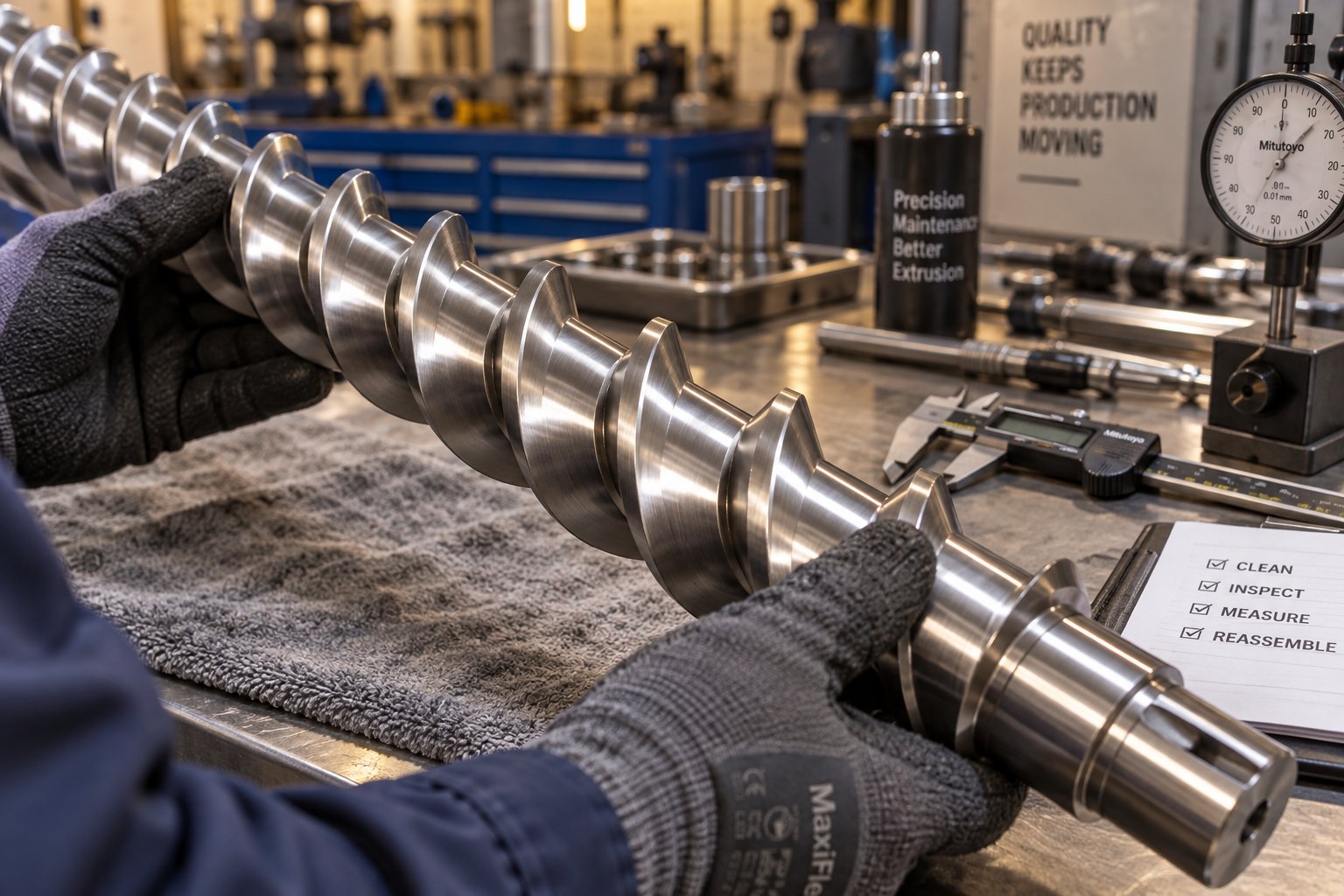
Maintaining Peak Extruder Performance with Quality Components
A well-selected single screw extruder doesn't fail overnight. It erodes — slowly, invisibly, shift by shift — as the screw flights wear thinner and the barrel bore opens wider. The output rate dips by a percentage point. Then another. Melt temperature creeps upward. Operators bump screw speed to compensate, and nobody questions it until the day product quality slips past the acceptable threshold and the line can no longer hit rate. By then, the machine that was running profitably six months ago is costing you money every hour it turns.
Understanding how screw extruders degrade, recognizing the warning signs early, and sourcing precision replacements when the time comes — these are the maintenance practices that protect your investment long after the purchase decision is behind you.
Understanding Screw and Barrel Wear Patterns
Every single extruder screw operates in sliding contact with the barrel's inner bore. That contact, repeated millions of times over thousands of operating hours, gradually increases the clearance between the screw flight tips and the barrel wall. When new, this flight clearance is typically the nominal screw diameter divided by 1,000 — so a 90 mm (roughly 3.5-inch) extruder starts life with about 0.004 inches (0.1 mm) of clearance per side. That gap is engineered to be tight enough to prevent excessive melt leakage backward over the flights, which is what allows the screw to build and maintain forward pumping pressure.
As that clearance widens with wear, three things happen simultaneously. First, more molten polymer leaks backward over the flight tips instead of moving forward — reducing pumping efficiency and lowering specific rate (output per screw RPM). Second, the leaking melt film becomes thicker, reducing heat-transfer efficiency at the barrel wall and causing discharge temperatures to climb. Third, the screw must spin faster to maintain the same output, which compounds the temperature rise and accelerates further wear. It's a self-reinforcing cycle, and it accelerates as wear progresses.
What drives the wear? Three primary mechanisms:
- Abrasive wear — Mineral fillers like calcium carbonate, glass fibers, and silica physically grind the flight tips and barrel bore, especially in zones carrying high concentrations of solid material. Glass-fiber-reinforced nylon, for instance, can wear through standard-hardness flight surfaces dramatically faster than unfilled polyethylene.
- Corrosive wear — PVC processing releases hydrochloric acid at elevated temperatures, which chemically attacks unprotected steel surfaces. Even small deviations in barrel temperature profiles can trigger localized degradation and accelerated corrosion of both the single extruder screw and barrel liner.
- Adhesive (metal-to-metal) wear — Misalignment, screw deflection, or momentary blockages from unmelted solids can force the screw into direct contact with the barrel wall. Graham Engineering notes that scoring on the screw feed section or feed throat area often indicates worn rear bushings or excessive axial deflection — problems that, if ignored, rapidly escalate into catastrophic wear events.
Monitoring wear doesn't require sophisticated instruments. Operators can track it through a few practical indicators: declining specific rate (the ratio of output in kg/hr to screw RPM), rising discharge melt temperature at the same operating conditions, and increased melt-temperature variation across the die width. When you pull the screw for inspection, visual signs tell the story directly — rounded flight edges that should be sharp and squared, visible loss of hard-facing material on the flight tips, and scoring or galling marks along the barrel contact surfaces.
A disciplined approach, as recommended by industry maintenance guides, involves periodic measurement of screw flight diameters and barrel bore diameters using a flight micrometer and bore gauge, logging the values over time to track wear progression rather than waiting for a production crisis to force an inspection.
When and How to Replace Worn Components
The decision between reconditioning a worn screw and replacing it outright depends on how far the wear has progressed and how critical the application is. Industry practice suggests several replacement thresholds: when flight clearance reaches four times the original new clearance, when the hard-facing material is completely worn off the flight tips, or — most practically — when the economics of reduced output and degraded quality exceed the cost of a new or refurbished screw. Critical-duty applications like medical tubing may warrant replacement at just twice the original clearance, while less demanding products like corrugated drainage pipe can tolerate significantly more wear before quality suffers.
A key caution for processors considering reconditioning: a screw should generally not be refurbished more than three times. Each re-application of hard-facing weld overlay degrades the base metal beneath it, increasing the risk of delamination — where the hard-facing separates from the screw body during operation, causing sudden performance loss and potential barrel damage.
For barrel wear, an iron-based bimetallic liner typically outlasts three screw lifetimes. But once the liner wears through, the softer backing steel erodes rapidly, and the barrel must be replaced or re-lined. Bore measurements taken whenever the screw is pulled provide the data needed to forecast barrel replacement timing.
Replacement components should match the original specifications — or be upgraded to reflect evolving production needs. If you've shifted from processing unfilled PP to running glass-filled nylon, the original screw metallurgy is no longer adequate. The replacement needs hardened tool-steel flights or bimetallic construction to withstand the abrasive environment. Similarly, processors who've added recycled feedstock to their mix may need deeper feed-section channels and adjusted compression ratios to handle inconsistent bulk density.
Whether you're maintaining existing used extruder equipment or upgrading screw and barrel sets on older machines, sourcing application-matched components is essential. Generic replacement barrels manufactured to approximate dimensions won't deliver the performance of components engineered for your specific polymer, product type, and throughput target. NANHAIYA's custom single screw barrels, designed for pipe, film, sheet, pelletizing, recycling, and general-purpose extrusion lines, represent the kind of application-specific replacement sourcing that protects output quality across the full service life of the machine.
Keep a spare screw in storage so that when the current screw reaches the end of its service life, the changeover happens in hours rather than weeks. Waiting for a replacement to be manufactured while the line sits idle is one of the most expensive — and most avoidable — maintenance failures in extrusion operations. Processors running used extruder equipment especially benefit from this practice, since lead times for components on older or discontinued models can be unpredictable.
Here are the key signs that indicate barrel or screw replacement is needed:
- Specific rate (output per RPM) has declined more than 10-15% from baseline at the same operating conditions
- Discharge melt temperature has risen noticeably without changes to barrel setpoints or screw speed
- Product quality defects related to melt uniformity — gauge variation, surface roughness, or dimensional instability — have increased despite process optimization
- Screw flight edges are visibly rounded, and hard-facing material is worn through to the base metal
- Bore gauge measurements show barrel ID has enlarged beyond the manufacturer's specified wear limit
- Screw no longer slides freely into a clean barrel, indicating bending or localized buildup from metal transfer
- The screw has already been refurbished three times, placing it at risk for hard-facing delamination
The screw and barrel are the heart of any single screw extruder — investing in precision-manufactured replacements protects output quality and extends overall machine life.
Every specification, material guideline, and application configuration discussed throughout this article ultimately depends on these two components performing within tolerance. Among single screw extruder manufacturers and rebuild shops, the quality of the screw and barrel offering is the single clearest indicator of whether the supplier understands extrusion — or is simply selling steel. Choose partners who engineer for your specific application, measure against documented standards, and stand behind the performance of what they deliver. That's the part no seller tells you — and it's the part that matters most once the machine is running.
Frequently Asked Questions About Single Screw Extruders for Plastic
1. What is the difference between a single screw extruder and a twin screw extruder?
A single screw extruder uses one rotating screw to melt and pump pre-compounded resin through a die, making it ideal for straightforward forming tasks like pipe, film, and sheet production. A twin screw extruder uses two intermeshing screws that transfer polymer between channels, enabling intensive mixing, compounding, and reactive processing. Single screw systems cost 40-60% less, require simpler maintenance, and deliver superior energy efficiency for standard melting tasks. Twin screw systems excel when blending multiple polymers, dispersing high filler loadings, or performing devolatilization. The right choice depends entirely on whether your application requires simple melt-and-form or intensive multi-component compounding.
2. What plastics can be processed on a single screw extruder?
Single screw extruders handle a broad range of thermoplastics. Commodity resins like LDPE, LLDPE, HDPE, PP, PVC, and PS are the most commonly processed materials and run well on standard or barrier screw designs. Engineering plastics including PET, ABS, nylon (PA6/PA66), and polycarbonate (PC) are also viable but demand specialized screw geometries, thorough pre-drying for hygroscopic grades, and tighter temperature control. Recycled and mineral-filled materials can be processed with appropriate screw modifications such as deeper feed channels and wear-resistant bimetallic barrel linings. Each polymer has unique melt behavior, so matching screw design and barrel metallurgy to the specific resin grade is essential for consistent output quality.
3. How do I choose the right screw diameter and L/D ratio for my extruder?
Screw diameter is the primary sizing metric and directly determines output capacity. Common production ranges span 45-150 mm, with 65-120 mm covering most standard applications. The L/D ratio (length-to-diameter) controls residence time and melt quality — ratios of 24:1 to 36:1 are standard for production extruders. Shorter ratios (20:1-24:1) suit thermally easy polymers like polyolefins, while longer ratios (30:1-36:1) benefit engineering resins and gauge-sensitive products like blown film. Select the shortest L/D ratio that delivers acceptable melt quality for your product, since longer screws cost more, occupy more floor space, and impose higher torque demands. Always confirm specifications with your equipment supplier based on your target polymer and throughput.
4. How often should I replace the screw and barrel on a single screw extruder?
Replacement timing depends on the materials processed, operating hours, and quality tolerance of your product. Abrasive fillers like glass fiber and calcium carbonate accelerate wear dramatically, while unfilled polyolefins cause minimal degradation. Monitor specific rate (output per RPM), discharge melt temperature, and product quality trends as early indicators. Industry practice recommends replacement when flight clearance reaches four times the original specification, hard-facing is worn through to base metal, or output decline exceeds 10-15% from baseline. Barrel bimetallic liners typically outlast three screw lifetimes. Keeping a spare screw in storage minimizes downtime during changeovers. Suppliers like NANHAIYA offer custom replacement single screw barrels engineered for specific applications at nhyscrews.com.
5. What are the signs that my single screw extruder is not performing properly?
Key warning signs include declining output rate at the same screw speed, rising discharge melt temperature without changes to barrel setpoints, increased gauge variation or surface defects in finished products, and visible wear on screw flight edges during inspections. Surging output — cyclic fluctuations in pressure and flow — often indicates feed-zone problems such as bridging, inconsistent bulk density, or premature melting near the feed throat. Gels or unmelted particles in film or sheet point to inadequate compression-zone performance or worn mixing elements. If color dispersion becomes inconsistent despite correct masterbatch ratios, the screw's mixing capability may be insufficient. Systematic monitoring of specific rate, melt temperature, and product quality metrics helps catch degradation before it impacts production economics.
Written by
Nanhaiya Technical Team
Zhoushan Nanhaiya Plastic Machinery Co., Ltd.
The Nanhaiya technical team supports screw and barrel manufacturing projects through application review, technical communication, custom manufacturing coordination, and production and quality control.
Discuss Your Application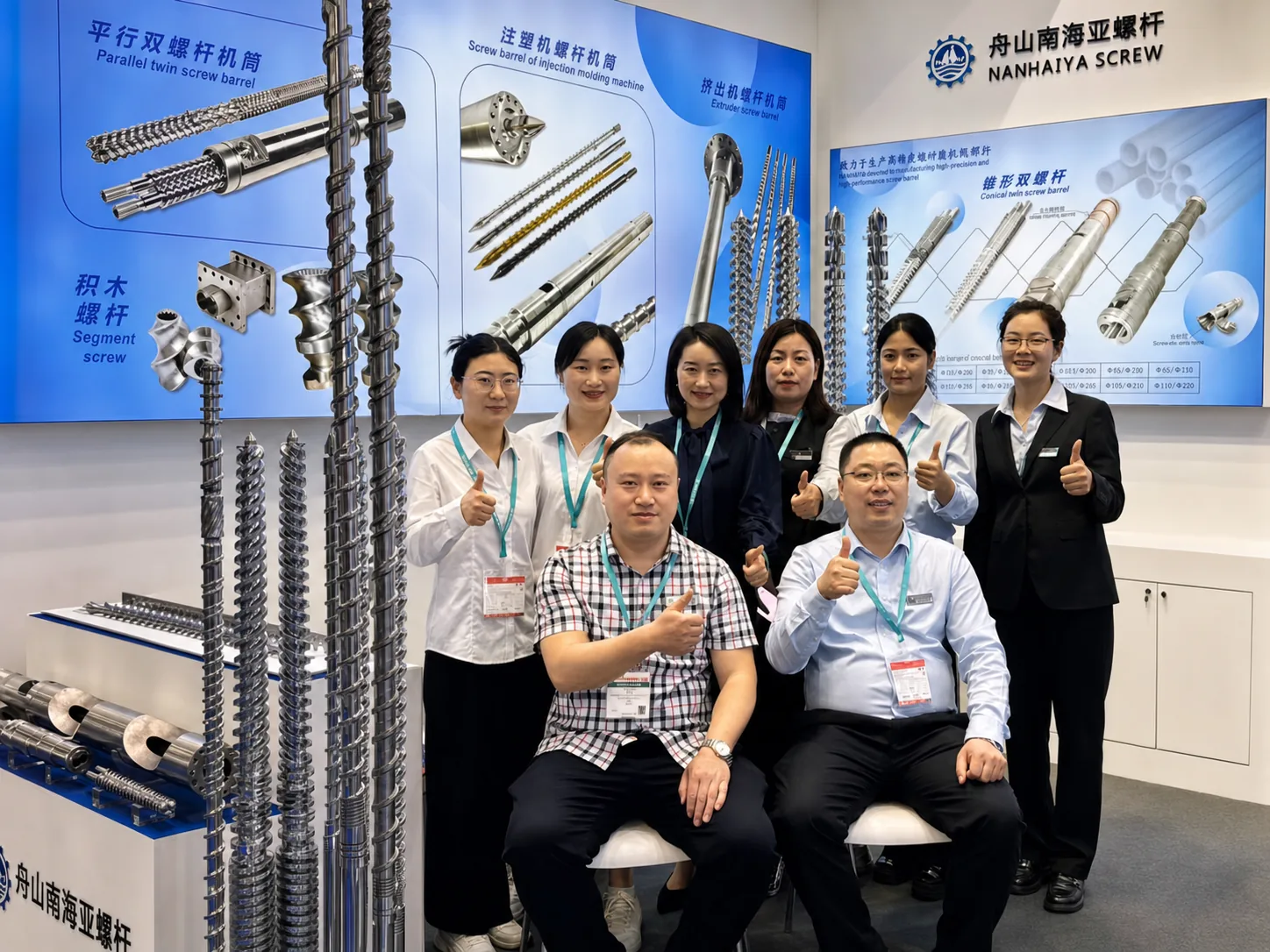
Related Articles
More insights on screw barrel technology and plastics processing.
What Your Single Screw Extruder Manufacturer Won't Tell You
Oct 10, 2026
Learn how to evaluate single screw extruder manufacturers with this buyer-focused guide covering specs, configurations, material matching, and a ready-to-use selection checklist.
Read Article
Plastic Extruder Screw Price Demystified: From Steel To Sticker
Oct 10, 2026
What drives plastic extruder screw price? This independent guide breaks down diameter, L/D ratio, metallurgy, order volume, and total cost of ownership factors.
Read Article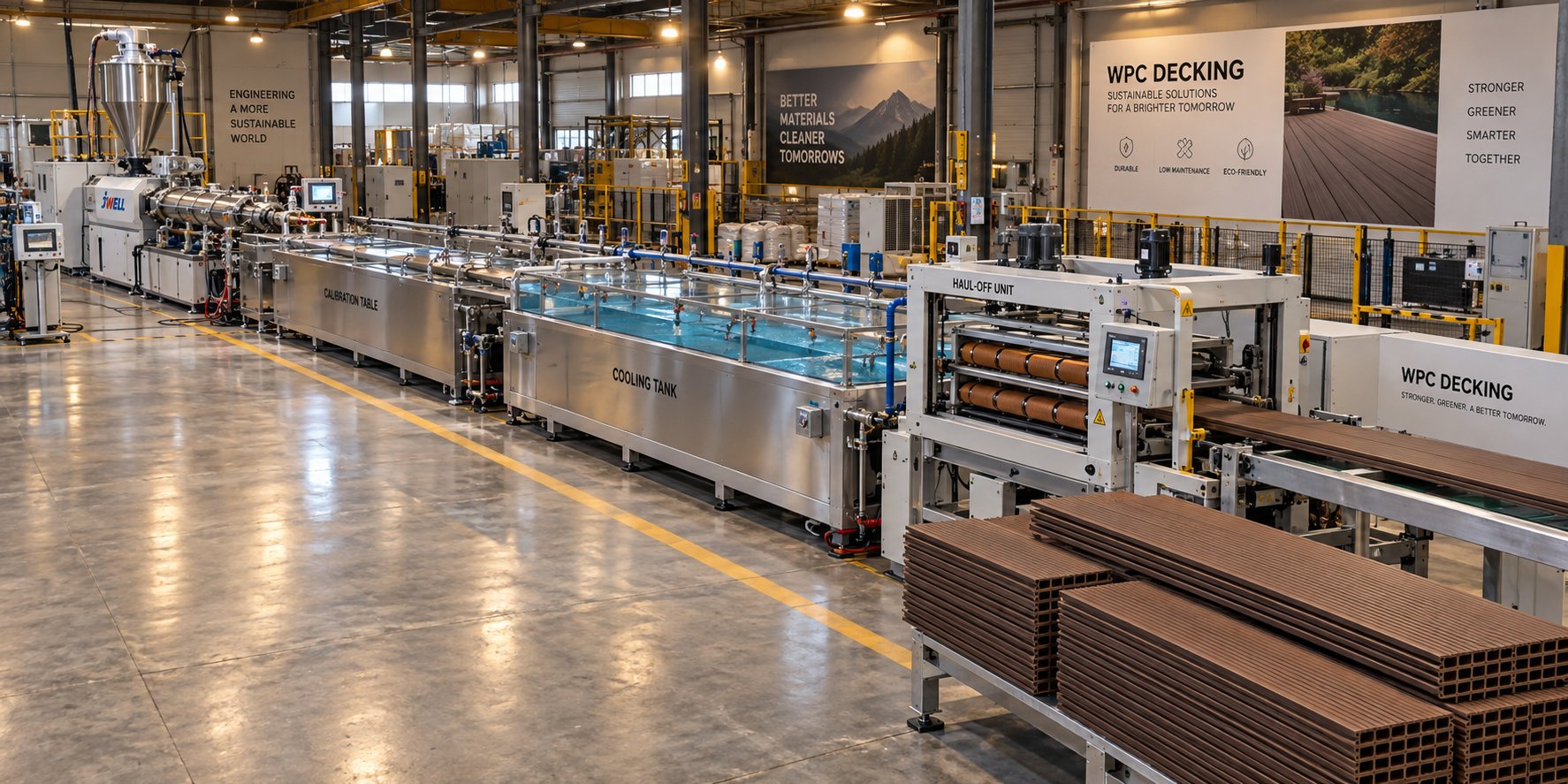
What No Supplier Tells You About WPC Decking Making Machines
Oct 6, 2026
Learn how a WPC decking making machine works, compare extruder types, formulations, and production methods, plus get a buyer checklist to evaluate any supplier.
Read ArticleLooking for something else?
Search by material, symptom or product and jump straight to the relevant page.
These are navigation suggestions based on keyword matching — not a quotation, not a delivery commitment, and not a substitute for engineering review. Final specification is confirmed by our engineers against your drawings and processed material.
Need help with screw barrel selection?
Share your machine model, processed material and application. Our team can help with pricing and technical support.