

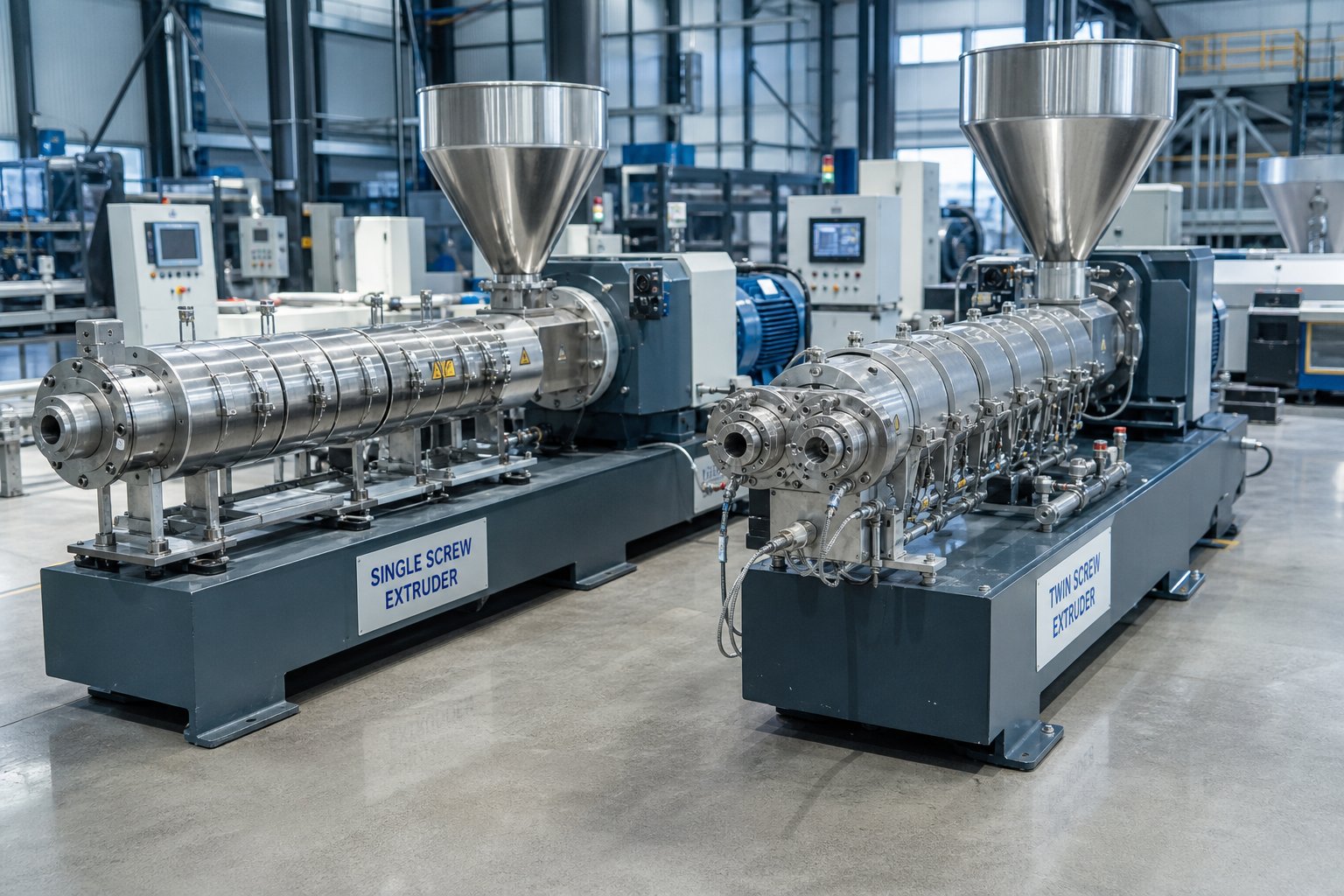
What Are Screw Extruders and Why They Matter
If you've ever wondered "what's an extruder?" the answer is deceptively simple — but the engineering behind it shapes entire industries. From the plastic pipe under your sink to the snack food in your pantry, screw extruders quietly power modern manufacturing at a scale most people never see.
A screw extruder is a machine that uses one or more rotating screws inside a heated barrel to convey, melt, mix, and pressurize raw material, forcing it through a shaped die to produce a continuous product.
That single definition covers an enormous range of equipment. Yet the real decision — the one that determines capital outlay, product quality, and long-term operating cost — comes down to a choice between two architectures: the single screw extruder and the twin screw extruder.
What Is a Screw Extruder
At its core, screw extrusion works like a high-precision pump for viscous materials. A helical screw rotates inside a close-fitting barrel, dragging raw material forward through friction, heat, and mechanical shear. As the material advances, it transitions from solid pellets or powder into a homogeneous melt, which is then pushed through a die to create pipes, films, sheets, pellets, or complex profiles.
This principle underpins plastics processing, food manufacturing, pharmaceutical production, and rubber compounding. Whether you're producing polyethylene film or a pharmaceutical solid dispersion, a screw extruder is almost certainly involved somewhere in the process chain.
Why the Single vs Twin Distinction Matters
A single screw extruder relies on one rotating screw to do all the work — feeding, melting, and pressurizing. It's mechanically simple, cost-effective, and exceptionally reliable for straightforward melting and forming tasks using pre-compounded pellets.
A twin screw extruder, by contrast, uses two intermeshing screws that unlock superior mixing intensity, self-wiping capability, and precise process control. It excels at compounding, devolatilization, and reactive processing — tasks where a single screw design simply cannot keep up.
The trade-offs between these two categories ripple through every purchasing decision: upfront capital, spare parts costs, energy consumption, maintenance complexity, and product quality. This guide covers all of it — principles, screw and barrel design, head-to-head performance data, application mapping, total cost of ownership, and a practical selection framework — so engineers, plant managers, and procurement teams can make confident, data-driven choices.
The mechanical differences start at the most fundamental level: how each design conveys, melts, and mixes material inside the barrel.
How Single Screw Extruders Work
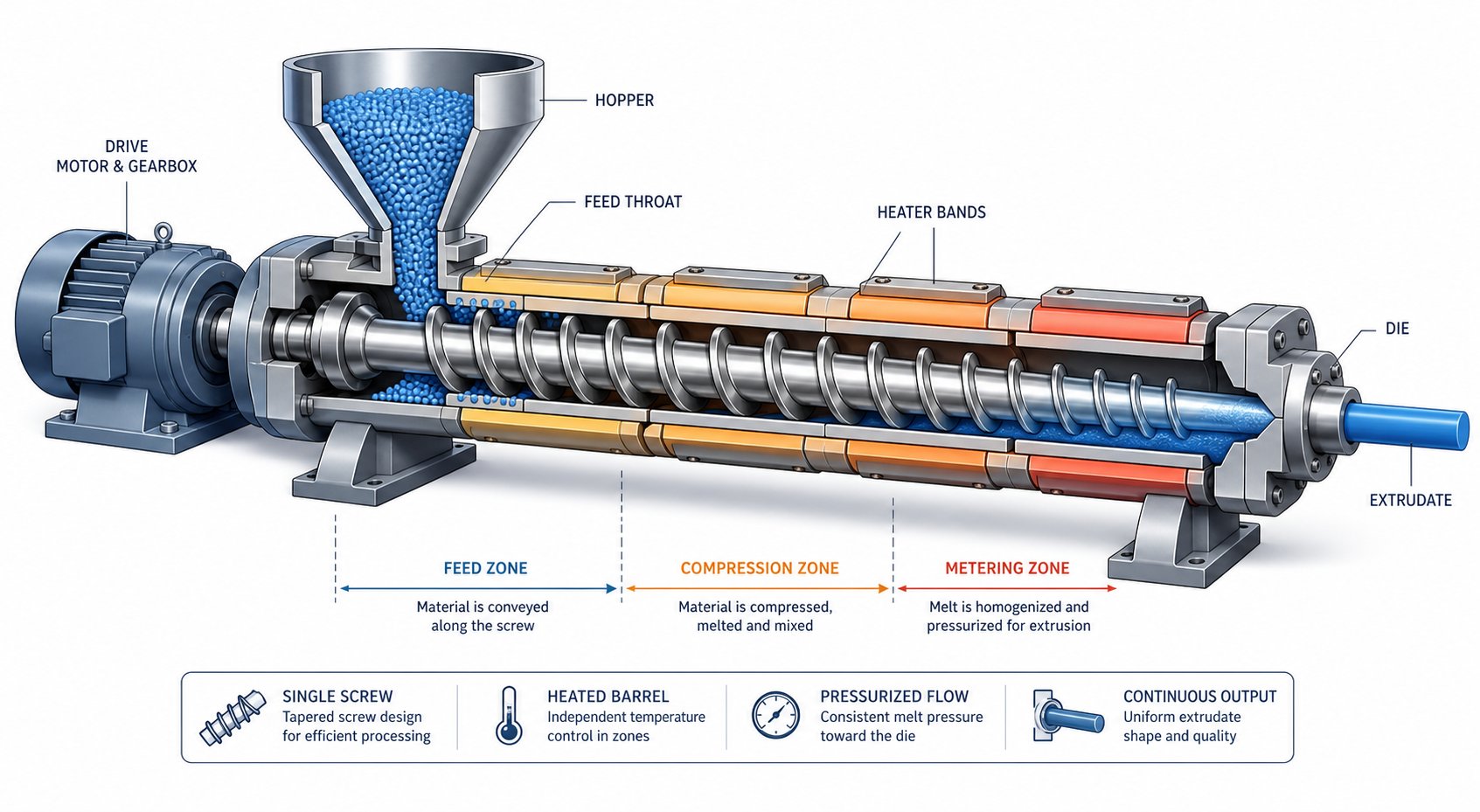
Imagine a single helical flight wrapped around a steel shaft, spinning inside a tightly fitted barrel. That's the heart of every single screw extruder machine — one screw doing all the heavy lifting. Despite its apparent simplicity, this design accomplishes three distinct thermomechanical tasks in sequence: solids conveying, melting, and melt pressurization. Each task maps to a specific zone along the screw, and understanding what happens in each zone is the key to understanding why single screw extrusion dominates so many production lines worldwide.
Feed Zone, Compression Zone, and Metering Zone
A standard single extruder screw is divided into three classical zones, each engineered to handle a different phase of the material's transformation.
- Feed zone: This is where it all begins. Plastic pellets or powder drop by gravity from a hopper into the feed throat and fill the deep screw channel completely — a process called flood feeding. Friction between the barrel wall and the solid material drags the particles forward along the channel. The channel depth here is at its deepest, providing maximum volume to accept incoming material. Because the screw channel is fully filled, throughput is largely dictated by screw speed and channel geometry rather than by a separate feeding device.
- Compression zone: As material advances, the screw's root diameter gradually increases, making the channel progressively shallower. Picture walls closing in around the plastic — that's essentially what's happening. This decreasing channel depth compresses the solid bed, squeezes out trapped air, and forces the material into tighter contact with the heated barrel wall. The combination of barrel heat and viscous shear energy melts the polymer, forming a thin melt film that grows as the solid bed shrinks. The compression ratio — typically between 2:1 and 4:1 — describes how aggressively this volume reduction occurs.
- Metering zone: By the time material reaches this final section, it should be nearly fully melted. The channel depth is constant again, but much shallower than the feed zone. Here, the screw homogenizes the melt and generates the pressure needed to push it through the die. Consistency matters most in this zone — uneven melt temperature or pressure fluctuations here translate directly into product defects like wall thickness variation or surface imperfections.
Most single screw extrusion machines use a square-pitch design, meaning the distance from one flight to the next equals the screw diameter. This makes it easy to count turns and calculate the length-to-diameter (L/D) ratio, which commonly falls in the 24:1 to 30:1 range. A longer L/D generally allows more melting and mixing time, but adds cost and floor space.
Advantages and Limitations of Single Screw Design
The single screw extruder has dominated plastics forming for over a century, and for good reason. Its strengths align perfectly with the most common production scenarios.
Pros
- Mechanical simplicity: One screw, one barrel, a straightforward gearbox. Fewer moving parts mean fewer failure modes and easier operator training.
- Lower capital cost: A single screw extrusion machine typically requires a smaller upfront investment compared to a twin screw system of equivalent throughput.
- Excellent pressure generation: The flood-fed, fully filled channel builds high, stable die pressure — exactly what profile, pipe, film, and blow-molding operations demand.
- Reliable processing of pre-compounded pellets: When the material arrives already blended and pelletized, a single screw handles melting and forming with minimal fuss.
Cons
- Limited mixing capability: Both distributive mixing (spreading additives evenly) and dispersive mixing (breaking down agglomerates) are weak compared to twin screw designs. Barrier screws and add-on mixing sections like Maddock-style devices help, but they cannot match the intensity of intermeshing twin screws.
- Narrow residence time distribution: Material near the barrel wall moves faster than material near the screw root, creating an uneven spread of time-in-barrel. This is problematic for heat-sensitive polymers and reactive processing.
- Poor devolatilization: Because the channel runs fully filled in standard configurations, extracting moisture or volatiles under vacuum is inherently difficult. Vented (two-stage) screws exist, but they add complexity and reduce maximum head pressure capability.
- Inflexible screw geometry: The screw is typically machined as a single piece. Changing the compression ratio or adding a mixing section means purchasing an entirely new screw.
Despite these limitations, single screw extruders remain the undisputed workhorse for pipe, profile, sheet, cast film, blown film, and blow-molding applications. In each of these processes, the material is already compounded and the primary job is melting and forming — precisely the task a single screw does best, at the lowest cost per kilogram of output.
The real performance gap appears when the process demands intensive mixing, precise additive dispersion, or volatile removal — challenges that led to the development of a fundamentally different screw architecture.
How Twin Screw Extruders Work
A twin-screw extruder doesn't simply double the hardware — it fundamentally changes how material moves, melts, and mixes inside the barrel. Instead of relying on friction-driven drag flow along a single channel, two closely interacting screws create a far more complex flow field. Material is repeatedly transferred between the screws in a figure-eight pattern, exposing it to more surface renewal, more controlled shear, and more consistent thermal history. The result is a machine that functions less like a pump and more like a configurable process platform — one where engineers can tune conveying, mixing intensity, venting, and pressure generation independently.
That flexibility, however, comes with an important design choice right at the outset: which direction should the screws rotate?
Co-Rotating vs Counter-Rotating Configurations
Every twin screw extruder falls into one of two primary categories based on screw rotation direction, and the distinction has major consequences for shear behavior, mixing quality, and application fit.
In a co rotating twin screw extruder, both screws turn in the same direction with a fully intermeshing, self-wiping geometry. Picture material being forcibly handed off from one screw flight to the next at the intermeshing zone — this repeated transfer creates intense distributive and dispersive mixing while preventing stagnation. The self-wiping action is especially valuable for reactive extrusion and thermally sensitive formulations, because it keeps the residence time distribution narrow and eliminates dead zones where degradation could occur. Co-rotating designs dominate polymer compounding, masterbatch production, filled plastics, devolatilization, and pharmaceutical hot-melt extrusion.
A counter-rotating twin screw extruder spins its screws in opposite directions. At the intermeshing region, material is drawn inward and compressed between the screws, producing a calendering effect — think of two rollers squeezing dough. This generates strong positive conveying and efficient pressure buildup, but at lower shear stress than the co-rotating type. That gentler processing environment is exactly what rigid PVC demands. PVC's low thermal decomposition temperature and poor melt flow make it highly sensitive to shear-induced heat, so counter-rotating machines — especially in conical twin screw extruder configurations where tapered screws provide high feed intake and compact gearbox design — remain the preferred choice for PVC pipe, sheet, and profile extrusion.
Beyond these two intermeshing designs, non-intermeshing counter-rotating extruders exist for specialty applications like rubber processing and certain devolatilization tasks, though they represent a much smaller share of the installed base.
When evaluating a co rotating and counter rotating twin screw extruder side by side, the core trade-off becomes clear: co-rotating machines prioritize mixing intensity and process flexibility, while counter-rotating machines prioritize gentle conveying and stable pressure generation for shear-sensitive materials.
Starve Feeding and Process Control Advantages
Here's where twin screw extrusion diverges most sharply from single screw operation. Remember how a single screw extruder relies on flood feeding — material falls by gravity into a fully filled channel, and throughput is essentially locked to screw speed? A twin-screw extruder flips that relationship.
Most co-rotating twin screw systems operate under starve-fed conditions, meaning external gravimetric or volumetric feeders meter material into the barrel at a controlled rate independent of screw speed. The screw channels are only partially filled in the early conveying zones, and material advances because the intermeshing geometry pushes it forward — not because the channel is stuffed full.
Why does this matter? Because it decouples three critical process variables that are locked together in a flood-fed single screw design:
- Throughput is set by the feeder, not the screw speed.
- Screw speed controls shear rate, residence time, and specific mechanical energy (SME) input independently of output rate.
- Fill level in each barrel zone can be engineered through screw element selection, giving operators fine-grained control over where mixing and melting occur.
For sensitive formulations — pharmaceutical solid dispersions, reactive polymer blends, or compounds with heat-sensitive additives — this independent control is not just convenient, it's essential. Operators can reduce residence time to protect a degradation-prone additive, or increase SME input to improve filler dispersion, without changing the production rate. Starve feeding also enables staged material introduction: the base polymer enters the main hopper, glass fibers feed through a downstream side stuffer after the melt is established, and liquid additives inject even further along the barrel where they'll experience minimal thermal exposure.
Venting and Devolatilization Capabilities
Moisture, trapped air, residual solvents, unreacted monomer — these volatiles cause bubbles, porosity, odor, and mechanical property loss in finished products. Removing them effectively is one of the strongest arguments for choosing a twin screw design.
The modular barrel construction of a twin-screw extruder allows engineers to place dedicated vent zones at precise locations along the process. Upstream of each vent, reverse screw elements or kneading blocks create a melt seal — a fully filled, pressurized section that prevents the vent from flooding. Downstream of this seal, the screw channels open up, the local pressure drops, and volatile components flash out of the melt surface. Connecting a vacuum system to the vent barrel amplifies this effect, pulling moisture and solvents below levels that atmospheric venting alone cannot reach.
A single screw extruder struggles with this task because its channels run fully filled under normal flood-fed operation. While vented two-stage single screw designs do exist, they compromise maximum head pressure and offer far less control over where and how aggressively devolatilization occurs.
In twin screw extrusion, by contrast, multiple vent zones can be placed in series — one atmospheric vent early in the barrel to release moisture and entrained air, followed by a vacuum vent further downstream to strip residual volatiles from the fully developed melt. This staged approach is why twin screw machines are the standard for processing hygroscopic engineering resins, recycled plastics with variable moisture content, and reactive extrusion processes that generate gaseous by-products.
The mechanical architecture of twin screw systems — intermeshing screws, modular barrels, starve feeding, and integrated venting — creates a level of process engineering control that goes well beyond simple melting and conveying. Yet all of this flexibility depends on one critical design layer: the individual screw elements and barrel segments that make up the machine's processing profile.
Screw and Barrel Design Elements Explained
The performance ceiling of any extruder — single or twin — is ultimately set by the metal spinning inside it. Screw geometry dictates shear intensity, melting efficiency, and mixing quality. Barrel design determines heating uniformity, venting capability, and wear life. Yet most discussions of screw extruders skip over these hardware details entirely, leaving engineers to rely on OEM recommendations without fully understanding why one configuration outperforms another. That gap matters, because the screw and barrel are also the components you'll replace most often over the life of the machine.
Fixed Geometry in Single Screw Designs
A single screw extruder uses a one-piece screw: root diameter, helix angle, channel depth, and compression ratio are all machined into a single steel shaft. Imagine carving a spiral staircase from a solid cylinder — once it's cut, you can't widen one step without scrapping the whole piece. That's the trade-off. If you need a different compression profile or a deeper feed section for a new resin, you're ordering an entirely new screw.
Engineers have developed clever workarounds to add mixing functionality within this fixed framework. Barrier screws introduce a secondary flight that separates the melt channel from the solids channel, improving melting efficiency per revolution. Maddock-style (also called Leroy or UCC) sections use fluted barriers to strain unmelted particles and improve thermal uniformity. Mixing pins — rings of studs projecting from the screw root — disrupt laminar flow to enhance distributive mixing. Distributive mixers like Saxton-style, pin, and pineapple designs each offer different trade-offs between mixing intensity and pressure drop, with distributive types generally fitting barrier screws better than high-shear dispersive mixers that would needlessly raise melt temperature.
Screw metallurgy plays a critical role in service life. Standard screws use machinable steel with flame-hardened or nitrided flight surfaces to resist wear against the barrel wall. For abrasive compounds — glass-filled nylon, mineral-loaded polyolefins — bimetallic construction applies a hard alloy overlay to the flight lands, dramatically extending replacement intervals. The barrel itself is a steel cylinder typically lined with a wear-resistant alloy, and the clearance between screw flight and barrel wall on new components runs between 0.005 and 0.010 inches (0.125 to 0.25 mm). Too tight increases cost and frictional heat; too loose allows backflow that robs output. Monitoring this clearance over time is one of the simplest and most valuable maintenance checks available.
Modular Screw Elements for Twin Screw Extruders
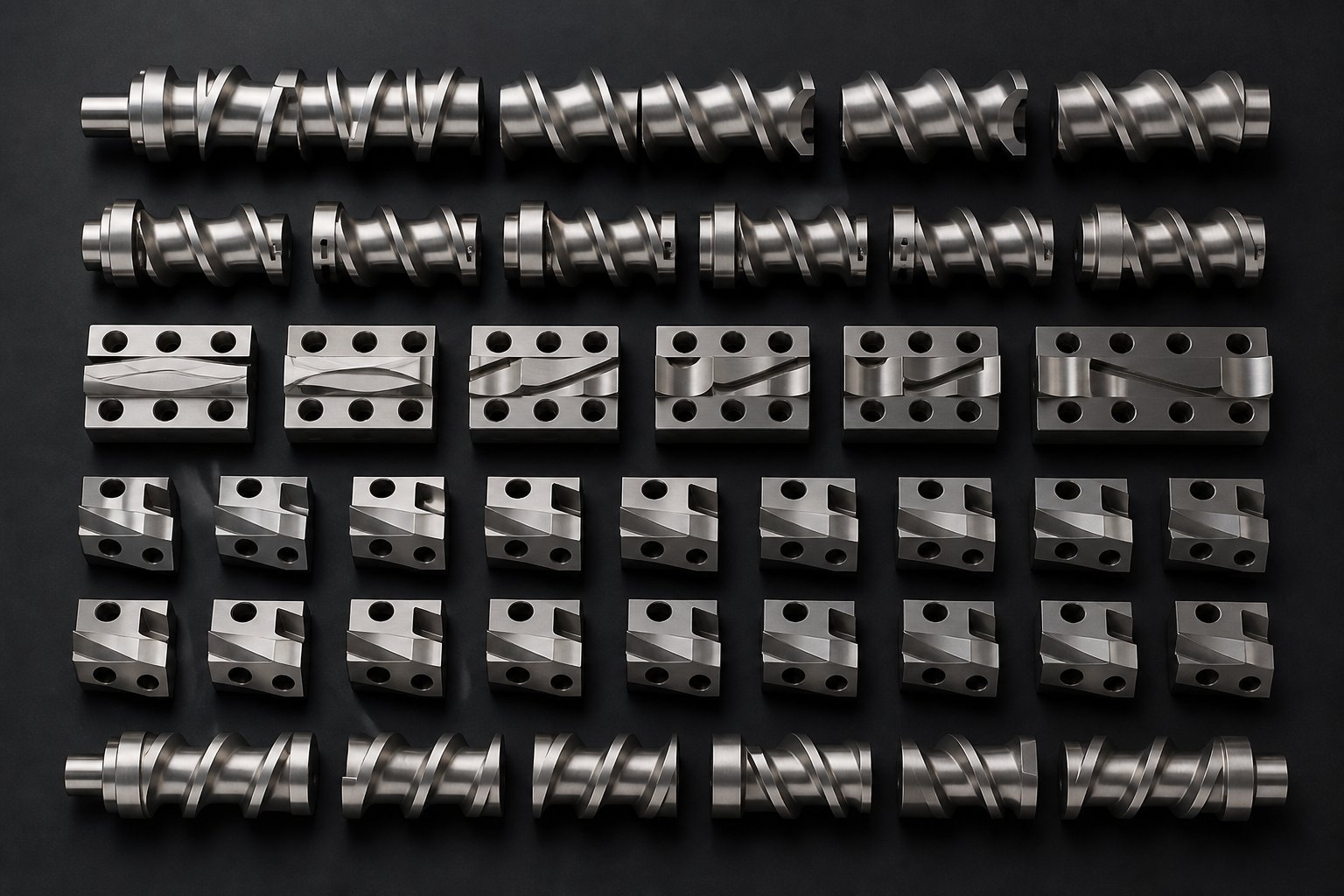
Twin screw design takes a fundamentally different approach — think building blocks instead of a carved statue. Individual screw elements slide onto a splined shaft and can be rearranged, swapped, or replaced without buying a new screw. This modular architecture is what makes twin screw and barrel systems so versatile, and it's also what makes the engineering so interesting.
The element library typically includes four main categories, each serving a distinct processing function:
- Conveying elements: Deep-flighted helical segments that move material forward efficiently with minimal shear input. Pitch and length vary — a shorter pitch generates higher pressure buildup, while a longer pitch increases volumetric throughput.
- Kneading blocks: Stacked disc-shaped lobes offset at stagger angles — commonly 30°, 45°, 60°, or 90°. The stagger angle is the critical variable here. Forward-staggered kneading elements (e.g., 45° right-hand) convey while mixing gently, providing good distributive mixing. Neutral kneading blocks (90°) provide no forward conveying, increasing residence time and shear aggressively. Reverse kneading blocks push material backward, creating maximum restriction to forward flow and the highest dispersive mixing intensity — ideal for breaking down filler agglomerates. Wider kneading discs promote dispersive mixing, while narrow discs favor distributive action.
- Distributive mixing elements: Toothed mixing elements (sometimes called ZME or TME) divide and recombine the melt stream without generating significant shear heat, making them useful for thermally sensitive formulations.
- Reverse elements: Left-handed conveying segments that push material backward, creating a melt seal upstream of vent openings or forcing material into kneading zones for longer exposure.
The twin screw barrel is equally modular. Individual barrel segments — each typically two to four diameters long — bolt together to form the full processing length. This segmented design allows engineers to configure:
- Solid barrel sections for standard heating and conveying zones
- Side feeder barrels for downstream introduction of fillers, fibers, or secondary polymers
- Liquid injection barrels with ports for adding oils, plasticizers, or reactive agents
- Vacuum vent barrels with openings connected to vacuum systems for devolatilization
You'll notice this modularity means the same base machine can run dozens of different formulations — a glass-fiber-reinforced nylon compound one week and a color masterbatch the next — simply by reconfiguring elements and barrel sections. That versatility is a major reason why both the parallel twin screw extruder (with cylindrical screws of equal diameter) and the conical twin screw extruder (with tapered screws converging toward the die) have become essential in compounding operations and PVC processing, respectively.
How the Screw and Barrel Affect Output Quality
Design choices at the element level translate directly into measurable processing outcomes. Consider a few practical examples:
| Design Variable | Processing Effect | Typical Application |
|---|---|---|
| Kneading block stagger angle increased (e.g., 45° → 90°) | Higher shear intensity, longer local residence time | Breaking down pigment agglomerates in masterbatch |
| Reverse conveying elements placed upstream of vent | Creates melt seal and back-pressure, increases fill level | Devolatilization of moisture-sensitive engineering resins |
| Narrow-disc kneading blocks replacing wide-disc blocks | Shifts mixing from dispersive to distributive | Blending heat-sensitive additives without thermal degradation |
| Longer barrel L/D ratio | More processing zones available for staged feeding, mixing, and venting | Complex multi-component compounds with downstream fiber addition |
Speaking of L/D ratios — single screw extruders typically operate in the 24:1 to 36:1 range, with 24:1 being the most common standard configuration. Twin screw machines stretch considerably longer, with L/D ratios spanning 32:1 to 56:1 depending on process complexity. A reactive extrusion line producing biodegradable polymer blends might need every bit of a 48:1 barrel to accommodate multiple feeding points, reaction zones, and vacuum vents, while a straightforward PE pipe line runs comfortably at 30:1 on a single screw.
Regardless of extruder type, screw and barrel components are consumables. Abrasive fillers like calcium carbonate, glass fibers, and titanium dioxide accelerate wear on flight lands and barrel liners, gradually widening that critical clearance gap. When replacement time comes, sourcing components with the correct metallurgy — whether that's nitrided steel for general-purpose work, powder metallurgy HIP alloys for moderate abrasion, or tungsten carbide coatings for the most demanding compounds — is essential for restoring original performance. Dimensional accuracy matters equally; an oversized or undersized element disrupts the entire pressure and flow profile downstream.
For engineers comparing replacement options across single screw, parallel twin screw, and conical twin screw extruder configurations, NANHAIYA's screw and barrel product collection provides a practical starting point. Their catalog covers the major extruder types and allows side-by-side evaluation of specifications, helping ensure the replacement component matches both the machine's geometry and the metallurgical demands of the application.
Hardware design, however, is only half the decision. The real question engineers face is how these design differences translate into measurable performance gaps across the parameters that actually drive purchasing decisions.
Single vs Twin Screw Extruders Head-to-Head
Specifications and theory tell part of the story. But when you're comparing a single screw extruder against a twin screw extruder across every parameter that matters — mixing, feeding, venting, cost, flexibility — the differences become far more concrete. The table below consolidates 15 critical selection factors into one reference, drawing on the mechanical principles and design features covered in the preceding sections.
Keep in mind that actual performance varies with screw design, operating conditions, material properties, and supporting equipment. These are general comparisons rather than absolute rules — but they reflect the engineering consensus across plastics, food, pharmaceutical, and specialty-chemical processing.
| Parameter | Single Screw Extruder | Twin Screw Extruder |
|---|---|---|
| Number of screws | One | Two (parallel or conical) |
| Working principle | Drag flow driven by barrel-material friction | Positive displacement via intermeshing screw geometry |
| Distributive mixing | Limited; improved with add-on mixing sections | High; configurable through kneading blocks and toothed elements |
| Dispersive mixing | Low to moderate; barrier screws and Maddock mixers help | High; adjustable via kneading block stagger angle and disc width |
| Self-cleaning ability | None; material can stagnate in screw channels | Intermeshing co-rotating designs are self-wiping, reducing degradation and cross-contamination |
| Feeding mechanism | Flood-fed (gravity); throughput coupled to screw speed | Typically starve-fed via gravimetric feeders; throughput independent of screw speed |
| Residence time distribution | Broad and difficult to control | Narrow and highly controllable through screw element selection and fill level |
| Throughput flexibility | Moderate; output changes require screw speed changes that also alter shear and melt temperature | High; feed rate adjustable independently of screw speed, enabling fine process tuning |
| Material versatility | Best with pre-compounded pellets and consistent feeds | Handles pellets, powders, flakes, fibers, liquids, pastes, and multi-component formulations |
| Venting and devolatilization | Limited; possible with vented two-stage designs but compromises head pressure | Excellent; modular barrel allows multiple vent zones with melt seals for staged volatile removal |
| Typical L/D ratio range | 24:1 to 36:1 | 32:1 to 56:1 |
| Screw configurability | Fixed one-piece screw; changes require a new screw | Modular elements on splined shafts; reconfigurable for different formulations |
| Typical applications | Pipe, profile, film, sheet, blow molding, wire coating | Compounding, masterbatch, reactive extrusion, devolatilization, pharmaceuticals, food processing |
| Maintenance complexity | Lower; fewer moving parts, simpler gearbox | Higher; precision gearbox, modular elements, closer mechanical tolerances |
| Relative energy efficiency | Higher for simple melting and forming tasks (lower specific energy per kg) | Can be higher overall when eliminating separate premixing steps; energy per kg varies with process intensity |
| Relative capital cost | Lower for comparable throughput | Higher due to complex gearbox, modular screws and barrels, and precision manufacturing |
Reading the Comparison Table
Scanning all 15 rows, you'll notice that three parameters consistently separate the two architectures more than any others — and these are the factors that drive most purchasing decisions in practice.
Mixing intensity is the clearest dividing line. Twin screw extruders repeatedly divide, transfer, and recombine material between two intermeshing screws, producing both distributive and dispersive mixing that a single screw simply cannot replicate without significant add-on hardware. If your process requires breaking down pigment agglomerates, uniformly dispersing nano-fillers, or blending immiscible polymer phases, a double screw extruder is almost always the right call. A single screw with a Maddock mixer may achieve acceptable homogenization for pre-compounded materials, but it will struggle with raw-ingredient compounding.
The self-wiping capability of co-rotating twin-screw extruders deserves special attention. In a single screw channel, material near the screw root can sit there for extended periods, accumulating heat and potentially degrading. Co-rotating intermeshing screws physically scrape each other's surfaces, continuously renewing the material layer and preventing stagnation. This matters enormously for thermally sensitive polymers, reactive processes, and any production line that changes colors or formulations frequently — less material remains in the barrel, so purge times drop and cross-contamination risks fall.
Process flexibility is the third decisive factor. The combination of starve feeding, modular screw profiles, and multi-zone barrel configurations gives an extruder twin screw setup independent control over throughput, shear, residence time, and specific energy input. For facilities running multiple products on the same line — think a contract compounder producing glass-filled nylon in the morning and a color masterbatch in the afternoon — this flexibility justifies the premium. A single screw line, by contrast, excels when dedicated to one stable product running in high-volume, continuous campaigns where simplicity and uptime matter more than versatility.
When the Lines Blur
The table paints a clean picture, but real-world processing sometimes refuses to stay in neat columns. Modern single screw designs have narrowed the performance gap in specific scenarios, and it's worth knowing where the overlap occurs before concluding that only a double screw extruder machine can solve a given problem.
Consider polyolefin pipe extrusion. Grooved feed barrels — where machined grooves in the feed throat dramatically increase solids conveying friction — allow single screw machines to achieve throughputs and pressure stability that rival older twin screw designs for this specific application. Combine that with a high-performance barrier screw, an optimized Maddock mixing section, and a grooved feed zone, and you have a single screw line producing HDPE pipe at competitive output rates with lower energy consumption and capital cost than a twin screw alternative.
The reverse also happens. Simple compounding tasks — blending a colorant into a polyolefin carrier at moderate filler loadings — don't always demand the full firepower of twin screw extruders. Some processors achieve satisfactory results using a single screw extruder fitted with static mixers or specialized mixing sections in the barrel, cutting equipment cost while accepting a narrower formulation window.
The lesson? Parameters in the comparison table set the baseline, but the specific material, formulation complexity, and production strategy determine where each machine actually sits on the performance curve. Making the right choice requires mapping those parameters to your exact application — a process that becomes far clearer once you understand which industries and materials favor each design.
Industry Applications and Material Selection Guide
A comparison table tells you what each machine can do. But what matters most on the plant floor is what each machine should do for your specific material, formulation, and end product. The gap between capability and suitability is where costly purchasing mistakes happen — an over-specified twin screw line melting pre-compounded pellets for simple film production, or a single screw machine struggling to disperse nano-fillers it was never designed to handle.
The sections below map extruder types to the industries and materials where they deliver the most value, giving you a practical framework to match your process requirements to the right polymer extruder architecture.
Plastics and Polymer Compounding
Plastics processing is where the single-versus-twin decision plays out most visibly, because the industry uses both machines in complementary roles rather than competing ones.
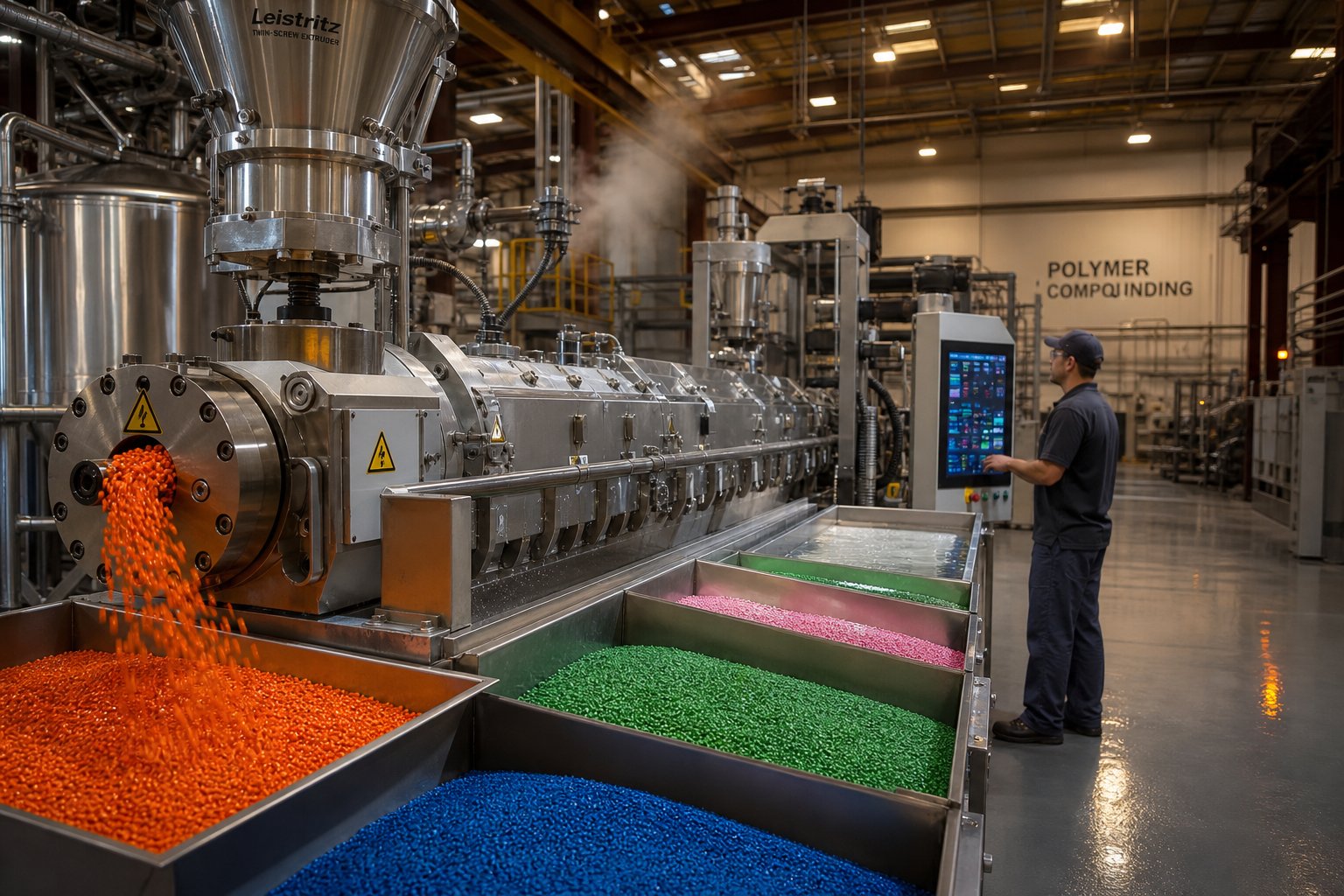
A twin screw compounding extruder dominates wherever raw ingredients need to be blended into a finished compound. Masterbatch production, highly filled mineral compounds, glass-fiber-reinforced engineering plastics, flame-retardant formulations — these all require the intensive distributive and dispersive mixing that only intermeshing twin screws can deliver consistently. The modular screw profile allows engineers to place kneading blocks exactly where filler dispersion needs to peak, add side stuffers for downstream fiber introduction to minimize breakage, and include vacuum vents to strip moisture from hygroscopic resins like nylon. A compounding twin screw extruder also handles multi-component formulations — polymer blends, reactive compatibilizers, liquid additives — with the precise residence time and energy input control that single screw machines simply cannot offer.
Single screw extruders, meanwhile, remain the undisputed workhorse for downstream forming — the step where pre-compounded pellets are melted and shaped into finished products. Pipe, profile, sheet, cast film, blown film, and blow molding operations all rely on the single screw's ability to generate stable die pressure at high throughput with low energy consumption per kilogram. When the material arrives already homogenized, there's no mixing gap to fill, and the single screw's mechanical simplicity becomes a pure advantage.
Here's how common polymers typically map to recommended extruder types:
- Polyolefins (PE, PP): Single screw for forming applications such as pipe, film, and sheet. Twin screw compounding extruder for masterbatch, filled compounds, and polymer blends.
- PVC: Conical twin screw extruder or parallel twin screw for compounding and direct extrusion of pipe and profile. PVC's thermal sensitivity and poor melt flow make the gentler shear of counter-rotating designs essential.
- Engineering plastics (PA, PC, PBT, POM): Co-rotating twin screw for compounding with glass fibers, mineral fillers, and impact modifiers. Single screw for forming pre-compounded pellets into precision profiles or technical parts.
- Thermoplastic elastomers (TPE, TPU): Twin screw for compounding soft and hard phase blends. Single screw for profile extrusion of finished TPE compounds.
- Recycled plastics: Twin screw strongly preferred — variable moisture, contamination, and inconsistent melt flow index demand the devolatilization, filtration flexibility, and mixing intensity that a compounding extruder provides.
You'll notice a pattern: twin screws prepare the material, single screws shape it. Many large plastics operations run both types on the same production campus, with the compounding line feeding pellets to multiple downstream forming lines.
Food and Pharmaceutical Applications
Step outside traditional plastics, and twin screw extrusion becomes even more dominant — largely because food and pharmaceutical processes demand the kind of thermal precision, mixing uniformity, and volatile management that single screw designs can't reliably deliver.
In food processing, twin screw cooking extrusion produces snack foods, breakfast cereals, textured vegetable proteins, and pet food. The process works by combining raw starch or protein-based ingredients with water and heat inside the barrel, where the screws cook, texturize, and shape the material in a single continuous operation. Co-rotating twin screw machines handle this particularly well because their self-wiping geometry prevents material from sticking and burning on barrel surfaces — a critical concern when processing sugary or high-protein formulations that readily scorch. The ability to inject water, flavors, or oils at multiple barrel positions through side ports gives food engineers precise control over moisture profiles and texture development.
In pharmaceutical manufacturing, hot-melt extrusion (HME) has emerged as a critical technology for improving the bioavailability of poorly soluble active pharmaceutical ingredients (APIs). The process creates amorphous solid dispersions — the drug is molecularly dispersed within a polymer carrier matrix, dramatically increasing its dissolution rate in the body. Co-rotating twin screw extruders are the standard platform for pharmaceutical HME because they offer the narrow residence time distribution needed to prevent API degradation, the precise temperature control required across multiple barrel zones, and the thorough mixing necessary to achieve molecular-level dispersion.
Various dosage forms can be produced with a twin screw polymer extruder and appropriate downstream equipment, including solid oral dosage forms, transdermal patches, subcutaneous implants, and transmucosal applications. The continuous nature of twin screw extrusion also aligns with the pharmaceutical industry's increasing shift toward continuous manufacturing, where batch-to-batch variability is eliminated by design.
Single screw machines play only a minor role in food and pharma processing — primarily in simple downstream tasks like forming pre-mixed doughs or shaping pre-formulated pharmaceutical melts through dies — because they lack the mixing intensity and process control these sensitive applications require.
Rubber and Advanced Materials
Beyond plastics, food, and pharmaceuticals, both extruder types serve important roles in specialty sectors where material behavior introduces unique processing challenges.
Rubber compounding has historically relied on internal batch mixers (Banbury-type), but continuous twin screw compounding is gaining ground for its consistency and throughput advantages. The high viscosity and elastic behavior of rubber demand careful screw design — typically with aggressive kneading zones to break down the rubber's elastic memory and achieve dispersion of carbon black and silica fillers. Intermeshing co-rotating twin screws and specialized planetary roller extruders are both used here, depending on the compound's viscosity and filler loading.
Battery electrode manufacturing represents one of the fastest-growing application areas for twin screw technology. Lithium-ion battery production requires mixing cathode and anode slurries — combinations of active materials, conductive additives, binders, and solvents — with extremely uniform particle distribution. Twin screw extruders offer continuous slurry mixing that replaces conventional four-to-eight-hour batch planetary mixing cycles with a process measured in minutes. The self-wiping screw geometry minimizes material loss, the higher shear forces improve dispersion quality, and the continuous operation eliminates batch-to-batch variation. Dry electrode processing — where a polymeric binder replaces liquid solvents entirely — is also emerging as a promising application for twin screw compounding, potentially eliminating the energy-intensive drying step that accounts for a significant share of electrode manufacturing costs.
Reactive extrusion for biodegradable polymers — polylactic acid (PLA), polybutylene succinate (PBS), and starch-based blends — relies heavily on co-rotating twin screw machines. These processes often involve in-situ polymerization, grafting, or chain extension reactions that require precise control over temperature, residence time, and mixing to achieve target molecular weights without degradation. The modular barrel allows vacuum venting of reaction by-products, while starve feeding ensures consistent specific energy input throughout the reaction.
Each of these advanced applications reinforces a consistent theme: the more complex the formulation chemistry and the more demanding the quality specifications, the more likely a twin screw platform becomes essential. Single screw machines earn their keep downstream, converting the resulting compounds into finished shapes with maximum efficiency and minimum complexity.
Choosing the right extruder type for your application, however, is only half the equation. The other half — and the one most buyers underestimate — is the total cost of owning and operating that machine over its full service life.
Total Cost of Ownership and Energy Efficiency
Most buyers fixate on the purchase price. That's understandable — it's the number on the quote, the figure your CFO questions first. But the sticker price of an extruder represents roughly 10 to 15 percent of what you'll actually spend over a decade of operation. Energy bills, spare parts, unplanned downtime, and screw replacements accumulate quietly in the background, and they don't accumulate equally for single and twin screw designs. Understanding where the money really goes — and where each architecture saves or bleeds cost — separates a smart capital decision from an expensive regret.
Capital Cost and Operational Expense Differences
The upfront gap between the two platforms is substantial and well documented. Single screw extruder manufacturers typically offer entry-level production machines starting around $30,000 to $80,000, with mid-range commercial systems falling between $80,000 and $200,000 and industrial-scale units reaching $500,000 or higher for specialized configurations. Twin screw extruder manufacturers, by contrast, price production-scale co-rotating systems in the $300,000 to $800,000 range, with high-performance compounding lines exceeding $1,500,000 for advanced applications. The twin screw extruder price premium — often two to five times higher for comparable throughput capacity — reflects the precision gearbox engineering, modular screw and barrel assemblies, and tighter manufacturing tolerances these machines require.
Operational expenses, however, tell a more nuanced story. Energy is the largest recurring line item, and this is where simple assumptions break down. Single screw extruders typically achieve specific energy consumption of 0.15 to 0.25 kWh per kilogram of processed material for standard melting and forming tasks. Co-rotating twin screw systems often land in the 0.12 to 0.22 kWh/kg range when performing compound applications requiring intensive mixing — counterintuitive until you consider that the twin screw's superior mixing efficiency can eliminate a separate premixing step entirely, reducing total process energy rather than just per-machine energy.
Imagine running a filled polypropylene compound. A single screw setup might require a separate high-intensity batch mixer upstream, an intermediate cooling and pelletizing step, and then the forming extruder. A twin screw line does the compounding and pelletizing in one pass. The capital cost of the twin machine is higher, but the total installed line cost — including the mixer, cooler, and extra material handling you no longer need — can close the gap significantly. For operations searching for a twin screw extruder for sale, this system-level math matters more than the machine-level price tag.
Maintenance and Wear Considerations
Every extruder screw begins wearing the moment it starts turning. The question isn't whether wear happens — it's how fast, how expensive, and how disruptive it becomes. Three primary wear mechanisms affect both extruder types:
- Abrasive wear: The most common culprit, driven by mineral fillers, glass fibers, and contaminants grinding against flight lands and barrel walls. Highly filled compounds can reduce screw and barrel service life by 50 percent or more compared to unfilled processing.
- Adhesive wear: Metal-to-metal contact between screw flight and barrel surface causes localized welding and fracture — visible as scored flight edges or galled barrel surfaces. Misalignment and poor screw-barrel concentricity accelerate this failure mode.
- Corrosive wear: Chemical attack from PVC decomposition products, fluoropolymer processing, or aggressive flame-retardant additives gradually destroys base metal surfaces, making them vulnerable to mechanical wear.
The financial impact of wear differs significantly between the two architectures. Single screw extruder maintenance costs tend to run lower in absolute terms — routine annual servicing typically falls between $2,000 and $5,000 for industrial-scale equipment, and screw replacement costs range from $3,000 to $15,000 depending on size and metallurgy. However, when a single screw wears out, you replace the entire one-piece shaft. There's no option to swap just the worn section.
Twin screw systems carry higher baseline maintenance budgets — annual routine costs commonly range from $8,000 to $25,000, and complete screw element sets can cost between $20,000 and $100,000. But the modular design delivers a critical advantage: you can replace only the worn kneading blocks or conveying elements rather than scrapping the entire screw assembly. A worn 90-degree kneading block in the high-shear zone? Slide it off the splined shaft and install a new one. The rest of the elements, still within tolerance, stay in service. Over a machine's lifetime, this targeted replacement approach can significantly reduce cumulative spare parts spending compared to wholesale single-screw replacements.
Metallurgy choices compound these economics. Tool steel with nitrided surfaces handles general-purpose polymers at modest cost. Powder metallurgy HIP (PM-HIP) alloys — produced through hot isostatic pressing for superior density and wear resistance — extend service intervals for moderately abrasive compounds. Tungsten carbide coatings or inserts offer maximum protection for the most demanding fillers, but at a cost premium that only makes sense when the alternative is replacing elements every few thousand hours. Matching the metallurgy to the application avoids both the waste of over-specifying and the false economy of under-protecting.
Downtime deserves its own line in the cost model. Single screw extruders typically achieve availability rates of 92 to 96 percent, while twin screw machines fall between 88 and 94 percent due to their greater mechanical complexity. For a production line generating $500 per hour in saleable output at 5,000 annual operating hours, each percentage point of availability represents roughly $25,000 in revenue. Planned maintenance windows, spare element inventories, and good record-keeping of wear progression all reduce unplanned stops — and the cost models that ignore downtime consistently underestimate the true gap between the two platforms.
Energy Efficiency and Sustainability Trends
Energy costs don't stand still. Electricity prices continue climbing in most manufacturing regions, and sustainability reporting requirements are pushing processors to quantify — and reduce — the specific energy consumption of every production line. Both single and twin screw platforms are benefiting from a wave of efficiency improvements, though the technologies involved differ.
Traditional extrusion systems operate at 45 to 75 percent overall energy efficiency, with losses concentrated in three areas: motor and drivetrain inefficiency, barrel heating losses, and overcooled downstream sections. Modern upgrades are targeting all three simultaneously.
- Direct-drive motors: Eliminating the gearbox removes mechanical transmission losses entirely, delivering an additional 10 to 15 percent energy savings over conventional geared drives. Several twin screw extruder manufacturers now offer direct-drive options on new compounding lines, and single screw platforms are following suit.
- Induction barrel heating: Unlike traditional resistance band heaters — which waste over 30 percent of their energy as radiated heat — induction systems energize the barrel directly. Combined with proper insulation, optimized induction heating can cut total heating energy by approximately 10 percent, with faster heat-up times that also reduce startup waste.
- Optimized screw design: Process intensification — achieving the same mixing result in fewer barrel diameters through better screw element engineering — reduces the total energy input per kilogram of compound. Refined kneading block geometries, advanced distributive mixing elements, and computational fluid dynamics-driven screw profiles all contribute.
- Waste heat recovery: Surplus thermal energy from barrel cooling zones and gearbox oil coolers can be captured and redirected to preheat incoming feedstock or warm facility spaces. Experimental data suggests that reclaiming waste heat can recover up to 15 percent of otherwise lost energy.
When these technologies work together, the compounding effect is significant. Facilities that combine advanced drive systems, induction heating, and smart cooling can achieve 25 to 40 percent total energy savings compared to conventional setups. That translates directly into lower cost per kilogram and a measurable reduction in carbon footprint — increasingly important as customers and regulators alike demand transparency on manufacturing emissions.
Digital monitoring accelerates these gains further. IoT-enabled sensor networks tracking temperature, viscosity, motor load, and specific energy in real time allow AI-driven controllers to make continuous micro-adjustments, maintaining peak efficiency without operator intervention. Predictive maintenance algorithms flag bearing degradation or screw wear trends before they cause unplanned shutdowns, turning maintenance from a reactive cost into a managed investment.
The bottom line? Comparing the twin screw extruder price against a single screw quote tells you almost nothing useful by itself. Capital cost, energy consumption, maintenance trajectory, downtime risk, and sustainability compliance all feed into a total cost model that often surprises buyers who assumed cheaper upfront meant cheaper overall. The right framework weighs all of these factors against your specific process — which is exactly the kind of structured decision-making that separates confident equipment selection from expensive guesswork.
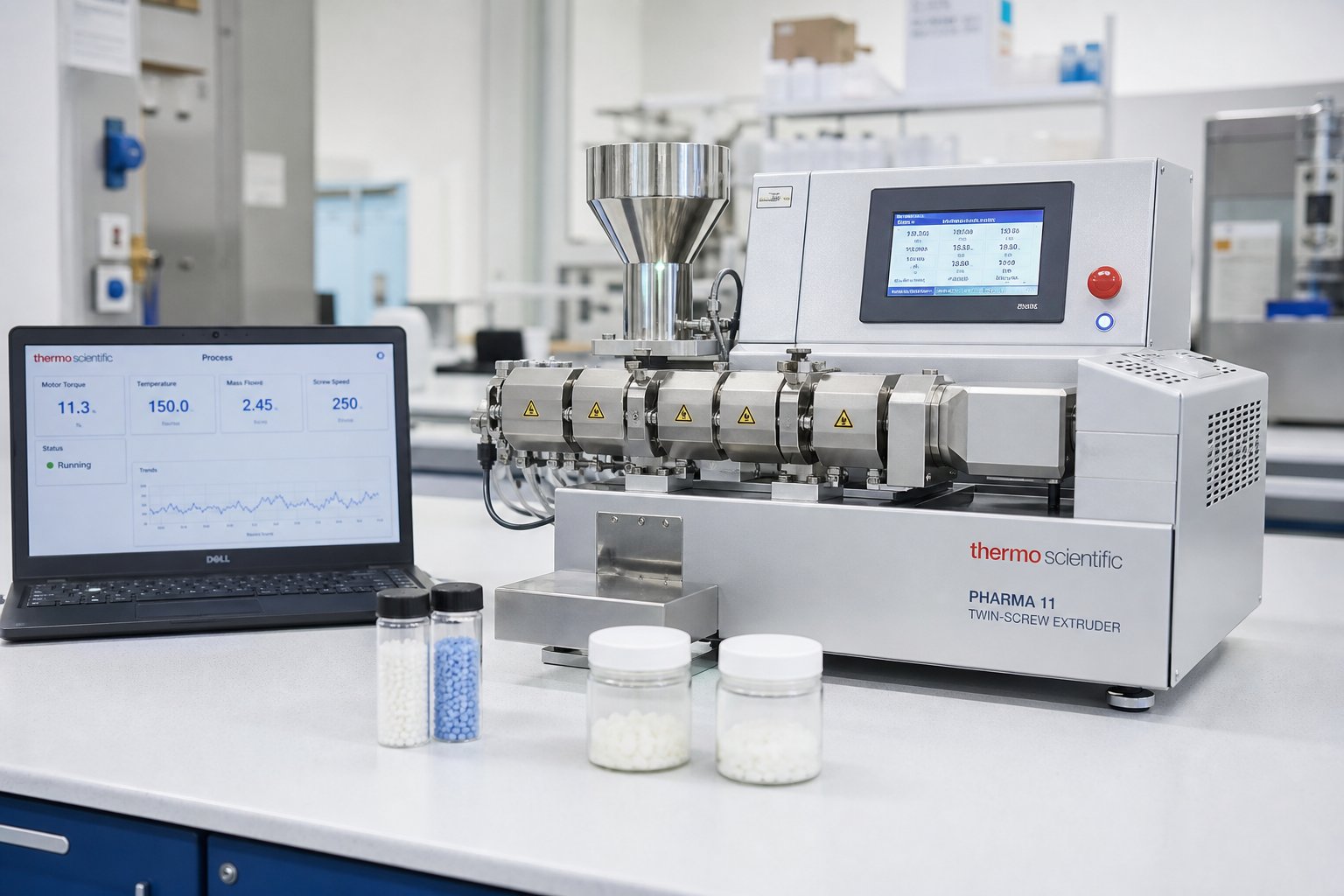
Lab-Scale Extruders and Emerging Technologies
Spending half a million dollars on a production-scale compounder only to discover that your formulation degrades at the required screw speed is not an experiment — it's a catastrophe. That's precisely why the earliest phase of any serious extrusion project happens on equipment small enough to sit on a laboratory bench.
Laboratory and Benchtop Extruders for R&D
A lab scale extruder serves as the proving ground where chemists and process engineers answer critical questions before committing capital: Does the polymer-additive combination melt homogeneously? What screw configuration delivers adequate dispersion without thermal degradation? What temperature profile keeps a heat-sensitive API stable? Running these experiments on a full-size production machine would consume kilograms of expensive raw material per trial. A laboratory extruder, by contrast, can process batches as small as 5 to 20 grams, making it economically feasible to screen dozens of formulation candidates in a single day.
The most versatile platforms for this work are laboratory twin screw extruders — co-rotating intermeshing machines with barrel diameters typically ranging from 10 mm to 27 mm. Despite their compact size, these laboratory scale extruder systems replicate the modular screw architecture of their production-scale counterparts. Researchers can assemble conveying elements, kneading blocks, and reverse segments on miniature splined shafts, testing screw profiles that will later scale up to 40 mm, 50 mm, or 70 mm commercial machines. Throughputs span from just a few grams per hour on the smallest benchtop twin screw extruder units to roughly 1 to 15 kg/h on mid-size 18 mm to 27 mm systems — a range that covers everything from early proof-of-concept screening through clinical-trial-scale pharmaceutical production.
There's an important caveat, though. A benchtop laboratory extruder useful for screening formulations does not always scale directly to production equipment, because equipment-design attributes can differ fundamentally at very small diameters. Mid-size lab scale twin screw extruder platforms in the 12 mm to 20 mm range bridge this gap more reliably, sharing the same OD/ID screw ratios and barrel geometries as larger commercial machines. Successful scale-up requires matching not just the screw profile but also the peak shear rate, residence time distribution, and feeding method — factors that pharmaceutical and advanced materials researchers track meticulously from the first gram processed on the bench to the first ton on the production floor.
Emerging Trends and Advanced Extruder Designs
While single and twin screw architectures continue to dominate installed capacity worldwide, several advanced designs are carving out significant niches — and a few may reshape the competitive landscape in the years ahead.
- Planetary roller extruders: These machines surround a central spindle with multiple smaller planetary screws that orbit inside a barrel with internal helical teeth. The result is extremely high surface renewal and gentle, distributed shear — ideal for temperature-sensitive PVC calendering, thermoplastic elastomer processing, and high-viscosity rubber compounds that would overheat in conventional twin screw kneading zones.
- Triple screw extruder concepts: Adding a third intermeshing screw in a triangular arrangement increases the number of shear zones and contact surfaces, delivering higher dispersion efficiency and throughput gains reported at 15 to 30 percent over comparable twin screw systems. The triple screw extruder design also achieves lower melt temperatures at equivalent mixing intensity, which benefits heat-sensitive biodegradable polymers and high-performance masterbatch formulations. While still a newer technology with a smaller installed base, it signals where compounding equipment is heading.
- Tandem extrusion lines: Pairing a twin screw compounder with a downstream single screw melt pump combines the mixing superiority of twin screws with the pressure-generation stability of single screws. This two-stage approach is increasingly common in foam extrusion, where the first extruder melts and mixes the polymer with a blowing agent and the second extruder cools and pressurizes the melt for controlled foaming through the die.
Cutting across all of these hardware innovations is a digital transformation that's arguably just as consequential. Industry 4.0 integration is turning extruders — both single and twin screw — into data-rich, self-optimizing platforms. Inline sensors measuring melt pressure, temperature, viscosity, and NIR spectral composition feed continuous process data into digital twin models that simulate barrel conditions in real time. AI-driven controllers use this information to make micro-adjustments to screw speed, barrel temperatures, and feed rates, holding product quality within tighter tolerances than manual operation can achieve. Predictive maintenance algorithms analyze vibration signatures and torque trends to flag bearing or gearbox degradation weeks before a failure occurs, converting unplanned downtime into scheduled service windows.
For researchers, these digital tools accelerate the path from lab-scale discovery to commercial production. Process parameters optimized on an 18 mm laboratory twin screw extruder can be translated into a digital twin of a 50 mm production machine, predicting scale-up behavior before a single pellet runs through the larger system. The result is fewer trial runs, less wasted material, and faster time-to-market — advantages that compound whether you're developing a new pharmaceutical solid dispersion or a next-generation biodegradable packaging compound.
All of these options — from benchtop screening to triple screw compounding to AI-optimized production lines — expand the decision space for engineers. Having more choices, however, doesn't automatically make choosing easier. A structured selection framework that maps your specific process goals, material characteristics, and budget constraints to the right extruder type is what turns information into action.
How to Choose the Right Extruder for Your Process
You've seen the mechanical principles, the head-to-head comparison data, the application maps, and the total cost breakdown. That's a lot of information — and information without a decision framework is just noise. The five-step process below distills everything into a sequence of practical questions. Answer them honestly, and the right extruder type will emerge from your own operating reality rather than from a sales pitch.
Key Decision Criteria for Extruder Selection
Think of this as a diagnostic checklist. Each step narrows the field, and by the fifth question, you'll have a clear direction — or at least a very short list.
- Define your primary process goal. Are you forming a pre-compounded material into a finished shape (pipe, film, profile, sheet)? A single screw plastic extruder is almost certainly your best match — mechanically simple, energy-efficient, and purpose-built for stable melt delivery through a die. Are you compounding raw resins with fillers, pigments, or reinforcing fibers? A co-rotating twin screw extruder machine delivers the mixing intensity you need. Are you running reactive extrusion — in-situ polymerization, grafting, or chain extension? The precise residence time control and staged venting of a twin-screw extruder machine make it the only practical choice.
- Identify your material characteristics. Pre-compounded pellets with consistent bulk density and melt flow? Single screw. Raw resins blended with powdered additives, liquid plasticizers, or moisture-sensitive engineering polymers? Twin screw. A plastic single screw extruder handles uniform, free-flowing feeds exceptionally well, but struggles when the feedstock arrives as a heterogeneous mix of powders, flakes, fibers, and liquids that require gravimetric metering and staged introduction.
- Assess required mixing intensity and devolatilization needs. If your product specification demands uniform pigment dispersion below 10 microns, complete deagglomeration of nano-fillers, or residual volatile levels in the low-ppm range, a twin screw extruder machine is non-negotiable. If you're melting clean, dry, pre-compounded pellets where the mixing was done upstream, even a basic single screw with a Maddock section provides adequate homogenization.
- Determine throughput range and flexibility requirements. Will this line run one product 24/7, or will it switch between formulations weekly? Dedicated high-volume forming lines favor the single screw's simplicity and uptime. Multi-product facilities — contract compounders, R&D-intensive manufacturers, or operations processing both masterbatch and filled compounds — benefit from the twin screw's modular reconfigurability and starve-fed throughput independence.
- Evaluate total budget including capital, maintenance, and spare parts. Compare not just machine prices, but the full cost picture covered earlier: energy consumption per kilogram, screw and barrel replacement frequency, downtime probability, and whether the twin screw eliminates upstream premixing equipment. A twin screw line with a higher sticker price can deliver lower cost-per-kilogram over a ten-year horizon when it consolidates multiple process steps into one pass.
Running through these five questions systematically prevents the two most common purchasing errors: over-specifying a twin screw for a straightforward forming job where a screw plastic extruder would perform better at half the cost, and under-specifying a single screw for a compounding task where it will never achieve adequate dispersion regardless of how many mixing sections you bolt on.
Common Myths Debunked
Even experienced engineers carry assumptions that don't hold up under scrutiny. Two persistent myths deserve direct challenge.
Myth: Twin screw is always the superior choice. This belief stems from the twin screw's undeniable advantages in mixing, venting, and flexibility — but superiority is context-dependent, not absolute. For polyolefin pipe extrusion using pre-compounded HDPE, a well-designed single screw extruder with a grooved feed barrel and barrier screw outperforms a twin screw on energy efficiency, output stability, and cost per meter of pipe produced. Film extrusion, blow molding, wire coating, and sheet production all follow the same pattern: when the job is melting and forming a consistent feedstock, the single screw's mechanical simplicity translates into higher availability, lower maintenance, and a smaller energy footprint. Specifying a twin screw for these tasks doesn't just waste capital — it introduces unnecessary mechanical complexity that increases downtime risk without delivering a quality improvement.
Myth: Single screws cannot mix. This one has a kernel of truth — a plain metering screw with no mixing hardware performs poorly on anything beyond homogenizing a clean melt. But modern single screw designs have come a long way. Barrier flights separate the solid bed from the melt pool, ensuring more complete melting per revolution. Distributive mixing sections — Saxton, pineapple, or pin-type elements — split and recombine the melt stream to improve color and additive uniformity. For applications like colored polyolefin film, blending a minor-percentage color concentrate into a natural resin, or processing pre-compounded engineering plastics, these enhanced single screw designs achieve mixing quality that meets product specifications at a fraction of the twin screw's cost and complexity. The key distinction is that single screw mixing works best when you're refining an already-blended feed, not when you're creating a compound from scratch.
The practical takeaway? Match the machine to the task, not to a perceived hierarchy. A $60,000 single screw plastic extruder producing PE film at 0.18 kWh/kg with 95 percent uptime is a smarter investment than a $400,000 twin screw doing the same job at higher energy cost and greater maintenance burden.
Where to Source Quality Screw and Barrel Components
Regardless of which extruder type fits your process, one decision will recur every year or two for the life of the machine: replacing worn screw and barrel components. And this is where many operations quietly hemorrhage money.
The screw and barrel are precision-matched wear parts. As covered in the total cost section, flight-to-bore clearance on a new set runs as tight as the screw diameter divided by 1,000 — a fraction of a millimeter that governs pumping efficiency, melt temperature control, and output stability. A replacement component with the wrong metallurgy, incorrect dimensional tolerances, or poor surface finish won't just underperform — it can accelerate wear on the mating part and cascade into premature barrel replacement or product quality failures.
Three sourcing principles protect against these problems:
- Verify metallurgy match. The replacement screw or barrel liner must use the same alloy class and surface treatment as the original — or a documented upgrade — to maintain the designed wear resistance. Substituting a generic nitrided steel element into a position that originally ran tungsten carbide-coated parts will result in rapid wear and an emergency replacement cycle.
- Confirm dimensional accuracy. Request inspection reports with measured OD, ID, straightness, and concentricity data. Reputable suppliers provide these as standard; suppliers who resist the request are telling you something important.
- Choose a supplier with range across extruder types. Screw and barrel geometry varies significantly between single screw, parallel twin screw, conical twin screw, and injection molding configurations. A supplier whose catalog spans all four categories is more likely to understand the dimensional and metallurgical nuances of each.
For engineers and equipment buyers looking to compare options across these different configurations, NANHAIYA's screw and barrel product collection offers a practical starting point. Their catalog covers single screw barrels, parallel twin screw elements, conical twin screw assemblies, injection molding screw barrels, and associated spare parts — organized by extruder type so you can evaluate specifications side by side. Having a single reference source that spans the full range of plastic processing applications simplifies the comparison process and reduces the risk of ordering a component that doesn't match your machine's geometry or your material's wear profile.
The right extruder — paired with correctly specified, precision-manufactured screw and barrel components — doesn't just process material. It processes material profitably, year after year, with predictable maintenance costs and consistent product quality. That's the outcome every engineer, plant manager, and procurement team is ultimately buying. Start with the five-step selection framework, challenge the myths, source your wear components carefully, and the machine will take care of the rest.
Frequently Asked Questions About Single and Twin Screw Extruders
1. What is the main difference between a single screw extruder and a twin screw extruder?
The core difference lies in how each machine conveys and processes material. A single screw extruder uses one rotating screw inside a barrel, relying on friction-driven drag flow to melt and pressurize pre-compounded pellets for forming operations like pipe, film, and profile extrusion. A twin screw extruder uses two intermeshing screws that actively transfer material between them, creating far superior distributive and dispersive mixing. Twin screw machines also support starve feeding, modular screw configurations, and multiple venting zones — making them the standard for compounding, reactive extrusion, devolatilization, and pharmaceutical processing. Single screws win on simplicity and cost for straightforward forming tasks, while twin screws excel wherever intensive mixing or process flexibility is required.
2. Is a twin screw extruder always better than a single screw extruder?
No — this is one of the most common misconceptions in the industry. For forming applications using pre-compounded pellets, such as polyolefin pipe, blown film, sheet, and blow molding, a well-designed single screw extruder often outperforms a twin screw on energy efficiency, uptime, and cost per kilogram of output. Modern single screw designs featuring grooved feed barrels, barrier flights, and Maddock mixing sections achieve excellent melt homogeneity for these tasks at significantly lower capital and maintenance costs. Twin screw extruders justify their higher price when the process demands intensive mixing, precise additive dispersion, devolatilization, or frequent formulation changes. The right choice always depends on the specific process goal, material characteristics, and total cost of ownership rather than a blanket assumption of superiority.
3. What are the typical applications for single and twin screw extruders?
Single screw extruders dominate downstream forming operations: pipe extrusion, profile extrusion, cast and blown film production, sheet extrusion, blow molding, and wire coating. They perform best when processing uniform, pre-compounded pellets where the primary task is melting and shaping. Twin screw extruders are the standard for polymer compounding (masterbatch, filled compounds, engineering plastic blends), reactive extrusion, pharmaceutical hot-melt extrusion, food cooking extrusion for snacks and cereals, battery electrode slurry mixing, and biodegradable polymer processing. Many large-scale plastics facilities run both types in tandem — twin screw lines compound the material, and single screw lines shape the resulting pellets into finished products.
4. How much does a twin screw extruder cost compared to a single screw extruder?
Twin screw extruders typically cost two to five times more than single screw machines of comparable throughput capacity. Production-scale single screw systems generally range from $30,000 to $500,000 depending on size and specification, while co-rotating twin screw compounding lines commonly fall between $300,000 and $1,500,000 or more. However, upfront price tells only part of the story. Twin screw systems can reduce total process cost by eliminating separate premixing equipment, achieving lower specific energy consumption during compounding (often 0.12 to 0.22 kWh/kg), and allowing targeted replacement of individual worn screw elements rather than entire one-piece screws. A thorough total-cost-of-ownership analysis covering energy, maintenance, downtime, and spare parts over a ten-year horizon often narrows the real cost gap significantly.
5. How do I choose between a single screw and twin screw extruder for my production line?
Follow a five-step decision framework. First, define your process goal — forming a pre-compounded material points to single screw, while compounding or reactive processing points to twin screw. Second, assess your feedstock: uniform pellets suit single screws, while heterogeneous mixes of powders, fibers, and liquids need twin screw gravimetric feeding. Third, evaluate mixing and devolatilization requirements — tight dispersion specs or volatile removal demands favor twin screw designs. Fourth, consider throughput flexibility: dedicated single-product lines favor single screw simplicity, while multi-product operations benefit from twin screw modularity. Fifth, calculate total budget including capital, energy, maintenance, and spare parts like replacement screw and barrel components from specialist suppliers such as NANHAIYA (nhyscrews.com/products), which offers options across single screw, parallel twin screw, and conical twin screw configurations.
Written by
Nanhaiya Technical Team
Zhoushan Nanhaiya Plastic Machinery Co., Ltd.
The Nanhaiya technical team supports screw and barrel manufacturing projects through application review, technical communication, custom manufacturing coordination, and production and quality control.
Discuss Your Application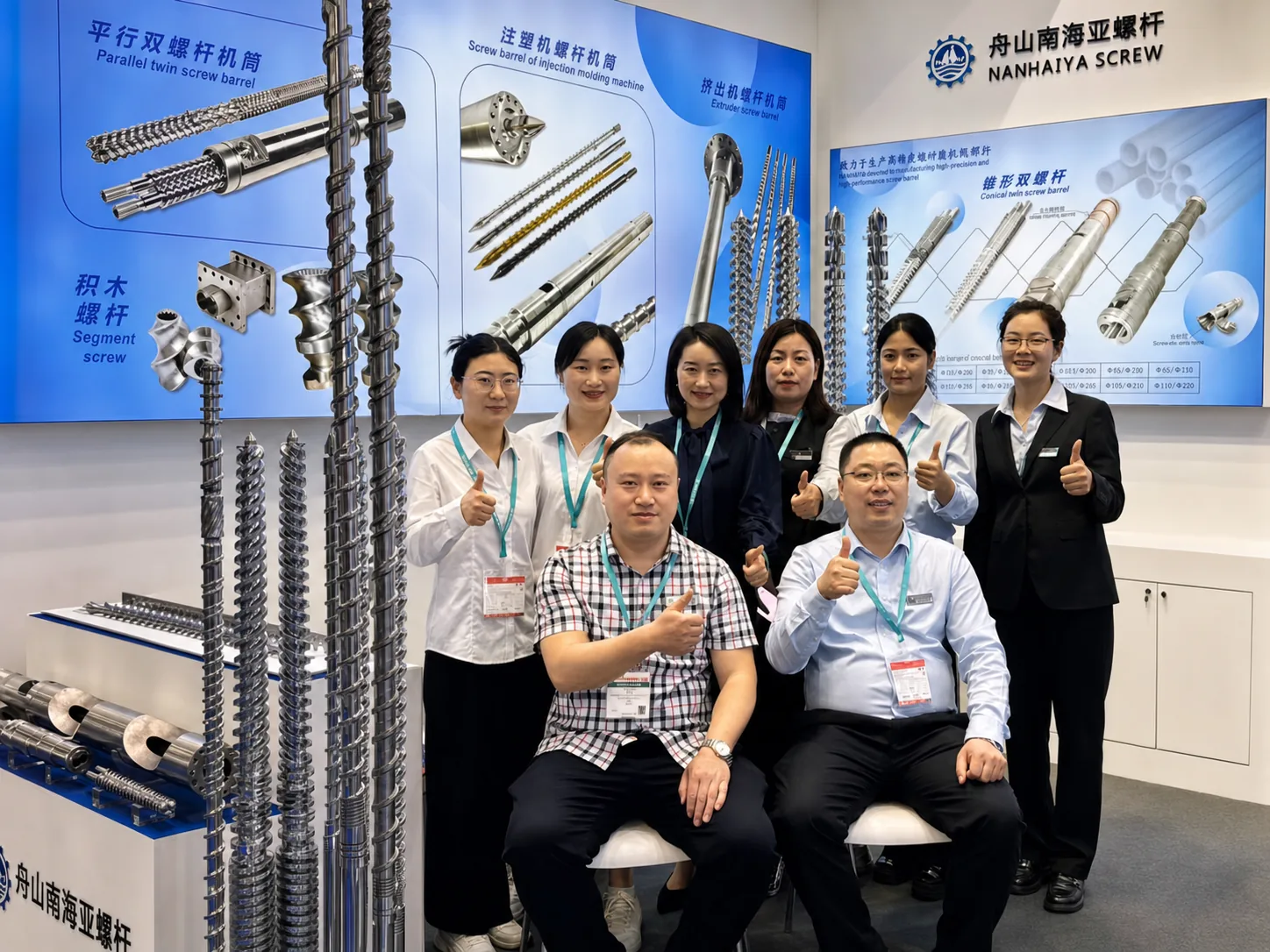
Related Articles
More insights on screw barrel technology and plastics processing.
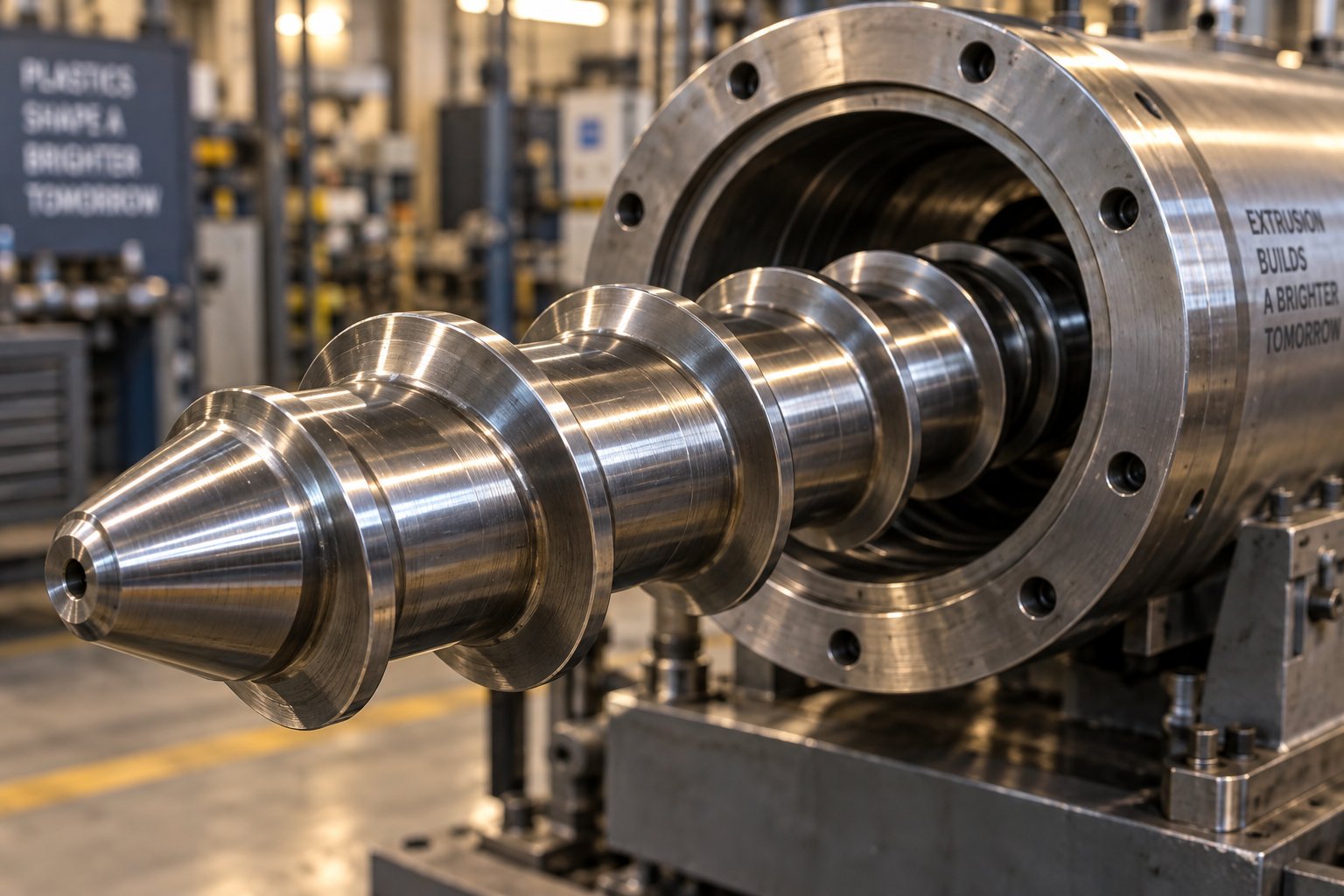
What Nobody Tells You About Screw Barrel For Plastic Machine Design
Oct 10, 2026
Learn how screw barrel for plastic machine design affects melt quality, throughput, and wear life. Covers geometry, resin matching, troubleshooting, and sourcing.
Read Article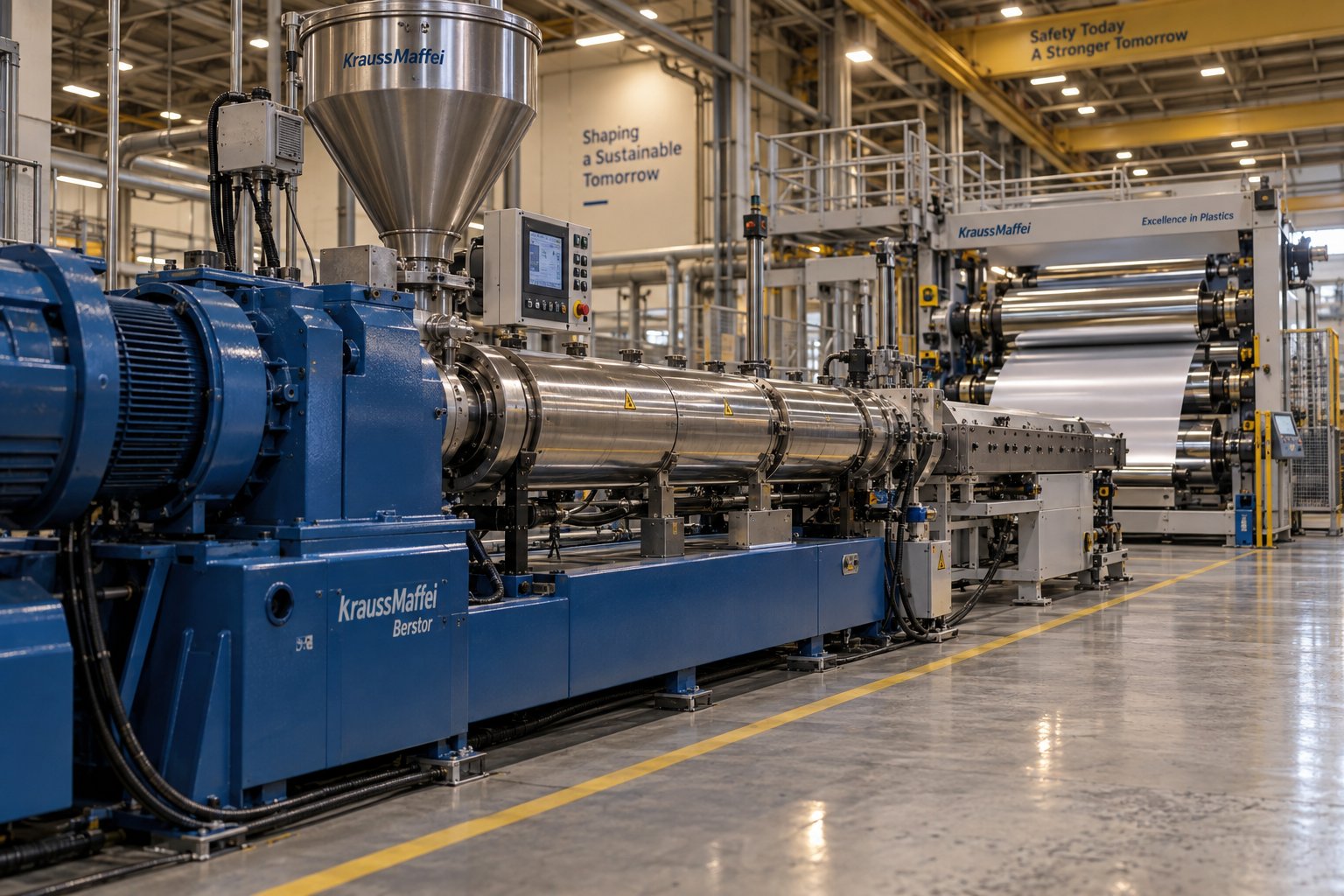
Single Screw Extruder for Sheet: Stop Guessing, Start Specifying
Oct 9, 2026
Learn how to specify a single screw extruder for sheet production. Covers screw geometry, resin-specific processing, troubleshooting, and maintenance best practices.
Read Article
PE Pipe Extruder Machine: What Datasheets Won't Tell You
Oct 9, 2026
Learn how a PE pipe extruder machine works, key specs explained, material grade selection, maintenance tips, and buyer guidance beyond the datasheet.
Read ArticleLooking for something else?
Search by material, symptom or product and jump straight to the relevant page.
These are navigation suggestions based on keyword matching — not a quotation, not a delivery commitment, and not a substitute for engineering review. Final specification is confirmed by our engineers against your drawings and processed material.
Need help with screw barrel selection?
Share your machine model, processed material and application. Our team can help with pricing and technical support.