

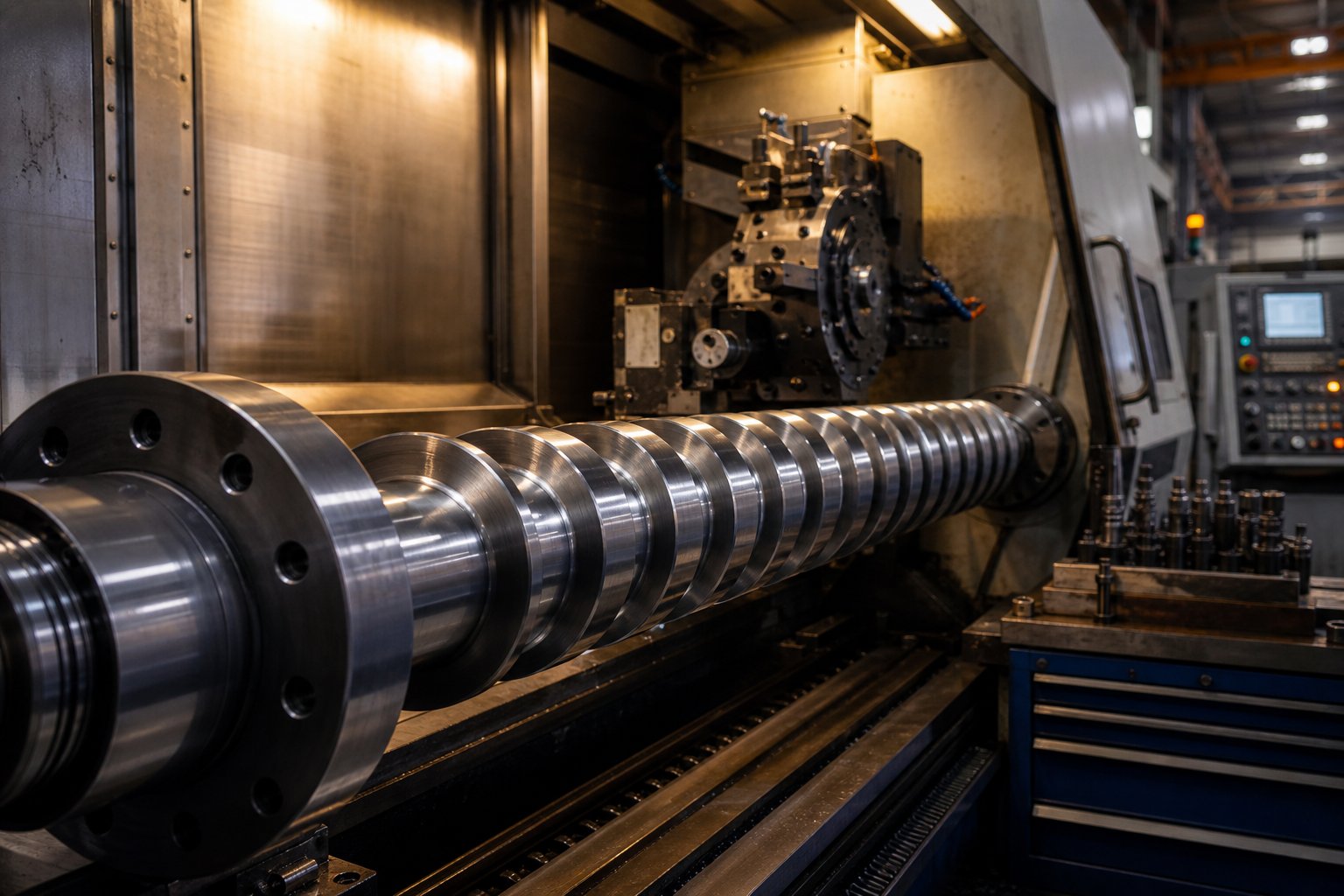
What a Screw Barrel Factory Does and Why It Matters
Every plastic product you touch - from the bumper on your car to the packaging around your lunch - started as raw polymer pellets. Those pellets were melted, mixed, and pressurized inside a screw barrel before being shaped into something useful. The components responsible for that transformation don't appear out of thin air. They come from highly specialized facilities equipped to turn raw steel billets into precision-engineered parts that operate under extreme heat and pressure.
What Is a Screw Barrel Factory
Imagine a facility where metallurgy, CNC machining, heat treatment, and quality engineering all converge under one roof. That's exactly what a screw barrel factory looks like from the inside.
A screw barrel factory is a specialized manufacturing facility dedicated to producing, refurbishing, and customizing screws and barrels for plastic extrusion and injection molding equipment, serving industries such as packaging, automotive, construction, and recycling.
At its core, the facility produces two interdependent components: the screw, which rotates to melt, mix, and convey polymer material, and the barrel, which is the cylindrical housing that contains the screw and provides controlled heat. Together, this screw barrel assembly is the heart of any plastics processing line. Whether you're running a single extruder screw barrel for film production or a twin-screw system for compounding, these parts originate from factories built around deep expertise in steel selection, precision machining, and surface engineering.
The range of industries depending on these components is broad. Packaging manufacturers need barrels and screws optimized for high-speed film extrusion. Automotive suppliers require wear-resistant configurations for processing glass-filled nylon. Construction material producers rely on robust designs for PVC pipe extrusion. And the fast-growing recycling sector demands components tough enough to handle contaminated post-consumer waste streams.
Why Understanding Factory Operations Matters
Here's something many buyers overlook: the quality of your screw and barrel directly determines the quality of your melt. And the quality of the melt determines everything downstream - consistency, throughput, energy consumption, and part quality. As one industry principle puts it, 80-90% of polymer melting comes from mechanical energy generated by the screw through shear, compression, and friction, not from heater bands alone. That means screw geometry, metallurgy, and dimensional precision aren't minor details. They're the primary drivers of your process performance.
Not all factories are equal, though. Differences in steel grades, machining equipment, heat treatment capability, and quality control rigor translate directly into how a barrel and screw perform on your production floor. A factory using certified nitriding steel like 38CrMoAlA with full material traceability will deliver very different results than one sourcing open-market steel without mill certificates. A shop running calibrated CNC lathes and coordinate measuring machines will hold tighter tolerances than one relying on manual inspection.
This article is built as a neutral, educational resource - not a sales pitch. Whether you're a purchasing manager evaluating suppliers, an engineer specifying replacement parts, or a business owner trying to reduce unplanned downtime, you'll find a practical, behind-the-scenes look at what separates a capable factory from an average one. The differences matter more than most people realize, and they start with the types of components these facilities are designed to produce.
Types of Screws and Barrels Every Processor Should Understand
The components leaving a screw barrel factory aren't one-size-fits-all. Different plastics processing methods demand fundamentally different screw and barrel designs, each engineered to handle specific polymers, throughput requirements, and mechanical behaviors. Before you can evaluate a factory's capabilities, you need a clear picture of what they're actually building - and why each configuration exists.
Single Screw and Barrel Configurations
The single extruder screw is the workhorse of the plastics industry. One helical screw rotates inside a cylindrical barrel, relying on friction between the polymer and the barrel wall to drag material forward, melt it through shear and conducted heat, and pump it through a die. It's a deceptively simple concept that powers an enormous range of applications: blown film, cast film, pipe, profile, sheet extrusion, and wire coating, to name a few.
You'll typically see single screw systems specified with a Length-to-Diameter (L/D) ratio between 24:1 and 36:1. A shorter L/D - say 24:1 - works well for heat-sensitive materials that degrade with prolonged residence time, while longer ratios up to 36:1 provide additional melting and mixing capacity for more demanding formulations. The barrel itself can be either smooth-bore or grooved-feed. Smooth-bore barrels suit most general-purpose processing with polymers like polyethylene (PE) and polypropylene (PP). Grooved-feed barrels, featuring longitudinal grooves in the feed section, lock pellets against the barrel wall and dramatically improve conveying efficiency - particularly useful for high-molecular-weight HDPE in pipe extrusion where consistent throughput is critical.
Twin Screw Systems and Parallel vs. Conical Designs
When a single screw can't deliver enough mixing intensity or process control, twin screw and barrel systems step in. Two intermeshing screws rotating inside a figure-eight shaped barrel create far more complex material flow patterns, enabling intensive distributive and dispersive mixing that a single screw simply cannot match.
The twin screw barrel world splits into two major categories based on geometry:
- Parallel twin screws feature two screws of constant, identical diameter maintained at a fixed center distance. Most parallel designs are co-rotating - the screws turn in the same direction - creating continuous material exchange in a figure-eight pattern that delivers exceptional mixing. Typical L/D ratios range from 32:1 up to 52:1 or higher for multi-stage processes. These systems dominate compounding applications: color masterbatch production, glass-fiber reinforcement, reactive extrusion, and polymer blending.
- Conical twin screws taper from a larger diameter at the feed end to a smaller diameter at the discharge. Most conical designs are counter-rotating - the screws turn in opposite directions - creating natural compression as material moves toward the narrower outlet. This geometry generates high pressure at lower screw speeds, resulting in gentler processing with less shear heat. Conical configurations are the standard choice for PVC pipe, profile, and sheet extrusion, where excessive thermal exposure causes material degradation.
A key distinction for factory capability: twin screw barrels are typically segmented rather than manufactured as a single piece. This modular construction allows processors to reconfigure barrel sections - swapping in venting zones, side-feed ports, or different liner materials - to adapt the machine for new formulations without replacing the entire barrel assembly. Manufacturing segmented barrels to tight tolerances across multiple joined sections demands more precision than producing a one-piece barrel, which is one reason twin screw components tend to cost more.
Injection Molding Screws and Barrels
Injection molding screws and barrels share some DNA with extrusion components, but the operating demands are fundamentally different. In extrusion, the screw rotates continuously to produce a steady output. In injection molding, the screw performs a dual role: it rotates to plasticize material, then acts as a ram, pushing forward axially to inject a precise shot of molten polymer into a mold cavity. This reciprocating action introduces unique engineering challenges.
The injection molding barrel and screw assembly must deliver shot-to-shot consistency measured in fractions of a gram. That requires a non-return valve (check ring) at the screw tip to prevent backflow during injection, a screw profile optimized for rapid melting in a relatively short L/D ratio (typically 18:1 to 24:1), and a barrel bore with exceptional roundness to maintain consistent clearance as the screw slides forward and back. Even minor dimensional deviations translate into inconsistent shot weights, cosmetic defects, or short shots on the finished part.
Understanding these categories helps you ask sharper questions when evaluating a factory. A facility tooled primarily for single screw extrusion barrels may lack the segmented barrel machining capability needed for twin screw systems, or the tight bore tolerances required for injection molding work. The table below summarizes the key differences at a glance:
| Configuration | Typical Application | L/D Ratio Range | Barrel Construction | Key Advantage |
|---|---|---|---|---|
| Single Screw | Film, pipe, profile, sheet extrusion | 24:1 - 36:1 | One-piece; smooth-bore or grooved-feed | Versatility and cost-effectiveness for continuous processing |
| Twin Screw (Parallel) | Compounding, masterbatch, reactive extrusion | 32:1 - 52:1+ | Segmented/modular barrel sections | Intensive mixing and modular reconfigurability |
| Twin Screw (Conical) | PVC pipe, profile, and sheet extrusion | Varies by taper ratio | One-piece tapered bore | High pressure at low speed; gentle processing for heat-sensitive materials |
| Injection Molding | Precision molded parts across all industries | 18:1 - 24:1 | One-piece with tight bore roundness tolerances | Shot-to-shot repeatability with reciprocating screw action |
Each of these configurations places different demands on the raw materials used to build them. A grooved-feed barrel processing abrasive recycled HDPE, for instance, faces radically different wear challenges than a conical twin screw barrel running virgin PVC compound. That's where the metallurgy behind these components becomes just as important as the geometry - and it's the area where factory expertise varies the most.
Materials Science Behind High-Performance Screws and Barrels
Geometry gets all the attention - L/D ratios, flight depths, compression ratios - but it's the steel beneath those dimensions that determines how long a screw and barrel actually survives on the factory floor. Two components with identical profiles will perform very differently if one is built from premium nitriding steel and the other from generic carbon steel. The material choices made inside a screw barrel factory are, in many cases, the single biggest factor separating a component that lasts years from one that wears out in months.
Base Steel Grades Used in Screw and Barrel Manufacturing
Every extruder barrel and screw starts as a steel billet, and the grade of that steel sets the ceiling for everything that follows - hardness, wear life, and how well the surface responds to subsequent heat treatment. Here are the four base steels you'll encounter most often:
- 38CrMoAlA (Chinese standard) - This is the most widely used nitriding steel in Asian manufacturing. Its chromium, molybdenum, and aluminum content produces an exceptionally hard nitrided case (900-1100 HV on the surface) while maintaining a tough, ductile core. It responds well to gas nitriding, making it the go-to substrate for general-purpose screws and barrels processing commodity polymers.
- SACM645 (Japanese standard) - Functionally equivalent to 38CrMoAlA, SACM645 is the preferred designation in Japanese and some Taiwanese factories. The alloy composition and nitriding response are nearly identical, so the choice between them often comes down to regional sourcing and material certification standards rather than performance differences.
- 4140 chromoly steel (North American standard) - Common in the US and Europe, AISI 4140 offers good tensile strength (around 655 MPa in the quenched and tempered condition) and machinability. It nitrides adequately for moderate-duty applications, though its aluminum-free composition means it does not develop as deep or as hard a nitrided case as 38CrMoAlA. Many North American shops use 4140 as a cost-effective base for extrusion barrels that will receive bimetallic linings.
- SKD61 / H13 tool steel - When thermal fatigue and high-temperature hardness matter, factories turn to hot-work tool steels like SKD61 (the Japanese designation for H13). These chromium-molybdenum-vanadium steels retain hardness above 500°C, making them the right choice for injection molding barrels operating at elevated temperatures or for screw sections exposed to severe abrasive wear in glass-filled engineering resins.
The practical takeaway? Ask your supplier which steel grade they're using - and why. A factory that selects steel based on your specific polymer and operating conditions is demonstrating real engineering judgment. One that offers a single "standard" steel for every application is cutting corners you'll eventually pay for in shortened component life.
Bimetallic Alloy Linings and When They Are Necessary
Standard nitrided barrels work well for many jobs, but they have limits. When you're processing abrasive glass-filled compounds, corrosive PVC, or contaminated recycled feedstock, a nitrided surface simply isn't enough. That's where bimetallic construction comes in - and it's the area where factory capability varies dramatically.
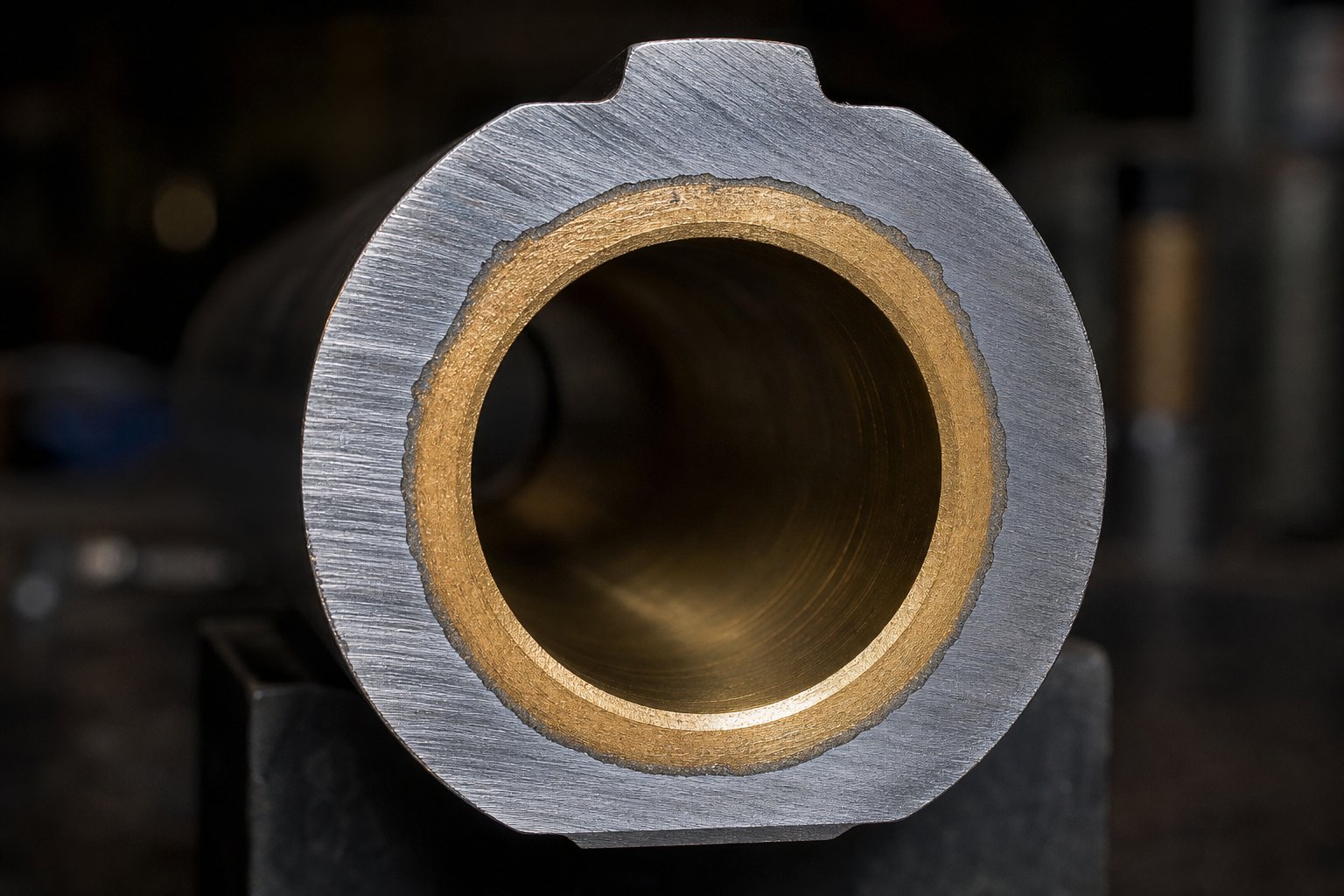
A bimetallic extruder barrel starts as a pre-bored steel shell. The factory applies a wear- and corrosion-resistant alloy powder to the inside of the bore, heats the assembly in a furnace, and spins it at high speed. This centrifugal casting process forces the molten alloy outward against the barrel wall, creating a metallurgically bonded liner typically around 1.6 mm (0.063 in.) thick. The result is a composite component: a strong steel backing for structural integrity, lined with a specialized alloy optimized for the specific processing environment.
Three families of alloy linings cover most demanding applications:
- Nickel-based alloys - Compositions built around nickel, chromium, and boron provide strong corrosion resistance, making them the standard choice for processing PVC, fluoropolymers, and other chemically aggressive resins. They offer moderate wear resistance as well, striking a practical balance for many production environments.
- Cobalt-based alloys - These retain hardness at elevated temperatures and resist both wear and oxidation under high-heat conditions. Cobalt-based linings suit applications where barrel temperatures consistently push above 350°C, such as processing certain high-temperature engineering plastics.
- Tungsten carbide composites - For the most abrasive jobs - heavily glass-filled nylon, mineral-loaded masterbatch, recycled plastics with hard contaminants - carbide particles (tungsten, titanium, or tantalum) are suspended in a nickel or cobalt matrix. The resulting liner delivers the highest available wear resistance, though at a significantly higher cost than standard nickel-based options.
One critical point that's easy to overlook: the quality of a bimetallic lining depends heavily on the consistency and control of the centrifugal casting process. Porosity, uneven thickness, or poor metallurgical bonding between the liner and the backing steel can cause premature failure. Reputable factories document the composition of both the inlay and the backing with traceable metallurgical data, and they inspect each barrel for liner integrity before it ships.
Surface Treatment Methods Compared
Choosing the right surface treatment for a screw and barrel isn't a "good-better-best" ladder where you simply pick the most expensive option. Each treatment targets a different threat - and choosing the wrong type of protection for the actual problem is the most expensive coating mistake a processor can make. A tungsten-carbide-hardfaced screw won't save you if the real enemy is chemical corrosion, and a chrome-plated screw won't survive heavy glass-fiber abrasion.
The table below breaks down the four most common surface treatments across the dimensions that matter most when specifying an extrusion barrel or screw:
| Surface Treatment | Hardness Range (HV) | Wear Resistance | Corrosion Resistance | Cost Tier | Best-Suited Application |
|---|---|---|---|---|---|
| Gas Nitriding | 900 - 1100 | Moderate | Moderate | Lowest | General-purpose extrusion of unfilled PE, PP, PS |
| Hard Chrome Plating | 800 - 1000 | Low to Moderate | Good | Low | Corrosive resins (PVC, some biopolymers); low-friction conveying |
| Bimetallic Lining | Varies by alloy (typically 55-70 HRC) | Good to Excellent | Good to Excellent | Medium to High | Abrasive filled compounds, corrosive resins, or combined threats |
| Tungsten Carbide Coating / Hardfacing | 2000+ (carbide particles) | Highest | Low (alone) | Highest | Heavily glass-filled engineering plastics, high mineral filler loading |
A few practical guidelines emerge from this comparison. If you're running commodity polymers like PE and PP without fillers, standard nitrided extruder barrels and screws represent the best value - spending more on bimetallic or carbide protection is unnecessary. Move into corrosive territory with PVC or fluoropolymers, and chrome plating or nickel-based alloy linings become essential. Introduce glass fiber or mineral fillers into the equation, and the abrasion demands jump sharply - you'll need hardfacing, tungsten carbide, or a bimetallic barrel to get acceptable service life.
The trickiest situations involve both threats simultaneously. Processing heavily filled PVC, for example, combines hydrochloric acid corrosion with calcium carbonate abrasion. Contaminated recycled feedstock presents a similar dual challenge. In these cases, a combination approach - bimetallic barrel plus a hardened or chrome-plated screw - typically delivers the best total cost of ownership, even though the upfront investment is higher.
Understanding these material and treatment options gives you a concrete framework for evaluating any factory's technical depth. A supplier who asks detailed questions about your polymer, filler type, and processing temperatures before recommending a steel grade and surface treatment is one worth taking seriously. The manufacturing workflow that transforms these raw materials into finished components is equally revealing - and it's where precision equipment and process discipline separate capable factories from the rest.
End-to-End Manufacturing Workflow Inside the Factory
Steel grades and alloy selections only matter if the factory can actually transform them into precision components with repeatable accuracy. Imagine standing at the loading dock of a screw barrel factory, watching a forklift unload raw steel billets. Those billets will pass through a dozen or more carefully sequenced operations before they leave the same dock weeks later as finished plastic extruder screw and barrel assemblies, inspected, paired, and crated for shipment. Each step builds on the last, and skipping or rushing any single stage can compromise everything downstream.
Here's what that journey actually looks like from start to finish.
Raw Material Procurement and Incoming Inspection
Quality starts before a single machine spindle turns. Reputable facilities source certified steel billets - whether 38CrMoAlA, 4140, or H13 tool steel - from approved suppliers who provide full material traceability. That means every billet arrives with a mill certificate documenting its chemical composition, heat number, and mechanical test results. Without this documentation, there's no way to confirm the steel will respond correctly to nitriding or bimetallic lining processes later in the workflow.
The moment raw bar stock hits the factory floor, incoming inspection begins. This isn't a visual once-over. Qualified inspectors run a series of checks designed to catch problems that would be catastrophically expensive to discover after machining:
- Ultrasonic testing (UT) - High-frequency sound waves are pulsed through the billet to detect internal discontinuities like cracks, voids, or inclusions invisible to the naked eye. As industry references on UT methodology explain, the reflected echoes reveal both the location and size of flaws, making this the single most important incoming quality gate for steel destined to become an extrusion screw or extruder feed barrel.
- Hardness verification - Portable hardness testers confirm the billet's as-received hardness falls within the expected range for the specified grade. A reading that's too high or too low signals a material mix-up or improper mill heat treatment.
- Dimensional checks - Calipers, micrometers, and straightness gauges confirm that the raw bar stock meets the starting dimensions needed for machining, including overall length, outer diameter, and acceptable ovality.
Billets that fail any of these checks are quarantined and returned. Sounds strict? It has to be. A hidden internal crack in a barrel blank can cause catastrophic failure under the extreme pressures and temperatures of plastics processing - a risk no serious manufacturer is willing to pass along to the customer.
Machining and Heat Treatment Stages
With incoming material verified, the real transformation begins. Manufacturing a plastic extrusion screw and its matching barrel involves a tightly choreographed sequence of machining, thermal processing, and finishing operations. Each stage must happen in the correct order because many processes alter the material's properties or dimensions in ways that affect subsequent steps.
Here's the typical production sequence from raw billet to dispatch-ready component:
- Rough turning - CNC lathes rough-machine the billet to approximate dimensions, removing excess material and establishing the basic cylindrical profile for both screws and barrels.
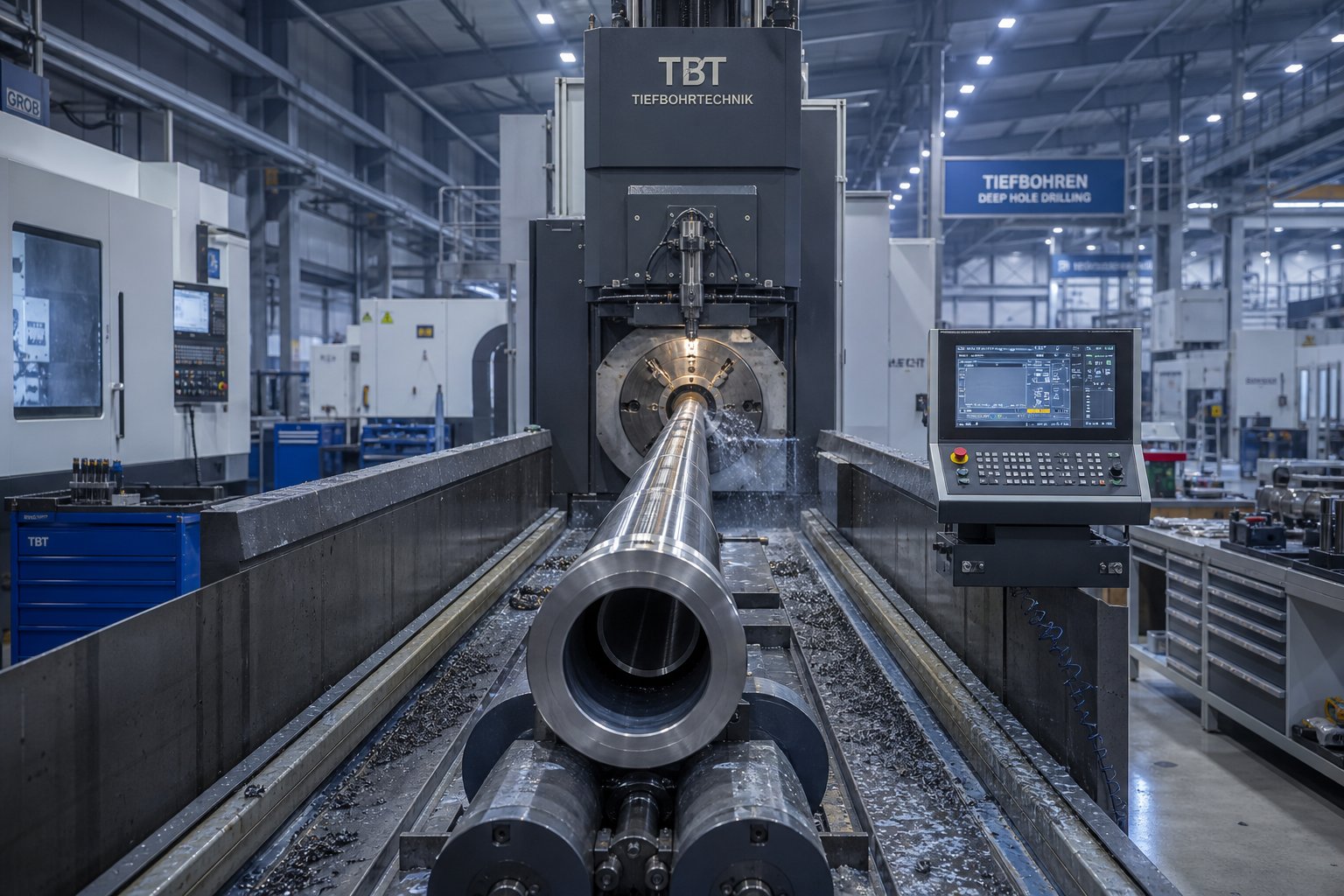
- Deep-hole boring (barrels) - This is where barrel manufacturing gets specialized. Creating a long, straight bore through a steel cylinder - often exceeding two meters in length - demands purpose-built deep-hole boring or gun-drilling machines. Standard drilling techniques lose accuracy at length-to-diameter ratios above 10:1, so barrel bores require equipment that pumps high-pressure coolant through the tool to flush chips and maintain straightness. BTA drilling handles larger bore diameters (12 mm up to 250 mm), while gun drilling covers smaller holes with exceptional precision. Maintaining bore straightness over the full barrel length is one of the most demanding tasks in the entire workflow.
- Flight machining (screws) - CNC lathes with specialized tooling cut the helical flight profile along the screw shaft. This includes the feed, compression, and metering zones, each with precisely calculated flight depths and pitches. For barrier-design or mixing-section screws, multi-axis CNC milling centers handle the more complex geometries.
- Stress-relief heat treatment - After aggressive machining, internal stresses locked into the steel can cause dimensional distortion during subsequent processing. A controlled stress-relief cycle in a heat treatment furnace relaxes these stresses before final machining brings the part to its near-finished dimensions.
- Nitriding or bimetallic lining application - For nitrided components, screws and barrels enter a gas nitriding furnace where nitrogen diffuses into the surface layer over an extended cycle, forming a hard case. For barrels requiring bimetallic construction, the centrifugal casting process applies the alloy lining at this stage. Both processes dramatically change surface hardness, so they must precede final precision grinding.
- Precision grinding - After surface treatment, CNC cylindrical grinders bring the screw's outer diameter and the barrel's inner bore to final tolerances. This step determines the critical screw-to-barrel clearance that governs melt quality and process efficiency. Even microns of deviation here affect output consistency.
- Final polishing and surface finishing - Screws receive a polished surface finish on flight lands and root diameters to reduce friction and improve polymer flow. Barrel bores are honed to achieve the specified surface roughness (Ra value) that balances material grip in the feed zone with smooth conveying in the metering section.
- Final dimensional inspection - Completed components pass through a comprehensive measurement protocol using coordinate measuring machines (CMMs), bore gauges, and surface roughness testers before clearance for assembly.
The entire sequence typically spans several weeks for a standard extrusion screw and barrel set. Rushing any thermal cycle - especially nitriding or stress relief - to compress lead times is a red flag that experienced buyers learn to watch for.
Assembly and Final Inspection Before Shipping
A finished screw and a finished barrel are only half the story. The two components must work together as a matched pair, so the final factory stage involves fitting them together and verifying the relationship between them.
Technicians insert the completed screw into the barrel and perform clearance checks at multiple points along the full length. They're looking for consistent radial clearance between the screw flight OD and the barrel bore ID - tight enough to prevent excessive melt leakage (which robs efficiency), but not so tight that thermal expansion during operation causes metal-to-metal contact and galling. For twin screw configurations, this pairing step becomes even more critical because both screws must maintain proper intermeshing geometry and smooth rotation within the barrel without binding or excessive backlash.
Components that pass final inspection move to packaging. Domestic shipments are relatively straightforward, but factories serving global customers face additional logistics: anti-corrosion oil application to prevent oxidation during transit, vacuum-sealed barrier bags for humidity protection, heavy-duty wooden crates designed for ocean freight, and complete export documentation including certificates of conformity, packing lists, and material test reports.
Every step in this workflow - from ultrasonic testing of raw billets to crating finished assemblies - reflects the factory's process discipline. You can learn a lot about a supplier by asking them to walk you through their production sequence. The ones who can describe each stage in detail, and explain why each step matters, are the ones whose components tend to perform reliably on the production line. Equally telling is the machinery behind those steps - the specific equipment a factory invests in reveals both its current capability and its commitment to precision.
Essential Machinery Found on the Factory Floor
Walk into two different factories and you might see the same production sequence on paper - rough turning, boring, nitriding, grinding - yet the finished components perform nothing alike. The difference? The machines doing the work. A factory's equipment list is essentially its resume: it tells you what tolerances it can hold, what geometries it can produce, and how consistently it can repeat the process across hundreds of units. If you ever get the chance to audit a supplier in person or via video tour, here's exactly what to look for and why it matters.
CNC Machining and Deep-Hole Boring Equipment
The backbone of any capable facility starts with its metal-cutting equipment. Producing a precision extruder screw demands more than a standard lathe - it requires CNC turning centers with the spindle rigidity, axis travel, and programming capability to machine helical flight profiles to tight dimensional tolerances over shaft lengths that frequently exceed two meters.
For barrel production, the stakes are even higher. Creating a perfectly straight bore through a long steel cylinder is one of the most technically challenging operations in metalworking. Purpose-built deep-hole boring machines and gun-drilling systems use high-pressure coolant delivered through the cutting tool itself to flush chips and suppress vibration, maintaining bore straightness across the full barrel length. Standard drilling equipment simply cannot hold the required tolerances at these extreme length-to-diameter ratios.
Beyond turning and boring, you'll find CNC milling centers handling secondary operations: cutting feed ports, machining keyways, and creating flange faces. Modern facilities increasingly rely on multi-axis CNC systems - four-axis or five-axis machines - to produce complex screw extruder geometries like barrier flights, distributive mixing elements, and Maddock-style mixing sections in a single setup. Fewer setups mean fewer alignment errors, which translates directly into tighter dimensional control on the finished component.
Heat Treatment and Surface Engineering Equipment
Machining shapes the geometry, but heat treatment defines the performance. The equipment a factory uses for thermal processing determines the hardness, uniformity, and repeatability of every surface treatment it applies.
Nitriding furnaces are the most common piece of thermal equipment on a barrel extruder production floor. Gas nitriding furnaces expose components to an ammonia atmosphere at temperatures between 500 and 550°C, diffusing nitrogen into the steel surface to form a hard nitride case. As detailed industry references on nitriding explain, the process can achieve surface hardness up to 76 HRC (approximately 1100 HV), with the case depth controlled by adjusting exposure time, temperature, and gas flow. Modern gas nitriding systems feature programmable atmosphere controls and multi-zone heating for consistent results across large batch loads. Ion (plasma) nitriding furnaces offer even finer control - using ionized nitrogen gas under vacuum to deposit nitrogen at lower temperatures (as low as 260°C), which reduces distortion on precision-ground surfaces and allows selective treatment of specific areas using masking techniques.
Centrifugal casting machines handle bimetallic barrel lining. These specialized units spin barrel blanks at high speed while molten alloy is distributed inside the bore, forcing the lining material against the barrel wall through centrifugal force. The consistency of rotational speed and temperature control during this process directly determines liner thickness uniformity, porosity levels, and the metallurgical bond strength between the alloy and the steel backing - all critical quality factors that separate a reliable bimetallic barrel from one prone to premature delamination.
Induction hardening equipment rounds out the thermal processing lineup. Unlike nitriding, which treats the entire exposed surface, induction hardening uses electromagnetic fields to heat-treat localized zones - a screw flight tip, a high-wear transition section, or a check-ring seat on an injection screw. This targeted approach adds hardness precisely where wear is most aggressive without affecting the core properties of the surrounding material.
Precision Measurement and Quality Assurance Tools
Here's a telling question to ask any supplier: "What do you measure with, and when was it last calibrated?" The answer reveals more about actual component quality than any marketing brochure ever could. A factory can own the most advanced CNC equipment available, but without equally capable measurement tools - and the discipline to use them at every production stage - tight tolerances are just numbers on a drawing.
The essential measurement and inspection equipment you should expect to see includes:
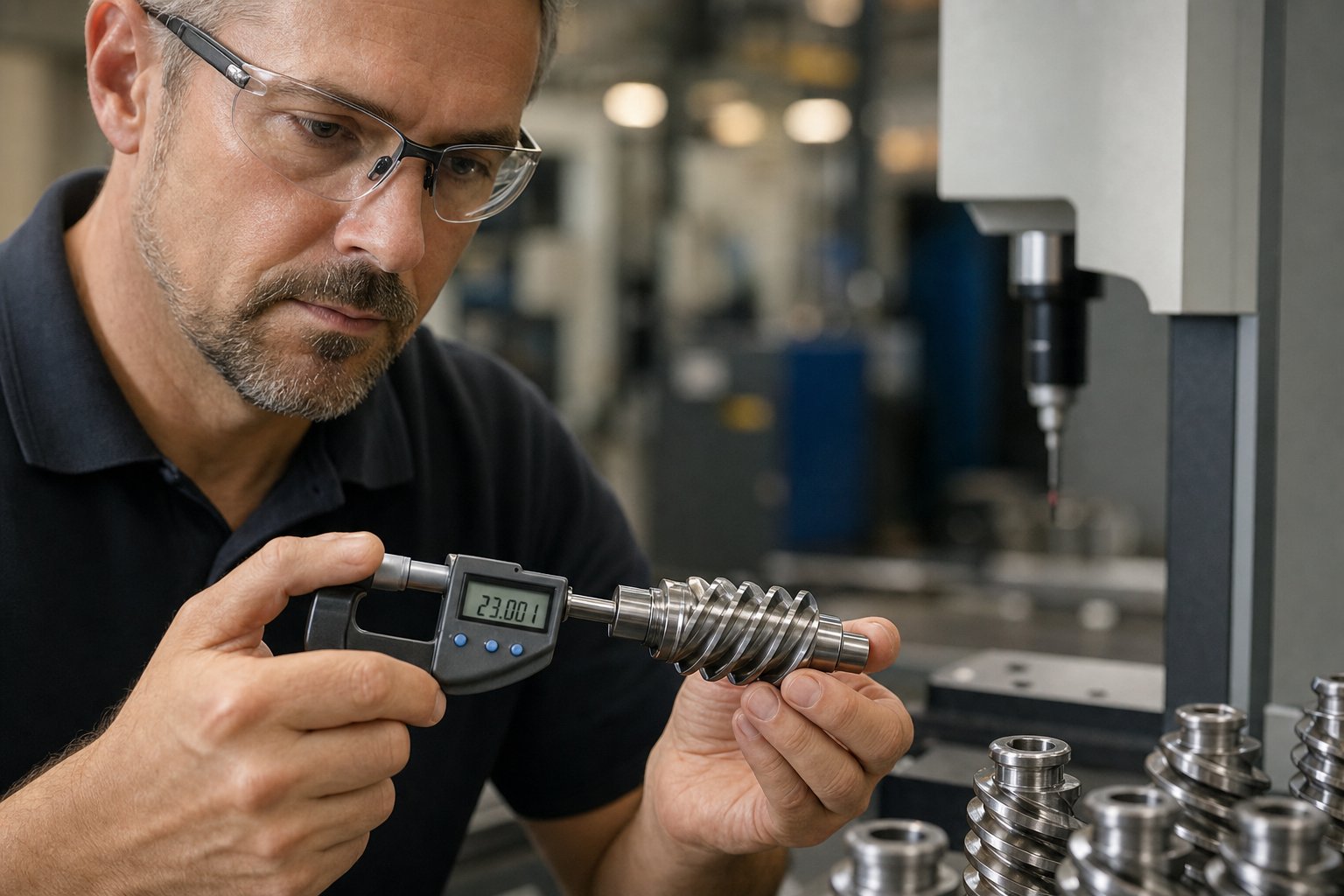
- Coordinate Measuring Machines (CMMs) - These multi-axis probing systems map complex 3D geometries with micron-level accuracy, verifying screw flight profiles, barrel flange dimensions, and overall straightness against CAD models or specification drawings.
- Bore gauges and bore measurement systems - Precision bore measurement tools such as digital Borematic systems deliver automated, repeatable internal diameter readings that eliminate operator-induced variability. These are critical for verifying barrel bore diameter, roundness, and taper after honing and grinding operations.
- Surface roughness testers (profilometers) - Portable or bench-mounted instruments that drag a diamond stylus across the finished surface, measuring Ra values that determine how the polymer interacts with the barrel bore and screw flight surfaces during processing.
- Portable and bench hardness testers - Rockwell and Vickers hardness testers verify that nitrided cases, bimetallic linings, and heat-treated zones meet the specified hardness targets. Cross-section microhardness testing provides depth-of-hardness profiles to confirm treatment penetration.
- Optical comparators - These projection-based instruments magnify cross-sectional profiles of screw flights and check-ring assemblies, enabling visual comparison against master templates to catch subtle geometry deviations that other methods might miss.
- Laser alignment and straightness measurement systems - For long barrels, laser-based tools verify bore straightness over the full length - a measurement that's extremely difficult to perform with conventional mechanical gauges alone.
The presence of this equipment matters, but so does its calibration status. Well-run factories maintain documented calibration schedules for every measurement instrument, with certificates traceable to national or international standards. If you're auditing a facility and the CMM calibration sticker is three years expired, that tells you something important about how seriously the operation takes its quality commitments - regardless of what the sales team promises.
Taken together, the machinery on a factory floor paints a clear picture of what that facility can - and cannot - deliver. A shop with multi-axis CNC lathes, dedicated deep-hole boring lines, programmable nitriding furnaces, centrifugal casting capability, and a fully equipped metrology lab is signaling serious investment in precision manufacturing. One that relies on manual lathes, outsources heat treatment, and measures with handheld calipers alone is working at a fundamentally different level. Knowing the difference equips you to evaluate suppliers on substance rather than claims - and the quality systems wrapped around that equipment are where the evaluation deepens further.
Quality Control and Certifications That Separate Good Factories from Great Ones
Equipment capability sets the ceiling, but quality control determines whether a screw barrel factory consistently reaches it. You can tour a facility with impressive CNC lathes and state-of-the-art nitriding furnaces and still receive components that underperform - if the inspection protocols, testing standards, and traceability systems behind those machines are weak. Quality control isn't a department. It's a discipline woven into every stage of production, from the first hardness check on incoming steel to the final bore measurement before packaging. Here's what rigorous QC actually looks like in practice - and what to demand from any supplier you're evaluating.
Dimensional Tolerances and Inspection Protocols
Every extruder screw and barrel lives or dies by a handful of critical dimensions. Miss any one of them, and the downstream consequences ripple through the entire plastics processing line: inconsistent melt temperature, uneven output, premature wear, or outright mechanical failure. Understanding which measurements matter most helps you ask the right questions and interpret the inspection reports a factory provides.
The key dimensions inspected during and after manufacturing include:
- Screw outer diameter (OD) tolerances - The flight OD determines the clearance between the screw and barrel bore. Tolerances here are typically held within hundredths of a millimeter. Even a slight oversized condition causes metal-to-metal contact and galling during operation, while an undersized flight allows excessive melt leakage that robs conveying efficiency.
- Barrel bore diameter and roundness - The bore must be both the correct diameter and truly round along its full length. Ovality - even a few microns beyond spec - creates uneven clearance around the screw's circumference, leading to inconsistent shear heating and localized wear patterns. Precision bore measurement systems capable of sub-micron repeatability are essential for catching deviations this small.
- Flight depth consistency - The depth of the screw channel in the feed, compression, and metering zones directly controls compression ratio and melt behavior. Variations from one flight to the next produce irregular melting and pressure fluctuations that show up as surging or inconsistent part weight at the die or mold.
- Straightness over full length - A barrel bore that drifts even slightly off-axis over a two-meter span will cause the screw to ride against one side, accelerating wear and generating excessive heat. Measuring axial straightness inside long bores is challenging with conventional tools. Advanced optical systems use small-diameter side-looking probes to acquire thousands of 3D data points per second, achieving straightness measurement repeatability better than 0.5 microns - a level of precision that mechanical gauges simply cannot match.
- Surface roughness (Ra values) - The surface finish inside the barrel bore and on screw flight lands affects how polymer interacts with the metal. Too rough, and material sticks and degrades. Too smooth in the feed section, and pellets lose the friction needed for conveyance. Profilometers measure Ra values at multiple points to confirm the finish matches the specification for the intended application.
Well-equipped factories document all of these measurements on CMM reports and bore inspection charts that accompany the finished component. If a supplier can't produce these records on request - or worse, doesn't generate them at all - that's a significant red flag regardless of how polished their sales materials look.
Hardness Testing and Metallurgical Verification
Dimensional accuracy tells you the component was machined correctly. Hardness and metallurgical testing tell you the heat treatment and surface engineering actually worked. These are two entirely different quality gates, and skipping the second one is a surprisingly common shortcut in less rigorous operations.
For nitrided extruder screws and barrels, surface hardness is verified using Vickers (HV) or Rockwell (HRC) hardness testers. A properly nitrided 38CrMoAlA screw should read in the range of 900-1100 HV on its surface. But a single surface reading only tells part of the story. The real question is: how deep does that hardness penetrate?
This is where cross-section microhardness testing becomes indispensable. A sample - either from a sacrificial test coupon processed alongside the production parts, or from a destructive section of the actual component - is cut, polished, and tested with a Vickers microhardness indenter at progressively deeper intervals from the surface inward. The resulting hardness profile graph shows exactly how hardness transitions from the hard nitrided case to the softer core material. As metallurgical research from Advanced Heat Treat Corp. demonstrates, nitrided layers in low-alloy steels like 4140 and 4340 consist of a compound zone (which provides wear and corrosion resistance) and a diffusion zone (which enhances fatigue strength). Because the diffusion zone is difficult to see under a microscope in these steels, microhardness profiling is often the only reliable way to verify that nitrogen has penetrated to the specified case depth.
For bimetallic barrels, the stakes are even higher. Metallographic examination - polishing and etching a cross-section, then examining it under a microscope - reveals whether the alloy lining bonded properly to the steel backing. Inspectors look for porosity (tiny voids trapped during centrifugal casting), delamination at the bond line, and uniformity of liner thickness around the bore circumference. A bimetallic barrel with poor bond integrity might pass every dimensional check perfectly yet fail prematurely when the liner separates under thermal cycling on the production floor.
Factories that invest in this level of metallurgical verification aren't doing it for show. They're catching problems - inconsistent nitriding response, insufficient case depth, porous bimetallic bonds - that would otherwise surface only after hundreds of hours of machine operation, when the cost of failure is exponentially higher.
ISO Certifications and Material Traceability
Imagine receiving a batch of injection molding screws, installing them, and discovering premature wear after just a few weeks. You contact the supplier. They can't tell you which steel heat was used, which nitriding cycle the screws went through, or who inspected them. Without traceability, root-cause analysis is impossible - and you're left guessing whether the problem was material, process, or design.
This is exactly the scenario that ISO 9001 quality management certification is designed to prevent. For a screw barrel factory, ISO 9001 certification means the facility operates under a documented quality management system that governs everything from supplier qualification and incoming material inspection through production controls, final testing, and customer feedback handling. It's not a guarantee of perfection - but it is evidence that systematic processes exist and are regularly audited by an independent third party.
Material traceability is a cornerstone of that system. As ISO 9001:2015 Clause 8.5.2 specifies, organizations must use suitable means to identify products at every production stage and retain the documented information necessary to enable traceability. In practice, this means a finished extruder screw and barrel set should be traceable back to the specific steel heat number, the incoming inspection results, the machining operator and machine used, the heat treatment batch and furnace parameters, and the final inspection measurements. Each link in that chain creates accountability - and enables rapid, targeted investigation when something goes wrong.
Beyond ISO 9001, buyers should also look for evidence of calibration management. Every hardness tester, CMM, bore gauge, and surface roughness instrument in the factory should have a current calibration certificate traceable to a recognized national or international standard. Expired or missing calibration records undermine every measurement the factory reports - because you can't trust the numbers if you can't trust the tool that produced them.
One often-overlooked indicator of process maturity is a factory's rejection and rework rate. A facility willing to share these numbers is demonstrating transparency. A low and stable rejection rate suggests well-controlled processes. A very low rate with no rework could indicate inadequate inspection rigor - they might not be catching what they should. The ideal scenario is a factory that finds defects early (high incoming rejection sensitivity), corrects process drift proactively, and maintains a documented corrective action loop.
When evaluating any factory - whether for extruder screws, injection molding screws, or complete barrel assemblies - request the following quality documentation as a baseline:
- Current ISO 9001 certificate with scope covering screw and barrel manufacturing
- Mill certificates and chemical composition reports for the steel grades used in your order
- Nitriding furnace records or bimetallic casting parameters for your specific production batch
- CMM dimensional inspection reports with actual measured values versus specified tolerances
- Hardness test reports (surface and cross-section microhardness profiles where applicable)
- Bore inspection charts showing diameter, roundness, and straightness over full barrel length
- Calibration certificates for all inspection instruments used on your order
- Metallographic examination reports for bimetallic barrel liner bond quality
A factory that produces this documentation without hesitation has built the systems to support it. One that treats these requests as unusual or burdensome probably hasn't - and that distinction matters far more than price when your production line depends on the components they ship. The quality systems tell you what a factory is capable of repeating. The next question is more practical: how do you actually choose the right one for your specific needs, and what factors should drive that decision beyond the inspection report?
How to Evaluate and Choose the Right Screw Barrel Factory
Quality documentation proves what a factory can do on paper. The harder question is whether that factory is the right fit for your specific operation - your polymers, your throughput targets, your budget, and your tolerance for risk. Purchasing managers and business owners face this decision every time a screw wears out, a new extrusion line goes in, or an existing machine needs upgraded components. The stakes are real: pick the wrong supplier and you're looking at premature wear, unplanned downtime, and scrap rates that quietly eat into your margins for months before anyone traces the problem back to the barrel.
Here's a structured approach to making that decision well.
Key Questions to Ask Before Placing an Order
Not every factory operates the same way, even if their product catalogs look similar. Some facilities engineer custom solutions from scratch. Others work strictly copy-to-print, reproducing whatever drawing you hand them without questioning whether the design is optimal for your application. Both models have a place - but you need to know which one you're dealing with before committing.
When evaluating a potential supplier, work through these questions in order of priority:
- Do they design or just replicate? Ask whether the factory has in-house engineering capability to optimize screw geometry for your specific polymer and process, or whether they manufacture exclusively from customer-supplied drawings. A supplier who asks about your material type, filler percentage, and operating conditions - as experienced manufacturers emphasize - is focused on long-term performance rather than short-term pricing.
- Where does their steel come from? Confirm whether raw materials are sourced from certified mills with full traceability (mill certificates, chemical composition reports) or purchased on the open market without documentation. This single factor influences everything downstream.
- What is their realistic production capacity and lead time? A factory quoting a four-week lead time while running at 95% capacity is setting you up for delays. Ask about current backlog, not just theoretical throughput.
- Can they provide reference customers in your application? Processing glass-filled PA6 is a fundamentally different challenge than running virgin LDPE film. Request references from customers processing similar materials on similar equipment.
- What warranty or performance guarantee do they offer? Some factories guarantee minimum service life under specified conditions. Others offer no warranty beyond dimensional conformance at the time of shipment. The difference tells you how much confidence the manufacturer has in its own work.
- Will they allow a factory audit or virtual tour? A structured factory audit covering legitimacy, quality management systems, production capacity, and process controls remains one of the most reliable methods for verifying supplier capability before placing a significant order.
Understanding Pricing Factors and Total Cost of Ownership
"How much do screws cost?" is one of the most common questions buyers ask - and one of the hardest to answer simply. Pricing for extruder screws and barrels varies dramatically based on several interacting variables, and the range can surprise first-time buyers.
The primary cost drivers include:
- Steel grade selection - A barrel machined from H13 tool steel costs significantly more than one from 4140 chromoly, reflecting both raw material price and the increased machining difficulty of harder alloys.
- Surface treatment - Standard gas nitriding is the most economical option. Bimetallic linings add substantial cost depending on the alloy selected, with bimetallic upgrades typically adding USD 150 to 600 depending on component size. Tungsten carbide hardfacing sits at the top of the cost ladder.
- Dimensional complexity - A straightforward metering screw with uniform flight geometry is simpler (and cheaper) to produce than a barrier-design screw with mixing sections, variable-pitch flights, and custom-engineered compression profiles.
- Tolerances - Tighter tolerances demand more grinding passes, slower feed rates, and more inspection time - all of which add cost.
- Order quantity - Single replacement screws carry higher per-unit costs than production runs of identical components, due to setup time and programming overhead.
- Lead time urgency - Rush orders that jump the production queue command premium pricing at most factories.
To put rough numbers on it: factory-direct pricing for a small single screw barrel set (25-45 mm diameter) typically falls in the USD 150-400 range, while medium sizes (50-75 mm) run USD 400-1,000 and large configurations (80-150 mm) reach USD 800-2,000. Conical or parallel twin screw barrel sets generally land between USD 1,500 and 3,500 per set. These figures shift with every variable listed above, so treat them as ballpark orientation rather than firm quotes.
Here's the critical insight that separates experienced buyers from novices: the lowest unit price rarely equals the lowest total cost. A bargain screw that wears out in four months instead of twelve doesn't just cost you a replacement part - it costs you unplanned downtime, lost production hours, transition scrap, and the labor to pull and reinstall the component. When you factor in reprocessing waste and the energy consumed running inefficient worn components, the math almost always favors higher-quality parts with longer service intervals. Think of it as cost-per-operating-hour, not cost-per-unit.
Domestic vs. Overseas Sourcing Considerations
Geography adds another layer to the sourcing decision - and it's a layer where assumptions are shifting fast.
Factories in the US and Europe offer clear advantages in communication and logistics. Shorter shipping distances mean faster delivery, especially for urgent replacement parts. Time-zone alignment and shared language simplify technical discussions. If you're running us extruders or a Davis-Standard extruder and need a drop-in replacement barrel, a domestic supplier can often turn the job around in weeks rather than months. The trade-off is higher unit cost, driven by elevated labor rates, material costs, and overhead.
Established manufacturers in China and Taiwan present the opposite profile: competitive pricing, large-scale production capacity, and access to the same nitriding steels (38CrMoAlA is a Chinese-standard alloy, after all) that form the backbone of global screw and barrel production. The trade-offs include longer ocean freight shipping times (typically four to six weeks), potential communication barriers, and the logistical complexity of managing quality across international borders.
What's changed significantly in recent years is the quality gap. Leading Asian factories have invested heavily in European-grade CNC equipment, ISO 9001-certified quality systems, and engineering teams trained on the same design principles used in Western manufacturing. The blanket assumption that overseas means lower quality no longer holds - though it remains true for the bottom tier of the market. Due diligence matters more than geography.
A practical consideration many buyers overlook: the used equipment market often intersects with the new-component market in unexpected ways. When processors acquire a used single screw extruder or search for a used twin screw extruder for sale, the machine frequently arrives with worn screws and barrels that need immediate replacement. Similarly, buyers searching for a Davis Standard extruder for sale will often need to source new wear components before the acquired machine can run production. In both scenarios, having an established relationship with a responsive screw barrel factory - whether domestic or overseas - becomes essential for getting the line operational quickly.
The bottom line? Match the sourcing strategy to your priorities. If speed and hands-on collaboration drive your decisions, domestic suppliers often justify the premium. If cost efficiency and large-volume capacity matter most, qualified Asian manufacturers deserve serious evaluation - backed by the same audit rigor and documentation requirements you'd apply to any local supplier. Either way, the evaluation framework matters more than the country of origin.
Component selection and supplier choice are decisions you make before the screw ever enters the barrel. But what happens after installation - the wear patterns, the rebuild-or-replace calculations, and the emerging trends reshaping how factories design and manufacture these components - is where the long-term value equation really plays out.
Screw Barrel Lifecycle Management and Emerging Industry Trends
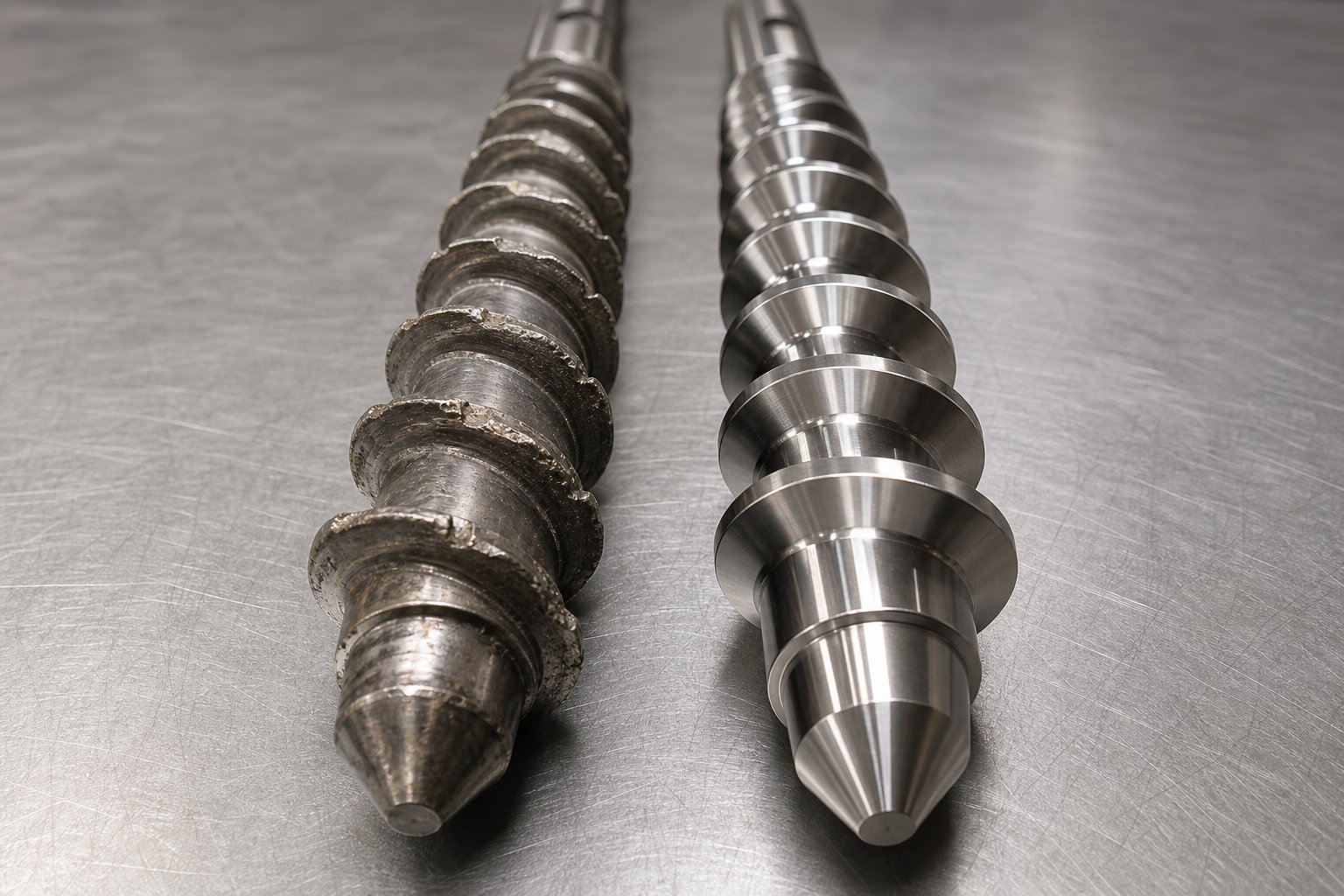
Every screw and barrel has a finite service life. No matter how carefully the steel was selected, how precisely the bore was ground, or how uniformly the nitrided case was applied, continuous rotation under extreme heat and pressure will eventually degrade even the best-engineered components. The real question isn't whether wear will happen - it's how you detect it early, decide what to do about it, and plan for the industry shifts that are redefining what these components need to withstand.
Wear Indicators and When to Replace vs. Rebuild
Wear rarely announces itself with a dramatic failure. Instead, it creeps in gradually - a slight dip in output at the same screw speed, a minor uptick in melt temperature variation, or surface defects that seem to appear out of nowhere. By the time operators start compensating with temperature adjustments or speed changes, the screw-to-barrel clearance has often already exceeded acceptable limits. Recognizing the three primary wear mechanisms helps you diagnose what's happening before it becomes a production crisis:
- Adhesive wear - Metal-to-metal contact between the screw flight tips and barrel bore causes material transfer from one surface to the other. This typically happens during cold starts, under insufficient lubrication from the polymer melt, or when thermal expansion closes the radial clearance. You'll notice scoring or galling marks on the screw flight OD and corresponding barrel bore.
- Abrasive wear - Hard particles in the polymer stream - glass fibers, mineral fillers like calcium carbonate, or metal contaminants in recycled feedstock - act like sandpaper against the screw flights and barrel wall. The result is a gradual reduction in screw OD and a corresponding increase in barrel bore ID. This is the most common wear pattern in screw extrusion applications processing filled or recycled materials.
- Corrosive wear - Certain polymers release aggressive chemical byproducts during processing. PVC generates hydrochloric acid. Some flame-retardant additives produce corrosive gases. Fluoropolymers can attack unprotected steel surfaces. Corrosive wear often appears as pitting or etching on extrusion barrels and screw surfaces, sometimes combined with abrasive damage for a compounding effect.
So how do you measure what's actually going on? Davis-Standard's maintenance guidance lays out a practical measurement protocol. For screws, you'll need a custom OD bar micrometer - a standard mic modified with a bar that spans across the flights - to measure the outer diameter at regular intervals along the screw length. All solidified polymer residue must be cleaned off first using brass tools and copper gauze (never steel wire brushes, which damage the surface). For barrels, precision bore gauges inserted at multiple positions along the length reveal how much the bore has enlarged from its original dimension.
The diametrical wear numbers tell you where you stand. Davis-Standard publishes guideline charts categorizing wear as low, medium, or high based on screw diameter. A low reading may cause a noticeable decrease in output at a given RPM. A medium reading means the screw should be monitored closely with plans to rebuild or replace in the near future. A high reading signals immediate action - the component should be rebuilt or replaced right away. For specialized barrier screws, the threshold is even tighter: wear is limited to 75 percent of the barrier flight clearance.
That brings you to the rebuild-or-replace decision. It's not always clear-cut, so here's a practical framework:
| Factor | Favors Rebuilding | Favors Replacement |
|---|---|---|
| Wear severity | Localized wear in specific zones (feed or metering section) | Uniform wear across full length exceeding maximum tolerance |
| Component type | Large-diameter screws where replacement cost is very high | Small- to mid-size screws where new-build cost is comparable to rebuild |
| Core integrity | Base steel is structurally sound with no cracking or distortion | Core material shows fatigue, heat damage, or metallurgical degradation |
| Geometry changes needed | Original screw design still suits the application | Application has changed - new polymer, different throughput target |
| Turnaround urgency | Rebuild may be faster if factory has capacity | A new screw from stock or short lead time may be faster |
Rebuilding typically involves welding new material onto worn screw flights (weld overlay or hardfacing), re-machining the flight profile, and re-nitriding or re-coating the surface. For barrels, re-boring the worn bore to a slightly larger diameter and fitting a new, correspondingly larger screw is one option; applying a fresh bimetallic lining through re-centrifugal-casting is another. Many screw barrel factories offer rebuild services alongside new manufacturing, making them a single point of contact for both lifecycle stages.
Emerging Trends Shaping Screw Barrel Manufacturing
The components rolling off factory floors today look different from those built even five years ago - and the pace of change is accelerating. Several converging forces are reshaping how screws and extrusion barrels are designed, built, and specified:
- Advanced bimetallic alloys for recycled plastics - Post-consumer recycled feedstock introduces contaminants - paper fibers, adhesive residues, metal fragments, sand, and glass particles - that standard nitrided surfaces can't withstand. Alloy developers are responding with next-generation nickel-tungsten carbide composites and iron-based amorphous coatings that offer both abrasion and corrosion resistance in a single liner, specifically targeting the dual-threat environment of recycling lines.
- Tighter CNC tolerances from five-axis machining - Modern five-axis CNC machining centers can produce complex screw geometries - variable-pitch barrier flights, split-flow mixing sections, distributive mixing elements - in a single setup with tolerances that were impossible on three-axis equipment. This reduces cumulative error from multiple setups and enables more aggressive screw designs that push melting and mixing performance closer to theoretical limits.
- Simulation-driven screw design - Computational tools like polymer flow analysis software and finite element analysis (FEA) are moving from university labs to factory engineering departments. Designers can now model melt behavior, shear rates, pressure profiles, and temperature distributions inside a proposed screw geometry before cutting a single gram of steel. This reduces prototyping iterations, shortens development timelines, and allows screw designs optimized for specific polymers rather than relying on general-purpose geometries.
- Circular economy regulations driving demand - Mandated recycled-content targets in the EU, parts of Asia, and increasingly in North America are forcing processors to run higher percentages of post-consumer resin. Every incremental increase in recycled content means more abrasive and corrosive contaminants flowing through the screw and barrel, which translates directly into higher replacement and rebuild frequency - and growing order volumes for factories equipped to serve this segment.
- Digital quality documentation and traceability - Forward-thinking facilities are digitizing their inspection records, linking CMM data, hardness test results, and furnace parameters to unique serial numbers accessible through cloud-based platforms. This gives buyers real-time access to the full manufacturing history of every component, streamlining incoming verification and supporting root-cause analysis if performance issues emerge later.
These trends aren't independent. They reinforce each other. Tighter CNC tolerances enable the complex screw geometries that simulation software designs, and those advanced geometries are increasingly necessary because recycled feedstock demands more aggressive melting and mixing than virgin resin ever did.
The Growing Role of Plastics Recycling in Factory Demand
If one trend deserves special attention, it's this one. The global push toward recycled content isn't a passing regulatory fad - it's fundamentally restructuring what screw barrel factories build and for whom.
When a processor switches from virgin polyethylene pellets to post-consumer recycled (PCR) flake, the screw and barrel face a dramatically harsher environment. PCR streams routinely contain paper label fragments, aluminum foil residues, sand and soil particles, wood fibers, and incompatible polymer contaminants. Each of these acts as an abrasive agent, grinding away at screw flights and barrel bores at rates far exceeding what clean virgin material produces. As industry sources confirm, recycled plastics and their contaminants are now among the primary drivers of accelerated component wear across both single-screw and twin-screw platforms.
The practical impact on a used twin screw extruder repurposed for recycling is striking. Components originally designed and surface-treated for virgin compounding may wear out in a fraction of their expected service life when switched to post-industrial or post-consumer waste streams. Processors entering the recycling space often discover this the hard way - after their first set of screws shows severe flight-tip erosion within months rather than years.
Factories are responding by developing application-specific solutions for the recycling sector. These include screws with tungsten carbide hardfacing concentrated on the feed and compression zone flights where abrasive damage is most severe, barrels with segmented bimetallic linings that allow high-wear sections to be replaced independently, and optimized screw geometries designed to handle inconsistent feed characteristics - varying bulk density, moisture content, and melt viscosity - that are inherent to recycled streams.
For purchasing managers and engineers, this shift carries a clear implication. If your operation processes recycled content - or plans to - the conversation with your screw barrel supplier needs to start with the feedstock, not the machine. What contaminants are present? At what concentration? What's the target throughput? Only with those answers can a factory recommend the right combination of steel grade, surface treatment, and screw geometry to deliver acceptable service life at a reasonable total cost.
The lifecycle perspective - from installation wear monitoring through rebuild decisions and emerging application demands - ultimately circles back to a single question: does your manufacturing partner have the technical depth to support you across all of these stages? That question deserves a direct, practical answer.
Choosing Your Screw Barrel Factory Partner With Confidence
You've seen the full picture - from raw steel billets passing ultrasonic inspection to finished extruder screws and barrels crated for shipment, from the metallurgy of bimetallic alloy linings to the wear patterns that signal when a component has reached the end of its useful life. Every section of this journey points toward a single practical reality: the factory behind your screws and barrels shapes your production outcomes far more than most buyers realize.
Putting It All Together as a Buyer or Engineer
Distilling everything covered in this article, four evaluation pillars consistently separate reliable manufacturing partners from the rest:
- Materials expertise - Does the factory select steel grades and alloy compositions based on your specific polymer, filler type, and operating temperatures? A supplier recommending 38CrMoAlA with standard nitriding for your unfilled PP line and a tungsten carbide bimetallic solution for your glass-filled nylon compounding line is demonstrating real application knowledge - not just filling an order.
- Manufacturing capability - Can they show you a machinery list that includes dedicated deep-hole boring equipment, programmable nitriding furnaces, centrifugal casting systems, and multi-axis CNC centers? The equipment on the floor defines the tolerances they can hold and the geometries they can produce.
- Quality systems - Do they hold current ISO 9001 certification with a scope that explicitly covers screw and barrel manufacturing? Can they provide CMM inspection reports, hardness profiles, bore straightness charts, and full material traceability linking your finished components back to specific steel heats and treatment batches?
- Engineering support - Is the factory capable of custom screw design and optimization, or do they operate strictly copy-to-print? The difference matters enormously when your application changes, your feedstock shifts to recycled content, or you need to troubleshoot a melt quality problem that originates in screw geometry.
Choosing a screw barrel factory is ultimately about matching the facility's technical depth to your application's demands - because the best price on the wrong component is never a bargain.
These four pillars apply equally whether you're sourcing a single replacement screw for an injection molding machine or specifying complete screws and barrels for a new extrusion line. They work regardless of whether you're evaluating a domestic shop or an overseas manufacturer. The framework stays constant - only the answers change.
Finding a Manufacturing Partner With Full-Spectrum Capability
One pattern worth watching for: factories that cover both single screw and twin screw configurations, serve injection molding and extrusion applications, and offer custom engineering alongside standard replacement parts tend to have broader metallurgical knowledge and more versatile machining capability than specialists focused on a single niche. That breadth matters when your needs evolve - and in plastics processing, they almost always do.
A practical first step in evaluating any potential supplier is browsing their product center to assess whether their specializations align with your processing requirements. For example, NANHAIYA's screw barrel product center is organized specifically for plastic processors, equipment manufacturers, and maintenance teams sourcing custom or replacement screw and barrel solutions across extrusion and injection molding platforms. Reviewing a well-structured product catalog like this lets you quickly gauge whether the factory handles your screw plastic extruder configuration, offers the surface treatments your application demands, and supports the level of customization your operation requires - all before picking up the phone.
Of course, a product page is a starting point, not a finish line. Apply the evaluation framework from this article: ask about steel sourcing, request quality documentation, verify machinery capabilities, and confirm engineering depth. The factories that welcome these questions - and answer them with specifics rather than generalities - are the ones whose extruder screws and barrels tend to deliver consistent, long-term value on the production floor.
Your screw and barrel are the heart of your process. Choose the factory behind them with the same rigor you'd apply to the machine itself.
Frequently Asked Questions About Screw Barrel Factories
1. What does a screw barrel factory actually produce?
A screw barrel factory manufactures, refurbishes, and customizes the screws and barrels used inside plastic extrusion and injection molding machines. These facilities handle the full production chain - from sourcing certified steel billets and performing CNC machining to applying surface treatments like gas nitriding or bimetallic alloy linings. The finished components serve industries including packaging, automotive, construction, and plastics recycling. Many factories also offer rebuild services such as weld overlay hardfacing and re-boring for worn components, making them a single-source partner for both new builds and lifecycle maintenance.
2. How do I choose between a nitrided barrel and a bimetallic barrel?
The choice depends on the polymer you process and the contaminants in your feedstock. Standard gas-nitrided barrels (900-1100 HV surface hardness) offer excellent value for commodity resins like PE, PP, and PS that contain no abrasive fillers. Once you introduce glass fibers, mineral fillers, or corrosive polymers such as PVC and fluoropolymers, a bimetallic barrel becomes necessary. Nickel-based bimetallic linings handle corrosion-dominated environments, cobalt-based alloys suit high-temperature applications, and tungsten carbide composites deliver the highest abrasion resistance for heavily filled engineering plastics. If your feedstock combines both abrasive and corrosive threats - like contaminated post-consumer recycled resin - a bimetallic barrel paired with a hardfaced screw typically provides the best total cost of ownership.
3. What quality certifications should a screw barrel factory have?
At minimum, look for current ISO 9001 certification with a scope that explicitly covers screw and barrel manufacturing. This confirms the factory operates under a documented quality management system covering supplier qualification, production controls, inspection protocols, and traceability. Beyond the certificate itself, request supporting documentation: mill certificates for steel grades, CMM dimensional inspection reports, hardness test results (including cross-section microhardness profiles), bore straightness charts, and calibration certificates for all measurement instruments. A factory willing to provide this documentation transparently has built systems that support repeatable quality - a far more reliable indicator than marketing claims alone.
4. How much do extruder screws and barrels cost from a factory?
Pricing varies significantly based on diameter, steel grade, surface treatment, geometric complexity, tolerances, and order quantity. As a rough guide, factory-direct pricing for small single screw barrel sets (25-45 mm) typically falls between USD 150 and 400, medium sizes (50-75 mm) between USD 400 and 1,000, and large configurations (80-150 mm) between USD 800 and 2,000. Twin screw barrel sets generally range from USD 1,500 to 3,500. Bimetallic upgrades can add USD 150 to 600 depending on alloy type and component size. Critically, the lowest unit price rarely equals the lowest total cost - premature wear from cheaper components generates unplanned downtime, scrap, and replacement labor that often exceed the initial savings.
5. When should I replace a worn screw or barrel instead of rebuilding it?
The decision hinges on wear severity, core material integrity, component size, and whether your application has changed. Rebuilding makes sense when wear is localized to specific zones, the base steel remains structurally sound, and the original screw geometry still matches your processing needs - especially for large-diameter screws where replacement cost is high. Replacement is favored when wear is uniform across the full length and exceeds maximum tolerance, when the core material shows fatigue or heat damage, or when your application has shifted to a different polymer or throughput target requiring a redesigned profile. Many screw barrel factories offer both services, so requesting a wear assessment with bore gauge and micrometer measurements before deciding is a practical first step.
Written by
Nanhaiya Technical Team
Zhoushan Nanhaiya Plastic Machinery Co., Ltd.
The Nanhaiya technical team supports screw and barrel manufacturing projects through application review, technical communication, custom manufacturing coordination, and production and quality control.
Discuss Your Application
Related Articles
More insights on screw barrel technology and plastics processing.
What Nobody Tells You About Screw Barrel For Plastic Machine Design
Oct 10, 2026
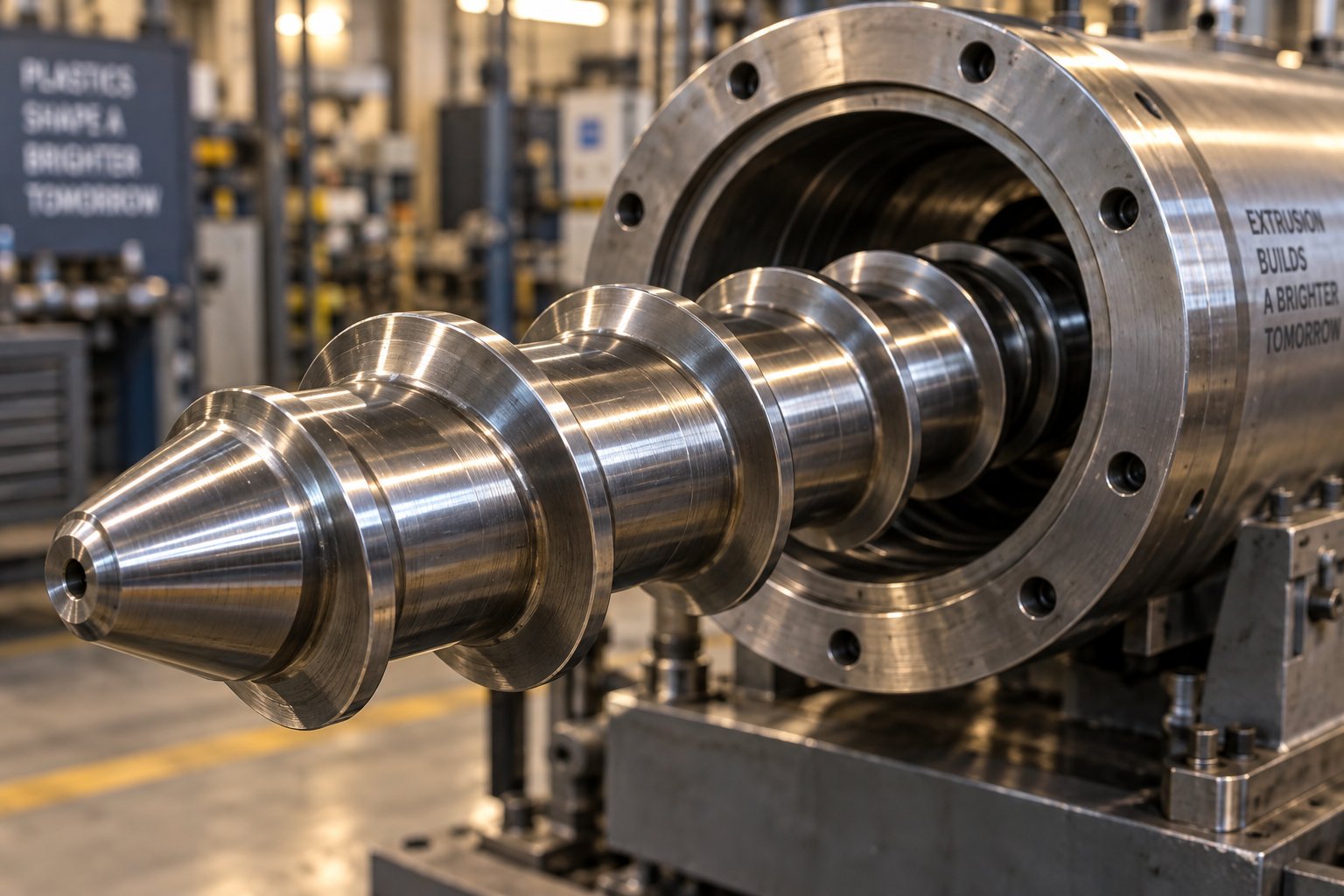
Learn how screw barrel for plastic machine design affects melt quality, throughput, and wear life. Covers geometry, resin matching, troubleshooting, and sourcing.
Read Article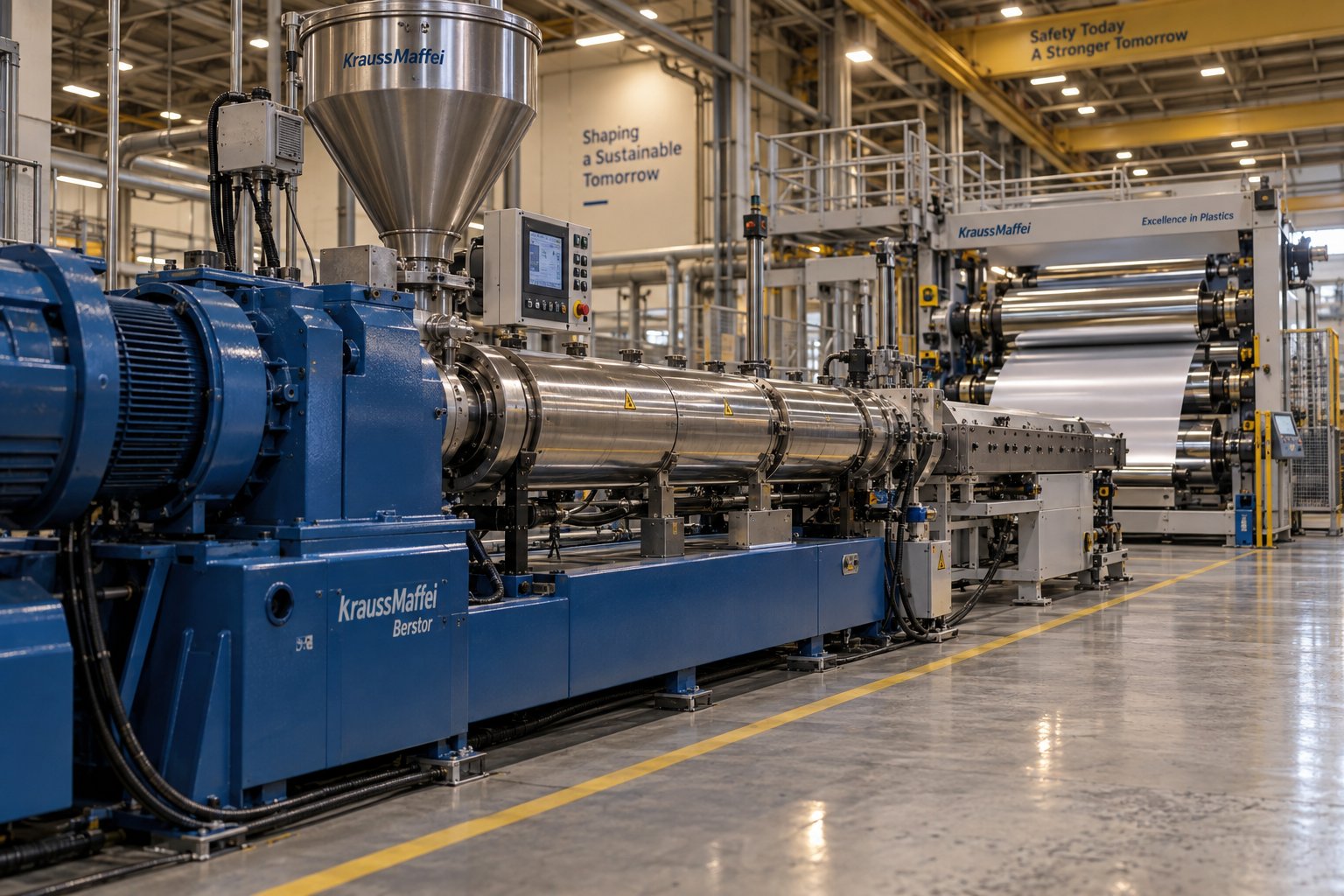
Single Screw Extruder for Sheet: Stop Guessing, Start Specifying
Oct 9, 2026
Learn how to specify a single screw extruder for sheet production. Covers screw geometry, resin-specific processing, troubleshooting, and maintenance best practices.
Read Article
PE Pipe Extruder Machine: What Datasheets Won't Tell You
Oct 9, 2026
Learn how a PE pipe extruder machine works, key specs explained, material grade selection, maintenance tips, and buyer guidance beyond the datasheet.
Read ArticleLooking for something else?
Search by material, symptom or product and jump straight to the relevant page.
These are navigation suggestions based on keyword matching — not a quotation, not a delivery commitment, and not a substitute for engineering review. Final specification is confirmed by our engineers against your drawings and processed material.
Need help with screw barrel selection?
Share your machine model, processed material and application. Our team can help with pricing and technical support.