

What Is a PVC Twin Screw Extruder and Why It Dominates PVC Processing
When you think about the equipment behind everyday PVC products - water pipes, window frames, cable sheathing, rigid sheets - one machine sits at the center of nearly every production line. It is the twin screw extruder, and for PVC processing specifically, it has become the undisputed industry standard. But what exactly is this machine, and why does it outperform simpler alternatives?
Defining the PVC Twin Screw Extruder
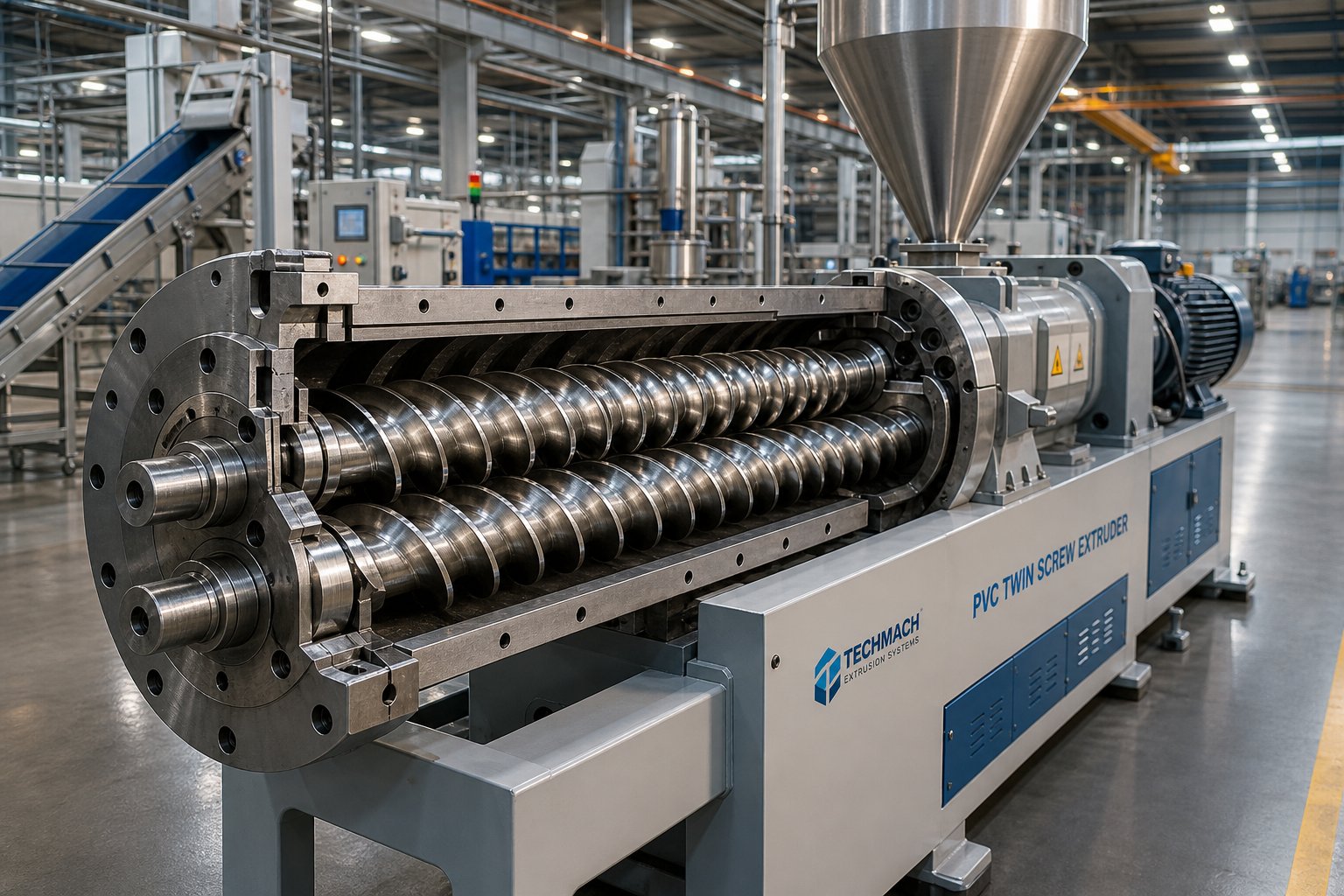
A PVC twin screw extruder is a plastics processing machine that uses two intermeshing screws rotating inside a heated barrel to convey, melt, mix, and shape polyvinyl chloride (PVC) compounds into continuous products such as pipes, profiles, sheets, foam boards, and cable insulation.
In simpler terms, imagine two precisely engineered helical screws placed side by side within a temperature-controlled cylinder. PVC powder or pellets enter one end, and as the screws rotate, they push the material forward while simultaneously heating, compressing, and blending it into a uniform melt. That melt is then forced through a die at the exit, taking on the shape of the final product - whether that is a round pipe, an intricate window profile, or a flat sheet.
You will also see this equipment referred to as a double screw extruder or twin-screw extruder in various industry literature. Regardless of the naming convention, the core principle remains the same: two screws working together deliver mixing intensity and process control that a single-screw design simply cannot match for PVC.
Why This Technology Matters for PVC Processing
Here is the challenge. PVC is not like polyethylene or polypropylene - materials that tolerate a wide range of processing temperatures without complaint. PVC has a notoriously narrow thermal processing window. Heat it too aggressively, and the polymer begins releasing hydrogen chloride (HCl) gas through a reaction called dehydrochlorination. The result? Discoloration, black specks, brittleness, corrosive fumes, and compromised product integrity. Heat it too little, and you get incomplete fusion - weak spots, rough surfaces, and dimensional inconsistency.
This thermal sensitivity is precisely why every rigid PVC compound relies on a carefully balanced cocktail of additives: heat stabilizers (such as calcium-zinc systems), internal and external lubricants, impact modifiers, processing aids, and fillers. Each additive must be dispersed uniformly throughout the PVC matrix. Poor distribution of a stabilizer, for instance, creates localized weak points where degradation can initiate. Uneven lubricant dispersion leads to erratic melt flow and surface defects.
A PVC extruder built on a twin screw design addresses both problems simultaneously. The intermeshing screw geometry provides intensive yet controllable mixing, ensuring homogeneous additive distribution while keeping shear heat within safe limits. This is why twin screw machines have become the dominant solution across PVC pipe, profile, and sheet production lines worldwide.
Two primary machine configurations define the landscape: conical twin screw extruders, where the screws taper from a larger feed diameter to a smaller discharge diameter, and parallel twin screw extruders, where the screws maintain a uniform diameter along their entire length. Layered on top of this geometric choice are two rotational modes - co-rotating (both screws turning in the same direction) and counter-rotating (screws turning in opposite directions) - each suited to different PVC processing tasks.
This guide breaks down every critical aspect of these machines in one place: the engineering science behind their advantages, detailed configuration comparisons, key technical specifications, application-by-application guidance, temperature management strategies, screw and barrel component insights, maintenance best practices, and a structured framework for selecting the right equipment. Whether you are evaluating your first PVC extrusion line or upgrading an existing operation, the sections ahead will give you the technical depth to make informed decisions.
The Science Behind Twin Screw Advantages for PVC Compounds
PVC's sensitivity to heat and its dependence on precise additive blending create a processing puzzle that single screw machines struggle to solve. A single screw relies heavily on friction between the polymer and the barrel wall to convey and melt material. That friction generates unpredictable heat, and increasing screw speed to boost output only compounds the problem with higher temperatures. For a forgiving polymer like polyethylene, this is manageable. For PVC, it is a recipe for degradation.
Twin screw extrusion solves this puzzle through four distinct engineering advantages that work together - each one addressing a specific vulnerability in PVC processing. Understanding these mechanisms helps explain why the technology has become the default choice for rigid PVC production worldwide.
Mixing and Additive Dispersion Superiority
Imagine feeding a dry-blend PVC powder into an extruder. That powder is not pure resin - it contains calcium-zinc stabilizers, internal lubricants like calcium stearate, external lubricants such as paraffin wax, acrylic processing aids, impact modifiers, and often calcium carbonate filler. Every one of these additives must be uniformly distributed throughout the melt at a near-molecular level. If a stabilizer is concentrated in one region and absent in another, the unprotected zones degrade first, producing visible defects and weakened mechanical properties.
Twin screws achieve this through two complementary mixing mechanisms. Distributive mixing spreads additive particles evenly across the entire PVC matrix by repeatedly splitting and recombining the material stream. Dispersive mixing breaks down agglomerates - clumps of pigment, filler, or stabilizer particles - into their primary particle sizes by subjecting them to high local stress.
The intermeshing flights of the twin screws are what make this possible. As material travels along one screw channel, the flight of the adjacent screw moves through that channel, forcing the melt to transfer between screws. This continuous figure-eight flow path creates elongational flow fields - stretching and folding the material much like kneading bread dough. Single screw designs, by contrast, rely primarily on shear flow in a single helical channel, which is far less effective at breaking apart tightly bound additive clusters.
The practical outcome? Better impact strength, smoother surface finish, and more consistent color across the entire production run. When you see a PVC pipe with uniform wall color and no visible specks or streaks, you are looking at the result of effective twin screw mixing.
Self-Wiping Action and Thermal Safety
Here is a scenario that keeps PVC processors up at night: material stagnating in a corner of the barrel, sitting at elevated temperature for too long, and slowly degrading. The degraded material eventually breaks free, showing up as a black speck or burned streak in the finished product. Worse, the degradation releases HCl gas, which corrodes metal surfaces and contaminates the rest of the melt.
In a single screw extruder, dead spots are a persistent risk. Material can accumulate in low-flow regions between the screw flight and the barrel wall, especially near flight transitions or in areas where the channel geometry changes abruptly. The longer that PVC sits in these stagnant zones, the greater the degradation risk.
Intermeshing twin screws virtually eliminate this problem. As the two screws rotate, the flight crest of one screw sweeps the root surface of the other, continuously scraping material off and pushing it back into the active flow stream. This self-wiping action ensures that no PVC remains stationary long enough to overheat. The result is a narrower residence time distribution - meaning all material spends roughly the same amount of time inside the barrel, receiving the same thermal history. For a polymer that degrades as aggressively as PVC, this uniform residence time is not a luxury; it is a requirement.
The self-wiping mechanism also simplifies material changeovers and cleanup. Because the screws continuously clear each other's surfaces, less residual material is left behind when switching formulations or colors - reducing downtime and the risk of cross-contamination between production runs.
Positive Displacement and Shear Control
Sounds technical? The concept is actually straightforward. In a single screw machine, material movement depends on the friction coefficient between the polymer and the barrel wall. If the friction drops - because of a formulation change, moisture variation, or lubricant adjustment - conveying becomes inconsistent, and output surges or drops unpredictably. This is particularly problematic with PVC dry-blend powders, which have different friction characteristics than pre-compounded pellets.
Twin screws with intermeshing geometry work more like a positive displacement pump. The interlocking flights form enclosed or semi-enclosed chambers that physically push material forward with each rotation, regardless of the material's friction behavior or viscosity. As noted in polymer engineering literature, the flight of one screw moving inside the channel of the other pushes material forward almost as if the machine were a gear pump, conveying with very low friction. This means throughput remains stable and predictable even when you adjust the additive package or switch between rigid and semi-rigid PVC formulations.
Equally important is the relationship between screw speed and heat generation. In single screw extrusion, increasing RPM to boost output directly increases frictional heat - and that heat is difficult to extract once generated inside the polymer mass. In twin screw designs, heat input is controlled more independently from screw speed because the positive displacement conveying mechanism generates far less frictional heat. Temperature management shifts from reactive (trying to cool down excess shear heat) to proactive (applying precisely controlled external heating zone by zone). For PVC's narrow thermal window, this level of control makes the difference between consistent product quality and chronic degradation problems.
Together, these four advantages - superior mixing, self-wiping thermal safety, positive displacement conveying, and decoupled shear heat control - explain why twin screw technology has become inseparable from professional PVC processing. Each advantage reinforces the others, creating a system specifically engineered for a polymer that punishes imprecise handling. The question for most manufacturers is not whether to use twin screws, but which configuration best fits their specific product and formulation requirements.
Conical vs Parallel Twin Screw Extruder for PVC Applications
That choice between conical and parallel screw geometry is arguably the most consequential equipment decision a PVC manufacturer faces. Both configurations deliver the twin screw advantages outlined above - positive displacement conveying, self-wiping action, and controlled shear heat - but they achieve these benefits through fundamentally different mechanical designs. Each design creates trade-offs in torque delivery, processing flexibility, and application suitability that directly affect your production quality and operational efficiency.
So which one fits your operation? The answer depends on what you are making, what formulation you are running, and how much processing flexibility you need down the road.
Geometric and Mechanical Differences Explained
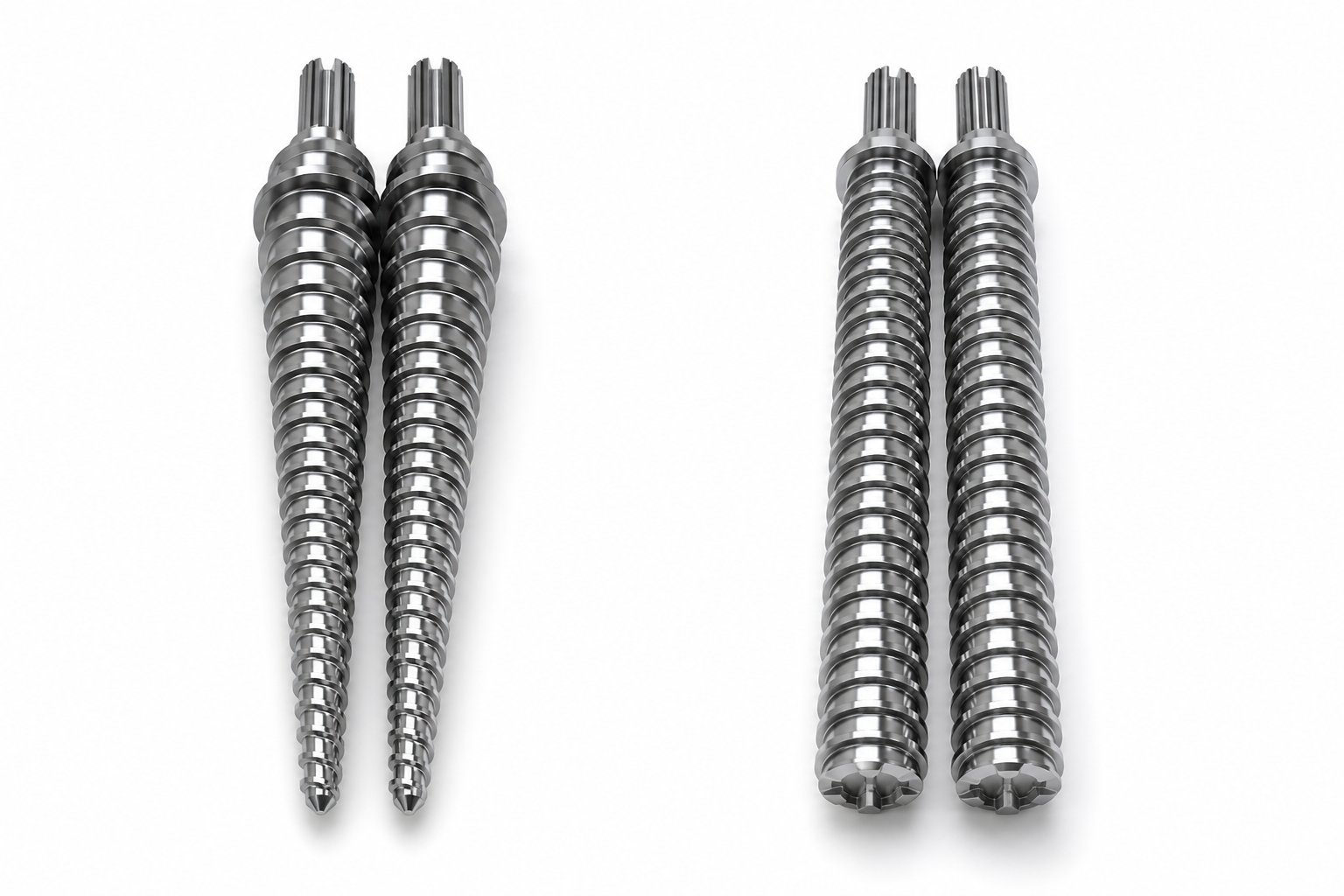
Picture two screws side by side. In a conical twin screw extruder, those screws taper from a large diameter at the feed end to a significantly smaller diameter at the discharge end. Think of two elongated cones placed next to each other. In a parallel twin screw extruder, the screws maintain a uniform diameter from feed to discharge - two identical cylinders running at a fixed center distance.
This geometric difference has cascading effects on machine performance. The conical design's larger root diameter at the feed zone means bigger shaft cross-sections, which translates directly into superior torque capacity right where the machine needs it most - at the point of initial material intake. When you are feeding low-bulk-density PVC dry-blend powder, that generous feed section pulls material in efficiently and begins compression naturally as the screw diameter decreases toward the die. The tapering geometry creates a built-in compression ratio without requiring complex flight depth changes.
Parallel designs take a different approach. Because the screw diameter stays constant, engineers have far greater freedom to vary flight geometry along the screw length. Individual sections can be optimized for feeding, compression, mixing, venting, and metering independently. The L/D (length-to-diameter) ratio is also easier to extend - you simply make the screws longer without needing to increase the feed diameter. This is a significant advantage when your process demands additional mixing stages, multiple venting zones, or longer residence times for thorough plasticization.
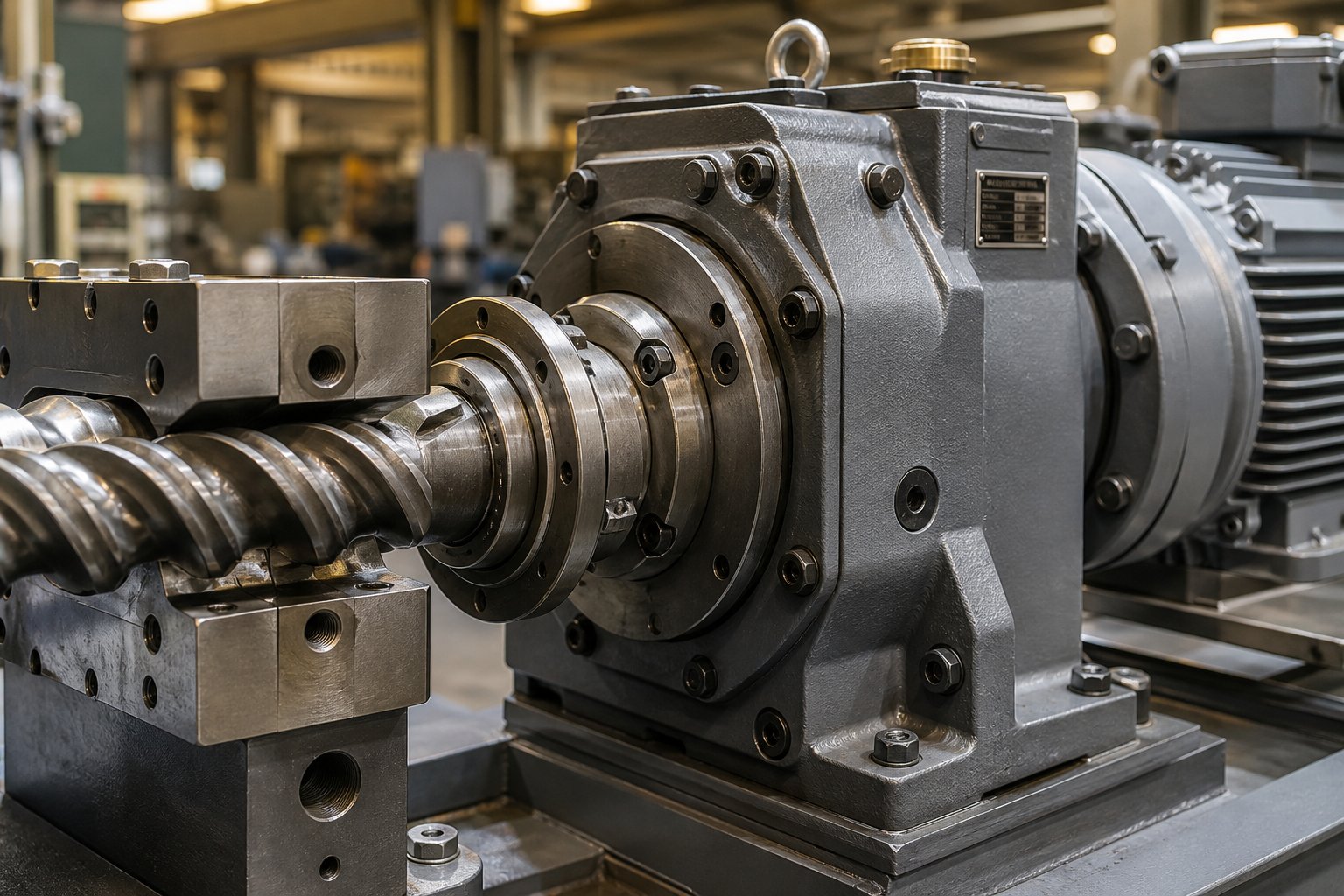
The gearbox design tells a similar story. Conical machines historically offered easier gear arrangements because the angled screw shafts create more physical space for bearings and gear trains. Parallel extruders, by contrast, demand tighter gearbox engineering since two same-diameter shafts run at a narrow center distance. However, modern advances in finite element modeling and precision manufacturing have largely closed this gap, making parallel gearboxes highly reliable even in larger machine sizes.
| Feature | Conical Twin Screw Extruder | Parallel Twin Screw Extruder |
|---|---|---|
| Screw Geometry | Tapered from large feed diameter to small discharge diameter | Uniform diameter throughout the full screw length |
| Typical L/D Ratio Range | Shorter (commonly around 22:1 to 26:1) | Longer and more flexible (commonly 26:1 to 34:1 or more) |
| Torque Characteristics | High torque capacity at the feed zone due to large root diameters | More evenly distributed torque; relies on gearbox engineering for high loads |
| Feed Capability | Excellent for low-bulk-density PVC dry-blend powders | Good; may benefit from force-feeding systems for very light powders |
| Screw Design Freedom | More limited by tapering geometry | Greater modular flexibility for varied processing tasks |
| Processing Window | Can be narrower for some applications | Can offer a wider processing window |
| Venting Flexibility | Limited positioning options | Better options including early vent placement |
| Best-Suited PVC Applications | Pipe, profile, sheet, and foam board extrusion from dry-blend | Compounding, pelletizing, high-filler formulations, and multi-stage processing |
Matching Configuration to Your PVC Application
When should you lean toward a conical design? If your primary products are PVC pipes, window profiles, door panels, decorative trim, or rigid sheets - and you are extruding directly from dry-blend powder - the conical twin screw extruder is the proven workhorse. Its natural compression, efficient powder feeding, and compact machine footprint make it the go-to choice for these high-volume product categories. The shorter L/D ratio also means a more compact overall machine length, which is practical for facilities with limited floor space.
Parallel twin screw extruders earn their place when processing demands become more complex. Imagine you are producing PVC compounds with 100 phr (parts per hundred resin) of calcium carbonate filler. That high filler loading requires extended plasticization time to ensure the carbonate is thoroughly coated and amalgamated with the PVC matrix. A parallel counter-rotating extruder twin screw design, with its longer L/D ratio, gives the material more time inside the barrel to achieve proper gelation. Insufficiently plasticized high-filler compounds produce brittle, easily breakable products - a risk the parallel design mitigates through its extended processing length.
There is also a durability argument. In highly filled PVC formulations, calcium carbonate acts as an abrasive agent that accelerates screw and barrel wear. Parallel screws, with their larger and more uniform core diameter, offer greater resistance to the corrosive and abrasive action of mineral fillers. This translates to a longer service life and potentially lower barrel replacement costs over time - an important consideration when calculating total cost of ownership.
For pelletizing operations and compound preparation - where you need to produce PVC granules from custom formulations before they reach a downstream extrusion line - the parallel configuration's modular screw design is a clear advantage. You can reconfigure screw elements to add extra mixing sections, adjust compression zones, or introduce additional venting ports without replacing the entire screw set. Among twin screw extruders used for PVC, this modularity gives parallel machines a level of process adaptability that conical designs cannot easily match.
The practical takeaway? Neither configuration is universally better. Conical machines dominate direct extrusion of standard PVC products from dry-blend, while parallel machines excel in compounding, high-filler applications, and scenarios demanding greater processing flexibility. Your end product, formulation complexity, and production strategy should drive the decision - not brand loyalty or habit.
Of course, screw geometry is only half of the configuration equation. How those screws rotate relative to each other - in the same direction or in opposite directions - introduces an entirely different set of processing dynamics that shape everything from shear intensity to degassing efficiency.
Co-Rotating vs Counter-Rotating Twin Screw Configurations for PVC
Rotation direction might sound like a minor mechanical detail, but in PVC processing it fundamentally changes what happens to the polymer inside the barrel. Two screws spinning the same way behave very differently from two screws spinning in opposite directions - and those behavioral differences determine whether the machine excels at gentle product extrusion or intensive compound preparation. Choosing the wrong rotational configuration for your application does not just reduce efficiency; it can push PVC past its degradation threshold and ruin both your product and your production run.
Understanding the flow mechanics behind each mode - and the role of vacuum venting in both - is essential for matching a pvc twin screw extruder to your specific manufacturing goals.
Counter-Rotating Intermeshing for PVC Extrusion
In a counter-rotating twin screw extruder, the two screws turn in opposite directions. Picture two gears meshing together: where the screws meet at the intermeshing zone, their surfaces move in the same direction, drawing material inward and compressing it as it advances forward. This creates what engineers call a calendering effect - similar to the nip region between two rollers in a calender machine, where material is squeezed between converging surfaces under controlled compressive and elongational forces.
Why does this matter for PVC? The calendering-type nip flow produces dispersive mixing under relatively gentle conditions rather than through the high-shear intensity typical of co-rotating designs. Material passes through the intermeshing region and undergoes repeated compressive and elongational deformation, dispersing additives effectively without generating excessive frictional heat. For rigid PVC - a material that degrades aggressively when shear heat pushes it past its narrow thermal window - this gentle yet effective mixing mechanism is exactly what the process demands.
There is another practical advantage. Counter-rotating screws operating at full fill and low rotational speed function almost like a gear pump, providing maximum positive displacement. Material advances in semi-enclosed "C-shaped" chambers formed between the screw flights and the barrel wall, delivering stable, predictable throughput with minimal dependence on the polymer's friction characteristics. When you are extruding PVC dry-blend powder - which has inconsistent friction properties compared to pre-compounded pellets - this positive conveying behavior keeps output uniform and reduces the surging problems that plague less robust machine designs.
The combination of low shear stress, controlled material temperature, and stable conveying is precisely why counter-rotating intermeshing configurations dominate rigid PVC pipe, profile, and sheet extrusion lines globally. You will find this setup powering the vast majority of window frame production, drainage pipe manufacturing, and rigid panel extrusion operations.
Co-Rotating Designs for PVC Compounding
A co-rotating twin screw extruder takes a fundamentally different approach. Both screws rotate in the same direction, and material follows a figure-eight flow path - transferring from one screw to the other at each intermeshing zone. At the point where material hands off between screws, the opposing velocity directions of the flight tip and the adjacent screw root generate intense shear fields. Combined with kneading blocks and other mixing elements that add elongational flow components, this design delivers the strongest dispersive and distributive mixing capability of any twin screw configuration.
That intensity is a double-edged sword for PVC. On one hand, high shear and vigorous mixing are exactly what you need when preparing PVC compounds and masterbatches. Dispersing pigment concentrates, breaking apart filler agglomerates, or blending impact modifiers into a PVC matrix at the compounding stage requires aggressive energy input to achieve thorough homogeneity. A twin screw compounding extruder operating in co-rotating mode handles these tasks efficiently because the freely configurable screw element combinations allow engineers to place mixing intensity precisely where it is needed along the barrel.
On the other hand, directly extruding finished rigid PVC products from dry-blend through a co-rotating machine introduces serious risks. The higher shear rates generate more frictional heat, which is difficult to remove quickly from the polymer mass. For a material that begins releasing corrosive HCl gas at relatively modest temperatures, this uncontrolled heat buildup can trigger degradation cascades - discoloration, mechanical property loss, and surface defects that scrap entire production batches.
This is why you will see a clear division in practice: counter-rotating configurations for direct extrusion of PVC products, and co-rotating designs reserved for upstream compounding, masterbatch production, and applications like polymer alloying where intensive mixing justifies the additional thermal risk. When a facility invests in a compounding extruder specifically for PVC formulation preparation, the co-rotating configuration is almost always the preferred choice - provided operators manage screw speed and barrel temperatures carefully to stay within PVC's safe processing envelope.
Degassing and Vacuum Venting Considerations
Regardless of which rotation mode you choose, one aspect of PVC twin screw extrusion is non-negotiable: effective vacuum venting. PVC melt contains volatile components that must be removed before the material reaches the die. Moisture absorbed from ambient humidity, trace residual vinyl chloride monomer (VCM), and - most critically - hydrogen chloride (HCl) released by early-stage thermal dehydrochlorination all need to escape the melt stream. If they do not, the consequences range from surface blistering and internal voids to accelerated degradation, because HCl itself acts as a catalyst that triggers further HCl release in an autocatalytic chain reaction.
Vacuum degassing works by exposing the polymer melt surface to a partial vacuum at dedicated vent ports along the barrel. Volatile components diffuse to the melt surface under the pressure gradient and are extracted by a vacuum pump before reaching the die. For rigid PVC pipe and profile applications, recommended vacuum levels typically range from 100 to 200 mbar absolute - aggressive enough to pull out moisture and HCl, but not so deep that the melt foams uncontrollably at the vent opening.
Here is where rotation direction influences vent design. In a counter-rotating machine, the screws must create a dedicated decompression zone - a barrel section where screw channel depth increases and the degree of fill drops - so that the melt pool is only partially filled and its surface is exposed to the vent opening. Because counter-rotating extruders naturally operate at high fill levels, designing this decompression zone correctly is critical. Position the vent in a fully filled section, and polymer will rise into the vent port and plug it - a condition called "vent freeze" that forces an immediate line stop for cleaning.
Co-rotating machines, by contrast, offer more flexibility in controlling the degree of fill along the barrel through screw element selection and stagger angles. The self-wiping action inherent to co-rotating designs also helps keep vent port openings cleaner during operation. For heavily volatile-laden compounds - such as PVC formulations with high plasticizer loading or wood-plastic composites containing moisture-rich wood flour - co-rotating extruders can more easily accommodate multiple vent stages, each with independently controlled vacuum levels. Two or even three venting zones are common in demanding compounding applications, with the first vent removing bulk volatiles and subsequent vents capturing residual traces.
Effective vacuum degassing in PVC extrusion is not merely a quality measure - it is a process stability measure. Removing HCl as it forms interrupts the autocatalytic degradation cycle and extends the useful thermal stability window of the entire formulation.
Practical monitoring matters too. A well-functioning vent should draw clear vapor. If you notice brown or discolored vapor at the vent exhaust, it signals excessive HCl generation - a thermal stability problem that requires immediate attention to barrel temperatures, screw speed, or formulation review before the entire batch is compromised.
With rotational configuration and venting strategy established, the next logical step is translating these design principles into concrete machine specifications - the measurable parameters that determine whether a particular extruder can actually deliver the throughput, torque, and processing control your PVC operation requires.
Key Technical Specifications for PVC Twin Screw Extruder Machines
Choosing between conical and parallel geometry, co-rotating and counter-rotating modes - those are design philosophy decisions. But at some point, every buyer and engineer has to sit down with a specification sheet and evaluate hard numbers. Screw diameter, L/D ratio, RPM range, torque rating, motor power, and throughput capacity are the measurable parameters that determine whether a twin screw extruder machine can actually meet your PVC production targets. Misread one of these values, and you risk purchasing equipment that either bottlenecks your line or runs chronically near its mechanical limits.
The challenge? Spec sheets can be misleading if you do not understand what each parameter actually means for PVC processing performance. A machine with the highest listed throughput may not be the best fit if its torque reserve cannot handle your high-filler formulation. Similarly, an impressive RPM ceiling is meaningless - even counterproductive - if running at that speed pushes shear heat beyond PVC's degradation threshold.
Essential Specification Parameters Explained
Let's break down the six core specifications you will encounter on virtually every PVC extrusion machine datasheet, along with what each one tells you about real-world processing capability.
| Specification | Typical Range for PVC | What It Means for PVC Processing |
|---|---|---|
| Screw Diameter | Conical: 35/70 mm to 80/156 mm (and larger); Parallel: 50 mm to 130 mm+ | Determines material volume per screw revolution. Larger diameters enable higher throughput but require proportionally greater torque. Conical designations list both the large feed-end and small discharge-end diameters (e.g., 65/132 mm). |
| L/D Ratio | Conical: 22:1 to 26:1; Parallel: 26:1 to 34:1+ | Defines the processing length relative to screw diameter. Longer L/D ratios provide more barrel length for feeding, compression, mixing, venting, and metering stages. Conical machines use shorter ratios because the tapering geometry achieves compression naturally; parallel designs extend L/D for complex compounding or high-filler formulations. |
| RPM Range | Counter-rotating: 5-45 RPM; Co-rotating: up to 300-600 RPM | Higher screw speed increases conveying rate and shear energy input. Counter-rotating PVC extruders run at deliberately low speeds to minimize frictional heat in thermally sensitive rigid PVC. Co-rotating machines used for compounding tolerate higher speeds because mixing intensity - not thermal gentleness - is the priority. |
| Torque Rating | Varies by model; modern high-performance gearboxes reach 18 Nm/cm3 torque density | Indicates the rotational force the gearbox and drive can deliver to each screw shaft. Higher torque allows processing of more viscous melts and highly filled PVC compounds without tripping overload alarms. Always evaluate continuous-duty torque, not peak ratings - running consistently near peak capacity shortens gearbox life. |
| Motor Power | Conical: 15 kW to 200 kW+; Parallel: 30 kW to 400 kW+ | Motor power must match the torque and speed demands of the target formulation. Oversized motors waste capital; undersized motors limit throughput. The relationship follows a simple principle: Power = Torque x Speed. A high-torque, low-RPM counter-rotating PVC extruder may need less motor power than a high-RPM co-rotating compounder at equivalent throughput. |
| Throughput Capacity | 50 to 1,000+ kg/hr (application-dependent) | The actual output in kilograms per hour for a given PVC formulation. Catalog throughput figures typically represent optimized conditions with a specific material. Your real-world throughput depends on formulation viscosity, filler loading, screw design, die resistance, and downstream equipment capacity. Target a comfortable operating window - not the machine's absolute maximum. |
A practical note: the target production output should sit inside a stable operating window, not at the absolute edge of the machine range. A double screw extruder machine that constantly runs near its torque, pressure, or cooling limits produces unstable output, accelerates wear on screws and barrel liners, and generates higher long-term maintenance costs. Industry practice suggests keeping operating torque at roughly 80% of the gearbox's continuous-duty rating to preserve headroom for formulation variations, cold-start surges, and seasonal ambient temperature shifts.
Also keep in mind that screw diameter follows a cube-law relationship with torque demand - doubling the screw diameter roughly octuples the required torque. This is why stepping up to a larger twin-screw extruder machine is never simply a matter of buying bigger screws; the entire drivetrain - motor, gearbox, thrust bearings - must scale accordingly.
Energy Efficiency and High-Torque Design Trends
If you are comparing a modern PVC extrusion machine against equipment built a decade ago, the most visible advancements cluster around energy consumption and drivetrain performance. Three trends stand out:
- Direct-drive motors replacing belt-driven systems. Traditional belt-and-pulley transmissions lose 3-5% of motor energy as heat and vibration before power even reaches the gearbox. Direct-drive configurations eliminate this loss entirely, coupling the motor shaft to the gearbox input without intermediate components. The result is measurably lower specific energy consumption (kWh/kg of processed PVC) and reduced maintenance since belts no longer need tensioning or replacement.
- Optimized screw flight geometries. Modern screw designs incorporate refined flight profiles - variable pitch progressions, optimized compression transitions, and precision-machined flight tip clearances - that reduce the mechanical energy wasted as unnecessary shear heat. For PVC, this is doubly beneficial: lower energy bills and a wider effective processing window because less unwanted heat enters the melt.
- High specific torque gearboxes. Improved metallurgy, tighter gear tooth tolerances, and advanced lubrication systems have pushed torque densities to 18 Nm/cm3 in leading twin screw platforms - a roughly 30% increase over previous generations. Higher torque density means the machine can process tougher, more heavily filled PVC formulations at the same screw diameter, or achieve equivalent throughput with a more compact machine footprint. For manufacturers running calcium carbonate-loaded PVC compounds at 80-100 phr filler, this torque headroom prevents the chronic overload alarms that plague older equipment.
These advancements are not theoretical. They translate directly into lower electricity costs per kilogram of finished PVC product, longer intervals between gearbox overhauls, and the ability to process demanding formulations that would have torque-limited older machines. When evaluating competing twin screw extruder machines, ask for specific energy consumption data (kWh/kg) under conditions relevant to your formulation - it is a far more meaningful comparison metric than raw motor horsepower.
Always request manufacturer specification sheets for exact values relevant to your specific PVC application. Catalog figures represent reference conditions - your formulation, die design, and downstream setup will determine actual operating parameters.
Specifications define what a machine can do mechanically. But those numbers only become meaningful when connected to a specific end product - a pipe, a window frame, a foam board, or a cable jacket. Each product category places different demands on the extruder, and understanding those demands is how you translate specification sheets into informed purchasing decisions.
PVC Twin Screw Extruder Applications by End Product
A specification sheet tells you what an extruder can handle mechanically. Your end product tells you what it actually needs to handle. A machine producing thin-wall drainage pipe faces very different demands than one forming dense WPC decking boards or precision medical tubing - yet all of them rely on twin screw plastic extruder technology to get the job done. The key is matching the right configuration and specification range to your specific manufacturing goal.
What follows is a product-by-product breakdown of the major PVC application categories, each paired with the extruder configuration best suited to its processing demands. Whether you are scaling up an existing product line or entering a new market segment, this mapping helps you connect your production targets to concrete equipment decisions.
Pipes, Profiles, and Window Frames
These three categories represent the largest volume of PVC plastic extrusion worldwide - and they share a common equipment preference. Conical counter-rotating twin screw extruders dominate this space, and for good reason.
PVC pipes - including pressure-rated water supply pipes, drainage and sewer lines, electrical conduit, and telecom ducting - demand consistent wall thickness, smooth inner surfaces, and reliable mechanical properties across long continuous production runs. A pvc pipe extruder built on the conical counter-rotating platform delivers exactly this: stable positive displacement conveying that maintains uniform output, gentle shear that keeps rigid PVC safely within its thermal window, and natural compression from the tapering screw geometry that builds sufficient die pressure for thick-wall pipe profiles. PVC pipe extrusion lines running conical machines at moderate RPMs routinely achieve the dimensional consistency needed for pressure-rated applications where wall thickness variation directly affects burst strength.
PVC profiles - window frames, door panels, skirting boards, decorative trim, and cable trunking - introduce a different challenge. Cross-sectional shapes are complex, often featuring hollow chambers, thin walls, and sharp corners that require uniform melt distribution across intricate die geometries. The conical counter-rotating extruder's predictable pressure buildup and low-shear melt preparation produce a homogeneous material stream that fills complex profile dies evenly. This is critical because uneven melt flow in a multi-cavity window profile die causes visible weld lines, inconsistent wall sections, and warped finished profiles that fail quality inspection.
For both pipes and profiles, extrusion pvc pipe and profile operations typically run directly from dry-blend powder rather than pre-compounded pellets. The conical design's generous feed throat and efficient powder intake make it the natural fit for this workflow, eliminating the cost and energy of a separate compounding step.
Sheets, Foam Boards, and WPC Products
Sheet and board extrusion shifts the performance emphasis. While pipes and profiles reward stable, moderate-output extrusion, sheet lines demand wider melt streams, higher throughput rates, and - in the case of foam boards - precise control over chemical or physical foaming agent activation.
- Rigid PVC sheets and panels: Used in signage, wall cladding, chemical tank lining, and thermoforming stock. Conical counter-rotating extruders handle standard rigid PVC sheet production well, but larger sheet widths and higher output demands increasingly favor parallel counter-rotating machines. Their longer L/D ratios provide extended plasticization time, which becomes important when producing wide sheets that require very uniform melt quality across the entire die width. Among pvc sheet extruders, both conical and parallel configurations see use, with the choice often driven by sheet thickness, width, and required output rate.
- PVC foam boards: Lightweight construction panels, furniture substrate boards, and advertising display panels rely on precisely controlled cell structure. The foaming process adds complexity - chemical blowing agents must decompose at exactly the right barrel zone, and premature gas release ruins cell uniformity. Conical counter-rotating machines remain popular for standard foam board production, but high-density foam and co-extruded foam-skin structures may benefit from parallel designs that offer more barrel length for staged blowing agent activation and degassing.
- Wood-plastic composite (WPC) decking and cladding: WPC processing presents unique challenges. Wood flour typically contains 5-8% moisture that must be removed during extrusion, and wood fiber's abrasive nature accelerates screw and barrel wear. Conical counter-rotating extruders are widely used for WPC decking and fencing, but parallel counter-rotating machines gain an edge when wood flour content exceeds 50% by weight. The parallel design's longer processing length allows for more effective moisture removal through multiple vacuum venting zones, while its modular screw configuration can be optimized for the intensive mixing WPC formulations require. PVC sheet extruders configured for WPC panel production similarly benefit from extended barrel designs that accommodate high filler loadings.
Specialty Applications and Flexible PVC
Beyond the high-volume categories, twin screw technology extends into several niche but commercially significant PVC product segments - many of which involve plasticized (flexible) PVC rather than rigid formulations.
- PVC cable insulation and sheathing: Flexible PVC compounds for electrical cables contain high plasticizer loading (typically 40-80 phr of DOP, DINP, or alternative plasticizers) plus flame retardants and stabilizers. The compounding step - blending these additives into PVC resin to produce uniform pellets - is best handled by co-rotating twin screw extruders that deliver the intensive dispersive mixing needed to fully incorporate flame retardant fillers like aluminum hydroxide or antimony trioxide. Downstream, the actual cable coating process often uses single screw extruders fed with pre-compounded pellets, but the quality of that final insulation layer depends entirely on how well the upstream twin screw compounder did its job.
- PVC medical tubing: Medical-grade PVC tubing for IV lines, respiratory circuits, and drainage catheters demands exceptional cleanliness, precise dimensional tolerances, and complete additive homogeneity. Even minor inconsistencies in plasticizer distribution can cause stiff spots or transparency variations that fail medical device quality standards. Counter-rotating twin screw extruders - typically conical designs at smaller screw diameters (35/70 mm to 51/105 mm range) - are commonly used for direct extrusion of medical tubing, operating at reduced speeds to maintain the tightest possible dimensional control.
- PVC compounding and pelletizing: Facilities that prepare custom PVC compounds for sale to downstream processors rely on co-rotating parallel twin screw extruders for maximum formulation flexibility. These machines handle everything from rigid pipe compound preparation to heavily plasticized cable formulations, switching between recipes with relatively quick screw element reconfiguration and thorough self-cleaning between batches.
The breadth of this application landscape illustrates a fundamental point: twin screw technology is not a one-size-fits-all proposition. A pvc pipe extruder optimized for 200 mm drainage pipe production operates in an entirely different performance envelope than a co-rotating compounder preparing flame-retardant cable compound - yet both leverage the same core twin screw principles of positive displacement, controlled shear, and intensive mixing. The configuration, specification range, and operating parameters simply adapt to the product's demands.
Getting the right product out of any of these configurations, however, depends on something specifications alone cannot guarantee - the precise management of heat across multiple barrel zones. PVC's unforgiving thermal behavior means that even a perfectly configured machine produces scrap if temperature control falls short.
Barrel Zone Temperature Management for PVC Extrusion
PVC's thermal behavior turns barrel temperature management into something closer to a balancing act than a simple setpoint exercise. Set a zone too cold, and the screws fight against under-plasticized powder - torque spikes, surfaces come out rough, and fusion remains incomplete. Set it too hot, and the polymer begins shedding hydrogen chloride gas, triggering discoloration, pitting, and irreversible mechanical property loss. Unlike polyolefins that tolerate broad temperature swings, PVC extrusion demands a progressive, carefully staged temperature profile where every barrel zone plays a distinct role in bringing the material from raw powder to a fully homogenized melt - without ever crossing the degradation threshold.
Why PVC's Thermal Sensitivity Demands Precision
What makes PVC so unforgiving? The answer lies in its molecular structure. When PVC reaches a certain temperature threshold, carbon-chlorine bonds along the polymer chain begin to break in a reaction called dehydrochlorination. This releases hydrogen chloride (HCl) gas - a corrosive, toxic byproduct that does not just damage equipment. HCl actually catalyzes further bond breakage in a self-accelerating chain reaction. Once degradation gains momentum, it cascades rapidly, producing conjugated double-bond sequences that cause progressive yellowing, browning, and eventually charring of the material.
The practical processing window for rigid PVC sits in a remarkably narrow band. Below sufficient temperature, the hierarchical grain structure of suspension PVC cannot break down and fuse into a continuous melt - you get poor gelation, weak weld lines, and rough surfaces. Above the upper boundary, dehydrochlorination outpaces the stabilizer system's ability to neutralize HCl, and degradation takes hold. Heat stabilizers like calcium-zinc systems buy time within this window, but they are consumed in the process. Exceed the safe zone even briefly, and you exhaust the stabilizer reserve in that region of the melt, creating a localized hot spot that propagates degradation outward.
Here is the additional complication: heat inside the barrel comes from two independent sources. External barrel heaters provide conductive heat through the barrel wall, and you can control those directly through temperature setpoints. But mechanical shear - the friction and deformation energy generated by the screws working against the polymer mass - also converts into heat inside the melt itself. This shear-generated heat is harder to extract because it originates within the bulk of the material, not at the barrel surface. The twin screw extrusion process therefore requires operators to think about total heat input, not just heater settings.
PVC processing success depends on managing heat input from both barrel heaters and mechanical shear. Controlling one while ignoring the other leads to either under-plasticized product or degraded material - often within the same production run.
Zone-by-Zone Temperature Strategy
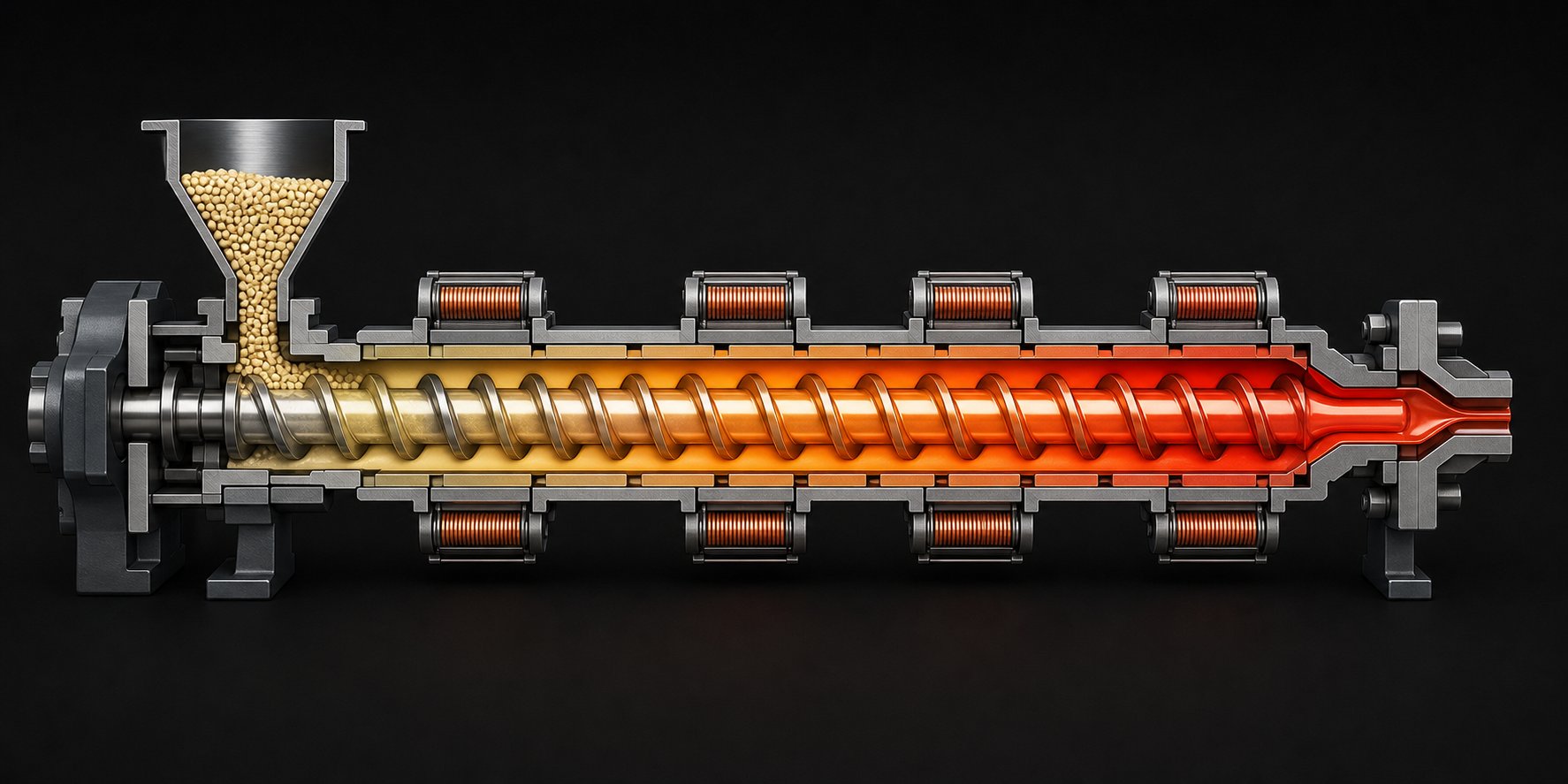
A typical PVC twin screw extruder barrel is divided into multiple independently controlled heating and cooling zones - commonly four to six, plus the die zone. Each zone serves a specific purpose in the material's transformation from dry powder to shaped melt, and the temperature profile generally follows an ascending gradient from feed to die, with some important nuances.
- Feed zone: This first zone receives raw PVC dry-blend powder at relatively low bulk density. The objective here is gentle preheating - warm the powder enough to begin softening the outer skin of PVC grains without melting them prematurely. If the feed zone runs too hot, the powder surface becomes tacky and sticks to the screw flights or barrel wall, causing bridging that starves downstream zones and triggers torque instability. Too cold, and the screws must work harder against stiff, unheated powder, producing dangerously high torque spikes that stress the gearbox. Feed zone temperatures for rigid PVC typically sit at the lower end of the overall profile.
- Compression zone: Here, the screw channel geometry begins reducing volume, compacting the partially softened powder and increasing inter-particle contact. Temperature rises incrementally to continue the gelation process - breaking apart the hierarchical grain structure of suspension PVC and beginning to fuse primary particles into a continuous mass. Poor temperature control in this zone produces incomplete fusion pockets that survive all the way to the finished product, showing up as fish-eyes or weak spots under mechanical testing.
- Metering zone: By this stage, the PVC should be a largely homogeneous melt. The metering zone's job is to deliver uniform melt temperature and pressure to the die. Temperatures reach their highest barrel setpoints in this region, but must remain firmly below the degradation onset. Overheating in the metering zone is a common cause of color shifts - the melt spends its final barrel seconds at peak temperature, and any excess here directly degrades the surface layer of material closest to the barrel wall.
- Die zone: The pvc extrusion die does not exist to add more heat to the polymer. Its heating system maintains the melt at a stable temperature as it flows through the shaping geometry and exits as a finished profile, pipe, or sheet. If the die runs too cool, increased melt viscosity causes rough surface finish and excessive back-pressure. Too hot, and the melt loses strength, sagging or distorting before it reaches the calibration tooling. For rigid PVC pipe extrusion, the target melt temperature at the die exit generally falls in the range needed for optimum fusion - typically around 180-190 degrees C - though the exact value depends on your specific formulation, filler content, and output rate.
An important mindset shift for PVC processors: you are not really controlling barrel temperatures - you are controlling the material temperature inside the barrel, and barrel zone setpoints are just one of the tools you use to get there. As experienced PVC engineers emphasize, operators should focus on measuring and monitoring the actual PVC melt temperature at key points - the vacuum port, the adapter, and the die exit - and adjust barrel zone setpoints to achieve the correct material temperatures at each stage. Barrel heaters provide external heat, while frictional heat is generated internally by the screws. Both sources must be balanced against each other.
Modern PVC twin screw extruders accomplish this through multi-zone PID (proportional-integral-derivative) controllers that continuously compare actual zone temperatures against setpoints and adjust heater output accordingly. When shear heat from the screws pushes a zone above its setpoint - a common occurrence in the compression and metering zones at higher RPMs - forced-air blowers or liquid cooling circuits on the barrel exterior extract the excess heat before it can push the melt past the degradation boundary. This combination of active heating and active cooling within each zone gives operators the tight, responsive thermal control that PVC demands.
One more practical consideration: temperature stability is just as important as temperature accuracy. Even if your average zone temperature sits perfectly within spec, large oscillations around that average - caused by worn heater bands, miscalibrated thermocouples, or sluggish cooling response - create alternating hot and cold pulses in the melt. The hot pulses degrade material intermittently, producing periodic discoloration or mechanical weak spots that are maddeningly difficult to diagnose without proper instrumentation. Verifying thermocouple accuracy, heater band integrity, and barrel insulation condition during routine maintenance directly protects temperature stability - and therefore product consistency.
Temperature management gets the melt safely through the barrel. But the components that physically contact that melt - the screws and barrel liner - are what determine how well the machine plasticizes, conveys, and shapes the PVC over thousands of operating hours. Their geometry, metallurgy, and wear condition quietly define the upper limit of what any temperature profile can achieve.
Screw and Barrel Components That Drive Extrusion Performance
Your temperature profile can be perfectly dialed in, your formulation meticulously balanced, and your downstream calibration tooling aligned to the micron - but if the twin screw and barrel set inside your extruder is worn, corroded, or poorly designed, none of that precision matters. These two components are where PVC powder physically transforms into a homogeneous melt. Their geometry governs how aggressively the material is compressed, mixed, and conveyed. Their metallurgy determines how long they survive the corrosive chemistry of PVC processing. And their wear condition - the slow, inevitable degradation of flight tips, barrel liner surfaces, and screw-to-barrel clearances - quietly erodes plasticizing quality, throughput stability, and dimensional accuracy over thousands of operating hours.
Understanding what happens at this component level is essential for maintaining consistent production quality and making informed decisions about when to repair, replace, or upgrade.
Screw Geometry and Its Impact on PVC Plasticizing
Every screw extruder converts rotational energy into three simultaneous functions: conveying material forward, compressing it to build pressure, and mixing it into a uniform melt. How well a screw performs these tasks depends on its flight geometry - specifically, three interrelated design parameters.
- Flight pitch: The axial distance between consecutive flights. A standard "square pitch" screw has a pitch equal to the screw diameter, making it easy to count turns and estimate L/D ratio. Varying the pitch along the screw length changes conveying speed - a wider pitch in the feed zone pulls powder in quickly, while a tighter pitch downstream slows material advance and increases residence time for better plasticization. As noted in extrusion engineering references, many screws use square pitch throughout, but PVC processing often benefits from progressive pitch designs that match conveying rate to the material's changing state from powder to melt.
- Channel depth: The radial distance from the screw root to the flight tip. Deep channels in the feed zone accommodate low-bulk-density PVC dry-blend powder, while shallower channels in the metering zone create a thin melt layer that improves heat transfer and mixing uniformity. The ratio between feed depth and metering depth defines the compression ratio - typically between 2:1 and 4:1 for PVC screws. Too high a compression ratio generates excessive shear heat in the transition zone; too low leaves material insufficiently compacted, trapping air pockets that surface as voids in the finished product.
- Flight width (land width): The thickness of the flight at its tip. Industry convention targets approximately 10% of barrel diameter for flight width. Wider flights waste effective screw length and generate excessive heat in the tight clearance zone between the flight tip and barrel wall. Narrower flights allow too much material leakage backward over the flight, reducing conveying efficiency and creating localized stagnation where PVC can overheat. The corners where the flight meets the screw root are typically radiused rather than sharp - this prevents dead spots where material could lodge and degrade, which is particularly critical for thermally sensitive PVC.
In twin-screw extruders designed for PVC, these parameters interact with the intermeshing geometry. The flight crest of one screw must closely match the root profile of the adjacent screw to maintain the self-wiping action that prevents stagnation. Any design change to one screw's flight depth or pitch must be mirrored precisely on the other - a constraint that limits individual screw customization but ensures the processing consistency PVC demands.
Barrel Liner Materials and Corrosion Resistance
Imagine running a chemical reactor where one of the byproducts is hydrochloric acid - and the reactor walls are made of steel. That is essentially what happens inside a PVC extrusion barrel. Even with well-stabilized formulations processed within correct temperature limits, trace levels of HCl are generated as a normal consequence of PVC's thermal history. Over months and years of production, that HCl attacks barrel and screw surfaces relentlessly. Add calcium carbonate filler - present at 5 to 100+ phr in many rigid PVC compounds - and you layer abrasive mechanical wear on top of chemical corrosion. The combination is uniquely destructive.
Standard nitrided steel barrels and screws, adequate for polyolefins and many engineering plastics, deteriorate rapidly under these dual stresses. As industry corrosion studies confirm, PVC's hydrochloric acid release corrodes metal surfaces that are not specifically protected against acid attack.
The countermeasure is specialized barrel liner technology:
- Bimetallic barrel linings: The most widely adopted solution for PVC twin screw barrels. A wear-resistant, corrosion-resistant alloy - typically a nickel-rich boron alloy with molybdenum, boride, and carbide components - is centrifugally cast or hot isostatically pressed into the barrel bore. This creates a hard inner surface that resists both HCl corrosion and abrasive filler wear, while the outer barrel body retains the structural strength of carbon or alloy steel.
- Screw surface treatments: Screw flight surfaces receive hardface alloy coatings - such as Colmonoy 56 or Colmonoy 83 alloys - welded onto the flight tips and leading edges. These coatings provide a hard, acid-resistant barrier at exactly the points where wear and corrosion concentrate most aggressively. For heavily filled PVC formulations, tungsten carbide overlays offer even greater abrasion resistance, though at higher cost.
- Powder metallurgy (PM) steel: An emerging option for both barrel liners and screw elements. PM steel offers finer, more uniform grain structure with minimal segregation of alloying elements like nickel, chromium, and molybdenum. This translates to superior wear resistance and longer service life compared to conventionally cast alternatives - a meaningful advantage when processing highly abrasive PVC/CaCO3 compounds.
Material selection for the twin screw barrel is not a one-time decision you revisit only when something fails. It is a cost-performance trade-off that directly impacts your replacement cycle, your scrap rate from degraded product quality, and your total cost of ownership over the life of the extrusion line.
When to Replace or Upgrade Your Twin Screw Barrel
Wear does not announce itself with a dramatic failure. It creeps in gradually - and its earliest symptoms look like process inconsistencies rather than component damage. Recognizing these signs before they escalate into serious quality problems saves both material waste and unplanned downtime.
Watch for these indicators:
- Declining throughput at constant RPM: As screw-to-barrel clearance increases beyond the original specification - typically targeted at 1/1000 of the screw diameter on new equipment - material leaks backward over the flight tips instead of advancing toward the die. You compensate by increasing screw speed, which adds more shear heat and accelerates both wear and degradation risk. It is a downward spiral.
- Inconsistent product dimensions: Worn screws cannot maintain stable melt pressure at the die. The result is wall thickness variation in pipes, weight fluctuation in profiles, and gauge inconsistency in sheets - all of which increase scrap rates and risk downstream assembly failures.
- Increased motor current draw: Corroded or rough barrel surfaces and worn flight tips increase resistance, forcing the motor to work harder. Rising amperage trends in your production logs - especially when running the same formulation - are an early warning of advancing wear.
- Surface quality deterioration: Die lines, rough patches, or intermittent discoloration that does not respond to temperature adjustments often trace back to inconsistent melt homogeneity caused by worn mixing zones in the screw geometry.
The critical question is whether to repair or replace. Industry practice favors repairing - re-welding flight tips, re-nitriding, or applying fresh hardface coatings - when wear is localized and the screw core remains dimensionally sound. Full replacement becomes necessary when barrel bore erosion has opened clearances beyond rebuildable limits, or when corrosion has compromised the structural integrity of the liner.
Sourcing quality replacement components matters as much as timing the replacement correctly. A replacement twin screw barrel with inferior metallurgy or imprecise bore tolerances introduces new problems immediately - inconsistent clearances, premature wear patterns, and processing instability that defeat the purpose of the upgrade. For manufacturers running conical counter-rotating machines in PVC pipe, profile, sheet, or WPC production, suppliers like NANHAIYA specialize in custom and replacement conical twin screw barrels engineered specifically for PVC applications, offering the dimensional precision and corrosion-resistant materials these demanding processes require. Partnering with a component supplier that understands PVC's specific metallurgical demands - and can provide production support for matching barrel liner alloys to your formulation's filler content and corrosion profile - directly protects your production consistency over successive replacement cycles.
One final consideration: upgrading barrel and screw metallurgy during a scheduled replacement can deliver performance gains that go beyond restoring original condition. If your operation has shifted toward higher-filler PVC formulations since the original equipment was specified, stepping up to a more abrasion-resistant liner alloy or PM steel screw elements during the next replacement cycle can extend the interval before the following replacement by 30% or more - a meaningful reduction in lifetime maintenance cost.
Of course, even the best screw and barrel components deliver consistent results only when supported by disciplined operating procedures and proactive maintenance routines. PVC's thermal sensitivity imposes specific startup, shutdown, and troubleshooting demands that generic plastics processing guidelines simply do not cover.
Maintenance and Troubleshooting Best Practices for PVC Extrusion
PVC does not forgive lazy operating habits. Leave it sitting in a hot barrel during an unplanned break, and it degrades into corrosive char that damages screw surfaces and contaminates the next production run. Skip a thermocouple calibration, and a drifting temperature reading quietly pushes one zone past the degradation threshold for weeks before anyone connects the dots to rising scrap rates. Among all thermoplastics processed on screw extruders, PVC demands the most disciplined startup, shutdown, and maintenance routines - because the consequences of neglect are not just quality problems but active chemical damage to the equipment itself.
PVC-Specific Startup and Shutdown Procedures
Starting a PVC twin screw extruder is not as simple as turning on the heaters and feeding material. Cold PVC powder introduced into a barrel that has not fully reached processing temperature encounters metal surfaces too cool to initiate proper gelation. The screws fight against stiff, unplasticized powder, generating enormous torque spikes that stress the gearbox and risk mechanical damage. Worse, localized hot spots near heater bands can begin degrading material in some zones while adjacent zones remain too cold for proper conveying - creating a patchwork of burned and unprocessed material that contaminates the entire melt stream.
The correct approach involves a deliberate heat-soak period. Bring all barrel zones to their target setpoints and allow the system to soak at temperature long enough for the entire barrel mass - including heavy steel sections around the gearbox adapter and die flange - to reach thermal equilibrium. As Davis-Standard's maintenance guidelines emphasize, the polymer must be completely molten before restart, and the size of the extrusion system directly affects the required heat-soak time. Only after confirming uniform barrel temperatures should the screws begin rotating at low speed with a controlled material feed rate.
Shutdown demands equal discipline - arguably more. PVC left stagnant in a hot barrel continues to degrade even after the screws stop turning. HCl gas accumulates, attacking barrel and screw surfaces, while the stagnant melt carbonizes into a hard, abrasive residue that bonds to metal surfaces. Removing carbonized PVC from screw flights and barrel walls requires aggressive mechanical cleaning that itself accelerates wear.
The solution is thorough purging before every shutdown. Run a thermally stable purge compound - such as a polyethylene or polypropylene base blended with antioxidant - through the machine at reduced speed and lower temperatures to displace all PVC from the barrel. Effective shutdown practice calls for reducing operating speed at the end of a run, lowering the temperature to a safe level, and then purging with a material offering good thermal stability. This approach minimizes material degradation and waste while protecting the screw and barrel surfaces for the next startup. Never leave PVC as the last material in the barrel overnight or over a weekend - the carbonized residue that results will haunt your production quality for days after restart.
Preventive Maintenance Schedules and Inspections
Reactive maintenance - fixing things after they break - is expensive for any extrusion operation, but for PVC extruders it is especially costly because component failures often trigger cascading material degradation that scraps entire production batches. A structured preventive maintenance schedule catches problems early, before they escalate into unplanned downtime or compromised product quality.
The following checklist covers the essential periodic inspections every extruder PVC processing line should implement:
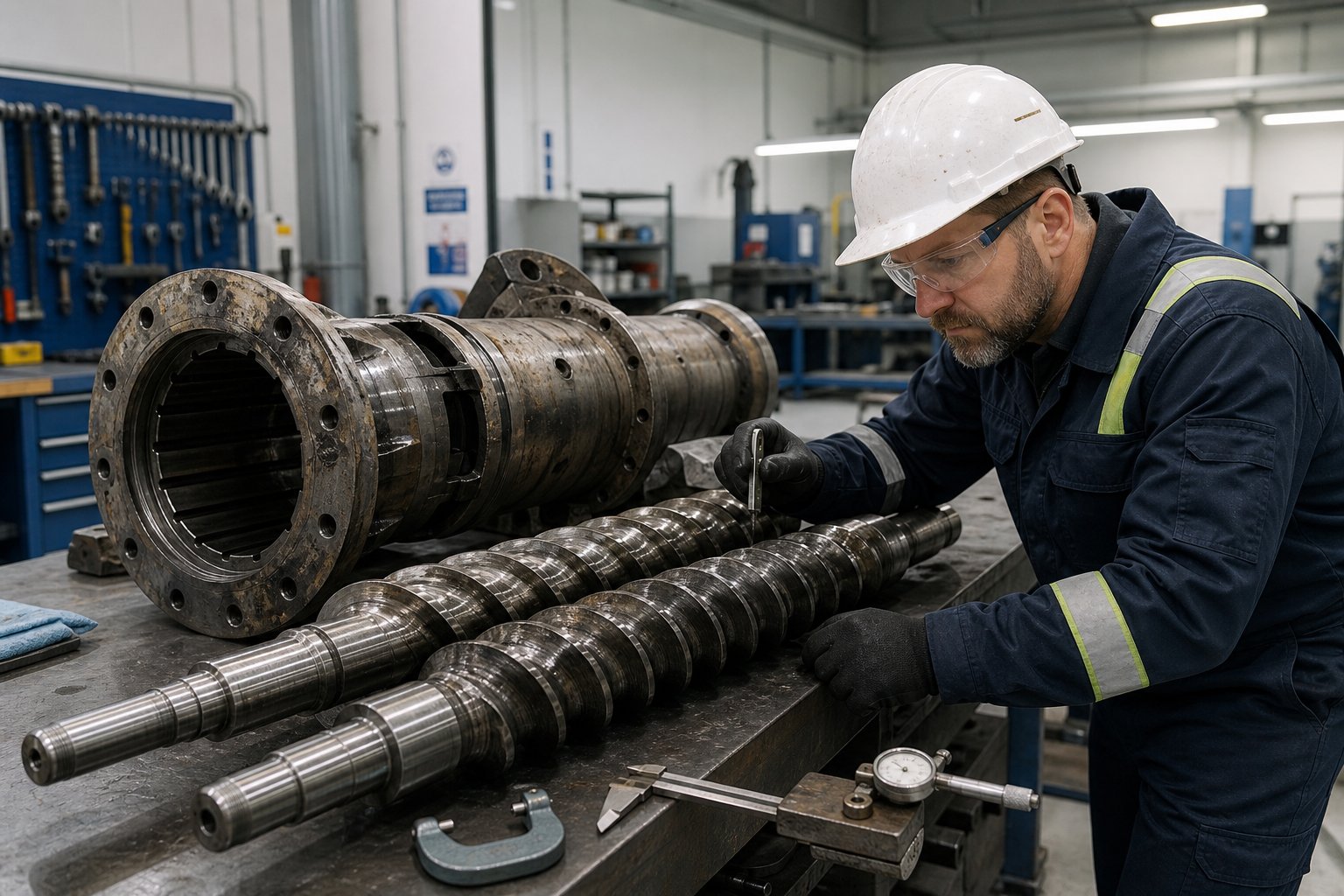
- Screw and barrel wear measurement (every 500-1,000 operating hours): Measure screw flight outer diameter and barrel bore inner diameter at multiple points along the length. Track clearance growth over time - this reveals when replacement is needed before output drops and energy costs spike. For PVC operations running calcium carbonate-filled formulations, err toward the shorter inspection interval due to accelerated abrasive wear.
- Gearbox oil analysis (monthly or per manufacturer schedule): Check oil level, color, smell, and contamination. Metallic particles in oil samples indicate gear or bearing wear. Clean magnetic filters and verify oil pressure in circulating systems. Record bearing noise and vibration levels as baseline data for trend analysis.
- Thermocouple calibration (quarterly): Drifting thermocouples silently distort your temperature profile. A sensor reading 5 degrees C low in the metering zone means you are unknowingly running that zone hotter than intended - a dangerous condition for PVC. Compare installed sensor readings against a reference probe and replace any thermocouples outside acceptable tolerance.
- Vacuum vent port cleaning (weekly or as needed): PVC processing generates volatile residues that accumulate around vent openings. Partially blocked vents reduce degassing efficiency, allowing moisture and HCl to remain in the melt. Inspect vent ports for material buildup, clean thoroughly, and verify vacuum pump performance.
- Heater band inspection (monthly): Check all barrel heater bands for proper contact and fit against the barrel surface. Loose bands create air gaps that reduce heat transfer efficiency and cause temperature oscillations. Test heating and cooling responsiveness in each zone and replace any bands showing signs of burnout or intermittent operation.
- Motor and drive system check (monthly): Monitor motor temperature, listen for unusual noise, confirm cooling fans operate, and inspect motor mounting alignment. Record bearing cap temperatures and compare against historical baselines. Rising temperatures suggest developing bearing issues.
- Safety interlock and emergency stop testing (monthly): Verify that all safety interlocks, emergency stops, and guard switches function correctly. PVC extruders operating with malfunctioning safety systems expose personnel to hot surfaces, pinch points, and potential HCl gas exposure.
- Feed system and hopper inspection (weekly): Clean the hopper and feed throat. Verify feed screw rotation and check feed throat cooling operation. PVC dry-blend powder can bridge in the hopper or cake onto warm feed throat surfaces, causing inconsistent material delivery that shows up as output surging downstream.
Troubleshooting Common PVC Extrusion Defects
Even well-maintained PVC extruders encounter process upsets. The key to fast resolution is systematic diagnosis - connecting visible defect symptoms to their most probable root causes rather than making random adjustments that often create new problems. The table below maps the most common defects seen in PVC pipe, profile, and sheet extrusion to their likely causes and corrective actions.
| Defect | Likely Root Causes | Corrective Actions |
|---|---|---|
| Plate-out (waxy or chalky buildup on die surfaces) | Excess external lubricant migrating to die surfaces; lubricant/stabilizer imbalance in formulation; die temperatures too low causing condensation of volatiles | Review and adjust lubricant levels in the formulation; increase die zone temperature slightly to prevent condensation; clean die lips and land surfaces; verify formulation balance with your stabilizer supplier |
| Burning and discoloration (yellow, brown, or black streaks or spots) | Excessive barrel temperature in one or more zones; residence time too long due to low throughput or oversized barrel; worn screw clearances creating stagnant zones; depleted stabilizer in formulation | Reduce barrel temperatures gradually, starting with the hottest zone; increase screw speed to reduce residence time (within safe shear limits); inspect and clean the screw before resuming production; verify stabilizer loading in the dry-blend |
| Surging (rhythmic output fluctuation causing wall thickness variation) | Worn screw flights reducing positive conveying; inconsistent powder feed from hopper bridging or feeder malfunction; contaminated material or blocked screens; unbalanced barrel temperatures | Measure screw and barrel wear - replace if clearances exceed limits; check and clean feed throat and hopper; verify feeder calibration; equalize barrel zone temperatures gradually; inspect screen pack for blockage |
| Poor surface finish (rough, matte, or orange-peel texture) | Insufficient gelation from low melt temperature; die temperature too low; die lip damage or buildup; unmelted particles from inadequate plasticization | Increase compression and metering zone temperatures to improve gelation; raise die temperature; inspect and polish die lip surfaces; check for screen tears allowing unmelted material to pass through |
| Uneven wall thickness (pipes or profiles with thick and thin sections) | Die misalignment or mandrel eccentricity; temperature imbalance across die zones; inconsistent melt viscosity from poor mixing; uneven cooling in calibration tooling | Re-center the die mandrel and check alignment with calibration sleeve; balance die zone heater temperatures; verify screw condition for mixing efficiency; inspect and adjust calibration vacuum and cooling water distribution |
| Fish eyes (small, circular, transparent defects in the product surface) | Incompletely fused PVC grains - typically from insufficient melt temperature or inadequate mixing; contamination from crosslinked or degraded particles | Increase barrel temperatures in compression zone; check for contamination and replace screen pack; verify dry-blend quality and storage conditions; ensure formulation includes adequate processing aid levels |
A practical diagnostic principle ties all of these defects together: always change one variable at a time, document the result, and wait long enough for the system to stabilize before drawing conclusions. PVC pvc extruders have long residence times compared to polyolefin lines, meaning adjustments take several minutes to show their full effect at the die. Impatient operators who stack multiple changes simultaneously lose the ability to identify which adjustment actually solved - or worsened - the problem.
When a defect persists despite logical process adjustments, shift your attention from process parameters to equipment condition. Chronic surging that does not respond to temperature tuning almost always points to worn screw flights. Persistent discoloration that resists temperature reduction may indicate carbonized residue lodged in a dead spot created by a damaged barrel liner. In these cases, the only real fix is pulling the screws for physical inspection and measurement - confirming whether the problem lives in the process settings or the hardware itself.
Disciplined maintenance and systematic troubleshooting protect your production line day to day. But they operate within the constraints of whatever equipment you selected in the first place. If the machine itself is mismatched to your product, formulation, or throughput requirements, even perfect maintenance cannot overcome that fundamental mismatch - which is why the final piece of the puzzle is a structured approach to choosing the right extruder from the start.
How to Choose the Right PVC Twin Screw Extruder
Every topic covered in this guide - screw geometry, rotational mode, temperature management, barrel metallurgy, maintenance protocols - converges on one practical question: which machine should you actually buy? It is a high-stakes decision. A plastic twin screw extruder represents a significant capital investment, and the wrong choice locks your operation into years of suboptimal throughput, excessive wear part costs, or chronic quality issues that no amount of process tuning can fully resolve.
The good news? The decision does not need to feel overwhelming. By working through a logical sequence of five variables - each one narrowing the field of suitable machines - you can move from a broad universe of twin screw extruder manufacturers down to a shortlist of configurations and specifications that genuinely fit your production reality.
Step-by-Step Selection Framework
Think of this as a funnel. Each step eliminates options that do not match your requirements, leaving you with a progressively clearer picture of the right machine.
- Identify your target end product. This is the single most consequential variable because it determines the preferred screw configuration outright. Are you producing PVC pipes, window profiles, or rigid sheets from dry-blend powder? A conical counter-rotating extruder is your starting point. Compounding custom PVC formulations into pellets for resale or downstream processing? A co-rotating parallel design is the natural fit. Manufacturing WPC decking with high wood flour content? A parallel counter-rotating machine may offer the extended barrel length and venting capacity you need. Defining the product first eliminates entire categories of equipment from consideration and focuses your search immediately.
- Define production volume and required throughput. Your target output in kg/hr - not just today, but projected over the next three to five years - determines the screw diameter range and motor power class you need. A manufacturer currently running 150 kg/hr of rigid PVC pipe compound but planning to scale to 300 kg/hr within two years should size the extruder for the growth target, not the current baseline. Undersizing forces you into a second capital purchase sooner than planned; oversizing wastes capital and may create process instability if the machine consistently runs below its efficient operating window. Request actual throughput data from twin screw extruder manufacturers for your specific formulation type - catalog maximums under ideal conditions rarely match real-world production with your additive package and filler loading.
- Assess your PVC formulation type. Rigid versus plasticized PVC, dry-blend powder versus pre-compounded pellets, low-filler versus high-filler content - each variable shifts the equipment requirements. Dry-blend powder demands generous feed throat capacity and efficient low-bulk-density material intake, favoring conical designs with their naturally oversized feed zones. High-filler formulations (80-100+ phr calcium carbonate) require higher torque reserve and longer L/D ratios for thorough plasticization, often pointing toward parallel configurations. Plasticized PVC with 50+ phr of liquid plasticizer introduces different feeding challenges - liquid injection ports and extended mixing zones - that modular co-rotating screw designs handle more flexibly. Before evaluating machines, map out every formulation you expect to run, including future product development plans, so the equipment you select does not become a bottleneck when your formulation strategy evolves.
- Evaluate end product geometry and dimensional tolerances. A simple round drainage pipe tolerates modest wall thickness variation far better than a multi-chamber window profile with 1.5 mm walls and tight corner radii. Complex profile geometries demand higher and more stable die pressure, which in turn requires tight screw-to-barrel clearances, consistent positive displacement conveying, and a die pressure capability that matches the flow resistance of your tooling. Medical tubing with sub-millimeter wall thickness tolerances places even stricter demands on melt homogeneity and pressure stability than standard building products. Match the extruder's pressure generation and melt quality characteristics to the most demanding product geometry you intend to produce.
- Consider budget, energy costs, and total cost of ownership. The purchase price of the extruder itself is only one component of lifetime cost. Energy consumption - measured as specific energy in kWh/kg of finished product - accumulates relentlessly over years of operation. Wear part replacement cycles add up: bimetallic screw and barrel sets for an 80/156 conical machine can range from $4,350 to $4,500 per set, and replacement intervals vary from 3 months for highly abrasive compounds to 24 months for standard formulations with quality bimetallic components. Factor in gearbox maintenance, heater band replacement, and the labor cost of planned downtime. A machine with a lower purchase price but shorter wear part life and higher energy draw may cost substantially more over a five-year horizon than a premium alternative with better metallurgy and direct-drive efficiency. Always calculate total cost of ownership before making a final decision.
Before committing to any particular twin screw extruder plastic processing line, there is one more step many buyers overlook: validating your formulation on the actual machine platform. If a twin-screw extruder manufacturer offers trial runs at their facility, take advantage of them. For formulation development or process validation at smaller scale, a laboratory twin screw extruder provides a cost-effective way to test screw configurations, temperature profiles, and additive loadings before committing to full-production equipment. Similarly, a benchtop twin screw extruder can help R&D teams evaluate new PVC compounds or experimental filler systems without tying up a production line - generating data that directly informs the specification choices for your full-scale machine purchase.
Critical Components and Supplier Considerations
Here is a reality that experienced PVC processors understand but first-time buyers often miss: the extruder itself is only as good as its most wear-prone components and the support network behind them. Evaluating a machine without evaluating the quality of its screw and barrel set, the availability of replacement parts, and the technical depth of the supplier's after-sales team is like buying a car without checking whether anyone nearby can service it.
Three supplier-side factors deserve as much scrutiny as the machine specifications:
- Barrel and screw quality. The metallurgy, dimensional precision, and surface treatment of the twin screw barrel directly determine how long the machine maintains its plasticizing performance before wear degrades output quality. Ask every prospective supplier for specifics: what liner alloy do they use? What is the guaranteed concentricity of the barrel bore? What hardface alloy protects the screw flight tips? Generic answers signal generic components. For conical counter-rotating machines used in PVC pipe, profile, sheet, and WPC production, specialized suppliers like NANHAIYA focus specifically on custom and replacement conical twin screw barrels engineered for PVC applications - the kind of targeted component expertise that translates directly into longer service intervals and more consistent plasticizing performance across successive replacement cycles.
- After-sales technical support. PVC extrusion problems rarely have single-variable solutions. When plate-out accumulates on your die lips or surging develops after a formulation change, you need a support team that understands PVC-specific process dynamics - not just generic machine operation. Evaluate whether the twin-screw extruder manufacturer or component supplier provides application engineering support, process optimization guidance, and responsive troubleshooting assistance. A supplier who disappears after the invoice is paid becomes a liability the moment your first real production challenge arises.
- Spare parts availability and lead times. A worn screw set that needs replacement is a scheduled cost. A worn screw set that takes twelve weeks to procure is an unscheduled production crisis. Before committing to any equipment platform, verify the typical lead time for critical wear parts - screws, barrel liners, gearbox components, and die assemblies. Suppliers maintaining ready stock of common configurations for standard PVC twin screw extruder models can cut your downtime from weeks to days during planned replacements. For custom or non-standard screw geometries, confirm whether the supplier retains your tooling records and dimensional data for repeat manufacturing consistency.
The growing twin screw extruders market - valued at USD 2.91 billion in 2024 and projected to grow at a 5.06% CAGR through 2034 according to Polaris Market Research - reflects the expanding global demand for advanced extrusion equipment across plastics, food, pharmaceutical, and chemical processing sectors. For PVC manufacturers specifically, this growth means a wider selection of machines and component suppliers competing on quality, efficiency, and service. It also means the decisions you make today about equipment and component partners will shape your competitive position for years to come.
Investing in a well-matched extruder is the foundation. But investing equally in high-quality wear components, energy-efficient drive systems, and a supplier relationship that supports your operation through formulation changes, capacity expansions, and inevitable process challenges - that is what separates PVC manufacturers who maintain consistent production quality from those who constantly chase problems they cannot solve with process adjustments alone. The technical knowledge across every section of this guide exists to help you make those decisions with confidence, grounded in engineering principles rather than guesswork or sales pressure.
Frequently Asked Questions About PVC Twin Screw Extruders
1. What is the difference between a conical and parallel twin screw extruder for PVC?
A conical twin screw extruder features screws that taper from a large feed diameter to a smaller discharge diameter, providing high torque at the feed zone and efficient dry-blend powder intake. A parallel twin screw extruder maintains uniform screw diameter throughout, offering greater L/D ratio flexibility and modular screw configurations. Conical designs excel at direct PVC pipe, profile, and sheet extrusion from dry-blend, while parallel designs are better suited for compounding, pelletizing, and processing high-filler PVC formulations that require extended plasticization time and multiple venting stages.
2. Why are twin screw extruders preferred over single screw extruders for PVC processing?
PVC has an extremely narrow thermal processing window and degrades by releasing corrosive HCl gas if overheated. Twin screw extruders address this through four key advantages: superior dispersive and distributive mixing for uniform additive dispersion, self-wiping screw action that eliminates stagnant dead spots where degradation could start, positive displacement conveying for consistent throughput regardless of formulation viscosity, and lower frictional heat generation that keeps material safely within its processing range. These features work together to produce homogeneous melts with better impact strength, surface finish, and color consistency than single screw alternatives can achieve.
3. What RPM range is typical for a PVC twin screw extruder?
Counter-rotating PVC twin screw extruders typically operate between 5 and 45 RPM. These deliberately low speeds minimize frictional heat generation, which is critical for thermally sensitive rigid PVC. Co-rotating twin screw extruders used for PVC compounding can run at much higher speeds, up to 300-600 RPM, because intensive mixing is the priority in compound preparation. Running a counter-rotating extruder at excessive RPM risks pushing shear-generated heat past PVC's degradation threshold, so operators should target a comfortable operating window rather than the machine's maximum rated speed.
4. How often should screws and barrels be replaced on a PVC twin screw extruder?
Replacement intervals vary based on formulation abrasiveness and component metallurgy. For highly abrasive PVC compounds with heavy calcium carbonate loading, bimetallic screw and barrel sets may need replacement every 3 to 6 months. Standard PVC formulations processed with quality bimetallic components can achieve 12 to 24 months of service life. Key wear indicators include declining throughput at constant RPM, inconsistent product dimensions, rising motor current draw, and deteriorating surface quality. Regular clearance measurements every 500 to 1,000 operating hours help predict replacement timing before quality problems escalate. Suppliers like NANHAIYA offer custom conical twin screw barrels engineered specifically for PVC applications at nhyscrews.com.
5. What causes burning and discoloration in PVC twin screw extrusion?
Burning and discoloration in PVC extrusion typically stem from excessive barrel temperature in one or more zones, overly long residence time due to low throughput or an oversized barrel, worn screw clearances creating stagnant zones where material degrades, or a depleted stabilizer package in the formulation. To troubleshoot, gradually reduce barrel temperatures starting with the hottest zone, increase screw speed within safe shear limits to reduce residence time, inspect and clean screws for carbonized residue, and verify stabilizer loading in the dry-blend. Persistent discoloration that does not respond to temperature adjustments often points to physical equipment issues requiring screw and barrel inspection.
Written by
Nanhaiya Technical Team
Zhoushan Nanhaiya Plastic Machinery Co., Ltd.
The Nanhaiya technical team supports screw and barrel manufacturing projects through application review, technical communication, custom manufacturing coordination, and production and quality control.
Discuss Your Application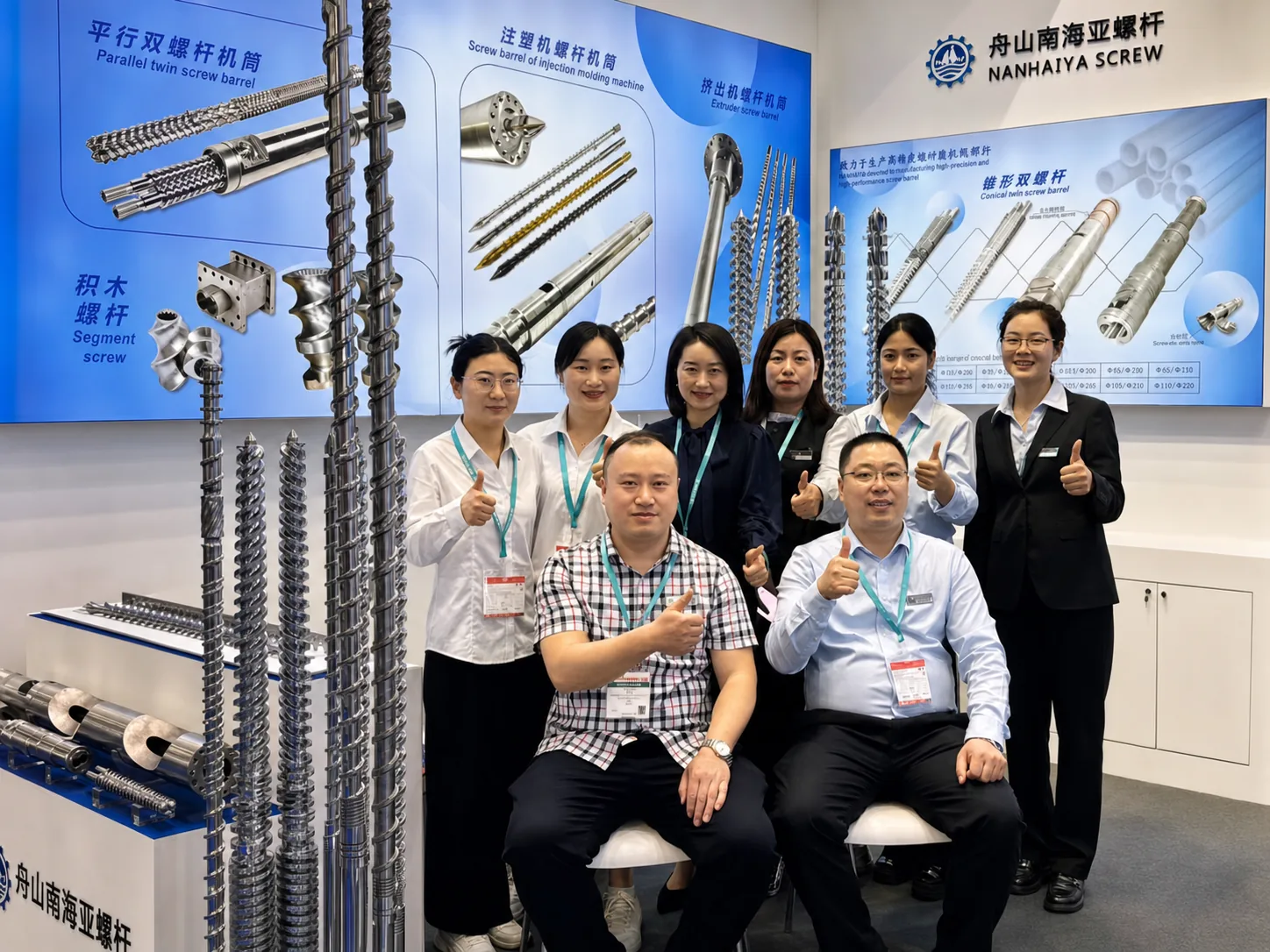
Related Articles
More insights on screw barrel technology and plastics processing.
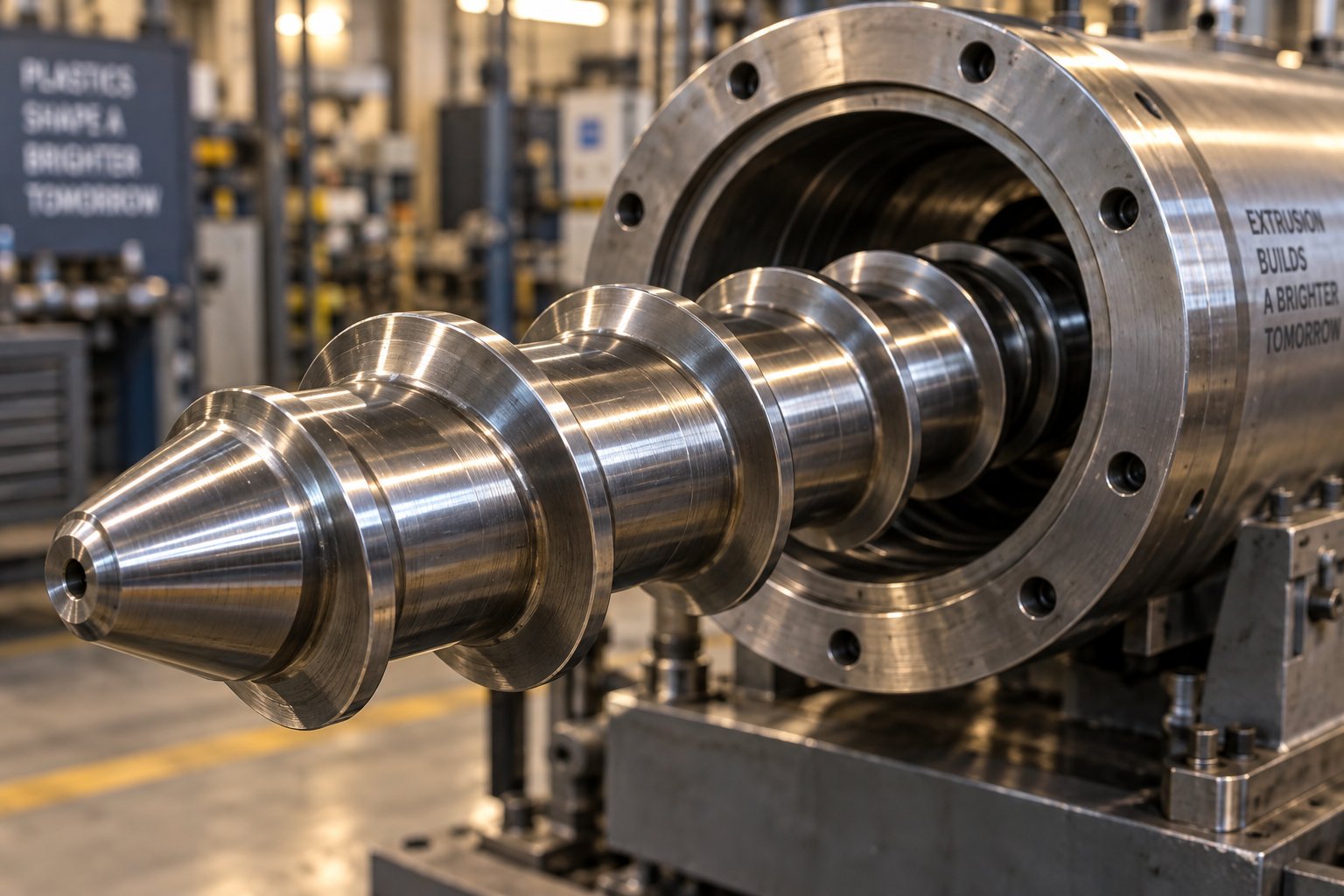
What Nobody Tells You About Screw Barrel For Plastic Machine Design
Oct 10, 2026
Learn how screw barrel for plastic machine design affects melt quality, throughput, and wear life. Covers geometry, resin matching, troubleshooting, and sourcing.
Read Article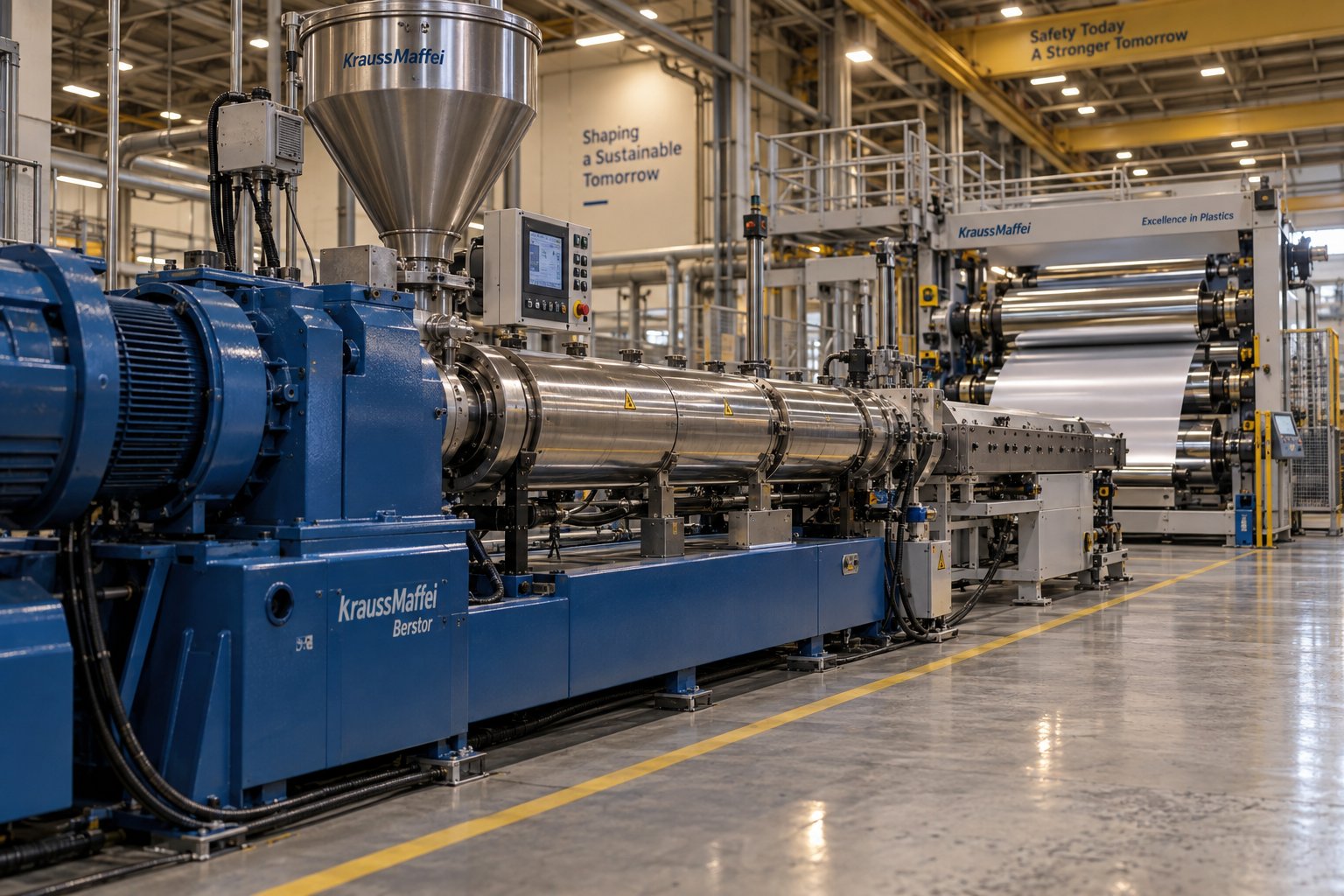
Single Screw Extruder for Sheet: Stop Guessing, Start Specifying
Oct 9, 2026
Learn how to specify a single screw extruder for sheet production. Covers screw geometry, resin-specific processing, troubleshooting, and maintenance best practices.
Read Article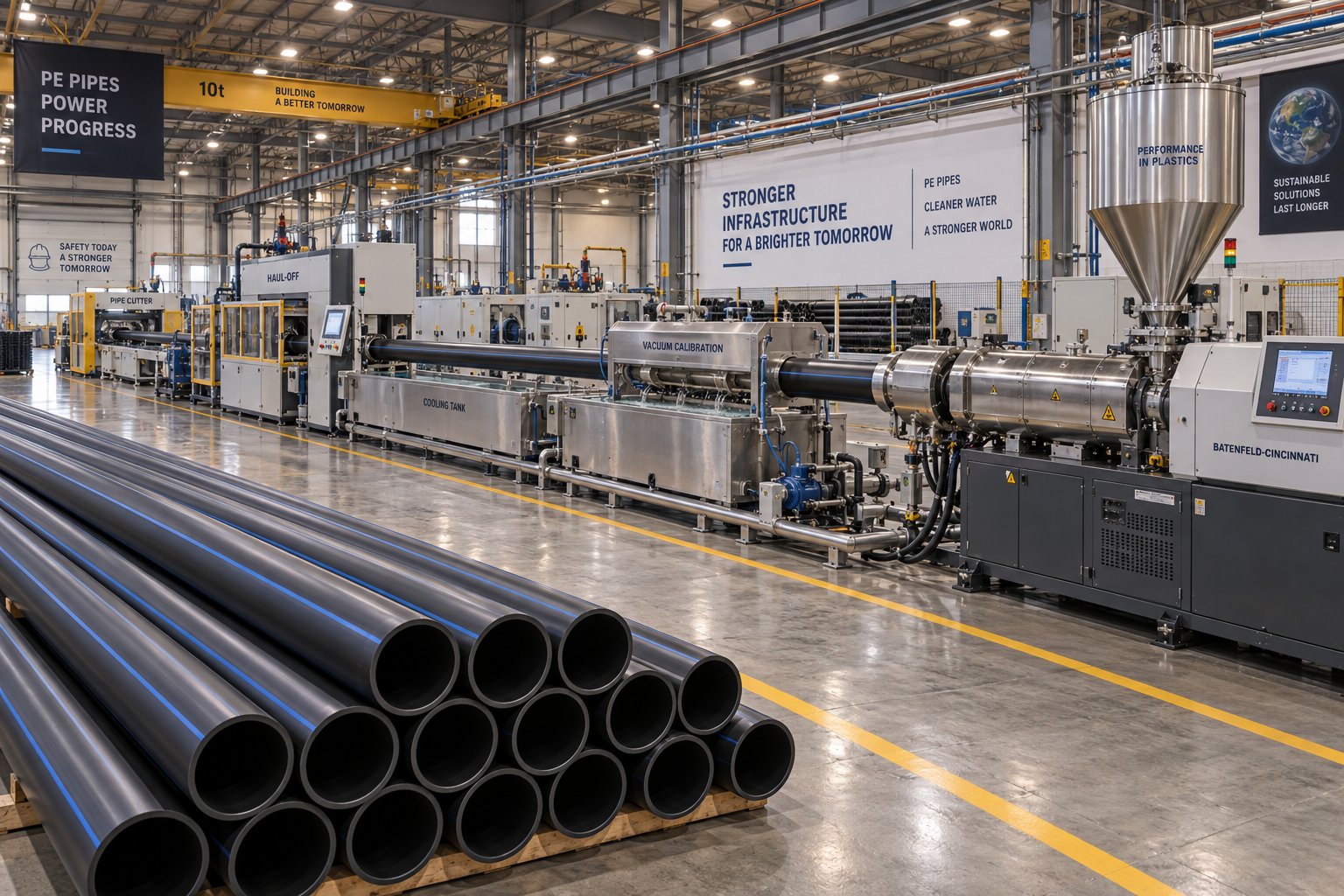
PE Pipe Extruder Machine: What Datasheets Won't Tell You
Oct 9, 2026
Learn how a PE pipe extruder machine works, key specs explained, material grade selection, maintenance tips, and buyer guidance beyond the datasheet.
Read ArticleLooking for something else?
Search by material, symptom or product and jump straight to the relevant page.
These are navigation suggestions based on keyword matching — not a quotation, not a delivery commitment, and not a substitute for engineering review. Final specification is confirmed by our engineers against your drawings and processed material.
Need help with screw barrel selection?
Share your machine model, processed material and application. Our team can help with pricing and technical support.