

What Is PVC Sheet Extrusion and Why It Demands Precision
What Is PVC Sheet Extrusion and How Does It Work
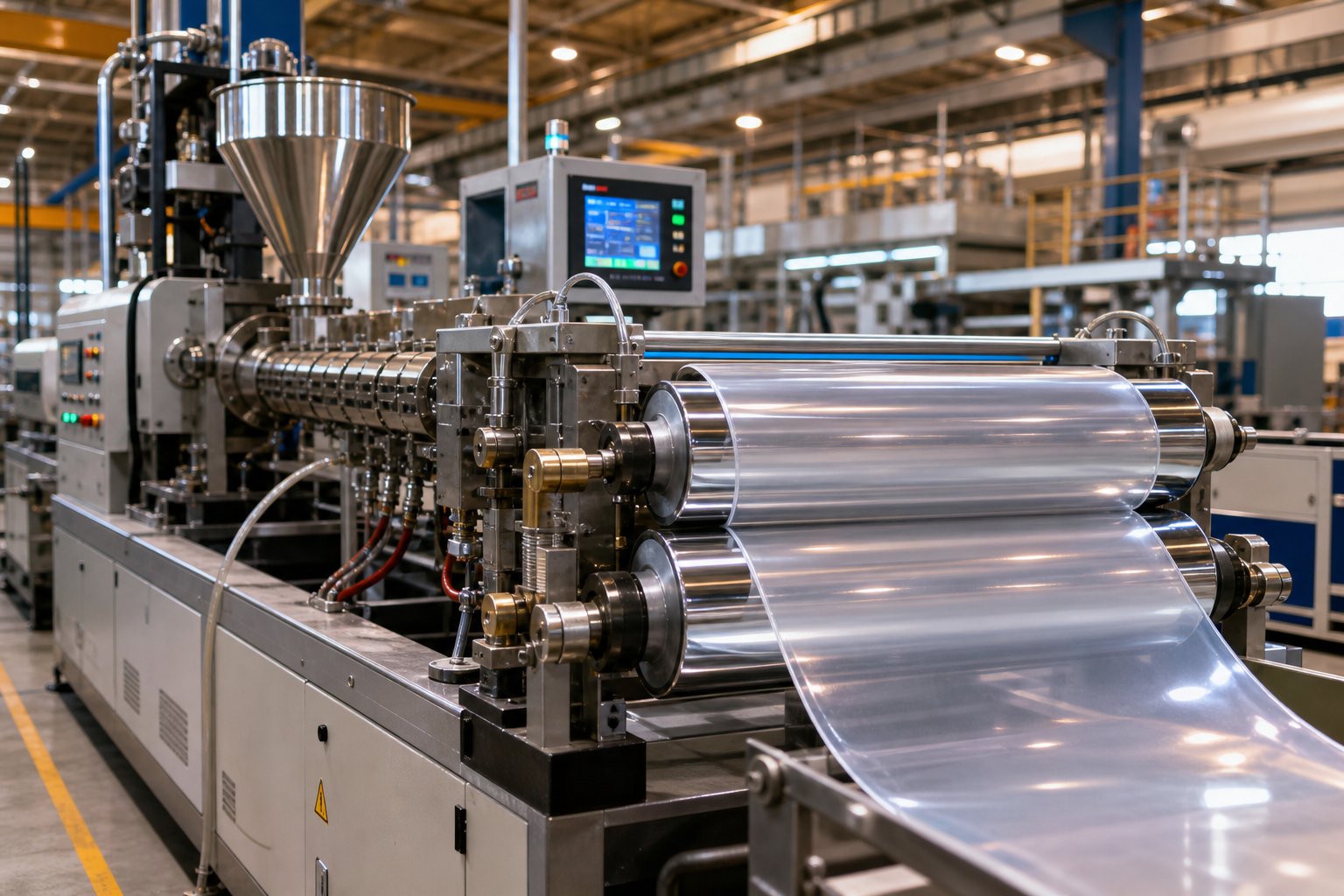
PVC sheet extrusion is a continuous thermoplastic manufacturing process in which polyvinyl chloride compounds are fed into a heated extruder, fused under controlled temperature and shear conditions, forced through a flat sheet die, and then cooled on polishing rolls to produce flat sheets of precise, uniform thickness. The process converts raw PVC dry blend or pellets into finished sheets used across packaging, construction, signage, and industrial applications.
Sounds straightforward, right? Feed plastic in one end, get a flat sheet out the other. In reality, this process is one of the most demanding in all of polymer extrusion. Unlike polyethylene or polypropylene, PVC is extremely sensitive to heat, shear forces, and the amount of time it spends inside the extruder barrel. Push any of these variables too far, and the material doesn't just lose quality — it actively degrades, releasing corrosive hydrochloric acid (HCl) gas. That HCl release is a chain reaction where the acid itself catalyzes further degradation, creating a destructive spiral of discoloration, brittleness, and equipment damage.
This corrosive byproduct means the extruder barrel, screws, and die must be built from specialized alloys and surface treatments that resist chemical attack. Standard equipment designed for polyolefins simply won't survive long-term PVC production. Every aspect of the machinery — from metallurgy to screw geometry — must be purpose-built for PVC's unique behavior.
Why PVC Requires a Different Extrusion Approach Than Polyolefins
Every extrusion process operates within a "process window" — the safe envelope defined by temperature, shear rate, and residence time where the polymer transforms properly without degrading. Imagine this window as a target you need to hit. For polyethylene and polypropylene, that target is generous. You have a wide temperature range to work with, the material flows as a true liquid melt, and minor fluctuations in processing conditions are forgiving.
PVC's process window is dramatically narrower. The gap between the temperature needed for proper fusion and the temperature where degradation begins can be as small as 10-20 degrees Celsius. The material also exhibits more wall slip than polyolefins, which is why double screw extruders are the standard for PVC processing — their intermeshing design transports material through cavities independent of barrel friction, offering far higher pump efficiency than single screw machines rely on.
PVC never reaches a true melt state under normal extrusion conditions. Instead, it behaves as a rubber-like solid, forming a network of tie molecules connecting crystallites. The process is technically gelation or fusion — not melting — and the optimal gelation level falls within a narrow 85-95% range that directly determines the final sheet's strength, ductility, and surface quality.
This distinction between gelation and melting isn't academic — it changes everything about how you design the screw, set barrel temperatures, and control line speed. Extruding PVC too cold at low shear produces only a sintered, weakly bonded material. Push the temperature and shear too high, and you destroy the very crystallite network that gives PVC its mechanical properties. The result is a delicate balancing act where compound formulation, equipment design, and process parameters must all work in concert.
Getting that balance right starts long before the extruder is even switched on — it begins with the resin grade you choose and how the compound is prepared.
PVC Resin Selection and Compound Preparation
The quality of any extruded PVC sheet is largely decided before a single granule enters the extruder barrel. Resin grade, additive selection, and mixing technique all interact to define how the material will behave during fusion — and how the finished sheet will look, feel, and perform. Think of compound preparation as setting the foundation for a building: shortcuts here will show up as cracks later.
Choosing the Right PVC Resin Grade and K-Value
When selecting a PVC resin for sheet production, the first specification you'll encounter is the K-value — a numerical indicator of the resin's molecular weight derived from intrinsic viscosity measurements using the Fikentscher equation. In practical terms, a higher K-value signals higher molecular weight, which translates directly into greater tensile strength, better impact resistance, and improved long-term durability. The tradeoff? Higher K-value resins demand more energy, higher processing temperatures, and longer fusion times inside the extruder.
For most rigid PVC sheet extrusion, manufacturers gravitate toward K-values in the K65 to K68 range. This sweet spot delivers good mechanical properties while remaining processable on standard conical twin screw equipment. K57-K60 grades, with their lower melt viscosity, are easier to process but sacrifice strength — making them better suited to injection molding or fittings. At the other end, K70+ resins offer exceptional durability for high-pressure pipe applications but can be challenging for sheet lines where uniform gelation across wide die widths is critical.
Beyond K-value, you need to choose between the two primary polymerization types: suspension PVC (S-PVC) and emulsion PVC (E-PVC). S-PVC dominates sheet production. Its larger particle size (typically 20-200 micrometers) and porous grain structure allow it to absorb plasticizers and additives efficiently during the mixing stage, producing a free-flowing dry blend ideal for extruder feeding. Emulsion PVC, by contrast, has ultra-fine particles (0.1-2.0 micrometers) designed primarily for plastisol applications — coatings, dipping, and flexible films where the resin is dispersed in liquid plasticizer rather than dry-blended. If your goal is extruded flat sheets, S-PVC is almost always the correct starting point.
Hot Mixing and Cold Mixing Stages Explained
Imagine tossing PVC resin, stabilizers, lubricants, and fillers into a container and simply stirring. You'd end up with a visually blended powder that performs terribly in an extruder — uneven fusion, surface defects, and inconsistent output. Proper PVC compound preparation requires a deliberate two-stage process: hot mixing followed immediately by cold mixing.
During hot mixing, a high-speed mixer drives the material in a vortex-like motion. Friction and shear from the rotating blades raise the material temperature progressively, causing low-melting-point additives like lubricants to melt and coat PVC grain surfaces while the porous resin particles absorb stabilizers and plasticizers. As the compound reaches 110-120 degrees Celsius, moisture and volatile components are driven off, and the material achieves a uniform, partially gelled dry blend with high apparent density and good flowability. Exceeding this temperature window risks consuming stabilizers prematurely or even degrading the PVC inside the mixing tank.
The sequence in which additives enter the hot mixer matters just as much as the temperature. Adding components in the wrong order can result in poor dispersion, reduced stabilizer effectiveness, or premature lubricant coating that prevents plasticizer absorption. A typical addition sequence follows this order:
- PVC resin and heat stabilizer added at low speed to establish initial stabilization.
- Impact modifier, processing aid, and internal lubricant added at high speed once the material reaches approximately 60 degrees Celsius.
- Fillers (such as calcium carbonate), titanium dioxide, external lubricant, pigments, and UV stabilizers added at high speed around 80 degrees Celsius.
Cold mixing begins immediately after the hot mix reaches its discharge temperature. The hot compound transfers into a larger, water-jacketed mixer where slow-speed stirring and cooling water bring the temperature down to roughly 40 degrees Celsius. This step isn't optional — leaving hot-mixed PVC at elevated temperatures causes further stabilizer consumption and potential degradation. Cold mixing also prevents the material from reabsorbing atmospheric moisture during natural cooling, a phenomenon that would introduce bubbles and surface defects during extrusion. The cooling water temperature is typically maintained between 13 and 15 degrees Celsius to ensure efficient heat extraction without condensation issues.
How Compound Quality Determines Extrusion Consistency
Here's an insight experienced production engineers learn the hard way: the majority of PVC sheet defects don't originate at the die or the cooling rolls — they trace back to compounding. Fish eyes on the sheet surface? Often caused by undispersed gel particles or agglomerates that weren't broken down during mixing. Plate-out — that stubborn residue that accumulates on die lips and calendar rolls — frequently results from incorrect lubricant ratios or poor dispersion during hot mixing. Inconsistent sheet thickness across the width? Sometimes the root cause is batch-to-batch variation in dry blend apparent density, which creates uneven feed behavior in the extruder hopper.
Controlling compound quality means controlling every variable upstream: verifying resin K-value consistency between deliveries, calibrating mixer blade clearance as blades wear over time, monitoring hot mix discharge temperatures batch after batch, and ensuring the cold mix cycle runs to completion rather than being cut short during high-demand production runs. Each batch should ideally fill about 75% of the hot mixer's volume — overfilling extends mixing time and risks over-plasticization, while underfilling shortens the cycle and produces an inadequately dispersed blend.
When the dry blend leaving the cold mixer is uniform, free-flowing, and consistent in apparent density, the extruder receives material it can process predictably. Stable feed behavior leads to consistent melt pressure, which in turn produces uniform sheet gauge and surface quality. The lesson is simple but powerful: invest discipline in compounding, and the extrusion line rewards you with fewer stoppages, less scrap, and a wider effective process window. That process window — and the specific equipment designed to exploit it — is exactly where the differences between rigid and flexible PVC sheet production become impossible to ignore.
Rigid PVC vs Flexible PVC Sheet Extrusion Compared
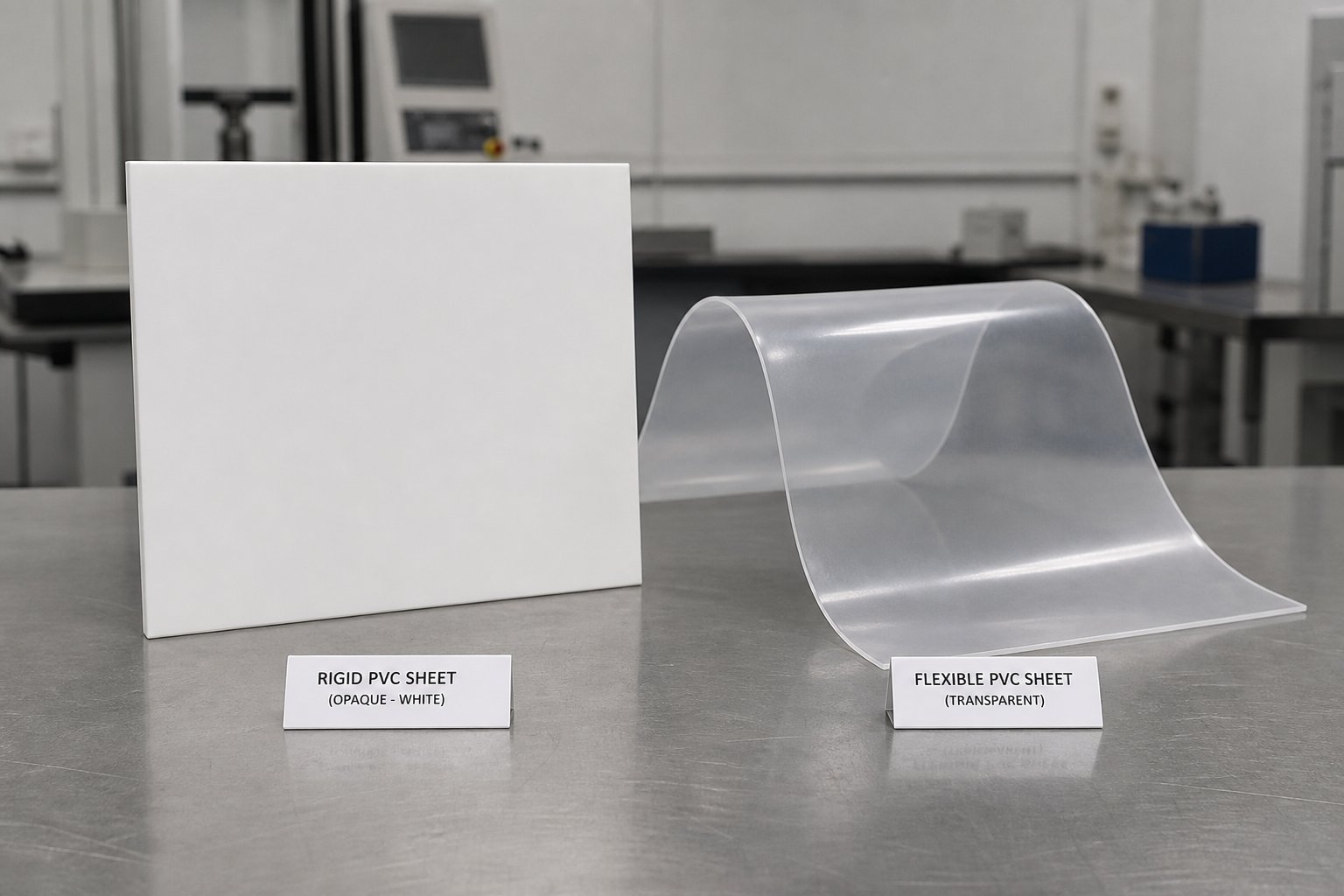
Rigid and flexible PVC sheets may share the same base polymer, but the moment plasticizer enters the formulation, everything changes — thermal behavior, viscosity profile, screw requirements, die setup, and cooling strategy all shift in fundamental ways. Treating them as variations of one process is a costly mistake. They are, for practical purposes, two distinct manufacturing disciplines that happen to use the same resin family.
Formulation Differences Between Rigid and Flexible PVC Sheets
The defining difference is plasticizer content. Rigid PVC — often labeled uPVC (unplasticized polyvinyl chloride) — contains zero plasticizer. Its formulation relies on heat stabilizers, lubricants, impact modifiers, processing aids, and fillers to achieve the desired performance. The result is a material that is stiff, dimensionally stable, and naturally flame-retardant, ideal for construction panels, chemical containment liners, and thermoformed packaging.
Flexible PVC, by contrast, incorporates substantial plasticizer loading — typically 30 to 80 parts per hundred resin (phr) depending on the target hardness. Common plasticizers like DOP (dioctyl phthalate) or DINP (diisononyl phthalate) insert themselves between PVC polymer chains, reducing intermolecular forces and lowering the glass transition temperature. The material becomes soft, pliable, and elastic — suitable for products like flexible membranes, gasket sheets, and decorative film.
This plasticizer loading fundamentally alters thermal behavior. Rigid PVC has a higher fusion temperature because the polymer chains are tightly bound, while flexible compounds fuse at lower temperatures since the plasticizer already weakens chain interactions. Stabilization requirements also diverge: rigid formulations demand robust stabilizer systems to survive higher processing temperatures, while flexible PVC compounds need stabilizers that remain effective in the presence of large plasticizer volumes, which can sometimes interfere with stabilizer dispersion.
Processing Temperature and Screw Design Variations
Rigid PVC sheet extrusion typically operates in a barrel temperature range of 170 to 195 degrees Celsius. The material's high melt viscosity means the extruder must generate significant torque to achieve proper gelation — yet it must do so without tipping into the degradation zone. You're essentially walking a tightrope: too little energy and the sheet is under-fused with poor impact strength; too much and you'll see yellowing, black specks, or worse, HCl evolution.
Flexible PVC is more forgiving in terms of thermal sensitivity. Processing temperatures typically fall between 150 and 175 degrees Celsius, and the lower viscosity created by plasticizer loading means less mechanical energy is needed. However, flexibility introduces its own headaches. Plasticizer migration — where plasticizer gradually moves to the material's surface — can cause die drool, a sticky buildup on die lips that creates machine-direction streaks and periodic defects on the sheet surface. As extrusion troubleshooting experts note, compounded thermoplastics with additives like plasticizers are especially prone to this migration when critical shear rates are reached inside the die.
Screw design for rigid PVC extrusion prioritizes gentle, progressive compression. Conical twin screw extruders are the dominant choice, with compression ratios carefully calibrated to build pressure gradually without generating excessive frictional heat. The screw geometry focuses on melt compression and consistency rather than intensive mixing, since the dry blend has already been homogenized upstream. Flexible PVC screws, on the other hand, often feature enhanced mixing sections to ensure thorough plasticizer incorporation and may use slightly different flight geometries to accommodate the material's lower viscosity and tendency toward slip.
Die Configuration and Downstream Adjustments
Die setup between the two formulation types is far from interchangeable. Rigid PVC sheets typically use wider die gaps — often 1.5 to 3.0 mm — because the high-viscosity material exhibits significant die swell as it exits. Lip heaters must maintain precise, uniform temperatures to prevent localized cold spots that cause flow hesitation marks. Even minor inconsistencies across the die width show up as visible thickness bands in the finished sheet.
Flexible PVC flows more readily through the die, allowing narrower gaps (often 0.8 to 2.0 mm) and higher line speeds. But that easy flow also means the material is more prone to sagging between the die exit and the first polishing roll, demanding careful gap control and sometimes air support systems.
Cooling strategies differ significantly as well. Rigid PVC sheets require a controlled cooling rate through the three-roll polishing stack — cooling too fast locks in residual stress that causes warping and dimensional instability during downstream thermoforming. Polishing roll temperatures are typically set between 60 and 90 degrees Celsius and stepped down progressively across the rolls. Flexible PVC sheets need gentler, more gradual cooling to retain their pliability and avoid surface crystallization. Roll temperatures tend to run lower, and contact time on each roll may be extended to allow even heat extraction without distorting the soft material.
The table below provides a side-by-side comparison of the key parameters that distinguish rigid from flexible PVC sheet extrusion:
| Parameter | Rigid PVC (uPVC) Sheet | Flexible PVC Sheet |
|---|---|---|
| Plasticizer Content | None (0 phr) | 30-80 phr (varies by hardness) |
| Typical Processing Temperature | 170-195 degrees Celsius | 150-175 degrees Celsius |
| Key Formulation Components | Stabilizers, lubricants, impact modifiers, processing aids, fillers | Plasticizers, stabilizers, lubricants, fillers, UV absorbers |
| Screw Design Focus | High torque, gradual compression, shear-sensitive geometry | Enhanced mixing sections, lower compression ratio, slip-accommodating flights |
| Die Gap Range | 1.5-3.0 mm | 0.8-2.0 mm |
| Cooling Approach | Controlled cooling on polishing rolls (60-90 degrees Celsius), progressive temperature step-down | Gradual, gentle cooling at lower roll temperatures, extended contact time |
| Key Processing Challenges | Narrow thermal window, high shear sensitivity, degradation risk | Plasticizer migration, die drool, surface tackiness |
| Common End Applications | Construction panels, chemical tanks, thermoformed trays, signage | Flexible membranes, gaskets, decorative film, protective sheeting |
What this comparison reveals is that rigid vs flexible PVC sheet extrusion differences aren't just a matter of adjusting a few temperature setpoints. They influence every decision from resin purchasing to final quality inspection. Recognizing which set of challenges you're dealing with — high-viscosity fusion control or plasticizer management — shapes the equipment configuration you'll need, which is exactly where the design of the extrusion line itself takes center stage.
PVC Sheet Extrusion Line Components and Configuration
A PVC sheet extrusion line is far more than just an extruder bolted to a die. It's a carefully orchestrated chain of equipment — each component influencing the one that follows. Understanding how these pieces work together, and how they can be reconfigured for different products, is key to getting the most from your capital investment.
Extruder Types and Configurations for PVC Sheet
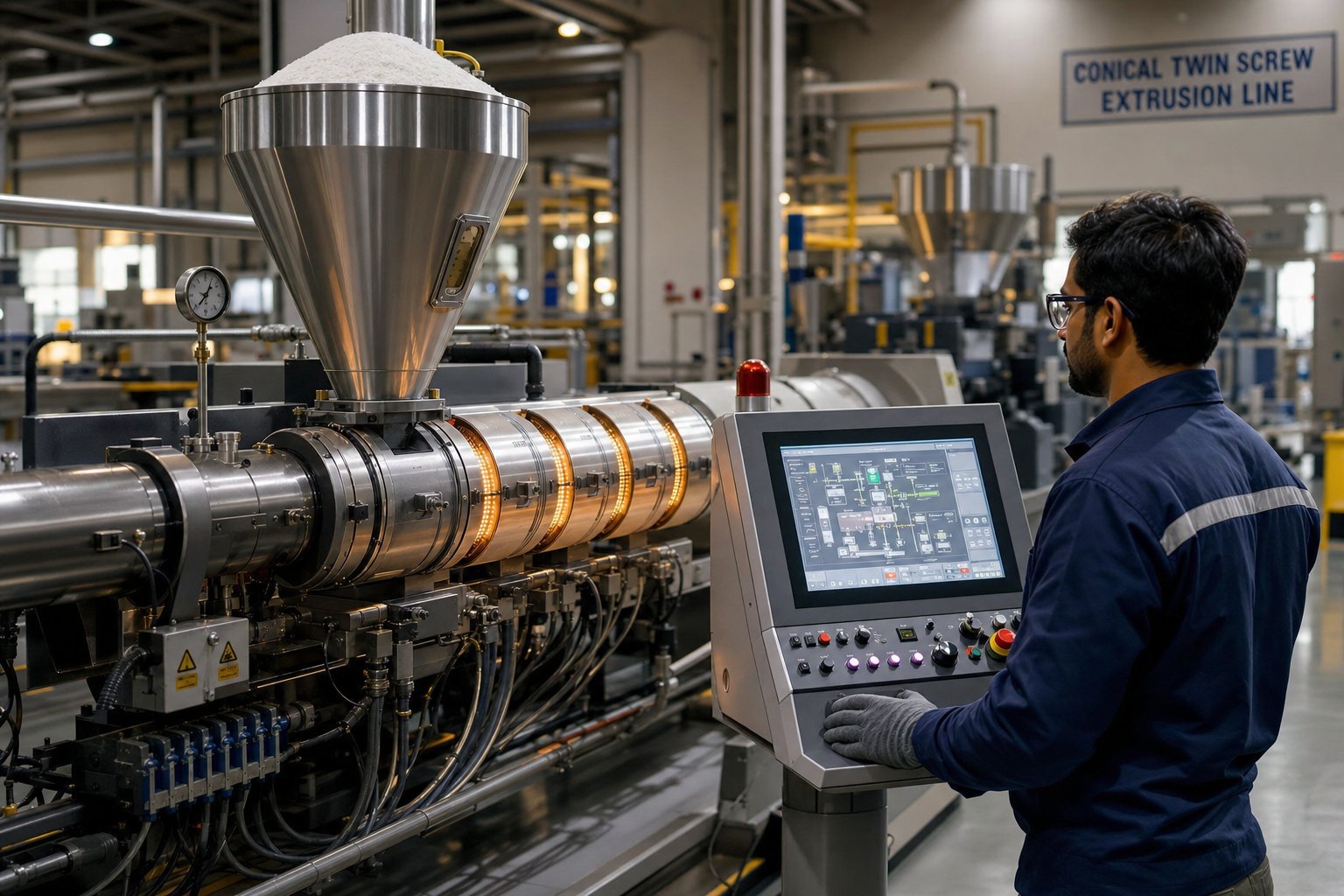
If you walk into a PVC sheet production facility anywhere in the world, chances are you'll find a conical twin screw extruder at the heart of the line. There are good reasons for its dominance. A conical twin screw extruder for PVC sheet production offers a combination of features that align perfectly with the polymer's demanding behavior.
The conical geometry starts with a large feed opening that compensates for PVC dry blend's relatively low bulk density — the powder needs more volume at intake than a dense pelletized material would. As the intermeshing screws taper toward the discharge end, channel volume decreases gradually, creating a gentle compression profile that fuses the PVC without harsh shear spikes. The self-wiping action of the intermeshing flights prevents material from stagnating in dead zones, which is critical when even brief overheating triggers HCl release. And because conical designs achieve high torque transmission at relatively low screw speeds, they deliver the energy PVC needs for gelation without the frictional heat that pushes it toward degradation.
The shorter length-to-diameter (L/D) ratio of conical machines — typically around 22:1 to 26:1 — also works in PVC's favor by reducing total residence time inside the barrel. Less time at elevated temperature means less thermal exposure and a wider effective processing window for the operator.
What about alternatives? Parallel twin screw extruders are gaining traction, especially for higher-output applications. Their design allows greater freedom in screw geometry and easier length extension — simply stretching the pitches of the screw chambers can boost throughput without fundamentally changing processing conditions. However, parallel machines require more sophisticated gearbox engineering and may present a narrower gelation-versus-venting balance at very high outputs. Single screw extruders occasionally appear in PVC sheet production, but they're typically reserved for reprocessing pre-compounded pellets rather than dry blends, since their reliance on barrel friction for conveying makes them less efficient with PVC's slippery, powder-based formulations.
T-Die and Sheet Die Design Considerations
The extruder delivers a consistent, homogenized melt — but it exits as a roughly circular flow. The T-die's job is to redistribute that cylindrical melt stream into a wide, uniformly thick curtain of material. Getting this right determines whether your finished sheet holds tolerance across its full width or shows frustrating thickness bands and edge-to-edge variation.
The most widely used PVC sheet die design follows a coat-hanger geometry. Imagine the cross-section of a wire coat hanger: material enters at the center and flows outward through a manifold channel that tapers in both width and depth toward the edges. This taper compensates for the pressure drop that naturally occurs as material travels farther from the center feed point, ensuring equal volumetric flow across the entire die width. A well-designed coat-hanger manifold delivers uniform sheet gauge without relying heavily on lip adjustments to compensate for flow imbalances.
Speaking of lip adjustments — flex-lip dies are the industry standard for PVC sheet production. A series of adjustment bolts across the die width allow operators to fine-tune the gap at each position, achieving thickness control as precise as +/-0.01 mm. This adjustability is essential because real-world conditions — slight temperature gradients, minor viscosity fluctuations, even thermal expansion of the die body — all introduce small flow variations that need correction.
Two other design details deserve attention. The die gap is typically set 10-20% wider than the target sheet thickness to account for die swell and drawdown as the material exits. And die land length — the parallel section just before the exit — plays a critical role in relaxing the melt's elastic memory. Too short a land and the sheet exits with residual stresses that cause warping and uneven shrinkage. Too long and you increase pressure drop, requiring more extruder output to maintain line speed. Die width, of course, directly determines your maximum sheet width — common production dies range from 600 mm for specialty products up to 2,000 mm or more for construction-grade panels.
Line Configuration Changes by Product Type
Here's where a PVC sheet extrusion line reveals its true versatility. A single platform — extruder, die, and downstream equipment — can produce dramatically different products with targeted configuration changes. The core machine stays the same; what changes is how you set it up. Consider how the line differs for each major product category:
- Transparent PVC sheets: Require mirror-polished chrome rolls with extremely low surface roughness to eliminate haze and optical distortion. Temperature control on the polishing stack must be precise within +/-1 degree Celsius across each roll surface, and barrel temperatures are tightly managed to prevent any discoloration that would compromise clarity. Screw speed is often reduced slightly to minimize shear-induced degradation.
- Foam PVC boards: The foam PVC board extrusion line setup introduces a chemical or physical foaming agent into the compound, requiring precise dosing control to achieve uniform cell structure. Downstream of the die, calibration tables replace the standard three-roll polishing stack — these vacuum-assisted sizing units hold the board's dimensions as the foaming agent expands, preventing warping and ensuring flatness. Die head design is specialized to accommodate the expansion ratio while maintaining uniform thickness and surface profile.
- Opaque rigid sheets: The most straightforward configuration. A standard three-roll polishing stack provides calibration and initial cooling, with roll temperatures stepped down progressively. Surface finish can range from high-gloss to matte depending on roll texture. This setup handles the bulk of construction, signage, and industrial sheet production.
- Thin film-grade sheets: Demand higher line speeds and precision gap control to produce material below 0.5 mm thickness. Haul-off speed synchronization becomes especially critical — even minor mismatches between extruder output rate and take-away speed cause necking, thickness oscillation, or excessive orientation that makes the film prone to splitting. Beta-gauge or laser thickness measurement systems operate in closed-loop feedback to maintain gauge within tight tolerances.
This adaptability means a manufacturer investing in a well-specified extrusion line isn't locked into a single product. By changing die tooling, adjusting roll configurations, and modifying downstream equipment, the same platform can pivot between foam boards, transparent packaging sheets, and rigid construction panels as market demand shifts. It's a flexibility that makes the initial investment far more defensible over the equipment's service life.
Yet regardless of product type, every one of these configurations depends on the same fundamental process: material entering the extruder, fusing under carefully controlled conditions, and emerging through the die as a continuous sheet. How that process actually unfolds — from the moment the operator initiates startup to steady-state production and eventual shutdown — involves a sequence of decisions where timing and precision determine whether you produce saleable product or expensive scrap.
The PVC Sheet Extrusion Process Step by Step
Equipment selection and line configuration lay the groundwork — but the real test of any PVC sheet operation happens the moment an operator presses the start button. Every production run follows a deliberate sequence from cold startup through steady-state output to controlled shutdown. Skipping steps or cutting corners at any stage doesn't just produce bad sheet — it can damage expensive equipment, create hazardous conditions, and consume days of production time in recovery. This section walks through that sequence in the order an operator actually experiences it.
Startup Procedures and Temperature Ramp-Up Sequence
A proper PVC sheet extrusion startup procedure begins long before any material enters the barrel. Think of it as preparing an oven for a delicate recipe — rushing the preheat guarantees a ruined result.
The first step is a thorough mechanical and electrical inspection. Operators should check the barrel, hopper, and feed throat for foreign objects, verify that all fastening bolts are tight, confirm safety guards are secure, and ensure cooling water lines flow freely. As industry safety protocols emphasize, temperature sensors should also be validated against manual thermometers to confirm the control system reads accurately. A faulty thermocouple reading even 10 degrees high could push PVC into the degradation zone without any visible warning on the control panel.
Heating follows a specific zone-by-zone sequence. Barrel zones are typically activated from the die end backward toward the feed throat, allowing the residual material from the previous run to soften first at the discharge point — the area most likely to contain compacted, partially degraded PVC. Die heaters come on simultaneously or shortly after the barrel zones. The critical rule is gradual ramp-up. PVC extrusion barrel temperature settings should climb in controlled increments rather than jumping straight to setpoint. Rapid heating creates localized hot spots where barrel wall temperatures far exceed the PVC's degradation threshold, even though the average zone reading looks acceptable.
Once every zone reaches its target temperature, the machine still isn't ready. A thermal soak period — typically 10 to 15 minutes after setpoint is achieved — allows the barrel's full metal mass to reach thermal equilibrium. Skipping this soak means the screw and inner barrel surfaces remain cooler than the outer barrel wall where the heater bands sit, producing uneven fusion when material first enters.
Here's where PVC's sensitivity creates a uniquely dangerous scenario: if material from a previous run remains inside a heated barrel, it begins degrading within minutes of reaching processing temperature. The longer it sits stationary, the worse the damage. Degraded PVC releases HCl gas, which corrodes barrel and screw surfaces and contaminates subsequent material with black specks and carbonized particles. This is why every startup should include a purging protocol. Operators typically run a dedicated purging compound or a thermally stable polymer like polyethylene through the barrel at low screw speed before introducing PVC. The purge displaces any residual material, sweeps degraded particles from screw flights and barrel walls, and provides a clean foundation for production. Low-speed initialization is essential — running the screw empty for extended periods causes metal-to-metal contact and excessive wear, so purge material should be fed promptly once rotation begins.
Feeding, Plasticizing, and Metering Stages
With the barrel purged and temperatures stable, actual PVC dry blend enters the extruder. What happens inside the barrel unfolds across three functional zones — and understanding each one helps you diagnose problems before they reach the die.
Feed zone (material intake and conveying): PVC dry blend drops from the hopper into the feed throat, where the screw flights pick it up and begin conveying it forward. In a conical twin screw extruder, the large-diameter feed section compensates for PVC's low bulk density — the powder occupies significantly more volume than its eventual fused form. Feed rate and screw speed must be balanced carefully. Too much material relative to screw speed creates a feed bridge or packing issue that starves downstream zones. Too little material means the screw runs partially empty, reducing output consistency and potentially allowing material to overheat. Operators should add material in small, uniform increments at startup, watching the motor current for sudden spikes that indicate feed irregularities.
Compression zone (gelation and fusion): As the screw channel volume decreases — either through the taper of a conical design or reducing flight depth in a parallel configuration — the PVC powder is compacted and subjected to increasing shear and pressure. Frictional heat from screw rotation combines with conducted heat from barrel heaters to bring the material through its gelation window. Remember, this isn't true melting — the PVC grains are fusing into a continuous, homogeneous mass while preserving the crystallite network that gives the material its mechanical properties. The compression zone is where barrel temperature settings matter most. Set too low, and you'll see ungelated particles emerge as fish eyes on the finished sheet. Set too high, and degradation begins — a narrow corridor that demands precise, stable control.
Metering zone (pressure stabilization): The final screw section delivers the fused PVC to the die at consistent pressure and temperature. Uniformity here is everything. Pressure fluctuations in the metering zone translate directly into thickness variations in the finished sheet, while temperature inconsistencies cause flow-rate differences across the die width. Melt pressure sensors at the screw tip and die inlet provide real-time feedback. Experienced operators learn to read these pressure traces like a heartbeat monitor — steady, rhythmic readings indicate stable processing, while erratic swings point to feed inconsistencies, incomplete gelation, or wear-related loss of sealing between the screw flights and barrel wall.
The interplay between screw speed, feed rate, and barrel temperatures across all three zones defines what's known as the process equilibrium point. Adjusting any single variable shifts the others. Increasing screw speed, for example, boosts throughput but also raises shear heating — meaning barrel heater setpoints may need to decrease slightly to keep total energy input within the safe window. Finding this equilibrium for each specific formulation is what separates efficient production from a line plagued by defects and unplanned stops.
Shutdown Protocols and Material Changeover
If startup is where operators set the stage, shutdown is where they protect the equipment for the next run. Poor shutdown practices are the single most common cause of black specks, screw seizure, and barrel corrosion in PVC extrusion — and the consequences are far more expensive than the few extra minutes a proper procedure requires.
The PVC extruder shutdown safety procedure follows a logical sequence designed around one principle: never allow PVC to remain stationary in a hot barrel. The moment production stops, the clock starts ticking toward degradation.
A safe shutdown proceeds as follows:
- Reduce screw speed gradually while maintaining material feed to avoid running the screw dry.
- Begin lowering barrel temperatures in sequence, starting from the feed zone and working toward the die.
- Purge the barrel thoroughly using polyethylene or a dedicated purging compound. Continue feeding purge material until the extrudate runs clean — free of any PVC color or particulate contamination.
- Once purging is complete, reduce barrel temperatures to below 150 degrees Celsius before stopping the screw entirely.
- Shut down heaters and allow the barrel to cool with the purge material inside, providing a protective layer against moisture and oxidation.
During material changeover — switching between formulations, colors, or from rigid to flexible PVC — the purging step becomes even more critical. Residual rigid PVC left in the barrel when a flexible compound is introduced will create hard, undispersed particles that scar the sheet surface. Color changes demand extended purging with natural (unpigmented) compound or purging agent until every trace of the previous pigment is flushed. Some operators use a small amount of calcium stearate or compatible external lubricant added to the purge material to help release stubborn deposits from screw flights and barrel walls.
Unplanned stops — power failures, mechanical breakdowns, or upstream supply interruptions — present the greatest risk. If the extruder halts unexpectedly with PVC at processing temperature, the operator's first priority is to reduce barrel heat as quickly as possible. Every minute of static residence accelerates thermal decomposition.
PVC degradation releases hydrogen chloride (HCl) gas, which is both highly corrosive to equipment and hazardous to personnel. In an enclosed production environment, even small quantities of HCl can cause respiratory irritation and corrode exposed metal surfaces. Any suspected degradation event requires immediate ventilation of the work area, and operators should never open the die or barrel vents without confirming that temperatures have dropped below the degradation threshold.
Facilities that process PVC should maintain written emergency shutdown procedures posted at every operator station, along with HCl gas detection equipment calibrated and tested on a regular schedule. The cost of a proper PVC extruder purging protocol — in time, purge material, and operator training — is trivial compared to a corroded barrel bore, a seized screw requiring emergency removal, or a workplace safety incident.
Mastering these operational sequences — startup, steady-state control, and shutdown — gives operators the confidence to push their lines toward higher efficiency without crossing into the danger zone. Yet even perfect process execution depends on the physical hardware doing the heavy lifting inside the barrel. How the screw and barrel assembly is designed, what materials it's made from, and how well it resists the uniquely hostile environment inside a PVC extruder all determine whether consistent output lasts for months or degrades within weeks.
How Screw and Barrel Design Impacts PVC Sheet Quality
Picture the screw and barrel assembly as the engine inside your car. The body, the wheels, the electronics — they all matter. But without a well-built engine, none of it performs. The same principle applies to PVC sheet extrusion. Your die can be perfectly adjusted, your compound flawlessly mixed, and your cooling rolls calibrated to the last degree — yet if the screw and barrel can't deliver a consistently fused, thermally uniform melt, every downstream component is fighting an uphill battle. This assembly isn't just another wear part. It's the single component that most directly controls output quality, energy consumption, and long-term maintenance costs.
Why Conical Twin Screw Barrels Excel in PVC Processing
Earlier sections established that conical twin screw extruders dominate PVC sheet production. But what exactly about the conical twin screw barrel geometry makes it so well-suited to this thermally sensitive polymer? The advantages are deeply rooted in physics, not marketing.
Large feed opening for bulk density compensation. PVC dry blend has a notoriously low bulk density compared to pelletized polymers. The wide end of a conical screw — where the diameter is largest — provides a generously sized feed zone that accepts high volumes of fluffy powder without bridging or starving. This large intake area ensures consistent material delivery from the very first screw flight, preventing the feed irregularities that cause pressure swings and thickness variation in the finished sheet.
Gradually decreasing channel volume for gentle compression. As the twin screws taper from their larger feed diameter down to the smaller discharge diameter, the channel volume reduces progressively. This creates a smooth, controlled compression profile rather than abrupt pressure spikes. For PVC — where excessive shear generates destructive frictional heat — this gradual squeeze is essential. The material fuses through a combination of conducted barrel heat and moderate mechanical energy, reaching proper gelation without the violent shear events that trigger degradation.
Shorter L/D ratio reducing residence time. Conical twin screw barrels typically operate with L/D ratios between 22:1 and 26:1, significantly shorter than the 32:1 to 40:1 ratios common in parallel twin screw or single screw designs. Why does this matter? Every additional second PVC spends inside a heated barrel increases the risk of thermal decomposition. A shorter barrel means less total heat exposure, which effectively widens the operator's usable process window. You gain more room to optimize screw speed and temperature without bumping into the degradation ceiling.
High torque transmission at low speed. The conical geometry allows the gearbox to transmit substantial torque even at modest screw speeds. This is a critical advantage because PVC responds best to slow, powerful compression rather than high-speed shearing. Conical twin screw extruders can achieve roughly 50% lower energy consumption compared to single screw alternatives in PVC processing — a difference driven largely by this efficient torque-to-speed relationship. The result is better fusion quality at lower operating temperatures, fewer degradation events, and reduced electricity costs per kilogram of sheet produced.
Wear Resistance and Metallurgy for Corrosive PVC Processing
Here's a reality that catches many processors off guard: even a perfectly controlled PVC sheet extrusion process generates trace amounts of HCl. Minor thermal fluctuations, localized shear peaks near screw flight tips, or brief feed interruptions can all produce momentary degradation events that release hydrochloric acid inside the barrel. Over hundreds or thousands of operating hours, this cumulative chemical attack eats into barrel surfaces and screw flights — silently widening clearances, reducing plasticizing efficiency, and degrading output consistency long before the damage becomes visually obvious.
Compounding this chemical assault, most PVC sheet formulations contain abrasive mineral fillers. Calcium carbonate (CaCO3) at loadings of 5 to 20 phr is standard in rigid sheet compounds for cost reduction and stiffness enhancement. Titanium dioxide (TiO2) appears in virtually every white or light-colored formulation. Both minerals are significantly harder than untreated steel, and they act like fine sandpaper grinding against barrel walls and screw surfaces with every rotation. The combination of corrosive HCl attack and abrasive filler wear creates a dual degradation mechanism that demands specialized metallurgical solutions.
Three primary approaches address this challenge:
- Bimetallic barrel construction: The barrel body is manufactured from structural carbon or alloy steel for mechanical strength, while the inner bore is lined with a centrifugally cast alloy layer — typically nickel-cobalt or nickel-boron compositions with embedded chromium or tungsten carbides. This inner liner provides the corrosion resistance and surface hardness that the base steel cannot. Bimetallic barrels for PVC extrusion can last four to ten times longer than standard nitrided barrels, depending on formulation aggressiveness and operating conditions.
- Nitriding: A thermochemical surface hardening process that diffuses nitrogen into the steel surface, creating a hard case layer. Nitrided barrels offer excellent abrasion resistance at a lower cost than bimetallic construction, making them suitable for less demanding PVC formulations or shorter production campaigns. However, nitriding alone provides limited protection against HCl corrosion — the hard but thin nitrided layer can be undermined by chemical attack, leading to spalling and accelerated wear.
- Advanced surface coatings: Technologies like PVD (physical vapor deposition) coatings and laser-clad tungsten carbide layers offer exceptional surface hardness — sometimes exceeding 70 HRC. These treatments create a thin but extremely hard barrier that resists both abrasive and corrosive attack. They're particularly effective on screw flight surfaces where the combination of filler abrasion and HCl exposure is most intense.
Choosing between these options isn't a simple good-better-best decision. It depends on your specific formulation, annual production volume, and maintenance philosophy. A manufacturer running high-filler rigid PVC sheet continuously will recover the higher upfront cost of bimetallic barrels many times over through extended service life and reduced unplanned downtime. A processor running shorter campaigns with unfilled transparent PVC may find nitrided barrels perfectly adequate.
Selecting a Replacement or Custom Conical Twin Screw Barrel
Regardless of metallurgy, every screw and barrel assembly is ultimately a wear part. The intermeshing clearances that make conical twin screws so effective gradually open up as surfaces erode. When clearances exceed the manufacturer's specified tolerance — typically a few tenths of a millimeter — the symptoms cascade: backflow increases, plasticizing efficiency drops, output becomes inconsistent, and energy consumption rises as the screws work harder to compensate for lost sealing. At that point, replacement isn't optional — it's the most cost-effective path back to stable production.
So what should you evaluate when sourcing a replacement conical twin screw barrel? The decision goes well beyond matching dimensional specifications on a drawing. Consider these critical factors:
- Dimensional precision: The replacement barrel bore and screw outer diameters must match your extruder's original specifications within tight tolerances. Even minor dimensional mismatches — a bore that's slightly oversized or a screw flight diameter that's marginally undersized — create excess clearance from day one, shortening the effective service life of what should be a long-term investment.
- Metallurgical compatibility: The alloy composition of the barrel liner and screw surface treatment must suit your specific PVC formulation. Running a corrosion-resistant bimetallic barrel with a merely nitrided screw — or vice versa — creates a weak link where one component degrades far faster than the other, forcing premature replacement of the entire assembly.
- Plasticizing performance consistency: A barrel and screw set that matches dimensions on paper but delivers different fusion characteristics than the original will require a complete requalification of your process parameters — new temperature profiles, adjusted screw speeds, and potentially weeks of trial-and-error to regain stable production. The best replacement suppliers validate plasticizing performance, not just geometry.
- Supplier expertise in PVC-specific applications: PVC processing imposes demands that generic screw and barrel manufacturers may not fully appreciate. The compression ratios, flight geometries, and surface treatments optimized for polyolefin processing are fundamentally different from what PVC requires. Sourcing from a supplier with demonstrated PVC domain knowledge — one that understands the interplay between screw geometry, PVC gelation behavior, and corrosive byproducts — significantly reduces the risk of a replacement that underperforms.
For manufacturers evaluating their options, specialists like NANHAIYA focus specifically on conical twin screw barrels engineered for PVC pipe, profile, sheet, and WPC extrusion applications. Their emphasis on stable output, wear resistance, and consistent plasticizing performance reflects the exact selection criteria that matter most in PVC sheet production. What makes a PVC-focused supplier particularly valuable is their ability to provide custom screw geometries tailored to specific formulations and product types — because as the rigid-versus-flexible comparison demonstrated earlier, screw design requirements vary substantially depending on what you're producing.
Whether you choose a specialized PVC barrel supplier or a broader manufacturer, the principle remains the same: treat replacement screw and barrel sourcing as a process engineering decision, not just a procurement transaction. The cheapest replacement that forces three weeks of process requalification and produces inconsistent sheet thickness costs far more than a precision-matched assembly that drops into production with minimal adjustment.
With the right screw and barrel assembly delivering a stable, uniformly fused melt to the die, the next challenge shifts downstream — where cooling rolls, haul-off systems, and post-extrusion processing determine whether that well-prepared melt becomes a dimensionally accurate, surface-perfect finished sheet or a warped, stress-laden product that fails at the customer's facility.
Cooling and Downstream Processing for Finished PVC Sheets
A flawlessly fused melt emerging from the die is only half the battle. What happens in the next few meters of the extrusion line — where the soft, pliable extrudate transforms into a rigid, dimensionally stable sheet — determines whether your product ships to a customer or ends up in the regrind bin. The downstream section doesn't add material or change formulation. It shapes, cools, measures, and finishes what the extruder has already created. Yet an astonishing number of quality failures — warping, thickness variation, residual stress, surface blemishes — originate here rather than inside the barrel.
Cooling Roll Configuration and Temperature Control
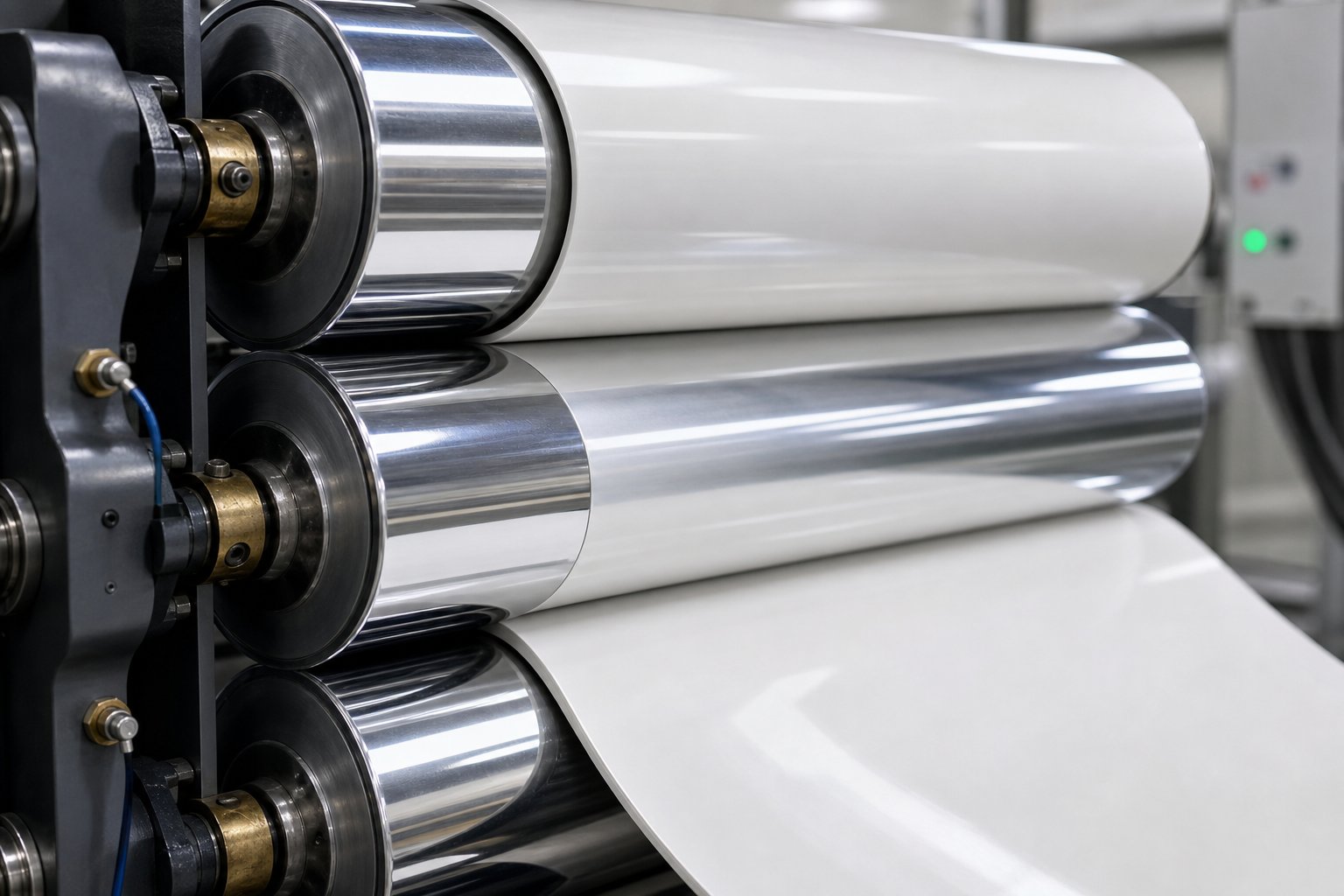
Imagine the hot PVC extrudate exiting the die as a wide, semi-molten curtain. It's still soft, thermally unstable, and extremely sensitive to how it's handled during the first seconds of cooling. The three-roll polishing stack — sometimes called a calender stack — is the equipment responsible for turning that fragile curtain into a flat, dimensionally accurate sheet with the surface finish your application demands.
Each roll in the standard three-roll configuration serves a distinct purpose:
- Top roll (chill roll): This chrome-plated, water-cooled steel roll makes first contact with the upper surface of the extrudate. It initiates solidification, locks in the sheet's top-surface finish, and begins extracting heat from the material. Its temperature is typically set highest among the three rolls — for rigid PVC, often between 70 and 90 degrees Celsius — because cooling the sheet too aggressively at first contact creates a frozen outer skin while the interior remains soft, trapping internal stresses that manifest as warping hours or days later.
- Middle roll (polishing roll): This is the primary surface-defining roll. The sheet wraps around the middle roll for the longest contact time, and its surface finish transfers directly to the sheet's primary face. A mirror-polished chrome surface produces high-gloss sheet for display and packaging applications. A matte-textured or micro-embossed roll creates diffused, non-reflective surfaces for construction panels and signage. The middle roll temperature is usually set 5 to 15 degrees lower than the top roll, continuing the controlled cooling gradient.
- Bottom roll: Often rubber-covered (typically silicone or nitrile rubber), the bottom roll provides grip and counter-pressure without marking the top surface. It pulls the sheet through the nip between rolls, helps calibrate final thickness, and completes the initial cooling stage. Its temperature runs lowest in the stack — commonly 40 to 60 degrees Celsius for rigid PVC — as the sheet has already solidified enough to tolerate more aggressive heat extraction.
The gap settings between rolls are equally critical. The nip gap — the physical distance between the top and middle rolls where the extrudate first enters the stack — must be set slightly wider than target sheet thickness to avoid excessive compression marks. Too tight a nip crushes the partially molten material, creating internal stress and surface distortion. Too wide, and the sheet loses contact with the roll surfaces, resulting in poor surface transfer and uneven cooling.
Temperature differentials between rolls deserve special attention. The progressive step-down in PVC sheet cooling roll temperature settings — from the hottest top roll to the coolest bottom roll — creates a controlled thermal gradient that allows the sheet to solidify uniformly through its full cross-section. Violating this gradient is one of the most common causes of downstream problems. Setting the first roll too cold, for example, freezes the surface while the core remains soft, building in residual stress that releases as warping during storage or when the customer attempts thermoforming or machining.
Roll surface quality directly defines sheet surface quality. Chrome-plated rolls must be maintained to extremely tight surface roughness specifications — a single scratch or pit on a polishing roll replicates itself as a continuous machine-direction line on every meter of sheet produced. Facilities running premium optical-grade or transparent PVC sheets often maintain dedicated roll sets inspected under magnification between production campaigns.
Haul-Off Speed Synchronization and Thickness Control
Here's a concept that sounds simple but trips up even experienced operators: the final thickness of a PVC sheet is not set by the die gap alone. It's primarily determined by the ratio of haul-off speed to extruder output rate. Think of it like pulling taffy — pull faster and the material stretches thinner; slow down and it thickens. The die gap establishes an initial dimension, but the haul-off system is the true thickness controller.
This relationship means even minor speed mismatches between the extruder output and the haul-off create measurable defects. If the haul-off pulls slightly too fast relative to the extruder's delivery rate, the sheet stretches — a phenomenon called necking — where thickness drops and edges pull inward. The stretched sheet also develops molecular orientation in the machine direction, making it prone to splitting along that axis during downstream processing. Pull too slowly, and the sheet thickens beyond specification, develops waviness or buckling between the die and the first roll, and accumulates compressive stresses that cause dimensional instability.
Modern production lines address this challenge with closed-loop thickness measurement systems that continuously monitor sheet gauge across the full width and feed corrections back to either the die lip adjustment or haul-off speed in real time. Two primary measurement technologies dominate:
- Beta-gauge (nuclear) systems: The traditional industry standard. A radioactive source emits beta particles through the sheet, and a detector on the opposite side measures absorption — which correlates directly to material thickness. These systems offer excellent accuracy (typically +/-0.5% of reading) and work across all polymer types, but they carry regulatory burdens related to radioactive source licensing, handling, and disposal.
- X-ray and non-nuclear alternatives: Newer technologies, including X-ray fluorescence and millimeter-wave measurement, achieve comparable accuracy without radioactive sources. They're gaining adoption rapidly, particularly in facilities where regulatory compliance costs for nuclear gauges are substantial or where multiple measurement points across the sheet width are needed simultaneously.
The gauge data feeds into the line's PLC, which makes automatic corrections — adjusting individual die lip bolts to correct cross-web thickness profiles, or fine-tuning haul-off speed to correct machine-direction drift. Without this closed-loop feedback, even a well-calibrated line drifts over time as barrel temperatures shift, material viscosity fluctuates between batches, or ambient conditions change. By the time a manual gauge check reveals the problem, significant off-spec material has already been produced. Real-time measurement catches drift within seconds, keeping waste to a minimum.
Post-Extrusion Processing and Quality Inspection
The cooled, dimensionally calibrated sheet exiting the haul-off isn't necessarily a finished product. Several post-extrusion operations transform the continuous web into shipment-ready material:
- Trimming: Edge trimming removes the irregular border along both sides of the sheet — typically 20 to 40 mm per edge — where flow distribution from the die creates slightly thicker or thinner margins. Cross-cutting stations then shear the continuous web into individual sheets at programmed lengths. Common standard sizes include 1,220 mm x 2,440 mm and 1,000 mm x 2,000 mm, though custom dimensions are routine. Edge trim is immediately granulated and recycled back into the feed stream, keeping net material waste under 2% on a well-run line.
- Surface treatments: Corona treatment exposes the sheet surface to a high-voltage electrical discharge that increases surface energy, dramatically improving adhesion for subsequent printing, coating, or lamination. Without corona treatment, inks and adhesives bead up on PVC's naturally low-energy surface. Embossing, applied via textured rolls or post-extrusion embossing stations, imprints patterns — wood grain, leather texture, geometric designs — directly into the sheet surface for decorative applications.
- Protective film lamination: For sheets destined for applications where surface quality is critical — signage, display panels, thermoformed packaging — a thin polyethylene protective film is applied immediately after cooling. This self-adhesive film prevents scratches, dust adhesion, and handling damage during storage, transport, and fabrication. The film is peeled off by the end user just before final installation.
- Stacking and winding: Rigid sheets above approximately 0.5 mm thickness are cut to length and stacked on pallets by automated stacking equipment. Thinner, more flexible sheets are wound onto cores in roll form for delivery to downstream thermoforming or lamination operations. Proper stacking requires flat, even support — stacking heavy rigid sheets on an uneven pallet or allowing overhang introduces bending forces that cause permanent warping during storage.
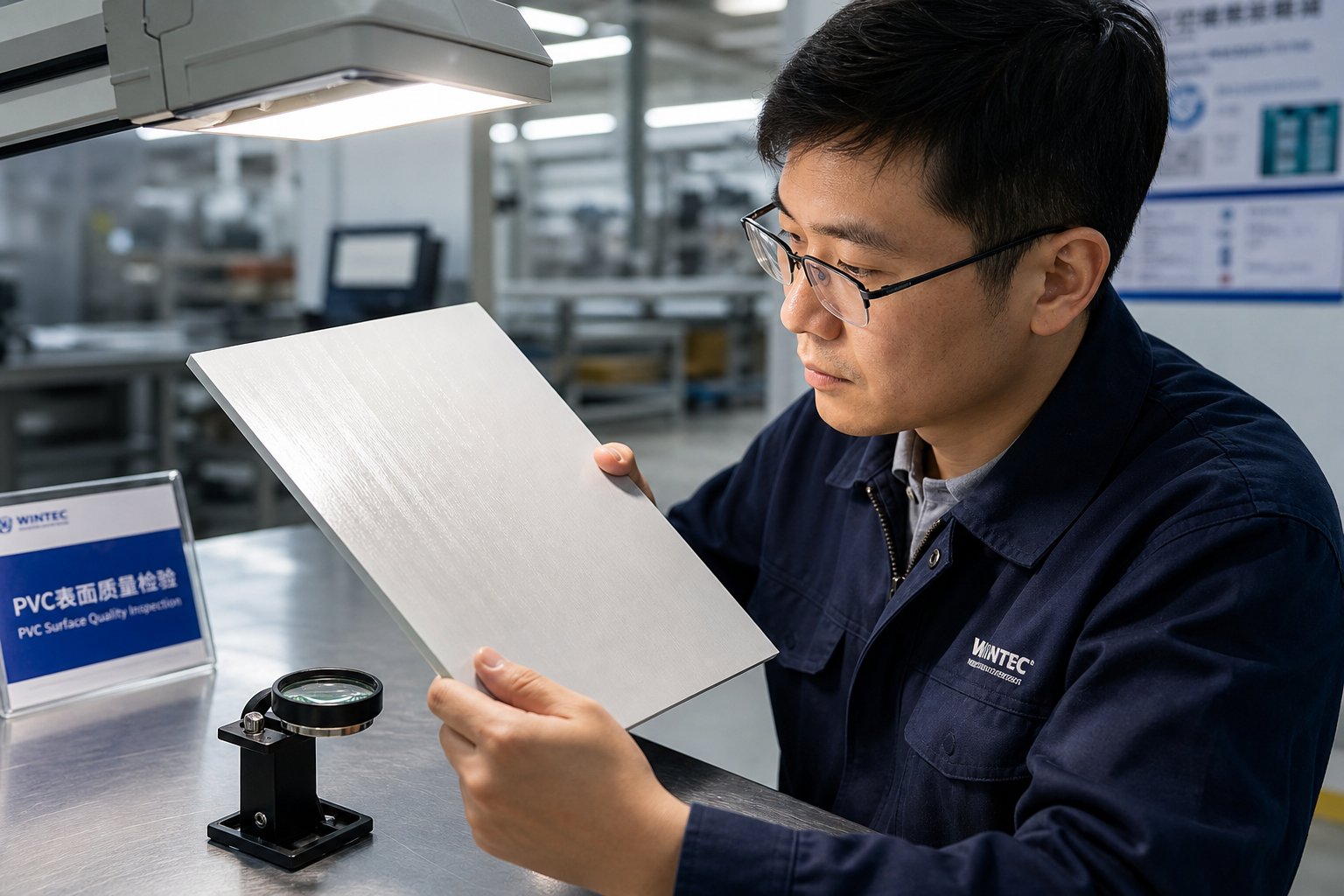
- Inline quality inspection: Beyond thickness measurement, modern lines incorporate camera-based vision systems that scan the sheet surface at high speed, detecting gels, specks, color streaks, and surface scratches in real time. Color measurement spectrophotometers verify that pigment loading produces consistent color batch to batch. Any deviation triggers an alert, allowing operators to divert off-spec material before it reaches the stacking station.
Understanding PVC sheet warping causes and prevention ties directly back to how the downstream section performs. Warping is rarely a single-cause defect — it's typically the combined result of uneven cooling across the sheet's thickness (one surface solidifying faster than the other), excessive haul-off tension that locks in machine-direction orientation stress, or improper post-extrusion storage that exposes the sheet to temperature gradients or mechanical loads. Residual stress from any of these sources may not manifest immediately. A sheet can leave the production line looking perfectly flat and develop noticeable bow or twist hours later as internal stresses relax — a frustrating scenario for both the manufacturer and the customer.
The root-cause logic is straightforward: if the cooling gradient through the sheet's cross-section isn't symmetrical, the side that cools last shrinks more as it finally solidifies, pulling the sheet into a curve. Correcting this requires matching roll temperatures and contact times on both faces, maintaining even haul-off tension without excessive pull, and ensuring the sheet reaches ambient temperature gradually — not through rapid exposure to cold warehouse air immediately after stacking.
Dimensional accuracy and surface perfection at this stage are the cumulative result of every upstream decision — from compound quality through screw and barrel performance to die adjustment and cooling control. When something goes wrong, isolating the root cause demands a systematic approach that traces the defect backward through the process chain. That diagnostic discipline — knowing which defect points to which upstream failure — is exactly what separates a reactive operation from a proactive one.
Troubleshooting Common PVC Sheet Extrusion Defects
Every production line has bad days. A sheet that looked flawless yesterday suddenly shows streaks, rough patches, or mysterious bubbles. The instinct is to start adjusting die bolts or tweaking temperatures — but random adjustments without diagnosis usually make things worse. Effective troubleshooting for PVC sheet extrusion defects and solutions follows a structured logic: identify the defect type, determine whether it originated in compounding, extrusion, or downstream processing, and then apply targeted corrective actions. This section provides the reference framework to do exactly that.
Surface Defects and Their Root Causes
Surface defects are the most immediately visible quality failures, and they're the ones most likely to trigger customer complaints. Each type points to a different upstream problem.
Die lines appear as continuous, parallel streaks running in the machine direction — thin grooves or ridges that catch the light. PVC sheet die lines troubleshooting always starts at the die lip itself. A nick, scratch, or buildup of degraded material on the lip edge disrupts the melt's smooth exit, imprinting a corresponding streak on the sheet surface. Even microscopic damage — invisible to the naked eye — can produce clearly visible lines on the finished product. Corrective action involves carefully cleaning the die lip face, polishing out any damage with fine abrasive compound, and inspecting for contamination or carbonized particles lodged in the die land area.
Fish eyes are small, circular raised spots — often with a hard particle or translucent gel at their center — scattered randomly across the sheet. Fish eyes in PVC sheet extrusion causes typically fall into two categories: undispersed gel particles from incomplete mixing during compound preparation, or cross-linked contaminants introduced through recycled material. In either case, the particle resists fusion during extrusion and survives intact through the die, creating a visible blemish surrounded by a halo of poorly fused material. Solutions include improving hot-mix dispersion (extending mixing time or increasing mixer blade speed), verifying resin quality for gel contamination, and optimizing temperature profiles to ensure complete gelation of the PVC matrix around any remaining particles.
Plate-out is a stubborn, waxy or chalky deposit that gradually accumulates on die lips, polishing rolls, and other metal surfaces in contact with the melt. PVC extrusion plate-out prevention starts in the formulation lab, not on the production floor. The most common cause is an imbalanced lubricant system — typically excess external lubricant (like paraffin wax or oxidized PE wax) that migrates to the melt surface, then transfers and bakes onto hot metal equipment. Over time, plate-out builds up enough to affect sheet surface quality, requiring production stops for cleaning. Corrective actions include rebalancing the internal-to-external lubricant ratio, reducing processing temperatures slightly to limit lubricant mobility, and ensuring the stabilizer system isn't generating decomposition byproducts that contribute to the deposit.
Surface roughness ranges from a subtle orange-peel texture to pronounced melt fracture — a sharkskin-like pattern visible under side lighting. When you run your hand across a rough sheet and feel graininess, the problem usually traces to insufficient gelation. The PVC hasn't fused completely, so the extrudate exits the die as a collection of partially bonded particles rather than a smooth, continuous melt. Raising barrel temperatures in the compression zone, reducing screw speed slightly to increase residence time, or adding a processing aid to the formulation all help achieve better fusion. In severe cases where the roughness shows a regular, repeating pattern, melt fracture from excessive shear stress at the die exit is the likely cause — addressable by widening the die gap, reducing output rate, or increasing die temperature to lower melt viscosity at the exit point.
Discoloration — yellowing, browning, or black specks — is the unmistakable signature of thermal degradation. It means the PVC has spent too long at too high a temperature somewhere in the process. Yellowing across the entire sheet points to elevated barrel or die temperatures, while localized dark streaks suggest material stagnation in dead zones where the melt hangs up inside the die manifold or adapter. Black specks indicate severely degraded, carbonized material breaking loose from barrel walls or screw surfaces — often the residue of a poor shutdown or inadequate purging during a previous run. Corrective steps include reducing barrel temperature setpoints, checking for and eliminating flow dead spots in the die, verifying thermocouple accuracy, and reviewing purging procedures.
Dimensional and Structural Defects
Dimensional defects don't always catch your eye immediately — but they trigger rejection at the customer's incoming inspection or cause failures during fabrication. These issues tend to involve the interaction between extrusion parameters and downstream equipment settings.
Warping manifests as bow, twist, or curvature in sheets that should be flat. As discussed in the previous chapter, the root cause is almost always asymmetric residual stress — one face of the sheet solidifying and shrinking at a different rate than the other. Uneven cooling roll temperatures, inconsistent roll contact on top versus bottom surfaces, or excessive haul-off tension that locks in machine-direction orientation all contribute. Corrective action requires equalizing the cooling gradient through the sheet's cross-section: matching top and bottom roll temperatures, ensuring symmetric contact time on both faces, and reducing haul-off pull to the minimum needed for tracking and transport.
Uneven thickness — whether it presents as cross-web variation (thicker in the center, thinner at edges, or vice versa) or machine-direction oscillation — undermines every downstream operation from thermoforming to printing registration. Cross-web variation typically traces to die lip maladjustment or a poorly designed manifold that doesn't distribute melt uniformly across the full width. Machine-direction oscillation, by contrast, usually points to inconsistent melt pressure — caused by feed rate fluctuations, screw wear, or surging from poor screw design. Automated thickness gauging with closed-loop die lip control addresses cross-web issues in real time, while pressure stability problems require investigation upstream at the extruder itself.
Bubbles and voids — trapped pockets of air or gas visible as circular blisters or internal cavities — compromise both appearance and mechanical integrity. The two primary sources are moisture in the compound and entrapped air. Moisture that wasn't fully driven off during cold mixing vaporizes inside the heated barrel, creating steam bubbles that survive through the die. Entrapped air, on the other hand, enters with the dry blend feed and isn't fully expelled during compression — particularly when screw wear has reduced the seal between flights, allowing air to travel forward with the melt. Adjusting die temperatures and improving venting help with air entrapment, while verifying cold-mix discharge temperatures and storage conditions addresses moisture-related bubbles.
Edge tear appears as ragged, split, or cracked edges on the finished sheet — sometimes subtle enough to pass initial inspection but devastating when the sheet is slit or trimmed downstream. The most common cause is excessive haul-off tension stretching the sheet beyond its edge strength, particularly when die flow distribution delivers slightly less material to the margins. Reducing haul-off speed, adjusting die lip bolts to increase edge flow, and verifying that edge trim knives are sharp and properly aligned all help eliminate this defect.
The table below consolidates these defects into a quick-reference format for production engineers and line operators:
| Defect Type | Visual Appearance | Primary Root Causes | Corrective Actions |
|---|---|---|---|
| Die Lines | Continuous parallel streaks in machine direction | Damaged or contaminated die lip; carbonized buildup in die land | Clean and polish die lip; inspect for nicks; remove carbonized deposits from die land |
| Fish Eyes | Small circular raised spots with hard or translucent center | Undispersed gel particles; cross-linked contaminants in regrind; incomplete gelation | Improve hot-mix dispersion; increase mixing time; verify resin quality; optimize barrel temperature profile |
| Plate-Out | Waxy or chalky buildup on die lips and roll surfaces | Excess external lubricant; imbalanced lubricant ratio; stabilizer decomposition byproducts | Rebalance internal/external lubricant ratio; reduce processing temperature; review stabilizer system |
| Surface Roughness | Orange-peel texture or sharkskin pattern | Insufficient gelation; excessive die shear (melt fracture); low melt temperature | Increase barrel temperature; reduce screw speed; widen die gap; add processing aid to formulation |
| Discoloration | Yellowing, browning, or scattered black specks | Excessive temperature; prolonged residence time; dead zones in die; poor purging | Reduce barrel/die temperatures; eliminate flow stagnation zones; verify thermocouples; improve purging protocol |
| Warping | Bow, twist, or curvature in finished flat sheets | Asymmetric cooling; uneven roll contact; excessive haul-off tension | Equalize top/bottom roll temperatures; ensure symmetric contact time; reduce haul-off tension |
| Uneven Thickness | Cross-web gauge variation or machine-direction oscillation | Die lip maladjustment; poor manifold design; melt pressure fluctuation; screw wear | Adjust die lip bolts; use closed-loop gauge control; stabilize feed rate; inspect screw/barrel clearances |
| Bubbles / Voids | Circular blisters or internal gas pockets | Moisture in compound; entrapped air from feed; insufficient venting; screw seal wear | Verify cold-mix moisture removal; improve barrel venting; check screw flight clearances; adjust die temperature |
| Edge Tear | Ragged, cracked, or split sheet edges | Excessive haul-off tension; insufficient edge flow from die; dull trim knives | Reduce haul-off speed; increase die lip gap at edges; sharpen or replace trim knives |
One principle ties all of these defect categories together: systematic troubleshooting always begins by identifying where in the process chain the defect originates. Surface defects like fish eyes and plate-out frequently trace back to compounding — they're baked into the material before it ever reaches the extruder. Discoloration and surface roughness usually point to the extrusion stage itself — barrel temperatures, screw condition, or die geometry. Warping, thickness variation, and edge tear are predominantly downstream phenomena driven by cooling and haul-off settings. Jumping straight to die adjustments when the actual problem is a compounding error wastes time and often introduces new issues by moving settings away from their validated positions.
The most productive approach is to work backward from the defect. Ask: does this look like a material problem, a melt processing problem, or a cooling and handling problem? That single question eliminates two-thirds of the possible causes immediately and focuses your investigation where it matters. With that diagnostic discipline in place, you're not just fixing problems — you're building the foundation for continuous process optimization that pushes output quality higher while holding waste and downtime to a minimum.
Optimizing PVC Sheet Extrusion for Quality and Efficiency
Diagnosing and correcting defects is essential — but the real competitive advantage lies in preventing them altogether. Shifting from reactive troubleshooting to proactive process optimization means deliberately working within PVC's narrow process window to find the sweet spot where output rate, sheet quality, and equipment longevity all peak simultaneously. Pair that operational discipline with forward-looking investments in sustainable formulations, energy-efficient hardware, and a dependable supply chain for critical wear components, and you have a production operation built for long-term profitability rather than short-term survival.
Process Window Optimization for Maximum Output Quality
Every PVC sheet extrusion process optimization tip ultimately boils down to one concept: the gelation-degradation equilibrium. Push too far toward complete gelation and you risk thermal degradation. Pull back too conservatively and you sacrifice mechanical properties and surface quality. The goal is to operate as close to optimal gelation — that 85-95% range discussed earlier — as your equipment and formulation allow, without crossing the degradation threshold.
How do you find that sweet spot systematically rather than by trial and error? Start with a structured Design of Experiments (DOE) approach. Identify the three primary control variables — screw speed, barrel temperature profile, and die temperature — and adjust them incrementally while measuring the outputs that matter: sheet tensile strength, surface gloss, color stability (yellowness index), and dimensional consistency. Small, deliberate changes reveal the sensitivity of each variable. You might discover, for example, that a 3-degree Celsius increase in the compression zone temperature eliminates residual fish eyes without any measurable change in yellowness index — a net improvement you'd never find by adjusting everything at once.
A few practical principles guide this optimization:
- Screw speed versus barrel temperature tradeoff: Increasing screw speed raises shear-generated heat inside the melt, which means barrel heater setpoints may need to decrease to maintain the same total energy input. Conversely, reducing screw speed requires higher barrel temperatures to compensate. Each combination produces a slightly different gelation profile — and therefore different sheet properties. Map these interactions rather than treating each variable in isolation.
- Die temperature as a fine-tuning lever: While barrel temperatures control the bulk gelation state, die temperature adjustments influence surface quality and flow uniformity at the exit point. A slightly warmer die reduces surface roughness and die swell, but too much heat risks localized degradation at the die lips. Think of die temperature as the final polish on your process — a precision adjustment made after barrel conditions are already stable.
- Melt pressure as a process health indicator: Stable, consistent melt pressure at the die inlet is the single best real-time indicator of process stability. Trending melt pressure over time reveals feed inconsistencies, screw wear progression, and formulation variations that aren't yet visible in the finished sheet. Setting control limits on melt pressure — and investigating any drift before it affects product quality — transforms a lagging quality check into a leading process indicator.
The payoff for this disciplined approach is substantial. A well-optimized line runs at higher throughput with lower scrap rates, produces more consistent sheet gauge and surface quality batch after batch, and extends the interval between unplanned maintenance stops. It also builds institutional knowledge — documented parameter sets that operators can recall when switching between product types, eliminating the costly relearning curve that occurs when experienced staff depart.
Sustainability and Efficiency Trends in PVC Sheet Production
The PVC industry is evolving rapidly on the sustainability front, and sheet extrusion operations that fail to adapt risk losing market access — not just competitive edge. Several interconnected trends are reshaping how manufacturers formulate, process, and recover material.
Calcium-zinc stabilizers replacing legacy lead-based systems. For decades, lead-based stabilizers provided an exceptionally wide processing window and robust long-term thermal protection. But their toxicity and environmental persistence have driven regulatory bans across the EU and increasingly across Asia, the Middle East, and Latin America. Modern calcium zinc stabilizer systems have matured dramatically — today's best formulations deliver excellent early color stability, wide processing windows, and long-term heat protection that rivals lead performance. The transition does require attention to lubricant balance, since Ca-Zn systems lack the self-lubricating effect that lead stabilizers provided, but the environmental and regulatory benefits make this shift inevitable for any manufacturer with export ambitions.
Incorporating recycled PVC regrind into sheet extrusion. Using recycled PVC regrind in sheet extrusion is both an environmental imperative and an economic opportunity — but it demands careful quality management. Most producers find that blending 10-30% regrind with virgin compound maintains acceptable mechanical properties and surface quality, provided the regrind is clean, properly sized, and sourced from a known formulation. Contaminated or mixed-formulation regrind introduces inconsistencies in gelation behavior, color stability, and impact resistance. Edge trim reclaim systems — where the extrusion line's own trim scrap is granulated and fed directly back into the process — offer the cleanest recycling loop, since the material's composition and thermal history are fully known. External post-consumer or post-industrial regrind requires more rigorous incoming quality testing, including melt flow measurements and color verification, before blending.
PVC extrusion energy efficiency improvements. Energy consumption in PVC sheet extrusion is dominated by two systems: the extruder drive and the barrel heating. Modern AC servo drives and permanent magnet motors deliver 15-25% energy savings compared to legacy DC or hydraulic drive systems, while providing more precise speed control that directly benefits gelation consistency. On the thermal side, ceramic or infrared heating bands with better insulation reduce radiant heat loss, and advanced screw designs that optimize the balance between conductive and shear heating reduce the total energy needed to achieve target gelation levels. Some manufacturers report that upgrading from a 15-year-old drive system to a current-generation servo drive pays back through electricity savings alone within 18-24 months — before accounting for the improved output consistency that reduces scrap.
Waste reduction through edge trim reclaim. A well-run line generates 1-3% edge trim as unavoidable process waste. Inline granulators that immediately reprocess this trim into feedstock — returning it to the extruder hopper within minutes of being cut — keep net material waste near zero for standard opaque sheet products. Transparent and high-gloss sheet applications may limit regrind content to maintain optical clarity, but even partial reclaim significantly reduces raw material costs and landfill waste.
Building a Reliable Supply Chain for Critical Wear Components
Optimization strategies and sustainability initiatives only deliver results when the extrusion line is actually running. Unplanned downtime — whether from a worn-out screw that can no longer maintain consistent melt pressure, a corroded barrel bore that introduces contamination, or a failed drive component — erases efficiency gains faster than any process improvement can build them.
The PVC extruder wear component supply chain deserves the same strategic attention as raw material procurement. Screw and barrel assemblies, in particular, are the components whose wear most directly degrades output quality — and whose replacement lead times can stretch from weeks to months if you're sourcing reactively after a failure. Proactive management means:
- Tracking wear progression: Monitoring melt pressure trends, specific output rate (kg/hr per RPM), and discharge temperature over time reveals gradual screw and barrel wear long before it reaches critical levels. A steadily declining specific rate — needing progressively higher screw speeds to maintain the same throughput — signals that flight clearances are opening up and replacement planning should begin. As extrusion wear experts note, the decision to replace should be driven by process economics: when the cost of higher energy consumption, increased scrap rate, and reduced throughput exceeds the cost of a new assembly, waiting further only compounds the loss.
- Maintaining spare assemblies: Keeping a qualified spare screw and barrel set in inventory eliminates the production gap between identifying wear and installing the replacement. The worn set can then be sent for refurbishment or replacement without any line downtime — a practice that's standard in high-utilization operations where every hour of production capacity has direct revenue impact.
- Qualifying suppliers before you need them: Evaluating barrel and screw suppliers during normal operations — when you have time to assess dimensional accuracy, metallurgical compatibility, and plasticizing performance through controlled trials — produces far better outcomes than emergency sourcing under production pressure. Look for suppliers with demonstrated expertise in PVC-specific applications, since the corrosion resistance, compression ratios, and surface treatments required for PVC processing differ substantially from general-purpose extrusion hardware.
Specialists like NANHAIYA exemplify the kind of focused supplier that PVC sheet manufacturers should evaluate during the qualification process. Their concentration on conical twin screw barrels specifically for PVC pipe, profile, sheet, and WPC extrusion means their engineering decisions — alloy selections, flight geometries, surface treatments — are informed by the unique demands of PVC processing rather than adapted from polyolefin-centric designs. For manufacturers running multiple PVC sheet products with different formulations, NANHAIYA's custom screw geometry capabilities address the practical reality that a barrel optimized for rigid construction sheet may not deliver ideal gelation performance on flexible membrane or foam board products. Evaluating a specialist alongside broader equipment suppliers gives you a realistic benchmark for what application-specific engineering delivers versus general-purpose alternatives.
Ultimately, optimizing PVC sheet extrusion isn't a single project with a defined endpoint. It's a continuous discipline that spans compound preparation, process control, equipment maintenance, sustainability adaptation, and supply chain resilience. The manufacturers who excel aren't necessarily the ones with the newest equipment or the largest production volumes. They're the ones who treat every variable — from resin K-value to screw flight clearance to cooling roll temperature differential — as an opportunity to improve. That relentless attention to detail, applied consistently across every link in the production chain, is what separates a good PVC sheet operation from a genuinely world-class one.
Frequently Asked Questions About PVC Sheet Extrusion
1. Why is PVC sheet extrusion more difficult than extruding polyethylene or polypropylene?
PVC has a much narrower thermal processing window — often only 10-20 degrees Celsius between proper fusion and the onset of degradation. Unlike polyolefins that flow as true liquid melts, PVC undergoes gelation rather than melting, requiring precise control of temperature, shear, and residence time. Additionally, any thermal overshoot triggers hydrochloric acid (HCl) release, which corrodes equipment and catalyzes further degradation. This demands specialized barrel metallurgy, purpose-built screw geometries, and careful startup and shutdown protocols that polyolefin processing simply does not require.
2. What is the difference between rigid and flexible PVC sheet extrusion?
Rigid PVC (uPVC) sheet contains no plasticizer and processes at higher temperatures (170-195 degrees Celsius) with high melt viscosity, making shear sensitivity the primary concern. Flexible PVC sheet includes 30-80 phr of plasticizer, which lowers the processing temperature to 150-175 degrees Celsius and reduces viscosity, but introduces challenges like plasticizer migration and die drool. Screw designs differ accordingly — rigid PVC needs high-torque, gradual-compression geometries, while flexible PVC benefits from enhanced mixing sections. Die gaps, cooling roll temperatures, and downstream handling must also be adjusted for each type.
3. Why are conical twin screw extruders preferred for PVC sheet production?
Conical twin screw extruders offer four key advantages for PVC. Their large feed opening compensates for the low bulk density of PVC dry blend. The tapered screw design provides gentle, progressive compression that avoids shear spikes. A shorter L/D ratio (typically 22:1 to 26:1) minimizes residence time, reducing thermal exposure. Finally, they deliver high torque at low screw speeds, achieving thorough gelation without excessive frictional heat. Suppliers like NANHAIYA specialize in conical twin screw barrels engineered specifically for PVC sheet, pipe, profile, and WPC applications, offering custom geometries and wear-resistant alloys tailored to PVC's corrosive processing environment.
4. What causes fish eyes in PVC sheet extrusion and how can they be eliminated?
Fish eyes are small raised spots caused by undispersed gel particles or cross-linked contaminants that resist fusion during extrusion. They most commonly originate during compound preparation — insufficient hot-mix time, incorrect mixer blade speed, or contaminated regrind introducing cross-linked material. To eliminate them, extend hot-mix cycle duration, increase mixer blade speed for better dispersion, verify incoming resin quality for gel contamination, and optimize barrel temperature profiles to ensure complete gelation of the PVC matrix surrounding any remaining particles. Systematic troubleshooting should always check compounding first before adjusting extruder settings.
5. How do you prevent warping in extruded PVC sheets?
Warping results from asymmetric residual stress locked into the sheet during cooling. The most common causes are uneven cooling roll temperatures (one face solidifying faster than the other), inconsistent roll contact time on the top versus bottom surfaces, and excessive haul-off tension that introduces machine-direction orientation stress. Prevention requires equalizing the thermal gradient through the sheet cross-section by matching top and bottom roll temperatures, ensuring symmetric contact time on both faces, and reducing haul-off pull to the minimum required for tracking. Proper post-extrusion storage — avoiding temperature gradients and mechanical loads on stacked sheets — is equally important to prevent delayed warping.
Written by
Nanhaiya Technical Team
Zhoushan Nanhaiya Plastic Machinery Co., Ltd.
The Nanhaiya technical team supports screw and barrel manufacturing projects through application review, technical communication, custom manufacturing coordination, and production and quality control.
Discuss Your Application
Related Articles
More insights on screw barrel technology and plastics processing.
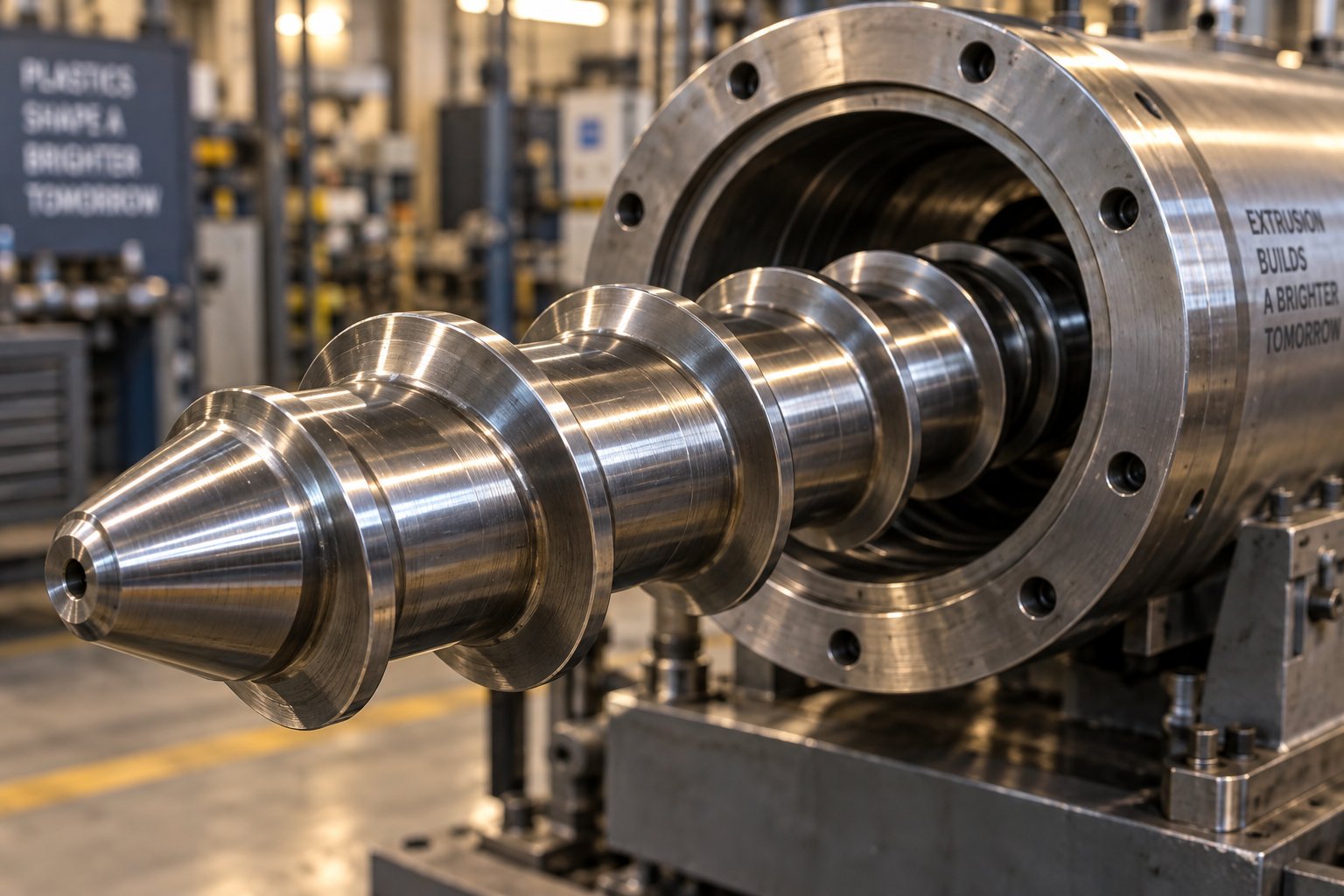
What Nobody Tells You About Screw Barrel For Plastic Machine Design
Oct 10, 2026
Learn how screw barrel for plastic machine design affects melt quality, throughput, and wear life. Covers geometry, resin matching, troubleshooting, and sourcing.
Read Article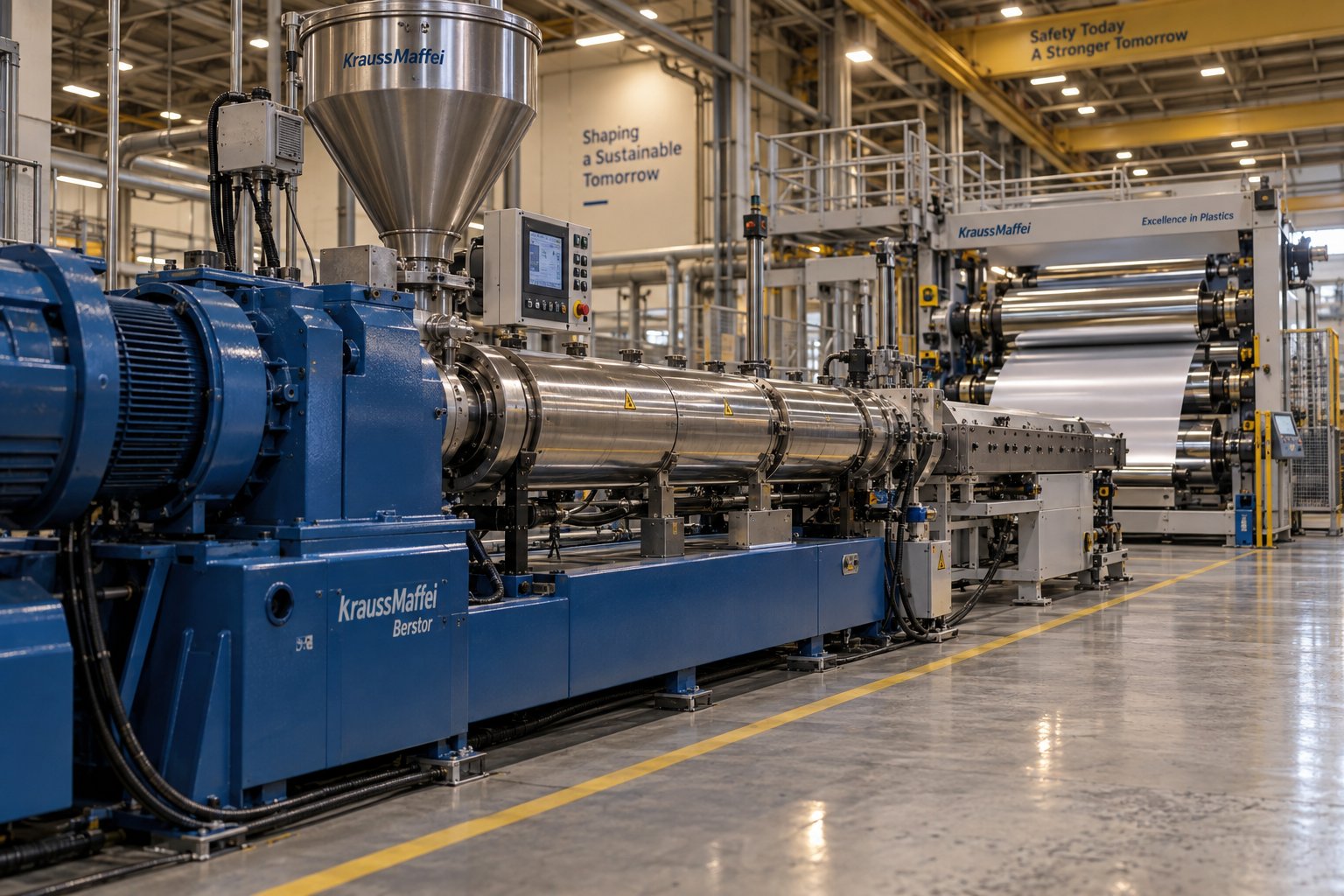
Single Screw Extruder for Sheet: Stop Guessing, Start Specifying
Oct 9, 2026
Learn how to specify a single screw extruder for sheet production. Covers screw geometry, resin-specific processing, troubleshooting, and maintenance best practices.
Read Article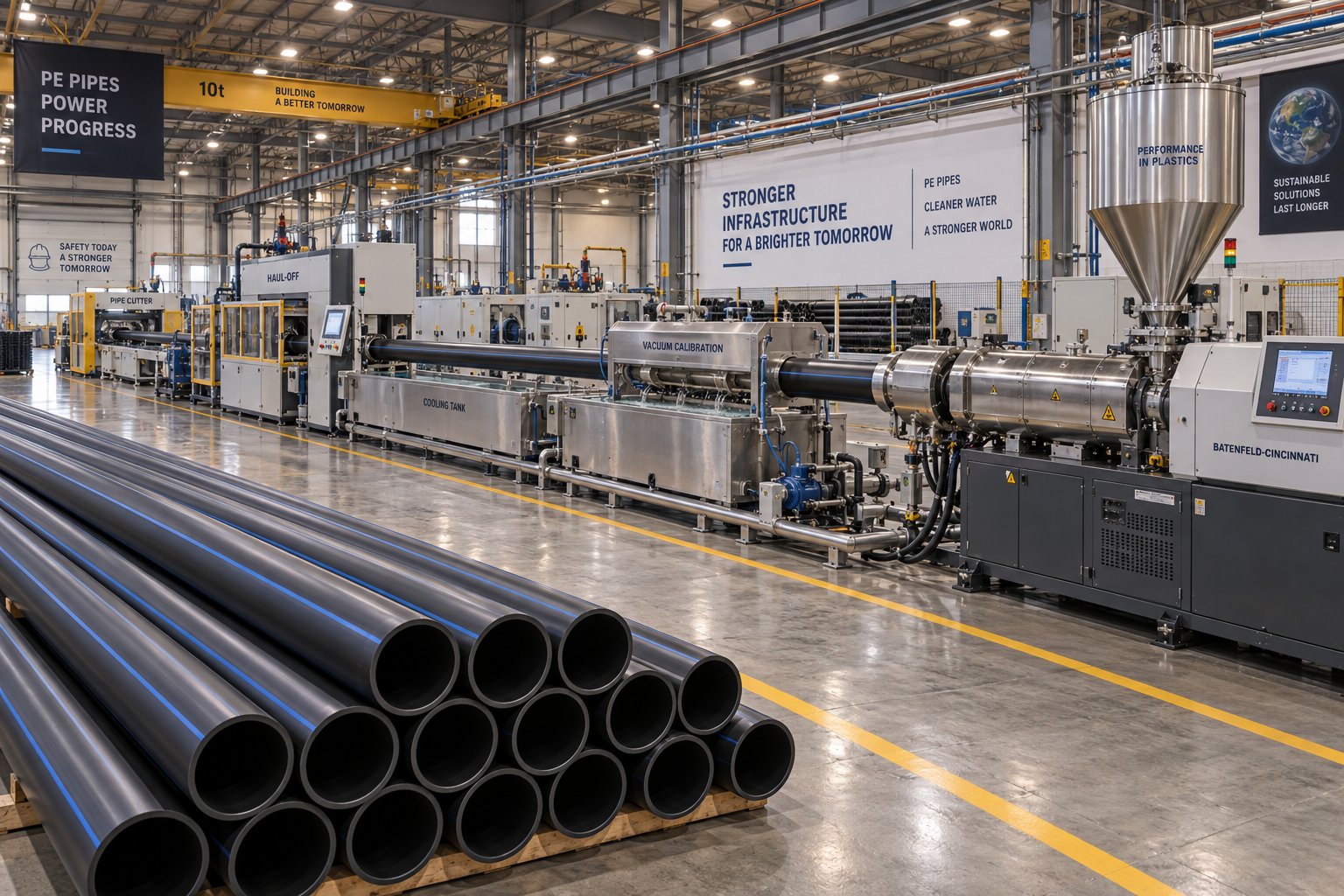
PE Pipe Extruder Machine: What Datasheets Won't Tell You
Oct 9, 2026
Learn how a PE pipe extruder machine works, key specs explained, material grade selection, maintenance tips, and buyer guidance beyond the datasheet.
Read ArticleLooking for something else?
Search by material, symptom or product and jump straight to the relevant page.
These are navigation suggestions based on keyword matching — not a quotation, not a delivery commitment, and not a substitute for engineering review. Final specification is confirmed by our engineers against your drawings and processed material.
Need help with screw barrel selection?
Share your machine model, processed material and application. Our team can help with pricing and technical support.