

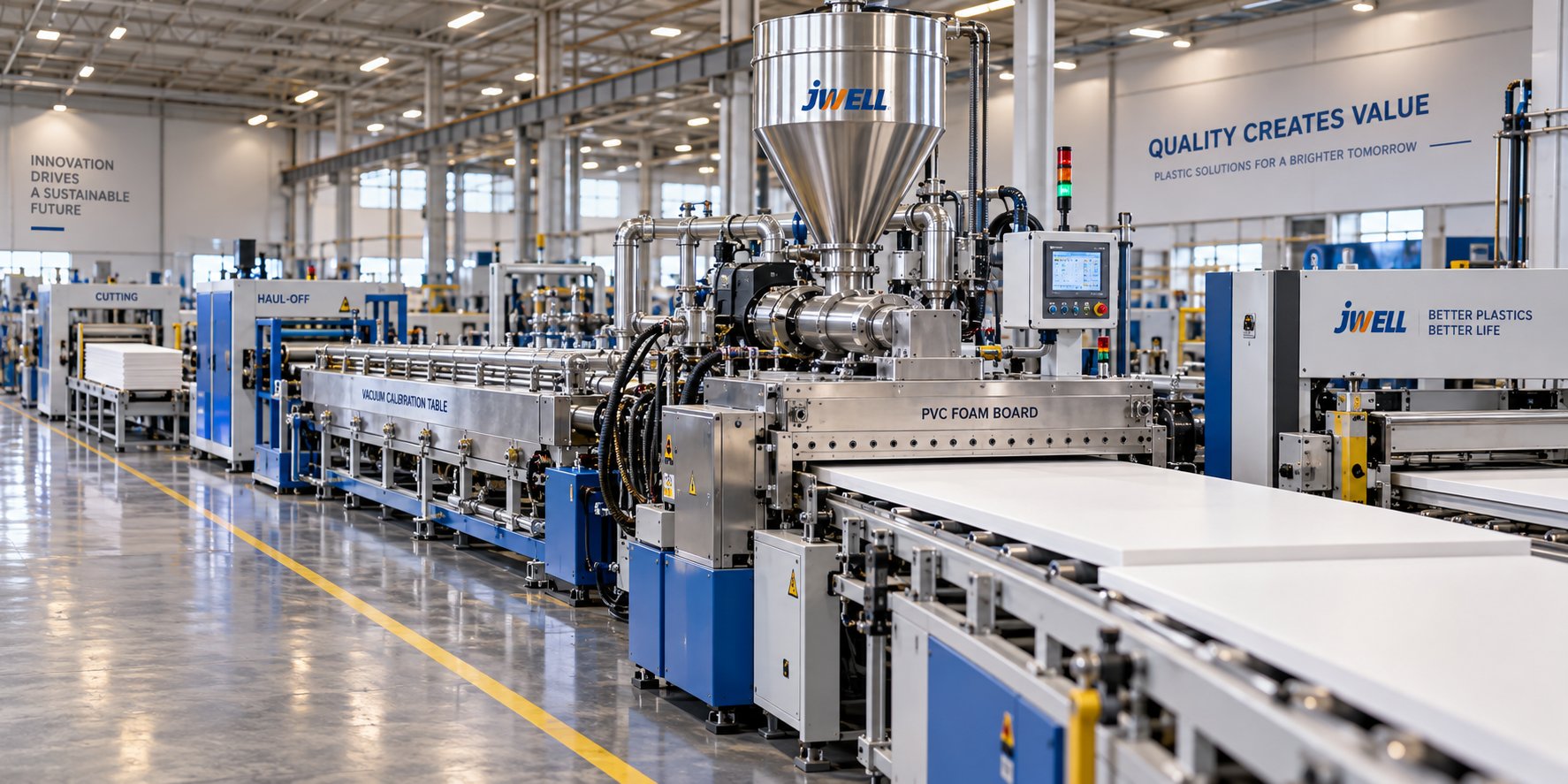
What Is a PVC Foam Board Production Line and Why It Matters
Imagine turning raw PVC resin powder into smooth, lightweight panels used in everything from storefront signage to kitchen cabinetry. That transformation happens inside one tightly coordinated machinery system — and understanding how it works is the first step toward making a smart investment.
Defining the PVC Foam Board Production Line
A PVC foam board production line is an integrated extrusion system that converts a PVC resin compound — containing fillers, chemical foaming agents, and processing additives — into rigid, closed-cell foam boards through controlled melting, foaming, calibration, and cutting stages.
In practical terms, the line begins with raw material mixing and feeding, moves through a conical twin screw extruder that plasticizes the compound, pushes the melt through a specially designed die, and then shapes, cools, cuts, and stacks the finished boards — all in a continuous, automated flow. Each piece of equipment along this chain directly influences the board's density, surface finish, and dimensional accuracy.
Why PVC Foam Boards Are in Growing Demand
PVC foam boards combine lightweight rigidity with excellent moisture resistance, easy machinability, and a smooth surface that accepts printing, painting, and lamination without special preparation. The global market exceeded 2.8 million metric tons in 2024, driven by five major application sectors:
- Signage and advertising — accounting for roughly 35% of global consumption
- Construction — wall cladding, ceiling panels, and trim (about 30%)
- Furniture and cabinetry — moisture-resistant cabinet doors and shelving (15%)
- Transportation — RV interiors, marine bulkheads, and trailer panels (10%)
- Interior decoration and specialty uses — exhibition displays, model making, and more (10%)
This broad demand is exactly why manufacturers worldwide — and particularly those operating a PVC foam board production line in China — continue to scale capacity and refine equipment technology. Whether you're exploring a PVC foam board production line for sale or evaluating suppliers, understanding the machinery behind these boards gives you a decisive advantage.
What This Guide Covers
This article walks you through the full production ecosystem. You'll learn how Celuka, free-foaming, and co-extrusion processes differ at the equipment level, what each component in the line actually does, and how foaming chemistry and temperature management determine final board quality. We'll also break down extruder selection, automation tiers, total cost of ownership, and a practical buyer checklist — everything you need to evaluate a production line with confidence rather than guesswork.
The journey starts with the three fundamentally different foaming processes — and how each one reshapes the entire line configuration from die to calibration table.
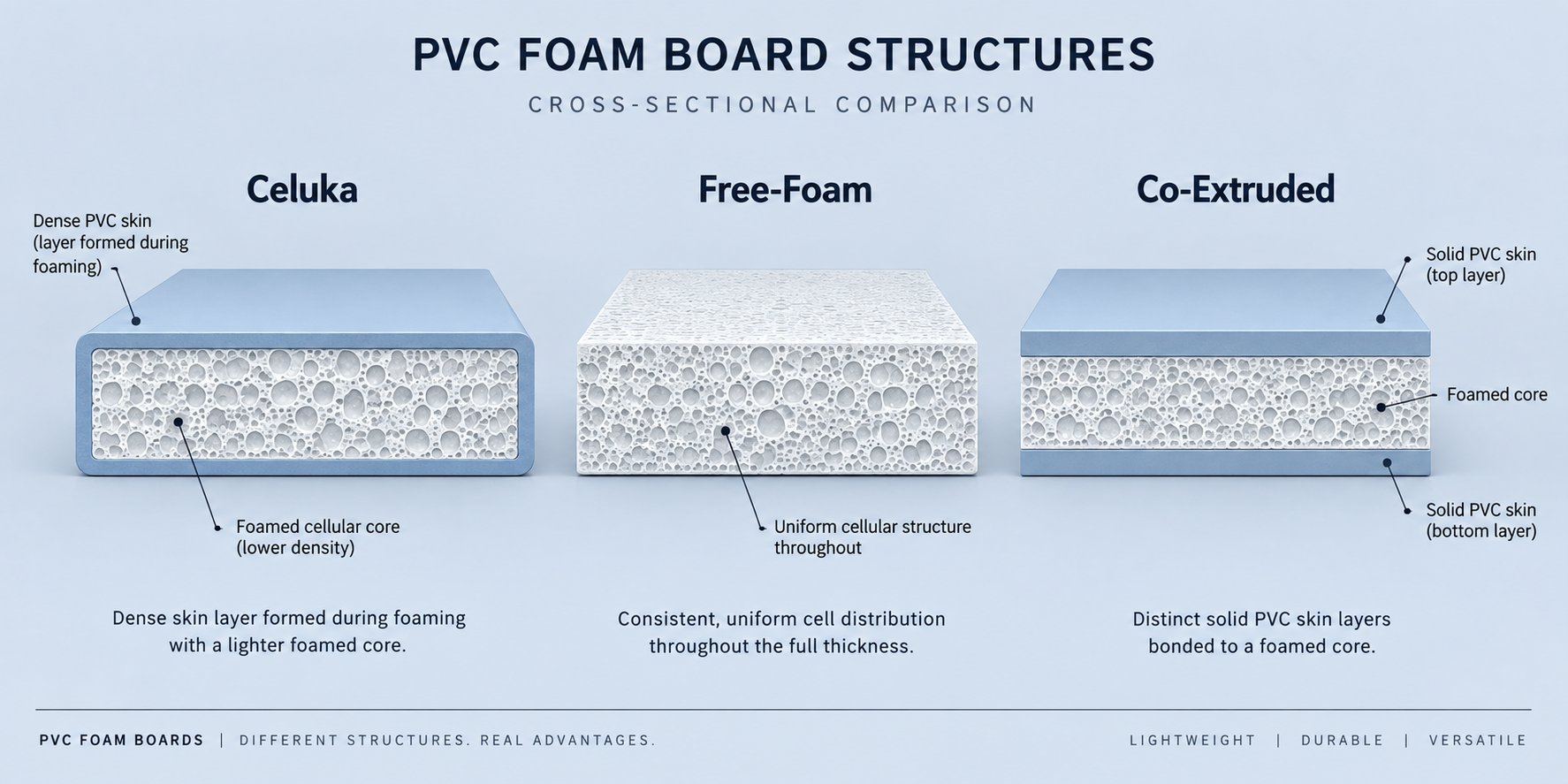
Celuka vs Free-Foaming vs Co-Extrusion Process Types
Here's something most equipment listings won't tell you: the foaming process you choose reshapes practically every piece of hardware on your production line — from the die geometry to the calibration setup to the haul-off speed. Three fundamentally different approaches exist, and picking the wrong one means manufacturing boards that don't match your target market. Let's break each one down.
Celuka Skinning Process Explained
The Celuka process — sometimes called the skinning process — produces boards with a hard, dense outer skin and a foamed cellular core. How does it work? The PVC melt exits a specially designed Celuka die equipped with an internal mandrel (or torpedo) that creates a hollow profile. As the extrudate enters the vacuum calibration table, the outer surfaces cool rapidly against the calibrator walls, forming solid skin layers roughly 0.3 to 0.5 mm thick. Meanwhile, the still-hot interior expands as the foaming agent decomposes, filling the hollow center with a uniform closed-cell structure.
This dual-density architecture gives Celuka boards a noticeably smoother, glossier surface finish — approximately 30 to 40% higher surface density than the core. The result is enhanced scratch resistance, superior edge quality when routed or engraved, and excellent screw-holding strength. You'll find Celuka boards specified for high-end signage, bathroom cabinetry, decorative wall cladding, and door panels where durability and a polished appearance matter most.
From an equipment standpoint, a Celuka line demands a more complex die with precise mandrel positioning, tighter vacuum calibration control, and generally slower line speeds to allow proper skin formation. That added complexity translates to higher initial investment, but the premium product commands stronger margins.
Free-Foaming Process and Its Advantages
A PVC free foam board production line takes the opposite approach. The compound exits a simpler flat die — typically a coat-hanger or T-die design — and expands freely in all directions as the foaming agent releases gas. No internal mandrel restricts the melt flow, and the board achieves a relatively uniform density from surface to core.
The surface finish is matte and slightly textured rather than glossy, which actually works in its favor for applications that require printing, painting, or vinyl lamination. Because the cell structure is consistent throughout, free-foam boards machine predictably — cuts, drills, and router paths behave the same regardless of depth. They're also the lightest option, making them ideal for large-format advertising panels, exhibition graphics, POP displays, and short-term outdoor signage.
For manufacturers evaluating cost, the free-foaming process wins on simplicity. The die is less expensive, calibration tolerances are more forgiving, and line speeds can run faster. Many PVC free foam board production line manufacturers recommend this configuration as the entry point for new operations because it balances output volume with manageable capital expenditure. It accounts for roughly 55% of global PVC foam board consumption — the workhorse of the industry.
Co-Extrusion Lines for Multi-Layer Boards
What if you need the lightweight core of a foam board paired with the surface hardness of solid PVC? That's exactly what co-extrusion delivers. A co-extrusion line uses multiple extruders feeding a single multi-layer die simultaneously — typically a main extruder for the foamed core and one or two satellite extruders for solid PVC skin layers (0.3 to 0.8 mm thick on each face).
The result is an integrated sandwich structure where the skin layers are genuinely non-foamed, providing the highest surface density, maximum impact resistance, and the best weather performance of any foam board type. Co-extruded boards can achieve 7 to 10+ years of outdoor service life, which is why they dominate in marine construction, RV sidewalls, exterior architectural panels, and permanent outdoor signage.
The trade-off? Equipment complexity and cost are the highest of all three approaches. You're running multiple extruders in synchronization, managing separate material feeds, and maintaining a multi-channel die that demands precise temperature and flow balancing. Any PVC foam board production line manufacturer offering co-extrusion capability is targeting the premium segment — and buyers should expect a 30 to 50% price premium over standard free-foam lines.
Side-by-Side Process Comparison
Choosing between these three processes comes down to your target product, market positioning, and budget. The table below puts the key differences in one view:
| Factor | Celuka (Skinning) | Free-Foaming | Co-Extrusion |
|---|---|---|---|
| Die Design | Flat die with internal mandrel | Coat-hanger or T-die (no mandrel) | Multi-layer die with separate flow channels |
| Surface Finish | Smooth, glossy hard skin | Matte, slightly textured | Extremely smooth, approaching solid PVC |
| Density Range | 0.50 – 0.70 g/cm³ | 0.45 – 0.65 g/cm³ | 0.55 – 0.80 g/cm³ |
| Typical Applications | High-end signage, cabinetry, wall cladding, door panels | Advertising boards, displays, POP signage, model making | Marine panels, RV/trailer components, exterior architecture |
| Equipment Complexity | Moderate–High (mandrel die, precise vacuum calibration) | Low–Moderate (simpler die and calibration) | High (multiple extruders, multi-channel die, synchronized controls) |
| Relative Line Cost | 15 – 25% above free-foam | Baseline (most economical) | 30 – 50% above free-foam |
Notice that the differences aren't just about the finished board — they ripple through every component on the line. The die, the calibration table vacuum settings, the haul-off speed, even the cooling water temperature profiles all shift depending on which foaming process you select. That's why understanding your process type first is essential before evaluating any individual piece of equipment.
And speaking of equipment, each of the components mentioned above — from mixing systems through extruders, dies, calibrators, and stackers — plays a specific role that deserves its own close look.
Complete Equipment Breakdown From Feeding to Stacking
Picture a PVC foam board production line as a relay race. Each piece of equipment receives the material in one state, transforms it, and hands it off to the next station in better shape. A weak link anywhere — an inconsistent mixer, a worn extruder barrel, a sluggish cutter — drags the entire operation down. Yet most buyers evaluate these lines by extruder specs alone, overlooking the dozen-plus machines that collectively determine whether finished boards ship or get scrapped.
Here's the full equipment sequence, from the first scoop of raw powder to the last board on the pallet.
Upstream Mixing and Dosing Equipment
Consistent extrusion starts long before material touches the screw. The upstream section prepares and delivers a homogeneous dry blend — and any inconsistency here echoes through every downstream component as density variation, surface defects, or foaming irregularities.
- High-speed hot mixer — This is where PVC resin, stabilizers, lubricants, processing aids, foaming agents, fillers (typically calcium carbonate), and pigments are combined. The mixer uses high-shear blade rotation — generally reaching 800 to 1,200 RPM — to generate frictional heat that drives additive absorption into the resin particles. Material temperature typically reaches 110 to 120°C before discharge. When evaluating a mixer, check the batch capacity relative to your extruder's hourly consumption, blade design, temperature monitoring accuracy, and dust containment. A mixer that runs too hot risks premature foaming agent decomposition before the compound even reaches the extruder.
- Cooling mixer — Immediately after the hot mixer discharges, the blend drops into a low-speed cooling mixer that brings it down to a storage-safe temperature, usually below 40 to 50°C. This step prevents moisture absorption and clumping during silo storage. Look for efficient water-jacketed cooling, gentle paddle design that avoids breaking down particle structure, and consistent discharge temperature control.
- Storage silo and dosing system — The cooled compound moves to intermediate storage silos. From there, a volumetric or gravimetric feeder delivers it to the extruder at a precise, steady rate. Gravimetric systems weigh material in real time and adjust feed speed automatically — critical for maintaining stable density in foam boards. If you're running a PVC foam board production line factory at commercial scale, gravimetric dosing pays for itself quickly through reduced density variation and lower material waste.
Core Extrusion and Die Components
The core of the line is where raw powder becomes a shaped, foamed melt. Two machines dominate this stage, and their interaction determines everything from cell structure to surface quality.
- Conical twin screw extruder — The workhorse. Counter-rotating conical twin screws pull in the dry blend, compact it, plasticize it through a combination of barrel heat and shear, vent trapped gases and moisture through a vacuum port, and build the melt pressure needed to push material through the die. Why conical rather than parallel? The tapered screw geometry delivers high torque at low rotational speed — exactly what heat-sensitive PVC requires to plasticize uniformly without thermal degradation. Key specs to evaluate include screw diameter (commonly 51/105 mm, 65/132 mm, or 80/156 mm for foam board applications), L/D ratio, motor power, maximum continuous output in kg/h, and barrel temperature zone count. We'll dive deeper into screw and barrel selection in a dedicated section ahead.
- Extrusion die — The die transforms a cylindrical melt stream into a wide, flat sheet. Foam board lines typically use either a coat-hanger die or a T-die, both engineered to distribute melt evenly across the full board width — often 1,220 mm or 1,560 mm. Celuka lines add an internal mandrel, while free-foam and co-extrusion lines use different channel geometries, as covered in the previous section. Die selection criteria include the steel grade and heat treatment, number of independent heating zones, adjustable lip gap for thickness fine-tuning, and flow-channel polishing quality. A poorly balanced die creates thickness variation from edge to center — a defect no downstream equipment can fix.
Downstream Calibration, Cutting, and Stacking Units
Once the foamed melt exits the die, it's still soft, hot, and dimensionally unstable. The downstream section shapes, solidifies, transports, and cuts it into finished boards.
- Vacuum calibration table — Arguably the most underestimated component. The hot extrudate enters a series of calibration plates or molds while vacuum pressure pulls the board's outer surfaces firmly against precision-machined walls. Simultaneously, chilled water circulates through the calibrator and a water bath to extract heat and solidify the board's shape. This is where final thickness, flatness, and surface smoothness are locked in. Evaluate table length (longer tables allow faster line speeds because the board has more time to cool), vacuum pump capacity, number of independent vacuum zones, water temperature control accuracy, and ease of access for cleaning cooling channels.
- Haul-off (puller) unit — A set of rubber-tracked belts or rollers grips the cooled board and pulls it forward at a constant, precisely controlled speed. The haul-off speed must synchronize perfectly with the extruder output — too fast stretches the board and reduces thickness; too slow compresses it and causes buckling. For foam boards, the contact surfaces must grip firmly without leaving marks or indentations on the relatively soft material. Belt width, clamping pressure adjustment, and closed-loop speed control are the key selection factors.
- Cutting machine — Most lines use a planetary saw or a guillotine-style cutter that travels with the board (a "flying cutter") so the line never stops. The cutter shears boards to the programmed length — commonly 2,440 mm or 3,050 mm — with clean, chip-free edges. Look for automatic length counting, smooth cutting surfaces that don't require secondary edge finishing, and effective dust or swarf extraction to keep the production area clean.
- Stacking and collection system — The final station. Finished boards are conveyed onto a tilting table or automated stacking arm that lifts and stacks them neatly for packaging. In a china PVC foam board production line factory, you'll commonly see robotic stacking arms on higher-volume lines that reduce manual handling, prevent surface scratches, and maintain consistent pack counts. Even on semi-automatic lines, a well-designed stacking system protects surface quality and speeds up warehouse transfer.
Optional Upstream and Downstream Additions
Beyond the core nine-station layout, many PVC foam board production line factory configurations add specialized modules depending on the target product:
- Embossing unit — positioned between the calibrator and haul-off to press wood-grain, leather, or custom textures into the still-warm board surface.
- Online lamination station — applies decorative PVC film, acrylic sheets, or protective PE film directly onto the board surface at line speed.
- Edge trimming module — shaves rough or uneven side edges to achieve precise width tolerances, recycling the trimmed material back into the mixer.
- Thickness gauging system — a non-contact sensor (typically laser or ultrasonic) that measures board thickness in real time and feeds data back to the haul-off and die lip controls for automatic adjustment.
Think of these optional stations as the difference between producing a commodity board and a finished, market-ready panel. Their inclusion depends entirely on your product positioning and customer requirements.
Every component in this lineup plays a defined role, but none operates in isolation. The mixing system's blend consistency shapes the extruder's melt quality, the die's flow balance dictates what the calibrator must correct, and the haul-off speed ties the entire chain together. That interconnectedness is also why the underlying foaming chemistry — the reactions happening inside the barrel and die at a molecular level — deserves its own careful examination.
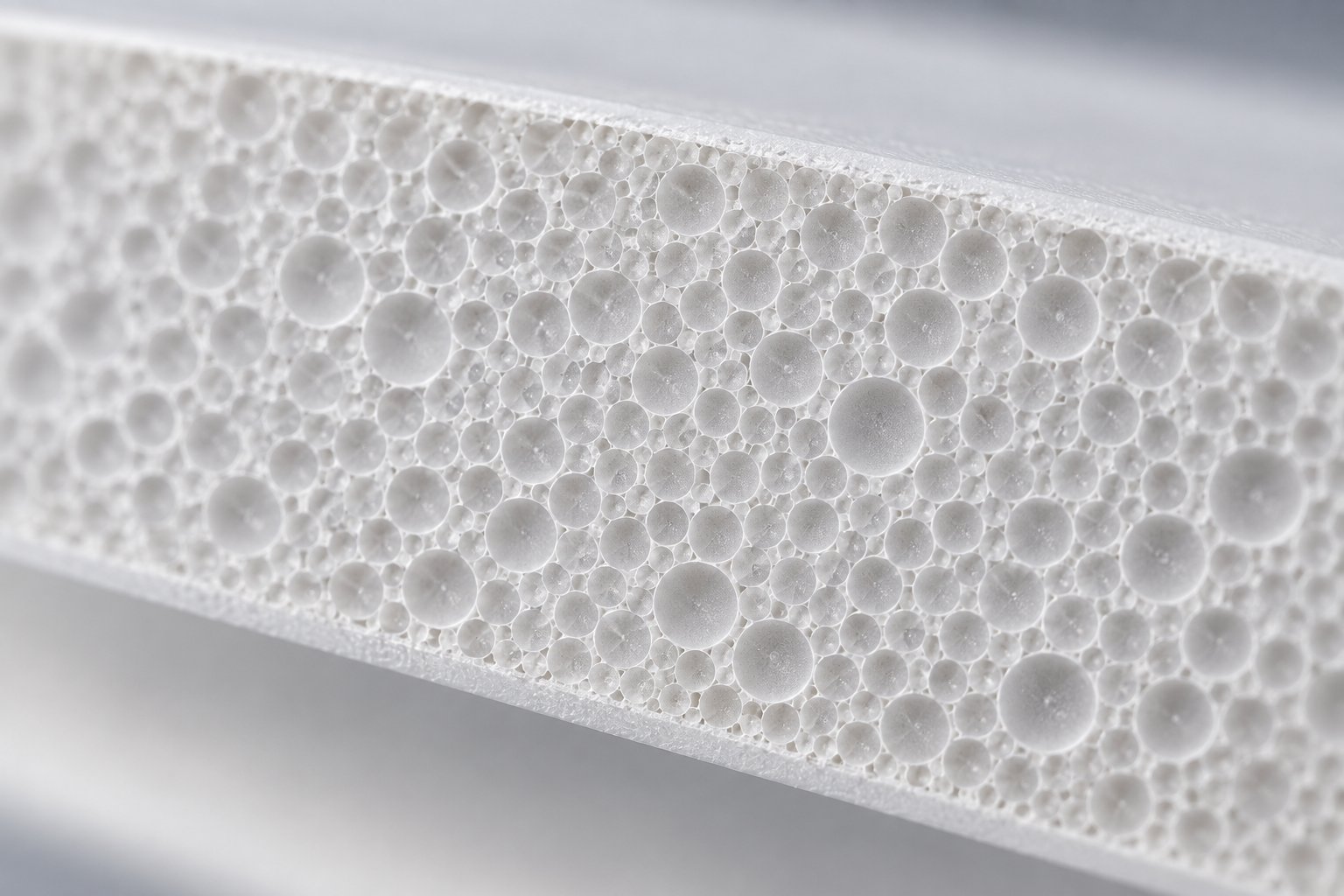
Foaming Chemistry and Cell Structure Control in PVC Boards
You've seen the equipment lineup. You know each machine's role from mixer to stacker. But here's the thing — all that hardware exists to serve a single invisible event: the controlled creation of millions of tiny gas-filled cells inside a PVC melt. Get that chemistry right, and you produce strong, lightweight, beautifully smooth boards at target density. Get it wrong, and no amount of expensive machinery saves you from collapsed cells, rough surfaces, and wasted material.
So what actually happens inside the barrel and die at a molecular level? Let's unpack it.
How Chemical Foaming Agents Work
The cellular structure in a PVC foam board doesn't appear by accident. It's engineered through chemical foaming agents (CFAs) — heat-activated compounds blended into the PVC dry mix during the upstream mixing stage. When the compound reaches a specific temperature inside the extruder barrel, these agents decompose and release gas molecules that become the "building blocks" of every foam cell in the finished board.
The most widely used CFA in PVC foam board production is azodicarbonamide (ADC or AC), an organic compound that decomposes at approximately 160 to 200°C — a range that aligns neatly with PVC melt processing temperatures of 160 to 190°C. During decomposition, ADC releases a blend of gases, primarily nitrogen (N₂) and smaller amounts of carbon monoxide (CO), carbon dioxide (CO₂), and ammonia (NH₃). These gas molecules dissolve into the pressurized PVC melt inside the barrel, waiting for the pressure drop that comes at the die exit to expand into discrete bubbles.
Why does this temperature overlap matter so much? If the CFA's decomposition temperature is too low relative to the barrel profile, gas releases prematurely — before the PVC is fully plasticized — creating erratic pressure spikes and uncontrolled cell formation. If the decomposition temperature is too high, the resin degrades before sufficient gas generates, producing dense, underfoamed boards with discolored surfaces. The goal is synchronized timing: the PVC reaches a uniform, fully plasticized melt state at the same moment the foaming agent releases its gas payload in a controlled, steady manner.
Cell Nucleation and Growth Control
Gas release is only the first act. What transforms dissolved gas into a structured foam is a two-stage process: nucleation and growth.
Nucleation is the moment dissolved gas molecules cluster together at specific sites within the melt to form the initial micro-bubbles — the "seeds" of every foam cell. These nucleation sites don't appear randomly. They're created by nucleating agents — fine inorganic particles like talc or calcium carbonate added to the formulation. Each particle surface acts as a low-energy gathering point where gas molecules can coalesce more easily than in the surrounding melt. More nucleation sites mean more cells, and more cells at a given gas volume mean smaller individual cells. That's the key insight: nucleating agent dosage directly controls cell count and average cell size.
Cell growth follows immediately. Once a micro-bubble nucleates, internal gas pressure pushes it to expand against the surrounding PVC melt. Two forces fight for control here — gas pressure driving expansion outward, and melt viscosity and surface tension resisting it. If the melt is too hot and fluid, cells grow too large, merge with neighbors, and eventually rupture, leaving behind voids and a rough surface. If the melt is too cool and viscous, gas can't push the cell walls far enough, producing a dense, heavy board that defeats the purpose of foaming.
Imagine blowing a soap bubble. Thin, warm soap film lets you blow a huge, fragile bubble that pops easily. Thick, cooler film limits size but produces a stable, resilient sphere. PVC foam cell growth follows exactly the same physics — and controlling that balance is what separates a high-quality production line from one that churns out inconsistent scrap.
Uniform cell distribution across the full board cross-section is the ultimate target. When cells are small, round, and evenly spaced, you get:
- Predictable density — consistent weight per sheet with minimal board-to-board variation
- Higher mechanical strength — evenly distributed cell walls share loads without concentrated weak points
- Smooth surface finish — no subsurface voids that telegraph as bumps or depressions
- Reliable nailability and screw holding — fasteners grip evenly because cell size is consistent
- Better machinability — routing, sawing, and drilling behave uniformly regardless of where you cut
Conversely, oversized or irregular cells cause localized weak spots, visible surface texture, and unpredictable edge quality — defects that make boards unsellable for signage, furniture, or interior decoration.
How Processing Parameters Shape Final Board Quality
Here's where chemistry meets machine settings. Even with a perfectly designed formulation, the processing parameters you dial into your production line determine whether that formulation performs as intended or falls apart. Think of the formulation as a recipe and the processing parameters as cooking technique — both must align.
The critical parameters that control foam quality include:
- Barrel zone temperatures — The thermal profile across the extruder barrel governs when and how fast the CFA decomposes. Melting temperatures are typically controlled between 160 and 180°C, with the foaming zone running 5 to 10°C higher at 170 to 190°C. Deviations as small as a few degrees can shift decomposition timing, creating density variations within a single board.
- Die temperature — Controls surface quality and the final rate of cell expansion as the melt exits. Too high causes cells near the surface to blow out, leaving pinholes. Too low creates a rough, "sharkskin" texture and restricts expansion.
- Melt pressure — Inside the barrel and die, elevated pressure keeps dissolved gas in solution. The moment the melt exits the die lip and pressure drops to atmospheric, gas rapidly expands to form cells. The magnitude of this pressure drop — and how abruptly it occurs — directly influences cell size and uniformity.
- Screw speed (RPM) — Determines shear rate, residence time, and melt throughput. Higher speed increases shear heating, which can trigger premature CFA decomposition. Lower speed extends residence time, risking over-plasticization. The sweet spot delivers thorough mixing and consistent melt temperature without degrading either the PVC or the foaming agent.
- Die gap setting — A wider gap reduces restriction and lowers die pressure, allowing more expansion but potentially less surface compression. A narrower gap increases die pressure and can improve surface density at the expense of core expansion. Adjusting the die lip gap is one of the fastest ways operators fine-tune board thickness and density on the fly.
- Foaming agent dosage — More CFA generates more gas, which lowers board density — but only up to a point. Excessive dosage produces more gas than the cell walls can contain, causing cell rupture, internal voids, weakened mechanical strength, and visible surface defects. Too little CFA results in higher-density boards that lose their lightweight advantage. Finding the right dosage is a balancing act driven by your target density specification.
- Calibration vacuum level and cooling water temperature — These downstream parameters lock in the cell structure. Vacuum pulls the board against the calibrator walls, controlling final thickness and flatness. Cooling rate determines how quickly the cell walls solidify. Rapid cooling freezes cells in place before they can coalesce; excessively rapid cooling, however, can induce internal stresses that lead to warping or cracking later.
Every one of these parameters interacts with the others. Raising screw speed increases throughput but also raises shear heat, which shifts effective barrel temperature upward, which accelerates CFA decomposition, which demands a recalibration of die gap and cooling intensity. Experienced operators understand that adjusting one dial almost always requires compensating adjustments elsewhere — it's a system, not a collection of independent switches.
For buyers evaluating a cheap price PVC foam board production line versus a premium one, this is where the real cost difference hides. A low price PVC foam board production line may use basic single-zone temperature controllers, less precise screw speed drives, and simpler die designs — all of which make it harder to maintain the tight parameter windows that produce uniform cells. A cheap PVC foam board production line can absolutely work, but expect a steeper learning curve, more operator dependency, and higher scrap rates until your team masters the narrow process window. Premium lines invest in multi-zone PID temperature control, servo-driven screws, and precision-machined dies that widen that window and make consistent quality easier to achieve.
Ultimately, the foam cell structure hiding inside every PVC board is a direct fingerprint of how well these chemical and physical variables were managed during production. And among all the variables, temperature stands out as the single most pervasive influence — spanning every zone from feed throat to calibrator exit. That temperature profile, and how to manage it zone by zone, is where the technical conversation deepens next.
Temperature Profile Management Across Every Zone
Temperature is the single thread that connects every piece of equipment on the line — from the moment PVC powder drops into the feed throat to the second a finished board exits the calibrator. Get the thermal profile right, and you control plasticization timing, foaming agent decomposition, cell structure uniformity, and surface finish simultaneously. Get it wrong by even a few degrees in the wrong zone, and you're staring at collapsed cells, rough surfaces, or warped boards that head straight to the scrap bin.
What makes temperature management tricky is that the ideal setpoint shifts at every stage. The line doesn't run at one temperature — it runs along a carefully designed gradient. Let's walk through that gradient zone by zone.
Barrel Zone Temperature Strategy
The extruder barrel is where the most delicate thermal balancing act plays out. You need enough heat to fully plasticize the PVC resin — turning rigid powder particles into a homogeneous, workable melt — without prematurely triggering the chemical foaming agent. Since azodicarbonamide (the most common CFA) decomposes in a range that overlaps with PVC processing temperatures, even a small overshoot in an early barrel zone can release gas before the melt is properly formed, creating erratic pressure spikes and uneven cell distribution.
The general philosophy follows a graduated approach. The feed zone runs at the lowest temperature — warm enough to begin softening resin particles and promoting dry blend compaction, but cool enough that no decomposition occurs. Moving into the compression zone, temperatures climb progressively, driving full plasticization through a combination of barrel heat and mechanical shear from the conical twin screws. The metering zone — the final barrel section before the adapter — reaches the highest barrel temperature, ensuring a fully uniform melt with consistent viscosity.
Here's a subtlety that catches many operators off guard: barrel zones don't just heat. They also cool. Each zone typically has both heater bands and cooling fans (or water-cooled jackets) working together in a PID-controlled loop. Shear heat generated by screw rotation adds significant thermal energy, especially in the compression zone. Without active cooling to offset that shear-generated heat, real melt temperature can spike well above the setpoint, causing premature gas release and localized degradation. Manufacturers operating a PVC foam board production line in Brazil, Russia, or Saudi Arabia face additional challenges, since ambient factory temperatures ranging from sub-zero winters to 45°C-plus summers directly influence how effectively barrel cooling systems perform. The same setpoint on a controller can produce different actual melt temperatures depending on the season and factory climate — a factor that operators in extreme environments must actively compensate for.
| Zone | Position on Line | Temperature Direction | Primary Purpose |
|---|---|---|---|
| Feed Zone | Barrel entrance (hopper end) | Low (starting point) | Soften resin, compact powder, prevent premature CFA decomposition |
| Compression Zone | Mid-barrel | Gradually increasing | Full plasticization via heat + shear; begin controlled CFA activation |
| Metering Zone | Barrel end (before adapter) | Highest barrel temperature | Homogenize melt viscosity, ensure complete plasticization |
| Adapter | Barrel-to-die transition | Slight decrease or hold steady | Stabilize melt flow, manage pressure buildup before die entry |
| Die Zones | Extrusion die body and lips | Carefully controlled (may decrease toward lips) | Control surface quality, final cell expansion rate, and flow distribution |
| Calibration | Vacuum calibration table | Rapid cooling (water-chilled) | Freeze cell structure, lock dimensions, solidify surface skin |
Die Temperature and Its Effect on Surface Quality
The die is where temperature control becomes most visible — literally. Surface defects that ruin a finished board almost always trace back to what happened thermally in the die zone.
When die temperature runs too high, the PVC melt becomes excessively fluid at the lip exit. Cell walls near the surface stretch too thin and rupture, producing pinholes, pockmarks, or a rough "orange peel" texture. In severe cases, the gas expands uncontrollably, causing cell collapse that manifests as visible voids or sunken areas on the board face. On the other hand, when die temperature drops too low, the melt stiffens before exiting cleanly, creating a characteristic "sharkskin" surface — a ridged, matte texture caused by melt fracture as overly viscous material tears at the die lip.
Most production lines divide the die into multiple independently controlled heating zones — left, center, right, top, and bottom — so operators can fine-tune flow distribution across the full board width. Edge zones often need slightly higher temperatures than the center because the melt cools faster near the die walls. If you're producing wide boards (1,220 mm or wider), this edge-to-center thermal balancing becomes especially critical for maintaining uniform thickness and consistent surface gloss.
Calibration Cooling and Dimensional Stability
Once the foamed melt exits the die, temperature control shifts from heating to cooling — and the speed of that transition matters enormously. The vacuum calibration table uses chilled water circulating through precision-machined calibrator plates to extract heat from the board's outer surfaces while vacuum pressure holds it firmly against the shaping walls.
Cooling too fast sounds like a good idea — lock in the cell structure as quickly as possible, right? Not exactly. Rapid surface cooling while the core remains hot creates a steep thermal gradient through the board thickness. That gradient generates internal stresses. In the short term, the board looks fine. Hours or days later, those locked-in stresses can release as warping, bowing, or even surface cracking — problems that show up at the customer's facility rather than on your production floor.
The practical approach is staged cooling. The first calibrator section applies moderate vacuum and moderately chilled water to set the board shape without shock-cooling the surface. Subsequent sections gradually increase cooling intensity as the core temperature falls and the thermal gradient across the board decreases. Water temperature in the calibration tank typically runs cooler than the initial calibrator section, providing a final thermal equalization before the board reaches the haul-off.
Vacuum level and water temperature work as a team. Higher vacuum pulls the board tighter against calibrator walls for better flatness and surface contact — but excessive vacuum on an insufficiently cooled board can distort soft internal cells. Operators learn to read the interaction between these two variables, adjusting each in response to real-time board quality observations.
Temperature, in the end, is about control — not just of heat, but of timing. Every zone on the line orchestrates when PVC softens, when gas releases, when cells form, and when everything freezes into place. The machine that sits at the center of all these thermal events, managing the most complex heat-and-shear interactions, is the conical twin screw extruder — and its screw and barrel design determines how well that orchestration actually performs.
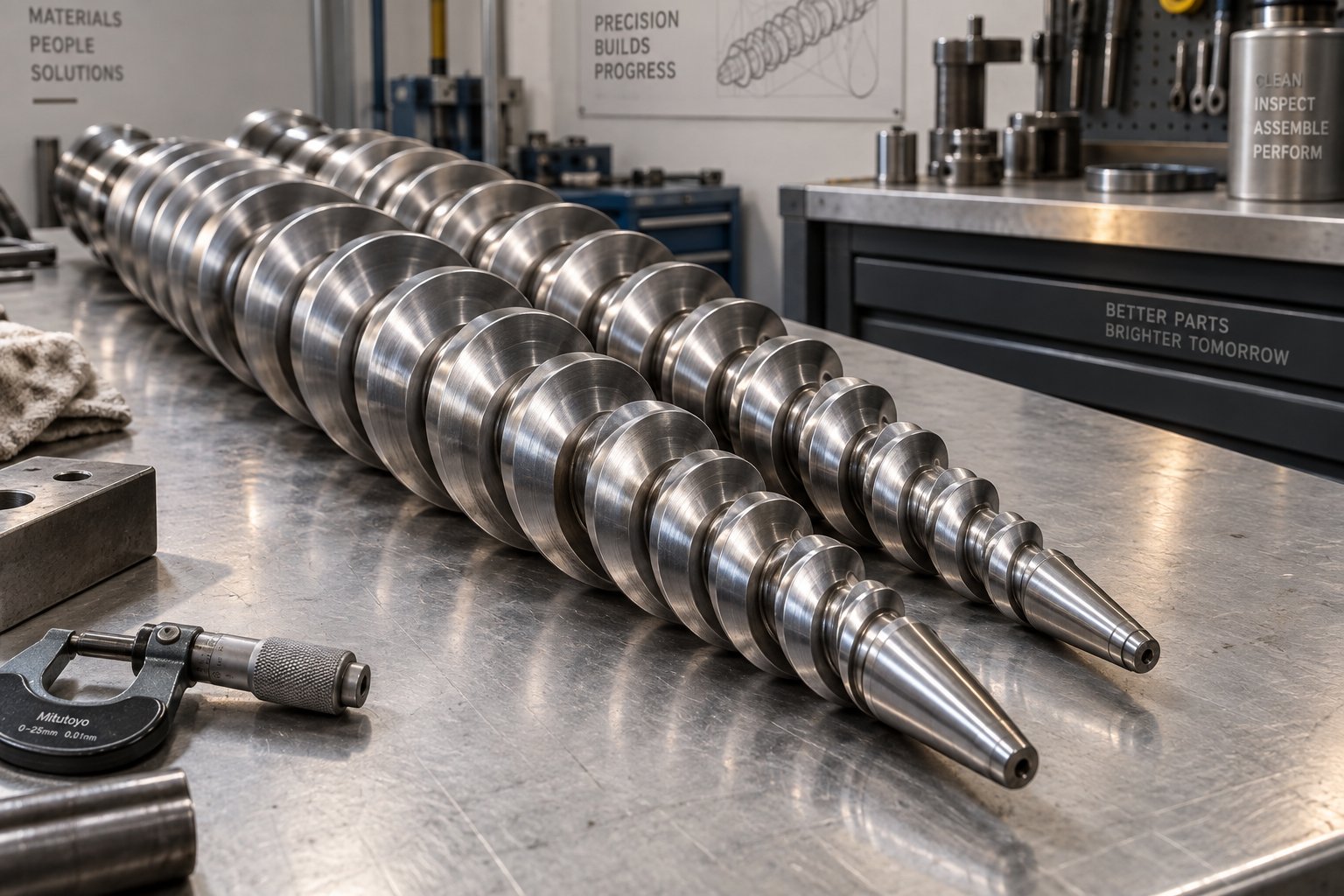
The Conical Twin Screw Extruder as the Production Line Core
Every temperature zone, every foaming reaction, every cell that forms inside a PVC foam board — all of it depends on what happens inside the extruder barrel. Strip away the downstream calibration equipment and the upstream mixing systems, and you're left with the single machine that defines whether a PVC foam board production line produces consistent, sellable boards or generates expensive scrap: the conical twin screw extruder.
Why conical? Why twin screw? And what specifications actually matter when you're evaluating one? Let's dig in.
Why Conical Twin Screws Excel for PVC Foam Extrusion
PVC is notoriously heat-sensitive. Push it too hard with excessive shear or hold it at elevated temperatures too long, and the polymer degrades — releasing hydrochloric acid, discoloring the melt, and destroying cell structure before the board ever reaches the die. This thermal sensitivity is precisely why the conical twin screw design dominates PVC processing rather than its parallel twin screw cousin.
The key lies in the taper. Conical twin screws taper from a larger diameter at the feed end to a smaller one at the discharge, and they rotate in opposite directions (counter-rotating). This geometry creates three distinct advantages for foam board extrusion:
- High torque at low rotational speed — The large-diameter feed section provides massive intake volume, while the tapered geometry naturally compresses material as it travels forward. Because the screws don't need to spin fast to generate adequate pressure, shear heating stays low. For a heat-sensitive resin carrying a temperature-activated foaming agent, this gentle processing is non-negotiable. High-speed parallel extruders, by contrast, generate far more frictional heat — a liability when you're trying to prevent premature CFA decomposition.
- Efficient natural compression — The volume reduction from feed end to discharge end creates a built-in compression ratio without relying solely on screw channel depth changes. This means the PVC compound compacts gradually and uniformly, eliminating air pockets that would otherwise become uncontrolled voids in the finished foam structure. For rigid PVC powder formulations, compression ratios typically range from 2:1 to 4:1, depending on whether the feed is granulated or powder-based.
- Superior mixing and plasticizing uniformity — Counter-rotating intermeshing screws create a positive conveying action with minimal backflow. Material moves forward in a controlled, predictable path rather than recirculating chaotically. The result is a melt with consistent viscosity across the entire cross-section — exactly the condition needed for uniform foaming agent activation and even cell nucleation throughout the board.
Sounds technical, but the practical takeaway is simple: conical twin screws give you maximum control over a material that punishes you for losing it.
Key Extruder Specifications That Affect Output Quality
Not all conical twin screw extruders are built equally. When comparing machines from any PVC foam board production line manufacturer in China or elsewhere, these are the specifications that separate a reliable workhorse from a constant headache:
- Screw diameter — Expressed as a pair (e.g., 51/105 mm, 65/132 mm, 80/156 mm, or 92/188 mm), the first number is the small end and the second is the large feed-end diameter. Larger diameters mean higher throughput capacity, but they also require proportionally larger motors, gearboxes, and supporting infrastructure. Match screw size to your target output — a 65/132 mm extruder typically delivers 200 to 400 kg/h for foam boards, while an 80/156 mm unit can reach 400 to 600+ kg/h depending on board density and thickness.
- L/D ratio — The ratio of functional screw length to diameter. For thermally sensitive polymers like PVC, a shorter L/D ratio is generally preferred to limit residence time and reduce the risk of thermal degradation. Most conical twin screws for PVC foam board applications fall in the 22:1 to 28:1 range — long enough for thorough plasticizing, short enough to keep material moving before heat damage accumulates.
- Motor power — Typically expressed in kW, motor power determines the maximum torque available at the screw shafts. Underpowered motors force operators to reduce throughput or increase barrel temperatures to compensate — both of which compromise foam quality. For a production-grade foam board line, expect motor ratings from 37 kW on smaller extruders up to 110 kW or more on high-output units.
- Output capacity (kg/h) — This is the figure buyers focus on first, but it only tells the full story when paired with density. Producing 300 kg/h of 0.55 g/cm³ Celuka board demands different screw performance than 300 kg/h of 0.45 g/cm³ free-foam board. Always confirm output ratings at your target density and board dimensions, not just a manufacturer's best-case number.
- Number of barrel heating/cooling zones — More zones mean finer temperature control. As discussed in the previous section, the ability to independently manage feed, compression, metering, and adapter temperatures is essential for controlling CFA decomposition timing. Budget extruders may offer only three or four zones; premium machines provide six or more with independent PID controllers per zone.
Choosing the Right Screw and Barrel for Foam Board Lines
Here's a factor that experienced operators understand but first-time buyers often overlook: the extruder frame, motor, and gearbox may last decades, but the screws and barrel are wear components. Over thousands of operating hours, the abrasive calcium carbonate filler in typical PVC foam formulations — often loaded at 20 to 40% by weight — grinds away at screw flight surfaces and barrel inner walls. As the clearance between screw and barrel grows beyond the optimal 0.1 to 0.6 mm range, backflow increases, plasticizing efficiency drops, and you start seeing density fluctuations and surface defects in finished boards.
That means screw and barrel selection isn't a one-time decision — it's an ongoing relationship with your supplier. When evaluating screw barrels, whether for a new line or as replacements, pay close attention to these factors:
- Base material and surface treatment — Nitrided alloy steels (38CrMoAlA is common) offer a baseline of wear resistance. For high-filler formulations, bimetallic barrels with a centrifugally cast wear-resistant inner liner and screws with hard-faced flight tips significantly extend service life.
- Dimensional precision — Tight tolerances on screw outer diameter, root diameter, and barrel bore ensure proper clearance and consistent compression ratio. Even minor deviations cause uneven melt flow and density variation.
- Custom geometry matching — Screw flight design, pitch, and compression profile should be optimized for your specific formulation's particle size, bulk density, and filler loading. A barrel supplier who understands PVC foam board processing — not just generic PVC pipe or profile extrusion — can tailor these parameters for better foam cell uniformity.
- Replacement availability and lead time — When a worn screw or barrel starts affecting production quality, downtime costs mount fast. Having a reliable supplier who stocks or quickly manufactures replacement conical twin screw barrels specifically for PVC foam board applications is a strategic advantage. NANHAIYA, for example, specializes in custom and replacement conical twin screw barrels for PVC board, foam board, and WPC extrusion lines — their focus on this niche means they understand the wear patterns and material requirements specific to foamed PVC processing, which translates to better-fitting components and faster turnaround when you need them.
Think of the screw and barrel as the heart valves of your production line. The extruder frame is the heart itself — robust and long-lived — but the internal components that actually contact, compress, and plasticize the melt wear down under continuous abrasive and corrosive stress. A china PVC foam board production line manufacturer may deliver an excellent extruder on day one, but five thousand hours later, your production stability depends entirely on the quality of the replacement screws and barrels you install.
The extruder drives the process, but it doesn't operate alone. How much human intervention the rest of the line requires — from dosing and thickness control to cutting and stacking — depends on the automation level you choose, and that choice carries major implications for labor costs, throughput consistency, and long-term return on investment.
Automation Levels and Their Impact on Throughput
A perfectly specified extruder, a precision-machined die, and a well-tuned temperature profile can still produce inconsistent boards — if the human factor introduces variability at every handoff along the line. Manually adjusting feed rates, eyeballing thickness, or cutting boards by visual judgment injects randomness into a process that thrives on repeatability. That's where automation enters the picture, and the level you choose ripples through everything from headcount and scrap rates to how many sellable square meters leave your factory each shift.
Not every operation needs — or can afford — a fully robotic line from day one. The real question is: which automation tier matches your production volume, workforce reality, and budget? Let's walk through each level and where the practical differences show up.
Manual and Semi-Automatic Line Configurations
A manual PVC foam board production line relies on operators for nearly every control point beyond basic extruder temperature regulation. Workers load resin into the hopper by hand or with simple volumetric feeders, visually monitor board thickness, manually set haul-off speed, and physically measure and trigger the cutting system. Stacking is done by hand.
Sounds labor-intensive? It is. But a manual setup carries the lowest upfront equipment cost, making it a practical entry point for small-volume operations or manufacturers testing a new market before committing to heavier investment. The trade-off is significant, though. Product consistency hinges entirely on operator skill and attention span. When an experienced operator steps off the line for a break, thickness can drift, density may shift, and scrap rates climb — sometimes to 8 to 12% or higher on foam boards where tight tolerances matter.
Semi-automatic lines split the difference. They automate the control points where human variability causes the most damage while keeping operators involved in supervisory and setup roles. Typical semi-automatic upgrades include:
- Automated temperature control — PID controllers manage barrel and die zone temperatures without manual adjustment, maintaining setpoints within narrow tolerances.
- Motorized haul-off with closed-loop speed control — The puller speed responds to extruder output rather than requiring manual dial adjustments, keeping board thickness more consistent.
- Preset cutting length — The cutting machine counts board length via encoder and triggers automatically, eliminating measurement errors.
- Hopper loaders — Pneumatic or vacuum loaders feed raw material from storage silos to the extruder hopper, removing the manual scooping step.
An operator still oversees the process, makes startup adjustments, and handles stacking or quality sampling. But the critical real-time variables — temperature, pull speed, and cut length — run on autopilot. For many manufacturers seeking a factory price PVC foam board production line that balances cost with reliability, this semi-automatic tier hits the sweet spot. You'll typically need three to five operators per shift instead of six to eight, and scrap rates can drop to the 4 to 6% range.
Fully Automatic Lines and Smart Controls
Fully automatic lines take human intervention out of almost every routine decision. Imagine this scenario: raw material flows from silos through a gravimetric dosing system that weighs every gram entering the extruder and adjusts feed rate in real time. Barrel and die temperatures self-regulate across a dozen or more independent zones. A non-contact laser or ultrasonic gauge continuously measures board thickness and feeds corrections back to the die lip actuators and haul-off speed controller. The flying cutter triggers at programmed intervals with sub-millimeter length accuracy. And at the end of the line, a robotic stacking arm lifts, aligns, and palletizes finished boards without a single fingerprint touching the surface.
Where does automation deliver the biggest hidden returns? These five systems stand out:
- Gravimetric dosing — Unlike volumetric feeders that measure by volume (and therefore fluctuate with powder density and flow characteristics), gravimetric systems measure by weight. As industry data suggests, saving just 1 to 2% of raw material through precise dosing can pay back the system cost in under a year. For foam board production — where material cost represents the largest portion of per-board expense — this precision directly protects margins.
- Automatic thickness measurement and feedback — Online gauging systems detect thickness drift in real time and send correction signals to the die lip gap actuators and haul-off drive. Instead of catching an out-of-spec board at the end of the shift, the system corrects within seconds — turning what would have been a run of scrap into sellable product.
- Haul-off speed synchronization — Fully automatic lines link haul-off speed to extruder melt pressure or throughput data, maintaining a constant relationship between extrusion rate and pull speed. This eliminates the subtle stretching or compression that causes density and thickness bands across a production run.
- Automatic cutting length control — Encoder-driven cutting with servo-controlled flying saws delivers repeatable length accuracy within ±1 mm, board after board, shift after shift. Manual cutting typically drifts ±3 to 5 mm or more.
- Robotic stacking — Beyond eliminating labor, robotic stackers prevent the surface scratches and edge dings that manual handling introduces — defects that may seem minor but trigger customer rejections on premium signage and furniture-grade boards.
The hidden ROI of factory automation extends well beyond labor savings. Higher consistency reduces downstream rework and customer complaints. Data generated by automated systems — temperature logs, thickness trends, dosing records — becomes a foundation for continuous process improvement and traceability. And skilled workers freed from repetitive monitoring tasks can focus on process optimization, quality analysis, and equipment maintenance, delivering long-term value that rarely shows up in an initial cost estimate.
Matching Automation Level to Your Production Goals
So which level is right for your operation? The answer hinges on three variables: daily output target, available workforce, and capital budget. Here's how they map:
| Factor | Manual | Semi-Automatic | Fully Automatic |
|---|---|---|---|
| Labor Required (per shift) | 6 – 8 operators | 3 – 5 operators | 1 – 2 operators + technician |
| Throughput Potential | Low – limited by manual handling bottlenecks | Medium – automated core, manual peripherals | High – continuous operation with minimal stops |
| Board-to-Board Consistency | Variable – operator dependent | Good – key parameters automated | Excellent – closed-loop control on all critical points |
| Typical Scrap Rate | 8 – 12%+ | 4 – 6% | 2 – 3% |
| Initial Investment | Lowest | Moderate (20 – 35% above manual) | Highest (50 – 100%+ above manual) |
| Best Suited For | Startups, low volume, budget-constrained entry | Mid-volume operations, growing manufacturers | High-volume production, premium product quality, labor-scarce regions |
A few practical considerations to keep in mind. If you're operating in a region where skilled labor is abundant and affordable, a semi-automatic line may deliver a better return than jumping straight to full automation — the capital savings can go toward a higher-quality extruder or die instead. Conversely, if you're manufacturing in a market where labor costs are high or reliable operators are difficult to recruit, the payback period on a fully automatic line shortens dramatically.
Also consider your product mix. A wholesale PVC foam board production line running one standard white board in a single thickness around the clock benefits enormously from full automation — the system optimizes for one target and maintains it relentlessly. A line producing multiple colors, densities, and thicknesses with frequent changeovers may find that semi-automatic flexibility actually yields higher overall equipment effectiveness, since changeover procedures still require experienced human judgment.
Buyers shopping for a wholesale price PVC foam board production line should request detailed automation specifications — not just a brochure label of "automatic" or "semi-automatic." Ask exactly which systems are closed-loop, which use servo drives versus basic inverters, and whether thickness feedback is truly integrated or just a standalone gauge with no connection to the die or haul-off. The gap between advertised automation and actual closed-loop control is where many purchasing disappointments hide.
Automation determines how efficiently your line runs day to day — but it's only one dimension of the total financial picture. Equipment wears, components degrade, and hidden costs accumulate over thousands of operating hours. Understanding the full cost of ownership, especially the wear parts that quietly erode production quality over time, is what separates profitable operations from ones that look good on paper but bleed money in practice.
Maintenance and Total Cost of Ownership for Production Lines
That new production line gleaming on the factory floor looks impressive on delivery day. But here's the uncomfortable truth most equipment quotes don't spell out: the purchase price is only the opening chapter of your cost story. Installation, commissioning, training, energy, raw materials, and — most critically — ongoing maintenance and wear part replacement write the remaining chapters. Buyers who focus exclusively on the machinery sticker price often discover, thousands of operating hours later, that the real financial picture looks nothing like the original spreadsheet.
Understanding the total cost of ownership isn't just smart accounting. It's the difference between a profitable foam board operation and one that bleeds margin through unplanned downtime, quality drift, and emergency part sourcing.
Beyond the Purchase Price — Hidden Costs Buyers Must Know
Imagine this scenario: you've negotiated a competitive price from a PVC foam board production line supplier, the machines arrive, and your team unpacks crate after crate. What happens next triggers a cascade of costs that never appeared in the original quotation.
Installation and commissioning can consume four to eight weeks and requires skilled technicians — sometimes flown in from the machinery manufacturer — to align the extruder barrel, calibrate vacuum systems, wire control panels, and plumb cooling water circuits. If your factory floor wasn't prepared with adequate foundations, electrical capacity, compressed air supply, and water treatment infrastructure, civil and utility upgrades add another layer of expense. Budget anywhere from 5 to 15% of the equipment price for installation alone, depending on factory readiness.
Operator training is the cost most buyers underestimate the most. A PVC foam board line isn't a push-button appliance. It requires operators who understand temperature profile management, foaming agent behavior, die gap adjustment, and how to read the subtle visual cues — surface texture changes, slight color shifts, edge curl — that indicate a process drifting out of specification. Training a crew from scratch typically takes two to four weeks of on-site instruction, and losing a trained operator means repeating that investment.
Raw material sourcing and utility consumption form the largest ongoing cost blocks. PVC resin, calcium carbonate filler, foaming agents, stabilizers, and lubricants account for roughly 60 to 70% of per-board manufacturing cost. Electricity to run extruder motors, heater bands, vacuum pumps, and cooling systems adds another significant share — typically 15 to 25 kWh per hour of operation for a mid-sized line. Water consumption for calibration cooling, while often overlooked, requires treatment and recirculation systems that carry their own maintenance demands.
None of these costs are avoidable. They're structural. But the one cost category that separates well-run operations from struggling ones is planned maintenance and timely wear part replacement — because neglecting it doesn't just cost money; it silently degrades every board you produce.
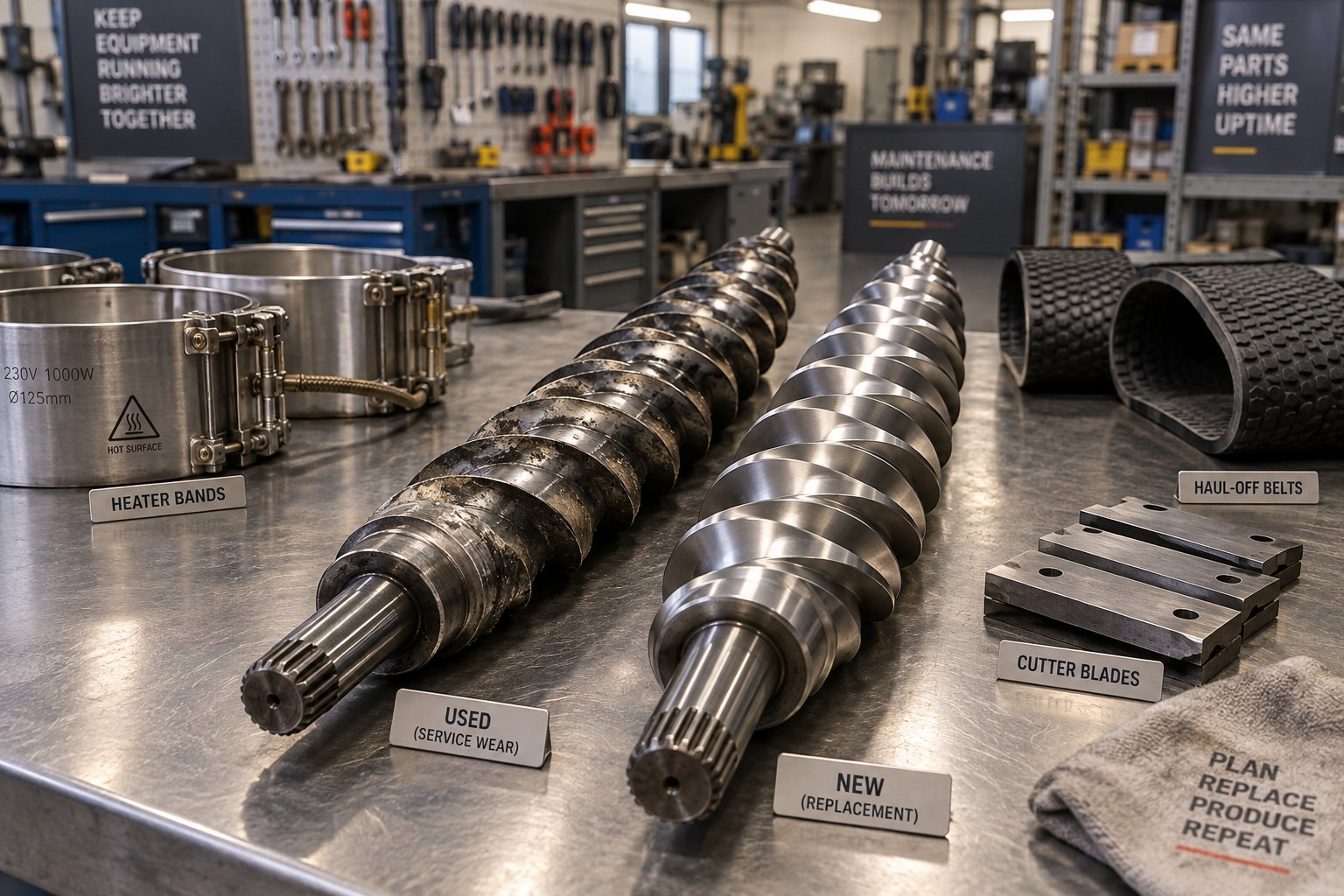
Critical Wear Parts and Replacement Planning
Every PVC foam board production line contains components designed to last decades — frames, gearboxes, structural weldments — alongside components that wear down continuously under abrasive, corrosive, and thermal stress. Recognizing which parts fall into the second category, and knowing when they've crossed from "serviceable" to "production-compromising," is what keeps quality consistent and downtime predictable rather than catastrophic.
Here are the major wear parts and the indicators that signal replacement is due:
- Conical twin screws — The flight tips grind against the barrel wall under load, and the abrasive calcium carbonate filler (often 20 to 40% of the PVC compound by weight) accelerates erosion. As extrusion wear research demonstrates, increasing flight clearance forces operators to raise screw speed to maintain throughput — which in turn elevates discharge temperature and degrades foam cell uniformity. Watch for: declining specific output rate (kg/h per RPM), rising melt temperature at constant settings, visible thinning or loss of hard-facing on flight edges, and increasing density variation in finished boards.
- Extruder barrel bore — The barrel's inner lining — typically a bimetallic wear-resistant layer approximately 0.060 inches (1.5 mm) thick — erodes in tandem with the screws, though generally at a slower rate. An iron-based bimetallic liner typically lasts about three times the service life of a screw. Watch for: bore diameter measurements exceeding nominal plus original clearance, scratching or grooving visible during inspection, and persistent melt quality issues that don't resolve with a new screw alone.
- Die lips — The die exit edges endure constant contact with abrasive, pressurized melt. Over time, lip surfaces develop microscopic pitting, scoring, or buildup (plate-out) that imprints directly onto the board surface. Watch for: streak marks running lengthwise on the board surface, thickness variation at specific positions across the board width, and difficulty achieving a uniform gap even after adjustment.
- Vacuum pump seals and vanes — The calibration table's vacuum pumps run continuously during production, and their internal seals and rotary vanes degrade through heat and moisture exposure. Weakened vacuum means the board isn't held firmly against the calibrator walls, causing flatness and thickness issues. Watch for: declining vacuum gauge readings at constant pump speed, increased pump noise, and boards showing wavy surfaces or inconsistent thickness across their width.
- Cutter blades — Whether your line uses a planetary saw or guillotine cutter, the blade edge dulls with every cut. Dull blades generate excessive dust, leave rough or chipped edges, and can induce vibration that marks the board surface upstream of the cut. Watch for: increased cutting dust, visible edge chipping or burring, louder-than-normal cutting sound, and heat discoloration on the cut face.
- Heater bands — Barrel and die heater bands endure thousands of heat-cool cycles and eventually develop hot spots, open circuits, or degraded insulation. A single failed heater band creates a cold zone that disrupts the carefully designed temperature gradient, shifting foaming agent decomposition timing and causing localized density changes. Watch for: temperature alarms or inability of a zone to reach setpoint, visible discoloration or cracking on band surfaces, and unexplained board quality shifts that correlate with a specific barrel zone.
- Haul-off belts and rollers — The rubber-surfaced tracks or rollers that grip the cooled board wear smooth over time, reducing grip force and causing slip. Inconsistent pull speed immediately shows up as thickness bands or periodic density changes in the board. Watch for: belt surface glazing, visible surface cracking, slipping under load, and belt tracking problems that indicate uneven wear.
Here's an insight that experienced processors learn the hard way: screw wear doesn't announce itself with a sudden failure. It's gradual and insidious. A production line might lose 5 to 10% of its plasticizing efficiency over many months without anyone noticing — because operators compensate by slowly increasing screw speed, adjusting temperatures, or widening the die gap. The boards still come out, but they're heavier (higher density means more material cost per board), less consistent, and subtly lower quality. Industry experts note that the decision to replace a worn screw must include the economics of the process — the cost of quality degradation and increased material usage often far exceeds the cost of a replacement component, yet it goes unrecognized because it accumulates invisibly.
A practical rule of thumb from extrusion specialists: consider screw replacement when flight clearance reaches approximately two to four times the original new clearance, depending on how critical your application's quality requirements are. Premium signage and furniture-grade boards demand tighter tolerances than utility-grade construction panels, so the replacement threshold shifts accordingly. Additionally, a screw should never be refurbished more than three times, because repeated welding of hard-facing onto the base metal eventually degrades the substrate, leading to delamination failures that can cause far more damage than the wear they were meant to fix.
Building a Reliable Maintenance and Supply Chain
Knowing which parts wear is only half the equation. The other half is having those parts available when you need them — not six weeks after a production emergency forces you to shut down a line.
Smart operators keep spare screws in storage so that when the current set reaches end of service life, the swap can happen during a planned maintenance window rather than an unplanned crisis. The worn screws then go out for refurbishment or replacement while production continues uninterrupted on fresh components. This approach sounds straightforward, but it requires building relationships with reliable component suppliers before wear becomes critical.
For critical wear components like conical twin screw barrels, having a dedicated supplier who specializes in your exact application matters far more than sourcing the cheapest option from a PVC foam board production line wholesaler offering generic parts. Generic barrels manufactured without specific knowledge of foam board processing conditions — the filler loading, the temperature profiles, the compression ratios unique to foamed PVC — often wear faster, fit less precisely, and deliver inconsistent plasticizing performance that immediately shows up as board quality problems.
NANHAIYA, for instance, focuses specifically on custom and replacement conical twin screw barrels for PVC board, foam board, and WPC extrusion applications. That specialization means their engineering team understands the wear patterns driven by calcium carbonate-loaded foam formulations, the surface treatments that extend service life under those specific conditions, and the dimensional tolerances that maintain proper melt flow and compression ratio. When a production line runs 20-plus hours a day and a worn barrel is costing you density consistency and material waste, having a supplier who can deliver a precision-matched replacement without a months-long lead time directly protects your bottom line.
Beyond screws and barrels, a comprehensive maintenance supply chain should also cover:
- Die lip refurbishment or replacement — sourced from the original die manufacturer or a qualified precision machining shop
- Vacuum pump rebuild kits — seals, vanes, and bearings matched to your specific pump model
- Cutter blade inventory — pre-sharpened spares ready for quick swaps during scheduled stops
- Heater band sets — sized exactly for your barrel and die zones, with spares for every zone on the line
- Haul-off belt replacements — matched to the belt width, durometer, and surface profile your line requires
Think of maintenance not as a cost center but as a production insurance policy. Every dollar spent on planned replacement parts and scheduled downtime saves multiples in emergency repairs, lost production hours, scrapped boards, and customer quality claims. The most profitable PVC foam board production line wholesale operations treat their spare parts inventory and supplier relationships as strategic assets — not afterthoughts.
Maintenance keeps a production line running. But before you're managing wear parts and replacement schedules, you need to choose the right line in the first place. And that selection decision — which board dimensions, which output volume, which supplier — deserves a structured evaluation framework that goes beyond brochure specifications and sales pitches.
Production Line Selection Criteria Every Buyer Should Know
You've studied the foaming chemistry, traced the temperature profile zone by zone, explored extruder specifications, weighed automation tiers, and mapped out the true cost of ownership. All of that knowledge converges here — at the point where you actually choose a PVC foam board production line and commit capital. A wrong decision doesn't just waste money. It locks your factory into years of mismatched capacity, quality compromises, or unnecessary complexity that your market never required.
The selection process doesn't start with browsing supplier catalogs. It starts with a hard, honest look inward — at your own product goals, infrastructure, and operational reality.
Defining Your Target Product and Output Requirements
Before contacting a single supplier, answer these questions on paper. They form the foundation every equipment specification will be measured against:
- Board dimensions — What widths (1,220 mm or 1,560 mm are standard), thickness range (3 mm to 30 mm is typical), and standard lengths do your target markets demand? A line engineered for thin advertising boards operates very differently from one producing thick furniture-grade panels.
- Density range — Are you targeting lightweight 0.45 g/cm³ free-foam boards for signage, or denser 0.65 to 0.75 g/cm³ Celuka or co-extruded boards for construction and cabinetry? Density specification drives foaming process selection, which in turn reshapes the entire line configuration — die design, calibration setup, extruder sizing, and cooling capacity.
- Daily output target — Express this in saleable square meters per day, not just extruder throughput in kg/h. A line rated at 400 kg/h means very different daily square-meter output depending on board thickness, density, and scrap rate. Work backward from your market demand and warehouse capacity to set a realistic number.
- Factory space and utilities — A full production line — from mixer platform to stacking area — typically requires 40 to 80 meters of floor length and adequate ceiling height for overhead loaders and crane access. Confirm your electrical supply (three-phase power at sufficient amperage), cooling water capacity and recirculation infrastructure, and compressed air availability before requesting quotations. Retrofitting a building to meet utility requirements after equipment purchase adds cost and delays that could have been avoided.
- Budget tier and financing — Be realistic about your capital range. Entry-level semi-automatic lines, mid-range fully automated single-line setups, and premium multi-line installations each occupy different investment brackets. If you're exploring a china PVC foam board production line for sale, pricing can range considerably depending on automation level, component brand quality, and included after-sales packages. Clarify whether your budget includes installation, training, tooling spares, and initial raw material inventory — not just the FOB machinery price.
- Local technical support — A production line that runs 20-plus hours per day in Southeast Asia, South America, or the Middle East needs technical support that responds in hours, not weeks. Evaluate whether the manufacturer has service engineers, spare parts warehouses, or distributor partners in your region before signing a purchase order.
PVC Foam Board vs WPC Board Lines — Key Differences
Here's a confusion that costs buyers real money: many supplier listings and even some industry guides treat PVC foam board lines and WPC (Wood-Plastic Composite) board lines as interchangeable. They're not. While both use conical twin screw extruders and share a similar downstream layout, the differences in formulation, processing conditions, and equipment specifications are significant enough to make a line optimized for one product type perform poorly on the other.
WPC formulations incorporate wood flour — sometimes 30 to 50% by weight — which introduces moisture sensitivity, higher melt viscosity, and increased abrasive wear on screws and barrels. WPC lines typically require more aggressive screw geometry for intensive mixing, higher torque motors, and enhanced venting to remove moisture-generated steam. The die and calibration tooling must also account for the different flow characteristics and thermal behavior of a wood-filled melt compared to a pure PVC foam compound.
A pure PVC foam board line, by contrast, processes a cleaner compound with finer calcium carbonate filler, demands gentler shear to protect cell structure, and uses die geometries specifically balanced for uniform foam expansion. Attempting to run a wood-filled WPC formulation through a line designed exclusively for PVC foam often results in incomplete plasticization, poor surface quality, accelerated barrel wear, and inconsistent board density.
If your business plan includes both product types, specify that requirement upfront. Some manufacturers offer dual-purpose lines with interchangeable screws, dies, and calibration tooling — but this flexibility must be engineered into the line from the start, not retrofitted later. Confirm that the supplier has successfully produced both PVC foam and WPC boards on the proposed configuration during factory trials, not just on paper.
How to Evaluate Production Line Suppliers Effectively
With your product specifications and infrastructure mapped out, the next step is evaluating the manufacturers and suppliers who will actually build your line. This is where many buyers rely too heavily on catalog specifications and quoted prices — and too little on verifiable operational evidence.
Use this checklist when shortlisting and visiting potential suppliers:
- Factory visit — Visit the manufacturer's production facility in person whenever possible. Observe their own machining quality, assembly standards, wiring neatness, and quality control processes. A supplier whose factory floor is disorganized or whose components show sloppy fit-and-finish is unlikely to deliver precision equipment to your plant.
- Trial run on your formulation — The single most important pre-purchase step. Request that the supplier run your actual raw materials — or a closely matched formulation — on the proposed line at their facility. Measure board density, thickness consistency, surface quality, and steady-state output over several hours, not just a brief demonstration. As industry guidance recommends, produce the most demanding board specification in your product range during the factory acceptance test: the thickest, the thinnest, or the lowest density target. If the line handles the hardest product well, the easier ones will follow.
- Customer references — Ask for contact details of existing customers producing similar boards — ideally in your region or a comparable market. Speaking with operators who have logged thousands of hours on the same equipment model reveals maintenance realities, service responsiveness, and production consistency that no sales presentation can replicate.
- After-sales support commitment — Clarify installation supervision, operator training duration, warranty terms, remote troubleshooting availability, and spare parts lead times in writing before purchase. A supplier who is vague on support details before the sale rarely becomes responsive after your money has been wired.
- Component transparency — Request a detailed bill of materials listing the brands and origins of critical components: PLC controllers, frequency inverters, motors, temperature controllers, vacuum pumps, and hydraulic systems. Internationally recognized component brands simplify future maintenance and spare part sourcing regardless of where your factory is located.
- Upgrade path — Ask whether the line can be upgraded with additional automation, wider dies, or co-extrusion capability in the future. A modular design that accommodates growth protects your investment as your market expands.
If you're sourcing from the world's largest manufacturing base, the landscape of pvc foam board production line wholesale in china offers enormous variety — from budget entry-level setups to premium turnkey installations. That variety is both an advantage and a risk. Pricing from a pvc foam board production line wholesaler in china can look remarkably attractive, but the lowest quote often omits critical inclusions: installation support, operator training, tooling for your specific board dimensions, and realistic warranty coverage. Compare quotations line-item by line-item, not just bottom-line totals.
The most important single factor in selecting a PVC foam board production line is not price, output speed, or brand name — it is a verified trial run on your actual formulation that confirms the line produces your target board specification at stable, repeatable quality over sustained operation.
A china PVC foam board production line wholesale market gives you access to dozens of manufacturers, but the selection framework above narrows that field to the handful who can actually deliver equipment matched to your product, your factory, and your growth plan. Invest the time in defining requirements, visiting factories, and running trials before you invest the capital — and the line you choose will repay that diligence for years to come.
Frequently Asked Questions About PVC Foam Board Production Lines
1. What is the difference between Celuka and free-foaming PVC foam board production lines?
A Celuka line uses a specialized die with an internal mandrel that creates boards with a hard, dense outer skin and a foamed core, producing glossy, scratch-resistant surfaces ideal for cabinetry and high-end signage. A free-foaming line uses a simpler coat-hanger or T-die without a mandrel, allowing the melt to expand uniformly and producing lighter, matte-finished boards suited for advertising panels and displays. The Celuka process demands more complex equipment and slower line speeds, costing roughly 15 to 25% more than a free-foam setup, but yields higher-margin products with superior edge quality and screw-holding strength.
2. How does the conical twin screw extruder affect PVC foam board quality?
The conical twin screw extruder is the core machine that plasticizes PVC resin and controls foaming agent activation. Its tapered, counter-rotating design delivers high torque at low rotational speed, minimizing shear heat that could degrade heat-sensitive PVC or trigger premature gas release. Key specifications like screw diameter, L/D ratio, motor power, and barrel zone count directly determine melt uniformity, foam cell consistency, and achievable output rates. Over time, screw and barrel wear from abrasive fillers like calcium carbonate increases clearance, reducing plasticizing efficiency. Suppliers like NANHAIYA specialize in custom and replacement conical twin screw barrels tailored for PVC foam board applications, helping manufacturers maintain stable production quality throughout the equipment's service life.
3. What are the main cost factors beyond the purchase price of a PVC foam board production line?
The purchase price typically represents only the first major expense. Installation and commissioning can add 5 to 15% of the equipment cost, depending on factory readiness. Operator training takes two to four weeks and must be repeated when staff turns over. Raw materials — PVC resin, fillers, foaming agents, and stabilizers — account for 60 to 70% of ongoing per-board cost. Electricity consumption runs 15 to 25 kWh per hour for a mid-sized line. Most critically, wear parts like screws, barrels, die lips, vacuum pump seals, cutter blades, and heater bands require scheduled replacement to prevent gradual quality degradation and unplanned downtime that erodes profitability.
4. How do I choose the right automation level for my PVC foam board production line?
Match automation to your daily output target, labor availability, and capital budget. Manual lines suit low-volume startups but produce 8 to 12% scrap and need 6 to 8 operators per shift. Semi-automatic lines automate temperature control, haul-off speed, and cutting length, reducing crew size to 3 to 5 and scrap to 4 to 6% — a practical choice for growing mid-volume operations. Fully automatic lines add gravimetric dosing, real-time thickness feedback, and robotic stacking, cutting scrap to 2 to 3% with just 1 to 2 operators, but cost 50 to 100% more than manual setups. Consider your product mix as well: single-product high-volume runs benefit most from full automation, while frequent changeovers may favor semi-automatic flexibility.
5. What should I look for when evaluating PVC foam board production line suppliers?
The most reliable evaluation method is a verified trial run using your actual formulation on the proposed line at the supplier's factory. Measure board density, thickness consistency, and surface quality over several hours of sustained operation — not just a brief demo. Beyond the trial, visit the manufacturer's facility to inspect machining and assembly quality, request contact details of existing customers producing similar boards, and clarify after-sales terms in writing, including installation supervision, training duration, warranty scope, remote troubleshooting, and spare parts lead times. Compare quotations line-item by line-item rather than by bottom-line totals, and confirm that critical components like PLCs, motors, and inverters are from recognized brands for easier future maintenance.
Written by
Nanhaiya Technical Team
Zhoushan Nanhaiya Plastic Machinery Co., Ltd.
The Nanhaiya technical team supports screw and barrel manufacturing projects through application review, technical communication, custom manufacturing coordination, and production and quality control.
Discuss Your Application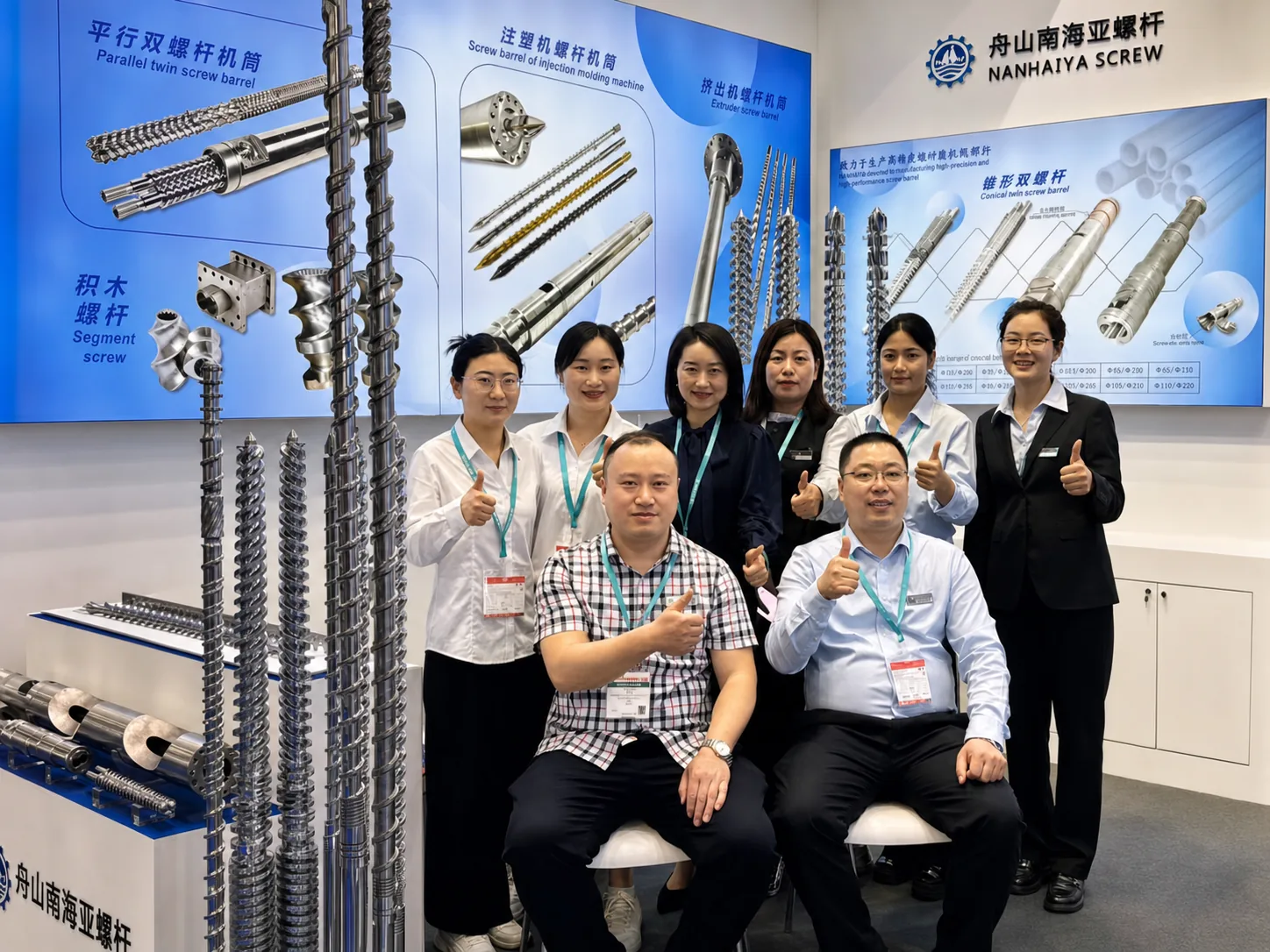
Related Articles
More insights on screw barrel technology and plastics processing.
Extruder Machine Decoded: From Raw Pellet To Finished Product
Oct 6, 2026
Learn how an extruder machine works, compare single-screw vs. twin-screw types, and get expert guidance on specs, troubleshooting, and selection.
Read Article
PE Pipe Making Machine Decoded: From Raw Resin to Flawless Pipe
Oct 4, 2026
Learn how a PE pipe making machine works, from resin to finished pipe. Covers components, material grades, automation, troubleshooting, and buyer selection tips.
Read Article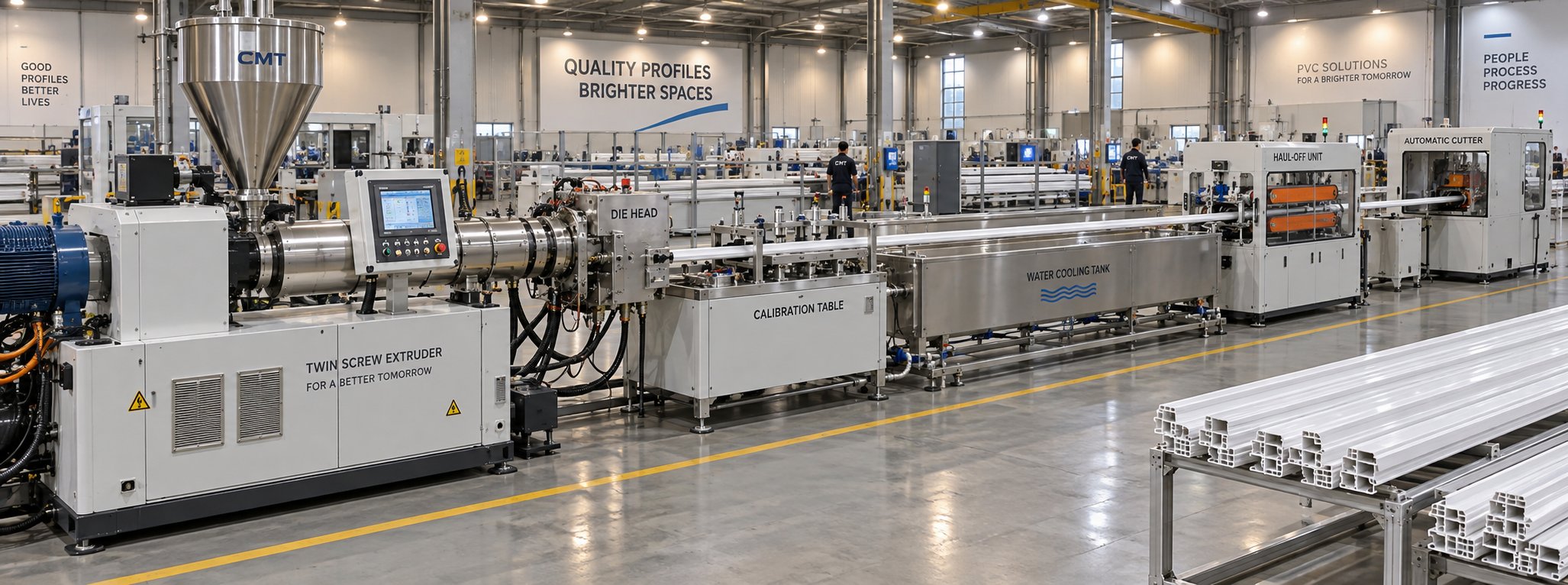
PVC Profile Making Machine Decoded: From Raw Resin To Profit
Oct 3, 2026
Learn how a PVC profile making machine works — extrusion process steps, key technical parameters, die design, calibration methods, maintenance, and total cost of ownership.
Read ArticleLooking for something else?
Search by material, symptom or product and jump straight to the relevant page.
These are navigation suggestions based on keyword matching — not a quotation, not a delivery commitment, and not a substitute for engineering review. Final specification is confirmed by our engineers against your drawings and processed material.
Need help with screw barrel selection?
Share your machine model, processed material and application. Our team can help with pricing and technical support.