

What Is PVC Extrusion and Why Does It Matter
Imagine a process that transforms a simple white powder into the window frames, water pipes, and cable insulation you rely on every day. That process is PVC extrusion, and it underpins a staggering share of modern manufacturing.
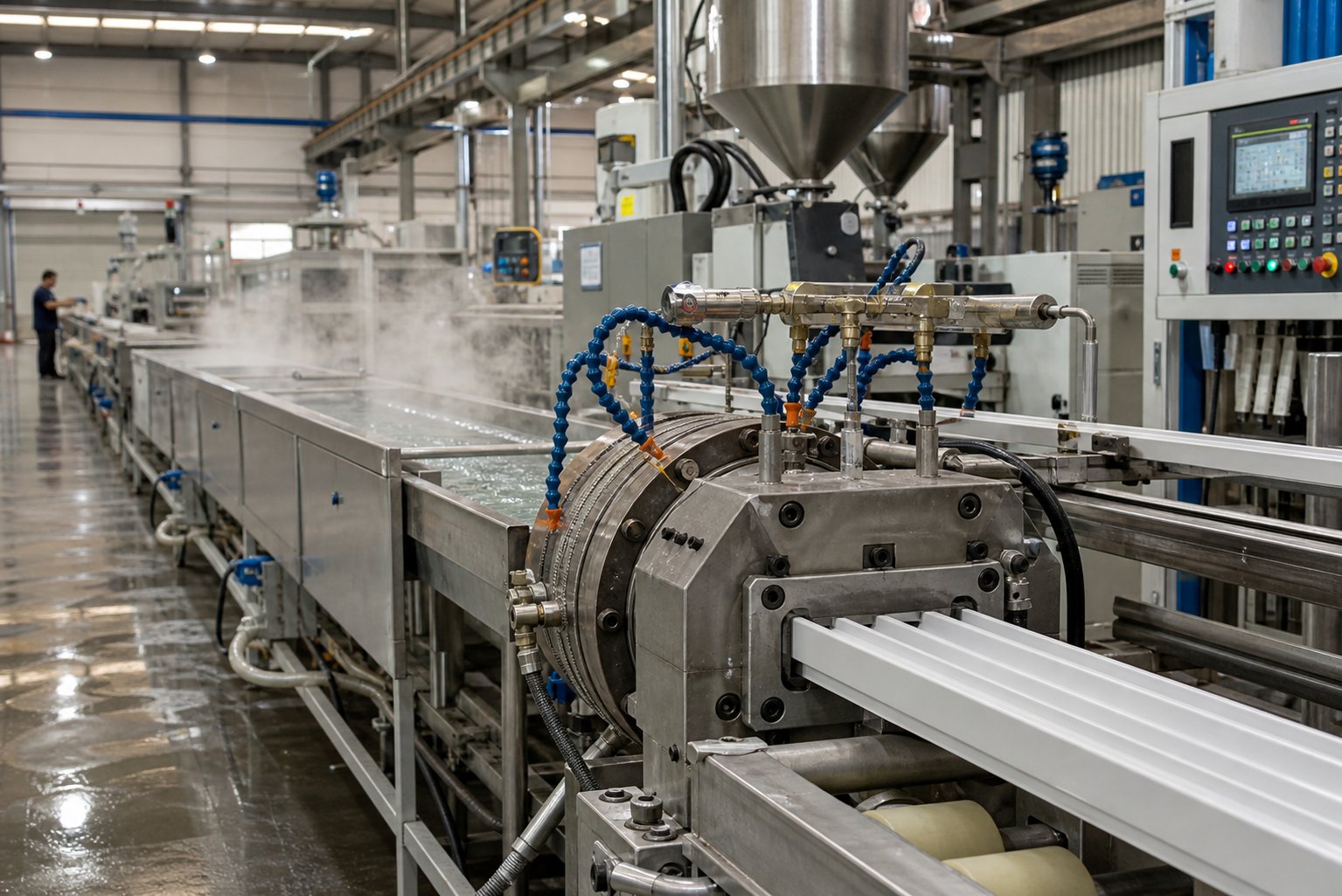
PVC extrusion is a continuous manufacturing process in which a polyvinyl chloride compound is heated, melted, and forced through a shaped die to produce profiles, pipes, sheets, and tubing with consistent cross-sections.
So, what is extruded plastic in practical terms? It is any thermoplastic product shaped by pushing molten material through a die rather than injecting it into a closed mold. PVC happens to be the single most extruded vinyl polymer on the planet, and for good reason: polyvinyl chloride ranks as the third-most-produced synthetic polymer globally, trailing only polyethylene and polypropylene. Extrusion is the dominant method for converting it into finished goods because the process delivers continuous, uniform output at high volumes - exactly what construction, infrastructure, and industrial markets demand.
Defining PVC Extrusion and Its Industrial Significance
Unlike injection molding, which fills a closed cavity to create discrete parts, or blow molding, which inflates a parison inside a mold to form hollow containers, extrusion produces an uninterrupted length of extruded PVC with a fixed cross-sectional shape. Think of it like squeezing toothpaste from a tube - the opening dictates the shape, and the material keeps flowing as long as pressure is applied. This makes the technique ideal for long, linear products such as pipes, siding, trim, and tubing where a constant profile must be maintained meter after meter.
The economics are compelling, too. A single extrusion line running around the clock can output thousands of meters of finished product per shift, keeping unit costs low while maintaining tight dimensional tolerances. That combination of speed, consistency, and cost efficiency is why PVC extrusions dominate sectors ranging from residential construction to municipal water distribution.
Why PVC Requires Specialized Extrusion Techniques
Here is where things get interesting - and tricky. If you have worked with polyolefins like polyethylene or polypropylene, you will notice that PVC behaves very differently inside an extruder. Three characteristics set it apart:
- Thermal sensitivity: PVC is inherently prone to degradation when exposed to high temperatures for extended periods. Overheating triggers a chemical reaction that releases hydrochloric acid (HCl), causing discoloration, brittleness, and corrosive damage to equipment.
- Narrow processing window: The gap between the temperature needed for proper melting (gelation) and the onset of thermal degradation is much tighter than for polyolefins. Operators must maintain precise barrel-zone temperatures with very little margin for error.
- Unique melt behavior: Rather than flowing freely like molten PE or PP, PVC transitions into a gelled, elastic-plastic melt that demands specialized screw designs, carefully balanced lubricant systems, and robust stabilizer packages to process safely.
These characteristics mean that PVC cannot simply be dropped into a general-purpose extruder and run at standard polyolefin settings. It requires purpose-built equipment, carefully engineered compound formulations, and operators who understand the material's limits. The reward for getting it right, however, is a finished product with excellent stiffness, chemical resistance, and long-term durability - properties that make extruded plastic profiles and pipes the backbone of global construction infrastructure.
The real question, then, is not whether PVC can be extruded - it is how the compound formulation, specifically the choice between rigid and flexible variants, changes everything about the way the process is set up.
Rigid PVC vs Flexible PVC for Extrusion
Both rigid and flexible PVC start as the same suspension-polymerized resin powder. The formulation decision that splits them into two entirely different extrusion challenges comes down to a single additive category: plasticizers. Remove them, and you get a stiff, load-bearing material suited for structural applications. Add 20-50 parts per hundred resin (phr) of a plasticizer like DINP or DOTP, and the polymer chains gain enough mobility to produce soft, bendable products. That one variable cascades through every aspect of pvc plastic extrusion - from barrel temperatures and screw geometry to downstream cooling and final product performance.
Rigid PVC vs Flexible PVC at a Glance
Before diving into how these formulation differences play out on the production floor, here is a side-by-side comparison of the properties that matter most during vinyl extrusion and end-use selection:
| Property | Rigid PVC (uPVC / PVC-U) | Flexible PVC (PVC-P) |
|---|---|---|
| Plasticizer Content | 0% (none) | 20-50% by weight (20-80 phr) |
| Typical Hardness | 50D-85D (Shore D) | 50A-95A (Shore A) |
| Processing Temperature | 175-210 °C | 160-190 °C |
| Tensile Strength | 40-60 MPa | 8-25 MPa |
| Elongation at Break | 10-50% | 200-500% |
| Density | 1.35-1.50 g/cm³ | 1.10-1.35 g/cm³ |
| Chemical Resistance | Excellent; no plasticizer migration risk | Good; possible plasticizer migration under extreme chemical exposure |
| Common Applications | Pipes, window profiles, siding, conduit | Medical tubing, wire insulation, gaskets, hoses |
| Preferred Extruder Type | Conical twin-screw extruder | Single-screw extruder |
Data in this table reflects typical compound property ranges used across the industry. Actual values vary by specific formulation, stabilizer system, and filler loading.
How Plasticizer Content Changes Extrusion Behavior
Why does adding a liquid plasticizer reshape the entire extrusion setup? Picture the PVC polymer chains as densely packed, rigid rods locked tightly together below their glass transition temperature of roughly 82-85 °C. Without a plasticizer, those chains resist movement, which means the extruder must apply substantial shear force and heat to achieve proper fusion - all while staying below the material's narrow degradation threshold.
Introduce a plasticizer, and the dynamics shift dramatically:
- Lower melt viscosity: Plasticizer molecules wedge between polymer chains, increasing free volume and chain mobility. The melt flows more easily, reducing the mechanical energy the screw must deliver.
- Reduced processing temperatures: Flexible PVC compounds reach a workable melt state at 160-190 °C - roughly 15-20 °C below rigid PVC's typical window. This wider gap between processing temperature and degradation onset gives operators more breathing room.
- Altered die swell: The lower viscosity and increased elasticity of plasticized melts change how the material expands after leaving the die. Flexible PVC extrusion lines require different calibration setups to compensate for this behavior and maintain dimensional accuracy.
- Simplified screw requirements: Because plasticized PVC flows readily, single-screw extruders handle most flexible PVC applications effectively. Rigid PVC, by contrast, demands the high torque and controlled shear of conical twin-screw designs to achieve complete gelation without overheating.
In short, the plasticizer acts as a built-in processing aid - but at the cost of structural rigidity, heat resistance, and long-term chemical stability.
Matching Formulation Type to End-Use Applications
These property differences are not academic - they dictate which formulation suits a given product. Rigid PVC dominates the construction sector precisely because its high tensile strength, dimensional stability, and resistance to weathering make it ideal for window profiles, exterior siding, rainwater gutters, and pressure-rated pipe systems. A typical uPVC pipe compound rated to ASTM D1784 cell class 12454 delivers around 48-51 MPa tensile strength and a 50-year design lifetime for buried infrastructure - performance that a plasticized formulation simply cannot match.
Flexible PVC fills an equally vital but completely different niche. Medical tubing for IV lines and oxygen delivery, wire and cable insulation for building wiring and automotive harnesses, sealing gaskets, and industrial hoses all demand softness, elasticity, and the ability to bend repeatedly without cracking. These applications rely on elongation values of 200-500% and Shore A hardness ranges that rigid PVC cannot approach.
For manufacturers, the takeaway is straightforward: formulation type must be locked in before any equipment decisions are made. A line configured for rigid uPVC profiles - with its conical twin-screw extruder, vacuum sizing calibrator, and heavy-duty haul-off - looks nothing like a flexible PVC extrusion setup running soft tubing through a single-screw machine with air-cooling stations. Choosing the wrong combination wastes energy, accelerates wear, and produces off-spec product.
Yet regardless of whether the compound is rigid or flexible, the quality of the finished extrusion ultimately traces back to what goes into the formulation beyond the resin and plasticizer - the stabilizers, lubricants, impact modifiers, and processing aids that make PVC processable in the first place.
PVC Compound Formulation and the Role of Additives
Here is a fact that surprises many newcomers to vinyl processing: PVC resin, straight out of the reactor, is essentially unusable. Unlike polyethylene or polypropylene - which can be melted and extruded in relatively pure form - polyvinyl chloride begins to decompose at temperatures well below its melt-processing range. Heat it above roughly 170 °C without protection, and the polymer starts shedding hydrogen chloride gas in an accelerating chain reaction that leads to discoloration, embrittlement, and corrosive equipment damage.
The solution? A carefully engineered compound formulation - a recipe of additives blended with the base resin to make PVC processable, durable, and fit for its intended end use. Getting this recipe right is not optional. A poorly balanced compound will produce defective extruded PVC profiles regardless of how sophisticated the extruder, how precise the die, or how skilled the operator. Every additive plays a specific role, and their interactions determine whether the extrusion line runs smoothly or spends half its time troubleshooting.
Essential Additive Categories in PVC Compounds
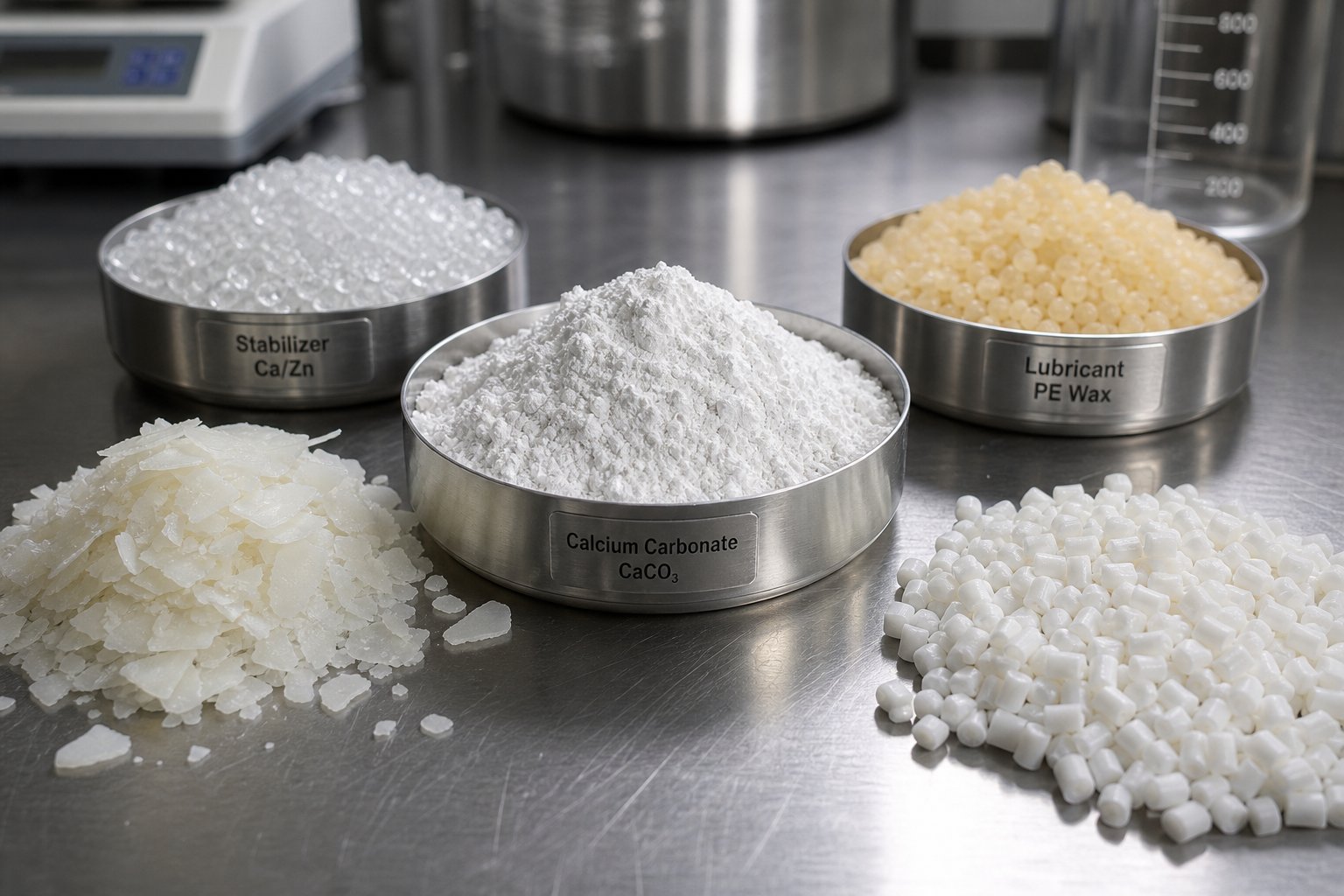
Think of PVC compounds for extrusion as a team where each member has a defined job. Remove one player or get the proportions wrong, and the entire operation suffers. Here are the key additive categories and what they contribute:
- Heat stabilizers - The most critical additive in any PVC formulation. Stabilizers neutralize released HCl, replace weakened carbon-chlorine bonds, and prevent the autocatalytic degradation cascade. The primary systems include calcium-zinc (Ca-Zn) stabilizers for most construction and general-purpose applications, organotin mercaptides for transparent rigid PVC where exceptional clarity and color retention are essential, and legacy lead-based stabilizers that are rapidly being phased out. Typical dosage ranges run 2.5-4.0 phr for calcium-zinc systems and 1.5-3.0 phr for organotin compounds.
- Internal lubricants - Polar molecules such as stearic acid, metal stearates, fatty acid esters, and glycerides that lower melt viscosity and reduce internal friction between polymer chains. They promote earlier, more uniform fusion and help control shear-generated heat inside the barrel.
- External lubricants - Long-chain hydrocarbons such as paraffin waxes and low-molecular-weight polyethylene waxes that migrate to the melt surface. Their job is to reduce frictional drag between the PVC melt and hot metal surfaces of the barrel, adapter, and die - preventing sticking, plate-out, and surface defects on the finished product.
- Impact modifiers - Additives that improve toughness and resistance to cracking. Common options include chlorinated polyethylene (CPE), which entangles with PVC chains for matrix-level reinforcement; acrylic modifiers for applications needing good outdoor weathering; and methacrylate-butadiene-styrene (MBS) for transparent formulations where stress whitening must be minimized.
- Processing aids - Typically acrylic-based polymers that promote faster, more complete fusion of PVC particles at a given temperature. They improve melt strength, surface finish, and die-swell control. You will find them in virtually every rigid PVC profile and pipe compound because they reduce the energy needed to achieve full gelation - the single most important quality parameter in rigid PVC extrusion.
- Fillers - Calcium carbonate (CaCO3) is the workhorse here, used to reduce raw material costs, increase stiffness, and improve dimensional stability. Titanium dioxide (TiO2) serves a dual purpose as both a white pigment and a UV-screening agent, essential for any plastic PVC extrusion profile destined for outdoor exposure. Alumina trihydrate (ATH) is added where fire retardancy is needed.
- UV stabilizers - For PVC profiles, siding, and other products exposed to sunlight, UV absorbers and hindered amine light stabilizers (HALS) prevent photodegradation, chalking, and color fading over the product's service life. Without them, even a well-stabilized compound will deteriorate within a few years of outdoor use.
The balance between internal and external lubricants deserves special attention. Too much internal lubricant accelerates fusion but can reduce melt strength and cause surface defects. Too much external lubricant delays fusion, starves the melt of contact with barrel surfaces needed for heat transfer, and creates waxy plate-out deposits on the die. Experienced compounders often spend as much time fine-tuning the lubricant ratio as they do selecting the stabilizer system.
The Shift From Lead-Based to Calcium-Zinc Stabilizers
For decades, lead-based stabilizers dominated PVC extrusion because they offered exceptional long-term heat stability, excellent electrical properties, and low cost. So why is the industry walking away from them?
The answer lies in regulatory pressure and evolving market expectations. The European Union's REACH regulations and RoHS directive restrict heavy metals in manufactured goods, and lead sits squarely on the restricted substances list. The European PVC industry completed its voluntary phase-out of lead stabilizers, and markets across Asia, the Middle East, and Latin America are following suit. The replacement of choice for most rigid applications? Calcium-zinc stabilizer systems.
Ca-Zn stabilizers are lead-free, comply with major international regulations including NSF requirements for potable water contact, and deliver good color stability during processing. They do, however, require a more carefully optimized lubricant balance and a tighter processing window compared to the forgiving nature of lead-based systems. Organotin stabilizers remain preferred where optical transparency is critical - clear rigid PVC sheet and packaging, for instance - because they provide superior clarity and longer static thermal stability under ISO 182 testing conditions.
For manufacturers producing extruded PVC profiles for construction, infrastructure, or any regulated market, the practical implication is clear: compound formulations must be designed with the stabilizer transition in mind. Switching from lead to Ca-Zn is not a simple one-for-one substitution. It typically demands reformulation of the entire lubricant and co-stabilizer package, potential adjustment of barrel temperatures, and revalidation of the finished product against applicable standards.
Ultimately, the compound formulation is where PVC extrusion quality begins - or fails. Every parameter downstream, from screw speed and barrel zone temperatures to die geometry and cooling rates, is shaped by the specific blend of resin, stabilizer, lubricant, filler, and modifier loaded into the hopper. That interconnection is precisely why the next critical consideration is understanding how those materials move through each stage of the extrusion process itself.
The Complete PVC Extrusion Process Step by Step
A perfectly balanced compound sitting in a storage silo is still just powder. Turning it into a finished pipe, profile, or sheet requires a tightly choreographed sequence of mechanical and thermal stages - each one building on the last, each one capable of introducing defects if even a single parameter drifts. Understanding the full PVC extrusion process from raw material receipt through packaged product gives operators and engineers the context they need to diagnose problems quickly, optimize throughput, and maintain consistent quality shift after shift.
The sequence below covers every major station on a typical PVC extrusion machine line. While specific temperatures, speeds, and pressures vary by product geometry and compound formulation, the fundamental stages remain the same whether you are running rigid pipe, window profiles, or flexible tubing.
From Dry Blend to Extruder Feed
Everything that happens before the melt reaches the die sets the stage for product quality. Rush these early steps, and no amount of downstream adjustment will compensate.
- Raw material receipt and storage - PVC resin, stabilizers, lubricants, fillers, and other additives arrive in bags, super sacks, or bulk silos. Proper storage matters more than many operators realize: PVC resin absorbs moisture from humid environments, and contaminated or wet ingredients introduce voids and surface defects downstream. Store raw materials in dry, temperature-controlled conditions and use first-in-first-out rotation to prevent degradation of heat-sensitive stabilizers.
- Dry blending and compounding - A high-speed hot mixer heats the resin to approximately 110-120 °C through friction while dispersing additives uniformly across every PVC particle. This is not simply stirring - the heat drives absorption of liquid stabilizers and lubricants into the resin's porous grain structure. After hot mixing, the blend transfers to a cooler mixer that brings it down to around 40-50 °C to prevent premature gelation and ensure free-flowing powder for consistent feeding. The homogeneity achieved in this step directly determines how evenly the compound will fuse inside the extruder barrel.
- Feeding into the extruder hopper - The cooled dry blend is conveyed to the PVC extruder machine hopper, typically via vacuum or pneumatic transport. Feed rate must be consistent - starving the screw creates pressure fluctuations, while overfeeding causes bridging in the hopper throat. Gravimetric feeders are increasingly common on modern lines because they maintain a steady mass flow regardless of changes in powder bulk density.
Imagine these first three stages as preparing ingredients and preheating the oven before baking. Skip a step, and the recipe fails no matter how good the oven is.
Plasticizing, Die Forming, and Downstream Operations
This is where the compound transforms from free-flowing powder into a shaped, solid product. Each station along the line has a specific job, and dimensional quality depends on all of them working in concert.
- Melting, plasticizing, and conveying - As the screw rotates, it transports the dry blend forward through graduated heating zones in the barrel. A combination of external barrel heaters and internal shear friction raises the compound temperature progressively - typically starting around 150-160 °C in the feed zone, climbing to 170-185 °C in the compression zone, and leveling or dropping slightly to 175-180 °C in the metering zone for rigid PVC. The critical goal here is achieving proper gelation (also called fusion) - the point at which PVC primary particles break down and interdiffuse into a homogeneous, entangled melt network. Insufficient gelation leads to poor mechanical properties, while excessive shear or temperature pushes the compound toward thermal degradation. This balance is the single most important quality parameter in rigid PVC processing.
- Degassing and venting - Moisture trapped in the dry blend, residual volatiles from additives, and trace amounts of HCl released during initial plasticizing must be evacuated before the melt reaches the die. Most twin-screw PVC extruder machines include a venting zone where the screw geometry creates a low-pressure region, allowing gases to escape through a vent port. Blocked or inadequate venting shows up immediately as bubbles, voids, or a rough, pitted surface on the extrudate - defects that are especially damaging in pressure-rated pipe applications.
- Die forming - The fully plasticized, degassed melt is forced through a precisely machined die that shapes the cross-section. For pipe, an annular die creates a hollow cylindrical form. For window profiles, intricate multi-cavity dies with flow-balancing pins and restrictors distribute the melt evenly across complex geometries. Die temperature is carefully controlled - typically 185-195 °C for rigid PVC - because too high a temperature causes die drool and degradation, while too low a setting produces rough surfaces and excessive back pressure.
- Calibration and sizing - The hot, soft extrudate leaving the die does not yet have its final dimensions. It enters a vacuum calibration tank (for pipes and profiles) or a pressure sizing sleeve, where controlled vacuum or internal air pressure holds the material against precision-machined metal surfaces to establish the target outside diameter and shape. Tolerances here differ by product: pipe sizing prioritizes OD and roundness, while profile calibration must hold complex multi-chamber geometries with wall thicknesses often varying from 1.2 to 2.5 mm within the same cross-section.
- Cooling - Immediately after calibration, the extrudate passes through water-bath spray tanks or immersion tanks that remove residual heat and solidify the PVC melt into its final rigid or flexible state. Uniform cooling is essential - uneven heat removal across the cross-section creates internal residual stresses that lead to warping, ovality in pipes, or twisting in asymmetric profiles. Rigid PVC profiles and pipes typically require multiple cooling stages totaling several meters of tank length, while flexible PVC tubing may use shorter water baths or even air cooling for thin-wall products.
- Haul-off - Caterpillar-style or belt-type pullers grip the cooled extrudate and draw it through the line at a precisely controlled speed. This pull speed, in balance with the extruder's melt output, determines wall thickness and dimensional stability. Even minor haul-off speed fluctuations translate directly into wall thickness variation along the product length. Modern haul-off units use servo-driven controls to maintain speed consistency within fractions of a percent.
- Cutting, sawing, coiling, or stacking - The final station converts the continuous extrudate into deliverable product. Rigid pipes and profiles are cut to standard lengths by traveling saws that move with the line to avoid stopping production. Flexible tubing is coiled onto reels. Finished goods are labeled, inspected, and staged for packaging. At this point, quality control checks for dimensional accuracy, surface finish, and mechanical performance determine whether the product ships or gets flagged for investigation.
| Process Stage | PVC-Specific Consideration | What Goes Wrong If Neglected |
|---|---|---|
| Dry blending | Hot-mix temperature must reach 110-120 °C for proper additive absorption | Inconsistent fusion, lubricant imbalance, surface defects |
| Plasticizing | Gelation level must be optimized - not just melted, but properly fused | Poor impact strength, brittle product, premature field failures |
| Degassing | PVC releases HCl and moisture; vent ports must remain clear | Bubbles, voids, pitted surfaces, equipment corrosion |
| Calibration | Vacuum levels differ for pipe (OD focus) vs. profile (multi-chamber geometry) | OD drift, ovality, dimensional non-conformance |
| Cooling | Uniform heat removal prevents residual stress in thermally sensitive PVC | Warping, bowing, post-extrusion distortion |
| Haul-off | Speed must match melt delivery rate precisely; PVC has low melt elasticity | Wall thickness variation, stretching, necking |
You will notice a recurring theme across every stage: PVC's thermal sensitivity and narrow processing window leave almost no room for sloppy execution. Each station in the PVC extrusion process acts as both a quality gate and a potential failure point. When all ten stages are dialed in and running in sync, the result is a flawless, dimensionally stable product. When even one station drifts, defects propagate downstream faster than with most other thermoplastics.
That sensitivity raises an obvious question - if the process demands such precision, how much does the extruder's mechanical heart, specifically the screw and barrel design, influence whether a PVC line delivers consistent output or constant headaches?
Extruder Types and Screw Design for PVC Processing
The extruder is the mechanical heart of every PVC line, but not all extruders are built equal - and PVC punishes the wrong choice faster than almost any other polymer. The screw and barrel must simultaneously deliver enough energy to achieve full gelation, convey abrasive filler-loaded powder without excessive wear, and keep shear heat low enough to avoid triggering HCl release. That balancing act is why screw geometry and extruder architecture matter so much in this particular application.
Three extruder types dominate PVC processing, each suited to a different formulation and product category. Understanding why one design outperforms the others for a given job is the difference between a PVC extruder that runs reliably for years and one that chews through wear parts every few months.
Why Conical Twin-Screw Extruders Dominate Rigid PVC Processing
Walk into any factory producing rigid PVC pipe, window profiles, or siding, and you will almost certainly find a conical twin-screw extruder at the heart of the line. The reasons are rooted in physics, not tradition.
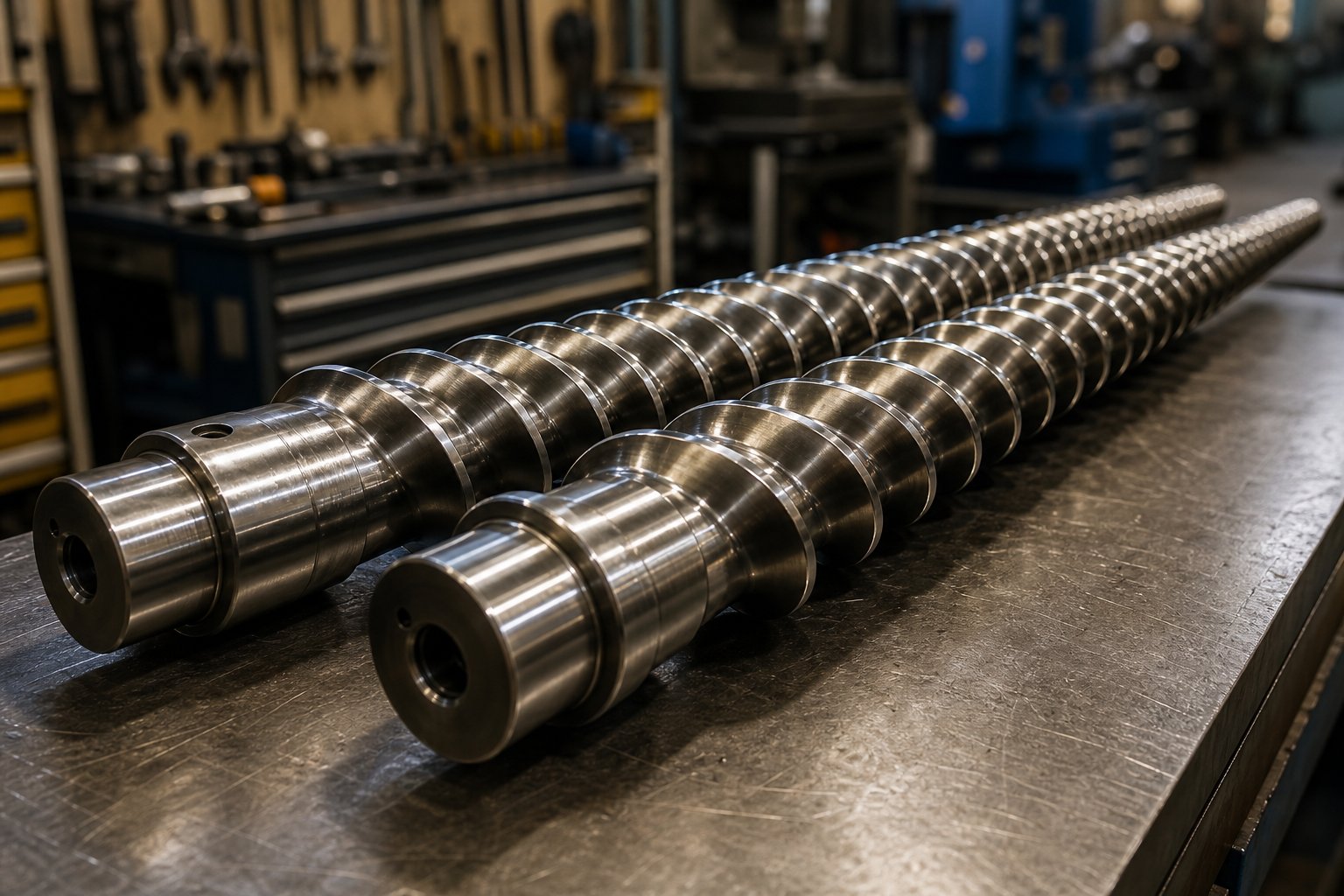
A conical twin-screw design features two counter-rotating, intermeshing screws that taper from a large diameter at the feed end to a smaller diameter at the discharge. That geometry delivers three critical advantages for rigid PVC:
- High feed-zone torque: Cold, unplasticized PVC powder is dense and resistant to conveying. The larger screw diameter at the feed end provides substantial torque and intake volume right where the material needs the most energy to compress and begin fusing. This eliminates the feed-rate limitations that plague smaller-diameter designs on rigid compounds.
- Reduced metering-zone shear: As the screws taper toward the discharge, channel volume decreases naturally, compressing the melt without relying on aggressive screw geometry. The smaller diameter at the metering end means lower circumferential speed at the point where the PVC melt is hottest and most vulnerable to thermal degradation - exactly the kind of gentle, controlled processing that heat-sensitive PVC demands.
- Superior pressure generation: The counter-rotating, closely intermeshing flights create a positive-displacement conveying action that builds consistent melt pressure for die forming. This is especially valuable for complex profile dies where uniform pressure distribution across multi-chamber geometries determines dimensional accuracy.
Typical conical twin-screw PVC extruders operate with L/D ratios in the range of 22:1 to 26:1 - shorter than many parallel twin-screw designs. The compression ratio is built into the taper itself rather than being achieved solely through flight-depth changes, which gives engineers a more gradual, controlled compression path. For a PVC pipe extruder or PVC profile extruder handling rigid compounds, this translates to better gelation uniformity with less risk of localized hot spots.
How do the alternatives compare? Parallel twin-screw extruders use two screws of constant diameter, typically co-rotating. They excel at intensive mixing and high-throughput compounding - think masterbatch production, color concentrate blending, and polymer modification. Their modular screw element design allows engineers to reconfigure mixing, conveying, and kneading zones for different formulations. However, for direct extrusion of rigid PVC into finished products, their higher shear intensity and more complex gearbox requirements make them less common on pipe and profile lines.
Single-screw extruders fill a different niche entirely. Because plasticized PVC flows readily and tolerates moderate shear, a single-screw machine with a properly designed barrier or metering screw handles most flexible PVC applications efficiently - cable jacketing, soft tubing, film, and reprocessing of PVC regrind. Single-screw PVC extruders typically use L/D ratios of 24:1 to 30:1 with moderate compression ratios designed to convey gently and avoid the shear-induced overheating that degrades heat-sensitive PVC melts.
| Extruder Type | Screw Configuration | Typical L/D Ratio | Best Suited For |
|---|---|---|---|
| Conical twin-screw | Counter-rotating, tapered | 22:1 - 26:1 | Rigid PVC pipe, profiles, sheet, WPC |
| Parallel twin-screw | Co-rotating, constant diameter | 32:1 - 52:1 | PVC compounding, masterbatch, specialty blending |
| Single-screw | Single, constant diameter | 24:1 - 30:1 | Flexible PVC tubing, cable insulation, regrind reprocessing |
Barrel and Screw Wear Challenges Unique to PVC
Even the best screw geometry cannot outrun the two relentless forces that make PVC the most punishing polymer a barrel and screw will ever face: chemical corrosion and mechanical abrasion hitting simultaneously.
The chemical side is straightforward but unforgiving. As PVC approaches its degradation threshold, chlorine atoms split from the polymer backbone and combine with trace moisture to form hydrochloric acid. That HCl attacks steel surfaces directly, etching the bore and starting pitting corrosion that progressively roughens the barrel wall and flight lands. A barrel bore or screw surface that might last years on polyethylene can show visible pitting within months on an aggressive PVC compound.
The mechanical side compounds the problem. Rigid PVC formulations routinely carry 5-15 phr of calcium carbonate filler and titanium dioxide pigment - both hard, abrasive mineral particles that grind against flight tips and the barrel bore with every screw rotation. As flight tips wear and bore clearance grows, melt pressure becomes inconsistent, output drops, and product dimensions start drifting. You will notice surging, wall-thickness variation, and surface roughness long before the parts fail catastrophically.
This dual attack - acid corrosion undermining the steel's surface while abrasive fillers mechanically grind it away - is why screw and barrel metallurgy matters more in PVC extrusion equipment than in virtually any other polymer application. Standard nitrided steel that performs adequately on polyolefins simply cannot withstand PVC's corrosive environment. Industry practice calls for layered protection strategies:
- Nitrided base steel (typically 38CrMoAlA) providing core toughness and a hard surface foundation
- Hard chrome plating over nitriding for HCl corrosion resistance on screw surfaces
- Bimetallic barrel liners - nickel-based or tungsten-carbide-loaded alloys centrifugally cast inside the bore - for lines running highly filled or corrosive compounds
- Tungsten carbide overlays on flight lands when filler loading pushes abrasive wear beyond what chrome alone can handle
The compression ratio of the screw plays into wear as well. PVC screws are deliberately designed with moderate compression and deeper flight channels to minimize shear heating. An overly aggressive compression ratio does not just risk thermal degradation - it also concentrates mechanical forces on the flight tips and barrel wall, accelerating wear in the very zones where clearance control matters most.
For manufacturers running conical twin-screw lines for PVC pipe, profile, sheet, or WPC extrusion, sourcing purpose-built replacement barrels and screws engineered specifically for these conditions is not a luxury - it is a production necessity. Suppliers like NANHAIYA, which specializes in conical twin screw barrels designed for PVC and WPC applications, offer custom and replacement components built with the wear-resistant metallurgy and precise screw geometry that these demanding processes require. Partnering with a component supplier that understands PVC-specific corrosion and abrasion challenges directly translates to longer service intervals, more consistent plasticizing performance, and lower unplanned downtime across the life of the extrusion line.
Screw and barrel integrity, ultimately, determines how faithfully the extruder converts a carefully formulated compound into a dimensionally stable melt. But the real proof of that conversion shows up further down the value chain - in the specific products and industries where extruded PVC must meet exacting performance standards every single day.
PVC Extrusion Applications Across Key Industries
A well-engineered extruder running a properly formulated compound can produce virtually any continuous cross-section imaginable. But what does that versatility look like in the real world? The answer spans an impressive range of industries - each placing distinct demands on the extrusion line, from the tolerances required of PVC window extrusion tooling to the biocompatibility standards governing medical tubing. Here is where all the upstream engineering decisions around formulation, screw design, and process control translate into products people depend on every day.
Construction and Building Product Profiles
Construction remains the single largest consumer of extruded PVC, and it is not even close. Rigid PVC's combination of weather resistance, dimensional stability, flame retardancy, and low maintenance cost makes it the default material for an enormous variety of building components. Window and door profile systems represent the flagship application - complex, multi-chamber extruded plastic profiles that must hold tight tolerances across intricate geometries while delivering decades of thermal insulation and structural performance.
Typical construction products produced through PVC extrusion include:
- Window and door frame profiles - multi-chamber designs requiring co-extrusion capability to integrate rigid PVC structural sections with flexible TPE gasket channels in a single pass
- Exterior siding and cladding - wide, thin-wall plastic extrusion profiles engineered for UV resistance, color retention, and impact toughness in all climates
- Rain gutters and downspouts - continuous half-round or K-style gutter profiles that must resist sagging under water load and temperature cycling
- Decking and railing systems - often co-extruded with a capstock layer for enhanced surface durability and fade resistance
- Interior and exterior trim - crown moldings, baseboards, corner guards, and J-channels in a wide variety of extruded plastic shapes
What makes construction profiles particularly demanding from an extrusion perspective? Dimensional tolerances are tight - window profile systems must mate precisely with glass units, hardware, and sealing gaskets. Wall thickness variations as small as 0.1 mm can affect structural ratings and thermal performance. Most lines use co-extrusion to apply colored capstock layers or integrate soft gasket channels, adding a second extruder and more complex die geometry to the production setup.
Infrastructure Pipe and Conduit Extrusion
Below grade and behind walls, PVC pipe systems quietly form the circulatory network of modern infrastructure. Plastic pipe extrusion for municipal and industrial applications demands high output rates, consistent wall thickness, and strict compliance with pressure-rating standards - a very different set of priorities compared to the geometric complexity of building profiles.
Key infrastructure products include:
- Potable water pressure pipe - manufactured to ASTM D1785 or D2241, requiring NSF/ANSI 61 certification for safe drinking water contact
- Sewer and storm drainage pipe - large-diameter, non-pressure applications where consistent wall thickness and joint integrity prevent infiltration and exfiltration
- Electrical conduit - Schedule 40 and Schedule 80 rigid PVC conduit protecting wiring in commercial and industrial buildings
- Telecommunications ducting - smooth-bore or ribbed duct systems designed for low-friction fiber optic cable installation
Pipe extrusion lines prioritize throughput and roundness. A single line producing 200 mm diameter water pipe might output several hundred kilograms of compound per hour, with vacuum sizing calibrators holding outside diameter tolerances within fractions of a millimeter. Wall thickness uniformity is monitored continuously by ultrasonic gauges because even minor eccentricity reduces the pipe's pressure rating - a safety-critical parameter for buried water mains.
Medical, Wire and Cable, and Custom Applications
Flexible and semi-rigid PVC formulations open the door to industries where entirely different performance criteria apply. Medical device manufacturing, for instance, demands tight tolerances, biocompatibility, and consistent performance through sterilization and patient use.
Common medical products made from extruded PVC tubing include:
- IV lines and extension sets - single-lumen tubing requiring precise inner diameter control for accurate flow rates
- Oxygen delivery tubing - lightweight, kink-resistant tubing that maintains its bore under repeated bending
- Blood bag components - flexible film and tubing with strict biocompatibility and barrier property requirements
- Catheter housings - semi-rigid extruded PVC tubing with tight dimensional and surface finish specifications
Medical extrusion environments look nothing like a typical pipe plant. Cleanroom or controlled-environment processing, FDA 21 CFR-compliant formulations, and lot traceability from resin through finished product are standard expectations. As noted by medical device manufacturers, variability in wall thickness or clarity can directly impact flow rates, structural strength, and even sterility of the final device.
Wire and cable applications represent another high-volume segment for flexible PVC extrusion:
- Building wire insulation - THHN/THWN rated conductors requiring flame retardancy and dielectric performance
- Automotive wiring harnesses - insulation and jacketing that must withstand elevated under-hood temperatures and chemical exposure
- Data and communications cables - jacketing for Cat5e/Cat6 cables where dimensional consistency affects signal performance
Beyond these established sectors, custom PVC extrusion is a rapidly growing segment. Architects, OEM designers, and industrial engineers increasingly specify custom plastic profiles tailored to unique applications - snap-fit channels for LED lighting, edge-banding for furniture, sealing strips for refrigeration units, and protective bumper profiles for material handling equipment. These specialized shapes showcase the true flexibility of the extrusion process: if you can draw a cross-section, a skilled die designer can likely produce it.
Across every one of these industries, however, the extruded product is only as good as its ability to pass inspection. Tight tolerances, demanding mechanical requirements, and strict regulatory frameworks mean that quality control and testing standards are not afterthoughts - they are woven into every meter of product that leaves the line.
Troubleshooting Common PVC Extrusion Defects
Even a well-configured line running a properly formulated compound will eventually produce off-spec product. The question is never if defects will appear - it is how quickly you can identify the root cause and correct it before scrap accumulates. PVC's narrow thermal processing window, typically spanning just 15-20 °C between proper gelation and the onset of degradation, makes it far more prone to quality issues than forgiving polyolefins like polyethylene or polypropylene. A temperature excursion that would barely register on a PE pipe line can ruin an entire production run of pvc extruded profiles.
That sensitivity places a premium on one quality parameter above all others: gelation. Proper fusion - where PVC primary particles fully break down and interdiffuse into a continuous, entangled melt network - determines impact strength, surface finish, chemical resistance, and long-term durability. Under-gelated product looks fine on the surface but fails prematurely in the field. Over-processed material degrades, discolors, and releases corrosive HCl. Every defect discussed below traces back, directly or indirectly, to how well the process maintains that delicate balance.
Common PVC Extrusion Defects and Root Causes
The table below organizes the defects most frequently encountered on PVC pipe, profile, and sheet lines into a quick-reference troubleshooting format. Bookmark it - you will likely need it on the production floor.
| Defect | Root Cause(s) | Corrective Action |
|---|---|---|
| Die lines | Damage, scratches, or contamination on the PVC extrusion die lip; carbon buildup inside flow channels | Polish and clean die surfaces; inspect for nicks or wear marks; remove carbon deposits from flow channels |
| Plate-out | Waxy or chalky buildup on die and calibrator surfaces caused by lubricant imbalance - typically excess external lubricant migrating to the melt surface | Adjust internal-to-external lubricant ratio in the compound; clean affected surfaces; verify stabilizer compatibility |
| Shark skin / melt fracture | Excessive shear stress at the die exit exceeding the melt's critical shear rate | Reduce extruder output speed or screw RPM; increase die temperature by 5-10 °C to lower melt viscosity; polish die land area |
| Burn marks and discoloration | Thermal degradation from hot spots, excessive residence time, or stagnant melt zones in the barrel or adapter | Check and recalibrate barrel zone temperatures; verify vent ports are clear; reduce screw speed or torque; eliminate dead spots in flow path |
| Dimensional instability | Inconsistent cooling, haul-off speed variation, unstable melt pressure, or worn screw and barrel increasing backflow | Calibrate vacuum sizing pressure; stabilize puller speed with servo controls; verify screw and barrel clearance; maintain consistent water temperature in cooling tanks |
| Warping or bowing | Uneven cooling across the product cross-section; asymmetric profile design creating differential shrinkage; internal residual stress | Balance vacuum zones and reduce water temperature; optimize cooling tank spray distribution; synchronize haul-off speed; review die flow balance for asymmetric plastic extrusion shapes |
You will notice that several defects share overlapping root causes. Burn marks and shark skin, for instance, both involve excessive thermal or mechanical energy at different points in the system. That overlap is precisely why experienced operators approach troubleshooting systematically rather than chasing symptoms - fixing one parameter often resolves multiple issues simultaneously.
Corrective Actions for Thermal Degradation and Dimensional Issues
Thermal degradation deserves special attention because its consequences cascade rapidly. When PVC overheats, the dehydrochlorination reaction accelerates autocatalytically - the released HCl actually catalyzes further degradation, creating a feedback loop that can contaminate the entire melt stream within minutes. Signs typically appear as yellow or brown streaks progressing to black specks, accompanied by a sharp, acrid odor at the die exit.
If you spot early discoloration, act fast:
- Reduce barrel temperatures in the suspected hot zone by 5-10 °C increments
- Lower screw RPM to reduce shear-generated heat
- Verify that cooling fans or water channels on the barrel are functioning - blocked cooling channels cause localized overheating that thermocouples may not detect
- Check the vent port for blockage; a plugged vent traps volatile degradation products that accelerate the reaction
- Purge the barrel with a thermal-stabilizer-rich purge compound if degradation has progressed beyond surface discoloration
Dimensional issues, by contrast, tend to stem from downstream equipment rather than the extruder itself. Warping in plastic profile extrusions is a classic example - the extrudate may leave the die in perfect condition, only to distort because one side of the profile cools faster than the other in the calibration tank. The fix is not in the barrel settings but in balancing water spray distribution, adjusting vacuum zones independently, and ensuring the calibration table is properly aligned with the die centerline.
A practical diagnostic approach? Separate the problem into two domains. If the defect is visible at the die exit before the product reaches the calibrator, the cause is upstream - barrel temperatures, screw wear, compound formulation, or the PVC extrusion die itself. If the product looks good at the die but develops issues after cooling, focus downstream on calibration, cooling uniformity, and haul-off stability.
Catching defects early, of course, depends entirely on having the right inspection methods and quality benchmarks in place - which is exactly where standardized testing protocols and regulatory frameworks come into play.
Quality Control and Testing Standards for PVC Extrusions
Identifying a defect is only half the battle. Proving that every meter of product leaving the line actually meets specification - and documenting that proof for customers, regulators, and internal audits - requires a structured quality control system built on standardized testing methods. PVC's thermal sensitivity and the complexity of its compound formulations make this even more critical: a product can look flawless on the surface yet harbor insufficient gelation, residual stress, or out-of-spec dimensions that only proper testing will reveal.
Whether you are running a pvc pipe extrusion line, a pvc profile extrusion line, or a pvc sheet extrusion line, the quality framework breaks down into two pillars: what you measure and what standards define acceptable results.
Dimensional and Mechanical Testing Methods
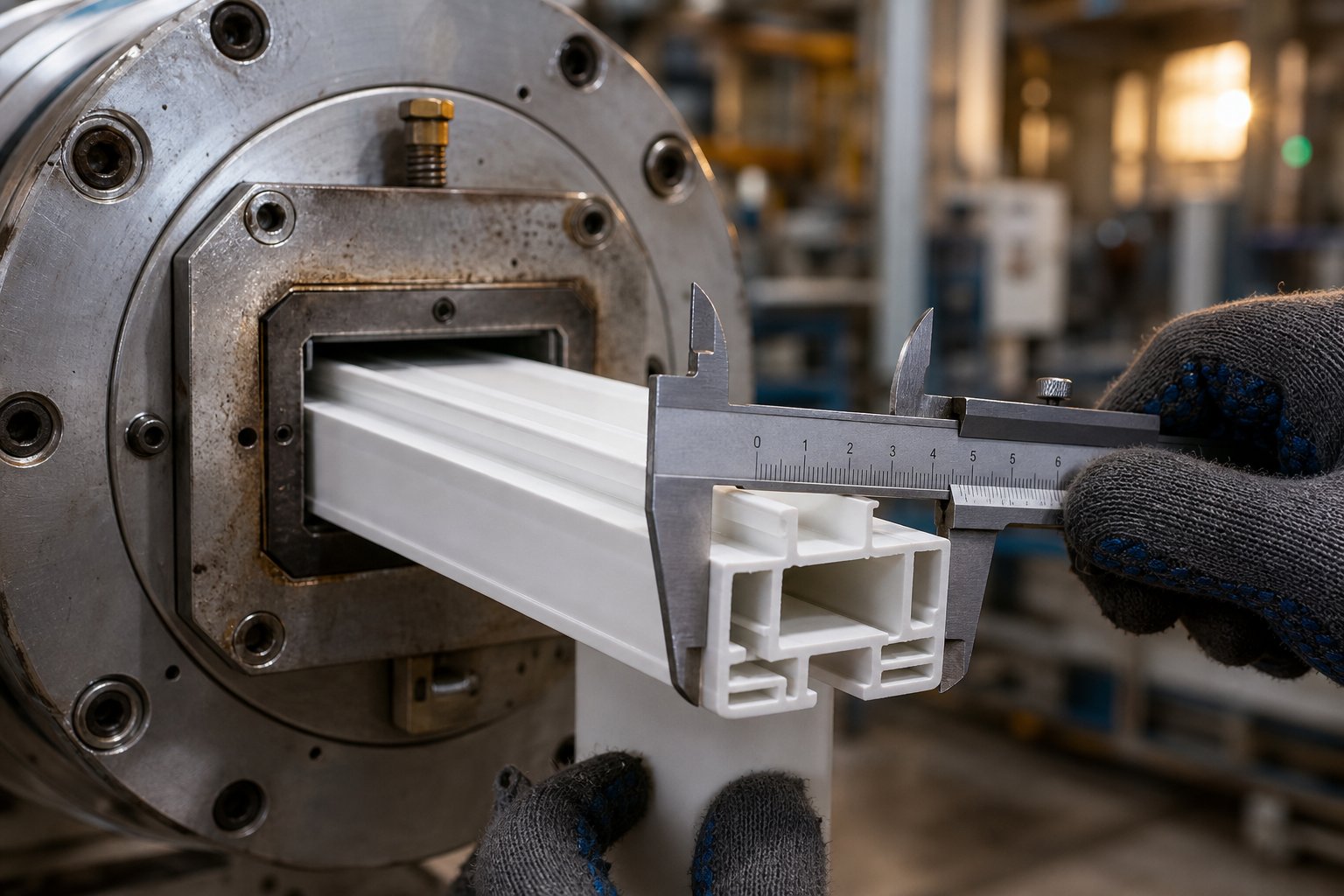
Dimensional accuracy is the first checkpoint, and the tools scale with the precision required. Simple go/no-go gauges provide rapid pass/fail screening on the production floor - if a pipe fitting or profile section does not seat properly in the gauge, it fails immediately without further analysis. For tighter tolerances, calipers, micrometers, and dedicated measuring fixtures verify wall thickness, outside diameter, and channel dimensions against specification drawings. On high-output lines, laser micrometers and optical profile projectors deliver non-contact, real-time measurement that catches dimensional drift before it accumulates into scrap.
Mechanical testing goes deeper - literally stressing the product until it yields or breaks to confirm it can handle real-world service loads:
- Impact testing - Izod pendulum impact resistance per ASTM D256 or Charpy impact per ISO 179 measures how much energy the extruded product absorbs before fracturing. For rigid PVC pipe and profiles, impact strength is one of the clearest indicators of proper gelation. Under-fused material shatters at energy levels that a well-processed sample would easily withstand.
- Tensile testing - Per ASTM D638, dog-bone specimens cut from the extruded product are pulled at a controlled rate until failure. The resulting tensile strength and elongation-at-break values confirm that the compound formulation and processing conditions have delivered the expected mechanical performance.
- Heat reversion testing - Oven-based tests following principles outlined in standards like ASTM F1057 and ISO 2505 expose extruded samples to elevated temperatures and measure dimensional change. Excessive shrinkage or distortion signals locked-in residual stress from improper cooling, over-stretching by the haul-off, or unbalanced die flow - problems invisible to the naked eye but capable of causing field failures in extruded plastic pipe and profile installations.
- Color measurement - Spectrophotometers quantify color consistency using Delta E values, where a Delta E below 1.0 is generally imperceptible to the human eye. For products like exterior siding and window profiles, maintaining color match across production batches is a contractual requirement, not a cosmetic preference.
Beyond finished-product testing, periodic material composition checks during production verify that the PVC formulation has not drifted. Incoming compound quality verification - including melt flow rate testing per ASTM D1238 and thermal stability evaluation using Congo Red or oven-aging methods - catches problematic batches before they ever reach the extruder hopper. A compound with marginal thermal stability or inconsistent filler dispersion will produce defects that no amount of process adjustment can fully compensate for.
Industry Standards and Regulatory Compliance
Every extruded PVC product ships into a regulatory environment defined by material specifications, application-specific performance standards, and regional safety directives. Knowing which standards apply to your product is not optional - it determines market access, liability exposure, and customer confidence.
Key material and product standards include:
- ASTM D1784 - Classification system for rigid PVC and CPVC compounds, defining cell classes based on impact strength, tensile strength, modulus of elasticity, and chemical resistance
- ASTM D4396 - Specification for rigid PVC and CPVC compounds used in non-pressure piping applications
- ASTM D1785 - Specification for PVC plastic pipe in Schedules 40, 80, and 120, covering dimensional requirements, pressure ratings, and material qualification for pvc pipe extrusion products
- ASTM D2241 - Specification for PVC pressure-rated pipe in the SDR series, widely referenced for municipal water distribution systems
- ASTM D2564 - Specification for solvent cements used with PVC plastic piping systems, critical for joint integrity in pipe and profile assemblies
- ISO 1163 - International designation system for PVC materials, facilitating cross-border material specification and procurement
- NSF/ANSI 61 - Drinking water system components certification, mandatory for any extruded plastic pipe or fitting intended for potable water contact in North America
Regional regulatory frameworks add another compliance layer. In Europe, REACH regulations restrict Substances of Very High Concern - including legacy lead-based stabilizers - to below 0.1% by weight in PVC products sold within the EU. The RoHS directive targets heavy metals in electrical and electronic applications, directly affecting PVC cable insulation and conduit compounds. In the United States, FDA 21 CFR governs PVC formulations used in food-contact packaging and medical devices, mandating strict limits on extractable substances and requiring documented biocompatibility testing.
The industry is also moving toward third-party sustainability certifications. ISO 14001 environmental management system certification, SGS testing reports verifying chemical composition, and UL certification for fire resistance and electrical safety properties are increasingly expected by specifiers and procurement teams - especially for construction and infrastructure products entering premium export markets.
What ties all of this together? A quality system that starts with incoming material verification and extends through in-process monitoring to final product certification creates a documented chain of evidence. Every test result, every batch record, and every dimensional inspection report serves the same purpose: proving that the extruded product will perform as specified for its entire design life. That reliability is what differentiates a commodity supplier from a trusted manufacturing partner - and it is also the foundation on which forward-looking sustainability initiatives, smart manufacturing integration, and strategic equipment decisions are built.
Sustainability Trends and Choosing Equipment Partners
Reliable test data and regulatory compliance keep today's production lines running. But what about tomorrow? The PVC extrusion landscape is shifting under pressure from three converging forces: tightening sustainability expectations, accelerating digital transformation on the factory floor, and growing recognition that equipment component choices drive long-term profitability far more than their invoice price suggests. For any PVC extrusion manufacturer looking to stay competitive over the next decade, understanding these trends is not optional - it is strategic planning.
Sustainability and Circular Economy Trends in PVC
PVC carries a unique advantage in the circular economy conversation: it is inherently recyclable through mechanical recycling without significant loss of performance properties. Unlike thermoset materials that cannot be remelted, rigid PVC pipe and profile scrap can be ground, reprocessed, and extruded into new products multiple times. The European PVC industry has formalized this potential through VinylPlus, a voluntary commitment that has driven steadily increasing recycling volumes and now targets ambitious circularity, carbon reduction, and responsible production milestones under its 2030 framework.
How does recycled PVC actually re-enter the extrusion process? The most common approach is co-extrusion with a recycled core and virgin skin. Imagine a window profile where the outer visible surface is made from fresh, UV-stabilized compound for aesthetics and weather resistance, while the inner structural chambers use reprocessed regrind. This technique preserves product appearance and surface quality while diverting significant volumes of post-industrial and post-consumer scrap from landfill.
Flexible PVC recycling, however, remains more challenging. The plasticizer content complicates reprocessing because different plasticizer types and loading levels in mixed waste streams create inconsistent melt behavior. Separating flexible PVC from rigid PVC in waste collection adds cost and complexity. Industry efforts are progressing - advanced sorting technologies and dedicated collection schemes for specific flexible PVC products like flooring and roofing membranes are gaining traction - but the recycling infrastructure for plasticized PVC still lags well behind its rigid counterpart.
For pvc extrusion companies investing in recycling capability, the practical implications touch every part of the line. Regrind introduces variability in bulk density, thermal stability, and filler content that the extruder must accommodate without sacrificing output quality. Gravimetric feeders, tighter barrel temperature control, and robust screw designs that tolerate inconsistent feed characteristics all become more important when recycled content enters the mix.
Industry 4.0 and Smart Extrusion Monitoring
Picture a production line where the extruder adjusts its own screw speed in response to a melt pressure fluctuation, the haul-off automatically compensates for a slight change in cooling water temperature, and maintenance is scheduled not by calendar but by actual component wear data. That scenario is not futuristic - it is the direction pvc extrusion manufacturers are heading right now.
Industry 4.0 integration in extrusion centers on three capabilities:
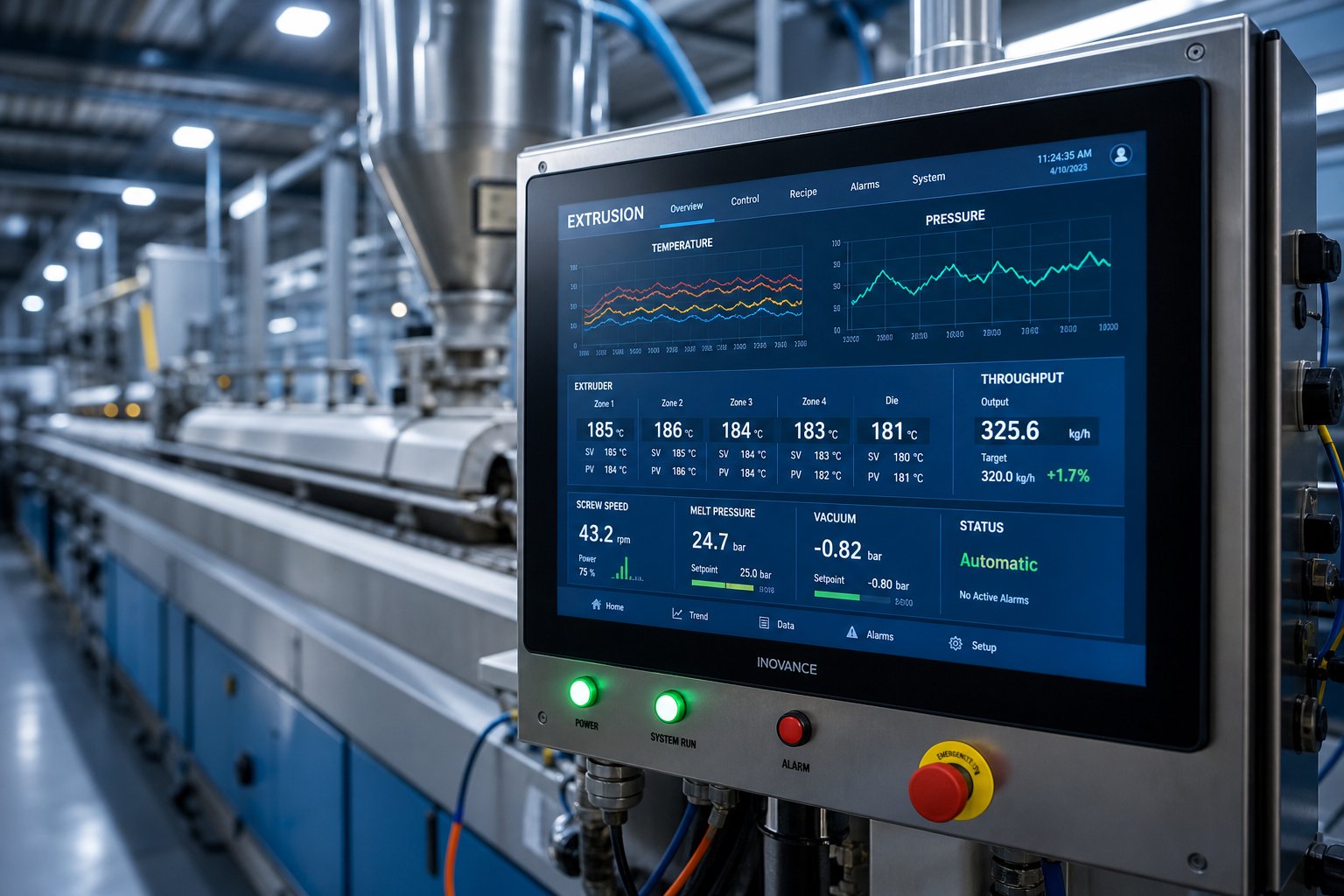
- Real-time melt pressure and temperature monitoring - Sensors positioned at the barrel exit, adapter, and die entry feed continuous data to a central control system. Deviations from target values trigger immediate alerts or automated corrections, catching drift before it produces scrap. For PVC's narrow processing window, this kind of responsiveness is especially valuable.
- Automated screw speed and haul-off adjustment - Closed-loop control systems link melt pressure sensors to screw RPM and puller speed, maintaining consistent output and wall thickness even as raw material properties vary slightly between batches. Servo-driven haul-offs paired with inline laser gauges can hold dimensional tolerances that manual adjustment simply cannot match over extended runs.
- Predictive maintenance on wear components - Rather than replacing screws and barrels on a fixed schedule or waiting for output quality to deteriorate, predictive maintenance systems use vibration analysis, motor load trending, and melt pressure stability data to forecast when a component is approaching its wear limit. This approach can reduce unplanned downtime by up to 50% and cut maintenance costs by 20-30% compared to reactive strategies.
Co-extrusion technology is advancing alongside these digital tools. Multi-material profiles - rigid PVC structural sections with soft TPE gasket channels extruded simultaneously through a single die - are becoming standard in window and door systems. Each material stream requires independent temperature and pressure control, making the kind of real-time monitoring described above not just helpful but essential for consistent bond-line quality between dissimilar polymers.
Selecting the Right Equipment and Component Partners
Here is a reality that experienced processors understand but newcomers often learn the hard way: the total cost of ownership for an extrusion line is dominated not by the initial purchase price but by uptime, output consistency, energy efficiency, and maintenance intervals over years of operation. A barrel that costs 15% less upfront but wears out in half the time - or produces dimensional drift that increases scrap rates - ends up being the most expensive option on the ledger. As industry experts at Plastics Technology have emphasized, factors like inlay composition, concentricity, surface finish, and even shipping and handling quality all determine whether a barrel delivers reliable performance or premature headaches.
This total-cost-of-ownership perspective is particularly critical for wear-critical components in PVC processing. Screws and barrels face the dual assault of HCl corrosion and abrasive filler wear discussed earlier in this article - a combination that shortens service life dramatically compared to polyolefin applications. Choosing components engineered specifically for these conditions, rather than general-purpose parts adapted from other polymer applications, directly affects how many hours a line runs between unplanned stops.
When evaluating pvc extrusion suppliers for critical components, consider these criteria:
- Application-specific engineering capability - Does the supplier design screw geometry and barrel metallurgy specifically for PVC pipe, profile, sheet, or WPC applications? Generic solutions rarely deliver optimal results for custom profile plastic extrusion or high-output pipe lines.
- Material science expertise - Can the supplier recommend the right bimetallic liner composition, surface treatment, and base steel grade for your specific compound's filler loading and corrosion profile?
- Custom geometry options - Production of custom plastic profiles and extrusions often demands non-standard screw configurations. A partner that offers tailored designs rather than only catalog parts adds significant value.
- After-sales technical support - Wear components are consumables, not set-and-forget purchases. Responsive support for troubleshooting, re-ordering, and performance optimization keeps lines running efficiently across multiple replacement cycles.
Suppliers like NANHAIYA, which focuses specifically on conical twin screw barrels engineered for PVC pipe, PVC profile, PVC sheet, and WPC extrusion, exemplify this specialized approach. Their custom and replacement barrels are built with wear-resistant metallurgy and precise screw geometry designed to maintain stable plasticizing performance over extended production campaigns - exactly the kind of purpose-built component that reduces unplanned downtime and supports consistent output quality across the life of the line.
The broader takeaway? Every trend shaping the future of PVC extrusion - circularity, digitalization, multi-material co-extrusion, and tightening quality expectations - amplifies the importance of getting the fundamentals right. A well-formulated compound processed through properly engineered equipment, monitored by smart controls, and supported by knowledgeable component partners creates a production system that delivers not just flawless profiles today, but a sustainable competitive advantage for years to come.
Frequently Asked Questions About PVC Extrusion
1. What is the difference between rigid PVC and flexible PVC extrusion?
The key difference lies in plasticizer content. Rigid PVC (uPVC) contains no plasticizer and processes at 175-210 °C using conical twin-screw extruders, producing stiff products like pipes, window profiles, and siding. Flexible PVC contains 20-50% plasticizer by weight, processes at lower temperatures (160-190 °C), and typically runs on single-screw extruders to produce soft products such as medical tubing, wire insulation, and gaskets. The plasticizer lowers melt viscosity, reduces processing temperatures, and alters die swell behavior, meaning each type requires a fundamentally different extrusion line setup.
2. Why can't PVC resin be extruded without additives?
Pure PVC resin begins to decompose at temperatures below its melt-processing range, releasing hydrochloric acid (HCl) in an accelerating chain reaction that causes discoloration, brittleness, and equipment corrosion. A balanced compound formulation including heat stabilizers, lubricants, impact modifiers, processing aids, and fillers is essential to make PVC processable. Heat stabilizers neutralize HCl and prevent degradation, lubricants manage friction and melt flow, and processing aids promote complete fusion. Without these additives, the resin degrades before it can be properly shaped, regardless of equipment quality.
3. Why are conical twin-screw extruders preferred for rigid PVC processing?
Conical twin-screw extruders provide three critical advantages for rigid PVC. The larger screw diameter at the feed end delivers high torque to convey and compress cold, dense PVC powder. The tapering barrel naturally reduces shear in the metering zone where the melt is hottest and most vulnerable to thermal degradation. Counter-rotating, intermeshing flights create positive-displacement conveying that builds consistent melt pressure for complex die geometries. Specialized component suppliers such as NANHAIYA offer conical twin screw barrels (nhyscrews.com) engineered with wear-resistant metallurgy specifically for PVC pipe, profile, sheet, and WPC extrusion applications.
4. What is the most important quality parameter in rigid PVC extrusion?
Gelation, also called fusion, is the single most critical quality parameter. It refers to the point at which PVC primary particles fully break down and interdiffuse into a continuous, entangled melt network inside the extruder barrel. Insufficient gelation produces products that appear visually acceptable but exhibit poor impact strength, chemical resistance, and long-term durability, leading to premature field failures. Over-processing pushes the compound past its narrow thermal window into degradation. Proper gelation is verified through mechanical testing such as impact resistance per ASTM D256 and heat reversion tests that reveal residual stress.
5. How is recycled PVC reincorporated into the extrusion process?
The most common method is co-extrusion with a recycled core and virgin skin. The outer visible surface uses fresh, UV-stabilized compound for aesthetics and weather resistance, while inner structural sections use reprocessed regrind. This approach preserves product appearance and mechanical performance while diverting post-industrial and post-consumer scrap from landfill. However, regrind introduces variability in bulk density, thermal stability, and filler content, so lines running recycled content typically require gravimetric feeders, tighter barrel temperature control, and robust screw designs that tolerate inconsistent feed characteristics.
Written by
Nanhaiya Technical Team
Zhoushan Nanhaiya Plastic Machinery Co., Ltd.
The Nanhaiya technical team supports screw and barrel manufacturing projects through application review, technical communication, custom manufacturing coordination, and production and quality control.
Discuss Your Application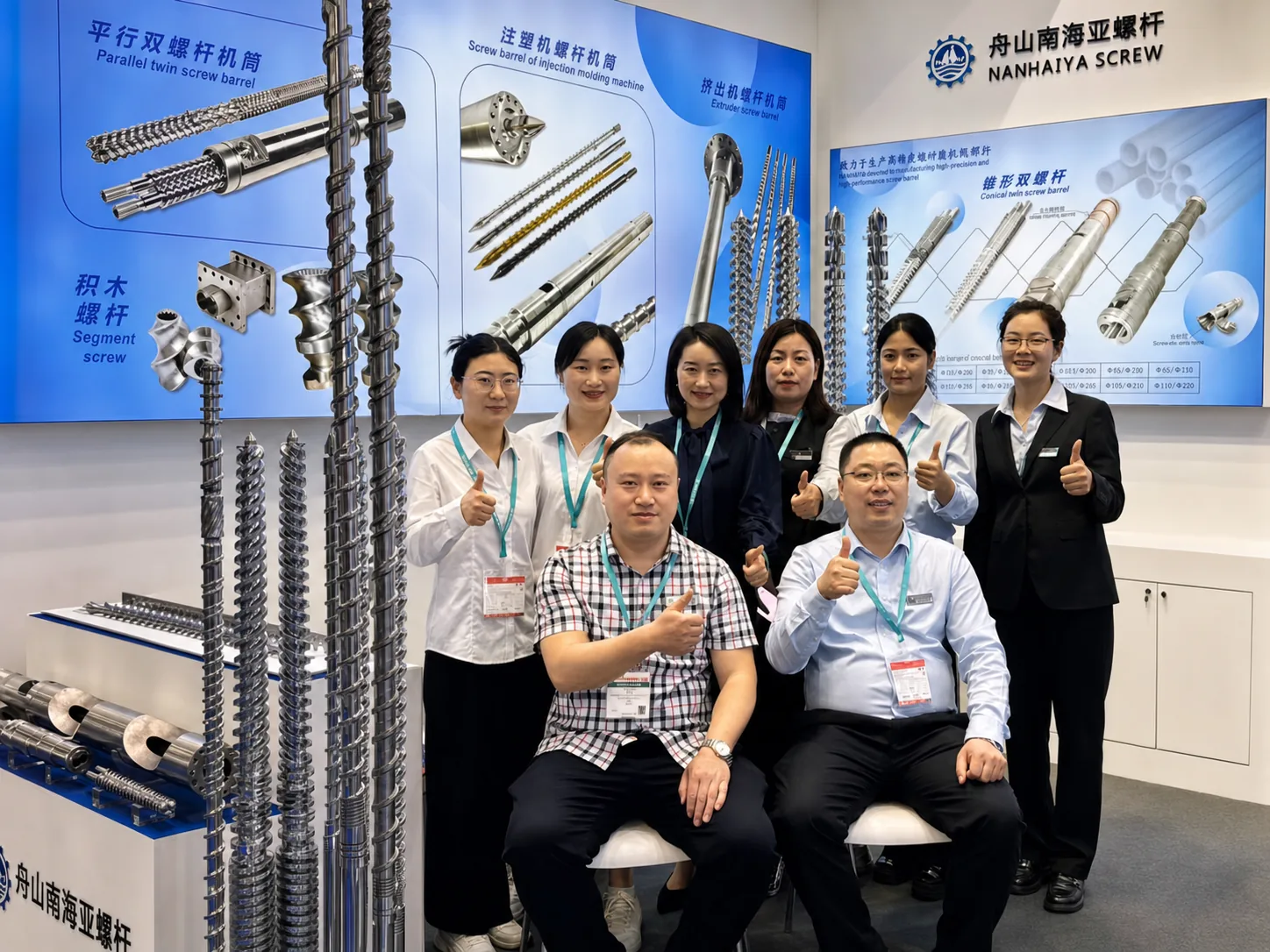
Related Articles
More insights on screw barrel technology and plastics processing.
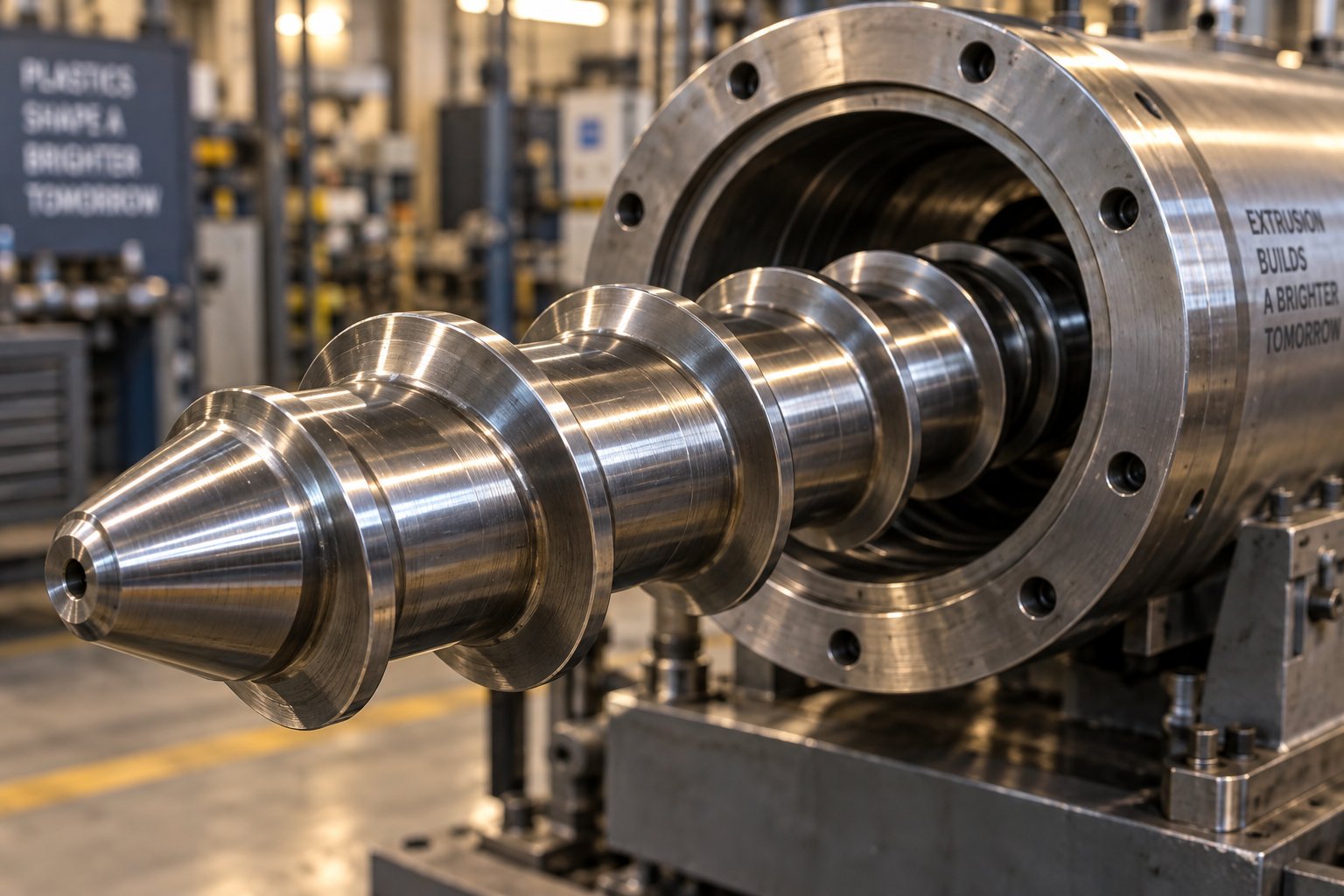
What Nobody Tells You About Screw Barrel For Plastic Machine Design
Oct 10, 2026
Learn how screw barrel for plastic machine design affects melt quality, throughput, and wear life. Covers geometry, resin matching, troubleshooting, and sourcing.
Read Article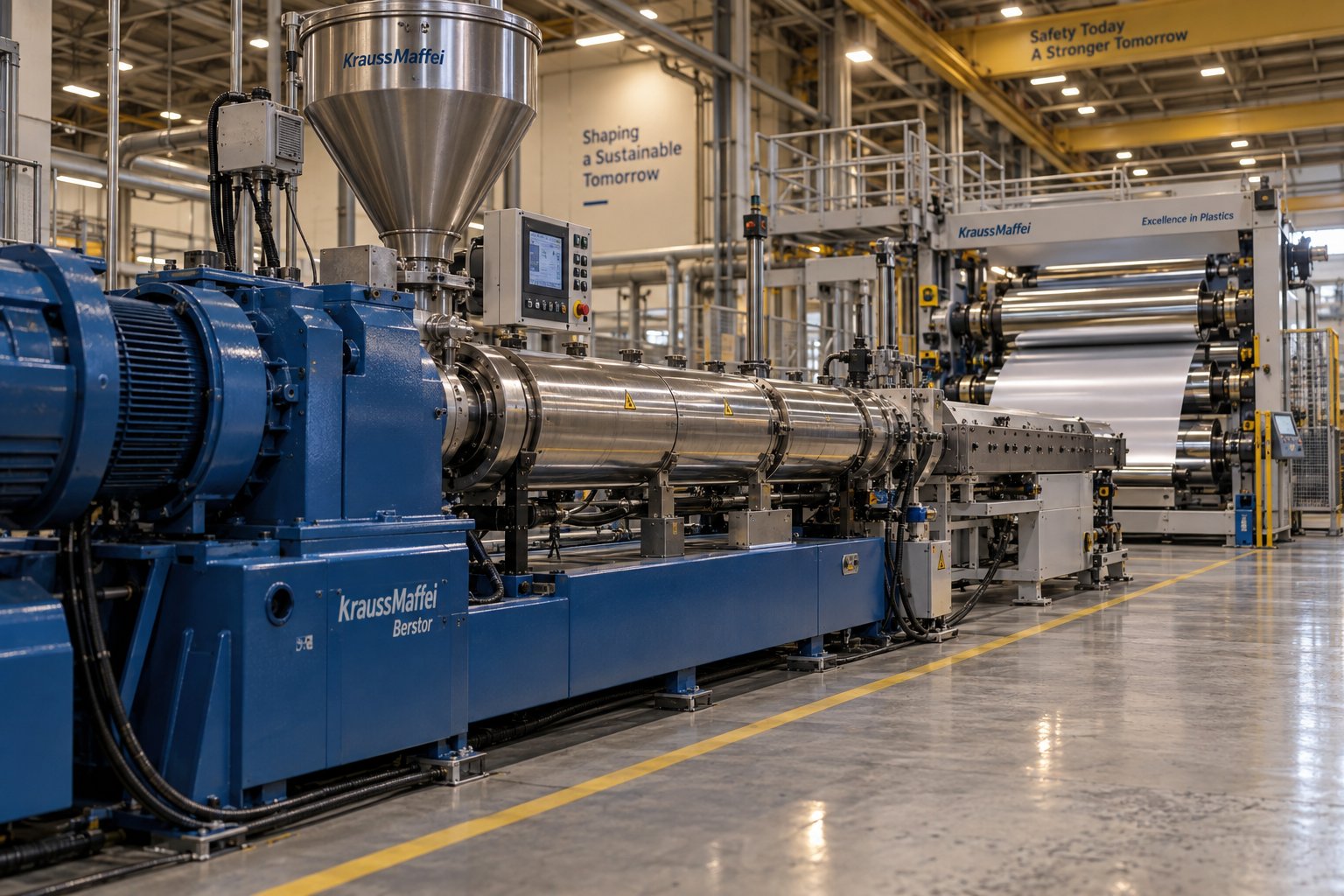
Single Screw Extruder for Sheet: Stop Guessing, Start Specifying
Oct 9, 2026
Learn how to specify a single screw extruder for sheet production. Covers screw geometry, resin-specific processing, troubleshooting, and maintenance best practices.
Read Article
PE Pipe Extruder Machine: What Datasheets Won't Tell You
Oct 9, 2026
Learn how a PE pipe extruder machine works, key specs explained, material grade selection, maintenance tips, and buyer guidance beyond the datasheet.
Read ArticleLooking for something else?
Search by material, symptom or product and jump straight to the relevant page.
These are navigation suggestions based on keyword matching — not a quotation, not a delivery commitment, and not a substitute for engineering review. Final specification is confirmed by our engineers against your drawings and processed material.
Need help with screw barrel selection?
Share your machine model, processed material and application. Our team can help with pricing and technical support.