

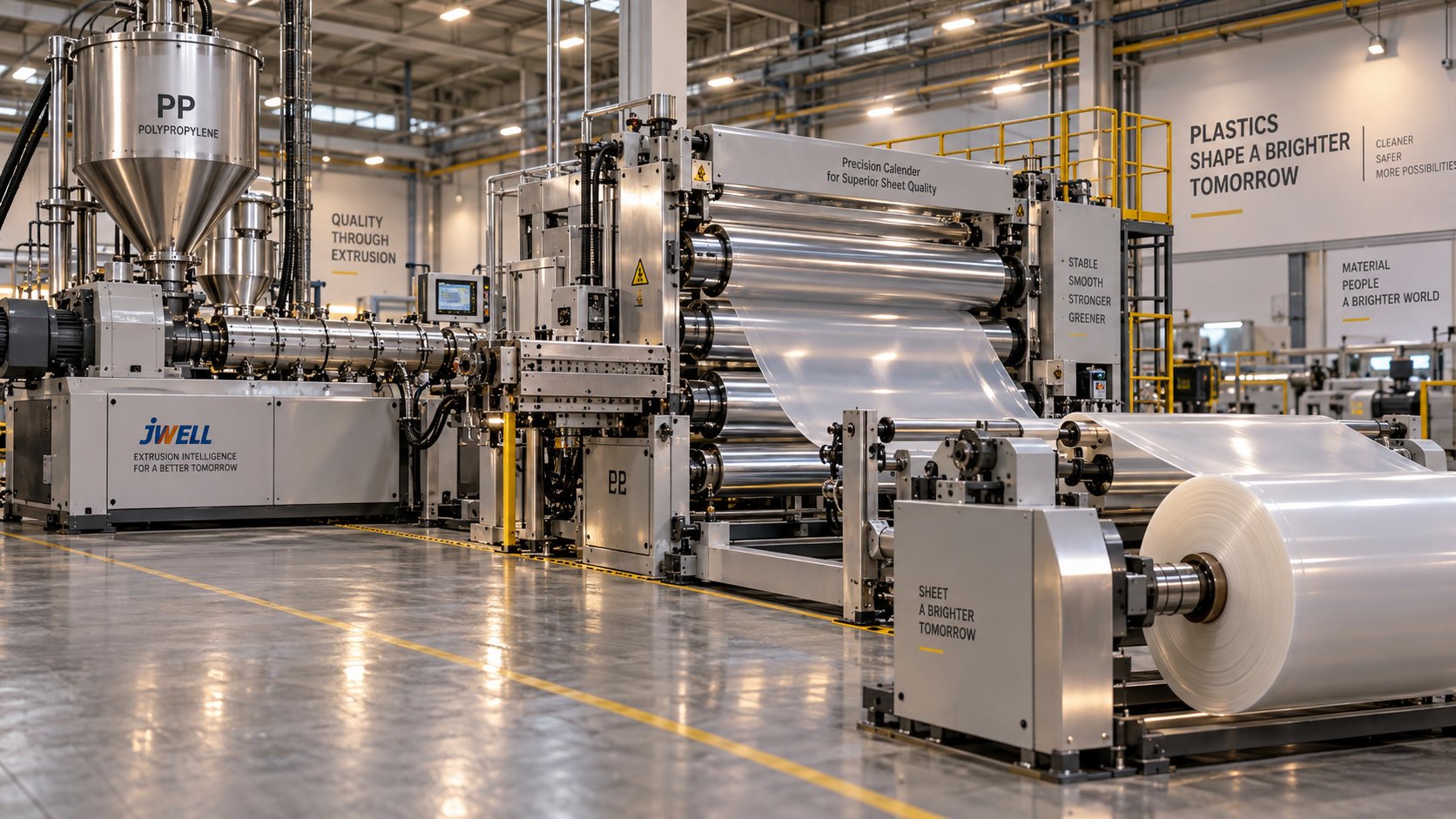
What a PP Sheet Extrusion Machine Is and Why It Matters
Imagine feeding a handful of tiny plastic pellets into one end of a production line and pulling out a perfectly smooth, continuous flat sheet from the other. That is exactly what a PP sheet extrusion machine does, and understanding how it works is the first step toward making a confident equipment investment.
What Is a PP Sheet Extrusion Machine
A PP sheet extrusion machine is a complete production system designed to melt polypropylene resin pellets and form them into continuous flat sheets of controlled thickness and width. At its core, a single-screw or twin-screw extruder heats and pressurizes the raw polymer, then forces the molten material through a flat die that shapes it into a uniform sheet. A downstream calibration stack cools, sizes, and finishes the product before haul-off and cutting systems prepare it for shipment or further processing.
A PP sheet extrusion machine converts polypropylene resin pellets into flat, continuous thermoplastic sheets by melting, metering, and shaping the polymer through a precision flat die, followed by controlled cooling and finishing.
The process of polypropylene extrusion relies on precise coordination between heating zones, screw speed, die geometry, and cooling rolls. Each variable directly influences the clarity, strength, and dimensional accuracy of the finished sheet. Because PP is a semi-crystalline polymer with a melting point around 160 - 170 degrees Celsius, even small deviations in temperature or pressure can alter crystallinity and mechanical performance. That sensitivity is what makes understanding the machine so important.
Why PP Sheet Matters Across Industries
Polypropylene sheet ranks among the most versatile thermoplastic products in industrial manufacturing. You will find it in food packaging trays, thermoformed cups, stationery binders, automotive interior panels, and reusable construction formwork. Its chemical resistance, low density, and recyclability give it an edge that few other plastics can match at a comparable cost. The growing demand for sustainable packaging has only accelerated interest in pp sheet extrusion, pushing manufacturers to invest in higher-output, more energy-efficient pp sheet extrusion lines.
This guide is built as a buyer-education resource rather than a sales pitch. Whether you are evaluating your first plastic sheet extrusion machine or upgrading an existing line, the sections ahead cover every detail you need: core components, critical specifications, the step-by-step sheet extrusion process, material comparisons across polymer families, selection criteria matched to real-world applications, and practical troubleshooting for common defects. The goal is to give you the knowledge to assess any pp extrusion line on its own merits.
Every one of those topics traces back to the individual components inside the machine, and how well they work together determines whether you produce flawless sheet or fight recurring quality problems.
Core Components of a PP Sheet Extrusion Line Explained
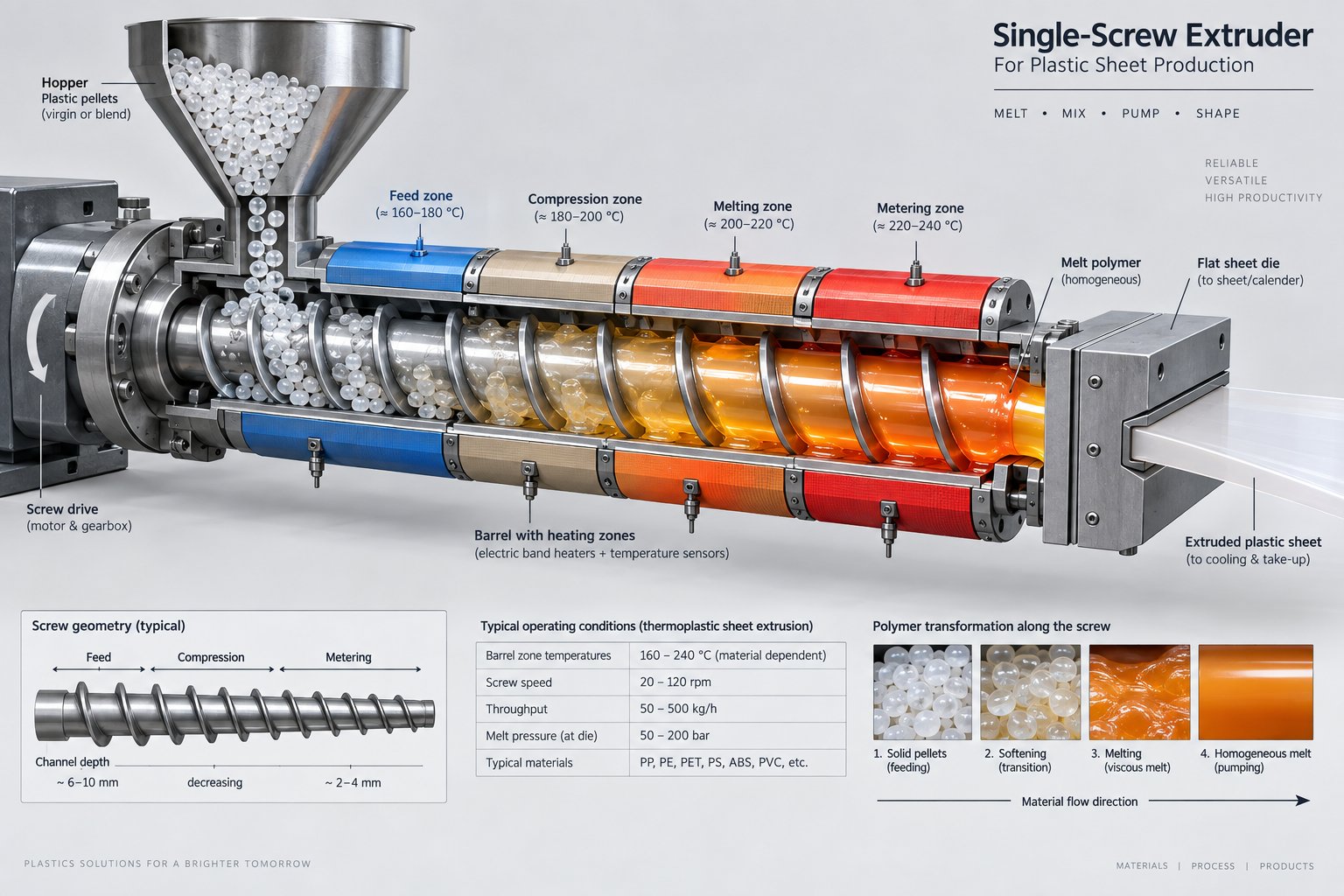
A flawless polypropylene sheet does not come from any single part of the machine. It comes from every component in the sheet extrusion line performing its role with precision, in tight coordination with everything upstream and downstream. Think of it like an orchestra: one off-key instrument and the entire output suffers. Understanding each section of the extruder line helps you spot weaknesses before they become quality problems on the factory floor.
The Extruder Unit and Feeding System
The extruder is the heart of any plastic sheet extruder, and its job breaks down into four continuous actions: conveying, compressing, melting, and metering the PP resin. Here is how the subsystems work together:
Raw polypropylene pellets enter through a hopper mounted above the barrel. Gravity or a forced-feed system moves them into the feed throat, a cooled opening that prevents premature melting and bridging. From there, the rotating screw pulls the pellets into the heated barrel, pushing them through three functional zones: the feed zone accepts and conveys solid pellets, the compression zone squeezes out trapped air and begins melting through friction and external heat, and the metering zone homogenizes the melt and builds the pressure needed to push it into the die.
Two screw design details deserve close attention. The compression ratio, which is the depth of the feed zone channel divided by the metering zone channel depth, determines how aggressively the resin is compacted and melted. PP typically requires ratios in the range of 2.5:1 to 3.5:1 to handle its semi-crystalline melt behavior without degradation. Flight geometry, including pitch, width, and clearance, influences mixing efficiency and shear heat generation. A poorly matched screw design leads to uneven melt temperature, unmixed resin pockets, and inconsistent output.
The drive motor and gearbox supply the torque to rotate the screw at controlled speeds. Higher torque ratings allow stable operation at lower RPMs, which reduces shear heating and gives you more precise temperature control. Barrel zone heaters, typically ceramic band or cast-aluminum types, add external heat across multiple independently controlled zones to bring the PP to its processing window of roughly 200 to 280 degrees Celsius.
The Flat Die and Calibration Stack
Once the melt leaves the barrel, it passes through a screen pack and breaker plate that filter contaminants and stabilize pressure. The molten PP then enters the flat die, which is the component responsible for spreading the melt into a wide, thin curtain.
Two common die designs dominate sheet extrusion machinery. A T-die uses a simple manifold channel to distribute melt from the center outward. A coat-hanger die uses a tapered, teardrop-shaped flow channel that compensates for pressure drop at the edges, delivering more uniform flow across the full width. For PP sheet production, coat-hanger dies are generally preferred because they produce tighter thickness tolerances, especially at widths beyond 1,000 mm.
Fine-tuning happens at the die lips. Adjustable lip bolts, sometimes accompanied by choker bars, let operators control the gap across the die width to correct cross-directional thickness variation. Even a few thousandths of a millimeter adjustment at the lip can eliminate visible gauge bands in the finished product.
Immediately after the die, the molten sheet enters the three-roll polishing stack, also called a calender stack. These chrome-plated, temperature-controlled rolls perform three critical tasks simultaneously: they cool the sheet rapidly enough to control PP crystallinity, they press it to final thickness, and they impart the desired surface finish, whether glossy, matte, or embossed. Roll temperature uniformity is especially important for PP because uneven cooling creates internal stresses that cause warping or curling after the sheet leaves the line.
Winding, Cutting, and Haul-Off Systems
After the calender stack, the sheet moves through haul-off rolls (also called pull rolls) that maintain constant tension and line speed. The speed relationship between haul-off and extruder output directly governs final sheet thickness: increase haul-off speed relative to extruder output and the sheet gets thinner, decrease it and the sheet gets thicker.
Edge trimming units remove the thicker bead edges that naturally form at the die margins. The trim scrap is typically ground in-line and recycled back into the hopper, keeping material waste to a minimum. Depending on the end-use application, the finished sheet is either wound onto rolls for downstream thermoforming or cross-cut into flat panels by guillotine or rotary cutters for direct shipment.
The table below maps every major component in a complete extrusion sheet line to its function and the key specification you should evaluate when comparing machines:
| Component | Primary Function | Key Specification to Evaluate |
|---|---|---|
| Hopper and Feed System | Delivers PP pellets into the barrel at a consistent rate | Gravimetric vs. volumetric feeding; capacity (kg/hr) |
| Screw | Conveys, compresses, melts, and meters the PP resin | Diameter, L/D ratio, compression ratio, flight geometry |
| Barrel | Contains the screw and provides external heating zones | Number of heating zones, zone temperature range, metallurgy (nitrided, bimetallic) |
| Drive Motor and Gearbox | Provides torque and speed control for the screw | Motor power (kW), torque rating, speed range (RPM) |
| Screen Pack and Breaker Plate | Filters contaminants and stabilizes melt pressure | Mesh size options, manual vs. continuous screen changer |
| Flat Die (T-Die or Coat-Hanger) | Distributes melt uniformly across full sheet width | Die width, lip adjustment method, flow channel design |
| Three-Roll Polishing Stack | Cools, sizes, and finishes the sheet surface | Roll diameter, temperature control precision (target ±0.5°C), surface finish options |
| Haul-Off Rolls | Pull the sheet at controlled speed to set final thickness | Speed range, servo vs. AC drive, tension control accuracy |
| Edge Trimming Unit | Removes bead edges and recycles trim scrap | Trim width range, integrated grinder and return system |
| Winder or Cross-Cutter | Collects finished sheet in rolls or cut panels | Maximum roll diameter, cut length accuracy, stacking capability |
When you evaluate a sheet extruder machine, resist the temptation to focus on just the extruder or just the die. The weakest link in the line dictates final sheet quality. A high-end extruder paired with a poorly controlled calender stack still produces inconsistent sheet, and the most precise die in the world cannot fix a poorly melted resin. Each component's specifications need to match the others, and the numbers behind those specifications are where the next layer of understanding begins.
Machine Specifications Every Buyer Should Understand
Spec sheets for sheet extrusion equipment are packed with numbers, but those numbers only become useful once you know what they actually control on the production floor. A screw diameter, an L/D ratio, an output rate in kg/hr — each one shapes the quality, speed, and economics of every meter of PP sheet your line produces. Let's break them down one at a time so you can read any equipment proposal with confidence.
Screw Diameter and L/D Ratio Demystified
The screw diameter is the single biggest indicator of a sheet extrusion machine's output class. You will typically encounter four common sizes in PP sheet production:
- 65 mm — entry-level lines for narrow, thin-gauge sheet or pilot runs
- 90 mm — mid-range lines suitable for packaging-grade sheet up to roughly 1,200 mm wide
- 120 mm — high-output lines for wide-format thermoforming sheet and industrial panels
- 150 mm — heavy-duty lines targeting maximum throughput for thick construction board or high-volume food-packaging sheet
Larger diameters move more material per revolution, but they also demand bigger motors, heavier gearboxes, and more floor space. Choosing the smallest diameter that comfortably meets your output target keeps capital and energy costs in check.
The L/D ratio — screw length divided by its diameter — tells you how much working length the resin has inside the barrel. For PP sheet applications, ratios between 30:1 and 36:1 are standard. A longer screw gives the pellets more time under heat and shear, which improves melt homogeneity and mixing. As extrusion engineer Allan Griff explains, more length can mean more output when heating, melting, or mixing are the limiting factors. The trade-off? Higher L/D ratios increase machine cost, barrel length, and plant footprint. For most PP plastic sheet extrusion line setups, a 33:1 ratio strikes a practical balance between melt quality and investment.
Output Capacity, Die Width, and Sheet Thickness Ranges
These three specifications are deeply interconnected, and understanding how they relate to each other prevents costly mismatches.
Output capacity, expressed in kg/hr, defines the volume of molten PP the extruder can deliver. Typical ranges run from around 150 kg/hr on smaller plastic extrusion line configurations up to 800 kg/hr or more on large-format systems. But raw output alone does not determine what you can produce — the die width and target sheet thickness dictate how that output gets distributed.
Die width options generally range from 600 mm for narrow specialty sheet to 2,000 mm and beyond for wide-format packaging or construction applications. Here is the critical relationship: a wider die spreads the same mass of molten PP over a larger area, so it requires a proportionally higher extruder output to maintain line speed and sheet thickness. If you pair a 2,000 mm die with a 65 mm extruder, you simply will not have enough melt volume to run at commercially viable speeds.
Sheet thickness capabilities typically span 0.2 mm to 6 mm or more. Thin-gauge sheet (under 1.5 mm) demands precise die lip control and fast haul-off speeds, while thick-gauge board (above 3 mm) requires slower cooling rates and higher extruder output per meter of line speed. Matching these three parameters correctly is the foundation of a productive plastic extrusion line.
Barrel Zone Configurations and Temperature Control
Polypropylene is a semi-crystalline polymer, meaning its melt behavior changes sharply around its crystalline melting point. That characteristic makes barrel temperature control especially critical. Unlike amorphous plastics that soften gradually, PP transitions from solid to fluid over a relatively narrow temperature window. Even a 5 to 10 degree Celsius deviation in one barrel zone can produce unmelted pellets, localized degradation, or visible surface defects in the finished sheet.
Modern plastic extrusion machines divide the barrel into multiple independently controlled heating zones — typically four to seven for PP sheet production. Each zone uses its own heater band and thermocouple, allowing operators to create a precise temperature profile from the feed throat to the die adapter. As SHS Extrusion Training notes, the effects of a single zone temperature change can take many minutes to stabilize, making independent zone control essential for fine-tuning without disrupting the entire melt stream.
A typical PP barrel profile starts with a cooler feed zone (often 40 to 60 degrees Celsius to prevent pellet bridging), ramps up through the compression zone (210 to 240 degrees Celsius), and holds steady or slightly decreases through the metering zone (220 to 250 degrees Celsius). More zones give you finer resolution over that gradient, which translates directly into tighter melt temperature consistency and better sheet quality.
The table below maps the key specification parameters you will encounter on any sheet extrusion equipment data sheet, explains what each one means in practice, and provides the typical ranges for PP sheet production:
| Specification Parameter | What It Means in Practice | Typical Range for PP Sheet |
|---|---|---|
| Screw Diameter | Determines output class and motor/gearbox requirements | 65 mm, 90 mm, 120 mm, 150 mm |
| L/D Ratio | Controls melt residence time, mixing quality, and homogeneity | 30:1 to 36:1 |
| Output Capacity | Maximum melt throughput; must match die width and target thickness | 150 to 800+ kg/hr |
| Die Width | Defines the maximum sheet width the line can produce | 600 mm to 2,000 mm+ |
| Sheet Thickness Range | Achievable gauge span; driven by die lip gap, haul-off speed, and cooling capacity | 0.2 mm to 6 mm+ |
| Number of Barrel Heating Zones | Determines temperature profile resolution and process stability | 4 to 7 zones |
| Barrel Temperature Range | Must cover PP's full processing window without overshooting degradation limits | 40 to 280 degrees Celsius (zone-dependent) |
| Screw Compression Ratio | Governs melting aggressiveness and air removal; must suit PP's semi-crystalline nature | 2.5:1 to 3.5:1 |
| Main Motor Power | Limits maximum screw torque and sustainable output rate | 37 kW to 250+ kW (diameter-dependent) |
Reading a spec sheet becomes far less intimidating when you connect each number to a tangible production outcome. A 120 mm, 33:1 L/D extruder with six barrel zones and a 1,600 mm coat-hanger die is no longer just a string of figures — it is a high-output PP sheet line capable of producing wide-format thermoforming sheet with tight gauge tolerance and excellent melt uniformity.
Specifications tell you what a machine can do. The extrusion process itself — how raw pellets actually travel through those components and transform into finished sheet — reveals whether a particular configuration will deliver on its numbers in your specific application.
The PP Sheet Extrusion Process From Pellet to Finished Product
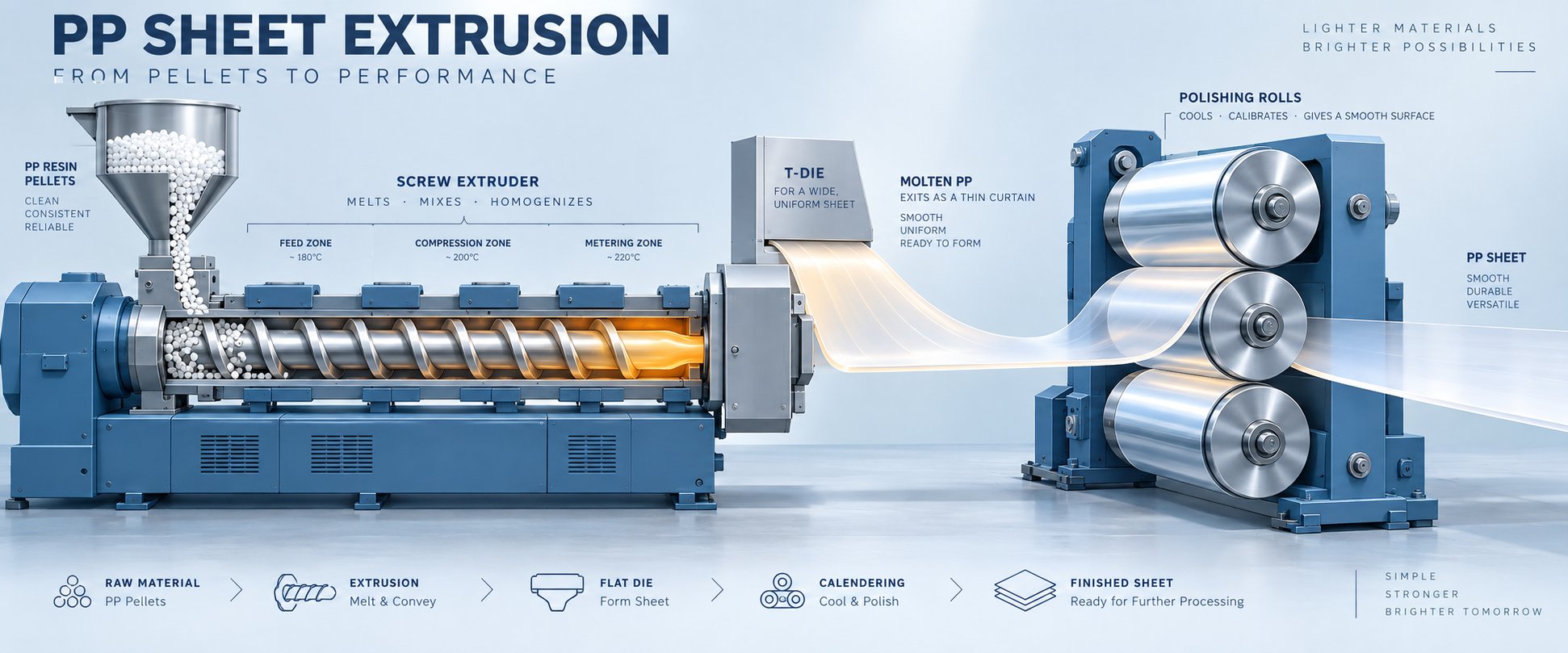
A spec sheet tells you what a machine is built to do. The sheet extrusion process tells you what actually happens inside it — second by second, zone by zone — as raw polypropylene pellets transform into a flat, finished product. Understanding this sequence is what separates operators who react to problems from those who prevent them, because every defect in the final sheet traces back to a specific stage and the machine component responsible for it.
Here is the complete polymer sheet extrusion workflow, broken into its core stages:
- Material preparation and feeding
- Melting and compression in the screw and barrel
- Metering, filtration, and die forming
- Cooling and calibration on the polishing stack
- Haul-off, cutting or winding, and finishing
Each stage hands off to the next. A failure in any one of them cascades forward, so let's walk through them in order.
Material Preparation and Feeding
Everything starts with resin selection, and the choice you make here shapes every parameter downstream. PP sheet producers typically choose between two main resin families:
- Homopolymer PP — higher stiffness, better clarity, and a sharper melting point. Ideal for thermoforming trays, stationery covers, and applications demanding rigidity.
- Copolymer PP — improved impact resistance and flexibility, especially at low temperatures. Often preferred for food packaging and automotive interior panels where toughness matters more than optical clarity.
The critical material characteristic to evaluate is the melt flow index (MFI), measured at 230 degrees Celsius under a 2.16 kg load for polypropylene according to both ASTM D1238 and ISO 1133 standards. MFI tells you how easily the resin flows when molten. A higher MFI means lower molecular weight and easier flow, which suits thin-gauge sheet and high-speed lines. A lower MFI means higher molecular weight, greater melt strength, and better suitability for thick-gauge board extrusion where the sheet must hold its shape as it exits the die. In practical terms, your resin's MFI directly dictates screw speed settings and barrel temperature profiles — pick a resin without checking its MFI against your machine's processing window, and you are setting yourself up for inconsistent output from the very first pellet.
One advantage of working with PP is that it is non-hygroscopic, meaning the base resin does not absorb atmospheric moisture the way PET, nylon, or polycarbonate do. That eliminates the need for energy-intensive dehumidifying dryers in most cases. However, if your formulation includes fillers, colorant masterbatches, or recycled content, those additives may carry surface moisture that requires pre-drying to avoid bubbles or splay marks in the finished sheet.
The pellets enter the extruder through a gravimetric or volumetric feeder. Gravimetric systems weigh the material in real time and adjust feed rate automatically, delivering tighter control over output consistency. Volumetric feeders are simpler and less expensive, but they cannot compensate for variations in pellet bulk density. For plastic sheet extrusion applications where gauge tolerance is critical — think thermoforming-grade sheet — gravimetric feeding pays for itself through reduced scrap.
Melting, Metering, and Die Forming
When pellets drop into the barrel, the rotating screw takes over. Imagine a long, spiraling conveyor belt enclosed in a heated steel tube — that is essentially what happens, but the physics are far more demanding than simple transport.
The screw is divided into three functional zones, each with a distinct job:
- Feed zone — Deep screw channels accept solid pellets and convey them forward. The barrel wall here is often kept cooler (around 40 to 60 degrees Celsius) to maintain friction between the pellets and barrel, which is what actually drives material forward. Premature melting in this zone creates a slippery film that kills conveying efficiency.
- Compression zone — The channel depth decreases gradually, compacting the pellets and squeezing out trapped air. Friction between the resin and the barrel wall, combined with external band heaters ramping to 210 to 240 degrees Celsius, drives the phase change from solid granules to a viscous melt. PP's semi-crystalline structure means this transition is relatively sharp compared to amorphous polymers, so compression ratio and zone length must be carefully matched to the resin grade.
- Metering zone — A shallow, constant-depth channel homogenizes the melt temperature and builds the consistent pressure needed to push the polymer through the screen pack and die. Pressure stability here is everything. Fluctuations in metering zone pressure translate directly into thickness variations in the finished sheet — what operators call "surging."
Before reaching the die, the melt passes through a screen pack supported by a breaker plate. The screens filter out contaminants, gels, and any unmelted resin particles, while the breaker plate converts the screw's rotational flow into a straight-line flow pattern. Clean screens also create back pressure that improves melt mixing. As screens clog over time, back pressure rises and output drops — monitoring the pressure differential across the screen pack is one of the simplest and most valuable process checks an operator can perform.
The filtered melt then flows through an adapter section into the flat die. Inside the die, a coat-hanger or T-slot manifold spreads the melt stream across the full working width. The die lip gap — the adjustable opening at the exit — is set slightly wider than the target sheet thickness to account for die swell, which is the natural tendency of the polymer to expand as it exits the constrained die channel. The combination of die lip gap setting and melt temperature at the die exit gives operators their primary levers for controlling sheet thickness across the width.
Cooling, Calibration, and Finishing
The moment molten PP exits the die, a race against physics begins. PP is semi-crystalline, and how fast you cool it determines how much crystallinity develops, which in turn controls the sheet's stiffness, clarity, and dimensional stability. Cool it too slowly and excessive crystallization makes the sheet opaque and brittle. Cool it too rapidly and you lock in internal stresses that cause warping hours or days after production.
The three-roll polishing stack manages this balance. The molten curtain of PP enters the nip between the top and middle rolls, which press it to the target thickness while rapidly extracting heat through their temperature-controlled chrome surfaces. The sheet then wraps around the middle and bottom rolls, continuing to cool in a controlled gradient. Roll temperatures for PP typically range from 40 to 100 degrees Celsius, depending on sheet thickness and the desired crystallinity level.
Surface finish is also set at this stage. Polished chrome rolls produce a high-gloss extruded plastic sheet, while matte-textured or embossed rolls imprint patterns directly into the still-pliable surface. Switching between finishes is as straightforward as swapping roll sleeves — no die change required.
After the polishing stack, haul-off rolls pull the cooled sheet at a precisely synchronized speed. This speed, relative to the extruder's output rate, serves as the final thickness control lever. Even a one-percent change in haul-off speed produces a measurable gauge shift, so modern lines use servo-driven pull rolls for the tightest possible speed regulation.
The line finishes with edge trimming to remove the thicker bead edges and either winding the continuous sheet onto rolls or cross-cutting it into flat panels. The trimmed edge scrap is typically granulated in-line and returned to the hopper, keeping material utilization rates well above 95 percent. At this point, the extruded plastic sheet is ready for quality inspection, stacking, and shipment — or it moves directly into a downstream thermoforming station.
Every one of these stages interacts with the others. Change your resin grade and you may need to adjust barrel temperatures, screw speed, die lip gap, roll temperatures, and haul-off speed to maintain the same sheet quality. That interconnectedness is exactly why dedicated PP lines outperform general-purpose equipment — and why comparing PP machine configurations against those built for other polymers reveals differences that matter far more than most buyers expect.
How PP Machines Differ From PS, PET, PE, and ABS Lines
The previous section highlighted how PP's semi-crystalline nature shapes every processing decision — from barrel temperatures to cooling rates. That same molecular structure is what forces PP sheet extrusion machines into fundamentally different configurations compared to lines built for amorphous or differently crystallizing polymers. If you are evaluating a pp ps sheet extrusion line or considering a multi-material platform, understanding these differences prevents costly compromises in sheet quality.
PP vs PS and PET Machine Configuration Differences
Polystyrene (PS) is amorphous. Its polymer chains are arranged randomly — like strands of cooked spaghetti — with no ordered crystalline regions. That disordered structure means PS softens gradually over a wide temperature range rather than melting sharply the way PP does. The practical impact on machine design? PS screws can use lower compression ratios, typically 2.0:1 to 2.5:1, because there is no sharp crystalline-to-melt transition requiring aggressive compaction. PP screws need higher compression ratios, generally 2.5:1 to 3.5:1, to overcome the energy barrier of melting its crystalline regions and ensure complete homogenization.
Cooling strategy diverges even more dramatically. PP requires a controlled, moderate cooling rate on the polishing stack so that crystallization develops uniformly. Cool it too aggressively and you trap internal stresses that warp the sheet hours later. PS, being amorphous, has no crystallization event at all — it simply transitions from a rubbery state to a rigid glass, so rapid quenching works fine and actually helps lock in surface clarity.
PET is a different challenge entirely. A pet sheet extrusion line typically processes resin at 260 to 280 degrees Celsius — roughly 30 to 60 degrees higher than PP. That elevated temperature demands barrel and screw metallurgy rated for sustained high-heat operation, often bimetallic constructions with cobalt or nickel alloy liners. PET is also hygroscopic, absorbing atmospheric moisture that causes hydrolytic degradation during processing. Every pet sheet extruder machine therefore requires an upstream dehumidifying dryer system — an entire auxiliary unit that PP lines simply do not need. On the cooling side, amorphous PET sheet (APET) benefits from rapid quenching to preserve transparency, while crystalline PET (CPET) uses slower cooling, making the polishing stack setup the opposite of a standard PP configuration depending on which PET grade is running.
PP vs PE and ABS Extrusion Considerations
PP and PE both belong to the polyolefin family, so you might assume a pp pe board extrusion line could swap between the two materials with minimal changes. In practice, differences in melt strength and crystallization behavior demand real adjustments. HDPE and LDPE exhibit lower melt viscosities and different die swell characteristics than PP, which means die lip gaps, haul-off speeds, and polishing stack temperatures all shift. LDPE's branched molecular structure gives it superior melt strength, making it more forgiving in thick-gauge applications, whereas PP's narrower processing window requires tighter temperature control to maintain consistent sheet flatness.
ABS sits on the opposite end of the spectrum as a fully amorphous polymer. Its glass transition behavior — softening gradually rather than melting at a defined point — calls for lower compression ratios and different screw flight geometries than PP. ABS also processes at slightly lower barrel temperatures (200 to 240 degrees Celsius) and has poor UV resistance, though its excellent impact strength and surface finish make it popular for automotive and appliance housings. For operations that also run PVC, the requirements shift again: pvc extrusion equipment typically uses specialized corrosion-resistant barrels and lower processing temperatures (150 to 190 degrees Celsius) to handle PVC's sensitivity to thermal degradation and its release of corrosive hydrochloric acid gas.
Can a single line run all of these materials? Technically, some extrusion platforms offer multi-material flexibility through swappable screws, interchangeable dies, and adjustable temperature profiles. But each compromise chips away at sheet quality. Dedicated PP lines optimize every parameter — screw geometry, compression ratio, cooling gradient, and haul-off synchronization — specifically for polypropylene's semi-crystalline behavior, delivering tighter tolerances and more consistent output than any general-purpose alternative.
The table below compares PP against PS, PET, PE, and ABS across the key machine parameters that drive configuration differences. It serves as a quick reference for buyers evaluating a pvc sheet extrusion line, a pet sheet extrusion line, or any multi-polymer production setup:
| Parameter | PP | PS | PET | PE (HDPE/LDPE) | ABS |
|---|---|---|---|---|---|
| Processing Temperature Range | 200 - 280 °C | 180 - 260 °C | 260 - 280 °C | 160 - 230 °C | 200 - 240 °C |
| Screw Compression Ratio | 2.5:1 to 3.5:1 | 2.0:1 to 2.5:1 | 2.5:1 to 3.0:1 | 2.5:1 to 3.5:1 | 2.0:1 to 2.5:1 |
| Drying Requirement | Generally not required | Not required | Dehumidifying dryer essential | Generally not required | Recommended (2-4 hrs at 80 °C) |
| Crystallinity Type | Semi-crystalline | Amorphous | Semi-crystalline (can be processed amorphous) | Semi-crystalline | Amorphous |
| Cooling Strategy | Controlled moderate cooling for uniform crystallization | Rapid quenching acceptable | Rapid quench for APET clarity; slow cool for CPET | Moderate cooling; slower for thick-gauge HDPE | Rapid quenching acceptable |
These differences highlight a core truth about sheet extrusion: the polymer dictates the machine, not the other way around. Knowing where PP's requirements diverge from PS, PET, PE, and ABS helps you ask sharper questions when evaluating equipment — and it sets the stage for the most important decision of all: how to match a specific machine configuration to your production goals, target applications, and budget.
How to Select the Right PP Sheet Extrusion Machine
Knowing how PP differs from other polymers sharpens your technical judgment. Translating that knowledge into a machine purchase decision, however, requires a different lens — one focused on your production targets, your end-use applications, and the real economics of ownership. The wrong configuration does not just underperform; it locks you into years of compromised output and inflated operating costs. Here is a practical framework for matching machine specifications to what your operation actually needs.
Matching Machine Capacity to Your Production Goals
Start with three fundamental questions before contacting any plastic sheet extrusion machine manufacturers:
- What output volume do you need? Calculate your required throughput in kg/hr based on annual tonnage targets and planned operating hours. A facility running two shifts at 300 days per year with a target of 1,500 tons annually needs roughly 300 to 350 kg/hr of sustained extruder output — and that figure should include a 15 to 20 percent buffer for changeovers, startup scrap, and maintenance downtime.
- What sheet dimensions will you produce? Define your width and thickness ranges. If your product mix spans 0.3 mm thermoforming sheet and 4 mm construction board, recognize that a single line rarely handles both ends of that spectrum equally well. Thin-gauge production demands fast haul-off speeds and precise die lip control, while thick-gauge board requires high extruder output per meter of line speed and extended cooling capacity.
- Do you need co-extrusion capability? Multi-layer PP sheet — with barrier layers, colored surface skins, or recycled-content core layers — requires additional co-extruders, feedblocks, and a multi-manifold or combination die. If multi-layer production is even a future possibility, designing the line layout with space and utility connections for add-on co-extruders saves significant retrofit costs later.
Your application type is what ties these variables together. A producer making thin-gauge food packaging trays operates in a completely different specification zone than one manufacturing thick structural panels, even though both run PP resin through the same fundamental process.
Application-Driven Configuration Guide
Rather than starting from a catalog of available machines, start from your end product and work backward to the equipment. The table below maps common PP sheet applications to the machine parameters that serve them best. Use it as a shortlist filter when reviewing any extrusion line for sale or requesting quotes from suppliers:
| Application Category | Recommended Sheet Thickness | Typical Die Width | Suggested Extruder Output Class | Co-Extrusion Advisable? |
|---|---|---|---|---|
| Food Packaging Thermoforming | 0.2 mm - 1.5 mm | 800 mm - 1,200 mm | 200 - 450 kg/hr | Yes — barrier or skin layers common |
| Stationery Covers and Binders | 0.3 mm - 0.8 mm | 600 mm - 1,000 mm | 150 - 300 kg/hr | Optional — colored skin layers |
| Automotive Interior Panels | 1.0 mm - 3.0 mm | 1,200 mm - 1,600 mm | 350 - 600 kg/hr | Yes — soft-touch or reinforced layers |
| Construction Formwork Board | 3.0 mm - 6.0 mm+ | 1,200 mm - 2,000 mm | 500 - 800+ kg/hr | Optional — recycled core layers |
| General Industrial Sheet | 0.5 mm - 4.0 mm | 800 mm - 1,500 mm | 250 - 500 kg/hr | Rarely needed |
Notice how food packaging and automotive panels both benefit from co-extrusion, but for entirely different reasons — barrier performance in one case, surface aesthetics and structural reinforcement in the other. These application-level differences are exactly why a one-size-fits-all plastic extrusion machine for sale listing rarely tells you enough. You need to match the configuration to the product, not the other way around.
Budget and Total Cost of Ownership Considerations
The plastic extruder machine price on the initial invoice is only the beginning of the financial picture. Over a ten-year production lifecycle, energy consumption frequently exceeds the original equipment cost, and wear components create a recurring expense that many first-time buyers overlook entirely.
Here is a practical checklist for evaluating total cost of ownership beyond purchase price:
- Energy consumption — Ask suppliers for specific power consumption in kWh per kilogram of output measured at stable production, not theoretical maximums. The difference between a high-efficiency and a low-efficiency line can reach 25 to 35 percent in annual electricity costs. High-efficiency induction heaters, insulated barrel zones, and servo-driven haul-off systems all contribute to lower energy draw.
- Screw and barrel replacement costs — These are your highest-value wear components. A bimetallic barrel and nitrided screw running talc-filled PP can wear significantly faster than one processing virgin homopolymer. Request pricing and lead times for replacement screws and barrels before you sign a purchase order — not after your first set wears out. A plastic sheet extrusion line manufacturer that cannot quote wear part pricing upfront is not ready to support your operation long-term.
- Spare parts availability — Critical components like heater bands, thermocouples, drive belts, and screen changer seals should be available within days, not weeks. Map out which parts are consumables you should stock on-site and which are capital spares you can order as needed. Suppliers with regional spare parts inventory or standardized component designs reduce your downtime risk considerably.
- Automation level — More automation raises the initial price but reduces labor costs, operator error, and product variability across shifts. Automatic die bolt adjustment, gravimetric feeding, and recipe storage for rapid changeovers typically pay back within 12 to 18 months in competitive sheet markets.
- After-sales support and training — Commissioning training, operator manuals, and responsive technical service are not extras; they are operational essentials. Insist on structured hands-on training during installation and at least one follow-up visit within the first three months of production.
When browsing used extrusion equipment or evaluating used extruders for sale, the same total-cost logic applies — arguably even more so. A lower purchase price means nothing if the screw is worn beyond tolerance, the gearbox vibrates under full load, or replacement parts are no longer available for that model. Always request maintenance records, measure screw and barrel wear dimensions, and factor the cost of refurbishment into your comparison.
Ultimately, machine selection is a systems decision. The extruder, die, cooling stack, controls, and downstream equipment must all align with your target product, your production volume, and your long-term operating budget. Get the match right and the line pays for itself. Get it wrong, and the most expensive component in the system becomes the one you underestimated — which, more often than not, is the screw and barrel assembly at the heart of the extruder.
Why the Single Screw Barrel Is Your Most Important Wear Component
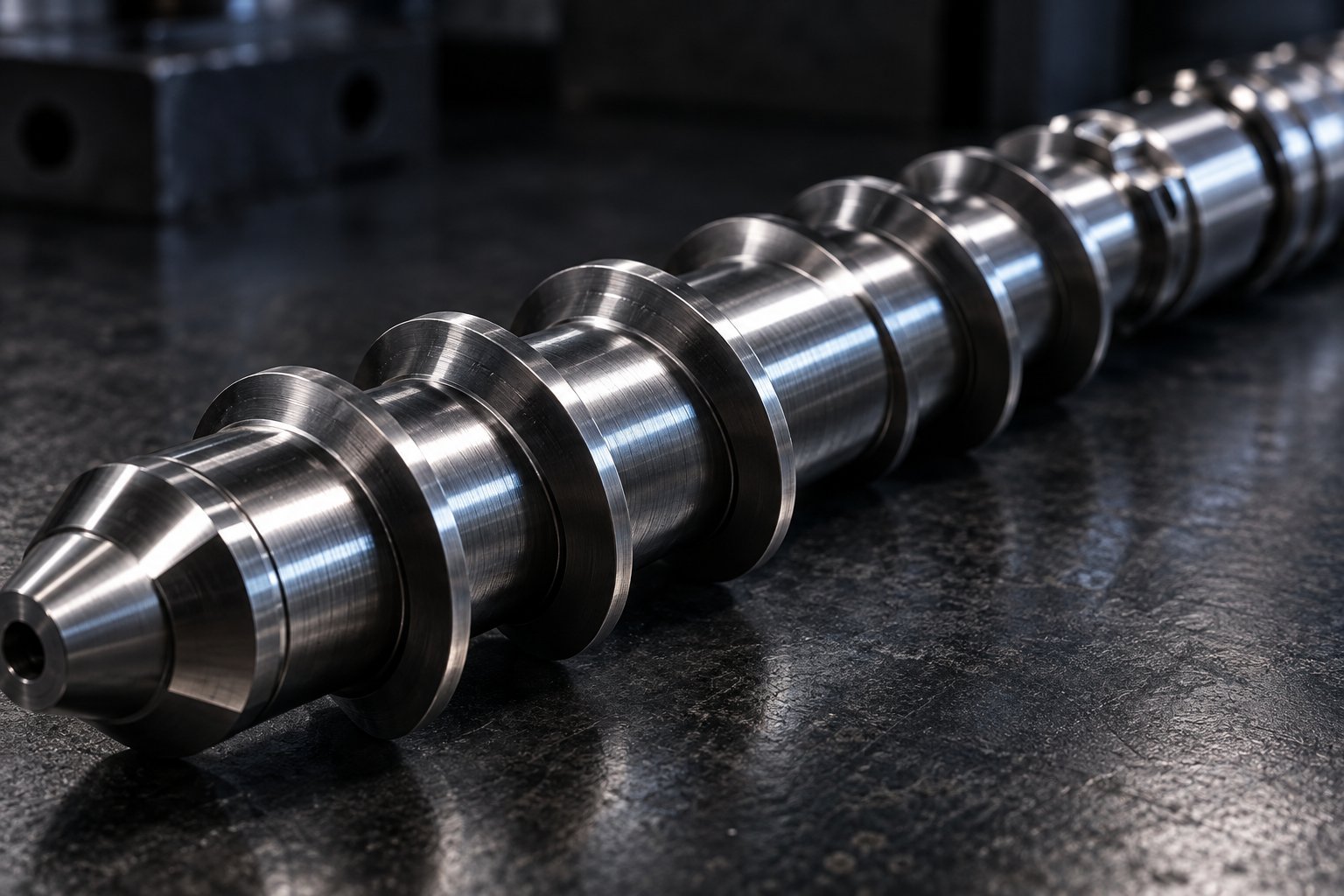
The previous section ended on a telling point: the most expensive component in a PP sheet extrusion machine is often the one buyers underestimate. That component is the single screw barrel assembly. It is not the flashiest part of the line, it does not have a touchscreen, and it does not draw attention the way a polishing stack or winding system does. Yet every kilogram of polypropylene your line produces passes through it, and the quality of that passage determines whether you ship flawless sheet or fight defects shift after shift.
How Screw and Barrel Design Impacts PP Melt Quality
Think of the single screw barrel as the engine in a car. The dashboard, suspension, and paint may catch your eye, but the engine dictates performance, fuel efficiency, and longevity. Inside a pp extruder, the screw and barrel perform the most energy-intensive and quality-critical work in the entire line: converting solid pellets into a perfectly homogeneous melt at the right temperature, pressure, and viscosity.
Three specific functions make this assembly irreplaceable:
- Melting uniformity — The screw's compression ratio and flight geometry control how aggressively solid PP pellets are compacted, sheared, and converted into a melt. PP's semi-crystalline structure means the solid-to-melt transition happens over a narrow temperature window. A screw with the wrong compression ratio produces a melt stream containing unmelted particles or localized hot spots, both of which show up as visible defects in the finished sheet.
- Output consistency — The metering zone of the screw builds stable pressure that pushes the melt through the screen pack and die at a uniform rate. Industry research from Plastics Technology shows that barrel-to-screw clearances are typically just 0.001 inch per side per inch of diameter. As wear increases those clearances, molten polymer leaks backward over the flights, causing pressure fluctuations that translate into thickness variations in the sheet — the surging problem that frustrates operators.
- Energy efficiency — A properly matched screw barrel converts mechanical energy into melt heat efficiently, minimizing reliance on external barrel heaters. Worn flights and scored barrel bores force operators to compensate by raising barrel temperatures and screw speeds, which increases energy consumption by 10 to 25 percent or more while simultaneously degrading melt quality.
The wear process is gradual, which makes it dangerous. As Jeff Kuhman of Glycon Corp. explains, operators typically make small incremental adjustments — bumping screw speed, tweaking temperatures, increasing back pressure — to compensate for declining performance. Each individual change seems minor, but the cumulative effect eventually reaches a point of diminishing returns where no amount of tuning restores acceptable output. By then, the screw and barrel may need full replacement rather than a simple rebuild.
Three types of wear attack the assembly simultaneously. Adhesive wear occurs when screw flights contact the barrel wall under load, creating metal-to-metal welding and fracture at the microscopic level. Abrasive wear, the most common type, results from the shearing action of pellets, fillers, and contaminants grinding against the flight lands and barrel bore. Corrosive wear — less common with PP than with PVC — can still occur when processing PP compounds containing reactive additives or flame retardants. For a sheet extruder running talc-filled or glass-fiber-reinforced PP, abrasive wear can reduce screw barrel service life by 50 percent or more compared to running virgin homopolymer.
PP's specific processing demands make screw geometry even more consequential. Barrier screw designs, which use a secondary flight to separate solid pellets from the developing melt pool, deliver superior melt consistency for PP because they prevent partially melted material from migrating into the melt channel prematurely. Industry guides on material-specific barrel selection recommend an L/D ratio of 30:1 with hard chrome-coated nitrided barrels for PP, paired with barrier screw profiles that eliminate unmelted pellets and ensure complete melt homogeneity. Choosing the best extruders for thermoplastics like PP means prioritizing this kind of material-matched screw barrel engineering over generic, one-size-fits-all components.
Choosing Quality Replacement and Custom Screw Barrels
Every screw and barrel assembly is a wear item with a finite service life. The question is not whether you will replace them, but when and with what. This is where sourcing decisions directly impact both sheet quality and long-term operating costs.
When selecting replacement components, look for barrels and screws that meet or exceed the original equipment manufacturer's specifications in three critical areas:
- Dimensional precision — Bore straightness, concentricity, and flight-to-barrel clearances must be held to tight tolerances. Even minor deviations cause uneven wear patterns that shorten the next replacement cycle. Before installation, the screw should rotate freely inside the barrel without interference — a simple but essential check that many extruder manufacturers recommend.
- Metallurgy and surface treatment — Nitrided barrels offer a baseline level of wear resistance suitable for processing unfilled PP. Bimetallic barrel linings with high tungsten carbide content extend service life significantly when running filled or recycled PP grades. Flight hardfacing alloys must be compatible with the barrel lining to prevent galling — running a soft-alloy flight against a hard bimetallic liner accelerates adhesive wear rather than reducing it.
- Geometry optimization — A replacement screw does not need to be an exact copy of the original. Custom screw barrel solutions, designed specifically for your PP grade, target sheet thickness, and throughput requirements, can meaningfully improve melt homogeneity and output stability compared to generic replacements. Optimized compression ratios, tailored metering zone depths, and application-specific mixing sections are all variables a skilled barrel manufacturer can adjust to match your production profile.
This is where working with a specialist supplier matters. NANHAIYA, for example, specializes in custom and replacement single screw barrels engineered for sheet extrusion applications among other plastic extrusion lines. Their capability to produce barrels optimized for specific PP processing requirements — whether that is virgin homopolymer at high throughput or recycled copolymer with abrasive contaminants — illustrates the kind of material-matched engineering that separates a quality component from a commodity part. When evaluating plastic extruder manufacturers or barrel suppliers, asking whether they can tailor screw geometry and barrel metallurgy to your specific PP grade is a reliable litmus test of technical depth.
One final point that ties back to machine selection economics: a premium screw barrel assembly may cost 15 to 30 percent more upfront than a budget alternative, but if it delivers 40 to 50 percent longer service life — a realistic improvement backed by maintenance data from sheet extrusion operators — the per-kilogram cost of ownership drops substantially. Factor in the avoided production losses from fewer unplanned changeovers and the energy savings from maintaining tighter flight-to-barrel clearances, and the return on investment becomes even clearer.
Quality screw barrels keep your PP sheet line running at its designed potential. But even the best components cannot prevent every issue on the production floor. When defects do appear in your finished sheet — and at some point they will — knowing how to trace them back to the responsible machine component and correct the root cause is what separates productive operations from reactive ones.
Common PP Sheet Defects and How to Troubleshoot Them
Even a well-maintained PP sheet extrusion machine produces defects eventually. A temperature controller drifts, a screen pack loads up, a worn screw flight loses clearance tolerance — and suddenly the sheet coming off the polishing stack does not look right. The difference between a quick correction and hours of lost production comes down to one skill: knowing how to read the defect, trace it upstream to the responsible component, and adjust the right parameter instead of guessing.
PP sheet defects fall into two broad categories: surface problems you can see and dimensional problems you measure. Each type points to a different zone in the production line, and misdiagnosing the zone means chasing a fix in the wrong place.
Surface Defects and Their Machine Causes
Surface issues are the most immediately visible quality failures, and they are also the ones most likely to trigger customer rejections. Here are the three most common surface defects on extruded plastic sheets and the machine components behind each one:
Die lines — Continuous, machine-direction streaks that stay fixed at the same position across the sheet width. These almost always originate at the die lip or land. The cause is either contamination buildup on the lip edge or physical damage — a nick, burr, or scratch — on the die's flow surface. Nordson's EDI die experts recommend a systematic cleanup approach: first scrape residual polymer from the die lips with a shim, then increase die temperature zone setpoints to prevent polymer from stagnating on channel walls, then run purge compound while varying extruder RPM. If none of those steps work, a full split-and-clean procedure on the die is the next move. If the lines persist after cleaning, the flow surfaces likely need professional repolishing and the lip edges resharpening.
Melt fracture — A rough, matte, or ridged texture on the sheet surface, sometimes called sharkskin. This defect appears when the polymer is pushed through the die exit at a shear rate that exceeds a critical threshold for the material. In practical terms, you are either running the output rate too high for the current die gap or the melt temperature is too low, making the polymer too viscous to flow smoothly through the land. The fix usually involves increasing die temperature by 3 to 5 degrees Celsius, reducing screw speed, or widening the die lip gap slightly. For lines that consistently bump up against melt fracture limits, a longer-term solution may involve redesigning the die geometry for lower shear stress or incorporating polymer processing aids into the formulation.
Poor surface finish — Haze, orange peel texture, or inconsistent gloss that does not match the intended surface quality. This defect originates at the polishing stack rather than the die. When roll temperatures are too low, the sheet surface freezes before it fully contacts the chrome roll, trapping micro-imperfections. When nip pressure is insufficient, the sheet does not make intimate contact with the roll surface. For PP specifically, roll temperature uniformity is critical because its semi-crystalline structure amplifies any localized cooling imbalance. Checking roll temperature differentials across the width and verifying nip pressure settings usually isolates the issue.
Dimensional and Structural Defects
Dimensional defects are harder to spot visually but far more damaging commercially. A sheet that looks fine but fails thickness tolerance at the thermoformer becomes scrap — and you may not discover the problem until an entire roll has been produced.
Uneven thickness across the sheet width (cross-direction variation) — When one side or section of the sheet consistently measures thicker or thinner than the rest, the problem usually lives in one of two places: die lip adjustment or melt distribution. Improperly set lip bolts create localized gaps that allow more or less melt to flow at specific positions. A partially clogged manifold channel inside the die can also restrict flow to one side. As extrusion troubleshooting specialists note, cross-direction variation points toward spatial nonuniformity rather than a time-based feed problem. The corrective path starts with mapping the thickness profile across the full width, comparing the pattern against die bolt positions, and adjusting selectively rather than uniformly.
Sheet warping or curling — When a flat PP sheet bows, curls, or lifts from a surface after cooling, the root cause is almost always uneven cooling or residual stress locked into the sheet during the polishing stack stage. If the top and bottom rolls run at different temperatures, the two sheet surfaces crystallize at different rates, creating an internal stress imbalance that releases as warping after the sheet cools to room temperature. The fix involves equalizing roll temperatures, verifying that water flow rates through each roll are balanced, and checking roll alignment to ensure even nip pressure across the full width.
Inconsistent gauge in the machine direction (MD variation) — When sheet thickness fluctuates rhythmically along the running direction, you are dealing with a time-domain problem rather than a spatial one. The most common cause among sheet extruders is melt pressure fluctuation from a worn screw. As flight-to-barrel clearances increase, molten PP leaks backward over the flights, creating periodic pressure drops that translate directly into cyclical thickness swings. Inconsistent feeding — hopper bridging, feeder pulses, or changing regrind bulk density — produces a similar signature. Practical troubleshooting guidance recommends measuring the period of the variation and matching it against screw rotation speed, feeder refill cycles, and heater band cycling intervals to identify the specific mechanical source.
Systematic Troubleshooting Approach
Sounds complex? It does not have to be, as long as you follow a disciplined method instead of making multiple changes simultaneously. A structured approach prevents one problem from becoming three — a principle that experienced plastic sheet extruder machine operators know well.
The method boils down to four steps:
- Identify the defect visually and measure it. Record exactly what changed, when it started, and whether the problem is continuous, periodic, or random.
- Classify the pattern. Is it cross-direction (fixed position across width), machine-direction (repeating along the running length), or random? This single distinction eliminates half the possible causes immediately.
- Trace it to the responsible production zone. Cross-direction problems point to the die and cooling stack. Machine-direction problems point to feeding, melting, and haul-off speed. Random defects often trace to contamination, moisture, or degraded material.
- Adjust one parameter at a time and wait. Because plastic sheet extruders have significant thermal mass, a temperature change needs three to five residence times to stabilize before you can fairly evaluate the result. Making multiple simultaneous changes may produce good sheet on the current roll — but you will never know which adjustment actually solved the problem, making it impossible to prevent it from recurring.
The reference table below maps the most common PP sheet defects to their probable machine cause, the likely setting issue, and the recommended corrective action. Bookmark it — this is the kind of quick-reference tool that saves hours on the production floor.
| Defect | Probable Cause (Machine Component) | Likely Setting Issue | Recommended Corrective Action |
|---|---|---|---|
| Die lines (fixed longitudinal streaks) | Die lip or land surface | Polymer buildup or physical damage at die exit | Clean lip with shim; increase die zone temperature; purge at varied RPM; repolish if damage found |
| Melt fracture / sharkskin | Die land and exit geometry | Output rate too high or melt temperature too low for die gap | Raise die temperature 3-5°C; reduce screw speed; widen die lip gap; consider processing aids |
| Poor surface finish (haze, orange peel) | Polishing stack rolls | Roll temperature too low or uneven; insufficient nip pressure | Increase and equalize roll temperatures; verify nip pressure and roll surface condition |
| Uneven thickness across width | Die lip bolts / manifold | Misadjusted lip gap or partially clogged flow channel | Map cross-web profile; adjust lip bolts selectively; inspect and clean manifold |
| Sheet warping or curling | Polishing stack (top vs. bottom roll) | Unequal roll temperatures creating asymmetric crystallization | Equalize roll temperatures; balance water flow rates; check roll alignment |
| Machine-direction gauge variation (surging) | Screw and barrel assembly; feeding system | Worn screw flights causing pressure fluctuation; inconsistent feed rate | Measure variation period; match to screw RPM or feeder cycle; inspect screw/barrel wear; stabilize feeding |
| Bubbles or splay marks | Feed system / material preparation | Moisture in additives, regrind, or masterbatch | Pre-dry additives and regrind; check hopper seals; verify material moisture at throat |
| Gels or unmelted particles | Screw (compression/mixing zone); screen pack | Insufficient melt homogeneity; screen mesh too coarse | Increase barrel temperatures in compression zone; install finer screen pack; evaluate screw mixing geometry |
One final point worth emphasizing: defect troubleshooting and preventive maintenance are two sides of the same coin. A line that runs a strict PM schedule — regular screw and barrel measurement, scheduled die cleaning, verified thermocouple calibration, and documented screen change intervals — encounters far fewer surprise quality events than one that runs until something breaks. The best operators treat the troubleshooting table above as a diagnostic reference for the rare occasion when prevention falls short, not as a daily survival guide.
Addressing defects at their source keeps your plastic sheet extruders running profitably. But the production line does not end at the polishing stack or the winding station. The auxiliary systems that surround it — thickness gauging, automation controls, trim scrap recycling, and the growing demand for recycled PP processing — play an equally important role in overall line efficiency and long-term competitiveness.
Downstream Equipment, Automation, and Recycled PP Processing
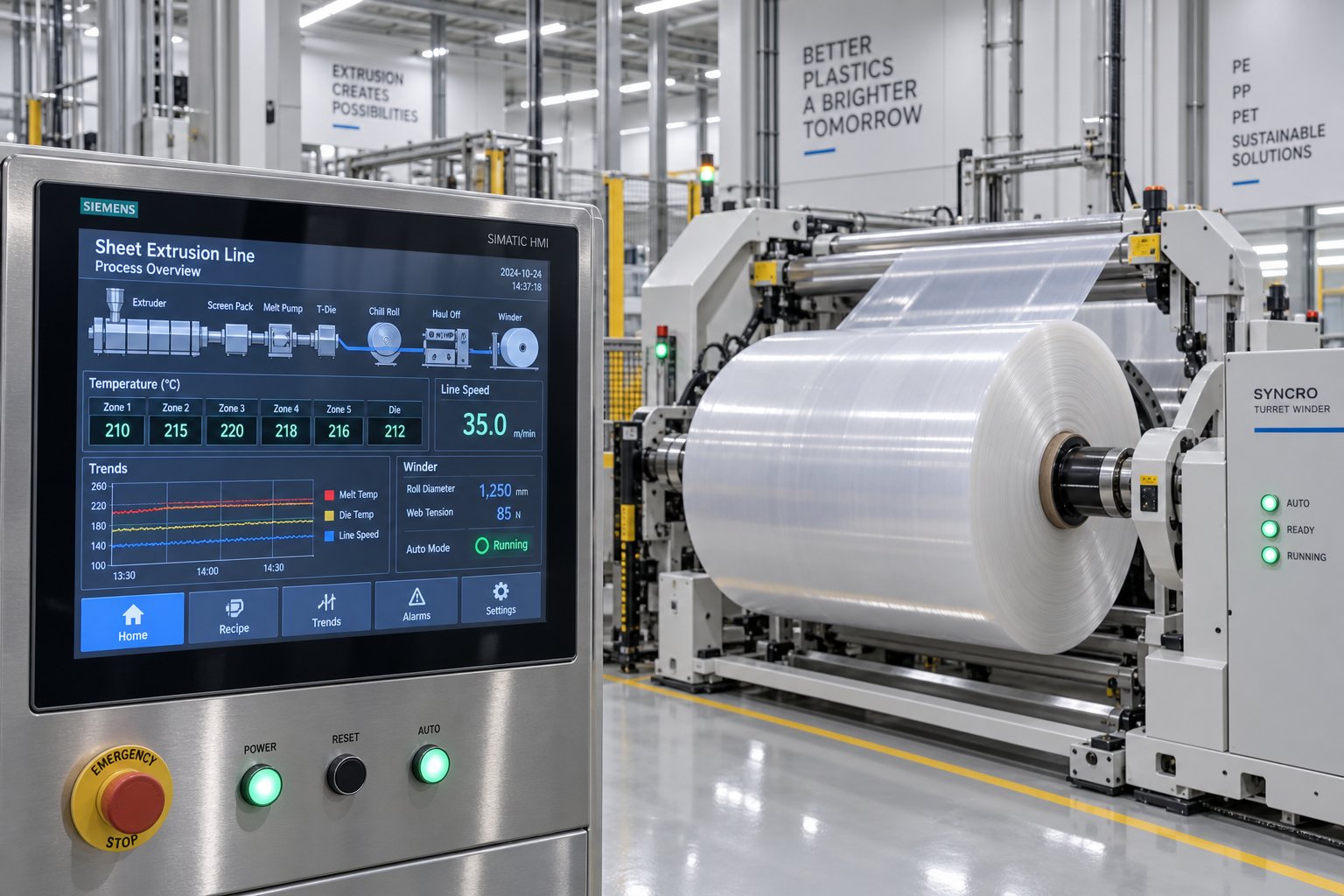
A PP sheet extrusion machine does its heaviest work between the hopper and the polishing stack, but the production line extends well beyond those core components. The auxiliary systems that flank the extruder — thickness gauging, trim recycling, static control, automation platforms, and energy management — collectively determine whether a line runs at 85 percent overall equipment effectiveness or struggles to break 70 percent. And with regulatory and market pressure pushing manufacturers toward recycled PP feedstock, the machine features that enable sustainable production are rapidly shifting from optional upgrades to baseline requirements.
Essential Downstream and Auxiliary Systems
Imagine producing 500 kg/hr of perfectly extruded PP sheet, only to discover at the end of the roll that thickness drifted out of tolerance 30 minutes ago. Without real-time downstream measurement and finishing systems, that scenario plays out more often than most buyers expect. Here are the key auxiliary components that complete a film and sheet extrusion line and protect your quality investment:
- Thickness gauging systems — Beta-gauge (nuclear) or optical/millimeter-wave scanners continuously measure sheet thickness across the full web width. These systems detect gauge drift within seconds, enabling closed-loop feedback to the die lip adjustment system or haul-off speed controller. Non-contact millimeter-wave technologies are gaining traction as alternatives to nuclear gauges because they avoid the regulatory burden of radioactive source licensing while maintaining measurement accuracy across a wide range of thermoplastic materials.
- Edge trimming units with in-line scrap recycling — The thicker bead edges formed at the die margins are trimmed by rotary knives and immediately granulated by an integrated grinder. The regrind is pneumatically conveyed back to the hopper or a blending station, keeping material utilization above 95 percent and eliminating manual scrap handling.
- Static eliminators — Thin-gauge PP sheet builds significant static charge as it separates from polishing rolls and passes through haul-off nips. Static bars or ionizing blowers neutralize that charge, preventing dust attraction, sheet-to-sheet sticking during stacking, and operator discomfort. For thermoforming-grade sheet, static control also prevents feeding jams at the downstream forming station.
- Corona treatment units — PP has inherently low surface energy, which makes it resistant to printing inks, adhesives, and coatings. In-line corona treaters bombard the sheet surface with ionized air, raising surface energy to levels that allow reliable ink adhesion and lamination bonding. If your end product requires printing or labeling, corona treatment is not optional — it is essential.
- Automatic stacking or winding systems — For cut-sheet operations, robotic stackers accumulate panels into uniform piles, count them, and transfer them to palletizing stations. For roll-stock operations, dual-station turret winders allow continuous production by automatically transferring the sheet to a fresh core without stopping the line. Both configurations reduce manual labor and virtually eliminate handling damage.
Each of these systems may seem peripheral when you are comparing extruder specifications, but on a running production floor, they directly impact scrap rates, labor requirements, and customer-facing quality. A highspeed extrusion machine supplier that bundles well-integrated downstream equipment into the line quotation — rather than leaving buyers to source it separately — typically delivers a smoother commissioning experience and tighter process coordination from day one.
Automation, PLC/HMI Controls, and Energy Efficiency
Two PP sheet lines can share identical extruder diameters, die widths, and polishing stack configurations yet produce dramatically different results. The difference often comes down to what controls the line and how intelligently those controls coordinate every component from hopper to winder.
Modern lines rely on a PLC (programmable logic controller) paired with a touchscreen HMI (human-machine interface) that serves as the operator's command center. But as practical evaluations from extrusion equipment manufacturers point out, the PLC brand name on a quotation tells you almost nothing about actual production capability. What matters is the control logic behind the hardware — specifically, what the system coordinates, what it automates, and how it responds when conditions deviate from setpoints.
Here is what to evaluate in a well-designed control system:
- Recipe storage and recall — A complete recipe saves barrel zone temperatures, die temperatures, screw speed, haul-off speed, cutter or winder settings, and alarm thresholds for each product you run. When you switch from 0.5 mm thermoforming sheet to 3 mm construction board, recalling a proven recipe baseline eliminates the startup scrap that comes from rebuilding settings from memory. Ask suppliers whether their recipes store only temperatures or the full parameter set — partial recipes are partial solutions.
- Servo-driven haul-off — Servo motors provide far more precise speed control than conventional AC inverter drives. Because haul-off speed relative to extruder output is the primary lever for thickness control, a servo-driven system holds tighter gauge tolerance, especially during speed ramps at startup and product changeovers.
- Closed-loop thickness correction — The most advanced lines feed real-time data from the thickness gauge back into the PLC, which then automatically adjusts die lip bolts (thermal bolt systems) or haul-off speed to correct drift. This closed-loop approach catches deviations within seconds, long before they accumulate into out-of-spec rolls.
- Alarm logic with protective response — A screen that displays "high melt pressure" is a notification. A system that automatically reduces screw speed, alerts the operator, and initiates a controlled shutdown sequence if pressure continues rising is genuine protective logic. That distinction matters most during night shifts, startups, and when less-experienced operators are running the line.
Energy efficiency ties directly into the control system's sophistication. Features that reduce power consumption without sacrificing throughput include:
- Optimized barrel heating — Ceramic insulation blankets over barrel heater bands reduce radiated heat loss by up to 30 percent. Induction heating systems, though higher in initial cost, deliver faster response times and lower steady-state energy draw compared to traditional resistance heaters.
- High-efficiency drive motors — IE3 or IE4 rated motors on the main extruder drive, haul-off, and polishing stack reduce electricity consumption at every operating point. Over a ten-year machine lifecycle, the energy savings from premium-efficiency motors frequently exceed their incremental purchase cost.
- Intelligent standby modes — During planned stoppages, a well-programmed PLC can automatically reduce barrel temperatures to a lower hold point, slow the screw to minimum circulation speed, and power down downstream systems — then ramp everything back up on a timed schedule before the next shift begins.
When comparing quotations from plastic extrusion machine suppliers, request a live HMI demonstration rather than accepting a screenshot in the proposal. Watch how recipe recall works, how alarms are configured, and whether the operator screens make production relationships — screw speed to haul-off speed, barrel pressure to screen condition — immediately visible. A control system that is hard to understand during a sales demo will be even harder to operate at 2 a.m. on a production floor.
Processing Recycled PP and Sustainability Considerations
Sustainability is no longer a marketing talking point — it is a procurement requirement. Brand owners across packaging, automotive, and construction increasingly mandate minimum recycled content in PP sheet products. The global plastic extrusion sheet market, valued at USD 87 billion in 2023 and projected to reach USD 139 billion by 2033, is being reshaped by regulations that penalize virgin-only production and incentivize closed-loop material recovery.
Processing recycled PP, however, introduces challenges that virgin resin never presents. Post-consumer and post-industrial PP regrind carries contaminants — paper fibers, adhesive residues, incompatible polymer traces, and degraded material — that can damage equipment, clog screens, and compromise sheet quality. Successfully running recycled feedstock requires specific machine features that extrusion machine suppliers should be able to clearly specify:
Enhanced melt filtration — Standard manual screen changers work fine for clean virgin PP, but recycled feedstock demands continuous or semi-continuous screen changers that swap filter screens without stopping the line. Industry reporting from Plastics Machinery & Manufacturing confirms that the choice of screen changer type depends directly on the contamination level in the recycle stream. Large-surface-area screen changers with automatic backflush capability maintain consistent melt pressure and prevent the gauge variation that occurs when a heavily loaded screen restricts flow.
Vented or degassing barrel sections — Recycled PP often contains residual moisture, printing ink solvents, and volatile organic compounds that vaporize during melting. Without a vent zone in the barrel, those gases become trapped in the melt and emerge as bubbles, splay marks, or foam in the finished sheet. Vented barrel designs allow gases to escape through a dedicated opening at a low-pressure section of the screw, keeping the melt clean and dense. As extrusion experts at Entek note, recycling applications commonly require two or even three vent ports compared to the single vent — or none at all — used for virgin polymer processing.
Robust screw and barrel metallurgy — Contaminants in recycled PP act as abrasive particles that accelerate wear on screw flights, barrel bores, and nitrided surfaces far faster than clean virgin resin. Bimetallic barrel linings with high concentrations of tungsten carbide or boron alloy provide the wear resistance needed to maintain flight-to-bore clearances over commercially viable service intervals. Screw flight hardfacing with compatible alloys prevents the adhesive galling that occurs when dissimilar metals contact under high shear and temperature. Suppliers like NANHAIYA offer single screw barrels engineered specifically for recycling extrusion lines, with wear-resistant metallurgy suited to processing recycled PP containing abrasive contaminants. For operators looking to upgrade barrel components for recycled feedstock processing without replacing the entire extruder, this type of purpose-built replacement barrel provides a practical upgrade path.
Beyond machine hardware, processing recycled PP also requires adjustments to operating parameters. Melt temperatures may need to run slightly higher to fully homogenize material with inconsistent melt flow characteristics. Screw speeds often need to be moderated to avoid generating excessive shear heat in already-degraded polymer chains. And blending ratios — the proportion of recycled to virgin content — should be validated through trial runs before committing to full production, since lot-to-lot variation in recycled feedstock can shift optimal settings significantly.
The convergence of downstream automation, intelligent controls, and recycled-material capability defines where PP sheet extrusion is heading. Lines that integrate real-time gauging, closed-loop thickness correction, energy-efficient drives, and recycling-ready barrel technology are not just better machines — they are the baseline configuration that forward-looking producers need to remain competitive as material sourcing, energy costs, and sustainability regulations continue to evolve.
Frequently Asked Questions About PP Sheet Extrusion Machines
1. What types of products can a PP sheet extrusion machine produce?
A PP sheet extrusion machine produces continuous flat polypropylene sheets used across diverse industries. Common products include food packaging trays and thermoformed cups, stationery binders and covers, automotive interior panels, reusable construction formwork boards, and general industrial sheet stock. Sheet thickness typically ranges from 0.2 mm for thin-gauge packaging film up to 6 mm or more for heavy structural board. Lines equipped with co-extrusion capability can produce multi-layer sheets featuring barrier layers, colored surface skins, or recycled-content cores for specialized applications.
2. What is the ideal screw L/D ratio for PP sheet extrusion?
For PP sheet production, an L/D ratio between 30:1 and 36:1 is standard, with 33:1 being the most commonly recommended balance between melt quality and capital investment. The L/D ratio represents the screw's working length divided by its diameter and determines how much residence time the resin has inside the barrel. A higher ratio improves melt homogeneity and mixing by giving pellets more exposure to heat and shear, which is particularly important for PP's semi-crystalline structure. However, longer screws increase machine cost, barrel length, and factory footprint, so selecting the ratio involves weighing melt quality needs against budget and space constraints.
3. Does polypropylene resin need to be dried before extrusion?
Polypropylene is a non-hygroscopic polymer, meaning the base resin does not absorb atmospheric moisture the way PET, nylon, or polycarbonate do. This eliminates the need for energy-intensive dehumidifying dryers in most standard PP sheet production scenarios. However, if your PP formulation includes fillers, colorant masterbatches, or recycled content, those additives may carry surface moisture that can cause bubbles or splay marks in the finished sheet. In such cases, pre-drying the additives or regrind at moderate temperatures before blending is recommended to maintain surface quality.
4. How do you troubleshoot uneven thickness in PP sheet extrusion?
Uneven thickness falls into two categories requiring different corrective approaches. Cross-direction variation, where one side of the sheet consistently measures thicker or thinner, typically points to misadjusted die lip bolts or a partially clogged manifold channel. The fix involves mapping the thickness profile across the full web width, comparing it against die bolt positions, and making selective adjustments. Machine-direction variation, where thickness fluctuates rhythmically along the running length, usually indicates melt pressure instability caused by worn screw flights or inconsistent feeding. Measuring the period of fluctuation and matching it to screw RPM or feeder refill cycles helps isolate the mechanical source.
5. Can a PP sheet extrusion machine process recycled polypropylene?
Yes, but processing recycled PP requires specific machine upgrades beyond what virgin-resin lines need. Key features include continuous screen changers with automatic backflush capability to handle higher contamination loads, vented or degassing barrel sections that release trapped moisture and volatile compounds from recycled feedstock, and bimetallic screw barrels with wear-resistant metallurgy such as tungsten carbide linings to withstand abrasive contaminants. Specialists like NANHAIYA offer single screw barrels engineered for recycling extrusion lines with metallurgy specifically designed for recycled PP processing. Operating parameters also shift: melt temperatures may need to run slightly higher, and screw speeds often require moderation to avoid excessive shear in already-degraded polymer chains.
Written by
Nanhaiya Technical Team
Zhoushan Nanhaiya Plastic Machinery Co., Ltd.
The Nanhaiya technical team supports screw and barrel manufacturing projects through application review, technical communication, custom manufacturing coordination, and production and quality control.
Discuss Your Application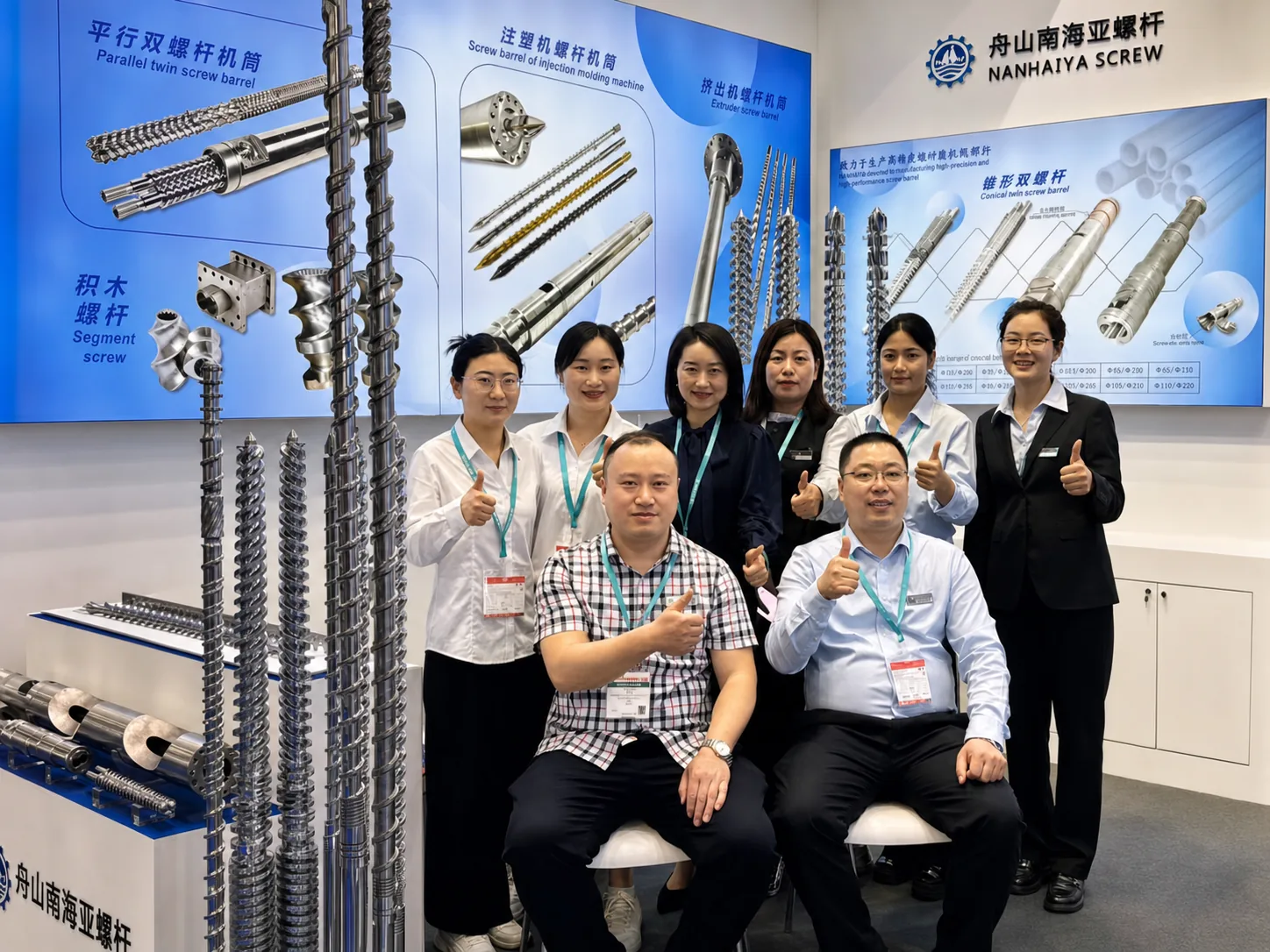
Related Articles
More insights on screw barrel technology and plastics processing.
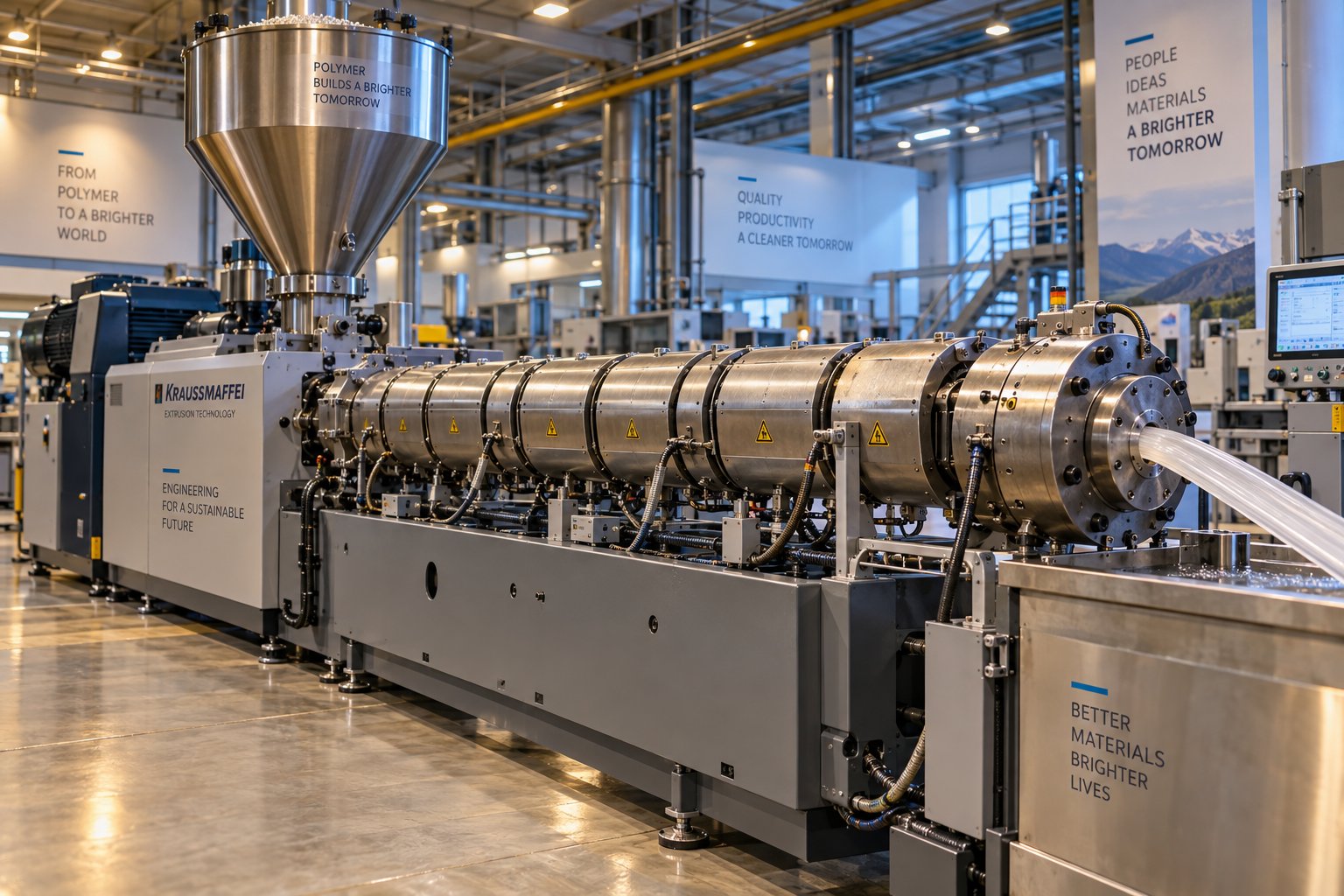
Extruder Machine Decoded: From Raw Pellet To Finished Product
Oct 6, 2026
Learn how an extruder machine works, compare single-screw vs. twin-screw types, and get expert guidance on specs, troubleshooting, and selection.
Read Article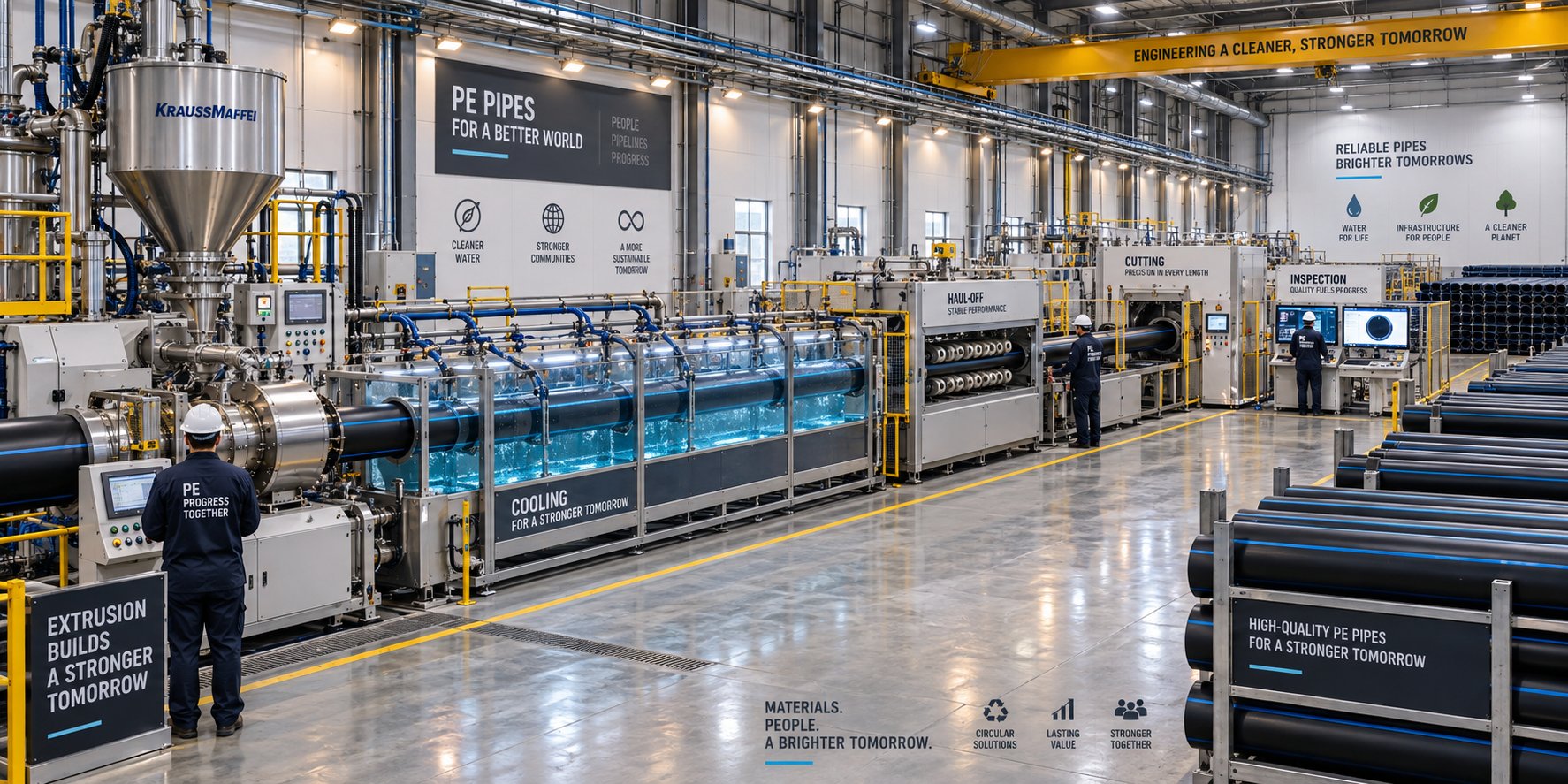
PE Pipe Making Machine Decoded: From Raw Resin to Flawless Pipe
Oct 4, 2026
Learn how a PE pipe making machine works, from resin to finished pipe. Covers components, material grades, automation, troubleshooting, and buyer selection tips.
Read Article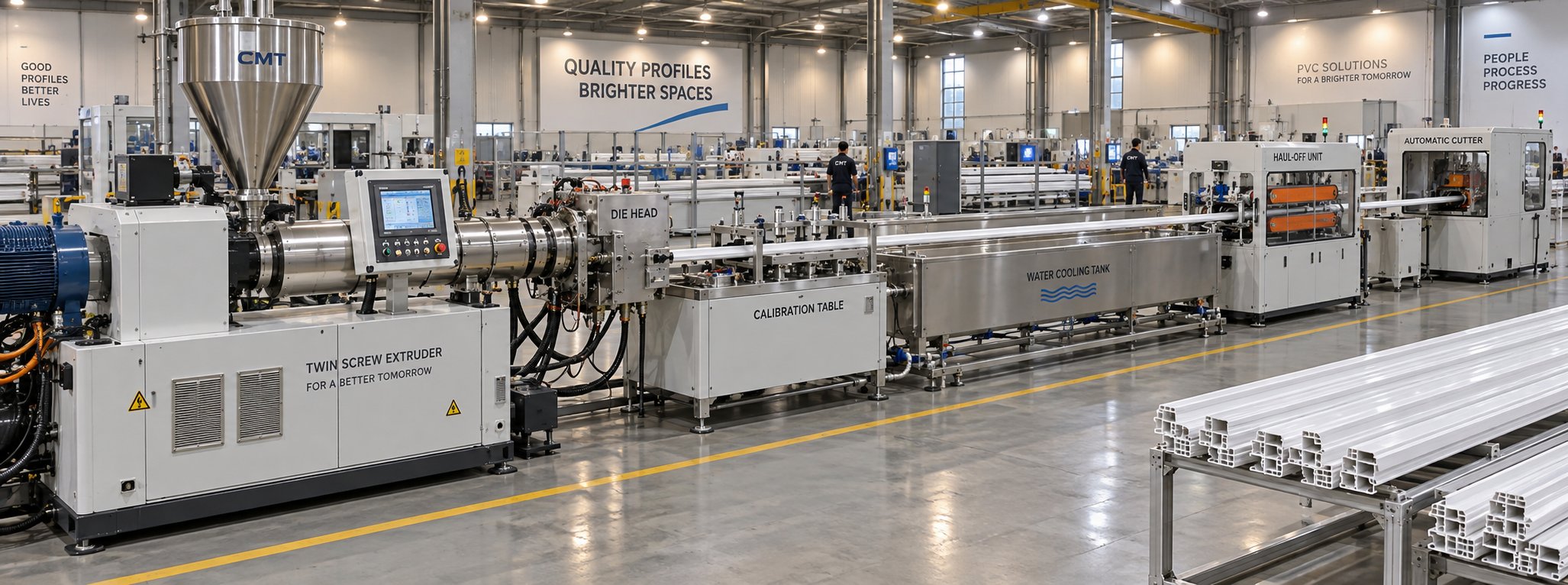
PVC Profile Making Machine Decoded: From Raw Resin To Profit
Oct 3, 2026
Learn how a PVC profile making machine works — extrusion process steps, key technical parameters, die design, calibration methods, maintenance, and total cost of ownership.
Read ArticleLooking for something else?
Search by material, symptom or product and jump straight to the relevant page.
These are navigation suggestions based on keyword matching — not a quotation, not a delivery commitment, and not a substitute for engineering review. Final specification is confirmed by our engineers against your drawings and processed material.
Need help with screw barrel selection?
Share your machine model, processed material and application. Our team can help with pricing and technical support.