

What Is a PP Pipe Extrusion Machine and Why It Stands Apart
Not every plastic pipe extrusion machine handles polypropylene the same way it handles PVC or polyethylene. If you assume a generic line can simply "switch over" to PP production, you'll quickly run into warped pipes, inconsistent wall thickness, and wasted resin. That distinction matters more than most buyers realize.
Defining the PP Pipe Extrusion Machine
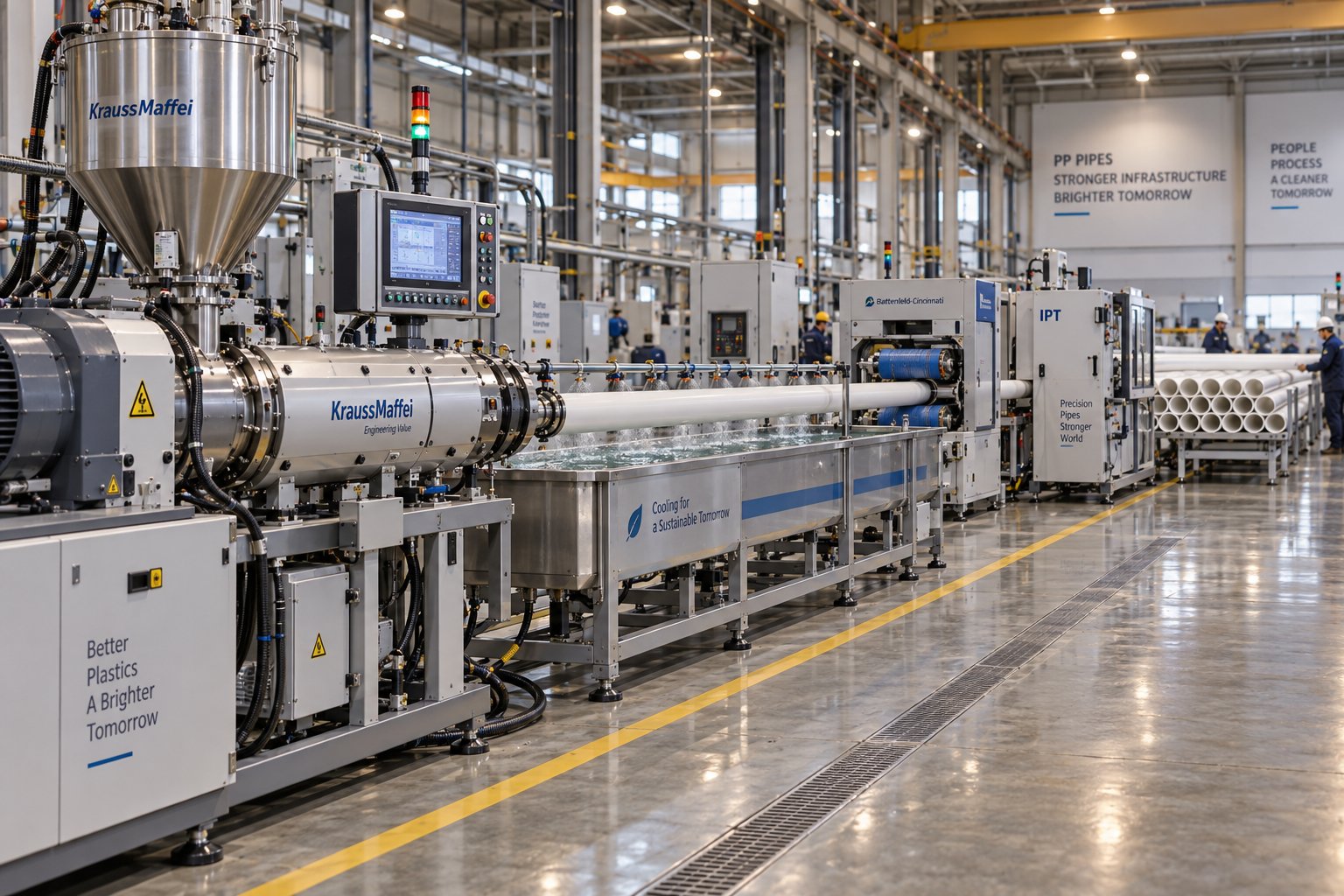
A PP pipe extrusion machine is a purpose-built production system that melts polypropylene resin granules, forces the molten polymer through an annular die to form a continuous tubular profile, and then sizes, cools, and cuts the pipe to specification. The entire process is thermal-mechanical: a rotating screw inside a heated barrel plasticizes the PP pellets, while downstream equipment such as vacuum calibration tanks, cooling baths, haul-off units, and cutting systems transform that molten tube into a dimensionally stable finished pipe. It is a continuous, inline operation where every stage directly affects final pipe quality.
Why PP-Specific Machine Configuration Matters
Imagine running a marathon in shoes designed for sprinting. That's essentially what happens when operators push PP resin through pipe extrusion machinery tuned for a different polymer. Polypropylene behaves differently from both PVC and PE during processing. It demands roughly three times more specific energy input than PVC, carries a higher melt temperature than PE, and operates within a narrower processing window than PVC. Its semi-crystalline structure also produces approximately 3% volume shrinkage during cooling, compared to just 0.7% for PVC. These characteristics require carefully tuned barrel temperature profiles, screw geometries optimized for polyolefin melt behavior, and downstream cooling configurations capable of managing significant crystallization shrinkage.
PP's semi-crystalline nature requires precise thermal control throughout the extrusion and cooling stages to prevent warping and ensure dimensional stability.
Unlike PVC, which is typically processed as a dry blend on twin-screw extruders, PP resin in granular form runs on single-screw extruders that deliver the substantial heat input polyolefins need. A properly configured pp extrusion machine accounts for all of these variables from the feed throat to the stacker.
Growing Demand for PP Pipe Extrusion Technology
So why invest in a PP-dedicated line at all? Because the market is moving decisively toward polypropylene piping. The global plastic hot and cold pipe market, valued at USD 7.82 billion in 2025, is projected to reach USD 15.72 billion by 2034 at an 8.06% CAGR. Polypropylene pipes already hold roughly 22% of that market, prized for their chemical resistance, lightweight handling, heat tolerance, and exceptionally long service life. PP-R grades, in particular, dominate hot and cold water plumbing because they withstand sustained elevated temperatures far better than standard PE alternatives. Their corrosion resistance eliminates the scaling and rust issues that plague metal systems, and heat-fusion jointing creates leak-free connections that outlast mechanical fittings.
This rising demand across residential plumbing, commercial HVAC, industrial chemical transport, and agricultural irrigation means pipe producers need reliable, PP-optimized pipe extrusion lines. Yet the performance of any such line ultimately hinges on a factor many equipment guides overlook entirely: the specific grade of polypropylene you feed into it.
PP Grade Selection and How It Affects Machine Configuration
You could invest in the most advanced pp pipe extrusion line on the market, and it still won't deliver consistent pipe quality if your machine parameters don't match the specific polypropylene grade you're processing. PP-R, PP-H, and PP-B each carry distinct molecular architectures, and those structural differences translate directly into different barrel temperature profiles, cooling strategies, and screw operating parameters. Getting this match right is the difference between reliable production and a cycle of scrap, rework, and frustration.
PP-R Random Copolymer for Pressure Pipe Systems
PP-R is the grade you'll encounter most often in hot and cold water piping. Its defining feature is the random distribution of ethylene co-monomer units throughout the polymer chain, which disrupts the crystalline structure just enough to deliver greater elasticity and pressure resistance. This molecular arrangement gives PP-R excellent long-term hydrostatic strength, making it ideal for residential and commercial plumbing, heating systems, and radiant floor heating loops.
From a machine configuration standpoint, PP-R processing typically requires barrel temperatures in the range of 200-240 degrees Celsius. A gradual temperature ramp across barrel zones is critical here. Rapid temperature spikes can degrade the polymer, creating weak spots in the finished pipe wall. You'll want the feed zone set at the lower end of the range, progressively increasing through the compression and metering zones to achieve a uniform, homogeneous melt. PP-R can withstand continuous service temperatures up to 70 degrees Celsius, and its low thermal conductivity contributes to energy-efficient hot water distribution. These performance characteristics, however, are only achievable when the pipe production line is properly calibrated to the grade's processing demands.
PP-H Homopolymer for Industrial and Chemical Applications
Think of PP-H as the workhorse for harsh environments. Made from a single type of propylene monomer, PP-H produces a highly crystalline structure that delivers the highest stiffness and chemical resistance of all three grades. Industrial chemical pipelines, fertilizer transport systems, wastewater handling, and high-temperature environments up to 95 degrees Celsius are its natural territory.
That higher crystallinity, though, directly affects how you configure downstream equipment. Greater crystallinity means more pronounced shrinkage during solidification, so your vacuum calibration tank and cooling baths need adjusted water temperatures and longer residence times compared to a PP-R setup. If you're running a pe extrusion line alongside your PP line, you'll already be familiar with managing crystallization-related shrinkage in polyolefins, but PP-H demands even tighter control. Cooling too aggressively can lock in internal stresses that cause cracking under chemical exposure, while cooling too slowly may result in excessive pipe ovality.
PP-B Block Copolymer for Impact-Resistant Pipes
PP-B occupies a unique niche. Its block copolymer structure, where ethylene monomers are arranged in distinct blocks within the polymer chain, delivers superior impact resistance at low temperatures. This makes PP-B the go-to choice for underground water mains, sewer and drainage systems, and any cold-climate installation where a brittle failure could be catastrophic.
On the machine side, PP-B's block structure may require adjusted screw speed and back-pressure settings to ensure thorough melt homogenization. The distinct ethylene blocks can behave differently during plasticization compared to PP-R's randomly distributed co-monomer, so operators often need to fine-tune the balance between shear energy and thermal energy input. Unlike a pe pipe extrusion machine processing standard HDPE, a PP-B line demands careful attention to avoid over-shearing the block domains, which can compromise the very impact resistance that makes this grade valuable.
The table below provides a quick-reference comparison across the three grades, covering the properties that matter most when configuring your extrusion equipment:
| Property | PP-R (Random Copolymer) | PP-H (Homopolymer) | PP-B (Block Copolymer) |
|---|---|---|---|
| Typical Applications | Hot and cold water supply, radiant heating, residential plumbing | Industrial chemical pipelines, wastewater, fertilizer systems | Underground drainage, sewer systems, cold-climate installations |
| Processing Temperature Range | 200-240 degrees Celsius | 210-250 degrees Celsius | 200-240 degrees Celsius |
| Crystallinity Level | Low to Medium | High | Medium |
| Impact Resistance | Moderate to High | Moderate | High (especially at low temperatures) |
| Chemical Resistance | Moderate | Excellent | Moderate to Good |
| Max Continuous Service Temp | Up to 70 degrees Celsius | Up to 95 degrees Celsius | Up to 80 degrees Celsius |
| Stiffness | Low to Medium | High | Medium |
Each grade essentially asks something different from the same machine. The barrel zones, cooling tanks, and screw dynamics that produce flawless PP-R pipe will not automatically deliver the same results with PP-H or PP-B. This is exactly why understanding the physical components of your extrusion line, and how each one responds to different PP grades, becomes the logical next step in making informed equipment decisions.
Key Components of a PP Pipe Extrusion Line Explained
Matching a PP grade to the right machine settings only works if you actually understand what each piece of equipment does and why it matters for polypropylene specifically. A plastic pipe extrusion line is not a single machine but a coordinated sequence of interdependent systems, each one influencing the final pipe's dimensional accuracy, mechanical strength, and surface finish. Let's break down every major component from the extruder inlet to the finished pipe stacker.
Extruder Unit and Screw-Barrel Assembly
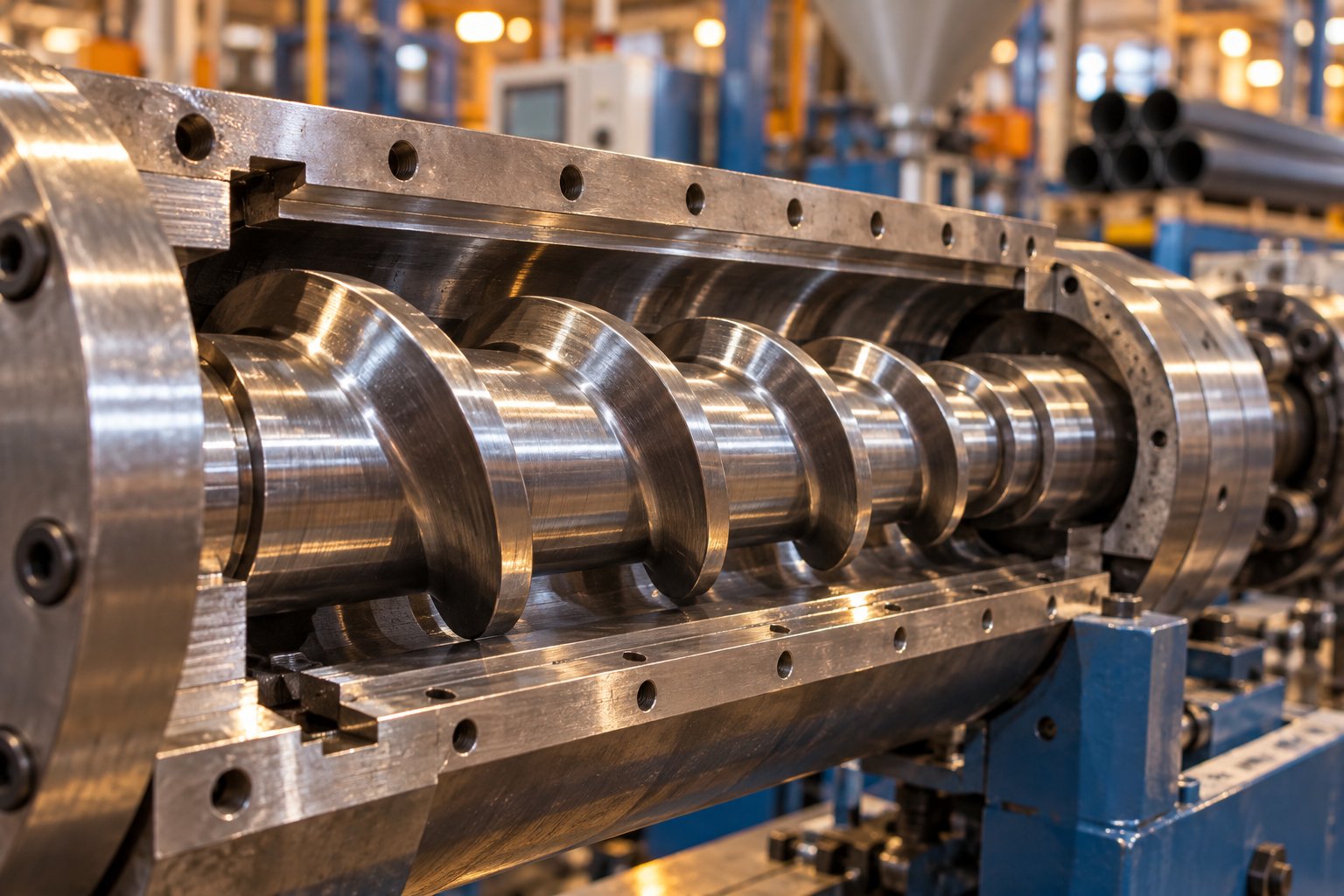
The extruder is the heart of the entire extrusion line machine. For PP pipe production, a high-efficiency single-screw extruder is the standard choice. Inside the heated barrel, a specially designed screw rotates to convey, compress, melt, and homogenize the polypropylene granules before pushing them toward the die.
What makes a PP-optimized screw different from a general-purpose one? It comes down to three functional zones engineered for polypropylene's semi-crystalline melt behavior:
- Feed zone - Features deep, constant-depth channels that accept PP pellets efficiently. Some high-performance designs use axially grooved barrels in this section to improve intake of slippery polyolefin granules.
- Compression zone - Channel depth gradually decreases, building the pressure needed to expel trapped air between pellets while applying shear energy to initiate melting.
- Metering zone - A shallow, constant-depth section that delivers a uniform, fully plasticized melt at consistent pressure to the die.
For PP processing, screw L/D ratios of 30:1 to 33:1 are common. These longer ratios provide more residence time and barrel surface area for heat transfer, which is essential for achieving thorough melt homogeneity in semi-crystalline polymers like polypropylene. As a reference point, a single-screw extruder with a 90mm screw diameter can deliver output exceeding 600 kg/h on polyolefin pipe lines.
The screw's compression ratio, typically between 2:1 and 4:1, controls how aggressively the polymer is compacted during melting. Too high a compression ratio generates excessive shear heat and risks degrading the PP, while too low a ratio produces incomplete melting and inconsistent pipe walls. Flight width is generally around 10% of barrel diameter, with rounded corners where the flight meets the root to prevent material stagnation and localized overheating.
Barrel construction matters just as much. Standard steel barrels lined with wear-resistant alloy handle virgin PP well, but if you're processing mineral-filled PP compounds with calcium carbonate or glass fiber reinforcement, bimetallic barrels with hardened linings become essential. Without that wear resistance, abrasive fillers erode the barrel wall, widening the screw-to-barrel clearance beyond the typical 0.125 to 0.25mm range on new equipment. The result? Increased leakage flow over the screw flights, declining output, rising energy consumption, and inconsistent melt quality.
Die Head and Mandrel Design for PP Pipes
Once the extruder delivers a homogeneous PP melt, the die head transforms that cylindrical melt stream into a hollow, tubular profile. Imagine squeezing toothpaste through an annular ring instead of a round nozzle. That's essentially what the die does, but with extraordinary precision.
Most PP pipe lines use a spiral mandrel die. Inside this die, the melt enters through one or more inlet ports and flows into helical channels machined into the mandrel surface. These spiral grooves distribute the polymer evenly around the full circumference before it converges into a uniform annular flow at the die exit. This design eliminates weld lines, those weak seams that form when separate melt streams rejoin, which would compromise the pipe's pressure-bearing capability.
Die geometry directly determines your achievable pipe diameter and wall thickness range. The die gap, the annular distance between the mandrel and the outer die ring, sets the initial wall dimension, while the land length (the parallel section at the die exit) stabilizes the melt flow and influences surface finish. Changing pipe sizes typically requires swapping die tooling, including the mandrel, die ring, and sometimes the entire die body, which is why experienced producers maintain a library of tooling sets matched to their product range.
For PP specifically, die temperatures need precise zonal control. Uneven die temperatures create thicker walls on one side of the pipe and thinner walls on the other, a defect called eccentricity. Since polypropylene's viscosity is highly sensitive to temperature variations, even a 5-10 degree Celsius difference across the die body can produce measurable wall thickness inconsistency.
Downstream Equipment and Sizing Systems
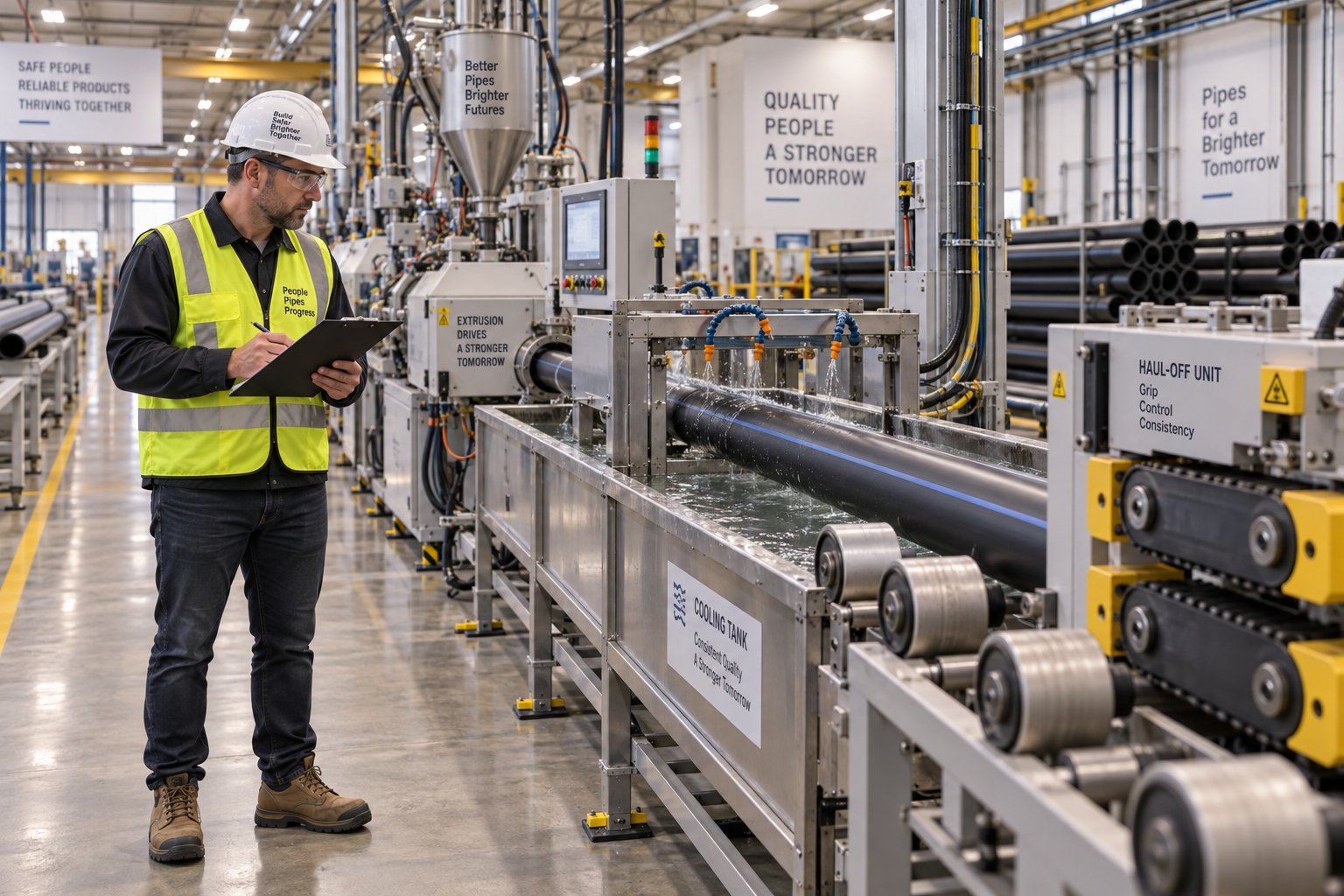
Everything after the die head falls under downstream equipment, and for a plastic pipe production line, these components are just as critical as the extruder itself. A perfectly plasticized melt means nothing if downstream systems can't cool, size, and handle the pipe accurately. Here's what each unit does:
- Vacuum calibration tank - Applies negative pressure (vacuum) and water contact simultaneously to draw the still-soft pipe against a precision sizing sleeve, locking in the exact outer diameter while initiating rapid cooling of the outer wall.
- Spray cooling tanks - Additional cooling stations where water sprays or immersion baths remove residual heat from the pipe's core, ensuring full solidification before the pipe reaches mechanical handling equipment.
- Haul-off unit - A caterpillar-track or belt-type puller that grips the pipe and draws it through the entire downstream line at a constant, precisely controlled speed. Haul-off speed directly influences wall thickness: slower pulling produces thicker walls, faster pulling thins them out.
- Cutting unit - A planetary saw for large-diameter pipes or a chipless cutter for smaller sizes, synchronized with the line speed to make clean, perpendicular cuts at programmed intervals without deforming the pipe.
- Printer/marker - An inkjet or laser system that applies product identification, pipe size, pressure rating, and production date markings before cutting.
- Stacking or coiling equipment - A dump table or automatic stacker collects cut rigid pipes, while a coiler winds flexible, smaller-diameter pipes (typically under 160mm) into compact rolls for shipping.
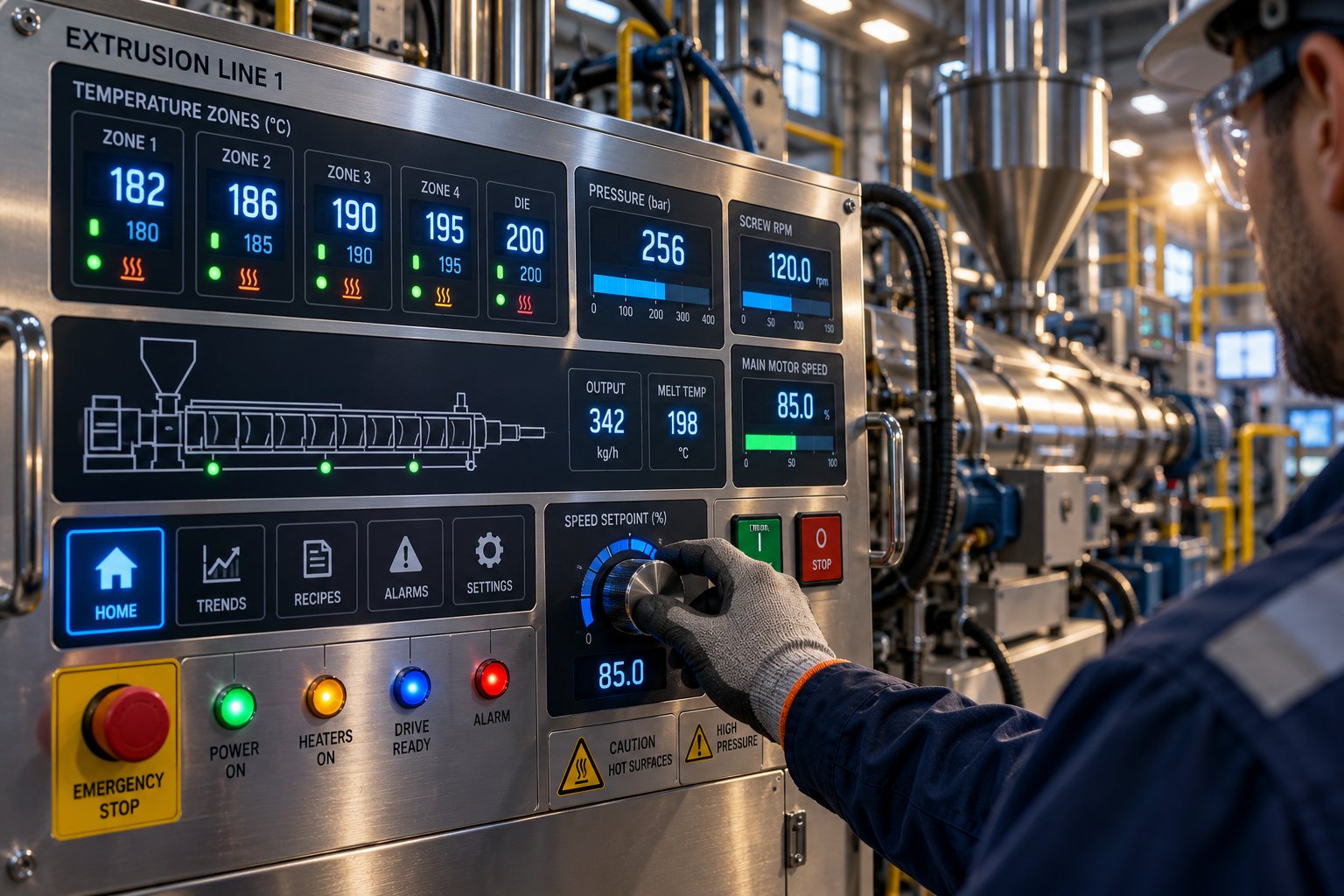
Every downstream component must be speed-synchronized with the extruder output. If the haul-off runs too fast relative to the extruder's melt delivery rate, wall thickness drops below specification. Too slow, and the pipe bulges or the line backs up. Modern plastic pipe extrusion lines use PLC-based control systems to coordinate all these variables automatically, monitoring parameters like vacuum level, water temperature, haul-off tension, and line speed in real time.
These components, working in concert, form the complete extrusion system. But understanding the hardware is only half the picture. The real insight comes from seeing how raw PP resin actually moves through each of these stations, stage by stage, from hopper to finished pipe.
The Complete PP Pipe Extrusion Process Step by Step
Knowing what each component does is one thing. Seeing how polypropylene actually travels through the entire extrusion production line, transforming from loose plastic granules into a finished, dimensionally precise pipe, brings the full picture into focus. Each stage builds on the previous one, and a misstep at any point ripples downstream into defects you'll find only after cutting and inspection.
Here's the complete sequence, laid out as a definitive reference for anyone operating, specifying, or evaluating an extrusion pipe machine for PP production:
- Drying and material preparation
- Hopper feeding
- Screw plasticization and melt conveying
- Die forming
- Vacuum calibration and sizing
- Spray or immersion cooling
- Haul-off
- Cutting to length
- Stacking or coiling
Let's walk through each one in detail.
Material Preparation and Feeding
Everything starts before the resin even touches the extruder. PP pellets or granules arrive from the supplier in sealed bags or bulk containers, and while polypropylene itself is not hygroscopic, the additives blended with it can be. UV stabilizers, certain mineral fillers, and color masterbatches may carry surface moisture that creates bubbles, voids, or streaks in the finished pipe wall. When moisture-sensitive additives are part of the formulation, a dehumidifying hopper dryer removes residual moisture before processing.
At this stage, you'll also introduce any supplementary materials. Colorant masterbatch gives the pipe its characteristic green, gray, or white appearance. UV stabilizers protect pipes destined for outdoor or above-ground installation. Mineral fillers like calcium carbonate or barium sulfate can be added to modify stiffness, reduce material cost, or improve fire resistance. These additives are metered into the material stream using either gravimetric feeders, which dose by weight for high accuracy, or volumetric feeders, which dose by volume and are simpler but less precise.
Why does this matter so much? Because the raw material blend you load into the hopper determines the baseline quality of everything that follows. Inconsistent additive dosing produces pipes with uneven color, variable UV protection, or fluctuating mechanical properties along the length. A reliable feeding system eliminates that variability before the resin ever reaches the screw.
Plasticization and Melt Conveying
Once the prepared PP granules drop from the hopper through the feed throat into the barrel, the real transformation begins. The rotating screw picks up the solid pellets in its deep-channeled feed zone and conveys them forward into progressively hotter barrel sections.
Imagine millions of small plastic pellets being simultaneously compressed, sheared, and heated as they travel along the screw's length. In the compression zone, the decreasing channel depth squeezes out trapped air between pellets while friction between the granules, the screw flights, and the barrel wall generates shear heat. This mechanical energy, combined with thermal energy from the barrel's external heater bands, gradually melts the PP. By the time the material reaches the metering zone, it should be a fully homogeneous, bubble-free melt at consistent temperature and pressure.
For polypropylene specifically, maintaining a consistent melt temperature is non-negotiable. PP is a semi-crystalline polymer, and its viscosity drops sharply with even small temperature increases. If the melt temperature drifts upward due to excessive screw speed or poorly calibrated heater zones, the polymer begins to degrade. You'll see yellowing, reduced impact strength, and lower long-term hydrostatic pressure ratings in the finished pipe. Drift in the opposite direction, and the melt becomes too viscous, creating high back-pressure, increased motor load, and incomplete homogenization.
This is precisely where screw design earns its keep. A well-engineered screw with the right compression ratio and L/D ratio of 30:1 to 33:1 balances shear energy and thermal energy input so the melt arrives at the die head within PP's optimal processing window, typically between 200 and 250 degrees Celsius depending on the grade. Consistent melt pressure at the screw tip, monitored by a pressure transducer, confirms that the plasticization process is stable and repeatable.
Die Forming Through Cooling and Cutting
The homogeneous PP melt exits the extruder barrel and enters the die head under controlled pressure. Inside the die, the melt flows through spiral channels machined into the mandrel, distributing the polymer evenly around the full circumference. As the material converges at the die exit, it emerges as a continuous, hollow tubular profile, still soft and pliable at this point.
This is where speed and precision become critical simultaneously. The soft tube immediately enters the vacuum calibration tank, where negative pressure draws the pipe's outer surface against a precision-machined sizing sleeve. Contact with cooled water in the tank rapidly solidifies the outer wall, locking in the target outer diameter. The vacuum level and water temperature in this tank must be carefully controlled. Too much vacuum deforms the pipe. Too little, and the pipe fails to contact the sleeve fully, producing an undersized or out-of-round product.
From the calibration tank, the pipe passes through additional spray cooling tanks or water bath immersion tanks. These stations remove residual heat from the pipe's core, which is still warm even after the outer wall has solidified. Cooling water flow runs counter to the pipe's travel direction, creating a gradual temperature gradient that reduces internal stress buildup. Rushing this cooling phase, especially with PP's semi-crystalline structure, locks in thermal stresses that can cause warping or cracking during storage or installation.
The fully cooled, rigid pipe then reaches the haul-off unit. Caterpillar tracks lined with rubber clamping blocks grip the pipe evenly and pull it through the entire downstream line at a constant speed, synchronized with the extruder's output rate. This coordination is essential: the haul-off speed directly controls final wall thickness. A deviation of even a few percent in pulling speed produces pipes that fall outside dimensional tolerances.
Finally, the cutter receives a length signal, clamps onto the moving pipe, travels with it briefly, and makes a clean perpendicular cut, either by planetary saw for larger diameters or chipless cutter for smaller sizes. The finished pipes are then deposited onto a dump table or automatic stacker for rigid lengths, or wound onto a coiler for flexible pipes under 160mm in diameter.
Every stage in the PP pipe extrusion process is interdependent: a feeding inconsistency at step one will surface as a wall thickness deviation at step seven and a rejected pipe at step eight.
That interdependence is exactly why the technical specifications of each machine in the line, from screw diameter and motor power to cooling tank length and haul-off force, must be matched to each other and to the PP grade being processed. Those specifications define the performance boundaries of the entire extruded pipe manufacturing operation.
Technical Specifications That Define PP Extrusion Performance
Every component in a PP pipe extrusion machine carries a set of specifications that directly determines what the line can produce, how fast it runs, and how much energy it consumes per kilogram of finished pipe. Yet most equipment guides gloss over these numbers or bury them in generic multi-polymer spec sheets. For anyone evaluating, specifying, or upgrading pipe and profile extrusion equipment, understanding the specification framework specific to polypropylene pipe production is essential for making informed decisions.
The figures presented here represent general industry ranges rather than any single manufacturer's datasheet. Always verify exact specifications against the equipment supplier's documentation for the specific line configuration you're considering.
Screw Design and Output Performance
The screw is where raw PP granules become a processable melt, so its dimensions set the fundamental throughput ceiling for the entire line. Screw diameters used in PP pipe extrusion typically range from 45mm for small-diameter pipe lines up to 120mm or larger for high-output, large-format production. What does that mean in practical terms? A 45mm screw might deliver enough output for pipes in the 16-63mm diameter range, while a 90mm or 120mm screw supports the higher kg/hr demands of pipes exceeding 200mm in diameter.
The L/D ratio, which describes the screw's working length relative to its diameter, is a critical design parameter for polypropylene. PP's semi-crystalline structure benefits from longer L/D ratios, typically 30:1 to 33:1, because the additional barrel length provides more residence time for heat transfer and shear mixing. The result is a more uniform melt with fewer unmelted granules or thermal hot spots. Shorter L/D ratios, like 25:1, may work for simpler polymers but tend to produce inconsistent melt quality with PP, especially at higher screw speeds.
Output rates scale with screw size, but they're not a simple linear relationship. Pipe diameter, wall thickness, line speed, and the PP grade's melt flow index all interact to determine actual throughput. A high-performance extrusion machine with a 65mm screw might produce 150-250 kg/hr on medium-diameter PP-R pipe, while a 120mm screw could push well beyond 500 kg/hr on larger pipe sizes. These numbers shift significantly depending on whether you're running thin-wall pressure pipe or thick-wall industrial drainage, so treat any output figure as context-dependent rather than absolute.
Pipe Diameter and Wall Thickness Capabilities
How wide a range of pipe sizes can a single line cover? That depends on the die tooling, vacuum calibration system, and downstream cooling capacity working together. Small-diameter PP pipe lines typically handle pipes from 16mm up to 75mm or 110mm, covering residential plumbing and radiant heating applications. Medium-diameter lines extend that range up to 250mm or 315mm for commercial building systems and light industrial use. Large-format lines push into 400mm, 630mm, and even 800mm or beyond for municipal water distribution, industrial chemical transport, and large-scale drainage systems.
Wall thickness capability is equally important and often overlooked. Thin-wall PP-R pressure pipe might run at just 1.8mm wall thickness on a 20mm pipe, while a 315mm industrial PP-H pipe could require walls of 20mm or more. The die tooling sets the initial wall dimension, but the vacuum calibration tank must be sized to handle the thermal mass of thick-walled pipes, which retain heat much longer in their core than thin-walled products. If your cooling tanks are too short or your water flow capacity is insufficient, you'll either need to slow the line speed dramatically, reducing output, or accept pipes with residual internal heat that causes post-extrusion warping.
This is why experienced pipe producers match their downstream equipment to the thickest-wall, largest-diameter pipe in their target product range, then adjust process parameters downward for smaller sizes. Sizing the cooling system for the most demanding product prevents bottlenecks that would limit the entire line.
Motor Power and Energy Efficiency Considerations
The extruder's drive motor is the single largest energy consumer on the line, and its sizing directly impacts both throughput capacity and operating cost. Small-diameter PP pipe lines typically use motors in the 15-37 kW range, medium-diameter lines step up to 55-90 kW, and large-format lines often require 110 kW to well over 200 kW. These are not arbitrary numbers. Polypropylene, as a polyolefin, requires roughly three times more drive energy than PVC to process, meaning your motor investment and ongoing electricity costs are significantly higher than what a PVC pipe producer experiences for equivalent output.
Here's where total cost of ownership thinking becomes essential. Imagine two lines producing the same PP-R pipe: one uses a standard AC induction motor, the other uses a high-efficiency servo motor with a variable frequency drive. The servo-driven line might cost 15-20% more upfront, but it modulates motor speed precisely to match real-time demand, eliminating the energy waste of running a fixed-speed motor at partial load. Over a typical equipment lifespan of 15-20 years, energy consumption per kilogram of PP processed often exceeds the initial machine purchase price, sometimes by a factor of two or three.
Industry data from Rollepaal's energy analysis shows that drive energy accounts for approximately 65% of total extrusion energy costs, with heating contributing around 10% and auxiliary equipment like mixers, pumps, and coolers making up the remaining 25%. For a typical extrusion site, energy costs can run around $75 per ton of processed material. Multiply that across annual production volumes, and you'll quickly see why a highspeed extrusion machine supplier emphasizing energy efficiency delivers more value than one competing solely on purchase price. It's worth noting that while pvc-o pipe extrusion lines lowest operating costs stem partly from PVC's inherently lower drive energy requirements, PP producers can close that gap significantly through servo motor technology, optimized screw design, and efficient cooling system engineering.
Energy consumption per kilogram of PP processed frequently exceeds the initial machine cost over the equipment's lifespan, making motor efficiency the single most important long-term cost variable.
The table below provides a generalized specification framework across three line categories. Use it as a starting point for discussions with equipment suppliers, then request detailed datasheets matched to your specific PP grade and target pipe dimensions.
| Specification | Small-Diameter Line | Medium-Diameter Line | Large-Diameter Line |
|---|---|---|---|
| Screw Diameter | 45-55 mm | 60-90 mm | 90-120 mm+ |
| Typical L/D Ratio | 30:1 to 33:1 | 30:1 to 33:1 | 30:1 to 36:1 |
| Pipe Diameter Range | 16-75 mm | 75-315 mm | 315-800 mm+ |
| Approximate Motor Power | 15-37 kW | 55-90 kW | 110-250 kW+ |
| General Output Category | 50-200 kg/hr | 200-500 kg/hr | 500-1,000+ kg/hr |
| Typical Applications | Residential plumbing, radiant heating | Commercial plumbing, HVAC, light industrial | Municipal water, industrial chemical, drainage |
| Drive Type Trend | Servo/VFD standard | Servo/VFD increasingly standard | Servo/VFD for energy payback |
These specifications define the performance envelope of any PP pipe extrusion machine, but they don't tell the full story on their own. The extruder type, whether single-screw or twin-screw, fundamentally shapes how those specs translate into real-world production performance, especially when different PP grades and compound formulations enter the picture.
Single-Screw vs Twin-Screw Extruders for PP Pipe Production
Screw diameter, motor power, and L/D ratio only tell you what an extruder can do in theory. The architecture of the screw system itself, whether single or twin, determines how effectively those specifications translate into consistent PP pipe quality on the production floor. Choosing the wrong extruder type for your application is like buying a high-horsepower engine and bolting it into the wrong chassis. The power is there, but the results disappoint.
Single-Screw Extruders for Standard PP Pipe Production
For the vast majority of PP pipe applications, a single-screw extruder is the industry workhorse, and for good reason. When you're processing virgin PP-R, PP-H, or PP-B pellets that arrive pre-compounded and ready to melt, a single-screw system delivers exactly what the process demands: stable melting, consistent pressure buildup, and steady melt delivery to the die. It accomplishes this with a simpler mechanical design, lower acquisition cost, easier day-to-day maintenance, and fewer operator skill requirements than its twin-screw counterpart.
But "simpler" doesn't mean "generic." The performance difference between a mediocre single-screw setup and a precision-engineered one is enormous. A well-designed screw with the right compression ratio, optimized barrier flight geometry, and a properly matched metering section achieves excellent melt homogeneity across all three PP grades. Barrier screw designs separate the melt channel from the solids channel, draining excess melt away from unmelted pellets so they generate more frictional heat and melt more efficiently per revolution. Combined with a Maddock mixing section near the screw tip, this architecture produces the thermally uniform melt that polypropylene's semi-crystalline structure demands.
Here's the critical insight many buyers miss: the screw and barrel assembly is the single component that most directly determines output consistency, energy efficiency, and finished pipe quality. A worn or poorly specified screw creates temperature variations, pressure fluctuations, and incomplete melting that no amount of downstream adjustment can fix. This makes selecting a precision-engineered, application-matched screw barrel assembly one of the most important investment decisions in the entire line. For pipe producers sourcing custom or replacement components, suppliers like NANHAIYA offer single screw barrels specifically optimized for PP pipe extrusion, with customization options that match the screw geometry, metallurgy, and compression characteristics to the exact PP grade and pipe specification being produced. That level of application-specific engineering in the barrel components is foundational to consistent extrusion performance over the long term.
Twin-Screw Extruders for Specialized PP Compounds
Twin-screw pipe extruders enter the picture when the processing challenge goes beyond simple melt-and-form. If your operation involves heavily filled PP compounds, perhaps loaded with 30-40% calcium carbonate or glass fiber, the superior distributive mixing of two intermeshing screws ensures those fillers disperse uniformly rather than clumping into weak spots within the pipe wall. Processing recycled PP with variable melt flow index and contamination levels is another scenario where a twin-screw system's ability to handle inconsistent feedstock proves invaluable.
Co-extrusion applications requiring precise multi-layer control, such as PP pipes with an inner barrier layer or an outer UV-resistant skin, also benefit from the twin-screw's tighter material control. And while a pvc pipe extruder machine for rigid PVC almost always uses a conical twin-screw design because PVC powder requires intensive mixing and controlled shear, PP pipe production rarely needs that level of in-barrel compounding when starting from quality pellets.
The trade-offs, however, are real. Twin-screw systems carry significantly higher equipment costs, more complex maintenance demands, a larger inventory of wear parts, and greater operator expertise requirements. As industry comparisons consistently show, the common mistake is treating twin-screw as inherently "better" when, in reality, the better machine is the one whose capability matches the actual processing need without adding unnecessary cost and complexity.
Choosing the Right Extruder Type for Your PP Application
So how do you decide? The choice between single-screw and twin-screw for PP pipe production comes down to a handful of practical questions about your specific operation. Use this decision checklist before committing to either architecture:
- Resin type: Virgin, pre-compounded PP pellets strongly favor single-screw. Recycled PP with variable quality or powder-based formulations lean toward twin-screw.
- Filler content: Unfilled or lightly filled PP processes efficiently on a single screw. High filler loads (above 20-30%) benefit from twin-screw mixing.
- Production volume: High-volume, continuous production of a consistent product suits the operational simplicity of single-screw. Frequent recipe changes or small batches may justify twin-screw flexibility.
- Pipe complexity: Single-layer PP pipe is firmly single-screw territory. Multi-layer co-extruded pipe structures may require twin-screw for one or more layers.
- Budget and operator skill: Single-screw delivers a lower total operating burden: less training, simpler troubleshooting, and fewer wear parts to stock. Twin-screw justifies its higher cost only when the process genuinely needs its mixing capability.
For the majority of PP pipe production, whether you're running PP-R for residential plumbing or PP-H for industrial chemical drainage, a single-screw plastic pipe extruder with a high-quality, properly configured barrel and screw delivers the best balance of performance, reliability, and economy. The distinction mirrors what you'd find in the PVC world: a pvc pipe extruder handles powder-based compounds on twin-screw systems precisely because the material demands it, while pellet-based polyolefins like PP and PE run more efficiently and cost-effectively on single-screw platforms.
The extruder type sets the foundation, but the pipes it produces ultimately define its value. Understanding where PP pipes actually end up, from residential hot water loops to corrosive chemical transport, reveals how application requirements should drive your machine specification decisions from the very start.
Applications of PP Pipes and What They Mean for Machine Selection
Every machine specification on a PP pipe extrusion line, from screw diameter to cooling tank length, traces back to a single question: what will the finished pipe actually do? A 20mm PP-R tube feeding a kitchen faucet and a 400mm PP-H pipe transporting sulfuric acid in a chemical plant impose radically different demands on the same core technology. Matching your equipment to the end-use application, rather than buying a generic line and hoping it covers everything, is what separates profitable pipe producers from those perpetually chasing quality issues.
Hot and Cold Water Supply Systems
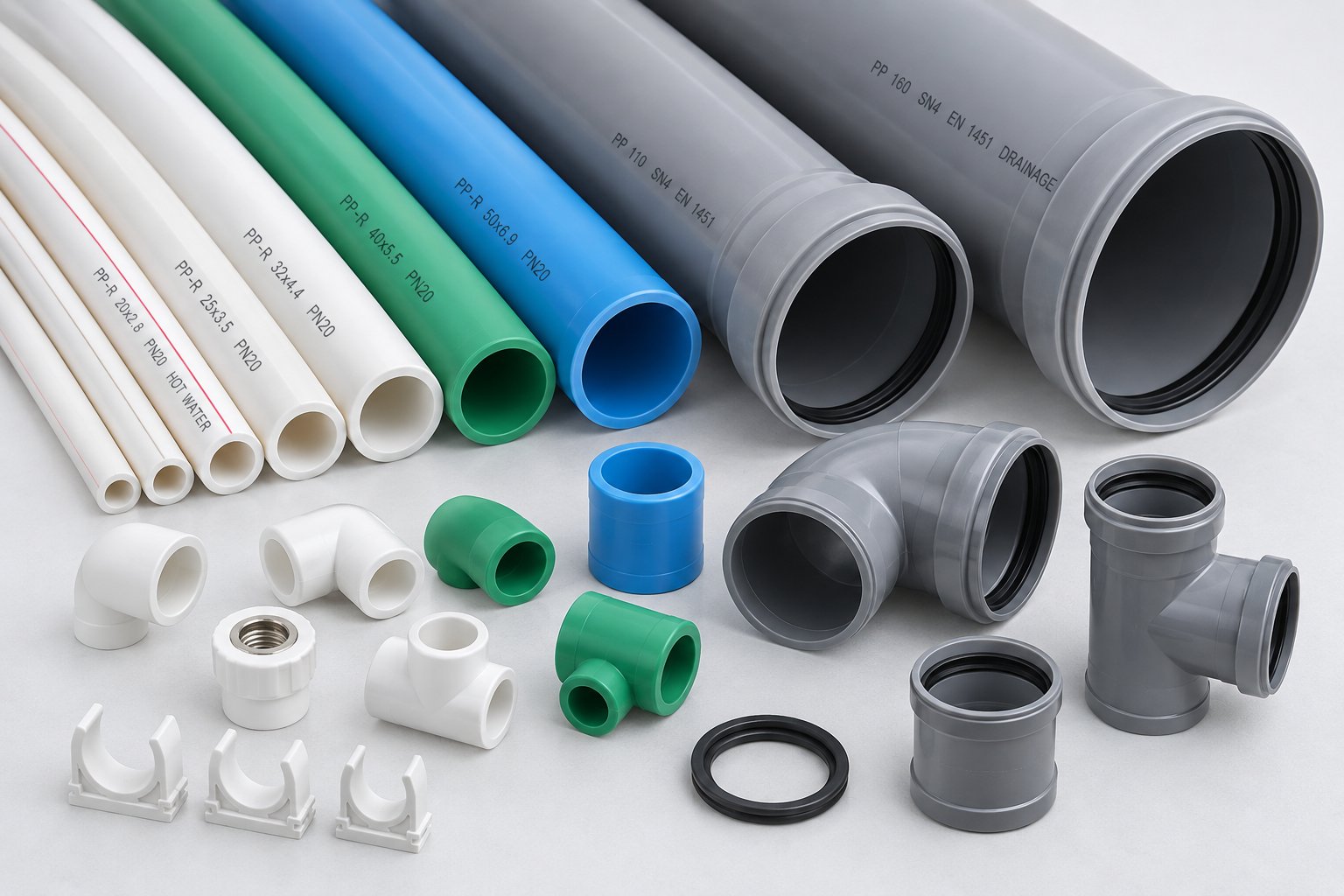
PP-R dominates residential and commercial plumbing for a reason. Its random copolymer structure delivers the long-term hydrostatic strength needed for pressurized water distribution, while its heat resistance handles continuous hot water service up to 70 degrees Celsius without degradation. Heat fusion welding, where a specialized iron melts the pipe and fitting surfaces together, creates monolithic joints that are actually stronger than the pipe itself. No gaskets, no threads, no potential leak points.
Residential installations typically use pipes in the 20-32mm range for branch lines and 40-63mm for risers, with pressure ratings from PN12.5 for cold water up to PN20 or PN25 for hot water systems. Commercial buildings push those diameters higher, sometimes up to 110mm for main distribution headers. If your target market is plumbing, your pp pipe extrusion machine needs precise wall thickness control across these smaller diameters, where even fractions of a millimeter affect pressure ratings and certification compliance.
Industrial Chemical Transport and Drainage
Imagine a piping system that shrugs off concentrated acids, alkalis, and organic solvents without corroding, scaling, or losing structural integrity. That's exactly what PP-H homopolymer pipes deliver in chemical plants, pharmaceutical facilities, semiconductor fabs, and wastewater treatment operations. PP-H's high crystallinity and rigidity give it the stiffest, most chemically inert profile among the three PP grades, making it the default choice wherever aggressive fluids flow.
Industrial PP-H pipe diameters typically range from 50mm for lab bench drainage up to 400mm or larger for main process lines and wastewater collectors. Wall thicknesses tend to be heavier than plumbing pipe to handle both chemical attack and the mechanical stresses of industrial mounting. For machine selection, this means your extrusion line needs robust cooling capacity to handle thick-walled pipes and die tooling designed for larger-diameter production.
HVAC, Agriculture, and Emerging Applications
Beyond plumbing and chemical transport, PP pipes are carving out growing niches in applications that many buyers don't initially consider. HVAC systems increasingly use PP-R pipe for chilled and heated water distribution loops in commercial buildings, where its smooth internal bore minimizes friction losses and its corrosion resistance eliminates the maintenance headaches of metal piping.
Agricultural irrigation systems, particularly drip irrigation networks and low-pressure distribution mains, benefit from PP-B's impact resistance in buried installations where soil movement and temperature cycling can crack stiffer materials. While many agricultural operations still run on polyethylene, and an hdpe pipe production line remains the primary equipment for PE-based irrigation pipe, producers looking to offer broader product portfolios are adding PP-B capability to serve cold-climate agricultural markets where impact toughness matters most.
Perhaps the most interesting emerging application is geothermal ground-source heat pump loops. PPI's model specification for ground-source geothermal systems recommends PP-R and PP-RCT piping for indoor mechanical room connections, alongside HDPE for outdoor ground loops. As geothermal adoption accelerates for building decarbonization, pipe producers with both a PP extrusion line and a pe pipe production line are positioned to serve both the indoor and outdoor segments of these projects. Compressed air distribution in industrial facilities is another growth area, where PP's pressure capability and corrosion-free interior replace aging galvanized steel networks.
The table below maps each major application to the recommended PP grade, typical pipe sizes, and the key performance requirements that should guide your machine configuration:
| Application | Recommended PP Grade | Typical Pipe Diameter Range | Key Performance Requirements |
|---|---|---|---|
| Residential hot and cold water supply | PP-R | 20-63 mm | Pressure rating PN16-PN25, continuous service to 70 degrees Celsius, heat fusion weldability |
| Commercial plumbing and risers | PP-R / PP-RCT | 40-110 mm | Higher pressure classes, thinner walls (PP-RCT), long-term hydrostatic strength |
| Industrial chemical transport | PP-H | 50-400 mm+ | Resistance to acids, alkalis, and solvents; service temperatures to 95 degrees Celsius; high stiffness |
| Industrial drainage and wastewater | PP-H / PP-B | 75-400 mm | Chemical resistance, impact toughness for buried lines, heavy wall thickness |
| HVAC chilled and heated water loops | PP-R | 25-110 mm | Low friction loss, corrosion-free interior, temperature cycling resistance |
| Agricultural irrigation | PP-B | 20-110 mm | Impact resistance at low temperatures, UV stabilization for exposed runs, burial durability |
| Geothermal indoor piping | PP-R / PP-RCT | 25-75 mm | Pressure rated, heat fusion joints, compatibility with glycol-water loops |
| Compressed air distribution | PP-R | 20-63 mm | Pressure rated to 10-13 bar, corrosion-free interior, leak-free fusion joints |
You'll notice a pattern: each application essentially prescribes a specific PP grade, a diameter window, and a set of performance thresholds. Those three variables, in turn, dictate the extruder size, die tooling, cooling system capacity, and downstream handling equipment you'll need. Buying a machine without first mapping it to your target applications is like designing a building without knowing how many floors it needs. The structure might stand, but it won't serve its purpose efficiently.
Of course, even a perfectly specified line only performs as intended when it's properly maintained. Components wear, calibration drifts, and output gradually deteriorates, often so slowly that operators don't notice until quality complaints arrive. Recognizing those early warning signs, and knowing which maintenance tasks prevent them, is where long-term production reliability is won or lost.
Maintenance Best Practices to Maximize PP Pipe Extruder Machine Lifespan
A perfectly specified, properly configured PP pipe extrusion machine doesn't stay that way on its own. Every hour of operation introduces microscopic wear to screw flights, barrel linings, die surfaces, and downstream components. The decline is gradual, almost invisible at first, which is precisely what makes it dangerous. By the time operators notice the symptoms, declining output, rising energy bills, inconsistent wall thickness, the damage has already cost thousands in scrap, wasted energy, and lost capacity. Structured maintenance transforms that slow, expensive deterioration into a predictable, manageable cost.
Screw and Barrel Wear Indicators
The screw and barrel assembly is the component most vulnerable to progressive wear, and it's also the one whose degradation has the most far-reaching consequences. Recognizing the early warning signs before they escalate into production crises is a skill every pipe extrusion operator and maintenance engineer should develop.
Here are the telltale indicators that your screw and barrel are wearing beyond acceptable limits:
- Declining output at the same RPM - When the flight clearance between screw tip and barrel wall increases due to wear, more molten PP leaks backward over the flights instead of being pushed forward. You'll need to increase screw speed just to maintain the same kg/hr output, which accelerates wear even further. Industry analysis shows that for a 100mm screw processing polyolefin at 150 kg/hr, progressive wear can eventually force a 13% rate reduction to maintain acceptable discharge temperatures.
- Increased melt temperature without setpoint changes - As flight clearance grows, the material film on the barrel wall thickens, reducing heat transfer efficiency. The extruder compensates with more shear energy, driving up discharge temperatures. If your melt temperature is climbing by 5-10 degrees Celsius at the same operating conditions you've always used, wear is the likely culprit.
- Visible scoring or galling on screw flights - When you pull the screw for inspection, look for grooves, scratches, or areas where the hard-facing material on the flight tips has worn through. Once hard facing is gone, the softer base metal underneath wears exponentially faster.
- Increased energy consumption - A worn screw-barrel combination works harder to achieve the same output, drawing more motor current. If your specific energy consumption (kWh per kg of PP processed) is trending upward without any change in resin grade or product specifications, wear is silently inflating your electricity bill.
- Inconsistent pipe wall thickness - As the clearance becomes uneven along the screw's length, melt pressure fluctuations increase, producing pipes with wall thickness variations that exceed tolerances. This is often the symptom that finally triggers action, but by the time it's visible in the product, the wear is already significant.
How much wear is too much? A common industry guideline suggests replacing the screw when the flight clearance reaches four times the original clearance when new. For a typical pipe extruder machine, the original clearance per side is roughly the nominal screw diameter divided by 1000. So a 90mm screw starts with approximately 0.09mm clearance per side; at 0.36mm, performance degradation becomes hard to ignore. However, experienced practitioners recommend basing the replacement decision on economics rather than a fixed multiplier. Critical-duty PP-R pressure pipe production, where wall thickness consistency directly affects safety ratings, may warrant screw replacement at just two times the original clearance, while less demanding drainage pipe applications can tolerate more wear before economics force a change.
One practical tip: keep a spare screw in storage. When the active screw reaches end of life, you can swap in the replacement within hours rather than waiting weeks for a new one, which would mean extended downtime or running off-spec product. The same principle applies if you operate an hdpe pipe extrusion machine alongside your PP line, since both polyolefin applications impose similar wear patterns on screw flight surfaces. Having a reliable supplier for custom and replacement screw barrels, such as NANHAIYA's single screw barrel program, minimizes lead time and ensures replacement components match original specifications for PP processing, including correct metallurgy, compression ratio, and flight geometry.
A worn screw should never be refurbished more than three times. Each re-welding of hard facing onto the flight tips degrades the base metal, increasing the risk of delamination between the hard facing and the screw body during production. And don't forget the barrel: when you pull the screw, measure the barrel bore at multiple points along its length. An iron-based bimetallic barrel liner typically lasts about three times the service life of a screw, but if bore measurements show uneven wear or clearance beyond tolerance, the barrel needs attention too.
Die Cleaning and Calibration Tank Maintenance
While screw and barrel wear gets the most attention, neglected die heads and calibration systems quietly degrade pipe quality in ways that are easily misdiagnosed as material problems or extruder issues.
Carbon buildup inside the die is the primary enemy. Polypropylene, like all thermoplastics, degrades when exposed to heat for extended periods. Stagnation zones inside the die, areas where PP melt sits too long without flowing, gradually develop a layer of carbonized polymer. These carbon deposits break free unpredictably, creating black specks, surface streaks, and even flow restrictions that change pipe dimensions. Best practices for die maintenance include scheduled disassembly and cleaning using chemical solvents compatible with the die steel, mechanical cleaning with brass tools (never hardened steel, which scratches polished flow surfaces), and hot water or steam cleaning for organic residue removal.
The cleaning schedule depends on how continuously the line runs and how often you change PP grades or colors. Lines running the same natural PP-R 24/7 may go weeks between die cleanings, while operations frequently switching between colored compounds may need cleaning with every changeover. After reassembly, always verify bolt torque to manufacturer specifications. Thermal cycling loosens die bolts over time, and an improperly torqued die joint leaks molten PP, a safety hazard and a source of flow imbalance that produces eccentric pipe walls.
Calibration tank maintenance is equally important and frequently overlooked. The vacuum calibration tank sets the pipe's final outer diameter, so any deterioration in its function directly impacts dimensional accuracy. Key maintenance tasks include:
- Water quality management - Scale buildup, biological growth, and suspended particles in cooling water reduce heat transfer efficiency and can deposit residue on the pipe's outer surface. Monitor water hardness, pH, and conductivity regularly, and treat or replace water before fouling affects production.
- Vacuum seal inspection - The rubber seals that prevent air leakage at the tank's entry and exit points degrade with heat and chemical exposure. Worn seals reduce vacuum stability, and operators often compensate by increasing pump load until the entire process becomes unstable. Inspect seals weekly and replace them before they force workarounds.
- Sizing sleeve replacement - The precision-machined sleeve inside the calibration tank wears over time, especially if abrasive particles are present in the cooling water or if the pipe surface drags against it under insufficient lubrication. A worn sleeve produces pipes with inconsistent or out-of-tolerance outer diameters.
Preventive Maintenance Schedules and Replacement Planning
Reactive maintenance, fixing things after they break, is the most expensive approach to running a pe pipe extrusion line, an hdpe pipe extrusion line, or a PP pipe production system. Preventive maintenance converts unpredictable failures into scheduled, planned activities that keep the line running at peak efficiency. The framework below provides a structured schedule adapted specifically for PP pipe extrusion operations:
| Maintenance Task | Frequency | Purpose |
|---|---|---|
| Check hopper level and feed throat cooling flow | Daily (each shift) | Prevent feed interruptions and pellet bridging that cause output fluctuations |
| Verify barrel zone temperatures against setpoints | Daily | Detect heater band failures or thermocouple drift before they affect melt quality |
| Record melt pressure at fixed screw speed | Daily | Track gradual changes indicating screen loading, die buildup, or screw wear |
| Inspect die lip for polymer buildup or leakage | Daily | Prevent streaks, black specks, and wall thickness variation |
| Check cooling water temperature, flow rate, and tank levels | Daily | Ensure consistent pipe cooling and dimensional stability |
| Confirm haul-off belt contact and displayed speed | Daily | Prevent pipe slippage, surface marks, and dimensional drift |
| Check gearbox oil level and belt/coupling condition | Weekly | Detect lubrication degradation or mechanical wear before output loss |
| Inspect heater band terminals for discoloration or looseness | Weekly | Prevent resistance heating, current draw spikes, and heater failure |
| Clean water strainers, filters, and spray nozzles | Weekly | Maintain full cooling capacity and prevent defects misdiagnosed as process issues |
| Check vacuum tank seals and calibration surfaces | Weekly | Maintain dimensional accuracy and vacuum stability |
| Sharpen or replace cutter blades; verify clamp alignment | Weekly | Ensure clean cuts and consistent pipe lengths |
| Pull screw for visual inspection of flights and hard facing | Monthly | Assess wear progression and plan replacement before output degrades |
| Measure barrel bore diameter at feed, compression, and metering zones | Monthly | Track barrel wear independently from screw wear |
| Check heater band continuity and insulation resistance | Monthly | Identify failing heaters before they create cold zones in the barrel |
| Record gearbox oil temperature under stable load | Monthly | Rising temperature at same load indicates internal wear or oil degradation |
| Test motor insulation resistance | Monthly | Detect moisture ingress or insulation breakdown before motor burnout |
| Measure vacuum pump ultimate vacuum against baseline | Monthly | Identify declining pump capacity from oil, vane, or seal issues |
| Backup PLC, HMI, and VFD parameters | Monthly | Prevent days of reprogramming after controller failure |
| Complete screw and barrel clearance measurement with trend analysis | Annually | Make data-driven replacement decisions before quality collapses |
| Full gearbox oil change and bearing inspection | Annually | Extend gearbox life and prevent catastrophic drivetrain failure |
| Die disassembly, deep cleaning, and flow surface inspection | Annually (or as needed) | Remove all carbon deposits and verify die geometry for dimensional accuracy |
| Cooling system flush, descale, and water treatment evaluation | Annually | Restore full cooling capacity and prevent long-term fouling |
The real power of this schedule isn't any single task. It's the trend data that accumulates over weeks and months. One melt pressure reading tells you where you stand today. Six months of weekly readings tell you where you're headed. If melt pressure, gearbox temperature, cooling delta-T, or screw clearance measurements are trending in the wrong direction across two or three consecutive readings, you have the information to schedule repairs proactively, during a planned production gap, rather than reactively after the line forces a shutdown.
Preventive maintenance doesn't eliminate all failures, but it converts the majority of them from emergency shutdowns into planned, scheduled activities that protect both production capacity and pipe quality.
Replacement planning deserves special attention. Screws, barrel liners, die components, vacuum seals, haul-off belts, and cutter blades are all consumable items with finite service lives. Maintaining a relationship with a dependable components supplier, and keeping critical spare parts like a backup screw on the shelf, means the difference between a four-hour swap and a three-week wait for manufacturing and shipping. This applies equally whether you're running a PP line, an hdpe pipe extrusion line, or any other polyolefin pipe production system.
Maintenance discipline keeps your line running. But even the best-maintained machine can't compensate for fundamental mistakes made during the purchasing process itself. The most costly errors don't happen on the production floor. They happen months earlier, during equipment selection, when buyers overlook critical sizing decisions, downstream equipment quality, and the total cost implications that will define their operation's profitability for the next two decades.
Common Mistakes When Buying a PP Pipe Extrusion Machine
Purchasing errors don't announce themselves on delivery day. They reveal themselves slowly, over months and years, through bottlenecked output, ballooning energy bills, off-spec pipe that triggers customer complaints, and equipment that can't grow with the business. The most expensive line on the market is the one that doesn't fit your actual production needs, and the cheapest one is often the most costly to operate. Here are the mistakes that consistently trap buyers, and how to avoid each one.
Undersizing the Extruder for Target Output
Imagine buying a truck that can haul exactly the weight you need today, with zero margin for a single extra kilogram. That's what happens when buyers select an extruder that barely meets current output requirements. It seems cost-efficient on paper, but the consequences compound quickly.
An extruder running constantly at or near its maximum capacity wears faster, produces more heat than necessary, and delivers less consistent melt quality than one operating comfortably within its design window. As experienced manufacturers note, running a correctly sized extruder within its optimal operating range produces better consistency, lower wear, and more predictable output over time. When you size for headroom, typically at least 20-30% above your current production targets, you gain the ability to run at reduced screw speeds. Lower RPM means less shear energy, less wear on screw flights and barrel linings, lower melt temperatures, and ultimately better pipe properties. It also means you have capacity ready when your market grows, without needing to purchase an entirely new line.
Conversely, oversizing carries its own risks. A large extruder running at very low load can produce unstable melt flow, higher specific energy consumption, and inconsistent pipe quality. The sweet spot is an extruder sized for realistic growth, not for today's minimum and not for an aspirational maximum that may never materialize.
Neglecting Downstream Equipment Quality
Buyers pour most of their attention and budget into the extruder itself, treating the vacuum calibration tank, cooling baths, haul-off unit, and cutter as afterthoughts. This creates a production line with a powerful engine and weak brakes. The extruder can melt and deliver PP perfectly, but if the calibration tank can't hold stable vacuum, the cooling tanks are too short for thick-walled pipes, or the haul-off slips under load, every meter of pipe coming off the line carries dimensional defects.
A complete investment analysis should evaluate each downstream component with the same rigor applied to the extruder. Wall thickness variation traced to a haul-off speed fluctuation, ovality caused by insufficient vacuum, or rough cut ends from a dull planetary saw all result in rejected product and wasted material. Your production line is only as strong as its weakest component, and that weak link is almost always hiding in the downstream equipment that received the least scrutiny during the purchase process.
Overlooking Total Cost of Ownership
Here's a number that surprises most first-time buyers: over a typical 15-20 year equipment lifespan, energy and maintenance costs can exceed the initial machine purchase price by a factor of two or three. Choosing the lowest sticker price without evaluating what the line costs to run every day is like buying a car based solely on its dealer price while ignoring fuel economy, insurance, and repair history.
Total cost of ownership for a pp pipe extrusion machine includes electricity consumption per kilogram of PP processed, spare parts availability and cost, operator training requirements, cooling water consumption, scrap rates, and planned downtime for maintenance. A line equipped with high-efficiency servo motors and variable frequency drives may cost 15-20% more upfront, but the energy savings alone often recover that premium within a few years. Similarly, a line from a pp pvc pipe extrusion line supplier that stocks common wear parts and offers responsive technical support will cost less over its lifetime than a bargain machine whose manufacturer is difficult to reach when something breaks.
Even in adjacent polymer segments, this principle holds. Producers evaluating extrusion pvc pipe lines face the same calculus: the cheapest pvc extrusion machine on the market often generates the highest total cost once energy waste, material scrap, and unplanned downtime enter the equation. PP pipe production is no different.
Failing to Match Machine to PP Grade and Application
This mistake ties directly back to the core argument of this entire article. A generic pipe extrusion line, purchased without confirming that its barrel temperature profiles, screw geometry, cooling capacity, and die tooling are configured for the specific PP grade and pipe specifications you intend to produce, is a gamble with your capital. PP-R, PP-H, and PP-B each impose distinct processing demands. A line optimized for PP-R random copolymer hot water pipe won't automatically produce quality PP-H chemical drainage pipe without significant reconfiguration, and a machine sold as suitable for "all polyolefins" may not be optimized for any of them.
Before signing any purchase agreement, confirm that the supplier has configured the line for your exact resin grade, target pipe diameter range, wall thickness specifications, and production volume. Ask for references from other customers running the same PP grade on the same equipment configuration. If the supplier can't provide those specifics, you're buying a compromise.
Use this checklist as a quick reference during your evaluation process to avoid the most common and costly purchasing mistakes:
- Extruder sizing: Verify the extruder provides at least 20-30% output headroom above current production targets to allow reduced-speed operation and future growth.
- Downstream balance: Confirm that vacuum tanks, cooling systems, haul-off, and cutting equipment are specified for the largest and thickest-walled pipe in your target range, not just the most common size.
- Energy analysis: Request specific energy consumption data (kWh per kg of PP processed) at your target pipe size and compare across suppliers, not just purchase price.
- Spare parts strategy: Confirm spare parts availability, typical lead times, and whether critical wear components like screws, barrels, and die tooling are stocked or made to order.
- Grade-specific configuration: Ensure the line is configured, tested, and referenced for the specific PP grade (PP-R, PP-H, or PP-B) and pipe specifications you intend to produce.
- Operator training: Verify that comprehensive operator and maintenance training is included, covering not just startup procedures but troubleshooting, grade changeovers, and preventive maintenance protocols.
- Tooling completeness: Confirm whether the quotation includes dies, mandrels, calibration sleeves, cutting clamps, and haul-off pads for every pipe diameter you plan to produce, or only the initial sizes.
- Factory acceptance testing: Insist on a factory acceptance test running your specified PP grade and pipe dimensions before the equipment ships, so issues are resolved at the manufacturer's facility rather than yours.
Thorough specification matching and total cost analysis prevent costly mistakes that generic price shopping cannot avoid.
Every mistake on this list shares a common root cause: treating a pipe extruder machine sale as a commodity transaction rather than an engineering decision. The buyers who get the best long-term results are the ones who invest time in defining their exact requirements, understanding how each PP grade interacts with machine configuration, and evaluating suppliers on lifecycle value rather than invoice price alone. That discipline, applied before the purchase order is signed, pays dividends for every year the line operates.
Frequently Asked Questions About PP Pipe Extrusion Machines
1. What is the difference between a PP pipe extrusion machine and a PVC or PE pipe extrusion machine?
A PP pipe extrusion machine is specifically configured for polypropylene's unique melt behavior. PP requires roughly three times more specific energy input than PVC, operates at higher melt temperatures than PE, and has a narrower processing window. Its semi-crystalline structure causes approximately 3% volume shrinkage during cooling versus just 0.7% for PVC. These differences demand tailored barrel temperature profiles, specialized single-screw geometries with L/D ratios of 30:1 to 33:1, and extended downstream cooling systems. Running PP on a line optimized for another polymer typically results in warped pipes, inconsistent wall thickness, and excessive scrap.
2. Which PP grade should I choose for pipe production, and how does it affect machine setup?
The three main grades are PP-R (random copolymer), PP-H (homopolymer), and PP-B (block copolymer). PP-R is ideal for hot and cold water plumbing, processed at 200-240 degrees Celsius with a gradual barrel temperature ramp. PP-H offers the highest stiffness and chemical resistance for industrial applications, processed at 210-250 degrees Celsius, but its high crystallinity demands longer cooling tank residence times to manage shrinkage. PP-B delivers superior low-temperature impact resistance for underground drainage and requires adjusted screw speed and back-pressure settings. Each grade essentially asks something different from the same machine, so confirming your line is configured for the specific grade you intend to run is critical before purchasing.
3. How do I know when the screw and barrel on my PP pipe extruder need replacement?
Watch for five key indicators: declining output at the same screw RPM, rising melt temperature without setpoint changes, visible scoring or worn hard-facing on screw flights during pull inspections, increasing energy consumption per kilogram of PP processed, and growing pipe wall thickness inconsistency. A common guideline is to replace the screw when flight clearance reaches four times the original gap, though critical pressure-pipe applications may warrant earlier replacement. Keeping a spare screw on hand and partnering with a reliable supplier like NANHAIYA for custom and replacement single screw barrels (nhyscrews.com) ensures fast turnaround and components matched to your exact PP processing specifications.
4. Should I use a single-screw or twin-screw extruder for PP pipe production?
For the majority of PP pipe applications using virgin, pre-compounded pellets, a single-screw extruder is the industry standard. It offers simpler operation, lower acquisition and maintenance costs, and proven reliability for PP-R, PP-H, and PP-B grades. Twin-screw extruders become necessary only for specialized scenarios: processing heavily filled PP compounds with over 20-30% mineral content, blending recycled PP with variable quality, or producing multi-layer co-extruded pipe structures. The right choice depends on your resin type, filler content, production volume, pipe complexity, and budget rather than an assumption that twin-screw is inherently superior.
5. What are the most common mistakes to avoid when buying a PP pipe extrusion machine?
The costliest mistakes include undersizing the extruder without 20-30% output headroom, which forces constant maximum-speed operation and accelerates wear. Neglecting downstream equipment quality creates bottlenecks where cheap calibration tanks or haul-offs limit the entire line's performance. Overlooking total cost of ownership is another trap, since energy and maintenance expenses can exceed the purchase price by two to three times over the machine's 15-20 year lifespan. Finally, buying a generic polyolefin line without confirming it is configured for your specific PP grade and target pipe dimensions leads to chronic quality issues. Always request a factory acceptance test running your actual resin and pipe specifications before shipment.
Written by
Nanhaiya Technical Team
Zhoushan Nanhaiya Plastic Machinery Co., Ltd.
The Nanhaiya technical team supports screw and barrel manufacturing projects through application review, technical communication, custom manufacturing coordination, and production and quality control.
Discuss Your Application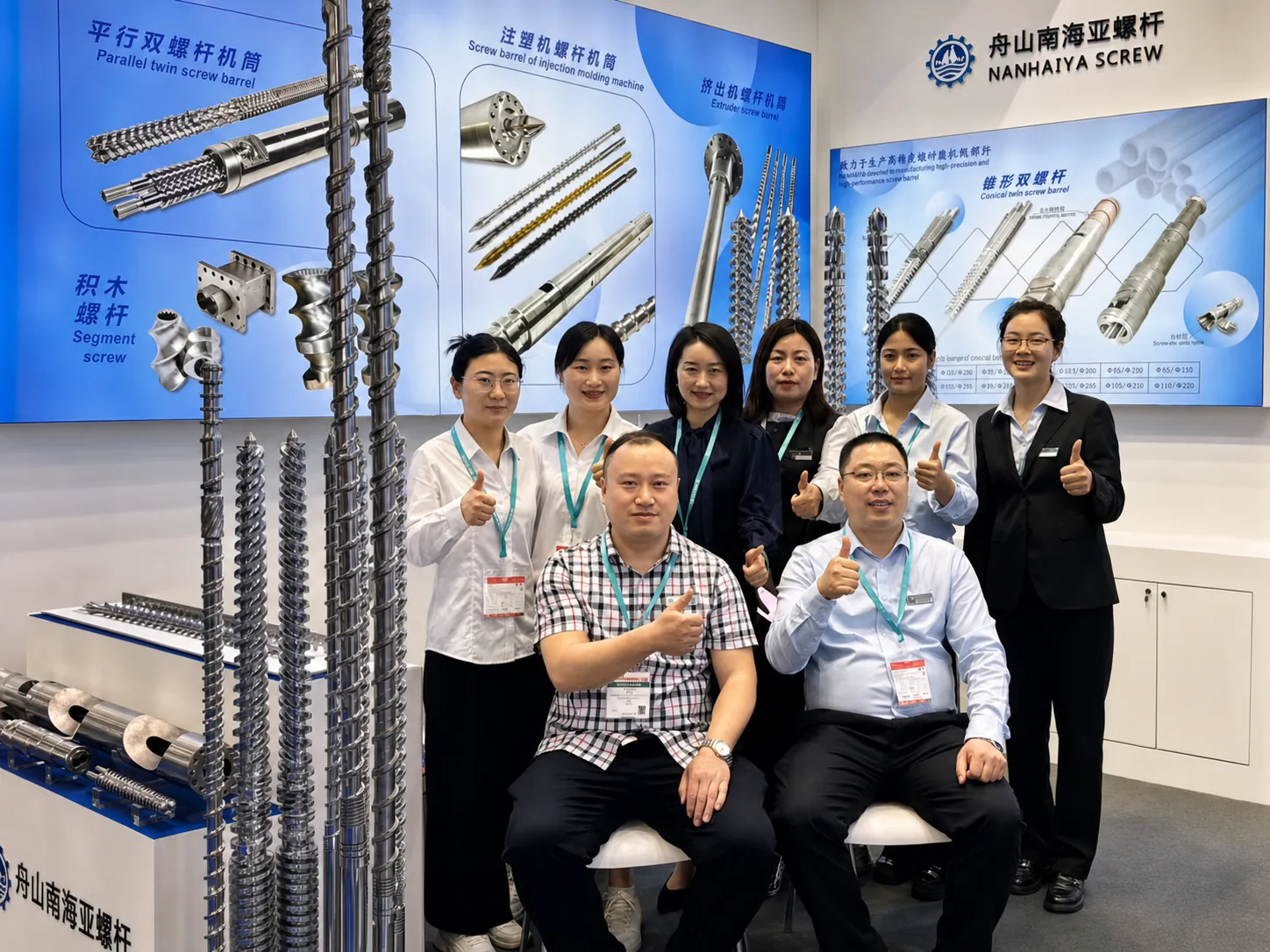
Related Articles
More insights on screw barrel technology and plastics processing.
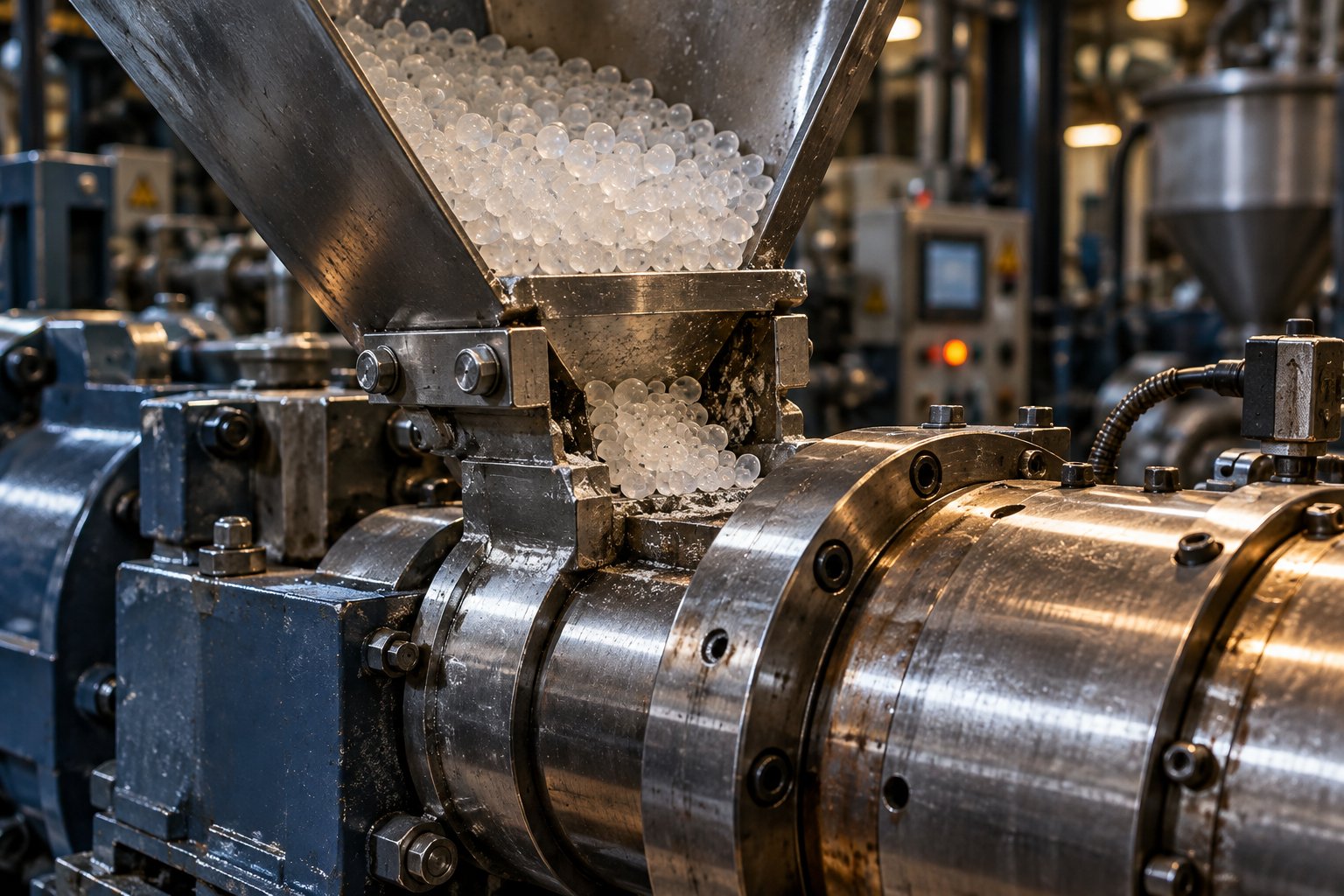
Your Extruder Feeding Instability Isn't Random — Here's Why
Oct 22, 2026
Extruder feeding instability causes surging output and scrap. Learn the 6 root causes, polymer-specific fixes, wear diagnostics, and preventive protocols.
Read Article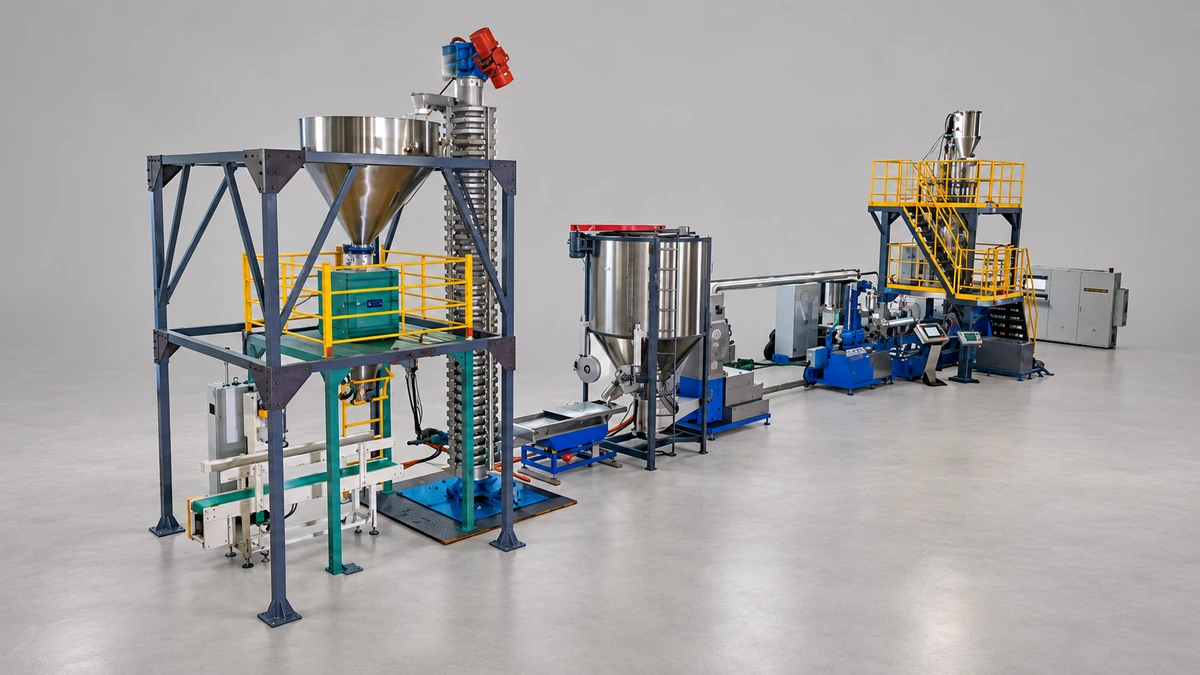
Parallel Twin Screw Extruder for Compounding Demystified: Lab to Line
Oct 21, 2026
Learn how a parallel twin screw extruder for compounding works—from screw element design and zone configuration to lab-to-production scale-up and process optimization.
Read Article
Twin Screw Extruder for PVC: The Setup Mistake Draining Profit
Oct 21, 2026
Learn how to match twin screw extruder configurations to PVC applications. Covers conical vs parallel, counter-rotating vs co-rotating, wear management, and troubleshooting.
Read ArticleLooking for something else?
Search by material, symptom or product and jump straight to the relevant page.
These are navigation suggestions based on keyword matching — not a quotation, not a delivery commitment, and not a substitute for engineering review. Final specification is confirmed by our engineers against your drawings and processed material.
Need help with screw barrel selection?
Share your machine model, processed material and application. Our team can help with pricing and technical support.