

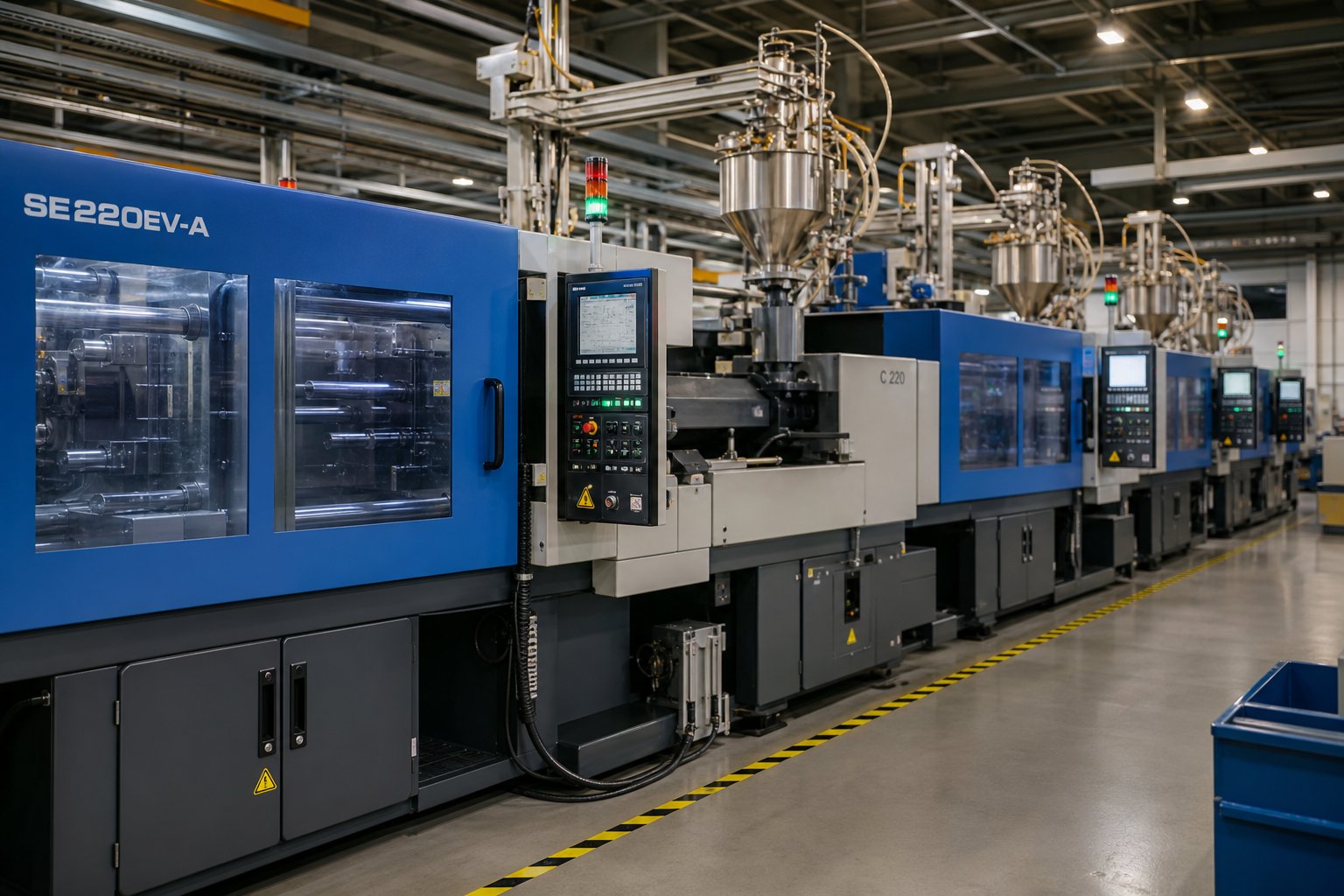
What a Plastic Machinery Manufacturer Actually Does
When you start sourcing equipment for plastics processing, one term surfaces constantly: plastic machinery manufacturer. But what does it actually mean, and why should you care about the distinctions hidden beneath that label? The answer shapes everything from the price you pay to the support you receive years after installation.
What Defines a Plastic Machinery Manufacturer
A plastic machinery manufacturer is a company that designs, engineers, and builds the processing equipment used to transform raw polymer materials into finished or semi-finished products through methods such as injection molding, extrusion, blow molding, or thermoforming.
That definition sounds simple enough. In practice, the landscape is far more layered. Some companies engineer every system from the ground up, owning their casting facilities, CNC machining centers, and control-system architecture. Others specialize in assembling proven subsystems into turnkey lines, sourcing components from multiple vendors. Both call themselves manufacturers, yet the implications for buyers differ dramatically in terms of customization depth, lead times, and long-term serviceability.
The Scope of Plastics Processing Equipment
The plastics machinery sector spans an enormous range of technologies. Injection molding machines remain the largest product segment, accounting for roughly 40 percent of global demand. Extrusion equipment, used for producing pipes, profiles, films, and sheet goods, is growing rapidly alongside worldwide construction spending. Blow molding systems serve the packaging industry, while thermoforming lines handle everything from food trays to automotive interior panels.
Imagine a single plastics machinery group offering injection molding presses, twin-screw extruders, and downstream automation under one product umbrella. That breadth is common among major OEMs, while smaller firms may focus exclusively on one technology. Both models serve the market, but knowing which type you are dealing with prevents mismatched expectations.
Why Understanding Manufacturer Types Matters for Buyers
Three distinct categories operate within this industry:
- Full-system OEM manufacturers - They design, build, and support complete machines. You get proprietary technology, direct engineering access, and manufacturer-backed warranties.
- Component specialists - They produce critical machine parts such as screws, barrels, heating systems, or control units. Their expertise is narrow but deep.
- Assembly integrators - They source subsystems from various suppliers and configure them into working lines, often offering competitive pricing and faster delivery on standard configurations.
Each plastic machine manufacturer type serves a legitimate purpose. The mistake most buyers make is treating them as interchangeable. Choosing the wrong category for your project means overpaying for capabilities you do not need or, worse, underestimating the technical support required for complex applications.
Understanding where your potential supplier sits in this hierarchy is the first step. The next challenge is mapping how these manufacturers, distributors, and resellers interact within the broader equipment supply chain, and knowing exactly which door to knock on for your specific procurement needs.
Understanding the Plastics Equipment Supply Chain
Most buyers assume they are dealing directly with a plastic machinery manufacturer when, in reality, they might be speaking with a distributor, a broker, or a component specialist. Each plays a distinct role, and confusing one for another leads to misaligned expectations on price, lead time, and post-sale support. Let's untangle the hierarchy.
OEM Manufacturers vs Distributors vs Resellers
An OEM manufacturer designs and builds machines from the ground up. They own the intellectual property, control the engineering process, and stand behind the equipment with factory-backed warranties. When you engage an OEM, you gain access to custom configurations, direct engineering consultation, and long-term parts availability tied to their production lines.
Authorized distributors operate differently. They maintain a contractual relationship with one or more OEMs, selling factory-new equipment within designated territories. Distributors add value through local inventory, regional service teams, and faster response times. Think of companies like Wire and Plastic Machinery Corp, which connect buyers with established brands while providing localized sales and service infrastructure. You still get genuine equipment and warranty coverage, but pricing includes the distributor's margin.
Resellers and brokers occupy the secondary market. Firms such as Zag Equipment Sales specialize in sourcing used, surplus, or refurbished machinery. They fill a gap when budgets are tight, lead times are urgent, or specific legacy models are no longer in production. The trade-off? Limited or no warranty, uncertain maintenance history, and minimal customization. For non-critical production lines or startups testing market viability, this route can make financial sense, but it requires more due diligence on your end.
Component Specialists and Their Role in the Supply Chain
Component specialists sit in a category most buyers overlook until something breaks. These companies manufacture critical machine parts, screws, barrels, heaters, controllers, hydraulic units, and drive systems. They serve OEMs who need subassemblies for new machine builds, processors who need replacement parts for aging equipment, and maintenance teams performing scheduled overhauls.
Their value becomes obvious when you consider that a single worn screw or degraded barrel can reduce output quality by 15 to 25 percent before anyone notices the root cause. Component suppliers with deep metallurgical expertise and precision machining capabilities often outperform generic OEM replacement parts, particularly for demanding applications involving abrasive or corrosive resins.
Which Type of Supplier Fits Your Procurement Needs
Choosing the right supply chain partner depends on your situation. The following comparison highlights how each entity stacks up across the criteria that matter most:
| Criteria | OEM Manufacturer | Authorized Distributor | Reseller / Broker | Component Specialist |
|---|---|---|---|---|
| Pricing | Highest (factory-direct) | Moderate (includes margin) | Lowest (used/surplus) | Varies by complexity |
| Customization | Full custom capability | Limited to OEM options | None (as-is condition) | High (application-specific) |
| Warranty | Full OEM warranty | OEM warranty (passed through) | Limited or none | Manufacturer warranty on parts |
| Lead Time | 12-30 weeks (new build) | 4-16 weeks (stocked models) | 1-4 weeks (available units) | 2-8 weeks (custom components) |
| Technical Support | Direct engineering access | Regional service teams | Minimal to none | Deep expertise in specific parts |
| Best For | New production lines, complex specs | Standard equipment, local service | Budget-conscious, urgent needs | Maintenance, upgrades, performance optimization |
Here is a practical guideline: if you are building a new production line with specific output requirements, go to the OEM or their authorized distributor. If you need a machine running within weeks and can accept some risk, a reputable reseller saves both time and capital. And if your existing equipment is underperforming or due for scheduled maintenance, a component specialist delivers targeted improvements without the cost of full machine replacement.
The supply chain distinction matters because it determines not just what you pay upfront, but how well your equipment performs over its entire operational life. And that performance ultimately hinges on the underlying technology inside the machine, which varies dramatically depending on whether you are running servo-hydraulic, all-electric, or hybrid systems.
Core Manufacturing Technologies Explained for Buyers
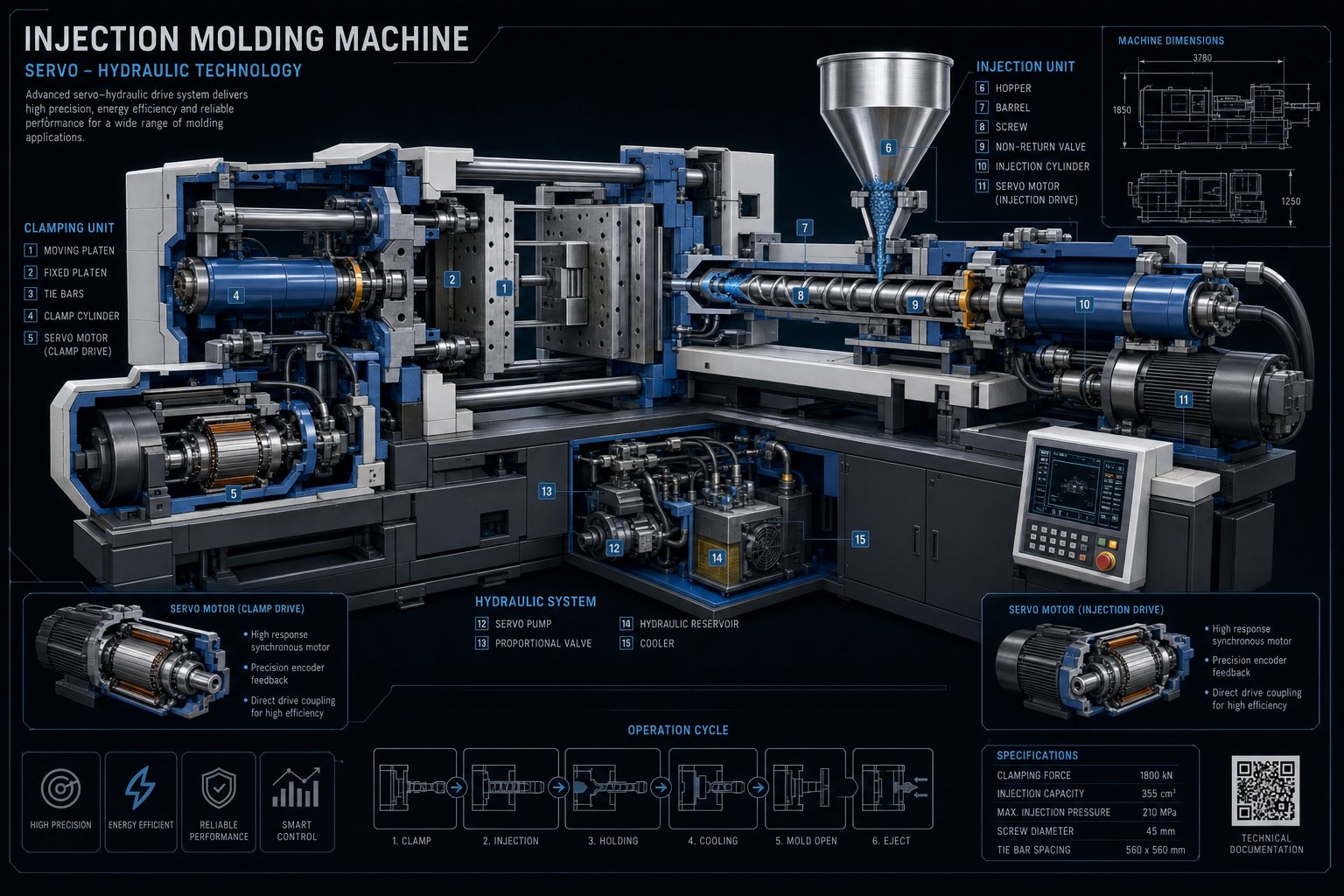
The drive system inside an injection molding or extrusion machine is not just a technical specification buried in a datasheet. It determines your energy bills, part quality, cycle times, and maintenance burden for the next decade or longer. Yet most plastics equipment listings mention "servo-hydraulic," "all-electric," or "hybrid" without explaining what these terms actually mean for your operation. Let's fix that.
When evaluating any plastic manufacturing equipment, understanding the fundamental differences between these three architectures gives you the vocabulary and confidence to ask better questions, compare proposals accurately, and avoid overpaying for capabilities your application does not require.
Servo-Hydraulic Systems and Their Applications
Hydraulic injection molding machines have been the backbone of the industry for over six decades, and they still account for roughly 60 to 65 percent of the global installed base. The basic principle is straightforward: an electric motor drives a hydraulic pump, which pressurizes oil that flows through valves and cylinders to power every machine movement, including injection, clamping, ejection, and plasticizing.
Modern servo-hydraulic systems improve on the older fixed-displacement design by replacing the constant-speed pump motor with a servo motor that spins only when movement is needed. This single upgrade eliminates the energy wasted during cooling and idle phases, where older machines keep the pump running at full speed even when no useful work is performed.
The result? Energy savings of 30 to 60 percent over conventional hydraulic machines while retaining the high-force capability that hydraulic systems are known for. Manufacturers like ENGEL equip their servo-hydraulic lines with what they call "ecodrive" technology, which reduces electricity consumption by more than 40 percent compared to fixed-displacement pump systems.
- Advantages:
- Available across the full tonnage spectrum, from small machines up to 10,000+ tons
- Excellent for sustained clamp pressure without continuous motor load
- Lower upfront cost compared to all-electric equivalents
- Proven technology with widespread service infrastructure and parts availability
- Ideal for high-pressure applications such as structural foam, gas-assist, and compression molding
- Limitations:
- Hydraulic oil requires periodic replacement (every 3,000 to 5,000 hours)
- Seal, hose, and filter maintenance adds ongoing cost
- Oil contamination risk limits clean-room suitability
- Noise levels typically range from 75 to 85 dB
- Precision is good but not class-leading (typically plus or minus 0.1 to 0.2 percent repeatability)
For plastic manufacturing for industrial equipment, where large parts, thick walls, and high clamping forces dominate, servo-hydraulic technology remains the pragmatic choice. The installed base is enormous, used-market availability is broad, and virtually every service technician worldwide has hydraulic training.
All-Electric vs Hybrid Machine Architectures
Imagine a machine with no hydraulic oil, no pumps, no hoses to leak. All-electric injection molding machines use independent servo motors and ball screws for every axis of movement. Each motor draws power only during its active phase and can even regenerate energy during deceleration, feeding power back into the system.
The precision advantage is fundamental to the technology. Closed-loop servo control provides position feedback measured in microns, and the absence of oil temperature fluctuations means consistent machine behavior throughout an entire production shift. Shot-to-shot repeatability reaches plus or minus 0.01 to 0.05 percent, a level that hydraulic systems simply cannot match due to inherent variability in valve response and oil viscosity.
- All-Electric Advantages:
- Energy consumption 40 to 70 percent lower than conventional hydraulic
- Highest precision and repeatability for tight-tolerance parts
- No oil contamination risk, making them ideal for medical and clean-room molding
- Significantly quieter operation (60 to 68 dB)
- Simultaneous axis movement enables fastest cycle times
- Lowest routine maintenance costs
- All-Electric Limitations:
- Clamping force typically maxes out around 650 tons for most brands
- 20 to 40 percent price premium over hydraulic equivalents
- Ball screw and servo motor replacement costs are high when failure occurs
- Limited availability for very large-tonnage applications
Hybrid machines bridge the gap by combining elements of both architectures. A common configuration pairs an electric injection unit for precise screw control with a hydraulic clamp for high clamping force. Another approach uses servo-driven hydraulic pumps throughout the machine, achieving energy savings close to all-electric levels while maintaining the tonnage capability of hydraulic systems.
- Hybrid Advantages:
- Available across the full tonnage spectrum, up to 4,000+ tons
- 30 to 50 percent energy savings over conventional hydraulic
- Better precision than pure hydraulic (plus or minus 0.05 to 0.1 percent)
- Lower capital investment than full all-electric at equivalent tonnage
- Practical transition path for plants moving away from hydraulic technology
- Hybrid Limitations:
- More complex maintenance, combining hydraulic and electric system expertise
- 10 to 25 percent premium over pure hydraulic pricing
- Performance compromises versus all-electric on precision-critical work
- Smaller used-market inventory compared to pure hydraulic machines
Hybrid machines now account for approximately 10 to 15 percent of new machine sales, and their share is growing as buyers seek efficiency without abandoning hydraulic force capability. For automotive, consumer goods, and medium-to-high volume production, they represent a balanced investment.
Matching Clamping Force to Production Requirements
Clamping force is where technology choice meets real-world application. You will find plastics equipment spanning an enormous range, from micro-molding machines generating under 50 tons of clamping force to massive presses exceeding 6,000 tons for automotive bumpers and industrial containers.
Here is how to think about it practically:
- Under 50 tons: Micro-molding for medical devices, electronic connectors, and precision optics. All-electric machines dominate here due to their unmatched repeatability and clean operation.
- 50 to 200 tons: The workhorse range for consumer electronics housings, small automotive components, and packaging. All three drive technologies compete aggressively in this segment.
- 200 to 650 tons: Mid-range production covering appliance housings, automotive interior panels, and technical components. All-electric options remain available, but hybrid machines offer compelling value.
- 650 to 2,000 tons: Large-part production where hydraulic and hybrid architectures prevail. Automotive exterior panels, crates, pallets, and industrial containers live here.
- 2,000 to 6,000+ tons: Heavy industrial applications including automotive bumpers, large housewares, and structural components. Hydraulic technology is essentially the only proven option at this scale.
The mistake many buyers make is over-specifying clamping force "just in case." A machine running at 40 percent of its rated clamp tonnage wastes energy, occupies unnecessary floor space, and represents capital tied up in unused capability. Conversely, under-specifying leads to flash defects, premature mold wear, and forced compromises on part design.
Selecting the right drive technology and clamping force is not an isolated engineering exercise. It connects directly to your production economics, including material costs, energy consumption, maintenance budgets, and part quality requirements. These factors collectively define what manufacturers call total cost of ownership, a concept that separates informed buyers from those who fixate on purchase price alone.
How to Evaluate and Select the Right Manufacturer
A machine's specs might look perfect on paper. The drive technology matches your application. The clamping force fits your part geometry. Yet six months after installation, you discover the manufacturer's service network is nonexistent in your region, spare parts take twelve weeks to arrive, and operator training consisted of a PDF manual in a language nobody on your floor reads. Sound familiar? This is where a structured evaluation framework separates strategic buyers from those who learn expensive lessons the hard way.
Whether you are sourcing from plastic parts manufacturing companies for a complete production line or engaging plastic component manufacturers for targeted upgrades, the evaluation criteria remain consistent. Here is a step-by-step process that covers what most buyers miss.
- Define your production requirements precisely — Document part dimensions, tolerances, annual volume targets, material types, and cycle time expectations before contacting any supplier.
- Assess manufacturer technical capability — Match your requirements against each candidate's proven expertise. Request case studies or reference customers in your industry.
- Evaluate material compatibility — Confirm the manufacturer has experience with your specific resins, particularly if you process abrasive, corrosive, or high-temperature polymers.
- Analyze total cost of ownership — Look beyond the invoice price. Factor in energy, maintenance, spare parts, training, and downtime costs over the equipment's expected lifespan.
- Verify after-sales infrastructure — Confirm service response times, parts stocking locations, and available training programs in your geographic area.
- Request and compare detailed quotes — Gather quotations that itemize tooling, installation, commissioning, training, and warranty terms so you can compare like for like.
Assessing Your Production Capacity and Volume Needs
Your annual output target dictates everything: machine size, automation level, mold cavitation, and even which manufacturers of plastic parts are qualified to serve you. A company running 50,000 parts per year has fundamentally different needs than one producing 50 million.
High-volume operations demand machines built for continuous duty with minimal downtime. You need manufacturers who engineer for 8,000+ operating hours annually with predictive maintenance integration. Low-to-mid volume runs, by contrast, benefit from flexible machines that accommodate frequent changeovers without sacrificing setup time or precision.
The capability matrix below helps you match production requirements to the right type of manufacturer:
| Production Requirement | Best-Fit Manufacturer Profile | Key Evaluation Questions |
|---|---|---|
| Small parts, tight tolerances (medical, electronics) | Precision specialists with all-electric or hybrid platforms | What repeatability data can you provide? Do you have clean-room installations? |
| Large parts, high clamping force (automotive, industrial) | Full-system OEMs with heavy-tonnage hydraulic expertise | What is your largest installed machine? Can you provide mold trials at scale? |
| High volume, commodity parts (packaging, caps) | Manufacturers with proven multi-cavity, high-speed systems | What cycle times do similar customers achieve? How do you support 24/7 operation? |
| Multi-material or specialty resins | Application-focused OEMs with material processing labs | Have you processed this resin before? What screw and barrel configuration do you recommend? |
| Prototype and short-run production | Flexible integrators or mid-range hybrid machine builders | What is your minimum order? How quickly can you deliver and commission? |
Material Compatibility and Machine Configuration
Not every machine handles every polymer equally well. Processing glass-filled nylon demands hardened barrel liners and wear-resistant screw flights. Running PVC requires corrosion-resistant metallurgy and precise temperature control to prevent degradation. Liquid silicone rubber needs entirely different injection unit configurations than standard thermoplastics.
When evaluating a plastic machinery manufacturer, ask specifically about experience with your materials. Request references from customers processing similar resins at comparable volumes. A manufacturer who has never run 40-percent glass-filled PA66 through their equipment should not be your first choice if that is your primary application, regardless of how attractive their price looks.
Machine configuration extends beyond the barrel and screw. Consider the plasticizing unit size relative to your shot weight (ideally, your shot should use 20 to 80 percent of barrel capacity), the nozzle and hot-runner compatibility with your mold, and whether the control system supports the process monitoring your quality standards demand.
Total Cost of Ownership Beyond Purchase Price
Here is where most procurement decisions go wrong. The lowest quoted price often becomes the highest total cost within three years. A total cost of ownership analysis reveals that purchase price typically represents only 40 to 60 percent of what you will actually spend over the equipment's lifespan.
The hidden cost drivers include:
- Energy consumption — A machine running 6,000 hours annually at even a 10 percent efficiency disadvantage generates thousands of dollars in excess electricity costs every year. Multiply that over a 10 to 15 year service life.
- Installation and commissioning — Budget for foundation work, utility connections, rigging, and the manufacturer's on-site commissioning team. Overseas machines may add customs clearance and specialized freight costs.
- Operator training — Untrained operators increase scrap rates, damage molds, and miss early warning signs of machine wear. Verify what training the manufacturer includes and what costs extra.
- Spare parts availability — A machine is only as reliable as its parts pipeline. Ask where spare parts are stocked, typical delivery times to your plant, and whether aftermarket alternatives exist for wear components.
- Maintenance costs — Well-built machines from capable manufacturers typically need 1 to 3 percent of purchase price annually in routine maintenance. Poorly built alternatives can demand 5 percent or more, along with unplanned downtime that disrupts production schedules.
- Quality-related costs — Defect rates, scrap, sorting labor, and customer chargebacks all trace back to machine capability. A supplier with consistent quality may cost more per unit but delivers lower total cost once reject handling is factored in.
Think of it this way: a production line shutdown costs hundreds to thousands of dollars per hour in direct labor and overhead. A single unplanned shutdown can erase an entire year's worth of piece-price savings from choosing the cheapest option. The smart approach is building a TCO model that captures quality metrics, delivery reliability, inventory carrying costs, and administrative overhead by supplier, then making decisions on total value rather than invoice price alone.
Evaluating manufacturers through this framework gives you a clear, defensible basis for comparison. But one more dimension shapes the outcome in ways many buyers underestimate: where in the world the manufacturer is located. Geographic origin influences not just pricing, but lead times, compliance requirements, service accessibility, and the very engineering philosophy behind the equipment.
Regional Manufacturing Landscape and Global Strengths
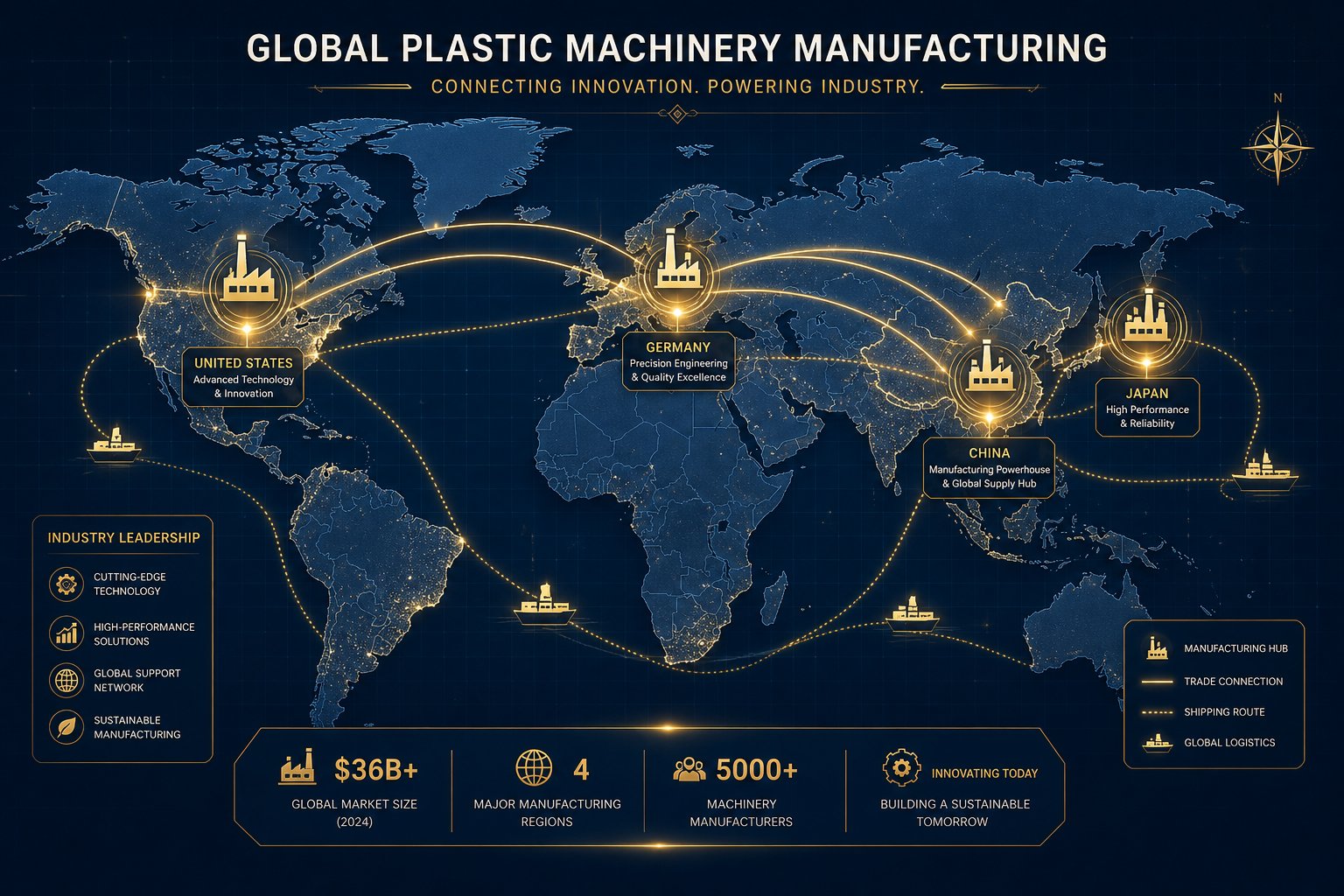
Geography is not just a shipping variable. It encodes an entire engineering philosophy, pricing structure, and service model into the equipment you buy. A buyer sourcing from Guangzhou faces a fundamentally different experience than one purchasing Kunststoffmaschinen from a German OEM or partnering with a Japanese precision house. Understanding these regional differences helps you match your priorities, whether cost, precision, speed, or service proximity, to the right manufacturing ecosystem.
The global plastic processing machinery market reached USD 23.57 billion in 2025, with Asia Pacific commanding 43.40 percent of revenue. That dominance reflects decades of manufacturing investment, but it does not tell the full story about which region best serves your specific needs.
Chinese Manufacturers and Global Market Position
China's plastic machinery sector is massive. The country's market alone is projected to reach USD 6.01 billion by 2026, driven by export-oriented production and rapid industrialization. Companies like Haitian International, the world's largest injection molding machine manufacturer by unit volume, produce over 20,000 machines annually.
What does this scale mean for buyers? Cost efficiency sits at the top of the list. Chinese-made equipment typically costs 30 to 50 percent less than European equivalents at similar specifications. Delivery timelines run shorter as well, often 6 to 12 weeks versus 16 to 30 weeks from European OEMs. The product range spans everything from small desktop units to 6,000-ton presses, making it possible to source an entire plastic parts international production line from a single region.
The trade-off? Service infrastructure outside Asia varies by brand. Some Chinese manufacturers maintain European warehouses and local technicians, while others rely on remote support and shipped parts with two-to-four-week lead times. Quality consistency has improved dramatically since 2020, but buyers processing precision-critical or medical-grade components should still request reference installations and sample parts before committing.
European and Japanese Precision Engineering Strengths
European manufacturers, particularly German and Austrian firms like Arburg, ENGEL, and KraussMaffei, set the benchmark for precision, energy efficiency, and automation integration. Their machines routinely deliver service lives of 20 to 30 years with proper maintenance. The engineering philosophy prioritizes long-term reliability and cutting-edge process control over initial cost savings.
Japanese manufacturers, including Sumitomo (SHI) Demag and Fanuc, bring a similar precision-first mindset with an additional emphasis on advanced controls and robotics integration. Fanuc's Roboshot series, for instance, offers seamless connectivity with their industrial robot ecosystem, a clear advantage for highly automated cells.
Both regions excel at Industry 4.0 readiness, embedding IoT sensors, predictive maintenance algorithms, and digital twin capabilities into their platforms. If your operation demands ultra-tight tolerances, clean-room compatibility, or full traceability for automotive tier-one or medical device production, European and Japanese equipment justifies the premium.
The limitation is straightforward: price and lead time. Expect 80 to 120 percent price premiums over Chinese equivalents and delivery windows stretching 18 to 30 weeks for custom configurations.
North American Manufacturers and Local Service Advantages
North American players like Milacron (now part of Hillenbrand) and Husky Injection Molding Systems serve buyers who value proximity. The region contributed 22.80 percent of global market revenue in 2025, with the U.S. alone projected at USD 3.82 billion by 2026. For processors in the Americas, local manufacturing means shorter shipping distances, easier compliance with domestic content requirements, and service technicians who arrive in hours rather than days.
Customization is another strength. North American manufacturers often accommodate unique configurations, specialized automation packages, and project-specific engineering without the minimum order quantities that larger Asian factories may impose. Companies like AIC Plastico and similar regional integrators fill niche roles for processors who need application-specific solutions rather than catalog machines.
The comparison below summarizes how each region stacks up across the dimensions buyers care about most:
| Dimension | China | Europe | Japan | North America |
|---|---|---|---|---|
| Price Competitiveness | Strongest (30-50% lower) | Premium (highest tier) | Premium | Moderate to high |
| Technology Leadership | Rapidly advancing | Industry-leading | Industry-leading | Strong in niche areas |
| Delivery Speed | 6-12 weeks | 18-30 weeks | 16-24 weeks | 10-20 weeks |
| Service Infrastructure | Variable by brand/region | Extensive global network | Strong in Asia, selective elsewhere | Excellent in Americas |
| Product Range | Broadest selection | Focused on precision segments | Specialized, narrow depth | Moderate range |
| Customization Flexibility | High at volume | High (at premium cost) | Moderate | High (low MOQ) |
| Compliance/Certification | CE available, verify authenticity | Full CE, ISO standard | Full CE, JIS standards | UL, CSA, ANSI native |
No single region wins across every category. A cost-driven buyer scaling quickly in packaging gravitates toward China. A medical device molder requiring validated precision chooses Europe or Japan. A processor in Ohio needing same-week service calls prioritizes North American options. The key is honest self-assessment: which two or three dimensions actually drive value in your operation, and which ones can you compromise on?
Geographic origin also shapes a less visible but equally important factor: the certifications your equipment carries and the compliance standards it meets. A machine built for the Chinese domestic market may not arrive with the same safety and quality documentation required for European or North American installation, a gap that catches unprepared buyers off guard during commissioning.
Certifications and Emerging Industry Standards
A machine may arrive with every performance spec you requested, yet still fail at the loading dock. How? Missing or invalid certifications. It happens more often than you would expect, especially when buyers source across borders without verifying what each stamp on the nameplate actually guarantees. Certifications are not decorative. They are your legal shield, your insurance prerequisite, and often the only documented proof that someone independent verified the equipment meets recognized safety and quality benchmarks.
For any plastic machinery manufacturer selling into global markets, certifications serve as the common language between regions with different regulatory frameworks. Whether you are importing a servo-hydraulic press from Guangzhou or commissioning an all-electric system from Stuttgart, the certificates bundled with that machine determine whether it clears customs, satisfies your insurer, and protects your operators. Here is what each major certification actually means and how to confirm it is legitimate.
Essential Certifications and Quality Standards
Not every certification covers the same ground. Some validate the product itself, others validate the factory that built it, and a few address specific safety subsystems within the machine. Confusing one for another is a common and costly mistake. The manufacturers association for plastics processors in your region may publish guidance, but buyers still need to understand the core standards independently.
- ISO 9001 (Quality Management Systems) — This is the most widely referenced certification in the plastics machinery sector. It confirms the manufacturer operates a structured quality management system covering production workflows, inspection procedures, corrective action processes, and continuous improvement protocols. What it does not guarantee is that any individual machine is safe or performs to a specific standard. Think of ISO 9001 as proof that the factory has disciplined processes, not that every output is flawless.
- CE Marking (European Conformity) — Required by law for machinery sold or installed within the European Economic Area, CE marking confirms the equipment meets EU directives on health, safety, and environmental protection. For industrial machinery, this primarily falls under the EU Machinery Directive, covering mechanical safety, electrical compliance, emergency stop systems, and technical documentation. Unlike ISO, CE focuses on the product itself rather than the factory.
- UL Certification (Electrical Safety) — Underwriters Laboratories certification is particularly relevant for equipment destined for North American markets. UL tests electrical components and systems against published safety standards, verifying that wiring, control panels, motors, and enclosures meet requirements designed to prevent fire, shock, and related hazards. Many U.S. insurers and facility operators require UL listing as a condition of installation.
- ISO 14001 (Environmental Management) — This standard validates that a manufacturer maintains systems for tracking and reducing environmental impact. For buyers with sustainability mandates or corporate ESG reporting obligations, sourcing from ISO 14001-certified suppliers simplifies compliance documentation.
- ISO 45001 (Occupational Health and Safety) — Focused on workplace safety management within the manufacturing facility, this certification signals that the builder has structured systems protecting its own workers. While it does not directly certify the machine you purchase, a manufacturer serious about internal safety culture tends to build that mindset into their product design as well.
Here is the critical distinction most buyers miss: ISO certifications validate the manufacturer's systems, while CE and UL validate the product itself. A factory can hold ISO 9001 certification and still ship a machine that lacks proper CE documentation. Both layers matter, and verifying one does not excuse skipping the other.
Verification requires more than accepting a scanned certificate. Check that ISO certificates list the correct scope covering machinery manufacturing, not just a tangentially related activity. Confirm the issuing body is accredited by a recognized national authority. For CE marking, request the full Declaration of Conformity along with the technical file and the list of harmonized standards applied. If the machine falls into a higher risk category, an independent notified body should have been involved in the assessment. Expired certificates, vague scope descriptions, and unfamiliar issuing organizations are all red flags that warrant deeper investigation before any purchase order is signed.
Industry 4.0 and Smart Manufacturing Readiness
Certifications tell you where a machine has been. Smart manufacturing readiness tells you where it is going. Every major plastic machinery group is now embedding digital capabilities that were optional five years ago but are rapidly becoming baseline expectations.
Industry 4.0 compatibility means the equipment can communicate with your factory's broader digital infrastructure. In practical terms, you should be evaluating:
- OPC UA connectivity — The open standard for machine-to-machine and machine-to-MES communication. Equipment lacking OPC UA support becomes an isolated data island in a connected factory.
- IoT-enabled monitoring — Sensors tracking temperature, pressure, vibration, energy consumption, and cycle parameters in real time. This data feeds predictive maintenance algorithms that flag wear patterns before failures cause unplanned downtime.
- Automation integration — Robots, conveyors, vision systems, and quality inspection stations need to interface seamlessly with the molding or extrusion machine's control architecture. Ask whether the manufacturer supports standard automation protocols or locks you into proprietary systems.
- Remote diagnostics — The ability for manufacturer technicians to access machine data and troubleshoot remotely reduces service response times from days to hours, particularly valuable when your equipment comes from a supplier based thousands of miles away.
These capabilities are not just nice-to-have features. They directly impact uptime, quality consistency, and your ability to meet customer traceability requirements, particularly in automotive and medical sectors where lot-level documentation is contractually mandated.
Sustainability and Energy Efficiency Compliance
Sustainability has moved from corporate marketing into procurement specifications. Buyers increasingly face requirements from their own customers, regulators, and internal stakeholders to document the environmental footprint of their manufacturing equipment. A forward-thinking plastic machinery manufacturer now addresses this through multiple pathways.
Energy efficiency standards like the Euromap 60 protocol provide a standardized method for measuring and comparing injection molding machine energy consumption under defined operating conditions. Machines tested and rated under this protocol give you an apples-to-apples comparison that marketing brochures cannot replicate. Regenerative drive systems, high-efficiency servo motors, and optimized hydraulic circuits all contribute to measurable reductions in kilowatt-hours per kilogram of processed material.
Material efficiency plays an equally important role. Machines engineered for tighter process control reduce scrap rates, minimize purge waste, and enable thinner wall sections that use less resin per part. Some equipment now supports recycled and bio-based polymers that behave differently during processing, requiring modified screw geometries and temperature profiles that not every manufacturer has validated.
Regulatory pressure is intensifying as well. The EU's Corporate Sustainability Reporting Directive and similar frameworks in other regions require downstream manufacturers to report supply chain emissions, including capital equipment. Choosing suppliers who can document their own carbon footprint, energy sourcing, and waste management practices simplifies your reporting obligations significantly.
Certifications, digital readiness, and sustainability credentials paint a comprehensive picture of a manufacturer's maturity. But even the most certified, digitally connected, and sustainably operated machine is only as good as its core mechanical components. And among those components, none influence day-to-day performance more directly than the screws and barrels that move, melt, and meter every gram of polymer through your process.
Critical Machine Components and Spare Parts Strategy
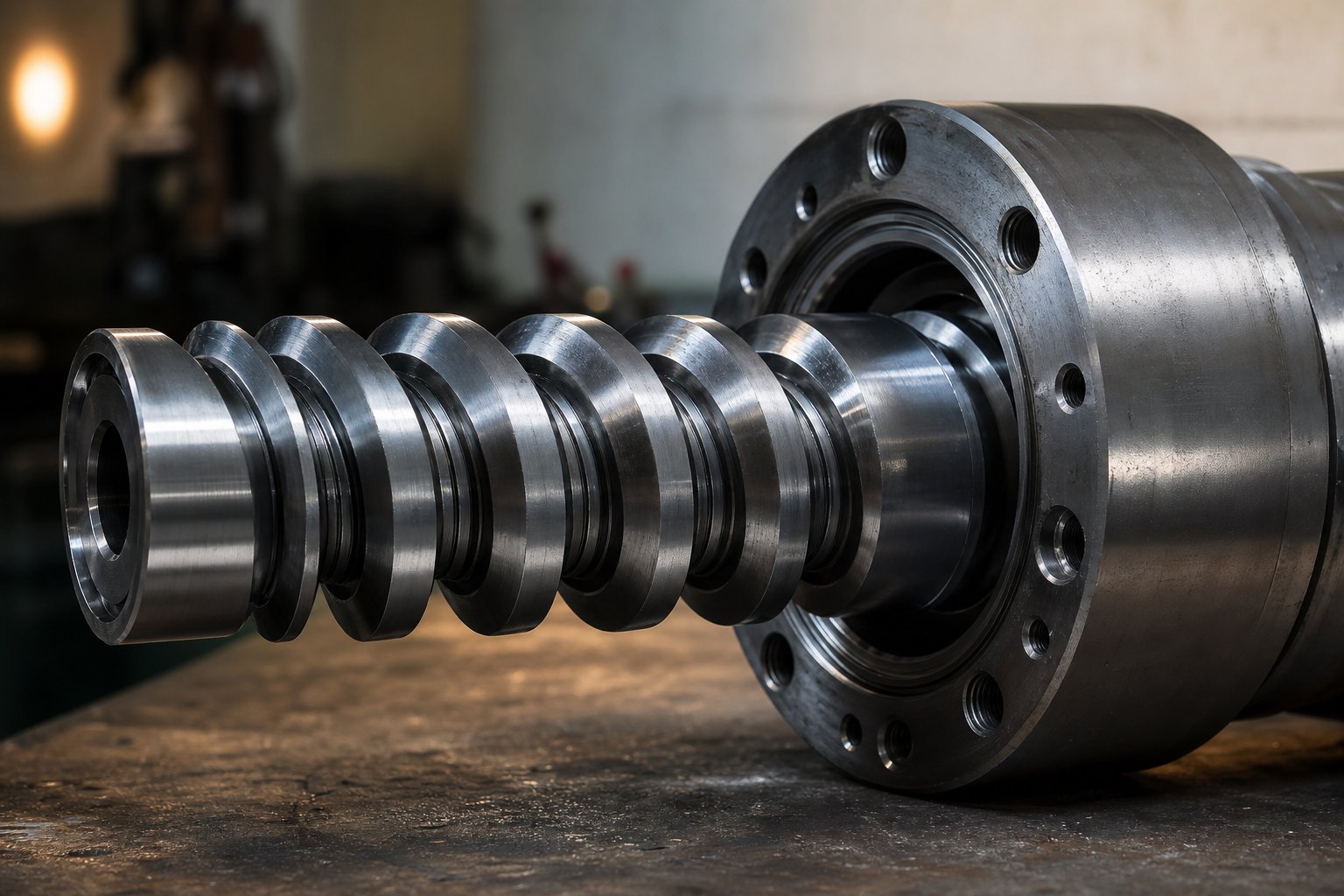
Your injection molding or extrusion machine might carry a prestigious brand name, hold every certification in the book, and connect seamlessly to your MES system. None of that matters if the screw and barrel inside it are worn beyond tolerance. These two components, often overlooked in procurement discussions, directly control melt quality, throughput rate, energy consumption, and part consistency. They are the heart of plasticating performance, and their condition determines whether your expensive capital equipment delivers on its promise or quietly bleeds money through degraded output.
Why Screw and Barrel Quality Determines Machine Performance
Think about what a screw actually does during each cycle. It conveys solid pellets, generates frictional and conducted heat to melt them, mixes additives or colorants into a homogeneous compound, and then meters the molten polymer forward under precise pressure. Every one of those functions depends on the geometric relationship between the screw flights and the barrel bore. When wear opens up that clearance, the consequences cascade quickly.
According to industry research published by Plastics Technology, feedscrew wear in both extrusion and injection molding concentrates in areas of highest pressure, particularly the transition section and the final turns of the metering zone. As radial clearance between the flight outside diameter and the barrel wall increases, leakage flow becomes inevitable. The operator first notices reduced throughput and elevated melt temperatures, which force higher screw speeds and greater energy consumption just to maintain the same output rate.
A common rule of thumb considers flight clearance four times the original tolerance as the replacement threshold. But viscosity matters: a higher-viscosity polymer like polyethylene suffers less rate loss than a lower-viscosity resin like polypropylene at the same clearance level. When processing shear-sensitive materials such as PVC or polycarbonate, even minimal wear can degrade quality due to excessive melt temperature from uncontrolled shear.
Root wear compounds the problem further. Material hangs up in eroded pockets, degrades over time, and appears as black specks or contamination in finished parts. In extreme cases, the undermined flight walls can no longer support hardface inlays, leading to chipping that contaminates the melt stream and damages downstream components.
Here are the warning signs that your plastic machinery parts need attention:
- Gradual decline in output rate at consistent screw speed settings
- Rising melt temperatures without changes to heater setpoints
- Increasing energy consumption per kilogram of processed resin
- Black specks or degraded material appearing in parts
- Surging or inconsistent extrudate flow
- Loss of color dispersion or mixing quality
- Visible scoring or galling marks on the screw outside diameter
- Measurable increase in radial clearance beyond three to four times original spec
Screw wear is a gradual process that often goes unnoticed until performance has degraded significantly. Establishing baseline measurements and monitoring clearance data on a scheduled basis prevents the crisis-mode replacements that create the longest and costliest downtime events.
Custom vs Replacement Components for Extrusion and Injection Molding
When a screw or barrel reaches end of life, buyers face a fundamental choice: source an OEM replacement from the original machine manufacturer, or engage a specialized component supplier who can match or exceed original specifications at potentially lower cost and faster delivery.
OEM replacement parts carry clear advantages. They are engineered to exact original geometry, built from the same materials, and covered by the machine manufacturer's warranty framework. There is zero ambiguity about fit or compatibility. The downside? Lead times of 8 to 16 weeks are common, pricing reflects the OEM's overhead structure rather than the component's manufacturing cost alone, and you remain locked into whatever metallurgy the original design specified, even if better options exist for your specific application.
Aftermarket component specialists approach the problem differently. They reverse-engineer existing geometry and can often upgrade the metallurgy based on your actual processing conditions. Running glass-filled nylon that chewed through the original nitrided screw in 18 months? A specialist can recommend a bimetallic build with tungsten-carbide-bearing hardfacing that dramatically extends service life. Processing corrosive PVC compounds? Alloy options like Ni60 or Colmonoy 56 offer corrosion resistance that standard nitrided steel simply cannot match.
The material science behind these choices is worth understanding:
- Nitrided steel (38CrMoAlA, 34CrAlNi7) — A diffused nitrogen case approximately 0.4 to 0.7 mm deep provides moderate wear resistance at the lowest cost. Ideal for clean, non-abrasive resins like natural PP, PE, PS, and ABS. The thin case wears through quickly under abrasive fillers.
- Bimetallic hardfacing (PTA-welded, 1.0 to 1.5 mm layer) — A separate wear-resistant alloy metallurgically bonded to the screw flights. Alloys range from Ni60 for general-purpose wear and corrosion resistance to Colmonoy 83 with embedded tungsten carbide for the most abrasive glass-fiber or mineral-filled compounds.
- Centrifugally cast barrel linings (2.0 to 3.0 mm layer) — Dense alloy linings spun inside the barrel bore provide a thick wear surface across the full length. Alloy selection depends on whether the primary threat is abrasion, corrosion, or elevated temperature, with tungsten-carbide grades tolerating up to approximately 600 degrees Celsius.
The decision between OEM and aftermarket is not binary. Performance-critical applications where the machine manufacturer has validated a specific screw geometry through extensive testing may warrant OEM sourcing. But for standard geometries, maintenance replacements, or situations where the original spec underperformed, aftermarket specialists often deliver superior results at 40 to 60 percent of OEM pricing with lead times of two to six weeks.
Choosing a Reliable Component Supplier
Whether you are an equipment manufacturer sourcing subassemblies for new machine builds, a plastics processor replacing worn parts, or a maintenance team executing scheduled overhauls, the supplier you choose for screws and barrels directly impacts your production uptime and part quality.
What separates a credible component supplier from a generic machine shop? Look for these indicators:
- Application engineering capability — They ask about your resin, filler type, loading percentage, and processing temperatures before recommending an alloy or geometry. A supplier quoting without feedstock details is guessing.
- Metallurgical range — Access to multiple surface treatments (nitriding, bimetallic hardfacing, hard chrome plating) and alloy grades means they can match the solution to your duty rather than offering a one-size-fits-all product.
- Reverse-engineering precision — The ability to reproduce OEM geometry from a worn sample or technical drawing to original tolerances, verified through dimensional inspection reports.
- Transparent lead times and communication — Custom screw barrels are almost 100 percent made-to-order. A reliable supplier quotes delivery timelines honestly and provides progress updates during production.
- Rebuild capability — Experienced suppliers can rebuild worn screws multiple times through re-welding and re-grinding, often extending total service life to six or eight rebuilds when done with proper metallurgical control.
One example of a specialized component supplier serving the plastics machinery ecosystem is NANHAIYA, whose product center is built specifically for plastic processors, equipment manufacturers, and maintenance teams seeking custom or replacement screw and barrel solutions for extrusion and injection molding equipment. Their focus on the narrow but critical intersection of metallurgy, precision machining, and application-specific engineering illustrates what a dedicated component specialist looks like versus a general-purpose parts vendor.
The key takeaway for buyers: do not wait until a screw fails catastrophically to identify your component supply chain. Searching frantically for plastic parts manufacturers near me during an unplanned shutdown guarantees premium pricing, compromised lead times, and decisions made under duress. Instead, vet component suppliers during the machine procurement phase, establish relationships, and keep dimensional baseline data on file so replacement orders can be placed proactively based on measured wear trends rather than production emergencies.
A robust spare parts strategy is not separate from the machine procurement process. It is integral to it. Identifying your screw and barrel supplier, stocking critical wear components, and establishing rebuild agreements should happen alongside machine commissioning, not as an afterthought months later when something breaks. That mindset, treating component sourcing as part of the complete procurement lifecycle, fundamentally changes how prepared you are when maintenance needs arise.
The Complete Procurement Lifecycle: From Research to Production-Ready Machine
Treating component sourcing as part of the machine buying process rather than an afterthought reveals a broader truth: successful machinery procurement is not a single purchase decision. It is a lifecycle spanning six to eighteen months from initial research through production-ready status, with each phase building on the one before it. Skip a step, rush through due diligence, or neglect support infrastructure planning, and you pay the price in delayed startups, costly rework, and production gaps that erode the entire business case.
Whether you are sourcing from established plastic machinery suppliers overseas or evaluating a local plastic machine shop near me for auxiliary equipment, the procurement stages follow the same logical sequence. Here is how the complete process unfolds, with realistic timelines and the milestones that keep projects on track.
From Initial Research to RFQ Submission
The research phase is where most procurement failures originate, not because buyers skip it, but because they do it backwards. They start by browsing manufacturer catalogs instead of starting with their own production requirements. Flip that sequence.
Begin with a detailed internal assessment: what parts are you producing, at what volumes, from which materials, and to what tolerances? Document cycle time targets, annual operating hours, automation requirements, and floor space constraints. Only after crystallizing these parameters should you begin identifying which manufacturers can meet them.
Your Request for Quotation is the single most important document in the entire procurement lifecycle. A vague RFQ generates vague proposals that are impossible to compare. A precise one forces suppliers to respond with specifics you can evaluate objectively. Include part drawings, material datasheets, production volume projections, automation scope, utility availability, and your preferred commissioning timeline. The more detail you provide upfront, the fewer surprises emerge downstream.
- Weeks 1-4: Internal requirements definition — Document production specifications, budget parameters, timeline constraints, and stakeholder approval requirements.
- Weeks 4-8: Market research and supplier identification — Develop a long list of qualified plastic machinery suppliers based on technology fit, regional considerations, and preliminary capability screening.
- Weeks 8-10: RFQ preparation and distribution — Compile detailed specifications into a formal request document and distribute to three to five shortlisted candidates.
- Weeks 10-14: Proposal evaluation and shortlisting — Score responses against weighted criteria (technical capability, total cost of ownership, delivery timeline, service infrastructure, references).
- Weeks 14-18: Commercial negotiation and factory audit planning — Negotiate terms with top two candidates while scheduling facility visits or virtual audits.
- Weeks 18-22: Factory audit, final selection, and purchase order — Conduct on-site or virtual inspection, finalize commercial terms, and issue the purchase order.
- Weeks 22-40+ (varies by machine type and origin): Manufacturing, testing, and delivery — Machine build proceeds with interim inspections at key milestones. Acceptance testing at factory, shipping, and site delivery follow.
- Weeks 40-48+: Installation, commissioning, and operator training — Site preparation, rigging, utility connections, startup, process validation, and knowledge transfer to your production team.
These timelines assume a standard configuration machine from a well-established manufacturer. Custom-engineered systems, multi-machine production lines, or equipment sourced from manufacturers with extended lead times can stretch the total cycle to 12 to 18 months. Used machinery from resellers compresses this dramatically, sometimes to four to eight weeks from identification to production, but sacrifices the customization, warranty, and validation stages that new equipment provides.
Factory Audits and Machine Acceptance Testing
A factory audit is not a courtesy visit. It is your opportunity to verify that the manufacturer's actual capabilities match their proposal claims. Whether conducted physically or via live video walkthrough, focus your evaluation on specific observable indicators rather than polished showroom presentations.
What should you look for? Start with the machine assembly floor. Are machines in various stages of build, indicating consistent production flow? Check the metrology room for calibrated inspection equipment. Ask to see quality records for a machine similar to yours. Review their supply chain management by asking about lead times for critical sub-components like servo motors, ball screws, and control systems. A manufacturer dependent on a single-source supplier for a critical part introduces risk into your delivery timeline.
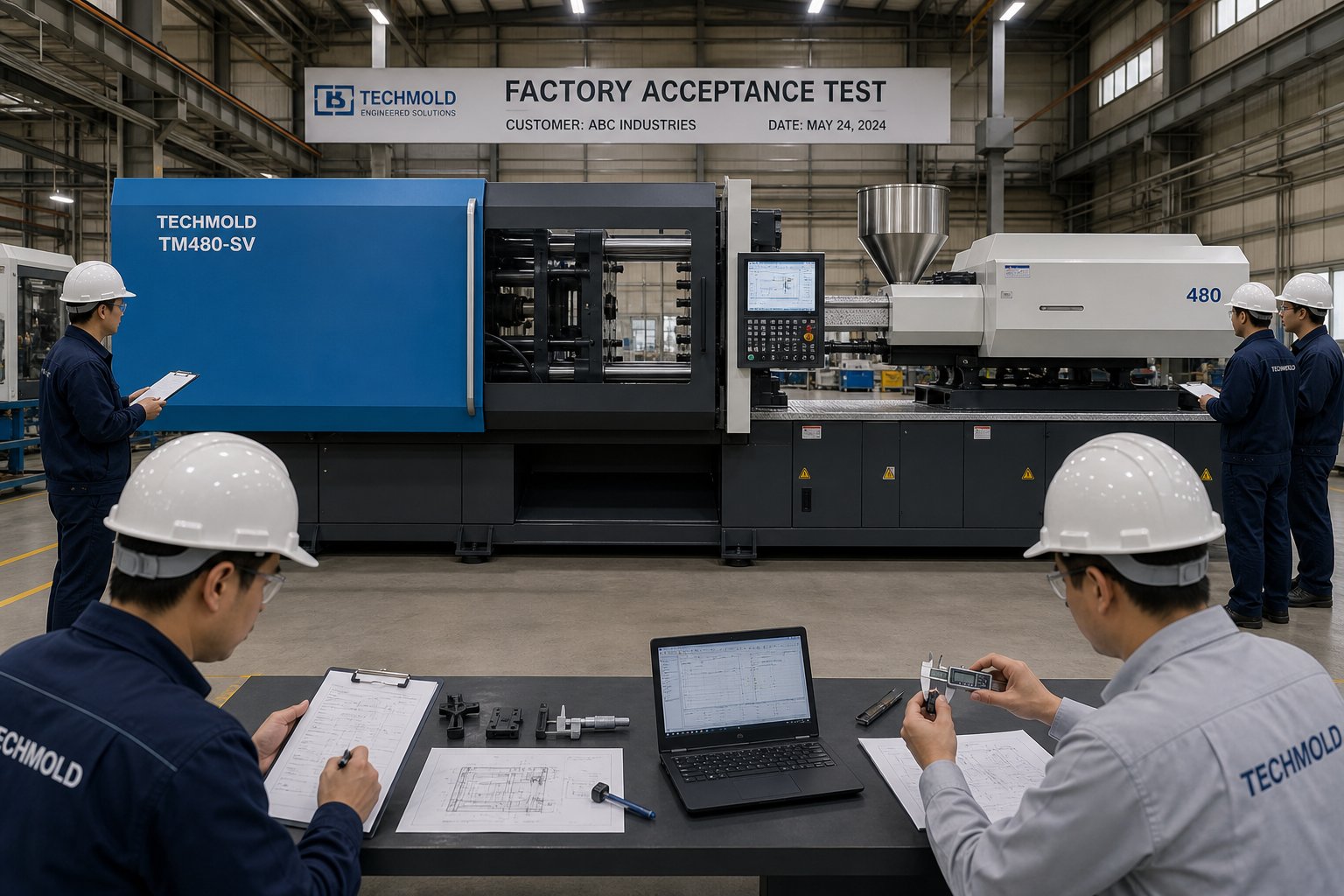
Machine Acceptance Testing, often called a FAT (Factory Acceptance Test), is your contractual right and the most overlooked protection buyers have. During a FAT, you or your representative witnesses the machine running under conditions that simulate your actual production:
- Dry cycle testing to verify mechanical function, speed, and positional accuracy
- Process trials using your material and mold (if provided) or representative equivalents
- Measurement of cycle times, energy consumption, and repeatability against quoted specifications
- Verification of safety systems, interlocks, and emergency stop functionality
- Documentation review including electrical schematics, hydraulic diagrams, PLC programs, and maintenance manuals
Never waive your FAT rights to save travel costs. The expense of a factory visit is trivial compared to discovering performance shortfalls after the machine is bolted to your floor six thousand miles from the builder. If physical travel is impractical, insist on a live-streamed FAT with real-time communication and recorded video documentation.
Shipping and logistics deserve more attention than most buyers give them. Heavy machinery requires specialized freight, often flat-rack containers or breakbulk vessels for large-tonnage presses. Customs clearance for industrial equipment involves harmonized tariff classification, country-of-origin documentation, and potentially anti-dumping duty assessments depending on the source country. Budget four to eight weeks for ocean freight from Asia, two to four weeks from Europe, and one to two weeks for domestic North American shipments. Add one to three weeks for customs processing, inland transport, and rigging into position.
Commissioning Timeline and Building Your Support Network
The machine arrives on your floor. Now what? Commissioning is where preparation meets reality, and gaps in planning become immediately visible. Site preparation should be complete before the machine arrives: foundations poured and cured, utilities stubbed in, compressed air and cooling water at specified pressure and flow rates, and electrical service sized and terminated.
A typical commissioning sequence spans two to four weeks for standard injection molding or extrusion equipment:
- Week 1: Rigging, leveling, utility connections, and initial power-up. Verification of electrical, hydraulic, and pneumatic systems.
- Week 2: Dry cycling, parameter setup, and safety system verification. Initial process trials with representative materials.
- Week 3: Production trials, process optimization, and cycle time validation. Quality verification against part specifications.
- Week 4: Operator training, maintenance procedure walkthroughs, and formal handover documentation.
Match your manufacturer choice to your production scale: high-volume operations need builders with proven 24/7 uptime track records and local service teams, while prototype and short-run shops benefit more from flexible integrators who prioritize quick changeover and responsive engineering support over maximum throughput.
Scaling considerations influence every procurement decision. A startup running prototype quantities has fundamentally different needs than a tier-one automotive supplier launching a multi-million-unit annual program. The prototype operation values flexibility, low minimum orders, and rapid delivery. The high-volume producer prioritizes proven reliability, redundant service coverage, and guaranteed spare parts availability measured in hours rather than weeks.
Building your support network during commissioning, not after, is what separates operations that scale smoothly from those that stumble. This network includes:
- The machine manufacturer's service team — Confirm escalation paths, response time commitments, and remote diagnostic capabilities before signing off on commissioning.
- Component and spare parts suppliers — Identify sources for wear components like screws, barrels, heaters, and seals early. Suppliers like NANHAIYA should be vetted during the procurement phase so that custom screw and barrel replacements can be ordered proactively based on measured wear data rather than emergency timelines. Having dimensional baseline data on file with your component supplier means future orders reference exact specifications rather than starting from scratch.
- Local service partners — For equipment sourced internationally, identify regional technicians certified on your machine's control platform. Searching for a plastic machine shop near me capable of precision machining on hardened alloy components is far less stressful when done proactively.
- Automation and integration partners — If robots, conveyors, or vision systems interface with your machine, their suppliers need to be coordinated during commissioning rather than retrofitted later.
Operator training deserves particular emphasis. As injection molding consultant Garrett MacKenzie notes, every plastic injection press must adequately achieve productivity and final yields after scrap to make an operation successful. That outcome depends heavily on whether your operators understand the machine's capabilities, limitations, and warning signs. Insist on structured, hands-on training rather than a quick walkthrough during commissioning. Document who was trained, on what topics, and schedule refresher sessions at six and twelve months.
The complete procurement lifecycle, from first internal assessment through validated production, is not a linear path. It loops back on itself as you refine specifications, re-evaluate suppliers, and adjust timelines based on real-world constraints. But following this structured approach, documenting decisions at each milestone, and building your support ecosystem in parallel with the machine purchase itself, transforms equipment procurement from a gamble into a managed process with predictable outcomes. That shift, from reactive purchasing to strategic procurement, is ultimately what separates operations that thrive from those that perpetually fight their own equipment.
Frequently Asked Questions About Plastic Machinery Manufacturers
1. What is the difference between an OEM plastic machinery manufacturer and a distributor?
An OEM manufacturer designs, engineers, and builds machines from scratch, owning the intellectual property and offering full customization, direct engineering access, and factory-backed warranties with typical lead times of 12 to 30 weeks. A distributor maintains a contractual relationship with OEMs, selling factory-new equipment within designated territories while adding value through local inventory, regional service teams, and faster response times. Distributors pass through OEM warranties but include their own margin in pricing. Choose an OEM for complex custom specifications and a distributor when you need standard equipment with localized support.
2. How do I choose between servo-hydraulic, all-electric, and hybrid injection molding machines?
The choice depends on your application requirements. Servo-hydraulic machines suit high-clamping-force applications like automotive and industrial parts, offering lower upfront costs and broad service availability. All-electric machines deliver the highest precision and lowest energy consumption, making them ideal for medical devices, electronics, and clean-room environments, though they typically max out around 650 tons. Hybrid machines combine elements of both, offering energy savings close to all-electric levels while maintaining hydraulic tonnage capability. Match your decision to part size, tolerance requirements, production volume, and total cost of ownership rather than selecting based on purchase price alone.
3. What certifications should I verify when selecting a plastic machinery manufacturer?
Key certifications include ISO 9001 for quality management systems, CE marking for European market compliance under the EU Machinery Directive, and UL certification for electrical safety in North American markets. ISO 14001 validates environmental management, while ISO 45001 covers occupational health and safety. Importantly, ISO certifications validate the manufacturer's systems, while CE and UL validate the product itself. Always verify certificates by checking scope relevance, accreditation of the issuing body, and expiration dates. For CE marking, request the full Declaration of Conformity and the list of harmonized standards applied.
4. When should I replace screws and barrels in my plastic processing equipment?
Replace screws and barrels when radial clearance reaches three to four times the original manufacturing tolerance. Warning signs include gradual output decline at consistent screw speeds, rising melt temperatures without heater setpoint changes, increasing energy consumption per kilogram processed, black specks in finished parts, surging extrudate flow, and visible scoring on the screw outside diameter. Establish baseline measurements during commissioning and monitor clearance data on a scheduled basis. Specialized component suppliers like NANHAIYA (nhyscrew.com/products) offer custom and replacement screw and barrel solutions with application-specific metallurgy that can outperform generic OEM parts for demanding materials.
5. How long does the complete plastic machinery procurement process take from research to production?
For standard configuration machines from established manufacturers, expect 40 to 48 weeks minimum from initial research through validated production. This breaks down into 4 weeks for internal requirements definition, 4 weeks for market research, 2 weeks for RFQ preparation, 4 weeks for proposal evaluation, 4 weeks for negotiation and audit planning, 4 weeks for final selection and purchase order, 18 or more weeks for manufacturing and delivery, and 2 to 4 weeks for commissioning and training. Custom-engineered systems or multi-machine lines can stretch to 12 to 18 months. Used machinery from resellers compresses this to 4 to 8 weeks but sacrifices customization, warranty, and validation stages.
Written by
Nanhaiya Technical Team
Zhoushan Nanhaiya Plastic Machinery Co., Ltd.
The Nanhaiya technical team supports screw and barrel manufacturing projects through application review, technical communication, custom manufacturing coordination, and production and quality control.
Discuss Your Application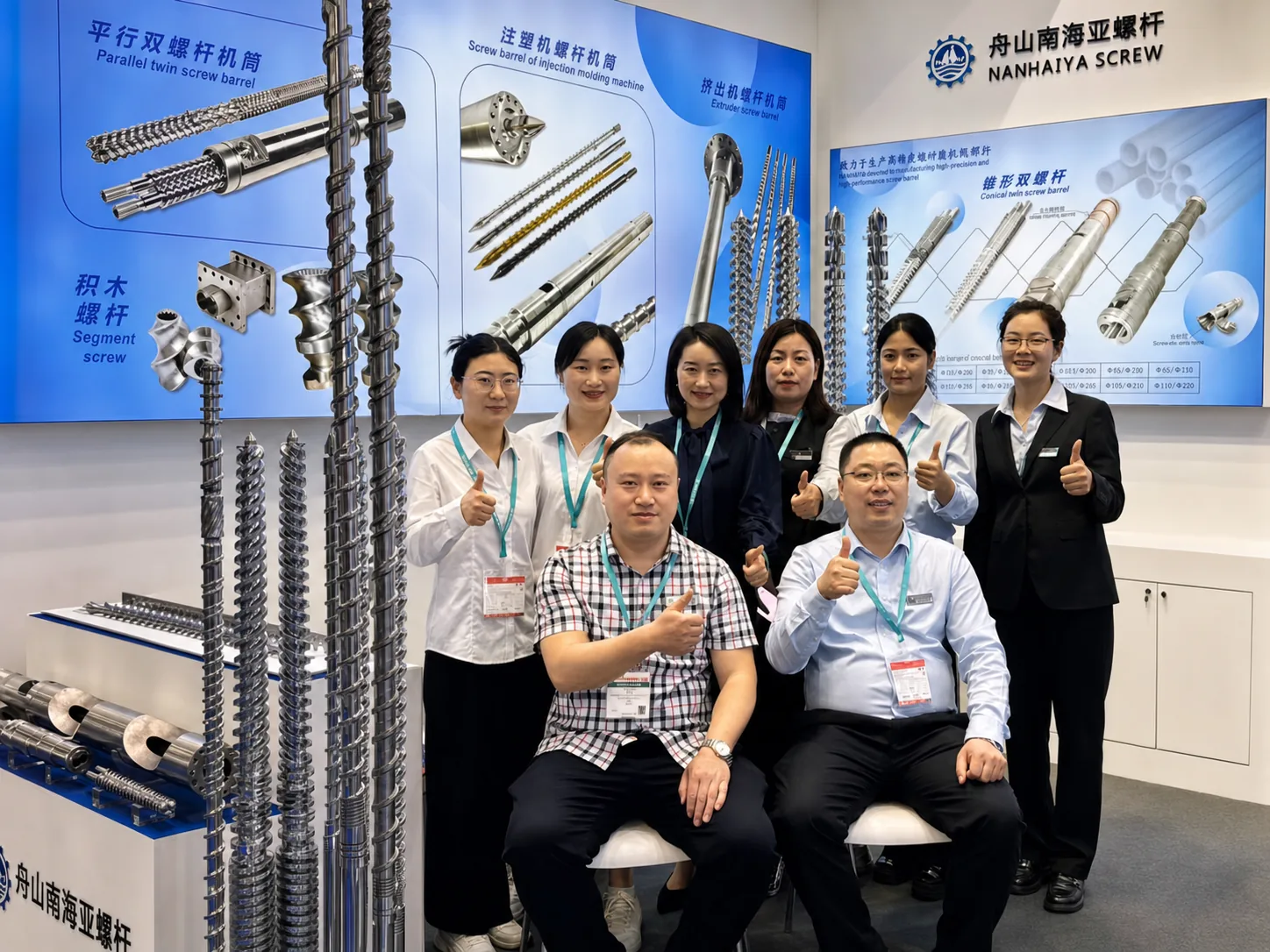
Related Articles
More insights on screw barrel technology and plastics processing.
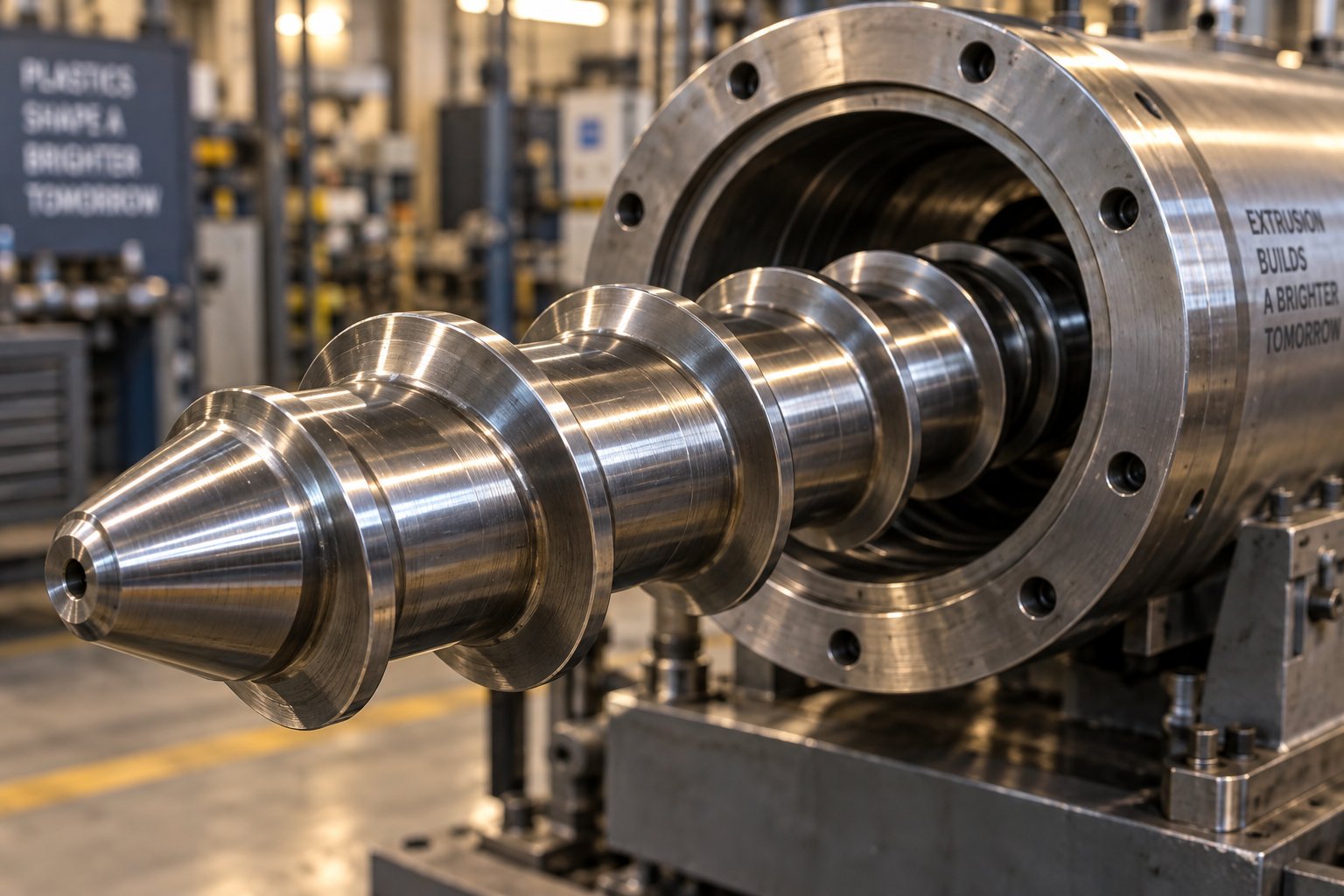
What Nobody Tells You About Screw Barrel For Plastic Machine Design
Oct 10, 2026
Learn how screw barrel for plastic machine design affects melt quality, throughput, and wear life. Covers geometry, resin matching, troubleshooting, and sourcing.
Read Article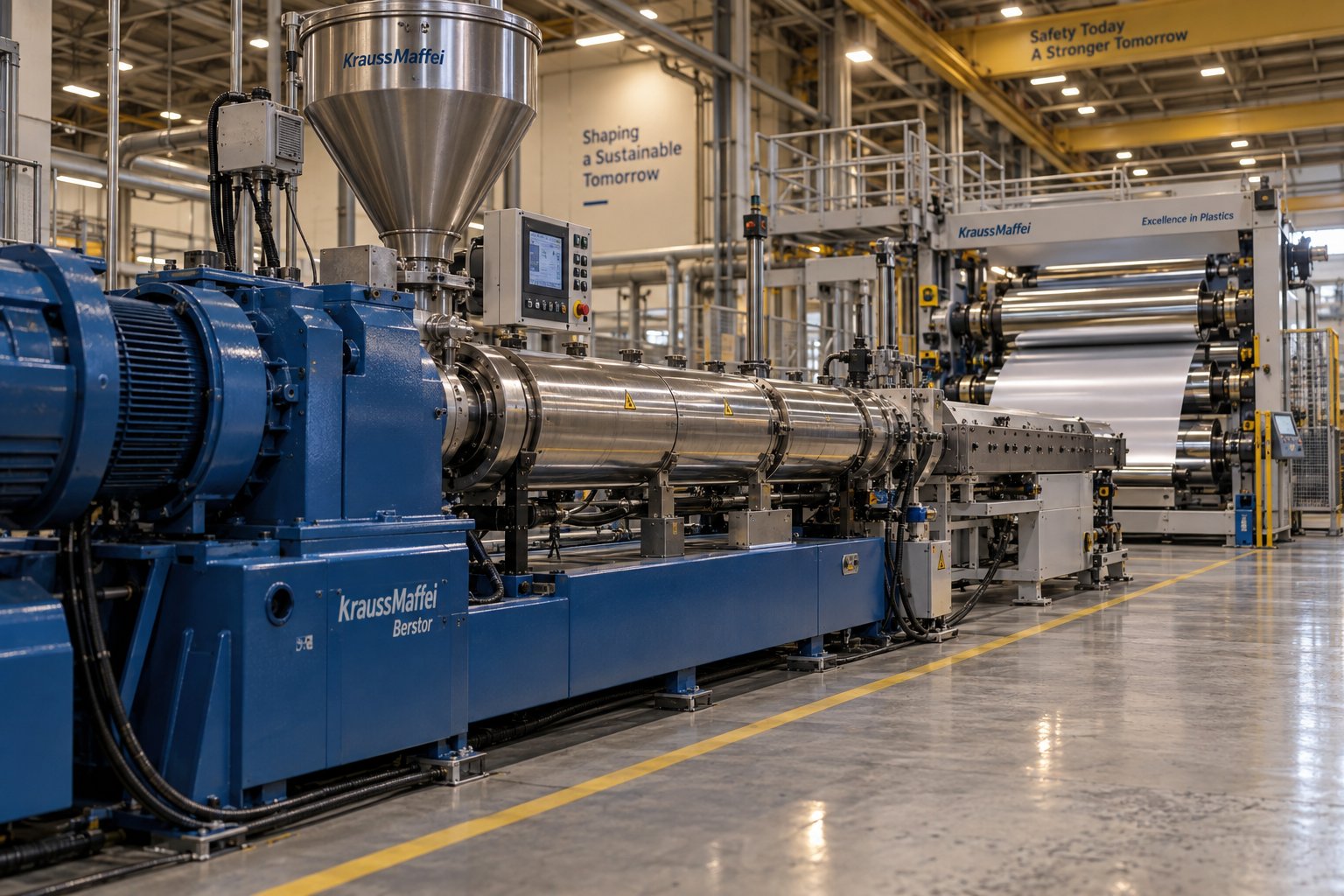
Single Screw Extruder for Sheet: Stop Guessing, Start Specifying
Oct 9, 2026
Learn how to specify a single screw extruder for sheet production. Covers screw geometry, resin-specific processing, troubleshooting, and maintenance best practices.
Read Article
PE Pipe Extruder Machine: What Datasheets Won't Tell You
Oct 9, 2026
Learn how a PE pipe extruder machine works, key specs explained, material grade selection, maintenance tips, and buyer guidance beyond the datasheet.
Read ArticleLooking for something else?
Search by material, symptom or product and jump straight to the relevant page.
These are navigation suggestions based on keyword matching — not a quotation, not a delivery commitment, and not a substitute for engineering review. Final specification is confirmed by our engineers against your drawings and processed material.
Need help with screw barrel selection?
Share your machine model, processed material and application. Our team can help with pricing and technical support.