

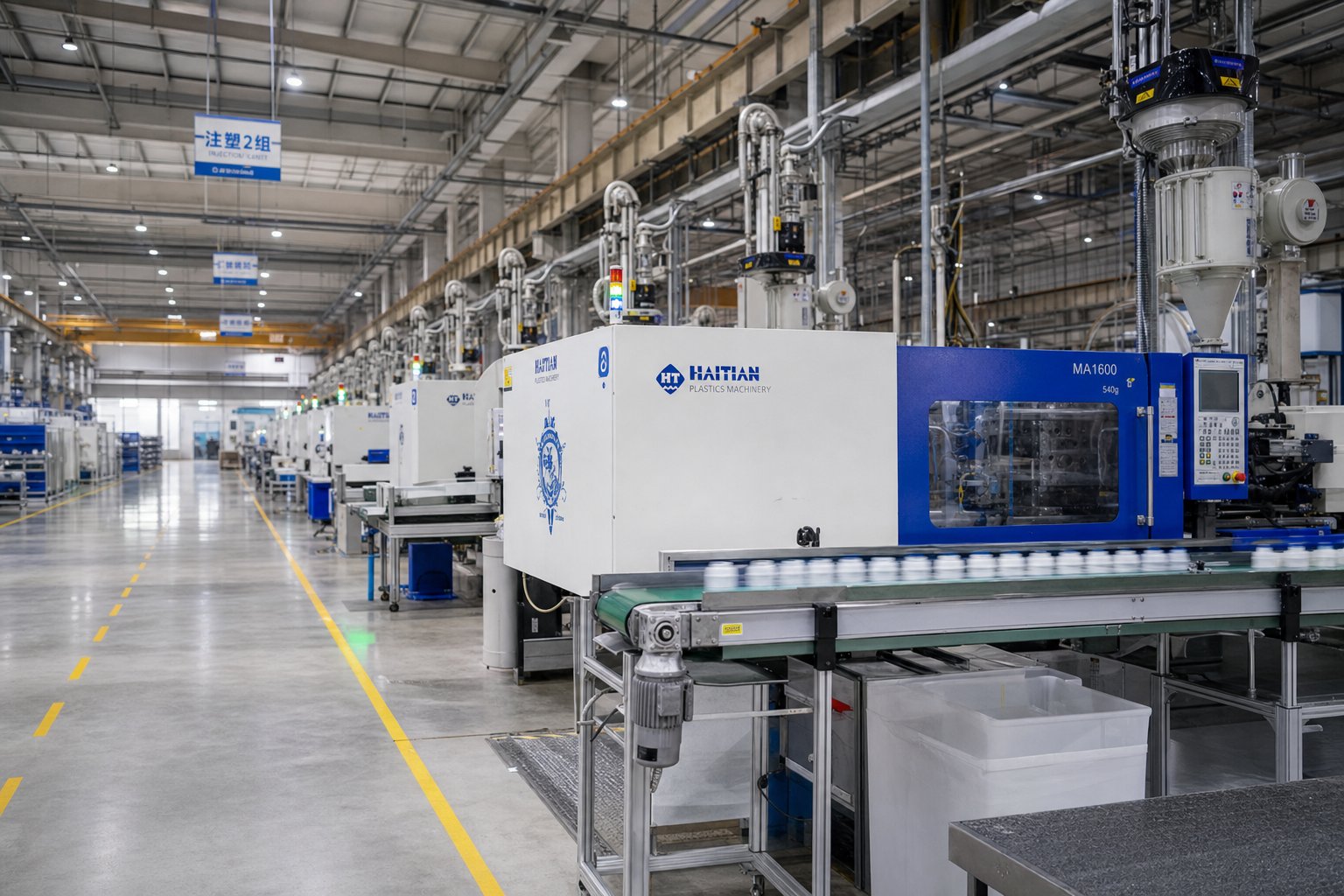
What Is Plastic Machinery and Why It Drives Modern Manufacturing
Every plastic product you encounter — from a water bottle cap to an automotive dashboard panel — began its life inside a specialized machine designed to melt, shape, and solidify raw polymer into something functional. The category of industrial equipment responsible for this transformation is vast, and understanding it is the first step toward smarter procurement, better processing, and more efficient plant operations.
What Exactly Is Plastic Machinery
Plastic machinery refers to the complete range of industrial equipment used to shape, form, melt, and convert raw polymer materials into finished or semi-finished products. This umbrella term covers extruders, injection molding machines, blow molding systems, thermoformers, granulators, film blowing machines, and all supporting auxiliary devices such as dryers, feeders, chillers, and conveyors. Each plastic machine within this ecosystem serves a distinct processing function — whether melting resin into a continuous profile, injecting molten polymer into a mold cavity, or inflating a parison into a hollow container.
Plastic machinery encompasses all machines for plastic processing — from compounding and primary molding to secondary finishing and recycling — that convert raw polymer resins into usable products through controlled heat, pressure, and mechanical force.
The scope is broad by design. A single production facility may rely on dozens of machines working in concert, each handling a different stage of the manufacturing chain.
Why Plastic Machinery Matters Across Industries
Imagine a packaging plant running thousands of containers per hour, a medical cleanroom producing precision syringe components, or a construction supplier extruding kilometers of PVC pipe daily. All of these operations depend on plastics equipment engineered for their exact application requirements. The global plastic processing machinery market reflects this dependency — valued at an estimated USD 26.0 billion in 2025 and projected to reach USD 42.4 billion by 2035 at a 5.0% CAGR, driven by demand across packaging, automotive, healthcare, electronics, and consumer goods sectors.
For anyone involved in polymer processing, procurement, or plant engineering, understanding the machine of plastic that best fits a given application is not optional — it directly affects product quality, energy costs, cycle times, and competitive positioning. This article bridges academic depth with actionable guidance, walking you through machinery types, polymer-to-machine matching, critical components, smart automation trends, and a practical decision framework for selecting the right system.
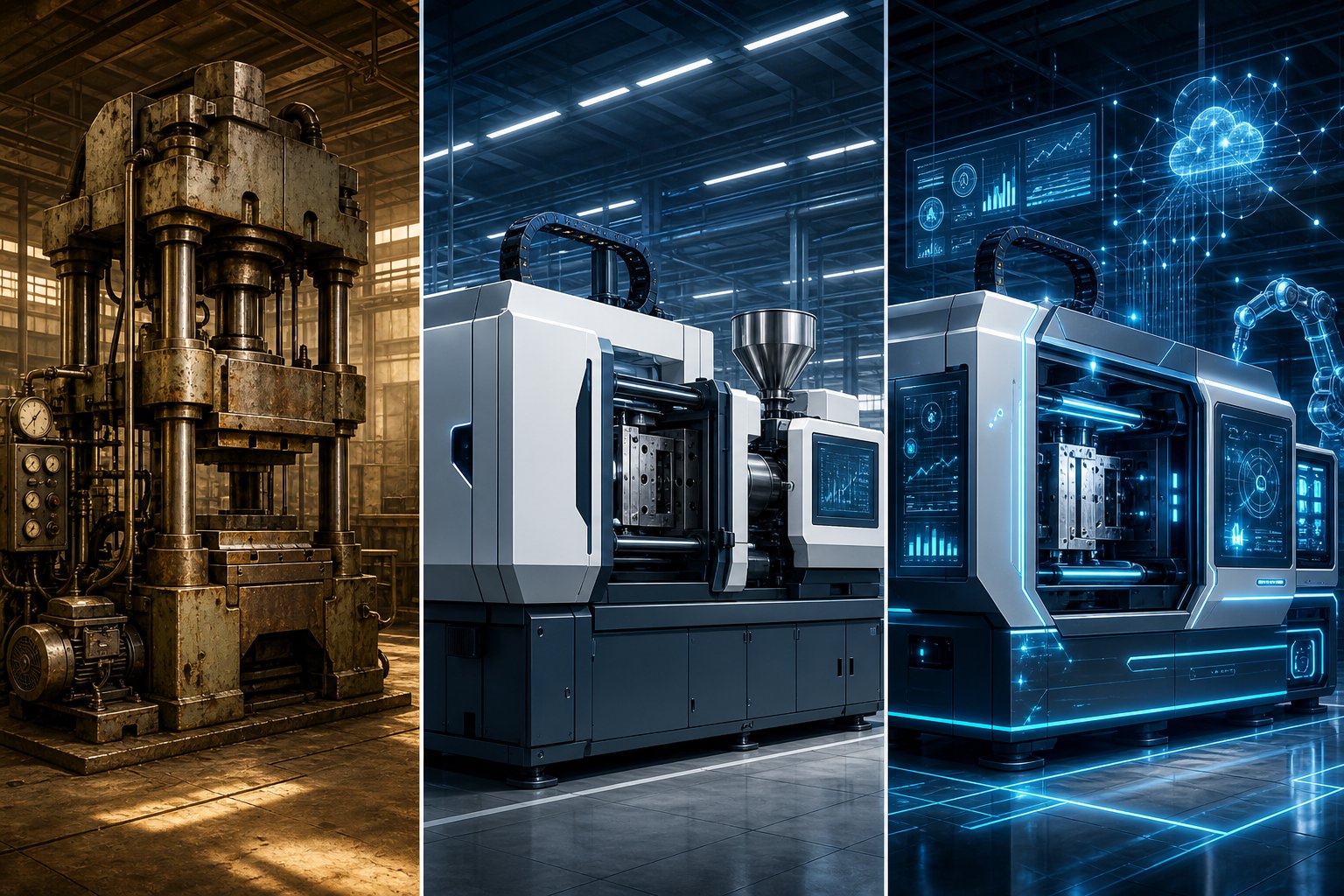
How Plastic Machinery Evolved from Manual Operations to Smart Systems
The plastic forming techniques manufacturers rely on today did not appear overnight. They emerged through decades of incremental engineering breakthroughs — each generation of equipment solving a limitation that held the previous one back. Understanding this evolution helps you appreciate why modern machines perform the way they do, and where the industry is heading next.
From Manual Presses to Hydraulic Powerhouses
Early plastic shaping was labor-intensive. Compression molding presses required operators to manually load material, close heavy platens, and control heating with limited precision. The first injection molding machine was patented in 1872 by John Wesley Hyatt — a simple plunger-driven device that pushed softened celluloid into a mold cavity. Rudimentary single-screw extruders followed a similar pattern: functional but slow and difficult to control.
The real leap came when hydraulic power entered the picture mid-20th century. Hydraulic clamping systems delivered consistent, repeatable force that manual operators simply could not match. Throughput climbed dramatically, and forming plastic into complex geometries became commercially viable at scale. By 1946, James Watson Hendry introduced the screw-type plunger for injection machines, enabling far more precise control over melt speed and quality — a milestone that shaped every plastic forming machine built afterward.
The Shift to Electric and Hybrid Drives
Hydraulic systems, however, carry inherent inefficiencies: energy losses through pumps, valves, and fluid circulation, plus maintenance demands from oil leaks and component wear. All-electric machines addressed these issues head-on. Precise servo motors replaced hydraulic actuators on each axis — injection, clamping, ejection — delivering superior energy efficiency, faster cycle times, and tighter tolerances with cleaner, quieter operation. Hybrid designs emerged as a middle ground, combining electric precision on critical axes with hydraulic force where high clamping tonnage is essential — offering flexibility without the full price tag of an all-electric platform.
Where the Industry Stands Now
Today's landscape blends mechanical refinement with digital intelligence. Servo-driven systems dominate new installations, modular machine architectures allow processors to scale capacity without replacing entire lines, and IoT-connected sensors feed real-time performance data to centralized control platforms. The plastic forming machine of the current era is not just a mechanical asset — it is a data-generating node in a connected production ecosystem.
- Manual era — Hand-operated presses with minimal process control
- Hydraulic era — High-force systems enabling mass production and complex geometries
- All-electric era — Servo-driven precision with major energy and maintenance savings
- Hybrid era — Combined electric and hydraulic architectures balancing cost and performance
- Smart era — IoT integration, predictive analytics, and digital twins guiding real-time optimization
Each stage did not simply replace its predecessor — it expanded the range of what processors could achieve. Yet the machine itself is only half the equation. The real differentiator lies in understanding which type of equipment matches the specific process, polymer, and product geometry your operation demands.
Core Types of Plastic Machinery and How Each Process Works
Selecting a plastic molding machine — or any processing system — without understanding how each category actually forms material is like choosing a vehicle without knowing whether you need to haul freight or race on a track. The process dictates the product. Here is a detailed breakdown of the four major machinery families, organized by the fundamental method each uses to convert raw polymer into a finished part.
Injection Molding Machines
A plastics injection molding machine works on a cyclical principle: polymer pellets are fed into a heated barrel, melted by a rotating screw, then injected under high pressure into a closed mold cavity. Once the part cools and solidifies, the mold opens, ejector pins push the component out, and the cycle repeats — often in under ten seconds for thin-walled packaging.
Plastic injection molding machinery dominates industries requiring tight tolerances and complex three-dimensional geometries. Think automotive clips, medical syringe housings, consumer electronics enclosures, and precision gears. When evaluating a molding machine for plastic parts, buyers focus on several critical specifications:
- Clamping force — the tonnage needed to keep the mold halves sealed against injection pressure, typically ranging from 2,500 to 5,000 psi cavity pressure depending on material
- Shot size — the maximum volume of polymer the machine can inject per cycle, ideally used at 20-80% of capacity for optimal performance
- Platen dimensions and tie bar spacing — determining the maximum mold size the machine can physically accommodate
- Injection speed and pressure — ensuring the melt fills intricate features before cooling begins
Machine plastic molding at this level also requires matching controller capabilities to the application — multi-stage injection profiles, precise temperature zones, and real-time process feedback all contribute to consistent part quality.
Extrusion Machinery for Continuous Processing
While injection molding operates in discrete cycles, extrusion is inherently continuous. Raw material enters the hopper, a rotating screw conveys it through heated barrel zones — feeding, compressing, and metering the melt — then forces the homogenized polymer through a shaped die. The result is a continuous profile: pipe, tube, window frame, film, sheet, or wire coating.
Two primary architectures serve different needs. A single-screw extruder excels at straightforward melting and forming tasks — pipe extrusion, profile production, and sheet lines where the polymer does not require intensive mixing. A twin-screw extruder, by contrast, offers superior mixing, venting, and feeding characteristics that make it ideal for compounding, reactive extrusion, WPC (wood-plastic composite) processing, and granulation of filled or recycled materials.
The fundamental difference is worth emphasizing: extrusion never stops mid-run. Melt quality depends entirely on screw geometry, barrel temperature control, and die design maintaining stable conditions over hours or days of continuous operation. That makes screw and barrel condition critically important — any wear directly degrades output consistency.
Blow Molding and Thermoforming Systems
Need a hollow container — a bottle, drum, or automotive duct? Blow molding is the answer. The process comes in three main variants:
- Extrusion blow molding (EBM) — a continuous parison is extruded, clamped inside a mold, and inflated with compressed air
- Injection blow molding (IBM) — a preform is injection-molded first, ensuring precise neck geometry before inflation
- Stretch blow molding (ISBM) — preforms are mechanically stretched and inflated simultaneously, aligning polymer chains for the clarity and strength seen in PET beverage bottles
Thermoforming takes a different approach entirely. So what is thermoforming machine technology, and how does it differ? A thermoforming system heats a flat thermoplastic sheet to its softening point, then uses vacuum, air pressure, or mechanical plug-assist to draw the pliable sheet against a mold surface. Once cooled, the formed part is trimmed to final dimensions. This method suits mid-volume production of large panels, trays, enclosures, and signage — anywhere tooling cost must stay low while still achieving acceptable surface detail.
Granulation and Recycling Machinery
The circular economy has elevated granulation and recycling equipment from a niche subcategory to an essential part of the plastic moulding machinery landscape. Pelletizers convert compounded or recycled melt strands into uniform granules ready for reprocessing. Shredders reduce post-consumer or post-industrial waste into manageable flake. Washing lines remove contaminants — labels, adhesives, dirt — before material re-enters the production stream.
These systems work together as an integrated recycling line: shredding, washing, drying, extruding, and pelletizing in sequence. As regulatory pressure and corporate sustainability mandates increase, plastic moulding machines designed to accept recycled regrind are becoming standard rather than optional.
| Process Type | Typical Products | Material Suitability | Production Mode | Relative Investment Level |
|---|---|---|---|---|
| Injection Molding | Housings, gears, medical components, automotive clips, consumer goods | Very wide — PP, ABS, PC, PA, POM, PET, TPU, blends | Batch (cyclical) | High (steel molds + press) |
| Extrusion | Pipes, profiles, films, sheets, wire coatings, WPC decking | PE, PP, PVC, PETG, TPEs, engineering thermoplastics | Continuous | Low to Medium (die + line) |
| Blow Molding | Bottles, drums, tanks, automotive ducts, containers | HDPE, LDPE, PP, PET, PC (specialized) | Batch (cyclical) | Medium |
| Thermoforming | Trays, enclosures, panels, packaging clamshells, signage | ABS, HIPS, PETG, PVC, PC/ABS sheet | Batch (sheet-fed) | Low |
Each category in this table represents a distinct engineering philosophy — cyclical versus continuous, cavity-based versus die-based, high-pressure versus low-pressure forming. The right choice hinges not only on the product geometry you need to produce, but equally on the specific polymer you plan to run through the system. That material-to-machine relationship is where many processors either optimize their operations or unknowingly leave performance on the table.
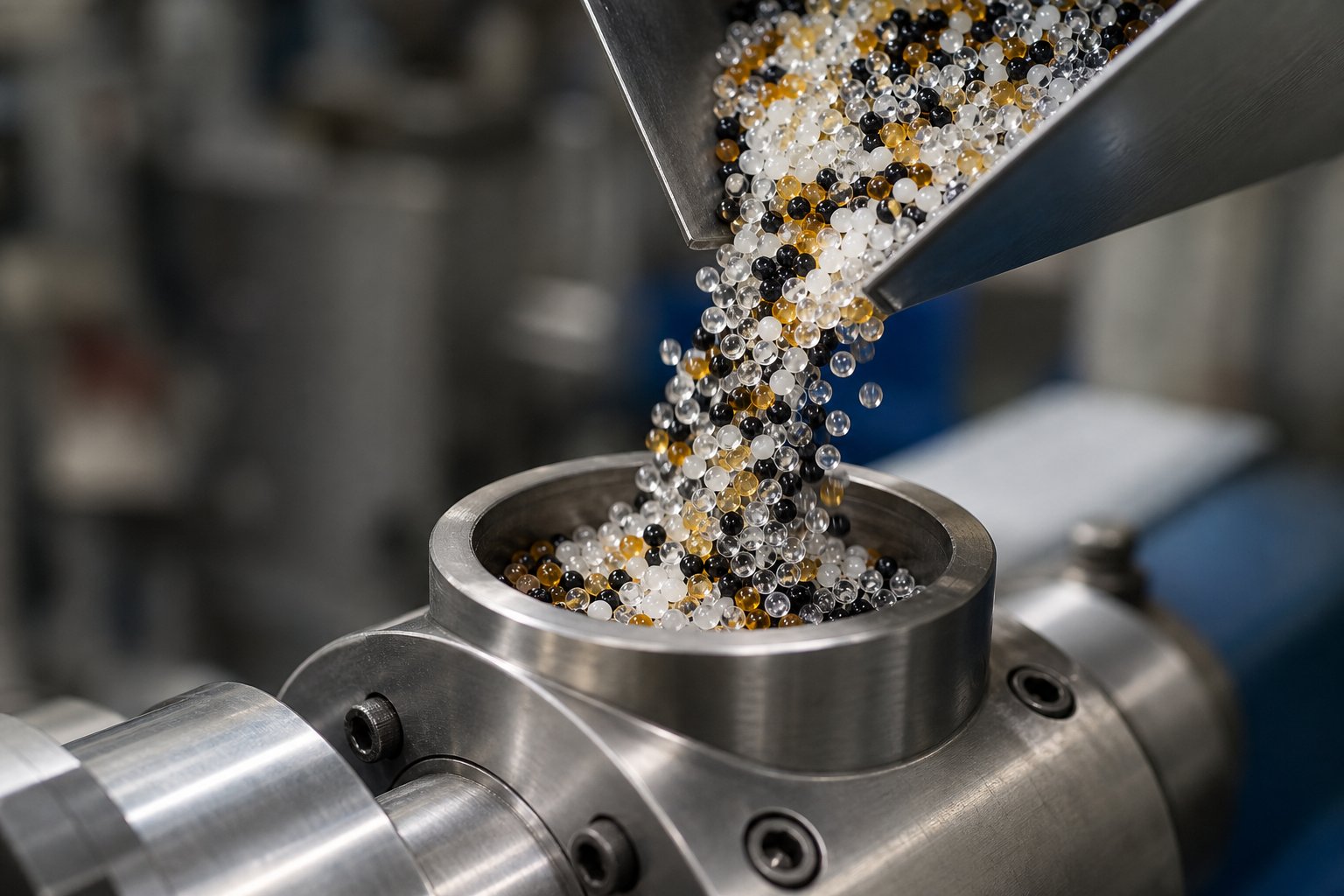
Matching Polymers to the Right Plastic Processing Equipment
You can own the most advanced plastic processing machine on the market, but feed it the wrong polymer — or configure it incorrectly for the polymer you are running — and you will fight scrap rates, dimensional instability, and premature component wear from day one. Material selection and machine selection are two sides of the same coin. Here is how to align them.
Thermoplastics vs. Thermosets and Their Machine Requirements
The first fork in the decision tree is fundamental: is your material a thermoplastic or a thermoset?
Thermoplastics — polyethylene (PE), polypropylene (PP), PVC, ABS, PET, polycarbonate (PC), and nylon — can be heated, softened, formed, and then reheated and reshaped without permanent chemical change. This reversibility is what makes them compatible with extruders, injection molding machines, blow molding systems, and thermoformers. A plastic processor working with thermoplastics benefits from broad equipment flexibility: the same injection moulding machine plastic parts come from can often run multiple resin families with only tooling and parameter adjustments.
Thermosets — epoxy, melamine, phenolic, silicone, and polyurethane — behave differently at the molecular level. When heated or catalyzed, their polymer chains cross-link irreversibly, creating a rigid structure that cannot be remelted or reprocessed. This means standard screw-and-barrel plastics moulding machines are generally unsuitable. Instead, thermosets require compression molding, reaction injection molding (RIM), or resin transfer molding (RTM) — processes designed around controlled cure reactions rather than simple melt-and-cool cycles. Temperature profiles, dwell times, and pressure curves differ significantly from thermoplastic processing.
Amorphous vs. Semi-Crystalline Polymers
Even within thermoplastics, not all polymers melt the same way — and that difference directly impacts how you configure your plastic processing machinery.
Semi-crystalline polymers such as HDPE, nylon (PA), and POM have ordered molecular chain structures. They stay hard until they reach their melting temperature — much like ice that does not soften gradually but transitions sharply from solid to liquid. A kilogram of nylon 6, for example, requires roughly twice the energy to melt as an equivalent mass of amorphous ABS, despite similar processing temperatures. This sharp melting point demands tighter thermal control in the barrel zones, more precise screw design to prevent solid-bed breakup, and careful die temperature management to avoid premature freezing or uneven flow.
Amorphous polymers — polystyrene (PS), PMMA, PC, and ABS — have randomly arranged molecular chains. They melt like frozen butter: softening gradually as temperature rises, with no abrupt phase transition. A partially unmelted amorphous pellet behaves like soft taffy rather than a hard particle, meaning it causes far less screw and barrel wear if processing conditions are slightly off. This forgiving nature allows amorphous materials to run acceptably on general-purpose screw geometries, while semi-crystalline resins often demand screws with a minimum L/D ratio of 20:1 — preferably 24:1 — and specialized transition zone designs for uniform melt quality.
For any plastic processor, the practical takeaway is clear: barrel zoning, screw compression ratio, and die land length all need adjustment based on whether your resin is amorphous or semi-crystalline. Treating them identically invites inconsistent dimensions and elevated scrap.
Specialty and Filled Materials
Glass-fiber-reinforced compounds, wood-plastic composites (WPC), and recycled regrind push equipment requirements further. Extruding PA with glass fiber, for instance, demands twin-screw extruders with robust screw designs that disperse fibers uniformly without excessive breakage — plus optimized barrel temperature zones, efficient degassing systems, and precision dies to maintain fiber integrity through the shaping stage. WPC introduces abrasive wood flour that accelerates screw and barrel wear, while recycled regrind brings contamination variability requiring enhanced venting and filtration.
Each of these specialty materials imposes demands a standard machine configuration simply cannot meet. Upgraded metallurgy for wear surfaces, additional vacuum venting ports, gravimetric feeding systems for consistent dosing, and side-feeder ports for downstream fiber introduction all become necessary.
For quick reference, here are common polymer-machine pairings that align material behavior with the right equipment category:
- PE, PP (semi-crystalline) — Single-screw extruders for film, pipe, and sheet; injection molding for containers and caps
- PVC (amorphous) — Twin-screw extruders for pipe and profile; requires corrosion-resistant barrel liners
- ABS, PS, PMMA (amorphous) — Injection molding and thermoforming; forgiving on general-purpose screw designs
- PET (semi-crystalline) — Stretch blow molding for bottles; injection molding for preforms; sheet extrusion for thermoforming
- Nylon/PA, POM (semi-crystalline) — Injection molding with high-L/D screws; twin-screw extrusion for glass-fiber compounding
- Epoxy, phenolic, melamine (thermosets) — Compression molding or reaction injection molding; not suitable for standard screw-and-barrel systems
- Glass-fiber-reinforced compounds — Co-rotating twin-screw extruders with hardened screw elements and side feeders
- WPC and recycled regrind — Conical or parallel twin-screw extruders with enhanced venting and wear-resistant components
Matching polymer to machine is only the starting point. The individual components inside that machine — the screw geometry, barrel metallurgy, die design, and drive system — ultimately determine whether your material-to-machine pairing delivers peak performance or merely adequate output.
Critical Components and Parts That Drive Machine Performance
A plastic processing system is only as reliable as the components working inside it. You can invest in the ideal machine architecture, pair it perfectly with your polymer, and still watch output deteriorate if internal wear parts are neglected. The difference between consistent production and mounting scrap rates often comes down to the condition of a handful of plastic machine parts that processors interact with every day — yet frequently overlook until performance forces their hand.
Screw and Barrel Assemblies in Extrusion Equipment
Think of the screw as the heart of any extrusion line. It performs three sequential functions along its length: feeding raw pellets from the hopper, compressing and melting them through progressively shallower channel depths, and metering the homogenized melt at a consistent pressure toward the die. Each zone demands specific geometry — flight depth, pitch angle, compression ratio — precisely matched to the polymer being processed.
The barrel surrounds the screw and provides the thermal environment where melting occurs. Barrel liner material must resist the specific wear mechanism your resin imposes. Processing glass-fiber-filled compounds? Expect aggressive abrasive wear as hard particles grind against metal surfaces. Running PVC or flame-retardant compounds? Corrosive wear from acidic byproducts becomes the dominant failure mode, demanding bimetallic liners with high chromium or nickel alloy content.
Here is the critical insight many processors miss: screw wear is a gradual process that can go unnoticed until performance is greatly reduced. As radial clearance between flight OD and barrel ID increases, leakage flow grows — meaning polymer slips backward over the flights instead of advancing toward the die. The operator sees reduced throughput and rising melt temperature, forcing higher screw RPM and greater energy consumption to maintain output. A common industry guideline considers flight clearance four times the original tolerance as the replacement threshold, though higher-viscosity resins tolerate more clearance than low-viscosity materials like PP before output loss becomes severe.
Wear patterns follow predictable zones. The transition section and final metering turns experience the highest pressures and temperatures, making them most susceptible to OD wear. Root wear concentrates on the forwarding side of flights, and when processing abrasive fillers, the feed section also deteriorates rapidly as pressure builds against unmelted pellets with limited lubrication. Mixing sections and barrier flights wear as material flows over their undercut geometry, reducing dispersion quality and melting efficiency over time.
Timely replacement or rebuilding of screw barrels is essential for maintaining output consistency. An experienced supplier can rebuild worn screws to original tolerances — re-welding flights with hardfacing alloys and grinding to OEM specifications — at a fraction of the cost of new equipment, often extending the screw's useful life through multiple rebuild cycles. For extrusion manufacturers and recycling plants sourcing replacement screw barrels, custom components, or technical guidance across pipe, profile, film, sheet, WPC, and granulation applications, specialist resources like NANHAIYA's plastic extruder machine and screw barrel support page offer practical solutions tailored to specific processing demands.
Dies, Heads, and Downstream Components
Once the screw delivers homogenized melt at stable pressure, the die head takes over — shaping that molten polymer into its final cross-sectional geometry. Imagine a pipe die: the melt from the extruder splits when it reaches the die pin, channels through a series of flow paths, and merges again to form the circumference of the extruded pipe. A plastic head machine configuration for profile extrusion follows similar principles but with far more complex flow channels to create window frames, edge banding, or custom architectural shapes.
Die design directly governs dimensional tolerance of the finished product. Land length — the parallel section where pin and bushing stabilize the melt before exit — must be calibrated carefully: too short causes dimensional instability, too long creates excessive backpressure that restricts output. For HDPE pipe, a general guideline calls for a 30:1 ratio of land length to wall thickness. Spider-type versus spiderless basket die designs serve different materials — PVC flows smoothly through spider configurations, while polyolefins prefer basket designs that prevent degradation in restrictive flow channels.
Downstream of the die, calibration sleeves, vacuum sizing tanks, and haul-off systems complete the forming process. Each component must be matched to line speed, material shrinkage behavior, and cooling requirements specific to the polymer and product geometry.
Drive Systems, Gearboxes, and Heating Elements
The drive system determines how efficiently electrical energy converts into the mechanical torque that rotates the screw. Older spur-gear gearboxes operate at 90-92% mechanical efficiency — meaning 8-10% of input energy is wasted as heat and friction. Modern high-precision helical gearboxes achieve 96-98% efficiency, and over continuous 24/7 operation, that 6% difference translates to roughly 57,800 kWh saved annually on a 110kW motor. Pairing premium IE3 or IE4 efficiency motors with advanced vector-control inverters ensures the motor always runs at its optimal torque point, adapting instantly to load variations rather than wasting energy at fixed speed.
Barrel heater band configuration influences thermal uniformity across processing zones. Traditional cast-iron band heaters radiate heat both inward and outward, losing energy to the environment. Ceramic-fiber insulated or vacuum-insulated heater bands keep heat where it belongs — inside the barrel — reducing surface temperatures from 60-80°C down to near ambient and cutting heater duty cycles by 5-8%. Beyond energy savings, insulated heating improves operator safety and lowers facility cooling costs.
Among all plastic machinery parts, certain wear components demand scheduled monitoring and proactive replacement to prevent unplanned downtime:
- Screw flights and mixing elements — inspect radial clearance at each maintenance window; replace when clearance exceeds four times OEM tolerance
- Barrel liners — check for corrosive pitting (PVC/FR compounds) or abrasive grooving (filled materials)
- Die lips and land surfaces — worn lands cause dimensional drift and surface defects
- Gearbox bearings and seals — listen for unusual vibration or noise; monitor oil condition
- Heater bands and thermocouples — failed zones create cold spots that disrupt melt uniformity
- Thrust bearings — absorb axial loads from head pressure; failure risks catastrophic screw damage
- Screen packs and breaker plates — clogged screens increase back pressure and reduce throughput
Proactive monitoring of these plastic machinery parts — combined with baseline data and wear-tracking procedures — separates operations that run with predictable uptime from those trapped in reactive maintenance cycles. The cost of scheduled component replacement is always a fraction of the cost imposed by unplanned shutdowns, emergency part sourcing, and accumulated scrap from degraded output quality.
Still, even perfectly maintained hardware cannot reach its full potential without intelligent systems guiding operations in real time. The convergence of sensor data, machine-learning algorithms, and connected control platforms is reshaping how processors manage these critical components — not just reacting to wear, but predicting it before production suffers.

Industry 4.0 and Smart Automation in Plastic Processing
A screw wearing down inside a barrel does not announce itself with a dramatic failure. It erodes fraction by fraction, shift by shift, silently widening clearances until output quality degrades past acceptable thresholds. Traditionally, an operator might catch this drift only after scrap rates spike or a customer complaint triggers investigation. Imagine instead that the machine itself flags the trend weeks in advance, calculates the remaining useful life of the component, and schedules replacement during planned downtime. That shift — from reactive to predictive, from isolated equipment to connected production assets — defines what Industry 4.0 means for plastic processing in practice.
IoT Sensors and Real-Time Process Monitoring
Every modern plastic production machine generates a continuous stream of data. Pressure transducers measure melt behavior at the die. Thermocouples track barrel zone temperatures across four to six independently controlled segments. Vibration sensors on gearboxes and drive motors detect mechanical anomalies long before audible noise develops. The difference between a conventional setup and an IoT-enabled one is straightforward: connected sensors feed all of this data to a centralized analytics platform in real time rather than displaying it only on the machine's local HMI screen.
Why does this matter? Because process drift is subtle and cumulative. A rear barrel zone heater beginning to degrade might cause a temperature deviation of just a few degrees per hour. An operator reviewing the machine once per shift sees a snapshot that looks acceptable. An IoT platform, sampling every few seconds and trending over days, sees the trajectory — and fires a threshold alert before any part quality impact occurs. Industry data suggests that IoT-monitored injection molding processes achieve 25-40% scrap reduction compared to unmonitored baselines, precisely because drift is caught at the parameter level rather than at the inspection table.
The latest machines for plastic processing take this further with multi-variable contextual alerting. Rather than triggering alarms on a single threshold — "temperature exceeded X degrees" — connected systems correlate multiple parameters simultaneously. A gradual increase in fill time combined with stable barrel temperatures might indicate check ring wear, while the same fill time increase paired with rising zone temperatures could point to a failing heater band. Recognizing these patterns across variables is something human operators cannot do consistently across 20 or 50 machines on a production floor, but an IoT platform handles it effortlessly.
Predictive Maintenance and Digital Twins
Real-time monitoring catches problems as they develop. Predictive maintenance goes a step further — it forecasts failures before any deviation is visible at all. Machine-learning algorithms trained on historical sensor data identify the subtle signatures that precede component failures: slight vibration frequency shifts in a gearbox bearing weeks before seizure, incremental heater band resistance changes that signal impending burnout, or creeping backpressure trends that correlate with screw flight wear.
The financial case is compelling. Unplanned downtime on an injection molding machine typically costs $5,000-15,000 per hour in lost production, scrap, and restart waste. Converting even a fraction of those emergency stops into scheduled maintenance windows — performed during planned changeovers or off-shifts — delivers immediate ROI.
Digital twin technology extends this predictive capability into a fully simulated environment. A digital twin is a virtual replica of a physical process, product, or system that uses real-time data and simulation models to mirror actual machine performance. In plastic processing, a digital twin can model extrusion parameters — temperature profiles, screw speed, resin flow behavior — and simulate how changes will affect output before any physical adjustment is made. Engineers can test different resin blends, evaluate the impact of ambient humidity on film thickness, or optimize screw geometry for a new compound entirely in the digital space, eliminating trial-and-error waste on the production floor.
The feedback loop is continuous: live sensor data from the factory updates the twin, the twin runs simulations based on current conditions, and optimized settings flow back to the machine controller. This closed-loop system keeps production running within tight tolerance limits, achieving stable quality around the clock with minimal manual adjustment.
Automation and Workforce Implications
Hardware intelligence is only one side of the equation. Automatic plastic feeding systems, robotic part handling, and closed-loop quality inspection are reducing manual intervention across every stage of processing. Global average robot density reached a record 162 units per 10,000 manufacturing employees in 2023 — more than double the figure from just seven years earlier, according to the International Federation of Robotics. In plastics specifically, robots handle machine tending, part removal, degating, packaging, and quality inspection with speed and consistency that manual labor cannot sustain over extended shifts.
Collaborative robots — cobots — are making plastic assembly equipment and cell-level automation accessible even to small and mid-sized processors that previously considered robotics out of reach. Intuitive programming interfaces allow operators to build routines by combining pre-configured action blocks rather than writing complex code. Combined with robots-as-a-service pricing models and payback periods of less than a year in many applications, the financial barriers that once limited automation to large-volume plants are eroding rapidly.
Yet this transformation does not eliminate the need for skilled people — it reshapes the skillset. Operators who once spent their shifts adjusting temperatures, tweaking pressures, and visually inspecting parts now oversee dashboards, interpret trend data, and validate algorithmic recommendations. Training programs must evolve accordingly, blending traditional mechanical knowledge with digital literacy in data interpretation, HMI navigation, and basic system troubleshooting.
Smart automation shifts the operator role from manual adjustment to data-guided oversight — processors still need experienced people on the floor, but those people now make decisions informed by real-time analytics rather than intuition alone.
This digital evolution delivers measurable gains in efficiency and quality, but it also raises a practical question: how do you quantify those gains and justify the investment? Evaluating smart machinery — or any processing equipment — requires moving beyond purchase price into a lifecycle perspective that accounts for energy costs, maintenance economics, and the production KPIs that separate high-performing operations from average ones.
Total Cost of Ownership and KPIs That Matter for Plastic Machines
Picture two quotes on your desk for an industrial plastic molding machine. Supplier A comes in 25% higher than Supplier B. The instinct to pick the lower number is strong — but what if Supplier B's equipment consumes 30% more electricity per kilogram of output, demands double the annual maintenance spend, and suffers three times the unplanned downtime? Over a five-year operating window, that "cheaper" machine could easily cost hundreds of thousands more. This is the trap that total cost of ownership analysis is designed to prevent.
Beyond Purchase Price — Understanding Total Cost of Ownership
The initial price tag on any molding machine plastic processors evaluate typically represents only a fraction — sometimes as little as 20-30% — of total lifecycle expenditure. A thorough TCO calculation accounts for every dollar the equipment will consume from delivery dock to eventual decommissioning:
- Installation and commissioning — foundation work, electrical connections, piping, and engineer-supervised startup. For large production lines, this alone can add 5-10% to the purchase price.
- Energy consumption — often the single largest ongoing cost. Research published in Materials demonstrates that specific energy consumption for injection molding ranges from as low as 0.25 kWh/kg on a well-matched, high-efficiency all-electric machine to over 2 kWh/kg on an oversized, low-efficiency hydraulic press. Multiply that difference across millions of kilograms processed annually, and the energy gap dwarfs any upfront savings.
- Tooling and spare parts — blades, screws, barrel liners, seals, and screen packs all wear on schedule. A detailed TCO framework includes a complete consumable parts list with estimated lifespans and replacement costs.
- Preventive maintenance — lubricant changes, filter replacements, calibration checks, and scheduled inspections. Predictable and budgetable, yet frequently underestimated.
- Unplanned downtime losses — the most hidden cost. Every hour a plastic moulding machine sits idle means lost revenue, idle labor, and potential delivery penalties. The formula is straightforward: hourly output multiplied by margin per unit multiplied by downtime hours.
- Operator training — new equipment often requires retraining. More sophisticated systems demand digital literacy alongside mechanical skills, adding time and cost during the transition period.
- Depreciation and decommissioning — typical depreciation periods for plastic machines run 8-15 years. Equipment that retains processing relevance and can handle recycled feedstocks holds residual value longer than single-purpose designs.
An effective comparison strategy is to build a side-by-side TCO table for competing proposals. One practical example from a recycling line evaluation showed that a supplier with a 25% higher purchase price delivered a five-year TCO more than 12% lower than the budget alternative — entirely because of lower energy consumption, fewer breakdowns, and reduced parts replacement frequency. The lesson applies universally: every plastic machine manufacturer's quote deserves scrutiny beyond the bottom-line number.
Key Performance Indicators for Plastic Machinery
TCO tells you what the equipment costs. KPIs tell you how well it performs once installed. Tracking the right metrics helps plant managers justify upgrades, schedule maintenance at optimal intervals, and benchmark operations against industry standards rather than gut feeling.
Sounds abstract? Consider a real scenario. You notice your injection molding line's output has dropped 8% over the past quarter, but no single event explains the decline. Without KPI tracking, the cause stays hidden. With structured metrics, you can pinpoint whether availability losses (more frequent stops), performance losses (slower cycles), or quality losses (rising scrap) are responsible — and direct corrective action precisely where it will have the greatest impact.
Industry benchmarking data from SYMESTIC's analysis of over 15,000 connected machines provides realistic reference points: typical starting OEE for discrete manufacturing falls between 45-60%, with good performers reaching 65-75% and world-class operations exceeding 85%. Critically, the same analysis found that OEE figures routinely drop 15-20 percentage points when automated measurement replaces manual data capture — not because performance worsened, but because honest measurement exposed losses that manual logging had quietly overlooked.
| KPI Name | What It Measures | Why It Matters | Typical Monitoring Method |
|---|---|---|---|
| Overall Equipment Effectiveness (OEE) | Combined availability, performance, and quality rate (A x P x Q) | Single composite metric revealing total productive capacity versus theoretical maximum | Automated PLC-based capture of run time, cycle counts, and reject counts |
| Scrap Rate | Percentage of output that is irrecoverably defective | Directly impacts material cost, profitability, and sustainability targets | Part counters at inspection stations; reject bin weight tracking |
| Energy per Kilogram (kWh/kg) | Electricity consumed per unit of good output | Reveals machine efficiency, identifies oversized equipment, and benchmarks against industry norms | Sub-metering on machine power feeds correlated with production weight logs |
| Cycle Time Consistency | Variation in actual cycle time versus target across production runs | Inconsistent cycles signal process drift, worn components, or unstable material feed | Real-time cycle timer on machine controller; SPC charting |
| Mean Time Between Failures (MTBF) | Average operating time between unplanned stoppages | Measures equipment reliability; declining MTBF signals emerging maintenance needs | Automated downtime logging with reason-coded stop events |
You will notice that every KPI in this table depends on honest, automated data collection. Manual shift-end logs invite the same quiet distortions — unrecorded micro-stops, reclassified downtime, optimistic cycle time entries — that inflate reported numbers and mask real improvement opportunities. The most impactful change many processors make is not adding a new metric but ensuring the existing ones are captured automatically and consistently across every shift.
These lifecycle economics and performance benchmarks give you the analytical foundation to evaluate equipment rigorously. The practical question that follows is more specific: given your particular product geometry, material, production volume, and budget, which machine architecture actually fits? That decision benefits from a structured framework rather than instinct alone.
A Practical Decision Framework for Choosing the Right Equipment
You have the performance data. You understand the processing methods. You know which polymers demand which machine architectures. Yet when it comes time to actually sign a purchase order for a new plastic making machine, many processors still find themselves overwhelmed by competing variables — product geometry pulling in one direction, budget constraints pulling in another, floor space limitations adding a third force. What is missing is not information but structure: a sequential decision path that narrows options methodically rather than letting every variable compete for attention simultaneously.
The framework below walks you through three deliberate steps. Each one eliminates categories before the next begins, so by the time you reach supplier evaluation, your shortlist is already focused and defensible.
Step One — Define Your Product and Material Requirements
Every equipment decision starts at the end — with the finished part. What does your application actually demand? Before browsing catalogs or requesting quotes, answer these questions in sequence:
- Identify your product geometry
- Is the part hollow (bottles, containers, tanks)? → Blow molding is your primary process.
- Is it a continuous cross-section (pipe, profile, film, sheet)? → Extrusion is the answer.
- Is it a complex three-dimensional solid (housings, gears, clips)? → Injection molding fits.
- Is it a large, relatively shallow formed shape (trays, panels, enclosures)? → Thermoforming from sheet is most efficient.
- Define tolerances and surface finish
- Tight tolerances (under +/- 0.05 mm) and cosmetic surfaces push you toward all-electric injection or precision extrusion with advanced die tooling.
- Functional parts with relaxed tolerances open up hydraulic and hybrid options at lower capital cost.
- Confirm your polymer type
- Thermoplastic? Standard screw-and-barrel machines apply — but verify whether your resin is semi-crystalline (demanding tighter thermal control) or amorphous (more forgiving).
- Thermoset? You need compression, transfer, or reaction molding — not conventional extruders or injection presses.
- Filled or reinforced compound? Add wear-resistant screw elements, venting ports, and potentially side-feeder capability to your specification.
This first step alone eliminates entire machine categories. A processor producing HDPE irrigation pipe never needs to evaluate injection molding options. A plastic maker producing precision PC lenses never needs to consider blow molding. The goal is ruthless narrowing before money enters the conversation.
Step Two — Assess Volume, Budget, and Floor Space
With your process category established, the next filter is operational reality. The ideal machine for plastic production in theory may not match your practical constraints in practice.
- Determine production volume
- Prototyping or short runs (under 10,000 parts/year)? Consider benchtop injection units, lab-scale extruders, or thermoformers with aluminum tooling — lower capital, faster tooling turnaround.
- Mid-volume (10,000-500,000 parts/year)? Standard hydraulic or hybrid plastic making machines with production-grade tooling offer the best cost-per-part balance.
- High-volume (millions of parts/year)? All-electric, multi-cavity moulding machines for plastic deliver the cycle time consistency and energy efficiency that justify their premium.
- Set a realistic capital budget
- Include not just the primary machine but all auxiliary equipment: material dryers, mold temperature controllers, chillers, conveyors, granulators for regrind, and quality inspection systems.
- Auxiliary equipment typically adds 15-30% to the primary machine cost — a figure that surprises first-time buyers.
- Map available floor space
- Extrusion lines run linearly and can exceed 30 meters for pipe production — verify your facility can accommodate the full downstream train.
- Injection molding cells require crane access above the machine for mold changes, plus clearance for robot arms and conveyors on the operator side.
- Blow molding systems need space for parison heads, mold shuttles, and downstream trimming stations adjacent to the press.
Budget and space constraints frequently shift the decision. A processor who initially targeted a large two-platen injection machine may discover that floor space limits them to a vertical clamp configuration — or that their budget allows a higher-specification machine for plastic parts if they choose a smaller tonnage with a hot-runner mold that compensates through more cavities per cycle.
Step Three — Evaluate Supplier Support and Component Availability
The final decision layer is the one most frequently underestimated — and the one that determines long-term uptime rather than just day-one performance. A machine for plastic processing is a multi-year asset. Its productivity over that lifespan depends directly on your ability to source spare parts, access technical expertise, and resolve problems quickly when they arise.
- Assess spare parts accessibility
- Can critical wear components — screws, barrel liners, heater bands, seals — be sourced within days rather than weeks?
- Does the supplier maintain regional inventory, or does every replacement part ship from a single overseas warehouse?
- Are components standardized enough that alternative suppliers can provide compatible replacements if your primary source faces delays?
- Verify application-specific expertise
- A supplier experienced in pipe extrusion may lack the know-how for precision medical molding, and vice versa. Prioritize partners who demonstrate proven capability in your specific application — whether that is film, WPC, granulation, or profile production.
- Ask for reference installations running similar materials and geometries to yours. Conducting proper research on a supplier's business history, consistency, and professional communication is essential before committing to a long-term equipment relationship.
- Evaluate technical support responsiveness
- What is the guaranteed response time for critical breakdowns? Is remote diagnostics available?
- Does the supplier offer commissioning support, operator training, and process optimization assistance — not just hardware delivery?
- Are custom component capabilities available for non-standard applications, or is everything limited to catalog items?
This three-step framework does not guarantee a perfect decision — no framework can — but it prevents the most common and costly mistakes: buying a machine matched to the wrong process, underestimating total footprint and auxiliary costs, or selecting a supplier whose post-sale support cannot keep the equipment running at its rated capability. Follow the sequence, document your answers at each stage, and you will arrive at a shortlist that is technically sound, financially defensible, and operationally sustainable.
Equipment selection, however, is not the end of the conversation. The broader question facing every processor is how to build an entire production ecosystem — primary equipment, auxiliary systems, spare parts supply chains, and sustainability-driven design choices — that remains resilient and competitive as material regulations tighten and market demands evolve.
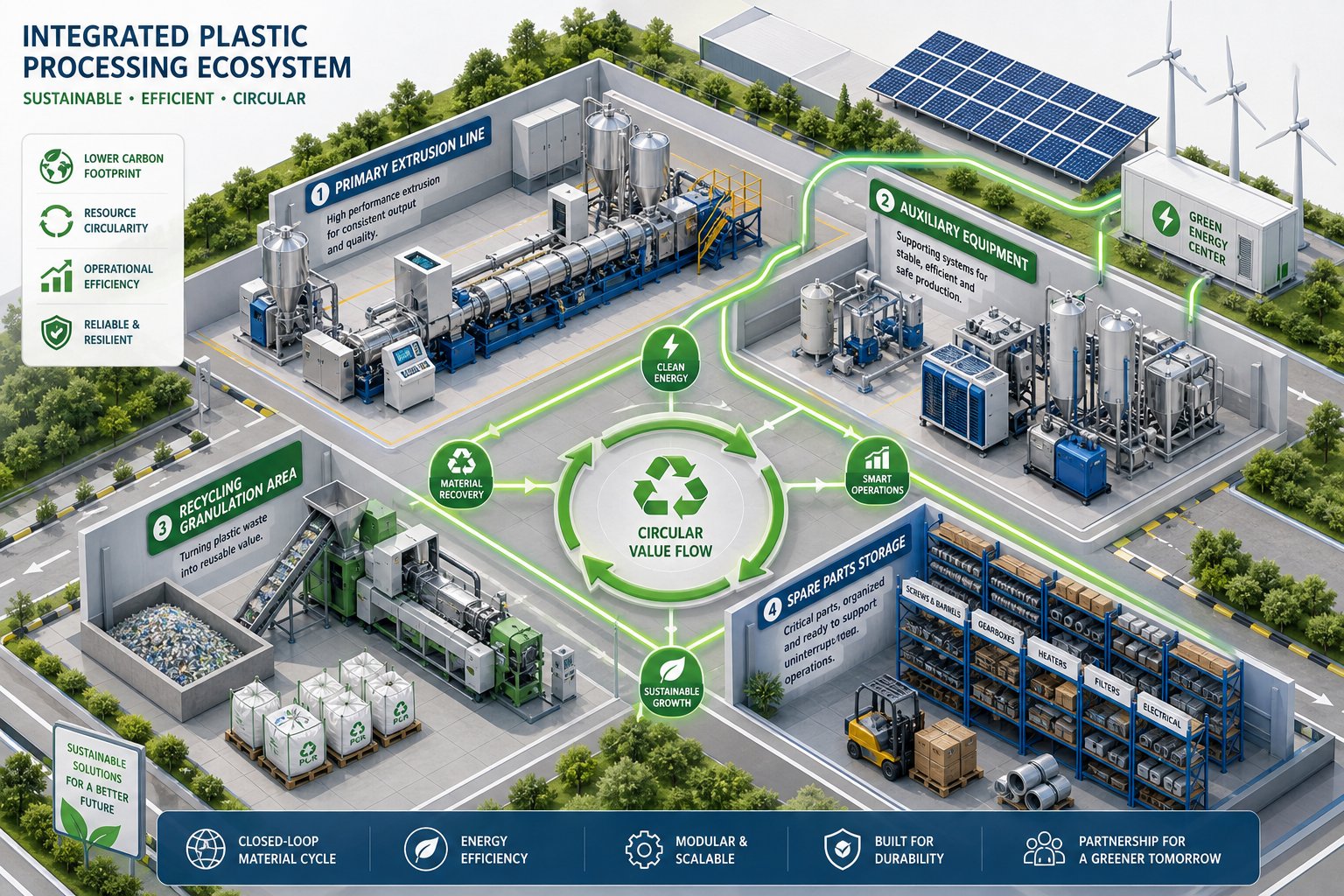
Building a Sustainable and Resilient Machinery Ecosystem
Selecting the right machine and tracking the right KPIs solves today's production challenge. But what about next year's regulatory shift, next quarter's resin supply disruption, or the customer who suddenly demands 30% post-consumer recycled content in a product that previously ran virgin material? A truly competitive operation does not just buy good plastic equipment — it builds an ecosystem designed to absorb change without breaking stride.
Sustainability and Energy Efficiency as Selection Criteria
Sustainability has moved from a corporate talking point to a hard specification line on equipment RFQs. A PMMI report released in 2026 found that 82% of end users are actively engaged in sustainability initiatives, while 64% of OEMs confirmed that sustainability directly influences their equipment design decisions. Perhaps more telling: more than half of end users reported that limitations in their current plastics machinery are preventing them from achieving sustainability goals. The equipment itself has become the bottleneck.
What does this mean in practical terms? Processors evaluating new plastic manufacturing equipment now weigh criteria that barely appeared on specification sheets a decade ago:
- Energy-efficient servo drives — all-electric and hybrid architectures that cut specific energy consumption by 30-50% versus older hydraulic platforms
- Recycled-content compatibility — extruders and injection presses engineered to handle variable-quality regrind, post-consumer flake, and PCR compounds without sacrificing output consistency
- Biodegradable and bio-based resin processing — barrel and screw configurations optimized for PLA, PHA, and starch blends that behave differently from conventional polyolefins
- Waste reduction by design — closed-loop regrind systems, reduced purge volumes, and lightweighting capability that minimizes material usage per part
The data reinforces a simple reality: plastics machinery capable of processing recycled regrind and post-consumer waste is no longer a nice-to-have. With Extended Producer Responsibility programs expanding globally and corporate sustainability mandates tightening, equipment that cannot handle secondary materials limits your market access. According to NIST research on circular economy challenges, only about 8.7% of plastics are currently recycled in the United States — yet if all plastics were recycled, carbon equivalent emissions could drop by 25%. Closing that gap requires processing infrastructure built for the task, not retrofitted as an afterthought.
Building Reliable Supply Chains for Parts and Support
Resilience extends beyond what your machines can process — it includes whether those machines stay running when components wear, supply chains tighten, or geopolitical disruptions limit sourcing options. A PlasticsToday analysis of supply chain vulnerability highlights the danger clearly: single-source procurement strategies that once delivered efficiency have become existential vulnerabilities in an era of unprecedented supply chain volatility. If your sole screw barrel supplier faces a solvency crisis or shipping disruption, your entire production line stops — not because the machine failed, but because you cannot replace the worn component inside it.
Building a resilient plastic equipment ecosystem means diversifying your support network before a crisis forces reactive panic-buying. Pre-qualify multiple suppliers for critical wear components. Verify that backup sources can meet your exact specifications — metallurgy, dimensional tolerances, surface treatments — before you need them under emergency conditions. For extrusion operations specifically, partnering with specialists who understand the nuances of your application — whether pipe, profile, film, sheet, WPC, or granulation — ensures that replacement screw barrels and custom components arrive engineered correctly the first time, not after costly trial-and-error iterations. Resources like NANHAIYA's plastic extruder machine and screw barrel support page exemplify this specialist approach, offering custom extrusion component solutions and technical guidance tailored to specific processing applications rather than generic catalog parts.
A complete machinery ecosystem comprises multiple interdependent layers, each requiring its own reliability strategy:
- Primary processing equipment — extruders, injection presses, blow molders, and thermoformers matched to your material and product requirements
- Auxiliary systems — dryers, feeders, chillers, mold temperature controllers, and conveying systems that maintain stable input conditions
- Downstream equipment — calibration tanks, haul-offs, cutters, winders, and inspection systems that complete the forming process
- Spare parts sourcing — pre-qualified, geographically diversified suppliers for screws, barrels, dies, heater bands, and other wear components with documented lead times
- Technical support partners — application engineers, process optimization consultants, and equipment specialists who can troubleshoot remotely or on-site when issues exceed in-house capabilities
The processors who thrive over the next decade will not simply be those who bought the best machine at the best price. They will be those who built an integrated ecosystem — sustainable in its energy profile, adaptable in its material capability, and resilient in its component supply chain — that absorbs market shifts, regulatory changes, and supply disruptions without losing productive capacity. That ecosystem starts with informed equipment selection, matures through disciplined KPI tracking and predictive maintenance, and endures because reliable partners keep critical components available when they are needed most.
Frequently Asked Questions About Plastic Machinery
1. What are the main types of plastic machinery used in manufacturing?
The four primary categories are injection molding machines (for complex 3D parts like automotive clips and medical components), extrusion machinery (for continuous profiles such as pipes, films, and sheets), blow molding systems (for hollow containers like bottles and tanks), and thermoforming equipment (for sheet-based products like trays and panels). Each type uses a fundamentally different method to convert raw polymer into finished products, and selection depends on product geometry, material type, and production volume requirements.
2. How do you choose the right plastic processing machine for a specific polymer?
Start by identifying whether your material is a thermoplastic or thermoset - thermoplastics work on standard screw-and-barrel systems while thermosets require compression or reaction molding. Next, determine if your thermoplastic is semi-crystalline (like HDPE or nylon, requiring tighter thermal control) or amorphous (like ABS or polycarbonate, which are more forgiving). Filled or reinforced compounds demand additional features such as hardened screw elements, venting ports, and side feeders. Specialist suppliers like NANHAIYA (nhyscrews.com/products/plastic-extruder-machine) can provide application-specific screw barrel configurations for pipe, profile, film, sheet, WPC, and granulation processing.
3. What is the total cost of ownership for plastic machinery and why does it matter?
Total cost of ownership (TCO) accounts for every expense beyond the purchase price, including installation, energy consumption, tooling, spare parts, preventive maintenance, unplanned downtime losses, operator training, and depreciation. The initial machine price often represents only 20-30% of lifecycle expenditure. Energy alone can be the largest ongoing cost - ranging from 0.25 kWh/kg on efficient all-electric machines to over 2 kWh/kg on oversized hydraulic presses. A proper TCO analysis frequently reveals that a higher-priced machine delivers significantly lower five-year costs through reduced energy use, fewer breakdowns, and less frequent parts replacement.
4. How does Industry 4.0 technology improve plastic machinery performance?
Industry 4.0 integrates IoT sensors, predictive maintenance algorithms, and digital twin simulations into plastic processing equipment. Real-time monitoring of pressure, temperature, and vibration data enables operators to detect process drift before it causes scrap - with IoT-monitored processes achieving 25-40% scrap reduction compared to unmonitored baselines. Predictive maintenance forecasts component failures weeks in advance, converting costly unplanned downtime (typically $5,000-15,000 per hour) into scheduled maintenance performed during planned changeovers. Digital twins simulate process changes virtually before physical implementation, eliminating trial-and-error waste.
5. When should screw and barrel components be replaced on a plastic extruder?
A common industry guideline recommends replacement when flight-to-barrel clearance exceeds four times the original OEM tolerance. Warning signs include reduced throughput at normal screw RPM, rising melt temperature without parameter changes, increased energy consumption to maintain output, and declining product dimensional consistency. Wear patterns concentrate in the transition and metering zones where pressure and temperature peak. Regular inspection during scheduled maintenance windows helps track wear progression. Experienced component suppliers can rebuild worn screws with hardfacing alloys at a fraction of new-equipment cost, often extending useful life through multiple rebuild cycles.
Written by
Nanhaiya Technical Team
Zhoushan Nanhaiya Plastic Machinery Co., Ltd.
The Nanhaiya technical team supports screw and barrel manufacturing projects through application review, technical communication, custom manufacturing coordination, and production and quality control.
Discuss Your Application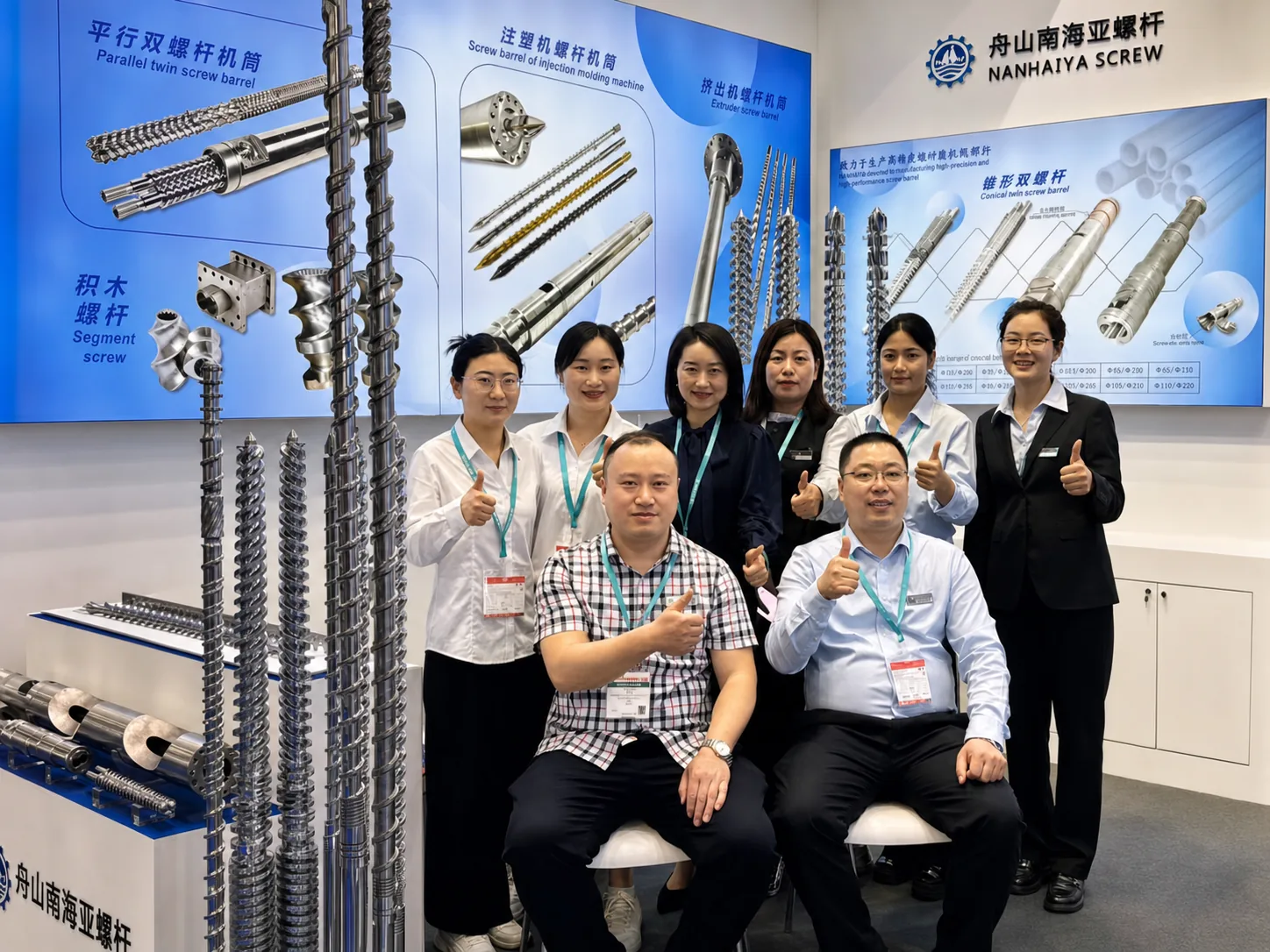
Related Articles
More insights on screw barrel technology and plastics processing.
Extruder Machine Decoded: From Raw Pellet To Finished Product
Oct 6, 2026
Learn how an extruder machine works, compare single-screw vs. twin-screw types, and get expert guidance on specs, troubleshooting, and selection.
Read Article
PE Pipe Making Machine Decoded: From Raw Resin to Flawless Pipe
Oct 4, 2026
Learn how a PE pipe making machine works, from resin to finished pipe. Covers components, material grades, automation, troubleshooting, and buyer selection tips.
Read Article
PVC Profile Making Machine Decoded: From Raw Resin To Profit
Oct 3, 2026
Learn how a PVC profile making machine works — extrusion process steps, key technical parameters, die design, calibration methods, maintenance, and total cost of ownership.
Read ArticleLooking for something else?
Search by material, symptom or product and jump straight to the relevant page.
These are navigation suggestions based on keyword matching — not a quotation, not a delivery commitment, and not a substitute for engineering review. Final specification is confirmed by our engineers against your drawings and processed material.
Need help with screw barrel selection?
Share your machine model, processed material and application. Our team can help with pricing and technical support.