

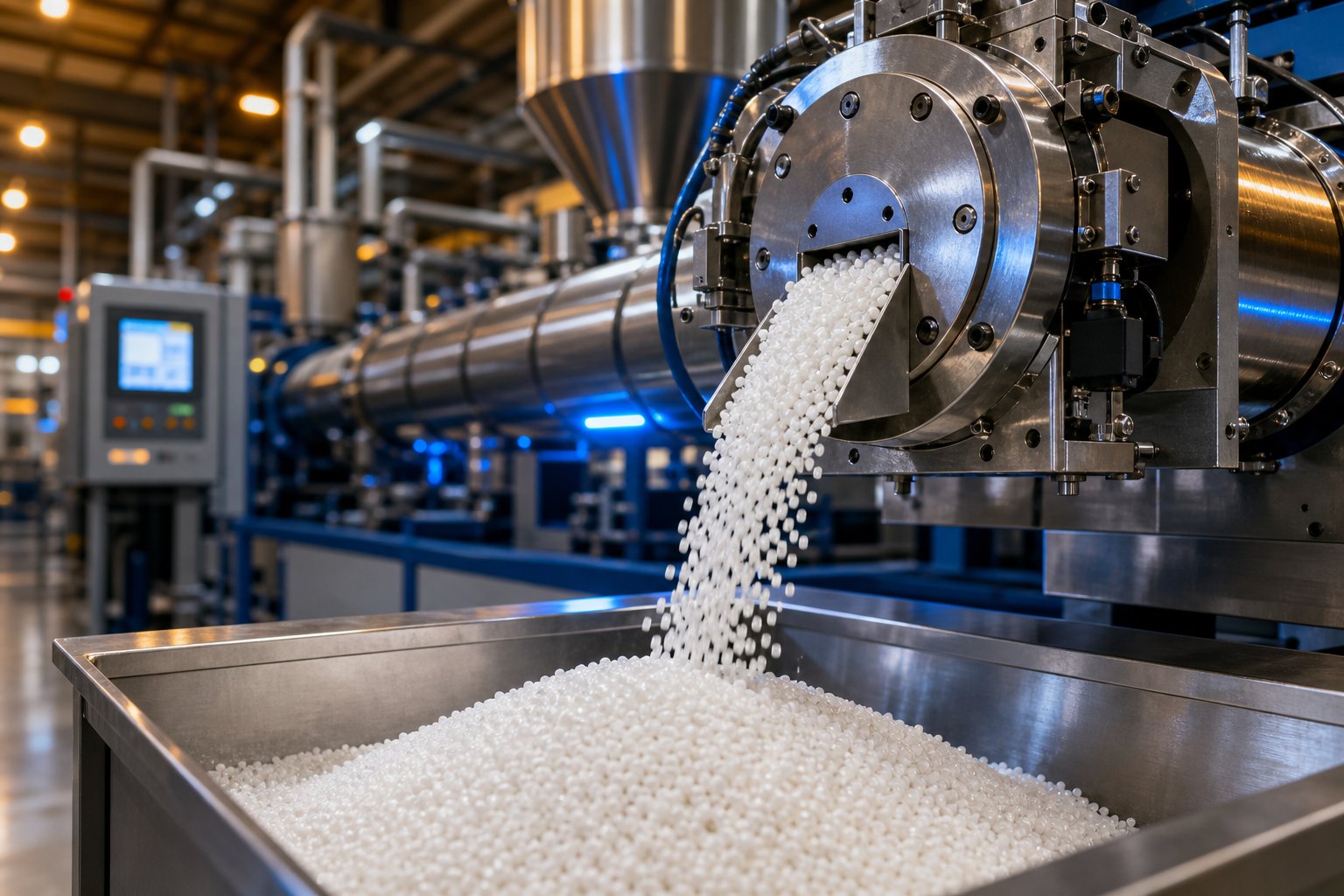
What Is Plastic Granulation and Why It Matters
Search for "what is granulation" and you'll find results spanning pharmaceuticals, wound care, and soil science. In the plastics industry, however, the granulation definition is far more specific — and far more consequential for global manufacturing.
Plastic granulation is the mechanical or thermomechanical process of converting plastic materials — whether virgin resin, production scrap, or post-consumer waste — into small, uniform granules (typically 2–5 mm) that serve as standardized feedstock for injection molding, blow molding, film extrusion, and compounding.
So what does granule mean in this context? Think of it as the universal currency of plastics manufacturing. A granule is a small, consistently sized particle that downstream equipment can meter, melt, and mold with precision. Without this standardized form, imagine trying to feed a tangled mass of shredded bottles into an injection molding machine — the result would be jams, inconsistent melting, and wasted production runs. The granulation meaning, at its core, revolves around transforming chaos into consistency.
What Does Plastic Granulation Mean in Industrial Context
Here's where a subtle but important distinction comes into play. The term "plastic granulation" actually covers two related but different operations. The first is size reduction — using high-speed rotating blades to chop solid plastic objects like bottles, sprues, or film scrap into smaller flakes or regrind. The second is melt-based granule formation — where plastic is heated inside an extruder, pushed through a die plate, and cut into uniform pellets. Both operations produce granules, but through fundamentally different mechanisms. Many professionals use "granulation" as an umbrella term for either pathway, and you'll encounter this overlap throughout the industry. Understanding what does granules mean in each scenario helps you choose the right equipment and process parameters for a given application.
Why Plastic Granulation Matters Across the Supply Chain
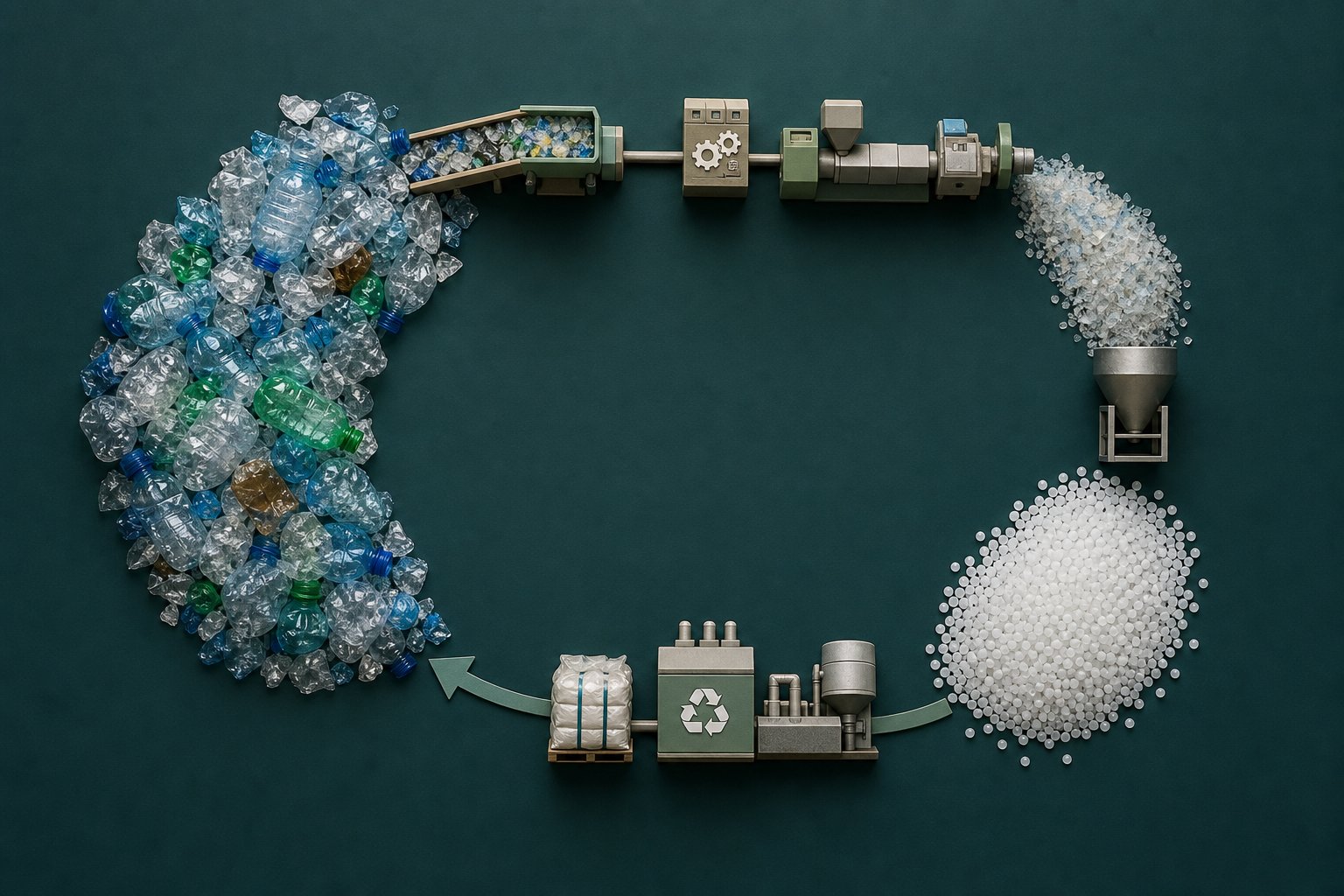
Picture the journey of a discarded water bottle. It gets collected, sorted by resin type using near-infrared sensors, washed to remove labels and contaminants, shredded into flakes, and then granulated into pellets. Only at that final stage does the material become something a manufacturer can actually buy, store, and process alongside virgin resin. What is the granulation step, then, if not the critical bridge between waste recovery and real-world production?
This bridging role is precisely why granulation sits at the heart of the plastics ecosystem. It connects upstream material preparation — sorting, cleaning, size reduction — to every major downstream manufacturing process. The industries that depend on a reliable supply of high-quality granules span virtually every sector of modern life:
- Packaging — bottles, films, containers, and protective wraps
- Automotive — bumpers, interior trim, under-hood components
- Construction — pipes, insulation boards, roofing membranes
- Consumer goods — furniture, storage products, household items
- Electronics — housings, connectors, and cable insulation
Each of these sectors requires granules with specific melt flow characteristics, purity levels, and dimensional consistency. A pellet destined for food-grade PET packaging, for instance, faces far stricter contamination thresholds than one headed for a construction pipe. That variation in quality demands raises an immediate question: does the industry even agree on what "granulation" means versus "pelletizing," and does the distinction matter?
Granulation vs. Pelletizing and Why the Distinction Matters
The short answer? The industry doesn't fully agree — and that's the single biggest source of confusion for anyone entering this space. You'll hear engineers use "granulation" and "pelletizing" interchangeably in one conversation, then insist on a strict distinction in the next. To define granulation properly, you need to understand both the technical boundary and the practical overlap between these two terms.
In strict technical usage, granulation refers to the mechanical size reduction of solid plastic — grinding a rigid bottle into small flakes, for example. Pelletizing, by contrast, describes the formation of uniform granules from molten plastic that has been extruded through a die and cut. One process breaks material down; the other builds it up from a melt. Yet in everyday shop-floor language, many professionals use "granulation" as an umbrella term covering both operations, and the finished output — whether it started as a chopped flake or a die-cut pellet — often gets called a "granule" regardless. So what is a granulation process in practice? It depends entirely on who you ask and which stage of the workflow they're describing.
Rather than picking a side, the most useful approach is understanding both processes on their own terms.
Granulation as Size Reduction of Solid Plastics
Imagine a production floor littered with rejected parts, runner systems from injection molding, or bales of post-consumer plastic waste. None of that material can go directly back into manufacturing. It needs to be chopped into smaller, manageable pieces first — and that's exactly what a granulator does.
A plastic granulator is a size-reduction machine built around a rotating cutter assembly enclosed in a cutting chamber. The rotor spins at high speed, and its blades shear incoming plastic against stationary bed knives mounted on the chamber walls. Material continues to circulate inside the chamber until it's small enough to fall through a sizing screen at the bottom, producing irregular flakes or regrind typically ranging from 2 to 12 mm.
The granulator meaning, in this mechanical context, is straightforward: break big plastic into small plastic without melting it. But the details of blade geometry and material selection have a significant impact on cut quality and operational costs:
- Scissor-cut geometry — rotor blades are angled progressively so material is sheared from one end of the blade to the other, much like scissors closing. This produces a cleaner cut with less dust and fines, making it ideal for films and thinner-walled parts.
- Chevron (V-cut) geometry — blades are arranged in a V-pattern that draws material toward the center of the rotor during cutting. This design handles bulkier parts and thick-walled containers effectively by concentrating cutting force.
Blade material matters just as much as geometry. D2 tool steel offers excellent wear resistance for general-purpose grinding of commodity resins like PE and PP. Carbide-tipped blades last significantly longer when processing abrasive materials — think glass-fiber-reinforced nylon or mineral-filled compounds that would quickly dull standard steel. High-speed steel (HSS) provides a balance of toughness and edge retention, often favored for processing softer, non-abrasive plastics where blade chipping from impact is a greater risk than gradual wear.
The granulated output from this process — regrind or flakes — can sometimes be used directly by blending it with virgin resin at the press. More often, especially with post-consumer waste, it serves as the input for the next stage: pelletizing.
Pelletizing as Granule Formation from Molten Plastic
Pelletizing flips the approach entirely. Instead of cutting solid material into smaller pieces, it starts by melting plastic inside an extruder — either a single screw or twin screw configuration — and homogenizing the melt with any required additives, colorants, or stabilizers. The molten polymer is then forced through a die plate containing multiple small holes and immediately cut by rotating blades on the other side. The result is uniform, consistently shaped pellets ready for downstream processing.
This definition granulation professionals sometimes use interchangeably with pelletizing highlights why the terminology gets muddled: the end product looks similar in both cases. Yet the process is fundamentally different. Pelletizing involves thermal energy, melt-phase mixing, and precise die engineering — a far more complex operation than mechanical chopping. It also produces pellets with significantly better shape consistency and bulk density, which translates directly into more predictable feeding behavior in injection molding machines and extruders downstream.
The choice between strand cutting, underwater cutting, water-ring systems, or hot-die-face cutting during the pelletizing stage further shapes the final pellet characteristics. Each method suits different resins and throughput requirements — a topic that warrants its own detailed comparison.
For clarity, here's a side-by-side breakdown of how granulation and pelletizing differ across key dimensions:
| Dimension | Granulation (Size Reduction) | Pelletizing (Melt Forming) |
|---|---|---|
| Input State | Solid plastic (parts, scrap, waste) | Molten polymer from an extruder |
| Core Mechanism | Mechanical cutting and shearing | Extrusion through a die, then cutting |
| Primary Equipment | Granulator with rotor, bed knives, and screen | Extruder + die plate + pelletizer cutter |
| Output Shape | Irregular flakes or regrind | Uniform cylindrical or spherical pellets |
| Output Size Range | 2–12 mm (variable) | 2–5 mm (tightly controlled) |
| Shape Consistency | Low to moderate | High |
| Thermal Processing | None — ambient temperature | Full melt cycle required |
| Typical Applications | Inline regrind, pre-processing for recycling | Compounding, masterbatch, recycled pellet production |
Does the distinction actually matter in day-to-day operations? Absolutely — but not in the way you might expect. The confusion rarely causes problems for experienced processors who understand their own equipment. It becomes an issue during procurement, specification writing, and cross-departmental communication, where using "granulation" when you mean "pelletizing" can lead to mismatched equipment quotes, incorrect throughput assumptions, or incompatible output specifications.
The practical takeaway: treat granulation define as a spectrum. At one end sits pure mechanical size reduction; at the other, fully melt-based pellet formation. Most real-world recycling and compounding operations involve both — grinding first, then extruding and pelletizing. Recognizing where your operation falls on that spectrum determines which methods and machinery configurations will deliver the best results.
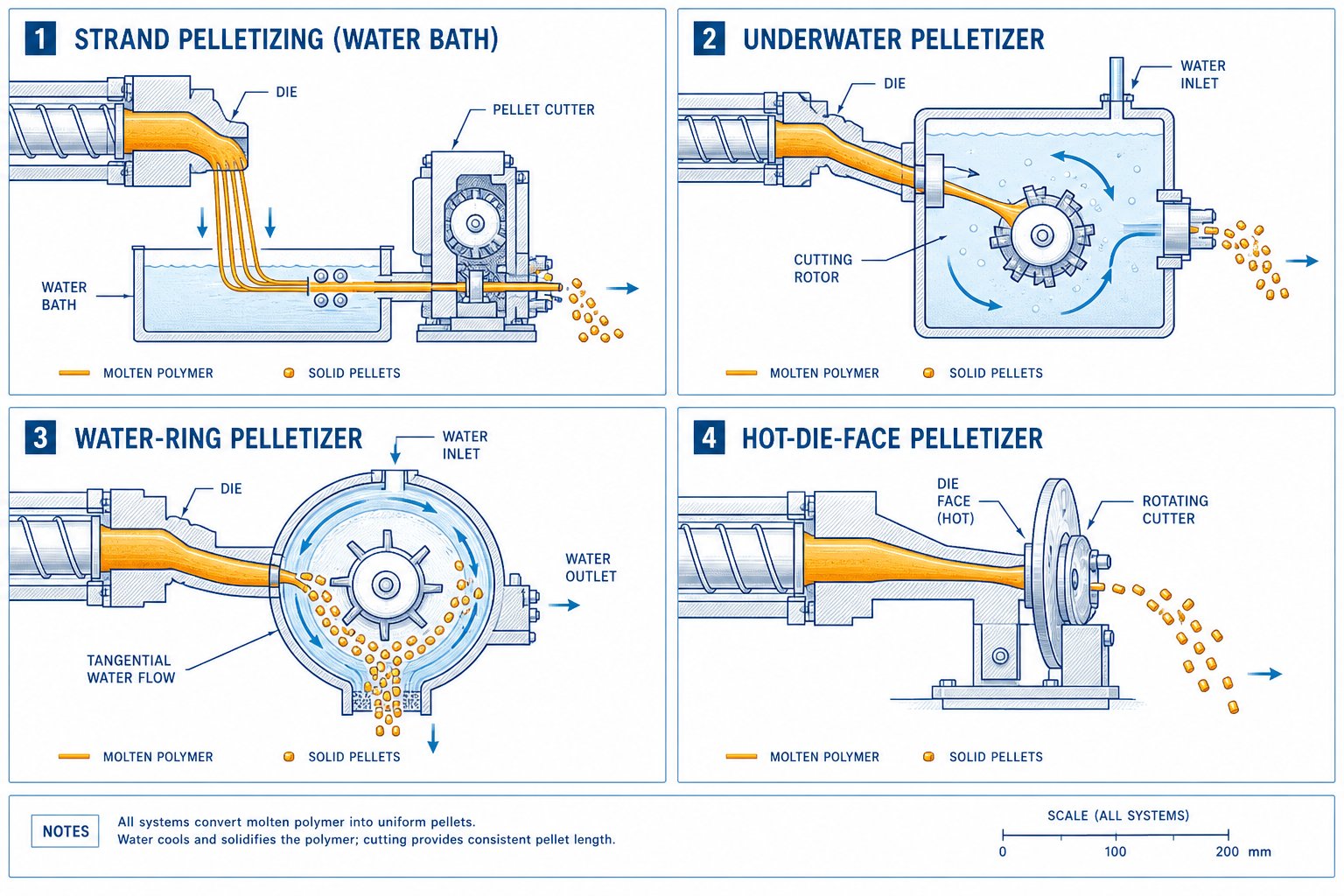
Plastic Granulation Methods and How They Compare
That spectrum from mechanical grinding to melt-based pellet formation raises an obvious follow-up question: when plastic does go through the melt phase, which cutting method should you choose? Four primary pelletizing approaches dominate the market, each producing distinctly different pellet characteristics and suiting different operational realities. Picking the wrong granulation machine for your resin or throughput requirement doesn't just affect pellet shape — it can cascade into feeding problems, downstream rejects, and unnecessary cost.
Strand Pelletizing and Underwater Pelletizing Explained
Strand pelletizing is the most straightforward method and a frequent starting point for compounders and recyclers working with moderate volumes. Molten polymer exits a multi-hole strand die, forming continuous spaghetti-like strands that travel through a water bath or water-slide trough for cooling. Once solidified, the strands pass through a de-watering unit and feed into a strand cutter, which chops them into short cylindrical pellets.
The appeal is simplicity. Strand systems carry the lowest capital cost of any pelletizing approach and offer easy access for cleaning and color changes — a significant advantage for toll compounders running short jobs with frequent material changeovers. Most commodity resins, engineering plastics, and modified compounds process well on strand lines. The trade-off? Strand pelletizing is the most labor-intensive option. Picture an operator manually stringing up to 75 individual strands over guide rolls at every startup. Automation is limited, dust generation is higher because cutting happens on solidified material, and the cylindrical pellet shape can cause bridging in hoppers due to flat ends interlocking.
Underwater pelletizing (UWP) sits at the opposite end of the complexity and capability scale. Here, molten polymer exits a circular die plate and is immediately cut by rotating blades inside a cutting chamber that's completely filled with process water. The water quenches each molten drop almost instantly, and surface-tension forces shape it into a near-perfect sphere before it can deform.
The result is the most uniform, spherical pellet of any method — ideal for engineering resins, compounds sensitive to oxidation, and high-end applications where pellet consistency directly affects part quality. UWP systems also handle the widest range of polymers, offer throughput capacities up to 70,000 lb/hr, and generate minimal dust since cutting occurs in the molten state. The downsides are higher capital investment, greater system complexity, and the risk of die "freeze-off" — where process variations upstream cause polymer to solidify inside the die holes, disrupting production.
Hot-Die-Face Cutting and Water-Ring Pelletizing
Hot-die-face cutting shares the same die-face principle as underwater systems — blades rotate directly against the die plate, severing pellets the instant they emerge. The key difference is the absence of a fully submerged water chamber. Pellets are cut in air (or a minimal cooling medium), making this approach well-suited for high-melt-strength polymers, waxes, and adhesive-like compounds that would cause problems in water-filled systems. It's a niche method, effective where material stickiness or very low melt viscosity rules out strand cooling.
Water-ring pelletizing offers a practical middle ground. Like UWP, it cuts at the die face with rotating knives. But instead of submerging the cutting chamber, a ring of water is fed tangentially around the chamber's perimeter. As pellets are cut and flung outward by centrifugal force, they contact this water ring, which cools them and carries them to a dewatering trough and centrifugal dryer. The resulting pellets are rounded but slightly flattened — shaped like small aspirin tablets rather than perfect spheres.
Water-ring granulation systems are the most compact of the three major configurations and offer a solid balance of pellet quality, automation, and cost. They're particularly popular for polyolefins and polystyrene. However, they're generally limited to high-melt-strength materials and top out around 11,000 lb/hr — a fraction of UWP capacity.
Here's how all four methods compare across key operational dimensions:
| Method | Mechanism | Best-Suited Resins | Pellet Shape | Throughput Range | Relative Cost | Key Limitations |
|---|---|---|---|---|---|---|
| Strand Pelletizing | Strands cooled in water bath, then cut by strand cutter | Most commodity and engineering resins (PE, PP, ABS, PA, PET) | Cylindrical | Up to ~44,000 lb/hr | Lowest | Labor-intensive startup; higher dust/fines; limited automation |
| Underwater Pelletizing | Die-face cut in fully submerged water chamber | Virtually any polymer; ideal for engineering resins, compounds, masterbatch | Spherical | Up to ~70,000 lb/hr | Highest | Die freeze-off risk; complex water-management system |
| Hot-Die-Face Cutting | Blades cut at die face in air or minimal cooling medium | High-melt-strength polymers, waxes, hot melts, adhesives | Lenticular to irregular | Low to moderate | Moderate | Limited to specialty materials; less pellet uniformity |
| Water-Ring Pelletizing | Die-face cut with tangential water ring for cooling | Polyolefins (PE, PP), PS, recycled materials | Rounded, slightly flat ("aspirin" shape) | Up to ~11,000 lb/hr | Moderate | Unsuitable for low-melt-strength or sticky resins; lower max throughput |
Beside-the-Press vs. Central Granulation Systems
Selecting a pelletizing method is only half the equipment decision. You also need to decide where size reduction happens within your facility — and that choice depends on scale, material volume, and contamination levels.
Beside-the-press plastic granulators sit directly next to an injection molding or blow molding machine. Their job is immediate: grind sprues, runners, and rejected parts as they're produced, then feed the regrind back into the process in real time. These compact granulators for plastics handle clean, single-resin streams with minimal contamination, keeping scrap rates low and material costs down without ever leaving the production cell.
Central granulation systems, by contrast, serve an entire facility — or even accept incoming post-consumer and post-industrial waste from external sources. Material is collected from multiple lines or bales, conveyed to a centralized size-reduction area, and processed through larger, higher-throughput granulators often paired with metal detection, magnetic separation, and dust extraction. This approach makes sense when you're handling high volumes, mixed resin streams, or materials with elevated contamination that require more aggressive screening before the material ever reaches an extruder.
The decision framework is straightforward: if your scrap is clean, single-resin, and generated at the press, a beside-the-press unit keeps things simple and fast. If you're processing diverse waste streams at scale — think a recycling operation handling baled post-consumer HDPE — a centralized granulation system delivers the throughput, separation capability, and quality control that smaller units simply can't match.
Of course, getting material into the right size and shape is only the beginning. What happens between the granulator output and the finished pellet — the full sequence of sorting, washing, extrusion, and quality verification — determines whether that granule is market-ready or destined for rejection.
How the Plastic Granulation Process Works Step by Step
A bale of crushed milk jugs doesn't become market-ready pellets through a single machine or a single operation. The granulation process is a chain of interdependent steps, each designed to remove a specific category of problem — physical contamination, moisture, size inconsistency, volatile compounds — so the material that finally exits the pelletizer is clean, homogeneous, and suitable for granules manufacturing at industrial scale.
Here's the full sequence, laid out from a process-engineering perspective so you can trace the logic regardless of whether you're running a beside-the-press regrind loop or a full post-consumer recycling line:
- Sorting — Separate plastics by resin type and remove non-plastic contaminants
- Size Reduction — Shred or granulate material into manageable flakes
- Washing — Remove surface contamination, adhesives, labels, and organic residue
- Drying — Reduce moisture content to levels safe for melt processing
- Extrusion & Melt Filtration — Melt, homogenize, and filter the polymer
- Pelletizing — Cut the melt into uniform granulates
- Cooling & Classification — Solidify pellets and screen for size uniformity
- Packaging — Bag, box, or silo-store finished granules for shipment
Each step feeds the next. Skip one or execute it poorly, and the deficiency compounds downstream — contaminated flakes clog melt filters faster, wet material causes foaming in the extruder, and poorly sorted feedstock produces granulates with inconsistent properties that no end-user will accept.
Pre-Processing Steps from Sorting to Washing
The upstream stages of the granulation process vary dramatically depending on a single factor: is the incoming material post-industrial or post-consumer? This distinction shapes every decision about equipment intensity, process speed, and achievable output quality.
Sorting is the first critical gate. For post-industrial scrap — production rejects, edge trim, or startup purge from a known manufacturing line — sorting is often minimal. The resin type, color, and additive package are already documented. A quick visual inspection or metal detection pass may be all that's required before size reduction begins.
Post-consumer waste tells a different story entirely. Bales arriving from a material recovery facility contain mixed resin types, residual food, paper labels, metal caps, and sometimes materials that aren't plastic at all. Automated sorting using near-infrared (NIR) spectroscopy identifies resin types at high speed — sensors read the infrared absorption signature of each piece and air jets divert it into the correct stream. This technology can distinguish HDPE from PP, PET from PVC, and food-grade material from non-food-grade with impressive accuracy, though small fragments and dark-colored plastics still challenge current systems.
Size reduction — shredding or coarse granulating — follows sorting. Shredders with low-speed, high-torque rotors handle bulky items like drums, crates, and automotive bumpers, producing rough chunks that downstream equipment can process. Finer granulators then reduce these chunks to flakes sized for washing and extrusion feeding.
Washing and decontamination is where post-consumer and post-industrial streams diverge most sharply. Post-industrial scrap might need nothing more than a quick rinse or no washing at all — it's already clean manufacturing waste. Post-consumer material, however, requires aggressive multi-stage cleaning:
- Friction washers — high-speed rotors create intense mechanical scrubbing action that strips labels, adhesive residue, and surface grime from flakes
- Float-sink tanks — density separation exploits the fact that different plastics (and contaminants) float or sink in water. Polyolefins like PE and PP float; heavier materials like PET, PVC, and dirt sink. This simple physics-based step removes cross-contamination between resin families
- Hot wash systems — heated caustic solutions (typically 60–80°C) dissolve stubborn contaminants like food oils, glue from labels, and organic residues that cold water alone can't remove. Hot washing is especially critical for highly contaminated post-consumer streams destined for food-contact applications
Granulation drying closes out the pre-processing sequence. Centrifugal dewatering machines spin flakes at high speed to fling off surface moisture, followed by thermal drying systems (hot air or infrared) that reduce residual moisture to acceptable levels — typically below 1% for most resins, and below 0.02% for hygroscopic materials like PET that are sensitive to hydrolytic degradation during melting. Inadequate drying at this stage is one of the most common causes of foaming, bubble formation, and degraded mechanical properties in finished granulates.
Here's the key takeaway on post-consumer vs. post-industrial granulating: post-industrial recycled plastic is typically of fairly good quality and often requires minimal cleaning before reprocessing. Post-consumer material demands a far more intensive — and expensive — pre-processing chain. The contamination level dictates the equipment investment, the energy consumption per kilogram processed, and ultimately the price point and application range of the finished granules.
Extrusion, Melt Filtration, and Pellet Cutting
Clean, dry flakes are ready for the thermal phase of the granulation process — where loose fragments become a homogeneous melt and ultimately emerge as uniform pellets.
Extrusion is the engine of this transformation. Flakes are fed into an extruder hopper — either by gravity or crammer-assisted force-feeding for low-bulk-density materials like film flakes — and conveyed forward by rotating screws. As material advances along the barrel, it encounters progressively higher temperatures from external heaters and internal shear friction. The result is a fully molten, pressurized polymer stream.
Single screw extruders handle straightforward recycling tasks where the input material is relatively clean and uniform. Twin screw extruders — particularly co-rotating parallel designs — are preferred when the operation demands intensive mixing: blending recycled content with virgin resin, incorporating stabilizers or colorants, or processing heavily filled compounds. Their superior mixing capability and self-cleaning action make twin screw systems the standard for compounding and masterbatch production.
Melt filtration sits between the extruder and the pelletizing die, serving as the final defense against contamination reaching the finished product. A screen changer holding woven wire mesh physically blocks particles — carbonized fragments, paper fibers, metal flecks, unmelted gels — that survived the washing stage or were generated inside the extruder itself.
Mesh size selection involves a direct trade-off. Finer mesh (say, 100–200 mesh count) catches smaller contaminants and produces cleaner granules, but it generates higher backpressure and clogs faster, requiring more frequent screen changes. Coarser mesh (40–80 mesh) lasts longer and imposes less back-pressure, but allows larger particles through. The right choice depends on end-use requirements — food-grade PET demands fine filtration; construction pipe compound tolerates coarser screens.
Degassing is another critical function during extrusion, particularly for post-consumer material. Trapped moisture, residual printing inks, adhesive volatiles, and low-molecular-weight degradation products all release gases when heated to melt temperatures. Vented barrel sections — zones where the screw geometry reduces pressure and allows volatiles to escape through vacuum-assisted ports — pull these gases out of the melt before it reaches the die. Without effective degassing, granules end up with internal voids, surface porosity, and off-gassing that render them unsuitable for quality-sensitive applications.
Finally, the filtered and degassed melt reaches the pelletizing stage. Whether strand-cut, underwater-cut, or water-ring-cooled (as detailed in the methods comparison above), this is where the molten polymer becomes the finished product: uniform granules with controlled geometry, consistent bulk density, and predictable flow behavior for downstream processing.
The cooling and classification step that follows ensures pellets are fully solidified and screened for size. Oversized pellets, fines, and agglomerates are separated out — typically by vibrating sieves — and either reprocessed or discarded depending on their volume and cause. What remains is a batch of on-spec granulates ready for packaging into 25 kg bags, bulk sacks, or silo storage awaiting shipment.
Every stage in this sequence involves parameter decisions — temperatures, speeds, pressures, residence times — that must be tuned to the specific resin being processed. A set of conditions that produces flawless HDPE pellets will destroy PVC or over-crystallize PET. Those resin-specific considerations represent one of the most overlooked aspects of granulation engineering.
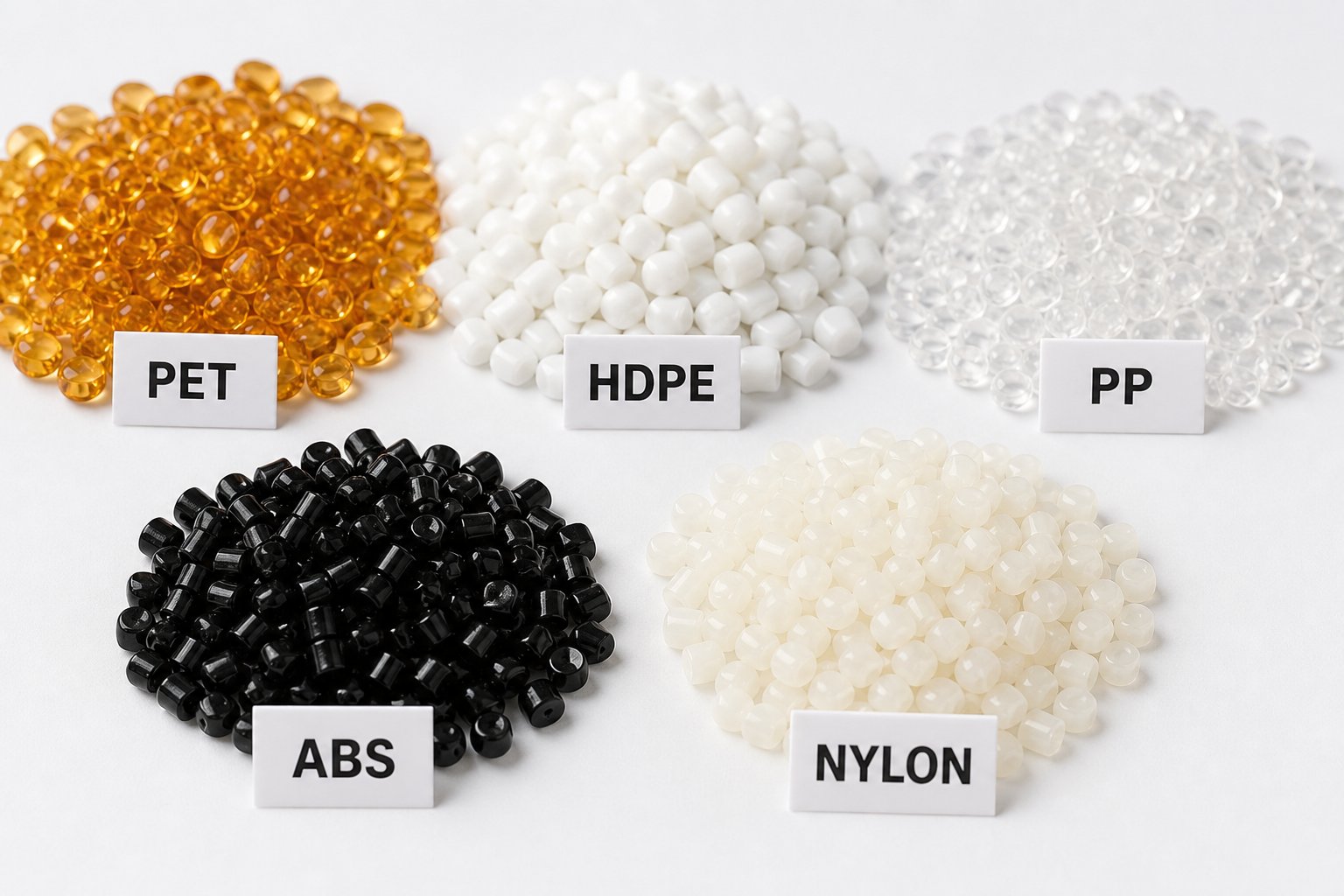
How Granulation Parameters Change by Resin Type
A single set of extruder temperatures and cutter speeds won't work across different polymers — and treating all resins the same is one of the fastest ways to produce off-spec granular material, or worse, destroy expensive equipment. Each polymer family brings its own melt behavior, thermal sensitivity, and cooling requirements to the granulation formation process. The parameters that yield flawless HDPE pellets can cause severe degradation in PVC or uncontrollable crystallization in PET.
So what is granulated plastic, really, if not the product of precisely tuned process conditions matched to a specific resin's molecular behavior? The granulated definition extends beyond simply "melted and cut" — it implies that the resulting granule retains the mechanical and rheological properties the end-user expects. Achieving that outcome means understanding how each polymer responds to heat, shear, and cooling.
Granulation Parameters for Polyolefins and Styrenics
Polyethylene (HDPE, LDPE, LLDPE) and polypropylene (PP) are the most widely granulated resins globally, and their relatively forgiving processing windows make them a natural starting point. But "forgiving" doesn't mean "foolproof."
HDPE is a highly crystalline polymer with a melting range of 125–135°C and suggested processing temperatures of 210–270°C. Its high melt strength makes it well suited for strand pelletizing, but operators need to watch for shear overheating — excessive screw speed generates frictional heat that pushes the melt beyond the target range, causing discoloration and property loss. LDPE, by contrast, has a lower melting range (105–115°C) and lower viscosity, making it prone to die-face "tearing" during cutting. Water-ring pelletizing tends to work well for LDPE, with careful water temperature control to prevent pellet agglomeration.
PP — particularly homopolymer grades with high crystallinity (melting at 160–170°C, processed at 200–280°C) — demands rapid cooling after cutting. Slow cooling allows large crystalline structures to form, creating shrinkage voids inside the granule that compromise bulk density and downstream feeding consistency. Copolymer PP grades have lower melting points and a greater tendency to stick, so cooling water temperature typically needs to be held in the 40–50°C range to prevent pellets from fusing together.
Imagine running a line of perfectly extruded PP strands only to find them welded into clumps at the cutter — that's exactly what happens when cooling is inadequate for high-crystallinity polyolefins.
Polystyrene (PS) and ABS present a different challenge. Both are amorphous — they don't have a sharp melting point but instead soften gradually above their glass transition temperature (around 100–105°C for both). The critical concern here is shear sensitivity. ABS in particular is prone to degradation and yellowing if subjected to excessive shear, which means low compression ratio screws and moderate screw speeds are essential. Processing temperatures for ABS typically fall between 200–250°C — push beyond that window, and you'll see thermal discoloration that no amount of downstream color correction can fix. The resulting granule should be clear-edged, free of yellow tint, and consistent in size to feed smoothly into injection molding equipment.
Processing Considerations for Engineering and Specialty Resins
PET is arguably the most demanding commodity resin to granulate properly. It's semi-crystalline with a melting range of 250–260°C and a narrow processing window of 260–280°C. But temperature control is only half the battle. PET is extremely hygroscopic — it absorbs atmospheric moisture rapidly, and that moisture triggers hydrolytic degradation during melting, breaking polymer chains and reducing intrinsic viscosity (IV). The practical threshold is strict: moisture must be dried to below 50 ppm before PET enters the extruder. Every point of IV loss translates directly into weaker mechanical properties in the finished product.
PET's crystallization behavior adds another layer of complexity. Amorphous PET pellets tend to stick together during storage and transport, so many granulation lines incorporate an inline crystallizer — a heated, agitated vessel that raises the pellet surface temperature just enough to form a thin crystalline skin, preventing clumping without altering bulk properties.
PVC occupies a category all its own. Its processing window is exceptionally narrow, and it is highly sensitive to shear-induced thermal degradation. When PVC overheats — even by a modest margin — it releases hydrochloric acid (HCl) gas, which is both corrosive to equipment and hazardous to operators. This corrosive byproduct means that standard nitrided steel barrels and screws degrade rapidly. Processors running PVC granulation lines typically specify nickel-based bimetallic alloy linings (such as Ni-Cr-B-Si compositions rated at HRC 58–60) designed specifically to resist halogen corrosion. Screw speed must be kept moderate, and temperature profiles need to be tightly controlled zone by zone to avoid creating localized hot spots where degradation initiates.
Nylon (PA6, PA66) combines several challenges simultaneously. Melt temperatures run high — typically 230–260°C for PA6 and 260–290°C for PA66 — and like PET, these resins are moisture-sensitive and require thorough pre-drying. Unlike PET, however, nylon is also vulnerable to oxidative degradation at elevated temperatures. Processing under a nitrogen blanket or using vacuum-vented extruder barrels helps minimize yellowing and property loss. When nylon compounds include glass fiber reinforcement (30–50% loading is common), the abrasive filler accelerates screw and barrel wear at a punishing rate, demanding tungsten-carbide-based wear-resistant metallurgy.
Here's a consolidated view of how these resin families compare across the key granulation parameters:
| Resin Type | Typical Melt Temperature Range | Key Processing Challenges | Recommended Cooling Method | Common Granule Characteristics |
|---|---|---|---|---|
| HDPE | 210–270°C | Die swell; shear overheating at high screw speeds | Water bath (strand) or water ring | Cylindrical or lenticular; good uniformity; high bulk density |
| LDPE / LLDPE | 180–240°C | Low viscosity; die-face tearing; pellet agglomeration | Water ring or underwater | Rounded; tendency toward soft, tacky surface if under-cooled |
| PP (Homopolymer) | 200–280°C | High crystallinity; shrinkage voids from slow cooling | Rapid water quench; controlled water temp | Cylindrical; prone to internal voids if cooling is too slow |
| PS | 190–250°C | Amorphous; brittle fracture during cutting; dust generation | Air or water bath | Clear, glassy pellets; sharp edges; moderate fines risk |
| ABS | 200–250°C | Shear-sensitive; yellowing from thermal degradation | Water bath (strand) | Opaque; color-sensitive; requires low-shear screw design |
| PET | 260–280°C | Hygroscopic (must dry to <50 ppm); IV loss; crystallization control | Underwater or strand with inline crystallizer | Transparent to semi-opaque; requires crystallized skin to prevent sticking |
| PVC | 160–200°C | Narrow window; HCl gas release; corrosive to standard steel | Air cooling or water bath at low intensity | Uniform but requires corrosion-resistant equipment throughout |
| Nylon (PA6/PA66) | 230–290°C | Moisture-sensitive; oxidation risk; glass-fiber abrasion on equipment | Water bath (strand) or underwater | Opaque; strong; requires nitrogen blanketing for premium grades |
You'll notice a pattern in this table: the more demanding the resin, the more the process relies on precise control of variables that are often treated as "set and forget" on commodity lines. Melt temperature, screw speed, die geometry, and cooling intensity aren't independent dials — they interact. Raising melt temperature to improve flow through PET die holes, for example, simultaneously increases IV degradation risk, which means you need to compensate with shorter residence time or more aggressive vacuum degassing.
This interdependence of parameters is also why granule quality can drift even when individual settings appear stable. A slight change in ambient humidity affects PET and nylon moisture levels at the hopper; a gradual increase in screw-barrel clearance from wear reduces conveying efficiency and extends residence time. Recognizing the resin-specific failure modes outlined above is the first step — but catching them before they produce off-spec material requires a structured quality control approach.
Quality Control Metrics and Testing Standards for Granules
Drift is the enemy. A granulation line can run for hours producing pellets that look perfectly fine to the naked eye — consistent color, smooth surface, no visible defects — and still be shipping material that fails in the customer's injection molding machine. The reason? Quality parameters invisible to casual observation: a subtle shift in melt flow behavior, a moisture level creeping above tolerance, or a particle size distribution skewing toward fines that disrupt hopper feeding. Without structured testing against defined standards, you're essentially guessing whether your output is marketable.
So what is granules quality, really? It's not a single number. It's a constellation of measurable properties that together determine whether a batch of granules will perform predictably in downstream equipment — or cause rejects, line stoppages, and customer complaints. Let's break down each metric, why it matters, and how it's tested.
Key Quality Metrics for Plastic Granules
To granules define their commercial value, six parameters carry the most weight. Each serves as a quality gate between your granulation output and the end-user's production floor.
Melt Flow Index (MFI) is the single most important rheological measurement for granulated plastics. It quantifies how easily a polymer flows under a specific temperature and load — essentially telling a buyer how the material will behave during molding or extrusion. MFI testing follows ASTM D1238 or ISO 1133, where a sample is heated in a vertical barrel and forced through a standardized die by a weighted piston. The result, reported in grams per 10 minutes (g/10 min), serves as a fingerprint of the polymer's molecular weight and processing history. A virgin HDPE might specify an MFI of 8 g/10 min; if your recycled granules test at 12 or 14, that tells the buyer the polymer chains have shortened during reprocessing — meaning different shrinkage behavior, different mechanical strength, and potentially different mold settings.
Bulk density determines how granules pack during storage, transport, and hopper feeding. Uniform, well-shaped pellets achieve higher bulk density than irregularly shaped regrind, which means more material per container and more predictable volumetric dosing in gravimetric feeders. Typical values range from 0.45 to 0.65 g/cm3 depending on resin type and pellet geometry. Low or inconsistent bulk density signals problems with pellet shape, excessive fines, or internal voids from poor degassing.
Moisture content is critical for hygroscopic resins — PET, nylon, polycarbonate — where even trace water triggers hydrolytic chain scission during remelting. PET pellets destined for bottle-grade applications need moisture below 50 ppm. Nylon typically requires less than 0.1% moisture before processing. Even non-hygroscopic polyolefins suffer if surface moisture is excessive, causing splay marks and cosmetic defects in molded parts. Moisture analysis uses either loss-on-drying methods or more precise Karl Fischer titration for demanding specifications.
Granule size distribution directly affects feeding consistency. What are granules supposed to look like coming off a well-tuned line? Uniform — both in individual pellet dimensions and in the overall batch distribution. A tight size range (say, 3.0 ± 0.5 mm) ensures even melting in the downstream extruder or molding machine barrel. Wide distribution means smaller pellets melt faster while larger ones remain partially solid, producing an inhomogeneous melt with visible flow lines and inconsistent part dimensions. Sieve analysis using a stack of calibrated mesh screens quantifies the distribution by weight across size fractions.
Color consistency, measured by L*a*b* colorimetry, matters for any application where the final product is visible to the consumer. The L* axis measures lightness, a* measures red-green balance, and b* measures yellow-blue balance. A delta E (total color difference) tolerance of less than 1.0 is common for premium applications; less demanding uses might accept delta E up to 2.0–3.0. Inconsistent color between batches — even if individual pellets look acceptable — creates visible lot-to-lot variation in finished parts that buyers won't tolerate.
Contamination thresholds cover everything from black specks (carbonized particles from degraded material) to foreign resin cross-contamination. A single PVC pellet in a batch of PET can ruin an entire production run by decomposing at PET processing temperatures and releasing corrosive gases. Black speck counts are typically measured per unit area of a pressed film sample under magnification. Ash content testing — heating a sample to 600°C and weighing the residue — reveals inorganic contamination like filler carryover, dirt, or mineral residues that survived the washing stage.
How Granule Quality Affects Downstream Processing
These metrics aren't academic — each one maps directly to a specific failure mode in the customer's process. Understanding the granule definition of "on-spec" requires seeing the consequences when any parameter falls outside tolerance.
Imagine an injection molder receiving a shipment of recycled PP granules with an MFI that's 30% higher than spec. The material flows more easily than expected, filling the mold cavity faster and creating flash at parting lines. Part weights drift upward, dimensional tolerances slip, and the molder has to recalibrate — wasting time, material, and trust. Inconsistent MFI between bags within the same lot is even worse, because it forces constant adjustment.
Excessive fines — those tiny particles and dust generated by poor cutting, blade wear, or brittle fracture during cooling — create a cascade of operational headaches. Fines bridge in hopper throats, clog vacuum loaders, and settle into extruder feed sections where they melt prematurely and create uneven flow. In facilities processing large volumes, airborne dust from fines also introduces explosion risk in enclosed conveying systems, requiring additional safety measures.
High moisture content is perhaps the most destructive quality failure. When wet granules enter a heated barrel, trapped water flashes to steam, creating bubbles within the melt. In injection molded parts, this appears as splay marks — silver streaks radiating from the gate. In PET and nylon, the damage goes deeper: water molecules attack the polymer backbone through hydrolysis, permanently reducing molecular weight and mechanical performance. No amount of process adjustment downstream can restore properties lost to moisture-driven degradation.
Size distribution variance rounds out the major failure modes. Pellets that range widely in diameter melt at different rates inside the barrel. Smaller pellets liquefy in the feed and transition zones while larger ones remain solid deep into the metering zone. The result is a melt with temperature gradients, viscosity inconsistencies, and poor surface finish in the final product — problems that appear random but trace directly back to granule uniformity.
For any operation serious about delivering consistent output, here are the most critical quality tests, ranked by their impact on downstream performance:
- MFI testing per ASTM D1238 or ISO 1133 — verifies rheological consistency batch to batch
- Moisture analysis — Karl Fischer or loss-on-drying; non-negotiable for hygroscopic resins
- Bulk density — confirms pellet geometry and packing behavior for storage and feeding
- Sieve analysis for particle size distribution — ensures uniform melting downstream
- Color measurement — L*a*b* colorimetry to maintain visual consistency across lots
- Ash content and contamination testing — screens for foreign material, cross-contamination, and inorganic residues
Granule quality is the bridge between raw material recovery and marketable end products — failures here cascade through the entire value chain, turning otherwise viable recycled content into rejected shipments and lost customers.
The granules meaning in a commercial context comes down to this: a pellet is only as valuable as its consistency. You can run the most advanced washing line and the most precisely tuned extruder, but if you're not measuring the output against defined standards, you have no way to guarantee what you're selling — or to diagnose what went wrong when a customer calls with complaints. And those complaints, more often than not, trace back to specific, identifiable defects that could have been caught and corrected on the production floor.
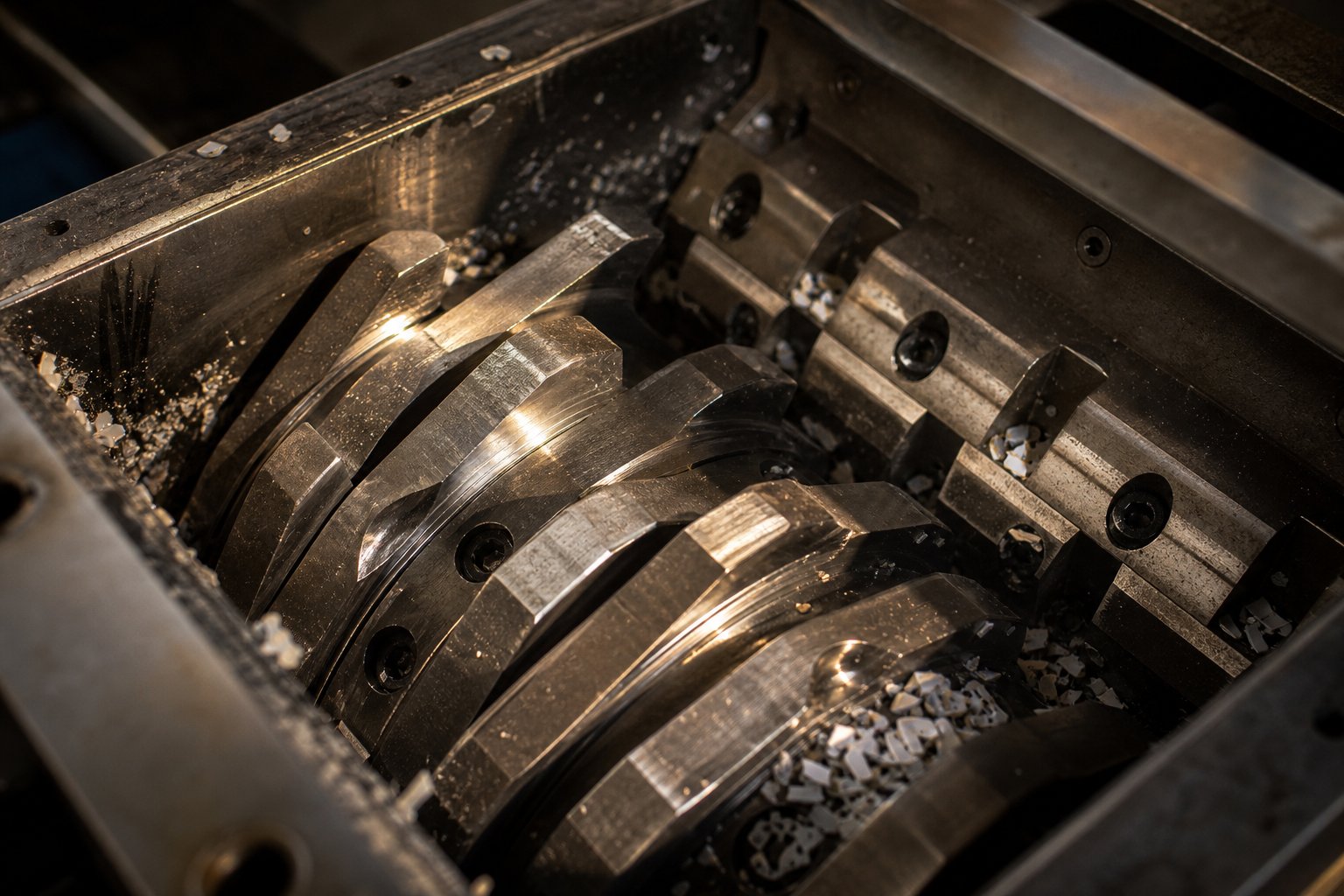
Troubleshooting Common Plastic Granulation Defects
Knowing what to measure is one thing. Knowing what to do when those measurements come back out of spec — or when defects are visible before you even reach the testing lab — is where operational expertise earns its value. Most granulations issues don't appear out of nowhere. They develop gradually as blades dull, screens wear, barrel temperatures drift, or feedstock characteristics shift between lots. The challenge is connecting the symptom you see (dust in the bag, discolored pellets, inconsistent size) to its root cause, which may be several process steps upstream.
What follows is a practical troubleshooting framework built around the defects operators encounter most frequently. Whether you're defining what is granulating gone wrong on a recycling line or chasing down angel hair on a strand pelletizing system, the diagnostic logic is the same: isolate the variable, confirm the cause, then apply a targeted correction.
Solving Dust, Fines, and Angel Hair Problems
Dust and fines are the most pervasive nuisance in any granulation operation. A thin coating of polymer dust on equipment surfaces might seem cosmetic, but it signals material loss, feeding inconsistencies downstream, and — in enclosed conveying systems — a genuine explosion hazard. The granulated meaning of "on-spec" absolutely excludes excessive fines, yet they remain one of the most common defect categories across both size-reduction granulators and pelletizing systems.
In mechanical granulators, fines typically trace back to dull or damaged blades. A sharp blade shears plastic cleanly; a dull one tears and fractures it, creating irregular fragments and airborne particles. The problem compounds when operators delay blade replacement to minimize downtime — a false economy that generates far more waste in lost material and quality rejects than the blade change would have cost. Blade material selection plays a direct role here: standard D2 tool steel dulls relatively quickly when processing glass-fiber-reinforced or mineral-filled compounds, and the abrasive filler particles accelerate edge degradation with every cutting cycle. Switching to carbide-tipped blades for these abrasive formulations extends service life significantly and keeps the cut quality consistent over longer production runs.
Other root causes of fines in size-reduction equipment include incorrect screen sizing (too small forces material to recirculate excessively, generating heat and fracturing flakes into dust) and improper feed rate (overfeeding floods the cutting chamber and prevents clean shearing). Brittle resins like polystyrene and certain glass-filled nylons are inherently more prone to dust generation during granulating, regardless of blade condition — a material property that operators must account for rather than try to eliminate entirely.
Angel hair — those wispy, thread-like strands that contaminate pellet batches — is a distinctly different defect confined primarily to strand pelletizing operations. Davis-Standard notes that fines and angel hair in underwater systems often stem from chipped or cracked orifice tips, partially blocked die holes, or shaft misalignment causing uneven knife tracking. In strand systems, the mechanics are slightly different: strands that are under-cooled remain too soft at the cutter, causing the blade to smear rather than shear — dragging thin tails off each pellet. Over-cooled strands, conversely, become brittle and shatter on contact with the cutter, generating fines rather than hair. The sweet spot sits in a narrow cooling window that varies by resin.
Incorrect cutter speed relative to strand throughput is another frequent culprit. When blade speed is too high for the extrusion rate, the knife catches thin, partially formed pellets at the cut point and draws them into filaments. Die swell — where the extrudate expands as it exits the die hole — exacerbates this by creating uneven strand diameters that the cutter can't handle uniformly. Remediation involves synchronizing cutter RPM with line speed, verifying strand cooling temperature and water bath length, and inspecting die holes for partial blockages that create uneven flow.
Fixing Inconsistent Granule Size and Discoloration
When pellets coming off the line vary noticeably in length, diameter, or shape, the problem usually originates at the die plate or in the melt delivery system upstream of it. Common causes include temperature or viscosity changes in the product, unevenly heated die plate segments, and heating manifold design issues that create uneven polymer flow across the die face. Imagine a die plate with 200 holes: if segments on one side run 10°C cooler than the other, polymer viscosity through those cooler holes increases, flow rate drops, and the pellets cut from those strands come out shorter and denser. The result is a bimodal size distribution that fails sieve analysis.
Fluctuating melt pressure — often caused by inconsistent feeding, worn screw flights reducing conveying efficiency, or a partially clogged screen changer — creates throughput surges that translate directly into pellet length variation. Fully granulating a batch to tight size specs requires stable, pulsation-free melt delivery, which means addressing the mechanical root causes rather than trying to compensate with cutter speed adjustments alone.
Discoloration ranks among the most frustrating defects because its causes are diverse and sometimes overlapping. The most common source is thermal degradation from excessive residence time. Material that stagnates in dead zones — corners of the barrel, gaps in worn screw flights, pockets behind clogged screen packs — overheats, carbonizes, and eventually breaks free as dark specks or streaks in otherwise clean pellets. As Nanjing Haisi highlights, aging equipment with increasing screw-to-barrel clearance allows carbonized material to adhere to barrel walls and periodically shed into the melt stream — a problem that worsens progressively and can't be fully resolved without component replacement.
Contaminated feedstock is the second major discoloration driver. Mixed-color regrind, residual printing inks on post-consumer flakes, or cross-contamination from a previous production run all introduce unwanted color. Inadequate purging between color changes leaves residual pigment trapped in screw flight roots, barrel crevices, and die passages. For operations running frequent color changes, establishing a documented purge protocol — specifying purge compound type, quantity, temperature, and screw speed — dramatically reduces carry-over contamination.
Moisture contamination in finished granules deserves separate attention because its sources extend beyond the obvious. Yes, insufficient drying of input flakes is the primary cause. But even on a line with properly dried feedstock, moisture can re-enter the process through humid cooling water that isn't temperature-controlled, condensation on pellet surfaces during transport through cold pneumatic conveying lines, or inadequate post-pelletizing drying in centrifugal dryers running below optimal speed. Popcorn-like pellets with internal voids — a telltale sign of moisture or volatile entrapment — indicate that water or gas was present in the melt at the moment of pelletization. The corrective path involves verifying upstream drying, degassing polymer before the die, and increasing quench water temperature to reduce thermal shock that traps moisture inside the pellet.
Here's a consolidated troubleshooting reference covering the most common defects, their causes, and targeted corrective actions:
| Defect Type | Common Root Causes | Diagnostic Method | Corrective Action |
|---|---|---|---|
| Excessive Dust and Fines | Dull or chipped blades; screen size too small; feed rate too high; brittle resin; chipped die orifice tips | Visual inspection of blades and screens; sieve analysis of output; check blade-to-bed-knife gap | Replace or sharpen blades; upsize screen openings; reduce feed rate; use carbide-tipped blades for abrasive compounds; plug chipped die holes |
| Angel Hair / Tails | Inadequate strand cooling; cutter speed too high relative to throughput; die swell; knife-to-die gap too large; worn blade edges | Visual inspection at cutter discharge; strand temperature measurement at cutter inlet; check knife clearance | Adjust water bath length or temperature; synchronize cutter RPM with line speed; inspect and replace worn die plates; tighten knife-to-die adjustment |
| Inconsistent Granule Size | Uneven die plate heating; fluctuating melt pressure; worn screw flights; variable throughput; partially clogged screen changer | Sieve analysis for size distribution; melt pressure transducer readings; die plate thermal mapping | Balance die plate segment heating; replace worn screw elements; stabilize feed rate; change screen packs on schedule; add static mixer upstream of die |
| Discoloration / Black Specks | Thermal degradation in dead zones; contaminated feedstock; inadequate purging; worn barrel and screw creating stagnation areas; carbonized buildup at die lips | Pressed film analysis under magnification for speck count; color measurement (L*a*b*); inspect barrel and screw surfaces during maintenance | Reduce residence time; clean or replace screw elements with worn flights; implement documented purge protocols; lower melt temperature if within processing window; clean die face and exhaust ports regularly |
| Moisture Contamination / Internal Voids | Insufficient input drying; humid or uncontrolled cooling water; poor degassing; condensation in conveying lines; centrifugal dryer underperformance | Karl Fischer moisture testing of pellets; cross-section pellets to check for voids; monitor extruder vacuum levels | Verify pre-dryer temperature and dwell time; increase quench water temperature to reduce void trapping; improve vacuum degassing; maintain centrifugal dryer at proper speed; insulate conveying lines to prevent condensation |
| Pellet Agglomeration / Clusters | Quench water too hot; product temperature too high; low water flow; tacky resin surface; die holes too closely spaced | Measure water temperature and flow rate at quench point; visual inspection of pellet surface tack | Lower product or water temperature; increase cooling water flow; verify surfactant levels if applicable; adjust knife clearance; consider die plate redesign for sticky resins |
One pattern you'll notice across nearly every defect category: equipment wear is either the direct cause or an amplifying factor. Dull blades generate fines. Worn screw flights create pressure fluctuations and dead zones. Degraded barrel bores increase residence time and reduce conveying efficiency. Even the best-tuned process parameters can't fully compensate for components that have exceeded their service life — which is why the mechanical condition of the extruder's core components, particularly the screw and barrel assembly, plays such a decisive role in sustaining granule quality over time.
The Role of Screw Barrels in Granulation Line Performance
Worn screw flights, degraded barrel bores, dead zones from increasing clearances — these phrases appeared repeatedly throughout the troubleshooting discussion, and for good reason. Nearly every granulation defect traced back, at least in part, to the mechanical condition of the extruder's plasticating unit. That's not a coincidence. The screw and barrel assembly is the single most performance-critical component in any extrusion-based plastic granulation line. It's the engine that converts loose flakes into a homogeneous, pressurized melt — and when that engine degrades, everything downstream suffers.
So what is a granulator without a properly functioning screw and barrel? In a size-reduction context, it's a blade-based cutting machine. But in the extrusion-pelletizing context — where the term "what is granulator" often really means "what is the system producing my finished pellets" — the answer centers squarely on the extruder. Blades chop. Screws transform. Understanding why screw and barrel quality determines your output consistency is essential for anyone operating or specifying granulation machinery.
Why Screw and Barrel Quality Determines Granulation Output
Think of the screw and barrel as a single integrated system performing four simultaneous functions: conveying solid feedstock forward, melting it through a combination of external heat and internal shear friction, mixing the melt with any additives or colorants, and pressurizing the homogenized polymer to force it through the die plate. Each function depends on precise dimensional relationships between the screw flight outer diameter, the barrel inner bore, and the geometry of mixing and metering sections along the screw's length.
When these dimensions shift — and they will, because wear is inevitable — the consequences ripple through every quality metric discussed earlier in this article:
- Loss of conveying efficiency — As the radial clearance between the screw flight OD and the barrel ID increases, polymer leaks backward over the flights instead of being pushed forward. Plastics Technology reports that operators typically see a reduction in throughput and an increase in melt temperature as wear progresses, forcing higher screw RPM and greater energy consumption to maintain the same output rate.
- Inconsistent melt temperature — Leakage flow over worn flights subjects polymer to excessive shear, raising melt temperature beyond the target range. For shear-sensitive resins like PVC and polycarbonate, even minor wear-induced temperature increases can trigger degradation, discoloration, and property loss.
- Poor mixing of additives — Dispersive-mixing elements on the screw rely on tight clearances to impart the high shear forces needed to break down pigment agglomerates, distribute fillers uniformly, and blend recycled content with virgin resin. As those mixing sections wear, dispersion quality drops — producing granules with uneven color, inconsistent filler distribution, or visible gels.
- Dead zones and material degradation — Root wear on the screw shaft creates pockets where polymer stagnates, overheats, and carbonizes. These carbonized fragments eventually break free and appear as the dreaded black specks in finished pellets.
The severity and speed of wear depend heavily on what you're processing. Abrasive fillers — glass fiber, calcium carbonate, talc, and mineral reinforcements — act like sandpaper against flight surfaces and barrel walls. Industry data suggests that standard nitrided barrels processing glass-fiber-reinforced compounds may last only 12–18 months before clearances exceed acceptable limits, while bimetallic barrels with wear-resistant linings can extend that interval to 3–5 years. Corrosive resins like PVC and flame-retardant compounds introduce a second wear mechanism — chemical attack — where hydrochloric acid or halogen gases released during processing eat into standard steel surfaces from the inside. And high-throughput operations simply accelerate all of these mechanisms through sheer volume of material passing through the system.
A common rule of thumb considers a flight clearance four times the original OEM tolerance to be the cutoff point for screw replacement. But this guideline has limits — the viscosity of the resin being processed matters enormously. Higher-viscosity polymers like HDPE suffer less output loss at a given clearance than lower-viscosity resins like PP, because the thicker melt resists leaking back over worn flights. Blindly applying a single replacement threshold across all resins can mean either replacing screws too early (wasting money) or too late (wasting material and energy).
Selecting Durable Twin Screw Barrels for High-Wear Applications
Parallel co-rotating twin screw extruders are the workhorse configuration for compounding, masterbatch production, and recycling-grade pellet production. Their intermeshing, self-wiping screw geometry delivers superior mixing capability compared to single screw designs — the primary compounding operations include feeding, melting, conveying, mixing, venting, and extrusion of the homogenized product. The segmented screw architecture allows processors to customize element configurations for specific tasks: aggressive kneading blocks for melting and dispersive mixing, conveying elements for transport and venting zones, and specialized distributive mixing elements for final homogenization.
That versatility comes with a trade-off. The high-shear mixing zones that make twin screw compounders so effective also concentrate enormous mechanical and thermal stress on the barrel bore and screw element surfaces. When processing abrasive compounds — 30% glass-fiber-reinforced nylon, heavily filled PP, or recycled streams containing mineral contaminants — those stresses translate into accelerated wear that can compromise output quality within months on standard steel components.
This is exactly where barrel metallurgy and construction quality become decisive. A plastic granulator line built around a twin screw extruder is only as durable as the barrel lining that contains and protects against the polymer melt. For these demanding applications, NANHAIYA's parallel twin screw barrels are purpose-built for compounding plants, pelletizing lines, masterbatch producers, and recycling operations that require sustained durability under high-wear conditions. Their barrels are engineered specifically for the combination of abrasion resistance, dimensional precision, and thermal stability that these applications demand — factors that directly affect how long a granulation line maintains its output consistency before requiring component replacement.
Whether you're evaluating NANHAIYA or any other barrel supplier, the selection criteria remain the same. Here are the key factors to assess when specifying or replacing twin screw barrels for granulator for plastic processing:
- Metallurgy and wear-resistant linings — Bimetallic liners (1.8–3 mm thick) using tungsten carbide, nickel-boron, or nickel-chromium alloys dramatically outperform standard nitrided surfaces for abrasive and corrosive applications. Match the liner composition to your dominant wear mechanism: tungsten carbide for abrasion-heavy compounds, nickel-based alloys for corrosive resins like PVC.
- Dimensional tolerances — Tight CNC-machined bore tolerances ensure the designed clearance between screw elements and barrel wall is consistent along the full barrel length. Even minor bore taper or ovality creates localized high-wear zones that shorten service life.
- Heat treatment — Proper through-hardening and surface treatment of the barrel body ensure it can withstand the cyclic thermal loading of production starts and stops without warping or cracking.
- Supplier engineering support — The best barrel is useless if it doesn't match your screw element configuration, heating zone layout, and process requirements. Look for suppliers who provide application-specific guidance rather than one-size-fits-all catalog products.
- Compatibility with major extruder OEM platforms — Replacement barrels must match the bolt patterns, bore geometry, heating/cooling channel layout, and feed port locations of your specific twin screw extruder brand and model. Verify dimensional compatibility before ordering.
Screw wear, as noted earlier, is a gradual process that can go unnoticed until performance is greatly reduced. Establishing baseline data and wear-monitoring procedures — recording flight OD dimensions, barrel bore readings, melt pressure trends, and energy consumption at regular intervals — gives maintenance teams the lead time to schedule replacements proactively rather than reacting to quality failures after they've already reached the customer.
The economics of this proactive approach are compelling. A planned barrel replacement during a scheduled shutdown costs a fraction of an emergency swap triggered by catastrophic wear — both in direct component cost and in the scrap, energy waste, and customer complaints generated during the weeks or months of declining performance that preceded the failure. That economic dimension, along with the broader sustainability implications of equipment longevity in high-volume recycling operations, deserves its own examination.
Economics and Sustainability of Plastic Granulation
A planned barrel replacement saves money compared to an emergency swap — that much is intuitive. But the real question runs deeper: how do all the operational costs in a granulation line stack up, and what determines whether the entire operation is financially viable? Understanding cost structure isn't optional for anyone running a recycling plant, compounding facility, or in-house scrap reclaim program. It's the difference between a profitable operation and one that bleeds cash while producing perfectly shaped pellets nobody can afford to buy.
Equally important is a question that transcends the balance sheet entirely: can the process sustain itself not just economically, but materially? Every time a polymer passes through an extruder, its molecular structure changes. To define granulate as a truly circular material — one that re-enters manufacturing indefinitely — you need to understand both the financial framework and the physical limits of reprocessing.
Economic Factors in Plastic Granulation Operations
What is granulate production costing you per kilogram? If you can't answer that question with confidence, you're operating blind. The cost structure of a granulation line breaks down into several major categories, and their relative weight shifts dramatically depending on whether you're a dedicated recycler processing post-consumer bales, a compounder producing specialty formulations, or a manufacturer reclaiming in-house runners and rejects.
Energy consumption dominates the cost picture. Industry data indicates that electricity typically accounts for 40%–60% of total operating costs in a pelletizing operation. The primary energy consumers are the extruder's main drive motor, barrel heating elements, and the cooling systems (water pumps, chillers, blowers) that solidify pellets after cutting. A useful efficiency metric is specific energy consumption — kilowatt-hours per kilogram of pellets produced (kWh/kg). Processing clean, dry film scrap typically falls in the 0.3–0.5 kWh/kg range, but that figure climbs substantially when the line must evaporate moisture from inadequately dried post-consumer feedstock. Variable frequency drives (VFDs) on the main motor reduce energy waste by matching motor speed to actual load demand rather than running at full power continuously.
Throughput capacity planning is the lever that determines whether fixed costs crush your margins or become negligible. Equipment depreciation, facility rent, and administrative overhead don't change whether you run the line at 50% or 95% utilization. Spreading those fixed costs across maximum output per hour is the fastest path to lower per-kilogram costs — provided quality doesn't suffer. The granulate meaning of "efficient" in this context is producing the maximum volume of on-spec material per unit of time and energy.
Labor requirements represent the second-largest variable cost. Labor and pre-processing expenses can account for 20%–30% of operational costs, with the exact figure depending heavily on the feedstock form. Neatly trimmed edge scrap from a film line feeds directly into a granulator with minimal human intervention. Post-consumer bales, by contrast, require manual sorting assistance, foreign-object removal, feeding supervision, and packaging labor that multiplies the man-hours per ton processed. Calculating labor cost per ton — total crew wages divided by total monthly output — gives you the actionable number for benchmarking.
Blade and wear-part replacement cycles are the costs operators most frequently underestimate. Maintenance consumables — including granulator blades, melt filter screens, screw elements, and barrel linings — typically add 5%–8% to total operating costs. Processing abrasive filled compounds accelerates replacement frequency dramatically. Screen changes alone can shift from a daily routine to an hourly necessity depending on contamination levels in the incoming material. Building an annual maintenance budget and amortizing it monthly prevents these "hidden" expenses from blindsiding your cash flow.
One cost category that surprises newcomers: raw material yield loss. Inputting one ton of flake does not produce one ton of pellets. Melt filtration captures contaminants but also traps usable polymer against the screen. Moisture evaporates during extrusion. Startup and purge material is typically discarded. For clean film material, yield loss typically runs between 2% and 5%, but heavily contaminated post-consumer streams can lose 10% or more. That lost weight must be converted into monetary loss when calculating your true cost per kilogram of finished granules.
Here's a framework showing how these cost components typically distribute across a granulation operation:
| Cost Category | Typical Share of Total Cost | Primary Optimization Strategy |
|---|---|---|
| Electricity | 40%–55% | High-efficiency motors; barrel insulation; VFDs; minimize moisture in feedstock |
| Labor | 20%–30% | Automated feeding and packaging; reduce manual sorting through better upstream separation |
| Raw Material Yield Loss | 10%–15% | Optimize melt filtration mesh selection; minimize startup/purge waste; reduce contamination at source |
| Maintenance Consumables | 5%–8% | Preventive maintenance scheduling; wear-resistant blade and barrel metallurgy |
| Equipment Depreciation | 5%–10% | Maximize machine utilization to spread fixed costs across higher output |
| Facility Overhead | 2%–5% | Optimize equipment layout to reduce footprint and conveying distances |
You'll notice energy and labor together account for roughly two-thirds of total costs. Any serious cost-reduction effort starts there — not with squeezing suppliers on blade prices or deferring maintenance, which are short-term savings that generate long-term expenses through quality failures and unplanned downtime.
Sustainability and the Circular Economy Role of Granulation
Economics tell you whether granulation pays for itself today. Sustainability asks whether it can keep paying for itself tomorrow — and whether the materials flowing through the process can truly cycle back into useful products rather than degrading into lower-value applications with each pass through the extruder.
This is where the physics of polymer reprocessing imposes hard limits that no amount of equipment optimization can fully overcome. Every time a thermoplastic is melted and re-granulated, its molecular structure changes. Polymer chain scission — the breaking of long molecular chains into shorter fragments — occurs through thermal, mechanical (shear), and oxidative degradation mechanisms during extrusion. The result is a measurable reduction in molecular weight with each recycling cycle, which directly affects the material's viscosity, mechanical strength, and elongation at break.
The severity of this degradation varies enormously by resin type. Research published in the Journal of Polymer Science systematically investigated how PET molecular weight changes during twin screw extrusion. The findings reveal a nuanced picture: high molecular weight PET tends to degrade during processing due to its sensitivity to thermal-oxidative attack and higher shear stress, while low molecular weight PET can actually increase in molecular weight through polycondensation reactions in oxygen-poor regions of the extruder. This simultaneous chain scission and chain extension leads to a convergence of molecular weights rather than simple unidirectional degradation — a subtle but important insight for recyclers blending feedstocks with varying processing histories.
What does this mean practically? Blending recycled granules with virgin resin at controlled ratios is the most widely used strategy to compensate for molecular weight loss. The same PET blending study demonstrated that adding as little as 20% by weight of high molecular weight virgin PET to recycled material significantly improves tensile strength and elongation at break, reaching a performance plateau comparable to virgin material. Young's modulus remained essentially unchanged across all blend ratios — confirming that stiffness is governed primarily by crystallinity rather than molecular weight. These findings validate what many recyclers already practice intuitively: you don't need 100% virgin content to achieve marketable properties, but you do need to understand how much recycled content your target application can tolerate.
Not all plastics respond equally well to repeated granulation. Here's how the major resin families rank in terms of what is granular material recyclability:
- HDPE and PP — the most forgiving polyolefins for repeated reprocessing. Their relatively simple molecular structure and resistance to hydrolysis mean they retain usable properties across multiple cycles. Lifecycle assessments consistently identify PE and PP as the resins where mechanical recycling delivers the strongest combination of environmental benefit and economic viability.
- PET — highly recyclable but demands careful management of intrinsic viscosity (IV) loss. Each melt cycle reduces IV, which narrows the range of applications the recycled material can serve. Bottle-grade PET requires IV values around 0.80 dL/g; repeated recycling can drop this to 0.60 dL/g or below, pushing the material toward fiber or sheet applications unless solid-state polycondensation (SSP) is used to rebuild chain length.
- PS — degrades more noticeably with each reprocessing cycle due to its amorphous structure and susceptibility to thermal chain scission. Recycled PS often shifts toward lower-value applications like insulation board or picture frames after two or three passes.
- PVC — presents the greatest recycling challenge among commodity resins. Its narrow processing window, tendency toward HCl release, and sensitivity to thermal history limit the number of viable recycling cycles and require specialized, corrosion-resistant equipment throughout.
The environmental case for granulation as a circular economy enabler is well supported. A comprehensive systematic review of plastic recycling technologies found that CO2 emissions during mechanical recycling of PE and PP pellets are roughly 22.6% lower compared to virgin material production. For polystyrene, the reduction reaches nearly 50% compared to virgin production and landfill disposal combined. These aren't marginal savings — they represent meaningful environmental impact at industrial scale, particularly as granular filling of recycled content into mainstream products becomes standard practice across packaging, automotive, and consumer goods sectors.
Sustainability, however, isn't just about the polymer — it's also about the equipment processing it. A granulation line that suffers frequent unplanned downtime due to worn barrels or degraded screws wastes energy on restarts, generates scrap during re-stabilization, and underutilizes the capital invested in the entire facility. Durable, wear-resistant components — including purpose-built solutions like NANHAIYA's parallel twin screw barrels — contribute directly to sustainable high-volume processing by extending maintenance intervals, reducing scrap rates, and keeping lines running at the throughput levels that make recycling operations both economically viable and environmentally meaningful.
Plastic granulation sits at the intersection of waste management, manufacturing economics, and circular material flows — mastering the process requires equal attention to equipment quality, process parameters, and quality control.
The operators and engineers who thrive in this space are the ones who treat granulation not as a single step in the recycling chain, but as an integrated discipline — one where understanding polymer science, equipment metallurgy, process engineering, and cost accounting all converge. Whether you're reclaiming in-house sprues beside an injection press or processing thousands of tons of post-consumer waste annually, the fundamentals remain the same: start with clean, well-sorted feedstock, process it on well-maintained equipment with resin-appropriate parameters, verify output quality rigorously, and build a cost structure that sustains the operation long enough to make a real difference in the circular economy.
Frequently Asked Questions About Plastic Granulation
1. What is the difference between plastic granulation and pelletizing?
In strict technical terms, granulation refers to mechanically cutting solid plastic items into smaller flakes using rotating blades without applying heat. Pelletizing, by contrast, involves melting plastic in an extruder, pushing the molten polymer through a die plate, and cutting it into uniform pellets. However, industry professionals frequently use 'granulation' as an umbrella term covering both operations. The key distinction lies in input state: granulation starts with solid material, while pelletizing starts with molten polymer. Most recycling and compounding operations use both processes sequentially — grinding first, then extruding and pelletizing to produce market-ready granules.
2. What are the main types of plastic pelletizing methods?
Four primary pelletizing methods dominate the industry. Strand pelletizing is the simplest and lowest-cost option, where extruded strands cool in a water bath before being chopped into cylindrical pellets. Underwater pelletizing produces highly uniform spherical pellets by cutting at the die face inside a submerged water chamber, ideal for engineering resins. Water-ring pelletizing offers a middle ground, using a tangential water ring for cooling while cutting at the die face, well-suited for polyolefins. Hot-die-face cutting works best for specialty materials like waxes and adhesives, cutting in air without water contact. Selection depends on resin type, desired pellet shape, throughput requirements, and budget.
3. How does resin type affect plastic granulation process settings?
Each polymer family requires distinctly different processing parameters. Polyolefins like HDPE and PP need rapid cooling to prevent pellet agglomeration and crystallization defects. PET demands strict moisture control below 50 ppm before extrusion to prevent hydrolytic degradation and IV loss. PVC has an extremely narrow processing window and releases corrosive HCl gas when overheated, requiring specialized corrosion-resistant barrel linings. Nylon requires pre-drying plus nitrogen blanketing to prevent oxidative yellowing. ABS is shear-sensitive and yellows with excessive screw speed. Using parameters designed for one resin on another can cause degradation, equipment damage, or off-spec output.
4. Why are twin screw barrels important for plastic granulation lines?
The screw and barrel assembly is the core component responsible for conveying, melting, mixing, and pressurizing the polymer melt in extrusion-based granulation. As these components wear, radial clearance increases, causing reduced throughput, inconsistent melt temperatures, poor additive mixing, and dead zones that produce black specks in finished pellets. For demanding applications involving abrasive fillers or corrosive resins, wear-resistant bimetallic barrels — such as NANHAIYA's parallel twin screw barrels designed specifically for compounding and recycling operations — extend maintenance intervals significantly compared to standard nitrided steel, helping maintain consistent granule quality over extended production runs.
5. What quality tests should be performed on plastic granules?
Six critical quality metrics determine whether plastic granules meet market specifications. Melt Flow Index (MFI) testing per ASTM D1238 or ISO 1133 verifies rheological consistency between batches. Moisture analysis using Karl Fischer titration is essential for hygroscopic resins like PET and nylon. Bulk density measurement confirms pellet geometry and packing behavior. Sieve analysis quantifies particle size distribution to ensure uniform downstream melting. L*a*b* colorimetry checks visual consistency across production lots. Finally, ash content and contamination testing screens for foreign materials, cross-contamination, and black specks that could cause downstream processing failures or customer rejections.
Written by
Nanhaiya Technical Team
Zhoushan Nanhaiya Plastic Machinery Co., Ltd.
The Nanhaiya technical team supports screw and barrel manufacturing projects through application review, technical communication, custom manufacturing coordination, and production and quality control.
Discuss Your Application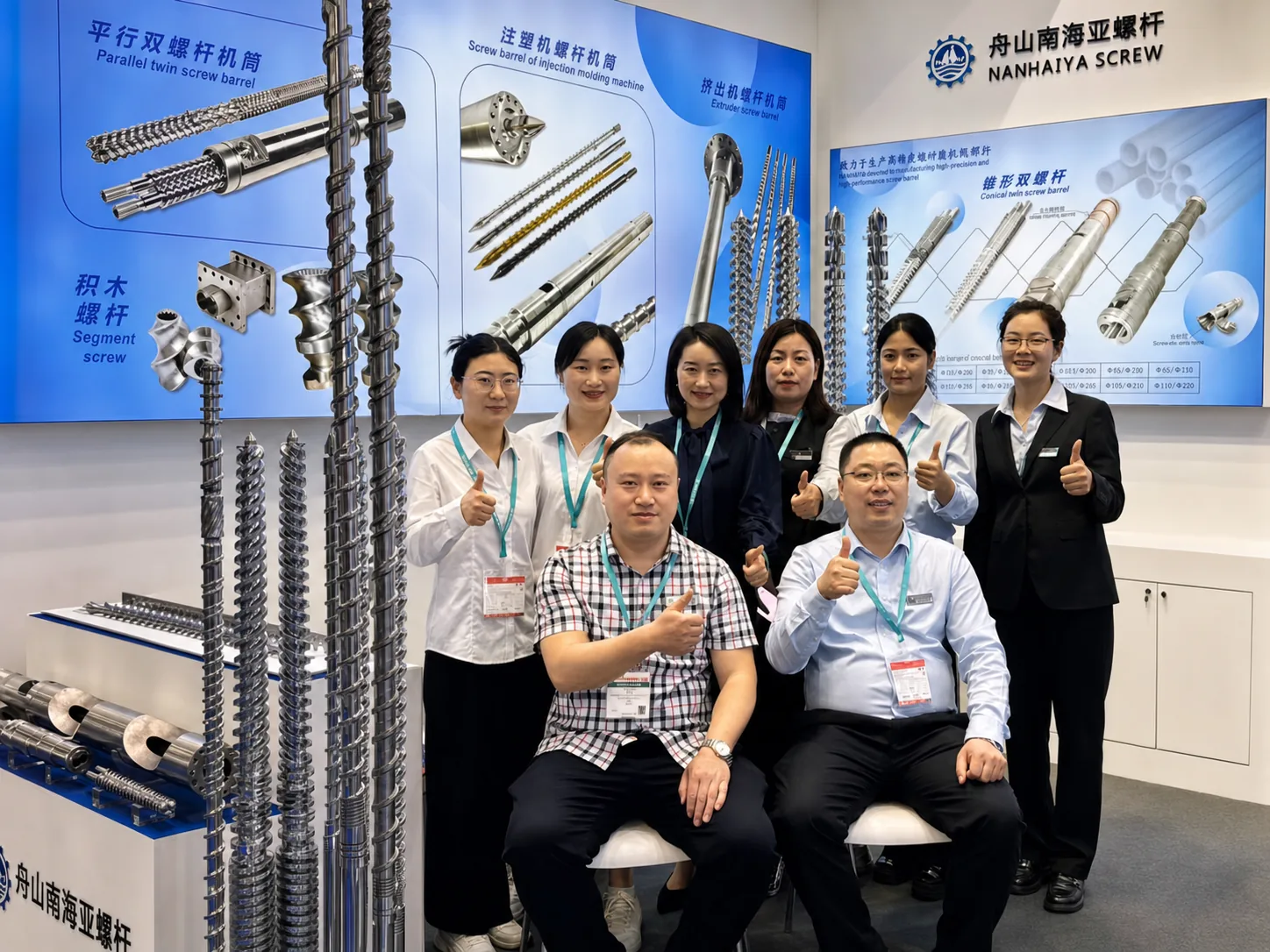
Related Articles
More insights on screw barrel technology and plastics processing.
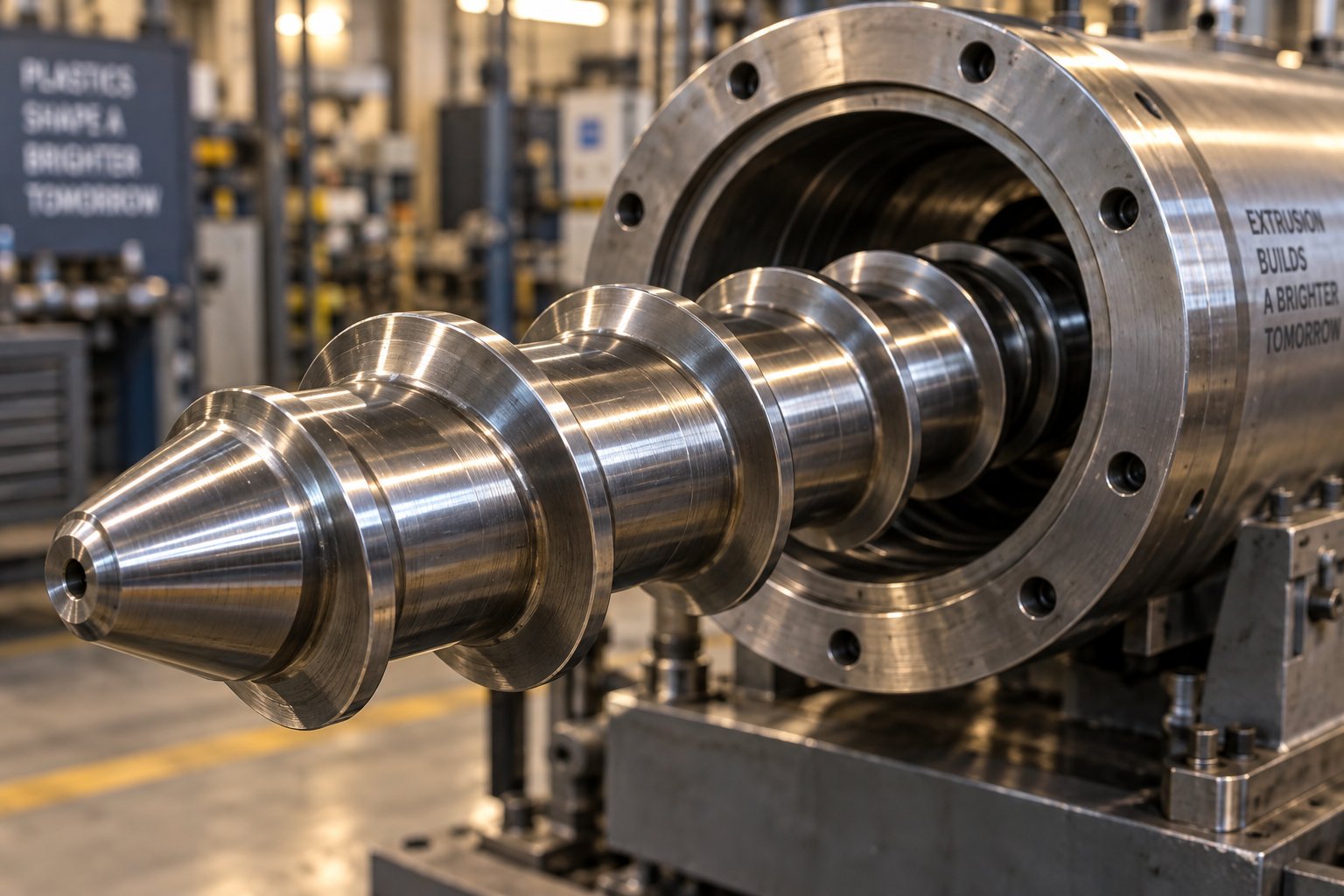
What Nobody Tells You About Screw Barrel For Plastic Machine Design
Oct 10, 2026
Learn how screw barrel for plastic machine design affects melt quality, throughput, and wear life. Covers geometry, resin matching, troubleshooting, and sourcing.
Read Article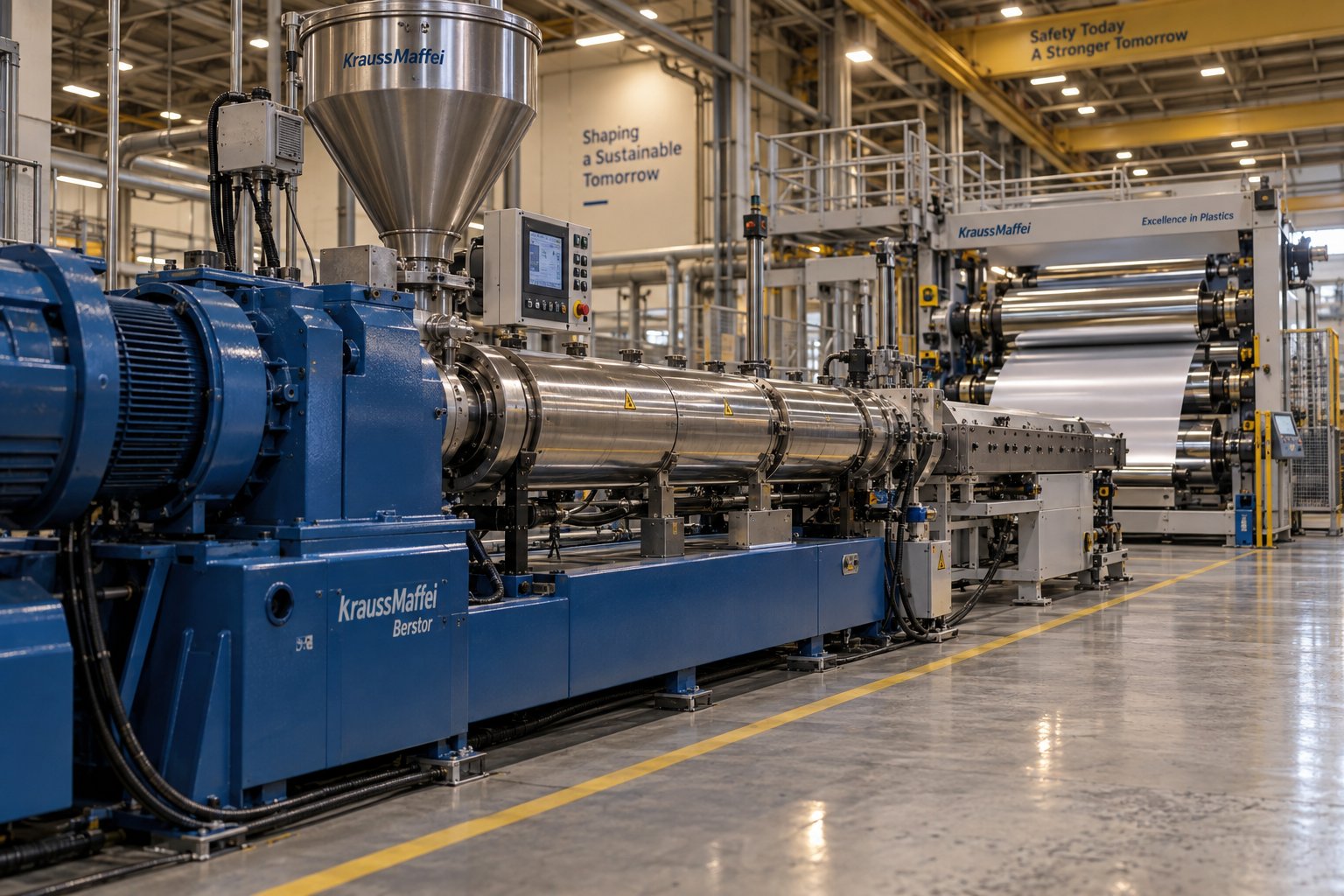
Single Screw Extruder for Sheet: Stop Guessing, Start Specifying
Oct 9, 2026
Learn how to specify a single screw extruder for sheet production. Covers screw geometry, resin-specific processing, troubleshooting, and maintenance best practices.
Read Article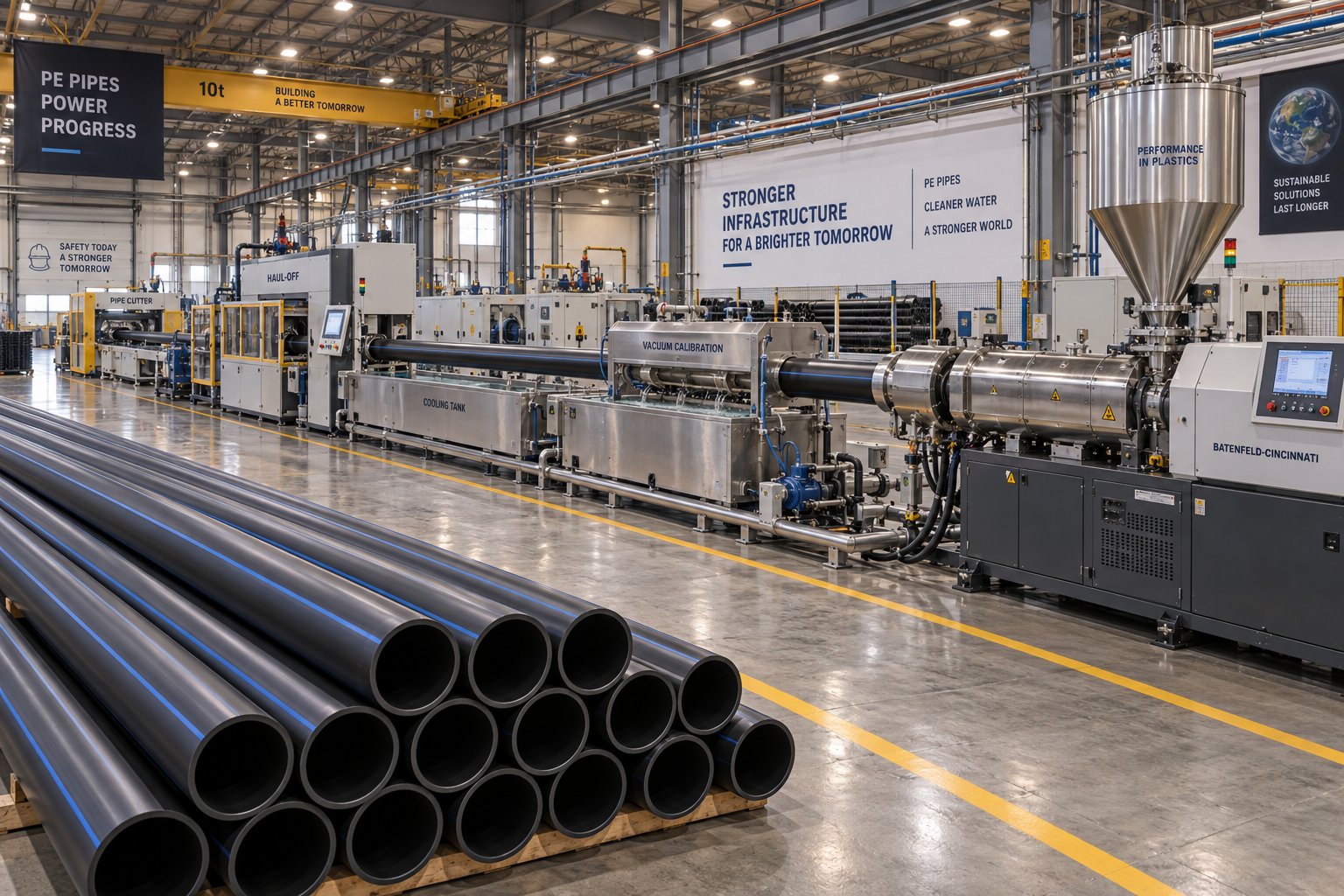
PE Pipe Extruder Machine: What Datasheets Won't Tell You
Oct 9, 2026
Learn how a PE pipe extruder machine works, key specs explained, material grade selection, maintenance tips, and buyer guidance beyond the datasheet.
Read ArticleLooking for something else?
Search by material, symptom or product and jump straight to the relevant page.
These are navigation suggestions based on keyword matching — not a quotation, not a delivery commitment, and not a substitute for engineering review. Final specification is confirmed by our engineers against your drawings and processed material.
Need help with screw barrel selection?
Share your machine model, processed material and application. Our team can help with pricing and technical support.