

What Is Plastic Compounding and Why Does It Matter
Imagine buying flour, sugar, eggs, and butter. Individually, none of them are a cake. You need to combine them under heat in the right proportions to get something useful. Plastic compounding works on a remarkably similar principle — except you're dealing with polymer resins, functional additives, and industrial-scale extruders instead of kitchen mixers.
What Plastic Compounding Actually Means
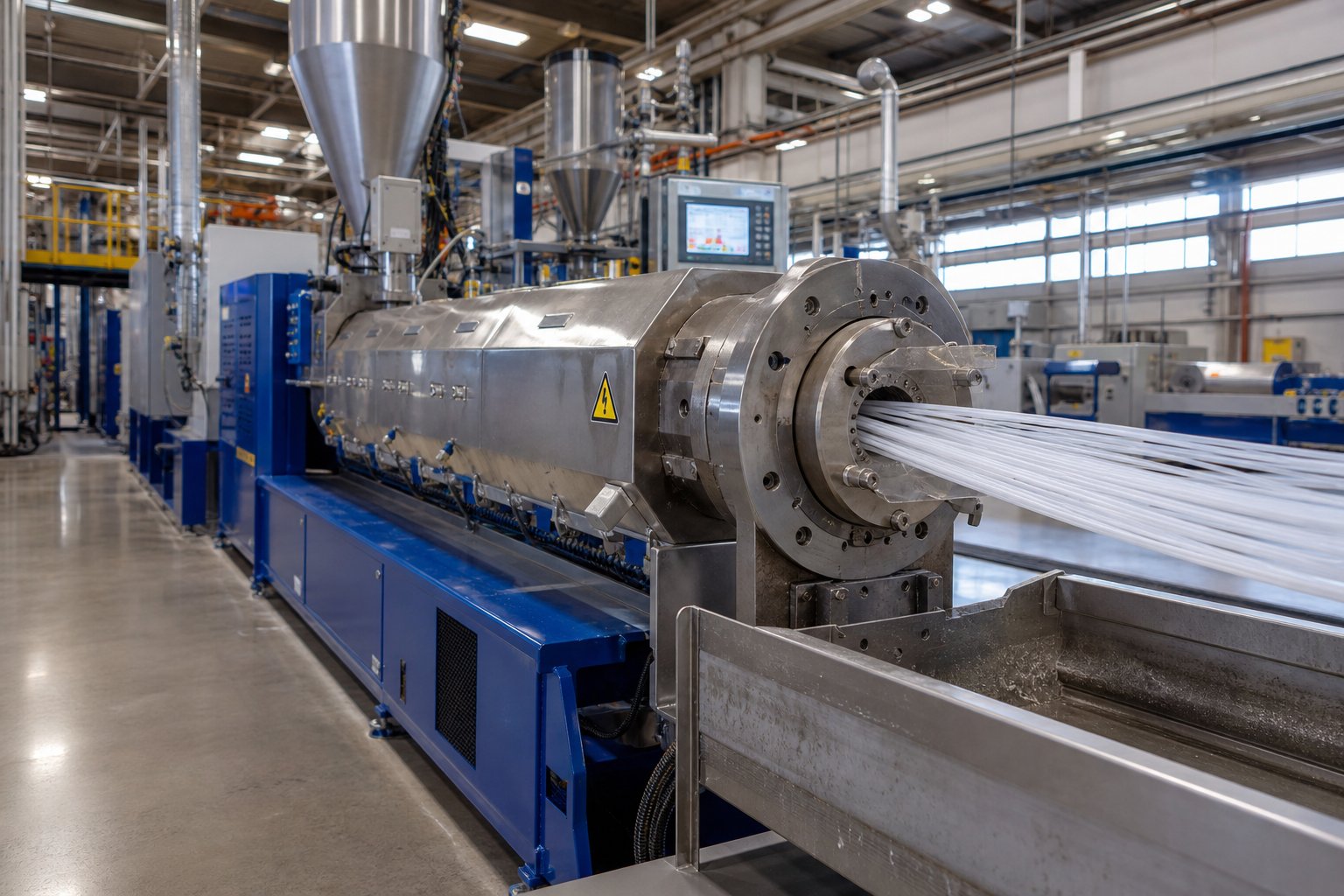
At its core, polymer compounding is the process of melt-mixing a base polymer resin with additives, fillers, reinforcements, or other polymers to produce a plastic compound engineered for a specific purpose. The base resin — whether it's polyethylene, polypropylene, nylon, or polycarbonate — provides the foundational structure. But on its own, that resin rarely has all the properties a finished product demands. Through compounding, manufacturers transform commodity or engineering resins into purpose-built materials by incorporating functional ingredients under controlled heat and mechanical shear.
Plastic compounding is the melt-blending of a base polymer resin with additives, fillers, reinforcements, or other polymers inside an extruder or mixer to create a customized material with tailored mechanical, thermal, and aesthetic properties.
This is fundamentally different from raw resin production. Resin producers synthesize polymers through chemical reactions — polymerization of monomers like ethylene or propylene. When you ask what is plastic resin made of, the answer points to petrochemical feedstocks or, increasingly, bio-based monomers that undergo polymerization to form long molecular chains. Compounding picks up where resin production leaves off. It takes those finished polymer pellets and blends them with carefully selected ingredients to meet exact performance targets — without altering the polymer's underlying chemistry.
Why Compounding Is the Backbone of Modern Plastics
Here's a fact that surprises many people: virtually no finished plastic product uses neat, unmodified resin straight from the reactor. Nearly every commercial plastic part — from a car bumper to a medical device housing — relies on a compounded material. The raw resin alone simply cannot deliver the full set of properties an application requires.
Compounding adds value across multiple dimensions:
- Mechanical performance — Reinforcements like glass fibers or mineral fillers boost stiffness, tensile strength, and impact resistance.
- Thermal stability — Heat stabilizers and antioxidants protect the polymer from degradation during processing and in service.
- Color and aesthetics — Pigments, dyes, and masterbatch concentrates deliver precise, repeatable coloring.
- Flame retardancy — Specialized additives allow compounds to pass strict fire safety standards for electronics and construction.
- UV resistance — Stabilizers prevent outdoor-exposed parts from yellowing, cracking, or losing strength.
- Processability — Lubricants and processing aids improve melt flow, reduce cycle times, and extend tooling life.
In effect, compounding bridges the gap between raw polymer chemistry and final part manufacturing. It gives engineers precise control over material behavior long before a mold closes or a sheet line starts rolling.
One common question deserves a clear answer: is plastic a compound? In chemistry, a compound is a substance formed from two or more elements bonded in fixed proportions — like water (H2O). A plastic resin is technically a chemical compound of carbon, hydrogen, and sometimes oxygen, nitrogen, or chlorine atoms arranged in polymer chains. A compounded plastic, on the other hand, is a physical mixture — a carefully formulated blend of that polymer with various additives and fillers. The two uses of the word "compound" overlap in everyday language, but they describe very different things. Understanding what is plastic resin made of at the molecular level helps clarify why additional compounding at the material level is almost always necessary to achieve real-world performance.
The range of possible formulations is staggering, and each one demands the right combination of ingredients, equipment, and process knowledge. That raises an immediate practical question: how does compounding actually differ from simpler mixing methods like dry blending or masterbatch production?
How Compounding Differs from Blending and Masterbatch Production
The plastics industry uses several methods to mix polymers with additives — and the terminology gets tangled fast. "Blending," "compounding," "masterbatch" — these words sometimes appear interchangeably in casual conversation, but they describe fundamentally different processes with different outcomes. Choosing the wrong one can mean the difference between a homogeneous, high-performance material and an inconsistent product riddled with color streaks or undispersed filler clumps.
Compounding vs Dry Blending vs Tumble Mixing
Dry blending is arguably the simplest approach. You take polymer pellets and mix them with raw pigments, powders, or granular additives in a tumble mixer or ribbon blender — no heat, no melting, no extruder. The result is sometimes called a "salt and pepper mix" because the individual components remain physically distinct. Dispersion aids or wetting agents are often added to help powders stick to pellet surfaces, but the ingredients are never truly fused at the molecular level.
When does simple blending suffice? For cost-sensitive applications where tight color consistency and uniform additive distribution are not critical, dry blending can work. It's fast and inexpensive. However, dry blends carry a high risk of poor dispersion and inconsistent color throughout the part, and loose powders can interfere with the resin drying process.
Full melt compounding of plastics eliminates these problems. By melting the polymer and subjecting the entire mixture to intensive shear inside an extruder, every additive particle is uniformly distributed and dispersed throughout the matrix. The output is a homogeneous pellet — ready to be fed directly into an injection molder or sheet line with no dosing equipment or secondary mixing required.
Compounding vs Masterbatch Production
Masterbatch production sits in interesting middle ground. It is a form of material compounding — additives like pigments, UV stabilizers, or flame retardants are melt-blended into a carrier resin using high-shear extrusion, exactly as you'd expect. The critical difference is concentration. A masterbatch carries additive loadings far higher than any finished part would need, typically designed for a let-down ratio of around 1–5% into the natural base polymer during final processing.
Think of it this way: a fully compounded pellet is a ready-to-use material. A masterbatch pellet is a concentrated ingredient that still needs to be metered into virgin resin at the molding or extrusion stage. Masterbatch offers flexibility — you can adjust color or additive levels across production runs without reformulating the entire compound. The trade-off? You'll need accurate dosing equipment at the press, and color consistency depends heavily on how precisely that dosing is controlled.
Compounding vs Reactive Extrusion and Direct Extrusion
Standard compounding and extrusion share the same core hardware — an extruder barrel, screws, and a die — but their objectives diverge sharply. In compounding extrusion, the goal is to produce uniformly blended pellets as an intermediate material. Direct extrusion, by contrast, skips the pelletizing step entirely, shaping molten polymer into a finished profile, film, or sheet in a single continuous operation.
Reactive extrusion pushes further still. Here, actual chemical reactions — grafting, crosslinking, or chain extension — occur inside the barrel while the polymer is being processed. The extruder functions as both mixer and chemical reactor. A common example is maleic anhydride grafting of polypropylene to create coupling agents used in glass-fiber-reinforced compounds. This is a fundamentally different process from simply dispersing additives into a melt.
| Process | Melt Involved? | Output Form | Typical Goal | Equipment Used |
|---|---|---|---|---|
| Dry Blending / Tumble Mixing | No | Physical pellet/powder mixture | Low-cost color or additive mixing | Tumble mixer, ribbon blender |
| Masterbatch Production | Yes | Concentrated additive pellets | High-loading additive concentrate for let-down | Co-rotating twin screw extruder |
| Full Melt Compounding | Yes | Homogeneous, ready-to-use pellets | Tailored material with uniform properties | Twin screw or single screw extruder, internal mixer |
| Reactive Extrusion | Yes | Chemically modified pellets | Grafting, crosslinking, chain extension | Twin screw extruder (configured as reactor) |
| Direct Extrusion | Yes | Finished profile, film, or sheet | Final product in one step — no pelletizing | Single or twin screw extruder with profile/film die |
Each of these processes has a clear role in the plastics value chain, and they frequently complement one another. A masterbatch producer compounds a concentrated color pellet, which a converter later blends with virgin resin and processes on a direct extrusion line to create packaging film — all in a coordinated workflow.
Understanding where each method fits is essential, but it only tells you what happens. The real complexity — and the real opportunity for quality control — lies in the step-by-step mechanics of how a compounding line actually transforms raw ingredients into finished pellets.
The Complete Plastic Compounding Process Step by Step
A compounding line might look like a single long machine from the outside, but inside, it's a carefully orchestrated sequence of distinct stages — each one capable of making or breaking the quality of the final pellet. Whether you're running a straightforward polyolefin color match or managing the production of high technical compounds loaded with glass fiber and flame retardants, the workflow follows the same fundamental arc: prepare, melt-mix, and pelletize.
Let's walk through it from raw material intake to boxed pellets.
Upstream Preparation — Drying, Weighing, and Feeding
Everything starts at the warehouse. Raw polymer resin arrives as pellets, flakes, or powder, while additives and fillers show up as fine powders, granules, or liquids. Proper storage matters more than most people expect — humidity, temperature swings, and cross-contamination can compromise a plastic formulation before it ever reaches the extruder.
Drying is the first critical process step, especially for hygroscopic polymers like nylon (PA6, PA66), PET, and polycarbonate. These resins absorb atmospheric moisture readily, and even a few hundred parts per million of residual water can trigger hydrolytic chain scission during melt processing — resulting in viscosity drops, poor mechanical properties, and surface defects. Desiccant dryers or vacuum dryers typically bring moisture content below 0.02% before the resin is cleared for feeding.
From there, precise dosing takes over. Gravimetric feeders weigh each ingredient in real time, adjusting feed rates to maintain exact recipe proportions regardless of variations in bulk density or flow behavior. Volumetric feeders are simpler and less expensive, but they don't compensate for density changes — making them better suited for less demanding formulations. When you're targeting tight property windows in engineering or specialty compounds, gravimetric accuracy isn't optional. A 0.5% drift in glass fiber loading, for example, can shift tensile strength by several megapascals.
Melt Processing — Mixing, Conveying, and Devolatilization
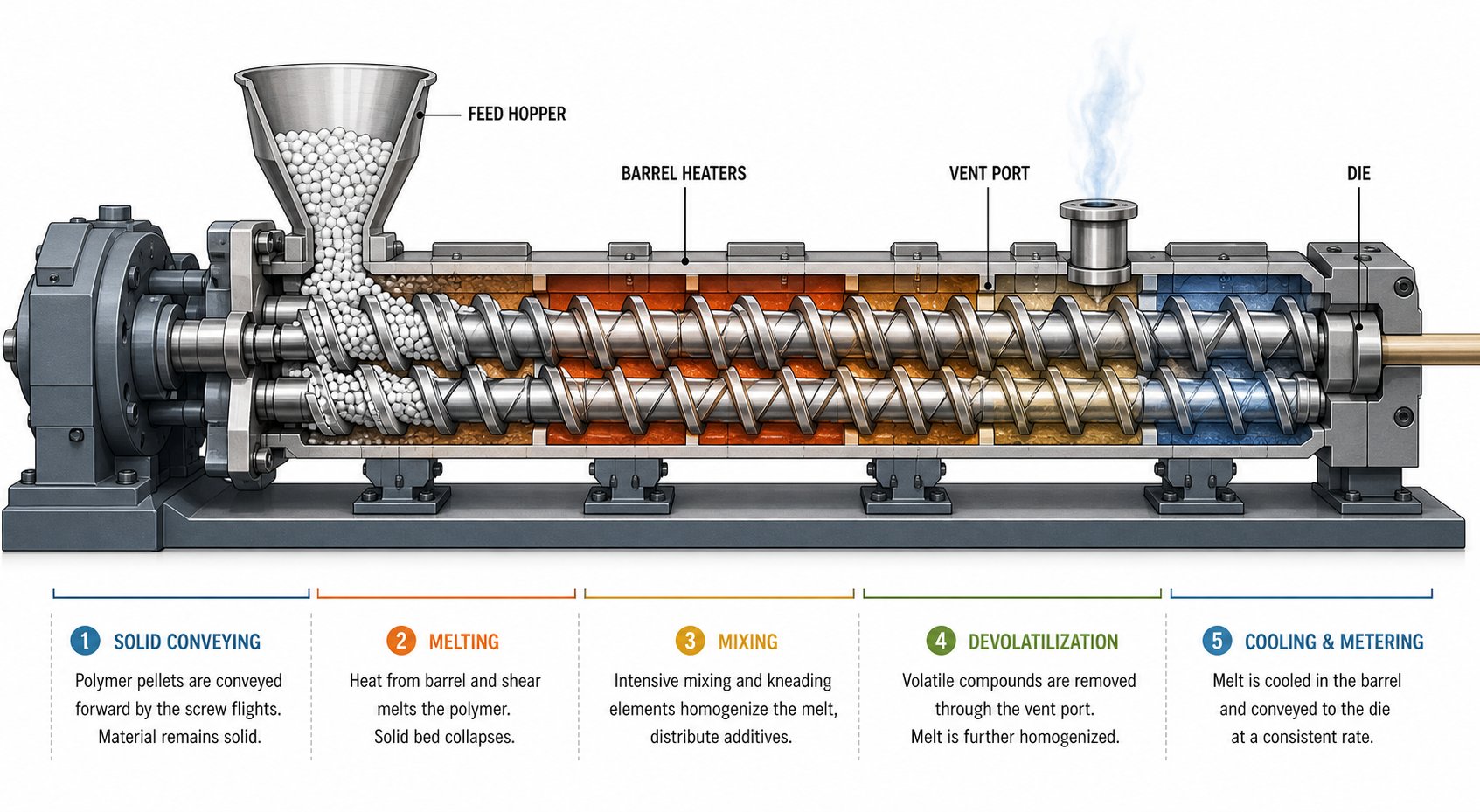
This is where resin compounding truly happens. Inside the extruder barrel, raw ingredients undergo a transformation from a loose collection of solids into a homogeneous molten compound — and the journey involves several distinct functional zones.
First, the solid conveying zone. Screw elements grip the incoming pellets and powders, pushing them forward while expelling trapped air. The material is still solid here, compacting under increasing pressure as it moves downstream.
Next comes melting and plastication. Barrel heaters and, more importantly, frictional shear from the screw elements raise the polymer above its melting point (for semi-crystalline resins) or glass transition temperature (for amorphous ones). The resin transitions from solid granules to a viscous melt over a relatively short barrel length.
The mixing zones are where the real engineering happens. Twin screw extruders use specialized kneading blocks and mixing elements to achieve two types of mixing simultaneously. Distributive mixing spreads additive particles evenly throughout the melt — imagine shuffling a deck of cards so every suit is uniformly distributed. Dispersive mixing applies high shear stress to break apart agglomerates — clumps of pigment or filler that resist separation. Both are essential. A compound with perfectly distributed but poorly dispersed carbon black will still show specks and weak spots.
Between mixing sections, devolatilization zones use atmospheric or vacuum venting to strip moisture, trapped air, and volatile byproducts from the melt. This step is critical for hygroscopic resins and recycled feedstocks where residual contaminants would otherwise cause bubbles, splay marks, or odor in the finished product. Twin screw compounders handle this efficiently because their partially filled conveying sections allow vapor to escape without pressurization.
A few key terms are worth knowing here:
- Melt Flow Index (MFI) — A standardized measure of how easily a polymer melt flows under a specified load and temperature. It's used as a quality control check on the compound's viscosity and molecular weight consistency.
- Specific Mechanical Energy (SME) — The total mechanical energy input per kilogram of material processed, driven primarily by screw shear. Higher SME means more intensive mixing but also greater risk of thermal degradation if not controlled carefully.
- L/D Ratio — The ratio of barrel length to barrel diameter. Typical compounding extruders range from 32:1 to 48:1 L/D; longer barrels provide more residence time and additional zones for feeding, mixing, and venting.
Screw configuration and barrel temperature profile are the two biggest levers an operator has. Screw speed and feed rate have the greatest impact on melt temperature, with higher screw speeds delivering more mechanical energy in the mixing zones. Barrel temperatures are typically profiled from cooler at the feed end to hotter near the die — though the exact profile depends on the polymer and formulation. Getting this balance right is what separates consistent, high-quality production of technical compounds from a process that drifts batch to batch.
Downstream Operations — Strand Extrusion, Cooling, and Pelletizing
Once the melt exits the mixing section, the extrusion zone builds pressure and forces the homogeneous compound through a die. What happens next depends on the pelletizing method chosen.
In strand pelletizing — still the most common approach for compounding lines — the molten plastic exits through a multi-hole die as continuous strands, passes through a water bath to solidify, gets dried by air knives, and is then chopped into cylindrical pellets by a strand pelletizer. It's mechanically simple, flexible, and cost-effective for small to medium throughput operations.
Underwater pelletizing takes a different approach: cutting and cooling happen simultaneously at the die face, with pellets formed directly into a circulating water stream. This produces more uniform, near-spherical pellets and handles high-output lines or low-viscosity materials better than strand systems — though at higher equipment cost and complexity.
After pelletizing, the compound passes through vibrating screens or classifiers to remove oversized pellets, fines, and any off-spec material. The screened pellets are then conveyed to packaging — bags, boxes, or bulk containers — with lot traceability maintained throughout.
Here's the complete workflow from start to finish:
- Receive and store raw polymer resin, additives, fillers, and reinforcements under controlled conditions.
- Dry hygroscopic resins to target moisture levels using desiccant or vacuum dryers.
- Weigh and dose all ingredients via gravimetric or volumetric feeders into the extruder feed throat.
- Convey and compact the solid feed mixture in the extruder's intake zone.
- Melt and plasticate the polymer through barrel heat and screw-generated shear.
- Distributively and dispersively mix additives, fillers, and reinforcements into the polymer melt.
- Devolatilize the melt to remove moisture, trapped air, and volatile byproducts.
- Build pressure in the extrusion zone and force the homogeneous melt through the die.
- Cool extruded strands in a water bath (strand pelletizing) or cut at the die face under water (underwater pelletizing).
- Dry pellets, screen for size consistency, and remove fines or off-spec material.
- Package finished pellets with full lot documentation for shipment or warehouse storage.
Each of these eleven steps introduces variables that directly influence compound quality. A moisture reading that's slightly above spec, a feeder that drifts by half a percent, a screw element that's worn past tolerance — any one of these can cascade into property shifts or visible defects in the finished pellet. And the equipment running this entire sequence, particularly the extruder at its heart, determines how much control you actually have over each variable.
Compounding Equipment Types and Selection Criteria
The extruder isn't just one piece in the compounding line — it's the piece that defines your mixing capability, throughput ceiling, and formulation flexibility. Choosing the wrong plastic compounding machine for your application is like trying to knead bread dough with a whisk. It might technically move the material around, but you'll never get the result you need.
So what are the options, and where does each one shine?
Twin Screw Extruders — The Industry Workhorse
If you walk into any modern compounding plant — whether it produces color masterbatch, glass-fiber-reinforced nylon, or flame-retardant cable compounds — you'll almost certainly see co-rotating parallel twin screw extruders at the heart of the operation. There's a reason this platform dominates: it combines intensive mixing, high throughput, and extraordinary process flexibility in a single machine.
Here's what makes a co-rotating twin screw plastic compounder so effective:
- Modular screw design — Individual screw elements (conveying, kneading blocks, mixing elements, toothed discs) can be arranged and rearranged along the shaft to create configurations optimized for specific formulations. Need more dispersive shear for breaking apart pigment agglomerates? Add aggressive kneading blocks. Processing a heat-sensitive material? Use gentler distributive mixing elements.
- Self-wiping action — The intermeshing, co-rotating geometry means each screw continuously cleans the surface of its partner. This prevents material stagnation, reduces degradation risk, and enables fast color or product changeovers — often achievable in 10–30 minutes depending on formulation similarity.
- Excellent mixing capability — Both distributive and dispersive mixing happen simultaneously across multiple high-intensity zones. The result is uniform additive distribution and thorough agglomerate breakdown in a single pass.
- High throughput — Positive displacement conveying delivers consistent material transport regardless of melt viscosity. Production capacities range from laboratory-scale units processing 2–15 kg/h up to industrial machines exceeding 2,000 kg/h.
- Formulation versatility — The same machine can compound commodity polyolefins, engineering nylons, high-filler masterbatches, and reactive blends with only a screw and barrel configuration change.
What about counter-rotating twin screws? These feature screws turning in opposite directions, creating a calendering effect in the nip region between the screws. Counter-rotating designs excel in specific niches — particularly PVC profile extrusion and certain pipe applications — where gentle, low-shear conveying and precise pressure control matter more than intensive mixing. However, they generally offer lower throughput and less mixing intensity than co-rotating configurations, which is why most polymer compounders select co-rotating systems for general-purpose compounding.
One factor that often gets overlooked in equipment discussions: barrel and screw metallurgy. The screws and barrel liner are in constant contact with abrasive fillers (glass fiber, calcium carbonate, talc) and corrosive additives (flame retardants, certain pigments) at temperatures ranging from 180°C to over 400°C. Over time, wear degrades the tight tolerances between screw flights and barrel wall — and when those clearances open up, you lose shear control. The consequences cascade quickly: inconsistent mixing, reduced dispersive energy, uneven melt temperatures, and increased specific energy consumption as the machine works harder to compensate.
This is why selecting durable, precision-manufactured twin screw barrels isn't just a maintenance consideration — it's a compound quality consideration. Worn barrels don't just cost you in replacement parts; they cost you in off-spec material, customer complaints, and lost production hours before anyone identifies the root cause.
Single Screw Extruders, Internal Mixers, and Co-Kneaders
Not every compounding job requires a twin screw platform. Several alternative plastic compounding equipment types serve specific applications well:
Single screw extruders feature one rotating screw inside a smooth or grooved barrel. Their mixing capability is limited compared to twin screw designs — they rely primarily on drag flow rather than positive displacement, and they lack the intermeshing geometry that creates intensive shear zones. That said, single screw machines remain valuable for simpler tasks: blending pre-compounded pellets with small percentages of masterbatch, reprocessing regrind, or running formulations where the ingredients are already well-dispersed and just need re-melting and homogenization. They're also significantly less expensive, making them attractive for operations where mixing demands are modest.
Banbury-type internal mixers operate on a completely different principle. Instead of continuous extrusion, they use two counter-rotating rotors inside an enclosed chamber to intensively knead material in batches. You'll find these machines primarily in rubber compounding and PVC dry-blend fusion, where extremely high shear and precise temperature control during the initial mixing stage are more important than continuous throughput. The mixed batch is then typically dropped onto a mill or fed into a single screw extruder for pelletizing — making internal mixers part of a multi-step process rather than a standalone solution.
Co-kneaders occupy a specialized niche for heat-sensitive materials. Their unique reciprocating screw action — rotating and simultaneously oscillating back and forth — creates thorough mixing and dispersing at lower shear rates and temperatures than twin screw extruders typically achieve. This makes them well-suited for PVC powder compounds, certain thermoset premixes, and formulations containing temperature-sensitive pigments or additives that would degrade under conventional twin screw processing conditions.
How to Choose the Right Compounding Equipment
Selecting the right plastics compounder depends on balancing several factors: the complexity of your formulation, your throughput requirements, the range of products you need to run, and your budget constraints. Here's a side-by-side comparison to guide the decision:
| Equipment Type | Mixing Quality | Throughput | Flexibility | Best For | Limitations |
|---|---|---|---|---|---|
| Co-Rotating Parallel Twin Screw Extruder | Excellent (distributive + dispersive) | High (up to 2,000+ kg/h) | Very high — modular screw/barrel design | General compounding, masterbatch, filled/reinforced compounds, reactive extrusion | Higher capital cost; requires skilled setup for screw configuration |
| Counter-Rotating Twin Screw Extruder | Good (gentle, controlled shear) | Moderate | Moderate | PVC profile extrusion, pipe compounds | Lower throughput; limited for high-filler or high-shear applications |
| Single Screw Extruder | Limited (primarily drag flow mixing) | Moderate to high | Low — fixed screw geometry | Simple blending, reprocessing, let-down of masterbatch | Poor dispersive mixing; cannot handle complex formulations |
| Banbury Internal Mixer | Excellent (very high shear) | Batch process (not continuous) | Low per batch; good across recipes | Rubber compounding, PVC dry-blend fusion | Batch operation; requires secondary pelletizing step |
| Co-Kneader | Good (gentle but thorough) | Moderate | Moderate | Heat-sensitive PVC, thermoset premixes, specialty compounds | Niche application range; lower throughput than twin screw |
For the vast majority of compounding operations — whether you're a dedicated polymer compounder producing engineering plastics, a masterbatch manufacturer running dozens of color changes per week, or a recycling operation reprocessing post-consumer waste — the co-rotating parallel twin screw extruder is the default starting point. Its combination of mixing intensity, continuous throughput, and configuration flexibility simply outmatches alternatives for most formulations.
But here's a practical reality that experienced compounders learn quickly: even the best-designed extruder is only as good as its wear components. The barrel and screw elements are consumable parts operating under punishing conditions — abrasive mineral fillers grinding against metal surfaces cycle after cycle, millions of screw rotations per year, corrosive melt environments attacking metallurgical surfaces. When these components wear beyond tolerance, mixing quality degrades silently until defects appear in the finished compound.
For compounding plants, pelletizing lines, masterbatch producers, and recycling operations running abrasive or high-throughput formulations, sourcing high-wear-resistant parallel twin screw barrels from specialized manufacturers is a long-term process stability decision. NANHAIYA's parallel twin screw barrel solutions are purpose-built for exactly these demanding environments — engineered to maintain tight dimensional tolerances and consistent mixing performance across extended service life under abrasive and high-shear processing conditions. Investing in durable barrel metallurgy upfront avoids the hidden costs of gradual quality drift that worn equipment inevitably introduces.
Equipment selection sets the ceiling for what your compounding line can achieve. But the real breadth of possibility — the range of materials you can create — depends equally on understanding the additives and functional ingredients available to formulate with.
Essential Additives Used in Plastic Formulation
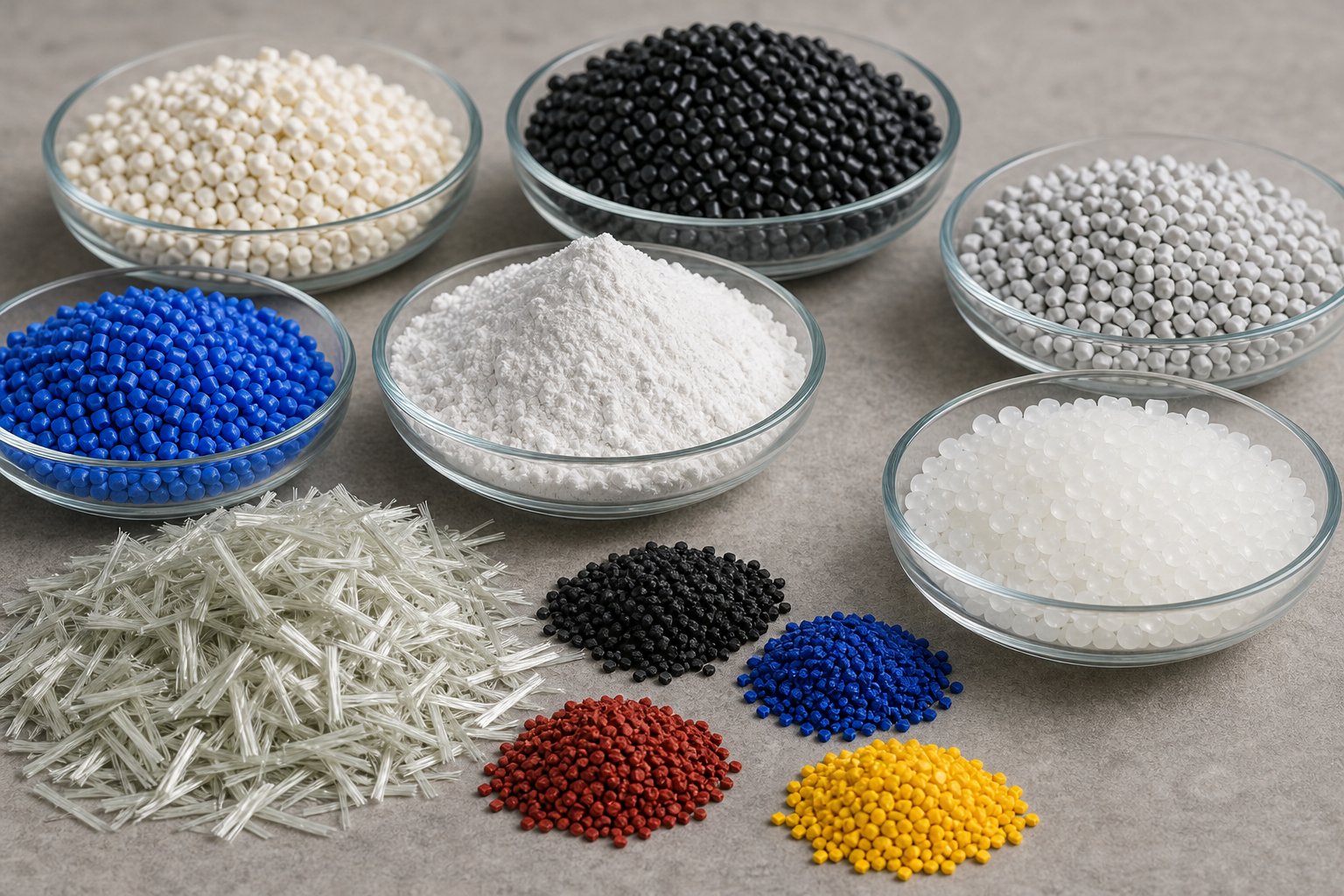
A base polymer resin is like a blank canvas — it has structure, but it lacks the specific characteristics most applications demand. The formula for plastic that actually performs in a car engine bay, an electrical enclosure, or a children's toy always includes a carefully selected portfolio of additives. These ingredients are what transform a generic resin into a purpose-built material, and understanding what each one does is fundamental to designing effective plastic compounds.
Broadly, additives fall into three functional groups: those that protect and modify the polymer's inherent properties, those that reinforce or fill it for structural performance, and those that improve how the material processes and looks. Let's break each group down.
Functional Additives — Stabilizers, Flame Retardants, and Plasticizers
Polymers are inherently vulnerable. Heat, oxygen, ultraviolet light, and even their own processing conditions attack molecular chains and degrade performance over time. Functional additives exist to counteract these weaknesses — and in some cases, to add entirely new capabilities.
Heat stabilizers are essential for polymers like PVC, which begins to thermally degrade well below typical processing temperatures. Without stabilizers — commonly calcium-zinc, organotin, or mixed-metal systems — PVC would discolor and lose structural integrity before it even left the extruder. As industry sources note, PVC cannot be commercially processed without these additives.
Antioxidants protect polyolefins and engineering resins from oxidative degradation — the slow chain-scission reaction triggered by heat and oxygen exposure. Two types work in tandem. Primary antioxidants (hindered phenolics) act as radical scavengers, intercepting the reactive species that initiate degradation. Secondary antioxidants (phosphites and thioesters) decompose hydroperoxides — the intermediate products of oxidation — before they can propagate further chain damage. Most polymer compounds use both types together for synergistic protection across processing and long-term service life.
UV stabilizers and HALS (hindered amine light stabilizers) address a different degradation pathway: photodegradation caused by sunlight exposure. UV absorbers convert harmful radiation into harmless heat, while HALS continuously regenerate to scavenge radicals produced by UV attack. Products destined for outdoor use — garden furniture, automotive trim, agricultural film — rely heavily on these additives to prevent chalking, cracking, and color fade.
Flame retardants expand the polymer's safety envelope. Halogenated systems (brominated and chlorinated compounds) remain highly effective, often boosted by antimony trioxide as a synergist. However, environmental and toxicity concerns have driven strong growth in halogen-free alternatives: aluminum trihydrate (ATH), magnesium hydroxide, and phosphorus-based systems. ATH works by releasing water at elevated temperatures, cooling the flame front — though it requires high loading levels (often 50%+), which can significantly alter flow properties and mechanical performance. Phosphorus-based compounds offer effectiveness at lower loadings but require careful formulation to avoid processing issues.
Plasticizers serve a very different purpose: they increase flexibility and reduce the glass transition temperature of rigid polymers. PVC is the classic example — unplasticized PVC (UPVC) is stiff and brittle, while plasticized PVC (PPVC) is soft and pliable enough for wire insulation, flooring, and medical tubing. Traditional phthalate plasticizers like DOP and DIOP have been widely used for decades, but regulatory pressure and health concerns have accelerated the shift toward non-phthalate alternatives such as citrate esters, adipates, and bio-based plasticizers.
Reinforcements, Fillers, and Impact Modifiers
Where functional additives protect the polymer, reinforcements and fillers change what it can physically do. This category of plastic modification dramatically expands the mechanical and thermal performance envelope — often elevating a commodity resin into engineering-grade territory.
Glass fibers are the most widely used reinforcement in polymer compounds. Short glass fiber (SGF), chopped to lengths under half an inch, boosts stiffness, tensile strength, and heat deflection temperature while reducing mold shrinkage. Long glass fiber (LGF) — exceeding half an inch — delivers superior impact resistance, fatigue performance, and dimensional stability compared to SGF, though it demands gentler processing to preserve fiber length. Typical glass fiber loadings range from 10% to 50% by weight, with higher loadings generally producing greater property improvements — provided the fibers are well-dispersed and bonded to the matrix.
Carbon fibers offer even higher stiffness-to-weight ratios and can also impart electrical conductivity, making them valuable for lightweight structural parts and EMI shielding applications. Their higher cost limits use to performance-critical polymer compounds where the property gains justify the investment.
Mineral fillers are the workhorses of cost-effective property enhancement. Calcium carbonate — the most widely consumed mineral filler in plastics — reduces compound cost while adding stiffness and opacity. Talc improves stiffness, heat resistance, and dimensional stability in polypropylene and polyamide compounds. Wollastonite, with its needle-like particle shape, provides reinforcement characteristics closer to short fibers, enhancing both stiffness and impact resistance.
Coupling agents bridge the gap between filler and polymer. Silanes and titanates chemically bond to both the mineral surface and the polymer matrix, dramatically improving filler-matrix adhesion. Without them, fillers can act as stress concentrators rather than reinforcements — weakening the compound instead of strengthening it. This is particularly critical for glass-fiber-reinforced systems, where poor adhesion causes fiber pullout and premature failure.
Impact modifiers address the opposite end of the mechanical spectrum. Rubber-toughening agents — typically ethylene-propylene rubber (EPR), ethylene-octene copolymers, or styrene-based block copolymers — are dispersed as small elastomeric domains within the rigid polymer matrix. When the compound experiences an impact, these rubber particles absorb energy by cavitating and inducing shear yielding in the surrounding matrix. Core-shell modifiers (such as MBS — methacrylate-butadiene-styrene) offer similar toughening while maintaining transparency in clear polymers like PVC and PMMA. Loading levels for impact modifiers typically range from 5% to 20%, depending on the toughness target and acceptable trade-offs in stiffness and heat resistance.
Processing Aids, Lubricants, and Colorants
Even a perfectly stabilized, well-reinforced formulation can fail if it doesn't process cleanly — or if it doesn't look the way the customer expects. This final additive group addresses manufacturability and aesthetics.
Lubricants fall into two categories with distinctly different mechanisms. External lubricants — like stearic acid, stearate salts, and certain waxes — migrate to the melt surface and reduce friction between the polymer and metal processing equipment (barrel walls, die surfaces). They prevent sticking and improve release. Internal lubricants — such as glyceryl monostearate — reduce intermolecular friction within the melt itself, lowering viscosity and improving flow. PVC compounding relies heavily on balanced lubricant systems; too much external lubricant causes plate-out on equipment, while too little internal lubricant makes the compound difficult to fuse and process.
Processing aids go a step further by modifying the melt's rheological behavior. Acrylic processing aids, commonly used in PVC, promote faster fusion and more uniform melt quality. Fluoropolymer-based processing aids eliminate melt fracture and die buildup in polyolefin extrusion by coating die surfaces with a thin, low-friction layer. These additives operate at very low loading levels — often under 0.5% — but their effect on surface quality and throughput stability is dramatic.
Colorants round out the additive toolkit and represent a significant segment of the specialty & color compounding market. Two primary systems are used: pigments (insoluble particles dispersed throughout the polymer) and dyes (soluble colorants that dissolve into the polymer matrix). Pigments — including titanium dioxide for white, carbon black for black, and a broad range of organic and inorganic options for every shade in between — are the most widely used because they offer opacity, UV stability, and heat resistance. Dyes produce brilliant, transparent colors but are limited to lower-temperature applications and polymers where transparency matters. In practice, many compounders deliver color through masterbatch concentrates, which package high-loading pigment dispersions in a compatible carrier resin for easy let-down during final processing.
Here's a comprehensive taxonomy of additive categories, their primary functions, and the compound properties they influence:
- Heat stabilizers — Prevent thermal degradation during processing; critical for PVC. Modify: thermal processing stability.
- Antioxidants (primary and secondary) — Scavenge radicals and decompose hydroperoxides. Modify: long-term thermal-oxidative stability, processing stability.
- UV stabilizers and HALS — Absorb UV radiation and scavenge photo-generated radicals. Modify: outdoor weatherability, color retention, surface integrity.
- Flame retardants — Suppress ignition, slow flame spread, reduce heat release. Modify: fire performance ratings (UL 94, LOI).
- Plasticizers — Increase chain mobility and reduce glass transition temperature. Modify: flexibility, softness, low-temperature impact.
- Glass fibers (short and long) — Reinforce the polymer matrix along fiber orientation. Modify: tensile strength, stiffness, HDT, shrinkage.
- Carbon fibers — Provide high stiffness-to-weight reinforcement and electrical conductivity. Modify: modulus, weight reduction, EMI shielding.
- Mineral fillers (CaCO3, talc, wollastonite) — Increase stiffness, reduce cost, improve dimensional stability. Modify: modulus, shrinkage, heat resistance, opacity.
- Coupling agents (silanes, titanates) — Improve chemical bonding between filler and polymer matrix. Modify: filler-matrix adhesion, tensile and impact strength of filled compounds.
- Impact modifiers — Disperse as elastomeric domains that absorb impact energy. Modify: impact resistance, ductility, low-temperature toughness.
- External lubricants — Reduce friction between melt and metal surfaces. Modify: mold release, die slip, equipment fouling.
- Internal lubricants — Reduce intermolecular friction within the polymer melt. Modify: melt viscosity, flow uniformity.
- Processing aids — Promote fusion, eliminate melt fracture, improve surface quality. Modify: processability, surface finish, throughput stability.
- Pigments and dyes — Impart color throughout or on the surface of the compound. Modify: color, opacity, transparency, UV stability (certain pigments).
- Antimicrobial additives — Inhibit bacterial and fungal growth on the product surface. Modify: hygiene, product longevity in medical and food-contact applications.
Every additive you introduce interacts not only with the base polymer but also with every other ingredient in the formula. A flame retardant can reduce impact strength. A mineral filler can shift melt viscosity enough to demand a different lubricant balance. An antioxidant package effective for polypropylene may be entirely wrong for nylon. These interactions mean that designing effective polymer compounds is never a matter of simply adding ingredients from a checklist — it requires understanding how each polymer family responds to specific additive chemistries under real processing conditions.
How Compounding Varies Across Polymer Types
That interplay between additive chemistry and base polymer isn't just theoretical — it dictates entirely different compounding strategies depending on the resin you're running. A set of process parameters that produces flawless polypropylene compounds would destroy polycarbonate. A stabilizer package that keeps PVC alive through processing would be pointless in polyethylene. Thermoplastic compounding is not one process — it's a family of processes, each tuned to the unique thermal behavior, chemical sensitivity, and mechanical response of the polymer at hand.
Let's walk through the three major resin tiers and what makes each one demand a different approach.
Commodity Resins — PE, PP, and PVC
Polyolefins — polyethylene (PE) and polypropylene (PP) — are the highest-volume resins on the planet, and their compounding characteristics reflect their relatively forgiving nature. Processing temperatures are low compared to engineering plastics, typically ranging from 180°C to 240°C. They're non-hygroscopic, so pre-drying is unnecessary. They melt cleanly, flow easily, and tolerate a wide processing window.
Sounds simple? Not entirely. Polyolefin compounding carries its own set of challenges. Both PE and PP are highly susceptible to oxidative degradation, especially at elevated temperatures in the presence of oxygen. Without adequate antioxidant protection — typically a primary hindered phenolic combined with a secondary phosphite stabilizer — molecular chains break down during melt processing, reducing mechanical properties and causing discoloration. This sensitivity intensifies with each reprocessing cycle, making antioxidant selection particularly critical for recycled polyolefin compounds.
Polypropylene adds another wrinkle: peroxide-initiated reactive compounding. By introducing small amounts of organic peroxide into the extruder, manufacturers can deliberately induce controlled chain scission in PP. This process — called controlled rheology (CR) modification — narrows the molecular weight distribution, producing a resin with higher melt flow and more consistent processing behavior for applications like spunbond nonwovens and thin-wall injection molding. It's a powerful technique, but dosing precision matters enormously — too much peroxide causes excessive degradation and embrittlement.
PVC stands apart from every other commodity resin. It's thermally unstable by nature, beginning to degrade through dehydrochlorination (releasing HCl gas) at temperatures only slightly above its processing range. This means compounding PVC is impossible without a robust stabilizer system — calcium-zinc, organotin, or lead-based formulations (the latter now largely phased out for environmental reasons). As PVC processing experts note, the mixing and compounding of PVC is a complex process involving both distributive and dispersive mixing to achieve a consistent free-flowing compound through preferential diffusion, absorption, and coating of all ingredients.
The equipment landscape for compounding PVC also diverges from standard practice. Many PVC compounders rely on high-speed hot/cold mixer combinations — Henschel-type units — to create a "dry blend" where stabilizers, lubricants, fillers, and pigments are diffused into the porous PVC grain structure through frictional heat, without fully melting the polymer. This dry blend is then processed on counter-rotating twin screw extruders or co-kneaders optimized for the gentle, low-shear fusion that PVC demands. A dedicated PVC compounder must balance an intricate lubricant system — internal lubricants to promote fusion and external lubricants to prevent sticking — with processing aid levels that ensure complete melt homogeneity without overheating.
Engineering Resins — Nylon, Polycarbonate, and PBT
Step up to engineering resins, and the rules change fundamentally. Processing temperatures climb to the 250°C–330°C range. Formulation tolerances tighten. And one factor overshadows everything else: moisture.
Nylon (PA6, PA66), polycarbonate (PC), and polybutylene terephthalate (PBT) are all hygroscopic — they actively absorb water from the atmosphere. Even trace moisture levels, sometimes as low as 0.02%, can trigger hydrolytic chain scission during melt processing. The result? Viscosity drops, reduced impact strength, poor surface finish, and splay marks on molded parts. Pre-drying with desiccant dryers to strict moisture targets is not optional for these resins — it's the single most critical upstream step. Desiccant dryers or vacuum dryers are the standard solution, with typical drying temperatures of 80°C–120°C for nylon and 120°C for polycarbonate, held for four to six hours depending on initial moisture content.
Glass fiber reinforcement is where engineering resin compounding becomes especially demanding. Adding 30% or 40% short glass fiber to nylon transforms it into a material rivaling die-cast metals in stiffness and heat deflection — but the fibers are brutally abrasive. They grind against screw flights, barrel liners, and die surfaces with every rotation, accelerating wear far beyond what unfilled compounds produce. Over thousands of operating hours, this wear opens clearances, reduces shear control, and degrades mixing uniformity. Fiber breakage is the other side of the coin — aggressive kneading elements and high screw speeds shatter long fibers into shorter fragments, diminishing the very reinforcement effect you're trying to achieve. Configuring the screw to introduce fibers downstream of the primary melting zone, using gentler conveying elements in the fiber-feeding section, and maintaining tight barrel tolerances are all essential strategies for preserving fiber length.
Temperature profiling for engineering resins demands precision that commodity polyolefins rarely require. Polycarbonate, for instance, has a processing window where the polymer flows well but hasn't yet begun thermal degradation — and that window is narrower than most operators expect. Barrel temperature uniformity, zone-by-zone control, and careful attention to melt temperature (as opposed to set temperature) become critical quality levers. Screw speed and feed rate adjustments, as discussed in earlier chapters, directly influence the balance between mixing intensity and thermal exposure.
Specialty and High-Performance Resins — PEEK, PPS, and LCP
At the top of the polymer performance pyramid sit materials like polyether ether ketone (PEEK), polyphenylene sulfide (PPS), and liquid crystal polymers (LCP). These resins deliver extraordinary mechanical strength, chemical resistance, and thermal stability — properties that make them indispensable in aerospace, oil and gas, semiconductor processing, and advanced medical devices. They also present compounding challenges that are in a completely different league.
Processing temperatures for these resins push well past 300°C. PEEK, for example, requires melt temperatures of 370°C–400°C — hot enough to degrade most conventional additives, damage standard seals and gaskets, and stress even high-alloy barrel metallurgy. PPS processes at 290°C–340°C with a tendency to release corrosive sulfur-containing volatiles that attack barrel and screw surfaces. LCP compounds flow readily but solidify almost instantaneously, demanding extremely precise die and downstream temperature control to prevent premature freezing and flow instabilities.
The processing windows for these materials are razor-thin. A temperature overshoot of 10°C–15°C above the optimal range can push PEEK from stable processing into rapid thermal degradation, causing discoloration, embrittlement, and loss of the very high-performance properties that justify the resin's premium cost. Similarly, PPS is sensitive to oxidative crosslinking if oxygen is present in the barrel — requiring inert gas purging or vacuum venting during compounding.
Equipment requirements escalate accordingly. Barrel liners and screw elements must withstand extreme temperatures and corrosive melt environments — often demanding nickel-based superalloys or specialized bimetallic barrel constructions rather than standard nitrided steel. Feeders, seals, and even pelletizing systems must be rated for these elevated temperature ranges. The investment in specialized hardware is significant, which is why high-performance resin compounding is typically concentrated among a relatively small number of specialists with the equipment, metallurgy expertise, and process knowledge to handle these demanding materials reliably.
Here's a consolidated reference comparing compounding parameters across all three resin tiers:
| Resin Family | Typical Processing Temp Range | Key Compounding Challenges | Common Additives | Equipment Considerations |
|---|---|---|---|---|
| PE (HDPE, LLDPE) | 180°C – 230°C | Oxidative degradation; narrow density/MFI targets | Antioxidants, UV stabilizers, slip/antiblock agents, color masterbatch | Co-rotating twin screw; standard nitrided barrels adequate for unfilled grades |
| PP (Homo and Copolymer) | 190°C – 240°C | Oxidative degradation; controlled rheology via peroxide; filler dispersion | Antioxidants, nucleating agents, talc/CaCO3, peroxides for CR grades | Co-rotating twin screw; wear-resistant barrels for mineral-filled grades |
| PVC (Rigid and Flexible) | 160°C – 200°C | Thermal instability (dehydrochlorination); complex lubricant balance; corrosive HCl release | Heat stabilizers (Ca-Zn, organotin), plasticizers, lubricants, impact modifiers, processing aids | High-speed hot/cold mixers + counter-rotating twin screw or co-kneader; corrosion-resistant barrels |
| Nylon (PA6, PA66) | 250°C – 290°C | Hygroscopic — strict drying required; fiber breakage; barrel wear from glass fiber | Heat stabilizers, antioxidants, glass fiber, impact modifiers, coupling agents | Co-rotating twin screw with downstream fiber feeding; wear-resistant barrel liners essential |
| Polycarbonate (PC) | 270°C – 320°C | Hygroscopic; narrow thermal processing window; sensitivity to hydrolysis and shear | UV stabilizers, mold release agents, flame retardants, impact modifiers | Co-rotating twin screw with precise temperature control; low-shear screw configurations for blends |
| PBT | 240°C – 275°C | Hygroscopic; crystallization rate sensitivity; hydrolytic degradation | Glass fiber, nucleating agents, flame retardants, stabilizers | Co-rotating twin screw; desiccant drying mandatory; downstream fiber introduction preferred |
| PPS | 290°C – 340°C | Corrosive sulfur volatiles; oxidative crosslinking risk; high processing temperatures | Glass fiber, mineral fillers, antioxidants, PTFE for lubricity | Corrosion-resistant barrel liners; vacuum venting or inert gas purging; high-temperature seals |
| PEEK | 370°C – 400°C | Extreme temperatures; very narrow processing window; high resin cost amplifies scrap losses | Carbon fiber, glass fiber, PTFE, graphite for wear applications | Nickel-alloy or specialized bimetallic barrels; high-temp-rated auxiliaries throughout the line |
| LCP | 280°C – 350°C | Rapid solidification; orientation-dependent properties; flash at parting lines | Glass fiber, mineral fillers, PTFE | Precise die temperature control; short residence time screw configurations |
What becomes clear across this table is a pattern: as you move from commodity to engineering to high-performance resins, every variable tightens. Temperature windows narrow. Moisture tolerances shrink. Equipment metallurgy requirements escalate. Additive interactions grow more complex. A polyolefin compounding line can tolerate minor process drift with limited consequences — a PEEK line cannot.
This polymer-specific perspective also explains why experienced PVC compounders invest so heavily in their stabilizer, lubricant, and processing aid systems. PVC's unique degradation chemistry and equipment requirements set it apart from every other thermoplastic, demanding specialized knowledge that doesn't transfer directly from polyolefin or engineering resin experience.
Yet regardless of the resin family, every compounding operation eventually encounters defects — gels, discoloration, inconsistent properties — that require systematic diagnosis. The ability to trace a product defect back to its root cause in the process is what separates a competent operation from a truly excellent one.
Common Compounding Defects and Troubleshooting Strategies
Every compounding line produces off-spec material at some point. The difference between an operation that catches and corrects problems quickly and one that ships defective pellets for weeks comes down to one skill: the ability to read a defect and trace it back to a root cause in the process. In plastics compounding, defects rarely appear randomly — they follow patterns tied directly to process parameters, raw material conditions, or equipment wear. Once you learn to decode those patterns, troubleshooting becomes systematic rather than guesswork.
Three broad categories cover the vast majority of compounding defects: dispersion failures, degradation-related problems, and process-property mismatches. Let's work through each one with practical diagnostic approaches.
Dispersion Problems — Gels, Agglomerates, and Unmelts
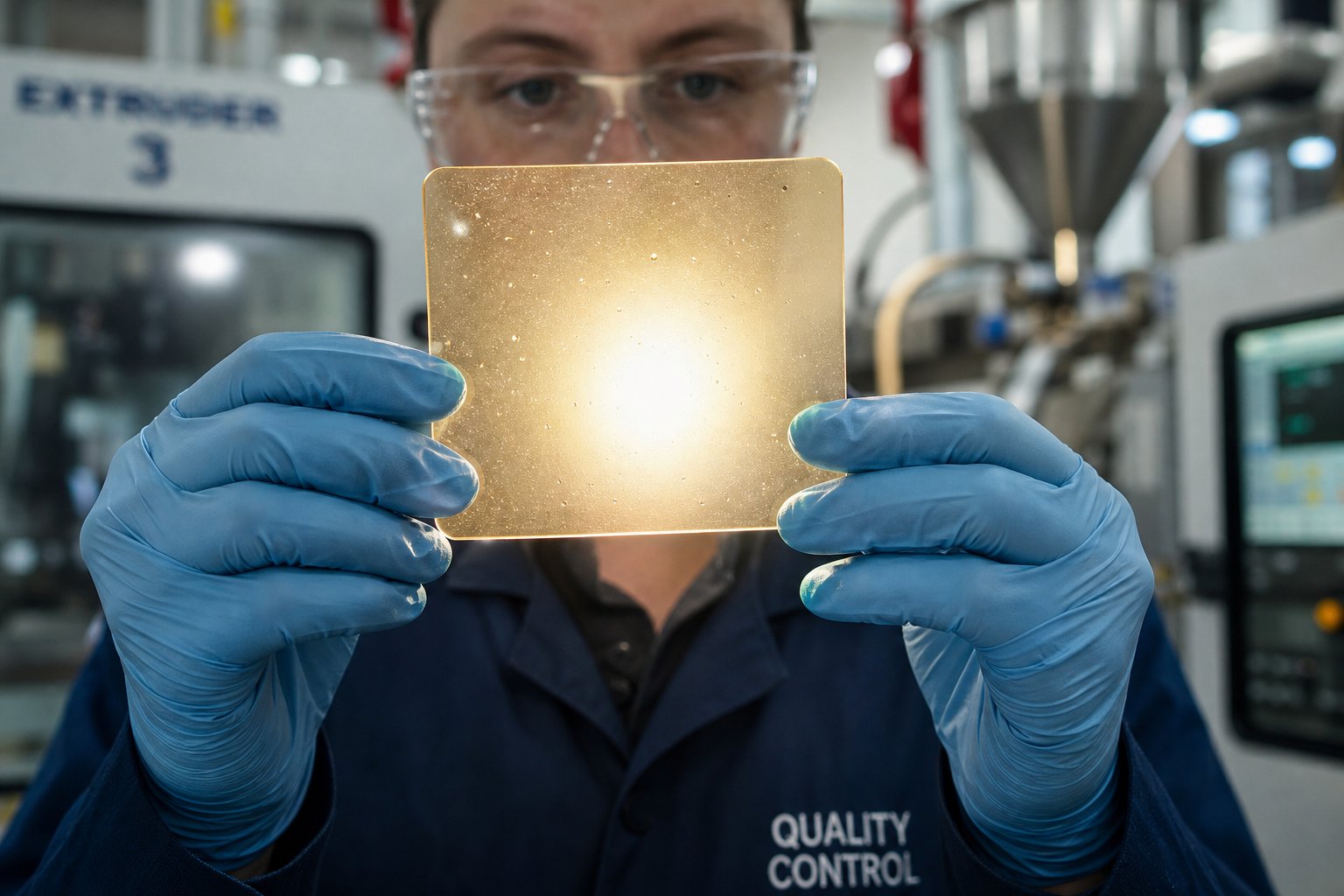
You pull a sample from the pelletizer, press a thin plaque, and hold it up to the light. Specks. Dark spots. Tiny translucent lumps that look like fish eyes. These are classic signs of poor dispersion — additives, fillers, or even the base polymer itself haven't been fully incorporated into a homogeneous melt. In a finished polymer compound, every particle of pigment, every grain of mineral filler, and every fiber should be uniformly distributed and individually separated. When that doesn't happen, the consequences show up as visual defects, inconsistent mechanical properties, and customer rejections.
What causes dispersion failures? Four root causes account for the majority of cases:
Insufficient shear. Dispersive mixing requires enough mechanical energy to overcome the cohesive forces holding agglomerates together. If your screw configuration lacks adequate kneading block sections — or if those kneading blocks have worn down and lost their tight clearances — the shear stress applied to the melt simply isn't high enough to break apart clumped pigment or filler particles. The fix? Review your screw layout. Increase the number or stagger angle of kneading elements in the mixing zone. And inspect screw and barrel wear — worn components reduce mixing efficiency and allow material to bypass high-shear zones through increased flight clearances.
Incorrect screw configuration. Even with new, unworn elements, a poorly designed screw profile can create dead zones or insufficient residence time in mixing sections. Imagine placing all your kneading blocks near the die end, well after most of the melt has already passed through — the additives never get the shear they need at the right point in the process. Screw design should position high-intensity mixing sections where they'll encounter the target additives at the optimal melt viscosity.
Feed sequence errors. In poly compounding operations that introduce ingredients at multiple barrel locations — main feed for resin, side stuffer for fibers, downstream injection for liquid additives — feeding the wrong component at the wrong point can cause severe dispersion issues. A common mistake: introducing a fine mineral filler at the main feed port along with the resin pellets, where the material is still largely solid and unable to wet out the powder. Moving filler introduction to a downstream port where the polymer is fully molten often solves the problem immediately.
Inadequate residence time. Some materials simply need more time in the mixing zone to achieve full dispersion. Running the extruder at maximum throughput to hit a production target can push material through so quickly that agglomerates survive the mixing sections intact. Reducing feed rate (while maintaining screw speed) increases residence time and often resolves persistent gel or unmelt issues — though it comes at the cost of reduced output.
Unmelts — visible fragments of undissolved or unmelted polymer — deserve separate attention. As extrusion troubleshooting guides note, these typically result from barrel temperatures set too low, resin contamination with incompatible blends, or a screw design lacking proper compression and melting zones. Increasing barrel temperatures gradually, ensuring materials are screened before feeding, and avoiding blends of resins with significantly different melting points are the standard corrective actions.
Degradation, Discoloration, and Moisture-Related Defects
If dispersion problems are about getting ingredients properly mixed in, degradation defects are about the polymer itself breaking down during the process. These are often more insidious because the damage happens at the molecular level — you might not see it until mechanical testing reveals a drop in impact strength or elongation, or until a customer reports premature field failures.
Thermal degradation is the most straightforward: the polymer spends too much time at too high a temperature. Molecular chains break (chain scission), molecular weight drops, and the compound loses the properties it was designed to deliver. Visual indicators include yellowing, browning, or in severe cases, black specks — carbonized material that has essentially cooked on the barrel wall or in stagnant zones of the screw channel. Heat-sensitive resins like PVC and PET are particularly vulnerable, but even robust polyolefins will degrade if barrel temperatures are set excessively high or if material sits in an idling extruder for extended periods.
Two processing parameters drive thermal degradation risk: temperature and residence time. Lowering barrel set points in the overheating zones is the obvious first step. But also check for dead spots — areas where material accumulates and stagnates inside the barrel, screw root, or die. Sharp corners, flow restrictions, and poorly designed nozzle tips create hangup points where polymer sits and slowly carbonizes, periodically breaking free as black specks in the compound.
Oxidative degradation attacks through a different mechanism. When polymers are exposed to oxygen at elevated temperatures — a condition present in nearly every extruder — free radical chain reactions begin propagating along the molecular backbone. Insufficient antioxidant loading is the usual culprit. If the stabilization package was formulated based on a single heat history but the compound actually undergoes multiple processing passes (compounding, then injection molding, then possibly regrinding and reprocessing), the antioxidants get consumed faster than expected. Increasing antioxidant levels or upgrading to more thermally robust stabilizer chemistries often resolves chronic oxidative degradation issues in technical compounds production.
Yellowing and discoloration can stem from either thermal or oxidative degradation — or from entirely unrelated causes like pigment instability at processing temperatures, contamination from previous production runs, or chemical reactions between incompatible additives. Systematic diagnosis requires isolating variables: run the base resin without additives to check for resin-related discoloration first, then add components back one at a time to identify the interaction causing the color shift.
Moisture-induced defects are among the most preventable — and the most damaging when prevention fails. When hygroscopic resins like nylon, PET, or polycarbonate enter the extruder carrying excess moisture, that water turns to steam at processing temperatures. The results are immediately visible: splay marks (silver streaks on molded parts), bubbles and voids within the compound, and a rough, foamy extrudate surface. At the molecular level, water molecules attack ester or amide linkages in the polymer backbone through hydrolytic degradation, permanently reducing molecular weight and with it, mechanical performance. No amount of downstream correction can reverse hydrolytic chain scission — the only solution is rigorous pre-drying before processing.
Die drool — the sticky buildup of degraded material that accumulates at the die exit — is one of the most frustrating quality issues in plastics compounding. It contaminates strand surfaces, causes pellet appearance defects, and requires frequent line stoppages for cleaning. Common causes include low-quality stabilizers or lubricants, excess melt pressure, incompatible additives, and rough die surfaces. Remedies involve polishing the die face, rebalancing the lubricant system, reducing melt pressure through die geometry or temperature adjustments, and ensuring additive compatibility in the formulation.
Process-Property Relationships — Connecting Parameters to Outcomes
Here's where troubleshooting moves from reactive to predictive. Every process parameter you set on the compounding line — screw speed, barrel temperature profile, feed rate, screw configuration — has a direct and often measurable impact on the properties of the finished polymer compound. Understanding these relationships turns you from someone who chases defects after they appear into someone who prevents them by controlling the process.
Screw speed is arguably the most influential single variable. Higher screw RPM increases shear rate, which improves dispersive mixing but also generates more frictional heat. In glass-fiber-reinforced compounds, excessive screw speed breaks fibers into shorter lengths — directly reducing the impact strength and fatigue performance you're trying to build into the material. In heat-sensitive formulations, high RPM can push melt temperature above the degradation threshold even when barrel set points look safe. The practical approach: use the minimum screw speed that achieves acceptable dispersion, and verify actual melt temperature — not just set temperature — at every speed change.
Barrel temperature profile shapes how and where the polymer melts, and how much thermal stress the compound experiences during its residence in the extruder. A profile that's too hot in the feed zone can cause premature melting and feeding instability. A profile that's too cool in the mixing zone results in high melt viscosity, demanding more mechanical energy (higher SME) and potentially leaving agglomerates unbroken. Getting the gradient right requires understanding the specific resin's melting behavior and the rheological demands of the additives you're incorporating.
Feed rate controls residence time — the total duration the material spends inside the barrel. At high feed rates, material moves through quickly, which reduces thermal exposure (good for heat-sensitive materials) but also limits mixing time (bad for difficult-to-disperse additives). Reducing feed rate while holding screw speed constant increases both residence time and the shear energy applied per kilogram of material, often improving dispersion at the cost of throughput. The key is finding the balance point where property targets are met without unnecessary thermal exposure.
Screw configuration is the most powerful but least frequently adjusted variable. Most compounders set a screw layout during process development and rarely revisit it — even when formulations change. In reality, different compounds demand different screw profiles. A mineral-filled compound needs intense dispersive kneading blocks positioned where the filler enters the melt. A fiber-reinforced formulation needs gentle conveying elements in the fiber-feeding zone to preserve length. A reactive extrusion process needs extended residence time sections with controlled barrel temperatures to complete chemical reactions. Treating screw design as a fixed constant, rather than a tunable process parameter, is one of the most common mistakes in compounding operations.
Here's a practical reference linking common defects to their most likely root causes and corrective actions:
- Gels and fisheyes in pellets or film — Likely cause: Insufficient dispersive mixing; screw/barrel wear; contamination or incompatible resin blend. Corrective action: Add or replace kneading elements; inspect barrel and screw clearances; verify raw material purity and compatibility.
- Unmelted particles (unmelts) — Likely cause: Barrel temperatures too low in the melting zone; screw compression ratio inadequate; resin blend with mismatched melting points. Corrective action: Increase barrel set points gradually; adjust screw design for higher compression; pre-screen incoming resin for contaminants.
- Yellowing or browning — Likely cause: Thermal or oxidative degradation from excessive temperature, residence time, or insufficient antioxidant loading. Corrective action: Lower barrel temperatures in affected zones; reduce residence time; increase antioxidant concentration; check for dead spots in the flow path.
- Black specks — Likely cause: Carbonized polymer from stagnant zones, degraded material hangup, or contamination. Corrective action: Purge the barrel and die thoroughly; inspect screw flights for damage or buildup; eliminate dead spots in the flow channel; clean the die face.
- Bubbles, splay, or foaming — Likely cause: Residual moisture in hygroscopic resin; insufficient devolatilization; trapped air from feeding. Corrective action: Verify pre-drying conditions and moisture levels; increase vacuum vent pull; improve feed throat design to reduce air entrainment.
- Die drool — Likely cause: Incompatible or excessive lubricants; rough die surface; high melt pressure at the die exit. Corrective action: Rebalance the lubricant system; polish the die face; adjust die geometry or melt temperature to reduce exit pressure.
- Low impact strength despite correct formulation — Likely cause: Fiber breakage from aggressive screw elements or high screw speed; degradation reducing molecular weight; poor impact modifier dispersion. Corrective action: Use gentler conveying elements in the fiber zone; reduce screw RPM; verify melt temperature stays within the recommended window; improve mixing section for impact modifier distribution.
- Inconsistent melt flow index (MFI) batch to batch — Likely cause: Feed rate variability; moisture variation in hygroscopic resins; screw and barrel wear changing shear input; inconsistent additive dosing. Corrective action: Calibrate gravimetric feeders; tighten drying protocols; inspect wear components; audit additive metering accuracy.
- Color variation between lots — Likely cause: Poor pigment dispersion; inaccurate masterbatch dosing; residual color from previous run (purging issues). Corrective action: Increase mixing intensity in the pigment zone; switch to gravimetric colorant feeding; implement thorough purging protocols between color changes.
What distinguishes a truly capable plastics compounding operation from an average one isn't the absence of defects — it's the speed and precision with which root causes are identified and eliminated. Every defect on this list ties back to a specific, controllable process variable. The compounder who understands these process-property relationships doesn't just fix problems — they anticipate them, adjusting parameters proactively as formulations, raw material lots, or equipment condition change over time.
That same diagnostic mindset extends beyond the compounding line itself. When compounds reach their final applications — automotive parts, electronic housings, construction profiles — the performance expectations multiply, and the equipment running those demanding formulations must deliver consistency across thousands of operating hours under harsh conditions.
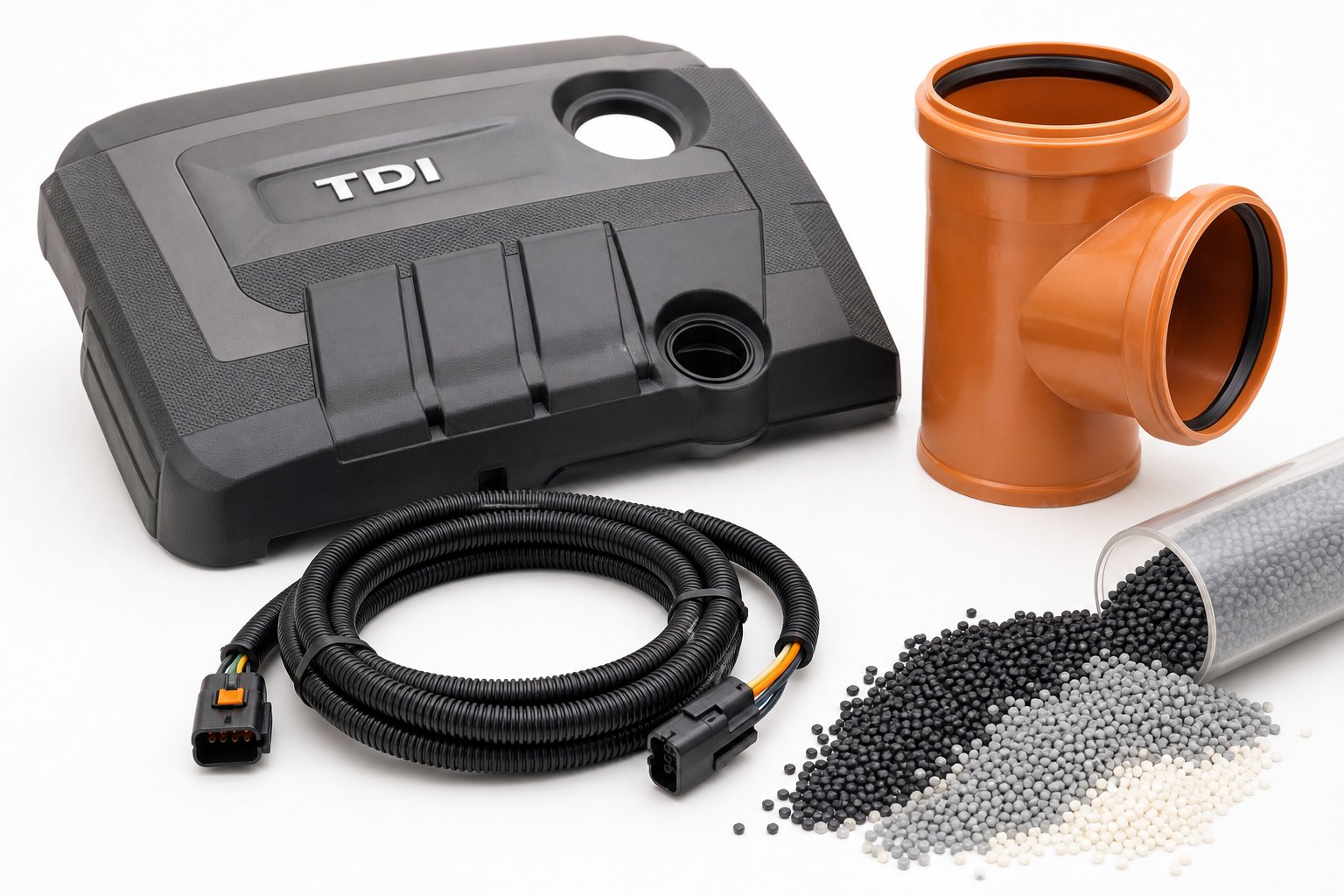
Industry Applications and Selecting Equipment for Long-Term Performance
A flawless compound sitting in a warehouse means nothing. Its value only materializes when it becomes a part that survives under the hood of a car at 150°C, insulates a high-voltage cable without catching fire, or holds a roofing membrane together through years of UV bombardment. The real test of any compounding operation — the formulation expertise, the process control, the equipment quality — is whether the finished product performs reliably in its end-use environment. And across industries, the demands keep escalating.
Let's trace the path from compounding formulations to specific real-world products, and then address a dimension that increasingly shapes every sector: sustainability through recycling.
Automotive, Electronics, and Construction Applications
The automotive sector consumes an enormous volume of compounded plastics, and for good reason. Every kilogram of metal replaced by a high-performance polymer compound saves weight, improves fuel efficiency, and often reduces manufacturing complexity. But automotive environments are punishing — temperature extremes, chemical exposure, vibration, and UV radiation all attack materials simultaneously.
Imagine an engine intake manifold sitting directly on top of a turbocharged engine. That part endures sustained temperatures above 130°C, exposure to hot engine oil and coolant, and continuous mechanical vibration. Glass-fiber-reinforced nylon (typically PA66 with 30–35% short glass fiber) is the go-to compound for this application. The glass fibers boost stiffness, tensile strength, and heat deflection temperature far beyond what neat nylon can achieve, while heat stabilizers and antioxidants protect the polymer from long-term thermal-oxidative aging. Move to the vehicle interior — dashboards, door panels, pillar trim — and you'll find mineral-filled polypropylene compounds. Talc-filled PP at 15–20% loading delivers the stiffness and dimensional stability these parts require, with UV stabilizers preventing fade and chalking on sun-exposed surfaces. Auto compounding operations serving these markets must deliver tight property windows batch after batch, because a single lot of out-of-spec compound can shut down an assembly line.
Electronics and electrical applications demand a completely different set of priorities. When you're compounding material for wire and cable insulation, the primary concern isn't stiffness or heat deflection — it's flame retardancy and electrical performance. Halogen-free flame-retardant compounds, typically polyolefin-based formulations loaded with aluminum trihydrate (ATH) or magnesium hydroxide, have become the industry standard for low-smoke, zero-halogen (LSZH) cable insulation. These compounds must pass rigorous fire safety standards while maintaining enough flexibility and elongation to survive cable bending and installation stresses. The high mineral filler loadings — often exceeding 60% by weight — create extremely abrasive melt conditions that accelerate equipment wear dramatically.
Construction applications push durability to the forefront. UV-stabilized polyolefin compounds protect roofing membranes and geomembranes from photodegradation over 20+ year service lives. Rigid PVC compounds — precisely balanced with heat stabilizers, impact modifiers, and processing aids — form window profiles, siding, and pipe systems that must withstand decades of weather exposure. Flexible engineered thermoplastic compounds serve specialized roles in construction sealants, expansion joints, and waterproofing membranes where rubber-like elasticity combined with thermoplastic processability creates unique performance advantages.
Across all these sectors, leading plastic compounders and resin compounders differentiate themselves not just by formulation expertise but by consistency — the ability to deliver identical properties lot after lot, year after year. That consistency depends directly on process stability, which in turn depends on equipment condition.
The Growing Role of Compounding in Plastics Recycling
Recycling has moved from a peripheral concern to a central business strategy. Brands have pledged aggressive recycled content targets. Regulators across Europe, North America, and Asia are tightening mandates. And converters need feedstock that behaves predictably on their molding and extrusion lines — not variable, degraded flake that jams equipment and produces reject parts.
This is where compounding earns its keep in the circular economy. As recycling research highlights, the real bottleneck in plastics recycling isn't collection — it's converting mixed, variable waste streams into consistent, application-ready compounds. Post-consumer and post-industrial plastic waste arrives with wildly inconsistent melt flow properties, unknown thermal histories, residual inks and labels, and contamination from mixed polymer streams.
Compounding addresses every one of these challenges:
- Restabilization — Recycled polymers have already consumed much of their original antioxidant and UV stabilizer package during their first life. Re-dosing fresh stabilizer systems during compounding restores processing stability and service life.
- Viscosity control — Chain extenders rebuild molecular weight lost to thermal and hydrolytic degradation, bringing melt flow index back into usable ranges.
- Compatibilization — Mixed polymer streams (PP contaminated with PE, PET mixed with polyamide) are thermodynamically incompatible. Reactive compatibilizers added during compounding improve interfacial adhesion, rescuing blends that would otherwise be brittle and unusable.
- Recoloring and aesthetics — Mixed-color recyclate is typically dark and inconsistent. Compounding with pigment masterbatch or direct pigment addition produces uniform, marketable colors.
- Property recovery — Impact modifiers, mineral reinforcements, and coupling agents can restore mechanical performance to levels approaching virgin material specifications.
Polymer compounders and plastics compounding suppliers serving the recycling sector face unique operational challenges. Contaminated feedstocks — containing paper fragments, metal specks, sand, and residual fillers — are far more abrasive than virgin resin formulations. The variability between incoming lots means process parameters must be adjusted frequently, and in-line property sensing and data-driven process control are becoming essential tools for maintaining output quality despite input variability.
Choosing Reliable Equipment Partners for Demanding Applications
A pattern emerges across every application sector described above: the most demanding compounds — glass-fiber-reinforced engineering resins, high-filler flame-retardant formulations, recycled feedstocks loaded with contaminants — all place extreme mechanical stress on twin screw barrels and screw elements. Glass fibers grind against metal surfaces with every screw rotation. Mineral fillers at 60%+ loadings act like liquid sandpaper flowing through the barrel bore. Contaminated recyclate introduces unpredictable abrasive particles that accelerate wear in random, hard-to-predict patterns.
When barrel wear progresses, the consequences ripple through every quality metric: mixing efficiency drops as clearances widen, shear control becomes inconsistent, melt temperature uniformity degrades, and energy consumption rises as the machine compensates for lost conveying efficiency. For plastic compounding companies in the USA and globally, unplanned barrel replacement doesn't just mean the cost of new hardware — it means lost production days, transition scrap, and requalification runs that can stretch over weeks.
This is why equipment durability isn't a maintenance line item — it's a product quality and operating cost decision that compounds over years of production. Sourcing barrels engineered specifically for high-wear compounding environments is one of the highest-return investments a compounder can make. NANHAIYA's parallel twin screw barrel solutions are purpose-built for exactly these conditions — designed for compounding plants, pelletizing lines, masterbatch producers, and recycling operations that need barrels capable of maintaining dimensional precision and stable mixing performance under continuous abrasive loading. For operations running glass-fiber-reinforced nylon, heavily filled flame-retardant compounds, or contaminated post-consumer recyclate, this kind of wear-resistant barrel construction directly translates to longer intervals between replacements, more consistent compound quality, and lower total cost of ownership.
Here's a summary of key industry sectors, their characteristic compound types, and the performance requirements that drive equipment selection:
- Automotive — under-hood components — Glass-fiber-reinforced PA66 (30–50% GF); heat-stabilized PP compounds. Requirements: high HDT, mechanical strength retention at elevated temperatures, dimensional stability. Equipment impact: extreme barrel wear from glass fiber; demands wear-resistant barrel liners.
- Automotive — interior trim — Talc-filled and mineral-filled PP (15–30% filler); TPO compounds. Requirements: low-gloss surface finish, UV stability, scratch resistance, low VOC emissions. Equipment impact: moderate abrasion from mineral fillers; frequent color changes require fast-purging barrel/screw designs.
- Electronics — wire and cable insulation — LSZH compounds (polyolefin + 55–65% ATH/MDH); halogen-free FR engineering plastics. Requirements: flame retardancy (IEC, UL standards), low smoke density, flexibility, electrical insulation. Equipment impact: very high filler loading creates severe barrel and screw wear.
- Construction — profiles, pipe, and membranes — Rigid and flexible PVC compounds; UV-stabilized polyolefin compounds. Requirements: long-term weatherability (20+ years), impact resistance at low temperatures, regulatory compliance. Equipment impact: PVC releases corrosive HCl, demanding corrosion-resistant barrel metallurgy.
- Recycling — post-consumer reprocessing — Restabilized and compatibilized rPE, rPP, rPET blends with impact modifiers and colorants. Requirements: consistent MFI, mechanical property recovery, aesthetic uniformity, odor reduction. Equipment impact: contaminated feedstocks cause unpredictable abrasive wear; robust filtration and devolatilization sections essential.
- Consumer goods and packaging — Color-matched commodity compounds; anti-static and antimicrobial formulations; flexible engineered thermoplastic compounds for soft-touch grips and seals. Requirements: precise color matching, food-contact compliance, rapid product changeovers. Equipment impact: high product diversity demands modular, easy-clean equipment configurations.
Whether you're a polymer compounder running engineering-grade materials for aerospace fasteners, a plastics compounding supplier producing masterbatch for the packaging industry, or a recycling operation converting post-consumer bales into usable pellets, the equation is the same. Formulation science gets you the right material properties on paper. Process control gets you there consistently in production. And durable, precision-manufactured equipment — especially the barrels and screws at the heart of your twin screw extruder — is what sustains that consistency across millions of processing cycles and thousands of operating hours. Choosing the right equipment partners is, ultimately, choosing how long your quality holds.
Frequently Asked Questions About Plastic Compounding
1. What is the difference between plastic compounding and plastic blending?
Plastic compounding involves melt-mixing a base polymer resin with additives, fillers, or reinforcements inside an extruder under controlled heat and shear to produce homogeneous pellets with uniform properties. Dry blending, by contrast, simply tumbles pellets and powders together without melting, resulting in a physical mixture where individual components remain distinct. Compounding delivers far superior additive dispersion, consistent mechanical performance, and repeatable color — making it essential for applications where tight property specifications matter. Simple dry blending may suffice only for cost-sensitive products where uniformity is not critical.
2. What equipment is best for plastic compounding?
Co-rotating parallel twin screw extruders are the industry standard for most plastic compounding operations. Their modular screw design, self-wiping action, and ability to achieve both distributive and dispersive mixing make them highly versatile across commodity, engineering, and specialty resin formulations. Single screw extruders suit simpler reprocessing tasks, while Banbury internal mixers serve rubber and PVC batch mixing. For operations running abrasive formulations like glass-fiber-reinforced nylon or heavily filled flame-retardant compounds, sourcing high-wear-resistant parallel twin screw barrels from specialized manufacturers such as NANHAIYA (nhyscrews.com) is critical for maintaining long-term mixing consistency and reducing unplanned downtime.
3. What additives are commonly used in plastic compounding?
Plastic compounding uses a broad portfolio of additives tailored to each application. Key categories include antioxidants and heat stabilizers for thermal protection, UV stabilizers and HALS for outdoor weatherability, flame retardants (halogenated or halogen-free) for fire safety, and plasticizers for flexibility. Reinforcements like glass fiber and carbon fiber boost stiffness and strength, while mineral fillers such as talc and calcium carbonate improve dimensional stability and reduce cost. Coupling agents ensure strong filler-matrix bonding, impact modifiers add toughness, and processing aids, lubricants, and colorants round out the formulation to optimize manufacturability and aesthetics.
4. How does plastic compounding support plastics recycling?
Compounding plays a vital role in converting inconsistent post-consumer and post-industrial plastic waste into application-ready pellets. During recompounding, recycled polymers receive fresh antioxidant and UV stabilizer packages to restore processing and service-life stability. Chain extenders rebuild molecular weight lost to degradation, while reactive compatibilizers improve the interfacial adhesion in mixed-polymer streams. Impact modifiers and mineral reinforcements recover mechanical properties toward virgin-grade levels, and pigment additions produce uniform, marketable colors. The abrasive and variable nature of recycled feedstocks demands durable extruder barrels — making wear-resistant twin screw barrel solutions from suppliers like NANHAIYA an important investment for recycling compounders.
5. Why do different polymers require different compounding approaches?
Each polymer family has unique thermal behavior, moisture sensitivity, and chemical stability that dictate distinct compounding strategies. Commodity resins like PE and PP process at lower temperatures but are prone to oxidative degradation requiring robust antioxidant systems. PVC demands complex stabilizer and lubricant balances due to its inherent thermal instability. Engineering resins like nylon and polycarbonate are hygroscopic, requiring strict pre-drying to prevent hydrolytic chain scission. High-performance resins such as PEEK and PPS push processing temperatures past 300 degrees Celsius with razor-thin processing windows, demanding specialized barrel metallurgy and precise temperature control. Matching equipment, additives, and process parameters to the specific resin is essential for producing quality compounds.
Written by
Nanhaiya Technical Team
Zhoushan Nanhaiya Plastic Machinery Co., Ltd.
The Nanhaiya technical team supports screw and barrel manufacturing projects through application review, technical communication, custom manufacturing coordination, and production and quality control.
Discuss Your Application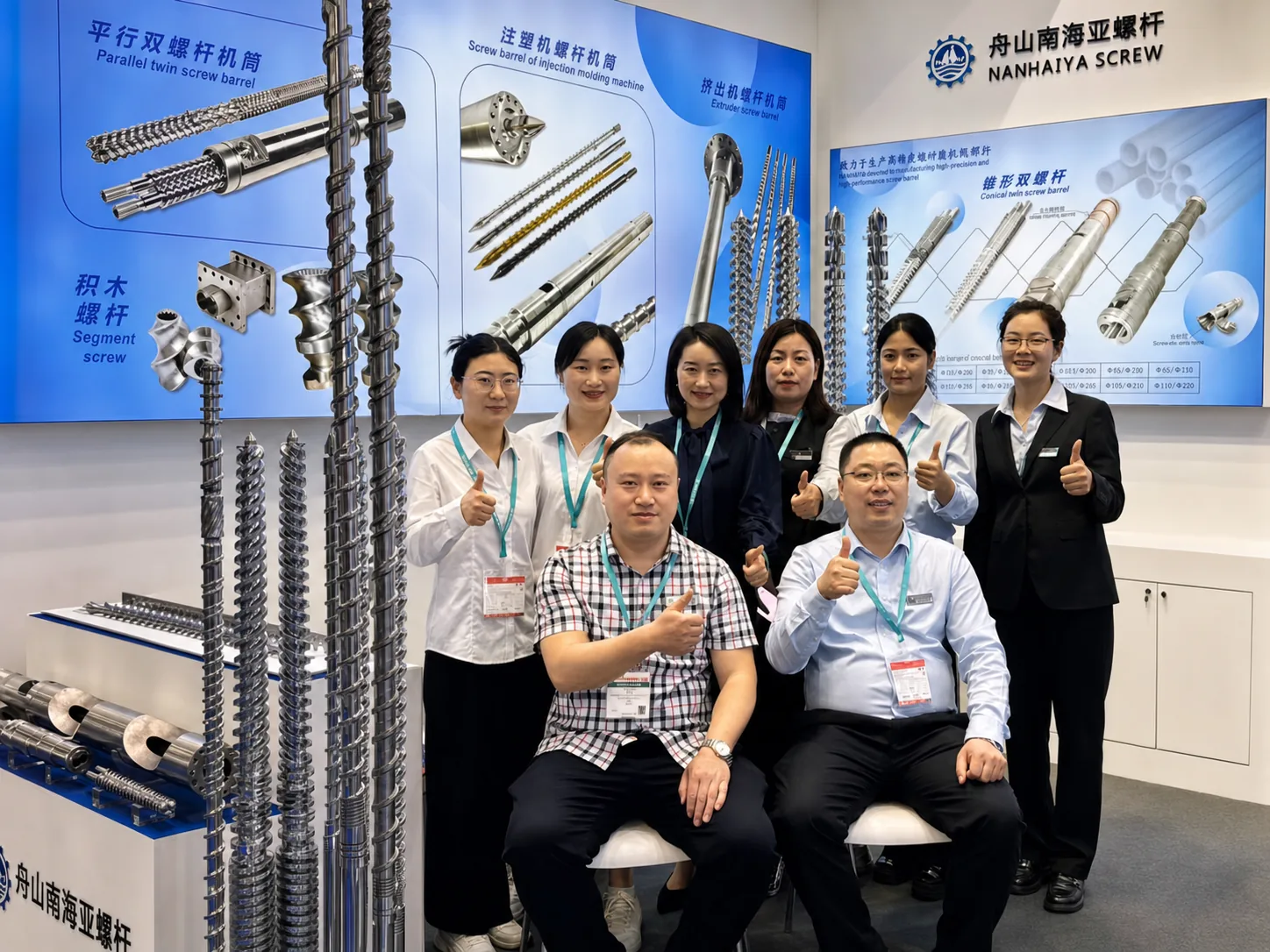
Related Articles
More insights on screw barrel technology and plastics processing.
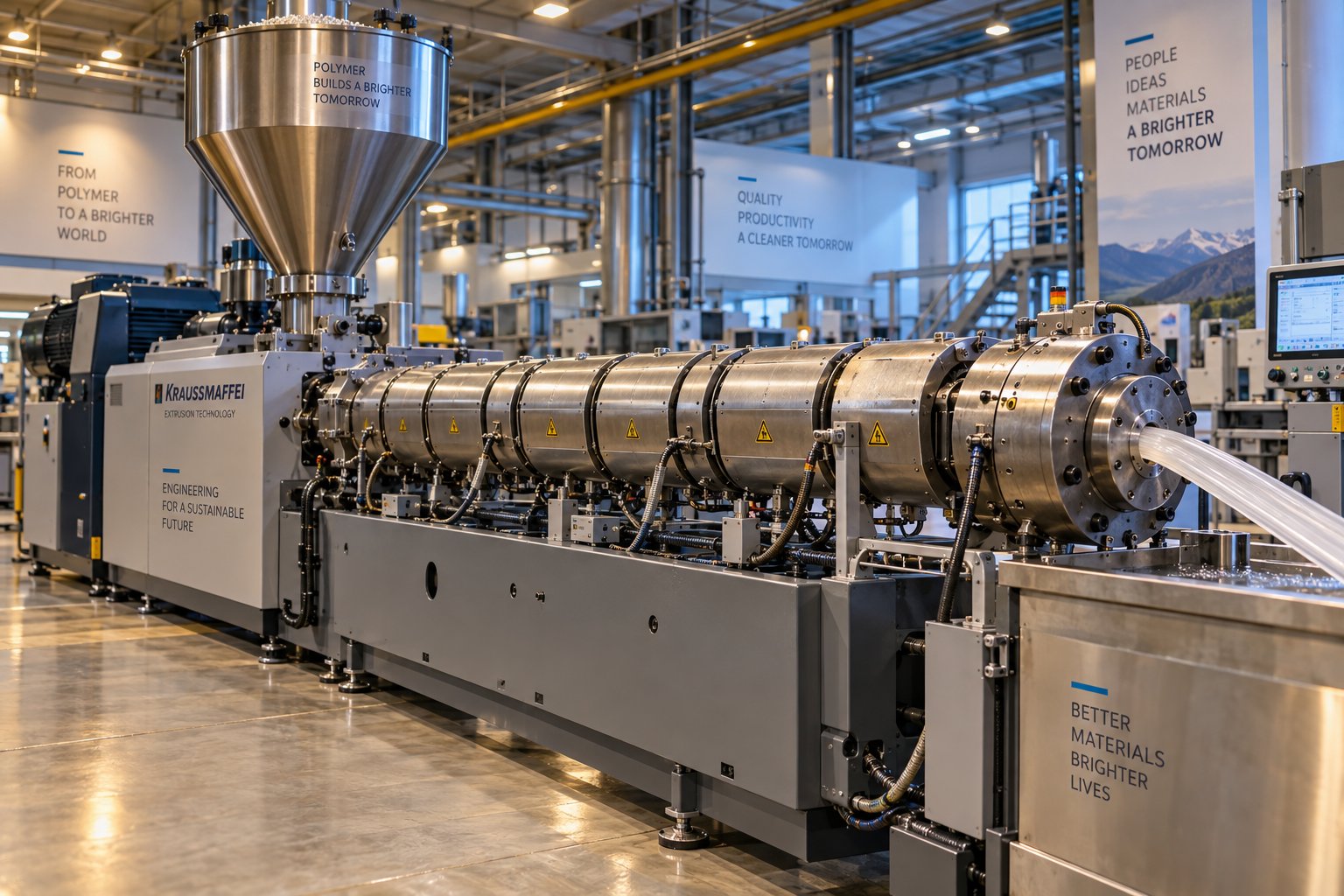
Extruder Machine Decoded: From Raw Pellet To Finished Product
Oct 6, 2026
Learn how an extruder machine works, compare single-screw vs. twin-screw types, and get expert guidance on specs, troubleshooting, and selection.
Read Article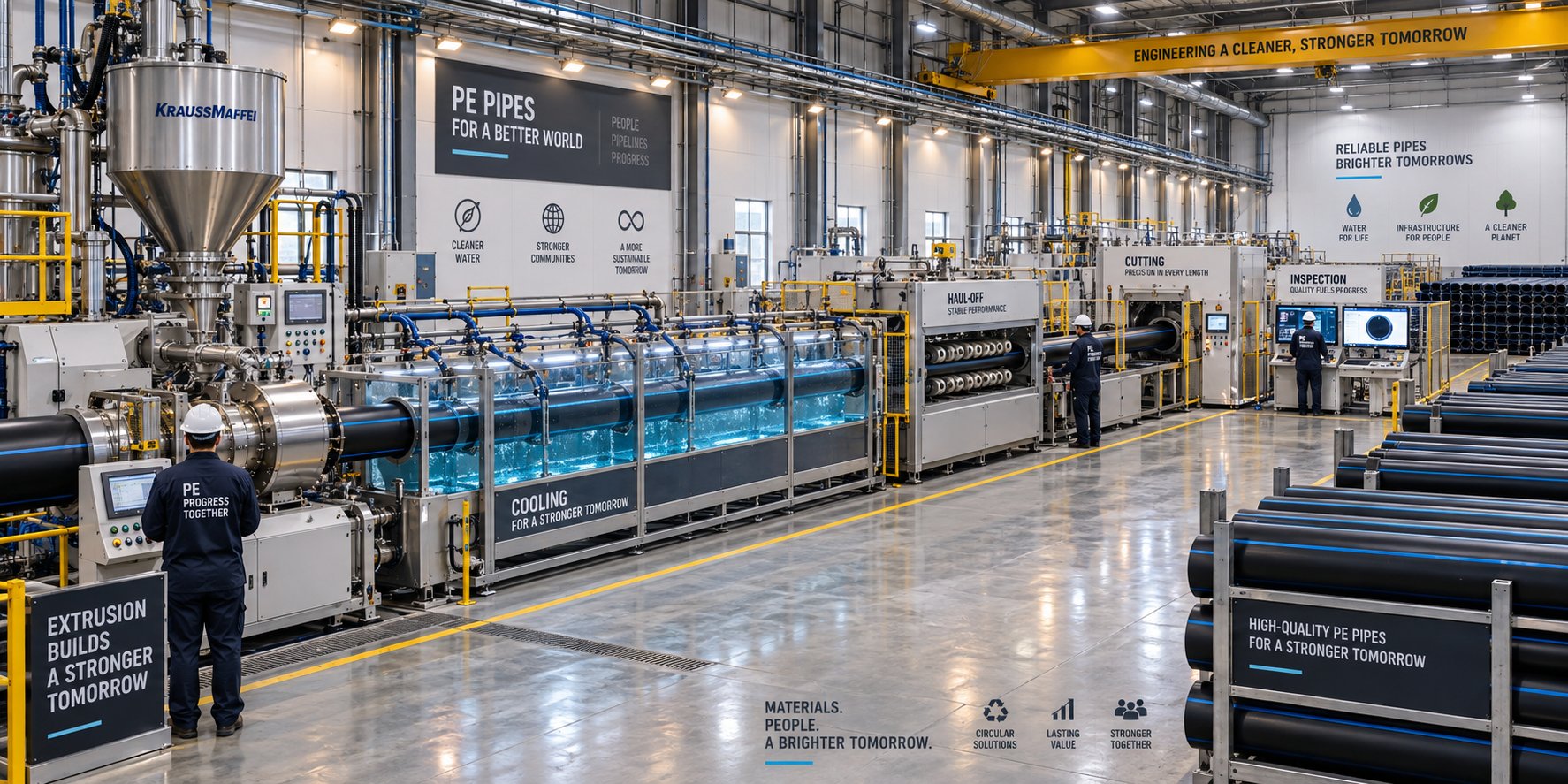
PE Pipe Making Machine Decoded: From Raw Resin to Flawless Pipe
Oct 4, 2026
Learn how a PE pipe making machine works, from resin to finished pipe. Covers components, material grades, automation, troubleshooting, and buyer selection tips.
Read Article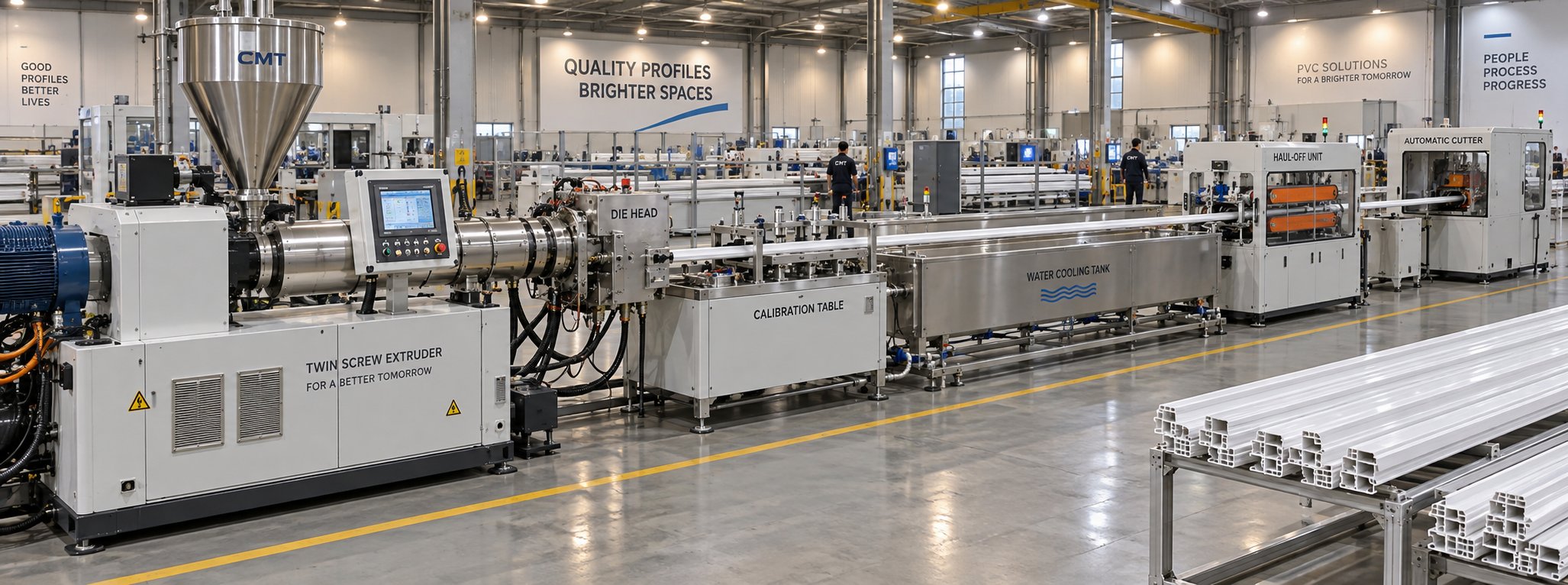
PVC Profile Making Machine Decoded: From Raw Resin To Profit
Oct 3, 2026
Learn how a PVC profile making machine works — extrusion process steps, key technical parameters, die design, calibration methods, maintenance, and total cost of ownership.
Read ArticleLooking for something else?
Search by material, symptom or product and jump straight to the relevant page.
These are navigation suggestions based on keyword matching — not a quotation, not a delivery commitment, and not a substitute for engineering review. Final specification is confirmed by our engineers against your drawings and processed material.
Need help with screw barrel selection?
Share your machine model, processed material and application. Our team can help with pricing and technical support.