

What Are Planetary Roller Screws and Why They Matter
Imagine a mechanism that packs the force of a hydraulic cylinder into a compact, electrically driven package with surgical precision. That is essentially what a planetary roller screw delivers. In technical terms, it is a mechanical linear actuator in which multiple threaded rollers orbit a central screw shaft inside a threaded nut, converting rotary motion into linear motion with exceptionally high load capacity and efficiency. If you have ever evaluated screw actuator options for demanding applications, you have likely encountered this technology — and wondered what truly sets it apart.
Defining the Planetary Roller Screw Mechanism
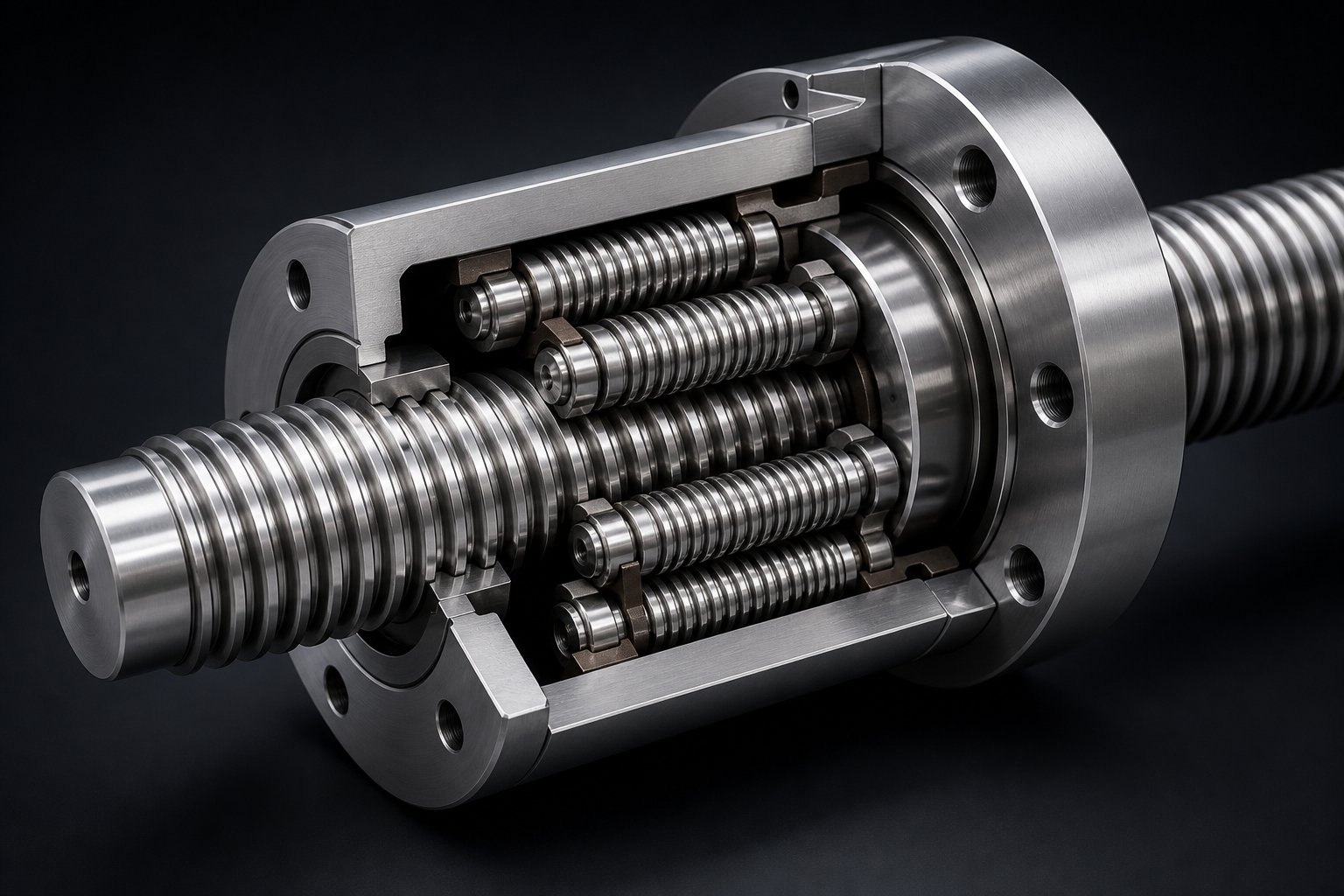
The name says more than you might think. Much like a planetary gear system, where satellite gears revolve around a central sun gear, a planetary roller screw positions several threaded rollers symmetrically around a lead screw shaft. These rollers engage simultaneously with the screw's external threads and the nut's internal threads. When the screw shaft rotates, the rollers spin on their own axes while orbiting the shaft, driving the nut in a straight line along the screw's length.
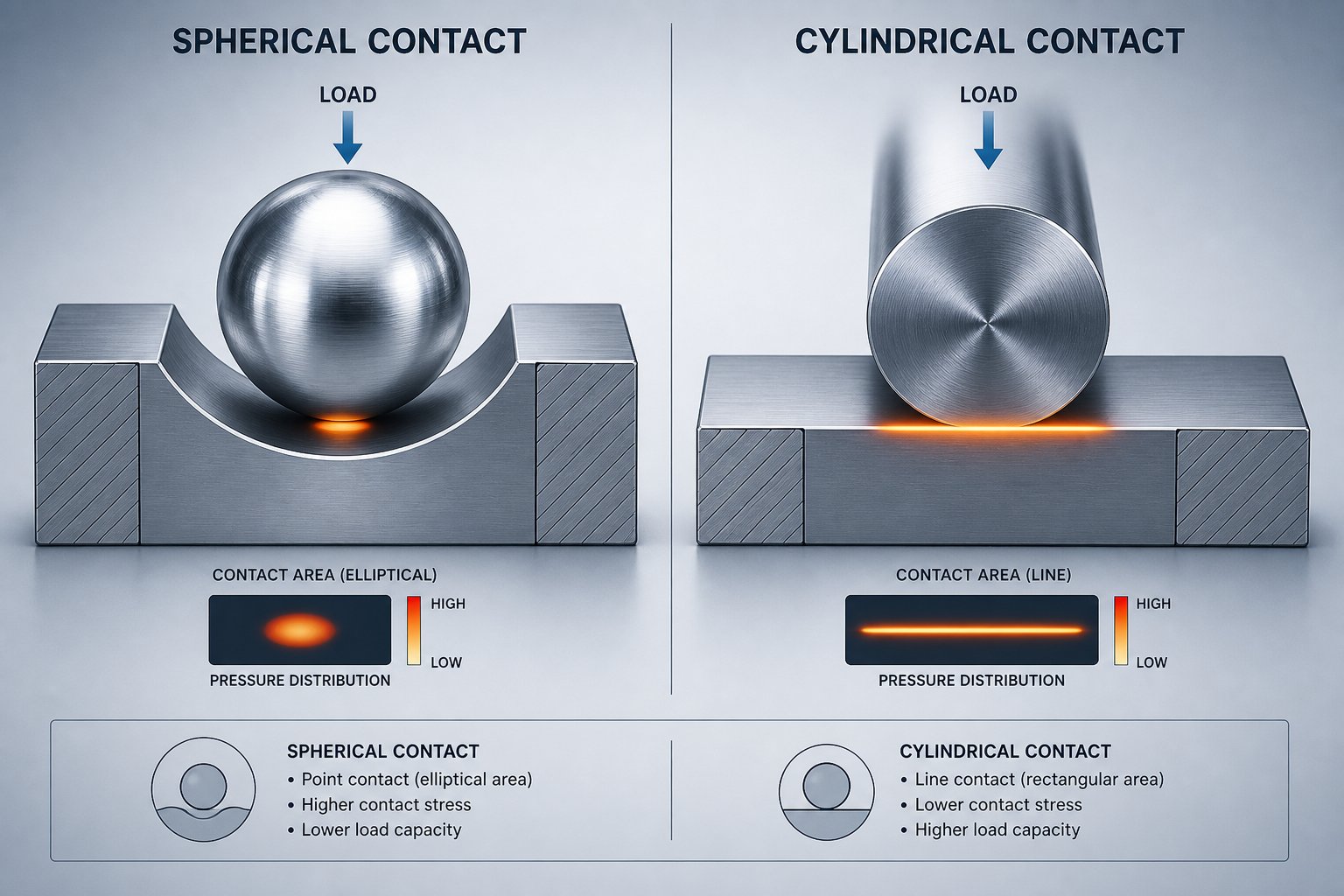
What makes this architecture fundamentally different from a ball screw? It comes down to how force is transmitted. Ball screws rely on recirculating spherical bearings rolling through curved raceways — point contact between a sphere and a groove. A roller screw, by contrast, uses cylindrical rollers with matching triangular threads that create line contact across multiple surfaces at once. As Machine Design explains, these through-hardened, precision-ground threads on the rollers and shaft provide maximum contact areas, letting the mechanism generate greater and more uniformly distributed forces. The result is dramatically higher load capacity within the same envelope size — no recirculating elements, no ball return tubes, just direct threaded engagement at every roller.
Why Engineers Need to Understand This Technology
Here is the problem: most available information on planetary roller screws falls into one of two categories. You will find either dense catalog specifications stripped of context, or broad overviews that barely scratch the surface. Neither helps an engineer decide whether this technology belongs in a specific machine, how to size it correctly, or what maintenance pitfalls to anticipate.
This article bridges that gap. It walks through the internal mechanics in genuine engineering depth, breaks down the three major design subtypes and when each one makes sense, and provides structured comparisons against ball screws, hydraulic cylinders, and lead screws. Beyond the theory, it covers real-world application domains, maintenance and failure mode prevention — a topic almost entirely absent from existing resources — and a practical selection framework for specifying the right roller screw for your project.
The core mechanical advantage of planetary roller screws lies in distributing load across multiple simultaneous lines of contact rather than discrete points, enabling higher force density, longer fatigue life, and greater stiffness in a more compact footprint than any competing screw-driven linear motion technology.
Whether you are a design engineer scoping out a new actuator platform, a procurement specialist comparing total cost of ownership, or a maintenance professional looking to extend service intervals, the following sections deliver the practical depth that specification sheets consistently leave out. And that depth begins with what actually happens inside the mechanism — at the thread level — when these rollers start to move.
How Planetary Roller Screws Work Inside
Strip away the housing and look at a planetary roller screw in cross-section, and you will see something that resembles a miniature solar system. A central screw shaft sits at the core, surrounded by a ring of identical threaded rollers, all enclosed within a threaded nut. Every component threads into every other component simultaneously. That interlocking architecture is what gives roller screws their remarkable strength — but understanding how the parts interact reveals why no other linear screw technology matches their load density.
Threaded Roller Orbiting Architecture
Picture the central screw shaft as the sun. Arranged symmetrically around it — typically six to twelve, depending on the design — sit identical cylindrical rollers, each carrying its own precision-ground external thread. These rollers occupy the annular space between the screw shaft's outer thread and the nut's internal thread, engaging with both surfaces at once. Each roller thread meshes with the screw shaft threads on its inner face and with the nut threads on its outer face, creating a continuous chain of threaded contact that wraps around the entire circumference of the assembly.
So what keeps all those rollers from drifting out of alignment? This is where the timing mechanism comes in. At each end of the nut, ring gears — sometimes called spacer cages — feature internal synchronizing gear teeth that mesh with small outer gear teeth machined onto the ends of every roller. As detailed in patent literature from SKF (now Ewellix), these ring gears are fixed within non-threaded portions of the nut bore, and annular rings with cylindrical through-cavities support the roller journals to maintain even circumferential spacing. The result is precise synchronization: every roller stays locked in its orbital position relative to its neighbors, spinning at the correct rate without slipping or jamming.
When the screw shaft rotates, the threaded engagement forces each roller to spin on its own axis. Simultaneously, the interaction between the roller threads and the nut threads drives the rollers to orbit around the shaft — just like planets orbiting a star. Because the nut's thread helix angle matches the roller thread helix angle but differs from the screw shaft's helix angle, the rollers rotate in place without migrating axially inside the nut. The net effect? The nut translates linearly along the screw shaft with exceptional smoothness and rigidity.
You will notice that no balls recirculate, no return tubes redirect rolling elements, and no complex internal pathways exist. The planetary roller screw actuator achieves its motion through direct, continuous threaded engagement — a mechanically elegant approach that eliminates several common failure points found in competing linear screw designs.
Line Contact vs Point Contact Explained
This is the single most important distinction separating roller screws from ball screws, and it explains virtually every performance advantage the technology delivers.
In a ball screw, spherical steel balls roll between the screw shaft's arched grooves and the nut's matching raceways. Where a sphere touches a curved groove, the contact geometry is a tiny elliptical patch — essentially a point. Each ball carries its share of the total axial load through this small contact area, which concentrates stress into a very localized zone. Under heavy loads or high duty cycles, that concentrated stress accelerates surface fatigue.
A planetary roller screw flips this equation entirely. Instead of spheres sitting in grooves, you have cylindrical rollers with triangular thread profiles meshing against matching triangular threads on the screw shaft and nut. The contact between a cylindrical roller thread flank and a flat or slightly curved mating thread flank is not a point — it is a line. That line extends along the full engaged length of the roller, and it exists at every roller-to-screw and roller-to-nut interface simultaneously.
The practical impact is dramatic. As Machine Design notes, through-hardened, precision-ground threads on the rollers and shaft provide maximum contact areas, letting the mechanism generate greater and more uniformly distributed forces and longer service lives compared to ball screws. With six to twelve rollers each presenting multiple thread starts in simultaneous contact, the total load-bearing surface area inside a roller screw can be several times greater than that of a comparably sized ball screw.
Line contact distributes axial force across a surface area many times larger than the point contact in ball screws, reducing localized stress concentrations and enabling dramatically higher load capacity and fatigue life within the same mechanical envelope.
Think of it this way: imagine pressing a pencil flat against a table versus pressing a marble into that same surface. The pencil spreads force along its entire length; the marble focuses everything into one tiny spot. Roller screws are the pencil. Ball screws are the marble. That geometry difference is why a roller screw rated for a given dynamic load can be physically smaller than a ball screw carrying the same force — or why, at equivalent size, the roller screw will last significantly longer before surface fatigue sets in.
This load distribution principle also contributes to higher axial and radial stiffness. Because force transfers through broad contact lines rather than discrete points, the mechanism resists elastic deflection more effectively under load. For applications demanding precise positional accuracy under fluctuating forces — think pressing, clamping, or flight control actuation — that stiffness advantage translates directly into better machine performance.
The internal architecture, elegant as it is, comes in more than one configuration. Different application demands — stroke length, envelope constraints, load direction — have driven the development of distinct roller screw subtypes, each with its own mechanical trade-offs and ideal use cases.
Types of Planetary Roller Screws and When to Select Each
Not every application demands the same mechanical architecture. A short-stroke press clamping at 200 kN has radically different needs than a long-travel positioning stage or a compact integrated servo actuator. That is precisely why planetary roller screws come in three distinct subtypes, each optimized for a different set of engineering constraints. The challenge? Most resources mention these variants in passing without explaining when one belongs in your design and another does not. Here is the practical selection rationale that specification sheets consistently leave out.
Standard (Non-Recirculating) Planetary Roller Screws
The standard configuration is the purest expression of the planetary architecture described in the previous section. Threaded rollers sit between the screw shaft and nut, engaging both sets of threads simultaneously, with ring gears at each end maintaining synchronization. Critically, the rollers do not recirculate. They spin and orbit in place but never leave their axial position within the nut. Their travel is limited by the roller length itself, which directly constrains the available stroke.
Why would you want that limitation? Because eliminating recirculation also eliminates the mechanical complexity and potential failure modes that come with it. A standard roller screw actuator delivers the highest stiffness of the three subtypes, the maximum dynamic load rating for a given envelope size, and the simplest internal mechanism. As Tolomatic's engineering resources highlight, standard planetary roller screws offer the highest dynamic load rating for the longest service life among the three screw technologies commonly found in high-force electric linear actuators. Their screws are case-hardened before precision grinding, yielding very deep case hardness and superior thread durability.
Imagine applications where stroke is measured in millimeters or a few inches rather than feet: injection molding clamping units, metal stamping presses, resistance spot welding guns, and high-force clamping fixtures. In these scenarios, the standard type is the clear winner. Maximum force, maximum rigidity, minimal internal parts to wear — exactly what short-stroke, high-cycle operations demand.
Inverted Planetary Roller Screws
Flip the standard design inside out, and you get the inverted configuration. Here, the nut rotates while the screw shaft translates linearly. The rollers still orbit and spin within the nut, but because the nut is the driven (rotating) member, the mechanical packaging changes significantly.
When does this reversal matter? Consider an application where the extending member must be the screw shaft — perhaps because it needs to push directly against a load or fit through a fixed guide bearing. Or picture a design where the rotating nut can be directly coupled to a motor housing, eliminating the need for an external coupling or belt drive. The inverted layout enables more compact integrated actuator designs, which is why you will find it in space-constrained servo-driven assemblies.
There is a trade-off, however. Most inverted roller screws use manufacturing processes different from the precision grinding applied to standard types. As Tolomatic notes, the hardening process is performed after the nut is machined in many inverted designs, resulting in shallower case hardness depth and softer threads than standard roller screws. This leads to a significantly lower dynamic load rating — meaning shorter life under equivalent loads — and can present more challenges with maintaining lubrication. The actuator may be slightly more compact, but that compactness comes at the cost of reduced load capacity and durability.
Typical use cases include integrated motor-actuator packages where envelope size is the primary constraint, moderate-force applications where the dynamic load rating reduction is acceptable, and designs requiring the screw shaft to serve as the extending rod.
Recirculating Planetary Roller Screws
What happens when your application needs long stroke lengths — hundreds of millimeters or more — but you still want the load advantages of roller thread contact? That is the domain of the recirculating roller screw. Sometimes referred to as an idler roller screw in certain configurations, this design adds a recirculation mechanism that allows the rollers to cycle back to their starting position after reaching the end of their axial travel within the nut.
The concept parallels ball screw recirculation, where balls exit one end of the nut circuit and return to the other through a deflector or return tube. In recirculating roller screws, the rollers themselves — or in some designs, segments of the roller assembly — are redirected through internal pathways to enable continuous, unlimited stroke length. This unlocks applications that the standard type simply cannot serve: long-travel positioning systems, large-format press actuators, and heavy-duty linear motion stages where both stroke and force are non-negotiable.
The trade-offs are real but manageable. The recirculation mechanism adds internal complexity, which introduces additional components that can wear over time. Stiffness may be slightly lower than a comparable standard type because the recirculating elements introduce a small amount of compliance. Noise levels can also increase marginally due to the recirculation process. Still, for any application demanding extended stroke with high axial load capability, recirculating roller screws represent the only viable option within the planetary architecture family.
Choosing between these three subtypes is not a matter of preference — it is a matter of matching mechanical architecture to application requirements. The table below organizes the key decision factors side by side.
| Decision Factor | Standard (Non-Recirculating) | Inverted | Recirculating |
|---|---|---|---|
| Stroke Capability | Limited by roller length (short stroke) | Limited by roller length (short stroke) | Unlimited (long stroke) |
| Dynamic Load Capacity | Highest for a given envelope size | Lower due to shallower case hardness | High, slightly below standard type |
| Stiffness | Maximum — no recirculating elements | High, but reduced by inverted geometry | Slightly lower due to recirculation compliance |
| Mechanical Complexity | Simplest design | Moderate (reversed assembly) | Most complex (recirculation pathways) |
| Typical Envelope | Standard | More compact (integrated motor coupling) | Larger due to recirculation mechanism |
| Ideal Application Domains | Pressing, clamping, injection molding, spot welding | Integrated servo actuators, space-constrained assemblies | Long-travel positioning, large presses, heavy-duty linear stages |
A practical rule of thumb: start with the standard type. It offers the best load rating and longest life with the fewest internal components. Only move to the inverted configuration when packaging constraints force a rotating-nut architecture, and only specify recirculating roller screws when stroke requirements exceed the limits of a standard roller length. Every step away from the standard design introduces additional complexity — and complexity always carries a reliability cost.
Selecting the right subtype, of course, is only half the equation. The other half involves understanding how these roller screw configurations stack up against entirely different linear motion technologies — ball screws, hydraulic cylinders, and lead screws — each of which competes for the same application space with its own set of strengths and compromises.
Planetary Roller Screws vs Ball Screws and Hydraulic Cylinders
Knowing which roller screw subtype fits your stroke and load requirements is essential — but the bigger question often comes earlier in the design process: should you use a planetary roller screw at all? Engineers evaluating linear motion solutions rarely have the luxury of a single-technology shortlist. The real decision typically pits ball and roller screws against each other, weighs electromechanical drives against hydraulic cylinders, or asks whether a simple lead screw can do the job at a fraction of the cost. What follows is the structured comparison framework that, surprisingly, does not exist in most available technical resources.
Planetary Roller Screws vs Ball Screws
This is the head-to-head matchup engineers encounter most frequently. Both technologies deliver high mechanical efficiency — typically in the 80 to 90 percent range — and both convert rotary input into precise linear motion. The differences, however, are significant enough to make the wrong choice costly.
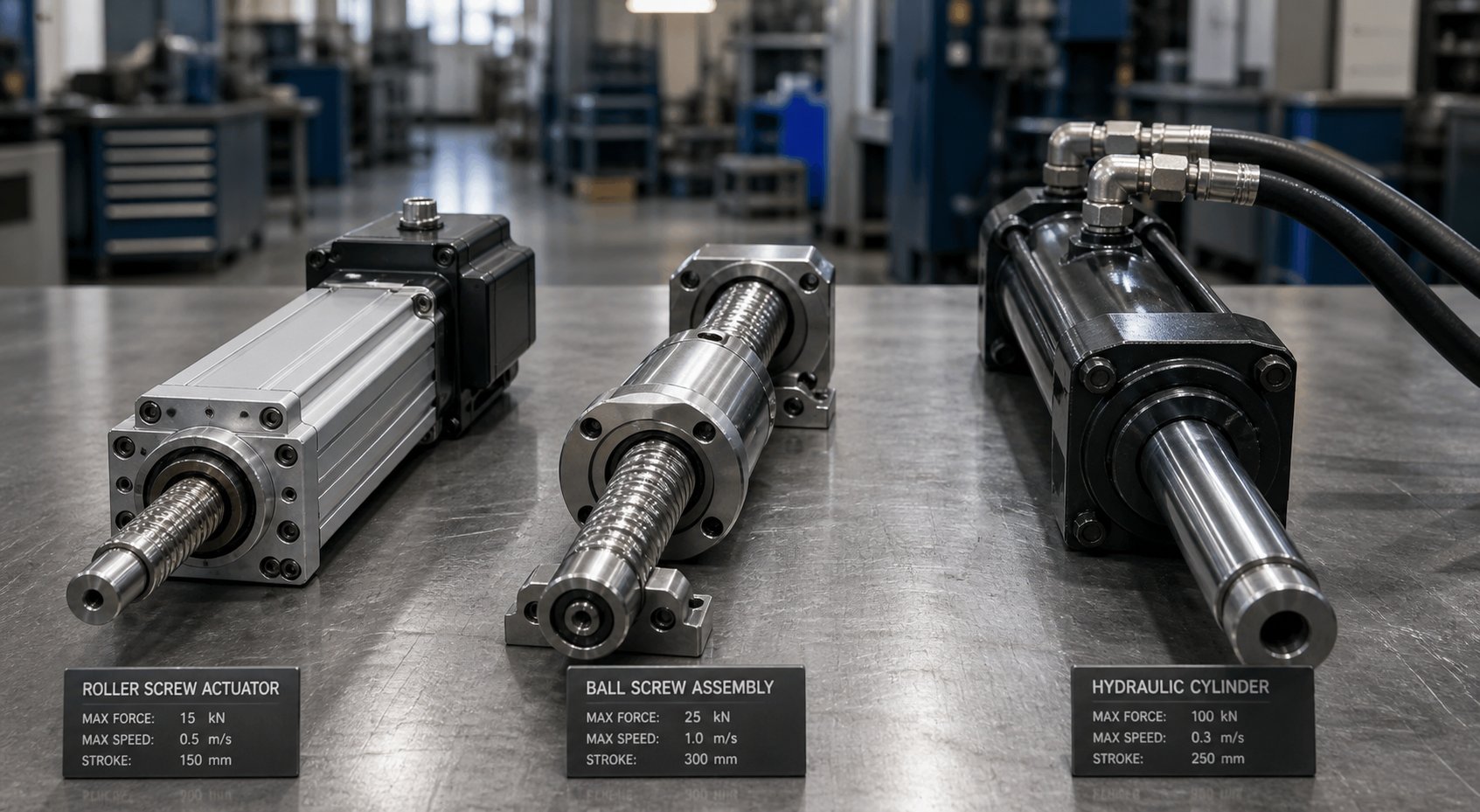
Load capacity is where the gap is widest. A ball screw actuator transfers force through point contact between recirculating steel balls and curved raceways. A comparably sized planetary roller screw distributes that same force across multiple lines of threaded contact. The practical result? For an equivalent diameter and lead, a roller screw can handle substantially higher dynamic loads — often two to three times what a ball screw manages within the same envelope. That load advantage translates directly into longer fatigue life when both technologies operate at the same force level.
Speed, however, tilts the other direction. A ball screw linear actuator generally supports higher rotational speeds because each ball presents relatively low friction at its single contact point, and modern ball return systems handle high-speed recirculation efficiently. Roller screws, with their many simultaneous contact lines, generate somewhat more internal friction at extreme speeds. For high-speed, moderate-load positioning — think CNC rapid traverse or pick-and-place automation — ball screw actuators remain the smarter, more cost-effective solution.
Noise and maintenance also differ. Ball screws produce audible recirculation noise as balls cycle through return tubes, and the return mechanism itself is a wear point requiring periodic attention. Roller screws run quieter because there are no recirculating elements, but they demand precise lubrication management across a larger number of threaded contact surfaces. Neither technology is maintenance-free, but the failure modes and service intervals differ enough to influence lifecycle planning.
The bottom line: if your application demands maximum force in a compact package, extended cycle life under heavy loads, or high stiffness for precision force control, roller screws win. If your priority is speed, moderate loads, and lower initial cost, a linear ball screw actuator is the more practical choice.
Planetary Roller Screws vs Hydraulic Cylinders
This comparison crosses a fundamental technology boundary — electromechanical versus fluid power — and it is reshaping entire industries. Hydraulic cylinders have dominated high-force linear motion for decades, and for good reason. They deliver enormous force density, tolerate shock loads well, and use relatively inexpensive hardware.
So why are roller screw actuators steadily replacing them in application after application? Several factors converge:
- Precision and controllability: A roller screw paired with a servo motor offers closed-loop positional accuracy measured in microns. Hydraulic systems achieve good force control but struggle to match this level of positioning precision without expensive servo-hydraulic valves and feedback systems.
- Energy efficiency: Hydraulic power units consume energy continuously to maintain pressure, even when the actuator is stationary. An electromechanical roller screw actuator draws power only during motion, reducing energy consumption by 50 percent or more in many duty cycles.
- Environmental cleanliness: Hydraulic fluid leaks are not a question of if but when. In food processing, pharmaceutical manufacturing, cleanroom environments, and aerospace, eliminating hydraulic fluid removes contamination risk entirely.
- Reduced maintenance footprint: No fluid reservoirs, no hoses, no filters, no fluid changes. The total system footprint and maintenance burden of a roller screw actuator is dramatically smaller than a comparable hydraulic installation.
That said, hydraulic systems still hold ground in applications requiring extremely high force output — hundreds of kilonewtons or more — where the cost of equivalently rated electromechanical actuators becomes prohibitive. Heavy construction equipment, large-tonnage forging presses, and certain offshore systems remain hydraulic territory for now. The crossover point, however, keeps moving upward as roller screw technology and high-torque servo motors continue to advance.
Planetary Roller Screws vs Lead and Acme Screws
Lead screws and Acme screws represent the simplest end of the screw-driven actuator spectrum. A single-start or multi-start thread on a shaft engages directly with a polymer or bronze nut — no rolling elements, no rollers, no balls. The appeal is obvious: low cost, simple design, and wide availability.
The trade-offs are equally obvious. Sliding contact between the screw and nut generates high friction, dropping mechanical efficiency to roughly 20 to 40 percent. That friction creates heat, accelerates thread wear, and limits duty cycles. Lead screws work well for light-duty, low-speed, intermittent applications — manual positioning stages, low-cost automation, and infrequent adjustment mechanisms. Push them into high-force, high-cycle territory, and wear rates climb quickly while efficiency losses translate into wasted energy and oversized motors.
For any application where reliability, efficiency, and load capacity genuinely matter, the performance gap between lead screws and planetary roller screws is not marginal — it is an order of magnitude.
The table below consolidates these comparisons into a single reference framework, covering the key decision parameters across all four technologies.
| Parameter | Planetary Roller Screws | Ball Screws | Hydraulic Cylinders | Lead / Acme Screws |
|---|---|---|---|---|
| Load Capacity (relative to size) | Very high (line contact) | Moderate to high (point contact) | Very high (fluid pressure) | Low to moderate (sliding contact) |
| Mechanical Efficiency | 80 – 90% | 80 – 90% | ~40 – 60% (system level) | 20 – 40% |
| Maximum Speed | Moderate | High | High | Low to moderate |
| Service Life (under equivalent load) | Longest among screw types | Long, shorter than roller screws at equivalent load | Long (seals are wear items) | Shortest (sliding wear) |
| Positional Precision | Very high | Very high | Moderate (without servo-hydraulics) | Moderate |
| Maintenance Burden | Low to moderate (lubrication focused) | Low to moderate (ball return wear) | High (fluid, seals, filters, hoses) | Low (but frequent replacement) |
| Noise Level | Low | Moderate (recirculation noise) | Moderate to high (pump and valve noise) | Low |
| Relative Component Cost | Highest among screw types | Moderate | Low (component), high (system) | Lowest |
| Best Suited For | High-load, high-cycle, precision applications | High-speed, moderate-load positioning | Very high force, shock-tolerant applications | Light-duty, low-speed, cost-sensitive uses |
Notice a pattern in the table? Planetary roller screws occupy the premium corner across nearly every performance metric except speed and upfront cost. They are not the right answer for every application — and recognizing that distinction is as important as understanding their strengths. A design engineer who specifies a roller screw where a ball screw would suffice wastes budget without gaining meaningful performance. But an engineer who defaults to a ball screw or hydraulic cylinder in a high-load, high-cycle, precision-critical application risks premature failure, excessive downtime, or an oversized system footprint.
The real proof of where these performance differences matter most shows up not in comparison tables, but in the actual operating environments where planetary roller screws have displaced older technologies — and the engineering reasons behind each transition are more nuanced than a simple spec-sheet advantage might suggest.
Real-World Applications Where Planetary Roller Screws Excel
Comparison tables reveal capabilities. Real applications reveal why those capabilities matter. Listing industries that use planetary roller screws is easy — every competitor article does it. The harder, more useful question is this: what specific engineering demands in each domain make roller screw technology the superior choice over alternatives that cost less or are simpler to source? The answer always traces back to a unique combination of performance requirements that no single competing technology satisfies as well.
Aerospace and Defense Applications
Few operating environments punish linear actuators as relentlessly as flight. A flight control actuator on a commercial or military aircraft must deliver extremely high force in a package small enough to fit inside a wing or tail section. It must cycle millions of times over the aircraft's service life without failure. It must resist severe vibration, rapid temperature swings, and aerodynamic shock loads — all while maintaining positional accuracy measured in fractions of a millimeter.
Hydraulic actuators dominated this space for decades, but the aerospace industry is undergoing a fundamental shift toward more-electric aircraft architectures. Replacing hydraulic lines, reservoirs, and pumps with electromechanical alternatives eliminates significant weight, reduces maintenance complexity, and removes hydraulic fluid leak risks that create both safety and environmental concerns. A roller screw linear actuator paired with a high-density servo motor delivers the force density needed for primary flight control surfaces while fitting within the tight volumetric constraints of modern airframe designs.
Why not ball screws? The fatigue life equation is decisive. Flight control actuators endure high-load, high-cycle duty profiles where the line contact advantage of roller screws translates into service lives several times longer than comparably sized ball screw alternatives — a critical factor when component replacement on an aircraft involves grounding the vehicle, accessing deeply embedded assemblies, and complying with rigorous aviation certification protocols. As Nook Industries reports, the fastest growing segment for planetary roller screws involves electric vehicles and aircraft, where they enhance efficiency of embedded flight control and vehicle control subsystems. This trend continues to accelerate as demand for electrically powered aircraft scales upward.
Defense applications follow similar logic. Missile fin actuators, gun turret positioning systems, and vertical actuators used in launch and stabilization platforms all demand the combination of compact high-force output, shock resistance, and extended fatigue life that roller screws uniquely provide.
Industrial and Manufacturing Applications
Step from the sky to the factory floor, and the performance requirements shift — but the underlying rationale for choosing roller screws stays remarkably consistent: high force, high cycle counts, and tight positional control in a compact footprint.
Injection molding is perhaps the most iconic application. Clamping units in all-electric injection molding machines require short-stroke, extremely high-force actuation — often exceeding 100 kN — delivered with millisecond-level repeatability over millions of production cycles. Standard non-recirculating planetary roller screws thrive here precisely because of their maximum stiffness, highest load rating per envelope size, and simplicity. As Design World notes, roller screws were initially adopted in heavy industries such as injection molding, where they replace hydraulic cylinders and other high-load drive mechanisms — and the technology has only expanded from that foundation.
Industrial presses and metal forming equipment present similar demands. Whether stamping automotive body panels or forming aerospace sheet metal, these machines need a screw driven linear actuator that can sustain enormous pressing forces without elastic deflection compromising part quality. The stiffness advantage of roller screws — a direct result of multi-line contact load distribution — ensures that force application remains consistent and predictable across the full press stroke.
Heavy-duty automation rounds out the industrial picture. Automated assembly cells and production lines increasingly favor compact systems that save floor space while delivering greater reliability, lower power consumption, and increased precision. Industry reporting from Nook Industries confirms that OEMs are relying more on automated industrial systems using planetary roller screws for operations requiring high levels of repeatability and accurate linear motion. Resistance welding, riveting, clinching, and servo-press applications all benefit from the same core advantages: high force density, long cycle life, and precise motion control without hydraulic infrastructure.
Emerging and Specialized Domains
Beyond aerospace and heavy industry, roller screw technology is gaining traction in domains where specific environmental or regulatory constraints make conventional alternatives problematic. These emerging applications often represent the most compelling case studies for the technology precisely because the selection rationale goes beyond raw force and speed into cleanliness, safety, and total system simplicity.
- Subsea and offshore equipment: Operating thousands of meters underwater, actuators face extreme hydrostatic pressure, corrosive saltwater environments, and the logistical nightmare of maintenance access. Eliminating hydraulic fluid — and its associated leak risk, environmental liability, and maintenance burden — makes electromechanical roller screw actuators increasingly attractive for subsea valve actuation, BOP (blowout preventer) control systems, and remotely operated vehicle tooling.
- Food and beverage processing: Hygiene regulations demand equipment that withstands aggressive washdown cycles, resists bacterial harborage, and avoids contamination risks from lubricant or hydraulic fluid leaks. Roller screws for food and beverage industry applications can be specified with food-grade lubricants, stainless steel components, and sealed housings that survive high-pressure cleaning. Their all-mechanical architecture eliminates the fluid contamination vector entirely — a decisive advantage in dairy, meat processing, and bottling lines.
- Energy sector applications: Wind turbine pitch control systems and solar tracker vertical actuators require reliable, long-life linear motion in remote locations where maintenance visits are expensive and downtime directly reduces revenue. The extended fatigue life and low maintenance profile of roller screws make them cost-effective despite higher initial component pricing.
- Electric vehicle manufacturing: As EV production ramps globally, battery cell stacking, module assembly, and precision welding operations demand actuators capable of delivering consistent force with sub-millimeter accuracy across millions of cycles. Roller screw actuators meet these requirements while fitting into the compact, automated production cells that EV manufacturers favor.
- Robotics and advanced automation: Collaborative robots and high-payload industrial robots increasingly integrate roller screw mechanisms into their joint actuators and end-effectors, leveraging the technology's force-to-size ratio to achieve capabilities that would otherwise require larger, heavier drive systems.
Across every one of these domains, the selection rationale follows the same thread: the application demands a specific combination of high load capacity, long cycle life, compact size, and environmental resilience that no competing technology delivers as effectively. Planetary roller screws do not win on any single parameter in isolation — they win because real-world applications rarely involve a single parameter in isolation.
Performance in the field, however, depends on more than just selecting the right technology. Even the most capable roller screw will underperform — or fail prematurely — if installation, lubrication, and ongoing maintenance practices do not match the precision of the mechanism itself.
Maintenance, Lubrication, and Failure Mode Prevention
A planetary roller screw is a precision instrument masquerading as a heavy-duty workhorse. It handles enormous loads with remarkable elegance — but that elegance depends on every roller, every thread flank, and every timing gear operating in tightly coordinated harmony. Neglect any aspect of installation or ongoing care, and the very architecture that gives these mechanisms their strength becomes a liability. Misalignment that a ball screw might tolerate for thousands of hours can destroy a roller screw assembly in a fraction of that time. Contamination that would merely degrade a hydraulic cylinder's seals can lock up a roller mechanism entirely.
Yet despite these stakes, practical maintenance guidance for roller screw assemblies is almost entirely absent from publicly available technical literature. What follows fills that gap — covering the installation decisions that prevent problems before they start, the lubrication practices that sustain performance over millions of cycles, and the failure modes that reliability engineers need to recognize and prevent.
Installation Best Practices for Roller Screws
Getting a roller screw actuator running is straightforward. Getting it running correctly — so it delivers its rated load capacity and service life — requires attention to details that are far more critical than with simpler screw driven actuator technologies.
Alignment is non-negotiable. In a ball screw, minor angular misalignment between the screw shaft and nut introduces uneven ball loading but rarely causes immediate failure. In a planetary roller screw, misalignment affects every roller simultaneously. Because six to twelve rollers must maintain synchronized orbital positions while meshing with both the screw shaft and nut threads, even small angular or offset errors create asymmetric loading across the roller set. The overloaded rollers experience accelerated thread wear and surface fatigue, while the underloaded rollers may lose proper thread engagement. Over time, this imbalance cascades: worn rollers shift timing, which compounds misalignment, which accelerates degradation further.
Practically, this means mounting surfaces must be machined to tighter tolerances than you would specify for a ball screw installation. The screw shaft and nut housing should be concentric and parallel within the manufacturer's stated alignment envelope — typically tighter than 0.05 mm over the bearing span. Use precision-ground mounting flanges and, where possible, self-aligning bearing supports at both ends of the screw shaft to accommodate minor thermal expansion without introducing angular error.
Preload setting matters more than you might expect. Preload eliminates backlash and increases stiffness, but excessive preload on a roller screw generates disproportionate friction and heat across the many contact lines. Follow the manufacturer's specified preload values precisely. Over-tightening a roller screw nut — even slightly beyond specification — can dramatically shorten service life by increasing contact stress at every roller-to-shaft and roller-to-nut interface simultaneously.
Environmental sealing protects internal precision. The enclosed roller mechanism, with its tight thread clearances and timing gears, is highly vulnerable to particulate contamination. Specify appropriate seals — labyrinth seals for dry environments, contact lip seals for wet or contaminated atmospheres — and ensure that the sealing solution does not introduce excessive drag that would raise operating temperatures. In washdown or outdoor applications, IP-rated housings are not optional; they are essential to preserving the actuator screw assembly's internal integrity.
Lubrication and Preventive Maintenance
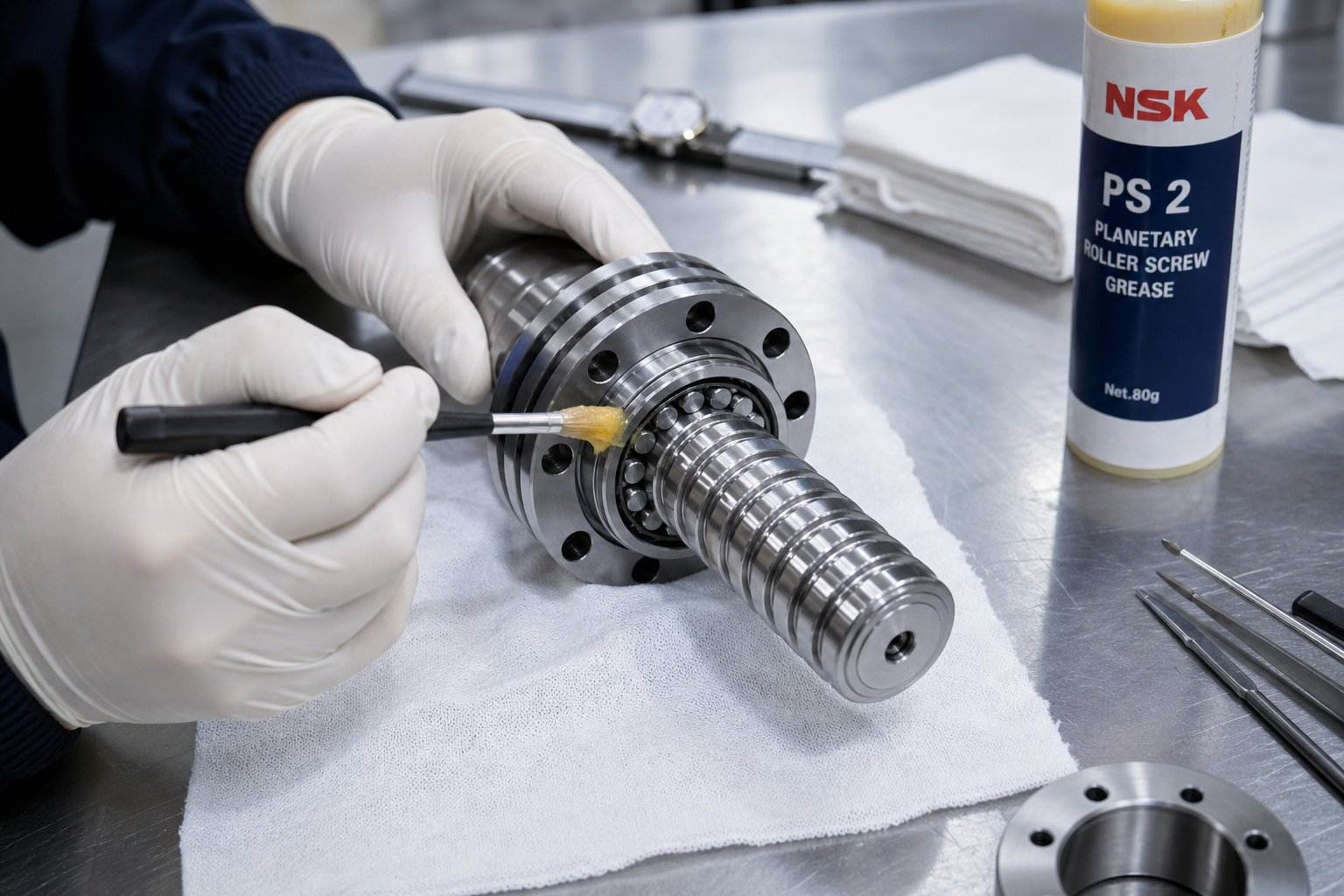
If alignment is the foundation of roller screw reliability, lubrication is the lifeblood. Every thread contact line — and there are dozens of them operating simultaneously inside a single assembly — depends on a consistent lubricant film to prevent metal-to-metal contact, dissipate heat, and inhibit corrosion.
Grease vs. oil: Most roller screw applications use grease lubrication because it stays in place within the enclosed nut assembly, requires less frequent replenishment, and provides effective sealing against contaminants. Oil lubrication is preferred in high-speed or high-temperature applications where grease cannot dissipate heat quickly enough, or where a centralized lubrication system already serves the machine. As Helix Linear Technologies emphasizes for screw mechanisms in general, selecting the right lubricant type based on operating temperature, speed, and contamination exposure is critical to preventing premature wear.
Re-lubrication intervals depend heavily on duty cycle. A roller screw operating at moderate loads with intermittent duty might go thousands of hours between re-greasing. A high-duty-cycle actuator screw running continuous cycles under heavy load may require lubrication replenishment every few hundred hours. The key principle? Establish a schedule based on your actual operating conditions rather than generic recommendations — and adjust that schedule based on inspection findings.
Contamination management deserves special emphasis. The planetary architecture, with its multiple rollers packed tightly around the screw shaft, can trap debris between thread flanks where it acts as an abrasive compound. Unlike a ball screw where contamination may pass through the ball circuit and exit, particles lodged in a roller screw's thread engagement zones grind against hardened surfaces with every revolution. Proper sealing at installation prevents most contamination ingress, but inspection protocols should include checking seal condition and looking for discolored or particle-laden grease during re-lubrication events.
Monitoring for early warning signs rounds out the preventive maintenance strategy. Unusual noise — grinding, clicking, or periodic knocking — often signals roller timing issues, inadequate lubrication, or early-stage surface damage. A rise in operating temperature beyond normal baselines indicates increased friction from lubricant degradation, contamination, or excessive preload. Either symptom warrants investigation before the mechanism sustains permanent damage.
Common Failure Modes and How to Prevent Them
Understanding how these mechanisms fail is the most direct path to ensuring they do not. The following failure modes account for the vast majority of premature roller screw replacements — and every one of them is preventable with proper engineering attention. As failure mode research from Patsnap Eureka highlights, wear and fatigue mechanisms, lubrication failure, and assembly-related defects represent the primary categories of screw drive failure across both roller and ball screw technologies.
- Surface fatigue (pitting): Repeated cyclic loading causes subsurface cracks in hardened thread flanks that eventually propagate to the surface, creating small pits. Pitting accelerates once it begins because the roughened surface disrupts the lubricant film. Prevention: Operate within rated dynamic load limits, maintain proper lubrication film thickness, and select case-hardened screw and roller materials with sufficient depth of hardness for the expected duty cycle.
- Roller thread wear: Gradual material loss from thread flanks increases backlash and reduces load-carrying capacity. Wear accelerates when lubrication is insufficient, contamination is present, or loads exceed rated values. Prevention: Adhere to re-lubrication schedules, maintain effective sealing against particulate ingress, and verify that actual operating loads match — rather than exceed — the specified dynamic load rating.
- Timing gear degradation: The ring gears that synchronize roller orbital positions are precision components subject to their own wear patterns. Degraded timing gear teeth allow rollers to drift out of phase, creating uneven loading and potential thread damage. Prevention: Ensure proper lubrication reaches the timing gear interfaces, avoid shock loads that can chip gear teeth, and inspect timing gear condition during scheduled maintenance intervals.
- Cage and spacer failure: Spacer elements that maintain circumferential roller spacing can crack, deform, or wear under heavy loads or high temperatures. A failed spacer allows rollers to contact each other directly, which can jam the mechanism entirely. Prevention: Monitor operating temperatures to stay within material limits for cage components, avoid sustained operation at maximum rated load without adequate cooling, and replace spacers according to manufacturer-recommended service intervals.
- Misalignment-induced asymmetric wear: As discussed in installation best practices, misalignment overloads specific rollers while underloading others. The overloaded rollers develop accelerated pitting and thread wear on one side, creating a progressive degradation pattern. Prevention: Verify shaft-to-housing alignment at installation, re-check alignment after initial run-in and thermal stabilization, and use precision mounting hardware to maintain concentricity over the machine's operating life.
Most planetary roller screw failures trace back to three root causes — misalignment, inadequate lubrication, and operation beyond rated load — all of which are preventable through proper installation practices and disciplined maintenance protocols.
Reliability, ultimately, is not a property of the roller screw itself — it is a property of how well the entire system is engineered, installed, and maintained. The most precisely manufactured screw actuators in the world will underdeliver if the surrounding engineering decisions do not support them. That same principle applies to the selection process itself: choosing the right roller screw for your application requires a structured approach that goes well beyond matching a catalog number to a force requirement.
How to Select the Right Planetary Roller Screw for Your Application
Proper installation and maintenance keep a roller screw running at its rated potential — but none of that matters if the wrong screw was specified in the first place. Oversizing wastes budget. Undersizing invites premature failure. And in a technology category where component costs run significantly higher than ball screw linear actuators or lead screws, getting the specification right the first time is not optional — it is the difference between a machine that performs for years and one that generates warranty claims in months.
Yet most available guidance on roller screw selection either stops at catalog tables or jumps straight to manufacturer-specific sizing software without explaining the engineering logic behind the inputs. What follows is a practical decision framework that bridges that gap.
Key Parameters for Specifying a Planetary Roller Screw
Every roller screw specification begins with the same core parameters, and each one progressively narrows your options. Think of it as a funnel: broad application requirements at the top, a specific part number at the bottom.
Required axial load — both static and dynamic. The dynamic load rating determines fatigue life under operating conditions, while the static rating governs the maximum force the assembly can withstand at rest without permanent deformation. As Linear Motion Tips explains, the nominal lifespan calculation (L10) relates dynamic load capacity to mean load — and critically, the mean load is often far lower than the peak load when force varies across the stroke cycle. A press that applies 25,000 lb only during the final third of its stroke, for example, may permit a significantly smaller screw diameter than an elevator that sustains the same peak load continuously.
Stroke length. This single parameter determines whether you need a standard or recirculating design. If the required stroke falls within the axial travel limits of a non-recirculating roller set, the standard type delivers maximum stiffness and load rating. Exceed that limit, and you must specify a recirculating configuration — with the accompanying trade-offs in complexity and compliance discussed in earlier sections.
Operating speed. Maximum rotational speed depends on screw diameter, unsupported shaft length, and end bearing configuration. The general relationship, as outlined in roller screw sizing guidance, follows the formula Nmax = 108 × 106 × (do / L2) × Fkr, where do is the screw diameter, L is the screw length, and Fkr is a correction factor for bearing type. While the speed ceiling rarely eliminates roller screws from consideration when proper bearings are selected, it does influence diameter and lead choices.
Duty cycle. How often does the actuator cycle, and what percentage of each cycle involves the peak load? High duty cycles — continuous production environments running thousands of cycles per hour — demand larger safety margins on the L10 life calculation. Intermittent duty allows more aggressive sizing.
Positional accuracy and stiffness. Applications requiring micron-level repeatability under fluctuating loads need preloaded nut configurations with minimal backlash. A linear screw actuator for coarse positioning can tolerate standard play, while a servo press or grinding feed demands a preloaded assembly with verified stiffness specifications.
Environmental conditions. Temperature extremes affect lubricant viscosity and material expansion. Contamination exposure — dust, coolant, washdown chemicals — dictates sealing requirements. Corrosive atmospheres may require stainless steel or specialty-coated components that narrow the available product range.
Expected service life. Define the target lifespan in hours, cycles, or production units. This figure, combined with the mean load and speed data, feeds directly into the L10 calculation and determines the minimum acceptable dynamic load rating.
Decision Framework for Engineers
With those parameters defined, the selection process follows a logical sequence. Skipping steps — or reversing the order — almost always leads to rework or suboptimal specifications.
- Validate the technology choice. Does your application genuinely require planetary roller screw performance? If loads are moderate, speeds are high, and budget is constrained, an electric ball screw actuator or actuator ball screw configuration may meet every requirement at lower cost. Roller screws earn their premium in high-load, high-cycle, high-stiffness scenarios — not as a default for every linear motion need.
- Select the subtype. Match stroke length and packaging constraints to the three architecture options: standard for short-stroke, high-force applications; inverted when the rotating-nut configuration enables a more compact integrated design; recirculating when stroke length exceeds standard roller travel limits.
- Calculate the mean load and target life. Use the actual load profile across the full stroke cycle — not just the peak force — to compute mean load. Apply the L10 formula with appropriate reliability factors (multiply by 0.62 for 95% reliability, for instance) to determine the minimum required dynamic load capacity.
- Determine screw diameter and lead. Cross-reference the calculated dynamic load capacity with manufacturer catalog ratings to identify candidate screw diameters. Select a lead that satisfies both the required linear speed and the available motor torque.
- Verify speed and critical speed limits. Confirm that the chosen diameter, lead, and shaft length combination stays within the maximum rotational speed and critical whip speed for the application's bearing arrangement.
- Check physical envelope constraints. Especially critical when replacing existing hydraulic or pneumatic systems, where the new roller screw must fit within a predefined mechanical space. Compact environments — scissor lifts, embedded aircraft actuators, injection molding machine tie-bar assemblies — often dictate the final diameter selection as much as load calculations do.
- Specify preload, sealing, and lubrication. Define the preload class based on stiffness and backlash requirements. Select sealing solutions matched to the operating environment. Specify lubricant type and initial fill quantity based on the duty cycle and temperature range.
- Engage manufacturer engineering support. For demanding or non-standard specifications — custom thread profiles, special surface treatments, unusual materials, or application-specific validation testing — work directly with the manufacturer's application engineering team. Custom configurations are common in this technology space, and experienced suppliers can optimize designs beyond what catalog selections offer.
Notice that the framework starts with a question most selection guides skip entirely: do you actually need a planetary roller screw? That honest assessment is essential. Specifying premium technology where a simpler solution suffices does not make a machine better — it makes it more expensive. The reverse, however, carries far greater risk. Specifying a cheaper alternative where the application demands roller screw performance leads to premature failures, unplanned downtime, and total costs that dwarf the price difference between technologies.
Which raises the question that every procurement team and project manager eventually asks: what does the cost picture actually look like — not just at purchase, but across the full operating life of the machine?
Total Cost of Ownership and When the Premium Is Justified
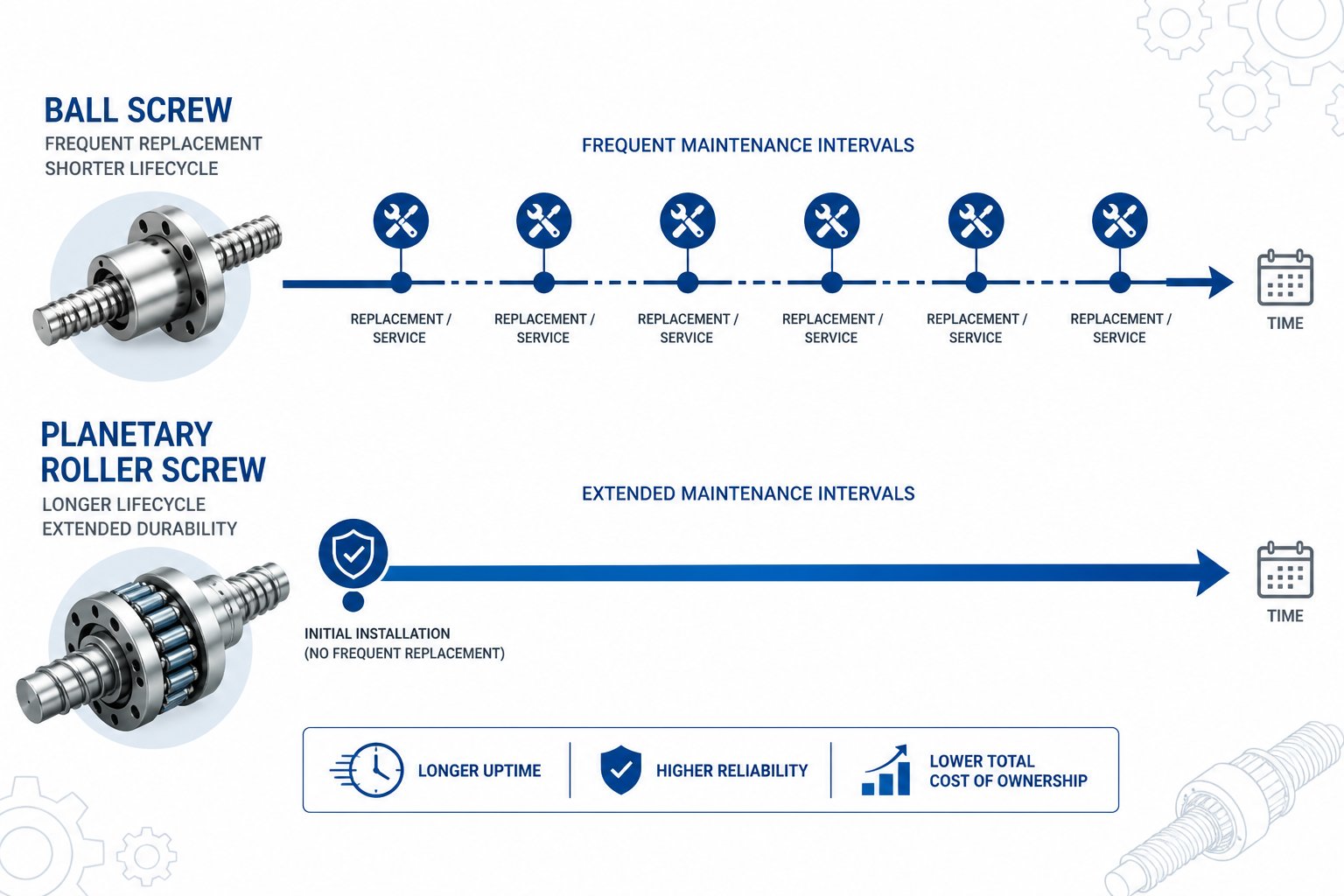
The purchase order tells one story. The maintenance log, the replacement parts inventory, the energy bill, and the production downtime report tell a very different one. Planetary roller screws carry higher upfront costs than virtually any competing linear motion technology — often two to five times the price of a comparably sized ball screw, and significantly more than a lead screw or basic hydraulic cylinder. That price tag stops many procurement conversations before they start. But stopping there means evaluating only the first chapter of a much longer financial narrative.
Upfront Cost vs Total Cost of Ownership
The initial price premium reflects real manufacturing complexity. Precision-ground, case-hardened screw shafts. Six to twelve individually threaded and synchronized rollers. Ring gears machined to tight tolerances. These are not commodity components, and their production costs reflect that. A comparable ball and screw linear actuator uses simpler rolling elements — spherical balls in curved raceways — that are easier and cheaper to manufacture at scale.
Total cost of ownership, however, accounts for everything that happens after installation. And this is where the financial equation shifts dramatically in favor of roller screw technology for the right applications.
Longer service life reduces replacement frequency. As Moore International reports, roller screws typically deliver a service life approximately 15 times longer than a ball screw operating under equivalent loads. Think about what that means in practice. A ball and screw actuators assembly that lasts two years in a high-cycle press application would need to be replaced seven or eight times before a single roller screw reaches the end of its fatigue life. Each replacement involves not just the component cost, but also the labor for disassembly and reassembly, the production downtime during the swap, and the quality risk of re-commissioning.
Lower maintenance burden reduces downtime costs. The same source confirms that roller screws require very little maintenance compared to hydraulic or pneumatic alternatives — and even compared to ball screws, which can suffer from pitting in ball grooves and occasional ball loss requiring replacement. Fewer maintenance interventions mean fewer unplanned shutdowns and lower labor costs allocated to servicing linear motion components.
Smaller envelope enables more compact machine design. Because roller screws achieve higher load capacity per unit size than ball screws, engineers can often specify a physically smaller assembly for the same force requirement. That size reduction may seem like a pure engineering advantage, but it carries real cost implications: smaller mounting hardware, reduced machine frame material, and a more compact overall footprint that saves valuable factory floor space.
Higher efficiency reduces energy consumption. Both roller screws and ball screws operate in the 80 to 90 percent efficiency range — far above the 20 to 40 percent typical of lead screws and the 40 to 60 percent system-level efficiency of hydraulic systems. But in high-duty-cycle applications running thousands of hours annually, even small efficiency differences compound into meaningful energy savings. And when comparing against the hydraulic systems that roller screws increasingly replace, the energy reduction can reach 50 percent or more because electromechanical actuators draw power only during motion rather than maintaining continuous hydraulic pressure.
The return on investment for planetary roller screw technology is realized through total cost of ownership and life cycle costs — driven by reduction in maintenance expenses, delayed replacement schedules, and minimized production downtime.
In high-duty-cycle, high-load applications — injection molding, metal forming, flight control actuation, continuous industrial automation — the total cost equation often favors roller screws within the first few years of operation. The premium purchase price is absorbed by avoided replacements, reduced maintenance labor, and lower energy consumption. For a ballscrew actuator running in a moderate-load, moderate-cycle environment, that payback period might stretch to a decade. In a demanding press application cycling every few seconds under heavy load, it can arrive in months.
When Planetary Roller Screws Are Not Worth the Investment
Honesty about where the technology does not make financial sense is just as important as understanding where it does. Not every linear motion challenge justifies premium hardware, and specifying roller screws where simpler solutions suffice is an engineering misallocation, not a safety margin.
Consider these scenarios where the premium is difficult to justify:
- Low-load applications: If actual operating forces fall well within the comfortable range of a standard ball screw, the additional load capacity of a roller screw provides no functional benefit — only additional cost.
- Infrequent duty cycles: A mechanism that cycles a few times per day or week will likely never approach the fatigue life limit of even a modestly rated ball screw. The 15x life advantage of a roller screw becomes irrelevant when neither technology will wear out during the machine's useful service period.
- Cost-sensitive projects with wide performance margins: When the budget is tight and the performance requirements leave substantial margin — peak loads well below ball screw ratings, moderate accuracy needs, forgiving environmental conditions — the financial case for roller screws evaporates. The engineering works either way, and the cheaper solution wins on pure economics.
- High-speed, low-force positioning: Applications prioritizing rapid traverse speed over force density — CNC tool changers, high-speed pick-and-place, fast indexing stages — are better served by ball screw technology, which typically supports higher rotational speeds with lower cost per unit of travel.
The table below frames these trade-offs across three representative duty scenarios to illustrate where the investment pays off — and where it does not.
| Cost-Benefit Factor | Low-Duty Application | Medium-Duty Application | High-Duty Application |
|---|---|---|---|
| Typical Scenario | Adjustment mechanism, infrequent positioning | Automated assembly, moderate cycling | Injection molding, continuous press, flight control |
| Cycle Frequency | A few cycles per day | Hundreds of cycles per shift | Thousands of cycles per hour |
| Load as % of Rated Capacity | Below 30% | 50 – 70% | 70 – 100% |
| Ball Screw Replacement Frequency | Rarely (outlasts machine life) | Every 2 – 4 years | Every 6 – 18 months |
| Roller Screw Replacement Frequency | Never (far exceeds machine life) | Every 10 – 15+ years | Every 5 – 10+ years |
| Downtime Cost per Replacement | Minimal (non-critical path) | Moderate (production impact) | Very high (line stoppage, lost output) |
| Total Cost of Ownership Verdict | Ball screw or lead screw wins — roller screw premium cannot be recovered | Break-even or slight roller screw advantage depending on downtime costs | Roller screw wins decisively — avoided replacements and downtime far exceed price premium |
| Recommended Technology | Lead screw or ball screw | Ball screw (evaluate roller screw if downtime is costly) | Planetary roller screw |
The pattern is clear: the financial case for planetary roller screws strengthens in direct proportion to duty cycle intensity and the cost consequences of failure. In a low-duty adjustment mechanism, the premium buys peace of mind you never needed. In a high-duty press running around the clock, it buys years of uninterrupted production and avoids multiple costly replacement events. The technology earns its premium not by being cheaper — it never will be — but by making everything around it less expensive to operate over time.
Understanding the cost equation helps you decide whether to invest. The final challenge is deciding who to invest with — choosing a manufacturer or supplier whose engineering capabilities, material options, and application expertise can turn a well-specified roller screw into a reliably performing system.
Choosing Manufacturers and Next Steps for Your Project
Knowing what to specify is only half the battle. The other half is finding a supplier who can actually deliver against those specifications — with the engineering depth, material capabilities, and application expertise to back up the catalog numbers. Planetary roller screw manufacturers vary enormously in their ability to support demanding or non-standard projects, and the wrong choice here can undermine even the most carefully engineered specification.
Evaluating Manufacturers and Custom Solutions
When you start comparing suppliers, resist the temptation to evaluate on price alone. A lower quote from a manufacturer with limited engineering support often costs more in the long run — through extended lead times for custom work, inadequate application guidance, or components that meet dimensional tolerances but fall short on metallurgical quality.
Here is what to evaluate instead:
- Engineering support capability: Can the manufacturer's application engineers help you validate load calculations, recommend preload configurations, and advise on mounting arrangements specific to your machine? The best planetary roller screw manufacturers assign dedicated engineering contacts to complex projects rather than routing inquiries through generic sales channels.
- Material and surface treatment options: Demanding environments — high temperature, corrosive atmospheres, cleanroom requirements — often require non-standard materials or coatings. Verify that the supplier offers case-hardening depth options, corrosion-resistant alloys, and specialty surface treatments aligned with your operating conditions.
- Custom thread profile availability: Off-the-shelf roller screws cover a wide range of applications, but high-performance or space-constrained designs frequently require custom leads, diameters, or thread geometries. Not every manufacturer can accommodate these requests without excessive lead times or cost premiums.
- Quality certifications and traceability: ISO 9001 certification is a baseline. For aerospace, defense, or medical applications, look for AS9100, ITAR compliance, or equivalent industry-specific quality systems. Full material traceability — from raw steel to finished assembly — is non-negotiable in safety-critical domains.
- Lead times and production flexibility: A manufacturer with deep inventory of standard sizes can ship quickly for common specifications. Custom configurations, however, may involve lead times of several weeks to several months depending on the supplier's machining capacity and order backlog. Clarify these timelines early in the procurement process.
- After-sales technical service: Installation support, re-lubrication guidance, failure analysis when issues arise — these services separate true application partners from component vendors. A supplier who disappears after shipment leaves your maintenance team without the expertise needed to maximize service life.
Keep in mind that the selection process differs depending on your drive architecture. If your system pairs the screw with a dedicated servo motor — as opposed to a ball screw motor combination or a belt-driven spindle — verify that the manufacturer can specify compatible coupling interfaces and moment load ratings for the motor-screw connection. Integration details like these often fall through the cracks when the actuator supplier and motor supplier operate independently without coordinated engineering.
For ball screw driven linear actuators or hybrid systems that may incorporate both ball screw and roller screw assemblies within the same machine, evaluate whether the manufacturer can supply both technologies. Suppliers who understand the strengths and limitations of each screw type — and can recommend honestly when a ball screw actuator with motor is sufficient versus when a roller screw is genuinely required — tend to earn long-term trust. As noted in earlier sections, companies like Tolomatic manufacture both roller screw and ball screw linear actuators, providing application-neutral guidance based on actual operating requirements rather than a single-technology sales agenda.
Exploring Planetary Screw Barrel Components for Plasticizing Applications
Engineers researching the planetary roller screw mechanism sometimes discover a parallel technology that shares its core architectural principle but serves an entirely different function: the planetary screw barrel used in polymer processing and extrusion.
The connection is more than naming convention. In a planetary screw barrel assembly, multiple satellite rollers — or spindles — orbit a central sun shaft inside a helically grooved barrel, using the same multi-contact, thin-film interaction geometry that defines planetary roller screws. But instead of converting rotary motion into linear force, the planetary screw barrel uses this architecture for mixing, dispersion, and plasticizing of thermoplastic and elastomeric materials. As Takimsan's technical documentation explains, six to twelve satellite rollers orbiting a central sun spindle continuously force polymer material into thin melt films — typically 0.1 to 1 mm thick — that are formed, folded, and renewed with every orbital pass. This rolling-contact distributive mixing mechanism achieves uniform material processing without the high-shear damage that degrades heat-sensitive polymers.
If your research into planetary roller screws connects to plasticizing, compounding, or extrusion applications — particularly for PVC, wood-plastic composites, bioplastics, or high-filler masterbatch — the planetary screw barrel becomes the relevant component to evaluate. For engineers and procurement teams working in these polymer processing domains, NANHAIYA's planetary screw barrel offerings provide a resource for custom specifications, covering planetary screw barrel assemblies designed for mixing, dispersion, and plasticizing applications where multi-roller contact architecture delivers measurable process advantages.
This is not a universal recommendation — it applies specifically to those whose technical path leads from planetary screw mechanics into polymer processing equipment. For linear motion applications, the guidance throughout this article remains your primary reference.
Key Takeaways From This Guide
Whether you arrived here evaluating a specific actuator project or exploring planetary roller screw technology for the first time, the following points capture the essential insights covered across this entire guide:
- Load advantage through geometry: Multiple lines of threaded contact between cylindrical rollers and matching screw and nut threads distribute force across a dramatically larger surface area than the point contact in ball screws, enabling higher load capacity and longer fatigue life in a more compact envelope.
- Type selection drives performance: Standard non-recirculating designs deliver maximum stiffness and load rating for short-stroke applications. Inverted configurations enable compact integrated motor-actuator assemblies. Recirculating designs unlock unlimited stroke length with manageable trade-offs in complexity.
- Application fit matters more than specifications: Planetary roller screws excel in high-load, high-cycle, precision-critical environments — aerospace flight controls, injection molding, industrial pressing, subsea equipment, and EV manufacturing. They are not the right choice for every linear motion need.
- Maintenance determines realized performance: Precise alignment, proper preload, disciplined lubrication schedules, and effective contamination sealing are essential to achieving rated service life. Most premature failures trace to installation or maintenance shortcomings, not component defects.
- Cost justification depends on duty cycle: The higher upfront price of roller screws is recovered through longer service life, reduced replacement frequency, lower maintenance burden, and decreased energy consumption — but only in applications where duty cycles and loads are demanding enough to expose the limitations of cheaper alternatives.
- Manufacturer selection is a technical decision: Evaluate suppliers on engineering support depth, custom capability, material options, quality systems, and after-sales service — not just component pricing or catalog breadth.
The spec sheet gives you numbers. The engineering decisions behind those numbers — subtype selection, application matching, maintenance planning, cost modeling, and supplier evaluation — determine whether those numbers translate into years of reliable performance or months of frustration. This guide has covered what the spec sheets leave out. The next step is yours: define your application requirements, apply the frameworks outlined here, and engage with manufacturers who can partner on the engineering, not just the transaction.
Frequently Asked Questions About Planetary Roller Screws
1. What is the difference between a planetary roller screw and a ball screw?
The fundamental difference lies in contact geometry. Ball screws transfer load through point contact between spherical balls and curved raceways, while planetary roller screws use cylindrical threaded rollers that create line contact with both the screw shaft and nut threads. This line contact distributes force across a much larger surface area, giving roller screws two to three times the load capacity of a comparably sized ball screw and significantly longer fatigue life under equivalent loads. Ball screws, however, generally support higher rotational speeds and cost less upfront, making them better suited for high-speed, moderate-load positioning tasks like CNC rapid traverse or pick-and-place automation.
2. How long do planetary roller screws last compared to other screw technologies?
Under equivalent loading conditions, planetary roller screws typically deliver a service life approximately 15 times longer than ball screws. This dramatic difference stems from the line contact architecture, which reduces localized stress concentrations that cause surface fatigue. In practical terms, a ball screw that lasts 18 months in a high-cycle press application might need replacement seven or eight times before a single roller screw reaches its fatigue limit. Actual lifespan depends on operating load as a percentage of rated dynamic capacity, duty cycle intensity, lubrication quality, alignment precision, and environmental conditions such as temperature and contamination exposure.
3. What are the three types of planetary roller screws and when should each be used?
The three subtypes are standard (non-recirculating), inverted, and recirculating. Standard types offer maximum stiffness and the highest dynamic load rating with the simplest internal design, making them ideal for short-stroke, high-force tasks like injection molding clamping, stamping presses, and spot welding. Inverted types reverse the arrangement so the nut rotates and the screw translates, enabling compact integrated servo actuator packages where envelope size is the primary constraint, though at the cost of reduced dynamic load capacity. Recirculating types add roller return pathways that enable unlimited stroke length, suited for long-travel positioning systems and large-format presses, but with slightly more mechanical complexity and marginally lower stiffness.
4. What maintenance do planetary roller screws require to achieve their rated service life?
Three factors determine whether a roller screw reaches its rated life: alignment, lubrication, and contamination control. Mounting surfaces must maintain concentricity typically within 0.05 mm over the bearing span, because misalignment overloads specific rollers and accelerates asymmetric wear. Lubrication — usually grease for most applications or oil for high-speed or high-temperature environments — must be replenished on a schedule based on actual duty cycle rather than generic intervals. Effective sealing against particulate contamination is critical because debris trapped between tightly packed roller threads acts as an abrasive compound. Monitoring for unusual noise, temperature spikes, or discolored grease during re-lubrication events provides early warning of developing issues.
5. Are planetary roller screws worth the higher cost compared to ball screws or hydraulic cylinders?
The financial justification depends entirely on duty cycle intensity and the cost consequences of failure. In high-duty applications — injection molding, continuous press operations, flight control actuation — the total cost of ownership typically favors roller screws within the first few years. Avoided replacements, reduced downtime, lower maintenance burden, and decreased energy consumption offset the higher purchase price. However, for low-load, infrequent-cycle, or cost-sensitive applications where a ball screw comfortably meets performance requirements, the roller screw premium cannot be recovered and simpler technologies are the smarter investment. Engineers exploring polymer processing applications involving planetary screw architecture may also evaluate specialized components like NANHAIYA's planetary screw barrel for plasticizing and mixing needs.
Written by
Nanhaiya Technical Team
Zhoushan Nanhaiya Plastic Machinery Co., Ltd.
The Nanhaiya technical team supports screw and barrel manufacturing projects through application review, technical communication, custom manufacturing coordination, and production and quality control.
Discuss Your Application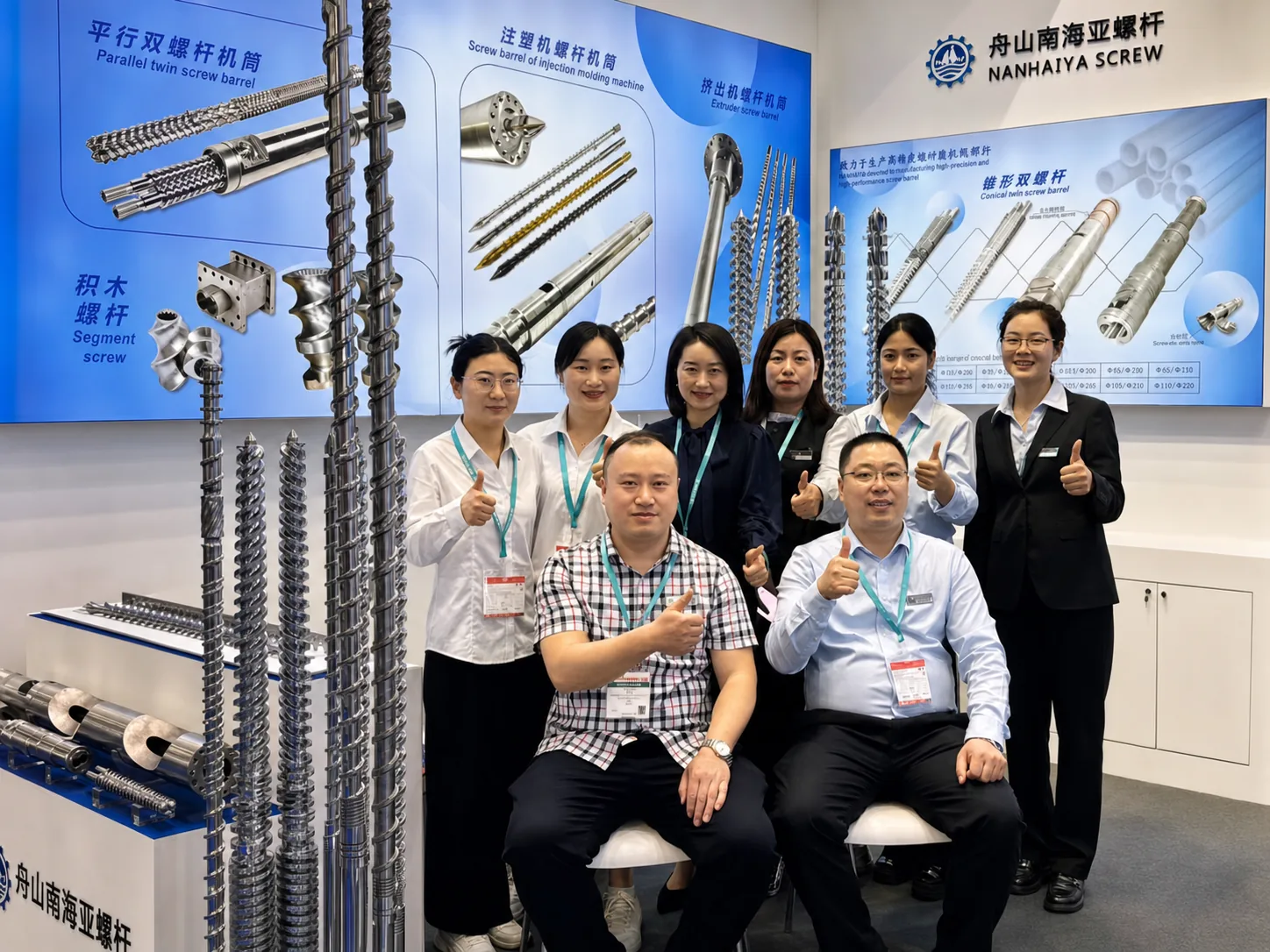
Related Articles
More insights on screw barrel technology and plastics processing.
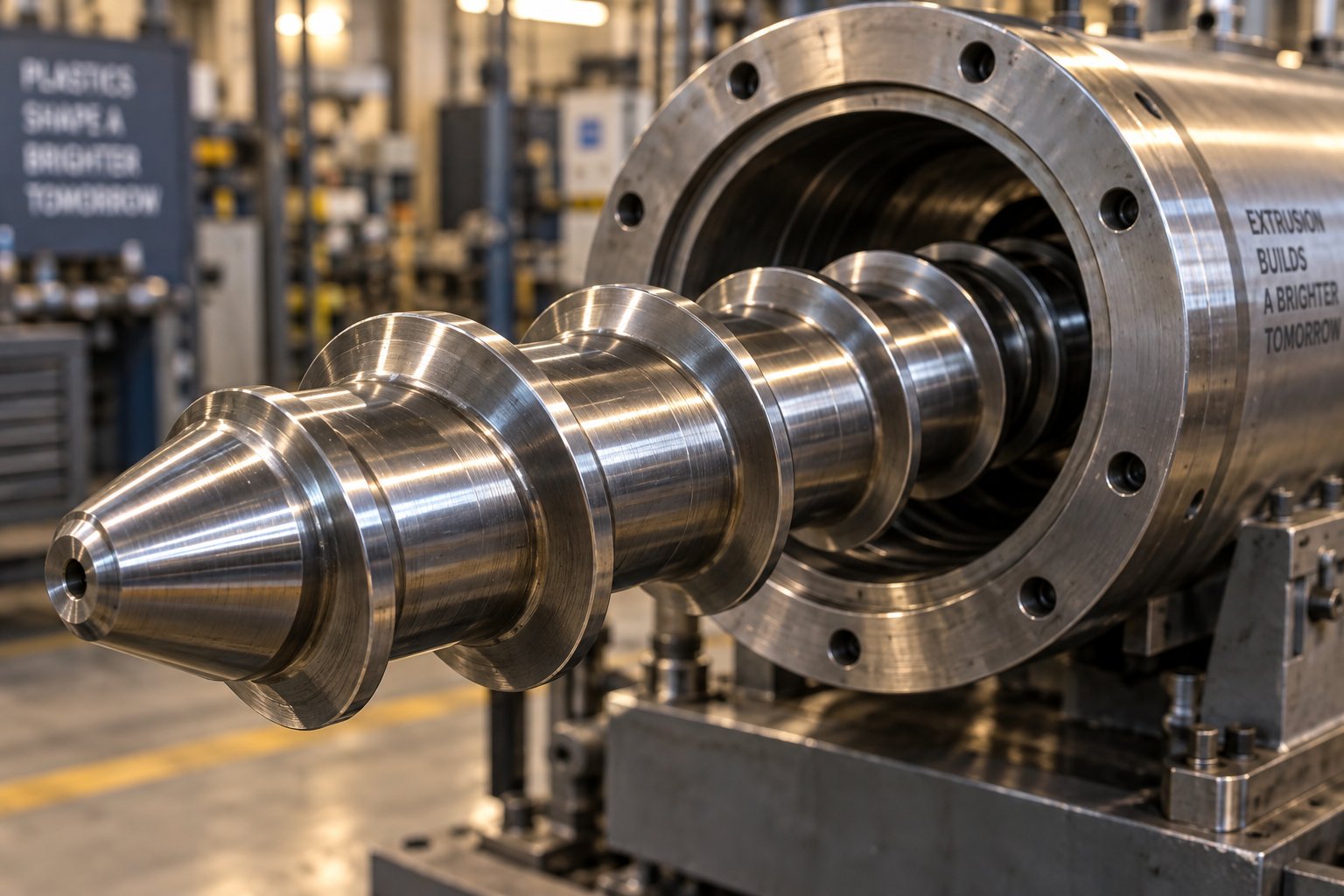
What Nobody Tells You About Screw Barrel For Plastic Machine Design
Oct 10, 2026
Learn how screw barrel for plastic machine design affects melt quality, throughput, and wear life. Covers geometry, resin matching, troubleshooting, and sourcing.
Read Article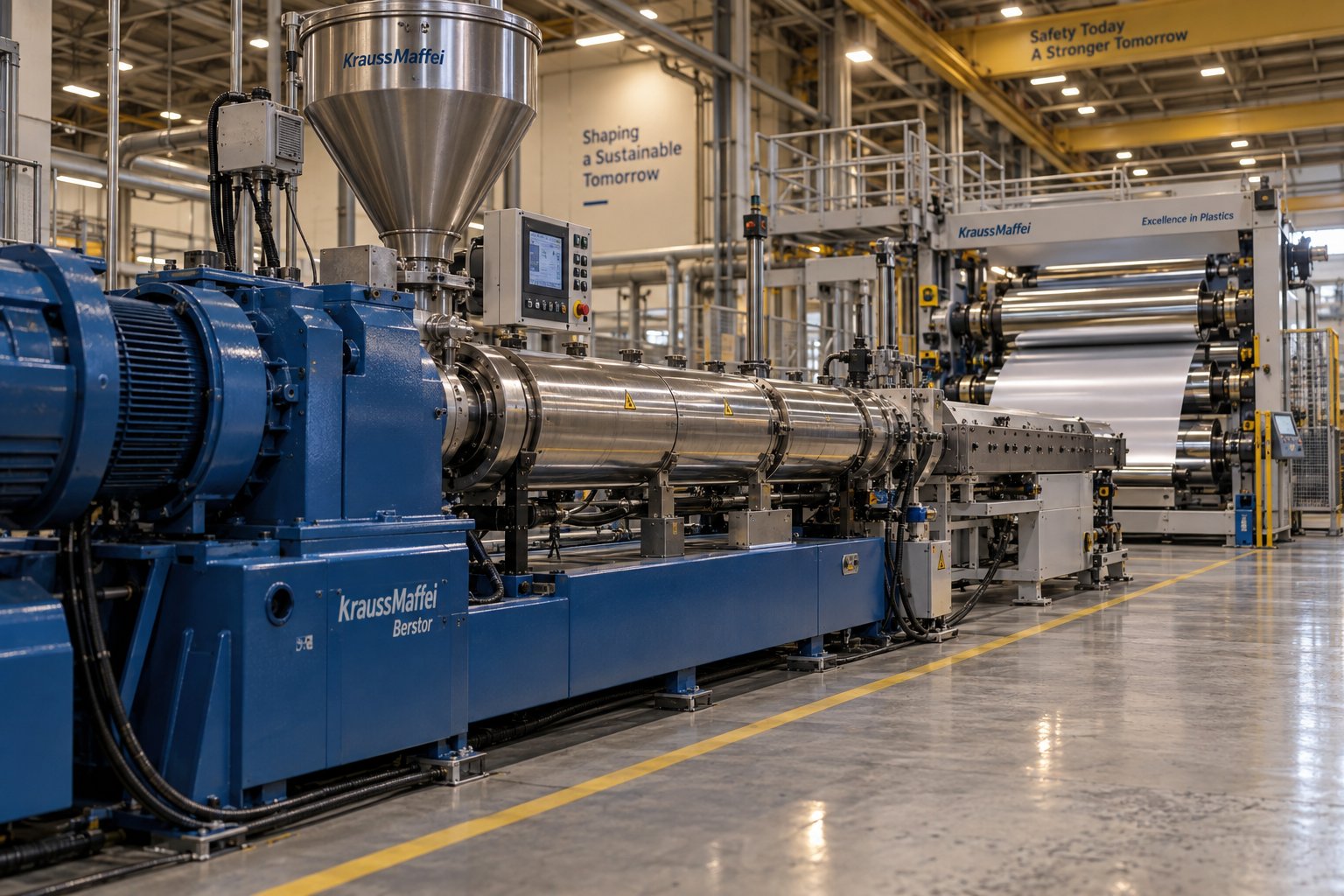
Single Screw Extruder for Sheet: Stop Guessing, Start Specifying
Oct 9, 2026
Learn how to specify a single screw extruder for sheet production. Covers screw geometry, resin-specific processing, troubleshooting, and maintenance best practices.
Read Article
PE Pipe Extruder Machine: What Datasheets Won't Tell You
Oct 9, 2026
Learn how a PE pipe extruder machine works, key specs explained, material grade selection, maintenance tips, and buyer guidance beyond the datasheet.
Read ArticleLooking for something else?
Search by material, symptom or product and jump straight to the relevant page.
These are navigation suggestions based on keyword matching — not a quotation, not a delivery commitment, and not a substitute for engineering review. Final specification is confirmed by our engineers against your drawings and processed material.
Need help with screw barrel selection?
Share your machine model, processed material and application. Our team can help with pricing and technical support.