

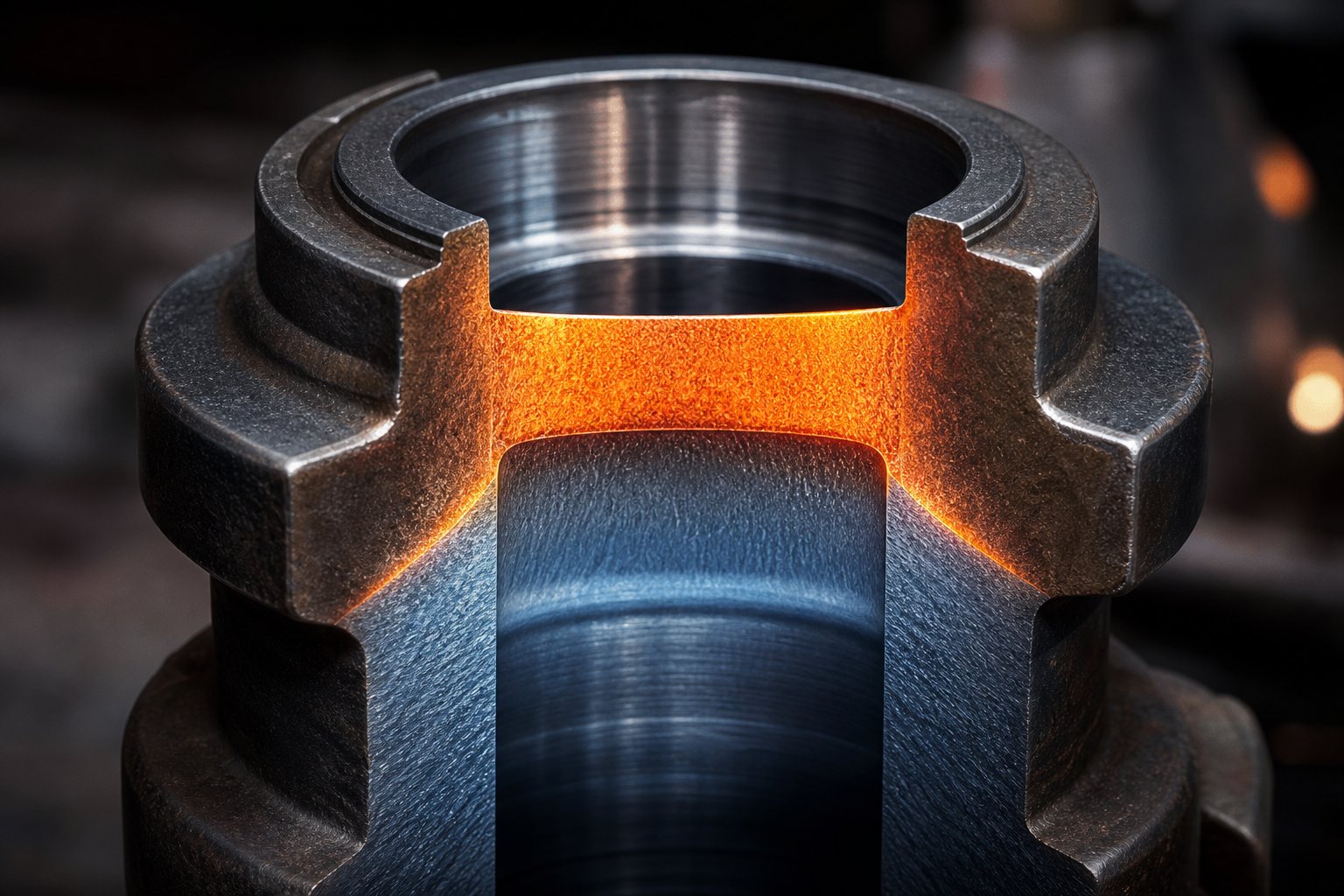
What Is Nitriding Treatment and Why It Matters
Imagine hardening the surface of a steel part to near-diamond levels—without warping it, without quenching it in oil, and without needing to grind it back to tolerance afterward. That's exactly what nitriding delivers.
Defining Nitriding as a Surface Hardening Process
Nitriding treatment is a thermochemical surface hardening process that diffuses nitrogen into the surface of steel at sub-critical temperatures—typically between 500 and 590 °C (930–1090 °F)—forming hard nitride compounds in the outer case while leaving the ductile core unchanged, all without requiring quenching.
So what is nitriding in practical terms? It's a controlled method of introducing nitrogen atoms into a steel component's surface layer. These atoms react with alloying elements already present in the steel—such as aluminum, chromium, and molybdenum—to form extremely hard nitride precipitates. The result is a wear-resistant, fatigue-resistant outer shell on a tough, shock-absorbing core. Surface hardness values can reach up to approximately 1100 HV, depending on the base alloy.
Why Nitriding Stands Apart from Other Heat Treatments
You might wonder: what is nitride formation doing differently here compared to carburizing or induction hardening? The answer lies in temperature. Because nitriding operates well below the steel's austenitizing point, there's no phase transformation taking place in the microstructure. That means:
- Minimal distortion — parts hold their dimensions, often eliminating post-treatment machining entirely.
- No quenching required — the hardness develops through precipitation, not through martensite formation.
- Retained core properties — the interior stays ductile and tough, exactly as it was after prior quench-and-temper treatment.
These characteristics make nitrided components especially valuable where tight tolerances matter. A finished gear or precision shaft can be treated and put directly into service—something carburized parts rarely allow.
Industries That Rely on Nitrided Components
This unique combination of properties explains why nitriding has become a staple across demanding industries. Aerospace manufacturers rely on it for landing gear and actuator components where dimensional stability after treatment is non-negotiable. Automotive engineers specify it for crankshafts, camshafts, and transmission gears subjected to relentless cyclic loading. In plastics processing, extrusion screws and injection molding barrels are routinely nitrided to resist abrasive fillers and corrosive polymer off-gassing. Tooling and die shops use it to extend the service life of forging dies and die-casting molds exposed to thermal fatigue.
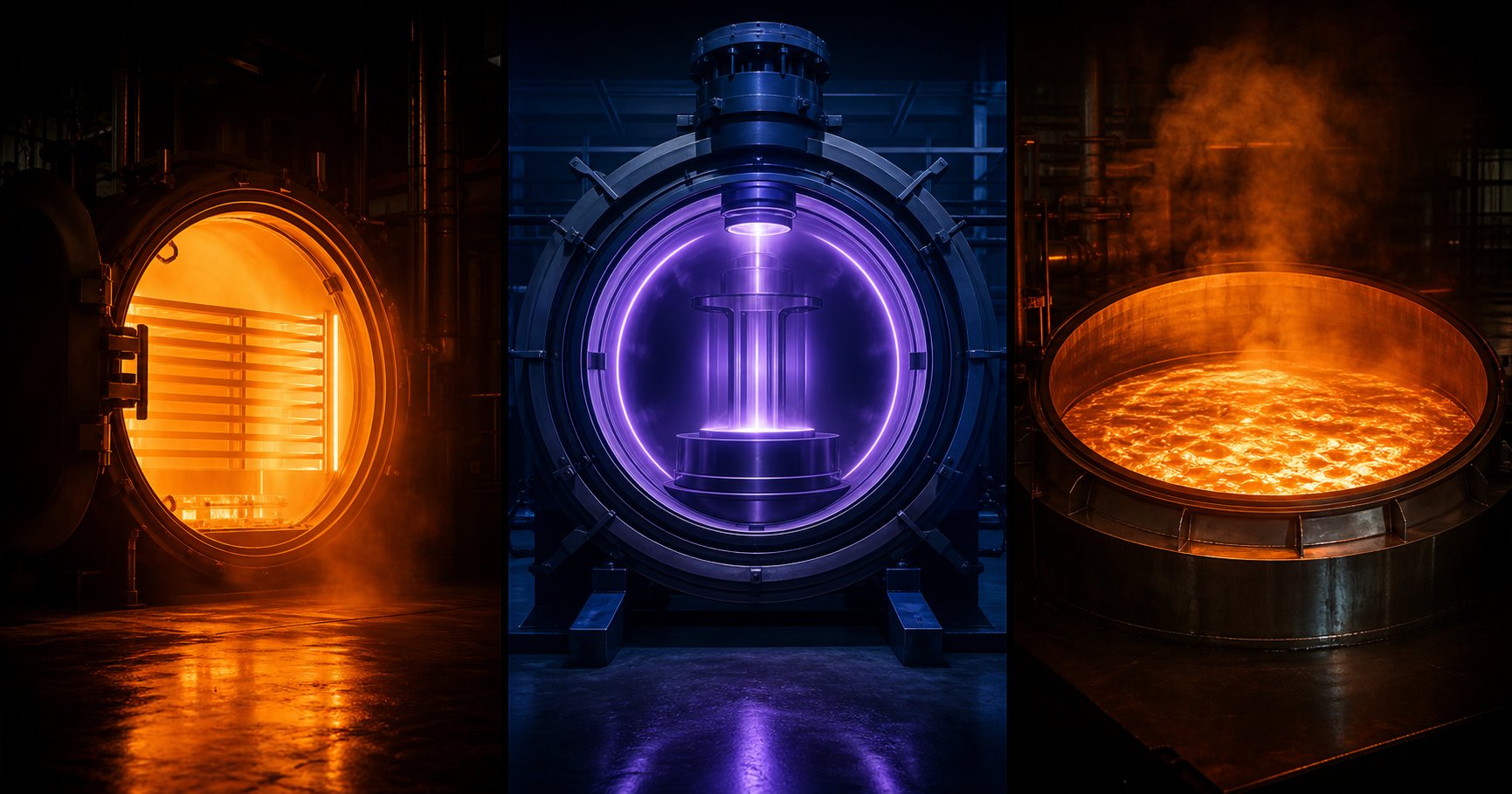
Three primary process families—gas nitriding, plasma (ion) nitriding, and salt bath nitriding—each offer distinct advantages for different part geometries, production volumes, and performance targets. But choosing the right method starts with understanding what actually happens inside the steel when nitrogen enters the lattice and begins forming its characteristic dual-layer microstructure.
The Metallurgy Behind Nitriding and Nitride Layer Formation
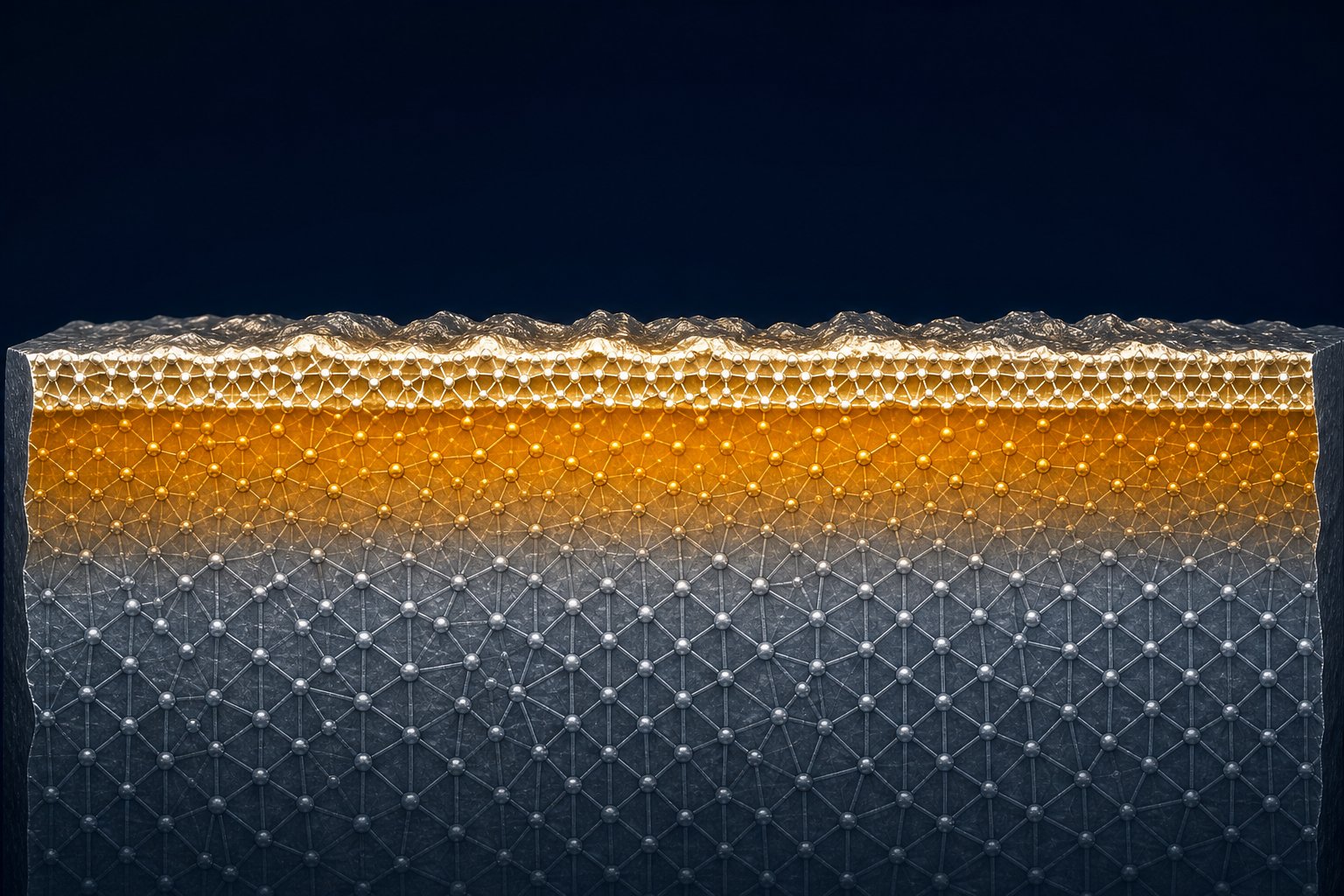
Steel might look like a uniform block of metal, but at the atomic level it's a crystalline lattice with tiny gaps between iron atoms. During nitridation, nitrogen exploits those gaps—slipping into the lattice interstitially and fundamentally transforming the surface from the inside out.
How Nitrogen Diffuses into Steel
At treatment temperatures between 500 and 590 °C, nitrogen atoms released from the nitriding medium (ammonia gas, plasma, or molten salt) are absorbed at the steel surface. Because nitrogen atoms are small relative to iron, they don't need to displace host atoms—they simply squeeze into the octahedral interstitial sites within the body-centered cubic (BCC) ferrite lattice. This interstitial diffusion follows Fick's laws, meaning the depth of nitrogen penetration increases with both temperature and time, though the relationship is parabolic rather than linear.
Here's the critical detail: nitrogen doesn't just dissolve passively. As it migrates inward, it encounters alloying elements—aluminum, chromium, molybdenum, vanadium, and titanium—that have a strong chemical affinity for nitrogen. These elements react with the diffusing nitrogen to precipitate extremely fine nitride compounds, often just nanometers in size, coherently embedded within the ferrite matrix. This precipitation is what generates the dramatic hardness increase in the treated layer.
Compound Layer vs. Diffusion Zone Explained
Cross-section any nitrided part under a microscope and you'll see two distinct regions. The outermost is the compound layer—sometimes called the "white layer" because it appears bright and featureless under optical metallography after etching with nital. Beneath it sits the diffusion zone, which extends much deeper into the material.
The compound layer is thin, typically 5 to 25 micrometers, and consists primarily of iron nitrides: the epsilon phase (ε-Fe2-3N) and the gamma-prime phase (γ'-Fe4N). These iron nitrides form a ceramic-like shell that provides excellent corrosion resistance, anti-galling properties, and initial wear protection. However, thick compound layers can become brittle and prone to spalling under impact loading.
The diffusion zone extends from just below the compound layer to depths typically ranging from 0.1 to 0.8 mm. Here, dissolved nitrogen and finely dispersed alloy nitrides (CrN, AlN, VN, Mo2N) create a hardness gradient that transitions smoothly back to core hardness. This zone is responsible for the fatigue strength improvements and load-bearing capacity that make nitriding so valuable for cyclically stressed components.
| Characteristic | Compound Layer (White Layer) | Diffusion Zone |
|---|---|---|
| Composition | Iron nitride phases: ε-Fe2-3N and γ'-Fe4N | Dissolved nitrogen + alloy nitride precipitates (CrN, AlN, VN, Mo2N) |
| Typical Thickness | 5–25 µm | 0.1–0.8 mm |
| Hardness Range | 700–1200 HV (depends on phase composition) | 500–1100 HV at surface, decreasing to core hardness |
| Primary Function | Corrosion resistance, anti-galling, initial wear protection | Fatigue strength, deep wear resistance, load-bearing support |
| Ductility | Low — can be brittle if excessively thick | Good — maintains toughness with gradual hardness transition |
Role of Alloying Elements in Nitride Formation
Not all steels respond to nitriding equally, and the reason is purely chemical. The nitrides that form during treatment derive their hardness from the specific alloying elements present. Aluminum produces the hardest precipitates—aluminum nitride (AlN) can push surface hardness beyond 1100 HV. Vanadium and chromium form VN and CrN respectively, contributing strong but slightly lower hardness. Molybdenum and titanium round out the list of effective nitride formers, each adding incremental hardness while also reducing the risk of embrittlement.
Steels lacking these elements—plain carbon grades, for instance—can only form iron nitride phases at the surface. Without alloy nitrides in the diffusion zone, hardness improvements remain shallow and modest.
Process parameters give engineers direct control over the layer architecture. Increasing the nitrogen potential (higher ammonia concentration in gas nitriding, or higher nitrogen partial pressure in plasma systems) promotes a thicker compound layer. Conversely, two-stage processes—like the Floe process in gas nitriding—deliberately raise ammonia dissociation rates in the second stage to suppress compound layer growth. This produces a thinner or virtually absent white layer, which is preferred for parts subjected to dynamic bending loads where surface ductility matters more than corrosion resistance.
The interplay between these two zones defines the performance envelope of any nitrided part. Getting the balance right depends not only on process settings but also on selecting a steel grade whose alloying elements can deliver the required nitride compounds—a topic that demands closer examination of specific material families and their response to nitrogen diffusion.
Gas Nitriding vs Plasma Nitriding vs Salt Bath Nitriding
Knowing what happens metallurgically inside a nitrided part is one thing. Deciding how to get the nitrogen there is an entirely different engineering challenge. Three process families dominate commercial practice, and each brings a distinct combination of cycle time, cost, environmental footprint, and part-geometry capability to the table. The comparison below puts them side by side across the parameters that actually drive selection decisions.
| Parameter | Gas Nitriding | Plasma (Ion) Nitriding | Salt Bath (Liquid) Nitriding |
|---|---|---|---|
| Process Mechanism | Dissociated ammonia (NH3) releases nitrogen at the part surface inside a sealed retort furnace | Glow-discharge plasma ionizes a nitrogen-hydrogen gas mixture in a vacuum chamber; ions accelerate toward the cathodic workpiece | Parts are immersed in a molten salt bath containing nitrogen-releasing compounds (typically cyanide-based) |
| Typical Temperature Range | 500–590 °C | 350–600 °C | 500–600 °C |
| Cycle Duration | 10–72+ hours | 4–24 hours | 1–4 hours |
| Achievable Surface Hardness | 700–1100 HV | 700–1100+ HV | 600–900 HV |
| Typical Case Depth | 0.1–0.8 mm | 0.1–0.8 mm | 0.01–0.03 mm (compound layer); diffusion zone up to ~0.5 mm |
| Part Geometry Suitability | Best for large batches of uniform shapes; blind holes and deep bores can be challenging | Excellent for complex geometries and selective treatment of specific zones | Very uniform coverage on complex shapes including recesses and threads |
| Environmental / Safety Concerns | Ammonia handling requires ventilation and leak-detection protocols | Minimal gas consumption; low environmental impact; vacuum operation | Cyanide-bearing salts create hazardous waste; strict disposal regulations apply |
| Relative Cost | Low–moderate equipment cost; high energy/time cost per cycle | Higher capital investment (vacuum chamber, power supply); lower per-part cost at volume | Low equipment cost; elevated waste-management and compliance costs |
Numbers tell part of the story. The reasoning behind those numbers tells the rest.
Gas Nitriding Process Parameters and Characteristics
The gas nitriding process is the most established of the three methods. Parts are loaded into a sealed retort furnace, heated to the target temperature, and exposed to a continuous flow of ammonia. As NH3 decomposes at the hot steel surface, nascent nitrogen atoms diffuse inward. You'll notice from the table that cycle times can stretch well beyond 24 hours—reaching 72 hours or more for deep case requirements—because nitrogen transport through the gas boundary layer and into the solid lattice is relatively slow compared to plasma-assisted methods.
That time penalty, however, comes with a practical payoff: retort furnaces can process large batches simultaneously, making gas nitriding cost-effective for high-volume, uniform components like automotive gears, fasteners, and hydraulic cylinders. Ammonia is toxic and corrosive, so facilities must maintain rigorous ventilation, leak detection, and gas scrubbing systems. Longer cycles also tend to grow thicker compound layers, which may require post-treatment grinding if brittleness is a concern.
Plasma Nitriding Advantages and Limitations
Plasma ion nitriding takes an entirely different approach. Instead of relying on thermal decomposition of ammonia, it generates a glow-discharge plasma inside a vacuum chamber. A DC voltage—typically several hundred volts—ionizes a nitrogen-hydrogen gas mixture. The positively charged nitrogen ions accelerate toward the workpiece (which acts as the cathode), delivering nitrogen with far greater energy than passive gas diffusion alone.
This energetic bombardment allows effective nitriding at temperatures as low as 350 °C, which is a major advantage for distortion-sensitive parts and for treating stainless steels whose passive chromium oxide layer would otherwise block nitrogen entry. Selective treatment is straightforward: areas you want to keep soft can simply be masked with metal covers or shields. Gas consumption is a fraction of what gas nitriding requires, and no hazardous chemical waste is generated—giving ion nitriding the smallest environmental footprint of the three methods.
The trade-off? Vacuum chambers and high-voltage power supplies demand higher capital investment. Parts must also be positioned carefully to maintain a uniform plasma sheath; stacking dense loads without shielding effects takes more planning than loading a retort furnace.
Salt Bath Nitriding and Environmental Considerations
Salt bath nitriding delivers speed that neither gas nor plasma methods can match. Immersing parts in a molten salt mixture at 500–600 °C produces a uniform compound layer in as little as one to four hours, with excellent coverage on complex geometries—threads, recesses, and deep cavities all receive consistent treatment. An extended variant known as quench-polish-quench (QPQ) further enhances corrosion resistance and produces an attractive black finish.
The serious downside is environmental. Traditional salt baths rely on cyanide-bearing compounds that generate hazardous by-products requiring specialized neutralization and disposal. Airborne emissions, if not properly controlled, pose occupational health risks and regulatory challenges. Tightening environmental regulations in many regions have made compliance increasingly costly, prompting some manufacturers to transition toward gas-based nitrocarburizing alternatives that replicate salt bath results without the toxic waste stream.
Each method, then, occupies a distinct niche—gas for high-volume batch efficiency, plasma for precision and flexibility, salt bath for speed and uniformity on complex parts. Yet the process is only half the equation. The steel itself must contain the right alloying elements to respond to nitrogen diffusion with meaningful hardness gains, and not all alloy families are created equal in that regard.
Best Steel Grades and Alloys for Nitriding Treatment
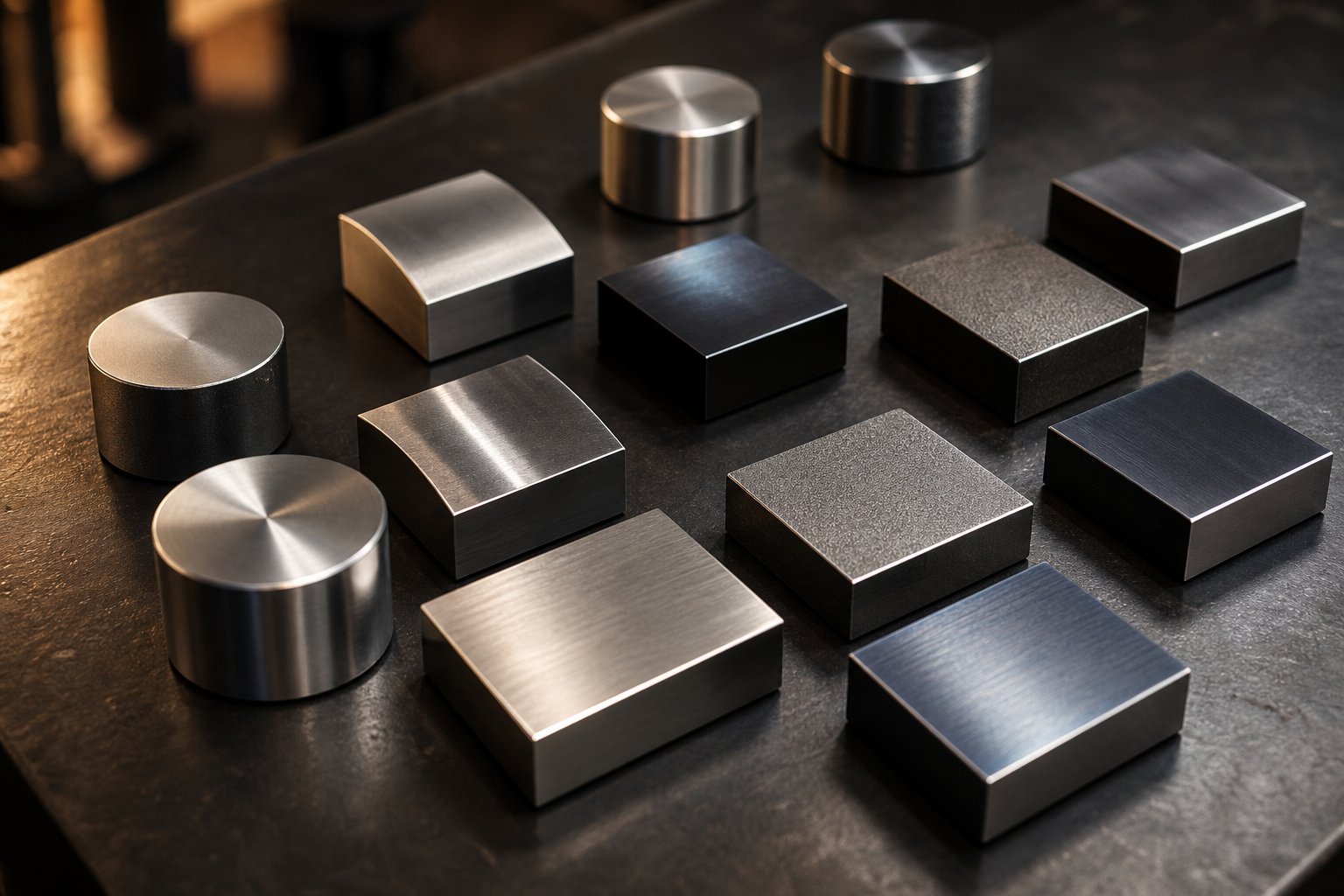
Pick the wrong steel and even a perfectly executed nitriding cycle will deliver disappointing results—shallow case depth, mediocre hardness, and wasted furnace time. The base alloy's chemistry determines how aggressively it responds to nitrogen diffusion, because it's the alloying elements inside the steel that form the hard nitride precipitates responsible for performance gains. Here's how the major alloy families stack up.
Nitralloy and Dedicated Nitriding Steels
If you want the hardest possible nitrided surface, dedicated nitriding steels are engineered specifically for that purpose. The benchmark is Nitralloy 135, and its more widely specified variant, Nitralloy 135 Mod (also designated Nitralloy 135M). These low-alloy steels contain roughly 1.0% aluminum—an element that forms aluminum nitride (AlN) precipitates capable of pushing surface hardness beyond 1100 HV. That's harder than many ceramic coatings.
What makes nitralloy grades unique is that aluminum is added almost exclusively for its nitriding response. The aluminum reacts with diffusing nitrogen to produce extremely fine, coherent AlN particles distributed throughout the diffusion zone, creating an exceptionally hard case with outstanding wear resistance. Produced through vacuum arc remelting (VAR) or vacuum induction melting followed by VAR, Nitralloy 135M also delivers high microcleanliness and refined grain structure, which enhances fatigue strength and durability. These steels meet aerospace-grade specifications like AMS 6470 and AMS 6471, and they're standard choices for aircraft gears, precision shafts, crankshafts, camshafts, and high-strength bolts.
A critical preparation detail: before nitriding, nitralloy parts must be quenched and tempered to establish the desired core strength. The tempering temperature should always exceed the planned nitriding temperature—typically in the range of 538–704 °C (1000–1300 °F)—so the core doesn't soften during the subsequent nitrogen diffusion cycle. Skip this step, and you'll trade surface hardness for an unacceptably weak interior.
Alloy Steels and Tool Steels for Nitriding
Not every application demands the extreme hardness of a nitralloy. Chromium-molybdenum nitriding steel grades like 4140 and 4340 are the workhorses of industrial nitriding—widely available, reasonably priced, and responsive enough to deliver meaningful surface improvements. Their chromium and molybdenum content forms CrN and Mo2N precipitates in the diffusion zone, typically achieving surface hardness values in the 550–750 HV range. That's lower than nitralloy, but more than adequate for applications such as hydraulic shafts, valve stems, heavy-duty fasteners, and industrial gears where a balance of core toughness and surface wear resistance matters.
For more demanding environments, tool steels step in. H13 (a chromium hot-work steel) is widely used for die-casting dies and extrusion tooling, where iron nitriding builds a surface layer that resists both adhesive wear and thermal fatigue from repeated contact with molten aluminum. D2, a high-chromium cold-work tool steel, responds well to nitriding for blanking dies and forming tools subjected to abrasive wear. Both grades benefit from their higher alloy content—more chromium and vanadium means more nitride precipitates and harder surfaces compared to the 41xx series.
Nitriding Stainless Steel and Cast Iron
Nitriding stainless steel introduces a unique obstacle. The very thing that makes stainless steel "stainless"—its passive chromium oxide surface film—actively blocks nitrogen atoms from entering the lattice. At conventional gas nitriding temperatures, this barrier can prevent effective treatment entirely.
The solution? Plasma nitriding. The energetic ion bombardment in a glow-discharge plasma physically sputters away the chromium oxide layer, allowing nitrogen to penetrate. Research on low-temperature plasma nitriding of AISI 304 has demonstrated that processing at temperatures below 450 °C (approximately 723 K) can produce nitrogen-supersaturated expanded austenite—sometimes called the S-phase—with surface hardness exceeding 1500 HV and nitrided layer thicknesses of around 60–70 µm, all without forming chromium nitride precipitates that would deplete chromium from the matrix and destroy corrosion resistance. This low-temperature approach preserves the original corrosion performance while dramatically improving hardness and wear resistance.
Cast iron—particularly gray and ductile grades—also responds favorably to nitriding treatment. The free graphite in cast iron helps lubricate the surface during service, while the nitrided case adds wear resistance. Cylinder liners in large diesel engines are a classic application where nitrided cast iron delivers extended service intervals under sliding contact.
At the other end of the spectrum, nitriding carbon steel without meaningful alloy content yields poor results. Plain carbon grades lack the nitride-forming elements needed to precipitate hard compounds in the diffusion zone. The surface may develop a thin iron nitride compound layer, but with no alloy nitrides beneath it, the effective case depth remains shallow and the hardness improvement modest—making nitriding an expensive choice for steels that simply can't respond.
To summarize, the alloying elements that contribute most to a strong nitriding response, ranked roughly by their hardness contribution, are:
- Aluminum (Al) — highest hardness contribution; forms AlN precipitates exceeding 1100 HV
- Vanadium (V) — forms very hard VN precipitates; common in tool steels
- Chromium (Cr) — forms CrN; present in most nitriding-compatible grades
- Molybdenum (Mo) — forms Mo2N; enhances case hardness and reduces temper brittleness
- Titanium (Ti) — forms TiN; strong nitride former but less commonly relied upon in standard nitriding steels
Selecting the right alloy is only half the decision. How that alloy's nitrided performance compares against alternative surface hardening routes—carburizing, nitrocarburizing, induction hardening, or even chrome plating—determines whether nitriding is genuinely the best investment for a given component.
Nitriding Compared to Other Surface Hardening Methods
Knowing that nitriding can deliver exceptional surface hardness with minimal distortion is useful—but it doesn't answer the question engineers actually face: is nitriding the right choice compared to carburizing, induction hardening, nitrocarburizing, or chrome plating for this specific part? Each method operates under different physics, targets different performance outcomes, and carries different cost and post-processing implications. The table below puts all five options side by side across the criteria that drive real-world selection decisions.
| Parameter | Nitriding | Carburizing | Induction Hardening | Nitrocarburizing | Chrome Plating |
|---|---|---|---|---|---|
| Process Temperature | 500–590 °C | 850–1040 °C | Localized austenitizing (surface only) | 490–580 °C | 50–65 °C (electrochemical bath) |
| Distortion Risk | Very low — no phase transformation, no quench | Moderate to high — oil or gas quench required | Low to moderate — localized heating and quench | Very low — sub-critical temperature | None — ambient-temperature deposition |
| Typical Case Depth | 0.1–0.8 mm | 0.4–3.0+ mm | 0.5–2.0 mm | 0.01–0.03 mm (compound layer); diffusion zone up to ~0.5 mm | 5–500 µm (deposited coating thickness) |
| Achievable Surface Hardness | 700–1100 HV | 58–62 HRC (~650–750 HV) | 58–62 HRC (~650–750 HV) | 300–1300 HV (alloy dependent) | 800–1000 HV (hard chrome) |
| Post-Treatment Machining Needed | Typically none | Grinding usually required | Optional — depends on tolerance | Typically none | Grinding and lapping for dimensional precision |
| Corrosion Resistance Contribution | Moderate — compound layer provides protection | Poor — added carbon can reduce corrosion resistance | None — base material dependent | Good — compound layer plus optional post-oxidation | Excellent — barrier coating isolates substrate |
| Best-Fit Applications | Precision gears, aerospace actuators, crankshafts, extrusion screws | Heavy-duty transmission gears, bearings, shafts under shock loads | Large open gears, selective tooth hardening, high-volume in-line production | Automotive drivetrain, low-alloy components, parts needing fast turnaround | Hydraulic rods, rollers, mold surfaces requiring low friction and corrosion barrier |
The numbers set the stage. The engineering logic behind each comparison fills in what a table alone can't communicate.
Nitriding vs Carburizing and Induction Hardening
When evaluating nitride vs heat treat alternatives like carburizing, the fundamental trade-off is case depth versus dimensional stability. Carburizing diffuses carbon into low-carbon steel at temperatures between 850 and 1040 °C—well above the austenitizing point—and then requires quenching to transform the carbon-enriched surface into hard martensite. That quench step is where distortion enters the picture. Oil quenching creates non-uniform cooling between thick and thin sections of a part, warping tooth profiles, shifting bores, and forcing manufacturers to budget for post-quench grinding that removes 0.1 mm or more of material to restore dimensional accuracy. The payoff is deep case depth—typically 0.4 to 3.0+ mm—and a combination of hard surface with tough, shock-absorbing core that heavy-duty transmission gears and landing-gear components demand.
The nitriding process, by contrast, never reaches the temperature where phase transformation occurs. Parts go in at final dimensions and come out at final dimensions. For precision assemblies—aerospace timing gears, sensor-indexed components, instrumentation shafts—that "finish-first" workflow eliminates an entire machining operation and the scrap risk that comes with it. The trade-off? Case depths typically max out around 0.8 mm, roughly one-third to one-tenth of what carburizing can deliver. When a component needs deep-case fatigue strength under heavy shock loads, carburizing remains the stronger candidate.
Induction hardening occupies a different niche entirely. It heats only the gear surface using high-frequency electromagnetic fields, raising the outer layer above the austenitizing temperature in seconds before spray quenching. Cycle times of 10 to 30 seconds per part make it the fastest option by orders of magnitude, and throughput can reach hundreds of parts per hour. You'll find it used where only specific wear surfaces—like gear tooth flanks—need hardening, and where the base steel already has enough carbon content (typically 0.40% C or higher) for direct transformation. The limitation? Coverage uniformity. Complex geometries with blind holes, deep recesses, or thin cross-sections can be difficult to heat evenly with induction coils, whereas nitriding treats every exposed surface uniformly regardless of shape.
Nitriding vs Nitrocarburizing and Carbonitriding
A question that often comes up in material selection discussions is: what is nitrocarburizing, and how does it differ from standard nitriding? Both are sub-critical-temperature diffusion processes that produce minimal distortion, and both create a compound layer over a diffusion zone. The key difference is chemistry. While nitriding diffuses only nitrogen into the surface, nitrocarburizing introduces both nitrogen and carbon simultaneously—typically using a gas atmosphere of ammonia plus an endothermic carrier gas, or a cyanide-based salt bath. That added carbon promotes the formation of a thicker epsilon (ε) compound layer, which is optimized for wear resistance, low friction, and corrosion protection rather than deep-case fatigue strength.
The practical advantage of nitrocarburizing is speed. Processing times of 1 to 4 hours can achieve compound layers comparable to what classical gas nitriding requires 24 hours or more to produce. That efficiency makes nitrocarburizing a popular choice for high-volume automotive drivetrain components—crankshafts, camshafts, piston rods—manufactured from low-alloy or mild steels that wouldn't respond strongly to pure nitriding anyway. When combined with a post-oxidation step, nitrocarburized parts develop an attractive deep black surface with enhanced corrosion resistance, a finish sometimes associated with black nitride finishing in commercial applications.
Carbonitriding is a related but distinct process. It operates in the austenitic temperature range (typically 700–900 °C)—significantly hotter than nitrocarburizing—and adds both carbon and nitrogen before the part is quenched. Think of it as a hybrid between carburizing and nitriding that produces deeper case depths than nitrocarburizing but with more distortion risk due to the quench step. It's best suited for low-alloy steels and mild steels where a hard surface and relatively soft core are needed without the full cycle time of carburizing.
Nitriding vs Chrome Plating for Wear Protection
Chrome plating and nitriding are frequently evaluated as competing solutions for wear and corrosion protection, yet they operate on completely different principles. A nitride coating is not really a "coating" at all—it's a modification of the base material itself. Nitrogen diffuses into the steel's crystal structure, forming hard precipitates that are metallurgically bonded and impossible to delaminate. Chrome plating, by contrast, electrodeposits a separate chromium layer onto the surface. That deposited layer provides excellent corrosion resistance, low friction, and an attractive appearance, but it relies entirely on the adhesion bond between the chromium and the substrate.
Adhesion is exactly where chrome plating can fail. Under heavy cyclic loading, impact, or thermal cycling, the plated layer may crack, flake, or spall—exposing the unprotected substrate beneath. Nitrided surfaces don't carry this risk because there's no interface where separation can initiate. Additionally, hard chrome plating using hexavalent chromium (Cr6+) is facing increasing regulatory scrutiny and phase-down due to its carcinogenic properties—a concern that has accelerated interest in nitriding and nitrocarburizing as alternative surface treatments in industries like hydraulic cylinder manufacturing and plastics processing equipment.
That said, chrome plating still excels in applications requiring extremely low surface friction coefficients and thick barrier coatings—hydraulic rods operating in corrosive environments, for example, or mold surfaces where release properties are paramount. The right choice depends on whether the dominant failure mode is adhesive wear, abrasive wear, corrosion, or fatigue—and on whether the application can tolerate the environmental compliance costs that accompany chromium plating.
With these comparisons in mind, the natural next question shifts from which process to which applications—understanding not just where nitriding wins on paper, but why specific industries choose it over every alternative on this list and how they verify it's performing as specified.
Key Applications and Why Nitriding Is the Right Choice
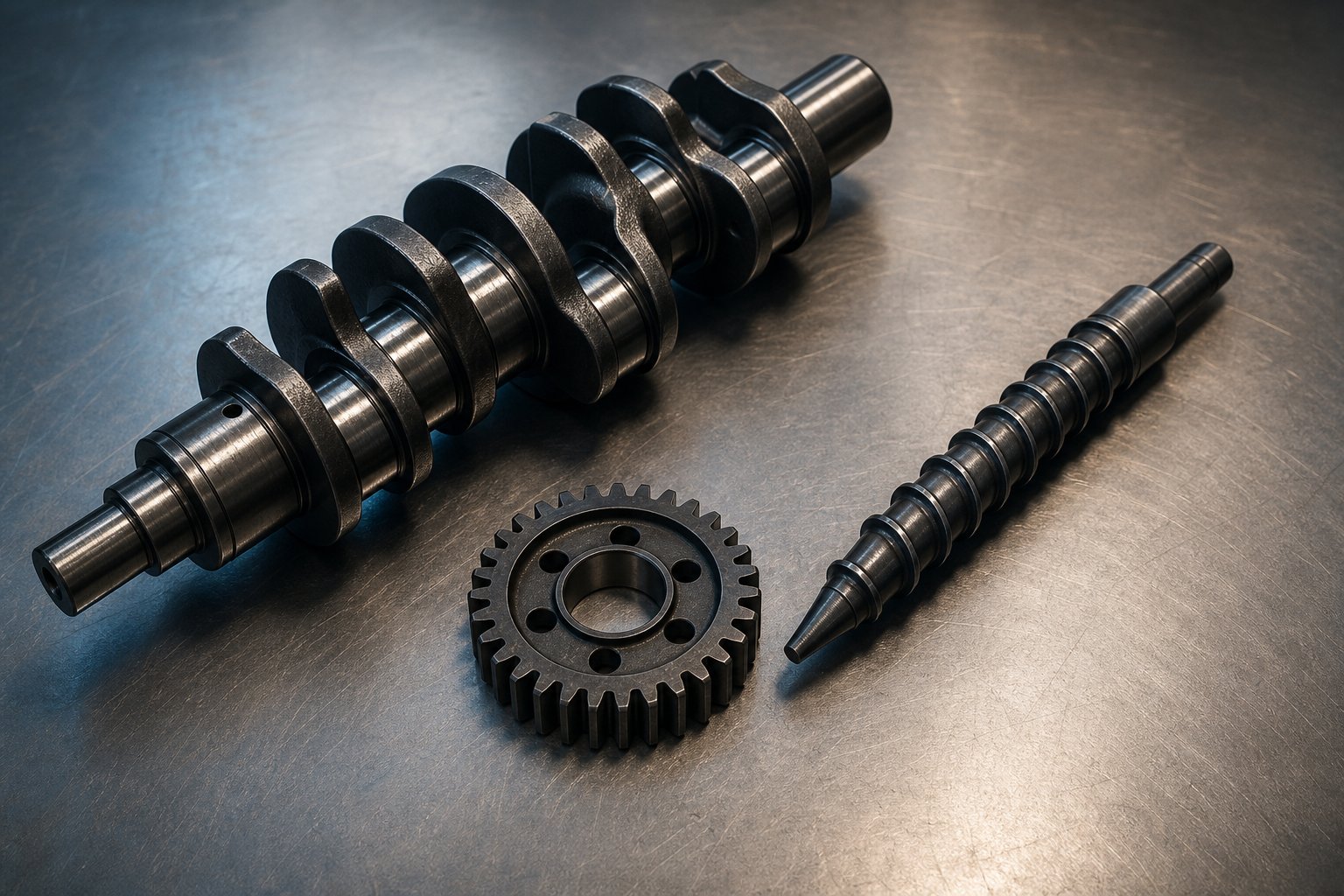
Every surface hardening method claims to improve wear resistance. What separates nitriding from the alternatives in real-world practice isn't just the numbers on a hardness chart—it's how the specific property mix of a nitrided surface matches the exact failure modes each industry faces. Here's the application-by-application breakdown, linking the why to the where.
- Abrasive wear resistance → plastics processing screws and barrels exposed to glass-fiber-filled compounds
- Corrosion resistance from the compound layer → injection molding components processing PVC and flame-retardant resins that release acidic off-gases
- Fatigue life under cyclic loading → automotive crankshafts, camshafts, and gears
- Dimensional stability after treatment → aerospace landing gear, actuator shafts, and bearing surfaces
- Thermal fatigue and anti-galling properties → forging dies, die-casting molds, and extrusion tooling
- Combined wear + corrosion resistance in a single treatment → firearm barrels, bolt carriers, and action components
Nitriding in Plastics Processing Equipment
Imagine an extrusion screw spinning at hundreds of RPM inside a barrel, pushing a melt stream loaded with 30% glass fiber reinforcement. Every revolution scrubs millions of microscopic glass particles against the steel surface. Add to that the corrosive acidic gases that PVC, PVDF, and flame-retardant compounds release at processing temperatures, and you've got a two-front assault—mechanical abrasion and chemical attack—happening simultaneously.
Barrel nitriding has become the standard industry response to this challenge. The nitrided case provides a hard surface—typically 550 to 750 HV on 4140 steel, or exceeding 1000 HV on H13—that resists the abrasive wear from glass fibers and mineral fillers, while the compound layer's iron nitride phases offer a corrosion-resistant barrier against acidic decomposition products. Unlike chrome plating, which can delaminate when thermal expansion differentials between the plated layer and the base steel build up at elevated barrel temperatures, a nitrided case is part of the steel itself—it can't peel.
Short screws are typically gas nitrided in horizontal retort furnaces, but longer extrusion screws—some exceeding 12 meters—require vertical vacuum chambers designed for plasma nitriding. Plasma processing also enables selective treatment through mechanical masking. Screw sections that don't face erosion—shanks, drive tangs, or transition zones—can be shielded so only the flight lands and root diameters receive nitride hardening, preserving core ductility where it matters most. For the most severe abrasion applications, processors specify screws made from Nit135M or H13 rather than standard 4140, pushing nitrided surface hardness above 70 HRC equivalent.
Automotive and Aerospace Nitriding Applications
In automotive powertrains, the dominant failure mode for crankshafts and camshafts isn't abrasion—it's fatigue. Every firing cycle sends a bending pulse through the crankshaft, and over millions of revolutions, microscopic cracks initiate at stress concentrators like fillet radii and oil holes. Nitriding counters this by introducing compressive residual stresses into the surface layer, directly opposing the tensile forces that nucleate fatigue cracks. Research on gas-nitrided 4140 steel demonstrates that high-cycle fatigue strength can increase by 80 to over 100% in the presence of sharp notches—exactly the geometry at a crankshaft fillet radius. That improvement translates into longer service intervals and reduced warranty claims across millions of vehicles.
Aerospace raises the stakes further. Landing gear components, actuator shafts, and precision bearing surfaces must maintain tolerances measured in micrometers after treatment. A carburized part might need extensive post-quench grinding to recover those tolerances—introducing cost, lead time, and the risk of grinding burns. Nitrided parts skip that step entirely. The process is specified under SAE AMS 2759/10 for aerospace applications, providing repeatable, batch-to-batch consistency with dimensional changes so small they fall within normal inspection tolerances.
Tooling applications follow a similar logic. Forging dies made from H13 endure thousands of thermal cycles—heating on contact with hot billets, cooling between strokes—while simultaneously resisting adhesive wear and galling. A nitrided surface on H13 achieves 1000–1100 HV, and that hardness holds stable at elevated operating temperatures up to the original nitriding temperature. Die-casting molds for aluminum benefit from the anti-galling properties of the compound layer, preventing molten aluminum from soldering to die surfaces and extending die life before refurbishment is needed.
Firearms represent a particularly visible consumer-facing application. So what is black nitride coating in the context of rifles and handguns? It's typically a salt bath or gas nitrocarburizing treatment followed by a post-oxidation step, producing a deep matte black finish with both wear and corrosion resistance. The nitride coating on steel barrels and bolt carrier groups resists the erosive effects of hot propellant gases and the corrosive residues left by primers and powder combustion. Unlike traditional phosphate finishes (Parkerizing), black nitride penetrates the steel rather than sitting on top of it, so it won't wear through at high-contact points during cycling. The term "black nitride" has become widespread in the firearms industry as a premium alternative to chrome lining for barrel protection.
Hardness Testing and Quality Verification
Specifying a nitriding treatment is one thing—verifying that the result matches the specification is another. Standard Rockwell hardness testing, which works well for through-hardened parts, lacks the precision needed for nitrided surfaces. The case is simply too thin for a Rockwell indenter's penetration depth to produce meaningful readings without substrate influence.
Instead, Vickers microhardness testing (HV) is the standard method for evaluating nitrided components. A diamond pyramid indenter applies a low load—typically 100 to 500 grams-force—to produce a tiny impression whose diagonal length is measured under magnification to calculate hardness. Surface hardness is measured directly on the treated face, providing the peak hardness value.
To determine effective case depth, technicians perform a microhardness traverse—a series of indentations made at precisely spaced intervals on a cross-sectioned sample, starting near the surface and progressing inward toward the core. The resulting hardness-versus-depth profile reveals the gradient from peak surface hardness down to base core hardness. Total case depth (TCD) is typically defined as the depth at which hardness drops to 50 HV above the core hardness average. Because nitrided case hardness varies significantly across steel grades, TCD is the preferred metric for nitriding—rather than the effective case depth to a fixed hardness value used for carburized parts—since it allows meaningful comparison regardless of alloy.
Core hardness also plays a directly practical role: it serves as the foundation the nitrided case builds upon. Two identical alloy samples nitrided under the same conditions will produce different effective case depths if their core hardnesses differ—the sample with the higher core hardness yields a deeper effective case. This is why pre-treatment quench-and-temper condition must be verified before parts enter the furnace. Reputable treatment providers test incoming hardness to catch discrepancies before processing, avoiding costly rework on parts whose cores were never properly conditioned.
All of these application-specific performance gains and quality verification methods paint an optimistic picture—but nitriding isn't without its trade-offs. Process costs, cycle time constraints, material limitations, and common defects all shape whether the return on investment actually pencils out for a given project.
Nitriding Costs, Limitations, and Troubleshooting
Nitriding delivers impressive surface properties—but it's not free, and it's not foolproof. Engineers who understand the economics, design constraints, and failure modes of the process of nitriding are far better positioned to specify it correctly and avoid expensive surprises. Let's break down each dimension honestly.
Understanding Nitriding Cost Drivers
The nitriding cost per part isn't a single number you can look up on a chart. It's shaped by a cluster of interacting variables, and the differences between methods can be dramatic.
Cycle time is the most visible cost lever. A gas nitriding system running a deep-case cycle at 500–590 °C may occupy a nitriding furnace for 24 to 72 hours or more—sometimes exceeding 100 hours for maximum case depth on certain alloys. Every hour that furnace is running, it consumes electricity, process gas, and floor space that can't be used for other jobs. Plasma nitriding cuts that window to roughly 4–24 hours, and salt bath nitriding compresses it further to 1–4 hours. Shorter cycles don't automatically mean lower total cost, though—they shift the cost structure rather than eliminate it.
Equipment capital costs vary widely. A retort furnace for gas nitriding represents a moderate upfront investment with relatively straightforward maintenance. Plasma nitriding demands vacuum chambers, high-voltage DC power supplies, and more sophisticated process controls—pushing capital expenditures significantly higher. Salt bath equipment itself is inexpensive, but the ongoing costs of hazardous waste treatment, regulatory compliance, and worker safety monitoring can rival or exceed the capital savings over time.
Batch size efficiency favors gas nitriding. A large retort can process hundreds of small parts—or dozens of large ones—in a single cycle, spreading that long cycle time across many components. Plasma chambers, by contrast, require careful spacing between parts to maintain uniform glow-discharge coverage, which limits load density. Salt bath systems handle moderate batches quickly but can't scale to the same volumes per cycle as a large retort.
Part preparation adds hidden cost. Every component entering a nitriding furnace must be thoroughly cleaned—free of oil, scale, machining residue, and surface oxides. For stainless steels, plasma activation or chemical depassivation steps add process time. And because nitriding is a finish-last treatment, parts must already be in their final quenched-and-tempered condition, meaning any upstream heat treatment errors get amplified rather than corrected.
The bottom line? For small-to-medium batches of complex parts requiring selective treatment, plasma nitriding often delivers the best value despite higher equipment costs. For high-volume production runs of uniform components, a gas nitriding system amortizes its long cycle time across enough parts to drive per-unit cost down. Salt bath nitriding occupies a fast-turnaround niche but faces growing cost pressure from environmental compliance.
Limitations and Design Constraints
Every surface hardening process has boundaries, and pretending nitriding doesn't is a recipe for field failures. Here are the constraints that shape—and sometimes disqualify—nitriding as a solution.
Material compatibility is non-negotiable. As covered earlier, plain carbon steels without significant nitride-forming elements (aluminum, chromium, vanadium, molybdenum) respond poorly. You'll get a thin iron nitride compound layer and minimal diffusion zone hardness—an expensive way to achieve mediocre results. Gas nitride hardening only delivers its full value when the substrate alloy is designed or selected to react with diffusing nitrogen.
Case depth is inherently limited. Typical nitrided case depths range from 0.1 to 0.8 mm—roughly one-third to one-tenth of what carburizing achieves (1–3+ mm). For components under heavy Hertzian contact stress or impact loading where subsurface fatigue cracks initiate well below the surface, that shallow case may not provide sufficient protection. Extending cycle time does deepen the case, but the relationship is parabolic: doubling the depth requires roughly four times the treatment duration.
Long cycle times for gas nitriding create scheduling bottlenecks in high-throughput production environments. A 48-hour furnace cycle ties up equipment and delays downstream assembly. Plasma and salt bath methods mitigate this, but each introduces its own trade-offs in capital cost or environmental overhead.
Compound layer brittleness becomes a problem when the white layer grows excessively thick. Under impact loading, bending, or high contact pressure, a thick compound layer can crack, chip, or spall—initiating surface damage rather than preventing it. Applications involving dynamic bending loads, such as crankshaft fillets, often specify compound layer removal or controlled two-stage gas nitriding processes that deliberately suppress white layer formation.
Pre-treatment condition is critical. Parts must be quenched and tempered before nitriding, with the tempering temperature set above the planned nitriding temperature. If a part was tempered at 520 °C and then nitrided at 530 °C, the core will soften during the nitriding cycle—losing the mechanical properties it was heat treated to achieve. This seemingly simple requirement catches shops off guard when documentation of prior heat treatment history is incomplete.
Common Nitriding Defects and How to Prevent Them
Even with the right alloy and the right equipment, process execution errors can produce defective results. Recognizing these defects and understanding their root causes is the difference between a reliable treatment and a costly rework cycle.
- Excessive or spalling white layer — Cause: Nitriding potential (nitrogen activity) is too high, typically from excessive ammonia flow rate or insufficient dissociation control. The compound layer grows beyond the 20–25 µm range and becomes porous and brittle. Prevention: Monitor and control ammonia dissociation rate throughout the cycle. Use two-stage (Floe) process parameters to limit compound layer growth in the second stage. Specify maximum compound layer thickness on engineering drawings.
- Case exfoliation (peeling) — Cause: Surface decarburization present on the part before nitriding, usually from insufficient stock removal during pre-nitride machining or decarburization during prior heat treatment. The nitrogen-enriched layer separates from the carbon-depleted substrate. Prevention: Verify adequate material removal at pre-machining to eliminate any decarburized zone. Inspect cross-sections of representative parts before committing full batches.
- Non-uniform case depth — Cause: In gas nitriding, uneven gas flow inside the retort creates dead zones where ammonia supply is insufficient. In plasma nitriding, parts positioned too close together or improperly fixtured cause plasma shielding—shadows where the glow discharge can't reach. Prevention: Optimize retort loading patterns and gas inlet/outlet placement. In plasma systems, maintain adequate part spacing and use auxiliary anodes or rotating fixtures for complex geometries.
- Surface contamination blocking nitrogen uptake — Cause: Residual oils, machining fluids, fingerprints, oxide films, or heat-treatment scale on the part surface act as barriers to nitrogen diffusion. Even a thin contaminant film can produce localized soft spots. Prevention: Implement rigorous pre-cleaning protocols—vapor degreasing, alkaline washing, or ultrasonic cleaning—immediately before loading. For stainless steels, use plasma sputter-cleaning or chemical activation to remove the passive oxide layer.
- Case chipping at corners and edges — Cause: Nitride networking—an over-enriched zone of extremely hard, brittle nitrogen precipitates that forms when the nitriding potential is too high relative to the alloy's capacity to absorb nitrogen uniformly. Sharp corners concentrate stress and are the first places chipping appears. Prevention: Reduce gas flow and check dissociation rates to lower the nitrogen supply. Design parts with radiused rather than sharp edges wherever possible to reduce stress concentration.
- Case crushing under load — Cause: Core hardness is too low to support the nitrided case, or the case depth is too shallow for the applied load. The hard but thin surface layer collapses into the soft substrate. Prevention: Verify that pre-nitriding quench-and-temper has achieved the specified core hardness. Increase case depth if load analysis indicates subsurface stress exceeds the case-to-core transition zone strength.
Most of these defects share a common thread: they originate before the part ever enters the furnace. Surface condition, prior heat treatment, alloy selection, and process parameter control are the four pillars that determine whether a nitriding cycle produces a high-performance case or an expensive scrap pile. With those economics and failure modes clearly mapped, the practical question becomes how to navigate the decision process itself—choosing the right method, matching it to the right material, and ensuring every upstream step is in order before committing parts to treatment.
How to Choose the Right Nitriding Method for Your Project
Knowing the science, the methods, the economics, and the failure modes gives you a solid foundation. But when you're standing in front of an actual engineering decision—a component on your desk, a performance spec in your hand, and a supplier waiting for direction—you need a structured path from problem to solution. That's what this framework delivers: three sequential decision steps that filter out the wrong options and narrow your choices to the right ones.
Decision Step One — Is Nitriding Right for Your Application
Before comparing gas versus plasma versus salt bath, you need to answer a more fundamental question: should you be nitriding this part at all? Not every component benefits from the steel nitriding process, and forcing a mismatch wastes time, money, and furnace capacity.
Walk through this checklist. If you answer "yes" to most of these criteria, nitriding is likely a strong candidate:
- Is the substrate a nitriding-compatible alloy? The steel must contain meaningful concentrations of nitride-forming elements—aluminum, chromium, vanadium, or molybdenum. Plain carbon steels or low-alloy grades without these elements won't develop a useful hardness response. If the material is already specified and it's a 4140, 4340, H13, D2, or a dedicated nitralloy grade, you're in good territory.
- Is minimal distortion critical? If the part has been finish-machined to tight tolerances and can't accommodate post-treatment grinding, nitriding's sub-critical process temperatures give it a decisive edge over carburizing or through-hardening. Parts that must hold dimensional accuracy within micrometers after treatment—think aerospace actuator shafts or precision gears—are ideal candidates.
- Is the required case depth under approximately 0.8 mm? Nitriding excels in the 0.1–0.8 mm case depth window. If your load analysis shows subsurface stress peaks deeper than that range, carburizing or induction hardening may serve the application better.
- Does the application demand a combination of wear resistance, fatigue strength, and corrosion protection? Few surface treatments deliver all three simultaneously. Carburizing provides wear and fatigue but reduces corrosion resistance. Chrome plating handles wear and corrosion but contributes nothing to fatigue life. Nitriding treatment addresses all three through its dual-zone microstructure—compound layer for corrosion and anti-galling, diffusion zone for fatigue and deep wear resistance.
- Can the production schedule accommodate the cycle time? Gas nitriding may require 24–72+ hours. If your lead time can't absorb that window, plasma or salt bath methods—or an alternative process entirely—deserve consideration.
If you checked "no" on substrate compatibility or case depth requirements, nitriding probably isn't the right fit. Redirect toward carburizing for deep-case needs, induction hardening for localized treatment of high-carbon steels, or nitrocarburizing for fast-cycle compound layer development on low-alloy parts.
Decision Step Two — Selecting the Optimal Nitriding Method
You've confirmed nitriding is appropriate. The next filter narrows which of the three process families best matches your part geometry, production volume, and operational constraints. Think of these as matching criteria rather than rankings—each method occupies a distinct niche.
- Choose gas nitriding when you're processing large batches of geometrically similar parts that all require the same case depth and surface hardness. Retort furnaces can handle high volumes efficiently, spreading that long cycle time across hundreds of components. Gas nitriding is also the most widely available nitriding service, meaning supplier options and geographic coverage are broad. It's the default for automotive gears, fasteners, hydraulic cylinders, and extrusion screws processed in bulk. The trade-off is cycle duration: plan for 24–72+ hours depending on target case depth.
- Choose plasma nitriding when precision, flexibility, or material constraints drive the decision. Need to harden only specific zones of a part while keeping other areas soft? Plasma makes selective treatment straightforward through simple mechanical masking. Working with stainless steel that resists nitrogen uptake through its passive oxide layer? Plasma ion bombardment sputters that barrier away. Processing complex geometries where gas flow uniformity inside a retort would be problematic? The glow-discharge plasma conforms to part surfaces regardless of shape. Plasma also runs shorter cycles—typically 4–24 hours—and generates no hazardous chemical waste. The higher capital cost of vacuum chambers and DC power supplies is offset by lower per-part costs at volume and the smallest environmental footprint of any method.
- Choose the salt bath nitriding process when speed is the overriding priority and your facility can manage the environmental compliance burden. Immersion in molten nitrogen-bearing salts produces uniform compound layers in 1–4 hours, with excellent coverage on threads, recesses, and intricate geometries. The QPQ (quench-polish-quench) variant adds enhanced corrosion resistance and an attractive black finish. However, cyanide-bearing salt baths generate hazardous waste requiring specialized disposal, and tightening regulations in many jurisdictions are increasing compliance costs. Evaluate whether your production volume justifies the ongoing waste management overhead before committing to this route.
When the decision isn't clear-cut—say you need moderate batch sizes with selective treatment on a tight schedule—plasma nitriding often emerges as the most versatile compromise. It handles the broadest range of scenarios, though at higher equipment cost. For operations already running established gas nitriding furnaces with proven load recipes, switching methods rarely makes sense unless a new part design introduces geometry or material constraints that gas can't accommodate.
Decision Step Three — Material Selection and Pre-Treatment
The final layer of the decision process addresses what happens before the part enters the furnace. Even the best nitriding services can't compensate for upstream errors in material choice or thermal conditioning.
- Confirm the steel grade supports your hardness target. If maximum surface hardness is the priority, specify a dedicated nitriding alloy like Nitralloy 135M with its aluminum-driven response exceeding 1100 HV. For applications where 550–750 HV is sufficient, standard chromium-molybdenum grades (4140, 4340) reduce material cost without sacrificing functional performance. Tool steels like H13 and D2 sit in between, offering 900–1100 HV nitrided surfaces suited for die and tooling applications.
- Verify quench-and-temper condition. Every part must be through-hardened and tempered before nitriding, with the prior tempering temperature set at least 30 °C above the planned nitriding temperature. This prevents core softening during treatment. Request heat treatment certifications or perform incoming hardness checks on a sample basis to catch discrepancies before committing entire batches.
- Ensure surface cleanliness. Residual oils, machining coolants, oxide scale, and even fingerprints can block nitrogen diffusion and create localized soft spots. Implement vapor degreasing, alkaline washing, or ultrasonic cleaning as a final step before loading. For stainless steels, factor in plasma sputter-cleaning or chemical depassivation time.
- Specify the compound layer requirement. Decide whether your application benefits from a full compound layer (corrosion and anti-galling protection), a controlled thin layer, or compound layer removal entirely (for maximum surface ductility under dynamic bending loads). Communicate this clearly on engineering drawings with a maximum thickness callout—don't leave it to the treatment provider's default recipe.
- Define testing and acceptance criteria. Specify target surface hardness (HV), effective or total case depth, compound layer thickness range, and reference the applicable standard—AMS 2759/10 for aerospace, or customer-specific specs for other industries. Include requirements for microhardness traverse testing on representative samples per batch.
For plastics processing equipment specifically, this material-and-treatment matching exercise becomes particularly nuanced. The "right" combination of base steel and surface treatment depends on the plastic resin being processed, the type of filler (glass fiber, mineral, none), and the corrosive potential of the melt. A screw processing unfilled polyethylene faces entirely different wear and corrosion demands than one running 40% glass-filled PVC. Nitriding, chrome plating, and bimetallic alloy construction each address different segments of that spectrum, and mismatching the treatment to the application accelerates wear rather than preventing it. NANHAIYA's custom screw design service helps processors navigate exactly this decision—recommending material and surface-treatment combinations based on specific resin types, filler content, wear modes, and corrosion exposure so that the investment in advanced nitriding solutions or alternative treatments delivers measurable returns in screw life and production uptime.
With the right method selected, the right material specified, and every pre-treatment step verified, the remaining challenge is ensuring that all of these decisions translate into a clear, unambiguous specification—a document that tells your treatment provider or equipment supplier precisely what outcome you expect and how it will be measured.
Specifying Nitriding Treatment for Optimal Results
You've worked through the metallurgy, compared the methods, weighed the economics, identified the failure modes, and built a decision framework. All of that knowledge converges on a single practical outcome: writing a specification that tells your treatment provider exactly what you need—and gives you the tools to verify they delivered it.
Three Critical Takeaways for Specifying Nitriding
Before diving into the checklist, consider these three principles distilled from everything covered in this article. They represent the difference between a nitriding heat treatment that performs flawlessly in service and one that fails prematurely.
First, nitriding delivers a unique combination of surface hardness, fatigue strength, wear resistance, and corrosion protection with minimal distortion—but only when applied to compatible alloy steels that have been properly quenched and tempered beforehand. Skip the pre-treatment, choose the wrong alloy, and no amount of furnace time will compensate.
Second, the choice between gas, plasma, and salt bath nitriding should be driven by part geometry, production volume, required case depth, and environmental considerations—not by habit or supplier convenience. Each method occupies a distinct performance-and-cost niche.
Third, specifying nitriding correctly requires understanding the interplay between base material composition, process parameters, and the desired balance of compound layer versus diffusion zone properties. A specification that calls for "nitriding" without defining layer architecture leaves critical performance decisions in someone else's hands.
These aren't abstract principles. They translate directly into the information you need to put on a drawing, a purchase order, or a supplier qualification document.
Your Nitriding Specification Checklist
Imagine handing a part to a nitriding service provider with nothing more than "please nitride this" on the work order. The provider would have to guess at your hardness target, case depth requirement, compound layer preference, and acceptance criteria. The result might work—or it might be completely wrong for your application. A complete specification eliminates that ambiguity.
Here's what every gas nitriding treatment, plasma, or salt bath specification should communicate:
- Target surface hardness (HV) — Specify the minimum acceptable surface hardness using Vickers notation, including the test load. For example, "minimum 700 HV1" tells the provider both the hardness floor and the indenter load for verification. As ELTRO GmbH's nitriding drawing guidelines note, matching the test load to the expected nitriding depth and hardness range is essential for accurate measurement.
- Effective or total case depth — Define the nitriding hardness depth (NHD) per DIN 50190 Part 3 or equivalent standard. The hardness limit is typically calculated as core hardness + 50 HV, rounded to the nearest 10 HV. Specify whether you're calling out total case depth or effective case depth, as the two values differ significantly—particularly across steel grades with different core hardnesses.
- Compound layer requirements — State whether a compound layer is desired, and if so, specify the acceptable thickness range in micrometers (e.g., "compound layer thickness: 8–15 µm"). For applications under dynamic bending loads where the nitriding hardening must emphasize fatigue resistance over corrosion protection, specify compound layer removal or a maximum thickness of 5 µm.
- Substrate material and heat treatment condition — Identify the exact steel grade and its prior quench-and-temper state, including tempering temperature and target core hardness range. This enables the treatment provider to select appropriate cycle parameters and predict the nitriding response accurately.
- Dimensional tolerances — Call out critical dimensions and the allowable growth. While the nitriding heat treatment process produces minimal distortion, parts do experience slight dimensional changes—typically a few micrometers of growth—that matter for interference fits, bearing bores, and precision sliding surfaces.
- Areas to be treated, masked, or excluded — Clearly mark on the drawing which surfaces must receive treatment, which are acceptable to treat, and which must be protected. Plasma nitriding allows selective treatment through mechanical masking; gas nitriding uses copper plating or proprietary stop-off paints on areas to be excluded.
- Applicable industry standard — Reference the governing specification. For aerospace components, SAE AMS 2759/10 (now at revision D) establishes requirements for automated gaseous nitriding controlled by nitriding potential. Automotive and industrial applications may reference company-specific standards or DIN 17022. Including this reference signals to the provider that you expect process control, documentation, and traceability at the level your application demands.
- Testing and certification requirements — Specify whether microhardness traverses on representative test coupons are required per batch, whether metallographic cross-sections must be evaluated for compound layer phase composition and porosity, and what documentation (test reports, certifications, material traceability records) must accompany the finished parts.
A specification built from this checklist leaves no room for ambiguity. It tells the provider what you need, how to verify it, and what standard governs acceptance—turning heat treatment nitriding from a vague process callout into a measurable, auditable quality requirement.
Getting Expert Guidance on Surface Treatment Selection
For many applications, following this checklist is straightforward. An aerospace gear designer working with Nitralloy 135M and AMS 2759/10 has a well-defined path. An automotive engineer specifying crankshaft nitriding on 4340 has decades of industry precedent to draw on.
Plastics processing, however, introduces layers of complexity that make surface treatment selection genuinely difficult. The interaction between polymer chemistry, mechanical abrasion from fillers, and chemical corrosion from melt degradation products creates a three-dimensional decision space where nitriding, chrome plating, bimetallic barrel liners, and combination approaches each solve different pieces of the puzzle. A screw running neat ABS faces almost no corrosion but moderate adhesive wear. Switch that resin to 30% glass-filled nylon, and abrasive wear dominates—demanding a hard nitrided surface on a tool steel substrate. Process PVC on that same machine, and corrosive hydrochloric acid off-gassing attacks the barrel bore, shifting the calculus toward bimetallic construction or specialized alloy liners that nitriding alone can't replicate.
Working with a manufacturer that understands this interplay—between polymer behavior, wear mechanisms, and surface treatment metallurgy—is essential for getting the specification right the first time. NANHAIYA's custom screw design service provides exactly this kind of integrated guidance, helping processors and equipment buyers evaluate whether nitriding, chrome plating, bimetallic construction, or a layered combination best matches their specific resin types, filler content, and production demands. Rather than defaulting to a single treatment because "that's what we've always used," a tailored recommendation based on actual operating conditions translates into longer screw and barrel life, reduced unplanned downtime, and lower total cost of ownership.
Whether your application falls in aerospace, automotive, tooling, firearms, or plastics processing, the path to a successful nitriding outcome follows the same logic: select the right alloy, prepare it properly, choose the method that fits your geometry and volume, specify the layer architecture your application demands, and verify the result with appropriate testing. Get those steps right, and a nitrided surface will deliver years of reliable, high-performance service with the dimensional precision that made nitriding the treatment of choice in the first place.
Frequently Asked Questions About Nitriding Treatment
1. What is nitriding treatment and how does it work?
Nitriding treatment is a thermochemical surface hardening process performed at 500-590 °C (930-1090 °F). Nitrogen atoms diffuse into a steel part's surface and react with alloying elements like aluminum, chromium, and molybdenum to form extremely hard nitride precipitates. Because the temperature stays below the steel's phase-transformation point, no quenching is needed, and parts experience virtually zero distortion. The result is a dual-layer structure: a thin compound layer providing corrosion and anti-galling protection, and a deeper diffusion zone delivering fatigue strength and wear resistance. Surface hardness can reach up to 1100 HV on dedicated nitriding alloys such as Nitralloy 135M.
2. What is the difference between gas nitriding, plasma nitriding, and salt bath nitriding?
Gas nitriding uses dissociated ammonia in a sealed retort furnace with cycle times of 10-72+ hours, making it ideal for large uniform batches. Plasma (ion) nitriding ionizes nitrogen in a vacuum chamber, enabling selective treatment, shorter 4-24 hour cycles, and effective processing of stainless steels. Salt bath nitriding immerses parts in molten cyanide-bearing salts for just 1-4 hours with excellent coverage on complex geometries, but carries significant environmental and disposal challenges. Each method achieves similar hardness ranges (700-1100 HV), but they differ in capital cost, cycle duration, environmental impact, and part-geometry flexibility. Choosing the right method depends on production volume, part complexity, and regulatory constraints.
3. Which steel grades are best suited for nitriding?
The best nitriding response comes from steels containing strong nitride-forming elements. Dedicated nitriding alloys like Nitralloy 135M, with approximately 1% aluminum, achieve the highest surface hardness (above 1100 HV). Chromium-molybdenum grades such as 4140 and 4340 are widely used industrial options reaching 550-750 HV. Tool steels like H13 and D2 deliver 900-1100 HV for die and tooling applications. Stainless steels can be nitrided using plasma methods that sputter away the passive oxide layer. Plain carbon steels without nitride-forming alloy content respond poorly, producing only shallow, low-hardness cases. For plastics processing screws and barrels, NANHAIYA's custom screw design service (https://www.nhyscrews.com/services/custom-screw-design) can recommend the optimal base material and surface treatment pairing based on specific resin types and wear conditions.
4. How does nitriding compare to carburizing and chrome plating?
Nitriding operates at 500-590 °C with no quenching, producing minimal distortion and case depths of 0.1-0.8 mm. Carburizing runs at 850-1040 °C and requires quenching, which causes significant distortion but achieves deeper cases of 0.4-3.0+ mm suited for heavy shock loads. Chrome plating deposits a separate layer at ambient temperature with excellent corrosion resistance and low friction, but the coating can delaminate under cyclic loading and faces increasing environmental regulation around hexavalent chromium. Nitriding modifies the steel itself so there is no adhesion interface to fail, and it uniquely delivers simultaneous improvements in hardness, fatigue strength, wear resistance, and corrosion protection in a single treatment step.
5. What are common nitriding defects and how can they be prevented?
The most frequent nitriding defects include excessive or spalling compound layers caused by uncontrolled nitrogen potential, non-uniform case depth from poor gas flow or plasma shielding, and surface contamination blocking nitrogen uptake from residual oils or oxide films. Case exfoliation occurs when pre-existing decarburization prevents proper bonding, while case crushing results from insufficient core hardness to support the hard surface layer. Prevention strategies include monitoring ammonia dissociation rates, using two-stage processes to control compound layer thickness, implementing rigorous pre-cleaning protocols, verifying quench-and-temper condition before treatment, and specifying maximum compound layer thickness on engineering drawings. Most defects originate before the part enters the furnace, making upstream quality control essential.
Written by
Nanhaiya Technical Team
Zhoushan Nanhaiya Plastic Machinery Co., Ltd.
The Nanhaiya technical team supports screw and barrel manufacturing projects through application review, technical communication, custom manufacturing coordination, and production and quality control.
Discuss Your Application
Related Articles
More insights on screw barrel technology and plastics processing.
What Nobody Tells You About Screw Barrel For Plastic Machine Design
Oct 10, 2026
Learn how screw barrel for plastic machine design affects melt quality, throughput, and wear life. Covers geometry, resin matching, troubleshooting, and sourcing.
Read Article
Single Screw Extruder for Sheet: Stop Guessing, Start Specifying
Oct 9, 2026
Learn how to specify a single screw extruder for sheet production. Covers screw geometry, resin-specific processing, troubleshooting, and maintenance best practices.
Read Article
PE Pipe Extruder Machine: What Datasheets Won't Tell You
Oct 9, 2026
Learn how a PE pipe extruder machine works, key specs explained, material grade selection, maintenance tips, and buyer guidance beyond the datasheet.
Read ArticleLooking for something else?
Search by material, symptom or product and jump straight to the relevant page.
These are navigation suggestions based on keyword matching — not a quotation, not a delivery commitment, and not a substitute for engineering review. Final specification is confirmed by our engineers against your drawings and processed material.
Need help with screw barrel selection?
Share your machine model, processed material and application. Our team can help with pricing and technical support.