

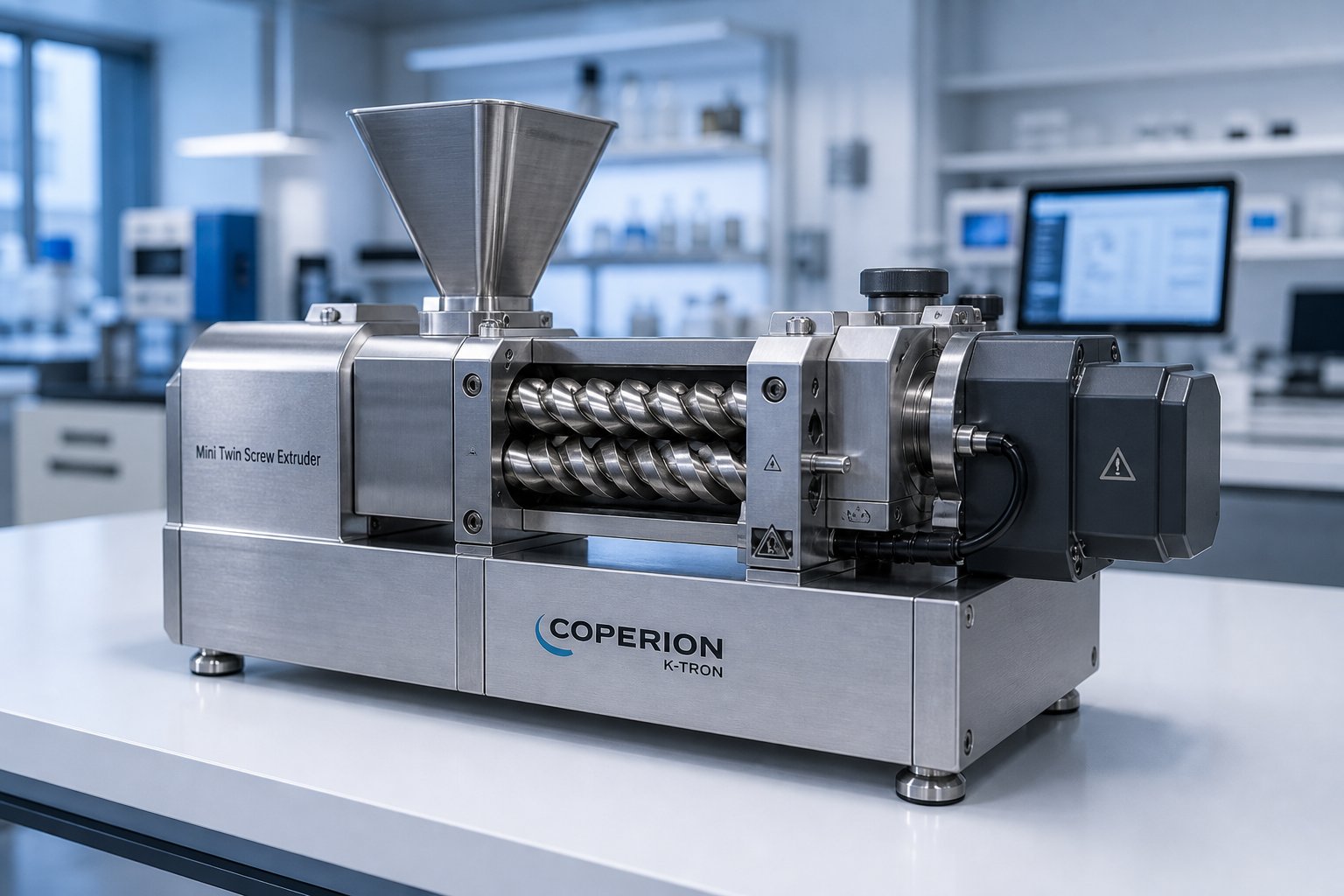
What Is a Mini Twin Screw Extruder and Why Does It Matter
Imagine you have synthesized a brand-new experimental polymer — maybe just 50 grams of it — and you need to compound it with a filler to evaluate mechanical performance. Running that tiny quantity through a production-class twin screw extruder would be impractical, wasteful, and likely impossible. This is exactly the problem a mini twin screw extruder is built to solve, and it is why these compact machines have become indispensable across university labs, pharmaceutical R&D centers, and corporate research facilities worldwide.
Defining the Mini Twin Screw Extruder
A mini twin screw extruder is a compact, laboratory-oriented processing machine that uses two intermeshing screws rotating inside a heated barrel to mix, melt, and convey materials — typically polymers, pharmaceutical compounds, or food-grade formulations. The term "mini" generally refers to machines with screw diameters ranging from roughly 5 mm to 20 mm, setting them apart from full-production twin screw extruders that commonly feature screw diameters of 25 mm and above. Despite their reduced size, these machines replicate the core conveying, kneading, and mixing mechanisms found in their industrial-scale counterparts, enabling researchers to generate process-relevant data from very small material quantities.
The operating principle is straightforward. Raw material enters through a feed throat or hopper, encounters the rotating screws, and is progressively conveyed forward through heated barrel zones. Along the way, the intermeshing screw elements apply shear and distributive mixing forces that blend, compound, or react the material before it exits through an interchangeable die assembly. A twin-screw extruder at this scale can process as little as a few grams per run, making it possible to work with scarce or expensive experimental materials that would be impractical to test on larger equipment.
Why Mini Scale Matters for Modern Research
The practical rationale behind miniaturized twin screw extruders comes down to three converging pressures that R&D teams face every day: material cost, iteration speed, and data quality.
First, consider material cost. Early-stage experimental polymers, novel active pharmaceutical ingredients, and specialty additives can cost hundreds or even thousands of dollars per kilogram. Running screening trials on a production machine that demands multiple kilograms per batch quickly becomes prohibitively expensive. A mini-scale system, by contrast, lets scientists evaluate a new blend with just a fraction of that material — often under 100 grams — while still producing samples large enough for meaningful mechanical, thermal, or rheological testing.
Second, there is the question of speed. Formulation development is inherently iterative. You adjust a filler loading by two percent, change a processing temperature, swap one additive for another, and then evaluate the results. Twin screw extruders at mini scale accelerate this design-of-experiments cycle because setup, purging, and cleaning between runs take far less time than they would on full-size equipment. A researcher can realistically complete multiple compounding trials in a single workday.
Third, and perhaps most critically, the data generated must be representative. Mini-scale machines are engineered to maintain geometric and process similarity to larger double screw extruder systems, so the mixing intensity, residence time, and thermal profiles remain relevant for scale-up decisions. Models commonly available in this category feature screw diameters of 12 mm and 20 mm, offering a range of throughput options that accommodate everything from initial feasibility checks to more rigorous parametric studies.
Mini-scale extrusion enables R&D teams to screen dozens of formulations at a fraction of the material cost and time required by production equipment — without sacrificing the process relevance needed for confident scale-up decisions.
For lab managers weighing equipment investments and for academic teams operating under tight grant budgets, this combination of low material consumption, fast turnaround, and scalable data makes the mini twin screw extruder one of the most strategically valuable tools in modern polymer and materials research. Yet the market for these machines is cluttered with overlapping terminology — benchtop, micro, lab-scale, pilot-scale — and understanding what each label actually means can be the difference between buying the right system and making a costly mismatch.
Terminology Decoded: Benchtop, Lab Scale, and Pilot Scale Twin Screw Extruders
Search for a small-format twin screw extruder and you will encounter a tangle of labels — mini, micro, benchtop, lab-scale, laboratory-scale, pilot-scale — often used interchangeably across manufacturer catalogs and distributor listings. The reality is that no governing standards body has locked down precise definitions for these categories. Differences typically come down to three practical variables: screw diameter, throughput capacity, and intended use case. Getting these distinctions right before you start comparing quotes can save your team from an expensive equipment mismatch.
Mini vs. Micro vs. Benchtop Extruders
Think of these three terms as describing overlapping but distinct characteristics of small-format twinscrew equipment. "Benchtop" is purely a physical footprint descriptor — it tells you the machine is compact enough to sit on a laboratory bench rather than requiring dedicated floor space. A benchtop twin screw extruder could have a screw diameter of 5 mm or 20 mm; the label says nothing about processing capability.
"Micro" typically signals the smallest available screw diameters, generally under 10 mm, and is associated with batch volumes measured in single-digit grams. These machines are built for scenarios where material is extremely scarce or costly — think novel pharmaceutical compounds or newly synthesized research polymers. "Mini," by contrast, occupies a middle ground. It implies screw diameters roughly in the 10 mm to 20 mm range, with throughputs that allow slightly larger experimental runs while still conserving material.
Here is how these categories compare at a glance:
| Term | Typical Screw Diameter Range | Typical Throughput | Primary Use Case | Example Context |
|---|---|---|---|---|
| Micro | 5 mm – 9 mm | A few grams per run | Ultra-small-batch formulation screening | Novel API feasibility with under 10 g of material |
| Mini | 10 mm – 20 mm | Tens of grams to low kg/hr | Formulation development and parametric studies | Polymer blend optimization using 50–200 g batches |
| Benchtop | 5 mm – 20 mm (varies) | Varies by model | Any lab application requiring compact footprint | University lab with limited bench space |
You will notice that "benchtop" cuts across both micro and mini categories. A laboratory extruder marketed as "benchtop" might be a 5 mm micro-compounder or a 16 mm mini system — always check the screw diameter and throughput specifications rather than relying on the marketing label alone.
Lab-Scale vs. Pilot-Scale Distinctions
The divide between lab-scale and pilot-scale equipment reflects a fundamentally different purpose, not just a step up in size. A lab scale twin screw extruder is designed for formulation development and screening. The focus is on exploring material behavior — testing blend ratios, additive loadings, and temperature profiles — with batch sizes typically under 10 liters (or the equivalent mass for polymer systems). Flexibility and fast iteration matter more than sustained throughput.
Pilot-scale equipment, on the other hand, bridges the gap between the research bench and the production floor. Screw diameters at pilot scale commonly range from 25 mm to 40 mm, and throughput jumps to multiple kilograms per hour. The objective shifts from "does this formulation work?" to "can this process run consistently at higher volume, and do the parameters transfer to manufacturing lines?" A laboratory scale extruder used for screening cannot answer those questions, just as a pilot system would be wasteful and impractical for early-stage discovery work.
Understanding where your project sits on this continuum — discovery screening, parametric optimization, or pre-production validation — is the single most reliable way to match equipment capability to research objectives. A lab scale extruder optimized for 50-gram screening runs and a pilot machine rated for 20 kg/hr serve fundamentally different roles, even though both may appear under the same "twin screw extruder" search results.
Terminology, however, only tells part of the story. The real performance differences between these categories emerge when you look under the hood — at the screws, barrels, heating systems, and drive units that define what a miniaturized machine can actually do.
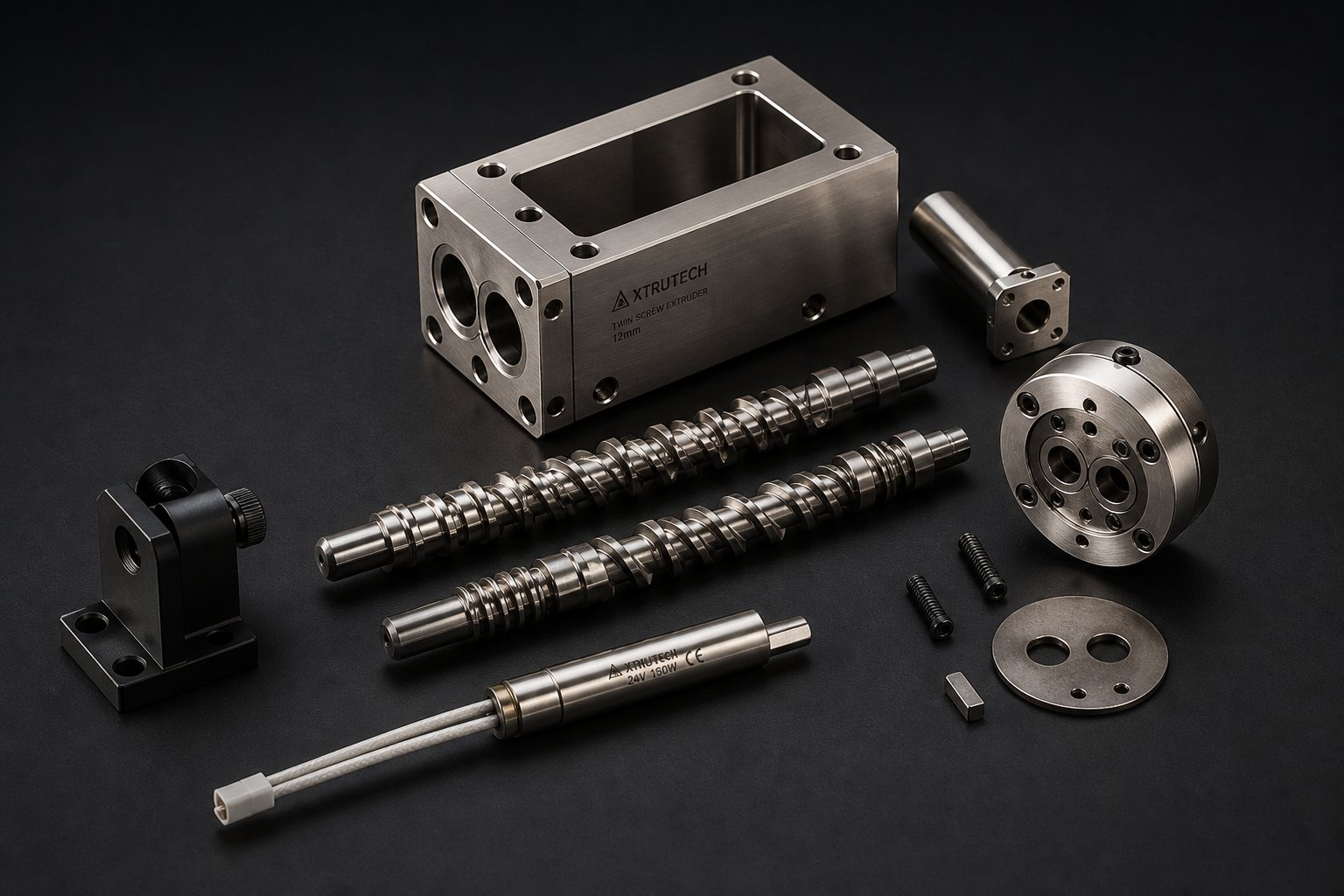
Key Components of a Mini Twin Screw Extruder and How They Differ at Small Scale
Every screw extruder — regardless of size — relies on the same fundamental building blocks: screws, a barrel, heaters, a drive system, and a die. Strip away the housing of a 12 mm lab unit and a 92 mm production machine, and you will recognize the same functional architecture. The critical difference is not what the components do, but how tightly they must be engineered when everything shrinks. At mini scale, tolerances that would be routine on industrial equipment become defining constraints, and design trade-offs that barely matter at full size can dictate whether a research run produces usable data or frustrating inconsistency.
Screws and Barrel Design at Miniature Scale
The screws are the heart of any twin screw system. Mini extruders use the same types of modular screw elements found on production lines — conveying elements that move material forward, kneading blocks that apply intensive shear and distributive mixing, and reverse elements that create back-pressure and extend residence time. In principle, a kneading block on a 12 mm screw does exactly what a kneading block on a 60 mm screw does: it forces material through narrow intermeshing gaps to generate the shear energy needed for thorough blending or reactive processing.
The catch is precision. On a full-size machine, the gap between the screw flight tip and the barrel inner wall — known as the screw-to-barrel clearance — is typically 0.001 to 0.002 times the screw diameter. For a 100 mm screw, that means a clearance of 0.1 mm to 0.2 mm. Scale that relationship down to a 10 mm screw and you are looking at a target clearance of just 0.01 mm to 0.02 mm — a gap so small that even minor wear, thermal expansion, or machining imperfection can disproportionately affect performance. Increased clearance leads to backflow of molten material past the screw flights, reducing conveying efficiency and undermining the mixing consistency that makes twin screw data reliable in the first place.
Barrel segments follow a similar pattern. They are shorter at mini scale, often just a few centimeters per section, and the twin screw barrel bore must maintain concentricity to extremely tight standards — sometimes within ±0.02 mm. Because the twin screw and barrel work as a matched system, replacing one component usually means inspecting and potentially replacing the other. This interdependency is easy to overlook when budgeting for a mini extruder, but it directly affects long-term operating costs.
Here are the core components you will find in a typical mini twin screw extruder configuration:
- Screw elements — modular conveying, kneading, and mixing segments mounted on splined shafts
- Barrel segments — precision-bored, often nitrided steel or bimetallic lined sections
- Heating zones — independently controlled thermal sections along the barrel length
- Die assembly — interchangeable end-piece that shapes the extrudate output
- Drive unit — motor, gearbox, and speed controller that rotate the screws
Each of these components plays the same role it would on a larger barrel extruder system, but the margin for manufacturing error narrows dramatically as dimensions decrease. This is one reason why mini-scale equipment from reputable manufacturers commands pricing that can surprise first-time buyers — the machining precision required to produce functional screw elements at 10 mm or 12 mm diameters is substantially more demanding than at production scale.
Heating, Drive Systems, and Die Assemblies
Temperature control on a mini twin screw extruder typically relies on electric cartridge heaters embedded directly in the barrel segments. Compared to production machines that may feature eight, ten, or more independently controlled heating zones, a mini system usually offers between two and four zones. Fewer zones means less granular control over the thermal profile along the barrel length, but for most research applications — polymer blending, hot-melt extrusion screening, nanocomposite development — this level of resolution is sufficient to establish meaningful temperature gradients and replicate the thermal conditions needed for representative processing.
What matters more at this scale is thermal responsiveness. Because barrel segments are small and have low thermal mass, they heat up and cool down quickly. That is an advantage for rapid changeovers between experiments, but it also means temperature can overshoot or oscillate if the PID control system is not properly tuned. Modern mini extruders address this with digital PID controllers that maintain zone temperatures within ±1 to 2 degrees Celsius — tight enough for reproducible research results.
The drive unit presents its own set of mini-scale considerations. Smaller motors deliver lower absolute torque, which sets an upper limit on the viscosity and filler loading that can be processed. Imagine trying to compound a heavily glass-fiber-filled engineering resin through a drive system rated for just a few newton-meters of torque — the motor will stall or the safety cutoff will trip before the material reaches stable processing conditions. For general-purpose polymer research, however, mini extruder drive systems provide more than enough power. The real priority is precise speed control at low RPMs. Research workflows often require screw speeds well below 100 RPM to study shear-sensitive formulations or to extend residence time for reactive extrusion studies, and a drive system that cannot hold stable speed at these low settings introduces variability that undermines data quality.
Die assemblies round out the picture. Mini systems typically come with interchangeable dies for producing strands, flat films, and simple profile geometries — the same output categories available on larger equipment, but at reduced widths, thicknesses, and flow rates. A strand die on a mini extruder might produce a single filament of 1 mm to 3 mm diameter, while a film die could yield a ribbon just 20 mm to 50 mm wide. These dimensions are small, but they are sufficient to produce test specimens for tensile testing, DSC analysis, or microscopy. The die is also where pressure builds, and at mini scale, even slight inconsistencies in die geometry or temperature can affect extrudate uniformity — reinforcing the theme that precision engineering is non-negotiable when working at this size.
Taken together, these component-level realities reveal something important about mini twin screw extruders: the engineering challenge is not simplification but miniaturization with fidelity. Every element must perform the same function as its industrial counterpart while operating within tolerances that leave almost no room for error. That engineering precision has a direct impact on how these machines handle different screw configurations — a topic that becomes especially relevant when choosing between co-rotating, counter-rotating, and conical designs for specific research objectives.
Co-Rotating vs. Conical Mini Twin Screw Configurations
Screw configuration is not just a spec-sheet detail — it fundamentally determines what a mini twin screw extruder can and cannot do with your material. At production scale, most researchers and engineers are familiar with the trade-offs between co-rotating, counter-rotating, and conical designs. But how do those trade-offs shift when screw diameters drop below 20 mm? The answer matters more than you might expect, because certain advantages that dominate at full scale can diminish — or even reverse — when everything is miniaturized.
Co-Rotating Parallel Mini Extruders
If you survey the laboratory and benchtop twin-screw extruders offered by established manufacturers, you will find that the vast majority use a co-rotating parallel twin screw extruder configuration. Both screws turn in the same direction, and their intermeshing flight geometry produces a self-wiping action that continuously cleans one screw against the other. This self-wiping behavior is especially valuable at mini scale, where the tiny channel volumes mean even small amounts of stagnant material can cause degradation, cross-contamination between runs, or inconsistent residence time distribution.
The co-rotating design delivers superior dispersive and distributive mixing. Modular kneading blocks — arranged at staggered angles of 30, 45, 60, or 90 degrees — can be combined with conveying and reverse elements to create precisely tailored shear profiles. This flexibility is one of the main reasons the parallel twin screw extruder format dominates compounding, blending, and reactive extrusion research. Need aggressive mixing for a nanocomposite? Stack narrow 60-degree kneading blocks. Working with a shear-sensitive biopolymer? Switch to wider 30-degree elements with longer conveying sections. The same mini machine adapts to radically different research objectives through a simple screw element swap.
At mini scale specifically, co-rotating configurations benefit from another practical advantage: faster purging and material changeover. Because the self-wiping action leaves minimal dead zones inside the barrel, cleaning between experiments takes less time and less purge material. For an R&D lab running six or eight different formulations in a single day, that efficiency compounds quickly.
Conical and Counter-Rotating Alternatives
A conical twin screw extruder takes a fundamentally different geometric approach. Instead of maintaining a constant screw diameter along the barrel length, conical designs use tapered screws that converge toward the die end. The larger diameter at the feed section provides generous intake capacity and high plasticizing surface area, while the smaller diameter at the metering section reduces shear rate and generates high die pressure with relatively low energy input into the melt.
Why does this matter? For shear-sensitive materials like PVC and CPVC, excessive shear causes thermal degradation, discoloration, and loss of mechanical properties. Conical configurations naturally minimize shear in the metering zone — exactly where the material is fully molten and most vulnerable to degradation. As PVC processing research has demonstrated, the lower shear rate in the metering section of conical designs translates to lower temperature rise, reduced die swell, and less material degradation compared to parallel geometries processing the same formulation. Even at mini scale, this characteristic makes conical systems the go-to choice for PVC-focused research programs.
Some conical mini extruders also feature a recirculation channel that routes extrudate back through the barrel, effectively simulating different length-to-diameter (L/D) ratios without changing hardware. This can be a significant advantage for small-batch work where you want to study the effect of extended residence time on a limited quantity of material.
Counter-rotating parallel designs — where two constant-diameter screws turn in opposite directions — occupy a narrower niche at mini scale. They function as positive-displacement pumps with strong conveying forces and lower intermeshing shear compared to co-rotating systems. However, they lack the self-wiping capability of co-rotating designs, which means more dead zones and more challenging cleanability. At mini scale, where barrel volumes are tiny and cross-contamination between runs is a real concern, this drawback becomes more pronounced. Counter-rotating parallel mini twin-screw extruders exist, but they are uncommon and typically reserved for specialized applications where gentle, pressure-driven material transport is the priority.
Here is how the three configurations compare across the performance characteristics that matter most for research applications:
| Characteristic | Co-Rotating Parallel | Counter-Rotating Parallel | Conical (Typically Counter-Rotating) |
|---|---|---|---|
| Mixing Intensity | High — excellent dispersive and distributive mixing | Moderate — gentler shear, less intensive blending | Moderate to High in feed zone; Low in metering zone |
| Pressure Generation | Moderate — relies on die restriction and screw design | High — positive displacement pumping action | High — taper geometry builds pressure efficiently |
| Self-Wiping Capability | Yes — continuous self-wiping between intermeshing flights | No — limited wiping leads to potential dead zones | Partial — depends on manufacturer design |
| Typical Research Applications | Polymer compounding, nanocomposites, reactive extrusion, HME | Specialty conveying, pressure-sensitive forming | PVC/CPVC studies, shear-sensitive polymers, profiling |
| Shear Sensitivity Suitability | Adjustable via screw element selection, but inherently higher shear | Good — naturally lower shear profile | Excellent — low shear in metering zone protects sensitive melts |
Choosing the Right Configuration for Your Research
So which design should you actually choose? For the majority of polymer compounding, formulation screening, pharmaceutical hot-melt extrusion, and materials development work, a co-rotating parallel twin screw extruder is the default — and for good reason. Its modular screw flexibility, self-wiping action, and superior mixing intensity cover the broadest range of research scenarios. If your lab handles diverse projects across multiple material families, a co-rotating mini system will be the most versatile investment.
If your research focuses specifically on PVC, CPVC, or other thermally sensitive materials where shear control is a non-negotiable requirement, a conical twin screw extruder deserves serious consideration. The tapered geometry inherently protects the melt in ways that are difficult to replicate with parallel screws, even with careful element selection. Some laboratory-scale conical systems also offer the option to switch between co-rotating and counter-rotating screw modes, giving researchers additional flexibility within a single platform.
Counter-rotating parallel machines are the most specialized option. Unless your work specifically demands gentle positive-displacement conveying at mini scale — a relatively rare requirement in most academic and industrial R&D settings — this configuration is unlikely to be your first choice.
One practical tip: regardless of the configuration you select, verify that the manufacturer offers a range of interchangeable screw elements for that specific model. The ability to reconfigure the screw profile for different materials and objectives is what gives a mini twin screw extruder its versatility. A machine locked into a single fixed screw geometry, no matter how well designed, limits the range of experiments it can support — and that limitation becomes especially costly when your research questions evolve beyond the original purchase justification.
Configuration decisions shape the kinds of experiments you can run. But the real question most R&D teams face is not just "what can this machine do?" — it is "what specific applications and workflows will it support day to day?"
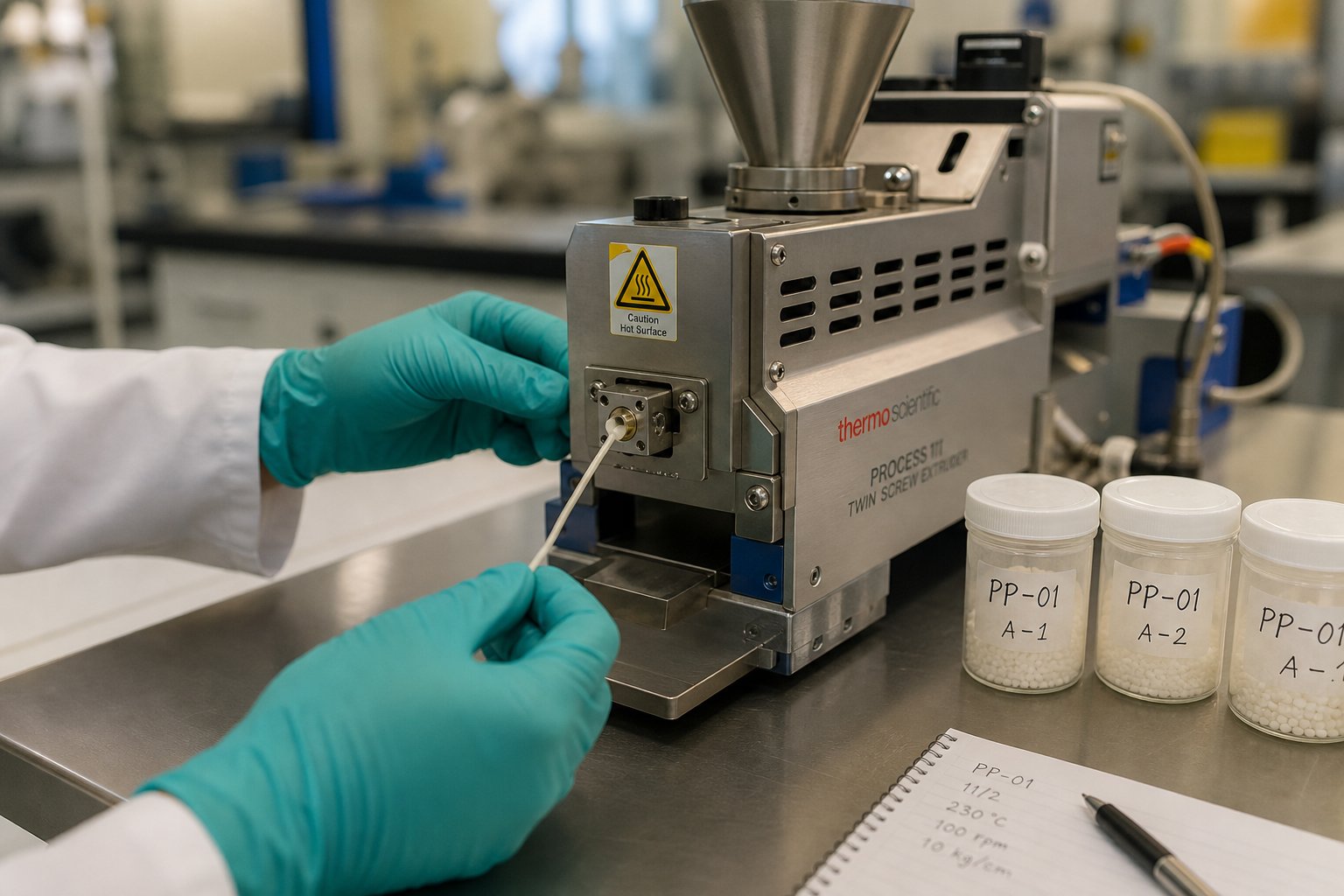
Research Applications and Workflows for Mini Twin Screw Extrusion
Listing applications in a bullet-pointed catalog — "polymer compounding, pharmaceutical extrusion, masterbatch development" — is easy. Understanding how those applications actually unfold on a mini twin screw extruder, step by step, is where the practical value lies. Each workflow brings its own material constraints, parameter sensitivities, and evaluation criteria. Matching those realities to the capabilities of a small-format compounding extruder is what separates a productive research program from one that generates impressive-looking runs with questionable data.
Polymer Formulation Development and Screening
This is the bread-and-butter application. R&D teams working on new polymer blends, nanocomposites, or additive packages use mini extruders to iterate rapidly through candidate formulations — adjusting filler loadings by a few percent, swapping compatibilizers, or testing the effect of processing temperature on morphology — all while consuming minimal material.
The typical workflow looks something like this. You start by pre-weighing and dry-blending your components: base resin, filler or reinforcement, and any additives. Because a mini system might only require 20 to 100 grams per trial, you can prepare multiple blends in advance. Each blend is then fed into the extruder for polymer processing at a specific set of conditions — barrel temperature profile, screw speed, and feed rate. The extrudate, usually a strand or flat ribbon, is collected, cooled, and sectioned into test specimens for downstream analysis: tensile testing, dynamic mechanical analysis, differential scanning calorimetry, or electron microscopy.
Here is where the small batch size pays off exponentially. Imagine you are screening five different nanoclay loadings at three screw speeds each. That is fifteen experimental conditions. On a production-class compounding twin screw extruder demanding 5 kg per run to achieve stable processing, you would need 75 kg of material — plus purge compound between each changeover. On a mini system processing 50 grams per condition, the total material consumption drops to under 1 kg, and the entire design-of-experiments matrix can be completed in a single day. The time saved on setup, cleaning, and changeover alone can compress weeks of screening into hours.
The data quality holds up, too. Because the twin screw extrusion mechanisms — distributive mixing, dispersive shear, thermal energy input — follow the same physical principles regardless of scale, the relative ranking of formulations at mini scale reliably predicts their behavior on larger equipment. A blend that shows poor filler dispersion on a 12 mm extruder will not magically fix itself at 40 mm. That predictive power is what makes mini-scale screening a legitimate engineering tool rather than just a material conservation exercise.
Pharmaceutical Hot-Melt Extrusion at Lab Scale
Few industries have embraced small-format twin screw extrusion as enthusiastically as pharmaceutical R&D. The reason is a convergence of two realities: active pharmaceutical ingredients (APIs) are expensive — sometimes extremely expensive — during early development, and the regulatory pathway demands thorough process understanding before scale-up to clinical manufacturing.
Hot-melt extrusion (HME) has become a primary method for creating amorphous solid dispersions — formulations where a poorly soluble drug is molecularly dispersed within a polymer carrier matrix. The result is dramatically improved bioavailability, which can be the difference between a viable drug candidate and a shelved compound. A mini twin screw extruder allows pharmaceutical scientists to screen polymer carriers, optimize drug-to-polymer ratios, and identify viable processing windows using as little as 5 to 20 grams of API per batch.
Researchers at Boehringer Ingelheim demonstrated exactly this approach when developing an amorphous solid dispersion for a poorly soluble compound. Their team used a 9 mm co-rotating twin screw mini-extruder for initial feasibility studies, extruding physical mixtures of the API with candidate polymers at batch sizes of just 5 to 20 grams. This mini-scale screening enabled systematic identification of the most promising polymer carrier — PVP VA64 — and the optimal processing temperature, all before committing larger quantities of the drug to scale-up runs on 16 mm and 18 mm extruders. The entire progression from mini-scale to clinical-scale manufacturing used roughly 500 grams of total API.
Beyond formulation screening, pharmaceutical HME workflows on mini equipment carry additional requirements that polymer researchers might not encounter. GMP-adjacent documentation practices — recording every process parameter, every batch ID, every cleaning step — become important even at lab scale because regulatory submissions later reference this early development data. Cleanability is another critical factor: the extruder must be thoroughly purged and disassembled between runs to prevent cross-contamination between different drug compounds. Machines designed with pharmaceutical applications in mind typically feature polished surfaces, easy-access barrel clamps, and documented materials-of-construction certificates that simplify cleaning validation.
Masterbatch Development and Color Matching
Color concentrate developers face a challenge that maps almost perfectly onto what a mini extruder for polymer compounding does best: produce small test batches quickly, evaluate them against a target standard, adjust the formulation, and repeat. In masterbatch development workflows, color engineers select monopigments, weigh them precisely, and compound them with a carrier resin to produce a small quantity of concentrated color pellets. Those pellets are then let down into the customer's specific production resin at the intended dosage rate to produce a color plate or test specimen for visual and instrumental evaluation against the target shade.
Running this process on a full-production twin screw compounding extruder would waste large quantities of expensive organic and inorganic pigments on every trial — and most color matching jobs require multiple iterations before a match is accepted. A mini-scale system lets the lab produce just enough concentrate for one color plate per trial, cycling through five or ten pigment adjustments in a single session while consuming only a fraction of the material. When pigments cost $50 to $200 per kilogram and some specialty effects pigments run far higher, the savings add up fast.
The workflow also benefits from the rapid thermal response of mini equipment. Color development is highly sensitive to processing temperature — too much heat can shift hue, reduce chroma, or degrade thermally sensitive organic pigments. The low thermal mass of a mini barrel allows quick temperature adjustments between runs, letting the engineer isolate the effect of processing conditions on color appearance without the long stabilization times that larger equipment demands.
Beyond polymer blending, pharmaceutical HME, and masterbatch work, mini twin screw extruders support a wide range of additional research applications:
- Biodegradable polymer research — compounding PLA, PHA, and starch-based blends with plasticizers and nucleating agents using minimal quantities of bio-sourced resins
- Filled compound development — evaluating the dispersion quality and mechanical reinforcement of mineral fillers, glass fibers, or carbon nanotubes at controlled loadings
- Reactive extrusion studies — performing in-situ grafting, cross-linking, or chain extension reactions where precise control of residence time and temperature profile is essential
- Food-safe material compounding — screening additive packages and barrier-layer formulations for food-contact packaging applications
- Polyester extruder trials — processing small batches of PET, PBT, or recycled polyester blends to evaluate crystallization behavior or additive compatibility before committing to larger-scale production runs
What connects all of these applications is a shared workflow logic: prepare a small batch, extrude at controlled conditions, collect samples, test properties, adjust, and repeat. The mini twin screw extruder acts as the central engine in this rapid-iteration loop, and its value scales not with throughput but with the number of meaningful experiments it enables per unit of time and material.
That value, however, is bounded. Every tool has limits, and mini-scale extrusion is no exception. Throughput ceilings, material viscosity constraints, and cost realities all impose boundaries that researchers should understand clearly — before those boundaries surprise them mid-project.
Limitations and Cost Realities of Mini Twin Screw Extruder Machines
Every piece of lab equipment excels within a defined operating window — and falls short outside it. Mini twin screw extruders are no different. They are exceptional tools for small-batch formulation screening, rapid iteration, and material conservation. But treating them as universally capable processing platforms leads to frustration, wasted budgets, and data that does not translate to real-world production. Understanding where these machines hit their limits is just as important as understanding where they shine. Here is what researchers, lab managers, and procurement teams should weigh honestly before committing.
Throughput Ceilings and Minimum Batch Constraints
The defining advantage of a mini twin screw extruder — tiny batch sizes — is also its most obvious constraint. Throughput on these machines is measured in grams per minute, not kilograms per hour. A 12 mm lab extruder might produce 100 to 500 grams per hour under typical conditions, while a 16 mm model could reach perhaps 1 to 2 kg/hr at its upper limit. Compare that to even a modest 27 mm production-class twin screw extruder machine, which can push 10 to 50 kg/hr depending on material and configuration. If your research requires generating large quantities of compounded pellets for injection molding trials, mechanical testing across multiple specimen geometries, or feeding downstream pilot equipment, a mini system simply cannot keep up.
There is also a less intuitive constraint that trips up first-time users: the minimum batch problem. Some polymer formulations need a certain volume of material inside the barrel to establish stable melt flow, consistent pressure at the die, and representative residence time distribution. When you are working at the smallest screw diameters — say, 5 mm to 10 mm — the total barrel volume may be so small that certain filled or reactive systems never reach steady-state conditions. The extrudate from the first few minutes of a run can look and behave differently from what emerges once the barrel is fully purged and thermally equilibrated. For materials that require extended stabilization, that transient period can consume a significant fraction of your already limited batch.
As Leistritz's extrusion engineering documentation notes, early-stage R&D work often contends with scarce, expensive raw materials — sometimes as little as 50 grams available for an entire study. Specialized low-volume screw configurations with reduced free volume (such as a 1.2:1 OD/ID ratio yielding roughly 1 cc/diameter) and micro-plunger feeders can partially address this challenge. But even with those adaptations, there is a practical floor below which the physics of melt processing simply does not cooperate. Researchers should plan batch sizes that account for purge material, transient startup, and enough steady-state extrudate to produce meaningful test specimens — and for some formulations at the smallest screw diameters, that math does not work out.
Material Viscosity and Processing Limitations
Picture trying to push cold honey through a drinking straw by twisting two tiny screws inside it. That mental image captures the core challenge of processing high-viscosity polymers on mini-scale equipment. The drive motors on these machines deliver limited torque — often just a few newton-meters — and that torque ceiling sets a hard boundary on the range of materials that can be processed representatively.
Extremely viscous polymers like PMMA, certain grades of high-molecular-weight HDPE, and heavily filled engineering compounds can overwhelm a mini extruder's drive system. Research conducted on a Thermo Scientific Haake PTW16 twin screw extruder (16 mm screw diameter) demonstrated this vividly: PMMA processing at a barrel set temperature of 180 degrees Celsius proved impossible because the material's high melt viscosity — driven by its bulky side-chain molecular structure — generated torque loads that exceeded the extruder's capacity. The screws physically could not rotate. Even at higher temperatures of 200 and 220 degrees Celsius, the operation was unstable, with frequent disruptions and automatic safety shutoffs triggered by excessive torque. By contrast, LDPE and PS processed smoothly across all tested conditions on the same polymer extruder.
The lesson is clear: not every material can be processed representatively at mini scale. If the torque required to shear and convey your formulation exceeds what a small drive system can deliver, you will either need to process at higher-than-intended temperatures (which alters the material's thermal history and potentially degrades it) or move to a larger machine entirely. Neither compromise is ideal when the goal is generating data that predicts production-scale behavior.
Abrasive fillers add another layer of concern. Glass fibers, mineral fillers, and ceramic particles accelerate wear on screws and barrels regardless of machine size. But on a mini system, the consequences arrive faster and hit harder. Remember the ultra-tight screw-to-barrel clearances discussed earlier — clearances as small as 0.01 mm to 0.02 mm on a 10 mm screw. Even modest wear from abrasive compounds opens those gaps disproportionately, degrading mixing efficiency and conveying consistency well before the same degree of wear would matter on a 60 mm production barrel. Replacement cycles for screws and barrels shorten, and the cost per replacement remains high because these are precision-machined, miniature components.
Cost Considerations and Budget Realities
Here is where expectations often collide with reality. Many first-time buyers assume that a smaller machine means a proportionally smaller price tag. It does not. The twin screw extruder price for a well-engineered mini or benchtop system can range from roughly $20,000 for a basic lab configuration to well over $100,000 for a fully instrumented research platform with multiple heating zones, precision feeders, and digital data acquisition. Some high-end pharmaceutical-grade mini systems exceed $150,000. These figures put mini equipment squarely in the pricing territory of smaller industrial extruders — machines that deliver dramatically higher throughput but serve a completely different purpose.
Why are small machines so expensive? Several cost drivers converge:
- Precision engineering — Screws and barrels at 10 mm to 20 mm diameters require tighter machining tolerances than their industrial counterparts, demanding specialized CNC equipment and quality control processes
- Specialized screw elements — Modular kneading blocks, mixing elements, and conveying segments at mini scale are produced in smaller manufacturing runs, which raises per-unit cost significantly
- Control systems — Research-grade temperature controllers, torque sensors, and data logging software add substantial cost, and these components are often identical to (or even more sophisticated than) those used on larger machines
- After-market spare parts — Replacement screw sets and barrel liners for mini extruders carry premium pricing due to low production volumes and tight tolerances, and they wear out faster when processing abrasive materials
The sticker price, however, is only part of the picture. Total cost of ownership — a concept that industry pricing analyses consistently emphasize — includes spare screw sets, replacement barrels, maintenance kits, calibration services, and consumables like purge compounds. A single replacement screw set for a 12 mm lab extruder can cost several thousand dollars. If your research involves abrasive fillers or frequent material changes that accelerate wear, you may need a new set every 12 to 24 months. Add the cost of backup barrel segments, replacement die inserts, and periodic drive system servicing, and the five-year ownership cost can substantially exceed the original purchase price.
Lower throughput does not automatically mean lower cost. Buyers should evaluate total cost of ownership — including spare screws, replacement barrels, and maintenance kits — rather than comparing sticker prices alone. A mini twin screw extruder is a precision research instrument, and it is priced accordingly.
Budget-conscious labs should also consider how the machine will be used over its lifetime. A mini system purchased for a single research project may seem expensive per data point generated. The same machine supporting dozens of projects across multiple research teams over five to ten years delivers dramatically better return on investment. Shared-use models, where a central lab facility makes the equipment available to multiple departments or principal investigators, often make the strongest financial case for investing in a high-quality mini twin screw extruder machine rather than opting for the cheapest available option.
These limitations — throughput boundaries, material processing constraints, and cost realities — are not reasons to avoid mini-scale extrusion. They are reasons to approach it with clear-eyed planning. And one area where that planning pays the highest dividends is in the auxiliary systems that surround the extruder itself: the feeders, venting systems, downstream equipment, and process controls that collectively determine whether your lab produces clean, consistent, publishable data or frustrating variability.
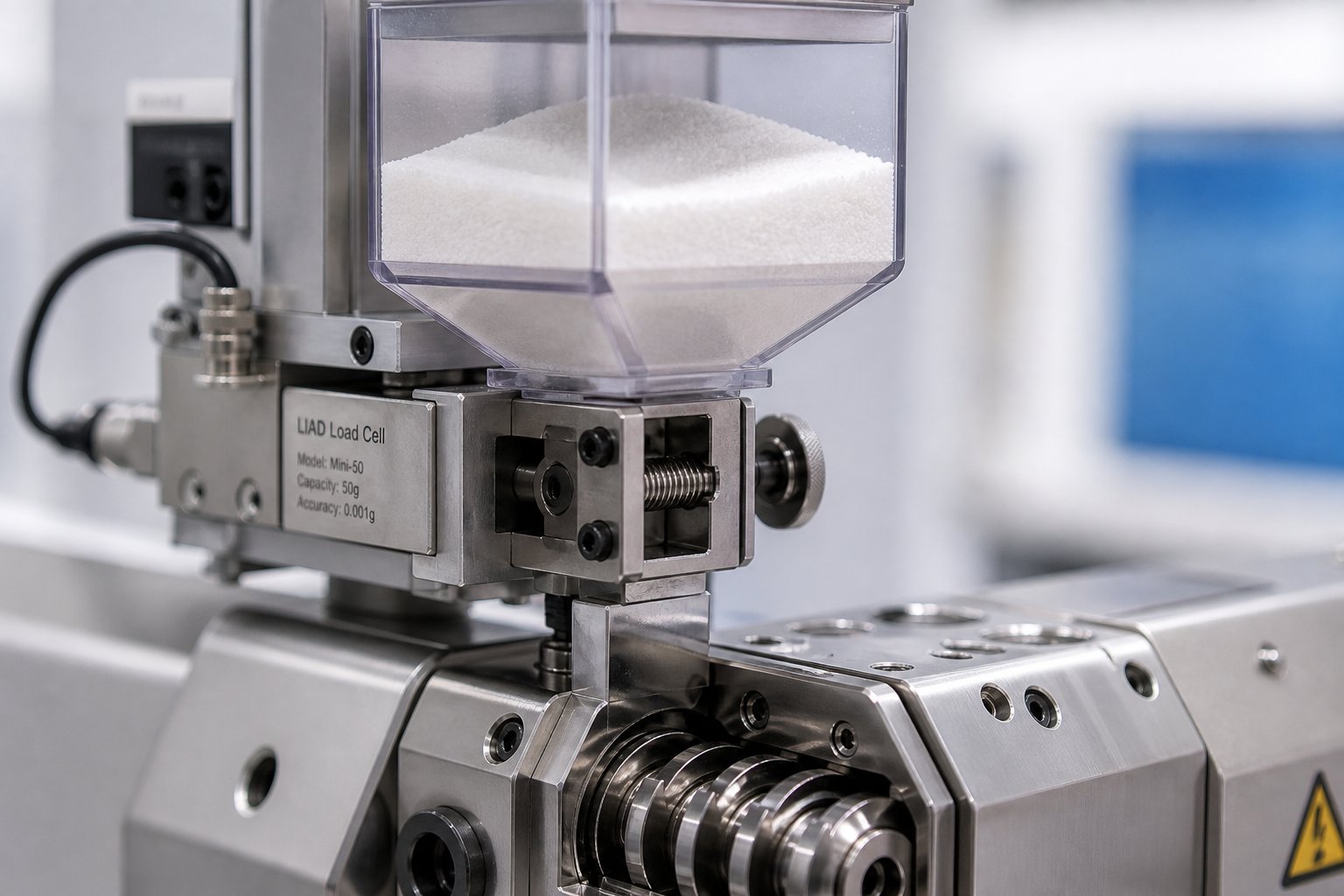
Auxiliary Systems and How They Work at Mini Scale
A mini twin screw extruder does not operate in isolation. It sits at the center of an extruder system that includes feeders delivering raw material, venting ports removing volatiles, downstream equipment shaping and collecting the output, and process controls tying everything together. On a production line, each of these auxiliary components is engineered for high throughput and continuous operation. Shrink the extruder down to a 12 mm or 16 mm screw diameter, and every one of those supporting systems must be rethought — because the physics of handling tiny material quantities, extracting volatiles from short barrel sections, and collecting thin strands at low output rates creates challenges that simply do not exist at industrial scale.
Feeding Systems for Small Quantities
Imagine trying to deliver exactly 0.3 grams of a powdered additive per minute into a moving stream of polymer pellets. That is not an exaggeration — it is a realistic scenario on a mini twin-screw extruder machine processing a 2% additive loading at a total feed rate of 15 grams per minute. At industrial scale, even a basic volumetric feeder can handle this kind of metering without breaking a sweat, because the absolute quantities are large enough that minor fluctuations average out. At mini scale, those minor fluctuations become major sources of compositional variability.
Two feeder types dominate this space: volumetric and gravimetric. A volumetric feeder dispenses material based on volume per unit time — essentially, the screw or piston inside the feeder turns at a set speed, pushing a fixed volume of material into the extruder. This works reasonably well when feed material has consistent bulk density and the required flow rate is not extremely low. The limitation? If the material's bulk density varies — due to moisture uptake, particle size distribution differences between lots, or even settling in the hopper — the actual mass flow rate drifts without any automatic correction. As Movacolor's engineering comparison explains, a volumetric feeder requires manual recalibration when material flow characteristics change, and it cannot automatically compensate for fluctuations in density.
A gravimetric feeder, by contrast, continuously weighs the material being dispensed and adjusts motor speed in real time to maintain the target mass flow rate. This self-calibrating behavior makes it the superior choice for research applications where compositional accuracy directly determines data quality. The trade-off is cost — gravimetric systems are more expensive — and practical sensitivity. At the micro-feed rates required by mini extruders, the load cell must resolve weight changes of fractions of a gram while the extruder's vibration, nearby foot traffic, and even air currents can introduce noise into the measurement. High-quality gravimetric micro-feeders use vibration isolation, shielded load cells, and sophisticated filtering algorithms to compensate, but these features add complexity and expense to what might seem like a simple material delivery task.
Beyond the feeder mechanism itself, hopper design creates its own headaches at small scale. Mini-scale hoppers are physically tiny — sometimes holding just 50 to 100 grams of material. Granular and powdered feeds can bridge inside these narrow hoppers, forming an arch of material that blocks flow entirely while the feeder screw spins freely beneath it. Bridging is a well-known problem at any scale, but in a large hopper you might notice it gradually as throughput drops. In a mini hopper, bridging can happen suddenly and completely, halting the experiment mid-run. Anti-bridging measures like hopper agitators, vibratory inserts, or conical hopper geometries help, but they add bulk to equipment that is supposed to be compact.
Venting, Downstream Equipment, and Process Control
Devolatilization — the removal of moisture, trapped air, residual solvents, or reaction byproducts from the polymer melt — is a critical function in any twin screw extruder. The basic principle is straightforward: a section of partially filled screw channel is exposed to a vent port (often under vacuum), and volatile components flash off from the melt surface and are drawn away. On a production machine with a long barrel, dedicated devolatilization zones use carefully positioned seal elements upstream and downstream to isolate the vent section, and the extended barrel length provides ample surface renewal for efficient mass transfer. A practical rule of thumb in industrial devolatilization holds that each vent can reduce volatile concentration by roughly an order of magnitude.
At mini scale, this efficiency drops. The barrel is shorter, so the devolatilization zone is compressed. There is less screw length available for surface renewal — the repeated exposure of fresh melt surface to the vacuum — which limits how effectively volatiles can escape. The free volume under the vent port is also much smaller, meaning the vent can flood more easily if throughput fluctuates or if the upstream seal element does not maintain adequate fill. Bypass valve extrusion configurations, where a secondary path redirects flow during startup or parameter changes, are common on larger systems but rarely practical at mini scale due to the added dead volume and complexity.
What does this mean in practice? If your formulation requires aggressive devolatilization — removing several percent of residual solvent or moisture — a single vent port on a mini extruder may not be sufficient. Some mini systems offer two vent locations, but the shortened barrel limits how far apart they can be spaced, which reduces overall devolatilization efficiency compared to a full-length production machine with three or four staged vents. For materials that demand very low residual volatile levels, researchers may need to pre-dry more aggressively or accept that the final residual content at mini scale will be higher than what a production machine achieves.
Downstream equipment follows the same miniaturization logic. A strand pelletizer matched to a mini extruder must handle thin strands — often just 1 to 3 mm in diameter — at slow line speeds without pulling the strand off the die or breaking it. Mini strand pelletizers exist, but they are specialized pieces of equipment, not scaled-down versions of industrial units. Film take-off systems at mini scale produce ribbons perhaps 20 to 50 mm wide, requiring proportionally sized chill rolls and winding mechanisms. Profile cooling baths shrink to tabletop dimensions. Each of these downstream components must be calibrated to the low output rates of the extruder, and mismatches — a pelletizer pulling too fast, a chill roll set too cold — can ruin an otherwise well-executed extrusion run.
Process control rounds out the auxiliary picture. Modern mini twin screw extruders typically feature digital control of barrel temperature zones, screw speed, and real-time torque monitoring. This is where data quality lives or dies. As extrusion process data research by Dr. Chris Rauwendaal has demonstrated, poorly tuned temperature controllers can produce sinusoidal barrel temperature variations of 10 to 15 degrees Celsius — large enough to cause significant fluctuations in melt viscosity, die pressure, and extrudate quality. At mini scale, the low thermal mass of the barrel makes this problem both more likely and more impactful, since small temperature swings translate directly into melt behavior changes in the tiny barrel volume.
The number of independently controllable heating zones, the resolution of the torque sensor, and the sophistication of the data acquisition software vary significantly across models. Some mini systems offer full data logging with exportable time-stamped records of every process variable — essential for pharmaceutical applications and publishable academic research. Others provide only basic digital readouts with no logging capability, which may suffice for quick screening runs but falls short when you need to document process conditions for regulatory submissions or peer-reviewed publications.
When evaluating a mini twin screw extruder purchase, the auxiliary systems deserve as much scrutiny as the extruder itself. Here are the key items to assess:
- Feeder type and minimum feed rate — Can the feeder reliably deliver your lowest required additive dosage rate without pulsation or bridging?
- Number and placement of venting ports — Does the barrel configuration support adequate devolatilization for your materials?
- Die options — Are strand, film, and profile dies available, and do they match your downstream testing requirements?
- Pelletizer compatibility — Does the manufacturer offer or recommend a pelletizer matched to the extruder's output range?
- Data acquisition software — Does the system log temperature, torque, screw speed, and pressure with time stamps, and can the data be exported for analysis?
These auxiliary details rarely make the headline specifications in a product brochure, but they often determine whether a mini extruder delivers consistent, trustworthy data — or becomes a source of unexplained variability that undermines every formulation decision built on its output. And when those formulation decisions eventually need to move from the lab bench to a production floor, the quality of the data — and the fidelity of the screw geometry that produced it — becomes the single biggest factor in whether scale-up succeeds or stalls.
Scaling Up from Mini Twin Screw Extruder Data to Production
Generating clean, reproducible data on a lab twin screw extruder is only half the battle. The other half — and arguably the harder half — is translating that data into a reliable production process on equipment five to ten times larger. This is where many R&D programs stumble, not because the lab work was flawed, but because the physics of extrusion does not scale the way intuition suggests.
You might assume that doubling the screw diameter simply doubles the throughput while everything else stays proportional. In reality, the relationships are nonlinear, interdependent, and occasionally counterintuitive. Teams that treat scale-up as a straightforward multiplication exercise routinely encounter unstable melt flow, poor mixing, phase separation, or product quality that bears little resemblance to what looked perfect on the bench. Understanding why this happens — and what levers actually control the outcome — is essential for any researcher working with mini-scale screw extruders who expects their results to matter beyond the lab.
Principles of Extrusion Scale-Up from Lab Data
Three process parameters sit at the heart of every scale-up challenge: specific mechanical energy (SME), residence time distribution (RTD), and shear rate profile. None of them scales linearly with screw diameter.
Specific mechanical energy quantifies the mechanical work input per unit mass of material — essentially, how much energy the screws transfer into the melt through shearing and kneading. SME is one of the most reliable indicators of whether a compound experiences the same processing intensity at two different scales. A case study published by Plastics Technology illustrates this vividly. A polyolefin masterbatch was developed on a 26 mm lab extruder at an SME of 0.083 kWh/kg. When the process was scaled directly to a 40 mm pilot machine using identical screw design, temperature profile, and screw speed, the SME dropped to 0.055 kWh/kg — a 34% reduction. The result? Significant pressure fluctuations, phase separation, and product quality so poor the material could not even be pelletized. Only after the screw design was modified and process parameters adjusted to restore SME to 0.079 kWh/kg did the process stabilize.
The problem repeated — and intensified — at commercial scale. Transferring the optimized 40 mm conditions directly to a 92 mm production extruder yielded an SME of just 0.026 kWh/kg, roughly 69% below the lab-scale benchmark. Solid, unmelted polymer pellets were literally discharged through the diverter valve. The root cause? As extruder diameter increases, the area-to-volume (A/V) ratio decreases dramatically. A 12 mm barrel has far more surface area per unit of melt volume than a 60 mm barrel, which means heat transfer behavior, fill characteristics, and energy distribution all shift in ways that simply copying screw speeds and temperature setpoints cannot compensate for.
Residence time distribution defines how long material stays inside the extruder and how uniformly that exposure time is distributed across the melt. For geometrically similar screw extruders operated at identical screw speeds and scaled feed rates proportional to the cube of the diameter ratio, residence time theoretically remains constant across scales. In practice, though, differences in barrel length-to-diameter ratios, vent configurations, and die geometry between a mini machine and a production unit can disrupt this equivalence. Reactive extrusion processes and pharmaceutical hot-melt extrusion formulations are especially sensitive to RTD shifts because the degree of chemical conversion or amorphous dispersion quality depends directly on exposure time at temperature.
Shear rate profiles also behave in ways that can mislead. For geometrically similar extruders, the maximum shear rate — which occurs in the gap between screw flight tip and barrel wall — is independent of screw diameter at equal screw speeds. That sounds reassuring, but it only holds when the clearance-to-diameter ratio is truly maintained across scales. On a mini system with a 12 mm bore, the screw-to-barrel gap might be 0.012 mm. On a 92 mm production double screw extruder machine, the proportional gap would be about 0.092 mm. Manufacturing tolerances, barrel wear, and thermal expansion all introduce deviations that break geometric similarity at the clearance level — and those deviations change the shear rate distribution in the melt.
As Thermo Fisher Scientific's pharmaceutical extrusion research emphasizes, predictable scale-up depends on preserving the material's total experience inside the extruder — the combination of thermal load, mechanical energy, and residence time. When geometric similarity between lab and production equipment is maintained, parameter-based scale-up becomes achievable. When it is absent, predicting behavior becomes far more complex.
Why Custom Screw Geometry Accelerates Scale-Up
Here is a pattern that experienced scale-up engineers recognize immediately: the single most impactful thing you can do to improve scale-up predictability is ensure your mini-scale screw configuration closely mirrors the element sequence planned for the production machine.
Why does this matter so much? Because screw geometry dictates how energy enters the melt. Every kneading block angle, every transition from conveying to mixing elements, every reverse element creating a pressure seal — these design choices determine the SME, RTD, and shear profile that the material experiences. If your lab twin screw extruder uses a screw configuration that has no functional equivalent on the target production machine, then the data you generate, no matter how precise, describes a process that cannot be reproduced at larger scale.
The Plastics Technology case study reinforces this point. At both the 40 mm and 92 mm scales, restoring process stability required not just adjusting temperature and speed, but redesigning the screw profile — increasing melting and mixing intensity — to match the SME benchmark established on the 26 mm lab machine. The screw geometry was the decisive variable. Without modifying it, no combination of temperature and speed adjustments could compensate.
This is precisely where custom-designed screw elements deliver outsized value. Off-the-shelf screw configurations work well for general-purpose screening, but when a research program reaches the stage of generating scale-up-ready data, the screw profile needs to be tailored to both the specific material being processed and the target production configuration. Custom elements — designed with particular stagger angles, flight depths, and kneading block lengths matched to your material's rheology and your production machine's geometry — bridge the gap between lab results and production outcomes far more effectively than generic configurations.
Services like NANHAIYA's custom screw design support R&D teams and pilot-line operators in developing screw and barrel configurations matched to their specific materials and experimental requirements. For university labs, pharmaceutical research groups, and small-batch processors working with specialized formulations or compact equipment, this kind of tailored design ensures that the element sequence on a mini extruder faithfully represents what will be used at larger scale — preserving the geometric and thermomechanical fidelity that makes lab data meaningful for production decisions.
Scale-up success depends on screw geometry fidelity between lab and production configurations. If the element sequence on your mini extruder does not mirror the production screw design, even perfect lab data will fail to predict real-world performance.
Practical steps for improving scale-up outcomes from mini-scale work include:
- Match the screw element sequence — Use the same types and order of conveying, kneading, and mixing elements on your lab machine that you plan to deploy at production scale
- Track SME as your primary scaling parameter — Record motor power, screw speed, and throughput on every run so you can calculate and compare SME across scales
- Minimize reliance on barrel heating or cooling — Processes that depend heavily on external thermal input at lab scale become harder to replicate on larger machines where the surface-area-to-volume ratio is lower
- Use geometrically similar equipment when possible — Match the L/D ratio, OD/ID ratio, and screw clearance proportions between your mini system and the target production extruder
- Plan for intermediate pilot trials — A direct jump from a 12 mm mini system to a 92 mm production line is risky; an intermediate step on a 26 mm or 40 mm pilot machine provides a valuable data checkpoint
Scale-up is not a single event — it is a structured progression that demands disciplined parameter tracking, deliberate screw design choices, and honest assessment of where geometric similarity breaks down. The teams that navigate it successfully treat their mini extruder not as an isolated screening tool but as the first stage of a connected development pipeline — one where every screw element, every temperature setpoint, and every SME measurement carries forward into the decisions that shape production. And the quality of those decisions ultimately rests on how thoughtfully the equipment itself was selected, configured, and maintained from the very beginning.
Selecting and Maintaining Your Mini Twin Screw Extruder
A connected development pipeline only works if the equipment at its foundation was chosen with the right questions, supported by the right partners, and kept in reliable operating condition throughout its service life. Picking a mini twin screw extruder is not like ordering a commodity instrument off a catalog page. It is a decision shaped by your materials, your research goals, your downstream workflows, and — critically — the support ecosystem that surrounds the machine long after the purchase order is signed. Get any one of those dimensions wrong and even a technically excellent extruder becomes an underperforming asset that frustrates rather than accelerates your R&D program.
Defining Your Requirements Before You Shop
Before contacting a single twin-screw extruder manufacturer or requesting a quote, you need clarity on what the machine must actually do in your lab. Sounds obvious? You would be surprised how often procurement starts with a vague brief like "we need a small twin screw extruder for polymer research" — a description so broad it could match dozens of models with wildly different capabilities and price points. The twin screw extruders market offers everything from bare-bones micro-compounders to fully instrumented pharmaceutical-grade platforms, and the gap between the cheapest and most expensive option can easily span $100,000. Narrowing that field requires answering specific, honest questions about your work.
Walk through this checklist before you evaluate any equipment:
- What materials will you process? List your primary polymers, fillers, and additives. Include viscosity ranges, abrasiveness, and any thermal sensitivity. A machine suited for neat LDPE screening may stall on glass-fiber-filled PA6.
- What is your target throughput range? Define both the minimum batch size you need for meaningful data and the maximum output that your downstream testing requires. A 5 mm screw handles grams; a 20 mm screw handles low kilograms per hour.
- Is pharmaceutical GMP compliance needed? If you are processing active pharmaceutical ingredients, you need documented materials of construction, cleaning validation support, and potentially polished contact surfaces — features that significantly affect cost and vendor selection.
- What downstream analysis will be performed? Mechanical testing, rheology, microscopy, and dissolution studies each require different specimen formats. Ensure the available die configurations and downstream equipment produce samples compatible with your analytical workflow.
- What is your realistic budget, including spare parts? Factor in at least one replacement screw set, a spare barrel or barrel segments, purge compound, and annual maintenance costs. A realistic five-year total cost of ownership is a far better planning number than the sticker price alone.
- Do you need scale-up fidelity? If your lab data must translate to a specific production machine, verify that the mini system offers screw element geometries and L/D ratios compatible with your target production configuration.
- What level of process data logging is required? Quick screening runs may not demand time-stamped records. Pharmaceutical HME or publishable academic research almost certainly will.
Completing this checklist before engaging suppliers transforms the conversation from an open-ended sales discussion into a focused engineering specification exercise. It also protects you from the common trap of buying more machine than you need — or, worse, discovering six months after installation that a critical capability is missing.
Evaluating Manufacturers and Support Ecosystems
The machine itself is only the starting point. What separates a good equipment investment from a frustrating one is the ecosystem of support behind it — spare parts availability, custom configuration options, technical guidance, and responsive service when something goes wrong. Twin screw extruder manufacturers vary enormously in what they offer beyond the initial hardware, and this variation matters more for laboratory extruders than it does for commodity production machines. Why? Because research applications are inherently unpredictable. The project you buy the extruder for today may bear little resemblance to what you are running on it three years from now.
Start by evaluating spare parts logistics. Screws and barrels are wear components — they will need replacement, and the timeline depends on what you process. Abrasive mineral fillers or glass-fiber compounds can wear a mini screw set measurably within months. Even gentle polymer blending gradually erodes clearances over years of continuous use. Industry maintenance data suggests that 60% of twin screw extruder failures trace back to improper maintenance of screw and barrel components. Ask each potential supplier: What is the lead time for replacement screw elements? Can they supply individual elements or only full sets? Do they stock parts, or is every order manufactured to order?
Next, assess the range of available screw configurations. A manufacturer that only sells one fixed screw geometry locks you into a narrow processing window. One that offers a broad library of modular elements — kneading blocks at multiple stagger angles, distributive mixing elements, reverse-flight pressure seals — gives your lab the flexibility to adapt as research directions evolve. For teams working with specialized materials or experimental formulations where off-the-shelf screw configurations may not be adequate, access to custom screw and barrel design support becomes a decisive advantage. Services like NANHAIYA's custom screw design serve exactly this role, helping universities, R&D labs, and small-batch processing operations develop tailored screw and barrel configurations matched to specific polymers, filler systems, or compact equipment platforms. This kind of specialized support can significantly extend the useful life and versatility of a mini extruder — turning a single machine into a platform that evolves with your research rather than constraining it.
Training resources and technical support quality also deserve scrutiny. Does the manufacturer offer on-site or remote training for new operators? Can their engineers advise on screw configuration for a specific material? Is technical support available by phone or email with reasonable response times, or does every question go into a ticketing queue that takes days to resolve? For academic labs where graduate students rotate through every few years, accessible training documentation and responsive manufacturer support can be the difference between a productive instrument and one that sits idle because no one is confident operating it.
When comparing twin screw extruder for sale listings across multiple vendors, resist the temptation to rank purely on price. Instead, build a weighted evaluation that accounts for machine specifications, spare parts cost and availability, custom element options, training, and post-sale support. The cheapest machine from a supplier with no custom element capability and four-week spare parts lead times is rarely the most economical choice over a five-year horizon.
Maintenance Planning and Operational Best Practices
Even the best-selected mini twin screw extruder will degrade without disciplined maintenance. The good news is that the core maintenance principles are straightforward — the challenge is consistency, not complexity. Research labs, unlike production facilities, often lack dedicated maintenance staff, which means these tasks typically fall to the same scientists and students running the experiments. Building a simple, repeatable maintenance routine protects both the equipment and the data it produces.
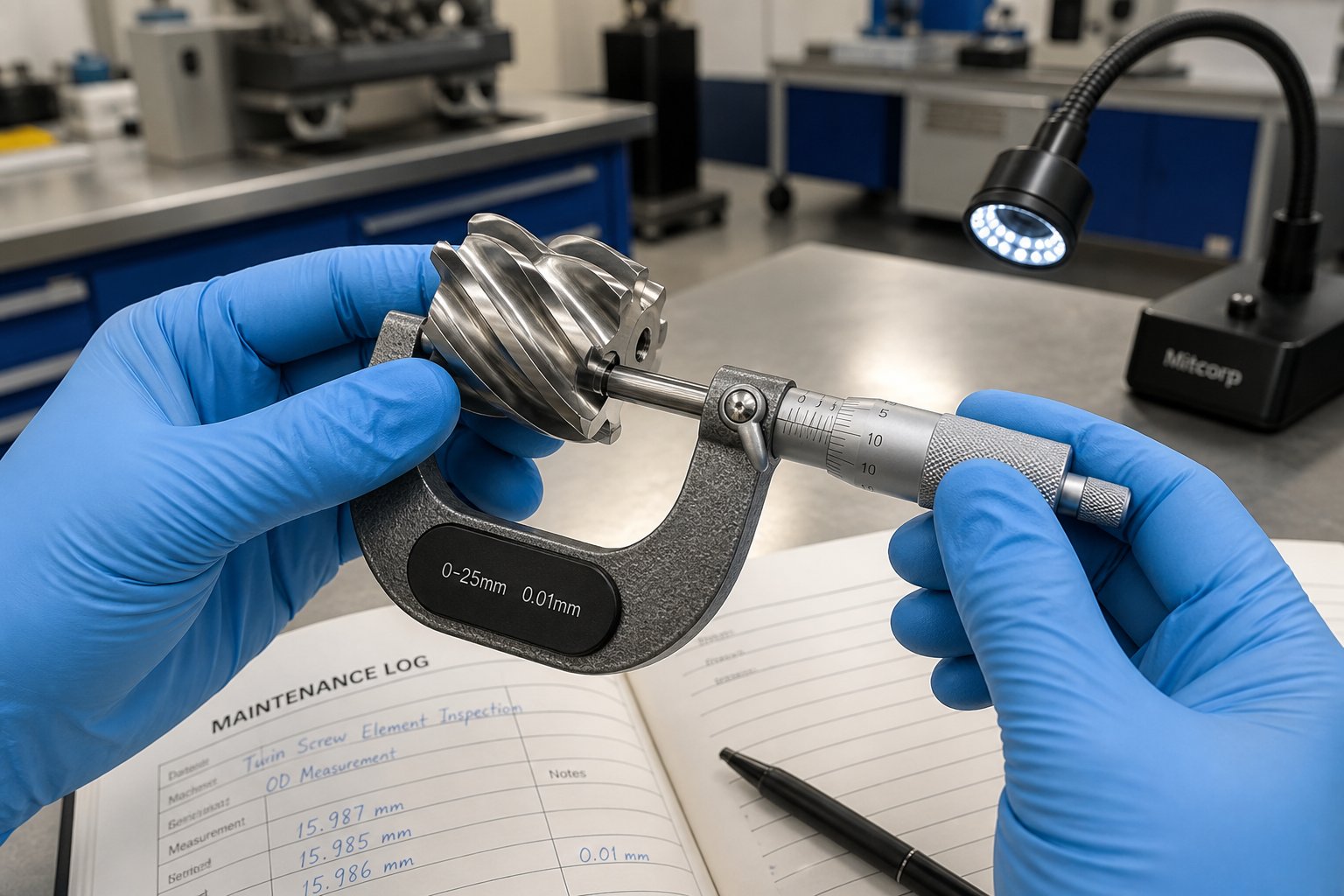
Regular screw and barrel inspection is the foundation. Pull the screws periodically — monthly for heavy-use labs, quarterly for lighter workloads — and examine flight tips, kneading block edges, and barrel bore surfaces for visible wear, scoring, or material buildup. Use a micrometer to check screw outer diameter and barrel inner diameter against the original specifications. Even modest dimensional changes — a few hundredths of a millimeter on a mini system — can signal that mixing efficiency and conveying consistency are declining. Catching wear early allows planned replacement rather than discovering degraded data quality after weeks of compromised runs.
Proper purging between material changes prevents cross-contamination and protects screw and barrel surfaces. Use a purge compound appropriate for your temperature range and material family. Run the purge until the extrudate runs clear, then follow with a brief air purge at reduced screw speed to clear residual melt from dead zones. For pharmaceutical applications, documented purging and cleaning protocols are essential — every changeover should be recorded with the purge material used, duration, and visual confirmation of clearance.
Torque monitoring provides an ongoing health check for the entire drive train. Most modern mini extruders display real-time torque readings. Establish baseline torque values for your standard materials and processing conditions, and watch for gradual increases over time. Rising torque at constant conditions often indicates material buildup on screw elements, bearing wear in the gearbox, or increased screw-to-barrel friction from wear — all signals that warrant investigation before they escalate into a motor overload or safety shutdown. As maintenance engineering data from industry sources confirms, proactive maintenance programs can reduce operating costs by 20 to 30% compared to reactive approaches that wait for failure.
Here is a concise maintenance checklist for mini twin screw extruder operators:
- After every run: Purge thoroughly with appropriate compound; visually inspect die face for buildup or damage; wipe down exterior surfaces
- Weekly: Check and record baseline torque at standard conditions; inspect feed throat and hopper for bridging residue; verify temperature zone calibration against a reference thermocouple
- Monthly (or every 40-60 operating hours): Pull screws for visual inspection of flight tips and kneading block edges; inspect barrel bore with a bore light for scoring or deposits; lubricate any grease points per manufacturer specifications
- Quarterly: Measure screw OD and barrel ID and compare to baseline dimensions; inspect and replace sealing elements (O-rings, gaskets) showing compression set or cracking; verify drive belt tension or coupling alignment
- Annually: Full screw and barrel dimensional audit; gearbox oil analysis or change per manufacturer schedule; calibrate all temperature controllers and torque sensors; review spare parts inventory and reorder worn or depleted items
One often-overlooked best practice: keep a logbook — digital or physical — for the extruder. Record every material processed, every screw configuration change, every maintenance action, and every anomaly observed during operation. Over months and years, this log becomes an invaluable diagnostic tool. When extrudate quality shifts unexpectedly, the log lets you correlate the change with a specific event — a new batch of abrasive filler, a missed purge cycle, a screw element swapped in the wrong orientation. Without that record, troubleshooting becomes guesswork.
Selecting the right mini twin screw extruder, building a support ecosystem around it, and maintaining it with consistency and discipline are not three separate decisions. They are phases of a single strategy — one that determines whether your lab's investment in small-scale extrusion pays dividends in reliable data, productive research, and confident scale-up decisions for years to come.
Frequently Asked Questions About Mini Twin Screw Extruders
1. What is the typical screw diameter range for a mini twin screw extruder?
Mini twin screw extruders generally feature screw diameters between 10 mm and 20 mm. This range sits between micro-compounders (under 10 mm) used for ultra-small batches and pilot-scale machines (25 mm and above) designed for pre-production validation. The 10-20 mm sweet spot lets researchers process batches of roughly 50 to 200 grams while still replicating the mixing, shearing, and conveying mechanisms found on full-production equipment, making these machines ideal for formulation screening, parametric studies, and early-stage material development.
2. How much does a mini twin screw extruder cost?
Pricing for a well-engineered mini twin screw extruder typically ranges from around $20,000 for a basic lab configuration to over $150,000 for a fully instrumented pharmaceutical-grade system. The high cost reflects precision machining of small-diameter screws and barrels, research-grade control electronics, and specialized modular screw elements produced in low volumes. Crucially, the sticker price is only part of the investment. Total cost of ownership over five years — including replacement screw sets, spare barrels, purge compounds, and maintenance — can substantially exceed the original purchase price, especially when processing abrasive filled compounds.
3. Can all polymers be processed on a mini twin screw extruder?
No. Mini twin screw extruders have limited motor torque, which restricts their ability to process extremely high-viscosity polymers such as certain PMMA grades or heavily filled engineering resins. Research has shown that materials like PMMA can generate torque loads exceeding a 16 mm extruder's capacity, causing stalls or safety shutoffs. Highly abrasive fillers such as glass fiber also accelerate wear on the tiny screw-to-barrel clearances (as small as 0.01-0.02 mm), degrading performance faster than on larger machines. Pre-evaluating your material's melt viscosity and filler abrasiveness against the extruder's torque rating is essential before committing to a purchase.
4. What is the difference between a mini, micro, and benchtop twin screw extruder?
These terms describe overlapping but distinct characteristics. 'Micro' refers to the smallest screw diameters — typically under 10 mm — handling just a few grams per run for ultra-scarce materials. 'Mini' covers the 10-20 mm range with throughputs from tens of grams up to low kg/hr, suitable for formulation development and parametric studies. 'Benchtop' is purely a footprint descriptor meaning the machine fits on a laboratory bench, regardless of screw diameter. A benchtop unit could be either micro or mini. Always check actual screw diameter and throughput specifications rather than relying on marketing terminology alone.
5. How do you scale up results from a mini twin screw extruder to production?
Successful scale-up hinges on maintaining geometric and thermomechanical fidelity between the lab and production machines. Key parameters — specific mechanical energy (SME), residence time distribution, and shear rate profile — do not scale linearly with screw diameter. The most effective strategy is ensuring the mini-scale screw element sequence closely mirrors the production configuration. Tracking SME as the primary scaling parameter, maintaining similar L/D and OD/ID ratios, and planning intermediate pilot trials between mini and full-production scale all improve predictability. Custom screw design services, such as those offered by NANHAIYA, can help R&D teams develop element configurations that faithfully replicate intended production geometries at lab scale.
Written by
Nanhaiya Technical Team
Zhoushan Nanhaiya Plastic Machinery Co., Ltd.
The Nanhaiya technical team supports screw and barrel manufacturing projects through application review, technical communication, custom manufacturing coordination, and production and quality control.
Discuss Your Application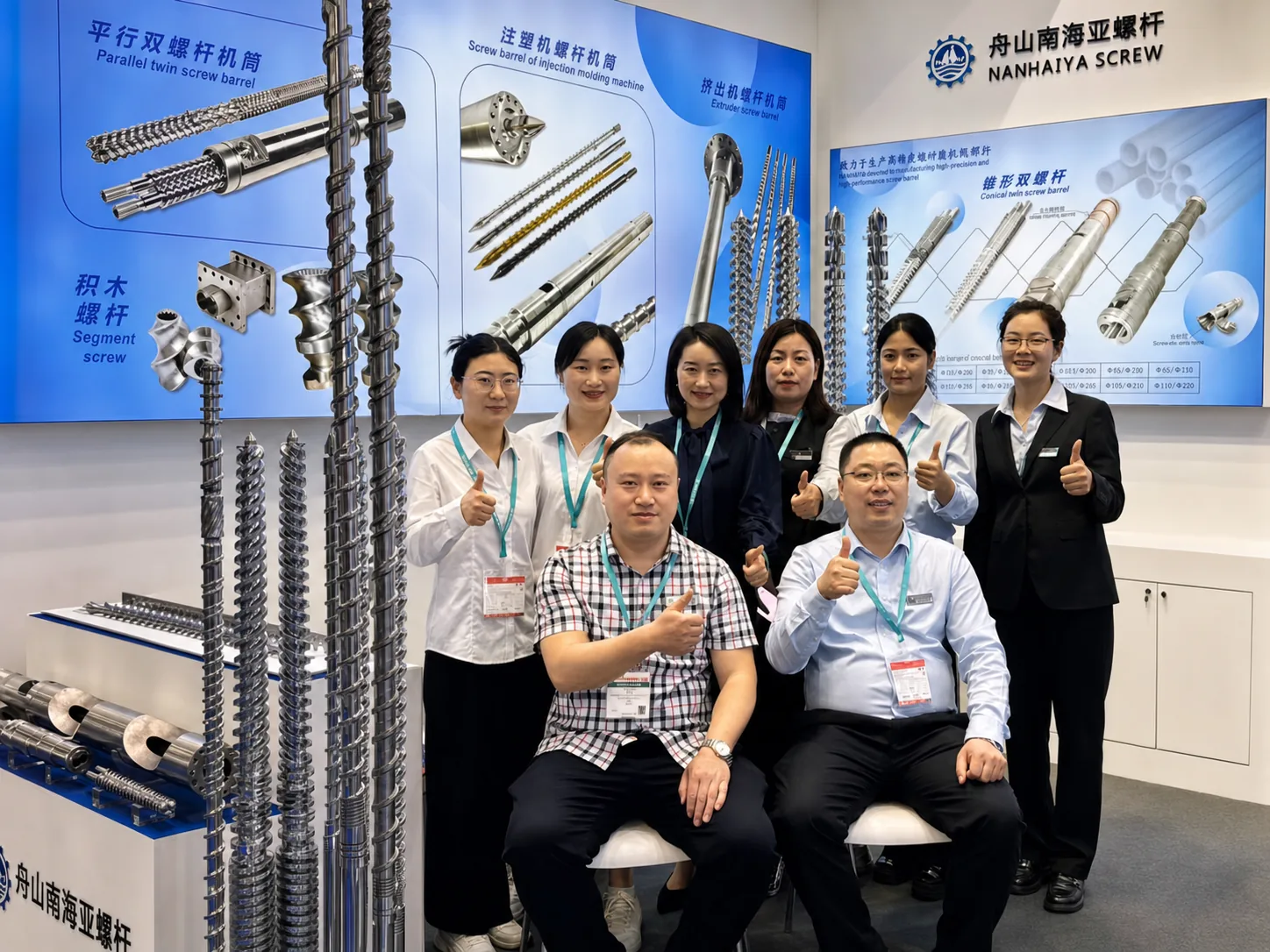
Related Articles
More insights on screw barrel technology and plastics processing.
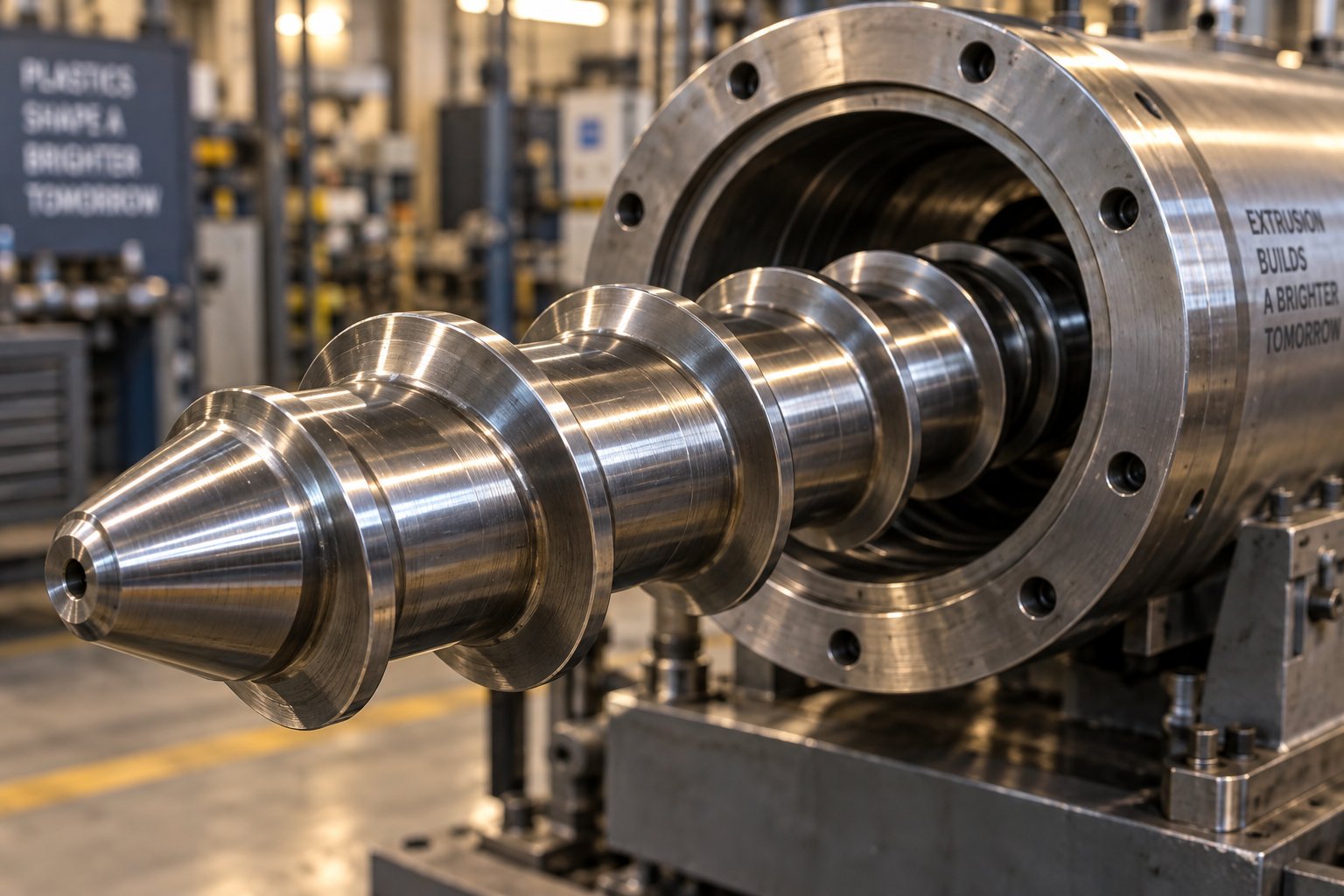
What Nobody Tells You About Screw Barrel For Plastic Machine Design
Oct 10, 2026
Learn how screw barrel for plastic machine design affects melt quality, throughput, and wear life. Covers geometry, resin matching, troubleshooting, and sourcing.
Read Article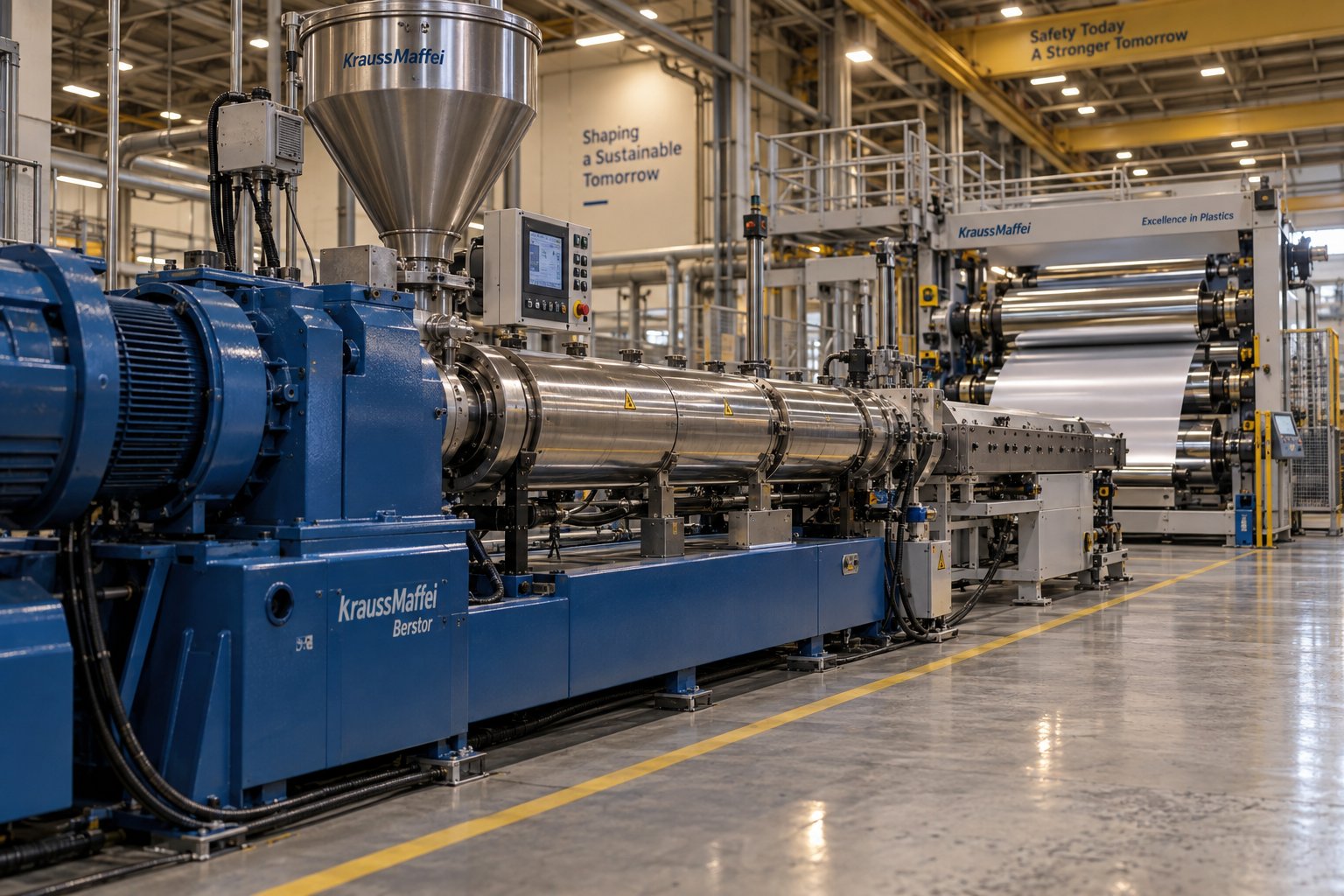
Single Screw Extruder for Sheet: Stop Guessing, Start Specifying
Oct 9, 2026
Learn how to specify a single screw extruder for sheet production. Covers screw geometry, resin-specific processing, troubleshooting, and maintenance best practices.
Read Article
PE Pipe Extruder Machine: What Datasheets Won't Tell You
Oct 9, 2026
Learn how a PE pipe extruder machine works, key specs explained, material grade selection, maintenance tips, and buyer guidance beyond the datasheet.
Read ArticleLooking for something else?
Search by material, symptom or product and jump straight to the relevant page.
These are navigation suggestions based on keyword matching — not a quotation, not a delivery commitment, and not a substitute for engineering review. Final specification is confirmed by our engineers against your drawings and processed material.
Need help with screw barrel selection?
Share your machine model, processed material and application. Our team can help with pricing and technical support.