

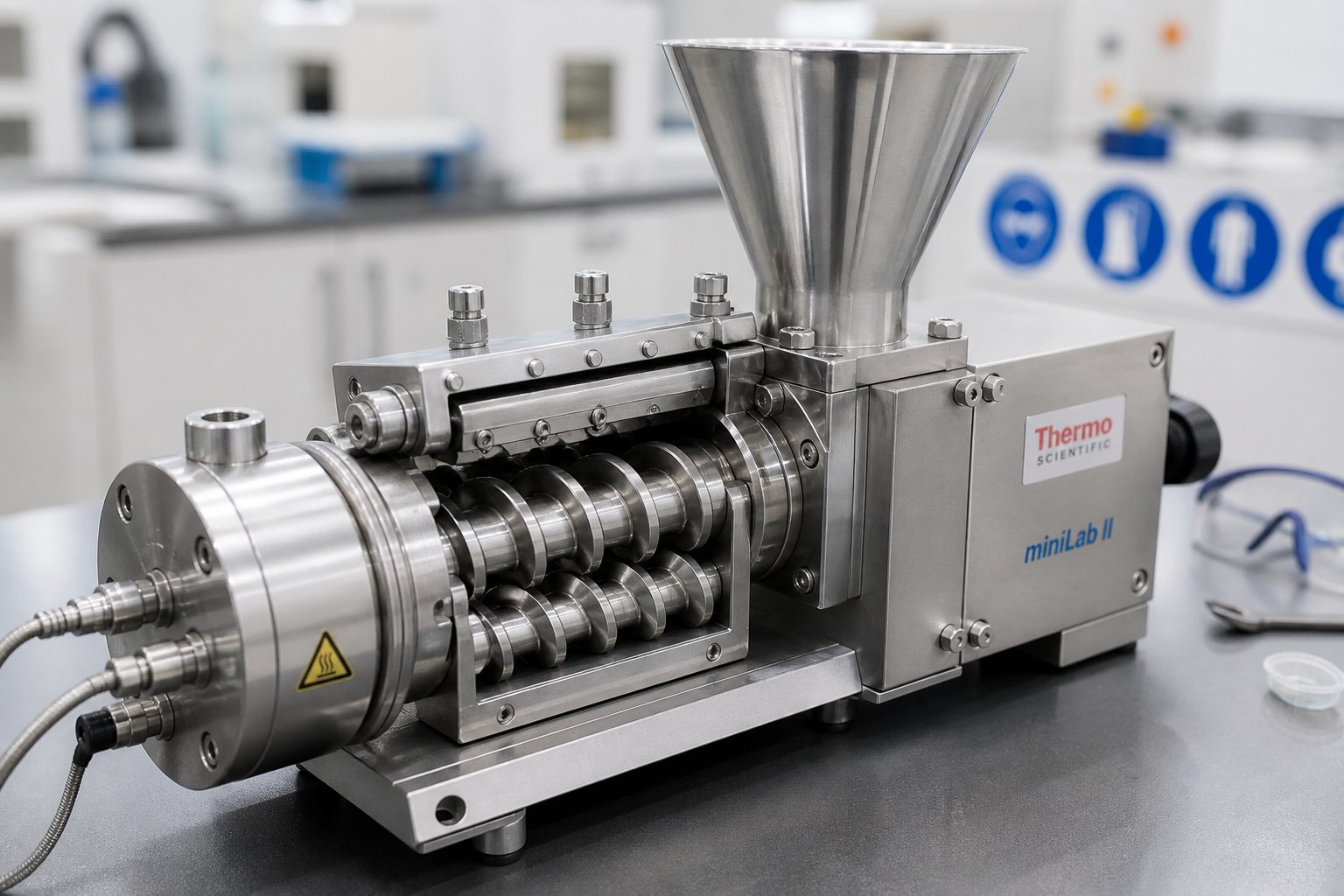
What Is a Micro Twin Screw Extruder
Imagine you have synthesized a novel polymer in the lab, but only five grams of it exist on earth. Running that material through a conventional twin screw extruder would be like filling a swimming pool to wash a single shirt. You need a machine engineered from the ground up for exactly this scenario — and that is precisely what a micro twin screw extruder delivers.
Defining the Micro Twin Screw Extruder
A micro twin screw extruder is not just a shrunken-down version of industrial extrusion equipment. It represents a fundamentally different engineering philosophy, one built around the constraint of extreme material scarcity. These systems feature screw diameters typically ranging from 5 mm to 15 mm, barrel volumes as small as 2 to 15 mL, and the ability to compound and extrude polymer samples weighing only a few grams.
A micro twin screw extruder is a miniaturized twin-screw extrusion system — with screw diameters between 5 mm and 15 mm — purpose-built for compounding and extruding gram-level material quantities under precisely controlled shear, temperature, and residence time conditions, enabling real melt-processing experiments when material availability is extremely limited.
What separates this class of equipment from a standard laboratory twin screw extruder or a full-scale production line goes beyond physical dimensions. The barrel geometry, feeding mechanisms, and even the way material flows through the system are re-engineered to handle volumes that would starve a larger machine. Many commercial micro-compounders, for instance, use conical, fully intermeshing twin screws paired with recirculation channels that allow a single small batch to circulate repeatedly — mimicking an extruder with a virtually infinite length-to-diameter ratio. This batch-mode capability is absent in larger twin screw extruders, which rely on continuous material feed to function.
Who Uses Micro Twin Screw Extruders and Why
The core audience for these machines falls into a few distinct groups:
- Materials scientists developing novel polymers, graphene-filled composites, or specialty engineering plastics available only in small research batches.
- Pharmaceutical formulators screening expensive active pharmaceutical ingredients (APIs) for hot-melt extrusion and amorphous solid dispersion development.
- University research groups that need real melt-processing data but operate on tight material and budget constraints.
- Pilot-line engineers running early-stage formulation screening before committing to larger equipment.
The central value proposition is straightforward: a micro twin screw extruder lets you conduct genuine compounding and extrusion experiments with gram-level sample volumes instead of the kilogram quantities a benchtop twin screw extruder would demand. You'll notice that this distinction matters enormously when a single gram of a novel nanofiller can cost hundreds of dollars, or when a newly synthesized API exists only in milligram-to-gram quantities during early drug development.
Specialized volumetric feeding systems — sometimes syringe-style or gravity-fed hoppers designed for powders, pellets, and even liquids — replace the conventional gravimetric feeders that simply cannot dose material accurately at such small scales. Research published in Polymers demonstrated that a 15 mL high-torque twin-screw micro-compounder could prepare rubber compounds with filler dispersion quality equal to or better than a full-sized Banbury mixer, while requiring only a fraction of the material and preparation time. That kind of efficiency is why micro-scale twin screw extruders have become indispensable screening tools across polymer, pharmaceutical, and advanced materials research.
Yet raw capability is only half the story. The real question researchers face is how the physics of extrusion change when you shrink everything down to a barrel the size of a marker pen — and whether data generated at this scale can be trusted at all.
How Micro Twin Screw Extrusion Works at Miniature Scale
Shrinking a barrel to just a few milliliters does not simply scale down the twin screw extrusion process — it rewrites the rules. The physics governing heat transfer, shear distribution, and material flow all shift dramatically when screw channel depths drop below a few millimeters and total barrel volumes fall into the single-digit milliliter range. Understanding these differences is essential before interpreting any data a micro-scale extruder system produces.
How Reduced Barrel Volume Changes Material Behavior
Picture a standard twin screw extruder barrel as a wide river — most of the water flows freely in the center, with only a thin boundary layer dragging against the banks. In a micro extruder, that river narrows to a creek. The ratio of material touching the barrel wall versus material flowing in the bulk shifts dramatically, and this single geometric fact triggers a cascade of processing differences.
Heat transfer accelerates. With a higher surface-area-to-volume ratio, material heats up — and cools down — much faster than in larger equipment. CFD simulation research on micro-screw extrusion systems confirms that at small screw diameters, effective plasticization through mechanical shear alone is difficult to achieve; instead, material melting depends primarily on barrel heat conduction rather than the viscous dissipation that dominates in full-scale machines. Lower Brinkman numbers characterize most of the screw length, reflecting reduced internal shear heating relative to external heat input.
Shear distribution changes character. Narrower screw channels mean the gap between screw flight and barrel wall shrinks proportionally, producing higher localized shear rates at the flight tips while the channel center may see relatively modest shear. The same research showed that maximum shear rates exceeding 124 s-1 occur at the flight gap (just 0.1 mm clearance), while channel-center shear rates can be as low as 8 s-1. This steep gradient means material near the walls experiences a fundamentally different thermomechanical history than material in the core — a wall effect that grows more pronounced as barrel diameter decreases.
Feeding demands specialized solutions. Conventional gravimetric feeders, designed to dose kilograms per hour, cannot accurately meter gram-level quantities. Micro extruders rely on purpose-built alternatives: simple gravity-fed hoppers that accept powders, pellets, or liquids directly into the barrel, syringe-style plunger systems, or specialized inclined micro-feeders combining agitator-controlled hoppers with custom screw geometries to achieve consistent delivery at rates below 10 g/h with under 5% relative standard deviation — even for cohesive pharmaceutical powders.
Recirculation Channels and Batch-Mode Processing
Perhaps the most distinctive feature of micro-scale twin screw extrusion is something you will never find on a production-floor extruder: a recirculation channel.
In a standard continuous twin screw extrusion process, material enters the feed throat, passes through successive conveying, kneading, and metering zones, and exits the die — one pass, start to finish. Residence time is determined by screw speed, barrel length, and the L/D ratio. If the material needs more mixing, you either lengthen the barrel or add more kneading elements.
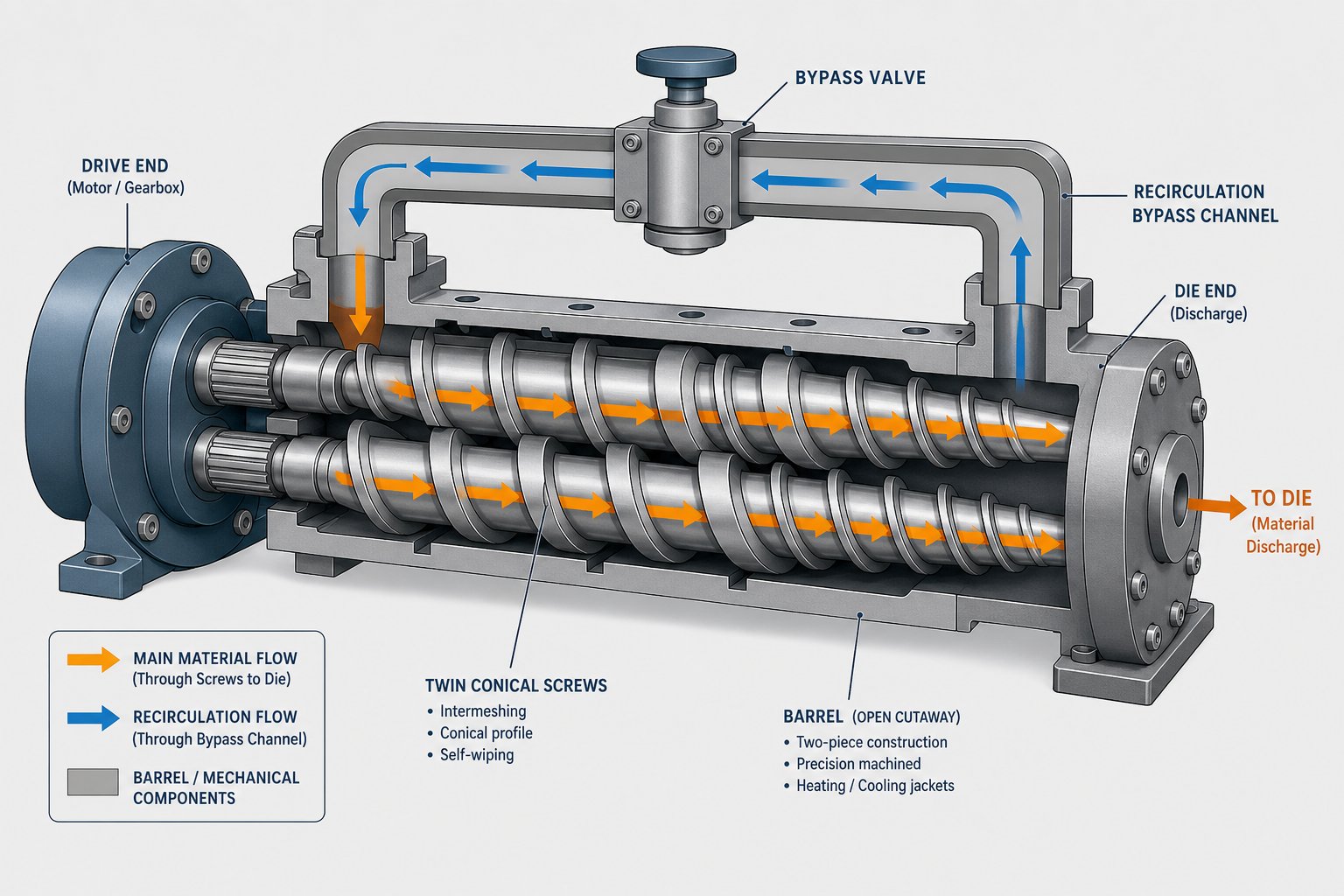
Micro-compounders solve this problem differently. A bypass channel connects the discharge end of the barrel back to the screw intake zone. With a valve at the die closed, molten polymer circulates continuously through the twin screws and the recirculation loop, experiencing repeated mixing passes without ever leaving the system. As Xplore micro-compounder documentation describes, this configuration effectively mimics an extruder with an infinitely long L/D ratio — providing extended residence time under controlled shear and temperature conditions using as little as 2 to 40 mL of raw material.
Recirculation transforms a micro twin screw extruder from a single-pass flow device into a batch-mode processing tool, enabling thorough compounding of samples as small as 3 to 7 mL without requiring continuous material feed.
When the researcher is satisfied with the mixing quality — monitored through torque readings or inline rheological measurements — the valve opens, and the compounded melt is directed through the die for strand extrusion, film casting, or injection molding. This tunable residence time gives the operator a level of process control that simply does not exist in conventional screw extrusion, where material throughput and mixing intensity are tightly coupled.
The trade-off, of course, is that recirculation data does not directly map onto continuous-mode processing. Shear history accumulates differently when the same small volume passes through the screws dozens of times versus fresh material flowing through once. This distinction becomes critically important when the goal is translating micro-scale results to larger equipment — but before tackling scale-up questions, it helps to understand how screw rotation direction shapes mixing behavior at these miniature dimensions.
Co-Rotating vs Counter-Rotating Micro Twin Screw Designs
Screw rotation direction is one of the first specification lines on any twin screw datasheet — but most explanations of co-rotating versus counter-rotating behavior are written with production-scale equipment in mind. At micro scale, the consequences of this choice shift in ways that matter for researchers deciding between available compounder platforms. The confined geometries, tiny sample volumes, and batch-mode workflows that define micro-compounders amplify some differences while rendering others nearly irrelevant.
Co-Rotating Screws in Micro Compounders
Walk into most polymer research labs equipped with a micro twin screw extruder, and you'll find co-rotating intermeshing twin screws inside the barrel. There is a practical reason for this dominance: co-rotating designs offer a combination of mixing quality, cleaning ease, and material flexibility that aligns perfectly with the demands of small-batch R&D work.
When both screws rotate in the same direction, material follows a figure-eight flow pattern — transferring from one screw to the other as it travels along the barrel length. This continuous handoff creates both distributive and dispersive mixing, breaking material into smaller and smaller domains while simultaneously recombining them. Even at extremely low throughputs — the kind measured in grams rather than kilograms — this figure-eight mechanism maintains homogeneous blending because mixing intensity is driven primarily by screw geometry and speed rather than volumetric flow rate.
The self-wiping characteristic is equally important at micro scale. In a co-rotating twin screw configuration, the surface velocities in the intermesh zone move in opposite directions, causing each screw to continuously scrape material off the other. For researchers running three or four different formulations in a single afternoon — switching between an expensive API blend and a nanocomposite, for instance — this self-wiping action dramatically reduces cross-contamination risk. Residual material left behind in the tight channels of a 5 mm to 15 mm barrel can easily skew results when total sample volumes are under 10 mL.
Co-rotating micro-compounders also handle a broader range of polymer viscosities. Because material flows relatively freely between the twin screws rather than being trapped in isolated pockets, you can process everything from low-melt-index polyolefins to higher-viscosity engineering thermoplastics without major screw reconfiguration — a flexibility that saves time when the goal is rapid screening across multiple material families.
Counter-Rotating Configurations and When They Apply
Counter-rotating intermeshing designs work on a fundamentally different principle. The twin screws turn in opposite directions, and the surface velocities in the intermesh move the same way — forcing material upward through what is called the calender gap. This creates closed, C-shaped chambers between the screw flights that function almost like a gear pump, providing highly positive conveying and stable pressure generation.
At micro scale, this pressure-building capability becomes relevant in specific scenarios. If your experiment requires die extrusion of profiles, thin films, or fibers — applications where consistent die pressure directly determines product quality — a counter-rotating configuration can deliver more stable output pressure without needing an external gear pump attachment. Processing high-viscosity melts that resist flow through narrow micro-scale dies is another situation where the positive displacement conveying of a co-rotating and counter-rotating twin screw extruder distinction becomes practically meaningful.
However, counter-rotating micro extruders remain less common for good reasons. Those same C-shaped chambers that enable positive conveying also create cleaning headaches. Material trapped in the closed pockets between flights is harder to purge from a barrel that is only a few millimeters across. When your previous run used a pigmented compound and your next run involves a transparent pharmaceutical blend, incomplete cleaning is not just inconvenient — it can invalidate an entire experiment.
Mixing flexibility is also more limited. Counter-rotating designs excel at gentle, low-shear conveying, which protects heat-sensitive materials from degradation. But when the research objective demands intense dispersive mixing — breaking down nanofiller agglomerates, for example — the co-rotating twin screw extruder's open flow path and high-shear intermesh zone typically outperform the calender-gap mechanism. As Xplore micro-compounder configurations demonstrate, some commercial platforms solve this by offering both rotation modes in the same machine, letting researchers switch between co-rotating and counter-rotating screws depending on the material at hand.
| Parameter | Co-Rotating | Counter-Rotating |
|---|---|---|
| Primary Mixing Type | Strong distributive and dispersive mixing via figure-eight flow | Moderate mixing; effective extensional mixing at calender gap |
| Self-Wiping Capability | Excellent — screws continuously wipe each other, minimizing residue | Limited — closed C-shaped chambers trap material between flights |
| Pressure Generation | Moderate — may require gear pump for demanding die geometries | High — positive displacement conveying builds stable die pressure |
| Cleaning Ease at Micro Scale | Faster changeover; self-wiping reduces cross-contamination risk | More difficult; tight closed chambers require thorough manual cleaning |
| Viscosity Range | Broad — handles low to high viscosity polymers with flexible screw designs | Best for medium to high viscosity; less adaptable to varied formulations |
| Typical Micro-Scale Applications | Nanocomposite dispersion, API-polymer screening, rapid formulation comparison | Profile/film die extrusion, high-viscosity melt processing, shear-sensitive materials |
For most micro-scale R&D workflows — where rapid changeover, material conservation, and versatile mixing trump absolute pressure output — the co-rotating configuration earns its market dominance. Counter-rotating designs carve out a narrower but important niche when the experiment specifically demands stable die pressure or gentle handling of thermally sensitive formulations.
Rotation direction, though, is only one axis of the screw design decision. The physical shape of the screws themselves — whether they taper from feed to discharge or maintain a constant diameter — introduces an entirely separate set of trade-offs that become especially pronounced at miniature barrel dimensions.
Conical vs Parallel Screw Designs in Micro Extruders
Most discussions of conical versus parallel twin screw geometry focus on production-scale equipment — PVC pipe lines, masterbatch compounders, and high-throughput pelletizing systems. At those scales, the decision often hinges on output rates and modular flexibility. At micro scale, the calculus shifts. When your entire barrel volume fits inside a teaspoon, screw geometry dictates whether you can build enough melt pressure to push material through a die at all, and whether you can practically swap screw elements between experiments.
Conical Screw Geometry for Micro-Scale Pressure and Compression
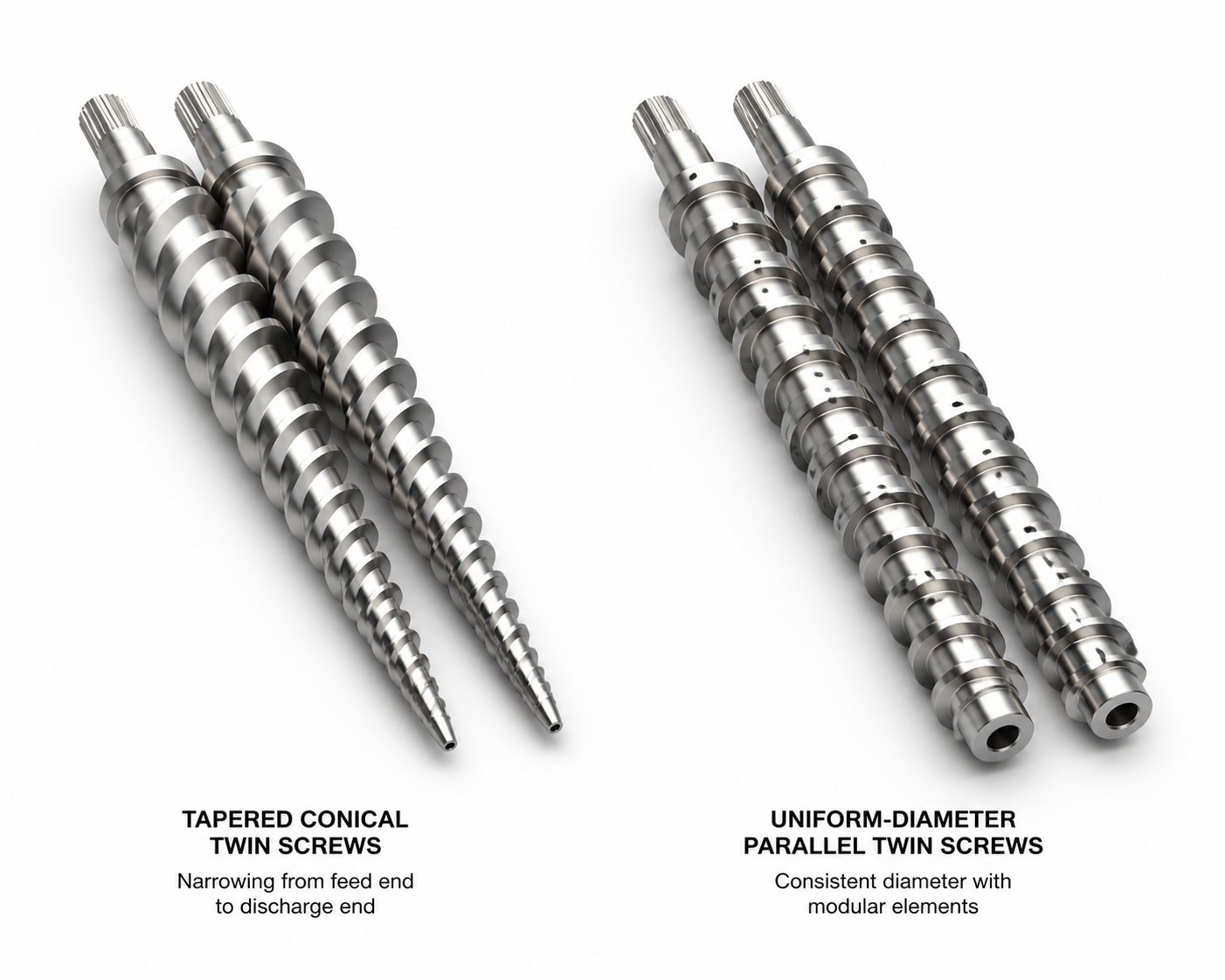
A conical twin screw extruder uses screws that taper from a larger diameter at the feed zone to a smaller diameter at the discharge end. This tapering geometry creates a natural compression ratio — channel volume decreases progressively as material advances toward the die, building melt pressure without relying on high screw speeds or extended barrel length.
Why does this matter so much at micro scale? Because you simply do not have the barrel length available to generate pressure gradually. A production-scale parallel twin screw extruder might use an L/D ratio of 32:1 to 52:1, giving material meters of barrel in which to develop die pressure. A micro-compounder's twin screw barrel, by contrast, might be only 100 to 150 mm long. The conical design solves this constraint elegantly: the taper itself acts as a built-in compression zone, delivering sufficient melt pressure for strand extrusion, film casting, or fiber spinning within a remarkably compact footprint.
This is exactly why most commercial micro-compounders — including the Xplore MC series — use fully intermeshing conical twin-screw geometry as their core architecture. The conical layout also provides a practical bonus at the feed end: the larger-diameter intake zone offers more channel volume to accept powder, pellets, or pre-blended formulations, while the narrowing discharge zone delivers concentrated, pressurized melt to the die or recirculation channel.
Parallel Screw Geometry and Its Modular Advantage
A parallel twin screw extruder maintains a constant screw diameter along the full barrel length. The primary advantage of this configuration is modularity — segmented screw elements can be rearranged along a splined shaft to create custom sequences of conveying, kneading, and mixing zones. Researchers working with diverse material families value this flexibility because a single twin screw and barrel platform can be reconfigured to handle everything from gentle distributive blending to aggressive dispersive mixing simply by swapping element positions.
At micro scale, though, this modularity runs into a mechanical wall. When screw diameters drop below 15 mm, individual screw elements become extremely small — sometimes just a few millimeters in length and diameter. Assembling these tiny segments onto a shaft, maintaining alignment, and changing configurations between experiments becomes painstaking work that demands fine motor skills and specialized tools. A misaligned element on a 40 mm shaft is a minor nuisance; the same misalignment on a 10 mm shaft can jam the barrel or damage the bore surface.
This is not to say parallel micro extruders do not exist. Some research-grade platforms in the 12 to 15 mm diameter range do offer limited modular screw configurations. But the overwhelming majority of micro-compounders below 15 mm rely on conical, non-segmented screw designs precisely because the mechanical complexity of modular element assembly becomes impractical at these dimensions.
- Choose conical geometry when your micro-scale work requires high die pressure in a compact barrel, when you are extruding strands, films, or fibers, when material volumes are under 15 mL, or when rapid changeover between formulations matters more than screw element customization.
- Choose parallel geometry when your screw diameter falls in the upper micro range (12–15 mm) or mini range, when you need to systematically vary mixing intensity by rearranging screw elements, when your research program demands direct comparison of different screw configurations on the same platform, or when future scale-up to a modular lab-scale parallel extruder is part of the development strategy.
In practice, the conical design dominates the micro-compounder market because it resolves the most pressing engineering challenge at this scale — generating real processing pressure within an extremely short barrel — without sacrificing mixing quality. The parallel approach earns its place in labs where screw modularity is a non-negotiable research requirement and the slightly larger micro or mini diameter range makes element handling feasible.
Screw geometry and rotation direction narrow the design space considerably, but neither decision exists in isolation from the broader question of equipment scale. Researchers evaluating a micro twin screw extruder inevitably ask how it compares — in capability, sample requirements, and cost — to mini, lab-scale, and production-size alternatives.
Micro vs Mini vs Lab-Scale vs Production-Scale Extruders Compared
How do you know whether you actually need a micro twin screw extruder — or whether a slightly larger machine would serve your research just as well? Suppliers often blur the lines between "micro," "mini," and "lab-scale" in their marketing, using the terms almost interchangeably. That vagueness costs researchers time and money. A clear, structured framework based on screw diameter, sample requirements, and intended use case cuts through the confusion and points directly to the right equipment tier.
Understanding the Extruder Size Spectrum
Twin screw extruder machines span an enormous range — from palm-sized micro-compounders processing a few grams of material to industrial lines consuming tons per hour. Breaking this spectrum into four distinct categories based on screw diameter reveals how dramatically the requirements and capabilities shift at each level:
- Micro (5–15 mm screw diameter): Purpose-built for gram-level experiments. Barrel volumes typically range from 2 to 15 mL, and recirculation channels allow batch-mode processing of as little as 3–7 mL of material. These machines serve researchers who cannot afford to consume more than a few grams per run — pharmaceutical scientists screening rare APIs, materials researchers working with novel nanofillers, or university labs with tight supply constraints.
- Mini (16–26 mm screw diameter): A step up in throughput, mini twin screw extruders handle output ranges from roughly 0.1 to 10 kg/h and require minimum sample sizes in the tens-of-grams range. They bridge the gap between pure screening and early pilot validation, offering enough material output for basic mechanical testing specimens.
- Lab-scale (27–40 mm screw diameter): A lab scale twin screw extruder operates in continuous mode with throughputs from approximately 5 to 50 kg/h. These laboratory scale extruder platforms provide modular screw configurations, multiple barrel zones, and downstream pelletizing or sheet extrusion capabilities. They are the workhorses of formulation development labs that have moved past initial screening and need statistically meaningful sample quantities.
- Production-scale (40–200+ mm screw diameter): Industrial double screw extruder machine platforms designed for continuous commercial manufacturing. Throughputs range from tens to thousands of kilograms per hour, with highly optimized screw and barrel geometries for specific product lines.
Notice the exponential jump in material requirements. A micro-compounder can complete an experiment with 5 grams of polymer. A production extruder consumes that amount in a fraction of a second. This difference is not just about volume — it shapes the entire experimental workflow, from how you source materials to how many formulation variations you can afford to test.
Side-by-Side Comparison of Key Parameters
The table below organizes the critical specifications that researchers typically compare when selecting between equipment tiers. You'll find that laboratory extruders across these categories differ not only in physical size but in L/D ratio, minimum practical sample size, and cost — factors that directly influence which questions each machine can realistically answer.
| Category | Typical Screw Diameter | L/D Ratio Range | Throughput Range | Minimum Sample Size | Primary Use Case | Relative Cost Tier |
|---|---|---|---|---|---|---|
| Micro | 5–15 mm | Variable (batch recirculation mimics high effective L/D) | Grams/hour (batch mode: 3–15 mL per run) | ~3–7 mL (~2–10 g) | Formulation screening, API-polymer compatibility, rare material compounding | $$$$ (specialized R&D instrument) |
| Mini | 16–26 mm | 25:1 – 40:1 | 0.1–10 kg/h | ~50–200 g | Early pilot validation, small-batch compounding, educational training | $$$ (mid-range lab equipment) |
| Lab-Scale | 27–40 mm | 32:1 – 48:1 | 5–50 kg/h | ~0.5–2 kg | Process optimization, mechanical test specimen production, scale-up validation | $$$ – $$$$ (full lab scale extruder platform) |
| Production-Scale | 40–200+ mm | 32:1 – 56:1 | 50–10,000+ kg/h | Continuous feed (kg-scale minimum) | Commercial manufacturing, high-volume compounding, pellet production | $$$$$ (industrial capital equipment) |
A few patterns stand out immediately. First, the L/D ratio for micro-compounders resists simple comparison because batch recirculation effectively decouples mixing intensity from physical barrel length — a 100 mm barrel can deliver mixing equivalent to a much longer continuous system. Second, cost does not scale linearly with size. Micro-compounders occupy a premium price tier relative to their physical dimensions because the precision engineering required for 5–15 mm screws, ultra-tight barrel tolerances, and integrated recirculation valves demands specialized manufacturing that rivals or exceeds the cost of a basic mini-scale twin screw extruder machine.
Third — and this is the detail most datasheets bury — the minimum sample size column is what actually drives purchasing decisions for most research teams. If your novel material exists only in 10-gram batches, no amount of throughput capability or modular flexibility in a lab scale extruder will help you. The micro tier is not merely convenient at that point; it is the only viable option.
Knowing where your work falls on this spectrum is the first step. The more consequential question is what you plan to do with the extruded material — and each application domain brings its own set of demands that shape how a micro-compounder should be configured and operated.
Key Applications Where Micro Extrusion Delivers Unique Value
Every application domain that relies on twin screw compounding extruder technology shares one recurring bottleneck: the gap between inventing a new material and having enough of it to run real processing experiments. A micro twin screw extruder closes that gap in ways that vary significantly by field — and understanding the specific advantages in each domain helps researchers justify the investment and configure the equipment correctly for their workflows.
Pharmaceutical Hot-Melt Extrusion and API Screening
Drug development is, at its core, a material-scarcity problem. During early-stage discovery, a newly synthesized active pharmaceutical ingredient often exists in quantities measured in milligrams to low grams. Running that compound through even a small compounding extruder requiring hundreds of grams per experiment would consume an entire synthesis campaign in a single trial. This is where micro-scale hot-melt extrusion becomes transformative.
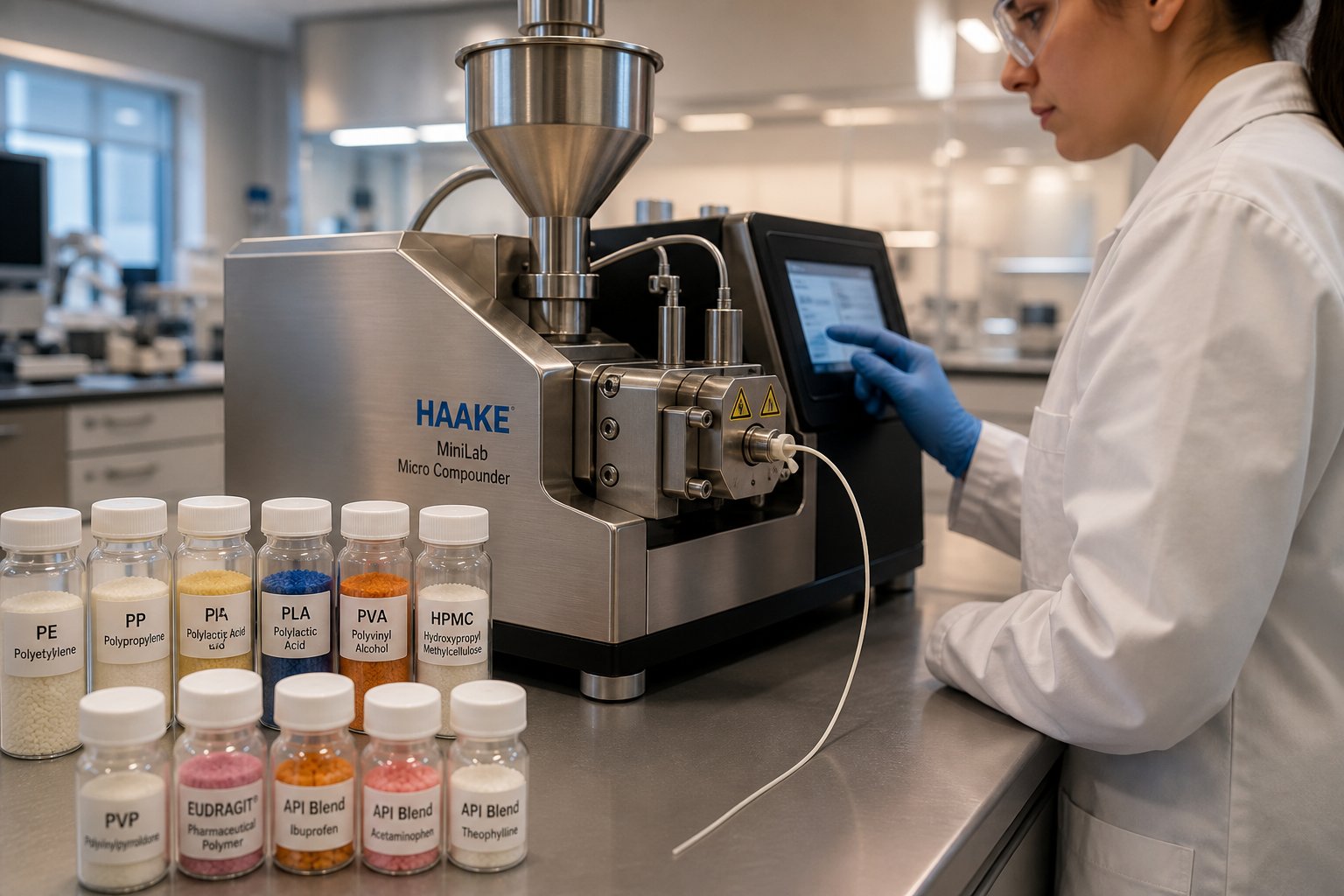
A micro twin screw extruder allows pharmaceutical formulators to screen polymer-API combinations for amorphous solid dispersion (ASD) development using as little as 2 to 7 grams of material per run. The goal is straightforward: dissolve a poorly soluble drug into a polymer matrix at elevated temperature and shear, then evaluate whether the resulting dispersion is amorphous, stable, and pure enough to pursue further. Research published in Pharmaceutics demonstrated that micro-compounders with conical co-rotating screws and recirculation chambers are commonly used as the industry-standard screening tool for HME feasibility, allowing time, temperature, and shear to be studied as independent variables with only 2 to 15 grams of mixture per run.
What makes this micro-scale approach so valuable goes beyond material savings. Formulators can:
- Evaluate achievable API loadings at multiple temperatures within a single day, identifying the processing window where the drug dissolves into the polymer without excessive degradation.
- Screen multiple polymer carriers — copovidone, HPMC-AS, Soluplus, and others — rapidly, ranking them by compatibility before committing larger quantities to a lab-scale extruder for polymer processing.
- Detect API-polymer interactions that accelerate degradation, a phenomenon Pluntze et al. (2024) found in 49% of the 37 unique API-polymer combinations they screened — where the mixture degraded at lower temperatures than either pure component alone.
Imagine screening ten polymer-API combinations in a week using less than 50 grams of a compound that costs thousands of dollars per gram to synthesize. That kind of efficiency compresses formulation timelines from months to weeks, enabling go/no-go decisions on HME feasibility before a drug candidate even reaches formal preclinical development.
Advanced Polymer and Nanocomposite Research
Materials scientists face a parallel challenge. Novel biopolymers, functionalized graphene, specialty engineering thermoplastics, and experimental nanofillers are frequently available only in small research batches — sometimes as little as 5 to 20 grams from a laboratory synthesis run. Testing how these materials behave under real melt-processing conditions requires an extruder for polymer compounding that can deliver genuine shear, temperature, and mixing with minimal material waste.
A micro-scale compounding twin screw extruder fills this role by enabling researchers to answer questions that no rheometer, DSC scan, or theoretical model can resolve on its own:
- Dispersion quality: Can a nanofiller be uniformly distributed throughout a polymer matrix under realistic processing conditions? Micro-compounders let you extrude actual specimens for TEM or SEM analysis of filler dispersion, revealing agglomeration problems that static mixing tests miss entirely.
- Melt-flow behavior: How does a new polymer blend actually flow under shear? Torque and pressure data from a micro extruder provide direct indicators of processability — information critical for predicting whether a formulation will survive scale-up to a production-size polymer extruder.
- Mechanical property development: Small extruded strands or films can be tested for tensile strength, elongation, and modulus, giving researchers a first-pass mechanical profile without consuming the kilograms that standard test specimen molding requires.
The batch micro-compounding approach is particularly powerful for nanocomposite work. Recirculation mode allows repeated mixing passes through the conical screws, progressively breaking down filler agglomerates and improving dispersion quality — all within a single 5 to 15 mL batch. Researchers working with carbon nanotubes, graphene nanoplatelets, or cellulose nanocrystals routinely use this capability to establish the minimum mixing intensity needed for adequate dispersion before designing screw configurations for larger equipment.
For teams developing polyester-based blends or fiber-reinforced composites, a micro-scale polyester extruder configuration also enables rapid thermal stability screening, ensuring that the processing temperatures needed for adequate melting do not trigger hydrolytic degradation — a concern especially relevant for PET, PLA, and PBS formulations where moisture sensitivity complicates melt processing at any scale.
Food Science and Biodegradable Material Development
Food scientists and biodegradable material developers share a common interest in starch-based systems, protein-polysaccharide blends, and bio-sourced polymer composites — all of which are sensitive to thermal history and shear intensity. Micro extrusion offers these researchers two capabilities that larger equipment cannot match at early development stages.
First, ingredient encapsulation trials become practical at gram scale. Encapsulating flavors, vitamins, or bioactive compounds within an extruded matrix requires precise control over temperature and residence time to avoid degrading the active ingredient. A micro twin screw extruder's recirculation mode lets researchers fine-tune these parameters with minimal material, running dozens of encapsulation trials from a single small batch of an expensive bioactive compound.
Second, texture modification studies — critical for developing plant-based meat analogs, expanded snack prototypes, and texturized protein ingredients — benefit from the rapid iteration cycles that micro-scale processing enables. Researchers can adjust moisture content, screw speed, and temperature profile across multiple experiments in a single day, generating enough extruded sample for texture analysis without the hundred-gram-plus minimum that even a small continuous compounding extruder would demand.
Biodegradable polymer developers use micro-compounders extensively for evaluating starch-PLA blends, PHA-based composites, and thermoplastic starch formulations at early formulation stages. When the downstream goal involves pelletizing the compounded material for further processing, the micro-scale results help define the formulation space before moving to a larger screw extruder granulator system for pilot-scale pellet production — saving both raw materials and processing time during the exploratory phase.
Material-Saving Advantages by Application Domain
- Pharmaceutical HME: Screen polymer-API combinations with as little as 200 mg of API per experiment; evaluate achievable drug loading, amorphous content, and degradation in a single run — replacing weeks of large-scale trials.
- Advanced polymers and nanocomposites: Compound novel fillers, blends, and engineering plastics using 5–15 grams per batch; generate real extruded specimens for microscopy and mechanical testing without exhausting limited research-grade material supplies.
- Food science: Run encapsulation and texture optimization trials at gram scale, preserving expensive bioactive ingredients while generating enough sample for analytical characterization.
- Biodegradable materials: Evaluate starch-based blends, PLA composites, and bio-sourced polymer systems at early formulation stages before committing to pilot-scale compounding — reducing raw material waste by an order of magnitude compared to continuous lab-scale processing.
These material-saving advantages are real and well documented. Yet they come with trade-offs that most application guides conveniently omit. The same miniaturized geometry that enables gram-level processing also introduces wall effects, cleaning complications, and shear profile distortions that can complicate data interpretation — challenges worth examining honestly before designing an experiment around micro-scale results.
Limitations and Challenges of Micro Twin Screw Extrusion
Supplier brochures are remarkably good at showcasing what a micro twin screw extruder can do — and remarkably silent about where it struggles. Every advantage discussed so far is genuine, but so are the trade-offs. Researchers who understand these limitations before designing experiments will generate more reliable data, avoid costly misinterpretations, and set realistic expectations for what micro-scale results actually prove.
Wall Effects and Shear Profile Limitations
Here is a simple thought experiment. Imagine filling a drinking straw with honey versus filling a bucket. In the bucket, most of the honey sits far from the walls, flowing freely. In the straw, nearly all of the honey is in contact with the inner surface. That contact — friction, heat transfer, drag — dominates the flow behavior in ways that barely register in the bucket.
The same principle governs what happens inside micro-scale twin-screw extruders. As barrel diameter shrinks from production-scale dimensions down to 5–15 mm, the ratio of material touching the barrel wall versus material in the free-flowing bulk increases dramatically. This geometric reality triggers several processing consequences that larger screw extruders simply do not face to the same degree:
- Disproportionate heat transfer from barrel surfaces. With a high surface-area-to-volume ratio, barrel temperature exerts an outsized influence on material temperature. In production-scale equipment, viscous dissipation — heat generated internally by shear — contributes significantly to melting and temperature control. In micro-scale barrels, external conduction from heated walls dominates. This means temperature profiles measured on a micro extruder may not reflect the thermal conditions material would experience in a larger barrel extruder where internal shear heating plays a much bigger role.
- Steep shear rate gradients across the channel. Narrow screw channels produce extremely high localized shear at the flight tips while the channel center sees comparatively mild shear. Research on micro-screw systems has documented shear rate differences exceeding an order of magnitude within a single cross-section — maximum rates above 120 s-1 at the flight clearance dropping to under 10 s-1 at the channel core. Material near the wall endures a fundamentally different thermomechanical history than material even a fraction of a millimeter away.
- Torque demands with high-viscosity polymers. Narrow channels resist the flow of viscous melts, requiring proportionally higher torque to maintain screw rotation at processing speeds. High-viscosity engineering thermoplastics, filled compounds, and certain rubber-based formulations can push micro-compounder drive systems to their limits — or exceed them entirely. You may find that a material processes easily on a 27 mm lab-scale machine but stalls or degrades in a 10 mm micro barrel because the torque required to force it through those tiny channels surpasses the motor's capacity.
The practical implication is straightforward: thermal and shear profiles from micro-scale experiments are directionally useful but not directly transferable. Two formulations can be reliably ranked against each other — Blend A disperses better than Blend B — but the absolute shear rate, specific mechanical energy, and temperature history recorded during those experiments will not match what the same material experiences in a production-size screw plastic extruder. Researchers who treat micro-scale data as precise predictive values rather than comparative screening results risk designing processes that fail at larger scale.
Cleaning, Changeover, and Practical Workflow Challenges
Ask any technician who works with micro-compounders daily, and they will tell you: the most time-consuming part of the job is not running experiments — it is cleaning between them.
Twin-screw extruders at any scale need cleaning when switching materials. But on a 40 mm machine, you can push purge compound through the barrel, disassemble the screw elements with standard tools, and wipe residual polymer from surfaces that are large enough to see and reach easily. On a micro-compounder with a 5–10 mm bore, the calculus changes entirely:
- Tight tolerances trap residual material. The clearances between screw flights and barrel walls in micro systems are often measured in tenths of a millimeter. Polymer melt that solidifies in these gaps during cooldown becomes extremely difficult to remove completely. Even a milligram of residue from a previous run can represent a meaningful contaminant when your next experiment uses only 5 grams of total material.
- Recirculation channels add hidden dead zones. The same bypass channels that enable batch-mode processing also create additional internal surfaces where material can stagnate, degrade, or remain trapped after the main barrel has been purged. Cleaning these channels typically requires full disassembly — a process that adds significant time between runs.
- Cross-contamination consequences are amplified. On a production extruder processing tons of material, a few grams of carryover from a previous batch is statistically negligible. On a micro-compounder, that same few grams could constitute 20–50% of the total sample volume. When screening expensive pharmaceutical APIs or characterizing nanocomposites where filler concentration is measured in fractions of a percent, even trace contamination can invalidate results entirely.
Feeding consistency presents its own set of headaches. Conventional gravimetric feeders designed for kilogram-per-hour flow rates cannot accurately dose the gram-level quantities that micro-scale processing demands. The specialized micro-feeders, syringe systems, and gravity-fed hoppers that replace them work well under ideal conditions, but they introduce variability that researchers must monitor carefully. Cohesive powders can bridge in tiny hopper openings. Pellets of irregular size may feed inconsistently into a barrel throat only a few millimeters across. Sticky or hygroscopic materials cling to feeder walls. Each of these issues is manageable, but none is trivial — and collectively they extend experiment cycle times beyond what a quick glance at a specification sheet would suggest.
Die design options also narrow at micro scale. Production and lab-scale screw extruders offer extensive die libraries — strand, sheet, blown film, profile, underwater pelletizing, and more. Micro-compounders typically ship with a limited selection: a simple strand die, perhaps a small slit die for film, and sometimes an adapter for micro-injection molding. Custom die geometries are available from some manufacturers, but the engineering required to design flow channels that function correctly at these miniature dimensions adds cost and lead time that can surprise first-time buyers.
The limitations of micro twin screw extrusion do not diminish its value — they define its proper role: a rapid screening and comparative ranking tool, not a direct process replication platform.
None of these challenges should discourage researchers from using micro-scale equipment. They should, however, inform how experiments are designed and how results are interpreted. A micro twin screw extruder excels at answering comparative questions — which formulation performs better, which temperature window avoids degradation, which filler loading achieves acceptable dispersion. It answers absolute questions — what will the exact shear rate be on a 50 mm production line — with far less precision. Recognizing this distinction early saves time, money, and the frustration of discovering at pilot scale that micro-generated process parameters do not translate directly.
That recognition naturally raises the next question: if micro-scale data cannot be copied directly onto a larger machine, what exactly can it tell you — and how do you build a reliable bridge from a 5-gram screening run to a production-ready process?
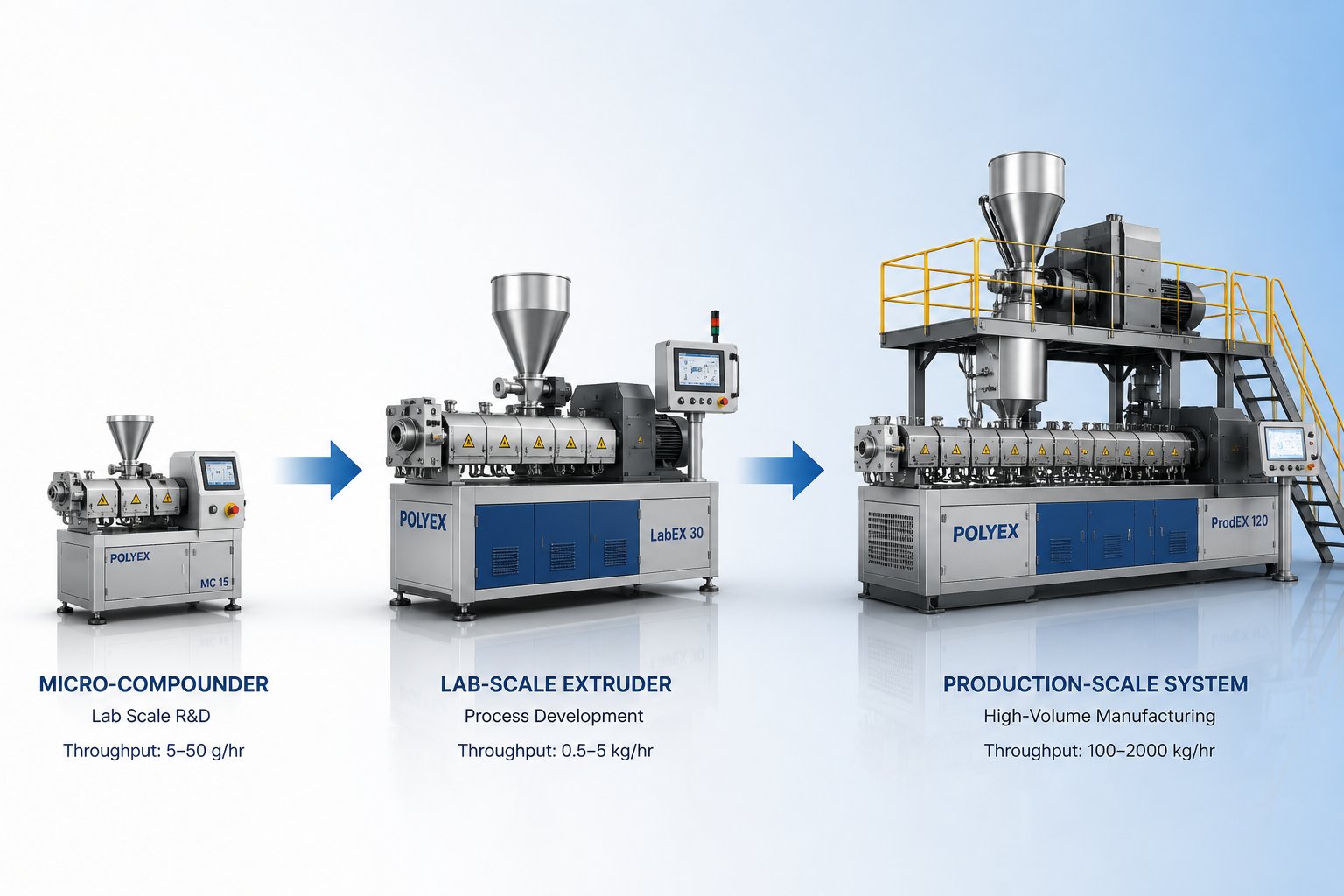
Scale-Up Considerations from Micro to Production
A five-gram screening run on a micro twin screw extruder just identified your most promising polymer-API blend. Torque was stable, the extruded strand looked clean, and DSC confirmed full amorphous conversion. The temptation is to hand those exact process parameters — temperature profile, screw speed, residence time — to your pilot-line team and expect identical results on a 40 mm machine. That temptation is also the single fastest way to waste a pilot campaign.
Translating micro-scale data to larger equipment is the most consequential step in the extrusion development workflow, and it is the one most poorly understood. Some insights transfer beautifully across scales. Others fall apart the moment barrel diameter increases by even a few millimeters. Knowing which is which separates efficient scale-up from expensive trial and error.
What Scales Up and What Does Not
Think of micro-compounder results as a scouting report rather than a blueprint. The report tells you reliably which candidates deserve further investment — but it does not hand you the final construction drawings.
What transfers well:
- Relative formulation rankings. If Blend A disperses a nanofiller more uniformly than Blend B in a micro-compounder, that ranking almost always holds at larger scale. The micro extruder twin screw geometry may impose different absolute shear rates, but the comparative performance hierarchy remains remarkably stable. This makes micro-scale screening an excellent go/no-go decision tool.
- Identification of incompatible material combinations. Phase separation, thermal degradation onset, and chemical incompatibility between polymer and additive reveal themselves at any scale. If a polymer-API combination shows discoloration or torque instability in a 7 mL recirculation chamber, it will not magically behave better in a 92 mm production barrel.
- Approximate processing temperature windows. The temperature range where a formulation melts cleanly without degrading translates reasonably well across scales. A material that degrades above 210 degrees C in a micro-compounder will face the same thermal ceiling on a laboratory extruder or a production line — though the exact onset temperature may shift slightly due to differences in residence time and shear heating.
What does not transfer directly:
- Specific mechanical energy (SME). SME — the energy per unit mass delivered through the screws into the melt — is one of the most important scale-up parameters in twin screw processing. Yet absolute SME values from a micro-compounder are unreliable references for larger equipment. A case study scaling from a 26 mm to a 92 mm co-rotating extruder demonstrated this starkly: applying the same optimized process conditions from the smaller machine produced an SME on the 92 mm system that was 69% lower than the reference value — so low that solid polymer pellets discharged unmelted from the die. The screw design, temperature profile, and screw speed all required re-optimization to restore an SME (0.086 kWh/kg) comparable to the original 26 mm target (0.083 kWh/kg). At micro scale, the gap is even wider because batch recirculation, dominant wall effects, and tiny barrel volumes distort the energy input profile further.
- Residence time distribution. In a recirculating micro-compounder, residence time is controlled by how long the operator keeps the recirculation valve open — it can be 30 seconds or 30 minutes, entirely at the researcher's discretion. Production-scale double screw extruder systems operate in continuous mode, where residence time is governed by screw speed, barrel length, and throughput rate. Pharmaceutical scale-up studies have confirmed that matching residence time distribution between extruder sizes is crucial for replicating product quality — and that the distributions narrow and shift as equipment size changes, requiring feed rate adjustments rather than simple proportional scaling.
- Shear rate profiles. The steep shear gradients inherent to micro-scale screw channels — where flight-tip shear can exceed 120 s-1 while channel-center shear drops below 10 s-1 — produce a thermomechanical history that no larger screw extruder replicates. Larger barrels have proportionally deeper channels, more uniform shear fields, and greater contributions from viscous dissipation relative to barrel conduction heating.
Batch-mode recirculation data deserves special caution. When a 5 mL sample passes through the twin screws 40 times in a recirculation loop, the cumulative shear and thermal history bears little resemblance to what that same material would experience in a single continuous pass through a 40:1 L/D production barrel. Recirculation reveals whether adequate mixing is achievable — it does not predict the exact screw configuration or barrel length needed to achieve it in one pass.
Building a Scale-Up Strategy from Micro-Scale Data
The most effective scale-up approach treats micro-compounder results as the first filter in a staged decision funnel — not as the final answer. Here is the practical workflow that experienced R&D teams follow:
- Screen broadly at micro scale. Use the micro twin screw extruder to test as many formulation variants as material supply allows. Rank candidates by dispersion quality, thermal stability, torque behavior, and extrudate appearance. Eliminate obvious failures. This stage consumes grams, not kilograms, and typically takes days rather than weeks.
- Validate top candidates on a mini or lab-scale extruder (16–40 mm). Move the two or three best-performing formulations to a continuous-mode laboratory extruder. Here, you generate real SME values, measure residence time distributions with tracer methods, and produce enough extrudate for full mechanical, thermal, and morphological characterization. Process optimization research shows that the starting feed rate for a larger machine can be estimated using volumetric scaling rules such as the Schuler equation, then fine-tuned by matching the specific energy and residence time to the values measured at the smaller scale.
- Re-optimize screw and barrel design at each new scale. This is the step most teams underestimate. Mixing element geometry, channel depth, flight clearances, and compression ratios do not simply scale proportionally. The area-to-volume ratio of the barrel decreases dramatically with increasing diameter — volume grows by the cube of the diameter ratio while surface area grows only by the square. This means heat transfer capacity per unit of material drops at every scale increase, and additional mechanical energy input through screw design modifications becomes necessary to compensate. A screw configuration that produces perfect melting and mixing on a 16 mm machine may leave material partially unmelted on a 40 mm system — exactly the failure mode documented in the Dow case study where a 92 mm extruder discharged solid pellets when using screw designs optimized for a smaller platform.
- Commit to production trials only after pilot-scale confirmation. Production-scale runs are expensive and unforgiving. Every kilogram of off-spec material represents lost time and raw material cost. The staged approach — micro screening, then mini/lab validation, then production qualification — reduces the probability of expensive surprises by catching formulation and process problems at scales where the cost of failure is manageable.
The screw and barrel configuration is often the variable that requires the most attention during this transition. A micro-compounder's conical, non-segmented screws bear little physical resemblance to the modular, segmented screw elements used in a 27 mm or 40 mm parallel extruder twin screw platform. Translating the mixing intensity and compression behavior that worked at micro scale into an equivalent arrangement of conveying elements, kneading blocks, and mixing discs on a larger machine demands both experience and detailed knowledge of how each element type influences shear, pressure, and residence time.
For teams that lack in-house screw design expertise — which includes most university labs, startup R&D groups, and small-batch processors — outside support can bridge this gap efficiently. Organizations like NANHAIYA provide custom screw design services specifically tailored to R&D labs and pilot-line teams, helping translate micro-scale findings into optimized screw and barrel configurations for larger equipment. Rather than defaulting to generic screw layouts, these services evaluate the specific material properties, processing challenges, and throughput targets at each stage of scale-up — delivering configurations that match the thermal and mechanical energy requirements the formulation actually needs at its new scale.
Successful scale-up is not about copying micro-scale parameters onto a bigger machine — it is about preserving the process outcomes (mixing quality, thermal stability, dispersion uniformity) while re-engineering the screw, barrel, and operating conditions to achieve those outcomes at each new scale.
The staged strategy also reveals a hidden benefit: each scale transition generates data that sharpens the next one. SME values from the 16 mm validation run become the target reference for the 40 mm pilot trial. Residence time distributions measured at pilot scale inform feed rate settings for production qualification. The micro-compounder does not provide the final answer — but it provides the first answer at a cost and material budget that makes broad exploration practical.
With a clear understanding of what scales up and what requires re-optimization, the remaining question becomes intensely practical: how do you choose the right micro twin screw extruder in the first place — and what criteria separate a machine that fits your research from one that creates more problems than it solves?
How to Choose the Right Micro Twin Screw Extruder
Browsing twin screw extruder manufacturers' catalogs reveals a common frustration: every machine looks capable on paper, but specification sheets rarely tell you whether a particular platform actually fits your research workflow. Twin screw extruder price alone does not predict suitability. A $90,000 micro-compounder that cannot accommodate your die geometry or handle your polymer's viscosity is a worse investment than a $60,000 unit that matches your needs precisely. The decision hinges on a handful of practical questions that most sales presentations never ask — but that determine whether the machine accelerates your research or becomes an expensive bottleneck.
Matching Extruder Scale to Your Research Needs
Before comparing any twin-screw extruder machine catalogs or requesting quotes, work through this decision checklist. Each question narrows the field and prevents the most common purchasing mistakes:
- How much material is available per experiment? This is the single most decisive factor. If your material budget is under 10 grams per run — typical for novel API screening, rare nanofiller characterization, or early-stage biopolymer synthesis — a micro twin screw extruder is likely your only viable option. Mini-scale and lab-scale platforms require minimum sample sizes measured in tens or hundreds of grams, which may exhaust your entire material supply in a single trial. If you consistently have 50 grams or more available, a mini-scale system (16–26 mm) could offer the benefit of continuous-mode operation with broader die options.
- Do you need continuous extrusion or is batch-mode recirculation acceptable? Recirculation mode — where material loops back through the screws rather than exiting the die — is a defining feature of most micro-compounders and provides exceptional mixing flexibility. However, it generates data that requires careful reinterpretation for scale-up. If your research demands continuous-mode residence time data from the outset, you may need to consider a mini-scale extruder or accept that micro-scale results will serve primarily as comparative screening data.
- What die geometries do you require? Micro-compounders typically ship with strand dies and sometimes small slit dies for film. If your work requires blown film, profile extrusion, underwater pelletizing, or other specialized die configurations, confirm availability with the twin-screw extruder manufacturer before purchasing. Custom micro-scale dies are possible but add cost and lead time that can delay research timelines.
- Will you need to replicate exact production-scale shear profiles, or are relative comparisons sufficient? As the previous chapter detailed, absolute SME values, residence time distributions, and shear rate profiles from micro-scale equipment do not transfer directly to larger machines. If your project requires precise replication of production conditions, a micro-compounder serves best as a first-pass screening tool feeding into a larger validation extruder. If ranking formulations against each other is the primary goal, micro-scale data is more than adequate.
- What is your budget range? Micro-compounders occupy a specific cost tier — generally premium relative to their physical size because of the precision engineering involved. Entry-level twin screw extruder for sale listings in the micro category typically start in the range of tens of thousands of dollars, while fully configured research-grade platforms with integrated recirculation, torque measurement, and downstream accessories can reach six figures. Compare this against mini-scale and lab-scale alternatives to confirm that the material-saving benefit justifies the per-unit cost for your research volume.
Selecting the Right Screw Configuration and Support
The extruder platform is only half the equation. The screw and barrel configuration inside that platform is often the most consequential decision — and the one most researchers under-invest in.
Different materials impose radically different demands on screw geometry. High-viscosity engineering thermoplastics need aggressive compression and high-torque drive capability. Shear-sensitive biologics and pharmaceutical dispersions require gentle conveying with minimal thermal exposure. Abrasive mineral-filled compounds demand hardened screw metallurgies — nitrided tool steel, tungsten carbide coatings, or bimetallic barrel liners — that resist accelerated wear from glass fiber, talc, or calcium carbonate particles. Matching the screw element sequence, compression ratio, and material of construction to your specific formulation is what separates productive experiments from ambiguous results.
For teams working with standard thermoplastics and well-characterized materials, the stock screw configuration supplied with most commercial micro-compounders will handle the majority of experiments. But if your research involves unusual polymers, novel fillers, or materials with processing behaviors that fall outside textbook ranges, a generic screw setup may produce suboptimal dispersion, inconsistent torque, or incomplete melting — problems that masquerade as formulation failures when the real issue is equipment mismatch.
This is where external expertise becomes practical. Teams needing custom screw and barrel design support for specialized materials or compact equipment — particularly university labs, startup R&D groups, and small-batch processors without in-house screw design engineers — can consult services such as NANHAIYA's Custom Screw Design. Their service covers tailored screw and barrel configurations for experimental extrusion requirements, supporting everything from micro-scale compounders through pilot-line equipment with geometries matched to specific material properties and processing objectives.
Regardless of whether you design screws in-house or work with a specialized provider, the selection criteria below should anchor every purchasing and configuration decision:
- Material volume per experiment: Determines micro vs. mini vs. lab-scale platform selection — the non-negotiable starting point.
- Application type: Pharmaceutical HME screening, nanocomposite dispersion, biodegradable blend development, and food-science encapsulation each impose different requirements for temperature range, shear intensity, and die geometry.
- Screw configuration flexibility: Decide whether fixed conical screws or modular parallel elements better serve your research program's breadth and scale-up pathway.
- Budget: Factor in not just the twin-screw extruder machine purchase price but also custom dies, specialized feeders, downstream equipment, and ongoing screw and barrel replacement costs.
- Vendor support and custom design services: Evaluate whether the manufacturer or a third-party partner can provide application-specific screw design, process troubleshooting, and scale-up consultation — capabilities that become critical when your research moves beyond standard materials into uncharted formulation territory.
A well-chosen micro twin screw extruder, paired with the right screw configuration and realistic expectations about what micro-scale data can and cannot predict, becomes one of the highest-leverage tools in any materials development lab. It does not replace pilot-scale validation or production-line optimization. What it does — uniquely and irreplaceably — is compress the exploratory phase of formulation development from months of expensive large-batch trials into days of targeted, gram-level experiments that identify winners early, eliminate failures cheaply, and build a data foundation that every subsequent scale-up decision can stand on.
Frequently Asked Questions About Micro Twin Screw Extruders
1. What is the minimum sample size required for a micro twin screw extruder?
Most micro twin screw extruders can process samples as small as 3 to 7 mL, which translates to roughly 2 to 10 grams of material depending on polymer density. This is possible because many micro-compounders feature recirculation channels that allow a tiny batch to circulate repeatedly through the screws, achieving thorough compounding without continuous material feed. This gram-level capability makes them essential for researchers working with expensive APIs, novel nanofillers, or newly synthesized polymers that exist only in very limited quantities.
2. How does a micro twin screw extruder differ from a lab-scale twin screw extruder?
The differences go well beyond physical size. Micro extruders use screw diameters of 5 to 15 mm and typically operate in batch recirculation mode, processing grams of material per run. Lab-scale extruders feature 27 to 40 mm screws, run continuously, and require minimum samples of 0.5 to 2 kg. Micro systems also rely on specialized micro-feeders instead of standard gravimetric feeders, and their barrel physics differ fundamentally — wall effects, heat transfer rates, and shear gradients are all amplified at miniature scale, meaning data interpretation requires different assumptions than lab-scale results.
3. Can data from a micro twin screw extruder be used for production scale-up?
Micro-scale data is highly valuable for relative formulation rankings, identifying incompatible material combinations, and establishing approximate processing temperature windows. However, absolute values for specific mechanical energy, residence time distribution, and shear rate profiles do not scale linearly to production equipment. The recommended approach is staged scale-up: screen formulations at micro scale, validate top candidates on a 16 to 40 mm extruder in continuous mode, then re-optimize screw and barrel design at each transition. Services like NANHAIYA's custom screw design (nhyscrews.com) can help translate micro-scale findings into optimized configurations for larger platforms.
4. Why do most micro twin screw extruders use conical screws instead of parallel screws?
Conical screws taper from a larger feed-end diameter to a smaller discharge diameter, naturally generating compression and melt pressure within a very short barrel length. Since micro-compounders have barrels only 100 to 150 mm long, this built-in compression is critical for pushing material through a die. Parallel screw designs offer modularity through interchangeable segmented elements, but at diameters below 15 mm, those elements become extremely small and mechanically difficult to assemble and swap. This practical limitation makes conical geometry the dominant choice for micro-scale compounding.
5. What are the main limitations of using a micro twin screw extruder?
Key limitations include amplified wall effects that distort thermal and shear profiles compared to larger equipment, challenging cleaning and changeover procedures due to tight tolerances and small recirculation channels, limited die geometry options, and feeding difficulties with cohesive powders or irregular pellets at gram-level quantities. High-viscosity polymers can also exceed the torque capacity of micro-compounder drive systems. These limitations mean micro extruders are best used as comparative screening tools for ranking formulations rather than platforms for generating absolute process parameters that transfer directly to production.
Written by
Nanhaiya Technical Team
Zhoushan Nanhaiya Plastic Machinery Co., Ltd.
The Nanhaiya technical team supports screw and barrel manufacturing projects through application review, technical communication, custom manufacturing coordination, and production and quality control.
Discuss Your Application
Related Articles
More insights on screw barrel technology and plastics processing.
What Nobody Tells You About Screw Barrel For Plastic Machine Design
Oct 10, 2026
Learn how screw barrel for plastic machine design affects melt quality, throughput, and wear life. Covers geometry, resin matching, troubleshooting, and sourcing.
Read Article
Single Screw Extruder for Sheet: Stop Guessing, Start Specifying
Oct 9, 2026
Learn how to specify a single screw extruder for sheet production. Covers screw geometry, resin-specific processing, troubleshooting, and maintenance best practices.
Read Article
PE Pipe Extruder Machine: What Datasheets Won't Tell You
Oct 9, 2026
Learn how a PE pipe extruder machine works, key specs explained, material grade selection, maintenance tips, and buyer guidance beyond the datasheet.
Read ArticleLooking for something else?
Search by material, symptom or product and jump straight to the relevant page.
These are navigation suggestions based on keyword matching — not a quotation, not a delivery commitment, and not a substitute for engineering review. Final specification is confirmed by our engineers against your drawings and processed material.
Need help with screw barrel selection?
Share your machine model, processed material and application. Our team can help with pricing and technical support.