

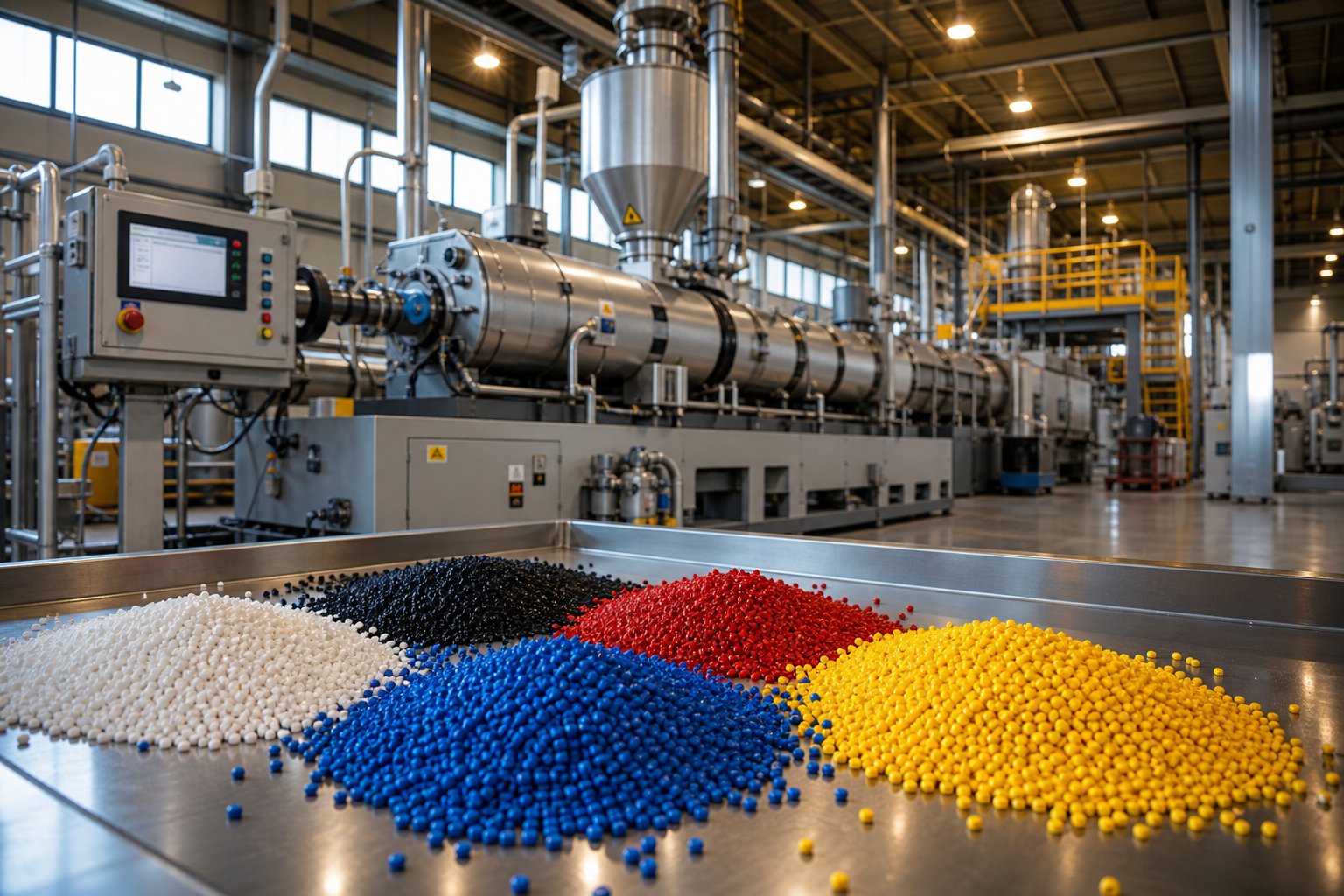
What Is Masterbatch and Why Every Plastics Processor Relies on It
A masterbatch is a concentrated mixture of pigments, additives, or fillers encapsulated in a carrier resin, designed to color or enhance plastics during processing. In simple terms, it is a ready-to-use pellet that a processor blends with a base polymer at a specific ratio, eliminating the need to handle raw powders or liquids on the factory floor.
Imagine the paint-tinting counter at a hardware store. A few drops of concentrated colorant transform an entire can of base paint into your exact shade. Masterbatch production follows the same logic — a small, precisely measured dose of concentrated pellets transforms an entire batch of natural polymer into a finished, performance-enhanced material. The result is repeatable color, consistent additive dosing, and a significantly cleaner production environment.
Defining Masterbatch and Its Core Components
A masterbatch consists of three essential elements: a carrier resin that acts as the vehicle, a concentrate (pigment, filler, or functional additive) that delivers the desired property, and processing aids that ensure uniform dispersion throughout the final product.
The carrier resin is the polymer matrix — typically a polyolefin such as LDPE or LLDPE — into which the active ingredients are uniformly distributed. Its job is to melt easily, blend seamlessly with the end-use base resin, and release the concentrate evenly during processing. The carrier must be compatible with the target polymer; a mismatch can cause haze, delamination, or compromised mechanical properties.
The concentrate is the functional heart of the master batch. It may be an organic or inorganic pigment for coloring, a mineral filler like calcium carbonate for cost reduction and stiffness, or a performance additive such as a UV stabilizer or antioxidant. Pigment concentrations in color masterbatches can range from 15% to well over 60%, depending on the type and application.
Processing aids — including dispersants like polyethylene wax and metal stearates — complete the formulation. They reduce pigment agglomeration, improve wetting of particle surfaces, and help the carrier resin release the concentrate uniformly when diluted into the base polymer. Without them, even a well-chosen pigment can cluster into visible specks in the finished part.
Why Masterbatch Replaced Direct Pigment Addition
Before masterbatches became standard, processors mixed raw powdered pigments directly into polymer granules before molding or extrusion. The challenges were significant. Pigment powders are fine, airborne-prone, and difficult to dose accurately. Color consistency varied from batch to batch, and cleaning equipment between color changes was time-consuming. Workers faced prolonged exposure to pigment dust, raising health and housekeeping concerns across the factory floor.
The shift to masterbatch production solved these problems in one move. Encapsulating pigments in a carrier resin isolates them from air and moisture — preserving chemical stability — while the pellet form makes gravimetric or volumetric dosing far more accurate than weighing fine powders. Because the pigment is already pre-dispersed within the carrier, the molder achieves superior dispersion with less mechanical effort, resulting in fewer surface defects and more uniform color across production runs.
Cleanliness improved dramatically, too. Pellets do not generate dust clouds during handling, and switching from one color to another requires only a standard purge rather than a full teardown. The cumulative effect is higher throughput, lower scrap rates, and a safer working environment — which is exactly why virtually every plastics processor today relies on masterbatches rather than raw pigments.
These foundational advantages, however, only scratch the surface. The real complexity — and the real competitive differentiation — lies in how different masterbatch types are formulated and manufactured to meet vastly different performance demands.
Types of Masterbatch and Their Unique Production Demands
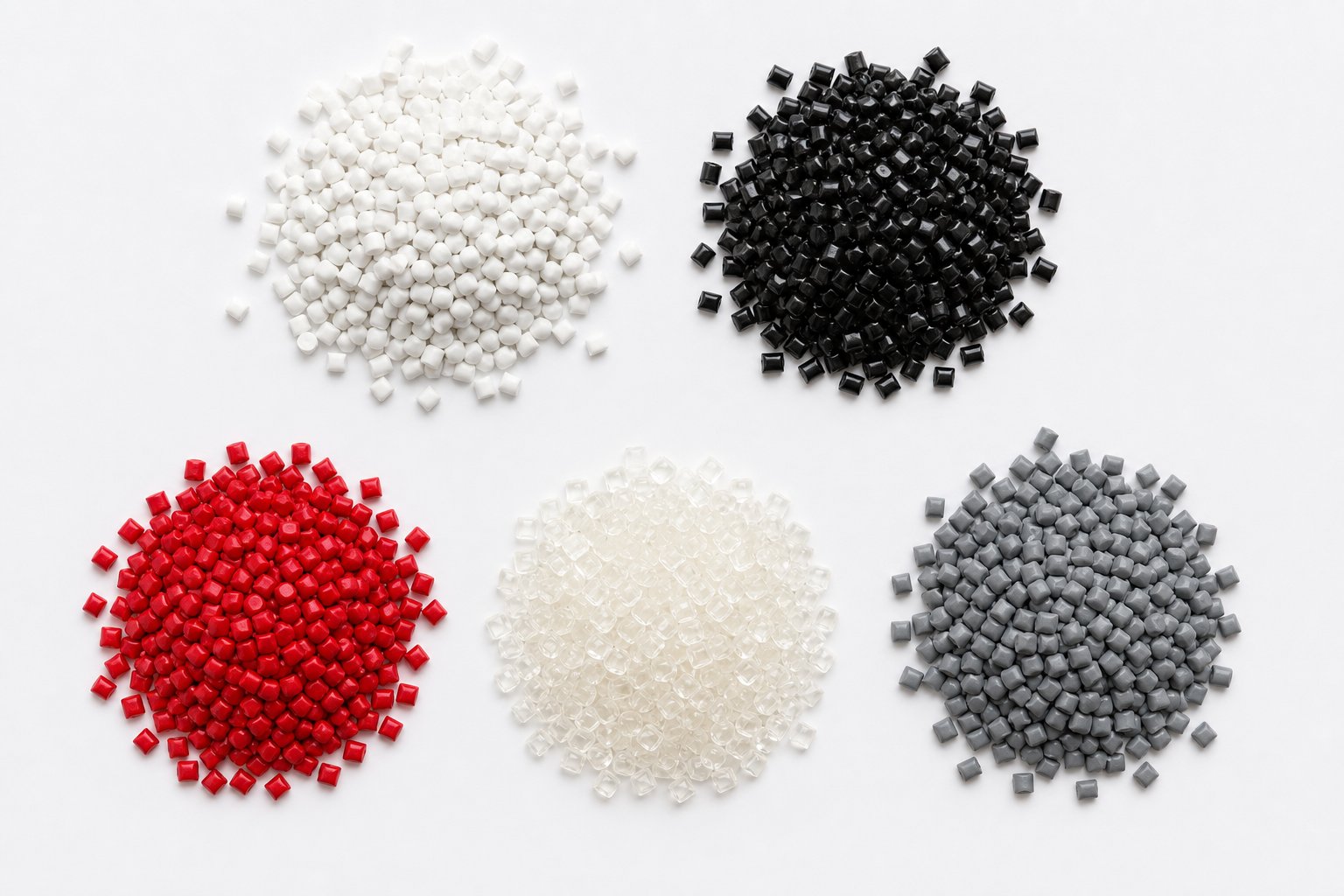
Not all plastic masterbatch formulations are created equal. A white masterbatch loaded with 60% titanium dioxide places entirely different demands on equipment and process parameters than an additive masterbatch delivering a fraction of a percent of UV stabilizer. Lumping every type into one generic category — as many guides do — obscures the processing realities that determine product quality on the factory floor. A closer look at each category reveals why.
Color Masterbatch Including White and Black Variants
Color masterbatch uses organic and inorganic pigments to deliver a specific hue, opacity, or visual effect in the finished plastic part. Yet the term "color" covers a surprisingly wide spectrum of formulation challenges. Three subtypes deserve separate attention:
- White masterbatch relies on titanium dioxide (TiO2) as its primary pigment, with TiO2 loading typically ranging from 50% to 70% for most commercial applications — and sometimes reaching 80% in high-opacity grades. The key processing challenge? TiO2 is highly abrasive. Those hard, fine particles accelerate wear on screws, barrels, and die components, driving up maintenance costs and demanding wear-resistant metallurgy throughout the compounding line.
- Black master batch formulations use carbon black at concentrations between 25% and 50%. Carbon black particles are extremely small — often in the nanometer range — and have a strong tendency to agglomerate. Breaking those clusters apart requires intensive dispersive mixing with precisely configured kneading elements. Poor dispersion shows up immediately as gray streaks or reduced UV-shielding performance in the end product.
- Chromatic colour masterbatch covers the full palette of reds, blues, greens, yellows, and custom shades. Pigment loads are generally lower (15%–40%), but the variety of pigments is far broader. Organic pigments deliver vivid brilliance yet are thermally sensitive — they can shift hue or degrade at processing temperatures above their stability threshold. Inorganic pigments tolerate higher heat but offer a narrower color gamut. Formulators balance brilliance against thermal stability on a shade-by-shade basis, making color masterbatches among the most technically nuanced to produce.
Additive and Filler Masterbatch Requirements
While color masterbatch changes how a product looks, additive masterbatch changes how it performs. Common types include UV stabilizers that protect outdoor products from photodegradation, antioxidants that prevent thermal aging, antistatic agents that dissipate surface charge, and slip or anti-block additives that improve film handling. Additive concentrations are typically moderate — often 5% to 25% active content — but dosing accuracy is critical. Even a small deviation in UV stabilizer loading, for example, can significantly shorten the service life of an agricultural film.
Filler masterbatch occupies the opposite end of the loading spectrum. Calcium carbonate (CaCO3), talc, and barium sulfate (BaSO4) can be loaded at 60% to 80% by weight, with the carrier resin serving primarily as a binder to hold the granule together. At those loadings, melt viscosity climbs sharply, torque demands increase, and processing windows narrow. The compounder must carefully manage temperature profiles and screw speeds to avoid surging or incomplete wetting of the filler surface — a challenge quite unlike anything encountered with low-load color masterbatch formulations.
The table below highlights how these categories diverge across the parameters that matter most during masterbatch production:
| Masterbatch Type | Typical Loading Range | Key Processing Challenge | Primary Quality Benchmark |
|---|---|---|---|
| White (TiO2) | 50%–70% | Abrasive wear on screws and barrels | Opacity and whiteness index |
| Black (Carbon Black) | 25%–50% | Agglomerate breakup and dispersion | Jetness and UV protection level |
| Chromatic Color | 15%–40% | Thermal sensitivity of organic pigments | Color accuracy (Delta E < 1.0) |
| Additive | 5%–25% | Precise dosing at low active-content levels | Uniform additive distribution |
| Filler (CaCO3, Talc, BaSO4) | 60%–80% | High melt viscosity and torque demand | Mechanical property retention |
Each row in that table implies a different set of decisions — from screw element configuration to barrel metallurgy to temperature profiling. And those decisions all trace back to one critical upstream step that most guides gloss over entirely: formulation design. The choices a formulator makes around carrier resin, pigment particle size, and dispersant chemistry determine whether the compounder can even hit the quality benchmarks listed above.
Formulation Design Principles for Masterbatch Producers
Formulation is where every downstream outcome is either won or lost. A compounder can fine-tune screw speed, barrel temperatures, and throughput all day long — but if the carrier resin fights the base polymer, or the dispersant package cannot wet the pigment surface, no amount of process optimization will rescue the batch. That is why experienced polymer masterbatch formulators treat formulation design as a disciplined engineering exercise, not a recipe passed down by trial and error.
Three interrelated decisions shape every formulation: which carrier resin to use, which concentrate and additive combination to load, and which processing aids to include. Getting any one of these wrong cascades into visible defects, inconsistent performance, or costly rework at the compounding stage.
Carrier Resin Selection and Compatibility Rules
The carrier resin is the foundation of any masterbatch formulation. It must satisfy three requirements simultaneously. First, it needs to be compatible with the end-use base resin — meaning the two polymers must melt-blend without phase separation. Second, it should have a lower melting point than the base polymer so it disperses quickly during let-down rather than persisting as unmelted specks. Third, it must possess an appropriate melt flow index (MFI) — typically higher than the base resin — to ensure the concentrate distributes uniformly under the shear conditions of the downstream process.
For polyolefin applications, LDPE and EVA copolymers are common carrier choices because their low melting points and excellent pigment wetting make them broadly compatible across PE and PP systems. A polypropylene masterbatch destined for PP injection molding, however, often benefits from a PP-based carrier to avoid compatibility issues — particularly in applications where optical clarity or mechanical strength cannot be compromised. Engineering plastics raise the stakes further. PC-based carriers processed at 260–320°C and PET carriers running at 240–300°C are designed specifically because a generic polyolefin carrier would simply not survive — or would introduce haze, delamination, and reduced impact strength in the finished part.
A practical rule of thumb: whenever possible, match the carrier polymer family to the base resin family. Universal carrier systems do exist and work well for short runs or moderate-performance applications, but for demanding end uses — transparent packaging, automotive components, pressure pipe — resin-specific carriers are the safer and more profitable route.
Pigments, Fillers, and Functional Additive Packages
Once the carrier resin is selected, the formulator turns to the concentrate itself. For pigment masterbatches, particle size is the single most influential variable controlling dispersion quality. Finer particles offer higher tinting strength and smoother color, but they also resist wetting and clump more aggressively. Coarser particles disperse more easily yet deliver less color intensity per unit weight. Finding the optimal balance is shade-specific and often requires iterative testing.
The choice between organic and inorganic pigments introduces another layer of trade-offs. Organic pigments produce brilliant, vivid shades with high chroma — think vibrant reds and bright yellows — but they degrade at elevated temperatures and may have limited lightfastness. Inorganic pigments, such as iron oxides and complex inorganic color pigments, tolerate significantly higher processing temperatures and resist UV exposure, but their color range is narrower and duller. High-performance applications frequently combine both types to hit a specific color target while maintaining thermal stability.
Functional additives bring their own interactions. UV stabilizers like hindered amine light stabilizers (HALS) can interact antagonistically with certain acidic pigments, reducing stabilization efficiency. Antioxidant packages — commonly combinations of hindered phenolics and phosphite co-stabilizers — must be dosed precisely to protect the polymer during processing without discoloring the end product. In custom additive masterbatches, formulators must also consider the sequencing of additive addition, since some components are sensitive to shear history or prolonged heat exposure during compounding.
The Role of Dispersants and Processing Aids
Even the best pigment and carrier combination will underperform without the right dispersant package. Dispersants and processing aids serve as the invisible bridge between the solid pigment surface and the molten polymer matrix. Their job is to break down agglomerates during compounding and prevent re-agglomeration afterward.
You'll notice that most additive masterbatches and pigment concentrates include at least two or three processing aid components working in tandem. Here is why each category matters:
- Wetting agents — Lower the surface tension between the pigment particle and the molten carrier resin, allowing the polymer to penetrate and coat particle surfaces. Without adequate wetting, air pockets remain trapped around particles, reducing color strength and causing pinholes or specks.
- Dispersants (e.g., polyethylene wax, calcium stearate, zinc stearate) — Coat pigment surfaces to prevent particles from re-aggregating once separated by shear forces. Stearic acid and calcium stearate at 3–5 parts by weight also act as internal lubricants, reducing friction between the melt and barrel surfaces and minimizing localized heat buildup that can degrade sensitive pigments.
- Internal lubricants — Reduce melt viscosity and shear friction within the extruder, lowering torque demand and helping the compound flow more uniformly through kneading zones. This is especially important in high-loading filler and white masterbatch formulations where melt viscosity can spike dramatically.
- Coupling agents (e.g., titanates, organosilanes) — Chemically bond to filler or pigment surfaces to improve interfacial adhesion with the carrier resin. In CaCO3-heavy filler masterbatch, coupling agents can meaningfully improve both dispersion quality and the mechanical properties of the final product.
The dispersant package is not a one-size-fits-all decision. A formulation designed for a 70% TiO2 white masterbatch demands a very different wetting and lubrication strategy than a 10% HALS-based additive concentrate. Selecting the wrong dispersant — or the wrong concentration — can cause die buildup, plate-out on mold surfaces, or blooming on the finished part's surface.
Formulation design, then, is the intellectual core of masterbatch production. Every ingredient choice echoes downstream — through the extruder barrel, across the pelletizer, and ultimately into the quality of the finished plastic product. The question that follows naturally is how those carefully designed formulations translate into physical reality inside a compounding line, where pre-weighing accuracy, melt shear, and cooling dynamics determine whether the formulator's intent survives contact with the process.
Stage-by-Stage Masterbatch Manufacturing Process Explained
A brilliant formulation on paper means nothing if the compounding line cannot translate it into uniform, defect-free pellets — consistently, batch after batch. The masterbatch manufacturing process is a carefully orchestrated sequence of mechanical, thermal, and quality-control steps, each one building on the precision of the step before it. Skip a detail at the pre-weighing station, and you'll chase color drift through every downstream operation. Overheat a single barrel zone, and a thermally sensitive organic pigment shifts hue beyond acceptable limits.
To understand how master batches actually come to life, it helps to walk through every stage in the order it happens on the factory floor. Here is the complete workflow, from raw material dosing to sealed, labeled packaging:
- Gravimetric or volumetric dosing of raw materials
- High-intensity pre-mixing and blending
- Melt compounding through the extruder (feeding, melting, dispersive mixing, distributive mixing, venting, pressure building)
- Strand extrusion through the die plate
- Cooling (water bath or air)
- Pelletizing (strand-cut or underwater)
- Screening and metal detection
- Packaging, labeling, and lot traceability
Each of these stages involves process variables that directly determine whether the finished masterbatch meets its quality specifications. Let's break them down.
Pre-Weighing, Pre-Mixing, and High-Intensity Blending
Everything begins with accurate dosing. Raw materials — carrier resin pellets, pigment powders, filler minerals, functional additives, and processing aids — must be weighed to tight tolerances before they ever touch a mixer. Two dosing approaches dominate:
- Gravimetric dosing uses load cells or loss-in-weight feeders to measure each ingredient by mass. This method offers the highest accuracy, typically within ±0.1%–0.5% of the target weight, and is essential for low-dose additives where even a small deviation changes end-product performance.
- Volumetric dosing measures by volume using calibrated screw feeders or vibratory trays. It is faster and less expensive but inherently less precise — bulk density variations in powders can introduce batch-to-batch inconsistencies that only become visible after compounding.
For most masterbatch production operations handling multiple pigments or functional additives, gravimetric systems are the standard. Imagine a UV stabilizer dosed at just 0.3% of the total formulation weight. A volumetric feeder fluctuating by 5% means the stabilizer loading swings between roughly 0.285% and 0.315% — potentially enough to affect weathering performance in an outdoor application.
Once weighed, the ingredients move to a high-intensity mixer — most commonly a Henschel-type unit equipped with angled blades spinning at tip speeds of 20–40 m/s. The goal here is not to melt the polymer. Instead, the mixer pre-disperses dry pigment and additive particles onto the surface of the carrier resin granules through a combination of impact, friction, and shear. Think of it as coating every pellet with a thin, even layer of concentrate before the material enters the extruder.
Typical pre-mix cycles run 3–8 minutes depending on formulation complexity. Blade speed, batch size, and mixing duration must be controlled carefully because high-intensity mixing generates frictional heat. If the temperature rises too high — approaching the carrier resin's softening point — the mixture can begin to clump and stick to the mixer walls, creating uneven distribution and feed problems downstream. Operators monitor discharge temperature targets, commonly keeping the pre-mix below 50–60°C for polyolefin-based formulations, to prevent premature softening.
The result is a free-flowing, uniformly coated pre-mix ready to be metered into the extruder's feed throat — and the quality of this pre-mix directly determines how hard the extruder has to work to achieve final dispersion.
Melt Compounding Through the Extruder
The extruder is where formulation becomes product. This is the heart of the masterbatch manufacturing process — the stage where raw ingredients are melted, sheared, mixed, degassed, and pressurized into a homogeneous molten compound. Understanding what happens inside the barrel, zone by zone, is critical to producing consistent quality.
The pre-mix enters through the feed throat at the upstream end of the barrel, typically gravity-fed or assisted by a crammer feeder for high-bulk-density formulations. From here, the material passes through a series of functional zones along the barrel length:
- Solids conveying zone — Conveying screw elements move the dry pre-mix forward and begin compacting it. Barrel temperatures in this zone are kept relatively low to prevent premature melting, which would restrict solids feeding and cause surging.
- Melting zone — The material transitions from solid to molten state. In a twin-screw extruder, kneading blocks — not barrel heat alone — generate most of the energy needed to melt the polymer. As staggered discs rotate, they stretch, shear, and fold the material, converting mechanical energy into heat. Forward-conveying kneading blocks (30°–60° stagger angles) advance material while initiating melt, while 90° neutral blocks and reverse-conveying elements restrict flow to ensure complete melting before the next zone.
- Dispersive mixing zone — High-shear kneading blocks break down pigment agglomerates into primary particles. This is where carbon black clusters are torn apart and TiO2 aggregates are ground down to their target particle size. The intensity of dispersive mixing depends on disc width, stagger angle, and the number of kneading block elements stacked in sequence. Wider discs force more material over the disc tips and through the high-shear gap between tip and barrel wall, generating greater energy input.
- Distributive mixing zone — Specialized mixing elements (such as toothed mixing elements or slotted screw flights) redistribute the now-dispersed pigment particles evenly throughout the polymer matrix. The goal shifts from breaking agglomerates to ensuring spatial uniformity — every cubic millimeter of melt should carry the same concentration of pigment or additive.
- Venting zone — Conveying elements transport the melt past an open or vacuum-assisted vent port, allowing trapped air, moisture, and volatile byproducts to escape. Without effective venting, the final pellets may contain voids, exhibit surface defects, or suffer from reduced mechanical properties due to entrapped gases.
- Pressure-building zone — Tight-pitch conveying elements at the barrel's downstream end compress the melt and build the pressure needed to push it through the die plate. Insufficient pressure causes inconsistent strand thickness; excessive pressure raises melt temperature and increases residence time, risking thermal degradation.
Barrel zone temperature profiles are not uniform. A typical twin-screw setup for a polyolefin-based color masterbatch might start at 140–160°C near the feed, rise to 180–200°C through the melting and mixing zones, and taper back slightly in the metering zone to stabilize melt viscosity before the die. These profiles shift substantially for engineering-plastic carriers or thermally sensitive pigments — the formulator and process engineer must collaborate to balance sufficient shear for dispersion against the risk of thermal degradation.
Screw element configuration is the lever that controls all of this. By rearranging modular elements — swapping a 60° kneading block for a 90° neutral, or adding a reverse element to increase local residence time — engineers tailor the shear and thermal profile to each specific formulation. This modularity is one reason co-rotating twin-screw extruders dominate masterbatch production, a point that deserves its own closer examination.
Strand Extrusion, Cooling, and Pelletizing
The homogeneous melt exiting the extruder barrel is not yet a usable product. It must be shaped into pellets with consistent geometry, free of contamination, and traceable to a specific production lot. This downstream sequence is just as critical as the compounding itself.
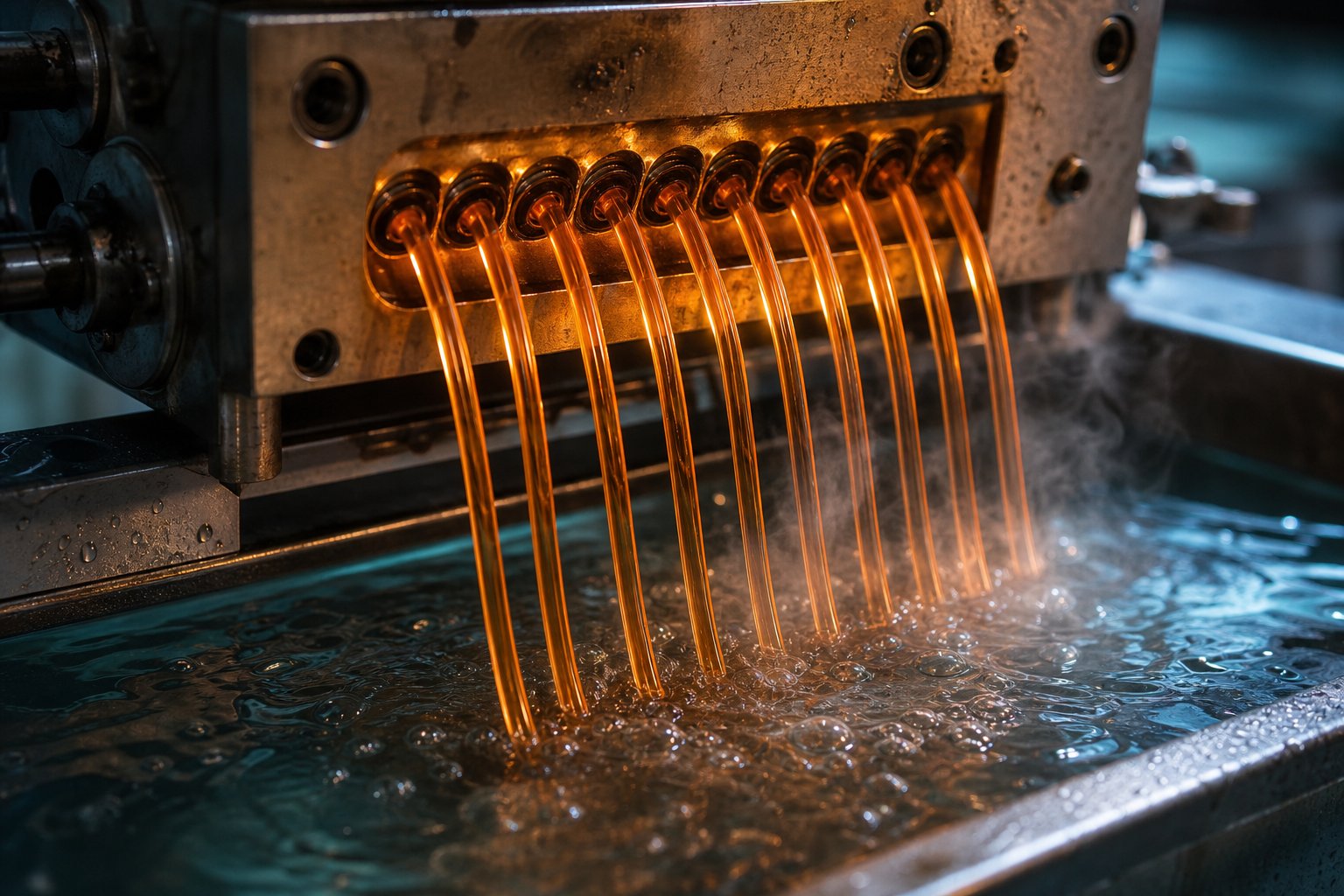
Die plate extrusion forces the pressurized melt through a series of small, circular die holes — typically 2–4 mm in diameter — forming continuous strands of molten masterbatch. Die design and hole count must match the extruder's throughput rate; too few holes create excessive back-pressure, while too many produce thin, fragile strands prone to breakage during cooling.
Two primary cooling methods follow:
- Water bath cooling — Strands pass through a temperature-controlled water trough, rapidly solidifying the melt. Water temperature and bath length are adjusted based on polymer crystallization rate and strand diameter. This is the most common approach for polyolefin-based formulations.
- Air cooling — Strands are cooled on a vibrating conveyor belt or air-cooled belt system. Air cooling suits materials that are sensitive to moisture pickup or where downstream drying would add cost and complexity.
Once solidified, the strands enter the pelletizer. Two dominant technologies serve different operational needs:
- Strand pelletizers pull cooled strands through a set of rotating knives, cutting them into uniform cylindrical pellets. This approach is straightforward, economical, and widely used for standard masterbatch types. Pellet length is controlled by the ratio of strand haul-off speed to cutter speed.
- Underwater pelletizers cut the melt directly at the die face while submerged in a water stream. The result is spherical or lenticular pellets with excellent flow characteristics and minimal dust. Underwater pelletizing is preferred for high-volume lines, sticky formulations, or products where pellet geometry affects downstream metering accuracy in the processor's equipment.
Pellet geometry might sound like a minor detail, but it directly affects how consistently the end-user can dose the masterbatch into their process. Irregular shapes, tails (stringing between pellets), or oversized granules cause feeding inconsistencies in volumetric dosing systems and can lead to visible color streaks in finished parts.
The final steps lock in quality and traceability. Screening (vibrating sieves) removes oversized pellets, fines, and dust. Metal detection — often using both ferrous and non-ferrous detectors inline — catches any metallic contamination introduced during processing. The screened, inspected pellets are then conveyed to packaging stations where they are weighed into bags, boxes, or bulk containers and labeled with batch number, production date, formulation code, and key quality data.
Lot traceability closes the loop. Every bag of masterbatch links back to specific raw material lot numbers, pre-mix records, extruder parameters, and quality-control test results. If a downstream processor reports a defect, the manufacturer can trace the issue to its exact origin — whether it was a weighing error at the start or a temperature excursion mid-run.
This end-to-end workflow reveals something important: the extruder sits at the center of the entire operation, and its configuration — screw design, barrel metallurgy, L/D ratio — determines the upper limit of what any formulation can achieve. Choosing the right extruder type is not a procurement decision; it is a quality decision with implications that ripple through every pellet that leaves the line.
Choosing the Right Extruder and Barrel Configuration
The extruder is the single most consequential piece of equipment on a masterbatch compounding line. Every formulation decision discussed so far — carrier resin compatibility, pigment particle size, dispersant chemistry — ultimately depends on the extruder's ability to melt, shear, mix, and convey the compound within a narrow processing window. Pick the wrong extruder architecture, and even a perfectly designed formulation will produce inconsistent pellets. Pick the right one, and the line delivers repeatable quality shift after shift.
Three extruder architectures compete for floor space in compounding plants worldwide: co-rotating twin-screw, counter-rotating twin-screw, and single-screw. Each brings a different balance of mixing intensity, throughput flexibility, and operational cost. For masterbatch manufacturers trying to match equipment to application, the differences matter enormously.
Co-Rotating Twin-Screw Extruders for Intensive Compounding
Ask any experienced plastic masterbatch manufacturer which extruder dominates color, additive, and filler masterbatch lines, and the answer is almost always the same: the co-rotating parallel twin-screw extruder. There are good reasons for that dominance.
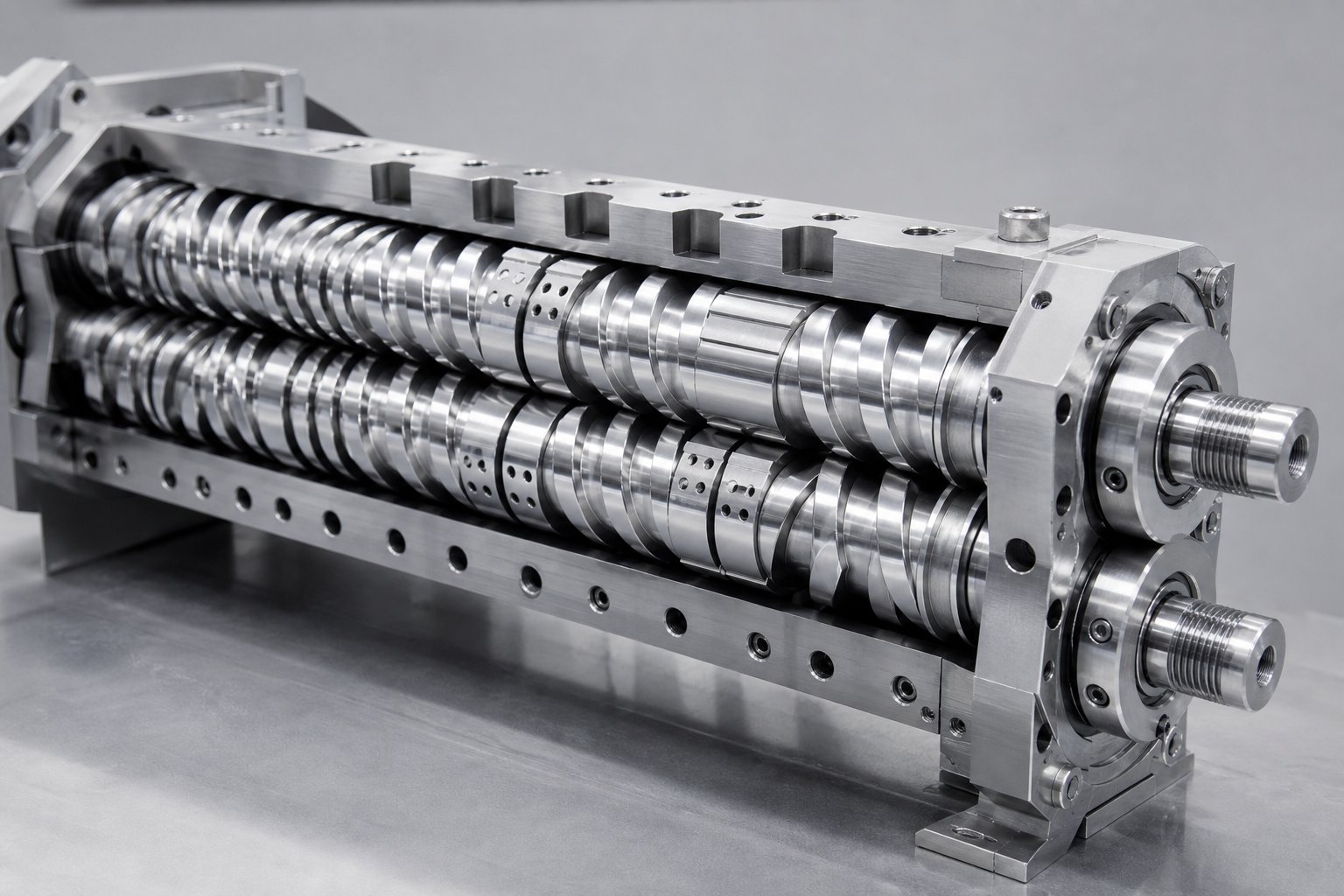
Two intermeshing screws rotating in the same direction create a unique figure-eight flow pattern that forces material through high-shear intermeshing zones repeatedly. This geometry delivers two critical mixing functions simultaneously. Dispersive mixing breaks pigment agglomerates apart — essential for carbon black, TiO2, and fine organic pigments. Distributive mixing then spreads those separated particles uniformly throughout the melt. No other extruder type achieves both functions as effectively in a single pass.
Several design features reinforce this advantage:
- Modular screw design — Individual conveying elements, kneading blocks, toothed mixers, and reverse elements slide onto splined shafts in any sequence. Engineers can reconfigure the screw profile for a high-shear carbon black dispersion job in the morning and swap to a gentler filler-compounding configuration in the afternoon. This flexibility is why masterbatch producers running dozens of formulations across a single line gravitate toward co-rotating systems.
- Self-wiping action — Because the screws intermesh tightly, each flight wipes material off its counterpart, virtually eliminating dead zones where degraded polymer or off-spec pigment could accumulate. The result is cleaner color changes, shorter purge times, and reduced risk of contamination between batches.
- Positive displacement conveying — Unlike single-screw machines that rely on friction-driven drag flow, co-rotating twins use a positive displacement mechanism that is far less sensitive to variations in material friction and viscosity. This means consistent throughput even when switching between a free-flowing PE carrier and a high-viscosity PP compound loaded with 70% CaCO3.
- High filler capacity — Some co-rotating models handle formulations with up to 85% filler by weight, making them indispensable for filler masterbatch production where CaCO3 or talc dominates the recipe.
Typical L/D (length-to-diameter) ratios for masterbatch compounding fall between 32:1 and 48:1. Shorter ratios suit simpler color formulations that need less residence time, while longer barrels accommodate complex additive packages requiring extended mixing, multiple side-feeding points, or vacuum venting stages. Co-rotating extruders used in masterbatch production commonly range from 35 mm screw diameter for lab and pilot work up to 135 mm or larger for high-volume industrial lines producing several tons per hour.
Screw configuration is tailored to each masterbatch type. A black masterbatch line might stack multiple narrow-disc kneading blocks at aggressive stagger angles to maximize the shear needed for carbon black dispersion. A filler masterbatch line, by contrast, uses wider-pitch conveying elements and gentler mixing sections to manage the enormous torque generated by 70–80% mineral loading without overheating the melt.
Single-Screw and Counter-Rotating Alternatives
Co-rotating twins are not the only option — and for certain applications, they are not the most cost-effective one either.
Single-screw extruders remain viable for simple, high-volume formulations where intensive mixing is not the priority. A straightforward PE-based color masterbatch with moderate pigment loading and a well-pre-dispersed premix can sometimes be compounded on a properly designed single-screw machine at lower capital and operating cost. Single-screw systems also suit reprocessing scenarios where the masterbatch is being re-pelletized rather than compounded from raw ingredients.
The limitations, however, are real. Single-screw machines provide only limited distributive mixing and virtually no dispersive mixing capability. They rely on drag flow, making them sensitive to changes in raw material bulk density and melt viscosity. For any formulation requiring tight dispersion control — carbon black, high-loading TiO2, or multi-additive functional concentrates — a single-screw extruder simply cannot deliver the quality consistency that downstream processors expect.
Counter-rotating twin-screw extruders occupy a narrower niche. Their intermeshing screws turn in opposite directions, creating a calendering action between the screws that generates high pressure at relatively low shear. This makes them useful for shear-sensitive PVC compounding and certain profile extrusion applications. However, their lower free volume, reduced self-wiping capability, and limited throughput compared to co-rotating designs make them uncommon in mainstream masterbatch production. You'll find them in specialty compounding environments where the controlled, low-shear, high-pressure profile matches a specific material requirement rather than the broad demands of color or filler masterbatch lines.
What to Look for in Twin Screw Barrel Durability
Choosing the right extruder architecture is only half the equation. The barrel and screw elements that make up the compounding heart of the machine are consumable components — and in masterbatch production, they wear faster than in almost any other polymer processing application.
Why? Consider what flows through the barrel every day. TiO2 particles score a 6–6.5 on the Mohs hardness scale. Calcium carbonate sits around 3, but at 70–80% loading, the sheer volume of abrasive contact is relentless. Even carbon black, though softer, promotes adhesive wear on barrel surfaces when combined with high shear rates. Over months of continuous operation, this abrasion erodes barrel bore dimensions and screw flight clearances. The consequences are predictable and costly:
- Reduced mixing efficiency — As the gap between screw flight tip and barrel wall increases, material bypasses the high-shear zone rather than being forced through it. Dispersion quality declines gradually, and filter pressure test values creep upward.
- Inconsistent output — Worn barrels lose conveying efficiency, causing throughput fluctuations and weight variation in pellets. Gravimetric dosing systems downstream struggle to compensate.
- Unplanned downtime — Severe wear eventually forces an emergency barrel change. Depending on the machine size, this can take the line offline for days — an expensive disruption for any masterbatch manufacturer operating on tight delivery schedules.
Barrel durability depends on three factors: metallurgy, surface treatment, and manufacturing precision. Bimetallic barrel liners — where a wear-resistant alloy is centrifugally cast onto the inner bore of a structural steel outer shell — are the industry standard for abrasive applications. The best liners incorporate tungsten carbide particles suspended in a nickel- or cobalt-based matrix, delivering four to five times the service life of older-generation bimetallic materials. Surface hardness values of HRC 58–65 are typical for high-performance liners.
Precision matters just as much as material selection. Barrel bore concentricity, segment alignment tolerances, and heating-zone uniformity all affect how evenly the melt contacts the barrel wall. A bore that is even slightly eccentric creates uneven shear distribution, accelerates localized wear, and introduces process variability that shows up as color drift or dispersion defects.
This is exactly where component sourcing becomes a strategic decision for masterbatch producers. NANHAIYA's parallel twin screw barrel is engineered specifically for the high-wear demands of masterbatch compounding, offering the metallurgical durability and dimensional precision that compounding plants need for stable mixing and conveying in abrasive processing environments. For operations running TiO2-heavy white formulations or high-loading CaCO3 filler concentrates day after day, barrel longevity directly translates into sustained dispersion quality and lower total cost of ownership.
The table below compares the three extruder types across the parameters that matter most when selecting equipment for a masterbatch production line:
| Extruder Type | Mixing Capability | Throughput Range | Best Masterbatch Application | Wear Considerations |
|---|---|---|---|---|
| Co-Rotating Twin-Screw (with durable barrel components such as NANHAIYA parallel twin screw barrels) | Excellent dispersive and distributive mixing; modular screw profiles allow application-specific optimization | 50–5,000+ kg/h depending on screw diameter | All types — color (including white and black), additive, and high-loading filler masterbatch | High wear from abrasive fillers and pigments; requires bimetallic liners, hardened screw elements, and precision-manufactured barrels for extended service life |
| Counter-Rotating Twin-Screw | Moderate mixing with high-pressure, low-shear calendering action; limited self-wiping | 20–1,500 kg/h | Niche PVC compounding; shear-sensitive specialty formulations | Moderate wear; lower throughput volumes reduce cumulative abrasive exposure |
| Single-Screw | Limited distributive mixing; minimal dispersive capability; no modular screw reconfiguration | 50–2,000 kg/h | Simple, pre-dispersed color formulations; re-pelletizing operations | Lower wear rates due to reduced shear; standard nitrided barrels often sufficient |
The pattern in this comparison is clear. For masterbatch manufacturers and masterbatch producers handling diverse formulations — particularly those involving abrasive minerals, high-loading pigments, or multi-additive functional concentrates — the co-rotating twin-screw extruder equipped with wear-optimized barrels and hardened screw elements is the only architecture that delivers both the mixing performance and the operational durability the application demands.
Selecting the right extruder and specifying the right barrel metallurgy, however, does not guarantee trouble-free production. Even well-equipped lines encounter defects — poor dispersion, die buildup, color drift, thermal degradation — that require systematic diagnosis and corrective action. Knowing how to identify these problems and trace them to their root causes separates productive operations from those stuck in a cycle of rework and waste.
Production Troubleshooting and Common Masterbatch Defects
A perfectly specified extruder, a meticulously designed formulation, and a well-trained crew — and the line still produces off-spec pellets. Sound familiar? Every masterbatch production facility, regardless of its sophistication, encounters defects that demand rapid diagnosis and corrective action. The difference between a world-class operation and a struggling one is rarely the equipment itself; it is how quickly the team identifies root causes and eliminates them before scrap rates climb.
Most defects in masterbatch compounding trace back to three interrelated categories: poor masterbatch dispersion, process instability at the die, and thermal degradation. Understanding the diagnostic pathway for each is what turns reactive firefighting into systematic problem-solving.
Diagnosing Poor Pigment Dispersion and Agglomeration
Undispersed pigment is arguably the most common — and most costly — defect in color master batch production. It shows up as visible specks, streaks, or uneven color density in the finished product, and its root causes span the entire process chain:
- Insufficient shear in kneading zones — If kneading block elements are too few, too wide, or configured at gentle stagger angles, the extruder simply cannot generate the forces needed to tear apart pigment agglomerates. Carbon black clusters and TiO2 aggregates survive intact and pass through to the pellet.
- Incorrect temperature profiles — Setting barrel temperatures too high in the feed and compression zones causes premature melting of the carrier resin. When the polymer melts before it reaches the intensive mixing section, it encapsulates unbroken agglomerates in a viscous melt that shields them from shear — essentially locking the problem in place. The temperature of the main extruder zones should be slightly higher than the resin's melting point to maintain optimal shear stress, not dramatically above it.
- Poor pre-mix quality — When high-intensity mixing is too short or blade speed is too low, pigment particles are not adequately coated onto carrier resin surfaces. The extruder then inherits a feed stream with clumps of dry pigment that resist wetting and breakup.
- Incompatible or insufficient dispersants — A mismatched wetting agent or an under-dosed dispersant package leaves pigment surfaces poorly wetted, so even aggressive shear cannot fully separate particles.
How do you confirm dispersion quality quantitatively? Two diagnostic methods stand out. The filter pressure test (also called a filter pressure value or FPV test) pushes molten masterbatch through a standardized screen pack while measuring the pressure rise. Higher pressure rise per gram of pigment signals more undispersed agglomerates blocking the filter — a direct, numerical indicator of dispersion performance. Draw-down tests and optical microscopy provide visual confirmation: a thin film of the masterbatch diluted into base resin is examined for specks, streaks, or clusters that reveal agglomerate size and distribution. Together, these tests tell you not just that dispersion is poor, but how poor — and where the problem likely originated.
Solving Die Buildup, Surging, and Color Inconsistency
Even when masterbatch dispersion is acceptable, three process-level defects can undermine output quality and line efficiency:
Die buildup — A gradual accumulation of material on the die face and around die holes, eventually dripping or breaking off into strands and contaminating pellets. The usual culprits? Low-molecular-weight volatiles that condense on cooler die surfaces, degraded additive residues, or incompatible formulation ingredients that phase-separate at the die. Excessive addition of low-molecular-weight lubricants — some producers push stearate concentrations above 5% — accelerates buildup dramatically. The fix often involves reducing lubricant dosage, improving venting to remove volatiles before the die, and adjusting die temperature to minimize condensation.
Output surging — Periodic fluctuations in strand thickness and throughput rate that produce pellets with inconsistent weight and geometry. Surging commonly links to contaminated material, incorrect temperature settings, or an unbalanced die exit. Other frequent causes include inconsistent feeder output, worn screw elements that lose conveying efficiency, or blocked vent ports that create erratic back-pressure. Checking the feed system, cleaning screens, and verifying screw condition are the first steps in any surging investigation.
Color drift — Batch-to-batch variation in hue, chroma, or lightness that pushes the masterbatch outside its Delta E specification. This is a nightmare for color control in plastic masterbatch operations, where customers demand visual consistency across millions of parts. Color drift stems from multiple sources: lot-to-lot variation in raw pigment strength, dosing inaccuracy at the weighing station, or thermal degradation of sensitive organic pigments during compounding. Spectrophotometric monitoring at regular intervals during production, combined with gravimetric dosing verification, is the most reliable way to catch drift before it reaches the customer.
Thermal Degradation and How to Prevent It
Thermal degradation is particularly insidious because it can go unnoticed until the finished product fails in service. Excessive barrel temperatures or prolonged residence time break polymer chains in the carrier resin, decompose thermally sensitive pigments, and deactivate functional additives — all without necessarily producing a visible defect on the pellet surface.
The challenge is one of balance. Masterbatch compounding requires sufficient thermal and mechanical energy to melt the carrier, wet pigment surfaces, and break agglomerates apart. Yet every degree of excess temperature and every additional second of residence time chips away at material integrity. Higher screw speeds increase shear for better dispersion but also raise melt temperature through friction, while lower speeds extend residence time and can cause degradation through prolonged heat exposure. Both extremes damage the product.
Practical preventive measures include:
- Setting barrel temperatures only slightly above the carrier resin's melting point in the main processing zones — enough for proper melt flow, not a safety margin of 30–40°C that serves no purpose.
- Optimizing screw configuration to achieve adequate dispersion in the shortest possible residence time, rather than relying on extended L/D ratios or multiple extrusion passes. Blindly increasing the L/D ratio without addressing specific dispersion root causes wastes energy and reduces production capacity without meaningfully improving quality.
- Monitoring melt temperature at the die — not just barrel set-point temperatures — to detect shear-induced heating that barrel zone controllers cannot see or correct.
- Minimizing downtime with material in the barrel. During unplanned stops, idle masterbatch sitting in a hot barrel degrades rapidly, causing color shifts and generating degraded particles that contaminate the next production run.
The troubleshooting table below consolidates the key defects, their root causes, how to diagnose them, and what corrective actions to take — a practical reference for any compounding team managing masterbatch dilution ratios, color consistency, or dispersion benchmarks:
| Defect | Common Root Causes | Diagnostic Method | Corrective Action |
|---|---|---|---|
| Poor pigment dispersion / agglomerates | Insufficient kneading block shear; premature melting in feed zone; inadequate pre-mix; wrong dispersant type or dosage | Filter pressure value (FPV) test; draw-down film inspection; optical microscopy | Reconfigure kneading blocks for higher shear; lower feed-zone temperatures; extend pre-mix cycle; adjust dispersant package |
| Die buildup | Excess low-MW lubricants; degraded additives condensing at die; incompatible formulation ingredients | Visual inspection of die face; analysis of buildup deposits (FTIR) | Reduce lubricant loading; improve upstream venting; adjust die temperature; review formulation compatibility |
| Output surging | Inconsistent feeder output; blocked vent port; worn screw elements; unbalanced die exit | Inline melt pressure monitoring; feeder output verification; screw/barrel wear measurement | Calibrate or replace feeders; clean vent ports; replace worn screw elements; balance die flow channels |
| Color drift (batch-to-batch) | Pigment lot variation; dosing inaccuracy; thermal degradation of organic pigments | Spectrophotometric Delta E measurement per batch; gravimetric feeder log review | Tighten incoming pigment QC; switch to gravimetric dosing; reduce melt temperature or residence time |
| Thermal degradation | Barrel temperatures too high; excessive residence time; repeated extrusion passes; idle material in hot barrel | Melt flow index shift (pre- vs. post-compounding); yellowing index; gel count on film | Lower barrel set points; optimize screw design for shorter residence time; minimize stops with material in barrel; avoid multiple passes |
Each defect in that table has a resolution, but notice how many corrective actions loop back to decisions made much earlier in the process — formulation design, screw configuration, and barrel condition. Troubleshooting is rarely about fixing one variable in isolation. It demands a systems-level view where the interplay between formulation chemistry, mechanical hardware, and thermal management is understood as an integrated whole. That same systems perspective becomes even more critical when a formulation must travel from a small lab compounder to a full-scale industrial line — where the physics of mixing, heat transfer, and residence time all shift dramatically with machine size.
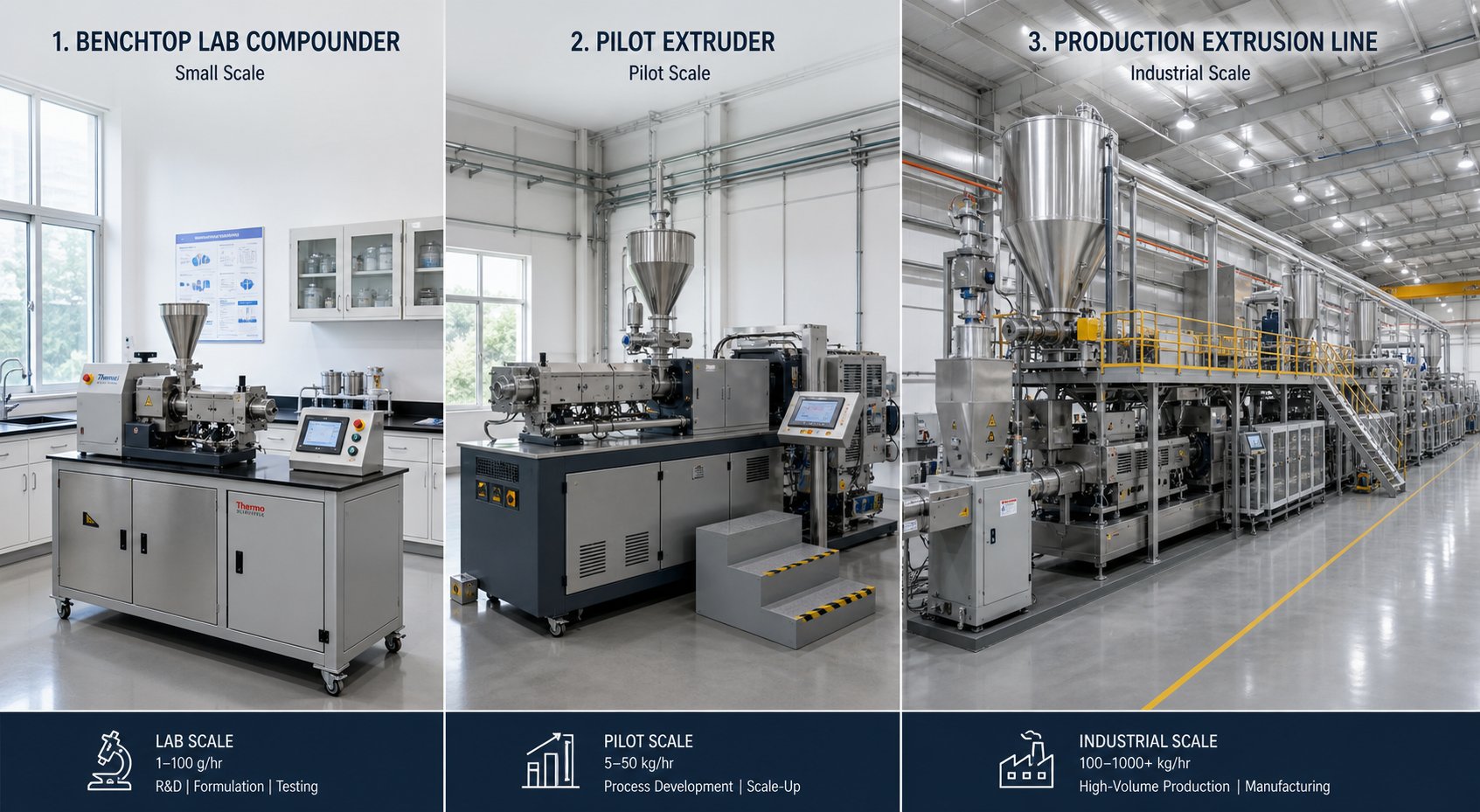
Scaling Masterbatch Formulations from Lab to Industrial Production
A formulation that performs flawlessly on a 26-mm lab extruder can fall apart spectacularly on a 92-mm production machine. Sounds dramatic? It happens more often than most masterbatch producers care to admit. The physics of mixing, heat transfer, and material conveyance shift with every increase in screw diameter — and assumptions that held at one scale routinely collapse at the next. Bridging that gap demands a disciplined, data-driven scale-up strategy where specific process parameters, not gut instinct, guide every transition.
Lab-Scale Formulation Development and Testing
Initial formulations for masterbatch for plastics applications are developed on small co-rotating twin-screw compounders — typically 16-mm to 26-mm diameter — or internal batch mixers. At this scale, the formulator's goal is not production efficiency. It is answering three foundational questions: Does the carrier resin disperse the pigment or additive effectively? Is the formulation thermally stable at processing temperatures? Does the let-down ratio produce the target color or performance in the end-use polymer?
Key lab tests that answer those questions include:
- Melt flow index (MFI) measurement — Compares pre- and post-compounding MFI to detect polymer degradation or crosslinking caused by thermal or shear exposure.
- Spectrophotometric color matching — Measures Delta E values against a color standard, confirming that the pigment loading and dispersion achieve the target shade within tolerance (typically Delta E < 1.0 for demanding applications).
- Thermal stability screening — Evaluates pigment and additive integrity across a range of processing temperatures using thermogravimetric analysis (TGA) or controlled oven aging, identifying the upper temperature limit before degradation begins.
- Filter pressure value (FPV) testing — Quantifies dispersion quality by measuring pressure rise across a standardized screen pack, establishing a baseline dispersion benchmark for scale-up comparison.
Once these tests confirm that the formulation meets its performance targets, the lab compounding run also establishes a critical reference value: the specific mechanical energy (SME) input, expressed in kWh/kg. SME captures the energy transferred from the extruder motor through the screws into the compound. Research by Dow has demonstrated that this single parameter serves as one of the most reliable anchors for subsequent scale-up activities — because matching SME across scales helps preserve both process stability and product quality.
For customised masterbatches targeting regulated end uses — such as polymer masterbatches for healthcare or food-contact packaging — the lab stage also includes extractable and migration testing, ensuring the formulation complies with applicable regulatory frameworks before investing in pilot-scale trials.
Pilot-Scale Trials and Parameter Translation
The leap from lab to pilot is where most scale-up projects encounter their first serious surprises. A pilot extruder — often a 40-mm twin-screw — is geometrically similar to its lab-scale counterpart, yet the change in diameter alters nearly every process variable simultaneously. Shear rates shift because peripheral screw speed scales with diameter. Residence times change because channel volumes increase by the square of the diameter ratio. And cooling dynamics evolve because the area-to-volume ratio of the extruder decreases dramatically as diameter grows, meaning heat removal through barrel walls becomes proportionally less effective at larger sizes.
A common — and often costly — mistake is to simply copy the optimized lab process conditions onto the pilot machine. In one documented case study, transferring identical screw design, temperature profile, and screw speed from a 26-mm to a 40-mm extruder resulted in significant pressure fluctuations, phase separation, and a 34% drop in SME — from 0.083 to 0.055 kWh/kg. The masterbatch quality deteriorated to the point where materials could not be pelletized. Only after adjustments to screw design (increased melting and mixing elements), temperature profile (cooler settings), and screw speed (lower RPM) did the SME recover to 0.079 kWh/kg, restoring process stability and achieving the expected throughput increase.
This illustrates a critical principle of masterbatch optimisation at pilot scale: the goal is not to replicate lab conditions — it is to replicate lab outcomes, primarily by matching SME. Screw configurations may need more aggressive kneading elements at larger diameters because the same RPM produces different shear intensity when channel geometry scales up. Temperature profiles often need to run cooler because reduced heat-transfer efficiency means the melt retains more shear-generated heat than it did at lab scale.
Full Production Optimization and Process Control
Scaling from pilot to full production — typically on 62-mm to 92-mm extruders or larger — amplifies every challenge encountered at the pilot stage. The area-to-volume ratio drops further, making barrel-wall heat transfer even less influential relative to shear heating. Material behavior that was manageable at pilot scale can become uncontrollable at commercial scale without additional process adjustments.
In the same Dow case study, moving from a 40-mm pilot to a 92-mm production extruder with identical optimized conditions produced an SME of just 0.026 kWh/kg — a 67% reduction compared to the lab baseline. The extruder discharged solid, unmelted polymer pellets rather than a homogeneous melt. A root-cause analysis revealed that a raw material was creating a lubricating effect along the barrel and screws, reducing the shear stress transferred to the compound. The solution involved redesigning the screw configuration and modifying the feeding approach, ultimately restoring SME to 0.086 kWh/kg and achieving the full economically viable throughput rate.
Full-scale lines also demand continuous process monitoring systems that were unnecessary at lab or pilot scale. Statistical process control (SPC) becomes essential for maintaining batch-to-batch consistency across production campaigns that may run for days or weeks. Gravimetric loss-in-weight feeders monitor and adjust raw material dosing in real time. Inline melt pressure and melt temperature sensors detect process drift before it reaches the pelletizer. Control charts — X-bar and R charts tracking parameters like die pressure, motor load, and melt temperature — help operators distinguish between normal process variation and special-cause events requiring intervention.
The importance of thorough documentation cannot be overstated. Every parameter validated at each scale — from lab through pilot to production — should be recorded and linked to product quality outcomes. This traceability is what makes reliable scale-up repeatable rather than a one-time stroke of luck.
Here are the critical parameters that must be re-validated at each production scale:
- Specific mechanical energy (SME) — The primary scale-up anchor; must remain within a narrow range of the lab-validated target
- Screw configuration — Kneading block arrangement, mixing element sequence, and reverse element positioning may all require modification
- Barrel temperature profile — Zone-by-zone set points often shift cooler at larger diameters to compensate for reduced heat dissipation
- Screw speed — RPM settings from smaller machines rarely translate directly; peripheral speed and resulting shear rates must be evaluated
- Throughput rate — Estimated using diameter-ratio scaling equations but must be confirmed against actual process stability
- Melt pressure stability — Monitored at the die to confirm steady-state operation without surging or fluctuation
- Melt temperature at the die — Actual melt temperature, not barrel set point, verified to stay within the formulation's thermal stability window
- Dispersion quality (FPV) — Filter pressure value testing at each scale to confirm agglomerate breakup matches lab benchmarks
- Color or additive performance — Spectrophotometric or analytical verification that the end-product specification is met at production throughput
- Feed system calibration — Gravimetric feeder accuracy re-confirmed, especially for low-dose additives where volumetric drift has outsized impact
Scaling masterbatch formulations is not a linear exercise — it is an iterative one where each jump in machine size reveals new interactions between formulation chemistry and process physics. The producers who scale successfully treat SME as their compass, document relentlessly, and resist the temptation to assume that what works at one diameter will automatically work at the next. This rigor in process engineering connects directly to a broader trend reshaping the industry: sustainability requirements that are driving fundamental changes in carrier resin selection, pigment chemistry, and energy consumption across the entire manufacturing chain.
Sustainability and Environmental Trends in Masterbatch Manufacturing
Sustainability is no longer a line item on a corporate report — it is rewriting the formulation playbook. Carrier resins that were standard five years ago are being challenged by bio-based and recycled alternatives. Pigments that passed regulatory muster for decades are being phased out under tightening heavy-metal restrictions. And energy consumption per kilogram of finished masterbatch is under scrutiny from procurement teams and regulators alike. For masterbatch producers, these shifts are not abstract policy discussions; they are immediate formulation, sourcing, and process engineering decisions that affect every batch leaving the line.
Bio-Based Carriers and Heavy-Metal-Free Pigments
Imagine replacing a conventional LDPE carrier resin with one derived entirely from sugarcane ethanol — chemically identical to its petroleum-based counterpart, fully compatible with existing processing equipment, and recyclable in the same waste stream. That is exactly what bio-based polyethylene (Bio-PE) offers masterbatch formulators. Because Bio-PE is a drop-in analogue — same molecular structure, same melt behavior — it slots into existing compounding lines without requiring new screw configurations or temperature profiles. Bio-polypropylene (Bio-PP) follows the same logic for PP-based masterbatch systems.
Polylactic acid (PLA) carrier resins serve a different purpose. PLA is not a drop-in replacement; it is a biodegradable thermoplastic polyester derived from fermented corn starch or sugarcane. Masterbatch built on PLA carriers targets compostable packaging and single-use applications where end-of-life biodegradability is a design requirement. The trade-off? PLA's brittleness and lower heat deflection temperature narrow the processing window, and its sensitivity to moisture demands careful drying before compounding. Still, for sustainability-focused end uses — compostable food trays, biodegradable agricultural films — PLA-based masterbatch is increasingly the only option that meets both performance specifications and regulatory expectations.
The pigment side of the equation is shifting just as decisively. Cadmium-, lead-, and chromium VI-based pigments — once valued for their exceptional heat stability and opacity — are being eliminated under regulatory frameworks including the EU's REACH regulation, the RoHS Directive, and region-specific packaging and food-contact legislation. The replacements are complex inorganic color pigments (CICPs) and high-performance organic pigments that deliver comparable heat resistance without the toxicological concerns. The performance gap, while narrowing, is real: some CICP alternatives offer slightly lower tinting strength or a narrower shade range than the legacy heavy-metal pigments they replace. Formulators compensate by adjusting pigment loading, optimizing dispersant packages, or blending multiple pigments to hit target shades — a formulation challenge that adds complexity but aligns the masterbatch market with the direction regulatory pressure is moving.
Recycled Content Masterbatch and Energy Efficiency
Post-consumer recycled (PCR) and post-industrial recycled (PIR) resins are entering masterbatch formulations not just as feel-good additions but as functional carrier resins in their own right. Until recently, coloring plastics containing PCR material was notoriously difficult — residual pigments and additives in comingled feedstocks made consistent color matching nearly impossible, limiting most recycled-content masterbatch to gray or black applications. Innovations in sorting technology and washing processes have changed that picture. Modern PCR resins closely mimic virgin alternatives in terms of low opacity and improved coloring characteristics, enabling brands to create recognizable, colored packaging from up to 100% recycled materials.
The challenge for masterbatch producers is variability. Unlike virgin resin delivered to a tight specification, recycled feedstock fluctuates in melt flow index, residual contaminant levels, and trace coloration from batch to batch. Managing that variability requires tighter incoming quality control, more frequent melt flow and color verification during production, and formulation buffers — slightly higher pigment loadings or broader dispersant windows — that absorb feedstock variation without pushing the finished masterbatch outside specification.
Energy efficiency rounds out the sustainability equation on the process side. Optimized screw designs that achieve target dispersion at lower specific energy consumption (kWh/kg) reduce both electricity costs and the carbon footprint of every kilogram produced. High-efficiency servo-driven extruder motors, variable-frequency drives on cooling pumps, and process heat recovery systems — capturing waste heat from barrel cooling circuits to pre-heat incoming raw materials or facility air — are becoming standard features on modern compounding lines rather than optional upgrades.
Sustainability requirements are no longer reshaping just the end product — they are fundamentally restructuring masterbatch formulation strategy, forcing producers to re-evaluate carrier resin sourcing, pigment chemistry, and process energy consumption as integrated decisions rather than isolated choices.
The convergence of these trends — bio-based carriers, heavy-metal-free pigments, recycled-content resins, and energy-efficient processing — is accelerating growth across the global masterbatch market. Producers investing in UV masterbatch and antioxidant masterbatch formulations built on sustainable platforms are finding that environmental compliance and product performance are no longer competing priorities. They are becoming the same priority. And that convergence shapes everything about how a modern compounding operation is designed, equipped, and run — which is exactly where the final strategic decisions about building a reliable production line come together.
Building a Reliable and Efficient Masterbatch Production Line
Formulation science, extruder engineering, quality diagnostics, scale-up methodology, and sustainability strategy — each topic covered in this article represents a discipline in its own right. Yet on the factory floor, none of them operates in isolation. The most productive masterbatch production lines are not built by excelling in one area and neglecting the rest. They succeed because every element — from the dispersant package in the formulation lab to the barrel metallurgy on the compounding line to the SPC charts on the operator's screen — functions as part of a single, integrated system.
So what does that integration look like in practice, and where should producers focus their investment to maximize both quality and uptime?
Integrating Formulation, Equipment, and Quality Systems
Picture a masterbatch production line as a chain. The formulator specifies a 65% TiO2 white concentrate on an LDPE carrier with a tailored stearate-based dispersant package. The process engineer configures the co-rotating twin-screw extruder with aggressive kneading blocks to break TiO2 agglomerates, sets a temperature profile just above the carrier's melting point, and calibrates gravimetric feeders for ±0.2% dosing accuracy. The quality team runs filter pressure value tests every 30 minutes and tracks Delta E color values on control charts. Each function depends on the others. If the formulator changes pigment suppliers — even to another masterbatch colorant supplier offering the same TiO2 grade — the new pigment's particle size distribution may differ enough to require a screw configuration adjustment. If the process engineer ignores that difference, dispersion quality drops, the quality team flags rising FPV values, and the line either slows down for rework or ships marginal product.
The most effective operations close these loops deliberately. Formulation changes trigger process validation trials. Equipment wear reports feed back into maintenance scheduling before dispersion quality degrades. Quality data drives continuous improvement in both formulation design and process settings. This closed-loop workflow is what separates a masterbatch supplier delivering consistent, specification-compliant product from one constantly firefighting batch failures.
Equipment durability sits at the center of this system. A barrel or screw element that wears prematurely does not just create a maintenance event — it silently degrades every quality metric the line tracks. Dispersion quality drifts as the gap between screw flight and barrel wall widens. Throughput becomes inconsistent as conveying efficiency drops. Melt temperature fluctuates as worn elements transfer shear energy unevenly. By the time these effects show up on control charts, the root cause has been accumulating for weeks or months.
Selecting Durable Components for High-Wear Applications
Masterbatch compounding is one of the most abrasive processing environments in the entire plastics industry. High-loading TiO2 formulations, CaCO3 filler concentrates at 70-80%, and carbon black dispersions all accelerate barrel and screw wear far beyond what standard polymer processing demands. For any color masterbatch manufacturer or filler compounder running continuous shifts, the service life of these components directly determines total cost of ownership — not just the replacement cost of the parts themselves, but the lost production during changeovers, the scrap generated during restart, and the quality drift that creeps in as wear progresses undetected.
When evaluating barrel and screw suppliers for a masterbatch production line, these criteria separate reliable partners from commodity vendors:
- Metallurgical quality — Bimetallic barrel liners with verified alloy composition and bonding integrity. The wear-resistant inner layer must be uniformly distributed, free of porosity, and matched to the specific abrasive and corrosive demands of the application. A barrel rated for glass-fiber-reinforced compounds may not be the right choice for TiO2-heavy masterbatch, and vice versa.
- Dimensional precision — Bore concentricity, segment alignment tolerances, and surface finish quality all affect shear uniformity and wear patterns. Even slight bore eccentricity creates uneven material flow, accelerates localized erosion, and introduces the kind of process variability that shows up as color drift or dispersion inconsistency in the finished pellet.
- Application-specific engineering support — The best masterbatch suppliers of barrel components do not just sell hardware. They consult on alloy selection, screw element pairing, and wear-pattern analysis based on the specific formulations and throughput rates the line will handle. This technical dialogue is particularly valuable for producers running diverse product portfolios across a single extruder.
- Proven performance in masterbatch compounding environments — Reference installations matter. A barrel that performs well in a cable compounding line may behave very differently under the sustained abrasive load of a 60% CaCO3 filler masterbatch operation. Ask for documented service-life data from comparable applications.
NANHAIYA's parallel twin screw barrel is one component option worth evaluating against these criteria. Purpose-built for the demands discussed throughout this article — compounding plants, pelletizing lines, masterbatch producers, and recycling operations processing abrasive materials — it addresses the durability and precision requirements that high-wear masterbatch applications impose on barrel components. For operations where barrel longevity directly correlates with output consistency and maintenance cost control, it represents the kind of application-engineered solution that supports the integrated production strategy outlined above.
Building a reliable masterbatch production line is ultimately about aligning every decision — formulation chemistry, extruder architecture, screw and barrel specification, process control systems, and quality workflows — toward a single objective: producing consistent, specification-compliant pellets at the lowest total cost per kilogram over the life of the equipment. The producers who treat these decisions as interconnected rather than sequential are the ones who scale successfully, troubleshoot efficiently, and adapt to the sustainability-driven changes reshaping the industry. Whether you are a color masterbatch supplier serving brand-sensitive packaging converters or a filler compounder supplying commodity pipe manufacturers, the principles remain the same. Invest in the system, not just the parts — and the line will deliver.
Frequently Asked Questions About Masterbatch Production
1. What are the main stages of the masterbatch manufacturing process?
Masterbatch manufacturing follows a sequential workflow: gravimetric or volumetric dosing of raw materials, high-intensity pre-mixing in a Henschel-type blender, melt compounding through an extruder (covering feeding, melting, dispersive mixing, distributive mixing, venting, and pressure building), strand extrusion through a die plate, cooling via water bath or air, pelletizing using strand-cut or underwater systems, and finally screening, metal detection, packaging, and lot traceability. Each stage builds on the precision of the previous one — inaccurate weighing at the start, for example, cascades into color drift or additive performance issues in the final pellet.
2. Why do co-rotating twin-screw extruders dominate masterbatch production?
Co-rotating parallel twin-screw extruders are preferred because they deliver both dispersive and distributive mixing in a single pass — breaking pigment agglomerates apart and then spreading them uniformly through the polymer melt. Their modular screw design lets engineers reconfigure kneading blocks, mixing elements, and reverse elements to match each formulation's shear requirements. Self-wiping action minimizes dead zones and speeds up color changes, while positive displacement conveying maintains consistent throughput regardless of raw material variability. For abrasive applications like TiO2 or CaCO3 compounding, pairing these extruders with durable barrel components — such as NANHAIYA's parallel twin screw barrels (nhyscrews.com) — extends service life and protects dispersion quality over long production campaigns.
3. How do you troubleshoot poor pigment dispersion in masterbatch?
Poor pigment dispersion typically stems from insufficient shear in kneading zones, premature carrier resin melting in the feed zone, inadequate pre-mix quality, or a mismatched dispersant package. To diagnose the issue quantitatively, use a filter pressure value (FPV) test — higher pressure rise per gram of pigment indicates more undispersed agglomerates. Draw-down film tests and optical microscopy offer visual confirmation of agglomerate size and distribution. Corrective actions include reconfiguring kneading blocks for higher shear intensity, lowering feed-zone barrel temperatures to prevent premature melting, extending the pre-mix cycle time, and adjusting the dispersant type or concentration to improve pigment wetting.
4. What is specific mechanical energy (SME) and why is it important for masterbatch scale-up?
Specific mechanical energy (SME), expressed in kWh/kg, measures the energy transferred from the extruder motor through the screws into the compound. It serves as the most reliable anchor parameter when scaling masterbatch formulations from lab to pilot to full production. As extruder diameter increases, shear rates, residence times, and heat-transfer dynamics all change simultaneously. Simply copying process conditions across scales often fails — documented cases show SME dropping by over 60% during direct scale-up, causing unmelted polymer and failed pelletization. By targeting the same SME value achieved during lab validation, process engineers can adjust screw configuration, temperature profiles, and screw speed at each scale to preserve both dispersion quality and process stability.
5. How are sustainability trends changing masterbatch formulation and production?
Sustainability is driving three major shifts in masterbatch production. First, bio-based carrier resins like Bio-PE (from sugarcane ethanol) and PLA are replacing conventional petroleum-derived carriers for applications targeting reduced carbon footprint or end-of-life compostability. Second, heavy-metal pigments containing cadmium, lead, and chromium VI are being phased out under regulations like REACH and RoHS, replaced by complex inorganic color pigments (CICPs) and high-performance organic alternatives. Third, post-consumer and post-industrial recycled resins are being used as functional carrier resins, though they require tighter incoming quality control to manage batch-to-batch variability. On the process side, energy-efficient servo-driven motors, optimized screw designs that lower specific energy consumption, and process heat recovery systems are reducing the carbon footprint per kilogram of finished masterbatch.
Written by
Nanhaiya Technical Team
Zhoushan Nanhaiya Plastic Machinery Co., Ltd.
The Nanhaiya technical team supports screw and barrel manufacturing projects through application review, technical communication, custom manufacturing coordination, and production and quality control.
Discuss Your Application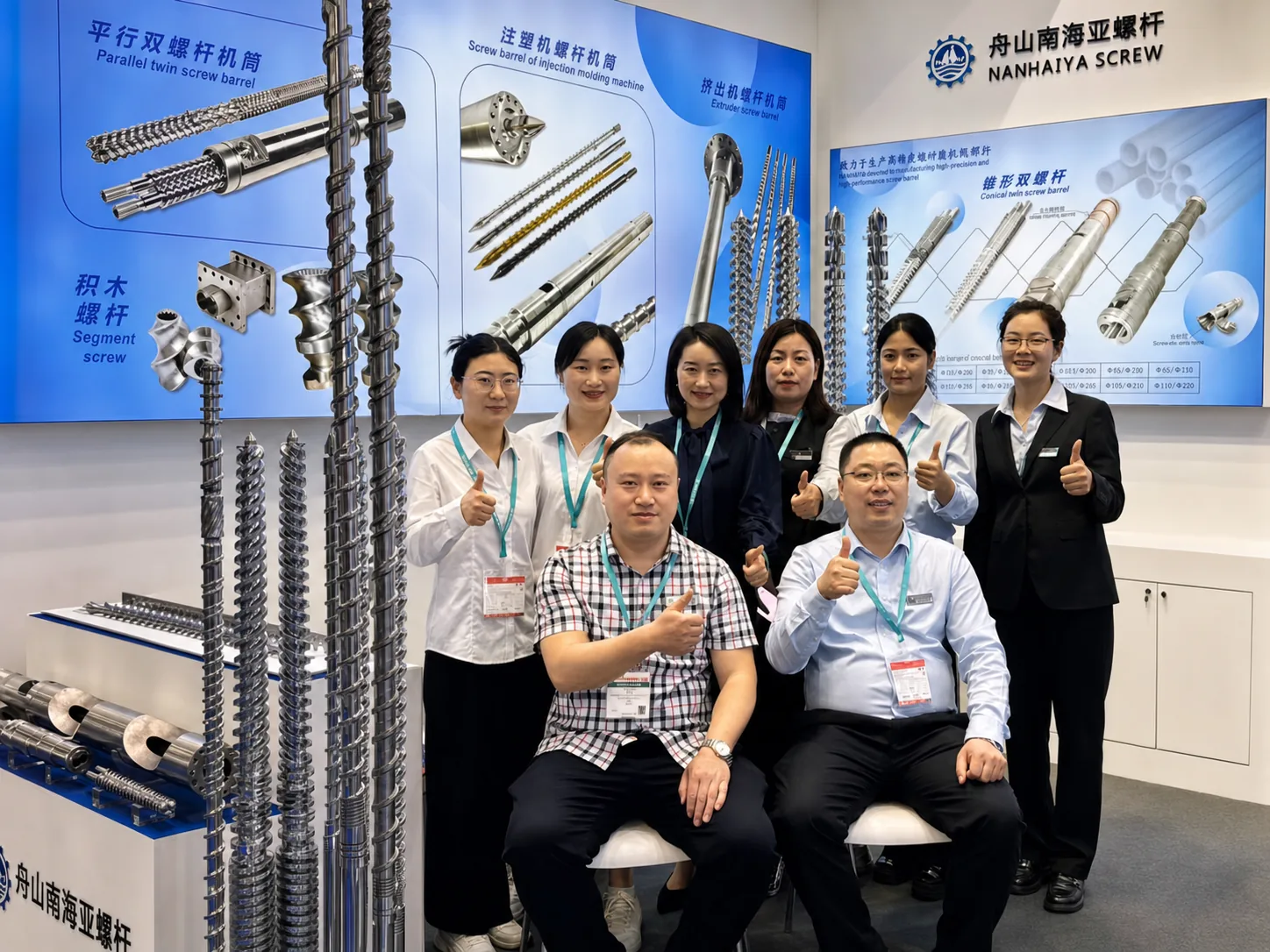
Related Articles
More insights on screw barrel technology and plastics processing.
What Nobody Tells You About Screw Barrel For Plastic Machine Design
Oct 10, 2026
Learn how screw barrel for plastic machine design affects melt quality, throughput, and wear life. Covers geometry, resin matching, troubleshooting, and sourcing.
Read Article
Single Screw Extruder for Sheet: Stop Guessing, Start Specifying
Oct 9, 2026
Learn how to specify a single screw extruder for sheet production. Covers screw geometry, resin-specific processing, troubleshooting, and maintenance best practices.
Read Article
PE Pipe Extruder Machine: What Datasheets Won't Tell You
Oct 9, 2026
Learn how a PE pipe extruder machine works, key specs explained, material grade selection, maintenance tips, and buyer guidance beyond the datasheet.
Read ArticleLooking for something else?
Search by material, symptom or product and jump straight to the relevant page.
These are navigation suggestions based on keyword matching — not a quotation, not a delivery commitment, and not a substitute for engineering review. Final specification is confirmed by our engineers against your drawings and processed material.
Need help with screw barrel selection?
Share your machine model, processed material and application. Our team can help with pricing and technical support.