

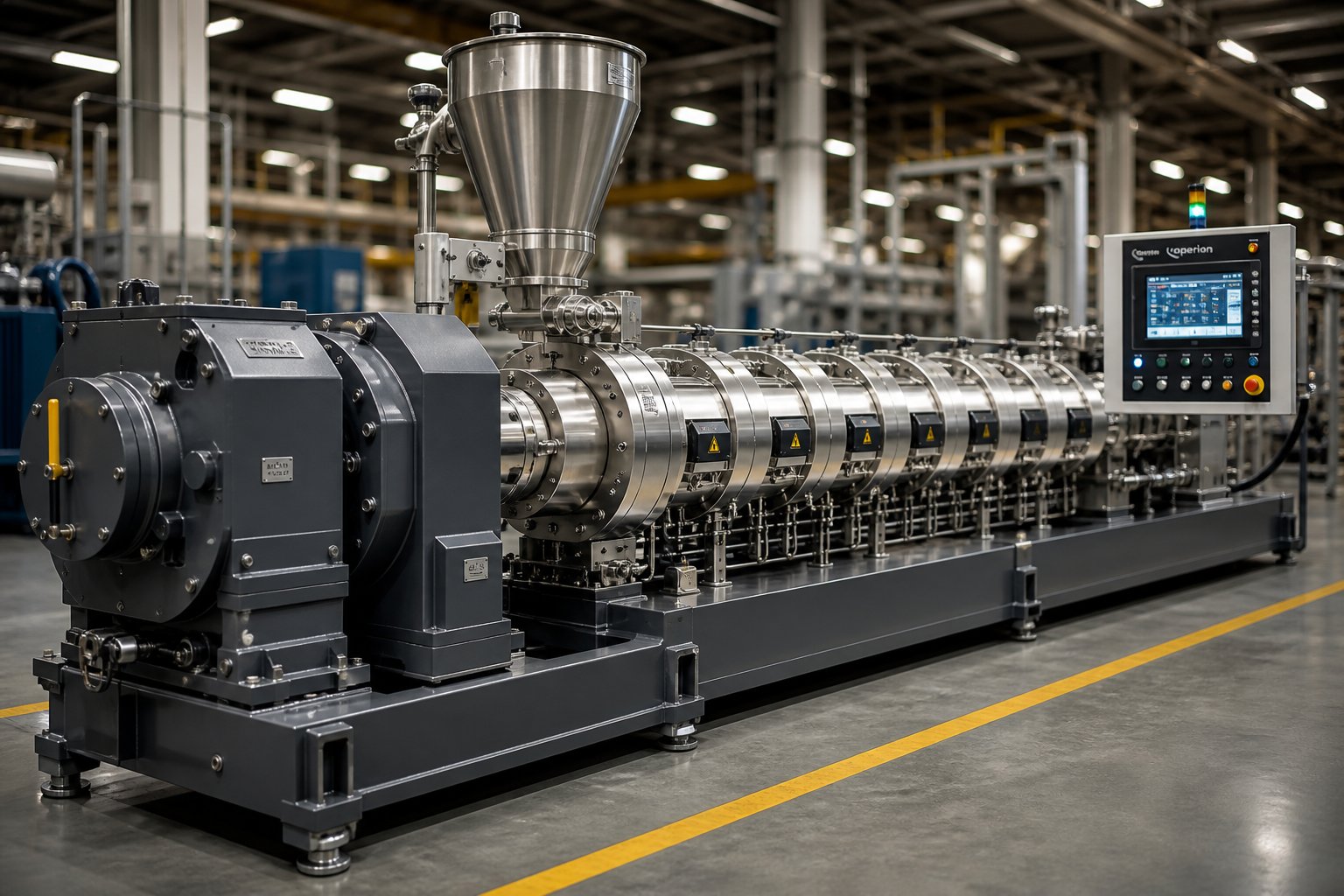
What Is a Leistritz Twin Screw Extruder
Imagine you're evaluating twin screw extruders for a new compounding line, a pharmaceutical formulation project, or a plastics recycling operation. One name keeps appearing in technical literature, used equipment listings, and process engineering conversations: Leistritz. But what exactly sets this German twin screw extruder manufacturer apart, and why does it command such attention in an increasingly crowded field?
A Leistritz twin screw extruder is a co-rotating, intermeshing twin screw extrusion system built on a modular barrel and screw design. Manufactured by Leistritz Extrusionstechnik GmbH — a German engineering company with roots dating back to 1905 — these machines deliver precise process control for applications ranging from plastics compounding and masterbatch production to pharmaceutical hot melt extrusion, food processing, and recycling.
This article serves as an independent informational resource. It is not a brand page, a dealer listing, or a sales pitch. The goal is straightforward: give you the technical clarity and practical buying insight that most resources leave out.
Defining the Leistritz Twin Screw Extruder Platform
At its core, every Leistritz co-rotating twin screw extruder shares the same fundamental architecture. Two intermeshing screws rotate in the same direction inside a segmented barrel assembly. Each barrel section can be independently heated and cooled, giving processors granular thermal control along the entire length of the machine. Gravimetric feeding systems meter raw materials into the extruder with high accuracy, ensuring consistent formulation ratios batch after batch.
The real differentiator, though, is modularity. The barrel is not a single monolithic piece. Instead, it consists of individual barrel segments that can be rearranged, swapped, or replaced independently. The screws follow the same philosophy — built from interchangeable screw elements that slide onto a central shaft. This modular barrel and screw design means you can reconfigure the same machine for vastly different processes simply by changing the element arrangement. A screw profile optimized for aggressive mixing in a glass-fiber compounding application looks nothing like one designed for gentle blending in a pharmaceutical formulation, yet both can run on the same base platform.
Leistritz has been refining this approach for over 80 years of extruder development, evolving from early twin screw presses into the high-performance ZSE platforms available today. That depth of iteration shows up in details like optimized coolant flow through barrel sections and patented splined shaft connections that maximize torque transmission.
Why Leistritz Matters in Twin Screw Extrusion
The global twin screw extruder market — valued at approximately USD 4.8 billion in 2025 and projected to reach USD 7 billion by 2036 — is shaped by a handful of major OEMs. Coperion, KraussMaffei (Berstorff), Thermo Fisher Scientific, JSW, and Leistritz consistently appear among the key companies driving this space. Each brings distinct strengths to the table, and a detailed competitive comparison follows later in this article.
Where Leistritz carves out its niche is versatility across scale and industry. Few competitors match its breadth: lab-scale extruders for R&D, production-scale machines for industrial compounding, and dedicated GMP-compliant platforms for pharmaceutical and life science applications — all built on the same co-rotating twin screw philosophy. The company operates with multinational manufacturing capability, including its headquarters in Nuremberg, Germany, and subsidiaries in the United States and China, giving it regional service reach across the markets that matter most.
That combination of modular design flexibility, application breadth, and global infrastructure is precisely why understanding the full Leistritz platform matters — especially when you're comparing it against alternatives. And comparison starts with understanding the fundamental technology that makes co-rotating twin screw extrusion work in the first place.
Co-Rotating vs Counter-Rotating Twin Screw Technology
Every twin screw extruder falls into one of two fundamental categories based on how its screws rotate. That single design choice — same direction or opposite directions — determines the machine's mixing behavior, shear characteristics, material handling capabilities, and ultimately which applications it can serve well. Yet most buyers never receive a clear explanation of what these differences actually mean in practice. Here's the breakdown.
Co-Rotating Intermeshing Twin Screw Fundamentals
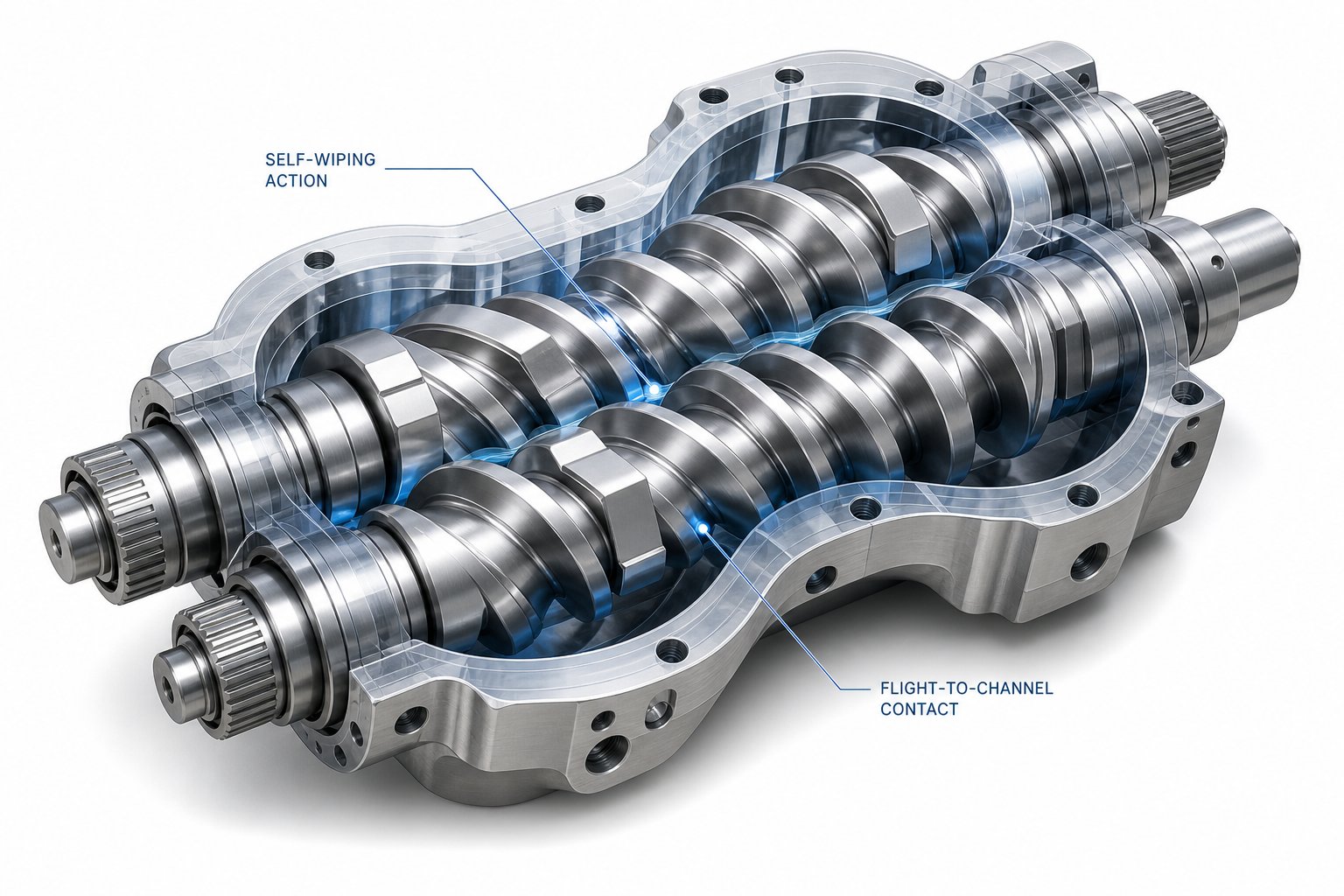
In a co-rotating twin screw extruder, both screws turn in the same direction while maintaining a fully intermeshing geometry. Imagine two helical screws nestled closely together inside a figure-eight barrel bore, each flight of one screw fitting precisely into the channel of the other. This geometry creates what engineers call self-wiping action — as the screws rotate, material clinging to one screw surface gets scraped off by the approaching flight of the other. The result is an internal volume with very few dead zones, where stagnation and material adhesion are actively suppressed.
Why does that matter? Self-wiping twin screw geometry keeps residence time distribution narrow. In plain terms, every particle of material spends roughly the same amount of time inside the machine. For reactive extrusion processes or heat-sensitive polymers, that uniformity is the difference between a consistent product and a degraded one.
A few key terms will help you read spec sheets and technical papers with confidence:
- Pitch — The distance between two consecutive flights on the screw. Increasing pitch boosts conveying speed but reduces shear input; decreasing pitch compresses the material and intensifies mixing.
- Chamber volume — The free volume inside the barrel available for material. It dictates how much throughput the machine can handle at a given screw speed.
- Self-cleaning geometry — The precise intermeshing profile (historically known as the Erdmenger profile) that ensures one screw continuously wipes the surface of the other, preventing buildup.
- Residence time distribution (RTD) — A measure of how uniformly material passes through the extruder. A narrow RTD means consistent thermal and mechanical history across all particles.
The mixing performance of a co-rotating design stems from intense shear fields that develop both between the two screws and between each screw and the barrel wall. Kneading elements add an elongational flow component on top of that shear, creating a complex deformation history that breaks down filler agglomerates, controls phase morphology in polymer blends, and drives chemical reactions in reactive extrusion. These characteristics explain why co-rotating intermeshing twin screw designs dominate compounding, polymer alloying, and reactive processing applications worldwide.
Counter-Rotating Twin Screw Configurations
Counter-rotating twin screw extruders flip the script — literally. The two screws turn in opposite directions, drawing material inward at the intermeshing zone and compressing it as it advances forward. Material transport relies heavily on the rotation itself, and stable extrusion is achievable at comparatively low screw speeds under high-fill conditions.
The mixing mechanism differs fundamentally. Instead of the aggressive shear fields found in co-rotating machines, counter-rotating designs rely on compressive and elongational deformation between the screws. A calendering effect appears at the intermeshing region, dispersing material under relatively gentle conditions. Shear stress — and the heat it generates — stays low.
That gentleness is precisely the point. Materials like rigid PVC have low thermal decomposition temperatures and poor melt flow. Subjecting them to the high-shear environment of a co-rotating machine can work against the process. Counter-rotating extruders, by contrast, hold extrusion temperatures low while maintaining stable forming behavior, which is why they're the standard for PVC pipe, sheet, and profile extrusion.
Leistritz focuses primarily on co-rotating platforms. When you encounter a Leistritz twin screw extruder — whether the production-scale ZSE MAXX or the lab-scale Micro 27 — you're looking at a co-rotating, intermeshing design engineered for the mixing-intensive applications where that architecture excels.
How Leistritz Implements Co-Rotation
Understanding co-rotating vs counter-rotating twin screw extruder technology is the foundation. The next question is how Leistritz translates those principles into a configurable machine. The answer lies in the Leistritz modular screw element system.
Rather than using a single fixed-geometry screw, Leistritz builds each screw from individual elements that slide onto a splined shaft. Processors select and arrange these elements to create a custom screw profile tailored to their specific material and process requirements. As NC State Extension researchers emphasize, configuring a screw profile is a blend of art and science — no gold standard exists because every material exhibits unique flow properties under varying temperature and shear conditions.
The four main screw element types and their functions:
- Conveying elements — Deep-flighted elements that transport material forward through the barrel without imparting significant shear. Larger pitch moves bulk material quickly; smaller pitch compresses and meters the melt toward the die.
- Kneading blocks — Stacked disc elements offset at specific angles that provide dispersive and distributive mixing. Wide kneading blocks generate stronger shear for breaking down agglomerates, while narrow configurations distribute the dispersed phase more evenly without excessive force.
- Mixing elements — Specialized toothed or grooved elements that combine forward conveying with distributive blending. They're often positioned before compression zones to homogenize solid and liquid ingredients.
- Reverse (zoning) elements — Short elements with opposite-hand pitch that push material backward, creating localized pressure buildup and high-shear zones. They act as flow restrictions that increase residence time in specific barrel sections — critical for devolatilization ports or reaction zones.
This modular approach means a single Leistritz extruder can be reconfigured from a gentle blending profile for heat-sensitive pharmaceutical compounds to an aggressive dispersive profile for glass-fiber-filled engineering plastics. You change the screw elements, not the machine. The SPE (Society of Plastics Engineers) workshop framework on twin screw element design remains one of the best resources for processors who want to go deeper into the science behind element selection and arrangement.
With the fundamental technology clear, the practical question becomes which specific Leistritz machine fits which application — and that's where the full product line breakdown comes in.
The Complete Leistritz Twin Screw Extruder Product Line
Most buyers encounter individual Leistritz models in isolation — a used equipment listing here, a pharmaceutical case study there. What's missing is a consolidated view of how the entire product line fits together and which series targets which operational need. That gap leads to mismatched specifications, wasted quoting cycles, and occasionally purchasing a machine designed for the wrong scale entirely. Here's the full picture.
ZSE MAXX and ZSE iMAXX Series
The ZSE MAXX series sits at the top of the Leistritz production-scale lineup. These machines are built for industrial compounding, polymer blending, reactive extrusion, and high-volume masterbatch production. What makes the ZSE MAXX twin screw extruder series distinctive is that it eliminates a tradeoff processors historically had to accept: choosing between high free volume or high torque. The ZSE MAXX delivers both.
Leistritz publishes four defining characteristics for this platform:
- maXXvolume — A large free volume in the screw channel (OD/ID ratio of 1.66) that accommodates bulky feedstocks and high filler loadings without starving the screws.
- maXXtorque — Very high specific torque, reaching up to 15 Nm/cm3, enabling the machine to process high-viscosity melts and heavily filled compounds without exceeding drive limits.
- maXXshaft — A patented splined shaft connection that transmits the full available torque to the screw elements without weak-point failures at the shaft-element interface.
- maXXcooling — Optimized coolant flow paths through barrel sections that improve heat removal during exothermic reactions or high-shear processing.
In practical terms, a processor running 40% glass-fiber-filled nylon on a ZSE MAXX can push throughput rates that previously required stepping up to a larger machine size — because the torque capacity handles the viscosity demands while the generous free volume prevents bottlenecks at the feed throat.
The ZSE iMAXX production scale extruder extends this philosophy with additional intelligent features. Think of it as the digitally enhanced sibling: same robust mechanical platform, but with advanced process monitoring, data acquisition, and control system integration that align with Industry 4.0 manufacturing environments. For operations investing in smart factory infrastructure, the iMAXX series connects extruder performance data to plant-wide quality and efficiency analytics.
ZSE Micro 27 for Lab and Pilot Scale
Not every application calls for production-scale throughput. R&D laboratories, university research programs, and process development teams need a machine that can validate formulations, test screw configurations, and produce small sample batches — all without consuming hundreds of kilograms of expensive raw material.
That's precisely the role of the Leistritz ZSE Micro 27 lab scale extruder. Based on secondary market listings, the most common configuration is the ZSE Micro27-40D, which specifies a 27mm screw diameter and a 40:1 L/D ratio. Those numbers tell you a lot about the machine's intent. The 27mm diameter keeps material consumption low, making it feasible to run trials with specialty polymers or active pharmaceutical ingredients that cost hundreds of dollars per kilogram. The 40:1 L/D ratio, meanwhile, provides an unusually long processing length relative to the screw diameter. That extra length gives processors room to build complex screw profiles with distinct functional zones — feeding, melting, mixing, venting, and pressure buildup — without cramming them into an artificially short barrel.
Where this model truly shines is scale-up confidence. Because the Micro 27 uses the same modular screw element geometry and barrel segmentation as the production-scale MAXX and iMAXX platforms, a screw profile developed on the Micro 27 can be geometrically scaled to larger diameters with predictable results. You're not starting over when you move from pilot to production — you're translating validated process parameters to a bigger machine.
Pharma and Life Science Twin Screw Extruder Series
Pharmaceutical and life science applications introduce requirements that go far beyond metallurgy and mechanical performance. When your extrudate is a drug delivery system rather than a plastic pellet, every surface finish, material-of-construction decision, and control system feature becomes a regulatory conversation.
Leistritz developed a dedicated pharmaceutical twin screw extruder series specifically for hot melt extrusion (HME) and wet granulation in GMP-regulated environments. As Plastics Today reported, the GMP series features screws, barrels, and all product-contact parts manufactured from metals that are non-reactive, non-additive, and non-absorptive with the processed product. Surfaces are sanitary-ground and polished stainless steel for straightforward cleaning validation. Quick-release couplings for heating and cooling lines speed changeover, and the entire control system — from thermocouples and pressure transducers to PLCs — ships with calibration documentation supporting FDA validation protocols.
The Leistritz pharmaceutical twin screw extruder platform also addresses something uniquely important to pharma manufacturers: scale-up traceability. The same co-rotating twin screw geometry runs across lab, pilot, and production scales, meaning a hot melt extrusion formulation proven on a small-diameter pharma extruder can advance through clinical trial manufacturing stages and into full commercial production on a larger Leistritz platform — all within a validated, GMP-compliant equipment family.
Beyond pharma, Leistritz also offers food and feed extrusion platforms (the HD extruder series) designed for textured vegetable proteins, pet food, and specialty feed applications where food-grade construction and hygienic design matter.
Leistritz Twin Screw Extruder Model Comparison
The following table consolidates the Leistritz twin screw extruder model comparison across the primary series, mapping each platform to its target application, operational scale, and the industries it serves:
| Model Series | Target Application | Scale | Primary Industries | Key Differentiator |
|---|---|---|---|---|
| ZSE MAXX | High-volume compounding, reactive extrusion, polymer blending | Production | Plastics, chemicals, automotive, recycling | Up to 15 Nm/cm3 specific torque; OD/ID = 1.66 |
| ZSE iMAXX | Smart manufacturing compounding lines | Production | Plastics, advanced manufacturing | Industry 4.0 integration, advanced process analytics |
| ZSE Micro 27 | Formulation development, pilot trials, small-batch production | Lab / Pilot | R&D, universities, specialty chemicals, pharma development | 27mm diameter; up to 40:1 L/D; low material consumption |
| Pharma Series | Hot melt extrusion, wet granulation | Lab / Pilot / Production | Pharmaceutical, life science, medical devices | Full GMP design; FDA-validatable controls; non-reactive contact materials |
| HD Series | Food extrusion, textured proteins, feed processing | Pilot / Production | Food, pet food, animal feed | Hygienic construction; food-grade compliance |
You'll notice that the common thread across every series is the same co-rotating, intermeshing twin screw architecture with modular barrel and screw element design. The differences live in the details — surface finishes, material certifications, control system sophistication, and drive capacity — tailored to the regulatory and process demands of each target industry.
Knowing which model family fits your operation is one half of the equation. The other half is understanding what the technical specifications on those models actually mean — and that's where screw diameter, L/D ratio, torque density, and model number conventions become essential reading.
Technical Specifications Decoded Across Leistritz Models
You've seen the model families. You know which series targets which industry. But when a used equipment listing says "ZSE 60 GL-36D, 121KW" or a colleague mentions a "Micro27-40D," do those numbers actually mean anything to you? For most buyers, Leistritz twin screw extruder specifications show up as scattered data points across dealer listings and datasheets — numbers without context. Let's fix that.
Understanding Screw Diameter and L/D Ratio
Two numbers define the fundamental geometry of any twin screw extruder: screw diameter and L/D ratio. Every other performance characteristic — throughput capacity, mixing intensity, residence time, thermal control — flows from these two parameters.
Screw diameter is exactly what it sounds like: the outer diameter of each screw, measured in millimeters. It directly determines how much material the machine can move. Larger diameters create larger channel volumes between screw flights, which translates to higher volumetric throughput at any given screw speed. A 60mm machine processes substantially more material per hour than a 27mm machine running the same screw profile — roughly proportional to the ratio of their free volumes, which scales geometrically with diameter.
But diameter isn't just about volume. It also influences shear rate. At identical rotational speeds, a smaller diameter screw produces higher shear, which matters when you're dispersing nanofillers or breaking down pigment agglomerates. This is one reason lab-scale machines like the ZSE Micro27-40D — with its 27mm screw diameter — can achieve mixing results that translate reliably to production equipment despite their smaller size.
The L/D ratio — length-to-diameter ratio — tells you how long the processing section is relative to the screw diameter. A twin screw extruder L/D ratio explained simply: divide the effective barrel length by the screw diameter. A 27mm machine with a 40:1 L/D has an effective processing length of 1,080mm. A 60mm machine at 36:1 L/D stretches to 2,160mm.
Why does this matter? Higher L/D ratios give you more barrel real estate to work with. That extra length means more room for distinct functional zones — feeding, melting, mixing, venting, and pressure buildup — without forcing compromises. A 40:1 ratio, like the one on the ZSE Micro27-40D, provides exceptional flexibility for complex screw configurations. A 36:1 ratio on a production machine like the ZSE 60 GL-36D still offers generous process length while keeping the overall machine footprint manageable. As extrusion research consistently confirms, longer L/D ratios increase residence time and mixing opportunities, but excessively long screws risk thermal degradation of heat-sensitive materials or energy inefficiencies.
Torque Density and Screw Speed Ranges
Screw diameter and L/D ratio describe the geometry. Twin screw extruder torque density describes the muscle behind it.
Torque density is expressed as the torque available per unit of screw center-distance volume — typically in Nm/cm3. Think of it this way: when the screws encounter resistance from a high-viscosity polymer melt or a heavily filled compound, torque is what keeps them turning at the set speed without bogging down. Higher torque density means the extruder can handle stiffer materials, higher filler loadings, and more demanding process conditions without exceeding the drive system's limits.
For Leistritz, this metric is a stated design priority. The ZSE MAXX series, as covered earlier, reaches up to 15 Nm/cm3 of specific torque — a figure that places it firmly in the high-performance tier. That capacity matters most when you're compounding 40-60% mineral-filled polyolefins, processing engineering thermoplastics like PEEK or PPS, or running highly filled compounds where viscous resistance can spike dramatically under shear.
Screw speed range works hand-in-hand with torque. Modern Leistritz machines typically operate across a wide speed window — from low RPMs for gentle blending of shear-sensitive materials up to several hundred RPM for aggressive dispersive mixing. The key relationship is this: at any given screw speed, the available torque determines whether the extruder can sustain stable operation or will trip on an overload alarm. Processors working with glass-fiber-filled nylons or recycled feedstocks containing contaminants quickly learn that torque capacity is often the limiting factor on throughput, not screw speed.
When evaluating specifications, look at motor power alongside torque density. The ZSE 60 GL-36D, for example, pairs its 60mm screw diameter with a 121KW drive motor. That motor power, transmitted through the gearbox to two intermeshing screws, defines the practical torque envelope available during operation.
Decoding a Leistritz Model Number
Every Leistritz model designation follows a logical naming convention. Once you understand the Leistritz ZSE model number meaning, you can extract critical specifications from any listing or datasheet at a glance.
Here's the breakdown:
- ZSE — Stands for "Zweischneckenextruder," the German word for twin screw extruder. Every co-rotating twin screw machine in the Leistritz lineup carries this prefix.
- Number (e.g., 27, 40, 60) — Indicates the screw diameter in millimeters. This is the single most important sizing parameter, as it sets the throughput class of the machine.
- Suffix (e.g., 40D, 36D) — Specifies the L/D ratio. "40D" means the effective processing length is 40 times the screw diameter; "36D" means 36 times.
- Prefix modifiers (e.g., Micro, GL, MAXX, iMAXX) — Indicate the product series or generation. "Micro" denotes lab and pilot scale. "MAXX" signals the high-torque, high-free-volume production platform. "GL" appears on certain production models in secondary market listings.
So when you see "ZSE Micro27-40D," you immediately know: twin screw extruder, 27mm screw diameter, 40:1 L/D ratio, lab/pilot-scale Micro series. And "ZSE 60 GL-36D" tells you: twin screw extruder, 60mm screws, 36:1 L/D, GL-generation production machine.
The following table puts the confirmed specification data side by side:
| Specification | ZSE Micro27-40D | ZSE 60 GL-36D |
|---|---|---|
| Screw Diameter | 27 mm | 60 mm |
| L/D Ratio | 40:1 | 36:1 |
| Effective Processing Length | 1,080 mm | 2,160 mm |
| Motor Power | Not confirmed in listing | 121 KW |
| Target Scale | Lab / Pilot | Production |
| Typical Applications | R&D, formulation development, small-batch trials | Industrial compounding, polymer blending, masterbatch |
Notice the difference in effective processing length. The production-scale ZSE 60 GL-36D offers twice the barrel length of the Micro 27 despite having a lower L/D ratio — because the larger diameter multiplies out to a significantly longer absolute barrel. That additional length provides more physical space for side feeding, venting ports, and multi-stage mixing — all critical when running complex formulations at high throughput rates.
With specification literacy in hand, the natural next step is understanding where these machines actually go to work — across industries ranging from plastics compounding and recycling to pharmaceutical drug delivery systems.
Industry Applications from Compounding to Pharma
Specifications on paper only matter when they translate into real-world processing results. A 60mm screw diameter and 15 Nm/cm3 torque density sound impressive — but what do those capabilities actually enable on the production floor? The answer spans more industries than most buyers initially realize. A Leistritz twin screw extruder for compounding glass-fiber-reinforced nylon shares the same fundamental platform as one producing pharmaceutical solid dispersions or recycling post-consumer plastic waste. The versatility is architectural, not accidental.
Plastics Compounding and Polymer Blending
Plastics compounding remains the largest single application for co-rotating twin screw extruders worldwide, and it's where the Leistritz platform earns the bulk of its installed base. The process is deceptively simple in concept — combine a base polymer with fillers, reinforcements, stabilizers, pigments, or other additives to create a finished compound with specific performance properties. In practice, achieving uniform dispersion across millions of pellets per hour demands precise control over shear, temperature, and residence time.
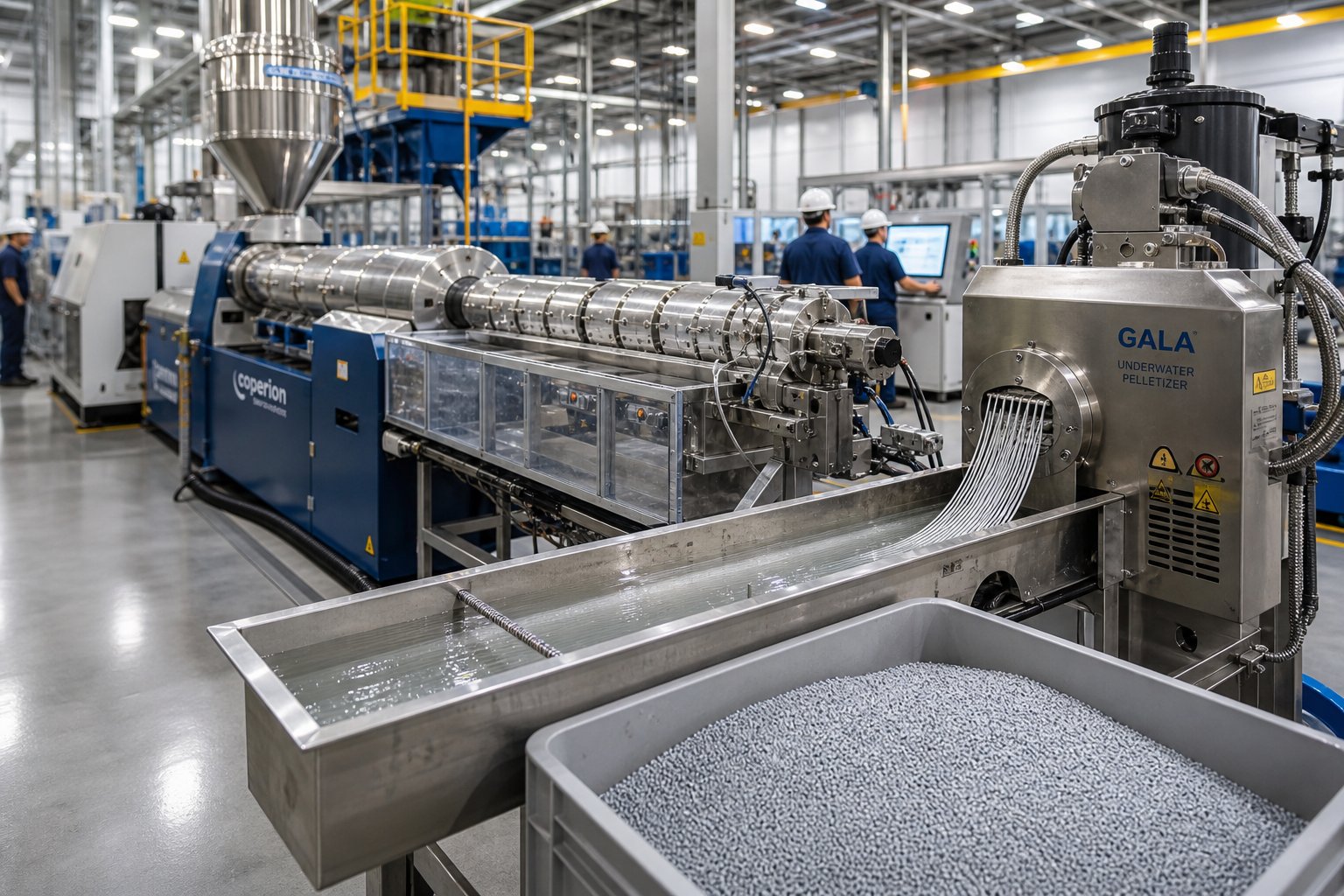
Imagine you're producing a 30% glass-fiber-reinforced polypropylene for automotive interior parts. The base resin enters through the main feed throat and melts in the first few barrel zones. Glass fiber — which would break excessively if fed at the beginning — enters through a side feeder positioned downstream, after the polymer is already fully molten. Kneading blocks disperse the fibers uniformly through the melt, while reverse elements create localized pressure zones for degassing. The melt exits through a strand die, passes through a water bath, and enters a strand pelletizer that chops the cooled strands into uniform pellets ready for injection molding.
That pelletizing line configuration — extruder, die head, cooling, and pelletizer — represents the standard downstream setup. Some operations opt for underwater pelletizing systems instead, where the melt is cut directly at the die face under water, producing spherical pellets with excellent uniformity. The choice between strand and underwater pelletizing depends on throughput requirements, pellet geometry preferences, and the thermal characteristics of the polymer being processed.
Polymer blending follows a similar equipment path but with a different processing goal. Rather than incorporating solid fillers, you're creating a homogeneous mixture of two or more polymers — a PC/ABS blend for electronics housings, for example, or a PP/EPDM compound for flexible automotive components. The co-rotating twin screw design excels here because the intense shear and elongational flow fields generated by kneading blocks control the morphology of the dispersed phase. You're essentially sculpting the blend at a microscopic level, and the modular screw configuration lets you fine-tune that morphology to hit target impact strength, stiffness, and flow properties.
Masterbatch Production and Recycling
Twin screw extruder masterbatch production is closely related to compounding but involves a critical difference: the extrudate is a concentrated carrier — loaded with pigments, additives, or fillers at levels far exceeding end-use concentrations — that downstream processors "let down" into base resins during injection molding or film extrusion. Color masterbatch, for instance, may contain 40-70% pigment loading in a polyethylene carrier. Additive masterbatch concentrates UV stabilizers, antioxidants, or flame retardants at similarly high loadings.
These extreme filler concentrations push twin screw extruders hard. The melt viscosity of a 60% titanium dioxide masterbatch behaves nothing like neat polyethylene. Torque demand spikes, barrel wear accelerates, and the screw profile must balance aggressive dispersive mixing — necessary to break apart pigment agglomerates — with sufficient conveying capacity to maintain throughput. This is exactly where the high specific torque of the ZSE MAXX platform pays dividends.
Plastics recycling represents a rapidly growing application segment with its own set of challenges. Unlike virgin compounding, recycled feedstocks arrive contaminated, inconsistent in composition, and loaded with moisture and volatiles. Post-consumer recycled (PCR) polyethylene from municipal collection streams may contain traces of paper, adhesive residue, wood, and mixed polymer contaminants. Post-industrial regrind from manufacturing scrap tends to be cleaner but still requires reprocessing to restore melt flow properties and incorporate fresh stabilizer packages.
Twin screw extruder plastics recycling applications leverage several capabilities simultaneously. The extruder melts and homogenizes the mixed-stream feedstock, devolatilization zones with vacuum venting strip out moisture and volatile organic compounds, and melt filtration systems — either screen changers or continuous melt filters positioned between the extruder die and the pelletizer — remove solid contaminants. As Technovel's technical reference notes, twin screw extruders handle recycling processes where volatile byproducts are easily produced, making vent structures essential for stable operation and high-quality recycled output.
Pharmaceutical Hot Melt Extrusion
Here's where twin screw extrusion crosses into territory most plastics processors never encounter. Leistritz pharmaceutical hot melt extrusion uses the same co-rotating twin screw platform to solve a fundamentally different problem: making drugs work better inside the human body.
The challenge is bioavailability. A surprisingly large percentage of drug candidates emerging from pharmaceutical pipelines are poorly water-soluble. If a drug compound can't dissolve effectively in the gastrointestinal tract, it can't be absorbed into the bloodstream — no matter how potent its active ingredient. Hot melt extrusion addresses this by dissolving the poorly soluble API (active pharmaceutical ingredient) into a water-soluble polymeric carrier at elevated temperatures. The result is an amorphous solid dispersion: the drug molecules are molecularly dispersed throughout the polymer matrix, dramatically increasing their dissolution rate and bioavailability compared to their crystalline form.
As Pharmaceutical Technology reported from a Leistritz-hosted seminar, twin-screw extruders dissolve and mix hydrophobic APIs — typically below their melting temperature — in hydrophilic excipients heated 50-100 degrees Celsius above their glass transition temperature. The challenge extends beyond mixing: these amorphous forms must remain stable and resist recrystallization at ambient temperature, typically for a two-year shelf life.
Pharmaceutical applications don't stop at oral solid dispersions. The same extrusion platform produces drug delivery devices such as contraceptive implants, antiretroviral implantable rods, transdermal films, and drug-eluting dental implants. Charlie Martin, president and general manager at Leistritz, described this trajectory as analogous to what happened decades ago in the plastics and food industries — a proven continuous mixing technology being adapted and downsized for specialty dosage forms.
GMP compliance requirements separate pharmaceutical extrusion equipment from industrial machines. Every product-contact surface must be non-reactive, non-absorptive, and manufactured from validated materials — typically polished stainless steel. Control systems ship with calibration documentation supporting FDA validation protocols. Cleaning validation must demonstrate that no cross-contamination occurs between product changeovers. These are not features you can retrofit onto a standard compounding extruder. Leistritz developed its dedicated pharma series precisely because the regulatory requirements demand purpose-built equipment from the ground up.
Food Processing and Specialty Applications
Food-grade extrusion shares conceptual DNA with pharmaceutical processing — hygienic construction, food-contact-safe materials, and designs that facilitate thorough cleaning — but targets entirely different end products. Twin screw extruders produce textured vegetable proteins (the fibrous "plant-based meat" products increasingly common in consumer markets), breakfast cereals, snack foods, pet food, and animal feed. High-moisture extrusion cooking at 40-80% moisture content creates the fibrous, meat-like textures that food scientists use for plant-based protein products, while low-moisture processes at 15-30% moisture yield dry, porous structures that rehydrate before consumption.
Reactive extrusion rounds out the specialty application portfolio. Rather than simply blending materials, reactive extrusion uses the twin screw extruder as a continuous chemical reactor. Polymer grafting, controlled degradation for rheology modification, silane crosslinking of polyethylene, and synthesis of specialty copolymers all happen inside the barrel. The independently controlled temperature zones and configurable residence time — adjustable through screw element selection and barrel length — make co-rotating twin screw extruders effective continuous reactors for processes that would otherwise require batch equipment with longer cycle times and lower throughput.
Application-to-Model Quick Reference
The following checklist maps each major industry application to the relevant Leistritz model families:
- Plastics compounding and polymer blending — ZSE MAXX, ZSE iMAXX (production); ZSE Micro 27 (development and pilot trials)
- Color, additive, and filler masterbatch production — ZSE MAXX, ZSE iMAXX (production); ZSE Micro 27 (formulation development)
- Plastics recycling and reclaim processing — ZSE MAXX, ZSE iMAXX (production-scale recycling lines)
- Pharmaceutical hot melt extrusion and wet granulation — Pharma Series (lab through production scale, GMP-compliant)
- Drug delivery device manufacturing (implants, films, rods) — Pharma Series
- Food extrusion, textured proteins, and pet food — HD Series (hygienic, food-grade construction)
- Reactive extrusion and polymer modification — ZSE MAXX, ZSE iMAXX (production); ZSE Micro 27 (process development)
Matching the right model to your industry is only the starting point. Whether you're sourcing a brand-new machine directly from Leistritz or evaluating a used unit on the secondary market, the buying process introduces its own set of decisions — from throughput sizing and compliance verification to inspecting barrel wear and assessing gearbox condition on pre-owned equipment.
Buying New vs Used Leistritz Twin Screw Extruders
You've identified the right model family for your application. You understand what the specifications mean. The industry use case is clear. So here's the question that separates a confident purchase from an expensive mistake: should you buy new or used, and either way, what exactly should you be evaluating before signing anything?
Surprisingly, most equipment dealers and manufacturer pages skip this conversation entirely. You'll find a used Leistritz twin screw extruder for sale on secondary market sites with a photo, a model number, and maybe a motor power figure — but almost no guidance on what to actually look for, what to question, or how to assess whether the asking price reflects the machine's true condition. This section fills that gap.
Buying a New Leistritz Twin Screw Extruder
Purchasing directly from Leistritz or an authorized distributor gives you the full benefit of factory warranty, current-generation technology, and a machine configured precisely to your process requirements. But "new" doesn't mean one-size-fits-all. The selection process involves matching several interdependent variables to your specific operation — and getting any one of them wrong can leave you with an over-spec'd machine burning capital or an under-spec'd one bottlenecking production.
Think of this as a Leistritz twin screw extruder selection guide built around five core decision points:
- Required throughput — What production rate, in kg/hr, does your process demand? This single number narrows the field to a specific screw diameter range. Lab-scale work at 5-50 kg/hr points to the Micro 27 platform. Production compounding at 500-2,000+ kg/hr puts you squarely in ZSE MAXX territory. Overestimating throughput needs wastes capital; underestimating creates an immediate scaling problem.
- Screw diameter — Directly tied to throughput, but also influences shear rate and mixing intensity. A processor running heat-sensitive biopolymers may deliberately choose a larger diameter running at lower RPM to reduce shear heating — even if a smaller machine could technically match the throughput at higher speeds.
- L/D ratio for the target process — Simple compounding with a single additive may only need 32:1 to 36:1. Complex formulations requiring multiple feed points, devolatilization zones, and extended mixing sections benefit from 40:1 or longer. As the industry buyer's guide from Chuangbo highlights, heat-sensitive materials favor shorter L/D ratios to minimize residence time, while complex formulations and high-filler applications demand longer screws for adequate dispersion.
- Motor power and torque capacity — These must match the viscosity demands of your material at target throughput. A 121KW drive on a ZSE 60 GL-36D handles demanding compounding applications. Running highly filled compounds on an underpowered drive leads to chronic torque alarms, forced throughput reductions, and accelerated gearbox wear.
- Industry-specific compliance — Pharmaceutical operations require the GMP-compliant Pharma Series with validated controls and non-reactive contact surfaces. Food processing demands hygienic design and food-grade materials. Standard industrial compounding has no such regulatory burden, so paying for pharma-grade construction when you're making color masterbatch is money poorly spent.
One often overlooked factor: regional service support. A new machine purchase should include confirmation of local spare parts availability, field service response times, and technical support access. Leistritz operates subsidiaries in the United States, Germany, and China, but response times vary by geography and machine model. Ask the question before the purchase order, not after the first unplanned downtime event.
Evaluating Used Leistritz Twin Screw Extruders
The secondary market for Leistritz equipment is active and well-established. Models like the ZSE 27, ZSE 40, and ZSE 60 appear regularly on dealer sites and auction listings. For budget-conscious operations, startups, or R&D labs that need proven equipment without the lead time and cost of a new build, a used machine can deliver exceptional value — but only if you know how to buy a used twin screw extruder without inheriting someone else's problems.
Here's the reality: the two largest used equipment dealers listing Leistritz machines provide almost zero buyer guidance. You'll see a model number, a photo, maybe a spec sheet — and that's it. The critical assessment work falls entirely on you.
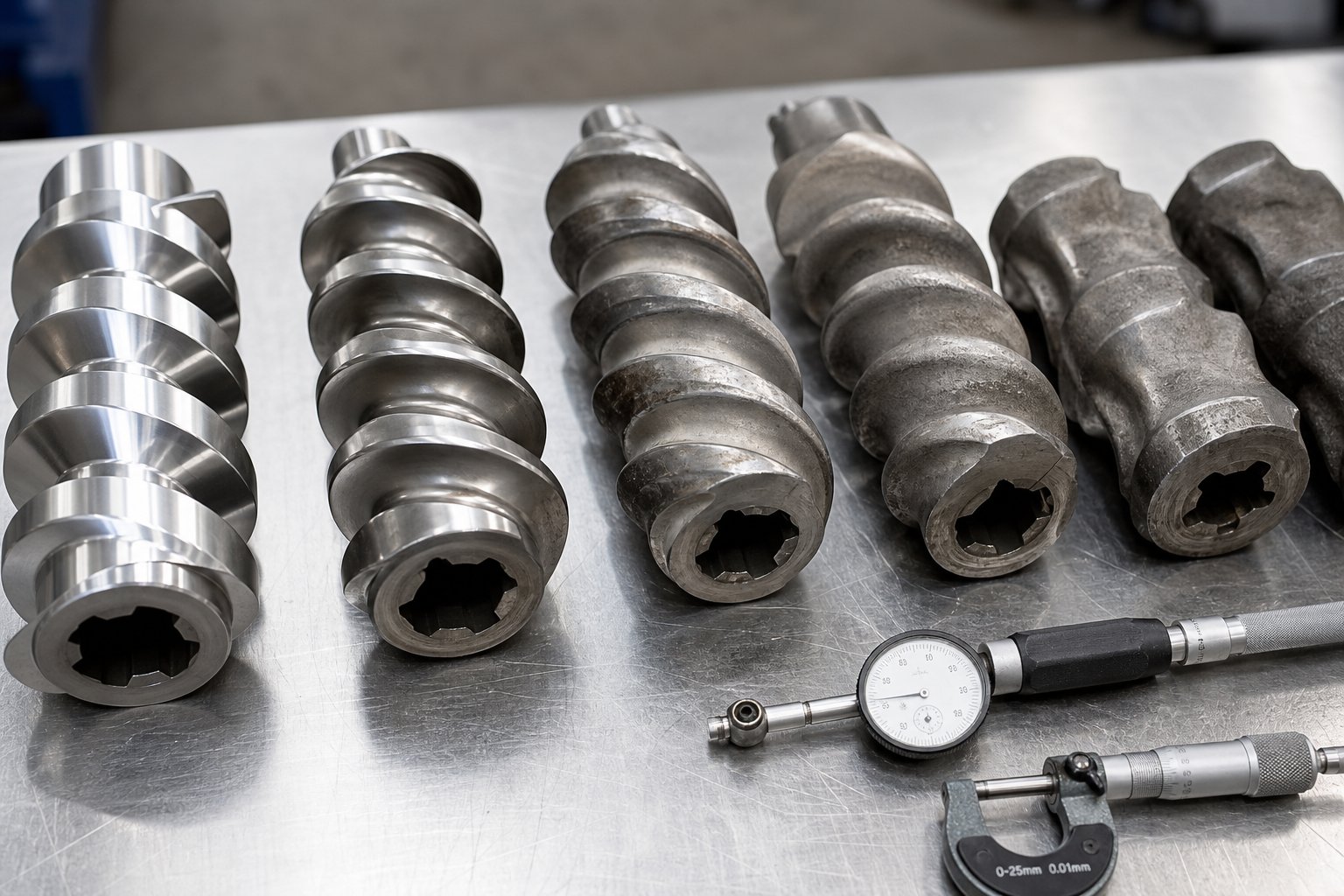
Barrel wear measurement is the single most revealing inspection you can perform. As Arlington Machinery's inspection team emphasizes, there is no way to accurately determine the condition or value of an extruder without measuring the screw and barrel wear. The process involves using a dial bore gauge and micrometer to take measurements every two to three inches down the barrel after a thorough purge and cleaning. The most wear typically concentrates near the middle of the barrel where polymer melting takes place — where shear forces and abrasive filler particles hit hardest. Any listing that doesn't include bore measurements should prompt immediate skepticism.
Screw element condition demands equal scrutiny. On a used ZSE 27 twin screw extruder inspection, you'll want flight diameter measurements at every other flight and root diameter checks between flights. Worn flights create excess clearance between the screw and barrel wall, degrading the self-wiping geometry that makes co-rotating machines effective. Kneading blocks show wear patterns differently than conveying elements — look for rounded edges, reduced disc thickness, and uneven surfaces that indicate abrasive damage. Because Leistritz screw elements are modular, heavily worn sections can be replaced individually without scrapping the entire screw — a significant advantage on the secondary market.
Gearbox inspection is where many used equipment buyers get caught off guard. The gearbox transmits hundreds of kilowatts of power to two intermeshing screws through precision gear trains. Oil analysis reveals metallic particle contamination that signals bearing or gear wear. Listen for unusual noise under load. Request the maintenance log — a gearbox that's been on a regular oil change schedule with documented analysis tells a completely different story than one with no service history.
Control system age matters more than many buyers realize. A mechanically sound Leistritz from the early 2000s may still have its original PLC and operator interface — technology that's now two or three generations behind, with limited spare parts availability and no integration path for modern process monitoring. Retrofitting controls on a twin screw extruder is feasible but adds $20,000-$80,000+ depending on scope. Factor that into your total acquisition cost.
Documentation availability often separates a good deal from a great one. Operation manuals, electrical schematics, PLC program backups, and original commissioning records in PDF format are valuable assets when purchasing used equipment. They simplify installation, accelerate operator training, and provide the dimensional reference data you'll need for future wear part orders. A machine sold with its complete documentation package is worth meaningfully more than one sold without it.
Value Retention and Total Cost of Ownership
Leistritz machines tend to hold value on the secondary market better than many competing brands. That's not marketing — it's an observable pattern across dealer listings. The reasons are structural: modular barrel and screw designs mean worn components can be replaced individually rather than requiring full screw or barrel replacement. Spare parts remain available for older models. And the installed base is large enough that buyers have confidence in long-term serviceability.
Still, purchase price — whether new or used — is only one component of total cost of ownership. The real expense picture includes wear parts replacement (barrel liners, screw elements, and gearbox components), energy consumption over the machine's operating life, and the maintenance infrastructure required to keep it running at specification. A machine processing abrasive glass-fiber-filled compounds will consume barrels and screws at a dramatically faster rate than one running unfilled polymers. That wear cost, compounding year over year, can rival or exceed the original equipment investment.
Energy consumption also deserves scrutiny. Older-generation drives and heating systems operate less efficiently than current platforms. The ZSE iMAXX, for example, incorporates energy-optimized drive technology and advanced thermal management that reduce per-kilogram energy costs. A used machine with lower upfront cost but higher energy consumption per kilogram of throughput may actually cost more over a five-year operating window than a new machine with better efficiency.
Pre-Purchase Inspection Checklist for Used Equipment
Before committing to any used Leistritz twin screw extruder, work through this inspection sequence systematically:
- Request barrel bore measurements — Insist on dial bore gauge readings taken at 2-3 inch intervals after a full purge and cleaning. Compare measured dimensions against OEM nominal bore specifications for that model.
- Inspect screw element wear — Measure flight diameters and root diameters across all elements. Check kneading blocks for edge rounding and thickness loss. Identify which elements need replacement and price them before negotiating.
- Analyze gearbox oil — Request an oil sample report or commission one independently. Look for elevated iron, copper, or bronze particle counts that indicate bearing or gear surface degradation.
- Evaluate the control system — Identify the PLC platform, operator interface model, and software version. Determine whether spare parts and technical support are still available for that generation of controls. Budget for retrofit if necessary.
- Verify motor and drive condition — Check motor insulation resistance, drive cabinet condition, and cooling system functionality. Confirm the motor power matches the original specification for that model.
- Inspect heating and cooling zones — Test each barrel zone heater independently. Check cooling water passages for scale buildup or corrosion. Verify thermocouple accuracy against a reference instrument.
- Review maintenance and operational history — Request all available documentation: operation manuals, maintenance logs, spare parts records, and original commissioning reports. Gaps in documentation signal gaps in maintenance.
- Run the machine under load if possible — A powered test with material demonstrates actual performance far more reliably than static inspection alone. Watch for torque fluctuations, temperature control stability, abnormal vibration, and throughput consistency.
Skipping any of these steps doesn't save time — it transfers risk from the seller to you. The most expensive used extruder is one that looked like a bargain until you discovered what it actually needed.
Whether you buy new or used, the machine's long-term performance depends entirely on how well you maintain it. Barrel and screw wear, gearbox health, and heating system integrity don't stay frozen at the point of purchase — they evolve with every processing hour. And that's where most operators have the least guidance available.
Maintenance and Wear Part Replacement Best Practices
A Leistritz twin screw extruder doesn't degrade overnight. It erodes in fractions of a millimeter, one processing hour at a time — so gradually that operators rarely notice until throughput drops, melt quality drifts, or energy consumption creeps upward for no apparent reason. The irony is that twin screw extruders are among the most maintenance-intensive machines on a compounding floor, yet almost no publicly available content tells you what to inspect, how often, or what the early warning signs of component failure actually look like.
Preventive Maintenance Schedules for Twin Screw Extruders
A structured Leistritz twin screw extruder maintenance schedule prevents small problems from compounding into catastrophic failures. The specific intervals vary depending on materials processed, operating hours, and environmental conditions — but the following framework covers the essential maintenance categories that every operator should systematize:
Daily: Check barrel zone temperatures against setpoints before startup. Inspect feed throat and hopper for bridging or contamination. Verify cooling water flow rates and inlet temperatures. Listen for unusual sounds from the gearbox and drive during warmup.
Weekly: Inspect all heating and cooling connections for leaks. Check thermocouple readings against a reference instrument on at least two zones. Review torque and pressure trend data for gradual shifts that indicate developing wear. Clean vent ports and vacuum systems to prevent blockage.
Monthly: Perform a gearbox oil level check and visual oil condition assessment. Inspect all electrical connections in the drive cabinet for signs of heat discoloration or loosening. Verify calibration of gravimetric feeders. Clean or replace intake air filters on drive motor cooling systems.
Quarterly to semi-annually: Pull the screws for a full visual inspection. Measure screw element flight diameters at every other flight and compare against OEM nominal dimensions. Use a dial bore gauge to measure barrel bore diameters at two- to three-inch intervals — the same technique discussed in the used equipment inspection section, but applied as ongoing condition monitoring. Commission a gearbox oil analysis looking for metallic particle counts that signal bearing or gear wear.
Annually: Full drive motor insulation resistance testing. Heating element resistance measurements across all zones. Comprehensive control system backup including PLC programs and HMI configurations. Review and update the preventive maintenance schedule itself based on wear data trends accumulated over the prior year.
Here's what accelerates wear beyond normal rates: processing abrasive materials. Glass fiber, mineral fillers like calcium carbonate and talc, and recycled feedstock containing metal fragments or sand contamination act like sandpaper against barrel liners and screw flight surfaces. As HAISI's technical analysis details, there are four primary high-wear zones in any twin screw extruder: the feeding zone where solid particles impact barrel walls, the filler introduction zone where glass fibers shear into abrasive fragments, the mid-barrel region where screw deflection causes scraping, and the discharge zone where cantilevered screw ends sag under gravity. Knowing where wear concentrates tells you where to focus your inspection effort.
Recognizing Barrel and Screw Wear Patterns
Twin screw extruder barrel and screw wear rarely announces itself with a dramatic failure. Instead, it whispers through gradual performance degradation that's easy to attribute to other causes — raw material variation, operator inconsistency, or ambient temperature changes. Learning how to inspect twin screw extruder wear parts means recognizing what those whispers sound like before they become shouts.
The most reliable process-side indicators of advancing wear include:
- Reduced throughput at constant screw speed — As clearance between screw flights and the barrel wall increases due to wear, more material leaks backward over the flights rather than being conveyed forward. The pump efficiency of the screws degrades, and you need higher RPM to maintain the same output rate.
- Inconsistent melt quality — Worn kneading blocks lose their sharp edge geometry, reducing dispersive mixing effectiveness. Filler agglomerates that used to break apart cleanly now survive the mixing zones, showing up as specks, gels, or uneven pigment distribution in the finished product.
- Increased specific energy consumption — The extruder draws more energy per kilogram of throughput because it's working harder to achieve the same result. Worn geometry loses its self-wiping efficiency, meaning material stagnates in dead zones, degrades thermally, and increases melt viscosity — which in turn demands more torque.
- Visible scoring on barrel liners or screw flight surfaces — When you pull the screws for inspection, score marks running parallel to the barrel axis indicate metal-to-metal contact or embedded abrasive particle damage. Rounded flight tips — instead of the sharp, defined edges present on new elements — confirm that the self-wiping clearance has opened beyond specification.
The mechanism behind all of these symptoms is the same: worn barrels create excess clearance between the screw flight outer diameter and the barrel inner wall. That clearance — designed to be extremely tight on new equipment — is what makes the self-wiping geometry work. As it opens up, the co-rotating screws can no longer wipe each other or the barrel surface effectively. Material builds up, residence time distribution broadens, and mixing performance deteriorates. Operating temperature and pressure compound the problem. High-temperature processing of materials like nylon at 280 degrees Celsius or PPS at 290 degrees Celsius weakens metal properties and accelerates wear rates, while moisture and oxygen trapped in the barrel promote corrosive wear that compounds the abrasive damage.
Sourcing Replacement Barrels and Wear Components
Every barrel and screw element is a consumable — the only question is how many processing hours you get before replacement becomes necessary. When that time comes, twin screw extruder replacement barrel sourcing involves two primary channels, each with distinct tradeoffs.
OEM replacement parts from Leistritz guarantee exact dimensional conformity, metallurgical specification, and compatibility with existing barrel sections and screw elements. For processors under warranty, running validated pharmaceutical processes, or operating in regulated environments where documentation traceability is mandatory, OEM sourcing is often the only acceptable path. The tradeoff is lead time — which can extend to weeks or months depending on model and component — and cost that reflects the brand's engineering overhead.
Qualified third-party manufacturers offer an alternative that growing numbers of processors are adopting, particularly in high-wear applications where barrel replacement frequency makes OEM pricing unsustainable. These aftermarket suppliers produce compatible parallel twin screw barrels engineered to OEM dimensional specifications — matching bore diameters, segment lengths, bolt patterns, and heating/cooling port configurations — while offering metallurgical options that may exceed standard OEM materials in specific wear scenarios. Companies like NANHAIYA, for instance, manufacture custom parallel twin screw barrels for compounding, pelletizing, recycling, and masterbatch operations, providing purpose-built barrel solutions optimized for the high-wear conditions that these applications impose.
High-wear applications in compounding, recycling, and masterbatch production often benefit from aftermarket barrels with specialized metallurgy or surface treatments optimized for abrasion resistance. The material options range considerably — from nitrided steel for moderate-wear environments to bimetallic liners for glass-fiber-filled compounds and powder metallurgy (PM) steel for extreme abrasion resistance. PM steel, as industry analysis confirms, offers finer grain structure, minimal segregation of alloying elements like nickel, chromium, and molybdenum, and significantly longer service life compared to conventional alloy steels.
Regardless of sourcing channel, the following wear components require periodic replacement on any Leistritz twin screw extruder — and should be tracked in your maintenance system as consumable items:
- Barrel liners / barrel segments — The inner bore surface that contacts the melt and screw elements directly. Replacement intervals depend heavily on filler type and loading.
- Screw elements (conveying, kneading, mixing, and reverse) — Individual modular elements wear at different rates depending on their position and the shear forces they experience. Kneading blocks in the melting zone typically wear fastest.
- Screw shafts — The splined shafts that carry the screw elements. Shaft spline wear is slower than element wear but eventually requires replacement, especially if elements have been run beyond their wear limits and caused impact damage.
- Die plates and breaker plates — Flow-restricting components at the extruder discharge that experience both abrasive and erosive wear from pressurized melt flow.
- Barrel heaters and thermocouples — Electrical heating elements degrade over time, losing heating capacity and developing hot spots. Thermocouples drift in accuracy, affecting temperature control precision.
- Gearbox bearings and seals — High-load bearings in the thrust and radial positions wear under continuous operation. Shaft seals degrade and can allow oil leakage or contaminant ingress.
Tracking these components against operating hours and correlating replacement intervals with the specific materials you process builds a predictive maintenance database unique to your operation. A machine running unfilled HDPE may go years between barrel changes, while the same model processing 50% calcium-carbonate-filled polypropylene might need new barrel segments every 12-18 months.
Maintenance and wear management keep your machine running. But the question that often surfaces alongside maintenance planning — especially when replacement costs start accumulating — is whether the platform itself is the right long-term investment compared to alternatives from other manufacturers. That competitive evaluation deserves its own honest, detailed examination.
How Leistritz Compares to Other Twin Screw Extruder Brands
Replacement barrels and wear parts keep a machine running — but they don't answer the question that lingers behind every maintenance invoice: is this the right platform for my operation, or would a competing manufacturer serve me better? It's the comparison most content avoids entirely. Equipment dealers won't make it because they sell what they stock. Brand pages won't make it because objectivity isn't in the marketing playbook. Yet it's the single most valuable analysis a buyer can have before committing six or seven figures to a twin screw extruder.
Here's an editorially neutral look at where Leistritz sits among the major OEMs — and a practical framework for deciding which brand actually fits your specific processing challenge.
Leistritz vs Other Twin Screw Extruder Manufacturers
The global co-rotating twin screw extruder market is shaped by a handful of established manufacturers, each with distinct engineering philosophies, market positioning, and regional strengths. Leistritz, Coperion, and KraussMaffei consistently appear as the European OEMs dominating technical conversations, while JSW (Japan Steel Works) and Toshiba Machine (now Shibaura Machine) hold strong positions in Asian markets. Comparing them honestly means acknowledging that no single manufacturer wins on every dimension.
Where Leistritz leads. The best twin screw extruder manufacturer comparison starts with recognizing specialization. Leistritz has carved out a position that few competitors replicate across three areas simultaneously: pharmaceutical-grade extrusion platforms, lab and pilot-scale machines, and modular screw element flexibility. The dedicated GMP-compliant Pharma Series — purpose-built with non-reactive contact surfaces, polished stainless steel construction, and FDA-validatable controls — represents a product category where Leistritz established early leadership and continues to hold significant installed base. In academic and industrial R&D settings, the ZSE Micro 27 has become something of a reference platform. Its 27mm screw diameter with up to 40:1 L/D ratio provides the process flexibility researchers need while consuming minimal raw material — a critical advantage when testing APIs or specialty polymers costing hundreds of dollars per kilogram.
The German engineering heritage, stretching back to 1905, shows up in design details that matter during years of operation: patented splined shaft connections that maximize torque transmission, optimized coolant flow through barrel sections, and the modular barrel and screw element system that allows complete process reconfiguration without purchasing a new machine.
Where competitors may hold advantages. Honesty demands acknowledging the other side. When you compare Leistritz vs Coperion twin screw extruder platforms, Coperion's ZSK series — particularly the latest high-torque generations — commands a dominant share of the large-scale industrial compounding market. Coperion's strength lies in very high throughput production lines where maximum output capacity, integrated downstream systems, and a global service network with extensive spare parts infrastructure give processors confidence in continuous 24/7 operations. For a facility running 5,000+ kg/hr polymer compounding lines, Coperion's track record at that scale is difficult to match.
A Leistritz vs KraussMaffei twin screw extruder comparison reveals a different competitive dynamic. KraussMaffei's ZE BluePower series has invested heavily in digital integration through its Pioneer ProcessControl (ppC) system, enabling real-time monitoring, process optimization, and energy management that appeals to manufacturers building Industry 4.0 production environments. KraussMaffei also offers integrated compounding systems — extruder, downstream equipment, and controls packaged as turnkey lines — which reduces multi-vendor coordination for buyers who prefer a single-source solution.
JSW and Toshiba (Shibaura Machine) bring strong precision engineering from Japan's manufacturing tradition. As Far East Network's manufacturer guide notes, these manufacturers occupy the high price range alongside Coperion and Leistritz, reflecting their build quality and engineering standards. JSW's TEX series, in particular, has a loyal following in Asian markets for its robust construction and adaptability across polymer types.
The critical takeaway? Each manufacturer optimizes for different priorities. Leistritz optimizes for versatility across scale and industry — from a 27mm lab extruder to a production MAXX platform, from plastics compounding to pharmaceutical solid dispersions. Coperion optimizes for maximum throughput at industrial scale. KraussMaffei optimizes for digital connectivity and integrated system delivery. JSW and Toshiba optimize for precision and reliability with strong regional support in Asia. None of these positions makes one brand universally superior.
Choosing the Right Twin Screw Extruder Brand for Your Operation
Knowing how to choose a twin screw extruder brand means moving past reputation and marketing toward a structured evaluation of what your operation actually requires. The decision framework breaks down into six factors, and ranking them in order of priority for your specific situation eliminates most of the noise.
- Application requirements — What are you processing, and what does the material demand? Pharmaceutical hot melt extrusion narrows the field immediately to manufacturers with GMP-compliant platforms. Large-scale polyolefin compounding at 3,000+ kg/hr favors OEMs with proven high-throughput installations. Specialty R&D work with frequent screw profile changes rewards manufacturers with the most flexible modular element systems.
- Required throughput scale — A 50 kg/hr pilot operation has fundamentally different equipment needs than a 2,000 kg/hr production line. Some manufacturers cover the full spectrum; others focus on specific scale ranges. Mismatching scale to brand strength leads to either overpaying for capability you don't need or under-specifying for growth you haven't planned for.
- Industry compliance needs — FDA-regulated pharmaceutical manufacturing, food-contact processing, and standard industrial compounding each impose different equipment requirements. Choosing a brand without the appropriate certifications and construction standards for your regulatory environment creates compliance risk that no amount of mechanical performance can offset.
- Regional service support — A twin screw extruder is a long-term capital asset. When the gearbox needs attention at 2 AM during a critical production run, the manufacturer's nearest field service engineer matters more than any specification on the datasheet. Evaluate where each manufacturer has physical service centers, regional spare parts warehouses, and trained technicians relative to your facility location.
- Spare parts availability and lead time — Modular machines consume wear parts. Barrel segments, screw elements, seals, and heating elements all have finite service lives. Manufacturers with regional spare parts stocking and guaranteed lead times — rather than build-to-order timelines — minimize the production downtime risk associated with wear part replacement.
- Budget constraints — Premium European OEMs (Leistritz, Coperion, KraussMaffei) command premium pricing that reflects their engineering depth, build quality, and support infrastructure. As industry comparisons consistently show, these brands also hold higher resale value, deliver longer service life, and offer lower long-term maintenance costs. The calculation isn't simply initial price — it's total cost of ownership over 10-15 years of operation.
The following table provides a high-level comparison framework across the three European OEMs most frequently evaluated side-by-side in twin screw extruder purchasing decisions:
| Comparison Factor | Leistritz | Coperion | KraussMaffei |
|---|---|---|---|
| Primary Market Focus | Versatile across compounding, pharma, food, R&D | Large-scale industrial compounding and polymer processing | Compounding with digital integration, recycling, petrochemicals |
| Scale Range | Lab (27mm) through production scale | Pilot through very large production scale | Pilot through large production scale |
| Noted Strength | Pharma/GMP platforms, modular flexibility, lab-to-production scalability | Maximum throughput capacity, global service network, extensive installed base | Digital process control (ppC), energy efficiency, integrated turnkey systems |
| Pharmaceutical Capability | Dedicated GMP series with FDA-validatable controls | Available but not primary focus | Limited dedicated pharma offering |
| Initial Investment Level | Premium | Premium to high premium | Premium |
| Resale Value | High | High | High |
| Global Service Presence | Germany, USA, China; subsidiaries and agents | Extensive global network across 30+ countries | Strong European and growing global presence |
Notice what this table doesn't include: specific throughput numbers, pricing figures, or performance claims that could mislead without full application context. Those details belong in a direct conversation with each manufacturer's application engineering team — using your actual material, your target throughput, and your process requirements as the basis for comparison, not generic brochure specifications.
The right twin screw extruder brand is the one that best matches your specific application requirements, throughput scale, compliance needs, and service geography — not the one with the most impressive maximum specification on a datasheet.
What this competitive analysis reveals is that brand selection and machine selection are only two layers of the decision. A third layer — one that directly impacts daily performance and long-term operating cost regardless of which OEM name is on the nameplate — is the barrel and screw configuration running inside the machine. Getting that configuration right, especially the metallurgy of the barrel itself, determines whether your extruder delivers years of reliable service or months of accelerating wear.
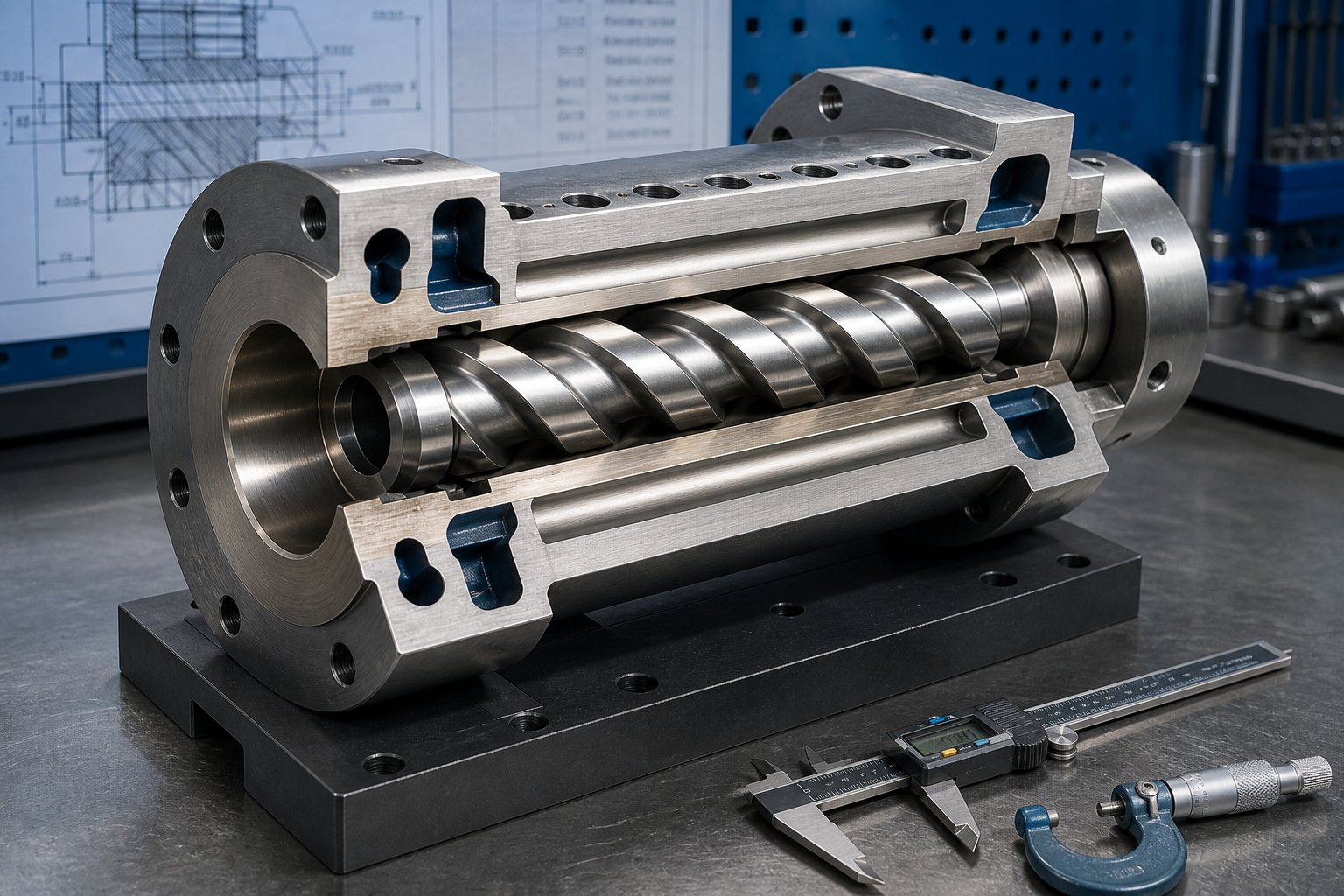
Optimizing Performance with the Right Barrel Configuration
Brand selection determines the machine on your floor. Barrel metallurgy determines how long it actually performs. You can invest in the finest Leistritz twin screw extruder available — MAXX-series torque, iMAXX-series digital intelligence, perfectly configured screw profile — and still watch throughput erode within months if the barrel material doesn't match the punishment your process inflicts on it. This is the layer of the decision that separates processors who replace barrels once a year from those who get three to five years of service from the same machine running the same compounds.
Matching Barrel Metallurgy to Your Process Demands
Every polymer processing environment attacks barrel surfaces through a specific combination of wear mechanisms — abrasion, corrosion, erosion, or adhesive contact. The twin screw extruder barrel metallurgy selection that works brilliantly for unfilled polyethylene will fail catastrophically in a glass-fiber-reinforced nylon application. Understanding which mechanism dominates your process is the starting point for every barrel material decision.
Abrasive environments: glass fiber, mineral fillers, and recycled feedstocks. This is the most common wear driver in compounding operations. Hard filler particles — glass fibers at Mohs 5.5-6.5, calcium carbonate at Mohs 3, silica at Mohs 7 — act as micro-cutting tools against barrel bore surfaces. As industry metallurgical data confirms, abrasive wear accounts for approximately 60% to 70% of total wear in filled polymer extrusion. Once the bore widens beyond specification, the self-wiping geometry that makes co-rotating screws effective degrades rapidly — exactly the symptom progression covered in the maintenance section.
For these environments, you'll want to move up the material ladder decisively:
- Nitrided steel (baseline) — Surface hardness of 950-1,100 HV with case depths of 0.3-0.7mm. Adequate for unfilled commodity polymers and lightly filled compounds below 15% loading. The limitation is shallow hardness — once abrasive particles wear through the nitrided case, the softer substrate is exposed and wear accelerates dramatically. In severe abrasive service, that can happen within 2,000-3,000 hours.
- Bimetallic liners — Iron-based or nickel-based alloys centrifugally cast inside an outer steel shell, achieving bore hardness of 60-72 HRC with liner thickness of 2.0-2.5mm. This is the dominant choice for moderate to heavy glass-fiber and mineral-filler applications. Nickel-matrix bimetallic liners with embedded tungsten carbides combine abrasion resistance with corrosion resistance — critical when the process involves both hard fillers and chemically aggressive polymer degradation products.
- Tungsten carbide coatings — HVOF (High Velocity Oxygen Fuel) thermal spray of WC-Co powders delivers coating hardness of 1,100-1,400 HV, providing the highest abrasion resistance available. These coatings excel in severely abrasive service with filler loadings above 40%, though their brittle nature limits application in geometries subject to significant deflection.
Corrosive environments: PVC, halogenated flame retardants, and fluoropolymers. Corrosion is the wear mechanism most often missed during initial barrel specification. When processing PVC, PVDC, halogenated flame retardants, or fluoropolymers like PVDF, hydrogen chloride or hydrogen fluoride gas forms at elevated temperatures and attacks metal surfaces chemically. Standard nitrided steel corrodes at rates of 0.08 to 0.15mm per 1,000 hours in rigid PVC service — meaning a barrel can lose specification within a single production quarter. High-nickel, high-chromium bimetallic constructions cut that rate to 0.01-0.03mm per 1,000 hours, extending service life by a factor of five to eight.
For the most chemically aggressive applications — fluoropolymer processing with HF evolution or mixed acid environments — Hastelloy C-276 weld overlays remain the standard, though at significant cost premium.
High-temperature environments: PEEK, PPS, and engineering thermoplastics. Processing temperatures above 350 degrees Celsius create a different problem entirely. Alloy hardness decreases with temperature — a phenomenon called thermal softening — and room-temperature hardness numbers on a datasheet can be misleading. D2 tool steel that reads 60-62 HRC at room temperature retains only 50-55 HRC at 400 degrees Celsius. Cobalt-based alloys like Stellite maintain 35-40 HRC at 600 degrees Celsius, and WC-Co coatings retain above 900 HV at 500 degrees Celsius. When you're running PEEK at 400 degrees Celsius barrel temperatures or PPS at 290-340 degrees Celsius, the effective hardness at processing temperature — not at room temperature — is the selection criterion that governs barrel life.
Imagine running a filled PPS compound: you're combining high processing temperatures that soften conventional steels with abrasive glass fiber that demands maximum hardness. That dual attack is why processors in engineering thermoplastics increasingly specify premium barrel metallurgy from the outset rather than learning the hard way through accelerated replacement cycles.
Custom Parallel Twin Screw Barrels for Extended Service Life
Here's where the barrel conversation shifts from theory to sourcing reality. When a barrel segment on your Leistritz ZSE 60 or ZSE 40 reaches the end of its service life — bore measurements confirming clearance beyond specification, throughput trending downward, specific energy consumption climbing — you face a replacement decision. OEM channels guarantee exact compatibility but impose lead times and pricing that reflect the original manufacturer's overhead structure. For processors running high-wear applications where barrel replacement is a recurring operational expense rather than a rare event, that cost structure compounds rapidly.
Application-engineered replacement barrels from qualified aftermarket manufacturers offer a practical alternative. These custom replacement barrels for Leistritz extruder platforms — and other major twin screw OEMs — are reverse-engineered to match OEM bore diameters, segment lengths, bolt patterns, and heating/cooling port configurations. The key advantage isn't just cost. It's the ability to specify metallurgy optimized for your exact process rather than accepting a standard material grade designed for general-purpose use.
A compounder running 50% calcium-carbonate-filled polypropylene 24/7, for example, doesn't need the same barrel material as a pharmaceutical processor running unfilled HPMC at low throughput. The first application demands maximum abrasion resistance — high-chromium bimetallic liners or tungsten carbide constructions. The second needs corrosion resistance and sanitary surface finish. An aftermarket twin screw extruder barrel supplier with metallurgical engineering capability can tailor the barrel to match the specific wear mechanism, rather than supplying a one-size-fits-all solution.
NANHAIYA's Parallel Twin Screw Barrel line represents one credible option in this space, serving compounding, pelletizing, recycling, and masterbatch manufacturers who need purpose-built barrel solutions for high-wear twin screw extrusion environments. Their focus on parallel twin screw barrel for compounding extruder applications — including mixing, conveying, granulation, and abrasion-intensive plastic processing — aligns directly with the demanding wear scenarios where aftermarket metallurgy can outperform standard-grade OEM replacements.
Before committing to any aftermarket supplier, though, you need to evaluate them against the same rigor you'd apply to any precision component source. Not all replacement barrels are created equal, and the gap between a well-engineered aftermarket barrel and a cheaply produced knockoff shows up in bore dimensional accuracy, liner bond integrity, and ultimately service life.
Key factors to evaluate when selecting an aftermarket barrel supplier:
- Dimensional accuracy to OEM specifications — The replacement barrel must match original bore diameter, segment length, bolt hole patterns, and port locations precisely. Even 0.1mm of bore deviation affects screw-to-barrel clearance and self-wiping performance. Request CMM (Coordinate Measuring Machine) inspection reports with documented dimensional data for every barrel shipped. As OEM replacement engineering guidance confirms, accurate reconstruction of original geometry — even when original drawings are unavailable — is achievable through reverse engineering with used barrel samples, CMM inspection, and CAD reconstruction.
- Metallurgical options and material certification — The supplier should offer multiple liner and surface treatment options — nitrided steel, iron-based bimetallic, nickel-based bimetallic, tungsten carbide coatings — and provide EN 10204 3.1 material certificates for every alloy used. Hardness testing documentation at multiple bore locations verifies uniform treatment quality. A supplier who can only offer one material grade regardless of application is not engineering your barrel — they're mass-producing a commodity.
- Lead time and inventory strategy — When a production extruder goes down for barrel replacement, every hour of downtime costs thousands of dollars in lost output. Suppliers who maintain semi-finished barrel blanks in common sizes and can finish-machine to specific configurations reduce lead time from months to weeks. Ask about stocking programs for your specific extruder model.
- Application engineering support — The best aftermarket suppliers don't just take dimensions and ship steel. They ask what you're processing, at what temperatures, with what fillers, and at what throughput rates — then recommend the metallurgy that matches your specific wear mechanism. That engineering conversation is where value is created, and it's the difference between a supplier and a vendor.
One practical insight worth emphasizing: documented case data from production environments processing 45% calcium-carbonate-filled polypropylene shows bimetallic barrel constructions delivering average flight clearance loss of just 0.12mm at 4,500 operating hours — compared to 0.8mm for standard nitrided steel over the same period. That 6.7x service life extension translates directly to fewer shutdowns, lower total barrel spend, and more consistent product quality throughout the barrel's working life.
The cheapest barrel to purchase is almost never the cheapest barrel to operate. Premium metallurgy, correctly matched to your dominant wear mechanism, generates 1.5x to 3.5x cost advantage over commodity alternatives when the calculation includes downtime, labor, quality losses, and energy consumption.
Whether you're running a Leistritz ZSE MAXX at full production throughput or a Micro 27 in a development lab, the barrel is the component that interfaces most intimately with your process. Get the metallurgy right, source from a supplier who understands both the dimensional precision and the materials science, and you'll spend your time optimizing formulations rather than scheduling unplanned maintenance shutdowns. That's the secret most buyers learn too late — and the one that separates processors who fight their equipment from those whose equipment fights for them.
Frequently Asked Questions About Leistritz Twin Screw Extruders
1. What makes Leistritz twin screw extruders different from other brands?
Leistritz stands out through three core strengths that few competitors replicate simultaneously. First, their modular barrel and screw element system allows processors to completely reconfigure a single machine for different applications by swapping individual conveying elements, kneading blocks, mixing elements, and reverse zoning elements. Second, Leistritz offers a dedicated GMP-compliant pharmaceutical extruder series with FDA-validatable controls and non-reactive stainless steel contact surfaces — a purpose-built platform rather than an adapted industrial machine. Third, the full product line spans from the 27mm lab-scale Micro 27 to production-scale ZSE MAXX platforms with up to 15 Nm/cm3 specific torque, enabling seamless scale-up from R&D through commercial production using geometrically identical screw profiles.
2. How do you decode a Leistritz twin screw extruder model number?
Every Leistritz model designation follows a consistent naming convention. The prefix 'ZSE' stands for 'Zweischneckenextruder,' the German word for twin screw extruder. The number immediately following — such as 27, 40, or 60 — indicates the screw diameter in millimeters, which is the primary sizing parameter that determines throughput class. The suffix, written as a number followed by 'D' (e.g., 40D or 36D), specifies the length-to-diameter ratio. Series modifiers like 'Micro' indicate lab and pilot scale, 'MAXX' signals the high-torque production platform, and 'iMAXX' denotes the Industry 4.0-enabled version. So a 'ZSE Micro27-40D' immediately tells you it is a 27mm screw diameter, 40:1 L/D ratio, lab-scale twin screw extruder.
3. What should you inspect before buying a used Leistritz twin screw extruder?
A thorough pre-purchase inspection should cover eight critical areas. Start with barrel bore measurements using a dial bore gauge at 2-3 inch intervals after a complete purge — this is the single most revealing assessment of machine condition. Then inspect screw element flight diameters and kneading block edge geometry for signs of abrasive wear. Commission an independent gearbox oil analysis to check for metallic particles indicating bearing or gear degradation. Evaluate the control system generation, as outdated PLCs can cost $20,000-$80,000 or more to retrofit. Verify motor insulation resistance and drive condition. Test heating and cooling zones independently. Request all available documentation including operation manuals and maintenance logs. If possible, run the machine under load with material to observe torque stability, temperature control, and throughput consistency under real operating conditions.
4. How often should twin screw extruder barrels and screws be inspected for wear?
A structured preventive maintenance schedule calls for pulling screws for full visual and dimensional inspection on a quarterly to semi-annual basis, depending on the abrasiveness of materials being processed. During each inspection, measure screw element flight diameters at every other flight and use a dial bore gauge to check barrel bore dimensions at 2-3 inch intervals. Between scheduled inspections, monitor process-side indicators daily and weekly — including torque trends, throughput consistency, melt quality, and specific energy consumption. Processors running glass-fiber-filled compounds, mineral-filled masterbatch, or recycled feedstocks with contaminants should shorten inspection intervals because abrasive filler particles accelerate wear significantly, particularly in the feeding zone, filler introduction zone, and mid-barrel melting region. Aftermarket barrel suppliers like NANHAIYA (nhyscrews.com) offer custom parallel twin screw barrels with advanced metallurgy that can extend service intervals substantially in high-wear applications.
5. What barrel metallurgy is best for a Leistritz twin screw extruder running filled compounds?
The optimal barrel metallurgy depends on the dominant wear mechanism in your specific process. For glass-fiber and mineral-filler applications below 25% loading, nickel-based bimetallic liners with embedded tungsten carbides provide a strong combination of abrasion and corrosion resistance at 60-72 HRC bore hardness. For heavily filled compounds above 40% loading, tungsten carbide HVOF coatings at 1,100-1,400 HV deliver the highest abrasion resistance available. Standard nitrided steel, while cost-effective for unfilled polymers, offers only 0.3-0.7mm case depth and wears through rapidly in abrasive service — documented production data shows bimetallic barrels lasting 6-7 times longer than nitrided steel in 45% calcium-carbonate-filled polypropylene applications. For corrosive environments involving PVC or fluoropolymers, high-nickel, high-chromium bimetallic constructions reduce corrosion rates by 5-8x compared to standard materials. Qualified aftermarket suppliers can engineer replacement barrels with metallurgy tailored to your exact process conditions rather than general-purpose OEM specifications.
Written by
Nanhaiya Technical Team
Zhoushan Nanhaiya Plastic Machinery Co., Ltd.
The Nanhaiya technical team supports screw and barrel manufacturing projects through application review, technical communication, custom manufacturing coordination, and production and quality control.
Discuss Your Application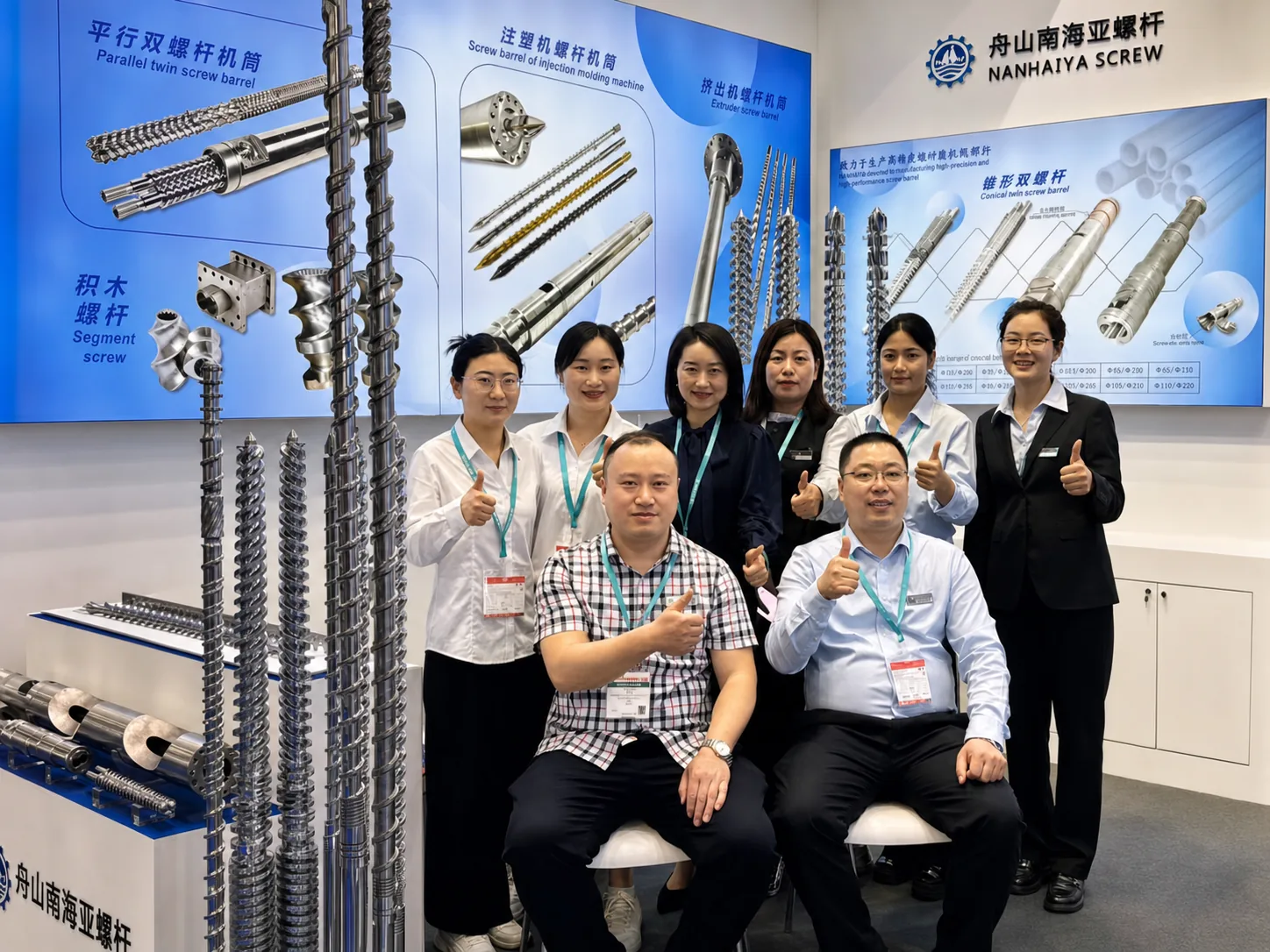
Related Articles
More insights on screw barrel technology and plastics processing.
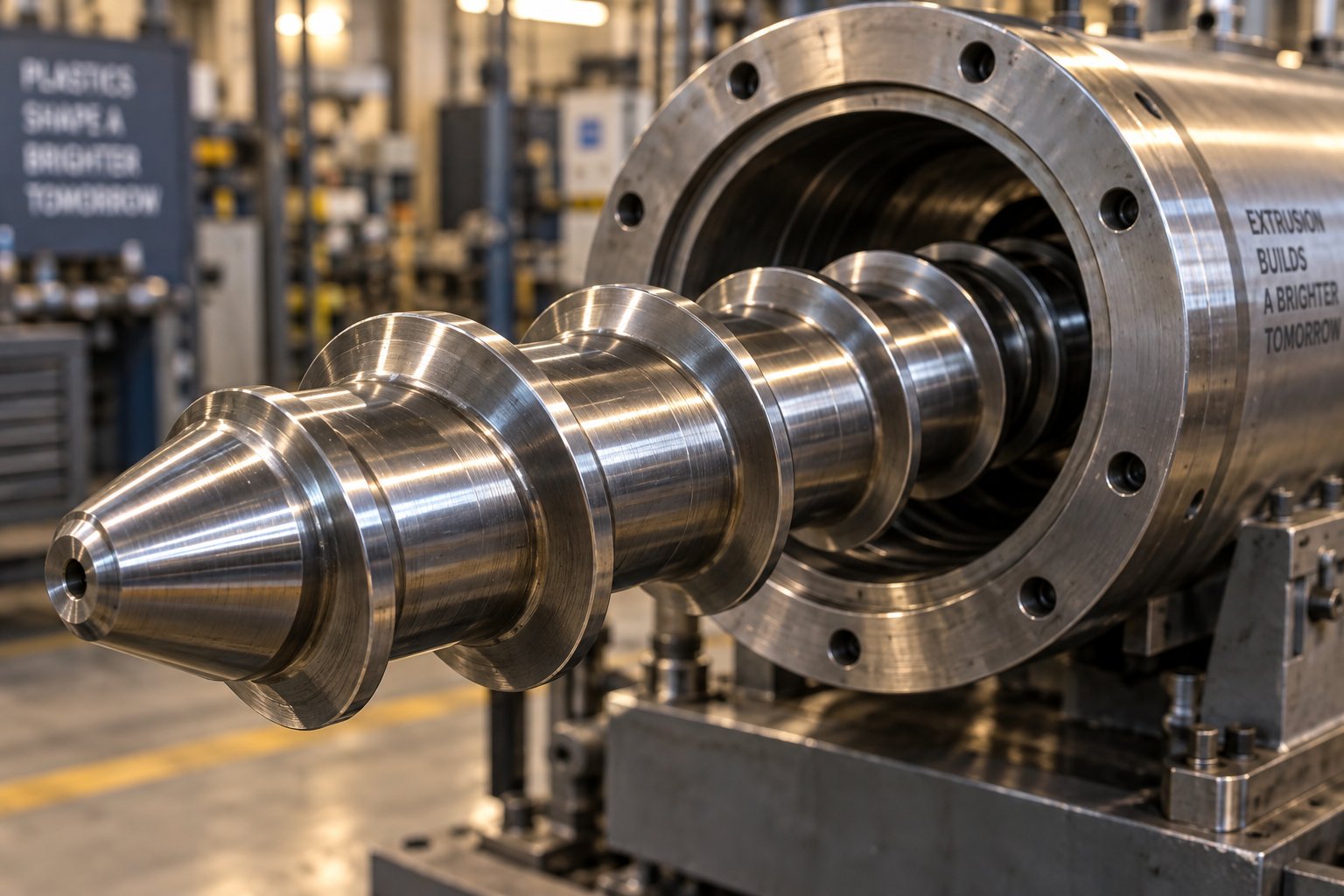
What Nobody Tells You About Screw Barrel For Plastic Machine Design
Oct 10, 2026
Learn how screw barrel for plastic machine design affects melt quality, throughput, and wear life. Covers geometry, resin matching, troubleshooting, and sourcing.
Read Article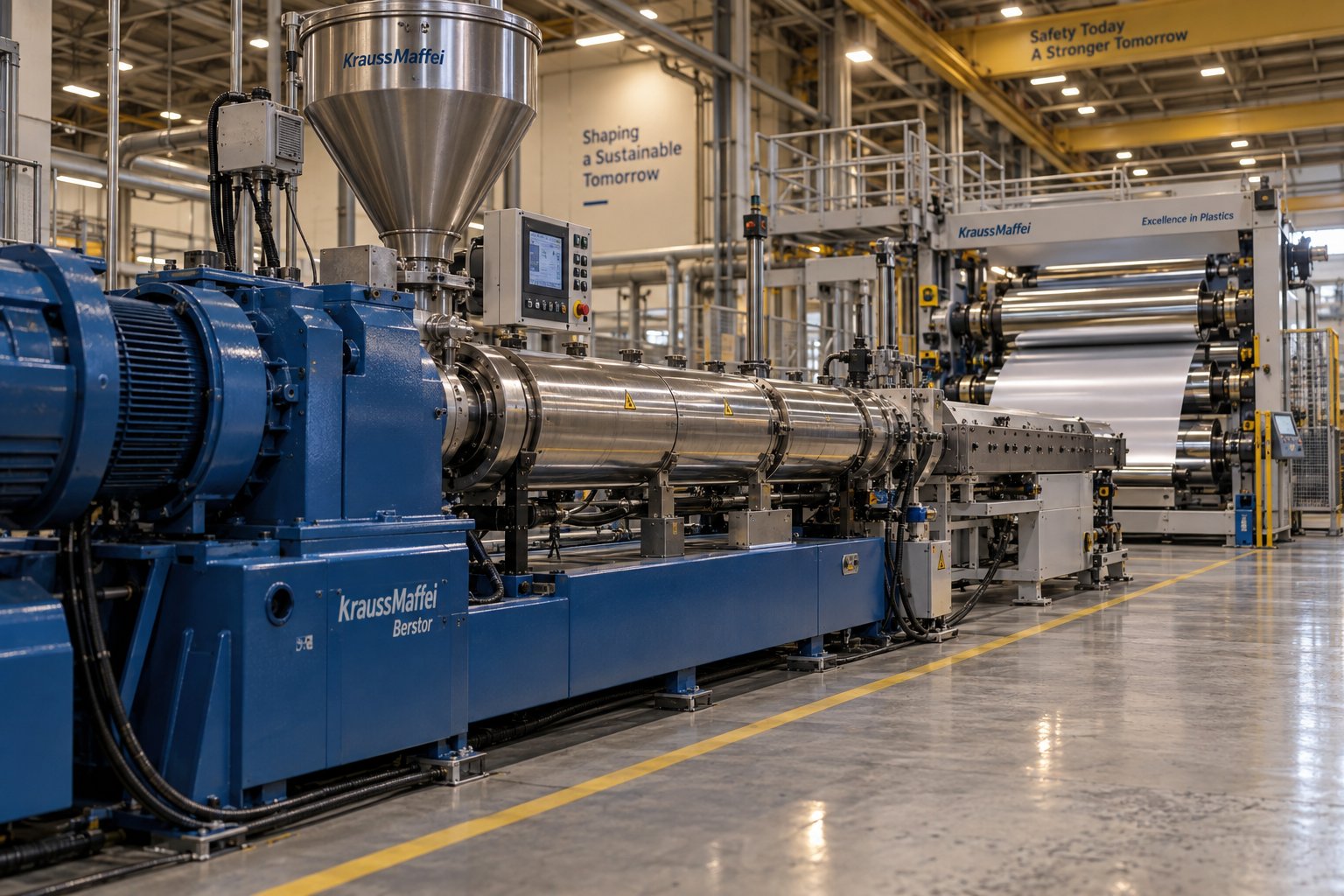
Single Screw Extruder for Sheet: Stop Guessing, Start Specifying
Oct 9, 2026
Learn how to specify a single screw extruder for sheet production. Covers screw geometry, resin-specific processing, troubleshooting, and maintenance best practices.
Read Article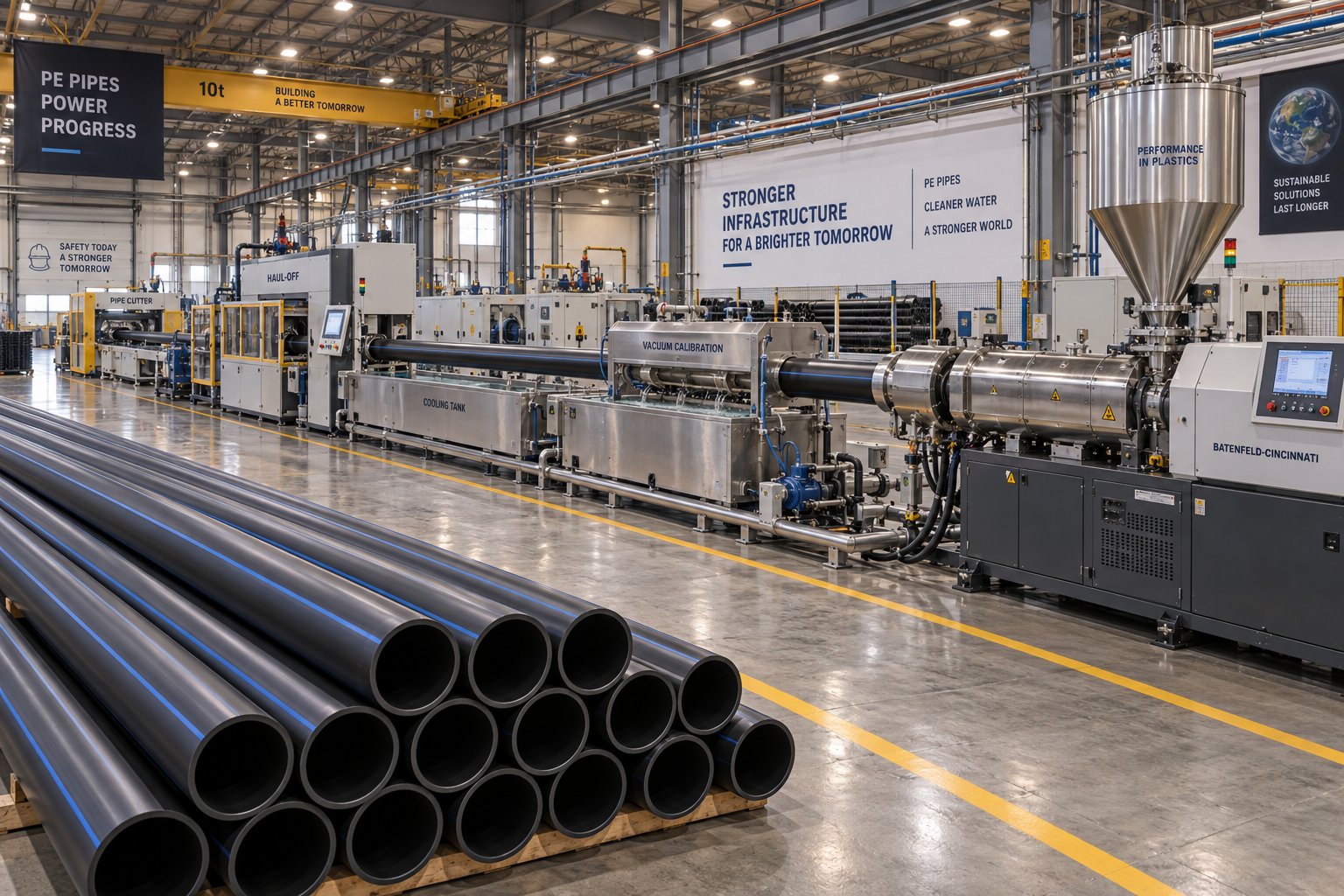
PE Pipe Extruder Machine: What Datasheets Won't Tell You
Oct 9, 2026
Learn how a PE pipe extruder machine works, key specs explained, material grade selection, maintenance tips, and buyer guidance beyond the datasheet.
Read ArticleLooking for something else?
Search by material, symptom or product and jump straight to the relevant page.
These are navigation suggestions based on keyword matching — not a quotation, not a delivery commitment, and not a substitute for engineering review. Final specification is confirmed by our engineers against your drawings and processed material.
Need help with screw barrel selection?
Share your machine model, processed material and application. Our team can help with pricing and technical support.