

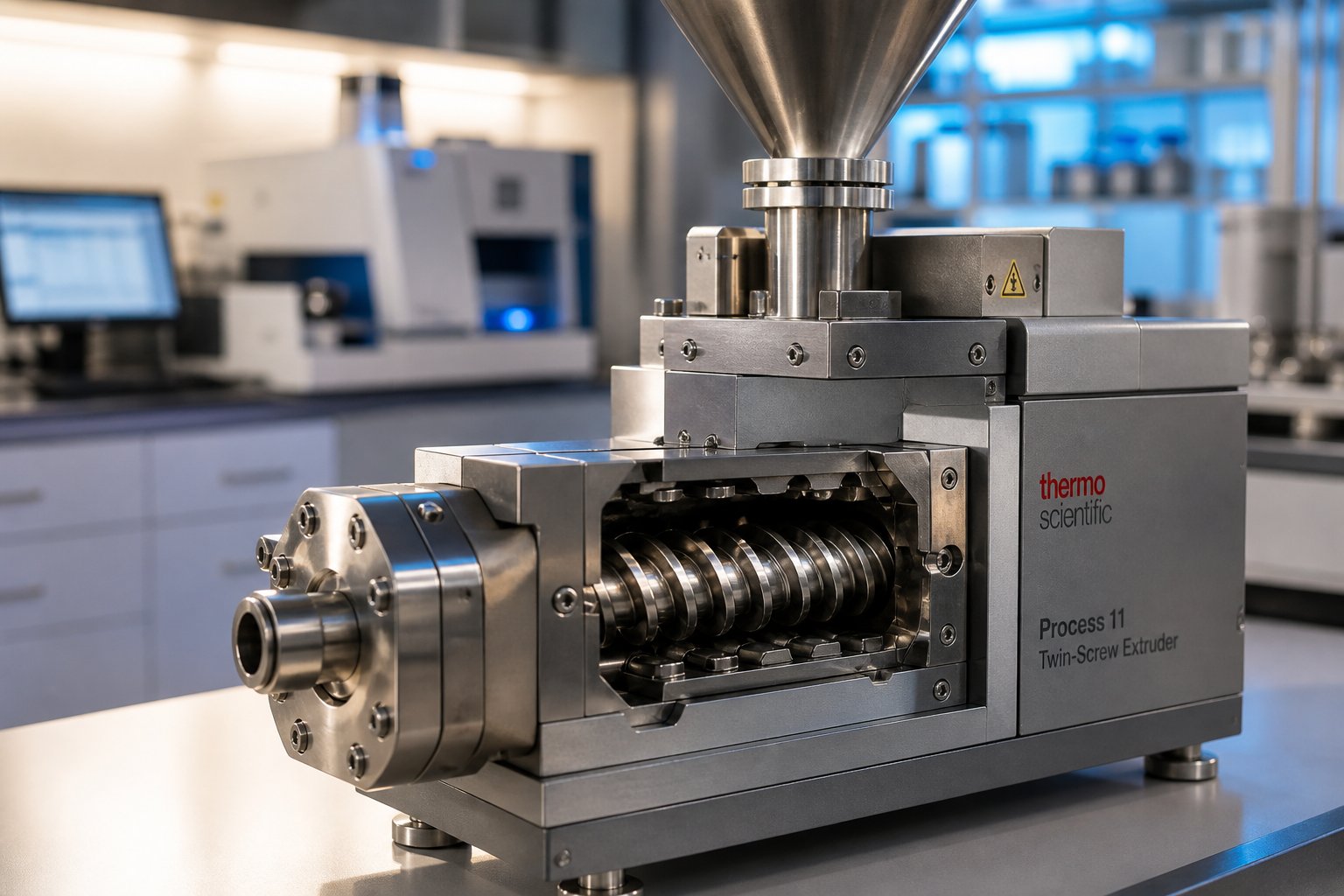
What Is a Lab Twin Screw Extruder and Who Needs One
Imagine you have a brand-new polymer blend idea, an experimental drug formulation, or a novel bioplastic recipe - but only a few hundred grams of raw material to work with. Running that precious sample through a full-production extrusion line would be wasteful, impractical, and potentially dangerous. This is exactly where a lab twin screw extruder earns its place on the bench.
A lab twin screw extruder is a compact, bench-scale or small-footprint twin screw extrusion system purpose-built for research, development, and small-batch processing. It features two intermeshing screws - typically 10 to 27 mm in diameter - rotating inside a heated barrel to melt, mix, and convey materials at throughputs ranging from a few grams per hour up to several kilograms per hour.
What sets this equipment apart from its industrial counterparts? It is not simply a shrunken version of a production machine. A laboratory twin screw extruder is engineered from the ground up for formulation development, not mass manufacturing. Lower motor power, fewer barrel zones, a smaller physical footprint, and dramatically reduced material requirements all reflect a design philosophy centered on experimentation rather than output volume.
Defining the Lab Twin Screw Extruder
At its core, the twin screw extruder relies on two intermeshing screws rotating inside a figure-eight-shaped barrel bore. As material enters through a feed port, the screws convey it forward, applying controlled heat, pressure, and shear along the way. The result is thorough melting, intimate mixing, and consistent output at the die - all within a machine that can sit comfortably on a laboratory benchtop. Because the screws intermesh, they continuously wipe each other's surfaces, minimizing stagnant zones where material could degrade. This self-wiping behavior is especially valuable at lab scale, where even small amounts of degraded material can compromise an entire experimental batch.
Who Uses Lab-Scale Twin Screw Extruders and Why
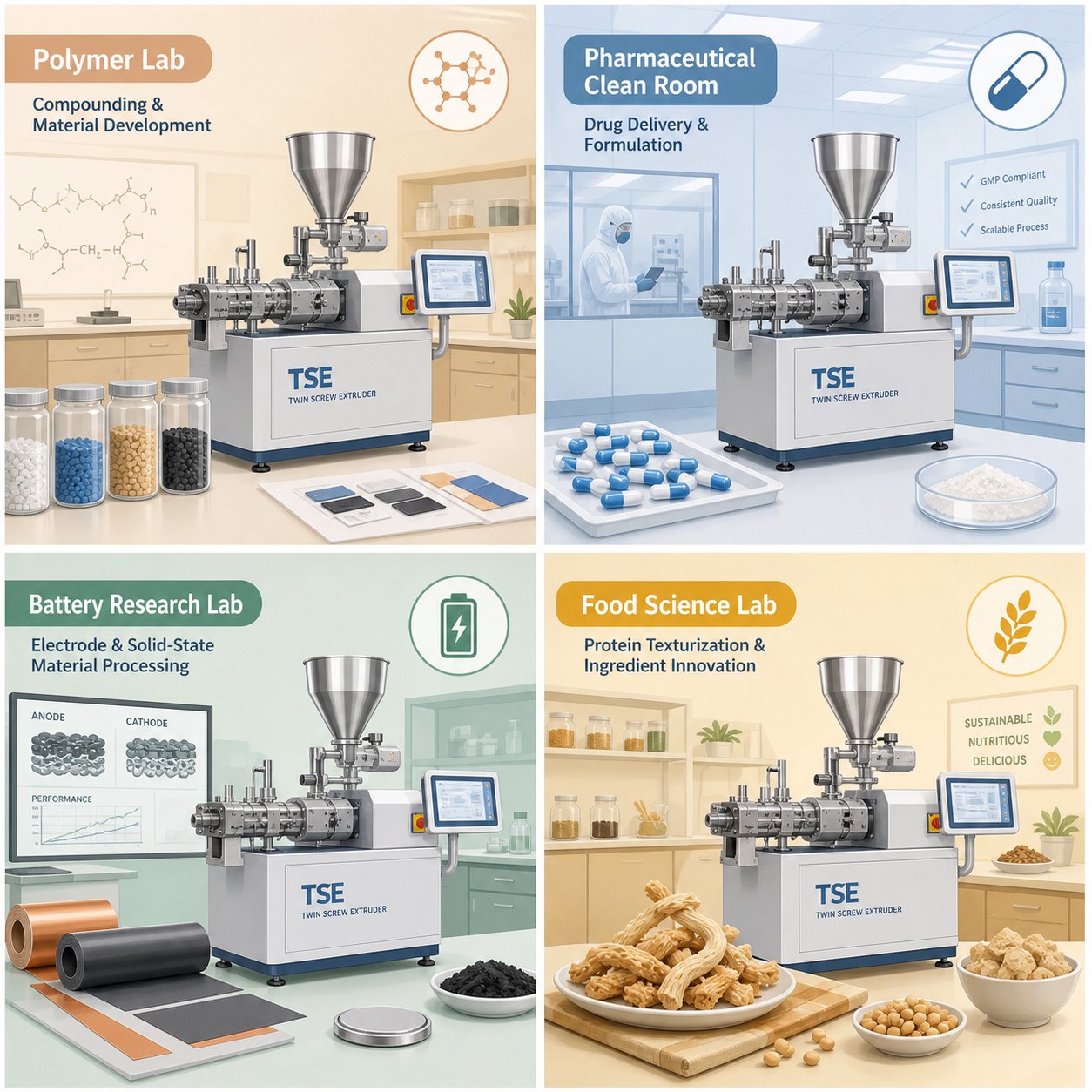
You will find these machines in a surprisingly diverse range of settings:
- Polymer research labs - screening new blends, nanocomposites, and masterbatch formulations with minimal resin consumption.
- Pharmaceutical development teams - running hot-melt extrusion trials with expensive active pharmaceutical ingredients where every gram counts.
- Food science departments - studying textured proteins, expanded snacks, and novel ingredient interactions under precisely controlled conditions.
- Advanced materials groups - exploring battery electrode pastes, biodegradable polymers, and specialty compounds that do not yet exist at commercial scale.
The shared value proposition across all of these user groups comes down to three things. First, a lab extruder conserves costly or scarce raw materials, letting researchers run dozens of formulation iterations with the same amount of material a single production trial would consume. Second, rapid changeover and cleaning between experiments means faster iteration cycles - you can test a new idea in hours rather than days. Third, working at small scale provides a safer environment for processing unfamiliar or potentially hazardous compounds before committing to larger equipment.
For R&D scientists, university researchers, pilot-line engineers, and materials developers, this category of laboratory extruder is less a piece of production hardware and more a precision research instrument. And like any precision instrument, its performance depends heavily on the details of its internal design - particularly the geometry of the screws themselves.
How Twin Screw Extrusion Works at Lab Scale
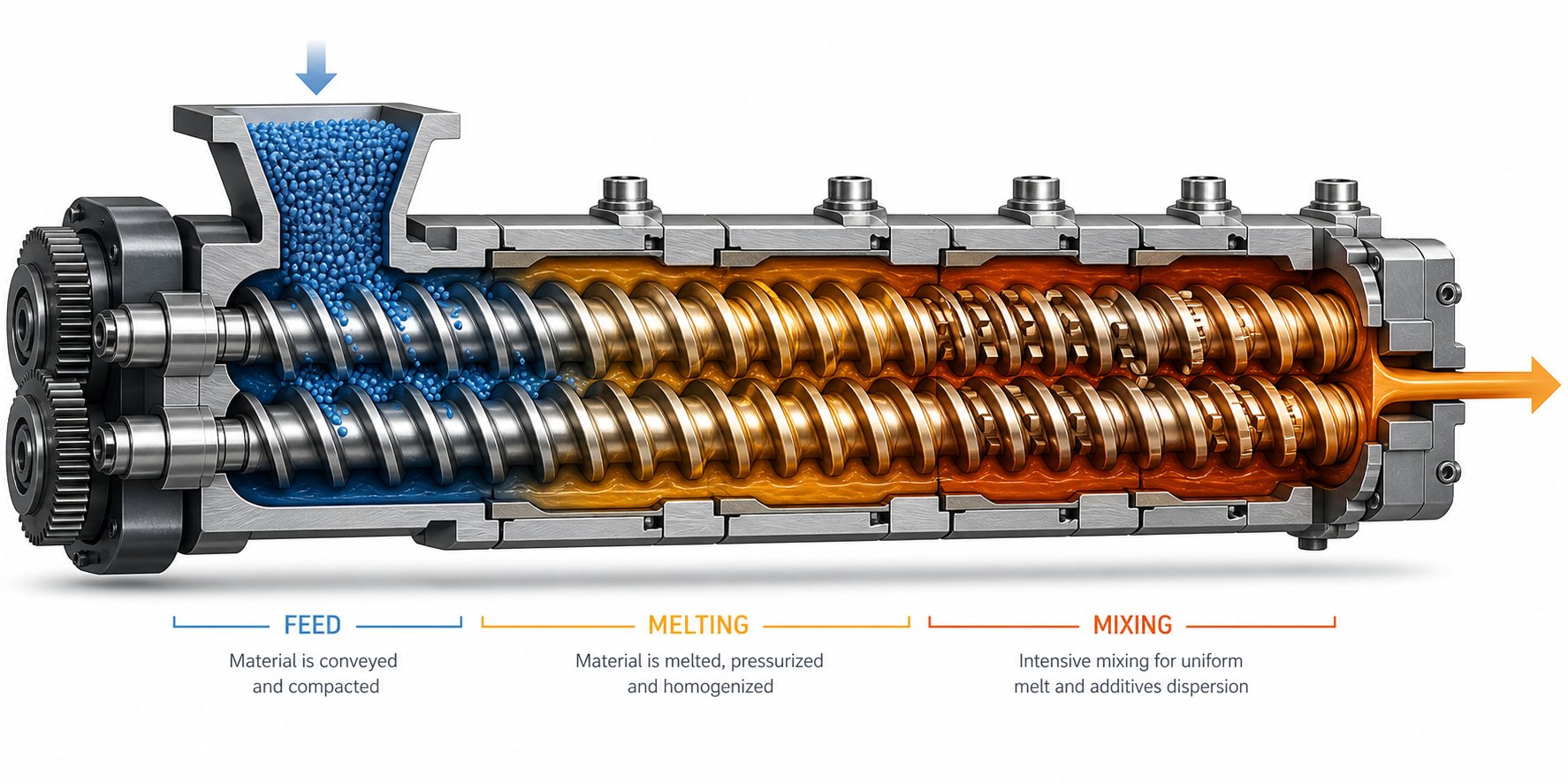
That internal screw geometry mentioned above is not just a design detail - it is the engine behind everything a twin screw extruder does. Understanding how twin screw extrusion actually works gives you a practical advantage when configuring experiments, troubleshooting poor mixing, or interpreting unexpected results. The good news? The core mechanics are straightforward once you break them into three layers: screw geometry, processing zones, and mixing elements.
Screw Geometry and Intermeshing Mechanics
Picture two helical screws sitting side by side inside a barrel whose internal bore looks like a figure eight. As both screws rotate, the flights of one screw reach into the channel of the other. This intermeshing action is what creates positive displacement - material trapped between the screw flights and the extrusion barrel wall gets pushed forward with every rotation, almost like a series of tiny pumps operating in sequence.
Why does this matter at lab scale? Because positive displacement means the forward movement of material depends on screw geometry rather than on friction alone. You get predictable, consistent conveying even at the very low feed rates typical of bench-scale work. Non-intermeshing designs exist, but they behave more like single-screw systems - relying on viscous drag and offering weaker mixing. That is why intermeshing configurations dominate lab-scale screw extrusion, where superior mixing and self-wiping properties are essential for producing reliable research data from small sample volumes.
Processing Zones Along the Barrel
An extruder screw does not perform a single task. As material travels from the feed throat to the die, it passes through distinct functional zones - each designed to accomplish a specific transformation. Think of it as a carefully choreographed sequence rather than a single blending step.
| Processing Zone | Function | Typical Screw Element | What Happens to the Material |
|---|---|---|---|
| Solids Conveying | Intake and forward transport of raw feed | Deep-flighted conveying elements | Powder or pellets move forward under positive displacement; minimal heat applied |
| Melting / Plasticizing | Phase transition from solid to melt | Conveying elements with decreasing pitch; initial kneading blocks | Frictional heat and barrel heating soften and melt the material progressively |
| Mixing / Kneading | Dispersive and distributive mixing | Kneading blocks (various stagger angles) | Agglomerates break apart; additives, fillers, or APIs are uniformly distributed throughout the melt |
| Melt Conveying | Stabilized forward transport of homogeneous melt | Standard-pitch conveying elements | Uniform melt moves steadily toward the die at controlled temperature |
| Pressure Build-Up | Generate die pressure for shaping | Narrow-pitch conveying elements or reverse elements | Melt pressure increases to force material through the die opening at a consistent rate |
Each zone corresponds to a physical section of the extrusion barrel, and in modular lab machines, you can rearrange barrel segments and screw elements to shift where these transitions occur. That flexibility is one of the biggest reasons researchers choose twin screw extrusion over simpler processing methods - you can tune the machine to match the material, not the other way around.
The Role of Kneading Blocks and Mixing Elements
Kneading blocks are arguably the most influential elements on any extruder screw. They consist of a series of oval discs stacked at offset angles along the shaft, and the stagger angle between those discs determines how aggressively the block works the material.
- Narrow stagger angle (30 degrees): Provides strong forward conveying with moderate mixing. Material passes through relatively quickly, experiencing less shear. Ideal for heat-sensitive or shear-sensitive research compounds.
- Medium stagger angle (60 degrees): Balances mixing intensity with residence time. This is a common starting point for polymer compounding and pharmaceutical hot-melt extrusion trials.
- Wide stagger angle (90 degrees): Creates a neutral or even slightly restrictive zone. Material dwells longer, experiencing high shear and intensive dispersive mixing. Useful for breaking apart nanoparticle agglomerates or achieving fine dispersion of immiscible blends - but risky for thermally sensitive formulations.
Sounds complex? In practice, you are simply choosing how hard and how long the material gets worked at a specific point along the barrel. Reverse-flighted elements add another layer of control by pushing material backward, creating a melt seal or increasing back-pressure in a targeted zone. Researchers frequently combine these elements in different sequences to fine-tune shear profiles for each unique formulation.
The real takeaway here is that twin screw extrusion is not a fixed process - it is a configurable platform. And that configurability raises an important follow-up question: when two screws rotate in the same direction versus opposite directions, how does that change the mixing behavior and which setup fits your specific research goals?
Co-Rotating vs Counter-Rotating Configurations Explained
The direction your screws rotate might seem like a minor mechanical detail, but it fundamentally shapes what your lab twin screw extruder can - and cannot - do well. Choosing the wrong configuration for your research goals means fighting the machine instead of leveraging it. Here is how each option works and where it fits best.
Co-Rotating Twin Screw Extruders in the Lab
In a co-rotating twin screw extruder, both screws turn in the same direction. This creates a distinctive self-wiping action: as the flight of one screw sweeps through the channel of the other, it scrapes material off the surfaces and pushes it forward. Dead zones - pockets where material can stagnate and thermally degrade - are virtually eliminated.
Why does this matter for research? Imagine running a pharmaceutical hot-melt extrusion trial with an active ingredient that degrades above a narrow temperature window. Dead zones mean localized overheating and ruined batches. Self-wiping geometry prevents that. This is one reason co-rotating designs dominate lab-scale work across disciplines. The benefits stack up quickly:
- High mixing efficiency at moderate shear - excellent dispersive and distributive blending without excessive mechanical energy input.
- Broad operating windows - flexible screw speed, feed rate, and temperature ranges tolerate the trial-and-error nature of R&D.
- Modular screw design - conveying elements, kneading blocks, and mixing sections can be rearranged freely on splined shafts for each experiment.
- Reduced material degradation - self-wiping keeps residence time distribution tight and predictable.
For compounding, reactive extrusion, nanocomposite development, and pharmaceutical formulation screening, a co-rotating twin-screw extruder is the standard choice in nearly every research setting.
Counter-Rotating and Conical Designs for Specialized Research
Counter-rotating configurations flip the script: the two screws turn in opposite directions. Material gets squeezed between the screws in a calendering-like action, generating strong compressive forces and high pressure build-up. A parallel twin screw extruder in counter-rotating mode excels at controlled, lower-shear conveying - useful when you need to push viscous melts through restrictive dies without overworking the material.
A conical twin screw extruder takes this further by tapering the screws from a larger diameter at the feed end to a smaller diameter at the discharge. The taper naturally compresses material as it moves forward, generating excellent pressure without relying on aggressive screw elements. Conical designs appear frequently in PVC research, profile extrusion studies, and recycling investigations where strong pressure generation and gentle shear handling matter more than intensive mixing.
| Parameter | Co-Rotating (Parallel) | Counter-Rotating (Parallel) | Counter-Rotating (Conical) |
|---|---|---|---|
| Mixing Intensity | High dispersive and distributive | Moderate; compressive mixing | Moderate; compression-driven |
| Shear Generation | Moderate to high (tunable) | Lower; calendering action | Lower; geometry-controlled |
| Pressure Build-Up | Moderate | High | Very high (taper effect) |
| Self-Wiping Capability | Excellent | Limited | Limited |
| Screw Modularity | Fully modular (splined shafts) | Often modular | Typically fixed screw geometry |
| Typical Lab Applications | Compounding, HME, reactive extrusion, blending | PVC compounding, sheet extrusion research | PVC profiling, recycling studies, high-viscosity melts |
Choosing the Right Configuration for Your Research Goals
A simple decision framework keeps the selection process practical. If your primary goal involves dispersive and distributive mixing - think polymer compounding, blending immiscible phases, or hot-melt extrusion of amorphous solid dispersions - a co-rotating twin-screw extruder is almost always the right answer. Its mixing versatility and modular screw platform handle the widest range of experimental variables.
If, on the other hand, your research demands high die pressure, controlled low-shear profiling, or processing of materials like rigid PVC that benefit from compressive rather than elongational mixing, a counter-rotating or conical configuration deserves serious consideration. Some micro-compounder platforms even let you swap between co-rotating and counter-rotating screws on the same machine, giving you both capabilities in a single footprint.
The configuration decision sets the boundaries of what your extruder can achieve. But within those boundaries, the real performance tuning happens at a more granular level - in the specific arrangement of modular screw elements along the shaft.
Modular Screw Design and Its Role in Lab Extrusion
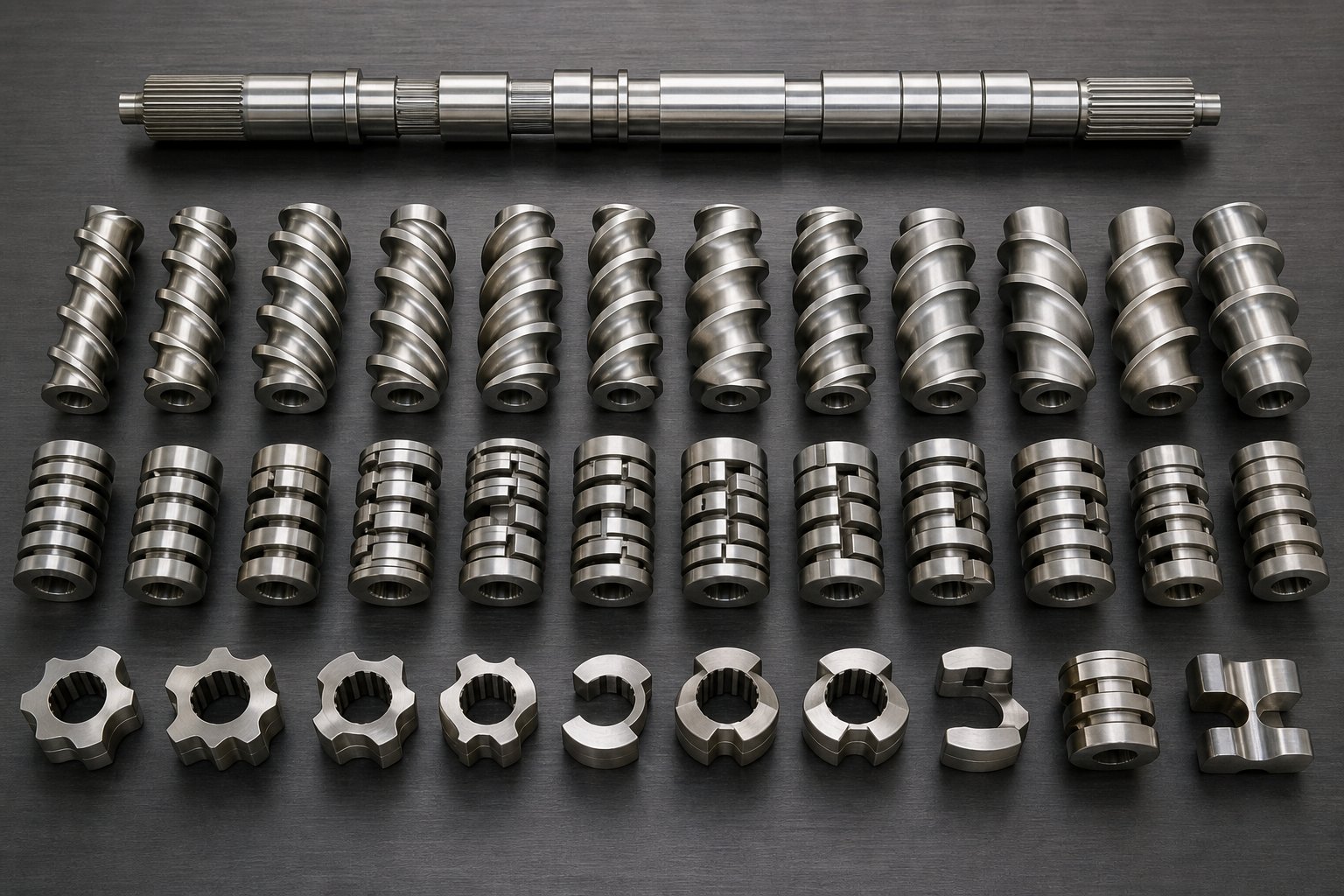
That granular level of performance tuning is where lab-scale twin screw extrusion truly separates itself from every other compounding method. Unlike single-screw machines with fixed, one-piece screw geometries, a modular screw extruder lets you physically rebuild the screw profile for each experiment. Imagine a toolkit where every wrench, socket, and adapter snaps onto the same drive shaft - and you pick only the pieces your specific job requires. That is exactly how modular screw design works, and it is the single biggest reason a lab twin screw extruder can serve polymer scientists, pharmaceutical formulators, and food researchers equally well from the same platform.
Understanding Modular Screw Elements
Every modular twin screw and barrel system follows a building-block philosophy. Individual screw elements slide onto a splined shaft, locked in place by keyways that transmit torque from the drive. By swapping, reordering, or replacing these elements, you reshape the entire processing profile without buying a new screw extruder. Here are the core element types you will encounter:
- Conveying elements - Helical flights that move material forward along the barrel. Deep-flighted versions with large pitch pull material quickly through low-shear zones, while shallow, tight-pitch elements slow transport and build pressure. Researchers use these in the feed section and wherever gentle forward movement is needed between more aggressive processing zones.
- Kneading blocks - Stacks of oval-shaped discs set at offset angles (typically 30, 60, or 90 degrees). They shear, fold, and reorient the melt to break apart agglomerates and distribute additives. Narrow stagger angles favor forward conveying with light mixing; wide stagger angles create intensive dispersive shear zones. These are the workhorses for compounding, blending, and hot-melt extrusion of amorphous solid dispersions.
- Distributive mixing elements - Specialized geometries such as toothed mixing elements (TMEs) or gear-type mixers that split and recombine melt streams repeatedly. Rather than applying high shear, they fold material over and over for gentle but thorough homogenization. Ideal for distributing color concentrates, low-viscosity liquid additives, or sensitive biological actives without thermal damage.
- Reverse elements - Conveying or kneading elements with an opposite helix that push material backward against the main flow. This creates localized back-pressure, forces the melt to fill the screw channel completely, and forms a melt seal. Researchers place reverse elements upstream of vacuum vent ports (to prevent gas from traveling backward) or wherever a sealed, high-pressure zone is needed for reactive extrusion or devolatilization.
Each element type serves a distinct purpose, yet none works in isolation. A typical lab screw profile might start with deep-pitch conveying elements in the feed zone, transition to a series of kneading blocks for melting and mixing, return to standard conveying to stabilize the melt, insert a reverse element before a vent port, and finish with tight-pitch conveying for pressure build-up at the die. The sequence, length, and stagger angles you select collectively define the shear history, residence time distribution, and thermal exposure of every gram of material passing through your extruder system.
Why Custom Screw Design Matters for Lab Research
Off-the-shelf screw configurations - the ones shipped with a new machine - are designed for common materials and general-purpose processing. They work well enough for standard polyethylene compounding or a textbook polylactic acid blend. But R&D rarely involves textbook materials.
Consider the challenges that arise in everyday lab scenarios:
- A pharmaceutical team needs to process an API that degrades above 140 degrees Celsius, demanding a low-shear screw profile with minimal viscous heating - yet the drug must be fully dispersed in a polymer matrix to form an amorphous solid dispersion.
- A materials scientist is incorporating 40 weight percent glass fiber into a polyamide at lab scale, requiring aggressive kneading for wetting and dispersion but downstream conveying gentle enough to preserve fiber length.
- A bioplastics researcher is extruding a thermoplastic starch blend that behaves nothing like a conventional plastic extruder screw was designed to handle - high moisture sensitivity, narrow processing windows, and a tendency to slip in standard conveying elements.
Each of these situations demands a tailored screw profile that balances competing requirements along different zones of the barrel. And the barrel itself plays an equally important role. Modular barrel segments let you reposition vent ports for devolatilization, add side-feed locations for downstream filler introduction, or insert liquid-injection barrels for plasticizer or crosslinking agent delivery. The interplay between screw element arrangement and barrel segment configuration is what transforms a generic extruder system into a purpose-built research instrument.
This is precisely why researchers who invest time optimizing their screw design see dramatically better results - tighter particle size distributions, more uniform drug content, fewer degraded samples - than those who run every experiment on the factory-default configuration.
Getting Expert Support for Specialized Screw Configurations
Here is the practical reality: most university labs, pilot-line teams, and small-batch processors do not have a dedicated extrusion engineer on staff. A polymer chemist may understand reaction kinetics inside and out, yet lack the experience to translate that knowledge into a specific arrangement of kneading blocks, conveying pitches, and reverse elements on a 16 mm splined shaft. The gap between knowing what the material needs and knowing how to configure the hardware is real - and it can stall projects for weeks.
This is where external engineering support becomes genuinely valuable. Services like NANHAIYA's custom screw design offer application-specific guidance for researchers working with non-standard materials or compact lab equipment. Rather than guessing at element arrangements, you can consult with specialists who design twin screw and barrel configurations for challenging formulations - whether that means a low-shear profile for a thermally sensitive pharmaceutical compound, a high-dispersive layout for nanoparticle-filled polymers, or a replacement plastic extruder screw geometry optimized for an experimental bioplastic that does not appear in any standard processing handbook.
The value of this kind of support is not just convenience. A well-designed screw profile reduces wasted material, shortens development timelines, and produces cleaner data. For labs running expensive or limited-quantity raw materials, the cost of a custom screw consultation often pays for itself within a handful of experiments - far less material ends up in the waste bin when the processing profile matches the formulation from the start.
Screw element design and barrel modularity define what happens inside the machine. But the differences between a lab-scale and a production-scale twin screw extruder go well beyond the screws - and understanding those differences is critical for anyone deciding which size of equipment actually fits their research needs.
Lab-Scale vs Production-Scale Twin Screw Extruders
Size differences between a benchtop twin screw extruder and a factory-floor production line are obvious at first glance - one fits under a fume hood, the other fills a warehouse bay. But the real distinctions run far deeper than physical footprint. They involve fundamentally different engineering trade-offs, operational philosophies, and intended outcomes. If you are choosing between equipment scales - or trying to understand where your lab work fits in the broader manufacturing pipeline - you need a clear picture of what separates these machines in practice, not just in spec sheets.
Key Differences Between Lab and Industrial Twin Screw Extruders
A side-by-side comparison reveals just how dramatically these two categories diverge. The table below maps the core specifications that matter most when evaluating a lab scale twin screw extruder against its production-grade counterpart.
| Parameter | Lab-Scale Twin Screw Extruder | Production-Scale Twin Screw Extruder |
|---|---|---|
| Screw Diameter | 10-27 mm (micro and bench scale) | 35-180+ mm |
| Throughput | Grams/hr to low kg/hr (typically 0.2-20 kg/hr) | Hundreds to thousands of kg/hr |
| Motor Power | 0.5-10 kW (typical bench units) | 55-1,200+ kW |
| L/D Ratio | 25:1 to 40:1 (some up to 68:1) | 32:1 to 68:1 |
| Max Screw Speed | Up to 1,000+ RPM | 250-800 RPM |
| Barrel Zone Count | 4-10 zones | 8-16+ zones |
| Physical Footprint | Benchtop or small floor-standing; fits inside standard lab spaces | Large floor-standing; requires dedicated production bays |
| Approximate Cost Tier | Lower investment; accessible for university and R&D budgets | Significantly higher capital expenditure; justified by production revenue |
| Primary Purpose | Formulation development, screening, small-batch trials | Continuous commercial manufacturing at scale |
Notice that screw diameter is the single most consequential variable. As industry technical data shows, output scales exponentially with screw diameter - stepping from a 16 mm lab machine to a 50 mm production extruder does not triple throughput, it can multiply it by a factor of fifty or more. Motor power, torque demand, barrel mass, and downstream equipment complexity all increase in tandem, which is why these two categories of twin screw extruder machine are engineered to very different standards.
You will also notice that lab-scale machines often run at higher RPM than their industrial counterparts. This sounds counterintuitive until you consider the physics: smaller screw diameters produce lower tip speeds at the same RPM. Running a 16 mm screw at 800 RPM generates comparable shear rates to running a 60 mm screw at a fraction of that speed - a detail that becomes critical during scale-up.
Why Lab-Scale Extruders Exist Beyond Cost Savings
The most common assumption is that researchers buy lab-scale equipment because it costs less. That is true in absolute terms, but it misses the real reasons these machines are indispensable. Cost is a consequence of the design philosophy, not the driver.
Consider material conservation first. Novel polymers synthesized in university reactors, experimental pharmaceutical actives, and cutting-edge nanomaterials often cost hundreds - sometimes thousands - of dollars per kilogram. A production extruder consuming 200 kg/hr would burn through an entire research budget in minutes. A lab scale extruder processing 200 grams per hour lets you run a complete design-of-experiment study - screening temperature profiles, screw speeds, and filler loadings across dozens of combinations - with the same amount of material a single production trial would consume. This is not frugality; it is statistical power per gram.
Then there is changeover speed. Industrial extruders can take hours to purge, disassemble, clean, and reassemble between material changes. A laboratory scale extruder with modular barrels and small screw elements can be fully stripped, cleaned, and rebuilt in a fraction of that time. When your research involves testing fifteen formulation variants in a single week, fast turnaround is not a convenience - it is the difference between generating publishable data this month and next quarter.
Safety and containment add another critical dimension. Early-stage materials are often poorly characterized. Processing an unknown compound on a production line exposes operators to larger volumes of potentially hazardous fumes, dusts, or decomposition products. Lab-scale throughputs keep exposure volumes low, making it practical to work inside ventilated enclosures and handle experimental materials with appropriate caution.
Finally, there is a subtler benefit that experienced researchers prize: process sensitivity. Small-diameter screws and low-volume barrel bores amplify the effect of every process variable change. A two-degree shift in barrel temperature or a slight adjustment to screw speed produces a measurable difference in torque, melt pressure, and product quality. This sensitivity makes lab machines excellent analytical tools for mapping process-parameter relationships - the kind of data you need for robust formulations and defensible patent filings.
When a Benchtop Extruder Makes More Sense Than Pilot Scale
Not every research question needs a pilot-scale answer. Understanding where your work falls on the scale-up continuum prevents both over-investment and wasted time on equipment that cannot deliver the data you actually need.
A benchtop twin screw extruder - typically in the 10-18 mm screw diameter range - is the right tool for early-stage screening. You are asking fundamental feasibility questions: Can this polymer blend be melt-processed? Does the API remain stable under extrusion conditions? What is the approximate processing window? At this stage, you want rapid answers from minimal material, and a micro-scale or benchtop machine delivers exactly that. As equipment-scale selection guidance emphasizes, lab extruders answer whether a formulation can work, while pilot extruders answer whether the process can scale.
Pilot-scale machines (screw diameters roughly 25-40 mm) serve a different purpose entirely. They bridge the gap between proof-of-concept and production by running longer campaigns, testing realistic downstream equipment such as pelletizers and cooling lines, and generating the process stability data - torque trends over time, vacuum degassing performance, feeding consistency - that production engineers need for confident scale-up decisions.
Here is a practical way to think about it:
- Choose benchtop when your material supply is limited, the formula is not finalized, you need to compare multiple screw configurations quickly, or you are establishing a basic processing window for the first time.
- Choose pilot scale when the lab formulation has passed initial screening, you need to produce larger sample quantities for customer evaluation or regulatory testing, or you must validate that the process remains stable over longer run times before committing to production equipment.
- Choose production scale only after the processing window, screw configuration, quality specifications, and raw material supply are confirmed through earlier-stage work.
Skipping directly from benchtop to production is one of the most expensive mistakes in extrusion development. A lab scale extruder protects your development budget by catching formulation problems early. A pilot extruder protects your scale-up investment by catching process stability issues before they become production-floor crises. Each stage answers a different question, and the most cost-effective development path moves through them sequentially rather than trying to leapfrog.
With a clear understanding of which equipment scale fits your current research phase, the next logical step is matching that equipment to specific application areas - because the versatility of the twin screw platform means the same basic machine can serve wildly different research disciplines.
Key Applications Across Research and Industry
That versatility is not an abstract claim - it shows up concretely in the range of research disciplines that rely on the same twin screw platform every day. A polymer extruder configured for nanocomposite development in the morning can be stripped, cleaned, and rebuilt for pharmaceutical formulation screening by the afternoon. Few other instruments offer that kind of cross-disciplinary flexibility from a single footprint. Here is where lab-scale twin screw extrusion delivers the most value.
Polymer Compounding and Materials Research
Polymer compounding remains the largest single application area for lab twin screw extruders. When you are developing a new blend, masterbatch, or filled composite, the core challenge is always the same: achieve uniform dispersion of additives throughout a polymer matrix while preserving the properties you care about. A compounding twin screw extruder handles this by applying controlled shear and thermal energy to melt the base resin, break apart filler agglomerates, and distribute every component evenly across the melt stream.
At lab scale, that translates into rapid screening of variables that would be prohibitively expensive to explore on production equipment. Imagine you need to optimize a glass-fiber-reinforced polyamide formulation. Using a benchtop compounding extruder, you can test five different filler loadings, three compatibilizer ratios, and a range of barrel temperature profiles - all in a single week, all with less than a kilogram of total material. Nanocomposite development follows the same logic: dispersing carbon nanotubes, graphene nanoplatelets, or nanoclay into a polymer matrix demands careful tuning of shear intensity, and a lab machine lets you iterate quickly through screw configurations until the dispersion quality meets your targets.
Researchers working with twin screw extruder plastic compounding also use these machines for color concentrate development, reactive compatibilization studies, and recycled-content evaluation - any scenario where you need precise control over mixing conditions and detailed process data from small sample volumes.
Pharmaceutical Hot-Melt Extrusion
Pharmaceutical development has embraced hot-melt extrusion as a powerful route to improving drug bioavailability. The core concept is straightforward: many active pharmaceutical ingredients (APIs) have poor water solubility in their crystalline form, which limits how much drug actually reaches the bloodstream after oral dosing. By dispersing the API into a polymeric carrier matrix through a hot melt extruder, researchers can convert it into an amorphous solid dispersion (ASD) - a high-energy, non-crystalline state that dissolves faster and more completely.
The results can be dramatic. A study published in AAPS PharmSciTech demonstrated that an ASD of a poorly soluble compound prepared by HME with PVP VA64 polymer achieved four times higher bioavailability in dogs compared to a conventional crystalline tablet formulation. The entire early-stage development - from polymer screening through prototype ASD production - was conducted on a 9 mm mini-extruder using batch sizes as small as 5 to 20 grams.
This is precisely why lab-scale machines are essential for pharmaceutical R&D. Active pharmaceutical ingredients at the early development stage can cost thousands of dollars per gram, and quantities are extremely limited. A lab extruder for polymer-drug dispersion work lets formulation scientists screen multiple polymer carriers, drug loadings, and processing temperatures with total API consumption measured in hundreds of grams rather than kilograms. The ability to identify stable, bioavailable formulations quickly - and with minimal drug substance - directly accelerates the path from discovery to clinical trials.
Emerging Applications in Battery, Bioplastics, and Food Science
Beyond traditional polymer and pharmaceutical work, several fast-growing research fields are driving new demand for lab-scale twin screw extrusion. These emerging applications highlight the platform's adaptability to materials and processing challenges that barely existed a decade ago.
- Battery electrode manufacturing - Twin screw extruders are being adopted for continuous cathode and anode slurry mixing as an alternative to conventional batch planetary mixers. As process specialists at Thermo Fisher Scientific have detailed, continuous twin screw compounding improves dispersion quality, reduces batch-to-batch variation, and cuts mixing time from hours to minutes. Lab-scale machines with screw diameters as small as 11 mm allow researchers to develop and optimize electrode slurry formulations - including solvent-free dry electrode processing - using as little as 100 grams of novel cathode material.
- Biodegradable and bio-based polymers - PLA, PHA, thermoplastic starch blends, and other bioplastics present unique processing challenges: narrow thermal windows, moisture sensitivity, and melt behaviors that differ sharply from conventional petrochemical resins. Lab-scale twin screw extrusion lets researchers fine-tune processing conditions for these materials without committing large volumes of expensive biosynthesized feedstock. Typical studies include optimizing plasticizer ratios in starch-based blends and evaluating reactive compatibilization strategies for PLA/PBAT composites.
- Food extrusion research - Textured vegetable proteins, expanded snack prototypes, and encapsulated flavor systems all rely on precise control of shear, temperature, and moisture content during extrusion. Lab-scale machines give food scientists the ability to run controlled experiments with novel protein sources - insect protein, algae-derived isolates, or fermentation-based ingredients - where raw material availability is limited and each formulation variable needs systematic evaluation.
- Advanced and functional materials - Conductive polymer composites for flexible electronics, ceramic-loaded feedstocks for additive manufacturing, and specialty masterbatches for medical devices all benefit from the precise mixing control and small material requirements of lab-scale equipment.
The common thread across every one of these application areas is the same: researchers need tight process control, minimal material consumption, and the flexibility to reconfigure the machine for each new experiment. That is what makes a lab twin screw extruder the instrument of choice across such remarkably diverse fields.
Equally important is what happens around the extruder itself. The best screw design and barrel configuration in the world cannot deliver reproducible results if the feeding, downstream handling, and process monitoring systems are not up to the task - a topic that rarely gets the attention it deserves.
Feed Systems, Downstream Operations, and Process Monitoring
A perfectly configured screw profile means very little if the material arriving at the feed throat is inconsistent, the extrudate leaving the die is mishandled, or the process data needed for your next publication simply was not recorded. The extruder itself sits at the center of a broader workflow, and every link in that chain influences the quality of your final results. Surprisingly, most discussions about lab twin screw extruders stop at the barrel exit. Here is what happens before, during, and after the melt leaves the screws - and why each stage deserves as much attention as the screw design itself.
Material Feeding Methods for Lab Extrusion
Getting material into the extruder sounds simple. Pour pellets into a hopper, let gravity do the rest. In practice, feed consistency is one of the most common sources of experimental noise at lab scale - and the smaller the throughput, the more sensitive the process becomes to feeding errors.
Two feeder types dominate extrusion lab setups: volumetric and gravimetric. Each operates on a fundamentally different principle, and choosing the wrong one for your application can quietly compromise an entire design-of-experiment study.
Volumetric feeders dispense material based on volume. A rotating screw or vibratory tray moves a fixed volume of material per unit time, and the mass delivered depends on the bulk density of the feed. As Plastrac's technical comparison explains, volumetric feeders are straightforward, affordable, and work well when the material's bulk density stays relatively constant - think uniform plastic pellets with good flow characteristics. For routine screening runs where approximate feed rates are acceptable, a volumetric feeder keeps things simple and cost-effective.
Gravimetric feeders measure the actual weight of material dispensed in real time, continuously adjusting the feed rate to maintain a target mass flow. This matters enormously when you are processing powders, irregularly shaped granules, or blends where bulk density shifts as the hopper empties. Pharmaceutical formulation work, where precise drug-to-polymer ratios directly affect bioavailability data, almost always demands gravimetric control. The higher upfront cost pays for itself in tighter experimental reproducibility - every data point in your DOE reflects the formulation you intended, not a feeding artifact.
Beyond the primary feeder, side feeders introduce secondary materials - glass fibers, mineral fillers, liquid additives - downstream of the main feed zone. Why not add everything at once? Because some additives degrade under prolonged heat exposure, and others (like long glass fibers) break apart if they pass through the full length of kneading blocks. Side feeding lets you control exactly when and where each component enters the melt stream.
The extruder feed barrel and hopper geometry also play a quieter but equally important role. At the low throughputs typical of lab systems, powder bridging inside the hopper, inconsistent flow through the feed throat, and material sticking to barrel walls near the intake port can all cause feed surging. Researchers working with sticky polymers, hygroscopic powders, or low-bulk-density materials often benefit from grooved feed sections, cooled barrel extruder intake zones that prevent premature melting, or force-feeding auger attachments that maintain positive material flow into the screws.
Downstream Operations After the Extruder Die
Material exits the die as a continuous stream of hot, shaped extrudate. What happens in the next few seconds determines whether you end up with usable pellets, clean film samples, or a tangled mess on the lab floor. Downstream equipment at lab scale mirrors production-line configurations but in miniaturized, often more manual forms.
The most common downstream setups for lab twin screw extruders include:
- Strand pelletizing - The extrudate exits through a multi-hole strand die, passes through a water bath or air-cooling section, and feeds into a strand pelletizer that chops cooled strands into uniform pellets. This is the workhorse method for compounding research and delivers clean, characterizable pellets ready for injection molding or further analysis.
- Underwater pelletizing - A die-face cutter slices the melt directly at the die exit while submerged in circulating water. This produces spherical pellets with narrow size distributions and handles sticky or low-viscosity materials that would deform during strand cooling. Less common at micro-scale but increasingly available for lab machines in the 20-27 mm screw diameter range.
- Film casting and sheet extrusion - A flat or slit die produces thin film or sheet samples for optical, mechanical, or barrier testing. Lab-scale chill rolls and take-up units control film thickness and orientation. As Thermo Fisher's downstream equipment overview notes, the handling of still-hot extruded material significantly influences material properties and surface finish, making controlled cooling and take-up speed critical for reproducible film samples.
- Fiber spinning - Specialized die geometries and winding equipment draw the melt into fine fibers for textile research, filtration media development, or electrospinning precursor studies.
Regardless of which downstream method you use, the general workflow follows a consistent sequence:
- Die exit - Melt passes through a shaped die orifice under pressure. A bypass valve in the extrusion line can divert material away from the die during startup or when purging between formulation changes, preventing off-spec material from contaminating your collection.
- Cooling - Extrudate is quenched via water bath immersion, air cooling conveyor, or chill-roll contact, depending on the product form and material sensitivity.
- Strand cutting or pelletizing - Solidified strands are chopped into pellets at a controlled rate, or die-face cut underwater for spherical granules.
- Collection and characterization - Pellets, films, or fibers are collected, labeled by run condition, and routed to analytical testing: DSC, rheometry, tensile testing, dissolution studies, or microscopy as required by the research objectives.
One practical tip: at the low throughputs common in lab work, strand cooling and pelletizer speed require careful matching. A pelletizer calibrated for production-rate strand speeds will produce inconsistent cut lengths - or simply fail to grip the strand at all - when fed by a benchtop extruder outputting a few hundred grams per hour. Purpose-built lab-scale downstream equipment, sized to match your extruder's output range, eliminates this mismatch.
Process Monitoring and Data Logging for Reproducible Research
Here is where lab-scale extrusion diverges most sharply from hobbyist or industrial practice: the data. In an extrusion lab focused on R&D, every run generates information that must be documented, analyzed, and often defended in publications, patent applications, or regulatory filings. If your extruder cannot tell you exactly what happened inside the barrel during a given experiment, the results are anecdotal rather than scientific.
Modern lab twin screw extruders integrate process analytical technology (PAT) that captures critical parameters in real time:
- Melt pressure sensors - Transducers mounted near the die and at intermediate barrel positions measure the pressure profile along the screw length. Sudden pressure spikes can indicate surging, blocked screens, or inconsistent feeding. Stable pressure trends confirm steady-state processing conditions.
- Melt temperature probes - In-barrel thermocouples or infrared sensors record actual melt temperature, which often differs from the set-point barrel temperature due to viscous heating. This distinction matters enormously for shear-sensitive materials where a ten-degree overshoot can trigger degradation.
- Torque monitoring - Drive torque reflects the mechanical energy input to the material and serves as a proxy for melt viscosity under processing conditions. Tracking torque over time reveals whether the material is fully melted, whether filler dispersion is progressing, and whether the formulation is thermally stable or slowly degrading during the run.
- Screw speed and feed rate logging - Automated recording of these setpoints, alongside measured values, creates a complete process fingerprint for each experiment.
The real power of PAT emerges when all of these signals feed into data-logging software that timestamps every reading and ties it to specific sample collection windows. Research on twin-screw granulation using inline particle size analyzers, for example, has demonstrated that real-time inline measurement reveals process instabilities - such as startup transients or feed fluctuations - that offline sampling would completely miss. An offline sample taken at the wrong moment can produce misleading data, while continuous inline monitoring captures the full temporal picture and shows exactly when steady-state conditions are reached.
Why does this level of documentation matter so much? Consider three scenarios researchers face regularly:
- Publishing - Peer reviewers increasingly expect detailed processing condition reports. Stating "extruded at 180 degrees Celsius and 200 RPM" is no longer sufficient; reviewers want to see actual melt temperature, specific energy input (kWh/kg), and evidence of process stability.
- Patent filings - Defensible patents require precise, reproducible process descriptions. Data logs showing exact torque curves, temperature profiles, and feed rates across the entire run provide the kind of evidence that withstands legal scrutiny.
- Regulatory submissions - Pharmaceutical and medical device applications demand documented proof that processing conditions remained within validated ranges for every batch produced, even at the earliest development stages.
Digital integration is not a luxury feature - it is what separates a research-grade instrument from a glorified mixer. When evaluating any lab twin screw extruder, the sophistication of its data acquisition system deserves the same scrutiny you would give to screw diameter, torque capacity, or barrel zone count.
All of this meticulous process data serves another critical purpose beyond the immediate experiment. It becomes the foundation for one of the most challenging transitions in materials development: moving a proven lab formulation onto larger equipment without losing the properties that made it work in the first place.
Scaling Up from Lab Twin Screw Extrusion to Production
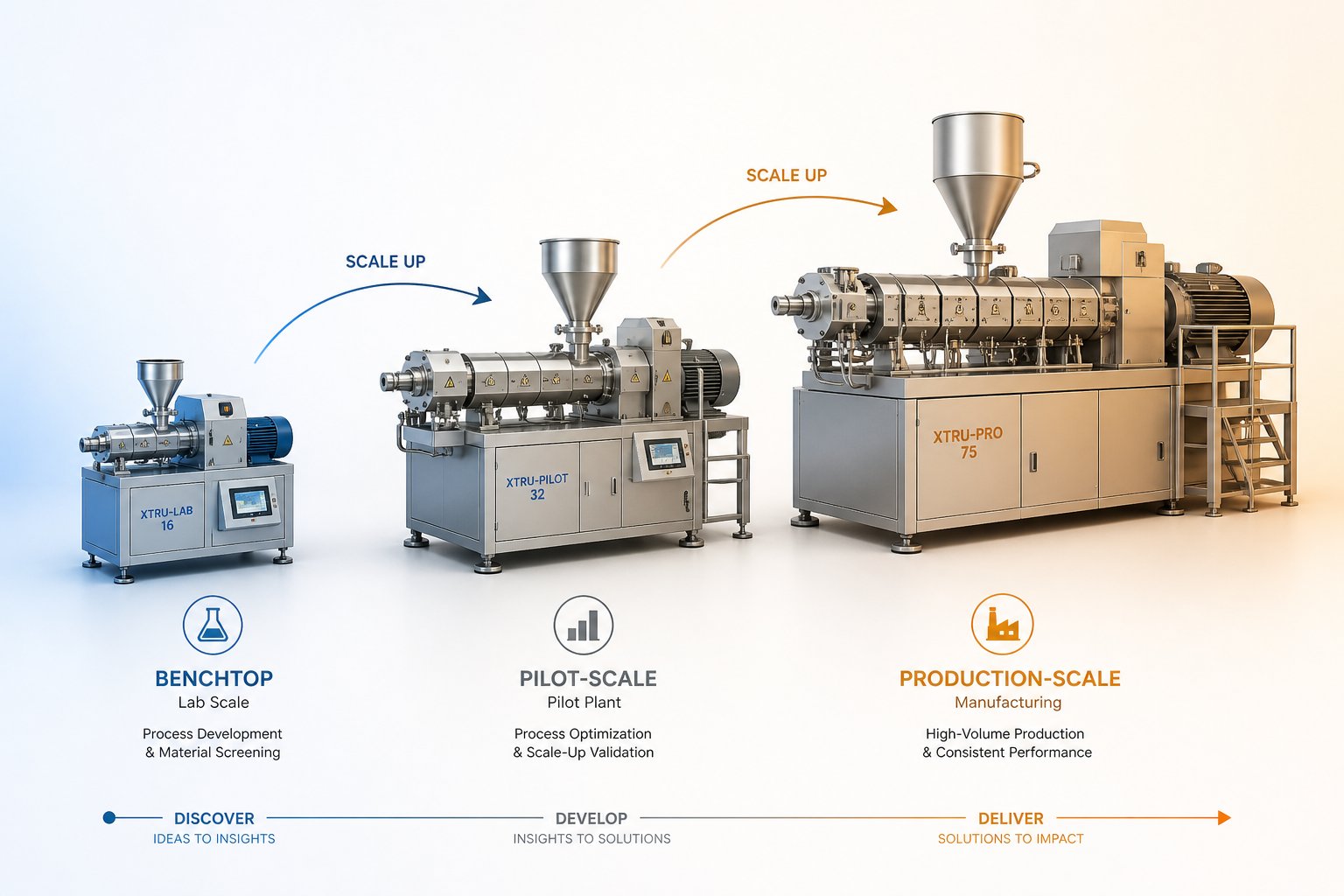
That transition - from a successful benchtop run to a reliable production process - is where many promising formulations stall or fail entirely. You have optimized your screw configuration, dialed in a temperature profile that keeps your material stable, and produced beautiful pellets at 2 kg/hr on a 16 mm machine. Then you transfer those exact settings to a 60 mm production extruder, and the result looks nothing like what came off the lab line. Unmolten pellets in the discharge stream. Phase-separated extrudate. Torque alarms. What went wrong?
The answer, almost always, is that scaling up twin screw extrusion is not a matter of copying numbers from one machine to another. It requires translating process understanding - and the detailed data logged during your lab runs is the currency that makes that translation possible.
How Lab Data Transfers to Production Equipment
Two concepts form the backbone of every successful scale-up strategy: geometric similarity and specific mechanical energy.
Geometric similarity means the lab extruder and the production extruder share the same fundamental proportions. The most critical ratio is the outer diameter to inner diameter of the screw (OD/ID). When both machines share the same OD/ID ratio - commonly 1.55 for many modern co-rotating twin screw extruders - the channel depths, flight clearances, and intermeshing geometry scale proportionally. This ensures that the flow patterns, shear distributions, and fill characteristics at small scale have meaningful analogs at larger scale. Without geometric similarity, you are comparing apples to oranges, and no amount of parameter adjustment will bridge the gap cleanly.
Specific mechanical energy (SME), expressed in kWh/kg, captures the energy the drive motor transfers through the screws into every kilogram of material processed. It is calculated from motor torque, screw speed, and throughput rate. SME serves as a scale-independent fingerprint of the process - it tells you how hard the machine is working the material regardless of screw diameter. A case study published in Plastics Technology demonstrated this principle clearly: a masterbatch developed on a 26 mm lab extruder at an SME of 0.083 kWh/kg could only be reproduced successfully on 40 mm and 92 mm machines when process adjustments brought the SME back to within approximately 5% of that lab-scale value. When the SME dropped to 0.026 kWh/kg on the 92 mm extruder - a 69% shortfall - the result was solid, unmolten pellets discharging through the diverter valve.
Researchers use their lab twin screw extruder to establish a complete processing window: temperature profile, screw speed, feed rate, screw configuration, and the resulting SME. This window becomes the reference target. The goal during scale-up is not to match individual machine settings, but to reproduce the thermomechanical history the material experienced at lab scale.
Common Scale-Up Challenges and How to Avoid Them
Even with geometric similarity and a clear SME target, scale-up introduces physical realities that simply do not exist at bench scale. Three challenges trip up researchers most frequently.
Heat transfer changes dramatically with barrel diameter. The area-to-volume (A/V) ratio of a twin screw barrel decreases sharply as the diameter increases. A 16 mm barrel has excellent heat transfer - the barrel wall is never far from the center of the melt stream. A 92 mm barrel, by contrast, has a much lower A/V ratio, meaning the core of the melt is thermally insulated from the barrel heaters and cooling channels. The practical consequence? Temperature control that worked effortlessly at lab scale becomes sluggish at production scale. Barrel set-point temperatures may need to be adjusted - often lowered - to compensate for the greater contribution of viscous self-heating in a larger-diameter melt channel.
Residence time distribution shifts. Larger barrel volumes and different fill levels change how long material spends inside the extruder and how uniformly that time is distributed across the melt stream. A pharmaceutical scale-up analysis in Pharmaceutical Technology highlighted that mass- and heat-transfer limitations at larger scales can require longer processing sections, alternative screw designs, or lower screw speeds - all of which alter residence time distribution and potentially affect product uniformity and degradation.
Shear rate does not scale with screw speed. This is the subtlest trap. The tip speed of a screw flight increases linearly with diameter at the same RPM. Running a 60 mm double screw extruder at the same 400 RPM you used on your 16 mm lab machine would expose the material to roughly four times the peak shear rate. For shear-sensitive pharmaceutical excipients, temperature-sensitive bioplastics, or fiber-filled compounds where fiber breakage must be controlled, this difference can be catastrophic. The correct approach is to match shear rates by reducing screw speed proportionally as diameter increases - and to use the torque and melt-temperature data from your lab runs to verify that the energy input profile remains comparable.
Successful scale-up depends more on understanding process parameters - specific energy, shear rate, residence time distribution, and thermal history - than on matching machine dimensions or duplicating setpoint values from one extruder to another.
This is exactly why the detailed process data discussed in the previous section - torque curves, actual melt temperatures, specific energy calculations, and pressure profiles - is not optional documentation. It is the primary toolkit for diagnosing scale-up problems and guiding the adjustments that bring a larger double screw extruder machine back into the processing window established at lab scale.
The Role of Pilot-Scale Extrusion in Bridging the Gap
Jumping directly from a 16 mm benchtop extruder to a 92 mm production line is technically possible, but it compresses all the scale-up risk into a single, expensive leap. Pilot-scale twin-screw extruders - typically with screw diameters in the 25 to 40 mm range - exist specifically to de-risk that transition.
A pilot machine occupies a practical middle ground. It runs at throughputs high enough to expose heat-transfer limitations and feeding challenges that a micro-scale machine never encounters, while still consuming far less material than a production line. For high-stakes applications like pharmaceutical manufacturing, where regulatory filings require documented process validation at every scale, a pilot extruder provides the intermediate data point that regulators expect. In automotive-grade compound development, pilot-scale runs generate enough material for full mechanical property testing - impact, tensile, and fatigue specimens - that benchtop quantities cannot support.
The same Plastics Technology case study referenced earlier illustrates the value perfectly: scaling from the 26 mm lab machine directly to the 92 mm commercial extruder failed, but the intermediate 40 mm pilot step revealed process instabilities - pressure fluctuations and phase separation - that could be corrected before committing to full-scale production. The pilot run identified the need for a redesigned screw profile and cooler temperature settings, adjustments that ultimately enabled a successful 12-fold throughput increase on the production machine.
Think of the three stages as answering progressively higher-stakes questions. The lab extruder asks, "Can this formulation be processed?" The pilot extruder asks, "Will this process remain stable at meaningful volumes?" The production extruder asks, "Can we run this reliably, day after day, at commercial rates?" Skipping the middle question rarely saves time - it usually costs far more in wasted material, downtime, and rework than a well-planned pilot campaign ever would.
Scale-up strategy, however, is only one piece of the equipment decision. Choosing the right lab twin screw extruder in the first place - matching specifications, features, and support resources to your specific research needs - determines how useful your lab data will be when the time comes to move to larger machines.
How to Choose the Right Lab Twin Screw Extruder
Specifications on a datasheet can look like a wall of numbers if you do not know which ones actually affect your day-to-day research. A twin-screw extruder machine rated at 500 RPM and 20 Nm of torque might sound impressive - but does that combination match the shear-sensitive pharmaceutical blend you plan to process, or the high-filler masterbatch formulation sitting in your queue? The difference between a machine that accelerates your R&D and one that limits it comes down to matching a handful of critical specs to your real experimental needs.
Critical Specifications to Evaluate
Before browsing twin screw extruder manufacturers or requesting quotes, ground yourself in the specifications that matter most. Each parameter below directly shapes what your lab twin screw extruder can - and cannot - handle.
| Specification | Typical Lab-Scale Range | Why It Matters for Research |
|---|---|---|
| Screw Diameter | 10-27 mm | Determines material consumption per run and scale-up relevance. Smaller diameters (10-16 mm) conserve expensive feedstocks; larger diameters (20-27 mm) produce more sample for downstream testing. |
| L/D Ratio | 25:1 to 48:1 | Controls available processing length. Higher L/D ratios give more room for staged feeding, multiple kneading zones, and vacuum venting - essential for reactive extrusion or devolatilization-heavy formulations. |
| Max Screw Speed | Up to 1,200 RPM | Higher maximum speeds let you explore wider shear-rate windows, but actual operating speed depends on material sensitivity. The key is having enough range to match scale-up shear conditions. |
| Torque Rating | 5-30 Nm per shaft | Sets the ceiling for processing high-viscosity melts, heavily filled compounds, and engineering polymers. Insufficient torque causes overload alarms and limits your formulation range. |
| Barrel Zone Count | 4-10 independent zones | More zones mean finer thermal profiling. Complex formulations benefit from tight temperature gradients across melting, mixing, and metering sections. |
| Max Barrel Temperature | 350-450 degrees Celsius | Must exceed the processing temperature of your most demanding material - PEEK, high-temperature polyimides, or specialty engineering resins need upper-range capability. |
| Throughput Range | 0.1-20 kg/hr | Should cover both micro-screening runs (grams per hour) and larger sample campaigns without sacrificing process stability at either extreme. |
| Downstream Compatibility | Strand pelletizing, film die, fiber spinning, hot-face cutting | Your extruder is only as useful as the sample forms it can produce. Confirm that downstream modules match your characterization and testing requirements. |
A common mistake when evaluating twin screw extruder price tiers is fixating on throughput alone. A machine with impressive output numbers but limited torque, a low barrel zone count, or poor data-logging capability will underperform a smaller, more fully featured system for serious R&D work. Think of specifications as a system - each one constrains or enables the others.
Matching Extruder Features to Research Needs
Specifications tell you what the machine can do mechanically. The next step is matching those capabilities to your specific workflow. Use this checklist to clarify your requirements before contacting any twin-screw extruder manufacturer or requesting a demo:
- Identify your primary application. Compounding, hot-melt extrusion, reactive extrusion, food processing, and battery electrode mixing each impose different demands on screw configuration, temperature range, and downstream equipment. A machine optimized for pharmaceutical HME may lack the torque headroom needed for 50 wt% calcium carbonate filled polypropylene.
- Determine required throughput and batch sizes. How much material is available per trial? How much finished sample do you need for characterization - tensile bars, dissolution testing, rheometry? Match the extruder's output range to both ends of that requirement.
- Assess whether modular barrel and screw configurations are essential. If your research plan spans multiple material families or processing strategies, full modularity - swappable barrel segments, interchangeable screw elements on splined shafts - is not optional. Fixed-geometry machines restrict you to a narrow processing window.
- Evaluate software and data-logging requirements. Can the control system record torque, melt temperature, pressure, screw speed, and feed rate in real time? Does it export data in formats your analysis tools accept? For regulatory or publication-driven work, robust data acquisition is a non-negotiable feature.
- Consider available lab space. Benchtop units fit inside fume hoods and small R&D suites. Floor-standing systems with integrated downstream lines need dedicated floor area, utilities, and ventilation. Measure your space before falling in love with a spec sheet.
- Plan for scale-up from day one. If your lab data will eventually guide pilot or production decisions, select a machine whose OD/ID ratio, screw element library, and process monitoring capabilities align with the larger machines in your scale-up path.
Working through this checklist before you start comparing twin screw extruder for sale listings saves significant time and prevents the expensive mistake of purchasing equipment that cannot grow with your research program.
Where to Find Custom Screw and Barrel Support
Even after selecting the right machine, many labs hit a practical wall: the standard screw configuration shipped with the extruder does not fully address the demands of their experimental materials. This is especially common in university research groups, small-batch processors, and pilot-line teams working with novel polymers, unusual filler systems, or thermally sensitive pharmaceutical compounds. The machine has the mechanical capability - but the screw profile needs to be engineered for a specific formulation challenge.
Building screw design expertise in-house takes years and typically requires dedicated extrusion engineering staff that most academic and small-scale labs simply do not have. This is where external custom design services become a practical and often cost-effective part of the procurement process.
- NANHAIYA's custom screw design service - Provides application-specific engineering support for labs that need tailored screw and barrel configurations. Whether you are developing a low-shear profile for a degradation-prone API dispersion, a high-dispersive layout for nanocomposite fillers, or replacement elements for compact lab equipment processing experimental bioplastics, their team works with your material data and processing goals to design geometries that standard catalogs do not cover. For university labs and pilot-line operators with limited in-house extrusion expertise, this type of consultation can shorten development timelines and reduce the trial-and-error waste that comes from running suboptimal screw profiles.
- OEM technical support teams - Most reputable twin screw extruder manufacturers offer application engineering assistance as part of the purchase. Leverage this resource during the buying process to ensure the initial screw configuration matches your primary materials.
- Academic and industry extrusion consortia - Organizations and university centers with extrusion research programs can provide independent guidance on screw design strategy, particularly for emerging application areas where published processing data is scarce.
Think of custom screw and barrel support not as an afterthought but as an integral step in a well-informed purchasing process. The machine provides the platform; the screw profile determines the results. Investing in the right geometry from the start - whether through the equipment supplier, a dedicated service like NANHAIYA, or an academic partner - ensures your lab twin screw extruder delivers the data quality and material performance your research demands.
Frequently Asked Questions About Lab Twin Screw Extruders
1. What is the typical screw diameter range for a lab twin screw extruder?
Lab twin screw extruders typically feature screw diameters between 10 mm and 27 mm. Micro-scale and benchtop units in the 10-16 mm range are ideal for early-stage screening where raw material is scarce or expensive, such as pharmaceutical API formulation. Larger lab-scale machines with 20-27 mm screws produce enough sample volume for comprehensive downstream testing like tensile bars, dissolution studies, or rheometry, while still conserving material compared to pilot or production equipment.
2. What is the difference between co-rotating and counter-rotating twin screw extruders?
In a co-rotating twin screw extruder, both screws turn in the same direction, producing a self-wiping action that eliminates dead zones, delivers excellent dispersive and distributive mixing, and supports fully modular screw configurations. This makes it the standard choice for compounding, hot-melt extrusion, and reactive extrusion research. Counter-rotating extruders spin the screws in opposite directions, generating higher pressure through a calendering-like compression and offering gentler shear. Counter-rotating parallel and conical designs are better suited for PVC research, profile extrusion studies, and processing high-viscosity melts where pressure generation outweighs mixing intensity needs.
3. How do you scale up from a lab twin screw extruder to production?
Successful scale-up relies on translating process understanding rather than copying machine settings. Two key principles guide the process: geometric similarity (matching the OD/ID ratio between lab and production screws so flow patterns scale proportionally) and specific mechanical energy (SME, measured in kWh/kg), which serves as a scale-independent fingerprint of how hard the machine works the material. Researchers establish a processing window on the lab extruder - capturing torque, melt temperature, feed rate, and SME - then adjust the larger machine to reproduce that thermomechanical history. A pilot-scale extruder (25-40 mm diameter) often serves as a critical intermediate validation step to catch heat-transfer and residence-time issues before committing to full production.
4. Why is modular screw design important for lab extrusion research?
Modular screw design allows researchers to physically rebuild the screw profile for every experiment by rearranging individual elements - conveying flights, kneading blocks, distributive mixers, and reverse elements - on a splined shaft. This flexibility is critical because R&D materials rarely behave like textbook polymers. A pharmaceutical team may need a low-shear profile to protect a heat-sensitive API, while a materials scientist may require aggressive kneading for nanoparticle dispersion. Without modularity, every novel material would demand a new fixed screw, making iterative development impractical. Services such as NANHAIYA's custom screw design (nhyscrews.com) can help labs that lack in-house extrusion engineering expertise configure application-specific screw geometries for challenging or non-standard formulations.
5. What applications are lab twin screw extruders used for?
Lab twin screw extruders serve an unusually broad range of research disciplines. Polymer compounding labs use them to screen blends, nanocomposites, masterbatches, and filled-polymer formulations at minimal material cost. Pharmaceutical teams rely on them for hot-melt extrusion of amorphous solid dispersions that improve poorly soluble drug bioavailability. Emerging applications include battery electrode slurry mixing for lithium-ion cell development, biodegradable polymer processing (PLA, PHA, starch blends), food extrusion research with novel protein sources, and conductive composite development for flexible electronics. The shared advantage across all fields is precise process control with very small material volumes.
Written by
Nanhaiya Technical Team
Zhoushan Nanhaiya Plastic Machinery Co., Ltd.
The Nanhaiya technical team supports screw and barrel manufacturing projects through application review, technical communication, custom manufacturing coordination, and production and quality control.
Discuss Your Application
Related Articles
More insights on screw barrel technology and plastics processing.
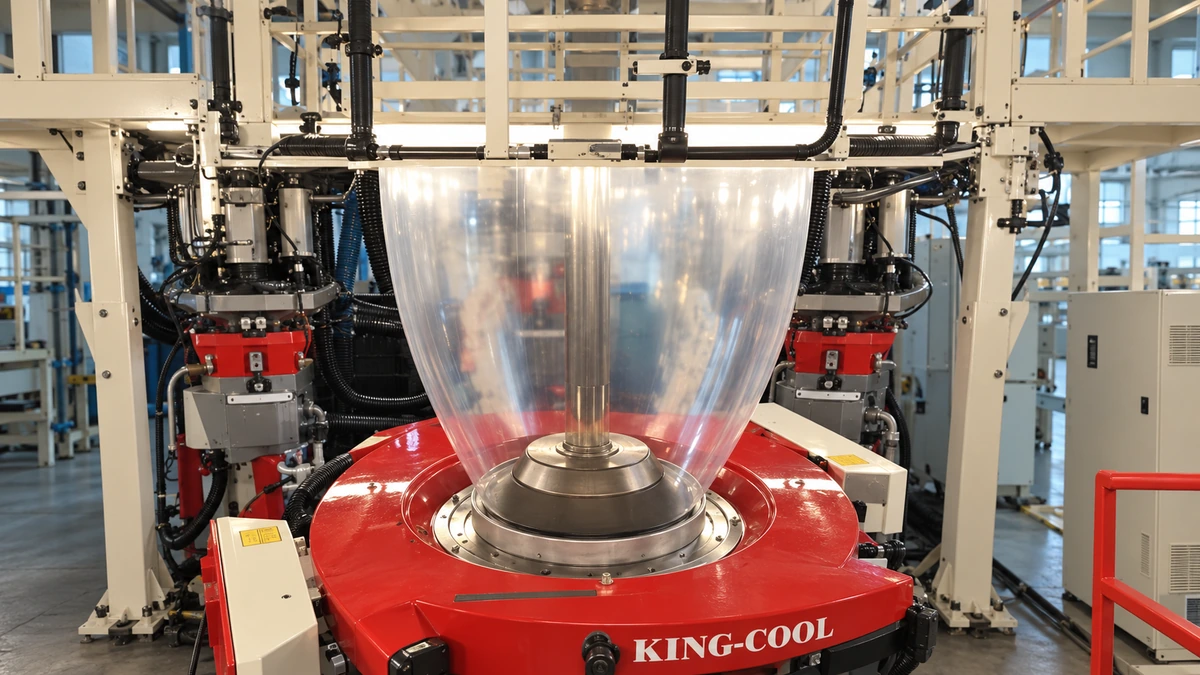
Blown Film Problems Decoded: What Your Bubble Is Telling You
Oct 23, 2026
Solve blown film problems from resin to roll. Learn to identify gels, gauge variation, bubble instability, die defects, and downstream failures with actionable fixes.
Read Article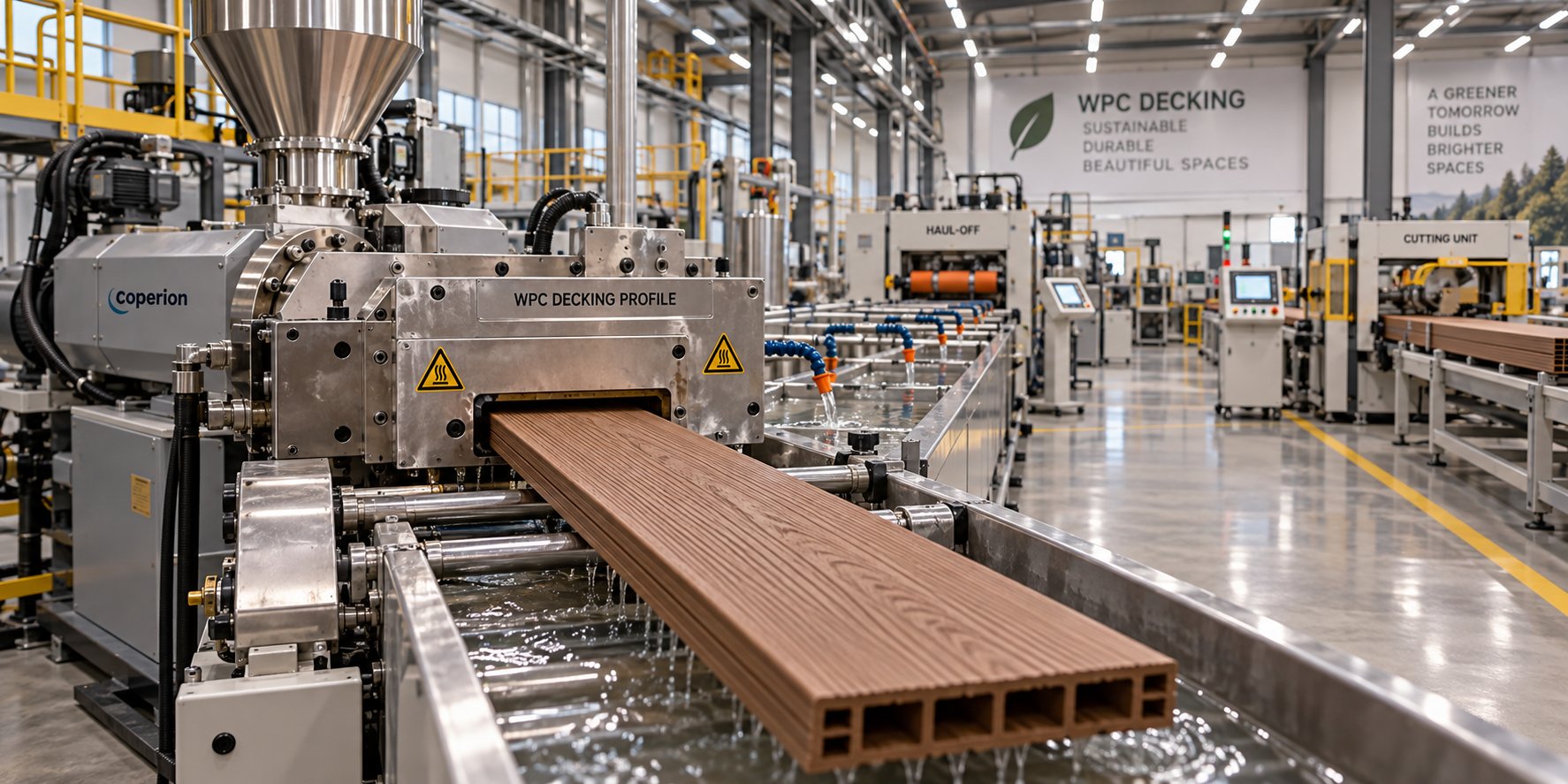
WPC Decking Extrusion Line Decoded: From Raw Resin To Finished Board
Oct 23, 2026
Learn how a WPC decking extrusion line works — from raw material compounding and extruder selection to process parameters, troubleshooting defects, and line layout planning.
Read Article
Single Screw Extruder Barrel Wear: Spot It, Measure It, Stop It
Oct 23, 2026
Learn how to spot, measure, and stop single screw extruder barrel wear. Zone-by-zone analysis, wear mechanisms, diagnostic symptoms, and repair vs. replace guidance.
Read ArticleLooking for something else?
Search by material, symptom or product and jump straight to the relevant page.
These are navigation suggestions based on keyword matching — not a quotation, not a delivery commitment, and not a substitute for engineering review. Final specification is confirmed by our engineers against your drawings and processed material.
Need help with screw barrel selection?
Share your machine model, processed material and application. Our team can help with pricing and technical support.