

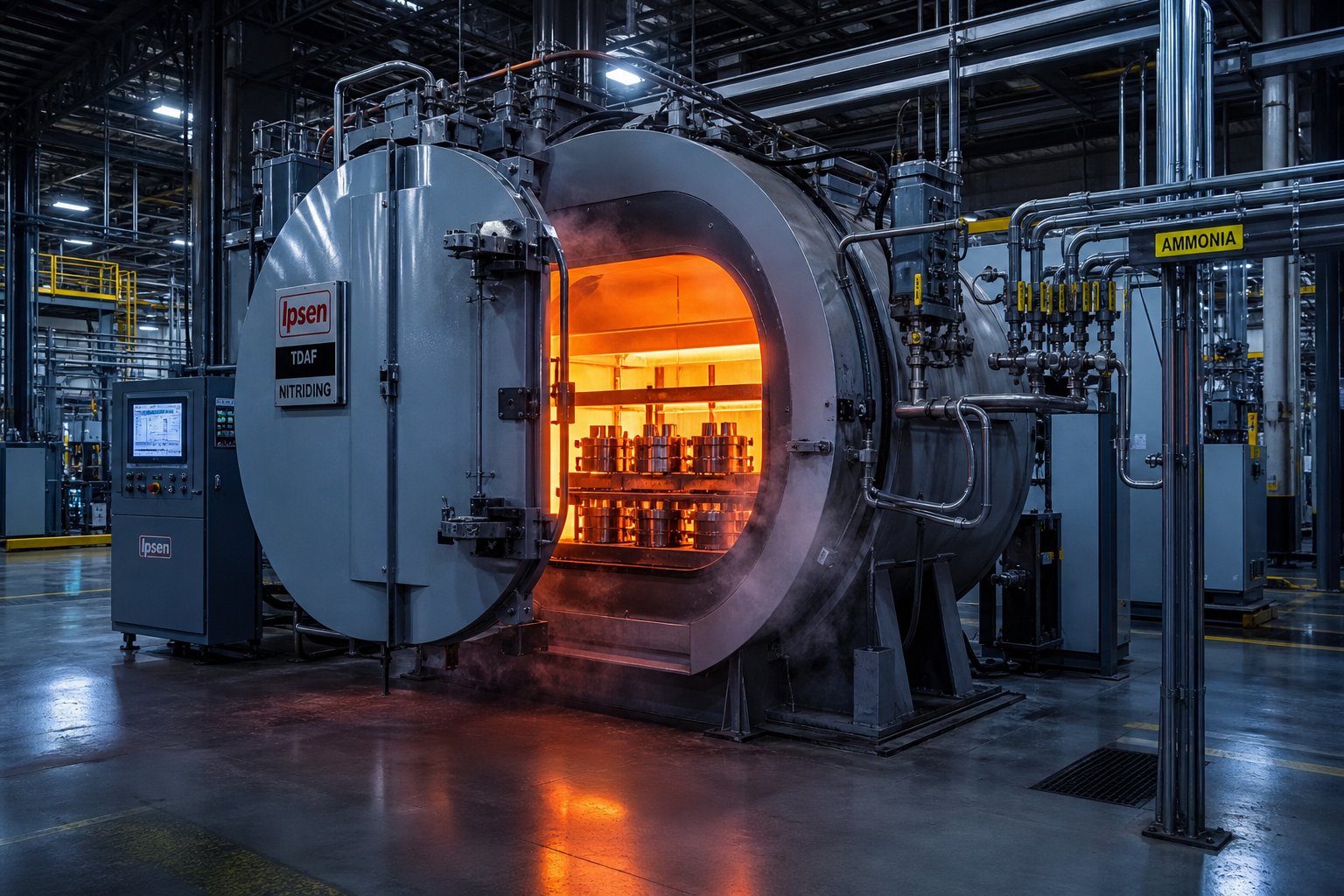
What Is Gas Nitriding and Why Does It Matter
Imagine you need a steel component that's extremely hard on the surface yet dimensionally precise down to microns. Traditional hardening methods require quenching, which almost guarantees distortion. So what do you do? You turn to a process that strengthens steel from the outside in, without ever needing to quench it.
Gas nitriding is a thermochemical surface-hardening process in which steel parts are heated to 495-565 °C (925-1050 °F) in an ammonia-rich atmosphere, allowing nascent nitrogen atoms to diffuse into the surface and form hard nitride compounds. Because no quenching is required, the process preserves exceptional dimensional stability.
That definition captures the essence, but there's far more beneath the surface. This article breaks down the full picture, including the process parameters competitors gloss over, the defects nobody talks about, and the honest trade-offs engineers actually need to weigh.
Definition of Gas Nitriding
So what is nitriding at its core? It's a diffusion-driven process. When ammonia gas contacts heated steel, it decomposes on the metal surface into nascent (atomic) nitrogen and hydrogen. Those individual nitrogen atoms are small enough to slip into the spaces between iron atoms in the steel's crystal lattice, a movement metallurgists call interstitial diffusion. Once inside, nitrogen reacts with alloying elements like aluminum, chromium, and molybdenum to form finely dispersed nitride precipitates, tiny ceramic-like particles that dramatically increase surface hardness.
What sets gas nitriding apart from plasma or salt bath methods is its nitrogen source: anhydrous ammonia gas. This makes the process well suited for large batch sizes, where the only real constraint is furnace capacity. And because processing temperatures stay well below the steel's austenitizing range, the iron remains in its ferritic phase throughout. No phase transformation means no quench, and no quench means virtually no distortion.
If you've ever encountered the question "what is nitride," the answer in this context refers to the hard compound that forms when nitrogen bonds chemically with a metallic element, such as aluminum nitride (AlN) or chromium nitride (CrN). A part that has undergone this treatment is described as "nitrided," meaning its surface layer now contains these strengthening nitride phases. It's also worth clarifying a common point of confusion around nitrate vs nitride: a nitrate is an oxygen-containing compound (NO₃⁻) found in fertilizers and chemistry, while a nitride is a nitrogen-metal compound with no oxygen involved, the type that actually hardens steel.
Why Gas Nitriding Matters in Modern Manufacturing
The story of nitriding stretches back over a century. In 1906, metallurgist Adolph Machlet stumbled upon the process almost by accident while using ammonia to prevent oxidation in a furnace. He noticed that parts developed a remarkably hard, corrosion-resistant surface layer. Around the same time in Germany, Adolph Fry independently made the same discovery, and critically, he recognized that alloying elements in the steel heavily influenced the results. Machlet received U.S. patents in 1913 and 1914; Fry followed with German patents in 1924.
More than a hundred years later, the fundamental chemistry remains unchanged, but the control and precision have advanced enormously. Modern nitriding furnaces offer computerized atmosphere management, tightly regulated dissociation rates, and repeatable case-depth profiles that early practitioners could never have achieved. The result is a surface treatment trusted across automotive, aerospace, tooling, and plastics processing industries for components where wear resistance and fatigue life must coexist with tight tolerances.
The real value of understanding this process, though, lies in knowing its boundaries just as well as its strengths. What follows is a step-by-step look at exactly how the process unfolds inside the furnace, including the critical parameters that determine whether a nitrided case performs flawlessly or fails prematurely.
How the Gas Nitriding Process Works Step by Step
You know what gas nitriding achieves. But what actually happens inside the furnace from the moment parts go in to the moment they come out? The gas nitriding process involves a carefully orchestrated sequence where temperature, atmosphere, and time must work in concert. Miss one detail, and the case quality suffers. Here's the full breakdown.
Step-by-Step Gas Nitriding Procedure
Every successful nitriding heat treatment process follows a defined sequence. While specific parameters vary by application, the fundamental stages of the steel nitriding process remain consistent:
- Part cleaning and preparation — Components are thoroughly degreased and cleaned to remove oils, machining residues, and surface contaminants. Even trace amounts of contamination can block nitrogen diffusion and cause uneven hardening.
- Loading into the nitriding furnace — Parts are fixtured and loaded with attention to spacing. Adequate clearance between components ensures uniform gas flow across all surfaces.
- Purging with nitrogen — Before heating begins, the furnace atmosphere is purged with pure nitrogen to displace oxygen. This prevents oxidation during the ramp-up phase.
- Heating to process temperature — The furnace ramps to the target temperature, typically between 495-565 °C (925-1050 °F). This range keeps the steel well below its austenitizing point, preserving the existing microstructure.
- Introducing ammonia gas — Once the temperature stabilizes, anhydrous ammonia flows into the furnace. On contact with the heated steel surface, ammonia decomposes into nascent nitrogen and hydrogen. The nitrogen atoms immediately begin diffusing into the metal.
- Holding at temperature — The soak period is where diffusion does its work. Depending on the desired case depth, this hold can range from roughly 10 hours for shallow cases to 90+ hours for depths approaching 0.5-0.6 mm.
- Controlled cooling — After the soak, parts are cooled in a controlled manner. For components with strict deformation requirements, furnace cooling to 180-200 °C is recommended. General parts can be cooled more rapidly below 450 °C.
- Unloading and inspection — Parts are removed and inspected for surface hardness, case depth, and compound layer characteristics.
Critical Process Parameters and Controls
Three variables govern everything in a gas nitriding system: temperature, time, and ammonia dissociation rate. Understanding their interplay is essential.
Temperature + Time + Dissociation Rate = Case Depth and Hardness Profile. These three variables are inseparable — adjusting one always affects the outcome of the others.
The dissociation rate refers to the percentage of ammonia that breaks down into nitrogen and hydrogen within the furnace. It's typically monitored and controlled between 15-85%, depending on the process stage and desired outcome. A lower dissociation rate means more uncracked ammonia contacts the steel surface, increasing nitrogen activity and driving faster compound layer growth. A higher rate reduces nitrogen availability at the surface, favoring deeper diffusion without excessive white layer buildup.
Modern gas nitriding systems measure dissociation through hydrogen analyzers in the exhaust stream, enabling closed-loop atmosphere control. The nitriding potential (KN) — defined as the ratio of ammonia partial pressure to hydrogen partial pressure raised to the 3/2 power — gives operators a precise metric for nitrogen activity at the steel surface. By adjusting gas flow rates of ammonia, dissociated ammonia, and nitrogen, the furnace controller maintains the exact KN setpoint required by the process specification.
Gas flow rate itself matters too. Insufficient flow leads to stagnant zones where local dissociation climbs uncontrollably, producing inconsistent case properties. Excessive flow wastes ammonia without proportional benefit. The process of nitriding, then, is really a balancing act: enough nitrogen activity to build the case, enough control to prevent it from running away.
Temperature selection also involves a trade-off worth understanding. Lower temperatures (around 500-510 °C) produce harder surfaces because nitrogen forms finer precipitates, but diffusion is slower, extending cycle times. Higher temperatures (540-565 °C) accelerate diffusion and shorten cycles, yet they reduce peak surface hardness slightly. This is why many specifications call for staged approaches — an idea that opens an entirely different conversation about single-stage versus two-stage processing and how each method shapes the final compound layer.
Single-Stage vs Two-Stage Floe Process Nitriding
That temperature trade-off discussed above feeds directly into a bigger strategic choice: how you manage the compound layer. In gas nitriding, this decision takes the form of single-stage or two-stage processing. Each approach produces a fundamentally different surface structure, and choosing the wrong one can mean the difference between a part that performs for years and one that spalls on its first shift.
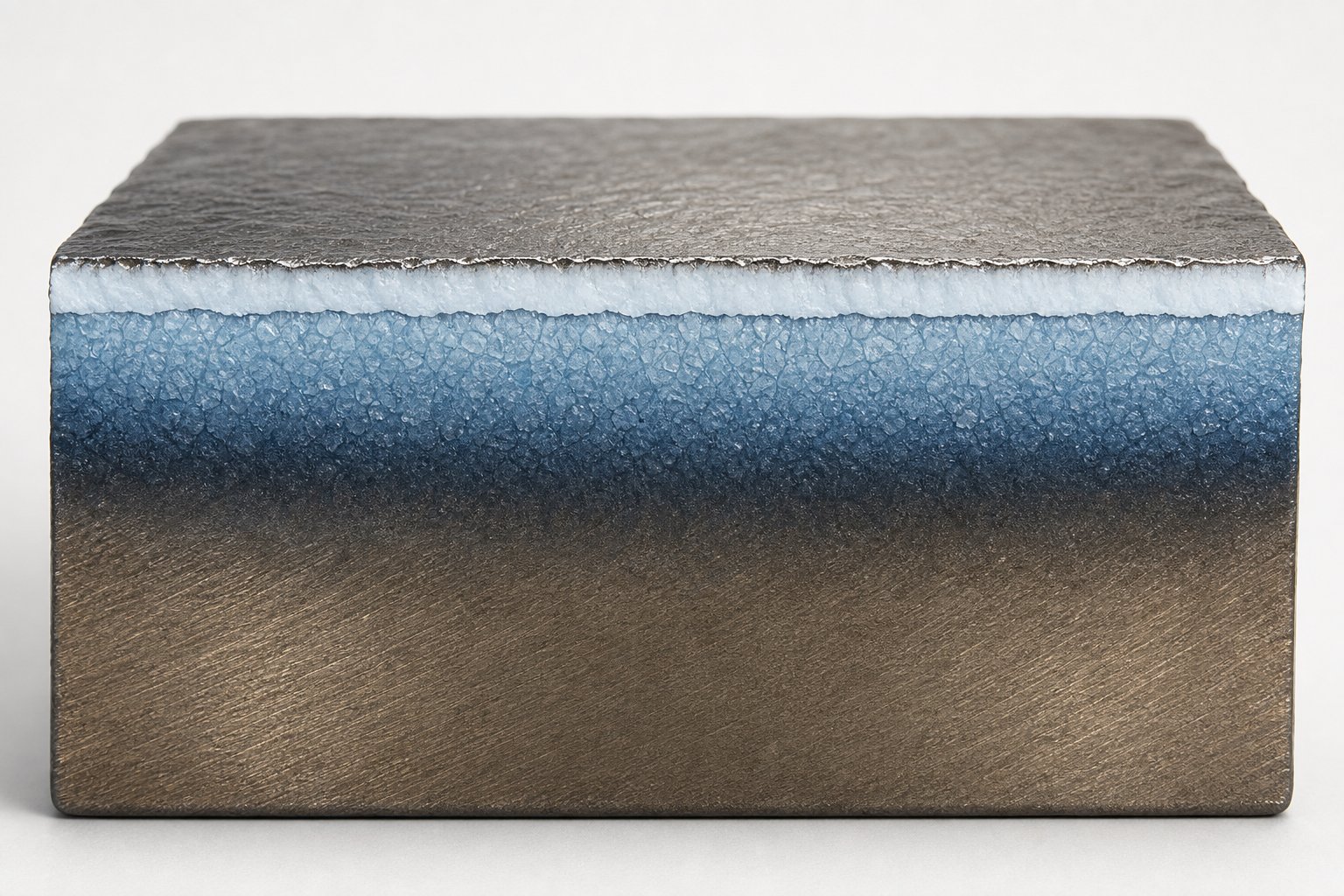
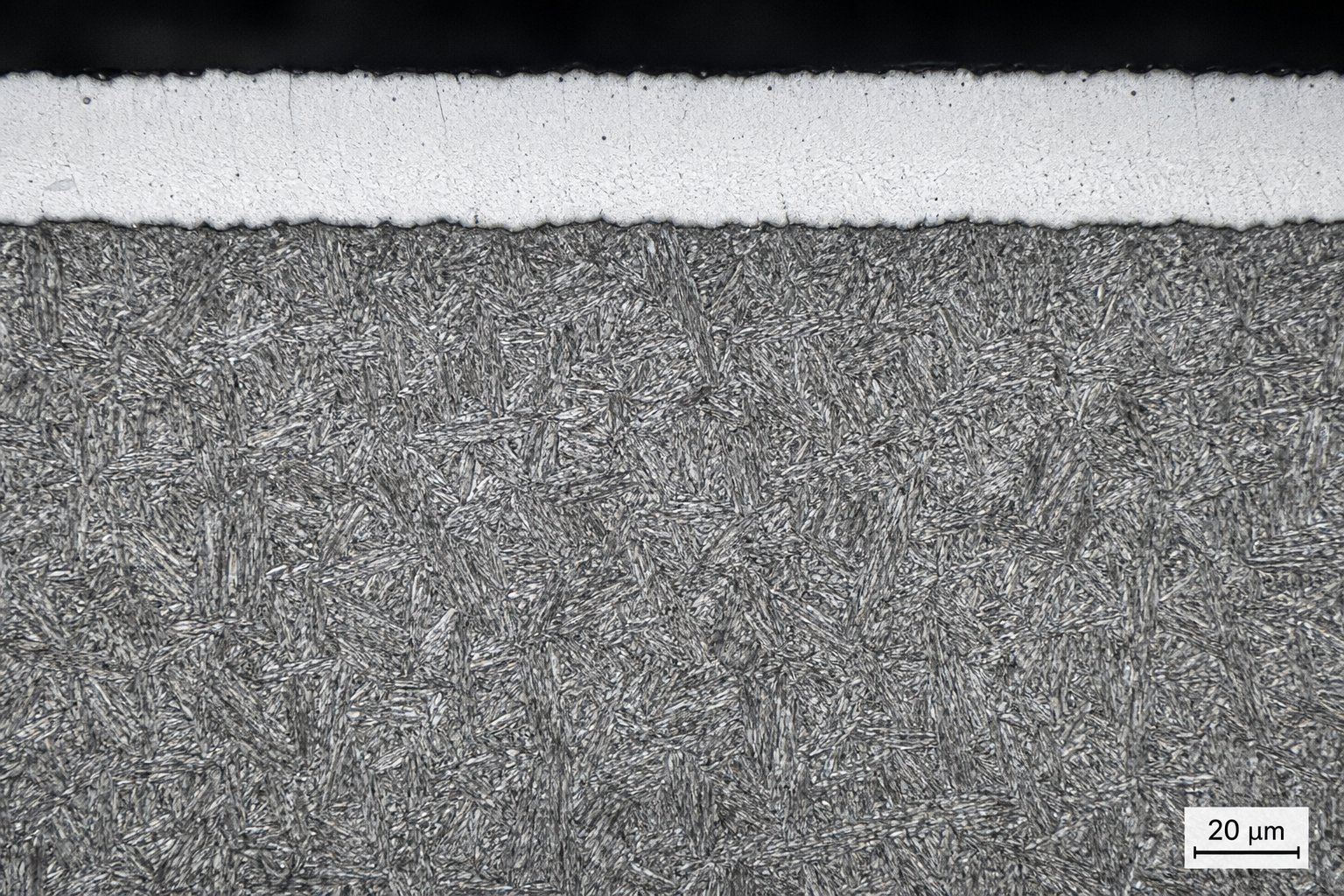
To understand the choice, you first need a clear picture of the two distinct zones that nitridation creates. The outermost layer — called the compound layer or white layer (because it appears white under a microscope after etching) — consists primarily of iron nitrides. These are ceramic-like phases: epsilon Fe₂₋₃N and gamma-prime Fe₄N. Beneath that sits the diffusion zone, where nitrogen atoms are dissolved interstitially in the steel lattice and form fine alloy nitride precipitates. The compound layer provides corrosion and wear resistance; the diffusion zone delivers load-bearing capacity, fatigue strength, and the bulk of the hardness improvement.
Single-Stage Gas Nitriding Explained
In single-stage processing, the furnace atmosphere is held at a constant, relatively low dissociation rate — typically between 15% and 30% — throughout the entire cycle. This means a high concentration of uncracked ammonia continually contacts the steel surface, maintaining strong nitrogen activity.
The result? Nitrogen saturates the outermost surface quickly, and iron nitride phases nucleate and grow into a relatively thick compound layer, often 15-25 micrometers or more. This layer is hard and chemically inert, which makes single-stage processing ideal when corrosion resistance is the primary goal — think hydraulic cylinder rods, valve stems, or components exposed to mildly corrosive environments where that intact white layer acts as a protective barrier.
The trade-off is brittleness. A thick compound layer composed of iron nitrides can crack or spall under impact loading or high contact stress, making it problematic for gears, bearing surfaces, or any part subjected to cyclic mechanical loads.
Two-Stage Floe Process and Compound Layer Control
The two-stage method, developed by Carl Floe in the 1950s, solves this problem elegantly. It works much like a carburizing boost-and-diffuse cycle, but applied to nitrogen.
In the first stage, a low dissociation rate (15-30%) builds nitrogen concentration in the surface layers — similar to the single-stage approach. In the second stage, the dissociation rate is raised sharply to 75-85%. This floods the furnace with hydrogen relative to available nitrogen, starving the surface of fresh atomic nitrogen. The compound layer partially decomposes or stops growing, while the nitrogen already absorbed continues diffusing deeper into the steel.
The outcome is a minimal or virtually eliminated white layer — often reduced to less than 0.007 mm — paired with a deep, well-developed diffusion zone. This makes the Floe process the standard choice for gears, crankshafts, and any fatigue-critical component where a brittle surface layer is unacceptable.
| Parameter | Single-Stage | Two-Stage (Floe Process) |
|---|---|---|
| Dissociation Rate | 15-30% (constant) | Stage 1: 15-30% / Stage 2: 75-85% |
| Compound Layer Thickness | 15-25+ micrometers | < 7 micrometers (or eliminated) |
| Primary Iron Nitride Phases | Epsilon Fe₂₋₃N + Gamma-prime Fe₄N | Minimal or absent |
| Best Applications | Corrosion resistance, valve stems, hydraulic rods | Fatigue-critical parts, gears, crankshafts |
| Typical Cycle Time | 24-48 hours | 36-90 hours (longer second stage) |
| Post-Treatment Machining | Usually not required | Minimal or none needed |
The practical takeaway? If your application benefits from a protective surface barrier and doesn't involve high contact stress, single-stage delivers it efficiently. If your parts must resist fatigue, bending, or impact without risking surface spalling, the two-stage Floe process gives you deep hardness without the brittle penalty.
Either way, the result is only as good as the base material allows. A perfectly executed nitridation cycle on the wrong steel grade will still produce disappointing hardness — which raises the critical question of which alloys actually respond well to this treatment, and why some steels should never enter a nitriding furnace in the first place.
Material Selection and Alloy Compatibility Guide
The answer comes down to chemistry — specifically, what's already dissolved in the steel before it ever enters the furnace. Gas nitriding doesn't treat all metals equally. Some alloys respond with dramatic surface hardness gains exceeding 1,000 HV, while others barely register a difference. Understanding why separates a successful treatment specification from an expensive disappointment.
Why Alloying Elements Drive Nitriding Response
Here's the core principle: nitrogen atoms diffusing into steel will react preferentially with whatever elements have the strongest chemical affinity for nitrogen. Elements like aluminum, chromium, molybdenum, vanadium, and titanium form finely dispersed, thermally stable nitride precipitates — compounds such as AlN, CrN, MoN, and VN. These precipitates are extremely small (often measured in nanometers), and their fine distribution within the diffusion zone is what creates exceptional hardness. Think of them as microscopic ceramic reinforcements embedded throughout the steel's surface layer.
The more nitride-forming elements the steel contains, the harder the resulting case. However, there's a trade-off: higher alloying content slows nitrogen diffusion, which means longer cycle times are needed to reach a given case depth. An aluminum-bearing nitriding steel might achieve 1,100 HV at the surface but require significantly more furnace time than a leaner chromium-molybdenum grade reaching 650 HV.
Best Steel Grades for Gas Nitriding
Nitriding steel grades fall into several well-established categories, each offering a different balance between hardness potential, core toughness, and processing practicality. Nitriding steels are medium carbon steels that contain strong nitride-forming elements and are usually quenched and tempered prior to treatment.
| Alloy Family | Key Nitride-Forming Elements | Typical Grades | Surface Hardness Potential | Nitriding Response |
|---|---|---|---|---|
| Dedicated Nitriding Steels (Nitralloy) | Aluminum (~1%), Chromium, Molybdenum | Nitralloy 135, Nitralloy N | 950-1,100 HV | Excellent |
| Chromium-Molybdenum Alloy Steels | Chromium, Molybdenum | 4140, 4340, 4150 | 550-700 HV | Good |
| Hot-Work Tool Steels (H-Series) | Chromium, Molybdenum, Vanadium | H11, H13 | 900-1,050 HV | Very Good |
| Stainless Steels | Chromium (high content) | 420, 440C, 17-4 PH | 800-1,100 HV | Good (with preparation) |
| Plain Carbon Steels | None significant | 1018, 1045, 1095 | 350-450 HV | Poor |
The Nitralloy family — engineered specifically for this process — delivers the highest hardness thanks to aluminum's powerful nitrogen affinity. Chromium-molybdenum grades like 4140 and 4340 are workhorses in many industries, offering a solid nitriding response with excellent core toughness. H-series tool steels combine chromium, molybdenum, and vanadium for outstanding results on dies and tooling.
Nitriding stainless steel requires an extra step that catches many engineers off guard. The chromium oxide passivation layer that gives stainless its corrosion resistance also blocks nitrogen diffusion. Before treatment, this passive layer must be removed — typically through chemical activation, mechanical abrasion, or a specialized furnace pre-treatment — or the nitrogen simply can't penetrate the surface.
Steels and Materials to Avoid
Nitriding carbon steel without significant alloying additions yields disappointing results. When nitrogen enters plain carbon steel, it can only form iron nitrides (Fe₄N and Fe₂₋₃N) at the surface. These phases create a compound layer, but the diffusion zone beneath lacks the fine alloy nitride precipitates that produce real hardness improvement. The iron nitriding response is essentially limited to whatever the iron-nitrogen system alone can provide — which tops out at modest hardness levels far below what alloyed grades achieve.
That said, iron nitriding principles still apply in some specialty contexts. Nitriding cast iron, for instance, is practiced for components like cylinder liners and piston rings where even moderate surface hardening and improved wear resistance provide meaningful service life gains. The graphite morphology in cast iron does complicate nitrogen diffusion paths, but pearlitic grades with alloying additions respond reasonably well.
Nitriding titanium represents another specialty application, increasingly relevant in aerospace and medical devices. Titanium has an exceptionally strong affinity for nitrogen, forming TiN — a gold-colored compound renowned for extreme hardness. However, the process parameters and atmosphere control differ substantially from conventional steel treatment, and plasma-based methods are often preferred for titanium components.
The relationship is straightforward: base material composition dictates what's achievable. No amount of process optimization can compensate for choosing an alloy that lacks the right nitride-forming elements. And even with the right alloy selected, the advantages and limitations of gas nitriding itself play an equally decisive role in whether the treatment is the smartest choice for any given application — or whether another hardening path makes more practical sense.
Gas Nitriding vs Plasma Nitriding vs Salt Bath Methods
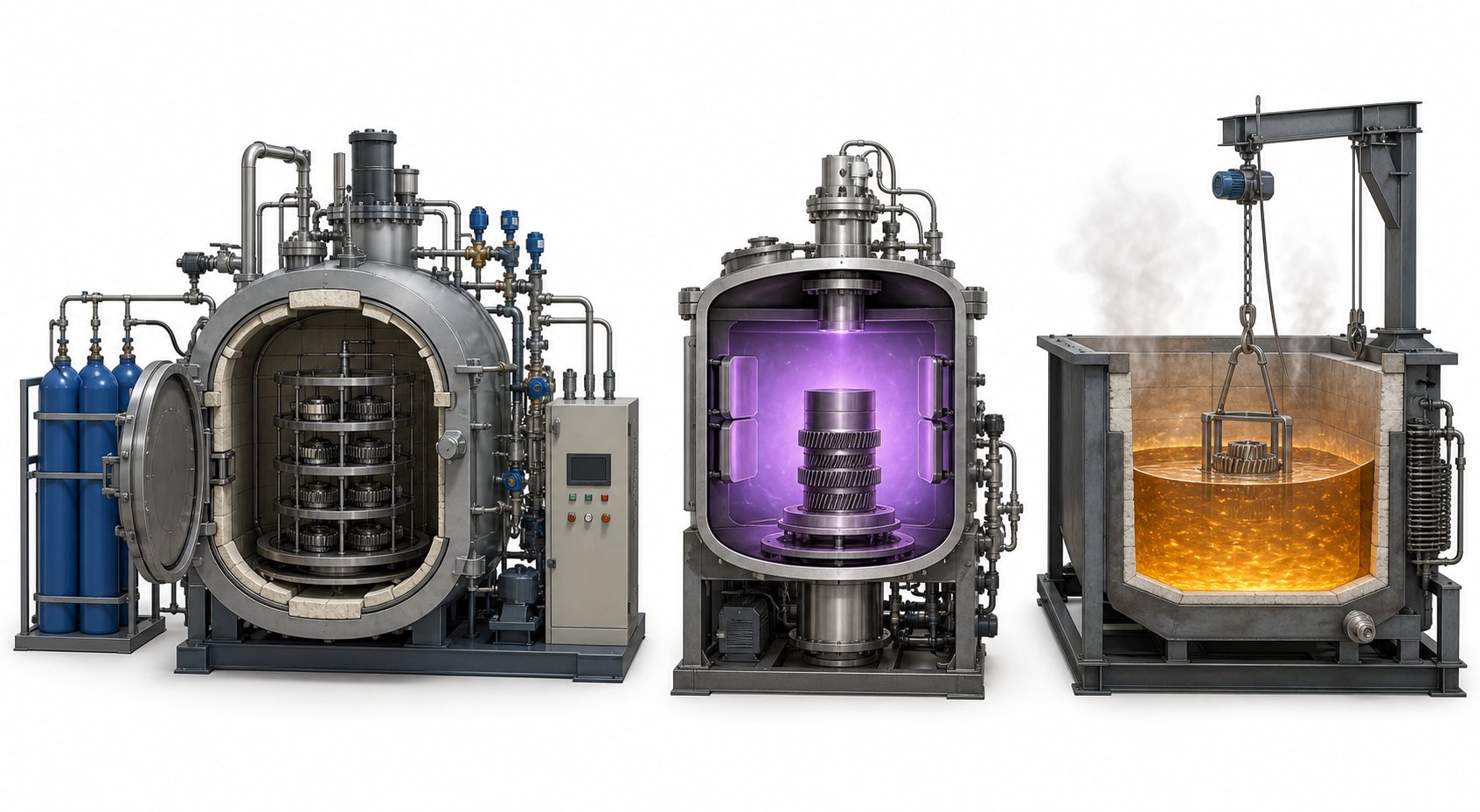
Choosing the right alloy is only half the equation. The other half? Picking the right nitriding method to match your production reality. Gas nitriding, plasma nitriding, and salt bath nitriding all diffuse nitrogen into steel surfaces, but they do it through fundamentally different mechanisms — and each comes with trade-offs that matter more than most guides let on.
Here's an honest look at all three.
Gas Nitriding Characteristics and Best Fit
Gas nitriding remains the most widely used method for a simple reason: it handles large batches of complex-geometry parts with uniform case depth and minimal operator intervention. Parts sit in a sealed furnace at 500-565 °C, ammonia flows continuously, and the atmosphere does the work across every exposed surface simultaneously. There's no line-of-sight requirement, so recessed features, blind holes, and intricate contours all receive consistent treatment.
The technology is mature, well-documented, and supported by decades of industrial data. Furnace sizes scale easily — you can process a handful of prototype parts or hundreds of production components in a single load. Equipment costs are moderate compared to plasma systems, and the process requires no high-voltage power supplies or vacuum infrastructure.
The honest downside? Cycle times are long. A typical run ranges from 24 to 90+ hours, and compound layer control is less precise than what plasma methods offer. If you need to mask certain surfaces from treatment, you're applying specialized stop-off paints manually — a labor-intensive and sometimes inconsistent step.
Plasma and Ion Nitriding Advantages
Plasma ion nitriding — sometimes called ion plasma nitriding or glow-discharge nitriding — takes a completely different approach. Instead of relying on ammonia decomposition, it ionizes a nitrogen-hydrogen gas mixture inside a vacuum chamber using several hundred volts of DC current. The workpiece acts as the cathode, and positively charged nitrogen ions accelerate directly into the surface.
This mechanism gives plasma nitriding several genuine advantages. Process temperatures can drop as low as 260 °C (500 °F), which opens the door to treating temperature-sensitive materials. Cycle times are shorter because the energized ions penetrate more efficiently. Most importantly, adjusting the gas mixture ratios (nitrogen-to-hydrogen proportion) gives operators precise, real-time control over compound layer thickness and phase composition. You can produce a plasma nitride layer that's pure gamma-prime, pure epsilon, or virtually no compound layer at all — a level of specificity that gas methods simply can't match.
Selective treatment is another standout feature. Want to keep threaded holes or mating surfaces soft? Just insert metal plugs or place mechanical shields over those areas. No paint, no cleanup. This mechanical masking approach is faster and more reliable than the stop-off methods used in gas processing.
The trade-off is cost and batch limitations. Plasma systems require vacuum chambers, DC power supplies, and more sophisticated controls. Parts must be spaced carefully to maintain a uniform glow discharge — if components are too close together or if geometries create hollow cathode effects, you'll get localized overheating. Batch sizes are typically smaller than what a gas furnace accommodates.
Salt Bath Nitriding and Nitrocarburizing
Salt bath nitriding is the oldest method and, in many ways, the simplest. Components are immersed in a molten salt bath containing nitrogen-bearing compounds at 500-600 °C. The liquid contact ensures rapid, uniform nitrogen transfer, making cycle times dramatically shorter — often just 1 to 4 hours for a functional case. When the bath also contains carbon-bearing salts, the process becomes nitrocarburizing, which adds a carbon-enriched sub-layer that further enhances wear and corrosion properties. The extended quench-polish-quench (QPQ) variant produces a distinctive black finish with excellent corrosion resistance.
Speed and simplicity make salt bath nitride processing attractive for high-volume production of smaller components. But there's a serious catch: the salts typically contain alkali cyanides. These are highly toxic, generate hazardous waste requiring specialized disposal, and expose workers to occupational health risks from airborne pollutants. Regulatory pressure in many regions has made compliance increasingly expensive, and some facilities have moved away from the method entirely in favor of gas-based alternatives.
| Criteria | Gas Nitriding | Plasma (Ion) Nitriding | Salt Bath Nitriding |
|---|---|---|---|
| Process Temperature | 495-565 °C | 260-565 °C | 500-600 °C |
| Typical Cycle Time | 24-90+ hours | 8-36 hours | 1-4 hours |
| Case Depth Range | 0.1-0.6 mm | 0.1-0.8 mm | 0.1-0.3 mm |
| Compound Layer Control | Moderate (via dissociation rate) | Excellent (via gas mixture ratios) | Limited |
| Environmental Impact | Low (ammonia requires handling) | Very low (minimal gas consumption) | High (toxic cyanide waste) |
| Equipment Cost | Moderate | High (vacuum + DC power) | Low to moderate |
| Batch Flexibility | Large batches, complex parts | Smaller batches, selective masking | Small to medium batches |
| Selective Surface Treatment | Stop-off paint (labor-intensive) | Mechanical masking (simple) | Difficult to mask |
No single method wins across every category. Gas nitriding dominates when you need consistent, large-batch processing with proven reliability. Ion nitriding earns its premium when compound layer precision, selective treatment, or lower temperatures are non-negotiable. Salt bath methods deliver unmatched speed but carry environmental and regulatory burdens that are increasingly hard to justify.
The real question most engineers face isn't which method is "best" in the abstract — it's whether the specific advantages of their chosen method actually outweigh the limitations for their particular parts, production volumes, and performance requirements. That honest cost-benefit analysis is exactly where the next discussion picks up.
Advantages and Limitations of Gas Nitriding
Every surface treatment involves trade-offs. The difference between a smart specification and a costly mistake often comes down to how honestly you weigh the benefits against the drawbacks — not just in theory, but for your specific parts, tolerances, and production realities. Gas nitriding delivers some genuinely remarkable properties, yet it also carries limitations that proponents tend to downplay. Here's the unfiltered picture.
Key Advantages of Gas Nitriding
The strengths of this process are well-earned. When the application fits, nitride hardening delivers a combination of properties that few other surface treatments can match simultaneously:
- Exceptional surface hardness without quenching. Because nitrogen diffuses at temperatures below the steel's transformation range, there's no phase change and no need for a rapid quench. Parts come out of the furnace with surface hardness values reaching 700-1,100 HV — all without the residual stresses and microstructural disruption that quenching introduces.
- Outstanding dimensional stability. This is arguably the single biggest reason engineers choose the process. Distortion during treatment is measured in single-digit microns on well-prepared components. For precision shafts, gears, and injection molds where post-treatment grinding is either impossible or prohibitively expensive, that stability is invaluable.
- Improved fatigue life. The nitrogen-enriched diffusion zone generates compressive residual stresses at the surface. These stresses oppose the tensile forces that initiate fatigue cracks, significantly extending the service life of cyclically loaded parts like crankshafts, connecting rods, and gear teeth.
- Enhanced corrosion resistance. When the compound layer is retained (as in single-stage processing), the dense iron nitride surface acts as a chemical barrier. Components exposed to mildly corrosive environments — hydraulic cylinders, valve stems, pump shafts — gain meaningful protection without additional coatings.
- Resistance to galling and adhesive wear. The hard, low-friction nitrided surface dramatically reduces metal-to-metal adhesion. This is especially valuable for sliding contact surfaces where galling would otherwise cause seizure or rapid material loss.
- Ability to treat finished or near-finished parts. Because distortion is minimal, components can be machined to final dimensions before treatment. This eliminates costly post-treatment grinding operations and simplifies production workflows.
Honest Limitations You Should Know
No process is perfect, and glossing over the weaknesses doesn't help anyone making real engineering decisions. Here's what you'll need to account for:
- Long cycle times. This is the most cited drawback, and it's legitimate. A typical nitriding heat treatment cycle runs 24 to 90+ hours depending on desired case depth. Compared to carburizing (which can achieve deeper cases in 8-12 hours), or salt bath methods (1-4 hours), the time commitment is substantial. For high-volume operations on tight delivery schedules, that furnace occupancy adds up.
- Limited achievable case depth. Maximum practical case depths top out around 0.5-0.6 mm even with extended cycles. Applications needing deeper cases — heavy-duty gears under high contact stress, for example — may find carburizing more practical, where case depths of 1.0 mm or more are routine.
- Restricted material compatibility. As discussed in the alloy selection chapter, the process requires steels containing nitride-forming elements like aluminum, chromium, molybdenum, or vanadium. Plain carbon steels respond poorly. Specifying gas nitride hardening on the wrong alloy wastes time and money.
- Potential for brittle white layer. If the compound layer grows too thick or consists of the wrong phase balance, it becomes prone to cracking and spalling under mechanical loading. Controlling this requires careful management of dissociation rates — or committing to a longer two-stage Floe process.
- Relatively high energy cost. Running a furnace at 500+ °C for 40, 60, or 90 hours consumes significant energy. For small-lot production or prototyping, the per-part energy cost can be disproportionately high.
- Thorough surface preparation is non-negotiable. Before nitriding, steel must be heat treated (quenched and tempered) and then machined if necessary. Any oil residue, oxide scale, or surface contamination will block nitrogen diffusion and create inconsistent results. Skipping or shortcutting the preparation stage is one of the most common causes of failed treatments.
Gas nitriding excels where dimensional precision and surface hardness must coexist — but only when the alloy is right, the preparation is thorough, and the cycle time is acceptable for your production schedule.
Gas Nitriding vs Conventional Heat Treatment
When engineers weigh the question of nitride vs heat treat options, the decision hinges on what the part actually needs to do in service. Conventional through hardening — heating above the austenitizing temperature, quenching, and tempering — creates uniform hardness throughout the entire cross-section. It's fast, well-understood, and works across a broad range of carbon steels. But quenching introduces distortion, residual stress, and the risk of cracking, especially in complex geometries.
Heat treatment nitriding, by contrast, hardens only the surface layer while leaving the core tough and ductile. There's no quench distortion, no risk of quench cracking, and parts with tight dimensional tolerances remain within specification. The compressive residual stresses at the surface actually improve fatigue resistance — something conventional through hardening can't offer to the same degree.
Where does conventional hardening still win? When you need full cross-section hardness for heavy loading, when deep case depths are required, or when cycle time and material cost need to stay low. A through-hardened 4340 shaft at 50 HRC across its entire diameter is a different engineering solution than a nitrided 4340 shaft with 65 HRC at the surface and 30 HRC at the core. Neither is universally superior — they solve different problems.
The practical guideline: if your part demands a wear-resistant, fatigue-resistant surface on a dimensionally stable component, nitriding hardening is difficult to beat. If it demands deep, uniform hardness and tolerances allow for post-heat-treatment grinding, conventional methods may be more efficient.
Of course, understanding these trade-offs in theory is one thing. Recognizing what happens when the process goes wrong — and knowing how to fix it — is another matter entirely. The defects that emerge from gas nitriding are among the least documented problems in surface treatment, yet they're exactly what production engineers encounter most often.
Troubleshooting Common Gas Nitriding Defects
You've selected the right alloy, dialed in the process parameters, and committed to a 40-hour cycle. The parts come out of the furnace — and something isn't right. Maybe the surface hardness reads 200 HV below specification. Maybe the compound layer is flaking at the edges. Or maybe the case depth varies by 30% across a single batch.
These problems are far more common than most technical resources admit. Gas nitriding treatment defects rarely get documented in public-facing literature, which leaves production engineers diagnosing issues by trial and error. That ends here. The five defects below represent the most frequent failures encountered in nitrided steel components — along with the root causes and corrective actions that actually resolve them.
Identifying Common Nitriding Defects
Before diving into each defect individually, here's a consolidated reference table. Use it as a diagnostic starting point when nitrided parts don't meet specification:
| Defect | Typical Cause | Corrective Action |
|---|---|---|
| Excessive or uncontrolled white layer | Low dissociation rate held too long; excessive nitrogen activity at the surface | Switch to two-stage Floe process; increase dissociation rate to 75-85% in the second stage; verify KN setpoint |
| Insufficient surface hardness | Improper steel selection (lacking nitride-forming elements); inadequate pre-heat treatment; surface contamination blocking diffusion | Confirm alloy composition meets specification; ensure proper quench and temper before nitriding; improve pre-cleaning procedures |
| Uneven case depth across the load | Poor gas circulation; parts stacked too closely; furnace hot spots or cold zones | Optimize load arrangement and spacing; verify furnace atmosphere uniformity; check thermocouple placement and calibration |
| Surface discoloration or staining | Oil residues, machining coolant films, or fingerprints left on parts before treatment | Implement thorough solvent or alkaline cleaning; verify cleaning effectiveness with water-break test; use gloves during handling |
| Spalling or flaking of compound layer | Excessive compound layer thickness on parts subject to impact or high contact stress; surface decarburization from prior heat treatment | Reduce compound layer thickness via two-stage processing; verify pre-machining removed all decarburized material; match layer thickness to application loads |
Each of these defects deserves a closer look, because the root causes often interact — and the fix for one problem can inadvertently create another if you don't understand the full picture.
Root Cause Analysis and Corrective Actions
1. Excessive or Uncontrolled White Layer
This is the defect engineers encounter most frequently, and it's almost always a process control issue. When the ammonia dissociation rate stays too low (below 20-25%) for too long, nitrogen activity at the steel surface remains extremely high. The result is a compound layer that grows well beyond the intended thickness — sometimes exceeding 25 micrometers — dominated by brittle epsilon-phase iron nitride. You'll see it clearly under a microscope as an abnormally thick, bright white band after Nital etching.
The corrective path is straightforward: switch from a single-stage cycle to a two-stage Floe process where the second stage raises dissociation to 75-85%, effectively starving the surface of fresh nitrogen and halting compound layer growth. For operations already running a two-stage cycle, verify that the gas flow metering system is delivering the correct ammonia-to-nitrogen ratios and that the hydrogen analyzer is reading accurately. Even small calibration errors in atmosphere monitoring can allow the white layer to run away.
2. Insufficient Surface Hardness
Imagine pulling a batch of nitrided parts and measuring surface hardness 200-300 HV below target. Frustrating — and expensive. Three distinct root causes can produce this symptom, and they require different fixes.
The most common culprit is steel that's too low in nitride-forming alloying elements. If someone specified a plain carbon grade instead of a chromium-molybdenum or aluminum-bearing nitriding steel, no amount of process adjustment will produce high surface hardness. The fix is verifying the incoming material certificate against the alloy specification before treatment begins — not after.
Second, inadequate pre-heat treatment undermines results. Nitrided steel performs best when the base material has been properly quenched and tempered to establish the right core hardness and microstructure. A part with insufficient core hardness can't support the hard case above it — a condition sometimes called case crushing, where the soft substrate deforms under load even though the surface layer itself meets hardness specification.
Third, surface contamination can silently inhibit nitrogen diffusion entirely. Residual cutting fluids, coolant films, or oxide layers act as physical barriers. As metallographic studies have shown, even metalworking fluids not completely removed prior to treatment can stop or inhibit the nucleation of nitrides at the surface. The corrective action is rigorous cleaning protocols — solvent degreasing, alkaline washing, or vapor degreasing — followed by verification before loading.
3. Uneven Case Depth Across the Load
You check ten parts from a single batch and find case depths ranging from 0.15 mm to 0.35 mm. That kind of variation points to atmosphere uniformity problems inside the furnace. When ammonia flow doesn't reach all surfaces equally — because parts are stacked too tightly, fixtures block gas circulation, or the furnace has thermal gradients — some areas receive more nitrogen than others.
The fix involves three coordinated steps. First, review the load arrangement: parts need adequate spacing on all sides for gas to circulate freely. Second, verify that furnace fans or gas distribution systems are functioning properly and that no baffles or internal components are obstructing flow. Third, check thermocouple placement. As process troubleshooting guidelines emphasize, thermocouples must be placed within the load zone where they accurately represent the actual part surface temperature — not just the furnace wall temperature. A 10-15 °C temperature variation across the load can produce measurable case depth differences.
4. Surface Discoloration or Staining
Dark patches, rainbow discoloration, or visible staining on nitrided surfaces almost always trace back to one source: contamination that was on the part before it entered the furnace. Oil films, fingerprints, residual machining coolant, or even marking ink can create localized barriers to nitrogen diffusion. The area beneath the contaminant receives little or no treatment, while surrounding areas nitride normally — leaving a visible and functional defect.
This is entirely preventable. Implement a cleaning procedure that removes all organic contaminants, and verify its effectiveness. A simple water-break test — rinsing the part and checking that water sheets evenly across the surface rather than beading — provides a quick field check for surface cleanliness. Handle cleaned parts only with lint-free gloves, and minimize the time between final cleaning and furnace loading.
5. Spalling or Flaking of the Compound Layer
When the nitrided case literally peels or chips off the surface, the problem is severe and the part is typically scrap. Two primary mechanisms cause this.
The first is surface decarburization present on the component before nitriding. If prior heat treatment left a decarburized layer that wasn't fully removed during pre-nitriding machining, the nitrided case forms on a weakened, carbon-depleted substrate. The bond between the case and the core is fundamentally compromised, and the case will exfoliate under service loads. The corrective action is ensuring sufficient stock removal during pre-treatment machining to completely eliminate any decarburized material.
The second mechanism is excessive compound layer thickness on parts subjected to impact loading, bending, or high contact stress. A thick, brittle white layer simply can't accommodate the elastic deflection of the substrate beneath it. Each impact propagates microcracks through the rigid iron nitride layer until pieces break free. The solution is reducing compound layer thickness — either through two-stage processing or by controlling the nitriding potential — so the remaining layer is thin enough to flex with the substrate. For applications involving sharp corners, nitrogen over-saturation (nitride networking) at those features can also trigger chipping, which is remedied by reducing nitrogen availability or adding corner radii to the part design.
The common thread running through every one of these defects? They're all preventable. Proper alloy verification, thorough surface preparation, calibrated atmosphere controls, and thoughtful load arrangement eliminate the vast majority of gas nitriding treatment failures before they happen. The engineers who consistently produce defect-free nitrided parts aren't luckier — they're more disciplined about the fundamentals.
That same discipline extends to choosing the right application for the process in the first place. Understanding where gas nitriding delivers its greatest return — and in which industries those returns are most critical — shapes not just process decisions but entire component design strategies.
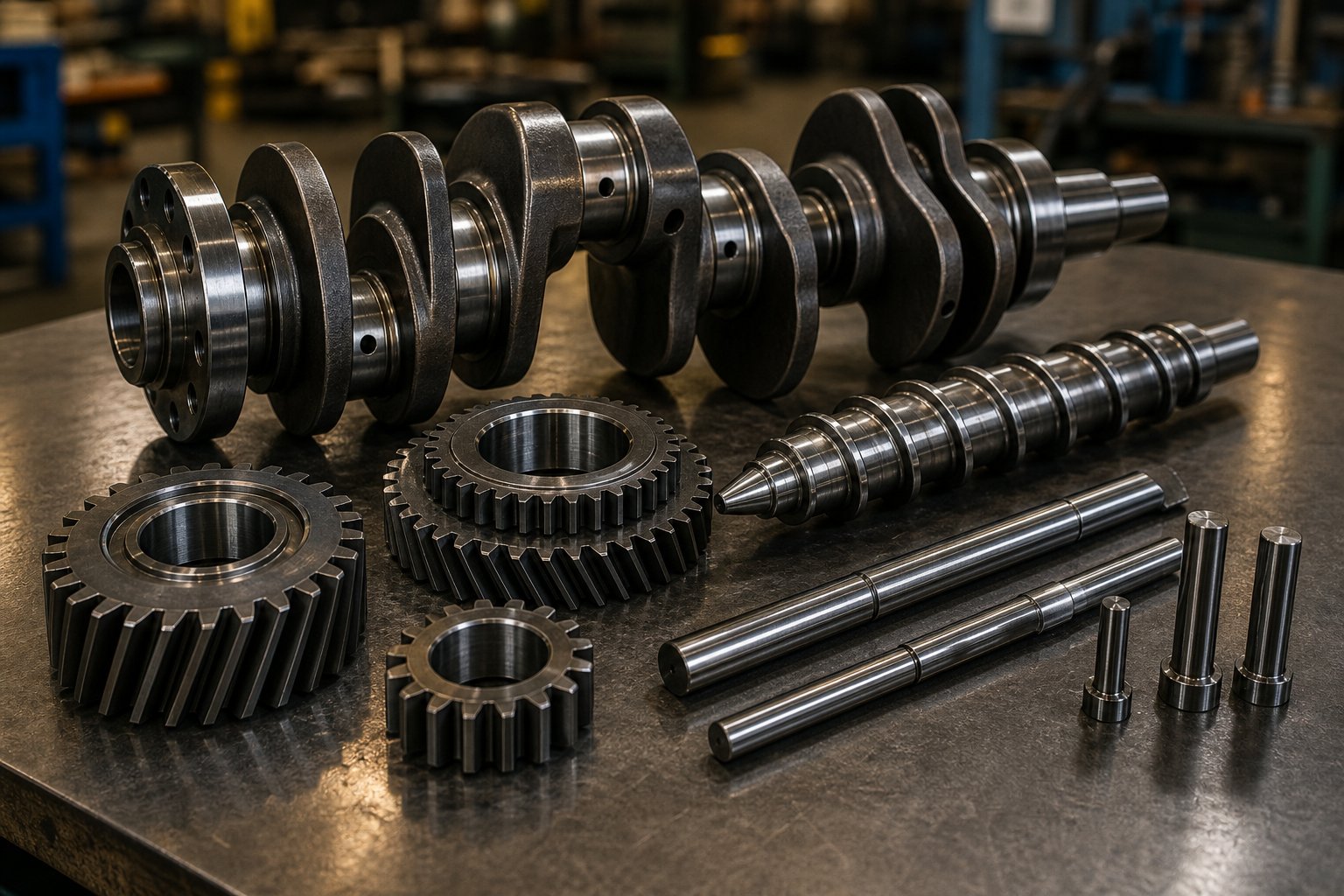
Industrial Applications of Gas Nitriding by Sector
Where do all those process parameters, alloy considerations, and defect-prevention strategies actually come to life? On real components in real factories — where a well-executed gas nitriding treatment translates directly into longer service intervals, fewer catastrophic failures, and measurably lower total cost of ownership. The industries that rely most heavily on this process share a common requirement: their parts face punishing combinations of wear, fatigue, and corrosion while maintaining tight tolerances that rule out post-treatment machining.
Here's how the process applies across major industrial sectors — and why each chooses it over alternative hardening methods.
Automotive and Aerospace Applications
In automotive powertrains, fatigue life and dimensional precision are non-negotiable. Gas nitriding treats some of the most stressed components in any engine or transmission:
- Crankshafts and camshafts — These components endure millions of loading cycles over their service life. The compressive residual stresses from nitriding counteract bending fatigue, while the hard surface layer resists journal wear. Research on 4140 steel gears demonstrated that adding gas nitriding to a quench-and-temper cycle increased wear life by over 400% while eliminating post-treatment distortion.
- Gears and cam followers — Two-stage Floe processing eliminates the brittle white layer that would otherwise crack under tooth contact stress, while the deep diffusion zone resists pitting and spalling at the pitch line.
- Valve components — Valve stems and valve seats benefit from the anti-galling characteristics and corrosion resistance of a retained compound layer, critical in hot exhaust environments.
Aerospace takes these demands further. Landing gear components, turbine discs, actuator shafts, and precision fasteners all operate under extreme stress with zero tolerance for dimensional drift. Gas nitriding is specified under SAE standards AMS 2759/6 and AMS 2759/10 for aerospace applications where tight dimensional tolerances and high fatigue strength are non-negotiable. The computer-controlled process delivers consistent, repeatable results across production batches — exactly what aerospace quality systems demand.
For both sectors, the critical property isn't just surface hardness — it's the fact that parts can be finish-machined before treatment and still meet drawing tolerances afterward. That eliminates expensive hard-grinding operations on complex geometries like crankshaft journals or landing gear bores.
Plastics Processing Screw and Barrel Applications
If automotive and aerospace applications test fatigue resistance, plastics processing tests everything at once. Extruder screws and injection molding barrels face a brutal combination of abrasive wear from mineral fillers, corrosive attack from degrading polymers, and adhesive wear from high-pressure metal-to-melt contact — often at temperatures exceeding 300 °C for extended production runs.
Barrel nitriding is the baseline surface treatment for screws and barrels processing clean, unfilled polymers like natural polyethylene, polypropylene, and ABS. A nitrided case of 0.4-0.7 mm on a steel like 38CrMoAlA or 4140 provides reliable wear resistance at a cost point that bimetallic construction can't match for these lighter-duty applications. The hardness achieved on nitriding steels like Nit135M and H-13 exceeds 70 HRC equivalent, which handles moderate abrasion from standard polymer processing without issue.
Where the picture gets complicated — and where many processors make costly mistakes — is when the resin chemistry changes. Consider what happens when you introduce 30% glass fiber into a nylon compound: those glass particles act like microscopic sandpaper, grinding through a nitrided case in a fraction of the time it would last on unfilled material. Similarly, PVC processing releases hydrochloric acid as the polymer degrades, attacking the steel substrate beneath the nitride coating. Fluoropolymer processing presents its own corrosive challenges at elevated temperatures.
The decision matrix for plastics processing components typically involves three competing surface treatment options:
- Gas nitriding — Cost-effective for clean, non-abrasive resins. The thin diffused case wears through quickly on filled compounds but offers excellent value when abrasion and corrosion aren't dominant failure modes.
- Hard chrome plating — Provides corrosion resistance, but the plated layer has a different thermal expansion coefficient than the base steel and can exfoliate from the surface at elevated temperatures. Limited effectiveness against severe abrasion.
- Bimetallic alloy construction — PTA-welded hardfacing on screws (1.0-1.5 mm) and centrifugally cast alloy barrel linings (2.0-3.0 mm) provide substantially thicker wear-resistant layers than nitriding alone. The right alloy — such as tungsten-carbide-bearing grades for glass-filled compounds or nickel-chromium alloys for corrosive melts — dramatically extends service life on demanding feedstocks.
The key takeaway for processors: nitride coating steel surfaces works well when the duty is moderate, but matching the surface treatment to your specific resin chemistry, filler content, and processing temperature is what determines whether a screw lasts six months or six years. Getting this match wrong is one of the most expensive mistakes in plastics processing — you either overpay for protection you don't need or underpay and replace components repeatedly.
For processors and equipment buyers who need help navigating this decision, NANHAIYA's custom screw design service offers consultation that matches nitriding, chrome plating, or bimetallic alloy options to your specific resin type, wear conditions, corrosion risk, and production requirements — eliminating the guesswork from surface treatment selection.
Tooling, Dies, and Specialty Uses
Die and tooling applications represent another stronghold for gas nitriding, where the process delivers its value through a slightly different mechanism — resisting thermal fatigue and galling rather than just abrasive wear.
- Extrusion dies — H13 hot-work tool steel dies used for aluminum extrusion are routinely nitrided to prevent abrasive wear and aluminum soldering to the die bearing surface. The nitride coating prevents molten aluminum from adhering to the die, which would otherwise cause surface tearing and dimensional loss on the extruded profile.
- Forging dies — Repeated thermal cycling between room temperature and hot workpiece contact creates severe thermal fatigue. The compressive stresses imparted by nitriding delay thermal crack initiation, extending die life significantly before reworking is needed.
- Die-casting components — Core pins, ejector pins, and cavity inserts benefit from the anti-galling properties of a nitrided surface, particularly when processing zinc or aluminum alloys that tend to weld to unprotected tool steel surfaces.
- Plastic injection mold tools — Cavity surfaces nitrided on pre-hardened tool steels resist the abrasive wear from glass-filled engineering plastics while maintaining the mirror-finish quality that molded parts require.
Firearms represent a specialty application where the gas nitride finish has gained widespread adoption over the past decade. If you've ever wondered what is black nitride coating on a rifle barrel or bolt carrier group, it's the result of a nitriding process (often salt bath nitrocarburizing with a post-oxidation step) that produces a hard, corrosion-resistant, dark-black surface. The black nitride finish provides wear resistance comparable to hard chrome at lower cost, resists corrosion from handling and environmental exposure, and maintains bore dimensions without the buildup thickness that chrome plating adds. Bolt carriers, barrel bores, and locking lugs all benefit from the combination of hardness, low friction, and dimensional preservation that the process delivers.
Across all these sectors, the pattern is consistent: gas nitriding earns its place wherever components need hard, wear-resistant surfaces on precisely dimensioned parts — and where the specific failure mode (adhesive wear, fatigue cracking, corrosive attack, or abrasive erosion) aligns with the properties the nitrided case provides. The challenge isn't whether the process works. It's knowing when it's the right choice versus when alternative treatments serve you better — a decision framework that depends on your material, your operating conditions, and your production economics.
How to Decide If Gas Nitriding Is Right for Your Parts
Knowing where gas nitriding excels across industries is valuable — but translating that knowledge into a confident go or no-go decision for your specific parts requires a structured evaluation. Whether you're an engineer writing a treatment specification or a procurement professional sourcing nitriding services, the framework below walks you through the critical checkpoints that separate a smart specification from an expensive mistake.
Decision Framework for Surface Treatment Selection
Think of this as a sequential filter. Each step either confirms the process as a viable candidate or redirects you toward an alternative. Work through them in order:
- Confirm the base material contains nitride-forming elements. Check the alloy certificate for aluminum, chromium, molybdenum, vanadium, or titanium. If the steel is a plain carbon grade without these elements, stop here — no process parameter adjustments will produce meaningful surface hardness. Consider carburizing or alternative coatings instead.
- Evaluate whether dimensional stability is critical. If your tolerances are tight and post-treatment grinding is impractical or impossible, gas nitriding is strongly favored over carburizing or induction hardening. The absence of quenching keeps distortion in the single-digit micron range on properly prepared components.
- Determine the required case depth. If your application demands case depths exceeding 0.5 mm — heavy-duty gears under high Hertzian contact stress, for example — honestly assess whether the extended cycle times (potentially 60-90+ hours) are acceptable for your production schedule. If very deep cases above 1.0 mm are needed, carburizing is likely more practical regardless of nitriding cost considerations.
- Assess the operating environment. Does the part face corrosive exposure? If yes, retaining the compound layer through single-stage processing provides meaningful protection. For extreme corrosion environments, consider whether nitriding alone suffices or whether combining it with additional coatings or selecting a bimetallic solution delivers better total life.
- Consider production volume and batch size. Gas nitriding excels at large-batch processing — dozens or hundreds of parts treated simultaneously in a single furnace cycle. If you're running high volumes of similarly sized components, the per-part nitriding cost becomes very competitive. For one-off prototypes or extremely small lots, the fixed cycle time makes the economics less favorable.
- Evaluate total cost of ownership. Factor in cycle time, energy consumption, pre-treatment preparation (quench and temper, cleaning), and whether post-treatment finishing is needed. Compare against alternative methods on a total lifecycle basis — not just the treatment invoice. A part that lasts three times longer in service can justify a higher upfront nitriding service cost many times over.
Matching Treatment to Application Requirements
Engineers often search for "nitriding near me" when they need a local provider for time-sensitive projects. That's a reasonable starting point — but proximity shouldn't override capability. When evaluating gas nitriding services suppliers, confirm that the provider offers atmosphere control with hydrogen analysis, can run both single-stage and two-stage Floe cycles, and holds relevant quality certifications (Nadcap for aerospace, ISO 9001 for general industrial). The cheapest quote from an under-equipped facility often leads to the defects discussed earlier in this article — and rework costs far exceed any initial savings.
For readers working with extruder screws, injection molding barrels, or similar wear-critical plastics processing components, the surface treatment decision involves additional variables that generic nitriding providers may not fully understand: resin chemistry, filler abrasiveness, melt corrosivity, and operating temperature profiles all influence whether nitriding alone is sufficient or whether chrome plating or bimetallic alloy construction delivers better value. NANHAIYA's custom screw design consultation helps processors navigate exactly this decision — matching nitriding, chrome plating, or bimetallic options to specific resin types, wear patterns, and production requirements so you invest in the right level of protection from the start.
The best surface-treatment decisions integrate material science, application requirements, and processing economics — not just hardness numbers on a datasheet. Know your alloy, know your loads, know your environment, and the right choice becomes clear.
Frequently Asked Questions About Gas Nitriding
1. How long does the gas nitriding process take?
Gas nitriding cycle times typically range from 10 to 90+ hours depending on the desired case depth and hardness profile. Shallow cases for light-duty applications may require only 10-24 hours, while deeper diffusion zones approaching 0.5-0.6 mm can demand 60-90+ hours. Two-stage Floe processing generally requires longer total cycles (36-90 hours) than single-stage runs (24-48 hours) because the second stage needs extended time to drive nitrogen deeper while controlling compound layer growth. By comparison, plasma nitriding runs 8-36 hours and salt bath nitriding takes just 1-4 hours, though each method involves different trade-offs in case quality, batch size, and environmental impact.
2. What is the difference between single-stage and two-stage Floe gas nitriding?
Single-stage nitriding holds a constant low ammonia dissociation rate (15-30%) throughout the cycle, producing a relatively thick compound layer (15-25+ micrometers) rich in iron nitride phases. This intact white layer provides strong corrosion resistance and suits parts like hydraulic rods and valve stems. Two-stage Floe nitriding begins with the same low dissociation rate to build nitrogen concentration, then raises it to 75-85% in the second stage. This starves the surface of fresh nitrogen, reducing the compound layer to under 7 micrometers or eliminating it entirely. The result is a deep, ductile diffusion zone ideal for fatigue-critical components such as gears and crankshafts where a brittle surface layer would risk spalling under mechanical loads.
3. Which steels are best suited for gas nitriding?
Steels containing strong nitride-forming alloying elements respond best to gas nitriding. Dedicated nitriding steels like Nitralloy 135 (containing approximately 1% aluminum) achieve the highest surface hardness at 950-1,100 HV. Chromium-molybdenum alloy steels such as 4140 and 4340 offer good response (550-700 HV) with excellent core toughness. H-series hot-work tool steels like H13 reach 900-1,050 HV due to their chromium, molybdenum, and vanadium content. Stainless steels can also be nitrided but require removal of the chromium oxide passivation layer beforehand. Plain carbon steels without nitride-forming elements respond poorly and should generally be avoided. For plastics processing screws and barrels, specialists like NANHAIYA can recommend the optimal base material and surface treatment combination based on specific resin and wear conditions.
4. What causes common gas nitriding defects and how can they be prevented?
The five most frequent gas nitriding defects each have distinct root causes. Excessive white layer results from a dissociation rate held too low for too long and is corrected by switching to two-stage Floe processing. Insufficient surface hardness usually stems from using steel that lacks nitride-forming elements, inadequate quench-and-temper pre-treatment, or surface contamination blocking nitrogen diffusion. Uneven case depth points to poor gas circulation or furnace hot spots, fixed by optimizing part spacing and verifying thermocouple calibration. Surface discoloration traces back to oil residues or fingerprints left before treatment, preventable through rigorous cleaning protocols. Compound layer spalling occurs when the white layer is too thick for parts under impact stress or when prior decarburization weakens the case-to-core bond. Nearly all defects are preventable through disciplined material verification, thorough surface preparation, and calibrated atmosphere controls.
5. How does gas nitriding compare to plasma nitriding and salt bath nitriding?
Each method serves different production needs. Gas nitriding excels at large-batch processing of complex-geometry parts with uniform case depth, using mature and cost-effective furnace technology, though cycle times run 24-90+ hours. Plasma (ion) nitriding offers shorter cycles (8-36 hours), precise compound layer control through adjustable gas mixture ratios, lower possible process temperatures (as low as 260 degrees C), and easy mechanical masking for selective treatment, but requires higher-cost vacuum and DC power equipment with smaller batch capacities. Salt bath nitriding is the fastest method (1-4 hours) and delivers rapid, uniform nitrogen transfer, but uses toxic cyanide-containing salts that create significant environmental and regulatory challenges. The right choice depends on your specific part geometry, production volume, required compound layer characteristics, and environmental compliance requirements.
Written by
Nanhaiya Technical Team
Zhoushan Nanhaiya Plastic Machinery Co., Ltd.
The Nanhaiya technical team supports screw and barrel manufacturing projects through application review, technical communication, custom manufacturing coordination, and production and quality control.
Discuss Your Application
Related Articles
More insights on screw barrel technology and plastics processing.
What Nobody Tells You About Screw Barrel For Plastic Machine Design
Oct 10, 2026
Learn how screw barrel for plastic machine design affects melt quality, throughput, and wear life. Covers geometry, resin matching, troubleshooting, and sourcing.
Read Article
Single Screw Extruder for Sheet: Stop Guessing, Start Specifying
Oct 9, 2026
Learn how to specify a single screw extruder for sheet production. Covers screw geometry, resin-specific processing, troubleshooting, and maintenance best practices.
Read Article
PE Pipe Extruder Machine: What Datasheets Won't Tell You
Oct 9, 2026
Learn how a PE pipe extruder machine works, key specs explained, material grade selection, maintenance tips, and buyer guidance beyond the datasheet.
Read ArticleLooking for something else?
Search by material, symptom or product and jump straight to the relevant page.
These are navigation suggestions based on keyword matching — not a quotation, not a delivery commitment, and not a substitute for engineering review. Final specification is confirmed by our engineers against your drawings and processed material.
Need help with screw barrel selection?
Share your machine model, processed material and application. Our team can help with pricing and technical support.