

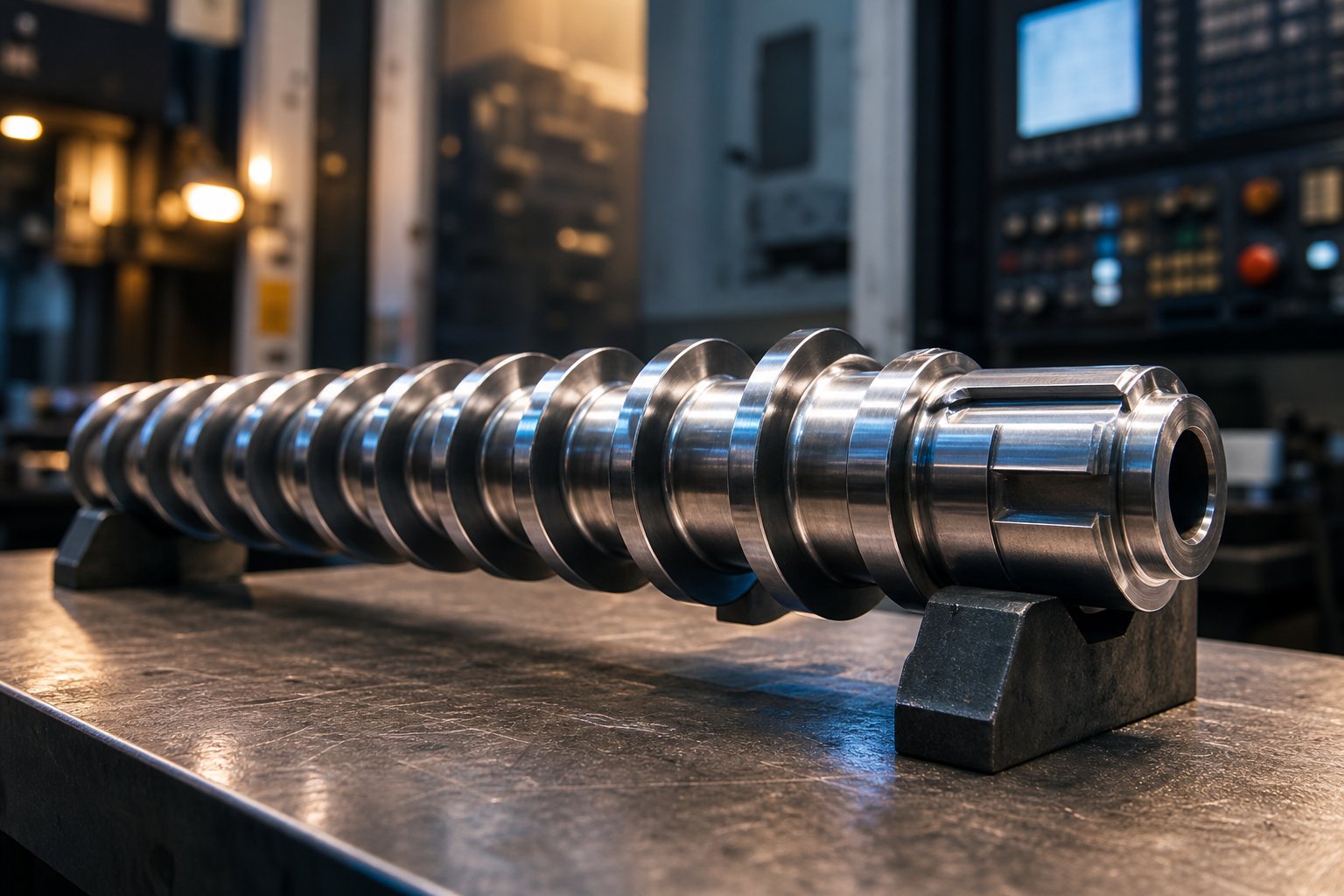
What Makes an Extruder Screw Supplier Critical to Plastics Processing
An extruder screw supplier is a specialized manufacturer or distributor that designs, produces, and delivers screws and barrels for plastic extrusion and injection molding equipment. These suppliers do far more than ship metal components. They engineer the single most influential part inside your extruder — the component that determines whether your line produces consistent, high-quality output or burns through resin, energy, and patience.
If you're running extruders of any kind, the supplier behind your screws shapes everything downstream. Melt uniformity, cycle times, scrap rates, and even your electricity bill all trace back to how well that extruder screw matches your process. Choosing the wrong partner here doesn't just cost money — it quietly erodes the performance of every production run.
What an Extruder Screw Supplier Actually Does
A capable supplier offers a full scope of services that goes well beyond catalog fulfillment. You'll typically find these core capabilities:
- New screw design — engineering custom screw geometry from scratch based on your resin, throughput targets, and machine specifications.
- Replacement manufacturing — producing drop-in replacements for worn or damaged extruder screws, matched to OEM dimensions.
- Custom engineering — optimizing flight geometry, compression ratios, and mixing sections for specific processing challenges.
- Rebuild and recoating services — restoring worn screws through hard-facing, re-chroming, or flight buildup to extend service life at a fraction of replacement cost.
Whether you're a maintenance engineer searching for a quick replacement to get a line back up, a process engineer looking to solve melt inconsistency through better screw geometry, or a procurement manager weighing cost against long-term reliability, the supplier you choose determines the options available to you — and the risks you inherit.
Why Your Choice of Supplier Impacts Production Performance
Imagine your extrusion screw as the engine inside a car. The barrel is the cylinder block, the heaters set the thermal environment, but the screw itself does the real work — compacting pellets, generating shear heat, building pressure, and delivering a homogeneous melt to the die. As research into single-screw melting behavior confirms, shear heating generated by the screw's compression zone — not barrel heaters — provides the majority of melting energy for most resins.
A poorly manufactured or incorrectly matched screw disrupts this entire sequence. The consequences show up fast:
- Inconsistent melt quality — gels, unmelt specks, and temperature drift that cause reject after reject.
- High scrap rates — dimensional variation and surface defects driven by unstable pressure and flow.
- Premature wear — substandard metallurgy or incorrect surface treatment accelerating flight erosion and increasing the screw-to-barrel clearance beyond acceptable limits.
- Wasted energy — operators compensating for a mismatched screw by cranking barrel heaters or motor speed higher than necessary.
The extruder screw is the primary engine that determines how melting develops and how reliably the melt behaves downstream. When melt quality becomes unpredictable, the screw's design is often the underlying cause.
This article walks through everything you need to evaluate an extruder screw supplier with confidence — from the technical parameters that define screw performance, to the metallurgy that protects against wear, to the red flags that separate reliable partners from risky ones. The details that follow will sharpen your ability to spot what matters and, more importantly, what a subpar supplier hopes you'll overlook.
Essential Technical Parameters Every Buyer Should Understand
Before you ever request a quote for a single extruder screw, you need to speak the same language as the engineers behind it. Screw performance hinges on a handful of measurable parameters, and understanding them is the fastest way to separate a supplier who truly engineers solutions from one who simply ships parts. Here are the fundamentals that matter most.
L/D Ratio and Compression Ratio Explained
The L/D ratio (length-to-diameter ratio) compares the effective working length of an extrusion screw to its diameter. Think of it as the runway your polymer gets to melt, mix, and reach a uniform temperature. A screw with a common L/D range of 20:1 to 30:1 gives most commodity resins enough residence time for thorough plasticization. Push the ratio higher and you'll improve melt homogeneity and can increase screw speed for greater throughput — but manufacturing complexity, deflection risk, and cost all climb with it. Thermally sensitive materials like PVC actually perform better with a shorter L/D to avoid degradation from excessive barrel time.
The compression ratio measures how much the screw channel shrinks from the first groove in the feed section to the last groove in the metering section. It's expressed as a simple volume ratio. Imagine squeezing a loose handful of pellets into a dense, air-free melt — that's exactly what the compression ratio controls. Polyolefins like PE typically need a compression ratio around 3:1 to 4:1, while ABS runs lower at roughly 1.6 to 2.5 because of its different bulk density and melting behavior. Getting this ratio wrong leads to unmelted pellets passing through the metering zone or, worse, degraded resin from excessive shear.
Flight Geometry and Its Effect on Processing
If L/D ratio and compression ratio set the broad strokes of screw performance, flight geometry is where the fine-tuning happens. These are the details that distinguish a generic replacement from a properly engineered extrusion screw designed for your specific process.
- Flight depth (channel depth) — the distance from the flight tip down to the screw root. Deeper channels in the feed section improve conveying volume, while shallower channels in the metering section increase shear rate and heat transfer. Too deep, and you risk inconsistent mixing; too shallow, and output drops.
- Flight width — the thickness of the flight land measured along the screw axis. Narrower flights open up more channel volume for material, boosting output and reducing frictional heat. However, excessively narrow flights weaken the screw structurally.
- Pitch — the axial distance between two consecutive flights. On most standard screws, pitch equals the screw diameter (S = D). Changing pitch alters how quickly material advances and how much shear it receives along the way.
- Helix angle — the angle the flight makes relative to a plane perpendicular to the screw axis. A common helix angle is approximately 17 degrees 42 minutes. As screw parameter research notes, a 30-degree helix angle maximizes theoretical flow rate in the metering section, while angles around 17 degrees suit most practical screw making machine applications for standard granule processing.
Each of these parameters interacts with the others. Changing flight depth without adjusting compression ratio, for example, can shift shear rates in ways that degrade heat-sensitive resins or starve the metering zone. That's why a qualified supplier doesn't just ask for your screw diameter — they ask about your resin, your throughput targets, and your quality requirements before recommending geometry.
| Parameter | Definition | Typical Range | Primary Effect on Processing |
|---|---|---|---|
| L/D Ratio | Effective screw length divided by screw diameter | 20:1 to 33:1 | Controls residence time, melt homogeneity, and plasticization quality |
| Compression Ratio | Volume of first feed groove divided by volume of last metering groove | 1.5:1 to 4.5:1 (material-dependent) | Determines densification, air removal, and melt compaction |
| Flight Depth | Distance from flight tip to screw root | Varies by zone (deepest in feed, shallowest in metering) | Influences conveying capacity, shear rate, and heat transfer |
| Flight Width | Axial thickness of the flight land | Approximately 0.1 x screw diameter | Affects channel volume, output rate, and structural strength |
| Pitch | Axial distance between consecutive flights | Usually equals screw diameter (S = D) | Governs material advance rate per revolution and shear input |
| Helix Angle | Angle between the flight and the screw's cross-sectional plane | Approximately 17 to 30 degrees | Balances conveying efficiency against plasticization time |
These parameters define what a screw does inside the barrel — but they don't tell you how long it will survive there. The materials and surface treatments applied to a screw determine whether those carefully engineered geometries hold up for years of production or wear out in months.
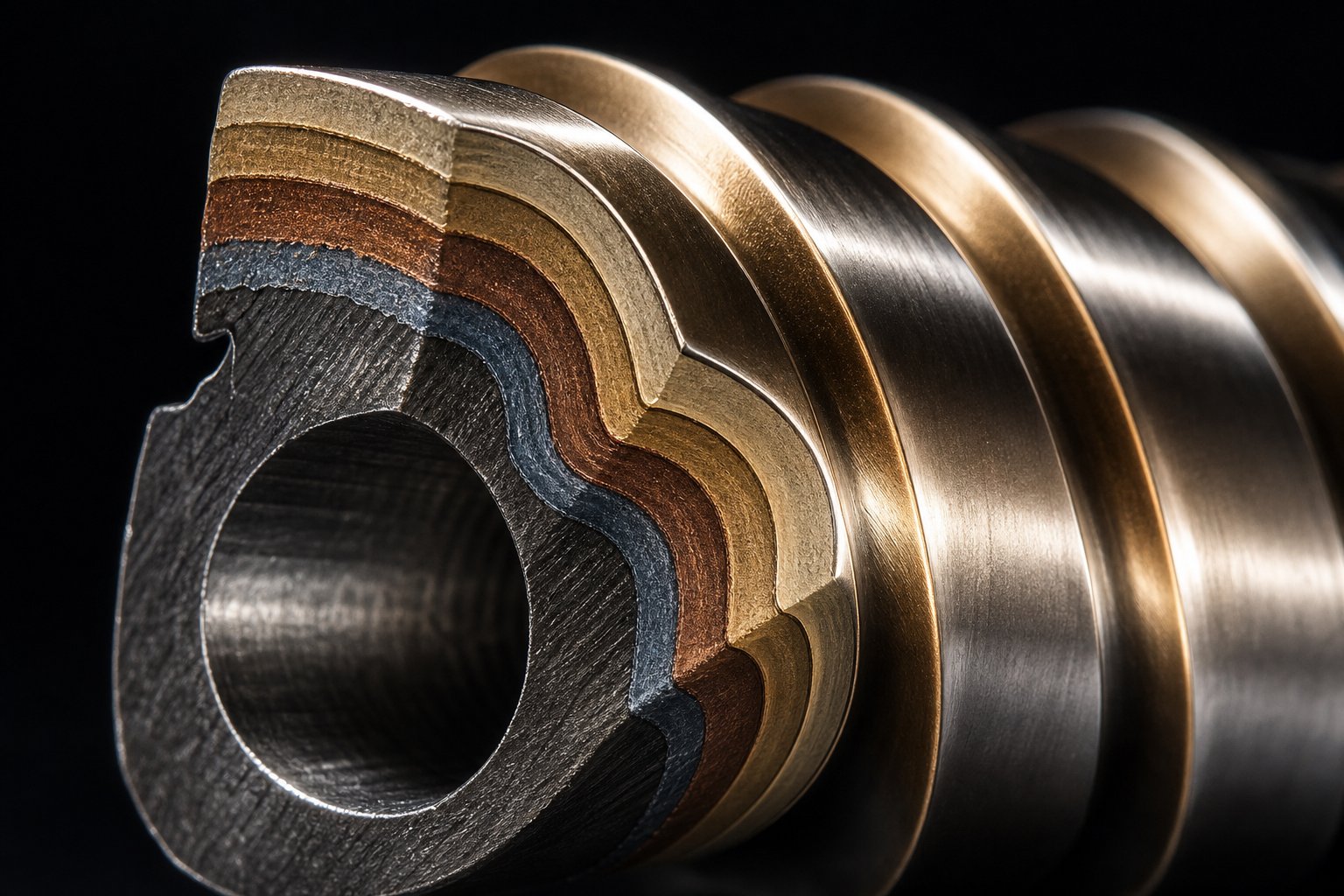
Screw Materials and Surface Treatments Compared
Flight geometry dictates what a screw is designed to do — but metallurgy determines how long it actually does it. A perfectly engineered compression ratio and flight depth mean nothing if the screw surface erodes after a few hundred hours of processing glass-filled nylon. Yet material selection and surface treatment are exactly where many buyers stop asking questions, and where a careless extruder screw supplier hopes you won't dig deeper.
Every screw faces a punishing combination of abrasive wear, corrosive chemical attack, and sustained high temperatures. The base material and any protective coating applied during the custom screw machining process must be matched to those specific threats. Get the match right and you'll see years of reliable service. Get it wrong and you'll be ordering replacements far sooner than your budget anticipated.
Base Materials and Nitriding for Standard Applications
The most common starting point for extrusion screws is medium-carbon alloy steel — typically AISI 4140 (or its European equivalent, 1.8550 / 42CrMo4). This steel offers a solid balance of toughness, machinability, and fatigue resistance, making it the workhorse for screw manufacturing machine production worldwide.
On its own, though, 4140 doesn't provide enough surface hardness to resist the constant friction between the screw flights and the barrel wall. That's where nitriding comes in. Gas nitriding diffuses nitrogen atoms into the steel surface at around 500 to 550 degrees Celsius, forming a hard nitride layer without distorting the screw's precision-machined dimensions. The result is a case-hardened surface reaching approximately 65 to 70 HRC on the outermost white layer, with an effective depth of 0.3 to 0.5 mm.
When does nitrided steel perform well enough? For non-abrasive, non-corrosive commodity resins — think unfilled polyethylene, polypropylene, and general-purpose polystyrene — a properly nitrided 4140 screw delivers cost-effective wear resistance. It's the baseline option, and for many processors running clean polyolefins, it's genuinely sufficient. The limitation becomes clear the moment you introduce fillers, reinforcements, or chemically aggressive polymers. Nitriding is a thin surface treatment, and once that hardened layer wears through, the softer substrate beneath erodes rapidly.
Bimetallic and Advanced Coatings for Demanding Environments
When your process pushes past what nitrided steel can handle, you step into the world of bimetallic construction and advanced surface coatings. This is where material science separates a quality supplier from one that offers only catalog-standard options.
Bimetallic screws feature a centrifugally cast alloy liner bonded to the screw flights or, more commonly, applied to barrel bores. For screws specifically, bimetallic construction involves welding or fusing a wear-resistant alloy — such as Colmonoy 56 or similar nickel-chromium-boron alloys — onto the flight lands and critical wear surfaces. This creates a composite structure: a tough, ductile core that resists fatigue and breakage, topped with an extremely hard surface that handles abrasion. Research published in the Polymer Engineering & Science Journal found that bimetallic screws can extend service life by up to five times compared to nitrided steel when processing abrasive plastics.
Hard chrome plating deposits a thin layer of chromium (typically 0.025 to 0.125 mm) onto the screw surface, reaching a hardness of approximately 65 to 70 HRC. Chrome excels at reducing friction and providing moderate corrosion resistance — useful for PVC processing where chemical attack is a concern but abrasion levels are low. However, chrome plating is thin and relatively brittle. It chips under heavy mechanical impact and offers limited protection against highly abrasive filled compounds.
Tungsten carbide coatings, applied through thermal spray processes like HVOF (High Velocity Oxygen Fuel), deliver the highest hardness available for screw surfaces — ranging from 55 to 70 HRC depending on the specific carbide formulation and application method. This makes tungsten carbide the go-to solution for severely abrasive applications: glass-fiber-filled resins, mineral-filled compounds, and recycled plastics contaminated with hard particulates. The trade-off? Tungsten carbide coatings are more expensive to apply, and their corrosion resistance depends heavily on the binder material used in the coating matrix. They also degrade above approximately 450 degrees Celsius, which limits their use in ultra-high-temperature processing.
Stellite overlays — particularly Stellite-6, a cobalt-chromium alloy — provide a unique combination of abrasion resistance, galling resistance, and corrosion protection. With a typical hardness of 40 to 45 HRC in the as-deposited condition, Stellite doesn't match tungsten carbide for raw hardness. Its advantage lies in retaining that hardness at elevated temperatures (up to 500 degrees Celsius) and resisting both abrasive wear and chemical corrosion simultaneously. Stellite overlays are commonly applied to screw flight tips and high-wear zones via PTA (Plasma Transfer Arc) welding, making them well-suited for processing corrosive-abrasive material combinations — PVC with calcium carbonate filler, for example.
Choosing between these options isn't a matter of picking the hardest coating and calling it done. Each treatment addresses a specific combination of wear mode (abrasion vs. corrosion vs. adhesive wear), operating temperature, and budget. A supplier who recommends tungsten carbide for every application is likely overselling. One who only offers nitrided steel is likely underserving. The best partners in custom screw machining walk you through the decision based on what your process actually demands.
| Treatment Type | Hardness Range (HRC) | Abrasion Resistance | Corrosion Resistance | Typical Application Scenarios |
|---|---|---|---|---|
| Nitrided Steel (4140) | 65-70 (surface layer) | Moderate | Low to Moderate | Unfilled PE, PP, PS — commodity resins with no abrasive or corrosive additives |
| Hard Chrome Plating | 65-70 | Moderate to Good | Good | PVC and other mildly corrosive resins with low abrasion; low-friction applications |
| Bimetallic (Colmonoy / Ni-Cr-B-Si) | 35-60 | Good to Excellent | Good | Glass-filled nylon, mineral-filled compounds, recycled plastics with contaminants |
| Stellite-6 Overlay | 40-45 | Excellent (abrasion + galling) | Good (acidic environments) | Corrosive-abrasive combinations; PVC with fillers; high-temperature processing up to 500 degrees C |
| Tungsten Carbide (HVOF) | 55-70 | Superior | Fair (binder-dependent) | Severely abrasive glass-filled and mineral-filled resins; recycled plastics with hard particulates |
A screw's surface treatment is its first line of defense against the process environment. Choosing the wrong protection doesn't just shorten screw life — it degrades melt quality and output consistency long before the screw is visibly worn.
Material and coating selection tells you how a screw will survive your process. But survival alone isn't enough — the screw also needs to be geometrically matched to the specific resin flowing through it. Different polymer families melt, flow, and degrade in fundamentally different ways, and those differences demand purpose-built screw designs rather than one-size-fits-all solutions.
Matching Screw Geometry to Your Resin Type
A screw with flawless metallurgy and a perfectly applied tungsten carbide coating will still underperform if its geometry doesn't match the polymer running through it. That's because every resin family melts differently, flows differently, and breaks down under different conditions. Polyethylene softens gradually over a wide temperature window, forgiving minor design mismatches without complaint. PVC, by contrast, sits on a razor's edge between adequate fusion and thermal degradation — and it will punish a poorly matched plastic extruder screw with charred streaks, corrosive off-gassing, and reject after reject.
This mismatch between screw geometry and resin behavior is one of the most expensive mistakes in extrusion, yet it's also one of the least discussed. Many suppliers default to general-purpose screw designs that "work okay" across a range of materials but are truly optimized for none of them. If you're processing anything beyond unfilled commodity polyolefins, understanding what your specific resin demands from a plastic extrusion screw is essential to getting real performance from your line.
Commodity Resins and General-Purpose Screw Designs
Polyolefins — polyethylene (PE), polypropylene (PP) — and general-purpose polystyrene (PS) are the most forgiving resins you'll encounter. They have broad melting ranges, tolerate moderate shear without degradation, and don't aggressively attack screw surfaces. A standard metering screw with a conventional three-zone design (feed, compression, metering) handles these materials well, which is exactly why most off-the-shelf replacement screws are engineered around polyolefin processing assumptions.
That said, "forgiving" doesn't mean "indifferent to screw design." LDPE, for instance, performs best with a compression ratio around 3.2:1 to 3.8:1, which aggressively compacts its low bulk density pellets and generates the shear energy needed for thorough melting. HDPE, with higher crystallinity and a sharper melting point, benefits from a slightly lower compression ratio and deeper feed channels that prevent premature melting and solid-bed breakup. PP sits somewhere between the two, tolerating a wider range of compression ratios but responding well to optimized metering-zone depths that improve melt temperature uniformity.
For these materials, a well-designed general-purpose screw gets you 90% of the way. The remaining 10% — the difference between acceptable output and genuinely optimized throughput — comes from fine-tuning flight depth, compression taper rate, and metering-zone length to match your specific grade, melt index, and die setup.
Specialty Polymers That Demand Engineered Screw Geometry
Step outside the commodity polyolefin world and the rules change fast. Specialty polymers have narrower processing windows, unusual viscosity behaviors, or chemical properties that punish generic screw designs. Here is where the real value of a knowledgeable extruder screw supplier becomes apparent — and where a supplier who skips application questions before recommending a screw should raise immediate concern.
- PVC (Polyvinyl Chloride)
- Recommended screw type: Low-compression, low-shear metering screw with a compression ratio of approximately 1.6:1 to 2.0:1 and an L/D ratio of 16:1 to 20:1.
- Critical design considerations: PVC is thermally sensitive and releases hydrochloric acid when it degrades. Every design decision — shallow compression taper, moderate flight depths, reduced shear zones — aims to minimize frictional heat generation while still achieving adequate fusion. Residence time must be tightly controlled because prolonged exposure to heat triggers irreversible degradation.
- Common pitfalls: Using a standard PE screw with a 3:1+ compression ratio on PVC. The excessive shear generates localized hot spots that degrade the polymer, produce corrosive gas, and rapidly damage both the screw and barrel.
- Nylon (PA6, PA66)
- Recommended screw type: Barrier screw or high-performance mixing screw. Parallel barrier designs (sometimes called Barr-type) are particularly effective because they provide approximately one-third more melting area in the solids channel than crossing barrier designs of the same axial length — critical for nylon's high energy requirement.
- Critical design considerations: Nylon has a sharp melting point and high melt viscosity at processing temperatures. It demands thorough, consistent melting to avoid unmelts in the final product. Engineering-grade nylons also absorb moisture, so screws paired with vented barrel sections reduce moisture-related defects.
- Common pitfalls: Running nylon on a standard metering screw without barrier flights. The result is often incomplete melting at higher screw speeds, leading to gels and poor surface finish in the extrudate.
- PEEK (Polyether Ether Ketone)
- Recommended screw type: High-performance barrier screw with mixing elements, designed for processing temperatures above 370 degrees Celsius.
- Critical design considerations: PEEK's extreme processing temperature demands screws manufactured from tool steels capable of maintaining hardness and dimensional stability well above 350 degrees Celsius. The screw production machine tolerances for PEEK applications are among the tightest in the industry, because even small clearance variations at these temperatures create melt-quality problems.
- Common pitfalls: Assuming a nylon-optimized screw will work for PEEK. The substantially higher processing temperature and different rheological profile mean geometry that works beautifully for PA66 can produce poor melt homogeneity and unacceptable pressure fluctuations with PEEK.
- TPU (Thermoplastic Polyurethane)
- Recommended screw type: Low-compression screw with gentle distributive mixing sections, similar in philosophy to PVC screw designs but with modifications for TPU's elastic melt behavior.
- Critical design considerations: TPU is shear-sensitive and prone to degradation if overworked. Its elastic melt can cause surging if the metering zone generates excessive back-pressure. Gentle mixing elements — pin-type or slotted distributive mixers — are preferred over aggressive Maddock sections.
- Common pitfalls: Using high-shear mixing elements designed for polyolefins. TPU's melt elasticity amplifies shear heating in aggressive mixing zones, causing thermal degradation and inconsistent output.
- Glass-Filled and Mineral-Filled Compounds
- Recommended screw type: Wear-resistant screw (bimetallic or tungsten carbide coated) with modified flight geometry — widened flight lands to reduce localized wear, and lower compression ratios (approximately 2.8:1 to 3.2:1) to minimize abrasive shear on the filler particles.
- Critical design considerations: Fillers above 20 to 30% loading accelerate flight wear dramatically. Standard nitrided screws processing 40% calcium carbonate or glass fiber can show severe flight erosion within months on high-output lines. Flight geometry must balance mixing effectiveness (to distribute filler uniformly) against wear rate.
- Common pitfalls: Focusing only on metallurgy while ignoring geometry. A bimetallic screw with the wrong compression ratio still produces poorly dispersed filler and inconsistent mechanical properties in the finished part — the wear protection just means the bad results last longer before the screw itself fails.
- Biodegradable Resins (PLA, PBAT, Starch Blends)
- Recommended screw type: Low-shear screw with gentle mixing zones and a compression ratio of 2.5:1 to 3.0:1.
- Critical design considerations: These materials have narrow melting windows and degrade rapidly under excessive shear. A screw designed for LDPE (3.5:1+ compression ratio) will overshear PLA and PBAT, causing burn marks, bubble instability in blown film, and brittle finished products. Precise temperature control across all zones is essential.
- Common pitfalls: Running biodegradable resins on existing PE screws without modification. One case study documented scrap rates dropping from 12% to under 4% simply by switching from a 3.6:1 PE screw to a 2.8:1 low-shear design optimized for PBAT/PLA processing.
The pattern is clear: the further a polymer's melting behavior, thermal sensitivity, or filler content drifts from the gentle, wide-window profile of commodity polyolefins, the more critical it becomes to match screw geometry precisely to that specific material. A supplier who offers a single "universal" plastic extrusion screw design for all resins is either oversimplifying or hoping you won't notice the performance you're leaving on the table.
Knowing which screw design fits your resin, however, is only half the equation. The other half is knowing how to translate a real production problem — poor melt quality, output surging, or color streaking — into a specific screw modification that fixes it. That shift from material-driven selection to problem-driven troubleshooting opens an entirely different decision framework.
A Problem-First Framework for Screw Selection
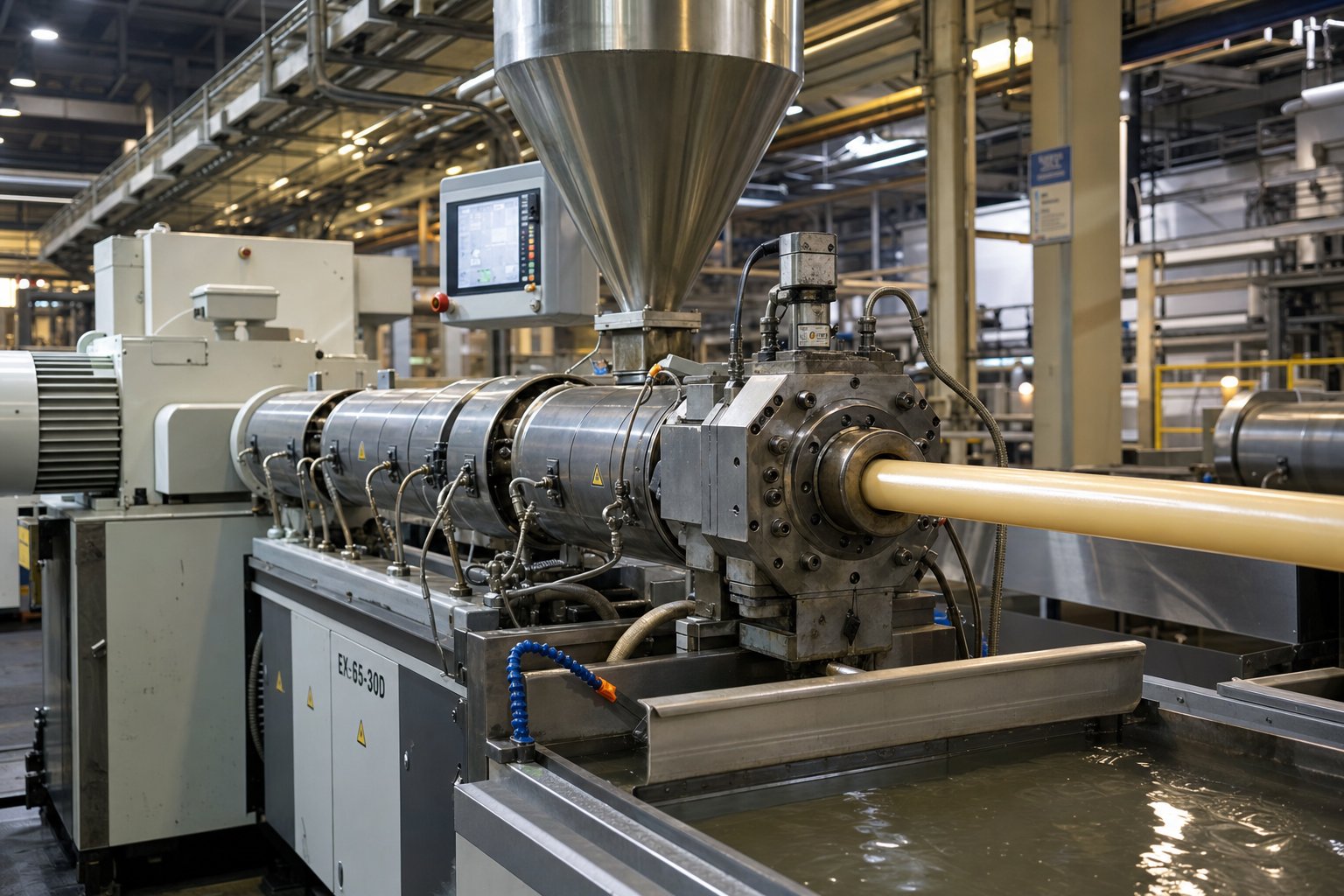
Most feed screw manufacturers organize their offerings around product catalogs — screw types listed by diameter, material, or machine brand. That approach works fine if you already know exactly what you need. But what if your starting point isn't a part number? What if it's a production headache — streaky color, surging output, or melt temperatures climbing higher than they should? Flipping the selection process around and starting with the symptom rather than the catalog transforms screw selection from a guessing game into a targeted engineering decision.
Solving Melt Quality and Mixing Problems
Poor melt homogeneity is one of the most common complaints on the extrusion floor, and it almost always traces back to screw design. If your extrudate shows unmelt specks, temperature variation across the melt stream, or gels that survive to the final product, a standard metering screw simply isn't finishing the job. A barrier screw addresses this directly by physically separating the solid and molten polymer into distinct channels using a secondary flight — the barrier flight — with a tighter clearance to the barrel wall. This design forces all material to pass through a controlled gap, ensuring nothing reaches the metering zone without being fully melted. As extrusion consultant Jim Frankland notes, if a barrier section is designed properly, material passing through it should be completely melted — eliminating the need for supplemental high-shear mixing downstream.
Inadequate color or additive distribution is a different problem. Here, the polymer is melted but the minor components aren't evenly spread through the melt matrix. The solution is a mixing section added to the screw, but which type matters enormously. Dispersive mixers like the Maddock (also known as the UCC or Leroy mixer) work by forcing melt through narrow clearances, applying high shear to break apart agglomerates. Distributive mixers — pin-type, pineapple, or Saxton designs — divide the melt stream repeatedly to spread components into thin layers without adding excessive shear. For barrier screws especially, distributive mixers are almost always the better choice, because melting has already been completed in the barrier section. Adding a high-shear Maddock mixer after a barrier section often just raises melt temperature unnecessarily and reduces output through added pressure drop.
Imagine you're blending color concentrate into polypropylene and noticing persistent streaking. A pineapple mixer converges divided melt streams at varying angles, creating chaotic recombination that spreads pigment more effectively than any amount of additional screw speed. A pin mixer, meanwhile, creates exponential melt divisions based on the number of pins and rows — ideal for blending components with significantly different viscosities. Each mixer type suits specific situations, and a capable supplier will ask what you're mixing before recommending one.
Addressing Output Consistency and Throughput Challenges
Flow surging — that frustrating oscillation in output rate, motor current, and discharge pressure while all set points remain constant — is a problem that costs production time, drives up scrap, and often gets misdiagnosed. The instinct is to blame the resin, the hopper, or the drive. In reality, the most common root cause is improper solids conveying driven by temperature imbalances in the feed zone. For smooth-bore extruders, solids conveying depends on forwarding forces at the barrel wall exceeding retarding forces at the screw root. When the screw runs too hot in the feed section — due to inadequate screw cooling or a feed casing with mineral-clogged cooling channels — friction at the screw surface increases, retarding forces climb, and the solid bed slips unpredictably. The result is cyclic output variation that no downstream adjustment can fix.
A grooved feed zone paired with a matched screw geometry can dramatically stabilize this situation. Grooved feed sections lock the solid pellets against the barrel wall, making conveying nearly independent of friction coefficients and far more tolerant of temperature variation. However, grooved feed zones generate higher pressures in the feed section, which means the rest of the screw — particularly the compression and metering zones — must be redesigned to handle that increased pressure without creating a standby screw machine scenario where backflow and instability take over.
Low throughput, on the other hand, often points to a starved metering zone. Deeper feed-section channels increase the volume of material conveyed per revolution, while a longer L/D ratio gives the screw more working length to complete melting and pressure generation without bottlenecking. Both modifications raise output potential, but both also change shear input and residence time. A deeper feed channel without a corresponding adjustment to compression ratio can leave unmelted material in the metering zone — solving one problem while creating another.
The structured troubleshooting sequence below links common production symptoms to their likely screw-design root causes and the modifications that resolve them:
- Symptom: Unmelt specks or gels in extrudate — Root cause: Incomplete melting in the transition zone. — Recommended modification: Upgrade to a barrier screw design that physically separates solids from melt, ensuring complete plasticization before the metering zone.
- Symptom: Color streaking or poor additive distribution — Root cause: Insufficient melt mixing in the metering zone. — Recommended modification: Add a distributive mixing section (pineapple, pin-type, or Saxton) downstream of the metering zone. Avoid high-shear dispersive mixers unless particle size reduction is specifically needed.
- Symptom: Cyclic output surging at constant set points — Root cause: Unstable solids conveying, often from a hot screw root or inadequate feed-casing cooling. — Recommended modification: Improve screw cooling (extend the cooling bore to the end of the solids conveying section), flush feed-casing cooling channels, or retrofit a grooved feed zone with a matched screw design.
- Symptom: Degradation, discoloration, or off-gassing of heat-sensitive resin — Root cause: Excessive shear heating from high compression ratio or aggressive mixing elements. — Recommended modification: Switch to a low-compression, shallow-taper screw design with gentle distributive mixing. Reduce compression ratio and shorten residence time by optimizing L/D ratio for the specific polymer.
- Symptom: Output rate below target despite maximum screw speed — Root cause: Insufficient feed-zone conveying volume or inadequate plasticization length. — Recommended modification: Deepen the feed-section channels to increase volumetric intake per revolution, or increase L/D ratio to provide more melting and pressure-building length.
- Symptom: High melt temperature despite moderate barrel settings — Root cause: Excessive viscous dissipation from overly aggressive metering-zone shear. — Recommended modification: Increase metering-zone channel depth to reduce shear rate, or replace a dispersive mixer with a low-restriction distributive design that homogenizes without generating excess heat.
This problem-first approach flips the traditional supplier conversation. Instead of asking "What screws do you sell?" you start with "Here's what's going wrong on my line — what screw design fixes it?" Any extruder screw supplier worth partnering with should welcome that conversation, because it's exactly the kind of engineering dialogue that produces results rather than just transactions.
Of course, not every production problem requires a brand-new screw. In many cases, a worn screw causing performance issues can be rebuilt and returned to service — or strategically replaced with an upgraded design. Knowing which path makes technical and financial sense is a decision that demands its own framework.
Rebuild or Replace — Making the Right Call on Worn Screws
Every extrusion screw reaches a point where performance slips — output drops, melt consistency wanders, and motor current starts creeping upward. When that moment arrives, you face three distinct paths: rebuild and recoat the existing screw, replace it with an identical new one, or re-engineer a new screw with an upgraded design. The right choice depends on a handful of measurable factors, yet most buyers make this decision on gut feel because no one has laid out the criteria clearly.
Start with the wear itself. Precise measurements — not visual impressions — should drive your decision. Industry-standard thresholds from wear analysis guidelines are straightforward: if flight clearance exceeds 0.15 mm, the screw needs intervention. If root diameter wear surpasses 0.10 mm, or if you observe structural cracking and fatigue damage, rebuild economics shift sharply toward replacement. Catching wear early preserves more options — and more of the screw's original geometry for future rebuilds.
When Rebuilding Makes Economic and Technical Sense
A rebuild restores a worn screw to serviceable condition through flight buildup, hard-facing, re-chroming, straightening, and full-length polishing. Professional rebuild shops use processes like PTA (Plasma Transfer Arc) welding on flight crests — fusing a dual-alloy composition of nickel, tungsten, and cobalt onto the worn surfaces. This not only restores the original dimensions but can actually more than double the flight life compared to the screw's original nitrided surface.
Rebuilding makes strong sense when:
- The base steel core remains sound — no bending, no deep corrosion pitting, no structural fatigue cracks.
- Wear is moderate and caught before critical thresholds are exceeded.
- The original screw design was performing well before wear degraded it.
- Lead time pressure is manageable — a rebuild typically takes less time than manufacturing a new screw from scratch.
- Cost matters — a professional rebuild with re-chroming typically runs 50 to 75% of new screw cost, and simpler restorations can come in even lower.
Keep in mind that each rebuild slightly alters the original geometry. Conservative estimates suggest a screw can be rebuilt roughly two times before diminishing returns set in, though screws caught early and repaired modestly have been rebuilt four to five times over their service lives. The key variable is how much material each repair cycle consumes.
When Full Replacement or Re-Engineering Is the Better Investment
Rebuilding has limits. When wear is severe — deep corrosion pitting into the base steel, bent shafts, or thermal fatigue cracking — restoration becomes unreliable regardless of how skilled the screw machine manufacturer performing the work may be. At that point, a new screw is the safer investment.
Full replacement also becomes the smarter path when the original screw design wasn't performing well even before wear set in. If you've been fighting melt quality issues, output inconsistency, or excessive energy consumption since the screw was new, rebuilding simply restores a flawed design to its original flawed state. The rebuild moment is exactly the right time to ask whether geometry, compression ratio, or surface treatment should change — not to blindly replicate what was there before.
Re-engineering a new screw makes particular sense when:
- You've changed resins or added fillers since the original screw was specified.
- Production targets have increased and the existing design can't keep up.
- The original metallurgy was underspecified — for example, a nitrided screw running glass-filled compounds that a bimetallic design would handle far better.
- You want to incorporate barrier flights, mixing sections, or optimized compression ratios that the original design lacked.
Think of it this way: rebuilding preserves what you had, while re-engineering improves on it. Both have their place, and a quality supplier — whether a local machine shop or a specialized screw and barrel manufacturer — should help you evaluate honestly rather than default to whichever option generates the larger invoice.
| Factor | Rebuild and Recoat | Full Replacement (Same Design) | Re-Engineered New Screw |
|---|---|---|---|
| Typical Cost (% of New Screw) | 30 to 75% | 100% | 100 to 130% (engineering and optimization included) |
| Turnaround Time | Shorter — no new engineering required | Moderate — standard manufacturing lead time | Longer — requires design review and possible prototyping |
| Performance Restoration | Returns screw to near-original spec; does not correct design flaws | Full restoration to original performance level | Potential to exceed original performance through optimized geometry |
| Design Improvement Opportunity | Limited — geometry is constrained by existing screw core | None — replicates original design | Full — compression ratio, flight geometry, mixing sections, and metallurgy can all be upgraded |
| Best Suited For | Sound base steel with moderate wear; original design was adequate | Severe wear on a screw design that was performing well | Design was suboptimal, resin changed, or production targets increased |
The rebuild-or-replace decision ultimately reveals something important about your supplier. A partner who evaluates your worn screw honestly — measuring wear, assessing base-metal integrity, and asking whether the original design was even right for your process — is fundamentally different from one who simply quotes a replacement without questions. That difference in approach is exactly what separates a reliable extruder screw supplier from a risky one, and it points directly to the broader question of how to evaluate any supplier before committing to an order.
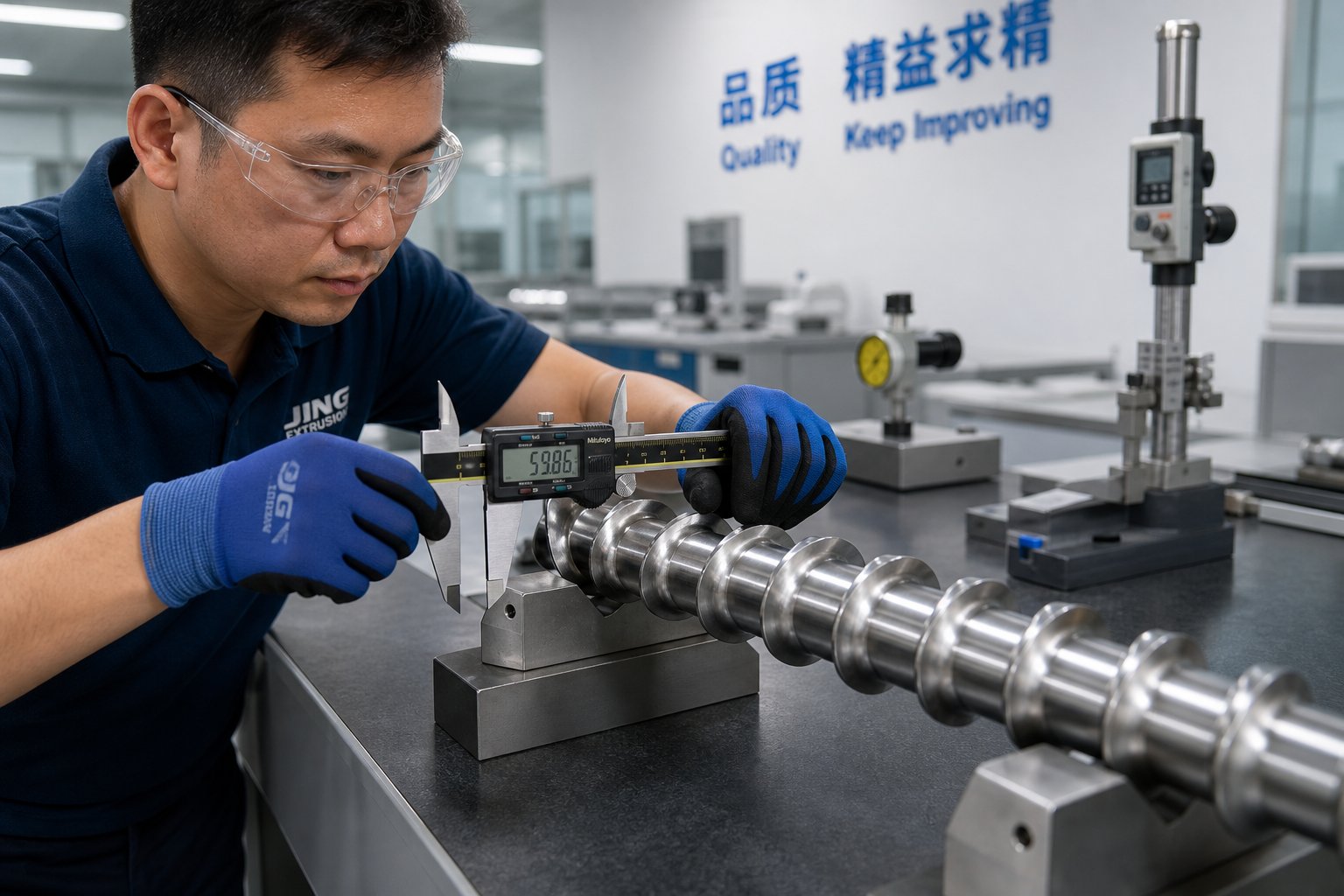
How to Evaluate and Select the Right Extruder Screw Supplier
Knowing when to rebuild, replace, or re-engineer a screw is valuable — but that knowledge only pays off if the supplier executing the work is capable, transparent, and genuinely invested in your production outcome. And here's the uncomfortable truth: most buyers evaluate suppliers on price and lead time alone, ignoring the criteria that actually predict whether a screw will perform as promised or fail months ahead of schedule.
The extruder screw supplier landscape ranges from vertically integrated manufacturers who cast, machine, hardface, and inspect every component under one roof, to trading companies that source from third-party factories and add a markup. Between those poles sit dozens of variations — regional machine shops with CNC capability but no metallurgical expertise, overseas factories with impressive equipment photos but no verifiable quality documentation, and resellers who position themselves as single screw extruder manufacturers without owning a single lathe. Sorting them apart requires asking the right questions and knowing which answers matter.
Engineering Capability and Design Support as Differentiators
The single most revealing test of a supplier's depth is whether they can solve a processing problem — not just fill an order. Imagine calling a supplier and saying, "I'm getting unmelt specks in my HDPE film line at 450 kg/hr." A pure order-taker will ask for the screw drawing and quote a replacement. A genuine engineering partner will ask about your resin grade, L/D ratio, barrel temperatures, screw speed, and whether you've considered a barrier design with a distributive mixer. That conversation — the willingness and ability to diagnose before prescribing — separates manufacturers from middlemen.
In-house engineering capability means the supplier can:
- Reverse-engineer a worn screw from a physical sample when no drawing exists — measuring every flight dimension, mapping the wear pattern, and reconstructing the original geometry.
- Design a screw from scratch based on your resin, throughput target, and quality requirements — not just replicate what someone else designed years ago.
- Recommend geometry and metallurgy changes when the original design was inadequate, rather than blindly reproducing a flawed specification.
- Run screw design simulations or apply empirical design rules to predict performance before manufacturing begins.
Suppliers who organize their product offerings around specific buyer needs — rather than generic diameter-based catalogs — tend to demonstrate this application-focused mindset. NANHAIYA's product center, for example, is structured specifically for plastic processors, equipment manufacturers, and maintenance teams seeking custom or replacement screw and barrel solutions for extrusion and injection molding equipment. That kind of organization signals a supplier who thinks in terms of your application, not just their inventory.
A practical way to test engineering depth: ask whether the supplier has experience with your specific resin family and processing challenge. A company that has designed screws for glass-filled nylon compounding will understand the wear implications, barrier geometry requirements, and metallurgical trade-offs in ways that a general-purpose machine shop simply won't — regardless of how precise their CNC equipment may be.
Supply Chain Considerations and Lead Time Realities
Where a supplier manufactures — and how many production steps they control in-house — directly affects both lead time and quality consistency. This is where the domestic-versus-overseas decision gets more nuanced than most buyers realize.
Domestic sourcing offers clear advantages in speed, communication, and accountability. Sharing a time zone and language reduces friction during design reviews and production planning, and engineers can clarify tolerances or material substitutions without the delays inherent in cross-continental communication. When a defect appears, resolution happens in days rather than weeks. Domestic suppliers also eliminate the tariff exposure that has become increasingly unpredictable — average effective tariff rates on key industrial inputs have climbed to their highest levels in decades, often ranging from 15% to 25%.
Overseas sourcing can deliver meaningful cost savings on high-volume, standardized replacement screws where the design is finalized and customization is minimal. However, those savings frequently erode when you factor in longer lead times (typically 8 to 16 weeks including ocean freight versus 3 to 6 weeks domestic), the cost of carrying additional inventory to buffer against shipping delays, and the difficulty of resolving quality issues from a distance. As one industry analysis notes, higher scrap and defect rates overseas can erase initial savings entirely — and if a batch requires rework, shipping it back across the ocean adds months of delay.
The real risk, though, isn't geography — it's transparency. A domestic reseller who outsources manufacturing overseas without disclosing it gives you the worst of both worlds: domestic pricing with overseas quality variability and no direct control over the factory producing your parts. Similarly, an overseas manufacturer who controls casting, heat treatment, hardfacing, and final machining under one roof — with documented quality systems — can deliver better consistency than a domestic broker who subcontracts every step to different shops.
Custom screws and re-engineered designs inherently take longer than standard replacements regardless of where they're made, because engineering review, design approval, and potentially iterative adjustments add weeks before manufacturing even begins. If your line is down and you need a replacement fast, a supplier with standard replacement inventory or expedited manufacturing capability becomes far more valuable than one offering a lower per-unit price on an 8-week timeline.
The following evaluation criteria, taken together, give you a practical framework for qualifying any prospective supplier — whether they're across town or across the Pacific:
- Engineering support and design capability — Can the supplier reverse-engineer from a worn sample? Do they offer screw design optimization for your specific resin and application? A supplier with in-house engineering solves processing problems rather than just fulfilling orders.
- Material certifications and traceability — Does the supplier provide EN 10204 3.1 material certificates for every alloy used, including base steel, hardfacing powders, and bimetallic liner castings? Material traceability is non-negotiable for quality assurance — if a supplier can't document what's in the screw, you have no way to verify what you're actually paying for.
- Manufacturing process transparency — Which production steps are performed in-house versus outsourced? Vertically integrated suppliers who control CNC machining, heat treatment, hardfacing (PTA, HVOF), and final grinding under one roof deliver more consistent field life because they eliminate process control gaps between subcontractors.
- Quality inspection and documentation — Does the supplier provide dimensional inspection reports (ideally CMM data), hardness testing results at multiple points per assembly, and metallographic cross-sections for hardfaced or bimetallic screws? Suppliers who ship assemblies with complete documentation packages demonstrate process confidence. Those who don't are hoping you won't ask.
- Lead time reliability — What are the supplier's standard and expedited lead times, and how consistently do they meet them? Ask for references who can verify on-time delivery performance. A quoted lead time is a promise; delivery history is evidence.
- Rebuild and resharpening capabilities — Does the supplier offer screw refurbishment services, including wear assessment, flight buildup, re-chroming, and re-nitriding? A supplier who can both manufacture new screws and rebuild worn ones provides a complete lifecycle service, reducing the number of vendor relationships you need to manage.
- Minimum order quantities — Some suppliers require minimum quantities that make sense for OEM equipment builders but penalize maintenance teams ordering a single replacement screw. Clarify MOQ requirements upfront, especially if you're sourcing for emergency replacements rather than planned procurement cycles.
- Industry-specific experience — Has the supplier worked with processors in your industry segment? A supplier experienced in pipe and profile extrusion understands different challenges than one focused on blown film or injection molding. Ask for case studies or references in your specific application area.
- Warranty and after-sale support — What are the warranty terms? What happens if a screw fails prematurely — does the supplier investigate root cause and provide corrective action, or simply offer to sell you another one? The warranty response reveals whether the supplier stands behind their metallurgy and engineering.
You'll notice that price isn't on this list — not because it doesn't matter, but because it's the one criterion every buyer already evaluates. The criteria above are the ones most buyers overlook, and they're precisely the factors that determine whether a $12,000 screw delivers 18,000 hours of service or a $7,000 screw fails at 4,000 hours and costs you $40,000 in unplanned downtime. Suppliers like NANHAIYA, whose offerings are organized around custom and replacement screw and barrel solutions for specific extrusion and injection molding applications, exemplify the application-driven approach that makes these evaluation criteria easier to apply — you can quickly identify whether the supplier's capabilities align with your specific processing needs.
A thorough evaluation framework protects you from expensive mistakes, but it's equally important to recognize the warning signs that should stop you from placing an order in the first place. Some red flags are obvious; others are subtle enough that even experienced buyers miss them until the screw arrives — or fails.
Red Flags That Signal an Unreliable Screw Supplier
Evaluation criteria tell you what to look for in a supplier. Red flags tell you when to walk away. The distinction matters because a supplier can check a few positive boxes — competitive pricing, a professional-looking website, quick email replies — while still concealing weaknesses that will cost you far more than the screw itself once production problems surface. Experienced procurement teams and process engineers develop an instinct for these warning signs over time. The checklist below accelerates that learning curve so you don't have to pay tuition through failed screws and unplanned downtime.
Documentation and Traceability Red Flags
If a supplier can't — or won't — tell you exactly what's inside the screw they're selling, treat that as a disqualifying signal. Legitimate manufacturers maintain manufacturing traceability as a matter of standard practice, documenting raw material origins, heat treatment parameters, and inspection results at every stage. This isn't bureaucratic overhead. It's the evidence trail that lets you trace a premature failure back to its root cause — a bad batch of steel, an under-temperature nitriding cycle, or a hardfacing alloy that didn't meet specification.
Material test certificates (such as EN 10204 3.1 reports), dimensional inspection records, and hardness test results at multiple locations on the finished screw are baseline expectations from any quality-focused supplier. When these documents are unavailable, vague, or provided only "upon request" after repeated follow-ups, you're looking at a supplier whose quality system either doesn't exist or can't withstand scrutiny. As traceability experts note, without proper batch-level documentation, isolating a defective component becomes impossible — meaning one bad screw could call your entire inventory from that supplier into question.
Communication and Support Warning Signs
Pay close attention to how a supplier behaves before they have your money. A reliable extruder screw supplier asks probing questions about your application — resin type, throughput, barrel condition, existing screw geometry, and the specific problem you're trying to solve. A supplier who skips straight to "send us your drawing and we'll quote it" is telling you something important: they're filling orders, not engineering solutions.
Sourcing analysts warn that delayed responses, evasive answers to direct questions, and an inability to provide concrete technical details all hint at deeper operational problems. If a supplier can't clearly explain why they're recommending a specific surface treatment or compression ratio, they likely lack the metallurgical and process engineering knowledge to deliver a screw that performs as promised. Responsiveness during the quoting phase is usually the high-water mark of a supplier's attentiveness — if communication is poor now, imagine what happens when a warranty claim arises.
Here are the critical warning signs, organized as a ready-to-use checklist for your next supplier evaluation:
- No engineering support or application discussion — The supplier quotes a screw without asking about your resin, process conditions, or the problem you're solving. They treat every order as a commodity transaction.
- Inability to provide material certifications — No mill certificates for base steel, no batch records for hardfacing alloys, and no documentation proving heat treatment parameters were met.
- Pricing significantly below market without explanation — A quote 30% to 50% below competing offers almost always signals compromised metallurgy, skipped heat treatment steps, or substandard machining tolerances. Comparative analysis across multiple suppliers is essential to spot pricing outliers that indicate hidden quality shortcuts.
- No quality inspection documentation — The supplier cannot provide dimensional reports, CMM data, hardness testing results, or surface finish verification for finished screws. If they don't measure it, they can't guarantee it.
- Vague or non-existent warranty terms — Phrases like "warranty handled on a case-by-case basis" or complete silence on warranty coverage signal a supplier who doesn't stand behind their product. Specific terms — duration, coverage scope, failure investigation process — indicate confidence in quality.
- No rebuild or after-sale service capability — A supplier who can only sell new screws but cannot assess wear, rebuild flights, or recoat surfaces lacks the lifecycle expertise to be a true production partner.
- Lack of references or industry-specific case history — Unwillingness to connect you with existing customers, or an inability to cite relevant experience in your resin family and application, suggests either limited track record or dissatisfied clients. Reputable suppliers have no hesitation sharing references from similar applications.
- Overpromising on lead times or performance claims — Guaranteeing delivery timelines that undercut every competitor, or claiming a single screw design works perfectly for all resins, should trigger immediate skepticism. Realistic commitments backed by evidence are always more trustworthy than extraordinary promises.
The cheapest screw is rarely the most economical. When you factor in unplanned downtime, elevated scrap rates, premature replacement costs, and lost production hours, a cut-rate screw almost always costs more than a properly engineered one from a qualified supplier.
Recognizing these red flags protects you from the worst outcomes, but avoidance alone isn't a procurement strategy. The most proactive step you can take is arriving at every supplier conversation with a specific set of questions — structured to expose both capability and credibility — that force any prospective partner to reveal exactly what they can and cannot deliver.

Key Questions to Ask Before Ordering from Any Supplier
Red flags tell you when to stop. Questions tell you whether to start. The difference between a smooth supplier relationship and a costly mistake often comes down to what you asked — and what you didn't — before signing the purchase order. Think of the questions below as a procurement filter: every answer either builds confidence or exposes a gap. A supplier who handles these comfortably is demonstrating capability. One who deflects, delays, or can't provide specifics is showing you exactly how the relationship will feel six months from now when a screw fails and you need answers fast.
These questions are organized into five categories that mirror the evaluation framework covered earlier. Print them, bring them to your next qualification call, and treat incomplete answers the same way you'd treat a missing material certificate — as a data point, not an inconvenience.
Engineering and Quality Questions That Reveal Supplier Depth
The fastest way to distinguish a genuine manufacturer from a reseller wearing an engineering hat is to ask questions that require actual technical knowledge — not catalog specs anyone can recite. A capable extruder screw supplier will answer these without hesitation because the answers reflect work they do every day. A broker or trading company will pause, hedge, or escalate to someone who never calls back.
Start with design capability. Can the supplier reverse-engineer a screw from a worn physical sample when no drawing exists? This is common in maintenance scenarios — the original OEM drawing was lost years ago, or the machine was purchased used without documentation. A supplier with in-house engineering capability will measure every flight dimension, map the wear pattern, reconstruct the original geometry, and even recommend improvements based on the wear evidence. A reseller will ask you to "send the drawing" and go silent when you explain there isn't one.
Move into materials and quality assurance. Ask what base material and surface treatment the supplier recommends for your specific resin — and more importantly, ask why. The reasoning behind the recommendation reveals whether the supplier understands wear mechanisms or simply defaults to whichever option they stock. A supplier who recommends nitrided 4140 for a 40% glass-filled nylon application is either uninformed or hoping you won't know the difference. As sourcing research documents, nitrided 4140 in that service typically shows flight clearance loss of 0.8 mm within 4,500 operating hours — while a bimetallic screw with tungsten carbide overlay loses only 0.12 mm over the same period.
Then ask about documentation. Does the supplier provide EN 10204 3.1 material test certificates for every alloy used — base steel, hardfacing powder, and bimetallic liner material? Do they supply dimensional inspection reports with CMM data, hardness testing results at multiple points per assembly, and metallographic cross-sections for hardfaced screws? These aren't luxury requests. They're the baseline evidence that separates verified quality from marketing claims. Industry standards specify that hardness should be tested and documented at the flight tip, flight flank, screw root, and barrel bore to verify uniform heat treatment and overlay application. If a supplier can't provide this level of documentation, they either aren't performing the inspections or aren't confident in what those inspections would reveal.
Logistics and After-Sale Questions That Protect Your Investment
Engineering excellence means nothing if the screw arrives three weeks late while your line sits idle. Logistics and service questions protect your investment by exposing the operational realities behind the sales pitch.
Lead time is the second most misrepresented number in supplier quoting, right after MOQ. As procurement specialists note, sales teams quote optimistic timelines while production schedules slip — and by the time parts arrive, the original quoted date is a memory. Ask whether the quoted number is manufacturing lead time or door-to-door lead time. A 30-day manufacturing window becomes 50 days once you add freight, customs clearance, and consolidation. Then ask for the supplier's on-time delivery rate over the past 12 months, measured against the original quoted date — not a renegotiated one. That single metric reveals more about operational reliability than any capability brochure.
Minimum order quantities can also blindside maintenance teams ordering a single emergency replacement. Some suppliers set MOQs that make sense for OEM equipment builders purchasing dozens of screws but penalize the maintenance engineer who needs one screw shipped this week. Clarify whether the MOQ applies per shipment, per SKU, or across a blanket order — and what the reorder minimum looks like on subsequent purchases.
Rebuild and recoating capability rounds out the service picture. A supplier who can both manufacture new screws and assess, rebuild, and recoat worn ones provides lifecycle partnership rather than one-time transactions. Ask specifically: do you offer wear assessment services? Can you perform PTA hardfacing, re-chroming, and flight buildup in-house? What is your turnaround time on a rebuild versus a new screw? The answers tell you whether you're dealing with a full-service partner or a one-dimensional vendor.
Finally, warranty and failure response deserve direct, unambiguous answers. What are the warranty terms — duration, scope, and exclusions? What happens if a screw fails prematurely — does the supplier investigate root cause, provide metallurgical failure analysis, and offer corrective action? Or do they simply quote you a replacement at a "courtesy discount"? The warranty response is the clearest indicator of whether a supplier stands behind their metallurgy and engineering — or stands behind their invoice.
For buyers ready to put this framework into practice, the complete checklist below consolidates every critical question into a single ready-to-use reference:
- Can you reverse-engineer a screw from a worn physical sample when no drawing is available? — Tests in-house measurement and design capability versus reliance on customer-supplied documentation.
- Do you offer screw design optimization for my specific resin, filler loading, and throughput target? — Reveals whether the supplier engineers solutions or simply reproduces existing designs.
- What base material and surface treatment do you recommend for my application, and why? — The reasoning exposes real metallurgical knowledge versus default recommendations.
- Do you provide EN 10204 3.1 material test certificates and dimensional inspection reports with every shipment? — Non-negotiable for quality verification; refusal or hesitation is a disqualifying signal.
- Which production steps — CNC machining, heat treatment, hardfacing, final grinding — are performed in-house versus outsourced? — Vertically integrated suppliers deliver more consistent quality because they eliminate process control gaps between subcontractors.
- What heat treatment and surface treatment processes do you use, and how are parameters controlled and documented? — Confirms whether the supplier owns their metallurgical process or relies on third-party heat treaters running generic cycles.
- What is your standard lead time and your expedited lead time for custom versus replacement screws? — Distinguish between manufacturing time and door-to-door delivery, and verify with past delivery performance data.
- What is your minimum order quantity, and does it differ for first orders versus reorders? — Protects against hidden MOQ structures that penalize small-quantity maintenance purchases.
- Do you offer rebuild, recoating, and resharpening services for worn screws? — Indicates lifecycle service capability and reduces the number of vendor relationships you need to manage.
- What are your warranty terms, and what is your process if a screw fails prematurely? — Specific terms with documented failure investigation protocols indicate a supplier who stands behind their work. Vague language indicates one who doesn't.
- Can you provide references or case studies from processors in my industry segment and resin family? — Relevant experience in your specific application predicts better engineering recommendations and fewer costly surprises.
- How do you handle design changes or corrections after an order is placed? — Tests flexibility and communication processes that become critical when specifications evolve mid-project.
You'll notice these questions aren't designed to trap anyone — they're designed to reveal capability. A supplier who answers them thoroughly and confidently is demonstrating exactly the kind of transparency and technical depth that predicts long-term reliability. One who struggles with more than two or three of them is telling you, before you've spent a dollar, how the relationship will perform under pressure.
For buyers who want a practical starting point to begin applying these evaluation criteria, NANHAIYA's screw barrel product center offers a useful example of how an application-driven supplier organizes its offerings. Built specifically for plastic processors, equipment manufacturers, and maintenance teams, the product center is structured around custom and replacement screw and barrel solutions for extrusion and injection molding equipment — making it straightforward to identify relevant configurations and start a conversation grounded in your specific processing needs rather than generic catalog browsing.
Selecting the right extruder screw supplier is ultimately a decision about partnership, not just procurement. The screw inside your extruder governs melt quality, throughput, energy efficiency, and product consistency — and the supplier behind that screw determines whether those outcomes are engineered deliberately or left to chance. Ask the hard questions. Demand the documentation. And trust the supplier who welcomes both.
Frequently Asked Questions About Choosing an Extruder Screw Supplier
1. What services should a reliable extruder screw supplier offer?
A quality extruder screw supplier should provide new screw design from scratch, drop-in replacement manufacturing matched to OEM specs, custom engineering for specific resin and throughput challenges, and rebuild services such as hard-facing, re-chroming, and flight buildup. Suppliers like NANHAIYA organize their product center (https://www.nhyscrews.com/products) around these exact needs, offering custom and replacement screw and barrel solutions for both extrusion and injection molding equipment. Look for suppliers who also provide reverse-engineering capability when original drawings are unavailable, along with full material traceability documentation and dimensional inspection reports for every shipment.
2. How do I choose the right screw geometry for my specific resin?
Screw geometry must be matched to the melting behavior, viscosity profile, and thermal sensitivity of your polymer. Commodity polyolefins like PE and PP work well with standard three-zone metering screws at compression ratios of 3:1 to 4:1. PVC requires low-shear, low-compression designs (around 1.6:1 to 2.0:1) due to its thermal sensitivity. Engineering resins like nylon benefit from barrier screw designs that separate solids from melt, while glass-filled compounds need wear-resistant bimetallic screws with widened flight lands and lower compression ratios. A knowledgeable supplier will always ask about your resin type, filler content, and throughput targets before recommending any screw geometry.
3. When should I rebuild a worn extruder screw instead of replacing it?
Rebuilding makes economic sense when the screw's base steel core is structurally sound, wear is moderate (flight clearance under 0.15 mm), and the original design was performing well before degradation. Professional rebuilds using PTA welding can restore flight dimensions and even double flight life compared to the original nitrided surface, typically at 30% to 75% of new screw cost. However, if wear is severe with deep corrosion pitting or fatigue cracking, or if the original design was suboptimal for your current resin or throughput requirements, full replacement or re-engineering with upgraded geometry and metallurgy becomes the better long-term investment.
4. What are the main red flags when evaluating an extruder screw supplier?
Key warning signs include a supplier who quotes without asking about your resin or application, inability to provide EN 10204 3.1 material certificates or dimensional inspection reports, pricing 30% to 50% below market without clear justification, vague warranty terms, and no rebuild or after-sale service capability. Also watch for suppliers who cannot provide customer references in your industry segment or who overpromise on lead times and universal performance claims. The cheapest screw often costs more in the long run when you factor in premature failure, elevated scrap rates, and unplanned production downtime.
5. What is the difference between nitrided steel and bimetallic screws?
Nitrided steel screws use gas nitriding to harden the surface of 4140 alloy steel to approximately 65-70 HRC, creating a thin protective layer (0.3-0.5 mm deep) that works well for non-abrasive commodity resins like unfilled PE and PP. Bimetallic screws feature a wear-resistant alloy such as nickel-chromium-boron fused onto the flight surfaces, creating a composite structure with a tough core and extremely hard wear surface. Research shows bimetallic screws can last up to five times longer than nitrided steel when processing abrasive glass-filled or mineral-filled plastics. Your supplier should recommend the appropriate option based on your specific resin, filler loading, and processing conditions.
Written by
Nanhaiya Technical Team
Zhoushan Nanhaiya Plastic Machinery Co., Ltd.
The Nanhaiya technical team supports screw and barrel manufacturing projects through application review, technical communication, custom manufacturing coordination, and production and quality control.
Discuss Your Application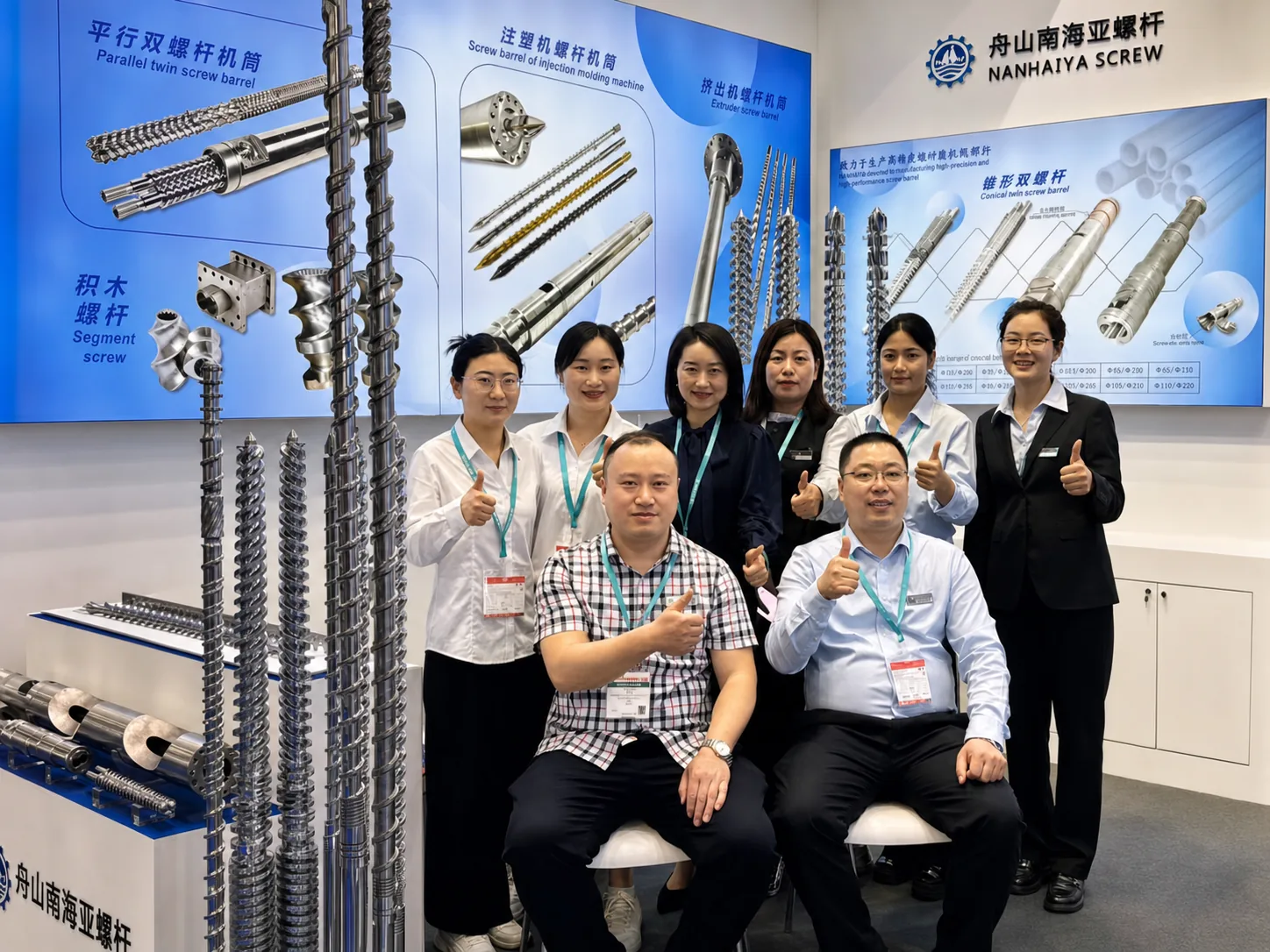
Related Articles
More insights on screw barrel technology and plastics processing.
What Nobody Tells You About Screw Barrel For Plastic Machine Design
Oct 10, 2026
Learn how screw barrel for plastic machine design affects melt quality, throughput, and wear life. Covers geometry, resin matching, troubleshooting, and sourcing.
Read Article
Single Screw Extruder for Sheet: Stop Guessing, Start Specifying
Oct 9, 2026
Learn how to specify a single screw extruder for sheet production. Covers screw geometry, resin-specific processing, troubleshooting, and maintenance best practices.
Read Article
PE Pipe Extruder Machine: What Datasheets Won't Tell You
Oct 9, 2026
Learn how a PE pipe extruder machine works, key specs explained, material grade selection, maintenance tips, and buyer guidance beyond the datasheet.
Read ArticleLooking for something else?
Search by material, symptom or product and jump straight to the relevant page.
These are navigation suggestions based on keyword matching — not a quotation, not a delivery commitment, and not a substitute for engineering review. Final specification is confirmed by our engineers against your drawings and processed material.
Need help with screw barrel selection?
Share your machine model, processed material and application. Our team can help with pricing and technical support.