

What an Extruder Barrel Manufacturer Actually Does
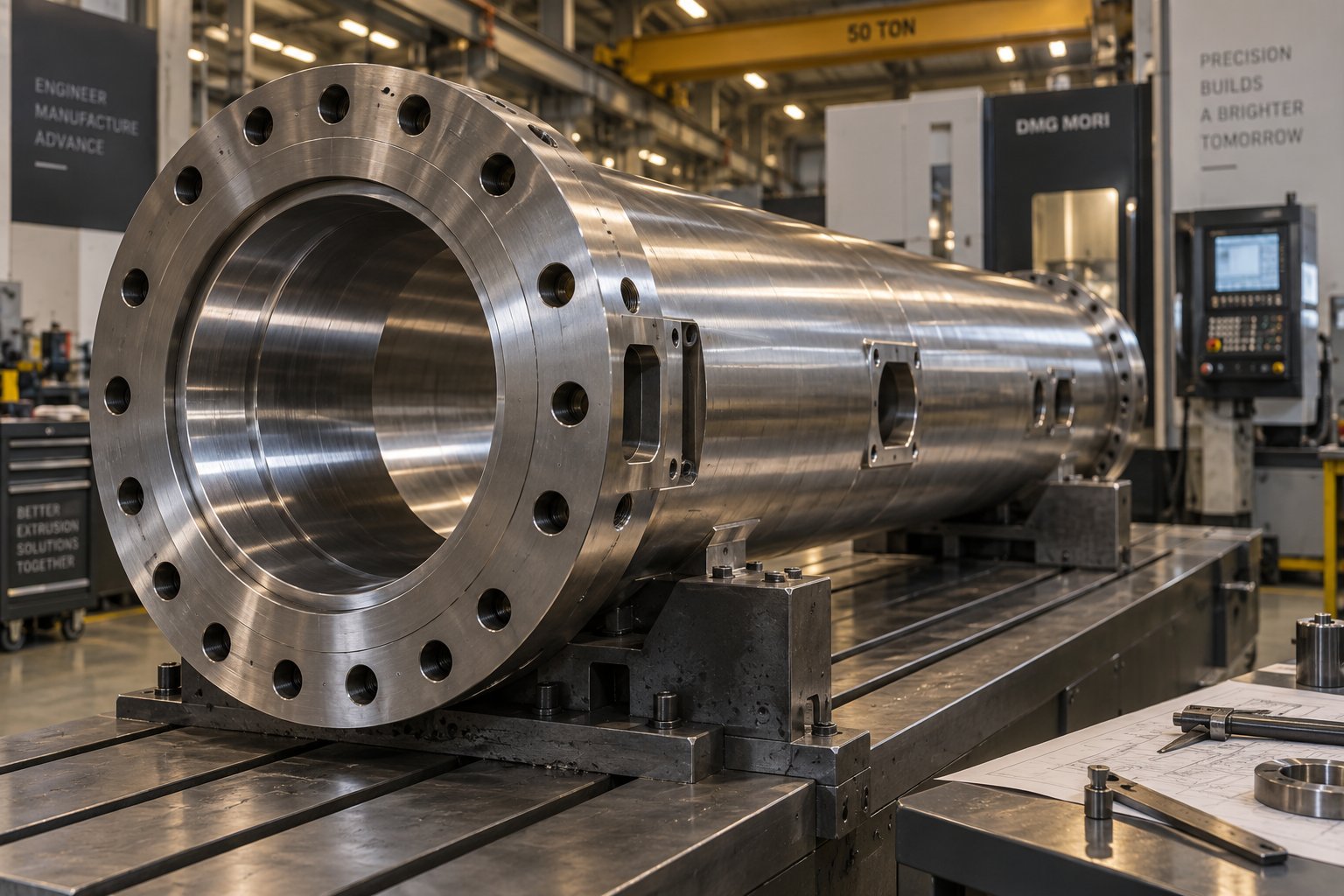
When a plastics processor searches for an extruder barrel manufacturer, they are looking for something far more specialized than a steel tube supplier. The term describes a company that engineers, machines, and finishes precision cylindrical barrel assemblies — the housings that surround rotating screws inside extrusion and injection molding equipment. It sounds straightforward, but the reality involves tight-tolerance machining, advanced metallurgy, and application-specific design choices that directly shape how well a processing line performs.
Defining the Role of an Extruder Barrel Manufacturer
An extruder barrel manufacturer designs, machines, and finishes precision barrel assemblies that house rotating screws in plastics processing equipment — engineering each extrusion barrel with controlled bore tolerances, wear-resistant linings, and integrated heating and cooling provisions tailored to specific polymer processing conditions.
Think of the barrel as the backbone of every plasticating system. It is not a passive shell. Every screw barrel starts as a raw steel billet and undergoes deep-hole boring, heat treatment, surface hardening or bimetallic lining, precision honing, and rigorous dimensional inspection before it ships. The manufacturer controls each of these steps, and the decisions made at every stage — from substrate steel selection to final bore finish — determine whether the barrel delivers years of reliable service or fails prematurely.
Why the Barrel Is a Critical Wear Component
Imagine a screw spinning inside a cylinder at high speed, pushing raw polymer pellets forward while intense heat and mechanical shear transform those pellets into a uniform melt. That cylinder is the barrel, and it works in concert with the screw to convey, melt, mix, and pressurize the polymer before it exits through a die or enters a mold. The fit between screw flights and barrel bore — often just a few thousandths of an inch — is what makes this process efficient.
When that clearance grows due to wear, problems cascade quickly. Plastics Technology notes that worn extruder barrels can force operators to increase screw speed to maintain output, raising discharge temperatures and potentially reducing throughput by 13% or more in blown film applications. Barrel quality also influences energy consumption — studies indicate that worn barrels can increase energy use by 15-20% as the screw demands more torque to compensate for lost conveying efficiency. In short, the barrel is not a "set it and forget it" component. Its condition directly governs output consistency, melt quality, energy costs, and maintenance intervals.
Barrel Manufacturers vs. Machine Builders vs. Parts Distributors
Here is where procurement teams often get confused. When you search for extruder barrels online, three very different types of companies appear in the results — and understanding who you are actually buying from matters more than you might expect.
- Barrel manufacturers — These companies own the full production process. They select raw materials, bore and machine barrel blanks, apply nitrided or bimetallic linings in-house, perform final honing, and inspect every finished barrel. You are buying directly from the source, which typically means greater control over material specifications, custom geometry, and lead times for non-standard sizes.
- OEM machine builders — Companies like major extrusion and injection molding equipment brands design and assemble complete processing lines. They may manufacture some barrels internally, but many source extruder barrels from specialized barrel manufacturers and supply them as part of a complete machine package or as branded replacement parts.
- Aftermarket parts distributors — Distributors stock and resell barrels produced by one or more manufacturers. They offer convenience, broader catalogs, and sometimes faster delivery on common sizes. However, they typically do not control the manufacturing process itself, which can limit customization and direct material traceability.
Each path has its place. Large-volume processors with specific metallurgical requirements often benefit from working directly with a barrel manufacturer, while shops needing a quick replacement for a standard-size screw barrel may find a distributor's ready stock more practical. The key is knowing which type of supplier you are engaging so you can set the right expectations around customization, quality documentation, and pricing.
With these roles clarified, a natural question follows: what actually happens inside a barrel manufacturing facility? The journey from raw steel billet to finished, inspected barrel involves a surprisingly complex sequence of precision operations — and each step creates opportunities for quality to be built in or compromised.
How Extruder Barrels Are Manufactured Step by Step
A finished barrel extruder component looks deceptively simple — a long steel cylinder with a smooth, hardened bore. But between raw billet and that finished product lies a demanding sequence of operations where tolerances are measured in thousandths of an inch and a single misstep can render the entire workpiece unusable. Walking through this manufacturing workflow reveals why barrel quality varies so dramatically between suppliers and why the process itself is a key differentiator when evaluating any extruder barrel manufacturer.
Raw Material Selection and Billet Preparation
Every barrel begins as a carefully selected steel billet — and this first decision sets the ceiling for everything that follows. Substrate steel determines how the barrel responds to heat treatment, how well it bonds with protective linings, and how it holds up mechanically at operating temperatures that can exceed 600°F.
Barrel manufacturers generally work within three families of steel:
- Nitriding-grade alloy steels — Materials like Nitralloy 135M and 4140 are the workhorses of standard barrel construction. IMS Company notes that while barrels may be made from 4140, a dedicated nitriding steel such as Nitralloy 135M produces a superior nitrided interior surface, thanks to its aluminum and chromium content that readily forms hard nitride compounds.
- Chrome-moly steels — These alloys, part of the 41xx series and related grades, offer higher temperature stability and improved toughness, making them suitable for barrels operating under sustained thermal loads in extrusion and injection molding.
- Tool steels — For demanding compounding applications, tool steel substrates provide the highest strength and wear resistance at the base-metal level. Grades like D-2, heat treated to RC 58-60, deliver proven uniform wear resistance that surpasses most other steels, according to IMS barrel specifications.
Before any machining begins, the billet is cut to rough length, inspected for material defects, and prepared with initial outer geometry. This preparation is crucial — wall thickness and concentricity at this stage directly affect how well the barrel will support subsequent centrifugal casting or nitriding processes.
Core Machining Steps From Boring to Honing
Here is where raw steel transforms into a precision instrument. The core machining sequence is highly sequential — each step depends on the quality achieved in the previous one — and skipping or rushing any operation creates compounding problems downstream.
Imagine drilling a perfectly straight, smooth hole through a steel cylinder that may be six feet long or more, with the finished bore deviating by no more than a few thousandths of an inch from true center. That is the challenge barrel manufacturers face in the very first machining operation.
The full production sequence typically follows this order:
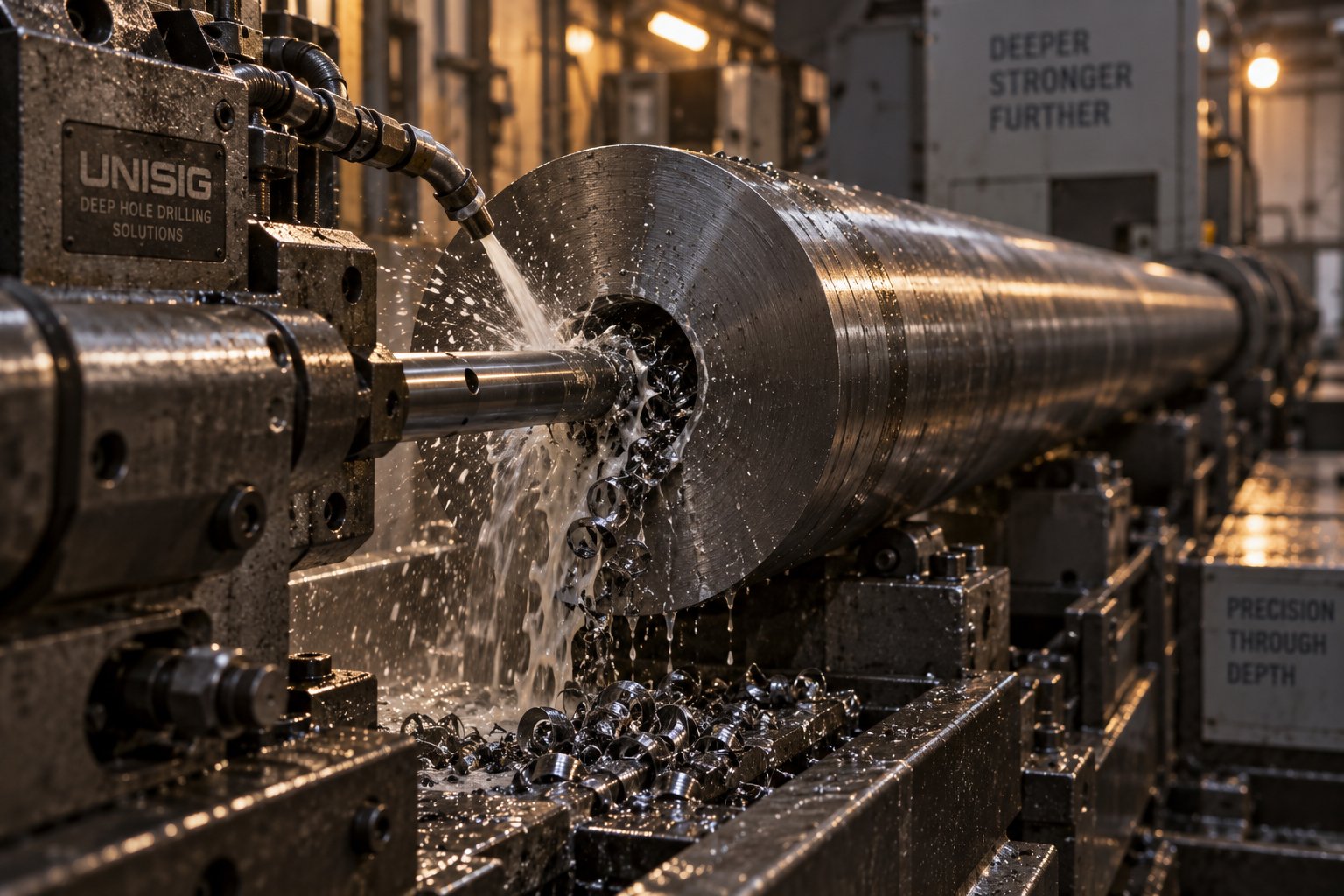
- Deep-hole boring — Gun drilling or BTA (boring and trepanning association) deep-hole boring creates the initial bore. This specialized process uses carbide cutting tools with kidney-shaped shafts and high-pressure coolant to continuously flush swarf from the cutting zone. The result is a bore with near-perfect straightness and minimum center-line deviation, even at extreme depth-to-diameter ratios.
- Stress relieving — Deep-hole boring introduces residual stresses in the steel. A controlled heat-treatment cycle relieves these stresses, preventing the barrel from warping or distorting during subsequent machining and service.
- Rough OD machining — CNC turning shapes the outer diameter to near-final dimensions, establishing the barrel's external profile, flange faces, and mounting features.
- Nitriding or bimetallic lining application — The barrel bore receives its protective treatment at this stage (detailed in the next section). This step occurs before final honing because the lining process adds material or alters the bore surface, requiring subsequent finishing.
- Finish honing — Precision honing brings the bore to its final diameter and surface finish. This operation controls bore roundness, straightness, and surface roughness (Ra value) to the tight tolerances required for proper extruder screw clearance.
- OD finish machining — Final turning and grinding of external surfaces ensure proper heater band fitment, thermocouple pocket placement, and dimensional accuracy for installation.
- Port machining — Feed ports, vent openings, pressure transducer ports, and any application-specific features are machined into the barrel wall. For twin screw barrel configurations, this may include side-feeder openings and vacuum vent connections.
- Final inspection — Dimensional checks, bore measurement, straightness verification, hardness testing, and — for bimetallic barrels — ultrasonic flaw detection confirm that the finished barrel meets all specifications.
You will notice that several of these steps involve re-touching surfaces or features that were roughed in earlier. This iterative approach is intentional. Each thermal or mechanical process can introduce subtle dimensional shifts, and a disciplined manufacturer builds correction points into the workflow rather than hoping earlier dimensions survive untouched.
Surface Treatment and Lining Application
Step four in the sequence above — applying the bore's protective treatment — is arguably the most consequential operation in the entire workflow. It determines how long the barrel will resist the abrasive, corrosive, and adhesive wear forces generated during polymer processing. Two primary pathways exist, and each serves different applications.
Gas nitriding is a thermochemical surface-hardening process. The barrel is placed in a furnace and heated in an atmosphere of nitrogen (typically ammonia gas) at temperatures between 950°F and 1,050°F. Nitrogen atoms diffuse into the bore surface, combining with elements like chromium, aluminum, and molybdenum already present in the steel to form extremely hard nitride compounds. The resulting case layer typically reaches a surface hardness well above 60 Rc, with an effective hardened depth ranging from 0.007 to 0.015 inches depending on cycle duration. Nitrided barrels are cost-effective for processing non-abrasive, non-corrosive commodity resins, but the relatively shallow wear layer limits their service life in more demanding environments.
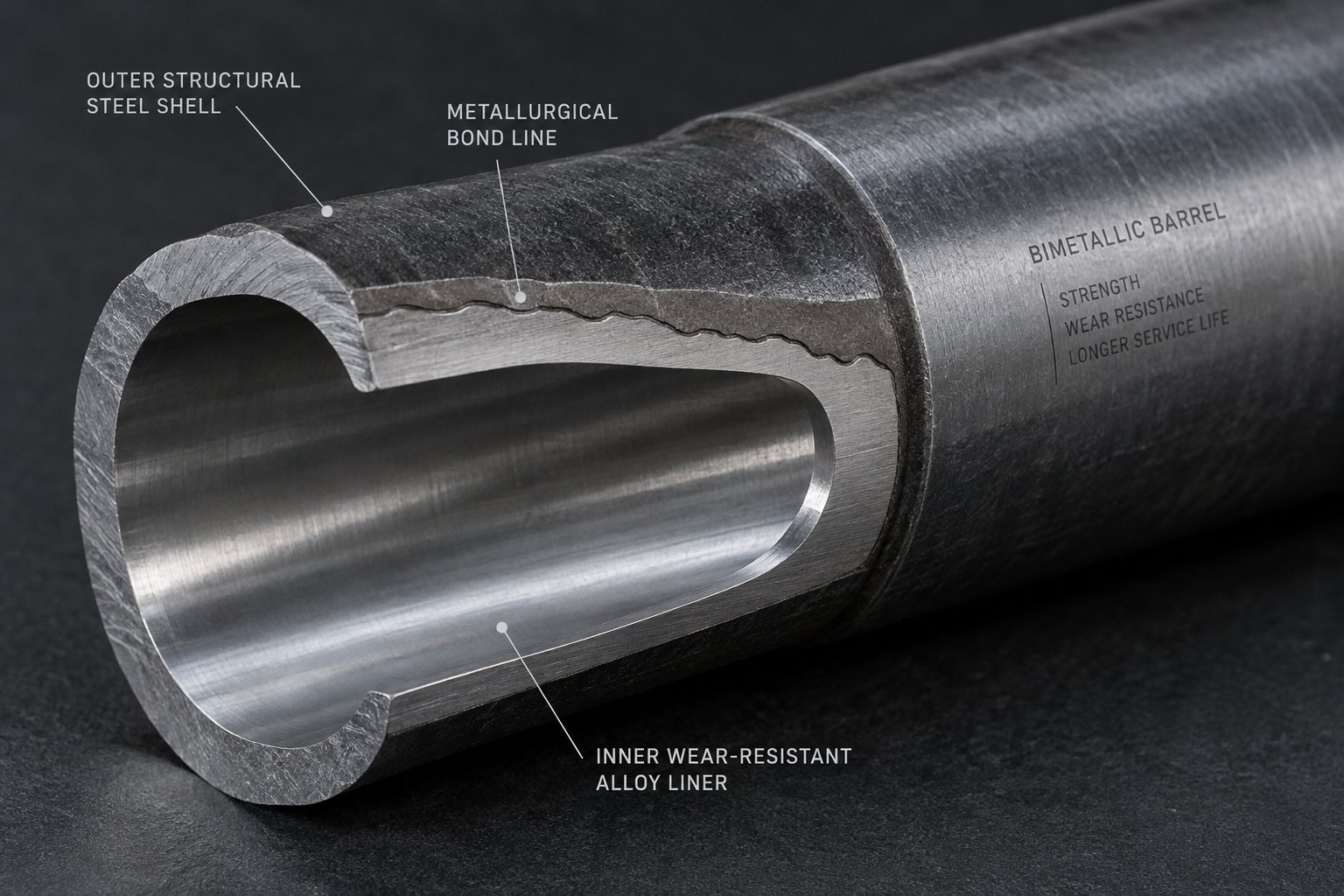
Centrifugal casting of a bimetallic liner takes a fundamentally different approach. Instead of hardening the existing steel surface, this process bonds an entirely separate wear-resistant alloy to the barrel bore. The pre-machined barrel shell is preheated, loaded with a measured charge of alloy powder or ingot, and then rotated at high speed. As the alloy melts, centrifugal force distributes the molten metal evenly along the inner wall, creating a dense, defect-free liner — typically 0.040 to 0.080 inches thick — that is metallurgically bonded to the steel substrate. By precisely controlling temperature, rotational speed, and cooling rate, manufacturers achieve uniform thickness and strong adhesion between the alloy layer and the base material. The resulting composite structure far outperforms nitriding in abrasion and corrosion resistance.
The choice between nitriding and bimetallic lining is not simply a cost decision — it is an application engineering decision that shapes barrel performance for years of production.
Each liner alloy family — nickel-based, cobalt-based, and tungsten-carbide-dispersed — brings distinct advantages suited to specific resin types and filler loads. Understanding these material trade-offs is essential for any processor specifying a replacement barrel or qualifying a new supplier, and that material science is exactly where the manufacturing story goes deeper.
Bimetallic Barrels vs Nitrided Barrels and When Each Applies
Every barrel leaving a manufacturer's facility falls into one of two broad protection categories — and picking the wrong one can cost a processor tens of thousands of dollars in premature wear, unplanned downtime, and lost output. Yet many buyers treat the nitrided-versus-bimetallic decision as a simple budget question. It is not. The distinction runs deeper than price, touching wear-layer depth, chemical resistance, and long-term cost per processing hour. Here is what separates these two barrel types and how to match each one to the resins running through your screw plastic extruder.
What Is a Nitrided Barrel
Gas nitriding is a thermochemical surface-hardening process — essentially a controlled diffusion reaction between nitrogen atoms and the alloying elements already present in the barrel's steel substrate. During the process, the barrel is sealed inside a furnace and exposed to a nitrogen-rich atmosphere (typically dissociated ammonia) at temperatures between 950°F and 1,070°F. Over an extended cycle — often 24 hours or longer — nitrogen migrates into the bore surface and reacts with chromium, aluminum, and molybdenum in the steel to form extremely hard nitride compounds.
The result is a hardened case layer directly on the bore surface. According to Advanced Heat Treat Corp., materials like Nit135M and H-13 can achieve surface hardness exceeding 70 HRc equivalent after ion or gas nitriding, making the treated surface remarkably hard. Common barrel substrate steels such as 38CrMoAlA alloy steel are specifically chosen because their chemistry responds well to this treatment.
Pros
- Lower upfront cost — Nitriding uses the existing steel substrate rather than adding a separate alloy layer, making it the more affordable option for standard applications.
- Good surface hardness — The resulting nitride case provides solid wear resistance for processing non-abrasive, non-corrosive commodity polymers like polyethylene, polypropylene, and polystyrene.
- Thermal stability — Nitrided layers contain chromium nitrides (CrN) that remain stable at the elevated temperatures typical of plastics processing.
Cons
- Shallow wear layer — The effective hardened depth is relatively thin, typically ranging from 0.007 to 0.015 inches. Once this layer wears through, the soft substrate beneath erodes rapidly.
- Limited corrosion resistance — Nitrided surfaces offer only moderate protection against chemically aggressive resins. Acids and halogens released during PVC or fluoropolymer processing can attack the layer and the steel underneath.
- Shorter service life with filled resins — Glass fibers, mineral fillers, and abrasive pigments can wear through the thin nitrided case far faster than they would erode a bimetallic liner.
For processors running unfilled commodity resins on a single-screw or twin screw and barrel system, a nitrided barrel often delivers a perfectly adequate service life at a fraction of bimetallic cost. The key is recognizing where its limitations start.
What Is a Bimetallic Barrel
A bimetallic barrel takes an entirely different approach to bore protection. Instead of hardening the existing steel surface, the manufacturer centrifugally casts a separate wear-resistant alloy liner inside the barrel shell. Picture a pre-machined steel cylinder spinning at high speed in a centrifugal casting machine. A precisely measured charge of alloy — nickel-based, cobalt-based, or tungsten-carbide-dispersed — is introduced and melted. Centrifugal force presses the molten alloy outward against the bore wall, forming a dense, uniform liner that is metallurgically bonded to the structural steel shell.
The resulting liner thickness typically ranges from 1 mm to 2 mm (roughly 0.040 to 0.080 inches) — several times deeper than a nitrided case layer. Because the alloy is purpose-engineered for wear resistance, it can be formulated to handle specific threats: high nickel content for corrosion resistance, tungsten carbide particles for extreme abrasion, or balanced compositions for combined wear environments.
Pros
- Deeper wear layer — At 3 to 5 times the depth of a nitrided case, the bimetallic liner provides a much larger "wear budget" before the barrel needs replacement.
- Superior abrasion resistance — Tungsten-carbide-dispersed liners, in particular, stand up to glass-filled and mineral-filled compounds that would quickly erode a nitrided bore.
- Excellent corrosion resistance — High-nickel and cobalt-based liners resist the acids and halogen gases released by PVC, fluoropolymers, and flame-retardant formulations.
- Longer service life — The combination of deeper wear layer and targeted alloy chemistry translates to significantly longer intervals between barrel replacements, reducing lifetime cost despite the higher purchase price.
Cons
- Higher initial cost — The centrifugal casting process, specialized alloy powders, and additional machining steps make bimetallic barrels more expensive to produce.
- Longer lead times — The casting, bonding, and post-machining sequence adds production time compared to a straightforward nitriding cycle.
Bimetallic construction is the go-to choice for demanding environments — compounding lines processing highly filled masterbatch, plastic extruder screw and barrel systems running engineering resins, or any application where corrosive byproducts are present. The upfront investment pays for itself through extended uptime and fewer unscheduled barrel changes.
Choosing the Right Barrel Type for Your Application
So which barrel type should you specify? The answer depends almost entirely on what you are processing — not on brand preference or purchasing habit. The comparison table below lays out the key decision criteria side by side.
| Criteria | Nitrided Barrel | Bimetallic Barrel |
|---|---|---|
| Wear Layer Depth | Shallow (0.007–0.015 in.) | Deep (0.040–0.080 in.) |
| Abrasion Resistance | Moderate | High to Very High |
| Corrosion Resistance | Low to Moderate | High to Very High |
| Typical Applications | Unfilled PE, PP, PS, ABS, and other commodity resins | Glass-filled nylon, mineral-filled PP, PVC, fluoropolymers, flame-retardant compounds |
| Relative Cost | Lower | Higher |
| Expected Service Life | Standard | Significantly Longer |
A few practical rules of thumb make the decision easier:
- Unfilled commodity resins only? A nitrided barrel is typically cost-effective and fully adequate. You will get solid performance without overspending on protection you do not need.
- Running glass-filled, mineral-filled, or recycled resins with contaminants? Bimetallic construction with a tungsten-carbide-dispersed or cobalt-based liner delivers the abrasion resistance these materials demand.
- Processing PVC, acetals, fluoropolymers, or flame-retardant formulations? Corrosive byproducts make a high-nickel bimetallic liner essential. Nitrided bores in these applications often fail far ahead of schedule.
- Compounding with high filler loads and aggressive additives? Combination wear — abrasion and corrosion acting together — is common here. A bimetallic liner engineered for dual resistance is almost always the right call.
Combination wear — where abrasion and corrosion act synergistically — is often more destructive than either mechanism alone, making correct barrel-liner specification critical for any processor handling filled or chemically active resins.
Keep in mind that this decision does not happen in isolation. The liner alloy you choose within the bimetallic category — nickel-based, cobalt-based, or tungsten-carbide-dispersed — introduces another layer of material science that directly shapes barrel performance. Each alloy family carries distinct trade-offs in hardness, corrosion resistance, and cost, and understanding those trade-offs is what separates a spec sheet purchase from a genuinely optimized barrel selection.
Barrel Material Science That Drives Manufacturer Quality
Liner alloy selection sits at the center of every barrel specification — but it does not exist in a vacuum. The steel shell underneath that liner, the alloy family chosen for the bore surface, and the specific processing environment all interact in ways that determine whether a barrel lasts one year or five. For process engineers and procurement teams evaluating an extruder barrel manufacturer, understanding these material layers transforms a vague RFQ into a precisely targeted specification. Here is how each material decision connects to real-world barrel performance.
Barrel Substrate Steel Categories
Before any liner is applied, the barrel substrate has to do its own job — providing structural strength, dimensional stability under thermal cycling, and a suitable metallurgical surface for bonding. Three broad steel families cover the overwhelming majority of barrel production, and each represents a different balance of machinability, heat treatment response, and high-temperature mechanical performance.
Nitriding-grade alloy steels are the default starting point for standard extrusion and injection molding applications. Grades like 38CrMoAlA (commonly referenced in Chinese barrel manufacturing) and AISI 7140 (Nitralloy 135M) contain deliberate additions of aluminum, chromium, and molybdenum that form hard nitride compounds during gas nitriding. These steels are relatively easy to machine in their pre-treated state and respond predictably to the nitriding cycle, which is why they dominate production volumes. Their limitation shows up at elevated operating temperatures — sustained service above roughly 500°C begins to soften the nitrided case and reduce its protective value.
Chrome-moly steels — grades in the 4140 and 4340 families — step up in temperature resistance and overall toughness. They are frequently selected as substrates for bimetallic barrels because their mechanical properties hold up well under the thermal stress of centrifugal casting and the sustained heat of polymer processing. A 4140 substrate, for instance, offers a good combination of tensile strength and impact resistance at temperatures where nitriding-grade alloys start losing their edge. The trade-off is slightly more demanding machining and heat treatment requirements.
Tool steels serve the most demanding compounding and high-performance processing environments. AISI H-13 (equivalent to X37CrMoV5-1 in European designation) is a classic example — a 5% chromium hot-work steel with exceptional toughness and high-temperature softening resistance. Research on X37CrMoV5-1 confirms that this grade maintains its structural integrity well beyond typical polymer processing temperatures, with ferrite-austenite phase transformation not occurring until approximately 860°C. That thermal stability, combined with the steel's resistance to thermal fatigue from repeated heating and cooling cycles, makes it an excellent substrate for screw extruder barrels running abrasive compounds at high throughput. D-2 tool steel represents the extreme end of the spectrum — heat treated to RC 58-60, it delivers outstanding uniform wear resistance but is more difficult and costly to machine.
Substrate choice matters even when a bimetallic liner will cover the bore surface. The shell still carries all mechanical loads — clamping forces, internal melt pressure, thermal expansion stress — and its thermal conductivity directly affects how efficiently barrel heaters transfer energy to the polymer. Selecting an overqualified substrate wastes money; selecting an underqualified one risks cracking, distortion, or premature liner debonding.
Liner Alloy Families and Their Performance Trade-Offs
Within the bimetallic category, three primary alloy families cover the range from general-purpose protection to extreme-duty service. Each family targets a different dominant wear mechanism, and their cost scales accordingly.
| Liner Alloy Family | Primary Resistance Type | Typical Application Environment | Relative Cost Tier |
|---|---|---|---|
| Nickel-based alloys (e.g., Ni-Cr-B-Si) | Corrosion resistance with moderate abrasion resistance | PVC, fluoropolymers, flame-retardant compounds, lightly filled engineering resins | Standard |
| Cobalt-based alloys (e.g., Co-Cr-W-C) | Higher abrasion resistance with good corrosion resistance | Moderately filled compounds, recycled resins with contaminants, engineering polymers with mineral fillers | Moderate to High |
| Tungsten-carbide-dispersed alloys (e.g., WC in Ni or Co matrix) | Extreme abrasion resistance | Heavily glass-filled nylon, high mineral-fill masterbatch, ceramic-filled specialty compounds | Highest |
Nickel-based alloys form the broadest-use liner category. Their chromium and boron content creates a dense, corrosion-resistant matrix that stands up well to the hydrochloric acid released during PVC processing and the halogen gases produced by flame-retardant additives. For injection molding screws and barrels processing engineering resins without heavy filler loads, nickel-based liners deliver an excellent balance of protection and cost.
Cobalt-based alloys shift the balance toward harder, more abrasion-resistant microstructures. The tungsten and chromium carbides that form within a cobalt matrix give these liners significantly better resistance to the physical erosion caused by mineral fillers and short glass fibers. They also retain useful corrosion resistance, making them a strong middle-ground choice when both wear mechanisms are present.
Tungsten-carbide-dispersed alloys represent the top tier for abrasive environments. Discrete tungsten carbide particles — extremely hard ceramic grains — are suspended within a nickel or cobalt binder matrix during centrifugal casting. The result is a composite liner where the hard carbide particles bear the brunt of abrasive contact while the metallic matrix holds everything together. For a high-output extrusion screw and barrel system running 40% glass-filled nylon or heavily loaded masterbatch, this liner class often doubles or triples service life compared to a standard nickel-based option.
Matching Material to Processing Conditions
Knowing the alloy families is useful. Knowing which one to pair with your specific resin and filler combination is what actually saves money. The relationship between processing conditions and barrel material is predictable enough to follow general guidelines — and experienced barrel manufacturers use exactly these pairings when recommending specifications to their customers.
- Unfilled PE, PP, PS, ABS — Nitrided bore or standard nickel-based bimetallic liner. These commodity resins are neither abrasive nor corrosive, so maximum wear protection is unnecessary.
- PVC (rigid and flexible) — High-nickel bimetallic liner with strong corrosion resistance. The HCl off-gassing inherent in PVC processing attacks unprotected and nitrided-only surfaces aggressively.
- Fluoropolymers (PTFE, FEP, PFA) — Nickel-based liner with enhanced corrosion resistance. Fluorine-based byproducts are among the most chemically aggressive compounds encountered in plastics processing.
- Glass-filled nylon, glass-filled PBT — Tungsten-carbide-dispersed or cobalt-based liner. Glass fibers are highly abrasive, and filler loads above 20% accelerate bore wear dramatically.
- Mineral-filled PP, talc-filled compounds — Cobalt-based or tungsten-carbide liner depending on filler loading. Talc and calcium carbonate are less abrasive than glass but still erode nitrided bores at elevated throughput rates.
- Flame-retardant ABS, PC/ABS with FR additives — Nickel-based or cobalt-based bimetallic liner. These formulations combine moderate abrasion from additives with corrosive byproducts during processing — a combination wear scenario.
- PEEK, PEI, and other high-performance polymers — Tool steel substrate with a high-nickel or cobalt-based liner rated for sustained high-temperature service. Standard nitrided barrels lose case hardness at the extreme temperatures these resins demand.
Notice a pattern: as the processing environment grows more aggressive — higher filler loads, corrosive byproducts, elevated temperatures — the material specification escalates through nitriding, to nickel-based liners, to cobalt alloys, to tungsten-carbide composites. Each step up adds cost but extends barrel life disproportionately. A tungsten-carbide-lined barrel may cost 40-60% more than a nitrided one, yet it can last three to five times longer in a heavily filled application — a clear economic win when you factor in downtime, lost production, and the labor cost of barrel changes.
Material science sets the foundation, but barrel geometry introduces another dimension of complexity. A single-screw barrel with its straightforward cylindrical bore demands different manufacturing precision than a twin-screw barrel with its figure-eight geometry, modular segments, and tighter center-distance tolerances — differences that reveal just how much a manufacturer's equipment and expertise shape the final product.
Single-Screw and Twin-Screw Barrel Manufacturing Differences
A barrel is a barrel, right? Not quite. The jump from a single-screw barrel to a twin-screw barrel is not just a matter of adding a second bore — it reshapes virtually every manufacturing decision, from initial billet sizing to final inspection criteria. A screw barrel manufacturer capable of producing high-quality single-screw barrels may still lack the specialized equipment and process control needed for twin-screw work. Understanding these differences helps processors and maintenance teams ask the right questions when sourcing replacements, and it reveals why manufacturer capability varies so widely across the industry.
Single-Screw Barrel Construction and Tolerances
Single-screw barrels are the most common type produced by barrel manufacturers worldwide, and their construction is relatively straightforward — at least in concept. The barrel is a monolithic steel cylinder with a single, smooth, precision-honed bore running its full length. One rotating screw sits inside that bore, and the clearance between the screw flight tips and the barrel wall is what makes the entire plasticating process work.
How tight is that clearance? On new equipment, the gap between the screw flights and the barrel bore typically falls between 0.005 and 0.010 inches (0.125 to 0.25 mm), with smaller screws running tighter and larger screws running slightly looser. Maintaining that clearance across the full barrel length demands exceptional control over three interrelated dimensions:
- Bore diameter tolerance — The finished bore must hold a consistent diameter from feed end to discharge end, typically within a few thousandths of an inch. Any taper or step change creates localized pressure variations that degrade melt uniformity.
- Straightness — A barrel that bows even slightly — sometimes called a "banana" condition — shifts the screw off-center, accelerating wear on one side while starving the other of polymer contact. Straightness specs are often expressed as total indicator reading (TIR) over the full barrel length.
- Surface finish — The honed bore surface must be smooth enough to prevent polymer hang-up and degradation, yet not so polished that it loses the frictional grip needed to convey solid pellets forward. Surface roughness (Ra) values are carefully specified to balance these competing needs.
Most single-screw barrels used in extrusion applications like pipe, film, sheet, and profile production follow a standard three-zone screw design — feed, compression, and metering — as extrusion specialist Allan Griff describes. The barrel bore throughout these zones is typically uniform in diameter. The exception is the extruder feed barrel — a specialized variant where the feed section incorporates engineered axial or helical grooves machined directly into the bore wall. These grooved feed barrels dramatically improve solids conveying for slippery, hard-to-grip polymers like HDPE. Griff notes that grooved barrels require a modified screw design with a shallower feed zone and deeper metering zone, plus dedicated water cooling in the grooved section, because the enhanced friction generates significant additional heat.
From a manufacturing standpoint, the single-screw barrel's round bore geometry is well-suited to standard deep-hole boring, honing, and centrifugal casting processes. The tooling is widely available, the inspection methods are well-established, and most experienced barrel manufacturers can produce consistent results across a broad range of diameters and lengths. A Davis Standard single screw extruder barrel replacement, for example, follows the same fundamental manufacturing steps as a barrel for any other single-screw OEM — the key variables are material specification, dimensional accuracy, and port configuration, not exotic geometry.
Twin-Screw Barrel Construction and Unique Challenges
Twin-screw barrels occupy a fundamentally different manufacturing universe. Instead of a single round bore, the barrel must accommodate two parallel screws — which means the internal geometry is a figure-eight shape: two overlapping circular bores sharing a common wall at their intersection. Imagine two circles placed side by side, partially overlapping. That overlap zone, where the two bores merge, is called the apex or the intermesh region, and it is one of the most dimensionally critical areas in all of plastics processing equipment.
The center distance between the two bores must be held to extremely tight tolerances — typically tighter than the bore diameter tolerance itself. Even a small deviation in center distance changes the intermesh clearance between the two screws, affecting conveying efficiency, self-wiping action, mixing performance, and wear patterns. For co-rotating intermeshing twin-screw extruders, where the two screws are closely intermeshing and partially self-cleaning, center-distance errors are especially damaging.
Beyond geometry, twin-screw barrels introduce another layer of manufacturing complexity: modular segmented construction. Many co-rotating compounding extruders — the type widely used for masterbatch production, polymer compounding, and reactive extrusion — use barrel systems composed of multiple individual barrel sections bolted or clamped together in sequence. Each barrel segment has its own figure-eight bore, connection faces, heating and cooling provisions, and — critically — its own liner material and process-specific features.
Why go modular? Because compounding processes demand flexibility that a monolithic barrel cannot provide:
- Different liner materials by position — A barrel segment at the feed zone may need a different wear-resistant lining than a segment downstream where abrasive fillers are introduced via a side feeder. Segmented construction lets processors specify each section independently.
- Vent ports and side feeders — Compounding lines often require vacuum vent openings, atmospheric vents, liquid injection ports, and side-feeder connections at specific locations along the barrel. Modular segments make it possible to place these features precisely where the process demands them.
- Targeted replacement — When wear concentrates at specific barrel stations — as it often does near filler introduction points — a processor can replace individual segments rather than the entire barrel assembly. However, as the EJS Industry replacement guide emphasizes, replacing a single segment requires careful inspection of all mating interfaces, including adjacent housings, connection faces, bores, center distance, and corresponding screw elements.
- Process reconfiguration — Changing a compounding recipe may call for repositioning vent openings or adding a side-feed station. With segmented barrels, the processor can rearrange barrel sections rather than purchasing an entirely new barrel.
This modularity comes at a cost to the manufacturer. Each barrel segment must match its neighbors precisely — bore alignment, center distance, connection-face flatness, and register features all have to carry through seamlessly from one segment to the next. A misaligned joint between two barrel housings can cause polymer leakage, uneven screw wear, and process instability. Position matters, too: the EJS segment barrel documentation notes that front, middle, and tail segments have different connection configurations, so a segment cannot simply be swapped into a different station without verifying compatibility.
Key Manufacturing Differences Between Single and Twin Barrels
The table below brings the core distinctions into sharp focus. You will notice that nearly every manufacturing parameter is more demanding for twin-screw barrels — which explains why not every screw barrel manufacturer can credibly serve both markets.
| Parameter | Single-Screw Barrel | Twin-Screw Barrel |
|---|---|---|
| Bore Geometry | Single circular bore | Figure-eight (two overlapping circular bores) |
| Typical Construction | Monolithic (one-piece cylinder) | Often segmented (modular barrel sections); some one-piece designs for counter-rotating systems |
| Critical Tolerances | Bore diameter, straightness, surface finish | Bore diameter, center distance between bores, apex geometry, segment-to-segment alignment, surface finish |
| Lining Methods | Gas nitriding or centrifugal casting of bimetallic liner | Gas nitriding, centrifugal casting, or insert-style bimetallic liners; material may vary by segment position |
| Common Applications | Pipe, film, sheet, profile extrusion; injection molding; pelletizing | Polymer compounding, masterbatch, reactive extrusion, devolatilization, recycling |
| Specialized Equipment Required | Standard deep-hole boring, CNC turning, honing, nitriding or casting equipment | Figure-eight bore machining, precision center-distance boring, segment face grinding, multi-axis CNC for port placement |
| Quality Control Complexity | Moderate — standard bore gauging and straightness checks | High — center-distance verification, segment interface inspection, bore-to-bore parallelism, CMM measurement of each segment |
The injection screw and barrel market adds another dimension to this picture. Injection molding barrels — whether single-screw or twin-screw — must accommodate reciprocating screw motion, integrate with nozzle seat geometry, and handle the cyclic pressure spikes inherent in the injection process. These requirements place additional demands on bore finish, concentricity, and material fatigue resistance that go beyond what a continuous extrusion barrel typically faces.
What stands out most clearly from this comparison is that manufacturer capability is not one-size-fits-all. A shop producing excellent monolithic single-screw barrels may not own the figure-eight boring equipment, segment face-grinding capability, or CMM inspection protocols needed for twin-screw work. Conversely, a manufacturer specializing in segmented twin-screw barrel assemblies — like those referenced in machine lines from well-known compounding equipment builders — brings process knowledge around modular construction that a single-screw-only shop simply has not developed. When qualifying a supplier, the type of barrel you need should drive the type of manufacturer you evaluate.
Barrel geometry and construction method set the engineering framework, but the real performance test comes when that barrel meets a specific application — and application requirements vary dramatically. A blown film barrel prioritizing melt temperature uniformity faces very different design pressures than a compounding barrel built to survive 40% glass-fiber loading, and those differences ripple all the way back to how the barrel is specified at the manufacturing stage.
How Barrel Requirements Change Across Applications
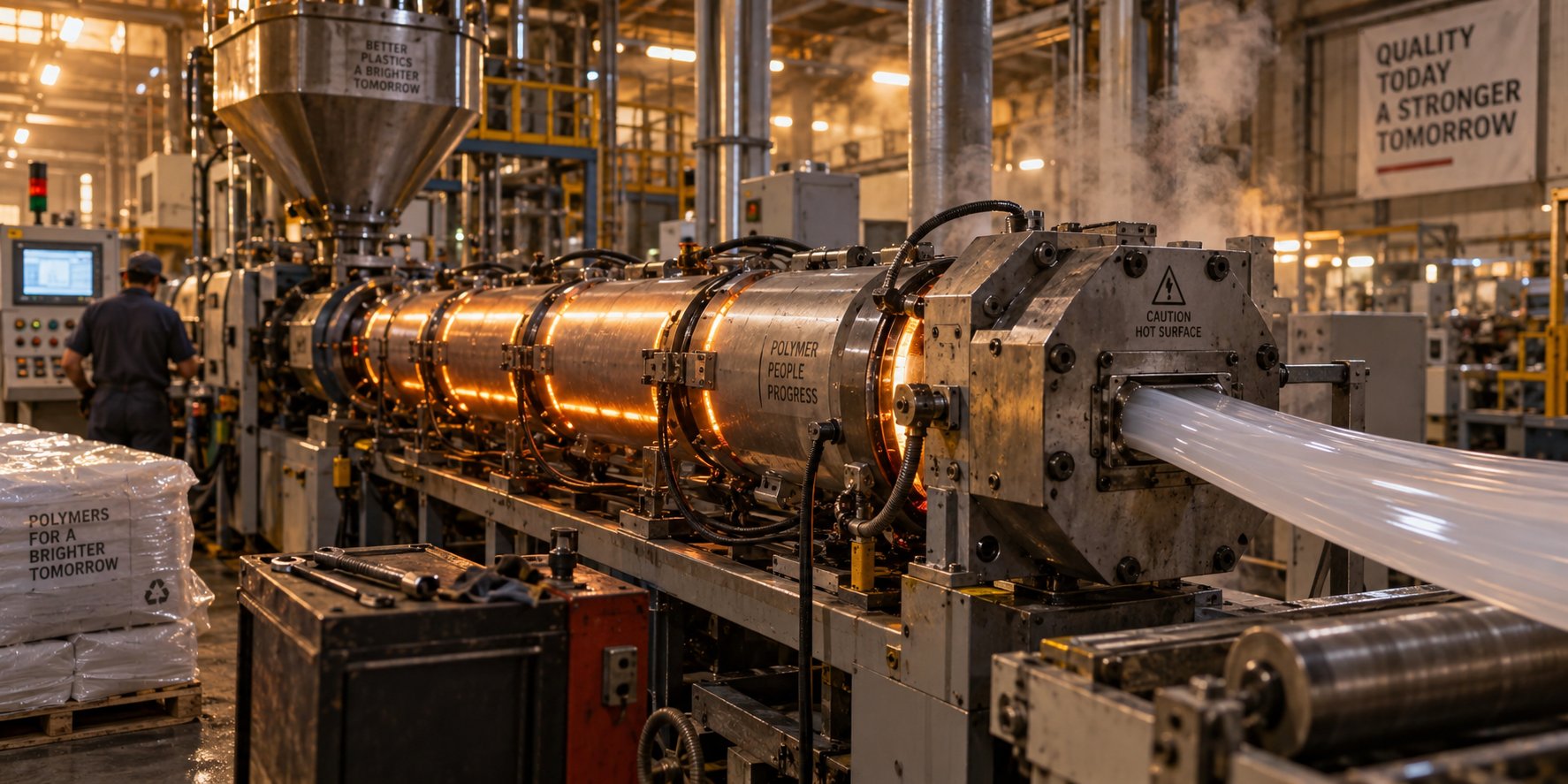
A blown film line and a glass-fiber compounding extruder might both use 90 mm barrels — and yet the ideal barrel specification for each could be almost unrecognizably different. Length-to-diameter ratio, liner alloy, feed zone design, vent port placement, and even thermocouple positioning all shift depending on the process those extruder screws and barrels are expected to serve. This is precisely why a capable extruder barrel manufacturer does not sell from a single catalog of universal barrels. Instead, every specification starts with a question: what are you processing, and how?
Think of barrel design the way an architect thinks about buildings. A hospital and a warehouse both have walls, roofs, and foundations — but nobody would specify them the same way. The same principle applies to barrels across extrusion, injection molding, and compounding applications. Each environment imposes its own thermal, mechanical, and chemical demands, and ignoring those differences leads to barrels that underperform, wear prematurely, or limit throughput.
Extrusion Application Barrel Requirements
Extrusion covers an enormous range of end products — pipe, film, sheet, profiles, wire coating — and each subtype places unique demands on barrel design. Here is how the major extrusion categories diverge in their barrel specifications.
Blown film extrusion is one of the most thermally sensitive plastics processes. The quality of the film bubble depends heavily on delivering a perfectly uniform melt temperature at the die. Even small temperature variations create gauge inconsistencies and optical defects that show up immediately in the finished film. Barrels for blown film screw extruders typically feature closely spaced heating zones — sometimes as many as five or six across the barrel length — to give operators fine-grained temperature control. Cooling provisions in the feed section must be robust enough to prevent premature melting that would disrupt solids conveying, yet the transition and metering zones need smooth, well-regulated heat input to avoid hot spots.
Pipe extrusion pushes a different priority to the forefront: throughput. Large-diameter pipe lines demand high output rates, which means the barrel must convey and melt large volumes of polymer per hour. Grooved feed barrels — where the bore in the feed section incorporates machined axial or helical grooves — are common in pipe extrusion because they dramatically increase solids conveying efficiency, particularly with slippery polymers like HDPE. These grooved feed zones require dedicated water-cooling jackets to manage the extra frictional heat generated by the enhanced grip on the polymer pellets. From a manufacturing standpoint, machining precision grooves into the bore adds a secondary operation that not all barrel producers are equipped to perform.
Profile extrusion sits somewhere between film and pipe in its demands. Profiles — window frames, decking, trim, and similar shapes — need consistent melt quality but are less sensitive to minute temperature fluctuations than film. Barrel L/D ratios for profile extrusion typically fall in the 24:1 to 30:1 range, providing enough processing length for thorough melting and mixing without the extreme lengths sometimes seen in high-output pipe lines. Liner selection depends on the resin: PVC profiles, for instance, require high-nickel bimetallic liners due to the hydrochloric acid released during processing, while wood-plastic composite profiles may call for tungsten-carbide liners to handle abrasive wood flour and mineral fillers.
Sheet extrusion shares many characteristics with profile work but often runs at higher throughput rates and may process multi-layer structures using co-extrusion. Barrels for sheet lines need consistent temperature control across their length to prevent melt temperature variations that would cause visible streaks, gels, or thickness inconsistencies in the finished sheet. When the sheet formulation includes recycled content or mineral fillers, the liner specification escalates accordingly.
Across all of these extrusion subtypes, a common thread emerges: the barrel must be tailored to the specific combination of resin chemistry, throughput target, and product quality requirement. A barrel that performs beautifully on a blown film PE line may be entirely wrong for a PVC profile application, even if the screw diameter happens to match.
Injection Molding Barrel Considerations
Injection molding barrels share some fundamentals with extrusion barrels — both house a rotating screw, both must resist wear, and both require precision bore tolerances. But the similarities end quickly. The injection molding process imposes a unique set of mechanical and thermal demands that reshape barrel design in several important ways.
Shorter L/D ratios. While extrusion barrels commonly run 24:1 to 36:1 length-to-diameter ratios, injection molding barrels typically use L/D ratios in the 20:1 to 26:1 range. The shorter processing length reflects the different functional requirement: injection molding screws need to plasticize and homogenize the melt, but they also must retract during screw recovery and then push forward as a ram during injection. That reciprocating motion means the barrel bore must maintain its dimensional integrity not just under rotational wear but under repeated axial pressure cycles as well.
Reciprocating screw motion. Unlike extrusion, where the screw rotates continuously in a fixed axial position, injection molding screws rotate to plasticize material, then drive forward under high pressure to inject the melt into the mold cavity. This back-and-forth movement creates wear patterns that differ from pure rotational wear — the bore surface near the screw tip experiences periodic high-pressure spikes that can accelerate fatigue and adhesive wear. Barrel manufacturers must account for this when specifying liner hardness and bore finish in the metering and front zones.
Nozzle seat geometry and shut-off compatibility. The discharge end of an injection molding barrel must integrate precisely with the nozzle assembly. Many systems use shut-off nozzles to prevent drooling — leakage of molten plastic when the mold opens. The barrel's front face, nozzle seat bore, and thread geometry all need to match the specific machine configuration, which is why injection molding barrel replacements often require more detailed OEM dimensional data than extrusion barrel orders.
Dual wear resistance. Injection molding processes frequently run engineering polymers — glass-filled nylon, mineral-filled PBT, polycarbonate blends with flame retardants — that subject injection molding screws and barrels to both abrasive and corrosive wear simultaneously. The barrel liner must handle the physical erosion from glass fibers and fillers while also resisting the chemical attack from polymer degradation byproducts. This combination wear environment is one reason bimetallic liners are especially prevalent in injection molding applications, even when the same resin processed on a continuous extrusion line might get by with a nitrided bore. The intermittent residence of melt in the barrel during cycle pauses can elevate degradation and corrosion risk beyond what continuous-flow extrusion typically produces.
Compounding Barrel Specifications
If extrusion and injection molding represent tough barrel environments, compounding is where barrels go to be truly tested. Compounding extruders — predominantly co-rotating twin-screw systems — mix base polymers with high concentrations of fillers, reinforcements, pigments, flame retardants, and other additives. The result is a processing environment that combines extreme abrasion, chemical aggression, elevated torque, and high shear in a single barrel.
Consider a typical glass-fiber reinforcement application. The base resin enters at the main feed port, melts and begins conveying forward, and then chopped glass fiber is introduced through a downstream side feeder. From that introduction point onward, every interior surface — barrel bore, screw element surfaces, and barrel liner — faces relentless abrasive contact from millions of short glass fibers moving through the melt at high velocity. Filler loads can reach 40% or higher in some formulations, which is why compounding barrels almost universally require the most abrasion-resistant bimetallic liner alloys available, typically tungsten-carbide-dispersed or high-cobalt compositions.
Segmented barrel construction, as discussed in the previous section, becomes essential in compounding. The modular barrel design of twin-screw compounding extruders allows processors to equip individual barrel sections with different configurations tailored to their specific role in the process:
- Feed zone segments may use a standard liner since they handle dry, unfilled polymer pellets before filler introduction.
- Mixing zone segments downstream of the side feeder face the highest abrasion and typically receive tungsten-carbide or cobalt-based liners.
- Vent zone segments require open port geometry for atmospheric or vacuum devolatilization — removing entrained air, moisture, and volatile byproducts.
- Barrel segments near liquid injection points must accommodate injection nozzle connections for processing oils, plasticizers, or coupling agents.
The barrel temperature control requirements in compounding are equally demanding. Each segment typically has independent heating and cooling capability, and barrel temperature, screw speed, and feed rate all interact to determine melt quality. Thermocouple placement in each segment must be accurate and consistent so the control system receives reliable temperature feedback — a manufacturing detail that affects bore wall machining for thermocouple pockets.
Torque is another factor that separates compounding barrels from standard extrusion barrels. High filler loads increase the mechanical resistance the screws encounter, which in turn transmits higher loads to the barrel shell through melt pressure and screw-to-barrel contact. Barrel substrates in compounding applications often need the enhanced mechanical strength of chrome-moly or tool steels rather than standard nitriding-grade alloys to withstand these sustained forces without cracking or distorting.
Across all three application categories, the barrel specification variables that shift most dramatically can be summarized as follows:
- L/D ratio — Ranges from approximately 20:1 for some injection molding applications to 48:1 or beyond for certain compounding processes, directly affecting the processing length available for melting, mixing, and devolatilization.
- Liner alloy class — Moves from nitrided or basic nickel-based liners for commodity extrusion through cobalt and tungsten-carbide liners for heavy compounding duty, depending on the dominant wear mechanism.
- Feed zone design — Varies from smooth bore for most injection molding and general extrusion to engineered grooved feed zones for high-output pipe and film lines processing slippery polymers.
- Vent port integration — Ranges from none in simple single-screw extrusion to multiple atmospheric and vacuum vent stations along segmented compounding barrels.
- Thermocouple placement — Spans from a few zones on a short injection barrel to a dozen or more independent measurement points on a long, segmented compounding barrel, each requiring precision-machined pockets in the barrel wall.
There is no universal barrel. Every specification should start with the application, the resin, and the process conditions — and work backward to the material and geometry that will deliver the longest, most reliable service life.
Matching barrel design to application is one side of the equation. The other side is understanding what eventually goes wrong — because even the best-specified barrel will wear over time. The way it wears, the patterns that develop, and the signals those patterns send to operators are just as important to understand as the barrel's original specification. Recognizing these wear modes early is what keeps a processing line running efficiently and prevents a minor maintenance item from becoming a costly emergency shutdown.
Understanding Barrel Wear Patterns and Failure Modes
Every extruder screw barrel has a finite lifespan — and how it reaches the end of that lifespan tells a story. The wear patterns etched into a barrel bore over months or years of operation are not random. They follow predictable mechanisms driven by the resins, fillers, processing temperatures, and mechanical forces acting on the bore surface every second the screw turns. Understanding these mechanisms is not just academic. It directly shapes purchasing decisions, liner specifications, and the timing of barrel replacements — giving processors a concrete framework for evaluating whether their current extruder barrel manufacturer is specifying the right protection for the job.
Think of it this way: you would not replace a car's tires without first understanding whether they wore evenly, cupped on one side, or showed feathering from misalignment. The same diagnostic logic applies to barrels. The type of wear dictates the type of solution, and misdiagnosing the mechanism leads to repeat failures no matter how much you spend on the replacement.
Abrasive Wear From Fillers and Reinforcements
Abrasive wear is the most common failure mode in plastics processing, and it operates on a straightforward principle: hard particles physically erode softer surfaces. As pellets travel down the screw channel and compress against the barrel wall, the shearing action produces some degree of wear even with unfilled polymers. But introduce glass fibers, mineral fillers, calcium carbonate, or abrasive pigments into the melt, and the erosion rate accelerates dramatically.
Imagine millions of tiny glass fiber fragments — each one harder than the metal they are sliding against — sweeping along the barrel bore at high velocity, hour after hour. Over time, these particles act like microscopic cutting tools, gradually enlarging the bore diameter and widening the clearance between screw flights and barrel wall. Industry experts at Glycon Corp. note that some of the most aggressive fillers can reduce screw and barrel useful life by 50% or more compared to processing unfilled resins.
The consequences ripple outward from that widened clearance:
- Reduced output — As the gap between screw flights and barrel bore increases, more polymer leaks backward over the flights instead of being conveyed forward. Output drops even if screw speed remains constant.
- Increased melt temperature — The screw must work harder to maintain throughput, generating additional shear heat that elevates melt temperature beyond the target range.
- Higher energy consumption — Operators compensate by increasing screw speed, raising backpressure, or adjusting barrel temperatures — all of which draw more power without recovering the original efficiency.
In twin-screw compounding extruders, abrasive wear concentrates in predictable high-wear zones: the filler introduction area where glass fibers or mineral particles first contact the barrel surface, the middle zone where axial pressure and screw deflection cause scraping, and the discharge zone where the cantilevered screw end sags under gravity and its edge rubs against the bore. Knowing where abrasion hits hardest is essential for specifying the right liner alloy in each barrel segment — a key reason why segmented twin-screw barrels allow different liner materials at different stations.
Corrosive Wear From Chemically Aggressive Polymers
While abrasion physically removes metal, corrosion chemically dissolves it — and the two mechanisms often work hand in hand. Certain polymer families release acids, halogens, or other reactive byproducts during processing that attack unprotected barrel surfaces at a molecular level.
PVC is the most widely cited culprit. During thermal processing, PVC releases hydrochloric acid (HCl) gas that aggressively attacks barrel surfaces with high iron content. Fluoropolymers like PTFE and FEP generate even more chemically hostile byproducts — fluorine-based compounds that can corrode alloys that easily shrug off most other acids. Flame-retardant additives in engineering polymers add yet another corrosion pathway, releasing halogenated compounds that degrade metal surfaces over time.
As Plastics Technology explains, corrosion breaks down the metal surface itself, making it vulnerable to mechanical wear that would otherwise be insignificant. The oxidized, weakened surface layer gets stripped away by normal polymer flow, exposing fresh metal underneath to renewed chemical attack. It is a self-accelerating cycle — each round of corrosion makes the next round of mechanical erosion worse.
This is why nitrided barrels so frequently fail ahead of schedule in PVC and fluoropolymer applications. The shallow nitrided case offers limited chemical protection, and once the corrosive environment penetrates through it, the soft steel substrate beneath erodes rapidly. High-nickel bimetallic liners — specifically formulated to resist acid and halogen attack — are the standard countermeasure for any barrel processing these resins.
Adhesive Wear and Combination Wear Mechanisms
Adhesive wear occurs when the screw flight lands physically contact the barrel bore surface. Even though a small clearance separates screw and barrel during normal operation, conditions like screw deflection, solids wedging, or misalignment can force metal-to-metal contact. When this happens, extremely high localized stresses cause the two surfaces to momentarily weld together at microscopic contact points, then fracture apart. The result is scoring, galling, or a characteristic "rolling over" of the screw flight edge — and corresponding damage on the barrel bore.
Glycon Corp.'s analysis of adhesive wear highlights that poor screw design is a frequent root cause. When a screw's feed section delivers more unmelted material than the compression section can handle, the resulting pressure forces the screw against the barrel wall — a condition called solids wedging. This creates aggressive adhesive wear that can damage both the screw flight and the barrel bore in a matter of hours.
The most destructive scenario, however, is combination wear — where abrasion and corrosion attack the same barrel simultaneously. Consider a flame-retardant glass-filled nylon compound: the glass fibers abrade the bore surface while halogenated flame-retardant byproducts chemically attack the freshly exposed metal. Each mechanism accelerates the other in a synergistic cycle that degrades the barrel far faster than either mechanism alone would predict.
Combination wear — where abrasion and corrosion act together synergistically — is often more destructive than either mechanism alone, making correct barrel-liner specification critical for any processor handling filled or chemically active resins.
This synergy is why experienced barrel manufacturers ask detailed questions about both the filler system and the base resin chemistry before recommending a liner alloy. Specifying a liner that handles only abrasion — or only corrosion — in a combination-wear environment virtually guarantees premature failure.
How Wear Patterns Signal Barrel Replacement Needs
Barrels do not fail overnight. They send signals — sometimes for months — before reaching a point where output, quality, or efficiency drops below acceptable limits. The challenge is catching those signals before they become emergencies.
Bore measurement is the most direct diagnostic tool. Davis-Standard's maintenance protocol describes using a custom electronic micrometer mounted on a movable sled, advanced in increments of one L/D along the barrel length, with readings compared to the original bore diameter specifications. This technique creates a wear profile showing exactly where bore enlargement has occurred and by how much — revealing whether wear is concentrated in the feed zone, the transition area, or the metering section. The barrel must be clean and at room temperature for accurate readings, and the gauge is calibrated to the barrel's original diameter before measurement begins.
Not every shop has access to electronic bore gauges, and pulling extruder screws for measurement involves downtime. That is where indirect indicators become valuable. Long before a bore gauge confirms excessive wear, operators and process engineers can watch for telltale symptoms that the screw and barrel clearance has grown beyond optimal limits.
- Increased screw recovery time — In injection molding, if the screw takes progressively longer to plasticize the same shot weight, worn barrel clearance is allowing melt to leak backward over the flights, reducing conveying efficiency.
- Declining output rate — In extrusion, a gradual drop in throughput at constant screw speed signals that more polymer is slipping backward through enlarged clearances instead of moving forward toward the die.
- Rising melt temperature — As the screw works harder to compensate for lost conveying efficiency, additional shear heat raises the discharge melt temperature above its original setpoint — even without changes to barrel heater settings.
- Visible wear on extracted screws — When the screw is pulled for inspection, worn flight tips, scoring, missing hardfacing material, or a rolled trailing edge on the flight land confirm that the screw-to-barrel interface has deteriorated. Glycon's wear analysis emphasizes checking the barrel bore for scoring or galling at the same axial position where screw damage is found.
- Increasing energy consumption — Higher motor amperage draw at the same screw speed and throughput points to greater resistance caused by process compensations for worn components.
- Degraded part quality or higher scrap rates — Unmelted particles, inconsistent color dispersion, and dimensional variation in the finished product often trace back to poor melt quality caused by worn barrel clearances.
The critical question is: when does wear warrant replacement versus continued operation? There is no single universal threshold, because acceptable wear depends on the screw diameter, the resin being processed, and the product quality tolerance. However, the general industry guideline is that when bore diameter enlargement reaches roughly 0.010 to 0.015 inches per side (0.020 to 0.030 inches on diameter), most processors will see measurable losses in output and quality. At that point, a cost-benefit analysis comparing continued operation losses against the price of a new or relined barrel almost always favors action.
Good record-keeping turns barrel wear from a surprise into a predictable maintenance event. Glycon's Jeff Kuhman recommends charting adjustments to operating parameters — screw speed, barrel temperatures, backpressure — against changes in productivity over time. When those incremental compensations reach a "point of diminishing returns" where further adjustments fail to recover acceptable performance, that is the signal to schedule a barrel change. With disciplined tracking, shutdowns for screw and barrel replacement can be planned during scheduled maintenance windows rather than forced by unplanned failures.
Recognizing wear modes and knowing when to act is essential knowledge for any plastics processor. But the next step — actually selecting and qualifying a manufacturer who will deliver the right barrel for your application — requires a different kind of evaluation framework, one that looks beyond price and lead time into the shop-floor capabilities and quality systems that separate reliable suppliers from risky ones.
How to Evaluate and Qualify an Extruder Barrel Manufacturer
Knowing how barrels wear and when they need replacing is only half the equation. The other half — finding a screw barrel supplier who consistently delivers the right barrel for your application — requires a structured evaluation process that goes far beyond comparing quotes. Price matters, of course. But the cheapest barrel that fails six months early is not a bargain. It is a production loss wrapped in a purchase order.
So how do you separate a genuinely capable barrel and screw manufacturer from one that simply looks good on a website? You look at three things: what equipment they own, what quality systems they follow, and whether they can help you engineer a solution — not just fill an order.
Manufacturing Equipment and Process Capabilities
A manufacturer's shop floor tells you more about their true capability than any sales brochure. When evaluating a potential supplier of extrusion barrels, ask specifically about the equipment they operate in-house. Each piece of machinery maps directly to a critical step in the barrel manufacturing workflow covered earlier in this article.
Here is what to look for:
- CNC deep-hole boring machines — These create the initial bore with the straightness and concentricity that every subsequent operation depends on. A manufacturer outsourcing this step loses control over the most foundational dimension in the entire barrel.
- Precision honing equipment — Final bore diameter, roundness, and surface finish (Ra value) are set during honing. In-house honing capability means the manufacturer can hold bore tolerances to their own specifications rather than relying on a subcontractor's interpretation.
- Centrifugal casting capability — If you need bimetallic barrels — and most processors running filled or corrosive resins do — the manufacturer must have the casting equipment, alloy inventory, and process knowledge to produce consistent, defect-free liners. Ask whether they cast in-house or source pre-lined blanks.
- Nitriding furnaces — For standard-duty barrels, in-house gas nitriding allows the manufacturer to control cycle parameters (temperature, atmosphere, duration) that directly determine case depth and hardness.
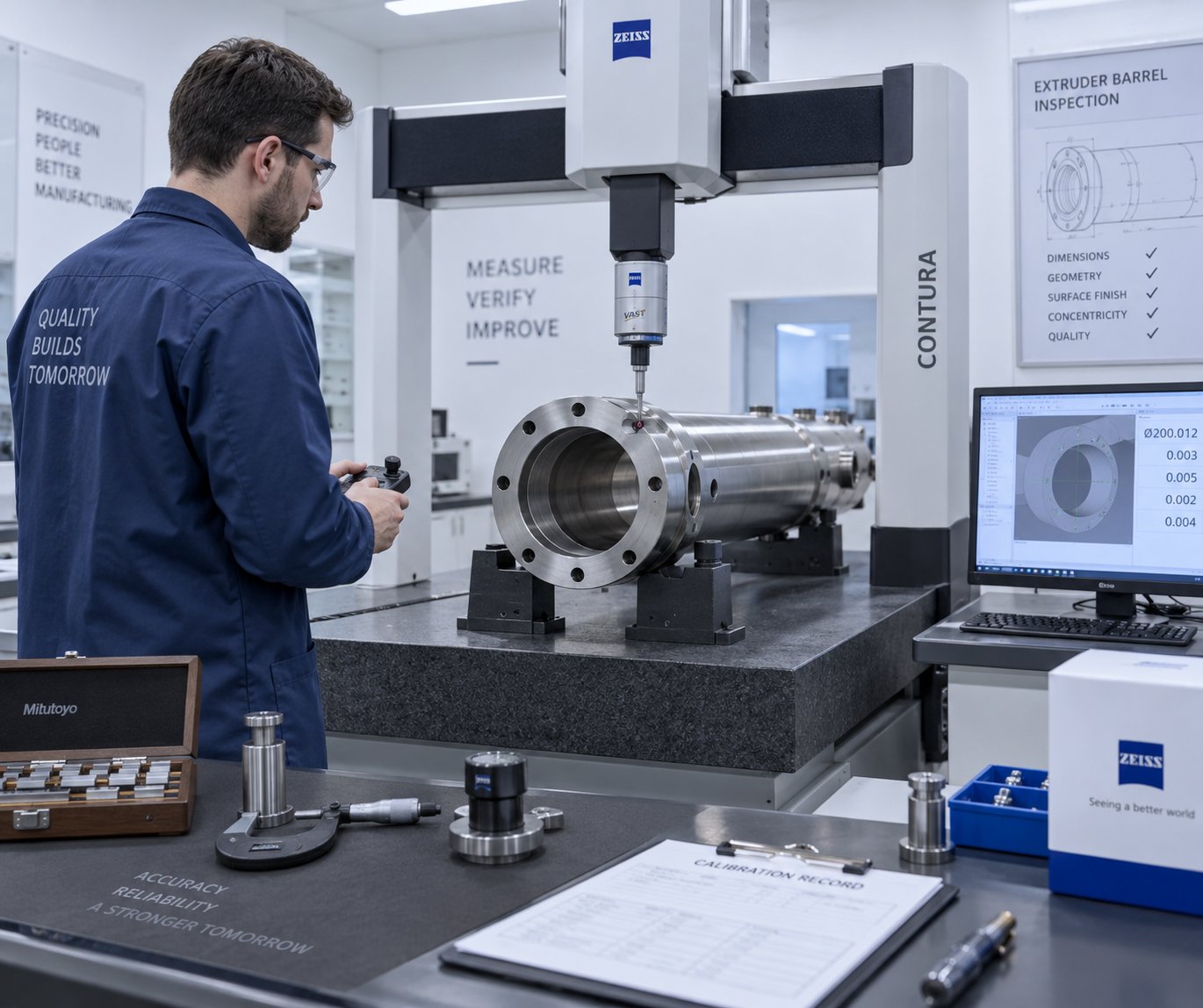
- CMM (Coordinate Measuring Machine) inspection — Particularly critical for twin-screw barrels, where center-distance verification, bore-to-bore parallelism, and segment interface dimensions demand three-dimensional measurement accuracy that manual gauging cannot match.
Imagine shopping for a used twin screw extruder and discovering the seller cannot provide bore measurements or liner condition data. You would walk away. Apply the same logic to a new barrel supplier — if they cannot show you the equipment that produces and verifies their work, the risk is yours to carry.
Quality Certifications and Inspection Standards
Equipment tells you what a manufacturer can do. Quality systems tell you what they consistently do. The distinction matters enormously when you are ordering barrels that will run for years inside production-critical equipment.
ISO 9001 certification remains the baseline expectation for any serious barrel manufacturer. The standard — now in its latest 2026 edition — establishes requirements for a quality management system covering documented procedures, process control, nonconformance handling, and continuous improvement. An ISO 9001-certified manufacturer has been audited by a third party to verify that their production processes follow repeatable, controlled workflows rather than ad hoc practices.
Certification alone, however, is not enough. You need to verify that the manufacturer's inspection routine covers the specific dimensional and material characteristics that determine barrel performance. When requesting a quotation, ask whether the supplier provides the following documentation with every barrel shipped:
- Bore tolerance report — Actual measured bore diameter at multiple stations along the barrel length, compared against the specification.
- Straightness verification — Total indicator reading (TIR) over the full barrel length, confirming the bore runs true from feed end to discharge end.
- Surface finish documentation — Measured Ra value of the honed bore, confirming the surface roughness falls within the specified range.
- Hardness documentation — For nitrided barrels, case depth and surface hardness readings. For bimetallic barrels, liner hardness and — ideally — ultrasonic thickness verification to confirm uniform liner coverage.
- Material certificates — Mill certificates for the barrel substrate steel and alloy composition documentation for bimetallic liner material, providing full traceability from raw material to finished part.
A manufacturer who hesitates to provide this documentation — or who charges extra for it — is signaling something about their quality culture. Reliable suppliers treat inspection data as a standard deliverable, not an optional add-on.
Engineering Support and Custom Design Capability
The best barrel manufacturers do more than fabricate metal. They help you specify the right barrel for your process. This application engineering capability separates a commodity screw barrel supplier from a true manufacturing partner.
What does that look like in practice? When you contact a top-tier manufacturer with a barrel replacement request, you should expect questions — not just about dimensions and thread sizes, but about what resin you are running, what fillers are in the formulation, what throughput you need, and what wear problems you have experienced. Those questions lead to liner alloy recommendations, feed zone design suggestions, and sometimes geometry modifications that a pure order-taker would never raise.
For processors managing multiple extrusion lines or injection molding cells, this kind of engineering support can consolidate barrel specifications across the plant, reducing spare-parts inventory while improving performance consistency. It also means you are not left guessing when a new resin formulation or a process change demands a different barrel specification — the manufacturer becomes an ongoing technical resource, not just a one-time vendor.
The evaluation checklist below consolidates all of these qualification criteria into a single framework you can use when comparing potential suppliers.
| Evaluation Category | What to Look For |
|---|---|
| Manufacturing Capability | In-house deep-hole boring, precision honing, centrifugal casting, nitriding furnaces, CNC machining centers; ability to produce both single-screw and twin-screw barrels |
| Quality Systems | ISO 9001 certification (current edition), documented inspection procedures, material certificates and dimensional reports included with every shipment |
| Engineering Support | Application engineering consultation, liner alloy recommendations based on resin and filler data, custom geometry and feed zone design capability |
| Lead Time | Realistic quoted lead times with documented on-time delivery history; ability to expedite critical replacements when production lines are down |
| Material Transparency | Full disclosure of substrate steel grade, liner alloy composition, and heat treatment parameters; willingness to provide mill certificates and third-party test data |
| References and Track Record | Verifiable customer references in your industry segment; documented experience with your equipment brand and barrel type; history of repeat orders from established processors |
To put this framework in concrete terms, consider a factory-direct manufacturer like NANHAIYA, which offers custom and replacement screw barrels for both extrusion and injection molding applications. Their model illustrates several checklist criteria in action: direct service to plastic processors, equipment builders, and maintenance teams eliminates the distributor markup and communication layers that can obscure technical details. Working directly with the factory that machines and lines the barrel gives buyers access to the engineering team behind the product — the people who can answer material questions, recommend liner alloys, and adjust specifications based on your actual processing conditions.
Factory-direct sourcing also simplifies traceability. When you order from the same facility that bores, lines, hones, and inspects the barrel, every quality document traces back to a single point of accountability. There is no ambiguity about who made the barrel, what alloy was used, or whether the inspection data reflects the actual part you received.
Of course, no single supplier is the right fit for every situation. Some processors prefer regional distributors for fast turnaround on standard sizes. Others need a manufacturer with specific experience in segmented twin-screw barrel assemblies or specialty alloys. The checklist above works regardless of which supplier you evaluate — it simply ensures you are asking the right questions before committing a purchase order.
Qualifying the right manufacturer is a critical first step, but the barrel's story does not end when it arrives at your dock. How you install it, monitor it, and eventually decide whether to refurbish or replace it determines whether that initial investment delivers its full return — and that lifecycle perspective is where the real cost savings live.
Managing the Full Barrel Lifecycle From Purchase to Replacement
A perfectly specified barrel from a qualified manufacturer can still underperform — or fail outright — if installation practices are sloppy, monitoring is neglected, or end-of-life decisions are based on guesswork rather than data. The barrel lifecycle does not begin when the screw starts turning. It begins the moment the barrel arrives at your facility and a technician prepares to install it. Every step from that point forward — alignment, heater band fitment, ongoing bore monitoring, and the eventual refurbish-or-replace decision — shapes the true cost per processing hour that barrel delivers.
Think of it like buying a high-performance engine and then skipping oil changes. The engineering quality built into the component only pays off when the operator's side of the equation matches. Here is how to get the full return on your barrel investment from day one through the day you source its replacement.
Commissioning and Installation Best Practices
Barrel alignment is the single most overlooked factor in barrel longevity — and one of the easiest to get wrong. A barrel that is not perfectly concentric with the gearbox output shaft and the die adapter creates an off-center load on the screw, accelerating wear on one side of the bore while leaving the opposite side virtually untouched. Plastics Technology emphasizes that alignment should be verified whenever a barrel is removed or changed, if the foundation shifts, or if barrel supports move. For large-diameter and long extruders, even small alignment deviations concentrate destructive side forces that push the screw into the barrel wall.
Proper torque specifications for barrel mounting bolts matter just as much. Under-torqued connections allow the barrel to shift during thermal cycling, while over-torqued bolts can distort flanges and introduce stress risers that promote cracking over time. Always follow the equipment manufacturer's torque values and re-check them after the first few thermal cycles once the barrel reaches operating temperature.
Heater band fitment is another area where small details create big consequences. As MD Plastics' barrel temperature guide explains, heater bands must sit flush against the barrel surface with no air gaps. Poor contact creates thermal lag — the display reads one temperature while the barrel wall and the melt experience another. Oxidation, resin char, or rust buildup between band and barrel acts as insulation, forcing heater bands to cycle harder and introducing thermal instability into the melt. A quick inspection checklist before commissioning — checking contact, cleanliness, thermocouple seating, and amperage draw — prevents months of unnecessary temperature chasing.
Thermocouple placement deserves equal attention. Loose thermocouple probes that do not seat tightly in their machined pockets read ambient air temperature rather than barrel wall temperature, feeding inaccurate data to the control system. The result is heater zones that overshoot or undershoot their targets without the operator ever realizing the displayed readings are unreliable. During installation, verify that every thermocouple seats firmly in its pocket and that the pocket depth and diameter match the probe dimensions.
These installation steps may seem basic, but they represent the dividing line between a barrel that delivers its full engineered service life and one that wears out prematurely through entirely preventable causes. Manufacturer quality sets the ceiling — installation quality determines how close you actually get to it.
Barrel Refurbishment and Re-Lining as a Cost-Effective Alternative
When bore measurements confirm that a barrel has reached the end of its useful wear layer, replacement is not always the only option. Barrel refurbishment — re-boring the worn bore to a slightly larger diameter and then applying a new bimetallic liner via centrifugal casting — can restore a barrel to like-new performance at a fraction of the cost of purchasing a new barrel screw extruder assembly.
The economics are straightforward. The barrel substrate — the structural steel shell that accounts for much of the raw material cost and machining labor — may still be in excellent condition even after the liner has worn through. If the substrate is structurally sound, dimensionally straight, and free of cracks, there is no engineering reason to discard it. Re-lining reuses that expensive substrate while replacing only the worn interior surface.
Several criteria determine whether refurbishment makes sense for a specific barrel:
- Substrate integrity — The steel shell must be free of cracks, porosity, and heat-related damage. Ultrasonic testing can verify wall thickness and detect subsurface flaws that visual inspection would miss.
- Straightness — A barrel that has bowed or warped — sometimes called a "banana" condition from sustained uneven heating or poor support — cannot be reliably relined because the bore will not be concentric with the outer shell after re-machining.
- Wall thickness margin — Re-boring removes material from the bore wall before the new liner is cast. If previous re-linings or excessive wear have already reduced the wall thickness below safe limits, the barrel cannot support another cycle.
- Port and flange condition — Feed ports, vent openings, flange faces, and thermocouple pockets must all be in serviceable condition. Damaged port geometry or worn flange sealing surfaces can compromise the refurbished barrel's function even if the bore itself is restored perfectly.
Not every extruder barrel manufacturer offers refurbishment services. The process requires the same centrifugal casting equipment, honing capability, and inspection rigor used for new barrel production, plus the additional expertise of assessing worn substrates and determining re-lining feasibility. Processors who find a manufacturer capable of both new production and refurbishment gain a significant advantage — they can evaluate each worn barrel individually and choose the most cost-effective path rather than defaulting to full replacement every time.
A useful rule of thumb: if the refurbishment cost is less than 50-60% of a new barrel price and the substrate passes all integrity checks, re-lining is almost always the smarter economic choice. The refurbished barrel will carry a new liner with the same alloy options and the same wear resistance as a new barrel — only the substrate steel has prior service hours on it.
When to Source a Full Extruder Barrel Replacement
Refurbishment has limits. Some barrels reach a condition where no amount of re-boring and re-lining can restore them to safe, productive service. Recognizing these end-of-life indicators prevents the mistake of investing refurbishment dollars in a barrel that should be retired.
The following conditions signal that a full screw and barrel replacement — not refurbishment — is the correct decision:
- Bore wear beyond re-lining limits — When the bore has enlarged so far that re-boring to accept a new liner would reduce wall thickness below the minimum required for safe operation at process pressures, the barrel cannot be saved.
- Substrate cracking — Cracks in the barrel shell — whether from thermal fatigue, excessive clamping force, or metallurgical defects — compromise structural integrity. A cracked substrate cannot safely contain melt pressure, regardless of liner condition.
- Banana-shaped distortion — Severe bowing from sustained uneven heating, poor barrel support, or foundation shifts makes the barrel impossible to re-bore to a straight, concentric profile. Even minor distortion beyond manufacturer-specified TIR limits makes re-lining impractical.
- Damaged feed port geometry — If the feed throat opening has eroded, elongated, or cracked — particularly in grooved feed barrels where the precision-machined grooves have worn smooth — the barrel's ability to convey solids is permanently degraded.
- Previous refurbishment history — Industry guidance from experts like Tim Womer recommends that a screw should never be refurbished more than three times, and a similar practical limit applies to barrels. Each re-lining cycle adds thermal stress to the substrate and reduces wall thickness margin, eventually reaching a point where further refurbishment introduces more risk than value.
When replacement is the clear path, sourcing speed matters. A production line sitting idle while waiting for a barrel costs far more per day than the barrel itself. This is where the relationship you built during the manufacturer qualification process — covered in the previous section — pays dividends. A supplier who already has your barrel specifications on file, understands your liner requirements, and maintains communication channels with your maintenance team can turn a replacement order around faster than starting from scratch with an unfamiliar vendor.
Manufacturers like NANHAIYA offer factory-direct replacement screw barrels for both extrusion and injection molding applications, giving processors and maintenance teams a streamlined sourcing path for custom and standard replacement components. Working directly with the factory eliminates intermediary delays — your order goes straight to the shop floor where the barrel is bored, lined, honed, and inspected, with full material traceability from substrate steel to finished liner alloy. For maintenance teams managing multiple lines across a facility, having a factory-direct partner who can handle both standard extruder barrel replacement orders and custom specifications under one roof simplifies inventory planning and reduces lead-time uncertainty.
Informed buyers who understand manufacturing processes, material science, and lifecycle management are better equipped to select the right extruder barrel manufacturer for their specific needs — and to extract maximum value from every barrel they purchase.
The journey from raw steel billet to installed, production-ready barrel — and eventually to the decision point between refurbishment and replacement — forms a continuous cycle. Each phase informs the next. Understanding how barrels are manufactured helps you specify the right materials. Knowing wear mechanisms helps you monitor bore condition before problems escalate. Recognizing end-of-life signals helps you plan replacements proactively rather than reactively. And qualifying a capable manufacturer from the start ensures that every barrel entering your facility is built to deliver its full engineered service life. That closed-loop perspective — connecting material science, manufacturing quality, application engineering, and lifecycle management — is what transforms barrel procurement from a routine purchasing task into a genuine competitive advantage on the production floor.
Frequently Asked Questions About Extruder Barrel Manufacturers
1. What is the difference between a bimetallic barrel and a nitrided barrel?
A nitrided barrel relies on a thermochemical process that diffuses nitrogen into the existing steel bore, producing a hard but shallow case layer (typically 0.007 to 0.015 inches deep). It works well for non-abrasive commodity resins like PE, PP, and PS. A bimetallic barrel, by contrast, uses centrifugal casting to bond a separate wear-resistant alloy liner — nickel-based, cobalt-based, or tungsten-carbide-dispersed — inside the steel shell. This liner is 3 to 5 times deeper than a nitrided case and offers far superior abrasion and corrosion resistance, making it essential for glass-filled, mineral-filled, or chemically aggressive resins such as PVC and fluoropolymers. While bimetallic barrels cost more upfront, they often deliver a lower cost per processing hour through significantly longer service life.
2. How do I know when an extruder barrel needs to be replaced?
Several operational symptoms indicate a barrel is reaching end of life. Declining output at constant screw speed, increasing screw recovery time in injection molding, rising melt temperatures without heater changes, and higher motor amperage draw all point to enlarged bore clearances from wear. Direct bore measurement using electronic micrometers — taken at increments along the barrel length and compared to original specs — provides definitive confirmation. A general industry guideline suggests that when bore enlargement reaches roughly 0.010 to 0.015 inches per side, measurable losses in output and quality will follow, and barrel action is warranted.
3. Can a worn extruder barrel be refurbished instead of replaced?
Yes, barrel refurbishment through re-boring and re-lining with a new bimetallic alloy can restore like-new bore performance at roughly 50 to 60 percent of the cost of a new barrel. However, refurbishment is only viable when the steel substrate remains structurally sound, dimensionally straight, and free of cracks. Barrels that have bowed into a banana shape, developed substrate cracking from thermal fatigue, or lost too much wall thickness from previous re-linings are not candidates for refurbishment. Not every manufacturer offers this service, so processors benefit from partnering with a supplier like NANHAIYA (nhyscrews.com/products) that handles both new production and replacement barrels under one roof.
4. What should I look for when qualifying an extruder barrel manufacturer?
A thorough supplier qualification covers six key areas: manufacturing capability (in-house deep-hole boring, honing, centrifugal casting, and nitriding), quality systems (current ISO 9001 certification and documented inspection procedures), engineering support (application consulting and liner alloy recommendations based on your resin and filler data), lead time reliability, material transparency (mill certificates, alloy composition data, and dimensional reports with every shipment), and verifiable customer references. Factory-direct manufacturers tend to offer stronger traceability and engineering access because you are working with the team that actually machines, lines, and inspects the barrel.
5. How does barrel specification differ between extrusion and injection molding applications?
Extrusion barrels typically use longer L/D ratios (24:1 to 36:1), continuous screw rotation, and may feature grooved feed zones for high-output applications like pipe and film. Injection molding barrels run shorter L/D ratios (20:1 to 26:1) and must withstand reciprocating screw motion plus cyclic high-pressure injection spikes, demanding tighter bore finish and fatigue-resistant substrates. Injection barrels also require precise nozzle seat geometry and shut-off valve compatibility. Additionally, because injection molding often processes engineering resins with both fillers and corrosive byproducts, bimetallic liners are especially common even when the same resin might only need a nitrided bore in continuous extrusion.
Written by
Nanhaiya Technical Team
Zhoushan Nanhaiya Plastic Machinery Co., Ltd.
The Nanhaiya technical team supports screw and barrel manufacturing projects through application review, technical communication, custom manufacturing coordination, and production and quality control.
Discuss Your Application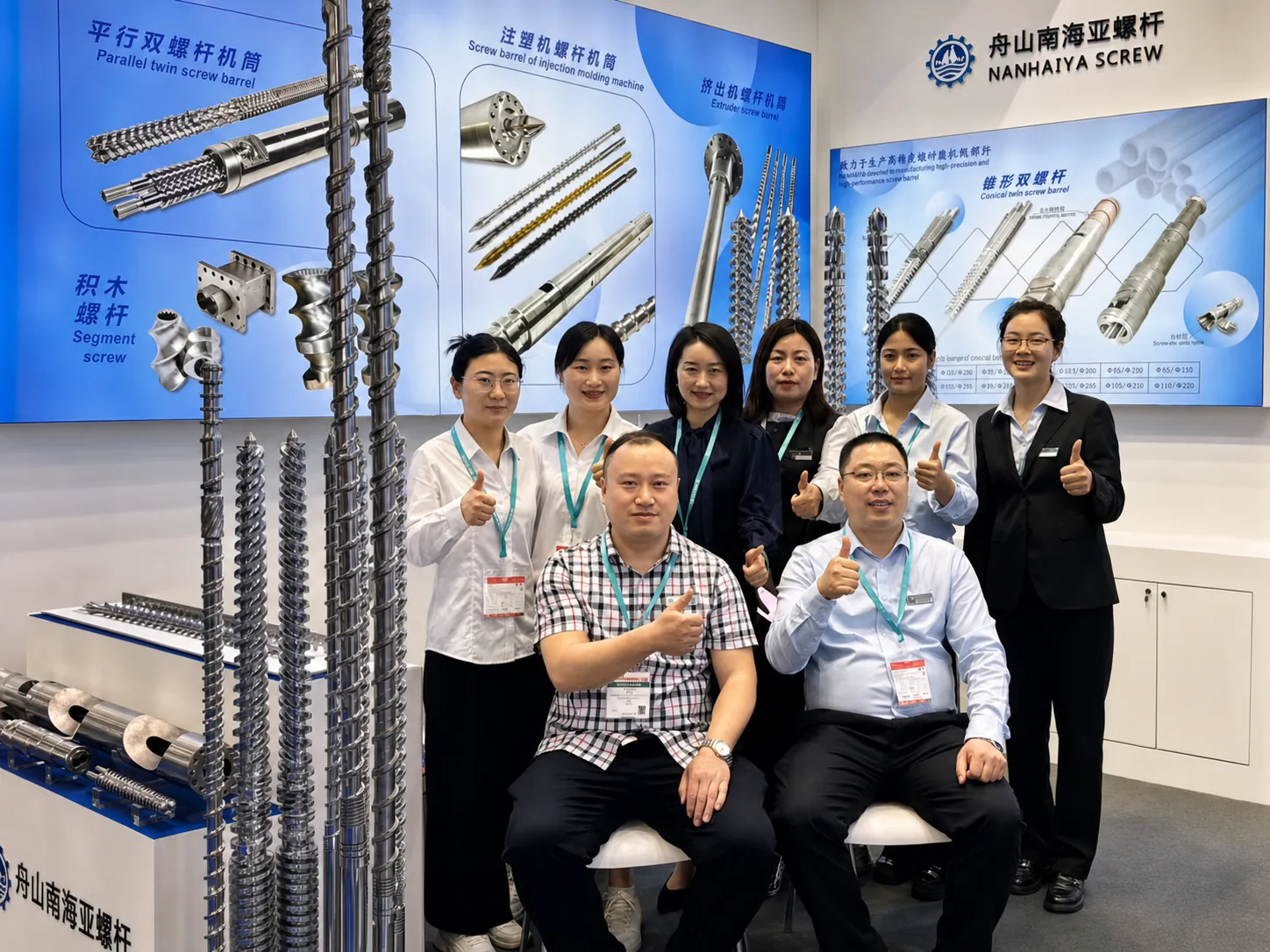
Related Articles
More insights on screw barrel technology and plastics processing.
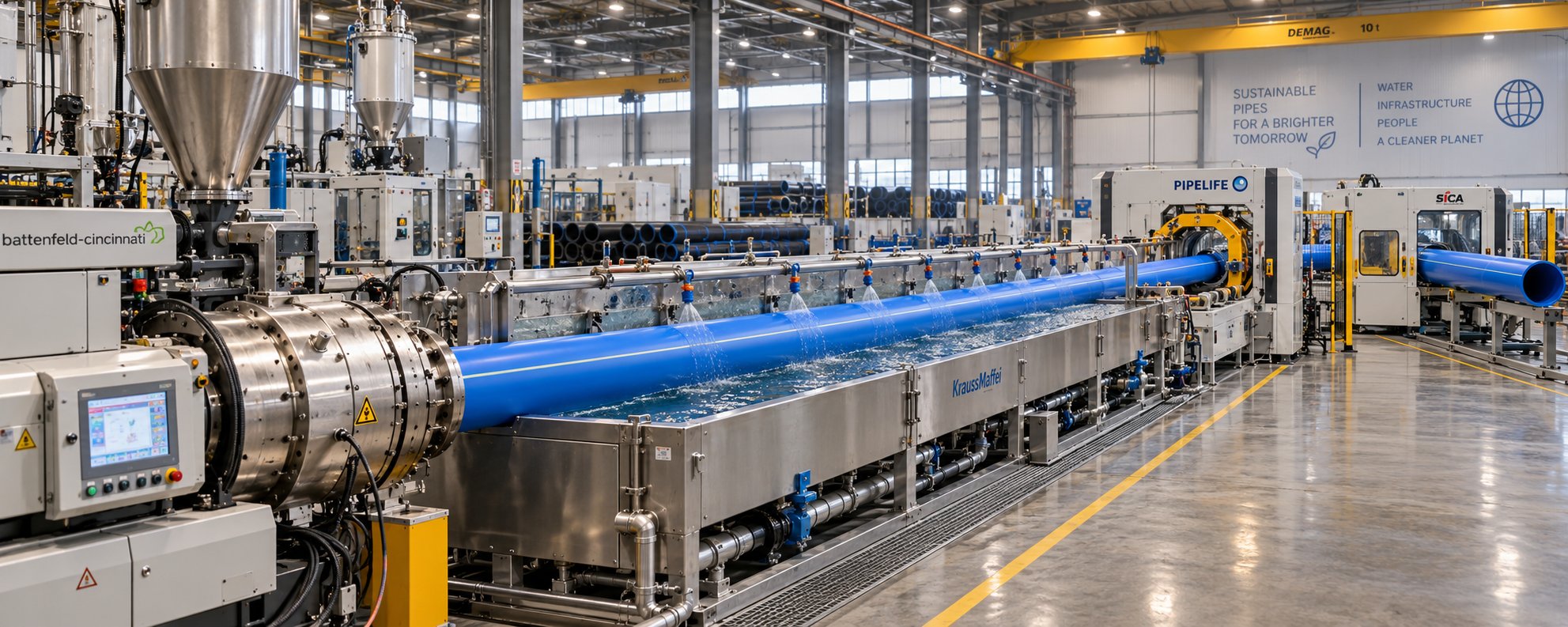
HDPE Pipe Extrusion Machine Decoded: From Resin to Finished Pipe
Oct 28, 2026
Learn how an HDPE pipe extrusion machine works — from extruder types and die heads to downstream equipment, specs by diameter class, and a buyer's checklist.
Read Article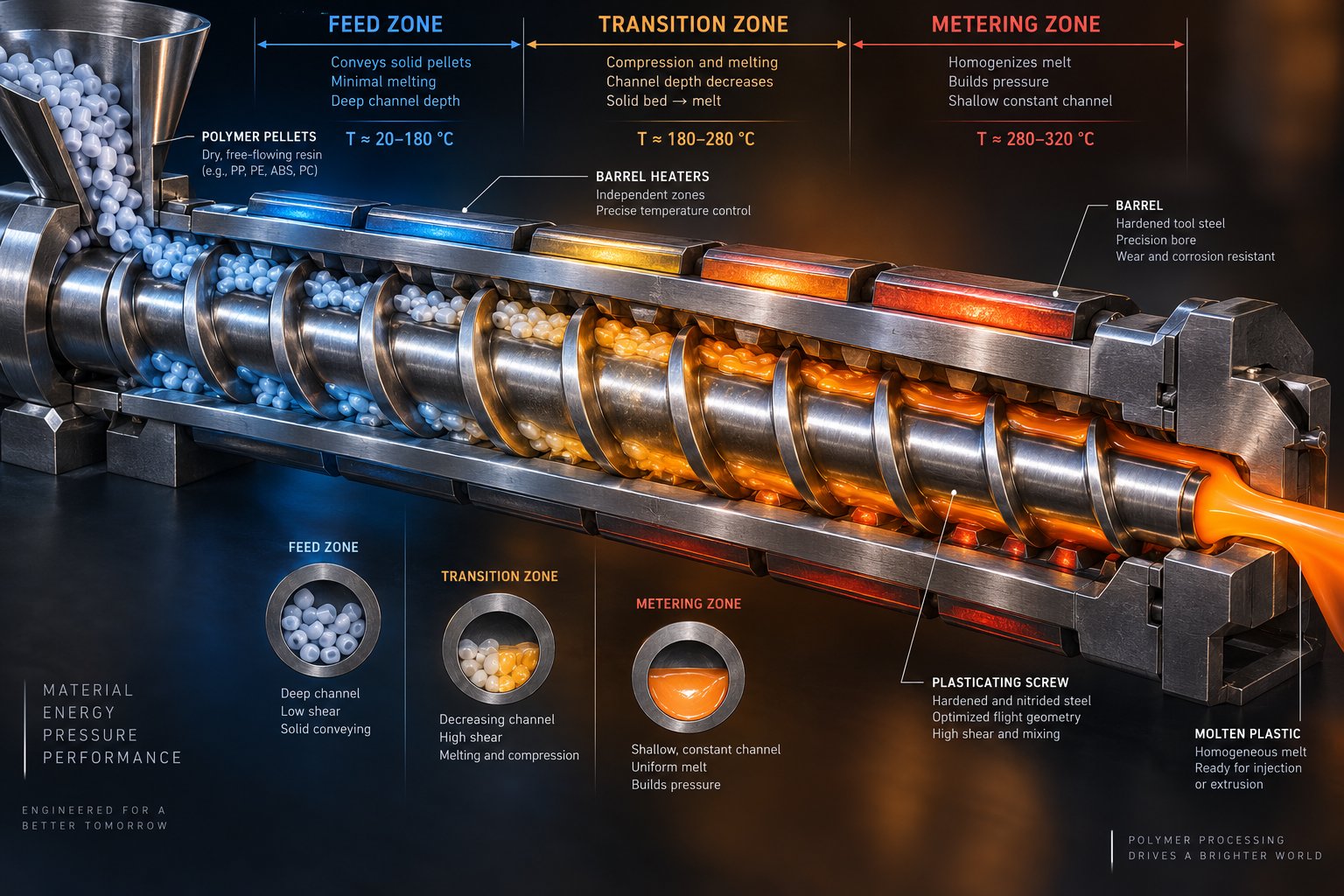
Screw Barrel Design Decoded: From Zone Geometry To Zero Defects
Oct 28, 2026
Master screw barrel design with this engineer's guide to zone geometry, polymer-specific parameters, material selection, defect troubleshooting, and simulation tools.
Read Article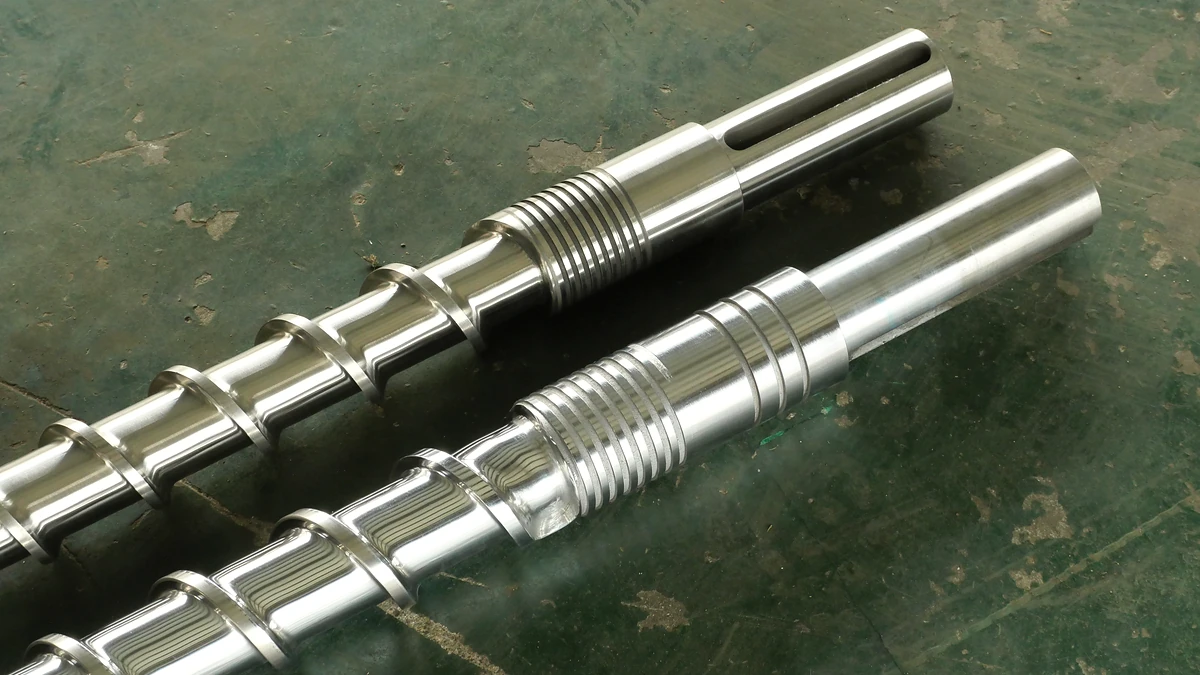
How The Wrong Extruder Screw Barrel For PP Ruins Your Melt
Oct 27, 2026
Learn why PP extrusion needs a purpose-built extruder screw barrel for PP — covering geometry, metallurgy, mixing elements, temperature profiles, and troubleshooting.
Read ArticleLooking for something else?
Search by material, symptom or product and jump straight to the relevant page.
These are navigation suggestions based on keyword matching — not a quotation, not a delivery commitment, and not a substitute for engineering review. Final specification is confirmed by our engineers against your drawings and processed material.
Need help with screw barrel selection?
Share your machine model, processed material and application. Our team can help with pricing and technical support.