

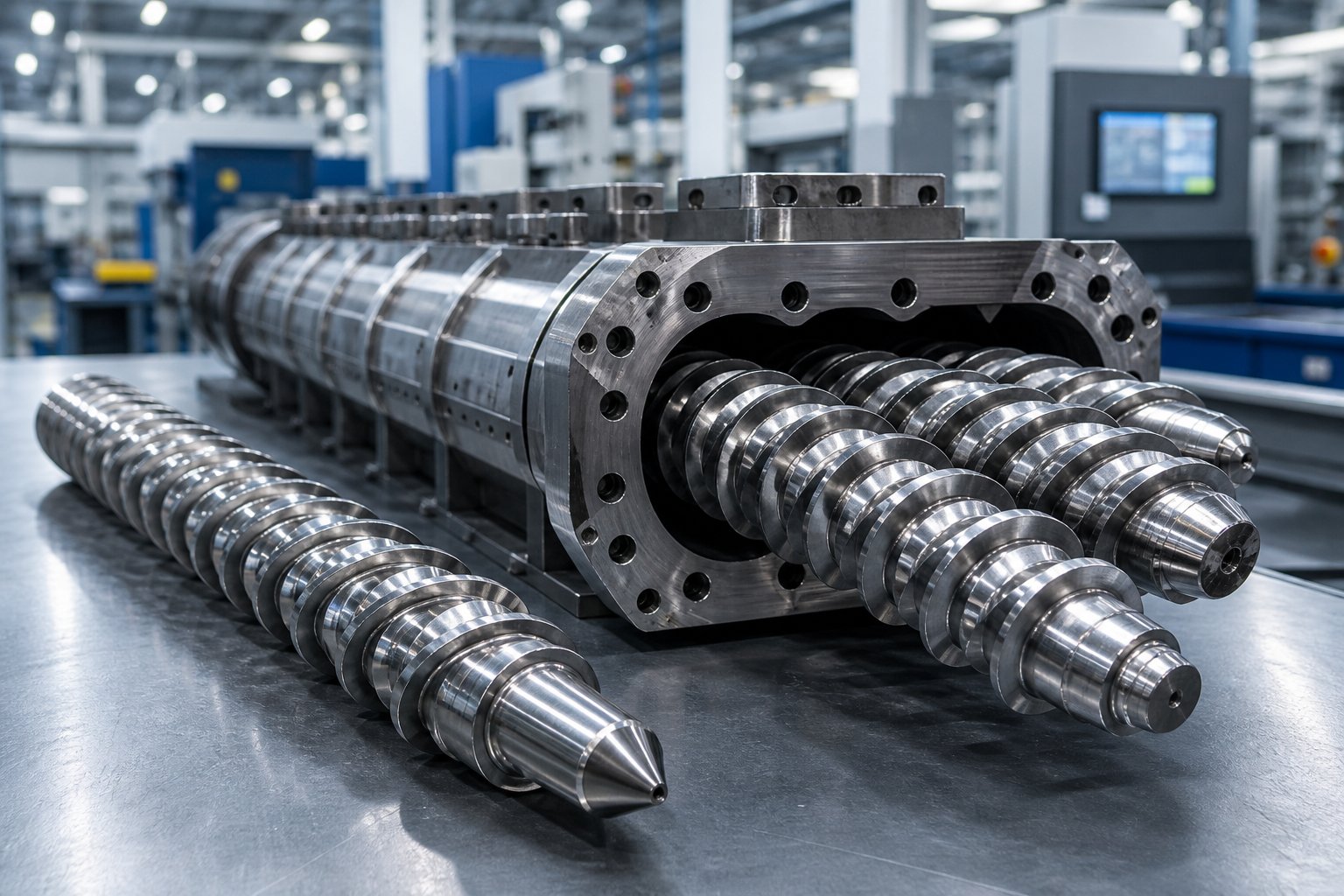
Single Screw vs Twin Screw Extruder at a Glance
Picking the wrong extruder architecture can cost you hundreds of thousands of dollars in wasted capital, inefficient output, and avoidable rework. Yet the difference between a single screw extruder and a twin screw extruder is often reduced to a one-liner about screw count. That barely scratches the surface.
What Is a Screw Extruder and Why Does the Type Matter
So, what's an extruder in practical terms? It is a machine that melts, conveys, and shapes raw polymer material — pellets, powders, or dry blends — into a continuous product by forcing the melt through a die. The screw inside the barrel is the heart of the system, and its design dictates nearly everything: mixing quality, throughput stability, energy draw, and the range of materials you can process.
A single screw extruder uses one rotating screw and relies on drag flow (friction between the screw, barrel, and material) to convey and melt polymer. A twin screw extruder uses two intermeshing screws that create positive displacement, offering stronger mixing, independent process control, and modular screw configurations — at higher cost and complexity.
Neither type is universally superior. A single screw system excels at stable, pellet-based extrusion for pipe, profile, and sheet lines. A twin screw system earns its place when the process demands intensive compounding, powder feeding, devolatilization, or precise residence-time control. Choosing the "more advanced" machine for a job that does not need it wastes budget. Choosing the simpler one for a complex formulation wastes product.
Who This Guide Is For
This guide is written for process engineers evaluating new lines, plant managers comparing upgrade paths, and equipment buyers building specification documents. You will not find vague sales language here. Instead, expect an engineer-to-engineer breakdown covering working principles, energy and total-cost-of-ownership analysis, material-specific selection guidance, and a practical decision framework — everything you need to match screw architecture to your actual process requirements.
The real question is never "which extruder is better?" It is "which conveying mechanism, feeding philosophy, and mixing capability align with your material and production goals?" That distinction drives every section ahead.
How a Single Screw Extruder Works
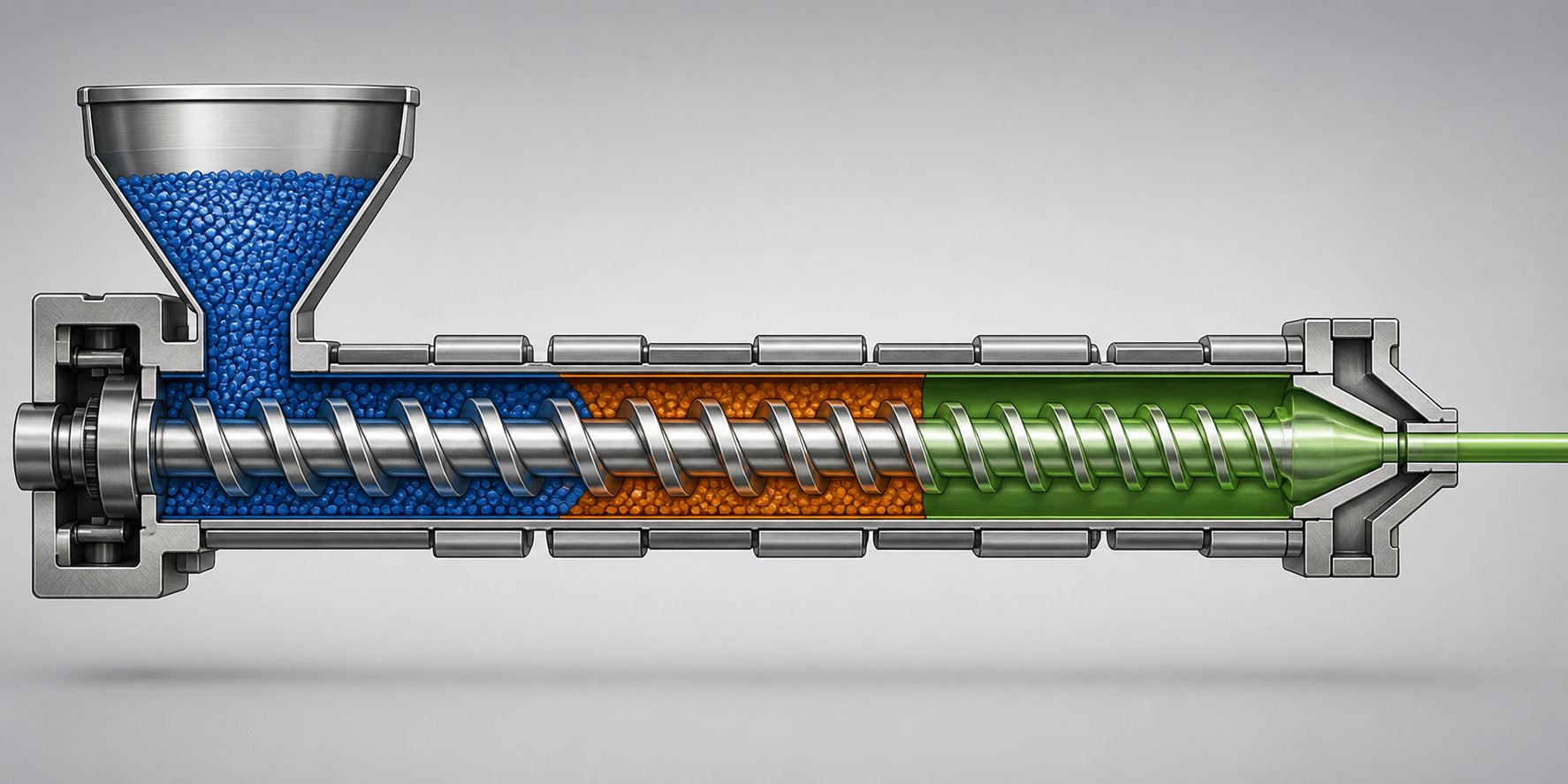
Understanding drag flow is the key to understanding every strength — and every limitation — of a single screw extruder machine. Unlike positive-displacement pumps that physically push material forward, a single extruder screw relies on friction. The rotating screw flight drags polymer against the stationary barrel wall, and that frictional interaction is what moves material from hopper to die. If the polymer slips on the barrel surface or sticks to the screw root, conveying efficiency drops immediately. Everything else — melting rate, pressure generation, throughput stability — cascades from this one conveying principle.
Drag Flow and the Three Functional Zones
Imagine squeezing toothpaste through a tube by twisting a spiral rod inside it. That mental picture captures the essence of drag-flow conveying, though the physics inside a single screw extrusion machine are considerably more nuanced. A standard screw divides the barrel length into three functional zones, each serving a distinct purpose:
- Feed zone — The channel depth here is constant and relatively deep, designed to accept solid pellets or powder gravity-fed from the hopper. Friction between the barrel wall and unmelted polymer generates the forward thrust. The screw root is often polished or chrome-plated to reduce adhesion, keeping material sliding against the barrel rather than spinning with the screw.
- Compression (transition) zone — As the channel depth gradually decreases, the available volume shrinks and compresses the solid bed. This compression squeezes out trapped air between pellets, forces the material into tighter contact with the heated barrel wall, and initiates melting. Polymer softens primarily through viscous shear heating — the mechanical energy generated as the thin melt film between the solid bed and barrel surface is subjected to intense shear. Conductive heat from the barrel heaters supplements this, but in most high-output operations, shear dissipation does the heavy lifting.
- Metering zone — By the time material reaches this section, it should be fully or nearly fully melted. Channel depth is constant again, but much shallower than the feed zone. This shallow geometry generates the pressure needed to push the melt through screens, adapters, and the die. It also provides a final opportunity for thermal homogenization before the polymer exits.
The ratio of the first channel depth to the last — known as the compression ratio — typically falls between 2:1 and 4:1. This ratio, combined with channel depth and screw pitch, determines how aggressively the screw compacts and melts the polymer. Getting it wrong for your material means either unmelted pellets reaching the die or excessive melt temperature from over-shearing.
The overall barrel length is expressed as the length-to-diameter ratio (L/D). Most single screw systems run between 24:1 and 36:1. A common L/D is around 24:1, with longer barrels at 30:1 or more used when additional residence time improves melting completeness, mixing uniformity, or devolatilization in vented two-stage designs. Longer screws give the melt more time to homogenize — but they also add cost, floor space, and potential for thermal degradation of heat-sensitive resins.
Flood Feeding and Its Process Control Implications
In a conventional single screw setup, gravity does the feeding. Pellets pour from a hopper directly into the feed throat, and the screw channel beneath the hopper stays fully packed with material at all times. This is called flood feeding, and it has a critical process control consequence: throughput is directly coupled to screw speed.
You want more output? Turn the screw faster. But faster screw speed also increases shear rate, raises melt temperature, and shortens residence time — all at once. You cannot independently adjust one without affecting the others. Research published in Polymers highlights that starve-fed single screw extrusion, where an external metering feeder controls the input rate, can decouple output from screw speed and reduce specific energy consumption. In practice, however, the vast majority of single screw extrusion machines operate flood-fed because it maximizes throughput for their intended applications — straightforward melting and pumping of a single resin.
This coupling is not always a disadvantage. For dedicated production lines running one material at steady state — think PE pipe or PP sheet — the simplicity of flood feeding eliminates the cost and complexity of gravimetric feeders, and process stability is maintained through barrel temperature and screw-speed setpoints alone.
Where Single Screw Extruders Excel
It is easy to read about twin screw flexibility and conclude that single screw systems are outdated. That would be a costly mistake. For many high-volume applications, the single screw design is not just adequate — it is the better-engineered choice. Here is why:
- Exceptional pressure generation — The metering zone of a well-designed single screw builds consistent, high die pressure, making it ideal for pipe, profile, sheet, and film extrusion where stable melt delivery matters more than mixing intensity.
- Mechanical simplicity and reliability — One screw, one set of bearings, one thrust assembly. Fewer moving parts translates to lower maintenance frequency, simpler troubleshooting, and longer intervals between rebuilds.
- Lower capital cost — A comparable-diameter single screw system typically costs 40-60% less than a twin screw alternative, a gap that widens at larger diameters.
- Proven energy efficiency for simple melting tasks — When the job is straightforward melt conveying without complex additive incorporation, single screw systems consume less specific energy per kilogram of output.
- Upgradable mixing capability — Specialized screw elements like Maddock mixing sections, barrier flights, and mixing pins can significantly improve melt homogeneity without sacrificing the fundamental simplicity of the platform.
- Compact footprint for high throughput — At equivalent output rates for basic resins, single screw lines occupy less floor space and require less auxiliary equipment than twin screw configurations.
The single screw extruder, then, is not a lesser machine. It is a purpose-built conveying and pressurizing tool that dominates applications where material complexity is low and throughput consistency is paramount. The real question — and the reason a twin screw alternative exists — is what happens when your formulation demands more than drag flow and gravity feeding can deliver.
How a Twin Screw Extruder Works
Drag flow depends on friction, and friction is fickle. Change the resin, alter the additive package, or introduce a powder instead of pellets, and the single screw's conveying efficiency shifts beneath your feet. A twin-screw extruder sidesteps that vulnerability entirely. Two intermeshing screws rotating inside a figure-eight barrel bore create positive displacement — material is physically trapped between flights and pushed forward with every rotation, regardless of how slippery, sticky, or powdery the feedstock happens to be. This mechanical certainty is the foundation that makes twin screw systems the workhorse of compounding, reactive extrusion, and multi-ingredient processing worldwide.
Positive Displacement and Starve-Fed Operation
Picture two gears meshing together. As one flight of the first screw enters the channel of the second, it forms a closed or semi-closed pocket that advances material axially along the barrel. The positive displacement conveying this creates means a defined volume moves forward with each screw revolution — independent of the material's coefficient of friction, melt viscosity, or bulk density. That is a radical departure from the drag-flow model, and it carries a cascade of process control benefits.
The most significant benefit is starve feeding. Instead of gravity-dumping pellets into a fully packed feed throat, a twin screw system uses a gravimetric or volumetric feeder to meter material into the barrel at a controlled rate. The screw channels are intentionally only partially filled — "starved" — across most of the barrel length. Why does this matter? Because it decouples three variables that a flood-fed single screw extruder locks together:
- Throughput — controlled by the feeder, not the screw speed.
- Screw speed — adjusted independently to set the desired shear input and mixing intensity.
- Residence time — tuned by changing the ratio of feed rate to screw speed, giving engineers direct control over how long material stays inside the barrel.
Imagine you need to reduce shear on a thermally sensitive additive without sacrificing output. On a single screw machine, lowering screw speed simultaneously cuts throughput. On a twin screw, you simply reduce screw speed while keeping the feeder rate constant — fill level increases slightly, but output holds steady. That independent control is why a twin-screw extruder dominates applications where formulation complexity is high and process windows are tight.
Starve feeding also opens up practical possibilities that flood feeding cannot match. Side feeders can introduce fillers, fibers, or secondary polymers at precise barrel locations downstream of the melt zone. Atmospheric or vacuum vent ports can be placed wherever the screw channels are partially filled, enabling efficient devolatilization of moisture, solvents, or reaction byproducts mid-process. These capabilities are simply not achievable in a system where the channel is packed solid from hopper to die.
Modular Screw Configuration and Its Flexibility
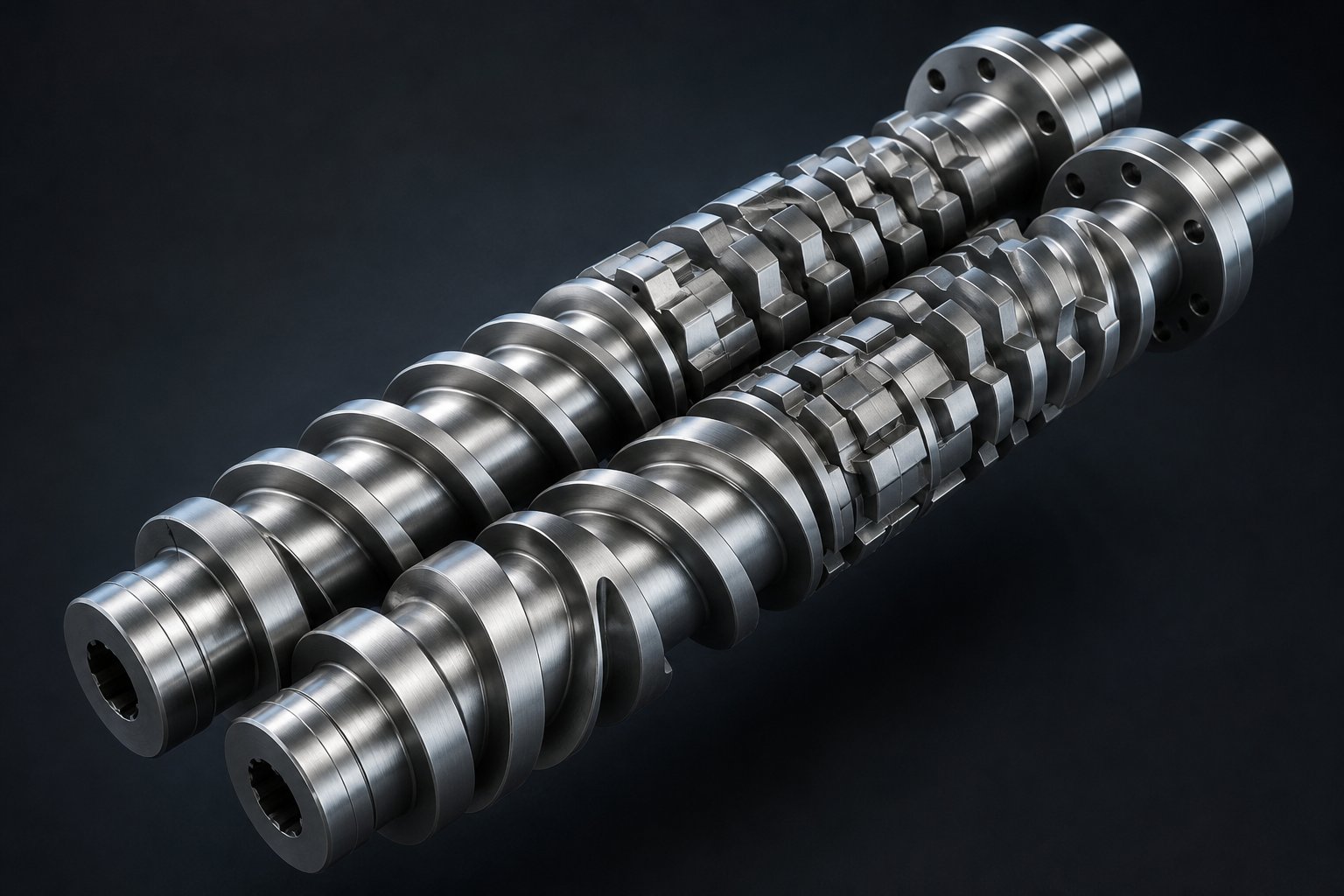
A single screw is typically machined as one continuous piece of steel — a monolithic design optimized for a specific polymer and process. Change the application, and you may need to swap the entire screw. A twin screw takes the opposite approach. Individual screw elements slide onto a splined shaft and can be rearranged, replaced, or recombined like building blocks.
This modular architecture, based on what engineers call the Erdmenger self-wiping screw profile, is composed of four primary element families:
- Conveying elements — Deep-flighted segments that transport material forward efficiently with minimal shear. A larger pitch accelerates conveying; a tighter pitch slows it down and starts building pressure. You will place these at the feed zone and wherever you need to move material quickly toward a vent or die.
- Kneading blocks — Stacks of lobed discs offset at angles (commonly 30, 45, 60, or 90 degrees) to one another. Forward-staggered kneading blocks (e.g., KP-45/5/20 R) provide moderate mixing while still conveying. Neutral 90-degree blocks halt forward movement entirely, maximizing energy input and residence time. Reverse-staggered blocks push material backward, creating intense restriction and maximum shear — ideal for breaking filler agglomerates or ensuring complete melting. Wider kneading discs promote dispersive mixing, while narrower discs favor distributive mixing.
- Toothed mixing elements — Gear-like segments with rows of teeth that split and recombine melt streams repeatedly. These deliver strong distributive mixing with almost no forward or reverse conveying effect, making them useful for gentle blending of temperature-sensitive additives.
- Reverse (re-conveying) elements — Left-handed flights that push material backward. Placed strategically, they create localized melt seals needed upstream of vacuum vents, ensuring the vacuum pulls volatiles out of the melt rather than sucking air in through the feed throat.
The beauty of modularity is adaptability. An engineer running glass-fiber-reinforced nylon in the morning can rearrange kneading blocks, swap element lengths, and reposition vent barrels to process a calcium-carbonate-filled polyolefin by afternoon — using the same machine frame, motor, and gearbox. No single screw platform offers anything close to that formulation flexibility. As NC State Extension research notes, configuring a screw profile is a blend of art and science, with no universal gold standard because every material exhibits unique flow behavior under varying shear and temperature conditions.
Co-Rotating vs Counter-Rotating Twin Screw Extruders
Not all twin screw machines behave the same way. The direction each screw rotates relative to the other fundamentally reshapes the flow field, shear intensity, and application fit. This is a distinction many equipment guides gloss over, yet it determines whether your parallel twin screw extruder ends up compounding masterbatch or forming PVC pipe.
In a co-rotating design, both screws turn in the same direction. Material is handed off from one screw flight to the other at the intermeshing zone in a figure-eight flow path. This produces high shear stress between the screws, intense distributive and dispersive mixing, and a self-wiping action that continuously scrapes the screw surfaces clean. The result is a narrow residence time distribution — every particle of material spends roughly the same amount of time inside the barrel. That consistency is critical for reactive extrusion, where even small pockets of over-processed material cause quality defects.
In a counter-rotating design, the screws turn in opposite directions. Material is drawn into the intermeshing zone and compressed between the screws, producing what is known as the calendering effect — a rolling, compressive deformation similar to what happens between calender rolls. Shear stress is lower, and so is shear-generated heat. The trade-off? The calendering effect creates uneven forces on barrel walls and bearings, limiting practical operating speeds. Counter-rotating machines also lack the self-wiping behavior of co-rotating designs, which can lead to stagnation zones if screw profiles are not carefully managed.
A further geometric split exists within counter-rotating machines: parallel versus conical configurations. Conical twin screw extruders taper from a large diameter at the feed end to a smaller diameter at the discharge, allowing bigger bearing assemblies at the rear and improved torque transmission. They are a staple for rigid PVC pipe and profile lines, where the combination of low shear, high fill, and strong pressure generation matches the narrow processing window of PVC formulations.
| Parameter | Co-Rotating Twin Screw | Counter-Rotating Twin Screw |
|---|---|---|
| Typical screw speed range | 200 - 1,200+ RPM | 10 - 150 RPM |
| Self-cleaning ability | Excellent — fully self-wiping intermeshing geometry minimizes dead zones | Limited — calendering forces and geometry create potential stagnation areas |
| Shear intensity | High — strong shear fields between screws and between screw and barrel | Low to moderate — mixing relies on compressive and elongational deformation |
| Mixing mechanism | Combined dispersive and distributive mixing via kneading blocks and elongational flow | Primarily calendering-based dispersive mixing under gentle conditions |
| Residence time distribution | Narrow and controllable — critical for reactive and thermally sensitive processes | Broader — acceptable for stable formulations with wide processing windows |
| Primary applications | Polymer compounding, masterbatch, reactive extrusion, nanocomposites, devolatilization | Rigid PVC pipe and profile, PVC sheet, select profile extrusion applications |
| Common geometry | Parallel (dominant) | Parallel or conical (conical common for PVC) |
Choosing between co-rotating and counter-rotating is not about picking the "better" twin screw. It is about matching the flow field to the material. A co-rotating parallel twin screw extruder is the default for compounding because its high-speed, self-wiping design handles diverse formulations with minimal changeover friction. A counter-rotating conical twin screw is purpose-built for PVC and similar shear-sensitive polymers where gentle processing at high fill levels keeps the material safely below its degradation threshold.
With both single and twin screw working principles mapped out, the natural next question becomes: how do all these mechanical differences translate into measurable, side-by-side performance gaps across the parameters that actually drive your purchasing decision?
Complete Technical Comparison Table: Single vs Twin Screw Extruders
Scattered specs across multiple datasheets make fair comparison nearly impossible. What you need is every critical parameter lined up in one place — apples to apples, with enough context in each cell to actually inform a decision rather than just fill a column. The table below consolidates more than fifteen performance and design parameters across both screw extruders into a single reference. Bookmark it, print it, share it with your engineering team.
Side-by-Side Parameter Breakdown
| Parameter | Single Screw Extruder | Twin Screw Extruder |
|---|---|---|
| Conveying mechanism | Drag flow — material moves forward via friction between screw flight, polymer, and barrel wall | Positive displacement — intermeshing flights trap and push material forward independent of friction |
| Feeding method | Flood-fed (gravity hopper); screw channel runs fully packed | Starve-fed (gravimetric or volumetric feeder); screw channel intentionally only partially filled |
| Mixing capability | Limited to basic homogenization; improved with optional Maddock mixers, barrier screws, or pin-barrel designs | Superior distributive and dispersive mixing via kneading blocks, toothed elements, and elongational flow fields |
| Shear control | Coupled to screw speed and compression ratio; limited independent adjustment | Independently adjustable through screw speed, element selection, and feed rate decoupling |
| Venting / devolatilization | Possible with two-stage vented screw designs, but limited efficiency and only one or two vent locations | Highly effective; multiple atmospheric and vacuum vent ports placed wherever channels are partially filled |
| Screw configurability | Monolithic — one-piece screw machined for a specific resin and process; changing applications may require a full screw swap | Modular — interchangeable conveying, kneading, mixing, and reverse elements on a splined shaft; reconfigurable for new formulations |
| Self-cleaning ability | None — material residue remains in screw channels and on barrel walls until manually purged | Excellent in co-rotating designs (self-wiping intermeshing geometry); limited in counter-rotating designs |
| Throughput flexibility | Throughput directly coupled to screw speed; changing output simultaneously alters shear and residence time | Throughput set by feeder, independent of screw speed; enables wide operating windows without altering melt quality |
| Pressure generation | Strong — metering zone builds high, stable die pressure; well suited for profile, pipe, and film dies | Moderate — typically requires a melt pump or gear pump for applications demanding very tight pressure consistency |
| Typical L/D ratios | 24:1 to 36:1; most common around 24:1 to 30:1 | 32:1 to 56:1 for co-rotating; 16:1 to 26:1 for counter-rotating conical designs |
| Screw speed range | 20 - 150 RPM (standard); up to 300+ RPM on high-speed designs | 200 - 1,200+ RPM (co-rotating); 10 - 150 RPM (counter-rotating) |
| Residence time control | Limited — residence time is a byproduct of screw speed, not an independently managed variable | Precise — controlled by feed-rate-to-screw-speed ratio and screw profile arrangement; critical for reactive extrusion |
| Ease of cleaning and changeover | Moderate — purging compounds clear most residue, but color or material changes can require extended purge cycles | Fast in co-rotating designs — self-wiping geometry expels residue; modular barrels can be opened for inspection; changeover times measured in minutes, not hours |
| Maintenance complexity | Low — fewer wear components; one screw, one barrel liner, one thrust bearing assembly; straightforward rebuild | Higher — two screws, multiple modular elements, splined shafts, and complex gearboxes; more spare parts to stock and inspect |
| Capital cost range | Lower — typically 40-60% less than a twin screw system of comparable diameter and drive power | Higher — modular screw elements, precision gearbox, gravimetric feeding, and advanced controls increase initial investment |
| Material versatility | Best for pre-compounded pellets and single-resin processing; struggles with powders, multi-component blends, and reactive chemistries | Handles pellets, powders, liquids, fibers, and high-filler-loading formulations; excels in multi-component and reactive applications |
Reading the Table for Your Application
Sixteen parameters is a lot to absorb at once. Here is a practical shortcut: scan the rows that map to your highest-priority process requirements first, and let those anchor your direction.
If your operation centers on high-volume production of a single material — PE pipe, PP sheet, or blown film, for example — you will notice the single screw column consistently shows advantages in pressure generation, mechanical simplicity, lower maintenance, and capital cost. Those parameters matter most when your formulation is simple and your goal is stable, uninterrupted throughput.
If your production involves complex multi-component formulations, frequent recipe changes, reactive chemistries, or materials requiring degassing, the twin screw extruders column will light up across mixing capability, venting, residence time control, configurability, and changeover speed. Twin-screw extruders earn their premium in environments where process flexibility and formulation precision directly affect product quality and reject rates.
This table does not declare a winner. It reveals trade-offs. Every parameter where one extruder type gains an advantage is offset by a concession somewhere else — and the parameters that matter most depend entirely on your material, your process, and your production economics.
Recognizing where each design excels raises an inevitable follow-up: how do these mechanical trade-offs translate into real-world operating costs? Capital price is only the entrance fee. Energy consumption, wear-part replacement, downtime patterns, and material waste rates quietly reshape the financial picture over the life of the machine.
Energy Efficiency and Total Cost of Ownership in Screw Extrusion
"Single screw is cheaper." You will find that sentence repeated on nearly every competitor page covering this topic. It is not wrong — but it is dangerously incomplete. The purchase price of an extruder is only the entrance fee. Industry TCO frameworks consistently show that acquisition cost represents just 25-35% of total lifecycle expenditure for industrial equipment, with maintenance, energy, downtime, and waste consuming the remaining 60-75%. Judging a twin screw extruder machine solely by its sticker price is like evaluating a car by its dealer lot cost while ignoring fuel economy, tire wear, and insurance for the next decade.
Energy Consumption and Specific Mechanical Energy
Specific mechanical energy (SME) — measured in kilowatt-hours per kilogram of processed material — is the only honest way to compare energy draw between the two platforms. Raw motor wattage is misleading because a bigger motor running at low utilization can consume less energy per kilogram than a smaller motor pushed to its limit.
For straightforward melting and conveying of pre-compounded pellets, single screw extruders typically achieve SME values of 0.15 to 0.25 kWh/kg. The drag-flow mechanism is inherently efficient when the job is simple: melt, convey, pressurize. No energy is "wasted" on mixing work the product does not need.
A twin-screw extruder machine performing compounding — dispersing fillers, shearing pigment agglomerates, devolatilizing moisture — operates in a different energy regime. Co-rotating systems typically land between 0.12 and 0.22 kWh/kg for blending-intensive applications. That range can actually overlap with or dip below single screw numbers. How? Better mixing efficiency means fewer passes through the extruder, less rework of off-spec material, and shorter total processing cycles. The energy per kilogram of saleable product — not just per kilogram of throughput — often favors the twin screw when the formulation demands intensive mixing.
Torque density adds another dimension. Modern co-rotating twin screw gearboxes pack more torque per cubic centimeter of center distance than older designs, enabling higher throughput at lower screw speeds. Lower speed means less frictional heat generation, which translates to reduced cooling demand on barrel zones — a hidden energy cost that rarely appears in basic motor-consumption comparisons. For simple screw extrusion tasks like pipe or film production, though, these advantages are irrelevant because the single screw already handles the job with minimal energy overhead.
Putting real numbers to annual operating cost: assume $0.10/kWh electricity and 5,000 operating hours per year. A single screw system consuming 150 kW during operation incurs roughly $75,000 in annual energy expense. A twin screw extruder machine with comparable output capacity may draw similar or even slightly lower annual energy cost — approximately $45,000 to $55,000 — when its superior mixing efficiency shortens cycle times or eliminates secondary processing steps. The gap narrows or reverses depending on application complexity.
Total Cost of Ownership Beyond the Purchase Price
A mid-range single screw system might cost $150,000-$250,000 installed. A comparable-output twin screw system could run $350,000-$550,000. That 40-60% upfront gap is real — but it tells you almost nothing about what the machine will cost to own over a 10-year service life. To see the full picture, you need to map every cost category that accumulates from day one through decommissioning:
- Capital expenditure and installation — Purchase price, freight, commissioning, operator training. This is the only line item most procurement spreadsheets capture, yet it represents the smallest slice of lifetime cost.
- Energy costs — Annual electricity draw multiplied across a decade. As noted above, the per-kilogram energy gap between the two platforms is narrower than most buyers expect, and energy cost escalation (roughly 3% per year) compounds the impact over time.
- Maintenance and wear parts — Single screw systems need periodic screw and barrel replacement at $8,000-$45,000 per event, with 10-year maintenance totals commonly ranging from $80,000 to $150,000. Twin screw systems carry higher parts costs — complete element sets can run $20,000-$100,000 — pushing 10-year maintenance totals to $195,000-$350,000. The modularity that gives twin screws their flexibility also gives them a longer spare-parts list.
- Cleaning and changeover downtime — Self-wiping co-rotating twin screws change colors or formulations in minutes. A single screw system running a dark-to-light color change may need extended purge cycles consuming hours and hundreds of kilograms of purge compound. For multi-product operations, changeover time is money.
- Material waste and rework rates — Single screw startup waste typically runs 5-15% of a production batch; ongoing scrap rates fall between 3-8%. Twin screw systems often reduce those figures to 3-10% startup waste and 2-5% ongoing scrap. On a line processing 5,000 metric tons annually at $2/kg material cost, a 2% waste reduction saves approximately $200,000 per year.
- Throughput efficiency — Higher effective output per operating hour reduces the labor-hours and machine-hours needed to meet production targets, compressing overhead cost per kilogram.
- Expected service life — Both platforms typically deliver 10-15 years of productive life with proper maintenance. Neither holds a decisive longevity advantage, though replacement part availability and gearbox rebuild options can extend twin screw systems beyond their initial design life.
When you stack all seven categories, 10-year TCO for a mid-range single screw system lands roughly between $1.7 million and $2.4 million, while a comparable twin screw system runs $2.0 million to $2.9 million. The gap shrinks dramatically from the 40-60% purchase-price difference to a 15-20% lifetime difference — and for applications involving high-value formulations, frequent changeovers, or rework-sensitive quality standards, the twin screw can close that gap entirely.
Maintenance and Wear Patterns
Wear behavior differs not just in magnitude but in character. A single screw system wears predictably: the screw flight tips and barrel bore gradually lose clearance over thousands of operating hours. Hard chrome-plated screws typically last 8,000 to 15,000 hours before refurbishment. When a replacement is needed, you are swapping one monolithic screw — a straightforward job that in-house maintenance teams can often handle without calling in field service engineers.
Twin screw wear is more distributed and more nuanced. Individual kneading blocks or conveying elements wear at different rates depending on their position in the screw profile, the abrasiveness of the formulation, and local shear intensity. The advantage of modularity cuts both ways here: you can replace only the worn elements rather than an entire screw shaft, which reduces per-event cost — but you need disciplined inspection intervals and a well-stocked spare-parts inventory to avoid unplanned downtime. Major overhauls on twin screw gearboxes and screw assemblies typically occur every 25,000 to 40,000 hours, with costs ranging from $40,000 to $150,000 per event.
Availability rates reflect this complexity. Single screw extruders commonly achieve 92-96% uptime with routine preventive maintenance. Twin screw extruder machines typically run at 88-94% availability — slightly lower, but their higher per-hour throughput and product quality often compensate for the difference in total output value.
The bottom line? "Single screw is cheaper" is only true on the purchase order. Whether it stays cheaper over the life of the asset depends entirely on what you are processing, how often you change formulations, and how much off-spec material costs your operation. That application-level thinking is exactly what drives the next critical question: which extruder type fits your specific material and industry?
Which Extruder Type Fits Your Material and Industry
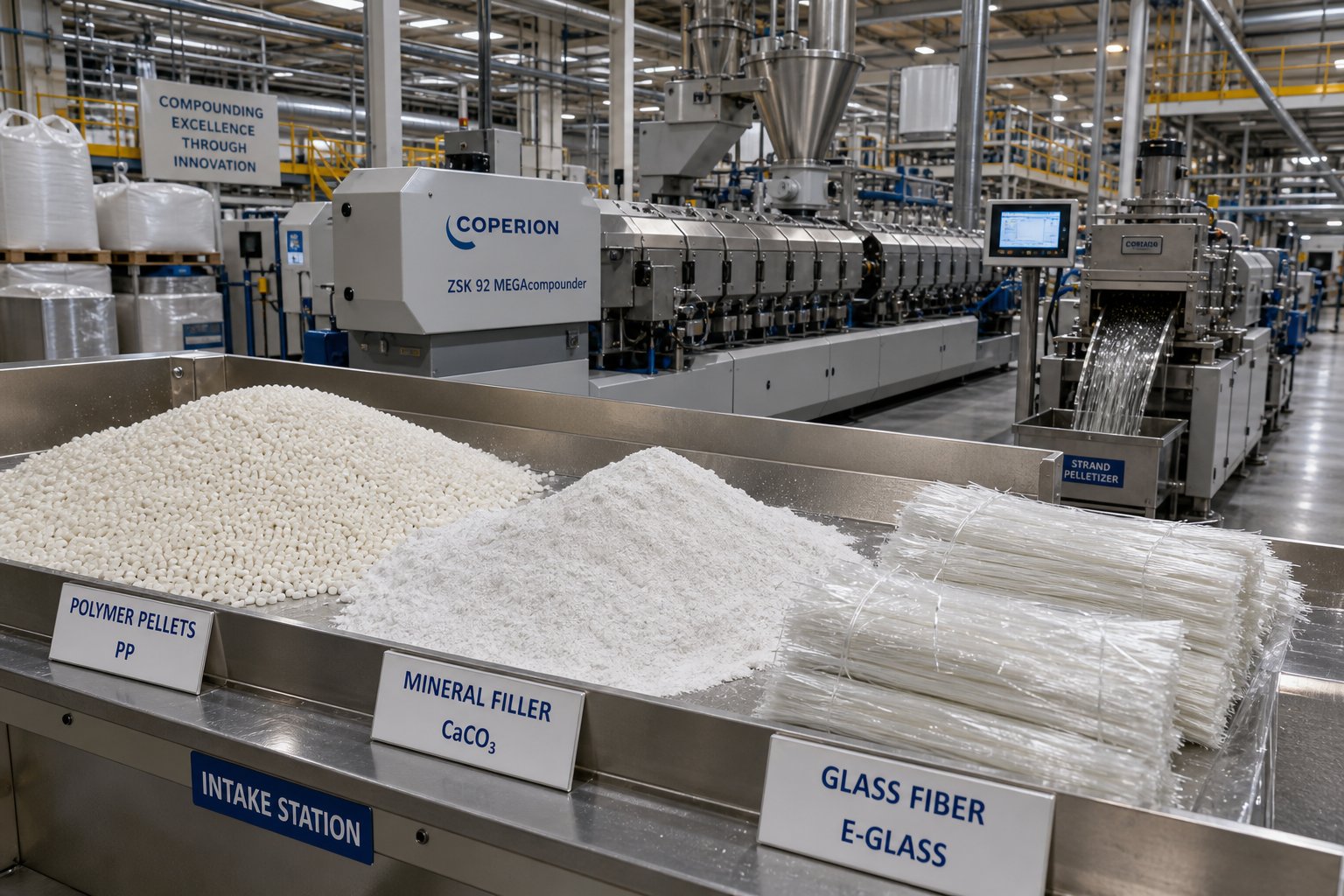
Technical specs and cost models mean little if they do not connect to the material sitting in your warehouse or the product your customer expects to receive. A process engineer selecting between a single screw plastic extruder and a twin screw compounding extruder is really asking a narrower question: given this specific polymer, this filler loading, this quality specification, and this production schedule, which conveying mechanism delivers the best outcome? Generic advice like "twin screw is better for compounding" skips the reasoning that actually builds confidence in a capital decision. The table and breakdowns below fill that gap with material-level and industry-level logic tied directly to the technical differences covered earlier.
Material-Specific Selection Guide
Different polymers and formulations interact with drag flow and positive displacement in fundamentally different ways. A resin that processes beautifully on a plastic single screw extruder may degrade, agglomerate, or simply fail to convey on the same platform once you change the additive package. The table below maps common material categories to the recommended extruder architecture — and, more importantly, explains why the recommendation exists.
| Material Category | Recommended Extruder Type | Reasoning |
|---|---|---|
| Standard thermoplastics (PE, PP) — simple extrusion | Single screw | Pre-compounded pellets melt efficiently via drag flow. The single screw's strong pressure generation and low capital cost make it the default for pipe, film, and sheet production from commodity resins. |
| Shear-sensitive polymers (rigid PVC, CPVC) | Counter-rotating twin screw (conical or parallel) | PVC degrades rapidly above a narrow temperature threshold. Counter-rotating screws deliver gentle calendering-based mixing at low RPM, keeping shear heat well below degradation limits. Conical twin screw designs are especially common for PVC pipe and profile because their tapered geometry improves torque transmission while maintaining gentle processing. |
| Highly filled compounds (>40% filler — CaCO3, talc, glass fiber) | Co-rotating twin screw | High filler loadings demand intense distributive mixing to break agglomerates and uniformly disperse particles throughout the melt. Kneading blocks on a co-rotating twin screw plastic extruder create the elongational and shear flow fields needed for this task. Side feeders introduce abrasive fillers downstream of the melt zone, protecting the feed section from accelerated wear. |
| Reactive extrusion chemistries (grafting, crosslinking, polymerization) | Co-rotating twin screw | Chemical reactions inside the barrel demand precise residence time control and narrow residence time distribution. Starve feeding decouples throughput from screw speed, giving engineers the ability to fine-tune how long reactants spend in the high-temperature zone — something a flood-fed single screw simply cannot offer. |
| Hygroscopic materials requiring devolatilization (PA, PET, PC) | Twin screw (co-rotating preferred) | Moisture trapped in the melt causes hydrolytic degradation and surface defects. Twin screw extruders support multiple vacuum vent ports at partially filled barrel sections, pulling moisture and volatiles out mid-process. Devolatilization extruders with twin screw configurations significantly outperform single screw vented designs in volatile removal efficiency. |
| Masterbatch and color concentrates | Co-rotating twin screw | Pigment dispersion quality directly determines color consistency in the final product. The twin screw compounding extruder's kneading blocks generate the high shear needed to break pigment agglomerates below the visible particle threshold — typically under 1 micron — while distributive mixing ensures uniform spatial distribution. |
| Recycled / contaminated feedstocks | Twin screw (co-rotating) | Post-consumer recycled plastics arrive with inconsistent bulk density, residual moisture, printing inks, and mixed polymer contamination. Twin screw extruders excel here because their degassing capability removes trapped volatiles, their positive displacement handles irregular feedstock geometry, and their mixing intensity homogenizes contaminated melt streams that would produce reject parts on a single screw line. |
Notice a pattern? When the material is a clean, pre-compounded pellet and the process is simple melt-and-shape, the single screw wins on economics and simplicity. The moment the formulation introduces powders, fillers above moderate loadings, moisture sensitivity, reactive chemistry, or feedstock variability, the twin screw's positive displacement, modular mixing, and venting capability become engineering necessities — not luxuries.
Industry-Specific Application Breakdown
Material choice does not exist in a vacuum. Industries cluster around specific polymer families, product geometries, and quality standards that further sharpen the extruder selection. Here is where each design dominates — and why:
- Plastics compounding — Twin screw dominant. Compounding is, by definition, the blending of multiple components: base resin, stabilizers, fillers, impact modifiers, colorants. The co-rotating twin screw compounding extruder's modular screw profile, starve-fed operation, and multiple feed and vent ports make it the only practical platform for producing compound pellets at commercial scale. Industry sources confirm that twin screw and multi-screw configurations are standard for compounding and modification applications.
- Pipe and profile extrusion — Single screw dominant. Pipe and profile dies demand steady, high-pressure melt delivery with minimal pulsation. The single screw's metering zone excels at building consistent die pressure from pre-compounded pellets. For rigid PVC pipe and window profiles, counter-rotating conical twin screws carve out a niche because PVC's thermal sensitivity requires their gentler processing — but outside of PVC, the single screw plastic extruder remains the default.
- Film and sheet extrusion — Single screw dominant. Blown film and cast film lines run continuously for days or weeks on a single resin. The flood-fed single screw's simplicity, proven reliability, and excellent pumping consistency align perfectly with this steady-state, high-volume production model.
- Food processing — Both used, application-dependent. Simple cooking and texturization of cereal-based products often uses single screw extruders because the process is straightforward and the equipment cost is lower. Complex texturized vegetable protein (TVP), snack puffing with multiple ingredient streams, and high-moisture meat analogs favor twin screw systems because they require precise control over shear, temperature, and moisture content within a narrow processing window.
- Pharmaceutical hot-melt extrusion — Twin screw dominant. Hot-melt extrusion for drug delivery relies on precise residence time control, consistent dispersive mixing of active pharmaceutical ingredients (APIs) into polymer carriers, and repeatable scale-up from lab to production. The twin screw's modular design and starve-fed operation deliver the process reproducibility that regulatory agencies demand.
- Rubber processing — Single screw dominant. Rubber straining — the process of forcing rubber compound through fine mesh screens to remove contaminants — requires extremely high pressure generation at low screw speeds. Single screw strainer extruders, often with L/D ratios as short as 8:1 to 12:1, are purpose-built for this high-pressure, low-shear task.
- Plastics recycling — Twin screw increasingly dominant. Mixed post-consumer waste introduces moisture, volatiles, and polymer incompatibilities that a single screw handles poorly. Twin screw extruders paired with vacuum degassing remove contaminants and homogenize variable-quality feedstock into consistent recycled pellets. Integrated systems that combine shredding, compacting, and twin screw extrusion are becoming the standard for circular-economy recycling operations.
You will notice that every industry-level preference traces back to the same technical root causes discussed earlier: drag flow vs. positive displacement, flood feeding vs. starve feeding, monolithic vs. modular screw architecture. The industry simply determines which set of technical capabilities matters most.
Scale-Up Considerations
Imagine you have perfected a formulation on a lab-scale extruder. The product looks right, the mechanical properties hit spec, and the customer is ready to place a production order. How confidently can you transfer that recipe to a full-scale machine?
Twin screw extruders scale more predictably. Their modular screw design maintains geometric similarity across machine sizes — a 26 mm lab twin screw and a 92 mm production twin screw can use the same element types arranged in an equivalent screw profile. Starve-fed operation means the ratio of feed rate to screw speed (the specific throughput) translates directly from small to large machines. Research from Warsaw University of Technology demonstrates that computer-aided scaling systems using process simulation can accurately predict output parameters — melt temperature, melting length, fill factor — when moving from a 34 mm reference extruder to a 51 mm target machine while keeping L/D constant. The scaling procedure minimizes differences in temperature and melting profiles between the two scales, confirming that geometric similarity enables reliable process transfer.
Single screw scale-up is trickier. The flood-fed conveying mechanism couples throughput to screw speed, and heat transfer dynamics change nonlinearly as barrel diameter increases. A screw design optimized at 45 mm diameter may produce unexpectedly different melt temperatures, residence times, and mixing quality at 120 mm. Empirical scale-up rules exist — Rauwendaal's and Potente's criteria are widely cited — but they typically address only individual parameters like shear rate or melting rate, not the full process characteristic simultaneously.
For operations that anticipate frequent recipe development, product diversification, or phased capacity expansion, this scale-up predictability is a strategic asset. A twin screw platform lets you validate a formulation at bench scale and transfer it to production with high confidence, compressing time-to-market and reducing the expensive trial-and-error cycles that derail launch schedules. A single screw system, by contrast, often demands its own dedicated scale-up trials — acceptable when your product line is stable, but costly when the product portfolio is evolving.
Material science and industry requirements point clearly toward one platform or the other in most real-world scenarios. Yet persistent myths about both extruder types still lead engineers astray — misconceptions that can steer a perfectly sound evaluation toward the wrong conclusion.
Common Misconceptions About Single and Twin Screw Extruders
Myths travel fast in manufacturing — especially when equipment suppliers repeat simplified claims until they harden into conventional wisdom. The material-by-material and industry-by-industry guidance above should already challenge a few assumptions. Still, three stubborn misconceptions keep surfacing in specification meetings and equipment evaluations, and each one can push your capital decision in the wrong direction.
Myth 1 — Twin Screw Extruders Are Always Superior
This is the most expensive myth on the list. A co-rotating twinscrew system is an extraordinary mixing and compounding platform — but "extraordinary" does not mean "universally correct." For straightforward melting-and-pumping tasks like PE pipe, blown film, or PP sheet extrusion, a single screw extruder is often the better-engineered solution. It generates higher, more stable die pressure with fewer moving parts, draws less energy for simple melt conveying, and costs 40-60% less upfront. Over-specifying a twin screw system for a job that requires nothing more than reliable drag-flow conveying wastes capital on capabilities the process will never use. The right question is never "which machine is more advanced?" It is "which conveying mechanism matches this specific material and process?"
Myth 2 — Single Screw Extruders Cannot Mix
Single screw platforms lack the distributive and dispersive mixing intensity of intermeshing twin screws — that is a fact. Claiming they cannot mix, however, overstates the limitation. Specialized mixing sections significantly improve melt homogeneity without sacrificing the fundamental simplicity of the single screw architecture. Maddock (also called Leroy or UCC) mixers, developed in the late 1960s, force the melt through a clearance gap that delivers aggressive dispersive shear — highly effective for eliminating unmelts in crystalline polymers like polyolefins.
Beyond dispersive designs, distributive mixers such as Saxton-style multi-channel elements, pin mixers that create exponential melt divisions, and pineapple mixers that converge flow streams at chaotic angles all enhance blending performance. Barrier screw designs go further still — they physically separate the solid bed from the melt pool, controlling the melting process so thoroughly that supplemental high-shear mixers become unnecessary for many applications. As extrusion veteran Jim Frankland notes, a properly designed barrier screw completes melting within the barrier section itself, making a distributive mixer the better downstream choice to homogenize temperatures and additive distribution without needlessly increasing melt temperature.
A single screw will never match a twin screw's ability to handle 50% filler loadings or reactive blending. But for color homogenization, thermal uniformity, and basic additive distribution, well-chosen mixing elements close a significant portion of the gap.
Myth 3 — A Double Screw Extruder Is a Different Machine
Search for "double screw extruder" or "double screw extruder machine" and you will find listings that appear to describe a separate equipment category. They do not. A double screw extruder is simply an alternative name for a twin screw extruder — same two intermeshing screws, same figure-eight barrel bore, same operating principles. The terminology difference is regional and colloquial, not technical. If a supplier spec sheet references a "double screw" configuration, verify whether it is co-rotating or counter-rotating, parallel or conical, and evaluate it using the same criteria outlined throughout this guide. The label on the brochure does not change the physics inside the barrel.
Beyond the Binary — Hybrid and Specialized Systems
The single-vs-twin comparison covers the vast majority of extrusion applications, but it is not the entire equipment landscape. Awareness of a few niche platforms helps put the mainstream options in context:
- Tandem extruders — A primary extruder (often twin screw) melts and mixes the formulation, then feeds the melt into a secondary single screw extruder dedicated solely to cooling and pumping. This decouples mixing from pressurization, a strategy frequently used in foam extrusion where melt temperature at the die must be precisely controlled independent of upstream processing intensity.
- Planetary roller extruders — A central spindle surrounded by multiple smaller planetary screws rotating inside an internally toothed barrel. These machines deliver exceptional surface-area-to-volume ratios for heat-sensitive materials like PVC calendering compounds, occupying a narrow but important niche between single and twin screw platforms.
- Conical twin screw systems — Already discussed in the counter-rotating section, these tapered-barrel machines sit at the intersection of twin screw mixing and single screw pressure generation, purpose-built for PVC and similar thermally sensitive extrusion tasks.
These specialized systems exist precisely because no single architecture — not even the versatile co-rotating twin screw — handles every material and process optimally. Recognizing that reality is the first step toward a genuinely informed equipment decision. The next step is structuring that decision into a repeatable framework.
A Practical Decision Framework for Choosing Your Extruder
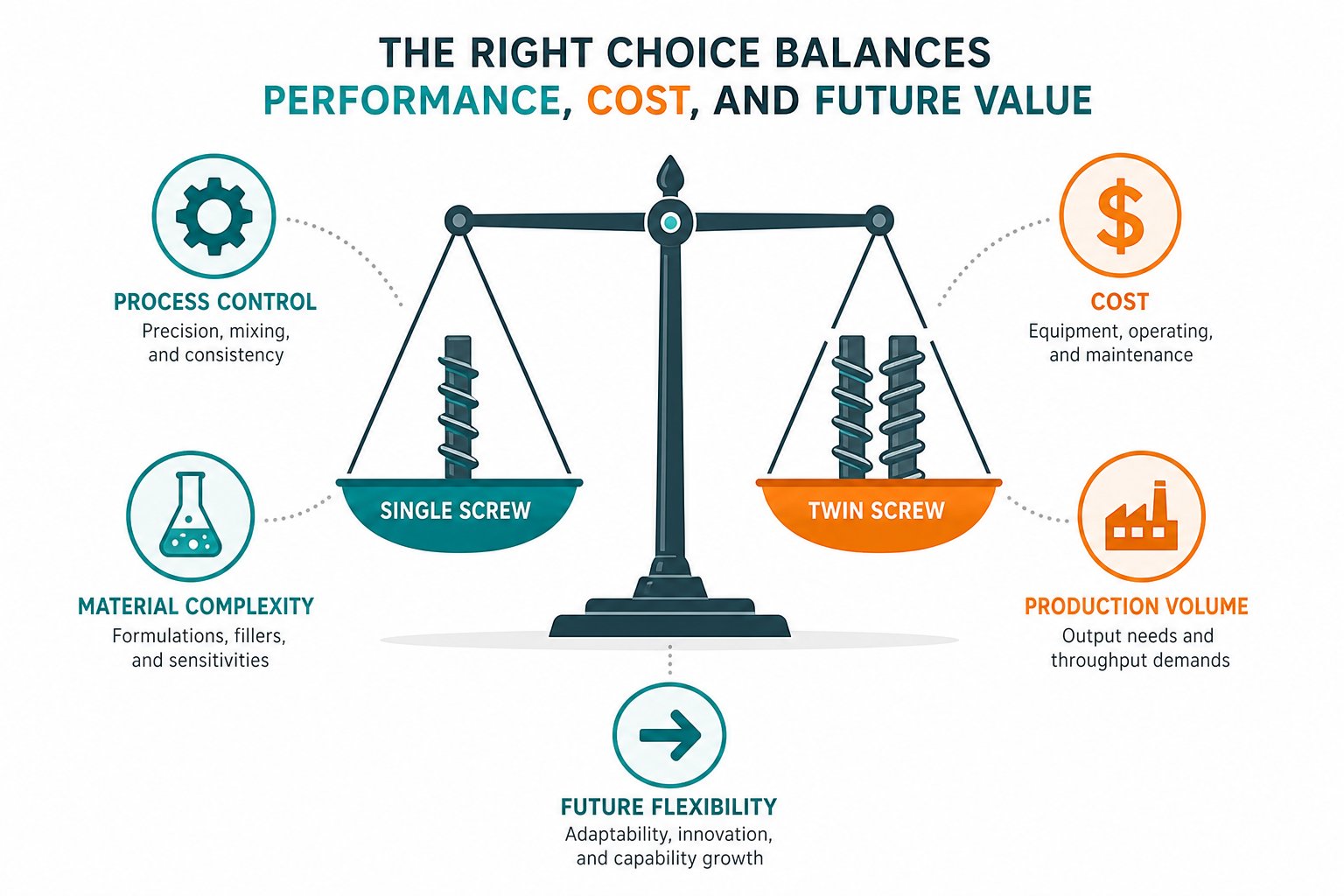
Technical knowledge without a structured way to apply it leads to analysis paralysis — or worse, gut-feel purchases disguised as engineering decisions. You have the working principles, the comparison parameters, the cost breakdown, and the material guidance. What is missing is a repeatable framework that channels all of that information into a clear directional answer for your specific situation. The five-factor checklist below does exactly that, ranking the criteria in the priority order that experienced process engineers typically follow when specifying a screw plastic extruder for a new line or a capacity expansion.
Five-Factor Decision Checklist
Work through these five criteria in sequence. Each one either reinforces or redirects the direction set by the previous factor. By the time you reach criterion five, the answer will have crystallized — or you will know exactly which trade-off needs a deeper internal conversation before signing a purchase order.
- Material complexity and formulation requirements — This is the single most influential variable. Are you processing a clean, pre-compounded pellet in a single resin? A single screw extruder handles that with lower cost and fewer headaches. Are you blending base polymer with fillers above 30%, dispersing pigment agglomerates, incorporating liquid additives, or running reactive chemistries? An extruder twin screw configuration is engineered for exactly those multi-component, mixing-intensive duties. Start here because no amount of cost savings or throughput advantage matters if the screw architecture physically cannot produce the melt quality your product spec demands.
- Production volume and throughput flexibility — High-volume, single-product operations — think a PE pipe line running the same grade 24/7 for weeks — favor the single screw's flood-fed simplicity. The screw channel stays full, output is steady, and there is no feeder to calibrate. Variable-volume operations that switch between recipes, adjust batch sizes, or run short campaigns benefit from the twin screw's starve-fed design, where throughput is controlled by the feeder independent of screw speed. If your production schedule looks more like a calendar of changing SKUs than a continuous conveyor belt, throughput flexibility becomes a competitive advantage worth paying for.
- Process control requirements — Does your product quality depend on tight control of residence time, shear input, or melt temperature independent of output rate? Reactive extrusion, pharmaceutical hot-melt extrusion, and high-performance polymer blends all demand that level of precision. The twin screw's decoupled feed-rate-to-screw-speed ratio gives you those independent control levers. For conventional melt-and-shape applications where barrel temperature setpoints and screw RPM provide sufficient control, the single screw's simpler control architecture is adequate — and easier for operators to manage.
- Budget and total cost tolerance — A constrained capital budget paired with a simple application is the single screw's strongest use case. The 40-60% upfront savings are real, and if your formulation does not require intensive mixing or devolatilization, total cost of ownership stays favorable over the machine's lifetime. However, if your budget analysis stops at the purchase order, revisit the TCO breakdown covered earlier. For complex formulations, the twin screw's lower rework rates, faster changeovers, and reduced material waste can narrow the lifetime cost gap to 15-20% — or eliminate it entirely.
- Future flexibility and scale-up plans — This criterion often tips borderline decisions. If you anticipate new formulations, higher filler loadings, additional product lines, or a shift toward recycled feedstocks within the next three to five years, the twin screw extruder plastic platform's modular screw design lets you reconfigure rather than replace. A single screw system optimized for today's product may require a full screw swap — or a second machine — when tomorrow's product demands different mixing or venting. Investing in modularity upfront is insurance against the cost of re-specifying later.
Most real-world decisions hinge on criteria one and two. If both point in the same direction, you have a clear answer. If they conflict — say, a complex formulation at very high volume — criteria three through five break the tie.
Quick-Reference Decision Matrix
The checklist above walks you through the reasoning. The matrix below compresses that reasoning into a scannable reference you can pull up during a specification meeting or vendor call.
| Decision Criterion | Points to Single Screw | Points to Twin Screw |
|---|---|---|
| 1. Material complexity | Pre-compounded pellets, single resin, minimal additives — drag flow handles the job efficiently | Multi-component blends, powders, high filler loadings, reactive chemistries — positive displacement and modular mixing are required |
| 2. Production volume and flexibility | Dedicated high-volume runs on one product; steady-state flood feeding maximizes throughput | Frequent recipe changes, variable batch sizes, multi-SKU schedules; starve feeding enables independent throughput control |
| 3. Process control | Standard barrel temperature and RPM setpoints provide adequate quality control | Independent control of residence time, shear input, and fill level is critical for product quality or regulatory compliance |
| 4. Budget and TCO | Capital-constrained with simple application; lower upfront and lifetime cost justified | Higher initial investment offset by lower waste, faster changeovers, and reduced rework on complex formulations |
| 5. Future flexibility | Stable product line with no anticipated formulation changes in the next 3-5 years | Expected product diversification, new materials, recycled content targets, or scale-up from lab to production |
Score each criterion informally — which column describes your situation more accurately? If three or more criteria land in one column, that is your starting architecture. A split result signals a borderline case where a deeper process audit, trial runs on demo equipment, or consultation with single screw extruder manufacturers and twin screw suppliers will prevent an expensive mismatch.
Where to Compare Screw and Barrel Options
The checklist identifies your extruder architecture. The next practical step is sourcing the screw barrel components that bring that architecture to life — and this is where many engineers hit a gap between decision and execution. Comparing screw geometries, metallurgies, and barrel specifications across multiple suppliers can consume weeks if each vendor's catalog lives on a separate website with inconsistent parameter formats.
One resource that consolidates this comparison is NANHAIYA's screw barrel product collection, where engineers and equipment buyers can evaluate single screw barrels, parallel twin screw barrels, conical twin screw barrels, and injection molding screw barrel options side by side. Having all four categories on a single page — with specifications organized by application — directly supports the decision criteria outlined above. Rather than bouncing between catalogs, you can match the screw barrel geometry to the extruder type your checklist identified and move from selection to sourcing in one workflow.
Whether your checklist pointed toward a simple single screw barrel for a dedicated pipe line or a modular twin screw element set for a multi-product compounding operation, the screw and barrel are where your process engineering decisions become physical hardware. Getting that hardware right is the bridge between a sound equipment strategy and actual production performance.
Making the Right Extruder Decision for Your Operation
Every section of this guide circles back to one central truth — and it is worth stating plainly before you close the tab and open a purchase requisition:
The right screw extruder choice is application-driven, not technology-driven. No amount of engineering sophistication justifies a machine whose capabilities exceed — or fall short of — what your material and process actually demand.
Key Takeaways for Engineers and Equipment Buyers
Across working principles, cost modeling, material guidance, and myth-busting, four differences consistently surfaced as the ones that shape real-world outcomes more than any others:
- Conveying mechanism — Drag flow ties single screw extrusion performance to friction conditions between polymer, screw, and barrel. Positive displacement in twin screw extrusion pushes material forward mechanically, making conveying independent of feedstock variability. This single distinction cascades into nearly every downstream performance gap.
- Feeding philosophy — Flood feeding couples throughput, shear, and residence time into a single control lever. Starve feeding separates them, handing engineers independent dials for each variable. The process complexity of your formulation determines which approach is a feature and which is a constraint.
- Mixing capability — Modular kneading blocks and toothed elements give twin screw systems unmatched distributive and dispersive mixing. Specialized barrier screws and Maddock mixers narrow the gap for single screw platforms — but only up to a point. Beyond moderate filler loadings and multi-component blends, the twin screw's mixing intensity becomes a process necessity.
- Total cost profile — A 40-60% upfront price gap shrinks to 15-20% over a ten-year lifecycle once energy, maintenance, changeover downtime, and material waste enter the equation. For complex applications, that residual gap can disappear entirely.
If your operation processes clean, pre-compounded pellets in steady-state runs, the single screw platform delivers the best combination of cost efficiency, reliability, and pressure generation. If your formulations involve multiple ingredients, reactive chemistries, recycled feedstocks, or frequent recipe changes, twin screw extrusion earns its premium through process control, mixing quality, and operational flexibility that drag flow cannot replicate.
Your Next Step — Match the Screw Barrel to Your Process
Selecting the extruder architecture is the strategic decision. Selecting the right screw barrel geometry and metallurgy is the engineering decision that turns strategy into production reality. Screw flight depth, compression ratio, element arrangement, and barrel alloy must align with your specific polymer, throughput target, and wear environment — otherwise even the correct extruder type underperforms.
To move from decision to execution efficiently, explore NANHAIYA's screw barrel product catalog, where you can compare single screw barrels, parallel twin screw barrels, conical twin screw barrels, and spare-part options organized by plastic processing application. Whether your checklist pointed toward a monolithic single screw for a dedicated extrusion line or a modular element set for a multi-product compounding operation, matching the barrel assembly to your process requirements is the step that converts sound analysis into reliable output — shift after shift.
Frequently Asked Questions About Single vs Twin Screw Extruders
1. What is the main difference between a single screw extruder and a twin screw extruder?
The core difference lies in how each machine moves material. A single screw extruder relies on drag flow, where friction between the rotating screw, polymer, and barrel wall pushes material forward. A twin screw extruder uses positive displacement created by two intermeshing screws that physically trap and advance material regardless of friction conditions. This fundamental conveying distinction drives every downstream difference in mixing intensity, process control, feeding method, and application suitability. Single screw systems excel at steady-state melting and pressurizing of pre-compounded pellets, while twin screw systems dominate when formulations involve multiple components, fillers, reactive chemistries, or devolatilization requirements.
2. Is a twin screw extruder always better than a single screw extruder?
No. This is one of the most common and costly misconceptions in extrusion equipment selection. For straightforward melting-and-pumping applications like PE pipe, blown film, or PP sheet production, a single screw extruder is often the superior engineering choice. It generates higher, more stable die pressure, uses less energy for simple melt conveying, requires less maintenance, and costs 40-60% less upfront. Over-specifying a twin screw for a process that only needs reliable drag-flow conveying wastes capital on capabilities the operation will never utilize. The correct approach is matching the conveying mechanism to your specific material and process demands rather than defaulting to the more complex machine.
3. What does a double screw extruder mean, and is it different from a twin screw extruder?
A double screw extruder is simply an alternative name for a twin screw extruder. It is not a separate equipment category. Both terms describe the same machine: two intermeshing screws rotating inside a figure-eight barrel bore. The terminology difference is regional and colloquial rather than technical. When evaluating a machine marketed as a double screw extruder, apply the same selection criteria used for any twin screw system — determine whether it is co-rotating or counter-rotating, parallel or conical, and assess its suitability based on your material, throughput, and mixing requirements. Suppliers like NANHAIYA at nhyscrews.com/products offer both parallel and conical twin screw barrel configurations that can be compared side by side.
4. How do energy costs compare between single and twin screw extruders?
For simple melting and conveying of pre-compounded pellets, single screw extruders typically achieve specific mechanical energy values of 0.15-0.25 kWh/kg, making them more energy-efficient for basic tasks. Twin screw extruders performing compounding work operate at 0.12-0.22 kWh/kg, a range that can overlap with or fall below single screw figures because superior mixing efficiency reduces rework, eliminates secondary processing, and shortens cycle times. When calculating total energy cost, factor in annual operating hours and electricity rates. A twin screw system with comparable output may incur similar or even lower annual energy expenses when its mixing efficiency translates into fewer processing passes and less off-spec material.
5. Which extruder type is better for processing recycled plastics?
Twin screw extruders are increasingly the preferred choice for plastics recycling. Post-consumer recycled feedstocks arrive with inconsistent bulk density, residual moisture, printing inks, mixed polymer contamination, and trapped volatiles. A twin screw extruder handles these challenges through positive-displacement conveying that manages irregular feedstock geometry, multiple vacuum vent ports that remove moisture and volatiles mid-process, and intense mixing capability that homogenizes contaminated melt streams. Single screw systems struggle with these variable-quality inputs because drag-flow conveying is sensitive to feedstock inconsistency and offers limited devolatilization. Integrated recycling systems combining shredding, compacting, and twin screw extrusion with degassing are becoming the industry standard for circular-economy operations.
Written by
Nanhaiya Technical Team
Zhoushan Nanhaiya Plastic Machinery Co., Ltd.
The Nanhaiya technical team supports screw and barrel manufacturing projects through application review, technical communication, custom manufacturing coordination, and production and quality control.
Discuss Your Application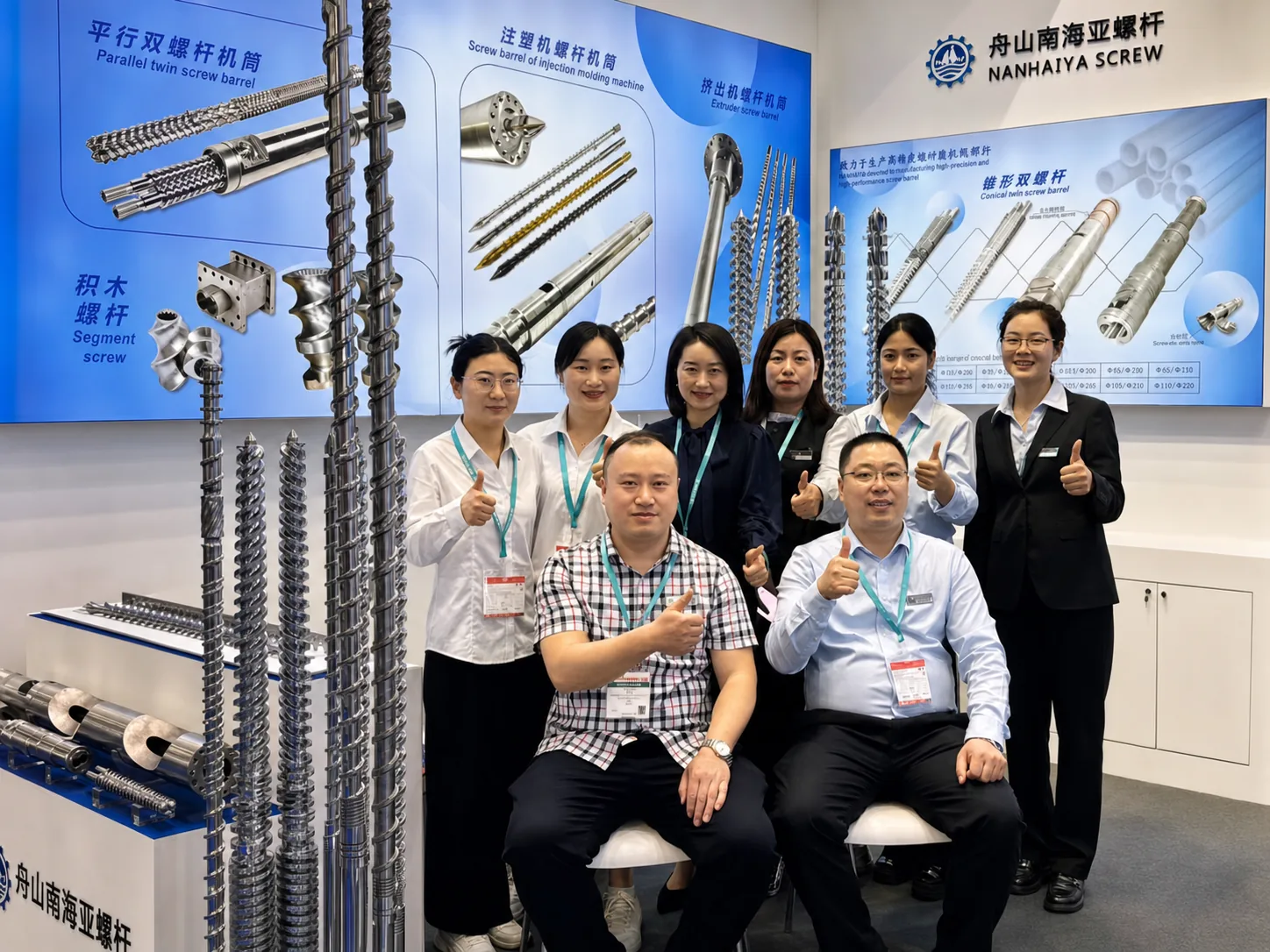
Related Articles
More insights on screw barrel technology and plastics processing.
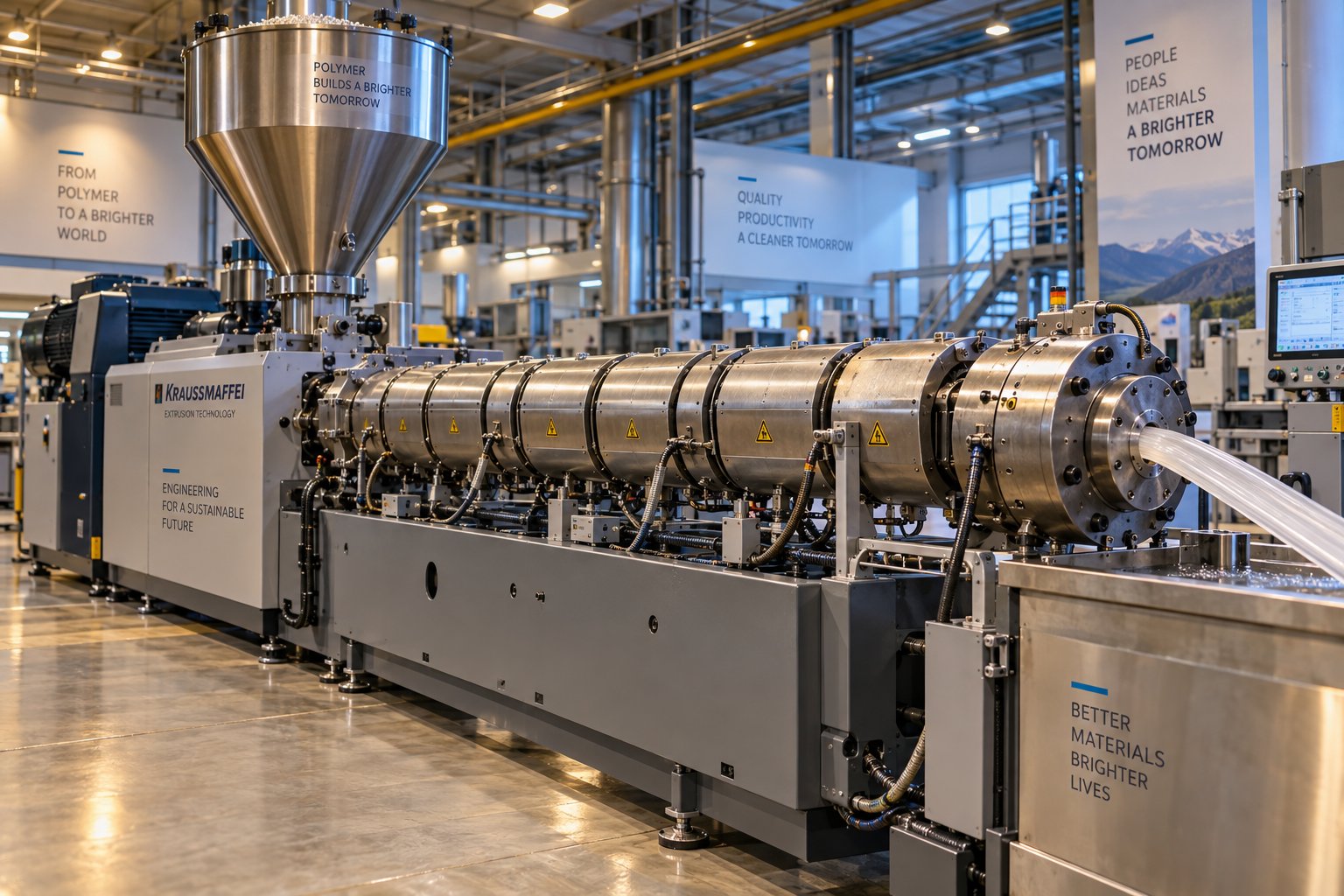
Extruder Machine Decoded: From Raw Pellet To Finished Product
Oct 6, 2026
Learn how an extruder machine works, compare single-screw vs. twin-screw types, and get expert guidance on specs, troubleshooting, and selection.
Read Article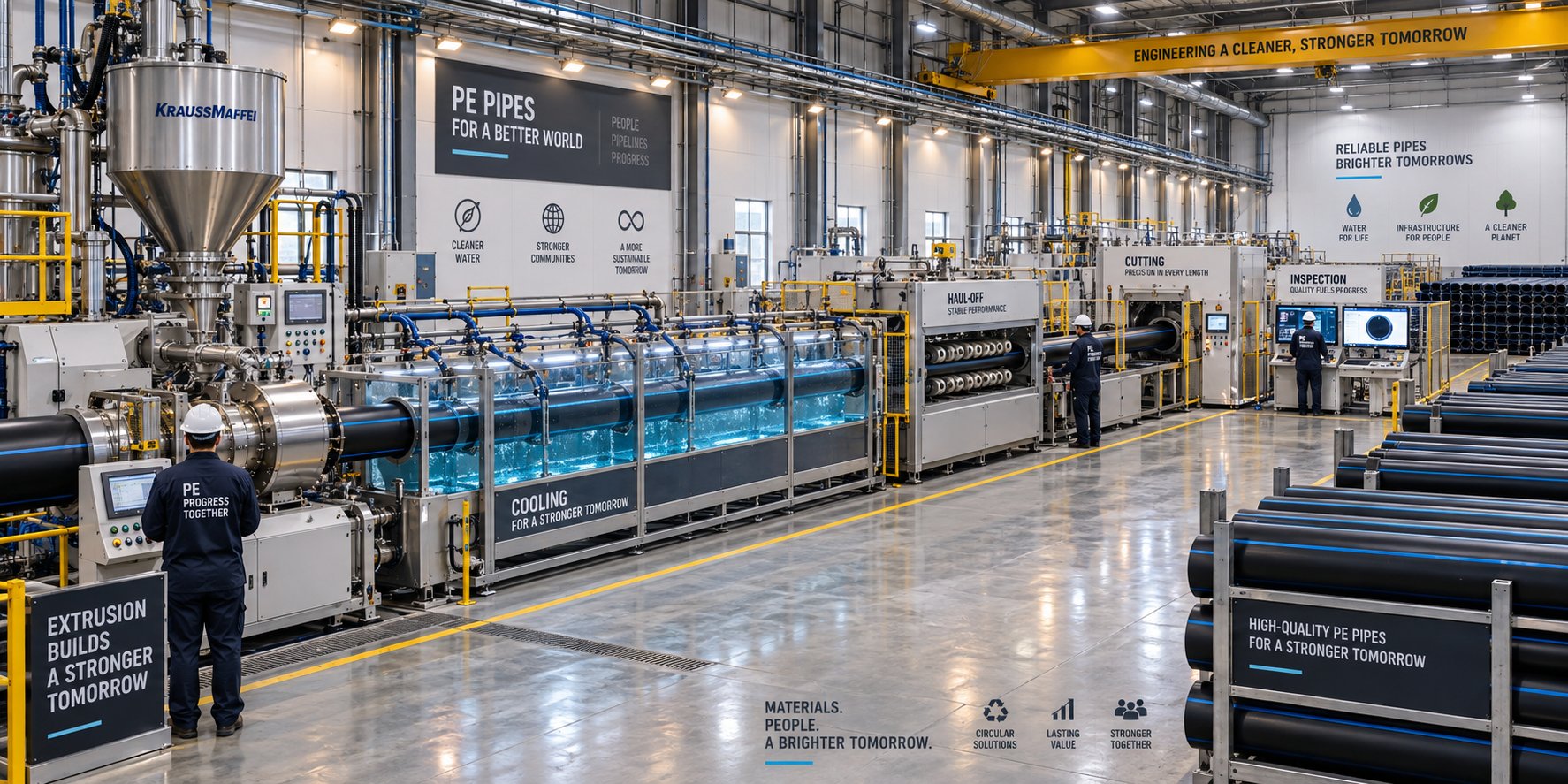
PE Pipe Making Machine Decoded: From Raw Resin to Flawless Pipe
Oct 4, 2026
Learn how a PE pipe making machine works, from resin to finished pipe. Covers components, material grades, automation, troubleshooting, and buyer selection tips.
Read Article
PVC Profile Making Machine Decoded: From Raw Resin To Profit
Oct 3, 2026
Learn how a PVC profile making machine works — extrusion process steps, key technical parameters, die design, calibration methods, maintenance, and total cost of ownership.
Read ArticleLooking for something else?
Search by material, symptom or product and jump straight to the relevant page.
These are navigation suggestions based on keyword matching — not a quotation, not a delivery commitment, and not a substitute for engineering review. Final specification is confirmed by our engineers against your drawings and processed material.
Need help with screw barrel selection?
Share your machine model, processed material and application. Our team can help with pricing and technical support.